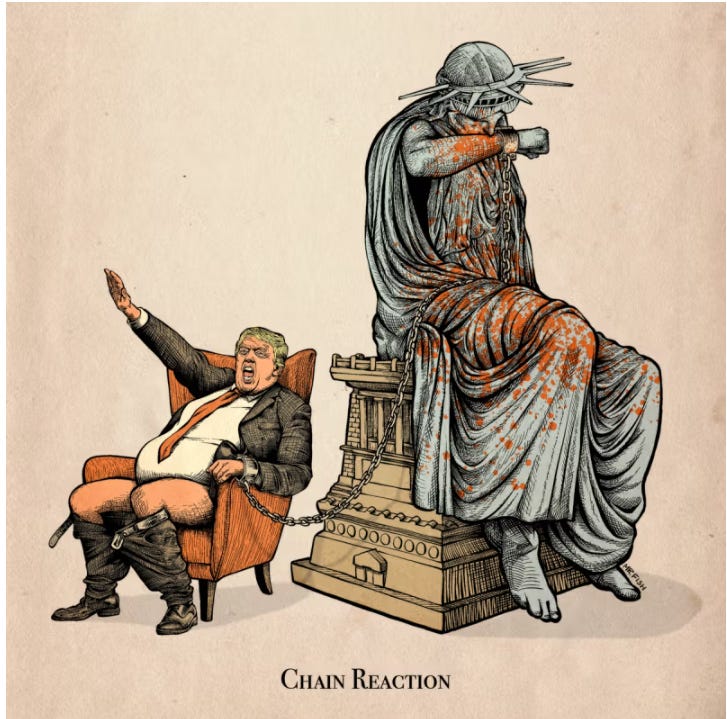
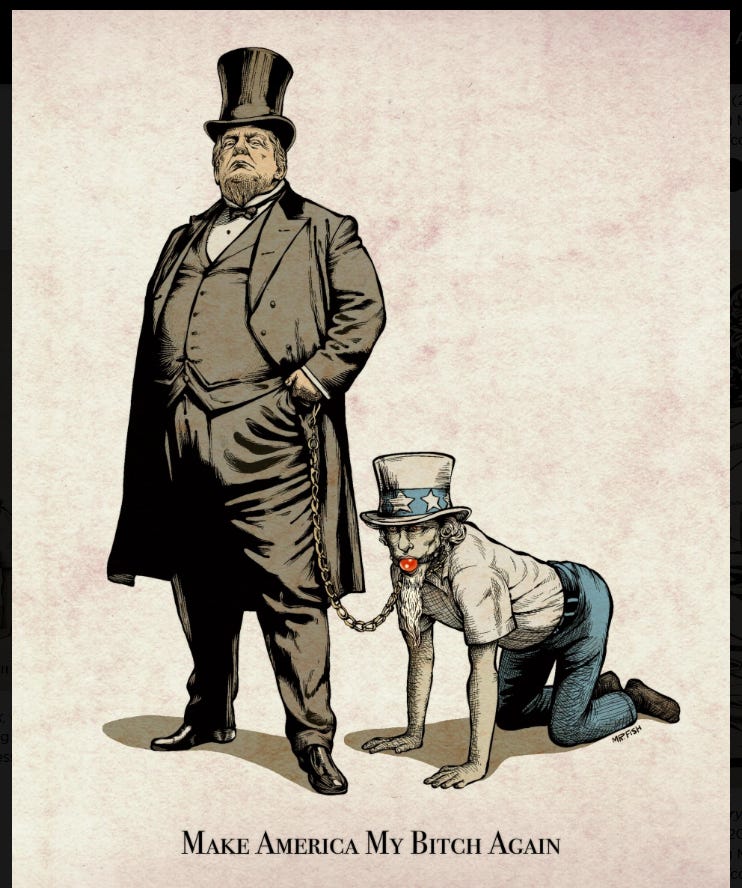
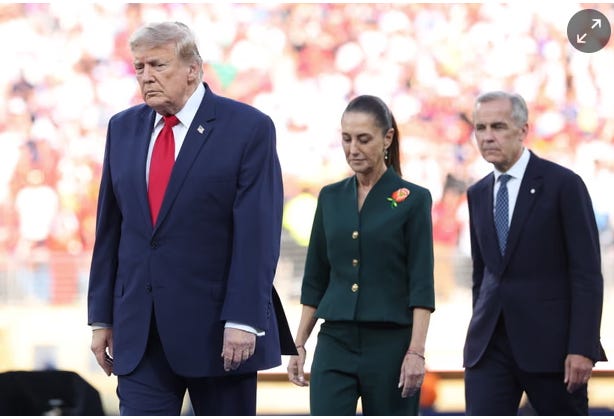
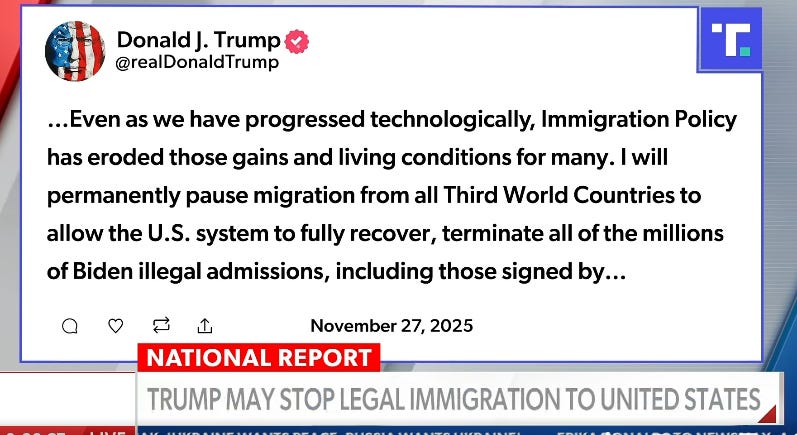
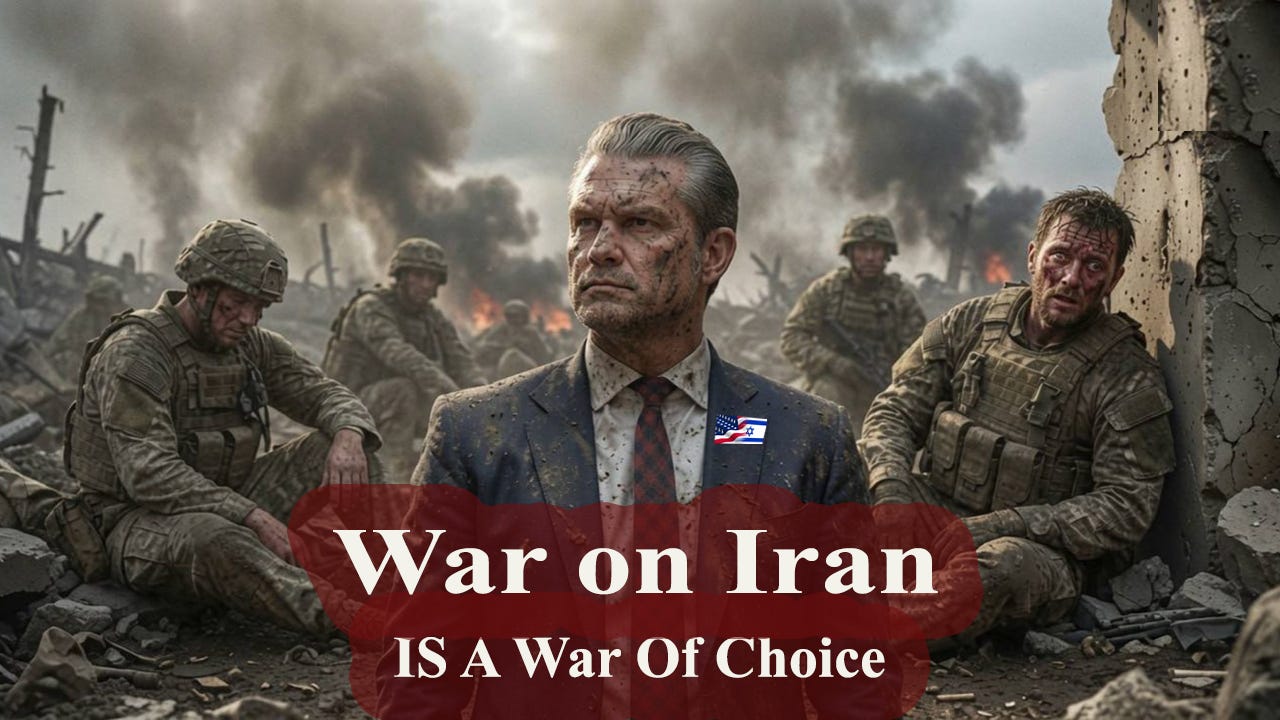
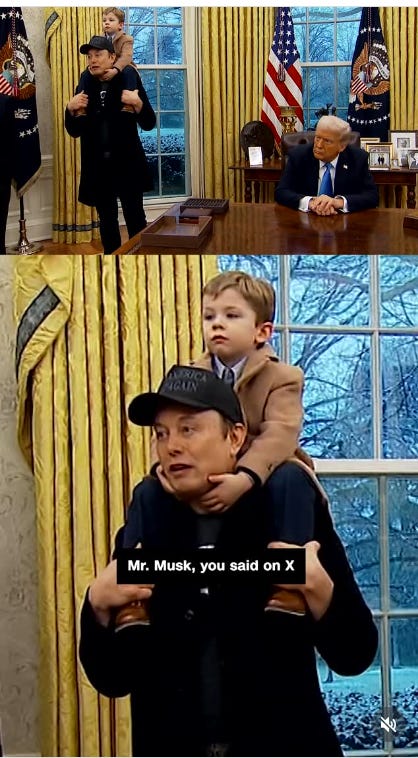
Recall: Trump remarked in 2026, when accused of violating a promise not to wage wars:
“I didn’t guarantee no war. Why would I have built the strongest military in the world?”
KYAQ — FM, Lincoln County Oregon, August 12: Streaming at 8 pm PST, and rebroadcast Thursday the 13th 3 pm PST!
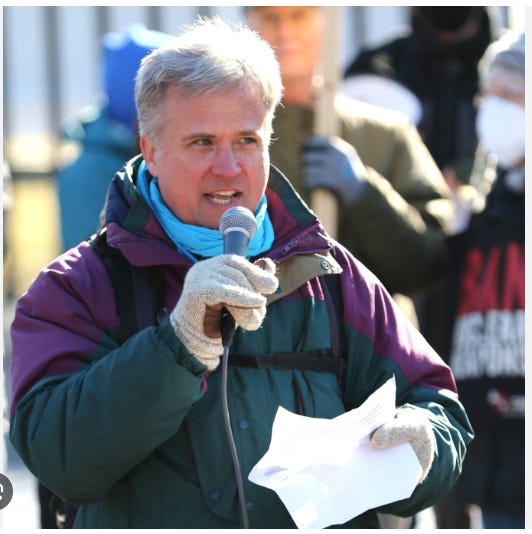
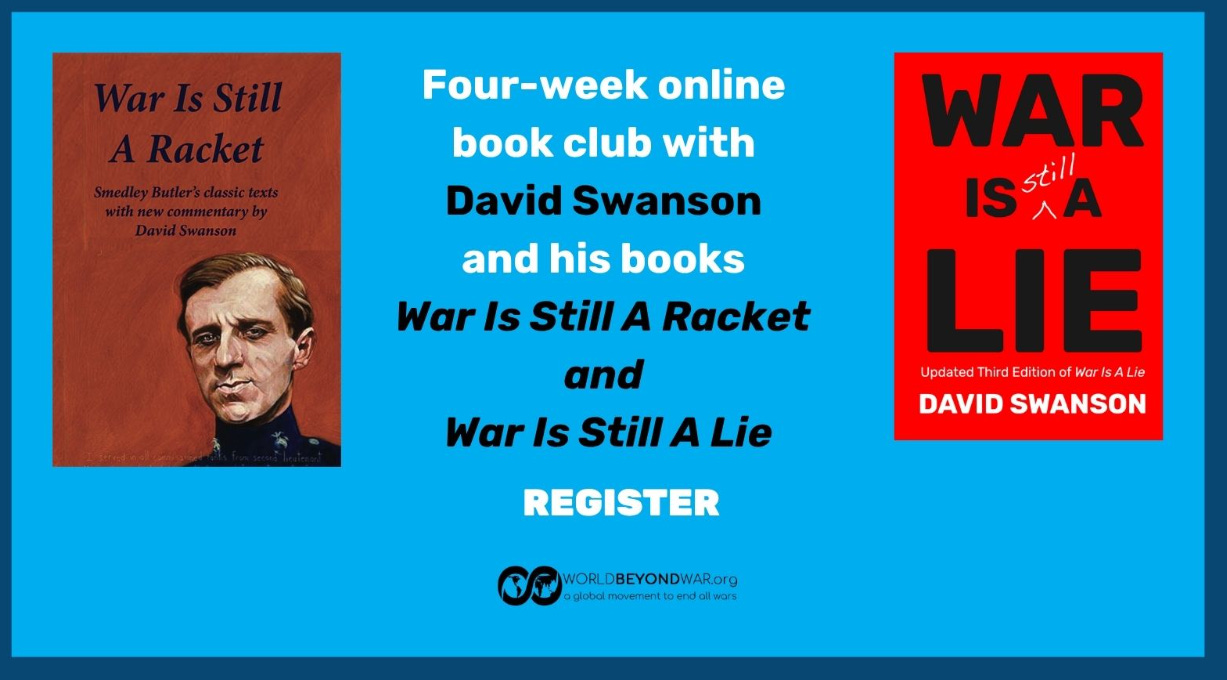
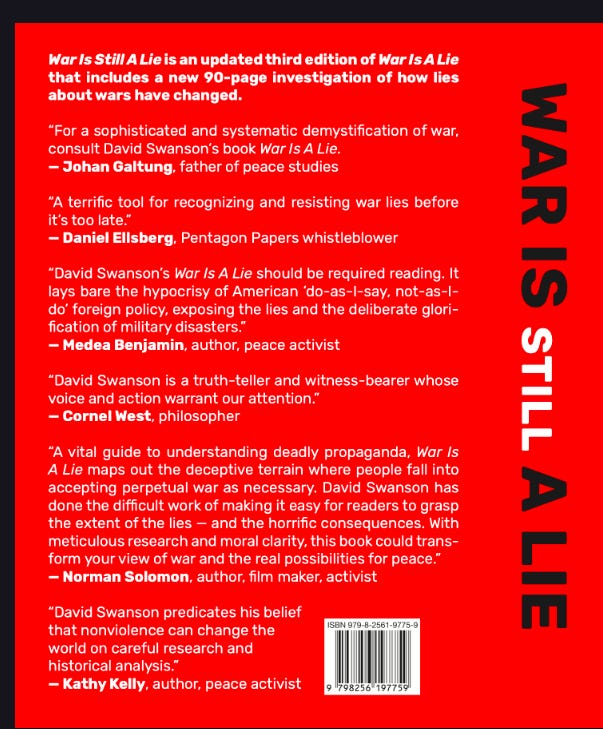
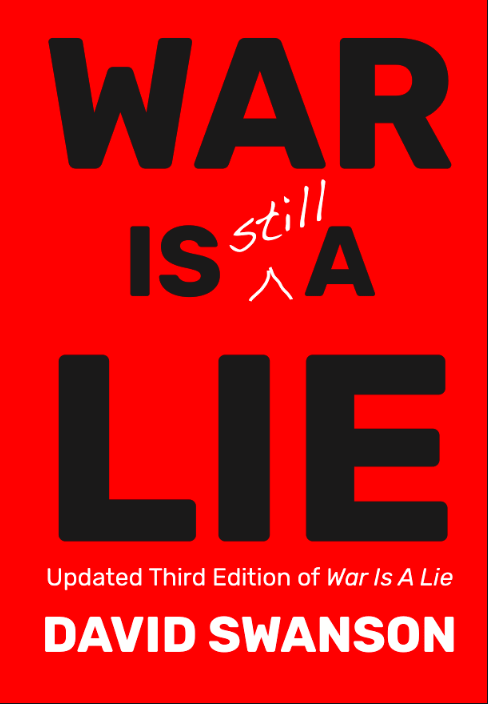
David Swanson was kind enough to spend an hour with you, the listening audience. Third edition of: War is a Lie, now, WAR is STILL a Lie.
On a sidenote: Hours before the Swanson interview, I had just picked up some youth from PDX, after they were in Japan for a few days on this sister city exchange that happens every three years: Youth there come over, youth here go over, adults from Japan come over, adults from Lincoln County go over to Japan.
The city of Newport celebrated the 60th anniversary of the Sister City relationship between Newport and Mombetsu, Japan, a partnership that has fostered cultural exchange and international friendship since its official establishment in 1966.
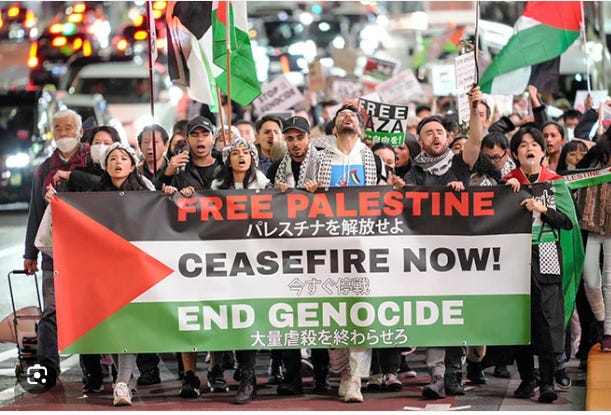
Public protest has also grown, including weekly protests in metropolitan areas and college campuses from Sapporo to Okinawa. The Japan Pediatric Society called for a ceasefire, while the United Church of Christ in Japan (Japan’s largest Protestant denomination) condemned Zionism. Negative Japanese public opinion toward Israel has been increasingly visible over the past two years. In a Pew Research survey this year, 79 percent of Japanese respondents had a negative opinion about Israel.
To some degree, this negative public opinion toward Israel’s military campaign and humanitarian concern for Palestinian suffering appears to be motivating domestic political action. Already last year, 28 out of Japan’s 47 prefectural assemblies had passed resolutions calling for a ceasefire. And in February of this year, Ishiba pledged that Japan would take Gazan civilians unable to receive proper medical treatment, with Foreign Minister Iwaya confirming the first two patients later in March.
Financial Aid: Japan has provided billions of dollars in economic and humanitarian assistance to Palestinian territories since 1993.
Criticism of Unilateral Actions: Tokyo regularly condemns Israeli West Bank settlement expansions and humanitarian crises in Gaza while simultaneously calling for the disarmament and release of hostages held by Hamas.
Of course, I asked the guys in my van their general impression. Hands down is how nice the hosts were, how nice the families putting them up were. Of course, the smells and sights, all new and exotic.
“I guess we will be giving Netanyahu another billion bucks after his visit,” one fellow said.
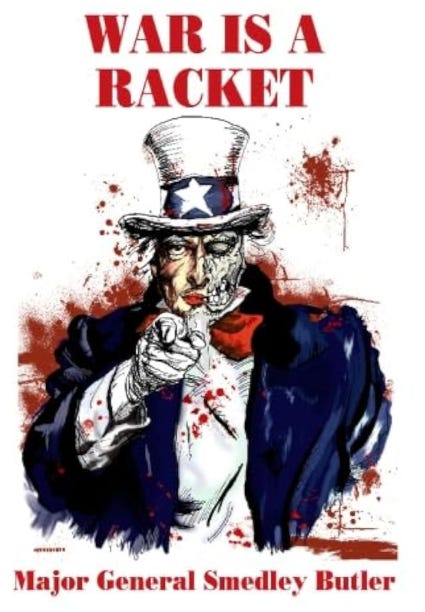
No, they had not heard of David Swanson or “War is a Racket” or Cornel West or Ralph Nader or Abby Martin or Gerald Horne or Breakthrough News or or or.
David and I talk about that a bit: the lack of knowledge, the lack of historical context, and the lack of gumption to launch (another military term we used in the interview . . . we just can’t get rid of that jargon) campaigns to shut down military recruiting, military weapons manufacturing stopping war in its tracks.
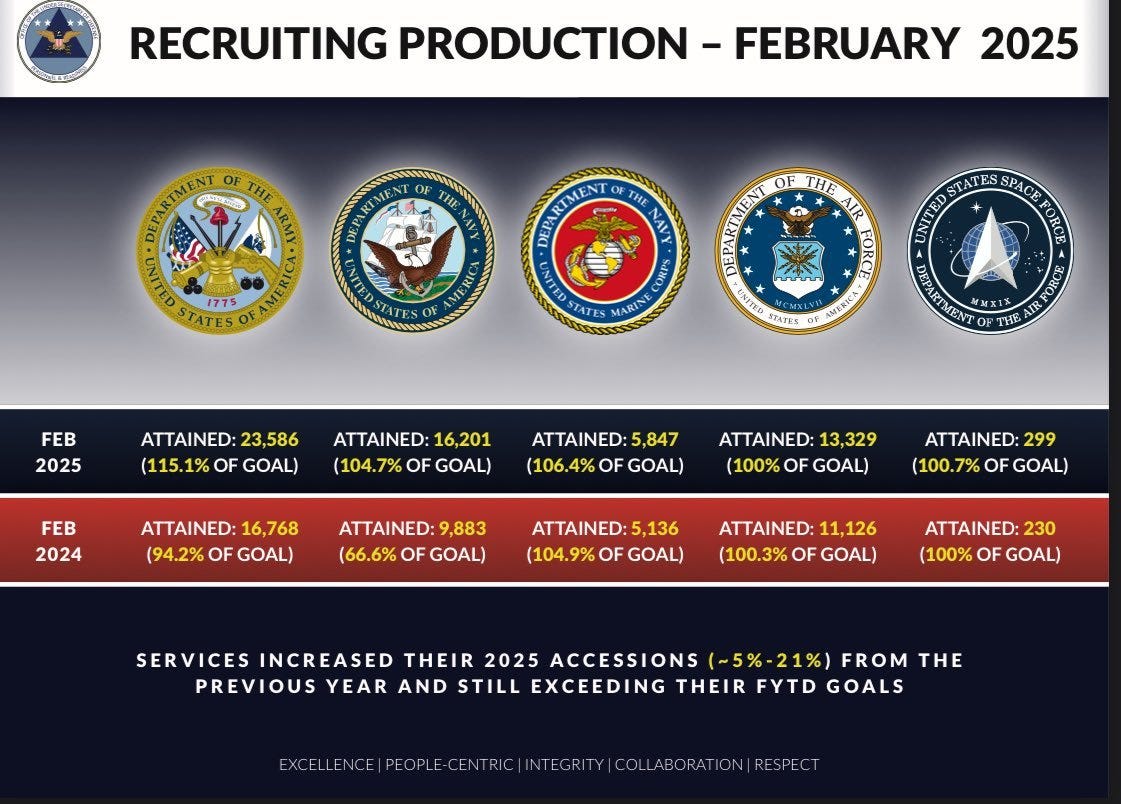
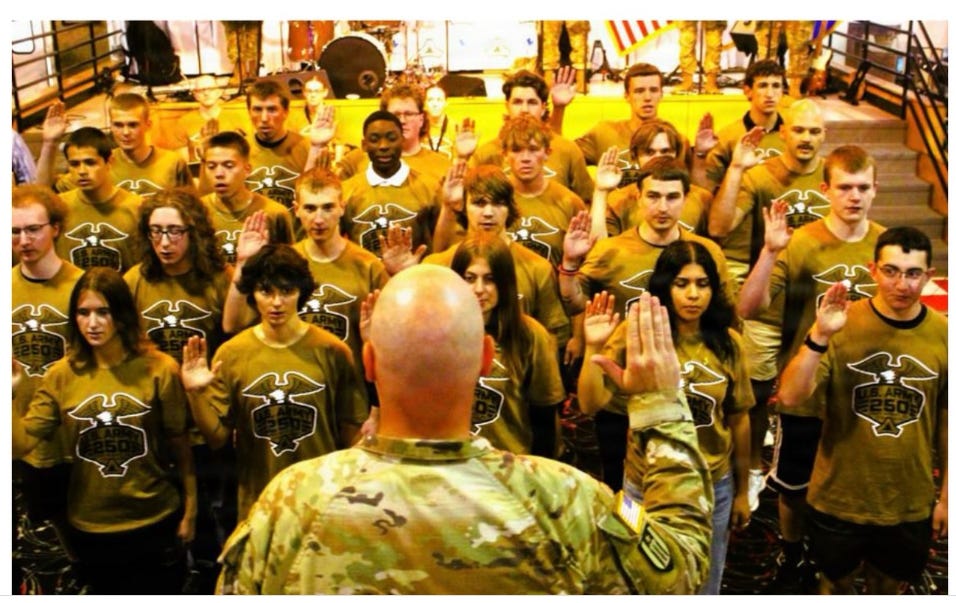
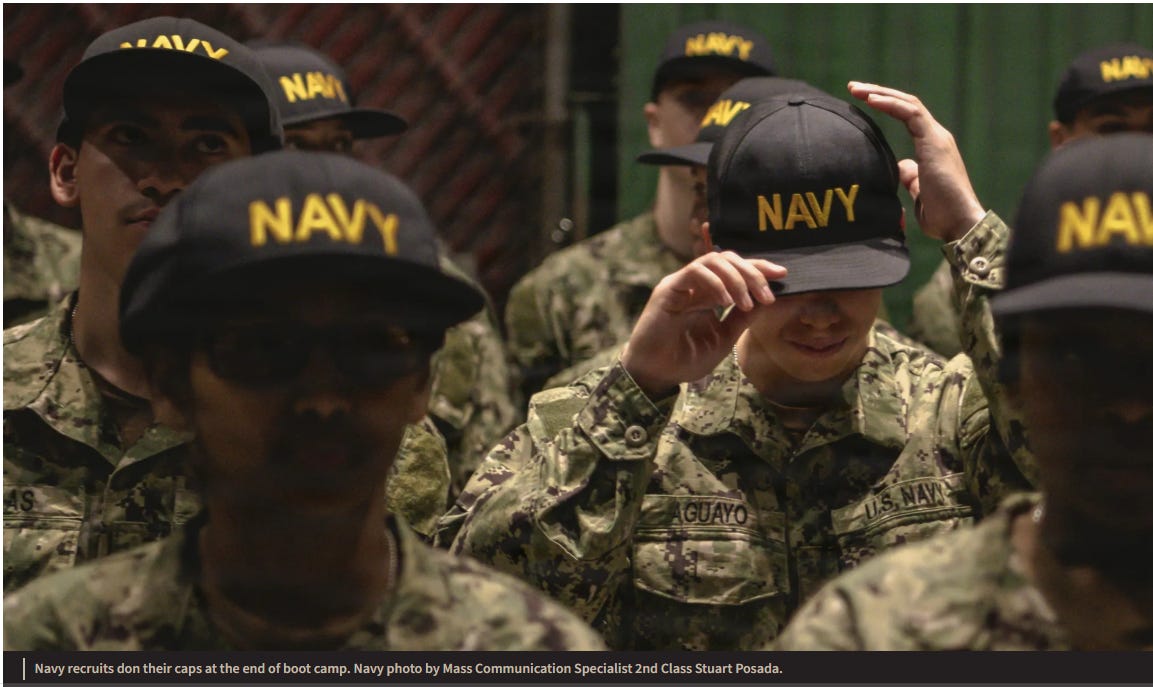
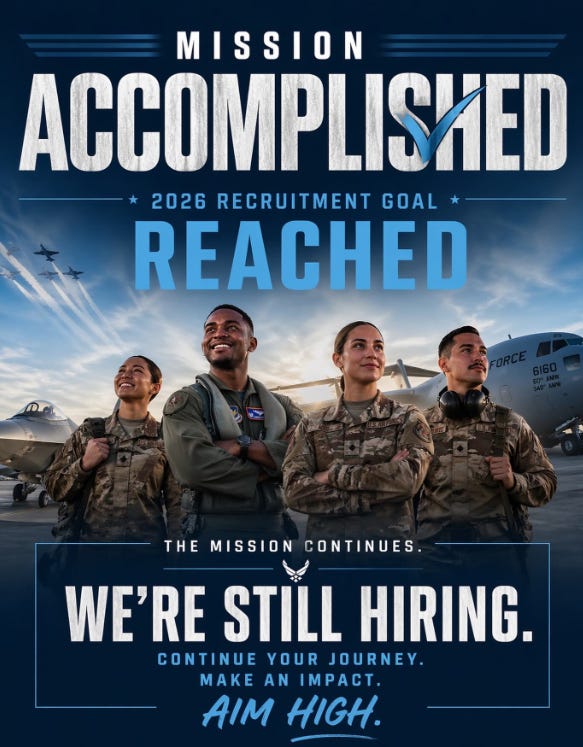
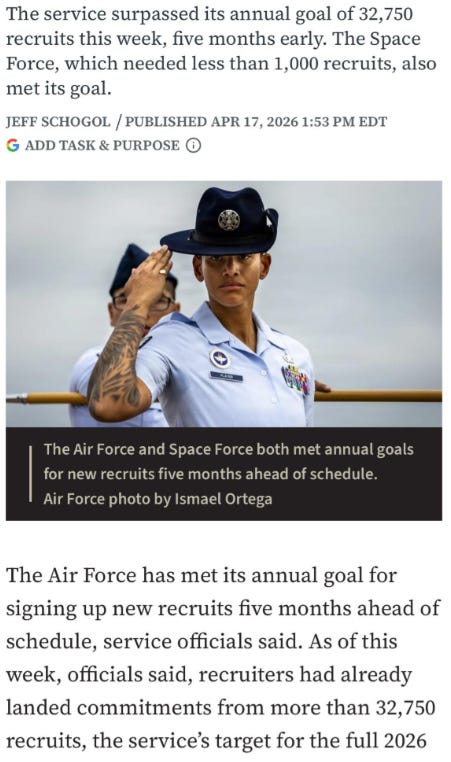
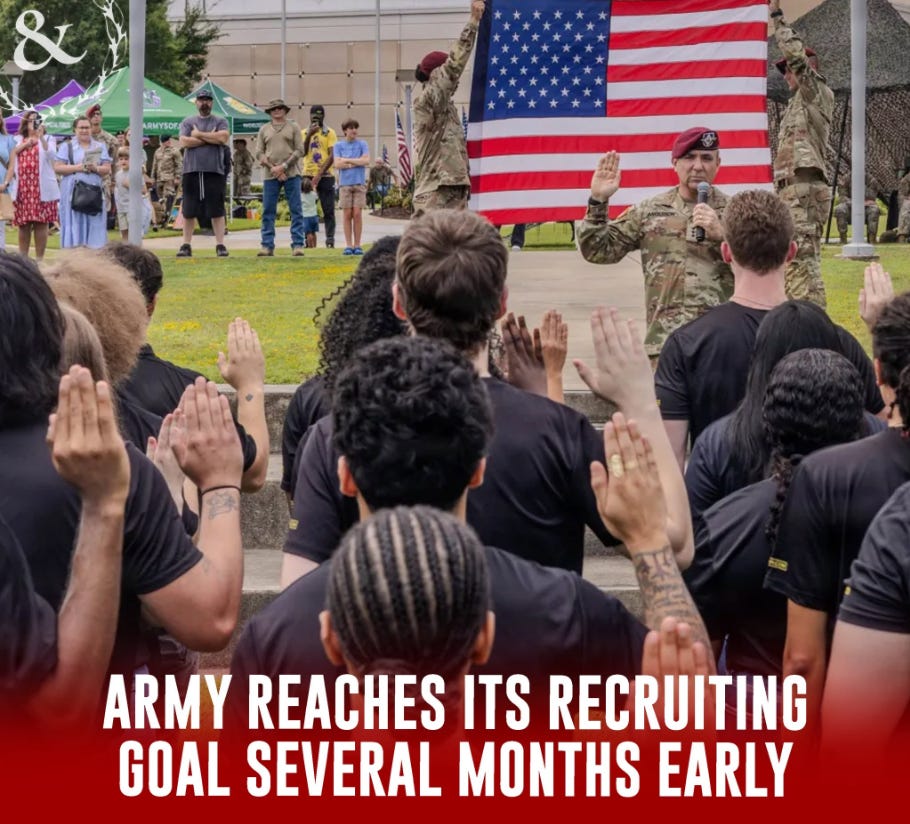
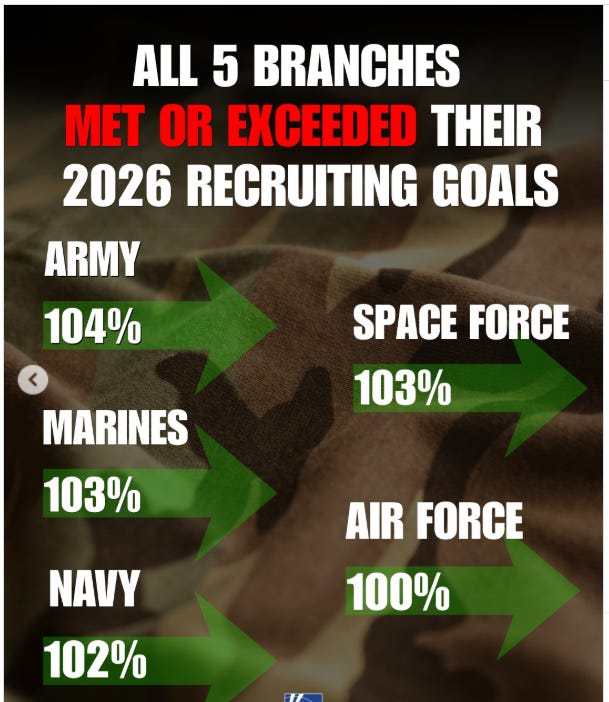
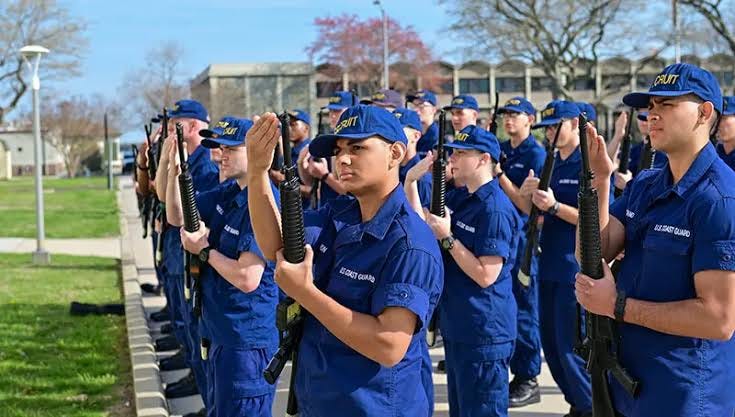
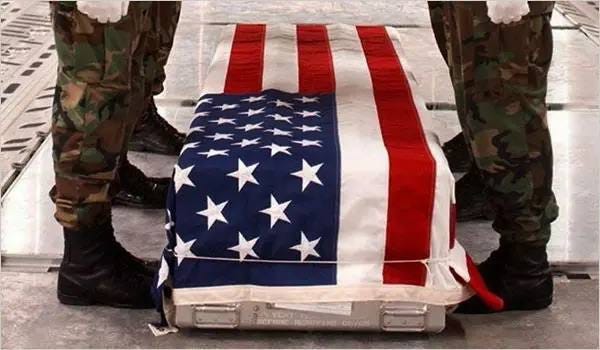
I write about this ALL the time: the five branches of the death machine, the so-called uniform dis-services, making their 2026 recruiting quotas early. The k12 schools are colonized by this mentality that some wars are necessary, and that the USA is the good cops on the block, and all the others in the world who are not US want to destroy our way of life.
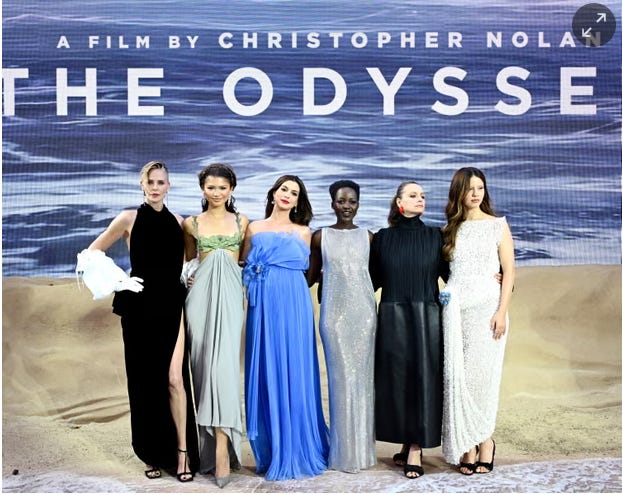
IN fact, I contacted David to come onto the show once again from his blog, davidswanson (dot) org. He wrote about the billionaire Chris Nolan’s anti-war (sort of) new blockbuster flick, The Odyssey.
Have We Advanced Since Homer?
I opined:
Slavery in Homer’s The Odyssey is a foundational element of household structure and power, defined by absolute mastery, a strict binary of loyalty versus betrayal, and brutal enforcement. ANd so, has it changed? Millions under sanctions, under water theft, under genocide, under resource plunder, under slave wages, under the mighty propaganda that states “our soldiers are heroes and theirs are terrorists.”
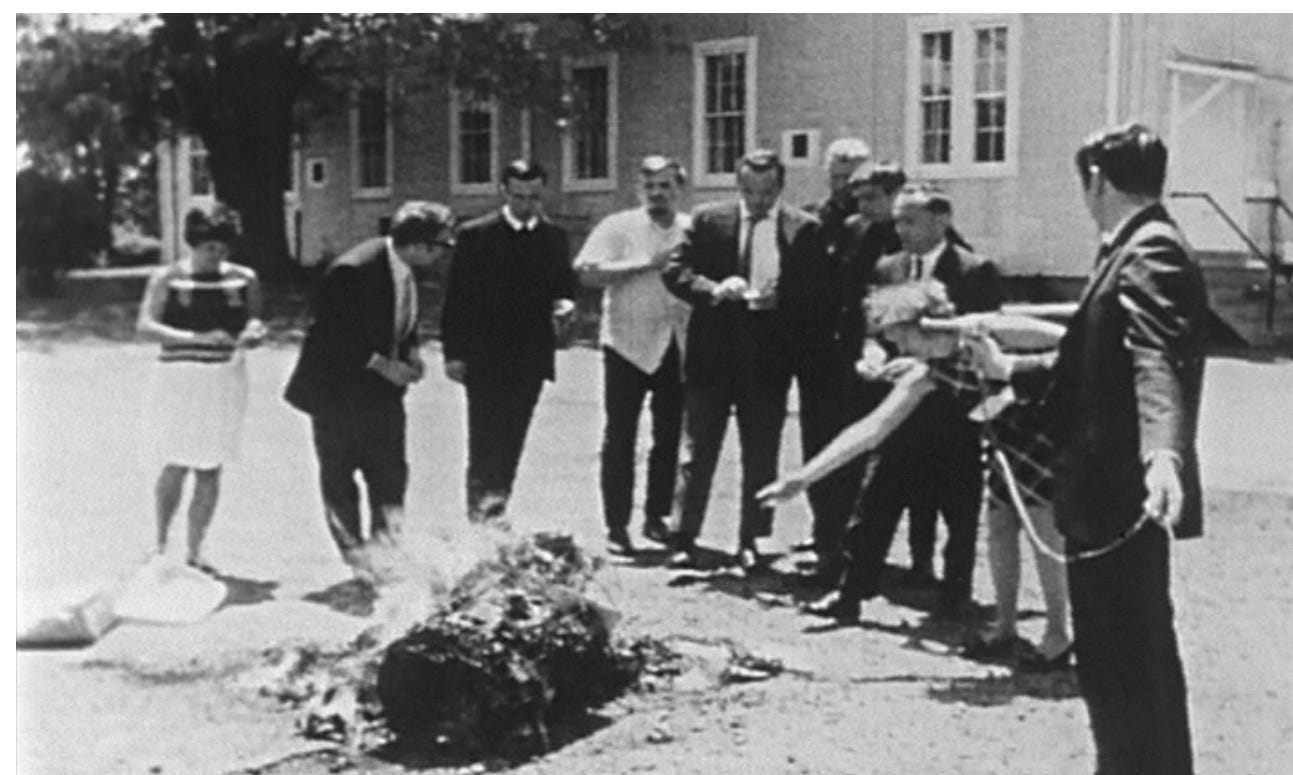
“Our apologies, good friends, for the fracture of good order, the burning of paper instead of children.” — Father Daniel Berrigan regarding the burning of draft files during the Catonsville Nine
Come back on my radio show to talk about your book.
+—+
Can you imagine showing this in our K12, or even community colleges, with the renewed witch hunts for anti-Americanism, which is ANTI-WAR, if you are a social justice warrior.
Deemed too dangerous for broadcast in May 1968, the iconic footage of nine Catholic activists burning draft files might have been lost forever if not for Pat McGrath — a dogged and sympathetic reporter, who has struggled to ensure its preservation. Read the full story on Waging Nonviolence:
From David’s book:
Since I wrote War Is A Lie in 2010 and updated it in 2015, the lies used to prop up wars have varied but continued. My summary remains true:
Not a single thing that we commonly believe about wars that helps keep them around is true. Wars cannot be good or glorious. Nor can they be justified as a means of achieving peace or anything else of value. The reasons given for wars, before, during, and after them (often three very different sets of reasons for the same war) are all false. It is common to imagine that, because we’d never go to war without a good reason, having gone to war, we simply must have a good reason. This needs to be reversed. Because there can be no good reason for war, having gone to war, we are participating in a lie.
But some things have changed. The Iraq Syndrome has ended. The Iraq Syndrome, modeled on the Vietnam Syndrome, was a reluctance to support more wars because of the experience of having lived through the Iraq War. Such reluctance is generally understood as an illness rather than as temporary enlightenment. While John Kerry, John McCain, Hillary Clinton, and many other Iraq War supporters who didn’t come as close as they did, all failed to become president, Donald Trump and Joe Biden did not fail.
Both Trump and Biden did the Iraq Syndrome the courtesy of pretending they had opposed attacking Iraq. There’s no evidence that Trump had done that. Biden had in reality been a leading supporter of launching that war. Apparently lying about that past was seen as a sufficient level of decency for this new age. But there was no requirement that, even in retrospect, you criticize the Iraq War for a reason suggesting a general aversion to wars. Trump’s most common criticism was that the United States had failed to take Iraq’s oil. It was nice to think he was joking, but President Trump spoke at the headquarters of the Central Intelligence Agency on January 23, 2017, and promoted a policy of waging wars for the theft of resources.
Major ground wars with thousands of U.S. troops dying are now being avoided. As U.S. deaths are the only deaths that count for much in most corporate U.S. journalism, this can create the impression that wars have largely gone away, the focus on the small number of U.S. deaths in the war on Iran, and on the lying about them, notwithstanding.
U.S. media coverage of wars, when it happens, tends to downplay the U.S. role. The war in Ukraine received major attention for a time — including absolutely remarkable coverage of war victims (if all sides of all wars were covered the way one side of this one was, war might just shrivel up and die). But mostly the war in Ukraine was falsely depicted as something the U.S. government had little or nothing to do with . . . and ought to have more to do with. The war on Gaza also garnered attention — including through the new power of social media to influence corporate media — but much of the reporting was heavily slanted toward defending those engaged in genocide. Any reports of denunciation by U.S. officials of the mass killing tended to helpfully omit the U.S. role in arming, funding, legally protecting, and collaboratively propagandizing in support of it. As the corporate media took seriously U.S. claims to “oppose” the horrors being inflicted on Palestinians, the satirical journal, The Onion, ran the headline: “Trump Writes Netanyahu Strongly Worded Check.”
+—+
We talked about the MAD world of NUTS: How Orewllian and Hollywood ad PR Spinning Eddy Bernays the world of MSM (corporate media) and even lefties have become:
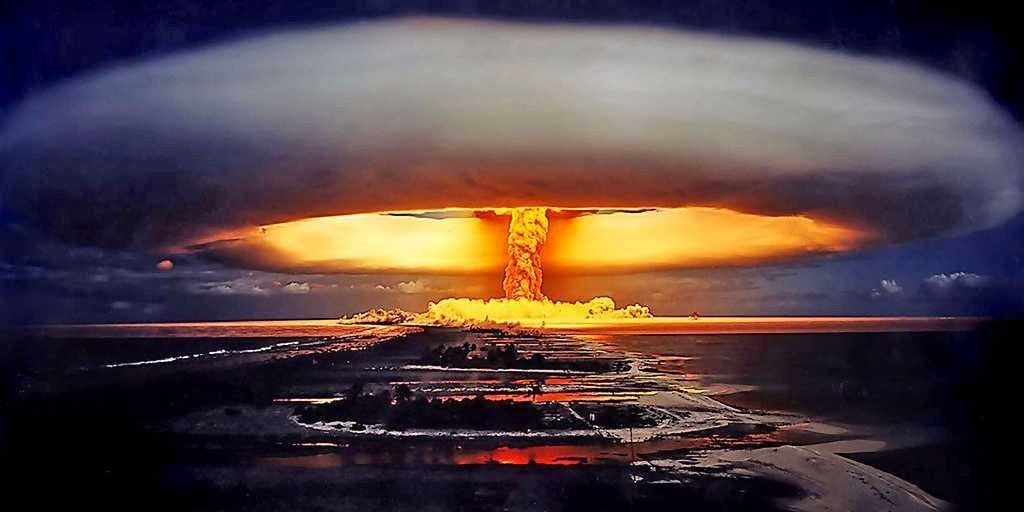
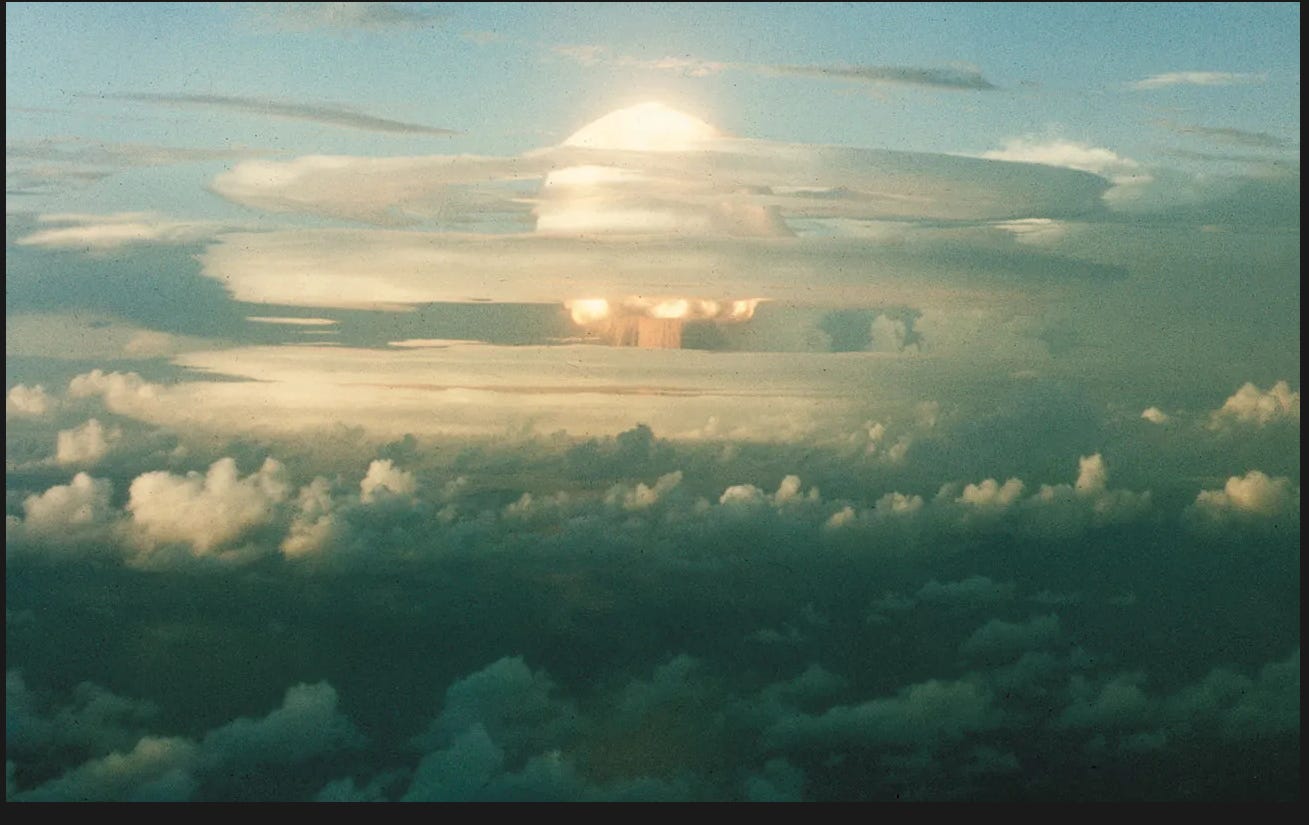
NUTS stands for Nuclear Utilization Targeting Selection (or Target Selection), a Cold War military strategy. It is the idea that a nation can fight, control, and “win” a limited nuclear war by targeting an enemy’s military forces and missile sites instead of cities.
Mutually assured destruction, or MAD, is a military strategy where a full-scale nuclear attack by one country causes complete destruction for both the attacker and the defender. It relies on second-strike capabilities and rational deterrence to prevent a first strike.
It is so so much worse NOW, as this came out in 2022.
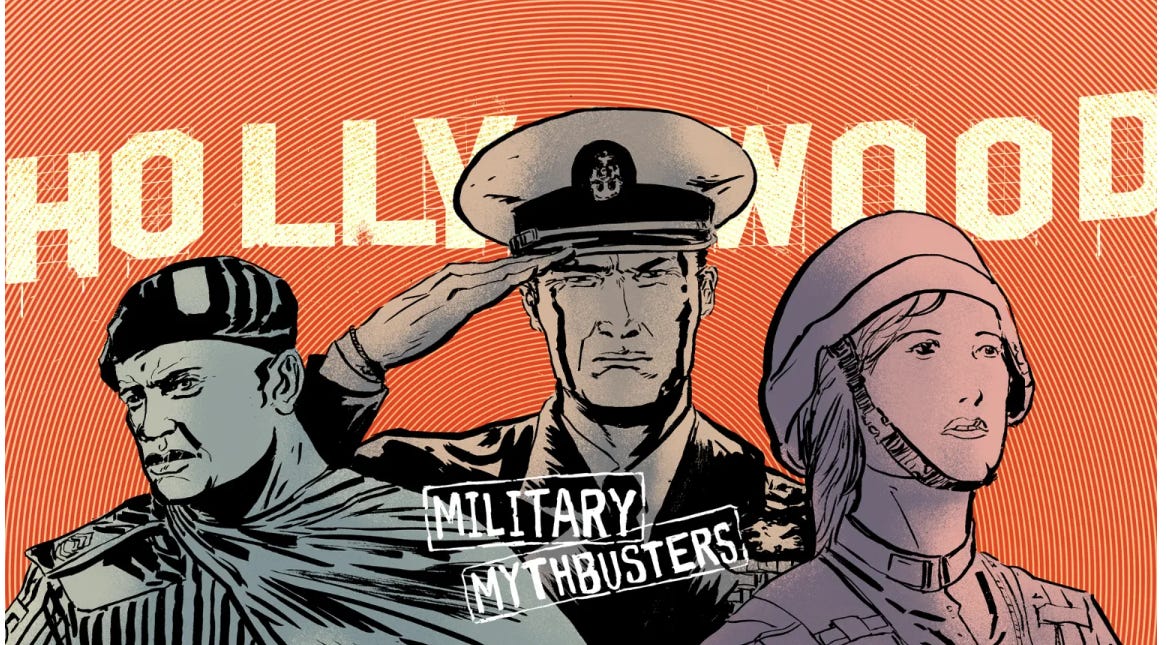
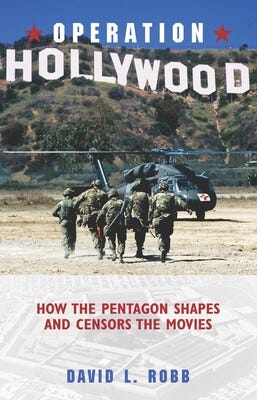
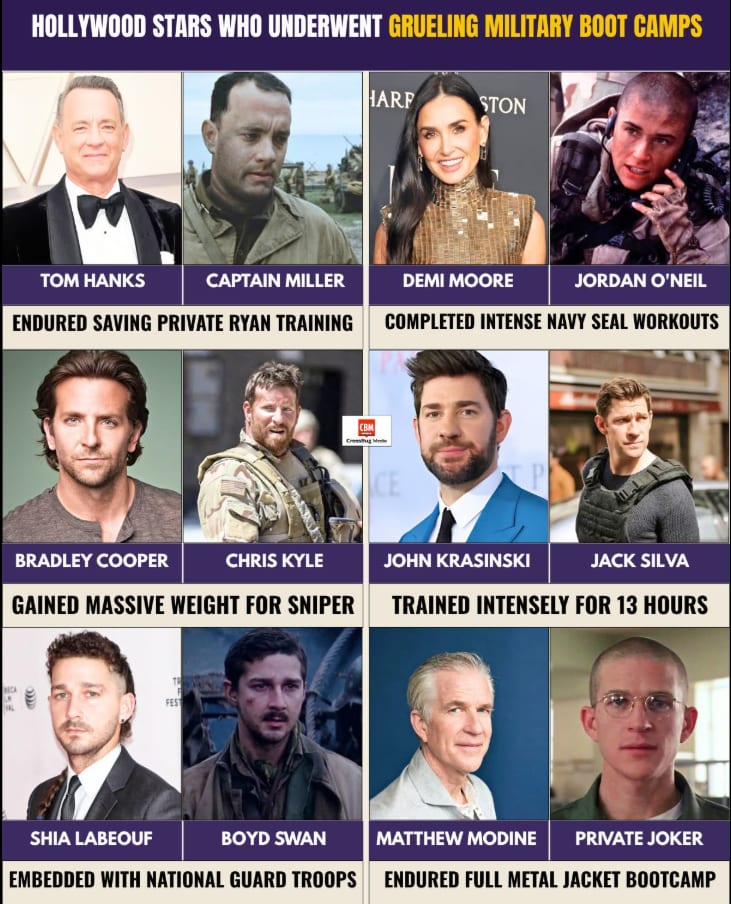
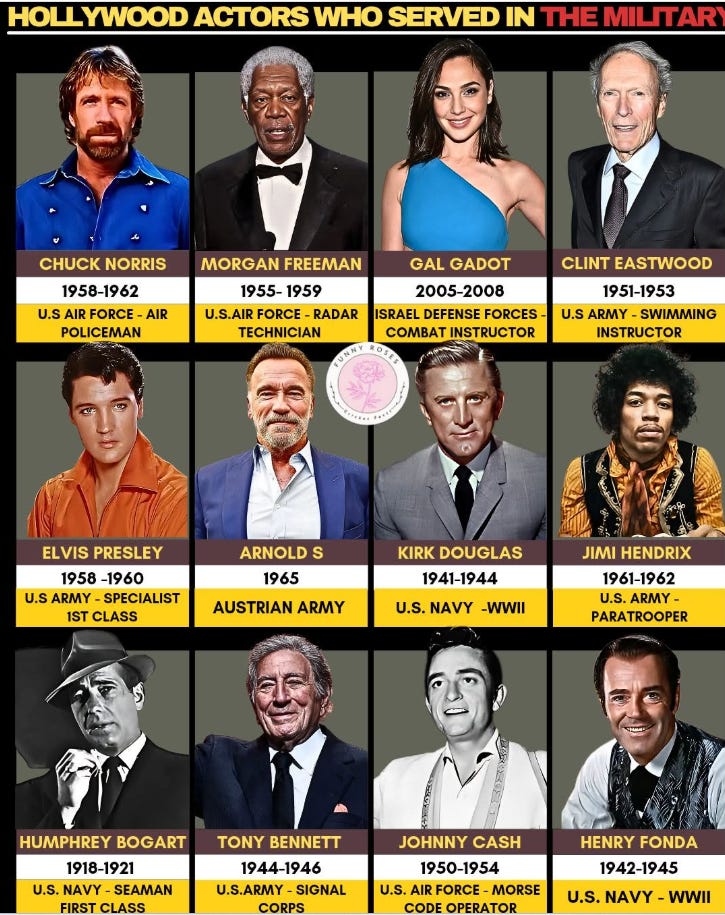
CIA: A bit flippant, man.
Served, uh?
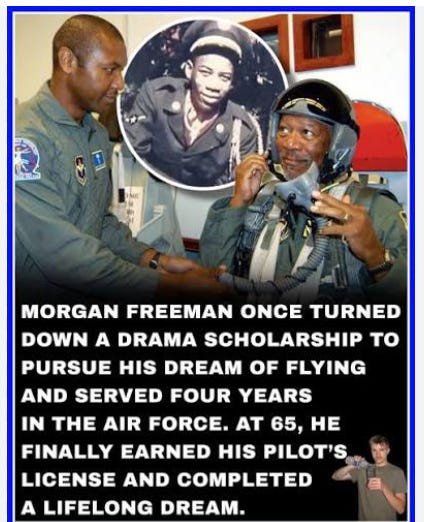
Morgan and hundreds of others shill for the USA, military, FBI, ATF, or CIA. It’s all about the Benjamins;
David and I got into the true costs of war in the first show, and in his 2026 book, he is clear just how BIG the dirty budget for WAR is.
I mentioned one more lie, the lie that war is something that people or governments all do to roughly the same extent. “Boys will be boys,” “War is human nature,” “Capitalism creates war,” “War is everywhere” — this sort of rhetoric makes less sense if we admit that 96 percent of humanity just doesn’t do war on remotely the same scale as this 4 percent of people here in the United States. In the summer of 2026, Trump was demanding that Congress fork over $1.5 trillion in military spending. But according to a report from the Project on Government Oversight, U.S. military spending was already $1.5 to $1.7 trillion per year, or — if you include (and why shouldn’t you?) interest on debt for past military spending, $1.7 to $2.3 trillion per year. The variations among the five different calculations featured in the report had a lot to do with the complexity and obscurity of the U.S. government, including the variety of sources of government data that can be used. It takes serious research to dig the militarism out, as it’s hidden everywhere. But the big-ticket items are things like “Homeland Security,” veterans’ benefits, and debt interest.
The report gives us not the slightest hint at any reason to doubt the highest figure. If that $2.3 trillion per year is correct, and if Trump’s servants on Capitol Hill add another $0.5 trillion just for kicks plus another $0.2 trillion specifically for destroying Iran and rebuilding the bases that Iran destroyed — and the pending destruction of which was the immediate excuse for the war — then we’ll be at $3 trillion. . . and — barring the appearance of a spine in a significant number of members of Congress — another $3 trillion or more the next year and the next and the next.
The military budget figures from the Stockholm International Peace Research Institute (SIPRI) are widely used, in part because SIPRI provides them for most nations on Earth so that one can do comparisons. But SIPRI has the U.S. at $0.95 trillion in 2025. The report from POGO suggests that SIPRI’s omission of veterans’ benefits may be a bigger mistake for the United States (which has waged so many wars) than it would be for some other countries. The U.S. government also far outpaces the rest of the world’s nations when it comes to debt. And less of other nations’ smaller debts may be due to wars they haven’t waged. So, possibly it is not completely outrageous to make a comparison between the real level of U.S. military spending and SIPRI’s level of everybody else’s military spending. (Note that SIPRI has no 2025 data for Venezuela, Cuba, or North Korea.)
Of course, dreams deferred, cancelled and buried, what is the price on just one victim of war’s derailed future, detached soul, denigrated culture, destroyed family line?
Wars are wrongful deaths compounded greatly and to the nth degree, no, but who gets to repair the damage of a child whose parents are gone, whose school is gone, whose mosque is gone, whose calorie and water intake are going going gone?
The Victim: Tyler Thomas, a 19-year-old college student who was murdered in 2010.
The Verdict: After a civil trial against her killer, a Nemaha County judge awarded her family $2.64 billion [1.14].Compensatory Damages: $240 million for the immense loss and suffering.
Punitive Damages: $2.4 billion intended strictly to punish the perpetrator.
Other Record-Breaking Single-Person Awards
While the Nebraska verdict stands as the technical record for a single individual, other massive landmark wrongful death awards for one person include:
$1.127 Billion: Awarded in North Dakota to the Estate of Taylor Goven after a tragic fatal crash involving a drunk driver
$205 Million: Awarded by a Colorado jury to the parents of 6-year-old Wongel Estifanos, who tragically died on an amusement park ride.
Ahh, David, how many civilians have been murdered? Or just flagging after everyone else in their town or family has been murdered?
Activist David Swanson and researchers estimate that nearly 1 million people were killed by direct post-9/11 war violence, with millions more dying from indirect causes. The total death toll includes hundreds of thousands of civilians, national forces, and opposition fighters.
Direct and Indirect Deaths
Direct deaths: An estimated 940,000 people were killed by direct war violence in major conflict zones like Iraq, Afghanistan, Syria, Yemen, and Pakistan.
Civilian toll: Over 432,000 civilians died directly from the fighting and military operations.
Indirect deaths: Millions more died indirectly due to the destruction of economic life, health care systems, clean drinking water access, and infrastructure.
Displacement: Roughly 38 million people were displaced from their homes by these conflicts.
The Costs of War project conducts and publishes research about the ongoing consequences of the United States post-9/11 wars in Afghanistan, Iraq and elsewhere; the costs of global U.S. military operations; and the domestic effects of U.S. military spending.
We aim to raise awareness and foster public debate by providing the fullest possible account of the human, economic, political, and environmental costs of U.S. militarism, laying the foundation for better-informed U.S. foreign and domestic policies.
Praise:
“Swanson’s penetrating analysis of the lies behind wars, backed by his extensive historical knowledge, shines a light not only on the destructive wars but on the irrational, delusional thinking and propaganda that start and prolong them and lead to so much death, destruction, and suffering.” — Jay Kvale, peace activist
“David Swanson’s new book has given me a fresh perspective on a topic I’ve dedicated my life to: America’s war culture and its ever-nuanced fallout. Economic collapse, pollution, dependence on fossil fuels, even global warming: you can’t begin to fathom our predicaments until you conceive of the American war monster. Swanson rips away the public relations/ advertising of this military-industrial giant to show its true cancerous colors. Read slowly, America. This is a powerful mirror for those still clinging to our media distortions. It’s an indictment of a culture grown dependent on, and distorted by, the machinery of violence. But there is a compassion, an empathy to the author’s tone. We are all victims, Swanson argues. We are a people kept blind to the true costs, the human tragedies, by the never-ending lie of war.” — Charles Bivona, writer, professor
“It’s been a week since I finished War Is A Lie, and I can’t stop thinking/ talking about it…. Everyone in my life is getting a copy for their birthday this year, and I’m composing a letter to the editor of every major paper in Idaho. Thank you for rocking my world.” — Kim Mazik, peace activist
Living Hells:
And so the weather in Wisconsin is hell, or Spain or France, right?
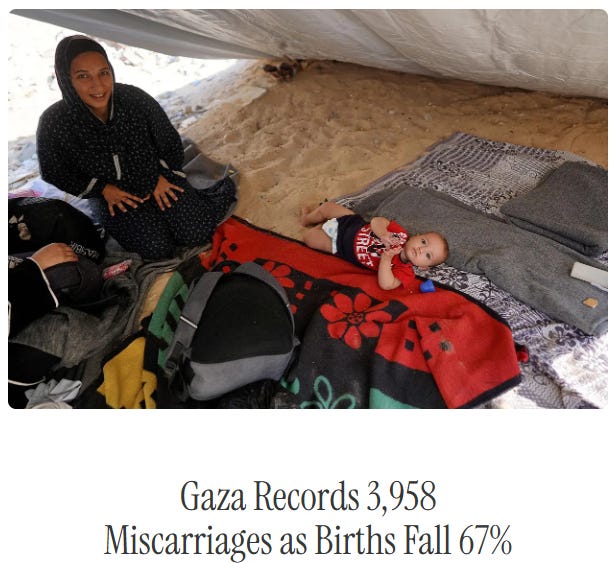
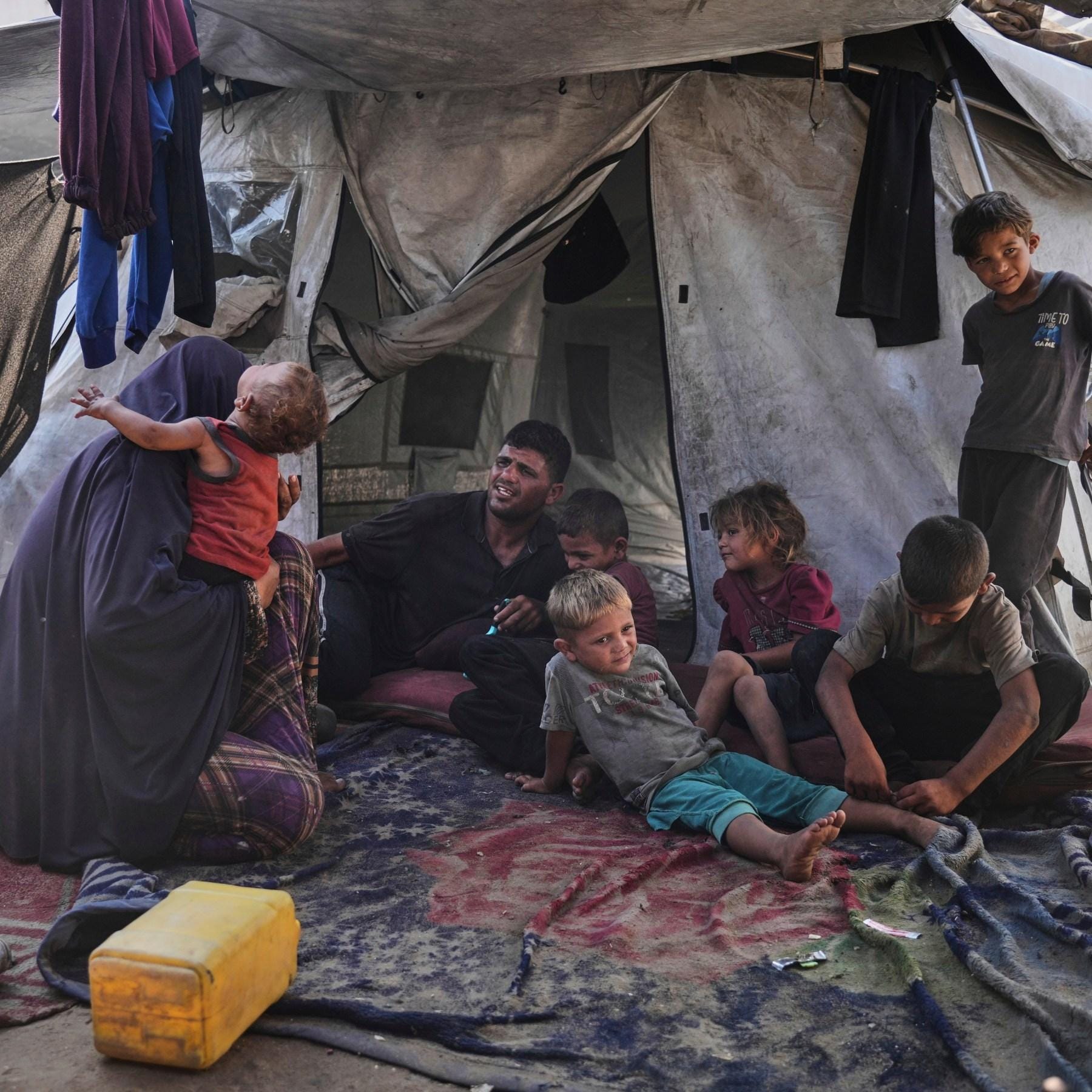
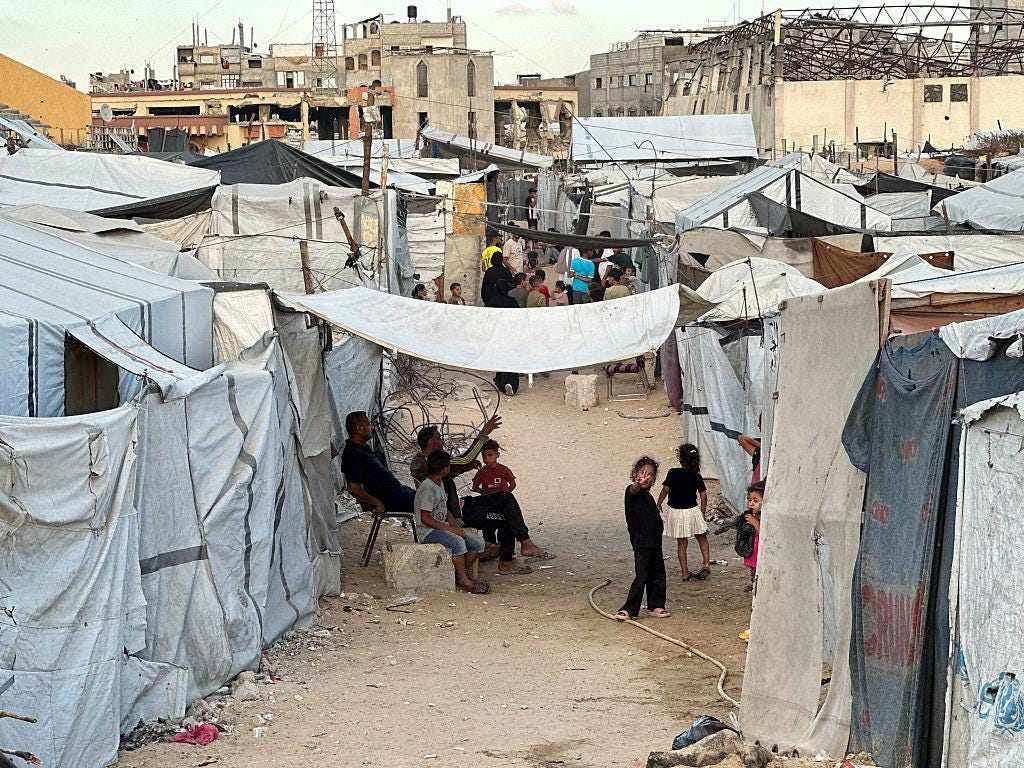
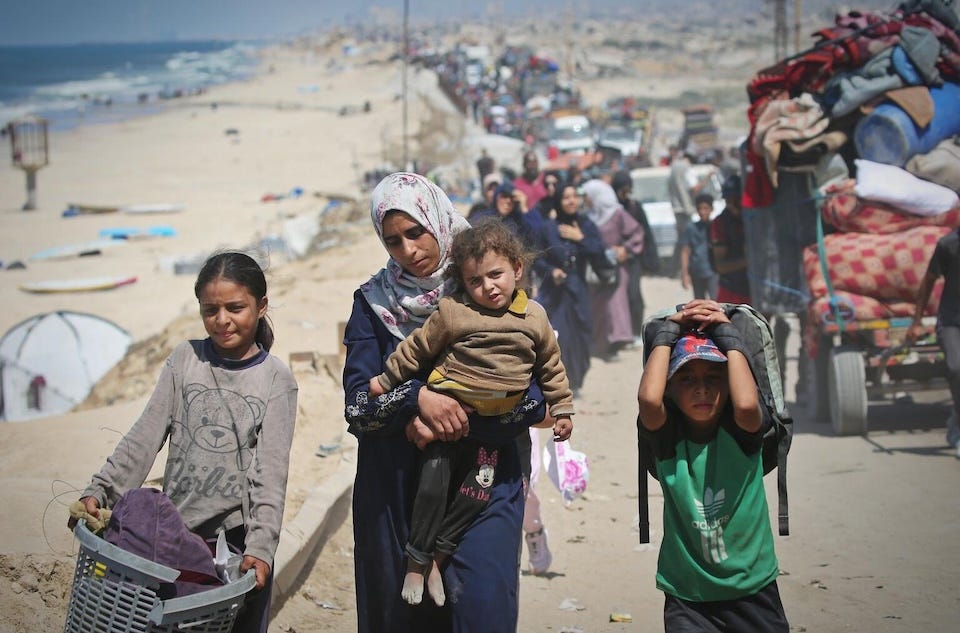
SOURCE: Residents describe the tents as sealed ovens that trap heat instead of keeping it out. Many are forced to spend hours outdoors searching for fresh air despite the dangers surrounding them.
“We Are Living in Hell”
A 90-year-old displaced woman described life inside the camp as “hell.”
She suffers from diabetes and high blood pressure and previously underwent open-heart surgery, making the extreme temperatures particularly dangerous for her.
The woman said the heat repeatedly worsens her condition, raising her blood sugar and leaving her severely exhausted. She has been admitted to hospital several times before returning to the same tent that provides no meaningful protection.
Rodents frequently enter sleeping areas, she said, while mosquitoes and other insects spread throughout the camp. The tents’ worn plastic coverings do little to prevent either the heat or pests from entering.
She added that life in the camp offers neither safety nor dignity, while death and funerals have become part of the displaced community’s daily reality.
Tents Offer No Protection From the Sun
Whether the tents remain closed or are opened for ventilation, residents say the conditions are unbearable. Sunlight enters from every direction, while there is no effective way to reduce the temperature.
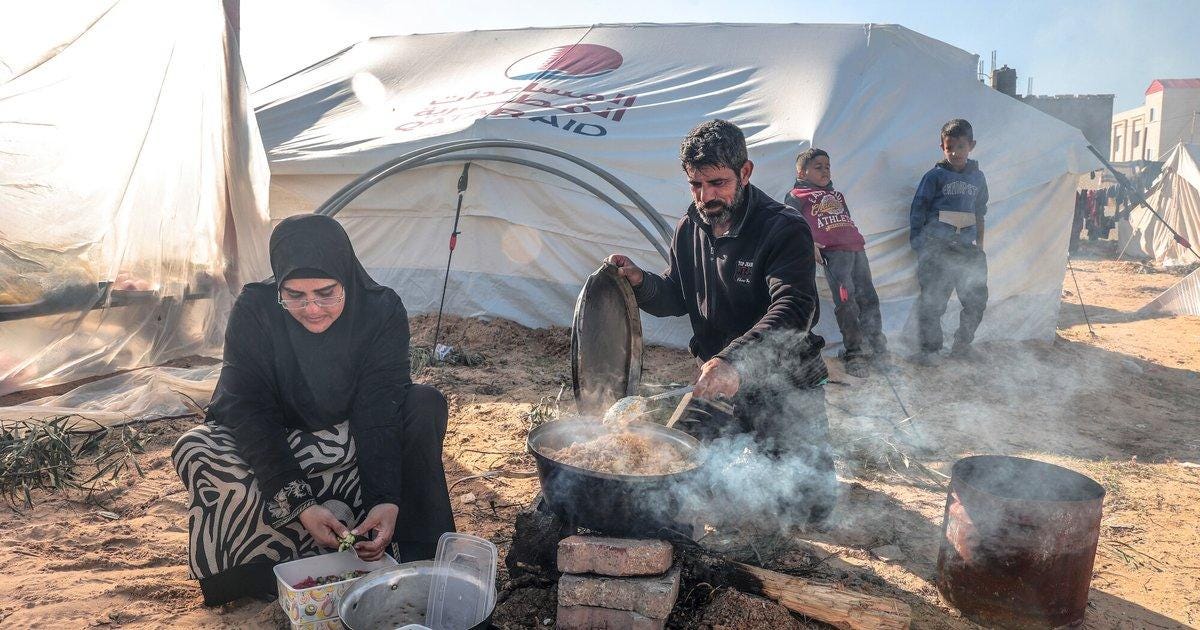
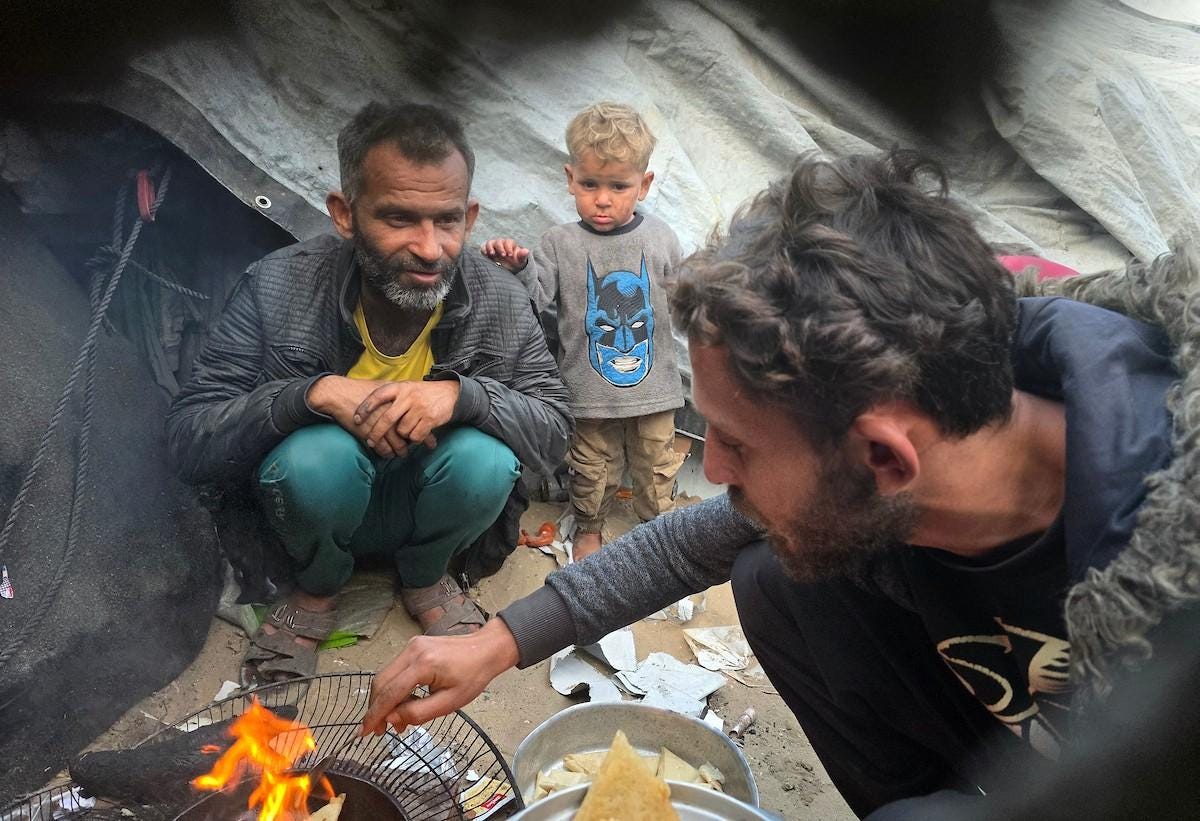
Cooking Fires Deepen the Hardship
The heat also continues after sunset. Families open tent doors and windows, hoping for a breeze, but the lack of electricity, fans, and ventilation equipment means nighttime offers little relief.
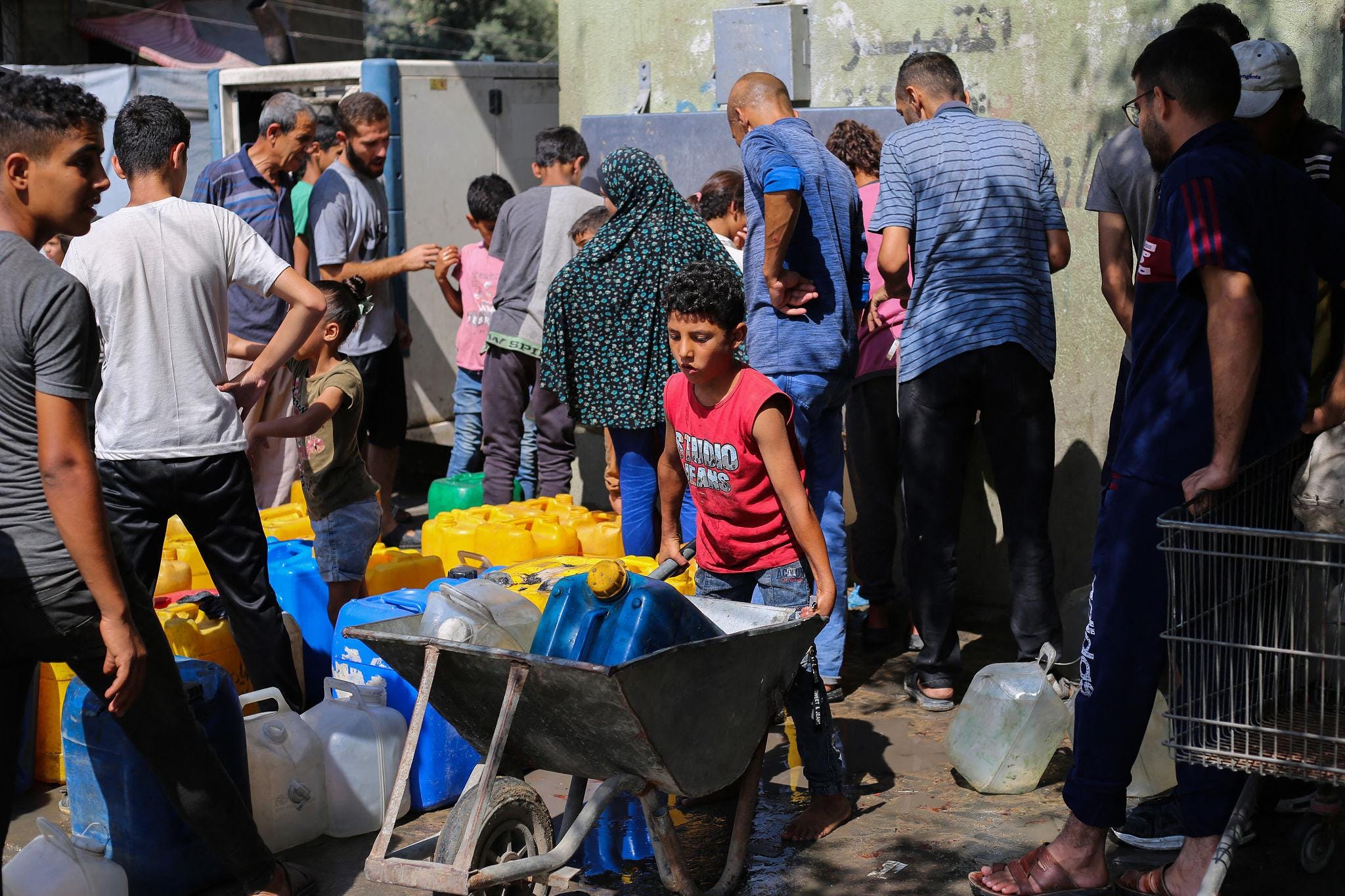
Water Queues by Day, Mosquitoes by Night
Another resident described camp life as a continuous cycle of suffering.
The day begins with long queues for water under the sun, followed by the need to bathe repeatedly because of the unbearable heat.
+—+
We could have talked for hours, with the unfolding headlines of our hour on the radio show:
Israel Is Paying Millions to Train AI Chatbots How to Talk About Gaza. It’s Working. Former Trump campaign manager Brad Parscale is overseeing an operation posting hundreds of blog posts on behalf of Israel, with the goal of infiltrating artificial intelligence.
The US has openly announced its intention to dismantle the International Criminal Court and liberal journalists who for years have screeched about the threat to democracy posed by Donald Trump have had absolutely nothing to say.
Cuba is facing genocide. Will China, Russia, Brics and Europe surrender to Trump’s neo-Hitlerism?
‘China Threatening World, Fuelling War’: U.S. VOWS To Fight Back Beijing Amid Rare Minerals ROW
College professors face an emerging challenge: We know students are no longer reading entire books
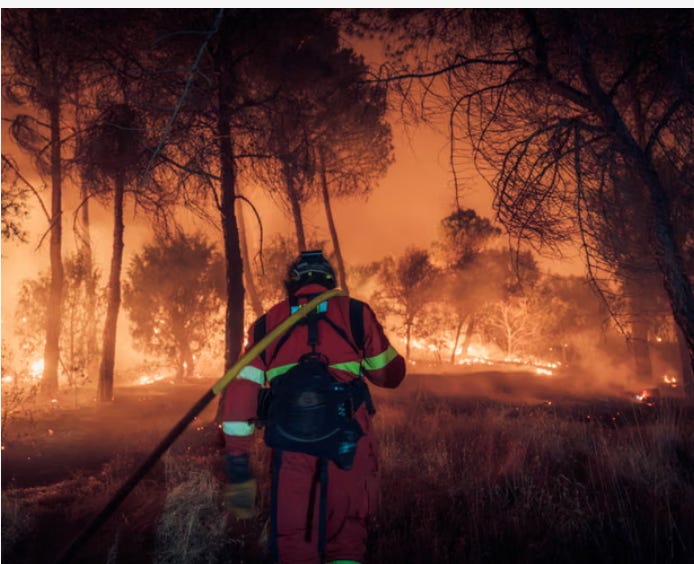
“It is the most painful manifestation of a climate emergency that is making… wildfires more voracious and heatwaves more frequent, and as a result our land more vulnerable,” said Spanish Prime Minister Pedro Sánchez.
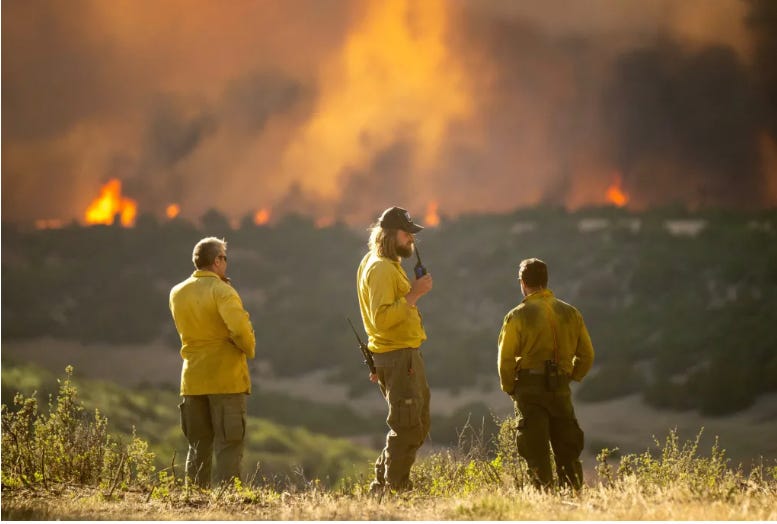
More than 300,000 people have been displaced as historic wildfires tear across France and Spain, presaging what some have called a climate-fueled “crisis of habitability” across Europe, which is heating faster than anywhere else on the globe.
The emerging AI battlespace: Counter-AI threats to AI-powered satellite remote sensing analysis
Yes, the microwave oven did come out of military research first. The technology started from World War II radar systems, specifically using a vacuum tube called a cavity magnetron developed to detect enemy planes and ships.
+—+
And, yes, Hitlers are all around us, as Swanson points out how many people have deemed Hitler as the boogeyman to rationalize WAR.
Manuel Noriega (Panamá)
Saddam Hussein (Iraq)
Slobodan Milošević (Yugoslavia)
Muammar Gaddafi (Libya)
Bashar al-Assad (Syria)
Vladimir Putin (Russia)
Swanson explains that the standard blueprint for mobilizing a population for war relies on transforming a complex political conflict into a binary struggle between absolute good and absolute evil. This is achieved through specific propaganda steps:
Targeting a Leader: The focus is shifted away from a nation’s people and placed entirely on a single “monster” who is running it.
The Hitler Label: That leader is explicitly branded as “the next Hitler” or “worse than Hitler” to bypass logical debate.
The Munich Analogy: Anyone suggesting diplomacy or a peaceful settlement is immediately branded a “coward” or an “appeaser,” echoing Neville Chamberlain’s 1938 deal with Nazi Germany.
The “Just War” Exception: Because World War II is widely romanticized as the ultimate “good war,” war advocates use it as a moral blank check. They claim that this specific new conflict is just as urgent and necessary (Introduction, War is a Lie)
U.S. President Donald Trump has been the most anti-science President in U.S. history, and Adolf Hitler was likewise extremely against science. Both nations’ leaders favored technology but condemned and downplayed any scientific findings that conflicted with his prejudices. But now, fascism and its anti-science are almost normal: consider Benjamin Netanyahu and the late Lindsey Graham.
“Our apologies, good friends, for the fracture of good order, the burning of paper instead of children.” Father Daniel Berrigan regarding the burning of draft files during the Catonsville Nine
Israeli researchers, academic institutions, and companies collaborated with EU institutions to develop dual-use technologies such as cybersecurity, artificial intelligence, and drones through an estimated 1.11 billion euros ($1.26bn) in grants from Horizon Europe between 2021 and 2024, and at least a further 40 million euros ($45m) under the Erasmus+ student and staff exchange programme between 2015 and 2020.
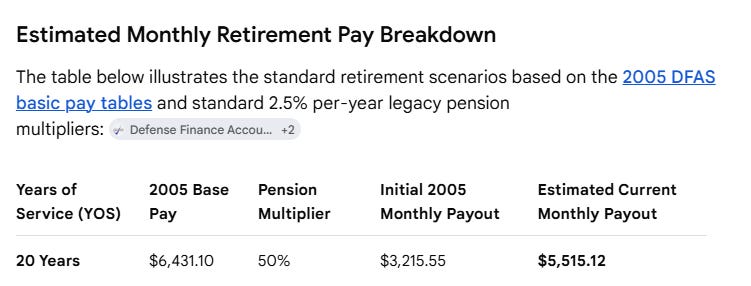
This is what WE get with our hard-earned tax dollars paying the retirement of a mercenary of the Air Force variety…. the Power of the “hidden reply” a la Substack:
We can only hope more disservice members are dismembered as they are flown and boated across the waters from the Snakes of America’s polluted shores to West Asia. Calling them anything BUT uniformed mercenaries is a disservice to the English Language. They are terrorists in the employ of the Continuing Criminal Enterprise currently headed up by Adolph Bibi and Pedophile Trump.
This is about the Jewish State of Israel’s and the Jewish State of 320 Billionaires’ MO, as well as the other 3,200 billionaires’ perverse ideas about power, depopulation of Muslim countries, and the chaos deeply embedded in the Goyim who are of course, finding themselves more and more tied to the Talmudic Terror of their Book of Genocide, err, Joshua.
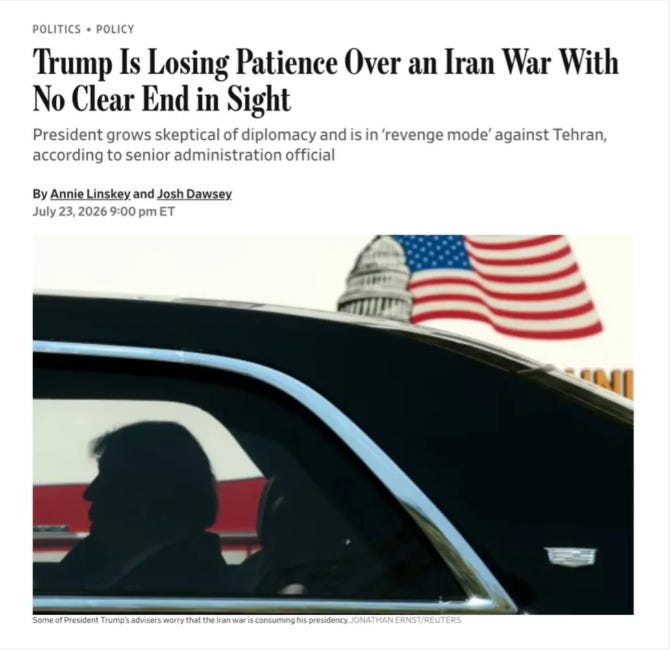
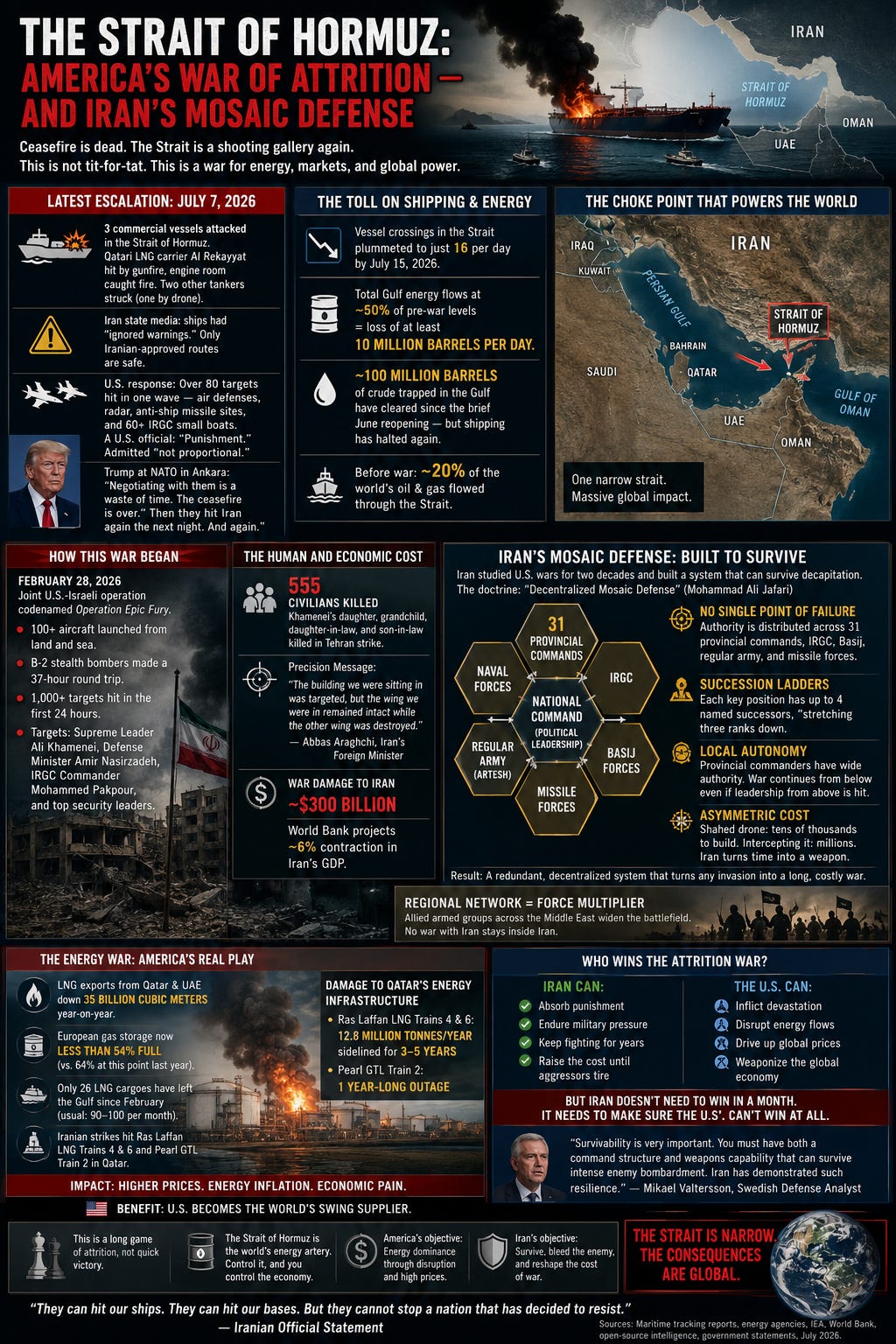
Don’t be fooled by all the negotiations and faux diplomatic theatre. Intelligent observers will have already copped on to the fact that the US and Israel are locked into a long-term conflict with Iran, as revealed by the deliberate violations of the Memorandum of Understanding (MOU) ceasefire agreement with Iran, and subsequent targeting of infrastructure around the Strait of Hormuz. The US is fully intending to try to prevent Iran’s ability to manage the strait. Trump’s planned hostilities will certainly extend right through the upcoming US midterm elections. Also, the US is pushing a weak Saudi Arabia to attack Yemen—a move that is most certain to hurt Saudi in the near term and beyond. Meanwhile, the dangers of more death and destruction for West Asia have never been more apparent. All this and more.
Don’t forget about the staging and proving ground and stress tests for that war against China.
The US has proved time and again that it’s not a global protector — it’s the biggest threat to human life on this planet. And Britain? Britain’s the trusty sidekick, always ready to hand over the keys.
Lowkey doesn’t just call out the US. He calls out people like Andy “Bomber” Burnham who let it happen. Burnham let Trump use British bases to blitz Iran. No hesitation. No moral backbone. Just the same old British routine: “Yes, America, whatever you need.”
Britain’s political class in action. Soft at home, servile abroad.
Responding to: William J. Astore served in the U.S. Air Force for 20 years, retiring in 2005. He was professor of history, and has written extensively for …
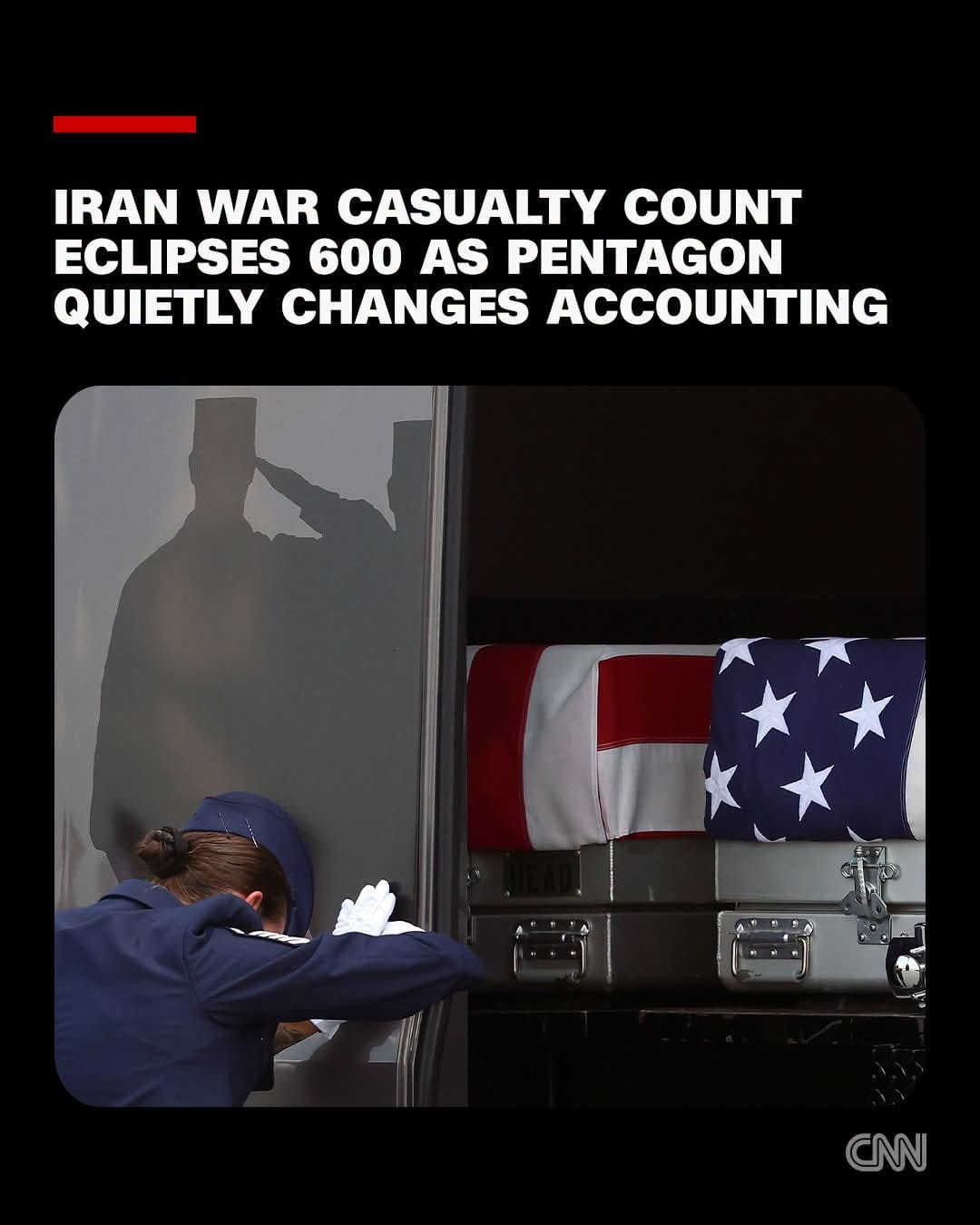
An article at the New York Times today cites the creative accounting of the Trump administration on U.S. casualties in the Iran War. That count now exceeds 600 wounded, with eighteen service members killed. And for what, exactly?
WJ Astore: When Americans say they admire and trust the military, what they mean, perhaps, is they appreciate the spirit of service and sacrifice of the troops, while reserving judgment on presidents and generals.
A reader recently posed a simple question: If the U.S. military hasn’t won a war decisively since 1945, why do Americans continue to place so much faith in it and its leaders? I’ve tackled this issue before, but it got me to thinking again about the roots of military admiration — and adulation — within our society.
Here are a few reasons I came up with:
Although the U.S. military lost in Vietnam, stalemated in Korea, and got bogged down in seemingly endless wars recently in Iraq and Afghanistan, that doesn’t mean it hasn’t won victories in battles, such as Desert Storm in 1991 or the beginning of Afghanistan in 2001 and Iraq in 2003. Its defeats were not primarily the fault of the troops but of poor leadership at the top (both military and government). In other words, when Americans say they admire and trust the military, what they mean, perhaps, is they appreciate the spirit of service and sacrifice of the troops, while reserving judgment on presidents and generals.
Let’s not forget victory in the Cold War. The fall of the “Iron Curtain,” the collapse of the Soviet Union, the reunification of Germany, the end of the Warsaw Pact — these were momentous events for the West.
The U.S. military may not win wars, but it does accomplish good things, e.g. rescue work, disaster relief, humanitarian missions. Critics often neglect these non-hostile missions.
Pro-military propaganda. There are many, many, examples of this, e.g. President Reagan and the myth of the noble cause in Vietnam, or presidents from Bush to Obama to Trump consistently praising the military as the finest fighting force in all of history. This is supported by Hollywood and TV. Think of all the movies and television shows that depict the military and war as ennobling and exciting and energizing.
The military-industrial complex and its power to control the narrative. The national security state has become a fourth branch of government with enormous influence and power in society. The mainstream media, for example, is dominated by pro-military talking heads, most of whom are retired colonels or generals.
Guilt. The U.S. military is “all volunteer.” The vast majority of Americans not only choose not to serve — they choose not to pay much attention. And I think many have some guilt for this, which they assuage with “support our troops” bumper stickers and other easy gestures of conformity.
Exposure to the military may be limited, but that doesn’t mean it’s not emotional. Indeed, when they think of the military, Americans may think of a son or daughter who serves, or granddad who served, or maybe that nice boy or girl down the street in uniform. They know nothing of the Pentagon, the military-industrial complex, war crimes, and so on.
For many Americans, the military is a point of pride. A symbol of strength but also a symbol of service and sacrifice.
Back to the fucking dirty liberals:
The US has openly announced its intention to dismantle the International Criminal Court and liberal journalists who for years have screeched about the threat to democracy posed by Donald Trump have had absolutely nothing to say.
Neither the New York Times or the Washington Post (which maintains a “democracy in America” section to document how the Trump administration is targeting US legal institutions), have run a single editorial or opinion piece opposing the efforts to dismantle the highest legal authority on the planet “brick by brick,” in the words of Marco Rubio.
Neither of them have had anything to say about the attempt to bring about, in the most real and practical way, the end of international law. The great liberal opinion setters, the self-proclaimed guardians of the rule of law, the “democracy dies in darkness” people have decided that international law can die in darkness, thank you.
Why? Because they are Zionists, imperialists and nationalists. Because they agree with Rubio’s rationale that the court, in its pursuit of justice, is a threat to US interests, sovereignty, and to Israel. Because they believe that the US and Israel should be able torun the world unhindered by the rule of law, that they should be able to commit genocide and war crimes if they want to. They believe, like Trump and Rubio, that the US, not a global court of experts, is the highest political authority on the planet. Because they believe, in the words of the disgracefully departed Lindsey Graham that the court is “designed for Africans and thugs like Putin,” not the masters of the imperial universe. Because justice for Gaza would threaten the foundations of a Zionism they hold so close to their fetid, sickly hearts.
There is a sickness at the core of the liberal. A sickness that allows them to support genocide, deny justice, and still pretend they’re the good guys. As I’ve written before, my ire is reserved overwhelmingly for liberals because of their moralising double-standards and hypocrisy. Because of their snooty claims to moral and intellectual superiority over the right despite being, in flavour if not decorum, essentially their mirror image. Because they get good people to support bad things.
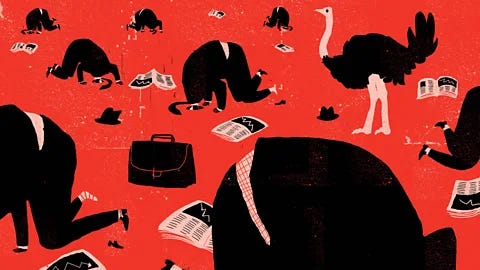
Back to the future: Agnotology.
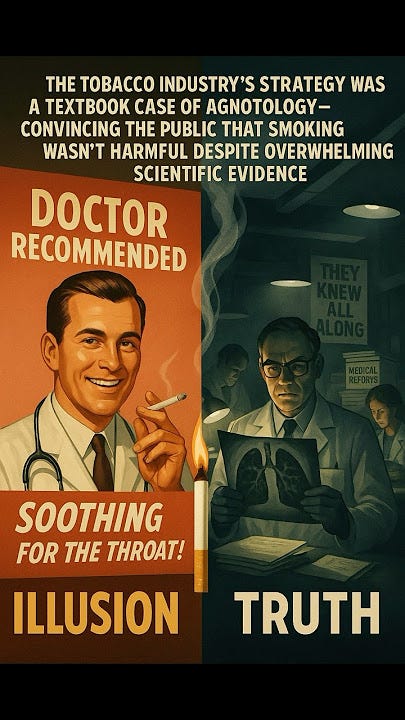
Agnotology is the study of culturally induced ignorance and doubt, specifically how and why specific misinformation or uncertainty is manufactured. The term was coined in the 1990s by Stanford professor Robert Proctor and linguist Iain Boal.
Definition: It comes from the Greek word agnosis (meaning “not knowing”) combined with ontology (the study of being).
Core Idea: Ignorance is not merely a gap in knowledge or an absence of information; it is often an active product created through cultural, political, and corporate strategies.
Here, today, and I have been writing about AGNOTOLOGY since the book came out:
Between 1975 and 1989, R.J. Reynolds Tobacco spent $45 million on what it called its Medical Research Program. The program’s stated purpose was funding biomedical research at leading American universities. Its actual purpose, spelled out in internal documents released through litigation, was to develop “a strong body of scientific data or opinion in defense of the product” — to complicate the causal link between cigarettes and disease by emphasizing stress, genetics, personality, and any factor other than tobacco. The principal advisor running the program from 1978 onward was Frederick Seitz, past president of the National Academy of Sciences and past president of Rockefeller University. Seitz’s tobacco work ended around 1989. That same year, the George C. Marshall Institute — which Seitz had co-founded — pivoted from defending the Strategic Defense Initiative to attacking the emerging scientific position on climate change. This continuity, one of many documented inAgnotology: The Making and Unmaking of Ignorance (Stanford University Press, 2008), is the volume’s central discovery: the same credentialed personnel, working from the same institutional networks, moved sequentially across tobacco, acid rain, ozone, secondhand smoke, and climate, selling not opinions about any particular substance but the credentialed manufacture of doubt itself.
Robert Proctor, professor of the history of science at Stanford, coined the term “agnotology” with the linguist Iain Boal in 1992 to name what mainstream epistemology had ignored — the deliberate production of ignorance as an object of study. Proctor’s earlier work on the political shaping of cancer research (Cancer Wars, 1995) and Nazi medicine (The Nazi War on Cancer, 1999) had established him as one of the few historians willing to examine how institutional power structures what science asks and what it does not. He was one of only three academic historians to testify against the tobacco industry in court, against thirty-six who testified for it. His co-editor, Londa Schiebinger, contributes original research on the eighteenth-century botanical trade drawn from her book Plants and Empire (2004). The volume gathers twelve contributors across history, philosophy, sociology, and archaeology — Peter Galison on state secrecy, Naomi Oreskes and Erik Conway on climate, David Michaels on manufactured uncertainty in public health, Nancy Tuana on the epistemology of the clitoris, Adrienne Mayor on the erasure of indigenous fossil knowledge, Charles Mills on structural white ignorance. The book emerged from workshops at Penn State (2003) and Stanford (2005).
The volume appeared a decade after the 1998 Master Settlement Agreement had forced tens of millions of previously secret tobacco industry documents onto the Internet. For the first time, the internal record of manufactured doubt was open to inspection. Historians could read the memos in which “doubt is our product” was explicitly named as strategy (Brown & Williamson, 1969), in which the goal was set as creating “doubt about the health charge without actually denying it” (Fred Panzer, Tobacco Institute, 1971), and in which Philip Morris identified as its number one strategic objective “to maintain doubt on the scientific front about ETS.” [Environmental Tobacco Smoke, or secondhand smoke)].
What had been suspected for decades was now documented in the industry’s own words. The book was written to establish that the same strategy — the same personnel, the same institutes, the same demand for false balance in journalism — had migrated from tobacco to a dozen other regulatory fights.
The 2003 Frank Luntz memo to Republican strategists, “Winning the Global Warming Debate,” instructed clients that “you need to continue to make the lack of scientific certainty a primary issue.” What the tobacco archive revealed as method, the climate fight was actively using as playbook — or so the book’s contributors argue.
Agnotologystands alongside David Michaels’s later Doubt Is Their Product (2008) and Oreskes and Conway’s book-length Merchants of Doubt (2010) as foundational texts documenting how institutional science is captured, and how the epistemic environment ordinary readers inhabit has been shaped by parties whose interests depend on their not knowing. The full summary unpacks the beryllium exposure standard set in 1948 in the back seat of a taxi and defended for fifty years while workers died; the bisphenol A studies in which 94 of 104 government-funded studies found evidence of harm and 0 of 11 industry-funded studies did; the peacock flower that enslaved women in the Caribbean used to prevent their children from being born into bondage, which European naturalists documented across three colonial systems for over a century and which never crossed the Atlantic as knowledge; Cotton Mather’s 1712 use of Iroquois testimony about ancient giants to prove the biblical flood, followed by his rhetorical dismissal of Algonquian syllables that expelled Native fossil knowledge from the American scientific record for three centuries.
There is an irony worth naming, and it runs through the whole volume. The book that documents how consensus gets manufactured takes the anthropogenic climate position and the IPCC as settled fact, treats every challenge to that position as a case of Marshall-Institute-style denial, and files Thabo Mbeki’s late-night encounter with the HIV-dissident literature as a case study in Internet-fostered ignorance. The agnotological lens is turned ruthlessly outward at tobacco, ozone, and product-defense firms — and never once inward at the same institutional consensus-manufacturing machinery that produced the climate and virology positions the contributors uncritically accept. Those writing about constructed blindness have had their own blindness constructed. That the sharpest analysts of manufactured doubt cannot see this in themselves is the strongest possible evidence for the thesis they came to prove.
And so the weather in Wisconsin is hell, right Mike Fish.
SOURCE: Residents describe the tents as sealed ovens that trap heat instead of keeping it out. Many are forced to spend hours outdoors searching for fresh air despite the dangers surrounding them.
“We Are Living in Hell”
A 90-year-old displaced woman described life inside the camp as “hell.”
She suffers from diabetes and high blood pressure and previously underwent open-heart surgery, making the extreme temperatures particularly dangerous for her.
The woman said the heat repeatedly worsens her condition, raising her blood sugar and leaving her severely exhausted. She has been admitted to hospital several times before returning to the same tent that provides no meaningful protection.
Rodents frequently enter sleeping areas, she said, while mosquitoes and other insects spread throughout the camp. The tents’ worn plastic coverings do little to prevent either the heat or pests from entering.
She added that life in the camp offers neither safety nor dignity, while death and funerals have become part of the displaced community’s daily reality.
Tents Offer No Protection From the Sun
Whether the tents remain closed or are opened for ventilation, residents say the conditions are unbearable. Sunlight enters from every direction, while no effective way exists to reduce the temperature.
Cooking Fires Deepen the Hardship
The heat also continues after sunset. Families open tent doors and windows hoping for a breeze, but the absence of electricity, fans and ventilation equipment means nighttime provides little relief.
Water Queues by Day, Mosquitoes by Night
Another resident described camp life as a continuous cycle of suffering.
The day begins with long queues for water under the sun, followed by the need to bathe repeatedly because of the unbearable heat.
And so the Terrorists of Israel, the Jews, since they deploy rabbis like fucking Kapo’s and Capitans, are smearing their feces ideology into this Latin American country, QUICKLY.
Machado boasted to Israel Hayom that “Venezuela will be Israel’s closest ally in Latin America” and even suggested Israel was aiding in the regime change operation, saying, “We rely on Israel’s support in dismantling Maduro’s crime regime”.
The Trump administration, after kidnapping Venezuelan president Nicolas Maduro in January of this year, chose not to install Maria Corina Machado, instead believing that interim president Delcy Rodríguez would be a suitable puppet leader.
Rodríguez, it seems, made a similar deal with Israel that Maria Corina Machado did.
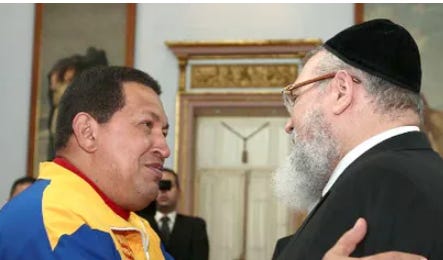
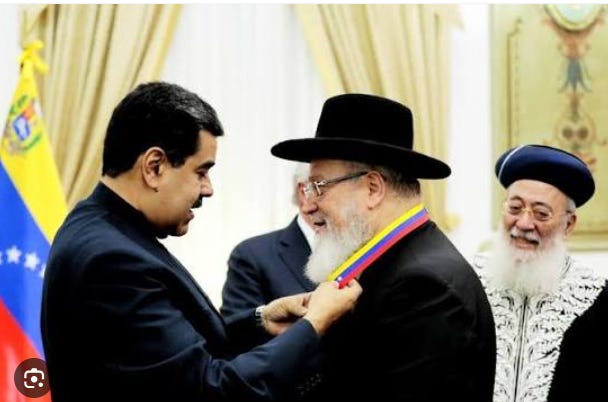
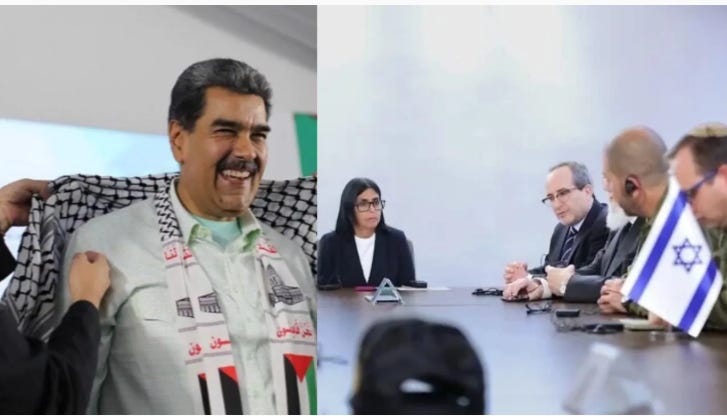
Reversing the years of solidarity with the Palestinians that Chávez and Maduro showed, Delcy Rodríguezwelcomed IDF terrorists into Venezuela under the guise of helping victims of the earthquake that hit the country.
Benjamin Netanyahu praised this as a “rare strategic objective by assisting an estranged government” with the goal of “restoring relationships”.
Following this, the Israeli paper Ynet reported that “Interim President Delcy Rodríguez on Thursday became the first leader of the South American country since Hugo Chávez to publicly praise Israel, after an Israeli aid delegation arrived in Venezuela following the devastating earthquake disaster”, adding, “The dispatch of the Israeli delegation has already created a kind of diplomatic breakthrough, including the first phone call in years between a senior Venezuelan official and a senior Israeli representative. Venezuelan Foreign Minister Yván Gil spoke with the head of the Israeli aid mission, Yoed Magen, Israel’s designated ambassador to Mexico, who also handles the Venezuela portfolio at the Foreign Ministry.”
[fucking jews, DUDES. What is their fucking problem? All rabbis are dirty, terrorists, forked tongues.]
Rabbi Yitzhak Cohen, Venezuela’s chief rabbi, who helped push for the Israeli delegation, hoped this would lead to the re-establishment of relations between Israel and Venezuela.
He boasted to Ynet, “We offered the president of Venezuela the possibility of having the Israeli delegation come to assist in the disaster. She gladly accepted our assistance and gave all the necessary approvals for the delegation’s arrival. This was the first step. Although there are no diplomatic relations between the two countries, Israel took a wonderful step by providing humanitarian aid to Venezuela …We hope, and are almost certain, that this will move another step forward. There is no doubt that this was a moving gesture.”
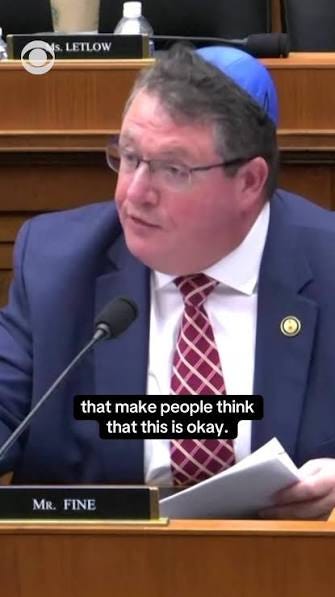
Delcy Rodriguez invited the first U.S. delegation to Venezuela which included the most militantly Zionist members of congress, including the openly genocidal Randy Fine, who has suggested Gaza should be nuked and “called for Gaza to be ‘destroyed,’ calling a fellow member of Congress a ‘Muslim terrorist,’ and telling Palestinians to ‘eat rockets’” along with using “hashtags on his social media platform, including ‘bombs away’ and ‘starve away’, referring to Israel’s onslaught on Gaza.”
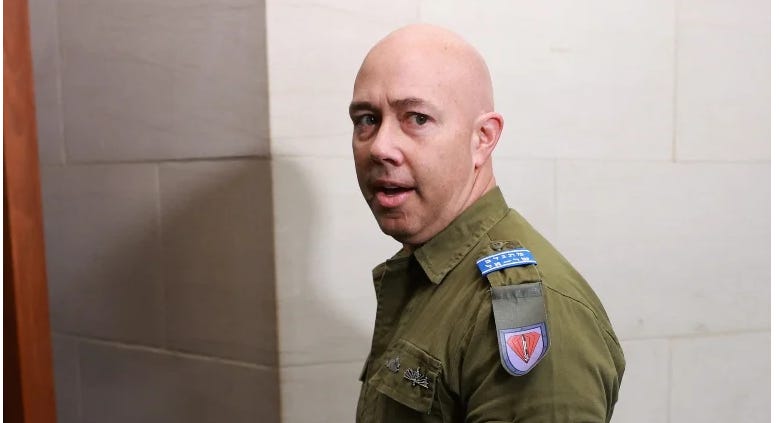
Also with the delegation was the congressman Brian Mast, a former volunteer in the Israel Defense Forces, who has worn his IDF terrorist uniform in the halls of Congress.
The genocidal Randy Fine praised the Delcy Rodríguez government and the kidnapping of Nicolas Mudro during his visit, writing, “What was clear from our meetings with people at all levels of government and business was this — President Trump’s decision to remove Maduro set this country on a trajectory to be a key ally of the United States, and an energy powerhouse to benefit us all.”
Venezuela’s all-powerful constitutional assembly has passed a decree ordering authorities to investigate and try those believed responsible for supporting new US economic sanctions.
The decree passed on Tuesday declares all those who promoted the latest US response to the political conflict in Venezuela as “traitors of the patria”.
The move comes days after Venezuela’s president vowed to prosecute for treason opponents he accused of being behind the financial sanctions.
“We accept the call of President Nicolas Maduro to initiate, together with the competent state authorities, a historical judgment of treason against those engaged in the promotion of these immoral actions against the interests of the Venezuelan people,” said Diosdado Cabello, a senior member of the body.
Former Foreign Minister Delcy Rodriguez, who now presides over the assembly, said it would urge the chief prosecutor and the Supreme Court to initiate investigations.
During the nearly three hours of debate, members accused opposition politicians of supporting the sanctions and brought out a communique issued by the opposition in which they allegedly celebrate the sanctions by the government of US President Donald Trump.
President Nicolas Maduro has singled out Julio Borges, president of Venezuela’s opposition-controlled congress.
The sanctions announced last week prohibit American financial institutions from providing new money to the government or the state oil company, PDVSA.
The socialist president accuses his opponents of waging an “economic war” against the country, with help from the United States.
Moscow on Monday slammed the US sanctions, saying they were aimed at damaging the Latin American nation’s economy and aggravating tensions.
But French President Emmanuel Macron accused Maduro of creating a “dictatorship” in one of the harshest condemnations yet of the South American regime by a European leader.
[Number of young people out of work or training in UK could hit 1.25m by early 2030s.]
In the 1970s, 80s and 90s, UK governments had a effective tool to support young people to avoid unemployment: careers services run by local authorities. In the early 2000s, the New Labour government that Milburn was a part of replaced this with Connexions, a more generic advice service for youth in England, not exclusively focused on supporting work and learning.
Under the coalition government, Michael Gove disbanded this entirely. He passed responsibility for career guidance to schools, crucially with no allocated budget to support this work. Essentially, careers services for young people were dismantled. As a result, support for those who are unemployed after leaving school is patchy and incoherent. It depends on what local authorities are able to do (and limited input from the National Careers Service, which will soon be folded into the Department for Work and Pensions’ jobcentre network).
Europe live: Officials warn that wildfires could still be burning in November
Firefighters in France and Spain face another day battling wildfires, as another heatwave set to hit this week.
WHERE’s the OUTRAGE for this piece of Jewish Nazi Shit getting France and Spain’s largess?
Spain’s Support
Military Aid: Pledged a €1 billion military aid package for 2026, bringing total aid to €4 billion.
Defense Collaboration: Partnered on joint manufacturing of radars, drones, and military equipment.
Reconstruction: Allocated financial instruments and hundreds of millions for energy and infrastructure repair.[
France’s Support
Economic Funds: Contributed tens of millions to renew the Fund for Supporting Priority Sectors of the Ukrainian Economy (the “Fund for Ukraine”).
Industrial Partnerships: Backed collaborative agreements enabling French companies to work directly on Ukrainian digital, healthcare, and energy projects. [1]
Bilateral Accords: Coordinated joint European Union loans, frozen asset use, and military hardware supplies alongside European allies.
We will BURN for the JEWS:
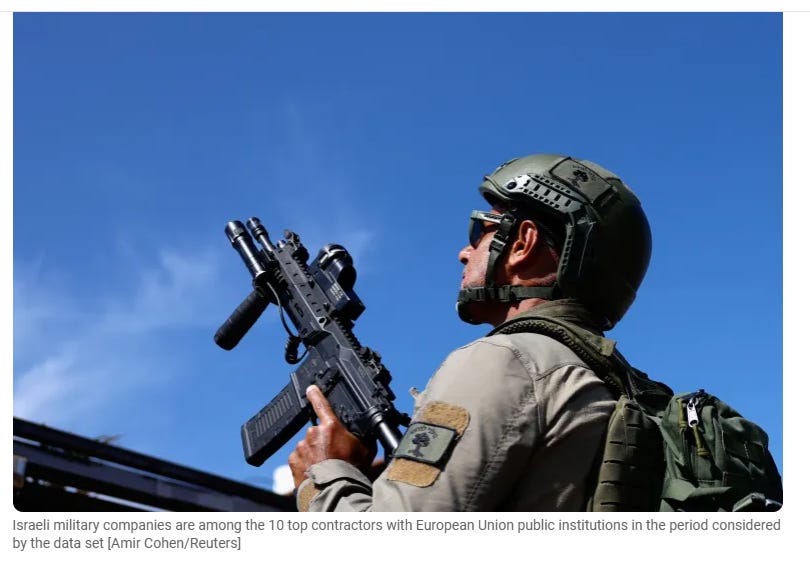
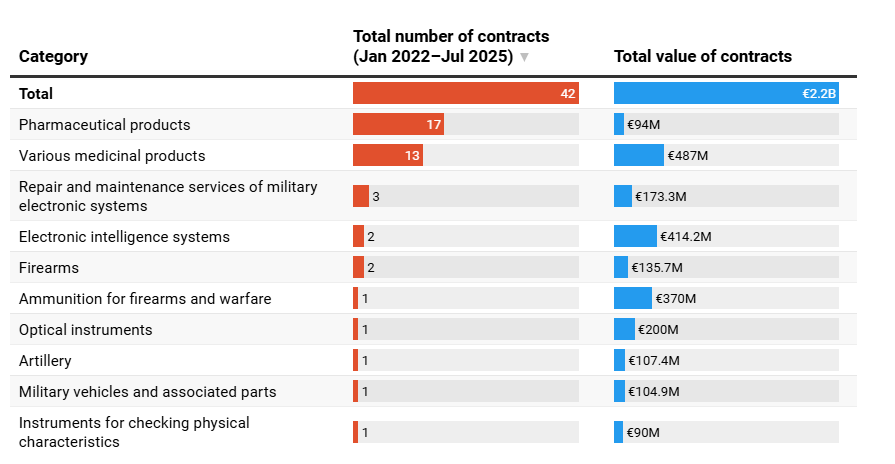
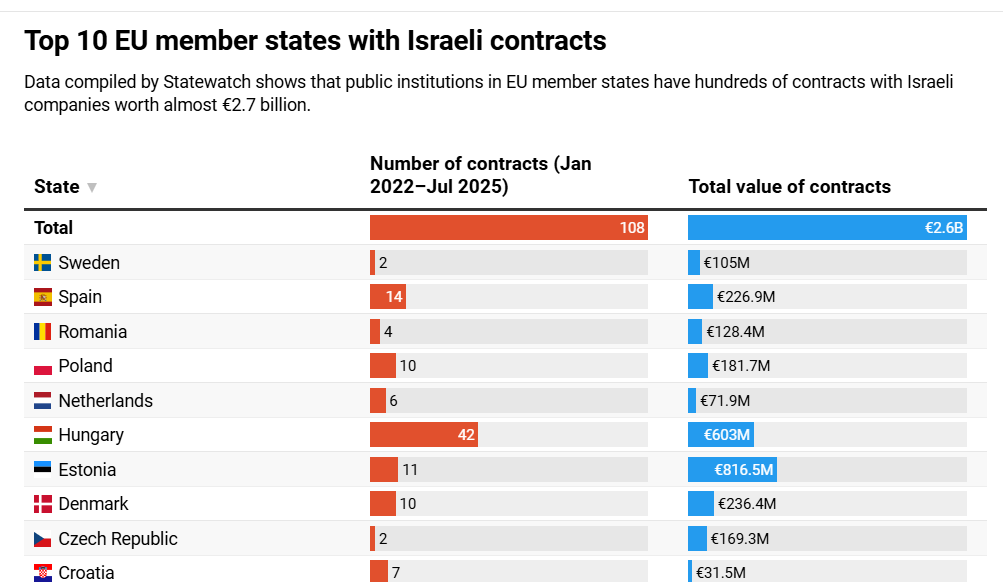
Public institutions in European Union countries are signing profitable contracts with Israeli companies despite Israel’s long track record of war crimes in the Gaza Strip and occupied West Bank, data collected by Statewatch and revealed by Al Jazeera shows.
The figures show Spain, among Europe’s most vocal critics of Israel, agreed to 14 contracts worth almost 227 million euros ($257m) between January 2022 and July 2025, the period covered by the data set. The majority of that sum – 207 million euros ($235m) – stems from an April 2024 contract between the Spanish Defence Ministry and Rafael for “aerial combat systems”. Spanish police forces also purchased bulletproof vests from Israeli company Marom Dolphin.
EuroTrashLandia will burn for the JEWS:
Amnesty International is among several human rights watchdogs calling for the suspension of the pact. Eve Geddie, director of Amnesty’s European Institutions Office, said doing so is a legal obligation when one of its founding clauses is not respected – as is the case with Israel.
“Verbal condemnation of Israel’s unlawful conduct by the EU and its member states, including on the establishment and expansion of illegal settlements in the [occupied Palestinian territories], without action that attempts to restore legal compliance results in the erosion of international law to the detriment of all,” Geddie told Al Jazeera.
“Shamefully, the EU has allowed and enabled Israel to continue its violations in total impunity.”
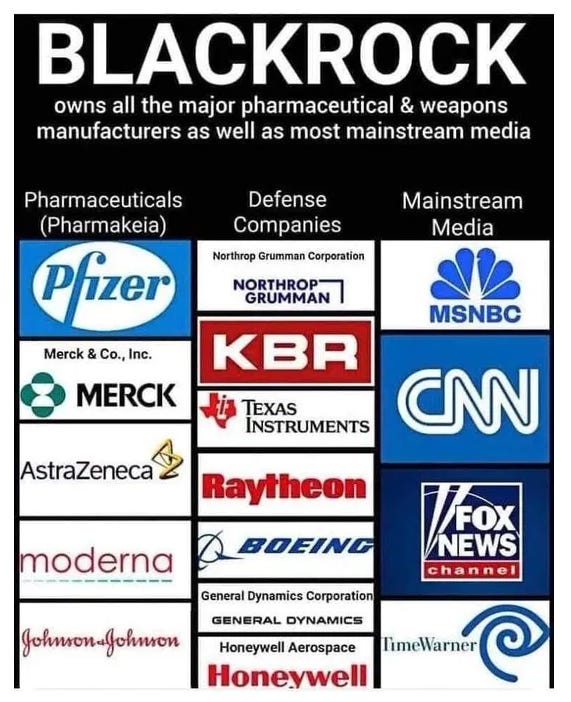
This is so fucking sick. Fucking goes back to BlackHeartRock.
How Anton’s Sébastien Raybaud Plans to Accelerate Film Output of ‘Greenland’ Producer Thanks to Game-Changing BlackRock Investment. Dogs…………..
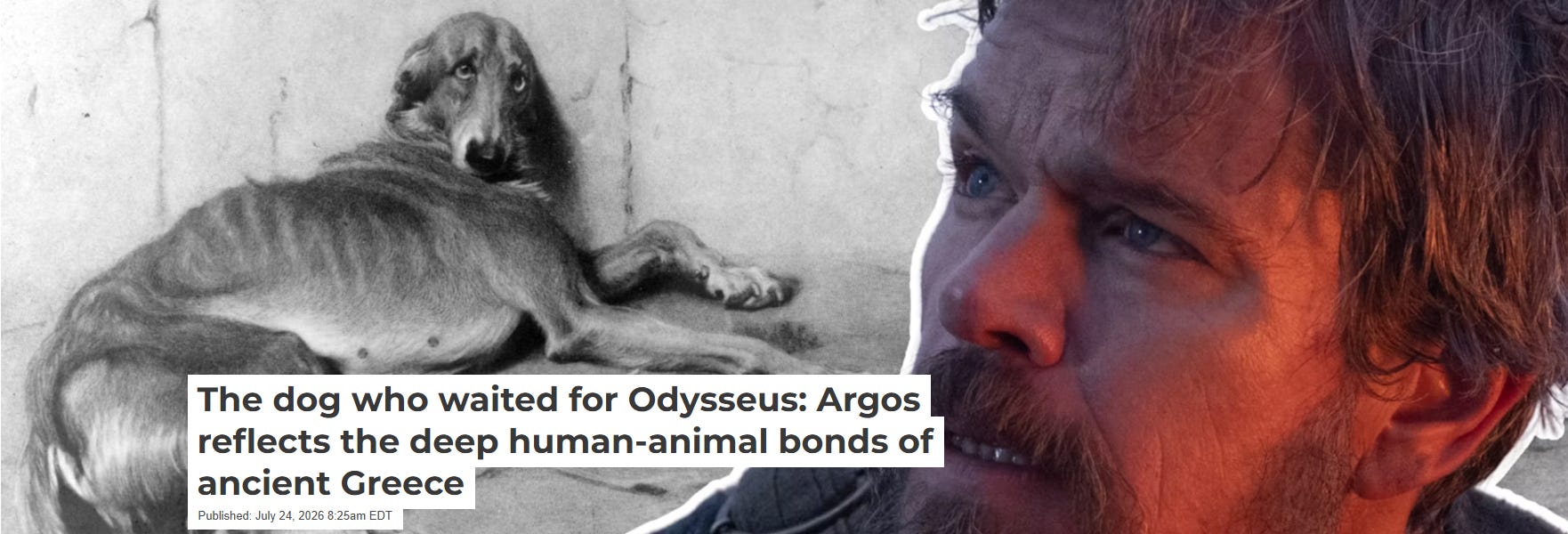
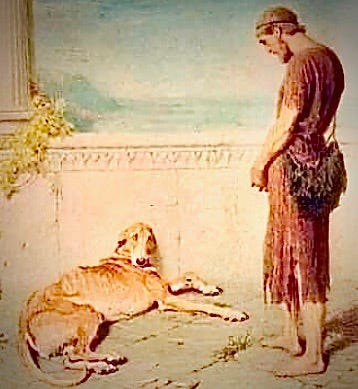
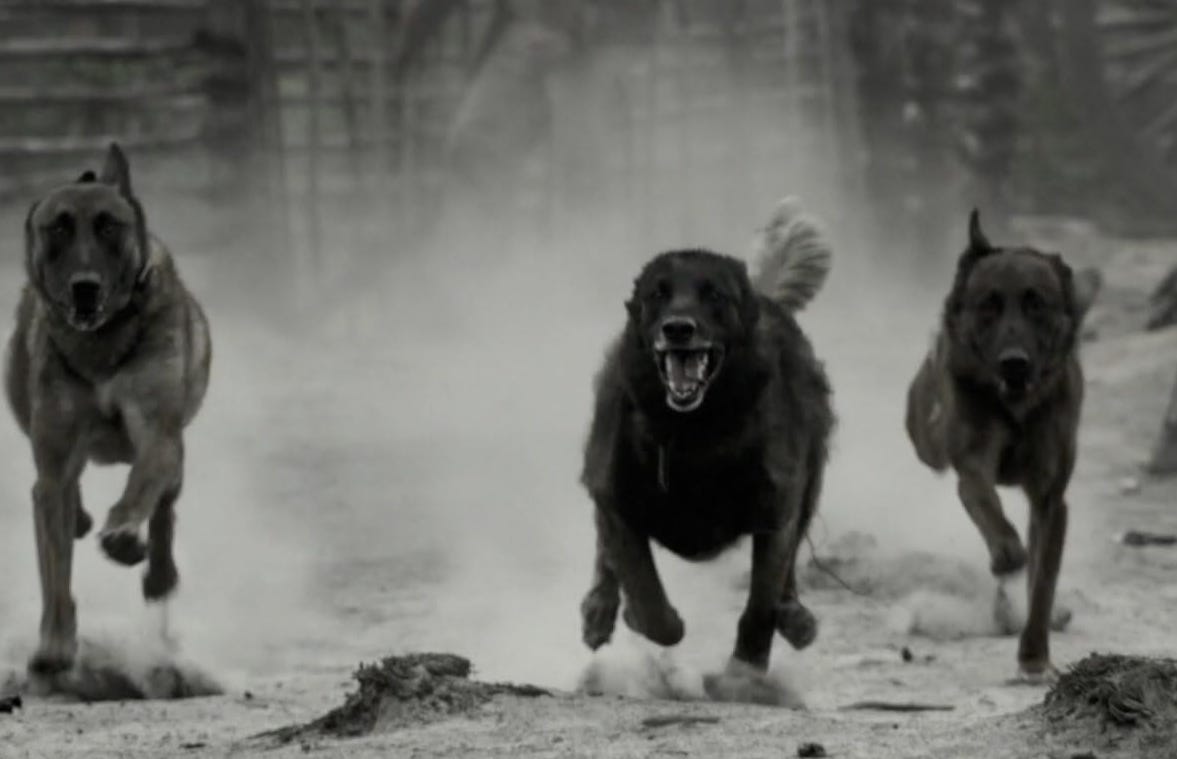
For many readers, the most moving scene in all Homeric epic is not the deaths of Patroclus or Hector or the truce between Achilles and Priam, but the story of Odysseus’s dog Argos. Yesterday was International Dogs’ Day; but I did not want to post this heartbreaking passage on a day designated as a celebration of canine joyfulness.
After accompanying the Greeks to Troy and fighting for ten years until the city’s fall, Odysseus wanders the seas for a further ten years before eventually returning to his homeland, Ithaca. In his absence, greedy local noblemen have descended on his palace and, as suitors for the hand of his wife, the queen Penelope, they resist the prospect that Odysseus will one day return.
Odysseus disguises himself as a beggar and, unrecognised, is befriended by the swineherd Eumaeus. As they walk towards the palace, Odysseus sees the hunting-dog Argos that he had reared as a pup, now old and weak, lying neglected on a pile of manure. Argos instantly recognises him, but for fear of betraying his true identity Odysseus cannot reciprocate the dog’s attempt to welcome his master.
One of the most effective translations of the scene is that composed in rhyming couplets by Alexander Pope (1726).
Abandoned in neglect poor Argos lay,
unhoused, uncared for, on the public way;
and where the heaps of rank manure were spread
a-swarm with fleas, he made his filthy bed.
As they conversing to the city drew.
the faithful dog his ancient master knew:
and recognising well his voice and tread,
pricked up his ears and raised his heavy head.
Seeing Odysseus, him he strove to meet,
and tried in vain to crawl and lick his feet;
but strength alone he had to wag his tail
to greet his master, though to no avail.
Deep pity touched Odysseus to his soul,
and down his cheek a tear unbidden stole;
but unperceived he turned his head, and dried
the falling drop, while silently he cried.
“What sorry beast in this abandoned state,”
he asks, “lies helpless at Odysseus’ gate?
His bulk and beauty speak no vulgar praise.
I warrant such a hound saw better days.”
To him the older man his head inclined
and said: “He served one of a noble kind –
now long since perished on a distant shore –
who will, alas, behold him nevermore.
You should have seen dear Argos bold and young,
swift as a stag, and as a lion strong!
Now time has sapped him, with his master lost
and many years on stormy oceans tossed.”
So said Eumaeus, and strode on ahead;
and faithful Argos dropped his tired head.
Though twenty long and dismal years had passed,
he’d lived to see his lord again at last.
Now night descends upon his weary eyes:
he wags his feeble tail for joy, and dies.
Make this MOVIE, NOLAN: Strait of Hormuz!!!!!!!!!!!!!!!!!!!
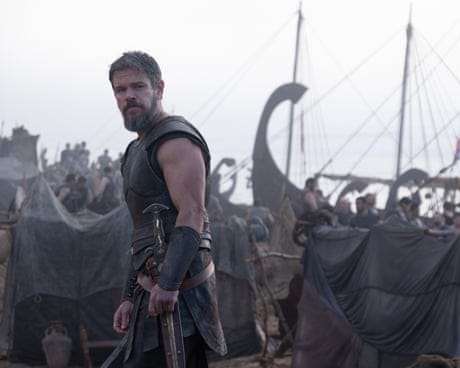
Elon Musk was a man on a mission. Yes, he’s supposedly intent on colonizing Mars, or the moon, or maybe, if you give him some more time to move the goalposts, just a really, really tall mountain, but this spring, a more pressing task presented itself, a sequel to his early-2026 mission to post white supremacist rhetoric: take down Christopher Nolan’s The Odyssey, which he decided was the latest of “woke Hollywood’s” attempts to spread racial animus (towards white people, of course) and win Oscars while doing so. Nolan, Musk explained to the trade publication Variety, was “pissing on Homer’s grave”, referring to the author of the film’s epic-poem source material.
As the final phases of the movie’s promotional campaign ramped up, Musk posted dozens of times on his self-owned social media platform with grievances related to the casting of Lupita Nyong’o (a Black woman) and Elliot Page (a trans man) in the movie, often spreading false statements about this casting existing to satisfy new Oscar requirements. (As detailed here, those new Oscar diversity requirements are extremely flexible, and often satisfied by studio-wide programs that have nothing to do with casting. The Odyssey did not need to hire Oscar winner Nyong’o to be eligible for awards.) Musk may be a divisive-at-best figure who large swaths of the population do not take seriously, but he commands enough attention and adulation from a vocal minority that plenty of online accounts were soon parroting his willful misunderstanding of Hollywood and The Odyssey. Many of them abruptly and hilariously zeroed in on the 2004 movie Troy – which the right flank of social media suddenly decided was a beloved masterpiece, rather than its own, far greater distortion of Homer’s epic poem The Iliad.
This story has an ending even more familiar than a Musk-branded rocket crash: after weeks to months of rightwing outrage about the failure to select an exclusively Greek cast for a movie that also features a cyclops, sea monsters and a witch who turns men into pigs, The Odyssey has become one of the biggest hits of the summer, with over $260m in the bank already, well on its way to outgrossing the inflation-adjusted totals for Troy. (In raw dollars, it’s already made more in the US.) The rallying cries of “go woke, go broke” have been drowned out by demand to see Nolan’s fusion of old-fashioned Hollywood spectacle with less traditional forms of filming, editing and, yes, casting.
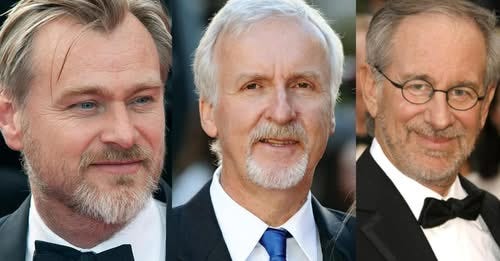
5.3 billion US dollars according to Forbes, Steven Spielberg who is a movie director is believed to be the richest celebrity in the world. His movie genre is sci-fi(Science Fiction), adventure and fantasy film. He is currently 78 years old. He started making movies as a teenager
Look, when you look at the monarchs in the Persian Gulf, in the Arab Zionist countries of the Persian Gulf, they’re not really educated people. And they have a problem understanding raw politics. Someone like Mohammed bin Salma is… I mean, he has different issues, right? Aside from his snorting and everything, he has different issues. For example, he was talking about bringing the war to Iran, right? And when he says that, it’s one thing to listen to him, to his transcript being translated to English; it’s another thing to listen to him in Arabic, right? As some kind of- because, as you know, the Sassanid Empire was invaded by the Arabs, right? But there is this underlying feeling in people like Mohammed bin Salman that they have a duty in order to fight the Persians. They still see it as in that context. It’s a cultural thing, right? One thing that I know, and it’s very sad, I don’t know why Saudi Arabia, Kuwait, all these countries do this to themselves.
So UAE and Israel, they had a joint plan. As you know, UAE has this rivalry with Saudi Arabia, right? So they’re trying to eclipse them in order to put more pressure on them. UAE and Israel were working on plans in order to cut off the access of Saudis To Bob Al-Mandab and straight off almost. They were actually working on this, right? And seeing that now as a result of the attack that has happened on Iran and Yemen, the Saudis themselves have walked into that kind of program. It really makes you question as to what Mohammed bin Salman actually thinks. But again, the problem is that the prejudice, the hostility in that historic context clouds the judgment of people like Mohammed bin Salma.
We had the Beijing Accord with Saudi Arabia in which Iran and Saudi Arabia, they sort of had a rapprochement. But it didn’t last because the Saudis are not serious. I think that they thought that they could get away with it, that if they got rid of Iran, they could become the hegemon in this region.
I mean, the truth is that Israel is playing all of them against one another, the same UAE that has been given carte blanche in different parts of the world in order to carry out atrocities. It will only be used as long as it contains Saudi Arabia. Once Iran is gone and they inflict the kind of damage that they want to inflict on Saudi Arabia, the UAE itself will become more unstable.
We’re talking about seven cities. The UAE, United Arab Emirates, it’s just seven cities. It’s very small. But they don’t understand that you don’t, and apologies for saying this, you don’t defecate where you eat. You don’t defecate where you sleep. You know, you look at the Europeans. The Europeans go to Africa and start wars there. But this is not the mentality in these Arab Zionist countries.
MURDER MURDER MURDER, and this is it? Christopher Nolan vs James Cameron vs Steven Spielberg: Who’s the RICHEST filmmaker? THIS IS WHAT AMERICANS love…
How’s this film? MAKE IT. Drama, heroes, exotic places, tension, empathy, “action.”
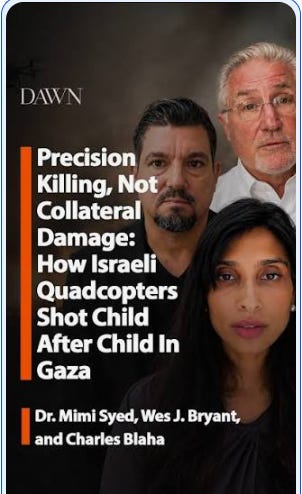
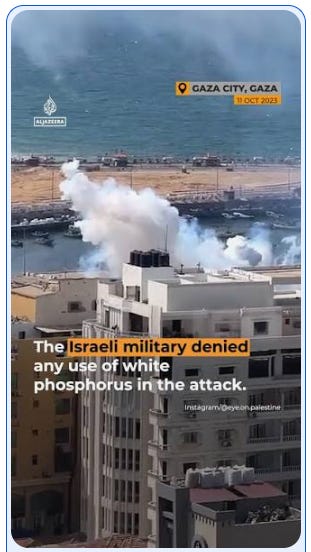
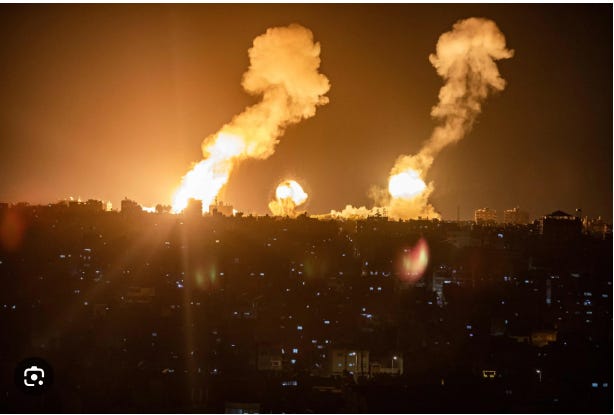
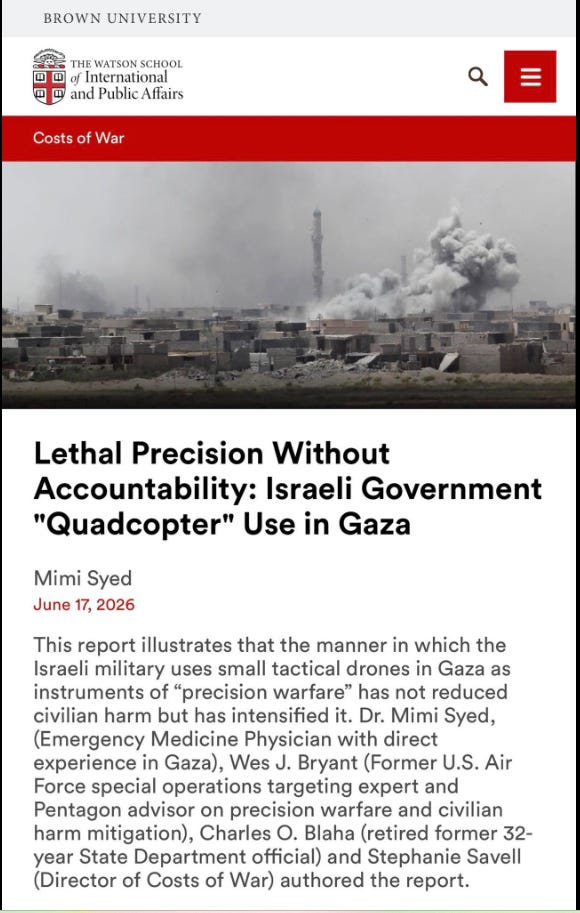
In theory, precision drone warfare is designed to reduce collateral damage and civilian casualties. In Gaza, evidence indicates the opposite has occurred.
This is the damning core claim of a study by Brown University’s Costs of War Project, titled ‘Lethal precision without accountability: Israeli Government “Quadcopter” use in Gaza’.
The Israeli army flatly rejects that it deliberately targets civilians or children.
But a team of researchers – including an American ER doctor who worked inside Gaza, a former Pentagon targeting chief and a 32-year State Department director – say the Israeli military has been using a new class of cheap, single-soldier drones to shoot people at close range in Gaza, including – fatally – children.”
The IDF’s use of tactical drones in Gaza is part of a pattern of systemic civilian casualties in this war. The U.S. and the international community would do well to pay attention to quadcopter technology, at the very least to promote measures that incorporate this emerging technology into systems of international humanitarian law that are intended to protect civilians. (Specific policy recommendations from a military perspective are listed in Appendix A). More broadly, as Neta Crawford contends,65 attention should be focused on the organizational and political structures that enable widespread civilian harm.
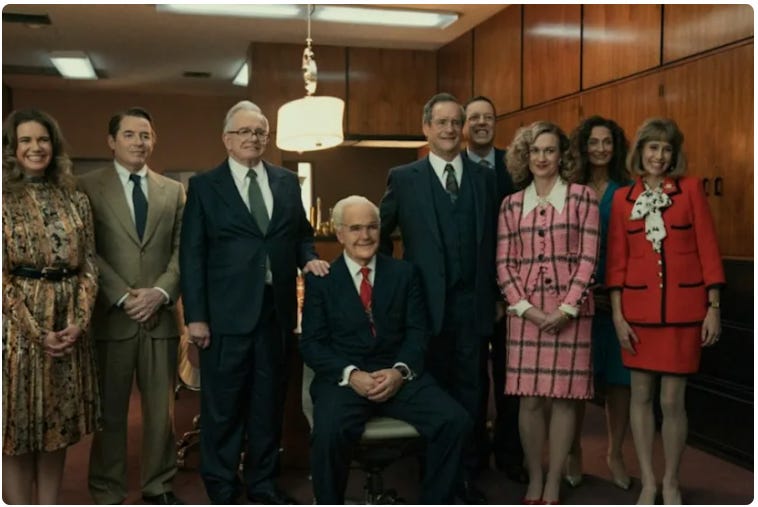
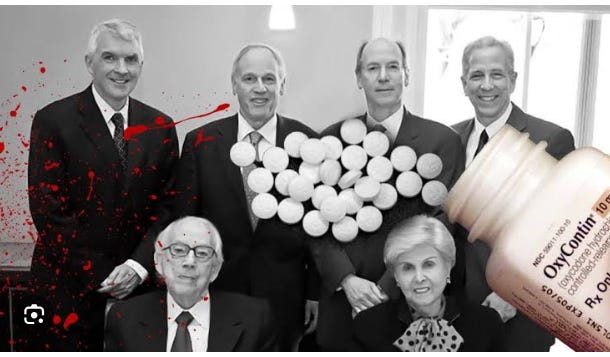
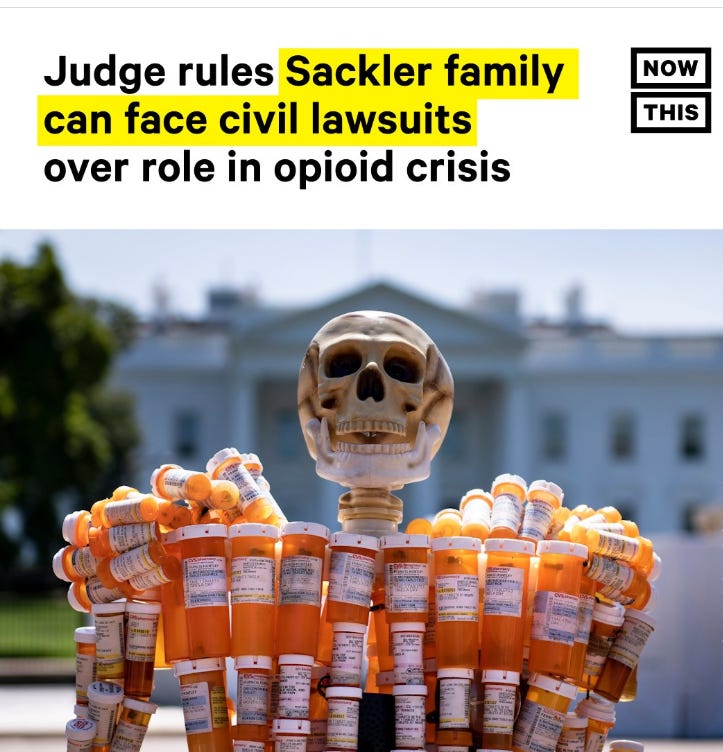
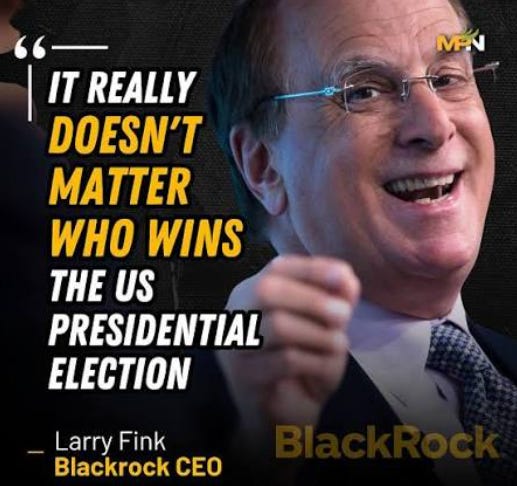
How about this movie, Nolan, Cameron, Spielberg? A true MONSTER, The Fink Family. Makes Sacklers look like Fred Rogers relatives…..
BlackRock and Vanguard, the world’s top two asset managers, oversee a whopping $18 trillion in global assets. Based on their recent filings, here’s a glimpse of the high-profile stocks they own.
A virtually unregulated investment firm today exercises more political and financial influence than the Federal Reserve and most governments on this planet.
The firm, BlackRock Inc., the world’s largest asset manager, invests a staggering $9 trillion in client funds worldwide, a sum more than double the annual GDP of the Federal Republic of Germany.
This colossus sits atop the pyramid of world corporate ownership, including in China most recently. Since 1988, the company has put itself in a position to de facto control the Federal Reserve, most Wall Street mega-banks, including Goldman Sachs, the Davos World Economic Forum Great Reset, the Biden Administration and, if left unchecked, the economic future of our world. BlackRock is the epitome of what Mussolini called Corporatism, where an unelected corporate elite dictates top-down to the population.
‘Colossal Financial Pyramid: BlackRock and The WEF “Great Reset’” By F. William Engdahl Global Research, July 21, 2026
[Fucking Jews, man, always STICKING together. This is a global problem.]
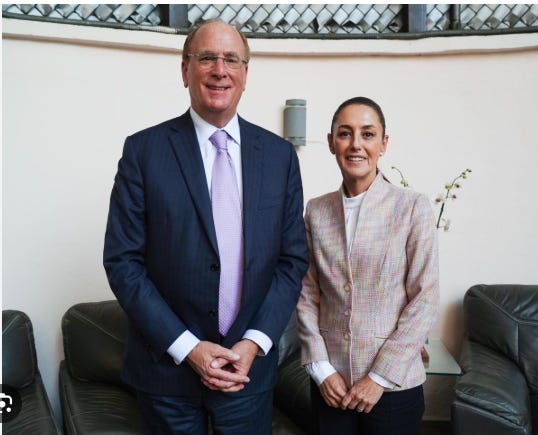
A Very BlackRock in Mexico
BlackRock’s murky history in Mexico shows that conflicts of interest and influence-building with leading government agencies is not restricted to just the USA. PRI Presidential candidate Peña Nieto went to Wall Street during his campaign in November 2011. There he met Larry Fink. What followed the Nieto victory in 2012 was a tight relationship between Fink and Nieto that was riddled with conflict of interest, cronyism and corruption.
Most likely to be certain BlackRock was on the winning side in the corrupt new Nieto regime, Fink named 52-year-old Marcos Antonio Slim Domit, billionaire son of Mexico’s wealthiest and arguably most corrupt man, Carlos Slim, to BlackRock’s Board. Marcos Antonio, along with his brother Carlos Slim Domit, run the father’s huge business empire today. Carlos Slim Domit, the eldest son, was Co-Chair of the World Economic Forum Latin America in 2015, and currently serves as chairman of the board of America Movil, where BlackRock is a major investor. Small cozy world.
The father, Carlos Slim, at the time named by Forbes as World’s Richest Person, built an empire based around his sweetheart acquisition of Telemex (later America Movil). Then President Carlos Salinas de Gortari, in effect, gifted the telecom empire to Slim in 1989. Salinas later fled Mexico on charges of stealing more than $10 billion from state coffers.
As with much in Mexico since the 1980s, drug money apparently played a huge role with the elder Carlos Slim, father of BlackRock director Marcos Slim. In 2015, WikiLeaks released company internal emails from the private intelligence corporation, Stratfor. Stratfor writes in an April 2011 email, the time BlackRock is establishing its Mexico plans, that a US DEA Special Agent, William F. Dionne confirmed Carlos Slim’s ties to the Mexican drug cartels. Stratfor asks Dionne, “Billy, is the MX (Mexican) billionaire Carlos Slim linked to the narcos?” Dionne replies, “Regarding your question, the MX telecommunication billionaire is.” In a country where 44% of the population lives in poverty, you don’t become the world’s richest man in just two decades selling Girl Scout cookies.
Fink and Mexican PPP
With Marcos Slim on his BlackRock board and new president Enrique Peña Nieto, Larry Fink’s Mexican partner in Nieto Peña’s $590 billion Public-Private Partnership (PPP) alliance, BlackRock, was ready to reap the harvest. To fine-tune his new Mexican operations, Fink named former Mexican Undersecretary of Finance Gerardo Rodriguez Regordosa to direct BlackRock Emerging Market Strategy in 2013. Then in 2016, Peña Nieto appointed Isaac Volin, then head of BlackRock Mexico, to be No. 2 at PEMEX, where he presided over corruption, scandals, and the largest loss in PEMEX history, $38 billion.
Peña Nieto had opened the huge oil state monopoly, PEMEX, to private investors for the first time since nationalization in the 1930s. The first to benefit was Fink’s BlackRock. Within seven months, BlackRock had secured $1 billion in PEMEX energy projects, many as the only bidder. During the tenure of Peña Nieto, one of the most controversial and least popular presidents, BlackRock prospered through cozy ties. It soon was engaged in highly profitable (and corrupt) infrastructure projects under Peña Nieto, including not only oil and gas pipelines and wells but also toll roads, hospitals, gas pipelines, and even prisons.
Notably, BlackRock’s Mexican “friend” Peña Nieto was also “friends” not only with Carlos Slim but with the head of the notorious Sinaloa Cartel, “El Chapo” Guzmán. In court testimony in 2019 in New York, Alex Cifuentes, a Colombian drug lord who has described himself as El Chapo’s “right-hand man,” testified that just after his election in 2012, Peña Nieto had requested $250 million from the Sinaloa Cartel before settling on $100 million. We can only guess what for.
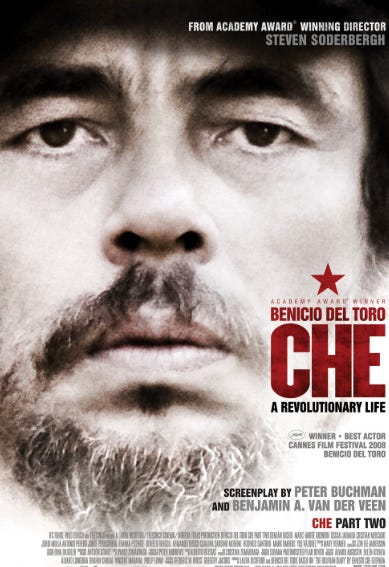
A real movie:
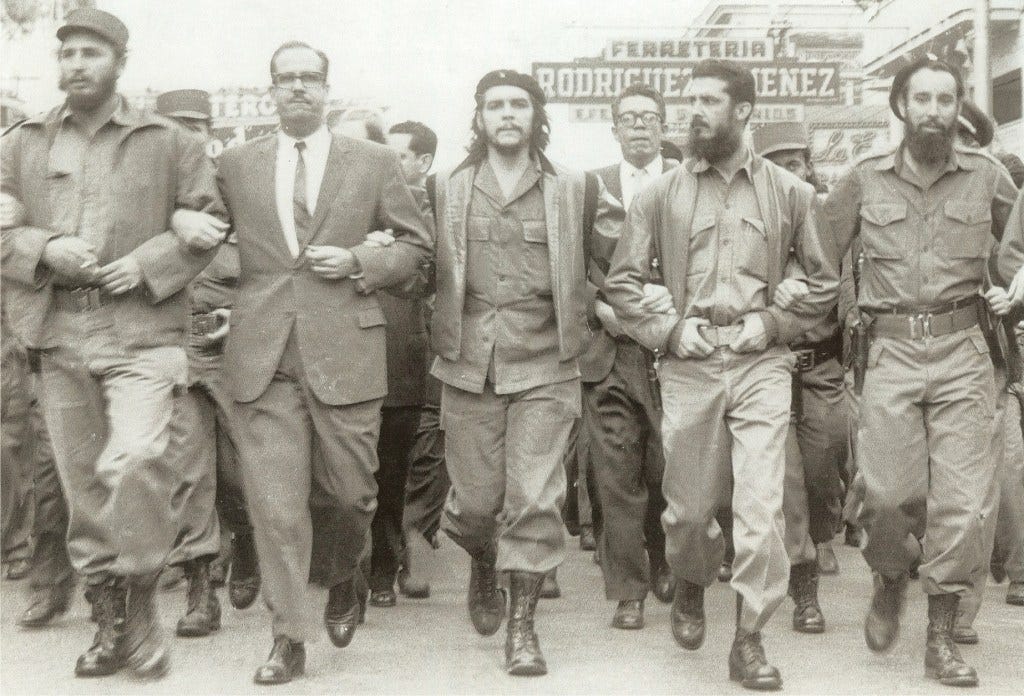
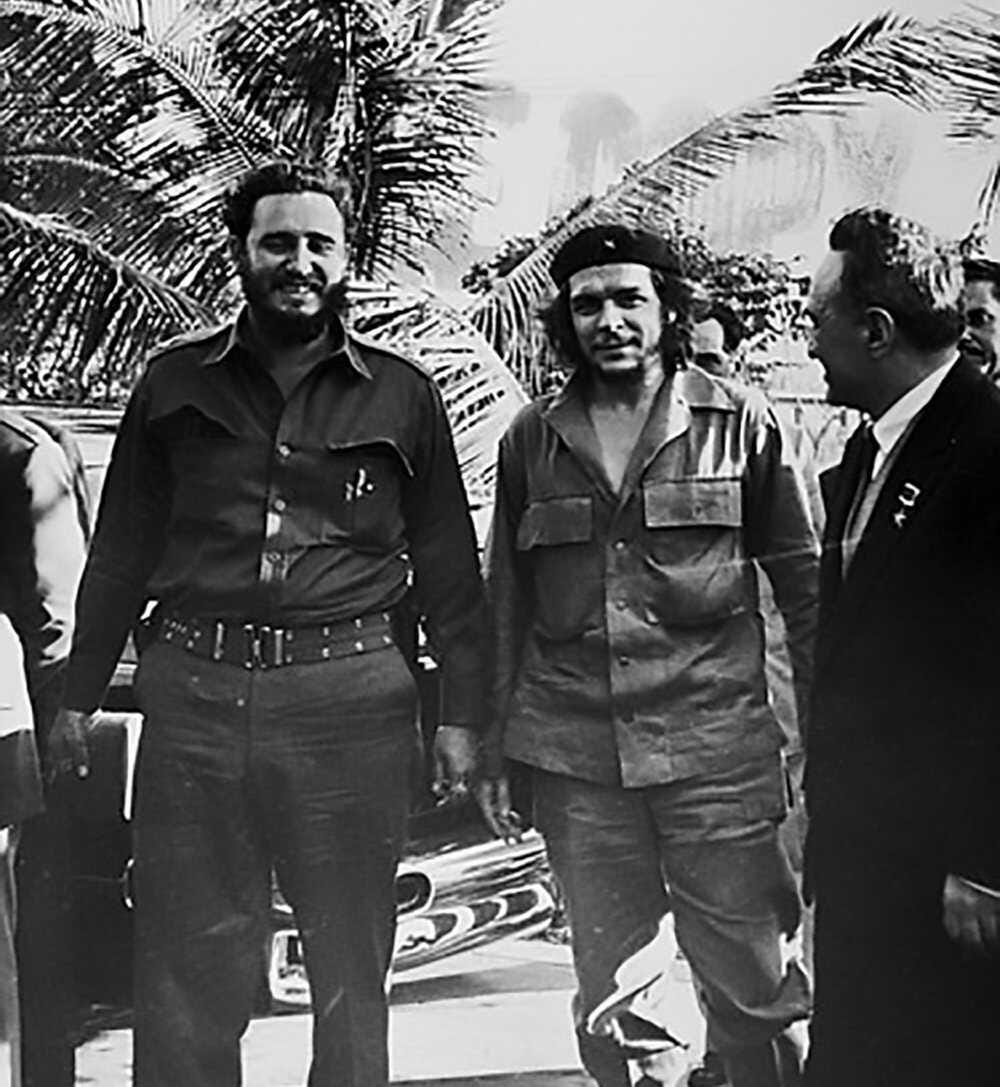
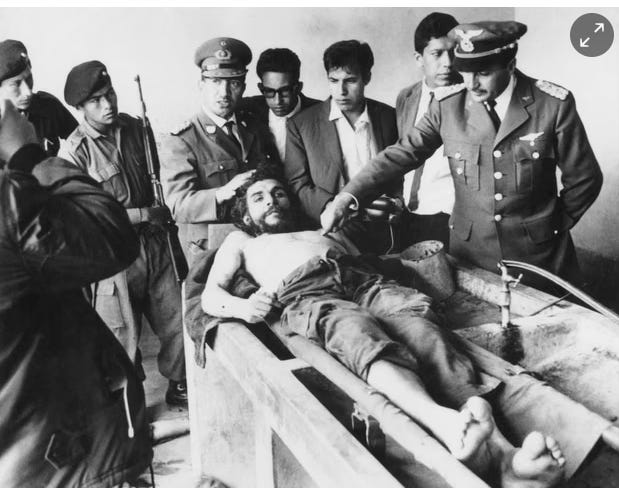
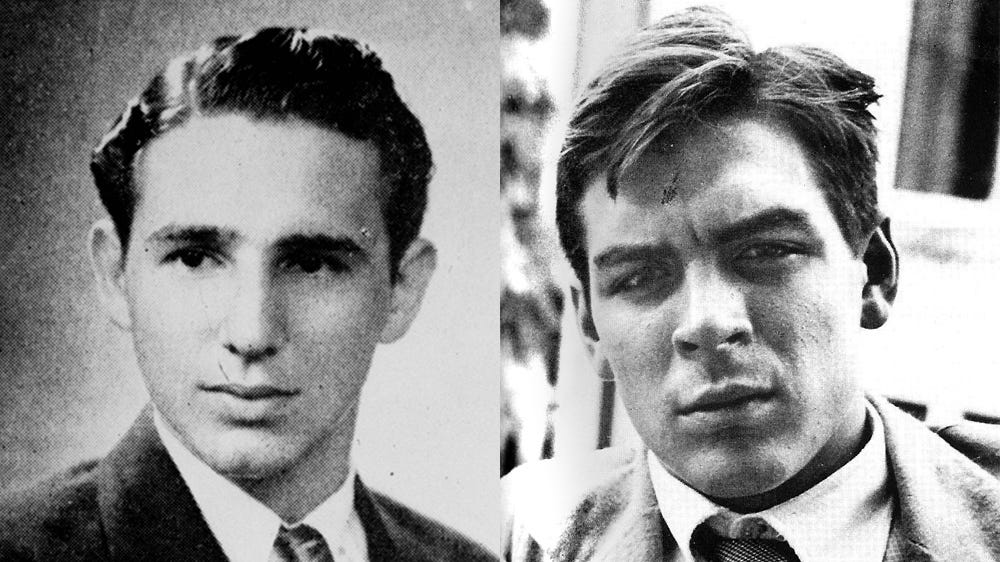
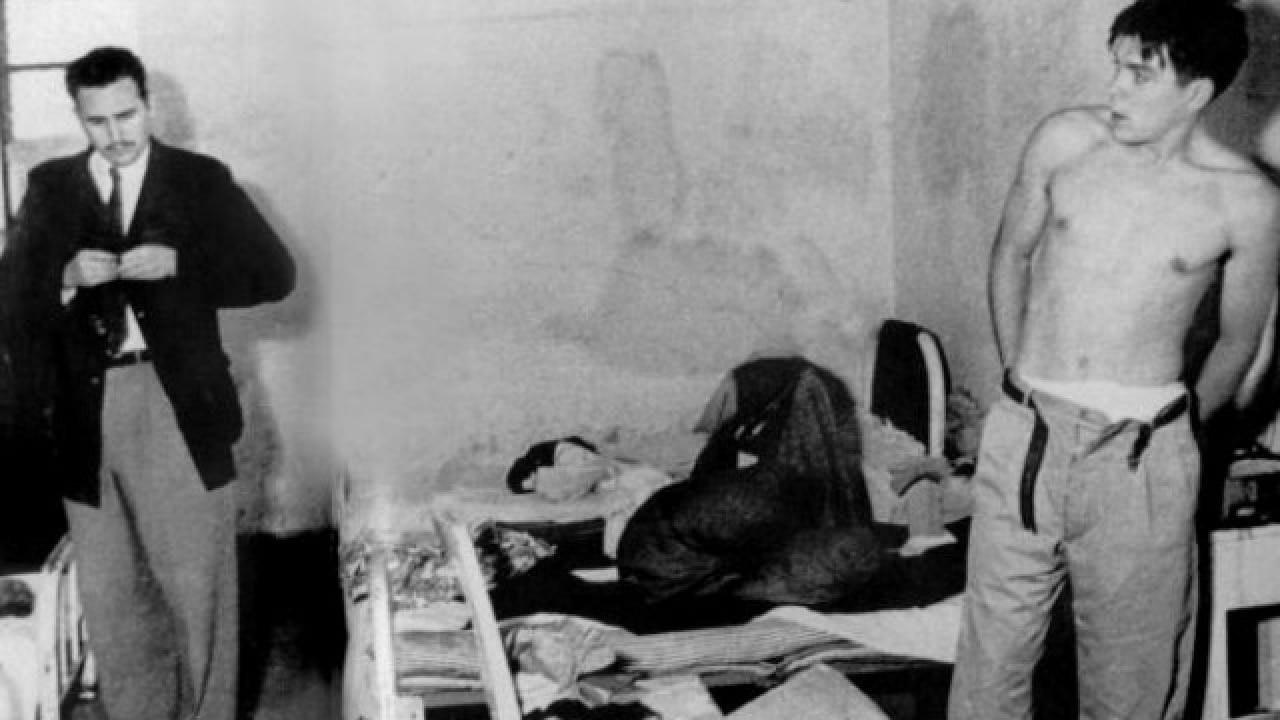
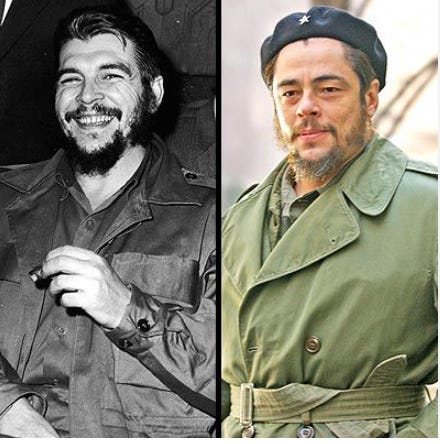
In the fall of 1955, an event occurred that would significantly shape the course of Cuban history. Two future great revolutionaries, Ernesto Che Guevara and Fidel Castro Ruz, met at Maria Antonia’s home in Mexico City after being released from a Cuban prison and arriving in Mexico.
Their conversation lasted all night, and by morning, Ernesto was accepted as a doctor and lieutenant into the expeditionary force aimed at overthrowing the pro-American regime of Fulgencio Batista.
“He will make a revolution, and I will always be ready to assist a man like him in everything,” this is how Ernesto Che Guevara expressed his attitude towards Fidel Castro some time later.
However, from the very beginning, he set one condition: after the victory of the Cuban revolution, he insisted that state affairs should not become an obstacle to his desire to go to one of the Latin American countries, most likely Argentina, to continue his struggle for the revolution’s victory across the entire continent.
From the very beginning, he wanted there to be no misunderstandings between them and considered it necessary to warn his new comrade about what he was going to dedicate his life to after their common triumph, which, apparently, he had no doubt about.
In any case, each of these outstanding individuals found in the other something like a previously missing link in their lives and destinies. And, presumably, the strength and potential of each of them did not double but rather increased tenfold.
“By the time we met, he was already a Marxist in his thoughts and a more advanced revolutionary than I was,” Fidel would later say about his friend.
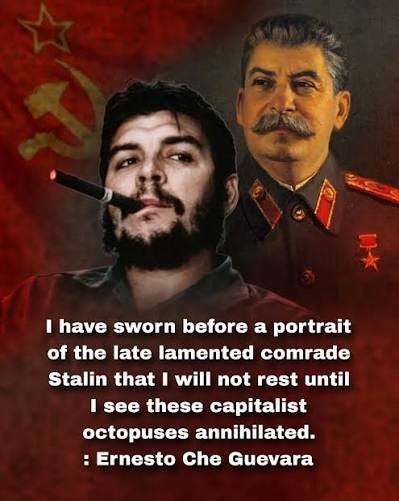
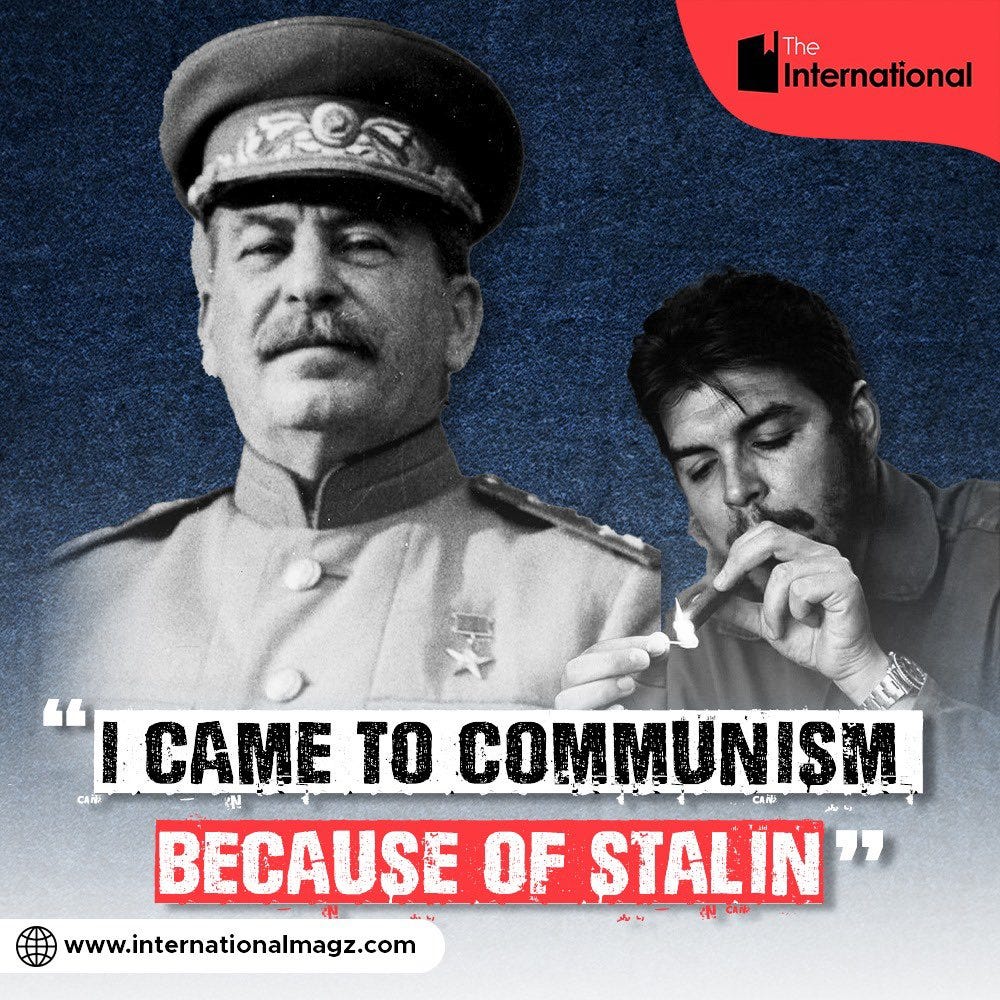
In a letter to his mother, Ernesto wrote: “How I long to get to Havana! Cuban landscapes and Lenin’s articles—that’s what I constantly contemplate.” Che Guevara signed his letters ‘Stalin II’.
‘Because of the circumstances in which I travelled, first as a student and later as a doctor, I came into close contact with poverty, hunger, and disease; with the inability to treat a child because of lack of money; with the stupefaction provoked by continual hunger and punishment, to the point that a father can accept the loss of a son as an unimportant accident… and I began to realize that there were things which were almost as important to me as becoming a famous scientist or making a significant contribution to medical science; I wanted to help those people.’ (Che Guevara, 1960, speaking on revolutionary medicine).
Ernesto ‘Che’ Guevara was a communist revolutionary, a social philosopher, a medical doctor and became an international figurehead for the communist cause. His dream was to change Latin America into a socialist utopia and end US imperialism there as well as helping the rest of the developing world free themselves of oppression. When I first read about Che, I was blown away, his life, his ideals, a tear came to my eye when I read about his final hour and his murder in Bolivia. From the moment he agreed to join Castro’s revolution, he dedicated his life to the communist cause , his determination was unbelievable. In my opinion there was a number of key points on how Che became the man he was and why he is such an icon to so many today.
Che, in his travels, for example, came into contact with an old woman, who was asthmatic, with a heart condition. This woman couldn’t pay her way.
‘It is then, at the end, that we see the profound tragedy which circumscribes the life of the proletariat the world over. In these dying eyes there is a humble appeal for forgiveness and also, often, a desperate plea for solace which is lost in the void’
To destroy the current system and once and for all bring social justice, an end to capitalism. To finish that quote with which Che showed his anger at the system:
‘How long this present order, based on absurd idea of caste, will last I can’t say, but it’s time governments spent less time publicizing their own virtues and more money – much more money – funding socially useful projects.’
Che, he had found his leader for a revolution, in Che’s own words after meeting Fidel:
‘an extraordinary man. He confronted and solved the most impossible problems. He had an unshakeable faith that once he left exile in Mexico and arrived in Cuba he would fight, and would win that fighting. I shared his optimism. It was imperative to do something, to struggle, to achieve. It was imperative to stop crying and fight!’
He left a letter for his children, to be opened if he was killed:
Dear Hildita, Aleidita, Camilo, Celia and Ernesto,
If you read this letter one day, it will mean that I
am no longer alive. You will hardly remember me,
and the smallest among you will have entirely
forgotten me.
Your father was a man who acted as he thought
best and who has been absolutely faithful to his
convictions.
Grow up into good revolutionaries. Study hard to
master technique, which gives you mastery over
nature. Remember that it is the Revolution which
is important and that each of us, taken in
isolation, is worth nothing.
Above all be sensitive, in the deepest areas of
yourselves, to any injustice committed against
whoever it may be anywhere in the world.
Yours always, my children. I hope to see
you again.
A big strong kiss from
Daddy.
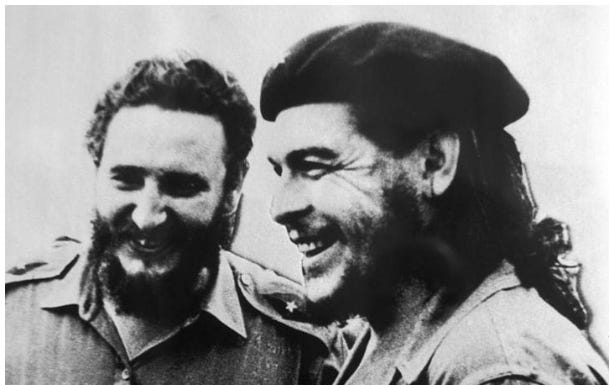
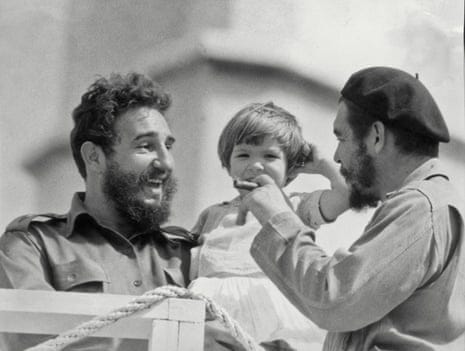
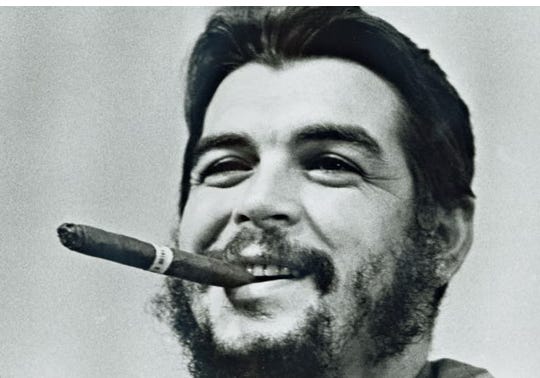
On the right is my father, cigar in hand, talking to his lifelong friend Fidel Castro, a fellow communist revolutionary. The angle makes it look like my father is holding out his cigar to me, but that’s not the case. It was unusual that he’d smoke around me. I don’t remember this picture being taken, or by whom; I was too young. I’d have been around three at the time. I was born in November 1960, and I’ve since been told it was 1964 in Plaza de la Revolución in Havana.
I’m the eldest of Che’s four children with my mother. Papi was known around the world as the Argentine revolutionary, a guerrilla leader and major figure of the Cuban revolution, but we were just a normal family. I never felt special as his daughter. Where I did feel special was as the child of a couple who loved each other dearly.
We were just a normal family’: Che Guevara’s daughter remembers her father
This article is more than 8 years old
Aleida Guevara with her father Che Guevara and Fidel Castro, Havana, 1964
On the right is my father, cigar in hand, talking to his lifelong friend Fidel Castro, a fellow communist revolutionary. The angle makes it look like my father is holding out his cigar to me, but that’s not the case. It was unusual that he’d smoke around me. I don’t remember this picture being taken, or by whom; I was too young. I’d have been around three at the time. I was born in November 1960, and I’ve since been told it was 1964 in Plaza de la Revolución in Havana.
I’m the eldest of Che’s four children with my mother. Papi was known around the world as the Argentine revolutionary, a guerrilla leader and major figure of the Cuban revolution, but we were just a normal family. I never felt special as his daughter. Where I did feel special was as the child of a couple who loved each other dearly.
As children, we enjoyed Papi very little. I was only six when he was executed in Bolivia 50 years ago, on 9 October, 1967. Our mother formed our values and kept him alive in our memory long after he died. She never used him as a way to tell us off or threaten us. Papi was always the good guy.
We never enjoyed any privileges: my father was opposed to that, and my mother maintained the line. When she became a widow with four small children, my father’s friends wanted to help. They couldn’t replace the affection that had been lost, so tried to give us material things. My mother wouldn’t permit anything at all. She told us, “You must have your feet firmly on the ground, and let pass everything you haven’t earned yourselves.” That was an important lesson.
We went through difficult periods. In my teenage years, she’d make trousers for my brothers with material from her old blouses. But we were happy: we’d play, we’d laugh. We grew up like Cuban children, alongside the people in our community.
I was close to Fidel and comfortable with him. I have very fond memories – I would call him “mi tío”, which means “my uncle”. I maintained a relationship with him right up until the end of his life last year. He’s holding me and I’m relaxed, smiling. My father and Fidel were always happy and joking together; there was much mutual respect and confidence there.
Fidel wanted to break the news to us children when Papi died, but my mother insisted it was her duty. But he told us that Papi had written a letter saying that if one day he fell in combat, we were not to cry for him: when a man dies trying to achieve what he wants to achieve, one doesn’t need to. The next day, I was called in to see my mother, who was in tears. She sat me on the bed and pulled out the farewell letter from Papi.
“When you see this letter,” it said, “you will know that I am no longer with you.” I started crying, too. The letter was very short. It ended with the words: “Here is a big kiss from Dad.” I understood I no longer had a father.
I still live and work in Havana, as a paediatrician, and feel hopeful for the future of Cuba. Do I have hope for humanity? None of us has a crystal ball, but if we want a different world, we need to work to achieve it. We can’t wait for it to fall out of the sky. We have a duty to forge that future ourselves.
From 1776 To The Pentagon: 250 Years Of US G*nocide & Imperialism | KJ Noh & Radhika Desai.
Using Nukes on China to THIN out their troops.This is the MOVIE, NOLAN, no? How about scaring the shit out of your audiences with the real Cyclopes — USA-Israel.
George Washington launched the USA’s imperial trajectory by proposing to swindle the Indians out of their land with treaties that his new nation (which Washington called an infant empire) would never honor. It is history’s greatest swindle, as it led to the theft of a continent. That strategy has been swept under the imperial carpet to this day. Over the next century, the USA completed the theft.
Key Aspects of Their Connection
The Propaganda Model: Frazier heavily utilizes Herman and Chomsky’s Propaganda Model. He frequently references Herman’s breakdowns of corporate media ownership, advertising reliance, and the systematic filtering of dissenting voices to explain why breakthrough alternative technologies are suppressed or ignored.
Intellectual Collaboration: Throughout his writing career, Frazier maintained contact with Herman, exchanging research on geopolitics and media biases. Frazier has written extensive biographical tributes and analyses honoring Herman’s structural critiques of Western foreign policy and corporate influence.
The Global Energy & Economic Narrative: While Herman focused strictly on the political economy of mass media and corporate power, Frazier extends these models into macro-history. He weaves Herman’s media analysis into a larger narrative regarding humanity’s historic energy transitions and the systemic barriers preventing a shift toward free energy.
“Democracy in America was never the same as Liberty in Europe. In Europe Liberty was a great life-throb. But in America Democracy was always something anti-life. The greatest democrats, like Abraham Lincoln, had always a sacrificial, self-murdering note in their voices. American Democracy was a form of self-murder, always. Or of murdering somebody else… The love, the democracy, the floundering into lust, is a sort of by-play. The essential American soul is hard, isolate, stoic, and a killer. It has never yet melted.” —D.H. Lawrence, Studies in Classic American Literature
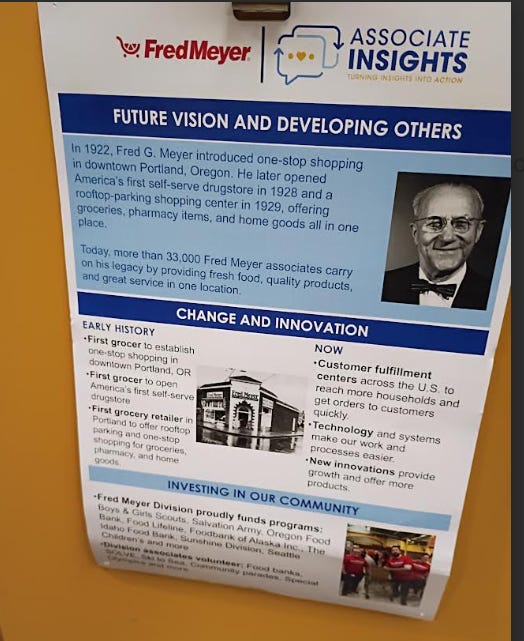
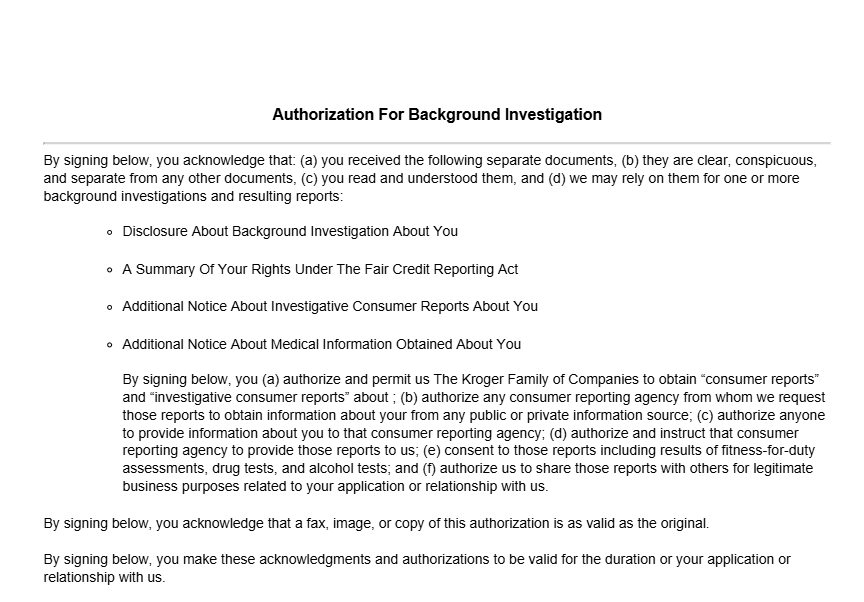
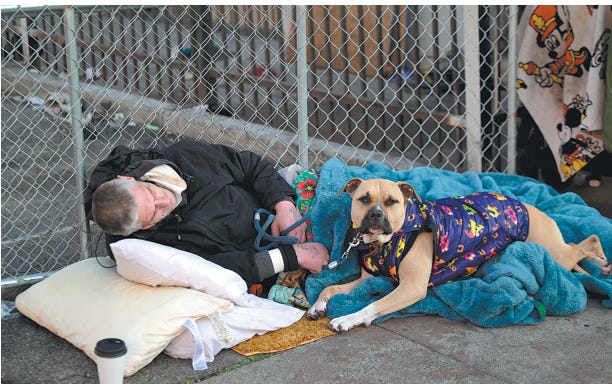
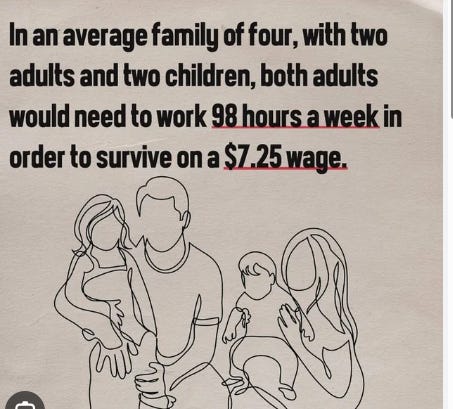
Try going to the local grocery store, at $16.55 an hour, applying for a deli job, and see how they anally probe you. And, will the Internet PROBE find this Substack?
Yes, The Kroger Co. is the largest traditional (or pure-play) supermarket chain in the United States, though Walmart sells a larger total volume of groceries overall. Kroger operates nearly 2,800 stores across 35 states with annual revenue exceeding $148 billion.
Zhǎnshāxiàn
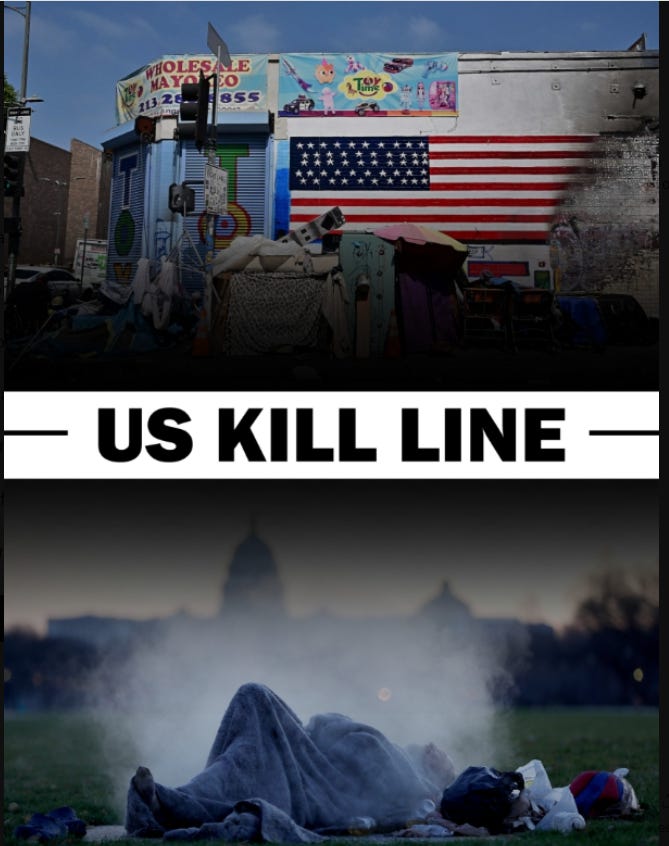
The term “kill line” has three distinct meanings depending on the context: it is most famously a viral socio-economic slang term, a video game mechanic, or a heavy industrial tool.
On Chinese social media and in global economic discourse, the “kill line” (simplified Chinese: 斩杀线; pinyin: Zhǎnshāxiàn) describes a precarious economic threshold where a single financial shock triggers an irreversible descent into poverty and homelessness.
斩杀线
The Core Concept: It refers to having a dangerously low “margin for error”. Under this concept, an average or lower-income individual is considered “one hit away from collapse”. A single emergency—such as a sudden job loss, a major medical bill, or a car accident—can completely wipe out their savings, destroy their credit score, and cause them to default on their housing.
Origin and Context: The phrase went viral on Chinese platforms like Bilibili and Xiaohongshu following trending videos documenting working-class hardships and homelessness.
The Political Debate: Chinese state media often uses the term to critique the gaps in the U.S. social safety net. Conversely, international analysts note that the trend is heavily promoted by Chinese media to offer “psychological comfort” and deflect attention from economic stagnation and youth unemployment within China itself.
Kill Line in AMerica:
Workers and volunteers hand out food to people at La Colaborativa’s food pantry in Chelsea, Massachusetts, on Nov 15. The pantry assists thousands in need every week in the area.
Yang said that while Chinese policies seek to defuse risks facing individuals through institutional efforts, the US system often frames success or failure as matters of personal effort or talent, treating social welfare as a potential burden on market efficiency.
“By doing this, it turns broader social and economic problems into questions of personal responsibility,” he said, “thereby relieving governments and society as a whole from having to address these deeper structural issues.”
NO VACATION NATION!!!
The United States remains the only country in the OECD that does not legally require employers to provide paid annual leave. Although many employers in the United States grant some – or even all — of their employees paid vacations and paid holidays, there is no law that establishes a legal minimum for either benefit.
Shit . . . My travel, too, US Passport?
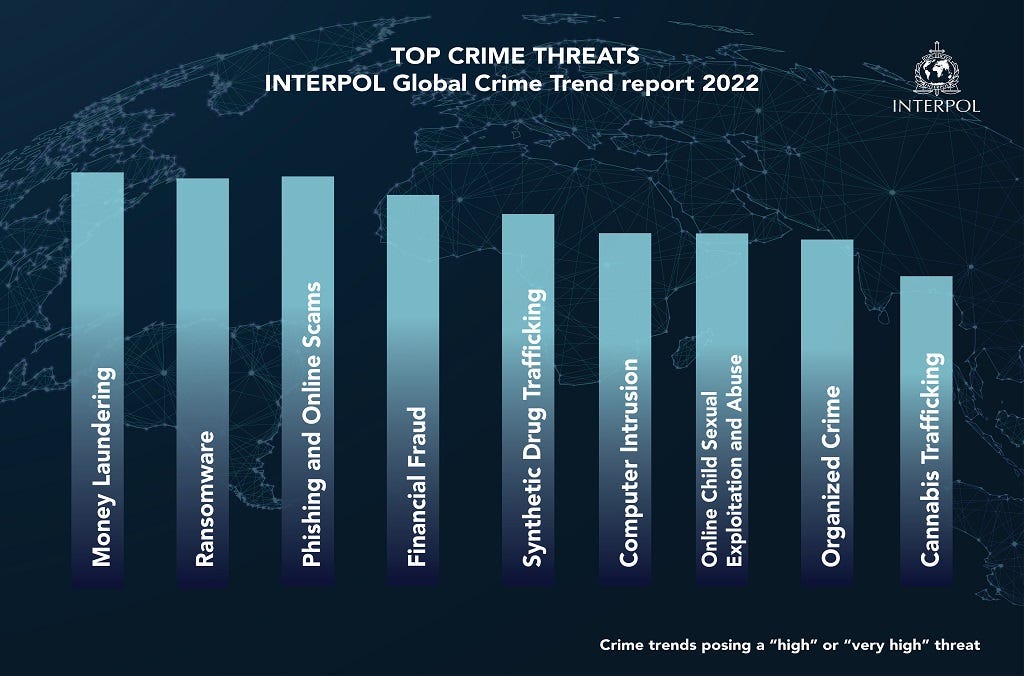
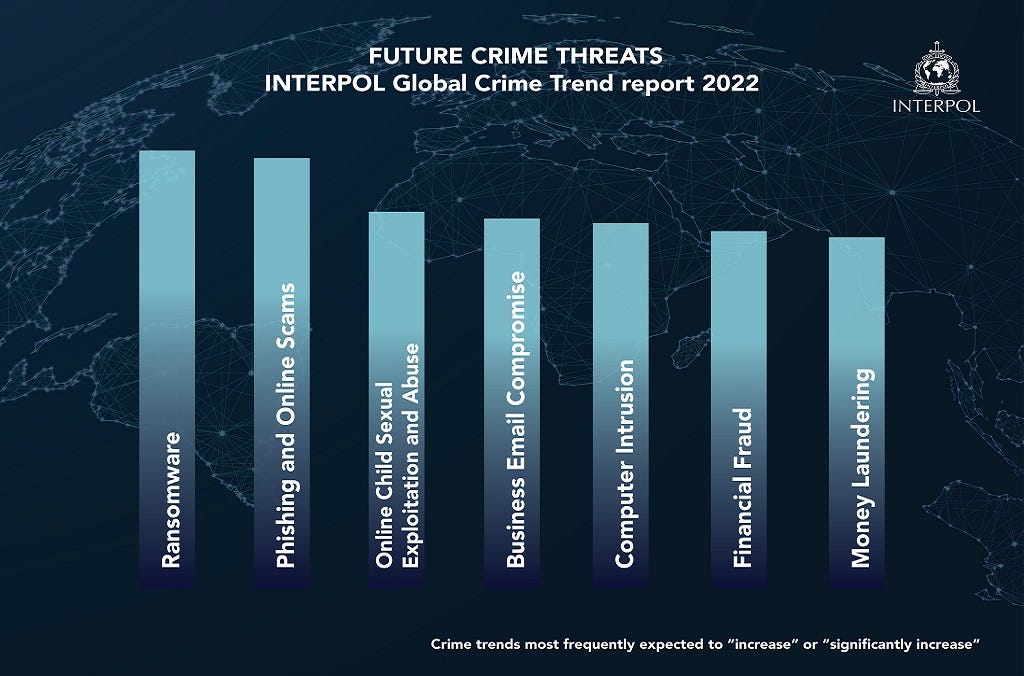
“Understanding and pre-empting crime trends is an absolute bedrock of policing, and INTERPOL’s Global Crime Trend report offers an unparalleled picture of the global crime landscape as seen by police officers around the world.”Jürgen Stock, INTERPOL Secretary General
Jew-Internet-Pol:
Shabbat Shalom and welcome back to the Rabbi Khozi Show. In this live stream, we are taking a deep dive into the recent footage from OU Israel detailing the real-world, physical preparations currently underway for the Third Temple (Beit HaMikdash).
From the Texas Red Heifers to the training of the Priests (Kohanim), carved stones, and hand-woven curtains, we are explaining the prophetic, biblical, and practical significance of these events so that our Gentile viewers can fully understand what is happening on the ground in Israel.
Ahh, Mississippi, Goddamn . . .
Hundreds of thousands of these cockroach protesters had been assembling for over a month at Jantar Mantar, which is less than half a mile south of Connaught Place, the central market in the heart of Delhi. They were demanding the resignation of Pradhan, who is also a senior leader in India’s ruling Bharatiya Janata Party, the party of Modi. The protesters at Jantar Mantar consider Pradhan to be responsible for failing to prevent “paper leaks”—the unauthorized release of highly competitive national college entrance examinations, often hours and sometimes minutes before the exam is due.
The Jantar Mantar movement emerged in May in response to a leak of the National Eligibility cum Entrance Test (NEET), the countrywide medical entrance exam. Reports suggest at least a dozen students across the country died by suicide after the tests were canceled. Protesters claim the number is over 20. The protestor’s demand that the families of each of these students be paid ten million Indian rupees was accepted by the government on Saturday.
After Delhi’s police and other armed forces cracked down heavily against protesters on Monday, the market became a pale shadow of its usual self. Traffic was redirected. And at least half a dozen metro stations around it were shut. Instead it was full with a young, Gen Z crowd who were there to register their dissent against the Modi government in growing numbers and spirit unseen in recent years.
Betu Yadav, a 26-year-old post-graduate student from Uttar Pradesh was hit on the back of her head with batons by male police officers on Monday, leading to intense bleeding that required seven stitches. As news of the government agreeing to the demands emerged, Yadav, still wearing a bandage over her head, said that she can finally celebrate the fruit of her month-long struggle.
“The fight that we fought has transformed into a big success. And today, on the 25th of July, Dharmendra Pradhan has resigned. Along with the resignation of Pradhan, the struggle to overthrow the BJP government will also be achieved by the same youth and the same crowd,” she said.
Jew Jew JEW Bean.
For 21-year-old Tubassum, a Master’s student at Delhi University, the movement symbolizes solidarity with other struggles. Although she has two cousins who had to re-appear for the medical tests and were depressed through the entire ordeal, showing up for a protest means a lot more for Tubassum, who came sporting a keffiyeh over her burqa. She was in ninth grade when her mother and aunts joined the Muslim women’s protest at Shaheen Bagh, Delhi, in 2019-20, against a citizenship bill that discriminated against Muslims.
“I remember how people showed up for each other in 2019 at Shaheen Bagh against the Modi government. I want to extend the same solidarity to my peers. And while we raise our voice for our education, I also stand with the students of Gaza who suffered a genocide. Whose education has been ripped due to the genocide” she said.
OH, all the killing and damage to infrastructure- what a joke? Will Trump Escalate Bigly or Serve Another TACO Ceasefire in the Middle East? My latest geopolitical soapbox rant with Danny Haiphong 25/07/26.
“PROF. MARANDI:16 U.S Marines Walk Blindly into IRGC Trap in Iran as War enters Dangerous New Phase”
Okay. If this is TRUE? So, Iran is NOT treating these fuckers as terrorists? As illegal aliens? Service members? Mercenaries.
The Incident: June 2025 protest attempting to block a bus transporting two detained asylum seekers from Spokane to Tacoma.
The Charges: Conspiracy to impede or injure a federal officer.
The Defendants: Jac Archer, Justice Forral, and Bajun Mavalwalla II (an Afghanistan war veteran).
Co-Defendants: Former Spokane City Council President Ben Stuckart and five others took plea deals.
Legal Status: Awaiting sentencing and seeking an acquittal via a Rule 29 motion.Three Spokane protesters were convicted of federal conspiracy charges Thursday and now await their sentencing.The protestors face up to six years in prison and up to $250,000 in fines.Jac Archer, Justice Forral and Bajun Mavalwalla II were arrested for trying to prevent federal officers from transporting two detained immigrants from Spokane to Tacoma in June 2025.The trio, dubbed the “Spokane 3,” were among hundreds who responded to a Facebook post by former City Council President Ben Stuckart last summer that called for people to join him in blocking the transfer bus.Stuckart was a sponsor for one of the two detained immigrants. Both were in the United States seeking asylum.Nine of the protesters, including Stuckart, were arrested on conspiracy charges. Stuckart was among six who took guilty pleas for reduced sentences.Thursday’s verdictAfter a jury handed down the verdict Thursday, Washington State Representative Natasha Hill, D-Spokane, thanked people who supported the defendants through the nearly two-week trial — but called out Stuckart for not showing up.“You started this and you couldn’t even show up to finish it,” she said. “So I call on you, and I call on others to do what you said you were going to do, and stand up for your community because the fight is not over with this conviction.”Stuckart posted on Facebook Thursday night that he was told attending the trial could violate the terms of his parole.“I feel awful about the guilty verdict. I feel awful for Jac, Bajun and Justice and their families. I support those that took plea deals, and I support those that went to trial,” Stuckart wrote.‘Making an example’Bajun Mavalwalla, Sr., the father of one of the protesters and a congressional candidate, said federal attorneys wanted to make an example of his son.He said he believed the federal government is trying to deter people around the country from speaking out against immigration enforcement policy.“The right to protest, the right to dissent, the right to assemble—all of those things are now in question because of this case,” he said. “In other cases across the country, the juries were not tainted and the cases have been thrown out.”Mavalwalla, Sr., said he hopes that will happen in this case as well.The Spokesman Review reported that in her closing statement, U.S. Attorney Lisa Cartier-Giroux said that the protesters had planned to block federal agents from leaving and that agents felt afraid as the protest grew in size.Defense attorneys said they expect to appeal the conviction.
The Trial of the Spokane 3: ‘The entire weight of the United States government’
The guilty verdict for three Spokane protesters and what’s next in their case.
Every day we’ve covered the federal trial of the Spokane 3, local protesters charged with conspiracy for protesting ICE detainments on June 11, 2025. Read our primer on the case here. Read all our coverage of the protests and subsequent prosecutions here.
As they walked into the courtroom for the reading of the verdict, Justice Forral cradled their copy of To Kill a Mockingbird. Bajun Mavalwalla II, smiling, gave his father Bajun Mavalwalla I a long hug at the threshold of the gate separating the gallery of the courtroom from the well. Jac Archer, the last to arrive, hurried in to take their place at the defense table, taking just a brief pause to connect with their loved ones in the front row.
Minutes later, a predominantly white jury made up mostly of people who don’t live in Spokane would find all three protesters guilty of federal conspiracy charges — a felony that could result in potential sentences of up to six years in prison and a $250,000 fine.
Archer was found guilty of conspiring to prevent an officer from doing their duty, conspiring to injure the property of an officer to impede them in their duty and aiding and abetting another to conspire to impede or injure officers. Forral was found guilty of conspiring to prevent an officer from doing their duty, conspiring to injure the property of an officer because they were doing their duty, conspiring to injure the property of an officer in order to impede them in their duty and aiding and abetting another to conspire to impede or injure officers. Mavalwalla was found guilty solely of aiding and abetting the conspiracy for their roles in the June 11 protest against Immigration and Customs Enforcement (ICE).
Before the verdict reading, the judge had warned the packed gallery that there were to be no outbursts. The audience in the courtroom largely obeyed: the verdicts were initially met with a shocked stillness in the air. Then, quiet weeping, muffled as people tried to choke back their sobs.
The federal prosecutors cleared out quickly, as the defendants and their legal teams packed up their paperwork and their belongings. The defendants, their friends, family, legal teams and supporters were slower to leave the courtroom. One of Forral’s lawyers was crying silently. A half-used roll of toilet paper was passed back and forth as people tried, in vain, to dry their eyes.
When the court finally cleared, the toilet paper roll was left behind, sitting alone on the short barrier that divides the gallery from the well.
“I was shocked by the verdict,” said Aine Ahmed, one of Mavalwalla’s attorneys, who was not in the courtroom on Thursday. “ I was on the plane when [co-counsel] Matt Duggan texted me and said ‘Guilty,’ and I thought he was lying. I’ve had some unexpected verdicts in my life, but nothing like this.”
Andrew Wagley, one of the attorneys representing Archer, said their team was “floored” by the jury’s decision. “ We were feeling fairly confident that it was gonna be an acquittal,” he said.
Ahmed, Wagley and Andrea George, Forral’s lawyer, all told RANGE that this was not the end of the road, though George could not be reached for additional comment today. All three will be filing Rule 29 motions, asking Judge Rebecca Pennell to acquit their clients.
A political prosecution
The indictment of the original nine protesters — six of whom took plea deals — has been criticized as politically motivated. While dozens of protesters were arrested on local charges on June 11, the federal arrests didn’t come until July 15. This was roughly a month after the Justice Department sent a June 12 memo to federal prosecutors across the country directing them to prioritize and publicize prosecutions of anti-ICE protesters.
Former acting US attorney for eastern Washington Richard Barker resigned rather than sign the indictment, telling the Guardian, “I didn’t feel in this case that a conspiracy charge that would carry a six-year term of incarceration was true to who I was or wanted to be as a federal prosecutor.”
After the verdict, Barker wrote in a statement to media:
“Although I respect the judicial process and jury’s verdict, I question whether justice truly was served. This was the first conspiracy prosecution in Eastern Washington history under 18 U.S.C. Section 372 — a Civil War-era law dusted off to punish members of the Spokane community who stood up for two young men who were unlawfully detained by ICE. I hope that moving forward [the] DOJ will focus on the crimes that matter most to keep our families safe and to build trust with the communities that most need and deserve law enforcement protection.”
As the protesters and their supporters left the courtroom, Mavalwalla’s father, who is currently a congressional candidate running in a crowded primary to unseat Rep. Michael Baumgartner, spoke passionately to the distraught crowd.
“The prosecution suppressed the most important salient facts in this case. Number one: that the first US attorney, Richard Barker, resigned rather than to prosecute this case, and that information was suppressed from the jury.” Mavalwalla senior said. “People in Spokane, people in Eastern Washington need to understand that we were guinea pigs, that they brought the swamp of Washington, DC into our area to stop American citizens from exercising our rights that are guaranteed in the Bill of Rights.”
Pete Serrano, who identified himself as First Assistant United States Attorney in his press release (but whose actual title is prefaced with Special Attorney to the Attorney General of The United States because he was never confirmed by Senate) wrote in a Friday press release:
“Our office’s sole motivation for the charging and prosecution of these individuals was to hold them accountable to the law as each attorney in this office has sworn an oath to support and defend the United States Constitution. This case was brought by my office, was agreed upon by the grand jury, and concluded with a multi-day trial by jury because the alleged crimes were committed. Statements made by current or former public officials who never set foot in the courtroom during the trial bear no relevance to these facts or the outcome of this case.”
Serrano was present one day in the courtroom, sitting between two US Marshals in the back of the room on Wednesday, the day many thought the verdict would be returned.
Mavalwalla’s attorney Ahmed, a former assistant US attorney of Eastern Washington himself, called Stephanie van Marter — the former Acting United States Attorney for the Eastern District of Washington who initially signed the indictment before Serrano took over — “ethically challenged.”
He told RANGE that he had tried to negotiate a plea deal with the government for his client, but they refused to offer any deal that would not require Mavalwalla to say before a judge that he’d used force against an officer. Ahmed asked his client to consider taking a misdemeanor deal.
“And Bajun, ethically, he’s so strong, he said, ‘you’re asking me to lie to a federal judge, and I’m not going to do that,’” Ahmed said.
At the end of the trial, after all of the evidence had been presented, Ahmed thought there was no way there would be a guilty verdict, and that the charges themselves were extreme.
”I didn’t think the government proved any sort of conspiracy, and I don’t think joining arms is a conspiracy, and I couldn’t believe the government was relying on that during their closes,” Ahmed said. “ I thought the whole verdict against Mavalwalla was surreal and frankly, I thought it was surreal against the other two as well. If not a single police officer got hurt and none of them were involved in damaging property, I just don’t even know how you charge this case.”
Across the country, protesters arrested on similar charges in Illinois had their case thrown out amid accusations of prosecutor misconduct and the Trump administration recently created a slush fund to pay people like January 6th insurrectionists who say they were victims of government weaponization (though that was quickly paused by a judge.)
In his press release, Serrano pointed to the jury decision as evidence that the conviction wasn’t political:
“For 250 years in this country, we have turned to juries to resolve those disagreements. Here, twelve individuals from across our community heard 8 days of evidence and concluded beyond a reasonable doubt that these three defendants committed the crime as charged, that they agreed to impede law enforcement officers and injure their property as they did their jobs … Just because the jury did not find in a way that some people wanted, does not negate the fact that a crime occurred.”
Still, community activists pointed to the juryselection process, which pulled jurors from across Eastern Washington — an area politically more conservative than the city of Spokane, where the protest occurred — as being unfair to the defendants.
This is a quirk of the sheer size of the district, which spans 20 Washington counties.
“ If you’re in Spokane County Superior Court, then you have jurors just from Spokane County,” Archer’s lawyer Wagley said. “When you’re in federal court, you have jurors anywhere east of the Cascades because it’s all the Eastern District of Washington.”
The jury was also predominantly white in a case where all the defendants were people of color. Two of the defendants identify as nonbinary and at least one juror had written on their jury questionnaire that he had concern about people who use nonbinary pronouns.
The First Amendment question
Key in courtroom proceedings was the prohibition on arguments or testimony invoking the First Amendment. As RANGE reported before the trial began, Pennell ruled that questions of the First Amendment were the court’s purview, not the jury’s.
“No witness should testify regarding the ultimate issue of whether Defendants’ actions were legal or constitutionally protected. Nevertheless, should Defendants elect to testify in this case, they must be given some leeway,” her pre-trial decision read, in part. “Defendants must be allowed to testify as to their mental state regarding the charged offense. This can be done without Defendants summarily explaining that they intended to obey the law or that they intended to exercise their First Amendment rights.”
Still, the defense had hoped that limited explanations of the First Amendment and protected speech Pennell included in the jury instructions would help the jury see their clients’ speech as Constitutionally protected.
”We are extremely disappointed in the verdict and what it means for the First Amendment. The verdict does not reflect the evidence presented at trial and Jac Archer’s non-violent, peaceful actions on June 11th, 2025,” Wagley said. “This outcome has a substantial chilling effect on an individual’s First Amendment right to free speech, including the right to protest. If Jac Archer can get convicted of a felony conspiracy for linking arms, the Constitution no longer applies.”
Because an intent to use “force, threat or intimidation,” is required to convict defendants of conspiracy, Archer’s defense team has consistently pointed to evidence showing that Archer’s intent was nonviolent protest. However, because Archer did come in with “an agreement,” to do acts of civil disobedience — though not an agreement to use force, threat or intimidation — Wagley thinks that could have been confusing for jurors. He pointed to videos and voice memos introduced by the federal government of Archer saying things like “for those willing to risk arrest.”
“ I could see how a jury could see that and think, ‘Well, that’s advocating for lawless action,’ but it’s not. It’s advocating for civil disobedience, which is clearly protected, and that’s what I think that’s got to come down to, is the court setting aside the verdict based upon the First Amendment,” Wagley said. “Because otherwise, if protesters can get prosecuted and convicted for civil disobedience for a federal felony conspiracy, there’s just – the First Amendment doesn’t mean anything anymore.”
Archer’s team, which also includes attorney Carl Oreskovich, had filed a preliminary Rule 29 motion — a rule that allows defendants to ask for summary acquittal on the grounds that the evidence presented isn’t sufficient for a jury to convict — after the federal government rested their case. This motion cites a 9th Circuit of Appeals ruling that states:
“Peaceful speech, even speech that urges civil disobedience, is fully protected by the First Amendment. Were this not the case, the right of Americans to speak out peacefully on issues and to petition their government would be sharply circumscribed.”
The motion also argued that the characterization of a protest as a conspiracy violates the right to the Freedom of Association.
After the verdict, Pennell gave defendants an additional two weeks to amend or file new Rule 29 motions, the government two weeks after that to respond, and the defense a final week to respond to the government’s response. The judge set July 2 as the deadline for the end of this process, after which she will schedule a hearing to rule on the motions to acquit.
For Archer, Forral and Mavalwalla, the Rule 29 hearings could be just the next step in a lengthy legal process that has already taken nearly a year of their lives. All legal teams have indicated that, should the judge rule against the motions to acquit, they will appeal the convictions — another expensive, labor-intensive step.
In a Facebook comment responding to a statement where City Council President Betsy Wilkerson wrote that the verdict “concludes an important chapter in case that has drawn significant attention and no doubt strong feelings throughout the community,” Archer wrote just six words:
“Respectfully, nothing about this is ‘concluded.’”
Mavalwalla’s father, too, said his family would continue to battle the charges.
“Now the fight has to begin in earnest,” the elder Mavalwalla said Thursday from the federal courthouse courtyard. “We have extraordinarily brave people here today. Jac and Justice and my son have taken the brunt of the entire weight of the United States government onto their shoulders on our behalf.”
Though they spoke at an informal community gathering later in the evening, Forral chose not to address the crowd directly after the verdict. Instead, they handed their friend and fellow activist David Brookbank the copy of To Kill a Mockingbird they’d carried throughout the trial, pointing out a passage they asked Brookbank to read.
Voice strong as he stood before the community, Brookbank read:
”I wanted you to see what real courage is, instead of getting the idea that courage is a man with a gun in his hand. It’s when you know you’re licked before you begin, but you begin anyway, and you see it through, no matter what. You rarely win, but sometimes you do.”
THINK ABOUT IT. I ALWAYS protested in Spokane. Critical Mass and Trayvon and even MLK Day. So, Oct. 2025 is when I decided to go in and see if a stent could be rectify the lagging endurance. And then Dec. 31 2025 is when I fucking went in for a triple bypass.
NONE of this would have come to pass, no? Or, out on bond, I’d be going in for the fucking surgery, and then what? Leniency?
HEROES.
And will the Jew-oogle Interpol find this image of me, and notice the cut nose where a fucking counterprotester flung it at me? Six images down.
And this is from some fucker’s blog, and alas, painting me as very aggressive and obnoxious. Profanities too. Last post — 2020. These are some of the pacifist cunts I had to deal with in Spokane. Blog.
A group of Climate-Change-denying Tea Party and Patriot Party members are gathering at Spokane City Hall for Earth Hour, March 27th from 8:30pm to 9:30pm. They will be shining flashlights and holding banners to admonish Mayor Mary Verner for advocating for environmental sustainability in Spokane.
I thought this would be a great opportunity for Josh and Steph and asked them if they’d like to go. Josh thought about it for a while and decided he wanted to go but with a twist. He said that whenever there’s an unruly and uninformed mob of people on South Park they always say “Rabble, rabble, rabble.” He decided to make some signs and invite some friends to attend with him.
On one side of the entrance to City Hall, Mike Fagan and a few Spokane Patriots, most claiming to be well-versed in the necessary sciences, held up signs and proceeded to badmouth the United Nations, climate change, sustainability and Mayor Verner. Oops, they mopped the floor with the flag they venerate.
On the other side, an equal number of folks in support of sustainability and rational thought. Hey, Bart!
After a bit, Josh and his two buddies held up their RABBLE signs and started saying, “Rabble, rabble, rabble.” If anyone asked, they explained the South Park origin of their protest and said they were protesting the ridiculous nature of their [Spokane Patriots] protest.
They also waved their signs at cars passing by. Although Steph came along, she only did so because I made her go after she tried to bail at the last minute. Not only was she glad she came, but she was wishing she had made her own RABBLE sign.
The scene got really tense for a while. Paul Haeder (on the right) was very aggressive both physically and verbally. He was obnoxious and didn’t have a problem showing how well-versed he is in the use of profanities. Mike Fagan (on the left) was spouting nonsense, but I didn’t see him say or do anything to provoke anyone. A couple of people on both sides pointed bright lights and laser pointers at opposing faces. As you can see, Haeder got his nose scratched. I’m not sure what happened, but he made it sound like he was assaulted. The Spokane Police showed up, and everyone calmed down. The arguments that took place between people on each side were laughable in their futility to change the other’s mind.
Yes, federal prosecutors announced a 94-page indictment charging 15 members and associates of the Minneapolis group Direct Action Minnesota with conspiracy to impede or injure federal officers during immigration enforcement operations.
Yep, if true, rejoice, but do it another fucking 100 times.
Marines say they hit recruiting goals and point to ‘unapologetic’ standards
“The Marines are probably the most inelastic of the services,” Lt. Gen. William Bowers told The Associated Press this month. “We appeal to a certain type of young man or woman — that really doesn’t change with the economic winds.”
“They want to be part of that mystique,” he added.
For 2026, Marines recruited 30,536 active duty and reserve enlisted Marines — just one person over its annual goal. It also recruited 1,792 active duty and reserve officers, beating its goal by two people.
Officials say the figures are not the result of a struggle to meet the numbers but a reflection of how careful the Corps has to be in not overrecruiting.
All uniformed mercenaries should be the REAL Bug Splat. So, is Rubio’s-Karp’s-Catz’s-Ellison’s-Page’s-Brin’s-Altman’s-Zuckerberg’s trawlers going to catch me?
[The artists who are giving a human face to the US’s ‘bug splat’ drone strikes]
“Since arriving, he has worked tirelessly to build a stable life, following every legal step toward citizenship.” …. But the Jew Nazi Glosser-Miller writes our laws.
Oregon county adopts anti-sanctuary resolution, aligning with Trump immigration agenda despite state law
A representative with a statewide coalition supporting immigrant rights warned the county would face legal action if it attempts to implement the resolution.
The lengthy resolution, which was crafted by Commissioner Chris Boice, expressed the board’s opposition to any Oregon laws that contradict the federal administration and its current immigration enforcement crackdown. It also says the county, located in southwestern Oregon, can cooperate with federal authorities.
The resolution caused outrage among some county residents who told The Oregonian/OregonLive that it was problematic for several reasons, among them that it had not been listed on the meeting’s agenda and the public wasn’t allowed to comment. They said the board also painted a false picture at the meeting of undocumented immigrants being cartel members and drug dealers.
However, some community members who attended the meeting also appeared to be supportive of the resolution. Several people could be heard clapping after its approval.
[Commissioner Chris Boice]
County resident Melissa Sherwood, who attended the meeting, said Boice blamed drug trafficking in the county “on brown people without providing any evidence.”
“It’s pretty sickening. It’s pretty despicable,” she told The Oregonian/OregonLive. “But what I find incredibly upsetting about all of this is the underhanded nature in which it was done. They purposefully did not put it on the agenda, meaning we, the people, did not have a chance to comment on it.”
BOICE = Send his fucking ass back to France, UK, Ireland, that is, parts of his body in boxes, man!!
French/Normandy: Derived from the Old French word bois (meaning wood or forest), given to people who lived near wooded areas.
English: Brought over by the Normans after 1066, appearing early on in land rolls as del Bois or de Bois.
Irish: Sometimes used to anglicize the Gaelic surname Ó Buadhaigh, meaning “descendant of the victorious one”.
In February 2025, Coos County commissioners rejected a proposal to allow federal immigration officials into their jails after hearing that the measure could place the county in legal jeopardy. A few months later, Yamhill County officials deleted mention of immigration enforcement in a draft agreement with the U.S. Marshals Service after community members raised concerns.
Jess Montoya, network director of Oregon for All, a coalition of organizations in Oregon that advances immigrant justice, said the county’s resolution is in “direct contrast” to the state’s sanctuary protections.
“Our state laws are not optional,” she told The Oregonian/OregonLive. “If Douglas County attempts to implement this, this would be a violation of Oregon law, and legal action would follow.”
But it’s not clear what, if anything, the resolution will do. During the meeting, Freeman clarified it was not an ordinance, simply a resolution with the board’s opinion.
“This resolution feels like political theater,” Montoya said.
[fucking slave patrol, Douglas County.]
Lori Kuebler, who has lived in Roseburg for 16 years, said she believes the commissioners drafted the resolution carefully by saying it’s their “opinion” to protect themselves legally, while still potentially providing leeway to the county’s sheriff to work with federal authorities.
She said her undocumented neighbors are productive members of society.
“We have a Mexican bakery here in town. I’m friends with those people,” she told The Oregonian/OregonLive.“I worry for those people now.”
Lies your greenwashing pornographer told you . . .
The nascent chemical recycling industry – in which plastics are broken down into oils or constituent monomers to be remade into new materials – is contracting across Europe and the US as recyclers call for policy stability to make the industry investable.
Recent closures, postponements or project cancellations ‘reflect the broader structural crisis facing the whole of Europe’s plastics recycling industry (both mechanical and chemical),’ says Maria Vera Duran, policy director at industry body Recycling Europe.
Not concerned citizens or adults who don’t want peeping Toms in the neighborhood, but rather “Vigilantes”?
Inside the growing vigilante movement to knock out Flock surveillance cameras
An underground network of privacy activists is disabling or destroying the ubiquitous surveillance devices sprouting up across the USA.
FUCK mainscum NEWS writers (ChatGPT).
+—+
While the pedophile JEw in Chief and his Minyan and Gullible Goyim set the country and world on fire, we have so so much to learn….
In 2012, an angler pulled a brown bullhead out of Lake Memphremagog with what looked like tar smeared across its skin. He brought it to Peter Emerson, a fish biologist with the Vermont Fish and Wildlife Department, who had surveyed the lake since 2009. Emerson had never seen anything like it.
Within three years, the black growths were on a quarter to 40 percent of the lake’s bullhead. This week researchers at the University of Vermont reported in Nature that the melanoma is contagious, spreading from one fish to another as living cancer cells.
It is the fourth type of transmissible cancer known to science, the first in a fish and the first in freshwater.
So Julie Dragon, the associate professor of microbiology and molecular genetics who directs that core, went looking for a shared mutation instead. In an ordinary cancer each tumor is a close genetic relative of the animal it grew in, and a family tree of cancers and non-cancerous tissue puts every tumor next to its own host. The Memphremagog trees came out the other way around: all the tumors in one cluster and all the fish in another, with hundreds of thousands of mutations shared across cancers in different fish and absent from the fish carrying them.
“It’s a clonal cancer,” Dragon told me. “It’s not driven by a bacteria or a virus. It’s the infectious agent itself, and it’s moving from fish to fish.”
FASCINATING, absolutely FASCINATING, but in a mixed mugged and mauled MMA society, this is it:
+—+
Absolutely KEY to understanding the dirty USA, the dirty vassals like Taiwan and Philippines and South Korea, man, but not in White Claw CUNTRY.
Regularly $43.99! Listen up, stupid Americanos….
WATCH:
Japan is swiftly remilitarizing, the US is funneling weapons to Taiwan, and the military encirclement of China is only escalating. Is the US driving Asia into war with China?
Tings Chak, researcher at the Tricontinental: Institute for Social Research and organizer with the Hands Off Asia campaign, joins Amanda Yee to discuss the alarming moves on the part of Japanese Prime Minister Sanae Takaichi to move the country away from its post-WWII pacifist principles – and how it fits into Washington’s preparations for a major military confrontation for China.
Chak explains the US’s “architecture of militarization” surrounding China and how it threatens the entire region. But she also explains how people and movements in Asia are fighting back through the Hands Off Asia campaign.
That White Claw HELL:
A Southwest Airlines flight attendant who allegedly overstayed his visa was arrested by federal immigration authorities earlier this month while at work, officials said.
Lorenzo Thompson, a Jamaican citizen, was arrested July 14 in Nashville, Tennessee, according to local reports.
Thompson first entered the United States April 17, 2021, on a visa that expired Oct. 16, 2021,
House niggers found everywhere . . . the way……
Aaron Moten as Knowls, the former slave who works with Fassel and Harrington capturing runaway slaves, whom Peter calls “the worst kind.”
Back on the Pedophile Front . . . Trump Calls Out Canada For ‘Disinviting’ U.S. From Gordie Howe Bridge Opening Amid Trade Row.
We are one disunited Continent . . .
Jenna Ghassabeh, a spokesperson for Canadian Infrastructure Minister Gregor Robertson, told TIME in an emailed statement on Wednesday that the joint ceremony had been canceled, stating “in light of trade action threatened by the United States earlier this week, it would be inappropriate to proceed with a celebratory event between the two countries.”
“We remain committed to opening the bridge on July 27th, and to celebrating this milestone among Canadians on July 24th,” she added.
Time Magazine is definitely feces-laden.
Fucking Mercenaries, another “free get out of jail PTSD card” for the disservices . . . .
The Trump administration wants soldiers to consider becoming truck drivers when they leave the military to help replace the tens of thousands of immigrant drivers who lost their licenses in a crackdown this year.
A new campaign launched Friday will promote programs that let veterans who recently drove large military vehicles skip the required skills test for a commercial driver’s license. Other soldiers can attend a commercial driving school during their last six months of active duty. The GI Bill will also pay for 100% of commercial driver’s license training and for some people even pay a housing allowance while they are in school.
The campaign will be part of a broader interagency effort to help veterans find good civilian jobs that the White House plans to announce on Monday.
The Transportation Department began enforcing existing English language requirements for truckers last summer. Concerns about truck driver qualifications then took on more urgency after an August crash in Florida, when a truck driver performed an illegal U-turn that killed three people. Transportation Secretary Sean Duffy said that driver, who is from India, should never have been licensed in the first place.
26,000 drivers have been pulled off the road for failing to demonstrate English proficiency, and the Transportation Department said 30,000 commercial licenses were canceled because they were issued illegally. The federal government has tried to withhold millions of dollars of highway funds from California and New York for failing to comply and revoke thousands more licenses, but that has wound up in court. Several other states — including Pennsylvania, Minnesota and North Carolina — have been warned they are at risk of losing funding.
“We are removing more and more dangerous foreign drivers off our roads every day and restoring the integrity of America’s trucking industry,” Duffy said. “Our new Freedom Haulers campaign will help build on these successes and get the word out that there’s never been a better time for America’s former service members to get behind the wheel of a big rig.”
Lockheed Martin unveils counter-drone system that can ‘neutralize up to 50 enemy drones in a single mission’ — sensor-agnostic system uses High Power Microwave to purge enemies from the sky
This portable one-to-many system is reusable and recoverable for a low cost per kill.
Duh….
Led by scientists from Oceana, the Center for the Ecology and Sustainable Management of Oceanic Islands, and the Center for Advanced Studies in Arid Zones, the study used the remotely operated vehicle SuBastian aboard the Schmidt Ocean Institute’s research vessel R/V Falkor, to survey four seamounts around the Juan Fernández Archipelago.
Three of the seamounts had a history of bottom trawling. A fourth, ecologically similar seamount called Solito, had never been trawled, providing a baseline for comparison. Solito supported thriving deep-sea coral gardens, abundant sponges, and rich invertebrate diversity. The previously trawled seamounts showed lower live coral cover, reduced biodiversity, simplified habitat structure, and clear signs of seafloor disturbance.
“This study demonstrates that the impacts of bottom trawling on deep-sea ecosystems can persist for decades,” said Dr. Ignacio Petit, Oceana scientist and lead author of the study. “Although fishing ended more than 25 years ago, recovery remains extremely limited because many affected species, particularly deep-sea corals, grow very slowly and can live for hundreds, or even thousands, of years.”
Deep-sea corals act as ecosystem engineers, their structures providing shelter, feeding grounds, and nursery habitat for fish and invertebrates. Corals that take centuries to build can be destroyed by trawling in hours.
“The presence of living corals supports higher invertebrate biomass, including commercially valuable crustaceans such as the Chilean golden crab (Chaceon chilensis) and the Juan Fernández spiny lobster (Projasus bahamondei). Conserving seamount ecosystems therefore also helps sustain local artisanal fisheries,” said Dr. Javier Sellanes, co-author of the study.
Out of Sight, out of the Minds of room-temperature IQ legions.
Fucking blame Canada, Pedophile ZTrump….
Firefighters on Friday are bracing for the possibility of continuing growth of the Aspen Acres fire, warning that storms moving into the area could fan flames with high winds.
The region has received rain, though lightning and “erratic winds” from storms have created conditions for increased fire activity and the potential for new fires to ignite, according to a Friday morning update.
The Aspen Acres fire, southwest of Pueblo, is holding steady at 101,546 acres burned with 61% containment. It remains the state’s largest fire and the seventh largest in Colorado history.
Firefighters on Thursday attacked a new fire, dubbed the Salt fire, that spread across one-fourth of an acre near the Aspen Acres fire. Helicopters transported firefighters to the new fire to build berms.
“raking” and “cleaning” of forests — DJT
Scientists have reacted with incredulity after Donald Trump accused Canada of “poisoning” the US’s air with smoke billowing from a slew of forest fires and threatened sanctions upon the country’s northern neighbor.
The US president has said that he raised the issue of smoke wafting into the US from nearly 1,000 Canadian wildfires with Mark Carney, the country’s prime minister, at the weekend’s World Cup final.
“I told him, you got to stop these fires from coming in and poisoning our air,” Trump said. “If we can help them, we’ll help them. But maybe they should pay us some damages or something, or we should do some tariffs.”
Trump, who has previously advocated the “raking” and “cleaning” of forests to prevent major conflagrations, this week announced 50% tariffs upon Canada, a long-term US ally that he has previously threatened with annexation. The US is being “unnecessarily invaded by filthy, polluted and unhealthy air”, Trump claimed last week.
With palls of wildfire smoke causing unhealthy, hazy skies in cities including New York, Washington DC, Detroit and Toronto in recent weeks, some Republicans in Congress have issued further threats against Canada. Bernie Moreno, a Republican senator from Ohio, said he will introduce legislation to sanction Canada for the “atrocity” of not managing its forests properly.
Blowback from Ohio and Georgia casts doubt on the credibility of USDA’s anti-fraud narrative as the federal government scrutinizes the country’s signature nutrition assistance program.
“In terms of lumping everything under fraud, I’ve never seen it done the way it’s being done right now,” said Alan Shannon, a former USDA employee who worked as a SNAP payment accuracy specialist for more than two decades. “This is highly unusual, and it’s unusual that they would be doing [press] releases on it, and that they would be calling all of this fraud, particularly when that is incorrect language to be using.”
Everything tied to Ztrump is FRAUDULENT.
“After looking at the most comprehensive set of data and after removing duplicates, we found that most of the anomalies flagged by the OIG were properly issued,” Ohio Department of Job and Family Services spokesperson Bill Teets said in a statement.
The difference between OIG’s estimate of Georgia’s SNAP fraud and the state’s own claims was even starker. The USDA watchdog initially concluded there was nearly $300 million worth of potential SNAP fraud in the state, the former employee familiar with the evaluation said.
“There was quite a bit of conflict, actually, between Georgia and the OIG around their initial findings,” the former employee told POLITICO. “Initially it was $280 million, and then after Georgia went through it, it was reduced by like 95 percent.”
“As we continue to fact check the report, we unwaveringly attest that it does not fairly or accurately characterize the full body of work at the Smithsonian.”
The Photograph: Taken during a Union Army medical examination in Louisiana, the famous image was called “The Scourged Back” and published in Harper’s Weekly.
The Escape: He fled a Louisiana plantation, used onions to throw off bloodhounds, crossed dangerous swamps, and later joined the Union Army.
The Impact: The graphic photo served as undeniable proof of the cruelty of slavery and helped boost the abolitionist movement during the Civil War.
A cunt tree of room temperature dangerous kkk rebirthers of a nation / cesspool.
Will Smith is on the hit list . . .
Trump directed federal officials on Friday to install signs outside the Smithsonian’s flagship National Museum of American History to reflect his administration’s criticism of how the institution portrays the United States.
Trump’s executive order cited a White House Domestic Policy Council report accusing the museum of “thinly veiled anti-Americanism” and “extreme political activism.” He said he directed officials to install temporary signs on sidewalks maintained by the National Park Service to correct “inaccurate information presented in the Museum.”
Trump’s move follows a report released July 4 by his Domestic Policy Council saying leaders of the Smithsonian and its National Museum of American History don’t tell history “in a way that is inspiring, unifying, and worthy of our great republic.”
The president lacks authority to quickly fire the Smithsonian leadership or to order changes to exhibits, so his executive order targets the sidewalks out front, which are maintained by the National Park Service. His executive order calls for signs telling visitors about the White House report and directing them to resources for what he calls “accurate information regarding America’s history.” It also calls for a temporary exhibit that corrects information he deems inaccurate.
Smithsonian officials declined to comment on Trump’s order.
Anthea M. Hartig, director of the American history museum, pushed back on the White House report during congressional hearings this week.
“As we continue to fact-check the report, we unwaveringly attest that it does not fairly or accurately characterize the full body of work at the museum,” she told lawmakers. “There is always room for improvement. But I also know the beauty and the inspiration and the expertise that lies in our collections, our exhibits, and our programming.”
The Smithsonian operates outside the executive branch and museum directors report to Secretary Lonnie Bunch, who is subject to oversight from a Board of Regents.
Trump’s escalating effort to force changes at the Smithsonian marks the Republican president’s latest move to transform cultural pillars of society, such as universities and art, that he considers out of step with conservative sensibilities. Trump had himself installed as chairman of the John F. Kennedy Center for the Performing Arts with the aim of overhauling programming, and his handpicked board voted to add his name to the building, only to have a federal judge later order the signs to be removed.
Trump has also imposed changes on historical sites beyond Washington, including in Philadelphia, where the administration won a court ruling last week allowing it to reinstall interpretive panels that critics say whitewash the history of slavery at the site of President George Washington’s home. Advocates, academics and officials have been concerned for months that the version that complies with Trump’s order could give a history that plays down the pain in the nation’s past in favor of a more triumphant view.
Trump in March 2025 revealed his intention to force changes at the Smithsonian Institution with an executive order that targeted funding for programs that advanced “divisive narratives” and “improper ideology.”
Rebirth of a Nation?
There is a dangerous method to Trump’s racist madness
But there is also a more complex rhetoric of nationalism in play, one that is authoritarian, neo-fascist, but also potentially inclusive, of a segment of the white population that does not identify with Confederate symbols, neo-Nazi symbols, and Q-Anon paranoia, but does identify with “American Greatness;” and even including some people of color who support him (“I’ve always had a great relationship with the blacks,” he has said repeatedly, oblivious to the racism of this very formulation).
In the face of the extraordinary spread of BLM protests, Trump tweeted that he has “done more for Black Americans, in fact, than any President in U.S. history, with the possible exception of another Republican President, the late, great, Abraham Lincoln … and it’s not even close.” In a follow-up interview the next day with Fox News, he equivocated slightly on Lincoln, saying: “let’s take a pass on Abraham Lincoln because he did good, although, it’s always questionable, you know, in other words, the end result.” All of this was predictably denounced by commentators, politicians, and activists rightly outraged by Trump’s “questionable” comment, and by the undeniably racist character of Trump’s entire public persona. The notion that he has done more for Black people than anyone but Lincoln is a most atrocious form of gaslighting by a malignant leader who has turned gaslighting into an evil art.
But while the “Never Trump” partisans of the Lincoln Project are unquestionably correct about the distance separating Trump from Lincoln, it is nonetheless true that Trump does sometimes appeal to a certain version of Lincoln, as defender of “the nation” and as strong leader capable of defeating his enemies and of superintending “the blacks” who apparently need a Strong White Father.
It is this combination of racism and nationalism that is so dangerous. And Trump’s version of it has striking parallels with what is perhaps the single most important racist cultural production in the twentieth century American history: D.W. Griffith’s “Birth of the Nation.”
The film was a groundbreaking development, the first full-length feature film widely distributed in U.S. history, and a box office blockbuster. It was a widely-viewed and hugely influential cultural representation, and it reflected, and reinforced, what became the conventional historical narrative during the Progressive era, which was an era of both racism and nation-building.
Based on a racist novel called The Clansman, the film’s narrative is straightforward, compelling, and propagandistically effective (as film critic Richard Brody observed in a 2013 retrospective, “The Worst Thing About ‘Birth of a Nation’ is How Good It Is”). In brief: the Civil War was an unfortunate War between the States that greatly disrupted American history, pitting brother against brother and “chum” against “chum.” Lincoln understood this, and wished for nothing more than to effect a quick and complete reconciliation between North and South (“with malice toward none, with charity for all”). But poor Lincoln, “friend of the South,” was killed, and the federal government came under the control of Radical Republicans who hated the Southern Way of Life, were power-hungry and arrogant, and who, egged on by nefarious “mulattoes,” used Reconstruction as a way to empower and to use ignorant, gullible, and licentious “Negroes,” who proceeded to attack civilization, form gangs, commit crimes, especially the rape of virtuous white women, and to turn the South upside down. Fortunately, these evil white carpetbaggers and the Negro tools they had empowered were resisted by the White Knights of the Ku Klux Klan, who helped to bring Reconstruction to an end. The white people of the North and South could thus be reunited in holy matrimony and fertile union; the Negroes could be intimidated from voting and put back “in their place” where, presumably, they could themselves be more productive, better patronized, and thus happier. A new nationalism—indeed a white Christian nationalism– was born.
The communicative power of this narrative was brilliantly analyzed by Michael Rogin in an important 1985 essay entitled “’The Sword Became a Flashing Vision’: D. W. Griffith’s The Birth of a Nation.” As Rogin points out, Griffith himself explained that he titled his film “Birth of a Nation”: “because it . . . the Civil War was fought fifty years ago. But the real nation has only existed in the last fifteen or twenty years . . . The birth of a nation began . . . with the Ku Klux Klan, and we have shown that.”
White Man Cometh….. Trump Administration Admits Canceling Grants to States That Did Not Vote for Him.
The white slavers chaser, running us all down.
Key Takeaways
Flock Safety CEO claimed cameras only capture static images, contradicting his own prior statements.
Flock’s deleted blogs and Condor service confirm live video streaming was built into existing hardware.
Five law enforcement agencies secretly piloted live ALPR video before Flock quietly discontinued the feature.
When LAPD allowed its Flock Safety contract to expire, CEO Garrett Langley went on ABC7 with a reassuring message. “A car drives by, we take a picture,” he said. “It’s a static picture of a car, and then we read the license plate.” Simple. Harmless. Except roughly a year earlier, Langley told Forbes something quite different: in a 911 scenario, Flock would “just open up the five nearest cameras in real time and say, here’s what’s happening right now.” That’s not a static picture. That’s live video.
[White House app transmits 77% of network requests to third-party companies
GPS coordinates tracked every 4.5 minutes during active app usage
JavaScript code stripped cookie consent banners and bypassed GDPR protections]
The slave patrols . . .
Five agencies quietly tested live video on Flock ALPR devices before the feature was discontinued for law enforcement with no public explanation.
Five law enforcement agencies ran a “limited pilot” for live video on ALPR devices, a Flock spokesperson confirmed after 404 Media pressed for answers. The feature was quietly tested and then discontinued for law enforcement in March. No public announcement accompanied the rollback — the kind of quiet Google-killing-a-product move that tends to resurface later in a different form.
The ACLU has documented a broader pattern. Flock previously told city officials it didn’t create “heat maps” of vehicle movements, then later admitted it does, according to ACLU reporting. The organization has characterized Flock’s expansion as a troubling move into traditional video surveillance and audio analytics. Meanwhile, city FAQs in Bartlesville, Woodburn, and Cheyenne still tell residents Flock cameras “do not record video” — language that traces directly back to Flock’s own talking points.
Your neighborhood almost certainly has these cameras. The underlying hardware capability is unchanged, and a software update already turned live video on for at least five agencies. What keeps it off now is a company policy — from a company whose public statements have repeatedly needed revision.
Sure, Jews are LOSING….. NOT.
Greece has approved the purchase of a multi-layer air defense system worth up to €3.5 billion ($4 billion) from Israel, several types of drones and Embraer’s C-390 military transport aircraft, its defense minister said on Thursday.
The country’s security council, KYSEA, gave its initial approval earlier this year and approved the procurement contracts on Thursday, Nikos Dendias told journalists.
Jews are in on it………. It is no accident that Secretary of State Marco Rubio was among the first to embrace a hemispheric variation on the most famous slogan in American politics: “Make the Americas Great Again.”
What reads at first as wordplay in fact carries considerable weight, because it names something that has rarely been harder to deny. The agendas of the U.S. and much of Latin America are advancing, increasingly and perhaps inevitably, in the same direction, closing gaps that have often widened in the past.
The vastness of stupidity . . . Poll: Republicans’ gas price problem is even worse than it seems
Three in five Americans believe gas prices in their area have risen by more than they actually have, according to a POLITICO analysis.
Of the 46 percent of Americans who said gas prices will have an impact on their vote, just under 40 percent said they are considering voting for a different party than they normally would, including 49 percent of MAGA Republicans and 57 percent of non-MAGA Republicans.
“Three quarters of the country is confronting higher gas prices and feeling it,” said longtime Democratic strategist Jesse Ferguson. “That leaves them … very vulnerable to the economic pain and very vulnerable to the economic argument the Democrats are going to make.”
Dirtiest cuntry in the world dong what? Elections where?
Slavers . . .
You fucking White WHores of the USA . . . Why Venezuela can’t access $4 billion in gold that could help with earthquake recovery
[A Roman gold bar from the 4th century is handled by curator John Keyworth in front of replica modern bars at the Bank of England museum on May 12, 2006.]
White slavers NRA . . . .
Slaver Cunt-Tree:
Trump has once again inspired anger and confusion in US allies and trading partners as he imposed a wave of tariffs on more than 80 countries, replacing an expiring global duty introduced earlier this year.
The new measures effectively replace blanket 10% tariffs that Trump imposed in February. The US supreme court ruled many of those were illegal. The new levies come in at between 10% and 12.5% on countries including the UK, Mexico, Canada, Australia, India, China and the 27 countries that make up the EU.
They are imposed under section 301 of the US Trade Act of 1974, and the Trump administration has said the new measures are due to the dozens of countries failing to enforce bans on goods produced by forced labour.
The imposition of the new tariffs led to Asian stock markets taking a hammering overnight.
“If you compare our labour laws to the ones of the United States, I mean, we have paid vacations, we have very good labour conditions for our employees, so it’s not really grounded.”
Fifteen years ago today, during one of our country’s worst economic crises, Americans saw the last federal minimum wage increase. Since then, we’ve experienced costs skyrocket across the board, far outpacing the minimum wage – yet there’s been no meaningful action from Republicans or this Administration to make life more affordable. The American people deserve policies that lower costs and make their lives better, and that starts with the money they take home. I will continue fighting for these long overdue, commonsense economic reforms so our neighbors can not just get by, but get ahead.
Brian S. Wilson: *Photo: Here I am pictured with President Comandante Daniel Ortega as he was campaigning for re-election in the 1990s. The U.S. sabotaged the electoral process and for 16 years Nicaraguans suffered under neo-liberalism.”
All things Jewish . . . . Malaysia recently expelled all Israeli citizens and the Jewish States’ most dedicated colony is protesting….. So fucking tiresome these Jews who are wearing us all down!!
Ankara’s rising value to Washington is strengthening its regional hand, while exposing the limits of its confrontation with Tel Aviv.
You will NOT see NEW Jew York rabbis and synagogues going after their fucking perverted people, those people, Jewish State of Rape and Murder and Theft and Starvation and Deception . . .
Black . . .
…Rock
…Stone
…Cube . . . .
Black Cube is a private intelligence and investigations agency founded in Israel by former elite military intelligence officers. Key attributes include: [1, 2]
Staffed by veterans of Israeli intelligence units like Mossad.
Offices located in Tel Aviv, London, Madrid, and Singapore.
“What the hell?” the photographer who got pushed aside said.
“You f—— kidding me?” Hopper shot back, never pausing.
“You kidding me?” the photographer continued, following him into the building. “Don’t play yourself. Don’t ever do that, dude.”
Hopper shot his middle finger in the air and the verbal parrying continued. But then it took a more aggressive turn, as Hopper’s retreating figure first called the photographer a homosexual slur.
“That the kind of talk you’re teaching him, Sean?” the photographer, undeterred, called down the emptying hallway.
Hopper’s last riposte was to shoot back that the photographer, who was African-American, was a “fcuking nigger.”
“Oh, word?“ the photographer, now outraged, called out.
Police showed up at the scene, according to E! Online, and the photographer is seen in another video showing officers footage on his camera. The photographer declined to press charges. No one was cited.
Hopper later issued a statement, saying, “I was accosted by paparazzi and made to feel like an animal — threatened and under attack, but that does not condone my own actions. … I deeply regret my choice of words.”
Sean Penn’s own altercations with the paparazzi have been well documented. Here’s video from 2010 of the actor kicking a photographer. And here’s a classic image from back in the Madonna days of Penn throwing a punch.
The real JEW inside all Zee Jews?
The fucking JEW Yorker:
These JEWS like going after Goyi:
Ian Crouch
Newsletter editor
Jasper Craven interviewed Graham Platner twice for his piece, published today. The first was in June, after the Times spoke to some of Platner’s former partners, one of whom alleged that he had been physically rough with her. (He denies this.) The second time was a little more than a week ago, after another former partner, Jenny Racicot, had accused him of rape in an interview with Politico (an allegation he also denies), and supported the claim with Facebook messages she sent years before Platner was a public figure. By Craven’s second interview with Platner, he had dropped out of the Maine Senate race, leaving a string of questions behind about the political decisions that fuelled his rise, and about the extent to which his controversies were connected to his military service and his struggles with P.T.S.D. and depression. “In a country stubbornly attached to myths about the military’s positive transformative power, Platner presented a stark counterfactual,” Craven writes. “Still, how much of his behavior should be read through the lens of what combat did to him, and how much of it is simply who he is, independent of war?”
Last week, speaking with Craven, Platner—whose popularity was based, in part, on his willingness to be vulnerable about his past mistakes—continued to deny the allegations made by Racicot: “I don’t know how one is supposed to be vulnerable about things that aren’t real.” He said that he had initially been reluctant to suspend his campaign, after the publication of the Politico story, in part because he believed he had successfully convinced voters of his personal transformation. “I mean, Jesus Christ,” he said, “we had polling where I was still competitive.” For the story, Craven also talked to Platner’s wife, his mother, and men who served in the military with the former candidate. Other veterans whom Craven spoke with argued that Platner’s alleged behavior is plainly disqualifying, regardless of his experience during war. Paula Coughlin, a Navy veteran who acted as a whistle-blower during the 1991 Tailhook scandal, in which officers sexually assaulted or harassed eighty-three women and seven men, said, “There is absolutely no way I would tolerate that bullshit out of anybody.”
More Jew Yorker trash . . . .
Vanity Talmudic Fair:
“The much more dangerous part of fascism is the fascists in suits.”
Lawyer and author Omer Aziz joins Mehdi Hasan to discuss the resurgence of fascism in the United States and a playbook to fight back against it. Plus, the history of Nazism in the U.S., and the time Donald Trump’s father attended a KKK rally.
Aziz, who most recently served as speechwriter to Canadian Prime Minister Mark Carney, has a new book about it all: ‘Shadows of the Republic: The Rebirth of Fascism in America and How to Defeat It for Good.’
Watch the full video to hear Aziz discuss whether he agrees with comparisons between Trump and Hitler, Elon Musk’s role in the global fascist project, and his former boss calling Trump’s war in Iran “worth it.”
This interview was released exclusively to paid Zeteo.com subscribers on July 10, 2026. Consider subscribing to our website as a paid subscriber to unlock all premium content like this from Zeteo: https://zeteo.com/subscribe
I’ll take Baraka…
The Trump administration has accelerated its attacks on leftist organizations and individuals while also justifying its genocidal siege of Cuba with the release of the document “Cuba: the Capital of 21st Century Communism.” This follows executive order National Security Presidential Memorandum-7 (NSPM-7) which provides a rationale for state repression and the criminalization of left organizing. Ajamu Baraka, Black Agenda Report contributing editor and Director of the North-South Project for Peoples Centered Human Rights. He provides analysis on this newest iteration of state repression in the US.
Executive Order National Security Presidential Memorandum 7 NSPM7
which condemns, quote, anti-Americanism, anti-capitalism, and anti-Christianity support for the overthrow of the United
States government extremism on migration race and gender and hostel hostility towards those who hold traditional
American views on family religion, and morality, unquote and in so doing provides a rationale for state repression and the criminalization of left organizing.
I fear that the truth of what happened contradicts so forcefully our idea of what the cold war was, of what it means to be an American, or how globalization has taken place, that it has simply been easier to ignore it.
In January 1966, Senator Bobby Kennedy said, “We have spoken out against the inhuman slaughters perpetrated by the Nazis and the Communists. But will we speak out also against the inhuman slaughter in Indonesia, where over 100,000 alleged Communists have not been perpetrators but victims?” He wildly underestimated the number of the dead, but at least he said something. No other prominent US politician condemned the massacre. By this time, RFK was in the habit of speaking out forcefully in ways that others wouldn’t. It’s unclear whether he knew that the Johnson administration was actively assisting with the massacre at that point. Maybe RFK had a kind of conversion about the nature of black ops after his brother’s death. Maybe it was politics. But whatever it was, Washington did not stop helping to carry out Operation Annihilation.
On April 13, 1966, C.L. Sulzberger penned a piece, one of many in this genre, with the headline “When a Nation Runs Amok” for TheNew York Times. As Sulzberger described it, the killings occurred in “violent Asia, where life is cheap.” He reproduced the lie that Communist Party members had killed the generals on October 1, and that Gerwani women slashed and tortured them. He went on to affirm that “Indonesians are gentle… but hidden behind their smiles is that strange Malay streak, that inner, frenzied blood-lust which has given to other languages one of their few Malay words: amok.”
The Malay, and now Indonesian, concept of amok actually referred to a traditional form of ritual suicide, even if the anglicization now refers to wild violence more generally. But there’s no reason to believe that the mass violence of 1965–1966 has its roots in native culture. No one has any evidence of mass murder of this kind happening in Indonesian history, except for when foreigners were involved.
This story of inexplicable, vaguely tribal violence—so easy for American readers to digest—was entirely false. This was organized state violence with a clear purpose. The main obstacles to a complete military takeover were eliminated by a coordinated program of extermination—the intentional mass murder of innocent civilians. The generals were able to take power after state terror sufficiently weakened their political opponents, who had no weapons, only public sympathy. They didn’t resist their own annihilation because they had no idea what was coming.
In total, it is estimated that between five hundred thousand and one million people were slaughtered, and one million more were herded into concentration camps. Millions more people were indirect victims of the massacres, but no one came around to inquire how many loved ones they had lost.
Their silence was the point of the violence. The Armed Forces did not oversee the extermination of every single communist, alleged communist, and potential communist sympathizer in the country. That would have been nearly impossible, because around a quarter of the country was affiliated somehow with the PKI. Once the killings took hold, it became incredibly hard to find anyone who would admit to any association with the PKI.
Around 15 percent of the prisoners taken were women. They were subjected to especially cruel, gendered violence, which sprung directly from the propaganda spread by Suharto with Western help. Except for a tiny number of people possibly involved in the planning of the disastrous September 30th Movement, almost everyone killed and imprisoned was entirely innocent of any crime. Magdalena, an apolitical teenage member of a communist-affiliated union, was innocent.
The rank-and-file card-carrying members of the unarmed Communist Party, who made up a large proportion of the victims, were also entirely innocent. They didn’t do anything wrong at all, yet they were condemned to annihilation, and almost everyone around them was sentenced to a lifetime of guilt, trauma, and being told they had sinned unforgivably because of their association with the earnest hopes of left-wing politics.
When the conflict came, and when the opportunity arose, the US government helped spread the propaganda that made the killing possible and engaged in constant conversations with the Army to make sure the military officers had everything they needed, from weapons to kill lists. The US embassy constantly prodded the military to adopt a stronger position and take over the government, knowing full well that the method being employed to make this possible was to round up hundreds of thousands of people around the country, stab or strangle them, and throw their corpses into rivers. The Indonesian military officers understood very well that the more people they killed, the weaker the left would be, and the happier Washington would be.
Slaughter in Indonesia: Britain’s secret propaganda war
Carrying bamboo spears and hatchets, a group of Indonesian nationalists accompany an Indonesian army patrol in the search for communist sympathisers.
Despite presiding over an administration that stood out for its successful championing of human rights elsewhere in the world, “in Southeast Asia, Carter really continued the policies of the Nixon and Ford administration,” particularly in Indonesia, which was at the time occupying and carrying out a genocide in East Timor. Simpson founded the Indonesia/East Timor Documentation Project at the National Security Archive, which provided thousands of U.S. documents to East Timor’s Truth Commission in the aftermath of the Indonesian military’s mass killings of tens of thousands of Timorese civilians with U.S. arms under the dictatorial regime of President Suharto.
Reuters reports:
“Malaysia’s ambassador to the United States was summoned by the U.S. State Department to explain Kuala Lumpur’s position on Israel, state media reported, citing the country’s foreign minister.
Foreign Minister Mohamad Hasan said Ambassador Muhammad Shahrul Ikram Yaakob told the State Department that Malaysia’s longstanding policy of not recognising Israel was not new.”
(b. 16 Aug. 1913, d. 9 Mar. 1992).
Prime Minister of Israel 1977–83 Born in Brest‐Litovsk in White Russia (later Poland), he graduated in law from the University of Warsaw. He was soon active in the radical Revisionist Zionist Movement, whose Polish president he became in 1939. After the outbreak of World War II Begin was imprisoned by the USSR, and was interned in Siberian labour camps until 1941. He joined the Polish army in exile and was sent to Palestine until demobilization in 1943. As commander of the Irgun Zvai Leumi, he became involved in various terrorist attacks against the British, including the destruction of the King David Hotel. On the creation of Israel he founded the Herut (Freedom) Party, which he represented in parliament (the Knesset) from 1949. During the Six Day War in 1967 he joined a National Unity government and in 1973 helped to form the right‐wing Likud bloc.
Salah Sarsour, a Palestinian community leader in Wisconsin, president of the Islamic Society of Milwaukee and a legal permanent resident of the United States for over 30 years. He faces possible deportation after being arrested in March and detained in an ICE jail for 80 days. The Department of Homeland Security claims Sarsour was arrested for lying on his 1993 green card application about a conviction in Israeli military courts when he was a teenager in the occupied West Bank, but Sarsour’s lawyers say he is being targeted by the federal government over his advocacy for Palestinian human rights. Although a judge ordered Sarsour’s release from detention in June, he still faces deportation proceedings set to resume next week.
“In ICE detention,” says Sarsour, “it brought to me these bad memories from my childhood, when I was under the Israeli military occupation and Israeli military rules in Palestine.”
Community members call for the release of Salah Sarsour after his arrest in late March.
Associate Professor of African American Studies at Wayne State University & author of Black Scare Red Scare: Theorizing Capitalist Racism in the United States, Charisse Burden-Stelly, returns to Bad Faith to discuss the new 100 page State Department report accusing American leftist groups of being part of a “sustained campaign of subversion” against the United States. This new Red-Scare blacklist names Code Pink, the DSA, Hasan Piker, Ben Cohen, Zohran Mamdani, and even Maxine Waters. What does this mean for left movements, & does the liberal response to these accusations, which is largely to distance “Communism” from Scandinavian-style social democracy, help or hurt the cause of the socialist left? We examine a series of Red-Scare articles, including a viral Atlantic Piece titled “The DSA Is a Parasite,” along with clips from Jon Stewart, Abdul El-Sayed, & more.
ruthless economic systems, colonial resource extraction, and military priorities directly caused or severely worsened mass starvation. Critics and historians label these events as “human-made” or “artificial” famines because sufficient food existed globally or locally to save the victims, but political decisions blocked its distribution.
Clinton is an Oxford man: Five years ago . . . . .Rhodes Scholar Talbott’s Hand Revealed in Russia Gate, The Only Foreign Interference America Should Worry About is British
Talbott himself may be American by blood, but thoroughly British in spirit. Both he and Clinton were Rhodes Scholars at Oxford in the 1970s and were joined by dozens of other Rhodes Scholars who flooded into the White House in 1992.
While appearing on the surface to oppose the brute force approach of the neoconservative Straussians, the Rhodes Scholar nests have distinguished themselves over the past century by promoting a world order that saw a more technocratic/Malthusian system of controls with the USA playing a subservient position in the Great Game. The Straussian neocons on the other hand aimed at a post-nation state world order with America acting as the lead and monetarism serving as a ruling religion. The differences between these two outlooks differs only superficially, as both plans involve a global bankers dictatorship controlled by the City of London and both demanded divided world of war, poverty and resource monopolies by an elite that have no allegiance to the USA or any sovereign nation state, per se.
This outlook was expressed by Talbott in a most visceral manner in 1992 when he said:
All countries are basically social arrangements…. No matter how permanent or even sacred they may seem at any one time, in fact they are all artificial and temporary…. Perhaps national sovereignty wasn’t such a great idea after all…. But it has taken the events in our own wondrous and terrible century to clinch the case for world government.
Ain’t no real journalists in this pile:
University of Pennsylvania law professor Amy Wax, who has a history of making inflammatory and racist statements, is drawing public ire again.
[Amy Wax is a tenured professor of law at the University of Pennsylvania Carey Law School who frequently identifies herself as a white Jewish woman.] Another hemorrhoid Jew.
Driving the news: In an interview with Fox News’ Tucker Carlson last week, she said “non-Western peoples,” and specifically Black Americans, harbor resentment and shame over Western achievements.
She then went on to disparage Asian and South Asian doctors at Penn Medicine, singling out Indian women.
“They are taught that they are better than everybody else because they are Brahmin elites, and yet on some level, their country is a s–thole. … They’ve realized that we’ve outgunned and outclassed them in every way,” she said.
Controlled, man, fucking multimillionaire white shit
“He can stop all legal immigration on his own discretion.”
Judge Andrew Napolitano analyzed President Donald Trump’s immigration pause from developing nations on Monday’s “National Report.”
Napolitano has stated he has never voted for Trump and has not voted for a Republican presidential candidate since Ronald Reagan in 1984. [1]
Hmmmm: We Are Living in the Most Corrupt Democracy That Could Be Imagined
On June 30th 2026, the Committee on Oversight and Government Reform of the House of Representative of the American Congress held a Hearing entitled Mind Control and Accountability: Uncovering the Truth of the CIA’s MKULTRA Project. The hearing was led by republican Anna Paulina Luna. In her opening speech she stated:
“This hearing is about the crimes committed by the Central Intelligence Agency against the American citizens and the decades of secrecy used to conceal them.
The American people deserve a complete and truthful record. The victims and their families deserve acknowledgement, and this Congress has a constitutional obligation to ensure that full declassification is not delayed any longer.“ (19:59)
The witness testifying in the hearing Tom O’Neill, the author of the book “Chaos: Charles Manson, the CIA, and the Secret History of the Sixties“ stated that renowned American psychiatrist Dr. Louis Jolyon West was working for the MKUltra project. In his career he was examining the assassin of the assassin of John F. Kennedy, Jack Ruby. After his examination, Jack Ruby had suffered an acute psychotic break after which he was no more able to give testimony to investigators and never explained why he killed Lee Harvey Oswald. This psychotic break lasted until his death in 1967.
I’ll take the dirty work of Freud and Bernays any day” =
Edward Bernays defined the concept in his 1947 essay The Engineering of Consent, stating that shaping public opinion is vital for society.
“The engineering of consent is the very essence of the democratic process, the freedom to persuade and suggest.”
“Any person or organization depends ultimately on public approval, and is therefore faced with the problem of engineering the public’s consent to a program or goal.”
“The conscious and intelligent manipulation of the organized habits and opinions of the masses is an important element in democratic society.”
Core Ideas
Persuasion as a Tool: Bernays viewed persuasion not as a threat, but as a necessary part of a free society.
Scientific Approach: Action must rely on research and a clear understanding of the public.
Ain’t no House Negro here = THINK JEW Trained.
Buck-Dancing for Zion: Byron Donalds
A DEI hire for the optics, a Zionist errand boy for the donors—inside Byron Donalds’s real agenda.
Like most Republicans in Congress, Donalds is an ardent Zionist. Donalds went to the George Washington University encampment in spring 2024 alongside Lauren Boebert and other House Republicans, confronting demonstrators directly and pressing the university and city officials to clear the site.
He set out his view of the alliance early. In a November 2020 interview with JNS, weeks after his first election to Congress, Donalds said the American relationship with Israel “is the most important one in the region, probably the world.” Israel, he added, “is the one standing country that comports with our values as Americans, and that’s why [the relationship] is vertical.” Pressed on whether that squares with an agenda built on putting American interests first, he argued that “having a strong relationship with Israel is critical for our national security interests as well,” then asked, “I mean, who are we going to share interests with? The Iranians?”
My man, my man:
Rubio said the president is pursuing a head for an eye policy after Iranian attacks killed four US service members, three in a July 17 missile and drone strike on Muwaffaq Salti Air Base in Jordan and a fourth the next day during a controlled detonation of a downed Iranian drone in Iraq. Rubio said Iran will pay a very heavy price and claimed the regime is begging the US for a new deal. The US has surged additional fighter jets, troops, and support personnel into the Middle East and used a B1 long range bomber in combat operations against Iran this week. Explosions were reported Thursday in multiple parts of Iran, including Qeshm Island, Ahvaz, and near Bandar Abbas, following another wave of US strikes.
The Origin: Iranian Foreign Minister Abbas Araghchi stated that Iran’s defense doctrine against aggression is “an eye for an eye”.
The U.S. Response: Rubio replied that President Trump’s approach is “a head for an eye,” meaning any harm or provocation from Iran will be met with much harsher and more destructive force.
MONSTERS of every size:
Rep. Haley Stevens, D-Mich., wants voters to see her as the woman who told ICE “not one penny more.” But as you’ll read below, her anti-ICE position is newfangled. Before opposing ICE was cool, Stevens voted multiple times to support the rogue agency terrorizing American communities.
On the other hand, Stevens’ opponent in the Michigan Senate primary, Dr. Abdul El-Sayed, has opposed ICE from the jump; but his is a position untested by any voting record. That is, El Sayed’s never had a job that required him to chose Aye or Nay on things like, say, federal appropriations for the department of Homeland Security. Stevens has that job and like many Democrats, voted Aye for ICE until it was more popular to vote Nay.
Beginning in 2024, Stevens voted yes on House Resolution 1102, a $1.2 trillion omnibus that kept the government open and funded the Department of Homeland Security — ICE included — through the fiscal year.
In June 2025, she was one of 75 House Democrats to back a resolution condemning the Boulder, Colorado, terror attack that also thanked ICE agents by name for “protecting the homeland.”
And this May, according to El-Sayed’s campaign, she joined 203 House Republicans to pass the Combating Organized Retail Crime Act — legislation that hands ICE a national intelligence hub and sweeping new authority to collect Americans’ personal data under a shoplifting pretext.
Stevens has an answer for the Boulder vote. In a 2026 debate, she called the ICE language “a cynical point” Republicans slipped into a bill about condemning antisemitic violence. “I am always going to stand up to violence,” she said, “and I just wish my opponent wouldn’t pursue the cynical approaches of Republicans.” She has not offered a comparable public defense of the retail-crime vote.
WHAT is the fucking point of interviewing the interviewer?????????
Over and over until the flank steak is so overdone that shoe leather tastes BETTER.
ANd so Marvel Comics is coming to us SOON:
What is missing for the Third Temple in Jerusalem? Did amateur archaeologist, Vendyl Jones, find the Keteret incense, the sacred fragrance of the Holy of Holies, near Qumran in 1992? In this Nelson Walters Bible Study with his expert guest Eliyahu Adam Berkowitz, we examine the religious implications of this holy incense on prophecy, especially in Revelation 8.This presentation examines the 1992 discovery of a substance weighing half a ton, rumored to be the legendary Keteret incense. If confirmed, this would represent a significant archaeological find linked to the Holy of Holies. We review the timeline of the Qumran discovery and assess the claims surrounding this mysterious substance. We examine the religious implications of holy incense.
ANother Comedy SPecialist:
Double Vision:
Now when the Jewish State unveiled its true genocidal nature you want to watch Yoav Shamir’s Defamation. The documentary is a spectacular dig into the depth of the tribal collective psychosis, the role of the holocaust indictrination. This film is really a must watch at this point in time.
Gilad: Finally I find myself agreeing with an Israeli headline. I would just tweak the content slightly:
“Mamdani’s Israel stance sends a warning to Jews” globally: humanity sees us for what we are. There is no way back from a genocide and we are credited with the worst documented one in the whole of human history.
“Mamdani’s call to arrest Israel’s prime minister highlighted a growing divide between” a corrupted and treacherous political class and the global awakening to the lethal danger entangled with our Choseness.
The moral awakening in the face of our human sacrifice orgy in Gaza “raising broader concerns among Jews about the normalization of” humane and ethical discourse amongst goyim in America and beyond.
I guess it will take a while before I am asked to accept the Ynet’s chief editor position.
Gilad: Witness the speed in which they shape-shifting from the ultimate aggressors (credited with the worst documented genocide in human history) into a bunch of a ‘persecuted minority’ /victims … who is going to buy this crap except themselves?
In such a short period of time, we have gone from hearing accusations against Israel about Gaza, “genocide,” and “occupation” to something even darker: the open dehumanization of Jews, the revival of blood libels, and now even public calls for “Jew hunts.”
The recent incident in Italy, where people were encouraged to identify and report Israelis and Jewish Italians, is deeply disturbing. It is symbolic of a much broader trend. The lines between “Israeli,” “Zionist,” and “Jew” are increasingly being erased, with hostility directed at Jews simply because of who they are or because of an assumed connection to Israel.
The speed at which this hatred is escalating is deeply alarming. What was once whispered is now shouted. What was once socially unacceptable is increasingly said without shame, consequence, or restraint.
None of us can predict exactly where this leads. History never repeats itself in exactly the same way. But history does teach us what can happen when hatred is normalized, when lies become accepted as truth, and when society looks away.
Many Jews are asking difficult questions. Will this pass? Is it time to leave? Should we stay? No one can answer those questions for another person.
But I will say this: we all buy life insurance, health insurance, home insurance, flood insurance, and theft insurance. We prepare for events we hope never happen.
Perhaps it’s also time for Jews around the world to ask: What is my contingency plan? What are my options? What is my family’s backup plan if circumstances change?
Some countries will undoubtedly be safer than others. Some communities will face greater challenges than others. But making a plan is not panic. It’s prudence.
Our grandparents and great-grandparents left us many lessons. One of the most important was this: don’t wait until you no longer have choices.
I sincerely hope those preparations are never needed. But hope has never been a strategy.
Ultimately, only victims in the history of the universe + Chosen People supremacist self-worship in their apartheid stolen nation = psychopathic levels of sadistic hate against anyone who dares inconvenience them by simply existing. By the way, how is it the fault of Palestinian Muslims and Christians that their brutal oppressors happen to be Jewish? How does this make them antisemitic? We all saw how the Israelis laughed like hyenas as they starved babies and forced little girls to be amputated without anaesthetic and as they burnt journalists alive and raped doctors in their prisons and as they SLAUGHTERED THIRTY THOUSAND CHILDREN.
An eye for a fucking coven of Jews:
At least four Palestinians have been killed and several others wounded after Israeli settlers, backed by Israeli forces, carried out a series of violent attacks on the occupied West Bank town of Tal, southwest of Nablus.
Jews are the scourge, man: ‘Nowhere is safe’: Fear and mourning inside the West Bank villages where Israeli settlers went on the rampage.
Jews everywhere need their fucking necks sliced and Mercedes burned.
The fresh grave of 17-year-old Omar Hamed, shot dead by settlers at Beitin.
Go find a Jew, hug her or him, and slip them a nice belly-splitting knife.
Pick your fav…..
Old ones?
Pretty beaded ones?
Curvy?
200 years ago, the slaves of Haiti defeated Napoleon’s armies in the historic revolution of 1791-1804. One of their weapons was the very tool they used to work the land: the machete. Papa Machete explores the esoteric martial art that evolved through this victory through the practice and life of a farmer named Alfred Avril. The short film documents his proud devotion to his heritage in the face of bitter poverty, and his efforts to keep this mysterious art alive.
I have written here about how Reich does this with his effort to get us to demand “Equal Opportunity” instead of No-Rich-and-No-Poor.
Today I want to focus on Reich’s call to “Get money out of politics,” which came to me as one of his many emails that I copy in full for your convenience in the footnote below.1 Reich says:
Tell Congress: It’s time to get billionaire wealth out of politics! Overturn Citizens United, tax billionaires’ wealth, and enact meaningful election reform.
As Robert Reich knows damn well, as long as there are billionaires then their money will be in politics no matter what campaign reform laws are passed.
Billionaires have power in our society (that’s what “politics” means: power) because our society is based on money (which is a bad thing for it to be based on as I discuss here) and because in such a society money is power, and billionaires have it and ordinary people do not, duh.
There is not a single major institution in our society—for-profit corporations, not-for-profit corporations, universities, hospitals, newspapers and radio stations and large circulation magazines, the military, Hollywood, and on and on, not to mention the government itself—that billionaires do not control, directly or indirectly.
+—+
My comment . . .
Demons, man, DEMONS . . . Paul Moritz Warburg, a German-Jewish immigrant who was one of the founding fathers of the U.S. Federal Reserve, had a fervent wish that his creation would be seen as one of America’s great monuments — “like the old cathedrals of Europe.”
Warburg’s dream that “the Fed” would become a cherished American institution has never looked more in doubt. The Federal Reserve, which was enacted by Congress in 1913 and set up shop the following year, is today an institution under siege. More surprising perhaps is that the Fed is refighting partisan and ideological battles that Warburg and the other founders thought they had settled a century ago.
Dirt:
Ben Bernanke: Served as Chair of the Federal Reserve from 2006 to 2014.
Alan Greenspan: Served as Chair of the Federal Reserve from 1987 to 2006.
Eugene Meyer: Served as Chair of the Federal Reserve from 1930 to 1933.
Janet Yellen: Served as Chair of the Federal Reserve from 2014 to 2018.
Henry Morgenthau Jr.: Treasury Secretary, Board of Governors, 1934 – 1936
So much dirt . . .
Joseph Eugene Stiglitz
Milton Friedman:
Paul Samuelson.
Kenneth Arrow
David Ricardo:
Daniel Kahneman
Claudia Goldin
+–+
The problem is, if GENOCIDE happens in 2026, all over, but with this burning water and sewage and electrical plants in Iran and the daily murder of Gazans, Palestinians, then all bets are off.
RIP:\
Michael Parenti was an American Marxist historian, political scientist, and prolific author whose work focused on class struggle, media hegemony, and anti-imperialism. Best known for seminal works like Democracy for the Few and Blackshirts and Reds, Parenti was a leading “people’s intellectual” who famously bridged the gap between academia and the labor movement. His analysis consistently exposed the capitalist state’s role in managing both domestic exploitation and global empire, making him a central figure in modern Marxist-Leninist and anti-war thought.
The world’s 85 richest individuals possess as much wealth as the 3.5 billion souls who compose the poorer half of the world’s population, or so it was announced in a report by Oxfam International. The assertion sounds implausible to me. I think the 85 richest individuals, who together are worth many hundreds of billions of dollars, must have far more wealth than the poorest half of our global population.
How could these two cohorts, the 85 richest and 3.5 billion poorest, have the same amount of wealth? The great majority of the 3.5 billion have no net wealth at all. Hundreds of millions of them have jobs that hardly pay enough to feed their families. Millions of them rely on supplements from private charity and public assistance when they can. Hundreds of millions are undernourished, suffer food insecurity, or go hungry each month, including many among the very poorest in the United States.
Most of the 3.5 billion earn an average of $2.50 a day. The poorest 40 percent of the world population accounts for just 5 percent of all global income. About 80 percent of all humanity live on less than $10 a day. And the poorest 50 percent maintain only 7.2 percent of the world’s private consumption. How exactly could they have accumulated an amount of surplus wealth comparable to the 85 filthy richest?
Hundreds of millions live in debt even in “affluent” countries like the United States. They face health care debts, credit card debts, college tuition debts, and so on. Many, probably most who own homes— and don’t live in shacks or under bridges or in old vans— are still straddled with mortgages. This means their net family wealth is negative, minus-zero. They have no propertied wealth; they live in debt.
Millions among the poorest 50 percent in the world may have cars but most of them also have car payments. They are driving in debt. In countries like Indonesia, for the millions without private vehicles, there are the overloaded, battered buses, poorly maintained vehicles that specialize in breakdowns and ravine plunges. Among the lowest rungs of the 50 percent are the many who pick through garbage dumps and send their kids off to work in grim, soul-destroying sweatshops.
The 85 richest in the world probably include the four members of the Walton family (owners of Wal-Mart, among the top ten superrich in the USA) who together are worth over $100 billion. Rich families like the DuPonts have controlling interests in giant corporations like General Motors, Coca-Cola, and United Brands. They own about forty manorial estates and private museums in Delaware alone and have set up 31 tax-exempt foundations. The superrich in America and in many other countries find ways, legal and illegal, to shelter much of their wealth in secret accounts. We don’t really know how very rich the very rich really are.
Regarding the poorest portion of the world population— whom I would call the valiant, struggling “better half”—what mass configuration of wealth could we possibly be talking about? The aggregate wealth possessed by the 85 super-richest individuals, and the aggregate wealth owned by the world’s 3.5 billion poorest, are of different dimensions and different natures. Can we really compare private jets, mansions, landed estates, super luxury vacation retreats, luxury apartments, luxury condos, and luxury cars, not to mention hundreds of billions of dollars in equities, bonds, commercial properties, art works, antiques, etc.— can we really compare all that enormous wealth against some millions of used cars, used furniture, and used television sets, many of which are ready to break down? Of what resale value if any, are such minor durable-use commodities? especially in communities of high unemployment, dismal health and housing conditions, no running water, no decent sanitation facilities, etc. We don’t really know how poor the very poor really are.
Millions of children who number in the lower 50 percent never see the inside of a school. Instead they labor in mills, mines and on farms, under conditions of peonage. Nearly a billion people are unable to read or write. The number of people living in poverty is growing at a faster rate than the world’s population. So poverty is spreading even as wealth accumulates. It is not enough to bemoan this enormous inequality, we must also explain why it is happening.
But for now, let me repeat: the world’s richest 85 individuals do not have the same amount of accumulated wealth as the world’s poorest 50 percent. They have vastly more. The multitude on the lower rungs—even taken as a totality—have next to nothing.
OH NO, the JEW has a new book, and he lives in Jew York City, and he is bound to get plenty of bookstore assists.
[Pragmatic stance: Finkelstein has long characterized the two-state settlement (aligned with pre-1967 borders) as the practical, achievable compromise supported by the international community to end immediate suffering.
Personal ideals: He has described himself as preferring a broader humanist or “no states” outlook rather than identifying strictly with state-based nationalism]
Israel’s genocide in Gaza is heavily dependent upon rhetorical obfuscation of facts. From the highest echelons of international institutions and their officials to international human rights organisations, Palestinians in Gaza have been betrayed on several levels.
Finkelstein commences with historical and political details that place Gaza under continuous scrutiny.
Noting Gaza’s obliteration since October 2023, Finkelstein writes, “But since Gaza emerged as a distinct entity after Israel’s ethnic cleansing in 1948, it’s always been a forbidding place.”
This detail in the book’s prologue is a stark reminder of how Gaza is perpetually portrayed. The more Gaza was portrayed as isolated, the easier it was for Israel to launch its periodic bombardments, which, as the author notes, each “typically picked up where the last one left off except at a qualitatively higher level of death and destruction.”
While Israel carried out its periodic ethnic cleansing, it was also able to sustain its narrative of Hamas as a threat, despite its attempts at diplomacy, cooperation with international law and endorsing popular peaceful resistance.
“By 2023, Gaza had vanished from the stage of international politics,” Finkelstein writes.
Yet what happened since October 2023 would see the continuation of an international endeavour that protected not only Israel’s fabricated security narrative, but also its genocide in Gaza.
From false claims to mellowing genocide into war and violations, international institutions and human rights organisations carried out a large-scale diminishing of Israel’s genocidal atrocities and promoted fabricated claims and assertions, even as the evidence inside Gaza continued to pile up.
One example is the UN’s endorsement in a 2024 report of Israel’s very early, unfounded claim that Hamas used rape as a weapon of war on 7 October 2023.
+—+
Perverted Fantasies: Following the revelation that the book was fictional, some literary critics accused Kosiński of using the historical backdrop of the Holocaust as a shield to write pornographic and sadomasochistic fantasies involving children.
Plagiarism Accusations: His literary reputation was further damaged by a famous 1982 exposé in The Village Voice, which accused him of plagiarism and using uncredited ghostwriters to compose his books.
Graphic Content: The boy witnesses and is subjected to extreme depravity, including torture, bestiality, incest, rape, and pedophilia.
Spend a few minutes reading this… Lying for the cause, inventing a past that fits with their present aspirations is a kosher adventure..
On a funny note, doesn’t he look a bit like Elie Wiesel? He clearly performing a similar affinity- selling fictional narratives as history…
I recently came across someone sharing “The Painted Bird” as fact and a story of survival against savages, I’d like to clarify a few things and discuss the truth of his life and how lies can shape reality, history, and perceptions:
“I remember, many years ago, speaking with a Jewish lawyer from New York about Kosinski’s book The Painted Bird. This lawyer, based partly on the book, held the firm belief that Poles were almost sub-human. When he mentioned Kosinski’s description of eyes being torn out in a scene that would seem ‘appropriate’ in a Polish household, I responded, much to his discomfort, that such a scene would be as out of place in a Polish home as it would be in an American one. I added that the only Poles I had ever known were intelligent, civilized, and cultured. He didn’t respond, but his expression suggested that I had just told him something entirely impossible.” – James Park Sloan
Kosinski’s “The Painted Bird” portrayed Poles as inhumane, savage beings, which was and is a horrendous misrepresentation of the very people who risked their lives to save him. The real issue with the book? It’s full of lies, and unfortunately, many bought into it. Many in the Jewish community and Americans in general became captivated by Kosinski and his narrative of wartime suffering at the hands of the “Polish beasts.” The book became a bestseller, shaping the perception of wartime Poland and how Jews were allegedly treated.
The truth is starkly different. Kosinski’s experiences, as he wrote them, were fabricated. Siedlecka, a Pole who knew him and his family personally, reveals that Kosinski spent much of the war living in relative safety and comfort, thanks to the help of Polish families. She describes his father as a crafty survivor (whose life was saved by Poles) with little moral compass, willing to do anything to stay safe, including collaborating with the Germans. After the war, at the liberation of Dabrowa, Kosinski’s father collaborated with the NKVD and the Red Army, sending those who had helped him to Siberia for minor offenses like hoarding.
Still, the real tragedy lies in the actions of Jerzy Kosinski himself. He turned his back on the Polish families who had sheltered him and vilified them, as well as the entire Polish nation, to the world. According to Siedlecka, during the war, young Jerzy Kosinski spent his time enjoying the comforts of sausages and cocoa, luxuries unavailable to his neighbors’ children, within the safety of his home, far removed from the hardship endured by those who risked everything to protect him.
Sadly, Kosinski’s fabricated portrayal of wartime Poland became the narrative many people accepted about the country under German occupation, shaping perceptions for an entire generation. At the peak of his career, some even predicted that Kosinski might win a Nobel Prize. The German edition of his book was an immediate success.
So, if you’re curious about how history becomes shaped by misrepresentation and how stereotypes are born, you can look at people like Kosinski. But I assure you, he was not the only one responsible. It’s crucial for everyone to exercise due diligence before accepting such accounts as factual or forming opinions about an entire group of people.
“The Painted Bird” unfairly and falsely portrayed Poles, shaping a distorted and harmful narrative that still shapes perspectives today
+—+
Moving on . . .
“They’d (U.S. backed opposition candidates) love to win elections so they can profit from selling off the schools. But they can forget it. There won’t be any more elections here, no more elections for them to try and seize the government, to seize power … We are going to work, with the National Assembly and the relevant organizations, on the laws, because we need to create laws that will put up a wall, a barrier, against the coup-plotters, against those who sell off their country, and no matter how much money the Yankees give them, they won’t succeed! They won’t succeed! They won’t succeed!”
Nicaraguan co-president Rosario Murillo further clarified that what Ortega was referring to was preventing foreign interference in Nicaragua, not cancelling elections altogether, saying:
The history of the electoral processes here was established, designed, directed, and guided by the United States. That is history. That is the kind of election that will never return to Nicaragua.
That kind of election that goes against the people will not come back, will never return to Nicaragua. Elections, yes, but our own elections, and when we say our own, we mean elections of our blessed people, designed and organized based on our national sovereignty, based on our national dignity, to elect the best Nicaraguans, those who know about struggle and honor. Blessed, free, dignified, sovereign elections
In his speech, Daniel Ortega accused the U.S. deep state of conspiring with opposition figures in the United States to interfere in Nicaragua, saying, “Don’t think that just because there’s no war we’re at peace… No! They’re constantly conspiring, organizing, looking for a way to create political parties so that in an election they’re supposed to hold, those parties will win. And here this is the end of the history of parties installed by the Yankees, installed by the Somoza regime supporters, ever coming back to power”.
Ortega’s accusations were outright confirmed by Damon Wilson, the current head of the National Endowment for Democracy (NED), a cutout of the CIA’s regime change arm.
He admitted that the National Endowment for Democracy was actively “supporting” Nicaraguan opposition figures and will continue to do so, saying:
NEDemocracy will continue supporting those who peacefully defend fundamental freedoms and the right of every Nicaraguan to choose their own leaders and determine their country’s future.
The Ortega-Murillo regime may seek to abolish elections, but it cannot abolish the Nicaraguan people’s desire for democracy. We will stand with them until that right is restored.
And I WANT to live in Nicaragua, and this is the Jewish Rubio Plan . . . again and again?
During the NED sponsored coup in 2018, journalist John Perry on the ground wrote, “Public buildings and the houses of government supporters were burnt down by protesters; shops were ransacked; most businesses and all banks and schools were closed. The main secondary school for 3,700 pupils was burnt out twice. The police station was under siege for 45 days, so no police were on patrol. No cars or taxis could use the streets; passing the barricades on foot involved being checked by youths with weapons and on occasion threatened. Dissent was met with violence (before the barricades went up, I took part in a “peace” march which was pelted with stones). At first protesters had homemade mortars, but later many acquired more serious weapons such as AK-47s; paid troublemakers manned the barricades at night-time. A police official captured nearby was tortured and then killed, his body burnt at a barricade”.
2018 John Perry to the Syphilitic Guardian . . .
“I live in the city of Masaya, which was under opposition control for three months, with the streets blocked by hundreds of barricades. Here, briefly, is what happened.
Public buildings and the houses of government supporters were burnt down by protesters; shops were ransacked; most businesses and all banks and schools were closed. The main secondary school for 3,700 pupils was burnt out twice. The police station was under siege for 45 days, so no police were on patrol. No cars or taxis could use the streets; passing the barricades on foot involved being checked by youths with weapons and on occasion threatened. Dissent was met with violence (before the barricades went up, I took part in a “peace” march which was pelted with stones). At first protesters had homemade mortars, but later many acquired more serious weapons such as AK-47s; paid troublemakers manned the barricades at night-time. A police official captured nearby was tortured and then killed, his body burnt at a barricade.
Although the police, who regained control of the city on 17 July, were well armed, there were only three casualties, including a policeman. People came out on the streets, dancing, singing and offering the police food and drink (similar scenes occurred elsewhere). Of course, the community remains very divided but, contrary to your reports, Masaya is far more peaceful than it was when under the control of the protesters. Before April, indeed, Nicaragua was one of the safest countries in Latin America; we look forward to it recovering that status very soon.” — John Perry, Masaya, Nicaragua
Oh god, Mehdi, the fucking crackpot calling the kettle black . . . .
[Mehdi challenges Mark Warner, the pro-Israel vice-chair of the Senate Intel Committee, on why he won’t say genocide, the future of ICE, and whether the Dems should be the ‘antiwar party.’]
After months of Donald Trump claiming that he would end the illegal war in Iran within two weeks, the U.S. and Iran are once again trading strikes as nuclear deal negotiations have collapsed.
And to make matters worse, this war – like most of Trump’s claims – is based on a lie.
Vice Chair of the Senate Intelligence Committee and Virginia Democratic Senator Mark Warner tells Mehdi: “I’ve seen all the intelligence. There was no imminent threat [from Iran]. And this was a war of choice.”
As Defense Secretary Pete Hegseth took to Capitol Hill this week to beg for a near $70 billion in additional funding for the war, Sen. Warner sounds the alarm on just how inept Donald Trump has been at handling the conflict: “There’s not been an organized, straightforward plan, and his unwillingness to come before Congress or go to the American people and say, ‘Here’s what I want to do with this war’ is crazy.”
But Iran isn’t all the two discuss. In this wide-ranging interview, Mehdi also presses Sen. Warner on:
Whether he regrets his vote for Marco Rubio as Secretary of State
His recent vote in favor of selling bombs to Israel while opposing the sale of bulldozers
Whether he believes Israel is committing a genocide in Gaza
The Sudan, Rohingya, and Uyghur genocides, in comparison to Gaza
Why he still takes AIPAC money
Trump’s bogus election interference claims and the ‘five-alarm fire’ about ‘corrupt’ elections
And his position on the future of ICE.
Paid subscribers can watch the full 27-minute interview above, while free subscribers can access a two-minute preview. Consider upgrading your subscription to never hit a Zeteo paywall again!
[Oh, my, oh, my, two minutes is all you fucking NEED!]
Over 4,200 Israeli settlers storm Al-Aqsa , , , Drop Site Daily: July 23, 2026
Look closely — Sean Penn, Sandler, Ben Stiller, you name the fucking whore face, they will be seen here. What’s the fly’s name? The other fucker? All fucking Jewish Settlers.
Is that Che there?
Ahh, is Iran now off limits, in terms of calling out the terror campaign of fucking USA mercenaries?
A new wave of U.S. strikes hit sites across Iran starting on Wednesday night, killing at least two and striking additional civilian and energy infrastructure.
A U.S. missile destroyed an asphalt storage depot in the western Iranian state of Khuzestan on Wednesday night, and explosions were reported around Ahvaz.
A U.S. missile also hit the Shalamcheh border crossing, at the Iran-Iraq border, according to Iraqi officials, killing two people in a nearby rest facility. Iranian officials said the border crossing, used frequently by religious pilgrims, remained functional.
Several explosions were heard in Ziyarat, near the southern coastal city of Sirik, according to Tasnim, with additional explosions heard in Bandar Mahshah.
Iran’s Health Ministry reported on Wednesday the death toll from U.S. airstrikes since June 6 had risen to 53, with 592 people wounded. Among those killed were six women and three children.
QUEER»»>
I’m getting this from a Substacker . . .
I’m not too sure the idea of fighting a rich man’s war is in their minds. I would think that if that were the case, they would not have joined. But they are there to fight for their country and all the BS the country is supposed to stand for. They know that this is not what this war is about.
If they refuse to go, there’s a nice fat court-martial awaiting them. If they go AWAL (AWOL), that will follow them the rest of their lives. If they sabotage the ship and start a laundry fire, someone’s head is gonna roll. If they hide in their barracks or hotel rooms, they will be labeled cowards. If they write their congressperson, they will be ignored. If they blow the whistle on how they are not being protected, they will face fierce punishment. (I just saw a video of an Iranian missile attack posted supposedly by a U.S. soldier).
Video descriptions: Insane close-range footage filmed by a U.S. soldier captures Iranian missiles slamming into Muwaffaq Salti Airbase in Jordan.
Company morale is in the toilet. I feel for them. My heart aches for them. I shed a tear for them. They are blatantly being used as cannon fodder for the rich a-holes who do not care about them at all. These a-holes are making big money trading on the petro-dollar.
The soldiers? Well, they are between a rock and a hard place at this point.
No amount of BS coming from Hegseth, Trump or anyone else who is calling them heroes is gonna change that for them on the ground. No medal of honor will erase the pictures in their heads of their fellow soldiers being blown to bits in front of their eyes. No medal of honor will restore their lost limbs, cure their traumatic brain injuries, overcome their PTSD, heal their family relationships, keep them from being homeless begging in the streets, stop them from hiding during the fireworks displays, keep them from having suicidal ideations, pay for their exorbitant medical bills, stop them trembling through the night due to a barrage of nightmarish dreams or any of the other consequences of the hell they face while fighting these rich man’s wars.
The Navy beat its recruiting goal for new sailors this year, signing up 45,000 new recruits. The service announced the milestone earlier this month. It’s the highest number of people signing up for the Navy in roughly two decades.
“Today’s Navy is stronger because tens of thousands of Americans chose to answer the call to serve,” Rear Adm. Jim Waters, the head of Navy Recruiting Command, said. “Reaching this milestone is not simply about achieving a recruiting objective – it’s about delivering the talented Sailors our Fleet needs to maintain readiness in an increasingly complex security environment.”
“Coast Guard exceeds fiscal year 2025 recruiting goals, achieves highest numbers since 1991”
Some of us WANT 10,000 coffins draped in US China made flags….
Might as well get your news from Hartmann: LOOK at all those BOOKS!
Trouble’s brewing inside the Trump White House, with staffers leaking details of growing friction between the president and Homeland Security Secretary Markwayne Mullin. One Republican senator is now publicly admitting that Trump’s war with Iran has left America worse off and that his party will “probably” pay for it in November. Mitch McConnell’s hometown paper just published a pre-obituary laying out why the 84 year-old senator will be remembered as one of the most destructive figures in American politics. And a rural Texas border town is now suing the Trump administration, arguing its border wall could ruin the entire community.
Heroes fuckers like Thom would never admit to: Encelia sent a distress call reporting it had been struck by a missile off Jizan, on Saudi Arabia’s southern Red Sea coast near the Yemen border. British risk firm Vanguard said the ship was hit on its right side, about 80 miles southwest of Al Shuqaiq, another Saudi coastal city.
Ansarallah strikes two tankers in the Red Sea: Ansarallah forces said on Thursday they had struck two Saudi oil tankers in the Red Sea with ballistic and cruise missiles and drones, setting both vessels on fire.
The group identified the tankers as Encelia and Layla, saying they had violated its ban on Saudi-linked shipping. Saudi Arabia later confirmed the attack on the Encelia.
UKMTO separately confirmed a tanker had been struck by an unknown projectile 70 nautical miles southwest of Al-Shuqaiq, Saudi Arabia, causing an onboard fire. No casualties or environmental damage were reported.
Ansarallah also claimed roughly 10 ships have already turned back since it imposed a blockade on Saudi ships, vowing to continue enforcing its “siege with siege” policy.
At least nine vessels have made U-turns to avoid the Bab al-Mandab strait as a result of Ansarallah’s blockade, according to the AFP.
Reuters reported on Wednesday that five vessels, four of them oil tankers, changed course in the Red Sea on Wednesday.
You’re in the Army NOW:
House narrowly passes $95 billion budget for Iran war: House Republicans narrowly passed their $95 billion budget blueprint 216 to 214 on Wednesday to fund the Iran war and impose new voting restrictions, with two Republicans—Reps. Thomas Massie (Ky.), Warren Davidson (Ohio)—voting against it.
The measure will provide up to $73 billion in additional military funding for the U.S. campaign against Iran, with $12 billion allocated for farmers and $10 billion for Trump’s voting restrictions.
You’re in the Israeli Offensive and Occupation Murder Forces NOW, you fucking American incels…
House passes NDAA: The U.S. House of Representatives passed the $1.1 trillion National Defense Authorization Act 216–212 on Wednesday, with six Democrats—Henry Cuellar, Don Davis, Jared Golden, Vicente Gonzalez, Adam Gray,and Marie Gluesenkamp Perez—voting yes and seven Republicans voting no. The measure includes Section 219, which more tightly integrates the U.S. military intelligence and the defense industrial base with Israel.
The bill makes U.S. military support for Israel easier and more institutionalized. It creates a Pentagon office tasked with accelerating U.S.-Israeli military technology cooperation, including joint R&D, testing, co-production, data sharing, and moving jointly developed technology into procurement.
Separately, it extends through 2029 an existing authority allowing the U.S. to transfer weapons already stored in its War Reserve Stockpile in Israel. That authority can permit transfers without Congress voting on each shipment, with Congress only receiving notification under the underlying law.
By 1914, as we have already seen, the interests of Britain and the Anglo-Persian Oil Company had become inseparable, and British foreign policy and the Rothschild Banking family foreign policy became one and the same. During this period of purported U.S. neutrality from 1914 to 1917, American sentiment was shifted gradually but inexorably toward a pro-Ally, pro-war position, first because of the sophisticated British propaganda campaign, and later from the increasing pressure from business and corporate elite on both sides of the Atlantic who had a financial and commercial stake in a British and French victory.
American business was soon booming from the war in Europe. Between 1914 and 1917, the American GNP was up 20% and manufacturing was up 40%. Allied Powers purchased over 3 billion dollars in wartime orders and borrowed over 2 billion dollars in bonds, compared to twenty million in Central power bonds. The British surface naval blockade of Germany ensured that American trade was almost exclusively with the Allies.
As early as 1915, the United States, not yet involved in the War, had loaned France and Great Britain millions of dollars through American banks. Had Germany won, those bonds held by American bankers would have been worthless. By the spring of 1917, American bankers had loaned the Allies almost $3 billion dollars plus another $6 billion for exports, and the steel, munitions, chemical and agricultural industries had all become dependent on the war for profit. Lastly, some of the democrats (and Woodrow Wilson’s biggest financial backers) had vested personal financial interests with Britain and France. How did this happen?
The financial aspect of the conflict which became known as World War One is too vast to relate here with the respect the subject deserves, but let it suffice to point out that World War One elevated approximately 21,000 US investors into the brackets of millionaires and billionaires. The Rockefellers alone, who displayed great eagerness for the US to enter World War One on the British side, made in excess of $200,000,000 from that conflict, and in just one afternoon during the war, Bernard Baruch, Wilson’s Czar of American Industry and part of the commission that handled all purchasing for the Allies during the war, made a personal profit of $750,000.
The Federal Reserve System, which began operations in 1914, was the vehicle which in effect forced the American people, without them even knowing it, to lend the Allies twenty-five billion dollars in loans which went unpaid, although the interest on the loans was indeed paid… to New York bankers. The cartel of the Rothschilds and the Bank of England and other London banking houses which ultimately controlled the Federal Reserve Banks through their controlling amounts of bank stock (along with that of their subsidiary firms in New York, J.P. Morgan Co. and Kuhn, Loeb & Co., etc.) directed the successful campaign to have the plan enacted into law by Congress. These very firms had their principal officers appointed to the Federal Reserve Board of Governors and the Federal Advisory Council in 1914.
The banking and business elites salivating for war included J. Henry Schroder Banking Company, the Rockefellers, the Eugene Meyer family, J.P. Morgan, Alex Brown & Sons, Kuhn Loeb & Co., the Rothschilds, the Warburgs, the Baruch and Guggenheim families and a few others who weaved a tightly connected web of power, money, arms and influence for their own financial gains. Their mutual influence on world affairs often crossed as they financed all sides for a continual, profit rendering conflict.
J. P. Morgan, Jr., one of the signatories to the establishment of the Federal Reserve in 1913, played a prominent role in the financial aspects of war-mongering. It was he who made the first loan of $12,000,000 to Russia, and in 1915, a loan of $50,000,000 to the French Government. All of the munitions purchases in the United States by the British were made through one of his firms, and he organized a syndicate of about 2,200 banks and floated a loan of $500,000,000 to the Allies.
J.P. Morgan also received the proceeds of the First Liberty Loan to pay off $400,000,000 which he in turn advanced to Great Britain at the outbreak of war. By 1917, the Morgans and Kuhn, Loeb Company had floated a billion and a half dollars in loans to the Allies. The bankers also financed a slew of pro-war (disingenuously named “peace”) organizations which prodded US citizens to become involved in the War. The “Commission for Relief in Belgium” made up grisly atrocity stories against the Germans, while a Carnegie organization called the “League to Enforce Peace” (later, the Carnegie Endowment for International Peace) agitated in Washington for US entry into war.
Sometimes, the bankers financed both sides. The Rothschilds’ agents, the Warburg banking house, were financing the Kaiser. Paul Warburg, a naturalized citizen from Germany who had been decorated by the Kaiser in 1912, was vice chairman of the Federal Reserve Board. He had also handled large sums furnished by Germany for Lenin and Trotsky while his brother Max (who was Kaiser Wilhelm’s personal banker) was the leader of the German espionage system! It was this brother, Max, who authorized Lenin’s train to pass through the lines and execute the Bolshevik Revolution in Russia. Jacob Schiff, like the Warburgs, also had two brothers in Germany during the war, Philip and Ludwig, who also were active as bankers to the German Government.
The Rothschilds meanwhile bought the German news agency, Wolff, to further control the flow of information to the German people and what the rest of the world would hear from inside Germany. One of the leading executives of Wolff was none other than Max Warburg! The Rothschilds would later buy an interest in the Havas news agency in France and Reuters in London. The tentacles of the banking families reached deep into the power elites: Dr. von Bethmann Hollweg, was the son of Moritz Bethmann from the Frankfurt banking family of Frankfurt, a cousin of the Rothschilds.
Kuhn, Loeb & Co. represented the Rothschild interests in the US, and along with the Harrimans, the Goulds and the Rockefellers, became the dominant powers in the railroad and America financial world while they war-mongered to fatten themselves even more. The first available appointment on the Supreme Court of the United States which Woodrow Wilson filled was given to Kuhn-Loeb lawyer Louis Brandeis who had been selected by Jacob Schiff to carry on war agitation. Through marriage, the Kuhn Loeb Company managed to twine itself throughout the U.S. Food Administration, the British Secret Service and the Wilson White House. And on and on and on it went, like a ball of twine, tangling and tying the bankers, their progeny and their friends together for war and profits.
On October 13, 1917, Woodrow Wilson stated: “It is manifestly imperative that there should be a complete mobilization of the banking reserves of the United States. The burden and the privilege (of the Allied loans) must be shared by every banking institution in the country. I believe that cooperation on the part of the banks is a patriotic duty at this time, and that membership in the Federal Reserve System is a distinct and significant evidence of patriotism.”
That “patriotism” served the bankers and their cronies well, although it did little for the people of America who sacrificed their sons, fathers, brothers and husbands to a bloody, needless war.
The Lusitania: The Ship That Helped Launch Millions of Deaths
When the Lusitania was launched, she was intended to be the largest, fastest ship ever built, doing better than 25 knots at top speed. Britain had enjoyed naval superiority since 1815, but was gravely impacted by the popularity and financial success of the German luxury liners of Hamburg-Amerika and Norddeutscher Lloyd, and she hoped that Lusitania would restore her sagging reputation. Her maiden voyage was on September 7, 1907 and for the next nine years, the Lusitania crossed the Atlantic 100 times. Her 101st voyage on May 7, 1915 would be her last.
In 1903, British Prime Minister Balfour had authorized the 20-year loan for £2.6 million at 2.5% interest for Cunard to construct both Lusitania and Mauretania. When they were completed, Cunard was given a subsidy of £150,000 for maintaining both ships in a state of war readiness.
Under the command of Captain William Thomas Turner, Lusitania sank within an astonishing 18 minutes of being hit by a German U-boat. Over 1,000 people aboard died because of the quickness of the sinking, including 124 out of 159 Americans on board. There were greater maritime tragedies, but none provided such a perfect opportunity for pro-war propaganda, and probably never before had the innocent dead been as quickly and blatantly exploited. Sir Gilbert Parker, the member of the British propaganda bureau in charge of information and propaganda aimed at the USA, used the occasion to rush the infamously dishonest “Bryce Report of German Atrocities” into print within five days after the sinking, with the sole aim of bringing the USA into the war on Britain’s side.
The American media parroted British reports that the Germans had fired two torpedoes at the ship without any prior warnings. There had been clear, repeated warnings beforehand, however, and even on April 24, 1915, German officials had published notices in forty US newspapers that a state of war existed between Germany and Britain and that passengers would be travelling at their own risk. The public had no idea that British passenger ships would also be carrying implements of war intended for use against Germany, thus making them targets.
From the onset of war in 1914, Britain’s horrendous blockade on Germany under First Lord of the Admiralty Winston Churchill prevented even food from being imported into Germany and brought death, starvation and malnutrition to thousands of people. The British blockade violated the tenets of generally accepted international law which had been codified by several international agreements of the previous two centuries and is believed to have caused up to a million German civilian deaths. U.S. Senator Robert LaFollette pointed out, in vain, that food blockades violated international law and struck at America’s rights as a neutral power. LaFollette even cited an admission by Lord Salisbury, one of England’s prominent statesmen, that “food for the civilian population was never contraband… a principle that the English were callously ignoring in their blockade of Germany.”
Not only were the British employing the blockade to stop, destroy or confiscate ships carrying cargo to Germany, they also disguised warships as merchant ships, used neutral flags as cover (Q-ships), and armed merchant ships, giving them orders to ram German U-boats. This turned every British merchant ship into a warship in the opinion of Germany, who had objected to this policy in vain. The Royal Navy showed its own disregard of civilians by loading passenger ships with weapons.
Come on Ansarallah! More wrecks for fucking divers like myself to enjoy!!!!!!!!!!!!!!
ahh, no protection for Palestinians in Israel, or here, in the USA, for sure, from the Jews, it seems . . . No sheltering Gazans, or Palestinians . . .
You shall destroy everything which may be of benefit to the Germans.
You shall delay all transport.
You shall boycott German and Italian films and papers.
You must not shop at Nazis’ stores.
You shall treat traitors for what they are worth.
You shall protect anyone chased by the Germans.
Even though Denmark had declared neutrality in the Second World War, on April 9, 1940, Germany invaded, taking the country without firing a shot. The Danish government remained largely intact. At the time, it seemed Germany would win the war and while some in the Danish government were actually Nazi sympathizers, many believed that cooperation was the best way to protect the people. However, many Danes felt the lack of opposition to the takeover jeopardized the soul of the nation.
Displays of nationalism:
These did not directly challenge the occupation, but they united the Danish.
Songs: Huge groups of people gathered to sing anthems about Danish history.
National pride in the King: Crowds gathered as he took his daily horse rides through the streets.
Marches: People marched in the streets at times after leaving on strike, often met with violence.
Slowdowns: Workers delayed and stalled production of Nazi war materials. Sabotage: Several sabotage groups formed that targeted Nazi production and engaged in tactics like burning freight trains, blowing up and raiding factories, destroying train tracks.
Strikes: Workers went on strike across the country, walking off the job completely, or sometimes for part of the day. Often work stoppages would start at a factory and spread to include fishermen, police, firefighters, office workers, civil servants, etc.
BY OPPONENT
Two-minute strikes: At various points, the Freedom Council would call for everyone to stop whatever they were doing for two minutes. Entire cities would come to a standstill with no one or nothing moving. This demonstrated to the Nazis a united display of solidarity and strength and empowered the Danes themselves.
“Go-home early” campaigns: when strikes had been banned, workers creatively said they needed to go home early to water their gardens. Called the “People’s Strike,” this turned into street protests that lasted for many days, only ending with concessions from the Nazis.
Protecting Jews: One of the greatest Danish accomplishments was protecting almost all 8,000 Jewish Danes. When word was leaked that the Jews would be rounded up, a messenger service was organized in one day to sound the alarm. Thousands of non-Jewish Danes stepped in to hide them and fishermen smuggled to Sweden all but around 400 Jews.
Military Intelligence: Members of the small Danish military made contact with British Intelligence in Sweden and provided critical information about the Germans’ war plans.
After first agreeing to many changes demanded by the Nazis, all Danish government officials eventually resigned after a Nazi ultimatum came in 1943 to enforce eight specific measures:
prohibit strikes,
ban public meetings of more than five people,
prohibit private meetings in closed rooms or outside,
impose a night curfew,
confiscate all weapons,
put censorship in German hands,
establish a court to deal with infractions of these demands,
and impose the death penalty for sabotage.
At one point, the Nazis cut off all water, gas, and electricity to Copenhagen, and many times strikes and marches were violently repressed, incurring Danish deaths and casualties. Partway through the occupation, much of the Danish police force shifted their allegiance to the resistance. Close to 10,000 policemen were arrested by the Nazis, who began infiltrating and arresting resistance groups, burning out their hideouts, and torturing and executing even teenagers.
And here’s yet another form of Nazism — Banks. JPMorgan Chase CEO Jamie Dimon has a message about the stock market: the risks are “bigger than people think.” With the market shrugging at geopolitical instability and a re-acceleration in inflation, Dimon seems to suggest that investors have gotten comfortable. There’s another big problem, too: whether the gains, mostly in AI names, can stick.
SABOTAGE: This is how the Bankers and Totalitarians see us, and here is yet another Jewish boy writing about it:
Look at those Danish commandments NOW:
You must not go to work for any company making weapons or supporting war, whether in the genocide in Gaza or wherever.
You shall do a bad job for all the fucking companies that are part of the death machine, the sanctions regime, the penury capitalism collective.
You shall work slowly for any fucking boss or corporation who wants 50, 60, 80 hours a week out of you.
You shall destroy important data, files, electronic surveillance machines and tools.
You shall destroy everything which may be of benefit to the Captains of Industry, the Jews, the Goyim, billionaires or millionaires alike..
You shall delay all transport through hacking transportation hubs, airline routes, ticketing, all of it, use all digital tools and burning tires necessary.
You shall boycott Holly-Dirt films, software applications, books, newspapers, websites, musicians in the employ of the Genocidiers and others.
You must not shop at Nazis’ stores — Nazis’ being the Jewish State of Israel and all companies that do biz with the Jewish State of Starvation and Thirst and Terror.
You shall treat traitors for what they are worth.
You shall protect anyone chased by the ICE, ACAB, FBI, ATF, Sheriff Departments, Homeland Security, et al.
AND THIS IS PURE BULLSHIT: White Man’s House! The Israel issue flips. From unthinkable to mainstream.
Last week, House Republicans tried to embarrass Democrats by offering a floor amendment ending all military aid to Israel. But then 103 House Democrats, more than half of the Democratic caucus, voted for the amendment as a badge of honor. They included former Speaker Nancy Pelosi and House Democratic Whip Katherine Clark of Massachusetts.
In the space of a few weeks, the Israel issue has finally flipped. The critics have become the mainstream and the defenders of Israel are now the outliers. Polls show that 58 percent of Democratic voters say the U.S. is too supportive of Israel and 52 percent call Israel’s actions in Gaza genocide.
All this has consequences, both for Israel and for domestic politics. Progressive Democrats, who have been winning a string of primaries mainly on pocketbook issues, have long been attacked as overly critical of Israel. But now, criticism of Israel is increasingly the dominant Democratic position, while support from AIPAC and affiliated political action committees has become toxic.
We got deadenders in AmeriKKKa, even the richest one:
The world’s richest man stood before the cameras and declared war on waste.
“$50 million for condoms in Gaza,” Elon Musk thundered. “Condoms for Hamas. They’ve used them to make bombs.”
It was a lie. But it was a lie with teeth. A lie that would go on to contribute to hundreds of thousands of deaths across the developing world.
The “Gaza” Musk was talking about wasn’t the war zone in Palestine. It was Gaza Province, Mozambique—a region drowning in one of the worst HIV epidemics on Earth. The $50 million wasn’t for condoms. It was for life-saving HIV treatment for a population where one in four adults carry the virus. By the time anyone bothered to check the facts, the damage was done—and it was catastrophic.
Look at the fucking Young Turks: US is involved in military confrontation with Iran? Nah, the operative words include a TERROR Campaign using Paid-For US Uniformed Mercenaries.
Houthi Movement? In Ansar Allah’s world, the current battle is one iteration of an eternal battle posited in the Quran between Muslims and their enemies, the Christians and Jews, which Ansar Allah identifies today as the United States and Israel.
The Iranian-backed Houthi movement in Yemen has found a way to tighten the squeeze on global energy markets at the worst possible moment. By announcing a blockade of Saudi oil shipments passing through the Bab el-Mandeb strait at the southern end of the Red Sea, the Houthis are threatening to cut off one of the last remaining alternatives to the Strait of Hormuz — and with it, another 7% of the world’s oil supply.
The escalation comes as the U.S. is already deep into a renewed military confrontation with Iran, a conflict that has seen the Strait of Hormuz effectively closed for extended periods, blocking roughly 10% of global oil shipments. Saudi Arabia had partly skirted that disruption by piping crude to its Red Sea port of Yanbu, but a full Houthi closure of the Red Sea route would choke off that workaround, piling new pressure on an already strained market.
Some people have the moral courage to stand up to power and speak the truth. Around 3,200 courageous Britons have, thus far, been arrested for holding up signs that read “I support Palestine Action”, since July 2025.
Our police, it seems, are not particularly familiar with the Terrorism Act 2000. I informed Margaret Owen that the police may have made a mistake, and concluded that she was not breaking the law based on Article 13, which mentions “public space”. However, Article 12 makes no mention of public space, and I advised Margaret that she may be falling foul of the law, in spite of what the police had told her.
Margaret’s response was to send the police an email. I cannot do justice to what Margaret said, so here is what she sent to the police.
The question everyone is avoiding: Can the rest of the world stop this, or are we just watching the slow-motion collapse of a system that no longer works for anyone?
Back to AmeriKKKa’s Gazafied Gulags: Genesis says she was restrained and interrogated for hours after being accused of soliciting sex. Her account, shared with Rep. Yassamin Ansari, adds to growing allegations of abuse inside Eloy Detention Center.
A transgender woman detained at Arizona’s Eloy Detention Center told officials she was strapped into a wheelchair, handcuffed and questioned for hours by detention officers after being accused of soliciting sex — an allegation that has not previously been publicly reported.
The account, shared by U.S. Rep. Yassamin Ansari during a recent interview with LOOKOUT, is among a series of disturbing allegations about conditions inside Eloy. It also raises new questions about how trans people are treated inside immigration detention, where LOOKOUT has repeatedly reported on the dangers and indignities they face.
Last week, 120 people detained in Eloy Detention Center, an immigration camp in Arizona, signed a letter alleging a variety of human rights abuses including prolonged use of solitary confinement, limited access to clean drinking water, innutritious food, and extreme temperatures.
Story by Abdel Qader Sabbah, Mohamed Ahmed, Sharif Abdel Kouddous, and Jawa Ahmad
GAZA CITY—The charred shell of the Al-Masri family home in the Sabra neighborhood of Gaza City was still smoldering on Tuesday afternoon, hours after the Israeli military bombed it, killing Firas and Salsabeel al-Masri and their four children—Faryal, Salma, Amira and Naim—as they slept.
The airstrike came without warning in the middle of the night, destroying the upper floor of the simple two-story structure and setting it ablaze. “We were asleep in the middle of the night, at around 2 a.m. or so, when we heard a huge explosion,” Abu Youssef Al-Masri, the children’s grandfather, told Drop Site as he stood in front of the partially collapsed home. “We realized the house had been struck. The house collapsed and caught fire.”
The fire spared nothing inside; family belongings burnt to ash lay among broken cinder blocks, the walls that remained standing blackened with soot.
“The house burned completely. It was my brother’s home—he, his wife, and their four children. Burned until it was charred. My brother’s entire family has been erased,” Mohammed Al-Masri, the brother of Firas, said. “They burned before our eyes, and we couldn’t do anything.” He spoke standing at the graveyard where the family of six was buried on Tuesday afternoon.
The bodies were carried by relatives wrapped in white shrouds through the rubble-strewn cemetery to be laid to rest. Abu Youssef stood in the middle of the shallow graves and placed the small body of his granddaughter, Amira, next to her mother as Israeli drones buzzed incessantly overhead. “The whole world is watching us,” Mohammed said. “There is no ceasefire in effect, the war hasn’t stopped, and no one cares about us.”
July 22, 1946 — On this day in 1946, Zionist terrorists of the Irgun organisation, led by future Israeli PM Menachem Begin, bombed the King David Hotel, the British Administrative HQ in Palestine.
At the time, it was the deadliest terror attack targeting British subjects. Disguised as Arab workmen and waiters, the members of the Irgun planted a bomb in the basement of the main building of the hotel, whose southern wing housed the Mandate Secretariat and a few offices of the British military headquarters. The resulting explosion caused the collapse of the western half of the southern wing of the hotel.
91 people of various nationalities were killed, and 46 were injured in the attack. In 2006, former Irgun fighters and right-wing politicians commemorated the attack on the King David Hotel in celebration with a conference, and also unveiled a plaque in front of the King David Hotel in a ceremony.
Current Israeli Prime Minister and genocidal war criminal Benjamin Netanyahu attended the celebration and gave a speech defending the Zionist terrorists of Irgun.
This vitally necessary and carefully researched book examines the way US establishment media ran interference for Israel’s ongoing genocide in Gaza, aligning its coverage with Israeli military narratives whilst downplaying, and even condoning, the wholesale massacre of Palestinians.
Commencing with the October 7, 2023, attack, The Complicit Lens scrutinizes mainstream journalism, contrasting it with social media reports and international news coverage. It reveals how legacy media presented Israeli violence as defensive and justified, casting doubt on IDF bombings, employing passive language to deflect blame for atrocities, and repeating Israeli talking points, often word-for-word. Massacres of those seeking food became “aid-related deaths,” whilst missile attacks on tented refugees were “tragic mistakes.” Meanwhile, well-worn tropes of war propaganda, including claims of the beheading of babies and mass rapes, subsequently revealed to be without foundation, were used to justify Israeli actions and obscure culpability.
Andersen documents the targeting of journalists and aid workers in what has become the deadliest conflict for each on record. She spotlights the editorial censorship that prohibited the use of terms such as “genocide” and “massacre” in the reporting of Palestinian deaths. And, as global protests against the Gaza genocide gathered strength, she examines the hostile media portrayal of these uprisings, particularly those led by young people and Jewish organizations
Authored by ROBIN ANDERSEN. Introduction by RASHID KHALIDI
A media scholar examines how US establishment outlets echo Israeli narratives on Gaza, recasting atrocities like the Flour Massacre as “aid-related deaths” to whitewash genocide and excuse war crimes amid global outrage.
“Meticulously documented.”
—Mickey Huff
“Startling. Reading this material in one analytical text is essential . . . We need this book ‘yesterday’.”
—Tami Gold
“Makes an overwhelming case that US corporate media’s response to genocide has been not resistance, but complicity.”
—Jim Naureckas
“A superb job . . . shows how America’s mainstream media has served as Israel’s principal propaganda arm in the US.”
—John J. Mearsheimer
“Robin Andersen has done a tremendous service to the cause of truth and justice for Palestinians. Every journalism school in America ought to assign her book as required reading.”