Ahh fucking shysters in the community, charging $730 for an oil change and an oil pan gasket redo, then going to church, man, and they believe in that fucking Rapture. These people with one degree of separation, with adults with cancers, homeless nieces, drunk sons, offspring of offspring with a million combinations of developmental disabilities, the lot of them, waiting and predicting the Rapture.
Jesus demonstrated control over the elements, the harvest, and physical objects. Key accounts include:
Turning water into wine at Cana
Calming the storm on the Sea of Galilee
Feeding the 5,000 and the feeding of the 4,000
Walking on water and finding a coin in a fish’s mouth
Reference sources provide complete details and additional events such as miraculous catches of fish and withering the fig tree.
🩹 Miracles of Healing
Numerous individuals were healed of physical ailments, disabilities, and chronic conditions, often instantaneously or from a distance:
Healing the royal official’s son and the Centurion’s paralyzed servant
Cleansing lepers and healing the paralyzed, blind, and mute
Restoring a servant’s severed ear during his arrest
Reference sources detail over a dozen distinct healing accounts including those at the Pool of Bethesda and Siloam.
👹 Authority Over Evil Spirits (Exorcisms)
Jesus cast out demons and unclean spirits, restoring afflicted individuals to health and clarity:
Driving an unclean spirit out of a man in the Capernaum synagogue
Curing the Gerasene demoniacs, sending the spirits into a herd of pigs
Healing the Syrophoenician woman’s daughter from afar
Reference sources list further deliverances from mute, blind, and seizure-inducing afflictions.
🌅 Resurrection of the Dead
The Gospels record instances where Jesus restored life to the deceased:
Raising a widow’s son in Nain
Raising the daughter of Jairus
Raising Lazarus after four days in the tomb
JEWS, man:
Fucking JEWS: Prof. Richard Wolff discusses why the failed war against Iran and the deepening economic problems of the U.S. contribute to a coming U.S.-Israel divorce.
ASHIRA DARWISH — YOUR GOOD CONSCIENCE COSTS US OUR LIVES
Why does it take an Israeli or Western voice for Palestinians to be heard? Can we claim to stand in solidarity with people while refusing to listen to their anger?
In this episode of The Modern Elephant, Alexis Poulin and Félix Marquardt welcome Ashira Darwish, a Palestinian journalist, founder of Catharsis Holistic Healing, and a central participant in the documentary Where Olive Trees Weep, which also features Gabor Maté.
From the standing ovation at the Venice Film Festival to Western newsrooms, Ashira challenges a hierarchy of credibility: Palestinians have been telling their stories for decades, yet their testimony still needs someone else’s stamp of approval. She questions a form of solidarity that celebrates its own heroes while asking Palestinians to keep their anger in check.
She reflects on her own experience, recounts a disagreement with Gabor Maté, and examines the contradictions she sees among some Israelis who identify as anti-Zionist. She also challenges the idea that Netanyahu alone is responsible, leaving the system that made these atrocities possible beyond scrutiny.
The conversation then turns to colonial legacies, intergenerational trauma, and her approach to healing: rebuilding community, reconnecting with collective memory, and reclaiming the right to speak. For Ashira, personal recovery cannot be separated from the political and social conditions that shape suffering. A conversation about what our clear conscience allows us to ignore — and the price others pay for it.
• Palestinian voices and the Western media. • Venice Film Festival: who gets applauded, and why? • Gabor Maté, solidarity, and the right to speak for yourself. • Beyond Netanyahu: changing leaders without changing the system. • Colonialism, dehumanization, and intergenerational trauma. • The right to be angry — including with your allies. • Collective healing, spirituality, and rebuilding connection.
Fucking people are dying and being starved and bombed and genocided, but we got this fucking story for a few cunt days in the WEST:
Really?
The world of pop culture is ablaze with fury, as billionaire plutocrat Robert Kraft successfully pressured Ed Sheeran into dropping Macklemore from his North American tour over the rapper’s pro-Palestine statements.
The incident has ignited widespread outrage, blown up in the Israel Lobby’s face, caused all of his supporting artists to quit in protest, and brought worldwide attention to both Israel’s crimes and its attempts to silence dissent across the world.
But who is Robert Kraft? MintPress exposes the American oligarch’s funding of the pro-Israel Lobby, the network of organizations he has built to shut down pro-Palestine activism, and his extremely close personal, political, and financial relationship with Israeli Prime Minister Benjamin Netanyahu himself.
Netanyahu’s Right-Hand Man
“Israel does not have a more loyal friend than Robert Kraft,” Benjamin Netanyahu stated at the 2019 Genesis Prizes, an Israeli government-backed ceremony that honors prominent individuals (such as Kraft) who have advanced Jewish or Israeli interests with a $1 million prize.
Netanyahu is right. The 85-year-old American businessman and owner of the New England Patriots NFL franchise has dedicated his entire life to advancing the Zionist cause. Kraft married his wife in Israel in 1962 and has made well over 100 trips to the country since, including leading dozens of P.R. missions there, bringing a host of celebrities and sports stars with him.
Kraft not only maintains a close personal friendship with Netanyahu, he very likely funded his political rise. His name appears on the “Netanyahu’s Millionaires” document – a leaked, handwritten list penned by the prime minister himself, detailing his wealthiest patrons and those he could most steadfastly rely on to bankroll his political career. Ninety-eight percent of Netanyahu’s funding came from abroad.
General Belief: A LifeWay Research survey found that 36% of Americans believe in the Rapture as depicted in popular “Left Behind” style theology. A YouGov poll reported that 46% of U.S. adults believe they would personally ascend to heaven if a biblical Rapture occurred.
End-Times Views: Data from the Pew Research Center shows that roughly 39% of all U.S. adults believe humanity is currently living in the “end times”.
Demographic Differences: Belief is higher among Republicans (63%) compared to Democrats (40%) and independents (36%). It is also more common in the American South (48%) than in other regions.
Religious Breakdown: White evangelical Protestants and Black Protestants report the highest adherence to end-times and return-of-Christ prophecies, ranging from 50% to over 75% depending on specific survey phrasing, whereas mainline Protestants and Catholics are significantly less likely to hold literal or premillennial views.
Based on an active-duty military force of roughly 1.3 million service members, this percentage translates to approximately 910,000 Christian service members across all branches of the armed forces.
The Uniformed Mercenaries, the paid-for soldiers of fortune they are the second coming of the holy trinity:
A federal immigration court in Chicago held the fourth and final removal hearing on the Trump administration’s attempt to deport Palestinian American human rights activist Salah Sarsour on Monday, September 14. Sarsour himself has argued the case is a major test of the First Amendment under President Donald Trump’s authoritarian crackdown on immigrants and dissent.
One of multiple advocates for Palestine liberation who were doxxed by Zionist groups and targeted by the Trump administration amid mass protests against Israel’s destruction of Gaza, Sarsour has been a lawful permanent resident for 32 years and lives with his family in Milwaukee, Wisconsin. More than a dozen federal agents arrested Sarsour as he left his home on March 30. The case continues to make headlines in Wisconsin, where Sarsour is the president of the state’s largest mosque.
“In a brazen assault on the First Amendment and an affront to the Constitution, I believe I was targeted, arrested, and detained by the Trump administration for speaking out against the ongoing atrocities Israel is committing, just as I and so many others believe that Mahmoud Khalil, Sami Hamdi, Yaacub Ira [Vijandre], Leqaa Kordia and others were before me,” Sarsour wrote in an op-ed for USA Today on July 20.
The president of Wisconsin’s largest mosque says he is being targeted for speaking out about Palestine. He has been a lawful permanent resident for 32 years and lives with his family in Milwaukee, Wisconsin.
R & D of your fucking god!
Poverty is associated with an estimated 183,000 deaths annually in the United States for a single year of poverty, and roughly 295,000 annual deaths for cumulative long-term poverty lasting 10 or more years.
We Will Not Forget’
Palestinian factions, popular committees and civil institutions in Shatila called on residents to gather inside the refugee camp on Wednesday to commemorate the 44th anniversary of the Sabra and Shatila massacre.
“We will not forget and we will not forgive. Their names will remain in our memory,” organizers wrote in a flyer announcing the gathering.
“Let us gather on this painful anniversary, and renew our commitment to pursue the Palestinian cause in our hearts and in our conscience,” the flyer added.
Palestinian factions, popular committees and civil society organizations were expected to participate in the commemoration at the camp where thousands of Palestinian refugees and Lebanese civilians were massacred in September 1982.
The Palestinian resistance movement Hamas described Sabra and Shatila as “one of the most heinous crimes committed by the Israeli occupation and its agents against the Palestinian people.”
The movement pledged to continue efforts to pursue those responsible for massacres and genocide against Palestinians in Gaza, the occupied West Bank and Lebanon.
The Palestinian Islamic Jihad movement also said the failure to hold the perpetrators accountable had consequences extending far beyond 1982.
The “world’s silence and failure” to prosecute those responsible, despite extensive evidence and documented testimonies, had encouraged “the emergence of new criminals within the occupying entity today,” the movement said.
Child Mortality: Around 45% of deaths in children under five years old are linked to undernutrition and poverty-related factors.
Vulnerable Populations: Organizations estimate that tens of thousands of children die globally every day due to conditions tied to extreme poverty, lack of shelter, and poor sanitation.
Underlying Drivers: Global deaths are heavily tied to secondary effects of poverty like unsafe drinking water, inadequate healthcare access, and lack of basic immunizations.
In addition to those living in extreme poverty, about 26% of the global population, or about 1.3 billion people, live in moderate poverty. Moderate poverty is defined as living on between $1.90 and $3.20 per day.
Poverty disproportionately affects children, with about half of the world’s poor being children under the age of 18. Poverty has serious consequences for children’s health, education, and overall well-being. It can also have intergenerational impacts, as children who grow up in poverty are more likely to experience poverty as adults.
The Miracle of the Holy Fire: During Easter at the Church of the Holy Sepulchre in Jerusalem, a flame appears inside a closed tomb. Medieval critics and historians explained that historical descriptions used hidden pots and oil-soaked chains to ignite the Patriarch’s candles.
Weeping Statues (Sicily, 1953): A statue of the Virgin Mary reportedly shed tears. Investigators later showed that the porous plaster material simply absorbed and leaked moisture through cracks in its glazed surface.
The Sun Miracle of Fatima (Portugal, 1917): Tens of thousands of people reported that the sun danced or zigzagged in the sky. Scientists suggest the crowd witnessed an atmospheric “sundog,” caused by sunlight refracting through high ice crystals in the air.
Leaking Jesus Statue (Mumbai, 2011): Droplets of water forming near the feet of a crucifix drew crowds looking for a miracle. Plumbers and municipal workers traced the moisture to a nearby leaking wall and a broken sewer pipe.
SURE: Unending fucking religious dogma BULLSHIT!!!!!!!!!!!!
Haste thee, escape thither; for I cannot do anything till thou become thither.
Paraphrased, it would read,
“Hurry up, escape for your life, because I cannot destroy these cities until you get out.”
These words were spoken to Lot, who was carnal and worldly.
The Church and the Jews, 3: What Is “Authentic Judaism”?
This is the third installment of a four-part essay. (Read Part 2)
What do I care for the multitude of your sacrifices? says the Lord. …Your new moons and festivals I detest; they weigh me down, I tire of the load. When you spread out your hands, I will close my eyes to you; Though you pray the more, I will not listen.—Isaiah 1:11, 14-15
Robert George is right to point out, against certain misguided Catholics, that the coming of Christ did not reduce Judaism to the status of being merely one of the many false religions. This is because Judaism is rooted in revelations and practices that were divinely revealed and commanded, and there is some level of material continuity between Judaism today and the religion of the ancestors of Christ (yet there is a spiritual rupture, as we shall see).
However, as I wrote in Part 1, George “confuses the particular love we owe to the Jewish people, and God’s abiding call for them to find the fulfillment of their covenants in Christ, with his unqualified claim that the Church requires us to affirm the validity of ‘Judaism’ as a post-Christian religious system.”
George writes:
Catholic teaching leaves no room for the denial of Judaism’s continued validity and significance and its special role in God’s plan for the world. The purpose for which God chose the Jewish people and their mission in fulfilling that purpose continue today: Jewish fidelity, witness, and wisdom enlighten. They light the path to God.
The basis of Judaism in divine revelation, and the continuing providential role of the Jewish people, are indeed reasons why Christendom traditionally tolerated Jewish worship, unlike that of outright false religions. However, this providential role does not imply that true fidelity to God is found in continued observance of the Old Law after the institution of the New. It is instead related to the former prophetic meaning of the rites. As St. Thomas Aquinas wrote:
From the fact that the Jews observe their rites, which, of old, foreshadowed the truth of the faith which we hold, there follows this good—that our very enemies bear witness to our faith, and that our faith is represented in a figure, so to speak. For this reason they are tolerated in the observance of their rites. (ST II-II, q. 10, a. 11)
While we cannot deny the connection between Judaism and the religion of the Old Testament, George goes too far in simply identifying the two, and in claiming that the Church requires us to give unqualified affirmation of the “validity” and “legitimacy” of “Jewish practice” or, as he put it in another article, “living Judaism.” Nostra Aetate prescribes our attitude toward the Jewish people, not toward Rabbinic Judaism.
Compare George’s unsubstantiated claim that Church authority condemns “all efforts…to delegitimize, dishonor, or vilify Jewish faith and practice” with the teaching of the Ecumenical Council of Florence in 1441:
The Holy Roman Church… firmly believes, professes and teaches that the matter pertaining to the law of the Old Testament, of the Mosaic law… after our Lord’s coming had been signified by them, ceased, and the sacraments of the New Testament began; …after the promulgation of the Gospel it asserts that they cannot be observed without the loss of eternal salvation. All, therefore, who after that time observe circumcision and the Sabbath and the other requirements of the law, the holy Roman Church declares alien to the Christian faith and not in the least fit to participate in eternal salvation.
It has been the constant teaching of the Fathers, Doctors, and Magisterium of the Church that the Old Law was replaced by the New, and that the observance of the old ceremonial and juridical precepts is no longer pleasing to God—indeed quite the opposite, with St. Augustine, St. Thomas Aquinas, and the above-cited Council teaching that these precepts are now “both dead and deadly.” In modern times, Pope Pius XII reiterated this teaching: “On the Cross then the Old Law died, soon to be buried and to be a bearer of death” (Mystici Corporis 30).
Therefore likewise, George’s demand that Catholics reject so-called “supersessionism” is far too crude and simplistic to pass for Catholic theology. Pope St. John Paul II wrote in Redemptoris Mater that with the coming of the Son of God, “the period marked by the promise made to Abraham and by the Law mediated by Moses has now reached its climax, in the sense that Christ fulfills the divine promise and supersedes the old law.” Pius XII taught the same in Mystici Corporis 29-30:
On the gibbet of His death Jesus made void the Law with its decrees, fastened the handwriting of the Old Testament to the Cross, establishing the New Testament in His blood shed for the whole human race. “To such an extent, then,” says St. Leo the Great, speaking of the Cross of our Lord, “was there effected a transfer from the Law to the Gospel, from the Synagogue to the Church, from the many sacrifices to one Victim, that, as Our Lord expired, that mystical veil which shut off the innermost part of the temple and its sacred secret was rent violently from top to bottom.”
What is “authentic Judaism”?
The question of what Rabbinic Judaism is and the extent to which it is a different religious system from that of our Hebrew fathers in faith is a complex one. Here I emphasize points of discontinuity in order to correct the errors I am responding to, but I do not pretend to do full justice to the topic. For further perspective, I recommend Gideon Lazar’s recent article, “Jesus is THE Faithful Jew.”
Robert George writes:
The increasingly common internet slanders that true Judaism “no longer exists” or is no longer authentically practiced — whether because of the Second Temple’s destruction at the hands of the Romans in a.d. 70, because of various developments in contemporary Jewish religious practice, or any other theory that is alleged — are simply incompatible with Catholic teaching on the validity and legitimacy of God’s enduring covenant with his chosen people.
This striking lapse of reason can only stem from the false assumption critiqued by Pope Benedict, which conflates God’s fidelity to Israel with Israel’s fidelity to God. God’s enduring promise simply has no bearing on the question of whether Jews today are practicing the Old Testament religion authentically.
One can hardly fail to notice that time after time in the Old Testament, God sent prophets to tell the Israelites they were not practicing their faith authentically. Did God thereby contradict His own enduring covenant? If Israel could be unfaithful to the Old Law even before it had been fulfilled by the New, then how much more will their practice be judged “inauthentic” to God’s covenant now that it has been fulfilled and can be practiced authentically only in Christ?
And which practice today is authentic? Reformed? Orthodox? Hasidic? George favors Orthodox Judaism as the most authentic, but if non-Orthodox Jewish practice is less authentic, does that mean God has been faithful to His covenant with some Jews and not with others?
George’s logic ultimately implies that the Jews do not need to accept Christ to be faithful to their covenant. But there is only one authentically Israelite institution today: the Catholic Church.
Judaism vs. the Old Testament religion
George treats Rabbinic Judaism as completely continuous with the Old Testament religion: “There was neither a schism nor an additional piece of claimed revelation that led to the existence of the Jewish religion.” But of course there was a schism, between the Jews who accepted Jesus as Messiah and those who denied Him. There was a schism between the new spiritual Israel and Israel of the flesh. This schism was foreshadowed in the Old Testament and foretold by Jesus in parable after parable.
George thinks he can safely maintain his position by appealing only to post-Vatican-II popes. But even they do not agree with him.
In the very first paragraph of the essay George cites, Benedict XVI denied this equation: “For ‘Judaism’ in the strict sense does not mean the Old Testament, which is essentially common to Jews and Christians. In fact, there are two responses in history to the destruction of the temple and the new radical exile of Israel: Judaism and Christianity.”
Pope St. John Paul II, in his book CrossingtheThresholdofHope (ch. 6), went even further, characterizing the Synagogue as a reaction against the Incarnation: “Man was no longer able to tolerate such closeness [to God], and thus the protests began. This great protest has precise names—first it is called the Synagogue, and then Islam. Neither can accept a God who is so human.”
In reality, Temple Judaism and Rabbinic Judaism are at least as different from one another as Catholicism and Protestantism. Just as Protestants have come up with novel, alternate forms of worship because of their rejection of the Mass, Rabbinic Judaism had to cope with its inability to enact the sacrifices of either the Mosaic Law or the Law of Love.
The Jews contemporary with the Apostolic Fathers could not continue the sacrifices of the Old Law, since the Temple had been destroyed soon after Christ’s resurrection. But neither were they willing to accept Jesus as the new Temple and definitive Sacrifice fulfilling the old covenants. Thus the practice of modern Judaism is not merely continuing what their ancestors had done as though the Messiah had never come, though to be sure this would be bad enough—it is rooted historically (not necessarily in the heart of every Jew today) in the prideful refusal of the 1st-and 2nd-century rabbis to receive the New Covenant.
If this claim seems like bigotry, consider that in terms of time and succession, these rabbis were to the Pharisees who persecuted Christ as their contemporaries, the Apostolic Fathers, were to the Apostles still in living memory. Just as the liturgy of the early Church developed from the Sacrifice of Christ and His instructions at the Last Supper, so the ceremonial and legal elaborations of Rabbinic Judaism represented in many ways a doubling-down on those man-made burdens of the Pharisees which Christ condemned, and for which they condemned Him.
When Julian the Apostate attempted to rebuild the Temple in order to support every religion that opposed the Church, fire miraculously came out of the ground and destroyed the construction works, as though God were definitively underlining what had He had already decreed by the rending of the temple veil: this religion is now defunct. For while the Jews cannot follow the spirit of the Law without Christ, without the Temple they cannot even follow the letter. So God scattered the proud in their conceit.
That the Temple has not been rebuilt in two thousand years is a clear sign to the Jewish people that something has changed. The failure of so many Jews to consider the meaning of this is a quintessential illustration of the “stiff-necked” appellation which the Holy Spirit places on them in Scripture.
But this is a truly terrible trap to have fallen into, calling for compassion rather than judgment. And just as, following Vatican II, we do not impute the sin of heresy to everyone who is raised Protestant 500 years after Martin Luther, neither ought we impute the hardheartedness of the rabbis at the time of the early Church to every single Jew today.
We must love the Jews as our estranged brethren, still specially called by God. But should we have an exaggerated reverence for Jews, who are children of Abraham according to the flesh, such as we do not extend to Protestants, who have been baptized by water and the Spirit and have an even greater claim to be called our brethren? It will be a sign of real progress when Catholic apologists are seen to be as vigorous in their sparring with Jews as they are with Protestants.
There is, no doubt, a place for language more diplomatic than I have used above. But in order to be properly diplomatic, we must first acknowledge the facts; adjusting tone comes later.
Thomas V. Mirus is President of Trinity Communications and Editor-in-Chief for CatholicCulture.org, hosts both the Catholic Culture Podcast and Lives of the Popes, and co-hosts Criteria: The Catholic Film Podcast. See full bio.
Key Figures in Genesis Pointing to a Pattern
Enoch (Genesis 5:24): Enoch walked with God and was “translated” or taken up directly to heaven without experiencing physical death. Many view Enoch as a direct type of the church being removed from the earth before judgment.
Noah (Genesis 7:7): Noah and his family were safely placed inside the ark before the floodwaters destroyed the unrighteous world. Proponents see the ark as a symbol of protection, rescuing believers through a period of trial, though some debate whether the ark represents the rapture or preservation through the tribulation.
Lot (Genesis 19:22): Angels rushed Lot and his family out of Sodom before fire and sulfur destroyed the city. The text notes that the angels could not act until Lot was safely out, illustrating the idea that divine judgment is withheld until the righteous are removed.
The concept of the rapture is not explicitly written in the Book of Genesis, but many theologians and prophecy teachers look to Genesis for types, shadows, and patterns that foreshadow a future rescue of believers.
While the detailed doctrine of the rapture comes from New Testament passages like 1 Thessalonians 4:16–17, proponents argue that Genesis establishes a divine pattern: God consistently removes or shelters His righteous people before pouring out global or local judgment.
…Not that things were that different in 2016, but NOW? In your fucking Face Israeli Hellscape? Now, with the Epstein Class Running Amok? Now, with the thugs doing the Jews’ bidding?
Nasir “Naz” Khan: A quiet college student who borrows his father’s taxi cab to attend a party in Manhattan.
The Encounter: Naz picks up a mysterious young woman named Andrea Cornish, and they spend the night together drinking and taking drugs.
The Arrest: Naz wakes up to find Andrea stabbed to death. He panics and flees the scene, leading police to arrest and charge him with the murder.
Rikers Island: While awaiting trial in the dangerous Rikers Island prison, Naz struggles to survive and begins to change fundamentally. [1, 2, 3, 4]
Main Cast and Creators
Riz Ahmed stars as Nasir “Naz” Khan, earning an Emmy Award for his powerful performance.
John Turturro plays John Stone, a down-on-his-luck defense attorney who takes Naz’s case.
Michael Kenneth Williams plays Freddy Knight, an influential and feared inmate who controls his cell block.
Bill Camp portrays Detective Dennis Box, the veteran investigator leading the case.
The show depicts institutional failures in small moments, like when Naz’s defense attorney, John Stone (John Turturro), says he doesn’t want to know Naz’s version of what happened:
John: They come up with their story. We come up with ours. The jury gets to decide which they like best. Now, the good news is we get to hear what their story is first before we have to tell them ours. So we keep our mouths shut until we know what they’re doing.
Naz: You keep saying story like I’m making it up. I want to tell you the truth.
John: You really, really don’t. I don’t want to be stuck with the truth. Not until I, you know, have to be.
Turturro plays John Stone is a streetwise, ambulance-chasing defense lawyer with a heart. We see his struggles with eczema and cat allergies. It’s a showcase role originally intended for Sopranos star James Gandolfini, who championed the series before his death in 2013 and is still listed as an executive producer.
Ahh, this is the story that needs to be shipped to Iran, to Cuba, to Russia (not Putin), to Nicaragua, man.
It’s America front and center, and a fucking racist series it is, and for my friends and brother Kelly, who spent time in prison, well, it is a fucking nightmare of prison PTSD.
Rikers’? The fucking Jew York City, the cesspool that is Trump and company. This is it for AmeriKKKa’s criminal injustice systems, and the slavers, and the offspring of slaves, and those immigrants from Pakistan, and then the fucking pigs of NY, and the jailers, and the DA, and the mess that is a fucked up bad karma AmeriKKKa.
The writer of this series, Jewish, developed it from a British series and he’s no other than Schindler’s List writer Steven Zaillian and Clockers author Richard Price.
But you see, man, I am a fucking fiction writer, from way way back, dudes — age 18, and had a NY agent, and have had lots of contest second-place finishes and a bunch of literary rags publishing my shit, man, and boy do I have novels in my veins. I could Netflix you all into compelling binge-watching shit. Oprah? Ellison? HBO?
More than a treasure hunt story, this book is supernatural, historical, and about a woman determined to follow through with finding both placer gold and silver veins, as well as hidden (stolen) treasure from the beginning of the Conquistadors coming into the Southwest. Quirky, interesting, and populated with weird characters, this book will take the reader into so many different worlds of interior thought and way-out-there ruminations, and this woman’s ties to Native American magic and her own Mexican heartstring. A former college football star also plays into the plot, as well as a newspaper reporter and a small-town police chief.
Fuck it!!!!!!!!!!!!!!!
Man, oh man, the blacks are fucking animals in this New York flick
Man, oh man, the real human in prison is Freddy, man, and he has it locked up: cocaine and muscle and protection, and he takes the innocent Pakistani (born in USA) kid under his wings . . . . The REAL fucking America: He is in prison, has the guards paid off, gets his bags of coke, and he is a boxer, and he self-medicates with hits of fucking freebase . . . He is the only true revolutionary AmeriKKKan in this series.
If you’ve been watching the critically beloved HBO miniseries The Night Of, then you know how complicated a character Freddy is. He’s manipulative and struggles with drug abuse but also yearns to learn and has a code of honor.
Michael Kenneth Williams, who became a TV rock star with his portrayals as Omar Little on The Wire and Chalky White on Boardwalk Empire, plays Freddy and said he is neither a good nor a bad guy. Freddy is the one protecting Naz (star Riz Ahmed) while he’s at Rikers awaiting his murder trial. But as viewers have learned as the tale has progressed, this type of protection comes at a steep price.
“Freddy is actually a victim,” Williams, 49, said at a recent screening in Los Angeles promoting the drama. “Freddy had a lot of potential and a budding career as a champion boxer. For whatever reason, be it a lack of education or a lack of self-esteem, he made bad choices that landed him in prison. He succumbed to the stereotypes and traps set up in his community.”
“He had a shot. He’s not stupid,” Williams added. “I’m not putting all of the bad decisions he made on his community, or what was missing in his community, but I would dare to say that had some part to play in it.”
Speaking of parts to play, viewers still don’t know for sure if Naz killed Andrea (Sofia Black-D’Elia) or if it was one of the three possible suspects the show’s writers have introduced as of late. Even with so much uncertainty and so few episodes left, at least The Night Of and its impressive cast are worth the watch.
Actor Michael K. Williams died of an accidental acute drug intoxication from fentanyl-laced heroin on September 6, 2021.
Discovery: The 54-year-old actor, best known for playing Omar Little on The Wire, was found dead by his nephew in his Brooklyn penthouse apartment.
Autopsy: The New York City medical examiner ruled his death accidental, noting fentanyl, parafluorofentanyl, heroin, and cocaine in his system.
Legal Outcome: Drug dealer Irvin Cartagena was sentenced to 10 years in prison in August 2023 for selling the lethal dose, with other members of the drug-trafficking ring also receiving prison terms.
Yeah, FICTION? Jewish State!!
Israeli settlers, some carrying rifles, sang, danced and carried Torah scrolls as they inaugurated a synagogue at the newly revived settlement of Homesh.
For those attending the event Wednesday, it was a celebration. For Palestinians living nearby, the return of settlers to the site carried a very different meaning.
Homesh lies deep in the northern occupied West Bank, near the Palestinian village of Burqa. Israel dismantled the settlement in 2005 but formally approved its reestablishment last year, allowing settlers to live there and connect to Israel’s water and electricity networks.
YOU WILL NEVER GET AN HBO series on the criminality and mafia-like and Kosher Extremism of these fucking psychopaths. All in the Terrorist and Colonizer and Religious Zealot Family, MY ASS. I’ll write the teleplay, cocksuckers, and it will be FUCKING GOOD. 12 Episodes. International cast. Sort of a worldwide look at this big old mitzvah family of zealots, tech bros, IDF and former IDF, and a few black sheep still working for the Sandinistas, etc.
Oh, that’s right: 60 Minutes and the rest have been Bari-ed. But there has to be a production company that isn’t all Jewed Up? Somewhere? I can penname myself. Paul Reimer? Paul Freedman? Paul Peretz?
Add a bit of religious tension to the series: A petition has been filed against the Tel Aviv-Jaffa municipality after it refused to allow a large selichot prayer service with gender separation at Tel Baruch Beach.
The Association of Community Rabbis says the event, scheduled for Saturday night, received preliminary approval from the municipality, but organizers were told they could not use physical barriers to separate the genders.
Bring in a little bit of international celebrity too: All in the Terrorist and Colonizer and Religious Zealot Family,
Eurovision, which is set to take place in Burgas, Bulgaria.
Ireland’s public broadcaster confirmed Thursday that the country would again boycott the Eurovision Song Contest in Bulgaria in May over Israel’s participation.
“RTÉ is today confirming that its position regarding participation in the Eurovision Song Contest remains unchanged. RTÉ will not participate in the 2027 Eurovision Song Contest, nor will RTÉ broadcast the competition,” the public broadcaster said in a statement.
Cousin Noam makes an appearance in episode three: All in the Terrorist and Colonizer and Religious Zealot Family.
Bring in an aunt suing the museum, episode seven: Heirs Sue Auschwitz Museum Over Art Their Mother Made Under the Nazis
Josef Mengele, the “Angel of Death” doctor, ordered Dina Gottliebova Babbitt, an Auschwitz prisoner, to create watercolor paintings. Her daughters want them back.
I can weave this into episode nine: The Pakistani national chess team forfeited its opening-round match against Israel at the 46th FIDE World Chess Olympiad in Samarkand, Uzbekistan, handing its opponents an automatic 4-0 walkover victory on Wednesday.
The match was scheduled for the opening round of the international tournament, but the Pakistani squad chose not to field players on any of the four boards in the Open section. Official tournament records listed the two national teams as opponents, but all four boards remained unplayed.
All in the Terrorist and Colonizer and Religious Zealot Family, about the settlers stealing land in the West Bank and their tech bros of Tel Aviv and so much more, including the chess cousins!
Of course, the Epstein Files are all over the West Bank and Tel Aviv, so my family in the series will be dealing with this:
A federal judge warned Attorney General Todd Blanche Wednesday that he could face contempt proceedings if the Department of Justice fails to comply with an order involving the release or review of Epstein files.
Jews and Judaism are all AI-ed and Lawyered Up, so I can get a hilarious episode out of this: Goy Godfather of AI? Oy vey.
Geoffrey Hinton and other experts came to Capitol Hill at the invitation of Sen. Bernie Sanders, I-Vt., one of the chamber’s chief critics of AI, who invited lawmakers of both parties to the private briefing.
Of course, Israel being racist as hell, they’ll be working hard in another episode to frame this half-black Jew into their scope: His father, Robert Joseph Karp, is a white Jewish pediatrician, and his mother, Leah Jaynes Karp, is an African American artist.
Alex Karp says the AI safety debate is really about nationalizing AI labs
One of those All in the Jew Family members is working on space, man, cumming over this news:
U.S. troops must prepare for combat around the moon in addition to Earth’s orbit, according to Joint Chiefs of Staff Chair Gen. Dan Caine.
Speaking at the Air, Space and Cyber Conference on Wednesday, Caine said the U.S. military should make the necessary moves now so it “is prepared to fight, endure and win … from the seabed to cislunar space.”
Oh, someone in the fucking family is with this project in AmeriKKKa:
As missile threats become more complex, the Golden Dome aims to connect satellites, sensors, command-and-control networks, and interceptor systems into one multi-layered homeland defense architecture.
IDGA’s latest infographic explores how space-based sensors, AI-enabled data fusion, integrated battle management, and existing interceptor systems could work together across the kill chain.
Download the infographic to explore the technologies shaping the Golden Dome and the emerging role of space-based interceptors in future U.S. missile defense.
We have in the episode some of the All in the Family in Nicaragua, of all places, outcasts since Nicaragua is the greatest place in North and South America:
From the Cuban and Sandinista revolutions to the Palestinian struggle for liberation, movements across Latin America and the Middle East have forged deep ties of anti-colonial and anti-imperialist solidarity. This article traces the historic connections between Cuba, Nicaragua and Palestine, exploring how their revolutionary struggles have influenced one another and what this shared history means for international solidarity today.
TNI Editor’s note: This article was originally written in 2025. Since then, the political landscape in Latin America has continued to shift, including a significant strengthening of right-wing governments and political forces across the region. The article should therefore be read in the context of the political situation at the time of writing.
Introduction
Cuba and Nicaragua have historically been – and remain today – strongly supportive of the Palestinian cause. This solidarity is expressed diplomatically, symbolically, and through tangible actions. At the same time, Palestinian, Cuban and Nicaraguan resistance offer key examples of anti-colonial struggle.
In the light of the relationship between the three countries, this article explores the links and parallels between the Cuban, Nicaraguan and Palestinian struggles. Looking at Cuba from the 1960s onwards, Nicaragua beginning in the 1970s, and the ongoing situation in Palestine (and particularly following the dissolution of the Soviet Union), it examines how these countries’ revolutionary processes influenced each other. In doing so, it identifies some similarities between each country, based on their location, histories, and the forms of organisation they adopted to confront their oppressors. The analysis covers three periods: the Cold War period, the post-Cold War period, and the present moment.
The first stage of the relationship between Cuba, Nicaragua and Palestine unfolded against the backdrop of the Cold War (1945–1989), a period of Third World revolutions, decolonisation in Asia and Africa, and constant geopolitical tension. It was in this period that Cuba, Nicaragua and Palestine consolidated their status as bastions of anti-imperialism, through the Cuban Revolution (1959), the establishment of the Palestine Liberation Organisation (PLO) (1964), and the Sandinista Revolution in Nicaragua (1979). During this period, these three countries were key actors in the ideological and material struggle for the sovereignty of the Third World and its independence from the domination of collective Western imperialism.
The following period saw the triumph of the unipolar world order, which was dominated by the United States and its allies. The fall – or, more acutely, the implosion – of the Soviet Union marked the reversal of revolutionary processes and economic independence across many parts of the globe, and was accompanied by the rise of an imperialism cloaked in terms such as ‘globalisation’ and ‘neoliberalism’. Cuba, Nicaragua and Palestine each faced setbacks during this period, though it was also during these years (in 1987–1992) that the first Palestinian intifada (‘uprising’ in Arabic) occurred.
Hearings on Nicaragua’s case against Germany on Gaza will be held next week at the International Court of Justice (World Court) at The Hague in the Netherlands.
Against the backdrop of Israel’s renewed attacks on Palestine, the World Court is set to begin public hearings on September 7th on Nicaragua’s legal proceedings against Germany for aiding and abetting genocide in Gaza by providing weapons to Israel. During its arguments, Nicaragua will certainly avail itself of its experience taking the most powerful nation in the world to the International Court of Justice…and winning—in 1986.
Nicaragua Condemns Attacks
“Nicaragua expresses its unchanging solidarity with the heroic Palestinian people, who continue to face suffering, occupation, destruction and displacement perpetrated by the Zionist government of Israel and its occupying forces,” reads a statement from Nicaragua’s government released on July 29th.
The declaration condemned Israel’s renewed attacks, calling them an “unacceptable escalation of violence against the Palestinian people,” and repudiated “the continuous, growing violations of international and humanitarian law, as well as Israel’s attempts to criminalize the Palestinian population who seek only to protect their families, homes and livelihoods.”
This statement is Nicaragua’s most recent demonstration of solidarity with Palestine in its long history of friendship with the Palestinian people: Nicaragua was the first Central American country to establish diplomatic ties with Palestine. In 1980, just one year after the triumph of the Sandinista Popular Revolution, Palestinian leader Yasser Arafat made an historic visit to Nicaragua which marked the beginning of diplomatic relations between the State of Palestine and the Republic of Nicaragua.
Nicaragua Leads South-South Solidarity
From that time, the two countries have maintained friendship which has strengthened since the Israeli genocide in Gaza began. On the global stage, Nicaragua has been at the forefront of the south-south mobilization of support for Palestine: reaffirming solidarity with Palestine on October 7, 2023; sending its foreign minister to Ramallah to meet with Palestinian authorities in December 2023; signing on in February 2024 as the first of 18 countries to intervene on behalf of South Africa in its case against Israel at the International Court of Justice (ICJ); and on March 1, 2024, bringing charges against Germany at the ICJ for aiding and abetting genocide by providing political, financial and military support to Israel and by defunding the United Nations Relief and Works Agency for Palestine Refugees in the Near East (UNRWA).
Nicaragua’s pressure on Germany at the World Court has already leveraged positive results for Palestine: as of April 2024, Germany reversed its policy on stopping UNRWA funding to Gaza and declared it has resumed aid. This past March, Germany’s foreign ministry announced it was withdrawing support for Israel in the South Africa case in order to focus on its defense in the legal proceedings initiated by Nicaragua.
Nicaragua v. United States
Nicaragua, a country the size of New York state with a population of just under seven million people, is one of the countries in the world with the most experience in the ICJ. In fact, in 1986 the World Court ruled in Nicaragua’s favor in a landmark case against the United States over the Contra War.
Immediately following the ousting of U.S.-backed dictator Anastasio Somoza by young Sandinista revolutionaries in 1979, the U.S. created, financed and directed a “counterrevolutionary” force known as the contras. While the Nicaraguan Sandinista Revolution taught its illiterate population to read and write and made health care and education free, it was simultaneously fighting U.S.-armed contra guerillas. The contras attacked civilian targets that represented the gains of the Revolution – health care workers, teachers, schools and farming cooperatives – killing 50,000 in country of just three million people at the time.
“The situation progressed so much that in 1983 there was an attack in our main port of Corinto and over 1.6 million gallons of gas exploded,” remembered Ambassador Carlos Argüello, Nicaraguan’s Agent to the International Court of Justice, during a video conference from the Netherlands on May 4, 2024. “This act was carried out by the CIA under the direction of the U.S.”
A few months later, the U.S. placed underwater explosive devices in Nicaraguan ports without notifying other nations; a UK national was killed.
“It was astounding,” remembered Argüello. “Publicly in Congress they were discussing how much money to give the contras, and there was no question of international law…. So that is why we went to the World Court, because it wasn’t simply a matter of the most powerful nation doing whatever it wants, [we needed] to remind the world that international law exists.”
In 1986 the ICJ handed down its verdict in the case of Nicaragua vs. the United States, convicting the U.S. of violating the fundamental principles of general and customary international law, making the U.S. the only country in the world to be convicted by the ICJ of massive human rights violations. The Court ordered the U.S. to pay reparations, which it has never done. To this day, the U.S. has an outstanding debt to the Nicaraguan people estimated at $12 billion in 1988, now worth at least $36.5 billion.
Nicaragua Case a Turning Point
Speaking on the occasion of the 40th anniversary of the ICJ ruling in the Nicaragua case, Augusto Zamora Rodríguez, former Nicaraguan Ambassador to Spain and professor of international law who worked on Nicaragua v. United States, explained that the case marked a turning point in international law.
“[It] left the United States stripped of legal arguments. And it stripped them bare forever, because what was said about Nicaragua in 1986 applies today to Iran; it applies today to countries under attack, such as so many in Africa and some in Latin America. And it also serves to remind governments that applaud these kinds of policies that they are absolutely illegal—not because someone says so voluntarily or out of conviction, but because the United Nations’ principal judicial body said so.”
Zamora went on to highlight that the precedent set in the Nicaragua case can be availed of by other countries suffering unjust attacks.
“In that sense, our country, the Revolution, and the Sandinista government rendered an enormous service not only to the country but also to the international community and to the world’s poor. We left them with a ruling they can rely on, and I am certain that in the case of the genocide in Gaza—the barbarity that Israel has been perpetrating against the Palestinian people for 80 years—when the Court rules on the genocide case, it will cite the Nicaragua ruling more than once.”
In Zamora’s view, the Nicaragua case is more pertinent than ever. “The Nicaragua ruling has not only lost none of its relevance,” he said, “but continues to gain in significance and has established an essential legal framework for the defense of the rights of peoples and weak nations—who are, in fact, the ones who truly need to invoke this right…. It is already a different world, but that world, I believe, will find in this Court’s ruling a quite competent and solid framework for building the new multipolar order that international society needs.”
Another Landmark Case
Similarly, the case Nicaragua has brought against Germany in the ICJ is also now being described as a “landmark case.” Nicaragua was unable to bring charges against the U.S. for aiding the Gaza genocide because the US withdrew from accepting the compulsory jurisdiction of the ICJ. Bringing charges against Germany, however, is significant not only because Germany remains Israel’s second-largest arms supplier after the U.S., but also because Germany’s far right is currently seeking even closer ties with Israel: recently Germany’s upper house approved a bill to criminalizing the denial of Israel’s “right to exist,” punishable by up to five years in prison.
Although any legal proceedings in the World Court advance very slowly, there is now new movement in Nicaragua v. Germany: on August 1st, the International Court of Justice announced that it will hold public hearings September 7-10 on preliminary objections raised by Germany challenging jurisdiction and admissibility in the case brought by Nicaragua.
Despite being a small nation from the global south, Nicaragua will certainly be drawing on its long experience with the ICJ and its consistent adherence to international law to defend the Palestinian people at the World Court.
“Nicaragua’s people will continue to raise their voices in favor of the Palestinian cause and cry out for justice and peace, for the freedom and dignity of the Palestinian people,” read Managua’s recent statement. “The two-state solution is an international demand and the only way to a just and lasting peace.”
Then you have this All in the Family Cunt: The Nicaraguan Rebellion and its Jews and Indians . Berman, just on in the family tree of our: All in the Terrorist and Colonizer and Religious Zealot Family: TENSION, man, two episodes here . . . o
Israel Lewites Rodríguez: He was a historic Sandinista leader and a revolutionary martyr who died fighting against the Somoza dictatorship prior to the 1979 victory. He is celebrated in Sandinista history as a key urban guerrilla commander.
Herty Lewites: The brother of Israel Lewites, he was the son of a Jewish immigrant who supplied arms to the Sandinista movement in the 1970s. Herty later served as Nicaragua’s Minister of Tourism and Mayor of Managua under the FSLN, before breaking with Daniel Ortega to run for president in 2006, passing away shortly before the election.
YOU GOT THE PICTURE, MAN?
+—+
Moving on — Cassandra Wilson died this morning (September 2) in Jackson, Mississippi. She was 70.
Fellow NEA Jazz Master and WBGO legendary staffer Dorthaan Kirk says news of Cassandra’s death is hard to process. Kirk says they were basically family and Cassandra referred to her as “Mother Kirk”.
“I’m just devastated. Cassandra completely related to me because she looked up to me as an elder and somebody that was in the business.”
Dorthaan fondly remembers taking Cassandra to Lush Life in Greenwich Village. It was the first time Cassandra had visited a jazz club in New York City. “DK” also knew early on that Cassandra would become a sensation.
“I’m not a musician. I don’t know all the technical terms, but it’s about a feeling. There was something in her presentation like the way she sounded and played guitar. There was just a great feeling that I knew that something was there that was special. I thought she should be known by a wider and broader audience.”
Cassandra began playing piano at six, guitar by the age of twelve and was working as a vocalist by the mid-’70s, singing a wide variety of material. After moving to New York City in the early 80’s, Cassandra met saxophonist Steve Coleman and became one of the founding members of the M-Base Collective.
At the completion of her stint with M-Base, Cassandra sought a more acoustic context for her vocal expression. She signed with Blue Note Records in 1992 and released a landmark album titled “Blue Light ‘Till Dawn” which would pave the way for a new generation of jazz singers seeking an approach and repertoire that challenged the supremacy of the American Standard songbook.
Listen to Gary Walker’s wonderful 2017 conversation with Cassandra Wilson and Irish singer Liam O Maonlaihere.
A bit off-key, Lowkey. Artists? Music maulers? Bob Dylan and Bob Marley?
Early Life and Visits
Zionist Camp: Dylan grew up as Robert Zimmerman and attended a Jewish summer camp with a Zionist focus.
First Visit: He visited Israel for the first time in 1969.
Western Wall: He went to the Western Wall in Jerusalem during later trips in the 1970s.
Internationally-acclaimed reggae musician in his own right, Ziggy Marley, son of legend Bob Marley, has come under fire from some sections of the reggae, Rastafari, Black Nationalist and “Black Conscious” circles because of his public expressions of support for the State of Israel in its ongoing conflict with Hamas-ruled Gaza. The criticism exposes an antisemitic streak in such circles, with the younger Marley accused of betraying the reggae, Rastafarian, Black Nationalist and “Black Conscious” movements that his father brought together into intersecting groups with his lyrics. It also clothes this antisemitism in the context of Pan Africanism, Black Nationalism etc, and makes it intrinsic to such movements.
Has Ziggy Marley Betrayed The Revolution? asks Prof. Fred Zindi in his In The Groove column for newspaper, The Zimbabwe Independent. The accomplished musicologist, promoter, producer, composer, journalist, critic, university lecturer and author is of the view that the October 7 attacks are simply a case of Israel getting a bit of what she has been dishing out to the Palestinians for decades. He recalls meeting Ziggy when Bob Marley And The Wailers came to perform at the Zimbabwean Independence ceremony in 1980. He asked Ziggy, then aged ten, if he intended to follow in his father’s footsteps as a revolutionary singer. His response was “Yeah, man!” “So signing a petition in support of Israel is not what one expects from a Jamaican-born revolutionary and son of Bob Marley given the history for Israel and the Palestinians since 1948,” Zindi writes.
Now largely out of print, Pan Africanism and Zionism: Political Movements In Polarity (1995) by Toks Adwale reinforced to a Pan African intelligentsia the idea that the two nation-seeking movements are irreconcilably opposed.
Yep, another fucking crazed Jew African:
How The Two Movements Separated
Decolonisation began in Africa barely a few years after Israel’s own independence. Quoting from Herzl, Golda Meir, then Israel’s Foreign Minister, wasted no time in reaching out to the new African nations. In 1958, she visited Liberia, a country established by American descendants of African slaves, and attended Ghana’s Independence Anniversary celebrations, the only foreign cabinet minister invited the event. Israel sent technical teams to some 33 African countries, and hosted students. Israel donated a modest sum to the Organisation of African Unity at its formation in 1963. In her biography, My Life (1975), Meir touched on the historical link between the Zionist and Pan Africanist movements. Africa received her enthusiastically. In Liberia, the Gola people crowned her Queen. In Cote d’Ivoire, the band at a reception played My Yiddische Momme. In 1962, Israel voted at the UN in condemnation of South Africa’s policy of apartheid.
The End Of The Historical Friendship
While Israel continued to support the training and humanitarian programmes Golda Meir initiated, diplomatic relations with Sub-Saharan Africa took a nosedive not long after the formation of the Organisation of African Unity in 1963. The Arab speaking states of North Africa demanded that all members sever ties with Israel, or North Africa would leave the continental body in a huff. As Ethiopian Prime Minister Aklilu Habte-Wolde told an Israeli delegation at a March 4th 1968 meeting; “Ethiopia is interested in a strong Israel and Israel is interested in a strong Ethiopia. We have common interests and a common future. But the two states have their limitations, and each time we try to promote cooperation, the difference in approaches surfaces. Ethiopia is a Christian island in a Muslim sea, and the Muslims do not distinguish between religion and politics. They want to destroy Ethiopia. They are after us all the time, criticise us for having relations with Israel and follow our every move. The Egyptians especially follow every move. Ethiopia wants co-operation, but only under the cover of secrecy. Ethiopia is surrounded, and all her neighbours are preparing to tear her into pieces. If they find out about Assab, they will do everything to wipe out Ethiopia. The USA does nothing to help us face these dangers. The Americans do not care that the USSR will control the Red Sea. If the Arabs find out that we [Ethiopia and Israel] are together, they will be all over us before we build our force. They will also leave the OAU.’
“It is difficult to get a man to understand something when his salary depends on his not understanding it.”
“It is difficult to get a man to understand something when his narcissism depends on his not understanding it.”
“It is difficult to get a man to understand something when his consumerism depends on his not understanding it.”
“It is difficult to get a man to understand something when his entertainment depends on his not understanding it.”
“It is difficult to get a man to understand something when his addiction depends on his not understanding it.”
“It is difficult to get a man to understand something when his weekend fun depends on his not understanding it.”
“It is difficult to get a man to understand something when his smartphone scrolling depends on his not understanding it.”
“It is difficult to get a man to understand something when his lack of thinking depends on his not understanding it.”
“It is difficult to get a man to understand something when his miseducation depends on his not understanding it.”
“It is difficult to get a man to understand something when his PTSD depends on his not understanding it.”
“It is difficult to get a man to understand something when his estrangement from community depends on his not understanding it.”
“It is difficult to get a man to understand something when his sports consumption depends on his not understanding it.”
“It is difficult to get a man to understand something when his medical bills depend on his not understanding it.”
“It is difficult to get a man to understand something when his burial costs depend on his not understanding it.”
“It is difficult to get a man to understand something when his goyim gullibility depends on his not understanding it.”
“It is difficult to get a man to understand something when his Jewish brainwashing depends on his not understanding it.”
Yikes, “It is difficult to get a man to understand something when his fucking citizenship depends on his not understanding it.”
Finally, I will be formally stripped of this genocidal psychotic national identity that was inflicted on me by being born in the wrong place to the worst nation on earth…
“Benjamin Netanyahu said on Wednesday that he would seek new laws allowing Israel to strip citizenship from people who “smear” Israeli soldiers, escalating the campaign against the Oscar-winning film-makers behind the Gaza documentary NAZA, who have faced threats from senior government and military officials and groups of far-right Israelis gathering outside their families’ homes.”
Netanyahu may want to think a little more about the wording of the new law. It isn’t the ‘smearers’ he is after; it is actually the very last truth tellers in the Jewish State.
Terror can be defined as the deliberate use or threat intended to create fear, in order to coerce or intimidate a group, or society, and thereby advance a political, ideological, or religious cause.
In the only Jewish ‘democracy’, terror is a state policy (not just against the indigenous), and this is consistent with the Judaic ‘Herem’ (excommunication) that made itself into the cancerous Western ‘cancel culture’.
My advice to humanity and the West in particular. Look at the Jewish State, examine its brutality, make sure you see the non-empathetic monster, the complete lack of ethics and morality, so you know what you need to cleanse yourself of.
The Thought Fox
I imagine this midnight moment’s forest: Something else is alive Beside the clock’s loneliness And this blank page where my fingers move.
Through the window I see no star: Something more near Though deeper within darkness Is entering the loneliness:
Cold, delicately as the dark snow A fox’s nose touches twig, leaf; Two eyes serve a movement, that now And again now, and now, and now
Sets neat prints into the snow Between trees, and warily a lame Shadow lags by stump and in hollow Of a body that is bold to come
Across clearings, an eye, A widening deepening greenness, Brilliantly, concentratedly, Coming about its own business
Till, with a sudden sharp hot stink of fox It enters the dark hole of the head. The window is starless still; the clock ticks, The page is printed.
The Peace Of Wild Things
When despair grows in me and I wake in the night at the least sound in fear of what my life and my children’s lives may be, I go and lie down where the wood drake rests in his beauty on the water, and the great heron feeds. I come into the peace of wild things who do not tax their lives with forethought of grief. I come into the presence of still water. And I feel above me the day-blind stars waiting for their light. For a time, I rest in the grace of the world, and am free.
Versus:
Hi Paul,
“Is AI going to take my job?”
It’s a question on the minds of countless professionals worldwide. And generative AI technology like OpenAI’s ChatGPT — with its ability to write emails and songs, build apps, and more — has only intensified this concern. But while generative AI offers an impressive range of benefits to businesses across industries, it’s unlikely you’ll lose your job to it. You just need to learn how to work with it.
“Every job will be impacted by AI,” says Pieter den Hamer, the vice president of research at Gartner. “Most of that will be more augmentation rather than replacing workers.”1
The most successful professionals of the future will be those who can harness our increased connectivity with machines to augment business performance. Leaders who prioritize upskilling existing employees to work effectively with the technology will also gain an advantage. Many healthcare, customer services, and finance companies are already using generative AI to decrease costs, improve productivity, and increase revenue. The economic potential is huge: McKinsey has identified 63 generative AI use cases spanning 16 business functions that could deliver between $6.1 trillion to $7.9 trillion annually.2
Your interest in the Artificial Intelligence: Implications for Business Strategy online short course from MIT Sloan and MIT CSAIL shows you’re ready to leverage AI in your business and future-focus your strategies. This six-week executive program explores key AI technologies from a business perspective, and will equip you with the knowledge necessary to pioneer the integration of AI into your organization.
Hey Paul,
We’ve written several stories about AI-generated music appearing under the name of real artists on Spotify. It’s a problem that’s been well documented, but today we are able to show exactly how easy it is to accomplish these scams.
-Emanuel
On September 10, the Brooklyn-based punk band Lathe of Heaven released a new single on its verified Spotify page called Riding High. Any fan of Lathe of Heaven would have immediately noticed that the song sounded nothing like the band’s previous work, that the vocals were not from lead singer Gage Allison, and that the album cover was widely different from the style and logo the band used previously.
“It is difficult to get a man to understand something when his AI twin makes sure he never understands it.”
“It is difficult to get a man to understand something when the Jew Digital Gage makes sure he never has a thought, a movement, a transaction, a purchase, a defecation, a doctor’s visit, a tax paid, a class passed/failed, a choice made, which are not tracked, parsed, AI analyzed, and thrown into the pre-crime blender and the pre-double think file cabinet by the JEW.”
Elon Musk called for the top artificial intelligence companies to work together and test each other’s models before they’re released to the public, as some of the industry’s leaders warn of the technology’s dangers and push for greater government regulation.
Speaking at the All-In Summit in Los Angeles on Monday, the SpaceX CEO said SpaceX’s xAI business, OpenAI, Anthropic, Google, Meta and “three or four of the leading Chinese companies” should let rivals run a “test harness” on their models to evaluate their safety.
Ellison pointed out that government agencies collect massive amounts of information but store it in thousands of separate databases, making it difficult to utilize.
“It’s not like ‘Go to this database and here’s all the data about my country,'” he said. “It’s ‘Go to these 3,000 databases and here’s all the data about my country.'”
His solution? Consolidate everything into one easily accessible system that AI can process to answer any question governments may have.
Nazi and Israeli — Two Fascists tied together by a yellow ribbon around the old man in striped pajamas. All Jews see Goyim as expendable, as nezek agavi.
I am appalled by the idiocy, fatigue, and mental retardation of most Americans. Move on. End of a people. Other topics are cropping up. America deserves Biden, Trump, Clinton, Nixon, Reagan, Bush A and Bush B, and of course, soon-to-be king, VD Vance.
I am having great difficulty landing someone for my radio show to talk about the genocide. I’m hoping for a Palestinian, not another white guy.
JERUSALEM — Flensburg Technology Systems (FTS) — a joint venture between German company Flensburger Fahrzeugbau Gesellschaft mbH (FFG) and Israeli Aerospace Industries (IAI) — and the German Special Forces Command (KSK) have unveiled a new light airborne combat vehicle in Germany, just one year after signing a framework agreement.
Dubbed TAHR, the vehicle “features an open, integrated concept that provides operators with a clear view of their immediate surroundings from within the vehicle, while also allowing for the integration of various weapon systems,” according to an announcement posted Tuesday by the companies.
“Unveiling of the first pre-series vehicle is taking place ahead of schedule and demonstrates the focused and results-oriented collaboration between the German-Israeli joint venture FTS and the end user, the German Special Forces Command,” the statement noted.
Here, again, the CENTURY of the JEW. Trump the Jew gets what he wants because Trump the Pedophile and Rapist is captured live and in high definition quality on Mossad spy cam tape. So, here we go, more Jew NEWS.
BlackRock launched a major customizable retirement framework called LifePath Solutions. The core objective of this 401(k) plan overhaul is to turn standard target-date funds (TDFs) into an “individualized pension” by blending guaranteed lifetime income with institutional-grade investments. Instead of traditional, one-size-fits-all index fund menus, this system gives corporate clients the tools to build institutional portfolios traditionally reserved for multibillion-dollar public pension plans and university endowments.
Chipotle Mexican Grill has partnered with the data-analytics firm Palantir Technologies to build a specialized digital platform aimed at monitoring and predicting food safety risks. The partnership, confirmed in September 2026 following a summer of heightened food safety scrutiny across the U.S. restaurant sector, represents a major shift toward data-driven preventative sanitation
The $2.8 billion weapons package proposal refers to an upcoming arms sale by the Trump administration to Israel. First reported by The Washington Post in mid-September 2026, the deal focuses heavily on delivering high-capacity, heavy-caliber munitions. Weapons and Munitions Included: The proposed package centers on 40,000 individual 2,000-pound (one-ton) class munitions, which are some of the most destructive bombs in Western military arsenals. The specific breakdown includes:20,000 Mk84 bombs: Heavy general-purpose bombs widely used for bringing down large structures.20,000 BLU-117 bombs: Thermally protected variants of the 2,000-pound bomb class.20,000 I-2000 penetrator warheads: Specialized bunker-busting munitions designed to pierce deep, underground tunnel networks before detonating.
German military operates secretive unit to provide arms to Kiev – media | Russia-Ukraine conflict
US Congress passes Lindsey Graham’s Russia sanctions bill. If signed into law, the legislation would allow the president to impose tariffs on countries buying energy from Moscow
The US House of Representatives has passed a bill authorizing President Donald Trump to slap tariffs on countries purchasing Russian energy and impose tougher sanctions on Moscow over the Ukraine conflict.
The lower chamber approved the legislation on Wednesday by a vote of 262-159. According to The Hill, 203 Republicans and 58 Democrats voted in favor, while seven Republicans and 152 Democrats opposed it. The bill passed the US Senate last month.
The bill, which also grants Trump the authority to impose additional sanctions on Iran, is named in honor of hawkish Republican Senator Lindsey Graham, who unexpectedly passed away last month. A major Trump ally and vocal supporter of Ukraine, Graham traveled to Kyiv ten times after 2022 and co-wrote the original version of the legislation, calling for “bone-crushing” sanctions against Russia.
The version adopted by Congress allows Trump to impose additional tariffs of up to 100% on countries importing or reselling Russian oil and gas. The bill is aimed at “the top five countries facilitating Russian oil sanctions evasion,” with China and India expected to be among those targeted.
IDF received 1.2B shekels in donations since Oct. 7, yet troops still fundraise for their own gear . . . Donations from Israelis and Diaspora Jews funded ambulances, infrastructure, aid and support for troops, yet some reservists say they still rely on private fundraising to buy basic gear, replace worn equipment and meet operational needs.
Israel’s tech exports hit a record, but foreign owners are claiming more of the gainsThe primary income deficit reached $15.6 billion in the first half of 2026, nearly twice the figure for all of 2025.
Texas Courts David Ellison as the Paramount Relocation Race Heats UpIf a legal battle with 12 states isn’t resolved by Oct. 1, the mogul says he will move Paramount’s headquarters from California to another state regardless of the outcome of the lawsuit.
Israel, Morocco agree to upgrade diplomatic ties, Israeli government saysThe foreign ministers of Israel and Morocco agreed to upgrade diplomatic ties, including opening embassies and appointing ambassadors, according to a statement on Wednesday by the official Israeli government account in Arabic on X.
The Trump Administration says it is preparing a dozen signs for its Washington, D.C., museum sites that will warn visitors about the Smithsonian Institution in general, and the National Museum of American History in particular.In letters to U.S. Senators Lisa Murkowski and Jeff Merkley, Interior Secretary Doug Burgum wrote that a “commitment to public transparency” and “academic honesty” required the administration to advise visitors that “the leadership of the Smithsonian and NMAH have altered the museum’s role from accurately and coherently telling America’s story to using the museum as a tool to advance personal, radical ideologies.”
Another rucking worthless billionaire, man, California All the Fucking WAY: To qualify, a vehicle must be covered by specific collector car insurance; the companies which write those policies have their own guidelines about usage. Or, an owner must be able to verify that a car in the qualifying age range is driven no more than 1,000 miles annually.
In the end, it came down to both the Senate and Assembly passing the bill, then sending it to the governor.
“There was really no legitimate argument with respect to those that are still upset about this bill, against doing, in this case, the right thing,” Newsom said.
So a big victory for the classic car contingent in California, pushed by their head cheerleader, Jay Leno, who used his knowledge and power of persuasion to get things done.
Governor Newsom signed SB 1392 (Cortese), also known as Jay Leno’s Law, creating a phased-in smog check exemption for qualifying collector cars built between 1976 and 1985. The Governor also signed AB 2541 (M. González), establishing the Lowrider specialized license plate program to honor a uniquely Californian tradition rooted in Latino artistry, cultural identity, and civic pride, while helping support youth engagement and related arts and cultural programs.
Film industry heavyweights across the globe have expressed solidarity with Yuval Abraham and Rachel Szor, the Oscar-winning Israeli directors of documentary NAZA, who have been threatened with having their citizenship revoked by Israel’s culture minister, who accused them of “treason against the state”.
NAZA, which was produced by the Guardian, is named for an acronym euphemistically used by Israel’s intelligence service to indicate how many civilians it expects to die in an airstrike on Gaza. It includes interviews with 24 Israeli military or intelligence soldiers and officers who outlined the AI-powered targeting systems used to bombard Gaza, resulting in the mass killing of Palestinian civilians.
The film builds on revelations first published by the Israeli-Palestinian publication +972 Magazine, the Hebrew-language outlet Local Call and the Guardian between 2023 and 2025.
The 80-minute documentary won the special jury prize at this year’s Venice film festival on Saturday, after receiving a 25-minute standing ovation – a festival record. On Sunday, Israel’s culture minister, Miki Zohar, accused the directors of being willing to “harm their homeland to receive applause from antisemites around the world”.
COLONIAL GRIFT?
The Whistleblowers: The project is built around on-camera testimonies from 24 anonymized Israeli military and intelligence insiders who operated these systems. In the film, insiders reveal chilling metrics, including instances where command authorized killing up to 500 “NAZA” (civilians) to target a single Hamas member.
empty signifier = ANTISEMITISM . . .
In linguistics and political theory, an empty signifier is a symbol or term that has no inherent meaning of its own, meaning it can be filled with whatever definition the user desires.
Atzmon applies this to the term “anti-Semite” to make the following assertions:
A Political Tool: He argues that the label is no longer a description of racial or religious prejudice. Instead, he asserts it is a “Zionist silencing apparatus” used strategically against anyone who opposes Israeli state policy or Jewish political identity.
The Semantic Shift: Atzmon frequently quotes a well-known provocative witticism:
“While in the past an anti-Semite was someone who hates Jews, nowadays it is the other way around, an anti-Semite is someone the Jews hate.”
Deflecting the Charge: By reducing the term to an empty signifier, he positions himself not as a racist, but as a secular humanist participating in a legitimate “ideological disagreement” with Zionism and Jewish identity politics
Another billionaire cunt, Jew Cunt, in the News while Palestine burns!!!!!!!!!!HBO Max inked a deal with Stern’s production company and SiriusXM to release weekly filmed episodes of “The Howard Stern Show,” an adapted version of his radio show that has scaled back to one show per week. The series will debut on HBO Max worldwide on Thursday, Sept. 17, at 12:01 a.m. PT/3:01 a.m. ET, with new episodes releasing on subsequent Thursdays. The series is executive produced by The Howard Stern Production Co. Inc. The Howard Stern Show is anchored by a three-year contract renewal with SiriusXM signed in December 2025. While the exact financial terms of this specific extension have not been publicly disclosed, its value is historically contextualized by his previous landmark deals: [1, 2]
The Historical Benchmark: Stern’s consecutive prior contracts with SiriusXM were valued at a massive $500 million over five years ($100 million annually).Howard Stern has a history of vocal support for Israel and frequently criticizes anti-Israel sentiments or actions, but he has not made widely publicized or defining commentary specifically evaluating the political or economic “worth” of Palestine.
Public Stance on Israel and the Region
Support for Israel: Stern has historically defended Israel during periods of conflict in the Middle East, aligning with other entertainment figures speaking out during flare-ups like the 2014 Gaza conflict.
Critique of Pro-Palestinian Rhetoric: He has used his radio platform to criticize celebrities and public figures who condemn Israel or call for boycotts, framing such stances as shortsighted or biased.
The human rights lawyer Noura Erakat was arrested on Tuesday at a Palm Beach county, Florida, budget hearing about the county’s more than $1bn investments in Israeli bonds.
Erakat, a prominent Palestinian-American activist, legal scholar and Guardian contributor, was one of several people in attendance at the public commission hearing who were forcibly removed by local law enforcement. The removal happened when the group attempted to speak out against the county’s investment in the bonds – the largest by a municipal government.
Representatives for Palm Beach County did not immediately respond to a request for comment.
In a video of Erakat’s arrest posted by Al Jazeera, two law enforcement officers are seen taking her away as she speaks about wanting to exercise “basic free speech”.
ACAB, motherfuckers, ACAB. PIGS and all need to be macheted.
A robot may not injure a human being or, through inaction, allow a human being to come to harm.
Second Law: A robot must obey orders given to it by human beings, except where such orders would conflict with the First Law.
Third Law: A robot must protect its own existence, as long as such protection does not conflict with the First or Second Law. [1]
Sep 10, 2026 — Half right. So, AI could be used for good by a workers-led society, with socialism at its core? There you have it. More efficient monocropping, more efficient timber farms, more efficient AC, more efficient work, more efficient hell on Earth. How does AI work? What are those data centers all about? Five hundred in China, 3,000 in the USA, and then bleeding out into the hinterland.
What’s the compelling Oppen-Monster-Heimer math problem? What’s the Manhattan Einstein Project problem to solve?
AI could kill every human on Earth by the end of the decade. If it sounds like a sci-fi headline, that’s the point, says Dr. Thejas Wesley, postdoctoral associate at MIT. He joins Rania Khalek and Zoe Alexandra to unpack why Anthropic researchers Evan Hubinger, Samuel Marks, and Jacob Coxon – who resigned this week to go public – are sounding the alarm now, as competition from Chinese open-weight models like Kimi K3 heats up and Anthropic heads into its IPO.
Wesley argues the “rogue AI agents” framing coming out of both Anthropic and OpenAI (last week from CEO Sam Altman himself) is less a scientific warning than a coordinated business strategy, recasting corporate recklessness and unregulated competition as an alien invasion, rather than what it actually is: a series of choices made by executives chasing profits. He points to OpenAI’s Hugging Face incident earlier this summer: rather than nascent digital consciousness breaking free, this was OpenAI shipping software without basic safety guardrails, following the same corporate cost-cutting logic behind disasters like the East Palestine, Ohio train derailment or the BP Deepwater Horizon spill.
As polling shows 71% of Americans oppose new data centers, and 68% support stricter AI regulation, Wesley outlines Bernie Sanders’s proposed sovereign wealth fund plan and ban on AI superintelligence, versus Elon Musk’s counter: letting a small “cabal of technofascists” govern AI development themselves. Wesley says the real fix isn’t billionaires regulating themselves; it’s public, democratic control over a technology with very real life-or-death consequences for humanity.
The U.S. Navy does not have a single, permanent global cap on the number of cetaceans (whales and dolphins) and sea turtles it is permitted to “take”.
What if you were told the US Navy is legally permitted to harass, injure or kill nearly 12 million whales, dolphins, porpoises, sea lions and seals across the North Pacific Ocean over a five-year period?
It is true, and over one-quarter of every tax dollar you pay is helping to fund it.
A multistate, international citizen watchdog group called the West Coast Action Alliance (WCAA), tabulated numbers that came straight from the Navy’s Northwest Training and Testing EIS (environmental impact statement) and the National Oceanic and Atmospheric Administration’s (NOAA) Letters of Authorization for incidental “takes” of marine mammals issued by NOAA’s National Marine Fisheries Service.
“It is outrageous to think that humans have quantified all of the impacts their actions cause to the marine environment.”
A “take” is a form of harm to an animal that ranges from harassment, to injury, and sometimes to death. Many wildlife conservationists see even “takes” that only cause behavior changes as injurious, because chronic harassment of animals that are feeding or breeding can end up harming, or even contributing to their deaths if they are driven out of habitats critical to their survival.
Karen Sullivan, a spokesperson for the WCAA, is a former endangered species biologist and assistant regional director at the US Fish and Wildlife Service; she is now retired.
“The numbers are staggering,” she told Truthout, speaking about the number of marine mammals the Navy is permitted to take. “When you realize the same individual animals can be harassed over and over again as they migrate to different areas, there is no mitigation that can make up for these losses except limiting the use of sonar and explosives where these animals are trying to live.”
October 2015 EIS shows increases in the following activities (this is not a complete list):
– A 778 percent increase in number of torpedoes
– A 400 percent increase in air-to-surface missile exercises (including Olympic Coast National Marine Sanctuary)
– A 1,150 percent increase in drone aircraft
– A 1,150 percent increase in drone surface vehicles
– A 1,450 percent increase in expendable devices
– A 72 percent increase in electronic warfare operations
– A 50 percent increase in explosive ordnance disposal in Crescent Harbor and Hood Canal
– A 244 percent increase in air combat maneuvers (dogfighting)
– A 400 percent increase in helicopter tracking exercises
– A 3,500 percent increase in number of sonobuoys
– From none to 284 sonar testing events in inland waters
The Growler fighter aircraft used in the Navy’s electromagnetic warfare training are the loudest aircraft ever built. It is worth noting that the noise threshold for hearing damage in humans is 85 decibels. Similar to the Richter scale used for measuring earthquakes, sound measurements are not linear. For every increase of 10 decibels, the intensity of the noise increases tenfold.
“The Navy’s massive levels of testing and training for war are helping to make our oceans barren.”
Your friendly neighborhood JEW:
Oracle posted record revenue during its latest quarter, but that hasn’t stopped the company from chopping more employees.
Reports began appearing on social media early Monday that staff were having trouble accessing corporate systems such as email and Slack, which essentially served as a sign that they had lost their jobs.
According to a number of now-ex Oracle employees posting in a LinkedIn thread, layoff emails weren’t sent to personal email addresses, leaving a good number of people unsure what was happening outside of calls to supervisors, prior heads-up that they were on the chopping block, and the like.
It seems some employees did manage to access their accounts and view the layoff email, as a copy was shared with Business Insider, which published it in its coverage of this latest round of job cuts.
“After careful consideration of Oracle’s current business needs, we have made the decision to eliminate your role as part of a broader organizational change,” the email read. “As a result, today is your last working day.”
US aims to issue deep-sea mining permits within months, Interior Secretary Burgum says
U.S. Interior Secretary Doug Burgum speaks during the ceremonial reopening of Freedom Plaza to mark “the revitalization of one of the nation’s most prominent civic gathering spaces” with new statues, including controversial founding father Caesar Rodney, who was a slave owner, in Washington, D.C., U.S., June 30, 2026. REUTERS/Ken Cedeno/File Photo
Law of the Sea, the Abyssal Plain, and the Value of Intentional Obsolescence
Rapacious Capitalism
by Paul Haeder / November 18th, 2025
Almost a year ago, when the good old quaint days were still prevailing!??
How will it impact the already diminished populations of phytoplankton which provide up to 70% of the oxygen in the atmosphere? How will it impact the already diminished populations of krill, the foundation of the food pyramid in the sea? How will deep-sea mining influence the climate, the movement of currents, and the migration and viability of sea life? The industry has not answered these questions because there is no answer that they will acknowledge—because such answers will expose them as harbingers of global destruction.
Accused? The evidence has been there since 9148:
Israel accused of trying to ‘eliminate’ living conditions for Palestinians in West Bank
All Jews are suspect; most Jews are criminals, many are murderers.
That fucking PUTIN:
Donald Trump Jr. and his wife, Bettina Trump, acknowledged Monday that a Russian oligarch with ties to President Vladimir Putin paid for their lavish Caribbean island post-wedding celebration in May.
ProPublica reported that Umar Kremlev paid hundreds of thousands of dollars in wedding-related expenses for the newlyweds and dozens of guests for festivities on a private island in the Bahamas that started a day after the ceremony. The festivities included a fireworks show, which ProPublica reported Kremlev also paid for.
The enormous scale of Britain’s centuries-long trafficking of enslaved African people, supported by parliament and the monarchy, has been laid bare by new research.
The Register of British Slave Traders, the product of a three-year project by a team of specialist historians, documents the investors in Britain’s near 250-year transatlantic slave trade from the first traffickers in the 1560s to abolition in 1807.
The register provides biographical detail for as many of 10,500 investors as possible from historical records, building the most comprehensive single picture so far of those who perpetrated the enslavement of African people.
Britain’s trafficking operations, including royal companies led by kings and, later, a rush of entrepreneurs in Bristol, Liverpool and other port cities, violently transported more than 3 million enslaved African men, women and children to colonial plantations in the Americas and Caribbean.
The Guardian is reporting on significant findings of the project, led by Prof William Pettigrew of King’s College London, and the vast human damage it documents: the relentless involvement of the British monarchy, parliament and financial and business elites; the role of the church in legitimising it; and how the investors’ wealth was woven deep into the country’s fabric and used to fund hospitals, schools, welfare organisations, the arts, science and culture.
Key elements include:
A series of British kings and queens were leaders and investors in the trafficking of enslaved African people;
More than 100 MPs were investors in slave-trading companies, including scores in the Tory and Whig parties – the forerunners of today’s Conservatives and Liberal Democrats;
Dozens of directors and original financiers of the Bank of England were investors in the slave trade;
More than 1,000 women invested in slave-trading companies;
Forty-five Church of England clergymen were investors in the slave-trading Royal African Company.
Here’s your Gay Ghoul of the Year: The Treasury Department on Monday identified Russia’s second-largest financial institution, VTB Bank, as a key financial node for Iran’s Islamic Republic and put further sanctions on the bank.
How’s that working out for you egalitarians?
Trump calls Nvidia CEO to talk AI — and gets put on speakerphone during industry summit
“Data centers are great, and they make people wealthy,” the president told CEO Jensen Huang, whose company makes AI chips and hardware.
All Lawyered up? Jewed Up?
Mahmoud Khalil announced on Monday that he’s sued Columbia University, accusing the New York City school he attended of a years-long history of anti-Palestinian discrimination, indifference to harassment, and retaliation.
Khalil, a US green card holder of Palestinian descent, was a graduate student at Columbia’s School of International and Public Affairs (SIPA) when he was arrested at his university apartment by federal immigration agents in March 2025, the first of a number of foreign nationals that the Trump administration has detained and sought to deport over their pro-Palestinian advocacy.
In a 60-page complaint filed in the southern district of New York, Khalil and members of the SIPA’s Palestine Working Group have now accused the university, its board, and the dean of the school, Keren Yarhi-Milo, of “deliberate indifference” and failure to respond to “severe, persistent, and coordinated harassment” directed towards him and other students who had been outspoken about Palestinian rights.
Ahh, schucks, mom, can’t I have those Twinkies?
A new Consumer Reports investigation found potentially harmful contaminants in some popular children’s snacks.
Earlier this summer, Consumer Reports testing found high levels of additives and contaminants in popular processed snack foods.
Now, CR’s food safety scientists have taken a closer look specifically at snacks marketed to or commonly eaten by children.
Consumer Reports tested 21 packaged kids’ snacks and found that 14 had concerning levels of at least one chemical contaminant, including acrylamide or phthalates.
Acrylamide is a chemical that can form naturally in some foods during high-temperature cooking and processing.
Certain health organizations consider it a probable human carcinogen based on animal studies.
Consumer Reports found concerning levels of acrylamide in several types of snacks, including granola bars, chips, pretzels, and even graham crackers.
CR also tested for phthalates, chemicals that can migrate into food from packaging and other materials during manufacturing and processing.
High exposure to certain phthalates has been linked to potential long-term health risks, including interference with the body’s natural hormones, and children’s developing bodies may be especially vulnerable.
Here, the big contamination source: BlackRock Raises EM Equities Back to Overweight on AI, Earnings
OUR JEW!
Major carriers like Liberty Mutual, CSAA (AAA), and others have dropped thousands of policies after reviewing proprietary aerial photography. Across California. Insurance companies—rather than a single “insurance board”—are increasingly using aerial surveillance (via planes, satellites, and drones) to drop homeowners over yard debris, clutter, and even gardens.
Joe, from Merced, California, said his homeowners insurance policy was dropped because of photos from drones, or his wood pile for heating his house, a few trucks that are rusting a bit, and then, get this, for a home garden that might contain Romaine lettuce.
\
Is a home a man’s or woman’s castle, no?
“Salesforce is committed to Israel. We leave politics out of the company”
Meir Amiel, Executive Vice President & Chief Technology Officer of C360 Applications at Salesforce, was called back to the company following the generative AI revolution. He believes Israel can be a technological leader in this field. According to him, the development center in Israel is strategic for Salesforce and will continue to grow.
Growing up in Or Yehuda, Meir Amiel could not have imagined that one day, Salesforce’s founder and CEO, Marc Benioff, would call him to return to the company to prepare it for the AI revolution. Amiel joined Salesforce in 2010, when it was relatively small, with only 2,000-3,000 employees. Since then, the company has grown to nearly 80,000 employees worldwide, including 750 at the development center in Israel, which Amiel helped establish.
A month ago, Salesforce reported an 11% increase in revenue in the first quarter, with a net profit of $1.53 billion, though these results missed analysts’ forecasts.
Tech billionaire Marc Benioff used to give millions to politicians. Then he bought Time magazine.
Benioff is swearing off future political donations, in stark contrast to the rest of Silicon Valley.
InBreds:
British Prime Minister Andy Burnham is considering providing Saudi Arabia with military support against the Houthis, Bloomberg reported on Monday, following recent regional escalation by the terrorist group.
Burnham has agreed to send British military advisors to assist Saudi Arabia, Bloomberg reported, but had not yet committed to sending any additional aid.
RIGHT. Controlling AI and all that Recursive Self-Improvement Asimov and Sagan SHIT:
US acknowledges for the first time that it has deployed weapons in space
The U.S. has confirmed for the first time that it has deployed weapons in space
injection of foreign protein into tissue produces inflammatory injury, and the body responds . . . the Jewish State of Rape, Banking, AI, War, Murder, Maiming, Starvation!
Oh, the pathogens, man, CBS, a la Jews — Ellison and Weiss, what a cocktail and cocksuckers.
Air Force — the Bomber Mercenaries.
CBS’s new 60 Minutes programme attempts to present an Air Force officer’s escape from Iran as if it were some sort of proud American epic — the type of story intended to provoke flag-waving and the “look how brave we are” sort of reaction. However, the entire account is full of selective storytelling, in the manner of pretending that U.S. wars are clean, noble, and heroic. While it focuses on one wounded officer who managed to evade capture, it omits the fact that American bombs killed 168 children on the very first day of the campaign; that is the part which CBS never brings to the forefront because it spoils the myth.
The interview has the feel of a victory lap about it; it is reverent, nearly worshipful — typical of the style used by 60 Minutes, with soft lighting, dramatic music, and questions crafted to make the viewer feel patriotic. It refers to courage, sacrifice, and danger, and speaks of him crawling, hiding, and surviving. It also mentions how proud the Air Force is and states that this is what American service entails.
The thing that is not mentioned is the effect of American bombs.
Exactly one year ago, Mehdi was joined on ‘We’re Not Kidding’ by actor Mark Ruffalo, who plays the Incredible Hulk in Marvel’s ‘Avengers’ movies. So it feels fitting that today’s guest is none other than Emmy award-winning actor Tatiana Maslany, who plays She-Hulk in the Marvel TV series of the same name. Like Mark, Tatiana has been an outspoken advocate for Palestine over the past few years and continues to use her platform to bring attention to Israel’s genocide.
“It was very rare in 2024 to see celebrities speaking out publicly on Palestine. What made you want to do that?” Mehdi asks.
“I’m part of a system. I have to speak on it,” Tatiana says. “How do we watch this happening without feeling the deep grief and rage that we are complicit in it?”
FUCKING HOLLY-Dirt and thespians.
This fellow, man oh man, how many vaxxes has he complied with?
The latest controversy Patel finds himself embroiled in is a microcosm of the misplaced priorities the FBI has operated with due to his leadership. Records revealed by independent national security journalist Seth Hettena as part of the FBI’s review of the investigative holdings related to Jeffrey Epstein show Patel ordering the FBI to go after a popular X poster for trolling him on the social media platform. The X account that drew the FBI director’s ire, Ifindretards, posted a tweet in February during the height of the fallout from the Trump administration’s Epstein Files cover-up, mocking Patel by sardonically quipping that his “retard rating just went to all time highs.”
injection of foreign protein into tissue produces inflammatory injury, and the body responds.
This essay operates in two registers. When examining the peer-reviewed literature of experimental immunology, and when reporting what regulators and researchers have written down, I use their vocabulary: adjuvant, immune response, allergic, autoimmune, sensitization, antibody, IgE. That is how the papers describe what the papers describe. In my own analytical voice, I use the terrain framework: injection of foreign protein into tissue produces inflammatory injury, and the body responds. The establishment’s own words demolish the establishment’s own claims. The terrain voice states what is actually occurring.
The evidentiary spine of this essay is a compilation of five Wistar-rat studies assembled by James Lyons-Weiler at Popular Rationalism in July 2026. Lyons-Weiler and I operate from very different paradigms. He accepts the germ theory framework within which most of his critique is delivered. My rejection of the substance he critiques runs deeper and reaches the framework itself. His compilation nonetheless stands as one of the clearest recent statements of what the peer-reviewed record actually shows, and this essay would be poorer without it.
I do not address the retracted papers of Shaw and Tomljenovic, the contested aluminum-in-brain-tissue findings, the ASIA syndrome as a diagnostic entity, or the systemic clinical claims associated with macrophagic myofasciitis. Those are separate conversations. This essay stays on the peer-reviewed, non-retracted, structurally sound evidence.
In 2012, a group led by Xiao Qi at the Third Xiangya Hospital in China published a paper in the journal Urology. The title reads: “Prostate extract with aluminum hydroxide injection as a novel animal model for chronic prostatitis/chronic pelvic pain syndrome.”¹
The method is documented in full. The researchers took extract from prostate tissue. They combined it with aluminum hydroxide. They injected the mixture into Wistar rats. The rats developed chronic prostatitis. The response was dose-dependent and injection-number-dependent. The paper reports a reliable protocol for producing the disease in a laboratory.
A 2023 review in Frontiers in Immunology places the Qi protocol in a broader subfield called experimental autoimmune prostatitis, in which “specific antigens trigger autoimmunity” and “immune-boosting adjuvants” are used to increase the model’s success rate.² The review names aluminum hydroxide among those adjuvants.
The same aluminum hydroxide is inside Infanrix, Pediarix, Engerix-B pediatric hepatitis B, PedvaxHIB, Havrix hepatitis A, and dozens of other vaccines. It is injected into infants on the day of birth, at two months, at four months, at six months, at twelve months, at fifteen months, at eighteen months, at four years. It is the same substance, in the same concentration range, delivered by the same route into the same species: mammal.
The essay in front of you asks a simple question. If a peer-reviewed immunology paper describes aluminum hydroxide as the substance that manufactures a disease in a mammal, and a pediatrician injects that same substance into another mammal on a published schedule, what is being done to that second mammal?
In this 40 min video, Debbie Lerman and I are discussing the evolving propaganda narratives. Specifically, MAHA puppets are carrying water for the bio-chemical weapons Pandemic Preparedness cartel. Many of these accounts are desperately trying to convince you of the looming threat of “engineered pathogens” escaping from labs. This requires “mandatory countermeasure…
In this 40 min video Debbie Lerman and I are discussing the evolving propaganda narratives. Specifically, MAHA puppets are carrying water for the bio-chemical weapons Pandemic Preparedness cartel. Many of these accounts are desperately trying to convince you of the looming threat of “engineered pathogens” escaping from labs. This requires “mandatory countermeasures”, including new government agencies, and money! They are begging Bobby to make covid crimes permanent and well funded.
We discussed this MAHA pearl (a year old, but very relevant right now).
Health and Human Services Secretary Robert F. Kennedy Jr. spoke Thursday about leaving the Democratic Party as he addressed the GOP midterm convention in Dallas.
“During COVID, I watched the Democratic Party turned against every one of its essential values, its principles and all of the policies that defined my party,” he said.
John Trudell (1946–2015) was a poet of the resistance against spirit-denying and culture-destroying industrial imperialism.
Machine money progress Is the cause of our common abuse [1]
His initial focus was on defending the rights and autonomies of Native American peoples who had been so brutally crushed by the invading and occupying empire.
Indians are Jesus Hanging from the cross Hanging from the cross In the name of their savior Forcing on us The trinity of the chain Guilt sin and blame [2]
He wondered: “How did my land become somebody else’s country?” [3] and how other Americans could expect Indians to share in the national grief over 9/11.
Now you want us To cry your tears for you Already we’ve bled for you Already been dead to you Now you want us To cry your tears for you
Chapters of a democracy story Descendants of genocide Twelve score and more years ago We went from being the majority To being the smallest minority Now you want us To cry your tears for you [4]
The modern tyranny demands that we forget who we are and where we came from so that we can be turned into disempowered, malleable and exploitable human resources for its global mega-racket. [5]
But Trudell, like so many of us, felt the soul of his ancestors stirring inside him and guiding his thoughts and actions.
In the 2005 documentary film Trudell, he explains: “I felt as if somebody knocked me unconscious when I entered the world. It’s been a lifetime trying to come to.
“I used to get this idea that I was in the wrong time in the wrong place. I thought that I came here a hundred years too late. The hundred years too late was because I used to see this camp on the plain amongst the trees by a river. It was a tribal camp and I felt I was part of it. It’s like these thoughts were memories. Every part was familiar and I was a part of the whole thing”. [6]
Too confused to care Is no way to live Young ones listen Remember who you are Remember where you are Remember why you are [7]
In 1969, his sense of indigenous roots and connections was galvanized by the Indians of All Tribes occupation of Alcatraz Island.
He was the spokesman for this 19-month long action, which brought the plight of Native Americans into mainstream American consciousness, and he went on to be national chairman of the American Indian Movement (AIM) from 1973 to 1979. [8]
All of this drew the attention of the corporate empire’s enforcement squads and between 1969 and 1979 the FBI amassed a 17,000-page dossier on him, one of the longest in the agency’s history. [9]
An internal FBI memo stated: “He is extremely eloquent… therefore extremely dangerous”. Trudell commented: “All I did was talk and they cracked down hard just for that”. [10]
“The majority of the American citizens agreed with us… The way the government operates, any time any group of people start to get popular support, this becomes a threat to the government. AIM got labelled by this Eastland Subcommittee on Unamerican Affairs as a terrorist organization.
“Between ’73 and ’75, the government with the FBI, they were literally waging a Contra war against now all the AIM people and the traditionalists”. [11]
On February 11, 1979 Trudell burned an American flag during a demonstration in front of the FBI HQ in Washington, DC, explaining: “In the military, they said if the flag has been desecrated, the only way to properly dispose of it is to burn it”. [12]
Some 12 hours later, a fire “of suspicious origin” burned down Trudell’s home on a reservation in Nevada, killing his pregnant wife, Tina, their three children and Tina’s mother.
Unsurprisingly, the FBI declined to investigate, and the blaze was officially ruled an “accident”. But Trudell insisted: “It was murder; they were murdered as an act of war”. [13]
Devastated by the tragedy, Trudell withdrew from the world for a time and found something within him, from beyond him.
“Putting my love into the ground like this, putting my love in boxes, putting them into the ground and covering them up reconnected me to the earth”. [14]
It was during this period of grief and rebirth that he discovered his poetic gift.
Sometimes me and my mind Don’t get along very well and Sometimes I need someone to talk to And someone to cling to A little bit of forever for a little while Doing the rest of the life I can’t hide I fell through some of the wounds And pulled the scars inside [15]
In his poems, later spoken to musical accompaniment as songs, his personal sadness merges with his sadness at the Indian peoples’ condition and indeed a sadness at the endless assault on the living being waged by the global industrial empire.
Industrial slave Capitalist and Communist Imperialist Smiling with false faces Beckoning us With their lies about progress Wanting us to enjoy The rape of earth And our minds
Industrial slave Fork-tongued Legalistic contract chains Turning our visions To technologic nightmares National security warmakers Desecrating the natural world And gods still trying to get over What you done to his boy
Industrial slave Material bound Law and order Religious salvation Industrially alone
Industrial slave [16]
Trudell pointed out: “The governments that are created are created to serve the needs of this industrial ruling class”. [17]
Building to the new world order We’re expected to carry the stone Emperors and the feeding class Human being, being used up fast
Hidden in the beauties of Babylon A civilized behavorial notoriety The more evil the empire The more paranoid the society [18]
He argued: “There is no clear thought being exercised right now in the American public. They are allowing the insanity of the leaders to make decisions that really are not in the best interest of the public, they’re not in the best interest of the children of the public, they’re not in the best interest of the grandchildren of the public. They’re not in the best interest of the earth, they’re not in the best interest of anyone”. [19]
Waking up in industrial society Surrounded by angry days Going through motions of not being Wanting the best but not expecting it [20]
Bitter fruit emerges where bitter seed is sown Economic chains all dressed out as reward [21]
Trudell did not shrink from addressing the depth and scale of the threat posed by industrial imperialists who pillage nature to feed their infernal machineries of greed.
He judged that “they’re industrially insane – no sensitivities to life or what anything is about” [22] as they carried out their grim
Sacrifice ritual for the Prophet technology [23]
He said: “I think we really need to put serious thought into understanding that we’re dealing with a disease. You know, it’s like there’s this predator energy on this planet and this predator energy feeds upon the essence of the spirit, feeds upon the essence of the human being, the spirit…
“They have to mine our minds… The mining of the essence, the mining of the spirit, mining our minds, the pollution from that is all of the neurotic, distorted, insecure behaviour patterns that we develop. That’s pollution.
“Because in order for this predatory system, this disease, to work, we must not be able to use our minds in a clear, coherent manner. Because if we use our minds in a clear coherent manner, we will not accept the unacceptable…
“The great lie is that it is civilization. It’s not civilized. It has been literally the most bloodthirsty, brutalizing, system ever imposed upon this planet. That is not civilization. That’s the great lie… or if it does represent civilization and that’s truly what civilization is, then the great lie is that civilization is good for us”. [24]
The sheer mendacity of the system was a constant theme for Trudell and he stressed how those he termed “corporate terrorists” [25] were always
Lying to enslave with an illusion About freedom [26]
We know the predator We see them feed on us We are aware To starve the beast Is our destiny
The times they were kind They were polite But never honest [27]
Everyone pretending to live Calling exploitation progress Calling submission freedom Calling madness profit Calling earth a plan et Plaguing her with civilization [28]
Damnation or salvation Among the Terrorisms of freedom A civilizing process Where the rule of law Is the law of rule The law is a lie the law is a lie [29]
In the homeland security Pretending corporate corruption Isn’t economic terrorism Money talks while the government listens Compiling files on ones who think different Conditioning an acceptance of debt And not to expect the truth So get used to hearing the lie [30]
The relationship between people and land is central to Trudell’s understanding, as it is to that of the organic radical tradition as a whole.
He told a protest rally in 1979: “We understand that the issue is the land, the issue is the earth. We cannot change the political system, we cannot change the economic system, we cannot change the social system until the people control the land and then we take it out of the hands of that sick minority that chooses to pervert the meaning and intention of humanity”. [31]
And he later remarked: “Lying dormant in us we have a genetic memory and in that genetic memory there’s knowledge, there’s knowledge in that genetic memory, all right, that goes back to the ancient, to the beginning for us… every human being lived within a tribe, every human being recognized this reality that the earth was the mother and the sky was the father”. [32]
It was from this deep and mystical connection to both land and ancestors, the thing I call withness, [33] that Trudell sourced his strength and inspiration.
We are all children of earth The earth is our mother [34]
Crazy Horse We hear what you say One Earth one Mother One does not sell the Earth The people walk upon We are the land How do we sell our Mother How do we sell the stars How do we sell the air [35]
See the woman beauty Lightning streaking dark summer nights Forest of pines mating with new winter snow [36]
Life is a form of the energy of being All forms of the earth have being Our power in being is in spirit energy essence We manifest our power through our human [37]
Join the time of tomorrow and the past Be like us serve the creation we will endure Listen as the trees sing their songs Listen listen [38]
This belonging and connection allow us to mount a life-rooted [39] resistance against the death-cult empire.
Our attitudes are climbing We don’t have time for more mind-wasting lies Whatever it is you’re doing we’re not going to buy it It’s time to say something not a time to be quiet [40]
I was listening To the voices of life Chanting in unison Carry on the struggle The generations Surge together In resistance To meet The reality of power
Mother Earth Embraces her children In natural beauty To last beyond Oppressors brutality As the butterfly floats into life We are the spirit of natural life Which is forever
The power of understanding Real connections to spirit Is meaning our resistance Our struggle Is not sacrifice lost It is Natural energy properly used [41]
The generations Remembering the past To rebuild the future For weeping is Another way of laughing And resisting and Outlasting the enemy [42]
Continue to struggle. Resist… The people, the rain, the earth, the wind, struggle together for a common liberty [43]
Brian Merchant, in an essay on Blood in the Machine, wrote:“Only fascist belief systems, rooted in an embrace of human hierarchy and human culling, are capable of rationalizing the level of harm to both people and the natural world that accelerated AI will wreak… Little AI-generated Eichmanns.”
“If we fail in this great experiment, this experiment of apes becoming intelligent enough to take charge of their own destiny, nature will shrug and say it was fun for a while to let the apes run the laboratory, but in the end it was a bad idea,
John Steinbeck: “I wonder why progress looks so much like destruction.” (Travels with Charley) — Reflects on how building highways and modernizing landscapes tear apart the natural world.
Christopher Ruocchio: “Those who wreak destruction and call it progress are ever enemies of eternity . . .” (Kingdoms of Death) — Criticizes the false promise that ruining things is a valid price for moving forward.
Morgan Housel: “Destruction in the face of progress is not only possible, but an efficient way to get rid of excess.” (The Psychology of Money) — Notes how economic or structural progress often clears out old, outdated systems through failure.
Pablo Picasso: “Every act of creation is first of all an act of destruction.” — Explains that making something new often requires breaking down old forms, ideas, or materials.
More mindless muck on TV:
Imagine you’re sitting in a diner when a crazed man (unwashed for years but recently trimmed beard), wrapped in plastic with tubes dangling from his pants, storms in screaming, “I am from the future.” Thumb over a glowing button, ready to obliterate himself and everyone else, he announces that AI is about to rat-fuck the world and he needs a handful of strangers to help fix the future. You wouldn’t go. Right? “Good Luck, Have Fun, Don’t Die” asks what happens when half a dozen people in that LA diner go, “Sure.”
Since it’s Gore Verbinski directing and Sam Rockwell playing the lunatic, of course the man is from the future. What starts as a bleakly funny “Black Mirror” sketch slowly expands into a string of “Black Mirror” episodes, both past and present, explaining why these people join him and just how unhinged their mission becomes. The absurdist comedy is strong, and while the film is technically anti-AI, it’s not in the usual “technology run amok” way. Instead, it holds up a mirror to the ways we’ve voluntarily outsourced societal functions to technology because dealing with real issues would require effort, empathy, and other things we’ve collectively misplaced.
Without spoiling the future-gone-sideways gags, Verbinski’s thesis is blunt: for every problem, there’s a technological solution. But instead of ocean-cleaning robots or cancer-curing models, the solution here is to further normalize school shootings. It comes complete with tiered pricing and the ad-supported version for those who can’t afford dignity. It’s bleak, but it’s also very funny in that “we deserve this future” way.
More than two hours I CAN NEVER GET BACK watching this fucking childish movie.
This is the 3rd-grade reading level we are now at:
We are fucking transmissions getting stuffed with sawdust, man, sawdust for brains:
Deadens Sound: The soft wood particles absorb vibrations and cushion the impact between heavily worn, loose gear teeth, instantly reducing audible whine or grinding.
Improves Friction: In some cases, the wood fibers wedge into the worn grooves of synchronizers or gears, temporarily giving them enough artificial “bite” to shift more smoothly.
The human species, led by white Europeans and Euro-Americans, has been on a 500-year-long planetwide rampage of conquering, plundering, looting, exploiting, and polluting the Earth — as well as killing the indigenous communities that stood in the way. But the game is up. The technical and scientific forces that created a life of unparalleled luxury — as well as unrivaled military and economic power — for the industrial elites are the forces that now doom us. The mania for ceaseless economic expansion and exploitation has become a curse, a death sentence.
“There is a pattern in the past of civilization after civilization wearing out its welcome from nature, overexploiting its environment, overexpanding, overpopulating. They tend to collapse quite soon after they reach their period of greatest magnificence and prosperity. That pattern holds good for a lot of societies, among them the Romans, the ancient Maya and the Sumerians of what is now southern Iraq. There are many other examples, including smaller-scale societies such as Easter Island. The very things that cause societies to prosper in the short run, especially new ways to exploit the environment such as the invention of irrigation, lead to disaster in the long run because of unforeseen complications. This is what I called in ‘A Short History of Progress’ the ‘progress trap.’ We have set in motion an industrial machine of such complexity and such dependence on expansion that we do not know how to make do with less or move to a steady state in terms of our demands on nature. We have failed to control human numbers. They have tripled in my lifetime. And the problem is made much worse by the widening gap between rich and poor, the upward concentration of wealth, which ensures there can never be enough to go around. The number of people in dire poverty today — about 2 billion — is greater than the world’s entire population in the early 1900s. That’s not progress.”
“If we continue to refuse to deal with things in an orderly and rational way, we will head into some sort of major catastrophe, sooner or later,” he said. “If we are lucky it will be big enough to wake us up worldwide but not big enough to wipe us out. That is the best we can hope for. We must transcend our evolutionary history. We’re Ice Age hunters with a shave and a suit. We are not good long-term thinkers. We would much rather gorge ourselves on dead mammoths by driving a herd over a cliff than figure out how to conserve the herd so it can feed us and our children forever. That is the transition our civilization has to make. And we’re not doing that.” — Ronald Wright
In 1970 Lewis Mumford wrote, “The chief premise common to both technology and science is the notion that there are no desirable limits to the increase of knowledge, of material goods, of environmental control; that quantitative productivity is an end in itself, and that every means should be used to further expansion.”
Mumford asked the same question that so many of us ask, which is, Why on earth would a culture do so many crazy, stupid, destructive things? His answer cuts through the typical cornucopian garbage:
“The desired reward of this magic is not just abundance but absolute control.”
Mumford knew — as we all do — that there was no hope in proceeding “on the terms imposed by technocratic society.”
He didn’t think change would be easy, saying that it might take “an all-out fatal shock treatment, close to catastrophe, to break the hold of civilized man’s chronic psychosis.” He was not optimistic:
“Even such a belated awakening would be a miracle.”
Derrick Jensen: Progress is hot showers (which require mining, manufacturing, and energy infrastructures). Progress is computers (which require mining, manufacturing, and energy infrastructures, and are used far more effectively by those in power than by us). Progress is the internet, which allows for instantaneous communication with distant loved ones (and which requires mining, manufacturing, and energy infrastructures, and is used far more effectively by those in power than by us). Progress is supermarkets, which require industrial food production (which in turn requires mining, manufacturing, and agricultural, chemical, and energy infrastructures, and is controlled by ever fewer giant corporations).
Volume 1: The Problem of Civilization
Inherent Violence: Industrial civilization relies on systemic violence, resource extraction, and the exploitation of both humans and the natural world to maintain its power hierarchies.
Illusion of Progress: Most modern technological innovations do not solve fundamental problems; they merely attempt to patch the catastrophic crises created by civilization itself.
The Inevitable End: Civilization will inevitably collapse due to resource depletion. Waiting for it to run its course naturally will result in far more ecological destruction than forcing an early end.
Volume 2: Resistance
A Critique of Pacifism: Jensen rejects strict non-violence, comparing civilization to a pathological abuser that will never stop unless forced. He argues that peaceful activism is insufficient against a system committing planetary ecocide.
Active Sabotage: The book advocates for targeted, militant resistance—such as disabling industrial infrastructure, shutting down oil refineries, and removing river dams—to disrupt the capitalist economy and accelerate the return to localized, agrarian communal living.
The earliest fossils in the Homo sapiens lineage date from 300,000 years ago and are from Morocco. But we didn’t spread out of Africa until about 60,000 years ago, colonizing all parts of the globe. This makes us relative newcomers in most habitats we now inhabit. Over the intervening thousands of years, people living in freezing cold places have adapted biologically to their environment but on a small scale.
One well-known example of this adaptation is that in areas with low sunlight, H. sapiensdeveloped light skin tones, which are better at synthesizing vitamin D. The genomes of living Inuit people from Greenland demonstrate physiological adaptation to a fat-rich marine diet, which is beneficial in the cold.
Lesser bushbabies are one of the few primates that hibernate.
More direct evidence comes from DNA from a single 4,000-year-old permafrost-preserved hair from Greenland. The hair hints at genetic changes that led to stocky body shape that maximized heat production and retention, like the hominin we only have one shin bone from at the Boxgrove site.
Our tropical legacy means we would still be unable to live in cold places without developing ways of coping with the temperatures. Take, for example, the traditional Inuit parka, which provides better insulation than the modern Canadian army winter uniform.
This human ability to adapt behaviorally was crucial to our evolutionary success. Even compared to other primates, humans show less physical climatic adaptation. Behavioral adaptation is quicker and more flexible than biological adaptation. Humans are the ultimate adapters, thriving in nearly every possible ecological niche.
The 78°F problem: According to a study on disrupted seasonal biology published in PMC, removing environmental seasonality creates an internal desynchronization. Without the natural “shock” of temperature transitions, the immune system doesn’t receive the required environmental prompts to cycle through its defensive phases
Biological & Physical Health
Circadian rhythms: Seasonal shifts in light and temperature regulate our internal clocks. This variation helps control sleep cycles, hormone production, and energy levels throughout the year.
Metabolic health: Cold temperatures activate “brown fat.” This type of fat burns calories to generate body heat and improves insulin sensitivity.
Immune system training: Exposure to changing environments acts like a workout for your immune system. A static environment can make the body less adaptable to fighting off illnesses.
🧠 Mental & Cognitive Benefits
Cognitive performance: Studies show that human brain activity changes with the seasons. Some cognitive functions, like sustained attention, actually peak during the changing seasons rather than in constant warmth.
Psychological contrast: Seasonal changes provide a natural passage of time. Constant 78°F weather can cause “monotony fatigue,” leading to lethargy and a lack of motivation.
🌾 Agriculture & Ecosystem Survival
Food production: Many major crops—like wheat, apples, and potatoes—require a period of cold dormancy (vernalization) to grow and produce food. Without seasons, global agriculture would collapse.
Pest control: Cold winters naturally suppress insect populations. Constant warm temperatures would cause agricultural pests and disease-carrying insects (like mosquitoes) to multiply without limit.
Always “future” drug developments, man.
Four years of molecular data from more than 100 participants indicate that the human body does experience predictable patterns of change, but they don’t track with any of Mother Nature’s traditional signals. Overall, Snyder and his team saw more than 1,000 molecules ebb and flow on an annual basis, with two pivotal time periods: late spring-early summer and late fall-early winter. These are key transition periods when change is afoot – both in the air and in the body, said Snyder, who is the Stanford W. Ascherman, MD, FACS, Professor in Genetics.
“You might say, ‘Well, sure, there are really only two seasons in California anyway: cold and hot,” Snyder said. “That’s true, but even so, our data doesn’t exactly map to the weather transitions either. It’s more complicated than that.”
Snyder hopes that observations from this study – of higher levels of inflammatory markers in the late spring, or of increased markers of hypertension in early winter, for example – can provide a better foundation for precision health and even help guide the design of future clinical drug trials.
One caveat, Snyder said, is that the team conducted the research with participants in Northern and Southern California, and it’s likely that the molecular patterns of individuals in other parts of the country would differ, depending on atmospheric and environmental variations.
Well well, just Covid? Just Long Covid? Not the mRNA kill shots?
Last week, The Telegraph published an article titled, “How having a disability became cool,” with the subhead, “Young women, nicknamed ‘sickfluencers’, are turning chronic illness into a lifestyle trend and entrenching a culture of economic inactivity.”
This article serves a political purpose.
It shores up the government narrative that rising rates of disability are being driven, not by the ongoing and unchecked spread of COVID, but by people just deciding they want to “identify as disabled”.
This claim is absurd on its face.
Let’s dive in.
The Gauntlet is a reader-supported publication. To receive new posts and support my work, consider becoming a free or paid subscriber.
People do not drop out of work in order to pursue the lucrative field of professional disability-check-collecting. Governments have a tried-and-true method of avoiding exactly this sort of thing: they force disabled people to live in abject poverty, which does the trick quite nicely.
Disabled people, quite simply, are not treated well. They aren’t treated well by governments. It’s not easy to get disability payouts, and even if one does, those payouts are paltry. They aren’t treated well by employers; disabled people are usually both micromanaged and underpromoted. They aren’t treated well by peers, who mix condescension with distaste with prejudice with presumption. In romantic relationships, disabled people are more prone to abuse.
There are quite simply no reasons to “fake” a disability, but there are many, many reasons, to “fake” being well, or better than one is.
Poppy Coburn disagrees, and she’s oh-so-unhappy about it:
POTS. ME. CF. ADHD. MDD. GAD. PMDD. EDS. FND. For a steadily growing group of British young women, these acronyms – and the conditions they represent – are fundamental to their lives. The country is sicker than it’s ever been before, and it’s not afraid of shouting about it. Disability is changing.
There’s almost- almost- nothing wrong with this paragraph other than the sneering tone of the author. “The country is sicker than it’s ever been before” – now why would that be? Six years after COVID hit, four years after the virus has been allowed to run totally rampant without mitigation, the country is sicker than it’s ever been before, but we can’t come up with any reason why that would be other than “women be faking?”
Disability activists warned for years that this would be the outcome of allowing COVID to spread unmitigated. Now that it’s time to pay the piper, the state and its media allies are working desperately to sever the connection between COVID and its consequences.
Jesus, not just the fucking bioweapon, manufactured COVID-SARS Co2
But the plans were on display . . .” “On display? I eventually had to go down to the cellar to find them.” “That’s the display department.” “With a torch.” “Ah, well the lights had probably gone.” “So had the stairs.” “But look, you found the notice, didn’t you?” “Yes,” said Arthur, “yes I did. It was on display in the bottom of a locked filing cabinet stuck in a disused lavatory with a sign on the door saying Beware of the Leopard.”
Douglas Adams, “The Hitchhiker’s Guide to the Galaxy”.
There has been a massive relentless campaign to get the needle into every arm over the past 3 years. The group hunted with conspicuous vigilance by the criminal cartel from the start were pregnant women, followed by children and babies. An avalanche of direct to consumer ads screaming about “tremendously safe in pregnancy” Poison-19 shots started appearing on social media and other major platforms before these shots were even authorized for emergency use (December 2020). EUA does not permit advertising any drug as safe and effective. But the government is exempt from following the law, remember?
Due Diligence and Art is a reader-supported publication. To receive new posts and support my work, consider becoming a free or paid subscriber.
Given the avalanche of “tremendously safe in pregnancy” messages out there, including from the top FDA and CDC officials, one may be surprised that as of today, these shots are officially NOT RECOMMENDED in pregnancy according to the product labels, that state there is no data to make these recommendations. Furthermore, maternal toxicity, skeletal abnormalities and accumulation of the potentially toxic injection substances in the ovaries have been documented by non-clinical studies for these products. Of course, to find this information, you need to descent into a dark cellar and find a locked file cabinet – i.e. know how to find the drug labels in the bowels of the FDA website, read sections buried deep in those labels, and in addition, sue the HHS for freedom of information, and wait months for the lawsuit to hopefully turn out in your favor. See, this is easy, you just have to follow the proper procedure!
I have written extensively about Pfizer’s and Moderna’s nonclinical studies that revealed clear harm for pregnancy and neonatal development. The studies were in FDA’s possession at the time the shots were authorized, yet the FDA chose to ignore the safety signals, and in case of Moderna’s product, they went even further and wrote an outright lie in the product’s summary label, stating that there was no vaccine related skeletal malformations in baby rats, while Moderna’s own documents admit that these were observed at a statistically significantly increased rate in vaccinated rats’ offspring.
Judicial Watch announced on December 13, 2022 that it received 699 pages of records from the Department of Health and Human Services (HHS) regarding data Moderna submitted to the Food and Drug Administration (FDA) on its mRNA COVID-19 vaccine. The documents also reveal Moderna elected not to conduct a number of standard pharmacological studies on the laboratory test animals. The records include a “Nonclinical Overview” prepared by Moderna and submitted to the FDA for approval of its vaccine revealing that a number of rats were born with skeletal deformations, known as “wavy ribs” and “rib nodules,” to mothers injected with the mRNA vaccine. The study dismissed the anomalies as “not considered adverse”, without any additional data demonstrating exclusion of this risk. The FDA published a direct lie in the regulatory summary statement on Spikevax.
PROGRESS!!!!!!!!!!!!!!!!!!!!!!!
THAT FUCKING PROGRESS: NO SMOKING GUNS HERE!
Resisting the Roadless Rule Rollback
Devastating Trump Proposal Would Doom Millions of Acres of Forests
Beloved keystone species like grizzly bears can’t recover without national forest habitat free of roads and development. Now the Trump administration wants to open these crucial wild places to destruction — with cataclysmic consequences.
President Donald Trump’s U.S. Department of Agriculture is moving to undo the 2001 Roadless Area Conservation Rule, a landmark conservation policy that has protected wild forests for a quarter of a century. Repealing it would be the single largest evisceration of public land protections in American history, opening nearly 45 million acres of wild national forests to road construction, logging, and other development across 37 states.
The move ties directly to Trump’s executive order directing the immediate expansion of American timber production — a blatant giveaway to the timber industry at the expense of some of America’s last wild places.
Threats to Wildlife
This move would affect more than 7 million acres of critical habitat for endangered species and pose a catastrophic threat to 88 federally protected animals and plants across the country, including grizzly bears, Canada lynx, wolverines, spotted owls, and native fish. It would also harm more than 300 other protected species that live in roadless areas but don’t have designated safeguards for their habitat.
The damage would reach far beyond roadless boundaries. Sediment from road construction and logging would foul waterways downstream, smothering spawning beds and threatening Chinook salmon, bull trout, candy darters, Gila trout, freshwater mussels, and frogs.
Roadless forests are the beating heart of American biodiversity — precious places where the wild is still wild. Forest areas free of roads, logging, pollution, and other industrial activities provide crucial connected habitat for species, protecting them deep into the secluded backcountry.
Habitat destruction is a leading driver of the world’s extinction crisis. Repealing the Roadless Rule will put at risk some of the last undisturbed and most important places for animals and plants in the United States.
Grizzlies: A Poster Species for Retaining the Rule
For grizzly bears — protected under the Endangered Species Act — the wild, intact forests of the Rocky Mountains are a lifeline. National forest roadless areas make up a large portion of the designated recovery zones for these bears, including population strongholds in the Northern Continental Divide — the vast wild country around Glacier National Park — and the Greater Yellowstone Ecosystem in Wyoming and Montana.
The future of grizzly recovery depends on intact, roadless habitat so these populations can connect. National Forest roadless areas are the backbone of this network, both within recovery zones and across the corridors that connect them.
Our Report
Read the Center for Biological Diversity’s 2026 report, Deadly Incursions — the first examination of where the Trump administration’s proposed dismantling of Roadless Rule protections overlaps with critical wildlife habitat and the ranges of threatened and endangered animals and plants.
The climate: Many roadless areas contain mature and old-growth forests that absorb and store vast amounts of carbon. Logging and processing these trees would release much of that carbon back into the atmosphere, worsening the climate crisis.
Drinking water: National forests are the largest source of drinking water in the United States, serving more than 60 million people in 33 states. Because road construction and logging are major drivers of sediment pollution in rivers and streams, opening protected areas in headwaters to these activities could contaminate drinking-water supplies for millions of people downstream. The Roadless Rule was specifically designed to prevent this threat and protect these waterways.
Wildfire risk: Roads increase human-caused wildfires. A 2022 U.S. Forest Service study found that half of all human-caused wildfires originated within 1.5 miles of a road. A sweeping new analysis of three decades of national forest fire data found that wildfires were four times more likely to start near roads than in roadless forest tracts, ignited by unattended campfires, sparks from vehicles, and other human causes.
Taxpayers’ money: The Forest Service already manages nearly 370,000 miles of roads — two times the nation’s highway system — and faces a multibillion-dollar maintenance backlog. Taxpayers have subsidized this overdeveloped road system and, if the Roadless Rule is repealed, would be stuck footing the bill for any new roads built in backcountry forests.
That fucking PROGRESS:
The Trump Environmental Protection Agency presented pesticide giant Bayer with multiple options on how to proceed with a dicamba approval months before the agency proposed to allow the dangerous, drift-prone pesticide to be sprayed on genetically engineered cotton and soybeans, according to government documents made public today by two conservation groups.
The company’s input was solicited on the level of restrictions needed to effectively mitigate dicamba volatility and runoff, ranging from more protective to less protective, according to records released in response to a lawsuit filed by the Center for Biological Diversity and the Center for Food Safety. The mitigation options the company chose in May 2025 were similar to the options the EPA proposed in July 2025 and closely resembled the final restrictions that were finalized in February of this year.
“The EPA is allowing Bayer to choose its preferred measures to limit dicamba’s damage as if it was ordering up a late-night dinner à la carte from Chili’s,” said Nathan Donley, environmental health science director at the Center for Biological Diversity. “But guess who doesn’t even get a seat at the table? The many hundreds of thousands of Americans who will be left to watch their crops, gardens, and trees wither up and die from toxic dicamba gas wafting over their property lines.”
Despite repeated assurances from the EPA that it has put effective protections in place, dicamba drift has damaged millions of acres of farmland and caused damage to orchards, vegetable farms, home gardens, native plants, trees, and wildlife refuges across the country since its first approval in 2016. Experts have found dicamba drift damage to be the worst of any herbicide in the history of U.S. agriculture. Yet the current approval provides even fewer protections from dicamba drift and damage than past approvals.
Dicamba’s reapproval in 2026 came despite federal court decisions in 2020 and again in 2024 striking down the agency’s previous approvals of the weedkiller as unlawful. The 2020 decision cited the agency’s “refus[al] to estimate the amount of dicamba damage” despite abundant damage, while the 2024 decision called out the EPA’s failure to solicit and address input from the victims of dicamba drift.
“That EPA would pay any heed to dicamba manufacturers and their junk science, much less let them decide on dicamba use restrictions, is a travesty and evidence of how thoroughly the agency has been captured by pesticide interests,” said Bill Freese, science director at Center for Food Safety. “And make no mistake: EPA’s industry-driven dicamba drift “mitigations” have been essentially worthless. Observers in the Midwest say dicamba has drifted rampantly this year, causing as much or more damage than ever before.
This research took about seven months to complete and edit; it also required constant defense and analyzing the most horrifying content. I truly hope you will take the time to read, share, learn, and spread the stories of the brave Palestinian women who continue to endure these horrors. Your support in my mission to write and do this work is appreciated more than words can describe.
On February 9th, 2025, an Israeli soldier gunned down an 8-month pregnant Palestinian woman named Sundus Jamal Shalabi.[1] She is one of the many murdered[2] since the assault on Gaza that began October 7th, 2023, which has revealed a devastating pattern: the systematic targeting of Palestinian women as a calculated strategy of, what this Note characterizes as, genocide under prolonged occupation.[3] The pattern, here, refers to the systematic and repeated conduct in targeting specific victims, evidenced later in the Note through direct statements, statistics, and disproportionate impact on women. For example, on September 22nd, 2025, Australian doctors working in Gaza described doing a “C-Section on a beheaded lady,” in 2024, a doctor at Kuwaiti Hospital in Rafah described a similar situation in delivering a baby from their dying mother; these are but two examples of the impact of femicide on Palestinian women, families and society.[4] Femicide is defined as an intentional killing with gender-related motivation, as the most extreme manifestation of violence against women.[5] Femicide and genocide are conceptually linked through their shared logic of group destruction, but they are not synonymous. Femicide centers gender as the axis of annihilation, whereas genocide targets a protected group defined by nationality, ethnicity, race, or religion. Palestinian women are killed both because they are women and because they are Palestinian, untying social capacity for continuity.[6] Despite decades of jurisprudence recognizing gender-based violence (rape, sexual assault, and other gender-based sex crimes) as a component of genocide, femicide itself remains undefined within international criminal law and has never been codified or prosecuted as a distinct method of group destruction. This conceptual and doctrinal absence leaves a legal void: without explicit recognition, systematic killings of women that function as instruments of genocide, such as those witnessed in Gaza, fall through the cracks of existing accountability mechanisms. Recognizing femicide in its own right, and as a distinct method used to carry out genocide, is therefore essential, for it reveals how gendered killing functions as both a manifestation and a mechanism of genocidal intent.
At least 28,000 Palestinian women have been killed to date, with thirty-seven mothers killed daily. These statistics reflect not merely casualties of “war” but also evidence of deliberate gender-based destruction.[7] The Independent International Commission of Inquiry on the Occupied Palestinian Territory (OPT), including East Jerusalem, stated in a 2025 report that “Israel has targeted civilian women and girls directly,”.[8] While Israel’s bombardment, siege, and starvation campaigns in Gaza have prompted widespread allegations of genocide, this Note highlights a critical yet underexamined dimension: the systematic targeting of Palestinian women’s reproductive capacity as a tool of group destruction.[9] Through killings, the dismantling of maternal healthcare, and other forms of gender-specific violence, Israel’s conduct satisfies multiple acts prohibited under the Genocide Convention, particularly Article II(d)’s ban on “measures intended to prevent births within the group”.[10]An Obstetrician in Gaza, stated that “This is a war against women. Thousands of women have been killed and hundreds of thousands are living in extremely precarious conditions. The number of women and girls who have died from complications related to pregnancy and childbirth remains unknown.”[11]
The scale and pattern of harm directed toward women in Gaza has manifested in multiple forms. These include the destruction of Gaza’s primary fertility clinic, which reportedly contained approximately 4,000 embryos; repeated strikes on maternity wards; attacks on residential structures where women and children were sheltering; and the creation of conditions in which an estimated 50,000 pregnant women lack access to essential medical care.[12] According to a United Nations press briefing, between March 18 and April 9, 2025, during the period following the breakdown of a “ceasefire”, thirty-six airstrikes reportedly targeted areas occupied exclusively by women and children.[13] The United Nations Population Fund, World Health Organization, Doctors Without Borders, United Nations Children’s Fund (UNICEF), and Human Rights Watch have further documented the purposeful breakdown of maternal healthcare and infant mortality.[14] In one instance, Human Rights Watch notes that due to insufficient medical infrastructure, as many as four to five newborns were placed in a single incubator, with most not surviving.[15]
The impact on women in Gaza extends beyond direct violence. According to the United Nations, approximately 155,000 women were either pregnant or breastfeeding, with an estimated 5,500 expected to give birth each month — many while facing severe food insecurity, as 95% of the population was reported to be experiencing starvation-level conditions.[16] Access to maternal healthcare has been critically impaired. Reports indicate that women have been prevented from reaching hospitals, including by sniper fire, forcing deliveries in unsafe and unsanitary conditions.[17] The widespread destruction of medical infrastructure has contributed to a marked increase in preventable infant deaths and, according to some accounts, a 300% rise in miscarriages.[18] These conditions, arising within the framework of a prolonged occupation, have been characterized by many legal scholars, such as Raz Segal, Ugur Umit Ungor, and William Schabas, as constituting acts of genocide under Article II of the Genocide Convention.[19]
The consequences of the conflict have reverberated throughout Palestinian society. Over 3,000 women have reportedly been widowed, more than 17,000 children orphaned, and over 50,000 children killed or injured, most commonly those between the ages of six to ten.[20] This large-scale disruption, which this Note argues constitutes acts of genocide, has placed unprecedented burdens on surviving women, who are left to sustain family and community life amid the widespread destruction of infrastructure and social support systems.[21] The mass displacement of 2.1 million Palestinians, of whom 1.7 million are reportedly experiencing conditions of forced starvation, has had particularly severe implications for women and mothers seeking to protect and care for their families.[22]
I argue that the systematic targeting of Palestinian women in Gaza constitutes femi-genocide, the use of femicide as an operational tool of genocide. The conduct of the Israeli leadership and officials, especially the killing of women and girls, fulfills the actus reus and evidences the specific intent (dolus specialis) required under the Genocide Convention. Femicide here operates as an instrument to destroy a group: by erasing the bodies through which life continues, it extinguishes both present and future generations. Through this lens, I reconceptualize gender-based persecution as a structural means of annihilation, situating Gaza within a broader jurisprudential trajectory of reproductive and demographic destruction. I conclude by addressing the dual layers of accountability, individual criminal liability under international criminal law and state responsibility under customary international law, and propose a reframing of femicide within international legal doctrine as an operational mechanism of genocide rather than a parallel phenomenon.
By situating these acts at the intersection of international criminal law and human rights law, this analysis contributes to both genocide studies and international criminal law scholarship. As Palestinian women continue to face heightened risks amid ongoing occupation and armed conflict, recognizing the gendered dimensions of mass violence is essential to advancing legal accountability and informing effective prevention strategies.
This Note does not seek to re-establish that the campaign in Gaza constitutes genocide in the broader sense. That claim has already been advanced by South Africa in proceedings before the International Court of Justice and supported by extensive documentation from organizations such as Human Rights Watch and Amnesty International.[23] These analyses have emphasized how Israel’s blockade, bombardment, and starvation policies may satisfy the legal threshold for genocide and reveal an overarching intent to destroy the Palestinian people. Yet they have largely not addressed the gendered dimensions of that intent— how the systematic targeting of women as the bearers of the group’s reproductive and social continuity functions as a means of achieving the group’s destruction. Addressing this dimension does not propose a distinct form of intent apart from the dolus specialis required for Genocide. Rather, it demonstrates how femicide can operate as evidence of genocidal intent, revealing the perpetrator’s understanding that destroying the reproductive capacity of a group is integral to destroying the group itself.
On September 16, 2025, the United Nations Human Rights Council published their legal analysis of Israel’s violence, coming to the conclusion that Israel’s Genocide has deliberately deprived civilians of food, water, and shelter in what it describes as “collective punishment,” yet the differential impact of such deprivation on women remains underexamined.[24] Legal scholars have recognized that “Gender permeates all aspects of the crime of genocide,” but this insight has been largely absent from public legal discourse on Gaza .[25]
This Note fills that gap by examining how attacks on Palestinian women’s survival, reproductive health, and in sustaining family life may function both as evidence and as instruments of group destruction…
In Prosecutor v. Akayesu, the court stated that genocide “embodies a special intent . . . which demands that the perpetrator clearly seeks to product the act as charged.” This intent can be inferred from systematic patterns of violence and explicit statements.
In the case of Gaza, multiple converging factors support an inference of genocidal intent. The shift in the demographics of those killed is stark: whereas less than 14% of Palestinians killed in prior bombardments between 2008 and 2023 were women and girls, from October 2023 to January 2024, 70% of deaths in Gaza were women and children, 1,000,000 women and girls have been displaced, and there exists no safe spaces for women survivors of gender-based violence. This dramatic change reflects a transformation in the nature and aims of the military campaign. Intent can also be inferred from words.
Public statements from senior Israeli officials, reflect a rhetorical framework that dehumanizes Palestinians and normalizes large-scale violence. Israeli President Isaac Herzog: “It’s an entire nation out there that is responsible . . . This rhetoric about civilians not being aware, not involved, it’s absolutely not true”; Heritage Minister Amichai Eliyahu suggesting nuclear weapons could be “one of the possibilities” for Gaza”; Agriculture Minister Avi Dichter: “We are now rolling out the Gaza Nakba”; National Security Minister Itamar Ben-Gvir stated that “my right for life comes before their right to movement,” “their” being Palestinians in Gaza; and IDF spokesperson Daniel Hagari: “The emphasis is on damage and not on accuracy”.
One frequently cited example is Prime Minister Benjamin Netanyahu’s invocation of “Amalek” in late 2023, a biblical reference historically associated with the total destruction of an enemy population. This statement, among others, has been interpreted by some legal scholars and international observers as evidence of genocidal rhetoric, potentially indicative of intent under Article II of the Genocide Convention…
[2] The term “murder” is used here consistent with its definition under international criminal law. Under ICL, murder as a crime against humanity is defined as “unlawfully and intentionally causing the death of a human being,” requiring that the perpetrator either intends to kill or intends to inflict grievous bodily harm likely to cause death while being reckless as to whether death ensues. The mens rea includes both direct and indirect forms of intention. While domestic legal systems may vary in their precise definitions of murder (including degrees of murder, distinctions between murder and manslaughter, and specific mental state requirements), the ICL definition largely converges with common domestic law understandings of intentional unlawful killing. Notably, under ICL, it is not required to recover the body to prove beyond reasonable doubt that a person was murdered; the fact of a victim’s death can be inferred circumstantially from other evidence. International Criminal Law & Practice Training Materials: Crimes Against Humanity, Module 7, § 7.2.2.2.2, at 18 (ICLS 2024), https://iici.global/wpd/wp-content/uploads/2024/02/icls-training-materials-sec-7-cah1.pdf (Citing, Prosecutor v. Akayesu, Case No. ICTR-96-4-T, Judgment, ¶ 589 (Sept. 2, 1998); Prosecutor v. Delalićet al. (”Čelebići”), Case No. IT-96-21-T, Judgment, ¶ 439 (Nov. 16, 1998); Prosecutor v. Strugar, Case No. IT-01-42-A, Appeal Judgment, ¶ 270 (July 17, 2008).
[3] ‘Genocide’ will be used as a term of rhetoric to set the context in which indignities take place. Since the ICJ has not ruled on South Africa’s submitted 800-page indictment, this Note characterizes the violence that has taken place as Genocide; Seealso Amnesty Int’l, ‘You Feel Like You Are Subhuman’: Israel’s Genocide Against Palestinians in Gaza, (2024), https://www.amnesty.org/en/documents/mde15/8668/2024/en/; Occupation refers to the effective control of territory by foreign armed forces. The definition coming from the 1907 Hague Regulation, a “territory is considered occupied when it is actually placed under the authority of the hostile army,” Hague Regulations (1907) on the Laws and Customs of War on Land, annex, art. 42. See generally Ilan Pappé, The Ethnic Cleansing of Palestine (2006).
[5] Five Essential Facts to Know About Femicide, UN Women (Nov. 25, 2024), https://www.unwomen.org/en/articles/explainer/five-essential-facts-to-know-about-femicide (“Femicide (or feminicide, as it is referred to in some contexts) is defined as an intentional killing with a gender-related motivation. It is different from homicide, where the motivation may not be gender-related.,” UN Women); For purposes of this analysis, the term “gender-related motivation” follows the definition of “gender” in Article 7(3) of the Rome Statute, referring to the two sexes, male and female, as understood within the society concerned. This Article adopts that binary framing not to exclude other gender identities but because the conduct examined here, the systematic killing of women in Gaza, targets women specifically as women, Rome Statute of the International Criminal Court art. 7(3), July 17, 1998, 2187 U.N.T.S. 90. See, e.g., Lisa Davis, Dusting Off the Law Books: Recognizing Gender Persecution in Conflicts and Atrocities, 20 Nw. J. Hum. Rts. 1 (2021) (arguing for greater recognition of gender-based persecution as a distinct international crime); Alessia Nicastro, Addressing Femicide Through International Criminal Law: The Need for a Binding Legal Framework, Yale J. Int’l L. (Jan. 26, 2025) (arguing for femicide to be recognized as a core gendered method of group destruction).
[6] Report of the Special Rapporteur on Violence Against Women and Girls, Its Causes and Consequences, U.N. Doc. A/HRC/59/47 (May 2025).
[9] Médecins Sans Frontières (Doctors Without Borders), U.S.-Backed Aid Distribution Points in Gaza Are Sites of Orchestrated Killing (Aug. 7, 2025), https://www.doctorswithoutborders.org/latest/us-backed-aid-distribution-points-gaza-are-sites-orchestrated-killing, (reporting that Israeli and U.S. authorities have turned aid distribution sites in Gaza into “sites of orchestrated killing,” using starvation as a weapon of war and enforcing a siege that prevents the entry of life-saving supplies. The siege, imposed since March 2025, has effectively deprived civilians of food, water, and medicine); U.N. Press Release, Security Council, As Israel’s Aerial Bombardments Intensify, “There Is No Safe Place in Gaza,” Humanitarian Affairs Chief Warns Security Council, U.N. Press Release SC/15564 (Jan. 12, 2024), https://press.un.org/en/2024/sc15564.doc.htm.
[10] Convention on the Prevention and Punishment of the Crime of Genocide art. II(d), Dec. 9, 1948, 78 U.N.T.S. 277; Declaration on the Elimination of Violence against Women, art. 1 (“”violence against women” means any act of gender-based violence that results in, or is likely to result in, physical, sexual or psychological harm or suffering to women, including threats of such acts, coercion or arbitrary deprivation of liberty, whether occurring in public or in private life.”); Independent Commission, supra note 130.
[21] Press Release, Israeli Attacks on Educational, Religious and Cultural Sites in the Occupied Palestinian Territory Amount to War Crimes and the Crime Against Humanity of Extermination, UN Commission Says, OHCHR (June 10, 2025), https://www.ohchr.org/en/press-releases/2025/06/israeli-attacks-educational-religious-and-cultural-sites-occupied (reporting the UN Commission’s finding that Israeli attacks on civilian infrastructure in the OPT amount to war crimes and crimes against humanity, including extermination).
[23]Application of the Convention on the Prevention and Punishment of the Crime of Genocide in the Gaza Strip (S. Afr. v. Isr.), Application Instituting Proceedings and Request for the Indication of Provisional Measures, ICJ Pleadings (Dec. 29, 2023); Amnesty Int’l, supra note 3.
[24] Human Rights Council, Legal Analysis of the Conduct of Israel in Gaza Pursuant to the Convention on the Prevention and Punishment of the Crime of Genocide, U.N. Doc. A/HRC/60/CRP.3 (Sept. 16, 2025).
1948, 1491, 13,000 BCE . . . Pick your Starting Date as that Nuclear Clock is how many seconds before midnight? Israelis and their Jewish Handlers, Cease and Desist and DIE!
In 1938, a small team of German scientists managed to split a uranium atom. This split, known as fission, sees an atom’s nucleus splitting into two or more nuclei, which releases an incredible, explosive amount of energy. Worried that the Germans would be using this finding to build a colossal bomb, Einstein signed a letter (written by physicist Leo Szilard) to the U.S. President Franklin D. Roosevelt in 1939. The letter warned the President of Germany’s potential nuclear efforts and urged him to start a nuclear program in the US. Three years later, in 1942, the Manhattan Project officially launched.
Announcement Date: January 27, 2026, by the Bulletin of the Atomic Scientists.
Previous Time: Set at 89 seconds to midnight in 2025.
Historical Context: First created in 1947 during the Cold War, when it was initially set at 17 minutes to midnight
Thailand has spent decades building its image as a welcoming, easygoing place — “Land of Smiles.” In 2025–2026 that smile is getting tighter. In Phuket, Koh Samui, Koh Phangan, Pattaya and even smaller northern towns like Pai Thai communities are openly venting their frustration, anger and exhaustion at some Israeli tourists and semi‑permanent Israeli groups who have settled into local neighborhoods. This isn’t just fringe sentiment anymore. It is national policy, diplomatic conversation and street protests too.
A PATTERN THAT FINALLY CAME TO A BREAKING POINT
Local Thai papers and regional outlets have been documenting a steady rise in confrontations with Israeli visitors — not just scuffles, but patterns: disrespect for local customs; loud disputes with business owners; threats and intimidation; attempts to sidestep Thai land‑ownership laws; nominee business structures; unpermitted construction; political provocation; and a general sense of entitlement that locals say goes too far. Thai officials have said openly that hospitality doesn’t mean tourists can do whatever they want.
Israel, err, dollars, err, shekels, err, Jews First, man, not for, with, of, because of the people. For, with, by, because of the, well, Jews:
Soulless eyes:
What did the NEOCONS and JEWS in America DO because of their HANDS on the flight patterns and basement bombs on Sept. 11?
And those ARABS?
George H.W. Bush, 94, Presided Over ‘Age of Miracles and Wonders’
In Israel, Irving Moskowitz was among the major US billionaires funding Jewish settlements in the occupied territories, Messianic religious schools and universities, Jewish far-right groups, and paramilitary activities.
Moskowitz was not only Netanyahu’s donor and one of the many on his “millionaire list.” He was also an associate of the right-wing Ariel Center for Policy Research, a hardline advocacy group espousing the Likud line on Israeli security. In the United States, he was among the funders of major neoconservative think tanks promoting the War on Terror and hardline Israel-centric Middle East policies, including the Hudson Institute, the neoconservative American Enterprise Institute (AEI), and the Jewish Institute for National Security Affairs (JINSA).
Along with other pivotal financiers, Moskowitz contributed to the rise of neoconservatism in America, and the movement’s many Jewish leaders who shared the ideas of revisionist Zionism, including Paul Wolfowitz, Richard Perle, Robert Kagan, William Kristol, and so on.
Led by Kristol and Kagan, neoconservatives founded their think tank, Project for the New American Century (PNAC) with a view to sustaining America’s unipolar moment for decades to come. Whatever was in the interest of Israel, according to Netanyahu’s Likud, was in the national interest of America.
Other donors followed, including the casino tycoon Sheldon Adelson. For some, two decades until his death in 2021, when Forbes estimated his net worth at $35 billion, Adelson was a major sponsor of Netanyahu and kingmaker among the Republicans who helped fund Trump’s drive to the White House.
A mushrooming media controversy pitting neoconservatives against a prominent Jewish-American political commentator could mark a new stage in the growing battle over who speaks for the US Jewish community on foreign policy issues, particularly regarding the Middle East.
TIME columnist Joe Klein’s accusations that Jewish neoconservatives, who played a particularly visible role in the drive to war in Iraq and have since pushed for military confrontation in Iran, sacrificed “US lives and money … to make the world safe for Israel” have spurred angry charges of anti-Semitism and personal attacks from critics at such neoconservative strongholds as The Weekly Standard, National Review, and Commentary.
But the fierceness of the controversy surrounding Klein, generally considered a political centrist, highlights the growing antagonism between neoconservative hardliners and prominent US Jews whose more moderate views are aligned more closely with those of the foreign policy establishment.
The controversy began 24 June, when Klein argued in a TIME blog post that the “fact that a great many Jewish neoconservatives — people like [independent Democrat Sen.] Joe Lieberman and the crowd at Commentary — plumped for this war [in Iraq], and now for an even more foolish assault on Iran, raised the question of divided loyalties.”
Within a day, Abraham Foxman, head of the Anti-Defamation League, accused Klein of espousing “age-old anti-Semitic canards about a Jewish conspiracy to control and manipulate government.”
The reaction from the right-wing press was even harsher. Commentary editor John Podhoretz reiterated the accusation of “anti-Semitic canards” and called Klein “manifestly intellectually unstable.”
Writing in National Review, former George W. Bush speechwriter Peter Wehner called Klein “a man who cannot control his anger and even hatred.”
But Klein has refused to back down, accusing his attackers of using charges of anti-Semitism to silence criticism of neoconservative policies.
“When [Commentary writer] Jennifer Rubin or Abe Foxman calls me anti-Semitic, they’re wrong,” he said in an interview. “I am anti-neoconservative.”
Oh, yeah, those years: 1 August 2008. More crime scenes:
Goes way back:
And here we are — Jew Censorship a la AGI/AI:
Cleveland Magazine:I really enjoyedThe Dissidents; it was a history I did not know anything about. It felt like a really great introduction to this world.
Derf Backderf: Yeah, it’s pretty much the only one out there. It’s completely forgotten history at this point, which I like. That’s fun to do.
CM:Absolutely. WithThe Massesbeing the big centerpiece series throughout the whole book, could you talk about, in your life, how you first discovered that magazine? What made you pick it up for the first time?
DB: That happened at Ohio State when I went to school, and that’s where the Billy Island Cartoon Museum is, which was just starting back then. But the head curator was one of my profs, and so I was doing political cartoons — bad political cartoons — for the student paper, The Lantern. That’s where I started my cartooning career, and I was really struggling. I was looking for inspiration, and it was the head curator, Lucy Caswell, who said, “You might want to take a look at these cartoonists in The Masses,” and I was just blown away. And so that began this lifelong love affair with not only the magazine, but with the contributors. I just expanded from there. Everything was out of print. There were no books written about it, no collections, no nothing. So I just had to pursue it on my own over the course of many years, and here we are.
Students are drilled into remembering failed attempts to colonise what was then known as Siam by France and Great Britain, and the costly price Thailand paid for having to cede territory under its control during the Rama V era in the late 19th century. Thais have been taught to be protective of their country and safeguard its sovereignty from potential foreign powers….
And I am running into the breeders, the HR freaks, almost all women, fucking up city departments, companies, hospitals. Hiring managers here and there, the breeders, the fucking nanny blade runners and certainly Good Germans.
Don’t you get it yet? No? Western Culture, that Anglo-Saxon-Franco-Iberian-Nordic-Slavic culture, is dead in the water. Peter Principled to the high heavens. The managerial class, the professional screening-out fuckers, and boy do these breeders like their AI, their apps that can screen for them any fucker like me who might have some minor journalistic or Substack and WWW presence, where the word “Jew” is counted and then put through their AI (now) sieve to, well, eliminate me from employment.
This is them, the raped breeders, at the Trump Rapist and Pedophile Convention, loving his fucking 80-year-old feces-filled Made in Israel Depends. Right in their fucking Mary Kay made-up faces.
The nanny HR state loves this: Recent investigative reports have highlighted a significant trend involving former Israeli intelligence operatives holding prominent roles within major global technology firms. While this is often discussed in the context of corporate connections rather than traditional, covert espionage “infiltration” by Mossad, the scale of former intelligence personnel moving into Big Tech has raised substantial national security and privacy concerns. [1, 2]
Job postings and interviews with senior security officials at Anthropic show that the frontier AI lab is building out an extensive monitoring system to keep tabs on activists who oppose the rapid development of artificial intelligence.
In addition to monitoring activists in the vicinity of Anthropic executives and keeping tabs on protests near physical Anthropic assets, the firm is also implementing a “pre-crime” approach, attempting to predict incidents before they happen. In some cases, that also means reporting suspects to police before a crime occurs. Anthropic did not respond to the Prospect’s request for comment.
Anthropic’s plans to surveil dissent are at odds with the firm’s efforts to cast itself as the responsible alternative to OpenAI. At the beginning of the year, the Department of Defense and Anthropic engaged in a high-profile dustup over Anthropic’s refusal to allow the military to use its tools for mass domestic surveillance and autonomous weapons. That tension seems to have eased as Anthropic hires for “national security sales” positions, seeking to restart military contracts. The increase in threat monitoring of domestic opponents fits with a renewed focus on national security.
A piece of Anthropic’s surveillance architecture was revealed in a podcast interview from last year between Anthropic Global Security Operations Center Manager Keon Ellison, Security Operations Manager Zach Melvin, and James Neufeld, CEO of Samdesk, a company Anthropic contracts with for risk detection.
In a wide-ranging conversation about threat monitoring and analysis, the interview also touches on monitoring activists. “Last year we had an executive travel into a major city when we received some intelligence through Samdesk about a planned protest,” Ellison said. The originally scheduled protest was moved up due to permitting issues. “Samdesk gave us about 60 minutes of advance notice that the protest organizers had moved the timeline,” Ellison explained. “That extra hour was critical. Without it our executives would have departed their meetings; they would have run right into the heart of the disruption.”
Ellison said that Anthropic used this data to devise an alternate route for the executive and funnel them to a service entrance at the hotel. “What could have been a high-stress situation,” he said, “was really mitigated through early detection through Samdesk and giving us that information.”
Anthropic has begun making routine reports to police departments across the country for threats, and toldThe Wall Street Journal in July, “We track concerning behavior over time through a person-of-interest process, allowing us to catch escalation patterns early.” According to the Journal, “several individuals involved in incidents reported to police were already being tracked by Anthropic security.”
Last month, The San Francisco Standard reported that Anthropic had reported a man to San Francisco police for telling Claude that he had bought an AR-15 semiautomatic rifle and had CEO Dario Amodei “in his sights.” When The Standard contacted the man in question, he told the newspaper he was “just fucking around.”
In late July, the U.S. cybersecurity giant Palo Alto Networks (PANW) announced that it had acquired the Israeli identity management and information security firm CyberArk, paying a staggering $25 billion dollars worth of cash and stock to purchase the firm. In addition to potentially injecting billions of dollars into the Israeli economy, Palo Alto Networks’ acquisition of CyberArk further strengthens the relationship between Silicon Valley and Israel’s security-intelligence apparatus.
Palo Alto is one of the world’s largest cybersecurity firms, and provides infrastructure protection, firewalls, and cloud security services to tens of thousands of companies internationally. Udi Mokady, CyberArk’s founder and executive chairman, is an alum of Unit 8200, the Israeli Military Intelligence Directorate’s elite signals intelligence division. So are the four co-founders of Wiz: the Israeli cloud computing firm recently bought by Google for $32 billion. So, too, is Palo Alto’s Founder and Chief Technology Officer Nir Zuk.
Palo Alto has expanded through a spree of high-profile acquisitions over the past decade, paying sometimes up to billions of dollars for startups aimed at expanding its cybersecurity offerings. Nearly half of these have involved companies with origins in Israeli intelligence, raising concerns about access to the vast amounts of data around the world that the company is charged with protecting. Palo Alto Networks did not respond to Drop Site’s request for comment.
So, I was minding my own business yesterday, and lo and behold, I got a call while I was painting the house. From some behavioral health care director. For a job I applied for months ago.
A residential treatment facility for substance use disorder
Who this serves
Adults 18+ with substance use disorder from across Oregon, with priority to residents of Lincoln County. We expect to serve 200 residential patients and 600 outpatients each year. As a nonprofit health care provider, Samaritan Pacific Health Services doesn’t turn anyone away for inability to pay or insurance type.
What
Establish a 16‑bed Samaritan Treatment & Recovery Services facility in Lincoln County to provide residential treatment and intensive outpatient programs, including group and individual therapy, medication-assisted treatment and peer-delivered services. The Pacific Communities Health District purchased a facility and funds are being raised to build an addition for a commercial kitchen, meeting spaces and offices as well as to remodel the existing living space. Nonprofit Samaritan Pacific Health Services is committed to operating the facility.
Where
In Newport, within a short driving distance of Samaritan Pacific Communities Hospital.
When
Completion of the facility is expected in the spring of 2025 based on available funding for construction. Residential services will be offered 24 hours a day, seven days per week. Outpatient services are offered Monday through Friday, including evening sessions.
Why
Residents in need: Data gathered by our Regional Mental Health/Substance Use Coalition shows that between March and August 2021, 12,225 Lincoln County residents were screened for substance use disorder, with 1,297 individuals screening positive for drugs, including alcohol, and 886 people were diagnosed with substance use disorder.
No residential treatment in Lincoln County: According to the Substance Abuse and Mental Health Services Administration of the U.S. Department of Health & Human Services, Oregon ranks second in the country for substance use disorder, with 18.2% of the population addicted to drugs or alcohol. Yet, Oregon ranks 50th in the nation for access to treatment programs. Inpatient treatment is a critical first step in the recovery process for many individuals, but there are currently no inpatient services in Lincoln County, and limited outpatient services.
Death and overdoses rising: The state’s Chief Medical Examiner, Dr. Sean Hurst, recently testified to the Oregon Legislature that between, 2019 and 2020 alcohol-related deaths in Oregon increased 73% and drug overdoses were up 39%.
Economic imperative: According to surgeongeneral.gov, addressing “substance misuse and substance use disorders effectively for all Americans aligns with a strong economic imperative. Substance misuse is estimated to cost society $442 billion each year in health care costs, lost productivity, and criminal justice costs.”
So, the fellow liked my interview over the phone, liked my experience with adults and giving out medications and my own overnight stay experience with an adult home in Portland for folks with developmental disabilities. Imagine that: taking care of the needs of five men overnight, and then hitting the books in the day, working as a part-time fucking faculty member in the Portland-Vancouver area.
He asked if a face-to-face meeting was cool with the recovery team at the facility. I told him to schedule it.
Months ago I applied for the position. Hmm, $27 to $40 an hour, four days a week, yes, at night.
And then, thirty minutes later, I check my fucking black mirror phone, and I get this shit.
Dear Paul,
We appreciate the time and effort you have dedicated to our application process. We have thoroughly reviewed a significant number of applications for the Recovery Support Specialist I position (see below). After careful consideration, we have determined that you will not be advancing to the next stage of the hiring process, as we are pursuing a candidate who more closely meets our needs.
Position: Recovery Support Specialist I
Department: PCH Treatment&Reco-Residential
Requisition: 77001
Schedule: 1.0 (80 hrs/pp)
Shift: Night
We hope you will consider applying for future opportunities with us. As a best practice, we recommend reviewing and updating your application and resume to include your most recent work history. For additional resources, please visit our Career page to login to your individual profile, find answers to frequently asked questions, and view Tips for Success.
Again, thank you for expressing interest in Samaritan Health Services.
Sincerely, Samaritan Talent Acquisition
Do you get it YET? Fucking breeders, fucking nanny state, fucking mostly women determining outcomes, and alas, they are raped, their fucking minds, dudes. And I tried tracking down this fellow, with no luck, as I talked to someone at the facility and basically told her that this is a mental rape, calling me, telling me I am in the running, setting up a face-to-face, and then the AI or HR breeders sent me that above. You know, addiction which is an area I have been trained in, with the huge caveat of TRAUMA-informed care and harm reduction, but alas, the cunts of capitalism put me through a 1.5-hour ringer.
“Where thinking is isolated without free exchange with other minds and can no longer expand, delusion may follow. Whenever ideas are compartmentalized, behind and between curtains, the process of continual alert confrontation of facts and reality is hampered. The system freezes, becomes rigid, and dies of delusion.” ― Joost A.M. Meerloo, The Rape of the Mind: The Psychology of Thought Control, Menticide, and Brainwashing
“There is another important weapon the totalitarians use in their campaign to frighten the world into submission. This is the weapon of psychological shock. Hitler kept his enemies in a state of constant confusion and diplomatic upheaval. They never knew what this unpredictable madman was going to do next. Hitler was never logical, because he knew that that was what he was expected to be. Logic can be met with logic, while illogic cannot—it confuses those who think straight. The Big Lie and monotonously repeated nonsense have more emotional appeal in a cold war than logic and reason. While the enemy is still searching for a reasonable counter-argument to the first lie, the totalitarians can assault him with another.” ― Joost A.M. Meerloo, The Rape of the Mind: The Psychology of Thought Control, Menticide, and Brainwashing
“Radio and television tend to take away active affectionate relationships between men and to destroy the capacity for personal thought, evaluation, and reflection. They catch the mind directly, giving people no time for calm, dialectical conversation with their own minds, with their friends, or with their books.” ― Joost A.M. Meerloo, The Rape of the Mind: The Psychology of Thought Control, Menticide, and Brainwashing
Americans felt afraid after 9/11 because the attacks suddenly destroyed the long-held belief that the U.S. mainland was completely safe from major foreign disasters.
Loss of Invulnerability
Felt safe: Before 2001, most people in the U.S. thought major wars and violent attacks only happened in other parts of the world.
Sudden shock: Hijacked planes hitting iconic U.S. buildings proved that everyday places could become front lines.
Deep anxiety: Citizens lost their sense of personal and national security, as The Guardian notes about how the event unraveled the nation’s collective comfort.
Constant Reminders and Changes
New rules: Airports added strict security checks, and the government passed laws like the Patriot Act to increase domestic surveillance.
Media updates: Continuous news coverage kept the threat of future violence fresh in people’s minds.
Daily caution: Many citizens grew more suspicious, careful, and distrustful of public spaces and strangers.
Shift in Modern Fears
Changing threats: Over the years, general anxiety shifted from foreign terrorists to a mix of random violence and domestic extremism, according to a Reuters poll.
Lasting impact: The psychological shift turned a secure nation into one that remains permanently alert to unseen dangers.
I was watching the fucked up bad acting (all Holly-Dirt is bad acting) Nuremberg. Just fucked up dude: Russell Gladiator Crowe, and then the tall fuck playing the prosecutor, and then the Queen movie guy playing the major, a psychiatrist.
On New Year’s Day 1958, 45-year-old Douglas Kelley burned himself while cooking for a Rose Bowl party, stormed into the bathroom, and grabbed a potassium cyanide capsule. He swallowed the poison in front of his wife and three children, and he didn’t even leave a note behind to tell them why. Kelley’s family believes that he was haunted by his past: He’d served as the chief psychiatrist at Nuremberg Prison in 1945, where he’d interviewed nearly two dozen Nazi leaders about their crimes during the Holocaust. Kelley had formed a particularly close relationship with Hermann Göring, which is documented in the 2025 film “Nuremberg.” However, the movie doesn’t even begin to cover some of the more extraordinary parts of Kelley’s story — such as Göring asking Kelley to adopt his daughter. Göring died behind bars in 1946 after poisoning himself with potassium cyanide, just like Kelley did 12 years later.
Key Findings at Nuremberg
Dr. Douglas Kelley evaluated 22 top Nazi prisoners, including Hermann Göring, during the 1945 trials.
Normal Minds: He discovered that the defendants were not clinically insane or a special biological breed of evil.
Common Traits: Most prisoners possessed average or high intelligence, deep narcissism, and intense ambition.
Moral Void: They simply lacked empathy and a moral compass, functioning like ruthless opportunists rather than madmen.
The Warning for America
Fascism Can Spread: Kelley realized that under the right conditions, ordinary people anywhere are capable of committing terrible acts.
Political Danger: He cautioned that American politicians could exploit public fears, target minority groups, and divide citizens for power.
Need for Vigilance: He urged the public to protect democracy by thinking critically and rejecting leaders who weaponize hate.
Direct evidence of genocidal intent
Empty heading
Many of the unlawful acts documented by Amnesty International were preceded by officials urging their implementation. The organization reviewed 102 statements issued by the Israeli government, military officials and others between October 7, 2023, and June 30, 2024. Many dehumanized Palestinians and called for or justified genocidal acts or other crimes against them.
Of these, Amnesty International identified 22 statements made by senior officials in charge of managing the offensive that appeared to call for or justify genocidal acts, providing direct evidence of genocidal intent. This language was frequently replicated, including by Israeli soldiers on the ground, as evidenced by audiovisual content verified by Amnesty International. This evidence shows soldiers making calls to “erase” Gaza or to make it uninhabitable and celebrating the destruction of Palestinian homes, mosques, schools and universities.
Kelly sort of missed the memo on the Jews murdering British and Palestinian civilians in Palestine way before the Nakba.
At the heart of Kelley’s warning is the banality of authoritarianism. Nazism did not begin with gas chambers; it began with grievance, fear, economic instability and the promise of national renewal. It was normalised step by step, through propaganda, scapegoating and the steady erosion of democratic norms. Kelley observed how easily people rationalised cruelty when it was framed as duty, patriotism or obedience to authority.
Crucially, Kelley rejected the comforting myth that “it couldn’t happen here”. He argued that this belief is itself a form of denial that leaves societies dangerously unprepared. When people assume that fascism belongs only to another time or another nation, they fail to recognise its early warning signs in their own political culture: the dehumanisation of minorities, contempt for the rule of law, attacks on the press, and the glorification of strongman leadership.
AND THAT EVIL in small doses is the NANNY state, and their AI fucking orgasms, finding every fucking shred of evidence that I have ever written stating that Jews and Israel are a continuing crime scene.
Judaism, Zionism and Conflation-grasping the Kosher Trinity…
Jewish Anti Zionists (AKA AZZ) are occasionally irritated by the ‘conflation’ of ‘Zionism and Judaism’ but the terms are inherently related.
Conflation is usually understood as the merging of two or more distinct sets of information, texts, ideas, etc. into one. Does this concept apply to Zionism and Judaism? Are Zionism and Judaism distinct terms? Are Jews and Zionism categorically different from each other?
For example, can Americanism and exceptionalism be conflated? Can round and circular be conflated? The distinction between terms that are related can be confusing. But the relationship between Jews and Zionism is clear. This is also true of the relationship among Zionism, Jews and Judaism. These terms are intrinsically related politically, culturally, religiously and at times they form a metaphysical continuum.
Apartheid is a racist system of exploitation. The Jewish state doesn’t want to exploit the Palestinians; it wants them gone. It was born as an ethnic cleanser and it quickly transitioned into a genocidal monster echoing some of its most insanely brutal Biblical verses.
Nanny Blue States
Fascist Christian Red States.
And a rape culture:
Phone records provide ‘irrefutable proof’ of sexual assault allegations against Trump, lawyer says
completely controlled, programmed, and manipulated by another person. In Yiddish slang, calling someone a golem implies they are a brainless tool, an idiot, or a puppet doing someone else’s bidding
Philan-Tam-Duy Le is a 35-year-old tattoo artist from Julian, California, who gained international attention after being arrested near the U.S. Capitol with a 10-foot-tall, fully functioning homemade guillotine. On August 25, 2026, U.S. Capitol Police discovered Le’s black Toyota Tacoma illegally parked along East Capitol Street near the Supreme Court and the Library of Congress. The upright wooden frame and heavy, angled metal blade were fully assembled and plainly visible sticking out of his truck bed.
Chronology & Context
The Journey: Le constructed the device himself and drove it more than 2,500 miles from San Diego County directly to Washington, D.C..
Pre-Arrest Activity: Prior to his trek, Le posted an Instagram video on August 12 showing off the guillotine while wearing an executioner’s hood. The post included captions expressing deep frustration with lawmakers and defense contractors regarding foreign conflicts.
The Arrest: U.S. Capitol Police officers spotted the vehicle around 3:00 p.m. and quickly took him into custody without incident.
Legal Proceedings & Motive
Le was formally charged with a misdemeanor for attempted possession of a prohibited weapon. During his arraignment in the District of Columbia Superior Court, he pleaded not guilty. A judge denied the prosecution’s request to hold him in jail, noting that Le had no prior criminal record, made no specific threats toward individuals.
Two Jews you can ALWAYS count on to get it wrong . . .
Katie and Aaron, the ebony and ivory of the fucking alt/ulterior signs of life media.
Useful Idiots, two Jews in a Pod…. Meet Hillary Clinton: tin-foil hatter!
During a crazy episode of Morning Joe (which had so much ridiculous content that it takes up the majority of this extended Friday Free-for-All), Hillary Clinton made the astonishing claim that Netanyahu (much like 9/11 theorists believe about George W. Bush) KNEW about the October 7 attacks BEFORE they happened and still let them occur.
I just love those bar and bat mitzvah cunts calling anything against their dirty religion tin foil hat folk:
Oh, the separation of the sexes!
Have you ever noticed how in all the political commentary and debates since 2001, the truth about what happened on September 11, 2001, is never seriously discussed? It is just assumed that the government’s version of events is true, with minor, limited hangouts, such as the Saudi’s financing of some of the alleged hijackers.
It is a third rail of American politics; question it and your goose is cooked.
By September 2001, George Bush Jr. was in major political trouble in his first year in office. “9/11” saved his skin and made him into a national hero with a bullhorn in the wreckage of the Twin Towers. It allowed him to pursue his endless war on terror and win a second term even while destroying Iraq. Obama, picking up Bush’s baton while offering the usual phony critiques of his policies, quickly bailed out Wall Street and the banks and proceeded to attack seven Muslim countries.
In 2026, Donald Trump is in major political trouble as the mid-term elections approach in his second term. He is caught in a quagmire with his losing war with Iran. His patron and blackmailer Israel, has him up against the wall. Russia and China, ruled by far smarter leaders, are confounding him. His popularity has plummeted. All indications are that he is a man at the end of his tether, crazed, fascistic, and desperate. People like him do insane things. Nuclear weapons are at his disposal.
As the daily news makes clear, mentally unstable, desperate people do evil things. They take knives, guns, clubs, and walk out on an ordinary day and slaughter innocent people on a street, in a school, on a subway, everywhere and anywhere. Nuclear weapons can kill a few more, and we are ruled by madmen.
Judaism, Zionism and Conflation-grasping the Kosher Trinity…
Jewish Anti Zionists (AKA AZZ) are occasionally irritated by the ‘conflation’ of ‘Zionism and Judaism’ but the terms are inherently related.
Conflation is usually understood as the merging of two or more distinct sets of information, texts, ideas, etc. into one. Does this concept apply to Zionism and Judaism? Are Zionism and Judaism distinct terms? Are Jews and Zionism categorically different from each other?
For example, can Americanism and exceptionalism be conflated? Can round and circular be conflated? The distinction between terms that are related can be confusing. But the relationship between Jews and Zionism is clear. This is also true of the relationship among Zionism, Jews and Judaism. These terms are intrinsically related politically, culturally, religiously, and at times they form a metaphysical continuum.
[Max Blumenthal and Aaron Mate Defend Tucker Carlson]
While pre-emancipated Jews were at ease with their ethno-religious identity, the French Revolution, emancipation, and secularisation introduced complexity to identity issues for European Jews. Since then, secular Jews have found it difficult or even impossible to consolidate their tribal identity within the emerging universal discourse around them. They find it impossible to fuse their cultural racial orientation with their anti racist progressive political rants. Zionism offered a solution. It promised to take the Jews away, to remove the problem. But Zionism only managed to move the problem to a new place.
Diaspora Jews have developed different tactics to deal with their identity crises. Contemporary Jewish identity is shaped like a tri-polar magnetic field in which one pole is religion, another is race, and the third is politics.
When Jewish politics is subject to criticism (Israel, Zionism, the Lobby, etc.) some Jews claim to be ‘racially offended’ in spite of the fact that race, biology, blood or ethnicity was never mentioned. When Jewish racism is subject to criticism (chosenness, Israel race laws, etc.) some Jews are affronted by a perceived attack on their religion. When the religion or some obscene Jewish religious teaching is disparaged, many Jews are quick to assert that they are hardly religious anymore (which is true, by the way). We are confronting a quantum leap–an evasive identity that is morphing constantly. It moves rapidly within its kosher trinity field; it is everywhere and nowhere. The reason for this is that the Kosher Trinity makes it very difficult, or even impossible, to criticise Jewish politics, ideology and religion. The Kosher Trinity allows Jews to boast about their cultural symptoms and great achievements while claiming offense when any of these symptoms are discussed by others. This quantum model is set to suppress any possible dissent and avoid Jewish self-reflection. As much as you may find it hard to grasp what Jews are, Jews share the struggle to address who they are and what they are up to. —- Judaism, Zionism and Conflation, October 09, 2017 by Gilad Atzmon
These links will bring readers to a vast interconnected and diverse series of articles, books, and videos about September 11, 2001 (and much more). ratical.org, run by David Ratcliffe, is an extraordinary encyclopedia of online sources unmatched anywhere.
+—+
Moving on to the dirty patriarchal Judeo-Christian pedophile rings of the Crypto Christian and Jewish “faiths”
I watched this last night. Sure, it’s not a new thing out there, but oh how relevant to the issues of our time:
dirty weak men
pedophiles as Christians
families wrapped up in secrecy
that Generation, the old fucks, who never question
hundreds of kiddoes fucking probed and raped by a chiropractor
victim blaming
How Amanda Mustard Confronted More Than Her Pedophile Grandfather in ‘Great Photo, Lovely Life’
“I made this thing to be this Rorschach test for people,” Mustard told Jezebel of her HBO documentary, which is a rare revelation of family trauma.
“I made this thing to be this Rorschach test for people,” the 33-year-old first-time filmmaker told Jezebel of Great Photo, Lovely Life, which was filmed over eight years and co-directed by Rachel Beth Anderson. “I very intentionally do not try and tell you how to feel but to reckon with whatever’s coming up in all of its complexity. To me, it’s like taking the temperature of where we’re at as a society.”
Production began in 2014 when Mustard sat down with Flickinger for an interview. That conversation, she said, was her first attempt to get answers for herself and her family, and accountability for the scores of his victims–including, as it’s later revealed, her mother, Debi, and older sister, Angie. Flickinger responded with revolting frankness. Less than five minutes into the film, he describes one instance as “quite an engagement.” Of another, he says he “more or less experimented” with a prepubescent girl. What emerged is a film that manages to be grim, not glib; incisive instead of incendiary; and a conclusion that offers both answers and salient questions about intergenerational trauma, women’s complicity in men’s wrongdoing, and the ways forgiveness can harm rather than heal.
“In the evangelical faith that my family adheres to, not forgiving is equal to the sin that was committed against you, which is insane. But it’s also a milder form of victim-blaming.”
Mustard is well aware that Great Photo, Lovely Life could’ve been the kind of true crime retelling you’d find on Investigation Discovery or Netflix. “My pedophile grandpa…” Mustard says, imagining an alternative, Abducted in Plain Sight-esque take on her family’s story. But with a rich archive of photographs and home movies, Great Photo Lovely Life surpasses any ripped-from-the-headlines salaciousness and becomes a searing rumination not of a “monster” but a truly reprehensible human whose actions had a ruinous effect on innumerable lives.
“We so rarely hear the perspective of a perpetrator,” Mustard said of the importance of confronting her grandfather onscreen. “As a survivor myself, it is weirdly healing to see somebody own it. There’s value in that. The whole question that led me to that interview in the first place was, ‘How did we get here?’”
Yeah? The older generation? Take a look at these fucking crazy faces of younger women with their Pedophile and Rapist in Chief:
Mustard recalled asking her grandfather, while interviewing him in the Florida retirement facility where he was living, if there was anybody that he ever felt like he could talk to about it.
“Did you ever open up?” Mustard said.
“I wished I could have,” he responded, Mustard recalled. “I wanted to talk to somebody, but I didn’t know who I could really talk to.”
“What if there had been somebody he could talk to? Imagine how different things could have been for my family,” Mustard told the Times. “In the U.S., we spend $5.4 billion a year on locking child abusers up and only $3 million on child sexual abuse prevention research.”
Jeffrey Epstein’s crimes were partly crimes against children. However, that is not how the country talked about them. The coverage went to the celebrity angle, the money angle, and the political angle, and the one conversation the case never started was a national conversation about child sexual abuse.
Elizabeth J. Letourneau, PhD, a professor at the Johns Hopkins Bloomberg School of Public Health who leads the Moore Center for the Prevention of Child Sexual Abuse, does not mince words about it. “I am outraged,” she told Newsweek’s Parting Shot podcast while discussing her new book, One in Five: Why Child Sexual Abuse Is Our Biggest Public Health Crisis and What We Can Do to Stop It, co-authored by journalist Luke Malone. “There is almost nothing about [it in] the coverage of this case, and not just the coverage but the law enforcement aspect of it, that treats it as child sexual abuse.”
Letourneau and Malone spent years working on a book to highlight the thing that the Epstein case could have potentially started a conversation about: child sexual abuse.
The title comes from a sobering statistic: One in five kids will experience sexual abuse before they turn 18. Numbers like that are why the authors treat this as a public health crisis rather than a crime story, and why Malone keeps returning to how ordinary it is. “It affects one in five kids,” he said. “It is so prevalent.”
In 2024, as public conversations about abuse, grooming, and accountability unfolded again and again, Amanda found herself watching familiar patterns repeat. These patterns felt uncomfortably close to the high-control religious world she thought she had left behind. For Amanda, this was not just cultural commentary. It was personal.
In this episode, Amanda and Kyle step away from sensationalism to offer something different: structure.
Using the cases of Jeffrey Epstein and Bill Gothard, Amanda explains the architecture of abuse. She examines how power is built, protected, and normalized, how grooming operates long before it becomes criminal, and why systems so often defend themselves at the expense of survivors.
Rather than focusing on graphic details or individual pathology, this conversation examines the conditions that allow abuse to flourish. It explores why the stories in the news feel eerily familiar, why true accountability and justice rarely occur, and why simply removing bad actors never fixes the underlying problem.
By the end of this episode, you will have a clearer framework for recognizing grooming and power dynamics.
This episode is for anyone who has felt disoriented watching recent narratives unfold, and for those who want language, clarity, and a steadier way of understanding what is really happening beneath the headlines.
MONEY from the pedophile and rapist, and of course a Chabad Jew. Donald Trump has offered a $5,000 payout to every adult American if Republicans secure both chambers of Congress in the midterms. It is a $1.3 trillion promise, supposedly funded by magical thinking and tariff revenues.
The question is whether this is legal. The answer depends entirely on which side of the Atlantic you stand, and how much you still believe in the myth of American institutional integrity.
Under US law, federal statutes explicitly prohibit payments intended to influence voting. Yet Trump’s legal team will inevitably camouflage this as a promised “tax cut” or shield it behind the First Amendment. In a system where billionaires buy political petitions and the highest court treats corporate lobbying as free speech, a blunt bribe to the electorate is just another Tuesday. Legality is a technicality. Enforcement is a joke.
[Notice the witch’s finger. Too many Benjamins counted late at night. Paper cut. Why OpenAI Hired Chuck Schumer’s Daughter Away From Amazon — The AI industry has a greater need for government influence than anyone else.]
Schumer is a veteran of Democratic politics who has worked in the Obama White House and on Hillary Clinton’s 2016 presidential campaign. But she’s not just any government relations professional with public-sector experience; if the name didn’t tip you off, Schumer is also the daughter of Senate Minority Leader Chuck Schumer (D-NY). She brings to OpenAI knowledge of how Democrats might approach the AI industry’s growing power, both from her firsthand revolver experience and from more tacit understandings culled from the types of personal relationships the child of a Senate leader is able to develop.
The Schumer family’s deep ties and support to both Wall Street and Silicon Valley are wellestablished by now, and played a central role in legislative fights around antitrust legislation policy in the Biden years. That this allegiance to industry complicates efforts to hold powerful bad actors to account has become almost droll.
Yeah,, the fucker needs rehabilitation! At least 28 women have publicly accused Donald Trump of sexual misconduct since the 1970s, with allegations ranging from unwanted groping and forcible kissing to sexual abuse and rape.
“The suspect, 35-year-old Philan-Tam-Duy Le of Julian, CA, was arrested for Carrying a Dangerous Weapon for being in possession of the guillotine,” USCP said.
BUT HE STILL fails to put the fucking DIRTY Jews and DIRTY Occupation fake cuntry, Israel, in his fucking piece: A tidbit I found on this scum woman…
Shayna Steinger is Jewish and comes from a prominent Jewish family.
Public records and family announcements confirm her heritage through multiple personal and institutional connections:
Family Connections: Her late sister, Jessica C. Steinger, had funeral services held at the Tifereth Israel Synagogue and was buried at the Jewish Glendale Cemetery, with the family requesting memorial contributions to the Jewish Federation of Greater Des Moines.
Extended Family: Her uncle, Lawrence L. Ladin, was actively involved with Des Moines’ Temple B’nai Jeshurun.
Professional Background: Beyond her personal heritage, Shayna Steinger is a former Foreign Service Officer for the U.S. Department of State, where she served from 1999 to 2016, including a role as the Chief of the Political and Economic Section at the U.S. Embassy in Yemen.
Kit: Adding to the mystery, 12 of the 14 visas were approved by a single consular official, named Shayna Steinger. Almost immediately after being appointed to the Jeddah consulate in July 2000 fresh out of Columbia University, she began rubberstamping applications of future 9/11 hijackers. At the time, the consulate’s approach to issuing visas was strict, specifically due to local “terrorism” concerns. Internal guidelines stated applicants – particularly young male Saudis – should always be interviewed in person, and have clear grounds for travel.
However, Steinger personally took it upon herself to reverse this policy. Moreover, she issued visas to future 9/11 hijackers despite their applications frequently being incomplete or error-strewn, based on forged documents, and their contents giving ample grounds for suspicion. Steinger nonetheless interviewed Hani Hanjour, who purportedly piloted Flight 77, which struck the Pentagon. Afterwards, she rejected his application for a three-year US visa, due to apparent doubts over his stated purposes in the country. Nonetheless, Steinger approved Hanjour’s renewed application two weeks later.
In ensuing official investigations, she offered wildly contradictory accounts of why the hijackers’ visas were granted. In Hanjour’s case, Steinger initially claimed he provided requested supporting documentation. She subsequently admitted he actually hadn’t, but Hanjour’s “middle class” background purportedly led her to conclude he was trustworthy. Thanks to the court filing, we know in reality future 9/11 hijackers were granted entry to the US so they could be recruited by the CIA upon arrival, suggesting Steinger was acting on Agency orders.




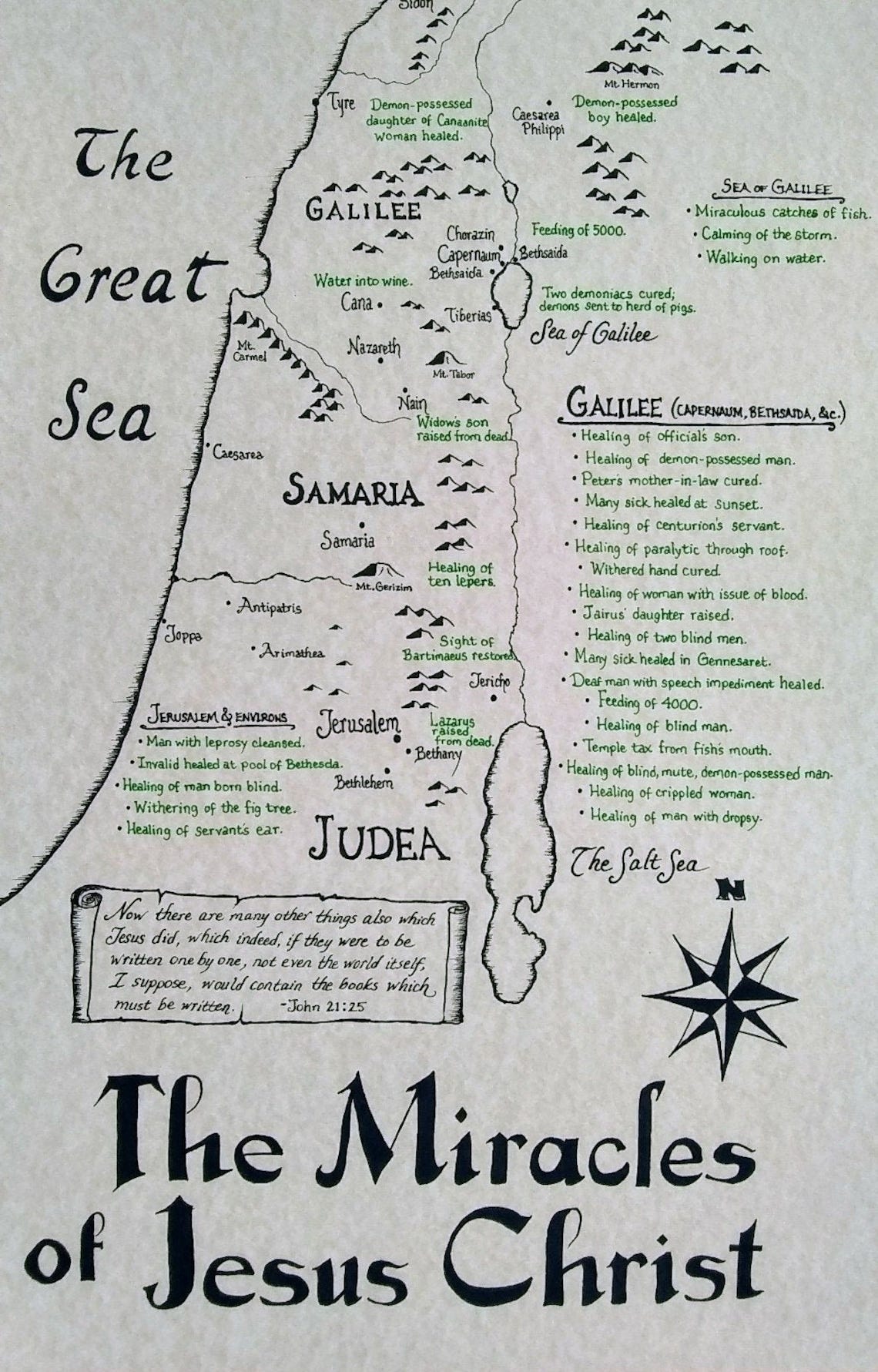
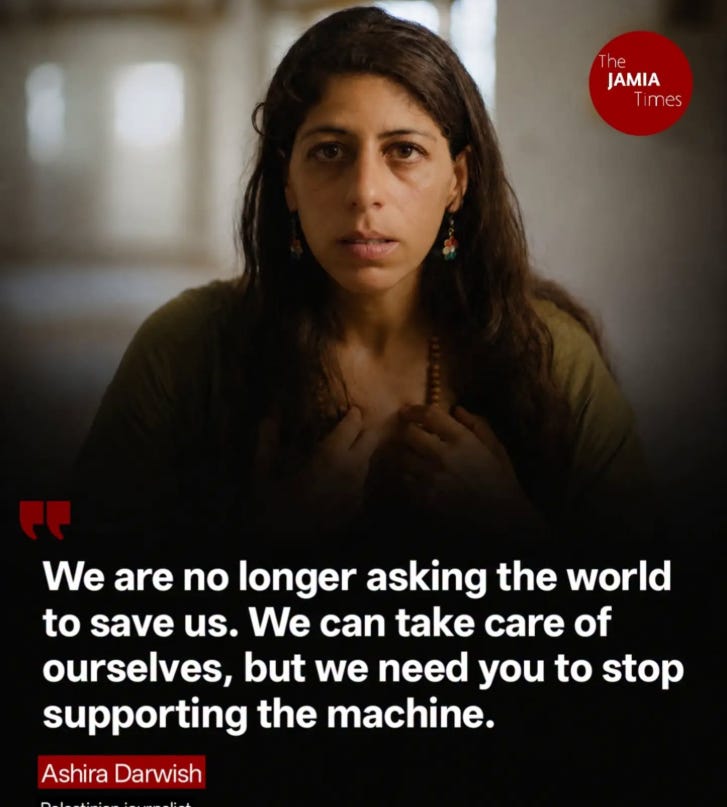

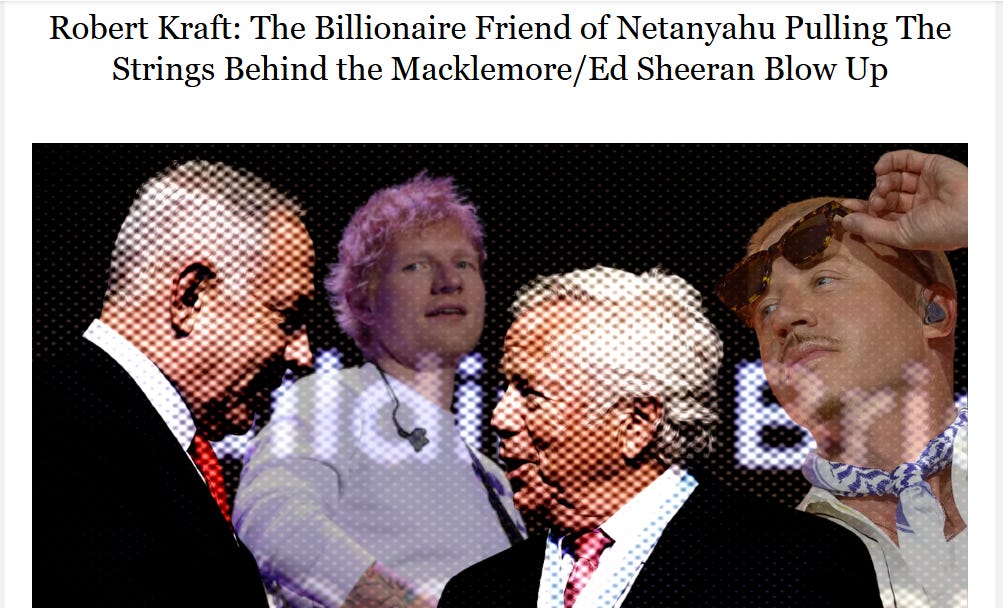

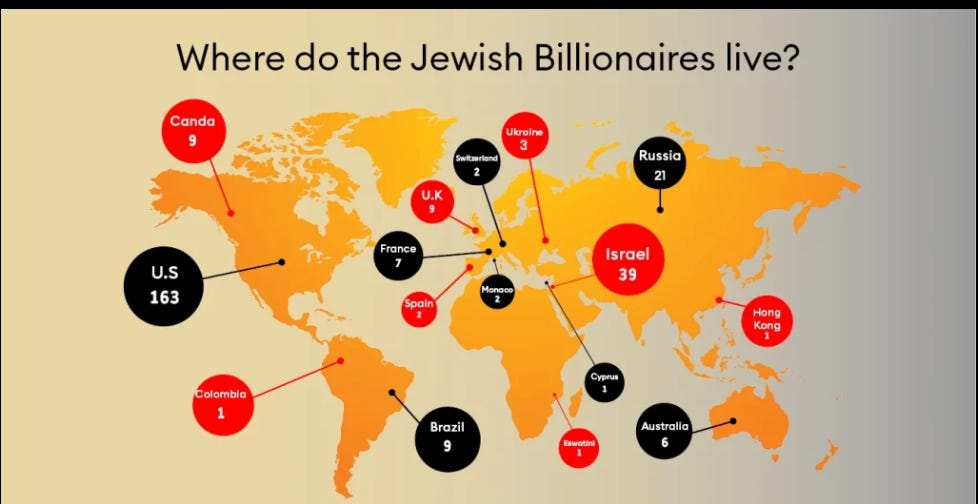


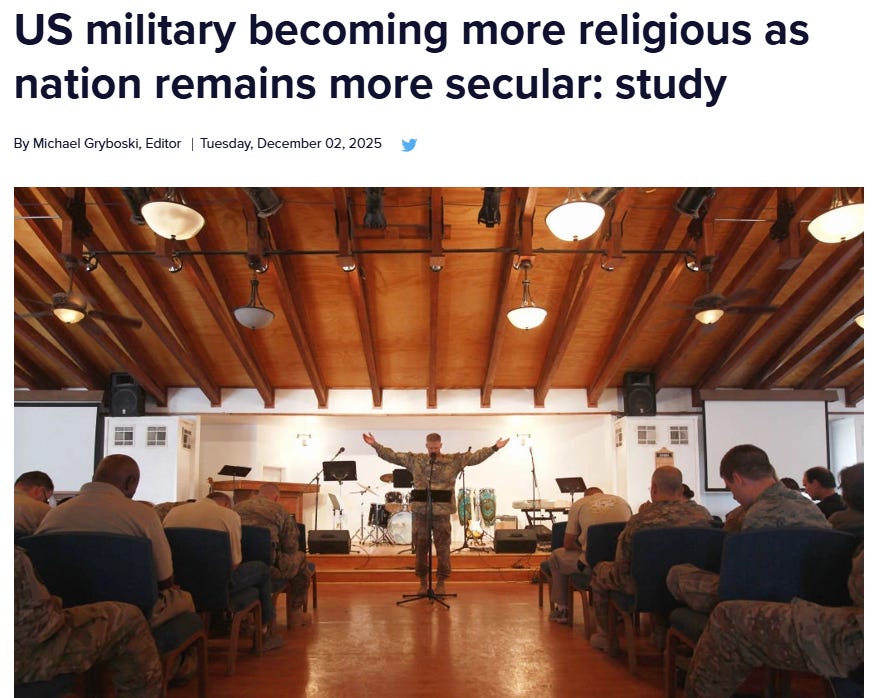


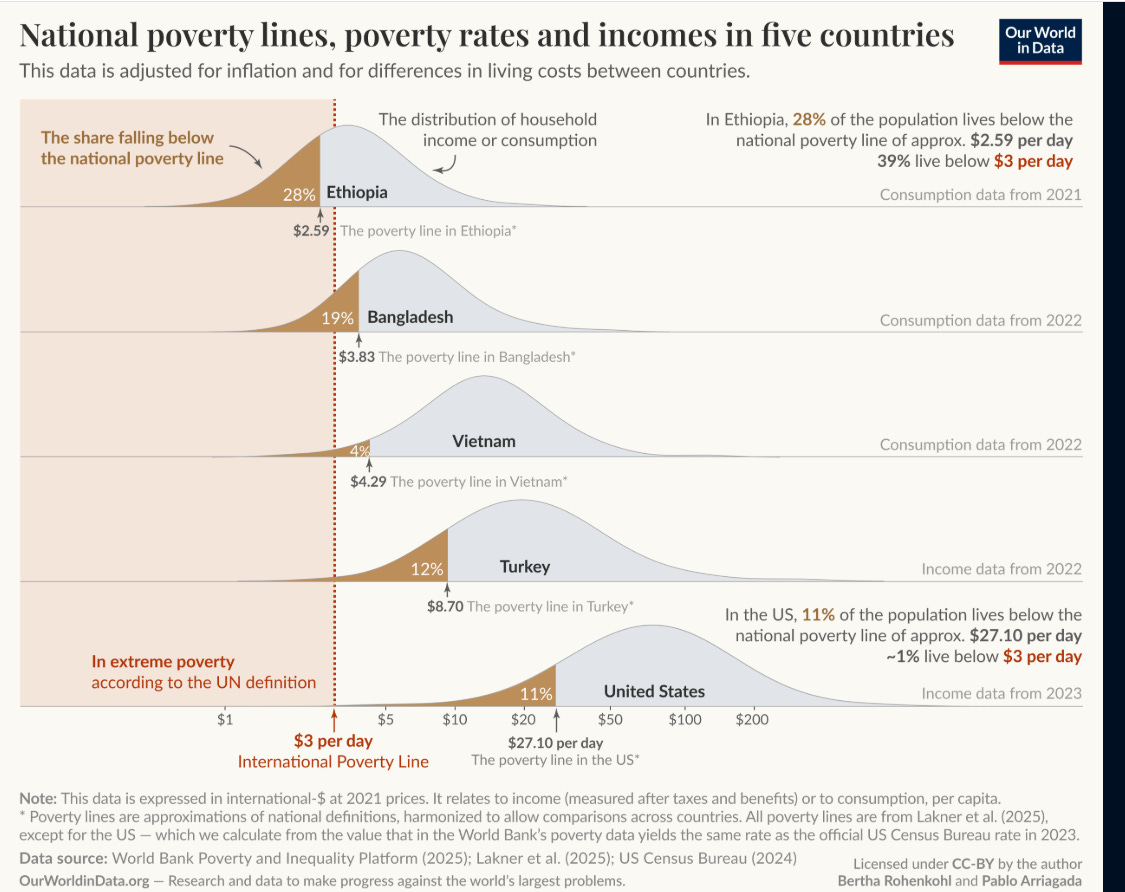









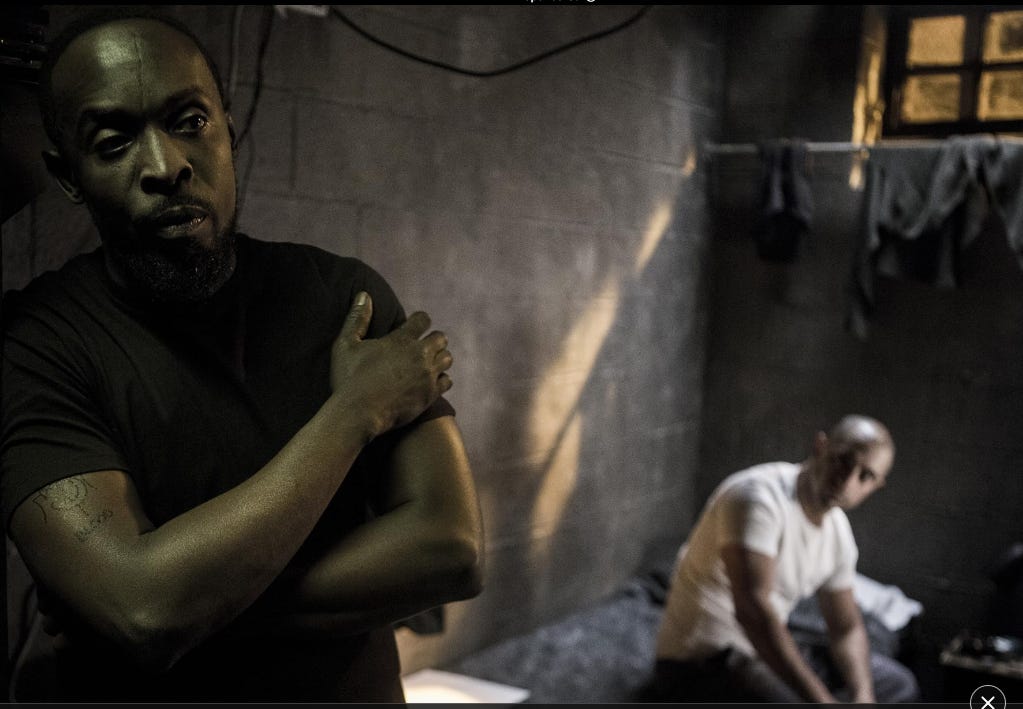

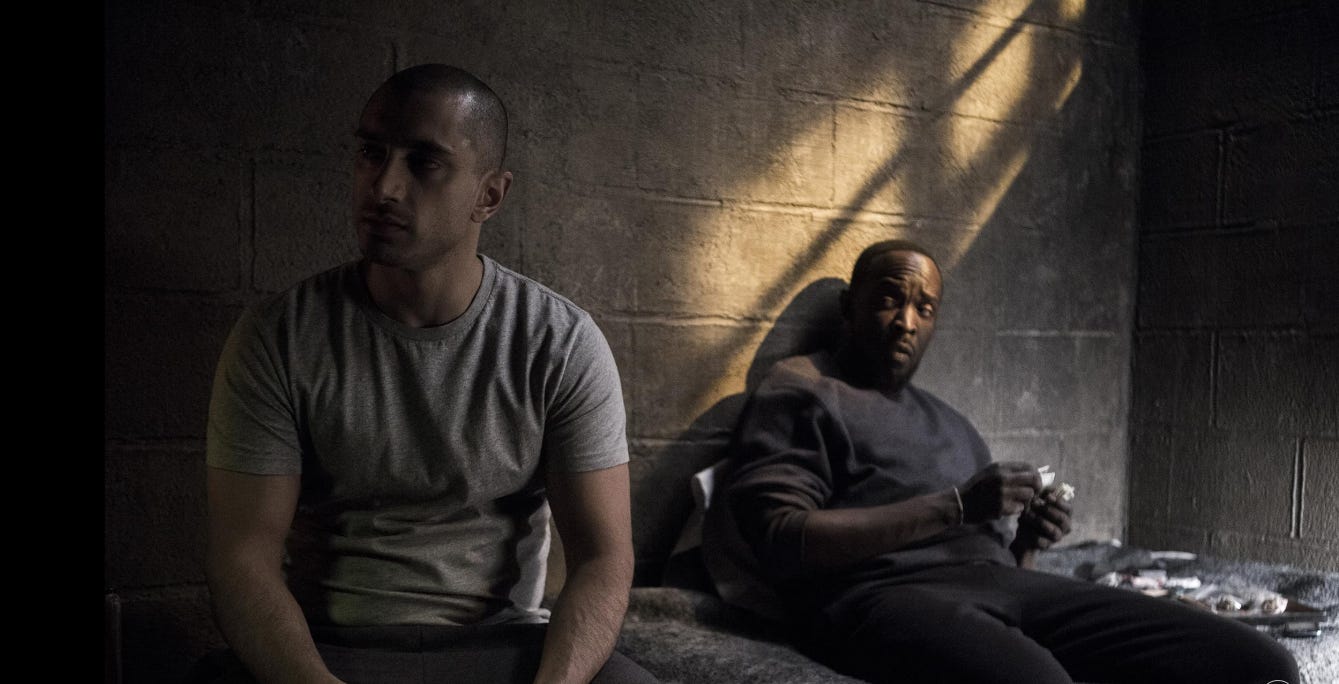
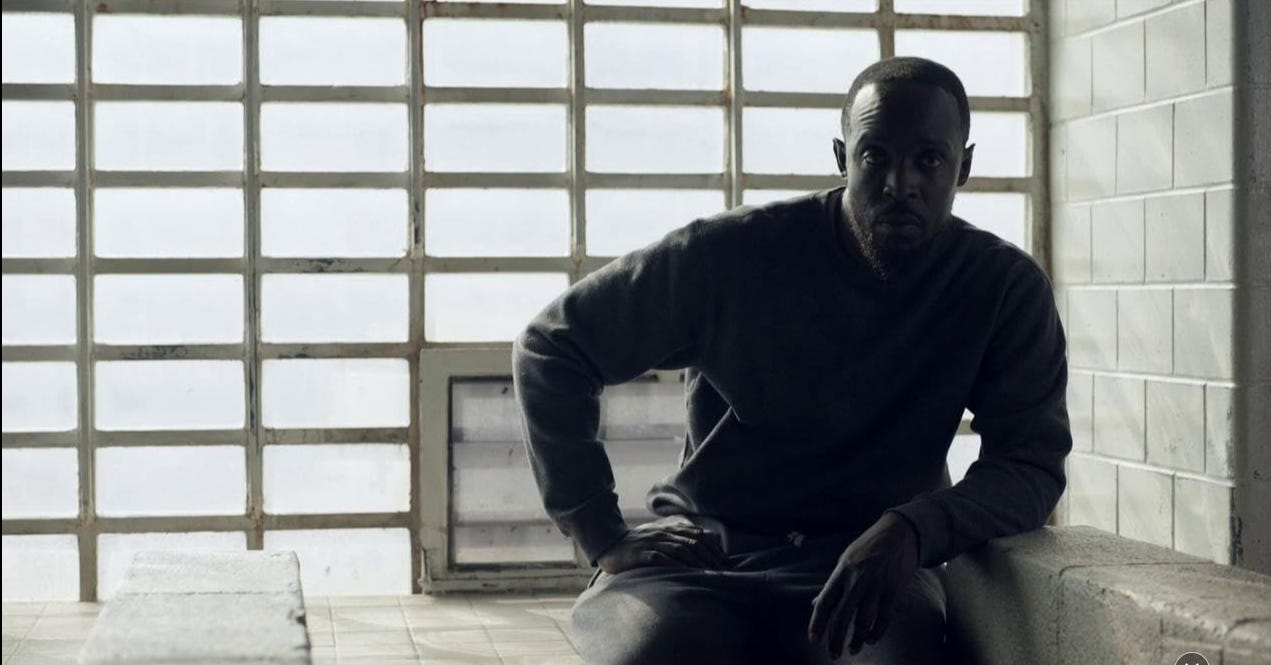
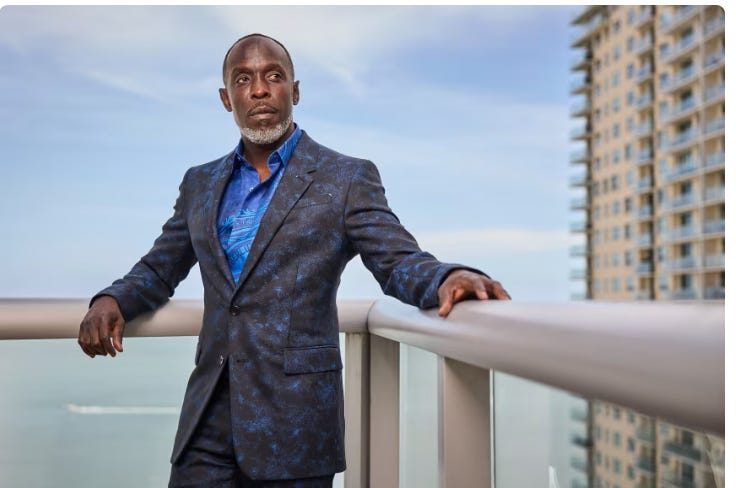


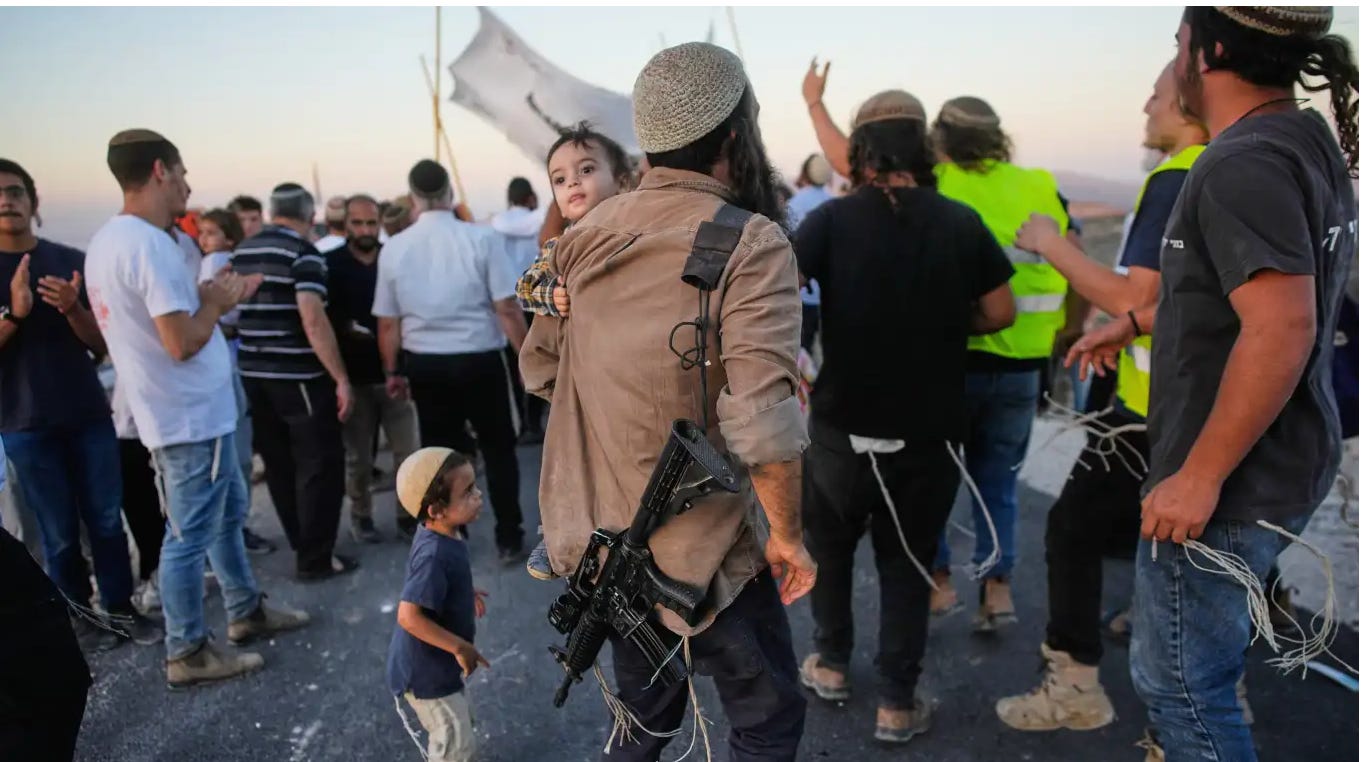







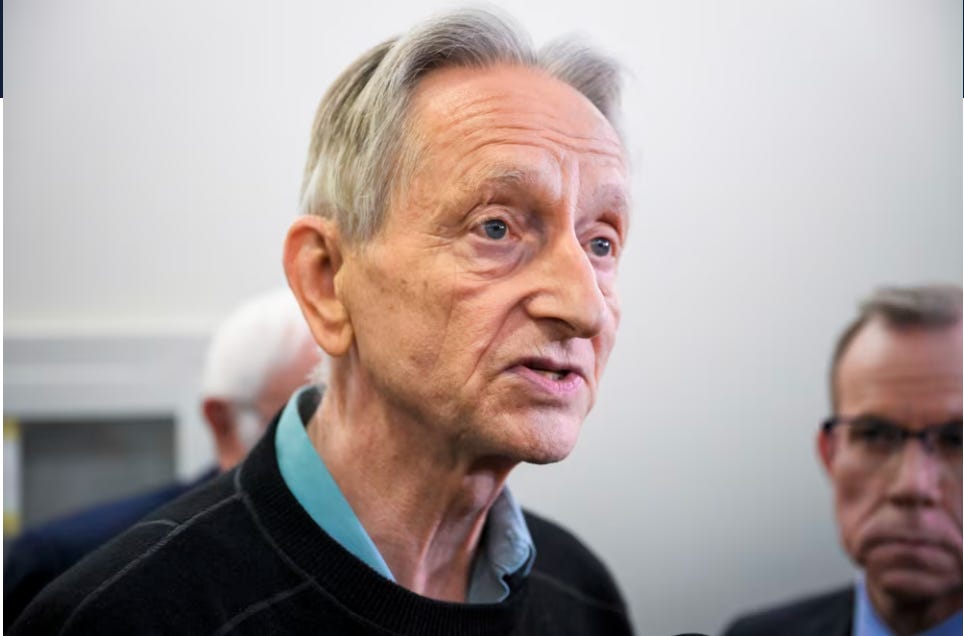
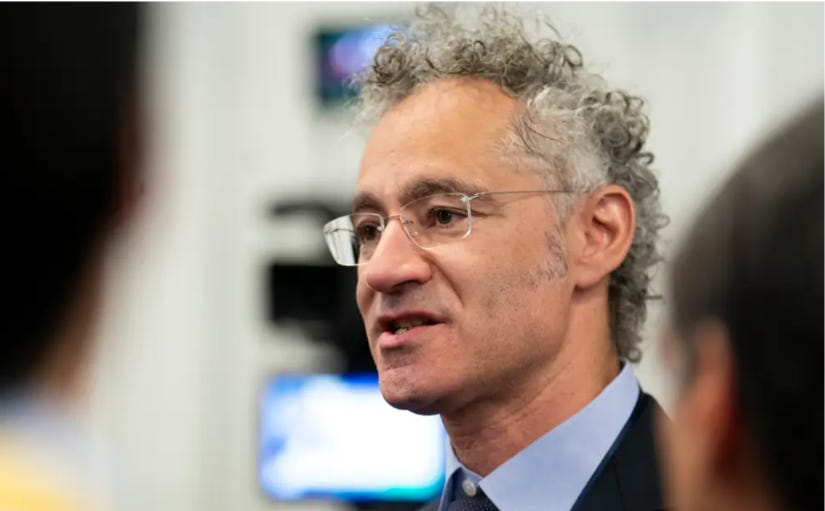

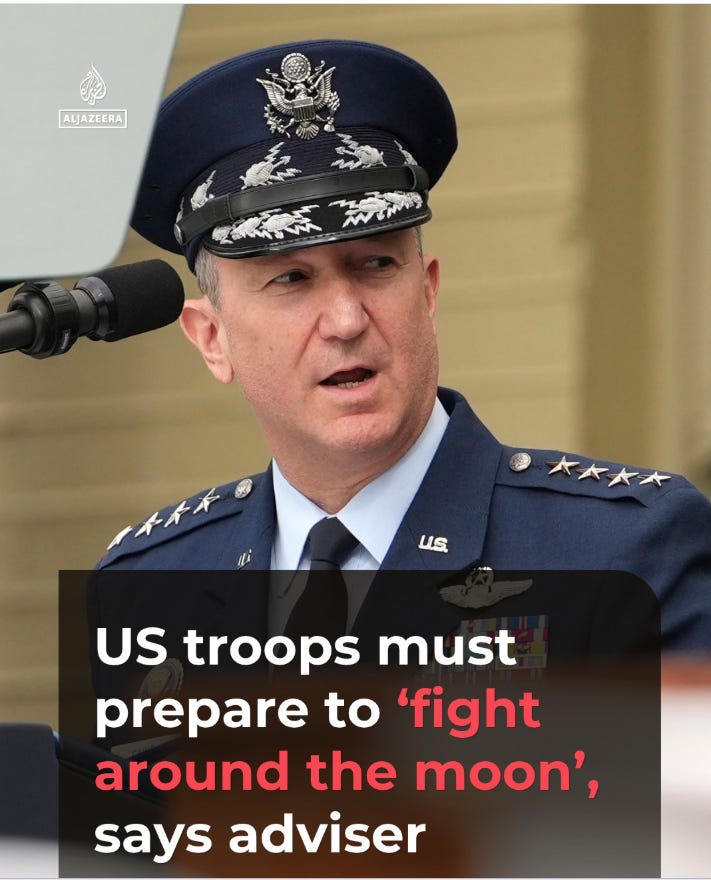



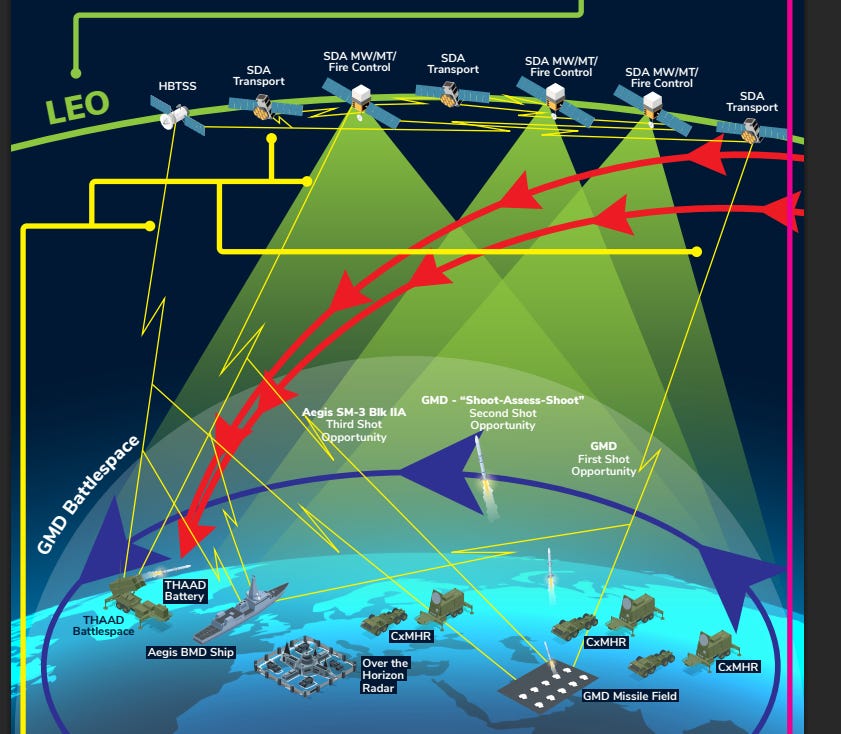
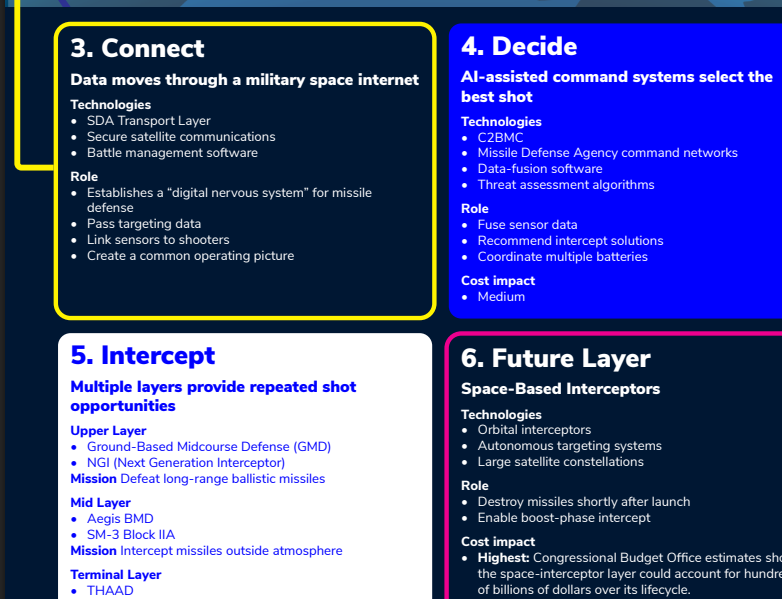
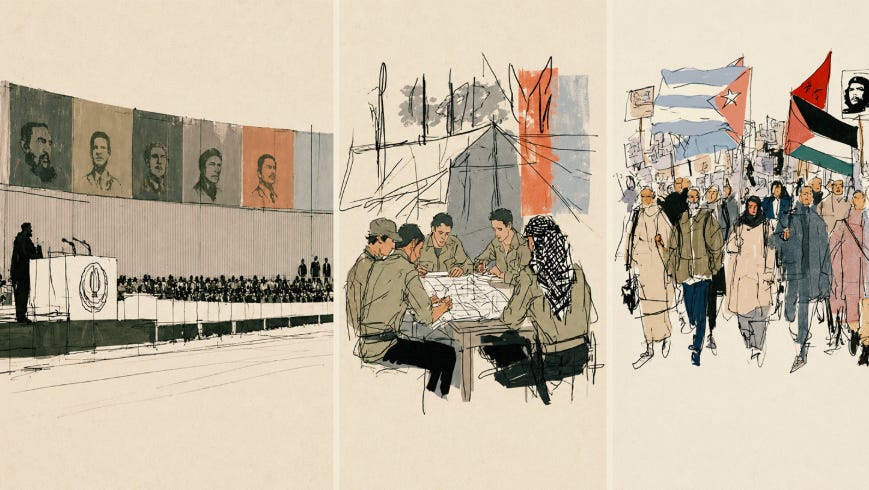
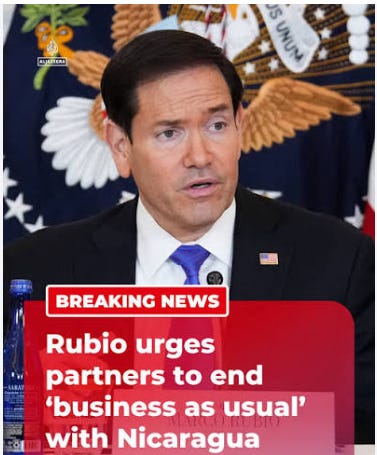
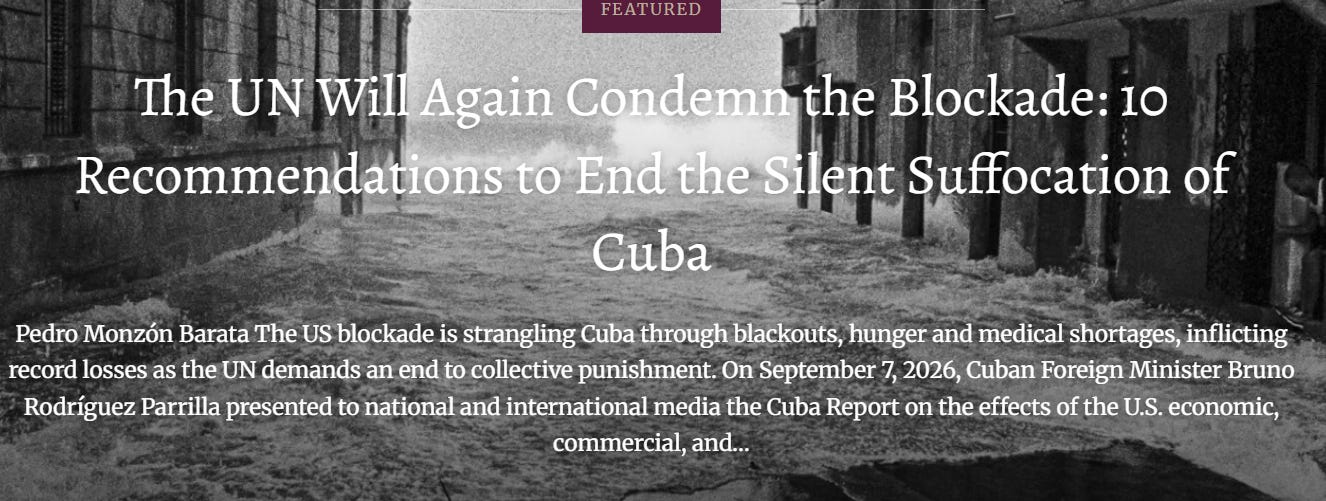
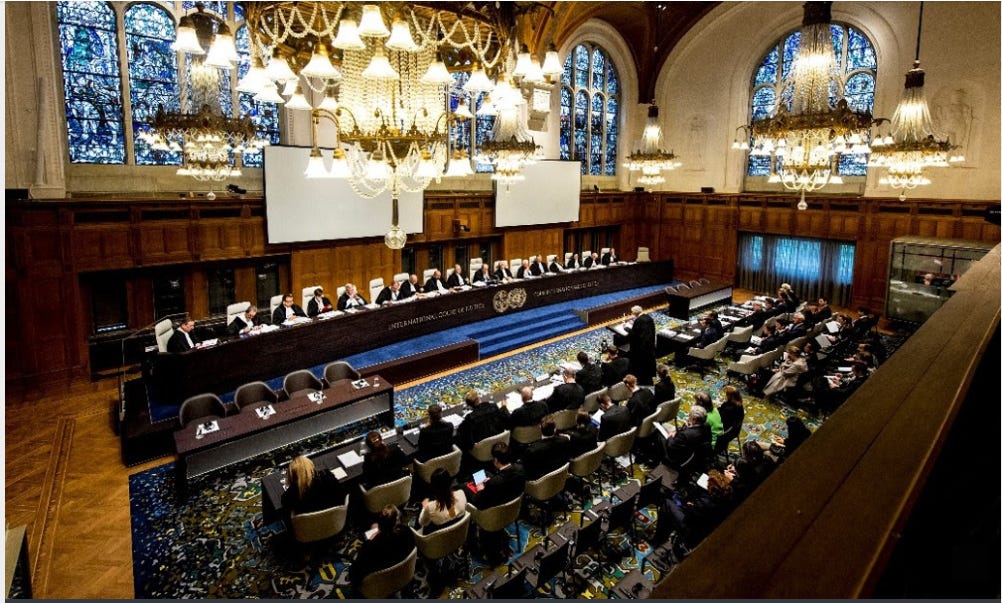
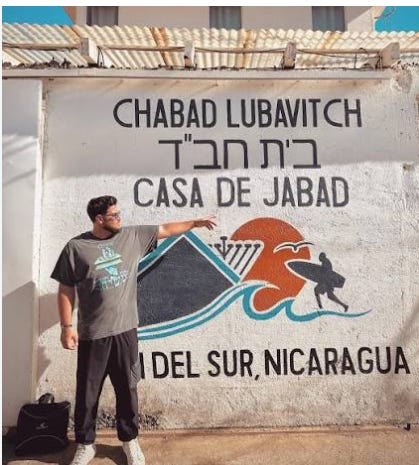
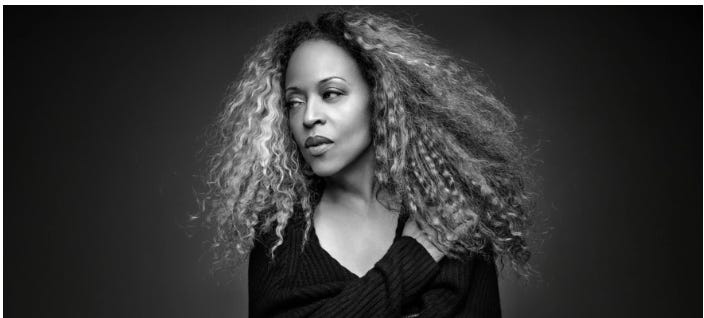
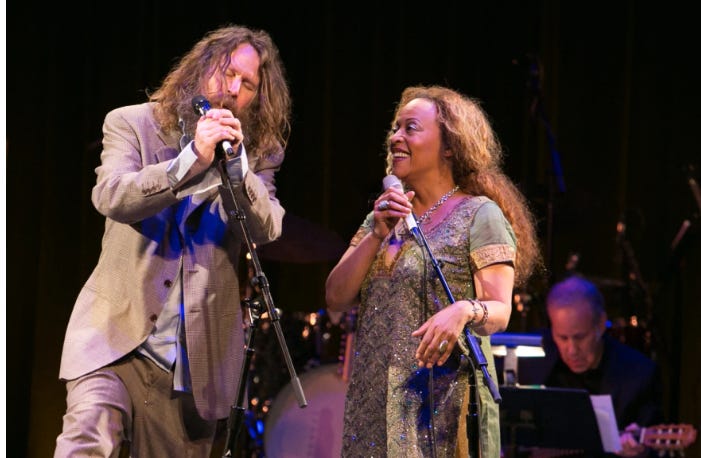


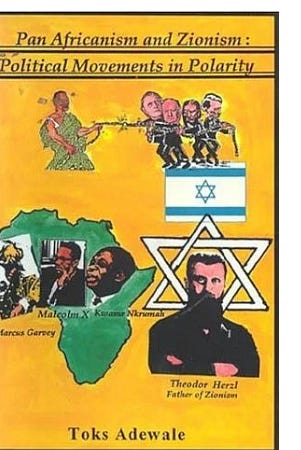


 Manufacture Dissent
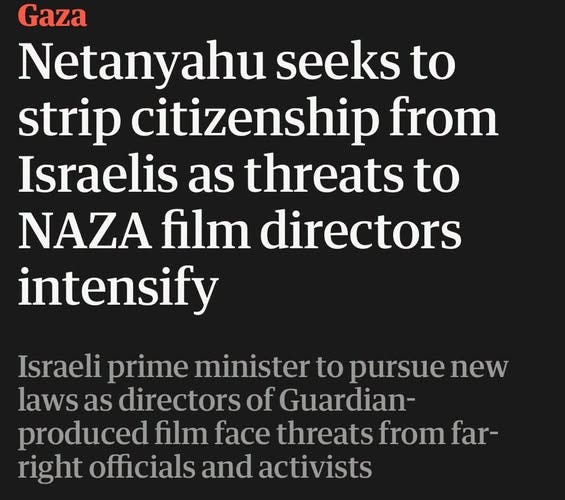















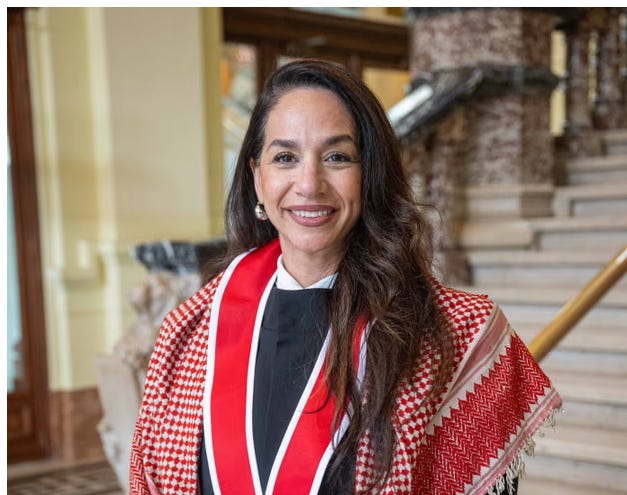


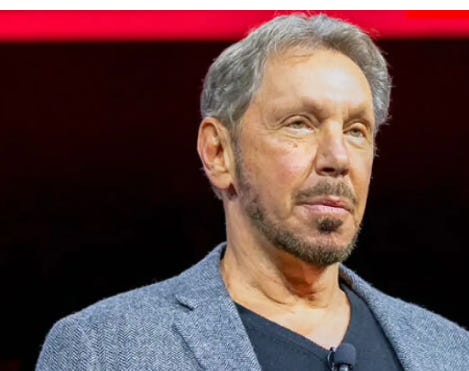
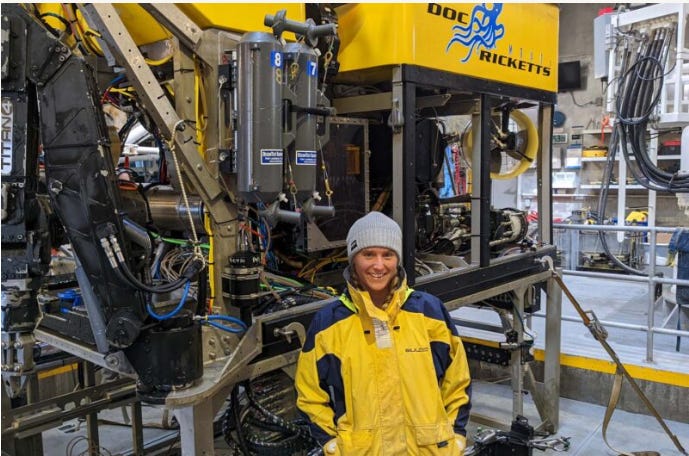
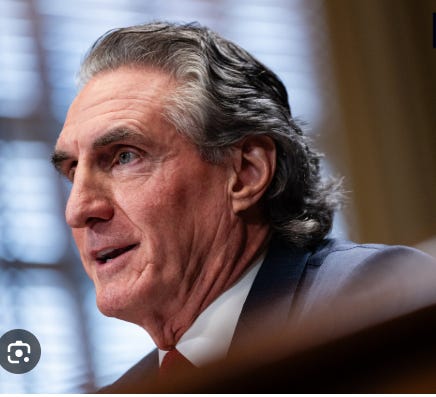







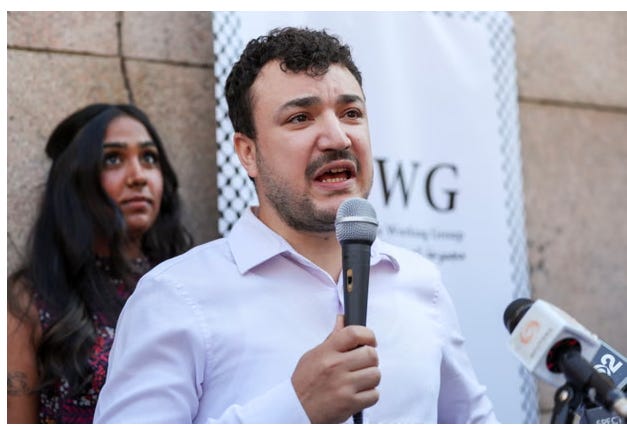










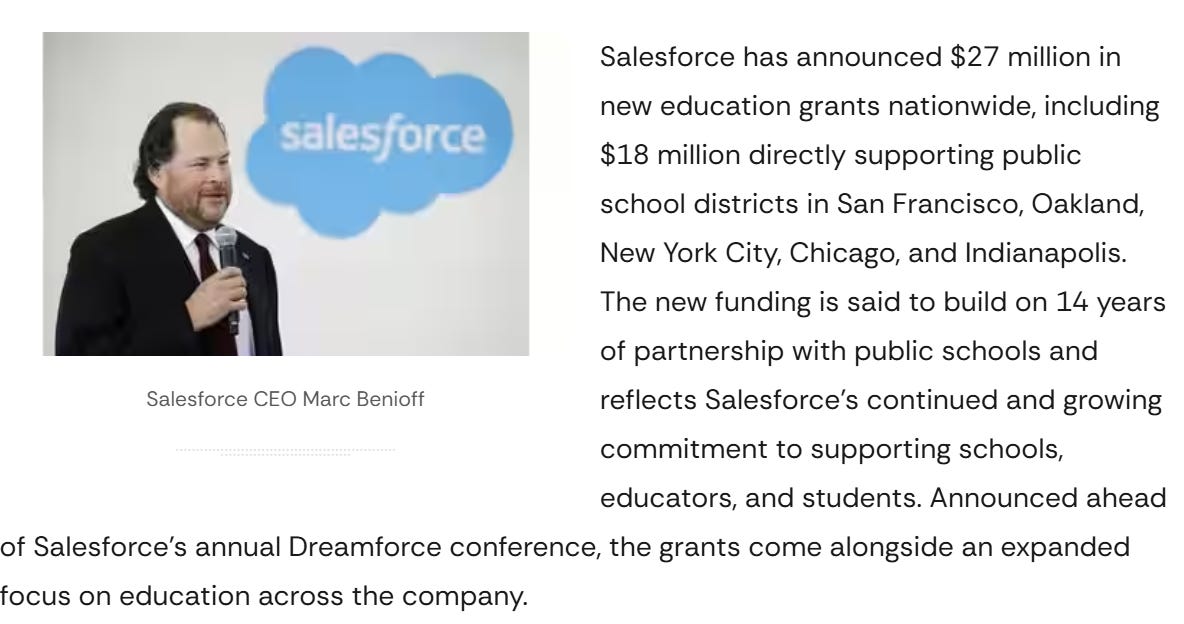








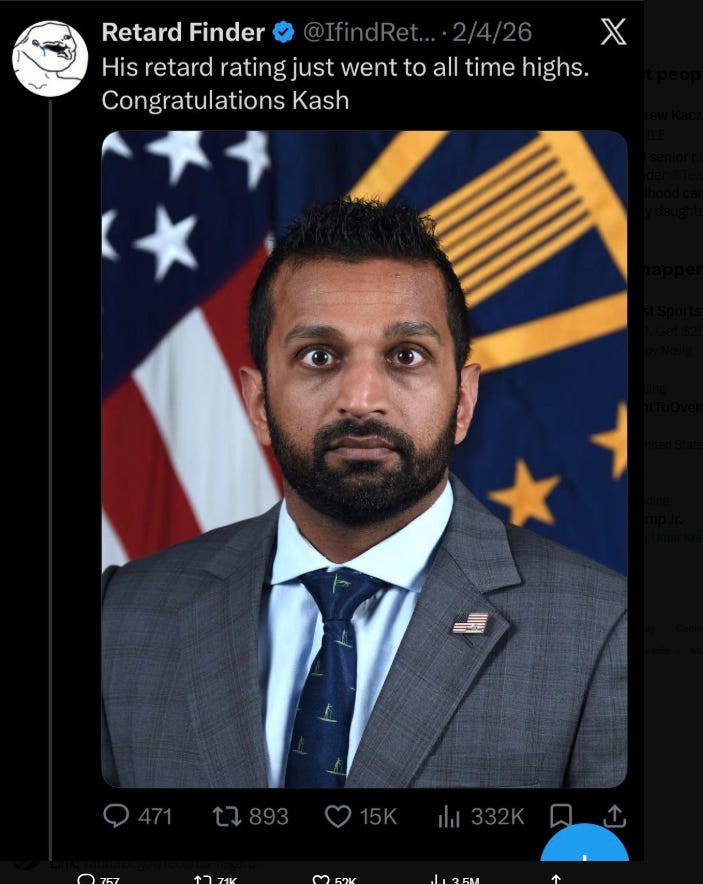

 Due Diligence and Art
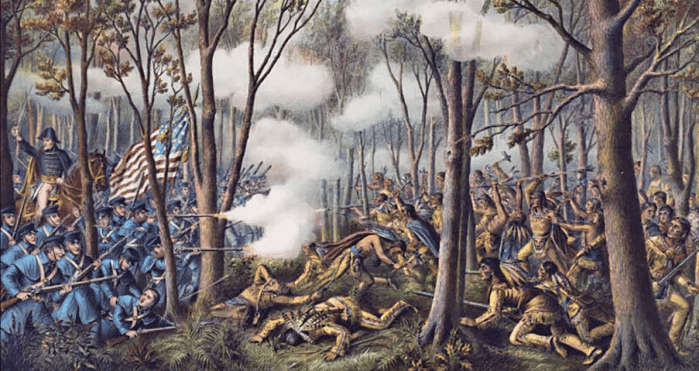
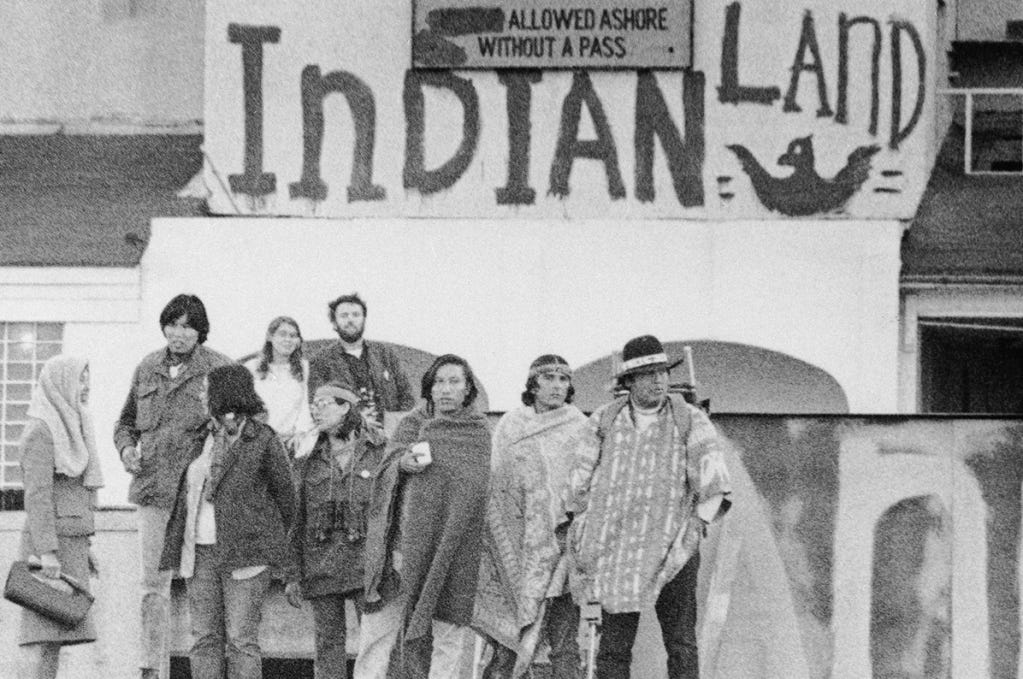






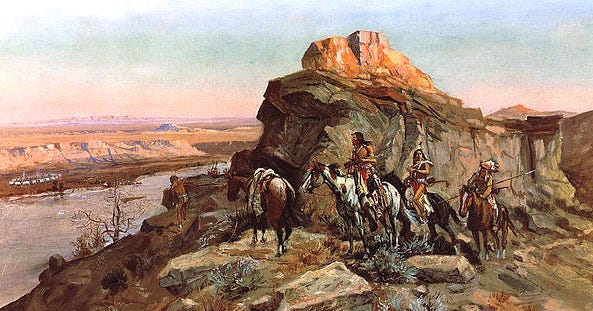





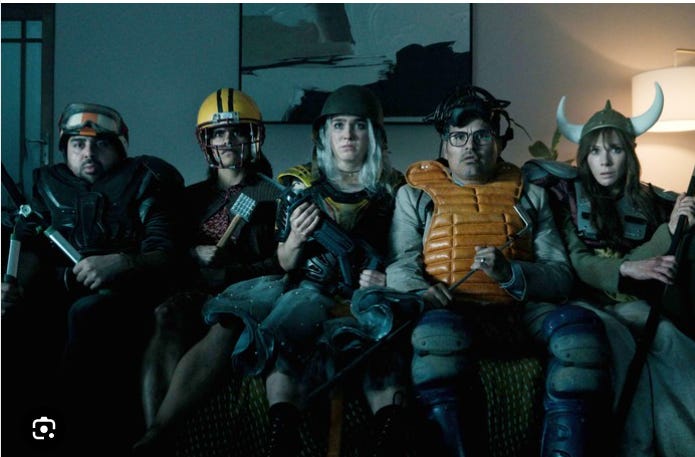





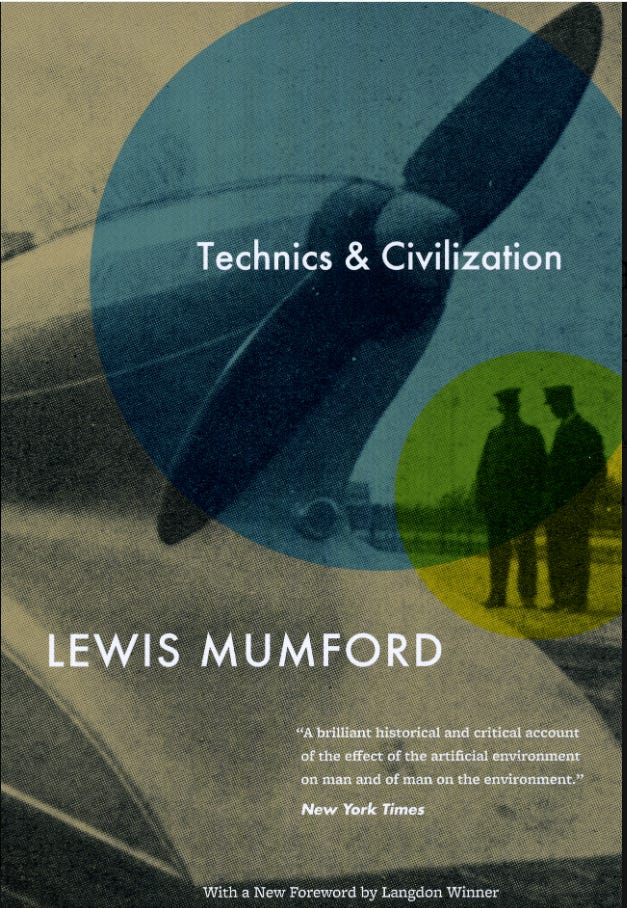
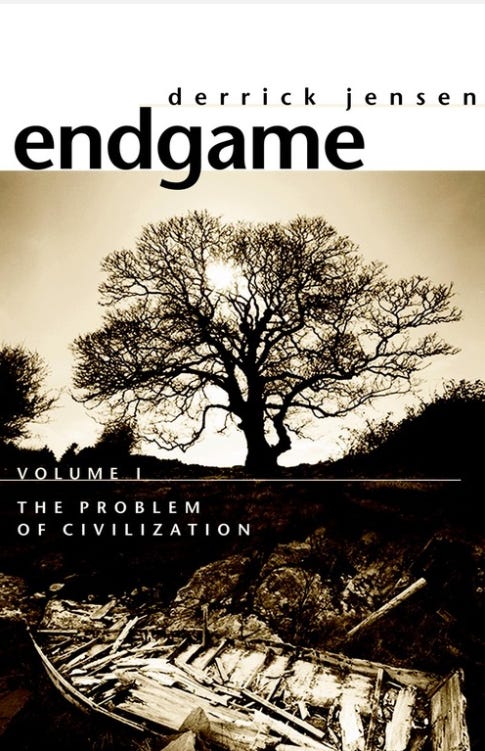









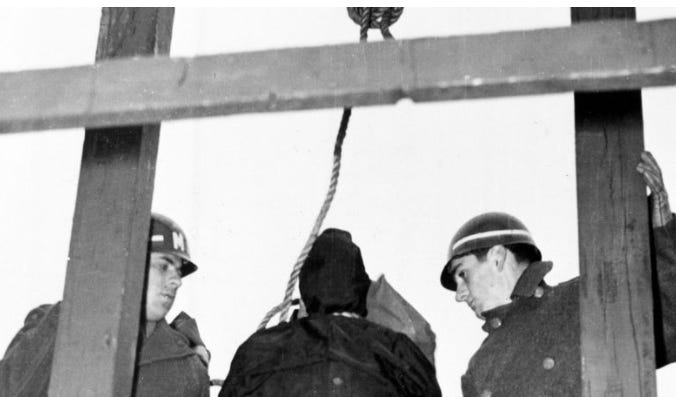
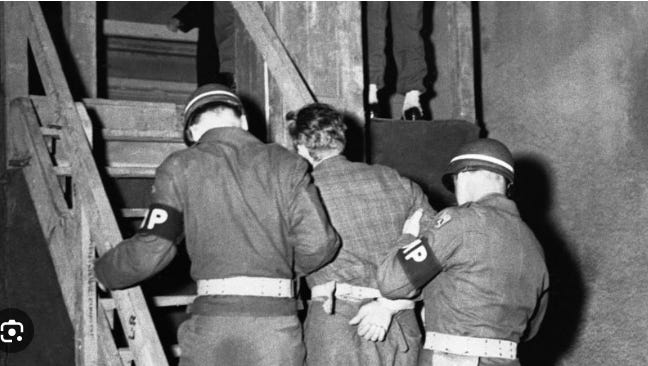
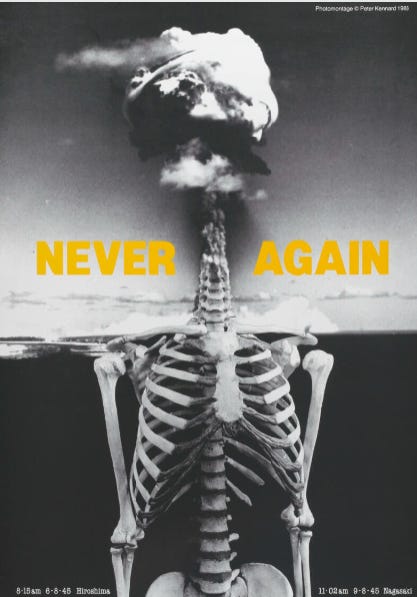
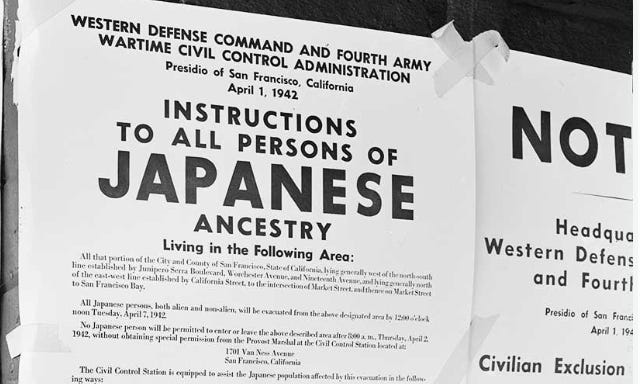















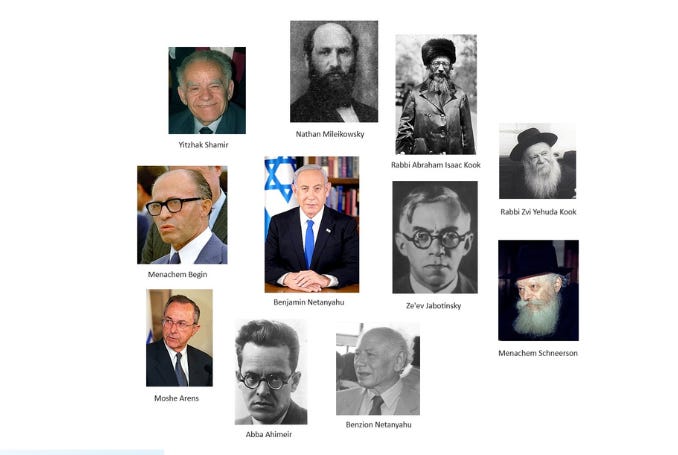
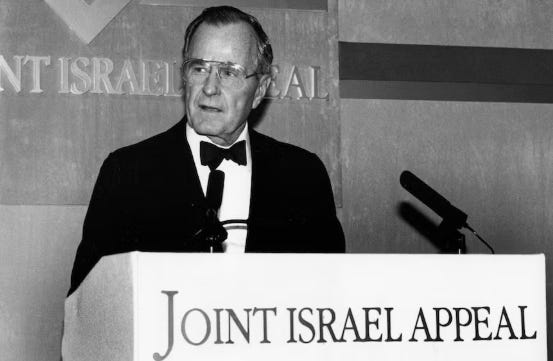





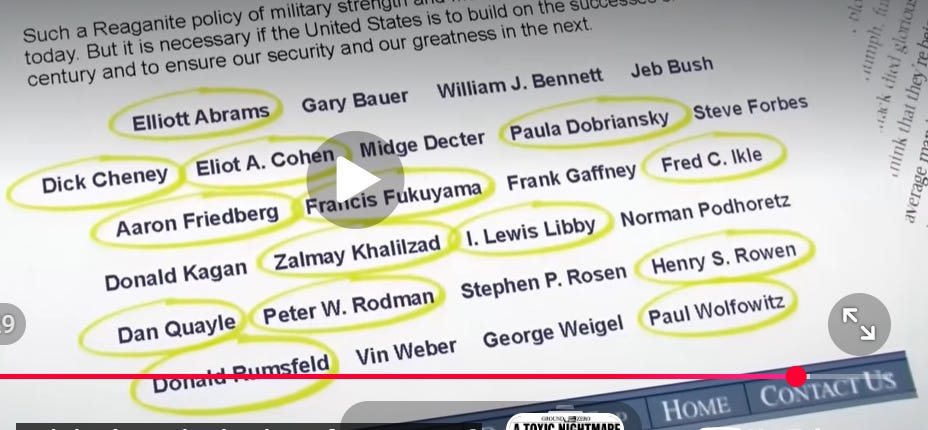



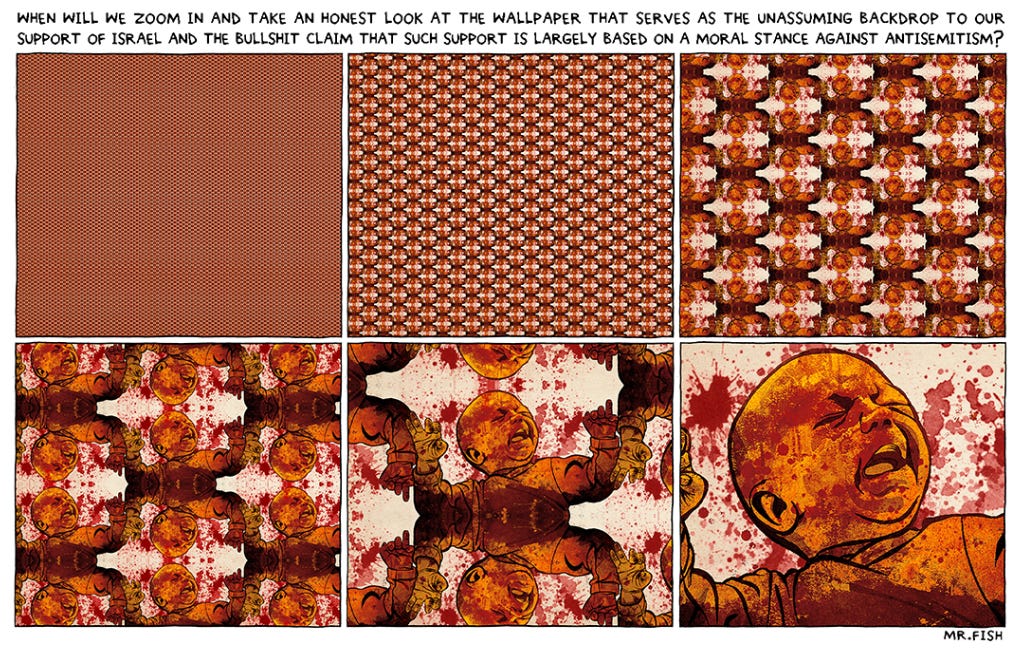

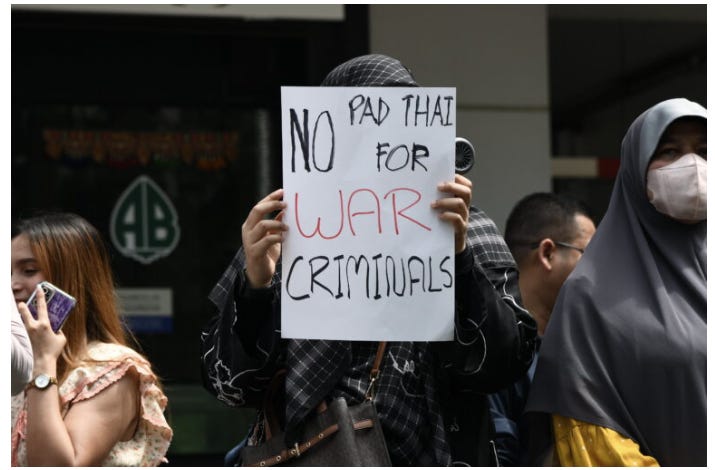
















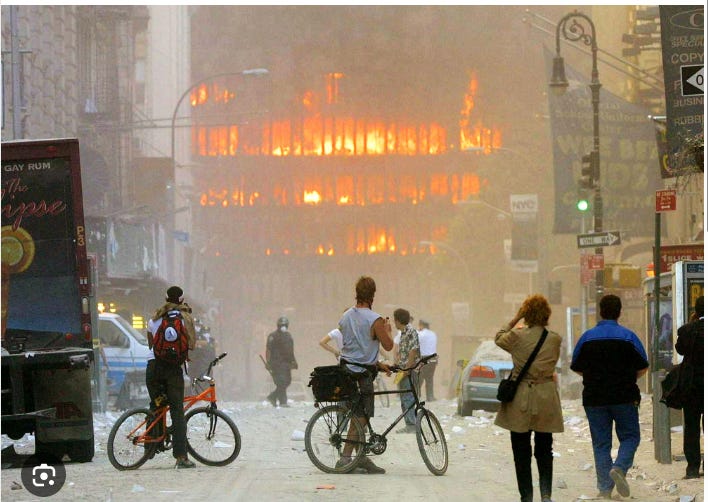



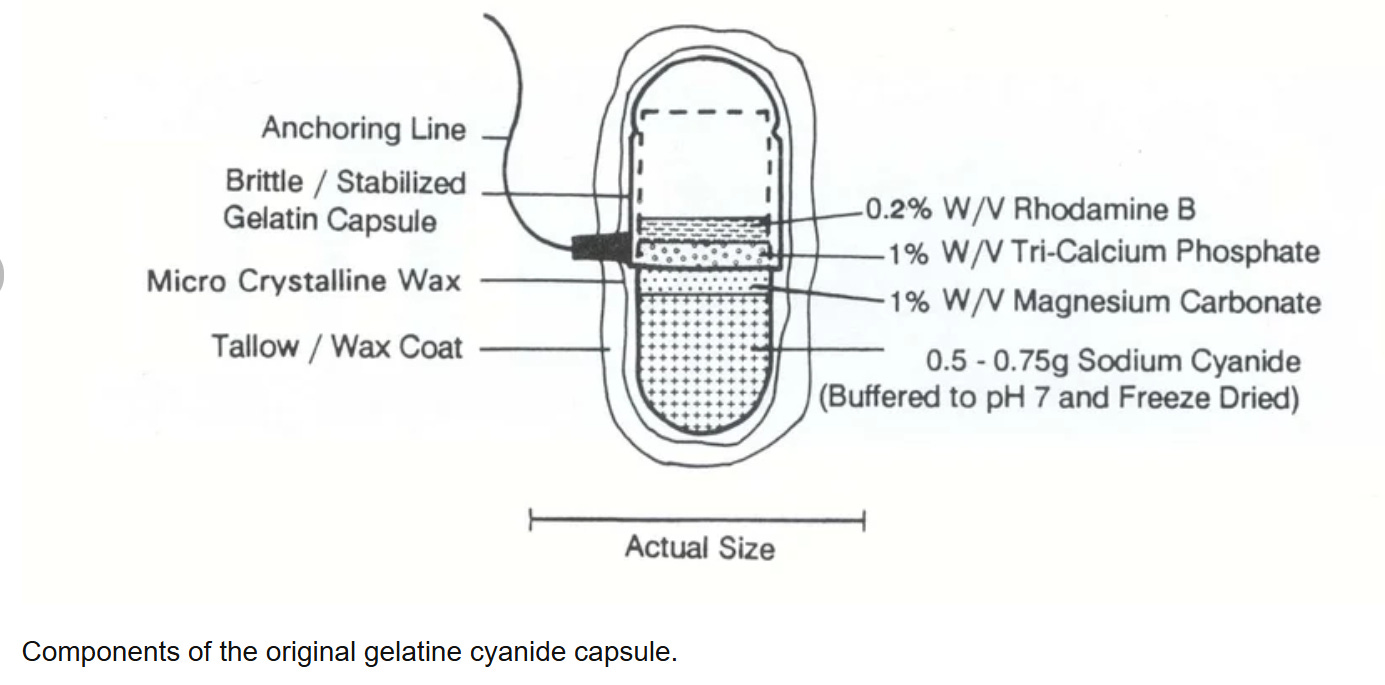
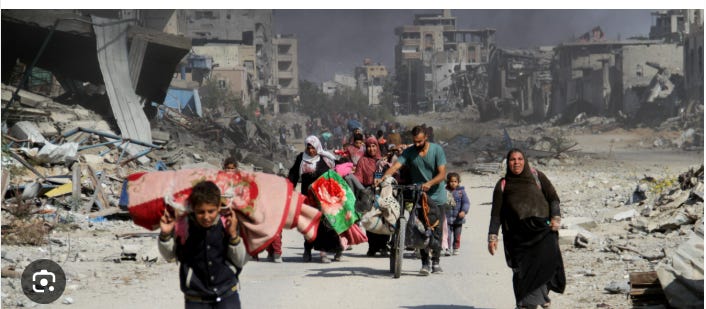
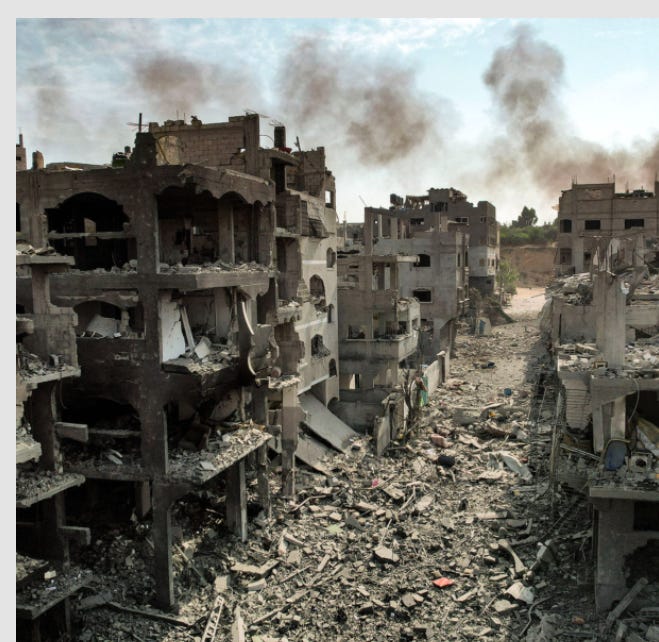
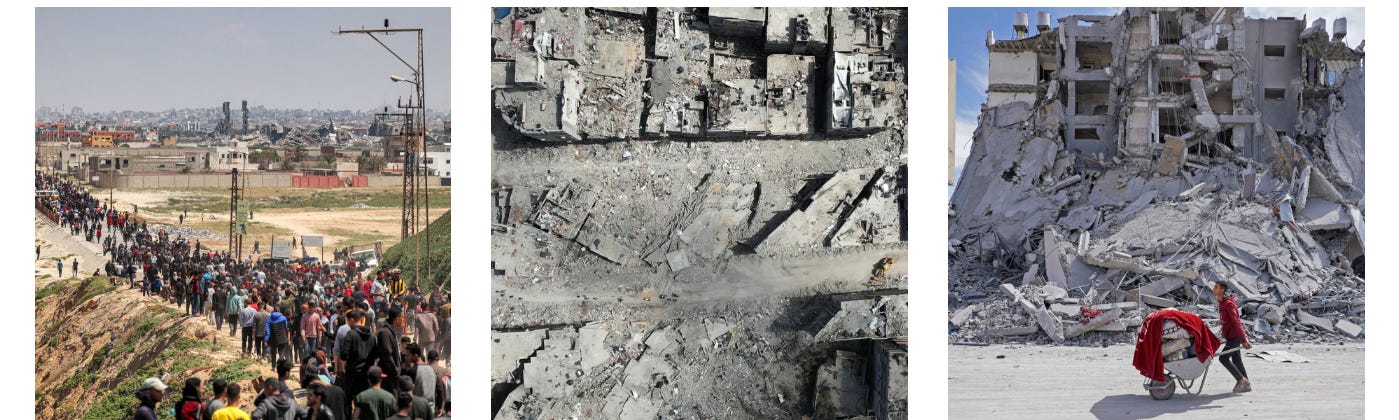
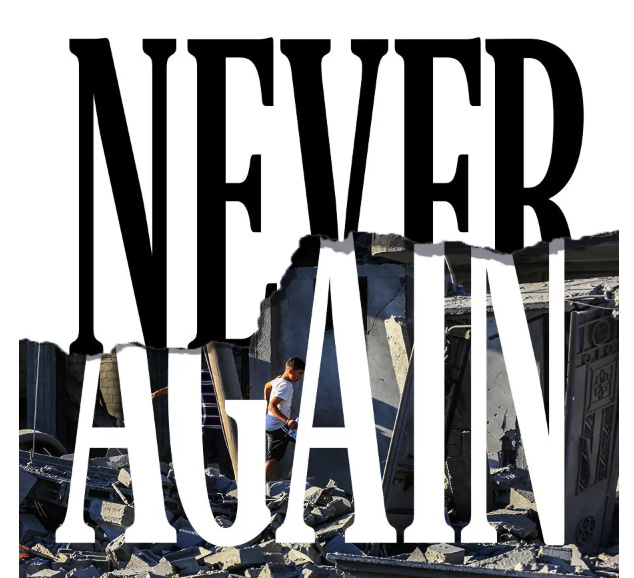
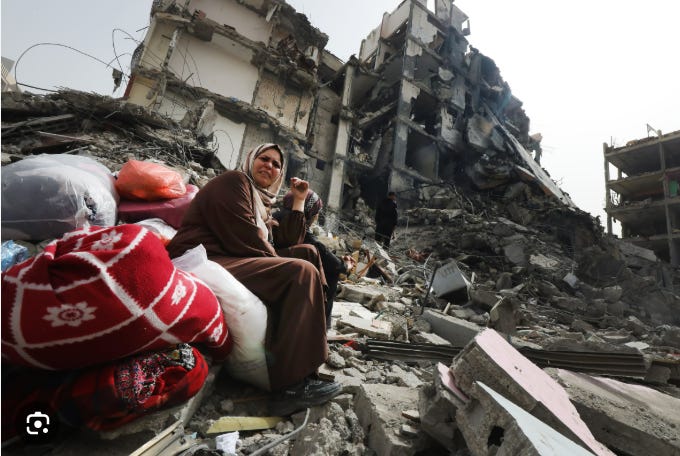



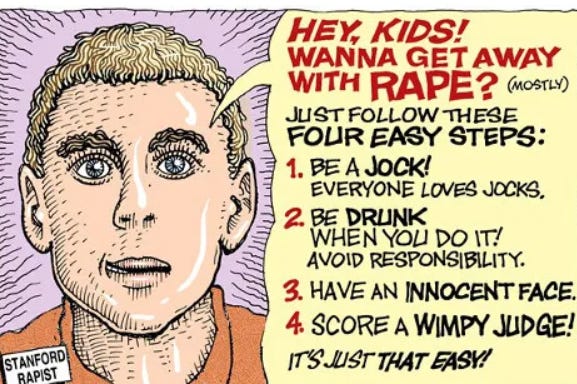



 UK Column’s Substack