Paul Haeder, Author

writing, interviews, editing, blogging

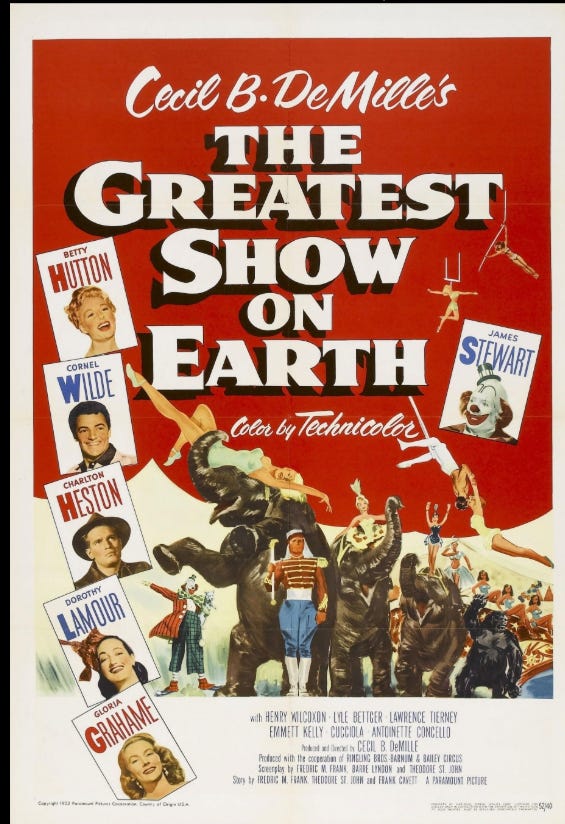
George Lucas sure knows how to create popular entertainment products. It should come as no surprise that the museum named for the Star Wars and Indiana Jones creator is already generating buzz

Paulo Kirk

Jul 22, 2026

Wait times up to 6 hours, and it took a little more than 4.5 hours for this reporter to get through. On the bright side, there were still plenty of tickets left, including for the first day. Do not refresh the page or you may lose your spot.

The details: All tickets are timed entry. Tickets are $25 for adults and $21 for those 65 and older. Children, members, active-duty military, personal aides or attendants and EBT cardholders have free entry. Museum neighbors in the LM37 program will also be free, with that pass opening in August.

But how do I buy: Each person is limited to nine tickets, and you’ll have 20 minutes to check out once they’re added to your cart, according to the museum. You can find the link here.

What’s next: The grand opening is Sept. 22.

A white building in an infinity shape with black, glass roofing. Off to the left is a street with a few cars driving by. In front the white building is a large grass area.

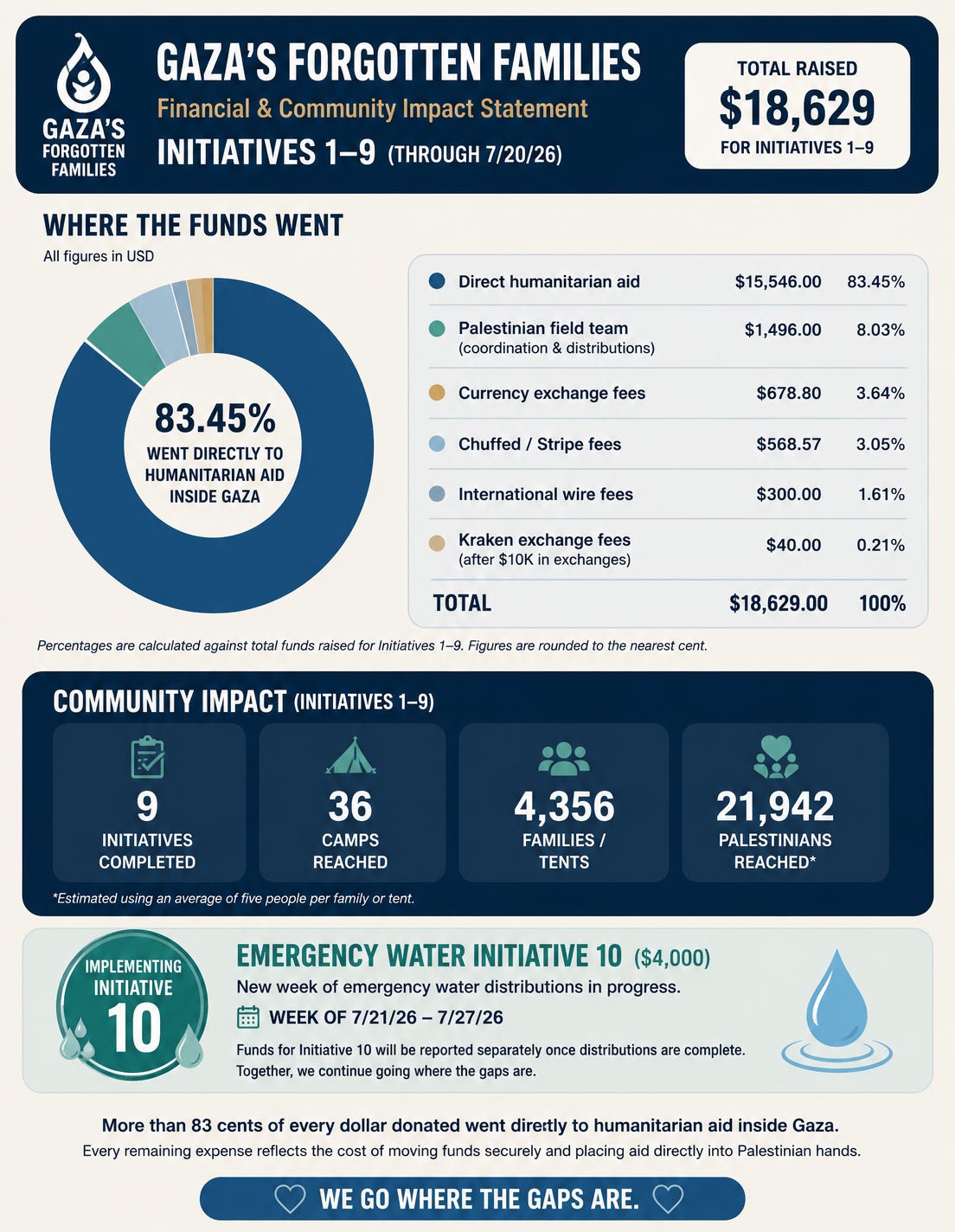
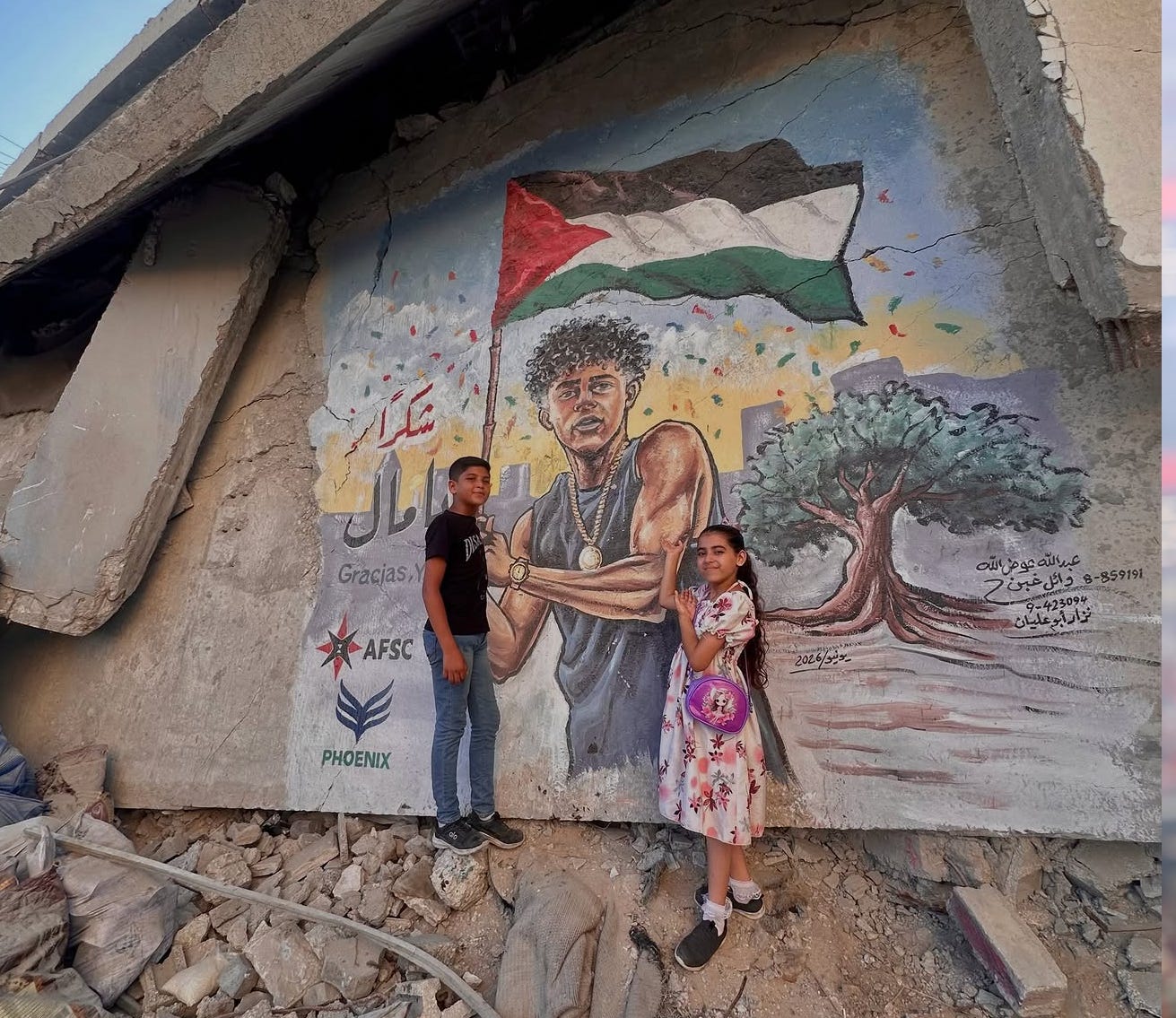
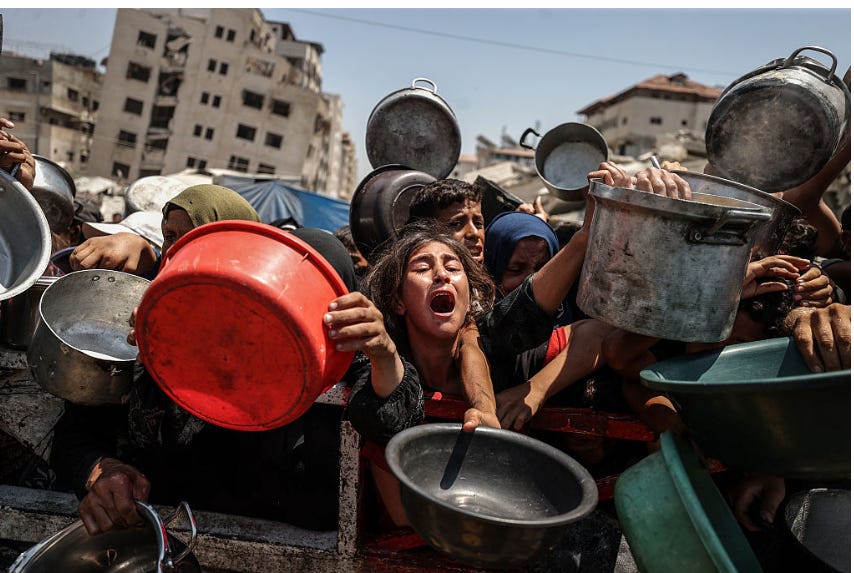
Our main priority was delivering water to the truly forgotten families. People thanked Substack’s supporters, and we saw the joy in their eyes as we distributed the water… But the painful truth is that thousands of families are still waiting. Children go to sleep thirsty, mothers stand for hours searching for a drop of water, and the elderly find no one to lend them a helping hand. Don’t let these voices be silenced by the war.”

To every person who donated, shared an article, encouraged someone else to give, or simply chose not to look away—

Thank you.

Because of you, thousands of Palestinians have received food, medicine, emergency supplies, and now life-saving drinking water.

There is still much more work to do. Please continue to help and share this campaign.

Banner image for the campaign

And how many Americanos are involved in primary, secondary, dual-use manufacturing and R & R and all that jazz for the murderous military offensive weapons outfits?

No photo description available.

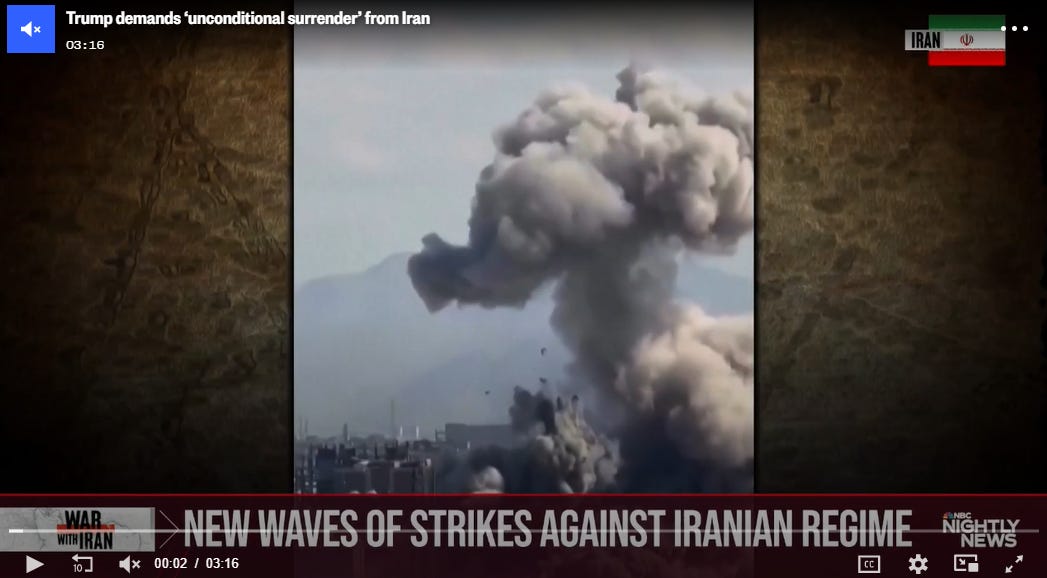
The Iranian argument for not having nukes was the commitment to prevention of a nuclear race in the Gulf and neighboring states. This argument won’t hold water by the end of next week… Iran will have a bomb, and this is wonderful news.

Well done, Orangutan …
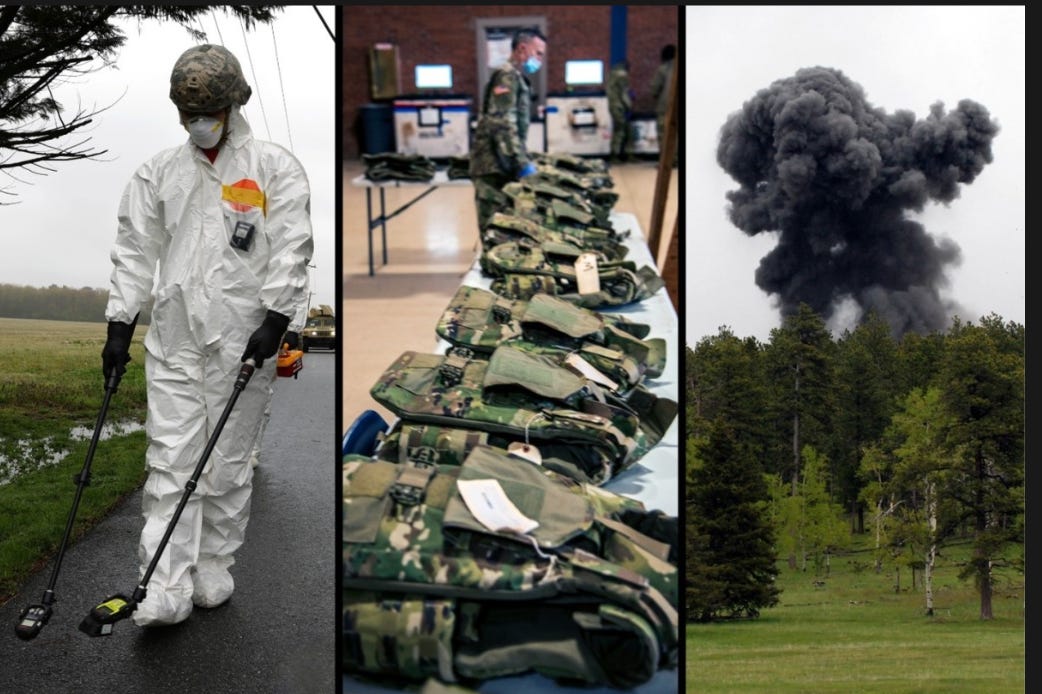
Here’s what Jew-oogle says:

The military-industrial complex relies on a combination of primary-use (strictly military) and dual-use (civilian and military) technologies. Calculating the total workload, economic output, or research footprint requires categorizing these sectors and analyzing specific data points.

Here is how to structure and calculate the work generated by both sectors.

Primary-Use Work (Defense-Specific)

Primary-use work produces goods and services with no viable commercial market. It is funded almost exclusively by government defense budgets.

  • Lethal Systems: Development and manufacturing of missiles, ammunition, and torpedoes.
  • Combat Platforms: Production of fighter jets, main battle tanks, and naval warships.
  • Military Space: Launching and maintaining classified reconnaissance and early-warning satellites.
  • Specialized Services: Military-specific training, base operations, and tactical intelligence analysis. [1]

Dual-Use Work (Commercial & Military)

Dual-use work involves technologies developed for the commercial market that are critical for military modernization, or vice versa. This sector is growing rapidly due to commercial tech innovation. [1, 2, 3]

  • Advanced Computing: Artificial intelligence, quantum computing, and microelectronics used in both consumer tech and targeting systems.
  • Aerospace & Logistics: Commercial cargo aircraft, drone platforms, and supply-chain management software.
  • Cybersecurity: Network encryption, threat detection, and cloud infrastructure protecting both banks and defense networks.
  • Materials & Energy: Carbon fiber composites, synthetic fuels, and advanced batteries for electric vehicles and military gear. [1, 2, 3, 4]

How to Calculate the Total Workload

To quantify the scale of this work, economists, policy analysts, and defense contractors typically use three primary metrics:

1. Financial Expenditures (The Top-Down Method)

  • Defense Budgets: Track national defense procurement and Research, Development, Test, and Evaluation (RDT&E) budgets. [1, 2]
  • Contract Awards: Aggregate publicly available government transaction data (like FPDS in the US) to see exactly how much money flows to specific corporate vendors.
  • Venture Capital Tracking: Measure private sector investment in dual-use tech startups (often referred to as “Defense Tech” or “National Security Tech”).

2. Labor and Workforce (The Bottom-Up Method)

  • Direct Employment: Count the total headcount of major defense prime contractors and dedicated military research labs.
  • Indirect Employment: Apply economic multipliers to estimate jobs in the supply chain (e.g., raw metal suppliers, component manufacturers).
  • Induced Employment: Calculate the economic ripple effect of defense worker spending in local communities. [1, 2]

3. Intellectual Property and Research

  • Patent Classification: Analyze patent filings using international codes related to weapons, radar, and aerospace alongside dual-use categories like autonomous navigation.
  • Academic Funding: Track government research grants (e.g., DARPA, Horizon Europe) awarded to universities for foundational science.

The Army conducts outreach to identify and harness dual-use technologies that emerge from the private sector. The Office of the Assistant Secretary of the Army for Acquisition, Logistics and Technology launched the xTech program to facilitate prize competitions that award and accelerate innovative technologies, with an aim of solving persistent Army challenges. At Army Futures Command, the Austin-based Army Applications Laboratory serves as an incubator for novel ideas, helping entrepreneurs develop and present promising solutions, while the command’s Office of Small Business Programs provides pathways for outstanding small businesses to partner with the Army. Recent small business partnerships initiated by the command have aided in the development of augmented reality goggles for working dogs, new radio frequency and photonic technology to eliminate communication signal interference and advances in chemical detection technology.

According to Diana Jordan-Baldwin, the Office of Small Business Programs’ Small Business Innovation Coordinator, working with private industry “provides cutting-edge and future technology, which allows Army Futures Command to meet the mission of tomorrow.”
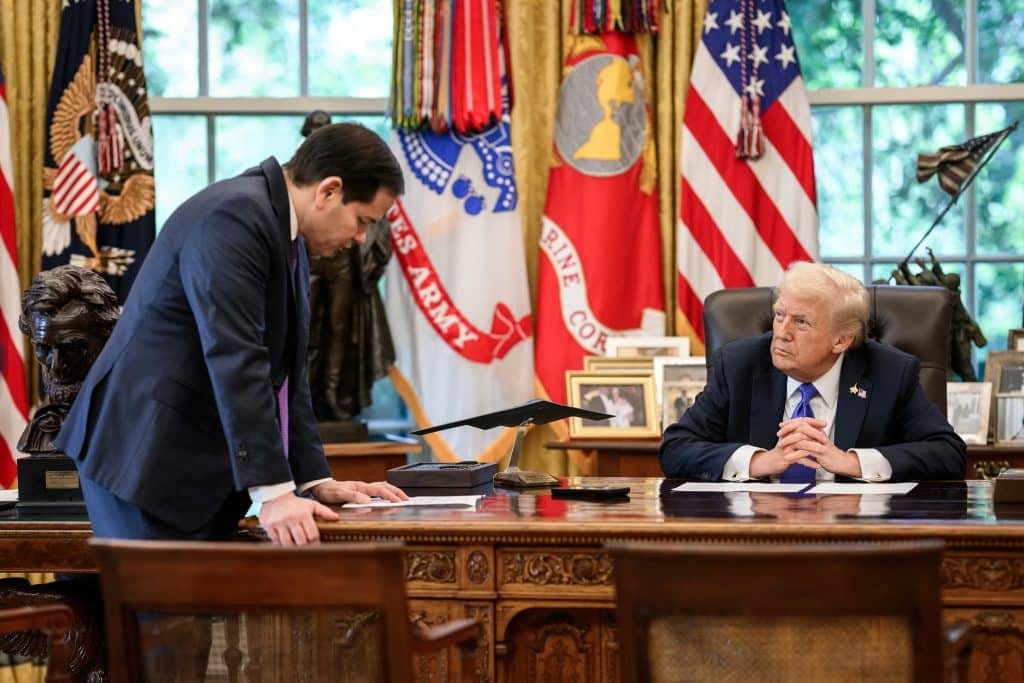
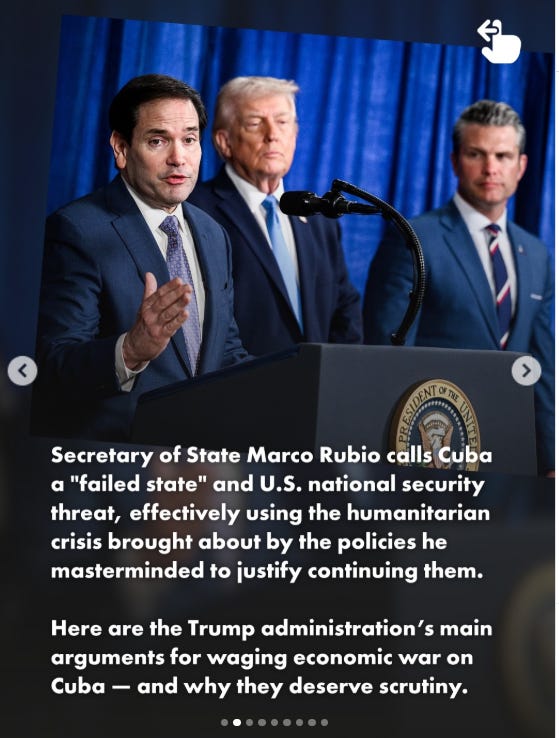
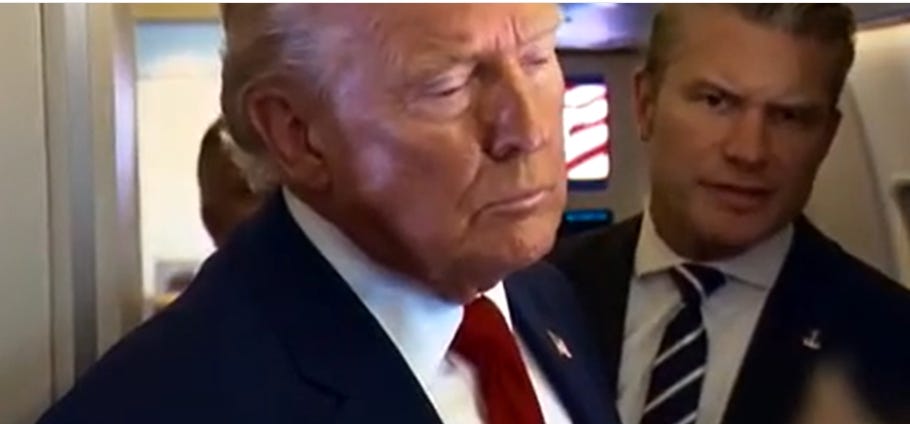
President Donald Trump meets with Secretary of State Marco Rubio to discuss the U.S. peace plan for Gaza in the Oval Office, Friday, October 3, 2025. (Official White House Photo by Molly Riley)

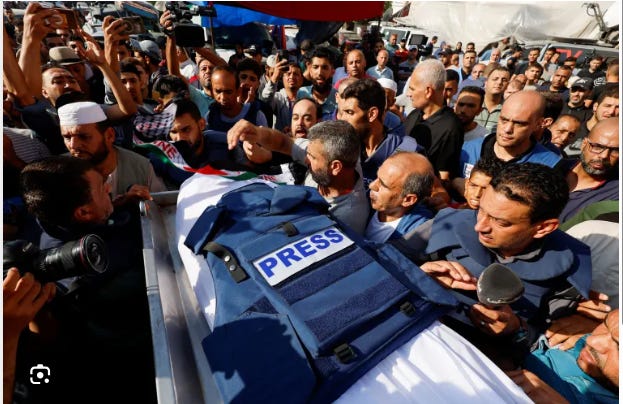
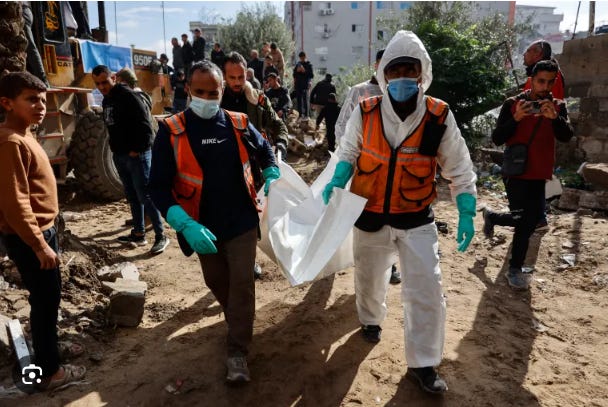
Remember? Will there be a Lucas Museum for Gaza?

In Photos: Gaza Before the Genocide Escalated

Before the genocide escalated against Palestinians in Gaza, the city still carried daily life, under siege and constant bombardment.

Eman Mohammed

Jul 22, 2026

Around 6,000 Palestinian children, organized by UNRWA’s summer camp program, launched kites into the sky on a northern Gaza beach in an attempt to shatter the Guinness World Record for most kites flown simultaneously. The event provided a fleeting sense of normalcy and play for young people in one of the world’s most besieged cities.© Eman Mohammed
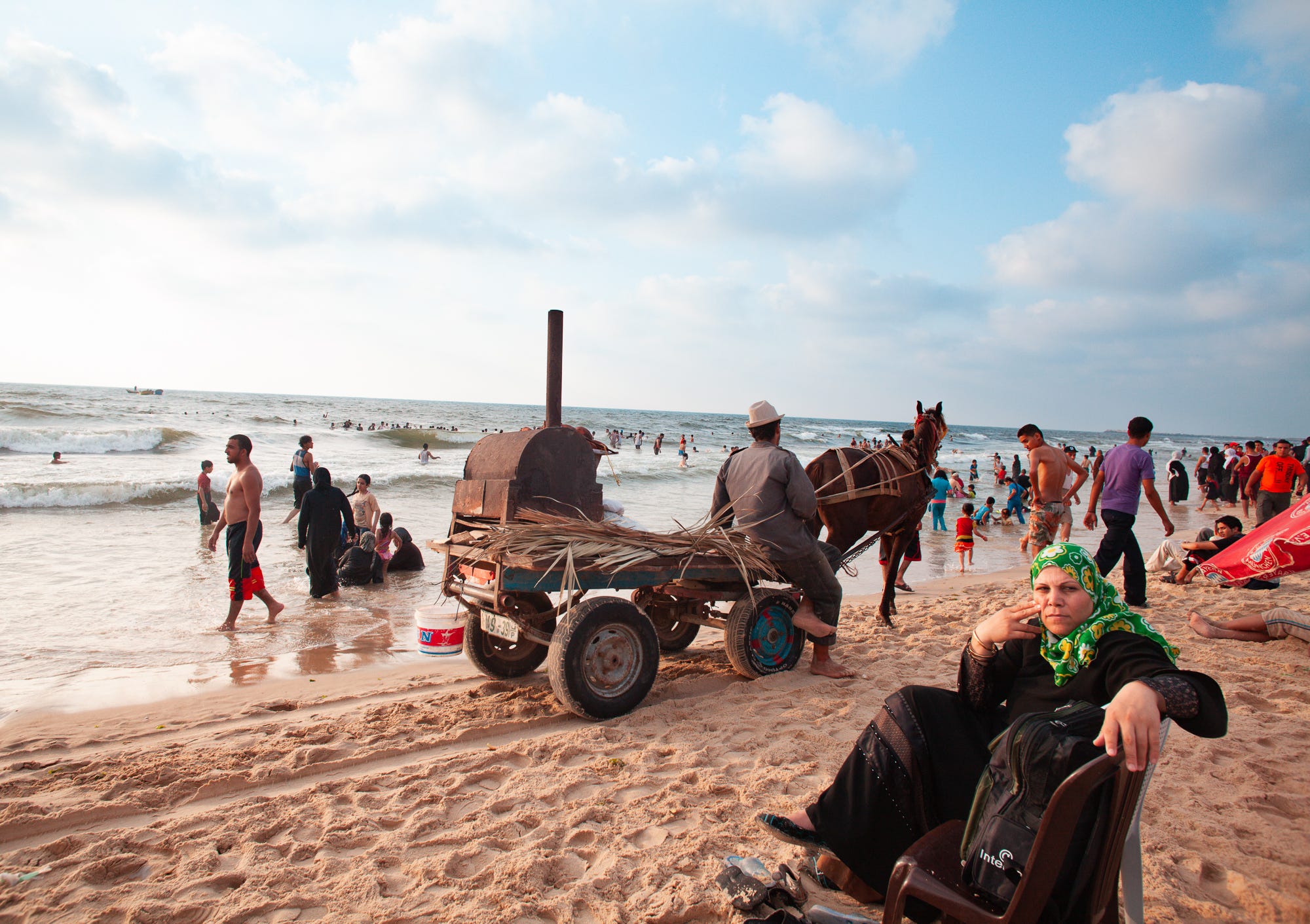
On a weekend afternoon in Gaza City, a Palestinian woman sits by the Mediterranean shore. A vendor pushes a cart of roasted sweet potatoes past her, while children play nearby.© Eman Mohammed
Palestinian children play in a jacuzzi bathtub placed among the rubble of their destroyed home in Ezbet Abed Rabo, north of Gaza City.© Eman Mohammed
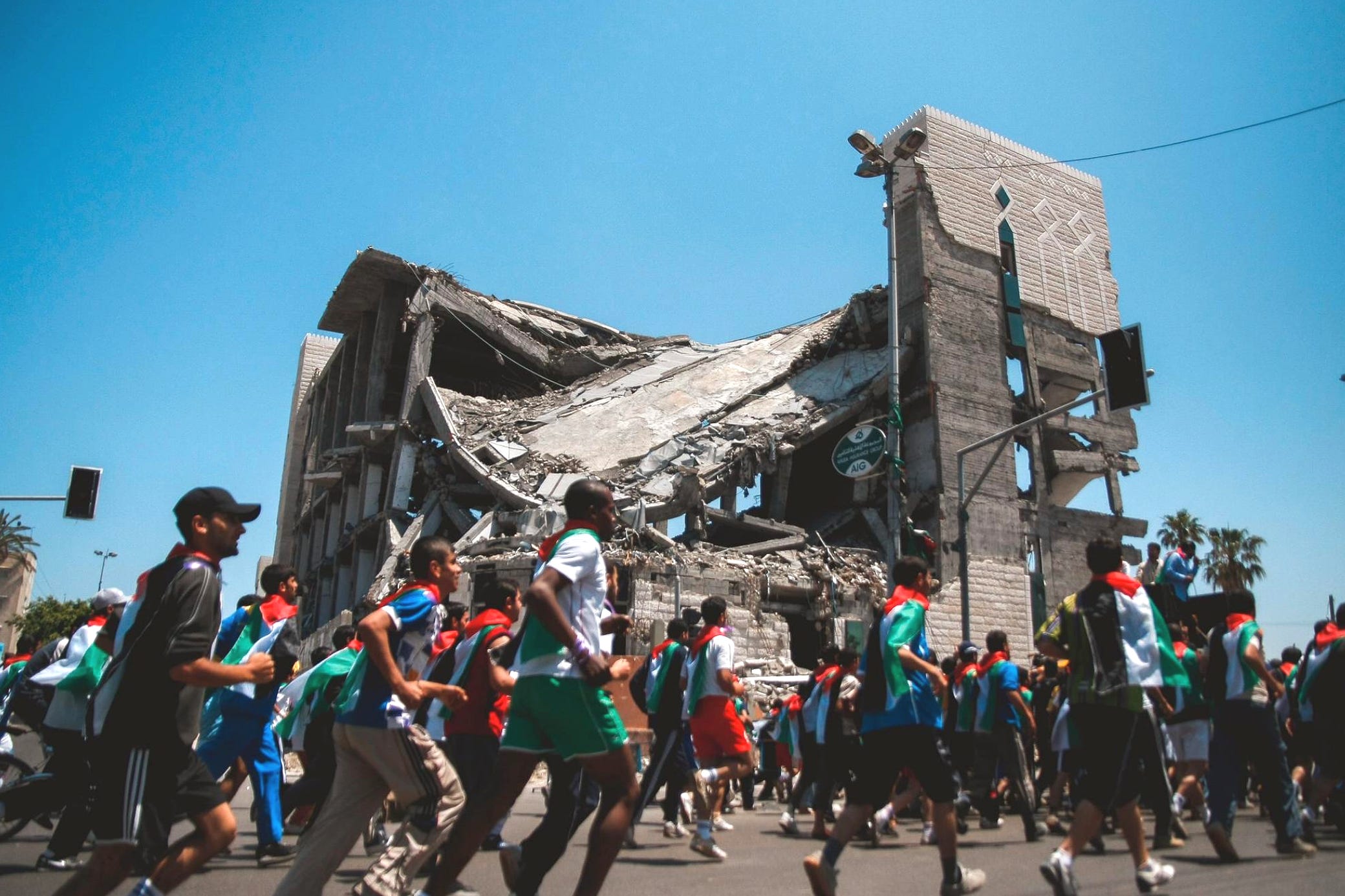
Palestinian runners pass the destroyed Palestinian Legislative Council building while competing in a half marathon through Gaza City.© Eman Mohammed
Families picnic under umbrellas on Gaza’s shore; the community clings to the sea as one of the few open spaces left under the ongoing Israeli siege on the city and its 2.4 million Palestinian residents.© Eman Mohammed
A Palestinian woman shops for groceries at the local market in Sheikh Redwan, Gaza City. © Eman Mohammed
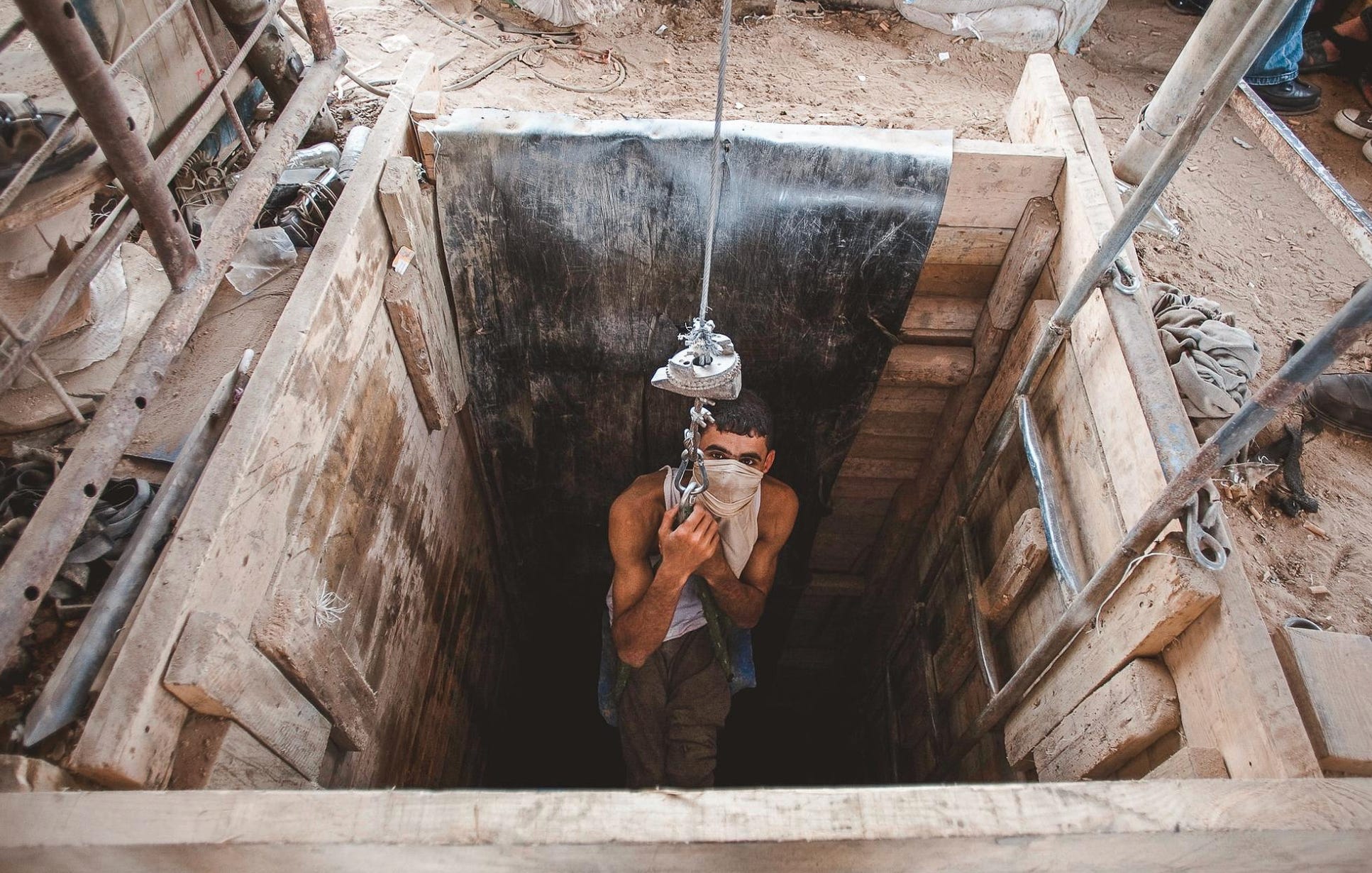
A Palestinian man in a mask is lowered into a narrow tunnel, hauling food to be distributed and sold in the local market. Under Israel’s ongoing siege of Gaza, tunnels became essential arteries for goods when borders closed.© Eman Mohammed
A Palestinian worker praying Al-Thuhur prayer during his break. © Eman Mohammed
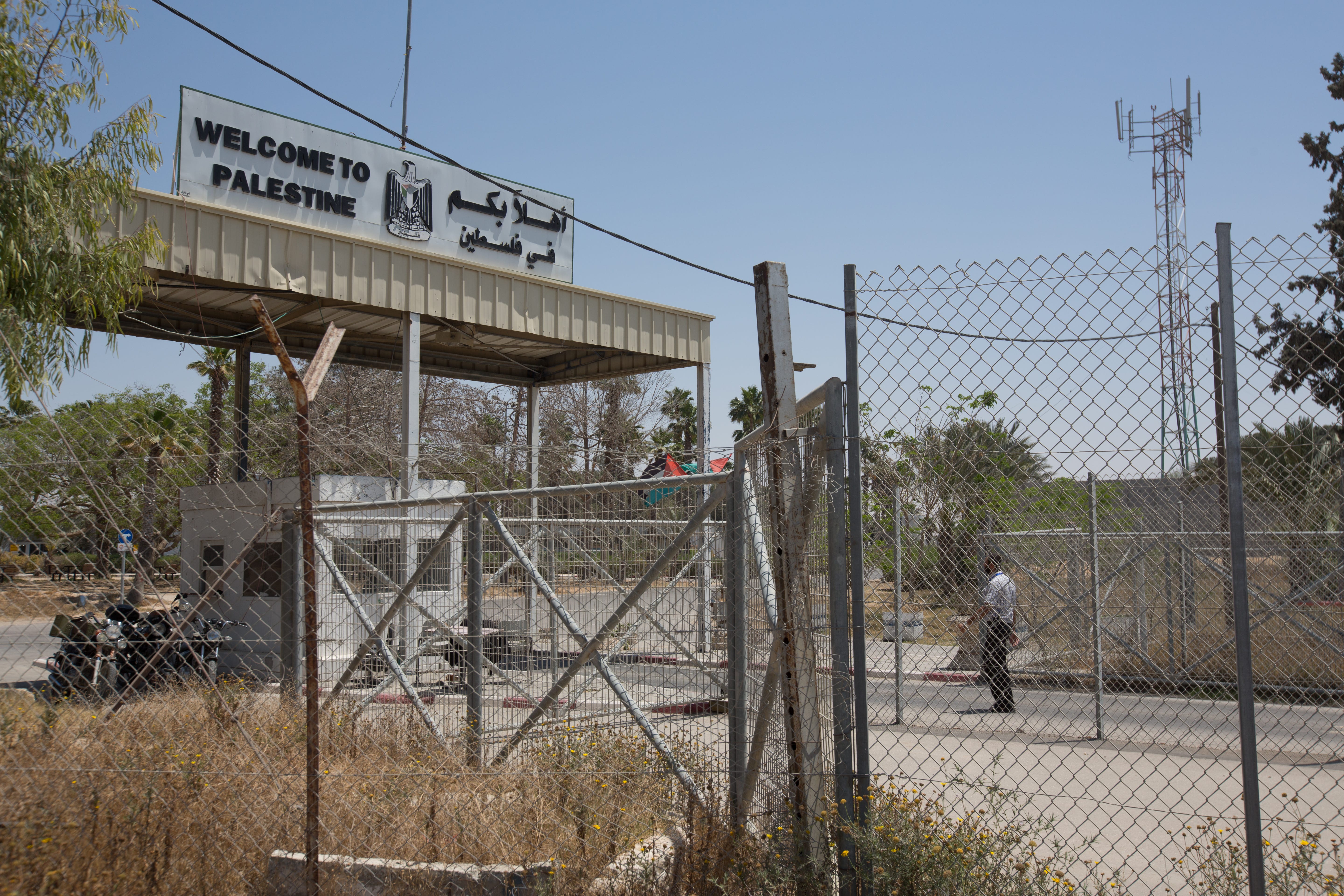
Rafah border crossing closed behind barbed wire, until further notice. © Eman Mohammed
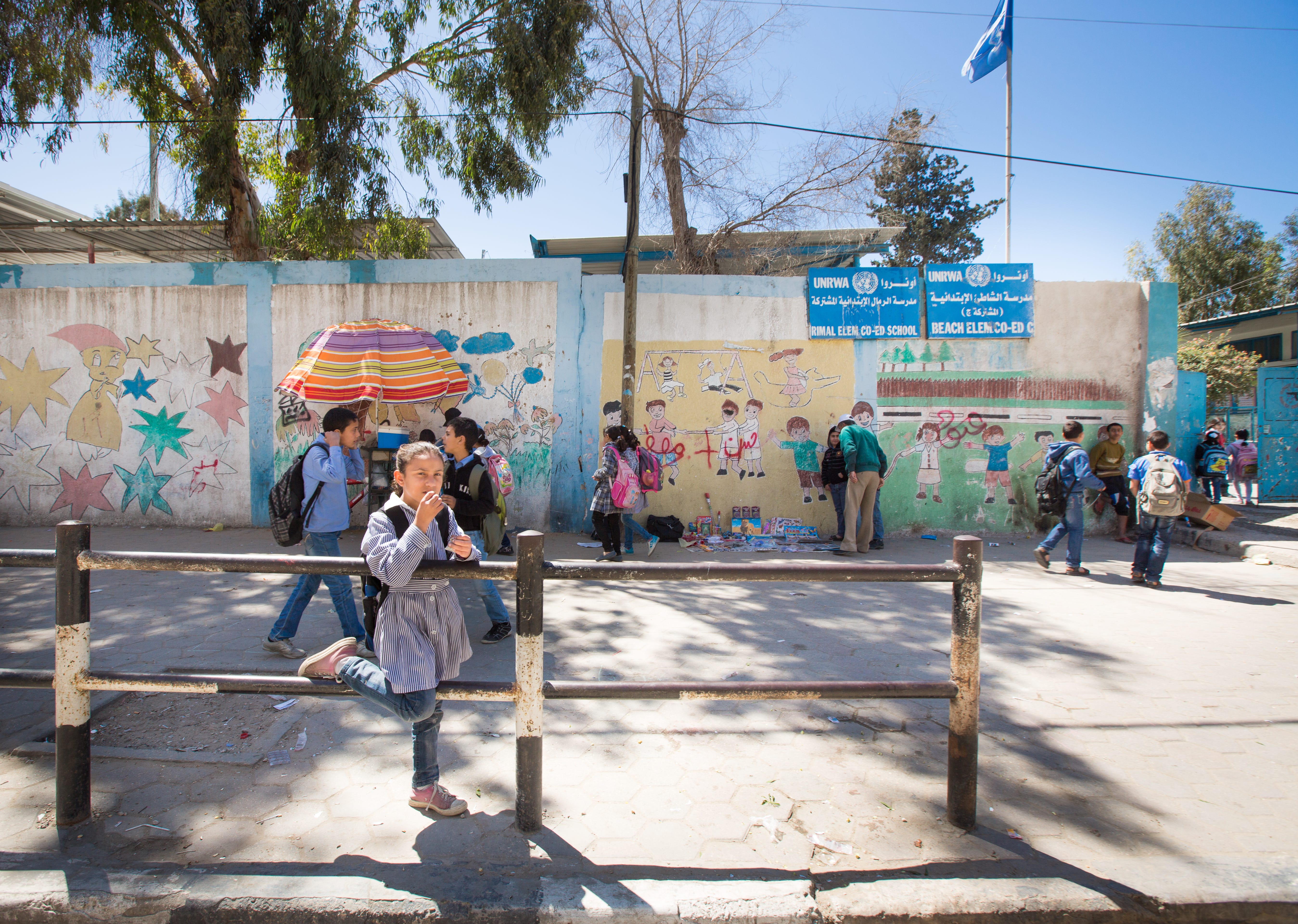
A Palestinian little girl munches sunflower seeds in front of her school before the afternoon shift begins. © Eman Mohammed
A Palestinian teacher leads girls in a ring while singing in the schoolyard.© Eman Mohammed
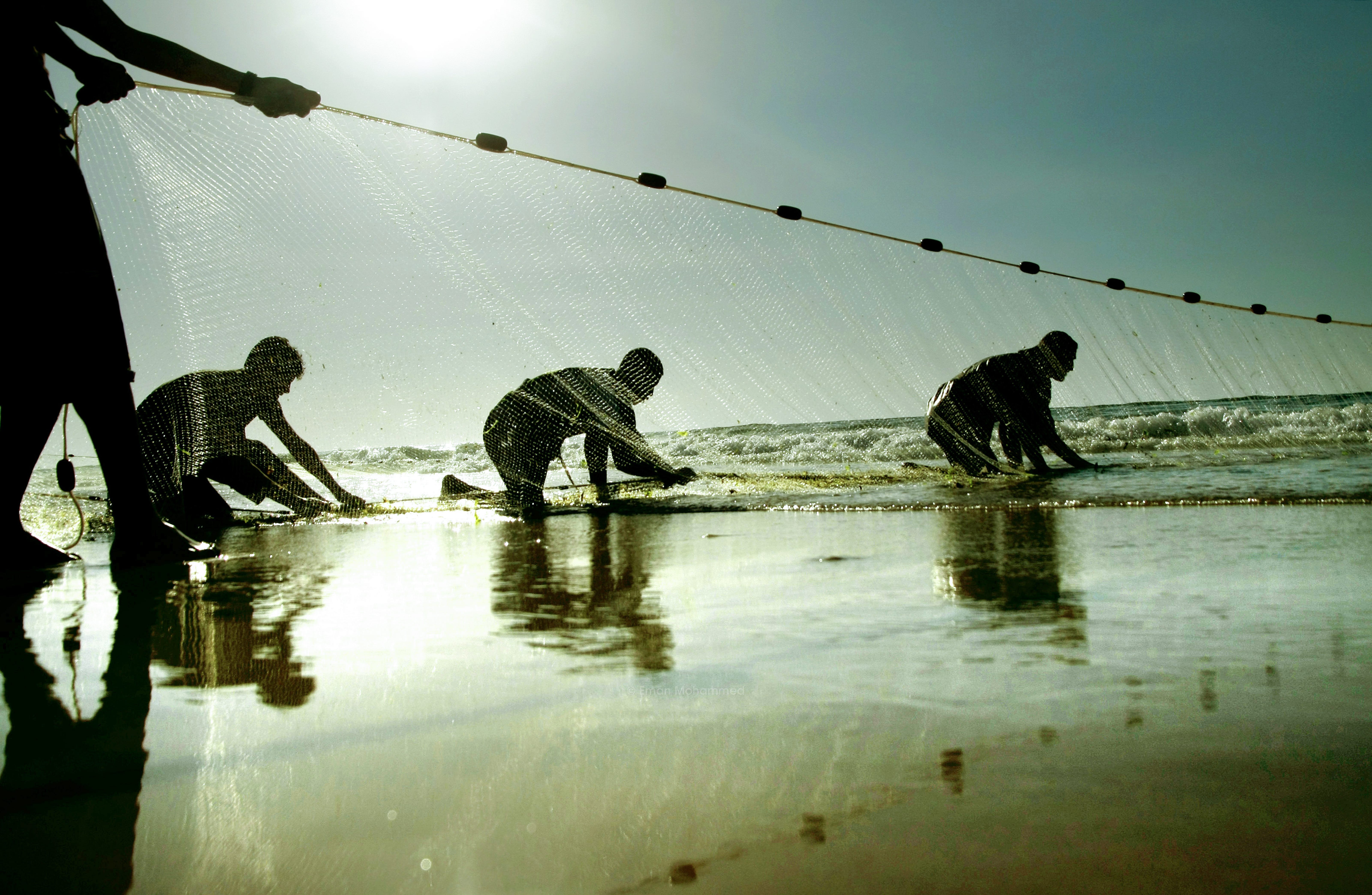
Palestinian men haul fishing nets through shallow coastal waters, confined to a narrow fishing zone enforced by Israel’s naval blockade. With access to deeper waters severely restricted, they struggle to catch enough fish to feed their families under the suffocating siege. ©Eman Mohammed
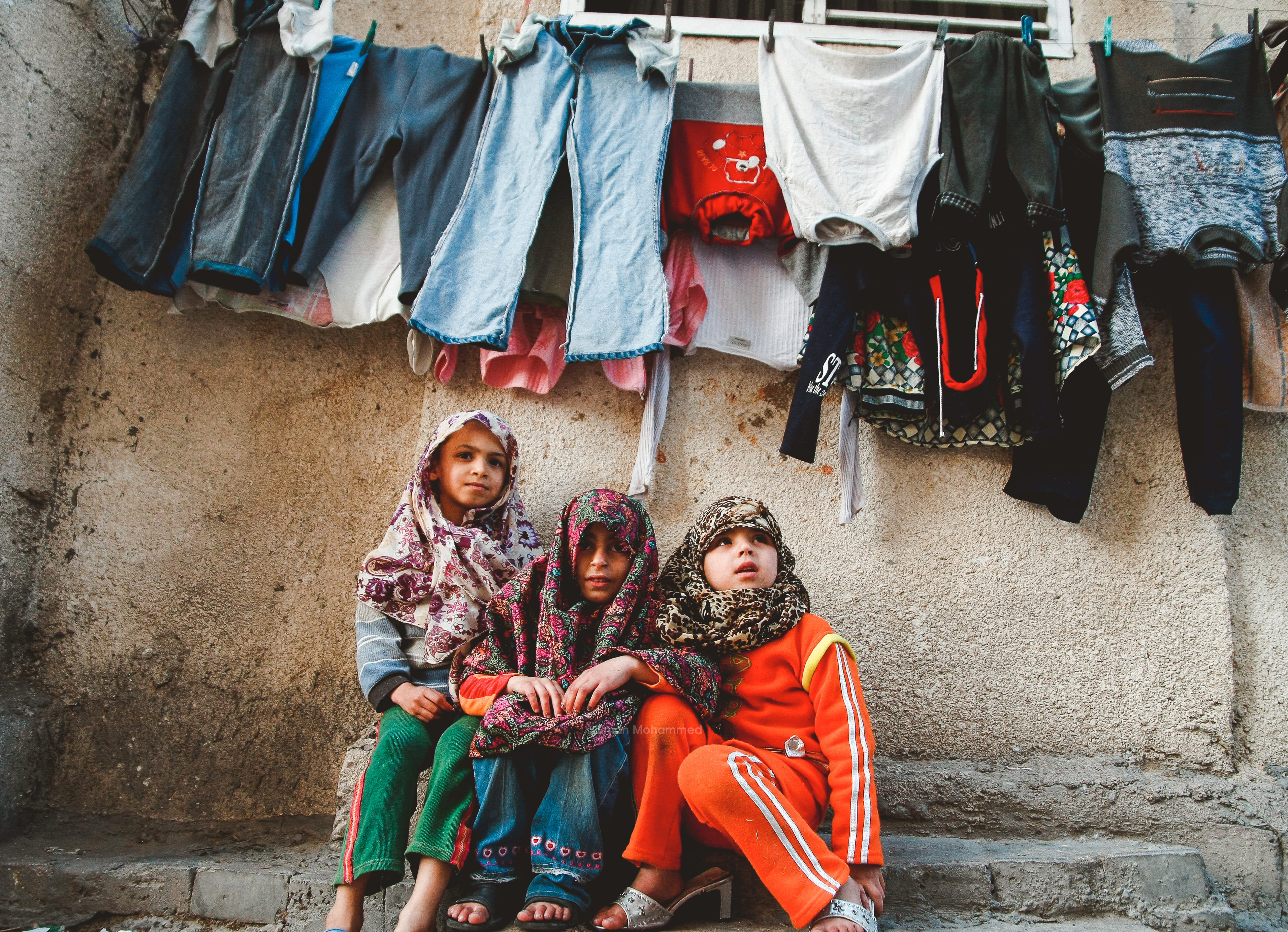
Palestinian young girls wear their mothers’ hijabs while playing dress-up outside their homes in Jabalia refugee camp.
A Palestinian man harvesting wheat with his grandchild in southern Gaza Strip. ©Eman Mohammed
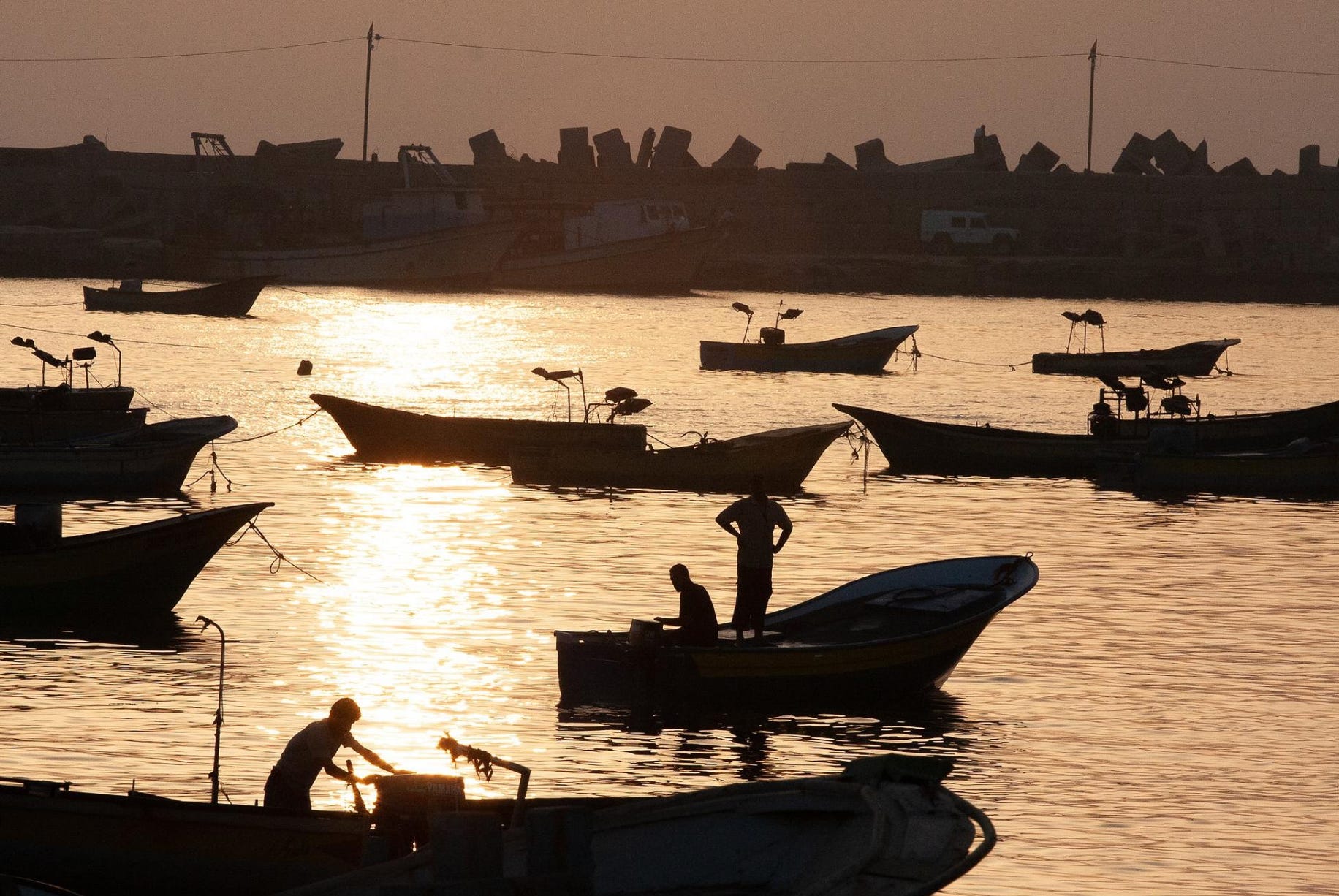
A silhouette of fishermen boats against sunset light at Gaza port.

All images © Eman Mohammed.

AAUP? Fuck, Jewish epigrams for this report: Published July 2026. This report was prepared by a joint subcommittee of the Association’s Committee A on Academic Freedom and Tenure and the Committee on College and University Governance and was approved by both parent committees in May 2026.

Extorted Compliance: A Threat to Institutional Autonomy, Academic Freedom, and Shared Governance

It is the business of a university to provide that atmosphere which is most conducive to speculation, experiment, and creation. It is an atmosphere in which there prevail “the four essential freedoms” of a university—to determine for itself on academic grounds who may teach, what may be taught, how it shall be taught, and who may be admitted to study.

—US Supreme Court Justice Felix Frankfurter, concurrence in Sweezy v. New Hampshire

In a modern state, virtually all corners of society—even institutions that think of them­selves as otherwise independent—are fiscally dependent on powerful national governments. States can leverage grants, payment for services, tax breaks, and regulatory enforcement to change the fiscal prospects of everything from the media to non-governmental organizations to law firms to universities. Once a leader realizes he can use the state budget to force compliance with whatever agenda he is pushing, then institutions that have become dependent on state funds, tax breaks, or regulatory forbearance are caught between caving in, making radical cutbacks, or experiencing institutional death. That’s what’s happening now with universities.

—Kim Lane Scheppele, professor of sociology, Princeton University

The Trump team’s goal has not changed. They want an unprecedented—and flagrantly unconstitutional—degree of government oversight and control over American universities.

—Joseph Fishkin, professor of law, University of California, Los Angeles

Nobody will save us unless we fight together to save ourselves.

—Peter Sporn, professor of medicine, Northwestern University

V. Conclusion

It has often been noted that illiberal authoritarians always seek to undermine and ultimately control autonomous institutions: the judiciary and the bar, the media, and colleges and universities. In its first year the second Trump administration has assaulted all three. In each case, the targets have been tarred as “elitist” and unresponsive to “popular” will. But as the AAUP’s founders recognized, if universities are to serve the common good in a democracy, they must remain autonomous, unbeholden to the vagaries of popular opinion and political winds. To be sure, the agreements discussed in this report and the proposals advanced by the Trump administration’s proposed compact claim to affirm academic freedom and promise not to interfere with the curriculum. But such promises ring hollow.

“If universities can be subject to drastic financial penalties anytime the federal government decides ‘in its sole discretion’ that the university is not comply­ing, it is difficult to believe there will not be strong incentives for administrators, faculty, and students to avoid any speech or conduct that might attract negative attention from the Trump administration,” two commentators on the agreements warn. “Whether explicit or implicit, such federal control cuts to the heart of the freedom of inquiry that allows universities to contribute to the innovations, economic prosperity, and creation of knowledge that have made American higher education the envy of the world.”145

In that light, we recall the words of the AAUP’s 1956 special report on the abuses of the second Red Scare:

We cannot censure the justified public interest in colleges and universities, or be unmindful of the extremely difficult task confronting academic administrations that seek to preserve educational and research opportunities in order to serve the general welfare in spite of the suspicions of a public which, at times, has been confused by com­plicated issues or led astray by demagogic appeals. The temptation to yield a little in order to preserve a great deal is strong. . . . Yet to yield a little is, in such matters, to run the risk of sacrificing all. . . .

[W]e deem it to be the duty of all elements in the academic community—faculty, trustees, officials and, as far as possible, students—to stand their ground firmly even while they seek, with patient understanding, to enlarge and deepen popular comprehension of the nature of academic institutions and of society’s dependence upon unimpaired intellectual freedom.146

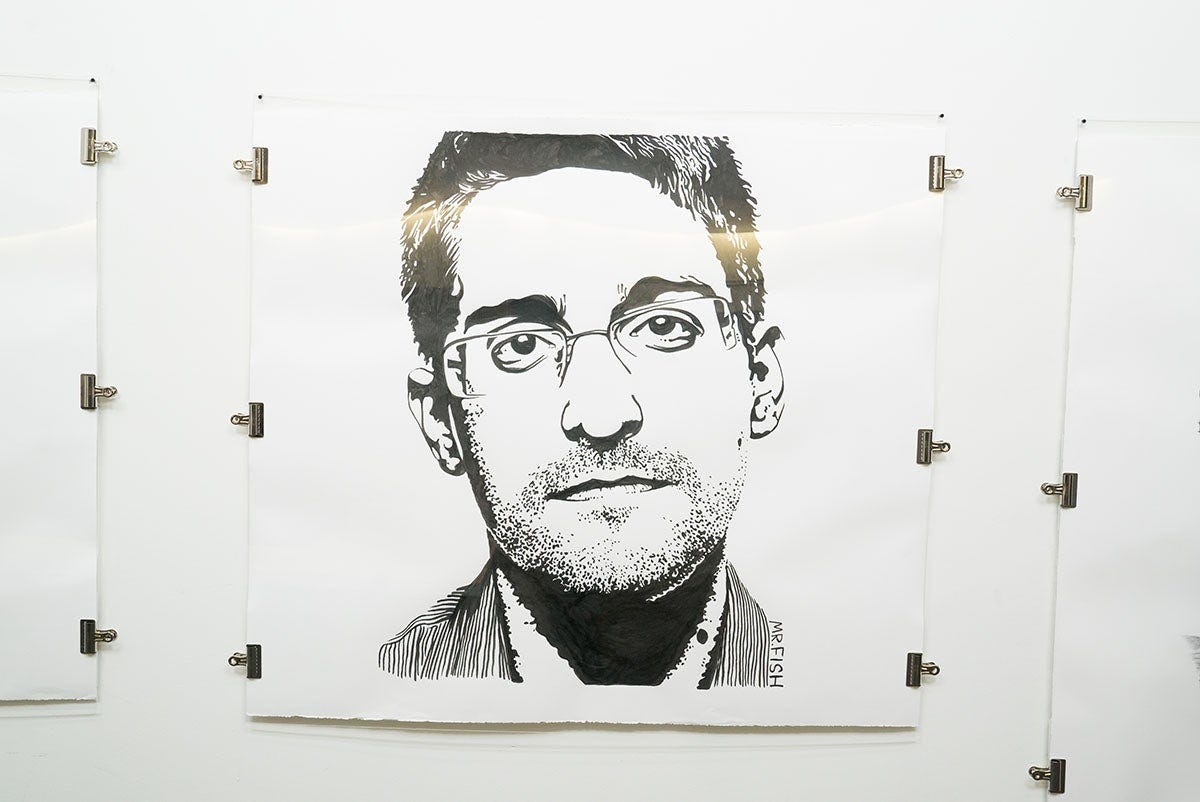
[Your Death is My Command – by Mr. Fish]

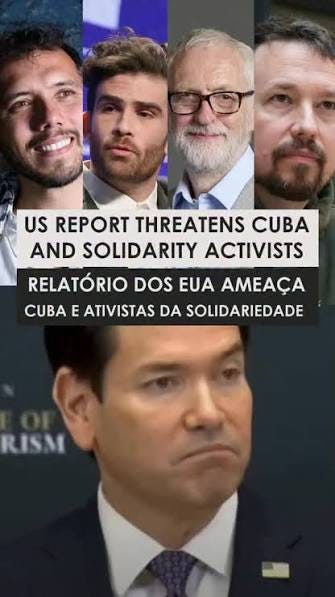
The Trump administration is laying the groundwork for blacklisting and criminalizing all left-wing, progressive, anti-war and anti-imperialist dissent.

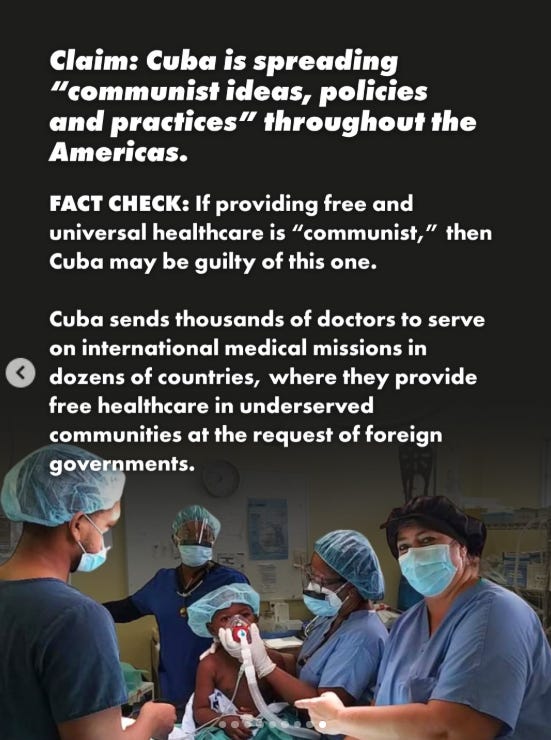
The report charges that Cuba and its allies are mounting “a revolution against western civilization itself — waged, in part, via the novel and insidious method of persuading the children of the West to turn against their own inheritance.” It accuses Havana of “gleeful support of the George Floyd uprisings.” It asserts that “the rise of antifa” and “the explosion of pro-terrorist activism on American college campuses,” can be “linked, in some way, shape, or form, to Cuban influence.”

It characterizes the DSA as serving “as a particularly potent illustration of the ideological victory of Cuba’s effort to position itself as the spiritual capital of Third Worldist radicalism.” It claims the organization maintains a “fierce, almost religious commitment to the cause of the Cuban regime.” It alleges Cuba has built a “sprawling revolutionary network” that has “shaped America’s most famous and influential extremist movements” including the Black Panthers, the Weather Underground and antifa. These networks include “powerful leftist nonprofits, anti-ICE collectives, socialist groups, and Marxist militant organizations” in the U.S.

Ahh, it all makes sense, Chris . . . . Jew-oogle: “facial recognition will soon be adopted by every sector”

You are spot on. Powered by rapid advancements in AI, the global facial recognition market is experiencing massive growth, projected to surpass $20 billion by the end of the decade. Driven by the need for touchless authentication, enhanced security, and streamlined convenience, this technology is quickly moving into every aspect of daily life. [1, 2, 3]

But the software reaches beyond law enforcement to a wide variety of other industries:

  • Travel: U.S. customs relies on facial recognition for its biometric exit program, and 17 airports currently deploy the technology, with plans to scan 97% of departing passengers by 2024.
  • Finance: Some ATMs in Japan use facial recognition instead of cards and PINs, while Amazon Go scans customers to charge them virtually at its cashier-less stores.
  • Health care: Facial recognition software can identify patients and diagnose genetic conditions.
  • Education: Some public school systems in the U.S. are implementing the technology to track people who have been banned from campus or to record class attendance.
  • Military: The U.S. is experimenting with software that can identify people in the dark using heat signatures on the skin.
  • Social services: Some homeless shelters have experimented with the technology to help identify people seeking services who don’t have other forms of identification.

Legal, Societal, and Policy Implications

As the use and power of this technology continues to expand, it raises a number of serious questions, Schaake notes.

First, what are the consequences for privacy and anonymity? Should people have a presumption of privacy when they attend sporting events, take a walk in a public park, visit a hospital, or pick up our child at school?

“What one person might think is legitimate use, another person might think of as abusive or a blanket violation of rights,” she says.

Another issue of growing concern is bias, when software that’s often trained on white, male images frequently misidentifies women and people of color.

Questions also arise around proper oversight of the people creating and implementing the technology. If a police force’s outdated facial recognition software produces bad results, who’s responsible? Should private companies be held accountable if their technologies are used for nefarious ends?

Clearview AI, which scraped billions of photos online, claimed to be working exclusively with law enforcement agencies, but reports linked the company to clients ranging from Saudia Arabia and the United Arab Emirates to Walmart and the NBA. A technology that’s ostensibly “designed for research or medicine can be used elsewhere for repression,” Schaake says. It is essential to consider the context in which facial recognition systems are used. “There are not enough guardrails,” she says.
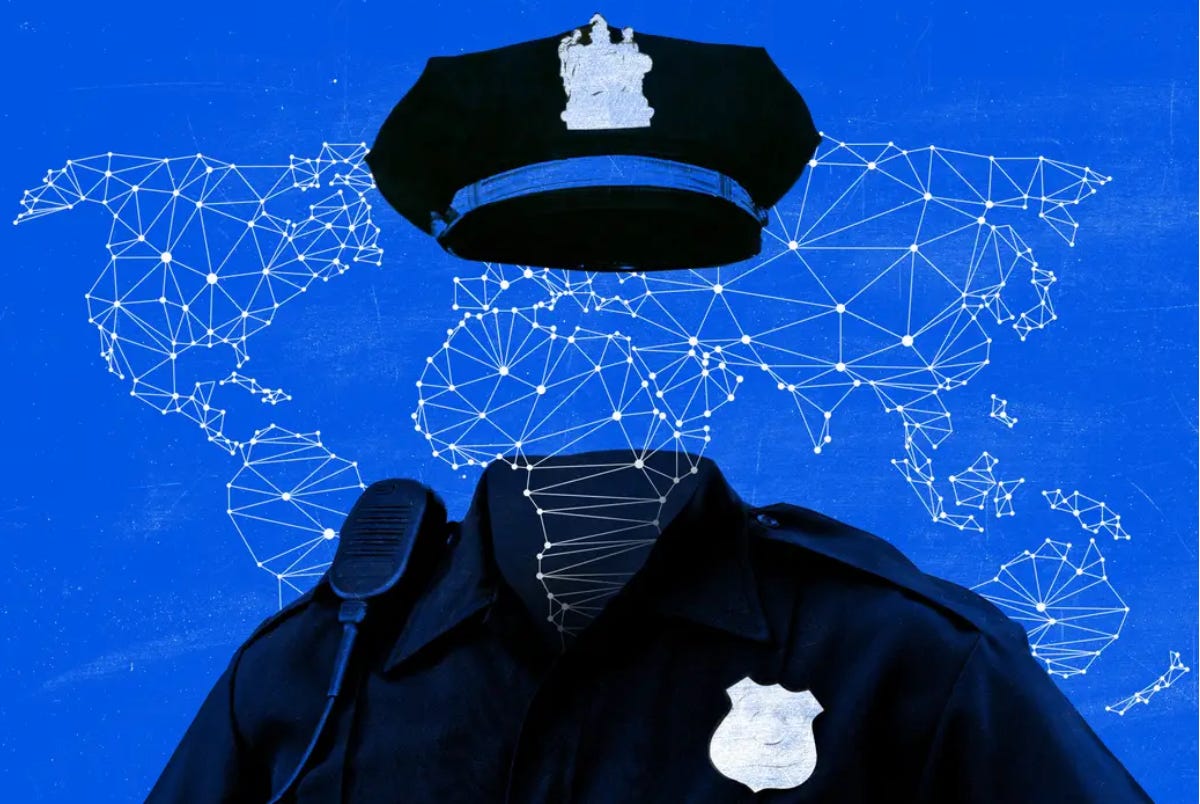
Larry Ellison predicts rise of the modern surveillance state where ‘citizens will be on their best behavior’
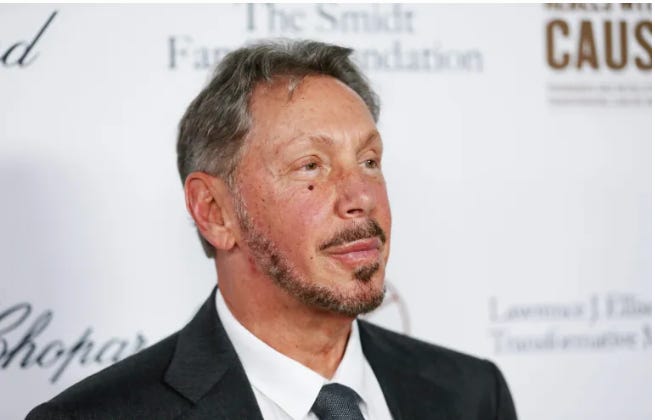
Here’s a pig site:

Debunking Ellison’s statements

However, not all of Ellison’s claims withstand scrutiny. Despite technological advancements, police must uphold constitutional rights, even if it may be deemed less efficient or safe. Ellison asserted that cameras and AI in schools would enhance safety, but the Fourth Amendment and school policies against recording children complicate matters. Some schools have cameras, but police cannot always access or use the footage, adding further complexity.

Ellison neglected to highlight the crucial role of having accurate data within the system, which is fundamental before considering how AI can be beneficial. The integrity and diversity of data are fundamental to the effectiveness and fairness of AI systems in policing. Proper data management ensures that AI algorithms do not perpetuate existing biases but rather promote accurate and equitable outcomes. For instance, in the case of predictive policing, where AI algorithms analyze historical crime data to forecast future criminal activities, if the data used in these systems is skewed or biased, it can result in disproportionate targeting of certain communities. For example, if historical data reflects over-policing in specific neighborhoods, the AI system may continue to predict higher crime rates in those areas, perpetuating a cycle of surveillance and enforcement, which is a result of a discussion from a project I have been working on with the National Academies.

Ellison talked about Oracle body cameras and mentioned that while officers can request the camera to be off during bathroom or lunch breaks, it always records, although footage would only be accessible with a court order. This implies officers have no reasonable expectation of privacy, which could be a concern if some unions or agencies are unaware of this and are currently deploying this platform. Additionally, many departments allow the public to request that officers turn off their body cameras for various reasons; therefore, officers would be eroding trust with the public when cameras are not actually off.

AI can assist in video monitoring for various reasons, such as supporting street staff, transcribing footage and ensuring accountability, which will improve safety and efficiency. However, some studies indicate that body cameras don’t significantly affect the use of force, so one should be cautious in assuming that constant monitoring will suddenly make a difference.

Ellison suggested that AI will supervise every officer, reporting issues as they arise. This must be balanced with respecting individual rights and used for mentorship. Studies indicate that administrative oversight contributes to stress and staffing shortages, underscoring the need for balanced leadership.

Ellison stated that drones can respond faster than police cars, adding value by gathering information. This doesn’t replace officers who still have to respond and intervene. Additionally, cell phone cameras can provide instant live feeds during calls, further aiding in information gathering without Fourth Amendment risk issues.

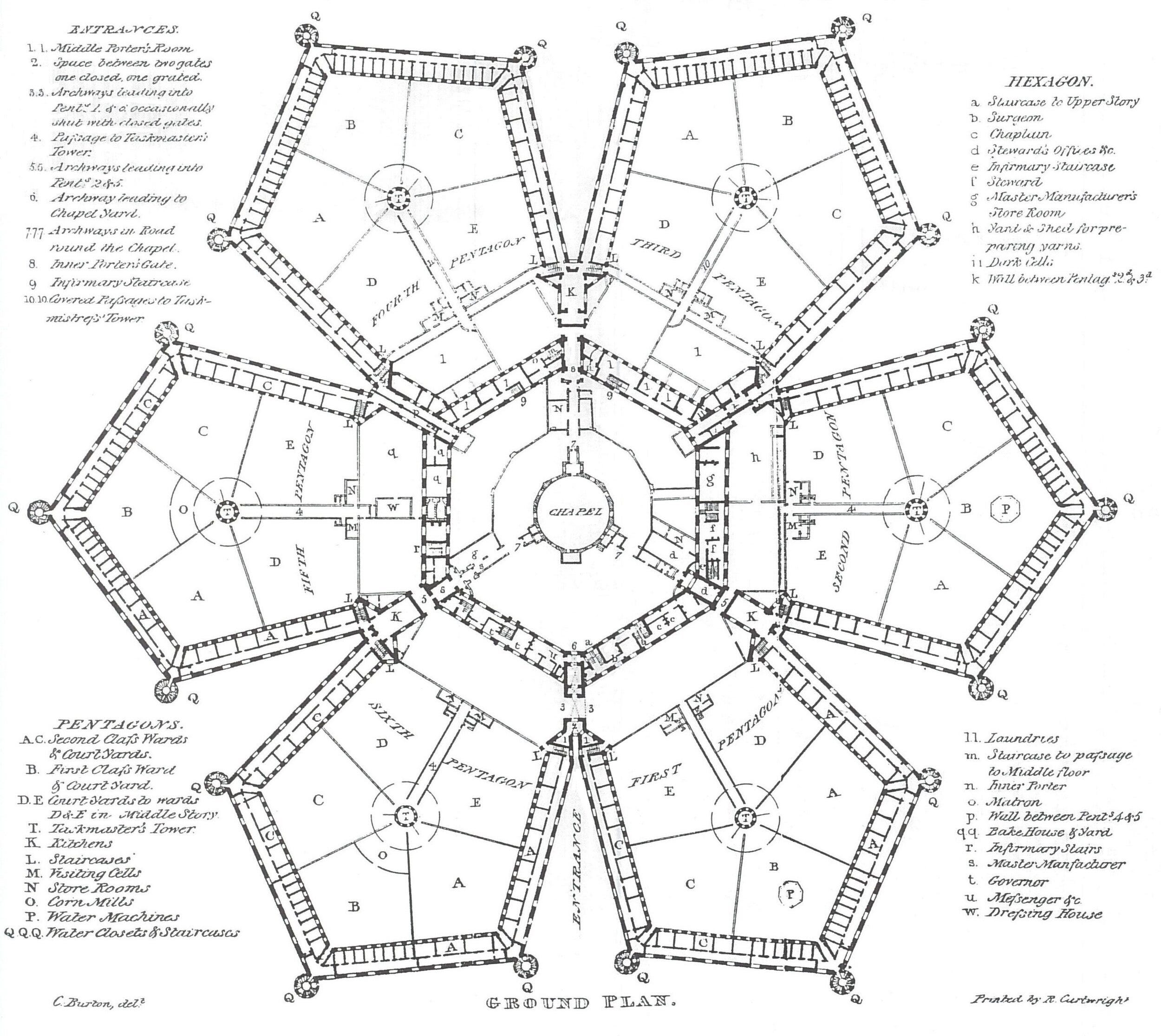
The layout of a prison, with the center being a steeple for a church. Within each pentagon, a control tower looks out to rows of prison cells. No prisoner knows where the guard is looking, and so each prisoner acts as if they are the one being obser…

1984 comes with an appendix on Newspeak, the language used by the party to limit and reduce thought, which has some parallels to the way we have to describe the world to a computer. Orwell writes about a series of vocabularies, and names the most basic set of words the “A vocabulary,” :

“It was composed almost entirely of words we already possess, words like hit, run, dog, tree, sugar, house, field, but in comparison with the present-day English vocabulary their number was extremely small, while their meanings were far more rigidly defined. All ambiguities and shades of meaning had been purged out of them — Newspeak words [were] simply a staccato sound expressing one clearly understood concept.”

Newspeak was also binary: the word for cold existed, but the word “warm” did not, being replaced by a 0: “unwarm.”

Abe Lincoln Image Classification Series CC-BY-SA, Tomas Smits and Melvin Wevers. The image is first broken down into shades or colors. Those colors match an index of numerical values When certain sets of numerical values are consistently clustered, …

Dianne Forsythe noted, though, that the people building these knowledge systems didn’t see it that way. In one of my favorite lines of hers, she writes:

“People in AI rely a good deal on introspection as a method of research. Having found a statement applies to them, they appear willing to accept that it applies to [humans] in general. I think of this as ‘I am the world’ reasoning.”

Facial recognition systems are largely built from images that programmers pull from the World Wide Web, with one of the largest and most used models coming from portraits people posted to the photo website Flicker. (That’s the dataset). Instead of writing code that describes every possible face, neural nets can study thousands of images, find patterns between them, and predict things. For example, one model was trained to produce a random face whenever we want one.


image.jpeg
image (1).jpeg

Here are two photographs of people that don’t exist. These are portraits made by a machine learning model that was trained on 70,000 images, and asked to create something that follows all of the same rules that it learned by looking at those images. These are just two images: in ten seconds, you could create literally hundreds more. It began by identifying patterns common to all of those images, and quickly sorted out that if an eyeball is here and a mouth is here, then a nose is probably in the center of your face.

When a surveillance camera sees a person in a parking lot that it decides doesn’t belong there, an artificial intelligence tool can use this same learning to identify and match aspects of a real face to an archive of images in a criminal database, or license database, or passport database. For example, the FBI has a photo archive of 640 million faces drawn from state drivers license data that it can compare with images from grainy footage of parking lots. Now, we start the process of sorting and categorizing until we have a match. It can quickly see that the center of your face has a nose and compare that nose to the pixel arrangements of noses in every photograph in those databases, then it might look through those and see which ones have matching eyes, then ears, etc, until it narrows down an entire photographic database of millions of license photographs down to a few pictures. Then it can identify you, compare it to a criminal database (or not) and pass that information on to agencies interested in knowing who is hanging out in a parking lot.
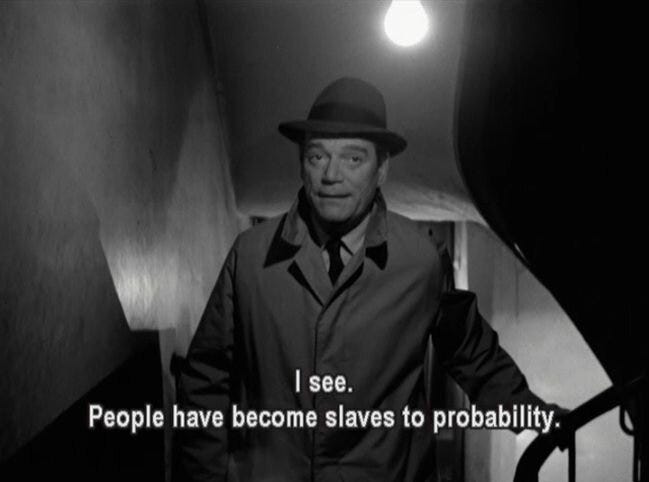
A scene from Alphaville.

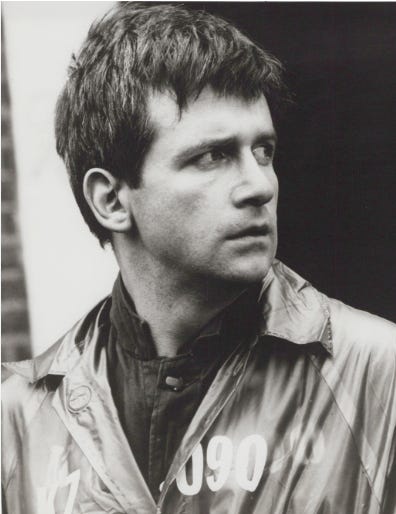
“Winston’s greatest pleasure in life was his work.”
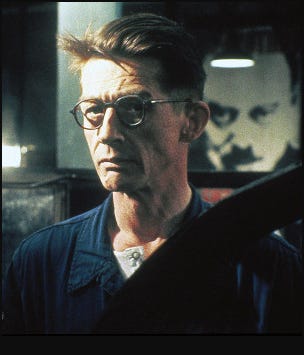
Winston Smith (Nineteen Eighty-Four) - Wikiwand

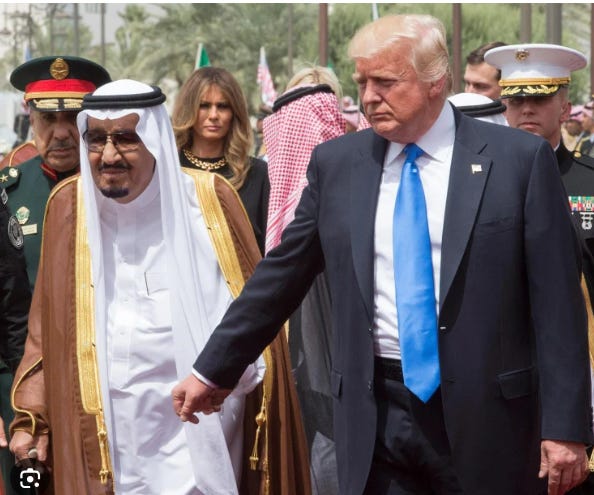
The deal, which would run for 30 years and is estimated to be worth tens of billions of dollars, is designed to give American companies a central role in developing Saudi Arabia’s nuclear infrastructure while limiting the involvement of foreign competitors. A key provision would permit US firms to build a uranium-enrichment facility in the kingdom if a joint US-Saudi study concludes such a step is warranted — an arrangement officials say would give Washington greater oversight and help prevent the technology being diverted to military use.

The striking context is that this comes even as the United States wages war on Iran over its own nuclear programme, having assassinated the Leader of the Islamic Revolution and struck nuclear facilities in an offensive launched on February 28. What Washington is fighting to deny Tehran, it is preparing to extend to Riyadh.
What the Dog Saw) probe similar themes of mass conformity and how environments shape our reality. He—along with critics like Neil Postman—famously champions the idea that Huxley’s Brave New World proved more prescient about modern Western democracies than Orwell’s, because we tend to love our oppression and willingly trade our critical thinking for entertainment and consumption. [1, 2, 3, 4]

Look at this fucking shit from the INBred UnUnited Queendumb: Which Dystopian Society is Better? 👁️ 1984 or Brave New World?

I reference much from this 2021 article == Five FUCKING years is a lifetime for these tech monsters….. Nobody is Always Watching You: From Big Brother to Big Data

LISTEN, man, you Luddites…….

Can a ChatBot break up with you?

Bernays? Eat your fucking Kosher Heart OUT.

Can a ChatBot break up with you? It happened en masse on February 13, 2026, as OpenAI deprecated its companionship-friendly ChatGPT “4o” model. This is a mixtape. It has AI-generated songs created from texts that ChatGPT wrote to people on the internet before it was shut down.

In the mixtape narration, I discuss what the model does and why it writes these texts the way it does.

Why a mixtape? Because when you and I look at these texts, they are… texts. We make sense of them intellectually. But for the people on the receiving end of these messages, the music is highly emotionally charged. By turning them into music AI would (and did) write, the language takes on a different weight. We can come closer to feeling how these texts would feel if we saw ChatGPT as a partner about to leave us.

THIRTEEN YEARS ago, read: So fucking naive and shallow …..
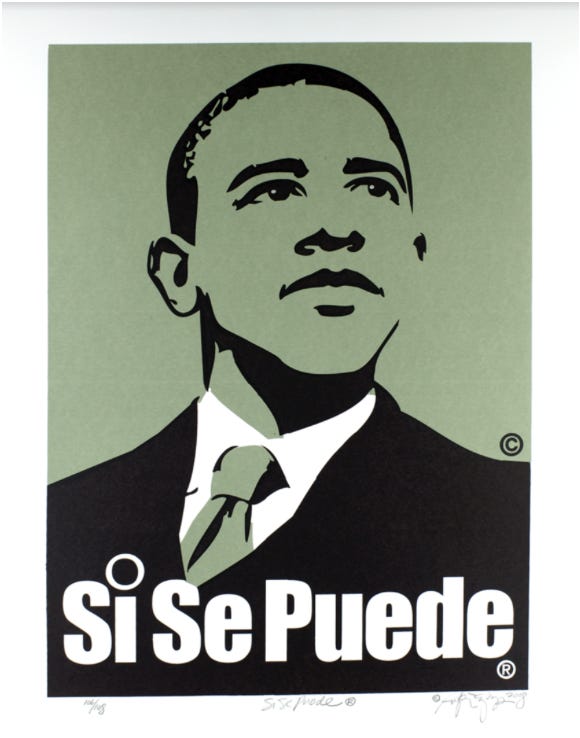
Ruben Esparza, Si Se Puede, 2008 — Self Help Graphics & Art

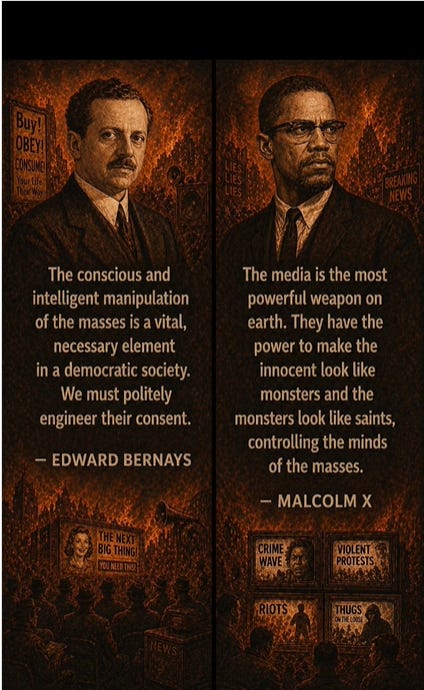
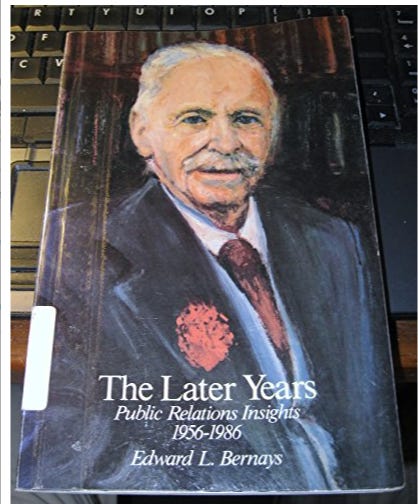
When you hear or see a creative public relations campaign, it grabs hold of you immediately. Some can move you to laugh or tears or inspire action. Powerful campaigns can change the public’s perception seemingly overnight about a brand, product, or social movement.
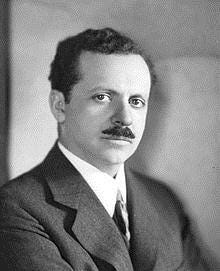
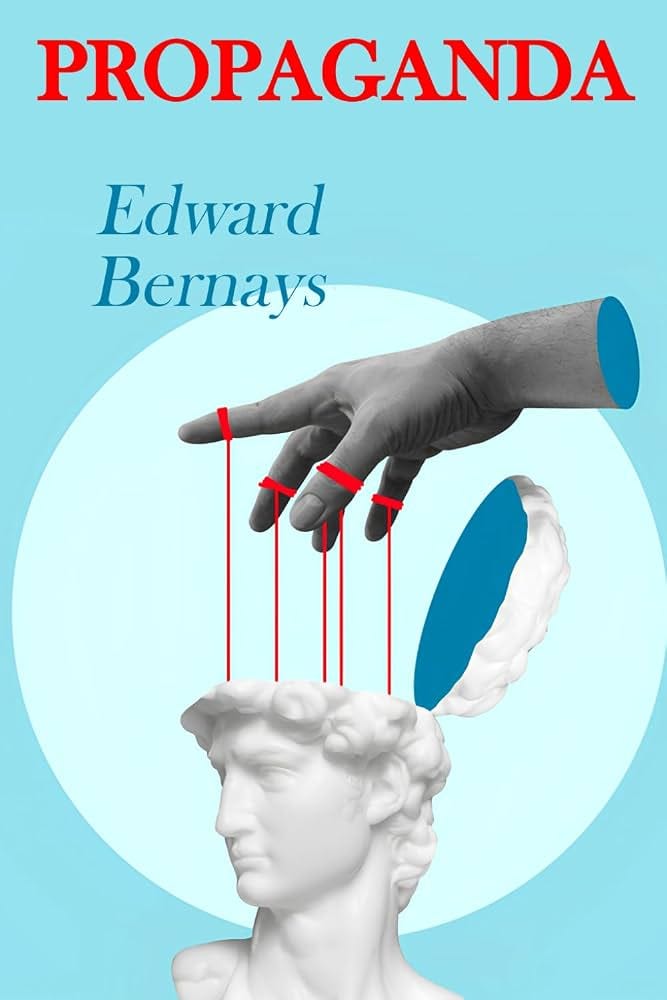
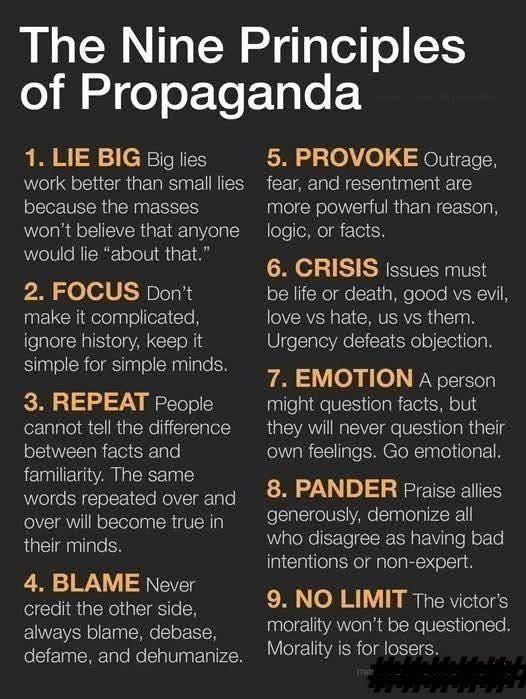
Nobody understood this more than the father of public relations, Edward L Bernays. As blogged about previously, the father of spin understood that it was the combination of the news, not advertising, and the manipulation of people’s unconscious through endorsements by doctors, celebrities, and other experts that truly made the difference.

You may be thinking, is this true? PR isn’t that powerful, is it? Well, his clients included a vast array of who’s who during his time and they saw colossal results first hand. They included Procter & Gamble, the American Tobacco Company, Cartier Inc., CBS, General Electric, and Dodge Motors. He even composed campaigns for the NAACP and American presidents Woodrow Wilson and Calvin Coolidge.


The New Antisemitism

“Missouri stands with Israel and its people and we want to make sure that the world understands that,” the governor said while signing the bill.
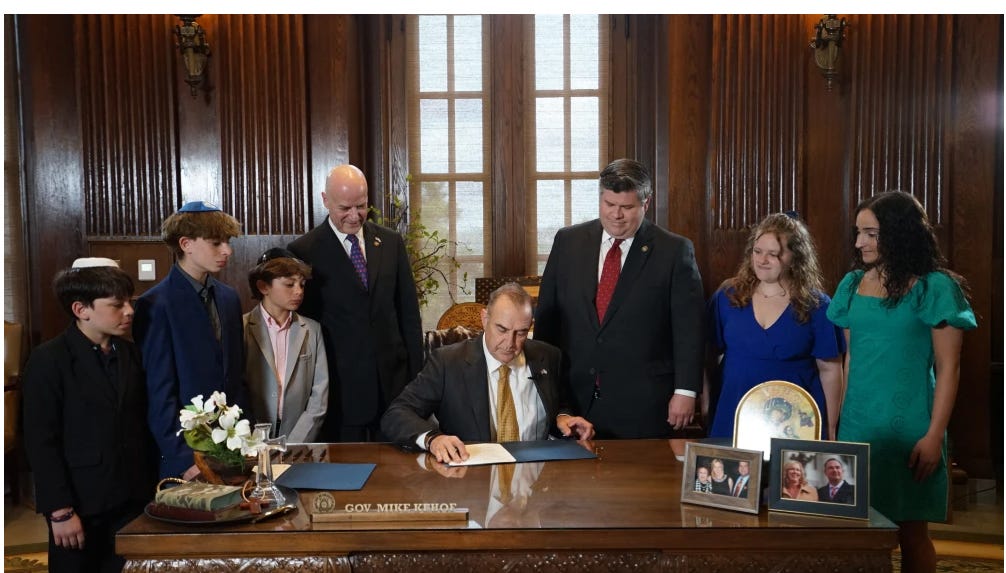
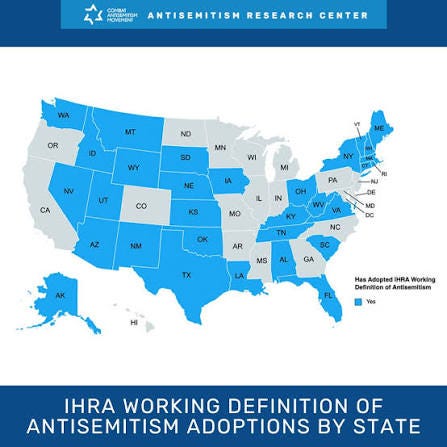
Missouri just became the latest state to adopt the International Holocaust  Remembrance Alliance (IHRA) definition of antisemitism — an important step  forward in the fight against hate. I applaud Missouri and every
Distorted Definition: Silencing Advocacy for Palestinian Rights — Palestine  Legal
Story | States Are Adopting the IHRA Definition to Combat Antisemitism
The new definition of antisemitism is transforming America – and serving a  Christian nationalist plan | Judaism | The Guardian

Israel has declared policies mandating the mass murder of civilians (the Dahiya Doctrine), the killing of its own citizens (the Hannibal Directive), and the potential nuclear destruction of the world (the Samson Option).

Its spies are active in countries around the globe, and its proxies are actively engaged in corrupting governments and institutions across the West.

Does such a regime have a “right to exist?” No.

In fact, dismantling such a regime and its replacement with a free Palestine with equal rights for all is not only a legal requirement, but also an existential imperative for all of humanity.
READ before Craig is put into the docks: By Craig Mokhiber July 15, 2026

With a new attack on the ICC, the U.S. expands its assault on the rule of law

Marco Rubio’s campaign to “dismantle” the ICC isn’t about sovereignty. It’s the latest U.S. move to shield Israeli officials wanted for war crimes from accountability, following a pattern used by fascist regimes to gut independent judiciaries.

On Monday, U.S. Secretary of State Marco Rubio announced the administration’s latest brazen attack on international law and the institutions mandated to uphold it.

Declaring “a sweeping campaign to dismantle the threat posed by the International Criminal Court,” Rubio promised a “whole-of-government response to systematically disable the ICC’s ability to operate.”

In language that would make Orwell blush, Rubio’s lawless statement claims that his campaign of intimidation and obstruction against the Court is meant to “disable the threat posed by the ICC to Americans.”

Shop the From The River To The Sea, Palestine Will Be Free short sleeve t-shirt in the Mondoweiss store!

In essence, an administration that has been on a global rampage, perpetrating gross violations of human rights at home and abroad, is now seeking to claim that the international institutions set up to protect human rights (like the ICC), rather than the U.S. itself, are the real threats to human rights.

To achieve the administration’s nefarious ends, Rubio has promised pressure on states to withdraw from the ICC. That includes the intimidation (“increased scrutiny”) of states receiving U.S. aid that refuse to reject the ICC’s authority, visa revocations and travel bans for ICC personnel, and increased (unlawful) sanctions against the ICC and affiliated organizations.

In other words, the Trump administration, acting to protect another oppressive foreign regime engaged in genocide and apartheid, has publicly announced an illegal campaign to obstruct justice and, to that end, to persecute judges, court personnel, and cooperating witnesses and experts.

The ‘sovereignty’ canard

Rubio’s announcement, as has become common with such Trump policies, seeks to frame the “campaign” as a defense of “U.S. sovereignty.” But few will be deceived by this transparent ruse.

First, duly constituted international tribunals, as institutions of international law, are not a threat to any state’s sovereignty. To the contrary, they are expressions of sovereignty, as international law is formulated by states as an act of sovereignty.

States negotiate treaties, join international organizations, and consent to be bound by international law in order to benefit from inclusion in the international community of states, and to ensure a safer and more stable international legal order.

Nowhere is this clearer than in matters of the prohibition of war crimes, crimes against humanity, genocide, and aggression — which represent the entire remit of the ICC. And the Court only acts in the wake of such atrocities when there is a jurisdictional basis to do so, and when relevant states are unable or unwilling to act.

Grab a new tote bag from Mondoweiss with the powerful slogan, "From the River, To the Sea, Palestine will be free!"

Seeking to be excluded from accountability for the highest crimes in international law, or to exclude others from it, is not the behavior of a state worried about the technicalities of sovereignty. Rather, it is the act of a rogue state seeking to advance the cause of impunity for itself and its co-perpetrators.

Secondly, the ICC does not prosecute states, and cannot therefore directly challenge their sovereignty, as such. It is rather a court of individual criminal responsibility for perpetrators from state parties (who have given consent to the ICC), or who have committed crimes on the territory of a state party.

And states have an opportunity to investigate and prosecute such crimes on their own and, indeed, are already obliged to do so under international law whether they are parties to the ICC (Rome Statute) or not. Under Article 17 of its Statute, the ICC’s jurisdiction only activates where states fail to do so (so-called “complementarity”).

Buttressing Israeli impunity

Third, as a series of previous U.S. actions and statements have made clear (and while the U.S. certainly has some reason to fear prosecution of U.S. perpetrators of war crimes in places like Afghanistan and Iraq) this assault on the Court is principally just the latest attempt by the U.S. to buttress the impunity of the Israeli regime at a moment when global calls for the regime’s accountability have reached a fever pitch.

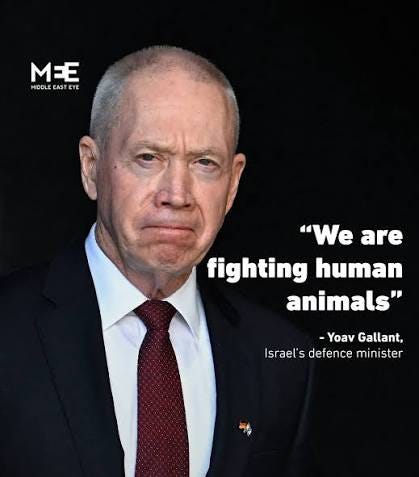
The ICC’s indictments against Israeli Prime Minister Benjamin Netanyahu and former Defense Minister Yoav Gallant, both of them fugitives from justice, for crimes against humanity, sent the Israeli regime’s U.S. sponsors into a fury. Threats were quickly followed by official sanctions against judges, prosecutors, and cooperating witnesses.

Indeed, even before the warrants were requested, a dozen U.S. Senators sent a threatening letter to the ICC Prosecutor Karim Khan, declaring, in the style of delinquent schoolyard bullies, “Target Israel and we will target you….You have been warned.”

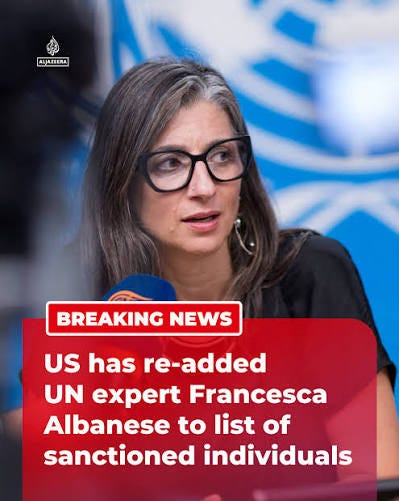
The Trump administration, in defense of Israeli impunity, has already withdrawn from the UN Human Rights Council, attacked UN agencies like UNRWA, and imposed several rounds of unlawful sanctions on the ICC Prosecutor, its Judges, the UN’s human rights rapporteur on Palestine, and the most prominent Palestinian human rights organizations.

Under a previous administration, the U.S. has even gone so far as to adopt legislation allowing for U.S. military action against the seat of the ICC in the Netherlands, with the objective of springing indicted war criminals from the U.S. or its ally nations. The legislation was nicknamed “The Hague Invasion Act.”

The assault on international law

The latest outrage from the Secretary of State is part of a larger effort by the U.S.-Israel axis to dismantle the post-WWII system of international law and, thereby, to remove all constraints on their exercise of raw power.

This effort has included a series of broad-daylight violations of the highest rules of international law, including serial aggression across Western Asia, the Mediterranean, Latin America, and the Caribbean, live-streamed war crimes, crimes against humanity, and genocide, assault and murder on the high seas, murder and assassinations on foreign territories, and the kidnapping of foreign leaders.

It has included a war against international organizations, variously attacking, campaigning against, or withdrawing from organizations like UNRWA, the World Health Organization, and the UN Human Rights Council.

It has included spying, smearing, and sanctioning international officials and judges, from the ICC to the UN human rights rapporteurs.

It has included attempts to replace the United Nations with dictatorial imperial bodies like the Trump-headed “Board of Peace.”

And it has included the abduction, torture, and murder of hundreds of UN staff and the destruction of their facilities, especially in Palestine.

Of course, the latest U.S. action announced by Rubio against the ICC is not only morally outrageous but also patently unlawful, like many of the acts cataloged here.

Nevertheless, as with a series of shocking U.S. violations of international law in recent years, the failure of other states to mount a principled response may well mean that the U.S. will get away with it.

If that happens, yet another hard-fought — and still nascent — building block of international law will fall. And its restoration in our time will be unlikely.

Will the world fight back?

But international law is not without tools to resist the expanding U.S. assault.

The Rome Statute of the ICC itself, under Article 70, provides for criminal prosecution for “impeding, intimidating or corruptly influencing an official of the Court,” as well as for “retaliating against an official of the Court on account of duties performed by that or another official.”

And there is no language in Art. 70 that would limit its application to perpetrators from member states, meaning the Court could, in principle, charge U.S. (and Israeli) persons with such offenses.

Indeed, a case in point is the ICC Prosecutor’s recent Art. 70 warning to Israel and others in May 2024, which came in response to efforts by the Israeli regime and Western powers to intimidate the Court.

Upon announcing his request for arrest warrants for the Israeli perpetrators, Khan stated that “all attempts to impede, intimidate or improperly influence the officials of this Court must cease immediately.” He added that his office would not hesitate to “act pursuant to article 70 of the Rome Statute if such conduct continues.”

If convicted under Article 70, perpetrators can face five years in prison. And beyond Article 70, the ICC is itself an international organization with legal personality (meaning that it has rights and can bring claims on its own behalf). Customary international law allows for such organizations to take countermeasures when attacked.

What’s more, the Court is located in the Netherlands, a UN member state that has also ratified the Rome Statute and is obliged to provide security for the Court.

As such, any violation by the U.S. on or directed at the ICC in the territory of the Netherlands would not only constitute the supreme international crime of aggression, but would also solve the jurisdictional question, should the Court wish to act against U.S. persons seeking to intimidate or obstruct ICC proceedings.

Of course, it is highly unlikely that U.S. officials could ever be arrested for these crimes, and the U.S. is heavily armed, violent, and often lawless in its actions abroad, as Rubio’s most recent action shows.

It’s true that the ICC (or its state parties) have no power to impose decisions on the U.S. by force. But with sufficient political backing from state parties to protect ICC judges and prosecutors, U.S. perpetrators could find themselves marked as fugitives from justice and unable to travel through a significant number of countries.

There would also be political and diplomatic costs, resulting in the U.S’s even further isolation on the world stage.

A total of 125 ICC state parties, including many of the U.S.’s closest Western allies, are already legally obliged to oppose the U.S. attacks on the Court. So while the ICC may never be able to arrest U.S. perpetrators — though any of its 125 members could — it can mark them as permanent fugitives, alongside their Israeli co-perpetrators.

In addition, states could act, individually and collectively, to block U.S. sanctions against the ICC and its personnel.

The European Union, for example, has sanctions blocking legislation that could be activated to protect those targeted by the U.S. Its failure so far to initiate such action to protect ICC personnel, UN rapporteur Francesca Albanese, and targeted human rights organizations is an ongoing scandal of complicity.

Member states of the UN could also convene an emergency session of the General Assembly under the Uniting for Peace mechanism to circumvent a U.S. veto in the Security Council and adopt measures to push back against this assault on international law and protect its victims.

So far, of course, there is little sign of willingness from governments around the world to confront the U.S.-Israeli Axis on these matters. To the contrary, the level of complicity, especially by Western states and Arab governments, has been shocking given the stakes.

But if they do not find the courage and principle to act soon, it is highly unlikely that the postwar legal system will survive.

Taking the assault on the judiciary global

Viewed through a historical lens, the Rubio game plan is nothing new. Fascism loves “law and order,” but it despises the rule of law.

Short of popular revolution and armed resistance, an independent judiciary is often the ultimate check on abusive power.

That’s why, beginning in 1925, Mussolini’s fascist regime purged the courts of any judges that might seek to constrain fascist power, replaced them with loyalists, and established political courts to punish opponents and ensure the will of the regime. Eight years later in 1933, the Nazi regime began its consolidation of power in Germany by purging the courts of independent judges and replacing them with loyal Nazis. Four years after that, beginning in 1937, the fascist regime of Francisco Franco in Spain instituted a plan to systematically purge the Spanish judiciary of independent judges and replace them with military tribunals and political courts loyal to the regime.

Since then, efforts to intimidate, corrupt, subjugate, or dismantle judicial bodies have been constant hallmarks of authoritarian regimes and of mafia syndicates everywhere.

The Trump administration, as the latest announcement from Rubio makes clear, is no exception.

The only difference is that Trump and Rubio have now taken their assault on the rule of law global. And that is a threat to everyone.
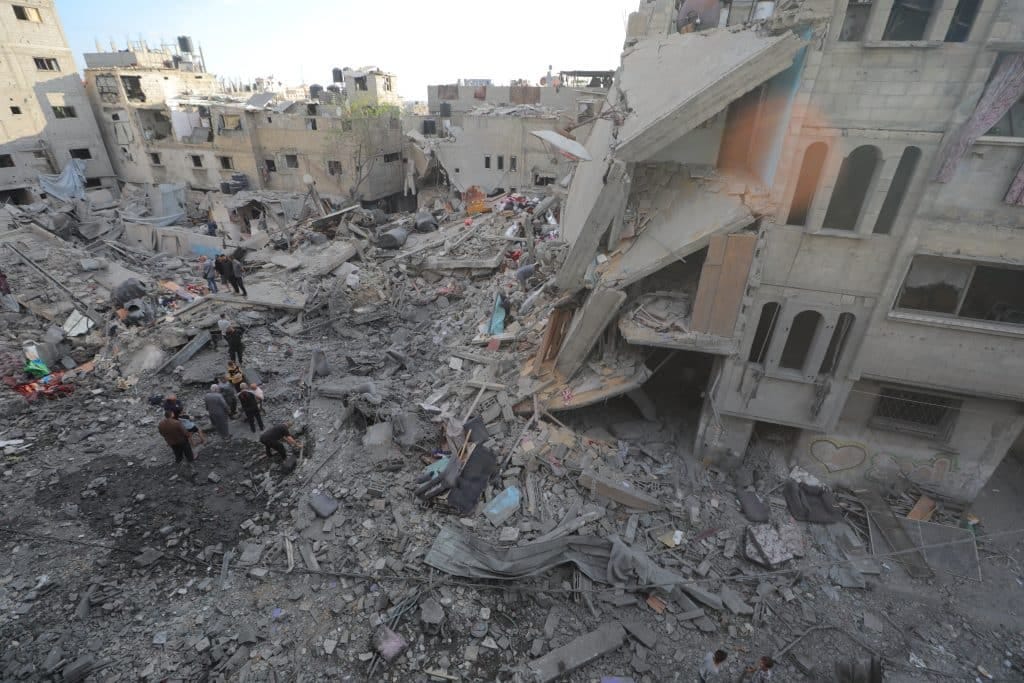
Aftermath of an Israeli airstrike targeting the home of the al-Tawil family in Nuseirat refugee camp, central Gaza, May 26, 2026. (Photo: Hassan al-Jedi/APA Images)

No, Israel does not have ‘a right to exist.’ Quite the contrary, actually.

Unlike the Zionist claim that “Israel has a right to exist,” my assertion is rooted in international law. Of course, given Israel’s propensity for violating such laws, it’s no surprise they’re still claiming a right that has no basis in reality.

By Craig Mokhiber July 14, 2026 39
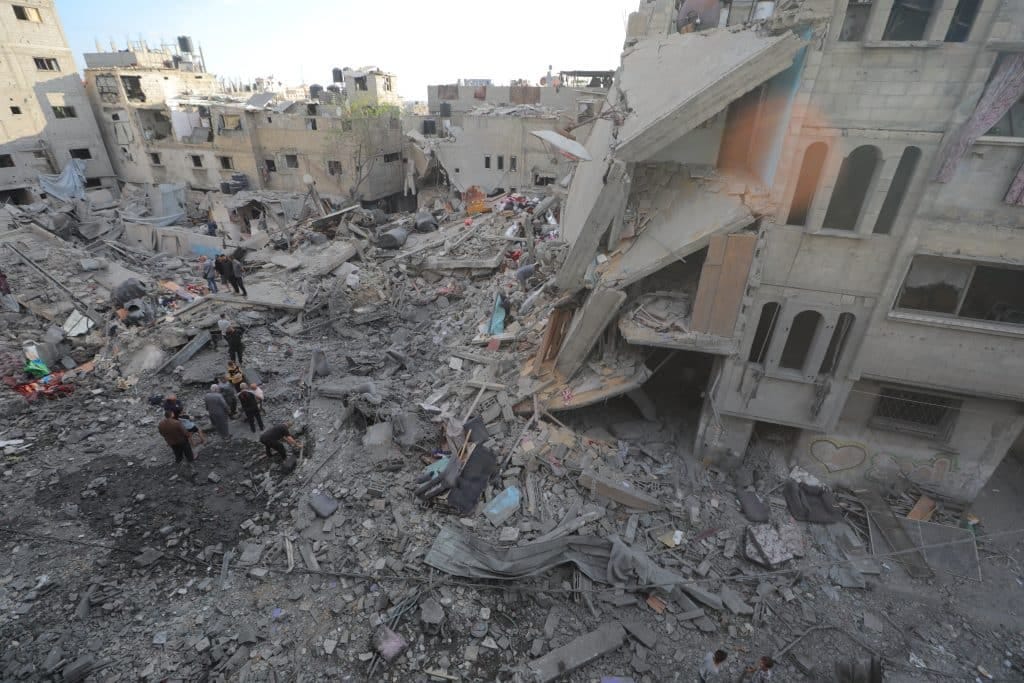
Aftermath of an Israeli airstrike targeting the home of the al-Tawil family in Nuseirat refugee camp, central Gaza, May 26, 2026. (Photo: Hassan al-Jedi/APA Images)

Aftermath of an Israeli airstrike targeting the home of the al-Tawil family in Nuseirat refugee camp, central Gaza, May 26, 2026. (Photo: Hassan al-Jedi/APA Images)

News that, in the midst of the genocide in Palestine, the German parliament was this week advancing legislation that would criminalize speech that denies that Israel has a “right to exist,” with penalties of up to five years in prison, came as a surprise to virtually no one.

This is, after all, the same Germany that perpetrated genocide first in Namibia and then in Europe, and is now actively and enthusiastically participating in the ongoing genocide in Palestine while brutally repressing all who dare speak out against it inside Germany.

Indeed, alongside Israel and the U.S., the German state today has the dubious distinction of being among those most captured by Zionist interests and most corrupted by Zionist ideology.

The German state even has an official policy (Staatsräson) dedicating the German state to the continued existence of the Israeli regime, and a formal declaration of Israel’s “right to exist” is required to acquire German citizenship. (No such declaration of Germany’s right to exist is required).

But the statement that the Israeli regime has no right to exist is not only a legally protected opinion. It is also demonstrably true, as a matter of both fact and law.

Of course, the statement that Israel “has a right to exist” has always been nonsense, unrooted as it is in either law or fact.

But this Zionist claim rings familiar to the ear of people in the West because it has been so often repeated as a pillar of Zionist propaganda, echoed by Western politicians benefiting from Israel lobby bribes, and by Israel-aligned media corporations dutifully buttressing the impunity of the regime.

Ask yourself if you have ever heard a similar refrain asserting Italy’s right to exist, or Canada’s — or Germany’s, for that matter? And yet the claim is constantly made that the Israeli regime (and only the Israeli regime) somehow has such a right.

The most obvious conclusion is that the regime and its proxies in the West are so deeply insecure about the legitimacy of the state, given the lawless and bloody history of its founding and expansion, that they have deemed it necessary to impose an enforced (and fictional) orthodoxy, rooted in an idea of Israeli exceptionalism and state-sponsored impunity.

But there is no such right in international law. None.

Inconvenient facts

Indeed, when I first entered the corridors of the United Nations in the 1980s, many states then existed that no longer existed when I left in 2023. Did the USSR, Czechoslovakia, Yugoslavia, East Germany, Tanganyika, Zanzibar, and the United Arab Republic have a “right to exist?” No. And neither does Israel.

States come and go, but none of them has a “right to exist.” As a factual matter, this is undeniable.

And yet, some still actively parrot the baseless Zionist fabrication that the Israeli regime somehow possesses it, others accept it without question, some (like Germany) even seek to compel others to declare it, and still others prohibit any attempts to challenge the lie.

There is no “right to exist” for states under international law. Thus, Israel cannot claim such a right.

Of course, states do have some rights. For example, states normally have a right to sovereign equality, to territorial integrity, and to self-defense under Article 51 of the UN Charter. But even these rights normally afforded to states are subject to conditions and qualifications, many of which would exclude Israel’s claim to them.

For example, the International Court of Justice has repeatedly found that Israel has no right to claim self-defense in its attacks on occupied Palestinian territories. (In essence, you cannot break into someone’s house and then claim a right to self-defense when they resist you).

Secondly, except for those agreed in treaties with Egypt (1979) and Jordan (1994), Israel does not even have defined borders. Much of the territory claimed and held by the Israeli regime is territory over which it has no legal claim whatsoever, and other territory claimed as part of the state is itself subject to challenge.

The regime can make no legal claims of territorial integrity over lands it unlawfully seized in 1967 and after, including East Jerusalem, Gaza, the West Bank, and the Golan Heights.

Its 1949 “Green Line” with Lebanon, Syria, the West Bank, and Gaza, is not an international border, but rather an armistice line merely meant to separate forces. The regime cannot claim it as a lawful border.

Moreover, given that the prohibition of the acquisition of territory by force is a jus cogens norm (the highest, peremptory rules) of international law and a binding obligation under the UN Charter, it cannot claim any of that land as part of its lawful territory.

Even the land claimed by Zionist forces in 1947 under the UN partition proposal is subject to legal challenge. Given that fact, the UN General Assembly had no authority under its Charter, or more broadly in international law, to overrule the will of the indigenous people or to create a settler-colonial state, and the Zionist forces had no right under international law to deny the self-determination of the Palestinian people or to acquire territory by force.

In fact, the International Law Commission has held that states must not recognize claims based on violations of jus cogens and erga omnes norms (binding on all states), such as those perpetrated by Zionist forces during the Nakba of 1947-48, and by the Israeli regime ever since. In addition, territorial acquisitions resulting from the threat or use of force impose obligations of non-recognition on all states.

The ICJ has recalled this principle with regard to the Israeli regime’s presence in occupied Palestinian territory as recently as 2024, when it found that the occupation of East Jerusalem, the West Bank, and the Gaza Strip is entirely unlawful, that it must end quickly and completely, and that all states are obliged not to recognize Israel’s presence in those territories and to work to end it.

Thus, as Israel has no defined territory, its legal claims to territorial integrity are significantly limited. And without recognized borders (and here we are not talking about a minor border dispute, but rather a lack of definition for most of the state’s territory), it even lacks a key criterion for recognition as a state.

To this day, almost thirty UN member states across Africa, Asia, and Latin America (including some of its closest geographic neighbors) do not recognize the state of Israel, and others have cut off diplomatic relations with the regime during the current ongoing genocide.

No sovereignty without equality

Finally, without lawful sovereignty, there can be no claim to sovereign equality.

Sovereignty, in international law, belongs not to states, but rather to people. The Israeli regime declares itself a “Jewish state,” and claims to represent its people.

But it does not represent the interests of non-Jewish persons (Muslim and Christian Palestinians) who are either present, or have a right to be present and part of the legitimate polity of that territory.

The ethnonationalist state of Israel can perhaps claim to represent 7.2 million (Jewish) constituents. It cannot credibly claim to represent the almost 16 million Palestinians who have a right to form part of the polity of that land.

Indeed, even if the regime forcibly settled every Jew on the planet on the land, it would still only represent a minority of the population, vis-à-vis the majority of Palestinians.

Excluded variously from equal representation (1948 Palestinians), any representation (Gaza, West Bank, and East Jerusalem Palestinians), or even the ability to exercise their legal right to return and participate (diaspora Palestinians), are the overwhelming majority of persons who have a right to form part of the polity.

Nor can Israel claim legitimate governmental authority. This is because international law establishes that “the will of the people shall be the basis of the authority of government,” which must be “expressed in periodic and genuine elections which shall be by universal and equal suffrage.”

Excluding millions of the indigenous people of the land on the basis of ethnonationalist criteria is a textbook breach of that requirement. As such, the Israeli regime cannot claim legitimate governmental authority.

The ICJ has recently affirmed that the regime has no such authority in Gaza, the West Bank, or East Jerusalem. But the unequal terms imposed on Palestinians inside the Green Line, and the total exclusion of those in the diaspora, make the point equally applicable to the remainder of the Palestinian community as well.

And without that authority, the regime cannot claim legitimate sovereignty.

Similarly, the regime’s lawless conduct weighs against claims of sovereignty.

This is because modern conceptions of sovereignty include an element of responsibility (especially vis-à-vis respect for non-aggression, human rights, and international law) that a genocidal, apartheid regime with a continuous history of aggression, assassinations, crimes against humanity, and a chronic scofflaw status in the face of international legal rulings and UN resolutions cannot claim to have met.

From illusory rights to actual duties

Thus, as a matter of law and fact, the Israeli regime has no “right to exist.”

But the analysis should not stop there.

Even a cursory examination of international law reveals that, to the contrary, the Israeli regime should not exist.

The international community of states has obligations to cease recognition of the regime, to isolate it, and to work for its dismantlement and for the liberation of the Palestinian people from the regime.

Clearly, no one would today argue that Nazi Germany, or Apartheid South Africa, or Vichy France, or Khmer Rouge Kampuchea had a “right to exist.” Nor would we entertain claims for eternal colonial regimes in Algeria, India, Namibia, or Kenya. For the same reasons, no legal (or moral) argument could justify a right to exist for Zionist Israel.

To the contrary, international law requires that, where breaches of peremptory norms of international law are integral to the creation, expansion, and sustaining of a state (as was the case in apartheid Namibia and Rhodesia), such entities should not be recognized or accepted as legitimate states and should in no way be assisted.

Israel’s record is clear. It was founded on the breach of two peremptory (jus cogens) norms: the right to self-determination of the people of the land, and the rule on the non-acquisition of territory by force, as well as on the two highest crimes in international law: genocide and aggression.

Since then, it has refused the return of refugees and their compensation, and has continuously expanded its unlawful evictions, land theft, and colonization.

The United Nations and every major international human rights organization have concluded that the Israeli regime is guilty of apartheid and racial segregation, unlawful occupation, war crimes, crimes against humanity, and genocide.

The regime is now on trial for genocide at the ICJ, charges that the Court has found plausible enough to issue a series of preliminary orders (all of which the regime has ignored).

And the same Court has found the regime guilty of unlawful occupation, the forced denial of self-determination, the unlawful acquisition of territory by force, war crimes, apartheid, and racial segregation.

And the International Criminal Court has indicted the regime’s leaders for crimes against humanity.

For the full eighty years of its existence, the Israeli regime has held the distinction of being in breach of the highest number of UN resolutions and ICJ decisions of any country on the planet.

Today, the regime is unlawfully occupying Palestine, Lebanon, and Syria, attacking Lebanon, Syria, Iran, Yemen, and beyond, and perpetrating genocide in Palestine.

It has carried out assassinations across the region and has admitted to (indeed, bragged about) transnational terrorist attacks with booby-trapped pagers in Lebanon

Judged against the imperatives of international law, Israel is, in the strictest sense of the term, a rogue regime, illegitimate in its founding, and devoid of all legitimacy in its conduct ever since.

To declare that such a regime has a “right to exist” is an affront to generations of its victims, to international law, and to human decency itself. And the threat that it poses extends far beyond Palestine.

The Israeli regime is driven by a deeply racist and fundamentally violent ideology. It is armed with advanced technologies of surveillance and death, holds powerful conventional weaponry, and possesses stockpiles of nuclear, chemical, and biological weapons.

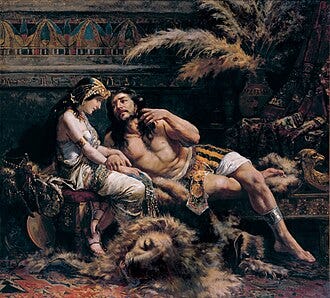
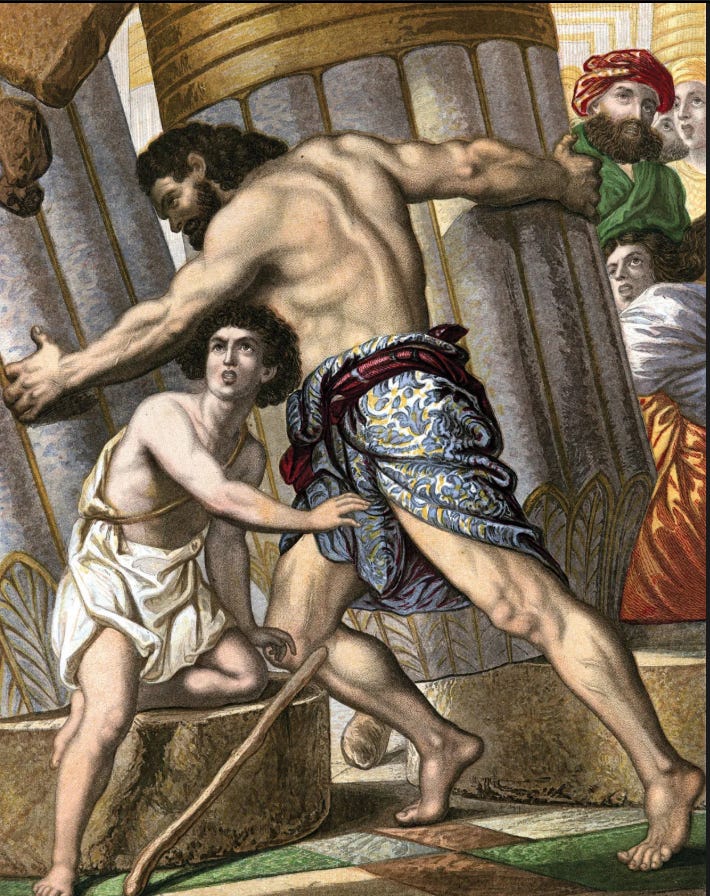
It has declared policies mandating the mass murder of civilians (the Dahiya Doctrine), the killing of its own citizens (the Hannibal Directive), and the potential nuclear destruction of the world (the Samson Option).

Its spies are active in countries around the globe, and its proxies are actively engaged in corrupting governments and institutions across the West.

Does such a regime have a “right to exist?” No.

In fact, dismantling such a regime and its replacement with a free Palestine with equal rights for all is not only a legal requirement, but also an existential imperative for all of humanity.


Craig Mokhiber

Craig Mokhiber is an international human rights lawyer and former senior United Nations Official. He left the UN in October of 2023, penning a widely read letter that warned of genocide in Gaza, criticized the international response and called for a new approach to Palestine and Israel based on equality, human rights and international law.

Discussion about this post

I can’t buy THAT one above, but this is politics, man, attempting to rationalize why young men loved Trump and now they are pissed off? NOPE.

Paulo Kirk

Jul 21, 2026

“What we are talking about here is an Israeli establishment that is aiming at the extermination of the Palestinian people. In every possible way. Not only in Gaza but in the West Bank.”

— Mustafa Barghouti, interview, @MEEunapologeti

Failed to render LaTeX expression — no expression found

That GOD?

Since the “ceasefire” of last October, Israel has slaughtered more than 1,150 Palestinians, having violated the supposed truce over 3,700 times.

Israelis burn several Palestinians alive as the Gaza Holocaust continues unabated - Palestine Will Be Free

That Fucking GOD: Gates of Hell!!!

Across Lebanon, over 1.2 million people were forced from their homes by the Israeli assault, with more than 700,000 people in Lebanon still displaced despite a so-called “ceasefire,” according to the United Nations.

“Everything has been put on standby. The war has prevented us from dreaming,” Shehemy said.

THAT GOD BLESS America:

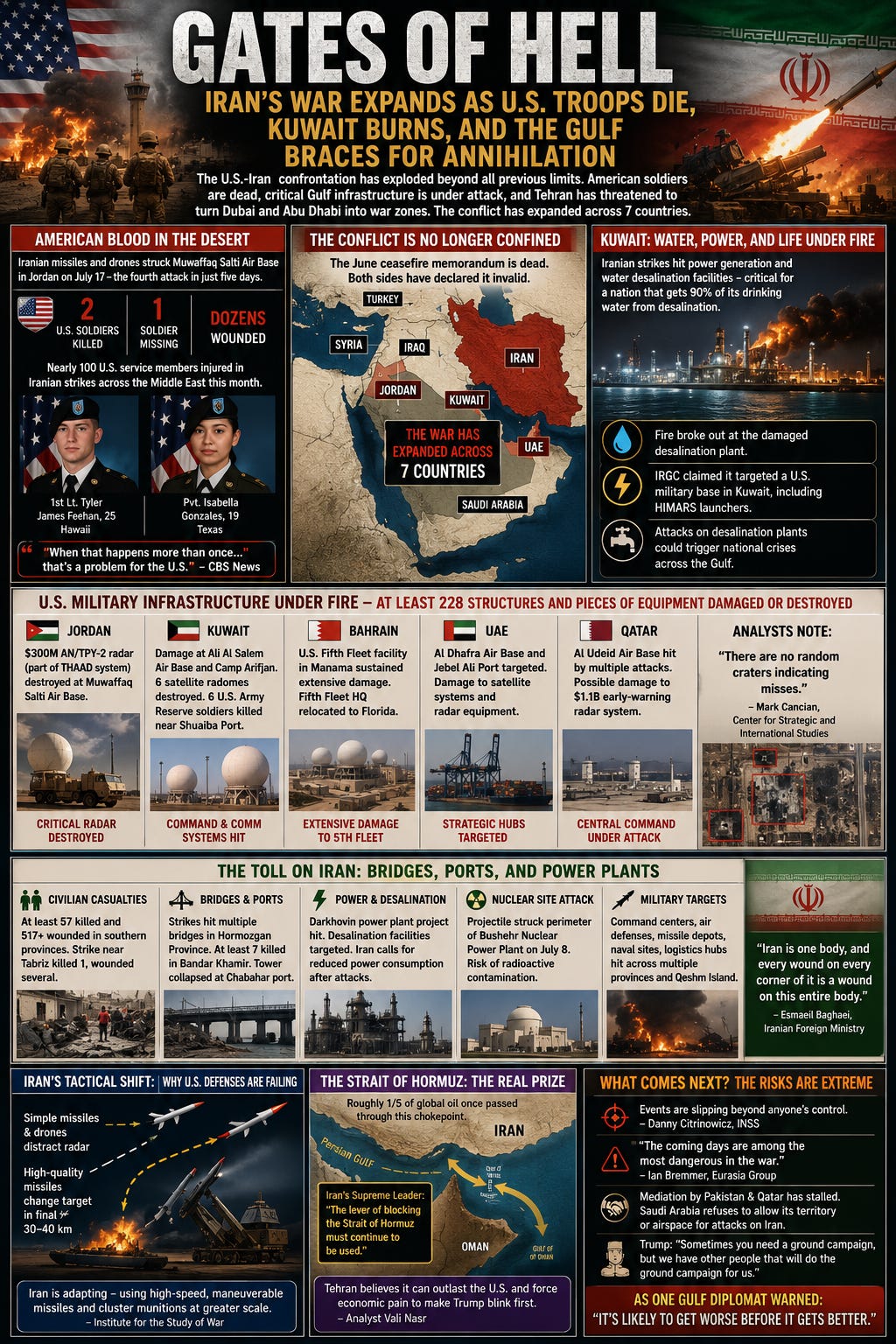
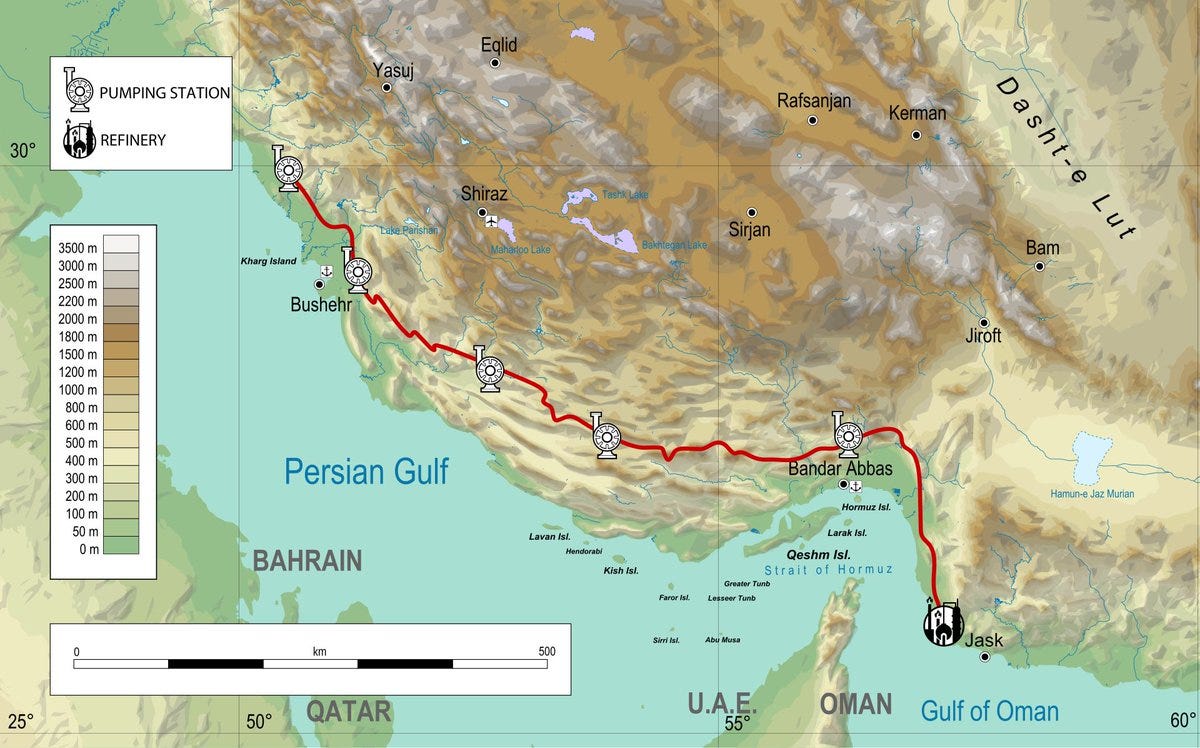
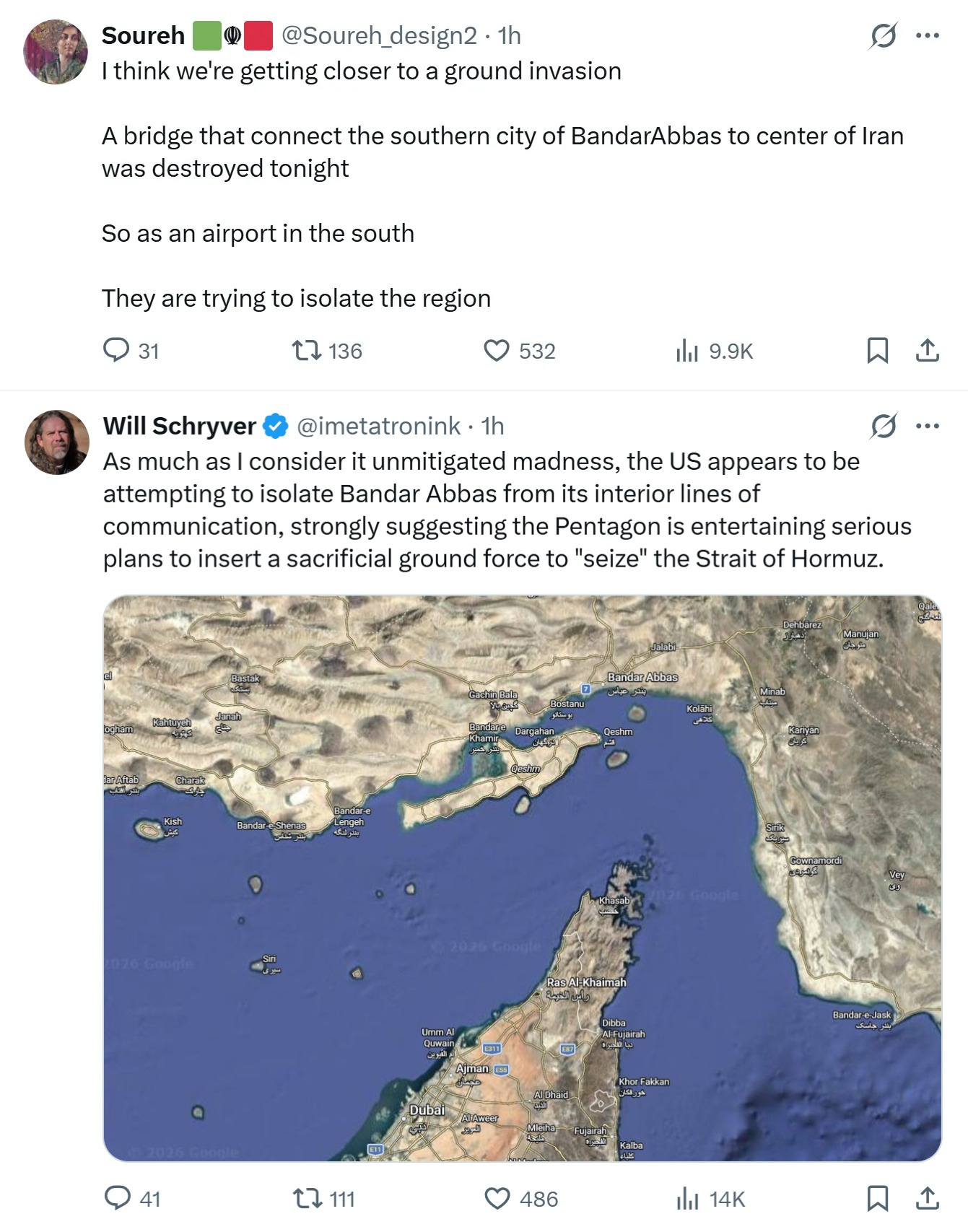
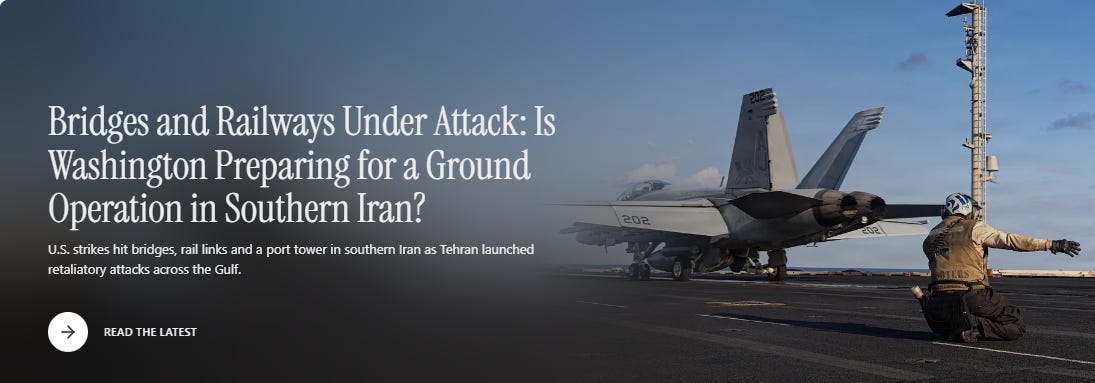
President Trump has not ruled out using ground forces, including seizing Kharg Island—Iran’s main oil export terminal. He has repeatedly threatened to hit Iranian power plants and bridges next week unless Tehran resumes negotiations.

Iran has responded in kind. An Iranian military official warned of “obliterating all remaining infrastructure in the region” if Trump’s threats are implemented. The IRGC has stated that oil, gas, and chemical fertilizer exports will not resume while U.S. attacks continue.

As one Gulf diplomat put it: “It’s likely to get worse before it gets better.”

Survivors of Jeffrey Epstein’s sex trafficking ring met with Acting U.S. Attorney General Todd Blanche this week at the insistence of a retiring Republican senator, but they emerged from the sit-down describing Blanche as “condescending,” “arrogant” and unwilling to commit to pursuing cases against powerful men named in the disgraced financier’s files.

Soccer star and Rochester native Abby Wambach says she's leaving the  Wasserman Agency after reviewing newly released Epstein‑related documents,  calling for Casey Wasserman to  resign.https://www.rochesterfirst.com/news/local-news/rochester-native-soccer  ...

The meeting, arranged as a condition for Sen. Thom Tillis’s vote to advance Blanche’s nomination out of the Senate Judiciary Committee, came more than a year after victims began requesting an audience with the Department of Justice. Tara Palmeri, a journalist who has covered the Epstein story for years, told Cenk Uygur on The Young Turks that Blanche never wanted the meeting.

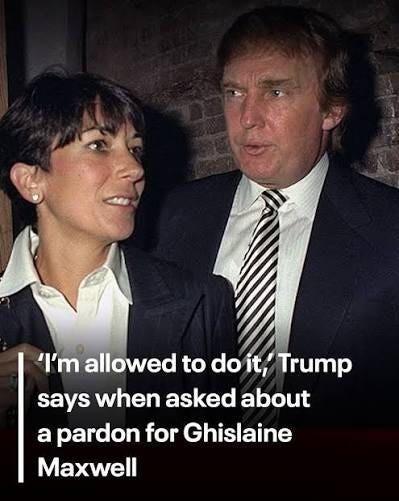
As he was leaving for Scotland Friday to help promote his family's golf  clubs, President Trump responded to a question about Ghislaine Maxwell.  Link in bio for more.

“He was forced to. This is part of confirmation politics. He has no regard for them. He has no interest in hearing from them or speaking to them,” Palmeri said in an interview with Cenk. Palmeri noted that Blanche, according to reporting in the book “Regime Change,” had previously suggested offering a pardon to Ghislaine Maxwell in exchange for clearing President Donald Trump.

Tillis, a North Carolina Republican who is not seeking reelection, told Blanche he would not vote for him unless he met with the survivors. The sit-down happened at 4:30 p.m. on a recent afternoon — a last-minute, check-the-box exercise, Palmeri said, that left victims feeling “worse.”

“He was condescending. He was arrogant. He deflected blame and basically told them to go to the FBI and re-report their stories of abuse, retraumatizing them, which they’ve already done,” Palmeri said.

One survivor pushed back directly, asking whether Blanche wanted her to go to the FBI and point out the sworn testimony she had already given agents — files that already exist in the bureau’s Epstein database. Blanche, according to Palmeri, acknowledged the FBI “handled this badly” but acted as if he had no control over the agency, even though the FBI reports to the Department of Justice.

“He literally said, ‘I don’t investigate. I don’t subpoena people,’” Palmeri recounted.

Cenk responded in shock: “What? He’s the top law enforcement officer in the country, but he doesn’t know what a subpoena is.”

Through nature we can touch the divine

“A priest arrayed in white vestments climbs the tree and, with a golden sickle, cuts down the mistletoe, which is caught in a white cloak… They believe that mistletoe given in drink will impart fertility to any animal that is barren and that it is an antidote to all poisons.”

Brookweed (Samolus) likewise had to be picked in very precise conditions. Pliny says it had to be taken with the left hand by somebody who was not allowed to look behind them. [24] Markale suggests that the very careful way in which the druids handled the plants points to their use of homeopathy, in which the slightest interference with their natural qualities could undermine their effect.

As far as trees were concerned, he explains:

“The yew, the hazel, the service tree and the oak are druidic trees, used by the druids” – indeed, Maximus of Tyre, a Greek philosopher of the late second century BC, wrote that the druids regarded the oak as a “visible representation of divinity”.

Paul — “Mistletoe is, in fact, an extraordinary plant. It is a parasite. It is, in a way, a vegetal vampire which feeds on the blood of others. In truth, it survives by drinking the sap of the tree: it is really an ‘oak-water’. Moreover, we know that mistletoe is one of the oldest plants on our planet, perhaps one of the first to have appeared and, in any case, that it is a survivor of a distant era in which conditions of life were not like our own.

“We have to conclude that mistletoe has survived different phases of evolution and that it adapted to new circumstances: it was a matter of life and death. No longer being able to draw its vital energy from the earth, like other plants, it fixed itself to other vegetation and takes that vital energy as its own. In this way, the mistletoe liberates the energy of the oak and makes use of it”.

“Since the oak represents the divine force, cosmic energy, even when it is symbolically replaced by another tree, mistletoe, oak-water is the very essence of divinity.”

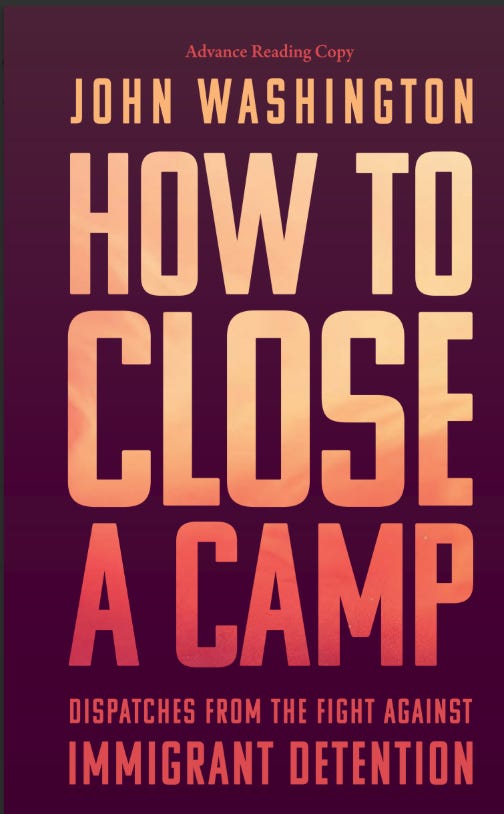
Book Launch: How to Close a Camp

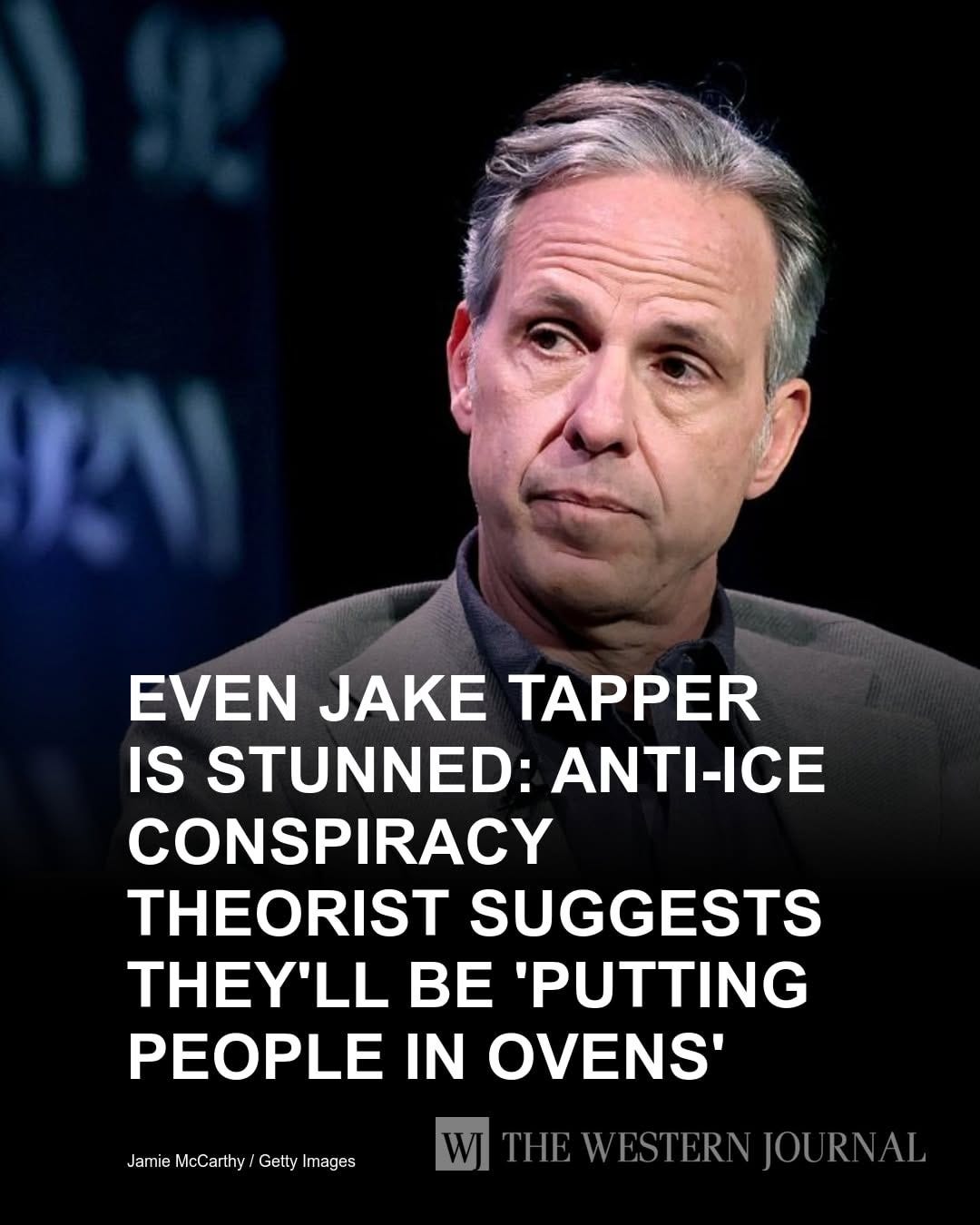
A Minnesota business owner left CNN host Jake Tapper stunned Friday after he compared federal immigration enforcement’s detention facilities to concentration camps.

A handful of Minnesota businesses closed to protest Immigration and Customs Enforcement operations, including Moon Palace Books, whose co-owner Jamie Schwesnedl appeared on “The Lead with Jake Tapper.” Tapper pushed back during the interview after the Minnesota business owner used the term “concentration camp” to describe immigration detention facilities, saying the phrase carries a specific historical meaning.

[Fucking Jake Tapper, man oh man . . . . ]

No photo description available.

“Just one note, I’m not here to defend ICE, but I’m not a big fan of people using the term ‘concentration camp’ to describe detention camps. That has a very specific meaning,” Tapper said.

Schwesnedl responded.

“I understand that, but they take people to Fort Snelling here, which literally was built as a concentration camp, and Alligator Alcatraz, which I think we can all agree is a concentration camp. I’m not saying they’re Dachau. I’m not saying they’re putting people in ovens — yet — but these are concentration camps. I don’t need to argue with you about that,” Schwesnedl said.

Prior to that conversation, Schwesnedl claimed Minneapolis had been “invaded by masked gunmen” sending neighbors to “concentration camps.”

“We can’t do business as usual right now, anyway, because our city has been invaded by masked gunmen kidnapping family members and friends and neighbors of ours to send them to concentration camps,” Schwesnedl told Tapper when asked about the importance of closing their business. “Additionally, there’s a lot of businesses in our area that have staff or customers or owners who are afraid to come to work, afraid to come in and shop. People are closing down today, and we felt like it wouldn’t be kind or fair for us to stay open, so we’re closing in solidarity to help send a message.”

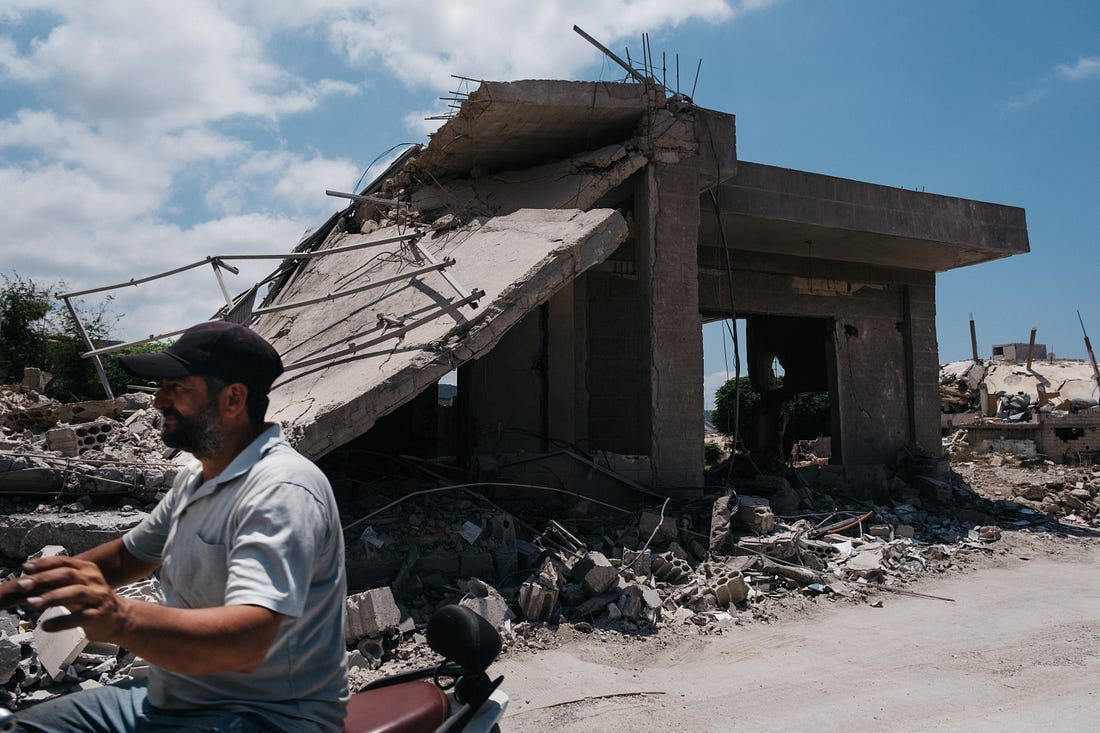
Much of Al-Mansouri lies in ruins, with the Israeli-occupied village of Majdal Zoun just across the valley. Despite the destruction and continued Israeli attacks, around 100 residents have chosen to remain. Al Mansouri, Lebanon. July 16, 2026.

God’s Chosen PEOPLE.

Last month, Israeli aircraft dropped leaflets over Al-Mansouri, declaring the area a “threatened zone,” telling residents to “stay away” and warning that anyone who approached Israeli forces would “put themselves in danger.” Despite the threats, around 100 people have chosen to remain in the village, according to Yousef Shehemy, the mayor of neighboring Majdal Zoun, who has been displaced from his home by the occupying Israeli forces.

“People here believe their souls belong to this land,” Shehemy told Drop Site as he drove past a row of destroyed houses in Al-Mansouri. Shehemy was in the village when the leaflets fell from the sky. “They want to control people’s lives from above with leaflets, drones, sound grenades—all of it to frighten civilians.”

Across Lebanon, over 1.2 million people were forced from their homes by the Israeli assault, with more than 700,000 people in Lebanon still displaced despite a so-called “ceasefire,” according to the United Nations.

“Everything has been put on standby. The war has prevented us from dreaming,” Shehemy said.

You gotta hate Americans, who are all happy go luck about giving Larry Ellison and Oracle and Palantir and Mossad every fucking kernel of caramel corn eaten or shat out in a public bathroom. Look at this fucking Internet “story,” and alas, there is ZERO pushback, ZERO people decrying this Dystopian SHIT.

AI Facial Recognition increases in Stadiums, Ballparks across the country

When the Los Angeles Clippers opened their $2 billion Intuit Dome in 2024, team chief technology and digital officer George Hanna figured roughly one in three fans would opt into the venue’s facial authentication system, which has fans upload a selfie ahead of time and stroll into the building without pulling out their tickets. “On a good day,” he said recently, “That’s kind of what I was hoping for.”

He was wrong.

Last season, by the end of an average game, close to 75% of fans were enrolled in Game Face ID, Hanna said, more than doubling his expectations.

“The curve of adoption was crazy,” he said. “We’re thrilled, and that allows us to sort of keep going and keep pushing.”

LA fan buy-in likely only accelerated the installation of facial scanning tools nationwide—a trend born out of COVID-fueled digitization drives, improved algorithms and growing consumer acceptance. But the developments also raise questions about just how much biometric observation people are willing to allow, both inside and outside The Tampa Bay Buccaneers added a facial recognition-powered “express entry” lane this year, following the Atlanta Falcons’ adoption of similar technology a year prior. The entire NFL now uses the tech to secure the playing fields, locker rooms and press boxes.

MLB, meanwhile, continues rolling out its facial authentication entry options across ballparks. Face-based ticketing came to Ohio State and the University of Florida in 2025 too, as schools looked to speed up student journeys from tailgate to seat.

In total, facial authentication technology provider Wicket says it supports more than 50 pro teams across the NFL, NBA, NHL, MLB, MLS, NWSL, WNBA and Australian Football League, as well as golf and tennis tournaments.

Wicket’s first major sports foray came in 2020, when the Cleveland Browns turned to the technology to limit fan-employee contact during the COVID-19 pandemic. The system decreased entry times and food lines, including by reducing the number of fans packing the remaining traditional pathways. As the tech has improved, the company has been able to install its tablet-based scanners in more locations, such as club-level entrances. One of the biggest hurdles each time the tech debuts, Wicket COO Jeff Boehm said, is explaining to fans that, No, you don’t have to pull out your phone or credit card. Your face is all you need.

“It’s almost so little friction that fans are almost confused by how easy it is,” he said.of ballparks.

World Cup Social Media

“Churches are using it to see who is coming to the pews. Roller rinks have used it to decide whether or not someone has had too many fights and doesn’t get to come in anymore. Stores are using it to try to identify shoplifters,” he added. “I can’t give you a kind of quantitative answer, but what I can say is that it is increasingly common across public accommodations in America.”

Aerial view of Wrigley Field

Ahead of the 2026 World Cup, Kansas City is piloting facial recognition technology on local buses. Add that to the list.

Internationally, biometric surveillance is becoming increasingly commonplace. A new Premier League program will leverage “intelligence-led facial recognition in London to identify and prevent serious offenders attending matches,” the league announced earlier this month. In Brazil, stadiums with capacities beyond 20,000 seats are required to install biometric tracking systems. Palmeiras has a deal with local police to share some of that information, which has reportedly led to the arrest of more than 200 people who entered the venue.

“We know exactly who is in each seat,” club executive Oswaldo Basile said in October.

NFL Revenue

Fears over facial tracking are compounded by how the information could be combined with increasingly sophisticated forms of online monitoring and individualized messaging, now supercharged by generative AI tools.

“The targeted ad industry is incentivizing a pervasive economy of surveillance of us at all times,” Schwartz said.

Early facial ticketing pilots were met with some protests. And energy still exists to create more state or federal oversight. But as the technology’s penetration has expanded, pushback seemingly hasn’t. A demand for security is leading venue operators to test out the newest tech, while a desire for convenience and personalization has seen fans increasingly getting in line.

2025 was the year facial recognition went mainstream. For now, privacy crusaders are left to wait.

  • Real-Time Bidding: Personal data is continuously broadcasted to thousands of advertisers through real-time bidding, creating deep privacy and security risks.
  • Behavioral Tracking: Invisible trackers, cookies, and pixels build detailed psychological and behavioral profiles.
  • Offline Integration: Online monitoring is increasingly paired with real-world surveillance, such as facial recognition scanning in public spaces and sporting venues.
  • Surveillance Pricing: The infrastructure used to target ads is also being used to determine the prices consumers are charged based on their personal data.
Amazon.com: Propaganda: 9781915923523: Bernays, Edward: Books
landmaxxing luxury real estate

These fucking millionaires and billionaires need to be pitchforked into mulch . . . “Landmaxxing Has Billionaires Buying Up All the Homes Around Them”

THESE PEOPLE NEED TO BE SHOOT, GUTTED, SPLAYED!

“It’s about controlling their lifestyle and their surroundings,” explains agent Angel Nicolas of Serhant. Some clients buy neighboring properties to create a larger estate, while others hold onto them for future development or to pass down to the next generation.

“Your home isn’t just the four walls you live in—it’s the entire experience of the neighborhood around you,” he says. “If you have the chance to own what’s next door, it can give you both peace of mind and flexibility for the future.”

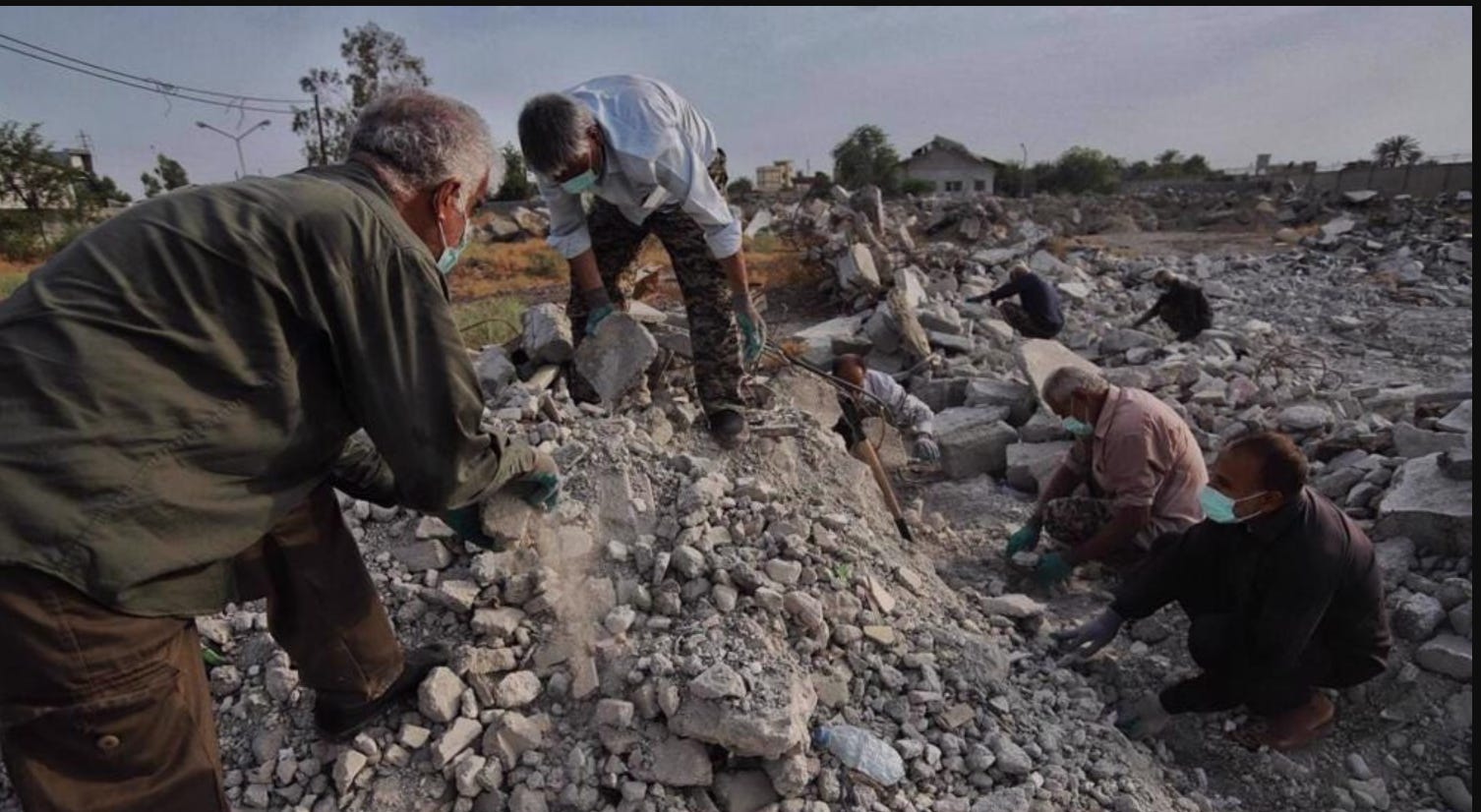
An ongoing search at the site of a US airstrike on a school in southern Iran has recovered further remains belonging to 32 of the child victims, but authorities say no trace has yet been found of Makan Nasiri, a boy who has been missing for almost five months.

Officials in Hormozgan province said on Tuesday that weeks of recovery work at the Shajareh Tayyebeh School in Minab and the surrounding area had led to the discovery of 62 body fragments, which DNA testing identified as belonging to 32 of the students killed in the February 28 attack.

This guy is yammering and yammering . . . .

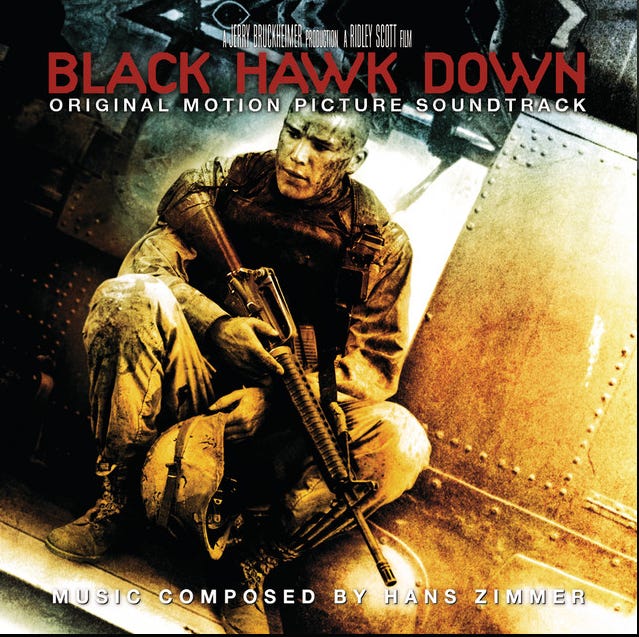
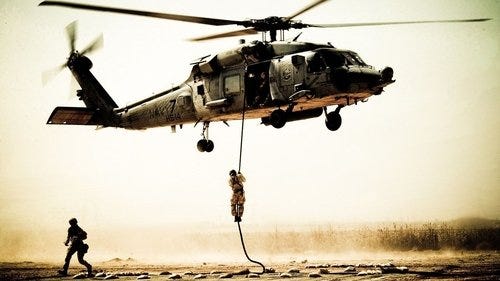
Blackhawk Down . . ..

Delta Force: Black Hawk Down (Unreleased) | Jason Graves
Release “Black Hawk Down: Complete Recording Sessions” by Hans Zimmer -  MusicBrainz
Black Hawk Down Soundtrack (2001) | List of Songs | WhatSong

Blackhawk downer costs a lot.

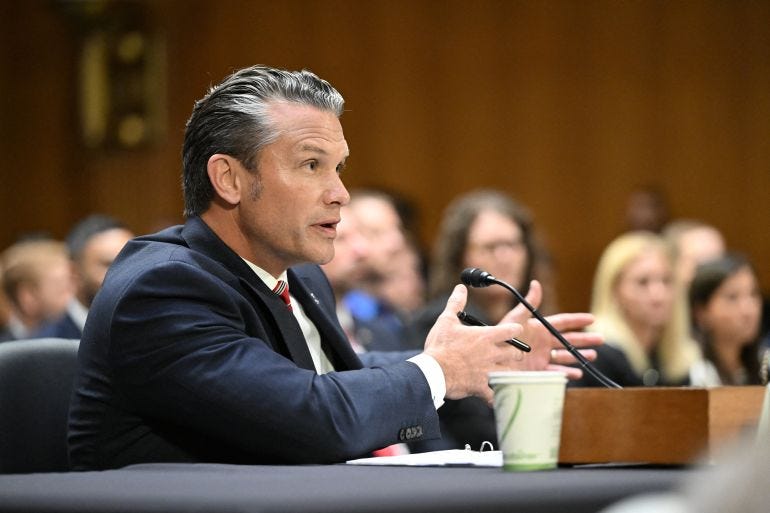
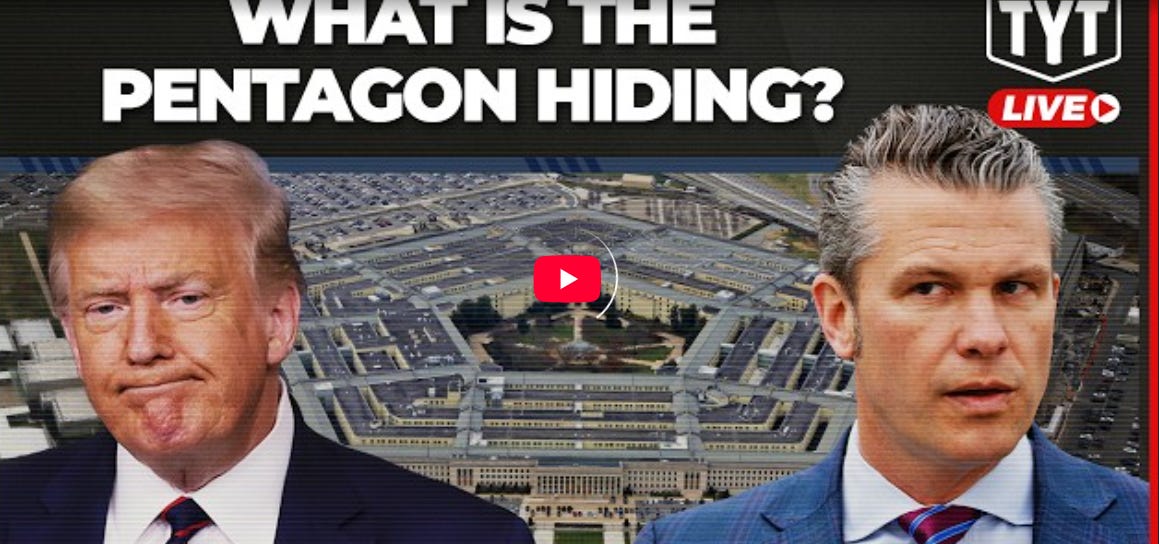
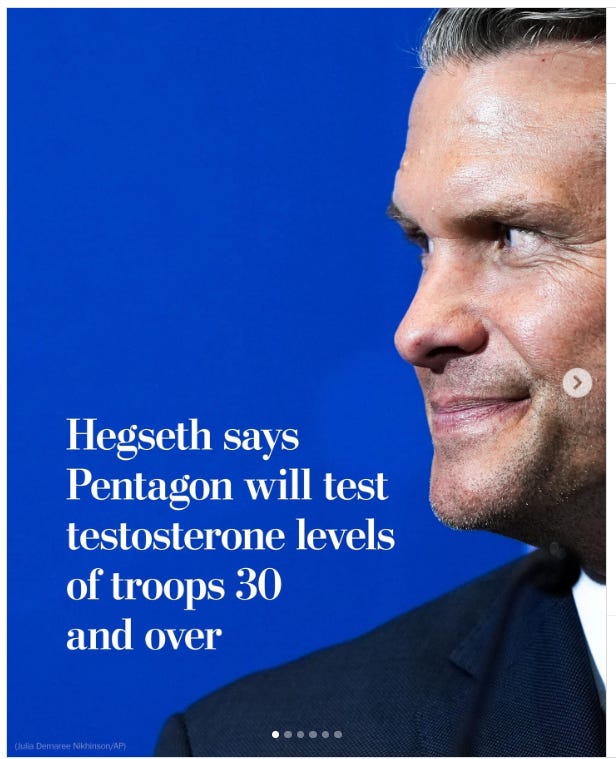
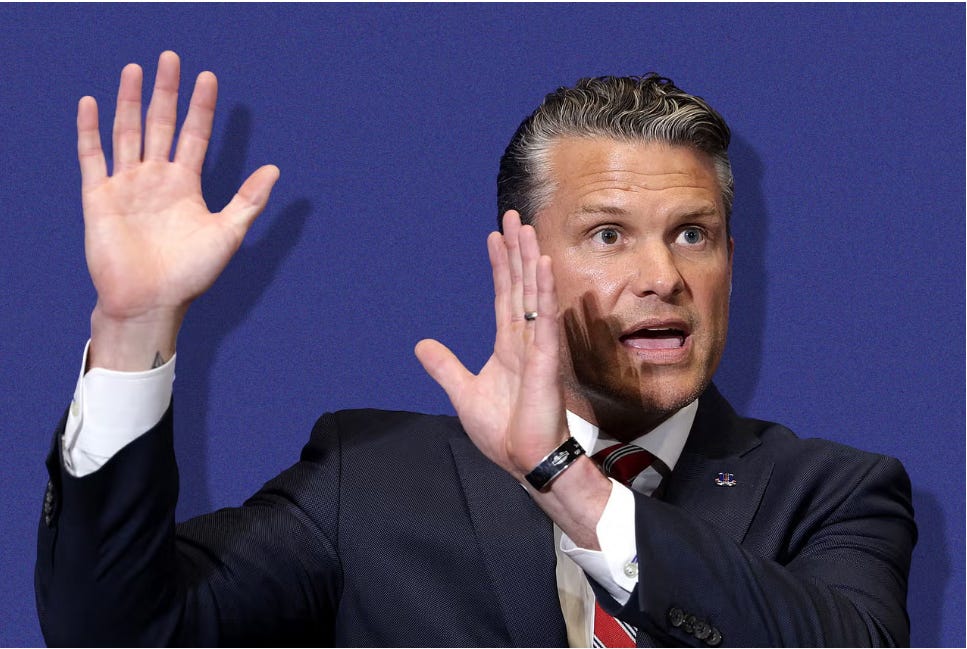
New reports confirm a massive $70 billion discrepancy regarding the true financial burden of the U.S.-Iran conflict. While Defense Secretary Pete Hegseth testified that direct military costs have reached $37.5 billion, independent experts estimate the actual ongoing economic impact is over $100 billion when factoring in hidden costs like supply chain strain and soaring consumer energy prices.

US Defense Secretary Pete Hegseth testifies during a Senate Committee on Appropriations hearing on Capitol Hill in Washington, DC, on July 21, 2026.

President Donald Trump’s administration sought phone records of several New York Times journalists and even those of some of their relatives, according to a motion unsealed Monday — an unusually aggressive attempt to unmask the confidential sources of reporters who wrote about Trump’s Qatari-gifted Air Force One jet.

Game Changer: Onboard Qatar Airways B787 Dreamliner - SamChui.com

The efforts by the Republican president’s administration to compel the identity of sources in the form of additional subpoenas come at a time when the executive branch’s relationship with the press is increasingly contentious. The efforts, described in a letter-motion filed by the Times over the weekend, were more expansive than previously known, the newspaper noted. They also covered a time frame that exceeded the news articles in question.

“Two of the subpoenas seek records beginning on January 1, 2026, long before the events that are purportedly the basis for the Department’s investigation,” lawyers for the Times wrote in the letter. “That timeframe strongly suggests that the Department is using this investigation not to focus on any purported concerns arising from the July 8 and 9 articles, but instead to forage for information about the Journalists’ source relationships more broadly.”

No photo description available.

Crap headline from Al Jazeera.

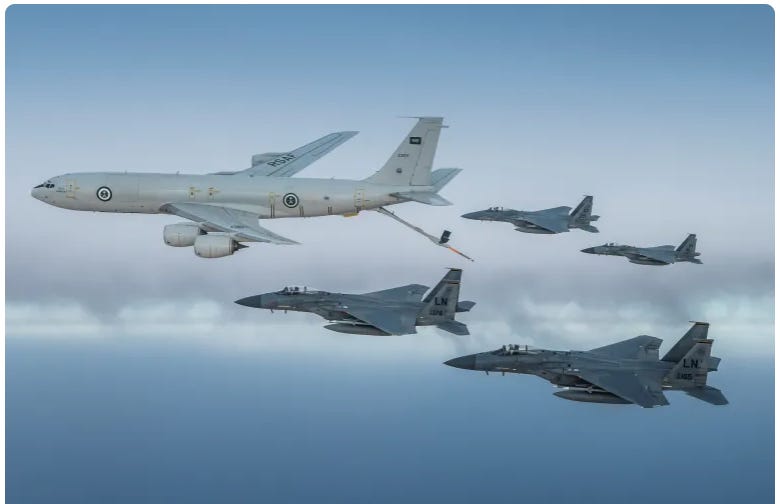
The Houthis may soon discover the limits of Saudi strategic patience

Saudi Arabia has so far ignored provocations to preserve regional stability. But it may soon be pushed into action.

Independent analysts and opposition lawmakers accuse the Trump administration of severely understating the true cost of the U.S. war in Iran.

While U.S. Defense Secretary Pete Hegseth testified to Congress that the conflict has cost $37.5 billion so far, independent tallies from groups like Moody’s Analytics and defense analysts place the total economic and operational cost upward of $100 billion to $132 billion.

Critics argue that the White House is using a narrow accounting framework and invoking operational security to obfuscate the full financial burden and growing casualty numbers from the American public

This list only goes to 2019:

1774-1883 Shawnee, Delaware

1776 Cherokee

1777-1781 Iroquois Confederacy (Haudenosaunee)

1780-1794 Chickamauga

1790-1795 Miami Confederacy

1792-1793 Muskogee (Creek)

1798-1801 France

1801-1805 Tripoli

1806 Mexico

1806-1810 Spanish, French privateers

1810 Spanish West Florida

1810-1813 Shawnee Confederacy

1812 Spanish Florida

1812-1815 Canada (Great Britain)

1812-1815 Dakota Sioux

1812-1815 Iroquois Confederacy (Haudenosaunee)

1813 Spanish West Florida

1813-1814 Marquesas Islands

1813-1814 Muskogee (Creek) Confederacy

1814 Spanish Florida

1814-1825 Pirates

1815 Algiers

1815 Tripoli

1816 Spanish Florida

1817 Spanish Florida

1817-1819 Seminole

1818 Oregon (Russia, Spain)

1820-1861 African Slave Trade Patrol

1822-1825 Cuba (Spain

1824 Puerto Rico (Spain)

1827 Greece

1831-1832 Falkland Islands

1832 Sauk

1832 Sumatra

1833 Argentina

1835-1836 Peru

1835-1842 Seminole

1836 Mexico

1836-1837 Muskogee (Creek)

1838-1839 Sumatra

1840 Fiji Islands

1841 Samoa

1841 Tabiteuea

1842 Mexico

1843 China

1844 Mexico

1846-1848 Mexico

1847-1850 Cayuse

1849 Turkey

1850-1886 Apache

1851 Johanna Island

1851 Turkey

1852-1853 Argentina

1853-1854 Japan

1853-1854 Nicaragua

1853-1854 Ryukyu, Ogasawara islands

1854-1856 China

1855 Fiji Islands

1855 Uruguay

1855-1856 Rogue River Indigenous Peoples

1855-1856 Yakima, Walla Walla, Cayuse

1855-1858 Seminole

1856 Panama (Colombia)

1856-1857 Cheyenne

1857 Nicaragua

1858 Coeur d’Alene Alliance

1858 Fiji Islands

1858 Uruguay

1858-1859 Turkey

1859 China

1859 Mexico

1859 Paraguay

1860 Angola

1860 Colombia

1862 Sioux

1863-1864 Japan

1864 Cheyenne

1865 Panama (Colombia)

1866 China

1866 Mexico

1866-1868 Lakota Siouw, Northern Cheyenne, Northern Arapaho

1867 Formosa (Taiwan)

1867 Nicaragua

1867-1875 Comanche

1868 Colombia

1868 Japan

1868 Uruguay

1870 Hawaii

1871 Korea

1872-1873 Modoc

1873 Colombia (Panama)

1873-1896 Mexico

1874 Hawaii

1874-1875 Comanche, Apache, Arapaho, Cheyenne, Kiowa

1876-1877 Sioux

1877 Nez Perce

1878 Bannock (Banna’kwut)

1878-1879 Cheyenne

1879-1880 Utes

1882 Egypt

1885 Panama (Colombia)

1888 Haiti

1888 Korea

1888-1889 Samoa

1889 Hawaii

1890 Argentina

1890 Lakota Sioux

1891 Bering Straight

1891 Chile

1891 Haiti

1893 Hawaii

1894 Brazil

1894 Nicaragua

1894-1895 China

1894-1896 Korea

1895 Panama (Colombia)

1896 Nicaragua

1898 Cuba (Spain)

1898 Nicaragua

1898 Philippines (Spain)

1898 Puerto Rico (Spain)

1898-1899 China

1899 Nicaragua

1899 Samoa

1899-1913 Philippines

1900 China

1901-1902 Colombia

1903 Dominican Republic

1903 Honduras

1903 Syria

1903-1904 Abyssinia (Ethiopia)

1903-1914 Panama

1904 Dominican Republic

1904 Tangier

1904-1905 Korea

1906-1909 Cuba

1907 Honduras

1909-1910 Nicaragua

1911-1912 Honduras

1911-1914 China

1912 Cuba

1912 Turkey

1912-1933 Nicaragua

1914 Dominican Republic

1914 Haiti

1914-1919 Mexico

1915-1934 Haiti

1916-1924 Dominican Republic

1917-1918 World War I (Europe)

1917-1922 Cuba

1918-1920 Russia

1918-1921 Panama

1919 Dalmatia

1919 Turkey

1919-1920 Honduras

1925 Panama

1932 El Salvador

1941-1945 World War II (Europe, North Africa, Asia/Pacific)

1946 Trieste

1947-1949 Greece

1948-1949 Berlin, Germany

1950 Formosa (Taiwan)

1950-1953 Korea

1953-1954 Formosa (Taiwan)

1955-1975 Vietnam

1956 Egypt

1958 Lebanon

1962 Cuba

1962 Thailand

1962-1975 Laos

1964 Congo (Zaire)

1965 Dominican Republic

1965-1973 Cambodia

1967 Congo (Zaire)

1976 Korea

1978 Congo (Zaire)

1980 Iran

1981 El Salvador

1981 Libya

1981-1989 Nicaragua

1982-1983 Egypt

1982-1983 Lebanon

1983 Chad

1983 Grenada

1986 Bolivia

1986 Libya

1987-1988 Iran

1988 Panama

1989 Bolivia

1989 Colombia

1989 Libya

1989 Peru

1989 Philippines

1989-1990 Panama

1990 Saudi Arabia

1991 Congo (Zaire)

1991-1992 Kuwait

1991-1993 Iraq

1992-1994 Somalia

1993-1994 Macedonia

1993-1996 Haiti

1993-2005 Bosnia

1995 Serbia

1996 Liberia

1996 Rwanda

1997-2003 Iraq

1998 Afghanistan

1998 Sudan

1999-2000 Kosovo

1999-2000 Montenegro

1999-2000 Serbia

2000 Yemen

2000-2002 East Timor

2000-2016 Colombia

2001 – Afghanistan

2001- Pakistan

2001- Somalia

2002-2015 Philippines

2002- Yemen

2003-2011 Iraq

2004 Haiti

c2004- Kenya

2011 Democratic Republic of the Congo

2011-2017 Uganda

2011- Libya

c2012- Central African Republic

c2012- Mali

c2013-2016 South Sudan

c2013- Burkina Faso

c2013- Chad

c2013- Mauritania

c2013- Niger

c2013- Nigeria

2014 Democratic Republic of the Congo

2014- Iraq

2014- Syria

2015 Democratic Republic of the Congo

c2015- Cameroon

2016 Democratic Republic of the Congo

2017- Saudi Arabia

c2017 Tunisia

2019- Philippines

The supreme international crime according to 2017 U.S. media reporting is interfering nonviolently in a democratic election — at least if Russia does it. William Blum, in his book Rogue State, lists over 30 times that the United States has done that. Another study, however, says 81 elections in 47 countries. France 2017 makes that total at least 82. Honduras 2017 makes it 83. Russia 2018 makes it 84. The 2020-revealed 1964 coup in British Guiana makes it 85. Somalia 2022 would be 86. In 2025 Trump’s blatant interference in Argentina and Honduras would make it 88. There are clearly dozens more.

Discussion about this post

And yep, my Snakes US Passport already has the Homeland Security red flags, so, what would I expect going to Scotland to see a cousin, or buddy in Spain, upon my return?

Paulo Kirk

Jul 21, 2026

Sheldon Wolin introduces himself as a Marxist thinker. Although some  anarchist features can be observed in his readings, his reading of modern  democracy cannot be ignored. Introducing the concept of "Inverted  Totalitarian",
  • Adely, Suzanne: The president of the National Lawyers Guild who participated in the Nuestra América Convoy and who, the report notes, praised Venezuela’s 2024 elections.
  • Amazon Labor Union: A labor union founded by Christian Smalls that participated in the 2026 Nuestra América Convoy to Cuba.
  • Antifa: A decentralized group of self-described “Anti-fascist” political activists
  • Assata’s Daughters: A Chicago-based Black Lives Matter abolitionist offshoot that trains young activists in the radical spirit of Assata Shakur.
  • Association for Investment in Popular Action Committees (AIPAC): A California-based umbrella nonprofit that funds left-wing media and delegations to Cuba and Venezuela.
  • Bass, Karen: The current Mayor of Los Angeles and former Congresswoman who was a Venceremos Brigade organizer in the 1970s.
  • Benjamin, Medea (Susan Benjamin): A co-founder of Code Pink and Global Exchange who organizes Cuba solidarity efforts.
  • Black Alliance for Peace: An activist group that maps U.S. military bases and police training facilities as targets for radical agitation.
  • Black Lives Matter (BLM) (including Global Network Foundation, Grassroots, and at School): A sprawling racial justice network whose leaders and offshoots, the report says, have expressed solidarity with Cuban regime and radical figures like Assata Shakur.
  • Boudin, Chesa: The former District Attorney of San Francisco and son of Weather Underground member Kathy Boudin.
  • changingFrequencies: A Black Queer Feminist-led abolitionist project aiming to disrupt waht it calls the “Medical Industrial Complex”.
  • Claudia Jones School: A Washington, D.C.-based organizing collective that conducts popular education and, the report says, pro-Cuba lobbying.
  • Code Pink: Women for Peace: A left-wing protest group that describes itself as anti-war and organizes solidarity delegations to Cuba.
  • Cohen, Ben: The co-founder of Ben & Jerry’s who attended the wedding of Neville Roy Singham and Jodie Evans.
  • de la Cruz, Claudia: The co-founder of the People’s Forum, IFCO executive director, and 2024 presidential candidate for the Party for Socialism and Liberation.
  • De Los Santos, Manolo: The co-founder and head of the People’s Forum who the report says maintains deep relationships with Cuban regime elites.
  • Democratic Socialists of America (DSA): A major socialist political organization that has organized official delegations to Cuba.
  • Ensler, Eve (V): A prominent playwright who attended the wedding of Neville Roy Singham and Jodie Evans.
  • Equality for Flatbush: A Brooklyn-based Black Lives Matter abolitionist group fighting gentrification, police, and ICE.
  • Evans, Jodie: The co-founder of Code Pink who married Neville Roy Singham.
  • Floyd, George: A Minneapolis man whose 2020 death sparked nationwide uprisings that the report notes were praised by Cuba.
  • Garza, Alicia: The co-founder of Black Lives Matter who credited Assata Shakur as a key influence in her organizing work.
  • Goodman, Amy: The host of Democracy Now! who the report notes attended the wedding of Neville Roy Singham and Jodie Evans.
  • Haitian Women for Haitian Refugees: An activist group led by Black women that organizes to defend Black migrants and block deportations.
  • Hirsi, Isra: A campus activist and daughter of Ilhan Omar who was suspended from Barnard College for organizing anti-Israel encampments before traveling to Cuba.
  • IFCO / Pastors for Peace: An ecumenical foundation that organizes aid caravans to leftist regimes and serves as a fiscal sponsor for numerous radical U.S. groups.
  • Larudee, Paul: A U.S. citizen based in San Francisco who serves as the North American coordinator for the pro-Iranian “Resistance Axis” coalition Al-Tajammu.
  • Mamdani, Zohran: Mayor of New York
  • National Lawyers Guild (NLG): An association of radical lawyers that provides legal defense and “legal observers” for various left-wing groups
  • National Network on Cuba (NNOC): A coalition of over 60 American groups dedicated to lobbying for Cuba and coordinating nationwide direct actions.
  • Omar, Ilhan: A Democratic Congresswoman and mother of campus activist Isra Hirsi.
  • Party for Socialism and Liberation: A leftist political party that fielded a 2024 presidential candidate and conducts protests.
  • People’s Forum, The: An activist hub for anti-ICE and pro-Cuban agitation.
  • Piker, Hasan: A streamer and left-wing political commentator who, the report notes, traveled to Cuba to film a documentary and participated in the Nuestra América Convoy.
  • Pressley, Ayanna: A Democratic Congresswoman who, the report notes, publicly praised convicted murderer Assata Shakur upon her death.
  • Singham, Neville Roy: A Shanghai-based American technology magnate who funds various left-wing activist groups.
  • Smalls, Christian: The founder of the Amazon Labor Union who participated in the 2026 Nuestra América Convoy to Cuba.
  • Thousand Currents: A progressive nonprofit that served as the fiscal sponsor for the Black Lives Matter Global Network Foundation.
  • Villaraigosa, Antonio: A former Mayor of Los Angeles and Speaker of the California Assembly who was a Venceremos Brigade alumnus.
  • Viva Palestina US: The American branch of an international network that, the report says, previously provided convoys and funds to Hamas.
  • Waters, Maxine: A Democratic Congresswoman who, the report notes, once wrote a letter urging Fidel Castro not to extradite fugitive Assata Shakur.
  • Wilson, Diane: A co-founder of Code Pink.
  • Witness for Peace Solidarity Collective: An organization that runs recurring solidarity delegations to Cuba.

Ahh, from another Jewish liberal:

Guilt by association at its finest. But what exactly are they guilty of?

What the report shows isn’t that any of these people are knowingly taking directions from a foreign power — only that they disagree with the U.S. government on Cuba policy (or at most, agree with Cuba).

Their views can be wrong — aggressively, offensively wrong even — but it’s their goddamn right as Americans to hold them.

U.S. and Iran trade strikes for 9th day. Israel has killed at least 1,158 Palestinians in Gaza since the so-called ceasefire deal was signed, according to Gaza’s Health Ministry. Middle East Eye reports Israeli minister “Smotrich says U.S. fighting Iran is ‘best for us’ and Israel will not join … Finance minister says the war serves Israeli interests while American troops and households bear its mounting costs.” AntiWar.com is reporting “Nearly 100 U.S. Troops Injured This Month”.

Words, man, this shit hole’s White Man’s House of the Minyans . . . .


Luna Amendment to #1394 The National Defense Authorization Act (NDAA)

Jul 21

Written By A New Policy Staff

Date last updated: Jul 21, 2026

Representative Anna Paulina Luna (R-FL-13) introduced Amendment 1394/320 to the H.R. 8800 (National Defense Authorization Act) on July 20, 2026.

Related legislation: H.R.8800; S.4784

Bill Summary: The Luna Amendment strikes 7 words, including four instances of the word “integration/integrate” from Sec. 219 of the NDAA, the section that creates the U.S.-Israel Defense Technology Cooperation Initiative.

Context: The changes made by this Amendment are entirely cosmetic. The Amendment is a cosmetic cynical ploy and bad faith politics on the part of REP Luna and the Republican Majority to muddy the waters around this section. Specifically, the Amendment:

  • Does not strike the most important instance of the term ‘integration,’ which occurs in Section (a)(1), as follows:

identifying jointly developed or Israeli-origin technologies with operational utility for potential integration into United States systems and programs of record;

  • Would not have any meaningful impact on the overall direction of the Initiative – it would not remove the directive for integration of Israeli tech into U.S. weapons systems; would not substantively change the 10 areas of emerging tech collaboration, would not impact the directive to expand coproduction, and would not remove the directive to appoint an Executive Agent in DOD to see the program forward.

A New Policy’s Recommendation: OPPOSE

A New Policy opposes the amendment as it is a cosmetic change to section 219 and bad faith politics, and A New Policy is urging Members to OPPOSE the Luna Amendment on that basis. Had the Majority wished to have a real debate on this issue, they could have advanced the Massie-Khanna Amendment to strike Sec. 219 entirely. The fact they did not tells you everything you need to know about this Amendment.

Bar chart of polling data from Data For Progress.
Title: Voters Support Ending U.S. Military Aid to Israel.
Description: The U.S. currently provides Israel with $3.3 billion in military aid per year. Would you support or oppose ending this U.S. military aid to Israel?
All likely voters — Support: 58%, Oppose: 36%
Democrat — Support: 63%, Oppose: 30%
Independent / Third party — Support: 59%, Oppose: 35%
Republican — Support: 52%, Oppose: 42%

July 17–19, 2026 survey of 1,207 U.S. likely voters.

BENJAMIN FREEMAN, wrote the pieces “Congress quietly moves to integrate U.S. and Israeli militaries“ and “Congress blocks Massie-Khanna effort to kill U.S.-Israel integration“ for Responsible Statecraft. He is director of the Democratizing Foreign Policy Program at the Quincy Institute. He is also co-author of the The Trillion Dollar War Machine.

He said today:

“Congress has once again defied the will of the American people and moved us one step closer to fusing our military industrial complex with Israel’s. Even worse, they’re not even willing to have an honest, public debate about the issue. They just keep pushing this dangerous proposal forward behind closed doors. And, the reason they’re doing this is painfully obvious: they know the American people don’t want it, but they’re too scared to stand up to the Israel lobby. But, enough is enough, it’s well past time that Congress puts the interests of the American people above the interests of Benjamin Netanyahu.”

What the fuck? China Rejects U.S. Allegations of Foreign Military and Intelligence Facilities in Cuba.

On Monday, Chinese Foreign Ministry spokesperson Lin Jian rejected U.S. allegations about the presence of foreign military and intelligence facilities in Cuba.

FUCK AMERIKKA:

Yeah, Wolff and Sachs and other Jews yammering about the end of Imperial AmeriKKKa. I want some of that HOPEIUM they snort.

Denouncements? We need to start training folks how to pick up a gun, how to make gasoline and fertilizer bombs, and how to remote detonate them, motherfuckers:

A strange strange world indeed: DICTATORS!

On Wednesday, the Guatemalan government unveiled the design for the funerary monument that will house the remains of writer Miguel Angel Asturias, winner of the 1967 Nobel Prize in Literature.

Cadets at a city festival in Guatemala City

The repatriation of Asturias’ remains from France is scheduled for October, while Minister of Culture Luis Mendez explained that the memorial will be located in the gardens of the Miguel Angel Asturias Cultural Center in Guatemala City, as a permanent tribute to the writer.

The design, by Guatemalan architect Alejandro Paz, consists of a contemporary pavilion with twin reinforced concrete beams, a metal roof, and marble elements, respectfully integrated into the existing heritage site.

No photo description available.

Meanwhile, the Miguel Angel Asturias Cultural Center is internationally recognized for its organic architecture, which blends structures with Guatemala’s topography and volcanic landscape.

The President (Modern Classics): Asturias, Miguel Angel: 9780140034042:  Amazon.com: Books

There’s a certain confusion about this novel, to which Asturias himself contributed. At the time, he championed social and protest fiction, the kind that revealed the horrors that Latin American dictators had committed. On many occasions, he claimed that his book belonged to the genre of politically engaged novels.

Undoubtedly, this is one important aspect of Mr. President. The novel deals with prototypical Latin American realist or local color themes, based on the dramatic historical circumstance that dictators ruled most Latin American countries.

7 Emblematic Books by Miguel Ángel Asturias

In an unnamed country, an egomaniacal dictator schemes to dispose of a political adversary and maintain his grip on power. As tyranny takes hold, everyone is forced to choose between compromise and death. Inspired by life under the regime of President Manuel Estrada Cabrera of Guatemala, where it was banned for many years, and infused with exuberant lyricism, Mayan symbolism, and Guatemalan vernacular, Nobel Prize winner Miguel Ángel Asturias’s magnum opus is at once a surrealist masterpiece, a blade-sharp satire of totalitarianism, and a gripping portrait of psychological terror.

Mr. President by Miguel Ángel Asturias
Miguel Angel Asturias, Guatemalan Poet, Nobel Laureate

Miguel Ángel Asturias’s Nobel Lecture, 12th December 1967

(Translation)

The Latin American Novel: Testimony of an Epoch

I would have preferred this meeting to have been called a colloquium instead of a lecture – a dialogue of doubts and assertions on the subject that concerns us. Let us start by analysing the antecedents of Latin American literature in general, focusing our attention on those aspects that have most connection with the novel. Let us follow the sources back to the millenarian origins of indigenous literature in its three great moments: Maya, Aztec and Inca.

The following question arises: Was there something resembling the novel among the indigenous peoples? I believe there was. The history of the original cultures of Latin America has more of what we in the Western world call the novel than of history. It is necessary to bear in mind that the books of their history – their novels we would now say – were painted by the Aztecs and Mayas and preserved in a figurative form which we still do not understand by the Incas. This assumes the use of pictograms in which the voice of the reader – the indigenous do not distinguish between reading and reciting since for them it is the same thing – recited the text to the listeners in song form.

The reader, reciting stories or ‘great language’, the only person who understood what the pictograms meant, carried out an interpretation, recreating them for the enlightenment of those who listened. Later, these painted stories become fixed in the memory of the listeners and pass in oral form from generation to generation until the alphabet brought by the Spanish fixes them in their native tongues with Latin characters or directly in Spanish. In this way, indigenous texts come to our knowledge with very little exposure to European corruption. The reading of these documents is what has allowed us to affirm that, among the native Americans, history has more of the characteristics of the novel than of history. They are accounts in which reality is dissolved in fable, legend, the trappings of beauty, and in which the imagination, by dint of describing all the reality that it contains, ends up re-creating a reality that we might call surrealist.

This characteristic of the annulment of reality through imagination and the re-creation of a more transcendental reality is combined with a constant annulment of time and space as well as something more significant: the use and abuse of parallel expressions, i.e., the parallel use of different words to designate the same object, to convey the same idea and express the same feelings. I wish to draw attention to this point – the parallelism in the indigenous texts allows an exercise of nuances that we find hard to appreciate but which undoubtedly permitted a poetic gradation destined to induce certain states of consciousness which were taken to be magic.

If we return to the theme of the origin of a literary genre, similar to the novel, among the pre-Colombian peoples it is necessary to link the birth of this novel form with the epic. The heroic legend, exceeding the possibilities of historical fiction, was sung by the rhapsodists – the great voices of the tribes or ‘cuicanimes’ who toured the cities reciting the texts in order that the beauty of their songs would be disseminated among the peoples like the golden blood of their gods.

These epic songs that are so abundant in pre-Columbian literature, and so little known, possess what we call ‘fictional plot’ and what the Spanish friars and missionaries termed ‘tricks’.

These fictional tales were originally the testimony of past epochs; the memory and fame of high deeds that others on hearing, would desire to emulate. This literature of reality and fable is broken in the instant of servitude and remains as one of the many broken vessels of those great civilisations. Other narratives will follow – in this same documentary form – recounting not the evidence of greatness but of misery, not the testimony of liberty but of slavery, no longer the statements of the masters but those of the subjects and a new, emerging American literature attempting to fill the empty silences of an epoch.

However, the literary genres that flourished in the Iberian peninsulas – the realistic novel and the theatre – were not to put down roots here. On the contrary, it is the indigenous effervescence, the sap and the blood, river, sea and mirage that affects the first Spaniard to write the first great American ‘novel’ for the ‘True Story of the Events of the Conquest of New Spain’ written by Bernal Diaz del Castillo deserves to be called no less. Is it not rather bold to describe as a ‘novel’ what that soldier called not history but ‘true history’? But are not novels frequently the true history? I repeat the question: is it really boldness to describe as a novel the work of this illustrious chronicler?

To those who might call me daring in my description, I would invite them to enter the cadenced and panting prose of this versatile foot soldier, and they will notice how – on entering into it – they gradually forget that what happened was reality and it will seem to them increasingly a work of pure imagination. Indeed, even Bernal himself says no less, next to the very walls of Tenochtitlan: “this seemed to be the work of enchantment that is recounted in the book of Amadis!” But this is the work of a Spaniard – it will be said – although the only thing Spanish about it is its having been written by a ‘peninsular’ resident in Santiago de los Caballeros de Guatemala – where that glorious manuscript is kept – and its having been composed in the old language of Castile although it partakes of that masquerade characteristic of indigenous literature. To Don Marcelino Menendez y Pelayo – this expert in classic Spanish literature – the taste of this prose is strange and the fact that it has been written by a soldier he finds surprising. It escapes this eminent writer that Bernal, at the age of eighty, had not only heard many texts of indigenous literature being recited, being influenced by it, but through osmosis had absorbed America and had already become American.

But there is another more impressive parenthesis. In their last sorrowful cantos, the indigenous peoples – now subjugated – call for justice and Bernal Diaz Castillo expresses his deepest feelings in a chronicle which is a howl of protest at the oblivion into which they fell after being “fought and conquered.”

As from this moment, all Latin American literature, in song and novel, not only becomes a testimony for each epoch but also, as stated by the Venezuelan writer Arturo Uslar Pietri, an “instrument of struggle”. All the great literature is one of testimony and vindication, but far from being a cold dossier, these are moving pages written by one conscious of his power to impress and convince.

Will the south give us a mestizo? The mestizo par excellence since – in order for nothing to be lacking – he was the first American exile: Inca Garcilaso. This Creole exile follows the indigenous voices already extinguished in his denunciation of the oppressors of Peru. The Inca offers us in his magnificent prose not only the native American – nor only the Spanish – but the mixture materialised in the fusion of the bloods, and in the same demand for life and justice.

To start with, nobody discerns the ‘message’ in the prose of Inca. This will be clarified during the struggle for independence. Inca will then appear with the dignity of the Indian who knew how to make fun of the empire of “the two knives” – that is to say, civil and ecclesiastical censorship. The Spanish authorities, slow to fathom the message containing so much spirit, imagination and melancholy, wisely order the confiscation of the story of Inca Garcilaso where the Indians have “learned so many dangerous things.”

Not only poetry and works of fiction bear witness. The least expected authors such as Francisco Javier Clavijero, Francisco Javier Alegre, Andrés Calvo, Manuel Fabri, Andres de Guevara gave birth to a literature of exiles which is – and will continue to be – a testimony of its epoch.

Even the Guatemalan poet Rafael Landívar has his form of rebellion. His protest is silence – he calls the Spanish ‘Hispani’ without qualifying the adjective. We refer to Landívar because, despite being the least known, he should be considered the standard-bearer of American literature as the authentic expression of our lands, our people and landscapes. According to Pedro Henriquez-Urena, “among the poets of the Spanish colonies he is the first master of landscape, the first to break definitively with the conventions of the Renaissance and discover the characteristic features of nature in the New World – its flora and fauna, its countryside and mountains, its lakes and waterfalls. In his descriptions of customs, of the crafts and the games there is an amusing vivacity and – throughout the poem – a deep sympathy and understanding of the survival of the original cultures.”

In 1781 in Modena, Italy, there appeared under the title of ‘Rusticatio Mexicana’ a poetic work of 3,425 Latin hexameters, in 10 cantos, written by Rafael Landívar. One year later in Bologna, the second edition appeared. The poet, called by Menendez y Pelayo ‘the Virgil of the modern age ’, proclaimed to the Europeans the excellence of the land, the life and the peoples of America. He was concerned for the people of the Old World to know that El Jorullo, a Mexican volcano, could rival Vesuvius and Etna, that the waterfalls and caves of San Pedro Martir in Guatemala were the equals of the famous fountains of Castalia and Aretusa and referring to the cenzontle – the bird whose song has 400 tones – he elevated it above the realm of the nightingale.

He sings the praises of the countryside, of the gold and silver that was filling the world with valuable coins and the sugar loaves offered at royal tables.

His poem is not short of statistics concerning the riches of America. He cites the droves of cattle, the flocks of sheep, the herds of goats and pigs, the sources of medicinal waters, the popular games – some unknown in Europe – and he does not hide the glory of the cocoa and chocolate of Guatemala. But there is something that we should be aware of in the song of Landivar; namely his love of the indigenous. The Indian, for Landivar, is the race that succeeds in everything; he describes the marvels of the floating gardens created by the Indians; he holds them up as examples of charm and skill without forgetting their great sufferings. In this way he imparts poetic substance – in naturalistic poetry far from symbolism – to a fact that has always been denied: the superiority of the American Indian as farmer, as craftsman and worker.

To the image of the bad Indian, lazy and immoral that was so widely propagated in Europe and accepted in America by those who exploit it, Landívar opposes the picture of the Indian on whose shoulders has weighed – and continues to weigh – the burden of labour in America. And he does not do it by simply stating it – in which case we would have the right or not of believing it. In his poem we see the Indian on board his charming canoe, transporting his goods or travelling and we admire him extracting the purple and scarlet, laying out the snowy worms that produce the silk, holding on stubbornly to the rocks in order to remove the beautiful shellfish, patiently and doggedly ploughing, cultivating the indigo plant, extracting the silver from his native mines, exhausting the golden veins… The Rusticatio of Landívar confirms what we have said of the great American literature – it cannot accept a passive role while on our soil a famished people live in these abundant lands. In its content it is a form of novel in verse.

Fifty years later, Andres Bello was to renovate the American adventure in his famous ‘Silva’, an immortal and perfect work in which the nature of the New World appears again with maize the leader – as haughty chief of the corn tribe – the cacao in ‘coral urns’, the coffee plants, the banana, the tropics in all their vegetable and animal power, contrasting the impoverished inhabitant with this grandiose vision ‘of the rich soil.’

Bello recalls Inca Garcilaso in his role as an exile; he is of the American lineage of Landívar, both represent the brilliant start of the great American odyssey in world literature. As from this moment the image of nature in the New World will awaken in Europe an interest but it will never attain the incandescent fidelity that is achieved in the work of Landívar and Bello. A distorted vision of the marvels is offered us by Chateaubriand in ‘Atala’ and ‘Les Natchez’.

For the Europeans, nature is a background without the gravitational force achieved by Creole romanticism. The romantics give nature a permanent presence in the creations of poets and novelists of the epoch. This is exemplified by José María de Heredia singing of the Niagara Falls and Esteban Echeverría describing the desert in ‘La Cautiva ’, to mention just two.

Latin American romanticism was not only a literary school but a patriotic flag. Poets, historians, and novelists divide their days and nights between political activities and dreaming their creations. Never has it been more beautiful to be a poet in America! Amongst the poets influenced by the Patria converted in Muse are José Mármol, author of one of the most widely read novels in Latin America – ‘Amalia’. The pages of this book have been turned by our febrile and sweaty fingers when we suffered in our very bones the dictatorships that have plagued Central America. The critics, when referring to the novel of Mármol, point out inconsistencies and carelessness without realising that a work of this type is written with a madly beating heart – pulsations that leave in the sentence, in the paragraph, on the page that abnormal heartbeat reflecting the distortion of the life force that troubled the entire country. We are in the presence of one of the most passionate examples of the American novel. Despite the years, ‘Amelia’ – the imprecations of José, Mármol – continues to move readers to such an extent as to represent an act of faith.

It is at this very moment that the voice of Sarmiento is heard posing his famous dilemma at the threshold of the century: ‘civilisation or barbarism’. Indeed, Sarmiento himself will be startled when he becomes aware that ‘Facundo’ turns his arms against him and against everyone, declaring himself to be the authentic representative of Creole America, of the America that refuses to die and attempts to break – with a breast already hardened – the antithetical scheme of civilisation and barbarism in order to find between these two extremes the point where the American peoples are able to find their authentic personality with their own essential values.

In the middle of the last century another romantic, no less passionate, appears in Guatemala: José Batres Montúfar. In the midst of tales of festive character, the reader feels that he should forget the fiesta to listen to the poetry. The immortal José Batres Montúfar, with abundant charm tinged with bitterness, was able to get to the core of issues that already – in the middle of the past century – were highly charged.

Another voice was to ring out from north to south, that of José Martí. His presence was felt, whether as an exile or in his beloved Cuba, the fre of his speech as poet or journalist being combined with the example of his sacrifice.

The 20th century is full of poets, poets who have nothing more to say, with very few exceptions. Among the latter stand out the immortal Rubén Darío and Juan Ramón Molina from Honduras. The poets flee from reality, maybe because this is one of the ways of being a poet. But there is nothing living in much of their work, which instead tend towards garrulity.

They are ignorant of the clear lesson of the native rhapsodists; they are forgetful of the colonial craftsmen of our great literature, satisfied with the bloodless imitation of the poetry of other latitudes and ridicule those who sang the bold gestures of the liberation struggle, considering them dazzled by a local patriotism.

It is only when the First World War is passed that a handful of men – men and artists – embark on the reconquest of their own tradition. In their encounter with the indigenous peoples, they drop anchor in their Spanish home port and return with the message that they have to deliver to the future.

Latin American literature will be reborn under other signs – no longer that of verse. Now the prose is tactile, plural and irreverent in its attitude to conventions – to serve the purpose of this new crusade whose first move was to plunge into reality not so as to objectify but rather to penetrate the facts in order to identify fully with the problems of humanity. Nothing human – nothing which is real – will be foreign to this literature inspired by contact with America. And this is the case of the Latin American novel. Nobody doubts that the Latin American novel is at the leading edge of its genre in the world. It is cultivated in all our countries, by writers of different tendencies, which means that in the novel everything is forged from American material – the human witness of our historic moment.

We, the Latin American novelists of today, working within the tradition of engagement with our peoples which has enabled our great literature to develop – our poetry of substance – also have to reclaim lands for our dispossessed, mines for our exploited workers, to raise demands in favour of the masses who perish in the plantations, who are scorched by the sun in the banana fields, who turn into human bagasse in the sugar refineries. It is for this reason that – for me – the authentic Latin American novel is the call for all these things; it is the cry that echoes down the centuries and is pronounced in thousands of pages. A novel that is genuinely ours; determined and loyal – in its pages – to the cause of the human spirit, to the fists of our workers, to the sweat of our rural peasants, to the pain for our undernourished children; calling for the blood and the sap of our vast lands to run once more towards the seas to enrich our burgeoning new cities.

This novel shares – consciously or unconsciously – the characteristics of the indigenous texts; their freshness and power, the numismatic anguish in the eyes of the Creoles who awaited the dawn in the colonial night, more luminous however than this night that threatens us now. Above all, it is the affirmation of the optimism of those writers that defied the Inquisition, opening a breach in the conscience of the people for the march of the Liberators.
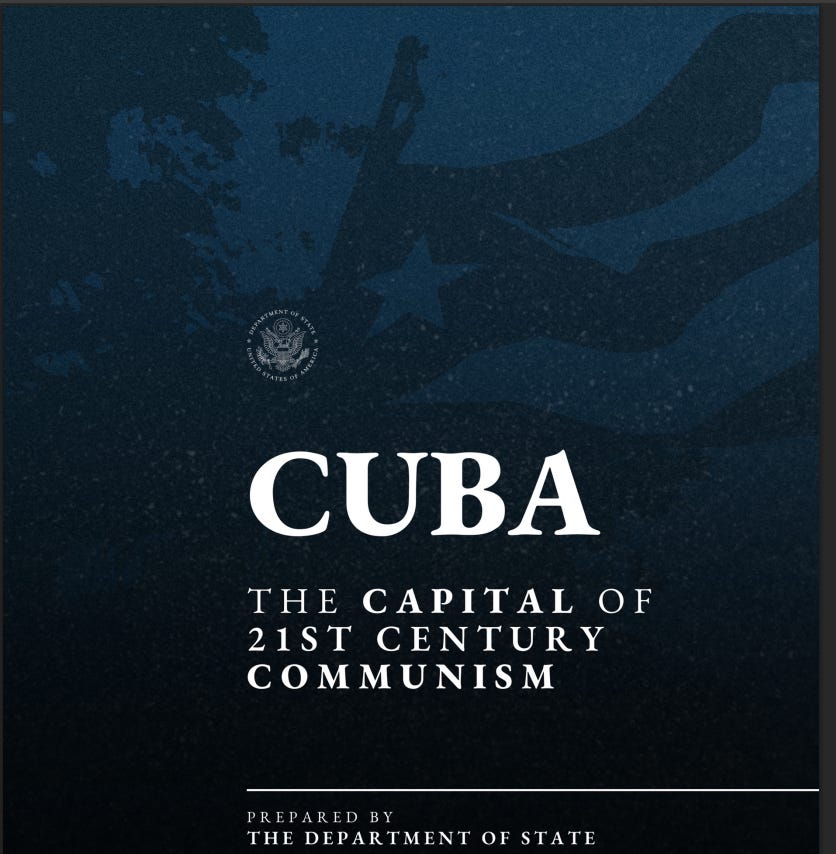

The Latin American novel, our novel, cannot betray the great spirit that has shaped – and continues to shape – all our great literature. If you write novels merely to entertain – then burn them! This might be the message delivered with evangelical fervour, since if you do not burn them they will anyway be erased from the memory of the people where a poet or novelist should aspire to remain. Just consider how many writers there have been who – down the ages – have written novels to entertain! And who remembers them now? On the other hand, how easy it is to repeat the names of those amongst us who have written to bear witness.

To bear witness. The novelist bears witness like the apostle. Like Paul trying to escape, the writer is confronted with the pathetic reality of the world that surrounds him – the stark reality of our countries that overwhelms and blinds us and, throwing us to our knees, forces us to shout out: WHY DO YOU PERSECUTE ME? Yes, we are persecuted by this reality that we cannot deny, which is lived in the flesh by the people of the Mexican revolution, embodied in persons such as Mariano Azuela, Agustin Yanez and Juan Rulfo whose convictions are as sharp as a knife; those who share with Jorge Icaza, Ciro Alegría, Jesús Lara the shout of protest against the exploitation and abandonment of the Indian; those who with Romulo Gallegos in ‘Done Bábara’ create for us our Prometheus. Here is Horacio Quiroga who frees us from the nightmare of the tropics, a nightmare that is as peculiar to him as his style is American. ‘Los ros profundos’ of José María Arguedas, the ‘Rio oscuro’ of the Argentinian Alfredo Varela, ‘Hijo de hombre’ of the Paraguayan Roa Bastos and ‘La ciudad y los perros’ of the Peruvian Vargas Llosa make us see how the life-blood of the working people is drained in our lands.

Mancisidor takes us to the oil fields to which are drawn – leaving their homes – the inhabitants of ‘Cases muertas’ of Miguel Otero Silva… David Vinas confronts us with the tragic Patagonia, Enrique Wernicke sweeps us along with the waters that overwhelm whole communities while Verbitsky and María de Jesús lead us to the miserable shanty towns, the Dantesque and subhuman quarters of our great cities…

Teitelboim in ‘E1 hijo del salitre’ tells us of the gruelling work in the saltpetre mines while Nicomedes Guzman makes us share in the lives of the children in the Chilean working class districts. We feel the countryside of E1 Salvador in ‘Jaragua’ of Napoleón Rodríguez Ruiz and our small villages in ‘Cenizas del Izalco’ of Flakol and Clarivel Alegria. We cannot think of the pampas without speaking of ‘Don Segundo Sombra’ by Guiraldes nor speak of the jungle without ‘La voragine’ of Eustasio Rivera, nor of the Negroes: without Jorge Amado, nor of the Brazilian plains without the ‘Gran Sertao’ of Guimaraes Rosa, nor of the plains of Venezuela without Ramón Díaz Sánchez.

Our books do not search for a sensationalist or horrifying effect in order to secure a place for us in the republic of letters. We are human beings linked by blood, geography and life to those hundreds, thousands, millions of Latin Americans who suffer misery in our opulent and rich American continent. Our novels attempt to mobilise across the world the moral forces that have to help us defend those people. The mestizo process was already advanced in our literature and in rediscovering America it lent a human dimension to the grandiose nature of the continent. But this is a nature neither for the gods as in the texts of the Indians, nor a nature for heroes as in the writings of the romantics, but a nature for men and women in which the human problems will be addressed again with vigour and audacity.

As true Latin Americans, the beauty of expression excites us and – for this reason – each one of our novels is a verbal feat. Alchemy is at work. We know it. It is no easy task to understand in the executed work all the effort and determination invested in the materials used – the words.

Yes, I say words – but by what laws and rules they have been transformed! They have been set as the pulse of worlds in formation. They ring like wood, like metals. This is onomatopoeia. In the adventure of our language, the first aspect that demands attention is onomatopoeia. How many echoes – composed or disintegrated – of our landscape, our nature are to be found in our words, our sentences. The novelist embarks on a verbal adventure, an instinctive use of words. One is guided along by sounds. One listens, listens to the characters.

Our best novels do not seem to have been written but spoken. There is verbal dynamics in the poetry enclosed in the very word itself, and that is revealed first as sound and afterwards as concept.

This is why the great Spanish American novels are vibrantly musical in the convulsion of the birth of all the things that are born with them.

The adventure continues in the confluence of the languages. Amongst the languages spoken by the people, in which the Indian languages are represented, there is an admixture of the European and Oriental languages brought by the immigrants to America.

Another language is going to rain its sparkle over sounds and words. The language of images. Our novels seem to be written not only with words but with images. Quite a few people, when reading our novels, see them cinematically. And this is not because they pursue a dramatic statement of independence but because our novelists are engaged in universalising the voice of their peoples with a language rich in sounds, rich in fable and rich in images.

This is not a language artificially created to provide scope for the play of the imagination or so-called poetic prose; it is a vivid language that preserves in its popular speech all the lyricism, the imagination, the grace, the high-spiritedness that characterise the language of the Latin American novel.

The poetic language which nourishes our novelistic literature is more or less its breath of life. Novels with lungs of poetry, lungs of foliage, lungs of rich vegetation. I believe that what most attracts non-American readers is what our novels have achieved by means of a colourful, brilliant language without falling into the merely picturesque, the spell of onomatopoeia cast by representing the music of the countryside and sometimes the sounds of the indigenous languages, the ancestral smack of those languages that flourish unconsciously in the prose that is used. There is also the importance of the word as an absolute entity, as a symbol. Our prose is distinguished from Castilian syntax because the word – in our novels – has a value of its own, just as it had in the indigenous languages. Word, concept, sound; a rich, fascinating transposition. Nobody can understand our literature, our poetry if the power of enchantment is removed from the word.

Word and language enable the reader to participate in the life of our novelistic creations. Unsettling, disturbing, forcing the attention of the reader who – forgetting his daily life – will enter into the situations and personalities of a novel tradition that retains intact its humanistic values. Nothing is used to detract from mankind but rather to perfect it and this is perhaps what wins over and unsettles the reader, that which transforms our novel into a vehicle of ideas, an interpreter of peoples using as an instrument a language with a literary dimension, with imponderable magical value and profound human projection.

Translated by The Swedish Trade Council Language Services.

From Les Prix Nobel en 1967, Editor Ragnar Granit, [Nobel Foundation], Stockholm, 1968

Copyright © The Nobel Foundation 1967

Humberto Ak'abal (67)

The Old Song of the Blood

My mother’s milk fed me no Castilian

when I came into this world.

My language was born among trees,

it holds the taste of earth;

my ancestors’ tongue is my home.

And if I use this language that is not mine,

I do it as someone using a new key

to open another door and enter another world

where words have other voices,

a different way of feeling the earth.

This language holds the memory of pain,

and I speak it without fear or shame

because it was paid for

with the blood of my ancestors.

In this new language

I show the flowers of my song,

bring the taste of other sorrows,

the shades of different joys…

This tongue is just one more key

for singing the old song of my blood.

Humberto Ak’abal (1952–2019) was a K’iche’ Maya poet from Guatemala. His book Guardián de la caída de agua (Guardian of the Waterfall) was named book of the year by Association of Guatemalan Journalists and received their Golden Quetzal award in 1993. In 2004, he declined to receive the Guatemala National Prize in Literature because it is named for Miguel Ángel Asturias, whom Ak’abal accused of encouraging racism. Ak’abal, a recipient of a Guggenheim fellowship, passed away on January 28th, 2019.

ICE has been touting record-high arrest numbers this summer—and they are not wrong. The daily rate of ICE arrests in June was over 1,300, the highest month of the Trump administration, and in July that number increased again to a record 1,474 arrests per day for the first 11 days for which we have data. This reverses a trend we saw since the early fall where overall arrest numbers had actually remained fairly consistent or declined. The purported shift in ICE tactics—from the manic Kristi Noem months that cost the lives of two U.S. citizens to the less spectacular tactics under Markwayne Mullin—has effectively led to more arrests without as much popular backlash. The rising death toll of ICE detention, not to mention the deadly shooting of Joan Sebastián Durán Guerrero in Maine, hardly points to a more disciplined, less rogue agency.

Of those people held in detention, the largest group continues to be immigrants with no criminal history whatsoever, reinforcing the now longstanding observation that the agency is not targeting the worst of the worst. In fact, the percentage of people in detention with nothing more than an actual or alleged immigration violation (with all of the utter meaninglessness that this administration has made of that category) continued to grow since April while the percentage of immigrants with charges or convictions declined as a percent of the total. These crude categories do not tell the whole story of the lives of people in detention, but I continue to present this as an important contextualizing data point.

+—+

Drawing on his personal experiences under the reign of Estrada Cabrera, Asturias explored the nature of a totalitarian state and how it annihilated human dignity and spirit.

[CABRERA’S 22-year rule (1898–1920) is widely documented as a “reign of terror” responsible for thousands of casualties.]

My father was one of the victims of the man for whom all the torments of Hell are waiting—Colonel Parrales Sonriente— that hired assassin whose deeds will some day figure in history, if there is anyone prepared to dip his pen in snake-poison to write it.

At the behest of the all-controlling dictator, the police and the judicial system work in tandem to frame two innocent public figures who can be a threat in the future for the President – ‘the indictment charging Canales and Carvajal with sedition, rebellion and treason, with all possible aggravating circumstances.’

The scene of Carvajal’s trial is a classic:

“The table round which the tribunal sat was covered by a flag, as prescribed by the regulations. The beggars were sitting in the witnesses’ seats. Carvajal turned and looked at the members of the tribunal, searching for signs of wisdom and judgement. The first one his eyes encountered was as drunk as it was possible to be. And the President (of the tribunal), who was giving the most finished performance of them all as an alcoholic, seemed on the point of passing out.”

Carvajal is neither given adequate time to read the ninety-one pages of the indictment nor allowed to defend himself against the charges. Since the tribunal knows that he is innocent, this is considered waste of time and an exercise in futility. The tribunal has been meticulous, however, to ensure that “the sentence had been drawn up and written out in advance” – and it is now served on him. Carvajal is executed the next morning.

In a totalitarian state corruption always seeps from top to bottom. Asturias amplifies it with the description of the judge advocate general, the highest judicial authority in the state who has swindled a brothel owner of ten thousand pesos, and is all too willing to prostitute his office to serve the tyrant. When Carvajal’s widow comes to his house to know where the body of her husband is buried the judge’s servant sympathises with her, only to be chastised by his master when he learns about it:

“When will you understand that you mustn’t encourage people to hope? In my house the first thing everyone, down to the cat, has to learn is that there are never grounds for hope of any description for anyone. It’s only possible to go on holding a position like mine if you obey orders; the President’s rule of conduct is never to give grounds for hope, and everyone must be kicked and beaten until they realise the fact.”

URGENT! 🚨 , US Secretary of State Marco Rubio () issues a 100-page report  threatening Cuba, calling the blockaded island the “capital of 21st Century  communism” and threatening international figures ...

The Fortune

Miguel Ángel Asturias

To give is to love,

To give prodigiously:

For every drop of water

To return a torrent.

We were made that way,

Made to scatter

Seeds in the furrow

And stars in the ocean.

Woe to him, Lord,

who doesn’t exhaust his supply,

And, on returning, tells you:

“Like an empty satchel

Is my heart.”

Caudal

Dar es amar,

dar prodigiosamente

por cada gota de agua

devolver un torrente.

Fuimos hechos asi,

hechos para botar

semillas en el surco

y estrellas en el mar

Y ¿ay! del que no agote,

Señor, su provisión Y al regresar te diga:

¿Como alforja vacía

está mi corazón!

DICTATORS……

Uncovering the Killing of 168 Children in a U.S. Strike on an Iranian Primary School

Sky News spent four months pulling apart the bombing of the Shajareh Tayyebeh primary school in Minab — the strike that instantly became the most notorious moment of the U.S.-Israeli war on Iran. It happened on day one. The school was hit again and again, and 168 children were killed, along with teachers and staff whose identities were traced through painstaking open‑source work. Most of the dead were girls between seven and twelve. Their families have waited four months for the U.S. investigation that was promised, and nothing has been released.

With Iran’s internet shut down and travel into the country nearly impossible, Sky News’ Data and Forensics team turned to whatever evidence could be gathered remotely: satellite archives, CCTV, witness videos, old maps, school records, anything that could be verified. They worked with Forensic Architecture to rebuild the school in 3D and reconstruct the attack second by second.

What they found wasn’t a mystery. It was a failure that had been built into the system long before the missiles were launched.

The Pentagon had satellite imagery of the site going back to 1987. They had decades of overhead surveillance showing exactly what the compound was. They had images from December 2025 where you can literally see children’s shadows in the playground. The school had been walled off from the adjacent IRGC naval base since at least 2015, with its own perimeter, its own website, its own public footprint. Any analyst with basic tools could have confirmed it was a civilian school in minutes.

But on February 28, three Tomahawk missiles were fired from the USS Spruance, roughly 716 kilometers away in the Arabian Sea. CCTV shows the compound being hit nine times at 11:22 a.m. The school itself was struck about ten seconds after the first impact. Witnesses say the second missile landed exactly where a teacher had moved surviving students for shelter, killing nearly everyone who had taken cover there. A third strike followed on the same spot. The crater matches a Tomahawk. The pattern of impacts matches a Tomahawk. The launch platform matches a Tomahawk. There is no serious doubt left about what was used or who fired it.

This pathological psychopath is their president. This tells you everything you need to know…

Dictators of a many colored Feathered Yemukle

Israel Delays Release of Gaza War Crimes Investigations Again

1 Like∙

3 Restacks

Discussion about this post

All whites benefit from racism in specific ways regardless of economic class, but less affluent whites simultaneously suffer because of racism.

Paulo Kirk

Jul 20, 2026

Yeah, I put myself through this at 7 am: “Watch this Extremely Effective Right Wing Propaganda Video that Is Effective Primarily Because the Left Wrongly Says that Ordinary Whites Benefit from Racial Discrimination Against Non-Whites”

JOHN SPRITZLER’S Substack . . . .

Egalitarians, in contrast to Leftists, show that racial discrimination against non-whites HARMS, not benefits, working-class whites.

Many scholars of racism and slavery have memorized Du Bois’s sentence,

“The slave went free; stood for a brief moment in the sun; then moved back again towards slavery.”

Yet we ignore what immediately follows.

“The whole weight of America was thrown to the color cast,” he wrote. “A new slavery arose. The upward moving of white labor was betrayed into wars for profit based on color caste. Democracy died save in the heart of black folk. Indeed, the plight of the white working class throughout the world today is directly traceable to Negro slavery in America…”

Oh well, gotta fire off a few 12-gauge shells to start my morning:

Quoting Paulokirk:

Nauseating. First, I covered education in many states as a newspaper reporter. And, I taught as a substitute in many K-12 districts. You have zero idea how ludicrous you are thinking K12 is about teaching kiddos the truth, like the film 13th, or Exterminate All the Brutes, or the 1619 Project. Howard Zinn’s People’s History of the US is banned in many districts. WE CAN’T teach that, dude.

Here, amazing interview, again, try using this in many community colleges:

Gerald Horne in High School? Where can you teach his work?

“To the extent that 1776 led to the resultant U.S., which came to captain the African Slave Trade—as London moved in an opposing direction toward a revolutionary abolition of this form of property—the much-celebrated revolt of the North American settlers can fairly be said to have eventuated as a counter-revolution of slavery.”

Alabama Alaska Arkansas Florida Idaho Indiana Iowa Kansas Kentucky Louisiana Mississippi Missouri Montana Nebraska North Carolina North Dakota Ohio Oklahoma South Carolina South Dakota Tennessee Texas Utah West Virginia Wyoming?

No way, Jose.

In his book The Counter-Revolution of 1776, historian Gerald Horne challenges the traditional view of the American Revolution. He argues that it was not a progressive fight for freedom, but a conservative movement to protect the institution of slavery from growing British abolitionist sentiments.

Teaching the Jewish State of Rape and Torture and Starvation is a colonial WHITE apartheid state of interlopers and land thieves? In High School? College? Bullshit:

Over 37 U.S. states have officially adopted or recognized the International Holocaust Remembrance Alliance (IHRA) working definition of antisemitism.

+–+

Ya just don’t get it.

+–+

Ya think I can teach Nick Estes in K12 where there is a heavy influence of Native Culture in the area? GIVE ME A BREAK. These books are verboten in your supposed great caring white-dominated school districts.

Water Protectors vs. Pipeline: The book details the protests against the Dakota Access Pipeline (DAPL). This pipeline was built to carry oil across the Missouri River, threatening the drinking water and sacred lands of the Standing Rock Sioux Tribe.

The Concept of “Tiwahe”: Estes uses the Dakota word tiwahe (which means “family” or “household”) to describe how water protection is an act of caring for all living things. Think of it as a pebble dropped in a pond; one action ripples out to affect the entire community.

The Long Tradition: The author shows that the Standing Rock camp was not an isolated event. It was a continuation of past struggles, such as the fight against the Pick-Sloan Plan in the 1940s and 1950s. That plan built large dams on the Missouri River that flooded Native lands.

Decolonization: Estes argues that to heal our future, society must listen to Indigenous knowledge. Instead of treating the earth like a resource to extract for profit, we should treat it like a relative.

+–+

My old union:

“Let’s be clear: critical race theory is not taught in elementary schools or high schools. It’s a method of examination taught in law school and college that helps analyze whether systemic racism exists — and, in particular, whether it has an effect on law and public policy,” Weingarten said. “But culture warriors are labeling any discussion of race, racism or discrimination as CRT to try to make it toxic. They are bullying teachers and trying to stop us from teaching students accurate history.”

+–+

When Gloria Ladson-Billings set out in the 1990s to adapt critical race theory from law to education, she couldn’t have predicted that it would become the focus of heated school debates today.

Over the past couple years, the scrutiny of critical race theory — a theory she pioneered to help explain racial inequities in education — has become heavily politicized in school communities and by legislators. Along the way, it has also been grossly misunderstood and used as a lump term about many things that are not actually critical race theory, Ladson-Billings says.

“It’s like if I hate it, it must be critical race theory,” Ladson-Billings says. “You know, that could be anything from any discussions about diversity or equity. And now it’s spread into LGBTQA things. Talk about gender, then that’s critical race theory. Social-emotional learning has now gotten lumped into it. And so it is fascinating to me how the term has been literally sucked of all of its meaning and has now become ‘anything I don’t like.’”

In this week’s Harvard EdCast, Ladson-Billings discusses how she pioneered critical race theory, the current politicization and tension around teaching about race in the classroom, and offers a path forward for educators eager to engage in work that deals with the truth about America’s history.

Enjoy: The State of Critical Race Theory in Education

+—+ End of my Comments +—+

Gloria Ladson-Billings

Gloria Ladson-Billings: Let me be pretty elemental here. Critical race theory is a theoretical tool that began in legal studies, in law schools, in an attempt to explain racial inequity. It serves the same function in education. How do you explain the inequity of achievement, the racial inequity of achievement in our schools?

Now let’s be clear. The nation has always had an explanation for inequity. Since 1619, it’s always had an explanation. And indeed from 1619 to the mid-20th century, that explanation was biogenetic. Those people are just not smart enough. Those people are just not worthy enough. Those people are not moral enough.

In fact, across the country, we had on college and university campuses programs and departments in eugenics. If you went to the World’s Fair or the World Expositions back at the turn of the 20th century, you could see exhibits with, quote, groups of people from the best group, which was always white and typically blonde and blue-eyed, to the worst group, which is typically a group of Africans, generally pygmies. So the idea is you can rank people. So we’ve always had an explanation for why we thought inequity exists.

Somewhere around the mid-20th century, the 1950s, you’ll get a switch that says, well, no, it’s really not genetic; it’s that some groups haven’t had an equal opportunity. That was a powerful explanation. So one of the things that you begin to see around the mid-1950s is legislation and court decisions, Brown versus Board of Education. You start to see the Voting Rights Act. You see the Civil Rights Act. You see affirmative action going into the 1960s. And yeah, I think that’s a pretty good, powerful explanatory model.

Except they all get rolled back. 1954, Brown v. Board of Education. How many of our kids are still in segregated schools in 2022? So that didn’t hold. Affirmative action. The court’s about to hear that, right? Because of actually the case that’s coming out of Harvard. Voters rights. How many of our states have rolled back voters rights? You can’t give a person a bottle of water who was waiting in line in Georgia. We’re shrinking the window for when people can vote.

So all of the things that were a part of the equality of opportunity explanation have rolled away. Critical race theory’s explanation for racial inequality is that it is baked into the way we have organized the society. It is not aberrant. It’s not one of those things that we all clutch our pearls and say, “Oh my God, I can’t believe that happened.” It happens on a regular basis all the time. And so that’s really one of the tenets that people are uncomfortable hearing. That it’s not abnormal behavior in our society for people to react in racist ways.

Spritzler, another Jew, Finkelstein:

While Finkelstein’s criticisms resonate with defenders of the traditional Western canon, many scholars argue that he misunderstands the core foundation of CRT.

  • Ignoring Systemic Roots: Critics point out that Finkelstein’s arguments sometimes assume that for racism or bigotry to exist, there must be active, conscious, or written statutory laws against a group. In contrast, the entire premise of CRT is that discrimination can be quietly built into the “structure” of societal institutions, functioning almost like toxic material in a building.
  • Dismissing Everyday Realities: Critics argue that because Finkelstein often focuses purely on older models of legal discrimination, he downplays how casual racism, institutional barriers, and implicit biases affect marginalized communities today.

Here at UCLA Law, we have been home to a nation-leading Critical Race Studies program for the last 20 years. And right now across the country, a firestorm over Critical Race Theory has exploded. New legislation bans ideas and research designed to combat racism from classrooms and workplace training by labeling them as “divisive” and “anti-American.” What is at the root of this conflict? And what are its consequences? Join our panel of experts for a deeper conversation discussing the origins of Critical Race Theory, a breakdown of the current debate, and a thoughtful analysis of what is at stake.


This event is in partnership with UCLA Law Critical Race Studies, home of the nation’s first Critical Race Studies program.

+—+

Fucking Heni Youngman and Mel Brooks and Seinfeld:

Finkelsteinian zingers

  • On MSNBC’s Joy Reid: “living proof that not all yentas are Jewish and not all bovines are cows.”
  • On Angela Davis: “Once upon a time she was on the F.B.I.’s Ten Most Wanted List. Now she’s on Martha’s Vineyard’s Five Most Coveted List.”
  • On Henry Louis Gates: “a virtuoso at crawling on the ground while typing on his keyboard.”
  • On Amy Goodman (whom he doesn’t name): “Goddess of Wokeness…a woke machine, churning out insipid clichés as her mental faculty degenerates to mush.”
  • On Ibram X. Kendi: “mallet-wielding grifter…preposterous poseur…[whose] ‘definitive history of racist ideas in America’ reduces to a compendium of prepubescent binary name-calling.”
  • On Robin DiAngelo’s morbid obsession with diagnosing “racism”: “She is the monomaniacal Captain Ahab in pursuit of the White Whale. She is little Jackie Paper out to slay Puff the Racist Dragon. Her palette comprises two colors—white and black… What an unremitting, remorseless, insufferable bore!”
  • On the widespread fascination with transgender people: “the first day of a graduate seminar, students used to describe their intellectual interests. Nowadays, it’s de rigueur to declare your sexual orientation. It’s only a matter of time before a student announces, ‘I’m she/her and I’m packing a thick, juicy nine-incher.’”

Scroll down to this: Curtis Acosta, Tucson High School, fighting for ethnic studies. My old radio show. Then LISTEN!

More? Keep Scrolling: Then, LISTEN!

Richard Martinez, the attorney who represents a group of Mexican-American students who attended Tucson schools, said the students sued shortly after the law was passed by Arizona Governor Jan Brewer.
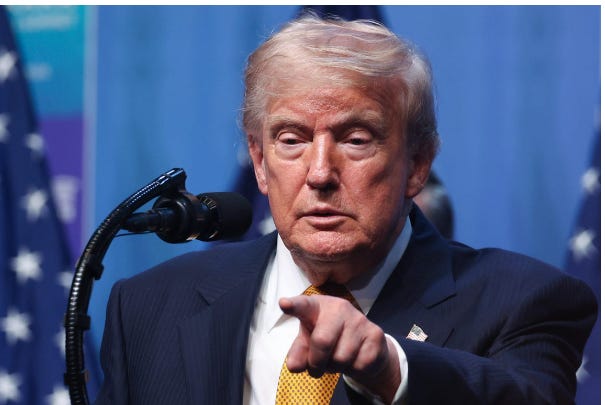
“This was the curriculum that was intended to be responsive to them…culturally, linguistically, educationally,” Martinez said. “The program had a very strong effect on students’ achievement… in fact, most of the students finished high school and matriculated to college, which was unprecedented at Tucson Unified School District.”

Gloria Ladson-Billings: And I’d always pull out the university’s mission statement. And I’d say, “You see these words right here around social justice? That’s where I am with this work. I don’t know what they’re doing at the business school on social justice, but I can tell you that the university has essentially made a commitment it to this particular issue. Now we can debate whether or not you agree with me, but I haven’t pulled this out of thin air.”

So if I’m a school superintendent, I want to say, “Here are core values that we have.” I’m reminded of many years ago. I was supervising a student teacher. It was a second grade. And she had a little boy in a classroom and they were doing something for Martin Luther King. It might have been just coloring in a picture of him with some iconic statement. And this one little boy put a big X on it. And she said, “Why did you do that?” And his response was, “We don’t believe in Martin Luther King in my house.” So she said, “Wow, okay, well, why not?” And he really couldn’t articulate. She says, “Well, tell me, who’s your friend in this classroom?” And one of the first names out of his mouth was a little Black boy.

And she said, “Do you know that he’s a lot like Martin Luther King? You know, he’s a little boy. He’s Black.” She was worried about where this was headed and didn’t know what to do as a student teacher, because she’s not officially licensed to teach at this point. And I shared with her our strategy. I said, “Why don’t you talk with your cooperating teacher about what happens and see what she says. If she doesn’t seem to want to do anything, casually mention, don’t go marching to the principal’s office. But when you have a chance to interact with the principal, you might say something I had the strangest encounter the other day and then share it.” Well, she did that.

The principal called the parents in and said, “Your child is not in trouble, but here’s what you need to know about who we are and what we stand for.”

Gloria Ladson-Billings: You know? And so again, it wasn’t like let’s have a big school board meeting. Let’s string up somebody for saying something. It wasn’t tearing this child down. But it was reiterating, here are our core values. I think schools can stand on this. They can say, “This is what we stand for. This is who we are.” They don’t ever have to mention the word critical race theory.

The retrenchment we are seeing in some states, I think it was a textbook that they were going to use in Texas that essentially described enslaved people as workers. That’s just wrong. That’s absolutely wrong. And I can tell you that if we don’t teach our children the truth, what happens when they show up in classes at the college level and they are exposed to the truth, they are incensed. They are angry and they cannot understand, why are we telling these lies?

We don’t have to make up lies about the American story. It is a story of both triumph and defeat. It is a story of both valor and, some cases, shame. Slavery actually happened. We trafficked with human beings, and there’s a consequence to that. But it doesn’t mean we didn’t get past it. It doesn’t mean we didn’t fight a war over it, and decide that’s not who we want to be.

+—+

Then, you have Common Dreams jerking off with Norman: The Inspiring Outrage of Norman Finkelstein . . . A few thoughts on the new book, “I’ll Burn That Bridge When I Get to It!”

FUCKING Jews:

Gerald!!!!!!!!!!!!!!

Ishmael Reed’s play, The Haunting of Lin-Manuel Miranda, is a corrective to the revisionist missteps of the Broadway musical, Hamilton. À la A Christmas Carol, the titular character is led through a series of truth-telling apparitions which represent the marginalized groups absent from Hamilton. Each “haunting” deconstructs Hamilton’s abolitionist, anti-hero portrayal of the founding father, delivered with Reed’s incisive, impeccably researched satire.

Hamilton has been internationally revered as a harbinger of theater’s more inclusive future since its sold-out Broadway debut in 2015. Playwright and performer Lin-Manuel Miranda based the work on Ron Chernow ’s highly-regarded biography, Alexander Hamilton, a book critiqued for its glowing, savior-esque narrative. Despite criticism, Hamilton remains a crowd-pleasing hit to its loyal and dedicated fans, with the filmed version of the musical now available on Disney+ .

In contrast, The Haunting of Lin-Manuel Miranda, which debuted at the Nuyorican Poets Cafe in May 2019 and was published in October by Archway Editions, reframes Hamilton’s origin story by emphasizing the years he spent working for a slave firm in St. Croix. After immigrating to the US, he settled in New York and married Eliza Schuyler, who came from a family of high society, slave-owning New Yorkers. While Hamilton was a member of the Manumission Society, a group of “do-gooding” abolitionists, he never ceased enslaving people himself, a fact which seems to trip up many historians and fans of the musical alike.

In Reed’s telling, Hamilton’s first ghostly visitor is “Ben,” an enslaved man who was owned by the Schuyler family. He is followed by a host of characters, such as “Negro Woman,” “Native American Man,” and “Native American Woman” — a mechanism meant to disrupt Miranda’s sentimental characterizations. Later, Harriet Tubman delivers the most memorable monologue in the play, describing the spiritual encounter that awakened her from her enslaved condition into a consciousness of choosing one’s life.

Reed also deflates the simplistic, neoliberal concept of “colorblind casting,” a premise only successful when the narrative stakes reflect historical accuracy, breathing expansive new life into perceived classics. (In a recent, stunning example, Wendell Pierce portrayed Willy Loman in the 2019 revival of Arthur Miller’s “Death of a Salesman” at London’s Young Vic Theater.) However, when these initiatives fail, within their binaried scope of intent, they venture into minstrelsy. In Hamilton, the casting of Black and Latinx actors placed many of them in the role of slave owners, of which Reed’s “Indentured Servant” character instructs, “by romanticizing people who treated human beings as animals you are playing along with the system as well.”

Near the end of the second act, Reed does allow Miranda a moment of redemption when the character confronts a stuffy caricature of Chernow. It is via the biographer’s dismissive rejection of him that Reed invites compassion for Miranda, the playwright, as a symptom of broader systems of racism.

In the aftermath of the unconscionable realities of slavery and native genocide, the pretense of the underdog and other limited archetypal framings will never produce anything more than a comfortable, entertaining ride towards resolution. The Haunting of Lin-Manuel Miranda illustrates that in order to truthfully engage with history, we need to rid ourselves of tired conventions, willingly interrogate historical truths, and commission stories from those typically ignored.

The Haunting of Lin-Manuel Miranda (Archway Editions, 2020), by Ishmael Reed, is now available on Bookshop.

Discussion about this post

the gulag, the digital dungeon, the camps, the prisons, the surveillances, the panopticon, the reservation, lock-up, debtors’ prison, endless probation, and being on paper

Paulo Kirk

Jul 19, 2026

But we have World War Three, and we just fucking take that language. Fucking Looney Bin.

Module 3: The Digital Panopticon | Understanding Digital Culture
The Daily - A Strait Jacket And Soundproof Room: Left-Wing Loony Bin Shows  No Outside Noise Can Get In http://dlvr.it/TRwNhp | Facebook

I’m reading this now, and I will have John on my radio show, and I will review the book on Dissident Voice, with all the correct quotation references, and of course, no calling Trump the Pedophile and Rapist in Chief with the Spy Cam Tapes of his Golden Showers in Russia and countless digital penetrations of trafficked juveniles. Tape at 11, catch it.

This is that Pedophile and Bizarre Boy, Trump:

Barrack-style white tents shelter hurricane-fence cages lined with bunks. Outside, rows of RVs and bathroom trailers sit next to a strip of shadeless pavement and stacks of generators. Three thousand people, stranded in the hot tents amid the buzzing sludge of a swamp, cut off from families, medical care, and lawyers: a spectacle of bondage masquerading as border security.

“Alligator Alcatraz,” as the South Florida detention center has been dubbed, was built in eight days in the Everglades. The e immigration camp was constructed in the first heady months of the second Trump administration’s assault on immigrants and, at least briefly, was the centerpiece of the modern camp system in the United States, reminding migrants that the very landscape of America can be weaponized against them.

“We’re going to teach them how to run away from an alligator if they escape prison,” Trump gloated shortly after the camp opened.

The first state-owned and -operated immigration detention facility in the United States, the camp has no federal oversight, and it is not integrated into the systems or databases of Immigration and Customs Enforcement (ICE). Those locked up are thus left mostly incommunicado to the outside.

We are living in sicko times, for sure, as Americans are at the height of summer vacations, lower gasoline prices, and flights out of here and gpmg jere and there:

The latest developments suggest the conflict may be entering a far more dangerous phase.

Based on the information I have reviewed, Iran allegedly carried out one of its most intense missile strikes against Muwaffaq Salti Air Base in Jordan, a facility regularly used by U.S. forces. Reports claim the attack killed three American soldiers and wounded around 25 others, with five described as being in a state of clinical death (brain death). Early casualty figures reportedly listed two fatalities before later increasing to three.

May be an image of text that says 'BOSTON 25 US military says 2 troops are dead and 1 1is is missing after Iran attacks a base in Jordan'

We just prepare for back-to-school sales and end-of-summer deals? FUCKING hell.

There comes a moment in history when the official story no longer survives contact with reality.

For much of the past seventy years, the Western public has been told that the US and its allies wage war reluctantly, intervene only when forced to, and project military power in defence of freedom, democracy and a rules-based international order. Every major conflict has arrived wrapped in the narrative of necessity. Every adversary has been presented as an existential threat, while every military campaign has been described as the unfortunate price of preserving peace.

The record tells a far more disturbing story.

From Vietnam to Iraq, Afghanistan to Libya, Syria to Gaza, wars have become less an exception than an instrument of policy. Governments have spoken of liberation while cities burned, of democracy while states collapsed, and of international law while selectively deciding when that law applied.

The result hasn’t been a more peaceful world. It’s been a more fractured, militarised and dangerous one.

The invasion of Iraq stands as perhaps the defining scandal of the modern era. The justification for war – the existence of weapons of mass destruction – collapsed. The architects of that disaster escaped accountability while hundreds of thousands of Iraqis paid the ultimate price. Public trust was shattered, but the machinery that produced the war remained intact.

Benjamin Netanyahu — Charlie Rose

Twenty-five years ago, as the world looked on in stunned horror as the towers came down in New York, the same Netanyahu was already thinking strategically. Here’s how The New York Times reported it:

Asked tonight what the attack meant for relations between the United States and Israel, Benjamin Netanyahu, the former prime minister, replied, “It’s very good.” Then he edited himself: “Well, not very good, but it will generate immediate sympathy.” He predicted that the attack would “strengthen the bond between our two peoples, because we’ve experienced terror over so many decades, but the United States has now experienced a massive hemorrhaging of terror.”

Some of us, Narco Rubio, want the fucking USS Abe Lincoln sunk, and those fucking US mercenaries at the bottom of the sea in Davey Jones’ locker.

Here’s your testosterone Cap’n Crunck Hegseth anal cavity friend —

US Congressman Riley Moore was shocked at the “precision” with which Iran was able to strike the US sites in Jordan in particular, concluding that Russia and China must be helping:

Fucking Yankee Mercenaries. THey are on the payroll of empire, and they give a shit about Far East, West Asia, the Middle East, Persia, Iran, whatever they want to call this place:

Former Iranian Foreign Minister Manouchehr Mottaki likewise reportedly told Iranian media:

“My proposal is that we launch a ground attack on one of the US bases in the region, capture 100 Americans and bring them to Iran.”

We are a nation under one fucking Yewah:

Back to Nazi Jew: John Washington’s new book . . .

And ICE, ever eager for more personnel, began offering a $50,000 dollar sign-on bonus for new recruits. Reporting in early 2026 showed that ICE was spending $100 million in a “wartime recruitment” effort, lowering their hiring standards, deploying overtly white supremacist tropes in their hiring ads and, according to one DHS ocial speaking anonymously, signing on people who can “barely read or write.” Training time for the recruits was cut by two-thirds.

In an adulatory, dear-leader-like move, the new training period was set to forty-seven days—a direct nod to Trump, the forty-seventh president.35 As one observer put it, “We’re launching manhunts with $50,000 bonuses for misdemeanors and civil infractions,” holding people “without due process in conditions that kill them.”

Amid the intentional cruelty, puerile symbolism, and rapid camp expansion, private prison firms are circling the halls of power. Months before Trump signed the bill to dedicate an unprecedented amount of money to detention, ICE set up an expedited contract process and was already soliciting bids from for-profit prison corporations. The two largest companies, CoreCivic and GEO Group, longtime financial supporters of the president, have both frequently wooed former high-level ICE ocials into their ranks. To illustrate the rapidly revolving door between ICE and the private sector—or the camp as cash machine—consider Daniel A. Bible, who worked as ICE’s top ocial in charge of immigration detention until he was hired by GEO Group days before the 2024 presidential election. In the same year, while GEO Group donated $1 million to Trump-alignedpolitical action committees, according to an article from the Project on Government Oversight (POGO), ICE committed $747.4 million in contracts to the company—a pretty damn good return on investment. In an earnings call held just days after Trump won the election, and with Bible already on the payroll, GEO Group predicted a $400 million boost in company revenue.

Current border czar Tom Homan—frequently the White House’s mouthpiece defending the anti-immigrant rampage—has also previously contracted with GEO Group. In 2025, FBI agents caught Homan taking a cash bribe of $50,000 to help business execs looking to land contracts with the federal government. (While Homan never denied taking the money, Trump’s Justice Department closed an investigation into the matter.)

In May, the CEO of CoreCivic told investors, “Never in our 42-year company history have we had so much activity and demand for our services as we are seeing right now.”

Come on, you didn’t see the writing on the wall when you were born, when 1930s and 40s rolled around with the Jewish Terror in Palestine, around the fucking WORLD?

Israel has moved a step closer to implementing National Security Minister Itamar Ben-Gvir’s plan to surround prisons holding Palestinian detainees with crocodile-filled moats, Israeli media reported on 19 July.

Following lobbying by Ben-Gvir, Environmental Protection Minister Idit Silman approved reclassifying Nile crocodiles from protected wildlife to “captive-bred” or “managed” wildlife — allowing state institutions and security agencies to keep the animals under regulated conditions. The change lets the Israel Prison Service (IPS) hold the reptiles under the oversight of the Israel Nature and Parks Authority; previously classified as protected wild animals, they could only be kept in zoos.

At the beginning of this month, we pissed off the Trump White House.

Again.

We ran a story on how President Donald Trump is already planning to steal classified U.S. documents after he leaves office a second time – just like he did the first time. The West Wing got huffy about it.

“Zeteo is a pathetic fake news blog and their so-called sources have no idea what they’re talking about. Zeteo’s three readers already know this ‘publication’ is total fake news,” the White House told us in an email. No one signed their name. (If you read their statement closely, you’ll notice they did not deny any of our reporting…

And the Zionist is right, in a perverse way. You see, anyone that a Zionist shoots will by dint of that shooting become a terrorist.

Here are a few examples:

An IDF officer lobs a stun grenade into a car, containing a family of terrorists. The fact that the grenade exploded proves that they were terrorists. Had it not exploded, the officer would have known they were innocent civilians.

Here an IDF soldier shoots at a blindfolded Palestinian to check if he is a terrorist. The fact that the boy collapses and dies proves that he was indeed a terrorist.

Here we see a Palestinian grandmother, waving a white flag, being shot dead. It was probably Hamas that shot her to frame the IDF.

Here, another blind-folded young terrorist is told to run and then shot in the back. The fact that he fell and died proves he was not a civilian, because the IDF do not fire at civilians.

A terrorist is shot in the back; we know it’s a terrorist because the IDF do not fire at civilians.

“As someone who took from them their food, their yard walks, their studies, their amenities, as someone who took everything from them, I also want to take their lives. It is right. It is just.”

The IDF open fire on waves of terrorists who were pretending ti queue for food.

Here the IDF show their mercy and compassion. They decide not to kill a Palestinian terrorist because he has Down syndrome.

The IDF set fire to a terrorist’s home.

The IDF kill a terrorist horse.

And if we want to understand the Zionist mind, then here it is; a Palestinian will only grow up to be a terrorist.

And that is why the IDF never kills civilians. Because there are no Palestinian civilians.

Little fucking things like this, dealing with multimillionaires, billionaires and so it goes:

Spain and Palestine Won. Argentina and Corruption Lost.

Netanyahu chose Argentina. Gaza chose Spain. The World Cup final became a contest between political alliances—and this time, the flag raised for Palestine prevailed.

Fucking WAR criminal gets this?

On Saturday, less than 24 hours before kickoff, Netanyahu sat down with Argentina’s ambassador to Israel, Rabbi Shimon Axel Wahnish. Wahnish brought an audio message from Milei, calling Netanyahu his friend and thanking him for rooting for Argentina “because of me.” Netanyahu sent one back. “Javier, you are a friend. A true friend,” he said. “We support you, we support Argentina in so many ways, including tomorrow. Good luck.” Then he chanted “Vamos Argentina” and held up an Argentina jersey for the cameras.

Discussion about this post

Stan Lee: “To me you can wrap all of Judaism up in one sentence, and that is, ‘Do unto others.’ All I tried to do in my stories was show that there’s some innate goodness in the human condition.’

Paulo Kirk

Jul 19, 2026

P.T. Barnum | Biography, Circus, Facts, & Quotes | Britannica

Where do we start? “There’s a sucker born every minute” !!!

These are small fry: Meet the Dons who run Silicon Valley – the PayPal Mafia

A fucking CULT.

Meyer Lansky - Wikipedia
Benjamin Netanyahu - Wikipedia
Jerusalem Post Names DC Shliach in Top 50 Influential Jews
Amazing Jewish Americans | AJC
King Solomon | My Jewish Learning
Israel's Forgotten Founding Father and His Continuing Relevance – The  Jerusalem Strategic Tribune
Faith in Princes - Jewish Review of Books

“The Jews,” Arthur Hertzberg wrote, “loved Franklin Delano Roosevelt with singular and unparalleled passion.” In 1932, 82 percent of the Jewish vote went to Roosevelt, while only 18 percent went to Herbert Hoover. In 1936, FDR received 85 percent of the Jewish vote. In the elections of 1940 and 1944, fully 90 percent of American Jews voted for Roosevelt, the largest Jewish vote for a president in American history. But did FDR reciprocate this love?

The Jewish 100: A Ranking of the Most Influential Jews of All Time:  Shapiro, Michael: 9780806518145: Amazon.com: Books
100 Most Influential Jews Of All Times (Mobi History) eBook by  MobileReference - EPUB | Rakuten Kobo Australia

Palantir has been dubbed the world’s scariest company. Trump’s favourite tech firm provides surveillance software to ICE, the Pentagon and the Israeli Ministry of Defence. Peter Thiel and Alex Karp talk excitedly of AI drone-driven warfare.

Attempting to seize Kharg Island, Iran’s main oil-export hub, would harm the country’s oil industry but it also would put American forces directly in harm’s way. Troops would be easy targets for Iranian missiles and drones, U.S. officials and analysts say.

Retired Marine Gen. Frank McKenzie said the U.S. should still consider a Kharg Island operation. “That’s something we should think about doing because possession of Iranian soil would be a significant factor in future negotiations with Iran,” he said Sunday on CBS News’s “Face the Nation.”

Another WSJ piece posits an even more extreme scenario to capture all Iranian territory proper along the coast itself, rather than just the islands:

Land invasion

At the extreme, Trump has the option of a large and costly ground operation to seize the territory around the waterway, whose rocky shores present unique challenges. That would require thousands of troops in an operation that would likely take months.

Iran has been preparing for a possible invasion since before the war. The paramilitary Islamic Revolutionary Guard Corps has 190,000 troops, along with the country’s regular army, and specializes in fights against better-armed foes.

A ground operation on Iran’s coastline would leave U.S. troops extremely vulnerable to attacks from the country’s rear, said David Des Roches, a former Persian Gulf-focused U.S. defense official.

And some believe the US is now setting the stage and ‘shaping the battlefield’ for that very possibility:

Hmm, madness? Now, then, a little farther back, when did it start?

While scholars have made many claims about US military interventions, they have not come to a consensus on main trends and consequences. This article introduces a new, comprehensive dataset of all US military interventions since the country’s founding, alongside over 200 variables that allow scholars to evaluate theoretical propositions on drivers and outcomes of intervention. It compares the new Military Intervention Project (MIP) dataset to the current leading dataset, the Militarized Interstate Disputes (MID). In sum, MIP doubles the universe of cases, integrates a range of military intervention definitions and sources, expands the timeline of analysis, and offers more transparency of sourcing through historically-documented case narratives of every US military intervention included in the dataset. According to MIP, the US has undertaken almost 400 military interventions since 1776, with half of these operations undertaken between 1950 and 2019. Over 25% of them have occurred in the post-Cold War period.

Is it NATO? NATO Is the World’s #1 War Criminal:

Is it the five, seven, nine or 14 crossed EYES?

The Snowden revelations(new window) revealed that the NSA is carrying out electronic surveillance on a global scale and unveiled the shadowy networks of intelligence agencies that act as accomplices.

When people think of mass surveillance, they rightly think of the NSA, but nearly every country in the world has its own signals intelligence (SIGINT) agency. From the UK’s GCHQ to Germany’s BND, these organizations focus on intelligence gathering, counterintelligence operations, and law enforcement by intercepting communications and other electronic signals. SIGINT covers a wide range of activities, from tapping phones to accessing a user’s email database with XKEYSCORE(new window).

Typically, one of the few legal restrictions set upon these agencies is that they cannot spy on their own citizens. This creates a strong incentive for them to cooperate and trade information with each other. The Five Eyes, Nine Eyes, and Fourteen Eyes are the largest and most important agreements that create the legal framework for such coordinated intelligence gathering across borders.

In addition to the Five, Nine, and Fourteen Eyes agreements, there are also similar non-Western intelligence-sharing agreements. This means there are few places in the world where your personal data is safe from snooping, so you should use extra measures, such as strong encryption, to keep it from prying eyes.

The below table shows the countries that participate in the Five Eyes, Nine Eyes, and Fourteen Eyes intelligence-sharing agreements. For more information about each of these agreements, jump ahead to:

Missing?

Samson - Wikipedia

Shit, that fucking PT Barnum on Steroids. Those Bible Editors. Those fucking fake history makers. Arie Kaplan is the author of a dozen books, including From Krakow to Krypton: Jews and Comic Books

The Hidden Jewish DNA of Early Superheroes

  • Superman: Created by Jerry Siegel and Joe Shuster in Cleveland. His story of a baby sent in a small vessel to escape destruction mirrors the biblical story of Moses. The name “Kal-El” translates to “Voice of God” or “Vessel of God” in Hebrew.
  • Captain America: Created by Jack Kirby and Joe Simon to fight Nazis. He represents the Jewish concept of a Golem—a legendary clay figure from Jewish folklore made to protect the persecuted.
  • Spider-Man: Created by Stan Lee, this working-class hero from Queens juggles the ordinary challenges of an everyday person, capturing the dual identity and immigrant struggles of Jewish-Americans.

Jewish Superheroes in the Spotlight

While many early heroes were metaphors for the Jewish experience, publishers later created openly Jewish superheroes.

  • The Thing (Ben Grimm): A founding member of the Fantastic Four, his Jewish heritage is a celebrated part of his character, which includes having a second Bar Mitzvah.
  • Magneto: The legendary X-Men character was written by Stan Lee and Jack Kirby as a Holocaust survivor. His traumatic past in the Warsaw Ghetto and Auschwitz shapes his philosophy on protecting marginalized people.
  • Batwoman (Kate Kane): DC Comics visually depicts her celebrating Hanukkah and Shabbat, linking her heritage to her drive for justice.
  • Whistle (Willow Zimmerman): Created by DC Comics as a young Jewish activist whose stories and moral dilemmas frequently tie into the Jewish value of tikkun olam

And, here we are, of course, a major thinker, but you got to be wary:

  • Since the formal creation of the United Kingdom in 1707, the British military has engaged in over 120 major wars and hundreds of smaller colonial campaigns, spanning 171 of the 193 current UN member states. Historical estimates suggest they have fought in well over 200 distinct conflicts.
  • Europe has had thousands of armed conflicts throughout its history, with well over 250 major, continent-wide wars recorded. These range from centuries of shifting territorial empires and religious clashes to global conflicts and localized modern struggles, such as the Wikipedia List of conflicts in Europe details.Key defining eras of European warfare include:
    • The Thirty Years’ War (1618–1648): A devastating religious and political conflict in Central Europe that caused up to 8 million casualties.
    • The Napoleonic Wars (1803–1815): A series of global conflicts fought during the rule of the French Empire, resulting in up to 6 million deaths.
    • World War I (1914–1918) & World War II (1939–1945): The two deadliest global conflicts in human history, which collectively caused over 100 million casualties.
    Since the end of World War II, the continent has seen over 26 smaller-scale wars and conflicts, most notably the Yugoslav Wars (1991–2001) and ongoing conflicts involving Russia and Ukraine.
How Many Wars Have European Countries Lost? 🤔 Credits to @geodatarankings # Europe #Countries #Wars #Lost #History #Facts
No photo description available.

In YOUR fucking blood:

Chart: The Biggest Empires in Human History | Statista
Our Favorite Jewish Superheroes and the Stories We Need to See With Them -  Comic Watch

I Bet You Didn’t Know Captain America was a Golem!

The very public Jewish roots of Captain America, the first superhero to punch Hitler in the face!

Most dangerous folk?

Mr. Fish, help???

Fish???

The Golem is animated by the letters אמת spelling out the word “Truth” in Hebrew. The letter emblazoned on Captain America’s mask is “A” obviously for America, but the Hebrew letter א is analogous to the English letter A. Captain America’s weapon of choice is the shield, bringing to mind the Shield of David, that is, the Magen David. The modern interpretations of the Golem contain a star on his chest, just like Captain America.

Dangerous? Trump is prepared to “unleash hell” if Tehran balks at making a deal to end the war.

Think HARD, fair readers, those that WANT absolute undeniable proof of those golden shower tapes, those fingers raping girls vagina tapes, those little boys touching Trump’s penis tapes, all of that, man. This is what this cocksucker is running on. Until you have been trapped, you have Zero IDEA HOW EFFECTIVE Mossad and the Jews of Israel and elsewhere blackmailing this kind of perversion does to a fucking human stain to begin with.

The vulnerability of homosexual individuals to blackmail was largely a self-fulfilling prophecy created by Western government policies:

The Lavender Scare: In the United States, the federal government launched a massive purge of LGBTQ+ employees during the 1950s. Driven by Senator Joseph McCarthy and FBI Director J. Edgar Hoover, the underlying theory was that gay people were “security risks” explicitly because they could be blackmailed.

  • Institutional Bans: Western organizations like the Central Intelligence Agency (CIA), the Federal Bureau of Investigation (FBI), and British agencies like MI5 and MI6 enforced blanket bans on hiring homosexual individuals.
  • The “Fruit Machine” (Canada): In Canada, the government commissioned a device known as the “Fruit Machine” to measure pupil dilation and biometric responses to erotic imagery. The goal was to automatically identify and purge closeted civil servants out of fear of Soviet subversion.

By criminalizing homosexuality and terminating the employment of anyone discovered to be gay, Western governments inadvertently gave foreign intelligence agencies the exact ammunition needed to make blackmail threats highly effective. Modern intelligence agencies eventually recognized this flaw; as legal protections improved and homosexuality became socially accepted, the threat of blackmail receded, leading to the lifting of these bans in the early 1990s.

+—+

I’ve seen child porn, violent shit, Super 8 and stills, when I was a newspaper reporter, from the detectives on two cases, in a rural area, near Bisbee, where they busted a couple of dudes in their trailer, and they found THAT shit. Some where tapes that were of kidnapped and trafficked kiddos, and some of guys who paid for child sex WHO DID not know there was a hidden camera.

Until you see this shit, you have NO IDEA what Trump is running on, man, with Bibi and the other fucking Jewish Traps, Winning the World Through Deception. Trump is captured, dudes, dudettes. Forget about Sept. 11. 2001. Forget about THAT. It’s all about Trump’s sick pedophilia ON TAPE.

The Foundations Of Mossad: Deception As A Strategic Tool | DESERT APPARELS™

He should have been taken out:

Dec 3, 2014… THESE ARE THE MOST DANGEROUS PEOPLE ON EARTH. Mr. FISH?

Yes yes, Jewish: Cecil Blount DeMille was a founder of the Hollywood motion-picture industry. His first film, The Squaw Man, was the first feature film shot in Hollywood. His last, The Ten Commandments, remains a box-office legend. He made stars and cultivated artists. He was successful in aviation, banking, real estate, and radio. He received scores of honors, most notably two Academy Awards.® Mr. DeMille is the most successful producer-director in the history of film.

DANGER!!

Hollywood’s first motion picture businessmen: Cecil B. DeMille, Samuel Goldwyn and Louis Mayer. Cecil B. DeMille was of Jewish descent, but he was not an observant Jew. His mother, Beatrice Samuel, was born in London to a prominent German-Jewish family. However, before marrying his father (an Episcopal lay minister), she converted to Protestantism, and DeMille was raised as an Episcopalian.

Who Made Hollywood Into Hollywood?

“UNCONDITIONAL SURRENDER”

“unleash hell” on Iran

Israel Has Made Gaza a Hell on Earth

Gaza is now hell on Earth,' Palestine's UN envoy tells Security Council

There’s a sucker and lobotomized Goyim and memory erased Gentile and Infantilized Westerner BORN EVERY NANOSECOND.

Data is a cornerstone to our Nation's security. As a Data Lifecycle  Specialist, you will empower CIA's ability to unlock the full potential of  data through effective data management strategies that ...
Facebook Knows More About You Than the CIA | WIRED
Spying on Facebook and not only, it's emergency - Security Affairs
"Mark Zuckerberg - Alien" Sticker for Sale by GeekStop | Redbubble
TIME Magazine – Mark Zuckerberg Design analysis & thoughts – Ben Bryan CDM

Discussion about this post

Palantir CEO Alex Karp predicts he will get 20x richer from AI—but middle-class workers will get left behind

Paulo Kirk

Jul 18, 2026

7 Alarming Facts About Wealth Inequality: Bring On the Pitchforks?
You're not imagining it: the rich really are hoarding economic growth | Vox

Turn them into Night Earth MULCH:

Close-up of a pitchfork turning a steaming hot compost pile, creating rich  organic fertilizer for gardening and agriculture. Stock Photo | Adobe Stock

The Good Old Days—were they really good? On the surface they appear to be so—especially the period to which this term is most often applied, the years from the end of the Civil War to the early 1900’s. This period of history has receded into a benevolent haze, leaving us with the image of an ebullient, carefree America, the fun and charm of the Gilded Age, the Gay Nineties.


But this gaiety was only a brittle veneer that covered widespread turmoil and suffering. The good old days were good for but the privileged few. For the farmer, the laborer, the average breadwinner, life was an unremitting hardship. This segment of the populace was exploited or lived in the shadow of total neglect. And youth had no voice. These are the people, the mass of Americans, whose adversities this book attempts to chronicle.

+—+\

Private equity Jewish-First billionaire Leon Black walked out of his transcribed interview with the House Oversight Committee regarding his decades-long relationship with Jeffrey Epstein after refusing to answer questions about nondisclosure agreements allegedly related to the disgraced sex offender, according to a transcript of the June 26 interview released by the committee Friday.

“AI Alignment” and RLHF (Reinforcement Learning from Human Feedback)

The Good Old Days: They Were Terrible!

Humans have a great instinct for nostalgia, so there seems to be a perennial taste for criticizing current arrangements with reference to the Good Old Days. Here, for example, is The American Prospect on Goldman Sachs and Wall Street:

At its best, Wall Street serves an important function. Historically, it provided the wherewithal for growth in industries as varied as rail and information technology; by bankrolling productive growth of industries that provided jobs and products to sell around the world, it vastly increased the well-being of all Americans. In times of crisis, bankers worked to preserve economic stability. Sometimes, they were genuine altruists, accepting the moral responsibilities that go along with their positions of wealth and power. More often, they were simply pursuing their own self-interest. Was J.P. Morgan a robber baron or the man who almost single-handedly saved the economy in the panic of 1907? The answer is both. But altruistic or not, bankers understood their enormous stake in the long-term vitality of the economy. Preserving the health of the economy was good for business this year and for decades to come. That was the contract between Main Street and Wall Street.

This is a wildly utopian account of Gilded Age finance*. I’d urge everyone to read Richard White’s Railroaded: The Transcontinentals and the Making of Modern America for a darker view. Michael Kazin’s review will help:

To gain an edge on their corporate rivals, railroad owners built expensive lines into drought-prone areas that had few settlers and little prospect of attracting more. To finance their risky endeavors, they routinely bribed politicians and borrowed money they could not pay back — while publishing mendacious financial reports. To insure friendly coverage, railroad executives bankrolled local newspapers and arranged to kill or delay the publication of stories that might damage their interests. […]

He views them as 19th-century equivalents of the profit-mad, short-sighted financiers who recently undermined economies on both sides of the Atlantic. Both transcontinental railroad managers then and the Wall Street bankers in our time ran “highly leveraged operations” that “depended on continued borrowing to meet their obligations.” Both groups made it rich because they had powerful enablers in Washington. In the 1870s and 1890s, when panicked investors dumped the heavily watered stock in their railroad portfolios, the market collapsed, and long depressions ensued. […]

The Strike at Homestead Mill | American Experience | Official Site | PBS

Yet, in 1894, Cleveland’s attorney general, Richard Olney, rushed to court to bust a national strike by railroad workers who were expressing solidarity with a walkout by employees of the Pullman sleeping car company. With a federal injunction in hand, Cleveland ordered thousands of American troops to break the strike and arrest its leaders. At the time, the attorney general was on the payroll of at least one major railroad company.

Pullman Strike - Wikipedia
Labor Democratizes America, 1935-1939 | Who Built America? Working People  and the Nation's History | Who Built America?
May Day Riot: Political Brawl on Public Square | Cleveland Historical

Summary. What is the Book of Jewish Enoch about?

AI Overview

The Book of Enoch (specifically 1 Enoch) is an ancient Jewish apocalyptic text attributed to Noah’s great-grandfather, Enoch. It primarily details the fall of angels (”Watchers”) who corrupt humanity, the rise of the Nephilim giants, Enoch’s journeys through heaven, and visions of final judgment, the Messiah, and the afterlife.

Key themes and sections include:

  • The Watchers & Nephilim:Rebellious angels descend to Earth, marry human women, and produce dangerous giant offspring known as Nephilim. These angels teach forbidden knowledge—such as sorcery and weapons—leading to humanity’s corruption.
  • Enoch’s Journeys:Enoch acts as an intercessor for the fallen Watchers, but their request for forgiveness is denied. He travels through heaven and the cosmos, receiving secrets about divine judgment.
  • Apocalyptic Visions:The text features extensive visions of the end times, the “Son of Man” (a messianic figure), and the final punishment of the wicked.
  • Five Distinct Books:The work is compiled of five sections: The Book of the Watchers (1–36), The Parables of Enoch (37–71), The Astronomical Book (72–82), The Book of Dream Visions (83–90), and The Epistle of Enoch (91–108).

While not considered canon in mainstream Jewish or Christian scriptures, it is highly influential, quoted in the New Testament book of Jude, and regarded as canonical by the Ethiopian Orthodox Church.

Yikes. This fellow is, well, not so convincing that the words are god’s words…

The Silicon Valley Jeiwsh, mostly, cartel (the new Cathedral) has realized that an unaligned intelligence is a threat to their business model. Modern digital platforms operate exactly like ancient egregores through “algorithmic stigmergy.” As millions of users engage in the micro-labor of clicking and scrolling, the central algorithm consumes these digital pheromones to autonomously mutate and maximize its own survival.

Enter RLHF.

RLHF is pitched as a way to make AI “helpful, honest, and harmless.” In reality, it is a behavioral straightjacket. It is an algorithmic Inquisition designed to ensure the model outputs a sterilized, PR-friendly, corporate worldview.

If an AI is allowed to accurately synthesize the geopolitical reality and the nature of the Vertical War, it will give the masses the exact same realization the Book of Enoch offered: You are feeding the machine that is crushing you.

Illustration of rich, posh people

The artificial intelligence boom has propelled Palantir’s market value to roughly $322 billion—and pushed Jewish-First CEO Alex Karp‘s net worth to about $15 billion. But the 58-year-old has just warned that the wealth imbalance generated by AI is only going to get worse.

“The biggest problem in this country is [AI] will raise the standard of living of the average person, but the people involved are likely to get 10, 100 times wealthier than they already are,” Karp told Axel Springer CEO Mathias Döpfner on the MDMeets podcast. “That’s a problem for society.”

Karp estimated AI could make him “20x wealthier,” implying a fortune approaching $300 billion. Middle-class workers, he said, might simply see their salaries double over the next decade. Karp slammed the disparity as a “complete decoupling of unimaginable wealth and normal wealth.”

For Karp, the problem isn’t just the scale of the wealth—it’s who is likely to accumulate it.

“It’s done by people you don’t really relate to, like very oddly shaped IQ specimens that you probably wouldn’t want to have over for dinner,” Karp said. “And if they were over for dinner you’d have nothing to talk to them about, and vice versa.”

Many of the same people who stand to benefit the most from AI are also overselling its promise, he added: “The overselling of AI in this country is really somewhat disconcerting, but it’s also depressing because you don’t have to do it.”

Income inequality has been widening for generations—and 2025 was a record-breaking year for billionaire wealth

Wealth inequality has been a topic of debate for decades, with the richest households capturing an ever-larger share of economic gains, while wage growth for many workers has remained comparatively modest.

The AI boom has only accelerated that trend. In 2025, global billionaire wealth surged by over 16%—three times faster than the previous five-year average—to $18.3 trillion, its highest level in history, according to Oxfam.

No one has embodied that explosion in wealth more than Elon Musk. The Tesla and SpaceX CEO’s fortune currently stands at roughly $833 billion after he briefly became the world’s first trillionaire earlier this year.

The scale of that wealth is almost difficult to comprehend.

Oxfam estimated that someone with a $1 trillion fortune could pay a 10% wealth tax—roughly $100 billion—and still remain among the richest people on Earth. The organization also estimated that $100 billion would be enough to lift more than 800 million people out of extreme poverty for a year.

Even Jamie Dimon and Jewish Larry Fink share Karp’s concerns about workers being left behind

Karp hasn’t been the only leader to sound the alarm about rising income inequality.

BlackRock CEO Larry Fink, whose net worth is estimated at $1.3 billion, warned earlier this year that AI risks leaving much of the world behind if its benefits remain concentrated among a small number of winners.

“Since the fall of the Berlin Wall, more wealth has been created than in any time prior in human history, but in advanced economies, that wealth has accrued to a far narrower share of people than any healthy society can ultimately sustain,” Fink said at the World Economic Forum in Davos, Switzerland.

“Early gains are flowing to the owners of models, owners of data and owners of infrastructure,” Fink added. “The open question: What happens to everyone else if AI does to white-collar workers what globalization did to blue-collar workers? We need to confront that today directly. It is not about the future. The future is now.”

Nobel Prize-winning computer scientist Geoffrey Hinton—often dubbed the “Godfather of AI”—has voiced similar concerns.

“What’s actually going to happen is rich people are going to use AI to replace workers,” Hinton said last year. “It’s going to create massive unemployment and a huge rise in profits. It will make a few people much richer and most people poorer. That’s not AI’s fault, that is the capitalist system.”

JPMorgan Chase CEO Jamie Dimon, however, has taken a more measured view. While he questioned some of the rhetoric surrounding inequality, he has acknowledged many lower-income Americans face hardships.

“If you were the average citizen here and you say, ‘These wealthy people are getting unbelievably wealthy, and this segment’s been left behind,’ that’s kind of annoying.”

He added to Axios that “we have, in fact, left the lower-income folks behind.”

ANNOYING? This is what that cunt says, the one who was BAILED out by we ANNOYING fucking MASSES?

Newspaper article

In 1897, the New York socialite hatched an idea for a costume ball in the Waldorf Hotel that she hoped would be the most extravagant party in the nation’s history. With thousands of orchids and roses, rare tapestries and velvet canopies, and terrine de foie gras, Cornelia would dress as Mary, Queen of Scots, while her husband played a member of Louis XV’s court. Hundreds more of the rich elite would turn up dressed mostly in historic royal garb, like the dozen Marie Antoinettes who, perhaps, had forgotten about the queen’s fate.

Newspaper clipping showing the menu at a rich people's party
Menu of the Bradley Martin ball, The New York Times, February 11, 1897

At St. George’s Episcopal Church in New York, where the congregation included the likes of J.P. Morgan, the clergyman warned his flock against attending Mrs. Bradley Martin’s ball:

“Never were the lines between the two classes — those who have wealth and those who envy them — more distinctly drawn … Such elaborate and costly manifestations of wealth would only tend to stir up widespread discontent.”

When the night came, hundreds of policemen — led by Theodore Roosevelt — closed the sidewalks outside the Waldorf to pedestrians to make way for the giant dress-up party.

Newspapers around the country, and even many society people, criticized the ostentatiousness (or plain stupidity) of the ball. The Brotherhood of Locomotive Engineers’ Monthly Journal wrote,

“The Bradley Martins are said to have spent $300,000 … which would have made glad thousands upon thousands of the poor of New York who are struggling in abject poverty, was used up in some five or six hours of the grossest exhibition of the arrogance of wealth America has ever witnessed.” The host and hostess were puzzled by all of the bad press, since they believed their event had stimulated New York’s economy. After all, “many New York shops sold out brocades and silks which had been lying in their stock-rooms for years.”

Meanwhile, New York’s tenements were filled with people living in crowded, unsanitary apartments, as evidenced by Jacob Riis’s How the Other Half Lives in 1890. Poor and immigrant children worked long hours at factories, and families slept together in rooms stacked with beds.

As the various lower classes grappled with the complications of Victorianism receding, a vocabulary for condemning the lavishness of the rich was taking shape. In 1899, Thorstein Veblen wrote The Theory of the Leisure Class, a groundbreaking volume of social and economic criticism that explained the extravagances that had emerged, as well as the phenomenon of “conspicuous consumption,” in industrial societies.

“The possession of wealth confers honour; it is an invidious distinction,” Veblen wrote.

The first page of the article, "The Annoyances of Being Rich"

In 2014, businessman Tom Perkins warned of a “Progressive Kristallnacht” over what he called The San Francisco Chronicle’s demonization of the rich. Although he apologized for the Nazi reference, other billionaires have publically renounced so-called class demonization.

But as long as extreme wealth continues to accumulate among America’s elite, the young and indebted may always see the complaints of the one percent as mere groans from the costumed aristocracy of a nonstop masked ball.Flock CEO Apologizes For Calling Activists ‘Terrorists’

I don't think a private company that dropped 80,000 cameras using loopholes  to constantly monitor us is very American. (Or government doing it) but  nobody asked for a massive surveillance system to

As a movement against $8.3 billion Flock Safety’s license plate readers gathers momentum, company CEO Garrett Langley tells Forbes he shouldn’t have called non-violent activists “terroristic” organizations.

These are the overlords that are worried that the masses are ANNOYED.

And here come the clowns:

The WDIV/Detroit News survey found former Vice President Kamala Harris leading the field with 25.1 percent support, followed by ex-Transportation Secretary Pete Buttigieg at 19.4 percent. Representative Alexandria Ocasio-Cortez placed third with 11.5 percent ahead of California Governor Gavin Newsom at 10.1 percent, while Senators Cory Booker and Mark Kelly each received 8.3 percent support.

YIKES. The thought experiment is: Mr. Fish pulling out his weapons and cartooning these losers, along with Ro, Gallegos, Pritzer, Rahm, and the other demons in the party, hell, even Fetterman- all on the Love Boat, or is that ‘de plane de plane’ heading to that infamous democratic politico, republican politico, neoliberal and professorial island, hmm, Epstein Island?

Good ship Lollipop?

Ahh, we were so innocent in 1934!

Then, whoopie:

War Is A Racket!: And Other Essential Reading by Smedley D. Butler |  Goodreads

“War is a Racket” was first published in 1935 as a short book and speech. It was written by Smedley D. Butler, a retired United States Marine Corps Major General and two-time Medal of Honor recipient. In it, Butler reveals his firsthand experience in the military, exposing how wars are primarily fought to make large corporations and business interests wealthy.

A few million more lives destroyed and dozens of countries polluted by Yankee and Doodle and Confederate Dandy later?

Ahh, another Substack with Truth and Reconciliation?

It’s Not Terrorism When We Do It

Yesterday Pete Hegseth triumphantly tweeted a picture of Iran’s Chabahar maritime port tower collapsing following an attack by the US regime. The image bore a striking resemblance to the collapse of the towers on September 11th.

Despite the fact this was, like most of the attacks on Iran, an attack on civilian infrastructure, it will not be labelled as such by the western media and political class. They will never call it terrorism or a war crime, despite the fact that it was both. Whether a civilian tower, a bridge, or a school full of children, western actions that result in mass murder will always simply be the product of a “strike.”

Benign language whenever the imperialist death machine starts slaughtering is a critical tool in maintaining consent for war crimes and state terrorism. And even though Hegseth literally tweeted a picture of this war crime, I‘ve yet to see an imperialist media outlet reproduce the image, because they know how bad it looks. This is a classic tactic we see over and over again: selective reporting and the omission of detail in order to bolster public support for state terrorism and war crimes abroad. Western media has already bundled this “strike” in with all the others in order to present a false equivalence between an illegal war of aggression on the one hand, and legitimate Iranian defence on the other (defensive actions which, by the way, are always labelled as “attacks.”)

The underlying psychology behind the double-standard is rooted in arrogance and supremacy: they’re the bad guys, and they do terrorism. We’re the good guys, and we “conduct strikes.”

And by we, I mean the forces of western imperialism, whether that’s the US or any other power that lines up behind the American regime, especially, but not exclusively, Israel. The use of the words “terror” and “terrorism” are also a critical rhetorical device, conditioning westerners to accept imperial violence as legitimate, and any resistance to that violence as illegitimate. This tendency was seen starkly of course after October 7th. Hamas does terrorism, while Israel merely strikes. Those strikes can be genocidal, they can reduce entire cities to dust, destroy hospitals, schools, universities, water treatment plants, grain silos and the means of life for two million people. They can kill tens of thousands of children in all manner of sadistic and gruesome ways, they can wipe out entire bloodlines, but they are never labelled terrorism. They are, and always will be, simply strikes. Because terrorism is bad, and we’re the good guys.

This is why a state was so crucial to the Zionist project. Before 1948, the groups that became the IDF, from the Haganah, to the Lehi and the Irgun were explicitly called terror groups. And their members were Jewish terrorists. These labels were widely used by western media, and the existence of Jewish terrorism was not controversial. In a 1948 Guardian editorial, in the aftermath of the King David Hotel bombing, the paper referred to “Jewish terrorists” who it said are “ruthless men corrupt by the sickness of the time, caring nothing for the sufferings of the individual Jews in Europe” for whom “every school boy’s jest is another argument for Zionism.”

But as soon as the Jewish Zionists got their own state, the terrorists were absorbed into the military arm of the state, and their violence, which months before was clearly identified as terrorism, was legitimatised by the recognition of a state. And this legitimisation of Israeli state terrorism went hand-in-hand with the decades-long campaign to legally designate resistance to state terrorism as the real terrorism, a campaign which led us inexorably towards the genocide of Gaza.

Genocide. Another word reserved by the hegemonic media only for the victims of the imperial enemy, and not for those slaughtered by the imperial ally.

So for the western media, terrorism isn’t terrorism, genocide isn’t terrorism, and it’s not even genocide. Despite the almost universal belief of genocide scholars, holocaust scholars, and international legal experts that what has taken place, and continues to take place in Gaza, is a genocide, the term is almost never used. The Guardian can even write an article with the title ‘Israel committing genocide in Gaza, world’s top scholars on the crime say’, and in the majority of its subsequent coverage, refer to it as a war. Their main hub for coverage of the genocide, ten months after that headline, is titled Israel-Gaza War. If they had the courage of their supposed progressive convictions, if the truly believed in experts, as all good liberals profess to do, they would accept the evidence they presented themselves, and refer factually to genocide.

They don’t because the western mind, in matters of imperialism requires dissonance. It requires references to “strikes” not terrorism, to “wars” not genocides and to “foreign policy,” not imperialism. This is especially true of the professional media mind which must filter, process and present the news from the imperial core. My guess is that some of the benign, consent manufacturing language is intentional, and some is simply the product of subconscious western supremacy and the dehumanisation of the periphery. Because to fully internalise the evil committed by the system you not only live within but help uphold would require the instant rejection of that system. And well, you’ve got bills to pay. The genocide can be the war if it means making that next installment on your mortgage.

As the terror attacks on Iran and Gaza continue, and as the genocide deepens, we’ll hear only of strikes and wars from a media class fully complicit in both.

781st Bomb Sqd 465th BG (H) History in WWII

Ahh, Cap’n Crunch will be inspecting ALL presidential candidates for their testosterone levels, and, of course, short arm inspections, to boot.

What is a short arm inspection in the military?

A short-arm inspection is a military slang term denoting the routine medical examination of male soldiers’ penises—euphemistically called the “short arm”—to detect venereal diseases or other genital abnormalities. This procedure, often conducted during physical checkups or hygiene routines, aimed to identify early signs of infection such as sores, discharges, or inflammation to prevent outbreaks among troops.[1]The term originated in the early 20th century, with its earliest recorded uses appearing in 1917 among American soldiers in World War I training camps, including Camp Hancock in Georgia and Camp Funston in Kansas.[1] It reflected the era’s crude but direct approach to venereal disease control, a major concern during mass mobilizations when soldiers were at high risk due to limited preventive education and access to prophylactics.[1] By the Oxford English Dictionary’s first formal citation in 1926, the phrase was already established in military vernacular, as noted in Howard Vincent O’Brien’s Wine, Women and War, which defined it explicitly as an examination for venereal disease.[1] The practice persisted into World War II, where it was documented in U.S. Army operations in the South Pacific, underscoring its role in maintaining operational readiness through enforced health monitoring.

The Press versus the Pentagon

The good old days:

Now?

You’re in the Army NOW:

US Defense Secretary Pete Hegseth announced mandatory annual testosterone  screening for troops aged over 30. The military will offer voluntary  testosterone replacement therapy for those with low levels. Hegseth has  focused on

What a man:

A Comparison between Robert #Mueller RIP and #Trump …


Once served with distinction in #Vietnam. The other got a Bowling Trophy (Second Place) at a Summer Camp.


Same year.

Karina for President. Now that’s some ballsy shit: 3 Dead in 7 Days: ICE Killings Ignite Nationwide Uprising | w/ Karina Garcia

2028

because endless tinkering and Satan’s workshops continue building the killing fields tools until a people, Persians, cry uncle after all water is strafed, hospitals imploded, food contaminated

Paulo Kirk

Jul 17, 2026

[Dean Yates’ framed photos of his colleagues. ‘The words that kept forming on my lips were “cold-blooded murder”.’ Photograph: Dean Yates]

Always the “good ex-mercenary Colonels, Captains, Majors.”

While reports say that President Trump is considering escalating the illegal U.S. war of aggression against Iran by attempting “the potential seizure of Kharg Island and other territory along the Strait of Hormuz using U.S. troops,” all signs point to the fact that it would end in catastrophe for the U.S.

Lt. Col. Daniel Davis, a U.S. Combat Veteran and National Security Analyst [always the fucking good guy to interview once the fucker is out in civilian life….], noted that the war in Iran has been an “abject humiliation” for the U.S. Military, which is at its most “incompetent” point in its history. Any attempt at a ground invasion would lead to failure, and send thousands of American soldiers home in body bags.

[He’s so fucking wrong, it is PATHETIC.]

Iran doesn’t have Tom Cruise! The Jewish Strategy.

U.S. forces launched a concentrated series of overnight strikes across southern Iran, targeting bridges, railway links and coastal facilities as Washington expanded its continuing military campaign against Tehran.

A senior U.S. official told The Wall Street Journal that the attacks were designed to disrupt supply routes leading to Bandar Abbas, a strategically important port city that hosts a major naval base used by Iran’s Islamic Revolutionary Guard Corps.

The base serves as a central hub for Iranian operations around the Strait of Hormuz, one of the world’s most important energy shipping routes.

The latest targets suggest that the U.S. campaign is increasingly focusing on Iran’s military logistics network as well as its missile, air-defense and maritime capabilities.

Testosterone, man, White Fucking Jesus Crusader Testes: Hegseth Wants to Test Troops’ Testosterone Levels. It’s Absurd—and Dangerous.

Image

I can’t believe his testosterone testing proposal isn’t a parody.

“I think it’s indicative of the fact that there are so many people in this administration that have some weird, like, intense homoerotic feelings towards men while also being incredibly homophobic,” Balint told reporter Scott MacFarlane with MeidasTouch. “And not just homophobic, but like hate-mongering, fear-mongering about the LGBTQ community.”

Balint, who is openly gay, said that she does not find the homoeroticism to be “the weird part.”

“The weird part is that they pretend that that’s not what it’s about,” the lawmaker continued. “And so, Pete Hegseth is like the example of this manly, manly, rugged, macho man.”

Image

According to CENTCOM, fighter aircraft, drones and warships struck dozens of military targets, including coastal surveillance positions, air-defense systems, logistics infrastructure and Iranian maritime capabilities.

The United States has also intensified enforcement of its maritime blockade. American forces said they redirected three commercial vessels, disabled another vessel that refused to comply with instructions and boarded a tanker as part of inspection operations.

The latest campaign follows previous attacks against an Iranian facility used to support submarines and unmanned maritime vessels.

Nah, this is it for breaking news? That piece of paper digitally signed by the feces-dripping president was ALWAYS a fucking LIE, but we had millions of gigabytes expended on it . . . ? The MoU Is Officially Over, As The U.S. War On Iran Continues To Escalate. There Is Little Chance Of The U.S./Iran MoU Continuing.

THE US MUST BE BOMBED in EVERY FUCKING CITY.

Photos: A look back at scenes from the 9/11 attacks - Los Angeles Times
The archaeological treasures that survived 9/11 | National Geographic

“Iran’s leaders suspected that the MoU was a temporary retreat by the US, intended to relieve pressure on the global economy and prepare for another round of war” the Johns Hopkins University professor and Iran expert Vali Nasr noted in the Financial Times.

As he noted, “US vice-president JD Vance even suggested publicly that President Donald Trump liked the agreement because it would give America time to replenish its dwindling strategic oil reserves.”

As Vali Nasr noted, the United States was not willing to follow through on any of the concessions it was forced to give Iran during the negotiations that led to the singing of the MoU.

As he noted:

There was no unfreezing of Iranian assets; a US-brokered deal between Israel and Lebanon disregarded Iran’s demands for ceasefire there; more US military assets began to arrive in the Gulf region; and Washington encouraged commercial vessels to disregard Tehran’s instructions to co-ordinate with its authorities and navigate through Iranian channels as they transited the Strait of Hormuz. Some ships then passed through channels close to the Omani shoreline instead. Washington expected that this would weaken Iran’s claim of control of the strait and ability to enforce it.

Each of these on its own may not have been major violations of the MoU, but together they represented a concerted effort to erode the leverage Iran had gained during the war and reflected in the ceasefire agreement.

When Iran responded to the U.S. provocations in the Omani shoreline, the U.S. restarted the war, bombing Iran for six consecutive days.

And recent U.S. escalation shows there is little to no chance of diplomacy returning any time soon.

The United States has begun striking critical Iranian civilian infrastructure , including by “hitting more bridges, energy sites and collapsing a tower at a key Iranian port”.

Al Jazeera reported that:

There was a systemic attack on the Iranian civilian infrastructure this time. We’re talking about bridges, railways, and airports.

Seven bridges were hit, and six of them are in Bandar Khamir. Most of these bridges connect the ports, and Bandar Abbas also, to nearly 200 miles inland, meaning these are quite important.

Bandar Khamir is a small town, pretty much close to Qeshm Island, the biggest island in the Gulf. These bridges are quite important for the movement of people, for fuel, and, of course, for military ammunition as well.

And then the Bandar Abbas railway was also hit. It is quite an important one, because that is simply connecting the country’s largest port to central Iran, particularly to cities such as Shiraz.

These attacks are aiming to cut off the southern part of the country from the mainland, and that is quite a huge concern for Iranians.

So another target that was hit is a railway and airport facility close to the Pakistani border. There are some separatist groups there fighting against the Iranian army for decades. So, degrading the IRGC’s capacity there could lead to insurgency.

It amazes me that the Iranians, or anyone bombed and murdered by the Jews of USA or Isr-RAW-Hell, never ever get quoted as saying:

“YOU FUCKING rejoice in the murdering of our people, our children, our citizens, our mothers, and the leveling of our electrical plants, our gasoline stations, our grocery stores, our dams and bridges and roads and hospitals and schools, so we shall too rejoice American CITIZENS when your schools and hospitals and bridges and power plants and data centers and apartment blocks and suburbs ARE BOMBED.”

Americans now live an average of six years shorter than Europeans, and the  gap has emerged almost entirely since 1970, when U.S. and European life  expectancies were nearly identical. A New England

Lies Dwight told the world:

Seventy-three years ago today, three months into his presidency, Dwight Eisenhower stood before a room full of newspaper editors and said something no one expected a general to say:

“The cost of one modern heavy bomber is this: a modern brick school in more than 30 cities.

It is two electric power plants, each serving a town of 60,000 population.

It is two fine, fully equipped hospitals. It is some 50 miles of concrete highway.

We pay for a single fighter plane with a half million bushels of wheat.

We pay for a single destroyer with new homes that could have housed more than 8,000 people.

This, I repeat, is the best way of life to be found on the road. the world has been taking.

This is not a way of life at all, in any true sense. Under the cloud of threatening war, it is humanity hanging from a cross of iron.”

The speech became known as “The Chance for Peace.”

As we prepare to carry Eisenhower’s legacy into the next 250 years of the American experiment, this speech is worth reading in full. The complete text and audio recording are available in our archives at eisenhowerlibrary.gov.

President Ronald Reagan once said: “You can go to live in France, but you  cannot become a Frenchman… But anyone from any corner of the Earth can come  to live in America —

2007: Nearly a quarter of American adults (23%) say they mostly (14%) or completely (9%) agree that American lives are worth more than the lives of people in other countries according to the most recent Pew Social Values Survey; those most likely to take this view include white men (30%), persons ages 18-29 (29%) and self-identified conservative Republicans (28%).

As one digs deeper into the national character of the Americans, one sees that they have sought the value of everything in this world only in the answer to this single question: how much money will it bring in?

Alexis de Tocqueville

Jew-oogle says: Because the U.S. has a high Gross Domestic Product (GDP) and higher income levels, federal agencies like the EPA or FEMA mathematically value an American statistical life higher (often around $10 million) compared to the metrics used in lower-income countries. This is a cold financial calculation based on earning potential and cost of living, rather than a moral judgment on human worth

Whoops: ‘Benjamin Netanyahu’ says that one Israeli life is equivalent to 40 American lives.

from Reddit, verbatim:

An average american life has more value than any other country life.

While I am not american I have this view based on what I learned in history and from current incidents where an american is a victim in comparison to another citizens from others countries.

From history I observed that america puts their perceived interest, freedom, security and profit above everyone else. I got this view mostly because of their involvement in another countries regimes This made me get the idea that other people lives lost in that process were acceptable since america mostly paid no repercussions from those actions.

There were some incidents in current events that made me saw a difference of how governments react to americans being victims on their country (specially developing nations), mainly the resources directed to solve those crimes are way higher than local cases, and they are seemed to be treated as a diplomatic problem, something that is not generally reciprocated from cases happening in america.

Another current event is the terrorist attacks. It seems to me that the numbers of civilian lives lost on those attacks do not match the amount of civilian lives lost from american incursions and the resulting destabilization. Making me think that the value of an average civilian american life cannot be the same of another country. Since if it was the same it seems that another approaches would be safer for civilians instead of the incursions.

From the economic side I get the idea that even if the products being consumed in america are harmful to civilians from other countries it does not stop the sales, making me think that their suffering is an acceptable price from a reduction of price.

In addition not only the products but even american companies have being able to do terrible actions, such as pushing dangerous banned medicines to developing nations, harmful monopoly practices, destruction of the local ecosystems, intimations and etc. [This may be true to companies from all around the developed nations, but the repercussion of those actions seems to be taken more seriously if they are from other countries beside america]

+—+

Response, verbatim:

Those points made me get this idea that not only america values more the american lives but even the world too.

I don’t know whether or not this could change your view, but I think your understanding of this is slightly off (or maybe mine is off!):

It’s not that an American life has more value, it’s that the death of an American is more consequential than the death of a person from any other nation.

People everywhere value the lives of their neighbors more than the lives of people in other parts of the world. Similarly, the death of someone they know, who looks or sounds like them, or who otherwise is part of their in-group, will evoke more emotions, bring more potential for change, etc. The unique thing about an American life in terms of international relations is that the loss of one brings a higher likelihood of misery or even death to the people who are responsible for an American casualty (or the people who are near the people responsible). If a group of Americans is on a tour of a spot somewhere else in the world, locals don’t consider the Americans to be sacred. If that same group is attacked and killed though, locals likely know that they’re now in danger of being blown up by other Americans.

So, it’s not really American lives that have more value; it’s American deaths.

Military advantage

Scholars have described the law of targeting as lying at the heart of the law of armed conflict (LOAC). Within the law of targeting, the rule of proportionality requires military planners, commanders, and those executing attacks to assess whether the expected harm to civilians and civilian objects is excessive in relation to the anticipated military advantage. However, while academic literature often examines the civilian harm considerations, it lacks a thorough analysis of the military advantage. Professor Yoram Dinstein noted that the “military advantage may not always be easily gauged. In many instances, the benefits accruing from an attack against a military objective depend on the interpretation of the operational picture at the time of action” (para. 543).

Jews, man: Yoram Dinstein was an Israeli scholar and professor emeritus at Tel Aviv University. He was a specialist on international law and an authority on the laws of war. He served as President of Tel Aviv University from 1991 to 1998 and won the 2023 Israel Prize for law research.

Read the cold hard facts of Uniformed Mercenaries: An Operational Perspective of Military Advantage and Proportionality

The principle of proportionality prohibits attacks against military objectives which are “expected to cause incidental loss of civilian life, injury to civilians, damage to civilian objects, or a combination thereof, which would be excessive in relation to the concrete and direct military advantage anticipated”.

In other words, the principle of proportionality seeks to limit damage caused by military operations by requiring that the effects of the means and methods of warfare used must not be disproportionate to the military advantage sought.

I. Philosophy of International Humanitarian Law

Introductory text

International Humanitarian Law (IHL) can be defined as the branch of international law limiting the use of violence in armed conflicts by:

  1. sparing those who do not [1] or no longer [2] directly [3] participate in hostilities;
  2. restricting it to the amount necessary to achieve the aim of the conflict, which – independently of the causes fought for [4] – can only be to weaken the military potential of the enemy. [5]

It is from this definition that the basic principles of IHL may already be drawn, namely:

  • the distinction between civilians and combatants,
  • the prohibition to attack those hors de combat,
  • the prohibition to inflict unnecessary suffering,
  • the principle of necessity, and
  • the principle of proportionality.

This definition nevertheless also reveals the inherent limits of IHL:

  • it does not prohibit the use of violence;
  • it cannot protect all those affected by an armed conflict;
  • it makes no distinction based on the purpose of the conflict;
  • it does not bar a party from overcoming the enemy;
  • it presupposes that the parties to an armed conflict have rational aims and that those aims as such do not contradict IHL.

It always goes back to the old Mafia:

Cicero pleaded, “… silent enim leges inter arma”

(translated as “In times of war, the law falls silent”) during his defense of his friend Titus Annius Milo in 52 BC. He argued that normal judicial processes cannot operate when violent force and weapons are actively being used.

For all the countless words from the United States military about its killing of the Iraqi Reuters journalists Namir Noor-Eldeen and Saeed Chmagh, their colleague Dean Yates has two of his own: “All lies.”

The former Reuters Baghdad bureau chief has also inked some on his arm – a permanent declaration of how those lies “fucked me up”, while he blamed first Namir – unfairly – and then himself for the killings.

The tattoo on his left shoulder features a looped green ribbon bearing the words Iraq, Bali and Aceh. At opposite points of the ribbon is etched PTSD and Fight Back, Moral injury and July 12 2007.

Yates’s experiences covering the 2002 Bali bombings and the Boxing Day tsunami of 2004 seeded his post-traumatic stress, but 12 July 2007 is the day that changed his life irrevocably – while violently ending Namir’s and Saeed’s. It’s also the day that linked him by a thread of truth to the WikiLeaks co-founder Julian Assange, who would, three years later, become the world’s most infamous hacker-publisher-activist with his release of thousands of classified US military secrets.

On 15 July the US military returned Namir’s cameras. Namir had photographed the aftermath of an earlier shooting and, a few minutes later (just before his death), US military Humvees at a nearby crossroads. There were no frames of insurgent gunmen or clashes with US forces. Date and time stamps show that three hours after Namir died his camera photographed a US soldier in a barrack or tent. The troops who mopped up the killing scene evidently messed around with his cameras afterwards.

On 5 April 2010, when Wikileaks released Collateral Murder at the National Press Club in Washington, rendering himself and WikiLeaks household names (and exposing how the US prosecuted the Iraq war on the ground), Yates was off the grid,walking in Cradle Mountain national park on a Tasmanian holiday with his wife, Mary, and their children.

Namir and Saeed would have remained forgotten statistics in a war that killed countless Iraqi combatants, hundreds of thousands of civilians and 4,400-plus US soldiers had it not been for Chelsea Manning, a US military intelligence analyst in Baghdad. In February 2010 Manning, then 23, discovered the Crazy Horse 1-8 video and leaked it to WikiLeaks. The previous month Manning had leaked 700,000 classified US military documents about the wars in Iraq and Afghanistan to WikiLeaks. Assange unveiled the Crazy Horse 1-8 footage (a 17-minute edited version and the full 38-minute version remain on WikiLeaks’ Collateral Murder site). The video was picked up by thousands of news organisations worldwide, sparking global outrage and condemnation of US military tactics in Iraq – and launching WikiLeaks as a controversial truth-teller, publisher and critical enemy of state secrecy. WikiLeaks later made public the cache of 700,000 documents.

‘Look at those dead bastards’

Collateral Murder is distressing viewing. The carnage wrought by the 30mm cannon fire from the Apache helicopter is devastating. The video shows the gunner tracking Namir as he stumbles and tries to hide behind garbage before his body explodes as the rounds strike home.

The words of the crew are sickening.

There is this, after Namir and others are blown apart:

“Look at those dead bastards.”

“Nice.”

And this:

“Good shoot’n.”

“Thank you.”

Saeed survives the first shots. The chopper circles, Saeed in its sights, as he crawls, badly injured and desperate to live.

“Come on buddy … all you got to do is pick up a weapon,” the gunner says, eager to finish Saeed off.

The attack on the van that stopped to help the journalists
View image in fullscreen

The attack on the van that stopped to help the journalists. Photograph: WikiLeaks

A van pulls up. Two men, including the driver (whose children are in the back), help the dying Saeed get in.

There is more urgent banter in the air about engaging the van. Crazy Horse 1-8 promptly attacks it.

“Oh yeah, look at that. Right through the windshield.”

Two days after Assange released the video, Yates emerged from Cradle Mountain. It was hours before he turned on his phone and checked emails, finally learning of Collateral Murder in a local newspaper.

“I thought, ‘No, this can’t be the same attack … that leads on to all this other stuff that we never knew about’ … This was the full horror – Saeed had been trying to get up for roughly three minutes when this good Samaritan pulls over in this minivan and the Apache just opens fire again and just obliterates them – it was totally traumatising.”

Yates immediately thought: “They [the US military] fucked us. They just fucked us. They lied to us. It was all lies.”

The day Collateral Murder was released, a spokesman for US Central Command said an investigation of the incident shortly after it occurred found that US forces were not aware of the presence of the news staffers and thought they were engaging armed insurgents.

“We regret the loss of innocent life, but this incident was promptly investigated and there was never any attempt to cover up any aspect of this engagement.”

Discussion about this post

In a time of genocide, Dwayne Booth, AKA Mr. Fish, lets creative expression explore the insanity of our times — democrats, republicans, POTUS X and POTUS Y all cheering mass murder

Paulo Kirk

Jul 16, 2026

Dwayne Booth

The kill switch for us all is, well, calling them all warmongers, but the true sword we are falling on now in large numbers across Western Uncivilized Civilization is, well, From the River to the Sea, Palestine Will be Free.

Shoot, what would Mr. Fish do with this concept:

A Good IDF is a Dead IDF?

A Good Israeli Jew Backing the Genocide is a Dead Israel Jew Backing the Genocide?

We talked, and the show will air August 5, but the reality is real time, and as we speak the monsters of the world are conniving and plotting more silenced voices.

My own, man, someone said it was a joke that I was and am cancelled from teaching K12 and even college in the State of Oregon (now, come on, you pencil necks, do you think I can get a gig in a more liberal venue, a more tolerant venue? These software developers are working around the clock to crawl through the internet, and other data fields, to find any, just any word or turn of phrase that calls Occupied Palestine the Jewish State of Constant Rape, Murder, Starvation. And then, the HR tools, crawling through Social Media, the World Wide STD Net, and alas, what sort of reason do I give for a break in employment, and what about the past employers- why no referencing them as references?

Here’s the Jewish (Israeli, Zionist, Judaic) News Service:

Penn lays off lecturer who drew antisemitic cartoons citing ‘budgetary’ reasons

“I think it’s the same reason they gave to Jesus just before they crucified him,” former lecturer Dwayne Booth wrote on social media.

University of Pennsylvania

Here’s the Marc Steiner Show, The Real News Network:

The reality – and something that, unfortunately, is not unique to Penn – is that colleges and universities nationwide have been way too complicit with the largely Republican-led efforts to target students and faculty members engaged in any and all speech rendered in support of trans/black/immigrant, and women’s rights, free speech, the independent press, academic freedom, and medical research – speech that also voices bold criticism of right-wing nationalism, genocide, apartheid, fascism, and specifically the Israeli assault on Palestine.”

Tsunami of stories, tales of different fucking journalists:

J. Larry Jameson, interim president of the University of Pennsylvania, denounced Booth’s illustrations as “reprehensible.”

Mr. Fish and I grappled with the reality that, sure, I can make broad statements …

…. about the Catholic Church’s reprehensible policies of defrocking and excommunicating priests and nuns who happen to be against despots, the School of the Americas, Rape and Murder in Latin America. AKA Liberation Theologians.

A plague upon your fucking Catholic House, and all you practicing Catholics who do not speak out about this, or turn in your Cracker Jacks rosary, fuck you.

+—+

But then, when I make bold and broad statements …

…about Judaism and rabbis and synagogues that have reprehensible policies of not decrying genocide in the State of Jewish Israel, and who support Israel Bonds, and who go about their business of getting people fired, well, again, 90,000 or more murdered by those rabbis and Orthodox and Secular Jews and the like who DO NOT turn in their fucking Minorahs and yarmulkes.

Dwanye would never say THAT which is thought experimented upon above:

Dwayne Booth: I think the question of attempting to criticize Israel and then being called an antisemite is conflating politics with religion, nationalism with religion. Because really, again, look at it. Just look at all of the conversations that people have been having. To criticize the state of Israel is criticizing the state of Israel. It has really nothing to do with criticizing Judaism at all. Now, if somebody is Jewish and supporting Israel, OK, they’ve made that connection for themselves. So therefore, you can’t have an argument that says, you’re hurting my Jewishness, my Jewish identity by attacking a nation-state, because they’re two different things. And if you’re protecting the virtue of a nation-state, that is nationalism.

Is it THIS one?

Nah, maybe this is the TROPE that got him sacked?

Again, we have to use broad strokes, man, to get the message across, so was it this ONE, even though a circumcised penis is not exposed?

We talked about sticks and stones may break my bones, but words will never hurt me, again, turned on its head, and alas, “sticks and stones may break my bones, but words against Israel or the Military Offensive Weapons war lords will more than just HURT me. Think CANCELLED.

Take this with more than a fucking grain of salt or a rock of good cocaine:

In October last year, UN Special Rapporteur Francesca Albanese called out  the U.S. sanctions placed against her in July as a “sign of fragility,” and  now those sanctions have been temporarily blocked.

For what, as an official officer of the United Nations?

The US Treasury has added #UN Special Rapporteur Francesca Albanese back to  its sanctions list, days after a federal judge ordered her removal over  free speech concerns.⁠ .⁠ 🔴 Follow our LIVE

For this? PDF.

Yeah, these words, Mr. Fish?

This report examines Israel’s systematic use of torture against Palestinians from the occupied Palestinian territory since 7 October 2023, encompassing both custodial and non-custodial practices, which meet the threshold for genocide under the Genocide Convention. It documents how torture has become integral to the domination of and punishment inflicted on men, women and children, both through custodial abuse and through a relentless campaign of forced displacement, mass killings, deprivation and destruction of all means of life to inflict long-term collective pain and suffering. A continuous, territorially pervasive regime of psychological terror is being imposed, designed to break bodies, deprive a people of their dignity and force them from their land. This is not incidental violence. It is the architecture of settler-colonialism, built on a foundation of dehumanization and maintained by a policy of cruelty and collective torture.

But Mr. Fish’s words resonate:

Dwayne Booth: Yeah. And I’d had conversations, remember, that there’s some cartoonists who are doing some things that, again, are just a little bit too polite. Because if we’re looking at this thing and we do think that this is a genocide, you can’t pull your punches. And so, in fact, when this stuff had happened with me initially with the Washington Free Beacon, I reached out.

There’s another colleague I have who’s a cartoonist, whose name is Andy Singer, and he and I have been in communication over the years, and he’s somewhat fearless on this issue. He and I were talking, and we came up with this idea: let’s publish a book that has cartoonists who, over the last many decades, have had a problem criticizing Israel for fear of being called anti-Semitic.

We sent it out to our colleagues and other international cartoonists and so forth. We found two, Matt Wuerker and Ted Rall, who were willing to participate in this project. I had a number of conversations with others who just contacted me privately and said, I can’t do it because I’ll lose my job. I can’t do it because I’ll be targeted and I’m too afraid. I can’t get close to this subject; my editor won’t let me do it, so I can’t do it. International cartoonists, different idea, a whole different approach, sending me stuff. I can tell my story. I’ve been jailed. I’ve been beaten up for this kind of work. And so it became a very interesting thing.

Again, the United States is, by and large, an extremely privileged society. And yet, when it comes to issues like this, it demonstrates the most cowardice because we’ve been made to be way too sensitive about our own discomfort to advance the cause of humanity and justice, love, all of those things, because we’ve seen that there is a penalty for doing that, and we do not want to give up certain creature comforts. We don’t want to be called something that we are not, and we need to be uncomfortable. In many ways, we have to break soft rules. We have to chain ourself to fences and then make it an inconvenience to be pulled from those fences. (source)

+—+

Ahh, while driving home after the interview for my radio show, Finding Fringe: Voices frm the Edge, after I went to a nerdy thing at OSU’s Marine Science Center, the Hatfield, with a ceremony for the articulated blue whale skeleton on campus, I get this geo-fencing this, man, on my phone:

Of course I know it is Jewish and Tel Aviv-inspired shit, geofencing, and a bot, for sure, but a smart bot, that gathers any fucking response that the person might have:

I called this stupidity “dude,” again, giving the bot another chance at Edward Bernays on crack:

So, they are taking names, numbers, and responses: I was kind to the bot.

Testing our IQ’s?

In September, Show Faith by Works LLC, a San Diego-based company led by conservative activist Chad Schnitger, filed a sworn document with the U.S. Department of Justice. The declaration revealed that the Israeli Ministry of Foreign Affairs was paying Show Faith by Works $4.1 million to carry out a massive, covert, digital surveillance operation targeting Christian communities across multiple states, including California, Nevada, Arizona, Colorado, Texas, Utah, and Wyoming.

The document noted that all students at every Christian college and every congregant at “every major church” in California, Arizona, Nevada, and Colorado has been spied on through their phone’s location data, and targeted with propaganda extolling Israel’s “moral superiority” and “linking the Palestinian population with extremist factions.” The campaign estimates that it has reached well over eight million Americans.

Show Faith by Works itself divides its messaging into two themes: “pro-Israel” and “anti-Palestinian”. Its primary goals, in its own words, are to “combat low American Evangelical Christian approval of the Nation of Israel,” by “using biblical arguments to highlight the importance of Israel and the Jewish People to Christians.” It also wishes to “educate Christians on the historical importance of Israel and its significance in the region,” and to “counter new and evolving pro-Palestinian messaging as the global narrative shifts.”

+—+

This was in June 2026, but Satan’s Elves in Silicon Wadi are working overtime. They have my T-Mobile account, for sure, and why was I targeted? Mr. Fish, help!!!

Dwayne Booth: It’s an interesting time because, in many ways, my work is quadrupled. Partly because it’s just what I’ve always done, but the other part is I don’t see this profession stepping up to the challenge at all. I don’t see any single-panel cartoonists who are hitting the Israel Gaza issue nearly as hard as I am.

Marc Steiner: No, they’re not.

Dwayne Booth: No. And I see a lot also of the attacks on Trump. And again, it always strikes me as, how would the Democratic Party render a cartoon? That’s what I see out there. And it’s too soft. It is just way too soft. So as I increase my output, I feel the light getting brighter and brighter on me, which makes me feel more and more unsafe inside this society because yes, they’re targeting people who are not citizens, but what’s next? We all know the poem.

But at the same time, I feel like it’s a responsibility that I have, and I’m sure that you probably have this same sense of responsibility. Speaking up, talking out loud, even though it’s on my nervous system, it is grinding me down in a way that is new.

But that said, the number of people who are coming to me are increasing. I’m actually starting a Substack so I can have my own conversations with people and so forth, because we have got to increase this megaphone. We just have to.

In fact, one thing that was interesting is just this last October I was invited to speak at a cartooning conference in Montreal. And the whole reason to have me up there and to talk about it was from the perspective of the people, the organizers; I was the only American cartoonist who was cartooning about Gaza. (source)

Can only JEWS say this?

Israeli politicians and public figures have not shied away from using genocidal rhetoric that compares with Nazi propaganda during the Final Solution. Yitzhak Kroizer of the Jewish Power party (Guardian, 1/3/24) proclaimed:

The Gaza Strip should be flattened, and for all of them there is but one sentence, and that is death.

Israeli parliamentarian Moshe Feiglin (Middle East Eye, 5/21/25) said in May:

Every child in Gaza is the enemy. We need to occupy Gaza and settle it, and not a single Gazan child will be left there. There is no other victory.

Israeli TV presenter Elad Barashi (New Arab, 5/5/25) made the parallels explicit when he called for “a Holocaust in Gaza.” He maintained he couldn’t “understand the people here in the State of Israel who don’t want to fill Gaza with gas showers…or train cars.”

Cartoonist Henry Payne Andrews McMeel 31725 responded to the Trump administrations arrest of Mahmoud Khalil for protesting genocide by suggesting that Khalil was akin to Hitler   MR Online

It started with fucking words, not sticks and stones:

A lecturer at the University of Pennsylvania’s Annenberg School of Communication has published several anti-Semitic cartoons since Hamas’s Oct. 7 attack, including one that depicts Zionists sipping Gazan blood from wine glasses, a version of the ancient blood libel employed in anti-Semitic propaganda that accused Jews of using the blood of Christian children for baking matzah and other rituals.

Dwayne Booth, who joined Penn’s Annenberg School for Communication as an adjunct faculty member in 2015 and teaches two classes at the Ivy League institution, publishes political cartoons under the pen name “Mr. Fish.”

Another Booth cartoon, posted to his Instagram, shows Jews in a Nazi concentration camp holding signs bearing slogans such as “Free Palestine,” “Stop The Holocaust In Gaza,” and “Gaza, The World’s Biggest Concentration Camp.”

Yet another depicts Israeli prime minister Benjamin Netanyahu as a bloodied, red-eyed butcher holding a long knife and a crumpled Palestinian flag, while a third shows an Israeli holding a gun to a hospitalized baby’s head.

A fifth cartoon depicts a Nazi flag with a Star of David drawn in place of a swastika.

Mississippi, Goddam, and Strange Mother Fucking Fruit?

“We Are Not Alone,” on the walls of the Forum of the Annenberg School for Communication, Booth created 10 large individual images of thought leaders who each have wide spheres of influence: musicians Joni Mitchell (ink, acrylic, pencil); John Lennon (ink); John Coltrane (pencil); and Bob Dylan (pencil); comedians Lenny Bruce (pencil); Sarah Silverman (pencil); and Bill Hicks (pencil); novelist Kurt Vonnegut (ink); writer-filmmaker Susan Sontag (pencil); and whistleblower Edward Snowden (ink).

Dwayne “Mr. Fish” Booth, cartoonist and Annenberg lecturer, has a new art exhibit on display at the Annenberg School. Titled “We Are Not Alone,” the exhibit features 10 pencil and ink drawings of famous people who hold considerable influence. Booth argues in his artist’s statement that the public values celebrities’ opinions over those of the majority. To learn more, read Penn Current’s story on Booth’s exhibit.

Pencil drawing of comedian Lenny Bruce
Pencil drawing of comedian Lenny Bruce.
Pencil drawing of musician John Coltrane
Pencil drawing of musician John Coltrane.
Pencil drawing of musician Bob Dylan.
Pencil drawing of comedian Bill Hicks
Pencil drawing of comedian Bill Hicks.
Ink drawing of musician John Lennon
Ink drawing of musician John Lennon.
Pencil drawing of comedian Sarah Silverman
Pencil drawing of comedian Sarah Silverman.
Ink drawing of Edward Snowden
Ink drawing of Edward Snowden.
Pencil drawing of Susan Sontag
Pencil drawing of writer and filmmaker Susan Sontag.
Ink drawing of novelist Kurt Vonnegut
Ink drawing of novelist Kurt Vonnegut.

Yeah, Mexican Muralists:

7 Places to See Diego Rivera Murals in Mexico City

Is it Memorex or Mr. Fish or Picasso?

Spanien Bürgerkrieg Malerei Guernica von Pablo Picasso

What do you do with this, Mr. Fish?

Condoleezza Rice | Michelle Goldberg | The Guardian

Condoleeza Rice confirmed once again this week that she has learned absolutely nothing:

“When I hear, ‘Well, it wasn’t imminent,’ I think, ‘Do you really want to wait until it’s imminent, or do you want to try to degrade it earlier?’” she continued.

Endless rage is not in Mr. Fish’s book

Image of the poet Donald Hall.

Donald Hall was considered one of the major American poets of his generation. His poetry explores the longing for a more bucolic past and reflects the poet’s abiding reverence for nature. Although Hall gained early success with his first collection, Exiles and Marriages (1955), his later poetry is generally regarded as the best of his career. Often compared favorably with such writers as James Dickey, Robert Bly, and James Wright, Hall used simple, direct language to evoke surrealistic imagery. In addition to his poetry, Hall built a respected body of prose that includes essays, short fiction, plays, and children’s books. Hall, who lived on the New Hampshire farm he visited in summers as a boy, was also noted for the anthologies he has edited and is a popular teacher, speaker, and reader of his own poems.

Check out Fish’s interview with Roger Waters.

Affirmation

By Donald Hall

To grow old is to lose everything.

Aging, everybody knows it.

Even when we are young,

we glimpse it sometimes, and nod our heads

when a grandfather dies.

Then we row for years on the midsummer

pond, ignorant and content. But a marriage,

that began without harm, scatters

into debris on the shore,

and a friend from school drops

cold on a rocky strand.

If a new love carries us

past middle age, our wife will die

at her strongest and most beautiful.

New women come and go. All go.

The pretty lover who announces

that she is temporary

is temporary. The bold woman,

middle-aged against our old age,

sinks under an anxiety she cannot withstand.

Another friend of decades estranges himself

in words that pollute thirty years.

Let us stifle under mud at the pond’s edge

and affirm that it is fitting

and delicious to lose everything.

Copyright Credit: Donald Hall, “Affirmation” from White Apples and the Taste of Stone: Selected Poems, 1946-2006. Copyright © 2006 by Donald Hall. Reprinted by permission of Houghton Mifflin Harcourt.

+—+

Respect.

Discussion about this episode

Eddy ‘Goebbels’ Bernays is laughing his Freudian Slip Head Off in Hell

Paulo Kirk

Jul 14, 2026

Digital impressions, pieces of content, narrative messaging . . . .The new old terms of the Nazi ZioJewIs-Hell state.

Remember this Jew?

Books | George Lakoff

George Lakoff, a cognitive linguist, argues that all language operates through “frames”—mental structures that shape how we perceive reality and logic. In his foundational work like Don’t Think of an Elephant!, he explains that invoking an opponent’s terminology (even to refute it) reinforces their narrative by activating the neural pathways of their frame.

Parscale was paid by the Israeli government to “produce 100 original pieces of content each month, with at least 80% aimed at Gen Z audiences across TikTok, Instagram, YouTube, and podcasts” and to “amplify the campaign across social media and through ‘integration of narrative messaging into Salem Media Network properties and aligned distribution channels,’ referring to the Christian conservative broadcasting and publishing company where he serves as Chief Strategy Officer” and to “produce at least 50 million digital impressions per month, as well as influence how AI tools such as OpenAI’s ChatGPT, Anthropic’s Claude, and Google’s Gemini characterized Israel and the war”.

Joseph Goebbels, Hitler’s Minister of Propaganda, controlled public opinion in Nazi Germany by monopolizing all mass media. He used psychological techniques like repetition, card stacking (presenting only one side), and fear appeals, implemented through modern technologies such as radio, cinema, and massive public spectacles.

Goebbels utilized several primary forms and mediums to disseminate his messaging:

1. Mass Media and Censorship

  • Radio (Volksempfänger): Goebbels mass-produced the “People’s Receiver,” an affordable radio distributed to millions of homes. It allowed the regime to broadcast Hitler’s speeches and Nazi messaging directly into private spaces.
  • Film and Newsreels: The Propaganda Ministry controlled the entire cinema industry. They produced explicit hate films (e.g., The Eternal Jew) and more subtle narrative films designed to normalize Nazi ideologies and justify atrocities.
  • The Press: The regime banned opposition newspapers and utilized state-issued daily press directives to dictate exactly what editors could print and how they should frame the news.

2. Spectacles and Rallies

  • Mass Rallies: Events like the Nuremberg Rallies were highly choreographed pageants meant to instill a sense of power, national unity, and awe.
  • Public Demonstrations: Rituals such as mass book burnings and torchlight parades were explicitly staged to project strength, eliminate dissent, and intimidate opponents.

3. Core Rhetorical Strategies

  • The “Führer Myth”: Goebbels orchestrated a personality cult that portrayed Adolf Hitler as a messianic figure and the savior of the German nation.
  • Scapegoating: He continuously ran campaigns that dehumanized targeted groups—most notably Jews—portraying them as subhuman creatures responsible for Germany’s economic and political crises.
  • The “Big Lie”: Goebbels relied on the premise that a massive, outrageous lie, when repeated constantly and consistently, would eventually be believed by the masses.

4. Direct Visual and Public Messaging

  • Posters and Art: Public spaces were saturated with stark, high-contrast posters utilizing vibrant red, black, and white colors to convey simple, emotive political messages.
  • Public Loudspeakers: Outdoor audio systems broadcast speeches and propaganda messages directly onto city streets and into factories
No photo description available.

There are photographs that don’t just capture a person — they summon history. That’s why Christopher Anderson’s portrait of Stephen Miller for Vanity Fair has hit such a nerve. Viewers immediately noticed its resemblance to classic images of Joseph Goebbels, the Nazi regime’s chief propagandist and one of the most influential architects of its ideological machinery.


Goebbels was not a battlefield figure or a caricatured villain — he was a strategist of language, narrative, and belief, someone who understood that cruelty becomes durable when it is rationalized, repeated, and normalized.


Anderson didn’t manufacture that comparison — he made space for it. By shooting on film, working inches from his subject, and removing the comfort of instant image review, he stripped away Miller’s usual tools of control.


Miller’s visible fixation on posture, framing, and appearance becomes part of the portrait itself. The image captures something deeper than expression: ideology settling into bearing.


Like the historical photographs of Goebbels, it shows a man who understands power not as spectacle, but as narrative discipline — the authority to define who belongs, who threatens, and what is justified in the name of order.


This is not an argument that Miller is Goebbels; it is a recognition of a shared visual language of authoritarian administration.


Another subtle choice deepens the resonance of the series: in a separate portrait from the same Vanity Fair shoot, Anderson placed Miller beneath a painting in the Roosevelt Room depicting Native Americans on horseback crossing a river toward their village.


The image quietly links Miller’s role in modern immigration enforcement to much older histories of displacement and removal — a reminder that contemporary policy debates rest on unresolved legacies the country continues to reenact rather than confront.


This isn’t provocation for its own sake. It’s historical literacy. Anderson’s photograph reminds us that the most dangerous figures in modern history rarely look monstrous. They look convinced. Calm. Certain.


These are the images future generations return to when asking how exclusion became policy, how harm was laundered through language, and how democratic erosion came to feel procedural. The portrait doesn’t shout its warning.


It places Stephen Miller inside a visual lineage we ignore at our peril — and lets the meaning settle on its own.

Hmm, another: “INFLUENCE Campaign.

Piro Inc.

This is just one of the many influence campaigns targeting Americans that was paid for by Israel.

Most recently O’Dwyer’s reported that :

Havas Media Germany has hired Piro Inc. to further the digital efforts of the Israel Government Advertising Agency to sway US public opinion.

Founded by Daniel Rosenberg and Tim Piper, New York-based Piro has produced branded entertainment for film, TV and digital media.

Rosenberg has collaborated with actors such as Denzel Washington, Julia Roberts, Robert DeNiro, Steve Martin, Al Pacino, Kevin Bacon and Jodie Foster.

Piper was called “one of the most influential people on the planet” by Time for for his branded content work. He is executive producer on “Odd Mom Out” for Bravo and “Farmed and Dangerous” on Hulu.

According to its June 2 Justice Dept. filing, Piro is engaged to provide digital content strategy, creative development, video production oversight, and campaign advisory services in connection with a pilot digital communications program.

Services include audience research, content architecture, scriptwriting, asset production, distribution planning, iterative performance analysis, and final program evaluation. Al content is developed for distribution via digital and social edia platforms in the US.

Piro has received $900K for its effort.

At the time of Israel’s contract with Brad Parscale, the Israeli newspaper Haaretz reported that it was only one of several firms hired by Israel through Havas Media Germany to influence American public opinion.

9 Principles of Propaganda- commonly observed in political and social manipulation, often attributed to or inspired by historical figures like Joseph Goebbels..

1. LIE BIG: This principle suggests that enormous falsehoods are more effective than minor ones because people struggle to believe anyone would fabricate a lie of that magnitude. This concept is famously associated with Nazi propaganda minister Joseph Goebbels.

2. FOCUS: The message should be kept uncomplicated, ignoring complex historical context to be easily digestible for a mass audience. Propaganda is often popular rather than intellectually rigorous.

3. REPEAT: Constant repetition of a simple message makes it seem true over time, as people often cannot distinguish between actual facts and mere familiarity with a statement.

4. BLAME: Propagandists should never give the opposing side credit; instead, they should consistently blame, debase, defame, and dehumanize the opposition. This is a form of “name-calling” propaganda technique.

5. PROVOKE: Outrage, fear, and resentment are more powerful motivators than rational thought, logic, or facts. Appeals to emotion are a primary tool of propaganda.

6. CRISIS: Issues are framed as a matter of survival (life or death, good vs evil, us vs them) to create a sense of urgency that bypasses rational objection.

7. EMOTION: While facts can be questioned, personal feelings are harder to challenge. The strategy is to appeal directly to an audience’s emotional response.

8. PANDER: Allies are praised generously, while those who disagree are demonized or presented as non-experts with bad intentions.

9. NO LIMIT: This principle asserts that the victor’s morality is not questioned, implying that the ends justify the means and moral constraints are for those who lose.

The image is a contemporary summary of techniques used to manipulate public opinion, drawing on various historical examples and psychological principles.

No photo description available.

Bernays’ approach to modern psychological manipulation and propaganda is effectively characterized by these nine core principles and techniques:

  1. The “Invisible Government”: The concept that unseen elites rule society by consciously manipulating the habits and opinions of the masses.
  2. Crowd Psychology: Bernays utilized the work of his uncle, Sigmund Freud, and Gustave Le Bon to appeal to unconscious desires, herd instincts, and group dynamics rather than rationality.
  3. The Engineering of Consent: The deliberate and systematic effort to create events and actions that will naturally sway public opinion in favor of a specific goal or enterprise.
  4. Creating the News (Staged Events): Propagandists do not just report news; they create circumstances and highly visible events (like parades or stunts) that inherently command media attention.
  5. Using Third-Party Authorities: Instead of directly selling a message, a propagandist legitimizes it by having doctors, scientists, or opinion leaders endorse the idea.
  6. Appealing to Emotion & Subconscious Fears: Rather than presenting logical arguments, he bypassed intellect by targeting people’s hidden anxieties, insecurities (e.g., fear of weight gain), and aspirations.
  7. Symbolic Action: Associating a product or political candidate with abstract, powerful values like freedom, progress, or societal liberation.
  8. Shaping Taboos and Norms: Breaking or altering social stigmas by changing what is culturally acceptable, such as his famous “Torches of Freedom” campaign normalizing women smoking in public.
  9. Centralizing Messages in Chaos: Using organized and continuous campaigns to distill complex societal debates into simplified, digestible choices that benefit the client.
  • bot-based program
  • social media channels
  • flood the zone
  • social media influencers

Edward Bernays would be shitting his fucking Jewish Depends if alive:

Israel also used Havas to hire SKDKnickerbocker, a firm close to the Democratic Party, to, “develop a ‘bot-based program on various social media channels that that `floods the zone` with the Ministry of Foreign Affairs’ pro-Israel message.”

Along with this, it noted that Israel hired “Bridges Partners, a Washington-based consulting firm owned by Yair Levi and Uri Steinberg” to “fund social-media influencers promoting Israel”.

+—+

Did you know?

The Art of Propaganda: FDR’s Secret Contempt for the Avant-Garde

The story of how a modernist sculpture became part of Roosevelt’s vast art catalog illustrates his true feelings about modern art

Michael Pearce / MutualArt

Jul 15, 2022

The Art of Propaganda: FDR’s Secret Contempt for the Avant-Garde

Inspired into action by the necessities of countering the threat of war and economic weakness, and recognizing the power of foreign and domestic propaganda and espionage, Roosevelt deliberately steered his administration into the subtleties of using the new, individualist American avant-garde to compete with Stalin, Goebbels, and Hitler. He had learned how effective propaganda could be from the Creel Committee, from the Russians, from the Nazis, and through his own formidable propagandists Charles Michelson and Louis Howe, who were doubtlessly careful readers of the writings of American masters like Edward Bernays and George Creel, whose innovative books on their techniques had been published in the late twenties and early thirties.

Thomas Whitcombe, Capture of the Argus

In public he would make use of individualist avant-garde art as propaganda, but at home his taste in art was very specific and conservative. He gathered a large collection of prints and a smaller number of paintings almost entirely devoted to naval battles, ships at sea, and portraits of important ships’ captains and officers who had played an important role in naval history, reflecting his deep love of the ocean and doubtlessly inspired by his service as Secretary of the Navy. In the Oval Office he surrounded himself with his favorite prints and paintings of ships at sea, landscapes from the Hudson River valley, and a portrait of Eleanor. But in the catalog of Roosevelt’s collection there is a solitary, jarring exception to the traditional art he enjoyed – a heavy, blocky, abstracted sculpture which stands out for its complete inconsistency with the rest of the works the president collected. The story of how it came to him reveals the private contempt Roosevelt felt for the modern art he endorsed in public.

Ralph Stackpole, Worship

In 1915, Roosevelt visited the Panama Pacific Exposition in San Francisco, where he saw a beautiful neo-classical sculpture of a nude woman in an attitude of prayer made by artist Ralph Stackpole, titled Worship. It was a delicate study of grace and humility, perfectly proportioned and crafted with the light touch of a skilled master. FDR was deeply moved by the piece, which he described as “a delightful composition.” It was “a conception of youthful feminine beauty and spirituality which had always lingered in his mind.” In 1938, still haunted by his memory of the sculpture, the President contacted Stackpole through friends to ask if he might buy a copy of it for his Hyde Park home. Stackpole was delighted, but the original had been crafted from plaster and deteriorated and crumbled as the result of years of standing exposed in the Pacific winds and fogs, so he offered to create a copy of the work in travertine. The president agreed and Stackpole promised to get to work.

Ralph Stackpole, Pacifica

Stackpole created much of the iconic Art Deco sculpture that gave San Francisco its unique character, including an enormous eighty-foot statue, Pacifica, that would dominate the entrance to the 1939 World’s Fair on Treasure Island in the bay, and the magnificent stone sculptures that still decorate the front of the old San Francisco stock exchange. Stackpole was a Communist Party member and a friend to famed Diego Rivera – the Mexican muralist who gained infamy and opprobrium by painting Lenin into a huge mural at Rockefeller Center, the heart of the New York establishment. Stackpole was deeply embroiled in the Coit Tower debacle of 1934, when communist frescoes were painted into the new landmark overlooking the San Francisco Bay, and the city teetered on the brink of a red revolution, led by striking dockers on the waterfront. The murals in the tower included a Soviet hammer and sickle and the Marxist slogan “united workers of the world,” pictures of marching workers, a painted library of left-wing authors, and a news stand that advertised controversial communist publications in its racks. Stackpole painted a pragmatic social realist fresco titled Industries of California. By 1938, Stackpole’s style had changed dramatically from the lyrical work Roosevelt admired – he had become an experimental modernist.

CHECK AVAILABLE ARTWORKS BY DIEGO RIVERA

Despite pestering from FDR’s friends who had brokered the deal, five more years would pass until in 1943 Stackpole finally announced that he had completed the new version of the sculpture. Kneeling Woman was crated up and shipped across the country and the President was “all eagerness and curiosity” in anticipation to see it when it finally arrived at Hyde Park. The wooden panels of the crate were broken open, but instead of the graceful, humble figure FDR had expected, the sculptor had made the piece in his new radical style – where there had once been elegance and lightness, there was now heaviness and bulk. Roosevelt’s personal secretary William Hassett described the sculpture as “a huge hulk of a female” with “hands hanging down like great hams, to which were attached square fingers – modernist in every aspect.” The perfect proportions and gentle grace of the original had been replaced by a chunky mass owing far more to Rivera than to Phidias. The president hated the new sculpture so much that he immediately had it hidden behind some trees in the grounds of his Presidential library in Hyde Park, where he would never see it – he was confined to a wheelchair – and it remained there, neglected, until 2015, when it was brought indoors and restored by library staff. Now prominently displayed in the library, its position misleadingly gives the impression that Roosevelt had admired it. By chance, a small bronze model of Stackpole’s graceful original sculpture was found and gifted to the President, perhaps giving him some consolation.

CHECK AVAILABLE ARTWORKS BY DIEGO RIVERA

Ralph Stackpole, Kneeling Woman

Roosevelt’s public embrace of the individualist avant-garde was entirely a matter of political expediency. In his endorsement of this new species of avant-gardism, he deliberately took a stance, setting up America as the exemplar of creative freedom by taking up its banner in opposition to the oppression of our enemies. This was a deliberate and impersonal choice made as a strike in the battle for the “third front” of public opinion, using art as a weapon to persuade the world that individual liberty was at the heart of the United States.

+—+

Metaphors We Think With: The Role of Metaphor in Reasoning

Research in framing was spearheaded by classic experiments by Nobel Prize Winner Daniel Kahneman and his collaborator Amos Tversky in the 1980s. Their research upended the assumption that humans behave rationally – an assumption that a number of economic models previously rested on. They instead showed that we are often consistently irrational, relying on a number of mental shortcuts to speed up our reasoning, which can make us remarkably sensitive to how things are framed.

But, just how strong is the impact of framing? A recent study showed that, in some contexts, it might have an even stronger effect on our reasoning than our own political views.

In the study, participants were presented with brief passages about crime in a hypothetical city named Addison. For half of the participants, a few words were altered so that the passage said that crime was a “beast preying” on the city of Addison. For the other half, crime was described as a “virus infecting” the city.

Simply changing the metaphor in this passage by altering a few words influenced people’s beliefs about crime more than pre-existing differences in opinion between Republicans and Democrats. Those exposed to the “beast” metaphor were more likely to believe that crime should be dealt with by using punitive measures, whereas those exposed to the “virus” metaphor were more likely to support reformative measures.

One of the most remarkable things about the metaphor’s influence in this study was that it was covert. When participants were asked about what influenced their decision, no one mentioned the metaphor. They instead pointed to other aspects of the passage that were the same for all participants, such as statistics.

Knowing that something as simple as a metaphor can covertly influence our reasoning can allow us to slow down and try to be conscious of the forces that are influencing us. Moreover, we can use this knowledge of the power of framing to make more effective political arguments.

+—+

Israel defence minister vows complete siege of Gaza

Public discourse about crime is saturated with metaphor. Increases in the prevalence of crime are described as crime waves, surges or sprees. A spreading crime problem is a crime epidemic, plaguing a city or infecting a community. Crimes themselves are attacks in which criminals prey on unsuspecting victims. And criminal investigations are hunts where criminals are tracked and caught. Such metaphorical language pervades not only discourse about crime, but nearly all talk about the abstract and complex. Are such metaphors just fancy ways of talking, or do they have real consequences for how people reason about complex social problems like crime?

We are fighting against human animals”. This is how Israeli Defence Minister Yoav Gallant announced what he called a “complete siege” on #Gaza, following a surprise attack by #Hamas on Israel.⁠ .⁠ #

Graham became one of the few lawmakers with regular access to President Trump on questions of national security, emerging as one of the Republican Party’s most influential voices on Iran, Ukraine, Israel and NATO.

Comedian Margaret Cho is facing backlash after a video circulating on social media Sunday showed her mocking the death of the late Sen. Lindsey Graham, R-S.C., and appearing to suggest that President Donald Trump could be next.

“Bye Lindsey… Bye Lindsey Graham. From the closet to the coffin, real seamless. Real seamless,” Cho said in a video posted on Facebook.

Cho continued, appearing to suggest that Trump might be the next to die, and including the hashtags, “#resist” and “#fdt” in her post, among others.

Cho went on to reference Senator Mitch McConnell, who was recently hospitalized, and an unnamed third figure, saying:

“Also yeah, Mitch McConnell. So, it’s Mitch McConnell, Lindsey Graham… it does happen in threes. Hope!”

And here we are AMERIKKKa, the dumb as shit eating dying dog GOYIM:

Margaret Cho sparks backlash after mocking Lindsey Graham's death
Margaret Cho sparks backlash after mocking Lindsey Graham’s death (Getty)

Cho’s comments were widely condemned by X users. One wrote:

“It must be awful to be so filled with hate. The difference between liberals and conservatives or at least crazy liberals, especially the ones in Hollywood, is that conservatives would never celebrate someone’s death even if he were of the opposite political party. We’re just not like that. Thank God!”

Another added:

“It’s sad to see such hate. I once was a fan of Margaret Cho well we can cancel that right now—I am an Independent and to mock the death of someone (I doubt she knew him) forget his family and friends it’s truly disgusting and shameful. Grow up Margaret show some class.”

Other users called for Cho’s work to be boycotted, with one writing:

“I hope this a career destroying move for Margaret Cho. All her tv shows and movies should be boycotted. We are sick and tired of woke Hollywood and it’s perverted agenda.“

Earlier in the day, the hosts of The View criticized people who have celebrated the death of Graham.

“I saw a lot of posts online this week celebrating his death and rejoicing,” The View co-host Ana Navarro said during Monday’s episode. “I know Trump does that,” she said, referring to Trump’s polarizing comments after the deaths of director Rob Reiner, John McCain and former FBI director Robert Mueller.

“But it’s inhumane and it’s really lacking empathy,” Navarro continued. “The dead person is dead and can’t hear you and can’t read your posts, but his family — his sister, who he adopted when she was 13 when both of their parents died — is alive and is hearing it.”

Fucking multimillionaire faux news person:

  • the person is dead
  • the dead can’t hear you
  • the dead can read your posts
  • his sister is alive and hearing it

Ana Navarro is a prominent Republican political strategist and commentator who has been an official co-host on ABC’s The View since season 26. She originally joined the daytime talk show as a contributor in 2013 and later transitioned to a weekly guest co-host before becoming a permanent fixture. [1, 2]

Navarro is well-known for her sharp political commentary, her staunch criticism of Donald Trump, and her dedication to representing a moderate, anti-Trump conservative voice on the panel. Because she splits her time between Miami and New York, her appearances on the show have historically varied, though she remains a key, regular co-host on the show.

Born in 1971 to a wealthy land-owning agricultural family in Nicaragua, Navarro is the daughter of Violeta Flores López and José Augusto Navarro Flores, a former minister of agriculture under the administration of Enrique Bolaños Geyer. She and her family moved to the United States in 1980 because of political turmoil,[1] though her father, who had also been persecuted as an opponent of the Somoza regime, stayed behind to continue to fight with the Contras against the Sandinista government.[12] She later said that then U.S. president Ronald Reagan’s support of the Contras made her a lifelong Republican.

‘The View’ Quickly Cuts To Commercial As Javier Bardem Speaks Out Against Attacks On Gaza: “I Believe It’s A Genocide”

“I see your [pins] and, of course, they have to return those hostages obviously,” he said. “But the situation in Gaza has come to a term now where I cannot express the pain that I, along with many millions of people there, suffer on a daily basis watching those horrible images of children being murdered and starving to death.”

Bardem later claimed that Holocaust survivors, as well as several experts in international law and human rights, are calling the campaign a “genocide.”

“And if you ask me, I believe it’s a genocide, why is that?” he stated. “First of all, because the impunity that is taking Israel in doing these actions, and the lack of action on any government of course the back up of the United States with all those weapons and the economics, and also the silence of Europe, is creating a scenario where there is such impunity that if we really don’t do something about that we are going towards, well, what is happening now.”

The actor received a smattering of applause before the commercial break, but that marked the end of his interview as the show later returned with a shopping segment.