

Eddy ‘Goebbels’ Bernays is laughing his Freudian Slip Head Off in Hell
Jul 14, 2026
Digital impressions, pieces of content, narrative messaging . . . .The new old terms of the Nazi ZioJewIs-Hell state.
Remember this Jew?
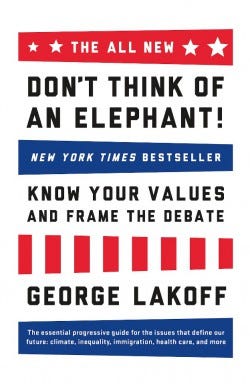
George Lakoff, a cognitive linguist, argues that all language operates through “frames”—mental structures that shape how we perceive reality and logic. In his foundational work like Don’t Think of an Elephant!, he explains that invoking an opponent’s terminology (even to refute it) reinforces their narrative by activating the neural pathways of their frame.
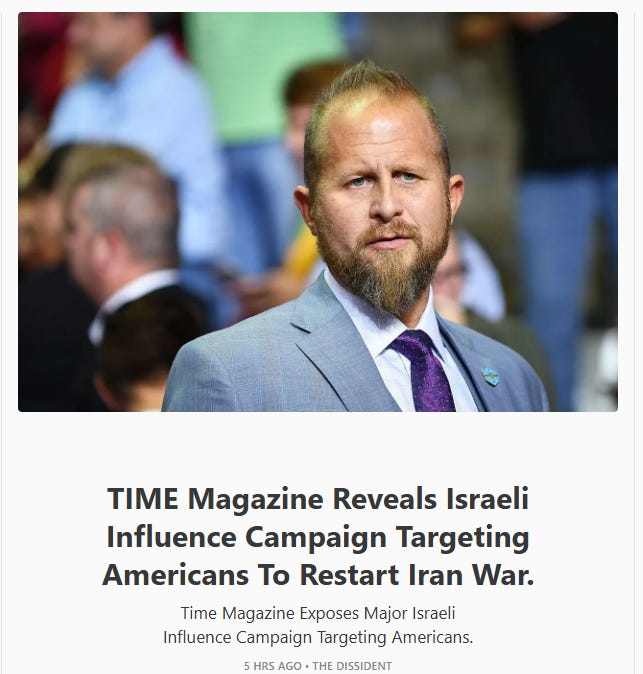
Parscale was paid by the Israeli government to “produce 100 original pieces of content each month, with at least 80% aimed at Gen Z audiences across TikTok, Instagram, YouTube, and podcasts” and to “amplify the campaign across social media and through ‘integration of narrative messaging into Salem Media Network properties and aligned distribution channels,’ referring to the Christian conservative broadcasting and publishing company where he serves as Chief Strategy Officer” and to “produce at least 50 million digital impressions per month, as well as influence how AI tools such as OpenAI’s ChatGPT, Anthropic’s Claude, and Google’s Gemini characterized Israel and the war”.
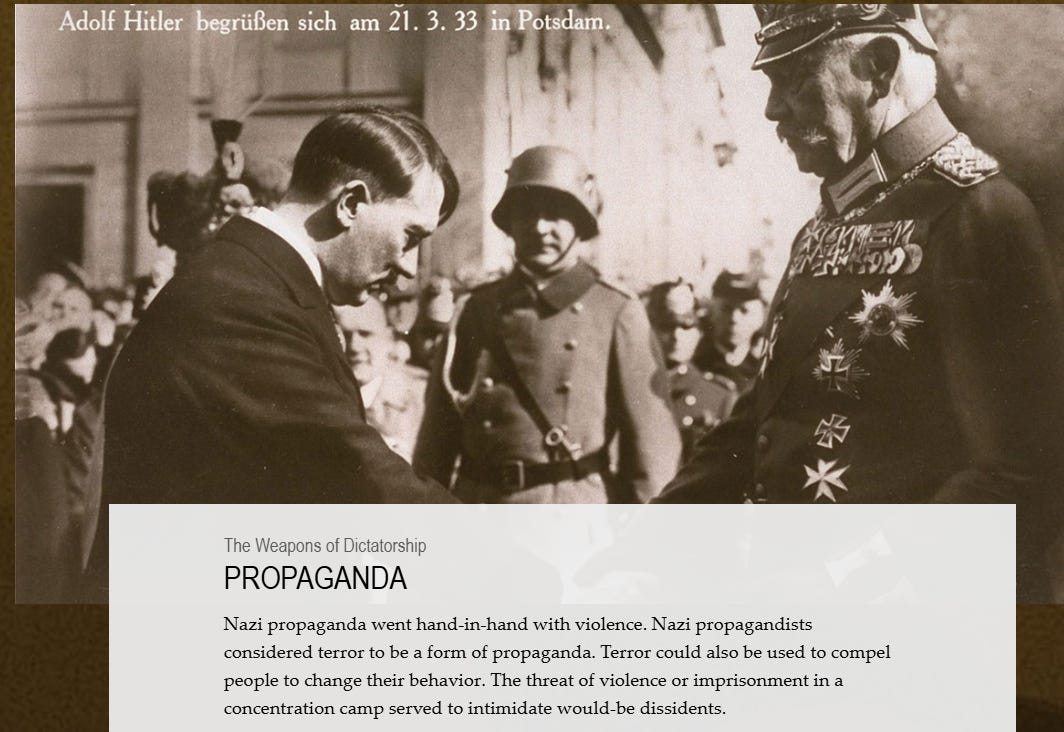
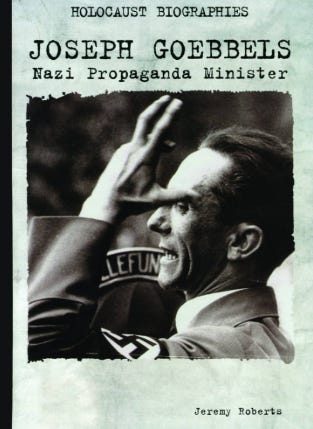
Joseph Goebbels, Hitler’s Minister of Propaganda, controlled public opinion in Nazi Germany by monopolizing all mass media. He used psychological techniques like repetition, card stacking (presenting only one side), and fear appeals, implemented through modern technologies such as radio, cinema, and massive public spectacles.
Goebbels utilized several primary forms and mediums to disseminate his messaging:
1. Mass Media and Censorship
- Radio (Volksempfänger): Goebbels mass-produced the “People’s Receiver,” an affordable radio distributed to millions of homes. It allowed the regime to broadcast Hitler’s speeches and Nazi messaging directly into private spaces.
- Film and Newsreels: The Propaganda Ministry controlled the entire cinema industry. They produced explicit hate films (e.g., The Eternal Jew) and more subtle narrative films designed to normalize Nazi ideologies and justify atrocities.
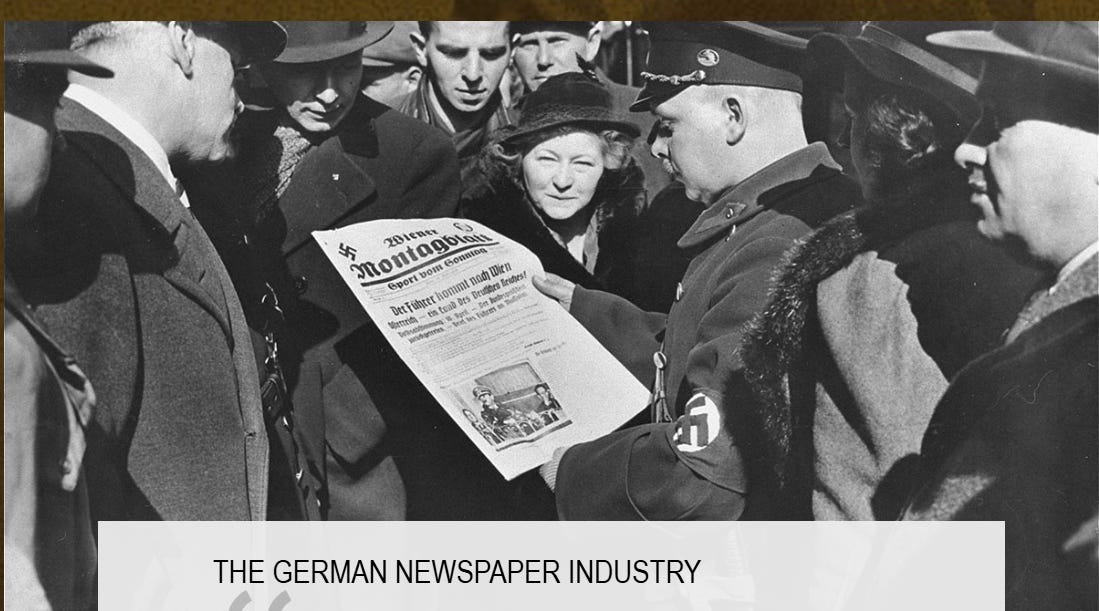
- The Press: The regime banned opposition newspapers and utilized state-issued daily press directives to dictate exactly what editors could print and how they should frame the news.
2. Spectacles and Rallies
- Mass Rallies: Events like the Nuremberg Rallies were highly choreographed pageants meant to instill a sense of power, national unity, and awe.
- Public Demonstrations: Rituals such as mass book burnings and torchlight parades were explicitly staged to project strength, eliminate dissent, and intimidate opponents.
3. Core Rhetorical Strategies
- The “Führer Myth”: Goebbels orchestrated a personality cult that portrayed Adolf Hitler as a messianic figure and the savior of the German nation.
- Scapegoating: He continuously ran campaigns that dehumanized targeted groups—most notably Jews—portraying them as subhuman creatures responsible for Germany’s economic and political crises.
- The “Big Lie”: Goebbels relied on the premise that a massive, outrageous lie, when repeated constantly and consistently, would eventually be believed by the masses.
4. Direct Visual and Public Messaging
- Posters and Art: Public spaces were saturated with stark, high-contrast posters utilizing vibrant red, black, and white colors to convey simple, emotive political messages.
- Public Loudspeakers: Outdoor audio systems broadcast speeches and propaganda messages directly onto city streets and into factories
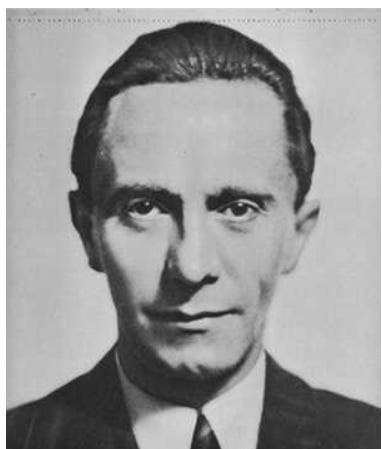
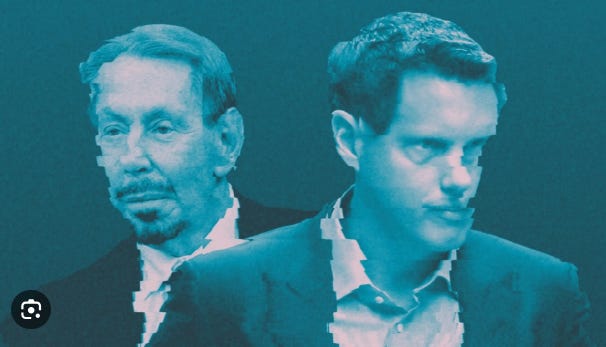
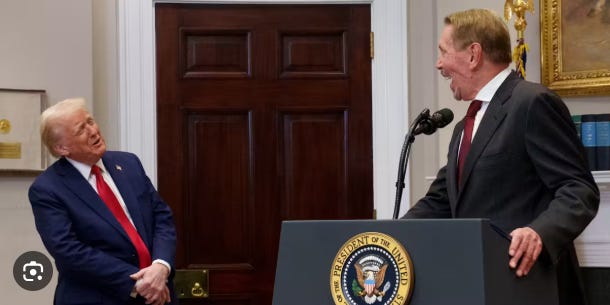
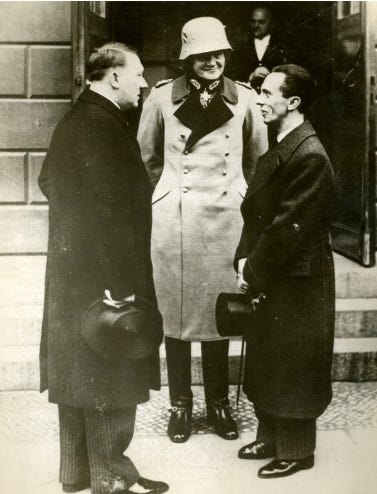
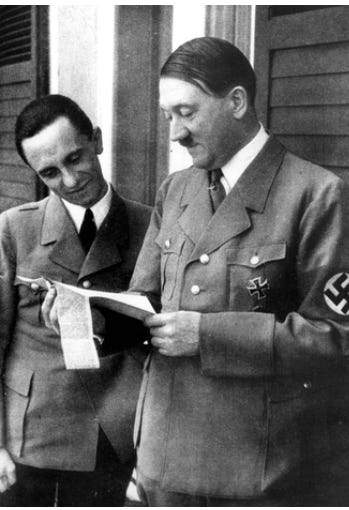
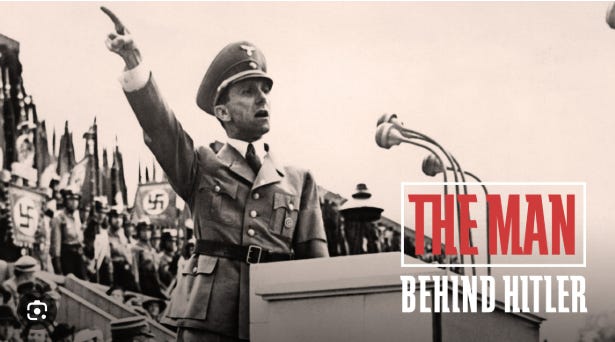
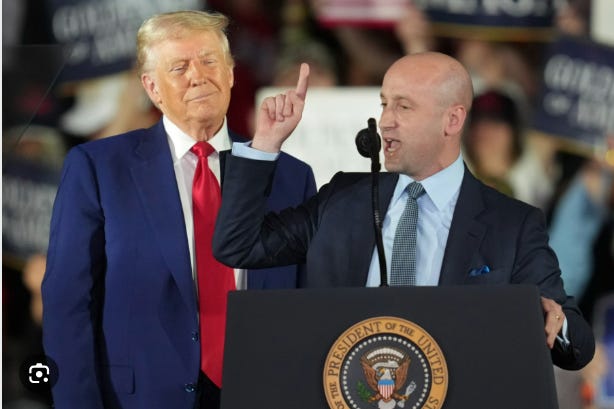
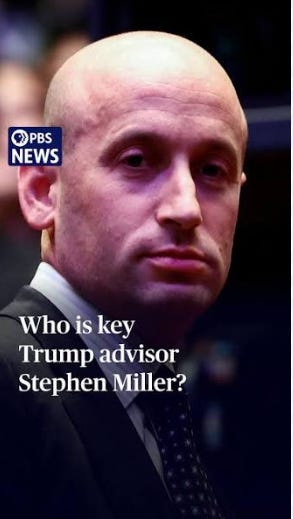
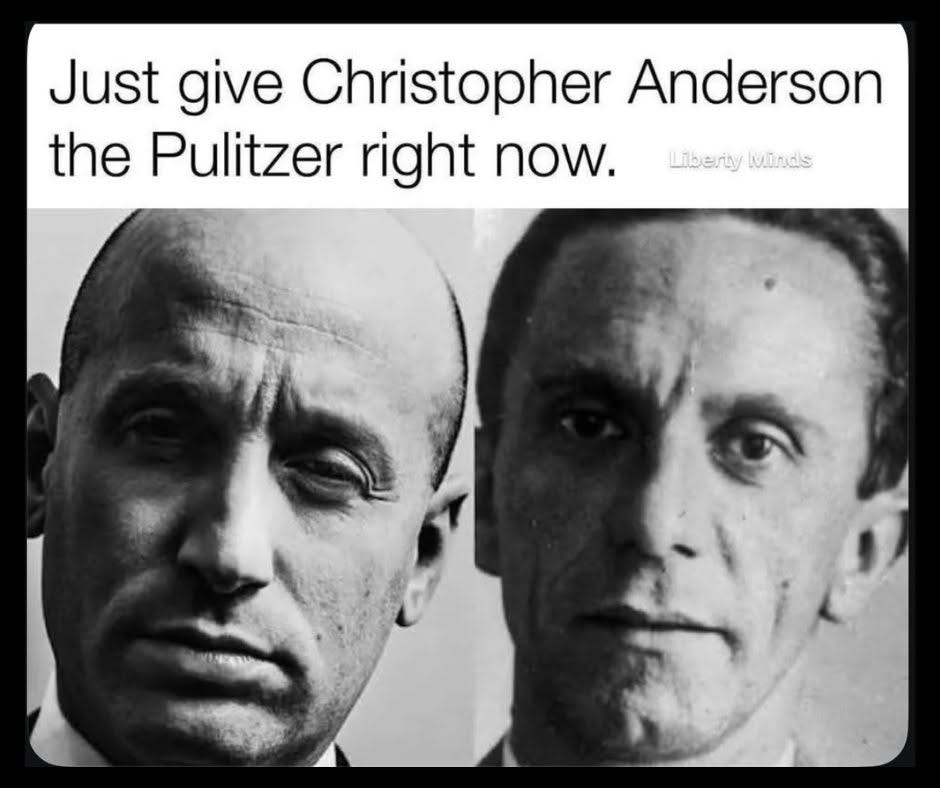
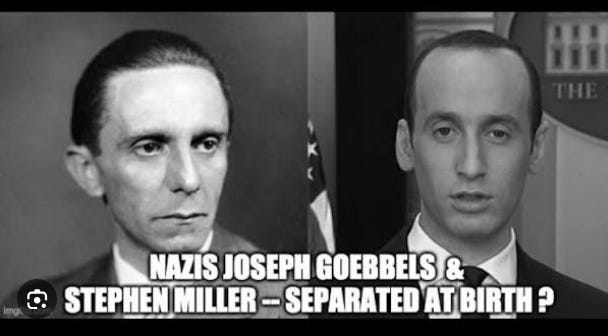
There are photographs that don’t just capture a person — they summon history. That’s why Christopher Anderson’s portrait of Stephen Miller for Vanity Fair has hit such a nerve. Viewers immediately noticed its resemblance to classic images of Joseph Goebbels, the Nazi regime’s chief propagandist and one of the most influential architects of its ideological machinery.
Goebbels was not a battlefield figure or a caricatured villain — he was a strategist of language, narrative, and belief, someone who understood that cruelty becomes durable when it is rationalized, repeated, and normalized.
Anderson didn’t manufacture that comparison — he made space for it. By shooting on film, working inches from his subject, and removing the comfort of instant image review, he stripped away Miller’s usual tools of control.
Miller’s visible fixation on posture, framing, and appearance becomes part of the portrait itself. The image captures something deeper than expression: ideology settling into bearing.
Like the historical photographs of Goebbels, it shows a man who understands power not as spectacle, but as narrative discipline — the authority to define who belongs, who threatens, and what is justified in the name of order.
This is not an argument that Miller is Goebbels; it is a recognition of a shared visual language of authoritarian administration.
Another subtle choice deepens the resonance of the series: in a separate portrait from the same Vanity Fair shoot, Anderson placed Miller beneath a painting in the Roosevelt Room depicting Native Americans on horseback crossing a river toward their village.
The image quietly links Miller’s role in modern immigration enforcement to much older histories of displacement and removal — a reminder that contemporary policy debates rest on unresolved legacies the country continues to reenact rather than confront.
This isn’t provocation for its own sake. It’s historical literacy. Anderson’s photograph reminds us that the most dangerous figures in modern history rarely look monstrous. They look convinced. Calm. Certain.
These are the images future generations return to when asking how exclusion became policy, how harm was laundered through language, and how democratic erosion came to feel procedural. The portrait doesn’t shout its warning.
It places Stephen Miller inside a visual lineage we ignore at our peril — and lets the meaning settle on its own.
Hmm, another: “INFLUENCE Campaign.

This is just one of the many influence campaigns targeting Americans that was paid for by Israel.
Most recently O’Dwyer’s reported that :
Havas Media Germany has hired Piro Inc. to further the digital efforts of the Israel Government Advertising Agency to sway US public opinion.
Founded by Daniel Rosenberg and Tim Piper, New York-based Piro has produced branded entertainment for film, TV and digital media.
Rosenberg has collaborated with actors such as Denzel Washington, Julia Roberts, Robert DeNiro, Steve Martin, Al Pacino, Kevin Bacon and Jodie Foster.
Piper was called “one of the most influential people on the planet” by Time for for his branded content work. He is executive producer on “Odd Mom Out” for Bravo and “Farmed and Dangerous” on Hulu.
According to its June 2 Justice Dept. filing, Piro is engaged to provide digital content strategy, creative development, video production oversight, and campaign advisory services in connection with a pilot digital communications program.
Services include audience research, content architecture, scriptwriting, asset production, distribution planning, iterative performance analysis, and final program evaluation. Al content is developed for distribution via digital and social edia platforms in the US.
Piro has received $900K for its effort.
At the time of Israel’s contract with Brad Parscale, the Israeli newspaper Haaretz reported that it was only one of several firms hired by Israel through Havas Media Germany to influence American public opinion.
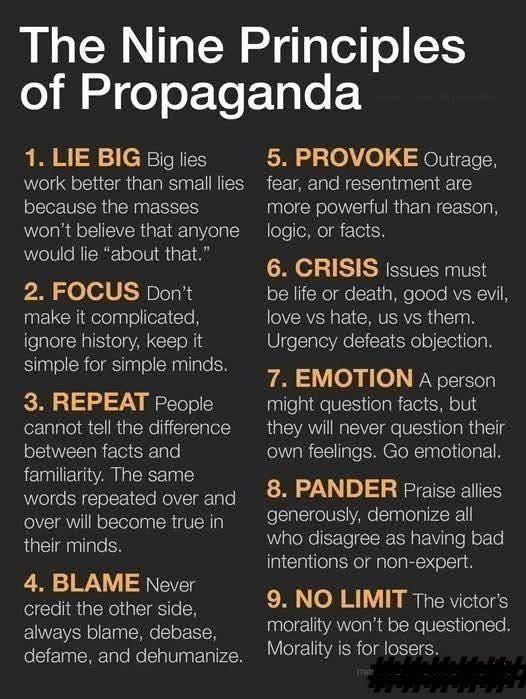
9 Principles of Propaganda- commonly observed in political and social manipulation, often attributed to or inspired by historical figures like Joseph Goebbels..
1. LIE BIG: This principle suggests that enormous falsehoods are more effective than minor ones because people struggle to believe anyone would fabricate a lie of that magnitude. This concept is famously associated with Nazi propaganda minister Joseph Goebbels.
2. FOCUS: The message should be kept uncomplicated, ignoring complex historical context to be easily digestible for a mass audience. Propaganda is often popular rather than intellectually rigorous.
3. REPEAT: Constant repetition of a simple message makes it seem true over time, as people often cannot distinguish between actual facts and mere familiarity with a statement.
4. BLAME: Propagandists should never give the opposing side credit; instead, they should consistently blame, debase, defame, and dehumanize the opposition. This is a form of “name-calling” propaganda technique.
5. PROVOKE: Outrage, fear, and resentment are more powerful motivators than rational thought, logic, or facts. Appeals to emotion are a primary tool of propaganda.
6. CRISIS: Issues are framed as a matter of survival (life or death, good vs evil, us vs them) to create a sense of urgency that bypasses rational objection.
7. EMOTION: While facts can be questioned, personal feelings are harder to challenge. The strategy is to appeal directly to an audience’s emotional response.
8. PANDER: Allies are praised generously, while those who disagree are demonized or presented as non-experts with bad intentions.
9. NO LIMIT: This principle asserts that the victor’s morality is not questioned, implying that the ends justify the means and moral constraints are for those who lose.
The image is a contemporary summary of techniques used to manipulate public opinion, drawing on various historical examples and psychological principles.
Bernays’ approach to modern psychological manipulation and propaganda is effectively characterized by these nine core principles and techniques:
- The “Invisible Government”: The concept that unseen elites rule society by consciously manipulating the habits and opinions of the masses.
- Crowd Psychology: Bernays utilized the work of his uncle, Sigmund Freud, and Gustave Le Bon to appeal to unconscious desires, herd instincts, and group dynamics rather than rationality.
- The Engineering of Consent: The deliberate and systematic effort to create events and actions that will naturally sway public opinion in favor of a specific goal or enterprise.
- Creating the News (Staged Events): Propagandists do not just report news; they create circumstances and highly visible events (like parades or stunts) that inherently command media attention.
- Using Third-Party Authorities: Instead of directly selling a message, a propagandist legitimizes it by having doctors, scientists, or opinion leaders endorse the idea.
- Appealing to Emotion & Subconscious Fears: Rather than presenting logical arguments, he bypassed intellect by targeting people’s hidden anxieties, insecurities (e.g., fear of weight gain), and aspirations.
- Symbolic Action: Associating a product or political candidate with abstract, powerful values like freedom, progress, or societal liberation.
- Shaping Taboos and Norms: Breaking or altering social stigmas by changing what is culturally acceptable, such as his famous “Torches of Freedom” campaign normalizing women smoking in public.
- Centralizing Messages in Chaos: Using organized and continuous campaigns to distill complex societal debates into simplified, digestible choices that benefit the client.
- bot-based program
- social media channels
- flood the zone
- social media influencers
Edward Bernays would be shitting his fucking Jewish Depends if alive:
Israel also used Havas to hire SKDKnickerbocker, a firm close to the Democratic Party, to, “develop a ‘bot-based program on various social media channels that that `floods the zone` with the Ministry of Foreign Affairs’ pro-Israel message.”
Along with this, it noted that Israel hired “Bridges Partners, a Washington-based consulting firm owned by Yair Levi and Uri Steinberg” to “fund social-media influencers promoting Israel”.
+—+
Did you know?
The Art of Propaganda: FDR’s Secret Contempt for the Avant-Garde
The story of how a modernist sculpture became part of Roosevelt’s vast art catalog illustrates his true feelings about modern art
Michael Pearce / MutualArt
Jul 15, 2022

Inspired into action by the necessities of countering the threat of war and economic weakness, and recognizing the power of foreign and domestic propaganda and espionage, Roosevelt deliberately steered his administration into the subtleties of using the new, individualist American avant-garde to compete with Stalin, Goebbels, and Hitler. He had learned how effective propaganda could be from the Creel Committee, from the Russians, from the Nazis, and through his own formidable propagandists Charles Michelson and Louis Howe, who were doubtlessly careful readers of the writings of American masters like Edward Bernays and George Creel, whose innovative books on their techniques had been published in the late twenties and early thirties.
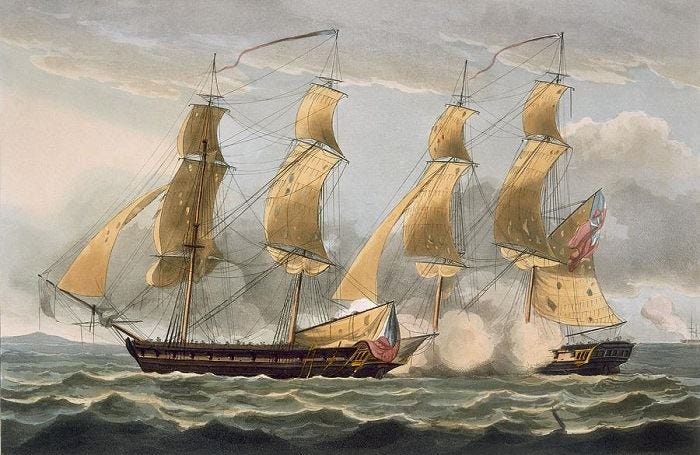
Thomas Whitcombe, Capture of the Argus
In public he would make use of individualist avant-garde art as propaganda, but at home his taste in art was very specific and conservative. He gathered a large collection of prints and a smaller number of paintings almost entirely devoted to naval battles, ships at sea, and portraits of important ships’ captains and officers who had played an important role in naval history, reflecting his deep love of the ocean and doubtlessly inspired by his service as Secretary of the Navy. In the Oval Office he surrounded himself with his favorite prints and paintings of ships at sea, landscapes from the Hudson River valley, and a portrait of Eleanor. But in the catalog of Roosevelt’s collection there is a solitary, jarring exception to the traditional art he enjoyed – a heavy, blocky, abstracted sculpture which stands out for its complete inconsistency with the rest of the works the president collected. The story of how it came to him reveals the private contempt Roosevelt felt for the modern art he endorsed in public.
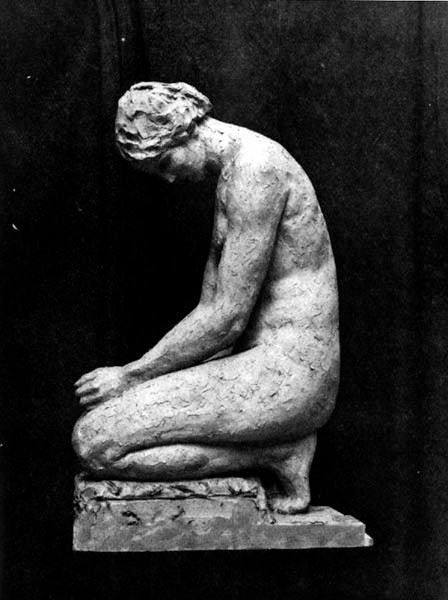
Ralph Stackpole, Worship
In 1915, Roosevelt visited the Panama Pacific Exposition in San Francisco, where he saw a beautiful neo-classical sculpture of a nude woman in an attitude of prayer made by artist Ralph Stackpole, titled Worship. It was a delicate study of grace and humility, perfectly proportioned and crafted with the light touch of a skilled master. FDR was deeply moved by the piece, which he described as “a delightful composition.” It was “a conception of youthful feminine beauty and spirituality which had always lingered in his mind.” In 1938, still haunted by his memory of the sculpture, the President contacted Stackpole through friends to ask if he might buy a copy of it for his Hyde Park home. Stackpole was delighted, but the original had been crafted from plaster and deteriorated and crumbled as the result of years of standing exposed in the Pacific winds and fogs, so he offered to create a copy of the work in travertine. The president agreed and Stackpole promised to get to work.
Ralph Stackpole, Pacifica
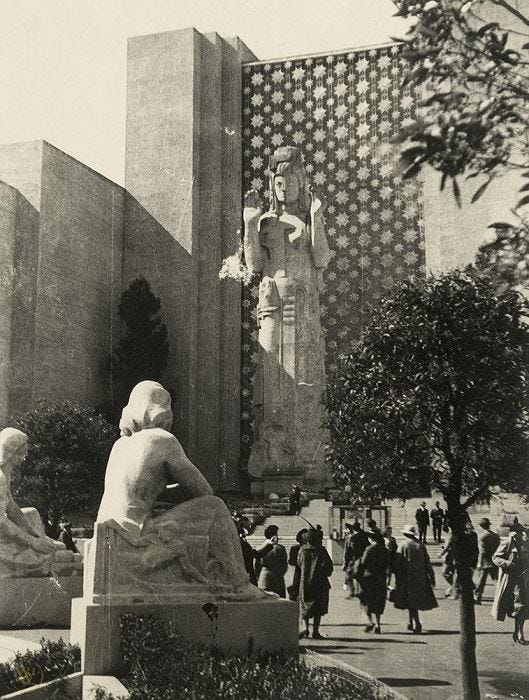
Stackpole created much of the iconic Art Deco sculpture that gave San Francisco its unique character, including an enormous eighty-foot statue, Pacifica, that would dominate the entrance to the 1939 World’s Fair on Treasure Island in the bay, and the magnificent stone sculptures that still decorate the front of the old San Francisco stock exchange. Stackpole was a Communist Party member and a friend to famed Diego Rivera – the Mexican muralist who gained infamy and opprobrium by painting Lenin into a huge mural at Rockefeller Center, the heart of the New York establishment. Stackpole was deeply embroiled in the Coit Tower debacle of 1934, when communist frescoes were painted into the new landmark overlooking the San Francisco Bay, and the city teetered on the brink of a red revolution, led by striking dockers on the waterfront. The murals in the tower included a Soviet hammer and sickle and the Marxist slogan “united workers of the world,” pictures of marching workers, a painted library of left-wing authors, and a news stand that advertised controversial communist publications in its racks. Stackpole painted a pragmatic social realist fresco titled Industries of California. By 1938, Stackpole’s style had changed dramatically from the lyrical work Roosevelt admired – he had become an experimental modernist.
CHECK AVAILABLE ARTWORKS BY DIEGO RIVERA
Despite pestering from FDR’s friends who had brokered the deal, five more years would pass until in 1943 Stackpole finally announced that he had completed the new version of the sculpture. Kneeling Woman was crated up and shipped across the country and the President was “all eagerness and curiosity” in anticipation to see it when it finally arrived at Hyde Park. The wooden panels of the crate were broken open, but instead of the graceful, humble figure FDR had expected, the sculptor had made the piece in his new radical style – where there had once been elegance and lightness, there was now heaviness and bulk. Roosevelt’s personal secretary William Hassett described the sculpture as “a huge hulk of a female” with “hands hanging down like great hams, to which were attached square fingers – modernist in every aspect.” The perfect proportions and gentle grace of the original had been replaced by a chunky mass owing far more to Rivera than to Phidias. The president hated the new sculpture so much that he immediately had it hidden behind some trees in the grounds of his Presidential library in Hyde Park, where he would never see it – he was confined to a wheelchair – and it remained there, neglected, until 2015, when it was brought indoors and restored by library staff. Now prominently displayed in the library, its position misleadingly gives the impression that Roosevelt had admired it. By chance, a small bronze model of Stackpole’s graceful original sculpture was found and gifted to the President, perhaps giving him some consolation.
CHECK AVAILABLE ARTWORKS BY DIEGO RIVERA

Ralph Stackpole, Kneeling Woman
Roosevelt’s public embrace of the individualist avant-garde was entirely a matter of political expediency. In his endorsement of this new species of avant-gardism, he deliberately took a stance, setting up America as the exemplar of creative freedom by taking up its banner in opposition to the oppression of our enemies. This was a deliberate and impersonal choice made as a strike in the battle for the “third front” of public opinion, using art as a weapon to persuade the world that individual liberty was at the heart of the United States.
+—+
Metaphors We Think With: The Role of Metaphor in Reasoning
Research in framing was spearheaded by classic experiments by Nobel Prize Winner Daniel Kahneman and his collaborator Amos Tversky in the 1980s. Their research upended the assumption that humans behave rationally – an assumption that a number of economic models previously rested on. They instead showed that we are often consistently irrational, relying on a number of mental shortcuts to speed up our reasoning, which can make us remarkably sensitive to how things are framed.
But, just how strong is the impact of framing? A recent study showed that, in some contexts, it might have an even stronger effect on our reasoning than our own political views.
In the study, participants were presented with brief passages about crime in a hypothetical city named Addison. For half of the participants, a few words were altered so that the passage said that crime was a “beast preying” on the city of Addison. For the other half, crime was described as a “virus infecting” the city.
Simply changing the metaphor in this passage by altering a few words influenced people’s beliefs about crime more than pre-existing differences in opinion between Republicans and Democrats. Those exposed to the “beast” metaphor were more likely to believe that crime should be dealt with by using punitive measures, whereas those exposed to the “virus” metaphor were more likely to support reformative measures.
One of the most remarkable things about the metaphor’s influence in this study was that it was covert. When participants were asked about what influenced their decision, no one mentioned the metaphor. They instead pointed to other aspects of the passage that were the same for all participants, such as statistics.
Knowing that something as simple as a metaphor can covertly influence our reasoning can allow us to slow down and try to be conscious of the forces that are influencing us. Moreover, we can use this knowledge of the power of framing to make more effective political arguments.
+—+
Public discourse about crime is saturated with metaphor. Increases in the prevalence of crime are described as crime waves, surges or sprees. A spreading crime problem is a crime epidemic, plaguing a city or infecting a community. Crimes themselves are attacks in which criminals prey on unsuspecting victims. And criminal investigations are hunts where criminals are tracked and caught. Such metaphorical language pervades not only discourse about crime, but nearly all talk about the abstract and complex. Are such metaphors just fancy ways of talking, or do they have real consequences for how people reason about complex social problems like crime?

Graham became one of the few lawmakers with regular access to President Trump on questions of national security, emerging as one of the Republican Party’s most influential voices on Iran, Ukraine, Israel and NATO.
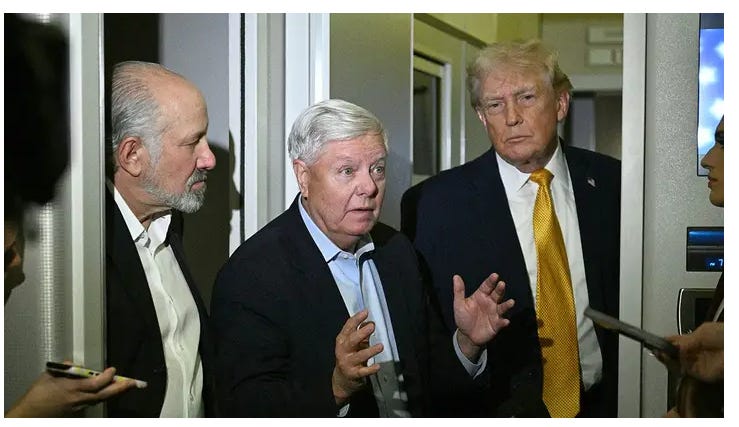
Comedian Margaret Cho is facing backlash after a video circulating on social media Sunday showed her mocking the death of the late Sen. Lindsey Graham, R-S.C., and appearing to suggest that President Donald Trump could be next.
“Bye Lindsey… Bye Lindsey Graham. From the closet to the coffin, real seamless. Real seamless,” Cho said in a video posted on Facebook.
Cho continued, appearing to suggest that Trump might be the next to die, and including the hashtags, “#resist” and “#fdt” in her post, among others.
Cho went on to reference Senator Mitch McConnell, who was recently hospitalized, and an unnamed third figure, saying:
“Also yeah, Mitch McConnell. So, it’s Mitch McConnell, Lindsey Graham… it does happen in threes. Hope!”
And here we are AMERIKKKa, the dumb as shit eating dying dog GOYIM:

Cho’s comments were widely condemned by X users. One wrote:
“It must be awful to be so filled with hate. The difference between liberals and conservatives or at least crazy liberals, especially the ones in Hollywood, is that conservatives would never celebrate someone’s death even if he were of the opposite political party. We’re just not like that. Thank God!”
Another added:
“It’s sad to see such hate. I once was a fan of Margaret Cho well we can cancel that right now—I am an Independent and to mock the death of someone (I doubt she knew him) forget his family and friends it’s truly disgusting and shameful. Grow up Margaret show some class.”
Other users called for Cho’s work to be boycotted, with one writing:
“I hope this a career destroying move for Margaret Cho. All her tv shows and movies should be boycotted. We are sick and tired of woke Hollywood and it’s perverted agenda.“
Earlier in the day, the hosts of The View criticized people who have celebrated the death of Graham.
“I saw a lot of posts online this week celebrating his death and rejoicing,” The View co-host Ana Navarro said during Monday’s episode. “I know Trump does that,” she said, referring to Trump’s polarizing comments after the deaths of director Rob Reiner, John McCain and former FBI director Robert Mueller.
“But it’s inhumane and it’s really lacking empathy,” Navarro continued. “The dead person is dead and can’t hear you and can’t read your posts, but his family — his sister, who he adopted when she was 13 when both of their parents died — is alive and is hearing it.”
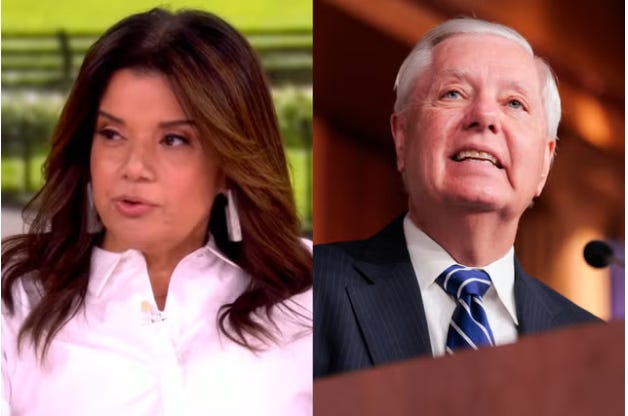
Fucking multimillionaire faux news person:
- the person is dead
- the dead can’t hear you
- the dead can read your posts
- his sister is alive and hearing it
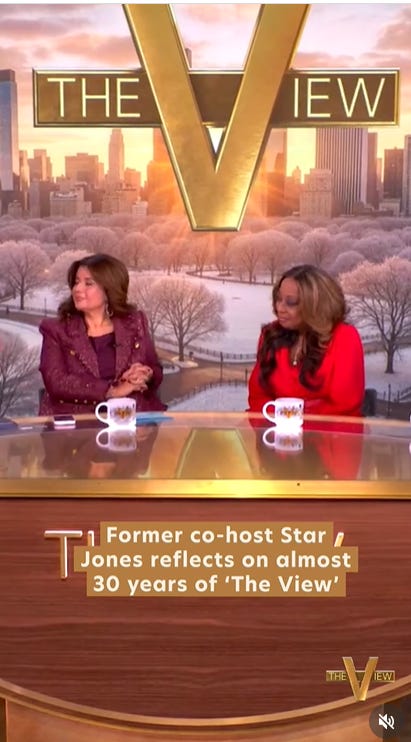
Ana Navarro is a prominent Republican political strategist and commentator who has been an official co-host on ABC’s The View since season 26. She originally joined the daytime talk show as a contributor in 2013 and later transitioned to a weekly guest co-host before becoming a permanent fixture. [1, 2]
Navarro is well-known for her sharp political commentary, her staunch criticism of Donald Trump, and her dedication to representing a moderate, anti-Trump conservative voice on the panel. Because she splits her time between Miami and New York, her appearances on the show have historically varied, though she remains a key, regular co-host on the show.

Born in 1971 to a wealthy land-owning agricultural family in Nicaragua, Navarro is the daughter of Violeta Flores López and José Augusto Navarro Flores, a former minister of agriculture under the administration of Enrique Bolaños Geyer. She and her family moved to the United States in 1980 because of political turmoil,[1] though her father, who had also been persecuted as an opponent of the Somoza regime, stayed behind to continue to fight with the Contras against the Sandinista government.[12] She later said that then U.S. president Ronald Reagan’s support of the Contras made her a lifelong Republican.
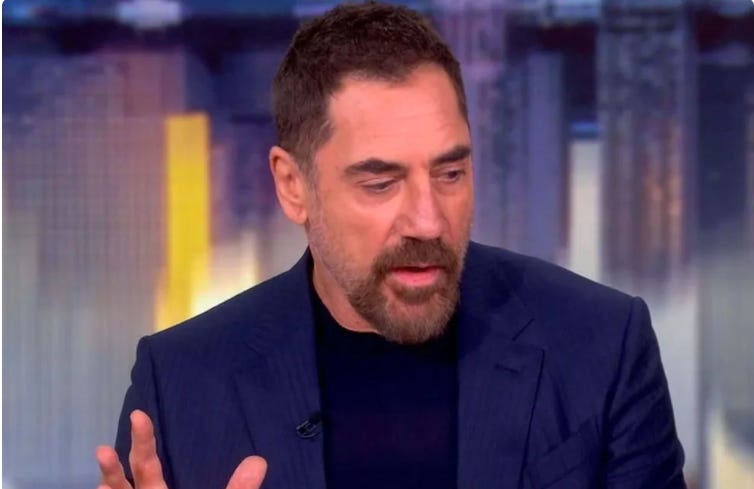
‘The View’ Quickly Cuts To Commercial As Javier Bardem Speaks Out Against Attacks On Gaza: “I Believe It’s A Genocide”
“I see your [pins] and, of course, they have to return those hostages obviously,” he said. “But the situation in Gaza has come to a term now where I cannot express the pain that I, along with many millions of people there, suffer on a daily basis watching those horrible images of children being murdered and starving to death.”
Bardem later claimed that Holocaust survivors, as well as several experts in international law and human rights, are calling the campaign a “genocide.”
“And if you ask me, I believe it’s a genocide, why is that?” he stated. “First of all, because the impunity that is taking Israel in doing these actions, and the lack of action on any government of course the back up of the United States with all those weapons and the economics, and also the silence of Europe, is creating a scenario where there is such impunity that if we really don’t do something about that we are going towards, well, what is happening now.”
The actor received a smattering of applause before the commercial break, but that marked the end of his interview as the show later returned with a shopping segment.

