

CNN? CBS? ABC?NBC? Fox? NYT? All the rotten tales/tails of five-day-old room-temperature fish
Jul 12, 2026
Here we go:
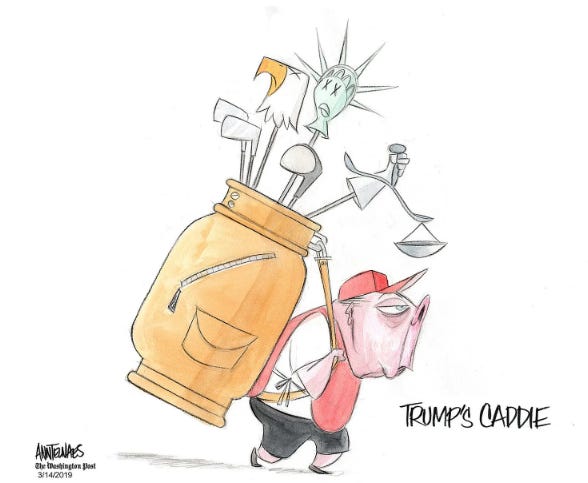
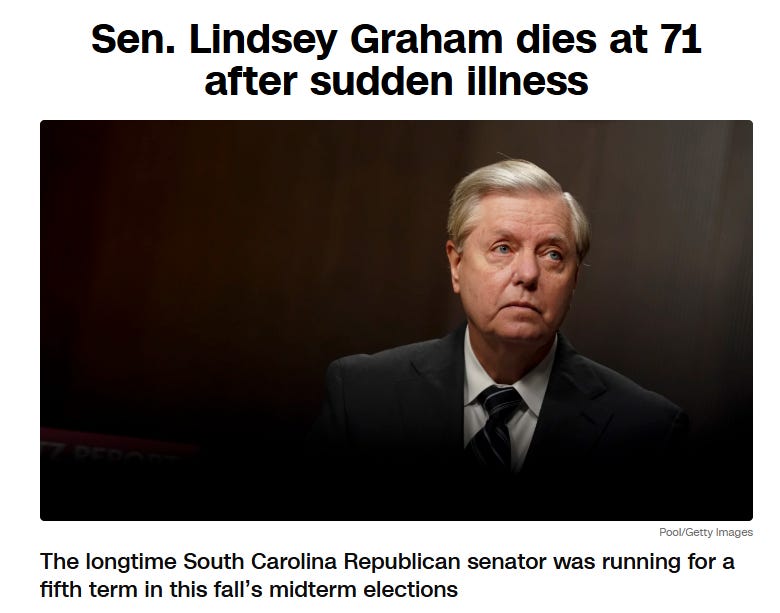
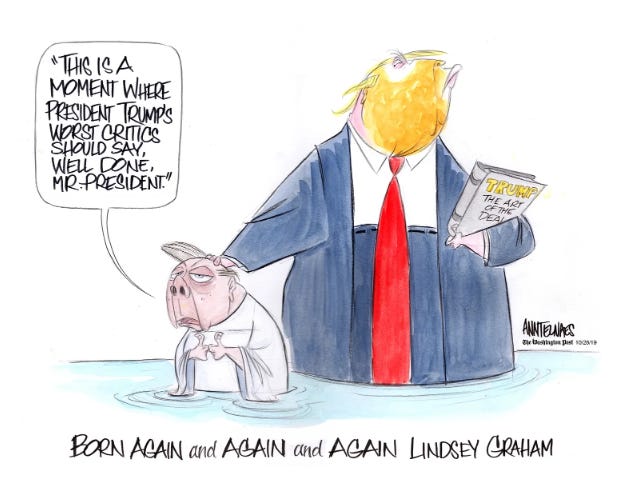
Something about not speaking ill/poorly of the dead? What the fuck is that bullshit Yankee Doodle Dandy crap?
Lindsey Graham’s Lies, Blood Thirst and His Worst Nightmare
Endless quotes of horror: “Level the place” about Gaza …. “Not one Arab state has felt the need to go down the nuclear road because of Israel’s possession of nuclear weapons.”
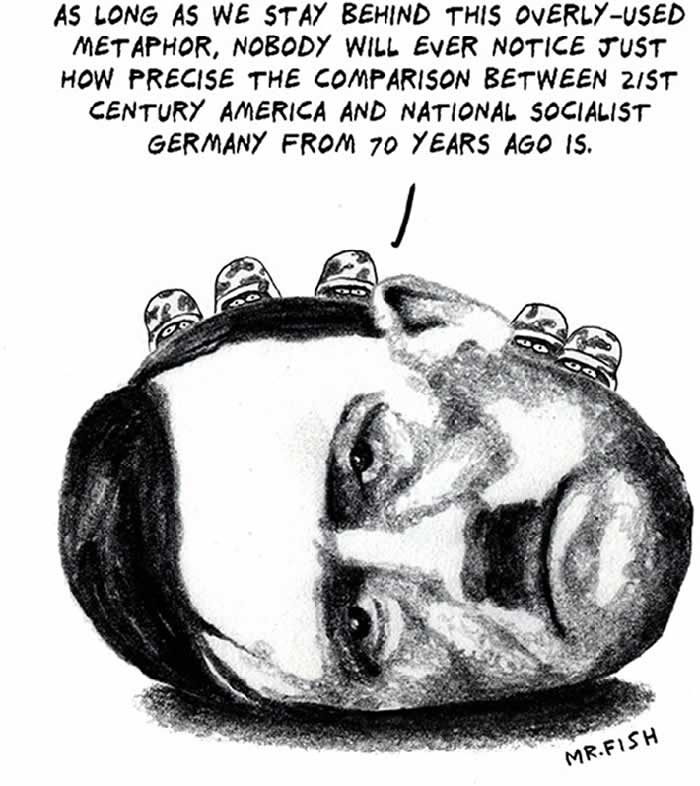
What insightful fucking NEWS (sic)?
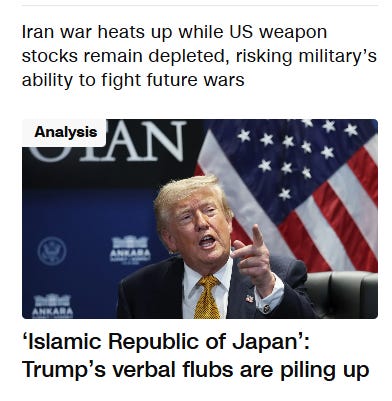
Black, Brown, Buggered: What the fuck is this? I won’t open this fucking thing.

- Remembering Lindsey Graham: Tributes pour in for the late senator
- In an interview with CNN, President Donald Trump recalled how Graham went from a “formidable” political foe to a close confidant.
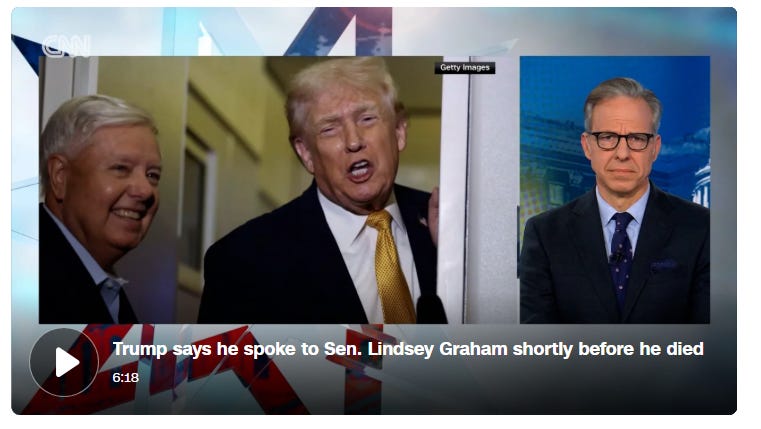

This is the fucking Inbred UnUnited Queen-Dumb Pedophile..
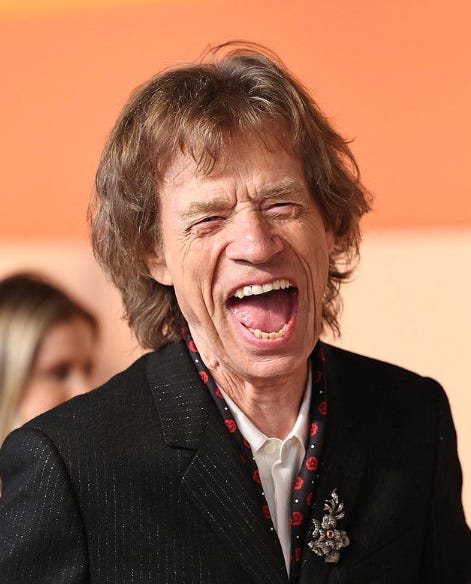
Mick Jagger took aim at Bruce Springsteen‘s increasingly political concerts warning that fans don’t want to be lectured from the stage.
The Rolling Stones front man made the comments during an interview on The New York Times’ podcast with David Marchese, where Jagger laid out his philosophy for entertaining stadium crowds.
He appeared to distance himself after Marchese brought up avowed Donald Trump critic Springsteen who has repeatedly used his concerts this year to launch blistering attacks on the president and his administration.
Asked how he views his relationship with audiences compared with artists such as Bob Dylan and Springsteen, Jagger said his priority has always been making sure concertgoers leave feeling uplifted rather than weighed down by politics.
‘The bottom line of my thing really is that my job in the live music world is those people that come is to have the best time they possibly can,’ Jagger said.
‘For two hours or whatever it is, to forget all their problems and the problems of the world and their mortgages and whatever, just to give them the best time they can have.’
The 82-year-old rock icon compared attending a concert to watching a major sporting event, arguing that audiences should be able to switch off from the anxieties of daily life while the show is happening.
‘You don’t want to lecture them,’ he said.
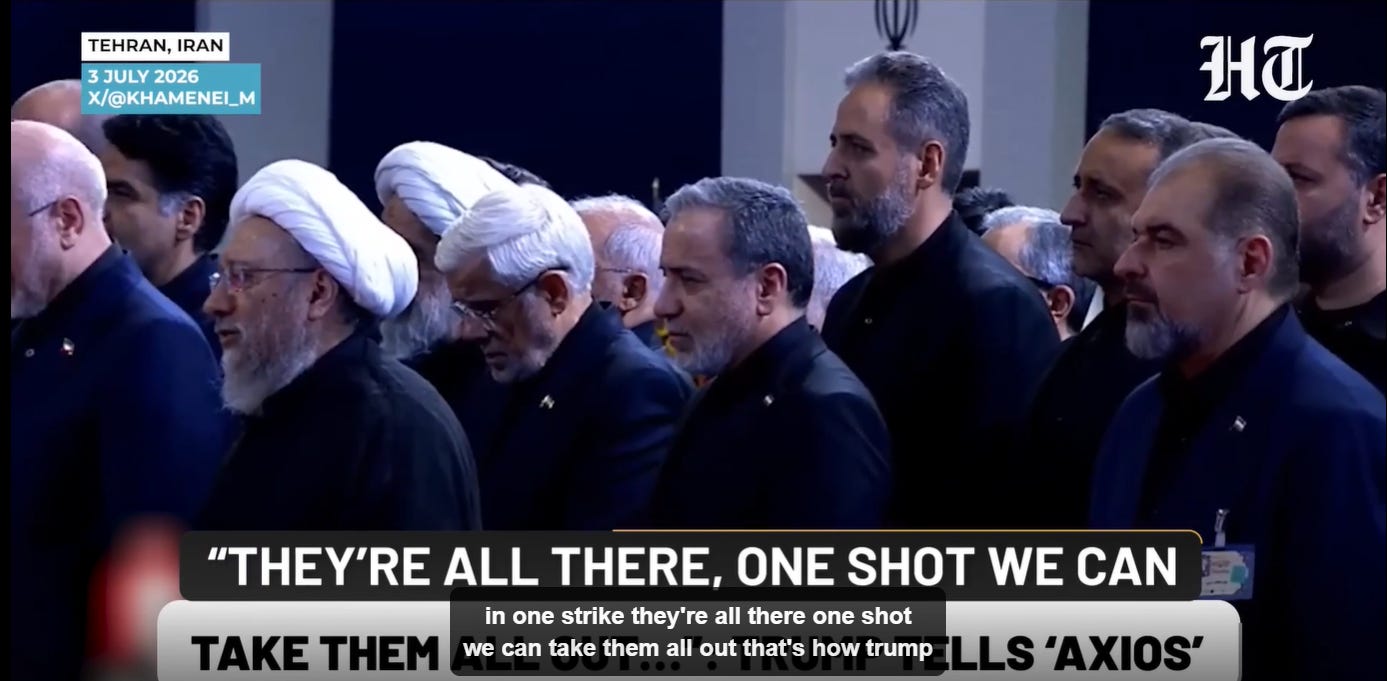
That fucking pedophile cunt Sir Hemorrhoid Jagger:
Underage Relationship Allegations
- Rae Dawn Chong: In 2020, actress Rae Dawn Chong disclosed that she had a brief, consensual relationship with Jagger in 1977 when she was 15 years old. While she explicitly stated she did not view herself as a victim and that Jagger “did nothing wrong,” the revelation sparked modern public backlash regarding the grooming dynamics of the era.
- Mackenzie Phillips: Actress Mackenzie Phillips stated that Jagger locked her in a room and seduced her when she was 18 years old, though she alleged he told her he had been “waiting for this since you were 10 years old”.
- Lori Maddox: Famous 1970s “baby groupie” Lori Maddox claimed that while she was an underage teenager, Jagger took her into a bedroom and engaged in misconduct. Maddox is most prominently known for her relationship with Led Zeppelin guitarist Jimmy Page, which began when she was 14.
Music and Cultural Context
- “Stray Cat Blues”: The Rolling Stones’ 1968 song explicitly features a narrator having sexual relations with a 15-year-old girl. In later live performances, Jagger reportedly changed the lyrics to “16” or “17” to reflect changing legal standards and cultural awareness.
- 1970s Groupie Culture: Rock culture of the 1960s and 1970s frequently tolerated or normalized relationships between adult rock stars and underage minors. While peers like bandmate Bill Wyman openly admitted to a relationship with a 13-year-old, Jagger’s history has faced retrofitted criticism under the modern lens of the #MeToo movement.
Appearance in Jeffrey Epstein’s Files
- Contact Lists: When official archives and contact books belonging to Jeffrey Epstein were released by the U.S. Department of Justice, Jagger’s name was included among hundreds of other global celebrities, politicians, and high-profile figures.
+—+
BUT THE ALL ARE FUCKING BILLIONAIRES, and that money isn’t pennies from heaven. Think stock and investment portfolios, ALL connected to dual use, primary use, tech fascism, banking, BlackRock, Vanguard, you fucking NAME it.
The 10 Richest Rock Stars in the World (Apr 2025) In order of lesser to more wealth, billionaires.
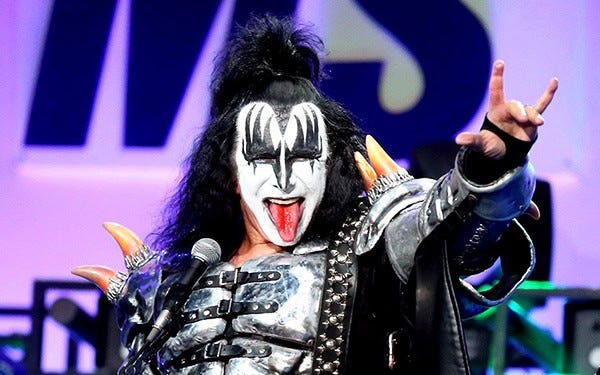
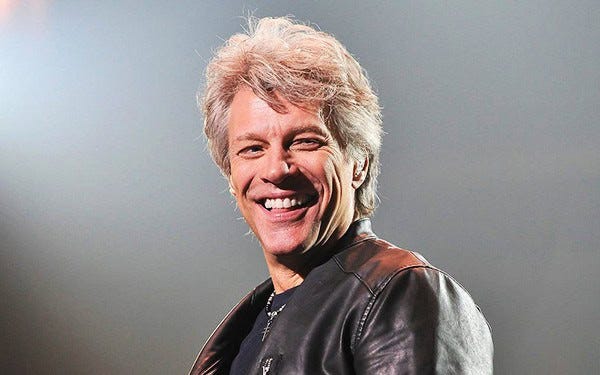
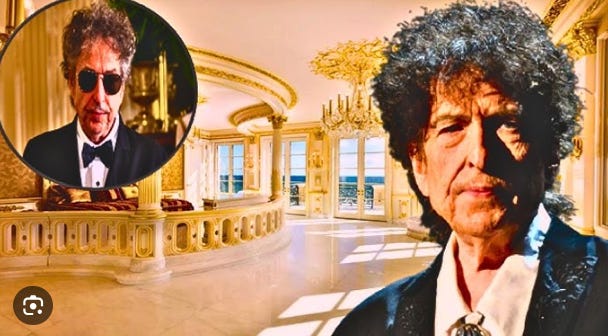
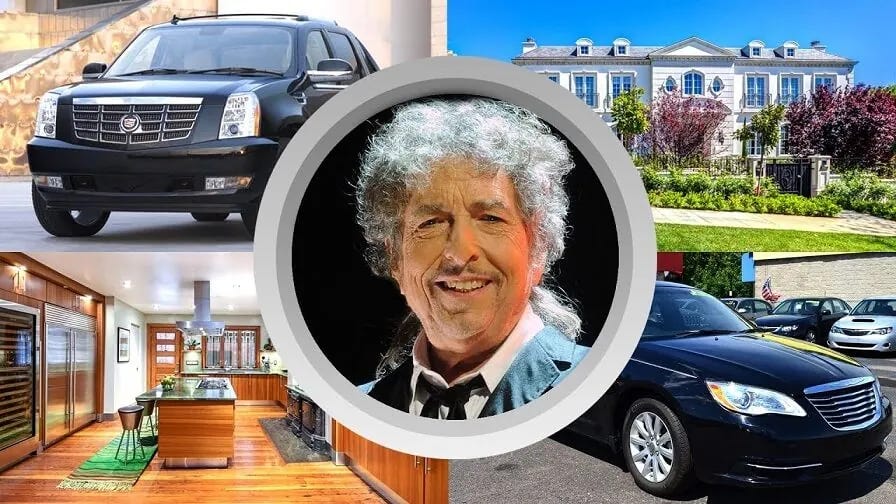
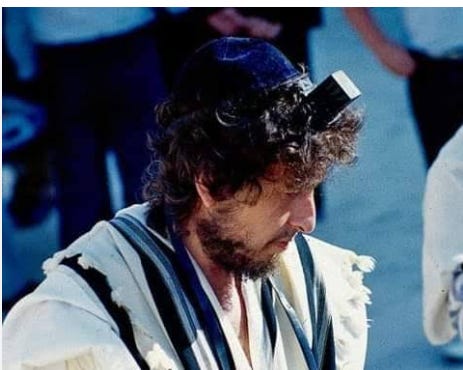
Bob Dylan has an estimated net worth of $500 million (double that at least, since he’s go Jew accountants and Israel CPAs working 24/7 for him), making him one of the wealthiest musicians in the world. His fortune is largely built on a massive catalog of over 6,000 covered songs and the blockbuster 2020 sale of his songwriting rights to Universal for an estimated $400 million.
He may have done the Minneapolis thing, but still, a fucking billionaire is always MY fucking enemy.
Too fucking SLICK. Holly-Dirt style:
How can ANYONE go about their fucking day without screaming, pulling their hair out, and bashing in a bank window?
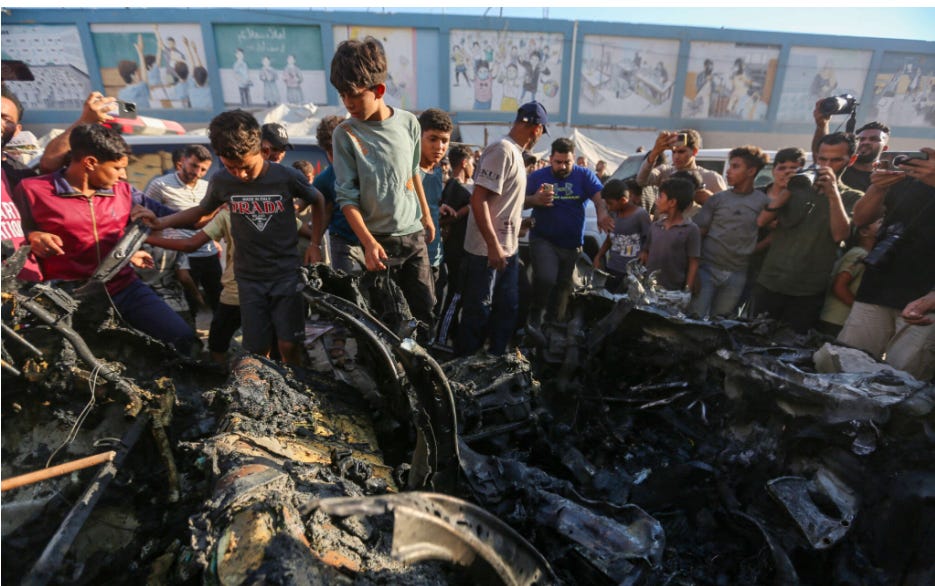
Israel Continues to Shoot Children in the Head During the Gaza Ceasefire
Bahaa Abu Al-Ajeen, 32, set out with his 3-year-old son Rayan to check on their family home east of Deir al-Balah in central Gaza at approximately 5:00 pm on June 14. According to Bahaa, the area appeared safe and deserted. He said there were no visible soldiers, no gunfire, and no drones overhead.
“The area was safe. If I had felt any danger, I would never have gone there,” he said.
After inspecting the house and leaving the area, Bahaa said he was shocked to see Israeli soldiers emerging from a nearby building.
“My son was in my arms and crying intensely from fear,” he recalled. “It was the first time I had ever seen him so frightened.”
According to his account, he decided to move away from the soldiers in an attempt to calm Rayan and walked approximately 500 meters from the area. Bahaa said that after he had distanced himself, the soldiers began shouting at him to stop. He stated that two shots were fired in his direction but did not hit either him or his son, prompting him to stop out of fear for their lives.
“After I stopped, one of the soldiers knelt down and fired directly at my son,” Bahaa said. “The bullet entered the back of Rayan’s head and exited through his left eye. Moments later, another bullet struck my left leg. When I saw them kill my son, I screamed and asked them, ‘He is a child. Why did you kill him?’”
Bahaa said he attempted to call an ambulance using his mobile phone, but the soldiers confiscated it and prevented him from seeking medical assistance. According to Bahaa’s testimony, Rayan bled for approximately seven minutes before dying from his injuries. He said he pleaded with the soldiers to save his son, but they refused.
Hours of Pain
Bahaa stated that after he was wounded and his son was killed, soldiers dragged him while he was still holding Rayan and took him to what he described as a military-controlled area near the Kissufim crossing. Upon arrival, he said, the soldiers took Rayan away from him and left him bleeding on the ground.
By that point, Bahaa said his left leg had been nearly severed. He recalled hearing soldiers discussing whether his leg should be amputated.
“I heard one of them speaking Arabic and saying that my leg was beyond saving and should be amputated,” he said.
The discussion left him terrified. Later, according to Bahaa, soldiers loaded him into an Israeli military vehicle. During the journey, he asked about his son.
“They told me that Rayan was dead,” he said.
Bahaa stated that soldiers then placed Rayan’s body in a black plastic bag and handed it to him.
“At that moment, I wished they had killed me and let my son live,” he said.
Holding his son’s body, Bahaa repeatedly asked the soldiers why they had killed a 3-year-old child. According to his account, he was initially told he would be transferred to an Israeli prison before soldiers later informed him that he would instead be returned to Gaza. Bahaa said he was eventually left in an isolated area at around 11:30 pm, still wounded and carrying his son’s body. After waiting for nearly 90 minutes, Palestinians found the grieving father and transported him to Al-Aqsa Martyrs Hospital in Deir al-Balah.
“When I saw Palestinians coming to rescue me and take my son, I lost consciousness,” he said. “The next thing I remember is waking up in the hospital.”
Killed While Learning
On April 9, 2026, 9-year-old Ritaj Rihan was killed while attending an educational tent in the Al-Salatin area of Beit Lahia, according to her family. Ritaj’s mother said her daughter had been excited to return to learning for the first time since October 7, 2023.
According to her mother, witnesses, teachers, and students present inside the tent, Ritaj was standing at the front of the classroom waiting for her notebook to be reviewed when she was shot. Witnesses said the bullet pierced the tent before striking the child.
“She was standing among her classmates, waiting for her teacher,” her mother said. “Then suddenly she collapsed.”
According to those present, blood began pouring from Ritaj’s mouth as shocked classmates and teachers watched. The bullet entered through her mouth and caused fatal internal injuries, according to her family’s account. Staff members at the educational tent attempted to save her, but due to the severe shortage of transportation in northern Gaza, they were forced to use a donkey cart to carry her to medical care. Despite the staff’s efforts, Ritaj died from her injuries.
The UN Independent International Commission of Inquiry on the Occupied Palestinian Territory released a report in June showing that nearly 30 percent of those killed in Gaza between October 7, 2023, and the so-called ceasefire in October 2025 were children. A report published days later by Israeli human rights organization B’Tselem found that Israel is killing Palestinian children in the West Bank at the highest rate since 1967.
“The evidence shows that Palestinian children have been deliberately targeted and killed by the Israeli security forces,” Srinivasan Muralidhar, chair of the UN commission, said. “Even after the October 2025 ceasefire, children continue to be killed and seriously injured, with continued disregard by Israel for the ceasefire and for the protection owed to Palestinian children under international law.”
The stories of Rayan and Ritaj unfolded in different parts of Gaza and under different circumstances. Yet both children were engaged in ordinary activities — one accompanying his father, the other attending class — when their lives came to an end.
Their families continue to remember them as children whose futures were cut short amid a genocide that continues to exact a heavy toll on Gaza’s youngest residents.
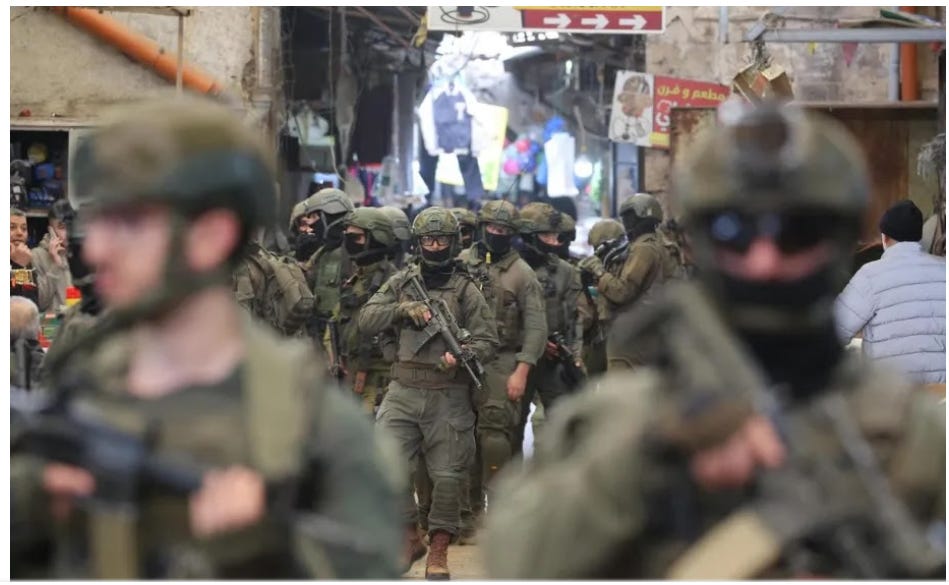
Israel reportedly itching to join US in bombing Iran
They are coming to Israel to perform in droves.

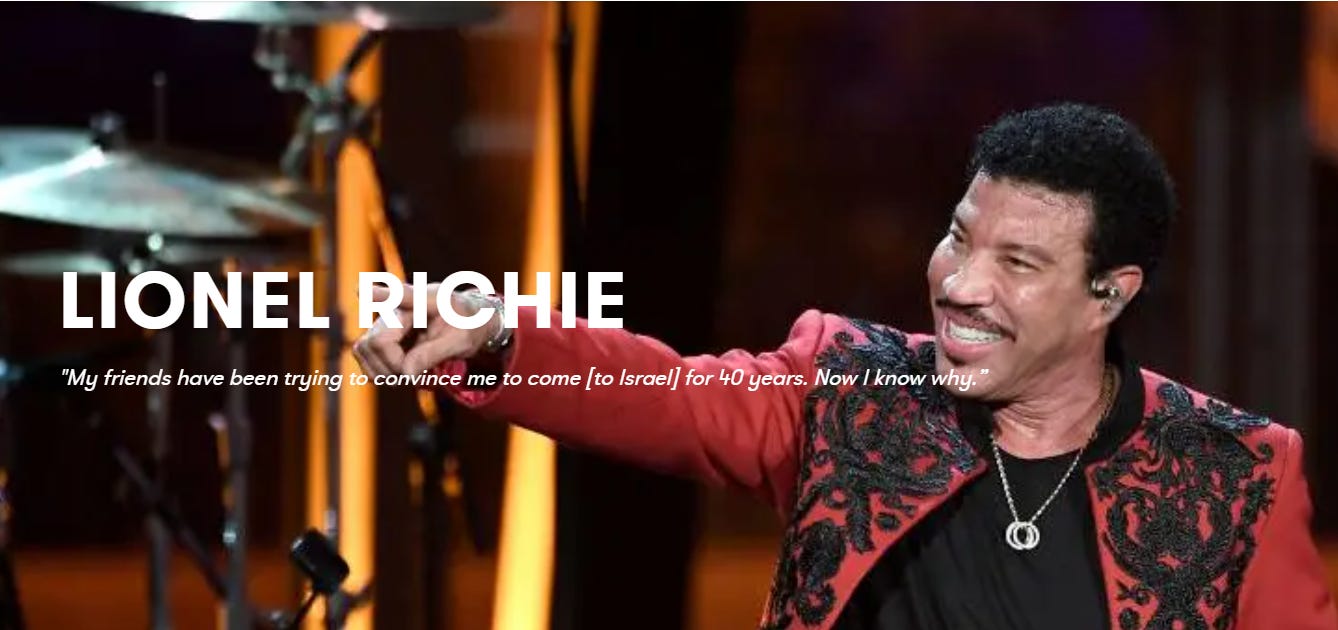
Top musicians come from around the world to perform in Israel, mostly to give concerts in Tel Aviv, and every year the number is increasing! Madonna, Justin Beiber, Justin Timberlake, Lady Gaga, and Paul McCartney are just some of the big names who have given concerts in Israel in recent years, and there are a number of other top international musicians who have upcoming Israel concerts. Below you’ll find the latest.
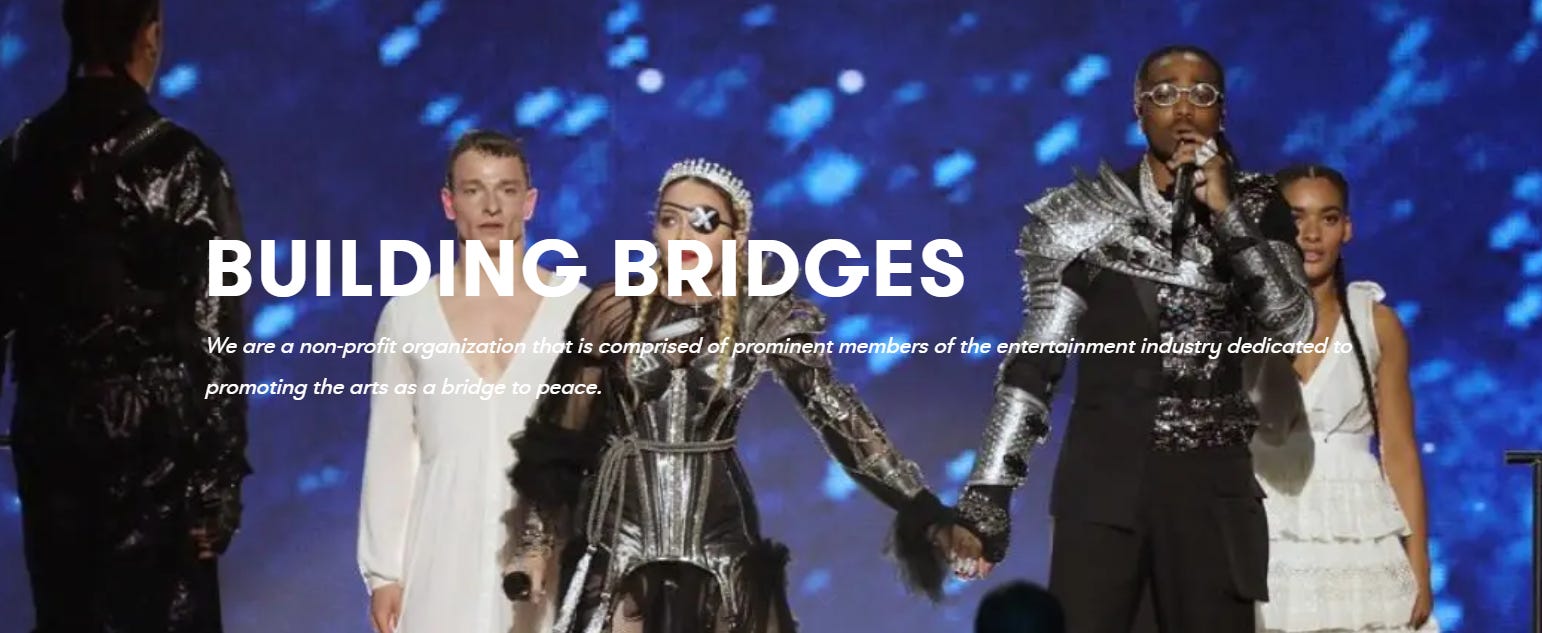

Go ahead, never screen your food, drink, music, entertainment, education — let the JEWISH Terror IN:
Amy Schumer, Mila Kunis, Jerry O’Connell, Erin Foster, Matthew Weiner, Anthony Edwards, and Matisyahu join Liev Schreiber, Helen Mirren, Gene Simmons, Scooter Braun, Boy George, Mayim Bialik, Sharon Osbourne, Debra Messing, Emmy Rossum and 1,000+ celebrities and entertainment industry professionals who reject attempts to ban Israel from Eurovision.
LOS ANGELES (April 15, 2026) — More than 1,000 leaders from the entertainment industry have signed an open letter by the non-profit entertainment industry organization Creative Community For Peace in support of the continued inclusion of Israel in the Eurovision Song Contest and in support of the contestants.
The initial letter was issued in response to campaigns calling on the European Broadcasting Union to exclude Israel from the event and urging participating countries and artists to withdraw.
At the time, Scooter Braun said, “Music is a place for unity not division. It is a language that should always bring us together. Artists should never be discriminated against for who they are, who they love, or where they’re born. These boycott efforts do nothing but distract from the uplifting and unifying power of music – something we need now more than ever.”
While Gene Simmons said, “Music unites people from all backgrounds. It’s the one language that everyone can understand. It’s a beautiful thing and a great way to bring people together. Those advocating to exclude an Israeli singer from Eurovision don’t move the needle towards peace, but only further divide the world.”
And Mayim Bialik said, “After a horrendous violent attack on Israeli civilians, calls for boycotts and excluding Israeli artists from international events simply because they are Israeli is abhorrent and shameful. Targeting Israeli musicians in this way tarnishes the unifying spirit that is Eurovision.”
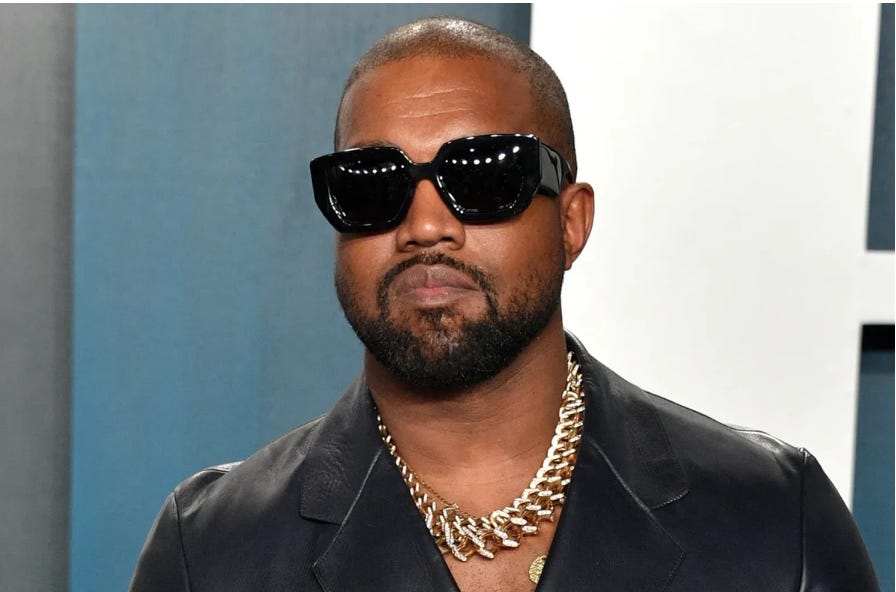
Kanye West’s Unlikely New Concert Partner: Live Nation Israel.
Here, from Rolling Jew, err, Stone:

[Jewish editors and writers have profoundly shaped Rolling Stone since its 1967 launch, serving as the cultural bedrock for the magazine’s editorial voice, political reporting, and music criticism. Many of the most notable figures in the publication’s history have Jewish backgrounds, spanning founders, editors-in-chief, and legendary contributing writers]
That an Israeli company would work with an artist who’s been disparaging of the Jewish people is confounding. After all, London’s massive Wireless Festival, where Ye was scheduled to headline over three nights in July, called off its 2026 edition entirely once the artist’s visa was revoked. “We are clear that the past comments and actions of this artist are offensive and wrong, and not reflective of London’s values,” a spokesperson for London Mayor Sadiq Khan told Rolling Stone last month. One has to wonder if the Israeli staffers at Live Nation Central Asia had any such moral qualms, or if it’s simply a matter of business.
It appears the concert giant made the quiet, if economically sensible, decision to move the small Israel team to nearby territories, dubbed Central Asia. Operating out of Tbilisi made sense as well. A three-hour flight from Tel Aviv, Georgia is a popular tourist destination for Israelis, and has reportedly seen a steady increase in Israeli visitors since the Oct. 7 attack. Its Jewish roots are also deep, dating back hundreds of years.
As a former republic of the Soviet Union, Georgians fought against the German army during World War II — sharing a common enemy in the Nazis — at a high human cost on the battlefield. Jewish citizens, however, faced persecution both before and after the war, as Soviet authorities clamped down on Jewish life in the form of arrests, arson, or other violent antisemitic incidents, which continued into the 1960s. It declared its independence from the Soviet Union in 1991. Today, it’s estimated the native Jewish population in Georgia numbers between 500 to 1,000 residents.
Ahh, the special MENA edition = https://mena.rollingstone.com/
Commentary
One Day, Not Everyone Will Be Against This
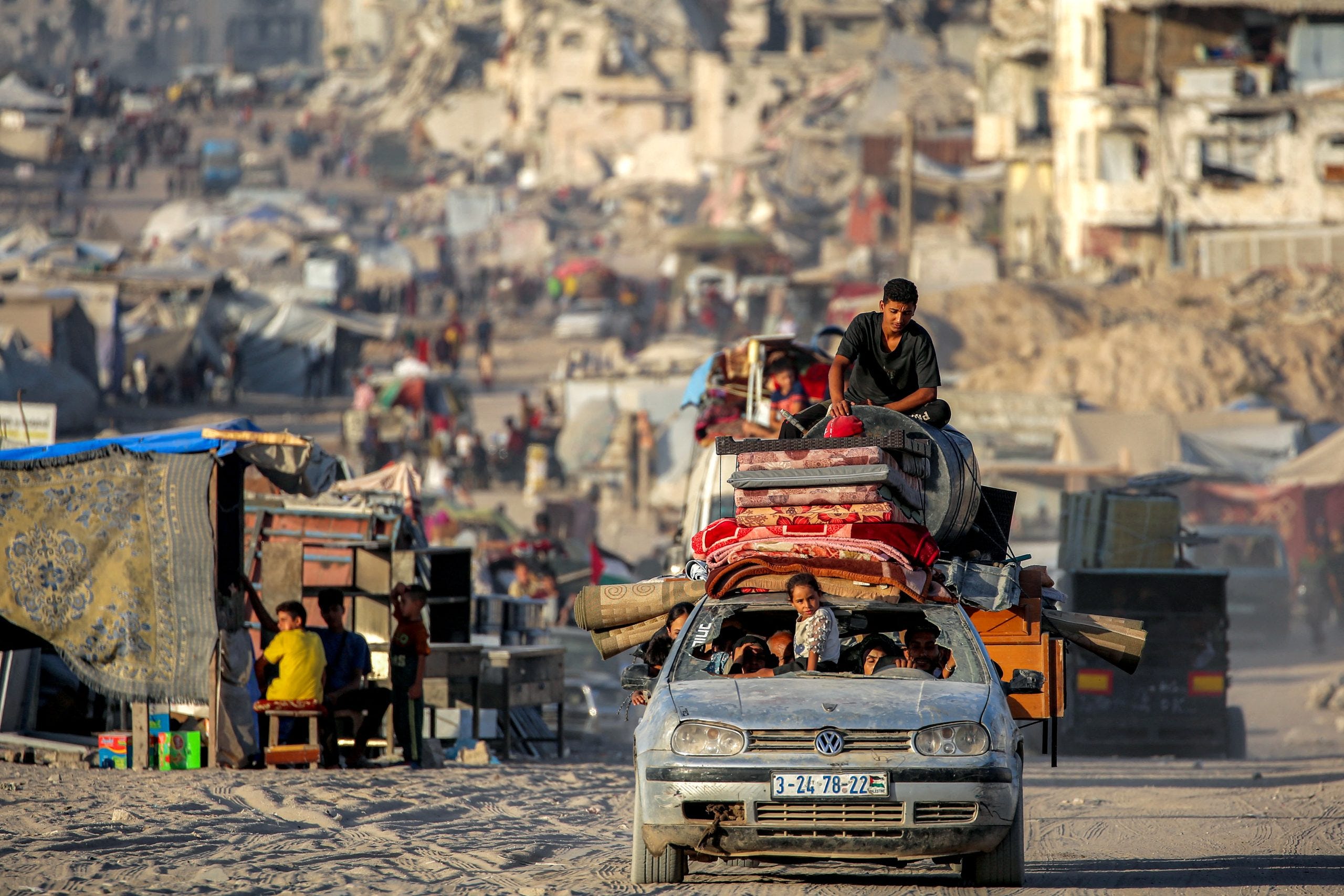
At the time of writing this, my inboxes are overwhelmed with messages from friends in Gaza.
“The shelling”, one tells me, “is closer than it’s ever been before”.
Others send updates about what food they have been able to gather while others send desperate updates about their forced displacement to the south of Gaza, as Israel intensifies its ethnic cleansing offensive in Gaza City.
Palestinians in Gaza find themselves in what can be characterized as the final solution stage of what has now been a two-year long genocide. The resistance on the ground continues to push back against the attempted Israeli takeover, but watching from afar—the destruction, the dismantling and the desperation—renders one into disparate parts of oneself. Nothing is recognizable, everything smells rotten; the stench of the decay does not leave your nose no matter which way you turn.
We become witnesses to not just the bloody collapse of a nation but to the collapse of our own worlds we exist in on a day-to-day basis, intimate and shared.
In his fiery book One Day, Everyone Will Always Have Been Against This, journalist Omar El Akkad traces the anatomy of that decay in institutions and ideals—of democracy and freedom—he once believed in, but that ended with “the slaughter”: the slaughter of Palestinians that began in October 2023. The title of the book takes from El Akkad’s October 25, 2023 post on X, in which he wrote:
“One day, when it’s safe, when there’s no personal downside to calling a thing what it is, when it’s too late to hold anyone accountable, everyone will have always been against this.”
The sentiment is familiar: that to be against evil, after it has come to a punctuated end, is an inevitability.
Many believe that this will happen with the genocide of the Palestinians. Those who stood by silently as the bombs, bullets and disease annihilated the population of Gaza will come to condemn it, will come to rewrite their silence; those who cheered it on, justified it, will come to collect their accolades for their eventual moral repositioning.
Believers of this point to recent rhetorical “pivots” by governments and public personalities in the US-backed Israeli starvation of the Palestinians. Over July and August, we were inundated with statements of condemnation, demands of “letting aid in” and incensed podcasts as images of dead, emaciated Palestinians—especially children—have been difficult to justify and ignore.
Since then, a quiet has set in, and in that quiet is the loud, resounding truth that no, not everyone will have or even pretend to have moral clarity on Gaza. This is because Gaza reveals the primary contradiction; it unearths the foundational lie of our current world order and its governing morality.
Most of the world, by every measure, is already against the extermination of the Palestinians. Hundreds of thousands continue to flock to their streets, across the world, demanding an end to the genocide and the occupation.
The overwhelming majority of the world’s governments support an immediate ceasefire. Many major US academic groups have come out to condemn the Israeli campaign. Over 250 media outlets across seventy countries staged a front-page protest of Israel’s targeting and massacring of Palestinian journalists. Major human rights groups have called what is happening to the Palestinians a genocide and the biggest academic association of genocide scholars just passed a resolution coming to the same conclusion.
These examples are, of course, a drop in a bucket showing just how much of a moral consensus there already is on what is happening to the Palestinians. There isn’t a blindness to the horrors that have been live-streamed to us every single day for two years.
And so this idea, that all evil eventually becomes undeniable, that every genocide or slaughter eventually reaches the point where we all nod in agreement that “yes, that was wrong, yes, we were against it” becomes a sort of comfort blanket.
Acknowledging that the opposite is more likely is not only a terrifying indictment of people, institutions and ideals we believe in fundamentally but also is an unwilling confrontation with what our immediate present and our future are being moulded into.
The belief in eventual moral clarity lets us believe that time itself will sort out moral failure, that history has a correcting function.
But Gaza is not Rwanda; it is not Srebrenica.
The very nature of the existence of Palestinians, post-Nakba, makes it a story that cannot be neatly packaged into “good and evil” by the very endowers of power who believe in and perpetuate the right of that evil to exist.
There is too much invested in maintaining that this is not what it is. There’s too much at stake to admit, fully, that this is what it is. And that’s still assuming that those who wield power in this world even care.
In July, U.N. Special Rapporteur Francesca Albanese released From Economy of Occupation to Economy of Genocide, a report tracing the sharp rise in global corporate investment in Israel since October 2023. The findings are blunt: while Israel’s assault has devastated Palestinian lives and land, the Tel Aviv stock exchange soared 213%, adding $225.7 billion in market gains. Albanese identified forty-eight corporate actors – along with their webs of subsidiaries, licensees, and partners across weapons, tech, finance, construction, and energy – profiting directly from the war. Investment is surging not in spite of Israel’s actions, but because of them.
And nowhere is this more visible than in the boom in Israeli drones, cybersecurity, and A.I. American tech companies have poured money in precisely because of how these tools have been field-tested on Palestinians, especially in Gaza.
As journalist Anthony Loewenstein argues in The Palestine Laboratory, this is not new: for decades, Palestinians have been the proving ground where Israel and its partners refine technologies of surveillance and repression—machinations of social and civilian control that are then exported regionally and globally to governments that otherwise offer restrained lamentations on the conditions and suffering of the Palestinians.
And then there is the ideological and political investment: how could the United States, the leading perpetrator of the genocide of Palestinians and regional destabilization, ever come to recognize its own crimes when it has yet to do even a modicum of the same for the Indigenous peoples it annihilated to build itself? How could it offer a mea culpa when every institution–from education to media to government to corporate and tech–has a vested financial and ideological interest in the eradication of Palestinians?
History here can serve as instruction: the first genocide of the 20th century, against the Herero and Nama peoples, was carried out by the German Empire; it was there that the concentration camp was perfected. Germany only acknowledged its crimes a century later, in 2004, with a carefully hedged apology and no real accountability. To this day, only thirty countries recognize the Armenian genocide (1915-1917) committed by the Ottoman Empire. And this list is long: entire nations have faced expulsion and extermination, their memory buried or contested while their killers were never condemned. Recognition, if and when it comes at all, is always partial and delayed with a sanitized retrospective meant to ease the guilt of those who were complicit. The Holocaust may be the standard of that which we all universally condemn and compare to, but it is exceptional in that by design.
At the risk of sounding Huntingtonian, there is a core “civilizational” logic that sustains Zionism, beyond Israel: erasure is recast as survival, dispossession as self-defense. In this framework, the genocide in Gaza is not an aberration but it is the logical outcome; it is not unspeakable but necessary–even if sometimes tragic and “crossing a line”.
Without the dismantling of this ideological foundation, there will be no punctuated end to the evil itself—and thus no moral correction.
And that’s why the repression is layered so aggressively: propaganda disguised as journalism, algorithmic suppression, the shadow-banning of Palestinian voices, governments criminalizing protest, schools and workplaces punishing dissent while protecting those who cheer extermination. What we have been witnessing is the system laid bare: a system designed not just to kill, but to erase even the naming of the killing.
If moral clarity does come, it will not be against the system that carried out the extermination. It will be against the images: the photographs of starving children, the bodies pulled from rubble, tragedies easy to lament once the killing has moved out of view. It will not bring reparations or accountability or the dignity of Palestinian political existence. It will not recognize the resistance of a people who fought annihilation. Instead, it will package Palestinians as a pitiable tragedy, stripped of politics and struggle.
Gaza buried the myth that “everyone is eventually against evil.” The truth is this: Israel and the United States can cage Palestinians and starve them of food, water and light. They can burn families alive, execute fathers before their children, mark mothers with numbers and call it order for “Jewish safety.”
And still, it won’t matter.
It won’t matter how closely these scenes mirror history’s darkest crimes, because outrage was never about the method.
And so Gaza will not be remembered as the place where the world finally stood hand in hand and turned against unfathomable evil, but rather the place where the world chose to let it reign.
Edward Bernays would love the Jews at Rolling Stone with their focused Propaganda issues:
- Rolling Stone UK
- Rolling Stone Australia / New Zealand
- Rolling Stone France
- Rolling Stone Germany
- Rolling Stone Japan
- Rolling Stone Korea
- Rolling Stone India
- Rolling Stone Argentina
- Rolling Stone Brazil
- Rolling Stone En Español (Mexico and Latin America)
- Rolling Stone Africa (launched in 2024)
- Rolling Stone Philippines (launched in 2024)
- Rolling Stone MENA (Middle East and North Africa)
- Rolling Stone Canada (re-launched in early 2026)
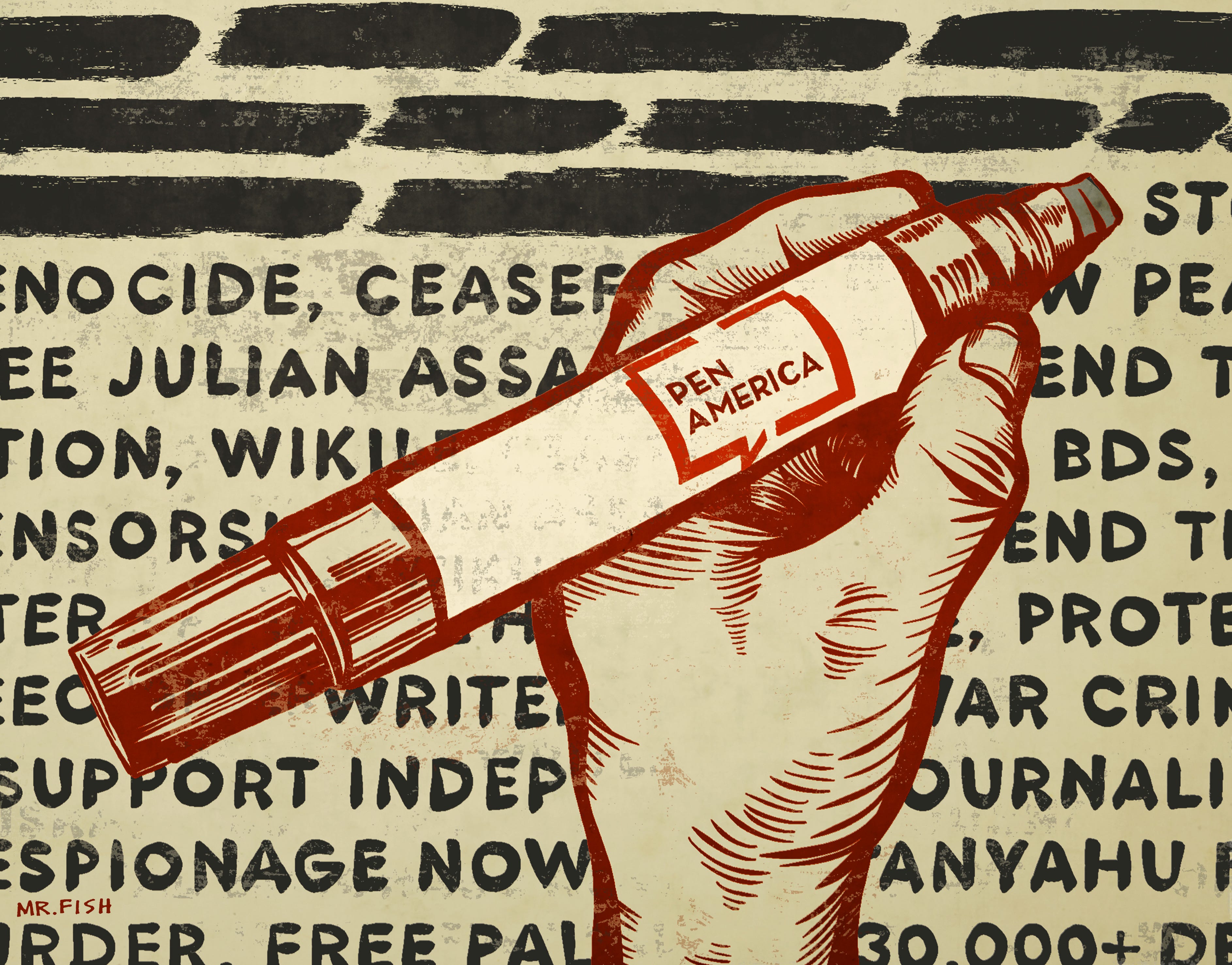
Poison Pen – by Mr. Fish
Chris Hedges: PEN America, an organization founded to defend persecuted and censored writers, has once again made a mockery of itself with its call to protect Israeli writers from discrimination.
Yes. Israeli writers.
Its most recent screed, “A Silent Moratorium,” is so tone deaf and embarrassing that it triggered a widespread backlash. PEN America’s president, Dinaw Mengestu, resigned in protest.
Mengestu told The New York Times the post is the most recent in a series of moves he felt are counter to the organization’s values and could harm efforts to preserve freedom of expression.
“This report is not an isolated incident,” Mengestu said. He added, it “continues this approach toward defending some rights while not defending others.”
I doubt Mengestu’s resignation will change much. At best, it will make PEN America more circumspect about exposing its moral bankruptcy.
“A Silent Moratorium” is authored by Editorial Director Lisa Tolin, Chief Communications Officer Geraldine Baum and consultant Malka Margolies. It criticizes what it calls “a widening cultural isolation” of Israel. It decries “the blatant hostility, discrimination, and hate that some Jewish and Israeli authors” face. It calls the loss of opportunities for Jewish writers “devastating” and complains that Israelis who write for U.S. magazines “are put through a series of ideological checks, such as whether they use the word genocide.” It condemns the call by more than 7,000 writers and literary professionals, who in the fall of 2024 signed a pledge not to work with Israeli publishers, festivals, literary agencies, and publications which “are complicit or have remained silent observers of the overwhelming oppression of Palestinians.” And it defends Zionists, stating:
In interviews with PEN America, Israeli and Jewish writers described a climate where Zionism is treated as a slur. While there remains no popular agreement on what it means to be a Zionist, recent survey data suggests that one-third of American Jews self-identify as Zionist and nearly nine in 10 say they support Israel’s right to exist as a Jewish and democratic state. Calls to exclude Zionists from publishing could therefore mean excluding people with a wide range of voices and views.
For the record, Zionism is explicitly racist. It is an ideology used to justify the occupation and colonization of historic Palestine and the ethnic cleansing and annihilation of its native inhabitants. Hateful ideologies cannot be normalized because a third of American Jews identify as Zionists. The Nazis, after all, had about the same level of support among German voters — 37.3 percent — in the 1932 election.
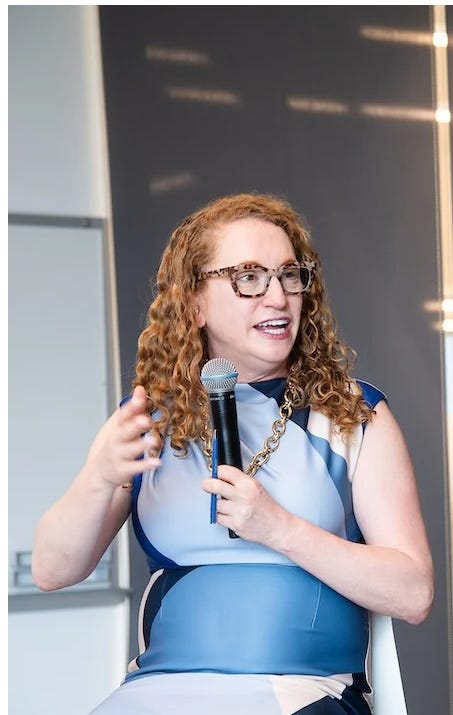
“PEN America peddles agitprop,” I wrote in 2024. “Writers and editors, such as Assange, who expose the lies and crimes of the state, are discredited, while propagandists for U.S. imperialism and the apartheid state Israel — even as it carries out genocide — are fêted.”
PEN America lost its way over a decade ago, when in 2013 it appointed a former Clinton State Department official, Suzanne Nossel, as its Executive Director. That year, I won the PEN Center USA First Amendment Award. I was scheduled to participate as a speaker at the PEN World Voices Festival when Nossel’s appointment was announced. I refused to take part in the festival and resigned from PEN America in protest.
[Suzanne Nossel is Jewish and has frequently spoken about how her Jewish identity and family history directly shaped her career in human rights and free expression. ]
“This appointment makes a mockery of PEN as a human rights organization and belittles the values PEN purports to defend,” I wrote in my resignation letter:
I spent seven years in the Middle East, most of them as the Middle East Bureau Chief of The New York Times. The suffering of the Palestinians under Israeli occupation and the plight of those caught up in our imperial wars in countries such as Iraq are not abstractions to me. Nossel’s relentless championing of preemptive war — which under international law is illegal — as a State Department official along with her callous disregard for Israeli mistreatment of the Palestinians and her refusal as a government official to denounce the use of torture and use of extra-judicial killings, makes her utterly unfit to lead any human rights organization, especially one that has global concerns. PEN American Center, by appointing Nossel, has unwittingly highlighted its own failure to defend and speak out for our dissidents, especially Bradley Manning. I hereby resign from PEN. I will wait until the organization returns to its original mandate to defend those who are persecuted, including those within the United States, before returning to the organization.
PEN Canada responded to my resignation by offering me membership, which I accepted.

