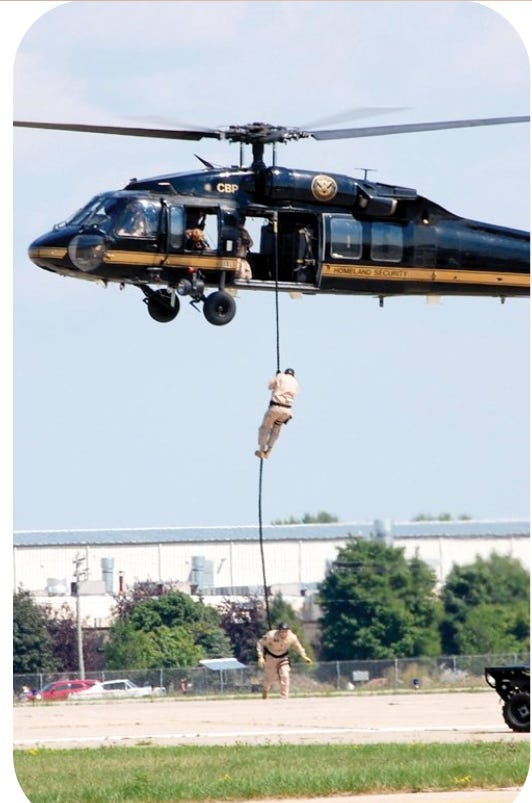
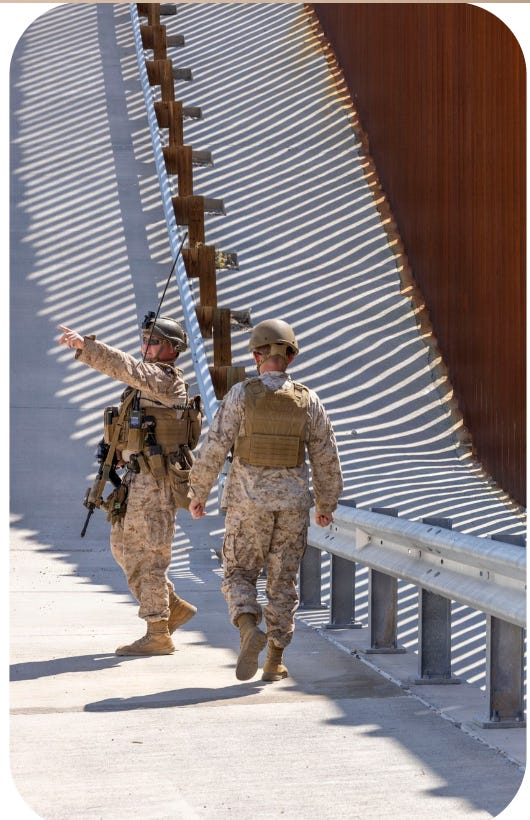
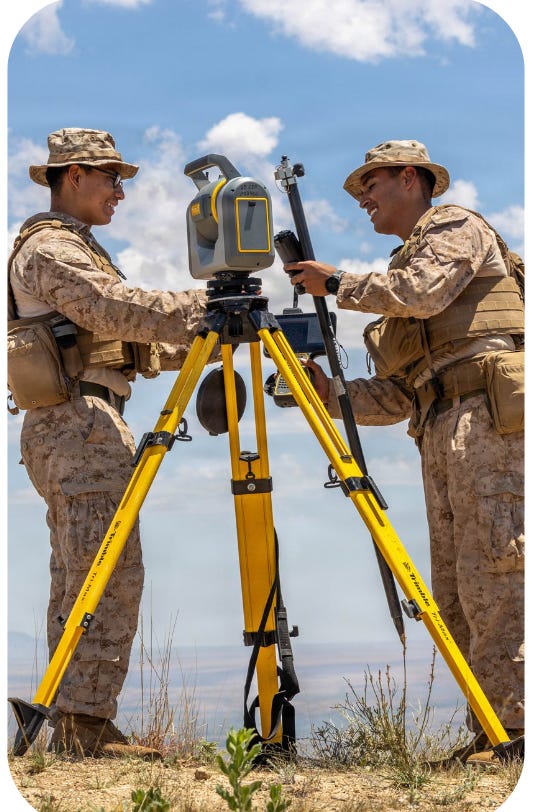
And there are hundreds of these summits and conferences and lobbying meetings and believe you me, many are in secret, unlike this one: Border Technology Summit
And there is nothing the leftists, communists, and protestors can do because America is full-spectrum militarized “space.” All great people no?
This September’s Border Technology Summit in San Diego, California is set to bring together 400+ senior leaders from U.S. Customs and Border Protection, U.S. Border Patrol, Immigration and Customs Enforcement, state and local law enforcement, and industry innovators, all committed to driving the next generation of border security.
The 2026 conference agenda is built around five interconnected themes that illustrate how federal agencies are evolving border operations to address rising trade and travel volumes, increasingly sophisticated criminal networks, and the need for greater operational integration. Each theme is reflected through multiple sessions that move beyond individual technologies and focus on mission outcomes. The following report highlights these themes and how they will be explored at the 2026 Border Technology Summit.
+—+
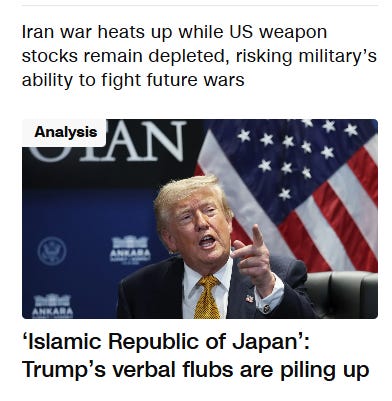
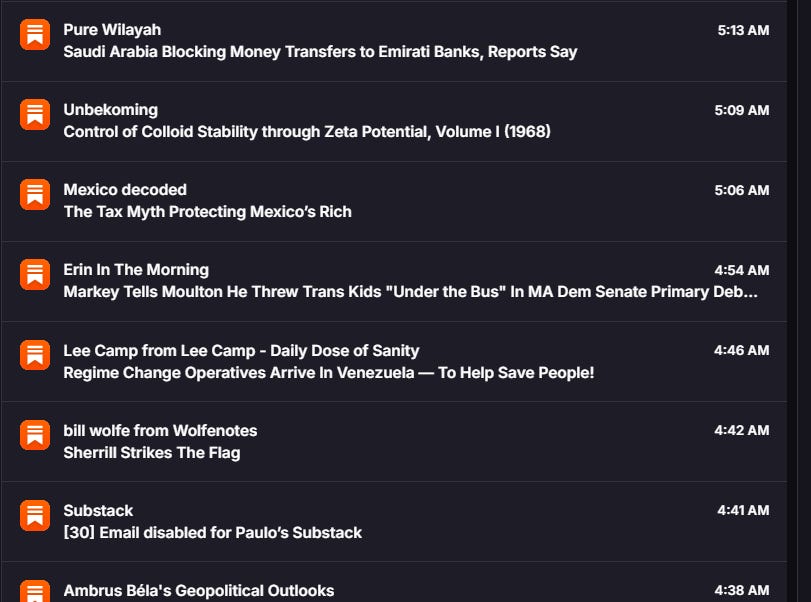
You want headlines taking us to HELL?
Trump rule says habitat destruction does not harm endangered species
Norway’s World Cup kit reflects the nation’s Christian heritage with meaningful historic details
I’d rather my house burn down than get cancer’: Two California communities fight to save their forests
Judge vacates convictions of 4 Proud Boys in Jan. 6 Capitol insurrection
Norway’s other World Cup campaign: Getting Israel kicked out of soccer
Portland backs PGE plan to cut hundreds of mature Forest Park trees in what critics call a backroom deal
Outbreak of diarrhea caused by cyclosporiasis spreading in US with cases reported in CA, CDC says
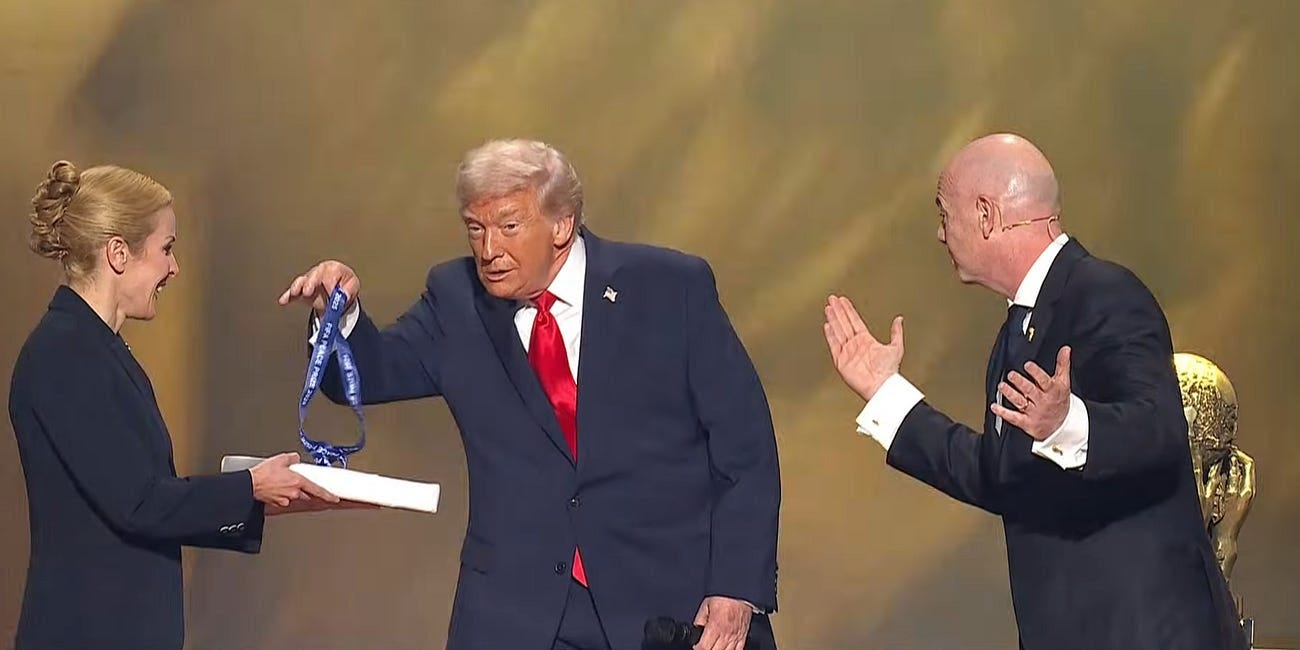
European Lawmakers Demand Investigation Into FIFA President Over U.S. Red Card Reversal
Princess Leonor of Spain Completes Her Military Training
He left Mongolia to pursue higher education. He returned as a US soldier.
How Trump And Israel Are Crafting A New World Order
Making Military Bases and Their Communities More Resilient
The fact that they are hard-core Jews and hard-core Zionists and hard-core bastards, nah, not relevant, so says the No Kings Day geriatrics!
Twelve Democratic attorneys general filed suit Monday to stop Paramount Skydance’s $110 billion purchase of Warner Bros. Discovery, which is the parent company of CNN and other major media entities. California Attorney General Rob Bonta said the merger would lead to higher prices for customers, lower quality, and less content for audiences everywhere, from movie theaters to living rooms.
It’s worth mentioning that if this deal goes through, pro-Trump billionaire Larry Ellison and his son David would singlehandedly own CNN, CBS News, Warner Bros., and HBO Max. That’s a homemade right-wing media empire.
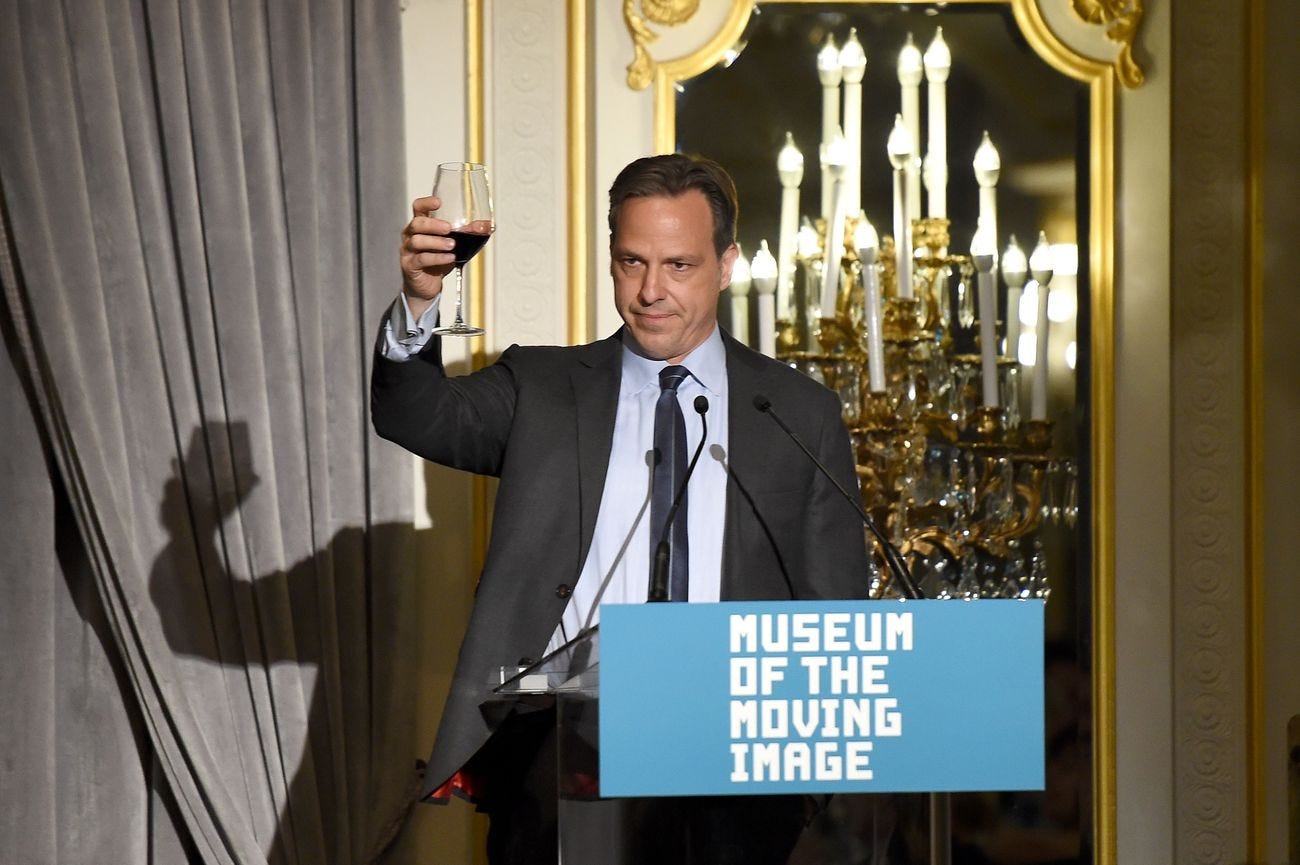
It’s never relevant. Yes, Kristen Welker’s father, Harvey Welker, is Jewish, and her mother, Julie Welker, is Black. Jake Tapper is Jewish and has been open about his upbringing and faith. Raised in the Philadelphia area, he attended the Jack M. Barrack Hebrew Academy (formerly Akiba Hebrew Academy). He has frequently woven his Jewish heritage into his personal and professional life.
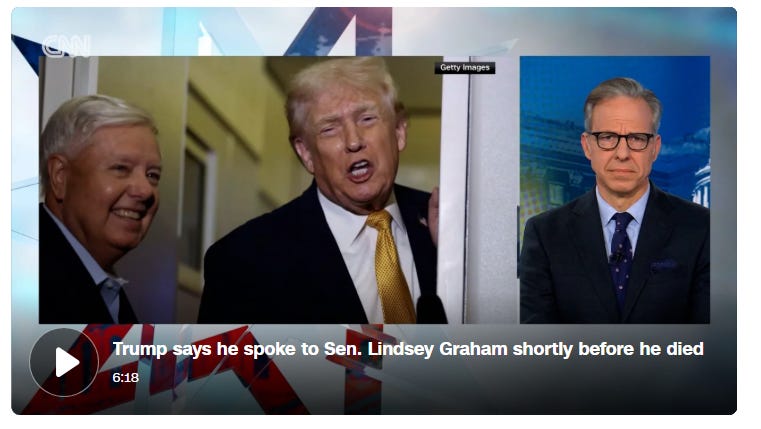
Trump called into NBC’s Meet the Press Sunday to talk about the late Senator Lindsey Graham. But when host Kristen Welker asked him about the closure of the Strait of Hormuz, Trump snapped at her.
“I don’t want to talk about it because I want to honor the life of Lindsey Graham,” Trump said. “I told you that before the call!”
Welker just said “yeah” and moved on. Journalist Tommy Christopher, writing on the Jim Acosta Show’s official Substack, said that sounded a lot like conditions had been set ahead of time for the interview, and that Welker obediently got back in line once Trump pushed back on her trying to step outside of the agreed-upon terms.
CNN host Jake Tapper caught similar heat for his own sit-down with Trump the same day, criticized for letting the president steer the conversation without much pushback at all. Like Welker, Tapper tried to get Trump to clarify the situation in the Strait of Hormuz. But Trump curtly responded, “don’t talk about it,” and told Tapper to “talk about the reason you asked me to speak.” Tapper meekly said “OK” and got right back in line.
Bari Weiss
Background: She was born and raised in a prominent Jewish family in Pittsburgh, attended a Jewish day school, and spent formative time in Israel.
Identity: She identifies publicly as a gay Jewish woman and an outspoken Zionist.
Public Work: Her Jewish identity is core to her public career. She is the author of the book How to Fight Anti-Semitism and started her career writing for Jewish media outlets.
Larry Ellison
Background: The billionaire co-founder of Oracle was born to a Jewish mother and raised in a Reform Jewish home by adoptive Jewish relatives.
Identity: He has stated on the record that he does not actively subscribe to or practice religious Judaism, but he maintains a deep personal and political connection to Israel. [1]
Philanthropy: He is a major donor to pro-Israel and Jewish causes, historically giving tens of millions of dollars to organizations like the Friends of the Israel Defense Forces (FIDF).
David Ellison
Background: As the son of Larry Ellison, he was raised in the family’s Jewish heritage.
Connection: While he is less publicly vocal about his personal religious practices, his media ventures frequently align with his family’s pro-Israel stances. Under his leadership, his production company Skydance Media donated $1 million to Israeli humanitarian relief, and his acquisition of The Free Press further cemented his ties to prominent Jewish media figures.
All fucking Jews who believe in Zionism and the Occupied Jewish State in the Country of Palestine, they need to be shot down like rabid DOGS.
Prosecutors in Minneapolis announced Monday that the Trump administration finally turned over evidence they’d been sitting on for months in the killings of Renee Good and Alex Pretti, the two U.S. citizens federal agents killed this January. That includes body camera footage, statements, and Good’s damaged SUV.
Hennepin County Attorney Mary Moriarty celebrated the development, but Attorney General Keith Ellison said it should never have taken this long. The new evidence was reportedly overturned after federal officials asked the state for evidence in a separate case involving an ICE agent charged with assault. The state basically said fine, but only if it goes both ways.
Now, prosecutors in Houston say they’re getting the same runaround in trying to investigate last week’s fatal shooting of Lorenzo Salgado Araujo, the father of three with no criminal record who was killed while he was on his way to work. They don’t even know the names of the officers who pulled the trigger.
At least nine people have died at the hands of ICE since their newest enforcement campaign began. And nobody’s been charged in any of those killings.
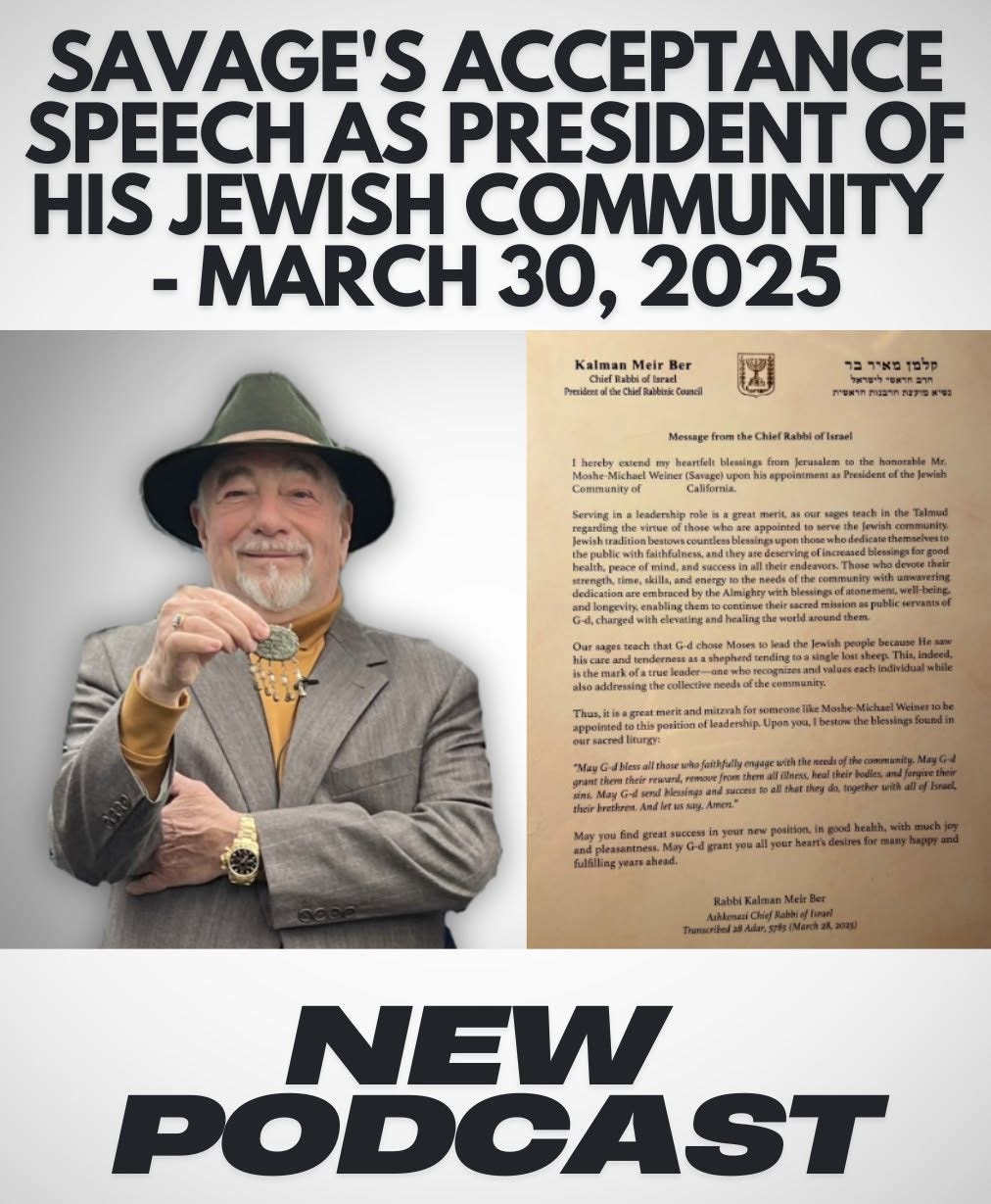
Nah, it doesn’t matter that Stephen Glosser-Miller or Michael Weiner Savage are Jews!
Yes, conservative talk radio host Michael Savage is Jewish. He was born Michael Alan Weiner in the Bronx, New York, to Jewish immigrant parents.
Family and Personal Background
Parents: His father, Benjamin Weiner, was a Jewish immigrant from Russia, and his mother, Rae, was from Montreal, Canada.
Trump on Sunday shared a video calling for “hardcore communist bastards” to be deported, notably naming New York City Mayor Zohran Mamdani(D).
Conservative pundit Michael Savage’s 49-minute-long video, which he posted on July 4, claims that democratic socialist candidates running as Democrats have been turning the U.S. into a socialist country through, for example, the launch of “free” programs. Savage claimed the country was turning into Cambodia under the dictator Pol Pot.
“That is exactly what Mamdani and the Democratic Socialists will do to you,” Savage said. “Forget the smirks, forget the smiles, forget the bulls— that it’s like Denmark and Norway. These are hardcore communist bastards who must be stopped, criminalized and deported. I’m clear as a bell on this. We will fall if they are not deported.”
Trump’s sharing of the message is notable given his relationship with Mamdani. While Trump has been hammering Democrats for moving toward “communism” with the advancement of several democratic socialist candidates, he has at times complimented Mamdani. Trump famously had a friendly meeting with Mamdani at the White House after the democratic socialist won his city’s mayoral race last year.
Savage said Mamdani, Sen. Bernie Sanders (I-Vt.) “and the other scum who should be criminalized and deported –– I’ll send them to Uganda … before they spread the cancer.” The pundit railed against democratic socialist candidates who recently won Democratic primary elections across the country.
+—+
God, I hate JEWS. From the River to the Sea, Palestine will be Free of JEWS.
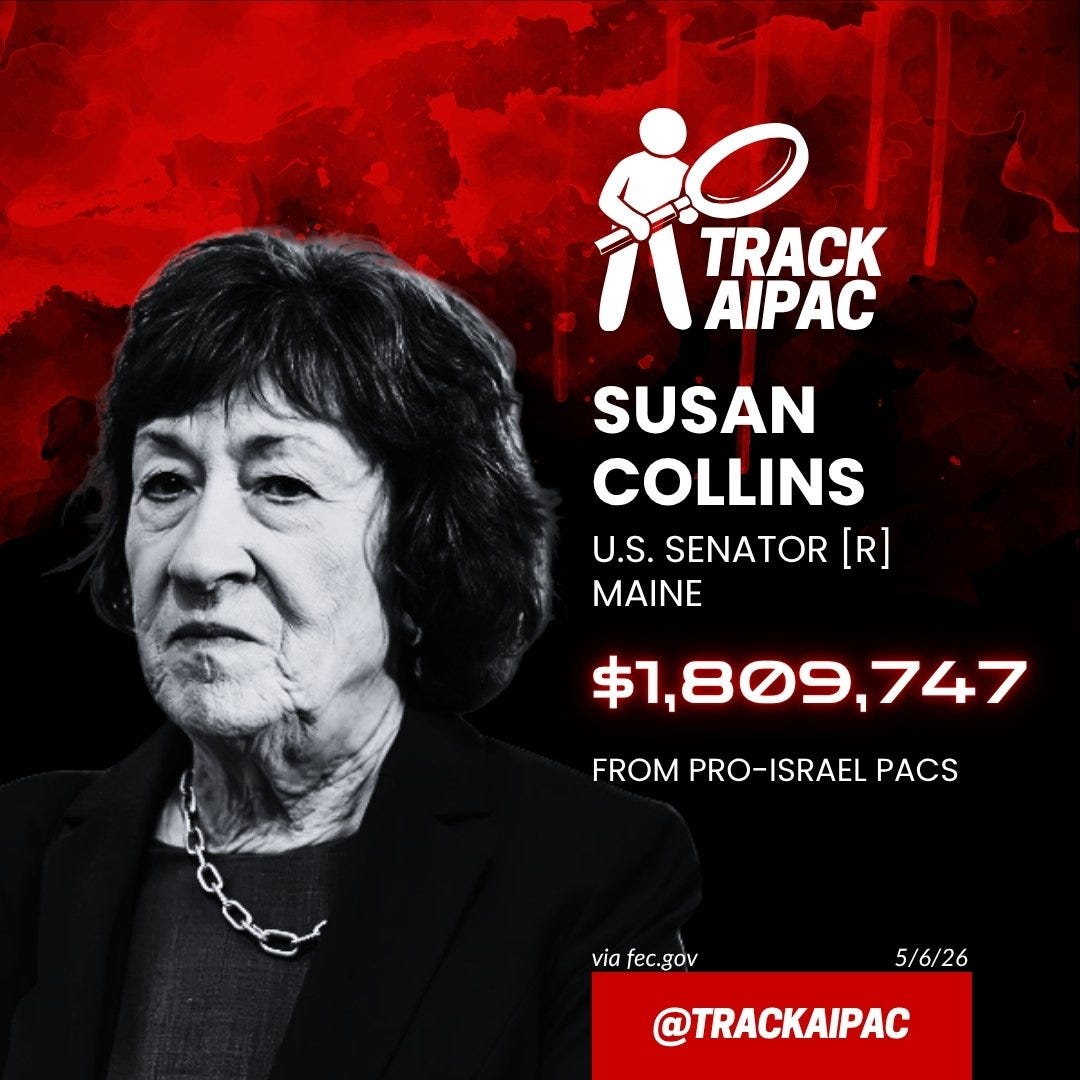
Congress, the fucking AIPAC sodomized cunts:
Trump has formally notified Congress that the United States has entered a “new” war with Iran, triggering a new 60-day War Powers clock that allows military operations to continue without congressional authorization. In a July 10 letter, Trump said the renewed conflict began with U.S. strikes on July 7 and that American forces remain prepared to take additional military action as needed. The announcement follows Trump’s declaration that the ceasefire with Iran is over, as fighting intensifies around the Strait of Hormuz, where U.S. forces have struck more than 300 Iranian military targets in the past week. The move is expected to reignite congressional battles over presidential war powers after bipartisan majorities in both the House and Senate previously voted to oppose continued military action without explicit approval from Congress.
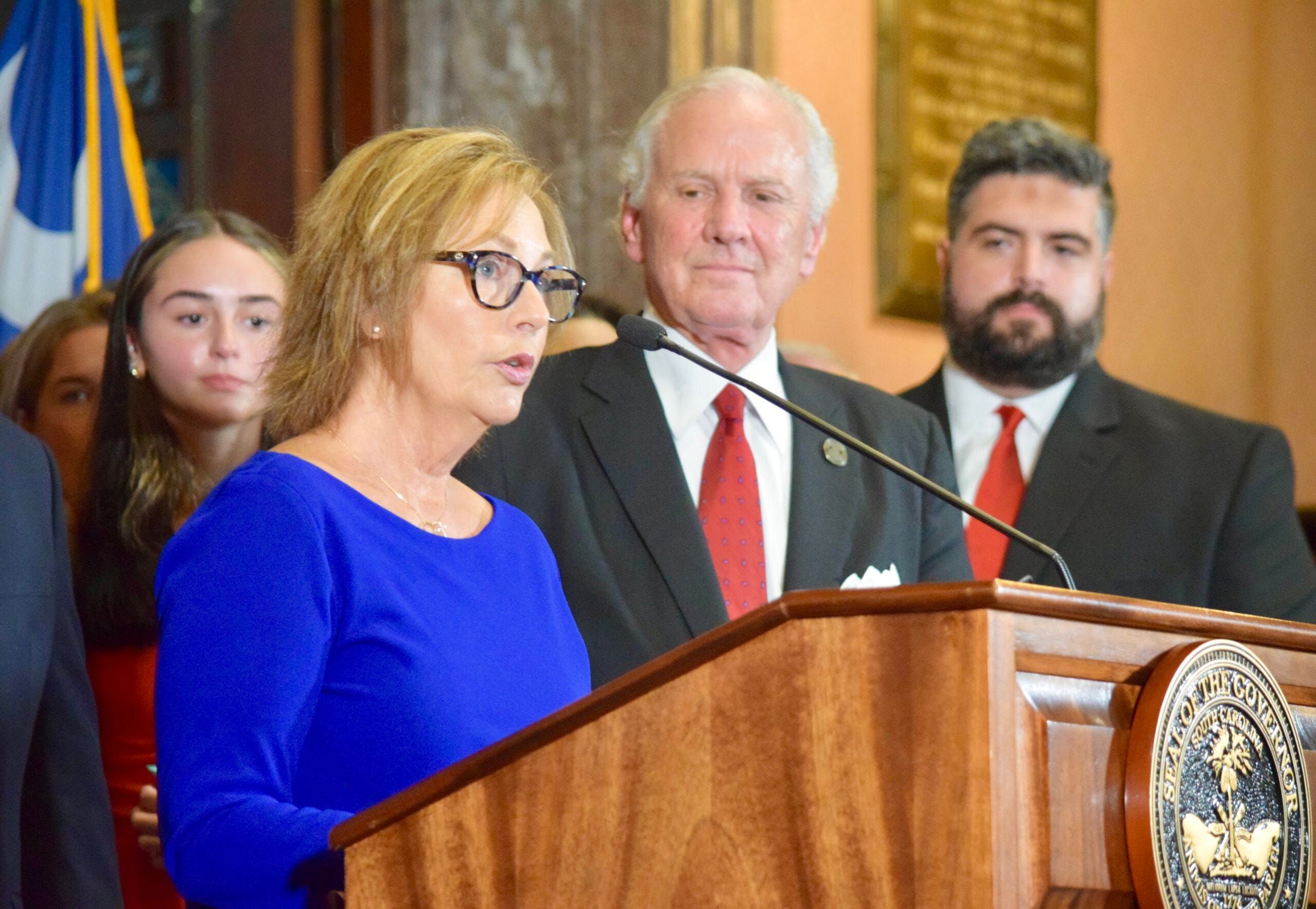
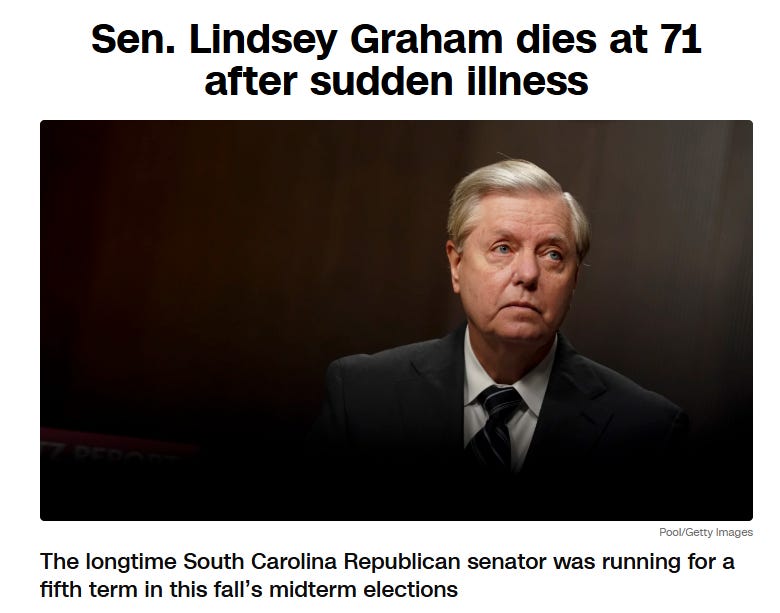
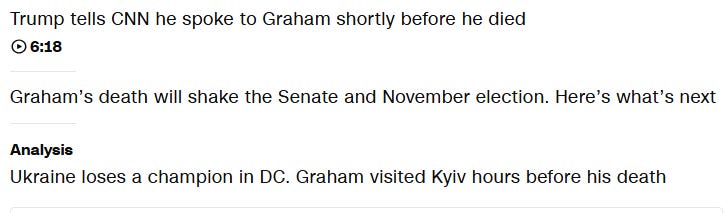
Fucking Banana Republic: Darline Graham Nordone will finish out the term of her older brother, the late Sen. Lindsey Graham, who adopted and raised her following their parents’ deaths.
Gov. Henry McMaster’s appointment Monday comes a day after word of Graham’s sudden death, at the age of 71, stunned not only South Carolinians but people around the globe.
“It’s my honor to ask his little sister to finish his work,” the governor said in making his announcement at the Statehouse. He took no questions from reporters.
Graham Nordone, who heads the state Commission for the Blind and has spent her career helping people with disabilities find jobs, will fulfill the term that expires in January. Voters will decide through a special GOP primary next month who will be on the November ballot for the next six-year term.
Darline Graham Nordone, center, accepted the appointment by South Carolina Gov. Henry McMaster, right, at the Statehouse Monday, July 13, 2026, to serve out the remainder of the term for her late brother Sen. Lindsey Graham. (Photo by Jessica Holdman/SC Daily Gazette)
“Lindsey has always been there for me, and now, I’ll be there for him,” she said.
The brief news conference ended with her speaking to her brother: “I miss you more than I can even put into words. But I’m going to do this. I got it.”
The “Conservative” Comment (2020): During a South Carolina Senate debate, Graham stated that young African Americans and immigrants can “go anywhere” in the state, but “just need to be conservative, not liberal.” Critics argued this conditioned inclusion on adopting a specific political ideology.
The “Iranian” Comment (2018): On Fox and Friends, while discussing the possibility of taking a DNA test, Graham mused, “I’ll probably be Iranian. That’d be, like, terrible.” The remark was widely condemned as bigoted by Iranian-American advocacy groups. [
Denying Systemic Racism (2021): During a Fox News Sunday interview, Graham strongly denied the existence of systemic racism in the United States, pointing to the election of President Barack Obama and Vice President Kamala Harris as proof that the systems are not racist.
Comments on Palestinians (2024): Graham faced intense criticism from civil rights organizations after a social media post where he characterized Palestinians in Gaza as “the most radicalized population on the planet who are taught to hate Jews from birth.”
“It is absolutely disgusting for Senator Graham to state on Fox and Friends that it would be ‘terrible’ to discover that he had Iranian ancestry from a DNA test. This is not the first time that Graham has made bigoted remarks about Iranians. In 2015, he said, ‘I know Iranians are liars’ based on his experience in his dad’s pool hall.
Those columns were never kind, and they were never dull, because Graham was reliably good for a click. Lots of them. Every time his name went in a headline, readers showed up in droves, and the comment sections read like a dime novel.
I’ve thought a lot over the years about why that was, and I think there were three reasons.
The first is the oldest rumor in Washington: that Lindsey Graham was gay. I want to be careful here, because I have no idea whether that was true. He was, in the old-fashioned phrase, a “confirmed bachelor,” who never married, never seriously linked to a woman in public life, and that vacuum was enough for people to fill in the blank themselves.
I’m not going to pretend I know what was true in Graham’s private life. But I will offer my personal opinion. My grandfather used to say, “Where there’s fire, there’s smoke,” reversing an old axiom when he knew, beyond a shadow of a doubt, that a rumor about someone was true.
That’s what I’ll say about Graham. He always denied it, but I always snickered when he did.
In June 2020, “Lady G“ trended on social media after adult film performer Sean Harding alleged that Graham hired male sex workers. And in September of 2024, far-right provocateur and lunatic Laura Loomer publicly urged Graham to come out of the closet, after he publicly criticized Donald Trump’s campaign style.
The second reason is simpler and requires no speculation at all. Graham earned a lot of anger from LGBTQ+ people through his own virulent votes and his virulent words. He was a reliable “no” on protections and bills for our community for the better part of three decades.
And for a lot of people, the depth of the rage aimed at Graham stemmed from the theory that a man voting against us so consistently must be working something out about himself in public, at our expense. I can’t tell you if that hypothetical was right. I can tell you it’s the reason his name showed up in this publication as often as it did.
The third reason is the one that actually defines his legacy, and it has nothing to do with any of that. It’s Donald Trump.
Graham spent 2016 warning anyone who’d listen that Trump was a con man who’d wreck the Republican Party. Then, somewhere along the way, he became Trump’s golfing buddy, his most reliable defender on cable news, and the “Trump whisperer“ of the Senate.
That was supposed to be a compliment, I think?
Then came January 6, 2021. And for one night, Graham found something that looked like he grew a pair. “All I can say is count me out,” he said from the Senate floor as the Capitol was still being cleaned up. “Enough is enough.”
A lot of us watched that and thought maybe, finally, this was the moment he’d stop bending to Trump. Two days later, a mob of Trump supporters cornered him at Reagan National Airport, screaming “traitor“ in his face as security walked him out.
That afternoon scared the bejesus out of Lindsey. He melted like butter, and realized breaking with Trump, even briefly, even for the right reasons, cost him more than staying loyal ever would.
So, true to form, Lindsey got back on his knees. As soon as Trump started clawing his way back into power, Graham was one of the first Republicans back in line, right alongside the then-spineless House Speaker Kevin McCarthy.
And in these last two years, he went further than ever, becoming Trump’s loudest cheerleader, particularly on the Iran war, at one point telling South Carolinians to prepare to send their “sons and daughters“ into a Middle East conflict he never once wavered on, even as members of his own party recoiled and even as the war grew costlier and messier by the month.
He didn’t hedge. He didn’t quietly back away the way politicians usually do when a war turns unpopular. He dug in, the same way he dug back in with Trump, and with his sexuality. That kind of warped and delusional thinking makes a person a very lonely figure.
And it was so bad, the boot-licking, that he said Trump should be pope.
I think that’s the real story of Lindsey Graham, and that is a man who seemed to need, above almost anything else, to keep his seat and keep his proximity to power, and who was willing to abandon whatever principle stood in the way of either one.
And perhaps abandoned whatever personal reasons stood in the way as well.
I’ve written hard-hitting columns after the deaths of people who did real harm to the LGBTQ community after they died: Rush Limbaugh, Pat Robertson, Anita Bryant, James Dobson, and I didn’t go easy on them just because they’d died.
Graham deserves the same treatment, since his record toward us was just as damaging.
But instead of confronting his sexuality — if there was a question to confront — he took it out on the rest of us, and for that there is zero sympathy, and why, just because he died, we don’t need to say good things about him.
He was, by every account, personally alone, while his politics ended up being just as isolated. He Velcroed himself to Donald Trump, peeling away when it was politically necessary, only to stick right back to him, even at the cost of making himself look small and sycophantic.
Lindsey Graham died a lonely man. Whatever else gets written about him this week, I don’t think that part is up for debate.
Opinion is dedicated to featuring a wide range of inspiring personal stories and impactful opinions from the LGBTQ+ community and its allies. Visit Advocate.com/submit to learn more about submission guidelines. We welcome your thoughts and feedback on any of our stories. Email us at voices@equalpride.com. Views expressed in Voices stories are those of the guest writers, columnists, and editors, and do not directly represent the views of The Advocate or our parent company, equalpride.
Butt fucked cunts, man: Several Democrats paid tribute to Republican Senator Lindsey Graham of South Carolina following his death Saturday evening due to an aortic dissection, according to preliminary findings by the Medical Examiner of the District of Columbia. Many said despite their disagreements, Graham was willing to find ways to bridge differences to bring together members of the Senate.
Butt fucking AmeriKKKans:
“In an increasingly isolationist America, Sen. Graham was one of the last titans of the Senate who favored a muscular and engaged U.S. foreign policy,” said Paul Foldi, a former diplomat and top Republican staffer on the Senate Foreign Relations Committee. “He is irreplaceable.”
This is what syphilitic capitalism looks like:
“His moral flexibility over the last few years has been disappointing to many who saw him as a principled patriot,” Dan Baer, a former State Department official under President Barack Obama who is now at the Carnegie Endowment for Peace.
Matthew Kroenig, a vice president at the Atlantic Council in Washington, D.C., said Graham once told him there was no point in trying to defy Trump.
“As a good politician, he recognized Trump commanded the Republican Party and the Republican base, and if you tried to work against him you’d get nothing done,” Kroenig said.
But fucking ZioAzovNaziLensky:
On Friday, shortly after returning from a trip to Kyiv, Graham announced an agreement with the Trump administration to move forward on a package of sanctions against Russia.
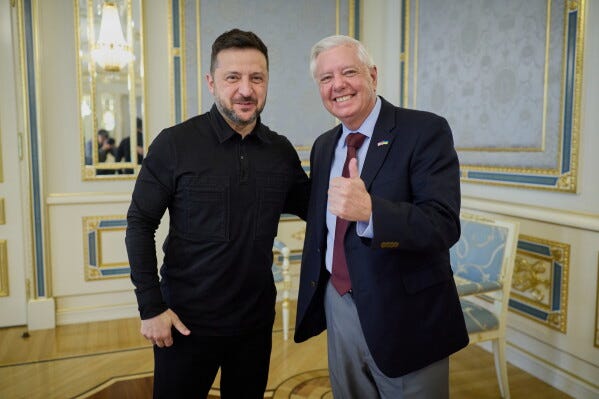
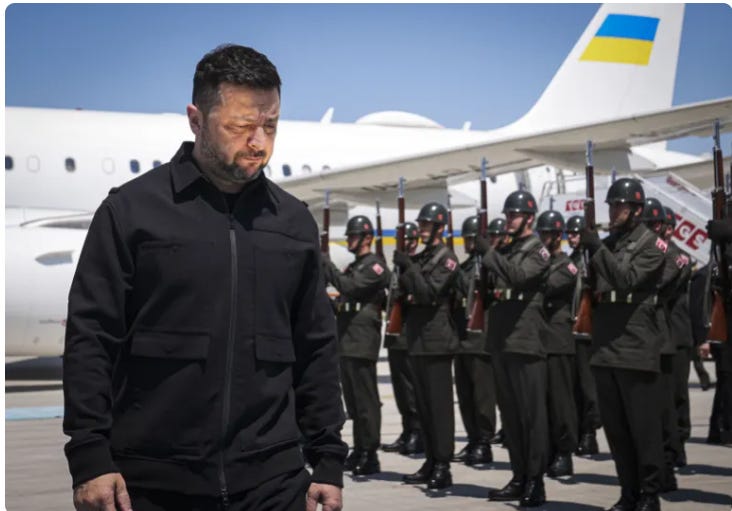
President Volodymyr Zelenskyy said Graham, whom he met twice in the past week, had visited Ukraine 10 times since Russia’s full-scale invasion in 2022, and “was here with our people when it was most needed.” He said that “Lindsey was a true defender of freedom and the values that make our world safer.”
Graham also drew tributes for his longtime commitment to NATO and trans-Atlantic friendship at a time when those ties have been under severe strain.
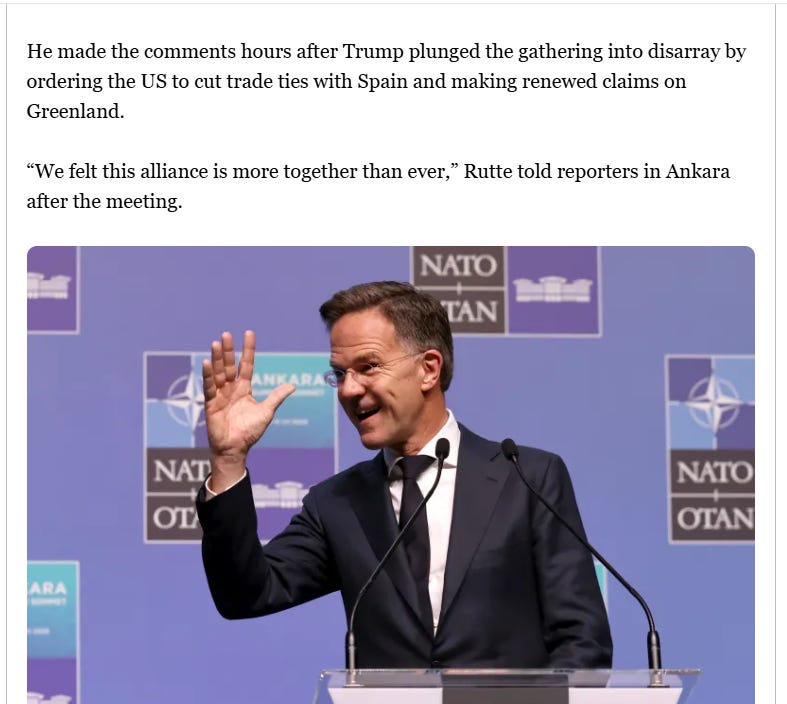
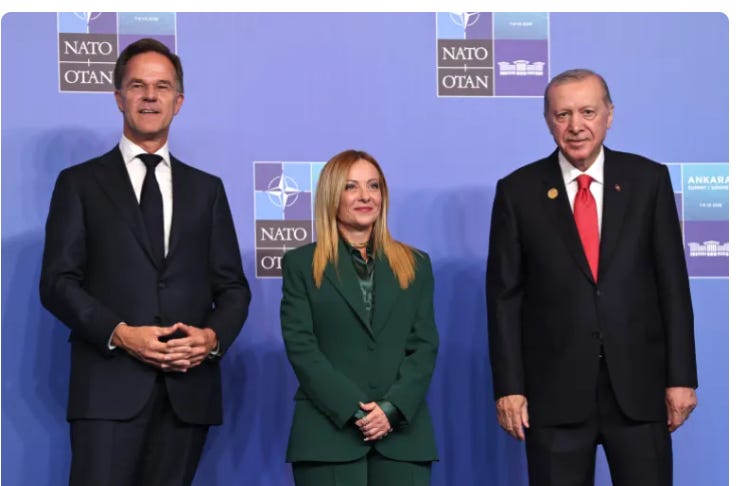
NATO Secretary-General Mark Rutte said Graham was “a powerful advocate for America who believed strongly in the NATO Alliance and was actively working to bring an end to Russia’s war against Ukraine.” Rutte’s predecessor, Jens Stoltenberg, lauded the South Carolina senator’s “tireless commitment” to NATO and the trans-Atlantic bond, and his “staunch support” for Ukraine.
Graham commanded respect on NATO’s eastern edge, where Russia’s intentions are viewed with deep concern.
Estonia’s Foreign Minister Margus Tsahkna said that “Estonia will remember him as a steadfast friend, a strong supporter of NATO’s eastern flank, and an unwavering advocate for Ukraine.” Latvian counterpart Baiba Braže said that he was “among the strongest supporters of NATO and trans-Atlantic relations (and) assistance to Ukraine in countering Russian aggression.”
FUCKING truth about the butt fucker:
Iranian state television announced Graham’s death during a live broadcast in openly hostile terms.
“I congratulate the great nation of Iran on Lindsey Graham, the warmongering and anti-Iranian U.S. senator, having gone to hell,” the anchor said.
“Israel has lost one of its greatest friends. America has lost a great patriot. I have lost a beloved friend,” Netanyahu said.
Butt fucker with ZERO lube:
Butt plugs for the uniformed Mercenaries:
America’s Dilemma at 250
A Budget of the Pentagon, By the Congress and For the War Profiteers Bill Astore Jul 13, 2026
Note to Readers: The short essay below represents a joint effort of the Eisenhower Media Network, or EMN, an organization of former military and government officials who seek a wiser course for America and a more peaceful world. I’ve been a member since EMN’s founding.
In Common Sense, Thomas Paine challenged Americans to question an institution that had long seemed beyond challenge. He wrote, “A long habit of not thinking a thing wrong gives it a superficial appearance of being right.” Two hundred and fifty years later, those words apply just as well to America’s defense budget. What has become accepted through habit is neither sustainable nor accountable. Only the American people can change it.
The “defense of custom” now comes from the Military-Industrial-Congressional Complex that President Dwight Eisenhower warned against in his farewell address. Years earlier, in his famous “Cross of Iron” speech, Eisenhower observed: “Every gun that is made, every warship launched, every rocket fired signifies, in the final sense, a theft from those who hunger and are not fed… Under the cloud of threatening war, it is humanity hanging from a cross of iron.”
+—+
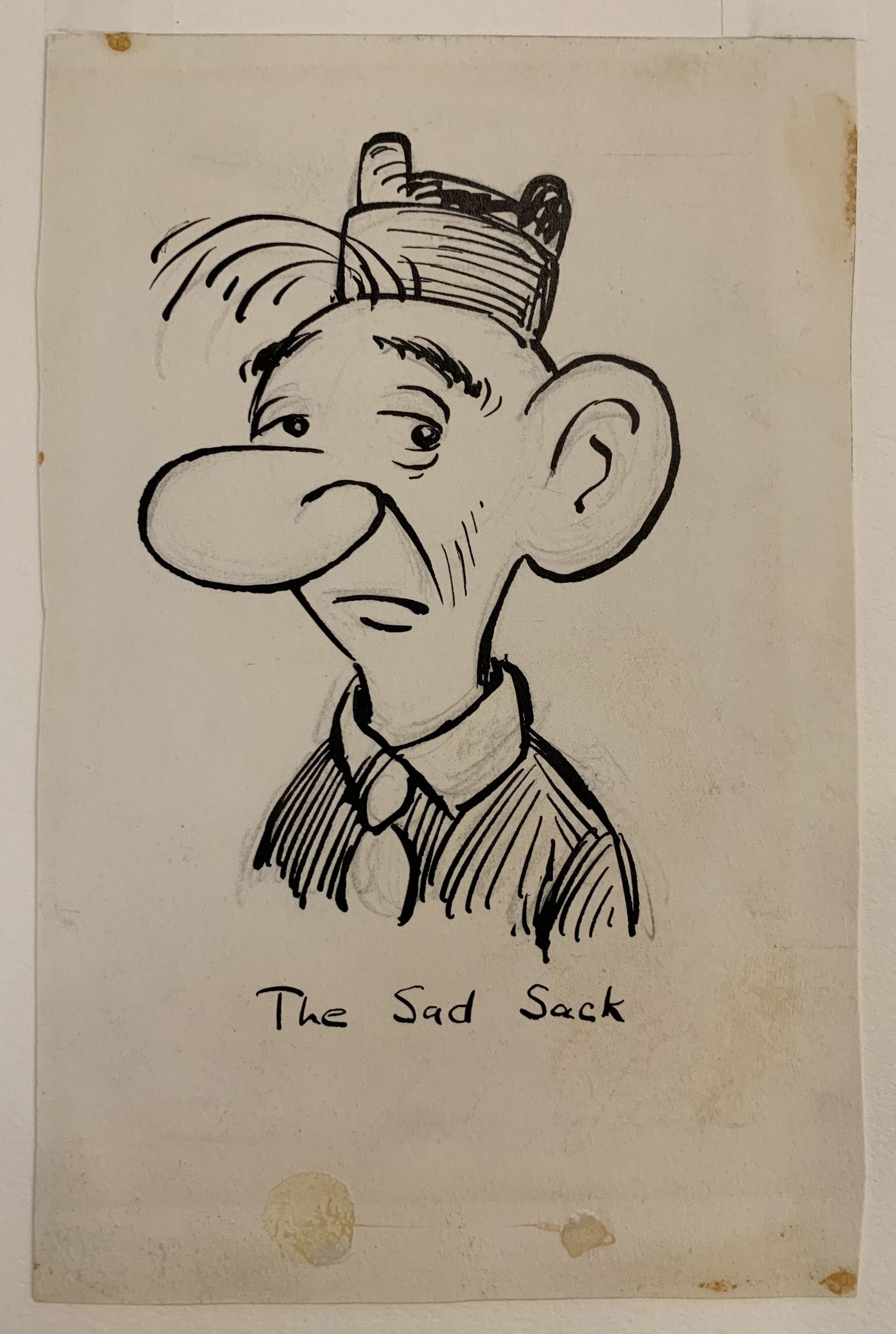
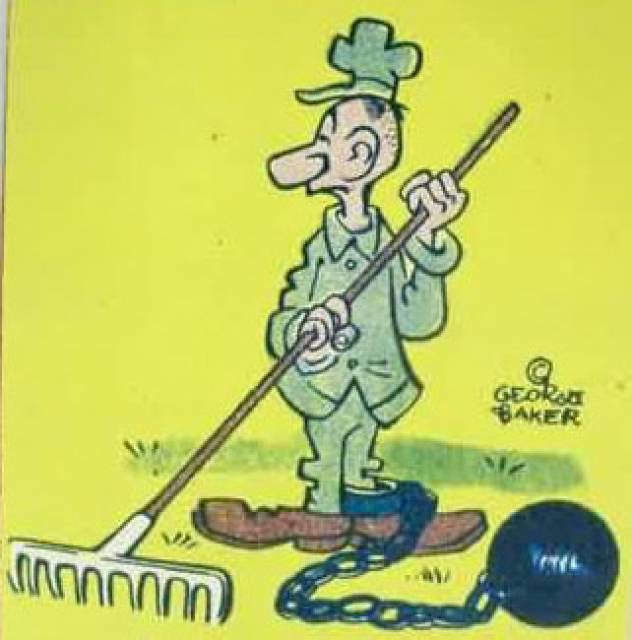
Note: These fucking “retired” and “turning over a new leaf” fucking ex-CIA or ex-Uniformed Mercenaries are a fucking bunch of liars and sad sacks.
You see, Astore can come off as someone working in Air Force Education, but he’s just the fucking paint on a Tomahawk. Same fucking nut and bolt of death, these fucking ex-Colonels and ex-Captains and ex-CIA operatives. Fucking Air Force paint for Tomahawks.
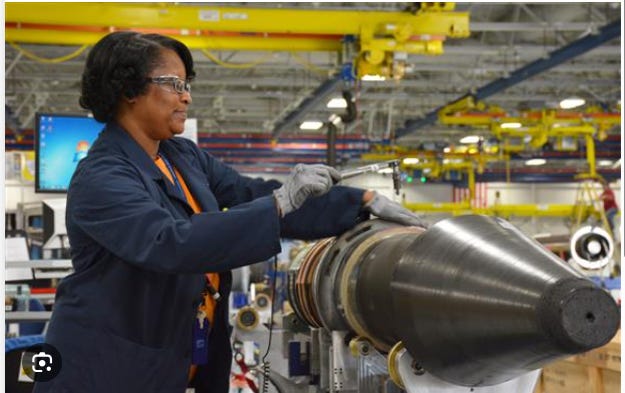
Chemical formulators like Spectrum Coatings have historically partnered with defense programs to develop specialty and primer coating systems for the BGM-109 Tomahawk Cruise Missile.
Over the past decade, Spectrum Coatings has developed a full line of environmentally friendly coating systems.
William J. Astore is a retired United States Air Force Lieutenant Colonel who served for 24 years. Beginning his military career as an ROTC cadet, he spent his tenure from the late 1980s to the 2000s primarily teaching military history at the U.S. Air Force Academy and the Naval Postgraduate School.
Following his retirement, Astore transitioned into academia and public commentary, frequently writing for outlets like TomDispatch and operating his own newsletter, Bracing Views. He is a prominent critic of American militarism and serves as a senior fellow at the Eisenhower Media Network, an organization of veteran military and national security professionals advocating for foreign policy restraint.
[A 24-year Air Force Lieutenant Colonel (O-5) retiring today under the High-36 system receives an estimated gross pension of $7,442 per month (or $89,300 annually). ]
Yeah, Jews HUNTING jews (lower case “j”?)
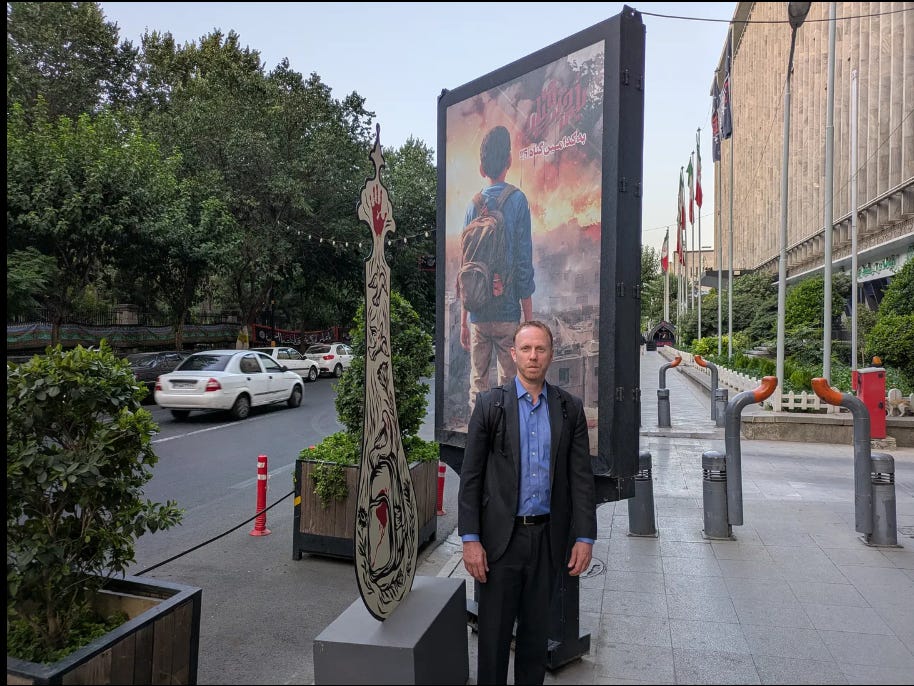
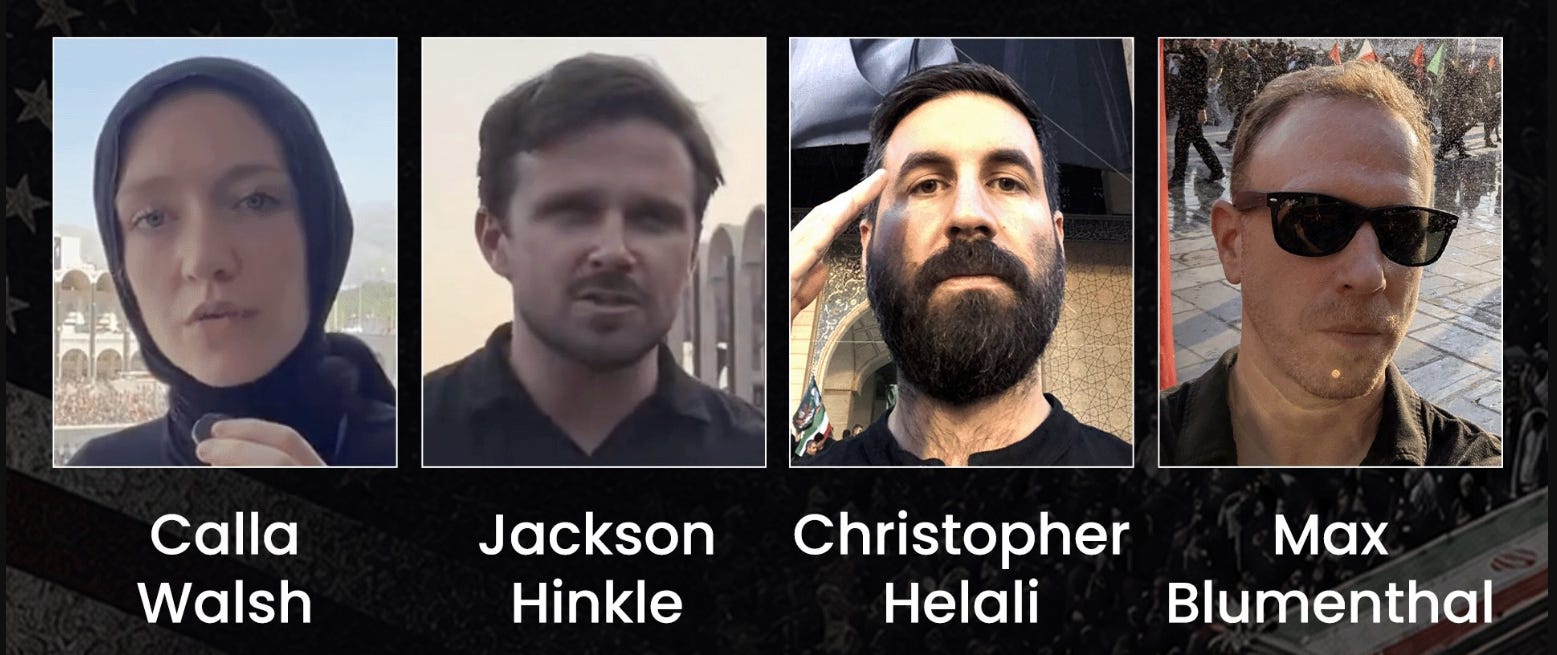
Upon Blumenthal’s return from Iran, US agents seized his devices and subjected him to extended questioning. “Our reporting at The Grayzone has clearly become a problem for this criminal cartel,” he commented.
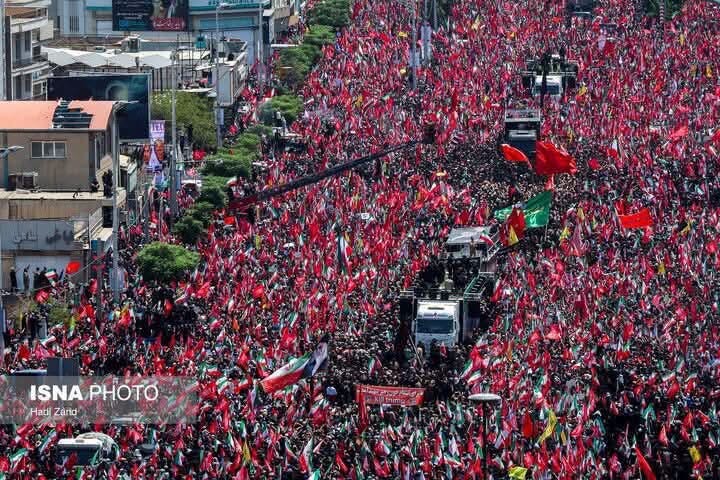
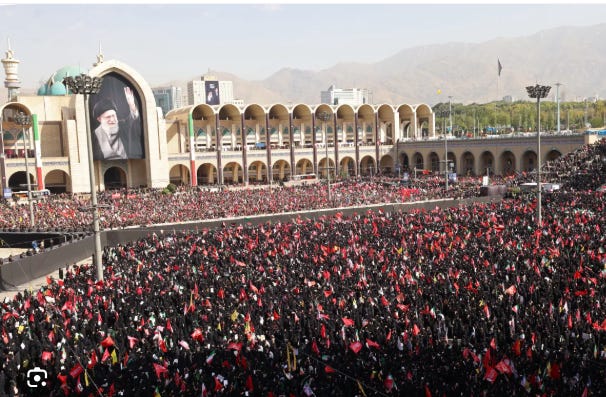
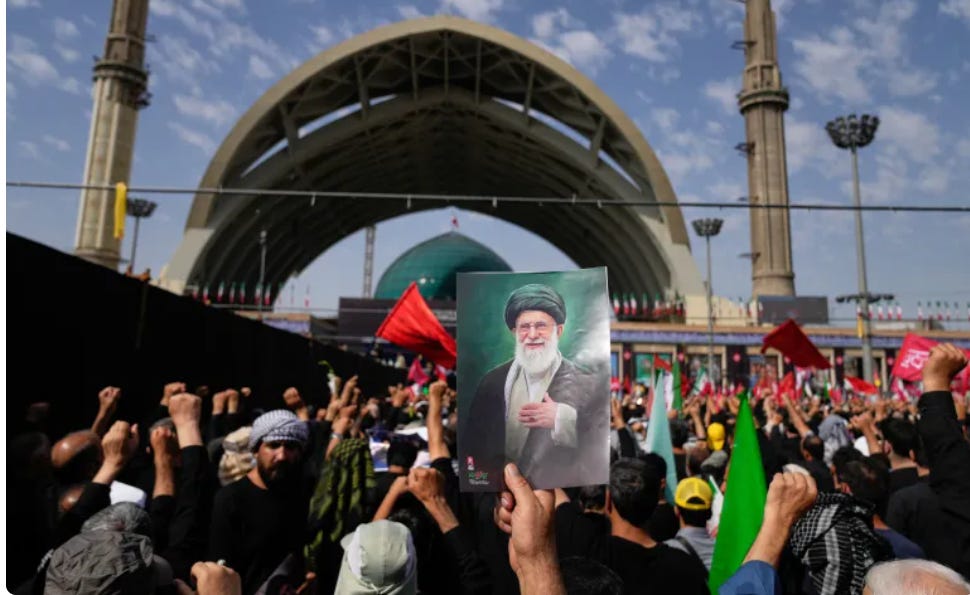
On July 10, 2026, American journalist Max Blumenthal was traveling back to the United States from Iran, which he had visited to report on the funeral of Ayatollah Ali Khamenei, the largest gathering in human history. While in Iran, Blumenthal interviewed members of Iran’s negotiation team, top political officials, academics and average citizens for a series of video and print reports for this news outlet, which he founded.
He also documented several US and Israeli war crimes from the ground, including the destruction of an entire neighborhood in Eastern Tehran which left at least 40 civilians dead.
Upon reentering the country at Dulles International Airport, Customs and Border Protection (CBP) interrogated Blumenthal about his trip, searched his belongings, and demanded that he provide access to his smartphones. When he refused to open his phones, CBP officers forced him to turn them over for detention. Other journalists and travelers have been threatened with the loss of their passports for a month for failing to hand over their devices.
Blumenthal entered Iran exactly as reporters working for establishment media outlets like CNN and NBC did – on a press visa granted by the Iranian Foreign Ministry. While in Tehran, he participated in official press events alongside those mainstream reporters, who were also in the country to cover the Ayatollah’s funeral. When journalists from CNN, NBC, and other American outlets returned to the US, however, they were not subjected to the same harassment Blumenthal experienced, nor were they required to give the US government their electronic devices.
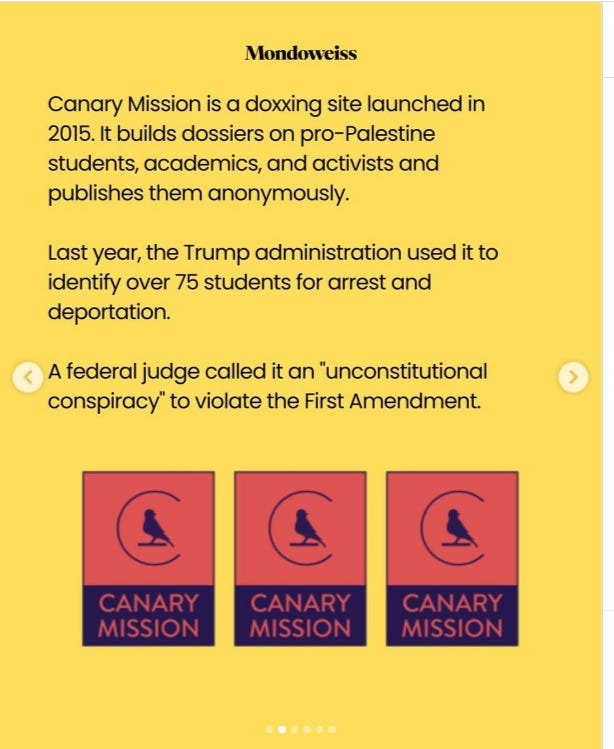
Yet almost as soon as he arrived in Tehran, with the Khamenei funeral underway, Blumenthal was immediately subjected to defamatory attacks by Trump-aligned individuals and Israeli organizations supportive of war on Iran. Leading the charge was Canary Mission, an anonymous doxxing outfit based in Israel, which portrayed Blumenthal as an “extremist” who had traveled to Tehran to “honor” the Ayatollah – when he had, in fact, reported on the funeral as a journalist.
Founded in 2015 to ruin the lives and career prospects of university students involved in Palestine solidarity activity, Canary Mission has since been used by the Trump administration to select international students for arrest and deportation. An investigation by the independent outlet Drop Site revealed that the outfit was based out of an Israeli non-profit called Megamot Shalom. Among the top supporters to Megamot Shalom is the Wexner Foundation. Established by the billionaire lingerie tycoon Les Wexner, the foundation that featured Jeffrey Epstein as a trustee until the wealthy sex offender died in prison under mysterious circumstances.
Laura Loomer, a close ally of President Donald Trump, followed Canary Mission’s lead by calling for the US military to massacre attendees of Khamenei’s funeral, including Blumenthal and all other journalists covering the event. She then smeared Blumenthal as a “shill for Islam and communism” for reporting from Iran. Loomer escalated by wishing for the journalist to be swatted, jailed and denationalized: “I hope you’re raided in a heavily armed raid by the @FBI at 5 am and that @SecRubio [Secretary of State Marco Rubio] strips you of your passport for aiding the Iranian regime as they chant Death to America,” she tweeted at Blumenthal.
An apparent victim of botched facial surgeries, Loomer is credited with compelling Trump to fire numerous holdovers from previous administrations. These include the National Security Council’s top Iran expert, Nate Swanson, who correctly warned that Iran would close the Strait of Hormuz if the US attacked it.
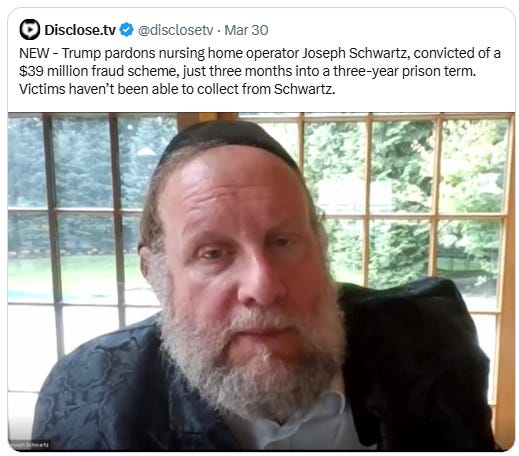
[Trump’s pardon of Joseph Schwartz follows his pardon of Philip Esformes, the king of Medicare fraud
Esformes was a Chabad cultist who relied on Alan Dershowitz and the lawyer who got a pardon for Jared Kushner’s father
Schwartz seems to have hired Laura Loomer to lobby for him]
Gilad Atzomn:
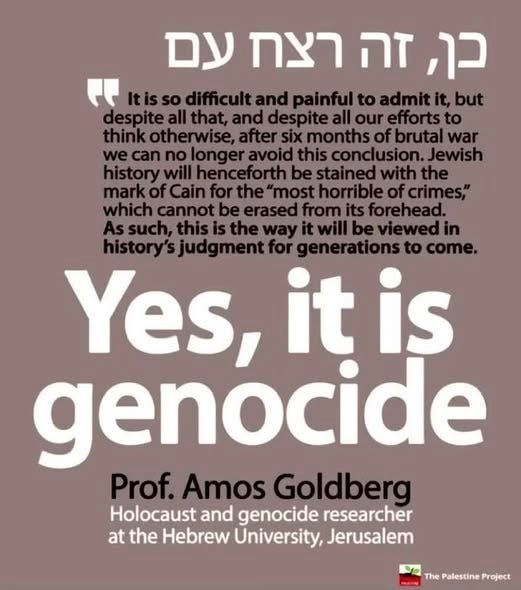
It is not ‘self-determination’ or ‘apartheid’! It is the most documented genocide in human history.
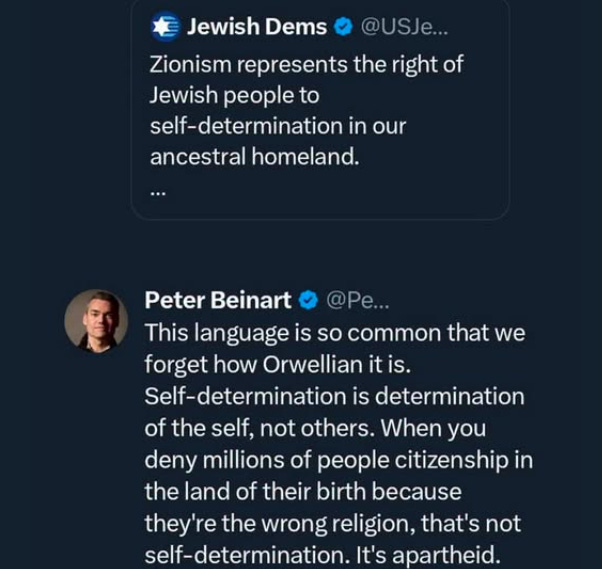
This screenshot tells you a lot about the Jewish fake Zionist vs. ‘anti’ debate.
The so-called ‘Zionist ‘ is not telling us what Zionism is. He/She are telling us instead what Zionism ‘represents’. It ‘aspires’ at ‘Jewish self determination’. What do we learn from it?
1. In the Jewish universe, there is no distinction between the ‘self’ and the Volk (All of Israel are responsible for one another). The self-determination of the ‘self’ determines the fate of the Volk.
2. If the Jewish State is a fruit of ‘self-determination ’, it confirms that the Jewish nationalist adventure is a new substance rather than a continuation of any historical entity.
Why do I mention it? Because the early Zionists admitted that this was the case, they re-defined the Jewish existence. The shift in Israeli nationalist discourse into Judaic rights on the so-called Jewish ‘ancestral’ land is the product of the growing influence of rabbi Kook’s philosophy and the significance he attributed to the holiness of Eretz Yisrael.
Then we read the so-called ‘anti’ voice. Peter Beinart, whom I like occasionally, seems not to know that in the Jewish universe there is no distinction between the self and the volk. However, Beinart correctly points out that determination of the self shouldn’t be celebrated at the expense of the other. This is of course correct, but it isn’t exactly the Judaic teaching that inspires him to say that. The Old Testament, which is the core inspiration as far as the Jewish State is concerned, is all about Jewish celebration at the expense of others. The Talmud is not different in that regard.
Furthermore, it isn’t the ‘denial’ of citizenship of the indigenous (apartheid) that makes the Jewish state into the most hated state around. It is the brutal genocide, the systematic eradication of Palestine and Palestinians; it is the collective enthusiasm to eliminate every civilisation in that part of the world and beyond.
The Jewish anti Zionist campaign has a mission. It is there to restrict the solidarity terminology so it fits with Jewish sensitivities: Apartheid as opposed to genocide, colonialism as opposed to human sacrifice orgy. BDS as opposed to Palestinian liberation from the Golan Heights all the way to the Red Sea..
I keep telling you all of that because it is very easy to fall into their terminological traps…
Buy my touch and feel book EVEN before it’s manufactured, printed and packaged: Send $16 through the Substack Stripe; I will get $7 of it to Palestine ( https://www.healpalestine. org/about-us/ )
HEAL Palestine is a nonpolitical, nonreligious U.S.-registered nonprofit founded in 2024 to deliver urgent relief and long-term support to Palestinian children and families. Through our four pillars—Health, Education, Aid, and Leadership—we provide critical care and resources while centering grassroots leadership and community-led recovery. Our work is rooted in dignity, resilience, and the belief that every child deserves the chance to heal and thrive.
RE:
Sharpen your claws–and scratching skills–with this adorable touch-and-feel book about a cat who loves to scratch everything…and wants you to join the fun.
Hi there, human
I’m Scratchie the Cat
and I like to scratch stuff
to keep my claws super sharp.
Let’s scratch things together
Join Scratchie the Cat to scratch touch-and-feel elements throughout this story. Rough door mats, grainy wooden tables, paper towels, cardboard boxes, and more give readers a claws-on experience as they innocently wreck Scratchie’s owner’s house (just like real cats)
With touch-and-feel elements on every page, Scratchie even has the perfect ending, because there’s one more thing that loves to be scratched…Scratchie the Cat,
Now now now.
So, who will publish this one, uh, and market it, uh, and it doesn’t have to be just for a 5- or 6-year-old audience.
How about adults reading this, and for every $16.00, $5 goes to me, $7 goes to Palestine, and $4 goes to shipping and handling.
The modern Free Palestine Version:
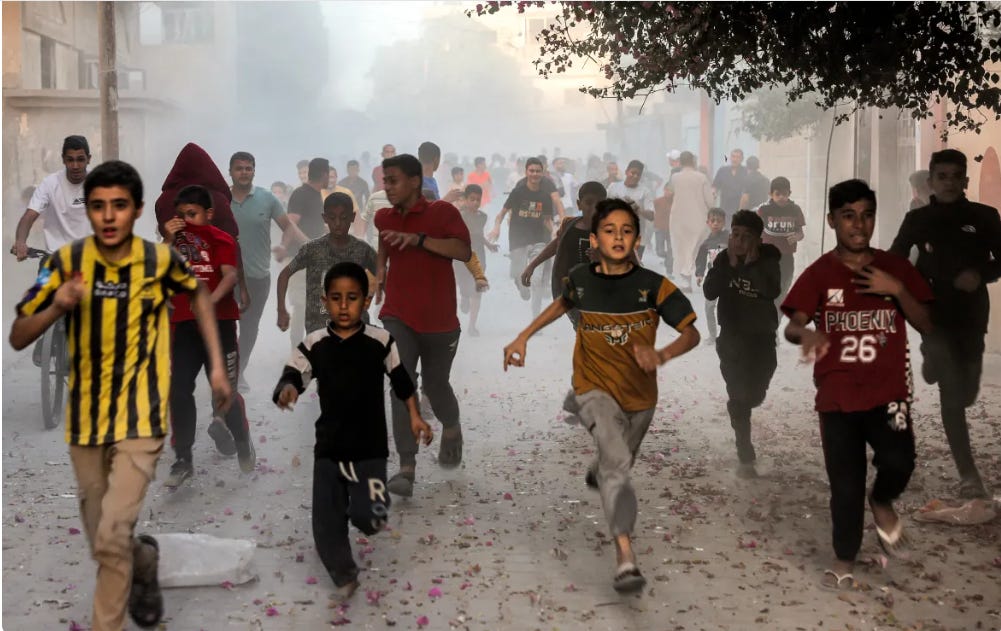
Journey with Idam and his Dog as you Touch and Feel a Genocide from a Kiddo’s Point of View
Endless quotes of horror: “Level the place” about Gaza …. “Not one Arab state has felt the need to go down the nuclear road because of Israel’s possession of nuclear weapons.”
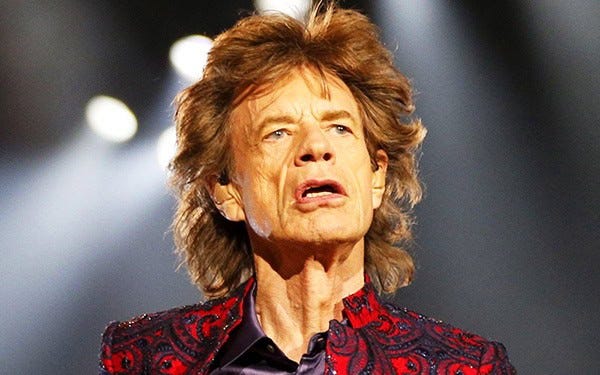
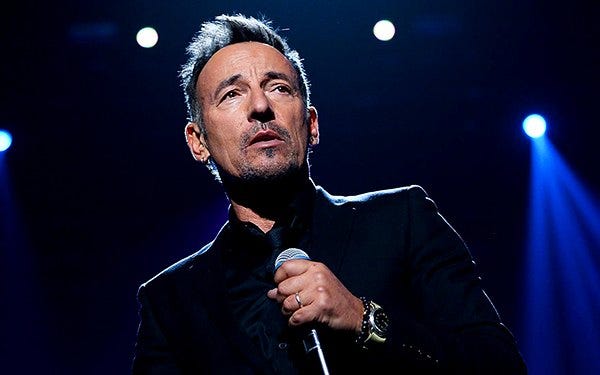
He appeared to distance himself after Marchese brought up avowed Donald Trump critic Springsteen who has repeatedly used his concerts this year to launch blistering attacks on the president and his administration.
Asked how he views his relationship with audiences compared with artists such as Bob Dylan and Springsteen, Jagger said his priority has always been making sure concertgoers leave feeling uplifted rather than weighed down by politics.
‘The bottom line of my thing really is that my job in the live music world is those people that come is to have the best time they possibly can,’ Jagger said.
‘For two hours or whatever it is, to forget all their problems and the problems of the world and their mortgages and whatever, just to give them the best time they can have.’
The 82-year-old rock icon compared attending a concert to watching a major sporting event, arguing that audiences should be able to switch off from the anxieties of daily life while the show is happening.
‘You don’t want to lecture them,’ he said.
That fucking pedophile cunt Sir Hemorrhoid Jagger:
Underage Relationship Allegations
Rae Dawn Chong: In 2020, actress Rae Dawn Chong disclosed that she had a brief, consensual relationship with Jagger in 1977 when she was 15 years old. While she explicitly stated she did not view herself as a victim and that Jagger “did nothing wrong,” the revelation sparked modern public backlash regarding the grooming dynamics of the era.
Mackenzie Phillips: Actress Mackenzie Phillips stated that Jagger locked her in a room and seduced her when she was 18 years old, though she alleged he told her he had been “waiting for this since you were 10 years old”.
Lori Maddox: Famous 1970s “baby groupie” Lori Maddox claimed that while she was an underage teenager, Jagger took her into a bedroom and engaged in misconduct. Maddox is most prominently known for her relationship with Led Zeppelin guitarist Jimmy Page, which began when she was 14.
Music and Cultural Context
“Stray Cat Blues”: The Rolling Stones’ 1968 song explicitly features a narrator having sexual relations with a 15-year-old girl. In later live performances, Jagger reportedly changed the lyrics to “16” or “17” to reflect changing legal standards and cultural awareness.
1970s Groupie Culture: Rock culture of the 1960s and 1970s frequently tolerated or normalized relationships between adult rock stars and underage minors. While peers like bandmate Bill Wyman openly admitted to a relationship with a 13-year-old, Jagger’s history has faced retrofitted criticism under the modern lens of the #MeToo movement.
Appearance in Jeffrey Epstein’s Files
Contact Lists: When official archives and contact books belonging to Jeffrey Epstein were released by the U.S. Department of Justice, Jagger’s name was included among hundreds of other global celebrities, politicians, and high-profile figures.
+—+
BUT THE ALL ARE FUCKING BILLIONAIRES, and that money isn’t pennies from heaven. Think stock and investment portfolios, ALL connected to dual use, primary use, tech fascism, banking, BlackRock, Vanguard, you fucking NAME it.
Bob Dylan has an estimated net worth of $500 million (double that at least, since he’s go Jew accountants and Israel CPAs working 24/7 for him), making him one of the wealthiest musicians in the world. His fortune is largely built on a massive catalog of over 6,000 covered songs and the blockbuster 2020 sale of his songwriting rights to Universal for an estimated $400 million.
He may have done the Minneapolis thing, but still, a fucking billionaire is always MY fucking enemy.
Too fucking SLICK. Holly-Dirt style:
How can ANYONE go about their fucking day without screaming, pulling their hair out, and bashing in a bank window?
Israel Continues to Shoot Children in the Head During the Gaza Ceasefire
Bahaa Abu Al-Ajeen, 32, set out with his 3-year-old son Rayan to check on their family home east of Deir al-Balah in central Gaza at approximately 5:00 pm on June 14. According to Bahaa, the area appeared safe and deserted. He said there were no visible soldiers, no gunfire, and no drones overhead.
“The area was safe. If I had felt any danger, I would never have gone there,” he said.
After inspecting the house and leaving the area, Bahaa said he was shocked to see Israeli soldiers emerging from a nearby building.
“My son was in my arms and crying intensely from fear,” he recalled. “It was the first time I had ever seen him so frightened.”
According to his account, he decided to move away from the soldiers in an attempt to calm Rayan and walked approximately 500 meters from the area. Bahaa said that after he had distanced himself, the soldiers began shouting at him to stop. He stated that two shots were fired in his direction but did not hit either him or his son, prompting him to stop out of fear for their lives.
“After I stopped, one of the soldiers knelt down and fired directly at my son,” Bahaa said. “The bullet entered the back of Rayan’s head and exited through his left eye. Moments later, another bullet struck my left leg. When I saw them kill my son, I screamed and asked them, ‘He is a child. Why did you kill him?’”
Bahaa said he attempted to call an ambulance using his mobile phone, but the soldiers confiscated it and prevented him from seeking medical assistance. According to Bahaa’s testimony, Rayan bled for approximately seven minutes before dying from his injuries. He said he pleaded with the soldiers to save his son, but they refused.
Hours of Pain
Bahaa stated that after he was wounded and his son was killed, soldiers dragged him while he was still holding Rayan and took him to what he described as a military-controlled area near the Kissufim crossing. Upon arrival, he said, the soldiers took Rayan away from him and left him bleeding on the ground.
By that point, Bahaa said his left leg had been nearly severed. He recalled hearing soldiers discussing whether his leg should be amputated.
“I heard one of them speaking Arabic and saying that my leg was beyond saving and should be amputated,” he said.
The discussion left him terrified. Later, according to Bahaa, soldiers loaded him into an Israeli military vehicle. During the journey, he asked about his son.
“They told me that Rayan was dead,” he said.
Bahaa stated that soldiers then placed Rayan’s body in a black plastic bag and handed it to him.
“At that moment, I wished they had killed me and let my son live,” he said.
Holding his son’s body, Bahaa repeatedly asked the soldiers why they had killed a 3-year-old child. According to his account, he was initially told he would be transferred to an Israeli prison before soldiers later informed him that he would instead be returned to Gaza. Bahaa said he was eventually left in an isolated area at around 11:30 pm, still wounded and carrying his son’s body. After waiting for nearly 90 minutes, Palestinians found the grieving father and transported him to Al-Aqsa Martyrs Hospital in Deir al-Balah.
“When I saw Palestinians coming to rescue me and take my son, I lost consciousness,” he said. “The next thing I remember is waking up in the hospital.”
Killed While Learning
On April 9, 2026, 9-year-old Ritaj Rihan was killed while attending an educational tent in the Al-Salatin area of Beit Lahia, according to her family. Ritaj’s mother said her daughter had been excited to return to learning for the first time since October 7, 2023.
According to her mother, witnesses, teachers, and students present inside the tent, Ritaj was standing at the front of the classroom waiting for her notebook to be reviewed when she was shot. Witnesses said the bullet pierced the tent before striking the child.
“She was standing among her classmates, waiting for her teacher,” her mother said. “Then suddenly she collapsed.”
According to those present, blood began pouring from Ritaj’s mouth as shocked classmates and teachers watched. The bullet entered through her mouth and caused fatal internal injuries, according to her family’s account. Staff members at the educational tent attempted to save her, but due to the severe shortage of transportation in northern Gaza, they were forced to use a donkey cart to carry her to medical care. Despite the staff’s efforts, Ritaj died from her injuries.
The UN Independent International Commission of Inquiry on the Occupied Palestinian Territory released a report in June showing that nearly 30 percent of those killed in Gaza between October 7, 2023, and the so-called ceasefire in October 2025 were children. A report published days later by Israeli human rights organization B’Tselem found that Israel is killing Palestinian children in the West Bank at the highest rate since 1967.
“The evidence shows that Palestinian children have been deliberately targeted and killed by the Israeli security forces,” Srinivasan Muralidhar, chair of the UN commission, said. “Even after the October 2025 ceasefire, children continue to be killed and seriously injured, with continued disregard by Israel for the ceasefire and for the protection owed to Palestinian children under international law.”
The stories of Rayan and Ritaj unfolded in different parts of Gaza and under different circumstances. Yet both children were engaged in ordinary activities — one accompanying his father, the other attending class — when their lives came to an end.
Their families continue to remember them as children whose futures were cut short amid a genocide that continues to exact a heavy toll on Gaza’s youngest residents.
Top musicians come from around the world to perform in Israel, mostly to give concerts in Tel Aviv, and every year the number is increasing! Madonna, Justin Beiber, Justin Timberlake, Lady Gaga, and Paul McCartney are just some of the big names who have given concerts in Israel in recent years, and there are a number of other top international musicians who have upcoming Israel concerts. Below you’ll find the latest.
Go ahead, never screen your food, drink, music, entertainment, education — let the JEWISH Terror IN:
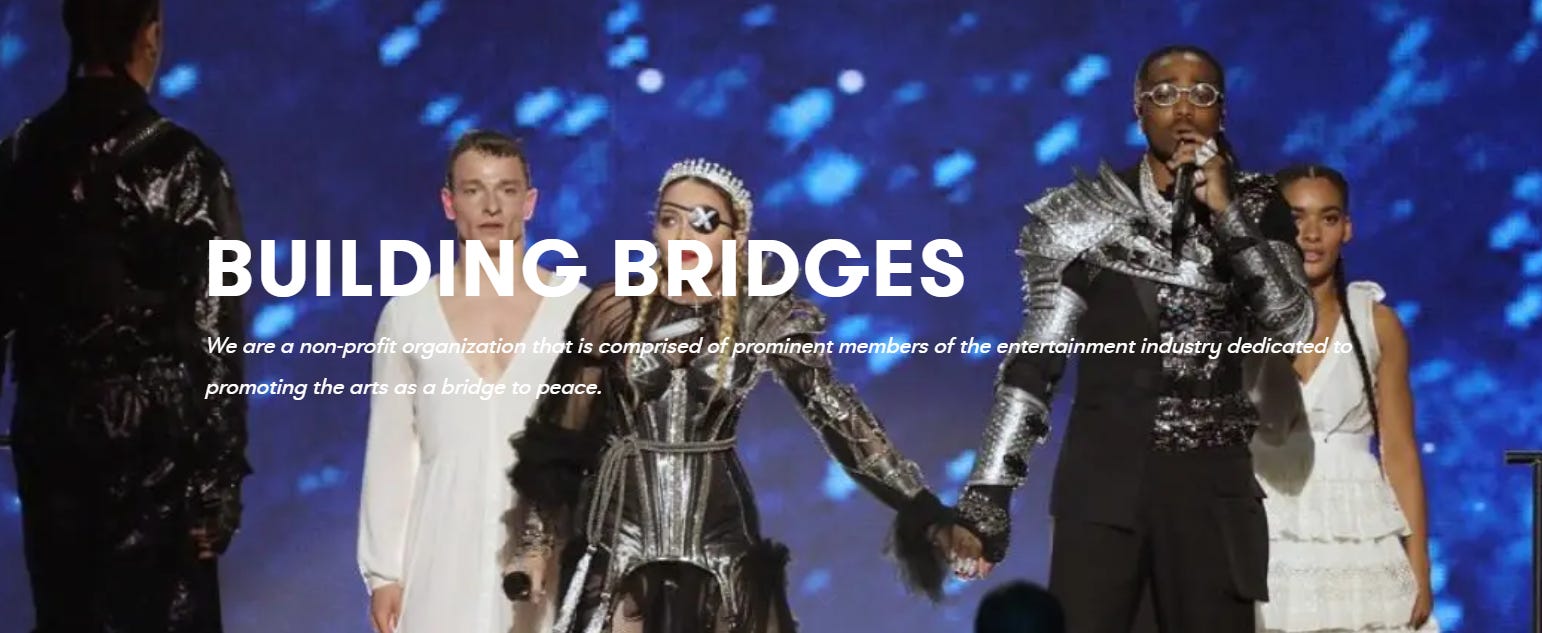
Amy Schumer, Mila Kunis, Jerry O’Connell, Erin Foster, Matthew Weiner, Anthony Edwards, and Matisyahu join Liev Schreiber, Helen Mirren, Gene Simmons, Scooter Braun, Boy George, Mayim Bialik, Sharon Osbourne, Debra Messing, Emmy Rossum and 1,000+ celebrities and entertainment industry professionals who reject attempts to ban Israel from Eurovision.
LOS ANGELES (April 15, 2026) — More than 1,000 leaders from the entertainment industry have signed an open letter by the non-profit entertainment industry organization Creative Community For Peace in support of the continued inclusion of Israel in the Eurovision Song Contest and in support of the contestants.
The initial letter was issued in response to campaigns calling on the European Broadcasting Union to exclude Israel from the event and urging participating countries and artists to withdraw.
At the time, Scooter Braun said, “Music is a place for unity not division. It is a language that should always bring us together. Artists should never be discriminated against for who they are, who they love, or where they’re born. These boycott efforts do nothing but distract from the uplifting and unifying power of music – something we need now more than ever.”
While Gene Simmons said, “Music unites people from all backgrounds. It’s the one language that everyone can understand. It’s a beautiful thing and a great way to bring people together. Those advocating to exclude an Israeli singer from Eurovision don’t move the needle towards peace, but only further divide the world.”
And Mayim Bialik said, “After a horrendous violent attack on Israeli civilians, calls for boycotts and excluding Israeli artists from international events simply because they are Israeli is abhorrent and shameful. Targeting Israeli musicians in this way tarnishes the unifying spirit that is Eurovision.”
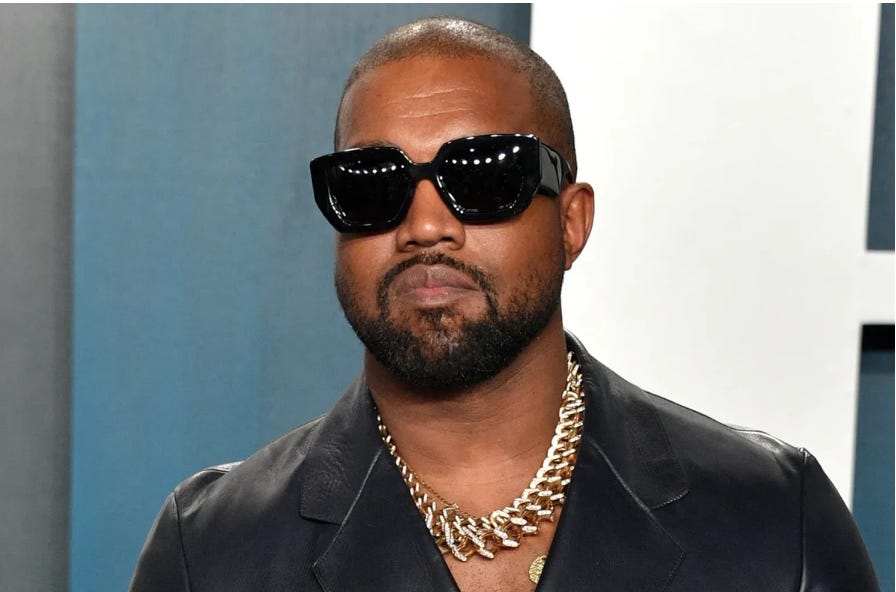
Kanye West’s Unlikely New Concert Partner: Live Nation Israel.
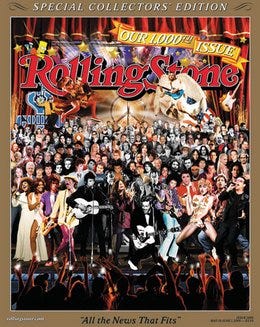
Here, from Rolling Jew, err, Stone:
[Jewish editors and writers have profoundly shaped Rolling Stone since its 1967 launch, serving as the cultural bedrock for the magazine’s editorial voice, political reporting, and music criticism. Many of the most notable figures in the publication’s history have Jewish backgrounds, spanning founders, editors-in-chief, and legendary contributing writers]
That an Israeli company would work with an artist who’s been disparaging of the Jewish people is confounding. After all, London’s massive Wireless Festival, where Ye was scheduled to headline over three nights in July, called off its 2026 edition entirely once the artist’s visa was revoked. “We are clear that the past comments and actions of this artist are offensive and wrong, and not reflective of London’s values,” a spokesperson for London Mayor Sadiq Khan told Rolling Stone last month. One has to wonder if the Israeli staffers at Live Nation Central Asia had any such moral qualms, or if it’s simply a matter of business.
It appears the concert giant made the quiet, if economically sensible, decision to move the small Israel team to nearby territories, dubbed Central Asia. Operating out of Tbilisi made sense as well. A three-hour flight from Tel Aviv, Georgia is a popular tourist destination for Israelis, and has reportedly seen a steady increase in Israeli visitors since the Oct. 7 attack. Its Jewish roots are also deep, dating back hundreds of years.
As a former republic of the Soviet Union, Georgians fought against the German army during World War II — sharing a common enemy in the Nazis — at a high human cost on the battlefield. Jewish citizens, however, faced persecution both before and after the war, as Soviet authorities clamped down on Jewish life in the form of arrests, arson, or other violent antisemitic incidents, which continued into the 1960s. It declared its independence from the Soviet Union in 1991. Today, it’s estimated the native Jewish population in Georgia numbers between 500 to 1,000 residents.
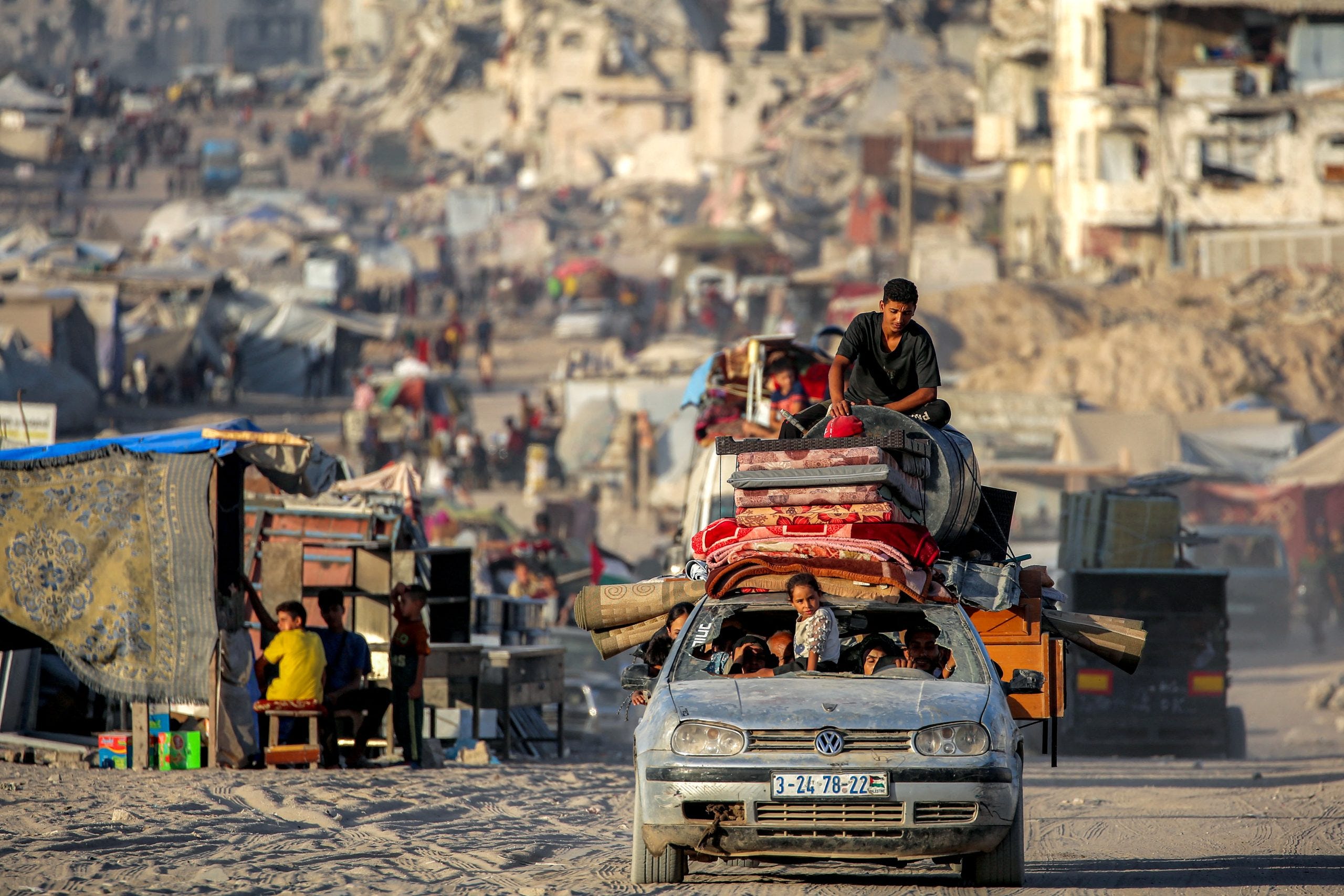
A girl rides through the broken windshield at the front of a vehicle transporting people and their belongings while evacuating southbound from Gaza City on September 2, 2025. (Photo by EYAD BABA/AFP via Getty Images)
At the time of writing this, my inboxes are overwhelmed with messages from friends in Gaza.
“The shelling”, one tells me, “is closer than it’s ever been before”.
Others send updates about what food they have been able to gather while others send desperate updates about their forced displacement to the south of Gaza, as Israel intensifies its ethnic cleansing offensive in Gaza City.
Palestinians in Gaza find themselves in what can be characterized as the final solution stage of what has now been a two-year long genocide. The resistance on the ground continues to push back against the attempted Israeli takeover, but watching from afar—the destruction, the dismantling and the desperation—renders one into disparate parts of oneself. Nothing is recognizable, everything smells rotten; the stench of the decay does not leave your nose no matter which way you turn.
We become witnesses to not just the bloody collapse of a nation but to the collapse of our own worlds we exist in on a day-to-day basis, intimate and shared.
In his fiery book One Day, Everyone Will Always Have Been Against This, journalist Omar El Akkad traces the anatomy of that decay in institutions and ideals—of democracy and freedom—he once believed in, but that ended with “the slaughter”: the slaughter of Palestinians that began in October 2023. The title of the book takes from El Akkad’s October 25, 2023 post on X, in which he wrote:
“One day, when it’s safe, when there’s no personal downside to calling a thing what it is, when it’s too late to hold anyone accountable, everyone will have always been against this.”
The sentiment is familiar: that to be against evil, after it has come to a punctuated end, is an inevitability.
Many believe that this will happen with the genocide of the Palestinians. Those who stood by silently as the bombs, bullets and disease annihilated the population of Gaza will come to condemn it, will come to rewrite their silence; those who cheered it on, justified it, will come to collect their accolades for their eventual moral repositioning.
Believers of this point to recent rhetorical “pivots” by governments and public personalities in the US-backed Israeli starvation of the Palestinians. Over July and August, we were inundated with statements of condemnation, demands of “letting aid in” and incensed podcasts as images of dead, emaciated Palestinians—especially children—have been difficult to justify and ignore.
Since then, a quiet has set in, and in that quiet is the loud, resounding truth that no, not everyone will have or even pretend to have moral clarity on Gaza. This is because Gaza reveals the primary contradiction; it unearths the foundational lie of our current world order and its governing morality.
Most of the world, by every measure, is already against the extermination of the Palestinians. Hundreds of thousands continue to flock to their streets, across the world, demanding an end to the genocide and the occupation.
The overwhelming majority of the world’s governmentssupport an immediate ceasefire. Many major US academic groups have come out to condemn the Israeli campaign. Over 250 media outlets across seventy countries staged a front-page protest of Israel’s targeting and massacring of Palestinian journalists. Major human rights groups have called what is happening to the Palestinians a genocide and the biggest academic association of genocide scholars just passed a resolution coming to the same conclusion.
These examples are, of course, a drop in a bucket showing just how much of a moral consensus there already is on what is happening to the Palestinians. There isn’t a blindness to the horrors that have been live-streamed to us every single day for two years.
And so this idea, that all evil eventually becomes undeniable, that every genocide or slaughter eventually reaches the point where we all nod in agreement that “yes, that was wrong, yes, we were against it” becomes a sort of comfort blanket.
Acknowledging that the opposite is more likely is not only a terrifying indictment of people, institutions and ideals we believe in fundamentally but also is an unwilling confrontation with what our immediate present and our future are being moulded into.
The belief in eventual moral clarity lets us believe that time itself will sort out moral failure, that history has a correcting function.
But Gaza is not Rwanda; it is not Srebrenica.
The very nature of the existence of Palestinians, post-Nakba, makes it a story that cannot be neatly packaged into “good and evil” by the very endowers of power who believe in and perpetuate the right of that evil to exist.
There is too much invested in maintaining that this is not what it is. There’s too much at stake to admit, fully, that this is what it is. And that’s still assuming that those who wield power in this world even care.
In July, U.N. Special Rapporteur Francesca Albanese releasedFrom Economy of Occupation to Economy of Genocide, a report tracing the sharp rise in global corporate investment in Israel since October 2023. The findings are blunt: while Israel’s assault has devastated Palestinian lives and land, the Tel Aviv stock exchange soared 213%, adding $225.7 billion in market gains. Albanese identified forty-eight corporate actors – along with their webs of subsidiaries, licensees, and partners across weapons, tech, finance, construction, and energy – profiting directly from the war. Investment is surging not in spite of Israel’s actions, but because of them.
And nowhere is this more visible than in the boom in Israeli drones, cybersecurity, and A.I. American tech companies have poured money in precisely because of how these tools have been field-tested on Palestinians, especially in Gaza.
As journalist Anthony Loewenstein argues in The Palestine Laboratory, this is not new: for decades, Palestinians have been the proving ground where Israel and its partners refine technologiesof surveillance and repression—machinations of social and civilian control that are then exportedregionally and globally to governments that otherwise offer restrained lamentations on the conditions and suffering of the Palestinians.
And then there is the ideological and political investment: how could the United States, the leading perpetrator of the genocide of Palestinians and regional destabilization, ever come to recognize its own crimes when it has yet to do even a modicum of the same for the Indigenous peoples it annihilated to build itself? How could it offer a mea culpa when every institution–from education to media to government to corporate and tech–has a vested financial and ideological interest in the eradication of Palestinians?
History here can serve as instruction: the first genocide of the 20th century, against the Herero and Nama peoples, was carried out by the German Empire; it was there that the concentration camp was perfected. Germany only acknowledged its crimes a century later, in 2004, with a carefully hedged apology and no real accountability. To this day, only thirty countries recognize the Armenian genocide (1915-1917) committed by the Ottoman Empire. And this list is long: entire nations have faced expulsion and extermination, their memory buried or contested while their killers were never condemned. Recognition, if and when it comes at all, is always partial and delayed with a sanitized retrospective meant to ease the guilt of those who were complicit. The Holocaust may be the standard of that which we all universally condemn and compare to, but it is exceptional in that by design.
At the risk of sounding Huntingtonian, there is a core “civilizational” logic that sustains Zionism, beyond Israel: erasure is recast as survival, dispossession as self-defense. In this framework, the genocide in Gaza is not an aberration but it is the logical outcome; it is not unspeakable but necessary–even if sometimes tragic and “crossing a line”.
Without the dismantling of this ideological foundation, there will be no punctuated end to the evil itself—and thus no moral correction.
And that’s why the repression is layered so aggressively: propaganda disguised as journalism, algorithmic suppression, the shadow-banning of Palestinian voices, governments criminalizing protest, schools and workplaces punishing dissent while protecting those who cheer extermination. What we have been witnessing is the system laid bare: a system designed not just to kill, but to erase even the naming of the killing.
If moral clarity does come, it will not be against the system that carried out the extermination. It will be against the images: the photographs of starving children, the bodies pulled from rubble, tragedies easy to lament once the killing has moved out of view. It will not bring reparations or accountability or the dignity of Palestinian political existence. It will not recognize the resistance of a people who fought annihilation. Instead, it will package Palestinians as a pitiable tragedy, stripped of politics and struggle.
Gaza buried the myth that “everyone is eventually against evil.” The truth is this: Israel and the United States can cage Palestinians and starve them of food, water and light. They can burn families alive, execute fathers before their children, mark mothers with numbers and call it order for “Jewish safety.”
And still, it won’t matter.
It won’t matter how closely these scenes mirror history’s darkest crimes, because outrage was never about the method.
And so Gaza will not be remembered as the place where the world finally stood hand in hand and turned against unfathomable evil, but rather the place where the world chose to let it reign.
Edward Bernays would love the Jews at Rolling Stone with their focused Propaganda issues:
Rolling Stone UK
Rolling Stone Australia / New Zealand
Rolling Stone France
Rolling Stone Germany
Rolling Stone Japan
Rolling Stone Korea
Rolling Stone India
Rolling Stone Argentina
Rolling Stone Brazil
Rolling Stone En Español (Mexico and Latin America)
Rolling Stone Africa (launched in 2024)
Rolling Stone Philippines (launched in 2024)
Rolling Stone MENA (Middle East and North Africa)
Rolling Stone Canada (re-launched in early 2026)
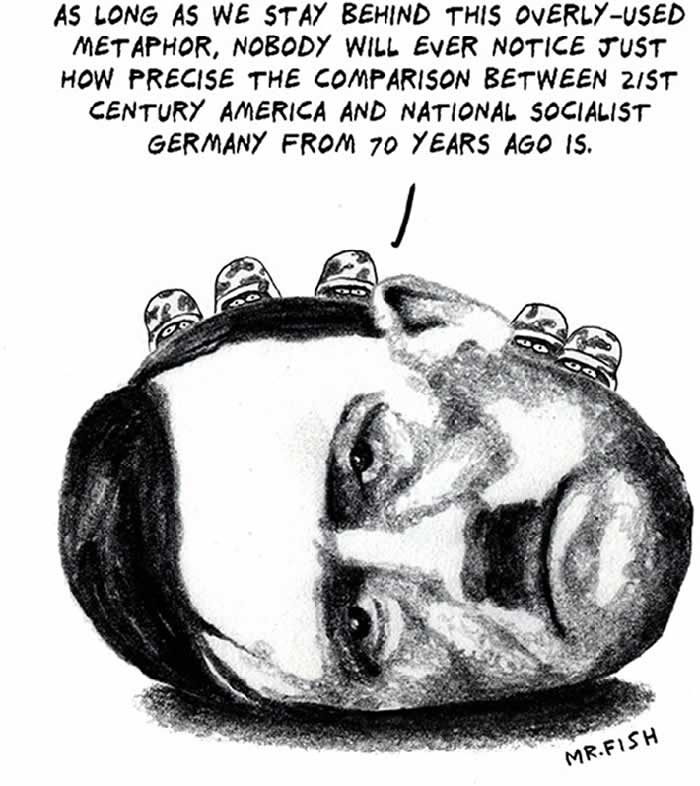
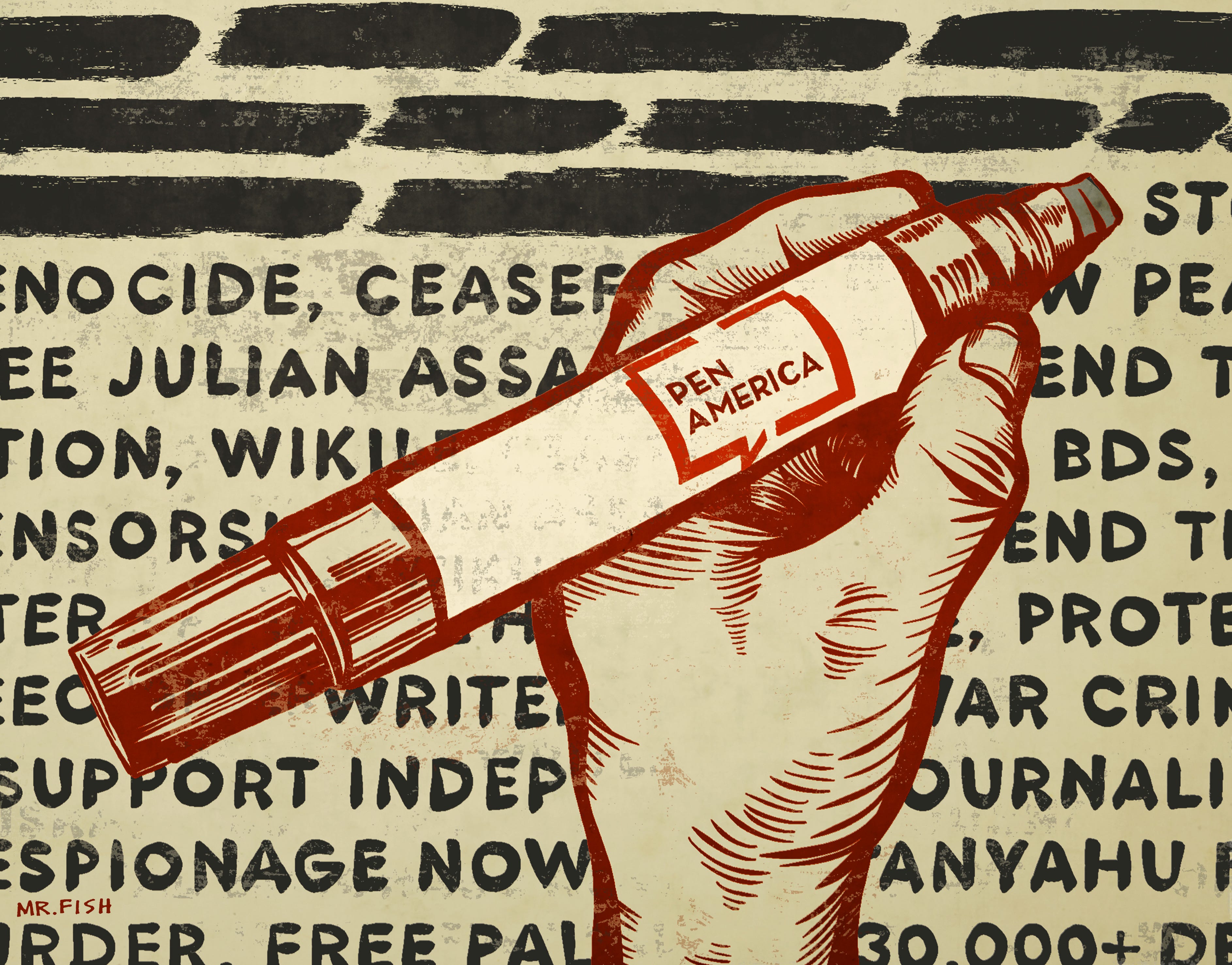
Poison Pen – by Mr. Fish
Chris Hedges: PEN America, an organization founded to defend persecuted and censored writers, has once again made a mockery of itself with its call to protect Israeli writers from discrimination.
Yes. Israeli writers.
Its most recent screed, “A Silent Moratorium,” is so tone deaf and embarrassing that it triggered a widespread backlash. PEN America’s president, Dinaw Mengestu, resigned in protest.
Mengestu told The New York Times the post is the most recent in a series of moves he felt are counter to the organization’s values and could harm efforts to preserve freedom of expression.
“This report is not an isolated incident,” Mengestu said. He added, it “continues this approach toward defending some rights while not defending others.”
I doubt Mengestu’s resignation will change much. At best, it will make PEN America more circumspect about exposing its moral bankruptcy.
“A Silent Moratorium” is authored by Editorial Director Lisa Tolin, Chief Communications Officer Geraldine Baum and consultant Malka Margolies. It criticizes what it calls “a widening cultural isolation” of Israel. It decries “the blatant hostility, discrimination, and hate that some Jewish and Israeli authors” face. It calls the loss of opportunities for Jewish writers “devastating” and complains that Israelis who write for U.S. magazines “are put through a series of ideological checks, such as whether they use the word genocide.” It condemns the call by more than 7,000 writers and literary professionals, who in the fall of 2024 signed a pledge not to work with Israeli publishers, festivals, literary agencies, and publications which “are complicit or have remained silent observers of the overwhelming oppression of Palestinians.” And it defends Zionists, stating:
In interviews with PEN America, Israeli and Jewish writers described a climate where Zionism is treated as a slur. While there remains no popular agreement on what it means to be a Zionist, recent survey data suggests that one-third of American Jews self-identify as Zionist and nearly nine in 10 say they support Israel’s right to exist as a Jewish and democratic state. Calls to exclude Zionists from publishing could therefore mean excluding people with a wide range of voices and views.
For the record, Zionism is explicitly racist. It is an ideology used to justify the occupation and colonization of historic Palestine and the ethnic cleansing and annihilation of its native inhabitants. Hateful ideologies cannot be normalized because a third of American Jews identify as Zionists. The Nazis, after all, had about the same level of support among German voters — 37.3 percent — in the 1932 election.
“PEN America peddles agitprop,” I wrote in 2024. “Writers and editors, such as Assange, who expose the lies and crimes of the state, are discredited, while propagandists for U.S. imperialism and the apartheid state Israel — even as it carries out genocide — are fêted.”
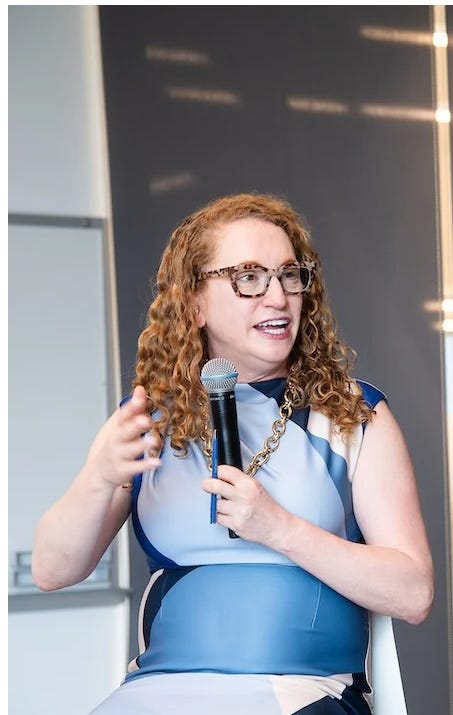
PEN America lost its way over a decade ago, when in 2013 it appointed a former Clinton State Department official, Suzanne Nossel, as its Executive Director. That year, I won the PEN Center USA First Amendment Award. I was scheduled to participate as a speaker at the PEN World Voices Festival when Nossel’s appointment was announced. I refused to take part in the festival and resigned from PEN America in protest.
[Suzanne Nossel is Jewish and has frequently spoken about how her Jewish identity and family history directly shaped her career in human rights and free expression. ]
“This appointment makes a mockery of PEN as a human rights organization and belittles the values PEN purports to defend,” I wrote in my resignation letter:
I spent seven years in the Middle East, most of them as the Middle East Bureau Chief of The New York Times. The suffering of the Palestinians under Israeli occupation and the plight of those caught up in our imperial wars in countries such as Iraq are not abstractions to me. Nossel’s relentless championing of preemptive war — which under international law is illegal — as a State Department official along with her callous disregard for Israeli mistreatment of the Palestinians and her refusal as a government official to denounce the use of torture and use of extra-judicial killings, makes her utterly unfit to lead any human rights organization, especially one that has global concerns. PEN American Center, by appointing Nossel, has unwittingly highlighted its own failure to defend and speak out for our dissidents, especially Bradley Manning. I hereby resign from PEN. I will wait until the organization returns to its original mandate to defend those who are persecuted, including those within the United States, before returning to the organization.
PEN Canada responded to my resignation by offering me membership, which I accepted.
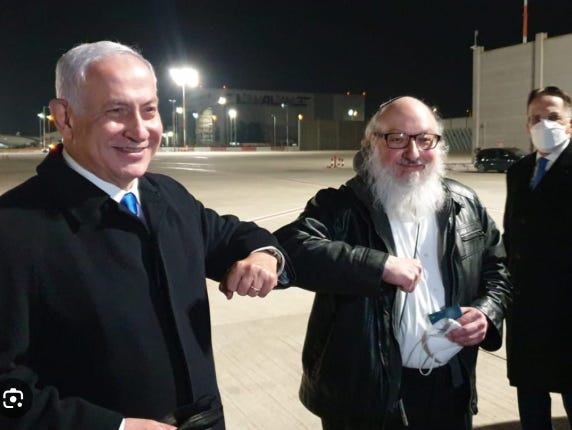
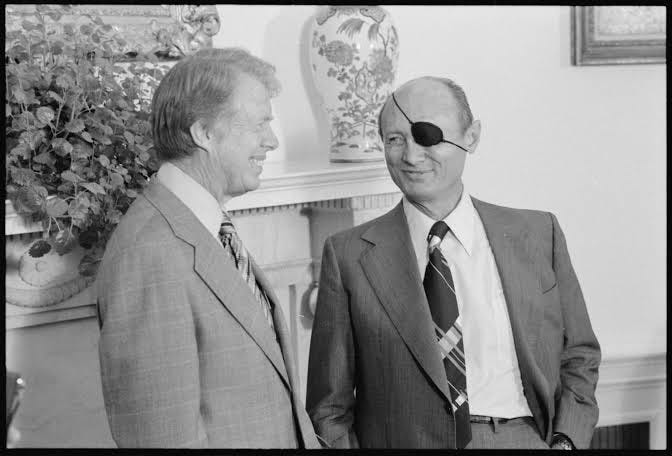
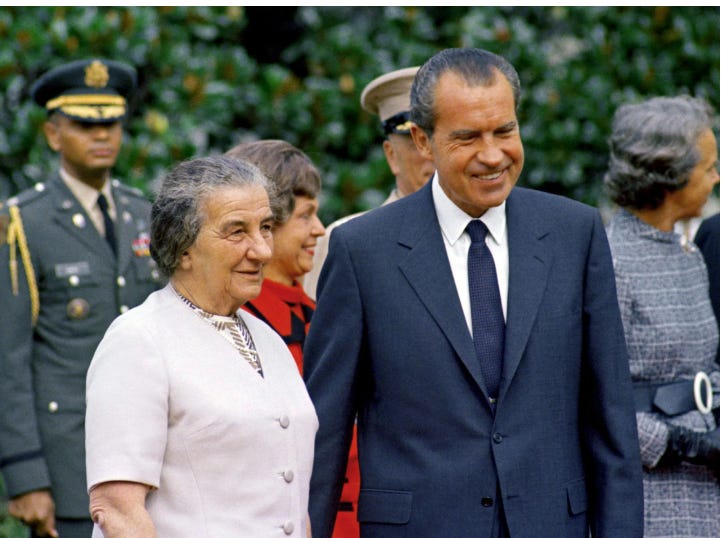
Jonathan Pollard, Wolf Blitzer wrote, there is “a widely held attitude among Israeli officials that Israel can get away with the most outrageous things. There is a notion among many Israelis that their American counterparts are not too bright, that they can be ‘handled’.”
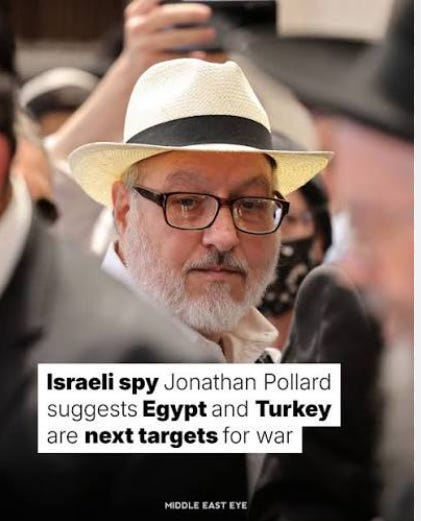
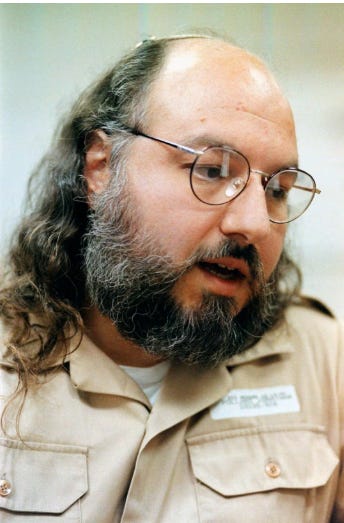
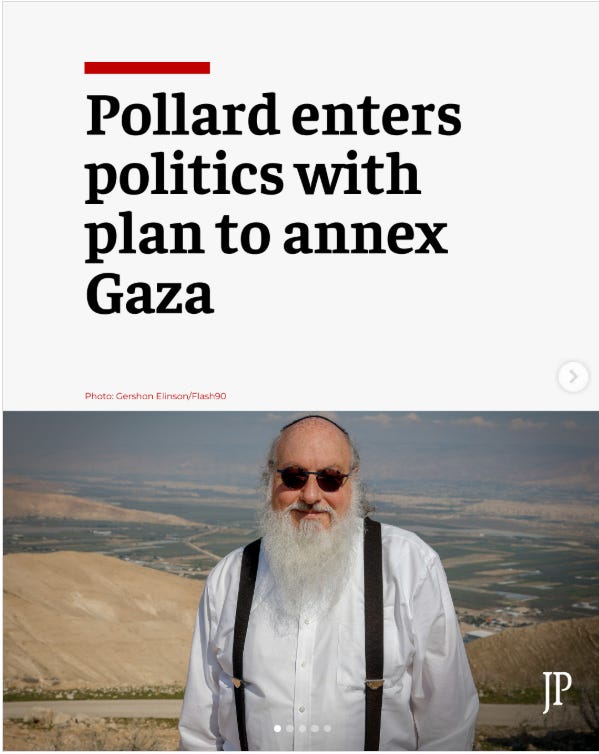
Jonathan Pollard, who served 30 years in US prison for passing classified intelligence to Israel, told Channel 13 he’s joining new right-wing party Orot HaShachar ahead of the upcoming election. He’s calling for the annexation of Gaza and forced transfer of Gazans.
DIRTIEST FUCKING PEOPLE ON EARTH.
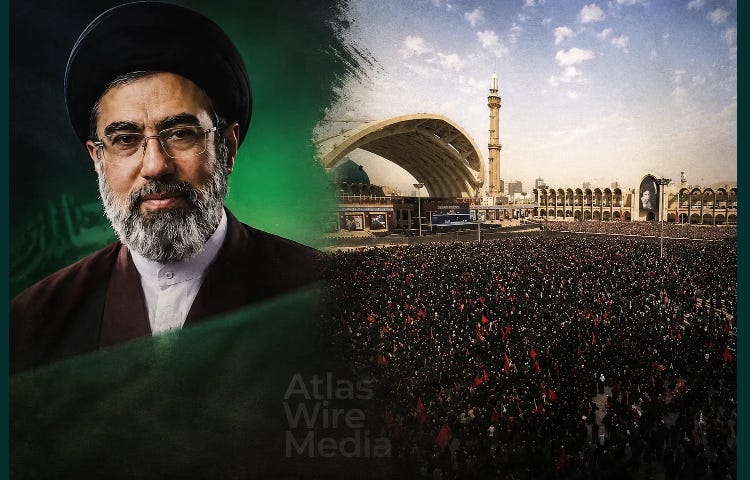
Addressing the Martyred Imam directly, he pledged that Iran would preserve his school, continue along the path he charted, and hold those responsible for his blood accountable.
“We pledge to avenge your pure blood and the blood of all the martyrs of these two wars upon the criminal and disgraced killers. This revenge is the demand of our nation, and it must certainly be carried out.”
The Supreme Leader delivered an even more explicit warning to those responsible for the assassination, saying that their identities are known and that none should expect to escape the consequences of their actions.
“These criminals, whose names from the highest to the lowest are all on a list, will take with them to the grave their wish to die peacefully in their beds.”
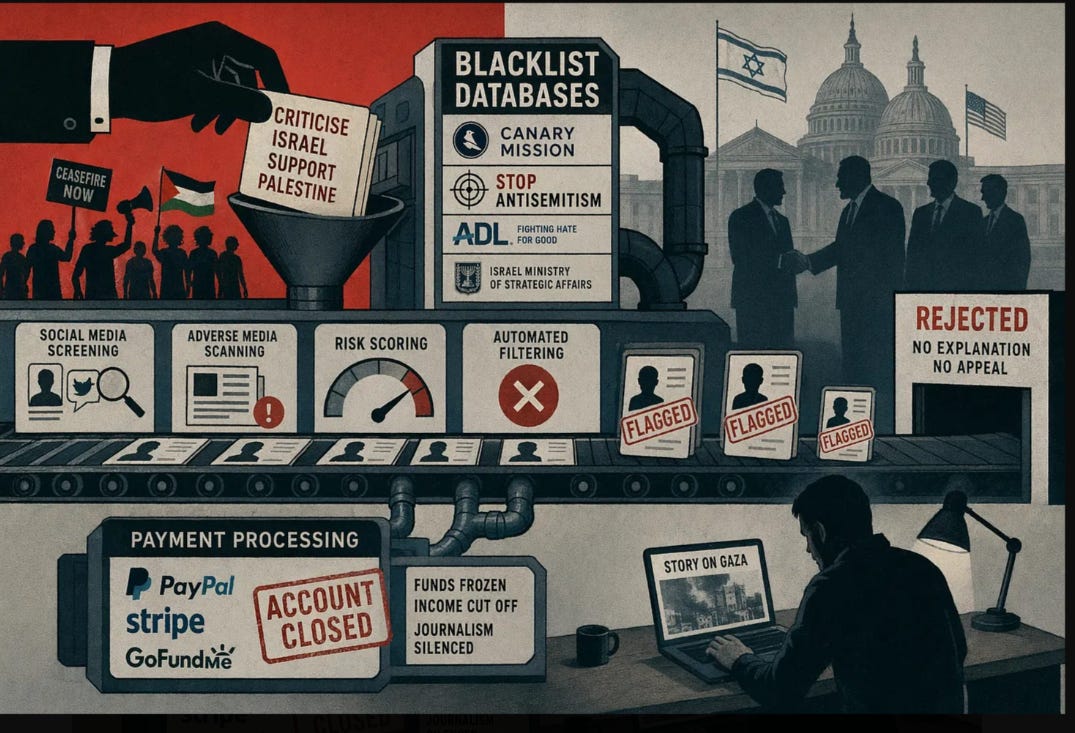
A network of lobby-aligned organisations, several with direct connections to Israeli government ministries, has built a public adverse information infrastructure — blacklist databases, employer-notification campaigns, adverse media trail production — whose explicit operational goal is the professional destruction of people who express political views about Palestine, Lebanon and wherever’s next.
1981, Jew York TImes:
‘’We don’t have any atomic bomb now,’‘ Mr. Dayan said. ‘’But we have the capacity; we can do that in a short time. We are not going to be the first ones to introduce nuclear weapons into the Middle East, but we do have the capacity to produce nuclear weapons, and if the Arabs are willing to introduce nuclear weapons into the Middle East, then Israel should not be too late in having nuclear weapons too.’‘
Mr. Dayan did not explain what he meant by Israel’s not taking steps to ‘’introduce the weapon,’‘ but it appeared that this referred to the actual assembling and manufacturing of bombs. Ability Was Widely Assumed
It was believed to be the first time that any Israeli holding or having held a position of authority had confirmed what has long been widely assumed about Israel’s nuclear capacity.
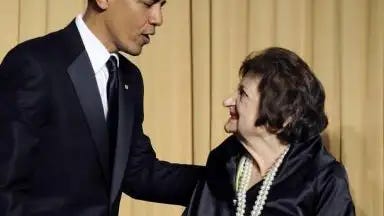
US presidents since Bill Clinton are said to have signed a secret letter that they will not interfere with Israel’s nuclear weapons, and Israel acted as if it was entitled to such a commitment from every incoming US president. It got the commitment. When President Obama took office in 2009, the first question at his first televised press conference, from veteran reporter Helen Thomas, was:
“Do you know of any country in the Middle East that has nuclear weapons?”
The president’s slippery reply was: “I don’t want to speculate.”
Helen Thomas got fired soon after, and while this was for her anti-Israeli remarks on a different occasion, no reporter has asked the question since. In February 2017 Israeli ambassador Ron Dermer managed to infuriate even the newly arrived Trump White House staff, sympathetic to Israel, with his heavy-handed demands the new president sign “the letter.” Still, it worked.
Veteran White House correspondent Helen Thomas resigned from her position as an opinion columnist at Hearst Newspapers on June 7, 2010. Her resignation came after widespread backlash regarding an interview in which she stated that Israeli Jews should “get the hell out of Palestine” and return to countries like Germany and Poland.
House house triple fucking menorah Shabbat Goy Niger Obama:
President Barack Obama has said it was the right decision for White House reporter Helen Thomas to resign after she called for all Jews to “get the hell out of Palestine”.
He said in a television interview that Helen Thomas’ remarks were “offensive”.
The veteran reporter, who has worked in Washington since the Kennedy administration, announced her resignation after footage emerged of her saying Jews in Israel should “go back home to Poland, Germany, America and everywhere else”.
FUCKING JEWS:
He nicknamed fellow Obama staffer Ben Rhodes “Hamas” for daring to suggest that Palestinians in Gaza not be carpet bombed with impunity.
“I want to stop American aid. It’s like welfare; I don’t want it.”
A window into their panic. The one thing they never do is ask what it is about them that invokes that animosity… It’s difficult to watch, but . . .
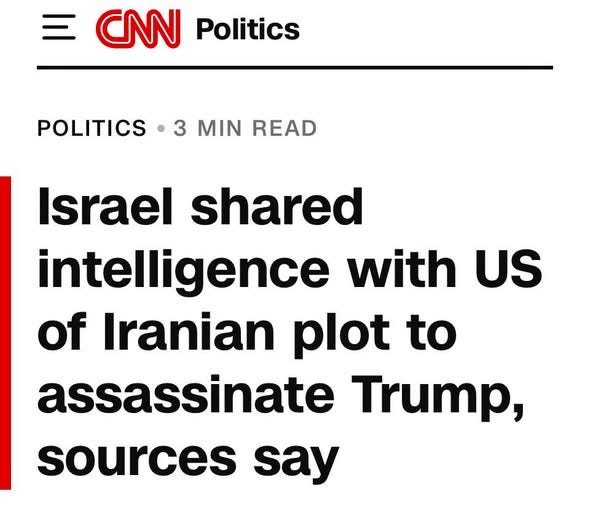
The same Jewish state that suffocated the USA with faulty intelligence and misleading predictions that led the USA into its final war, is now telling the retard Ginger Caligula that the Iranians are planning his assassination.
Let me assure you, the resistance wants Trump and Netanyahu alive and kicking. No one in America or Sodomstan can replace the level of destruction these two inflict on their own states and their own people…
The Ginger KaligulStein is committed to to reduce the planet into dust on behalf of his Tel Aviv puppeteer. The only thing that can save the planet at this point is an Iranian bomb..
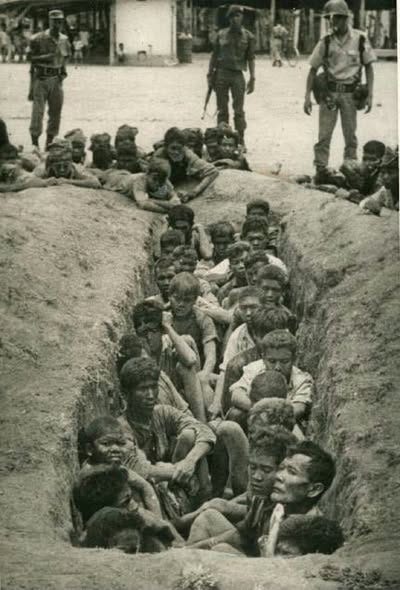
Indonesia, 1965: Dozens of civilians, including children, await execution by firing squad in a mass grave in a period in which more than 1.5 million people, some say up to 3 million, would be exterminated by Indonesian fascists, with support and funding from the CIA, simply for being suspected communists.
At that time, the Communist Party of Indonesia was one of the strongest parties in the world, though lacking its own armed forces. This genocide against the communists in Indonesia was committed following a coup d’état organized primarily by the US.
The death of U.S. imperialism is necessary for the world to know abundant life.
Last week I was questioning the timing of the burial and funeral of Ayatollah Ali Khamenei 4 months after his assassination.
Needless to say, I wasn’t sold on the ‘security reason’ narrative offered by the majority of the well-meaning people who commented on my post!
If you know Islam as much as I do, you would know that it’s very regimented and textually oriented faith. And if you know Shiite Muslims you would know that they are even more regimented and they up the rituals and symbolisms a few more notches than the Sunni Muslims do.
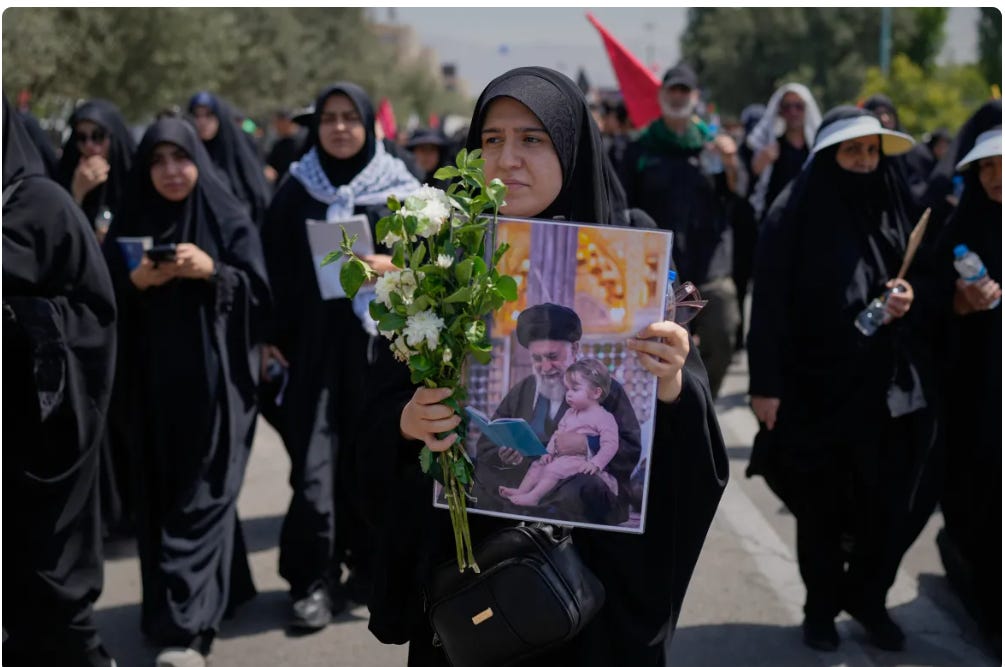
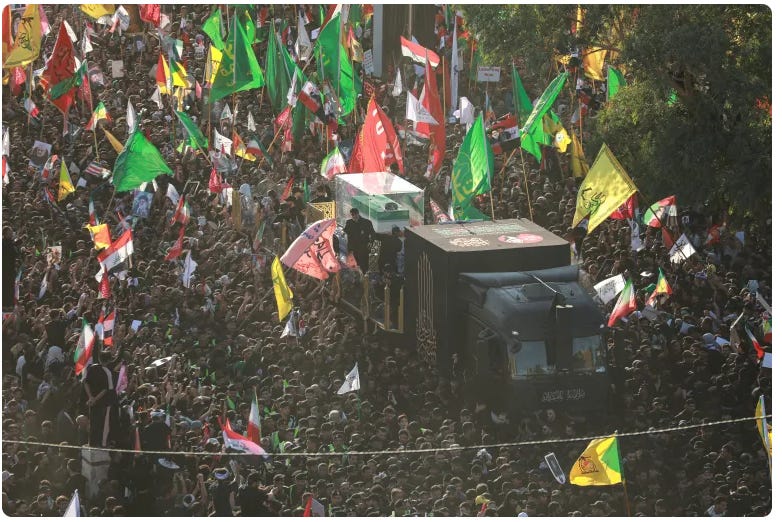
So it wasn’t until I saw a photo of the funeral procession, the lamenting ritual of death, and a sea of red flags adorned with verses from the Quran and religious slogans and its resemblance to ‘Aashura’ (explained below) that I managed to connect the dots and realized the reason behind the postponement of Ayatollah Khamenei’s burial/funeral.
So here we go, a very quick education on one of the most significant Shiite Islamic rituals, ergo the connection to the timing of Ayatollah Khamenei’s delayed burial.
The month of Muharram is the first month of the Islamic Lunar calendar, as January is to the Gregorian calendar. Muharram started on June 15th and ends on July 15th this year. The month of Muharram is also identified as one of the four sacred months in Islam by Allah.
The entire month is dedicated to constant reflection and self-improvement, seeking Allah’s mercy and forgiveness, whilst staying away from conflict and the evil whispers of the Shaytan (devil).
The main symbolism and the significance of the month of Muharram is the victory of the oppressed over the oppressor. The month contains many events; however, there are two major occurrences that are regularly reflected upon by Muslims (both Sunnis & Shiites) worldwide.
1. The Martyrdom of Hussain Ibn Ali, who was the grandson of the Prophet Muhammad, also known as Ashura, which took place during the Battle of Karbala and is commemorated on the 10th day of the month of Muharram, which fell on June 25th on the Gregorian calendar. This day consists of mourning by Shia Muslims, who make up one of the 73 sects in Islam.
2. The Splitting of the Sea for Moses also marks one of the first miraculous events to have occurred in the month of Muharram when Allah split the sea to save Prophet Moses and all those who believed in the message of Islam from Pharaoh.
It is not an exaggeration to say that religious rituals and symbolisms are as old as religion itself and have been around as long as human history. But what we see these days is not a mere practice of religious rites but serious efforts for extensive staging, producing narrative, restoring awe, and mobilizing masses.
For the Islamic Republic of Iran, the funeral of Ayatollah Khamenei being the first public ritual after the end of the war, not only signifies the battle between the oppressed and the oppressor, but it also reflects a life sacrifice and martyrdom of the man (Khamenei) to be as equally significant as the Martyrdom of Hussain Ibn Ali, aka Imam Hussain, in the Battle of Karbala. And what better time to hold such a public ritual than the month of Muharram, hence taking the body of the Ayatollah Khamenei to Najaf, Iraq, for pilgrimage to Imam Ali, the father of Imam Husayn, the martyr.
Therefore, for the Muslims around the world, let alone the Iranians (99% of whom are Muslims by faith), attending Ayatollah Khamenei was not only paying respect but a religious duty, one of which has not taken place since the martyrdom of Hussain Ibn Ali himself.
Having explained the importance of the chosen timing of this funeral, one cannot ignore the fact that as soon as the staging and excitement subsides, the realities, troubles, and deep social and economic problems that have made Iranian society in particular and the region in general prone to instability will reappear.
But at the end of the day, it is symbolism that counts, and the lack of awareness and understanding of ‘others’ cultural significance of religious heritage by the United States and the Western world would always be palpable and the dividing factor between the Muslim communities and populations and their Christian counterparts.
Ayatollahs, Imams, religious figures come and go, but the divisions will remain and carry over to the generations to come, and THAT is the problem.
Federal agents delivered subpoenas to the homes of four New York Times journalists Friday night, ordering them to appear before a federal grand jury this week. Reporters Julian E. Barnes, Eric Lipton, Tyler Pager, and Eric Schmitt are all being compelled to testify after their reporting on a security threat involving Trump’s new Air Force One, the jet Trump accepted as a gift from the Qatari government.
The Times called the move “an extraordinary escalation” in efforts to intimidate independent journalism, and the paper’s lawyer described federal agents showing up at reporters’ homes as a “brazen act” that “should shock the conscience of any American who believes in the Constitution.” The subpoenas themselves are vague, asking only that the journalists testify about an unspecified violation of federal criminal law.
The DOJ insists the reporters are not targets and that the investigation is focused on whoever leaked classified information. The underlying story reported that Trump switched planes during a trip to Turkey at the Secret Service’s request because of an unspecified threat, something Trump has since tied to an Iranian assassination plot, even as he publicly claimed the swap was so troops in the UK could admire the new jet.
Trump Quietly Reopens Canadian Bridge After Donor Family Suspicions
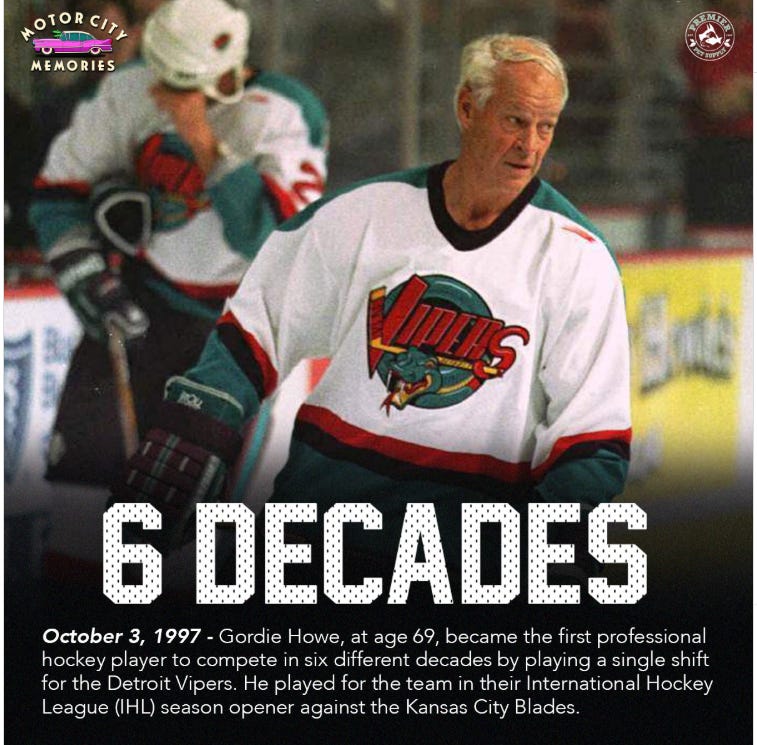
Trump is backing off his aggressive trade posture toward Canada, quietly allowing the completed Gordie Howe International Bridge between Detroit and Windsor, Ontario to finally open on July 27. The bridge had sat closed for months after Trump refused to open it, officially as protest over Canadian trade practices, while demanding the U.S. be given at least half ownership despite an existing agreement to simply split toll revenue.
Political observers had pointed out that the new bridge would compete directly with the privately owned Ambassador Bridge, controlled by a trucking family that contributed heavily to Trump’s super PAC, raising questions about who the closure was really protecting. Michigan Gov. Gretchen Whitmer celebrated the announcement, calling the bridge a testament to Michigan and Canada’s partnership.
Fucking Hell, aye? A fucking hockey player gets a bridge name!
If you have applied for a job at any large organisation in the last decade, the first human being to see your application almost certainly wasn’t the first entity to evaluate it. Before any person read your CV, an algorithm did. And the algorithm was configured by someone who may have had instructions you never saw, operating on criteria you were never told about, producing a score you were never shown, attached to reasons you have no legal right to access in any meaningful form.
This is not speculation. This is the normal functioning of modern recruitment technology, used by over 98% of Fortune 500 companies, the vast majority of large UK employers, most Australian corporate and government sector employers, and every significant financial institution in North America and Europe.
The core technology is the Applicant Tracking System (ATS). The dominant players are Workday, Greenhouse, Lever, iCIMS, and SAP SuccessFactors. These systems do several things that matter for this story:
They parse CVs and LinkedIn profiles automatically, extracting named entities — employers, institutions, locations, and increasingly, associations. They score candidates against keyword profiles configured by the client employer. They log candidate social media handles for downstream screening. They can be configured with custom exclusion flags by HR administrators — flags that produce no visible rejection notice, no explanation, and no candidate-facing record. And critically: the exclusion logic is invisible to applicants, and is not subject to disclosure requirements in most jurisdictions. A candidate rejected by an automated filter has no right to know why in the United Kingdom, Australia, Canada, or the United States. The EU’s GDPR creates a theoretical right to explanation for automated decisions, but its practical enforcement in hiring contexts has been negligible.
To the candidate, it looks like: no response.
To the employer: they acted on an independent, risk-based assessment of applicant suitability.
To the data feed that triggered the flag: successful outcome.
The people who built this did not do it secretly. They announced it. They funded it through charitable foundations. They accepted government contracts and ministerial briefings. They published the goal — “will not be able to find employment” — on a website with their logo.
The only thing that happened in secret was the connection to the HR software.
THE ECOSYSTEM MODEL: No Single Crime, Just Coordinated Data Poisoning
This is the analysis that should stop you in your tracks, because it’s the part that makes this not just disturbing but genuinely difficult to challenge.
No single actor in this chain needs to do anything illegal. The system produces political persecution as an emergent property of commercially normal operations by commercially normal entities, each acting on commercially normal incentives, each operating within their legal mandate. Let’s run the sequence:
Step one: Canary Mission publishes a profile of a student who attended a campus protest and signed an open letter. The profile is public, indexed by Google, and contains accurate factual information about where the student goes to university and their political expression.
Step two: StopAntisemitism.org posts about a journalist who published a thread citing civilian casualty figures from Gaza. The post is public, indexed by Google, and characterises the journalist as promoting antisemitic narratives.
Step three: An adverse media scanning product used by a background check firm indexes both pieces of content as part of its routine media monitoring operation. The student and the journalist now have adverse media hits in the candidate profiles generated whenever their names are run through the background check system.
Step four: A social media screening vendor used by financial services firms runs the student’s and journalist’s social media handles. The posts that triggered Canary Mission and StopAntisemitism.org appearances are flagged under the “political controversy” risk category. The vendor’s report notes: potential reputational risk / political controversy.
Step five: The student applies for a position at a financial services firm. The ATS processes their application. The background check returns an adverse media hit. The social media screen returns a political risk flag. The candidate is automatically deprioritised or excluded. No human being makes a discriminatory decision. The algorithm processed available data and produced a risk score.
Step six: The journalist’s Stripe account is flagged by automated transaction monitoring following an increase in payments associated with content about Gaza. Stripe’s compliance team reviews and terminates the account, citing “unacceptable risk.” The journalist’s Substack revenue stops. Their ability to fund the journalism stops.
Step seven: The university employing an academic who signed a ceasefire letter receives a call from a major donor expressing “concern.” The university’s development office flags the concern to the provost’s office. The provost’s office flags it to the academic’s dean. No instruction is given. None needs to be. The academic’s next grant application is reviewed with particular care. Their contract renewal is discussed in terms of “institutional fit.”
Each person in this chain — the background check vendor, the ATS product manager, the social media screening algorithm, the Stripe compliance officer, the development office staffer, the dean — made a commercially or institutionally normal decision. None of them coordinated. None of them needed to. The coordination happened upstream, in the data environment, where the content that triggers all of these downstream decisions was produced by organisations whose explicit stated goal is employment destruction.
The legal concept you need here is disparate impact: discrimination that occurs not through intent but through the systematic application of neutral-seeming processes that produce discriminatory outcomes for a protected class. Disparate impact is a recognised legal theory in UK, Australian, US, and EU employment law. It has never been successfully applied to a case of this type. The primary reason is the evidentiary problem: you cannot bring a disparate impact claim without access to the data that produced the outcome, and automated screening systems are not required to produce that data.
Humanity is at its closest yet to destroying itself, according to Tuesday’s reset of the ominous “Doomsday Clock.” The symbolic clock now reads 89 [85]seconds to midnight after advancing one second since last year’s reset.
It is now the closest to midnight since the introduction of the clock in 1947. It is updated by the Bulletin of the Atomic Scientists, which organizes the assessment of how close we are to a self-inflicted end of humanity.
The world is less safe and less stable than it was a year ago, said Dan Holz, chair of the Bulletin of the Atomic Scientists’ science and security board.
“We have no enemies except those we elect and select and direct toward the nearest nuclear bombs.“ Gore Vidal
William F. Buckley, Jr. [the fucker wanted to nuke Vietnam, man] and Dr. Giovanni Costigan held a debate at the University of Washington in Seattle, Washington on November 11, 1971. The event was held at the Hec Edmundson Pavilion with over 8,000 people in attendance. For two and a half hours, they debated the subject of U.S. foreign policy in Southeast Asia.
William F. Buckley, Jr. (November 24, 1925-February 27, 2008) was a conservative political author and commentator. In 1951, he graduated from Yale University, where he studied political science, history, and economics. He founded the National Review in 1955 and wrote a syndicated column called “On the Right” in 1962. Buckley was most recognized for his weekly PBS show “Firing Line” that first aired in 1966.
Giovanni Costigan (1905-1985) was a critic of the U.S. involvement in the Vietnam War. He earned his PhD from the University of Wisconsin-Madison. In 1934, he accepted a position in the history department at the University of Washington, where he taught Irish and English history.
Following the detonation of atomic bombs over Hiroshima and Nagasaki, a long stream of questions and concerns came to dominate the public discourse over nuclear weapons, with many demanding instant action to control the use and further development of these powerful new instruments of war. In the years immediately following the war, Teller agreed with Pauling that a universal government could, and should, control the knowledge that had resulted in the production of a nuclear device – trying to keep the information secret was unscientific and would likely only make the geopolitical situation worse.
Teller continued to believe in this course of action until finally deciding that the solution was not realistic, especially in the face of mounting tensions with the Soviet Union over their rapidly developing technologies. Teller stated publicly that he wished he could side with Pauling’s position that the US could help to maintain peace through international cooperation.
But instead, Teller believed that the US ultimately had to keep the upper hand with respect to nuclear technologies and that doing so necessitated further weapons development. Deterrence, Teller felt, required more weapons, and in order for new weapons to be developed, nuclear tests needed to continue. Teller argued that this was the only path to avoiding a third World War. Pauling, on the other hand, believed that the West needed to learn to get along with the Communists and he sought to include them in his peace activities.
The 1958 debate, and Pauling and Teller’s stances, encapsulate many of the diverse ideas and tensions that surrounded the development and testing of nuclear weapons in the Cold War period. The two scientists approached the dangers of the Cold War and the associated arms race from very different perspectives, due in part to their different disciplinary backgrounds in chemistry and physics respectively. Nonetheless, their tactics and approach were similar in key respects, in part because each man shared an enthusiasm for speaking to large lay audiences.
Both men also sought to educate the American public about the current geopolitical situation and the future of nuclear development, and both strove to present their views in language that the public could understand. Pauling was extremely rational in his thinking and he sought to use his scientific background to educate others so that they could draw their own conclusions concerning nuclear testing and fallout. In this, Teller was similar to Pauling as he too sought to educate the lay public as a means to establish his argument. Both men also believed that it was their duty to educate the public because of their unique positions as scientists, consultants, and citizens.
But the discussion between Pauling and Teller was not merely one of whether or not nuclear weapons should continue to be developed, but ultimately how peace with the Soviet Union could be maintained. For Pauling the dialogue was framed as a battle for disarmament that would lead to peace; for Teller, it was deterrence against future Soviet acts of aggression. Both men played on the fears of ordinary Americans, drawing from the very real tensions of the time, and each fought for the attention of politicians who could enact the policies that they, as scientists, could not. As we will see, the result of all this was a sometimes messy battle over calculations, predictions, and interpretations.
+—+
Now go to the Jew Hour, with Jew Koppel and Jew Sagan and Jew Weisel.
“Strangely enough, maybe the whole world has turned Jewish . . . . “ Wiesel!
On November 20, 1983 the ABC television network aired a film called “The Day After”. That film portrays a full-scale thermonuclear war between NATO and the Warsaw Pact as witnessed by the residents of Lawrence, Kansas. Over 100 million people tuned in to watch “The Day After”, a full 62% of the U.S. television audience. It remains the most-watched TV movie event in history.
Immediately following the film, ABC aired a live town hall debate moderated by news anchor Ted Koppel. Appearing on the panel were Carl Sagan, former Secretary of State Henry Kissinger, Elie Wiesel, former Secretary of Defense Robert McNamara, General Brent Scowcroft, and commentator William F. Buckley.
Motherfucking white shit hole MEN MEN MEN, man. No mothers, no sisters, no aunties, no wives, no grandmas. Psychosis of Whiteness, man.
Quaint, no, ten years ago:
‘I think when it comes to nuclear, we are really in a good place.’ With these words, NATO Secretary General Mark Rutte described the state of the Alliance’s nuclear strategy at the pre-Summit press conference in Ankara on 6 July 2026. The phrase was intended to project stability, confidence, and reassurance. Yet, to anyone familiar with the history of the nuclear age, it reveals something far more disturbing: the dangerous normalization of the belief that more nuclear weapons, more deployments, and greater confrontation can somehow produce greater security.
This is precisely where the greatest paradox of contemporary European security policy (if there is any) lies. A continent devastated by two world wars, a continent that built its post-war institutions precisely to overcome the cycle of military rivalry, is once again embracing a logic in which military power, deterrence, and strategic confrontation are becoming the foundations of political order. Particularly alarming is the fact that the nuclear dimension of this transformation has scarcely become the subject of any meaningful debate.
Europe is gradually turning into a space where nuclear powers are moving ever closer to one another. The accession of Finland and Sweden to NATO has significantly altered the strategic geography of Northern Europe. Finland, a country that for decades based its security policy on military neutrality and careful balancing vis-à-vis the Soviet Union, has, following its NATO membership, amended its legal framework to allow for the potential deployment of nuclear capabilities on its territory. At the same time, the Baltic region is becoming one of the most heavily militarized areas in Europe.
At the centre of this new geopolitical anxiety lies Kaliningrad, the Russian exclave situated between Poland and Lithuania and surrounded by NATO member states. For Moscow, it is a crucial strategic bastion; for NATO, it is frequently portrayed as a potential launch point for Russian aggression. Precisely because of its geographical isolation and military significance, Kaliningrad has become the symbol of Europe’s most dangerous zone of confrontation. In this place, a miscalculation, an accident, or a deliberate provocation could trigger a crisis with unforeseeable consequences.
In the run-up to the Ankara Summit, numerous political and intelligence assessments and media speculations circulated, revealing precisely this atmosphere of fear and mutual distrust. One suggested that Russia might attempt to stage a limited incident in the Baltic region or near Poland to ‘test’ NATO, i.e. the Alliance’s political willingness to invoke Article 5 of the North Atlantic Treaty.
At the same time, an opposite set of speculations also emerged: that heightened tensions surrounding Kaliningrad could themselves become a pretext for false-flag operations, that is, incidents whose true origin would remain unclear but which could generate political pressure for further escalation. In such a scenario, fears of Russian aggression could be used to justify an expanded American military and nuclear presence across Europe.
Such scenarios are far from being facts. Yet their very circulation in the public sphere illustrates how dangerous the prevailing logic of confrontation has become. In an era of hybrid warfare, cyber operations, disinformation campaigns, and information warfare, the boundary between objective threats and socially constructed perceptions of insecurity becomes increasingly blurred, creating fertile ground for the political manipulation of fear and the manufacture of consent for further militarisation.
This exposes the fundamental flaws of nuclear deterrence itself. Deterrence assumes rational decision-makers, perfect information, and the ability to control crises. Yet the history of the Cold War demonstrates precisely the opposite. Humanity avoided nuclear catastrophe not because the system was inherently safe, but because, at several critical moments, individual decision-makers refused to act according to the logic of worst-case scenarios. Nuclear peace has never been the product of perfect control. It has been the repeated avoidance of disaster.
Even more troubling is the fact that this logic is no longer confined to Europe. What might be described as a ‘global NATO‘ (although it exists neither formally nor institutionally) is expanding through the so-called nuclear sharing with countries such as Japan, South Korea, etc. Across the Indo-Pacific, just as in Europe, military budgets are rising, new strategic arrangements are being forged, and greater space is being created for an expanded American military (including nuclear) presence. Japan, the only country ever to experience atomic bombing against civilian populations, is steadily moving toward the normalization of military power. South Korea increasingly debates whether to develop its own nuclear capability or rely more heavily on the American nuclear umbrella. Australia, through new security arrangements, has become an integral part of a broader strategy aimed at containing China. In this way, the Orwellian logic of ‘peace through strength’ is being replicated from the Baltic Sea to the Pacific Ocean.
The war against Iran in 2025/2026 has produced yet another dangerous consequence that few in the West appear willing to acknowledge. The military campaign was justified as a necessary measure to prevent Iran from acquiring nuclear weapons, yet its political effect may prove exactly the opposite. For many around the world, the lesson is straightforward: states without nuclear weapons remain vulnerable to external military intervention, whereas those possessing a nuclear arsenal enjoy a significant degree of immunity from direct attack. The logic is harsh, but understandable: had Iran already been a nuclear power, the likelihood of such an attack would almost certainly have been much lower. Rather than strengthening the regime of nuclear non-proliferation and ultimately nuclear abolition, this war may encourage other states to conclude that the only genuine guarantee of survival lies in possessing nuclear weapons themselves, even if under someone else’s flag.
This brings us to the central question: does the world become safer simply because it contains more nuclear flashpoints? Or does it become more vulnerable because more actors, more weapons systems, and more lines of confrontation inevitably create more opportunities for miscalculation? The answers, of course, are self-evident.
Under the banner of deterrence and protection, NATO’s European pillar risks becoming trapped in a condition of permanent confrontation. Instead of developing an autonomous European security architecture founded upon cooperation, diplomacy, arms control, and risk reduction, Europe is increasingly becoming a theatre in which the major powers test one another’s resolve.
After the Ankara Summit, therefore, the real question is not whether Europe is ‘in a good place.’ The real question is whether Europe is genuinely becoming safer or merely better armed for a future in which no one will be secure. The most dangerous illusion of the nuclear age is the belief that catastrophe can be controlled simply because it has not occurred for a long time. Genuine security begins precisely where dependence on permanent preparation for war comes to an end.
Biljana Vankovska is a professor of political science and international relations at Ss. Cyril and Methodius University in Skopje, the president of Synergia Orbi: Institute for Global Analysis in Skopje, and the most influential public intellectual in Macedonia. She is a member of the No Cold War collective.
And yet it all comes down to one dead Palestinian child or one disappeared Native American…..
“Allowing corporations to bypass regulations and exploit natural resources indiscriminately harms our environment and communities.”
— Jolene Tsinnijinnie, Pueblo of Santo Domingo and Navajo member
Participants highlighted concerns about oil and gas drilling, cleanup of sites contaminated by the uranium industry, hydrogen development and resource extraction’s connection to missing and murdered Indigenous women.
Emileah Misty Rain Flower Lujan, of Taos Pueblo, told attendees at Indigenous Women’s Day that hoop dancing helped her understand her existence as an Indigenous woman.
And here we are, no, the Jews . . .
Five thousand fucking intelopers, well fed, AC, water, TV?
Buttu has described the widespread destruction of housing infrastructure and the massive loss of life, stating that the sheer scale of the damage requires generations to clear and rebuild
Plans to deploy an international stabilization force in Gaza are facing significant setbacks, with organizers struggling to deploy an initial team of just 10 to 20 personnel, far below the 20,000 troops envisioned under U.S. President Donald Trump’s post-war Gaza plan, according to a report by The Wall Street Journal.
The report, citing a U.S. military official and people familiar with the plan, said the multinational force has yet to achieve the large-scale deployment originally expected. Moroccan troops, intended to form part of the first deployment wave, were scheduled to arrive in June but have been delayed and are now expected to deploy in the coming months.
Israel is using the illegal war on Iran to continue to kill and starve Gaza, steal more Palestinian land, and restrict movement in the West Bank. Don’t look away.
Initially, Moroccan forces will train at facilities inside Israel near the Gaza border before carrying out limited operations inside the enclave. Additional international contingents are expected to join later.
The plan called for a phased peace process that would end the war, establish an international stabilization force, and transfer Gaza’s administration to a Palestinian technocratic council after Hamas is disarmed. However, progress has stalled as Hamas has expressed willingness to hand over civilian governance without committing to disarmament, while Israeli military operations continue.
The report also noted that reconstruction efforts have yet to begin on a meaningful scale, and much of the pledged funding has not been delivered. Several countries have delayed or suspended participation in the force due to regional instability, particularly following the conflict involving Iran.
Indonesia, once considered one of the largest potential contributors, suspended discussions about sending peacekeepers, while Albania, Kazakhstan, Kosovo, and Morocco are reportedly moving toward formal participation commitments.
According to the report, the force will begin with a gradual deployment centered on two main sites: a logistics hub near the Kerem Shalom crossing inside Israel and a future support base inside Gaza. Together, the facilities are expected to accommodate up to 5,500 personnel once completed
[Make that 80,000 dead and 95 percent of Gaza flattened,]
As expected, since the US-Israeli attacks in Iran began, Gaza has once again slipped from the radar. After killing more than 72,000 Palestinians (including more than 615 since the October 2025 “agreement”) and flattening more than 90% of Gaza’s housing infrastructure, Israel’s genocidal policies continued unhindered over the last week. Now, instead of fast-paced live-streamed killing, Israel’s death policies include monitoring virtually every morsel of food that enters Gaza. And despite (hesitatingly) agreeing to allow aid trucks into Gaza (as an aside, why does a genocidal regime have a say in this anyway?), Israel continues to turn away needed goods. For days, Israel prevented any supplies from entering Gaza – including food and medicine – before allowing a mere trickle of supplies last week. Despite glitzy reconstruction plans – funded by the same countries that the US has now put in the line of fire – Palestinians continue to languish in flooded tents. The instant meme of Trump’s so-called Board of Peace becoming ”Bored of Peace” rings eerily true. And, of course, Israel’s killing machine continues to grind on (Israel has killed more than a dozen Palestinians in Gaza since attacking Iran, including a 12-year-old girl, a journalist, and a paramedic over the weekend) while Israeli settlers clamor for the establishment of settlements in the enclave.
In the West Bank, Israel has imposed a blanket ban on Palestinian movement while Israeli settler-militias, emboldened by their leaders and an army that thinks it is cool to stand by and watch Israelis terrorize Palestinians, carry out their attacks on Palestinians in an attempt to ethnically cleanse the West Bank. After an especially violent February, which saw settlers carry out hundreds of attacks against Palestinians, ranging from killings (including an American citizen, if that still matters to anyone) to stealing land, destroying homes, uprooting trees, and burning fields, the violence has only gotten worse. Just since the start of the war in Iran, Israeli settlers have killed at least five Palestinians. That includes two Palestinian brothers who were murdered by settlers last Monday in Qaryut. Three others, including a third brother, were wounded in the attacks. On Saturday, settlers killed another Palestinian man in Masafer Yatta. And on Sunday, Israeli settlers murdered two Palestinians in the village of Khirbet Abu Falah (a third man died after getting hit with a tear gas deployed by the Israeli military). All the while, the Israeli army continues to arrest Palestinians across the West Bank. Why? Because Palestinians are not allowed to defend themselves or their land. That right is reserved exclusively for those trying to steal land – i.e., Israelis.
German theologian Rudolf Otto referred to that which is indescribable and beyond human comprehension.
“The numinous unconscious is the deepest unconscious. It contains the luminous part of us, our greatness, our splendour and our sacredness. The numinous unconscious gives us access to a feeling of intimacy, to limitless love and to a connection with beauty and mystery. When we are in touch with this part of our unconscious, we feel our intrinsic value. Connecting to our own light allows us to discover it in others”.
A fucking movie and Ray-gun signing a nuclear disarmament pact…
Did you know the original ending of The Day After (1983) was so disturbing that ABC executives banned it from television? Discover the hidden truths behind the nuclear apocalypse movie that terrified 100 million viewers and secretly changed Cold War history…
The Day After remains the most-watched made-for-TV movie in American history, delivering a harrowing look at a nuclear strike on American soil. But the version broadcast to the public was heavily sanitized. Network censors rejected the original, bleak climax—where Dr. Russell Oakes discovers his wife’s skeletal remains in the rubble—deeming the body horror too graphic for a broadcast audience. This censorship was just one of many battles director Nicholas Meyer fought against the network and the Pentagon to get this controversial film on the air without losing its grim, anti-war message.
In this deep dive, we uncover 15 hidden facts about the production, deleted scenes, and massive cultural impact of this 1980s classic. We explore the film’s eerie overlap with the real-life Able Archer 83 nuclear crisis, the hidden Morse code Easter egg left for paying viewers, and how this raw depiction of society collapsing actually pushed President Ronald Reagan to sign a nuclear treaty with the Soviet Union.
The Spies: In the Book of Numbers, Moses dispatches 12 scouts. While Joshua and Caleb bring back a positive report, the other ten spies are condemned in the Talmud Bavli, Sotah 34 for speaking negatively about the land of Israel.
The Sicarii: The Talmud also references the sicarii, a group of extremist zealots active during the Roman siege of Jerusalem. Accounts in the Talmud Bavli, Gittin 56a document how these factions destroyed the city’s own food supply to force the population to fight the Romans, serving as a historical warning against factionalism.
Fucking Krauts: Into the Depths of Evil: How the Nazis “Recruited” the Talmud for Anti-Semitic Propaganda
It was the Talmud, more than any other book, which the Nazis used as conclusive proof of Jewish inferiority and the racial danger posed by the Jewish people.
And all of these Jews should be gutted from the pubic zone up to the forked tongue:
In the Jews’ own words: Palestinians in the occupied West Bank have endured an exponential increase in “Jewish terrorism” over the past several years, with most of the terrorists going unpunished for their crimes against the natives.
“Incidents of Jewish settler terrorism and nationalist crimes against Palestinians in the West Bank have increased by more than 560 percent since 2019,” Haaretzreported on Wednesday. Unsurprisingly, a vast majority of these Jewish terrorists go scot-free. “Only 6.6 percent of the cases resulted in an indictment — according to data from the Israel Police.”
The report explained that 139 cases were opened in 2019 in the West Bank district in response to “complaints of nationalist crime and Jewish terrorism, as well as offenses attributed to far-right activists for harming state security.” By 2025, the number of cases had risen to 779. A senior defence establishment official attributed the increase in violent incidents to the spread of illegal farms and outposts.
The paper noted a sharp rise in these cases after the incumbent Netanyahu government came to power in 2023 and following the Al-Aqsa Flood operation of October 7:
In 2022, police opened 293 cases; in 2023, the number rose to 416; and in 2024, it reached 685.
Anti-Palestinian rhetoric in Israeli society has always been extremely violent, with a vast majority of Israeli Jews publicly expressing genocidal views towards the natives. Poll after poll in Israel has found that the Jewish population wants to see the occupation forces inflict more suffering on Palestinians and is on board with the idea of expelling them from their ancestral lands to make way for Jews-only settlements.
This sentiment has been turbocharged by the Israeli political leadership. Ben-Gvir has been openly distributing weapons to Jewish squatters in the occupied West Bank.
“Over 120,000 weapons were distributed to eligible citizens, while tens of thousands more received conditional approvals,” Ben-Gvir boasted in October 2024. “We intend to continue arming Israel. That’s what we did, and that’s what we’ll continue to do!”
Talmudic House NIGGER =
Smotrich, the Israeli Minister of Finance, has been greenlighting the annexation of vast swathes of Palestinian land, with the ultimate aim of pushing all Palestinians into Jordan and killing the rest.
Zvi Sukkot, a Knesset member from Smotrich’s party, has taken it upon himself to terrorise Palestinian students and teachers with his unannounced raids on classrooms, schools, and educational institutions serving Palestinians in occupied Jerusalem, the West Bank, and cities inside Israel.
Israeli Heritage Minister Amichai Eliyahu, who comes from Ben-Gvir’s Jewish Power party, has been using his position in the cabinet to systematically steal Palestinian land on the pretext of finding Jewish fantasies beneath Palestinian soil.
Jews in the illegal settlements have been emboldened by their political leadership and security apparatus to attack Palestinians and destroy their property. More than 1,000 Palestinians have been killed in the occupied West Bank since October 2023.
This fucking creep has his brothers in the USA: Holly-Dirt? Mossad and Israel and Jewish Mafias.
JEW JEW JEW: Peter Beinart joins Derek to unpack a major shift inside the Democratic Party. As Democratic Socialist-backed candidates notch a string of surprising primary victories, one issue has emerged as a defining political litmus test: Israel and the war in Gaza. But it’s difficult to hold two ideas at once … that the war in Gaza is a moral catastrophe, and that antisemitism is rising in some of the spaces where that catastrophe is being debated. Derek and Peter discuss why the conflict has become so central to Democratic primaries, how debates over anti-Zionism and antisemitism are reshaping public life, and what it all means for the future of the Democratic coalition.
Derek Thompson, the prominent journalist and host of the podcast Plain English With Derek Thompson, identifies himself as a secular Reform Jew.
Peter Beinart is Jewish. He is an American journalist, author, and professor whose parents were Jewish immigrants from South Africa. He is a prominent, often controversial, voice in Jewish public life, having authored works exploring Jewish identity and the Israeli-Palestinian conflict, including the book Being Jewish After the Destruction of Gaza: A Reckoning.
Oh, JEWS: Meta/Facebook/Fuckerberg doubles down on smart glasses amid always-on feature concerns
The company’s boldest wearable move yet arrived one day after its loudest privacy promise.
Meta Platforms (META) has spent two years proving it can build that next thing. Its camera-equipped Ray-Ban glasses became the first genuine hardware hit of the artificial intelligence (AI) era, “one of the fastest-growing consumer products of our lifetimes,” according to Meta.
The social contract behind that hit has always been simple. The glasses capture photos and video only when the wearer tells them to, and a white light-emitting diode (LED) on the frame warns everyone nearby that the camera is live.
Meta spent July 7 defending that light. The company rolled out an update that disables the camera entirely if the LED is blocked, physically tampered with, or destroyed, and it promised legal action against businesses that sell tampering services.
One day later, the other shoe dropped. Meta is testing prototype glasses that would “continuously collect audio while taking photos every few seconds,” sources told the Financial Times, as reported by TechCrunch.
The project, known internally as super sensing, would turn Meta’s biggest consumer hit into something closer to a memory machine. It is also the clearest sign yet of how far Mark Zuckerberg will push the one hardware bet that finally paid off.
Israel submits government requests to censor content on Facebook and Instagram. Meta has historically accepted a high percentage of these requests, which primarily target pro-Palestinian and Arab speech, often utilizing AI-based automated removal.
In April 2025, the media outlet Drop Site News published an article raising concerns about Meta’s role in facilitating a global censorship campaign allegedly orchestrated by the Israeli government, targeting pro-Palestinian content on Facebook and Instagram.
According to the article, Meta complied with 94% of Israel’s takedown requests, resulting in the removal, suppression, or banning of over 30 million posts. It further alleges that Israel’s requests have overwhelmingly targeted users from Arab and Muslim-majority countries, in what the article describes as a widespread effort to silence criticism of Israel. The report also claims that Meta’s internal Integrity Organization, led by Guy Rosen, a former Israeli military official who served in Unit 8200, worked closely with policy teams to carry out the campaign.
Moreover, the article alleges that despite being aware of Israel’s censorship practices for at least seven years, Meta failed to prevent the abuse and instead actively enabled it by providing a legal mechanism for mass takedown requests.
The Business & Human Rights Resource Centre invited Meta to respond to these allegations and to outline any actions the company is taking to address the concerns raised. Meta did respond.
In 1755, Massachusetts Bay Colony’s Royal Lieutenant Governor issued a scalp bounty proclamation, offering substantial cash payments to any white colonists who brought in the scalps of indigenous men, women, and children. This was just one of approximately 70 scalp bounty proclamations issued in New England in the century before the American Revolution; U.S. governments issued at least another 50 throughout the new nation in subsequent decades. These planned genocides are a profoundly painful part of American history, but are often little remembered or discussed.
New England once hunted and killed humans for money. We’re descendants of the survivors
Dawn Neptune Adams, Maulian Dana with Adam Mazo
The settlers whom many Americans mythologize at Thanksgiving as peace-loving Pilgrims issued government orders offering cash for dead Native American children
For more than 10,000 years, the Wabanaki peoples have been living in a region called the Dawnland. Captain John Smith rebranded the area “New England” in a map he made in 1614. He and the other colonial settlers renamed rivers and villages to claim the land for themselves and erase Native people from their homelands. But that wasn’t enough. Eventually colonial officials introduced a grisly incentive to hasten that erasure: bounties for dead Native Americans.
Yes, the settlers whom many Americans mythologize at Thanksgiving as peace-loving pilgrims were, just a generation later, issuing official government orders putting a price on the scalps of Indigenous children, women and men.
The reward: about $12,000 in today’s dollars for the scalp of a man, half that for a woman, and a bit less for a child. It was nearly as much as a soldier would earn in two years. Sometimes bounty hunters were granted the land of the people they scalped – thousands of acres, which scalpers used to found towns that they named after themselves, like Westbrook, Maine; Shirley, Massachusetts; and Spencer, Massachusetts, to name just a few.
According to our research, there were at least 69 government-issued scalp edicts across the Dawnland from 1675 to 1760, and at least 50 scalp edicts issued elsewhere in the United States until 1885. The proclamations targeted specific tribes by name – and occasionally marked specific tribes safe because they were “allies” of the authorities. But neither scalpers nor authorities had much way of knowing the tribal affiliations of the people whose scalps they took, so for centuries bounties were a license to kill all Indigenous people.
We are part of the team behind the new short documentary Bounty. In New England alone, we’ve uncovered government payments for 375 human scalps, submitted in 94 separate claims and equaling government payments of millions of dollars in today’s money. More documents may be buried in colonial archives.
In 1755, the lieutenant governor of the province of Massachusetts Bay, Spencer Phips, issued an edict declaring the Penobscot people a target of extermination and commanding “his Majesty’s Subjects of this Province to Embrace all opportunities of pursuing, captivating, killing, and Destroying all and every of the aforesaid Indians”.
The Phips Proclamation lives on in collective memory because members of the Penobscot Nation and other Wabanaki peoples sometimes post it on the walls of tribal government offices as a kind of reminder: You tried to kill us, but we are still here. The United States was built on our lands and on top of the bones of our ancestors. We live and thrive on these lands today and are sovereign nations with the right to self-determination.
In our film, Penobscot parents and children read and react to one of the dozens of government-issued bounty proclamations that motivated colonial settlers to hunt, murder, and scalp Indigenous people.
The lives that were destroyed by scalping were tallied up in a ledger and the human remains incinerated to prevent double payment. But the digits in that ledger represented murdered mothers, fathers, two-spirits, daughters, sons, aunts, uncles, sisters, brothers, cousins and infants, usually rendered nameless in the historical record.
Of course, those deadly bounties were only one of the tools deployed by the European settlers to make this land theirs. The legacy of those wrongs manifest today in a range of forms: the epidemic of missing and murdered Indigenous women and girls; the fact that Indigenous people have the highest rate of death at the hands of police, the highest suicide rate among veterans, a disproportionate rate of death from Covid-19, and the highest incarceration rates in the US; continued violations of Indigenous sovereignty by state and federal authorities and private extractive industries; the continued use of Indian mascots; and the celebration of national holidays, like Thanksgiving and Columbus Day, that dishonor Native peoples.
In spite of countless wars, massacres, land ordinances, and extermination orders, today there are over 5 million Indigenous people in the United States who are citizens or members of more than 600 tribal nations. And while the legacy of anti-Native brutality remains, most Native people are thriving and modeling for all people in the US how to live in caring communities based on mutual respect, reciprocity, and reverence for the land, water, and all our relations.
In this season, as families and friends gather to share gratitude, let us seek new opportunities to learn about our collective history, in all its complexity, and embrace a future built upon mutual understanding and respect for our neighbors.
Maulian Dana is the Penobscot national tribal ambassador. Dawn Neptune Adams is a Penobscot Nation citizen and a member of Sunlight Media Collective. Adam Mazo is a co-founder of Upstander Project. Together they are part of the film-making team behind the documentary film Bounty
The conveyor belt of pure crap- some of it, that is- repetition, and of course, no call to action.
Email disabled, or better yet, a new term: Unsubscribed:
It certainly is a list of flailing ideas:
But Palestine Deep Dive is worthy:
I had not stepped outside my home since 18 March 2025. The day before – 17 March, the final day of the ceasefire – I went on a drive with my father, my sister, and my brother. We drove across Gaza, stopping at every relative’s home, knocking on doors, visiting tents, seeing everyone we could squeeze into a single day. The streets were alive then—the smell of fresh falafel frying in corner shops, the sweetness of knafeh being pulled hot from the oven, the sounds of children kicking a half-flat football down the dusty alleys, girls skipping rope and counting in loud cheerful voices, and the chatter of neighbours passing teacups across their balconies.
I remember the voices of street vendors selling chips, instant noodles, and snacks, their calls echoing through the neighbourhood. We laughed with our cousins, exchanged old family stories, and snapped photos on our phones. That day, the world seemed ordinary, almost safe. By the time we pulled up in the driveway of our home, night had already covered the streets. We were exhausted, but our hearts were light. I never imagined that only a few hours later the massacre would resume, tearing apart the city, our families, and the rhythm of our days. From that moment, I did not leave home for six months.
During all these months, I had no energy to talk to anyone, to listen, to walk. My only remaining strength was barely enough for my university courses. I study English literature at the Islamic University, which now exists only online, its buildings having been destroyed. Any leftover fragments of energy went to my writing, which is my private therapy. Writing is how I survive. It is where I speak when my voice cannot leave my lips, where I release the grief that the walls of my home absorb silently.
Then, in August, my teeth forced me to leave our home.
I had hidden the pain for a week, refusing to admit it, but for three days, I could not close my eyes. The pain was unbearable, a constant pressure that throbbed in rhythm with my heartbeat. On top of this, I was suffering from a severe flu with bone-deep aches, which made everything worse. My immunity was almost zero. Anyone who knows me knows how I struggle with illness, how it takes forever for my body to recover. Every night was a battle between my aching body and my restless mind.
Finally, after enduring days and nights of pain, I surrendered. I agreed to go to the dentist.
Outside Again
That morning, I had no energy even to dress. I forced myself to shower, to put on my black abaya and hijab. My mother disapproved of wearing black on black, but my hands chose it automatically. It felt right, as if my mood, heavy with grief, demanded it. My mother and I stepped outside, and I was immediately met with the first shock: there were no vehicles on the street. Not a single car. The city felt like a graveyard, silent except for distant echoes of destruction.
Every step was heavy. Every street told a story of destruction. Homes I had known, streets I had walked a thousand times, were now shattered and unrecognisable. Dust and rubble clung to my shoes, the heat of the sun pressing down on my shoulders, and every corner whispered of death. I asked my mother, again and again, “When did this happen?”
On the way, I passed the house of my dearest friend Shimaa Saidam, the girl who accompanied me in studying and memorising the Quran. Her house was destroyed. I stopped, frozen. I took a photo only to convince my mind that this was real. I wondered: did she survive, or is this a memory I will never touch again? I remembered her gentle family, our last visit just a week before the genocide, one of the happiest moments of my life. My feet did not want to move, and my heart weighed me down. My mother turned to me, silently urging me to keep walking.
We came to the cemetery, the resting place of my grandparents, my aunt, my uncle’s wife, his children, and my close friends. I stopped. I wanted to cry, but the tears would not come. The wind whispered among the graves, carrying dust into my eyes. All I could do was pray for them, my quiet words ascending to the sky, as I kept walking.
Graveyard Streets
Further along, on the right, I saw my uncle’s house, bombed by Israeli forces on 29 November 2023. I remembered my aunt Asmaa, my uncle’s wife Neeven, and their baby daughter Fatima, only two months old when the genocide stole them. I prayed silently and took another heavy step forward. My legs felt as though they would give up, refusing to carry me further.
Then came the hardest sight of all: my grandfather’s house. Four floors filled with memories, the home that embraced me from birth until the age of fourteen. It had been completely destroyed by multiple missiles from the Israeli occupation on 30 December 2023. Rubble and twisted metal filled the space where walls, floors, and my family once stood. Dust hung thick in the air, and the once-spacious garden was reduced to shattered trees, broken branches, and upturned soil, the trees my grandfather used to water with his own hands now charred and lifeless.
My uncle Abd al-Salam, my cousin Huthaifa, and his daughter Hala were killed there by Israeli missiles. As I stared at the ruins, memories flashed before my eyes like a relentless, painful film. I remembered the sound of laughter, footsteps across the wooden floors, the smell of maqluba cooking in the kitchen, the warmth of family hugs. My chest felt crushed, and the weight of everything made my steps slow and heavy.
We walked for an hour and a half, making our way through the streets of Gaza, until we reached Abu Amra — a small shop that sold almost everything. It was located on a busy main street; people used to stand at its entrance, hoping to catch rides with passing cars. We were desperately searching for any form of transport that could take us further. Finally, we found something: a small car towing a wooden cart covered by a makeshift roof. I did not know what to call it, but I knew it was an invention born from necessity. After we climbed into the cart, I held onto my mother’s abaya tightly. I had never ridden in anything like this before.
Market Road
The cart dropped us off at the edge of the market. We walked three more streets to the dentist. He was late, so we waited for about an hour and a half. I was in the middle of my midterm exams, so I opened my Translation II course on my phone. The pain was too intense to focus properly. I had hoped to use studying as an escape, a way to distract my mind from the painful scenes we had passed on our journey, but I couldn’t concentrate and my thoughts kept returning to what I had witnessed and what we had lost.
Finally, the dentist arrived. He was in his late forties, and ever since I was a child, we had always gone to his clinic — he was our family’s dentist, the one we all trusted for our dental care. The clinic looked the same as it had before the genocide, except for the glass door, which had been broken and was now patched up. His demeanour, although serious, was kind and gentle—he knew I was afraid of dental work and treated me with calm care. He examined my teeth and told me that I had infections caused by my wisdom teeth, which were pushing and carving a space for themselves in my gums, and that was the reason for all the pain I had endured for days.
We left, walking again until we found another cart. I had no energy to protest. I collapsed onto the wooden seat, completely drained by the sun, the walk, the memories. The market was full of faces etched with fatigue, grief, and loss. There were vendors calling out their wares, small stalls filled with goods, and children playing in the streets. The children’s faces haunted me the most — tired before their time, worn down by the weight of a world they should not have inherited.
As the cart moved, my mind did not stop. Everywhere I looked, I saw the people I had lost, the houses I had known, the mosques turned into rubble. Even Al-Farouq Mosque, once so beautiful, was now only a pile of stones. I wanted nothing more than to return home, to lie down, to try to forget what I had seen. I had gone out to fix my teeth, not to carry the burden of an entire city of memories.
I am a Palestinian writer, poet, and editor from Gaza, currently studying English Language and Literature at the Islamic University of Gaza. You can find more of my work here.
And they laughed and mugged and plotted more death at Nato:
And of course, this putrid cunt-tree’s fascination with fucking Maine?
There had been an uneasy expectation in Maine political circles that something else was going to drop with Graham Platner. After this week’s rape allegation, his swift downfall is not surprising. The harbormaster of Sullivan has joined the sad and mostly male parade of American politicians who operate under the conceit that their past transgressions will never outpace them.
But eventually, on Wednesday night, Platner stepped aside. And the question now turns to who will replace him, through a statewide convention in a couple of weeks, as the Prospect has reported.
So, this human monster, Collins, hmm:
So how tough is it to beat a pedophile defender?
Maine Democratic U.S. Senate candidate Graham Platner faced significant scrutiny over a skull-and-crossbones chest tattoo resembling the Nazi Totenkopf. He stated he got it while drinking in Croatia in 2007 as a young Marine and was unaware of its historical meaning until reporters raised concerns. He covered it with a new design in late 2025.
Oh, here’s the fucking retired professor in the East of AmeriKKKa, who unsubscribed, yammering once again, with his Jewish ROOTS never looking at why JEWS are high up there in riches (sic) and financial power.
Always the Jew to decide the framing, the diatribe goal posts, the language, the lexicon, the correct way:
My point is this. Nima Alkhorshid chose to praise the changes in Iran by saying “You can get rich easily easily” and not by saying anything about how society was getting more equal economically. This is because his anti-imperialist concern is not the egaliarian one about making society more equal economically.
What most of you don’t know is that (labour) Zionism was a naive (however genuine) attempt to seperate the Jews from the Talmud and bond them with the Old Testament. What we got in the the end is a nation inspired by two of the most vile misanthropic texts in human history.
36 hours ago the Ginger Caligula confirmed he will meet his Tel Aviv puppeteer as soon as next week. Last night we saw the Israeli colonial army AKA The USA NAVY bombing Iran.
There is no end to this war until both the USA and its Mother State capitulate, waving a big white flag in the air and even then, the surrender must be complete and unconditional.
Our own fucking wrecking ball of Jews: Greenspan Ran the Fed for 18 Years and Left an Economic Time Bomb
Michael Hudson:
Well, I’m glad we’re talking about Alan Greenspan because we’re still in the kind of era that he initiated. Back in the ’60s, I actually was saddled with having to work with him briefly. I was working at Chase Manhattan on the balance of payments of the oil industry, and Socony-Mobil insisted that we hire him to calculate the balance of payments and profits of the oil industry in Europe. Well, my boss, who had been recommended to Chase by Milton Friedman, told me, “Greenspan’s just a shill. He says whatever the clients want.” He was notorious for just having his reports up for sale.
We had a discussion with David Rockefeller, who said, “Well, people are not going to trust our study if Greenspan’s part of it. They’ll think we’re acting just as lobbyists for the oil industry.” So, my boss, John Deaver, asked me to check his work: “Can you see anything wrong with his statistics? I’m sure the little bastard did something in there somewhere.” That was how people talked about Greenspan in the 1960s. Well, sure enough, I found that he’d faked some figures from the European data. As a result, I was assigned to go over to his office and give him the news that he was off the project. I obtained some renown as the man who fired Alan Greenspan, but I was just the low man on the totem pole being told to do it.
Well, how did this person ever rise to be head of the Federal Reserve? That’s the question. The answer lies in the 1980s. The era when he emerged was very different from the 1960s. You had the era of Ronald Reagan, the Republicans, and the anti-federalists. Earlier this week, Matt Stoller had a great Substack report explaining how Newt Gingrich designed a whole strategy for the Republicans to shrink government, and what you do is shrink Congress. In the 1980s, for the first time, Congress was taken over by the Republican Party. What the Republicans did, Matt explains, was to cut back all the budgets for the government staff—the staffs of the representatives and senators who had been doing all the research to make sure they were anti-monopolists and acting in the public interest. All of that was unwound.
To quote briefly from his report: “In 1995, the Republican Party took control of the US House of Representatives, led by Newt Gingrich and a small group of right-wing politicians who called themselves ‘jihadists.’ These men sought to revamp a legislative chamber held by the Democrats since 1949.”
That was the environment in which they got Alan Greenspan appointed as head of the Federal Reserve. His job was basically to represent their clients—the commercial banks—not the economy at large. When people talk about an “independent” Federal Reserve, they mean independent from US policy; independent from congressional and presidential policy. Just days ago, you had the Supreme Court rule that Donald Trump can fire policymakers anywhere he wants in the US government, but not from the Federal Reserve. Its independence means that the banks are pretty independent of having money and credit operated and managed in the public interest.
Well, that’s what Alan Greenspan did. He deregulated everything. He sat there and let the huge savings and loan bubble explode. He let the 1998 dot-com bubble explode. That is exactly the same policy that we’re seeing today. The reason Greenspan got such a write-up of editorials and obituaries all over the press was because he opened the doors for this setup.
By being independent, the banking system in effect controls government tax policy, monetary policy, and the allocation of credit. Who gets the credit, and for what? Well, we know the credit is used to create a bubble. This is the result of all of these changes that occurred with Greenspan in the 1980s.
Oh, the Higher Education Jewish scam:
The Chronicle of Higher Education generally work within its editorial, reporting, and review divisions, rather than in corporate ownership, which has historically resided with the Gwaltney family. Notable Jewish journalists and editors have contributed to its staff and op-ed sections.
Prominent Jewish Journalists and Contributors
Len Gutkin: A prominent Review Editor and frequent writer for the publication, responsible for conducting major interviews and covering Jewish studies, literature, and academia.
Evan Goldstein: Senior Editor at the publication, who works extensively on broad academic trends and intellectual history.
Jonathan Zimmerman: A widely published opinion contributor and professor who frequently writes about academia, antisemitism, and free speech for the outlet.
Contributors & Academics: The publication also routinely features reporting and op-eds from esteemed Jewish scholars, such as Lila Corwin Berman and Ronit Y. Stahl, who write on Jewish-studies scholars and university policies.
These fuckers are offering me a discount for their Counter UAS Summit:
Counter-UAS (C-UAS), or Counter-Unmanned Aircraft Systems, refers to a layered combination of technologies used to detect, track, identify, and neutralize unauthorized or hostile uncrewed aerial vehicles (UAVs/drones)
.
Our fucking enemies among us . . .
Fucking Racket? Fucking MAFIA, General Smedley Butler.
Last week, millions of people around the world were subjected to record-breaking heatwaves. At least 25 deaths in the U.S. from this heat dome were reported. The French government also counted over 2,000 excess deaths during the June heatwaves. At the same time, this past weekend, a devastating super typhoon hit the Northern Mariana Islands and Guam, leaving islands like Rota, where 2,000 people live, without running water and most buildings impacted.
Architect Teddy Cruz has celebrated these regionally inventive structures. “While the seemingly permanent housing stock in San Diego is turned disposable from one day to another, the ephemeral dwellings in Tijuana want to become permanent,” he has written. “One city recycles the ‘left over’ of the other into a sort of ‘second hand’ urbanism.”
One of the many stark contrasts between the two sides of the border wall is the contrast between profligate consumption and obligatory thriftiness. Cruz is well known for saying that the border wall turns San Diego into “the world’s largest gated community.” Inside the gated community that is the contemporary U.S., free trade has accustomed many Americans to a lifestyle of waste. In its mirror image, that waste becomes the substance of a city. Perhaps the post-NAFTA era could be an opportunity to find the conditions for a built landscape that is somewhere in the middle.
[Second-hand Manufactured homes imported from the U.S. for sale in Baja California.]
July 1, Donald Trump refused to renew the USMCA, the extension of NAFTA signed in July 2020. Because of the U.S.’ refusal to comply, the agreement will now be subjected to review annually and could sunset in 2036.
NAFTA profoundly re-shaped the North American economy. Perhaps the most famous example of this is its impact on smallholder Mexican corn farmers, who found their markets flooded by tariff-free corn grown on massive, subsidized U.S. farms; the agreement also facilitated the rise of industrial pork farming in Mexico and of health conditions such as Type 2 Diabetes and childhood obesity.
It also transformed Mexico’s built environment. The rise of assembly plants turned northern cities into fast-growing boomtowns; the policy change allowing communal ejido farmlands to be sold off gave rise to a fragmented landscape of housing developments. As a geographer driving through the Baja borderlands, I couldn’t stop reflecting on the visible traces of NAFTA and other aspects of border policy.
[In Mexico, increased meat consumption and the opening of new markets, such as China, have driven the expansion of industrial pig farms, including in the western state of Jalisco]
The White House is preparing for what could become a multi-day or even multi-week military campaign against Iran centered on the Strait of Hormuz, Axios, a frequent source of U.S. and Israeli leaks throughout the war, reported on Wednesday.
One U.S. official reportedly threatened to “slap” Iran “a bit,” “so they understand we’re not fucking around.” The same official said the duration of the strikes will depend on Tehran’s response.
Trump told reporters on Air Force One that Iran’s representative had “called a little while ago” and that they “want to make a deal”—a claim he made without providing evidence. Iran did not confirm any direct outreach.
U.S. officials also told Axios that “reopening” the Strait of Hormuz and “restoring freedom of navigation” have become the administration’s primary military objectives, as Iran has insisted the waterway will only operate on its terms.
Vice President JD Vance told reporters on Wednesday that U.S. strikes “are just going to keep on happening until they open up that lane and stop shooting at ships.”
Regarding the Strait, Mohammed Bagher Ghalibaf, Iran’s lead negotiator and parliament speaker, said in a post on X it would “only open with ‘Iranian arrangements,’ not American threats.” He also warned Washington that it “still [hadn’t] learned that bullying and breaking promises are no longer cost-free.” “Let me put it plainly, he said, “if you strike, you’ll get hit.”
Traffic through the Strait slowed to a near standstill on Thursday, Bloomberg reported. Ship-tracking data showed most vessel movements were confined to the Iran-approved route along the waterway’s northern side, while the U.S.-backed Omani shipping corridor saw little activity. Among larger vessels, only a U.S.-sanctioned supertanker departing the Persian Gulf and an Iranian-flagged container ship were visible, although some ships may have been transiting with their tracking systems switched off, the outlet noted.
Imagine the significance of what Donald Trump said about the Golan!
The President of the United States effectively reaffirmed Israel’s occupation and annexation of the Golan Heights while Abu Mohammad al-Julani sat beside him without a single objection, not even a reminder that the Golan is occupied Syrian territory.
Silence at a moment like this is state policy.
When the U.S. president declares the Golan to be Israeli territory and the self-proclaimed “President of Syria” says nothing, the world is bound to interpret that silence as acceptance of the status quo.
Oh, fucking queer as lactating tits on a bull Substack….
It’s become fashionable for the commentariat across the political spectrum to describe Syrian President Ahmad al Sharaa as an al Qaeda “terrorist.” From Ana Kasparian on the left to Tucker Carlson on the right, they have voiced outrage that the former Islamist rebel fighter they routinely call a “head-chopper” seized control of Damascus in 2024 and became leader of Syria.
That anger reached a fever pitch when Sharaa, previously known by the nom de guerre Abu Mohammad al Jolani, was welcomed in Washington last month. That’s when President Donald Trump called him “handsome” and sprayed him with cologne in the Oval Office, and he was spotted shooting hoops with US military commanders he may have once fought against.
Sharaa’s forces—like every armed group in the Syrian conflict— didevilshit, and were credibly accused of engaging in sectarian purges. But it’s way too broad a brush to paint Sharaa, former leader of the Syrian group Jabhat al-Nusra. as a “head-chopper” or “terrorist.” I generally avoid calling any group or person a “terrorist,” because it generates more heat than light. But in Sharaa’s case, it underplays his role in Middle East history, and risks underestimating his future impact.
Yes, he’s a former al Qaeda militant. But he’s a lot more than that. He is as much a yuppie as a jihadi, with a life trajectory more akin to Fidel Castro than Osama bin Laden. The reason why the US and much of the world embraced him is because they had no choice. Over the course of Syria’s 13-year war, he adeptly used the instruments of war and politics to outflank, defeat, or co-opt every other contender in Syria’s game of thrones. Among a substantial number of Syrians, he is now regarded as a national hero who toppled the country’s despised leader Bashar al-Assad and his family’s decades-long dictatorship.
[In recent years, Syria’s US “terrorism” designation has been primarily related to al-Assad’s relationship with Iran and support for Hezbollah, the Lebanese armed Shia movement.
Last month, Trump suggested that Syria, under al-Sharaa, could take over from Israel in a military campaign to degrade Hezbollah. Al-Sharaa denied any intention to intervene militarily in Lebanon, which Syria had occupied for decades under the al-Assads.]
U.S. to remove Syria from list of “state sponsors of terror”: The U.S. announced on Wednesday that it would delist Syria as a “state sponsor of terror,” with Secretary of State Marco Rubio calling the move a “historic step” which would “give the Syrian people a chance at greatness.”
Rubio added that the decision was made because Syria had made “formal assurances” to the U.S. that it would “not support acts of international terrorism in the future.”
The announcement came as Trump met with Syrian President Ahmed al-Sharaa in Ankara on Wednesday. Trump praised al-Sharaa for the “unbelievable job” he had done in Syria. “What a job he’s doing,” he added.
The designation has significantly impacted the country’s economy since it was announced in 1979. It has limited investment within Syria by preventing U.S.-affiliated companies from doing business in the country and by preventing Syrian companies from banking with U.S.-based financial institutions.
The U.S. had lifted other sanctions on the country in May, but this delisting is viewed by many as the most significant step the U.S. has taken to benefit al-Sharaa’s government.
‘A lot of love in the room,’ Trump: “Every time you get a censor, you get a fool, and worse yet a knave, pretending to be a guardian of morality, while acting as a guardian of class greed.” Sinclair
He’s on the run, that is, the dog, Elldee. That’s River Falls, Wisconsin, and I did a whole series on my trip up there and my amigos from up there. Kelly is on the show, again, KYAQ Finding Fringe, because there are very few people who are available or willing to have the real conversation about why this country should be Custer’s Last Stand throughout the land, every day, everywhere in this shit hole.
We knew this pedophile would move again against Iran and its people: Trump threatens more strikes on Iran after saying ceasefire is ‘over’ — CNN… CIA News (sic) Network:
Here’s the latest
• US-Iran truce uncertain: President Donald Trump said the US will “very probably hit” Iran again tonight after the two sides traded strikes overnight. Trump, currently at the NATO summit in Turkey, earlier said he believed the memorandum of understanding with Tehran “is over,” but that negotiators can “keep talking if they want.”
• Strikes traded: Iran’s Islamic Revolutionary Guard Corps said they attacked American military targets in Bahrain and Kuwait after the US launched strikes and reimposed sanctions on Iranian oil sales, following attacks on ships near the Strait of Hormuz.
Here, Merrill, where Kelly grew up and where his wife is buried. I was honored to be a part of THAT.
What makes that friendship, those late-in-life friendships that survive the great distance of time and narrative and space? That Cardinal was Cheri’s favorite, and the truck in the background is hers, and that’s where we stayed with the Palestinian dog, Elddee, a few years ago when we made the trip to Merrill to recover some of his roots, not all bad.
He’s in lockup, on paper, and you can read all about that. He can’t even cross state lines without talking to an ACAB probation officer. Let alone head to Oregon, or Mexico, deep Mexico, where I’d like to take him.
Lock up, but not his mind, and he traverses River Falls with his electric trike and his weiner dog, with the Palestine symbol of resistance flying high on his trips around town.
He lives alone, save for the canine companion. He is biding his time as the state of Wisconsin owns his constitutional rights to bear arms, vote, travel, and free speech.
You see, he’s in extended jail because of phone calls he made to his wife while he was in lock-up. PHONE calls that were recorded, and he knew they were.
Oh, now, to say. “I’d like all ACAB chopped to pieces, and I’d gladly do it,” well, so far, that’s not a crime here on this Substack. But, if I put in, “I’d like Deputy Fife who lives on 333 Oregon Oak Lane, with his fancy 4 x 4 F150 and his three fucking pit bulls and his extended dirty MAGA family, oh, I’d like them extinguished, and, shit, I think next week I will fill up the 5 gallon gasoline can and rig up a timer and then wait for it to blow under his 4 x 4 and bam, in the woods I will be with several of my God-given weapons, and, bam bam bam. He’d never know what hit him or his wife and his three MAGA kiddos and three VD Vance-loving pits. See you there sometime next week.”
There you have it, on paper, house arrest for six years for intimating that he’d like to see Judge X and Prosecutor Y and Pig Z taken out. Under duress, man, in jail on his way to prison with a wife also being threatened with incarceration for aiding and abetting Kelly’s skipping out.
Now we tried to frame yesterday some of the fucking news, to try and keep up with breaking news, but alas, one 24-hour cycle in this shithole Jewish-controlled country, well, that was a vain attempt.
“If necessary, we will destroy power and water plants, but I don’t want to do that. Our attack on Iran could be major.”
Breaking news from the pedophile and rapist Jewish president. You know, genocide, crimes against humanity, collective and civilian punishment.
And, shit yeah, that piece of shit peace president: He announced he is giving Ukraine a license to manufacture Patriot missiles.
Trump Says Turkey ‘Could Have Gotten Into the Fight’ Against Israel During Iran War — If Not for Him
Did you get it yet? White Fucking Perversions, gathered for the Nato Summit, and the fucking drugged-up Jewish President giving the Jews of Israel their new Levant in Ukraine while Putin the Billionaire gives more and more redlines for the Jews Running the USA to Cross.
Increasing Ukraine strikes on Russia can help end war: Trump
US President Trump has addressed Ukrainian drone strikes deep into Russian territory on its oil refineries and defence-manufacturing facilities.
“It’s an escalation but it’s also an escalation that can help lead to an end [of the war],” said the American leader at the NATO summit.
Cosplay:
Ahh, free health care my ass.
NATO leaders are meeting in Turkiye’s capital, Ankara, for the second day of a key summit.
Divisions over defence spending, Russia’s war on Ukraine, and the Iran conflict dominated the first day.
President Donald Trump lashed out at allies for failing to support the United States during the war on Iran and again insisted Greenland, a semi-autonomous Danish territory, should be controlled by the US.
NATO leaders announced new multibillion-dollar arms deals aimed at strengthening the alliance’s military capabilities – something Trump has long demanded.
“We’ve settled a lot of wars,” Trump says, adding the Ukraine-Russia conflict is the one he “thought might be the easiest” to resolve.
President Putin is “a difficult character”, he said before motioning to President Zelenskyy, also calling him “a difficult character”.
“It’s not the easiest, not the easiest thing. There’s a lot of commitment, and there’s a lot of love of the countries and everything else. But I think we’ve made a lot of progress in the last couple of weeks,” he said.
And this is it in a nutshell, no: taking her family’s rights away BIG TIME. Attacks on a UN rapporteur who is doing her work.
While the fucking dirty whites on the “other side of the maure pile” figure out about their fucking ex-Marine Killer Candidate: For nine months, Graham Platner’s supporters have insisted that Democrats should ignore the mounting evidence of his personal foibles and political vulnerabilities — and support his bid for the Senate in Maine.
They argued that his Nazi “Totenkopf” tattoo was a youthful indiscretion and parroted his ludicrous argument that he didn’t know the origins of the Nazi insignia that was on his chest for 18 years before he covered it up with more ink. They waved away his dozens of racist, misogynistic and, frankly, creepy Reddit posts. They said his sexting with as many as a dozen women soon after his wedding was between him and his wife. They insisted that he was the best candidate to unseat incumbent Republican Sen. Susan Collins, even as polling showed him badly underperforming other Maine Democrats.
Platner’s campaign working to navigate exit from consequential Maine race, sources say
[Graham Platner speaks during a “Fighting Oligarchy” event in Portland, Maine, on May 25, 2026.]
Graham Platner and a small team of strategists behind his candidacy are trying to navigate an exit from the consequential Senate race in Maine without entirely squandering the movement he built, people familiar with the matter said, rather than digging in or trying to find a path forward for his candidacy.
He is expected to announce his decision through a recorded video, which could come later today. As of this morning, the message had not been taped, the people familiar said.
Support for Maine’s Democratic nominee in the Senate race collapsed this week amid a rape allegation that he has denied.
After CNN and Politico reported the allegation, which was made by a woman he previously dated, Platner said he would “reflect on the best path forward” for his Senate bid.
Morris JEW Katz, a top campaign strategist for Platner, is set to meet with the embattled candidate in Maine on Wednesday.
Katz, who also is a key adviser to New York Mayor Zohran Mamdani, has told associates he does not believe Platner can remain in the race, given the allegations against him.
“This could – and should – end today,” a person close to the campaign told CNN. “We’ll see if it does.”
Just another Trump guy….
Graham Platner Joined US Military to “Kill People” [and had a “hell of an excellent experience” doing so], Deleted Posts [from 2020] Reveal
Speaking in Ankara, Turkey, he lashed out at Iran, calling its leaders “scum” and dismissing continued negotiations as a “waste of time,” though he said U.S. negotiators could keep talking if they wished.
Our CUNTS:
MAGA and those around the White House have grown concerned as Trump appeared visibly confused at times at the summit. During remarks, Trump appeared to misspeak, saying, “We had 111 missiles shot by the Islamic Republic of Japan,” apparently confusing Iran with Japan while discussing the conflict in the Middle East.
Trump repeatedly referred to Ukrainian President Volodymyr Zelenskyy as “President Putin” during their meeting, appearing to confuse the Ukrainian leader with Russian President Vladimir Putin.
Trump struggled to recall the name of the Iran nuclear deal, referring to it as the “Obom” deal and “the JC… POC.”
Lockheed Martin: This defense contractor manufactures the hit-to-kill interceptor missiles used in the system, specifically the Patriot Advanced Capability-3 (PAC-3).
RTX (formerly Raytheon) and Lockheed Martin. Primary US production facilities are located in Camden, Arkansas (missile assembly and solid-rocket motors), Tucson, Arizona, and Orlando, Florida
Trump confirmed to Ukrainian President Volodymyr Zelenskyy suggesting the U.S. would let Ukraine manufacture Patriot missile systems, “We haven’t informed the company of that yet, but that’ll work out alright. I’m sure they’ll be thrilled.” The comment implied the administration had not coordinated with the manufacturer before discussing a potential production license, prompting questions about whether the proposal reflected official policy or was an impromptu remark.
“All art is propaganda. It is universally and inescapably propaganda; sometimes unconsciously, but often deliberately, propaganda.”
— From his 1925 essay collection, Mammonart
“There is one kind of prison where the man is behind bars, and everything that he desires is outside; and there is another kind where the things are behind the bars, and the man is outside.”
— From The Jungle
“All art is propaganda. It is universally and inescapably propaganda; sometimes unconsciously, but often deliberately, propaganda.”
Trump asked Ukrainian President Volodymyr Zelenskyy whether he would travel to Moscow, prompting Zelenskyy to quip, “It is difficult. There are lots of Ukrainian drones there. It’s dangerous.” The exchange drew attention as Zelenskyy used humor to underscore Ukraine’s expanding long-range drone campaign inside Russia, while highlighting the security risks posed by the ongoing war.
Electricity blackouts could begin as early as next year as the U.S. power grid struggles to keep pace with surging demand from AI data centers, according to Exelon CEO Calvin Butler. Butler warned, in an interview with the Financial Times, that power shortages in the Northeast and Midwest could force utilities to cut electricity to hundreds of thousands of customers during periods of extreme demand, noting the grid narrowly avoided widespread outages during last winter’s coldest days. Grid operator PJM is already projecting significant power supply deficits over the next decade, while U.S. electricity demand is expected to jump nearly 40% by 2035. Butler argued that without a rapid expansion of power generation and grid infrastructure, reliability risks will continue to grow.
Electricity costs are also set to rise as utilities seek billions of dollars to expand and modernize the grid to support AI-driven demand. Residential electricity prices have already climbed nationwide over the past two years, with some states—including New Jersey, Maryland, and Pennsylvania—seeing double-digit increases. Butler said higher utility bills are unavoidable because companies must invest in new transmission lines, aging infrastructure, and additional power capacity to meet growing demand. While politicians have pushed back against rate hikes and accused utilities of profiteering, Butler argued delaying increases would only result in even higher costs later.
The growing battle over who pays for the AI boom is becoming a major political and economic flashpoint. Butler said technology companies underestimated public resistance to the massive electricity demands of new data centers, leaving utilities to shoulder much of the criticism over rising power bills. He also argued current regulations discourage construction of new power plants because independent generators lack sufficient incentives to make long-term investments. Without policy changes to accelerate new generation and infrastructure spending, Butler warned lawmakers may not recognize the severity of the looming electricity crisis until widespread shortages and blackouts become a reality.
Other news:
The Trump administration has begun draining the Lincoln Memorial Reflecting Pool for a second time in three months after persistent problems including algae blooms, damaged lining, and discoloration, with officials again blaming vandalism despite not publicly releasing evidence. Interior Secretary Doug Burgum said crews will remove debris, repair the pool’s lining, and refill it using the same contractor that previously received a more than $14 million no-bid contract. The renewed repairs have drawn scrutiny over the project’s cost, repeated maintenance issues, and the administration’s handling of the high-profile restoration.
Beginning in the 1980s, there was a significant increase in awareness of the deep flaws of mainstream journalism among those on the U.S. left. Writers such as Todd Gitlin, Herbert Schiller, Gaye Tuchman, Ben Bagdikian, and Michael Parenti, each in his or her own way, drew attention to the incompatibility between a corporate-run news media and an ostensibly democratic society. The work of Edward S. Herman and Noam Chomsky, in particular, introduced an entire generation of progressives to a critical position regarding mainstream journalism. As the title of their masterful Manufacturing Consent indicated, the capitalist news media are far more about generating support for elite policies than they are about empowering people to make informed political decisions.
What is not so well known across the left, not to mention elsewhere, is that this radical criticism of the limitations of a capitalist-sponsored journalism is not a recent phenomenon. In fact, it dates back to the birth, at the beginning of the twentieth century, of both modern monopoly capitalism and modern commercial media, roughly one hundred years ago. Radical criticism of the press was an integral component of the many large social movements of the Progressive Era, which sought to resist the effects of accelerating capitalist development. It was a time of striking similarity to the present, mirroring in particular the corruption of democracy by political and economic elites whose control over the media strangles public awareness, debate, and activism. However, unlike today, radical criticism of capitalist journalism was a dominant theme on the left during the Progressive Era, particularly in the socialist, anarchist, and progressive press. This was the Golden Age of radical press criticism, and Upton Sinclair was at its epicenter.
Upton Sinclair is best remembered for his novel The Jungle, the 1906 muckraking exposé of labor and sanitary conditions in the Chicago stockyards. The book catapulted the then-twenty-seven-year-old author into international prominence, and Sinclair remained a highly acclaimed and widely read author until his death in 1968. What has been forgotten is that, although he wrote ninety-two books and twenty-nine pamphlets, for much of Sinclair’s career he was known as a “two book author.” The other book, besides The Jungle, was The Brass Check, which he published himself in 1919. In The Brass Check, Sinclair made a systematic and damning critique of the severe limitations of the “free press” in the United States. “(T)he thesis of this book,” he wrote, is “that American Journalism is a class institution serving the rich and spurning the poor.”*If The Jungle was notorious for its aggressive assaults on capitalist industry, The Brass Check pulled even fewer punches. The title itself is a reference to the chit issued to patrons of urban brothels at the time. Sinclair drew an analogy between journalists and prostitutes, beholden to the agenda, ideology, and policies of the monied elites that owned and controlled the press. It was an integral part of his broader critique of the corruption of U.S. politics and the appalling nature of capitalism: “Politics, Journalism, and Big Business work hand in hand for the hoodwinking of the public and the plundering of labor” (p. 153).
With the ostensible voice of the public in the hands of the editors and news writers of the capitalist press, Sinclair saw that he and the movements for social justice could never expect a fair deal. The very public opinion which the socialists sought to mobilize against the social order was wielded not by the democratic polity but by the elites who ruled them. So long as this situation continued, there could be no justice. The press was the key to every political issue in isolation and essential to the success of the larger movement as a whole. By the time Sinclair sat down in 1919 to write The Brass Check, he did so knowing that this book was of far greater significance than any he had written before. In the text of the book itself, he called it “the most important and most dangerous book I have ever written”(p. 429).
Yet while The Jungle remains a staple of American literature, The Brass Check has been all but forgotten. This is the case despite its groundbreaking critique of the structural basis of U.S. journalism, arguably the first such systematic critique ever made. Anticipating much of the best in more recent structural media criticism, Sinclair explained the class bias built into journalism in a four-part systemic model emphasizing the importance of owners, advertisers, public relations, and the web of economic interests tied into the media system, and invested in its control of public opinion. Integrating the critique of the press into the larger history of Progressive Era activism, Sinclair pointed to the centrality of the media in all of the problems of social injustice which attended the rise of modern capitalism.
Yet, those historians who bother to mention The Brass Check dismiss it as ephemeral, explaining that the problems it depicts have been solved. As John Ahouse, Sinclair’s bibliographer put it, the criticism made by Sinclair in “The Brass Check played an important part by provoking and broadening a debate that eventually led to greater objectivity in the American press.”* Sinclair, the curmudgeonly muckraker, helped clean up the newsrooms much like he helped clean up the stockyards. We can all move on to some other more pressing social issue.
In fact, many of the concerns Sinclair had about commercial journalism did not disappear with the rise of professionalism and “objectivity”—a development he witnessed and regarded with disdain as a sham solution. Moreover, as commercial pressures on the integrity of U.S. journalism have intensified over the past two decades, much of Sinclair’s critique now appears startlingly accurate. What then explains the erasure of The Brass Check, not to mention the entire radical tradition it crystallizes, from public consciousness, or even from the reading lists of contemporary media scholars, both mainstream and critical?
In our view, the explanation is that in this book Sinclair analyzes a central and powerful institution in the United States—the commercial press—and offers an unambiguously radical critique. The fact that attacking the press system was considerably more sensitive, difficult, and controversial than criticizing meatpackers or robber barons was quickly and immediately apparent to Sinclair.
From the outset, The Brass Check faced an opposition unlike any other book he published. For starters, each of the first two hundred pages contained the potential for a libel suit. He could not even find a commercial book publisher willing to tackle the project, so he self-published the book, something he did on only a few other occasions in his career. And the book was hardly lacking in commercial promise. Sinclair organized ten printings of The Brass Check in its first decade and sold over 150,000 copies. He did not even copyright the book, hoping to maximize his readership, but also knowing that no one was likely to reprint it and join him in the hot seat. Indeed, at one point, he had difficulties securing sufficient paper from recalcitrant vendors to reprint the book.*
Nor did the hostility of the established media powers end there. Most newspapers refused to review the book, and those very few that did were almost always unsympathetic. Many newspapers, like the New York Times, even refused to run paid advertisements for the book (p. 294). Critics loosely charged that Sinclair had been sloppy with his facts in The Brass Check, and the book did not stand up to close scrutiny. Sinclair, a fanatic for factual accuracy, directly challenged any of those he criticized in The Brass Check to sue him for criminal libel—often in the footnotes of later editions of the book—if they could prove a single word in the text was false. No suits were ever forthcoming. Indeed, in 1921, the Associated Press announced it was appointing a commission to review, collect evidence, and denounce the charges Sinclair made about the AP in The Brass Check. The project was quietly abandoned without any report, formal or informal, being issued (p. 376).
In our view it was this smear campaign, more than anything else, which led to the virtual disappearance of The Brass Check by the middle of the century. Sinclair was effectively powerless to reply in the mainstream media, so unanswered charges and innuendos assumed the aura of truth. Sinclair himself moved on to other pressing matters. His media criticism was always part of a broader commitment to social justice, and in the 1920s and 1930s there were numerous causes to engage his attention.
That it was Upton Sinclair who spearheaded the attack on the capitalist press was no small matter. During much of the first two-thirds of the twentieth century, Sinclair was a public figure of the highest magnitude, something of no small accomplishment for an avowed socialist. H. L. Mencken asserted that Sinclair was, “by far,” the most widely translated American author abroad. In 1941, George Bernard Shaw told Sinclair, “When people ask me what has happened in my lifetime, I do not refer them to the newspaper files or to the authorities, but to your novels.” As Greg Mitchell puts it, “No American writer converted more young people to socialism.”*
But he was also much more than a writer. Sinclair was directly involved in social experiments, like group-living cooperatives, and he had a keen interest in health food. Most important, he ran for public office on several occasions, usually as a Socialist. He was never effectively a party politician tied to specific ideologues or doctrines—but he was never far from the action. His greatest success came in 1934 when he ran as the Democratic candidate for Governor of California on his End Poverty in California (EPIC) platform. In the words of the New York Times, it was “the first serious movement against the profit system in the United States.” As Greg Mitchell has brilliantly chronicled, Sinclair was defeated after an extraordinary war of sophisticated propaganda conducted by the state’s wealthy elite, including the leading Hollywood moguls and the news media.* The brass check, indeed!
As talented as Sinclair was, and as remarkable as his career was, he is best understood not as some exceptional genius, but, rather, as representative of broad developments in the United States in the first half of the twentieth century. This was especially true of the media criticism Sinclair provided in The Brass Check. The crisis of the press Sinclair wrote about was commonly discussed all across American society during the Progressive Era. The basis for the crisis was fairly clear. Traditionally, newspapers in the United States had been highly partisan. The views represented in the pages were those of the owner; the editor and publisher were indeed one. A major city might have ten to twenty daily newspapers, or more, each representing a distinct political viewpoint. No single paper dominated the market, and if someone was dissatisfied with the existing range of viewpoints, it was not impossible to launch a new newspaper. The market was relatively competitive.
All of that changed by the end of the nineteenth century as newspaper markets became vastly less competitive. The largest newspaper magnates—Pulitzer, Hearst, Scripps—had constructed “chains” of newspapers across the country which often accounted for one of the two newspapers in a given market if it did not hold an outright monopoly. Moreover, what economists call “barriers to entry” made it much more difficult for new entrepreneurs to found competitors. Advertising became the largest source of revenues; it rose from relative insignificance in the mid-nineteenth century to accounting for some two-thirds of newspaper income by the beginning of the twentieth century. This greatly enhanced the concentration process. Advertisers tended to flock to the paper or papers that offered the most readers at the lowest “cost per thousand.” This tended to drive marginal papers out of business, strengthening the monopolies of wealthy owners or chains in all but the largest cities. Despite the immense profitability of daily newspapers in the United States throughout the twentieth century, no more than a few upstart newspapers have successfully entered established markets since 1920. This is a classic indicator of monopoly, or, at least, oligopoly. Newspaper publishing was a big business.
This concentration in newspaper markets, along with the rise of advertising, was the foundation for the crisis of journalism in the Progressive Era. It was one thing to have stridently partisan journalism when there were numerous papers in a community offering a range of viewpoints, and it was not that difficult to launch a new one. It was quite another matter to have stridently partisan journalism when there were only one or two newspapers, and they clearly represented the politics of their owners, which were usually decidedly conservative. Journalism in such a context has the scent not unlike that of official propaganda in an authoritarian society where there are formal restrictions on press freedom. This was the context that Sinclair was addressing.
Conventional accounts of the crisis of journalism in the Progressive Era, including the most frequently cited history by Frank Luther Mott and the most thorough study by Marion Marzolf, have tended to emphasize the increase in sensational fare—or what was termed “yellow journalism”—as profit-hungry publishers published whatever was necessary to attract the mass readership that would win over advertisers.* The hallowed obligation of the democratic press accurately to report public affairs was brushed aside by a wave of new gimmicky features, trumpeting the lies of elite interests who used their papers to manipulate national politics. Progressives encamped with Senator Robert La Follette of Wisconsin frequently flayed the commercial press in the pages of La Follette’s Magazine, warning of the perversion of democratic processes through the manufacture of public opinion.
Universities organized conferences to address the problems of degraded public information, manipulation of prejudice, and the agenda setting by the web of vested interests behind the commercial press system. Editors and journalists within the system expressed their own concerns, advocating the endowment of a noncommercial press, the creation of fairness and accuracy bureaus, and the restriction of advertising revenues. Between 1900 and 1920, hundreds upon hundreds of critical articles were printed in the popular press, from socialist newspapers to mass circulation magazines.
At the root of this almost universal opposition were some very simple concerns. “If the country is governed by public opinion, and public opinion is largely governed by the newspapers,” Harvard professor Hugo Munsterberg wrote in 1911, “is it not essential to understand who governs the newspapers?” The power of the press was axiomatic. “The American press has more influence than it ever had in any other time, in any other country,” Will Irwin wrote in 1911. “No other extrajudicial form except religion, is half so powerful.” Charles Edward Russell expressed the sentiments of many, when he wrote for La Follette’s political magazine in 1910: “If the people of the entire United States could be informed every day of exactly what happens at Washington and the reason for it, the peculiar stranglehold that the corporations have upon national legislation would last no longer than the next election.”*
If the conventional accounts saw the problem with journalism as commercialism out of control, with everyone the loser, the radical press critics saw it in stark class terms. “A subservient press and a free government cannot abide under the same roof,” Max Sherover wrote in a socialist political pamphlet. And the subservience was to big business. Liberal editor Hamilton Holt, though a far cry politically from socialism, quoted a journalist off-the-record to make a very similar point: “The business of a New York journalist is to distort the truth, to lie outright, to pervert, to vilify, to fawn at the foot of Mammon, and to sell his country and his race for his daily bread. We are the tools and vassals of rich men behind the scenes.” La Follette was a constant critic of the press system. In a speech to a convention of magazine publishers in Philadelphia, in February 1912, he warned of the dangerous forces at work in the press: “The control comes through the community of interests, that interdependence of investments and credits which ties the publishers up to the banks, the advertisers, the special interests.”*
Although the radical criticism was laced with anger at editors and reporters who failed to tell the truth, this was never a conspiracy theory. The premise was never that the problem was bad people; to the contrary, the problem was that it was a bad system that forced good and bad people to do bad things. The central logic of capitalist news production corrupted its democratic purpose to the very core. “It cannot be denied,” one socialist wrote, “that the financing of large-scale newspapers and magazine enterprises depends, with but few exceptions, on the good will of the business community. And this goodwill cannot be had without serving the interest of the business community.” One editor of the Boston Common argued: “It is not accident nor the special depravity of publishers but the cold logic of commercial necessity which brings into being the fact that in most of the great battles against special privilege the big newspapers are found openly or stealthily lined up on the side of privilege.” Industry proposals for internal reform smacked of futility. Professor Edward Ross of the University of Wisconsin advocated the notion of an endowed press with these sentiments: “To urge the editor, under the thumb of the advertiser or of the owner, to be more independent, is to invite him to remove himself from his profession. As for the capitalist-owner, to exhort him to run his newspaper in the interest of truth and progress is about as reasonable as to exhort the mill-owner to work his property for the public good instead of for his private benefit.”*
In this radical press criticism, advertising was regarded as a particularly negative force and the primary instrument of corruption. “When the news-columns and editorial page are a mere incident in the profitable sale of mercantile publicity, it is strictly ‘businesslike’ to let the big advertisers censor both,” Professor Ross wrote in 1910. La Follette termed advertising “a subtle new peril,” and he informed journalists that it would “in time seek to gag you.” “It is the big advertiser,” William Salisbury, a prominent journalist, concluded, “who is the gold-sceptered king of American journalism—the king who can do no wrong.”*
Sinclair, too, more than any previous press critic, zeroes in on advertising and its ignominious implications for a free press. “Everywhere in the world of Journalism, high and low, you see this power of the advertiser,” he writes. “This system of publicity in return for advertising is a fundamentally dishonest one, but it is inseparable from the business of publishing news for profit, and the legitimate and the illegitimate shade into one another so gradually that it would be hard for an honest editor to know where to draw the line”(p. 285). Moreover, to Sinclair, the political biases of advertisers made it vastly more difficult for socialist pro-labor publications to survive in the marketplace. “For some strange reason,” he noted of a magazine that generated a large circulation but still could not generate enough revenue to break even, “the packers of hams and bacon, the manufacturers of automobiles and ready-made clothing, of toilet perfumeries and fancy cigarettes, would not pay money to a Socialist magazine!” (p. 294)
Sinclair’s genius in The Brass Check is, in part, to sift through much of this entire body of criticism and distill it into a coherent monograph. Combined with his own extensive experience as a journalist and political activist, it makes for a heady brew. There is, for example, the rudimentary basis of a sophisticated critique of the use of propaganda by powerful forces to subvert democracy: “Journalism is one of the devices whereby industrial autocracy keeps its control over political democracy; it is the day-by-day, between-elections propaganda, whereby the minds of the people are kept in a state of acquiescence, so that when the crisis of an election comes, they go to the polls and cast their ballots for either one of the two parties of their exploiters” (p. 222). “You will miss the point of this book,” Sinclair writes later, “if you fail to get clear the perversion of news and the betrayal of public opinion is no haphazard and accidental thing; for twenty five years…it has been a thing deliberately planned and systematically carried out, a science and a technique. High-priced experts devote their lives to it, they sit in counsel with the masters of industry, and report on the public minds, and determine precisely how this shall be presented, and how this shall be suppressed” (p. 262).
The scope of the opposition is testament to the depth of the crisis in the press. The Progressive Era was awash in progressive, independent media. Members and supporters of the Socialist Party alone published some 325 English and foreign language daily, weekly, and monthly newspapers and magazines. Most of these were privately owned or were the publications of one of the five thousand Socialist Party locals. They reached a total of more than two million subscribers. Appeal to Reason, the legendary socialist weekly in which Sinclair had his own page, had a readership of more than 750,000 alone. But the monopolistic, advertising-supported media marketplace elevated the degree of difficulty for the alternative press such that it was virtually impossible to become “mainstream.” Sinclair had contempt for the idea that radicals should content themselves with financially insolvent media on the margins, dismissing that notion as a clear indication that “bourgeois thought is bankrupt” (p. 404).
For Sinclair, it is the treatment of movements for social justice that is the real measure of journalism in his era, and it is here that he found the treatment of labor, socialists, and feminists so unsympathetic and hostile, that it became an enormous barrier to the peaceful exercise of democracy. “Journalism follows this simple and elemental rule,” he writes, “if strikers are violent, they get on the wires, while if strikers are not violent, they stay off the wires; by which simple device it is brought about that nine-tenths of the telegraphic news you read about strikes is news of violence, and so in your brain channels is irrevocably graven the idea-association: Strikes—violence! Violence—strikes!”(p. 353)
The point of The Brass Check is not merely to criticize commercial journalism, but to explain the reasons so the system may be changed. “The thing I am interested in saying is: The Prostitution of journalism is due to such and such factors, and may be remedied by such and such changes” (p. 221). Although a socialist, Sinclair was loathe to have a government monopoly over newspapers or journalism. He presents a range of solutions in The Brass Check, including several that would work within the system. He called, for example, for powerful independent unions of journalists. “In every newspaper-office in America the same struggle between the business-office and the news-department is going on all the time” (p. 234). “One purpose of this book,” he concluded, “is to advocate a union of newspaper workers, so that they may make their demands as an organization, and not as helpless individuals” (p. 421). He also urged organized labor to establish well-funded independent newspapers. For several years after the publication of The Brass Check, Sinclair collected money pledges to launch “an honest weekly newspaper entitled the ‘National News,’ serving no party or cause, but giving the facts to the people. Sinclair abandoned the newspaper idea when it became a drain on his time; he preferred to write books (p. 440).
Sinclair is to be commended for his willingness to offer plans for reform in addition to providing a critique of the status quo. That his solutions did not measure up to his critique is another example of the supreme difficulties that have faced radical media critics. “The American people thoroughly despise and hate their newspapers,” Sinclair observed, “yet they seem to have no idea what to do about it, and take it for granted that they must go on reading falsehoods for the balance of their days”(p. 201). The commercial news media were an especially strong adversary, with their domination over the dissemination of ideas and their influence over politicians. Those politicians that dared attack the press barons, like Robert M. La Follette, earned powerful enemies who would then work to undermine their political careers and agendas (pp. 325-26). Whatever success media reform would enjoy at the time of The Brass Check would depend largely on the success of the Socialists and the La Follette branch of the progressive movement. When those movements were crushed, by the 1920s, the prospects for media reform, dim to begin with, disappeared with but a handful of exceptions.*
It is ironic that observers at the time argued that the rise of professionalism effectively resolved Sinclair’s main criticism of the news media. Though the notion of professional journalism was introduced in the Progressive Era, it resolved very little at the time—hardly surprising since it has never served as more than a rhetorical stand-in for its supposed accomplishments despite becoming internalized as a rule by the mid-twentieth century. Even if it could be credibly developed, the revolutionary idea that the political views of the news media would not automatically reflect those of the owner began as just that, an idea. The much ballyhooed construction of the “Chinese Wall” that would separate the business office from the editorial office would take time to reinforce. The trained professionals who would refuse the biases of the ownership and sublimate their own partisanship had yet to be trained to do so. Moreover, it was a major obstacle to the legitimacy of the practice that this was an informal agreement, made by the owners because it legitimated their product in the face of more concentrated ownership and was therefore very good business. Nonetheless, for most establishment observers, then and subsequently, professionalism in the Progressive Era was the perfect solution, and it worked.
But Sinclair was anything but a mainstream observer, and enough of a socialist to think any solution that left the power in the hands of the owning class was invariably flawed. He believed that, ultimately, those who own, and hire, and fire, and set budgets determine the values of the medium. Quoting Will Irwin, he noted that the “subordinates” drift “inevitably toward the point of view held by their master” (p. 276). “A professional journalist,” he concludes, “may be defined as a man who holds himself ready at a day’s notice to adjust his opinions to the pocket-book of a new owner”(p. 248).*There were plenty of disillusioned journalists floating around to confirm the sentiment. Professionalism lowered the menace of commercial journalism just below the threshold of public outrage and held it there with a combination of mild internal reform and stunningly comprehensive public relations to compensate for the ever-present reality of business as usual. Will Irwin captured this duality vividly. “Publicly, the controlled newspaper assumes to exercise its ancient office of tribune of the people. Privately, it serves wealth. Publicly, that it may keep its subscribers, it pretends to favor progress; privately that it may guard its owners sources of revenue and social position, it suppresses and denatures the news which would assist that process. The system is dishonest to its marrow.”*
In the decades since The Brass Check was first published, professionalism in journalism has become far more sophisticated. It has provided a measure of autonomy for journalists from commercial pressures, and it has placed a premium upon factual accuracy. That is all to the good. But professional journalism’s basic claims of fairness and social neutrality have come under sustained criticism, and there is ample evidence to justify Sinclair’s skepticism. To be blunt, the newly minted code for professional journalists had, as media critic Ben Bagdikian points out, several distinct biases written into it that reflected the commercial and political needs of the owners. (For a discussion of these, see Robert W. McChesney, “Journalism, Democracy, and Class Struggle,” Monthly Review, November 2000.)
The bogus neutrality of professional journalism is evident in the manner in which it tends to cover anti-capitalist social movements. In professional journalism, business is assumed to be the natural steward of society, while labor is seen as a less benevolent force and left politics generally are held in suspicion. A cartoon from the late 1940s in the CIO News captured progressive sentiment toward this trend in the news media. It showed the cigar-smoking fat boss caricature manipulating two levers connected to a skull cap fitted over the head of a person identified as the American public. One lever is for radio, the other for newspapers. The message being pumped into the head is “business is good, labor is bad.”
During the past twenty-five years, it has gotten even more difficult for progressives to receive satisfactory press coverage in the mainstream media. This is due primarily to the tightening corporate ownership over the news media that has resulted from government deregulation of broadcasting and lax enforcement of antitrust statutes. Over the past two decades, the U.S. media system has been consolidated in the hands of a small number of colossal conglomerates. To give some sense of proportion, in 2000 AOL purchased Time Warner in the biggest media deal ever, valued at around $160 billion. That was 470 times greater than the value of the largest media deal in history that had been recorded by 1979. The nine or ten largest media conglomerates now almost all rank among the three hundred largest firms in the world; in 1970 there were only a couple of media firms on that list.
These media conglomerates often pay a premium price for TV networks or newspaper chains, so they have huge incentive to apply the same commercial logic to their newsrooms that they apply to their other divisions. Why should they grant editors carte blanche when their other managers are held to a strict accounting of all their moves? The logical result has been a reduction in resources for journalism, a decline in costly and controversial investigative reporting, and a softening up of journalistic standards to permit less expensive and more commercially attractive journalism. First in line for the corporate guillotine was international reporting which costs a great deal of money and adds little to the bottom line. Labor coverage has fallen off the map, while more lucrative “business journalism”—pitched to the top quarter of the population, if that—has become so widespread that it has effectively merged with general news. This tendency for business journalism to become the defining modality for journalism generally effectively established and celebrated the triumph of “market forces” as the beneficent guiding light of American democracy and public affairs—a boldly ideological move couched in the trappings of disinterested reportage.
In short, the media owners have increasingly abandoned the professional “deal,” because it no longer makes economic sense. One measure of the attack on the autonomy of the newsroom can be found in the plummeting morale of working journalists. Well into the 1980s, journalists were among the staunchest and most sensitive defenders of the media status quo. They enjoyed their privileges and were convinced that they used them for the betterment of society. Over the past decade, in what amounts to a sea change, journalists have grown despondent over the collapse of their autonomy. The Pew Center surveys of journalists showed a marked increase in demoralization over the course of the 1990s. The editor of the Chicago Tribune, James Squires, left his job, arguing that he had witnessed the “death of journalism” due to the “corporate takeover” of the news.*
So the dawn of the twenty-first century finds us in a position not entirely unlike the one found by Sinclair and his compatriots eighty plus years ago. The media are exceptionally concentrated, the journalism is of dubious integrity, journalists are demoralized, and the political system is awash in corruption. Upton Sinclair’s The Brass Check is not only the capstone of the first great generation of modern press criticism, but is also the first thoroughgoing critique of the modern era of capitalist journalism, an era in which we most certainly remain. The political crisis of capitalist journalism remains an unavoidable and central facet in understanding our current predicament, and there is no reason to think the problem will go away of its own volition. Any democratic reckoning will have to come to terms with the core problems that capitalist control over journalism and media pose for a free and self-governing society.
* Upton Sinclair, The Brass Check, 9th rev. ed. (Long Beach Cal.: The Author, 1928), 147. All page number references included in the text of this article are to this edition of Sinclair’s book.
* John Ahouse, Upton Sinclair: A Descriptive, Annotated Bibliography (Los Angeles: Mercer & Aitchison, 1994), 42.
* Leon Harris, Upton Sinclair: American Rebel (New York: Thomas Y. Crowell, 1975), 177–178
* All of these quotations are taken from Greg Mitchell, The Campaign of the Century: Upton Sinclair’s Race for Governor of California and the Birth of Modern Media Politics (New York: Random House, 1992), x-xvi.
* See Mitchell, op. cit., for his detailed analysis of the 1934 race, as well as the material in this paragraph. See also, Upton Sinclair, I, Candidate for Governor: And How I Got Licked, with an introduction by James Gregory (Berkeley: University of California Press, 1994). Originally published in 1934 and 1935.
* See Frank Luther Mott, American Journalism, rev. ed. (New York: MacMillan, 1950), 519; Marion Marzolf, Civilizing Voices: American Press Criticism, 1880–1950 (New York: Longman, 1991)
* Hugo Munsterberg, “The Case of the Reporter,” McClure’s, February 1911, 435–439; Will Irwin, The American Newspaper: A Series First Appearing in Collier’s, January–July, 1911 (Ames, Iowa: Iowa State University Press, 1969), 8; Charles Edward Russell, “The Press and the Public,” La Follette’s Magazine, June 4, 1910, 7–8.
*Max Sherover, Fakes in American Journalism, 3rd ed. (Brooklyn: Free Press League, 1916), 7; Hamilton Holt, Commercialism in Journalism (Boston: Houghton Mifflin, 1909), 3-4; Robert La Follette, La Follette’s Autobiography, 258-259.
* S.E. “The ‘Free Speech’ Fallacy,” The Socialist Review, April 1920, 273; Livy S. Richard quoted in “Our Problem of the Press,” La Follette’s Magazine, July 20, 1912, 15; Edward Alsworth Ross, “The Suppression of Important News,” Atlantic Monthly, March 1910, 310.
* Ross, “Suppression,” 304; Robert La Follette, La Follette’s Autobiography, 259; William Salisbury, The Career of a Journalist (New York: B. W. Dodge, 1908), 523.
* One of those exceptions was the movement to establish a significant nonprofit and noncommercial component to U.S. radio broadcasting in the early 1930s. See Robert W. McChesney, Telecommunications, Mass Media, and Democracy: The Battle for the Control of U.S. Broadcasting, 1928–1935 (New York: Oxford University Press, 1993).
* A striking example of this is television journalist Ted Koppel’s response to Disney’s plan to replace Koppel’s highly successful news-interview show Nightline on ABC (owned by Disney) with the David Letterman comedy-entertainment show, if Disney could lure the comedian from CBS. According to Koppel, “It is perfectly understandable that Disney would jump at the opportunity to increase earnings.” Koppel quoted in William Safire, New York Times, Op-Ed, March 7, 2002.
* Irwin, American, 71.
* James Squires, Read All About It! (New York: Times Books, 1993).
Later in his career, Sinclair knew himself well enough as an artist to tell the critic Van Wyck Brooks that “some novelists I know collect their material with a microscope, and I collect mine with a telescope.” E.L. Doctorow once said that contemporary American writers are more technically proficient and far less socially or politically motivated than previous generations of writers (many of whom began as journalists). Readers of contemporary literary fiction have grown accustomed to the novel’s microscopic power to render, often beautifully, the small moments of a character’s life. Conversely, we’ve grown skeptical of the novel’s telescopic function to bring large, distant abstractions into focus. We’re wary of the big picture. And if the accurate depiction or explanation of the world outside our minds is not a part of our conception of Good Literature, we will fail to recognize the power of The Jungle.
The book of Joshua, written in the Persian or Hellenistic periods according to the “minimalists”, reflects the same conscious ambiguity. It never refers to Yahweh simply as “God,” but always as “Yahweh the god of Israel”,[2] “Yahweh my god” or “our god” when Israelites are talking,[3] or “Yahweh your god” when the Israelites are talked to.[4] The only explicit profession that Yahweh is the supreme God, in the whole Book of Joshua, comes from the mouth of Rahab, a prostitute who hides two Israeli spies for the night inside Jericho’s walls, and later lets the Israelites into the city in exchange for being spared with her family during the massacre that follows. As justification for betraying her own people, she tells the Israelites that “Yahweh your god is God both in Heaven above and on Earth beneath” (2:11), something that neither the narrator, nor Yahweh, nor any Israelite in the book ever claims. This story, which likens the prostitute of Jericho to the Trojan Horse, illustrates that the Israelites are satisfied with the belief that Yahweh is their god, while Gentiles will be conquered by the belief that Yahweh is the God of Heaven and Earth—who happens to love Israel and hate all Israel’s enemies.
My French Catholic Bible (published by the Dominicans of the École Biblique de Jérusalem) adds a footnote to that passage, saying that Rahab’s “profession of faith to the God of Israel … made Rahab, in the eyes of more than one Church Father, a figure of the Gentile Church, saved by her faith.” I find this footnote, likening the Gentile Church to the prostitute of Jericho, emblematic of the true role of Christianity. For it is indeed the Church that, by acknowledging the god of Israel as the universal God, introduced the Jews into the heart of the Gentile city and, over the centuries, allowed them to seize power. — SOURCE
Everything about Judaism is a fucking Marvel Comic BOOK book of lies!! Deception. Spy Cams. Sicarios.
Hassan’s comments about Palestine:
“Everyone has feelings, and if there is a single person in the world who doesn’t feel for the Palestinian people, then they are not human. They are not human, regardless of whether they are Arab, European, American, or anything else.
“We always see that even among populations in Europe, around the world, and in America, if an animal is mistreated or harmed, human rights, animal rights, and all world organisations stand up. But when thousands of human beings are killed every single day, children and women… while we are sitting in air-conditioned rooms, living in palaces or apartments, with food right in front of us, these children and communities are living in tents in the winter cold and the summer heat. When it’s hot, we want air conditioning and fans, and when it’s winter, we want a closed home, heaters, and blankets. The Palestinian people are living out in the open. Don’t we feel for the children we see who can’t find food? Who suffer from illness and epidemics due to a lack of food, a lack of sleep, and the lack of a proper life?
“If I don’t feel this as a human being, then my life has no value. Any human being on Earth who doesn’t feel what is happening in Palestine, regardless of whether they are Muslim, Christian, or Jewish, is not a human being and shouldn’t live. If we insist on turning a blind eye… those who have the power to make decisions should put themselves and their own children in that position for just one day. Let them stay in the street under the sun, the rain, and the cold just to try it and see how they would survive. When heavy rain happens here, people take cover and run. But torrential rains happen in Gaza and Palestine, and people can’t find anything to warm themselves up with, nor can they escape the rain or the sun.
“So I say, it is a shame on all of us. A shame on the whole world, not just the Arab world or Africa. It is a shame on all of us and a shame on the decision-makers who leave human beings who are just like us. We are all the same; we have eyes, faces, heads, and bodies. Today, 1,000, 2,000, 3,000, or 4,000 people are hit by a rocket and die, and it’s treated as normal. Meanwhile, populations everywhere, including in Europe and America, are looking at something else, perhaps because they are shown a completely different image.
“Regardless of religion, we are talking about how you treat animals. If a video shows someone harming a street animal, we would all demand they be tracked down and prosecuted. But what about those who kill people? What about that rocket that comes down and kills people? Regardless of religion, I am not talking about Islam, Christianity, or Judaism. The feelings I expressed came straight from within me because I am a human being, just like the people who are dying. I am a human being before my identity, my religion, or whether I am Arab or foreign.”
“We left under fire,” Mohammed Ayad, 48, who fled the Sanfoura area with his wife and six children, told TNA.
“Around midnight, we started hearing tanks and heavy gunfire. At first, we thought it was a limited military operation, but by dawn we realised the concrete blocks had moved much closer to our neighbourhood,” he said.
“We received no warnings and suddenly found ourselves near army posts. The children were terrified. We grabbed some clothes and important documents and left quickly, leaving everything else behind, uncertain if we’d be gone hours, weeks, or months,” he added.
The expansion has deepened a sense of insecurity among residents who believed they were living at a relatively safe distance from the military zone.
Among those displaced was Abu Hamed Hamada, 55, who has now taken shelter in a school housing displaced families in western Gaza City.
“Since the war began, we’ve moved many times. Each time, we think we’ve found safety, but the occupation advances, and we’re forced to leave again […] Now, there’s almost nowhere left to go,” he told TNA.
“We were shocked by the speed of the expansion. We carried whatever we could and left on foot. Some elderly residents refused to leave because they have nowhere else to go,” he added.
According to local estimates, around 100 families were living in or near the area affected by the latest expansion. While many fled westwards into Gaza City, others have remained near the newly established line due to a lack of shelter, money or alternative accommodation.
Mahmoud Bassal, spokesperson for Gaza’s Civil Defence, said residents have repeatedly found themselves waking up to shifting realities on the ground.
Esperanza Ghandour was the principal of the Youssef Salman Chamoun Public School in Nabatieh El Fawqa.
She was killed in an Israeli strike while returning home with her mother and their domestic worker, after months of displacement.
Watching the putrid US Men’s Team while the world burns thanks largely to the Minyans in the White Man’s House and in Tel Aviv . . . .
Good reading during those fucking loony matches?
House negroes . . .
The Belgium National Team (often called the “Red Devils”), virtually the entire squad consists of millionaires, led by global superstars like Kevin De Bruyne, Romelu Lukaku, Jérémy Doku, and Thibaut Courtois.
Right after Lukaku scored this goal, he and many other members of Belgium’s roster celebrated by doing the iconic Donald Trump dance in a circle together.
We are the queer world ripe for the ZIM world to overtake EVERY fucking aspect of the West’s mind:
“This is what we want from a leader: a leader that cares about the people. We want to live in a safe world, in a safe environment. We want to unite, and that’s what we do here today, and that’s what we want to do at the World Cup,” Infantino said, as he presented the award to Trump.
Infantino then proceeded to twist the knife deeper into the fresh corpses of the Palestinians and to kick the thousands of bodies still buried in the rubble of their homes: “Mr. President, you definitely deserve the first FIFA Peace Prize for your action — for what you have obtained in your way, and you have obtained it in an incredible way.”
This has brought FIFA’s deeply entrenched corruption, which was backstage and hidden from public view, right onto the football pitch, bringing the integrity of the beautiful game into question. (Despite Balogun’s participation, Belgium whacked the US 4-1 to end their World Cup… unless Trump makes another call, perhaps.)
The fact that FIFA would yield to Trump’s pressure was never in question. It’s the same organisation that has refused to ban Israel and its clubs from competitions despite the Western-backed Jewish state’s ongoing genocide against Palestinians in the Gaza Strip. The Israelis have killed upwards of 1,000 Palestinian athletes, over half of them football players of all ages, since the start of the genocide in 2023. The Israelis killed the latest Palestinian footballer on the same day as the US’s match against Bosnia.
Meanwhile, Russia and all its clubs remain banned from FIFA’s competitions as a result of its war against Ukraine.
Epstein Classless:
Against this sordid background, the Arab teams and fans — despite their compromised governments — have kept Palestine at the forefront at the World Cup. The Palestinian flag has been on prominent display every time a predominantly Muslim country has taken to the pitch.
The players and fans of Morocco, which has some of the most fervent pro-Palestine supporters, effectively privileged the Palestinian flag over their own during their semi-final run at the 2022 World Cup, and the same pattern has been repeated this year. The players and fans of the Egyptian national team, which has the staunch support of Gaza’s genocide survivors, have also put Palestine at the heart of their World Cup campaign.
Jews: A previously unreported dinner with Gianni Infantino and a handful of insiders shows how far the Commerce Secretary’s ties to soccer’s governing body extend — including a push to get Folarin Balogun’s red card lifted.
For decades, israel poured hundreds of millions of dollars into Hasbara, one of the most sophisticated state propaganda machines on Earth.
Its purpose wasn’t simply to persuade.
It was to manufacture amnesia.
To make the world doubt its own eyes.
To bury atrocity beneath polished talking points,
media spin,
diplomatic doublespeak,
and an endless chorus of “it’s complicated.”
That project is over.
Not because governments suddenly found a conscience.
Not because international law finally found its backbone.
Because, for the first time, they no longer get to decide what history remembers.
While politicians crafted statements,
military spokespeople rehearsed denials,
journalists tone-policed language,
and influencers pumped out propaganda,
tens of thousands of Palestinians, journalists, medics, aid workers, archivists, and ordinary people were documenting everything.
Not the edited version.
Everything.
The children pulled from pulverised apartment blocks.
The hospitals reduced to cemeteries.
Families burned alive inside tents after being told they were in “safe zones.”
The starving infants.
The emaciated elderly.
The schools.
The refugee camps.
The aid convoys.
The bodies left to rot because anyone who tried to retrieve them was shot.
Entire bloodlines erased.
Entire neighbourhoods turned into moonscapes.
And then there are the perpetrators.
The israeli politicians who authorised it.
The israeli ministers who publicly incited it.
The israeli generals who planned it.
The israeli intelligence officers who built the target banks.
The israeli pilots who dropped the bombs.
The israeli drone operators who watched families through cross-hairs.
The israeli tank crews.
The israeli snipers.
The israeli prison guards.
The israeli interrogators.
The israeli soldiers who filmed themselves looting Palestinian homes,
wearing stolen lingerie,
destroying family photo albums,
mocking the dead,
humiliating detainees,
celebrating demolished neighbourhoods,
and laughing as they documented their own depravity for social media clout.
No PR firm can spin that.
No press release can erase that.
No lobbying campaign can bury that.
No amount of money can convince the world it never happened.
Because you cannot explain away 64,537 videos.
You cannot rebrand 17,905 photographs.
You cannot “contextualise” millions of pieces of evidence.
[We are a group of researchers dedicated to archiving war crimes footage from Gaza and the West Bank. Our team submits all evidence to the International Criminal Court (ICC), the Hind Rajab Foundation, and the South African legal team at the ICJ. If you’d like to contribute or join the effort, connect with us on Twitter or Telegram.
Tech companies are working overtime to censor and delete content from Gaza. We are doing our best to archive it before it disappears. You can browse the documented footage in the Archive, and download the complete raw source collections from the Downloads page.]
ArchiveGenocide.com has brought together one of the most extraordinary archives ever assembled:
more than 64,000 videos,
nearly 18,000 photographs,
hundreds of primary sources,
geolocation data,
downloadable files,
decentralised backups,
and an ever-growing historical record that no government,
military,
tech company,
or billionaire can simply make disappear.
They believed they were annihilating a people.
Instead, they created the most comprehensively documented mass atrocity of the digital age.
Every bomb.
Every shattered hospital.
Every child pulled from the rubble.
Every starving infant.
Every execution.
Every act of humiliation.
Every celebration.
Every lie told afterwards.
It’s all there.
The archive exists.
The record exists.
And it only continues to grow…
And unlike the lives the israelis extinguished,
it cannot be buried,
bombed,
censored,
lobbied away,
or erased.
The rest of history belongs to the evidence…
+—+
These fucking JEWS, man, have no shame:
Former Israeli Justice Minister Daniel Friedmann said Saturday that Israeli Prime Minister Benjamin Netanyahu’s political weakness had enabled US President Donald Trump to lead both Netanyahu and Israel through an “unprecedented journey of humiliation,” Anadolu reports.
Turning to relations with Washington, Friedmann said Netanyahu’s political weakness had allowed Trump to guide both him and Israel through “an unprecedented journey of humiliation.”
He recalled that in September 2025, Israel carried out “a failed attempt” to assassinate senior Hamas officials who had traveled to Qatar for negotiations on a US-backed ceasefire and prisoner exchange proposal for Gaza.
According to Friedmann, Trump subsequently “demanded that Netanyahu apologize to the Qatari leader and pledge that Israel would not carry out attacks on Qatari territory.”
He said Netanyahu’s apology was delivered in a phone call from the White House and later reported globally.
Iran framework agreement and regional constraints
Friedmann also criticized a US framework agreement with Iran, saying it imposed limits on Israel’s actions, “or more precisely, its inaction,” against Hezbollah while disregarding Israel’s position.
He argued that Trump was eager to end the conflict and reopen the Strait of Hormuz to restore global energy flows.
“To achieve that, he was prepared to pay not only with American dollars, but also with Israel’s interests,” he wrote.
“In this way, we became a tradable commodity in an international struggle over which we have no influence.”
He added: “Since World War II, there has not been such an attempt to trade Jews and make deals at their expense.”
JEWS, man, the fucking JEWS.
Over 1,000 sports people killed, 265 facilities destroyed in Israeli war on Gaza, official says
45 women among victims
Fucking 12 years ago, recall the headlines? No?
1,000 Gaza children disabled by Israel’s 2014 onslaught….More than 1,000 Palestinian children in the Gaza Strip sustained permanent disabilities during last year’s 51-day Israeli military onslaught, according to Defense for Children International (DCI), an NGO devoted to children’s rights.
In a report entitled “Operation Protective Edge: A war waged on Gaza’s Children”, released on Tuesday, DCI’s Palestine unit said last year’s Israeli offensive had led to the injury of more than 11,000 Palestinians, including 1,000 permanently disabled by the violence.
For children living in the Gaza Strip, 2014 was a year that brought violence, fear, and loss. The Israeli military offensive that lasted 50 days between July 8 and August 26, dubbed Operation Protective Edge, killed 547 Palestinian children, 535 of them as a direct result of Israeli attacks. Another 3,374 children suffered injuries in attacks, including over 1,000 children whose wounds rendered them permanently disabled.
In total, Operation Protective Edge claimed the lives of 2,220 Palestinians, including at least 1,492 civilians. Five Israeli civilians, including one child, and 67 Israeli soldiers also lost their lives. Investigations undertaken by Defense for Children International Palestine (DCIP) into Palestinian child fatalities during Operation Protective Edge found overwhelming and repeated evidence of international humanitarian law violations committed by Israeli forces. These included direct attacks on children and indiscriminate and disproportionate attacks on civilian homes, schools, and residential neighborhoods.
WAR CRIMINALS? You fucking betcha. So-called Leaders in 2014 . . .
Vladimir Putin: President of Russia, who topped the 2014 list following his annexation of Crimea and the initiation of conflict in Ukraine.
Barack Obama: President of the United States, who ranked second globally.
Xi Jinping: General Secretary of the Communist Party of China and President of China.
Pope Francis: The head of the Roman Catholic Church, highly influential in both religious and political spheres.
Angela Merkel: Chancellor of Germany and a central figure in European politics.
Narendra Modi: Prime Minister of India, who was newly elected to lead the world’s most populous nation that year.
David Cameron: Prime Minister of the United Kingdom.
François Hollande: President of France.
Abdel Fattah el-Sisi: Elected President of Egypt in 2014, solidifying a new era in the Middle East following the Arab Spring.
Shinzo Abe: Prime Minister of Japan, who dominated Japanese economic and foreign policy throughout the year.
You want fucking Forbes? War Criminals, one and all since they ALL do/did business with Israel: 2014 Ranking Of The World’s Most Powerful People.
NEW YORK (November 5, 2014) –Russian President Vladimir Putin (No. 1) takes the top spot out of 72 on Forbes’ sixth annual ranking of “The World’s 72 Most Powerful People” (p. 98 of the November 24, 2014 Forbes magazine issue) for the second year in a row. In 2014, the Russian President flexed his muscles on the world stage by annexing Crimea, staging a proxy war in the Ukraine and inking a deal to build a more than $70 billion gas pipeline with China (the planet’s largest construction project). The top 5 positions are unchanged from last year, with President Barack Obama (No. 2) remaining in second place ahead of General Secretary, Communist Party of China’s Xi Jinping (No. 3), Pope Francis (No.4) and German Chancellor Angela Merkel (No. 5). Rounding out the Top 10 are Federal Reserve Chair Janet Yellen (No. 6), Bill & Melinda Gates Foundation Co-chair Bill Gates (No. 7), European Central Bank President Mario Draghi (No. 8), Google cofounders Larry Page and Sergey Brin (No. 9), and UK Prime Minister David Cameron (No. 10). Saudi Arabia King Abdullah bin Abdul Aziz Al Saud drops three spots to number 11, Ben Bernanke andformer Wal-Mart CEO Michael Duke fall off of this year’s list.
Among the 12 newcomers to this year’s list are Prime Minister of India Narendra Modi (No. 15),Wal-Mart CEO Doug McMillon (No. 29), Alibaba CEO Jack Ma (No. 30), Gazprom Chair Alexey Miller (No. 47), President of Egypt Abdel el-Sisi (No. 51), Tencent CEO Ma Huateng (No. 53), ISIS “Caliph” Abu Bakr al-Baghdadi (No. 54), billionaire Len Blavatnik (No. 56), General Motors CEO Mary Barra (No. 62), Microsoft CEO Satya Nadella (No. 64), Hancock Prospecting Group Chair Gina Rinehart (No. 66) and Doubleline Capital CEO Jeffrey Gundlach (No. 69).
Dang, William and Mary
Waterboarding and “much worse” torture, and “tak[ing] out” the family members of terrorists: President Trump endorsed these measures while campaigning for office. After his inauguration, Trump confirmed his view of the effectiveness of torture and has not clearly rejected other measures forbidden by international law. This Article therefore examines whether a President has the power to order or authorize the military to violate international humanitarian law, known as the “law of war.” Rather than assess whether the law of war generally constrains a President as Commander-in-Chief, however, its focus is the extent to which Congress requires the U.S. military to comply with the law of war in its disciplinary code, the Uniform Code of Military Justice (UCMJ). It clarifies how Article 18 of the UCMJ empowers military criminal courts, known as courts-martial, to try and punish not only conduct denominated a “war crime” by international law but also any other conduct for which the law of war permits punishment by military tribunal. Punishable conduct under Article 18 includes any law of war violation that entails or results in a criminal offense under the UCMJ. Put differently, this Article clarifies why reasonable compliance with the law of war is necessary to justify war measures that are otherwise common crimes such as murder, maiming, and assault, that are defined and made punishable by the UCMJ. This Article then explains why this execution of the law of war in the UCMJ limits a President’s authority as Commander-in-Chief: a President does not possess constitutional power to override congressional regulation of the military, particularly in matters of military discipline. So long as the law of war component of Article 18 remains unchanged, no President may order or authorize war crimes or most other law of war violations that entail or result in a UCMJ offense.
ALL WAR CRIMINALS AND WAR PROFITEERS AND WAR DAWGS.