

‘I think when it comes to nuclear, we are really in a good place.’ NATO Secretary General Mark Rutte
Jul 10, 2026
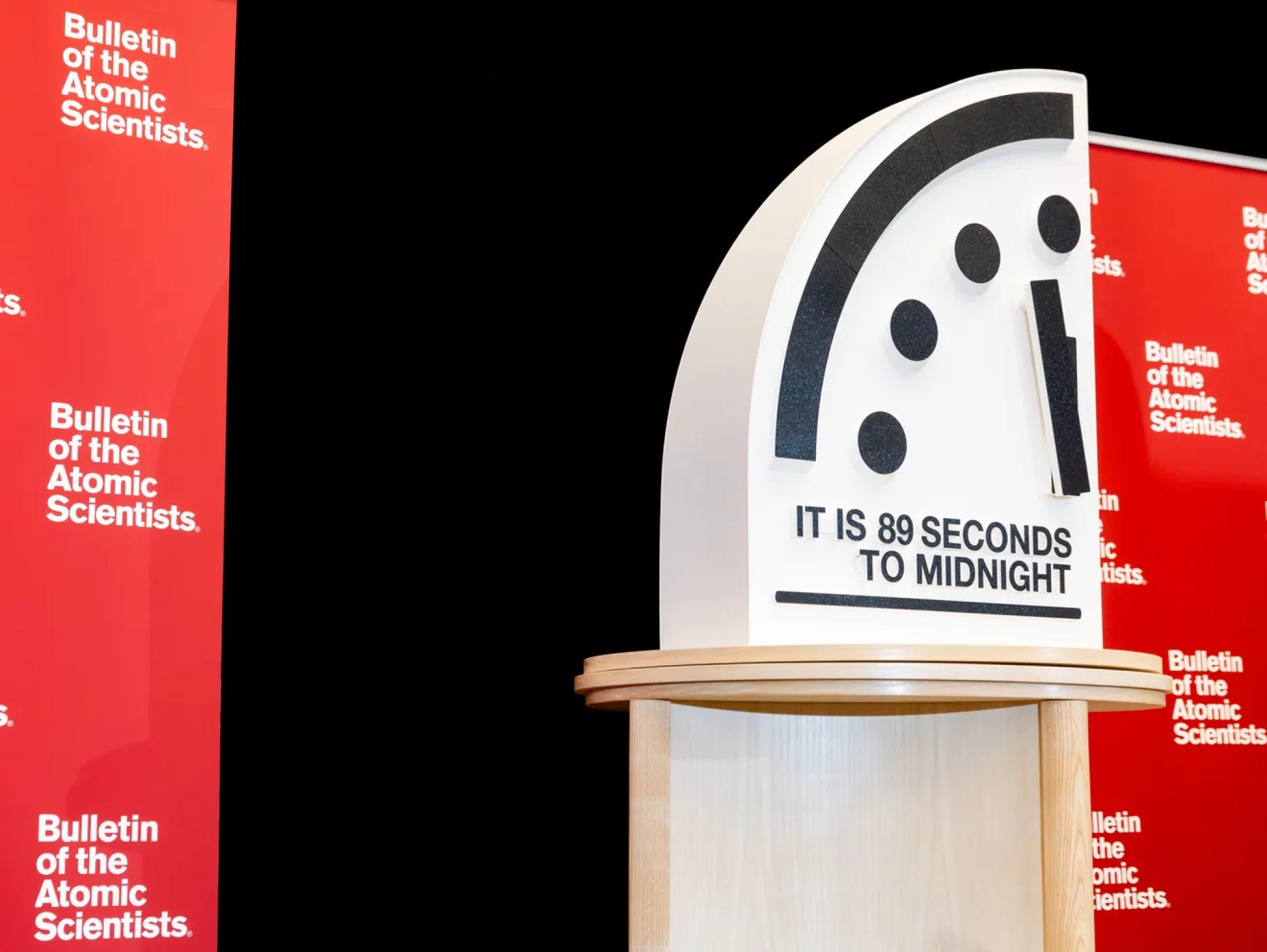
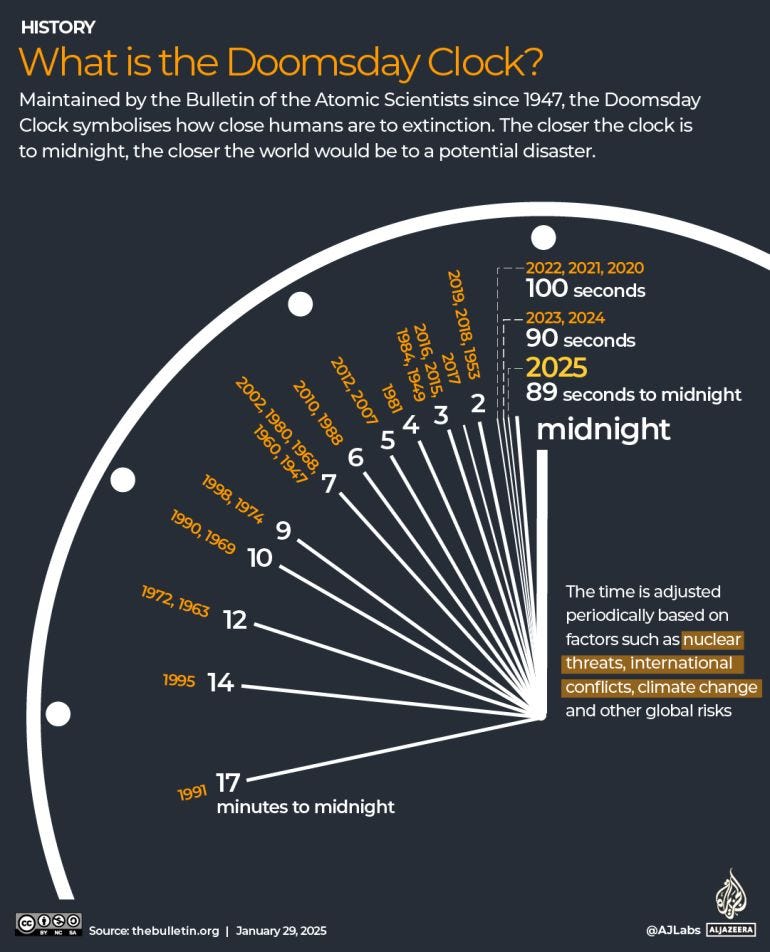
Humanity is at its closest yet to destroying itself, according to Tuesday’s reset of the ominous “Doomsday Clock.” The symbolic clock now reads 89 [85]seconds to midnight after advancing one second since last year’s reset.
It is now the closest to midnight since the introduction of the clock in 1947. It is updated by the Bulletin of the Atomic Scientists, which organizes the assessment of how close we are to a self-inflicted end of humanity.
The world is less safe and less stable than it was a year ago, said Dan Holz, chair of the Bulletin of the Atomic Scientists’ science and security board.
“We have no enemies except those we elect and select and direct toward the nearest nuclear bombs.“ Gore Vidal
Gore Vidal Interview #4

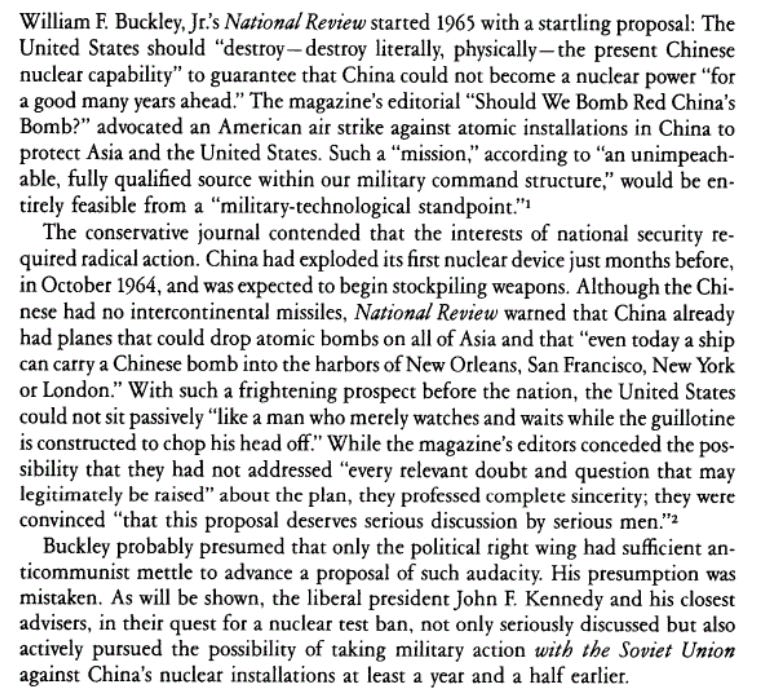
William F. Buckley, Jr. [the fucker wanted to nuke Vietnam, man] and Dr. Giovanni Costigan held a debate at the University of Washington in Seattle, Washington on November 11, 1971. The event was held at the Hec Edmundson Pavilion with over 8,000 people in attendance. For two and a half hours, they debated the subject of U.S. foreign policy in Southeast Asia.
William F. Buckley, Jr. (November 24, 1925-February 27, 2008) was a conservative political author and commentator. In 1951, he graduated from Yale University, where he studied political science, history, and economics. He founded the National Review in 1955 and wrote a syndicated column called “On the Right” in 1962. Buckley was most recognized for his weekly PBS show “Firing Line” that first aired in 1966.
Giovanni Costigan (1905-1985) was a critic of the U.S. involvement in the Vietnam War. He earned his PhD from the University of Wisconsin-Madison. In 1934, he accepted a position in the history department at the University of Washington, where he taught Irish and English history.
Listen to this recording. Fucking sick boy, Buckley.
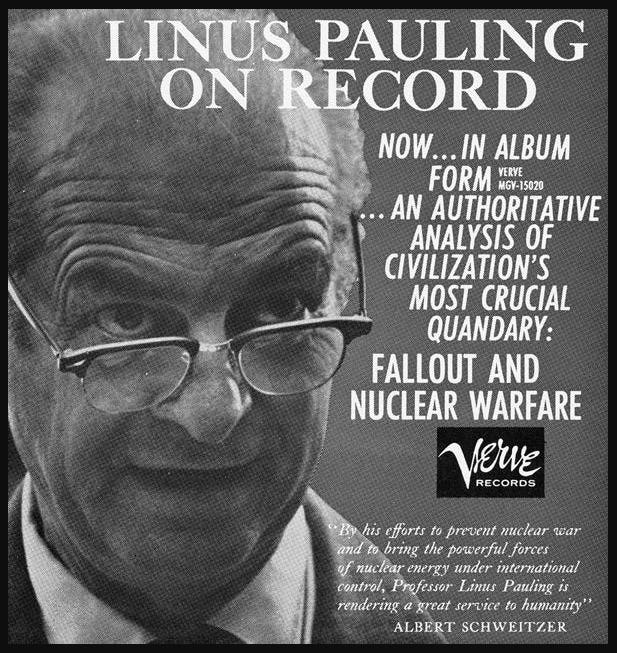
Way back Machine: [A detailed examination of the 1958 Pauling-Teller nuclear fallout debate. Post 1 of 5]
Following the detonation of atomic bombs over Hiroshima and Nagasaki, a long stream of questions and concerns came to dominate the public discourse over nuclear weapons, with many demanding instant action to control the use and further development of these powerful new instruments of war. In the years immediately following the war, Teller agreed with Pauling that a universal government could, and should, control the knowledge that had resulted in the production of a nuclear device – trying to keep the information secret was unscientific and would likely only make the geopolitical situation worse.
Teller continued to believe in this course of action until finally deciding that the solution was not realistic, especially in the face of mounting tensions with the Soviet Union over their rapidly developing technologies. Teller stated publicly that he wished he could side with Pauling’s position that the US could help to maintain peace through international cooperation.
But instead, Teller believed that the US ultimately had to keep the upper hand with respect to nuclear technologies and that doing so necessitated further weapons development. Deterrence, Teller felt, required more weapons, and in order for new weapons to be developed, nuclear tests needed to continue. Teller argued that this was the only path to avoiding a third World War. Pauling, on the other hand, believed that the West needed to learn to get along with the Communists and he sought to include them in his peace activities.
The 1958 debate, and Pauling and Teller’s stances, encapsulate many of the diverse ideas and tensions that surrounded the development and testing of nuclear weapons in the Cold War period. The two scientists approached the dangers of the Cold War and the associated arms race from very different perspectives, due in part to their different disciplinary backgrounds in chemistry and physics respectively. Nonetheless, their tactics and approach were similar in key respects, in part because each man shared an enthusiasm for speaking to large lay audiences.
Both men also sought to educate the American public about the current geopolitical situation and the future of nuclear development, and both strove to present their views in language that the public could understand. Pauling was extremely rational in his thinking and he sought to use his scientific background to educate others so that they could draw their own conclusions concerning nuclear testing and fallout. In this, Teller was similar to Pauling as he too sought to educate the lay public as a means to establish his argument. Both men also believed that it was their duty to educate the public because of their unique positions as scientists, consultants, and citizens.
But the discussion between Pauling and Teller was not merely one of whether or not nuclear weapons should continue to be developed, but ultimately how peace with the Soviet Union could be maintained. For Pauling the dialogue was framed as a battle for disarmament that would lead to peace; for Teller, it was deterrence against future Soviet acts of aggression. Both men played on the fears of ordinary Americans, drawing from the very real tensions of the time, and each fought for the attention of politicians who could enact the policies that they, as scientists, could not. As we will see, the result of all this was a sometimes messy battle over calculations, predictions, and interpretations.
+—+
Now go to the Jew Hour, with Jew Koppel and Jew Sagan and Jew Weisel.
“Strangely enough, maybe the whole world has turned Jewish . . . . “ Wiesel!
On November 20, 1983 the ABC television network aired a film called “The Day After”. That film portrays a full-scale thermonuclear war between NATO and the Warsaw Pact as witnessed by the residents of Lawrence, Kansas. Over 100 million people tuned in to watch “The Day After”, a full 62% of the U.S. television audience. It remains the most-watched TV movie event in history.
Immediately following the film, ABC aired a live town hall debate moderated by news anchor Ted Koppel. Appearing on the panel were Carl Sagan, former Secretary of State Henry Kissinger, Elie Wiesel, former Secretary of Defense Robert McNamara, General Brent Scowcroft, and commentator William F. Buckley.
Motherfucking white shit hole MEN MEN MEN, man. No mothers, no sisters, no aunties, no wives, no grandmas. Psychosis of Whiteness, man.
Quaint, no, ten years ago:
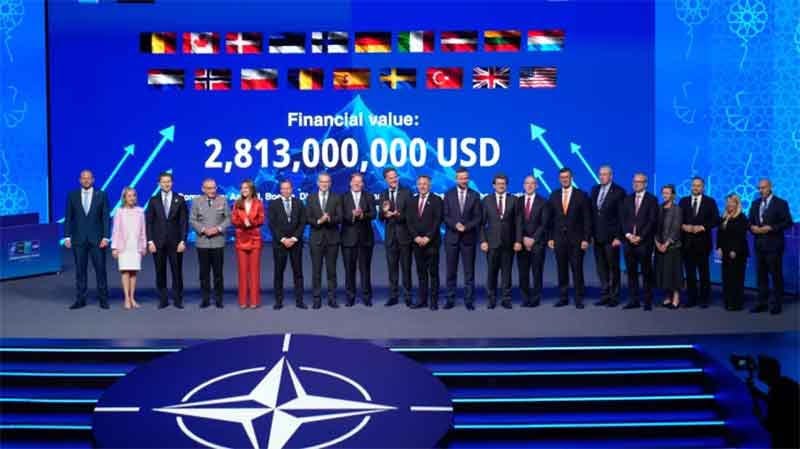
‘I think when it comes to nuclear, we are really in a good place.’ With these words, NATO Secretary General Mark Rutte described the state of the Alliance’s nuclear strategy at the pre-Summit press conference in Ankara on 6 July 2026. The phrase was intended to project stability, confidence, and reassurance. Yet, to anyone familiar with the history of the nuclear age, it reveals something far more disturbing: the dangerous normalization of the belief that more nuclear weapons, more deployments, and greater confrontation can somehow produce greater security.
This is precisely where the greatest paradox of contemporary European security policy (if there is any) lies. A continent devastated by two world wars, a continent that built its post-war institutions precisely to overcome the cycle of military rivalry, is once again embracing a logic in which military power, deterrence, and strategic confrontation are becoming the foundations of political order. Particularly alarming is the fact that the nuclear dimension of this transformation has scarcely become the subject of any meaningful debate.
Europe is gradually turning into a space where nuclear powers are moving ever closer to one another. The accession of Finland and Sweden to NATO has significantly altered the strategic geography of Northern Europe. Finland, a country that for decades based its security policy on military neutrality and careful balancing vis-à-vis the Soviet Union, has, following its NATO membership, amended its legal framework to allow for the potential deployment of nuclear capabilities on its territory. At the same time, the Baltic region is becoming one of the most heavily militarized areas in Europe.
At the centre of this new geopolitical anxiety lies Kaliningrad, the Russian exclave situated between Poland and Lithuania and surrounded by NATO member states. For Moscow, it is a crucial strategic bastion; for NATO, it is frequently portrayed as a potential launch point for Russian aggression. Precisely because of its geographical isolation and military significance, Kaliningrad has become the symbol of Europe’s most dangerous zone of confrontation. In this place, a miscalculation, an accident, or a deliberate provocation could trigger a crisis with unforeseeable consequences.
In the run-up to the Ankara Summit, numerous political and intelligence assessments and media speculations circulated, revealing precisely this atmosphere of fear and mutual distrust. One suggested that Russia might attempt to stage a limited incident in the Baltic region or near Poland to ‘test’ NATO, i.e. the Alliance’s political willingness to invoke Article 5 of the North Atlantic Treaty.
At the same time, an opposite set of speculations also emerged: that heightened tensions surrounding Kaliningrad could themselves become a pretext for false-flag operations, that is, incidents whose true origin would remain unclear but which could generate political pressure for further escalation. In such a scenario, fears of Russian aggression could be used to justify an expanded American military and nuclear presence across Europe.
Such scenarios are far from being facts. Yet their very circulation in the public sphere illustrates how dangerous the prevailing logic of confrontation has become. In an era of hybrid warfare, cyber operations, disinformation campaigns, and information warfare, the boundary between objective threats and socially constructed perceptions of insecurity becomes increasingly blurred, creating fertile ground for the political manipulation of fear and the manufacture of consent for further militarisation.
This exposes the fundamental flaws of nuclear deterrence itself. Deterrence assumes rational decision-makers, perfect information, and the ability to control crises. Yet the history of the Cold War demonstrates precisely the opposite. Humanity avoided nuclear catastrophe not because the system was inherently safe, but because, at several critical moments, individual decision-makers refused to act according to the logic of worst-case scenarios. Nuclear peace has never been the product of perfect control. It has been the repeated avoidance of disaster.
Even more troubling is the fact that this logic is no longer confined to Europe. What might be described as a ‘global NATO‘ (although it exists neither formally nor institutionally) is expanding through the so-called nuclear sharing with countries such as Japan, South Korea, etc. Across the Indo-Pacific, just as in Europe, military budgets are rising, new strategic arrangements are being forged, and greater space is being created for an expanded American military (including nuclear) presence. Japan, the only country ever to experience atomic bombing against civilian populations, is steadily moving toward the normalization of military power. South Korea increasingly debates whether to develop its own nuclear capability or rely more heavily on the American nuclear umbrella. Australia, through new security arrangements, has become an integral part of a broader strategy aimed at containing China. In this way, the Orwellian logic of ‘peace through strength’ is being replicated from the Baltic Sea to the Pacific Ocean.
The war against Iran in 2025/2026 has produced yet another dangerous consequence that few in the West appear willing to acknowledge. The military campaign was justified as a necessary measure to prevent Iran from acquiring nuclear weapons, yet its political effect may prove exactly the opposite. For many around the world, the lesson is straightforward: states without nuclear weapons remain vulnerable to external military intervention, whereas those possessing a nuclear arsenal enjoy a significant degree of immunity from direct attack. The logic is harsh, but understandable: had Iran already been a nuclear power, the likelihood of such an attack would almost certainly have been much lower. Rather than strengthening the regime of nuclear non-proliferation and ultimately nuclear abolition, this war may encourage other states to conclude that the only genuine guarantee of survival lies in possessing nuclear weapons themselves, even if under someone else’s flag.
This brings us to the central question: does the world become safer simply because it contains more nuclear flashpoints? Or does it become more vulnerable because more actors, more weapons systems, and more lines of confrontation inevitably create more opportunities for miscalculation? The answers, of course, are self-evident.
Under the banner of deterrence and protection, NATO’s European pillar risks becoming trapped in a condition of permanent confrontation. Instead of developing an autonomous European security architecture founded upon cooperation, diplomacy, arms control, and risk reduction, Europe is increasingly becoming a theatre in which the major powers test one another’s resolve.
After the Ankara Summit, therefore, the real question is not whether Europe is ‘in a good place.’ The real question is whether Europe is genuinely becoming safer or merely better armed for a future in which no one will be secure. The most dangerous illusion of the nuclear age is the belief that catastrophe can be controlled simply because it has not occurred for a long time. Genuine security begins precisely where dependence on permanent preparation for war comes to an end.
Biljana Vankovska is a professor of political science and international relations at Ss. Cyril and Methodius University in Skopje, the president of Synergia Orbi: Institute for Global Analysis in Skopje, and the most influential public intellectual in Macedonia. She is a member of the No Cold War collective.
And yet it all comes down to one dead Palestinian child or one disappeared Native American…..
“Allowing corporations to bypass regulations and exploit natural resources indiscriminately harms our environment and communities.”
— Jolene Tsinnijinnie, Pueblo of Santo Domingo and Navajo member
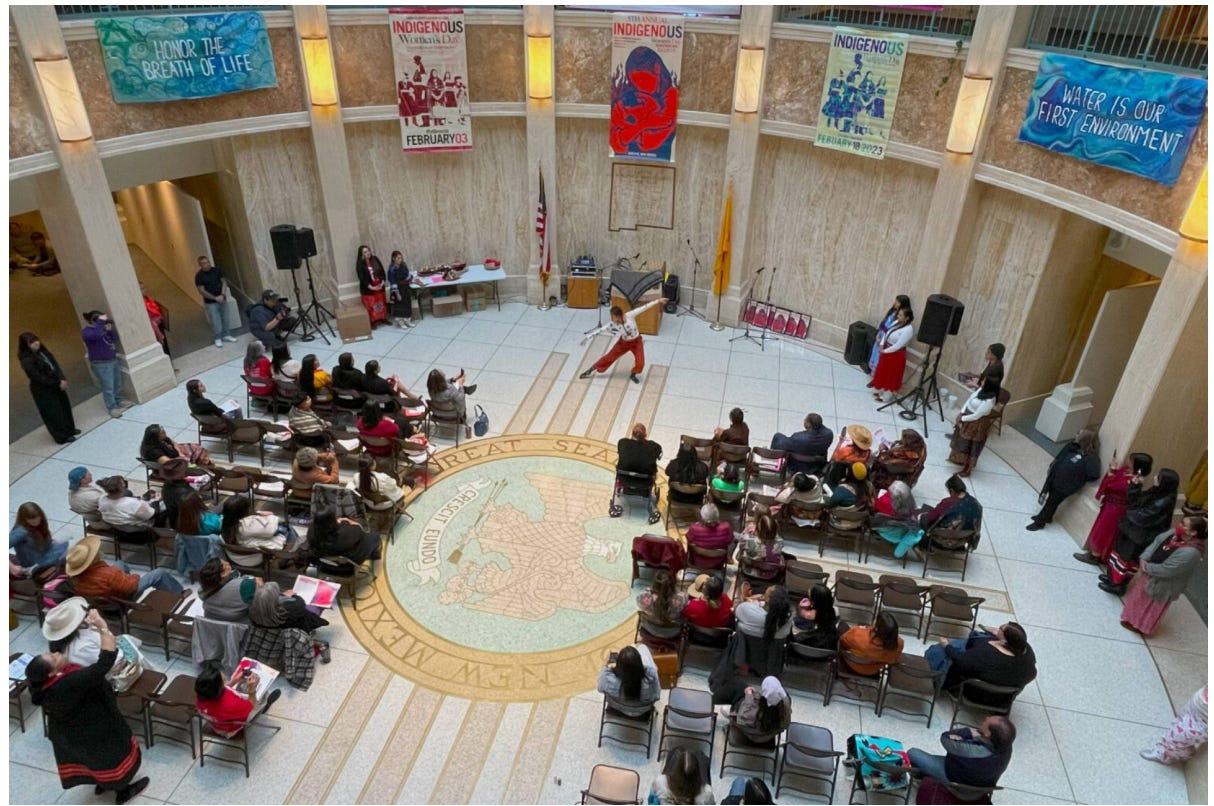
Indigenous Women Spotlight the Climate Crisis in New Mexico at Gathering Inside the Roundhouse
Participants highlighted concerns about oil and gas drilling, cleanup of sites contaminated by the uranium industry, hydrogen development and resource extraction’s connection to missing and murdered Indigenous women.

Emileah Misty Rain Flower Lujan, of Taos Pueblo, told attendees at Indigenous Women’s Day that hoop dancing helped her understand her existence as an Indigenous woman.
And here we are, no, the Jews . . .
Five thousand fucking intelopers, well fed, AC, water, TV?
Buttu has described the widespread destruction of housing infrastructure and the massive loss of life, stating that the sheer scale of the damage requires generations to clear and rebuild
Plans to deploy an international stabilization force in Gaza are facing significant setbacks, with organizers struggling to deploy an initial team of just 10 to 20 personnel, far below the 20,000 troops envisioned under U.S. President Donald Trump’s post-war Gaza plan, according to a report by The Wall Street Journal.
The report, citing a U.S. military official and people familiar with the plan, said the multinational force has yet to achieve the large-scale deployment originally expected. Moroccan troops, intended to form part of the first deployment wave, were scheduled to arrive in June but have been delayed and are now expected to deploy in the coming months.
Israel is using the illegal war on Iran to continue to kill and starve Gaza, steal more Palestinian land, and restrict movement in the West Bank. Don’t look away.
Initially, Moroccan forces will train at facilities inside Israel near the Gaza border before carrying out limited operations inside the enclave. Additional international contingents are expected to join later.
The plan called for a phased peace process that would end the war, establish an international stabilization force, and transfer Gaza’s administration to a Palestinian technocratic council after Hamas is disarmed. However, progress has stalled as Hamas has expressed willingness to hand over civilian governance without committing to disarmament, while Israeli military operations continue.
The report also noted that reconstruction efforts have yet to begin on a meaningful scale, and much of the pledged funding has not been delivered. Several countries have delayed or suspended participation in the force due to regional instability, particularly following the conflict involving Iran.
Indonesia, once considered one of the largest potential contributors, suspended discussions about sending peacekeepers, while Albania, Kazakhstan, Kosovo, and Morocco are reportedly moving toward formal participation commitments.
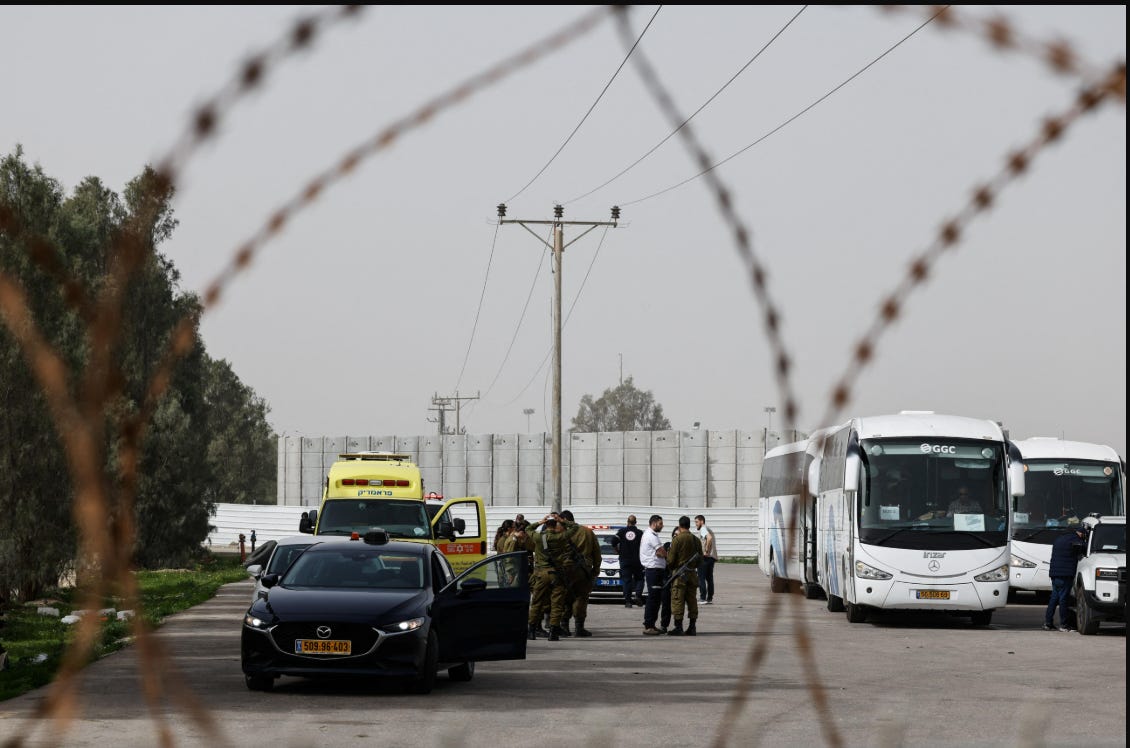
According to the report, the force will begin with a gradual deployment centered on two main sites: a logistics hub near the Kerem Shalom crossing inside Israel and a future support base inside Gaza. Together, the facilities are expected to accommodate up to 5,500 personnel once completed
[Make that 80,000 dead and 95 percent of Gaza flattened,]
As expected, since the US-Israeli attacks in Iran began, Gaza has once again slipped from the radar. After killing more than 72,000 Palestinians (including more than 615 since the October 2025 “agreement”) and flattening more than 90% of Gaza’s housing infrastructure, Israel’s genocidal policies continued unhindered over the last week. Now, instead of fast-paced live-streamed killing, Israel’s death policies include monitoring virtually every morsel of food that enters Gaza. And despite (hesitatingly) agreeing to allow aid trucks into Gaza (as an aside, why does a genocidal regime have a say in this anyway?), Israel continues to turn away needed goods. For days, Israel prevented any supplies from entering Gaza – including food and medicine – before allowing a mere trickle of supplies last week. Despite glitzy reconstruction plans – funded by the same countries that the US has now put in the line of fire – Palestinians continue to languish in flooded tents. The instant meme of Trump’s so-called Board of Peace becoming ”Bored of Peace” rings eerily true. And, of course, Israel’s killing machine continues to grind on (Israel has killed more than a dozen Palestinians in Gaza since attacking Iran, including a 12-year-old girl, a journalist, and a paramedic over the weekend) while Israeli settlers clamor for the establishment of settlements in the enclave.
In the West Bank, Israel has imposed a blanket ban on Palestinian movement while Israeli settler-militias, emboldened by their leaders and an army that thinks it is cool to stand by and watch Israelis terrorize Palestinians, carry out their attacks on Palestinians in an attempt to ethnically cleanse the West Bank. After an especially violent February, which saw settlers carry out hundreds of attacks against Palestinians, ranging from killings (including an American citizen, if that still matters to anyone) to stealing land, destroying homes, uprooting trees, and burning fields, the violence has only gotten worse. Just since the start of the war in Iran, Israeli settlers have killed at least five Palestinians. That includes two Palestinian brothers who were murdered by settlers last Monday in Qaryut. Three others, including a third brother, were wounded in the attacks. On Saturday, settlers killed another Palestinian man in Masafer Yatta. And on Sunday, Israeli settlers murdered two Palestinians in the village of Khirbet Abu Falah (a third man died after getting hit with a tear gas deployed by the Israeli military). All the while, the Israeli army continues to arrest Palestinians across the West Bank. Why? Because Palestinians are not allowed to defend themselves or their land. That right is reserved exclusively for those trying to steal land – i.e., Israelis.
Don’t Forget Gaza and the Palestinians

German theologian Rudolf Otto referred to that which is indescribable and beyond human comprehension.
“The numinous unconscious is the deepest unconscious. It contains the luminous part of us, our greatness, our splendour and our sacredness. The numinous unconscious gives us access to a feeling of intimacy, to limitless love and to a connection with beauty and mystery. When we are in touch with this part of our unconscious, we feel our intrinsic value. Connecting to our own light allows us to discover it in others”.
Read Paul’s latest: Pulsating with the ancient power of life. Posted on July 10, 2026. Paul Cudenec.
A fucking movie and Ray-gun signing a nuclear disarmament pact…
Did you know the original ending of The Day After (1983) was so disturbing that ABC executives banned it from television? Discover the hidden truths behind the nuclear apocalypse movie that terrified 100 million viewers and secretly changed Cold War history…
The Day After remains the most-watched made-for-TV movie in American history, delivering a harrowing look at a nuclear strike on American soil. But the version broadcast to the public was heavily sanitized. Network censors rejected the original, bleak climax—where Dr. Russell Oakes discovers his wife’s skeletal remains in the rubble—deeming the body horror too graphic for a broadcast audience. This censorship was just one of many battles director Nicholas Meyer fought against the network and the Pentagon to get this controversial film on the air without losing its grim, anti-war message.
In this deep dive, we uncover 15 hidden facts about the production, deleted scenes, and massive cultural impact of this 1980s classic. We explore the film’s eerie overlap with the real-life Able Archer 83 nuclear crisis, the hidden Morse code Easter egg left for paying viewers, and how this raw depiction of society collapsing actually pushed President Ronald Reagan to sign a nuclear treaty with the Soviet Union.

