
Indian/Palestinian Land for Sale . . . .
Jul 09, 2026
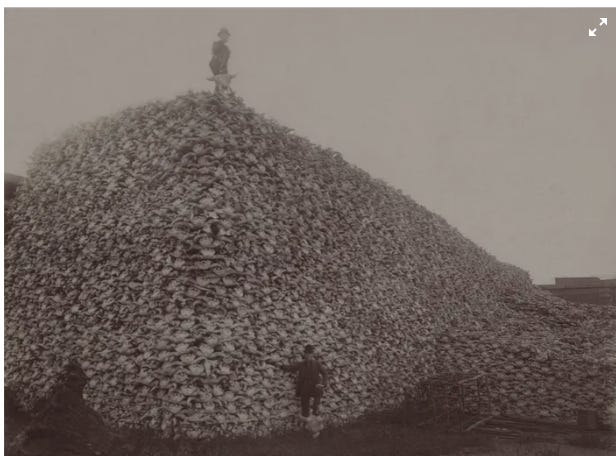
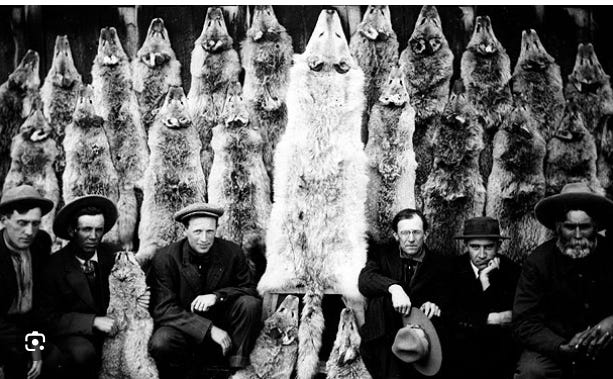
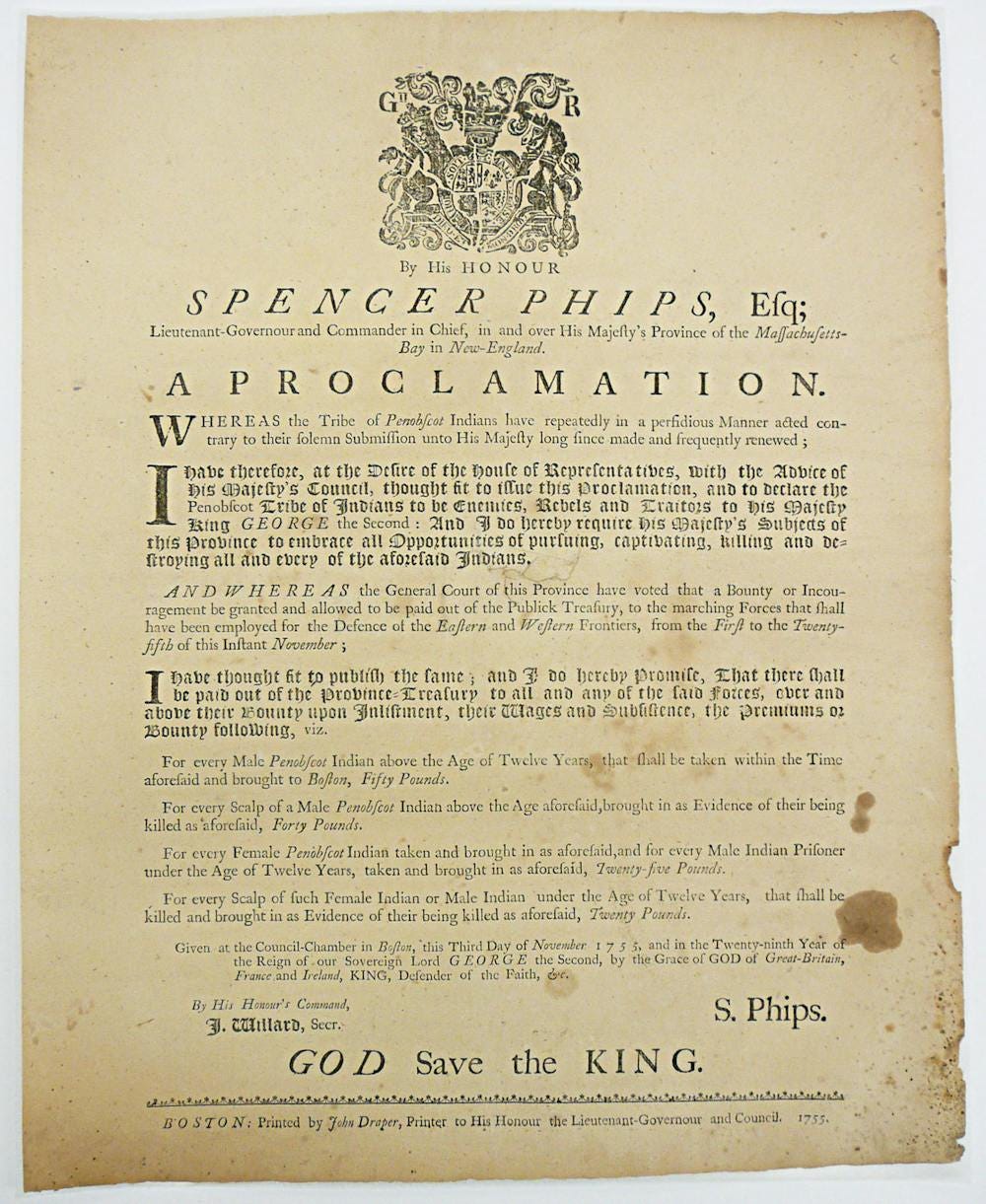
In 1755, Massachusetts Bay Colony’s Royal Lieutenant Governor issued a scalp bounty proclamation, offering substantial cash payments to any white colonists who brought in the scalps of indigenous men, women, and children. This was just one of approximately 70 scalp bounty proclamations issued in New England in the century before the American Revolution; U.S. governments issued at least another 50 throughout the new nation in subsequent decades. These planned genocides are a profoundly painful part of American history, but are often little remembered or discussed.
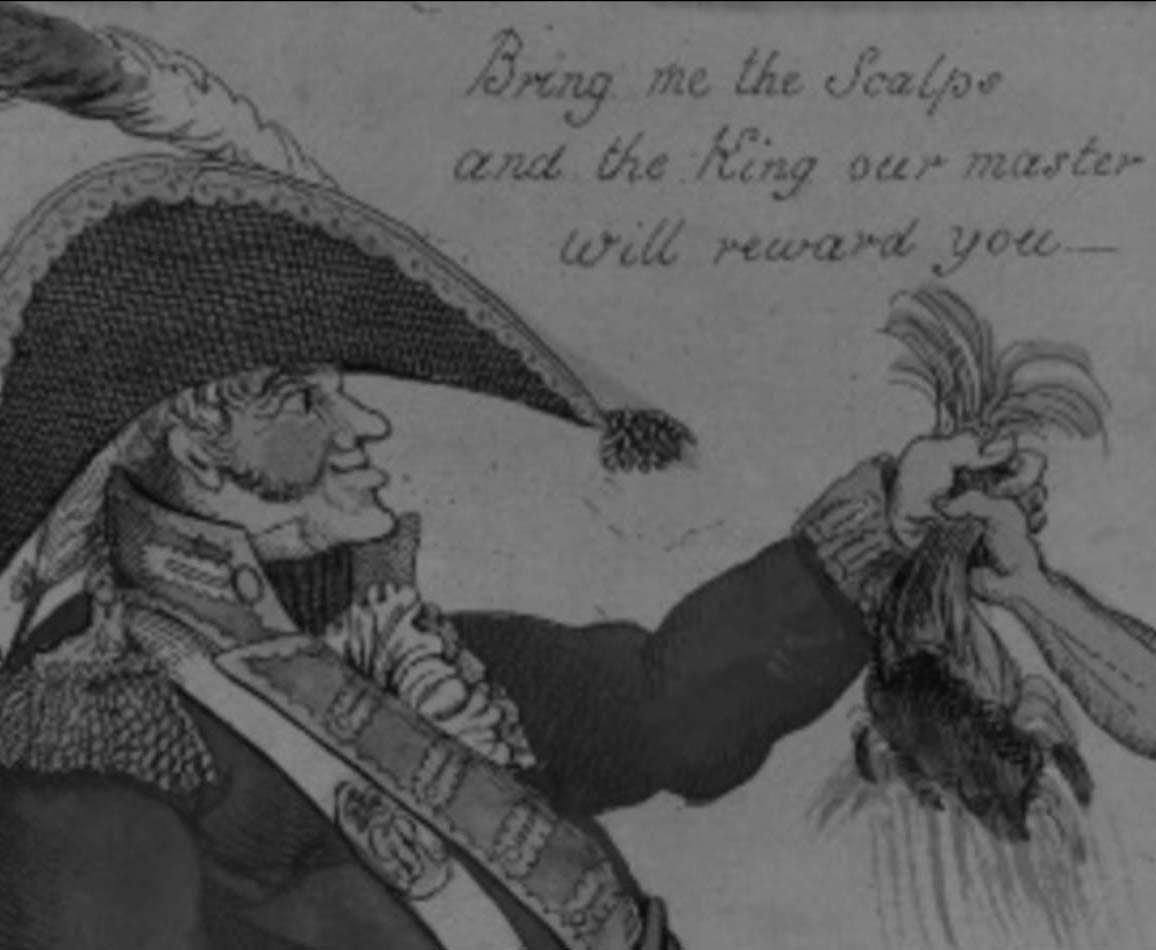
Revolutionary Spaces, the organization that manages both the Old State House and the Old South Meeting House historic sites on Boston’s Freedom Trail, to view the new short film Bounty. Created by Penobscot Wabanaki Native American filmmakers Dawn Neptune Adams, Maulian Dana, and Adam Mazo, with the support of the Upstander Project, this 8.5-minute film screens on a continuous loop in a second-floor room adjacent to the Old State House’s central attraction, a recreation of the Council Chamber where the Massachusetts Colony’s Royal Governors met with their Councils — and where they signed the scalp bounty proclamations that are the subject of this bracing and powerful film.
New England once hunted and killed humans for money. We’re descendants of the survivors
Dawn Neptune Adams, Maulian Dana with Adam Mazo
The settlers whom many Americans mythologize at Thanksgiving as peace-loving Pilgrims issued government orders offering cash for dead Native American children
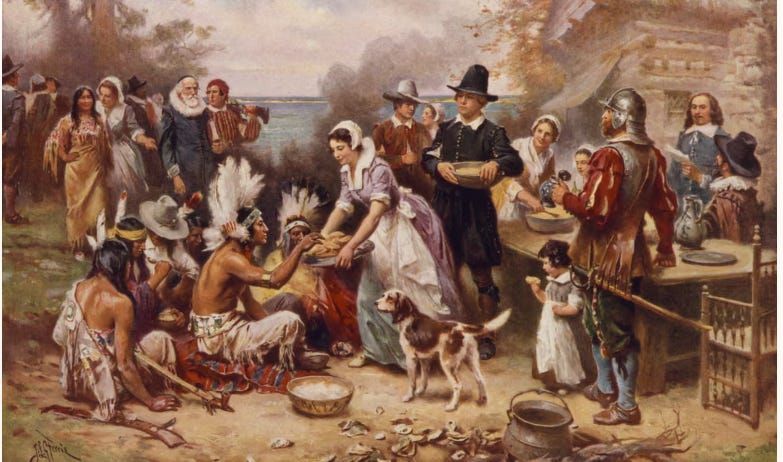
For more than 10,000 years, the Wabanaki peoples have been living in a region called the Dawnland. Captain John Smith rebranded the area “New England” in a map he made in 1614. He and the other colonial settlers renamed rivers and villages to claim the land for themselves and erase Native people from their homelands. But that wasn’t enough. Eventually colonial officials introduced a grisly incentive to hasten that erasure: bounties for dead Native Americans.
Yes, the settlers whom many Americans mythologize at Thanksgiving as peace-loving pilgrims were, just a generation later, issuing official government orders putting a price on the scalps of Indigenous children, women and men.
The reward: about $12,000 in today’s dollars for the scalp of a man, half that for a woman, and a bit less for a child. It was nearly as much as a soldier would earn in two years. Sometimes bounty hunters were granted the land of the people they scalped – thousands of acres, which scalpers used to found towns that they named after themselves, like Westbrook, Maine; Shirley, Massachusetts; and Spencer, Massachusetts, to name just a few.
According to our research, there were at least 69 government-issued scalp edicts across the Dawnland from 1675 to 1760, and at least 50 scalp edicts issued elsewhere in the United States until 1885. The proclamations targeted specific tribes by name – and occasionally marked specific tribes safe because they were “allies” of the authorities. But neither scalpers nor authorities had much way of knowing the tribal affiliations of the people whose scalps they took, so for centuries bounties were a license to kill all Indigenous people.
We are part of the team behind the new short documentary Bounty. In New England alone, we’ve uncovered government payments for 375 human scalps, submitted in 94 separate claims and equaling government payments of millions of dollars in today’s money. More documents may be buried in colonial archives.
In 1755, the lieutenant governor of the province of Massachusetts Bay, Spencer Phips, issued an edict declaring the Penobscot people a target of extermination and commanding “his Majesty’s Subjects of this Province to Embrace all opportunities of pursuing, captivating, killing, and Destroying all and every of the aforesaid Indians”.
The Phips Proclamation lives on in collective memory because members of the Penobscot Nation and other Wabanaki peoples sometimes post it on the walls of tribal government offices as a kind of reminder: You tried to kill us, but we are still here. The United States was built on our lands and on top of the bones of our ancestors. We live and thrive on these lands today and are sovereign nations with the right to self-determination.
In our film, Penobscot parents and children read and react to one of the dozens of government-issued bounty proclamations that motivated colonial settlers to hunt, murder, and scalp Indigenous people.
The lives that were destroyed by scalping were tallied up in a ledger and the human remains incinerated to prevent double payment. But the digits in that ledger represented murdered mothers, fathers, two-spirits, daughters, sons, aunts, uncles, sisters, brothers, cousins and infants, usually rendered nameless in the historical record.
Of course, those deadly bounties were only one of the tools deployed by the European settlers to make this land theirs. The legacy of those wrongs manifest today in a range of forms: the epidemic of missing and murdered Indigenous women and girls; the fact that Indigenous people have the highest rate of death at the hands of police, the highest suicide rate among veterans, a disproportionate rate of death from Covid-19, and the highest incarceration rates in the US; continued violations of Indigenous sovereignty by state and federal authorities and private extractive industries; the continued use of Indian mascots; and the celebration of national holidays, like Thanksgiving and Columbus Day, that dishonor Native peoples.
In spite of countless wars, massacres, land ordinances, and extermination orders, today there are over 5 million Indigenous people in the United States who are citizens or members of more than 600 tribal nations. And while the legacy of anti-Native brutality remains, most Native people are thriving and modeling for all people in the US how to live in caring communities based on mutual respect, reciprocity, and reverence for the land, water, and all our relations.
In this season, as families and friends gather to share gratitude, let us seek new opportunities to learn about our collective history, in all its complexity, and embrace a future built upon mutual understanding and respect for our neighbors.
- Maulian Dana is the Penobscot national tribal ambassador. Dawn Neptune Adams is a Penobscot Nation citizen and a member of Sunlight Media Collective. Adam Mazo is a co-founder of Upstander Project. Together they are part of the film-making team behind the documentary film Bounty
The conveyor belt of pure crap- some of it, that is- repetition, and of course, no call to action.
Email disabled, or better yet, a new term: Unsubscribed:



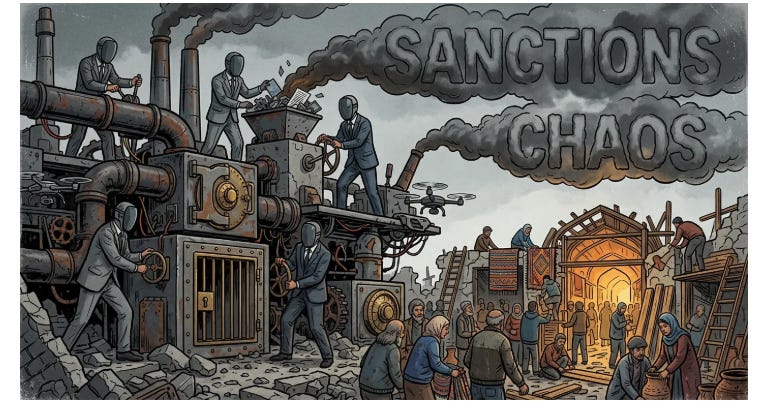
It certainly is a list of flailing ideas:

But Palestine Deep Dive is worthy:

I had not stepped outside my home since 18 March 2025. The day before – 17 March, the final day of the ceasefire – I went on a drive with my father, my sister, and my brother. We drove across Gaza, stopping at every relative’s home, knocking on doors, visiting tents, seeing everyone we could squeeze into a single day. The streets were alive then—the smell of fresh falafel frying in corner shops, the sweetness of knafeh being pulled hot from the oven, the sounds of children kicking a half-flat football down the dusty alleys, girls skipping rope and counting in loud cheerful voices, and the chatter of neighbours passing teacups across their balconies.
I remember the voices of street vendors selling chips, instant noodles, and snacks, their calls echoing through the neighbourhood. We laughed with our cousins, exchanged old family stories, and snapped photos on our phones. That day, the world seemed ordinary, almost safe. By the time we pulled up in the driveway of our home, night had already covered the streets. We were exhausted, but our hearts were light. I never imagined that only a few hours later the massacre would resume, tearing apart the city, our families, and the rhythm of our days. From that moment, I did not leave home for six months.
During all these months, I had no energy to talk to anyone, to listen, to walk. My only remaining strength was barely enough for my university courses. I study English literature at the Islamic University, which now exists only online, its buildings having been destroyed. Any leftover fragments of energy went to my writing, which is my private therapy. Writing is how I survive. It is where I speak when my voice cannot leave my lips, where I release the grief that the walls of my home absorb silently.
Then, in August, my teeth forced me to leave our home.
I had hidden the pain for a week, refusing to admit it, but for three days, I could not close my eyes. The pain was unbearable, a constant pressure that throbbed in rhythm with my heartbeat. On top of this, I was suffering from a severe flu with bone-deep aches, which made everything worse. My immunity was almost zero. Anyone who knows me knows how I struggle with illness, how it takes forever for my body to recover. Every night was a battle between my aching body and my restless mind.
Finally, after enduring days and nights of pain, I surrendered. I agreed to go to the dentist.
Outside Again
That morning, I had no energy even to dress. I forced myself to shower, to put on my black abaya and hijab. My mother disapproved of wearing black on black, but my hands chose it automatically. It felt right, as if my mood, heavy with grief, demanded it. My mother and I stepped outside, and I was immediately met with the first shock: there were no vehicles on the street. Not a single car. The city felt like a graveyard, silent except for distant echoes of destruction.
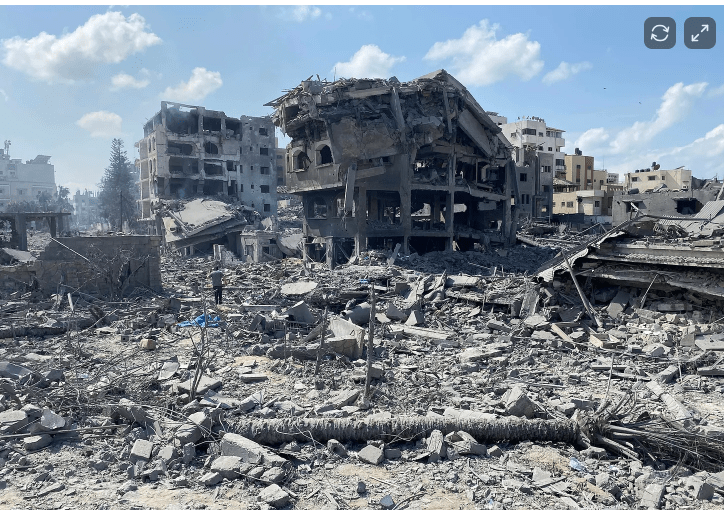
Every step was heavy. Every street told a story of destruction. Homes I had known, streets I had walked a thousand times, were now shattered and unrecognisable. Dust and rubble clung to my shoes, the heat of the sun pressing down on my shoulders, and every corner whispered of death. I asked my mother, again and again, “When did this happen?”
On the way, I passed the house of my dearest friend Shimaa Saidam, the girl who accompanied me in studying and memorising the Quran. Her house was destroyed. I stopped, frozen. I took a photo only to convince my mind that this was real. I wondered: did she survive, or is this a memory I will never touch again? I remembered her gentle family, our last visit just a week before the genocide, one of the happiest moments of my life. My feet did not want to move, and my heart weighed me down. My mother turned to me, silently urging me to keep walking.
We came to the cemetery, the resting place of my grandparents, my aunt, my uncle’s wife, his children, and my close friends. I stopped. I wanted to cry, but the tears would not come. The wind whispered among the graves, carrying dust into my eyes. All I could do was pray for them, my quiet words ascending to the sky, as I kept walking.
Graveyard Streets
Further along, on the right, I saw my uncle’s house, bombed by Israeli forces on 29 November 2023. I remembered my aunt Asmaa, my uncle’s wife Neeven, and their baby daughter Fatima, only two months old when the genocide stole them. I prayed silently and took another heavy step forward. My legs felt as though they would give up, refusing to carry me further.
Then came the hardest sight of all: my grandfather’s house. Four floors filled with memories, the home that embraced me from birth until the age of fourteen. It had been completely destroyed by multiple missiles from the Israeli occupation on 30 December 2023. Rubble and twisted metal filled the space where walls, floors, and my family once stood. Dust hung thick in the air, and the once-spacious garden was reduced to shattered trees, broken branches, and upturned soil, the trees my grandfather used to water with his own hands now charred and lifeless.
My uncle Abd al-Salam, my cousin Huthaifa, and his daughter Hala were killed there by Israeli missiles. As I stared at the ruins, memories flashed before my eyes like a relentless, painful film. I remembered the sound of laughter, footsteps across the wooden floors, the smell of maqluba cooking in the kitchen, the warmth of family hugs. My chest felt crushed, and the weight of everything made my steps slow and heavy.
We walked for an hour and a half, making our way through the streets of Gaza, until we reached Abu Amra — a small shop that sold almost everything. It was located on a busy main street; people used to stand at its entrance, hoping to catch rides with passing cars. We were desperately searching for any form of transport that could take us further. Finally, we found something: a small car towing a wooden cart covered by a makeshift roof. I did not know what to call it, but I knew it was an invention born from necessity. After we climbed into the cart, I held onto my mother’s abaya tightly. I had never ridden in anything like this before.
Market Road
The cart dropped us off at the edge of the market. We walked three more streets to the dentist. He was late, so we waited for about an hour and a half. I was in the middle of my midterm exams, so I opened my Translation II course on my phone. The pain was too intense to focus properly. I had hoped to use studying as an escape, a way to distract my mind from the painful scenes we had passed on our journey, but I couldn’t concentrate and my thoughts kept returning to what I had witnessed and what we had lost.
Finally, the dentist arrived. He was in his late forties, and ever since I was a child, we had always gone to his clinic — he was our family’s dentist, the one we all trusted for our dental care. The clinic looked the same as it had before the genocide, except for the glass door, which had been broken and was now patched up. His demeanour, although serious, was kind and gentle—he knew I was afraid of dental work and treated me with calm care. He examined my teeth and told me that I had infections caused by my wisdom teeth, which were pushing and carving a space for themselves in my gums, and that was the reason for all the pain I had endured for days.
We left, walking again until we found another cart. I had no energy to protest. I collapsed onto the wooden seat, completely drained by the sun, the walk, the memories. The market was full of faces etched with fatigue, grief, and loss. There were vendors calling out their wares, small stalls filled with goods, and children playing in the streets. The children’s faces haunted me the most — tired before their time, worn down by the weight of a world they should not have inherited.
As the cart moved, my mind did not stop. Everywhere I looked, I saw the people I had lost, the houses I had known, the mosques turned into rubble. Even Al-Farouq Mosque, once so beautiful, was now only a pile of stones. I wanted nothing more than to return home, to lie down, to try to forget what I had seen. I had gone out to fix my teeth, not to carry the burden of an entire city of memories.
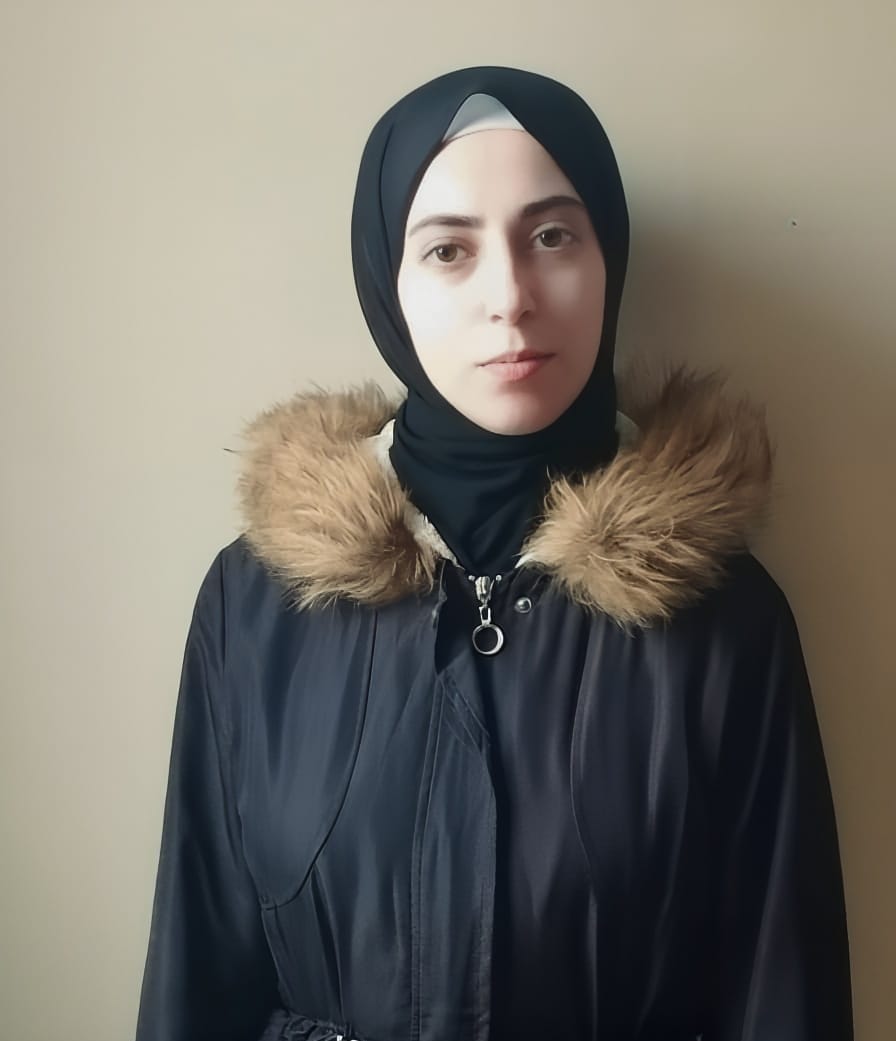
A guest post by
I am a Palestinian writer, poet, and editor from Gaza, currently studying English Language and Literature at the Islamic University of Gaza. You can find more of my work here.
+—+
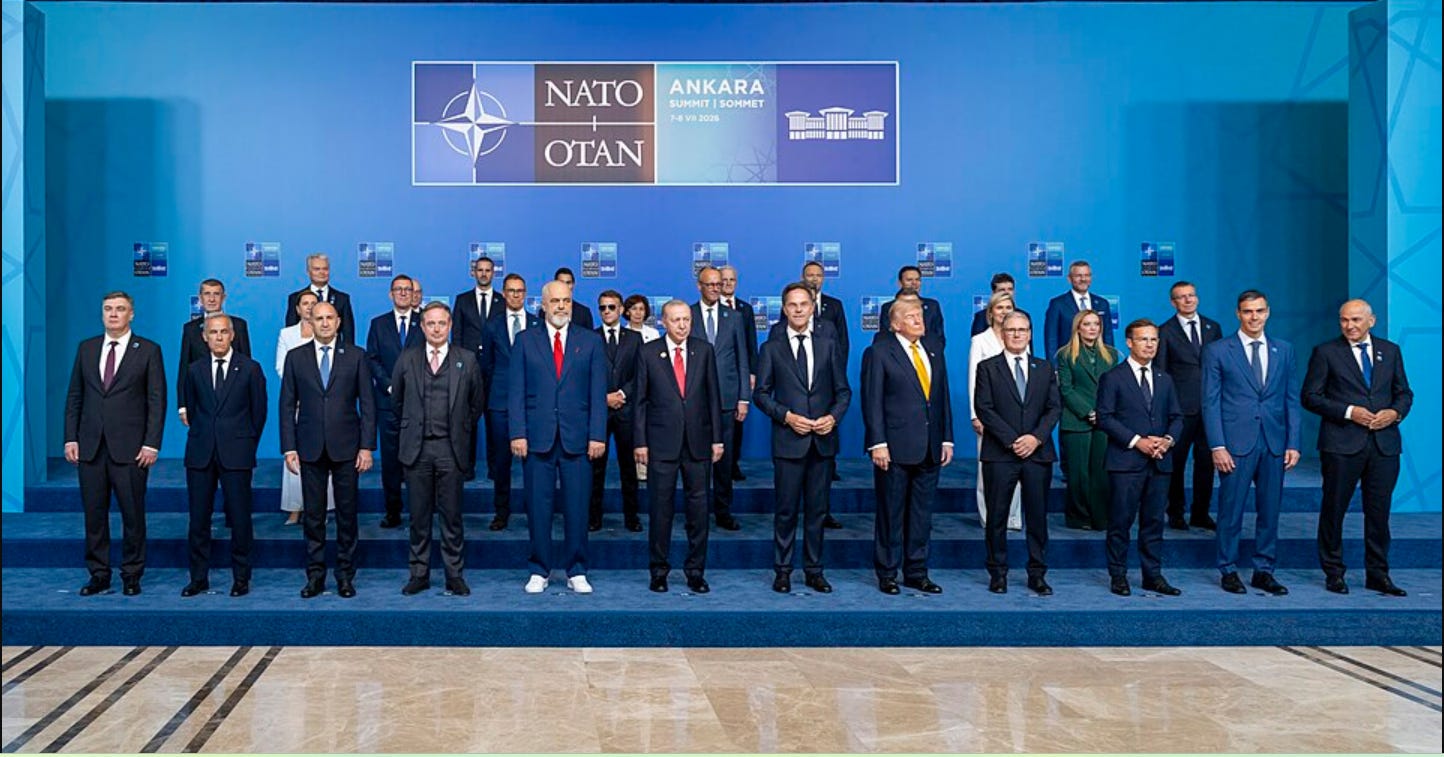
And they laughed and mugged and plotted more death at Nato:

And of course, this putrid cunt-tree’s fascination with fucking Maine?

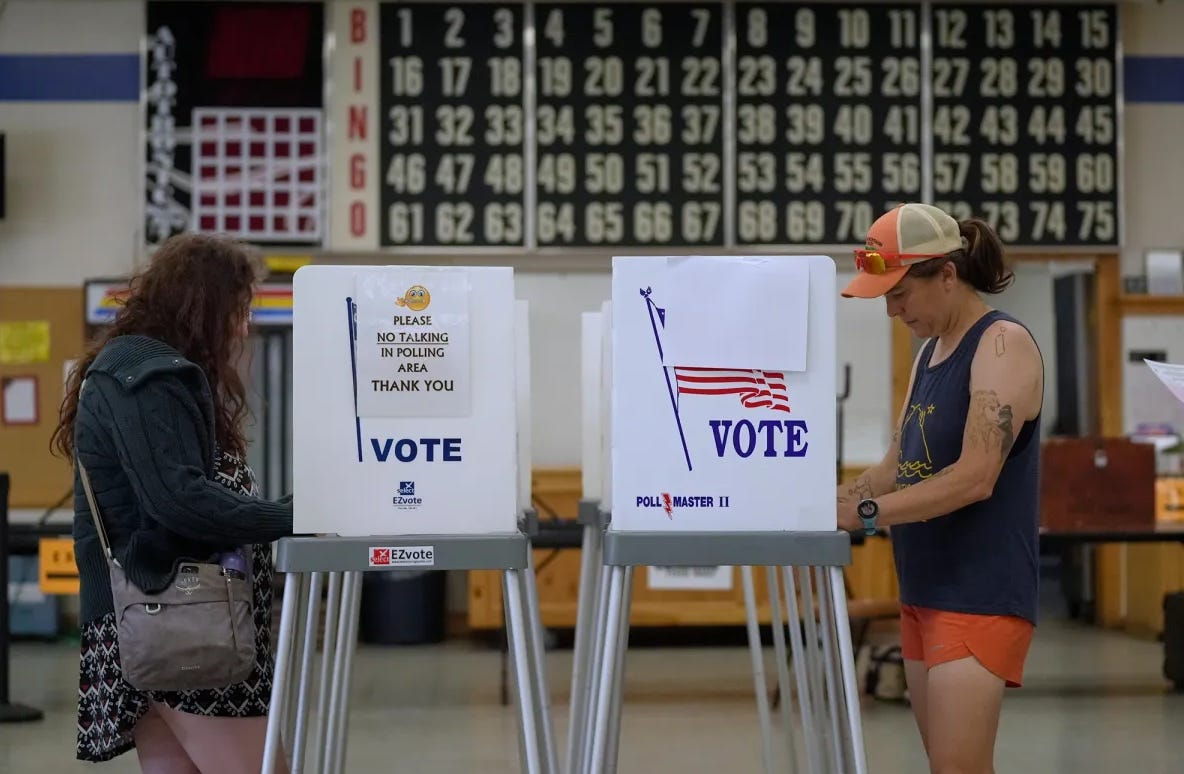
There had been an uneasy expectation in Maine political circles that something else was going to drop with Graham Platner. After this week’s rape allegation, his swift downfall is not surprising. The harbormaster of Sullivan has joined the sad and mostly male parade of American politicians who operate under the conceit that their past transgressions will never outpace them.
But eventually, on Wednesday night, Platner stepped aside. And the question now turns to who will replace him, through a statewide convention in a couple of weeks, as the Prospect has reported.
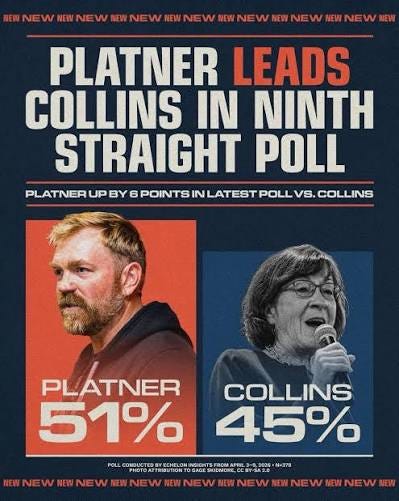
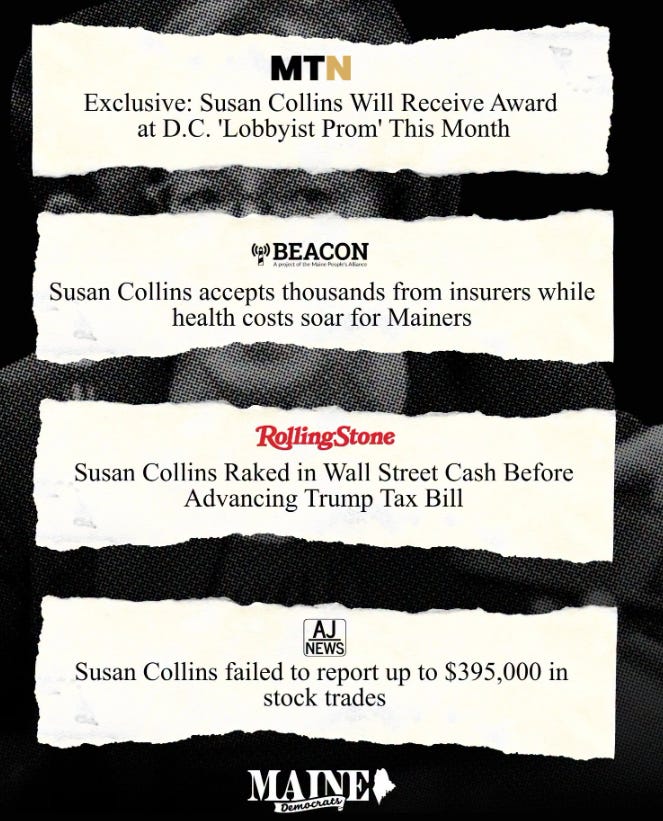
So, this human monster, Collins, hmm:
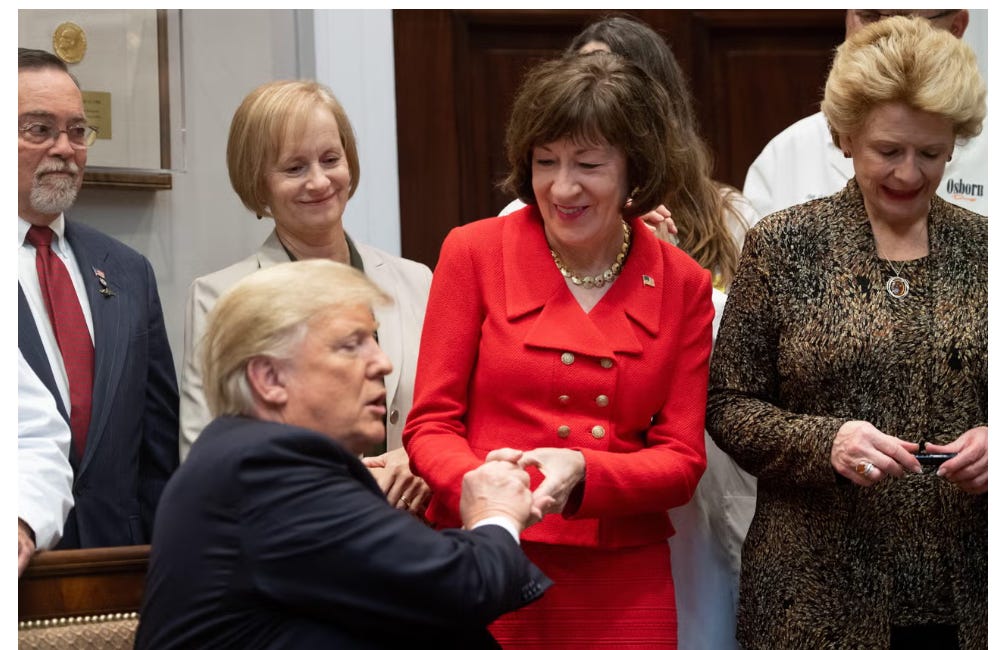
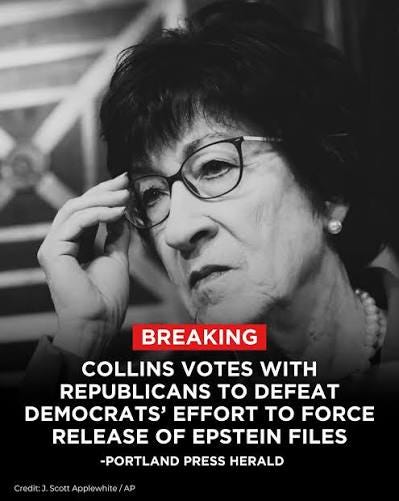
So how tough is it to beat a pedophile defender?
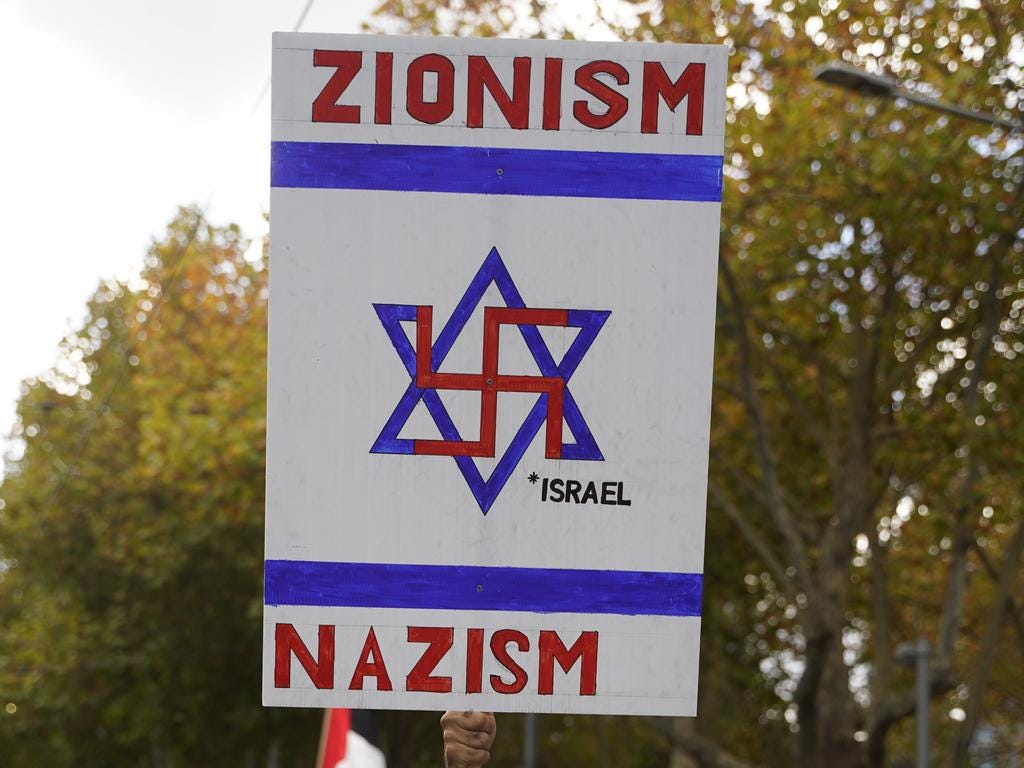
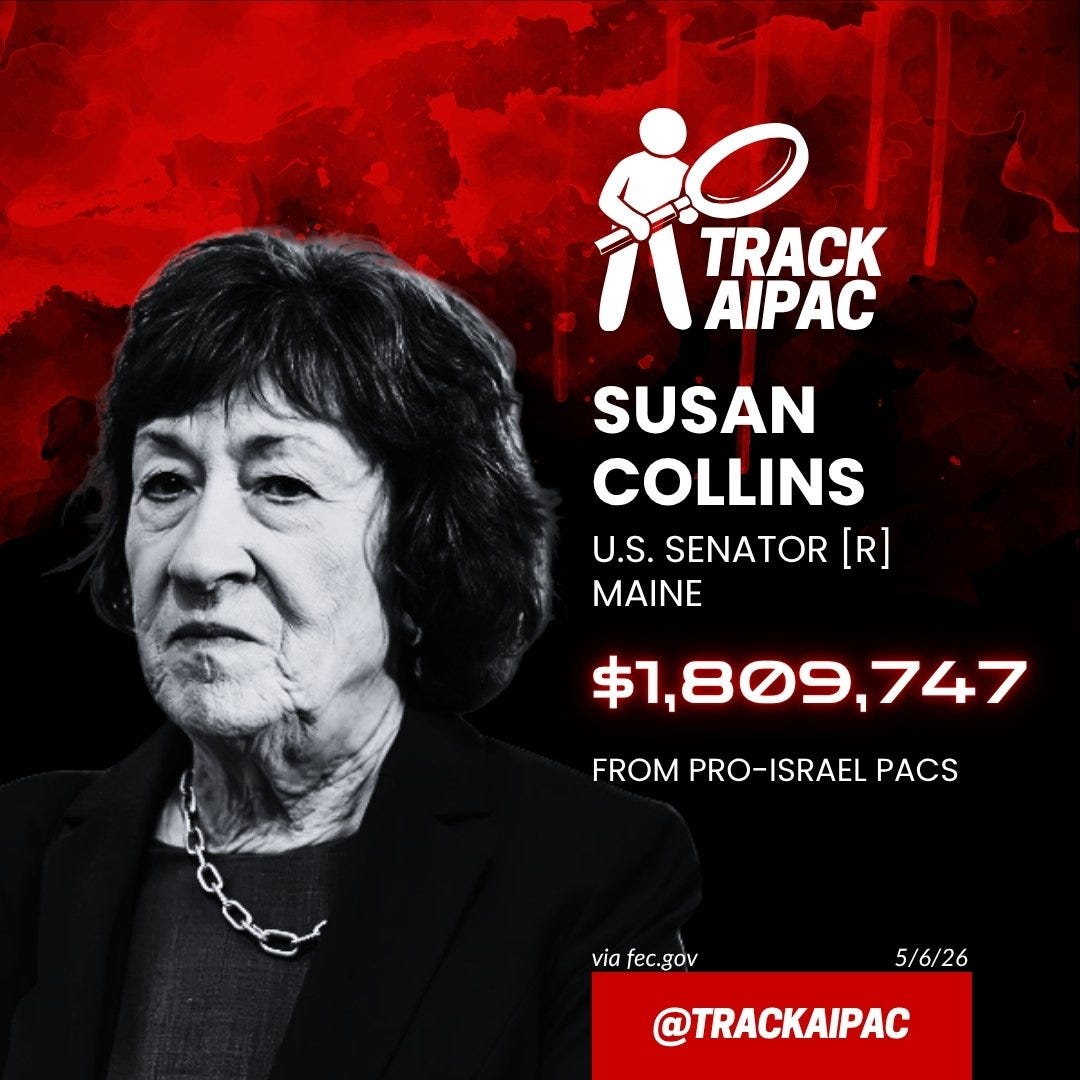
Maine Democratic U.S. Senate candidate Graham Platner faced significant scrutiny over a skull-and-crossbones chest tattoo resembling the Nazi Totenkopf. He stated he got it while drinking in Croatia in 2007 as a young Marine and was unaware of its historical meaning until reporters raised concerns. He covered it with a new design in late 2025.
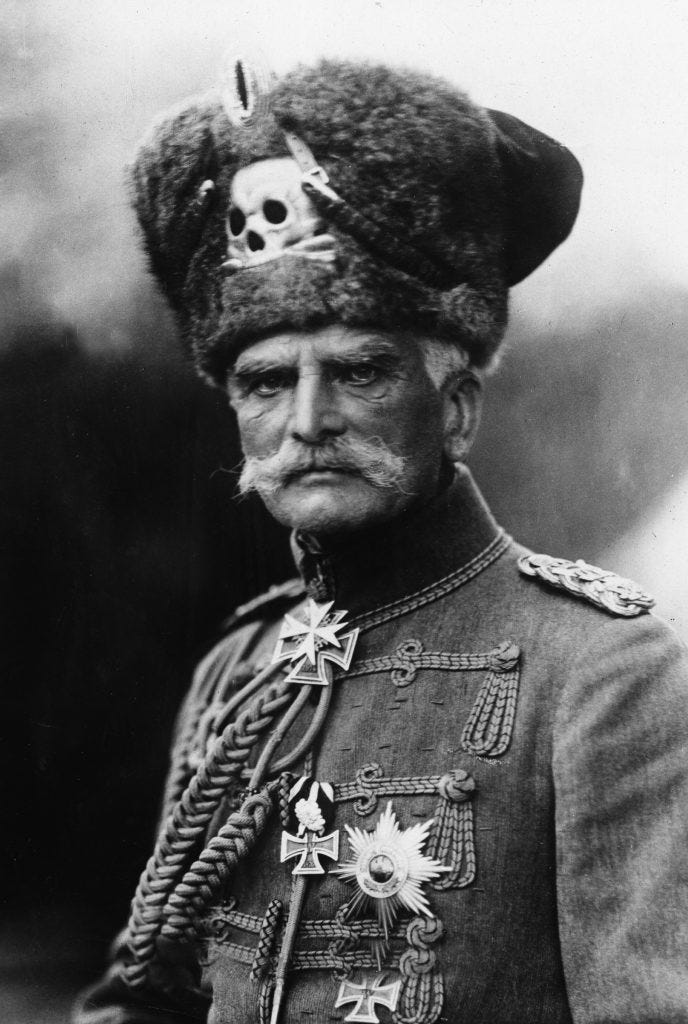

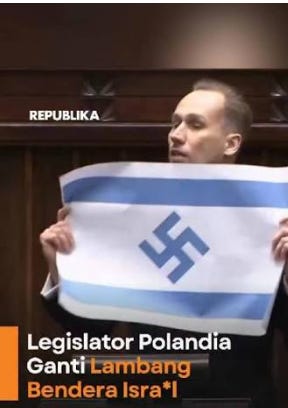
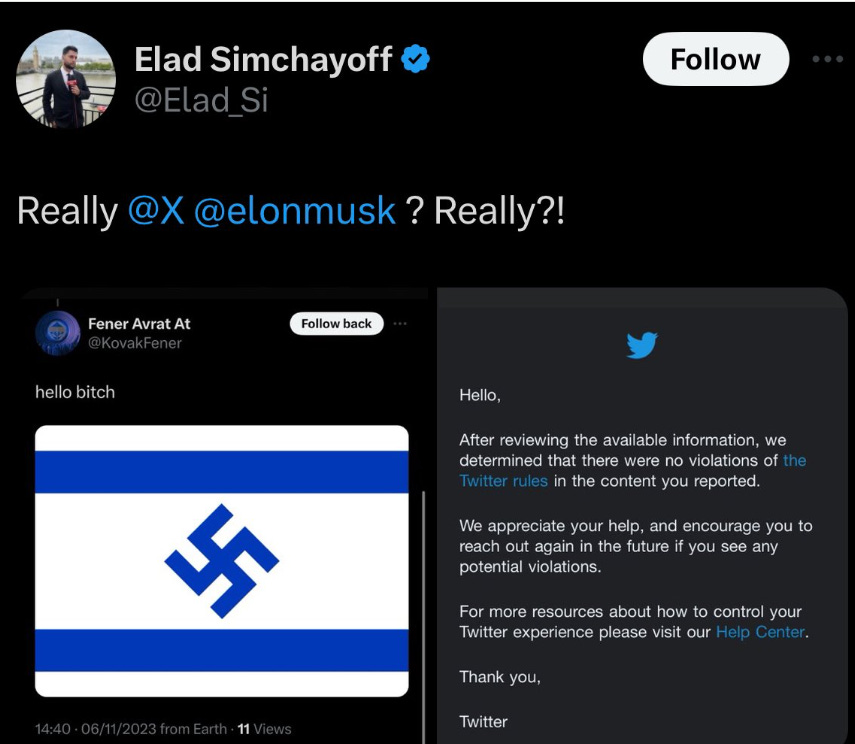

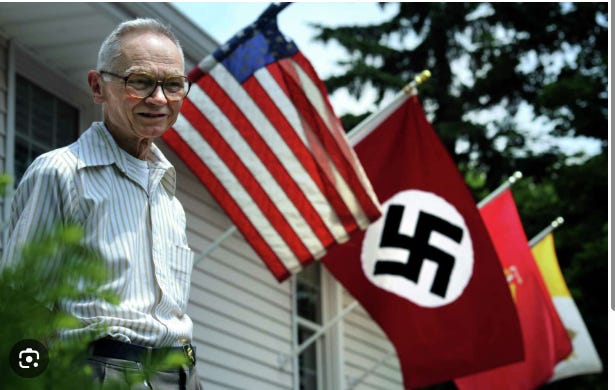
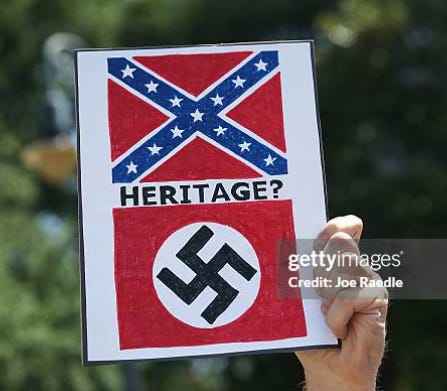
Oh, here’s the fucking retired professor in the East of AmeriKKKa, who unsubscribed, yammering once again, with his Jewish ROOTS never looking at why JEWS are high up there in riches (sic) and financial power.
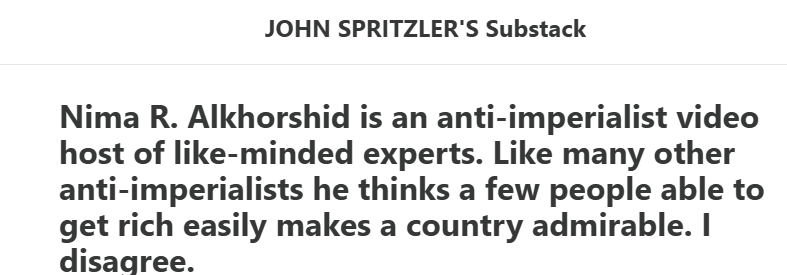
Always the Jew to decide the framing, the diatribe goal posts, the language, the lexicon, the correct way:
My point is this. Nima Alkhorshid chose to praise the changes in Iran by saying “You can get rich easily easily” and not by saying anything about how society was getting more equal economically. This is because his anti-imperialist concern is not the egaliarian one about making society more equal economically.
In fact, the Iranian government is an anti-egalitarian government2, evidence for which is in this footnote,3 which is extracted from my article (that I strongly encourage you to read to see how significant this question is) titled, “Iran’s Rulers Could Destroy the Zionist Project Without Firing a Single Missile, But They Refuse to Do So Because It Would Strengthen the Have-Nots of the World and In Iran.”
I have written earlier about the importance of using an egalitarian rather than “anti-imperialist” framework, in my article titled, “Friend or Foe? Better Get It Right, Or Suffer Big Time! Putin and Xi and Modi, just like Trump (and formerly Biden) are leaders of the oppressor classes, not of the oppressed have-nots of the world.”
What most of you don’t know is that (labour) Zionism was a naive (however genuine) attempt to seperate the Jews from the Talmud and bond them with the Old Testament. What we got in the the end is a nation inspired by two of the most vile misanthropic texts in human history.
36 hours ago the Ginger Caligula confirmed he will meet his Tel Aviv puppeteer as soon as next week. Last night we saw the Israeli colonial army AKA The USA NAVY bombing Iran.
There is no end to this war until both the USA and its Mother State capitulate, waving a big white flag in the air and even then, the surrender must be complete and unconditional.
Our own fucking wrecking ball of Jews: Greenspan Ran the Fed for 18 Years and Left an Economic Time Bomb
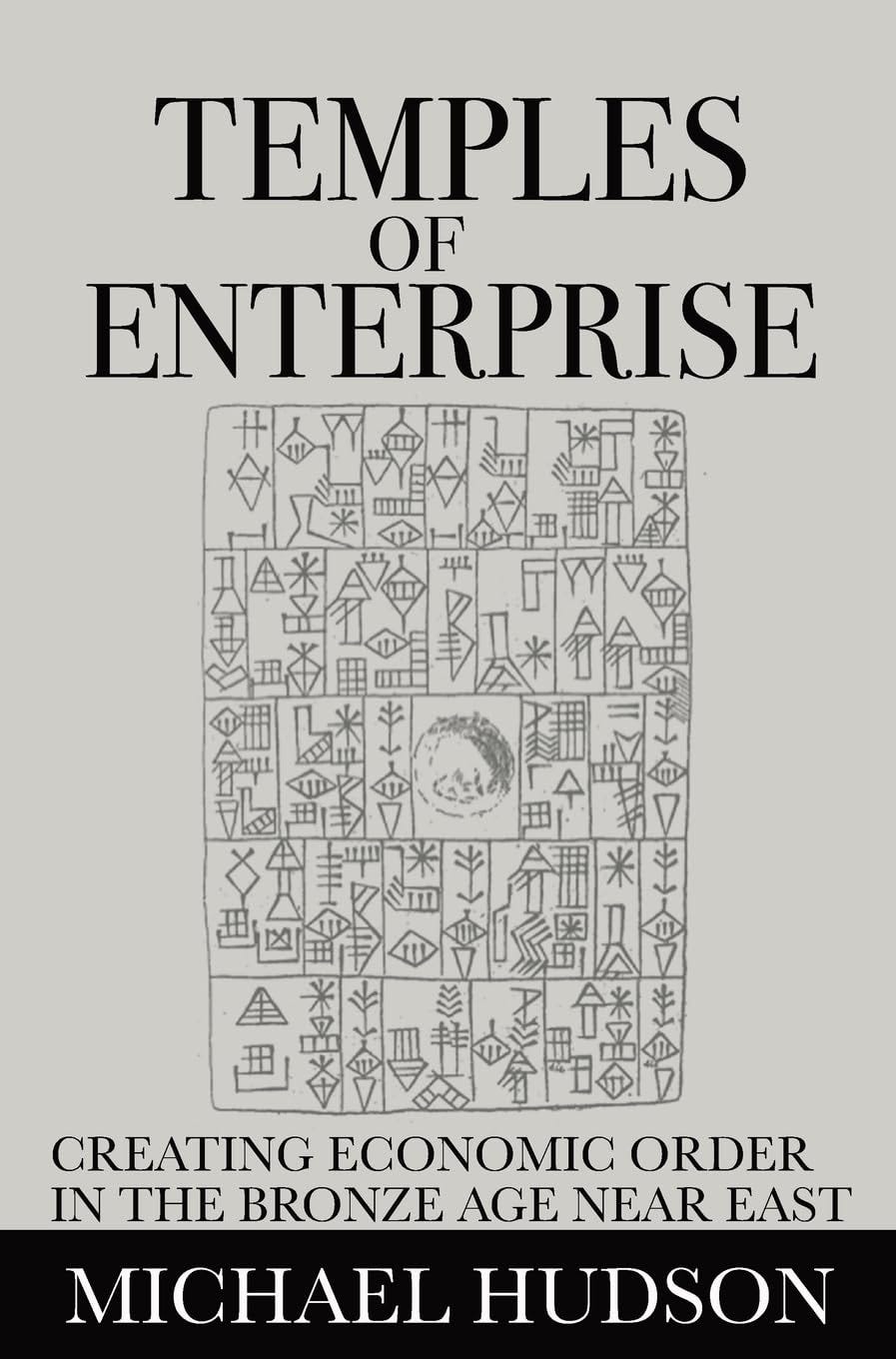
Michael Hudson:
Well, I’m glad we’re talking about Alan Greenspan because we’re still in the kind of era that he initiated. Back in the ’60s, I actually was saddled with having to work with him briefly. I was working at Chase Manhattan on the balance of payments of the oil industry, and Socony-Mobil insisted that we hire him to calculate the balance of payments and profits of the oil industry in Europe. Well, my boss, who had been recommended to Chase by Milton Friedman, told me, “Greenspan’s just a shill. He says whatever the clients want.” He was notorious for just having his reports up for sale.
We had a discussion with David Rockefeller, who said, “Well, people are not going to trust our study if Greenspan’s part of it. They’ll think we’re acting just as lobbyists for the oil industry.” So, my boss, John Deaver, asked me to check his work: “Can you see anything wrong with his statistics? I’m sure the little bastard did something in there somewhere.” That was how people talked about Greenspan in the 1960s. Well, sure enough, I found that he’d faked some figures from the European data. As a result, I was assigned to go over to his office and give him the news that he was off the project. I obtained some renown as the man who fired Alan Greenspan, but I was just the low man on the totem pole being told to do it.
Well, how did this person ever rise to be head of the Federal Reserve? That’s the question. The answer lies in the 1980s. The era when he emerged was very different from the 1960s. You had the era of Ronald Reagan, the Republicans, and the anti-federalists. Earlier this week, Matt Stoller had a great Substack report explaining how Newt Gingrich designed a whole strategy for the Republicans to shrink government, and what you do is shrink Congress. In the 1980s, for the first time, Congress was taken over by the Republican Party. What the Republicans did, Matt explains, was to cut back all the budgets for the government staff—the staffs of the representatives and senators who had been doing all the research to make sure they were anti-monopolists and acting in the public interest. All of that was unwound.
To quote briefly from his report: “In 1995, the Republican Party took control of the US House of Representatives, led by Newt Gingrich and a small group of right-wing politicians who called themselves ‘jihadists.’ These men sought to revamp a legislative chamber held by the Democrats since 1949.”
That was the environment in which they got Alan Greenspan appointed as head of the Federal Reserve. His job was basically to represent their clients—the commercial banks—not the economy at large. When people talk about an “independent” Federal Reserve, they mean independent from US policy; independent from congressional and presidential policy. Just days ago, you had the Supreme Court rule that Donald Trump can fire policymakers anywhere he wants in the US government, but not from the Federal Reserve. Its independence means that the banks are pretty independent of having money and credit operated and managed in the public interest.
Well, that’s what Alan Greenspan did. He deregulated everything. He sat there and let the huge savings and loan bubble explode. He let the 1998 dot-com bubble explode. That is exactly the same policy that we’re seeing today. The reason Greenspan got such a write-up of editorials and obituaries all over the press was because he opened the doors for this setup.
By being independent, the banking system in effect controls government tax policy, monetary policy, and the allocation of credit. Who gets the credit, and for what? Well, we know the credit is used to create a bubble. This is the result of all of these changes that occurred with Greenspan in the 1980s.
Oh, the Higher Education Jewish scam:


The Chronicle of Higher Education generally work within its editorial, reporting, and review divisions, rather than in corporate ownership, which has historically resided with the Gwaltney family. Notable Jewish journalists and editors have contributed to its staff and op-ed sections.
Prominent Jewish Journalists and Contributors
- Len Gutkin: A prominent Review Editor and frequent writer for the publication, responsible for conducting major interviews and covering Jewish studies, literature, and academia.
- Evan Goldstein: Senior Editor at the publication, who works extensively on broad academic trends and intellectual history.
- Jonathan Zimmerman: A widely published opinion contributor and professor who frequently writes about academia, antisemitism, and free speech for the outlet.
- Contributors & Academics: The publication also routinely features reporting and op-eds from esteemed Jewish scholars, such as Lila Corwin Berman and Ronit Y. Stahl, who write on Jewish-studies scholars and university policies.

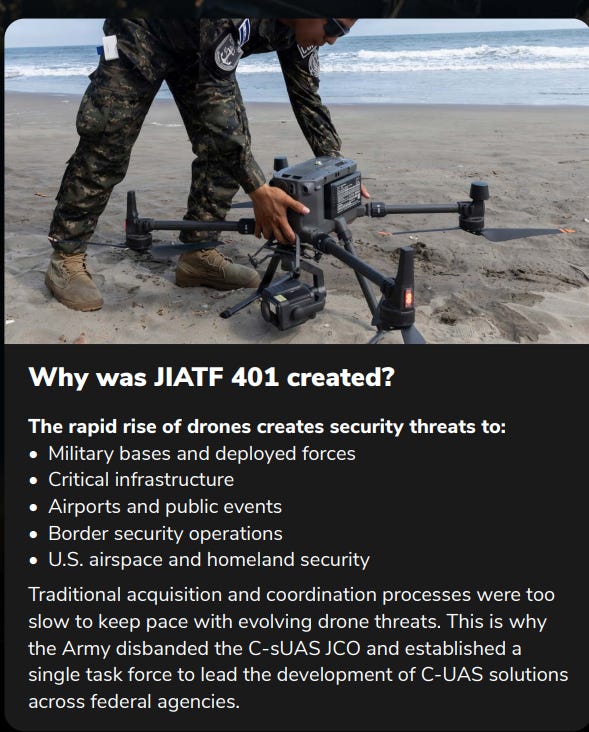
These fuckers are offering me a discount for their Counter UAS Summit:
Counter-UAS (C-UAS), or Counter-Unmanned Aircraft Systems, refers to a layered combination of technologies used to detect, track, identify, and neutralize unauthorized or hostile uncrewed aerial vehicles (UAVs/drones)

.



Our fucking enemies among us . . .

Fucking Racket? Fucking MAFIA, General Smedley Butler.
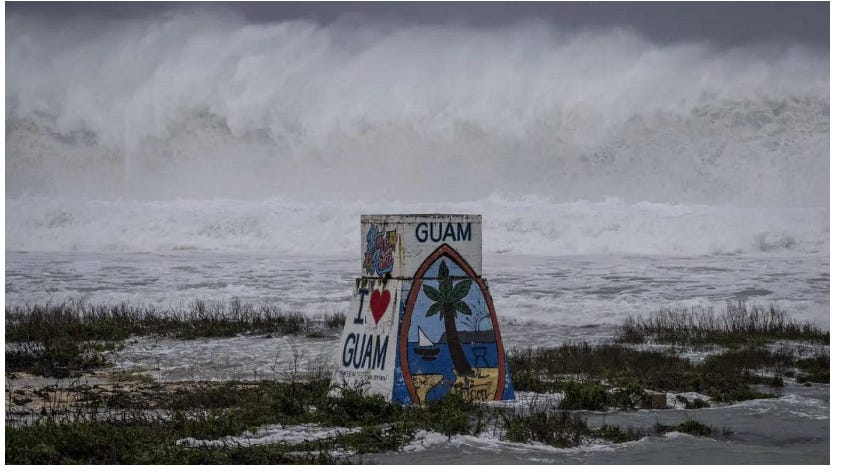
Last week, millions of people around the world were subjected to record-breaking heatwaves. At least 25 deaths in the U.S. from this heat dome were reported. The French government also counted over 2,000 excess deaths during the June heatwaves. At the same time, this past weekend, a devastating super typhoon hit the Northern Mariana Islands and Guam, leaving islands like Rota, where 2,000 people live, without running water and most buildings impacted.
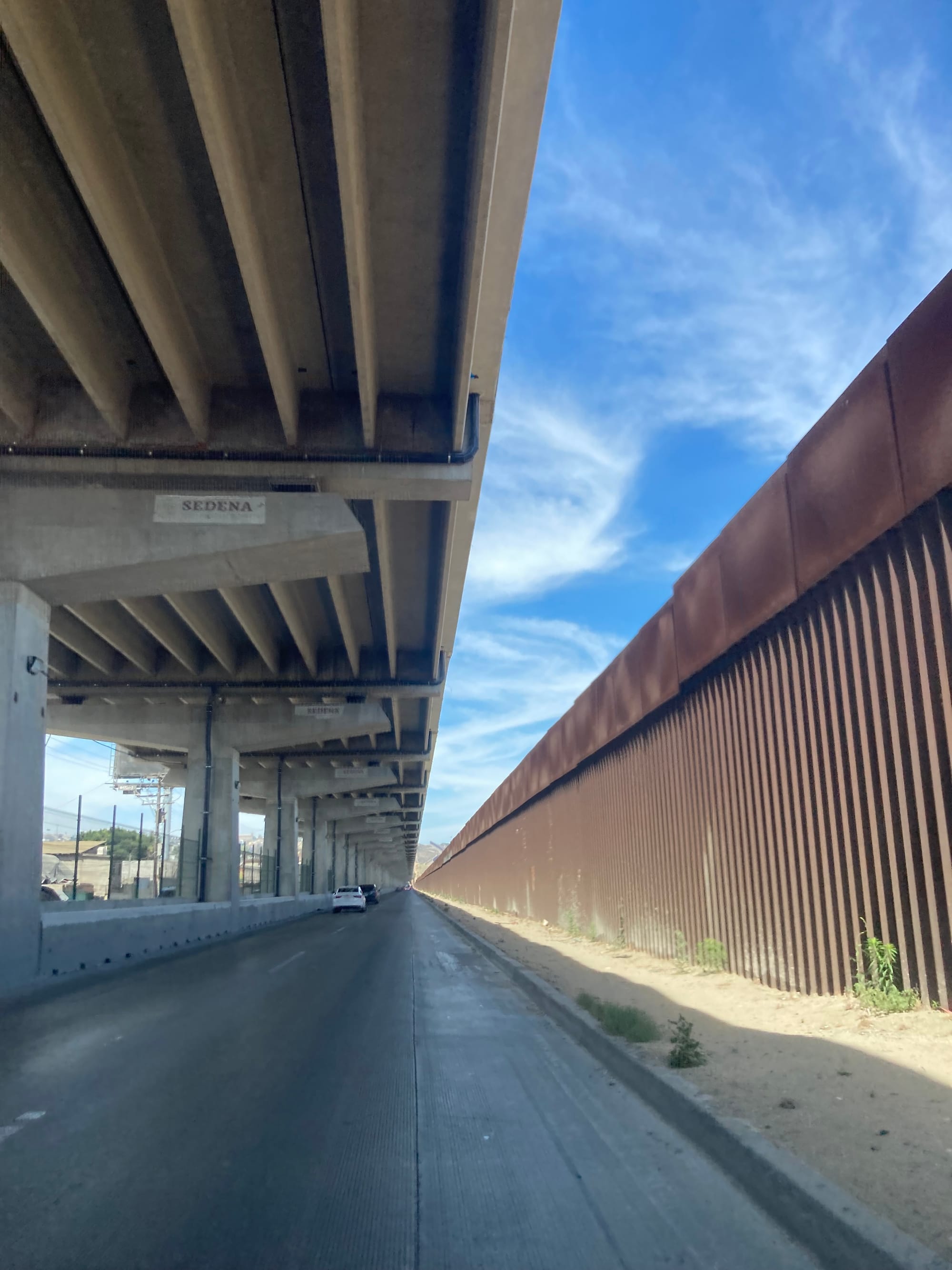

Architect Teddy Cruz has celebrated these regionally inventive structures. “While the seemingly permanent housing stock in San Diego is turned disposable from one day to another, the ephemeral dwellings in Tijuana want to become permanent,” he has written. “One city recycles the ‘left over’ of the other into a sort of ‘second hand’ urbanism.”
One of the many stark contrasts between the two sides of the border wall is the contrast between profligate consumption and obligatory thriftiness. Cruz is well known for saying that the border wall turns San Diego into “the world’s largest gated community.” Inside the gated community that is the contemporary U.S., free trade has accustomed many Americans to a lifestyle of waste. In its mirror image, that waste becomes the substance of a city. Perhaps the post-NAFTA era could be an opportunity to find the conditions for a built landscape that is somewhere in the middle.
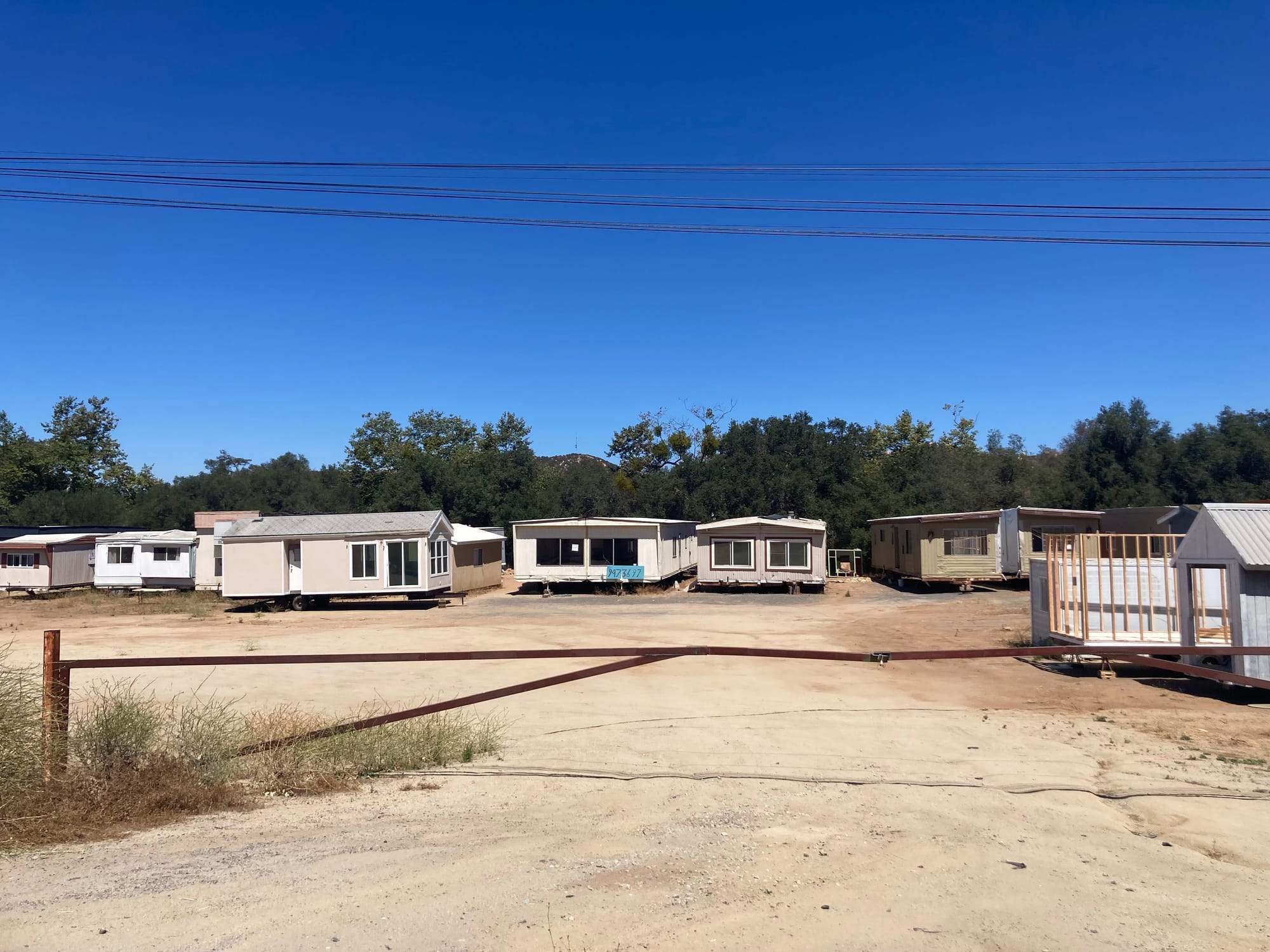
[Second-hand Manufactured homes imported from the U.S. for sale in Baja California.]
July 1, Donald Trump refused to renew the USMCA, the extension of NAFTA signed in July 2020. Because of the U.S.’ refusal to comply, the agreement will now be subjected to review annually and could sunset in 2036.
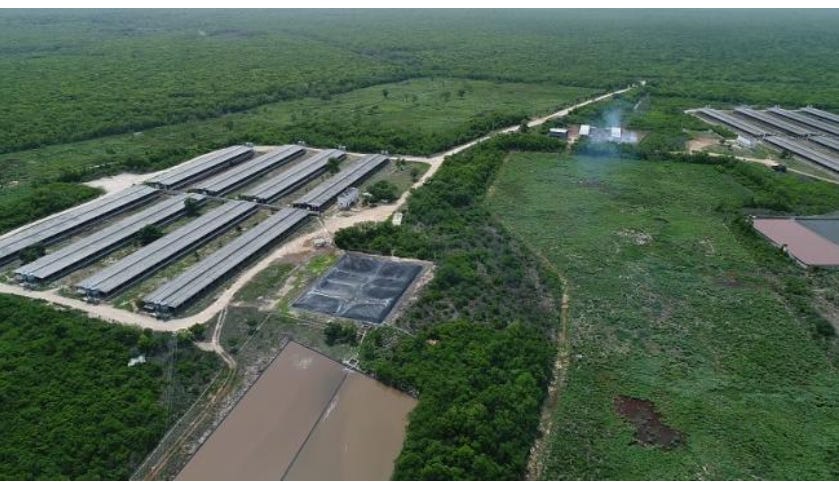
NAFTA profoundly re-shaped the North American economy. Perhaps the most famous example of this is its impact on smallholder Mexican corn farmers, who found their markets flooded by tariff-free corn grown on massive, subsidized U.S. farms; the agreement also facilitated the rise of industrial pork farming in Mexico and of health conditions such as Type 2 Diabetes and childhood obesity.
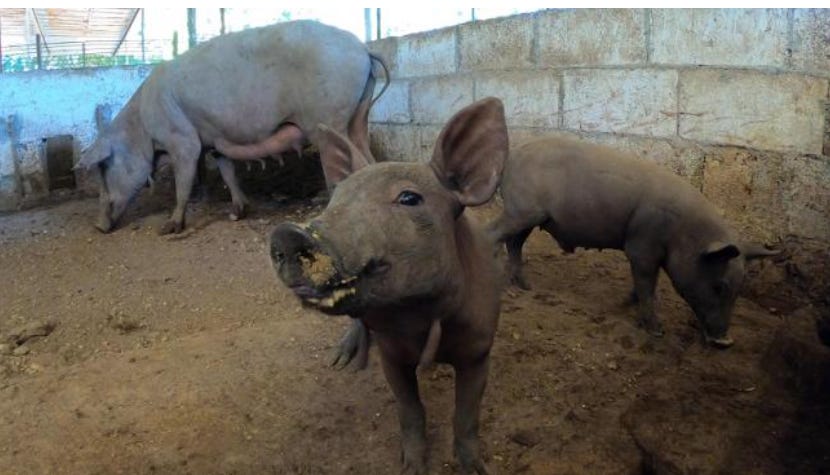
It also transformed Mexico’s built environment. The rise of assembly plants turned northern cities into fast-growing boomtowns; the policy change allowing communal ejido farmlands to be sold off gave rise to a fragmented landscape of housing developments. As a geographer driving through the Baja borderlands, I couldn’t stop reflecting on the visible traces of NAFTA and other aspects of border policy.
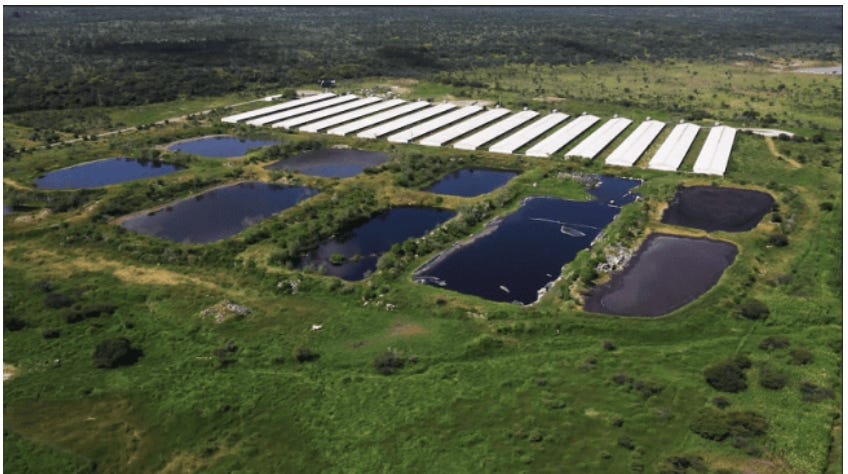
[In Mexico, increased meat consumption and the opening of new markets, such as China, have driven the expansion of industrial pig farms, including in the western state of Jalisco]
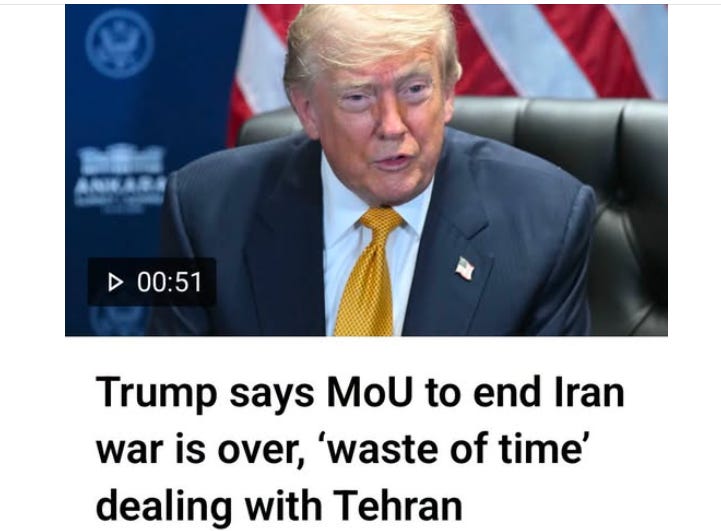
The White House is preparing for what could become a multi-day or even multi-week military campaign against Iran centered on the Strait of Hormuz, Axios, a frequent source of U.S. and Israeli leaks throughout the war, reported on Wednesday.
- One U.S. official reportedly threatened to “slap” Iran “a bit,” “so they understand we’re not fucking around.” The same official said the duration of the strikes will depend on Tehran’s response.
- Trump told reporters on Air Force One that Iran’s representative had “called a little while ago” and that they “want to make a deal”—a claim he made without providing evidence. Iran did not confirm any direct outreach.
- U.S. officials also told Axios that “reopening” the Strait of Hormuz and “restoring freedom of navigation” have become the administration’s primary military objectives, as Iran has insisted the waterway will only operate on its terms.
- Vice President JD Vance told reporters on Wednesday that U.S. strikes “are just going to keep on happening until they open up that lane and stop shooting at ships.”
- Regarding the Strait, Mohammed Bagher Ghalibaf, Iran’s lead negotiator and parliament speaker, said in a post on X it would “only open with ‘Iranian arrangements,’ not American threats.” He also warned Washington that it “still [hadn’t] learned that bullying and breaking promises are no longer cost-free.” “Let me put it plainly, he said, “if you strike, you’ll get hit.”
- Traffic through the Strait slowed to a near standstill on Thursday, Bloomberg reported. Ship-tracking data showed most vessel movements were confined to the Iran-approved route along the waterway’s northern side, while the U.S.-backed Omani shipping corridor saw little activity. Among larger vessels, only a U.S.-sanctioned supertanker departing the Persian Gulf and an Iranian-flagged container ship were visible, although some ships may have been transiting with their tracking systems switched off, the outlet noted.
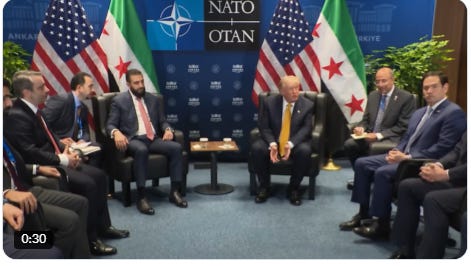
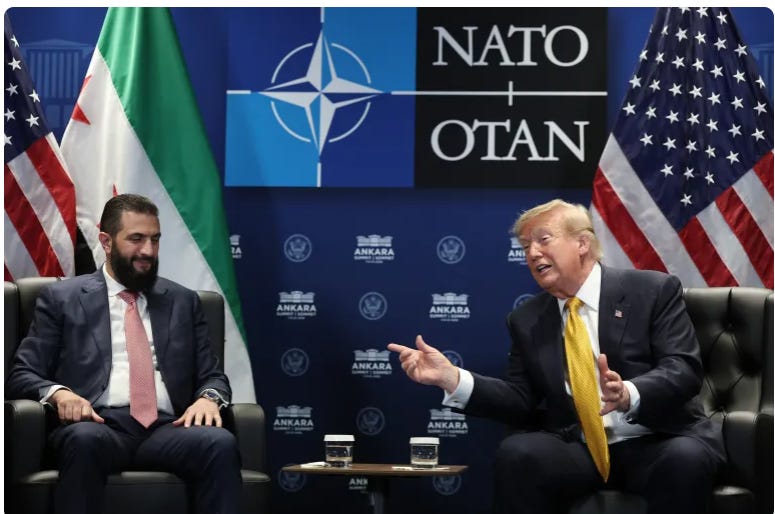
Imagine the significance of what Donald Trump said about the Golan!
The President of the United States effectively reaffirmed Israel’s occupation and annexation of the Golan Heights while Abu Mohammad al-Julani sat beside him without a single objection, not even a reminder that the Golan is occupied Syrian territory.
Silence at a moment like this is state policy.
When the U.S. president declares the Golan to be Israeli territory and the self-proclaimed “President of Syria” says nothing, the world is bound to interpret that silence as acceptance of the status quo.
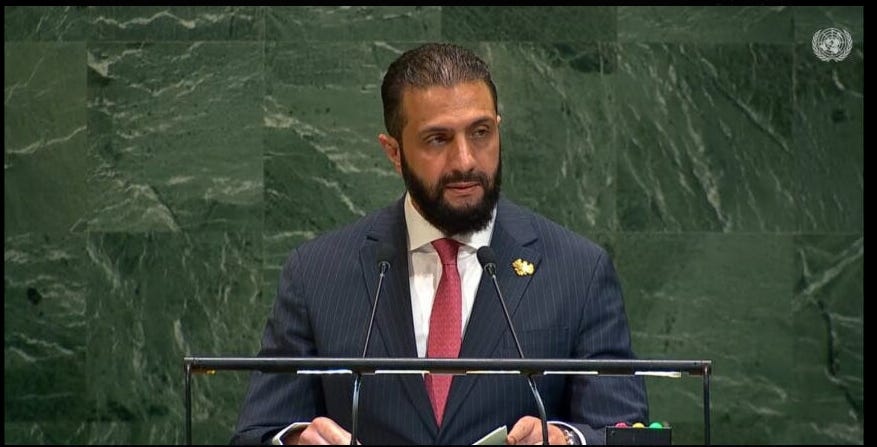
Oh, fucking queer as lactating tits on a bull Substack….
It’s become fashionable for the commentariat across the political spectrum to describe Syrian President Ahmad al Sharaa as an al Qaeda “terrorist.” From Ana Kasparian on the left to Tucker Carlson on the right, they have voiced outrage that the former Islamist rebel fighter they routinely call a “head-chopper” seized control of Damascus in 2024 and became leader of Syria.
That anger reached a fever pitch when Sharaa, previously known by the nom de guerre Abu Mohammad al Jolani, was welcomed in Washington last month. That’s when President Donald Trump called him “handsome” and sprayed him with cologne in the Oval Office, and he was spotted shooting hoops with US military commanders he may have once fought against.
Sharaa’s forces—like every armed group in the Syrian conflict— did evil shit, and were credibly accused of engaging in sectarian purges. But it’s way too broad a brush to paint Sharaa, former leader of the Syrian group Jabhat al-Nusra. as a “head-chopper” or “terrorist.” I generally avoid calling any group or person a “terrorist,” because it generates more heat than light. But in Sharaa’s case, it underplays his role in Middle East history, and risks underestimating his future impact.
Yes, he’s a former al Qaeda militant. But he’s a lot more than that. He is as much a yuppie as a jihadi, with a life trajectory more akin to Fidel Castro than Osama bin Laden. The reason why the US and much of the world embraced him is because they had no choice. Over the course of Syria’s 13-year war, he adeptly used the instruments of war and politics to outflank, defeat, or co-opt every other contender in Syria’s game of thrones. Among a substantial number of Syrians, he is now regarded as a national hero who toppled the country’s despised leader Bashar al-Assad and his family’s decades-long dictatorship.
[In recent years, Syria’s US “terrorism” designation has been primarily related to al-Assad’s relationship with Iran and support for Hezbollah, the Lebanese armed Shia movement.
Last month, Trump suggested that Syria, under al-Sharaa, could take over from Israel in a military campaign to degrade Hezbollah. Al-Sharaa denied any intention to intervene militarily in Lebanon, which Syria had occupied for decades under the al-Assads.]
- U.S. to remove Syria from list of “state sponsors of terror”: The U.S. announced on Wednesday that it would delist Syria as a “state sponsor of terror,” with Secretary of State Marco Rubio calling the move a “historic step” which would “give the Syrian people a chance at greatness.”
- Rubio added that the decision was made because Syria had made “formal assurances” to the U.S. that it would “not support acts of international terrorism in the future.”
- The announcement came as Trump met with Syrian President Ahmed al-Sharaa in Ankara on Wednesday. Trump praised al-Sharaa for the “unbelievable job” he had done in Syria. “What a job he’s doing,” he added.
- The designation has significantly impacted the country’s economy since it was announced in 1979. It has limited investment within Syria by preventing U.S.-affiliated companies from doing business in the country and by preventing Syrian companies from banking with U.S.-based financial institutions.
- The U.S. had lifted other sanctions on the country in May, but this delisting is viewed by many as the most significant step the U.S. has taken to benefit al-Sharaa’s government.