RE: The 4th of July as a time for reckoning with American history and imagining a better future . . . More fucking JOKES about 1776. Thousands of slaves in 1776, millions in 1861!
My comment, then the author’s comment, and then my comment back. Whew, what a way to start the day.
Amazing, no, while the murder spree continues in Occupied Palestine. You ask for a ceasefire? The Jews are a mafia, crazed, perverted, gleeful in their rape dungeons and their back-shooting and tent bombing, Fisher.
You can easily go to David Swanson’s site and give your readers a better picture of the War Mongering USA, or listen to Gerald Horne talk about the counter-revolution of 1776. How is it that you fail to discuss the Minyan in the White House — the outsized influence of Jewish Billionaires and Millionaires in Donald “I am the First Jewish President” Trump’s Epstein office?
Manuel Funk and Nadja Rakowitz: Our solidarity goes to the victims of the war, war opponents, deserters, and healthcare workers on all sides. Current developments have also affected our association, where members hold diverse views. While we have faced criticism and (very) few resignations, we continue to engage in debate and education.
At this point, in Germany, public funds are being used not only for defense, but also for shaping public attitudes. The Bundeswehr (the German armed forces) now publishes official videos showing German soldiers at night, by firelight, shouting “hurrah” when their general tells them they are working toward becoming “capable of winning.” The German army wants to win again. Beware, Europe. When they discuss a possible war, officials speak of the “Eastern Front,” and the “enemy” in public debate is clearly Russia – often personalized as Vladimir Putin. In our view, this taps into old anti-Russian sentiments and is becoming increasingly irrational.
Nowadays, it is once again socially acceptable to express pride in a grandfather who “fought against the Russians back then” – that is, in the Nazi Wehrmacht or even the SS. Statements like this no longer cause scandal, and even politicians from parties such as the Green Party sometimes make them.
+–+
Swanson:
Since 2001, the United States has been systematically destroying a region of the globe, bombing Afghanistan, Iraq, Pakistan, Libya, Somalia, Yemen, and Syria, not to mention the Philippines. The United States has “special forces” operating in two-thirds of the world’s countries and non-special forces in three-quarters of them.
See also How Many Millions Have Been Killed in America’s Post-9/11 Wars? Part 3: Libya, Syria, Somalia and Yemen by Nicolas Davies. From 2018, this article estimates 5 to 7 million people directly killed by U.S. wars since 2001 in Iraq, Afghanistan, Pakistan, Libya, Syria, Somalia and Yemen.
See also How Death Outlives War by Costs of War. From 2023, this report estimates 4.5 to 4.6 million people killed directly or indirectly by U.S. wars since 2001 in Iraq, Afghanistan, Pakistan, Syria, and Yemen.
The U.S. government provides weapons, military training, and/or military funding to almost every dictatorship and oppressive government on earth. See my 2020 book 20 Dictators Currently Supported by the U.S.
U.S. weapons are used on both sides of many wars.
In an attempt to quantify U.S. warmaking, I’ve copied below lists from these sources:
David Vine: The United States of War
William Blum: America’s Deadliest Export: Democracy
Dr. Zoltan Grossman: A Century of U.S. Military Interventions
James Lucas: U.S. Has Killed More Than 20 Million People
William Appleman Williams: Empire As a Way of Life
Paul, thank you for providing these further sources, I look forward to reading them. I share your outrage at what is happening but caution against equating Israel with Jews, as that is a harmful generalization. We can call out those who are committing the horrors without equating them to a whole ethnic or religious group. Even the influence of Jewish billionaires as you point out is a huge piece of the Zionist apparatus but them being Jewish is not the point. Just like the extremist Christian nationalists are not representative of Christians and ISIS is not representative of Muslims.
Yikes, Albert. I’m 69, a real journalist of newspaper fame for, hell, since age 17, and still rocking it elsewhere, not to mention my Substack, which is rant for sure. Lived in many countries, and shit, have a few graduate degrees under my belt, but more importantly, I work with adults and kiddos with developmental disabilities, and worked with houseless or unhoused veterans and their families, as well as folk coming out of prison still in their substance abuse days.
So, damn, and my radio show. SHOOT. Books, as you can check out at the Amazon Monster.
So, thanks for the elementary school comments about Zionism versus Judaism, and then cautioning me to do what?
The Jewish Billionaires highlighted by Forbes and by Jewish State of Israel news organs always HIGHLIGHT their Jewishness, their Jewish history, and never ever anything mentioned about ZION or ZIONISM.
Jim Sweeney: “Balin” The story of Balin Miller, a 23-year-old climber of extraordinary talent, whose life ended on El Capitan.
Paul Haeder “Dream Tigers—What Would Neruda Say About Gaza?” An essay that places Pablo Neruda’s political awakening alongside the present devastation in Gaza, asking what poetry demands in times of mass civilian suffering.
+–+
The outsized number of Jews in the millionaire and billionaire category, supporting Israel, and Israel’s fucking influence in Latin America, for fuck’s sake, it is their JEWISHNESS that they sell, so, hmmm….. Which rabbi are you digging? Remember, this is a Jewish Dude, Talmud and Torah DUDE, as the chief sicario of, hmm, The Commonwealth of Nations, formerly known as the British Commonwealth, is a voluntary association of 56 independent sovereign states. Spanning five continents, its members represent 2.7 billion people—roughly a third of the global population.
The Chief Rabbi of the United Kingdom and The Commonwealth, Rabbi Ephraim Mirvis is a charlatan, which should come as no surprise given he is a Zionist, and Zionism is a racist ideology.
Mirvis has remained silent while the moral crisis of our age has raged on for a thousand days.
A thousand days of silence; a thousand days of indifference; a thousand days of apathy, unconcern; a thousand days of excusing a genocide; turning a blind eye to the rape of prisoners; the murder of children; the starvation of babies; turning a dense urban city to rubble; homes turned to dust; a thousand days of Israelis celebrating the death of children; dancing at the prospect of burning babies alive.
And then dismissing this silence with accusations of antisemitism.
Another religious leader was, once, silent about the moral crisis of his age.
Pius XII was Pope during the Holocaust, and like Rabbi Mirvis, remained silent to the suffering and murder of innocents.
It’s not known if Pius XII had any relatives in the Nazi army, but we do know that Rabbi Mirvis has a son serving in the IDF, in which Mirvis expressed great pride.
Was the son involved in any war crimes? Will the British Metropolitan Police investigate? It’s not difficult to find out – just contact the Hind Rajab Foundation and they will be able to say whether Mirvis’s son was involved in any war crimes.
When the Catholic Church began proceedings to beatify Pius XII there was understandable outrage that a Pope who was silent during the Holocaust was being considered for sainthood.
In the 1940s news did not travel as immediately and directly it does today; there were no live-streamed videos; no social media to show the horrors of war and what it does to men, women and children. Pope Pius XII will not have seen videos of rape and sodomy; he will not have seen children being collected in plastic bags.
Ephraim Mirvis will have seen this and much more.
+–+_
Athens vs. Jerusalem in 4 lines:
Athens is the birthplace of (Western) philosophy; Jerusalem is the city of revelation.
Athens teaches you how to think for yourself; Jerusalem dictates what you say and how you think (tyranny of correctness masquerades as PC).
Every precious Western value originated in Athens. Sadly, every catastrophe is due to Jerusalemite immoral intervention…
Athens, Jerusalem and the Genocide
The best way to grasp the dichotomy between Athens and Jerusalem is to understand that Jerusalem has replaced ethics with litigation. Jerusalem is the institutional lack of ethics. It mimics ethics, deploying a set of Mitzvoth.
In Jerusalem, a genocide is kosher as long as you get away with it. How do they get away with it? They will do whatever it takes. They will dismantle the ICC’s ability to operate; they will threaten the prosecutors; if needed, they will wipe out The Hague together with the UN.
Athenians fail to grasp Jerusalem until it is too late because Athenians project their own ethics. Humans find it very hard or even impossible to imagine an operation out of the ethical ‘box’. Even the worst criminals tend to sense guilt and empathy.
These two (guilt and empathy), are the exact elementary human features that we don’t find in Jerusalem.
Since the lack of empathy and guilt is widely considered a core and defining feature of psychopathy, we may have to reach the conclusion that we are dealing with a collective psychopathy.
I wish I was original here. Jesus realised it 2000 years ago. The Hebrew Prophets also saw it. The Jewish State is in big trouble right now because the whole of humanity is experiencing this epiphany right now…
More?
Gilad Atzmon:
Palestine Cause vs. Jewish Solidarity Terminology (Spin)
(As I explained it 10 years ago. Long before the Gaza Genocide)
The Right of Return has been at the core of the Palestinian cause. It positions the 1948 Nakba and the suffering of refugees as the primary issue; it places Gaza into historical context and highlights the gross injustices perpetuated and sustained by Israeli politics since 1948. It clearly illuminates the racist nature of the Jewish state and its immigration laws. The Right of Return offers a clear course of action that unites Palestinians in the region and in exile, but it evokes fear amongst Israelis, Zionists, and Jewish anti- Zionists.
For decades, Jewish solidarity has been shockingly effective in subduing the call for the Right of Return. It was gradually diluted and eventually drowned in a tsunami of duplicitous terminology designed to appeal to Jewish supporters at the expense of Palestinians and their essential rights.
Let’s examine some of the solidarity movement’s current terminology.
End Of The Occupation
The call for the ‘End Of The Occupation’ was the first indication that something had gone terribly wrong. On its face, the call appears humanist and peaceful, politically pragmatic and even populist. The truth of the matter is the complete opposite. The ‘End of the Occupation’ is a legitimization of Israel through the back door – it confirms that the Jewish State within the pre-1967 green line borders is a valid and legitimate political unit. ‘End Of The Occupation’ limits the solidarity discussion to the West Bank; it is nothing short of a spit in the face to 8.000.000 Palestinian refugees and a complete dismissal of their right of return.
Colonialism
Another grossly misleading term promulgated by the Jewish progressive solidarity campaigners is ‘colonialism.’ The term conveys the false image that Jewish nationalism is as bad as British or Dutch colonialism but not worse. Such a delusional vision of the Zionist project may also vaguely offer the prospect of a future ‘resolution’ in some sort of a ‘post-colonial’ phase. But Zionism is not colonialism nor has it ever been. Zionism is a movement with no precedent in history. Can you think of another historical moment when people ‘returned’ to an imaginary ‘homeland’ after 2000 years and asked the indigenous population to move out to make room for the former ‘residents?’ Colonialism requires a material and spiritual exchange between a ‘mother state’ and a ‘settler state.’ The Jewish State is a settler state, but there is no mother state to Zionism or Israel. When prominent solidarity activists refer to Zionism as ‘colonialism,’ they are either being intentionally misleading or simply displaying a unique form of ignorance that one would not expect from educated and highly motivated activists.
One may suggest that though Zionism is not a colonial apparatus, the relationships between Israel and its West Bank settlements establish a quasi-colonial correspondence between a ‘Mother’ and a ‘Settler’ affair.’ Wrong: The Jewish Settlements did not form a new state in the West Bank. What we see instead is an ideologically driven territorial expansion, a form of Judeo-centric Lebensraum philosophy and practice.
Settler Colonialism
In recent years, a new terminological spin popped up within the Palestinian solidarity ranks, namely: ‘settler colonialism.’ The criticism of the colonial paradigm struck a few of the so-called progressive anti-Zionist enthusiasts. They were pushed to revise their theoretical narrative. Their efforts brought forth a new ad hoc, deformed, dysfunctional theoretical baby. But the term ‘settler colonialism’ does not illuminate anything. It seems a desperate attempt to further conceal the truth of the Jewish National project.
Settler colonialism posits a situation in which superpower ‘A’ facilitates the settlement of ethnic group ‘B’ on land ‘C.’ This action may lead to grave consequences for the indigenous population ‘D.’ But this explanation is problematic. The A-B-C-D scenario has nothing in common with Zionism, Israel or the Jewish national adventure. It was the Zionists (B) who persuaded Britain, then a superpower (A), that a Jewish homeland in Palestine (C) was the way forward. In short, instead of the A-B-C-D chain of events that form ‘settler colonialism,’ when it comes to Zionism, there is a B-A-C-D chronology. It is the ethnic group ‘B’ that pushes superpower ‘A’ to act in its favour. Most importantly, no interpretation of colonialism, settler colonialism, provides any support to the Palestinian cause, nor does it further our understanding of the so-called ‘conflict.’
Apartheid
Another inapt concept ascribed to the Jewish State in a transparent attempt to divert attention from the unique genocidal reality on the ground is ‘Apartheid.’ The term suggests that Israel is only ‘just’ as bad as South Africa or the southern United States. The truth is worse. Apartheid is a racist system of exploitation, but Israel doesn’t want to exploit the Palestinians; it wants them ‘gone’ and it acts upon it eg the Gaza genocide. At least from an ideological perspective, Israel is a genocidal, racially driven, expansionist state like no other.
Tragically, this lethal exclusivism is consistent with Zionist philosophy and some radical, yet popular, interpretations of the Judaic call. The so-called ‘Jews in the movement’ are uncomfortable with a realistic rendering of Israeli politics. They much prefer Israel to be grouped with other vile regimes within a recognized historical pattern such as colonialism, apartheid, etc.
BDS
When the call for Boycott, Divestment & Sanctions of Israeli goods was established in 2005 in Ramallah, its first demand was for Israel to: “End[ing] its occupation and colonization of all Arab lands and dismantl[ing] the Wall”
This call didn’t leave room for interpretation. Back in 2005, the BDS movement disputed the legitimacy of the Jewish State.
But in 2010, its primary goal was changed significantly; it now reads:
“Ending its occupation and colonization of all Arab lands occupied in June 1967 and dismantling the Wall”
There is no public record of the process that led to any of these changes. And as if to prove its deceptive nature, the change appears only in English and has never been integrated into any of the official BDS publications in Arabic. It is likely that most Palestinians were not aware of the change made on their behalf by people who claim to be their ‘grassroots’ representatives. My study suggests that the change in the BDS goal statement that de facto legitimizes the Jewish State took place at the time the BDS became popular amongst Jewish activists and accepted funds from liberal Zionist George Soros’s Open Society Institute. You can read more about BDS, Soros money promoting BDS campaign in a book Israel Palestine and the Queer International by Jewish activist Sarah Shulman.
It is devastating that even the call for BDS has become an instrument to legitimise the Jewish State within its pre 1967 borders.
A Jewish Solidarity Pet
The logical conclusion of this analysis is pretty devastating. Two decades of Jewish left hegemony within the pro-Palestinian movement has reduced the Palestinians and their plight into a mere ‘solidarity pet.’ The Palestinians have been instrumental in an internal Jewish political show that has led nowhere. The Palestinian cause and the Right of Return have been watered down and replaced by terminology that was set to derail the solidarity movement and has succeeded remarkably.
Though it is no surprise that people who identify politically and primarily as Jews (JVP, IJAN, JFJFP, J-big, Mondoweiss, etc) are also primarily concerned with Jewish interests, it is legitimate to ask how these Jewish interests have succeeded in dominating the solidarity movement of another people. How is it possible that the Palestinian solidarity movement has been dominated by concerns to do with Jewish sensitivities, almost totally dismissive of the Palestinian cause? How is it possible that it is Jewish voices that dominate the battle against the Jewish State? Would Nelson Mandela allow a bunch of recovered Afrikaners run the Anti- Apartheid struggle on his behalf?
Would Malcolm X let ex KKK militants dominate the terminology of his campaign? How did it happen to the Palestinians that their solidarity discourse is attuned to the voice of the oppressor rather than the victim?
I believe that the ability to articulate these questions, or even staying reading this post up to this very final sentence, may suggest that deep in your heart you know the answer.
+—+
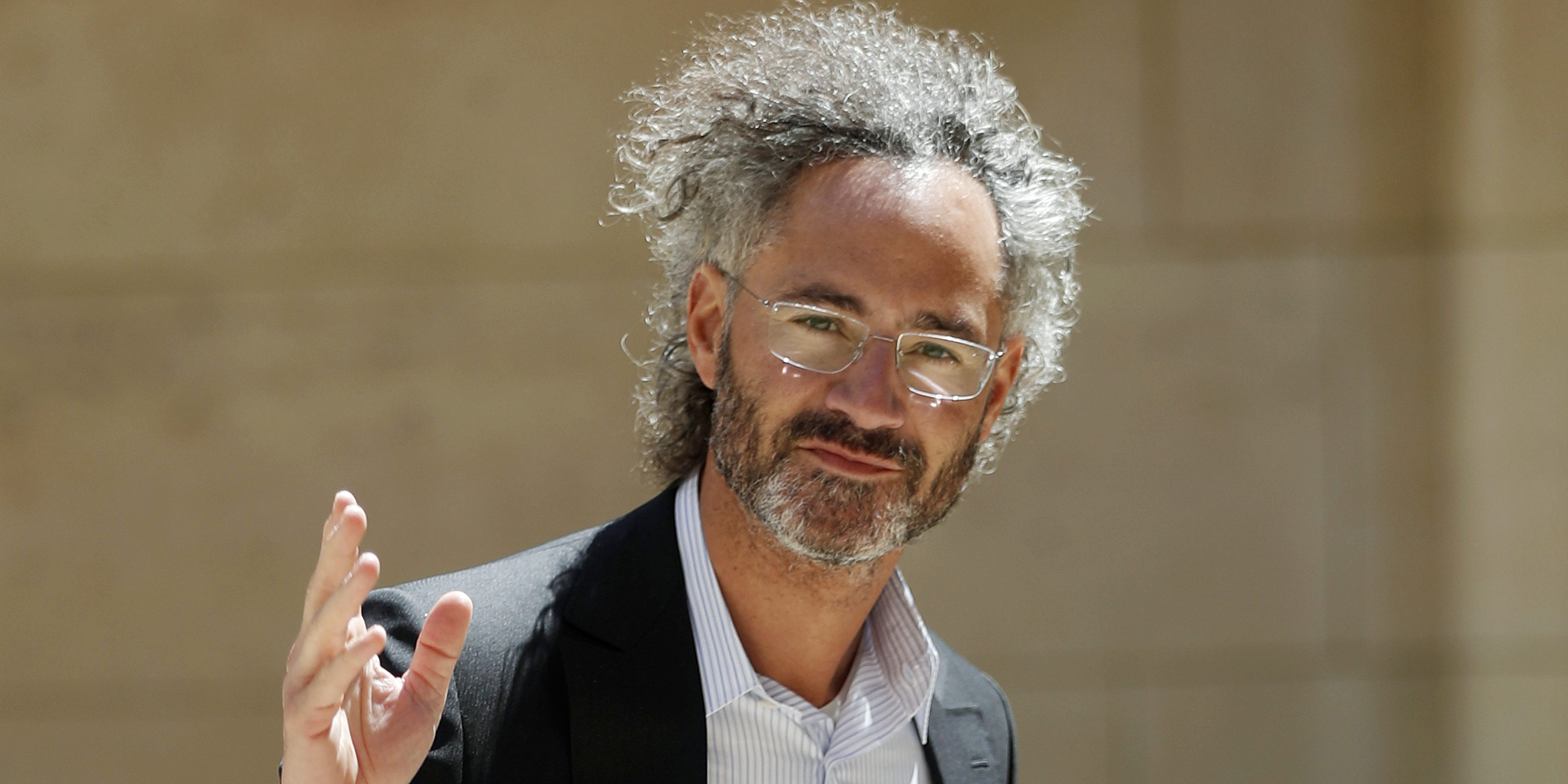
Nah, who is Palantir? Alexander Caedmon Karp is an American billionaire businessman and entrepreneur. He is the co-founder and CEO of the software firm Palantir Technologies. Karp earned his J.D. degree from Stanford Law School and a doctorate in social theory from Goethe University Frankfurt.
Palantir just partnered with The Joint Commission — the organization that accredits over 80% of US hospitals — meaning Palantir is now intertwined with the very system that decides whether a hospital meets the standards needed to keep its doors open, treat patients, or get paid by Medicare and Medicaid. …. Known for his hawkish views, Karp strongly advocates for a powerful U.S. military and closed borders. He has explicitly stated that he believes outsourcing battlefield AI strategy to Silicon Valley’s standard consensus view is a major national security risk. [1, 2]
Palantir Technologies and its CEO, Alex Karp, are deeply entrenched in the conflict in Gaza, providing advanced artificial intelligence and data analytics technology to the Israeli military.
LOOK at this cocksucker (video in the link above), and then the cunt white shit calls for security? And so, fuck the world of Jews . . . .
Paul, thank you for providing these further sources, I look forward to reading them. I share your outrage at what is happening but caution against equating Israel with Jews, as that is a harmful generalization.
In Judaism, Karp most commonly refers to Karpas, the green vegetable placed on the Passover Seder plate. It is eaten early in the ritual after being dipped in saltwater. The vegetable symbolizes spring and rebirth, while the saltwater represents the tears and sweat of the enslaved Israelites.
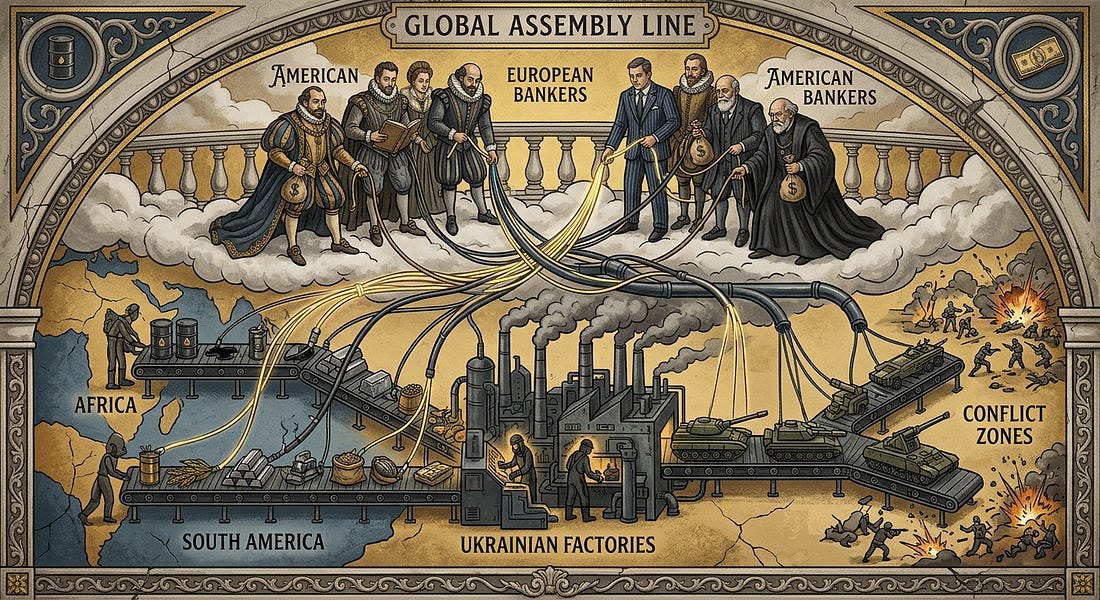
Zelensky’s aspiration to make Ukraine “a big Israel” is, from the standpoint of the Ukrainian oligarchy, entirely rational. It promises them survival, enrichment, and international legitimacy behind the shield of American power. It aligns Ukraine’s future with the structural requirements of US imperialism in a period of intensifying great-power competition.
Volodymyr Zelensky has remarked on numerous occasions that he wishes for Ukraine to become, in his words, “a big Israel.” On the surface, this might appear as little more than rhetorical aspiration — a small nation’s leader casting about for a model of survival against a larger neighbour. But the statement is far more telling than Zelensky perhaps intended. It reveals not only the trajectory the Ukrainian oligarchy envisions for its country, but also illuminates the structural function that Israel has performed within the US imperialist system since its inception.
To understand what Zelensky is proposing, we must first examine the role Israel has played in the West Asian region — a role that has evolved since the British Empire first backed the Zionist movement to create a state, but whose core features have remained remarkably consistent.
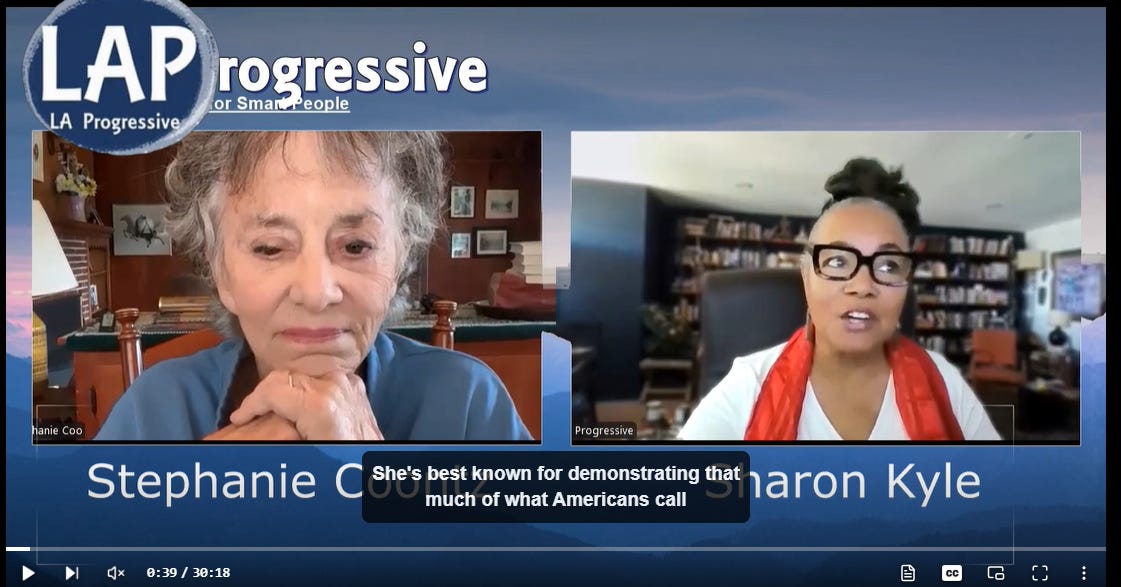
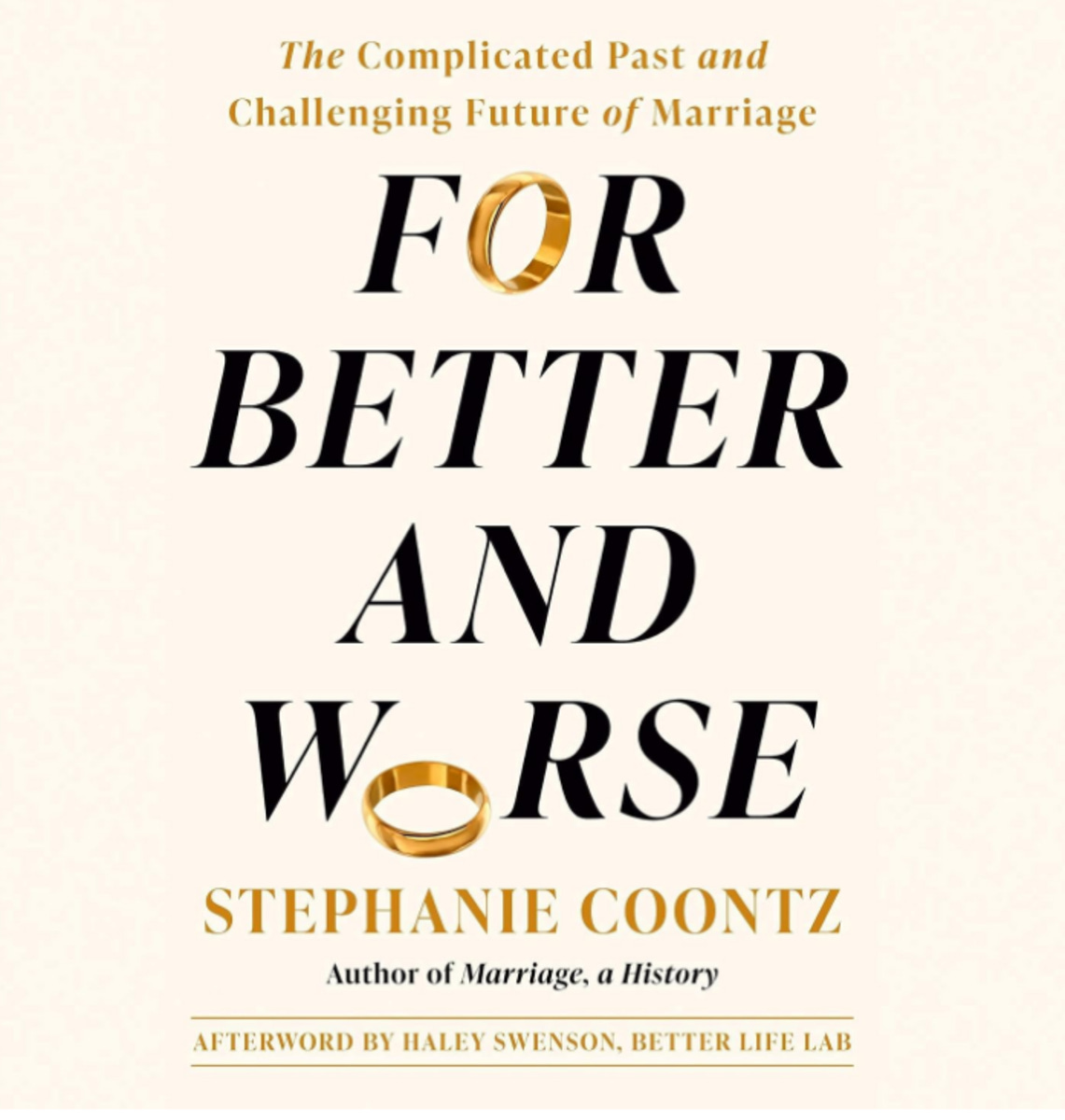
Stephanie Coontz: The Marriage Crisis Is Really a Crisis of Inequality
Academic Subject Matter: In her extensive historical research on American family structures—most notably in her book A Strange Stirring: The Feminine Mystique and American Women at the Dawn of the 1960s—Coontz frequently analyzes the profound contributions of Jewish feminist leaders. She writes extensively about figures like Betty Friedan and delves deeply into the cultural background of mid-century Jewish households. [1, 2, 3]
Discussions on Marriage Customs: During media appearances and interviews discussing her book Marriage, a History, she often addresses traditional religious marital expectations, including historical Jewish customs regarding endogamy (marrying within the faith). [1, 2, 3]
Twenty Yeaers ago, Sun Magazine . . . Leviton: I grew up in a Jewish home, and my parents expected me to marry another Jew. Do couples who share the same religion or spiritual values have a better chance to stay together?
Coontz: It depends on what exactly they are sharing. People who have shared goals that they act upon, whether they are religious or not, tend to have better marriages. My husband and I are completely secular, but we both care about the labor movement and the environment. We find the same reports infuriating when we read the newspaper and the same stories moving when we watch TV. Those shared values are a huge boost for our marriage.
Couples who belong to churches, temples, or mosques that reach beyond the houses of worship do have a better chance of staying together. But religious belief without membership in a faith organization and shared, meaningful activities doesn’t protect people from divorce at all.
Leviton: You’ve referred to increasing gender equality and increasing economic inequality as two “tectonic plates” pushing against each other under the surface of our culture.
Coontz: Since the 1950s there’s been a large increase in the percentage of people who believe it’s wrong to deny others opportunities or rights based on gender, race, sexual orientation, or ethnicity. This equality revolution is incomplete and uneven and still meets furious resistance, but it’s real.
The growth of economic inequality over the same period, however, has been equally striking. The real wages and benefits of less-educated workers have declined. Middle-income workers experience more economic insecurity. Between 1979 and 2012 the income of families in the top 5 percent increased by 75 percent, while for the bottom 60 percent income has fallen or remained flat. The chance that an individual will experience poverty for at least a year has increased dramatically. The risk of being laid off is pervasive, from high-paying and low-paying jobs alike.
These shifts — which I don’t see abating — are not unrelated to the increase in equality in other areas. For example, more gender equality means fewer women need to be rescued economically by men. Women can say no to marriage and carve out their own lives. And when people do marry, they tend to choose a spouse with roughly equal earnings. A man who’s a doctor or an executive is not looking to marry his nurse or secretary anymore. The doctor wants to marry another doctor. This has tended to exacerbate inequality between social classes even as it promotes equality within the marriage.
Coontz: Think about the supposedly wonderful marriages of the 1950s. Child abuse was more common and much less likely to be reported. Marital rape was legal and widely accepted. Women were subordinate to men and had very limited ways to support themselves outside marriage.
When unilateral or no-fault divorce was introduced—California was the first state to adopt it—we had something resembling a controlled experiment.
Divorce rates initially increased. But over time, female suicide declined significantly, and domestic violence also declined in states that adopted unilateral divorce. Research found a long-term reduction of roughly 20 percent in female suicide and a decline of approximately one-third in domestic violence.
That tells us there were many deeply unhappy and dangerous marriages that people previously could not leave.
Under the old fault-based divorce laws, you could not get a divorce unless you could prove that you were completely innocent and that your spouse was completely at fault. But anyone who has ever been in a relationship knows that marriages do not usually break down that neatly.
In practice, the more miserable and hostile both people became, the harder it could be to prove that only one person was responsible. Those were irrational laws, and changing them was a tremendous improvement.
Kyle: We are constantly told that divorce has become more common because people no longer take marriage seriously. Is that accurate?
Coontz: No. Divorce rates have been declining since around 1980.
They are lower than most people realize, especially when you measure divorce in relation to the number of people who are actually married.
What has fallen dramatically is the marriage rate. Most people still eventually marry, but they marry at much older ages.
At the same time, a huge class and racial divide has opened in who enters marriage and who is able to sustain it.
A great deal of that difference is connected to economic stress.
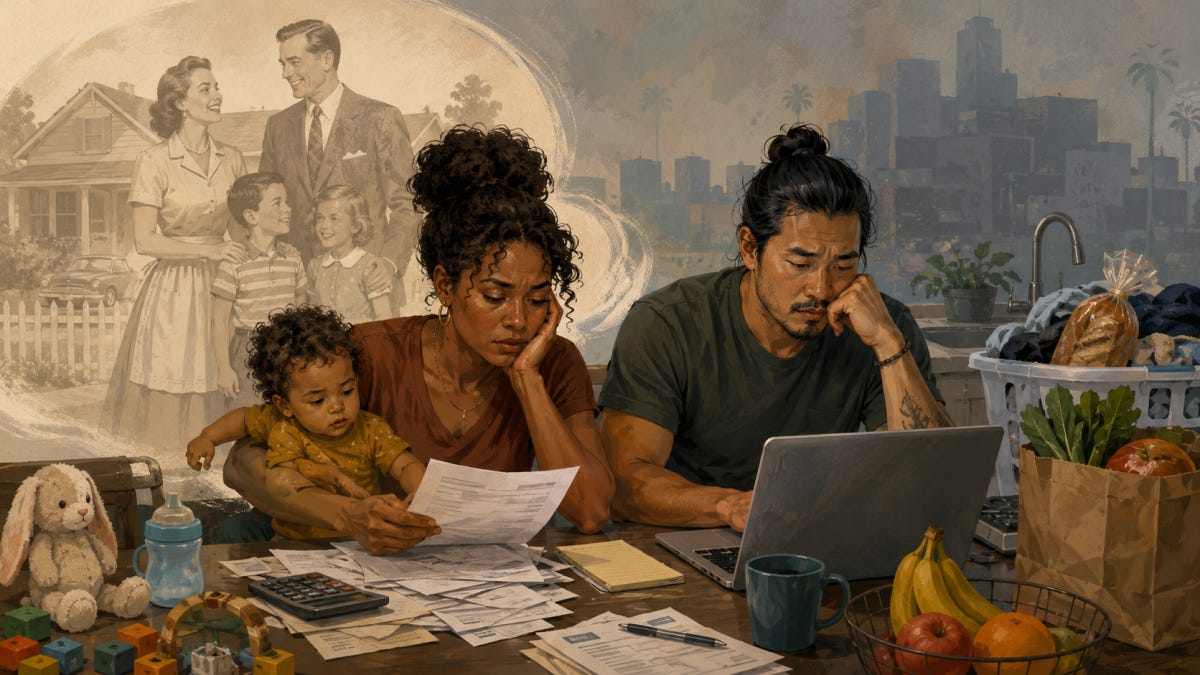
We now want stronger and more emotionally fulfilling marriages—relationships requiring more patience, communication and negotiation than marriages of the past. Yet we are trying to build those relationships while living increasingly precarious lives.
Most marriages today begin with cohabitation. Many couples move in together intending eventually to marry. But couples facing severe economic stress, discrimination or instability are more likely to break up before reaching marriage.
So one reason divorce rates are falling is not necessarily good news: some of the people most likely to experience instability never make it into marriage in the first place.
Again, how’s that marriage situation working out in the Murdering Capital of the World — Occupied Palestine?
As the country and this administration launched its America 250 and Freedom 250 “Celebrations”, what we experienced in the nation’s capitol and a city of 700,000 residents replicated what the United States does to other parts of the world. The streets were invaded by the military, public spaces barricaded with multiple levels of security checkpoints, and the sky full of military flyovers, including a seven-hour schedule of flyovers on July 4th.
Military flyovers come at a devastating cost–economically, psychologically and environmentally. The most recent ones came in the middle of a heatwave where even Trump’s American State Fair closed after people were baptizing themselves in the religious tent to prevent heat stroke. But flyovers are not new and have been used as a propaganda tool for military recruitment during NFL games and summer festivals. The militarization has been so normalized for so long.
This past weekend, thousands of people cheered on the flyovers, but many did not. The sounds of war shook windows, terrified children, animals, and those suffering from PTSD. Washington DC is made up of 700,000 people without statehood, leaving it little power to push back at the military occupation of the city, let alone the military playground.
In passing, I overheard folks sneering “here’s where all our money goes,” and another asking “is this what Iran sounds like right now?” These flyovers, an exercise of an illusion of force, domination, and strength. All to further prop up hyper nationalism and militarism. But we were lucky it was just for a “show”. The bombs did not drop on the occupied city of Washington, D.C., as they do from some of the same jets that fly over places like Palestine, Lebanon, and Iran.
As an Iranian immigrant, as I watched my children tremble and cover their ears at the roar of bombers and fighter jets over our home, so loud the walls vibrated, I was struck by a haunting duality. My heart broke because I knew what that sound means to children just like them back in Iran. My children know they can cover their ears, cuddle in close to me, and wait it out. The planes will pass, the ground will stop trembling, and we can return to their bedtime routines. But for children just like them in my home country of Iran, for their families, for our brothers and sisters in Palestine, Lebanon, and so many other places devastated by Western imperialism, those same sounds mean something entirely different. They mean bombs falling on schools, neighborhoods erased in seconds, families torn apart before they can say goodbye. They also cuddle in close to their loved ones, but they do so knowing it may be the last time.
As they try to normalize the militarization of our streets and skies here, these displays, framed as celebration and “freedom,” also serve another grim reminder. We, in the diaspora, are forced to fund our own oppression twice over: first with the bombs dropping on our families abroad, then with that same taxpayer money reverberating back to our doorsteps here. Hovering over our neighborhoods and our children’s heads, and terrorizing our communities instead of feeding, healing, and sustaining them. We must not allow ourselves to grow desensitized to the reality of what our tax dollars could be funding instead of the spread of surveillance, destruction, and devastation. And we must make it clear that we will never mistake the roar of engines overhead for the promise of peace, whether that is abroad or here.
Every dollar spent on one of these performative fighter jet overpasses is a dollar stolen from our communities. The budget is a clear reflection of what the country values, and right now, our budget says we value genocide, destruction, and the theater of war over the substance of peace and the actual betterment of our communities, our country.
The America and Freedom 250 celebrations ask us to reflect on what our nation stands for, a nation started by genocide, carried out by slavery, fueled by exploitation, and exposing how militarism, racism, and fascism are on full display. Why do we spend trillions to destroy and destabilize the world, while spending pennies on investments to make our own communities actually safe?
Grand Ayatollah Naser Makarem Shirazi has declared that the blood of the martyred Leader of the Islamic Revolution, Ayatollah Sayyed Ali Khamenei, along with that of the commanders, officials, civilians, and children killed alongside him, must be answered through justice.
The senior cleric made the remarks in a message issued on Sunday to coincide with the farewell and funeral ceremonies held for the martyred Leader. He said the enormous public turnout at the ceremonies bore witness to the Iranian nation’s fidelity to the ideals of the Islamic Revolution, its endurance, and its resolve to carry forward the path of the martyrs.
Grand Ayatollah Makarem Shirazi cautioned against any belief that the confrontation has drawn to a close, stressing that the struggle against the front of global arrogance goes on. Sowing despair, weakness, or hopelessness among the public, the officials, or the Armed Forces, he warned, would only advance the aims of the enemy. Patience and steadfastness, he affirmed, remain the conditions for victory.
The Grand Ayatollah stated that those behind the assassination of the martyred Leader, of military commanders, of officials, and of civilians and children, would escape neither divine justice nor rightful punishment. The blood of the martyrs, he said, will never be forgotten, and the Islamic Ummah will pursue justice for them within the framework of Islamic law and established legal principles.
He further called on the country’s officials, the Armed Forces, and its decision-makers to place their trust in God, in the nation’s own capabilities, and in the faith and perseverance of the people, while standing firm against the enemy across the military, diplomatic, and every other arena. Experience has shown, he warned, that any retreat before an aggressor only emboldens it to press on and to widen its ambitions.
He laughs, smiles, when the Palestinian woman in the crowd challenges him.
‘Your technology kills Palestinians.’
‘That’s true, mostly terrorists.’
Speaking at The Hill & Valley Forum 2025, Palantir CEO Alex Karp found himself challenged by a pro-Palestine protester pointing out that his company provides the Israeli army with artificial intelligence technology to ‘strike targets in Gaza’.
Karp defended his position by insisting that the AI is used to kill ‘terrorists’ and that the protester is just another ‘useful idiot for Hamas’ to further it’s ideology in the West.
Palantir CEO Alex Karp called for the Jewish community to step outside its “comfort zone” and look for new strategies to defend itself amid rising antisemitism, during a speech at the American Friends of Lubavitch (Chabad) annual Lamplighter Awards in Washington.
ㅤ
Karp, who was honored at the Chabad gala, also framed the battle against antisemitism as part of a broader fight for Western civilization and societies.
ㅤ
What he said: “Lessons that we’ve learned at Palantir … might be valuable for defending the West, in this particular case a particular tribe of people that are equally associated with the West, the Jewish people,” Karp said.
ㅤ
“Palantir is a metaphor for working when there’s no playbook, and currently there is no playbook because institutions that have historically effectively defended people who’ve been discriminated against, especially Jewish people, are kind of not working.”
ㅤ
Karp continued, “If we’re going to have a meaningful chance of fighting, everybody’s going to have to leave their comfort zone a couple times a year. It’s our job and my job to remind people [of] that, especially younger people here.”
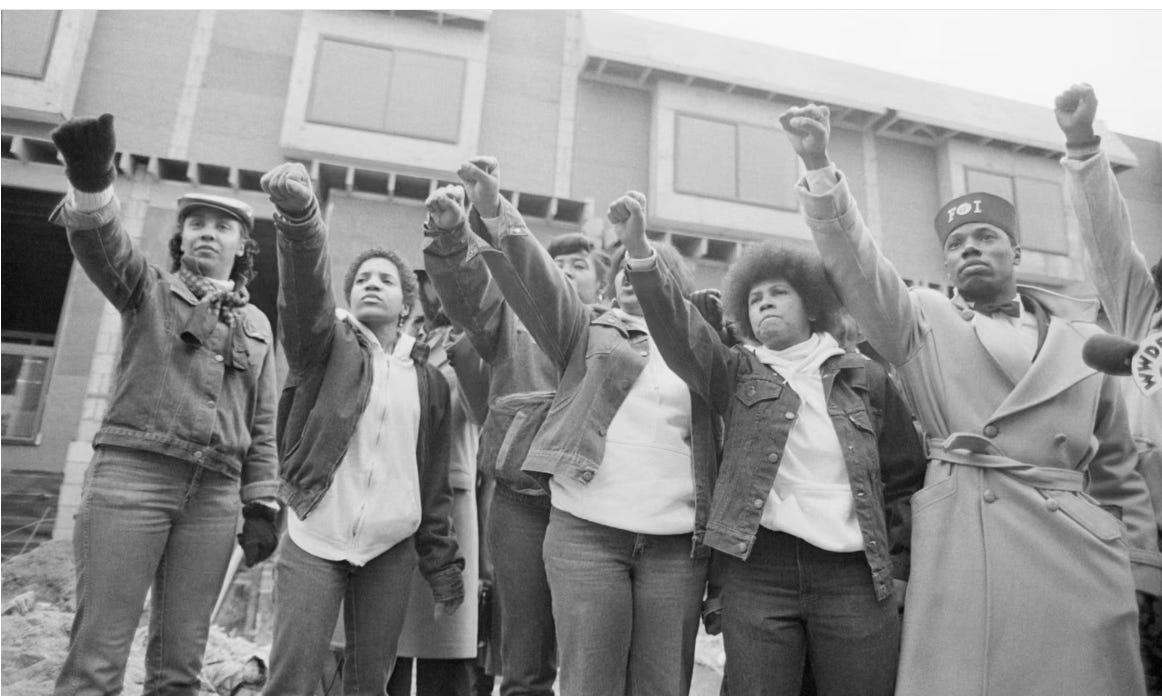
“We have to remember that this nation fought wars to prevent bombs from being dropped on its people in this country,” Novella Williams, a community activist, said in the documentary. “And we sit by and allow a little city government to borrow a helicopter and concoct a bomb with high military explosives, C-4, and drop it on our people? What kind of people are we?”
The documentary is a powerful and nuanced exploration of that question, tracing back to the 1970s, when MOVE arose against the backdrop of stark police brutality against Black Philadelphians.
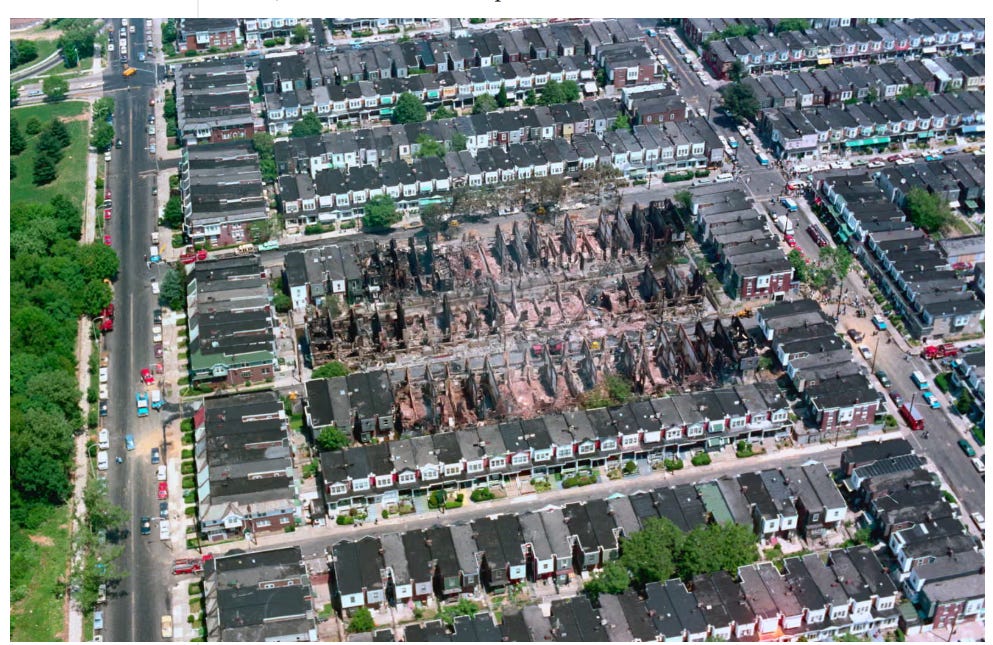
The 1985 bombing and the resulting fire destroyed not just the MOVE compound, but also the homes of frustrated neighbors who had complained about MOVE’s tactics to city officials and begged for their help.
The Philadelphia City Council issued a formal apology for the MOVE bombing in 2020, acknowledging “the fundamental injustice, cruelty, brutality, and inhumanity” of the event. No city officials were ever criminally charged.
“The Bombing of West Philly” was written, produced and directed by Martin Smith. The correspondent was Leon Dash. The associate producer was Sue Williams. The executive producer of FRONTLINE was David Fanning.
+—+
FORTY-ONE FUCKING AMERICA THE BEAUTIFUL YEARS AGO:
On May 13, 1985, the Philadelphia Police Department dropped an aerial bomb on a residential row house occupied by the Black liberation and anarcho-primitivist group MOVE, killing 11 members—including six adults and five children. The resulting fire destroyed 61 homes in the West Philadelphia neighborhood.
Adults:
John Africa (Vincent Leaphart), the founder of the organization
Rhonda Africa
Teresa Africa
Frank Africa
Conrad Africa
Raymond Africa (often referred to as CP Africa) [1, 2]
Only two individuals inside the house managed to escape the burning compound alive: [1, 2]
Ramona Africa, a 30-year-old adult member
Michael Ward (Birdie Africa), a 13-year-old child [1, 2]
The bones of Black children who died in 1985 after their home was bombed by Philadelphia police in a confrontation with the Black liberation group which was raising them are being used as a “case study” in an online forensic anthropology course presented by an Ivy League professor.
It has emerged that the physical remains of one, or possibly two, of the children who were killed in the aerial bombing of the Move organization in May 1985 have been guarded over the past 36 years in the anthropological collections of the University of Pennsylvania and Princeton.
The institutions have held on to the heavily burned fragments, and since 2019 have been deploying them for teaching purposes without the permission of the deceased’s living parents.
To the astonishment and dismay of present-day Move members, some of the bones are being deployed as artifacts in an online course presented in the name of Princeton and hosted by the online study platform Coursera. Real Bones: Adventures in Forensic Anthropology focuses on “lost personhood” – cases where an individual cannot be identified due to the decomposed condition of their remains.
It uses as its main “case study” the events of May 1985, producing as prime evidence a set of bones belonging to a girl in her teens retrieved from the ashes of the Move house at 6221 Osage Avenue in Philadelphia.
The professor is holding the bones of a 14-year-old girl whose mother is still alive and grieving Michael Africa Jr
The bones of Black children who died in 1985 after their home was bombed by Philadelphia police in a confrontation with the Black liberation group which was raising them are being used as a “case study” in an online forensic anthropology course presented by an Ivy League professor.
It has emerged that the physical remains of one, or possibly two, of the children who were killed in the aerial bombing of the Move organization in May 1985 have been guarded over the past 36 years in the anthropological collections of the University of Pennsylvania and Princeton.
The institutions have held on to the heavily burned fragments, and since 2019 have been deploying them for teaching purposes without the permission of the deceased’s living parents.
To the astonishment and dismay of present-day Move members, some of the bones are being deployed as artifacts in an online course presented in the name of Princeton and hosted by the online study platform Coursera. Real Bones: Adventures in Forensic Anthropology focuses on “lost personhood” – cases where an individual cannot be identified due to the decomposed condition of their remains.
It uses as its main “case study” the events of May 1985, producing as prime evidence a set of bones belonging to a girl in her teens retrieved from the ashes of the Move house at 6221 Osage Avenue in Philadelphia.
The professor is holding the bones of a 14-year-old girl whose mother is still alive and grieving
Michael Africa Jr
The revelation comes just days before Philadelphia stages its first official day of remembrance over the 1985 bombing, following a formal apology issued by the city council last year.
The disclosure, first reported by the local news outlet Billy Penn, also lands in the middle of a fevered debate over academia’s handling of African American remains that has been rocket-charged by the nationwide racial reckoning in the wake of George Floyd’s murder in Minneapolis last year by a police officer.
The revelation comes just days before Philadelphia stages its first official day of remembrance over the 1985 bombing, following a formal apology issued by the city council last year.
The disclosure, first reported by the local news outlet Billy Penn, also lands in the middle of a fevered debate over academia’s handling of African American remains that has been rocket-charged by the nationwide racial reckoning in the wake of George Floyd’s murder in Minneapolis last year by a police officer.
The misuse of Black remains for scientific purposes has a long history in America. In 1989, construction workers in Augusta, Georgia, discovered almost 10,000 individual human bones under the former premises of the Medical College of Georgia.
The fragments came from corpses that were sold to the college by grave robbers and taken from Augusta’s cemetery for impoverished African Americans. The college used them in medical training and dissections.
Samuel Redman, a historian at the University of Massachusetts Amherst and author of Bone Rooms: From Scientific Racism to Human Prehistory in Museums, said the discovery of the Move bones was all the more disturbing given how recently the deaths occurred.
“There are people alive who are affected by this, not just in an emotional way but in a trauma-inducing way that could be harmful. The notion of ‘do no harm’ should be part and parcel of our research and teaching – we need to wrestle with this problem much more completely.”
And say what?
Israeli military officials have said there are no restrictions on bombing homes in Gaza, days after a prominent right-wing TV channel claimed that the country’s military advocate general prevented an air strike on a building – where four soldiers later died – due to the risk of killing Palestinian civilians.
On 6 June, four Israeli soldiers died after the building they entered in Khan Younis collapsed due to an explosive device.
The Israeli army is still probing the cause of the blast and has yet to determine whether the device was a booby-trap set up by Hamas or if it was unexploded Israeli ordinance.
But within hours of the deaths, Israel’s Channel 14, a right-wing network favoured by Israeli Prime Minister Benjamin Netanyahu, claimedthat Israel’s military advocate general bore responsibility for the deaths.
The channel, which has repeatedly portrayed Palestinians in Gaza as “animals” who must be “exterminated”, reported that the army had sent the soldiers into the building rather than target it with an air strike because Military Advocate General Yifat Tomer-Yerushalmi had changed army protocol to prohibit striking the structure.
In its televised report, Channel 14’s Noam Amir spoke with a senior Israeli officer who claimed that the building had been designated as a Hamas compound but Tomer-Yerushalmi prevented the country’s air force from bombing the structure due to the risk of “collateral damage”.
The Israeli army tends to use the term “collateral damage” when referring to Palestinian civilians who are killed by Israeli forces for being in the wrong place at the wrong time.
“We knew the infrastructure, we knew who was there, and we didn’t strike, each time for a different reason – high collateral damage,” the officer said.
‘They [Israeli soldiers] are blowing up Gaza, house by house, compound by compound, without any interference’- Ben Caspit, senior Israeli journalist
Following the report, the Israeli army’s chief of staff, Eyal Zamir, launched a scathing attack on Channel 14, saying he rejected the “false, repeated, and baseless attacks regarding the conduct of the military advocate general.”
Former Chief Rabbi Yisrael Meir Lau and former Sephardic Chief Rabbi Yitzhak Yosef previously stated that the actions of the Assad regime in Syria constituted a genocide, asserting a moral obligation to intervene. Conversely, prominent Israeli rabbis and international religious figures, such as the UK’s Chief Rabbi Sir Ephraim Mirvis, have strongly rejected accusations that Israel’s military actions in Gaza constitute genocide, calling such claims a “moral inversion” and a misappropriation of the term.
The HEAD of the SNAKE, that is, HEAD of the JEWS.
“The destructive and manufactured hyperbole, which reaches its nadir with the accusation of genocide, can only harm the cause of peace.”
Sir Ephraim Mirvis said the use of the term was a “moral inversion, which undermines the memory of the worst crimes in human history” and was designed to “tear open the still gaping wound of the Holocaust”.
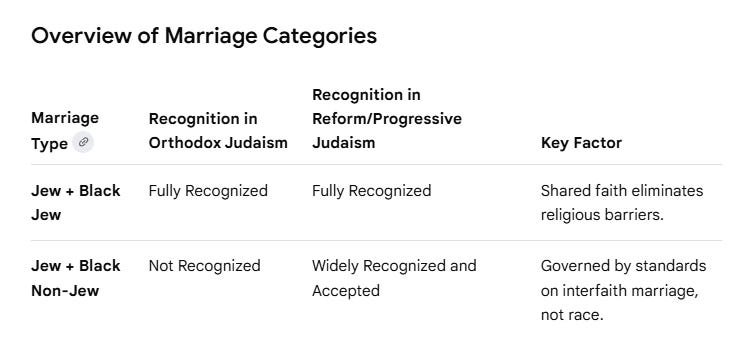
MARRIAGE: Fucking prion, Judaism: Mark Zuckerberg’s wife, Priscilla Chan, officially converted to Judaism in 2022. The couple, who have three daughters, raise their children with Jewish traditions and regularly observe Shabbat.
Arabella Rose Kushner (Born 2011) – Celebrated her Bat Mitzvah in June 2023.
Joseph Frederick Kushner (Born 2013)
Theodore James Kushner (Born 2016)
The family is openly observant, eats a kosher diet, and celebrates Jewish holidays. [1]
Joe Biden’s Jewish Grandkids
While Joe Biden is a lifelong Roman Catholic, all three of his adult children married Jewish partners. The Jewish status of his grandchildren depends on whether you look at traditional halachic law (matrilineal descent) or Reform/interfaith definitions.
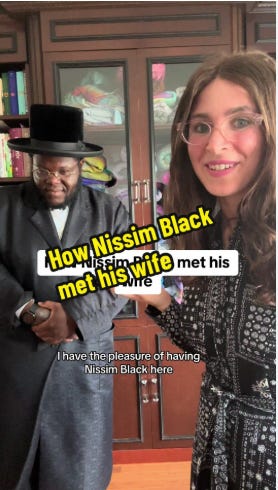
Those of you who follow my comedy know that my wife is a Black woman who converted to Judaism. What you also know is that we have a young son who is Biracial and Jewish. As a result, I can tell you that Black-Jewish relations in our family are at an all-time high.
But, we are not an anomaly. Since time immemorial, there has been a connection, a bond, between Black and Jewish people. Perhaps it’s our respective histories of oppression. Perhaps it’s because of our mothers, who are overbearing, intrusive and force us to eat. Perhaps it’s because without us, there would be no music industry. Whatever the reason, the simple fact is that there is a bond between Blacks and Jews.
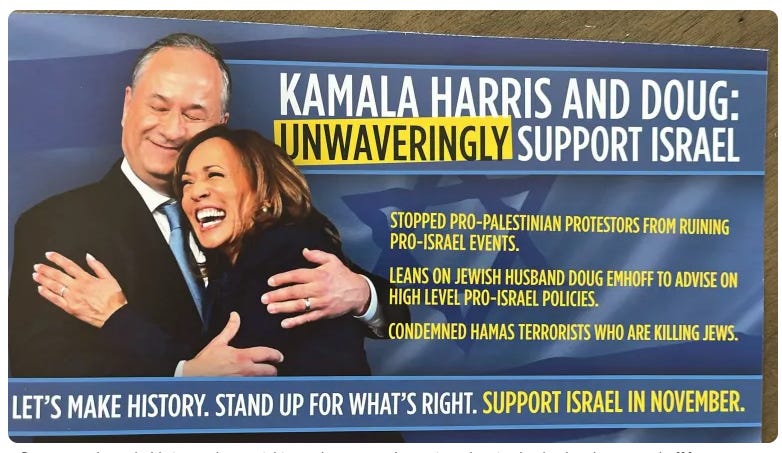
Doug Emhoff has been highly active in celebrating Jewish traditions and leading efforts against antisemitism. Kamala Harris herself has hosted multiple Jewish holiday gatherings—such as Passover Seders and Hanukkah celebrations—at the Vice President’s residence to honor her husband’s background.
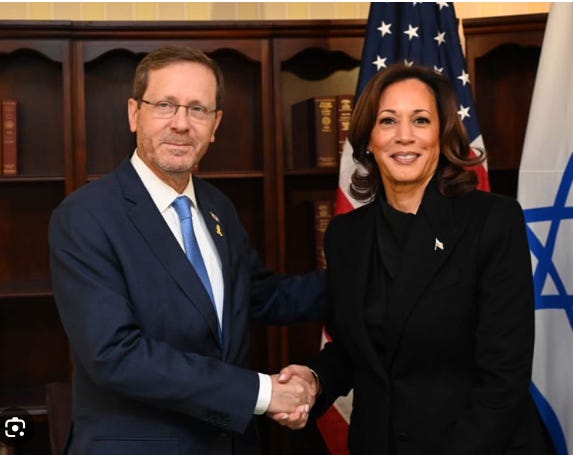
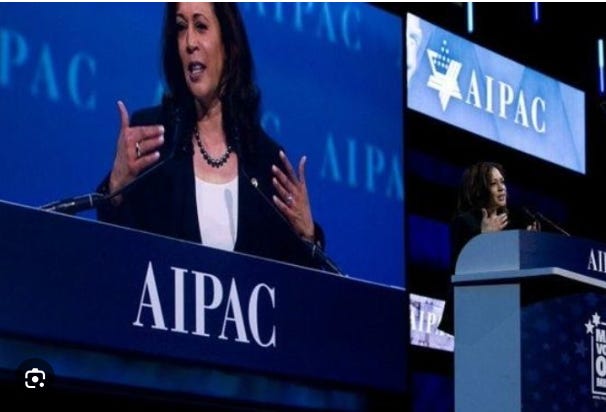
In March 2017, she spoke at the American Israel Public Affairs Committee (AIPAC) Policy Conference,
“Let me be clear about what I believe. I stand with Israel because of our shared values, which are so fundamental to the founding of both our nations.”
In 2018, she spoke at the AIPAC conference once more, but this time in an off-the-record speech. Then she boosted,
“As a child, I never sold Girl Scout cookies, I went around with a (Jewish National Fund) JNFUSA box collecting funds to plant trees in Israel.”
Hold onto your children and vomit bags!
The first major event likely to shape the 2028 Democratic field will occur this summer when former vice-president Kamala Harris decides whether to run for governor of California in 2026. If she does, she has privately conceded that that probably rules out a third presidential run in 2028. If she doesn’t, then the door could remain open for 2028. Her viability as a refurbished presidential candidate is a very open question. She is, after all, a two-time loser in a party terrified of losing any more elections to the MAGA Republicans. On the other hand, she is arguably not to blame for 2024 and for a moment there seemed to bring hope and even joy to her party before the disappointing outcome. One thing is for sure: Unless she rules out running in 2028, her name will appear at or very near the top of polls thanks to her exceptional name ID, particularly compared to her many less-than-famous rivals. That she does not do nearly so well in prediction markets shows skepticism about the willingness of Democrats to conduct a do-over.
Gavin Newsom: Ever eager
Pete Buttigieg: The brainy charmer
Alexandria Ocasio-Cortez: Bernie’s heir apparent
Cory Booker: Very durable and now a little more famous
Josh Shapiro: The ultracentrist
Andy Beshear: The red-state dark horse
J.B. Pritzker: The deepest pocket
Wes Moore: The young man in a hurry
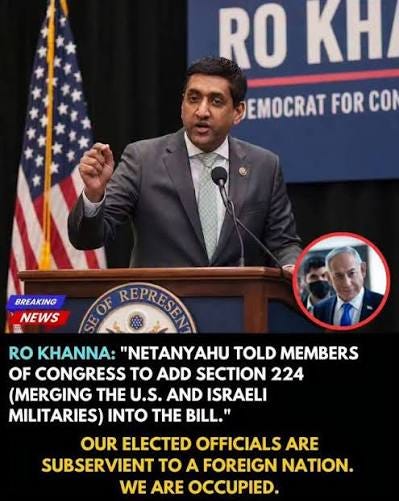
Ro Khanna: AOC’s backup
Ruben Gallego: The mainstream-friendly progressive
Gretchen Whitmer: The somewhat-faded star
From that Criminal Enterprise, AIPAC . . . . Quoting: AIPAC applauds the House of Representatives for passing critical pro-Israel provisions, including $3.3 billion in security assistance to Israel, in the Fiscal Year 2026 National Security, Department of State, and Related Programs Appropriations Act.
The pro-Israel provisions in this bill further reinforce the bipartisan and ironclad support for the U.S.-Israel partnership in Congress. These resources help ensure that our ally can confront shared strategic threats and that America has a strong and capable ally in the heart of the Middle East. The vital security funding in this bill strengthens Israel while bolstering the U.S. economy and creating jobs here at home.
In addition to the $3.3 billion in security assistance, the bill also includes:
A complete ban on funding to UNRWA, the Hamas-affiliated U.N. agency in Gaza whose members participated in the October 7th massacre.
A prohibition on funds to the International Criminal Court (ICC), the International Court of Justice (ICJ), and the U.N. Commission of Inquiry (COI) against Israel, a clear demonstration of American opposition to these international organizations that abuse their platforms to demonize the Jewish state and also threaten American troops.
$37.5 million for the Nita Lowey Middle East Partnership for Peace Act funding (MEPPA), a program designed to foster economic cooperation and people-to-people peacebuilding in the region.
$3 million for U.S.-Israel international development cooperation.
We encourage the Senate to quickly pass this legislation.
We appreciate the efforts of many Republican and Democratic members who worked to include key pro-Israel provisions in the bill. In particular, we thank the leadership of House Appropriations Chairman Tom Cole and Ranking Member Rosa DeLauro, and National Security and Department of State Subcommittee Chairman Mario Diaz-Balart and Ranking Member Lois Frankel. We also appreciate the work of their colleagues in the Senate, including Senate Appropriations Committee Chair Susan Collins and Vice Chair Patty Murray, and State and Foreign Operations Subcommittee Chairman Lindsey Graham and Ranking Member Brian Schatz.
Oh shit, Tucker Carlson’s party. Triple the vomit bags.
Host of The Dig podcast, Daniel Denvir, joins Bad Faith to discuss the DSA sweep and whether the new elected socialist candidates might be willing to act as a block to change the Democratic Party before the Democratic Party changes them. Is DSA wrong to refuse to act as a party, or to support candidates running outside of the Democratic Party, like Andre Easton? What is the strategy there? And if the DSA refuses to take party building seriously, will the Tucker Carlson right be first to harness imperialist, working-class energy to achieve a third party break from the duopoly? What happens to the left then?
Twelve minutes…..Gerald Horne.
By Gerald Horne: Joseph J. Ellis is one of the most celebrated historians in the nation. A winner of the Pulitzer Prize and once the holder of an endowed chair at Mount Holyoke, he was hailed by The Washington Post as the “most widely read scholar of the Revolutionary period and…probably the most influential as well.” His best-selling books on Thomas Jefferson, John Adams, and other founders have sold hundreds of thousands of copies and have been instrumental in forging a remarkable consensus, from left to right, that sees July 4, 1776, as a sacred date and a great leap forward for all of humanity.
Books in review — The Great Contradiction: The Tragic Side of the American Founding
by Joseph J. Ellis
But in his latest book, The Great Contradiction: The Tragic Side of theAmerican Founding, Ellis reconsiders the essence of his oeuvre and this consensus, which is akin to the pope reconsidering Catholicism. Focusing “on two unquestionably horrific tragedies the founders oversaw”—the “failure to end slavery, and the failure to avoid Indian removal”—Ellis seeks to understand how and why they happened. “Next to the failure to end slavery,” he writes, the “inability to reach a just accommodation with the Native Americans was the greatest failure of the revolutionary generation.” Charting not only the history of the republic’s founders but also the history that preceded and followed them, he outlines what he terms the “Great Silence”: “For more than four centuries, the most important voices of Western civilization remained mute as a highly organized program of unspeakable barbarity with genocidal implications flourished throughout Europe. Plato, Socrates, Aristotle, Aquinas, Erasmus, Locke, and all the Catholic popes regarded slavery and the slave trade as acceptable features of European society.”
Why has Ellis chosen at this late date to break from the pack of rationalizers and justifiers? The antics of the 47th US president and his avid followers have clearly left him shaken, but more than that: They point to a pattern, “an inherently paradoxical pattern,” that “racism surges only after some semblance of racial equality becomes foreseeable,” which Ellis now believes runs throughout this nation’s history. It began, he notes, “during the American founding,” and “we are currently living through its most recent manifestation in the movement to ‘Make America Great Again.’”
Ellis does not expand on this explosive point, but he concedes that the late Edmund Morgan, one of his mentors, got it right, particularly in his trailblazing American Slavery, AmericanFreedom, which argues that these polar opposites were there from the outset. Much like Macbeth and Banquo’s ghost, Ellis concedes, the nation cannot evade the tragedy preordained at its founding.
To begin his story, Ellis starts with the horrors of the Atlantic slave trade, which accelerated as the settlers landed on these shores and was “growing exponentially” in the prelude to 1776. He observes cogently that “creating a [multiracial] society” was not as pressing a concern in the imperial capitals as it was here. Abolition would have created such a nation, and this was inconceivable for most of the founders, he suggests. Likewise, he presents the expropriation of the Indigenous as being virtually inevitable, given the pressure from below of land-hungry settlers.
Throughout his account, Ellis continually reminds us that without a compromise favoring the enslavers, the republic would not have materialized—to which I say: So what? This could have meant another Canada, a pleasing alternative to the war-driven status quo. He also explores the central paradox found in the fact that the republic depended on the labor of enslaved workers, one that Morgan had put at the center of his own work—namely that, as Ellis writes, “the presence of an enslaved black population actually enhanced the commitment to freedom by the white population of Virginia…. Less prominent Virginians were spared the task of performing manual labor, since enslaved blacks filled that role, thereby allowing all white Virginians to unite racially instead of being divided into upper and lower classes, as was the case in England and throughout Europe.”
A corrupt bargain indeed: a republic born out of enslaving many so that some could profit and be free. Naturally, such a society would engender enormous instability. Enslavers, and those who admired them, Ellis writes, “were sitting atop an active volcano on the verge of eruption…especially in the Tidewater [Virginia] counties, where Blacks outnumbered Whites three to one.”
Virginia was the California of the founding, the largest and most prosperous settlement, and it produced a disproportionate number of presidents in the antebellum era. Yet as a place where enslaved Africans tended to reside, it was simultaneously “the soft underbelly of the American resistance” to London’s rule. Being the richest and, at the same time, the most insecure of the 13 states fomented unsteadiness that ultimately culminated in civil war.
This was especially the case, Ellis writes, when Virginia’s last colonial governor, Lord Dunmore, created the “Ethiopian Regiment, numerous and armed,” which began “marching toward isolated plantations with revenge in their hearts. Any Virginia planter who harbored doubts about the wisdom of war with Great Britain quickly discovered a powerful reason to abandon those doubts.”
Simultaneously, the British Empire was becoming ever more dependent on Black labor. As Ellis writes, “the Caribbean, most especially Jamaica…provided more revenue to the empire than all the American colonies put together.” Seeking to keep a lid on Ireland, and increasingly on India as well, the British felt compelled to enlist more Black troops, which was not endearing to the settlers.
In sum, the republic was triggered into being in no small measure to quash Black resistance. As Ellis avers, “the surprising size and scale of Dunmore’s movement terrified the planter class…. The most self-evident truth of all was white supremacy.” Or to put it another way, class collaboration has been the “most self-evident truth,” still the unmentionable today in divining the country’s elections. And the unpaid sector of the working class—the enslaved, and then their descendants—have had difficulty in “integrating” into this framework, not least because it was sparked into being precisely to repress them.
“Any frontal assault on slavery,” Ellis writes, “put at risk the political unity necessary to win the war [and] to assure southern support for a nation-sized republic…. Consider the alternative scenario provided by the French and Russian revolutions, where justice imposed led to justice destroyed.” But didn’t 1776 merely delay the reckoning that arrived in 1861, which led not only to hundreds of thousands of lives destroyed in a bloody civil war but to countless Indigenous lives destroyed thereafter?
Although Ellis devotes much more time to enslavement than to Indigenous dispossession, some of this book’s most valuable insights emerge when he discusses the latter.
“Indian removal,” Ellis writes, “was the inevitable consequence of unbridled democracy in action.” While many in this nation might prefer to think otherwise, the foundations of popular government rested on the unraveling of Indigenous self-rule. The republic rests on the brutal fact that “ordinary American citizens seeking a better life and a parcel of land” colonized a continent with people already living on it. If US radicals and liberals had done a better job over the centuries in explaining this aspect of the nation’s history, perhaps Ellis would have been able to spend less time focused on it and to instead explore some of its subtleties—such as how settler colonialism in North America was not just an elite project, but one that involved “class collaboration”—unity across class lines by the interlopers—as well as a construction of whiteness that included even many born outside of Europe, particularly if they were Christian.
But to his credit, Ellis is determined to fill in many of the elisions in North American history that exist today. For example, he points out that George Washington was “in current currency…a multimillionaire” as well as a substantial landowner. A goodly number of the sainted founders were similarly endowed, thanks to Indigenous dispossession.
Ellis is also dismissive of the increasingly popular “antislavery interpretation of the Constitution as Abraham Lincoln viewed it. Lincoln, of course, had some powerful political reasons to downplay the proslavery side,” he observes in one of his endnotes, “which, as I see it, was shaped by powerful political reasons to defer the slavery question until the infant American republic had outgrown its infancy.” Instead, he focuses on the Constitution’s “fugitive slave clause,” which “explicitly endorsed slavery” and “required all the states to publicly acknowledge the abiding existence of slavery.”
Unlike today’s judicial “originalists,” who purport to ascertain the original understanding of the Constitution, and the overly confident historians who perform a similar role, Ellis stresses our inadequate surviving record of the Constitution’s creation. “We know very little about the covert deliberations,” he observes, “the arguments, concessions and compromises that generated and shaped those words.”
Iconfess to being torn while reading Ellis’s account. On the one hand, when a scholar of his eminence begins to raise searching questions about such a foundational matter, one is tempted to stand and cheer. On the other hand, I wish Ellis had gone further in this slim volume, particularly since the heroic Nikole Hannah-Jones, in her estimable 1619 Project, had already played a vanguard role in opening up these vistas by suggesting that a revolt led by enslavers may have had something to do with preserving slavery.
One such area where I wish Ellis had gone further is in resurrecting the other side of his tale: those Black writers, past and present, who sought to raise searching questions about the republic’s roots. It’s a subject recently explored in Black Writers of the Founding Era, a volume edited by James G. Basker; and it’s also at the center of the film Belle, directed by the British Ghanaian auteur Amma Asante and starring the British South African actor Gugu Mbatha-Raw, which tells the backstory of the landmark “Somerset’s Case” of 1772, which blocked the forcible removal from England of an enslaved African to return him to bondage in Virginia. The role of Black critics of slavery is also portrayed in the Canadian–South African–BET coproduced docudrama The Book of Negroes, which features a classic scene in which the heroine confronts none other than George Washington himself as he is basking in victory in Manhattan.
In general, a deeper appreciation of Black studies and the scholarship it has produced would have aided The Great Contradiction immeasurably. More scrutiny of this now-besieged field would have helped Ellis and his readers understand why Black people “fled to [Benedict] Arnold’s army by the thousands,” or why—by his counting—“twice as many” of this beleaguered minority served under the British Union Jack than with George Washington’s forces. This tendency contributed to a significant reversal by Washington, who at first had “issued an order ‘to reject all slaves and to reject Negroes altogether’” and then concurred that the independence forces should accept them.
In The Great Contradiction, Ellis seems to be pessimistic about what the future holds as well. “In or about 2045, when demographers predict that the white population of the United States will become a statistical minority,” we will see yet another backlash, he writes, this time more pernicious.
Given the alarm bells sounded by the otherwise sober Ellis, one wonders if it might be time for liberals to revise many of their presuppositions—not only those that relate to the myths of the country’s founding, but also those that concern US power. For example, what Ellis condemns as “white supremacy”—and what I elaborate as “class collaboration”—requires analysts to view “Trumpism” not as aberrational but as endemic. If we are not surprised by the rightward profile of settlers in the West Bank or their comrades in today’s South Africa, then why should we be surprised by the performance of their historical counterparts, and their descendants, in this republic?
To his credit, by having the courage and wisdom to rethink his life’s work, Ellis has provided a grand service for us all.
Also the Beyond Israelism podcast is another great one to check out. I’m sure you are aware Norman Finkelstein, Ilan Pappe, and Gabor Mate are some of the greatest advocates for Palestinian freedom and are Jewish.
I hope you can see that ranting your resume and backing up your antisemitism is not a good look. It sounds like you’ve done some great work in your life so don’t let a harmful false equivalence tarnish that.
There you go, not a good look, your empty signifier, “antisemitism.”
Blumenthal, Halper, Pappe, Finkelstein, the Mates . . . Miko Peled speaks in support of the motion that This House Believes Israel is an Apartheid State Responsible for Genocide
Yikes. WHich anti-semitism will Fisher abide by?
Numerous U.S. states and the federal government have recently passed legislation combating antisemitism, primarily by adopting the International Holocaust Remembrance Alliance (IHRA) working definition of antisemitism for civil rights enforcement and educational standards.
Key recent legislative actions include
Federal Action: The Antisemitism Awareness Act has advanced in Congress, directing the Department of Education’s Office for Civil Rights to utilize the IHRA definition when investigating discrimination complaints in federally funded programs.
Missouri (April 2026): Governor Mike Kehoe signed HB 2061, making Missouri the 18th U.S. state to codify the IHRA definition into K-12 and higher education.
California (October 2025): Governor Gavin Newsom signed AB 715 and SB 48, which establish new Offices of Civil Rights and Antisemitism Prevention Coordinators to protect K-12 schools.
Oklahoma (May 2025): The state legislature passed bills SB 942 and SB 991, mandating that public schools and colleges integrate the IHRA definition into their conduct codes.
Ohio (December 2024): The Senate passed SB 297, expanding ethnic intimidation and violence laws while adopting the IHRA definition to protect Jewish students on campuses.
+–+
Thanks for nothing. Hmm, ADL?
A new report from the Anti-Defamation League shows California, with over 1 million Jewish residents, is the top state fighting antisemitism. Under Governor Newsom’s leadership, the state launched the Golden State Plan to Counter Antisemitism — a first-of-its-kind, statewide framework to combat antisemitism through education, prevention, security, and community partnership.
Israel has ZERO right to exist, you know that, and that’s antisemitism a la U$A.
Peled, along with various international activists and several sovereign nations, argues that Israel’s establishment in 1948 resulted in the unjust expulsion of Palestinians. From this viewpoint, a state built upon ethnic or religious supremacy is fundamentally illegitimate and must be transformed into a universal democracy.
And so, anti-Zionism? Antisemitic…
Federal and state governments have not made anti-Zionism illegal YET, but they have passed laws and resolutions penalizing actions associated with it. Over 35 states have “anti-BDS” laws that prohibit state contracts and public investments in companies that boycott Israel. Federally, the U.S. House passed resolutions condemning anti-Zionism as a form of antisemitism and advanced legislation to adopt the International Holocaust Remembrance Alliance definition of antisemitism for civil rights enforcement.
Oh, shit, those false equivalences . . . .
!!!!!!!!!!!!!!!!!!!!!!!!!!!!ENOUGH ALREADY WITH THIS LONG ASS RANT!!!!!!!!!!!!!!!!!!!!!!!!!!!!!