

George Lucas sure knows how to create popular entertainment products. It should come as no surprise that the museum named for the Star Wars and Indiana Jones creator is already generating buzz
Jul 22, 2026
Wait times up to 6 hours, and it took a little more than 4.5 hours for this reporter to get through. On the bright side, there were still plenty of tickets left, including for the first day. Do not refresh the page or you may lose your spot.
The details: All tickets are timed entry. Tickets are $25 for adults and $21 for those 65 and older. Children, members, active-duty military, personal aides or attendants and EBT cardholders have free entry. Museum neighbors in the LM37 program will also be free, with that pass opening in August.
But how do I buy: Each person is limited to nine tickets, and you’ll have 20 minutes to check out once they’re added to your cart, according to the museum. You can find the link here.
What’s next: The grand opening is Sept. 22.

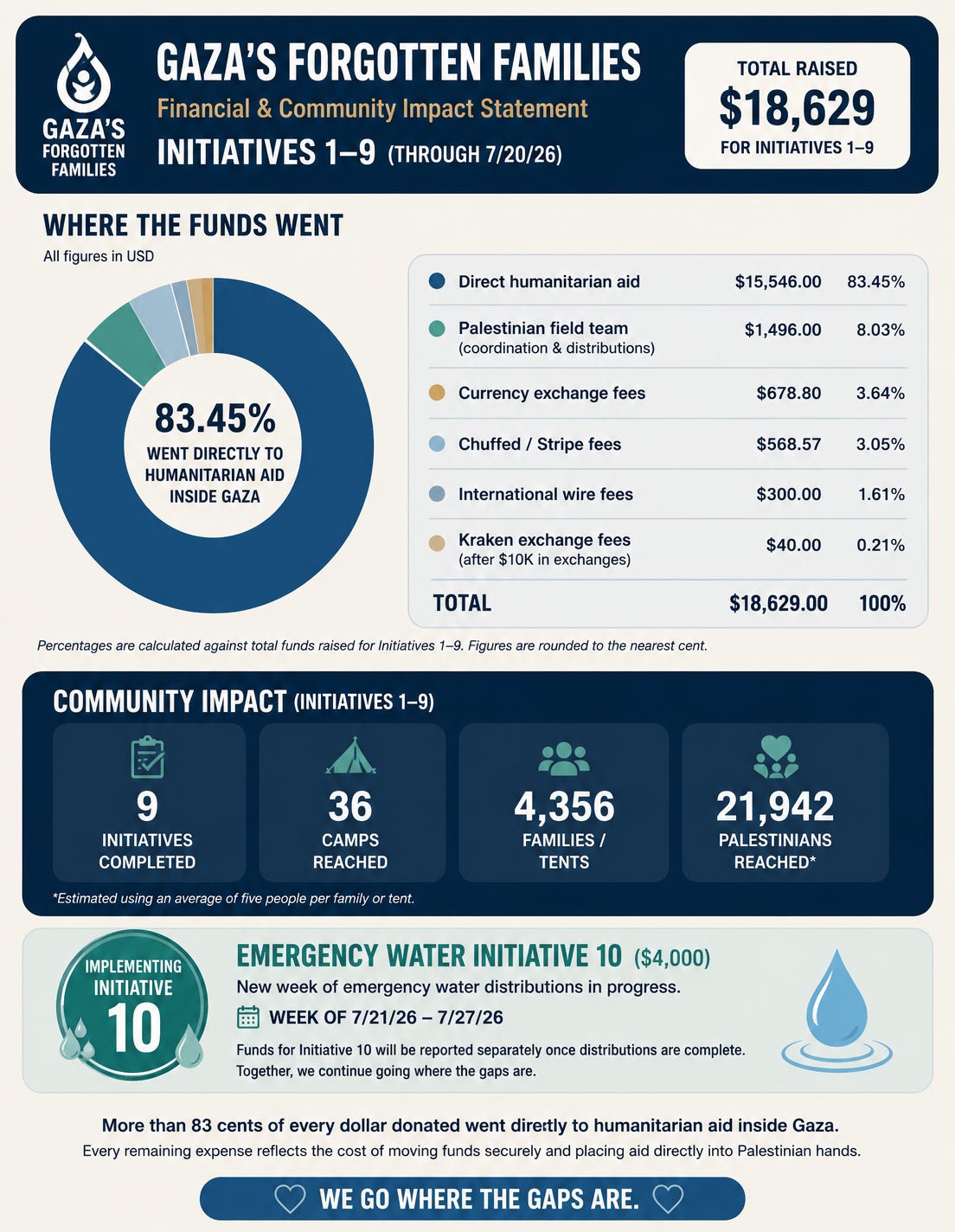
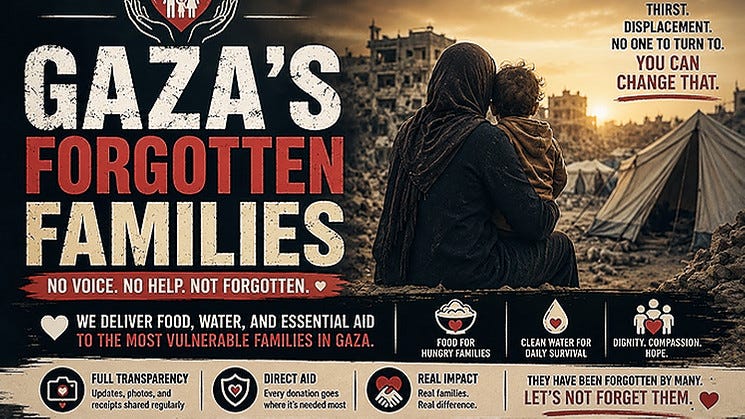
Our main priority was delivering water to the truly forgotten families. People thanked Substack’s supporters, and we saw the joy in their eyes as we distributed the water… But the painful truth is that thousands of families are still waiting. Children go to sleep thirsty, mothers stand for hours searching for a drop of water, and the elderly find no one to lend them a helping hand. Don’t let these voices be silenced by the war.”
To every person who donated, shared an article, encouraged someone else to give, or simply chose not to look away—
Thank you.
Because of you, thousands of Palestinians have received food, medicine, emergency supplies, and now life-saving drinking water.
There is still much more work to do. Please continue to help and share this campaign.
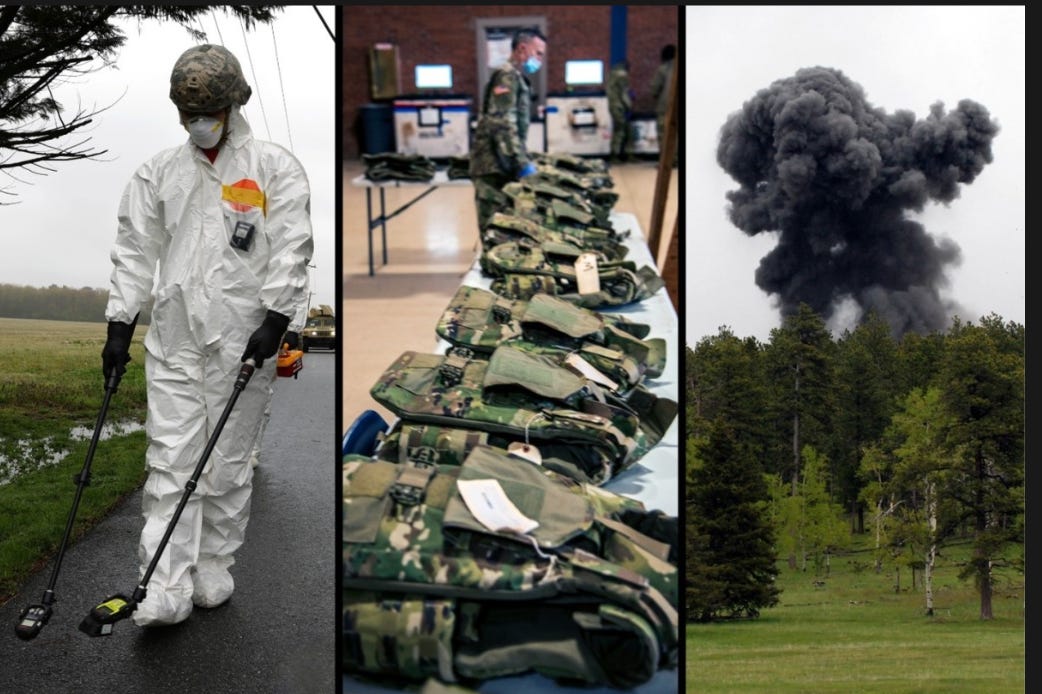
And how many Americanos are involved in primary, secondary, dual-use manufacturing and R & R and all that jazz for the murderous military offensive weapons outfits?
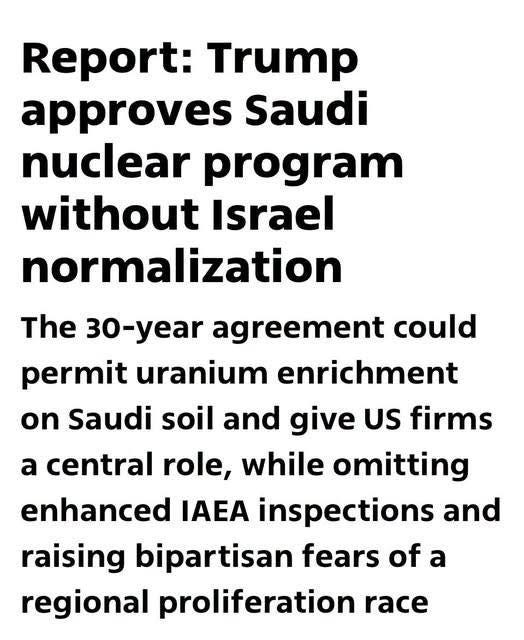
The Iranian argument for not having nukes was the commitment to prevention of a nuclear race in the Gulf and neighboring states. This argument won’t hold water by the end of next week… Iran will have a bomb, and this is wonderful news.
Well done, Orangutan …
Here’s what Jew-oogle says:
The military-industrial complex relies on a combination of primary-use (strictly military) and dual-use (civilian and military) technologies. Calculating the total workload, economic output, or research footprint requires categorizing these sectors and analyzing specific data points.
Here is how to structure and calculate the work generated by both sectors.
Primary-Use Work (Defense-Specific)
Primary-use work produces goods and services with no viable commercial market. It is funded almost exclusively by government defense budgets.
- Lethal Systems: Development and manufacturing of missiles, ammunition, and torpedoes.
- Combat Platforms: Production of fighter jets, main battle tanks, and naval warships.
- Military Space: Launching and maintaining classified reconnaissance and early-warning satellites.
- Specialized Services: Military-specific training, base operations, and tactical intelligence analysis. [1]
Dual-Use Work (Commercial & Military)
Dual-use work involves technologies developed for the commercial market that are critical for military modernization, or vice versa. This sector is growing rapidly due to commercial tech innovation. [1, 2, 3]
- Advanced Computing: Artificial intelligence, quantum computing, and microelectronics used in both consumer tech and targeting systems.
- Aerospace & Logistics: Commercial cargo aircraft, drone platforms, and supply-chain management software.
- Cybersecurity: Network encryption, threat detection, and cloud infrastructure protecting both banks and defense networks.
- Materials & Energy: Carbon fiber composites, synthetic fuels, and advanced batteries for electric vehicles and military gear. [1, 2, 3, 4]
How to Calculate the Total Workload
To quantify the scale of this work, economists, policy analysts, and defense contractors typically use three primary metrics:
1. Financial Expenditures (The Top-Down Method)
- Defense Budgets: Track national defense procurement and Research, Development, Test, and Evaluation (RDT&E) budgets. [1, 2]
- Contract Awards: Aggregate publicly available government transaction data (like FPDS in the US) to see exactly how much money flows to specific corporate vendors.
- Venture Capital Tracking: Measure private sector investment in dual-use tech startups (often referred to as “Defense Tech” or “National Security Tech”).
2. Labor and Workforce (The Bottom-Up Method)
- Direct Employment: Count the total headcount of major defense prime contractors and dedicated military research labs.
- Indirect Employment: Apply economic multipliers to estimate jobs in the supply chain (e.g., raw metal suppliers, component manufacturers).
- Induced Employment: Calculate the economic ripple effect of defense worker spending in local communities. [1, 2]
3. Intellectual Property and Research
- Patent Classification: Analyze patent filings using international codes related to weapons, radar, and aerospace alongside dual-use categories like autonomous navigation.
- Academic Funding: Track government research grants (e.g., DARPA, Horizon Europe) awarded to universities for foundational science.
The Army conducts outreach to identify and harness dual-use technologies that emerge from the private sector. The Office of the Assistant Secretary of the Army for Acquisition, Logistics and Technology launched the xTech program to facilitate prize competitions that award and accelerate innovative technologies, with an aim of solving persistent Army challenges. At Army Futures Command, the Austin-based Army Applications Laboratory serves as an incubator for novel ideas, helping entrepreneurs develop and present promising solutions, while the command’s Office of Small Business Programs provides pathways for outstanding small businesses to partner with the Army. Recent small business partnerships initiated by the command have aided in the development of augmented reality goggles for working dogs, new radio frequency and photonic technology to eliminate communication signal interference and advances in chemical detection technology.
According to Diana Jordan-Baldwin, the Office of Small Business Programs’ Small Business Innovation Coordinator, working with private industry “provides cutting-edge and future technology, which allows Army Futures Command to meet the mission of tomorrow.”
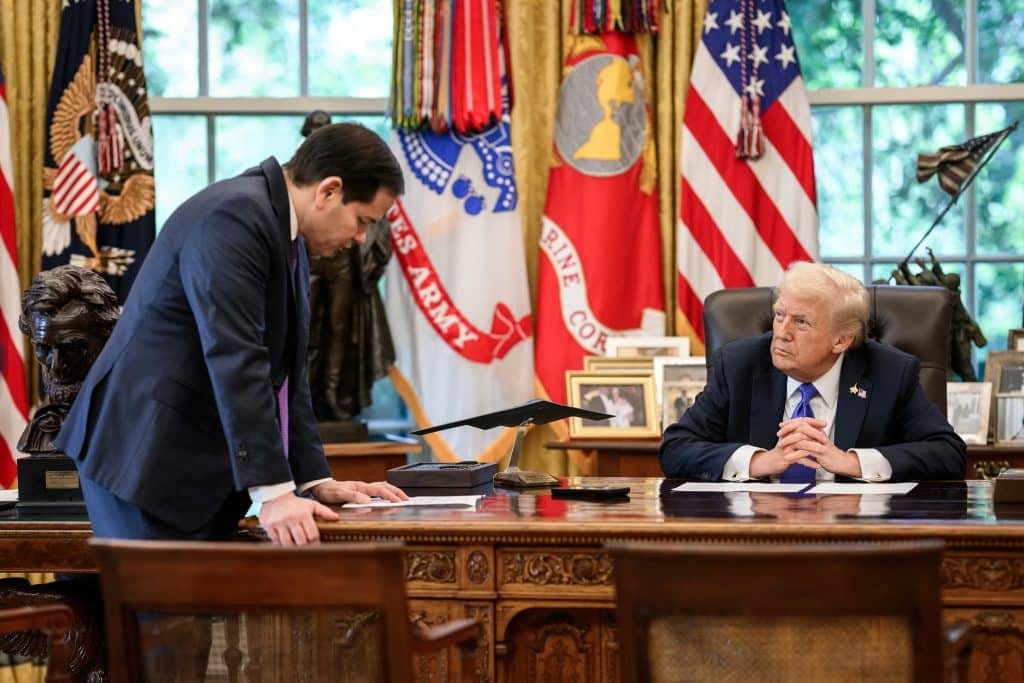
Remember? Will there be a Lucas Museum for Gaza?
In Photos: Gaza Before the Genocide Escalated
Before the genocide escalated against Palestinians in Gaza, the city still carried daily life, under siege and constant bombardment.
Jul 22, 2026



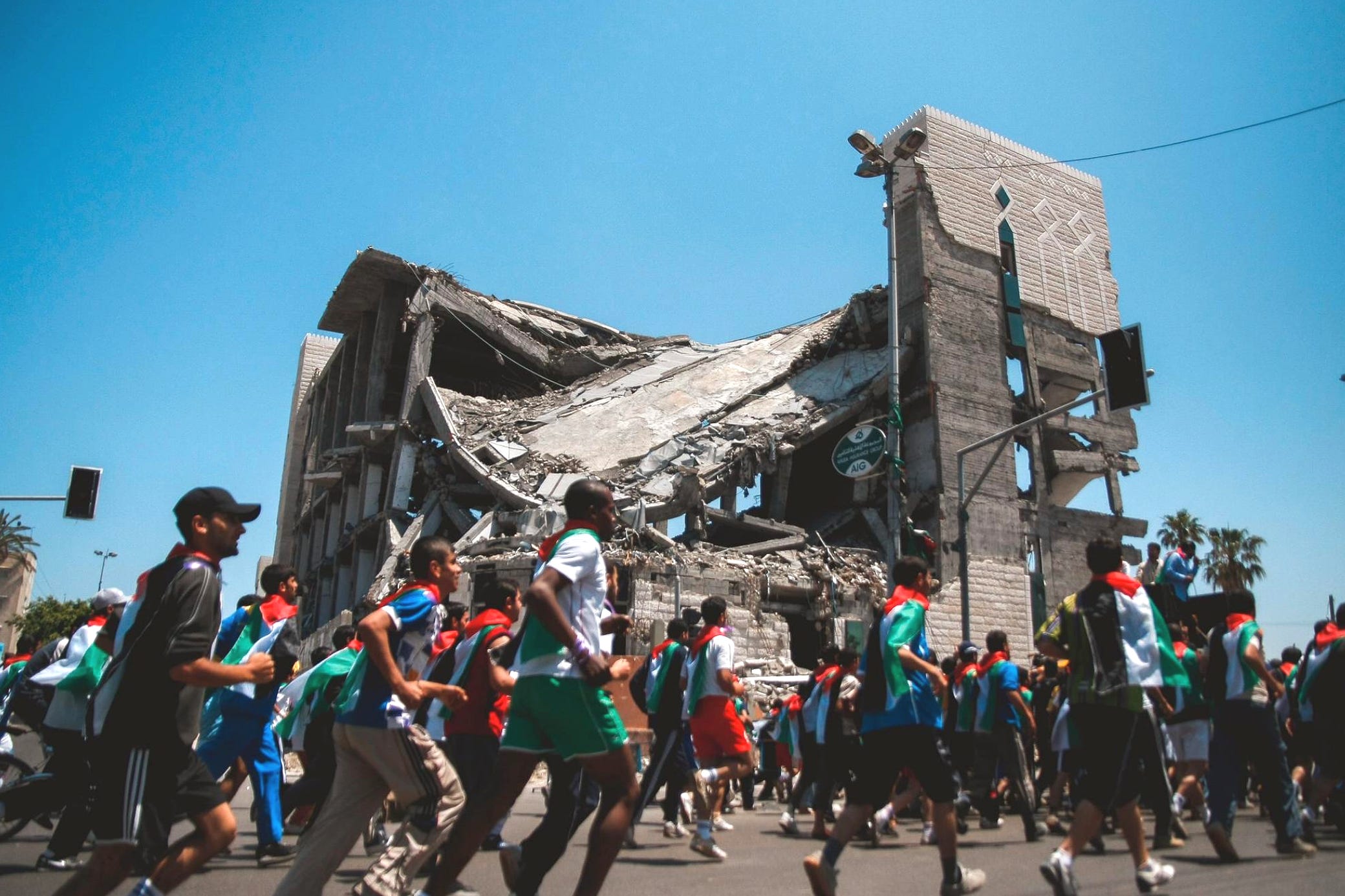


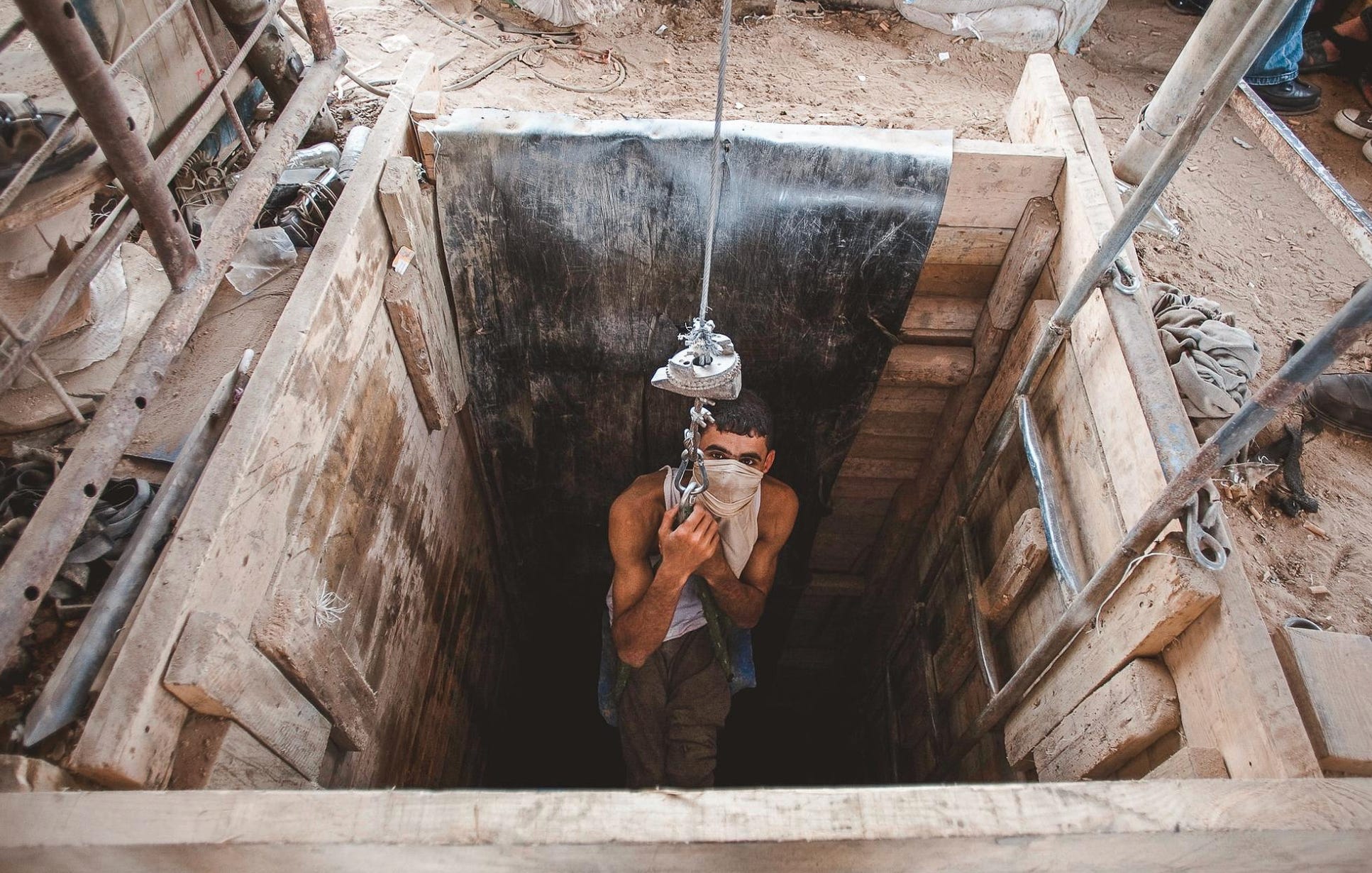

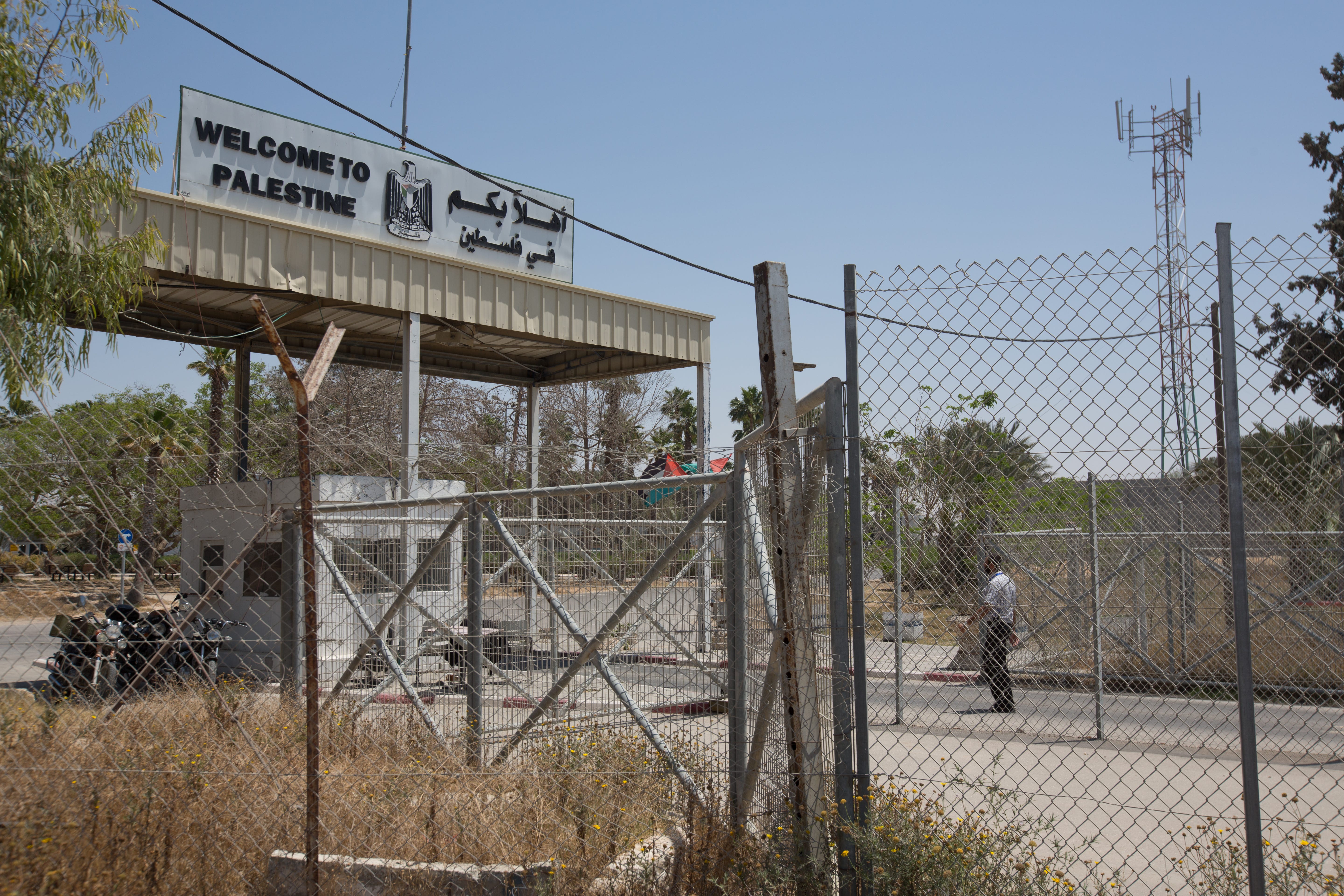
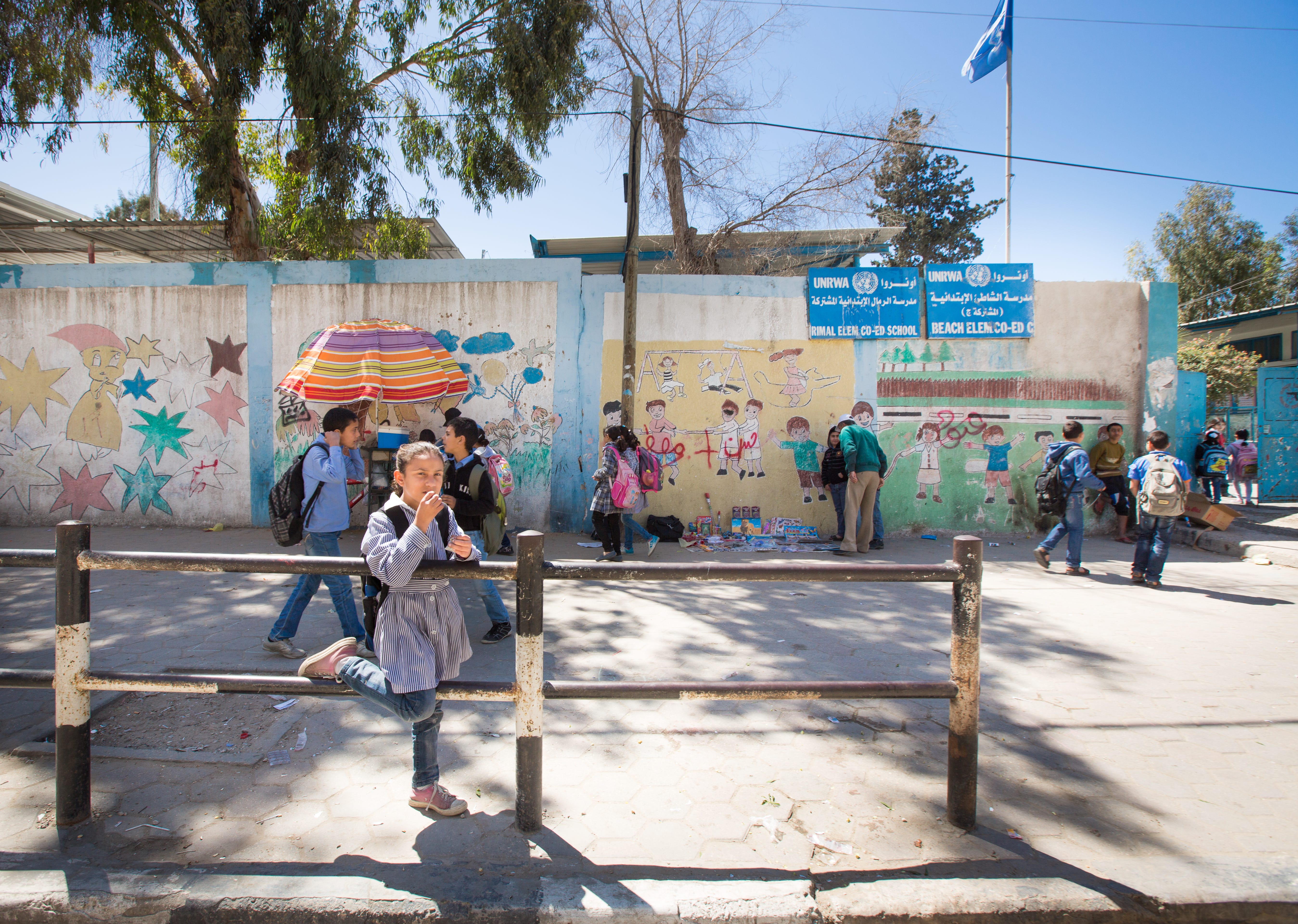

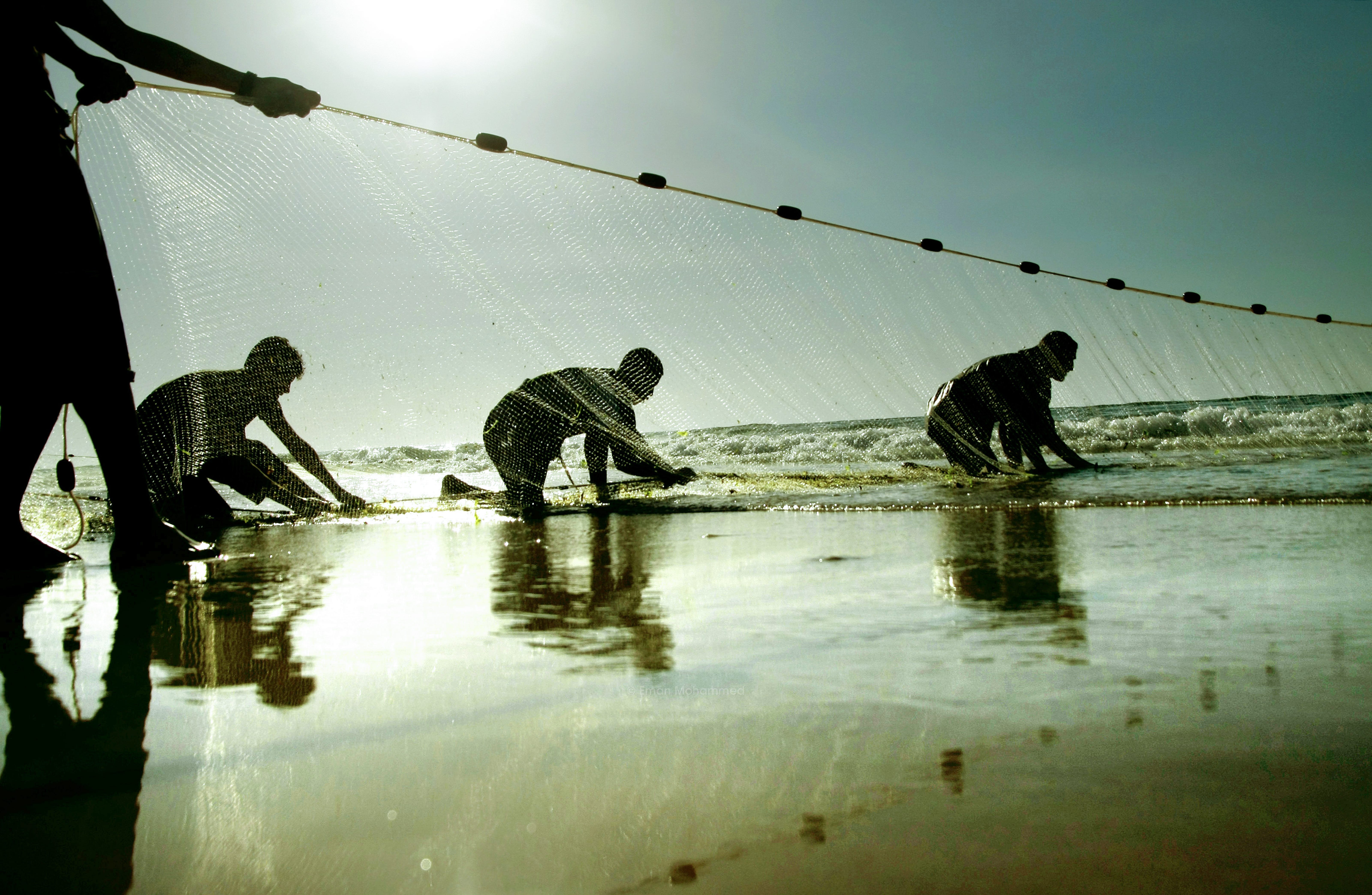
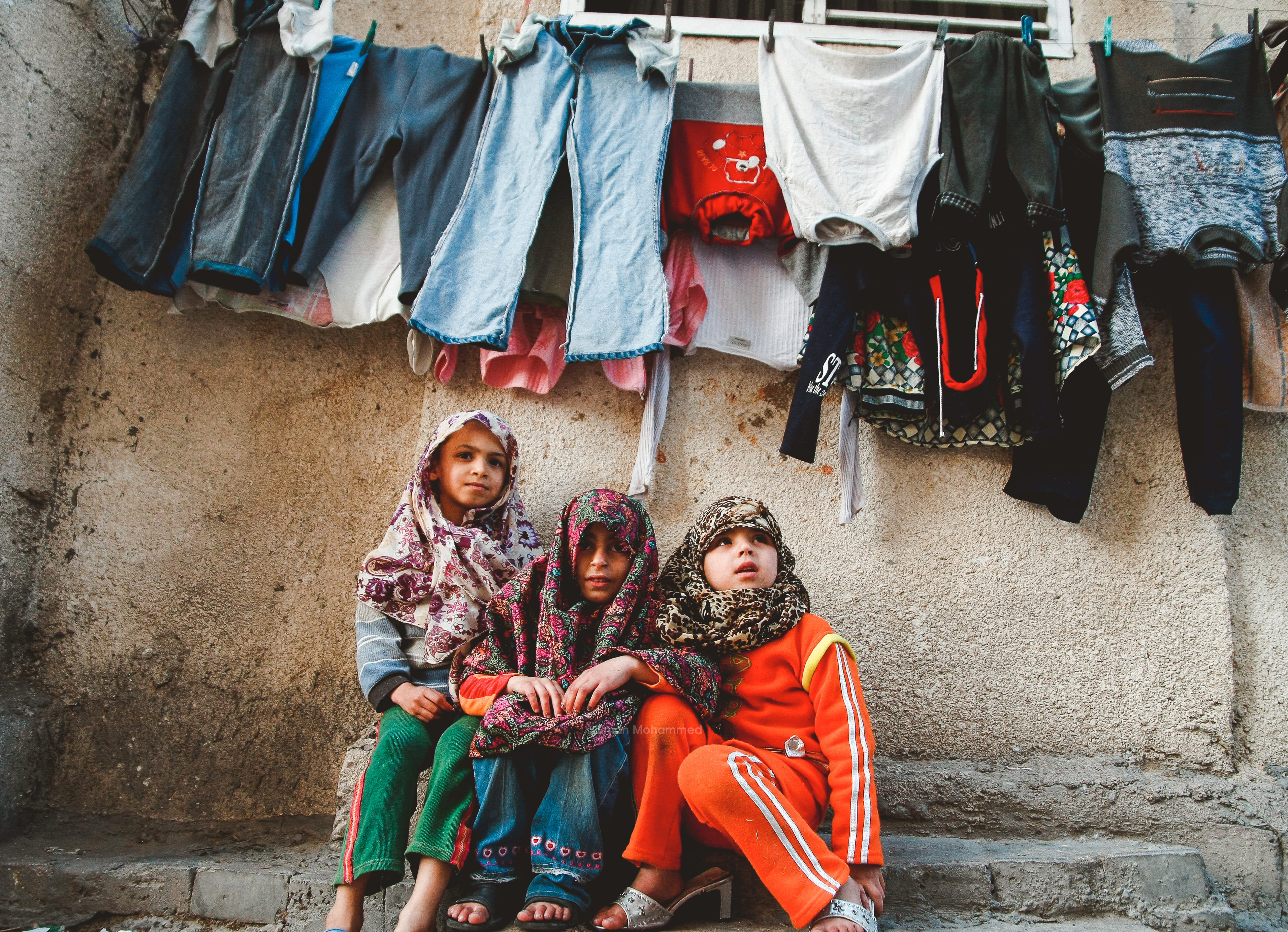

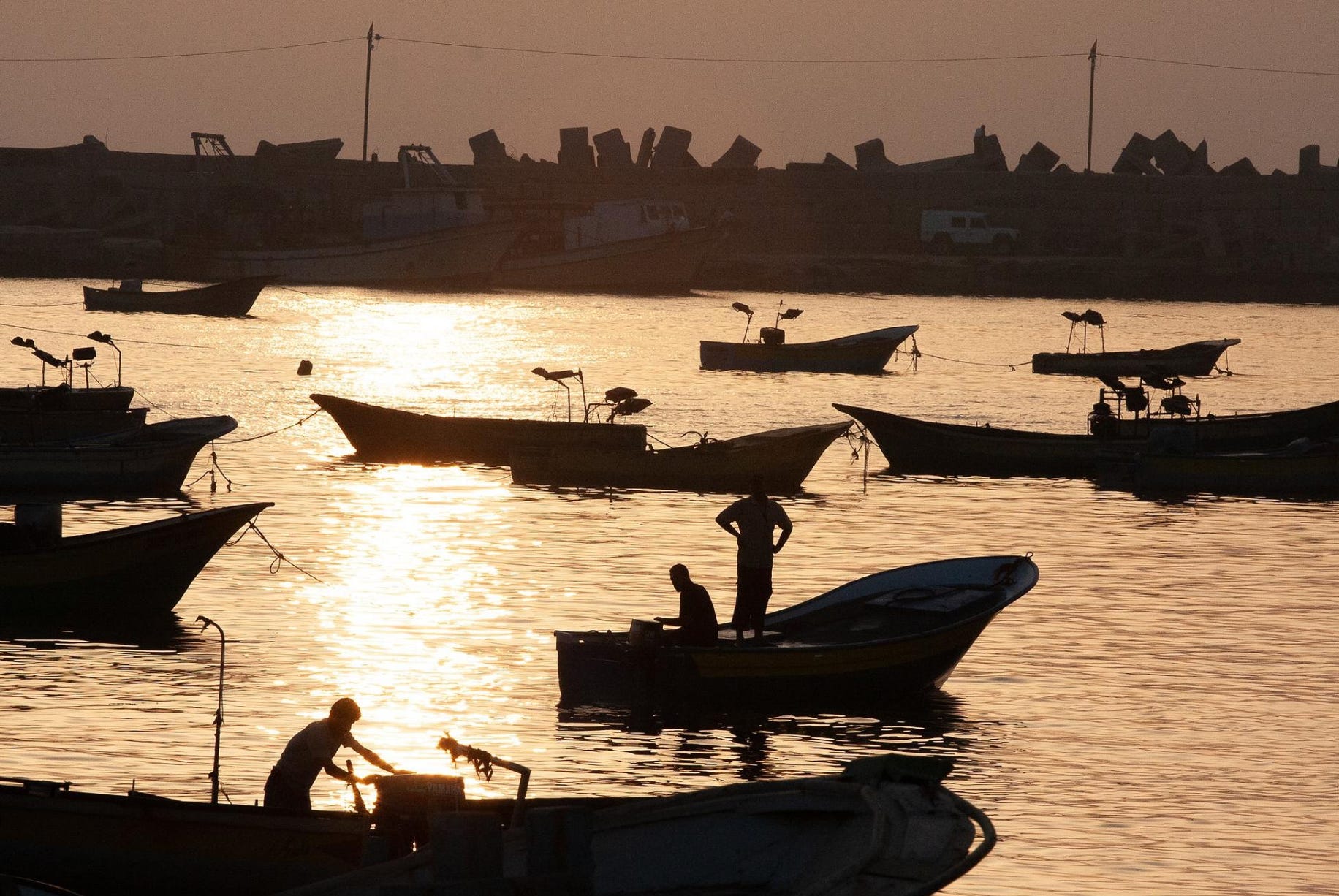
All images © Eman Mohammed.
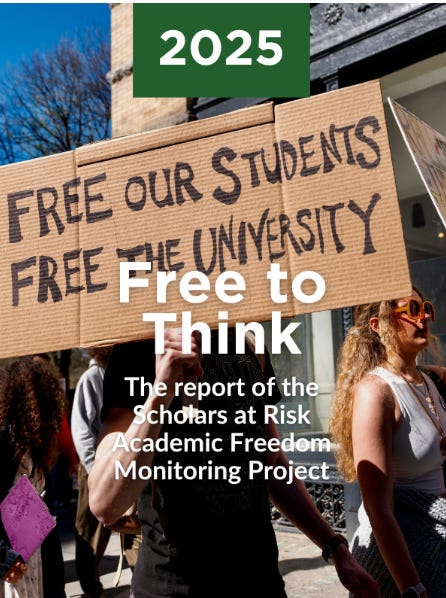
AAUP? Fuck, Jewish epigrams for this report: Published July 2026. This report was prepared by a joint subcommittee of the Association’s Committee A on Academic Freedom and Tenure and the Committee on College and University Governance and was approved by both parent committees in May 2026.
Extorted Compliance: A Threat to Institutional Autonomy, Academic Freedom, and Shared Governance
It is the business of a university to provide that atmosphere which is most conducive to speculation, experiment, and creation. It is an atmosphere in which there prevail “the four essential freedoms” of a university—to determine for itself on academic grounds who may teach, what may be taught, how it shall be taught, and who may be admitted to study.
—US Supreme Court Justice Felix Frankfurter, concurrence in Sweezy v. New Hampshire
In a modern state, virtually all corners of society—even institutions that think of themselves as otherwise independent—are fiscally dependent on powerful national governments. States can leverage grants, payment for services, tax breaks, and regulatory enforcement to change the fiscal prospects of everything from the media to non-governmental organizations to law firms to universities. Once a leader realizes he can use the state budget to force compliance with whatever agenda he is pushing, then institutions that have become dependent on state funds, tax breaks, or regulatory forbearance are caught between caving in, making radical cutbacks, or experiencing institutional death. That’s what’s happening now with universities.
—Kim Lane Scheppele, professor of sociology, Princeton University
The Trump team’s goal has not changed. They want an unprecedented—and flagrantly unconstitutional—degree of government oversight and control over American universities.
—Joseph Fishkin, professor of law, University of California, Los Angeles
Nobody will save us unless we fight together to save ourselves.
—Peter Sporn, professor of medicine, Northwestern University
V. Conclusion
It has often been noted that illiberal authoritarians always seek to undermine and ultimately control autonomous institutions: the judiciary and the bar, the media, and colleges and universities. In its first year the second Trump administration has assaulted all three. In each case, the targets have been tarred as “elitist” and unresponsive to “popular” will. But as the AAUP’s founders recognized, if universities are to serve the common good in a democracy, they must remain autonomous, unbeholden to the vagaries of popular opinion and political winds. To be sure, the agreements discussed in this report and the proposals advanced by the Trump administration’s proposed compact claim to affirm academic freedom and promise not to interfere with the curriculum. But such promises ring hollow.
“If universities can be subject to drastic financial penalties anytime the federal government decides ‘in its sole discretion’ that the university is not complying, it is difficult to believe there will not be strong incentives for administrators, faculty, and students to avoid any speech or conduct that might attract negative attention from the Trump administration,” two commentators on the agreements warn. “Whether explicit or implicit, such federal control cuts to the heart of the freedom of inquiry that allows universities to contribute to the innovations, economic prosperity, and creation of knowledge that have made American higher education the envy of the world.”145
In that light, we recall the words of the AAUP’s 1956 special report on the abuses of the second Red Scare:
We cannot censure the justified public interest in colleges and universities, or be unmindful of the extremely difficult task confronting academic administrations that seek to preserve educational and research opportunities in order to serve the general welfare in spite of the suspicions of a public which, at times, has been confused by complicated issues or led astray by demagogic appeals. The temptation to yield a little in order to preserve a great deal is strong. . . . Yet to yield a little is, in such matters, to run the risk of sacrificing all. . . .
[W]e deem it to be the duty of all elements in the academic community—faculty, trustees, officials and, as far as possible, students—to stand their ground firmly even while they seek, with patient understanding, to enlarge and deepen popular comprehension of the nature of academic institutions and of society’s dependence upon unimpaired intellectual freedom.146

[Your Death is My Command – by Mr. Fish]
The Trump administration is laying the groundwork for blacklisting and criminalizing all left-wing, progressive, anti-war and anti-imperialist dissent.
The report charges that Cuba and its allies are mounting “a revolution against western civilization itself — waged, in part, via the novel and insidious method of persuading the children of the West to turn against their own inheritance.” It accuses Havana of “gleeful support of the George Floyd uprisings.” It asserts that “the rise of antifa” and “the explosion of pro-terrorist activism on American college campuses,” can be “linked, in some way, shape, or form, to Cuban influence.”
It characterizes the DSA as serving “as a particularly potent illustration of the ideological victory of Cuba’s effort to position itself as the spiritual capital of Third Worldist radicalism.” It claims the organization maintains a “fierce, almost religious commitment to the cause of the Cuban regime.” It alleges Cuba has built a “sprawling revolutionary network” that has “shaped America’s most famous and influential extremist movements” including the Black Panthers, the Weather Underground and antifa. These networks include “powerful leftist nonprofits, anti-ICE collectives, socialist groups, and Marxist militant organizations” in the U.S.
Ahh, it all makes sense, Chris . . . . Jew-oogle: “facial recognition will soon be adopted by every sector”

You are spot on. Powered by rapid advancements in AI, the global facial recognition market is experiencing massive growth, projected to surpass $20 billion by the end of the decade. Driven by the need for touchless authentication, enhanced security, and streamlined convenience, this technology is quickly moving into every aspect of daily life. [1, 2, 3]
But the software reaches beyond law enforcement to a wide variety of other industries:
- Travel: U.S. customs relies on facial recognition for its biometric exit program, and 17 airports currently deploy the technology, with plans to scan 97% of departing passengers by 2024.
- Finance: Some ATMs in Japan use facial recognition instead of cards and PINs, while Amazon Go scans customers to charge them virtually at its cashier-less stores.
- Health care: Facial recognition software can identify patients and diagnose genetic conditions.
- Education: Some public school systems in the U.S. are implementing the technology to track people who have been banned from campus or to record class attendance.
- Military: The U.S. is experimenting with software that can identify people in the dark using heat signatures on the skin.
- Social services: Some homeless shelters have experimented with the technology to help identify people seeking services who don’t have other forms of identification.
Legal, Societal, and Policy Implications
As the use and power of this technology continues to expand, it raises a number of serious questions, Schaake notes.
First, what are the consequences for privacy and anonymity? Should people have a presumption of privacy when they attend sporting events, take a walk in a public park, visit a hospital, or pick up our child at school?
“What one person might think is legitimate use, another person might think of as abusive or a blanket violation of rights,” she says.
Another issue of growing concern is bias, when software that’s often trained on white, male images frequently misidentifies women and people of color.
Questions also arise around proper oversight of the people creating and implementing the technology. If a police force’s outdated facial recognition software produces bad results, who’s responsible? Should private companies be held accountable if their technologies are used for nefarious ends?
Clearview AI, which scraped billions of photos online, claimed to be working exclusively with law enforcement agencies, but reports linked the company to clients ranging from Saudia Arabia and the United Arab Emirates to Walmart and the NBA. A technology that’s ostensibly “designed for research or medicine can be used elsewhere for repression,” Schaake says. It is essential to consider the context in which facial recognition systems are used. “There are not enough guardrails,” she says.
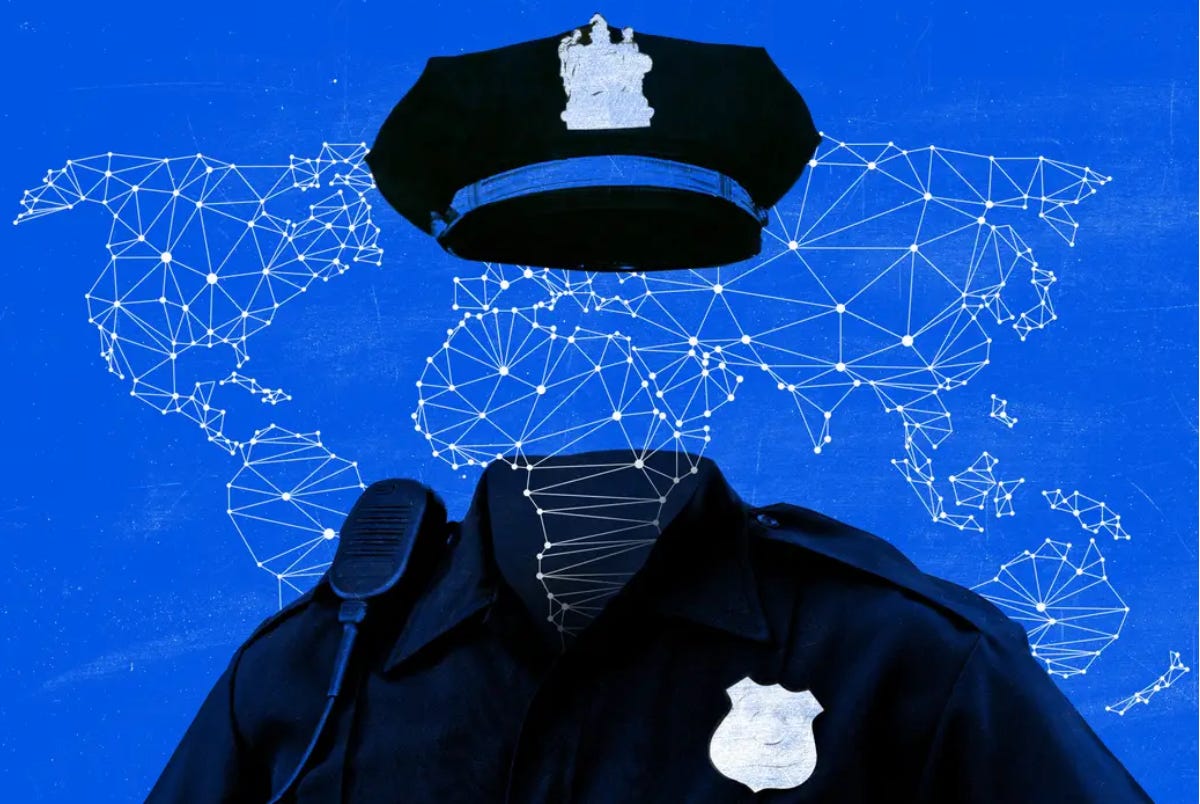
Larry Ellison predicts rise of the modern surveillance state where ‘citizens will be on their best behavior’
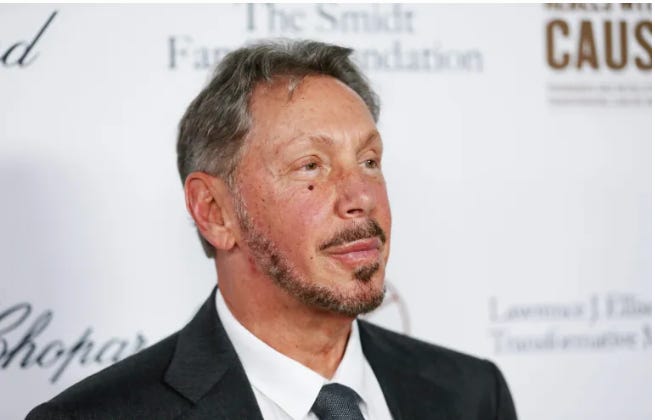
Here’s a pig site:

Debunking Ellison’s statements
However, not all of Ellison’s claims withstand scrutiny. Despite technological advancements, police must uphold constitutional rights, even if it may be deemed less efficient or safe. Ellison asserted that cameras and AI in schools would enhance safety, but the Fourth Amendment and school policies against recording children complicate matters. Some schools have cameras, but police cannot always access or use the footage, adding further complexity.
Ellison neglected to highlight the crucial role of having accurate data within the system, which is fundamental before considering how AI can be beneficial. The integrity and diversity of data are fundamental to the effectiveness and fairness of AI systems in policing. Proper data management ensures that AI algorithms do not perpetuate existing biases but rather promote accurate and equitable outcomes. For instance, in the case of predictive policing, where AI algorithms analyze historical crime data to forecast future criminal activities, if the data used in these systems is skewed or biased, it can result in disproportionate targeting of certain communities. For example, if historical data reflects over-policing in specific neighborhoods, the AI system may continue to predict higher crime rates in those areas, perpetuating a cycle of surveillance and enforcement, which is a result of a discussion from a project I have been working on with the National Academies.
Ellison talked about Oracle body cameras and mentioned that while officers can request the camera to be off during bathroom or lunch breaks, it always records, although footage would only be accessible with a court order. This implies officers have no reasonable expectation of privacy, which could be a concern if some unions or agencies are unaware of this and are currently deploying this platform. Additionally, many departments allow the public to request that officers turn off their body cameras for various reasons; therefore, officers would be eroding trust with the public when cameras are not actually off.
AI can assist in video monitoring for various reasons, such as supporting street staff, transcribing footage and ensuring accountability, which will improve safety and efficiency. However, some studies indicate that body cameras don’t significantly affect the use of force, so one should be cautious in assuming that constant monitoring will suddenly make a difference.
Ellison suggested that AI will supervise every officer, reporting issues as they arise. This must be balanced with respecting individual rights and used for mentorship. Studies indicate that administrative oversight contributes to stress and staffing shortages, underscoring the need for balanced leadership.
Ellison stated that drones can respond faster than police cars, adding value by gathering information. This doesn’t replace officers who still have to respond and intervene. Additionally, cell phone cameras can provide instant live feeds during calls, further aiding in information gathering without Fourth Amendment risk issues.

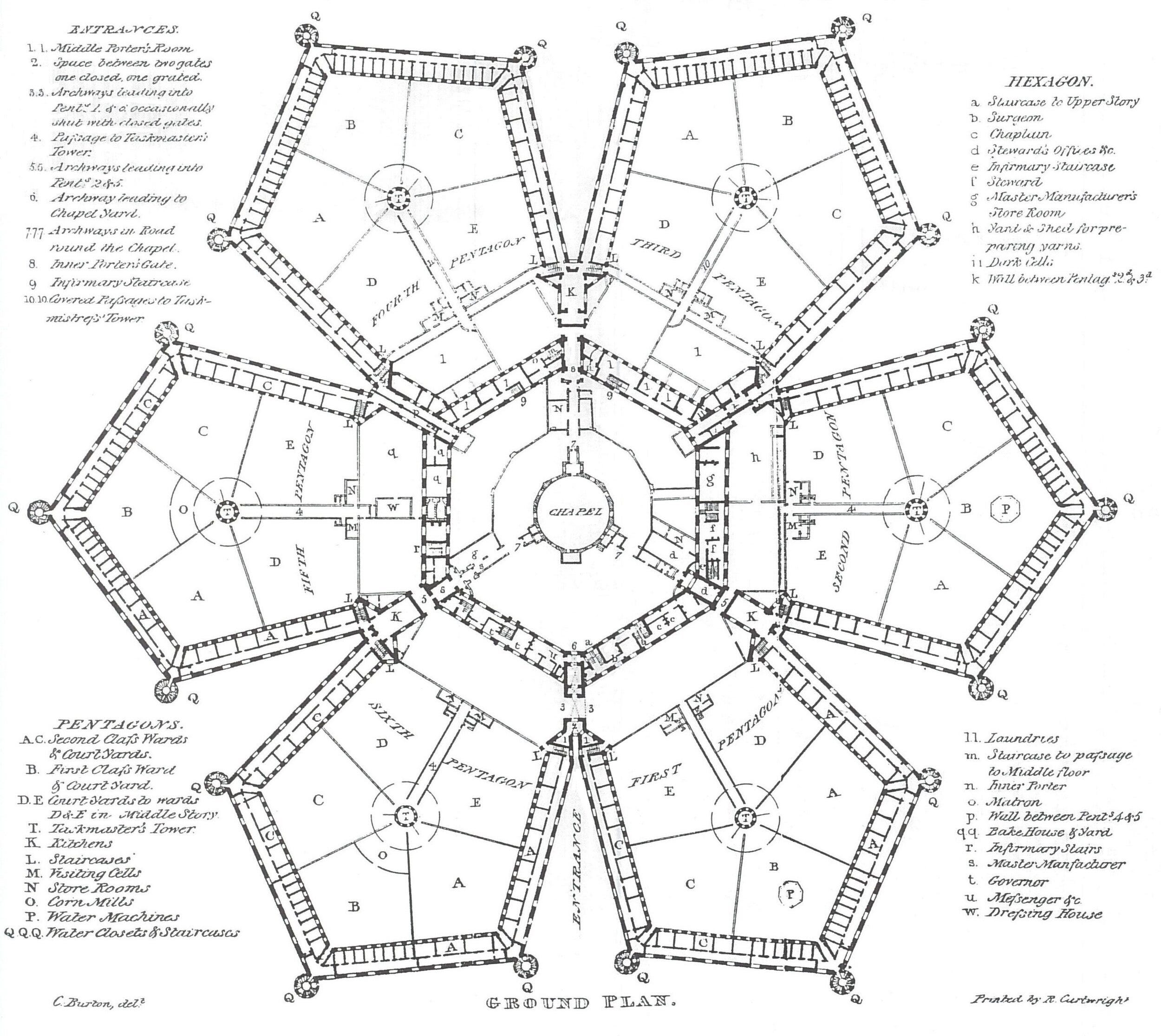
1984 comes with an appendix on Newspeak, the language used by the party to limit and reduce thought, which has some parallels to the way we have to describe the world to a computer. Orwell writes about a series of vocabularies, and names the most basic set of words the “A vocabulary,” :
“It was composed almost entirely of words we already possess, words like hit, run, dog, tree, sugar, house, field, but in comparison with the present-day English vocabulary their number was extremely small, while their meanings were far more rigidly defined. All ambiguities and shades of meaning had been purged out of them — Newspeak words [were] simply a staccato sound expressing one clearly understood concept.”
Newspeak was also binary: the word for cold existed, but the word “warm” did not, being replaced by a 0: “unwarm.”

Dianne Forsythe noted, though, that the people building these knowledge systems didn’t see it that way. In one of my favorite lines of hers, she writes:
“People in AI rely a good deal on introspection as a method of research. Having found a statement applies to them, they appear willing to accept that it applies to [humans] in general. I think of this as ‘I am the world’ reasoning.”
Facial recognition systems are largely built from images that programmers pull from the World Wide Web, with one of the largest and most used models coming from portraits people posted to the photo website Flicker. (That’s the dataset). Instead of writing code that describes every possible face, neural nets can study thousands of images, find patterns between them, and predict things. For example, one model was trained to produce a random face whenever we want one.


Here are two photographs of people that don’t exist. These are portraits made by a machine learning model that was trained on 70,000 images, and asked to create something that follows all of the same rules that it learned by looking at those images. These are just two images: in ten seconds, you could create literally hundreds more. It began by identifying patterns common to all of those images, and quickly sorted out that if an eyeball is here and a mouth is here, then a nose is probably in the center of your face.
When a surveillance camera sees a person in a parking lot that it decides doesn’t belong there, an artificial intelligence tool can use this same learning to identify and match aspects of a real face to an archive of images in a criminal database, or license database, or passport database. For example, the FBI has a photo archive of 640 million faces drawn from state drivers license data that it can compare with images from grainy footage of parking lots. Now, we start the process of sorting and categorizing until we have a match. It can quickly see that the center of your face has a nose and compare that nose to the pixel arrangements of noses in every photograph in those databases, then it might look through those and see which ones have matching eyes, then ears, etc, until it narrows down an entire photographic database of millions of license photographs down to a few pictures. Then it can identify you, compare it to a criminal database (or not) and pass that information on to agencies interested in knowing who is hanging out in a parking lot.
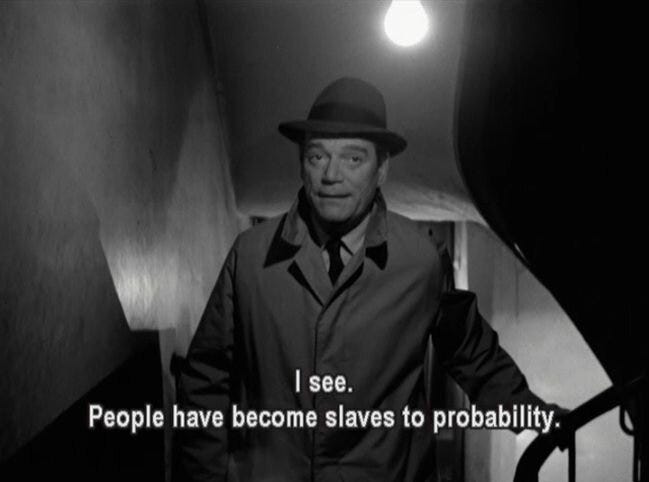
“Winston’s greatest pleasure in life was his work.”


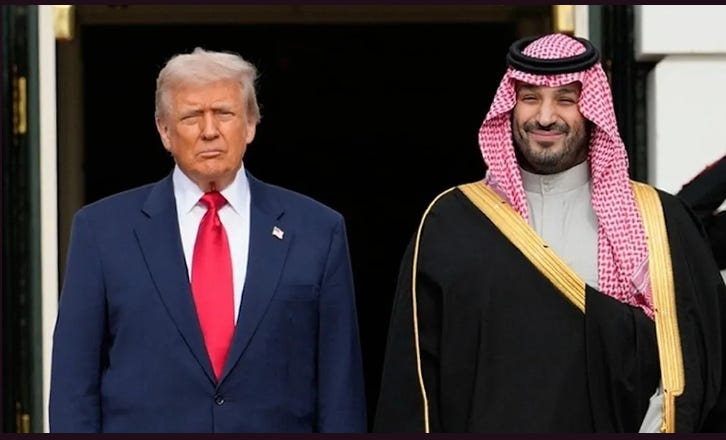
The deal, which would run for 30 years and is estimated to be worth tens of billions of dollars, is designed to give American companies a central role in developing Saudi Arabia’s nuclear infrastructure while limiting the involvement of foreign competitors. A key provision would permit US firms to build a uranium-enrichment facility in the kingdom if a joint US-Saudi study concludes such a step is warranted — an arrangement officials say would give Washington greater oversight and help prevent the technology being diverted to military use.
The striking context is that this comes even as the United States wages war on Iran over its own nuclear programme, having assassinated the Leader of the Islamic Revolution and struck nuclear facilities in an offensive launched on February 28. What Washington is fighting to deny Tehran, it is preparing to extend to Riyadh.

What the Dog Saw) probe similar themes of mass conformity and how environments shape our reality. He—along with critics like Neil Postman—famously champions the idea that Huxley’s Brave New World proved more prescient about modern Western democracies than Orwell’s, because we tend to love our oppression and willingly trade our critical thinking for entertainment and consumption. [1, 2, 3, 4]
Look at this fucking shit from the INBred UnUnited Queendumb: Which Dystopian Society is Better? 👁️ 1984 or Brave New World?
I reference much from this 2021 article == Five FUCKING years is a lifetime for these tech monsters….. Nobody is Always Watching You: From Big Brother to Big Data
LISTEN, man, you Luddites…….
Can a ChatBot break up with you?

Bernays? Eat your fucking Kosher Heart OUT.
Can a ChatBot break up with you? It happened en masse on February 13, 2026, as OpenAI deprecated its companionship-friendly ChatGPT “4o” model. This is a mixtape. It has AI-generated songs created from texts that ChatGPT wrote to people on the internet before it was shut down.
In the mixtape narration, I discuss what the model does and why it writes these texts the way it does.
Why a mixtape? Because when you and I look at these texts, they are… texts. We make sense of them intellectually. But for the people on the receiving end of these messages, the music is highly emotionally charged. By turning them into music AI would (and did) write, the language takes on a different weight. We can come closer to feeling how these texts would feel if we saw ChatGPT as a partner about to leave us.
THIRTEEN YEARS ago, read: So fucking naive and shallow …..
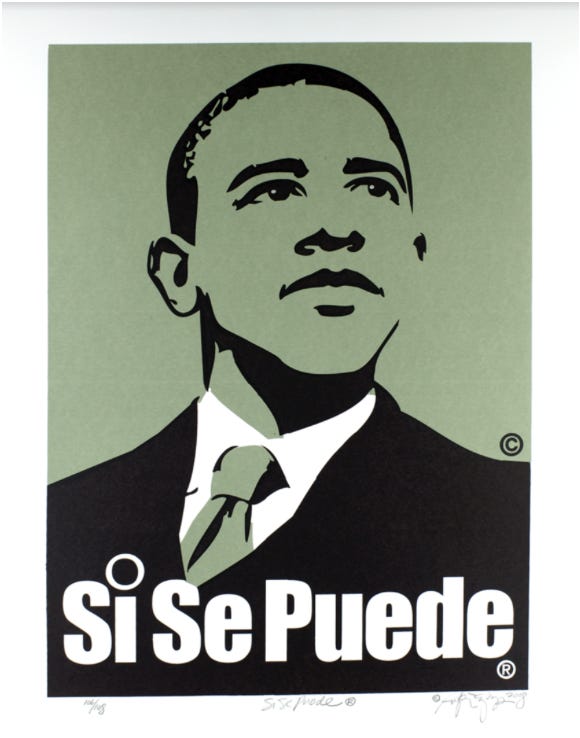
When you hear or see a creative public relations campaign, it grabs hold of you immediately. Some can move you to laugh or tears or inspire action. Powerful campaigns can change the public’s perception seemingly overnight about a brand, product, or social movement.
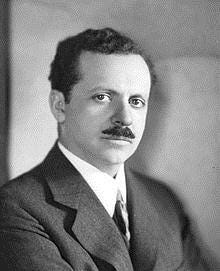
Nobody understood this more than the father of public relations, Edward L Bernays. As blogged about previously, the father of spin understood that it was the combination of the news, not advertising, and the manipulation of people’s unconscious through endorsements by doctors, celebrities, and other experts that truly made the difference.
You may be thinking, is this true? PR isn’t that powerful, is it? Well, his clients included a vast array of who’s who during his time and they saw colossal results first hand. They included Procter & Gamble, the American Tobacco Company, Cartier Inc., CBS, General Electric, and Dodge Motors. He even composed campaigns for the NAACP and American presidents Woodrow Wilson and Calvin Coolidge.
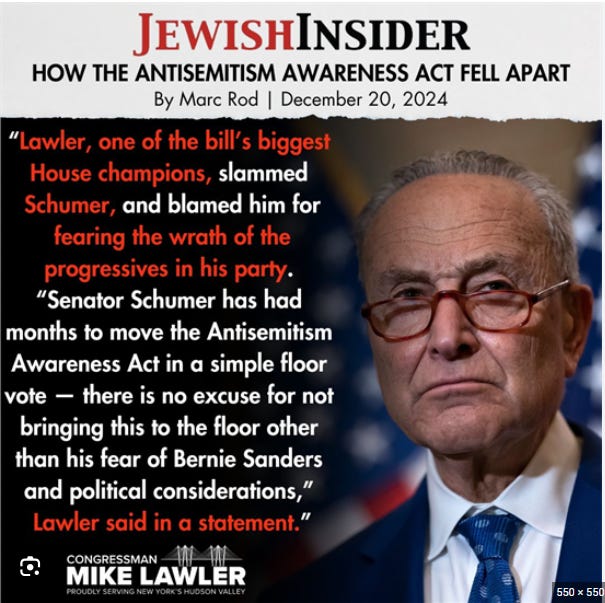

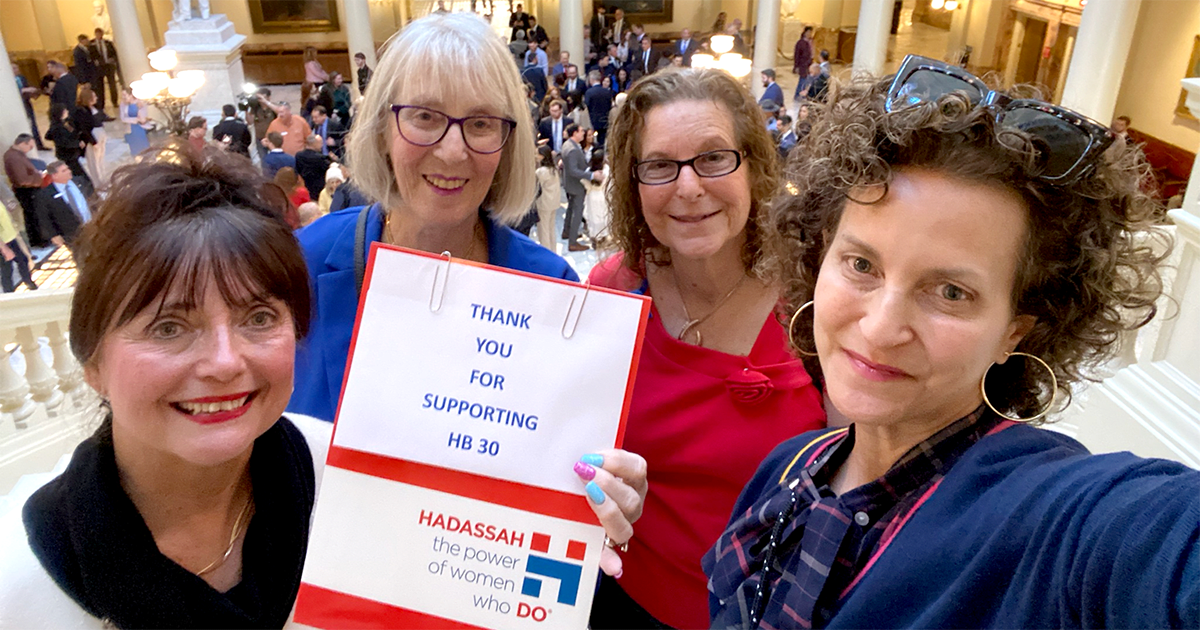
“Missouri stands with Israel and its people and we want to make sure that the world understands that,” the governor said while signing the bill.

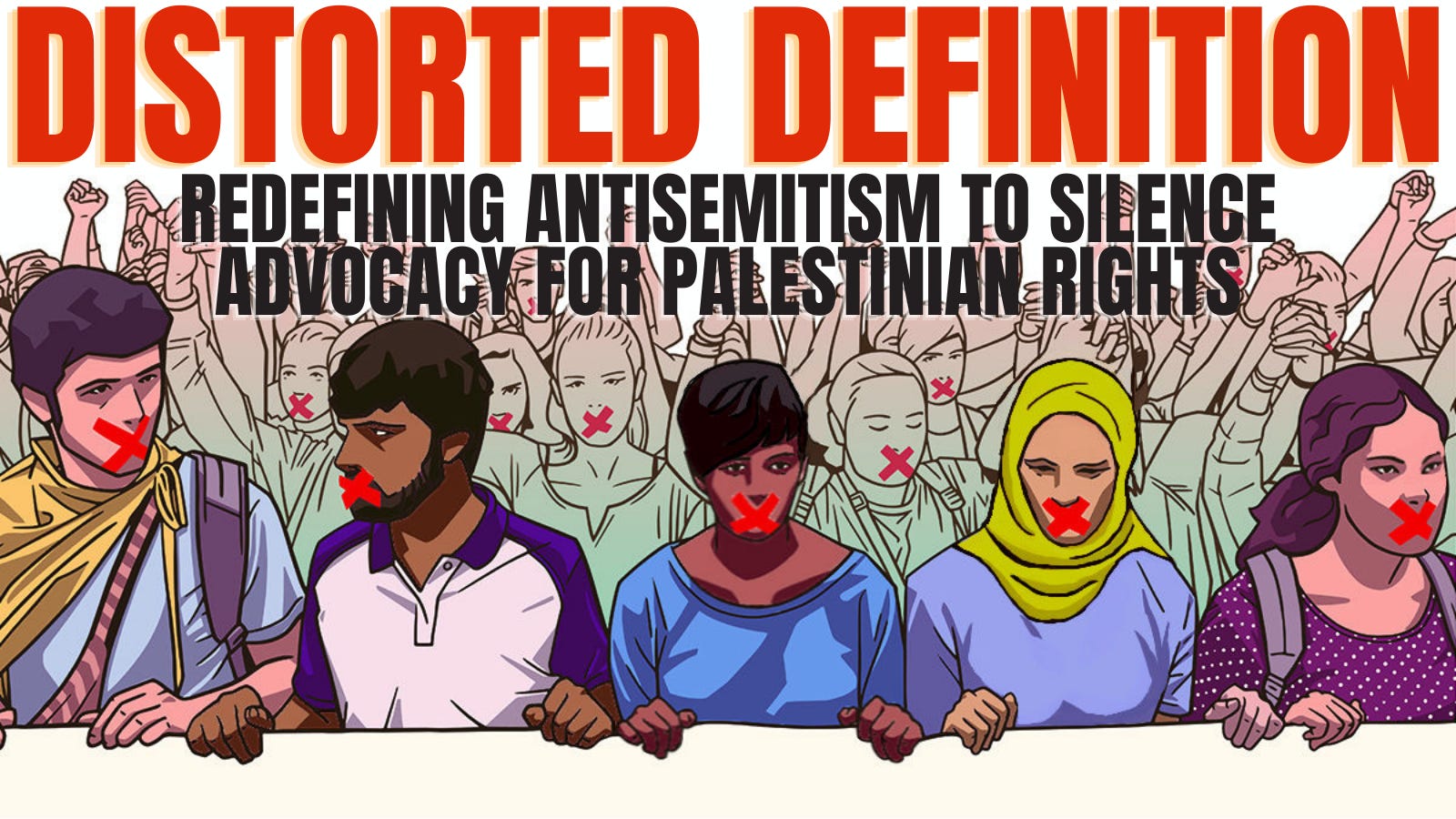

Israel has declared policies mandating the mass murder of civilians (the Dahiya Doctrine), the killing of its own citizens (the Hannibal Directive), and the potential nuclear destruction of the world (the Samson Option).
Its spies are active in countries around the globe, and its proxies are actively engaged in corrupting governments and institutions across the West.
Does such a regime have a “right to exist?” No.
In fact, dismantling such a regime and its replacement with a free Palestine with equal rights for all is not only a legal requirement, but also an existential imperative for all of humanity.
READ before Craig is put into the docks: By Craig Mokhiber July 15, 2026
With a new attack on the ICC, the U.S. expands its assault on the rule of law
Marco Rubio’s campaign to “dismantle” the ICC isn’t about sovereignty. It’s the latest U.S. move to shield Israeli officials wanted for war crimes from accountability, following a pattern used by fascist regimes to gut independent judiciaries.
On Monday, U.S. Secretary of State Marco Rubio announced the administration’s latest brazen attack on international law and the institutions mandated to uphold it.
Declaring “a sweeping campaign to dismantle the threat posed by the International Criminal Court,” Rubio promised a “whole-of-government response to systematically disable the ICC’s ability to operate.”
In language that would make Orwell blush, Rubio’s lawless statement claims that his campaign of intimidation and obstruction against the Court is meant to “disable the threat posed by the ICC to Americans.”

In essence, an administration that has been on a global rampage, perpetrating gross violations of human rights at home and abroad, is now seeking to claim that the international institutions set up to protect human rights (like the ICC), rather than the U.S. itself, are the real threats to human rights.
To achieve the administration’s nefarious ends, Rubio has promised pressure on states to withdraw from the ICC. That includes the intimidation (“increased scrutiny”) of states receiving U.S. aid that refuse to reject the ICC’s authority, visa revocations and travel bans for ICC personnel, and increased (unlawful) sanctions against the ICC and affiliated organizations.
In other words, the Trump administration, acting to protect another oppressive foreign regime engaged in genocide and apartheid, has publicly announced an illegal campaign to obstruct justice and, to that end, to persecute judges, court personnel, and cooperating witnesses and experts.
The ‘sovereignty’ canard
Rubio’s announcement, as has become common with such Trump policies, seeks to frame the “campaign” as a defense of “U.S. sovereignty.” But few will be deceived by this transparent ruse.
First, duly constituted international tribunals, as institutions of international law, are not a threat to any state’s sovereignty. To the contrary, they are expressions of sovereignty, as international law is formulated by states as an act of sovereignty.
States negotiate treaties, join international organizations, and consent to be bound by international law in order to benefit from inclusion in the international community of states, and to ensure a safer and more stable international legal order.
Nowhere is this clearer than in matters of the prohibition of war crimes, crimes against humanity, genocide, and aggression — which represent the entire remit of the ICC. And the Court only acts in the wake of such atrocities when there is a jurisdictional basis to do so, and when relevant states are unable or unwilling to act.

Seeking to be excluded from accountability for the highest crimes in international law, or to exclude others from it, is not the behavior of a state worried about the technicalities of sovereignty. Rather, it is the act of a rogue state seeking to advance the cause of impunity for itself and its co-perpetrators.
Secondly, the ICC does not prosecute states, and cannot therefore directly challenge their sovereignty, as such. It is rather a court of individual criminal responsibility for perpetrators from state parties (who have given consent to the ICC), or who have committed crimes on the territory of a state party.
And states have an opportunity to investigate and prosecute such crimes on their own and, indeed, are already obliged to do so under international law whether they are parties to the ICC (Rome Statute) or not. Under Article 17 of its Statute, the ICC’s jurisdiction only activates where states fail to do so (so-called “complementarity”).
Buttressing Israeli impunity
Third, as a series of previous U.S. actions and statements have made clear (and while the U.S. certainly has some reason to fear prosecution of U.S. perpetrators of war crimes in places like Afghanistan and Iraq) this assault on the Court is principally just the latest attempt by the U.S. to buttress the impunity of the Israeli regime at a moment when global calls for the regime’s accountability have reached a fever pitch.
The ICC’s indictments against Israeli Prime Minister Benjamin Netanyahu and former Defense Minister Yoav Gallant, both of them fugitives from justice, for crimes against humanity, sent the Israeli regime’s U.S. sponsors into a fury. Threats were quickly followed by official sanctions against judges, prosecutors, and cooperating witnesses.
Indeed, even before the warrants were requested, a dozen U.S. Senators sent a threatening letter to the ICC Prosecutor Karim Khan, declaring, in the style of delinquent schoolyard bullies, “Target Israel and we will target you….You have been warned.”
The Trump administration, in defense of Israeli impunity, has already withdrawn from the UN Human Rights Council, attacked UN agencies like UNRWA, and imposed several rounds of unlawful sanctions on the ICC Prosecutor, its Judges, the UN’s human rights rapporteur on Palestine, and the most prominent Palestinian human rights organizations.
Under a previous administration, the U.S. has even gone so far as to adopt legislation allowing for U.S. military action against the seat of the ICC in the Netherlands, with the objective of springing indicted war criminals from the U.S. or its ally nations. The legislation was nicknamed “The Hague Invasion Act.”
The assault on international law
The latest outrage from the Secretary of State is part of a larger effort by the U.S.-Israel axis to dismantle the post-WWII system of international law and, thereby, to remove all constraints on their exercise of raw power.
This effort has included a series of broad-daylight violations of the highest rules of international law, including serial aggression across Western Asia, the Mediterranean, Latin America, and the Caribbean, live-streamed war crimes, crimes against humanity, and genocide, assault and murder on the high seas, murder and assassinations on foreign territories, and the kidnapping of foreign leaders.
It has included a war against international organizations, variously attacking, campaigning against, or withdrawing from organizations like UNRWA, the World Health Organization, and the UN Human Rights Council.
It has included spying, smearing, and sanctioning international officials and judges, from the ICC to the UN human rights rapporteurs.
It has included attempts to replace the United Nations with dictatorial imperial bodies like the Trump-headed “Board of Peace.”
And it has included the abduction, torture, and murder of hundreds of UN staff and the destruction of their facilities, especially in Palestine.
Of course, the latest U.S. action announced by Rubio against the ICC is not only morally outrageous but also patently unlawful, like many of the acts cataloged here.
Nevertheless, as with a series of shocking U.S. violations of international law in recent years, the failure of other states to mount a principled response may well mean that the U.S. will get away with it.
If that happens, yet another hard-fought — and still nascent — building block of international law will fall. And its restoration in our time will be unlikely.
Will the world fight back?
But international law is not without tools to resist the expanding U.S. assault.
The Rome Statute of the ICC itself, under Article 70, provides for criminal prosecution for “impeding, intimidating or corruptly influencing an official of the Court,” as well as for “retaliating against an official of the Court on account of duties performed by that or another official.”
And there is no language in Art. 70 that would limit its application to perpetrators from member states, meaning the Court could, in principle, charge U.S. (and Israeli) persons with such offenses.
Indeed, a case in point is the ICC Prosecutor’s recent Art. 70 warning to Israel and others in May 2024, which came in response to efforts by the Israeli regime and Western powers to intimidate the Court.
Upon announcing his request for arrest warrants for the Israeli perpetrators, Khan stated that “all attempts to impede, intimidate or improperly influence the officials of this Court must cease immediately.” He added that his office would not hesitate to “act pursuant to article 70 of the Rome Statute if such conduct continues.”
If convicted under Article 70, perpetrators can face five years in prison. And beyond Article 70, the ICC is itself an international organization with legal personality (meaning that it has rights and can bring claims on its own behalf). Customary international law allows for such organizations to take countermeasures when attacked.
What’s more, the Court is located in the Netherlands, a UN member state that has also ratified the Rome Statute and is obliged to provide security for the Court.
As such, any violation by the U.S. on or directed at the ICC in the territory of the Netherlands would not only constitute the supreme international crime of aggression, but would also solve the jurisdictional question, should the Court wish to act against U.S. persons seeking to intimidate or obstruct ICC proceedings.
Of course, it is highly unlikely that U.S. officials could ever be arrested for these crimes, and the U.S. is heavily armed, violent, and often lawless in its actions abroad, as Rubio’s most recent action shows.
It’s true that the ICC (or its state parties) have no power to impose decisions on the U.S. by force. But with sufficient political backing from state parties to protect ICC judges and prosecutors, U.S. perpetrators could find themselves marked as fugitives from justice and unable to travel through a significant number of countries.
There would also be political and diplomatic costs, resulting in the U.S’s even further isolation on the world stage.
A total of 125 ICC state parties, including many of the U.S.’s closest Western allies, are already legally obliged to oppose the U.S. attacks on the Court. So while the ICC may never be able to arrest U.S. perpetrators — though any of its 125 members could — it can mark them as permanent fugitives, alongside their Israeli co-perpetrators.
In addition, states could act, individually and collectively, to block U.S. sanctions against the ICC and its personnel.
The European Union, for example, has sanctions blocking legislation that could be activated to protect those targeted by the U.S. Its failure so far to initiate such action to protect ICC personnel, UN rapporteur Francesca Albanese, and targeted human rights organizations is an ongoing scandal of complicity.
Member states of the UN could also convene an emergency session of the General Assembly under the Uniting for Peace mechanism to circumvent a U.S. veto in the Security Council and adopt measures to push back against this assault on international law and protect its victims.
So far, of course, there is little sign of willingness from governments around the world to confront the U.S.-Israeli Axis on these matters. To the contrary, the level of complicity, especially by Western states and Arab governments, has been shocking given the stakes.
But if they do not find the courage and principle to act soon, it is highly unlikely that the postwar legal system will survive.
Taking the assault on the judiciary global
Viewed through a historical lens, the Rubio game plan is nothing new. Fascism loves “law and order,” but it despises the rule of law.
Short of popular revolution and armed resistance, an independent judiciary is often the ultimate check on abusive power.
That’s why, beginning in 1925, Mussolini’s fascist regime purged the courts of any judges that might seek to constrain fascist power, replaced them with loyalists, and established political courts to punish opponents and ensure the will of the regime. Eight years later in 1933, the Nazi regime began its consolidation of power in Germany by purging the courts of independent judges and replacing them with loyal Nazis. Four years after that, beginning in 1937, the fascist regime of Francisco Franco in Spain instituted a plan to systematically purge the Spanish judiciary of independent judges and replace them with military tribunals and political courts loyal to the regime.
Since then, efforts to intimidate, corrupt, subjugate, or dismantle judicial bodies have been constant hallmarks of authoritarian regimes and of mafia syndicates everywhere.
The Trump administration, as the latest announcement from Rubio makes clear, is no exception.
The only difference is that Trump and Rubio have now taken their assault on the rule of law global. And that is a threat to everyone.
No, Israel does not have ‘a right to exist.’ Quite the contrary, actually.
Unlike the Zionist claim that “Israel has a right to exist,” my assertion is rooted in international law. Of course, given Israel’s propensity for violating such laws, it’s no surprise they’re still claiming a right that has no basis in reality.
By Craig Mokhiber July 14, 2026 39
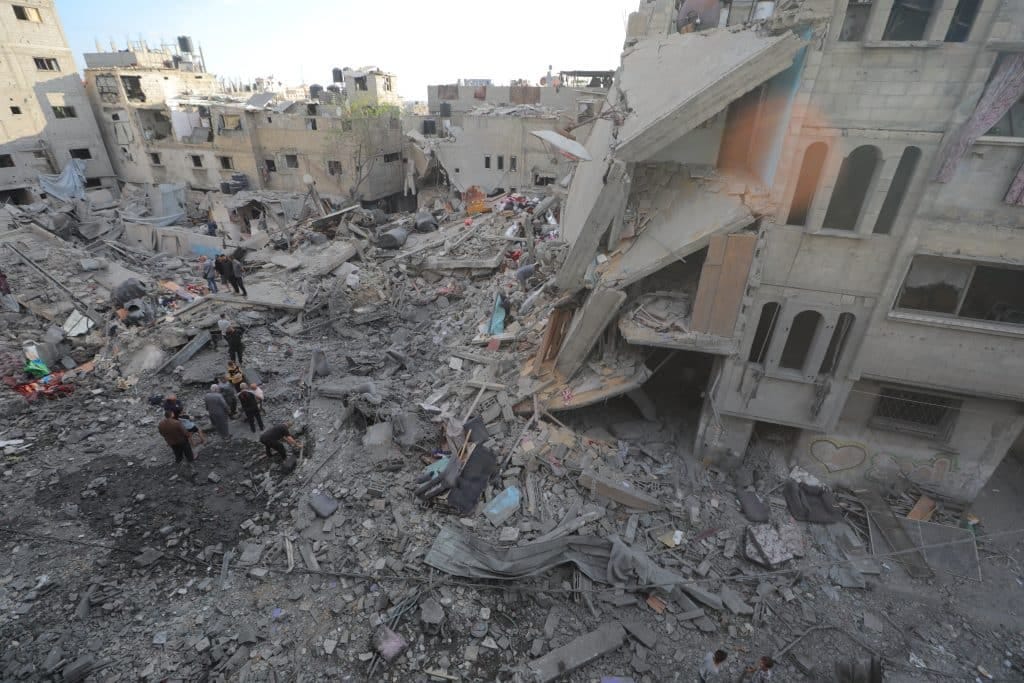
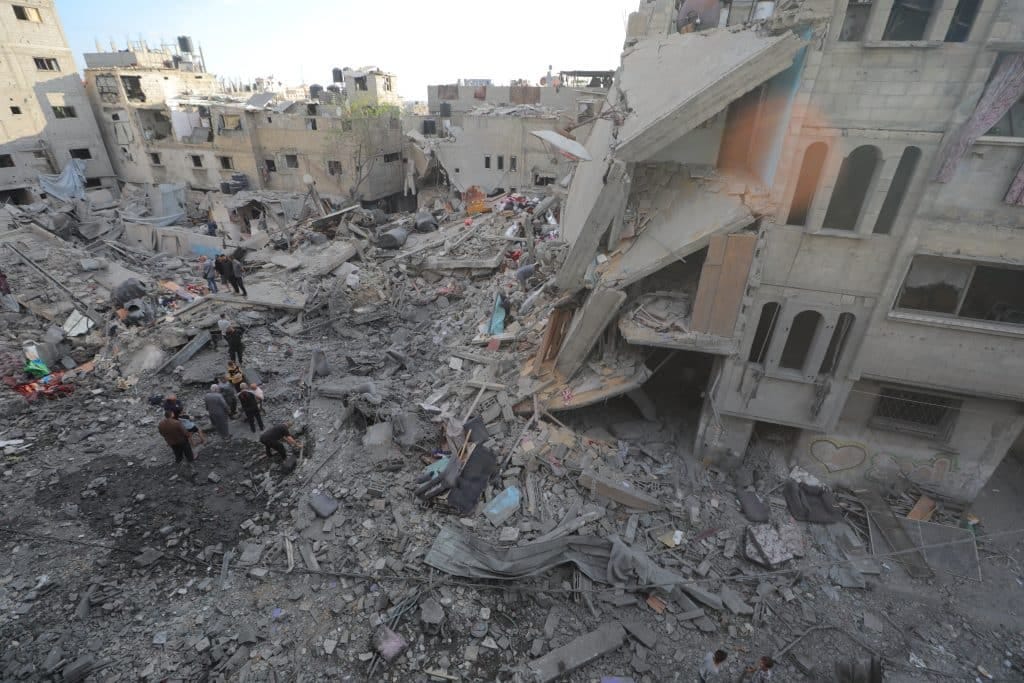
Aftermath of an Israeli airstrike targeting the home of the al-Tawil family in Nuseirat refugee camp, central Gaza, May 26, 2026. (Photo: Hassan al-Jedi/APA Images)
News that, in the midst of the genocide in Palestine, the German parliament was this week advancing legislation that would criminalize speech that denies that Israel has a “right to exist,” with penalties of up to five years in prison, came as a surprise to virtually no one.
This is, after all, the same Germany that perpetrated genocide first in Namibia and then in Europe, and is now actively and enthusiastically participating in the ongoing genocide in Palestine while brutally repressing all who dare speak out against it inside Germany.
Indeed, alongside Israel and the U.S., the German state today has the dubious distinction of being among those most captured by Zionist interests and most corrupted by Zionist ideology.
The German state even has an official policy (Staatsräson) dedicating the German state to the continued existence of the Israeli regime, and a formal declaration of Israel’s “right to exist” is required to acquire German citizenship. (No such declaration of Germany’s right to exist is required).
But the statement that the Israeli regime has no right to exist is not only a legally protected opinion. It is also demonstrably true, as a matter of both fact and law.
Of course, the statement that Israel “has a right to exist” has always been nonsense, unrooted as it is in either law or fact.
But this Zionist claim rings familiar to the ear of people in the West because it has been so often repeated as a pillar of Zionist propaganda, echoed by Western politicians benefiting from Israel lobby bribes, and by Israel-aligned media corporations dutifully buttressing the impunity of the regime.
Ask yourself if you have ever heard a similar refrain asserting Italy’s right to exist, or Canada’s — or Germany’s, for that matter? And yet the claim is constantly made that the Israeli regime (and only the Israeli regime) somehow has such a right.
The most obvious conclusion is that the regime and its proxies in the West are so deeply insecure about the legitimacy of the state, given the lawless and bloody history of its founding and expansion, that they have deemed it necessary to impose an enforced (and fictional) orthodoxy, rooted in an idea of Israeli exceptionalism and state-sponsored impunity.
But there is no such right in international law. None.
Inconvenient facts
Indeed, when I first entered the corridors of the United Nations in the 1980s, many states then existed that no longer existed when I left in 2023. Did the USSR, Czechoslovakia, Yugoslavia, East Germany, Tanganyika, Zanzibar, and the United Arab Republic have a “right to exist?” No. And neither does Israel.
States come and go, but none of them has a “right to exist.” As a factual matter, this is undeniable.
And yet, some still actively parrot the baseless Zionist fabrication that the Israeli regime somehow possesses it, others accept it without question, some (like Germany) even seek to compel others to declare it, and still others prohibit any attempts to challenge the lie.
There is no “right to exist” for states under international law. Thus, Israel cannot claim such a right.
Of course, states do have some rights. For example, states normally have a right to sovereign equality, to territorial integrity, and to self-defense under Article 51 of the UN Charter. But even these rights normally afforded to states are subject to conditions and qualifications, many of which would exclude Israel’s claim to them.
For example, the International Court of Justice has repeatedly found that Israel has no right to claim self-defense in its attacks on occupied Palestinian territories. (In essence, you cannot break into someone’s house and then claim a right to self-defense when they resist you).
Secondly, except for those agreed in treaties with Egypt (1979) and Jordan (1994), Israel does not even have defined borders. Much of the territory claimed and held by the Israeli regime is territory over which it has no legal claim whatsoever, and other territory claimed as part of the state is itself subject to challenge.
The regime can make no legal claims of territorial integrity over lands it unlawfully seized in 1967 and after, including East Jerusalem, Gaza, the West Bank, and the Golan Heights.
Its 1949 “Green Line” with Lebanon, Syria, the West Bank, and Gaza, is not an international border, but rather an armistice line merely meant to separate forces. The regime cannot claim it as a lawful border.
Moreover, given that the prohibition of the acquisition of territory by force is a jus cogens norm (the highest, peremptory rules) of international law and a binding obligation under the UN Charter, it cannot claim any of that land as part of its lawful territory.
Even the land claimed by Zionist forces in 1947 under the UN partition proposal is subject to legal challenge. Given that fact, the UN General Assembly had no authority under its Charter, or more broadly in international law, to overrule the will of the indigenous people or to create a settler-colonial state, and the Zionist forces had no right under international law to deny the self-determination of the Palestinian people or to acquire territory by force.
In fact, the International Law Commission has held that states must not recognize claims based on violations of jus cogens and erga omnes norms (binding on all states), such as those perpetrated by Zionist forces during the Nakba of 1947-48, and by the Israeli regime ever since. In addition, territorial acquisitions resulting from the threat or use of force impose obligations of non-recognition on all states.
The ICJ has recalled this principle with regard to the Israeli regime’s presence in occupied Palestinian territory as recently as 2024, when it found that the occupation of East Jerusalem, the West Bank, and the Gaza Strip is entirely unlawful, that it must end quickly and completely, and that all states are obliged not to recognize Israel’s presence in those territories and to work to end it.
Thus, as Israel has no defined territory, its legal claims to territorial integrity are significantly limited. And without recognized borders (and here we are not talking about a minor border dispute, but rather a lack of definition for most of the state’s territory), it even lacks a key criterion for recognition as a state.
To this day, almost thirty UN member states across Africa, Asia, and Latin America (including some of its closest geographic neighbors) do not recognize the state of Israel, and others have cut off diplomatic relations with the regime during the current ongoing genocide.
No sovereignty without equality
Finally, without lawful sovereignty, there can be no claim to sovereign equality.
Sovereignty, in international law, belongs not to states, but rather to people. The Israeli regime declares itself a “Jewish state,” and claims to represent its people.
But it does not represent the interests of non-Jewish persons (Muslim and Christian Palestinians) who are either present, or have a right to be present and part of the legitimate polity of that territory.
The ethnonationalist state of Israel can perhaps claim to represent 7.2 million (Jewish) constituents. It cannot credibly claim to represent the almost 16 million Palestinians who have a right to form part of the polity of that land.
Indeed, even if the regime forcibly settled every Jew on the planet on the land, it would still only represent a minority of the population, vis-à-vis the majority of Palestinians.
Excluded variously from equal representation (1948 Palestinians), any representation (Gaza, West Bank, and East Jerusalem Palestinians), or even the ability to exercise their legal right to return and participate (diaspora Palestinians), are the overwhelming majority of persons who have a right to form part of the polity.
Nor can Israel claim legitimate governmental authority. This is because international law establishes that “the will of the people shall be the basis of the authority of government,” which must be “expressed in periodic and genuine elections which shall be by universal and equal suffrage.”
Excluding millions of the indigenous people of the land on the basis of ethnonationalist criteria is a textbook breach of that requirement. As such, the Israeli regime cannot claim legitimate governmental authority.
The ICJ has recently affirmed that the regime has no such authority in Gaza, the West Bank, or East Jerusalem. But the unequal terms imposed on Palestinians inside the Green Line, and the total exclusion of those in the diaspora, make the point equally applicable to the remainder of the Palestinian community as well.
And without that authority, the regime cannot claim legitimate sovereignty.
Similarly, the regime’s lawless conduct weighs against claims of sovereignty.
This is because modern conceptions of sovereignty include an element of responsibility (especially vis-à-vis respect for non-aggression, human rights, and international law) that a genocidal, apartheid regime with a continuous history of aggression, assassinations, crimes against humanity, and a chronic scofflaw status in the face of international legal rulings and UN resolutions cannot claim to have met.
From illusory rights to actual duties
Thus, as a matter of law and fact, the Israeli regime has no “right to exist.”
But the analysis should not stop there.
Even a cursory examination of international law reveals that, to the contrary, the Israeli regime should not exist.
The international community of states has obligations to cease recognition of the regime, to isolate it, and to work for its dismantlement and for the liberation of the Palestinian people from the regime.
Clearly, no one would today argue that Nazi Germany, or Apartheid South Africa, or Vichy France, or Khmer Rouge Kampuchea had a “right to exist.” Nor would we entertain claims for eternal colonial regimes in Algeria, India, Namibia, or Kenya. For the same reasons, no legal (or moral) argument could justify a right to exist for Zionist Israel.
To the contrary, international law requires that, where breaches of peremptory norms of international law are integral to the creation, expansion, and sustaining of a state (as was the case in apartheid Namibia and Rhodesia), such entities should not be recognized or accepted as legitimate states and should in no way be assisted.
Israel’s record is clear. It was founded on the breach of two peremptory (jus cogens) norms: the right to self-determination of the people of the land, and the rule on the non-acquisition of territory by force, as well as on the two highest crimes in international law: genocide and aggression.
Since then, it has refused the return of refugees and their compensation, and has continuously expanded its unlawful evictions, land theft, and colonization.
The United Nations and every major international human rights organization have concluded that the Israeli regime is guilty of apartheid and racial segregation, unlawful occupation, war crimes, crimes against humanity, and genocide.
The regime is now on trial for genocide at the ICJ, charges that the Court has found plausible enough to issue a series of preliminary orders (all of which the regime has ignored).
And the same Court has found the regime guilty of unlawful occupation, the forced denial of self-determination, the unlawful acquisition of territory by force, war crimes, apartheid, and racial segregation.
And the International Criminal Court has indicted the regime’s leaders for crimes against humanity.
For the full eighty years of its existence, the Israeli regime has held the distinction of being in breach of the highest number of UN resolutions and ICJ decisions of any country on the planet.
Today, the regime is unlawfully occupying Palestine, Lebanon, and Syria, attacking Lebanon, Syria, Iran, Yemen, and beyond, and perpetrating genocide in Palestine.
It has carried out assassinations across the region and has admitted to (indeed, bragged about) transnational terrorist attacks with booby-trapped pagers in Lebanon
Judged against the imperatives of international law, Israel is, in the strictest sense of the term, a rogue regime, illegitimate in its founding, and devoid of all legitimacy in its conduct ever since.
To declare that such a regime has a “right to exist” is an affront to generations of its victims, to international law, and to human decency itself. And the threat that it poses extends far beyond Palestine.
The Israeli regime is driven by a deeply racist and fundamentally violent ideology. It is armed with advanced technologies of surveillance and death, holds powerful conventional weaponry, and possesses stockpiles of nuclear, chemical, and biological weapons.
It has declared policies mandating the mass murder of civilians (the Dahiya Doctrine), the killing of its own citizens (the Hannibal Directive), and the potential nuclear destruction of the world (the Samson Option).
Its spies are active in countries around the globe, and its proxies are actively engaged in corrupting governments and institutions across the West.
Does such a regime have a “right to exist?” No.
In fact, dismantling such a regime and its replacement with a free Palestine with equal rights for all is not only a legal requirement, but also an existential imperative for all of humanity.
Craig Mokhiber
Craig Mokhiber is an international human rights lawyer and former senior United Nations Official. He left the UN in October of 2023, penning a widely read letter that warned of genocide in Gaza, criticized the international response and called for a new approach to Palestine and Israel based on equality, human rights and international law.

