

All whites benefit from racism in specific ways regardless of economic class, but less affluent whites simultaneously suffer because of racism.
Jul 20, 2026

Yeah, I put myself through this at 7 am: “Watch this Extremely Effective Right Wing Propaganda Video that Is Effective Primarily Because the Left Wrongly Says that Ordinary Whites Benefit from Racial Discrimination Against Non-Whites”
JOHN SPRITZLER’S Substack . . . .
Many scholars of racism and slavery have memorized Du Bois’s sentence,
“The slave went free; stood for a brief moment in the sun; then moved back again towards slavery.”
Yet we ignore what immediately follows.
“The whole weight of America was thrown to the color cast,” he wrote. “A new slavery arose. The upward moving of white labor was betrayed into wars for profit based on color caste. Democracy died save in the heart of black folk. Indeed, the plight of the white working class throughout the world today is directly traceable to Negro slavery in America…”
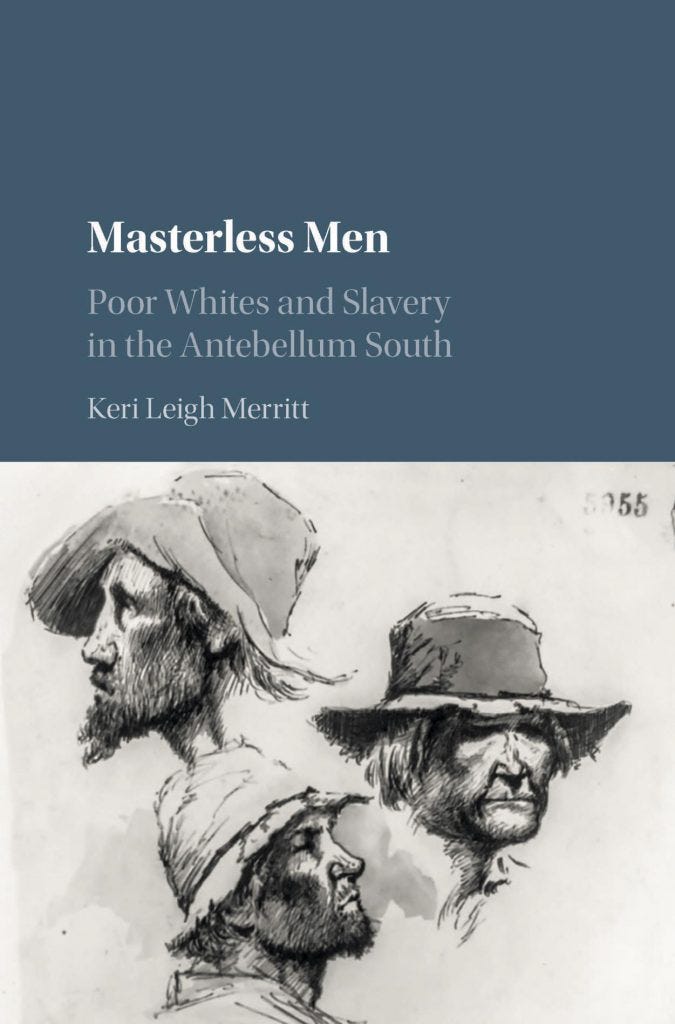
Oh well, gotta fire off a few 12-gauge shells to start my morning:
Quoting Paulokirk:
Nauseating. First, I covered education in many states as a newspaper reporter. And, I taught as a substitute in many K-12 districts. You have zero idea how ludicrous you are thinking K12 is about teaching kiddos the truth, like the film 13th, or Exterminate All the Brutes, or the 1619 Project. Howard Zinn’s People’s History of the US is banned in many districts. WE CAN’T teach that, dude.
Here, amazing interview, again, try using this in many community colleges:
Gerald Horne in High School? Where can you teach his work?
“To the extent that 1776 led to the resultant U.S., which came to captain the African Slave Trade—as London moved in an opposing direction toward a revolutionary abolition of this form of property—the much-celebrated revolt of the North American settlers can fairly be said to have eventuated as a counter-revolution of slavery.”
Alabama Alaska Arkansas Florida Idaho Indiana Iowa Kansas Kentucky Louisiana Mississippi Missouri Montana Nebraska North Carolina North Dakota Ohio Oklahoma South Carolina South Dakota Tennessee Texas Utah West Virginia Wyoming?
No way, Jose.
In his book The Counter-Revolution of 1776, historian Gerald Horne challenges the traditional view of the American Revolution. He argues that it was not a progressive fight for freedom, but a conservative movement to protect the institution of slavery from growing British abolitionist sentiments.
Teaching the Jewish State of Rape and Torture and Starvation is a colonial WHITE apartheid state of interlopers and land thieves? In High School? College? Bullshit:
Over 37 U.S. states have officially adopted or recognized the International Holocaust Remembrance Alliance (IHRA) working definition of antisemitism.
+–+
Ya just don’t get it.
+–+
Ya think I can teach Nick Estes in K12 where there is a heavy influence of Native Culture in the area? GIVE ME A BREAK. These books are verboten in your supposed great caring white-dominated school districts.
Water Protectors vs. Pipeline: The book details the protests against the Dakota Access Pipeline (DAPL). This pipeline was built to carry oil across the Missouri River, threatening the drinking water and sacred lands of the Standing Rock Sioux Tribe.
The Concept of “Tiwahe”: Estes uses the Dakota word tiwahe (which means “family” or “household”) to describe how water protection is an act of caring for all living things. Think of it as a pebble dropped in a pond; one action ripples out to affect the entire community.
The Long Tradition: The author shows that the Standing Rock camp was not an isolated event. It was a continuation of past struggles, such as the fight against the Pick-Sloan Plan in the 1940s and 1950s. That plan built large dams on the Missouri River that flooded Native lands.
Decolonization: Estes argues that to heal our future, society must listen to Indigenous knowledge. Instead of treating the earth like a resource to extract for profit, we should treat it like a relative.
+–+
My old union:
“Let’s be clear: critical race theory is not taught in elementary schools or high schools. It’s a method of examination taught in law school and college that helps analyze whether systemic racism exists — and, in particular, whether it has an effect on law and public policy,” Weingarten said. “But culture warriors are labeling any discussion of race, racism or discrimination as CRT to try to make it toxic. They are bullying teachers and trying to stop us from teaching students accurate history.”
+–+
When Gloria Ladson-Billings set out in the 1990s to adapt critical race theory from law to education, she couldn’t have predicted that it would become the focus of heated school debates today.
Over the past couple years, the scrutiny of critical race theory — a theory she pioneered to help explain racial inequities in education — has become heavily politicized in school communities and by legislators. Along the way, it has also been grossly misunderstood and used as a lump term about many things that are not actually critical race theory, Ladson-Billings says.
“It’s like if I hate it, it must be critical race theory,” Ladson-Billings says. “You know, that could be anything from any discussions about diversity or equity. And now it’s spread into LGBTQA things. Talk about gender, then that’s critical race theory. Social-emotional learning has now gotten lumped into it. And so it is fascinating to me how the term has been literally sucked of all of its meaning and has now become ‘anything I don’t like.’”
In this week’s Harvard EdCast, Ladson-Billings discusses how she pioneered critical race theory, the current politicization and tension around teaching about race in the classroom, and offers a path forward for educators eager to engage in work that deals with the truth about America’s history.
Enjoy: The State of Critical Race Theory in Education
+—+ End of my Comments +—+
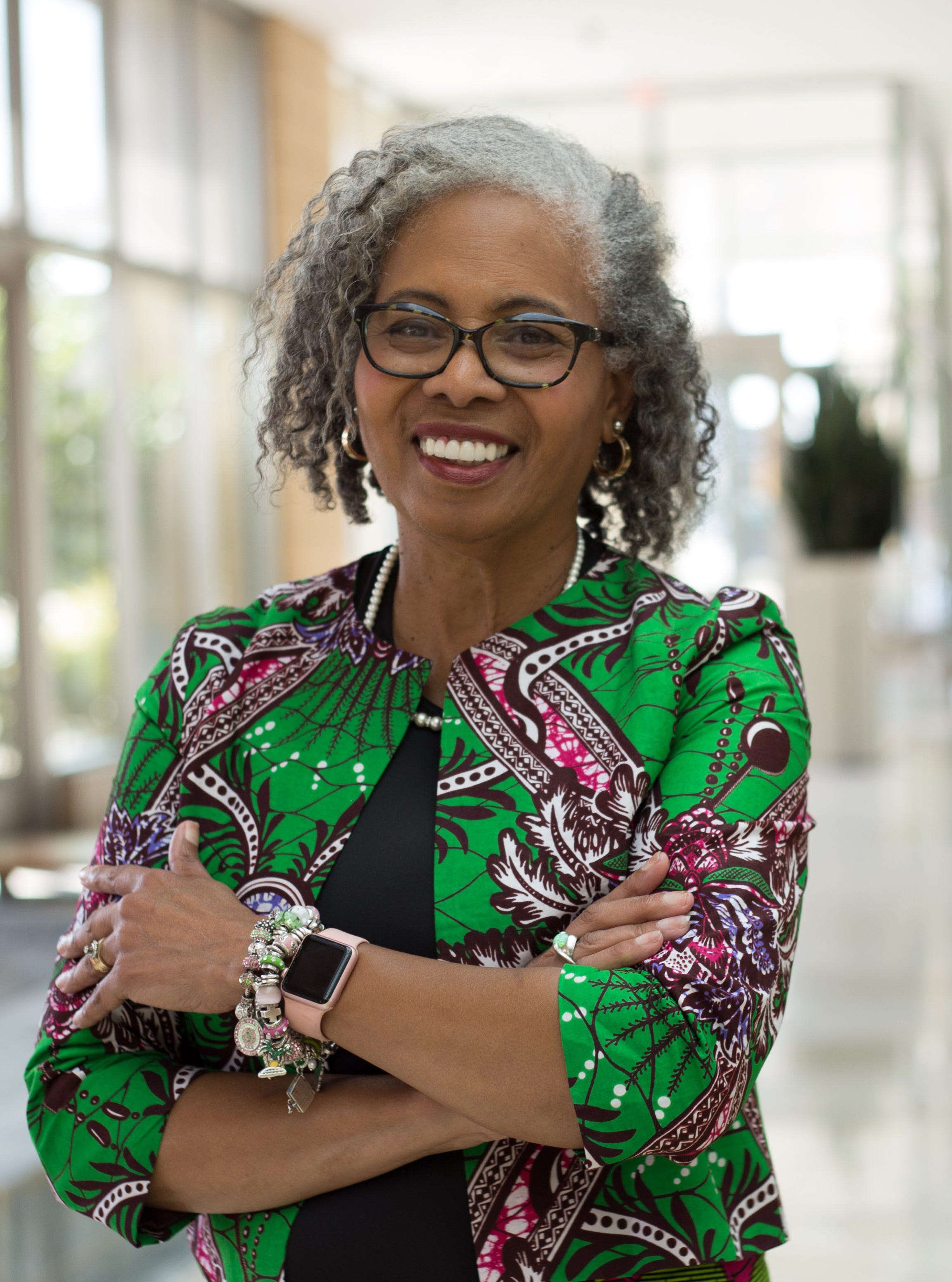
Gloria Ladson-Billings: Let me be pretty elemental here. Critical race theory is a theoretical tool that began in legal studies, in law schools, in an attempt to explain racial inequity. It serves the same function in education. How do you explain the inequity of achievement, the racial inequity of achievement in our schools?
Now let’s be clear. The nation has always had an explanation for inequity. Since 1619, it’s always had an explanation. And indeed from 1619 to the mid-20th century, that explanation was biogenetic. Those people are just not smart enough. Those people are just not worthy enough. Those people are not moral enough.
In fact, across the country, we had on college and university campuses programs and departments in eugenics. If you went to the World’s Fair or the World Expositions back at the turn of the 20th century, you could see exhibits with, quote, groups of people from the best group, which was always white and typically blonde and blue-eyed, to the worst group, which is typically a group of Africans, generally pygmies. So the idea is you can rank people. So we’ve always had an explanation for why we thought inequity exists.
Somewhere around the mid-20th century, the 1950s, you’ll get a switch that says, well, no, it’s really not genetic; it’s that some groups haven’t had an equal opportunity. That was a powerful explanation. So one of the things that you begin to see around the mid-1950s is legislation and court decisions, Brown versus Board of Education. You start to see the Voting Rights Act. You see the Civil Rights Act. You see affirmative action going into the 1960s. And yeah, I think that’s a pretty good, powerful explanatory model.
Except they all get rolled back. 1954, Brown v. Board of Education. How many of our kids are still in segregated schools in 2022? So that didn’t hold. Affirmative action. The court’s about to hear that, right? Because of actually the case that’s coming out of Harvard. Voters rights. How many of our states have rolled back voters rights? You can’t give a person a bottle of water who was waiting in line in Georgia. We’re shrinking the window for when people can vote.
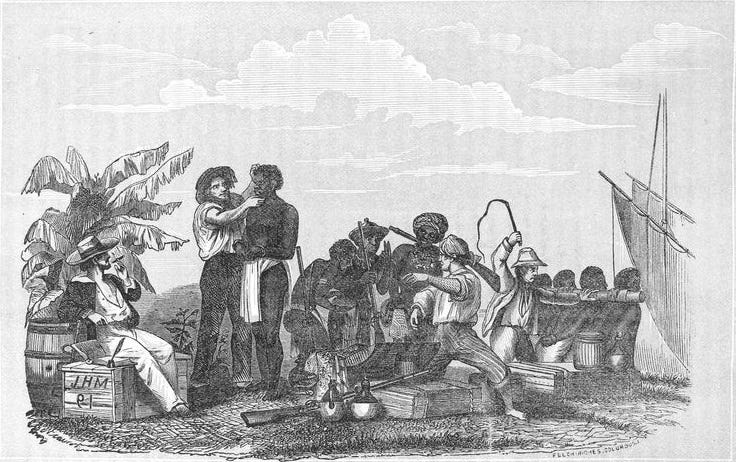
So all of the things that were a part of the equality of opportunity explanation have rolled away. Critical race theory’s explanation for racial inequality is that it is baked into the way we have organized the society. It is not aberrant. It’s not one of those things that we all clutch our pearls and say, “Oh my God, I can’t believe that happened.” It happens on a regular basis all the time. And so that’s really one of the tenets that people are uncomfortable hearing. That it’s not abnormal behavior in our society for people to react in racist ways.

Spritzler, another Jew, Finkelstein:
While Finkelstein’s criticisms resonate with defenders of the traditional Western canon, many scholars argue that he misunderstands the core foundation of CRT.
- Ignoring Systemic Roots: Critics point out that Finkelstein’s arguments sometimes assume that for racism or bigotry to exist, there must be active, conscious, or written statutory laws against a group. In contrast, the entire premise of CRT is that discrimination can be quietly built into the “structure” of societal institutions, functioning almost like toxic material in a building.
- Dismissing Everyday Realities: Critics argue that because Finkelstein often focuses purely on older models of legal discrimination, he downplays how casual racism, institutional barriers, and implicit biases affect marginalized communities today.
Here at UCLA Law, we have been home to a nation-leading Critical Race Studies program for the last 20 years. And right now across the country, a firestorm over Critical Race Theory has exploded. New legislation bans ideas and research designed to combat racism from classrooms and workplace training by labeling them as “divisive” and “anti-American.” What is at the root of this conflict? And what are its consequences? Join our panel of experts for a deeper conversation discussing the origins of Critical Race Theory, a breakdown of the current debate, and a thoughtful analysis of what is at stake.
This event is in partnership with UCLA Law Critical Race Studies, home of the nation’s first Critical Race Studies program.
+—+
Fucking Heni Youngman and Mel Brooks and Seinfeld:
Finkelsteinian zingers
- On MSNBC’s Joy Reid: “living proof that not all yentas are Jewish and not all bovines are cows.”
- On Angela Davis: “Once upon a time she was on the F.B.I.’s Ten Most Wanted List. Now she’s on Martha’s Vineyard’s Five Most Coveted List.”
- On Henry Louis Gates: “a virtuoso at crawling on the ground while typing on his keyboard.”
- On Amy Goodman (whom he doesn’t name): “Goddess of Wokeness…a woke machine, churning out insipid clichés as her mental faculty degenerates to mush.”
- On Ibram X. Kendi: “mallet-wielding grifter…preposterous poseur…[whose] ‘definitive history of racist ideas in America’ reduces to a compendium of prepubescent binary name-calling.”
- On Robin DiAngelo’s morbid obsession with diagnosing “racism”: “She is the monomaniacal Captain Ahab in pursuit of the White Whale. She is little Jackie Paper out to slay Puff the Racist Dragon. Her palette comprises two colors—white and black… What an unremitting, remorseless, insufferable bore!”
- On the widespread fascination with transgender people: “the first day of a graduate seminar, students used to describe their intellectual interests. Nowadays, it’s de rigueur to declare your sexual orientation. It’s only a matter of time before a student announces, ‘I’m she/her and I’m packing a thick, juicy nine-incher.’”
Scroll down to this: Curtis Acosta, Tucson High School, fighting for ethnic studies. My old radio show. Then LISTEN!
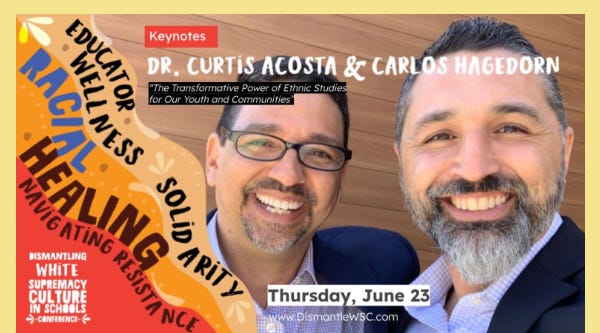
More? Keep Scrolling: Then, LISTEN!
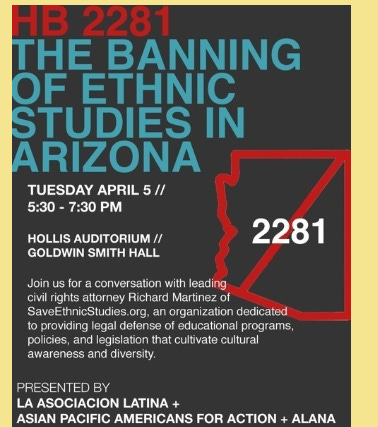
Richard Martinez, the attorney who represents a group of Mexican-American students who attended Tucson schools, said the students sued shortly after the law was passed by Arizona Governor Jan Brewer.
“This was the curriculum that was intended to be responsive to them…culturally, linguistically, educationally,” Martinez said. “The program had a very strong effect on students’ achievement… in fact, most of the students finished high school and matriculated to college, which was unprecedented at Tucson Unified School District.”
Gloria Ladson-Billings: And I’d always pull out the university’s mission statement. And I’d say, “You see these words right here around social justice? That’s where I am with this work. I don’t know what they’re doing at the business school on social justice, but I can tell you that the university has essentially made a commitment it to this particular issue. Now we can debate whether or not you agree with me, but I haven’t pulled this out of thin air.”
So if I’m a school superintendent, I want to say, “Here are core values that we have.” I’m reminded of many years ago. I was supervising a student teacher. It was a second grade. And she had a little boy in a classroom and they were doing something for Martin Luther King. It might have been just coloring in a picture of him with some iconic statement. And this one little boy put a big X on it. And she said, “Why did you do that?” And his response was, “We don’t believe in Martin Luther King in my house.” So she said, “Wow, okay, well, why not?” And he really couldn’t articulate. She says, “Well, tell me, who’s your friend in this classroom?” And one of the first names out of his mouth was a little Black boy.
And she said, “Do you know that he’s a lot like Martin Luther King? You know, he’s a little boy. He’s Black.” She was worried about where this was headed and didn’t know what to do as a student teacher, because she’s not officially licensed to teach at this point. And I shared with her our strategy. I said, “Why don’t you talk with your cooperating teacher about what happens and see what she says. If she doesn’t seem to want to do anything, casually mention, don’t go marching to the principal’s office. But when you have a chance to interact with the principal, you might say something I had the strangest encounter the other day and then share it.” Well, she did that.
The principal called the parents in and said, “Your child is not in trouble, but here’s what you need to know about who we are and what we stand for.”
Gloria Ladson-Billings: You know? And so again, it wasn’t like let’s have a big school board meeting. Let’s string up somebody for saying something. It wasn’t tearing this child down. But it was reiterating, here are our core values. I think schools can stand on this. They can say, “This is what we stand for. This is who we are.” They don’t ever have to mention the word critical race theory.
The retrenchment we are seeing in some states, I think it was a textbook that they were going to use in Texas that essentially described enslaved people as workers. That’s just wrong. That’s absolutely wrong. And I can tell you that if we don’t teach our children the truth, what happens when they show up in classes at the college level and they are exposed to the truth, they are incensed. They are angry and they cannot understand, why are we telling these lies?
We don’t have to make up lies about the American story. It is a story of both triumph and defeat. It is a story of both valor and, some cases, shame. Slavery actually happened. We trafficked with human beings, and there’s a consequence to that. But it doesn’t mean we didn’t get past it. It doesn’t mean we didn’t fight a war over it, and decide that’s not who we want to be.
+—+
Then, you have Common Dreams jerking off with Norman: The Inspiring Outrage of Norman Finkelstein . . . A few thoughts on the new book, “I’ll Burn That Bridge When I Get to It!”
FUCKING Jews:
Gerald!!!!!!!!!!!!!!
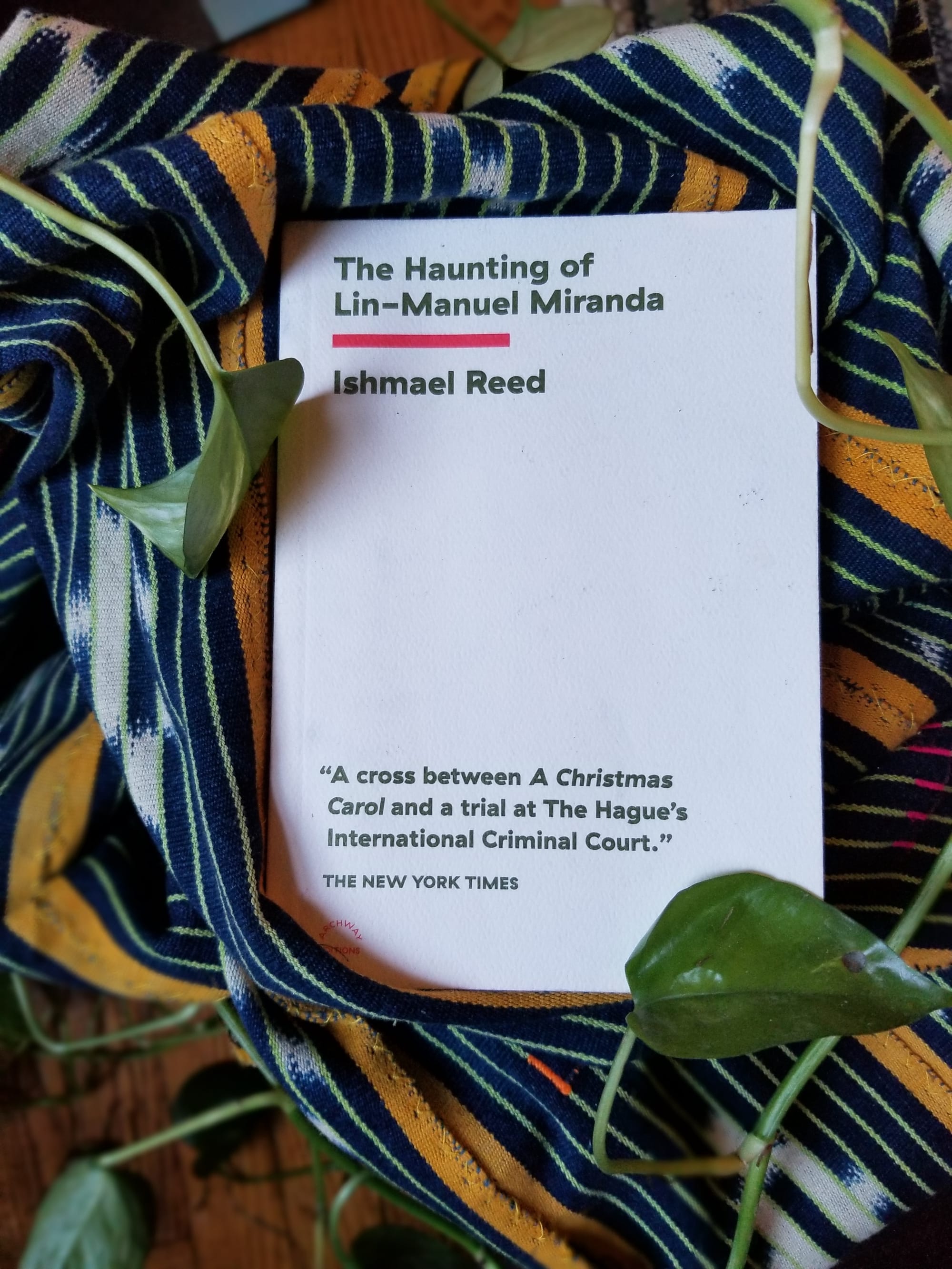
Ishmael Reed’s play, The Haunting of Lin-Manuel Miranda, is a corrective to the revisionist missteps of the Broadway musical, Hamilton. À la A Christmas Carol, the titular character is led through a series of truth-telling apparitions which represent the marginalized groups absent from Hamilton. Each “haunting” deconstructs Hamilton’s abolitionist, anti-hero portrayal of the founding father, delivered with Reed’s incisive, impeccably researched satire.
Hamilton has been internationally revered as a harbinger of theater’s more inclusive future since its sold-out Broadway debut in 2015. Playwright and performer Lin-Manuel Miranda based the work on Ron Chernow ’s highly-regarded biography, Alexander Hamilton, a book critiqued for its glowing, savior-esque narrative. Despite criticism, Hamilton remains a crowd-pleasing hit to its loyal and dedicated fans, with the filmed version of the musical now available on Disney+ .
In contrast, The Haunting of Lin-Manuel Miranda, which debuted at the Nuyorican Poets Cafe in May 2019 and was published in October by Archway Editions, reframes Hamilton’s origin story by emphasizing the years he spent working for a slave firm in St. Croix. After immigrating to the US, he settled in New York and married Eliza Schuyler, who came from a family of high society, slave-owning New Yorkers. While Hamilton was a member of the Manumission Society, a group of “do-gooding” abolitionists, he never ceased enslaving people himself, a fact which seems to trip up many historians and fans of the musical alike.
In Reed’s telling, Hamilton’s first ghostly visitor is “Ben,” an enslaved man who was owned by the Schuyler family. He is followed by a host of characters, such as “Negro Woman,” “Native American Man,” and “Native American Woman” — a mechanism meant to disrupt Miranda’s sentimental characterizations. Later, Harriet Tubman delivers the most memorable monologue in the play, describing the spiritual encounter that awakened her from her enslaved condition into a consciousness of choosing one’s life.
Reed also deflates the simplistic, neoliberal concept of “colorblind casting,” a premise only successful when the narrative stakes reflect historical accuracy, breathing expansive new life into perceived classics. (In a recent, stunning example, Wendell Pierce portrayed Willy Loman in the 2019 revival of Arthur Miller’s “Death of a Salesman” at London’s Young Vic Theater.) However, when these initiatives fail, within their binaried scope of intent, they venture into minstrelsy. In Hamilton, the casting of Black and Latinx actors placed many of them in the role of slave owners, of which Reed’s “Indentured Servant” character instructs, “by romanticizing people who treated human beings as animals you are playing along with the system as well.”
Near the end of the second act, Reed does allow Miranda a moment of redemption when the character confronts a stuffy caricature of Chernow. It is via the biographer’s dismissive rejection of him that Reed invites compassion for Miranda, the playwright, as a symptom of broader systems of racism.
In the aftermath of the unconscionable realities of slavery and native genocide, the pretense of the underdog and other limited archetypal framings will never produce anything more than a comfortable, entertaining ride towards resolution. The Haunting of Lin-Manuel Miranda illustrates that in order to truthfully engage with history, we need to rid ourselves of tired conventions, willingly interrogate historical truths, and commission stories from those typically ignored.
The Haunting of Lin-Manuel Miranda (Archway Editions, 2020), by Ishmael Reed, is now available on Bookshop.

