There are few people I know — green-leaning democrats, Trump-leaning republicans, and a smattering of plenty of archetypes in between — who will dance more than a few seconds looking at prison, drunken life, needle drug seeking, poverty, family dysfunction, estrangement, toothlessness, and opinionated guys down on their luck and with no material assets to speak of, though he has a home, a camper pick-up and loads of musical instruments and equipment.
He isn’t third-eye blind by this Chlamidyia Capitalism. He’s an atheist, but like many, he digs some of the bible to dig at those thumpers who put the leather-bound good-book above all else (sort of).
6:17–19, NIV. “Command those who are rich in this present world not to be arrogant nor to put their hope in wealth, which is so uncertain, but to put their hope in God, who richly provides us with everything for our enjoyment. Command them to do good, to be rich in good deeds, and to be generous and willing to share.
Before we move further, sure, why is it Chlamidyia Capitalism, which all intents and purposes is the disease version of Predatory-Disaster-Usury-Casino-Exploitive CAPITALISM.
Different types of C. trachomatis cause different diseases. The most common strains cause disease in the genital tract, while other strains cause disease in the eye or lymph nodes. Like other Chlamydia species, the C. trachomatis life cycle consists of two morphologically distinct life stages: elementary bodies and reticulate bodies. Elementary bodies are spore-like and infectious, whereas reticulate bodies are in the replicative stage and are seen only within host cells. (source)
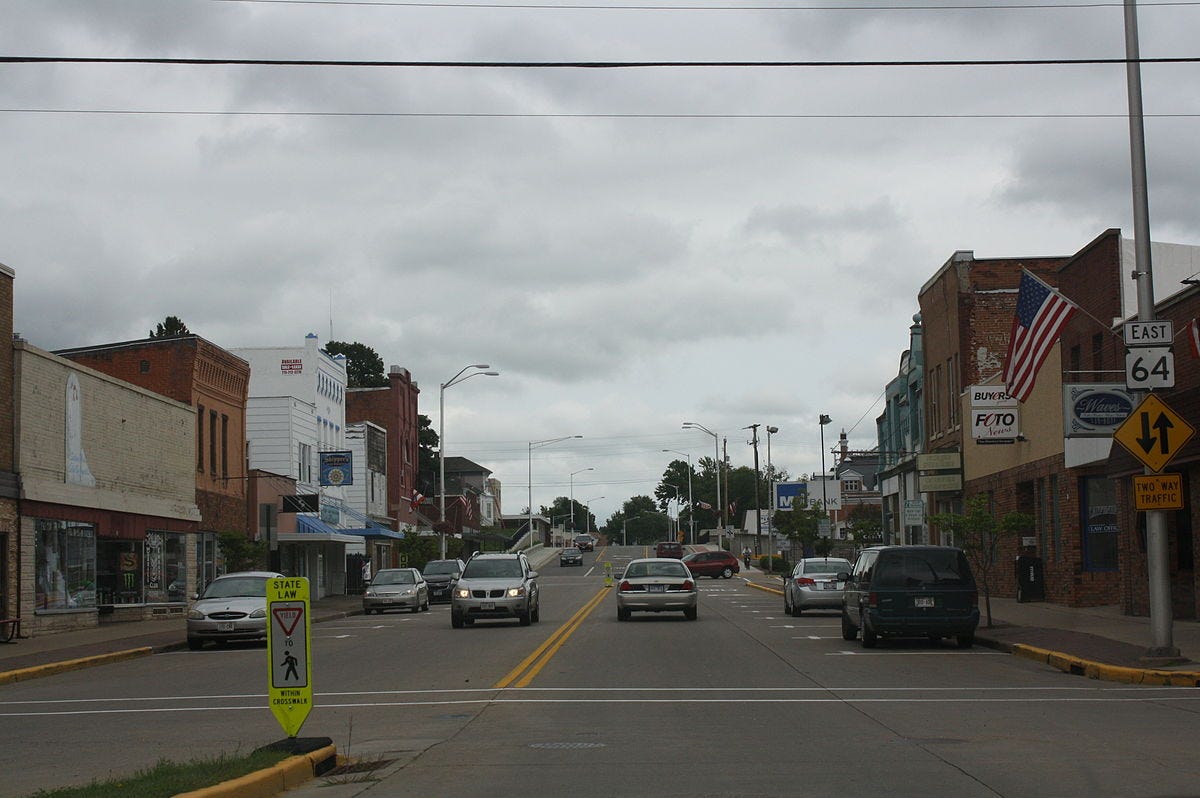
So, think about it: KK was born under a bad sign, sort of — Merrill, Wisconsin. Pubs and Bars, and then churches. One hundred combined total for a town of 9,350 in Wisconsin.
Mill jobs that are back-breaking, dangerous, mind numbing. Sort of the syphillis version of Chlamydia’s cousin.
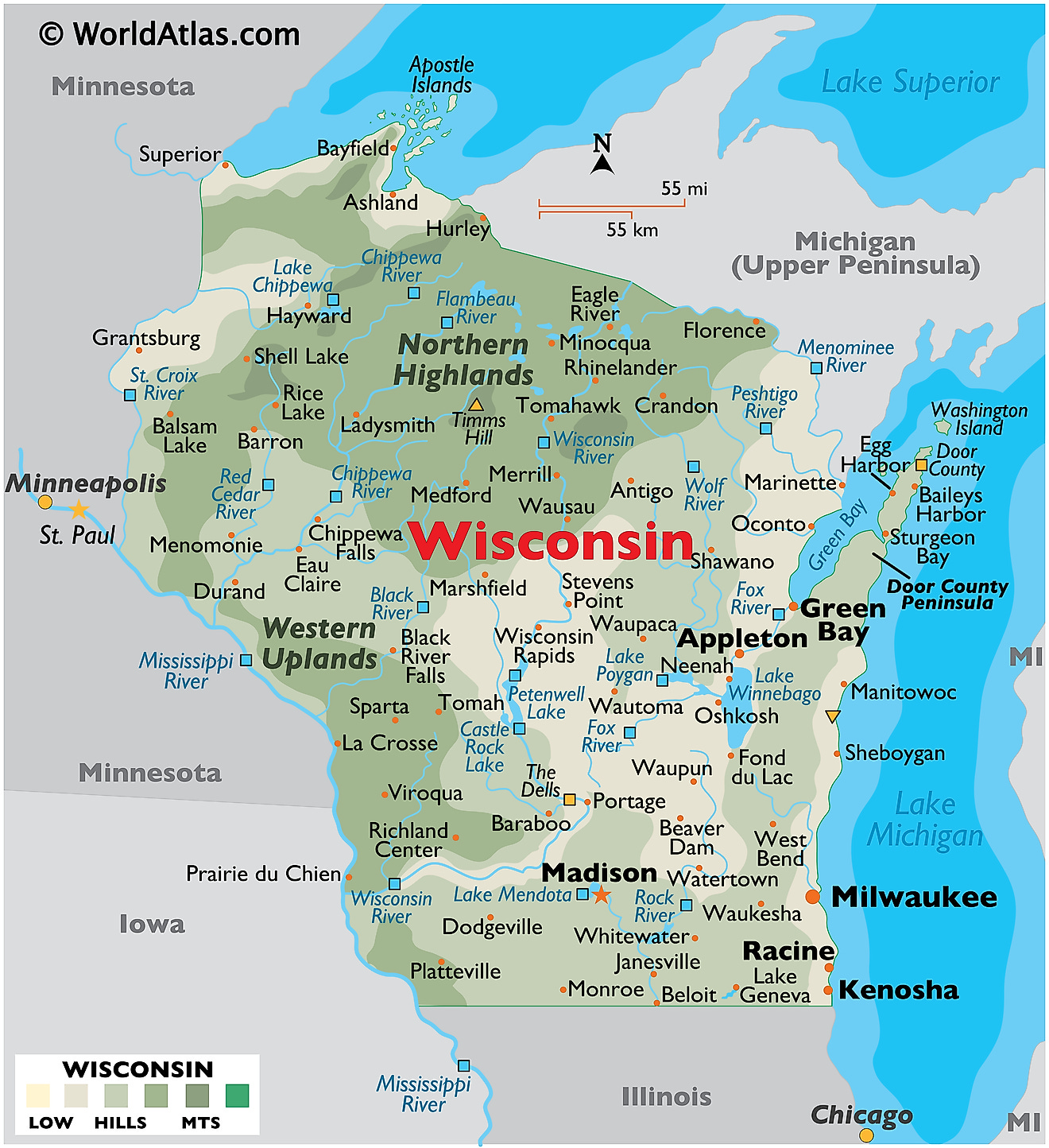
People from outside Turtle Island — Those of German descent are most numerous, followed by those of Irish, Polish, Scandinavian (primarily Norwegian), and British heritage. Persons of German ancestry are widely distributed but are more concentrated toward the east and in Milwaukee. Irish groups are found mainly in Beloit, Fond du Lac, and Sturgeon Bay.
That is the foundation to this country’s many hundreds of ailments, certainly tied to murder, theft, rape, miseducation, plunder, medical malpratice, corruption that all those immigrants somehow had on their skin. The Chlamydia of Exploitation which caused so much blindness in the hearts and souls of those early interlopers.
Now? Generations later, the children are confused in their Zoom School Delirium, while others are destined to liver damage, collapsed veins, toothless smiles, and so many mental ailments.
Dual Diagnosis is tied to addiction treatment — booze, drugs, what have you. With a co-occurring problem, rooted in the brain: Of the 21 million people in the U.S. with a substance use disorder, 8 million also live with a mental illness. It’s more than 21 million, but for now, the top mental illnesses are: Mood disorders that often co-occur with substance use disorders include:
Bipolar disorder
Major depressive disorder
Dysthymia disorder (persistent low mood for at least 2 years, accompanied by 2 or more symptoms of depression)
Anxiety disorders commonly diagnosed with alcohol or drug dependency include:
Generalized anxiety disorder
Obsessive-compulsive disorder
Social anxiety disorder
PTSD (post-traumatic stress disorder)
Other mental health conditions that may co-occur with substance abuse can include ADD, ADHD, schizophrenia and personality disorders.
Now now, I know it is difficult to see the rape of the Indians as part of the mental disorders listed above, but I have to say it goes deep into the DNA, so looking at Wisconsin or the so-callled Midwest, what I experienced in eight short days was entire groups of people, families, with so many bloody items packed in their baggage.
Before I move into Kelly’s specific social and spiritual work house shit, it is good to see what We/They/The Germans, Irish, Brits, Scandinavians, Poles, et al, did:
Native American cultures had occupied the Upper Midwest for centuries before whites arrived in the region. The invading whites were properly impressed by the thousands of burial mounds then to be found in the southern portions of the region, left behind by the extinct Hopewellian and Mississippian cultures. The Indians encountered by the whites at the time of contact depended upon fishing and hunting for a livelihood and spoke the Iroquois, Algonquin and Siouan languages. The European presence to the east had by then transformed Indian life. Indians became dependent upon guns and other western goods (and, often, got western diseases in the bargain). They warred with each other for primacy in their trade with the Europeans. Huron dominance of the Upper Great Lakes and eastern trade, and the Hurons themselves, were destroyed by the Iroquois in the mid-seventeenth century. The Sioux had been forced to move west by the Chippewa. Indians formed alliances with one and then another colonial power as power shifted from one to another. Charles Langlade, a half-white Indian leader known as the father of Wisconsin, helped the French defeat Braddock and the British; then fought with Burgoyne and the British against the Americans, and then lived out the balance of his life as an American. Remnant tribes huddled together. Stockbridge Indians, moving west from Massachusetts, lived with the Oneidas in central New York, before moving (with some Oneidas) to Green Bay, where they negotiated with resident Winnebago and Menominee Indians to win the right to establish a settlement.
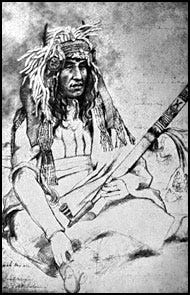
“Chief Little Crow.” With pen and pencil on the frontier in 1851; the diary and sketches of Frank Blackwell Mayer, by Francis Blackwell Mayer (Saint Paul, 1932).
There was talk of setting aside part of what became the Northwest Territory as an Indian reserve or even as a state with all the perquisites of other states. Such talk ceased as white settlement approached the area. In each of the Upper Midwest states, whites assumed title to one stretch of Indian land after another, in breathtakingly short order, as that land became accessible to them. The white advance often culminated in a final desperate stand on the part of the Indians, as seen on a large scale in the uprising led by Pontiac (1763-66) and again in that led by Tecumseh (1811-13), and on a lesser scale in the Black Hawk War (1832) in Wisconsin and the Sioux Uprising (1862) in Minnesota. Often friends among the whites, in applying one or another “white” remedy to the Indian “problem,” were as destructive to Indian ways of life as were their avowed enemies. The defeated Indians were finally exiled from territory coveted by the whites, to reservations within the Upper Midwest states or to remote western areas devoid of white settlers. Once the wars and resettlements were over, significant numbers of Indians remained in each of the three states, on the reservations and in the cities. In fact, in the recent past their numbers have increased dramatically. The white debt to the Indians in the exploration and settlement of the region is indirectly evidenced in the abundance of Indian place names for every feature of the landscape.
Amazing, the trail of tears whites have generated throughout the globe. Exile from their own lands. Land theft, and this little two paragraph “something” above yammers about white debt reflected in Indian names for roads, shopping malls, lakes? (source)
Kelly showed me spots in Merrill. I have the photos, and I haven’t uploaded them all yet. One telling image is of him in front of a seven story building, subsidized apartments now, where when Kelly was 13 and a paper boy, he went to one of his clients to collect money, and, the pedophillia, the dirty rape of a boy, occurred by a man who later became a foster grandparent.
For the boy, and for the man, and then, for the newspaper, which technically was Kelly’s employer, a tale of different tales unfolded. Of course the boy is not believed, and there wasn’t even a slap on the wrist for the old man.
This is the quagmire of generational trauma, the dual diagnosis, the co-occurring mental pain and trauma caused by that very act of child abuse, rape, played out a thousand times a day in the world.
He told me it took him just a few months ago to understand the seeds of his own self-destruction with booze. Drinking and driving and busted. Plenty of years sober. Not a fan of the 12-step higher authority deal of AA.
Depression, anxiety, bipolar, who knows what else, seeded at age 13, but scabbed over, over time. You kind of have to get on living, and surviving, and so Kelly did do that, and meeting his Cheri 44 years ago, well, even though she lived without him for a decade total, and even though Kelly went from clean and sober to busted and locked up after drinking and driving, she was a driving force in his life.
The reason to live, even has she suffered small cell lung cancer. He had purpose, a mate, a listener, someone who shared the dream of camping and getting out of the swamp of Wisconsin memory hell.
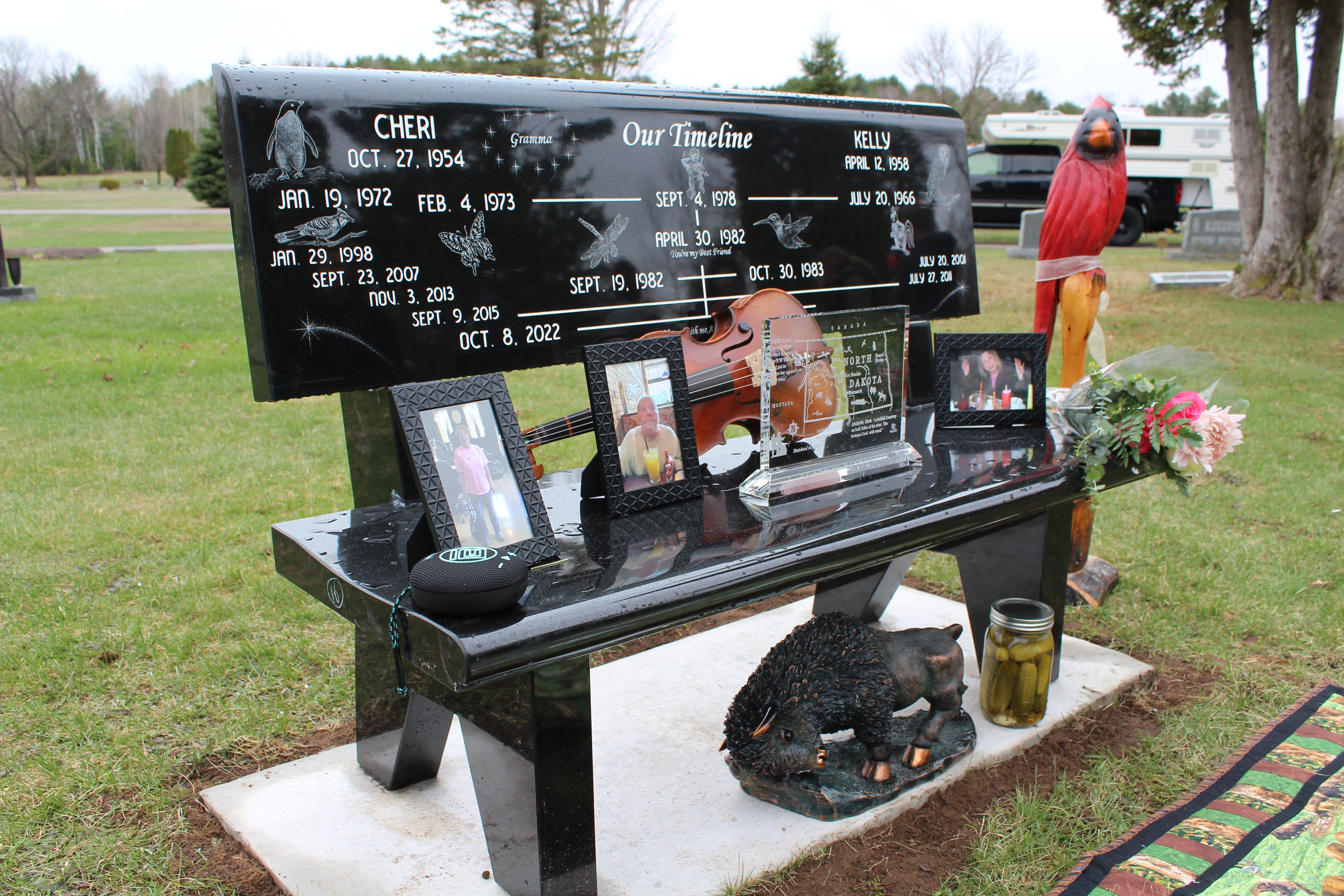
They had taken trips, and loved the West, loved the Souix Nation’s history, loved the Red Man. At the benediction or unveiling of the monument marble bench at the Merrill Cemetary, there were items especially special to Kelly and his mate: bronze bison, mason jar of farmland pickles, violin, quilt with bisons, glass map of North Dakota, family pictures, flowers, and Mountain Dew.
This town is like many of the towns throughout the Midwest. Where my spouse is from, Kansas, she said “it’s flat and bland just like Kansas . . . bars everywhere.” She said the cemeteries in my photo collection from this Wisconsin trip are better kept up. “In Kansas, even with Civil War monuments and gravesites, the weeds and grass are all overgrown. Nobody cares. Many are on private property so they don’t give a damn about the dead . . . or remembering the dead from long ago.”
KK showed me the dead at two cemeteries. Showed me guys who died young, some sick, others violently. The town of Merrill is sagging, somewhat forgotten, and alas, the memories, they are hard, like hardening of the arteries hard.
He is fine with me inserting photos of his family, the gravesites, the town, and even KK himself. Here he is with Eldee, the fat dog that stayed with his wife thdt
I haven’t even gotten to the prison time, the incarceration, the time he was on the lamb, on the run, having just had enough of the legal or criminal injustice system. That AWOL from a furlough did in fact, hurt his wife, as she was harassed by cops, their place — their home — was broken into by the cops, and the finale was when they finally traced Kelly back to the River Falls home, after being on the run in places Like Florida, and elswwhere.
I’ll end on some happy notes: a poem I read, wrote for the bench dedication ceremony, and two I did not write but read:
Standing alone at the ocean’s edge, Eager and unafraid, You are the child I used to be, Playing the games I played.
Now I have only a coward’s heart, Holding you all too dear, Learning at last that love shall teach The fearless how to fear.
You are so little against the sky, Eager and unafraid— Oh, little son by the ocean’s edge, I am afraid, afraid!
+—+
And, this short Part Three is best finished off with a Bukowski poem, sort of gritty, sort of filled with the death of drugs and drinking and old men and other men, in a flophouse. Emblematic of a life that could have been for Kelly but he fought that. Here we are, in 2023, and I went to Wisconsin to be a friend, to develop a friendship, and help out a little bit. I benefitted from the adventure.
Flophouse
by Charles Bukowski
you haven’t lived until you’ve been in a flophouse with nothing but one light bulb and 56 men squeezed together on cots with everybody snoring at once and some of those snores so deep and gross and unbelievable- dark snotty gross subhuman wheezings from hell itself. your mind almost breaks under those death-like sounds and the intermingling odors: hard unwashed socks pissed and shitted underwear and over it all slowly circulating air much like that emanating from uncovered garbage cans. and those bodies in the dark fat and thin and bent some legless armless some mindless and worst of all: the total absence of hope it shrouds them covers them totally. it’s not bearable. you get up go out walk the streets up and down sidewalks past buildings around the corner and back up the same street thinking those men were all children once what has happened to them? and what has happened to me? it’s dark and cold out here.
a tale of five cities, towns, rural townships . . . a start for this series that is going off the rails!
I just left from River Falls, Wisconsin, to Minneapolis-St. Paul, as the mighty Mississippi River, full of stringy whitecaps, seems to be that river going down, brothers and sisters, going down in so many ways, to the Gulf of Mexico through the flyover states of big ag, little big men, and women continuously told to stay away from well water, and keep the exposure on the back forty to a minimum when the spraying takes place.
My last episode in this series was all about KK, Kelly, taking me into his hoarding nightmare house to meet the Elde weiner dog, ten years old recently, and sometimes for days the only mammal in person Kelly talks to.
He just turned, 65, and his wife is gone, and that’s a forty-four year story, and he told me that one quarter of his life has been behind bars. All that time incarcerated, and his wife had to deal with the the legal trash, the lawyers, and the judges, and getting money for this and that court case.
“The last case broke us. Literally broke me and Cheri, financially. The heart was also broken .”
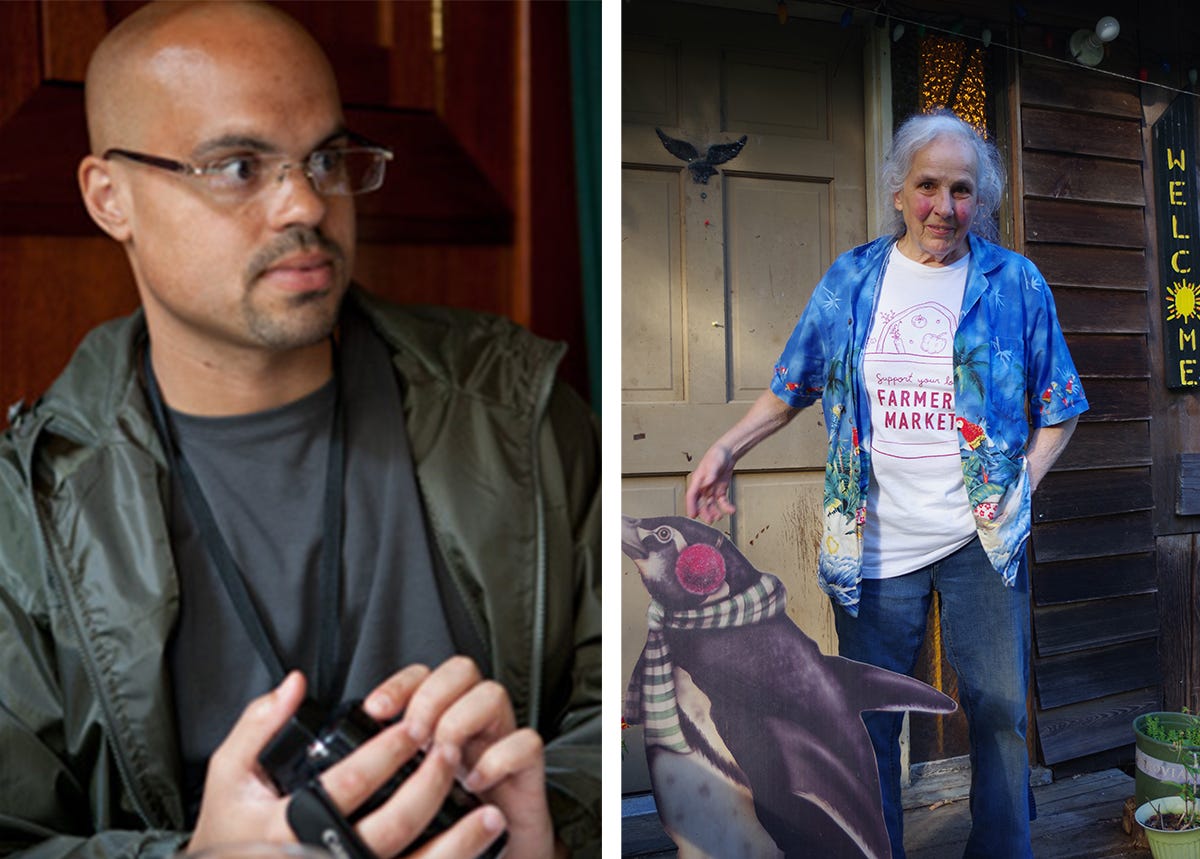
He’s a long hair and bearded guy, toothless, and he is a guitar and bass guitar freak. He showed me the bass he had in prison, and that’s a $300 limit on what inmates can have for such devices.
Toothless in Wisconsin. America. The first time was when he had the shit kicked out of him by another inmate. Imagine, showing up, sitting at a table, told, “That’s my table, dude.” And, Kelly, who he is and who we all should be, told the guy, “Last time I looked your name wasn’t on the table. And, I pay taxes in this county, so the table is the jail’s and county’s property, and since I pay taxes here and you don’t (he as from another Wisconsin locale), I assume I have the right to sit here just like anyone else.”
The one minute and thirty nine seconds of this big guy kicking Kelly’s face did the job, that is, mangled his face, eye-socket and ear, and knocked out teeth.
The prison system puts dental work on the back burner, so over the years in the prison system, Kelly has had tooth after tooth pulled, rather than suffering the dignity of decent dental work.
This psychopath happened to be black, and Kelly was pursuing a case against him. The White Brotherhood in one prison wanted him for the Aryan Nation fun, but Kelly refused that shit. What a crapper of a deal if he had that on his paperwork when going to trial.
America and formative years, that’s the ticket to a life of rebellion. Kelly’s smart, ended up going to college and matriculating, did auditing work for the River Falls college. He was not a happy camper with all the bullying in Merrill’s schools, and the neglect of a hard-assed old man — turned him into a runner, that is, running the streets.
Again, this is the bar scene, the small town drinking and drowning, out in the middle of nowhere. Nowhere to dance the high life, so the social scene for young bucks and gals is all about jumping into those bars for companionship, even if sometimes the local color is retrograde and ignorant and just plain old aged sharp cheddar racist and sexist and politically backward.
He listed off the number of people in his graduating class (KK did not finish school, went to a treatment program in Winnobego, one year, and he eventually just did the GED and got that high school diploma) who are dead.
Imagine, one fellow was working a window making mill, and his mother had died, and he was left with a son-of-a-bitch father, drunk and abusive, so when this guy lost his job, he couch surfed. Friends who also ended up crashed on the side of the road, perfectly unhurt by the collision, but knocked out cold and who died by exposure.
Another one of this guy’s friends as WWD, walking while drunk, and, bam, he was weaving into the darkened road, and he was killed.
Two couches down.
The kid with the window making job, now jobless and homeless, lived in the woods. In tents. Literally in the woods way up here in the almost great white north. This is a small town with 53 bars and 40-some churches, and VFWs, and the like, but whatever pain and PTSD and trauma he had, pushed him to live on his own, in the literal woods.
We’re not talking about Oregon Cascades or what have you woods, but gnarly woods, picnic areas and campgrounds, and that was yet another story of drunkenness and hardship.
They found the guy in pieces downriver after this fellow must have slipped in and went through the small dam.
Others — alcoholics — dead at 30, from heart attacks, others with liver disease, and others in prison for drunk driving homocide wilting away inside.
The power of booze and beer to bring tailgaters together to see the Vikings and Packers, all those hockey games, all the excuses to fire up a barbeque and pull out kegs, it is powerful.
This is not an easy legacy to break away from. KK did not belong, and when he came back from the treatment program, he too got a job in the window factory.
He as clean and sober for a while, but loneliness got the best of him. Here is a factory that threw a mandatory New Year’s Party, controlling the drinking, and controlling who would be showing up in the morning for work.
“Drink and party, on the company’s time, but quitting time means you quit at ten after midnight and then get some rest, sober up, and show up for the job the next morning.
I’ve talked with many cops and head sheriffs and police chiefs over the decades. In Spokane, where there are many down and outers, the Spokane County jail for that Sheriff is the largest mental health facility east of Seattle. That’s of course a play on the concept, because the county jail is no psych ward, no social work haven. Drugs, drinking and slow learning and terrible literacy swell the jail cells. Undiagnosed and untreated and unaddressed fetal alcohol syndrome is a number one reason adults offend. That is the disease of mother’s drinking during pregnancy. Babies coming out with a spectrum of mental and learning and spiritual diseases.
Babies turn into teens who turn into adults. Running and gunning. Making all the wrong decisions, and then drug and booze abuse, and alas, feeding a habit takes money, so the next best thing is breaking into places for stuff to pawn.
Homeless in Spokane, homeless in Wisconsin, homeless in America.
I got a lot of people in Wisconsin asking me if Portland is really that bad. You know, the constant blare of the ignorant “if it bleeds/burns/blows up, it leads” sort of thing with Mainstream Corporate TV.
So, while the kids in Merrill or River Falls or Tomahawk or in all the small towns learn how to cook meth, or at least learn how to run and gun and use and party, I’m asked about Portlandia.
How many prisons are in the state? Let’s see, the same demographics of Minnesota, but twice the number of incarcerated. Private prisons. You know, the beautiful people in LA or New York, hell, anywhere where the sun shines 330 days a year, with their investment portfolios hot with private prison stocks, the ugly reality of casino-disaster-prey capitalism:
Wisconsin currently spends about $1.5 billion dollars on its prisons, incarcerating people at around double the rate of nearby states. Despite this high cost, inmates in Wisconsin prisons often lack sufficient medical care and food, much of which is purchased with money sent from friends and family on the outside or with the inmate’s own meager wages ($0.20 – $0.80). (source)
A tale of many cities, no? The ones that have and don’t have. And what is it in those possessions? No hard and clean and clear and creative and loving father, mother, aunt and uncle, in some variations on a theme.
White America is as terribly broken as Black America. And, the beautiful people, like the Bidens in their $2.5 million home in Delaware, and other haunts, or the Trump freak show with his multi-million dollar haunts, no matter which whipping down party you align with (so sorry you see the world in blue state and red state demarcation), hence, throwing deplorable as a noun, descriptor, out to the world, whether it is Obama or Bill Cosby lecturing “their” people about what it takes to be a better human, or whether is is Romney or Clinton looking at “those people,” the forty percent who do not contribute, or those who are in the deplorable category, or the super predator, whatever these racist Trump or Biden bumblers and followers believe, we are in that world, here, up close in Wisconsin.
Eight days and countless hours listening to and speaking with and interrogating Kelly give me a better sense of the poison pills in this state than I am sure most Wisconsin beautiful people, academics, politicians could muster up from their high horses.
Biden in 1993 speech pushing crime bill warned of ‘predators on our streets’ who were ‘beyond the pale’ — Watch and Listen!
Ahh, until the last Ukrainian, err, until the last deplorable, that is, these fellahs and felines propose. The country is so mixed up, so broken from family to family, from the top to the bottom (just different tales of different rotting cities and mindsets) that we are living in a nightmare, where the ugly Americano is arming for more death, more killing, in Ukraine or in Taiwan. Americans can’t really just go through life in a Stepford Wife-Hubby way without paying the ferryman.
Kelly’s family — kids and grandkids and kids who call him pops — all battling the scars of addiction: from meth to currently doing fair on some level, but slamming the drinks, slamming the mind with sometimes superficial stuff.
I met people here who were gracious, and the graveside thing I help officiate for his wife’s memorial monument bench, they wanted to know more about me, showed respect and opened up their kitchen and hearts to me.
No complaints there, for sure.
And, yes, many broken people, from adults to grandchildren. Again, for me, people are amazing in many ways, that is, how they go from down and out, of in Kelly’s case, ten years in, some of the time in county lockup for OWI — operating a vehicle while intoxicated. He owns up to those. However, the prison time, that’s a whole other story upon story of misjustice, ugly local cops and bad prosecutors and judges mean as cuss.
I do not want to insult any of his clan, and writing about this, well, explosing folk, his family, Kelly is fine with that. Relishing what might come out of my noggin.
We laughed a lot, and in many ways the sickness of it all is funny in a sicko way, but writing this now, I’m a bit anorexic in terms of replicating the humor. A lot of funny moments with Kelly’s virtually messed up series of events in his life.
I came up here to be a friend, and I do not know how much good I did, so this is not about exploiting anyone’s pain, man, so if I turn on some humor, let’s go with it, okay, kind reader who is from the KK clan?
There are many answers to the ills of society, of the sick warring, wicked, narcissistic American society. Defund the military, defund the politicians, defund the predatory retail and consumer hell.
Cigarettes and chew and booze, and the story is one of endless immediate gratification, and pain pain pain, and unattended trauma, untreated families. Estrangement in America, in capitalism, is the ugly gift that keeps on giving.
Yeah, the n word and the s word for blacks and Latinos is common up here. Amazing how this country is really not anti-racist or integrated. The show must go on, though, since this superficial society, throwaway society to the core, will never ever be just and ever will be whole.
Gods and monsters and mindless moments, ennui, cities and tales, and a hundred different archetypes of variations on a hellish theme. Sometimes the salving of past addiction is buying junk, boob jobs, endless 7,000 square foot trophy homes. Sometimes a blue collar or green thumb millionaire is exposed to the hell and horrors of addiction, and the increasing number of lost and misbegotten folk.
Atomized in Wisconsin.
I’m at the MSP airport. We know who is working the booths and wheelchairs and kitchens and mini-stores here. BIPOC. A better world than, what, Ghana? A better world than Juarez? I will be bringing a few dandy talks with a guy from Ghana, a rasta man working in this bi-state as a medical equipment guy, for a large outfit.
His name is Kwame, and of course, his intersection with me is tied to the medical equipment at Kelly’s hoarder’s paradise. We talked. Kelly talked. We talked about work, jobs, and Kwame is 61 and ready to leave the entire state of insatiable USA and head for “the islands,” somewhere, tropical, with a rasta and Bob Marley attitude. Nothing fancy, small apartment, and out of the rat race of America. With his shitty social security. That’s enough for him.
Stories, unfolding tales of many cities, and that is it in America. So many people want out of the horror.
Stay tuned for more in this series. Sorry I went off topic, but I can get right back on that train to heaven, train wreck through America, tale of the cities.
first of three parts . . . what’s love got nothing to do with it in Wisconsin
“Are you the people with that black pick-up with the white camper?”
He’s a short red-bearded white cop standing over me and my friend, KK (initials to be revealed soon). We are in KK’s hometown, Merrill, Wisconsin, population 9,300.
Terminal Velocity: Man Lost of Tribe is a reader-supported publication. To receive new posts and support my work, consider becoming a free or paid subscriber.
Subscribed
“What’s up, officer?”
“We have a complaint from a resident who says you were on his property taking pictures of his house and a juvenile daughter.”
So begins the morning in Merrill, or at least, after a few hours of photographing with a borrowed Canon KK’s old haunts, his schools, churches, and, yep, the house he grew up in. It was 9 am when I got him to stand on the sidewalk to photograph KK in front of the small house where he spent his youth. It was his grandparents’ home. Small, sort of shotgun clapboard style no with faded vinyl siding.
Four shots, and we took off, turned for some of the street scenes where he played, and, then we moved on our with the pick-up and my shutterbug disease.
I call these drive-by shoots, so we drove and then stopped, posed, and then shot film. He is a 65 year old who I met on the “internet” who has been a good friend, a good reader of my stuff, including books, for more than a year. His wife died in October 2022, in River Falls, where they moved to decades before leaving both of their hometowns, Merrill. Merrill is his and his deceased wife’s birthplace and family locales. Bad memories for KK, and I don’t know about his wife, Cheri.
“The owner of the home accused you have trespassing, stepping on his lawn and photographing his teenage daughter. He is wanting you arrested.”
Welcome to America, and sure, I knew I’d get out of this stupidity, but what flashes in my mind is the mindlessness of America, the flyover states’ policing and politics, the rural places with contradictory “values,” old sagging towns with closed businesses, tired homes, and more which I will cover in this series. Lots of strip malls and drive-thru food joints you see all over America.
“I’m a journalist, and I have been taking photos of Merrill the past few hours, and I can tell you we did not go on the lawn, and I was photographing KK who is from Merrill. I saw no girl in a window, and there is no girl in a window in the four shots I took of a guy out in front of his childhood house.”
“The house owner said his daughter was upstairs, wondering what you were photographing and said you photographed her.”
The conversation when from here and there, and we gave up our IDs, and alas, yeah, KK is an ex-con (with air quotes), ten years behind bars total, six in prisons throughout Wisconsin. He’s known in these parts, and he’s still on paper, which means he is on “supervision,” not allowed to leave the state, and his name and his “crimes” would be coming up on the ID check.
I went outside, to the camper, and pulled out the Canon. The shots showed I was on the public access, sidewalk and road, and there is no peeping woman in any photograph looking at these aliens. KK stayed on the sidewalk. I shot him there.
America. The big burly guy/father followed the cops who went around town looking for this camper/pick-up truck combo, a unique looking rig. They spotted us at the local restaurant, The Pine Ridge.
America. This guy came up to me, as the cop was facing me, and while I showed him the photos in question; this guy, the so-called victim, pulled out his phone camera and started filming me and the cop.
America. “I’m telling you if they come back and start photographing my house, I will shoot them. I’ll shoot anyone coming onto my property.”
“Well, we’ll deal with that if that happens.”
“I’m not fucking joking. I will get my rifle and shoot the sons of bitches.”
America. After he went back to the five other police vehilces, I gave the cop the old thought exeperiment: “So, in this little Wisconsin town, you have people shooting anyone going onto lawns, with all these homes with no fences, no signs about no tresspassing, you really think I am supposed to believe you can arrest me for stepping on a lawn and photographing my friend’s old childhood home?”
America. “Well, it is tresspassing.”
“So you have a lot of shootings in Merrill? Especially in the summertime when kids and teens and their dads and aunts and uncles might be throwing frisbees and balls for dogs and then errant throws and tosses might get a ball or frisbee near the house and some innocent ball player retrieving it by some window or wall?”
America. “It’s trespassing to step on someone’s property and you can get arrested.”
America. “So Merrill has a lot of arrests for kids and dads trespassing? You bust dogs pooping on property, too?”
America. “So, you did background checks on us, what about this guy?”
“Yes.”
“And, you found some ‘interesting’ things in his background?”
The cop smiled. “Yep, there are some rough things in his past.”
America. “So, put the shoe on the other foot. Now, if I was in this parking lot, and say, none of this happened, but I started photographing the parking lot, the cool sign, and then this guy with his Duck Dynasty beard, I know this asshole would go after me hard, no questions asked. I’ve been around the block, around many parts of the world, worked in prisons, and I KNOW for a fact this punk would go after me for photographing him in a public place. Just like he just did with me.”
America. The cop smiled, nodded his head. “Look, think about it, officer. If say I was in Madison, on a street around the university, and had buddies and me tossing footballs, and maybe me photographing them, and then one ball ended up on a lawn, the home owner/resident could call the cops and have us arrestred? And then this shoot to kill crap, you think in a university town the cops would be allowing this? The city’s lawmakers, they’d be okay with college students or faculty or whomever getting arrested for going after a loose beachball or softball off the lawn?”
America. “I’ve never been a policeman anywhere but here, in Merrill. I don’t know about other cities’ ordinances.”
America. Ahh, imagine the headlines: “Trick or Treaters Shot in Merrill, Wisconsin, after a dozen home renters pulled out AR-15s and Glocks and started firing away.” Or, “Local Photographer Dies after Homeowner Plugs him Between the Eyes for Photographing old Historic Home.”
America. And, it only gets worse. “Look, we will be keeping him here until you all get on your way to make sure he doesn’t follow you. Are you done photographing in that area of town?”
America. “I am photographing bridges, pubs, old fronts of buildings, and more. And, we have a graveside service at the cemetary at one. His wife just passed last October and there is a monument marble bench in the graveyard and 20 family members showing up. I’m officiating it.”
America. “Well, we’ll keep him here. You should be fine. The cemetary is a good mile from his house.”
America. “So, this guy wanted to have you ticket us?”
“Actually, he wanted us to arrest you both for trespassing and stalking his daughter.”
America. “You know this is bullshit, really. Smalltown Wisconsin, and I take other small towns in this cheesehead state have similar values, similiar ‘shoot first, ask questions later’ ordinances.”
“Well, he lives in a sketchy part of town and they are worried about their stuff in the yard and on porches.”
America. Shoot to protect the barbeque and patio furniture.
City of Parks. Well, the next iteration of this first part deals with The City of Bars.
“At one time there were 53 bars in Merrill,” KK said. “I knew them all. That’s what people did when I was growing up. They still do, but there aren’t that many now. Many closed up.”
Bars and churches, on every street corner. All Aboard, Gesundheit, and so many run-down joints and holes in the wall, even back when KK was taking fast cars and noisy motorcycles through town to push the oppressiveness out of his skin. His first take down by the law was when he was 16. Booze.
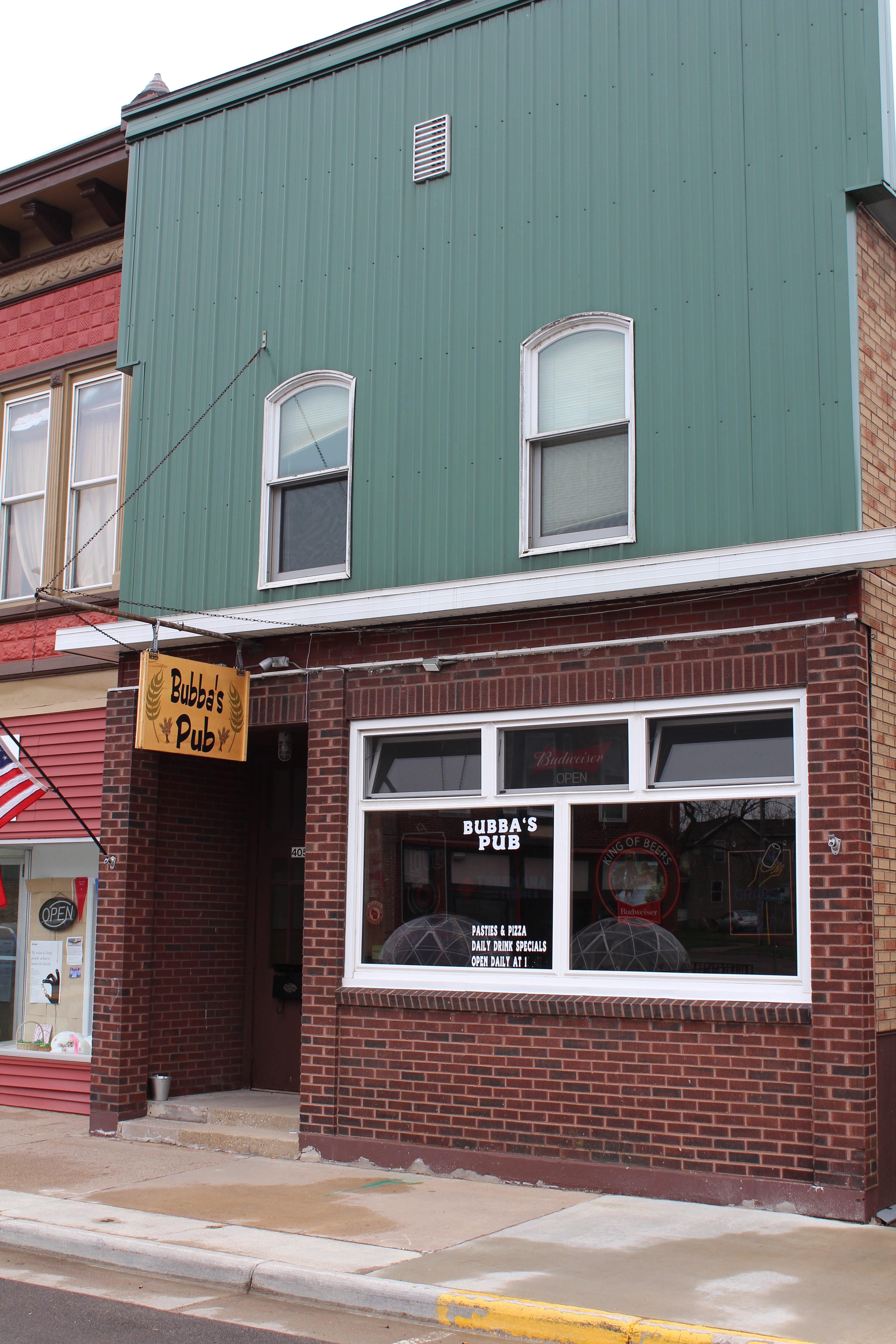
America. The Chatterbox, Hub Inn, Newwood Tap, Ali Baba’s, Dee’s Bear Den, Northway Club, Hinz’s Cork and Dine, 1-900 Club, Beacon Bar, Dick and Shirl’s, Victory Lane.
The victory in this town is working in bone numbing mill jobs, living in a town of killing deer and yanking walleyes from the lakes and rivers, beatings at home, knuckling the young ones in the head, and, drinking at those favorite watering holes.
America. The best Friday Fish Fries are had at those booze joints. Hamburger runs, deep-fried Wisconsin cheese curds, and puffy fries. Bars. Pubs. Clubs. Lounges.
America. In Eagle River north of Merrill, we have the Pioneer, where you pay a buck for an ashtray to smoke inside, so the collected tray fees are used if anytime the bar gets cited for allowing cigs and combustion inside.
America, the land of Disney thinking, cutesy names, and one’s legacy emblazoned on some Blatz or PBR lighted sign, passed from generation to generation.
Merrill, America: Plowman’s Playhouse, Mid-City Tap, Frish’s Place, Clubs 64 or 107, Club Morder, Gail’s Place, Urban Darlene’s, E and K Tap, The Robber’s Roost, Corner Bar, Avenue Bar, Gil’s Bar, Ballyhoo’s, Trophy Bar, Legion Lounge, Rock Island Resort and we can’s forget S & S Bar — Social and Sick. This one gives money gained from liver damage and all night with the boys and a $100 tab to the local hospital. You know, smoke up a pack of Kools, down whiskey a-go-go, and then at the end of the year, S & S’s proprietors hand over some of that mullah go to cancer education, treatments, what have you.
America. Drink, carouse, stay away from the kids, pound back the beers and shots, yell at the top of your lungs how you are right, and the America is about might makes right, aervednd then, maybe, just maybe, a head-on collision with a tree. Or pond. Death by exposure, drowning, all in a night’s bar hopping.
KK got wrapped up into drinking young. Nature and nurture. He’s more than just a smart guy, and he holds a boyhood with no interest in school, a whipper snapper in math, and alas, that teacher who wacked him on the head many times while he struggled to do division. That was grade three.
Imagine, years later, he’s working as a CNA, and lo and behold, this monster teacher is in memory care, in need of bathing and all that. She called him “my sweet Kelly.” All those math division wacking sessions long dust to the wind roiling him her Merrill brain. From sadistic teacher to broken brained old lady dying in a care facility.
So when we traversed this town, one he moved away from decades ago, the lights of nostalgia and nightmares came pulsating out. He knows every nook and cranny, every business that was, every place where he hung out at after ditching school. And the bars.
So when the fuzz came buzzing into our Pine Ridge Diner, more than just flashbacks were surfacing. He, KK, haven been fighting the law all his life, with a total of 10 years behind bars, he shook his head and laughed.
Since I was the accused perpetrator — photographer — I calmly dealt with the cops and their stupidity. Five or six cop vehicles, and big bearded bruisers holding onto their flak jackets and holsters.
Yeah, the illogic of having cops tell me I should have knocked on the guy’s door at 8:30 am on a Saturday, well, this is America. Imagine, I shot 130 pics in a two hour period. Courthouse, churches, cool architecture, funky yards, Trump and Go Brandon signs next to a white cross, you know, all that artsy fartsy stuff. The thought experiment is this: So, a photographer has to knock on what, a dozen, two dozen, more doors? Ask permission to shoot a man standing in front of the old broken down home?
I’ve talked with a few people about this, and hands down they say this is absurd, and then all the photos they took in places like Juarez or throughout the world. Kids and chickens. Three-legged dogs next to a woman hanging out clothes. Vietnam or Venice.
America. You will have the cops come blazing in to interrogate you about photo shoots. We are talking shoot and dash.
Yeah, the guy’s got a rough background, i.e., criminal background. But still, an ex-con was yelling and spitting that he wanted me arrested. A 66 year old guy from Oregon.
America — Friendliest place on the planet.
A sidenote to this is I just opened up my phone call log, and there is a message from the investigating officer. He wanted to let me know that when we drove off by him standing with the accuser, it was the pissed off father who returned back and wanted to apologize for his threats and bullshit. He was, again, Duck Dynasty addled, and no matter how many people reading this think I should have or could have might have done this or not done that, it’s all in a day’s work for me, and while the dramatic overtones may sound as if I am frazzled, well, I am not.
America. Within thirty minutes of the guy’s threats and his bullshit filming me with his toy phone, well, he apologized, and wanted the cop to let me know he was just overprotective and that there was a past, that is, some past incidents with his two daughters. I just listened to the cop’s message, two days later.
America. Triggered. Triggers. Trigger locks. Unlocked trigger locks. Rapid-fire triggers. Triggers all lined up while the weeds take over the yard and the Walmart shit piles up.
America. Wisconsin. Shooting ranges all over the place. Golf courses and shooting ranges. And a shitload of shit factories, that is, dairies.
America. Dairies and fields of GMO corn and soy. You gotta get the cows fed. Shit factories, those daity cows. America. What to do with the shit? America. America Don’t Take No Shit from Anyone (bumper sticker I saw on the highway).
America. Hair triggers and trigger brains. Lots of shit.
Graveyards and dairies. So, some of those 53 Merrill haunts are gone, turned into chiropractor offices. One’s a florist. Old, sagging boarded up. You have to look closely for a bright beacon coming from a foggy window. “No Coors Served Here!”
Those cemetaries are loaded with German and Polish names. Wisconsin, the state with the most beer:
From grain to glass—a complete illustrated history of brewing and breweries in the state more famous for beer than any other
Few places on Earth are as identified with beer as Wisconsin, with good reason. Since its first commercial brewery was established in 1835, the state has seen more than 800 open and more than 650 close—sometimes after mere months, sometimes after thriving for as long as a century and a half. The Drink That Made Wisconsin Famous explores this rich history, from the first territorial pioneers to the most recent craft brewers, and from barley to barstool.
From the global breweries that developed in Milwaukee in the 1870s to the “wildcat” breweries of Prohibition and the upstart craft brewers of today, Doug Hoverson tells the stories of Wisconsin’s rich brewing history. The lavishly illustrated book goes beyond the giants like Miller, Schlitz, Pabst, and Heileman that loom large in the state’s brewing renown. Of equal interest are the hundreds of small breweries across the state started by immigrants and entrepreneurs to serve local or regional markets. Many proved remarkably resistant to the consolidation and contraction that changed the industry—giving the impression that nearly every town in the Badger State had its own brewery. Even before beer tourism became popular, hunters, anglers, and travelers found their favorite brews in small Wisconsin cities like Rice Lake, Stevens Point, and Chippewa Falls. Hoverson describes these breweries in all their diversity, from the earliest enterprises to the few surviving stalwarts to the modern breweries reviving Wisconsin’s reputation as the place to find not just the most beer but the best.
Within the larger history, every brewery has its story, and Hoverson gives each its due, investigating the circumstances that meant success or failure and describing in engaging detail the people, the technology, the marketing, and the government relations that delivered Wisconsin’s beer from grain to glass.
America. Americana: things associated with the culture and history of America, especially the United States.
This is part one to KK’s magical mystery re-tour of Merrill, the roots of where the hell started for him. I’ve been in small towns in Mass. and Delaware and New Jersey, for sure, and the bars and pubs and wreckless legacy of cops owning booze joints, all of that, it’s been taught to me early. As a traveler. I’ve seen the idiocy of men and women plastered in Edinburgh and Dublin. And in Hamburg and Munich.
Limey monsters in British Honduras and now Belize slamming drinks and spewing the shit of military men high on rum and beer. Yeah, one of the worst times was when my former wife and I were in Athens, and the four Brits — military on R & R — in the room adjoining went from toasting and hoisting to singing and yelling to actually beating the shit out of each other, the walls pounding, some of the pictures in our hotel room crashing down.
KK isn’t that kind of a drinker, but the drinking started for a dark hidden reason, and that too will be explored in part two. Booze, meth, fentynal, the whole nine yards of America.
Smalltowns in rural America, shuttering some of the businesses. Farms going belly up. Big bruiser Germanic men, brothers and fathers, working the manure and the milking machines. Endless winds and chill and snow and rain. Hot as hell in the summer. A lot of flat land. Marshy land and swamps all over.
Guns and butter, Wisconsin. America. One kid with higher ambitions, locked into a mold for a while, a product of father beatings as a kid, beatings by teachers, the kid, KK, always throwing in to protect the bullied fat boys. Wisconsin. Ten years behind bars in more than a dozen shitholes, from county lock-ups to state correctional institutions.
KK fought the law, and the law waylaid him.
I met KK a year ago when he tracked me down via email. Reading my stuff over at DV, and alas, I learned about his River Falls life, his wife of 41 years struggling with small cell lung cancer. And she eventually succumbed to the cancer. More about that in parts two and three.
“How did you meet him?” some have asked. “You are flying all the way to Wisconsin for eight days to see a fellow you never met, some guy with a shady past?”
Yeah, and that’s also in parts two and three. Why I came, and what transpired, again, more microcosm of the flagging United States of Go Find Bradon and Trump Derangement Syndrome . . . America, my first time in Minnesota and Wisconsin.
America. Trigger warnings. Meth and cancer, family estrangement, pedophilia, violence, hoarding what you have, endless cycles of have’s and have’s not.
America. On the surface, all fine and dandy in those cul-de-sac hoods and on those thousand acre farms. Soy and corn. A belly full of toxins and a belly full of Friday Fish Fry and Old Milwaukee. But boy, so many addiction clinics, so many lost grandkids on meth.
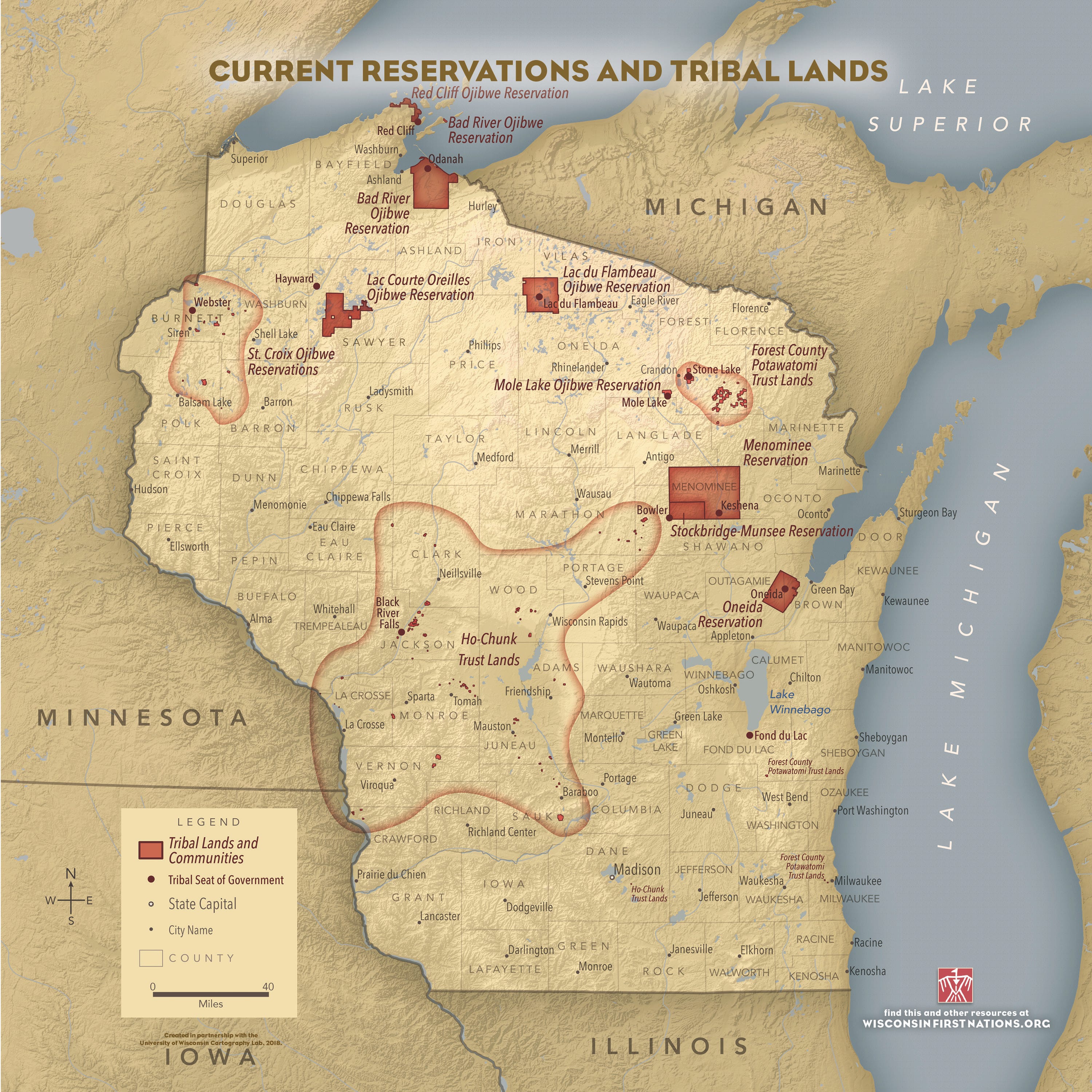
America. Where oh where are the Red Nations?
• Brothertown Nation
• Forest County Potawatomi
• Ho-Chunk Nation
• Menominee Indian Tribe of Wisconsin
• Stockbridge-Munsee Community Band of Mohican Indians
• Oneida Nation
• Bad River Band of Lake Superior Chippewa
• Lac Courte Oreilles Band of Lake Superior Chippewa
• Lac Du Flambeau Band of Lake Superior Chippewa
• Red Cliff Band of Lake Superior Chippewa
• Sokaogon Chippewa Community (Mole Lake Band of Lake Superior Chippewa)
• St. Croix Chippewa Indians of Wisconsin
That’s a whole other story, Red Nations, USA. America. Trigger Warnings. Tribes. Prisons and PBR. Endless mud pits and manure ponds. Wisconsin Cheese, the Best in Show. Where are the tribes?
never ever will the small things, those beautiful small things like OUR communities’ vibrancy and resiliance, be discussed by big wigs
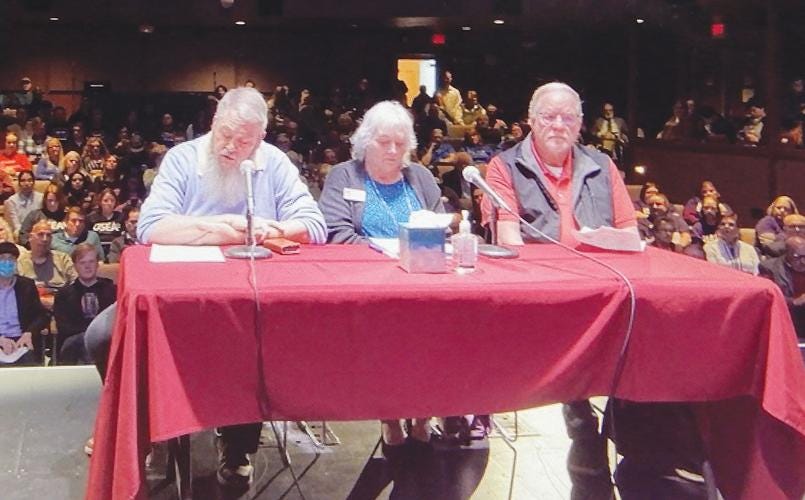
[Photo: Area mayors pleading for state help to plug funding gaps included, left to right, Rod Cross of Toledo, Susan Wahlke of Lincoln City and Dean Sawyer of, Newport.]
Amazing, no, that in Newport, part of Lincoln County, Oregon, having this big confab, of people, citizens and “stakeholders” alike wondering what the state of the state of decay is as it plays out in Salem (OR capitol) and the blue-red divide — Portlandia gets the votes, while the eastern part of Oregon is vying to break-away into Greater Idaho. We are that, THAT un-united snake$ of ameriKKKa.
The Oregon Legislature’s Joint Ways and Means Committee has been hosting a series of public hearings across the state, and the committee brought its roadshow to Newport last Friday, where a crowd of around 350 people filled the Newport Performing Arts Center.
Activists, mayors, schoolteachers, community leaders, a doctor, a sheriff and a judge were among scores of supplicants who sat before the high-powered legislative panel to plead for a share of the proposed $32.1 billion state budget. The delegation, chaired by Sen. Elizabeth Steiner, included 22 senators and representatives, divided evenly and spread behind a table on the PAC stage. (source)
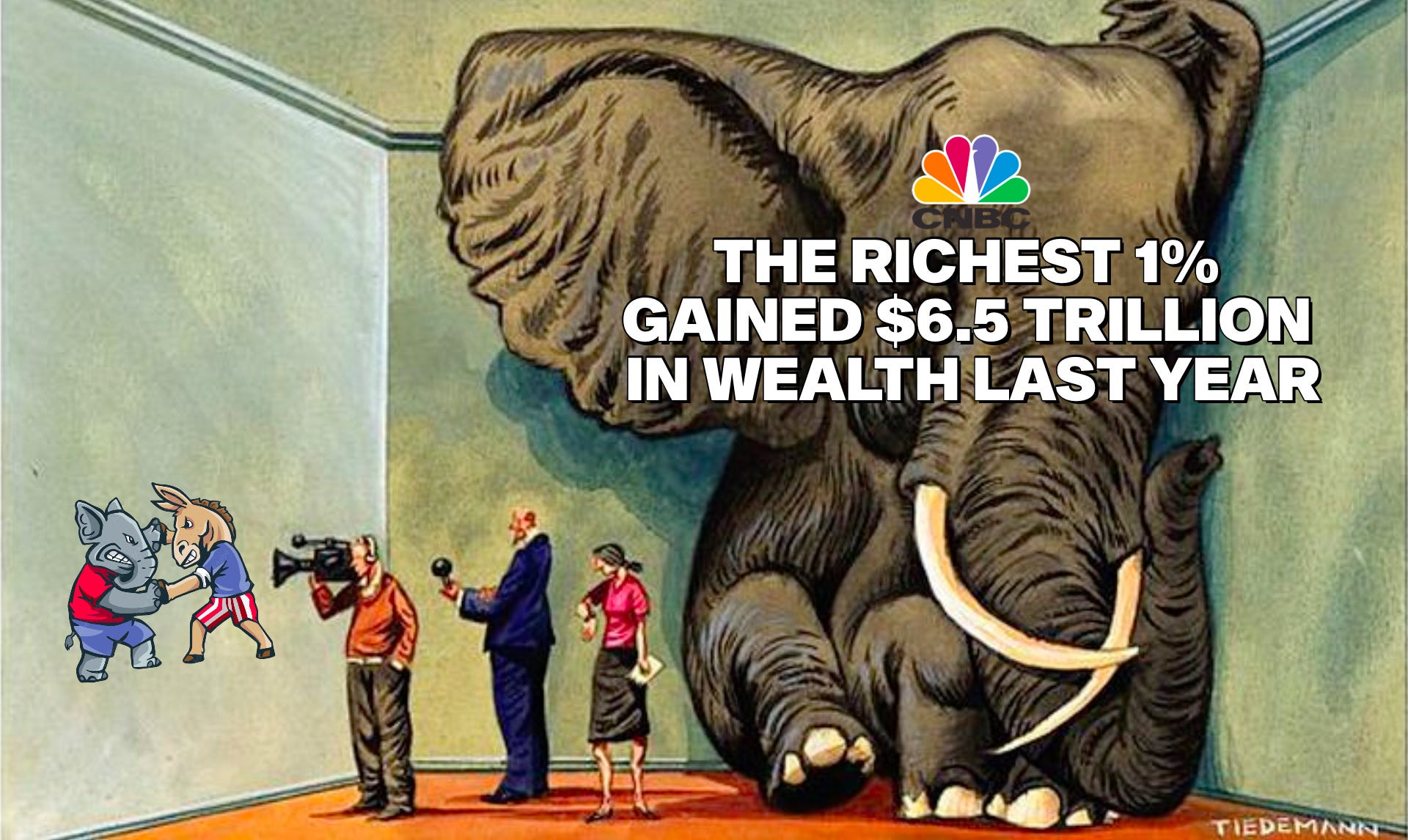
Because Capitalism IS a casino, disaster, predatory, zombie, usury, inverted totalitarian economic system, then the elephant in the room is, again, you want Socialism or Barbarity, or Savagry or Socialism, give that discussion a spin.
You can’t have your cake and eat it too. That is, we can’t have seven, ten or more cities in one region competing for arts, entertainment, conferences, etc. We can’t have logs from Lincoln County on trucks heading east while trucks from Georgia with logs going west to Oregon. That old Minute Maid and Tropicana real thought experiment: orange juice concentrate tankers, one coming from Florida, heading for California, the other from California heading into Florida.
We have convention center after convention center vying for concerts, events, fun giant car shows and circuses. Yeah, how is that working out? Everything is privatized, and the socialized costs paid by USA taxpayer is given to the Fortune 10,000, big and small, this and that.
We are here, on crumbling Highway 101, and the weather has been hail, grapple, snow, rain, and alas, we are in a food-health care-services-construction desert, that is, everything costs twice or thrice more than that real cancerous place, the greater (sic) Phoenix area.
Cancer?
So, you pick Central Coast of Oregon, for lifestyle, and air, and, well, you have to put up with broken sewer systems and three times the cost for milk and gasoline than the cancer of Arizona:
We have people wanting pieces of that federal and state $$$ pie, but in the end, the elephant in the room is, well, “How much can these local and state and federal representatives throw at war, at merchants of death, at big Pharma Thugs, at finance and insurance and Wall Street and hedge finance? How many tax breaks/abatements/giveaways do THEY get, and how hard is it to place our community as well as 20,000 other communities onto the radar of the policy makers, to see that our important issues, people, communities and places of common purpose are worthy of sustainablity? Look at the list of folk wanting some recognition and discussion:
Familiar community leaders took the stage under the PAC spotlights, including Lincoln County Sheriff Curtis Landers and Lincoln County District Court Judge Sheryl Bachart, who argued for more staff to manage the “safe release” of those incarcerated back into the population.
Lesser-known voices called for equal consideration, including elementary school teacher Tamara Madden, who urged the panel to fully fund a $10. 3 billion, K-12 education budget. She said money is needed to stop the “revolving door” employee crisis, especially among support staff including cafeteria workers and janitors.
In all, 61 people gave testimony, while those left out were told to submit written statements. Rep. David Gomberg, who represents Lincoln County’s House Dist. 10, said the declarations underscored how “small towns face big expenses.” He was not unduly optimistic, however.
“I’ve had some success in bringing home dollars by using my seniority, knowledge of the process and a little bit of legislative guile,” he said after the event. “But it’s going to be tough this year because the federal money is no longer flowing into Oregon.”
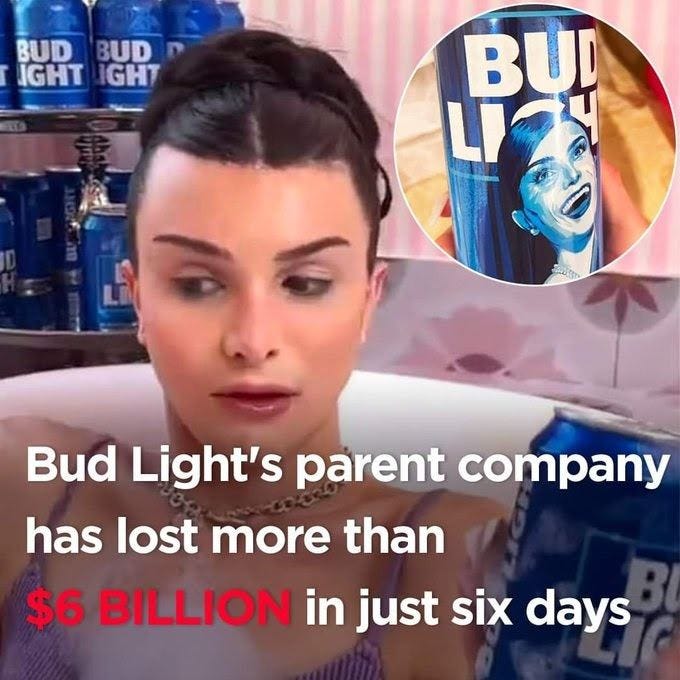
Again, we talk about Mulvaney and Bud and Trump and Biden and Twitter and Ukraine-USA War Leaks and celebrities of every stripe, including that freak Mulvaney and freak Kid Rock. This is what we TALK about, and K12 is vapidly sinking to new miseducation lows.
It is all divide and conquer, but also distraction(s) to the max, the endless EMFs and pixels and screen scrolls, all the flips of the dumb phone screens, all those Substack crap-o-la blogs, navel gazing shit (and some is good, but really, how many lifetimes do we have finding the diamonds in the rough?), all the endless manure of Mainstream Mush Masturbating for MIC Media, all those so-called hip and edgy folk with Podcasts, all those shows, all of it, this is more than just taking space and time and human breath away from everyday people. It is the fodder, it is the endless ether, the drone and drab and supercillious crap that actually gets deeply embedded into the zeitgeist but also into the gray matter collectively, in the womb and near the tomb.
It all connects, those endless millions of hours dedicated to USA, Ukraine, twenty years of hate spat out and tossed sat China and Russia and Cuba and African nations and and (and) and___________________. It all calcifies in the glands of most americanos and all americanos’ hormones are rushing in all the wrong places, until, we have DSM-V pages of maladies accounting for our mass fear, and entire books of contraindications and intended and unintended consquences of the dirty and mold and fungus and viruses, and bacteria and prions and poisons and chemicals that are all part and parcel the American Way, from smalltown Newport to big time New York City.
Endless dysfunction, endless Americanism, endless stupidity around who we are as a nation, which is definitely a country of horror, terror, thefts, murders, beheadings, starvations, poisonings of the wells, shocks and awes, hit squads, black jack booted goons, Mafia’s, Gangs of New York/LA/Chicano et al. It is a country that now threatens to send in the Merchants of War to Mexico, and it all is ALL connected to the fact local communities are dragging, suffering, smeared into almost non-existence.
The cops want more cops, the sheriff wants more SWAT participants, the courts want more prosecutors; the system is broken, as little rural Lincoln County has high levels of meth addiction, homelessness, Domestic Violence, untreated psychiatric issues, broken development disabilities situations, aging not so well in place, and this is it, man, a community meeting, with lawmakers, and the bottom line is:
Keep on doing the same dirty thing, and expect miracles: “Local officials repeated a common theme, telling legislators that rising costs outstripped their limited budgets.”
Bigger than just show me the money:
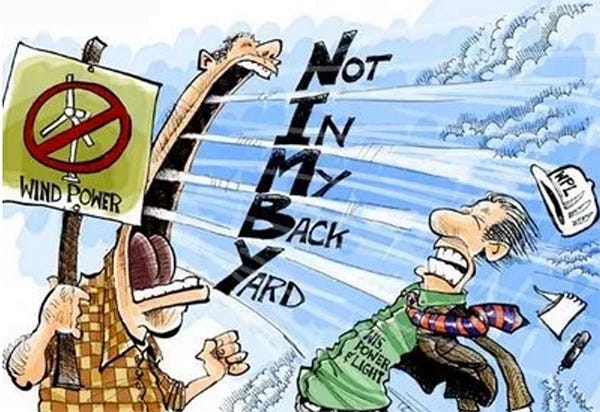
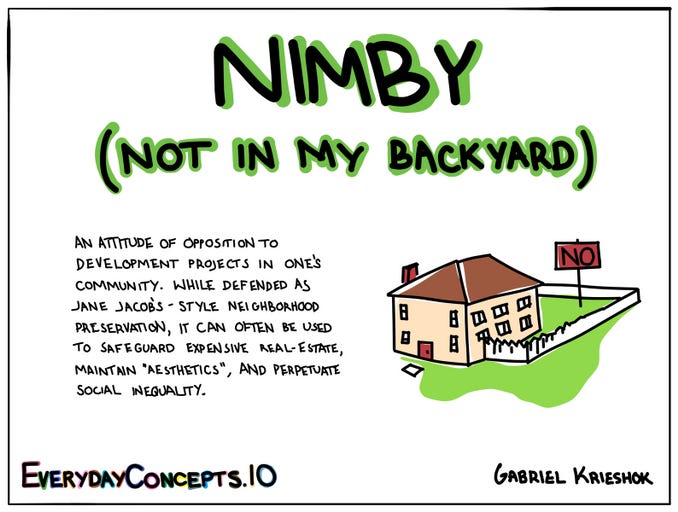
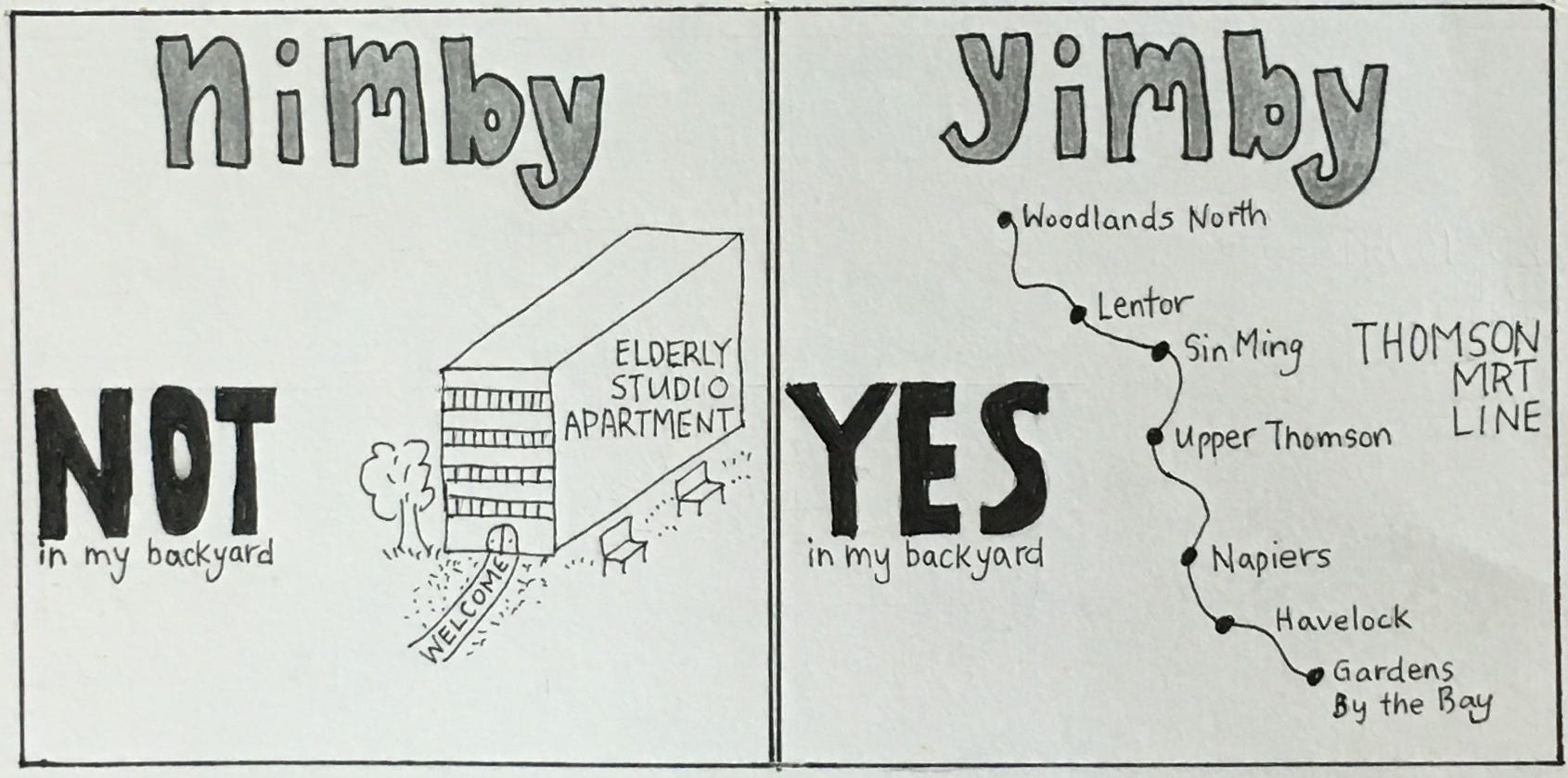
Ahh, YIMBY or NIMBY, that is the question, until that elephant in the room is shampooed and manicured and stomping us all to death:
Ironic, that CIA-controlled, the dirt bag TV-Cable monster, NBC, CNBC, all of them, putting this one out:
They just don’t know how many trillions are dedicated and stolen for the Military Industrial Complex. It goes so much deeper than “just” the end producte, whether a flak jacket or Humvee or jet or missile or satellite. Believe you me, it’s all the R & D, all the colleges and universities, all the PR, legal outfits, services, goods and services, from buttons to bullets, and this country is tied to war war war. The average price of a gallon of gasoline, counting all the costs, external and personal, is around $27 a gallon. War, sanctions, digging, pollution, harm to planet, people, community; cancers and culled economies. Hit men for Shell, BP, Exxon, and endless insurance scams, the cars costing $80,000, those microchips, those highways, the amazing amount of work one has to do to keep tires treaded and oil clean and the damn engine running, w/ tune ups, the endless time spent in an ICE or EV (internal combustion engine or electric vehicle) as our lives are sucked away. Fracking, embedded energy, wars wars wars.
Yeah, more than $27 a gallon when you count the nations broken, destroyed by oil monarchs and oil tycoons.
Again, if you build your society on tourism, on Air B & B, on endless vehicles coming in and toilets and washer machines flusing and dumping, then here we are:
Startling news emerged with many requests, including how 400 units of affordable housing have been stalled by a faulty sewer system in Lincoln City. Mayor Susan Wahlke told the panel the town’s infrastructure, which serves 40,000 tourists “on a busy weekend,” could fail at any moment.
The horizona ain’t pretty when we throw money at celebrities, junk, over-priced and under-quality medicine, and the war war war . . . . Tax giveaways and the rich hoarding it all.
For transit, the infrastructure grades range from a B in rail to a D-. Five category grades — aviation, drinking water, energy, inland waterways, and ports — went up, while just one category — bridges — went down. In 2021, stormwater infrastructure received its first grade: a disappointing D. Overall, 11 category grades were stuck in the D range, a clear signal that our overdue infrastructure bill is a long way from being paid off. (source)
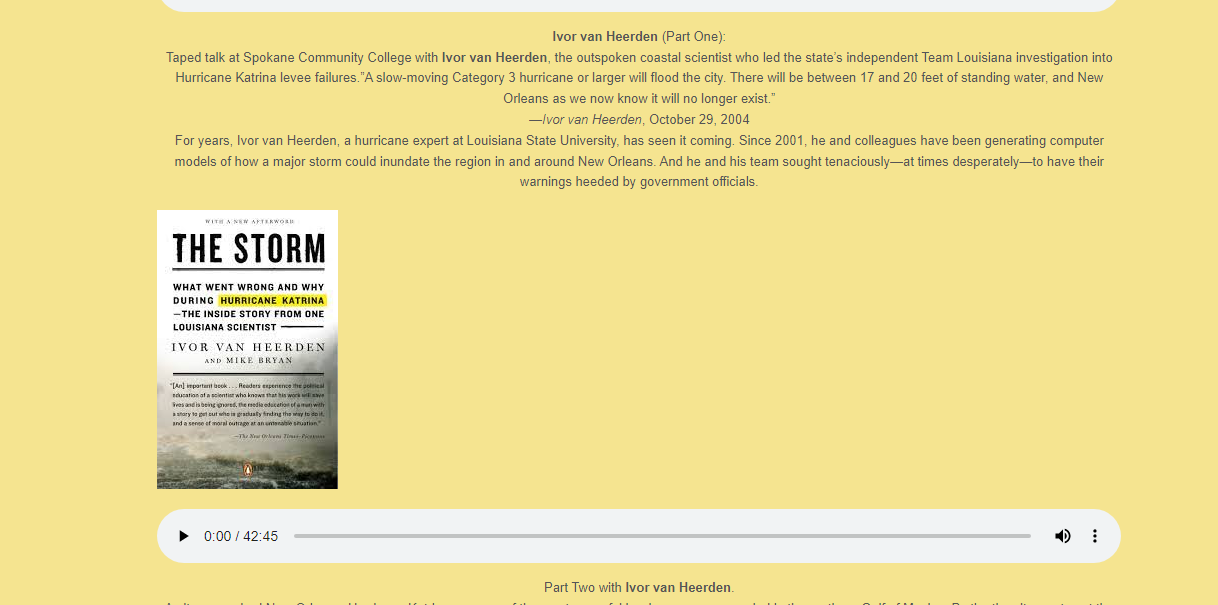
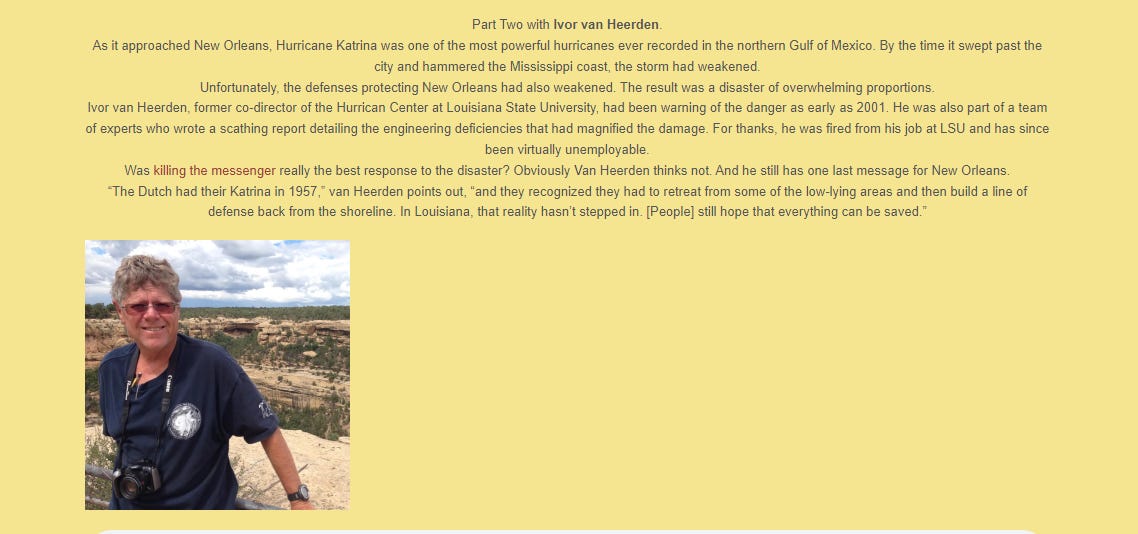
Not that I have faith in engineers, civil engineers, who are also part and parcel embedded in America the free, the brave, the best. Remember NOL, and that lie? Find my two parts to the story of, The Storm, as in Katrina!
Arrogant, macho, idiots, the US Corps of Engineers, and engineers in general. And they went after Ivor van Heerden, after him at the university where he taught.
Look, I was at Good Samaritan Hospital, for my spouse’s colonoscopy. We had to travel 90 minutes one way to get it done, and that meant an overnight stay. And, she opted for being knocked out, which I did not opt for when I had my age 50 screening (in Europe, the majority do not get put under, either). So, one doctor with the drugs, and then the gastro doctor. It was, again, another teachable moment.
Yep, that screening costs us, insured, whatever, from $2,800 to $4,700. She had four nurses, and then in the operating arena, maybe two docs, two nurses and then an endoscope assistant/nurse.
Ahh, the lovely coast, and the lack of everything, because it’s all about the US Chamber of Commerce, bed and breakfasts, short term rentals, endless lines of people hunting for tidepools, taffy, t-bones, tequila and toasty beach fires.
One of her nurses, a male, he was proud of his military service, his bullet in the foot (he said he had a corpsman status … a hospital corpsman is an enlisted medical specialist of the United States Navy, who may also serve in a U.S. Marine Corps unit), proud of his 19 years at the hospital, and proud of his entertainment center, sons and teaching them about Naco Libre and Jack Black. He said he was on the USS Nimitz, aircraft merchant of death ship, and how when Whitney Houston sang the racist national anthem for what, the Stupor Bowl, how there wasn’t a dry eye on the deck.
He’s another arrested developed 40-something, with tattoos all over, and yammering about Rambo and Jack Black (he said the guy, Black, sang the second best Anthem after Houston).
Lisa Marie Presley came up, and I said, “Yeah, too bad she’s gone.” Here we go, a guy with 100% service connected VA benefits, with a job that pays $120K, Cadillac health insurance, this is what he said: “I have no sympathy for her. She was a drug addict. When I came back from war, I didn’t use drugs. I bought a crotch rocket (motorcycle) and then when that was too dangerous, I started walking.”
Ahh, so I did push back, saying, “Yeah, I was a social worker for veterans, most on some form of self-medication, and all my female vets had been raped by their own men, so, nah, I have a different take on drug abuse.”
This fellow is just chopped liver in the scheme of things, but think about millions upon millions of boy-children raising other boys (their own). Imagine that, boys hearing a medical services guy, a nurse, who has zero sympathy or empathy for drug users. At Good Samaritan.
The USA in a nutshell, well, there are so many nutshells out there, teachable moments for me. It’s not surprising or upsetting to me, because it is par for the course, since I was probably younger than 13, man.
Man Lost of Tribe? Me? Come on, get over it. Imagine that, a nuke-powered merchant of death ship with 5,000 sailors on it. There’s the rub, no? How much to run it, to fix it, to outfit it, to treat the injured, to pay the sailors, to feed and clothe and air condition them? How much do we pay for their de-enlisting and then coming into society with those “I give a fuck about people who are addicted to drugs and die” attitudes.
Yeah, a guy who loves that insipid overpaid poor acting talentless Jack Black, no, overweight by MD standards (this nurse was carrying too much BMI himself) and, damn, I know about stories of Black snorting and doing speedballs and downing mass quantities of Chris Farley booze.
Who is living in a van down by the dump, or by the highway, or alley (no, not a river)? Oh, veterans, those poor ass achey-breaky hearts. Addicts. Here’s a high school teacher and coach, making fun, man, making fun of the down and out.
Well, we know how comic Chris died: On December 18, 1997, Farley was found dead by his younger brother John in his apartment in the John Hancock Center in Chicago. He was 33 years old. An autopsy revealed that Farley had died of an overdose of a combination of cocaine and morphine, commonly known as a “speedball”.
“I’m not laughing at me. I’m laughing at this person who’s committing so much who’s two feet away from me,” Sweeney said, adding that it has happened more often doing improv than her time at the legendary NBC comedy show, with the notable exception of the Farley sketch.
“When Chris Farley did the ‘down by the river’ Matt Foley, I was in that. They had to cut around me because I was laughing. Because it was like I had the best seat in the house for the funniest friggin’ thing that was happening on the planet.”
Can Americans ever be genuine, or is it just in our fucked up dimwit, TV Boob Tube Shit, Disney and McDonalds, Sesame Street and Tele Tubby, the endless drip drip drip of Holly-Dirt and Masterpiece Theater.
There are no Bruce Willis moments for our ocean communities, for sure. No Build Back Better. We are screwed, man, soap on a rope, rope a dope, all of it, we are screwed because we do not strike them all.
How much will the next war be? No better than D-minus from the engineers! More more war pornography. Watch three fellows you will NEVER see on your TV. This is scary, brothers and sisters. No Bud Lights here!
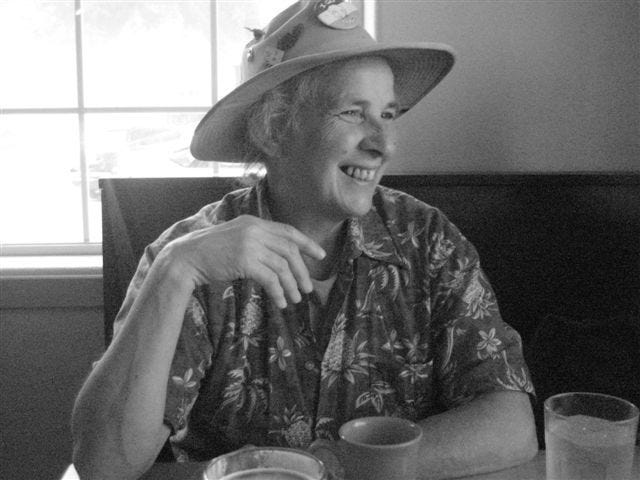
simple breaking bread in the AM with Carol Van Strum pulls this writer into yet another focus
Yes yes, as if I need more focus. I have never been called myopic, and I tell almost everyone now that even if we share hashbrowns and eggs, there is a good chance the conversation will trigger in me HOT (higher order thinking) and I will be off to the races, whether just polemics or combo polemics, stream of consciousness and journalism!
You got this piece from me recently, A Real-life Toxic Avenger, on Substack and around the internet:
So, two women, one from Canada, the other from New York, one 38, the other 82, met because a year ago the Canadian emailed me out of the blue and asked for help to leave her abusive husband: typical domestic abuser, and that means, charming to men, has a college degree, is macho and hates hates women, including his own mother.
Carol took my friend in on her 14 acres, and the dog, and then March 28 my Canadian friend headed out after I got her to a rental car place in Corvallis to Prescott, her last known place as a green card applicant and now she’s a green card holder. Big lab dog, and in a car heading from the Coast of Oregon to Arizona.
The seesaw life of the abused victim means they rarely leave the first time and stay gone/put. This is more than five years of this woman’s life, and it seems as if it — the abuse, the back and forth, even trips back to Quebec and then to Dominican Republic to salve wounds with a friend, and then the make-up sessions with this piece of human stain — defines her now, and her powerful independent life before the abuser came into her life in Guatemala (he’s a gringo) seems a distant memory. History. She had her own mini-restaurant in Antigua, and was there for four years, employing people and was sort of the toast of the expat part of the demographic in Guatemala.
It was a quick catch-up for Carol with my Canadian before she got to get some Chiropractor work as part of the state’s victims’ compensation fund, to include eyeglasses and counselling and other things of that sort.
FINDING FRINGE | A mother’s love reaches into the bowels of the Oregon penal system to keep her son afloat
This story is about Carol dealing with a son, mixed race, having to face 15 years in prison for a murder he did not commit. Carol fought the poison sprayers on her property, where dogs, animals, humans and her own children got sick sick sick after the forest service-approved crap was sprayed on weeds growing along ditches some of which had running water.
Dead frogs and tadpoles and sick dogs and sick kids. The story gets worse, worse than some Michael Clayton story, or Dark Waters, for sure:
Yep, her kids were killed in a very suspicious house fire:
….here, from my story on her, A Real-Life Toxic Avenger:
Even that tragic story isn’t simple — there is evidence the four children, old enough to babysit each other, perished in a house while Carol was next door at a neighbor’s house. The fire marshal indicated it was suspicious, potentially the result of arson. Carol has her suspects.
All the legal wranglings have reinforced my chronic intolerance of lies. Ditto the never-ending battle against poisons — that is an industry that could not exist without lying about its products; therefore, it should not exist.
Carol’s life on many levels, including her work to prevent chemicals entering into our watershed, as well as her personal physical and spiritual peaks and valleys, could be made into a movie. I asked Carol what she gathers from these trials and tribulations.
One person can’t save the world, or even see the other side of it. When I was four years old, I set out to see the world — thinking it was a special place like the World’s Fair with carousels and Ferris wheels. After the cops found me asleep in a pile of leaves by the street, my mom asked why I had run away. I told her I didn’t run, I walked, because I wanted to see the world, and she laughed and said, ‘It’s been right here all the time — the world begins at home.’ Lessons you never forget. I can’t save the world but I’ll fight tooth and nail to save this little corner of it.
So how do I go from suspected murdering of four human beings, her children, to something more light-hearted. The weather?
Carol’s talking about how last year there were no pollinators — bees, bumblebees, and other flying insects. Cold snap, then budding and leafing, and then more cold until the valley she lives in had no fruit — pears, apples, plums, cherries. She’s proud of those trees man.
She related just today how the trees are budding, and now one day last week, with a freak storm of hail and snow, a bumblebee was stunned in the snow. She inspected it, saw it move just a bit, and she then went to the old house, returned with lettuce leaves and made a tent.
“Well, when I returned an hour later, the bumblebee was gone. I hope it survived.”
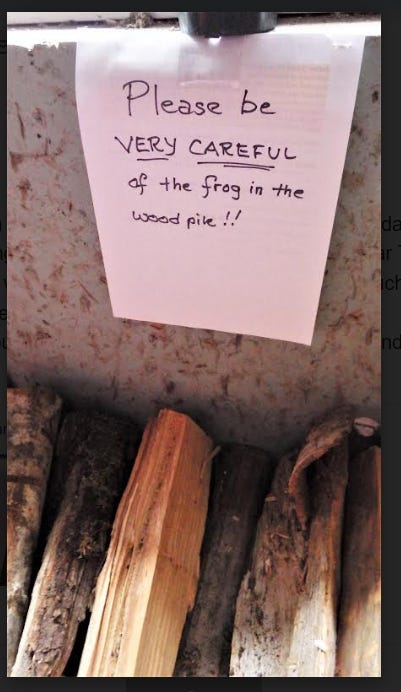
The frogs were out two months ago with a warm period. Then the cold, hail, atmospheric rivers, and the rare snows all over the place. Carol related that in her old house she found a frog, attempted to capture it, but it went to the wood pile. She didn’t want to squash it.
She made a sign: “Please be very careful of the frog in the wood pile.”
We joke about how her little slice of heaven, like Walden Pond, is a microcosm of the world at large: insectpocalypse and the shifting of weather, local climate and growing conditions.
Of course, we talked about her own battle with an abusive husband, who wanted to take everything from her when she was in her 40s during the divorce. Her lawyer, which she could not afford, stated: “What’s more important to you? Getting some of the assets or your children?”
She fought for those kids and ended up with nothing, but the kids, everything. That is another pathway old people like Carol have put up with.
We also talked about those neighbors, on plots of land, near her place. Aging in place, and as those in Carol’s world aged, as bones and muscles degrade, no matter how much exercise they get, they are vulnerable. Many women are living alone out there in Five Rivers:
I did a story on a Waldport scientist working on watersheds, on salmon river-creek restoration. Near Carol’s place: Fish Do Grow on Trees
Tidal wetlands are important habitats for salmon and a diversity of other fish and wildlife species. They also trap sediment, buffer coastal communities from flooding and erosion and perform other valued ecosystem services. — Hayduk
Age, man. I talked with an urban planner when I was getting my master’s in urban and regional planning. We looked at cohorts and population growth graphs. How a place like Boulder, Colorado, where the hippies hit it in the 1960s is now what, ten times the population of 1950:
And boom it did. The 1950s were a period of rapid growth. Federal census figures in 1960 proved that in one decade–from 1950 to 1960–Boulder nearly doubled its population figure of 19,999 to a new one of 37,718. Boulder’s population in 2023 is estimated to be 106,213, covers city area of 27.366 sq mi.
That’s it, man, you can’t stop the flow, and alas, that population growth is not just young and boomers coming in. But speaking of the boomers, she said in California on planning committees they (those in their 20s and 30s) never talked about planning cities and communities for this, you know, Boomer boom: 65 years and older. People in their 70s and 80s.
Not that cities are not designed for old people, disabled, but there were no national planners and politicians and law makers looking at AGING in place in the 1980s, or looking at the reality of families atomized, and old people losing spouses, and those as couples, getting old, but still dangerously vulnerable.
Carol has plethora of stories about her sisters, her friends and her neighbors. In fact, Carol is alone, but recently took on a guy, Todd, who is hitting close to age 60, living on a spit of land on her property, in a non-running RV. He is working his ass off helping the older folk with odd jobs, roofing, broken pipes, weeds, wood cutting, all the stuff that happens when you live in the woods.
Many many sad stories came out of our breakfast. One of her sister’s fell off a ladder with her wheelchair bound husband inside the house while his wife was checking on a leak. He called 911, and she was knocked out, and a month later, she was rushed to Seattle (Ellensberg is where they lived) to the same place at another hospital where her husband was being treated for his cancer.
Or one lady who was active and then had to have a hip replacement. The operation failed, her hip seized up, she got a huge cyst around the replacement hip, and alas, the insurance company said the hip was defective, was out of date, and that a new hip would have to come from the same company with a representative of the hip company in the operating room.
She ended up with lung cancer — she was a non-smoker and did not work in factories — a cancer directly caused by chromium which was part of the original hip, defective, which leeched chromium into the blood.
Story after story. This in this society where families do not stick together, where aging is hush-hush, and where the leaders of the society despise the poor, weak, vulnerable.
Carol joked about the robbers in the senate and congress, how they are taken care of for life, that is, with health care, the Cadillac version. We talked about how there should be an age limit for those vying for President (I am against presidents, against this system, definitely want a parlimentary system for this disjointed country, and I want capitalism go the way of the girdle).
She laughed about toilets, because she lived without one for years in this homestead: “I wonder how many toilets are in the White House?”
[The White House has 132 rooms, 35 bathrooms, and 6 levels in the Residence. There are also 412 doors, 147 windows, 28 fireplaces, 8 staircases, and 3 elevators.]
And that other shithole of criminality? [Buckingham Palace has 775 rooms. These include 19 State rooms, 52 Royal and guest bedrooms, 188 staff bedrooms, 92 offices and 78 bathrooms.]
Let the people shit in outhouses, and now that the wasps and bees and other insects are gone, beware of the lurking spiders.
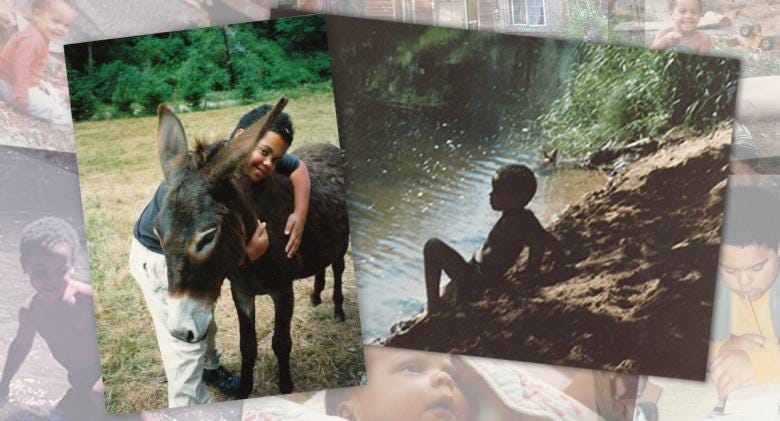
[Photo: In the 1980s, Jordan Merrell often played in the wilderness near his home, located in the Siuslaw Forest in Lincoln County. Jordan was adopted by Carol Van Strum and husband Paul Merrell when he was days old in 1979. (Photos courtesy of Carol van Strum)]
Yep, aging, domestic violence and the criminal injustice system. Carol mentioned a fellow who went to Berkley Law school. That final constitutional law exam, from a quirky professor, demanded an essay on Defining Justice. Three hours of sweating some of the students went through. Her friend answered the prompt in six words:
“Justice is the aesthetics of control.”
He got an A. The fellow ended up working with the EPA, and alas, we don’t make those people anymore.
Such stream of consciousness. And what is justice? To the legal profession it is a set of rules and edicts and legislated dictates and codes written to, darn, protect property and to protect the powerful.
justice (n.)
mid-12c., “the exercise of authority in vindication of right by assigning reward or punishment;” also “quality of being fair and just; moral soundness and conformity to truth,” from Old French justice “justice, legal rights, jurisdiction” (11c.), from Latin iustitia “righteousness, equity,” from iustus “upright, just” (see just (adj.)).
Justice is the end of government. It is the end of civil society. It ever has been and ever will be pursued until it be obtained, or until liberty be lost in the pursuit. [“The Federalist,” No. 51]
Meaning “right order, equity, the rewarding to everyone of that which is his due” in English is from late 14c. The Old French word had widespread senses including also “uprightness, equity, vindication of right, court of justice, judge.” To the Greek philosophers (Plato, Aristotle) the notion was of each thing in its proper sphere or serving its proper purpose; inequality of aptitudes and outcomes was implied.
In English c. 1400-1700 sometimes also with a vindictive sense “infliction of punishment, legal vengeance.” As a title for a judicial officer, c. 1200. Justice of the peace is attested from early 14c. To do justice to (someone or something) “deal with as is right or fitting” is from 1670s. In the Mercian hymns, Latin iustitia is glossed by Old English rehtwisnisse. (source)
The reality is that we matriculate way too many lawyers annually; judges are corrupt and disconnected to reality; and the god-given life-time appointments of those SCOTUS criminals is also a bastadization of what the truism of “do the right or fitting” thing.
We are in predatory capitalism, all upheld by laws, by a library’s worth of dictates and codes and rules and precidents, etc. The reality is we are in a Criminal Injustice System, where privatized prisons are the rule, where there are not enough by a factor of 5 defense lawyers, and where $2000 an hour lawyers do win, do draw out case for years, even in class action suits.
The rich make the laws, and that in itself is injustice.
Up is down, wrong is right, war is peace, and lies are history.
Money money for health care? Sy Hersh is just pissing in a pool, as there are many trillions of drops in this corrupt bucket:
The Ukraine government, headed by Volodymyr Zelensky, has been using American taxpayers’ funds to pay dearly for the vitally needed diesel fuel that is keeping the Ukrainian army on the move in its war with Russia.
It is unknown how much the Zalensky government is paying per gallon for the fuel, but the Pentagon was paying as much as $400 per gallon to transport gasoline from a port in Pakistan, via truck or parachute, into Afghanistan during the decades-long American war there.
In one ear, out the other for the average Americano. There are no true liberal arts in education, so where are we now with defining or know what is “justice”?
We coursed through other topics, like a guy I knew, Novick, Steven. Carol’s kids stayed at Steve’s parents’ house, and his brother watched the boys while Carol was in Eugene fighting for her other son, Jordan, from the possibility of incarceration he eventually found himself in. Steve’s family was from Brooklyn, and ended up in Mendocino, CA, where she also lived close by to.
I worked with Novick in Portland on some of the houseless issues. Here is a weird article about Novick and Uber (that son of a bitch ompany).
A new book about Uber contains a dramatic account of the night the ride-hailing company invaded Portland—featuring a furiously obscene Steve Novick.
Super Pumped: The Battle for Uber, by New York Times reporter Mike Isaac, contains several passages featuring the tech giant’s defiance of Portland City Hall in December 2014. In one chapter, excerpted by National Public Radio, Isaac describes the evening when Uber’s diplomatic liaison, David Plouffe, called Mayor Charlie Hales and Novick, the city commissioner running transportation, to tell them the company would operate in defiance of Portland’s rules for taxis.
Isaac describes Novick’s fury.
“Mr. Plouffe, announcing that you’re going to break the law is not civil,” he said, his hook digging into the mayor’s desk in frustration. “This is not about whether we should have a thoughtful conversation about changing taxi regulations. This is about one company thinking it is above the law.”
Now, the two sides found themselves at an impasse. “Get your fucking company out of our city!” Novick yelled into the speaker phone. Plouffe, the charmer, was silent.
Portland officials eventually relented and allowed Uber to legally operate in the city. In 2015, Hales and Plouffe appeared together onstage at TechfestNW for a conciliatory panel interview.
It’s a NYT writer? Everything about the New/Jewish York Times is scum, and alas, I liked Novick, a Jew himself but up against these criminal companies, like Uber, et al. (source)
But The New York Times later revealed that Uber had used a software called “Greyball” to help its drivers evade city regulators while it defied Novick and Hales.
Novick told WW today:
“My tombstone should probably read: ‘He should have stuck to his guns against Uber.'”
Small world, no, me barely in Lincoln County since Dec. 2018, then having my own column in a weekly, covering interesting people, and here I ended up with Carol writing two stories about her, and then, now, in 2023 we’re talking at Salty Dog’s with our eggs and hash and coffee, contemplating these six degrees of separation.
I’m not sure if Carol understands why I’m a communist, and certainly not THAT kind (haha), but she is anti-authority, anti-corporate mentality and she lives what many people would consider off the normal path. Eighty-two, major heart surgery a few years ago, a reader, thinker, and such a positive perspective on her life.
I’ll continue with this sort of Substack personalized leap-frogging from critical global issues — climate chaos, death of pollinators, misogyny, supremacists, patriarchy, racism, incarceration, and domestic violence.
All on that plot of land, where Carol is raising 15 chicks to be egg layers, where she has two dogs, donkeys and a hell of a perspective on Walden. Oh, that small world, no?
Haeder: We called your place your own Walden Pond. Can you elaborate on what that means, since Thoreau covers many aspects of humanity, nature, spirituality and life and ecological forces in the book “Walden”?
Kaufman: Thoreau said he went to Walden Pond to shed the diversions and distractions and surpluses of community life and think more deeply about life and to find “higher laws” — the goal of the English Romantics before him and of his friends in the Transcendental movement. He never found the higher laws, but he was sure he saw them expressed in the world of the pond. Same here for Poole Slough and its forests and marshes. My variant may be that I spend more time looking at this world through the lens of science rather than through personal revelation, which I distrust.
Again, I’m flipping my own script against scientism, against those dogmatic Darwinists, those goofball climate green weenies, and against all that science for capitalism’s sake which has given us death by 10,000 bad products, bad chemicals, bad ingredients, bad air, soil, water, oceans. Yep, science is not my litmus test. Seeing Walden Pond is seeing beyond the water, beyond the indicator species, past the apex species, beyond all layers of muck below the pond. Know all of those biological systems, for sure. Seeing the pond is seeing the enlightenment and spiritual soul of self in the reflection of the water. What about those who came before Puritans and Pilgrims? Native People’s relationship to the pond? The wolf’s relationship to it? And, what about the beaver who actually constructed it?
Oh, I know epigentics, and oh, I know trauma, PTSD . . . oh, I undestand adverse childhood events and their relationship to adulthood. Oh, indeed, we can see the world from many lenses, and this one hour respite with two friends who had nothing in common until they met, until my Canadian friend was with her a day on her property as a safe house from an abuser, says so much more than, believe you me, a semester jam-packed with intellectuals and Brave New World and Farenheit 451 animal farm sort of lord of those flies 1984 background noise.
you get 17 days in skilled nursing with post brain tumor removal before . . . .
Genesis 1:28 – Then God blessed them, and God said to them, “Be fruitful and multiply; fill the earth and subdue it; have dominion over the fish of the sea, over the birds of the air, and over every living thing that moves on the earth.”
Well, yes, it is profane, but the point should be made — unless you have a piece of land, some water flowing on it and under it, some decent soil, some brethren, family, you know, dependable family, and extended family, and skills sets that are way beyond some prepper group, and you have to have the typical farmer and rancher who can fix anything and husband anything, and a nursing degree in there coul help,, and, alas, there has to be some of those greenbacks to pay the taxes, the fees, the excise burderns, all the code building costs, so you can have this little slice of heaven without the Blackrocks or even local thug county and state tax collectors at your door — UNLESS you have all of that, pluse creatives in the group, and hard work of communicating and being a tribe of community of purpose, gain, and land ethic, then you will be tossed on the street.
I have a father-in-law with a second skill surgery in six months, that is, surgeons digging in his brain for five hours in an attempt to pull out more cancer masses, that is, the worst of the worst cancers, as Scientific American declares: “New Strategies Take on the Worst Cancer–Glioblastoma; Among the various malignancies that can afflict the human body, few bring with them the dour prognoses of brain tumors”
There are a thousand personal reasons for hanging on and having the quacks open you up once again. The VA and Medicare take care of most of the charges — something like $190,000 MD and surgical and hospital bills added up.
Once released, though, the skill nursing is on the clock. In this case, with his Medicare addition, he has 17 days to improve and move up, that is, back home with his wife, the only person in the game here for this fellow of 78 and she of 75 years on the planet.
That’s 24/7 care person, and she gets 19 hours a week of people coming over so she can do the banking and shopping. The old man is bed and chair ridden, and that clock is ticking until Tuesday, to prove he can arm wrestle his broken body (he has not standing power anymore, for years, before the diagnosis of the big C) into a tranferring situation: from chair to bedside comode; from bed to wheelchair, from wheelchair to toilet.
It’s an apartment, not some big home with handicapped retrofits. The wife is a small of stature woman and he is in the 230 pound range, but losing weight even though he eats well.
There will be chemical therapy, and the radiation, the last one being an in the hospital deal, so eight times they have to get a vehicle to move him from apartment to hospital and back. Supposedly Uber drivers do this for $30 as opposed to $160 for a medical transport.
We live three hours west, on the coast. There are no sibling and grandchildren and children there to swoop them up and take them under their wing. Our home is isolated and not near the VA, but three hourse. Therein lies the problem.
The fact is she worries over every bill, so an $1,800 BILL out of the $180,000 total for the last cancer surgery (they only got 70 percent of it since the rest was “too deep” into the brain where vital functions are controlled), is troubling as they are social security and the one bedroom apartment is $1800 a month.
Making calls, sticking to it, and then having the VA say they will pay the rest helps. Of course, there are ambulance bills, and the VA doesn’t pay for ambulances from one facility to the next, unless that facility is a VA hospital. Now that’s another $660 bill.
The means test she has to fill out is a mountain of paperwork, but alas, she has to do it. Her daughter (my spouse) does what she can here at 130 miles away, but we have our limited salaries and retirement from SS (me) and we living a small bungalow, worthy of us, two, and a cat, but not expandable for a mother and her dying husband.
Yet, like most people, the mother-in-law puts her faith in God, and she loves the USA, loves the military (she’s religious, and Seventh Day) which is weird, and she is stuck.
What would THAT look like if I had a large family, large ideas about land and sustainability, and if the old woman and old man had those families too?
That clock ticking away means that if he can’t get to the john and the chair, then, well, it is foster care home, almost a hospice situation. That means all social security checks he gets for the family will be GONE, going into the private, for-profit adult foster facility, care facility, whatever you want to call it.
What do nations care about the cost of war, if by spending a few hundred millions in steel and gunpowder they can gain a thousand millions in diamonds and cocoa? ? — W.E.B. DuBois
So my family members dealing with the brain tumor are not here yet, and will not be here if we have any say in the matter:
I write this because I did spend with my wife up in Portland with the mother-and-father-in-law. And, I reeceived this pathetic news (sic) item in some feed: from some charlatan outfit, Investment News: “Boomers bite back: Don’t blame us for retirement ‘Road to Nowhere’!” The premise is never stated: Savagery and Brutality and Exploitatin and Death by a Thousand Retail-Consumer-Casino Hell Cuts or SOCIALISM.
Before I plead my case to the boomer community, here’s what happened.
Highlighting a study by the Transamerica Center for Retirement Studies that said the median amount baby boomers, or those born between the years 1946 and 1964, have saved for retirement is a totally inadequate $144,000, I wrote that the boomer generation was on the “Road to Nowhere,” even going so far as to reference the lyrics and title of the well-known Talking Heads song.
At the time I wrote, “Sorry to be blunt, boomers, but it’s not just the soundtrack in our heads that’s telling us that you are traveling down a troubled path, it’s the data on our screens, too. Statistics from industry experts clearly show that your financial future is indeed certain — just not in a good way.”
Fine. Admittedly I was being, well, “blunt.” But I was writing as simply and directly as possible for what I believed was a noble reason. That is, to encourage Generation Xers, millennials and Gen Zers not to repeat the mistakes made by their elders.
And then the boomers lowered the boom … on me!
Emails flooded in, accusing me of ignoring the repeated financial indignities suffered by boomers, a large number of those hardships that weren’t of their own making. (source)
These only scratch the surface:
Responded Thomas: “How are boomers supposed to retire? They’re still raising their adult kids AND adult grandkids who refuse to get out of their house and get on with life! Tell the ‘you get’ generation to stop whining about every little thing, pull themselves up and get on with it already!”
Wrote Wendy: “Because it was active lobbying again and again by the investment firms for policies eliminating pensions. And then there was active lobbying against a government run retirement program for low and middle income people in my state because the financial firms didn’t want competition for fees. Because of that, a lot of elders are already homeless or living in poverty.”
You can read her piece, but it is boiler plate, really. The fact is that wars and war machine and tax havens and tax breaks for the rich and corporations, and the fact we pay for externalities of the dirty-pollution-injuries-destruction-environmental hell capitalism does to the world.
The for=by=because of=with THE people is and has never been a truism in this settle (theft) colonial (enslavement) state (empire of chaos, lies, terror to, for, on THE people).
I could put in a thousand graphics like this one
Or quote that war monger, multimillionaire (a billion at least) Hank:
Who controls the food supply controls the people; who controls the energy can control whole continents; who controls money can control the world. — Henry Kissinger, interview with the Observer, 1983, on his book, Years of Upheaval
You want to see where that for-with-by-because of the people Capitalism goes?
This is cognitive dissonance, and this society is broken on so many levels. It is a war mongering state, and just this little doozy is emblematic of the Demon-Crats (the Repubicans want war with China and is in a War against the people of the USA, you know, “those” people who are chumps and didn’t save enough!).
I am also in constant argumentation with the beautiful people, the levelers, the milquetowast landed gentry, those with the retirement (state or county and federal) and those with trust funds and houses paid off) who want more more more for the dirty *elensky (Z being banned in UkroNaziLandia) as well as the Orthodox Church!
It goes back and back and back, arming hundreds of countries, endless profits in the trillions for the Offensive Weapons Merchants of Death and thousands of corporate — big and small — offhoots that make bank on war, war mongering, color revolutions, PR, construction, retail shit, services, etc.
So, yep, nuclear war is the end game, but before that, we have a history of corruption, murder and theft and graft in UkroNaziLandia:
The Ukraine government, headed by Volodymyr Zelensky, has been using American taxpayers’ funds to pay dearly for the vitally needed diesel fuel that is keeping the Ukrainian army on the move in its war with Russia. It is unknown how much the Zalensky government is paying per gallon for the fuel, but the Pentagon was paying as much as $400 per gallon to transport gasoline from a port in Pakistan, via truck or parachute, into Afghanistan during the decades-long American war there.
What also is unknown is that Zalensky has been buying the fuel from Russia, the country with which it, and Washington, are at war, and the Ukrainian president and many in his entourage have been skimming untold millions from the American dollars earmarked for diesel fuel payments. One estimate by analysts from the Central Intelligence Agency put the embezzled funds at $400 million last year, at least; another expert compared the level of corruption in Kiev as approaching that of the Afghan war, “although there will be no professional audit reports emerging from the Ukraine.”
“Zelensky’s been buying discount diesel from the Russians,” one knowledgeable American intelligence official told me. “And who’s paying for the gas and oil? We are. Putin and his oligarchs are making millions” on it.
Many government ministries in Kiev have been literally “competing,” I was told, to set up front companies for export contracts for weapons and ammunition with private arms dealers around the world, all of which provide kickbacks. Many of those companies are in Poland and Czechia, but others are thought to exist in the Persian Gulf and Israel. “I wouldn’t be surprised to learn that there are others in places like the Cayman Islands and Panama, and there are lots of Americans involved,” an American expert on international trade told me.
The issue of corruption was directly raised with Zelensky in a meeting last January in Kiev with CIA Director William Burns. His message to the Ukrainian president, I was told by an intelligence official with direct knowledge of the meeting, was out of a 1950s mob movie. The senior generals and government officials in Kiev were angry at what they saw as Zelensky’s greed, so Burns told the Ukrainian president, because “he was taking a larger share of the skim money than was going to the generals.” (source —”Trading with the Enemy”)
Since I was a toddler, there began a host of freakshows on TV news, in politics, in celebrity “news” that caused gastric rumblings in me. As I became a journalist — newspaper reporter at age 18 — it only got worse, the despicable people in the news, on front pages, and on Ted Koppel or “60 Minutes.”
Add this one this morning:
Truly stomach turning, these criminals, in the People’s (sic) House (sic). But there are millions to despise:
The crimes of presidents:
Chomsky, who himself perpretrates a crime, a spoken crime, a desire to “put it” to fellow (sic) citizens (persona no grata): … see below.
“People who refuse to accept vaccines, I think the right response for them is not to force them to, but rather to insist that they be isolated. If people decide, ‘I am willing to be a danger to the community by refusing to vaccinate,’ they should say then, ‘Well, I also have the decency to isolate myself. I don’t want a vaccine, but I don’t have the right to run around harming people.’ That should be a convention,” said Chomsky.
“Enforcing is a different question. It should be understood, and we should try to get it to be understood. If it really reaches the point where they are severely endangering people, then of course you have to do something about it,” he added.
Speaking on YouTube’s Primo Radical on Oct. 24, Chomsky said that for the unvaccinated people who are segregated from society, how they obtain groceries should be left up to them. “How can we get food to them?” asked Chomsky. “Well, that’s actually their problem.”
So, you have 17 days, until you end up homeless, or in a place where people — that family, that dwingling community — can’t help you. Food prices are up twice or three times the prices in 2019. Not some bullshit 5 percent inflation crap.
Everything has at least doubled in price. That’s 200 Percent inflation, which is just another way to say, “make the profits, the killing now, at any cost to our family, our nation, our fellow We=By-Because of the People!
This is 1974. It’s axiomatic of how my mother-in-law and father-in-law are being treated. Figure out how!
At the convention of the World Food Conference, leaders of the underdeveloped nations hoped to press for changes in international trade relations while U.S. Secretary of State Henry Kissinger hoped to use the conference as a forum to link food shortages to overpopulation. Kissinger tried to put the blame for the food crisis on the oil producing nations and the “energy crisis” they brought about and made it clear that the U.S. no longer plans to provide most of the world’s food aid. The underdeveloped nations did not accept this. They still blame the crisis on the U.S., which they say controls more food than the fuel the oil producing nations control. The U.S. has historically used food as a tool of foreign policy, and with the increasing dependency of the U.S. on the raw supplies of the underdeveloped world, there is growing talk of using food to blackmail nations into adopting population control programs. One such proposal came in Rome by former U.S. government official Richard Gardner, who suggested a “global survival pact” under which rich nations would conserve food, energy, and raw materials in return for commitments by Third World nations to change their suicidal demographic, agricultural and environmental practices. Another proposal was made by Congressman Jerry Litton who said he would introduce legislation banning food aid to any country with above average population growth and which was not doing anything to reduce it. (source)
And, leave it to National Propaganda-Pesticide-Petroleum-Pharm Radio to do this:
Thus employer-based insurance, which started with Blue Cross selling coverage to Texas teachers and spread because of government price controls and tax breaks, became our system. By the mid-1960s, Thomasson says, Americans started to see that system — in which people with good jobs get health care through work and almost everyone else looks to government — as if it were the natural order of things.
But to Thomasson and other economic historians, there’s nothing natural or inevitable about it. Instead, they see it as the profound result of historical accidents. (source)
War Criminal of the Day!
Well, Mister Citi Bank, Senator Bank, that is, and now, VP to President, a long long war criminal in politics.
another echo chamber of academics yammering and never getting deeper with AI’s bad boy/bad girl history [plus the provost of University of Florida, the “first AI university” sponsored the talk]
Can you imagine this Provost of the University of Florida is all happy about and rah-rah for “his” school becoming the first University of Artificial Intelligence, AI?
I’ve been on these webinars before, and I have been in academia for more than three decades, but as a part-time rabble rouser, not in the star chamber of tenure, emeritus professorship or admin class.
Below, Ishwar, VP of research of USC, talks about how great AI is, but that it can’t predict (now) a black swan event like 9/11. Not yet, but soon. Whew. He is a proponent of AI as just another tool, a fork to scoop up steak and a spoon to slurp up soup.
These people are not really on the edge, not asking to be inside the real debate arena, alas, as they are stuck in academia, and they are not outside the box thinkers, since they believe in academics being neutral and good guys, and that marketing and monied interests also are in it for good deeds.
The Non-Profit Edifice Complex is a massive front operation to steer money and power into the hands of the corporate fintech elite, while relegating ordinary people into human data capital commodity outputs for the purpose of tyrannical impact investing and authoritative social engineering.
Then this guy, Puri, is looking at the “density of consumption/energy” — that we are going from ICE to EV, Internal Combustion Engines, versus Electric Vehicles, and which one is more dense, the energy that is, used, given off (embedded and lifecycle analysis were not discussed). First law of thermodynamics, man!
Again, there is no discussion around or about the Fourth Industrial Revolution, no clue about how bad it’s going with the Internet of Bodies; no critique oft the World Economic Forum, of Davos, of the entire finance tech gurus who are making HUGE casino capital money on data trolling, data sharing with alogrithms, with powering up AI to predict who is and who isn’t, who were are and what we should be or not be, that is the question:
who follows the party line
who follows the medical line
who follows the parenting line
who follows the employee line
who follows the capitalist line
who believes in X, y, Z in Capitalism and USA and the great power of the elite
…. the who believes and who follows and who does, also is the reverse, as in WHO DOESN’T do, believe, see, hear, follow, lock-step adhere to.
I posed long questions, and alas, they did not field them. Accordingly, they did not field them completely or with rigour, that is, or maybe just partially they dealt with partial points of contention I broached. I tried to copy the questions I put into the Q & A Zoom room, before the Zoom session was over, but that feature isn’t yet available.
My major premise is that the entire project of K12 and higher education is predicated on the wrong things, and compliance is one of those values, as is following dictates is another place holder of follow the leader crap; and then, what is college but a venue for financiers and monied interests, with these business schools and all the engineering programs added to universities, all antithetical to liberal eduacation, that is arts.
Drawing on Plato and Malcom X, West said the death process is part of real education — paideia — a concept developed by Socrates that means deep, critical thinking.
It is the antithesis of contemporary culture: “The problem in American society is we are a culture of death-denying, death-dodging… a joyless culture where pleasure-seeking replaces what it means to be human.” (source)
It’s as if these panelists are just conduits for/by/with/because of the tools, the materials, the curriculum, and they have hands down stated that AI is here to stay, and whatever comes is there to stay, no matter how “advanced,” so just teach students how to use it.
You know, that argument that “old Einstein did not make the atomic bomb so don’t blame him,” but some of his work and others’ work helped produce it theoretically, therefore, it’s not his fault.
He came to regret taking even this step. In an interview with Newsweek magazine, he said that “had I known that the Germans would not succeed in developing an atomic bomb, I would have done nothing.”
The old/young/yet to be birthed cat’s out of the bag. I did not expect any of the panelists (forget about the college provost who is a rabid dog of capitalism) to have any exposure to revolutionary and rebellious voices:
Alison McDowell continued: “The same thing is being done for natural capital via NFTs or other forms of tokenization. Yesterday, the Bank of International Settlement was presenting on their Genesis Project – green bonds with smart contracts for carbon offsets. All of this requires real time data collection. That impact data can then be repurposed via Ocean Protocol and Singularitynet.io to train AI. We are building the Singularity with the impact data.”
Here, from the Harvard Business Reivew: “AI Regulation Is Coming: How to prepare for the inevitable” by François Candelon, Rodolphe Charme di Carlo, Midas De Bondt, and Theodoros Evgeniou/ From the Magazine (September–October 2021)
Notice there is no discussion about getting the public, the people, the students, the workers, the small business owners, the parents, the old and weak, all of us, in on the discussion, in that big tent, but that’s the dirty me=myself=I=CEO reality of Harvard.
This article explains the moves regulators are most likely to make and the three main challenges businesses need to consider as they adopt and integrate AI. The first is ensuring fairness. That requires evaluating the impact of AI outcomes on people’s lives, whether decisions are mechanical or subjective, and how equitably the AI operates across varying markets. The second is transparency. Regulators are very likely to require firms to explain how the software makes decisions, but that often isn’t easy to unwind. The third is figuring out how to manage algorithms that learn and adapt; while they may be more accurate, they also can evolve in a dangerous or discriminatory way.
Though AI offers businesses great value, it also increases their strategic risk. Companies need to take an active role in writing the rulebook for algorithms
Ahh, regulating and putting a stop to it (AI) and what about studying intended, unintended, and Higher Order of Thinking around that precautionary principle and do no harm aspect of screening anything before it is deployed? Nah.
Finally, the building blocks of AI regulation are already looming in the form of rules like the European Union’s General Data Protection Regulation, which will take effect next year. The UK government’s independent review’s recommendations are also likely to become government policy. This means that we could see a regime established where firms within the same sector share data with each other under prescribed governance structures in an effort to curb the monopolies big tech companies currently enjoy on consumer information.
The latter characterises the threat facing the AI industry: the prospect of lawmakers making bold decisions that alter the trajectory of innovation. This is not an exaggeration. It is worth reading recent work by the RSA and Jeremy Corbyn’s speech [another speech about broadband] at the Labour Party Conference, which argued for “publicly managing” these technologies.
We can continue as we know the ethical discussion around ANYTHING can also be a white wash of the problem:
The quest for ethical AI also could erode the public sector’s own regulatory capacity. For example, after trying to weigh in with a High-Level Expert Group on AI, the European Commission has met with widespread criticism, suggesting that it may have undermined its own credibility to lead on the issue. Even one of the group’s own members, Thomas Metzinger of the University of Mainz, has dismissed its final proposed guidelines as an example of “ethical white-washing.” Similarly, the advocacy group AlgorithmWatch has questioned whether “trustworthy AI” should even be an objective, given that it is unclear who – or what – should be authorized to define such things.
Now now, we have some deep issues to discuss, but the Chronicle of Higher Education in these webinars just can’t get there because they fear outliers, people who are not even in their own camp across the board.
Finally, the document fails to highlight what is truly special about trust-based relations and a trust-based society. While it emphasizes transparency both at the level of fundamental principles and in practices, there seems to be no realization that transparency may not be at the centre of trust-based relations. Indeed, one can argue that one of the distinguishing characteristics of placing trust in others is precisely the willingness to rely on a third party without the ability, or even the need, to check what the other party does. This is not to say that transparency is useless in a trust-based society. But transparency appears to play a complementary role: while most people use AI because they trust it, few people are expected to be inquisitive if there is trust.
On the definition of AI: the definition of AI describes AI as a system that acts in the physical or digital world. But many potential software applications that these guidelines seem to intend to address are not artificial agents. For example, statistical models that provide assistance to human decision makers, without substituting them, do not act in the physical or digital world. Is the guideline not intended to address the concerns raised by those models? Or if so, should the definition of AI be revised?
The above is from Algorithm Watch (imagine that, old folks, something your granfparents would have never imagined):
Trustworthy AI’ is not an appropriate framework
AlgorithmWatch and members of the ELSI Task Force of the Swiss National Research Programme 75 on Big Data comment on the EU HLEG on AI’s Draft Ethics Guidelines
And, back to the top = with support from the University of Florida. Says it all, no, or says something, right?
I posed the idea that a college, like this AI UoF will not be employing faculty who design courses around the idea that AI not only should be regulated, but should possibly have many stops put on it. Nope, no classes on just what do AI and drones do for humanity, when we have 1/3 of people in the world making $2 a day or less. All those death by 10,000 capitalism cuts.
What coursework and research would come out of an AI school? And this guy provost wants all disciplines to be fully embedded in AI technology, and definitely he doesn’t want protestations from people who are not just in the arts but in other departments who see this sinister aspect of big data and all data fed into an AI super computer to get more and more transhumanist like, but futurists who might see this AI order of things is about cloning and replicating what it is to be a human, and how to clone like a human, think like a human, and then, produce the delivery systems of the oligarchs and despots of money and capitalism ways to indeed have more and more control over mind, matter, substance and soul.
That is the issue, too, how this society, these freaks of humanity, want to control nature, the weather, cultures, thinking, people’s actions, beliefs, ideology, their own hope and dreams.
They want all the types of sleepers and defecators and urinators and consumers and writers and creatives and misanthropes and all of us on all those spectrums to be analyzed, retrofitted, controlled by massive human computer brain, globally and in the noosphere. Data collection is more than just scooping up data.
Now, some medical student using facial recognition AI to see or determine if someone is about to have a stroke might be in it for the Florence Nightingale aspect of medicine, but that’s not the point. You, they, have to think beyond their silos.
[AI surveillance rumors: gay adult content creators face sanctions
by Josephine LulamaeEarly last month, many gay fetish accounts were charged for distributing online porn to minors, a criminal offense in Germany. Many suspect an automated tool, but no one knows for sure.]
{In Germany, a daycare allocation algorithm is separating siblings
by Josephine LulamaeTo allocate this year’s limited number of daycare slots, the city of Münster used an algorithm with a known limitation: it did not direct siblings to the same school. Parents were not pleased.}
[AI and the Challenge of Sustainability: The SustAIn Magazine’s new edition
In the second issue of our SustAIn Magazine, we show what prevents AI systems from being sustainable and how to find better solutions. ]
Go to Silicon Icarus (dot) org and Wrenchinthegerars (dot) com:
Mae-Wan Ho (Chinese: 何梅灣; pinyin: Hé Méiwān; born 12 November 1941, Hong Kong; UK citizen – April 2016) was a geneticist known for her critical views on genetic engineering and neo-Darwinism. She has authored or co-authored a number of publications, including 10 books, such as The Rainbow and the Worm, the Physics of Organisms (1993, 1998), Genetic Engineering: Dream or Nightmare (1998, 1999), Living with the Fluid Genome (2003) and Living Rainbow H2O (2012).
Paul Haeder: Where is the GMO debate now worldwide?
Mae-Wan Ho: The GMO debate should be over by now, at a time when the agronomic failures of GM crops are there for all to see (particularly in the United States, which has more than 40% of global GM crops planted) together with serious health and environmental impacts from scientific studies that fully confirm what farmers have been experiencing in the fields for years (ISIS Special Report [1] Ban GMOs Now). But all that is being smothered by a massive campaign of dissimulation perpetrated by even traditionally respected science magazines (see [2] Scientific American Disinformation on GMOs, SiS 60).
A measure of how desperate the GM proponents are is the recent decision of the journal editor to retract a thoroughly peer-reviewed paper – the famous Séralini study – published a year ago, basically because it found serious health impacts in rats fed GM maize and/or exposed to Roundup herbicide compared to controls. An open letter has been posted for signing to demand reinstating the paper and pledging to boycott the publisher unless and until that is done ([3] Open Letter on Retraction and Pledge to Boycott Elsevier, SiS 61). The letter has already attracted thousands of signatures from around the world. Please sign on and forward widely. We need to stop this unprecedented censorship on scientific knowledge and information crucial to public health and well-being.
PH: Why are GMO labeling initiatives failing in the USA?
MWH: The GMO labelling initiatives are failing in the USA because people are still being told lies and half-truths that GM products are no different from their non-GM counterparts. There has been saturation coverage in the media, not just in the USA but worldwide. Most people are not fooled, which is why GM crops are still confined to 28 countries with over 90% within just 5 countries after 20 years of commercial growing. But people do need to understand the dangers for themselves.
PH: What’s your biggest reservation about GMOs?
MWH: GMOs are not only inherently unsafe, they are highly unsustainable, and most of all, obstructing the shift to non-GM organic, agro-ecological farming already taking place in local communities and countries around the world, which have proven to increase yields, mitigate climate change, and more able to adapt to climate change (see [4] Food Futures Now *Organic *Sustainable *Fossil Fuel Free, ISIS Special Report and [5] Paradigm Shift Urgently Needed In Agriculture). I have a recurrent nightmare of aliens from outer space landing on our planet in the not too distant future finding a wasteland filled with giant cockroaches. That’s what could happen if we are all forced and tricked into growing GM crops.
PH: Is science at a crossroads, as you say, vis-a-vis the retraction of the Séralini article?
MWH: Yes, I think this sordid act is symbolic. The Séralini study is not the only scientific evidence of harm from GMOs and herbicide, as mentioned earlier, nor the only published paper to be retracted recently (see [6] Over 1170 Condemn Retraction and Pledge Elsevier Boycott, SiS 61). I was nearly a victim myself for a paper explaining why artificial genetic modification is inherently hazardous [7]. The order to withdraw it most likely came from the publisher. Fortunately, the editors apparently stood their ground and reinstated my paper. If we don’t stop such practice now, it really could mean the end of science. One scientist actually said to me: “it chills me to the bone to think they could do this.” Incidentally, our Open Letter [3] attracted so many signatures within the first days that the pro-GM trolls began to attack us by constantly sending in fake signatures, so we have had to double check every one. Would you trust people who fake and lie and suppress research results from you to tell you what food is safe to eat?
PH: What can the average citizen do to get involved in the GMO debate?
MWH: Take it upon yourself to understand the science behind genetic engineering, expose the lies and half-truths you’ve been told; that’s how to learn real science, and it is fun. Don’t be intimidated by the ‘experts’. Run informal teach-ins (combined with organic fests). Involve your whole family. Think of imaginative ways to explain things to other people. Scientists themselves are not very good at that, me included. I am still trying my best.
PH: How has science from your experience changed over the years?
MWH: I am still a scientist in love with science. That was what motivated me to be a scientist in the first place. I am still inspired about the meaning of life, the universe, and everything, the ‘big questions’. Nowadays, this sense of wonder and excitement is lost. No one asks big questions anymore, they want to know how to exploit nature rather than living sustainably with nature.
The new genetics, for example, is enchanting; it is completely different from the old obsolete genetics that motivated genetic engineering and genetic modification [7]. It has turned conventional genetics upside down. Instead of a one way flow of information from DNA (the genetic material) to traits (biological function) to the environment, there is a circular feedback from the environment and the organisms’ experience that marks out which genes are to be expressed or not, even changing the genes themselves. I call this natural genetic modification. It is an intricate molecular dance of life that is essential for survival. Natural genetic modification is done with finesse and precision by the organisms themselves, without damaging the genome. In contrast, artificial genetic modification done in the laboratory by genetic engineers is crude, imprecise, uncontrollable, and ends up scrambling and damaging the genome with totally unpredictable effects on safety. It also interferes inevitably with the natural genetic modification process, and that is ultimately why artificial genetic modification is inherently hazardous.
I would love to see more new genetics research being done. Instead, most postdocs and graduate students are trapped into doing mindless, soul destroying genetic modification when they should be doing exciting research on how and under what circumstances natural genetic modification takes place.
PH: Why has the narrative around precautionary principle tied to GMOs turned into anti-science rhetoric coming from both scientists and the media?
MWH: There is a great deal of misunderstanding about the precautionary principle. It is absolutely based on scientific evidence. It is not anti-science at all, far from it. It just says that where there is scientific evidence for a hazard, the fact that the evidence may not be conclusive is not to be used as an excuse for ignoring the hazard. I would argue that in most cases, it leads to creative, imaginative solutions and alternatives. Critics are using it as a refuge for weak mindedness and lack of imagination. Prof Peter Saunders from ISIS has written what many people regard as the best article on the subject some years ago [8] Use and Abuse of the Precautionary Principle (ISIS News 6). A recent article answering the critics of the precautionary principle is also compelling reading [9] Caution Needed for the Precautionary Principle (SiS 61).
PH: GE-GMO capitalists seem to have the upper hand, as all marketers have — just push through with the product, get it into every corner of society, and, a decade later, or earlier, well, it’s so pervasive that it’s normalized and the average citizen accepts the new normal. Is this true?
MWH: It is a subtle psychological warfare, and some critics actually play into their hands. They hype up the GM technology to be just the most powerful thing in the world, or that ‘the genie is out of the bottle’ and it is already everywhere, so resisting it is useless. This leads people to feel absolutely powerless and paralysis sets in, which is exactly where they want you to be. That is why it is so important to understand the science for oneself.
The new genetics tells us we can reverse things if we take care of the environment, build a healthy soil without pesticides and other agrochemicals, and we can get rid of the pests, the diseases, very likely even the bad genes, and get the good genes back.
PH: What is your work?
MWH: My own research work is centered on the big question — what is life — Schrödinger posed in 1941. I pioneered an interdisciplinary way of understanding life in two books, both best-sellers for the publisher, the first having gone through 3 editions and multiple reprints [10, 11] (The Rainbow and the Worm, The Physics of Organisms and Living H2O the Dancing Rainbow Within). I am very pleased to receive the 2014 Prigogine Medal for that work ([12] ISIS Director Wins Science Award, SiS 61). My inaugural lecture title is “Circular Thermodynamics of Organisms and Sustainable Systems” [13] to be delivered in Sienna in Italy at a conference on sustainable cities; for ‘circular thermodynamics’ read ‘circular economy’ of nature. The lecture is on how to live sustainably with nature by integrating and building ourselves into the circular economy of nature.
Best known for his cat thought experiment, Austrian physicist Erwin Schrödinger (1887 – 1961) contributed significantly to fields of wave mechanics and wave equation. In 1933, he co-won the Nobel Prize for Physics for the introduction of Schrödinger’s wave, which is still widely used in modern quantum theory.
PH: There seems to be a big disconnection between nature and industry, technology, economics?
MWH: Spot on. That’s the reductionist science way. I have spent my whole life recovering the organic holistic science that really enables us to live sustainably with nature where knowledge is all of a piece (art, science, music, philosophy in one), and we are immersed within nature. The organic, holistic way is not only sustainable; it is very joyful and sustaining. It gives us all the strength and vitality of nature as well as all her beauty and inspiration.
PH: Climate change is the big game changer, and seems to be the underpinning of the pro-GMO industries and sciences. Discuss how non-GMO farming might be the answer to some of the changes we will face because of climate change — i.e. hotter, wetter, dryer, irregular weather.
MWH: Climate change is definitely happening. There is no denying it. No, most scientists who alert us to the dangers of GMOs are not climate deniers (those saying that climate change is not happening at all) or climate sceptics (those who don’t believe human action has anything to do with climate change). Please don’t conflate GMOs with climate change. I often tell climate sceptics or deniers that being sustainable is good whether you believe human action is causing climate change, or whether you believe climate change is happening, because we are running out of all kinds of resources, so renewables are in. Circular economy is in.
There is evidence that the predominantly GM crop system in the US is failing badly [14] (US Staple Crop System Failing from GM and Monoculture, SiS 59), and not just because of the recent drought, which decimated harvests [15] (Surviving Global Warming, SiS 60).This is not surprising, as GM crops are industrial monocultures, only more so. The numerous successes and benefits of organic, agro-ecological farming are no longer in doubt: more yields, more organic matter and carbon sequestration in the soil, more fertile soils, more water retention capacity (hence more resistant to drought) more nutritious, health promoting, more resilient to floods and hurricanes, more profitable, and less energy use, hence less carbon dioxide produced [4, 5]. We mustn’t let GM crops spoil our chance for surviving global warming and all climate extremes it will bring.
This interview is an extended version of one that first appeared in DissidentVoice.org. Paul Haeder has been a communications, English and journalism instructor since 1983, and during that time he’s been a journalist in Arizona, Texas, Mexico, Central America, Vietnam and now in Washington State.
Ho MW, Sirinathsinghji E and Saunders PT. Scientific American disinformation on GMOs. Science in Society 60, 2-3, 2013.
Becker HA, Clark EA, Cummins J, Davidson RM, de Guzman LE, DelGiudice E, Dotson RS, Exley C, Haffegee J, Ho MW, Huber DM, John B, Mason R, Mendoza T, Novotny E, Oller JW, Palmer J, Pollack G, Pusztai A, Samsell A, Saunders PT, Shiva V, Sirinathsinghji, E, Swanson N, Seneff S, Tomlijenovic L, Zamora O. Open letter on retraction and pledge to boycott Elsevier. Science in Society 61 (to appear).
Ho MW, Burcher S, Lim LC, et al. Food Futures Now, Organic*Sustainable*Fossil Fuel Free, ISIS/TWN, London/Penang, 2008, https://www.i-sis.org.uk/foodFutures.php
Ho MW and Saunders PT. Over 1170 condemn retraction and pledge Elsevier boycott. Science in Society 61 (to appear).
Ho MW. The new genetics and natural versus artificial genetic modification. Entropy 2013, 15, 4748-81 (open access).
Saunders PT. Use and abuse of the precautionary principle. ISIS News 6, September 2000.
Saunders PT. Caution needed for the precautionary principle. Science in Society 61 (to appear).
Ho MW. The Rainbow and the Worm, the Physics of Organisms, World Scientific and Imperial College Press, 1993, 2nd ed 1998, 3rd ed. 2008. https://www.i-sis.org.uk/rnbwwrm.php
Ho MW. Living H2O, the rainbow within (introducing Living Rainbow H2O, World Scientific and Imperial College Press, 2012 ). https://www.i-sis.org.uk/Living_H2O.php “ISIS Director wins science award”, Science in Society 61 (to appear).
Ho MW. Circular thermodynamics of organisms and sustainable systems. Systems 2013, 1, 30-49 (open access).
The vaccine debate and prying into Planned Parenthood’s Standard Operating Procedure are two arenas I have not gravitated toward. Genetically-engineered crops, industrial farming, confined feeding operations (CAFOs), dams killing wild salmon, these are my fortes.
The news daily is like death by a thousand cuts for me tied to new studies on collapsing ecosystems, indigenous people fighting against mines and other extractive industries, and more and more on climate change/global warming.
I never thought I’d be embroiled in a fight for my livelihood because I questioned the rampant vaccination of girls (and now boys) with the Merck marketed HPV vaccine, Gardasil. To date, more than 270,000,000 doses have been distributed worldwide, this HPV vaccine (World Health Organization’s Global Advisory Committee on Vaccine Safety) distributed by both GlaxoSmithKline and Merck versions. There are scientists who say the human papillomavirus is not the cancer threat posited by the drug manufacturers and their paid-off doctors; that most immune systems can fight off the HPV; that the vaccine only hits two of the more than 40 different HPV phenotypes.
My story with HPV vaccine started when I was in a Planned Parenthood training last month, a mandatory course for social workers titled Fundamentals of Sex Ed. For a total of possibly 30 seconds out of a 16-hour two-day training (I was kicked out after day one, eight hours worth), I voiced my opinion about the potential risks associated with Gardasil.
The opinion was put down on a slip of paper, then, and thrown in with dozens of other comments from the 40 participants. This is in Seattle, one of the bigger Planned Parenthood locations, and the comments I made were specifically sold to us all as “an anonymous forum.” I went further with two more comments on the slips of paper — about 60 words answering this first day evaluation question: “What could Planned Parenthood have done differently today in the training?”
I am really disappointed that Planned Parenthood in Seattle is so lock-step in line with Big Pharma. Especially in the case of Gardasil, which is a vaccine that has gotten tens of thousands complaints about it. Anyone, including my 16- to 21-year-old clients, could easily Google ‘Gardasil Dangers’ and find a plethora of very disturbing and legitimate information about its dangers. I wish Planned Parenthood showed more critical thinking and independent pedagogical standards, including informed consent.
Less than two hours after the training, I was called at my hotel room by my supervisor from Portland, who let me know:
The Planned Parenthood trainers said they do not want you back for the second day of training. I am putting you on administrative leave. I am looking into what happened in Seattle. Do not return to the office until further notice.
I have collected a hundred reports, articles, documentaries and blogs tied to the HPV vaccine, which has been in use since 2006. Here are just few: How Much Does the Vaccine Cost?,Sacrificial Virgins,Gardasil Did It/ Fue el Gardasil. The treasure trove is enlightening, intimidating, depressing and validating. Every drug and chemical in the world should have this amount of scrutiny, and yet, the depressing part is that once something is introduced into our systems of medicine, food production/ processing, and modern industrial existence, the unintended consequences and synergistic downsides are more difficult to elevate to a level of grave public concern.
The PR firms, legal teams, government agencies, law makers, and politicians all have a stake in the game with trillions of dollars in profits at stake. In fact, the pharmaceutical industry is the single largest contributor (number two being insurance industry) to congressional accounts in the United States, spending almost 2.5 billion dollars the past decade in lobbying efforts, more than double the spending of the defense industry. This is, of course, in addition to the many billions more spent on marketing their products to both consumers and directly to physicians.
The issues whirling around Gardasil represent a microcosm of all that is wrong with our healthcare industry. It is difficult at best and impossible for most to speak out against the power purchased with these multi-billion dollar budgets; in many cases, Big Pharma is killing us with their practices, marketing and products. If you are a citizen, a consumer group, a watchdog agency or journalist going against the grain, the road to hell is paved with threats, lawsuits, and vitriol. We are labeled conspiracists, Luddites, anti-science extremists and crazies or nuts. Death by a thousand cuts!
Here is an anonymous comment emailed to me, and it’s endemic of the HPV vaccination controversy involving thousands of victims (and deaths) ascribed to the vaccination doses given these young girls and women:
I’ve been extensively investigating vaccines for 23 years and I believe that vaccines are one of the biggest contributors to the childhood epidemics of chronic disease. Over half of the kids in this country have been diagnosed with a chronic illness. Not only is it not prudent to mandate vaccines, it is in violation of informed consent and an affront to parental rights. The rush to get Gardasil (and all vaccines) approved is about one thing: $$$. Gardasil is not mandatory though in any state. It’s recommended but not mandatory – yet. It’s one of the most dangerous vaccines and should be completely avoided.
Whether it is vaccines, medications, agricultural or industrial chemicals, questions of safety are rarely tolerated. I knew this from my background in environmental studies, writing and activism. Even so, I was caught off guard by these recent events.
Toxic History and Citizen Action: The Fight Never Ends
I cut my teeth as a budding reporter in Arizona working on issues tied to sprawl, city and county politics, the cop shop, and more as a community journalist for several dailies. I also ate up journalism from other great venues, including one that links tangentially to the Gardasil story. It was on the Love Canal case (a neighborhood near Niagara Falls, NY) in the 1970s. Love Canal’s toxic history began when Hooker Chemical Co. used an abandoned canal from 1942 to 1953 to dump 21,800 tons of industrial hazardous waste (‘Love Canal’ still oozing poison 35 years later).
Later, the slurry was “capped,” and then hundreds of homes and a school were built on top of it. A harsh winter in 1977 with several meters of snow resulted in a spring melt seeping into the buried 16-acre canal which forced chemical waste into groundwater and to the surface, oozing into yards and basements (Superfund).
Residents began complaining of miscarriages, urinary and kidney problems and mental disabilities in their children. A quiet mother and homemaker began putting pieces together and contacted scientists and state government agencies.
Headlines like this anchor what she did as just a common person: “Lois Gibbs, a housewife leads the charge for evacuation, compensation and warns against resettling the area.”
As I have set up this series with environmentalist-scientist Rachel Carson’s book, Silent Spring, this fourth article around this controversy (for DV) dovetails with environmentalist Lois Gibbs. How insane is it that she revisited the Love Canal site on the 35th anniversary in November 2013 and witnessed a new generation of mothers and fathers locked into lawsuits with Occidental Petroleum Corp., the new caretaker of the land, again, because of the toxic soil and health implications for them and their families (Happy Birthday, Love Canal). Rashes, stomach sickness, fainting, seizure. Insanity, the ooze that Gibbs tied to birth defects was recapped (mitigated) with new homes built where those in Gibbs’ old neighborhood had been demolished.
It was so weird to go back and stand next to someone who was crying and saying the exact same thing I said thirty-five years ago, Gibbs said.
More than 1,000 tons of contaminated soil are being now being shipped to an incinerator in Lincoln, Nebraska (Love Canal soil going to Kimball incinerator). We don’t know who said, “Insanity is doing the same thing over and over and expecting different results,” but Albert Einstein did say, “We cannot solve our problems with the same thinking we used when we created them.”
The Center for Health, Environment & Justice which supports a nationwide network of more than 300 local community groups to achieve critical policy impacts at the local, regional, statewide and national levels. The communities we serve are largely rural, low-wealth or working class—the kind of areas where toxic chemicals, polluting facilities and other environmental dangers are sited.
Get Lit with Literature!
The biggest influences for me in regard to social justice and the power of collective action came to me through the arts, poetry and literature, at a young age. For me, the game changer was considering Herman Melville’s short story, Bartleby the Scrivener, or Joseph Conrad’s Heart of Darkness.
Imagine my surprise, nay, my consternation, when without moving from his privacy, Bartleby, in a singular mild, firm voice, replied, ‘I would prefer not to.’
— Herman Melville
The mind of man is capable of anything–because everything is in it, all the past as well as all the future. What was there after all? Joy, fear, sorrow, devotion, valor, rage–who can tell?—but truth–truth stripped of its cloak of time.
— Joseph Conrad
This very concept of those willing to kill and maim and conquer for a profit came to bear quickly after reading Conrad and so many other thinkers. The idea, though, of this strange man, Bartleby, basically intoning his manager, “I would prefer not to,” symbolizes one of the world’s most powerful phrases. “I would prefer not to.” How many among us can say the same when faced with ethical challenges.
Fact is Stranger than Fiction
What I am finding in my own nascent life tied to Gardasil and Planned Parenthood is a type of bearing witness, knowing there are deeper and more layered and nuanced ways of looking at the mad men in advertising, marketing, propaganda and more existential ways of contemplating the insanity of unlimited growth, the consumer assault and battery from the merchants of death.
The leap from literary/poetic to environmental and science writing was not a high one. I was still reading writers like Eduardo Galeano, Vonnegut , Ursula Le Guin, Denise Levertov and Jorge Luis Borges, but I did devour Carson’s Silent Spring when I was 16, and that too put me on a course toward writing literary works, and poetry, as well as becoming a journalist hoping to cover science. Carson was on the staff of the U.S. Fish and Wildlife Service for 16 years and was highly cognizant of the fact the government played a huge role in promoting and defending chemical poisons.
“The crusade to create a chemically sterile, insect-free world,” Carson wrote, “seems to have engendered a fanatic zeal on the part of many specialists and most of the so-called control agencies.”
dominated by industry, in which the right to make a dollar at whatever cost is seldom challenged. When the public protests, confronted with some obvious evidence of damaging results of pesticide applications, it is fed little tranquilizing pills of half-truth. We urgently need an end to these false assurances, to the sugar coating of unpalatable facts.
The cross-pollination of a huge marketing campaigns with scientists and medical companies and pharmaceuticals is both bizarre and business as usual. Here, in 2006, from one of those marketing firms:
More than 95 insurance plans–covering 94 percent of insured individuals–have decided to reimburse Gardasil, according to Merck. The Centers for Disease Control and Prevention has also added the vaccine to its Vaccines for Children Contract, making it available to Medicaid-eligible, uninsured, under-insured, or Native American children up to the age of 18.
Analysts are optimistic about the vaccine’s market potential. ‘It’s very clear that patients are going to be interested in it,’ said John Lebbos, MD, therapeutic area director of infectious diseases at market research firm Decision Resources. ‘From what I’ve seen, it’s going to be a blockbuster.’
Education about the vaccine is going to be a critical piece–due both to a lack of understanding about HPV as well as early controversy that vaccination might lead to teen promiscuity.
Note the terminology of the purveyors of capital and profit-making health care: “vaccine’s market potential” and “it’s going to be a blockbuster.” Words from an MD whose Hippocratic oath states first do no harm!
The PR genius behind all stages of Merck’s HPV and Gardasil campaigns is the PR giant Edelman. The world’s largest independent PR firm, Edelman boasts more than 2,100 employees working in 46 wholly owned offices worldwide, plus the additional resources of more than 50 affiliates. Apparently Merck is hoping that most, if not all the states in the US, will mandate a vaccine against HPV as a pre-requisite for school attendance. And beat rivals to it, before GlaxoSmithKline gets FDA approval for its Cervarix.
But, 11 years ago, even before FDA approval, Merck and Edelman were on the PR war-path beating the cervical cancer drums:
Merck used its deep pockets to make sure that even before the FDA had approved Gardasil, there was a growing awareness of and concern about HPV and its link to cervical cancer. According to Bloomberg News, Merck spent $841,000 for Internet ads alone relating to HPV in the first quarter of 2006 — months before the FDA had even approved Gardasil (Part One: Setting the Stage).
Again, this series on Gardasil-Merck-Planned Parenthood-and-my-termination looks at the funding and ties to non-profits, but also at the new documentaries and court cases illuminating the young girls and women who say they have been injured (and many family members of deceased girls say killed) by the HPV vaccine.
Here’s just one tip of the iceberg in this non-profit collusion with the funders, health care for-profits, and this is a three-part series written for PR Watch in 2017 by journalist Judith Siers-Poisson:
According to their website, “Women in Government is a national 501(c)(3), non-profit, bi-partisan organization of women state legislators providing leadership opportunities, networking, expert forums, and educational resources to address and resolve complex public policy issues.” The campaigns that they feature on their home page deal with kidney health, Medicare preventive services, higher education policy, and the “Challenge to Eliminate Cervical Cancer,” which was publicly launched in 2004.
On February 2, 2007, Texas Governor Rick Perry, against the wishes of his conservative base and to the surprise of critics, signed an executive order mandating HPV vaccination for girls entering seventh grade. Then, unfortunately for Perry and Merck, details of his many connections with both Merck and Women in Government became public.
Ellen Goodman of the Boston Globe noted, “It turned out that Perry’s former chief of staff is now a lobbyist for Merck. Did that look bad? Whoa, Nellie. Did it look bad that Merck had funded an organization of women legislators backing similar bills? Whoa, Merck.” USA Today reported that Perry’s current chief of staff’s mother-in-law, Texas Republican State Representative Dianne White Delisi, is a state director for Women in Government. Perry’s wife, Anita, a nurse by training, addressed a WIG summit on cervical cancer in Atlanta in November 2005. Perry also received $6,000 from Merck’s political action committee during his re-election campaign.
In 2004, more than 20 WIG funders were pharmaceutical companies or entities heavily invested in health care issues that could come before state legislators. A short list includes both Merck & Co., Inc and Merck Vaccine, GlaxoSmithKline (which will soon have the second HPV vaccine on the market), and Digene Corporation (which manufactures an HPV test). Other drug interests listed as donors to WIG include Novartis, Eli Lilly, AstraZeneca, Bayer Healthcare, Pfizer, Bristol-Myers Squibb (both the company and their foundation), and Pharmaceutical Research and Manufacturers of America, also known as PhRMA, one of the largest and most influential lobbying organizations in Washington representing 48 drug companies.
The funders of Women in Government today, as I am looking at their website, are still those big ones listed above and others in the for-profit health care fields.
Part one of the series over at Hormones Matter & DV was getting the reader’s feet wet effort: Gardasil and the American Bald Eagle. What I am hoping to elicit from this second part is reader’s feedback on the collusion of marketing and science. How do readers see that interplay affecting what they eat, consume, use and purchase? How can a citizen get a handle on all the complicated findings and PR spin and manufactured consent the for-profit world enlists as their marketing schemes?
I end with a lament, since I opened this piece around my background researching and writing about mostly environmental and social justice issues (certainly forced vaccinations in USA and other countries is a social injustice issue). I have many friends and sources in the arena of GMO — genetically modified (engineered) organisms and that giant, Monsanto. In fact, Gardasil is a genetically-engineered virus. The news today exploded with mainstream media touting a new study “clearing” Round-up, also known as glyphosate, of any definitive cancer-causing links.
Of course, this one study is not the final word on cancer and Round-up. One study, versus thousands linking Round-up to all sorts of problems in humans and animals. But then Monsanto is a giant with connected politicians, Supreme Court Justices and PR firms. Monsanto and others like Bayer subsidize entire university programs and departments. Autism and Round-up? Here. Glyphosate in vaccines?
It all ties together, this better living through chemistry-plastics-GE drugs. Even Stephen Hawkins is weighing in on this Genetic Engineering of vaccines.
My friend, who is now deceased, Mae-Wan Ho, submitted to an interview by me a few years ago, and this passage from it elegantly discusses the inherent dangers of GMOs:
The new genetics, for example, is enchanting; it is completely different from the old obsolete genetics that motivated genetic engineering and genetic modification. It has turned conventional genetics upside down. Instead of a one-way flow of information from DNA (the genetic material) to traits (biological function) to the environment, there is a circular feedback from the environment and the organisms’ experience that marks out which genes are to be expressed or not, even changing the genes themselves. I call this natural genetic modification. It is an intricate molecular dance of life that is essential for survival. Natural genetic modification is done with finesse and precision by the organisms themselves, without damaging the genome. In contrast, artificial genetic modification done in the laboratory by genetic engineers is crude, imprecise, uncontrollable, and ends up scrambling and damaging the genome with totally unpredictable effects on safety. It also interferes inevitably with the natural genetic modification process, and that is ultimately why artificial genetic modification is inherently hazardous.
Some writers say “vaccines are the Third Rail for writers. Otherwise totally progressive sites have drunk the Pharma Kool-Aid and [shut down] journalists for simply suggesting that vaccines are neither all safe or all unsafe! Imagine!” (a recent email from a writer answering my questions, preferring to stay anonymous).
Add to my dilemma as a white male, Marxist, 60, dare to complain about anything to do with Planned Parenthood, even this bizarre personal attack on me, as Planned ParenthoodSeattle ended up pressuring the former non-profit I worked for to sack me because of my recalcitrance, aggressiveness and non-compliance of a “zeig heil” to all vaccines, manufactured and distributed (sold) by Merck and GlaxSmithKline, not exactly the angels in Big Pharma.
I’ve got compatriots, luckily, at DV, in the writing and voice of Martha Rosenberg —
Of course there are many reasons women may veto the vaccine for themselves or their children. Even though the vaccine is nearly 100 percent effective in preventing precancerous cervical lesions and protects against the two HPV strains that cause 70 percent of cervical cancers and 90 percent of genital warts, it isn’t effective against all HPV strains. It is also not more effective against cervical cancer than a Pap smear and even when it does work, may require a booster. Nor do researchers know how long protection lasts.
The HPV vaccine is also the most expensive of all recommended vaccines at $359.25 for all three doses says Pew Research.
And then there’s the morality issue.
“I was greatly offended that Merck suggests I vaccinate my nine-year-old daughter against an STD,” says Kelley Watson, a mother of two in the Chicago suburb of Oak Park. “Especially insulting to me was that there was never any mention of HPV as being a sexually transmitted disease. It was presented as something women can contract through tampons or nylon stockings — as if men played no part.”
Actually, men’s part in transmitting HPV is beginning to be acknowledged. Last year FDA also cleared the vaccine for boys, in whom the virus can cause genital warts and anal cancer. Even when an individual declines vaccination, his or her chances of infection are lessened as more people, both men and women, vaccinate — a concept called herd immunity.
Thanks to intrepid and thick-skinned writers like Rosenberg, the public might have a chance at getting real news about pharmaceuticals and all the other snake oil and PT Barnum shell games Big For-Profit Medicine pedals. I’ll attempt to be part of that phalanx of writers skeptical of capitalism’s parasitic infestation of things that should not be given to millionaires, billionaires and their financial vultures for profits and rip-offs — education, health, social security, energy, the commons, banking, and community rights to public health, safety and protection. Add the incarceration complex to the mix, and then also think about how infected farming, food, transportation, and telecommunications and media have become through the perversions of big capital and bigger profit schemes of the financial hit men (and women).
Just a year ago, here, Martha’s Counterpunch piece:
They Aren’t All Safe: Pharma is Willing to Look “Unscientific” to Sell Vaccines
Pharma is unwise to cast such parents, of whom there are many, as “nuts.” The degeneration of their child is not their imagination. Also, there is no defensible reason for vaccines to be given all at once to a child, which many say heightens risks. Administering clusters of vaccines–once not given to children–has been called a major, new profit center for pediatricians.
But anti-vaccination activists should also not be absolutist. Would anyone refuse a rabies vaccine after being bitten by a rabid raccoon? A tetanus shot after a serious wound? Would responsible parents deny their child a whooping cough or polio vaccine?
Like all drugs aggressively marketed these days, patients and parents need to do their own research and weigh benefits and risks—never forgetting Pharma’s spotty safety record.
Seems like sanity to me, as a parent, patient and press member!
Dr. Mae-Wan Ho: The Rainbow and the Worm
She saw life unfold in all its splendid colours. Those colors were not only beautiful to look at, but they also told her a lot about the physical processes that took place there. The living cell contains approximately 70% water and it turned out that the processes in and properties of water itself are together responsible for all those colors. Water in living cells behaves like a liquid crystal, which explains the polarization of light going through the cell. This liquid crystal behavior appears to be essential for the chemical processes that run in living cells. This is something that will never be visible with the electron microscope. Ultimately, she concludes that the special properties of water play a major role in the quantum processes that take place in the living cell. All life exhibits quantum coherence. It is the hallmark of life. According to Ho, we see the guiding intelligence of consciousness at work there.
What is quantum coherence?
The quantum wave is an excitation of an immaterial medium. In order to have waves, a the substance of the medium has to be coherent. Which is strange for an immaterial medium. It is striking that if you search for it on the internet you will come across direct relationships with living systems and health. I therefore devoted a special study to it, in which I also came to a better understanding of the efficiency of chlorophyll. I talk about that in my book. After I felt I had a picture of quantum coherence that I could also explain, I dedicated a special page to quantum coherence on my website to it. You can find that page here.
Living water
Ho links quantum coherence to life and consciousness. Quantum coherence is an expression of the consciousness that is behind all the life we perceive. In the interview below, she also points to her finding that water at room temperature is already about 40% quantum coherent. When I now try to picture the enormous amount of contiguous water on this planet that is thus 40% quantum coherent, I get an impression of an enormous awe-inspiring living intelligent being in which all life we know must someday arise. Take a walk along the beach, look out over the sea and muse on it.
cancelled in 2020, 2021, 2022 cuz of the planned-demic
Well well, this past Saturday, the Oregon State University Hatfield Marine Sciences Center, we had an open house of sorts — 41 displays and a keynote speaker and an abalone author bringing their wisdom and work to the public.
Here are the stats, as I was a volunteer, Shift Captain:
Terminal Velocity: Man Lost of Tribe is a reader-supported publication. To receive new posts and support my work, consider becoming a free or paid subscriber.
Subscribed
1655 visitors
41 exhibits
124 exhibitors
53 volunteers
But as all of you know, this event goes way beyond the numbers. Marine Science Day was a success because every lab committed time and energy to build an engaging and interactive display communicating your science. Your support of the HMSC outreach mission was heard throughout the day with comments like: “Every single room we went in was filled with displays where my kids could DO science” and “I had no idea that all this was happening at the Marine Science Center”. This event is built around highlighting your research and connecting with our community and in every way, this event was a success because of you.
There were mammal experts, bird experts, rock fish experts, whale experts; there were sea star experts, sea cucumber experts, kelp experts; there were oceanographers, weather experts, wave energy experts.
Many of the volunteers were students from the OSU programs.
Lots of families showed up, and alas, there were great opportunities to see what goes on with our tax money tied to marine sciences.
I talked with many of the researchers, of which there were master’s degreed folk considering getting a PhD. Most of the students are not from the coast of Oregon, or Oregon in the first place. They are interested in sharks, reefs, ocean bottoms, and all are tied to climate change and that sort of connection to their work.
A majority of the people in graduate programs are women. I talked with several, one in particular around her work with hydrophones and getting the sounds of whales, including our iconic gray whales tourists flock to the coast to view.
We talked about ethics in science, and she stated there aren’t classes around that, that is, the deep higher order thinking around scientism, science at all costs, science in the pocket of the corporations, the technocrats.
She talked about how male students are going into engineering while women are going into the biological sciences, the earth sciences.
We talked about shifting baseline disorder, that is, my reefs in the Sea of Cortez in 1970s were so robust, and not perfect for sure, but the Colorado RIVER still reached the sea back then. Now, if a dive team were to go into the places I dove, they’d be seeing their baseline of species and would then, without historical science under their belts, consider what they catalogued as what they consider the starting point for stewardship or restoration.
We talked about what she might want to do after her schooling, and she stated that she wanted to continue research, with a university.
We talked about Zoom schooling, and on-line schooling, even in the sciences, and she shook her head. She’s twenty-four years old.
I ran into Daniel Palacios, a whale researcher from Columbia. He was in the rooms where people could see his work tagging gray whales and other whales. We talked about PTSD effects on these marvelous creatures. I brought that up, how just one event — hitting that Zodiac at full throttle to chase a whale for those tags, that is, satellite monitored tags, under the whale’s flesh — might be akin to one event a human might face, running from a possible attacker in the night, and how that event for Homo Sapiens would be a critical trauma induced event, a PTSD event held the rest of her or his life.
“What does a smart whale think when these chase boats come charging after him or her, and what about the others in the pod, witnessing this trauma-induced event? Do you think about that, Daniel?”
He said he does, and he said his sort of research might be numbered because of the likelihood of that sort of trauma inducement and the fact whales are so bombarded with millions of boats and ships and noise and clutter and pollution, that the combination of all that must be creating a trauma-induciing unnatural world for them, their young, their future offspring.
In the end, the day was okay, with clouds, rain and people coming into the Center, which is a visitor center with permanent displays and then getting to go behind the scenes into the actual labs.
There are big ideas and big research projects coming down the pike, and I’ve written about how earth sciences are just a drop in the bucket in terms of funding compared to the eye in the sky “shit.” In fact, more trillions go to satellite arrays, to terra-forming the moon or mars than goes into what actually is happeing on mother earth.
NASA requested more than $2.4 billion for Earth science in its fiscal year 2023 budget proposal. However, the omnibus spending bill enacted in late December provided just under $2.2 billion for Earth science. While that is an increase of $130 million from 2022, it comes as NASA is ramping up work on its line of Earth System Observatory missions and other projects.
At the town hall, one scientist said it was “pretty shocking” that NASA would even consider not extending those three missions given their performance and the community of researchers using data from them. Robinson again turned to financial challenges facing the overall Earth science program.
“In the case of Terra, Aqua and Aura, one of the challenges we have is that these systems, because they’ve been operating so long, they’re really expensive,” she said. NASA’s fiscal year 2023 budget request projected spending $30.7 million each on operations of Terra and Aqua and $20.5 million on Aura. One part of the senior review will be to look at reducing those operating costs, but she did offer an estimate of the range of potential reductions. (source)
But it’s even worse, since those NASA programs “looking at earth” are still space based. Here, more insight:
Earth science has long been the poor cousin of STEM programs. It takes a back seat to technology and even among the straight sciences, rocks and rivers get short shrift alongside the physical sciences—properties of matter, motion, gravity.
“It’s the least glamorous, it requires the least specialized equipment, it’s not as shiny. And the modern applications of it are less straightforward and less clear,” says Michael Walker, a high school teacher at the Village School, a 1,200-student K-12 institution in Houston.
Walker is among those calling for a bigger role for earth science in the STEM curriculum. “Our students have to start making decisions about how we use our resources, and that means they have to know what is there, how is it used, and what are the consequences,” he says. (source)
Here you go, a bonus for my Substack. ANYONE interested in funding a small subscription to the daily or at least weekly news and opinion forum?
Should We Trust Science?
Conference celebrates how the ocean connects to all of us — coastlines, people, cultures
by Paul Haeder / November 15th, 2019
Scientists working on the issue have often told me that, once upon a time, they assumed, if they did their jobs, politicians would act upon the information. That, of course, hasn’t happened. Anything but, across much of the planet. Worse yet, science failed to have the necessary impact in significant part because of disinformation promoted by the major fossil-fuel companies, which have succeeded in diverting attention from climate change and successfully blocking meaningful action.”
— Naomi Oreskes, author of Why Trust Science? and professor of the history of science at Harvard University
There were 60 of us with four facilitators asking us deep questions about the best ways to protest, preserve, rehabilitate and reimagine Oregon’s rocky intertidal habitat.
“What does make a community resistant and resilient?” Steven S. Rumrill, Department of Fish and Wildlife shellfish program leader, asked us all.
In a nutshell, this breakout session was a microcosm of Saturday’s conference, State of the Coast at Salishan Resort.
Three other leads to this afternoon session titled, “Complex and Connected: Holistic Approaches to Management in the Nearshore” — Sarah Gravem, OSU Marine Ecologist; Dom Kone, OSU graduate student in Marine Resource Management; and Deanna Caracciolo, Department of Land Conservation and Development – challenged us to think about issues near and dear to not only the scientists, but to us lay persons. We held onto the anchor question: “What makes the Oregon Coast vibrant, healthy and a visitor destination.”
Rumrill posed key brainstorming questions:
1. What are the primary drivers of variability in rocky habitats?
2. What are the key stressors and threats to them?
3. What proactive steps can resource managers take?
4. Think of five words associated with holistic management of rocky shores.
Coastal Confab Inspires Next Generation
This was the sixth year in a row for the State of the Coast, but this past Saturday’s was the first sold out gig, according to Shelby Walker with Oregon Sea Grant, main sponsor of the Gleneden Beach soirée.
The all-day session included the requisite keynote – Bonnie Henderson, author of several books, to include “Day Hiking: Oregon Coast,” “The Next Tsunami: Living on a Restless Coast” and “Strand: An Odyssey of Pacific Ocean Debris.”
Even more compelling and intriguing — and dovetailed to the State of the Coast theme of looking into the future — 28 student researchers with their poster projects displayed in the Longhouse conference room, and the 10 student artists alongside their creative endeavors, with both groups being voted on by all the guests.
Projects tied to pollution, microplastics, the Pacific heat blob, hormone mimickers, ocean acidification and more are at the forefront of these highly motivated and interdisciplinary-steeped students from Oregon State University, University of Oregon, Portland State University.
I spent time talking with Reyn Yoshioka from UO, as he explained the remarkable findings in his participation in Oregon Institute of Marine Biology’s BioBlitz in the Coos Bay area. We discussed how his team’s inventory of invertebrates would be ideal to present to city and county officials, as well as groups like Rotary clubs and chambers of commerce.
“The people with political and economic clout need to see not only the work you all do, but what really is at stake if anything threatens this incredible biodiversity,” I told many of the fledging scientists and artists.
Every single one agreed. Many asked me how they might connect to myriad other stakeholders and powerbrokers in their communities.
I introduced Reyn to OSU senior in arts Kenneth Koga, whose watercolors of various elements of a vibrant ecosystem bring the scientist’s eye in focus with a much broader scope beyond just the materialistic world and into the interpretation of nature through the artist’s lens. Reyn told me “it would have been cool” to have dancers, photographers, painters, sculptors and musicians as part of the biodiversity transect inventory.
The Arts Help Define and Contextualize Science
While we received quick teach-ins (one hour presentations of eight minutes each) from researchers looking at rocky habitats, the warm Pacific blob, Oregon’s five marine reserves, sea star wasting disease, threats to Gray, fin, blue and humpback whales on the West Coast, and the status of groundfish recovery, Marion O. Rossi, OSU Associate Dean of Liberal Arts, gave a quick snapshot of Republican Governor Tom McCall’s legacy in helping preserve our coastal habitats.
Author Studs Terkel asked McCall decades ago where the heroes of the political world are. “Heroes are not giant statues framed against a red sky,” McCall said. “ They are people who say, ‘This is my community, and it’s my responsibility to make it better.’”
Rossi and I talked about what better things might be done to bridge the divide between the sciences (and technology, engineering and math – STEM) and the arts.
Part of the conference included a rather telling – possibly debilitating – aspect of science and various stakeholders. I counted more than 21 agencies involved in just managing and setting plans for our rocky habitats. Unfortunately, there are many more agencies, bureaucracies, boards, quasi-legal, legislative, non-profit, industry groups with some sort of skin in the game tied to our coast.
Think of tide-pools, habitat for many juvenile species, kelp incubators, biodomes to invertebrates such as anemones and sea stars. One issue we tackled was the fact that we can love our coastlines to death; i.e., since we have so many visitors and local aficionados wanting to get into these areas, so many species are being trampled upon.
Ecological balance, keystone species and the entire web of life also were prominent discussion points for the speakers.
For instance, the wasting disease promulgated deeper response in coordinated research projects called STARS – Seastar Tragedy and Recovery Study. Sarah Gravem of OSU discussed the implications of this species’ decline most probably attributed to a virus as well as ocean conditions (warming) spurring the virus’ growth. In some areas along the Pacific Coast, there had been a 100 percent die-off of sea stars observed in 2018. Recovery has been slow.
The ecological consequences from this wasting disease hitting pisaster ochraceus that once was ubiquitous in our rocky shorelines (purple, orange, brown many-legged beauties) spurred a kind of domino effect.
• this predatory sea star feeds on the mussel Mytilus californianus and is responsible for maintaining much of the local diversity of species within certain communities
• compensatory predators come in when a die-off hits
• low sea star prey growth occurs upsetting the balance of the ecosystem
All these pieces to the marine puzzle make up the coast’s mosaic of life. With warming waters, the bull kelp die off, and then sea urchins populations explode and any sort of juvenile kelp that might attempt a foothold on rocky bottoms gets gobbled up by the armies of sea urchins.
Everything is connected in the coastal life in and around the sea.
Whose Oregon Is It?
The Oregon Coast Trail is a hiking trail along the Pacific Coast. The length depends on the use of ferries, and varies between 382 miles (615 km) and 428 miles (689 km). The trail is set out on the beach, paved roads and tracks.
– Traildino.com
“You know, the funny thing about aging is you can watch entire forests grow,” author Bonnie Henderson said. “Fifty years is a harvest rotation. I can say to the students here you will watch forests grow thanks to those with vision and persistence.”
The author made it clear that her love of the Oregon Coast Trail could have only been germinated through the auspices and hard work of forerunners like Governor Tom McCall who pushed the 1967 Oregon “beach bill,” making all beaches accessible to the public.
She went back farther, 1913, to Oswald West, the governor who made all Oregon’s public beaches highways for wagons, horses and cars. Fellows like state Parks chief Sam Boardman (retired 1950) increased the acreage for coastal parks almost 20-fold. Then Sam Dickens, a Kentuckian who ended up running the UO geology department, saw the value in knitting together all the trails in Oregon, along the coast.
The well-known Pacific Crest Trail is more than 2,600 miles long and takes five months to traverse in snow-free conditions. It’s a wild back-country affair, whereas the Oregon Coast Trail cuts through cities, highways towns and waysides. Henderson has traversed it many times.
She is fighting for more camping areas. She is also keen on her other position as communications director for the Northwest Land Conservancy, trying to get more land set aside for a reserve in Oswald Park near Cape Falcon. That’s a $10 million fund drive, of which the NWLD has procured half.
With the snow season hitting the Sierras and rampant fires in California and Oregon, many people had to forego their Pacific Coast Trail adventure and ended up on the Oregon Coast Trail in 2017 and 2018.
She rhetorically asked how long people have been hiking and walking along the trail. Jorie Clark, OSU Geology and Geophysics department, has looked at the shoreline changes dating back 18,000 years when the oceans along the Pacific were 450 feet lower than today. It was around 6,000 years ago when the ocean hit the current level.
There were glaciers along the coast dating back 14,000 years, but also evidence of people from Chile up to Oregon, before the land bridge, who went along the so-called “kelp highway” where they found enough refugia to survive, Henderson told the crowd.
Rejecting Cornell University — Art for Art’s Sake
Ram Papish apologizes to the group in his breakout session for a jump drive failure. He is wearing self-designed blue jeans with a collection of tufted puffins painted all over.
He currently lives and works out of Toledo, and his artwork is not only of interest to collectors. More importantly, he has worked with Oregon State Parks on 63 panels of interpretative work tied to our wonderfully varied ecosystems.
All along the Oregon Coast, at waysides and other locales, these illustrated panels are set throughout the tourists’ pathway. Here are just a few of the illustrated large panels:
• Salmon Life Cycle
• Tidepool Explorer
• Sea Bird Island
• Tidepool Life
• Shorebird Stopover
• Mixing Zone
He tells the mostly young students in the session that he had to fight hard to become successful, and he said it was just last year when he began to feel somewhat secure in his artistic profession.
He has illustrated field guides, and in his early life he spent half the year as a guide in Alaska and then the other half as an artist – 15 years straight undertaking that lifestyle. He’s an avid photographer and he has worked sculpting into his life – with works including the walrus that sticks out of the wall at Hatfield Marine Science Center.
When I went to college, I didn’t think I could make a living at it. I sent out dozens of portfolios to publishers and children’s book publishers. I was really naïve.
The introduction to art class at Cornell was a turning point in his pursuit: “The professor was basically trying to teach us how to be a snobby artist. I wasn’t going to have any part of that.”
Ram’s drive is to connect people to nature. He works mostly on commission, gigs assigned by Oregon State Parks, other agencies and publishers. His drawing avocation started when he was very young, and by age 14 he was designing dolls.
Questions abounded at his talk; he stated his interpretative panels follow the Rule of Threes –
It’s better to have less text. Over the years we went from textbooks on a stick to art pieces with no more than 300 words.
• three seconds to get the headlines
• 30 seconds to glance over the panel
• three minutes to read everything, including the captions
I ask him who his inspirations were. He rattles off Lars Jonsson and Robert Bateman. His number-one inspirator was a guy who wrote a book, Birds in Art. That was Larry McQueen, who ironically turned out to be living in Eugene where the young Ram lived. Ram saw his photo in the newspaper. It turned out Ram had been his paperboy from age 12 to 14. Ram introduced himself to McQueen and ever since he has been Ram’s inspiration.
Our Collective Potlatch
There are many challenges to our coast – to the livelihoods of the people who make money off our coast’s marine resources. There are challenges to scientists who have to spend more time stumping for grants. There are many silos of people who are gatekeepers of information but fail to abide by transparency. Tourism and sustainable economies are debated weekly in city council meetings.
Unfortunately, for many coastal people, the elephants in the room are global warming, ocean level rise and ocean acidification and hypoxia. I’ve written about researchers diving deep into those topics.
But the bandwidth of the American public, lawmakers and industry is taken up by the stumbling blocks to progress – profits at any cost and doing business as usual for the benefit of a few rich people and stockholders.
The state of the coast, as seen at the Salishan Resort, is one tied to vibrant thinkers and activists; scientists and researchers; explorers and dreamers.
On the surface, some things look hunky-dory, but when we peel back layers as both naturalists and scientists, we see a more varied and complicated picture. The State of the Coast is a multivariant symphony of sometimes syncopated and discordant arias.
Music is in the eye of the beholder, but for our coast, the people dedicated to learning and sharing are really the bedrock for the rest of us who find some niche or dream or hope in this place.
Maybe we need this sort of potlatch — the name given to most Northwest Coast celebrations – every month.
Imagine, State of the Coast as our potlatch, from the Nuu-chah-nulth “pachitle”’ (potlatch), which means “to give.” How much does the reader have to give to this vibrant and vulnerable coast? How much do you have at stake in ensuring future generations have a healthy coast?
I was Mister Sustainability, man, in Spokane: with Gonzaga, with Eastern Washington University, with Spokane Falls Community College, with Spokane Living Magazine, with KYRS Radio, with the Spokesman Review, with the Pacific Northwest Weekly Inlander, and with other venues and scoping exercises.
Terminal Velocity: Man Lost of Tribe is a reader-supported publication. To receive new posts and support my work, consider becoming a free or paid subscriber.
Subscribed
I wasn’t wrong to want to belong to the Earth Day kinda people, but even then, while they were swooning over Gore and Obama, and while they pushed all the wrong buttons tied to “my version of earth and the day,” I was rebelling and rebuffing and getting a reputation as a devil’s advocate, not someone to play in OUR sandbox kinda angry white guy.
Communist, ecosocialist, anti-empire, and certainly puked out on the dirty manure politics of left (fake) and right (Nazi) politics.
Here, one little blurb (all the blogs and things on the Internet with my name on them are going, going and gone):
The rise of sustainability as a force to critique, celebrate and co-modify
Columnist reivigorated after experience with Canadian tribe
Paul K. Haeder, Down to Earth NW Correspondent
It’s been more than 16 months since I started with DTE, and what’s amazing is the output I’ve been able to develop for which the editors have given the green light parallels the range of topics I’ve been given permission to cover – starting with the timely Dispatches from Disaster series covering the Gulf Coast oil madness and the attendant issues, precipitated by Spokane biologist Marc Gauthier’s road to the Gulf, and then a movie, “Gulf Coast Blues,” here.
The road ahead is full of great stuff from my end, and the idea is to expose Spokane readers and other DTE aficionados to incredible stories detailing the ins and outs of the green movement, the sustainability sector, and innovators and collectives looking at deep change in their communities, and for the globe.
I may be pugnacious, and always ready to lambast the vanguard, but I don’t take this sustainability topic lightly, and thus, I fortify myself with a dearth of conferences, classes, workshops and presentations.
I’ve been a leadership student at University of British Columbia’s sustainability institute. That July 4-8 2011, class, with a large group of participants and facilitation by innovators in the sustainability world will give much fodder for interesting stories. Look for more finely-tuned and elegantly-grained ways to peel away layers of contextualizing and framing in the sustainability movement/movements. There are innovative things coming from architects, planners, and others looking toward a carbon-less, zero-emission society.
Others in the movement tie into everything from steady-state economics, to deep strategic planning for a world moving toward a century that might be ice-free and food-and-energy hungry. The science of climate change and environmental refugees and collapsing ecosystems is widening the gap between marketers and corporate giants and the reality-based models for mitigating and managing a world in tumbling economic, cultural, ecological and energy systems freefall.
Writers — journalists and poets and novelists – must tackle this topic with aplomb, grace, wickedness and fearlessness. And pick up the pace. This opening salvo is aimed at pretenders and charlatans in this green movement. Sustainability lite will be looked at in future articles. Green-washing will be another. Look for green burials, small nations sustainability projects, and our own community bill of rights, Envision Spokane. More than I can imagine and plan for will radiate into some prescient and creative story ideas.
Sometimes these journeys go down a winding path, crisscrossing my own narrative. Pasts are frames for futures, and I hope to find a deeper meaning in my own story, and all those people I have crossed paths with – as an activist, journalist, educator, and traveler.
Some of those voices I’ve been lucky to listen to and interact with bring chills in my spine – Robert Bly, Octavio Paz, Denise Levertov, Tim Flannery, several Cousteaus, and countless others. John Francis, planet walker, Novella Carpenter, urban gardener, both fine people looking within and outside in their respective communities, are just two of many who informed, inspired and entertained when I spoke with them. What about all those people from the 1970s on I’ve been fortunate enough to have interviewed and studied with?
Well, this has to be something of value to readers. What I just appropriated again, after years away from the core of some of my Southwest and meso-American Indian friends, came from the Museum of Anthropology in Vancouver (here).
It’s the foundational and simple wisdom I had gained years ago from Mescalero Apaches on the White River Arizona reservation; from Tarahumara throughout the Barranca del Cobre in Mexico; from Buddhists in Vietnam who worked with some of their brethren who self-immolated during the U.S. invasion and war.
I had that wisdom inside me, and over the years I’ve been in a flurry of thinking, moving, action. The wisdom got watered down. I regained that wisdom while touring a white man’s museum in British Columbia, on July 4, 2011.
The (Kwak’wala people of that region of Canada – a First Nations tribe represented in the anthropology museum – brought some relevance back to my own three decades journey writing poetry, novels and non-fiction. How do I reveal deeply held beliefs and fears of this planet?
The Kwak’wala struggled with what they might have chosen to give to the University of British Columbia’s museum as evidence of their culture, whether those things that are hidden – Kwik’waladlakw – like wolf whistles and masks, the supernatural powers from their nation – should be gifted.
They allowed the items of the nawalakw, the hidden powers, to be represented through these incredible carvings and representations of the other worlds of their belief and human-nature system.
They grappled with this and decided that giving their wisdom to outside cultures would bring that power and create a healing bridge. In this time of silo-thinking, nationalism, xenophobia, hegemony and superstition rising, it’s clear we all have to make more effort to be heard, and to listen. In order to find the meaning in the hidden. This is the time of ecological literacy, clarity, and action. For many, dialogue must replace debate when it comes to earth systems.
+—+
Then, just a few years ago, here, in rural Oregon, on the coast (don’t let ‘the coast’ fool you cuz there are plenty of rich and not-so-rich fools out here), another Op-Ed by Haeder.
The role of a journalist is to question kooky and misleading narratives that have been foisted upon society, to include myriad of topics tied to Mother Nature.
I do not criticize the people personally, but there is something vitally wrong with this notice: “Central Oregon Coast’s Earth Day April 22, 7 to 9 p.m., using the Zoom link: https://us02web.zoom.us/j/82421794771.”
Last year, Zoom Day for Earth streamed because of lockdown paranoia. Now, a year later, there is something wrong with holding a single day to celebrate wind, air, soil, sea, freshwater, animals and Homo sapiens.
It should be an everyday event.
But Earth Day has always been a day of action, celebration, confrontation and dialogue. Outside!
We expect hotel rooms to be cleaned, meals to be cooked, tables to be bussed, tanks to be filled with gasoline. We expect toilets to be unclogged and roofs to be repaired. We expect grocery stores to be open. We expect roads to be repaired.
Yet, this one day, with all the available parking lots, the overlooks to the Pacific, the beach territory, the forestland, it will be brought to you and others via Zoom.
I can direct readers to any number of articles on tech people and companies making a killing with remote streaming tools. From writer V. Blue, Engadget:
“The pandemic has us all in vulnerable positions, and some tech companies are just ethics-free enough to step in and take advantage of entire populations being held hostage by COVID-19. They see us as profitable, captive data generators while their PR departments act like they did something virtuous for the greater good. Like Zoom.
Zoom happens to be a privacy nightmare with a terrible security track record — so bad that in late 2019, EPIC (Electronic Privacy Information Center) made an official complaint to the FTC alleging “unfair and deceptive practices.”
Rachel Carson, mother of Earth Day, wrote her seminal book, “Silent Spring” (1962) but was immediately attacked and vilified by chemical manufacturers, pesticide purveyors, and marketers of “better living through chemistry.”
It doesn’t take a concert planner to locate an outdoor area where canopies can be raised, tables unfolded and a barbeque spit dug for a real Earth Day. The cleanest and most efficiently circulated air in the world swells here on our central coast.
Moving on, here is a link to a new short animated video on global warming sent my way: “Why So Little Means So Much” :
It’s about comparing 2 degrees Celsius increase in average global temperature to a fever in a child. Produced by Portland’s Metro Climate Action Team, Pat DeLaquil shepherded the project.
Paul Haeder: What was your role in producing this animated film?
Pat DeLaquil: I came up with the concept and bounced the idea around with several MCAT members using clip art. Then we developed a script where several of us contributed to editing and refining the message. Once we were happy with the storyboard and script, I placed the task on a platform called Upwork and found an artist that did motion graphics, which are much cheaper than real animation. The entire process took well over six months.
PH: Who is the intended audience for this and how does that audience access this?
PDL: We believe we have several target audiences among people who accept that climate change is happening, but don’t realize how bad the crisis can quickly get and why strong action is needed now. e believe this group broadly includes people with children and grandparents, as well as civic groups and the faith community.
PH: Explain your background in research climate change — two sentences.
PDL: I have been a leader in the commercialization of clean and renewable energy technologies for over 40 years, and for the last 20 years, I have run a small business that develops and uses models to perform policy analyses on behalf of donors, governments and the private sector to identify optimal pathways for achieving economic development and environmental goals. I have led the formation of two clean energy start-up companies and earlier led the development of two key solar energy development projects: PV for Utility Scale Applications (PV-USA) and the 10 MW Solar Two Power Tower Project.
PH: Three reasons you believe people in the U.S. still have difficulty understanding global warming, ocean warming, ice and glacial melting.
PDL: Disinformation and deliberate politicization of the issue are strategies used by the right (dominated by fossil fuel interests and their fellow corporate oligarchs). The second reason is that most people are busy with life — just making ends meet between jobs, kids, even before the pandemic, so it’s easy to ignore or deny the severity of the issue, or just hope someone does something. Third, some people in industries that rely on fossil fuels feel threatened that all this is just a plot to take away their lifestyles.
PH: What do you hope this flick will do to move policy makers/stakeholders to work on the very difficult issue of ocean level rise/inundation, extreme weather, crop failures, unlivable urban and rural communities?
PDL: We really hope that this video will motivate people who are not yet active to become more engaged in pushing their elected officials to act quickly to combat climate change.
+—+
BIG end NOTE: It has to be made clear that the new normal should not and will not be Zoom. It will not be this bullshit world of throwing trillions at high tech companies. It will not be this world of staying compliant in our homes and gardens and tents.
Earth Day 50 years later should be a celebration of the heroes who have fought against the killers of culture and jungle and rain forest and species. Instead, after 50 years, in this shit-hole quarantine mentality, we have people who want to celebrate the Great First Extermination event, what some have called the Sixth Mass Extinction, which is really the Seventh Extinction.
Every year, more than 100 environmental activists are murdered throughout the world. 116 environmental activists were assassinated in 2014. More than two environmentalists were assassinated every week in 2014 and three every week in 2015. 185 environmental activists were assassinated in 2015.
A new report from Global Witness found that three environmental defenders were murdered every week in 2018 and many more were criminalized for working to protect the land, water and other vital resources.
[chart on killings per country[
“People are being killed because they are demanding their basic rights, in particular, the rights to access to land and to be free in their territories,” Luis Gilberto Murillo, the former governor of the predominantly Afro-Colombian state of Choco and former minister of environment and sustainable development, said on “Democracy Now!” “The way to avoid these killings is the full implementation of the peace process. There is a national commission to guarantee the protection of social leaders in the country [which] has not been convened regularly by the current government.” Source.
Joel Raymundo Domingo, 55, photographed in April, holds smoke bombs, tear gas canisters and other projectiles used by Guatemalan state forces to disperse a peaceful blockade against the San Mateo Hydroelectric Project, in October 2018.
So, I have to say that celebratory events like Earth Day are long in the tooth. We need action. We need tools. We need fire in the belly. We need role models. We need recruitment. We need the new tools of the modern post industrial Anarchist Cookbook. We need to celebrate our own eco-warriors, and the fact the Green is the New Red. We have to fight the industries that most Americans support by stuffing their faces with cheese, swine, chicken, beef, lamb who are on a witch hunt, getting more and more Gestapo laws against peaceful protest. We have to tell young people how to fight the systems of oppression. We don’t need no stinking Earth Day kumbayah.
We need Tim DeChristopher pre-incarceration for protesting illegal land lease sales in Utah. Nine years ago, here he is speaking to youth:
Remember, if you toss a can of paint or pool acid on an SUV or Hummer, you could face 25 or more years in federal prison. Remember, if you get on the radio and attack McDonald’s burgers or attack the swine industry, or if you take photos from a public road of a High Fructose Corn Syrup plant, or if you protest with signs outside a slaughter house, or if you go to the state capital of your choice and do a little street theater about timber industry killing babies with their Agent Orange spraying, or if you put your body and life in the way of a bunch of construction machines for a telescope siting in Hawaii, well, you get the picture. This is of course not the Earth Liberation Front or Animal Liberation Front, but we all should be those people, like all people on Turtle Island who can’t trace their lineage back to Native Tribes should ALL be illegal aliens.
Earth Day is about celebrating the warriors, those that exposed Love Canal, or people like Rachel Carson who was spied on and wire tapped and tailed by feds and industry pigs. Or Ralph Nader, Dangerous at Any Speed, who was the target of mafia hit men hired by GM, Ford, you name it, just for demanding safer death trap vehicles.
As documented in Richard Rothstein’s 2017 book, ‘The Color of Law,’ extensive federal, state and local government practices designed to create and maintain housing segregation also assured that polluting facilities like industrial plants, refineries, and more were located near Black, Latino and Asian American neighborhoods,” said Bruce Mirken, a spokesman for The Greenlining Institute, a public policy advocacy group in Oakland. “Extensive data show that low-income communities of color still breathe the worst air and have excessive rates of pollution-related illnesses like asthma and other respiratory problems. These problems won’t fix themselves. As we move away from oil, coal and gas to fight climate change, we must consciously bring clean energy resources and investment into communities that were for too long used as toxic dumping grounds.
In the end, if we do not push back hard and shut down the country — The Industrial Continuing Criminal Enterprises of Wall Street, Banking, Real Estate, Military, Prison, Chemical, Pesticide, Fossil Fuel, Logging, Surveillance, Hi-Tech, Medicine, Pharma — then we are just Nero Fiddling While the Entire Ranch is Razed, Logged, Polluted and Immolated by the system that most “earth days” hate to bring up — CAPITALISM.
There ain’t no new green deal if the billionaires and corporations are leading the charge, creating the conduits for profit, paying the bills of the so-called environmental movement. Green is the New Black is a book like Green is the New Red.
In the end, we are all expendable, so why not think the earth is expendable.? We are all — the 80 percent — in sacrifice zones: food deserts, box store hell, road and highway infernos, clear cut landscape, smokestack gulags, chemical spray prisons.
Sacrifice zones: This leads to sacrifice zones, places where people, mostly of color and low wealth, live beside hyperpolluters and in harm’s way. In Houston, for example, an oil refinery, chemical plant and Interstate 610 surround the Manchester neighborhood, home to roughly 3,000 people. Not surprisingly, the cancer risk for people living in Manchester and neighboring Harrisburg is 22 percent higher than for the overall Houston urban area, according to a recent report by the Union of Concerned Scientists and Texas Environmental Justice Advocacy Services. Robert D. Bullard is a distinguished professor of urban planning and environmental policy at Texas Southern University and is often called the “father of environmental justice.”
My “earth day” is about taking it to the streets. It’s not about John Denver and Melissa Etheridge or Darrel Hannah or Al Gore or Bill McKibben. It’s about getting younger and younger people to the table, to the trenches. It’s about the old giving it up to the not-so-old. It’s about inviting families of loggers miners ranchers aerospace trucking to the table and showing them the value of deep ecology, food systems that are localized and regionalized, showing them the value of nutrition versus consumption. Radical means root, and we need radical change, radical activism, and monkey wrenching and celebrating those who already “got this” earth and cultural justice years ago.
Ten years ago, man, taking it to the streets, in Spokane!
This was about getting people who normally do not do these self-congratulatory and aggrandizement to the table — the poorer folks, who came to this event because we had 2nd Harvest there giving out food boxes AND because of all the family activities. We had school kids making bat boxes, bird houses, and bird feeders with an army of volunteers, even from Kohl’s donating some community service time. We shut the street down (like a huge thing with Police and Fire department honchos), put up a main stage, and we even had the even go into the night with local musicians playing. We had the even live on the radio KYRS-FM. We had in your face people like me, and others (though greenie weenies unfortunately predominate the so-called “nice earth day” gigs); and then the mayor of Spokane, and other politicos spoke while the main stage was powered with solar panels. We had that friction between those who believe in hope and those who fight for change and not for hope. We also made sure that Earth Day would continue in Spokane at the colleges and at public events the entire year afterwards. that was a whole other series of events a few years before that I organized, many, a year of sustainability for ALL of the city. We made sure that this one day was just the tip of the iceberg. Action, action, action. Grow, grow, grow the leadership and the army of young people.
But, alas, that was a decade ago, and alas I have gone on some really bumpy miles (thousands upon thousands of miles) away from that outpost — from English faculty, radio show host, columnist, urban planning graduate student; to union organizer in Seattle, DC, Mexico City, Bend, Oregon, to Occupy Seattle teacher; to social worker for adults with developmental disabilities, to memory care facility engagement counselor, to social worker for homeless in downtown Portland, to social worker for homeless veterans and their families, to counselor for foster teens; now a decade later — to the Oregon Coast as author, columnist, substitute teacher, and site director for an anti-poverty project in Lincoln and Jefferson counties. And more. Ten Years, a marriage, a divorce, another marriage, to Lisa, here in Waldport scratching out a living. New book out, quashed public readings, and now, five minute April 22 on the Zoom Earth Day. Crazy ass changes, and yet, at age 63, I have always predicted that if lazy ass consumer USA Murder Inc. continued to do what it always had since end of WWII, then, we would end up here — complacent, fearful, colonized, co-opted, in the belly of the beast, collectively enmeshed in Stockholm Syndrome, and more.
Support my recent work, now that the hysteria and complete lack of mental, intellectual, and spiritual acumen has occurred in the United States of Amnesia. Wide Open Eyes — Surfacing from Vietnam, short story collection.
Give me Chris Hatten any day, over the self-important people who think Earth day is only about feel-good, celebrating a few more birds out on the shore because we are all sheep in this collective lock-down!
Chris Hatten — Make the best use of your time. Time is short.
PH — How do we fix this extractive “resources” system that is so rapacious?
CH — We need to value forests for the many multitude of services they provide, not just quick rotations. Forests are not the same as fields of crops.
PH — Give any young person currently in high school, say, in Lincoln County, advice on what they might get out of life if they took your advice? What’s that advice?
CH — Get off your phone, lift up your head, see the world for yourself as it really is, then make necessary changes to it and yourself.
PH — What’s one of the most interesting things you’ve experienced — what, where, when, why, how?
CH — I have had very poor people offer to give me all they had in several different countries. Strangers have come to my aid with no thought of reward.
PH — In a nutshell, define the Timber Unity movement to say someone new to Oregon.
CH — They are people who mostly work in rural Oregon in resource extraction industries and believe they are forgotten.
PH — If you were to have a tombstone, what would be on it once you kick the bucket?
CH — “Lived.”
Here’s that really old article, man, 2010, Earth Day, referenced above at the beginning of this novella.
Spokane’s Earth Day ‘takes to the streets’ to reach people
Spokane’s 40th anniversary Earth Day celebration will be on Main St. downtown rather than on grass at Riverfront Park.
[Paul Haeder and Molly Callen on Main St., the venue for Earth Day 2010.]
Co-coordinators Paul Haeder, 53, a teacher, journalist and activist who came to Spokane in 2001, and Molly Callen, 24, a Spokane K-12 substitute teacher who grew up in Spokane, said they are “takin’ it to the streets” because urban life is expanding and because grass uses water, fertilizer and herbicides.
Molly was involved last year with a children’s activity, helping build 350 bird feeders and wanted to expand the educational component.
“I came to an early planning meeting. Few came, so I became a co-coordinator,” said Molly, who attended Spokane Falls Community College and graduated in 2008 from Eastern Washington University with a bachelor’s degree in reading and elementary education. “I want children to go home knowing they can grow their own food, plant flowers and make bird houses.”
Along with studies for a master’s in special education and her work substitute teaching, she has volunteered 30 hours a week for Earth Day planning.
Concerned since her teen years about animal rights, environment and human rights, Molly wants to educate people on these causes and finds Earth Day a means to do that.
There will be resources to help people learn how to live sustainably, such as alternative ways to commute without using fossil fuels—bikes, skateboards, long boards and roller skates.
To help meet a goal of drawing low-income people, Second Harvest will be at Earth Day for a two-hour food distribution.
“All we need to do is care,” Molly said. “Then we can live intentionally and responsibly.”
Co-coordinator Paul was 14 and lived in Tuscon, Ariz., on the first Earth Day in 1970. He remembers addressing urban sprawl and organizing the religious community to challenge a law that allowed for unregulated trapping of “God’s creatures”—kit fox, bobcats and coyotes.
He began to advocate for sustainability’s three “E’s”—equity, environment and economy. Now the movement has added two more “E’s”—energy and education.
Through Earth Day, he hopes to inspire a new “green generation” to be active, so the world “will not be inundated in rising sea levels and surpass the tipping points into a total collapse of many of the earth’s eco-systems.”
Paul—who teaches English and literature at Spokane Falls Community College, consults with the college president on sustainability issues, writes a column in The Inlander and does the “Tipping Points: Voices from the Edge” show on KYRS Thin Air Radio—has seen first hand around the globe many parts of the environment reaching the so-called “tipping point.”
“We still have a chance to pull back and take weight off the structure, but we can’t take for granted that it will not collapse,” he said. “Young people need to reverse the course so the earth will be livable and equitable.
“Without education and social justice, we can’t achieve energy efficiency needed to move into a post-carbon world and we can’t have a sustainable economy,” he said.
Growing up Paul lived in Paris, British Columbia, Munich and the Azores, because his father was in the military. He earned a degree in biology, journalism and English in 1979 at the University of Arizona and a master’s in English in 1986 at the University of Texas. Between degrees, he worked for newspapers in Southern Arizona, Mexico, Central America, Europe and Texas.
Influenced the Earth Charter sustainability movement and by liberation theology as his ethos, Paul said his environmental and social justice activism involved him in fighting environmental injustice on the U.S.-Mexican border where major U.S. companies operate sweatshop factories.
Those factories, maquiladoras, pay Mexican workers $3 to $4 a day to produce consumer goods, using environmentally harmful processes and highly toxic substances, he said.
He is concerned that “many young people today are products of the corporate world and do not know how to live lightly.”
“They need to gain a green sense and need to follow the operating instructions of Mother Gaia (Earth): We are not to pollute the water or air,” he said.
Paul wants young people to know that every bite they take, everything they do, every breath they take and every cell phone call they make is political. He wants to stop the slide into “a Holocaust of all people and genocide of all species.”
He also hopes Earth Day 2010 will reignite the interest of colleges, churches, the city and county to join in planning future Earth Days, expanding interest beyond “conservation groups, hybrid-car drivers and kayakers.”
Citing projections about global trends of population shifts to urban areas—51 percent urban in 2008 to 65 percent by 2030—he said sustainability will require planning and building communities that are denser, pollute less, have more mass transit and engage people in neighborhoods and politics.
“There’s so much work to do,” he said, pointing to challenges of global-warming denial and oil companies’ readiness to exploit reserves in the Arctic after the ice cap melts in 30 years. “We must do more than the baby-step choices between Styrofoam or paper cups.”