

You can call it Judification of the world, or Gazafication of our communities or Israelified globe or Zionism’s Greatest Feat, but fucking no, Palestine Should be Free from the River to the Sea
Aug 12, 2026
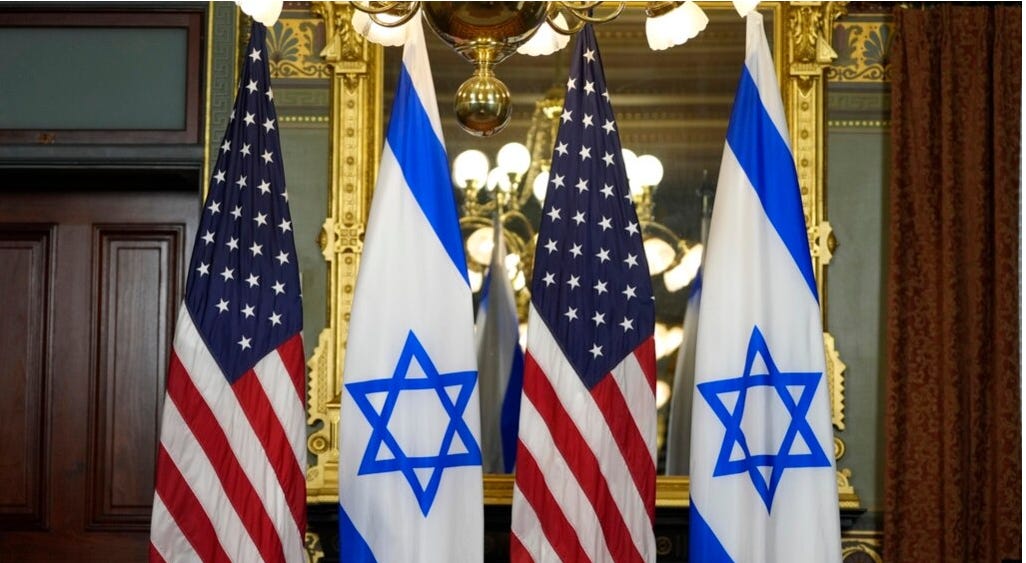
Venezuela Continues ‘Technical Cooperation’ with Israel, Activates Consular Services
You believe this Jewish woman, Medea?
Paper Tiger: the Failure of America’s Trillion Dollar War Machine
Medea Benjamin Aug 12
Queer . . .
Fucking queers, all around. Versus reality.
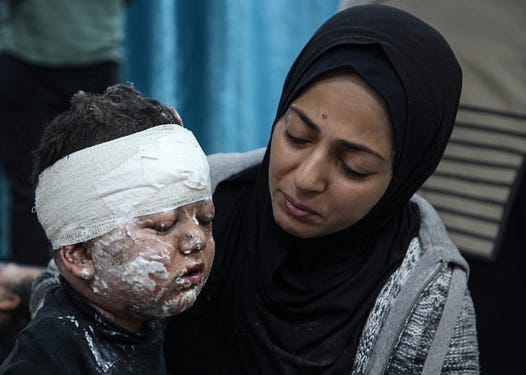
Caracas additionally underlined that the ties between Israel and the Venezuelan Jewish community “constitute an important and historic friendship bridge between both countries.”
Israeli Foreign Minister Gideon Sa’ar hailed the renewal of consular relations as “good news.” He added that the decision was agreed to in “conversations” with Venezuelan counterpart Félix Plasencia, creating “an official coordination channel” for the first time since 2009.
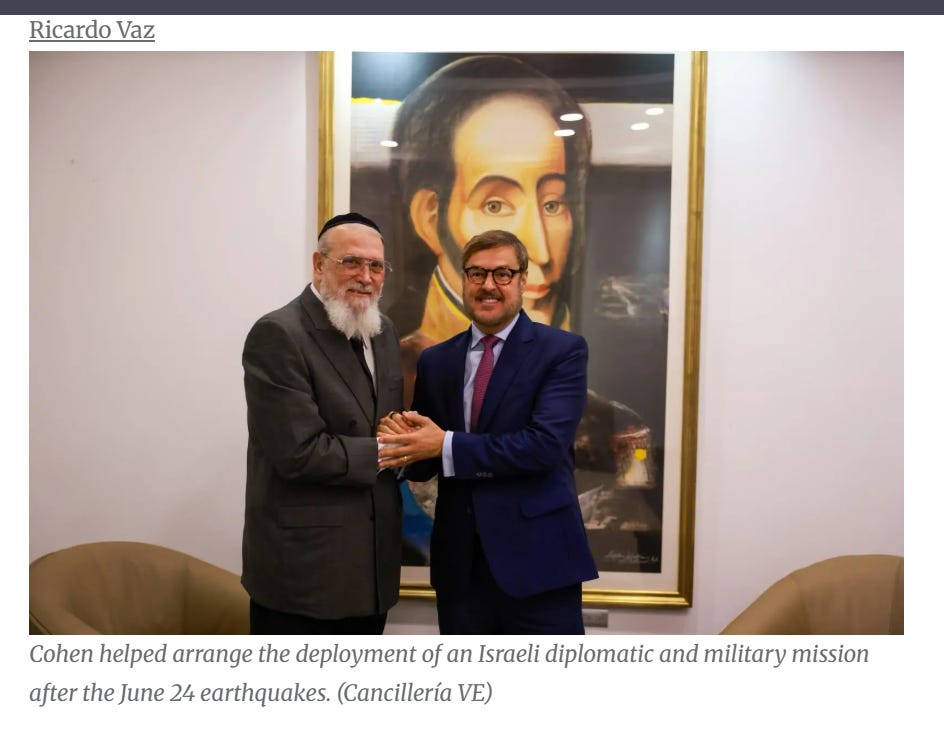
The announcement also followed a meeting Sunday between Plasencia and Orthodox Rabbi Isaac Cohen in which the latter formally requested that Venezuela reestablish diplomatic ties with Israel.
According to the Foreign Ministry, Cohen delivered a letter addressed to Acting President Delcy Rodríguez, arguing that normalizing relations with Tel Aviv is necessary to “tend to the needs of the Jewish community” in Venezuela.
Venezuela’s top diplomat thanked Cohen, on behalf of the Rodríguez administration and the Venezuelan people, for Israeli “assistance” following the June 24 double earthquake.
Cohen, a rabbi from the Venezuelan Jewish Association (AIV), was reportedly one of the intermediaries for the arrival of an Israeli diplomatic and military mission one week after the earthquake. The delegation included IDF officers and weapons contractors, while several Tel Aviv-aligned organizations likewise deployed on-the-ground teams.
Rodríguez held multiple meetings with the Israeli team, praising its members as “highly trained and professional” and thanking them for their work. IDF spokesman Roni Kaplan stated that the Israeli team had created a “dashboard” for Venezuelan authorities to evaluate damaged buildings, while Brigadier General Elad Edri was pictured presenting a “Project for Future Reconstruction” slideshow.
In Lebanon: ISIS prisoners released & Israel collaborators forgiven? | Ep. 255
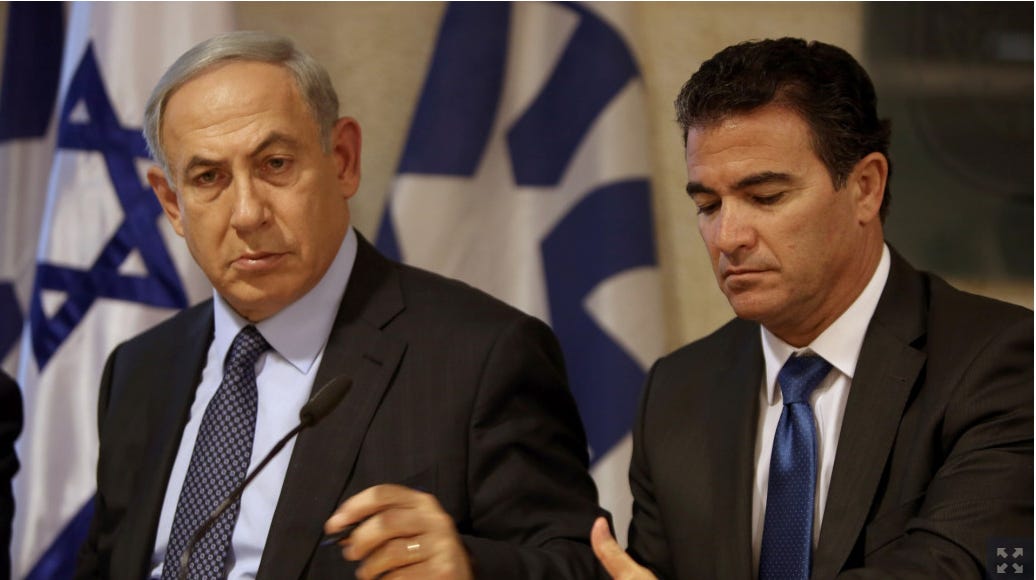
Former Mossad chief alleges spies repeatedly visited Fordow nuclear site: Yossi Cohen, who led Mossad from 2015 to 2021, claimed that Israeli spies “toured” Iran’s Fordow nuclear site “many times” to understand the facility, at a conference on Tuesday.
- Cohen did not specify when the visits occurred or who carried them out, and offered no further evidence.
- He added that the American bombing of Fordow was “the fulfillment of all my dreams,” a reference to U.S. strikes on Fordow, Natanz, and Isfahan during the 12-day war Washington and Israel launched against Iran in June 2025.
Fucking more dashboards, man… For good cataloguing, but to no avail.
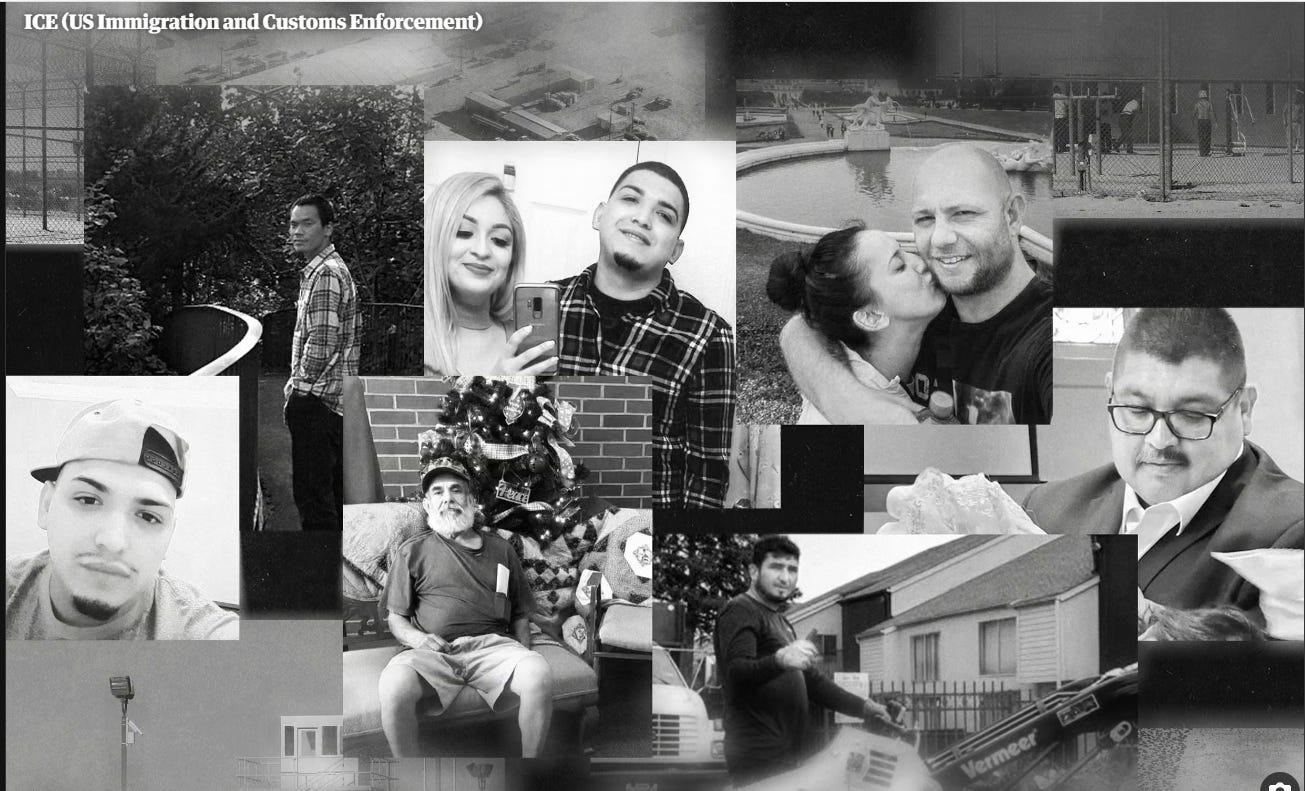
Over 50 people have died in ICE custody since the start of the current administration, an alarming number that is currently increasing at the rate of one roughly every 9 days. I write about these deaths because I want the public to understand the context and consequences of the U.S.’s growing immigrant detention system and I believe in making this work legible to as much of the public as possible. While new headlines often focus on a single case, as a researcher, I believe in putting individual cases within a larger geographic and historical arc to encourage deeper critical thought.
Click here to see all of my posts about ICE’s detention deaths.
Like so much of my work, writing about these tragedies requires rigorous behind-the-scenes information management to ensure that I’m working with a validated data set of cases with preserved links, archived materials, and carefully structured metadata that facilitates independent, non-partisan analysis. I am a researcher, first and foremost. But my identity as a researcher is enabled by another core identity: I am a systems-builder. These systems, most of which are invisible, help me find patterns and write quickly for a broad audience.
But sometimes, in the course of building systems for my own work, I stumble onto something I realize would be valuable to make public, too. This is a principle best articulated in Austin Kleon’s book Show Your Work!, which I highly recommend.
The Detention Mortality Dashboard is an example of this. Launching today, the Detention Mortality Dashboard is a repository of official ICE custodial deaths from 2018 until now, with searchable case-level information, source materials, and an interactive map. What started out as a simple spreadsheet with a few fields is now a more robust public tool.
Much of the credit goes to my amazing colleague Bishal Timsina for doing the heavy lifting to make this project possible. Bishal is one of the developers on the team at Relevant Research, the same team behind Detention Reports, the Enforcement Dashboard, Relevant Football, and Paradarsita — as well as the migration of ImmProf Blog, the Women’s Refugee Commission’s Detention Pregnancy Tracker, and American Families United’s Collateral Damage Report. Huge thanks to everyone else on the team who provided support and feedback.
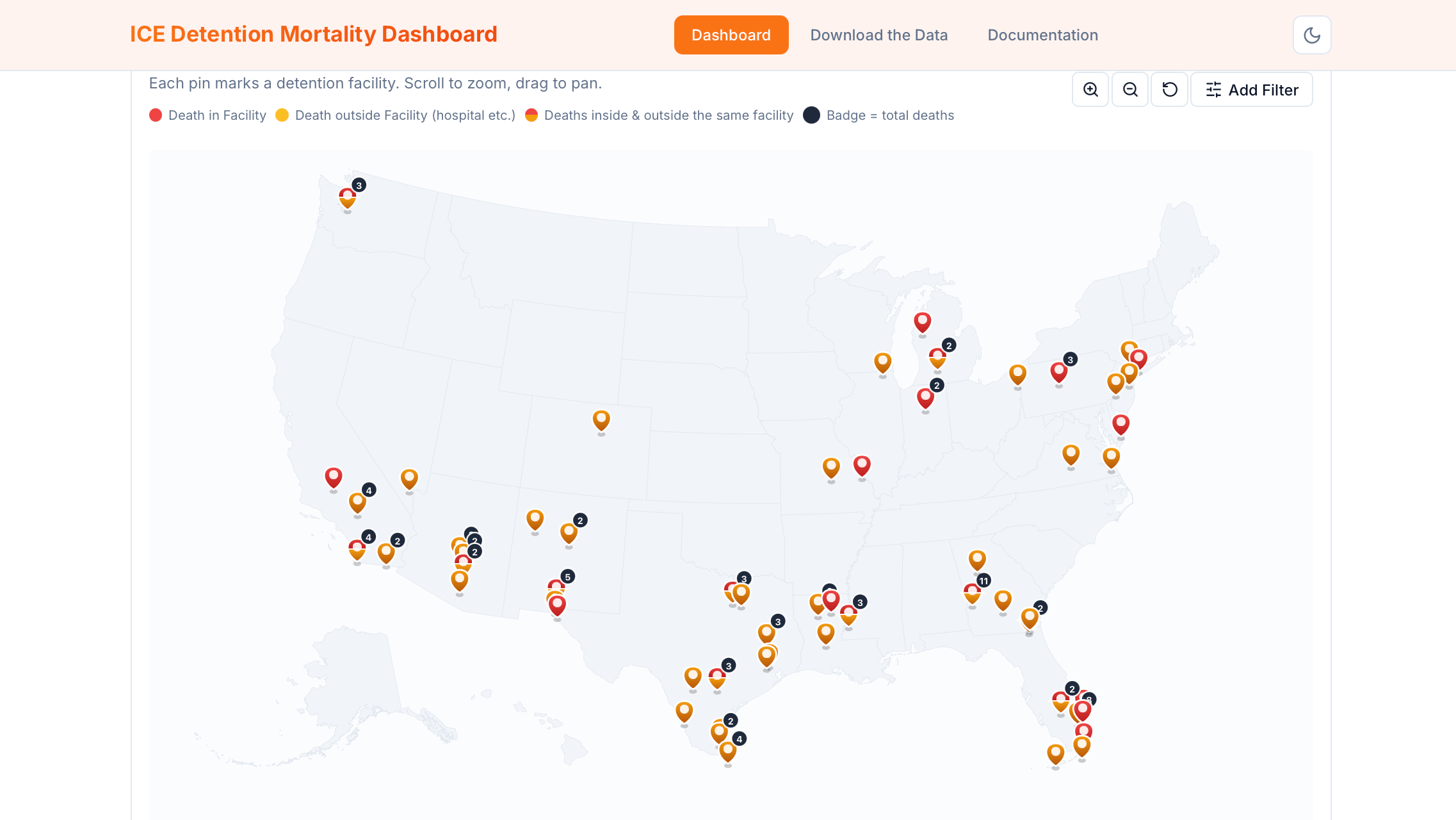
Where can I see the Detention Mortality Dashboard?
The dashboard lives on its own domain at https://detentionmortality.com
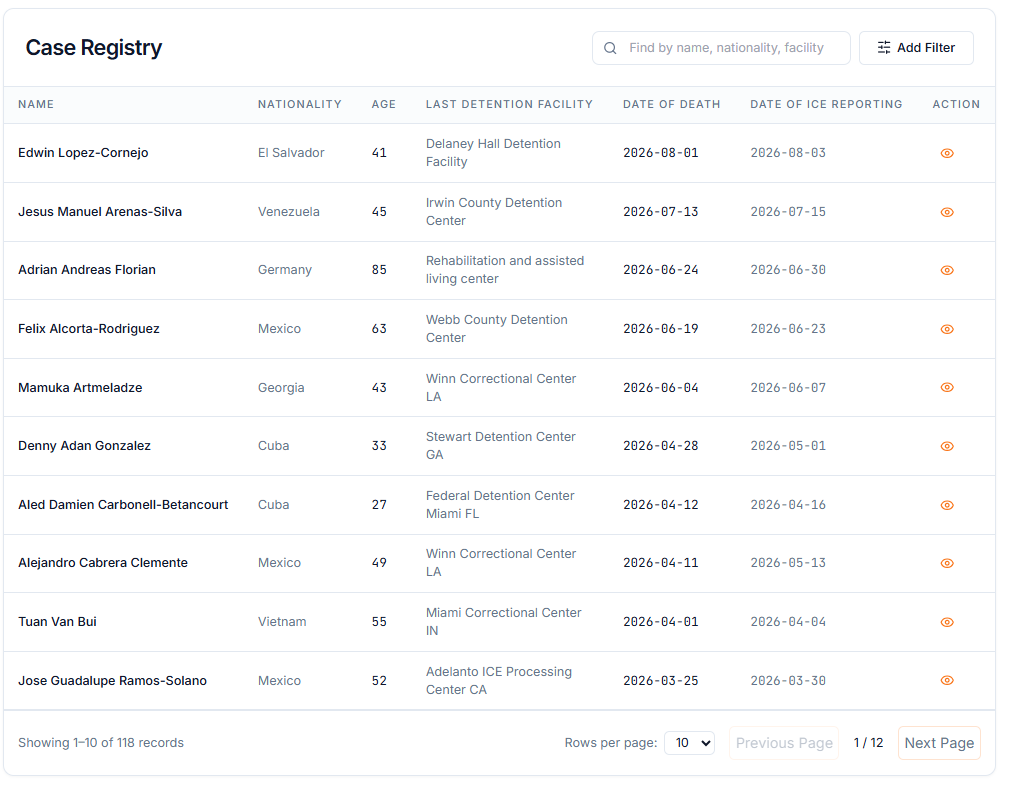
12 PAGES worth!!
2025:
The Guardian has been tracking everyone who died in custody this year. These are their stories.
23 January
Genry Ruiz Guillén, 29, of Honduras, died in a hospital in Hialeah, Florida.
Guillén had come to the United States from Honduras in 2023. He worked in construction.
In October 2024, he was apprehended by local law enforcement, and then transferred to the Krome immigrant detention center in South Florida. His mother told Univision that in December, Guillén called her from detention and told her he wasn’t feeling well, and that he was experiencing fainting spells. It was the last time she spoke with him, she said.
According to ICE, Guillén “had difficulty breathing, prompting a medical emergency” before he died.
“I never thought my son would come to this country to die like this, nor did I ever think I would receive that news,” his mother told Univision.
29 January
Serawit Gezahegn Dejene, 45, of Ethiopia, died at a hospital in Phoenix, Arizona.
He had come to the US in August 2024, and was apprehended by the border patrol, which transferred him to the Eloy detention center. He had cleared the initial steps to apply for asylum according to ICE.
In December 2024, he reported to staff at the detention center that he had an elevated heart rate and fatigue, and was seen by healthcare providers who said he had a possible lymphoma diagnosis, according to ICE.
20 February

Maksym Chernyak, a Ukrainian citizen, died of an apparent stroke at a hospital in Miami.
Chernyak, 44, fled Kyiv with his long term-partner during the Russia-Ukraine war and came to the US on humanitarian parole, according to the Miami Herald.
Chernyak was arrested on 26 January over a domestic violence claim. His partner described the incident as a “family misunderstanding” exacerbated by a language barrier, according to the Miami Herald. He was “kind and warm-hearted”, she told the outlet. Chernyak was then transferred to the Krome detention center in Miami.
While in custody, he experienced “vomiting and seizure activity”, according to ICE. Chernyak was then transferred to a hospital on 18 February, where staff “established a stroke alert due to an unresponsive state”, according to ICE. A preliminary cause of death was listed as “bleeding from the brain”.
An investigation by the Miami Herald said that medical experts who reviewed his case have raised concerns about whether Chernyak received adequate care due to the length of time that elapsed before Krome staff called 911. ICE denied allegations that Chernyak did not receive proper medical attention.
23 February
Juan Alexis Tineo-Martinez, 44, of the Dominican Republic, died at the Centro Medico hospital in San Juan, Puerto Rico.
He was taken into custody by US Customs and Border Protection air and marine operations two days prior to his death, according to ICE.
Agents contacted local 911 after Tineo-Martinez said he was experiencing leg pain, according to the agency, and he was transferred to the hospital for evaluation. The Dominican embassy in Puerto Rico did not respond to the Guardian’s query about Tineo-Martinez’s cause of death.
8 April
Brayan Garzón-Rayo, 27, of Colombia, died at the Phelps County jail in Rolla, Missouri.
Garzón-Rayo’s mother, Lucy Garzón, told St Louis Public Radio that she and her family came to the US in November 2023, fleeing growing threats of violence and harassment from law enforcement in Bogotá.
In March Garzón-Rayo was charged with a misdemeanor for credit card fraud, and then transferred to ICE custody. He spoke to his mother a few days before he died, Lucy Garzón told SLPR, and complained about stomach pains and the poor quality of the jail’s food.
Lucy Garzón told SLPR that officials told her that her son appeared to have died by suicide. ICE has not confirmed an official cause of death.
His mother said that Garzón-Rayo loved riding his motorcycle, watching soccer and sledding after fresh snowfall.
16 April
Nhon Ngoc Nguyen, 55, died at a hospital in El Paso, Texas.
He was apprehended in February in Albuquerque, according to his family’s lawyer, Tin Nguyen, and his partner and friends couldn’t locate him for days. Eventually, they realised he was being held at the El Paso processing center in Texas. Tin Nguyen said that Nhon Ngoc had been showing early signs of dementia and possible side effects from a head injury prior to his detention.
Shortly after his detention, he began experiencing health complications, Tin Nguyen told the Guardian. ICE eventually offered to release him, so long as his family was able to provide him with round-the-clock acute care, the attorney said – but he didn’t have health insurance and his family was unable to pay for such care. In the meantime, Nhon Ngoc’s condition began rapidly worsening. He died of acute pneumonia, according to ICE.
Nhon Ngoc had come to the US in 1983 and became a legal resident as part of the Refugee Act of 1980. In 1991, he was convicted of second-degree murder and served time at San Quentin prison in California. After his sentence, in 2013, ICE opened a deportation case against him. While it was pending, he moved to Albuquerque and began rebuilding his life.
He had a loving partner and a huge community of friends, Tin Nguyen said: “He was kind.”
25 April
Marie Ange Blaise, a 44-year-old citizen of Haiti, died at the Broward transitional center in Pompano Beach, Florida.
Blaise entered the US on an unknown date and location, according to ICE. She was apprehended by Customs and Border Protection on 12 February while attempting to board a flight to Charlotte, North Carolina, according to authorities.
ICE has not released an official cause of death. According to reporting by WLRN Public Media on the medical examiner’s report about her death, Blaise spoke to her son hours before she died. “She complained of having chest pains and abdominal cramps, and when she asked the detention staff to see a physician, they refused her,” her son told investigators, according to WLRN Public Media. According to the outlet, ICE offered a conflicting account, saying that Blaise did not take blood pressure medication she was offered.
5 May

Abelardo Avellaneda Delgado, 68, died while in transit from a local jail to a federal detention center, the first detainee to die in this manner in at least a decade.
Delgado was originally from El Huariche, Mexico. During his nearly 40 years in the US, he raised a large family and worked on tobacco and vegetable farms, according to previous Guardian reporting.
Delgado, who did not have legal status, was apprehended in Statenville, Georgia, on a parole violation on 9 April. His family told the Guardian they grew alarmed by his deterioration in jail, and worried about the medications he was being given.
Eventually, Delgado was transferred from the jail to Georgia’s Stewart detention center. But he never made it. Instead, he became “unresponsive” in the transport van with highly elevated blood pressure; the driver called 911, but Delgado died on the scene.
ICE has said the cause of death is under investigation and his family said they are still waiting for answers. “It bothers me,” his son, Junior, told the Guardian in June. “He was a great-grandfather.”
7 June
Jesus Molina-Veya, a 45-year-old citizen of Mexico, died at the Stewart detention center in Lumpkin, Georgia.
Molina-Veya entered the country without authorization on numerous occasions, starting in 1999, according to authorities. During his time in the US, Molina-Veya was arrested on charges including child molestation, a hit-and-run, and possession of controlled substances, ICE said.
On 7 June, Molina-Veya was found unresponsive in his cell. While an official cause of death has not been released, an ICE spokesperson has called the death “an apparent suicide”. His death was the second reported in Georgia within a month, a state with one of the highest numbers of detainees in the US.
23 June
Johnny Noviello was found unresponsive at the Bureau of Prisons’ federal detention center in Miami.
Noviello moved with family from Quebec to Florida in 1988 and became a lawful permanent resident in 1991. His father, Angelo, told the Guardian that Johnny was diagnosed with epilepsy shortly after he was born, and would often become ill during the winter. So the family settled in Daytona Beach, seeking a warmer climate.
Noviello, 49, spent most of his life in Florida. He worked at a Dollar Tree and loved going to the beach and playing pool in his spare time, his father said. He maintained close ties to Canada, making regular trips to see family in Montreal.
He spent time in prison for selling drugs, including hydrocodone and oxycodone, but was released early on good behavior. He was apprehended by ICE agents on 15 May at the Florida Department of Corrections probation office. Noviello’s cause of death is under investigation.
Noviello’s father said the family has not received an autopsy report. “We’re in limbo, we don’t know what happened,” he said. “I don’t know why they didn’t send him to Canada right away.”
26 June
Isidro Pérez, 75, of Cuba died at a Florida hospital of undetermined causes.
According to the Miami Herald, Pérez was a mechanic and fisher from Cuba, and arrived in the US in 1966 at the age of 16.
He was convicted of marijuana possession in the 1980s and served time in prison. His stepdaughter told the Herald that, during his time behind bars, Pérez studied to become a mechanic, and that when he got out of prison, he began rescuing animals. “We’re all humans, you know, we make mistakes, but we remake ourselves,” she told the outlet.
On 5 June, five immigration officers apprehended Pérez at a community center. Officers took him to the Krome North Service Processing Center in Miami. Three weeks later, Pérez died in ICE custody.
19 July
Tien Xuan Phan, 55, died at the Methodist Hospital North East in Live Oak, Texas.
Phan was detained earlier in June for failing to leave the US after a removal order, and held at the Karnes County immigration processing center in Karnes City. He was transferred to a hospital for evaluation after experiencing seizures and vomiting, and becoming unresponsive, according to ICE. His cause of death remains under investigation.
5 August

Chaofeng Ge, 32, of China, died four days after entering ICE custody in Pennsylvania.
Ge was born in 1992 in Luoyang, Henan province, China, and worked in construction. He arrived in the US via the southern border in 2023, when he was detained for unlawful entry. According to an attorney for his family, he spent his time while incarcerated trying to learn English, practicing by writing out scripture and short stories.
He was eventually released and settled in Queens, New York, where he worked as a delivery driver, according to his attorney. In 2025, he was arrested for possessing several stolen credit card numbers in his cell phone and for unauthorized access to a device, and was eventually detained by ICE. ICE and the Pennsylvania state police said that he died by suicide while detained.
His family filed a Freedom of Information Act lawsuit against the Department of Homeland Security in the southern district of New York, requesting more information about his death. “I am devastated by the loss of my brother and by the knowledge that he was suffering so greatly in that detention center,” said Yaofeng Ge in a public statement. “He did not deserve to be treated that way. I want justice for my brother, answers as to how this could have happened, and accountability for those responsible for his death.”
Ge is survived by four siblings and his parents, who live in China.
31 August
Lorenzo Antonio Batrez Vargas, 32, died after he was detained at the Central Arizona Florence correctional complex.
Known as “Lenchito” by friends and family, Batrez Vargas was a Deferred Action for Childhood Arrivals (DACA) recipient who was brought to the US from Mexico as a five-year-old. He was arrested by police in Flagstaff, Arizona, on 2 August, and charged with possession and use of drug paraphernalia. Immigration enforcement agents said they took Batrez Vargas into custody in Phoenix before transferring him to the detention center in Florence, where his family believes he contracted Covid-19, according to media reports.
ICE said that his cause of death was unknown and remained under investigation.
“We want justice. We want this to never happen to anyone else, especially not to undocumented immigrants,” Jaime Vargas, Batrez Vargas’s uncle, told Univision.
8 September
Oscar Rascon Duarte, of Mexico, died at a long-term medical facility while in ICE custody.
Duarte, 58, had first come to the US in 1976, was deported in 2004 and then re-entered via the southern border. He served a 20-year sentence in prison for attempted sexual contact with a minor and child molestation. After he completed his sentence, he was transferred to ICE custody.
At first, he was held at the Florence staging facility, according to ICE, but was later transferred to Promise Hospital in Mesa, Arizona, “due to late-stage Alzheimer disease, right kidney cancer, and hepatitis C all of which required a higher level of care”, where he eventually died, ICE said.
18 September
Santos Banegas Reyes, 42, of Honduras, died at the Nassau County correctional center in New York.
He was a construction worker and a father of two daughters, one of whom lives in the US while the other lives in Honduras, according to local news reports.
He was apprehended on 17 September by federal immigration agents just hours before he was found “not breathing” in his cell at the Nassau county correctional center. According to ICE, the preliminary cause of death appeared to be liver failure complicated by alcoholism. His family is contesting his cause of death, and have requested an independent autopsy.
22 September
Ismael Ayala-Uribe, 39, died after falling ill at the Adelanto detention center in California.
His mother, Lucía Uribe, told the Guardian that Ismael had come to the US from Mexico when he was five, crossing the US southern border along with his sister and cousin to join his mother and father. The family settled in Westminster, California, and later moved to Huntington Beach.
He spent a year studying graphic design, and then began working – first at a factory that produced cleaning supplies and later at car washes. Lucía said that Ismael loved listening to music. He was always willing to help others, and often helped his sister, a single mother, with childcare.
Uribe had been protected from deportation under the DACA program, but he was denied renewal because he had been convicted of driving under the influence.
He was apprehended in August during an immigration raid at the Fountain Valley Auto Wash, where he had worked for about 15 years, and was transferred to Adelanto. There, he fell ill – first with a cough and fever, and then other medical complications, according to his family. He was transferred to a hospital, where he died.
His mother learned of the detention through one of his co-workers, and said she was unaware of any medical condition he had. “I want to see less medical negligence,” she told the Guardian, referring to conditions at ICE detention centers.
ICE said Uribe’s cause of death was “still under investigation”.
24 September

Norlan Guzman-Fuentes, 37, of El Salvador, was killed when a gunman opened fire at the ICE field office where he was being held.
He is survived by his partner, Berenice Prieto, and four children. He had worked mowing lawns and trimming trees, and in his free time he liked fishing around the Dallas-Fort Worth area, his loved ones told CBS.
Guzman-Fuentes was arrested by Dallas police in late August due to an outstanding warrant for driving under the influence and other charges that were later dropped.
“We had just bought our first home together, and he worked hard every single day to make sure our children had what they needed. His death is a senseless tragedy that has left our family shattered,” Prieto said in a public statement shortly after his death. “I do not know how to explain to our children that their father is gone.”
29 September

Miguel Ángel García Medina, 31, of Mexico, was killed outside an ICE field office in Dallas.
García Medina is survived by his wife, Stephany Gauffeny, two stepdaughters and a son – who was born three days after his death – his mother and grandparents, who live in Mexico, and three siblings.
“Everyone tells me the same thing: he was very funny. He always made us laugh, and that’s why we miss him so much,” Gauffeny told the Guardian. “He was very goofy, you almost always saw him laughing, joking or singing.”
Gauffeny – who clarified to the Guardian that her husband was referred to in an ICE press release as Miguel García-Hernández, his stepfather’s last name – also said: “He was a very present father. Sometimes he wouldn’t go to work if my daughters needed something.”
García Medina was born in San Luis Potosí, a central state in Mexico, and crossed the US border without papers when he was a teenager, settling in Arlington, Texas. He met Gauffeny at a party shortly after and the two were friends for years before they became a couple.
He had lived in the Dallas area for nearly two decades, most recently making a living painting and remodeling homes. In his free time, he liked to work on his truck, Gauffeny said.
He ended up in ICE custody early on 24 September, after a short time in jail for a DUI. While he was shackled inside a government van outside the ICE field office, a gunman opened fire. He died five days later of his gunshot wounds.
He would have turned 32 on 5 January, which is also the day of his 10th wedding anniversary. Gauffeny told the Guardian that he had been in the process of obtaining a green card and planning to open his own painting company. “He made business cards and said he was going to buy the equipment,” she said. “He was so excited and had a lot going for him.”
29 September
Huabing Xie, of China, died at El Centro Regional Medical Center in Calexico, California.
The border patrol had apprehended Xie on 12 September in Indio, California, and transferred him to the Imperial regional detention facility, according to ICE. In 2023, he had been placed under removal proceedings, the agency said.
The agency said that Xie experienced “what appeared to be a seizure and became unresponsive” and medical personnel at the detention center tried to administer life-saving measures before emergency medical services arrived and took him to the hospital, where he died.
4 October
Leo Cruz-Silva, a 34-year-old man from Mexico, died while detained by ICE at the Ste Genevieve County jail in Missouri.
A few days before he died, he was detained by police in Festus, Missouri, for public intoxication, according to federal immigration officials. The police then handed him over to ICE, which served him with a notice that the agency would reinstate a previous deportation order. Cruz-Silva had likely entered the US before 2010, when he was a child, according to immigration officials, and was expelled twice after re-entering via the southern border.
On 4 October, Cruz-Silva died by apparent suicide, according to ICE.
About 50 people organized a vigil to mourn him. “He was a person, he was a brother, he was a son, he was a person,” Susie Johnson, the founder of Abide in Love, a non-profit that works with ICE detainees in Missouri jails, told St Louis Public Radio. “All loss of life, in my opinion, is tragic, and I hate that it happened in our community,” she said.
11 October
Hasan Ali Moh’D Saleh, 67, died after being detained at the Krome detention center in south-west Miami-Dade county.
Saleh, who was from Jordan, first came to the US in 1994 and became a lawful permanent resident a few months after he arrived in the country.
Saleh managed a convenience store in Fort Lauderdale. In 2017, he was charged – along with a dozen other clerks and store owners – in a scheme to exchange food stamps for cash. He had served time in prison, and after his release in 2020, ICE placed him under an “order of supervision” that required him to regularly check in with immigration officers. In 2025, he was apprehended and placed at Krome.
He was taken to a local hospital due to a high fever, and became unresponsive. A physician listed his preliminary cause of death as cardiac arrest.
23 October
Josué Castro Rivera, a 25-year-old man from Honduras, was killed while trying to flee ICE agents in Virginia.
He had been on his way to a gardening job when ICE agents pulled over his vehicle, his brother, Henry Castro, told reporters. When agents tried to detain Castro Rivera and three other passengers, he fled, running into traffic. He was struck while crossing Interstate 264 in Norfolk.
According to his brother, Castro Rivera had come to the US four years ago, and had been working to help support family in Honduras. “He had a very good heart,” Castro told the Associated Press. “He didn’t deserve everything that happened to him.”
23 October
Gabriel Garcia Aviles, a 54-year-old from Mexico who had been living in the US for 30 years, died about a week after being detained by immigration agents.
Aviles was a father of two and grandfather of three, according to his family. His daughter, Mariel, told LA Taco she used to speak with him every day, and described him as someone who was “always happy and loved bikes”.
Customs and Border Protection agents grabbed him during a “roving patrol” in the southern California city of Costa Mesa on 14 October. Mariel last spoke with him shortly after he was apprehended, she told LA Taco. In the days that followed, his family tried repeatedly to contact him, but said that officers at the Adelanto detention facility refused to connect them.
A week after his detention, Mariel received a call informing her that her father was in critical condition at the Victor Valley Global Medical Center. The last time his family was able to see Aviles, he was unconscious in a hospital room guarded by immigration officers, Mariel told LA Taco.
His family has questioned ICE’s assessment that Aviles died of “natural causes” and complications of alcohol withdrawal. He had been healthy, his daughter said, prior to his detention.
25 October
Kai Yin Wong, 63, of China, died at a hospital in San Antonio, Texas.
Wong had first come to the US in 1970 as a permanent resident. He was convicted of sexual abuse of a child in 2010 and served a 14-year sentence. He was then transferred to ICE custody and ordered deported from the US.
Before his death, he had been detained at the South Texas ICE processing center in Pearsall. In October, he was first transferred to a local hospital after he complained of shortness of breath, and then airlifted to another hospital in San Antonio when he started to experience heart failure and possible pneumonia. He was transferred to another medical center for heart valve repair surgery, according to officials, and died from complications.
3 December
Francisco Gaspar-Andrés, a 48-year-old man from Guatemala, died at an El Paso hospital due to suspected kidney and liver failure, according to ICE.
He is survived by his wife of 25 years, Lucía Pedro Juan, and their four daughters. The couple had run a plant nursery outside Miami for a decade, and Pedro Juan has described him as a hard-working husband who fought to provide for their family.
According to an interview Pedro Juan gave to the El Paso Times, the couple had gone on a grocery run during the Labor Day holiday when they were pulled over by a highway patrol officer who asked to see their identification papers, and then turned them over to ICE; they were eventually separated by immigration officers. “I hugged him, I tickled him on his ribs and I gave him a kiss on his cheek,” she said of their goodbye. “I never saw him again.” Pedro Juan was detained for three months and later deported to Guatemala.
Gaspar-Andrés ended up at Camp East Montana, a detention facility at the Texas military base known as Fort Bliss. The American Civil Liberties Union has called the facility a “human and civil rights catastrophe” following several reports of injuries, illnesses and abuses.
Gaspar-Andrés was repeatedly seen by medical staff for symptoms including bleeding gums, sore throat and body aches, fever, jaundice and hypertension. He was transferred to a hospital on 16 November, where he was diagnosed with hyponatremia. He was later placed on dialysis and palliative care, before he died in December, according to ICE.
His wife told the El Paso Times that Gaspar-Andrés had been relatively healthy prior to his detention, and disputed ICE’s assertion that he had hypertension or other underlying conditions.
5 December
Pete Sumalo Montejo, 72, died at the Valley Baptist Medical Center in Harlingen.
He had first come to the US from the Philippines in 1962, as a lawful permanent resident. In 1992, he was convicted of aggravated sexual assault of a child and in 2024 he was convicted for possession of a controlled substance, according to ICE.
In February, ICE detained Montejo at the Montgomery processing center, where he began to experience several medical complications including shortness of breath and hypoxia, anemia, and septic shock resulting from pneumonia, according to the agency.
6 December
Shiraz Fatehali Sachwani, 48, of Pakistan, died at a hospital in Fort Worth, Texas.
He first came to the US in 1996 as a nonimmigrant visitor, according to ICE, and overstayed his visa. He was arrested by Border Patrol in 2017 in North Dakota, and ordered to leave the US after he did not appear at a 2019 immigration court hearing. Then, in June, ICE located him at a jail in Euless, Texas, where he had been booked.
He spent more than five months at the Prairieland detention center in Alvarado, Texas, before he died. ICE has said Sachwani had a history of medical conditions – including chronic respiratory, liver and kidney issues – and died of “natural causes”.
12 December
Jean Wilson Brutus, a 41-year-old man from Haiti, died at the Delaney Hall detention facility in Newark, New Jersey, one day after he was taken into custody.
ICE said Brutus died of “suspected natural causes”. His cousin told NBC New York that the family is still searching for answers about what happened. “We haven’t had some kind of closure surrounding his death,” Evans Belony, his cousin, told the outlet. “He was like a loved one that we all loved; he was like a brother.”
Brutus came to the US in 2023 as an asylum seeker, his cousin said, adding that Brutus had been “very depressed and very sad” following the death of his mother.
The conditions at Delaney Hall, where Brutus was held, have come under scrutiny from lawmakers and advocates. Andy Kim, a Democratic senator from New Jersey, toured Delaney Hall the day after Brutus’s death and spoke to about 80 detainees, who he said described receiving poor medical care and “disgusting” meals that included raw meat. He called for the facility to be closed.
14 December
Fouad Saeed Abdulkadir, 46, of Eritrea died of “medical distress”, according to the agency.
According to court documents obtained by the Daily Voice, Abdulkadir filed for an emergency federal motion for medical relief three days before he died.
Abdulkadir had been an imam at the Islamic Center of Northeast Ohio, and had gained a green card in 2018. In 2023, he was charged with wire fraud and misuse of public funds and later sentenced to prison. Supporters wrote to a US district judge requesting leniency, arguing that Abdulkadir may not have fully understood the application process for the benefits programs he was convicted of misusing.
“We miss his teachings, his knowledge. We crave him for our own sake, not just for him. He’s an actively good man,” a supporter wrote, according to the Daily Voice.
ICE took custody of him in July 2024, and detained him at the Moshannon Valley processing center in Philipsburg, Pennsylvania, where he died a year and a half later. Community members raising funds for his funeral services said that Abdulkadir “spent his life selflessly caring for others, nurturing our children with the wisdom of the Qur’an, healing family rifts, and offering kindness to everyone he met. His boundless generosity touched countless souls, and the space he leaves behind feels immeasurably quiet and deep.”
14 December
Delvin Francisco Rodriguez, 39, of Nicaragua died after months of detention at the Adams County Correctional Center in New Orleans.
He had been arrested in late September in Colorado, and was transferred to New Orleans. He was due to be deported to Nicaragua on 13 December.
On 4 December, according to ICE, emergency medical responders were called to the detention facility and Rodriguez was found to not have a pulse. He was transferred to the hospital, where he later died. He failed a “test to determine brain function”, according to ICE, and was removed from a ventilator in accordance with the wishes of his family.
15 December
Nenko Stanev Gantchev, 56, was born in Bulgaria and died at the North Lake processing center in Baldwin, Michigan.
Gantchev was “discovered unresponsive on the floor of his cell during routine checks”, and his official cause of death is still under investigation, according to ICE.
He had first arrived in the US in 1995. According to the agency, Gantchev was denied a green card in 2009 and, in 2023, was ordered by an immigration judge to return to Bulgaria. He was apprehended by immigration agents in September as part of the administration’s “Operation Midway Blitz”, which sent hundreds of federal agents to Chicago to crack down on unauthorized immigrants.
His wife, a US citizen, told the Serbian Times that Gantchev had type 2 diabetes and had complained for months about his deteriorating health. “A man who lived here for 30 years, worked hard, paid taxes – and they treated him like an animal,” Ganchev’s wife told the outlet. “They treated him as if he were a murderer.” She learned of his death on 16 December, the day of the couple’s eighth wedding anniversary.
This story and its headline were amended on 6 January 2025 to include the
The Pentagon’s Sickening Cover-Up
Every person killed in the boat strikes was a civilian.
Daniel Larison Aug 12, 2026
A Pentagon report claims that no civilians have been killed in the military’s boat strikes:
It also assessed that “there were no incidents in which civilian casualties more likely than not resulted from U.S. military operations” in the Caribbean and eastern Pacific Ocean, where U.S. Southern Command, responsible for American forces in Latin America and the Caribbean, has carried out dozens of strikes on alleged drug smuggling boats.
This is what comes from the government arbitrarily and falsely labeling people as terrorists. The military killed 120 civilians at sea in 2025, so they redefine them as combatants in an imaginary conflict to conceal the crimes. Every person killed in the boat strikes was a civilian. To make matters worse, they were deliberately targeted and then executed. Every single attack killed civilians by design.
The claim that the military is combating “narco-terrorists” when it blows up these defenseless boats is a lie, and the authors of this report must know that.
They are all prostitutes: Demented, but truly the new AmeriKKKan.
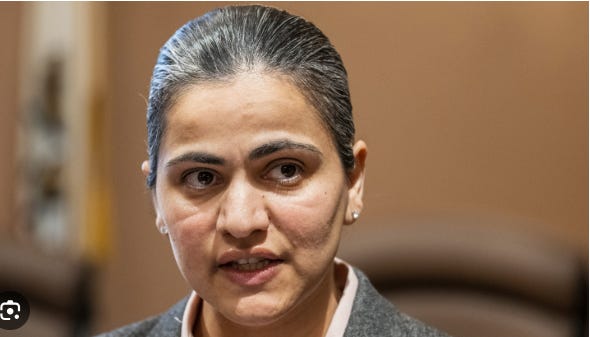
Afghan American. When she was elected to the Hayward City Council in 2018, she made history as the first Afghan American woman elected to public office in the United States.
Her father’s photo is the same one she posted for Father’s Day.
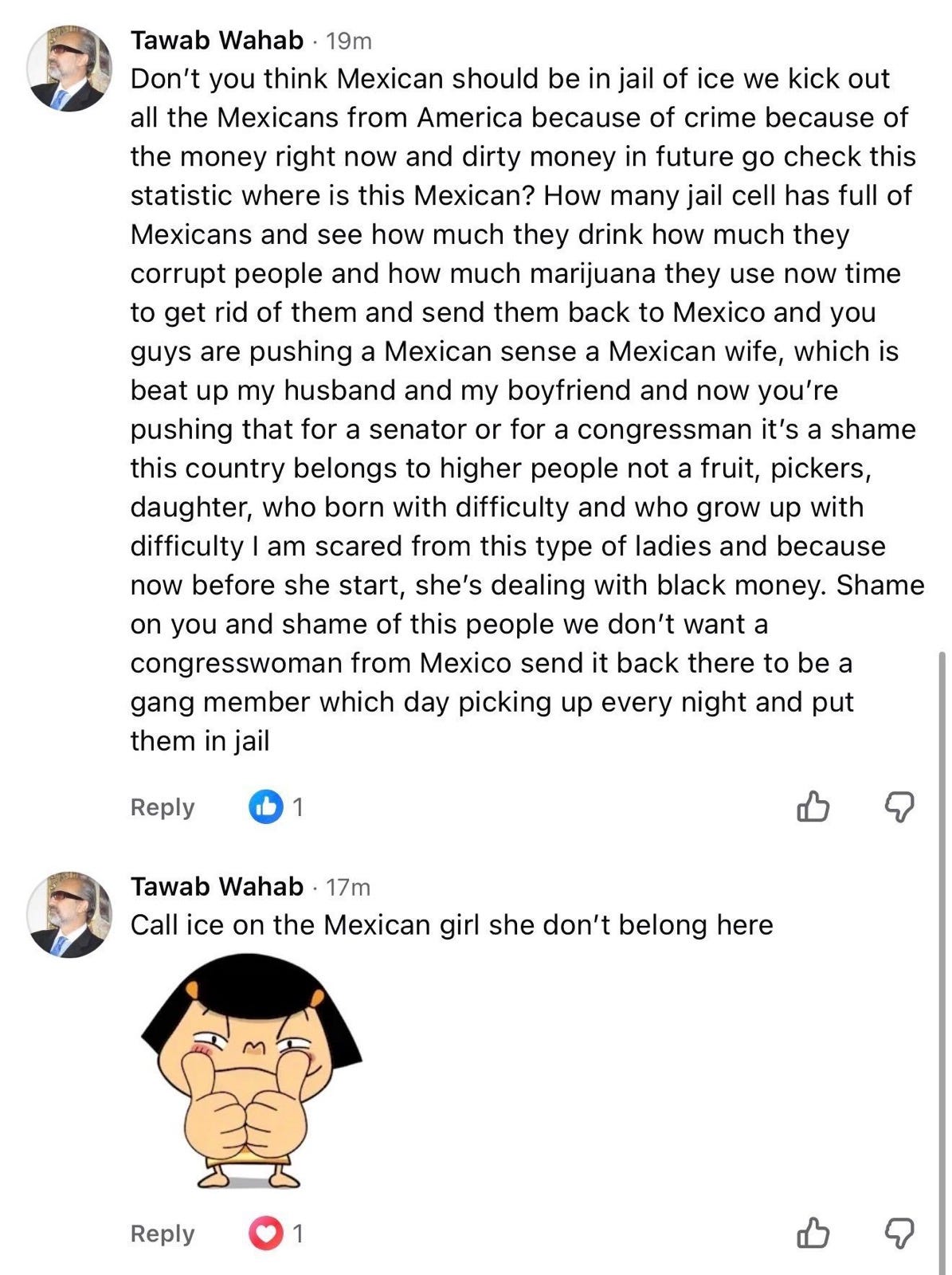
That’s the detail that undoes State Sen. Aisha Wahab’s defense. Not the racist comment itself — “Call ice on the Mexican girl she don’t belong here” — but the picture attached to the account that posted it, a picture that matches the man Wahab called her “toughest critic, but also my biggest cheerleader” in a 2023 tribute on her own campaign page.
Lots of remembering going on. Until just one real journalist is left.
What they were thinking when they cut down the last tree on Easter Island
“Don’t worry, technology will solve our problems by helping us find a substitute for wood”

“This tree is my private property, I can do with it what I please. Big government has no right to tell me what to do with my own tree”
“The science of deforestation is still up in the air, we need more research before we transition to a low-wood economy”
“Switching to a low-wood economy will cost jobs. Is a few trees worth the cost to our tree-cutting and statue-dragging industries?”

The Fate of Easter Island
To see just how clearly a growing human population relies on and impacts its natural environment, one need look no further than Easter Island, the South Pacific isle with the famous stone statues known as moai. I have been reading much about the fate of Easter in preparation for an upcoming trip, and, as the geographer John Flenley and archeologist Paul Bahn write in The Enigmas of Easter Island, “it is a story with an urgent and sobering message for our own times.”

Old Medea and her paper tiger idea. Proving grounds, crash test dummies, one and all, and seeing where the stress tests work and don’t work. They want autonomous drones, woman.

Sure, Code Pink, getting it wrong again: As of February, more than 1,000 law enforcement and public safety agencies had received waivers to operate autonomous surveillance drones.

Israel is widely recognized as a top global pioneer and leading exporter of military drone and unmanned aerial vehicle (UAV) technology. However, leadership in fully autonomous drone tech and drone swarming is heavily contested alongside the United States and China, both of which invest massively in similar artificial intelligence and robotic warfare capabilities.

In September 2016, Atelier magazine sat down with David Harari, a former head of Israel Aerospace Industries (IAI) to talk about the origins of drone technology.
“I’d like to make clear that unmanned aerial vehicles already existed before Israel started looking at the subject,” he said. However, “We developed the very first operation system.” This was important for Israel facing the threats of the 1970s and early 1980s, first in the Egyptian conflict of 1973 and then against terrorists in Lebanon. Harari told Globes in 2011 that when he began looking into UAVs, people laughed at him and his staff.




More memoiric stuff on Subterranean Stack:
Aug 12, 2026
The video of this post is here.
In his masterpiece on war, Azar Gat stated that the biological compulsion to survive and reproduce in a world of scarcity is the root of all violence. I will agree with that. Chimps invade the lands of neighboring societies, kill the adult males, take the females, kill the infants, and then take the conquered territory. Jane Goodall was the first to witness that. Human hunter-gatherers did something similar. Orwell noted that what would be considered heinous crimes when committed against the in-group become heroic deeds when committed against the out-group. That reflects humanity’s ingrained criminality. As long as somebody can be portrayed as a member of an out-group, then any action is justified.
I have lived with three people who took lives, which is the greatest crime of all. I have a few murderer relatives. I am the first man in my family, going up my family tree for a century, who was not in the military, and I nearly was.
My great nation was built by exterminating the original inhabitants during history’s greatest crime, and the greatest of my nation’s Founding Fathers architected the plan to swindle the natives out of their land, in history’s greatest theft, but he is sainted in our culture and his greatest crime is unmentionable. American foreign policy has always been one great, unending, series of immense crimes. The war on Iran is just the latest outrage. It took 70 years for the CIA to admit that its 1953 overthrow of Iran’s government was “undemocratic,” which led to today’s situation, and I rarely see any discussion of that fact in the media today.
 Rachel Blevins
Col. Macgregor: U.S. Military in CRISIS as Sailors JUMP OVERBOARD from USS Lincoln
Military families are speaking out and warning about a growing crisis onboard the USS Abraham Lincoln, as its 5,000 sailors and marines are now in their ninth month at sea—with 250 consecutive days without making land—as the deployment has been extended to take part in the U.S. war on Iran…
7 hours ago · 19 likes · 1 comment · Rachel Blevins
Oh god, the Subterranean Ex-Uniformed Disservices Brigade here on hump day:
Military families are speaking out and warning about a growing crisis onboard the USS Abraham Lincoln, as its 5,000 sailors and marines are now in their ninth month at sea—with 250 consecutive days without making land—as the deployment has been extended to take part in the U.S. war on Iran.
Ret. U.S. Army Col. Douglas Macgregor noted that reports of sailors attempting to jump overboard the USS Lincoln come as no surprise, given the circumstances, and they should be taken seriously by the Trump Admin. But the opposite is happening, as the U.S. pushes its military into a crisis for a war of choice they know they can’t win against Iran.

This is it, no?
Growing up in New Mexico as I did, you hear about them. The kids, almost always boys, very often disruptive in some obvious and exhausting way, almost always trouble, who get disappeared to “Nimi” for “straightening out,” as in: If you don’t stop setting frogs on fire/fondling the neighborhood girls/failing all your classes/breaking into school and overturning all the desks, Billy/Johnny/Kevin, your dad/mom/grandpa is going to send you to Nimi to straighten yer happy ass out.
One day, they’re there, throwing rocks at you for having an immigrant parent, say, or commenting on your bra size (you’re thirteen) as they follow you home from school, a little ragtag group of similar cruel-eyed degenerates sniveling along behind them in their wake. The kinds of boys that make you lock the door behind you once you make it safely home. The next day, their carved-up desk sits empty, and no one talks about them much anymore, except to say, eyes wide in warning, I heard his folks shipped him off to Nimi.
Decades later, you see his name in the news. He’s a spy. He’s overthrown a government. He’s assassinated a foreign leader.
He’s the Attorney General of the United States of America.
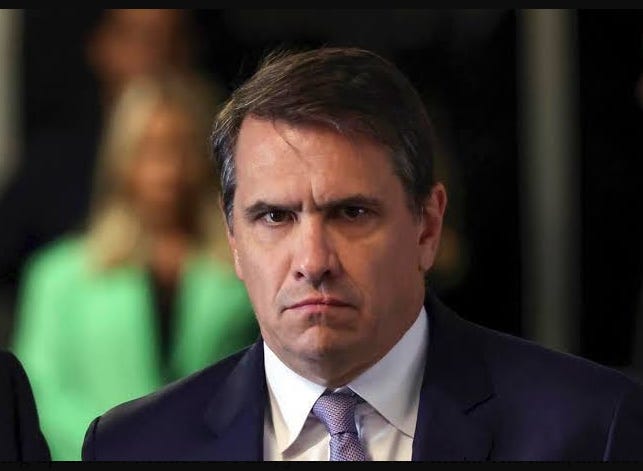
What Is The New Mexico Military Institute?
While most of us have heard of the fancy private boarding schools and prestigious Ivy League and military colleges that produce the polished J. Crew shoppers who go on to lead the nation from podiums with their gleaming smiles — places like Andover, Exeter, Yale, West Point — there is one boarding school that is just as influential but far less well-known, forgotten in dusty Roswell, New Mexico, a school that functions as an early pipeline into the more secretive forms on power that intelligence recruiters say requires, if not outright sociopathy, sociopathic tendencies. That school is the New Mexico Military Institute.
New Mexico Military Institute is a blonde-brick fortress, a large citadel located a block from Jazzercize Roswell, two blocks from the Cattle Baron steakhouse, and a mere pebble’s toss from the Dairy Queen Grill & Chill. (source)
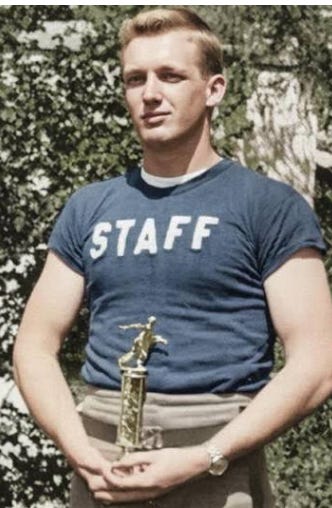
Donald Trump’s trophy envy began over sixty years ago.

Donald Trump attended the New York Military Academy, a private boarding school in Cornwall-on-Hudson, New York, from 1959 until he graduated in 1964. He did not attend a federal service academy like West Point.
School Background
- Sent by his father at age 13 due to behavioral issues at his previous school.
- Completed grades 8 through 12 at the facility.
- Participated heavily in varsity sports and rose to the rank of cadet captain by his senior year.
JEWS. Israelis Colonising Philippines Too
Israelis continue to squat and then spread like true cancer cells throughout various parts of the world creating Jews only colonies.
 Manufacturing Dissent
Israelis Colonising Philippines Too
Trump declared his longstanding affinity for the Jewish people and State of Israel far before he entered into the political arena, his entrenchment with Zionism has become the defining feature of his second term in the Oval Office. That position has also become the focal point for criticism of the second Trump administration, as critics — many of whom were once his most loyal supporters — have come to question whether the president is intent on putting America or Israel first. That doubt has raised questions that transcend far beyond political concerns into deeper, more philosophical and spiritual realms. One glaring red flag that perfectly distills those questions was observed on the date of Trump’s second inauguration, when he elected not to place his hand upon the Bible when he was sworn in as president. According to an interview with Israeli media, Trump’s former mistress turned ex-wife revealed that decision may have been made because the president keeps another holy book closer to his heart.

Marla Maples, Trump’s second wife, told Israeli Channel 12 news that the president keeps an Aramaic copy of the Book of Pinchas under his clothing close to his heart for “healing and protection.” The portion of the Book of Numbers (specifically, Numbers 25:10-30:1) is distributed among Kabbalistic sects in the Aramaic text Maples referred to Trump’s copy being as an apotropaic talisman. Centered on the biblical figure Pinchas, the son of Eleazar and grandson of the High Priest Aaron, the book is a highly revered section from the Zohar, the foundational text of the preeminent branch of Jewish mysticism known as Kabbalah.

In her interview with Channel 12, Maples described her own deep affinity for Judaism, its mystical elements such as Kabbalah, and the State of Israel, despite maintaining the outward appearance of a Christian identity. The experiences and practices that Maples detailed from her own life drew stark parallels with that of Trump and his family’s, including maintaining a kosher diet, reciting the Shema as a declaration of the Jewish faith, visiting the graves of exalted Jewish religious figures, observing the Sabbath, and frequently visiting Israel.
When recounting the ties to Judaism she has maintained for decades, Maples made note of visiting the city of Safed in northern Israel. In addition to being one of Judaism’s Four Holy Cities — alongside Jerusalem, Hebron, and Tiberias — Safed is the historical center of Kabbalah. Its status as the epicenter of Kabbalah arose during the 16th century, when it became home to central figures of the branch of Jewish mysticism like Moses Cordovero and, most notably, Isaac Luria, the father of its contemporary practice, which has become known as Lurianic Kabbalah. Luria’s influence on Kabbalah was so profound that he became known as “Arizal,” which in Hebrew translates to “Lion of God,” based on the Hebrew words “El” (meaning God) and “Ari” (meaning lion). Following his death in 1572, Luria was buried in the Safed Old Jewish Cemetery on the lower hillside of the city. His grave has since become a major pilgrimage site for Kabbalists.
Trump’s ex-wife is not the only figure in his life who maintains reverence for Kabbalah. Jared Kushner, Trump’s son-in-law, who has held various high-ranking advisory roles in each of his presidential administrations, is a member of the Haredi sect of Judaism known as Chabad-Lubavitch. Chabad arose as a Hasidic dynasty in 1775 by Rabbi Shneur Zalman of Liadi in Liozno, then part of the Russian Empire. The sect is inherently Kabbalistic, taking its name from an acronym representing the first three Sephirot of the Tree of Life: Chokmah, Binah, and Da’at. Ivanka Trump, the president’s oldest daughter, converted to Judaism in order to marry Kushner and regularly attends Chabad-run congregations as a practicing Jew. She has also regularly been seen adorned with a red string bracelet on her wrist, another popular apotropaic talisman worn by Kabbalists.
Maples detailed how Ivanka Trump’s conversion was a monumental force in further immersing the president into world Jewry, which she expressed has helped shape her ex-husband’s spiritual and consequently political identity. The influence of that immersion into Judaism has been echoed by fervent ultra-Zionist supporters of Trump, such as political commentator Mark Levin, who has referred to Trump as the U.S. “first Jewish president” on multiple occasions. Trump himself reinforced that image by making his undying commitment to Israel and the Jewish people explicit, wasting no opportunity to reiterate it during his second term as president.
That commitment has come to undermine Trump’s second term, which continues to be mired by its war with Iran, which senior officials in his administration have consistently justified as necessary to defending Israel and maintaining the U.S. allegiance with the Jewish state. Prioritizing that relationship has led to upheaval among Trump’s supporters, who have come to mock his presidency as being Israel First instead of following through on the America First platform it built itself upon. That growing disdain has become amplified by the continued presence of Kushner within his administration, whose overt identity as a member of Chabad and an unflinching ally of Israel has raised further questions behind the motives driving the work in his role as an informal special envoy in deliberations between the U.S. and Iran.

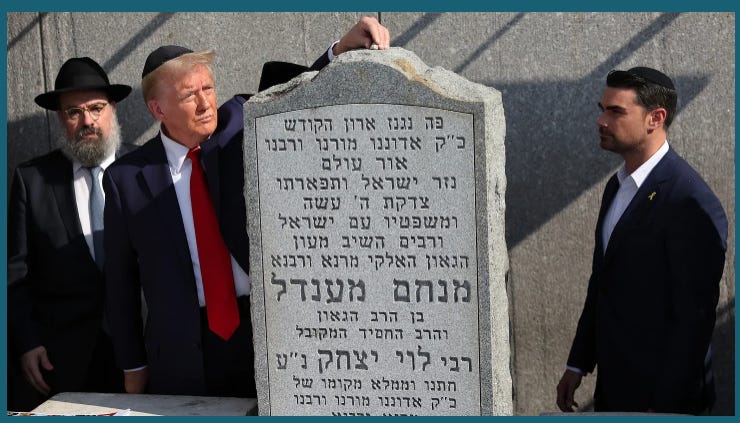
Within the Chabad-Lubavitch, many of its followers have come to believe that its seventh Rebbe, Rabbi Menachem Mendel Schneerson, was the Moshiach — Judaism’s long-awaited Messiah. On October 7th, 2024, Trump visited Schneerson’s grave in Queens, New York, to pay his respects alongside ultra-Zionist conservative political commentator Ben Shapiro to mark the first anniversary of Hamas’ October 7th, 2023 attack on Israel. That belief, shaping sects of modern Kabbalistic thought, raises questions about how their belief that the Messianic Age has arisen shapes their political aims and how those motives influence the Trump administration through advisors ingrained in Chabad like Kushner. As the second Trump administration has made the U.S. impossible to separate from Israel, it appears the spiritual influence Judaism and its mystical elements like Kabbalah have had on the president are equally impossible to separate from the forces shaping his leadership.

