

CELDF has a new report out, and I got to talk with a friend of the show, Kai Huschke, about the autopsy of RoN — Airs July 1, KYAQ (dot) org: Finding Fringe
Jun 11, 2026
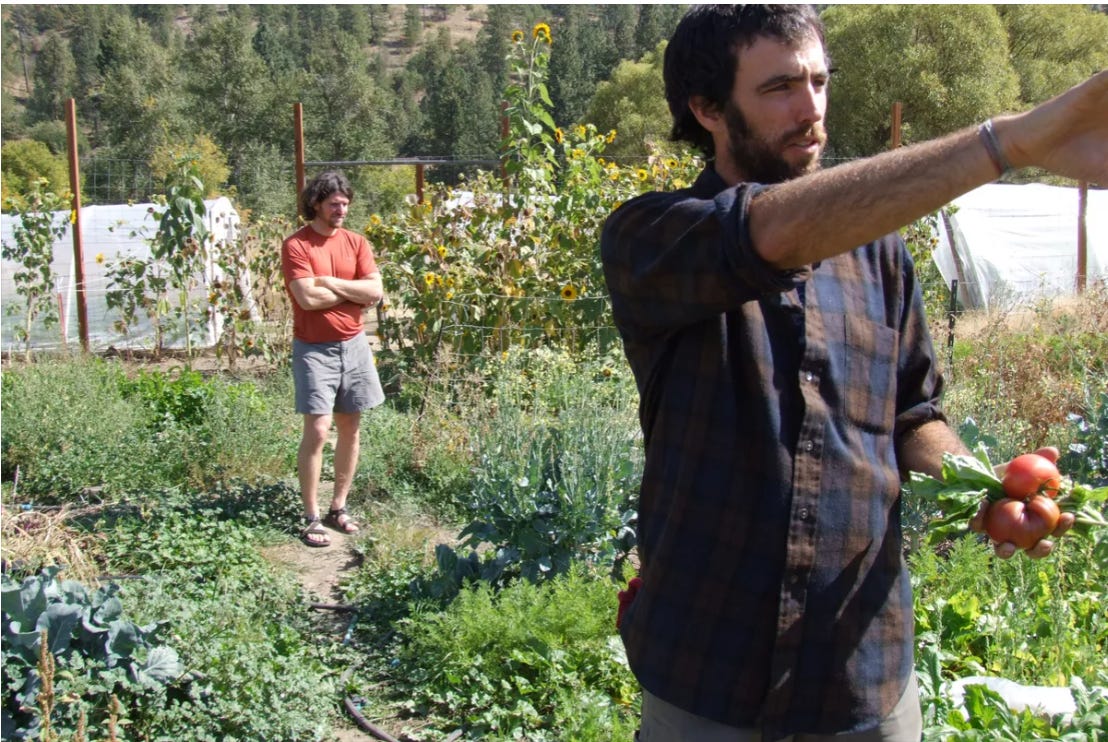
That’s Kai thinking, in the background, not the one with the tomatoes — 2011. Now?
After 20 years of controversial and challenging work, the “rights of nature” movement, which aims to extend legal protections to the natural world, finds itself on shaky ground, facing counterattacks, outright bans, corruption, cooptation, and — in a few inspiring cases — victories.
A new report called the State of Rights of Nature explores these issues in detail based on the expertise of the Community Environmental Legal Defense Fund (CELDF), the organization responsible for the first modern “rights of nature” law in the world, which passed in 2006.
For thirty years, CELDF has worked with hundreds of communities across the U.S. and internationally on rights of nature, participated in numerous coalitions and conferences, and watched a spark turn into a global movement. But the growing popularity of rights of nature has also fueled a backlash which, in some cases, has led powerful forces to co-opt movement language and advocates to water down their rights of nature initiatives to the point of near irrelevance.
States like Ohio, Florida, Idaho, and Utah have enacted state legislation banning rights of nature, and more and more efforts using “rights of nature” language doesn’t achieve the fundamental goal of the movement: expanding legal protections.
“Over the past decade we’ve seen more and more cases of co-optation that, if left unchallenged, will work to dilute, neutralize, and defeat the goals this movement was founded on,” says Kai Huschke, Executive Director at CELDF. “Our report aims to combat this to ensure the integrity of our efforts.”
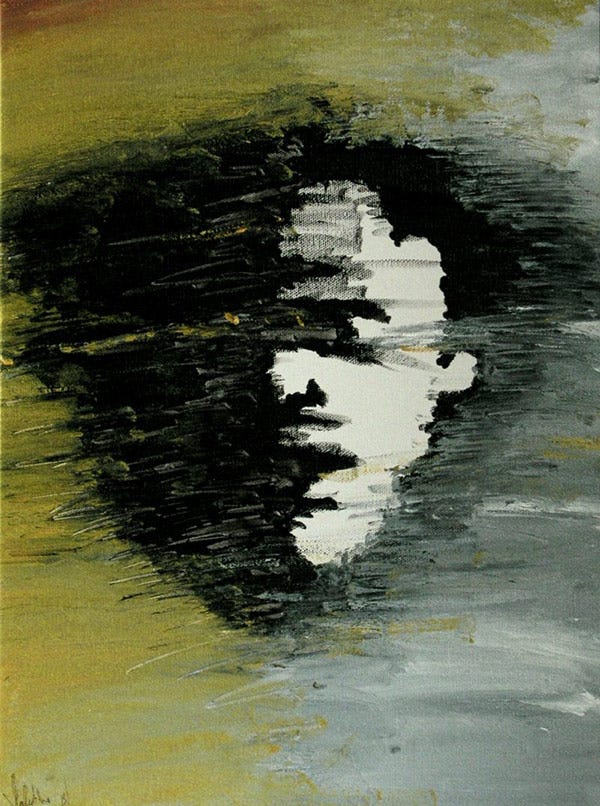
Ahh, Daniel Quinn:
During your lifetime, the people of our culture are going to figure out how to live sustainably on this planet–or they’re not. Either way, it’s certainly going to be extraordinary. If they figure out how to live sustainably here, then humanity will be able to see something it can’t see right now: a future that extends into the indefinite future. If they don’t figure this out, then I’m afraid the human race is going to take its place among the species that we’re driving into extinction here every day–as many as 200–every day.
If there are still people here in 200 years, they won’t be living the way we do. I can make that prediction with confidence, because if people go on living the way we do, there won’t be any people here in 200 years.
I can make another prediction with confidence. If there are still people here in 200 years, they won’t be thinking the way we do. I can make that prediction with equal confidence, because if people go on thinking the way we do, then they’ll go on living the way we do–and there won’t be any people here in 200 years.
But what can we possibly change about the way we think? It seems so obvious that everything we think is just the way it must be thought.
It seemed exactly the same to the people of the Middle Ages.

What we must have (and nothing less) is a whole world full of people with changed minds. Scientists with changed minds, industrialists with changed minds, school teachers with changed minds, politicians with changed minds–though they’ll be the last of course. Which is why we can’t wait for them or expect them to lead us into a new era. Their minds won’t change until the minds of their constituents change.
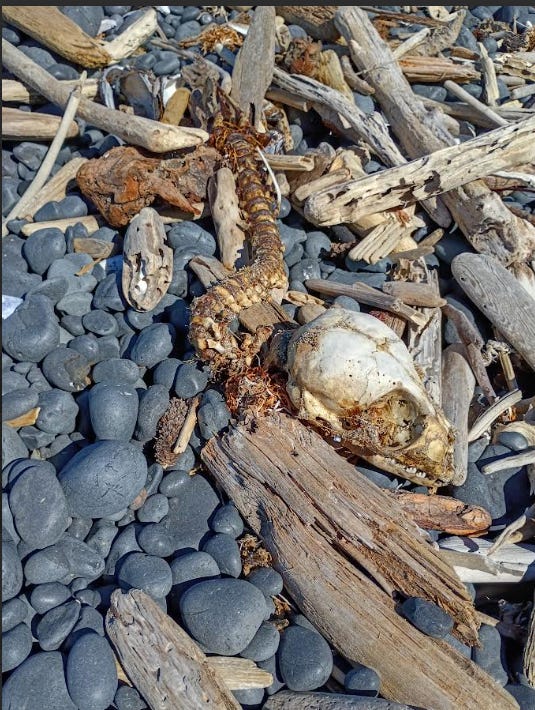
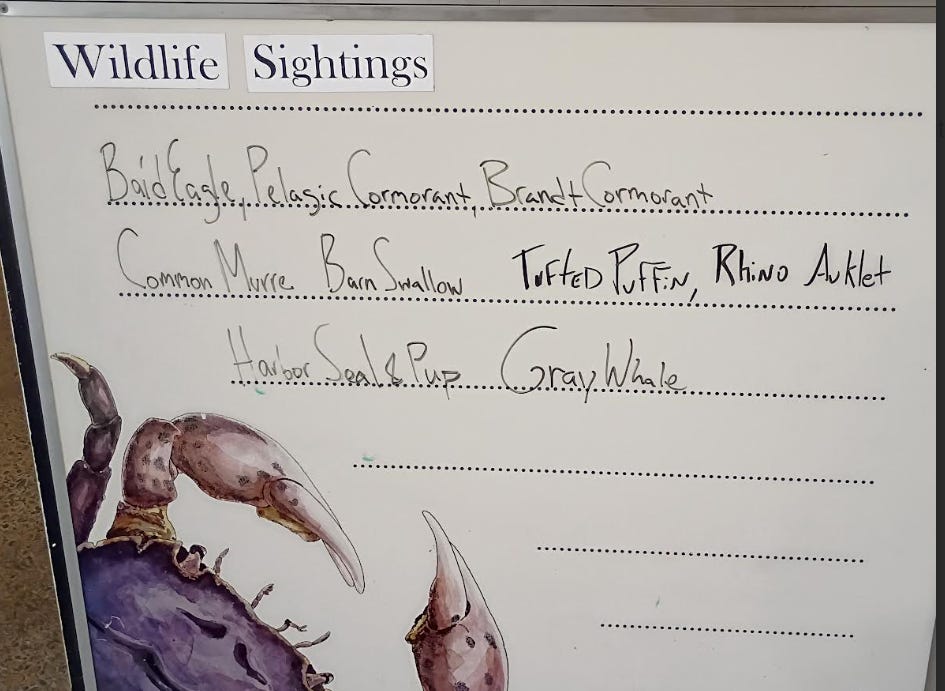
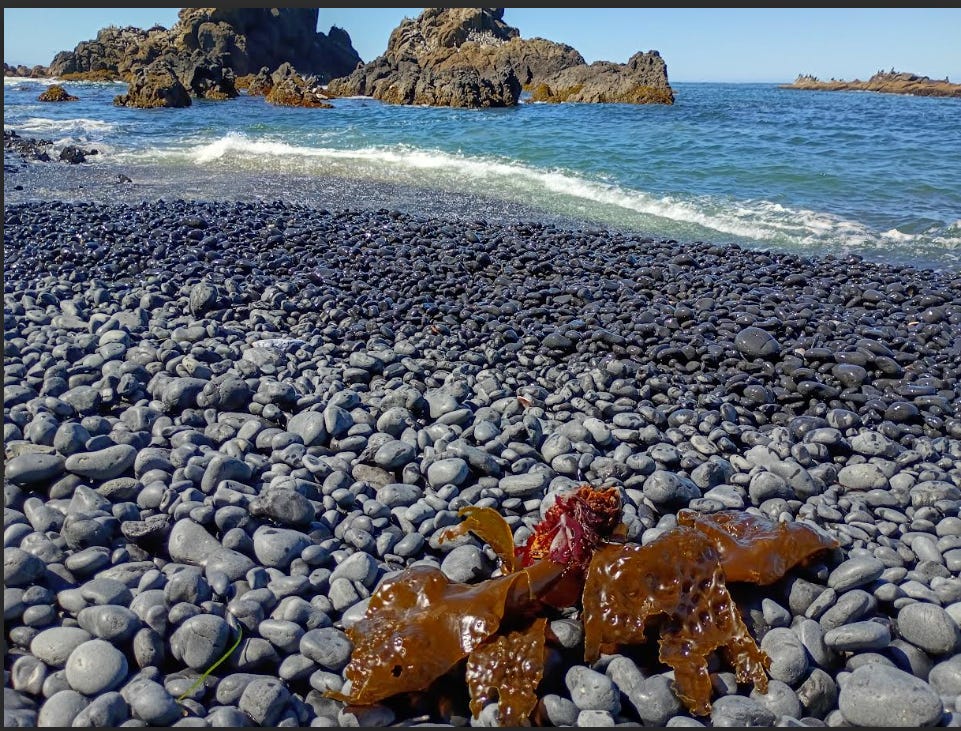
On the beach after interviewing Kai.

For years, CELDF has said the system is not broken; it is fixed. This isn’t our discovery; many have noted that our system of law, therefore the governance and economics shaped by those laws, is designed to function to advantage property and commerce over that of health, safety, and welfare. CELDF’s partner-advisor Camila Vergara wrote a book on this called Systemic Corruption: Constitutional Ideas for an Anti-Oligarchic Republic.
What must break is our allegiance to these fixed systems. Their time has passed. Our indoctrination must end. The question is how we go about creating the fracture points necessary to dismantle this system.
Community Rights Lane County, the people of Lane County, and communities everywhere face a choice: continue to show up inside the venues owned by a corrupt system, or tear that corrupt system down.
Kai Huschke is the Executive Director of CELDF, the Community Environmental Legal Defense Fund.
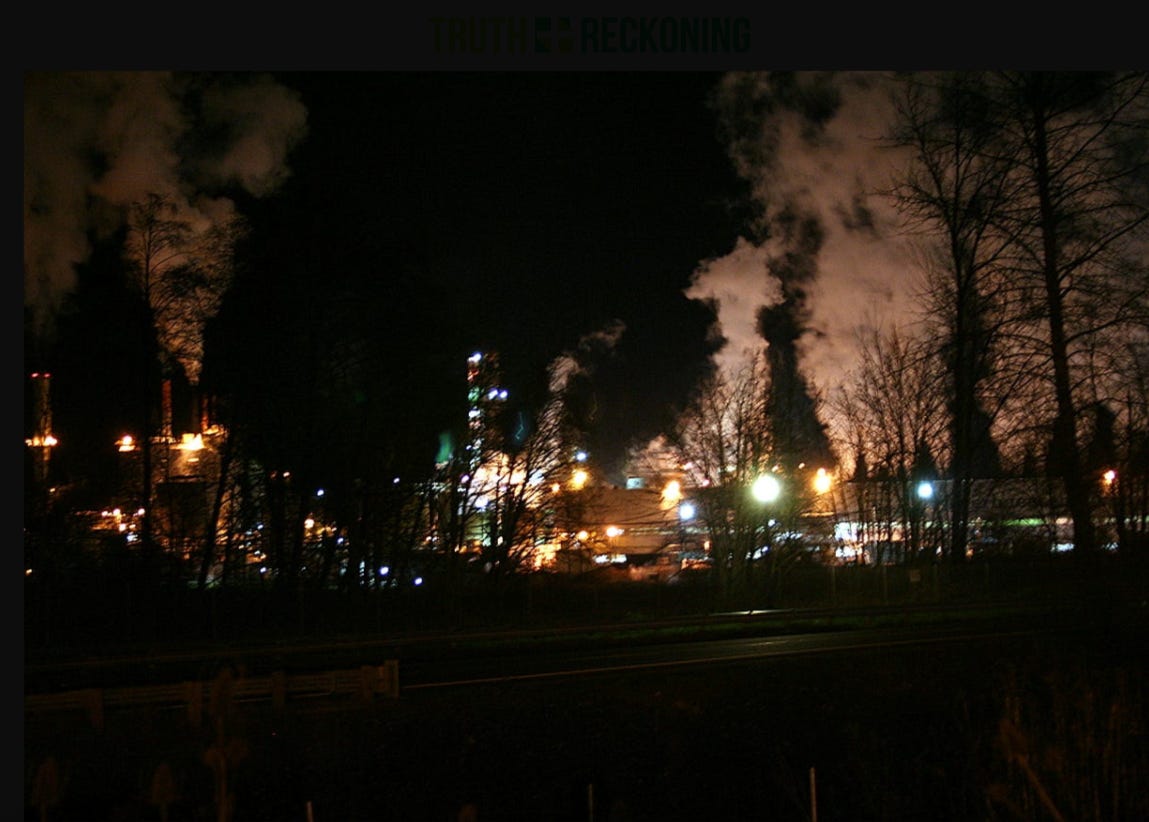
Paper mill, or data center, that is the question?

Pacifism? These people are the heads of the snake, and alas, the last time I had to cut off a rattlesnake’s head, well, the snake’s body died, and I friend it up. That was fucking 50 years ago, yuck!
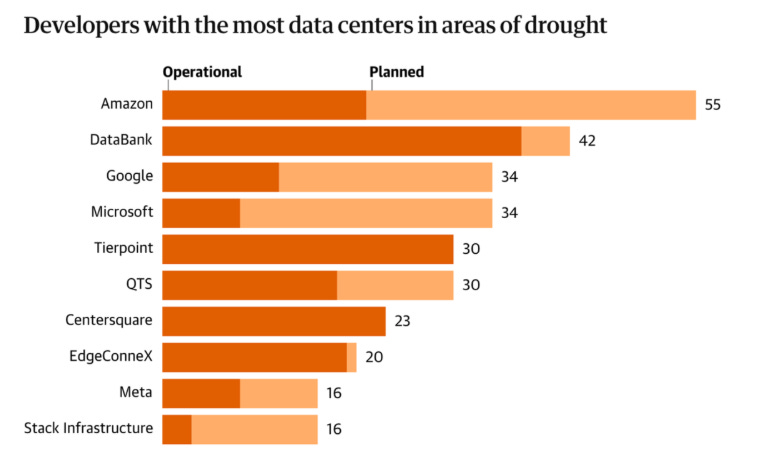
A record-shattering drought has racked much of the United States. But the artificial intelligence industry is pushing ahead regardless, with the majority of planned data centers set to be built in drought-ridden locations, a Guardian analysis has found.
About two-thirds of upcoming data centers, which typically require a large amount of water to operate, are set to be built in places that have been among the driest in the country over the past year.
Of 809 planned data centers, 517 are in locations that have been in drought conditions throughout the past year, according to data from Cleanview and the federal government, which grades drought across four levels of severity. A similar proportion of existing data centers are already situated in drought-affected areas.
More than 60 percent of the contiguous US is currently at varying stages of drought, the largest expanse for spring in modern records, with a particularly severe lack of rain and snow in the Southeast and West desiccating croplands and raising fears of a disastrous wildfire season.
“There isn’t enough water to go around. Now with this explosion of data centers, I think a crunch point is inevitable.”
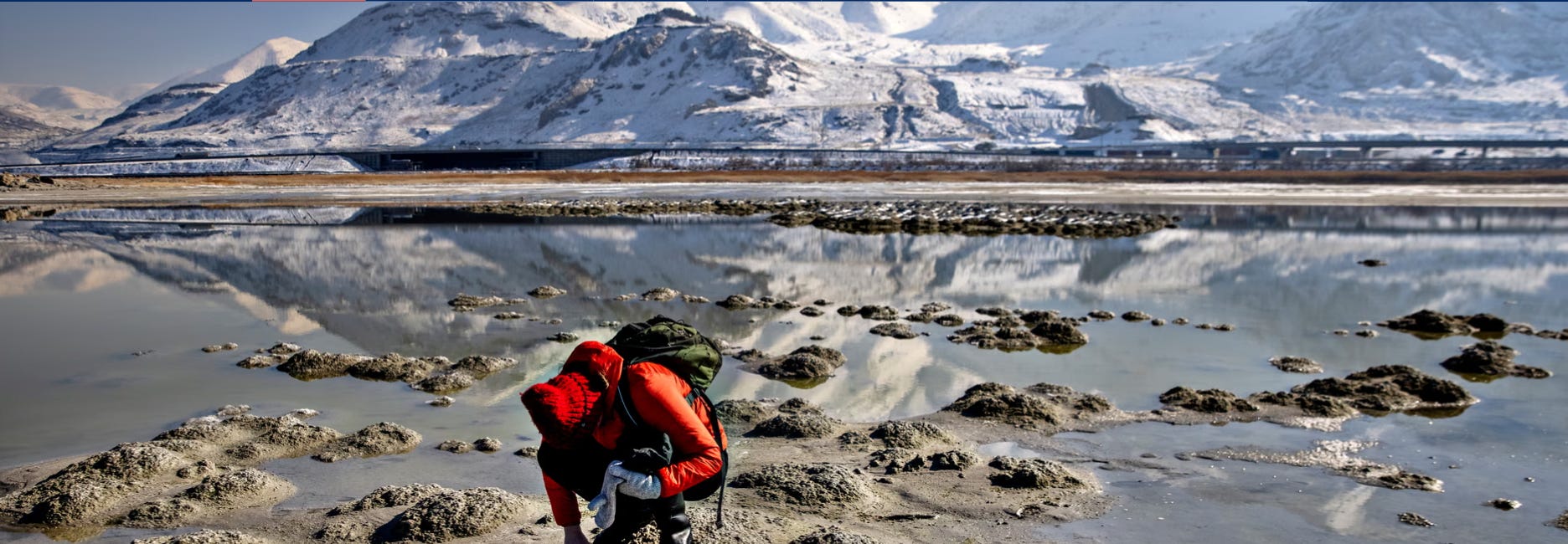
We are fucking DOOMED — pray for rain, the governor of the Indian Murdering State Utah declares.
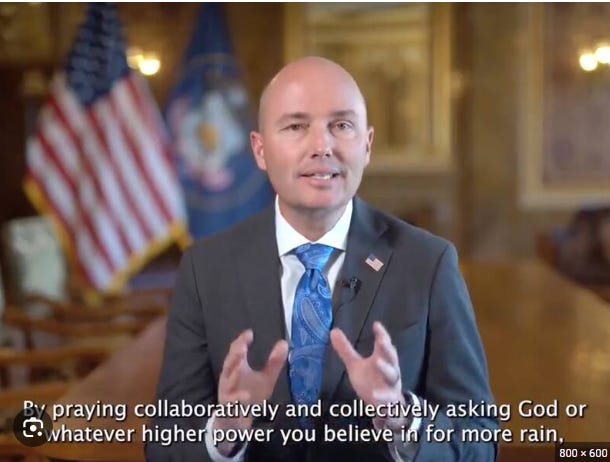
In Utah, the state’s governor, who last year asked residents to pray for rain amid a deep drought, has attempted to reassure voters that the enormous new Stratos data center will not endanger the Great Salt Lake, which was already shrinking due to water overuse and rising global temperatures. A group opposing the county approval of Stratos is aiming to overturn this decision via a public referendum.

Larry Ellison, the largest private funder of the Israel Defense Forces, is deeply tied to the Israeli national security state and counts Prime Minister Benjamin Netanyahu among his closest friends.
For a deep dive into Oracle and its connections to both U.S. and Israeli power, read the MintPress News investigation, “Openly Pro-Israel Tech Group Now Has Control over UK’s Most Sensitive National Security Data.”

Pray for shekels! “Democracy is Dead. What’s Next? Half a million in corporate dark money propaganda buried Measure 20-373.”

CELDF and Center for Biological Diversity and other warriors are up against the bloody wall: Deploying these Hasbara and Eddy Bernays on steroids monsters to prop up the lies of nuclear energy, Round-up Ready, and of course, AI and Data Centers is a walk in the park compared to selling Israel as a humane, free, socially just nation of, well, former rapists, poisoners, starvation experts, mowers of the lawn, murderers and imprisoners.
Havas Media Germany has hired Piro Inc. to further the digital efforts of the Israel Government Advertising Agency to sway US public opinion.
Founded by Daniel Rosenberg and Tim Piper, New York-based Piro has produced branded entertainment for film, TV, and digital media.
Rosenberg has collaborated with actors such as Denzel Washington, Julia Roberts, Robert DeNiro, Steve Martin, Al Pacino, Kevin Bacon, and Jodie Foster.
Piper was called “one of the most influential people on the planet” by Time for his branded content work. He is the executive producer on “Odd Mom Out” for Bravo and “Farmed and Dangerous” on Hulu.
According to its June 2 Justice Dept. filing, Piro is engaged to provide digital content strategy, creative development, video production oversight, and campaign advisory services in connection with a pilot digital communications program.
Services include audience research, content architecture, scriptwriting, asset production, distribution planning, iterative performance analysis, and final program evaluation. All content is developed for distribution via digital and social media platforms in the US.

One day in 1987, Derrick Jensen was browsing the public library when he came across a book that changed everything.

“The Natural Alien by Neil Evernden exploded my worldview,” says Jensen, on the phone from his home on the Northern California coast, not far from the Oregon border. “There’s a great line in there where Evernden makes an impassioned defense of some creature and somebody says, Well what good is it? And Evernden says the only response you can give is, Well what good are you? Not to make them feel bad but to show them that if you judge something solely by its utility to you, you ignore most of its being.
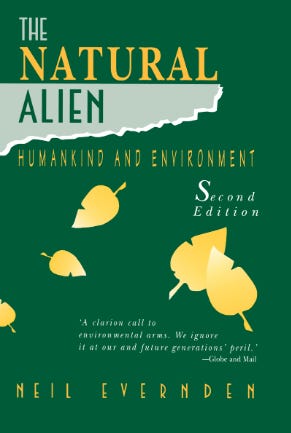
“It was the first book I ever read that talked about the basic stupidity of the utilitarian worldview.”
In his 2006 book Endgame, Jensen argues that civilization—the utilitarian worldview put into practice—is not only stupid, it’s also terminal. All forms of human civilization have historically worked to steadily exhaust the planet’s non-renewable resources, he says; therefore, no amount of technological ingenuity, no amount of political reform, no amount of Al Gore documentaries or carpool lanes or farmers’ markets or solar credits or biodiesel vehicles or Daryl Hannah in a tree will ever adequately replace what civilization has consumed to sustain itself, much less invert its fundamental imperative to use up the planet.

Jensen is an environmental activist and author who lives in Northern California. His thesis is that civilization—not just industrial civilization, but all civilization—has sustained itself through violence against humans and nonhumans alike, and that we now have reached a place where the damage is irreparable. Activists must try to protect those species still in existence while civilization comes crashing down around us—and try to help bring it down before it wipes out what life remains on the planet.
Extreme? Jensen’s exploration of the hatred and violence in the Western world is compelling. What elements are shared by the genocide against American Indians, by slavery and lynchings, the Holocaust in Gaza, Yemen, Lebanon, and the bombings of Hiroshima and Nagasaki? What forces in society caused these horrors? What did people tell themselves to participate in them or allow them to happen?
“It is as easy as it is unwise to simply throw up our hands in the face of these acts, declare them incomprehensible, or, just as safely, having nothing whatsoever to do with any of us. I’ve never stuck anyone with a knife, nor even aimed a chainsaw at a human being. I just don’t understand how someone could do this. Maybe they’re just evil.” (p. x, Preface, The Culture of Make Believe.)
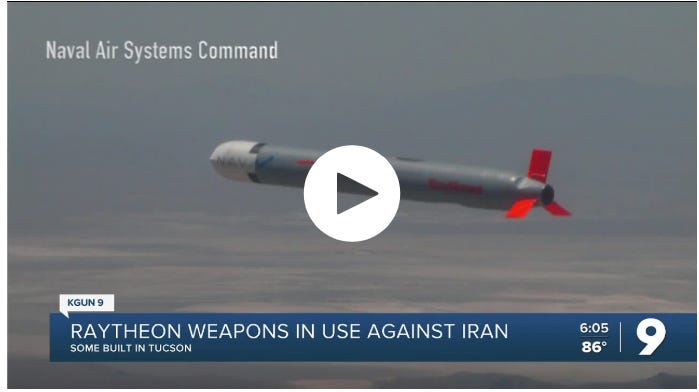
“Our products are in high demand, and we’re responding to the high demand of our customers from around the world,” CEO of Raytheon Tucson Taylor Lawrence said. “Our business is driven by threats in the world.”
Raytheon is expanding its operations in southern Arizona by adding nearly 2,000 jobs.
The jobs will be added to the Missile Systems business headquarters over a five-year period, according to a press release.
Raytheon will be hiring workers at all skill levels, with an emphasis in “engineering and other higher-wage, technical positions.”
This move is expected to result in billions of dollars of economic impact for Arizona over 10 years.
“These rewarding, high-technology jobs will support Raytheon’s growth and bring even more top talent to this region,” said Dr. Taylor W. Lawrence, Raytheon Missile Systems president in the press release. “The strong support we receive from state and local organizations is essential to our expansion plans, and will help provide Raytheon with the workforce and infrastructure to meet the growing demand we are seeing from our customers.”
President and CEO of Raytheon Tucson Taylor Lawrence agrees it was the announcement in 2006 that Raytheon was expanding to Huntsville, AL, that served as a wake-up call to southern Arizona leaders, and the ensuing actions of the city, county and state that led to Friday’s announcement.
Lawrence says the county’s decision to provide a half-mile buffer zone paved the way for this expansion. It will give Raytheon the space it needs to test new weapons systems, including larger missiles.
In a conference call to reporters, both Lawrence and Arizona Governor Doug Ducey praised the expansion and what it brings to Southern Arizona.
13,000 Kapos, Eichmanns, Fausts = just the employees for the war criminal company Raytheon in Tucson!
RoN recognizes and honors Nature’s inalienable rights. Nature is not property to be owned and exploited. Nature includes all ecosystems and living beings including watersheds, rivers, seas, mountains, flora and forests, animals, ecosystems, as well as humans, all inorganic habitats in which organic beings dwell, and the natural processes which contribute to the stability and furtherance of life on Earth. These legal rights are a prudent and necessary recognition that humans are only one species on Earth and that respecting RoN may restore the balance and interconnected health of Earth as first peoples largely understood. We call upon communities, peoples, organizations, and governments to enact, implement, enforce, and harmonize with RoN policies and laws that meet these criteria. Accordingly, to be considered legitimate, a purported RoN law must:
1. Recognize the inherent, inalienable, legal Rights of Nature and Nature’s constituent ecosystems, habitats, and natural communities to exist, flourish, self-organize, evolve, and regenerate, and to restoration, recovery, and preservation when harmed. And these rights must be interpreted in the manner most favorable to the protection of Nature and constituent ecosystems.
2. Define Nature and ecosystems so as to convey “a naturally occurring structural, functional, and organization unit, consisting of a community of organisms and the biotic and abiotic environmental variables that live and interact as a symbiotic whole in a given environment.”
3. Ensure that RoN are free from violation, regulation, and subordination to other laws, legal and financial liabilities, economic priorities, commodification, monetization, or classification by legal concepts such as “legal personhood” where financial liabilities or resource valuations are imposed on Nature.
4. Emancipate Nature, ecosystems, and living beings from the legal status of ‘property,’ which allows for the violation of Nature’s rights by giving deference to vested legal privileges.
5. Recognize that Nature includes human beings, and that the very existence of humanity is inevitably tied to that of Nature, and that RoN necessarily encompass the right of humanity to its existence as a species, and the right of Indigenous people and permanent residents to dwell unmolested in their natural habitat.
6. Guarantee ecosystems have legal standing to appear as the real party of interest in administrative proceedings and legal actions affecting its rights.
7. Authorize residents of communities to represent the ecosystems in which they physically dwell, and ensure that they do so in the name of that ecosystem, for the sole purpose of advancing its rights, recognizing that they are part of that ecosystem and have legal standing, in any and all legal proceedings, to do so.
8. Apply the precautionary principle and restrictive measures, including locally promulgated prohibition, for activities that may lead to the extinction of species, the destruction of ecosystems, or the permanent alteration of natural cycles.
9. Require that damages derived from administrative, legal, contractual, or other proceedings be used solely and exclusively to protect, repair, and restore Nature in the affected ecosystem to assist in bringing it to its prior natural state, as opposed to being used to fund “mitigation banks,” offset schemes, to subsidize energy production, or for other indirect and often greenwashed measures.

+—+
“[We] must deny life in order to study it.” It is like “apply[ing] the knife to the vocal cords…of life itself.” ~ Neil Evernden
Language and the Knife: Silencing Nature
by Gosia Bryja
Mar 31, 2023
After a prolonged winter hibernation, black bears are coming back to life. It’s also the time for hunters to find them and end their life. In British Columbia, the spring hunt begins in April and terminates in June, while the fall hunt starts in September and finishes in December. Hunters are getting ready. Their exchanges and discussions center on what weapons to use, with some switching from rifles to bows, or on seeking specific advice, such as the best brand of rabbit distress calls. Questions about the shooting technique also arise. Hunters share their experiences for the best shot placement, whether it should be the head, neck, or heart. Some suggest aiming at the shoulder. In this case, even if the bear survives, she won’t be able to escape.
Bears’ grogginess and hunger aid in the hunt. Four or five months of hibernation render them vulnerable, easy prey for hunters already geared up and primed for adrenaline-seeking rushes. BookYourHunt in BC is brimming with excitement: “Our spring bear hunts are very exciting with numerous sightings per day often in the double digits. … Bears will frequent the southern mountain slopes and newer logging cuts, feeding on the fresh grasses, clover and dandelions in the spring.”
Are we still talking about extinguishing life? How come we talk about killing sentient creatures as we talk about camping equipment or the best trails to enjoy nature?
Well, it is not an incidental occurrence but, instead, the result of a thought-out process. The answer lies in subtracting sentience, pain, suffering and the will to live from wild animals and turning them into resources to be numerically managed or objects to be chased and killed in thrill-seeking escapades. That’s the trick: detachment, indifference. The objectification of wildlife is more than the display of emotional deviance by a recreational hunter. No, it serves a practical purpose. It is an indispensable tool to make recreational hunting psychologically possible by removing it from the realm of morality and ethics and thus allowing the hunter to engage in a lethal endeavour while maintaining his emotional core intact.

Photo Credit: Sebastian Pociecha/Unsplash
Both hunters and wildlife researchers rely on this tool. In my earlier essay, “Discarding Euphemism: the fate of animals deserves faithful words,” I explore how the use of agricultural metaphors shaped the field of wildlife management. Aldo Leopold, widely regarded as the founder of the scientific field of wildlife management, applied the principles of sustained yield forestry to promote the growth of sustainable “game” populations for hunting purposes. In his words, game management is “the art of making land produce sustained annual crops of wild game for recreational use.” Obviously, on the language level, it’s also the art of stripping wild animals of their cognitive and emotional domains.
In Leopold’s view, wild animals had value as a collective, not as individuals. What warranted protection was the notion of a healthy “biotic community” essential to ensure profitable hunting. Rather than intrinsic, instrumental worth defined animals whom Leopold didn’t consider co-participants in the “circuit” of life. … Instrumental worth, is this all, really? If so, then the mystery of nature vanishes. The spiritual communion with the wilderness that children intuitively experience and romantic poets cherished and eulogized gets degraded into a simple subject-object or user-used exchange devoid of a moral position.
The euphemistic language also makes the horrific enterprise more palatable for the public
Erasing animals’ individuality and detaching the human-wildlife relationship from moral considerations have had far-reaching implications. Once accomplished, such a falsification of sentience proved advantageous for both practicing wildlife management and selling it to the public. Practitioners — managers, researchers, and hunters — felt absolved from pangs of conscience and moral disquietude since they were no longer engaged in afflicting pain and suffering but were, instead, ensuring the sustainability of “harvestable crops.” The euphemistic language also makes the horrific enterprise more palatable for the public. Predictably so, for just as visceral descriptions of violence heighten public alertness, technocratic or abstract vocabulary lessens it.
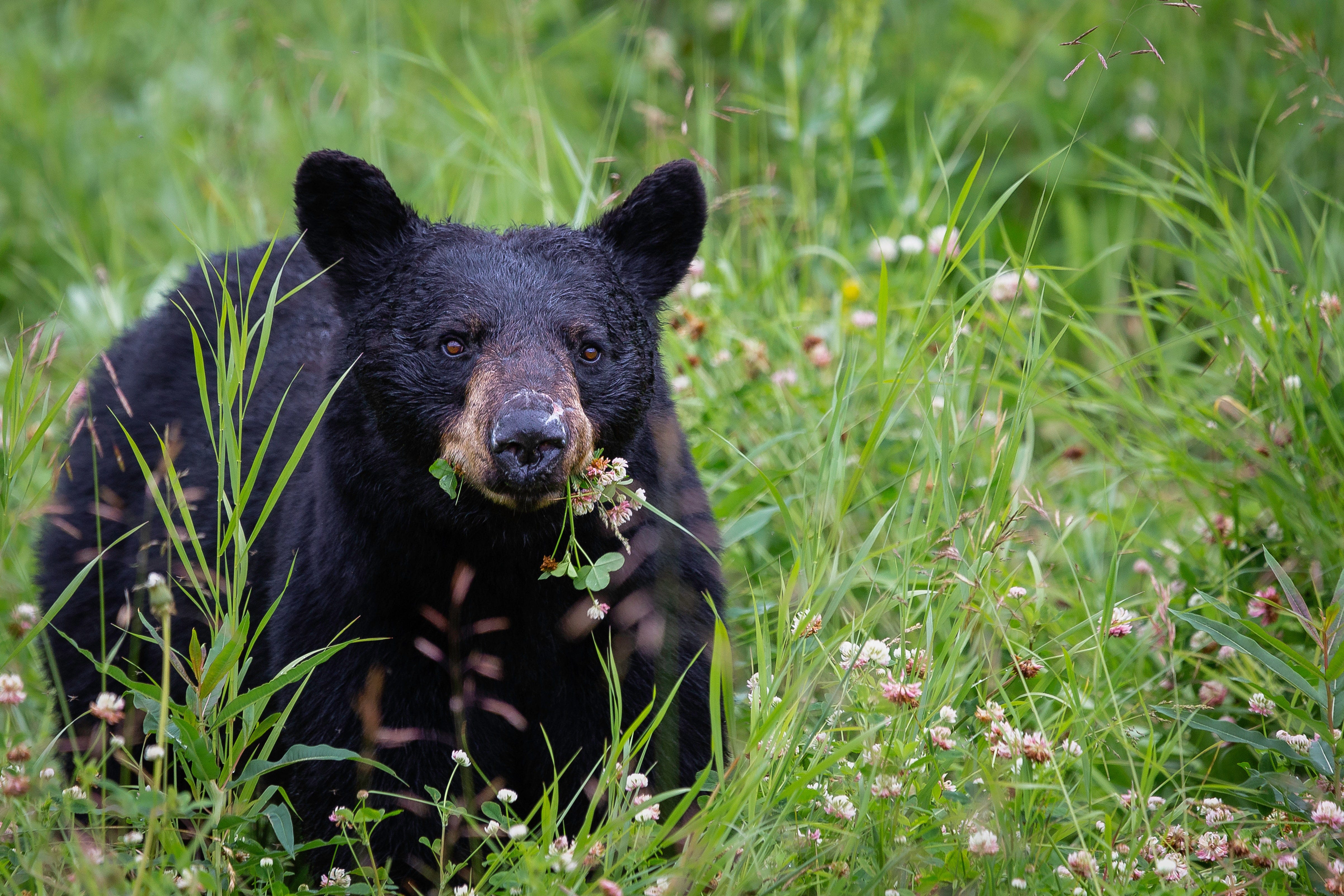
Photo Credit: Pete Nuij/Unsplash
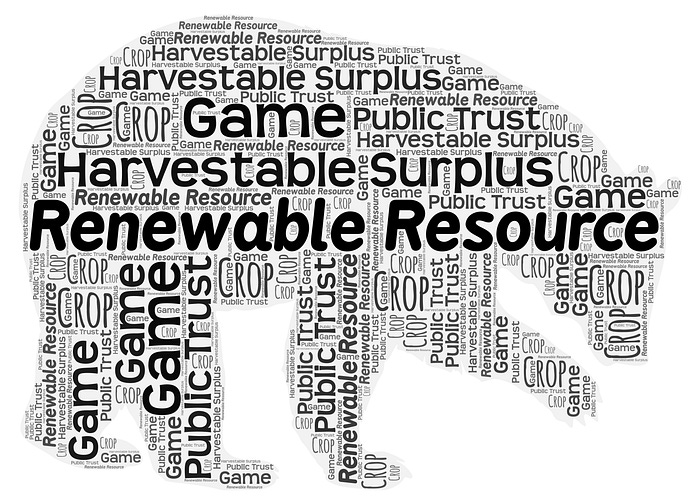
Leopold’s Game Management and his push for formulating science-based wildlife policies were pivotal to developing the North American Model of Wildlife Conservation (NAM). Formally articulated in 2001, the NAM is promoted by hunters as “is the world’s most successful system of policies and laws to restore and safeguard fish and wildlife and their habitats through sound science and active management.” It sanctioned wildlife as “public trust resources” that are “renewable” if managed “wisely.”
Clearly, the euphemizing of language, initiated by Leopold, seems to proceed unabated. If anything, followers have outdone the pioneer. Hunting down wild animals has fully metamorphosed into the management of “surplus resources” or the pursuit of a supposedly “innocuous” recreational hobby that also happens to be conducive to predator control. Or into an alternative feeding opportunity where a wild creature is chased and valued as a source of protein. A superfluous source, unlike in the case of true indigenous subsistence hunters. The NAM and its variously motivated practitioners altered, therefore, the reality. A viewfinder of a camera and a viewfinder of a rifle walk in unison. Boundaries have blurred. From a moral or ethical standpoint, the difference between engaging in harmless outdoor activities and those camouflaged as harmless has become indistinguishable.
If “game” is “taken” or “harvested,” then both the subject of an action and the action itself lack feelings and emotions.
Blurring boundaries between outdoor activities and subtracting suffering from the slaughter through abstract, detached vocabulary have normalized hunting. This is a critical step to render engaging in it emotionally acceptable. To kill without guilt, a hunter must relegate wild animals to a much lower category of beings. This separates them even more from humans with whom we instinctively associate pain, especially emotional one. As Mallory writes, “a conclusion must be reached that the animal is somehow “lower” or “lesser” than oneself in order to justify sacrificing its (vital) needs to one’s own (nonvital) wants.” The language clearly helps. If “game” is “taken” or “harvested,” then both the subject of an action and the action itself lack feelings and emotions. A bear and a cougar resonate with us as creatures with emotions encoded in the nervous system, but does the same apply to “game?” Similarly, “killing” presupposes the existence of a sentient life, but “harvesting” not necessarily so. As a result, accountability, morality, and ethics no longer enter the equation.
There is, however, a contradiction at the core. The very determination to redefine wildlife as crops or inanimate objects betrays a suppressed belief that they are not so. It can’t be otherwise; it won’t work otherwise. An inner divergence threatens the psyche, and, to subdue surging uneasiness, technocratic vocabulary comes to aid. Basic psychology, indeed. Cognitive dissonance demands consistency, and since acknowledging the sentient life and killing it is bound to instigate an inner conflict, such an acknowledgment needs to be denied, disqualified, and erased to ease the anxious mind.
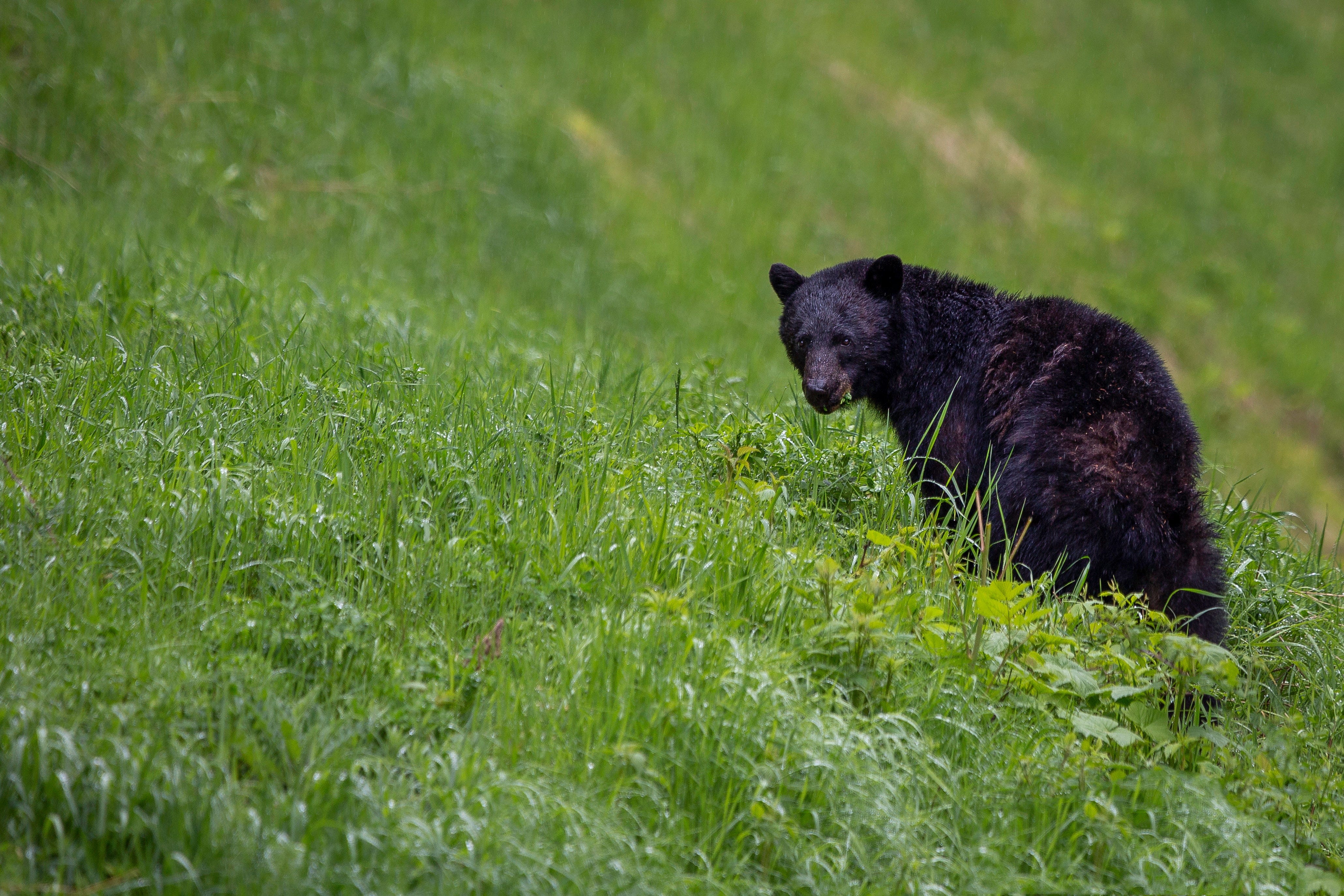
Photo Credit: Pete Nuij / Unsplash
Sadly, distorting reality with falsifying words is not the only way to nullify the suffering of nonhuman nature. In his book, “The Natural Alien: Humankind and Environment,” Neil Evernden discusses the work of Claude Bernard, the revered father of experimental medicine, who, in the name of science, had no qualms about listening to the screams of animals being ripped apart at the operating table. He “believed that his higher calling exempted him from such considerations.” Many of Bernard’s followers lacked, however, his perfect detachment and “adopted a routine precaution: at the outset of an experiment they would sever the vocal cords of the animal on the table, so that it could not bark or cry out during the operation.”
“Severing the vocal cords” of animals — whether literal, as in the case of vivisection, or metaphorical that “silences” the cruelty inflicted on them by depicting wildlife in euphemistic, technocratic terms — is an immoral act
The sight of a frantic animal with her mouth stretched but no sound coming out is easier to take and easier to reimagine as the reflection of Descartes’ mindless machine. After all, it’s often someone’s cry that evokes compassion, elicits empathy, awakens humanity in us. It separates sentient beings from inanimate objects or even plants. On the other hand, as Evernden rightly argues, isn’t cutting the cords to silence the piercing scream an act of emotional self-defense, an admission that this scream is indeed the sound of pain and suffering?
Yes, animals suffer; they experience emotional and physical anguish as we do. We know it, and deep down, hunters as well as wildlife managers and researchers know it, too. That’s why they need each other. A mutually beneficial symbiosis connects them. Hunters seek from wildlife managers and researchers a scientific rationalization for shooting wildlife, while wildlife managers and researchers who ascribe to the NAM see hunters as instrumental to “harvesting surplus resources.” A large “surplus resources” that is, because, in Canada, the “harvest” of wildlife is invariably plentiful. Each year, between 25,000 and 30,000 black bears are “harvested” as a part of predator management : young and old, male and female. All of them individual lives, all of them disposable.
“Severing the vocal cords” of animals — whether literal, as in the case of vivisection, or metaphorical that “silences” the cruelty inflicted on them by depicting wildlife in euphemistic, technocratic terms — is an immoral act. It degrades animals but also diminishes us, humans. That is why, one hopes, it is an ultimately futile endeavour. Most of us know that animals are more than a trophy, protein, or flesh to be riddled with bullets. They are not charts or numbers but individual, distinct creatures harbouring a beating heart. They have their lives to unfold on their own terms. They have their own stories.
Those who deny them this inalienable right cannot cut our vocal cords. It is up to us to speak, fight, and push against cruelty. Given the growing awareness of nonhuman sentience, prevailing might not even be that hard. As with other injustices that have plagued human history, what seems insurmountable is bound to crumble. Animals deserve a better fate. Let’s make granting it to them one of the missions of our time.

