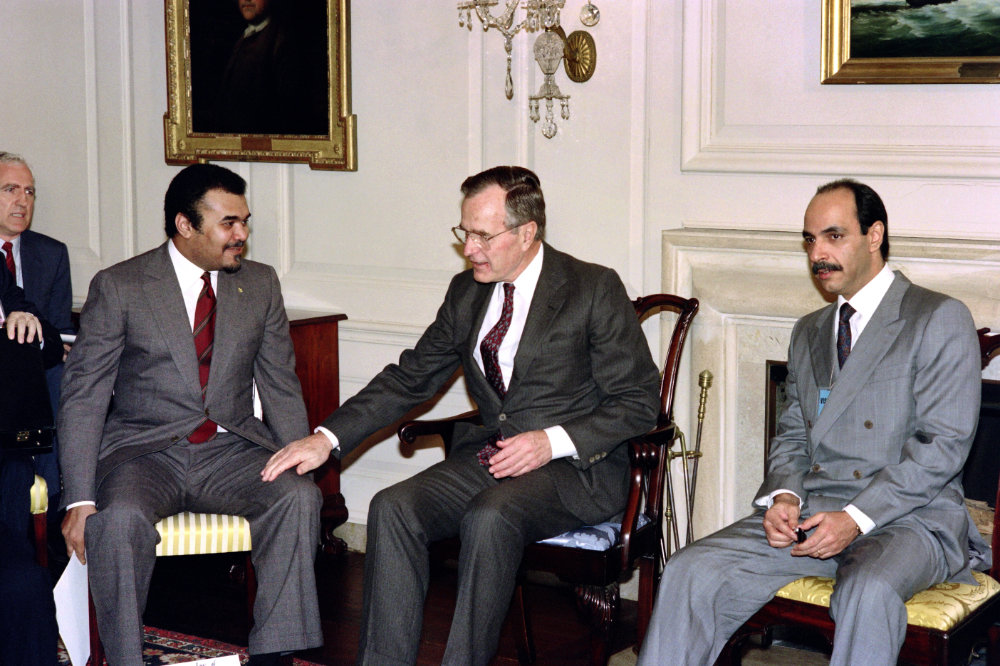
This year’s NDEAM theme is prescient: “America’s Recovery – Powered by Inclusion.” October 2021.
The power of acceptance in this diverse world will follow the arc of social justice; however, it’s a long journey, still, in 2021.
When I was 15, I had to do community service for ripping through the Tucson desert with my unlicensed motorcycle while I had no driver’s license. For three months, I read poetry, drama and letters to people in the last stages of their lives at a hospice.
When I sat with some of these patients, I was both humbled by and shaken awake to life’s fragility. My favorite person was Gloria, who was on her last stages with a tube running from her 60-pound inoperable tumor to draining ghastly fluids.
We talked about her days in theater, and I read plays to her, including Shakespeare’s Othello and Sam Shepherd’s, Curse of the Starving Class. I met her 55 year old daughter with Down Syndrome.
Disability, or handicap, and other phrases like terminally ill, vegetative state and bed ridden flummoxed me into a state of wokeness.
I am still working with drama and engaging people who fit the Disability Month profile: adults with developmental and intellectual disabilities.
This awareness campaign — started by Congress 33 years ago – is close to my heart since I’ve worked as a trained customized employment specialist, initially with United Cerebral Palsy of Oregon.
This work was in the tri-county Portland area, and successes were high points in my life, probably more so than the clients’ lives. Helping land jobs for people who have challenges and face unimaginable hurdles tied to discrimination, stigmatization and poverty is rewarding.
There have been big changes in how we relate to people living with disabilities; however, prejudice and disenfranchisement are still prevalent. Discrimination against those with a developmental disability is high.
The “National Snapshot of Adults with Intellectual Disabilities in the Labor Force” was commissioned by Special Olympics. The facts are sobering:
Only 44% of adults with ID aged 21-64 are in the labor force. This is compared to 83% of working-age adults without disabilities who are in the labor force.
21% of working age adults with ID are unemployed. This is compared to less than 8% of adults without disabilities who are unemployed.
28% of working age adults with ID have never held a job.
Only 34% of adults with ID aged 21-64 are employed.
In Lincoln County, adults with intellectual disabilities work in grocery stores, hotels, landscaping businesses, restaurants and other settings. State agencies are committed to making sure adults have the opportunity to work in competitive environments.
However, stigma and unique circumstances make it challenging to get job placement: many with DD/ID can’t work more than PT jobs; transportation is problematic; and many need a job coach on site to insure successful day-to-day activities.
Historically, in 1941, National Employ the Physically Handicapped week cracked open the nut. In 1962 “physically” was removed. 1973 harkened the Rehabilitation Act declaring discrimination on the premise of disability was illegal. Then, more headway: Education for All Handicapped Children Act (1975).
Thirty years ago, Americans with Disabilities Act was signed into law, guaranteeing access to work and prohibiting discrimination against individuals with physical or intellectual disabilities.
Today, more families and communities are comprised of an increasing number of people who live with intellectual and developmental disabilities.
Still, today, those wanting integrated employment that have an employment specialist assisting in customized employment face roadblocks.
Cultural change must galvanize this philosophy of “it takes a village to ensure the safety, health and well being for all our fellow citizens.” That means business owners must step up to the plate.
In the words of Mister (Fred) Rogers himself: “Part of the problem with the word ‘disabilities’ is that it immediately suggests an inability to see or hear or walk or do other things that many of us take for granted. But what of people who can’t feel? Or talk about their feelings? Or manage their feelings in constructive ways? What of people who aren’t able to form close and strong relationships? And people who cannot find fulfillment in their lives, or those who have lost hope, who live in disappointment and bitterness and find in life no joy, no love? These, it seems to me, are the real disabilities.”
Ahh, that’s the piece coming out in the Newport News Times, above. The reality is I have 750 words to work with, no graphics, and alas, no polemics. And, yes, this concept of disabilities of a wide variety should be on everyone’s minds now, in 2021, the Year of the Jab, the Year of the Long Haul, the Year of Weathering, the Year of the Haves Putting the Screws Down on the Haves Not!
You see, the injuries caused by the felony offenders, Pfizer and their mRNA experimental what not, those are disabilities to be argued over for years to come. Lawyers lines up, judges bought and paid for through the ugly world of Capitalism — adding these prefixes: predatory, usury, chaotic, casino, disruptive, mafia, and so many other terms for this predation and rip-off scam. Structural violence is built into the system, and whether you are injured by glyphosate encrusted foods, or the unending cascade of carcinogens and neuro-toxins put out by the great believers in “better living-chronic illnesses through chemistry”, or injured by the jabs, or the bioweapon that is the perfect triple storm, or just by the endless threat of eviction-incarceration-bankruptcy, homelessness, medical-educational indebtedness, all that Repo that is the Republic, there ain’t no Demon-crat or Repulsive-can to come to anyone’s rescue. Prostitution is honest compared to these continuing criminal enterprise winners in government-big business-big finance-military-tech-Pharma-et al.
Old news — A GRANT PROPOSAL written by the U.S.-based nonprofit the EcoHealth Alliance and submitted in 2018 to the Defense Advanced Research Projects Agency, or DARPA, provides evidence that the group was working — or at least planning to work — on several risky areas of research. Among the scientific tasks the group described in its proposal, which was rejected by DARPA, was the creation of full-length infectious clones of bat SARS-related coronaviruses and the insertion of a tiny part of the virus known as a “proteolytic cleavage site” into bat coronaviruses. Of particular interest was a type of cleavage site able to interact with furin, an enzyme expressed in human cells. The EcoHealth Alliance did not respond to inquiries about the document, despite having answered previous queries from The Intercept about the group’s government-funded coronavirus research. The group’s president, Peter Daszak, acknowledged the public discussion of an unfunded EcoHealth proposal in a tweet on Saturday. He did not dispute its authenticity.
Disability — what pray tell is that? There are dozens of chronic illnesses that generate many levels of loss of abilities, i.e. disabilities. I work with all sorts of disabilities, and all sorts of chronic illnesses go hand in hand with disabilities, especially with homeless and those who are fighting addiction and poverty and incarceration. Then, the luck of the roulette wheel — intellectual, developmental and psychiatric disabilities.
Anyway you cut it, this is the Land of Chronic Illnesses. Food and factories, and the filth in prescriptions and in the peddled crap of fast food, junk food, packaged food. The chronic illnesses are at birth, and many are tied to all the hormone disruptors and neurotoxins and gut and brain discombobulations. We are really in a world of hurt, with so many with fatigue, fatty livers, kidney malfunctions, obesity, all the drug injuries from the Pharmaceuticals, and so much more of the pollution, single point source, and all of it mixed together into a veritable pureed mush of poisons in the food, soil, air, water, airwaves and just living in a mass psychosis society. . . . Where the rich, undeserving, celebrity of every dirty kind, play god, and determine who and what and where and why and how we are as people. Elites are the cancer of cancers.
And then, you have this human tick, Trump, and boy what a sick world of people who would never ever let this guy forget who he is — racist, fascist, undserving, soiled un-Man, Donald Trump (and his followers and bootlickers)
‘The poor guy’
Referring to the 2001 article (published by the Washington Post) at a South Carolina rally on Tuesday night, Mr. Trump called Mr. Kovaleski “a nice reporter”.
“Now the poor guy, you gotta see this guy,” he continued, before launching into an apparent impression of Mr. Kovaleski, waving his arms around with his hands at an odd angle.
“Uhh, I don’t know what I said. Uhh, I don’t remember. He’s going like ‘I don’t remember. Maybe that’s what I said.'”
Mr. Kovaleski has arthrogryposis, a condition that affects the movement of joints and is noticeable in his right arm and hand.
A New York Times spokeswoman told news site Politico: “We think it’s outrageous that he would ridicule the appearance of one of our reporters,”
The original Washington Post article by Mr. Kovaleski said that authorities in Jersey City “detained and questioned a number of people who were allegedly seen celebrating the attacks and holding tailgate-style parties on rooftops while they watched the devastation on the other side of the river”.
Since Mr. Trump’s claims about Muslim Americans celebrating 9/11, the reporter has said he does “not recall anyone saying there were thousands, or even hundreds, of people celebrating”.
Yeah, October, the month when the folks like Fauci and Trump and all the other enablers of pain and disaster capitalism should be set to sea. We all are useless breathers, eaters, walkers, sleepers, in and out of wheelchairs, what have you, to the rich! Hence, the planned demic, bioweapons 6.0. May they all rot in proverbial hell.
LEAKED GRANT PROPOSAL DETAILS HIGH-RISK CORONAVIRUS RESEARCH
The proposal, rejected by U.S. military research agency DARPA, describes the insertion of human-specific cleavage sites into SARS-related bat coronaviruses (source)
drats, forget about these experts who have studied millions of people, millions of times, around what obesity does to the body, what poisons do to the gut, what all those inflammatory products do to our immune systems
Unending loopy discussions about how great the mRNA pushers/developers are, for sure, and then in the same breath, these people are obese/morbidly obese, and full of chronic illnesses, most notably asthma, pre-diabetes/diabetes. The entire list of poisons and synergistically deadly things consumed actively or passively would scare the hell out of any Covid Cultist if she or he would just take the scales off their eyes.
And, alas, what a tale to tell, that nefarious DARPA with all of its paid for in the open, and paid for under wraps outfits to develop, well, weapons of mass destruction, mass surveillance, mass confinement, mass disruption, mass sickness. No no no, DARPA, messing with bacteria, viruses and in/organic poisons as “defense” tools in the offensive tactics of Empire/Military/Reset.
For some reason, the scales stay on those liberals (sic — think highly neoliberal and conservative) even when confronted with piles and piles of evidence. Just yesterday, a friend, in his early 80s, already on mRNA 2.0, waiting for 3.0 to be delivered to him in Spokane. He knows he doesn’t have or won’t make for the bandwidth on these stories around Operation Warp Speed, gain of function a la 30 years, all the WEF plans, all those World War Games prior to November 2019. Event 201. Nah, it is too too much for even old hippies like Bob, who is living on $1,100 a month, Social Security, and he just cited the Washington CIA Post‘s article on Spokane having the highest per unit raise in rents. A town with 60 percent of the populous renting, and here we are — enough said, right?
How can he be prepared to linger in the science and the counterarguments around mRNA, the forced jabs, lockdowns, masking, social distancing, variations on a viral theme? How can he, when he thinks those opposing the mandates, and those questioning the mRNA booster for all of USA, are somehow all tied to Trump, or/and, all ignorant or poorly educated.
So, I am challenging the entire Covid narrative, and Bob knows me, likes me, and honors me. He was my radio show producer. He respects me. I told him last night that a telephone chat just will not cut it for me to attempt to educate. A Power Point? A reading list? Some podcast?
This is one tough nut to crack, the lefty nut, or the liberal nut. He is from Minnesota and he is tied to Zimmerman, Bob Dylan, and he is schooled in lots of great things, too, like tenants association, and working with Mondale a long time ago. He’s not a commie, but he sees himself as a socialist, of the Bernie Sanders (sic) variety.
This is Mr. Fish, and good on him, but let’s see the liberal version, please:
That one of Jesus would be handing out coupons, a few SNAP benefits, pamphlets on LGBTQA, some guides on organic gardening, and posters supporting Tesla and electrified everything, but with a pile of 401 retirement fund statements, etc., with all those piggy banked investments of the old hippies around, well, those lovely stocks tied to the entire mess of surveillance capital, med, CRISPR, even GE or Boeing or you-name-it BlackRock or Blackstone or Apple or UPS. It really doesn’t matter, divesting from fossil fuels campaigns, etc., because, well, fossil fuels are embedded in all those things the greenie weenies and liberal fascists supposedly support because they are believing in socially responsible investments (contradiction in terms, no?). They might not want Smith and Wesson or Raytheon in their stock holdings, but goddamned if they are not going to invest in Google, Amazon, Boeing, etc.
Again, all those Fauci Fawners, all those idiots who will not listen to others, even those with credentials, even those from big schools, big Ivy League institution, even those who once worked for Big Pharma. Their obedience is massive. Absolutely massive. No jamming on the streets now that Biden The Bumbler is turning Guantanamo into a, well, illegal alien processing/holding/incarcerating/tracking camp.
Again, the real news is this:
Today we have pollution levels out of control; the most important problem is the pollution of the human and animal food chains. The most recognized toxic substances is glyphosate, including involuntary biological contaminants mycotoxins. Each species has its own peculiarities in inducing effects on health. Mycotoxins is an important stressor factor, in particular deoxynivalenol (DON) that disrupted the expression of the Zonulin-1(ZO-1), occludin and claudin of porcine gut epithelial TJs. Mycotoxins are immunotoxic and teratogenic. Antibiotics imbalance microbiota. Pollutants, including involuntary, and antibiotics have a negative effect on cell junctions, the microbiota and the microbiome, which ultimately lead to dysbiosis and leaky gut. Glyphosate is another emerging problem; it appears that the damage is caused by the surfactant, TN-20. Surfactant and glyphosate led to mitochondrial damage, apoptosis, and necrosis, disrupts the integrity of the cellular barrier and blocks out microbial growth at lower concentrations. Furthermore, glyphosate induces an increased activity of phenylalanine ammonia lyase (PAL) that leading to a hyperammonemic environment in the gut, incresed ammonia level is believed to be intestinal bacteria in small and large intestine. There is strong correlation between gut dysbiosis and autism spectrum disorder (ASD). There is strong relationship between intestinal gene expression and bacterial structure. This is the future challenge for research. Keywords: autism spectrum disorder (ASD); deoxynivalenol (DON); dysbiosis; tight Junction (TJ) glyphosate; microbiota; mycotoxin; zearalenone (ZEN); phenylalanine ammonia lyase (PAL) (source)
In no uncertain terms will these issues be looked at, because we are in Covid Porn, and it is every fat man/woman/child for him/her/them self. This is a giant eugenics scheme being played out on many levels. You won’t have billionaire Anderson Cooper covering any of this, because these people are trained on what to say, what not to say, how to say it, and how to keep it out of the news.
Then, like I stated yesterday, you have this scam layered upon another layer of scam:
Pretty amazing, these liberal lites, AKA Fascists. Where are the great newshounds on this one?
These are the beautiful people, don’t you know? Yikes, we don’t have time?@!#$%?
“The Manufacturing of Greta Thornberg” is compelling, and speaks to the entire Capitalism-Billionaires-Philanthropies-Big Businesses-Technologies will get us out of hot water, hot air, hot land, collapse. That’s it for these people. Read, “The Making Of Greta Thornberg by Cory Morningstar.”
These people are serious, these blue faced-blue assed Democrats, especially in the two states I have spent countless cortisol loads on — Oregon and Washington.
As a final note, I was talking to the manager of a place in Corvallis. It’s a 12 room “hotel” funded by a big wig in Corvallis who made his multiple millions selling poison and war, Pepsi, et al. You know, all that HFCS and sugar and bubbly shit. Sugar. This place is for people and families who have to have some procedure or operation done at the Samaritan Hospital, but it’s cost savings — $30 a night.
This gentleman stated,” Well, it could have been last week you were looking for a place. We were all booked up, and because it was back to campus week at Oregon State University, the hotel rooms, I was told by several patients, were going for upward of $800 a night.” You know, Best Western, La Quinta, Holiday Inn, et al. He chuckled and said, “Price gouging. Imagine if a gallon of gasoline doubled in a day. How many people would be out on the streets protesting that?”
That ain’t going to happen here, but in places like France or Chile, Haiti or Brazil, millions take to the streets for a doubling of bus fare or 40 cents more a gallon for petrol.
Price gouging? Oh, the euphemism for theft, ransom, out right criminality. So, capitalism relies on this disaster and shock relationship, buyer beware, and without leadership and without the revolution to upend these piece of shit, this is a constant factor in USA. CONSTANT.
But again, it’s the Covid, Stupid, not air pollution, toxins, fetal damage, epigenetics, synergistic process of not just two chemicals in daddy’s or mommy’s body, but many all together.
I did a review of Semper Fi, here — “Semper Fidelis or Das Kapital Uber Alles: From Eisenhower to Trump!” Read it. Camp Lejeune disease.
Am I eligible for disability benefits from VA?
You may be eligible for disability benefits if you meet all of the requirements listed below. Both of these must be true.
You:
Served at Camp Lejeune or MCAS New River for at least 30 cumulative days from August 1953 through December 1987,
and
Didn’t receive a dishonorable discharge when you separated from the military And you must have a diagnosis of one or more of these presumptive conditions:
Adult leukemia Aplastic anemia and other myelodysplastic syndromes Bladder cancer Kidney cancer Liver cancer Multiple myeloma Non-Hodgkin’s lymphoma Parkinson’s disease
Who’s covered? Veterans Reservists Guardsmen
Notice, no citizens, civilians covered in this BS VA benefits blurb, and be real — 7 diseases! Right. Make that dozens more. And, make that hundreds of places other than this shit hole Camp Lejeune. You think that contaminated water has nothing to do with the immune system, all those physical compromises, cardiac issues? You don’t think DARPA and CIA and others, worldwide, to include Israel and the Old South Africa and UK, that there haven’t been experiments on a weaponized bio-engineered virus getting into the general population, where chronic illnesses and comorbidities outnumber any of the normal’s or Iron Man/Woman types?
Grow a set of testicles or ovaries or both! PLEASE.
Clinton’s docu-series, Trump’s Tweets, Holly-Dirt’s Shenanigans, Biden’s Bumbling, LGBTQ-BIPOC Neoliberalism Back at Backwards, & More Great White Saviors! Hell, another actor (sic) running for Tex=ass governor, what’s his face, Matthew McConaughey (net worth, $200 million)
These are not men, mind you!
Another War Criminal enjoying California!
So the corporations are at the UN conference on food, peddling poisons, pestilence, predatory capitalism, putrid food, penury, while the entire racist system runs runs runs on the Macho Pukes in Uniforms, whipping black men and black women and black kids. And, supposed “socialist” Mexican AMLO, as disasterous to the Blacks (Haitians), as always is the case with these Conquistador Euro Trash.
AMLO? Mexico?
It must be pointed out that the U.S. could not enforce these draconian measures without the complicity of the Mexican government. With the “Remain in Mexico” policy, Trump threatened the “leftist” administration of Andres Manuel Lopez Obrador with sanctions if it did not comply. Obrador has done much more than comply. He has deployed the Mexican National Guard and military to the country’s northern and southern borders where they have brutally attacked and disbanded migrant caravans.
Trump not only expanded but perfected policies begun under Obama. Toward the end of his term, in March 2020, Trump advisers found an obscure legal provision that allowed the administration to use COVID-19 as a way to circumvent international law protecting refugees. This was the infamous “Title 42 ” of the Code of Federal Regulations. Title 42 authorized the Center for Disease Control to issue statutes barring entry to the US to persons from countries who are suspected of carrying a communicable disease. The CDC listed Haiti as high risk for COVID-19 despite the relatively low infection rates in the country. But such a designation only follows the CDC’s naming of Haitians as exceptional carriers of HIV/AIDS in the 1980s. No matter the rate of Haitian infection, such a designation allowed Trump, and now Biden, to expel migrants without due process. Recently, a judge blocked Biden’s use of Title 42. His administration has appealed . (source)
Optics, man, mean nothing to the BIPOC/LGBTQA Biden Bumblers:
Dolphins lined up, and soon, those with no digital vaccine (sic) passports!
Prime Minister of the Faroe Islands and the Faroe Islands Tourist Board Every year, hunters round up thousands of helpless dolphins for hours using jet-skis and boats, before inserting metal hooks into their blowholes and using ropes to drag them alive to the shore, where their spinal cords are slashed with knives or spears.
Then, the science, follow the science — Listen to Dr. Michael Yeadon, former Vice President and Chief Science Officer of Pfizer, talking about the pandemic and the COVID vaccine.
On every level, the lies are winning, the liars are getting their shekels and gold and parcels of bribes and payoffs and land. Again, the inflammatory diseases are all wound up in capitalism, predatory theft, indebtedness, money lending/extortion, aided and abetted by those thieves in the Fed., all those sons of bitches and a few bitches on Wall Street, and in the Military Congressional Industrial (Thievery) Complex (Racket).
The smoke and mirrors and spin masters, all the marionettes and the puppet masters, all those dirty teachers, colonized authorities, the lot of them, they are part of the unending stupidity of Western Mentality. Again, in this new job, I am hearing of “all these people on Zoom have Covid.” And, alas, all of them were jabbed. 100 Percent, jabbed, but have “Covid.” But, these people blame the unjabbed. It is a circular shooting party, and the fools win out, while the rest of us are, well, super informed, doubly curious, tremendously skeptical, deeply versed in the lies-machinations-poisons of our forefathers and our current brood of fathers and mothers.
Leave us the fuck alone!
It’s that simple, but alas, the great white saviors, the Rockefellers and the Gates and the other nefarious ones, billionaire murderers one and all, have designs, man, for depopulating the world. These people overtly, now, state that we are worthless breathers, eaters and breeders. Just think how the un-mRNA-jabbed are treated, and we get how fucked up this country is when there is no burning tires and throwing Molotovs on the streets. In fucking Alaska, the great capitalist system is advancing what will be universal euthanasia —
Alaska has become the third state, after Montana and Idaho, to activate “crisis of care” standards at hospitals, which have become overwhelmed with unvaccinated COVID patients. Under the policy, hospitals may now deny treatment to people deemed less likely to survive. This is Alaska’s chief medical officer, Dr. Anne Zink.
Dr. Anne Zink: “The strain on our hospital systems is impacting not only people with COVID-19, but people who are there because of a stroke or heart attack or a kid who falls off their bike.”
No fucking outrage? And we know it is all about stopping the viral load in the mucus, in the upper respiratory system. Fucking do the right thing and DO NOT put your loved one on the intubation-respirator-fungus-producing-bacteria-growing-trauma-inducing-boy-breakdown tube machines!
The crimes are out there, in the open — fucking cheap product, used daily for vulnerable people, immune compromised people, for people in confined spaces, etc. But nope. You wonder why, uh?
The SaNOtize nasal spray is “the only nasal spray that has actually gone through a proper placebo control phase two trial,” says Regev. The blinded trial used saline as the placebo and SaNOtize spray used as the treatment. “We have shown that we reduced viral load 16 times more than the control after using the spray for 24 and 72 hours,” says Regev.
The spray releases nitric oxide into the nose to prevent a potential infection and eradicate a virus—whether that be COVID, influenza, or another respiratory virus. Regev says SaNOtize can be used twice a day to prevent the virus, and up to six times a day to reduce the viral load of those who have already contracted the virus.
Nitric oxide is a compound that the body naturally produces, says Regev. “It’s our first line of defense against infection in the body.” Nitric oxide has antimicrobial properties, so it’s able to kill bacteria, viruses and fungi.
Is nitric oxide safe to use every day?
“The dose of nitric oxide in the spray is so low,” says Regev. “We haven’t seen any significant side effects at all—not in the trials, and not in the report from the market.” (source)
This entire country, the entire business world, all of them, in the, again, military, pharma, ag, energy, med, ed, real estate, insurance, banking, investment, hedge fund, law, prison, surveillance, policing, AI, food, chemical, mining, transportation, aerospace complex are part of a concerted effort and orchestrated system of theft, harm, murder and colonization. Forget about the cavalry coming in to rescue us.
Listen to Raj Patel, and read his stuff —
Yet when policy makers attend a United Nations Food Systems Summit in the fall of 2021, the solutions on the table for world hunger will exclude agroecology. The summit’s sponsors include the Gates Foundation, whose preferred solution is a set of technologies modeled on the Green Revolution. Despite a great deal of evidence that the Gates’ Alliance for a Green Revolution in Africa has failed, one of its leading acolytes from Rwanda will chair the U.N. Summit. Advocates for agroecology, such as the Alliance for Food Sovereignty in Africa, which represents 200 million food producers and consumers, have too few resources to impact a process that increasingly silences their voices.
Ending hunger requires much more than pulling more food from the ground; it involves grappling with entrenched hierarchies of power. Over the past decade food production has generally outstripped demand — there is more food per person than there ever was. But because of global and regional inequalities, exacerbated by the recent pandemic, levels of hunger are higher now than in 2010. In other words, more food has accompanied more hunger. People are deprived of food not because it is scarce but because they lack the power to access it. (source)
Listen to me interview Raj a long time ago on my radio show, one that would not be accepted-broadcast today, since the topics were anti-corporate, and anti-imperial and we talked for 58 minutes! Here, Paul Haeder Podcast Number Five.
Leave these people alone —
Experiments with unfamiliar crops (top) and recipes have helped Bwabwa’s villagers achieve healthy diets. So has gender equality, which reduces the burden on women. Winston Zgambo helps Anita Chitaya prepare bean-flour doughnuts (center). Her husband, Christopher Nyoni (bottom), also cooks, traditionally women’s work. Credit: Thoko Chikondi (source)
Leave these people alone, the elks, that is!
Photos: National Park Service_Shutterstock Rare Tule Elk at the Point Reyes National Seashore will soon face death by shooting as part of the “management” plan approved by the National Park Service (NPS).
Leave these people the fuck alone, the wolves, that is.
The state of Washington has ordered the killing of one or two wolves from the Togo pack in Ferry County in response to repeated attacks on cattle. The state Department of Fish and Wildlife (WDFW) said Thursday that nonlethal deterrents used by three different ranchers had not stopped the attacks.
Oh, yet, the generals still get all expenses paid, get housing, get Cadillac medical care, travel, transportation and thousands of lackeys who are the yes-sir, for sure, sit, toads, for, a base pay of : 2018 military pay table, a three-star general might earn as much as $15,800.10 a month in basic pay.
Between 2004 and 2008, 80 percent of generals at these ranks joined a defense company after leaving the military.
These positions are substantially more lucrative than current pay levels for generals – $164,221 per year for a three-star general and $179,700 for a four-star general. Private companies do not have to disclose salaries, but executives at defense contractors often make hundreds of thousands of dollars per year.
Again, criminals, looking like this idiot, but a rich and murderous one —
The Pentagon did not return a request for comments on this story. But it does have rules in place to prevent conflicts of interest. A 2009 rule published in the Federal Register requiring any official who was involved with awarding $10 million worth of business to a company gets a written opinion from an ethics counselor outlining what job functions he or she can perform in the first two years at that same company.
However, the rule has done little to slow the rush to defense firms. Petraeus is the biggest name, but there are many others that have taken the same route. CREW found that the top five defense contractors – General Dynamics, Raytheon, Lockheed Martin, Boeing, and Northrop Grumman, which take in a combined $100 billion in DOD spending – hired at least nine former high-ranking Pentagon officers who left the military from 2009 to 2011. CREW also found that 12 generals who left during that same period now work at Burdeshaw Associates, a firm that helps companies win defense contracts. (source)
And, the stories can keep coming, but the payments to the ferryman are lacking for all of these criminals, in the racket of war:
The generals are in a corner. If they admit that the Kabul massacre is resignation-worthy — and in a healthy society, a massacre would be — they would have to admit that resignations should have occurred after the multitude of U.S. bombings and attacks in the past 20 years that killed large numbers of civilians doing nothing more sinister than attending a wedding party, seeking care at a hospital, or picking pine nuts. The Kabul bombing was an outlier only in the amount of attention it received; the killing of civilians has proven to be a feature rather than a bug of the 9/11 wars. (America’s Generals Are Cowards. Fire Them All. by Peter Maass
Wouldn’t that be a fine day in the neighborhood?
Relatives carry caskets at a mass funeral for members of a family killed in a U.S. drone strike, in Kabul on Aug. 30, 2021. Photo illustration: Elise Swain/The Intercept; Photos: Getty Images (2)
A fine world, indeed, with all the generals and those in the military, pharma, ag, energy, med, ed, real estate, insurance, banking, investment, hedge fund, law, prison, surveillance, policing, AI, food, chemical, mining, transportation, aerospace complex thrown to the wind as dust!
Agroecology Is the Solution to World Hunger
Millions of farmers are growing and sharing food in ways that enhance nutrition, biodiversity and quality of life
Raj Patel is a professor of public affairs at the University of Texas at Austin and a member of the International Panel of Experts on Sustainable Food Systems. His books include Stuffed and Starved and The Value of Nothing. Most recently, he co-directed with Zak Piper the award-winning documentary The Ants & the Grasshopper
no job interview, no job offer, targeting by city, county, state honchos, watched by the pigs, shadowed by all the sub humans
No no no, that is not too harsh. Sub-humans? Really, that’s wrong, off the mark or just plain mean?
One of a thousand examples pulled from my file cabinet — I was substitute teaching in the Lincoln County School District. At the High School in Waldport. You know, short notice, no notes from the teacher of record. And English class. He calls me on the phone while I am taking roll for first period. Juniors and seniors. I have written about this before, and that fact comes into play soon, just wait.
Of Mice and Men and then, Animal Farm. Talk about both books. Characters, themes, critical thinking, applications to today. Under my belt, hundreds of classes I have taught, in colleges, universities, special programs and even in K12 districts.
Oh, so, the discussion comes around to special education, developmental disabilities, homelessness and substance abuse. Talking about how the luck of the draw and the luck of biochemistry still plays in our world, just as they did in Orwell’s and Steinbeck’s made up but very real worlds.
I notice a female student leaving class during the robust discussion. Then one more. End of the first period, the punk (yes, it’s okay to call a human, a punk) vice principal is outside and then comes inside. He asks me if I am teaching the students, and that two students came to his office upset, in tears, saying that I said that they would not amount to anything, that they would become homeless and drug addicted.
Now, that was the first of several red-flags. Really? In my entire lifetime, never would those words pop out of my mouth, but this fellow was all worried, as I found out 45 minutes later, because one of the students was the daughter of a school board member.
Okay, next class, we talk about Animal Farm, about the amount of industrial farming in the world that now exists, about the pollution and the miscarriages and the pollutants that cause all sorts of cancers and mental disabilities. Again, for some reason, the same female student was in that class, and she grabbed another girl and left the classroom.
The students in the classroom were interested in what we were talking about, asked lots of questions, and it was obvious that they were sheltered from so much, which is apropos of the failing k12 systems around the USA, and in rural backwater places like Lincoln County.
Before the class time was over, this bulldog of a vice principal is outside the classroom, in the hallway, and he motions me to come to the door. “Please retrieve your bag and belongings. I am escorting you off campus.” This is while the class was still in session, and alas, there was no reasonable discussion, no getting to the root of the misinformation, the root of the terrible lack of critical thinking skills and the bizarre phone call the student made to her mother!
This guy was basically told by me: “I have no recourse, no one to discuss what this is about? This is the most unprofessional treatment I have incurred in my decades teaching. This is wrong, shows bad judgement and now what lessons are you teaching these young people ESCORTING me off campus?”
Yep, I tried to gain an audience with the school principal, with the outfit that staffs this school district (out of Tennessee, we being in Oregon). In the end, this poor student from a poorly educated family with poor excuses for parents and this poorly suited administrator in his poorly thought out way made not only my life difficult for teaching there, at that specific school, but the powers that be banned me from all 12 schools in all the county locations.
freedom to write . . . unless you criticize some lofty or bottom of the barrel “power that be”
I have talked with others who did some substituting in the district and in that school specifically. Hands down, they felt the administrators, the principals and the district to be pretty lackluster, to say the least, and in many ways, completely unprofessional. Teaching for these people was akin to babysitting and managing chaos. “No teaching ever gets done in that district as a substitute.”
Oh, so these stories I wrote, again, as I have developed before in other articles, were scoured from the internet. You see, a year later, I am in that same school, working with adults who need job coaching, for an entirely different outfit, and alas, the bulldog, unprofessionally, and this is afterhours since I was helping an adult get into the janitorial work she was hired to do and was gifted a job coach, on the premises, me, as part of the job development I underscored in this process.
This guy, again, afterhours, with no one in the school except janitors, comes to me, and again, motions for me to come out in the hallway. This is how American rednecks work — the put the power of their stupidity to test. He asked what I was doing, and it took me a few sentences to explain that I was working for another nonprofit, working with this person, shadowing her, and that my job coaching was part of making her successful. This bulldog appreciated my position and the valiant effort of the adult working as a paid janitor for the company, Sodexo, which has the contract for these schools in this county and throughout the land.
I reminded him that he was disrupting my work with the individual, and then he mentioned that he was concerned because of the articles I had written about him. Well, I wrote piece about the entire system, not just about a bulldog vice principal. The funny thing, though, is that these articles were not up in any county or state news organ. They were on Dissident Voice and a few other places. The school district, at taxpayer expense, utilizes a data mining/surveillance company to scour the internet to find any information or negative press tied to the District. This bulldog mentioned the articles to me, or rather, “Not exactly journalism.”
I informed him, with my client stopped working and looking at us converse, that this job was this job. That I was not there to discuss the previous experience as a substitute or to discuss what he thought or didn’t think of my writing. Again, he spoke from both sides of his mouth, basically saying all was fine, but then he called the supervisor for Sodexo, and then I got a call from the Sodexo supervisor working with my client.
This is the fabric of American stupidity and mean-spiritedness, and I doubt many of the people who are writers and researchers, authors and professors, and the like have any real idea about the day to day, nitty-gritty of attempting to survive in America society as someone who tells the truth, stands up for himself and his clients and students and readers. Sure, many in academia get booted, and deplatformed and blacklisted, don’t get me wrong.
reality in la-la-land
The image above the mural is from the Alsea Bay bridge, of the Alsea River running to the Pacific. Amazing sight, and, those are harbor seals there on the sand spit, and somewhere to the right, where I live.
Again, the un-ceded lands of the Alse: We call the reservation, Confederated Tribes of Siletz Indians. The town I live in is not land that was purchased or rented from the tribe. We also are partially built on an Indian burial ground. Above this is the mural of “tribal” people, in Waldport, next to a beat-down but busy bar and grill. This is it for this town of 3,000, which is along Highway 101. and thousands of RVs and SUVs coming up and down this coastline looking for beach, food, beer, boating, crabbing and Air B & B living. No history of the tribe, and the fact the US government in 1855 “gave” the Siletz a million acres, which, of course, today, consists of 3,600 acres. Those squatters, those illegal aliens, you know them as the Oh Pioneers. Breaking the law of the land as soon as they hitched up oxen to wagons and headed to the Oregon Territory.
I’m thinking hard about the realities of this broken down society, how deeply embedded the cancel culture, book burning mentality, twisted law making are to the day-to-day existence of people who would dare question the narratives, the paradigm, the orthodoxy, the history of ANYTHING spewed from the bowels of controllers, industries, government overseers, school boards, community groups whose job is to keep in check any outliers or rabble rousers. I am thinking back to the Lincoln County School District idiots who would treat another human like they treated me, for allowing students to ask questions about homelessness, drug addiction, disabilities, poverty.
I fault the entire system for this form of thinking — all the pseudo-left, all the hard-right convervatives, all the people who worked for Goldwater and then turned to the Democratic Party (Hillary Clinton’s MO).
All of them are substandard, far from any statesmen or stateswomen. Presidents who dumb, mean, assaulters, criminals are heart, grifters, propagandists, bad speakers, crazy thinkers, all in bed with power, which is capitalism’s pitbulls and enforcers and head honchos. Billionaires and millionaires, and multimillionaires and billionaire lobbies control them, and the narrative —
Then, things get really nuanced, when billionaires go after other billionaires, and it is all lies, a show, and kabuki theater —
“When we look at the pandemic we’re going through, when we look at the issues in our political process that we’re going through … it’s misinformation and mistrust that’s been seeding by social networks like Facebook that we need to keep our eye on,” Benioff said.
“It may not have cost them … but it’s cost all of us,” the billionaire tech entrepreneur added. “At some point, somebody is going to say, ‘Wow. This is the source of a lot of these problems.’ You look at what’s going on in the pandemic and the amount of information that’s just plain wrong that’s on there, this has to stop.”
Benioff has not been shy about criticizing Facebook in the past, including in 2018 when he suggested the company’s platform was addictive and damaging for society. “Facebook is the new cigarettes,” he said then.
Benioff referenced the recent Wall Street Journal stories and said he believes it’s clear that at Facebook “trust is not their highest value.”
Yep, that billionaires, Benioff — tracking everything. And that is never questioned by the mainstream and corporate owned media.
What we are seeing now, is the real-time implementation of a true biometric surveillance state, to monitor and record everyone’s health status, a design to map out our entire existence on this planet. A future where we collect, store and share our own digital W3C verifiable credentials and not just for vaccines but for antigen and antibody testing plus any other new digital cashless and banking credentials.
Indeed, this is true ‘digital identity as a service’. This is a big part of the digitalisation of ourselves and of our lives, our new digital twins, manoeuvring towards a one world digital identity platform and one that would ultimately determine what types of access is given or indeed taken away from us depending on our health, social and financial attributes and carbon impacts. (source)
Back to the dashboards, the complete files, the extra files. You know, the shifting baseline is shifting in nanoseconds. There was a time when pigs/cops had no right to stop your car without a valid reason, and we also had the right to step out of the car, and refuse a glove compartment or trunk inspection. We once were given some leeway, and there were never any urine analyses, never these deep background checks, never these lengthy reference checks. It was a time, again, I am talking about most patriarchy, white males, where you (a white male, not a hippie, mind you, but . . . ) could go their merry way without cops stopping them.
Of course, DWB or DWI, driving while black, or driving while Indian, those are a given, but we now have DWP, driving while poor. Certainly, DWAVFS, driving with a van for sleeping, that too is illegal. These tough militarized police departments with their “unions” and unending Blue Lives Matter racists, they are part of the problem, not part of any solution. Yet, this is it for America.
Imagine a college class I organized, say, around the book, and this quote, To quote Alex S. Vitale, author of The End of Policing: “It’s time for everyone to quit thinking that jailing one more killer cop will do anything to change the nature of American policing. We must move, instead, to significantly defund the police and redirect resources into community-based initiatives that can produce real safety and security without the violence and racism inherent in the criminal justice system.”
What hell would I have to pay for even creating a special topics class around that topic? In traditional state community colleges, or even so-called liberal arts colleges. Here, the colorful books:
Imagine how quickly that syllabus would be challenged before the class even got printed up in the catalogue. The reader might think that the colleges are liberal, but liberal means conservative, and the So Called Liberal Press is right of Hillary Clinton, who was a Goldwater Girl. There are wackos on both sides of the conservative, reactionary, pro-America political line, and we have principals being sacked based on stupidity around Critical Race Theory?
Parents, teachers, and students were furious when a beloved high school principal in Texas was suspended from his post at Colleyville High School last month. Dr. James Whitfield, the school’s first Black principal, was put on administrative leave after being accused of pushing critical race theory in the school’s curriculum. Now, it seems as if their attempts to save him were all in vain. On Monday night, the Grapevine Colleyville Independent School District voted unanimously not to renew Whitfield’s contract.
After a lengthy discussion about budgeting and tax rates, board members opened the floor to community members who had prepared speeches to share in support of Whitfield. After being warned by the board that there would be no “noise or clapping” during the segment, nearly three dozen attendees took to the podium on Whitfield’s behalf.
Monday’s meeting was not the first time the community spoke out about what they said was unjust treatment of Whitfield. Students planned school walkouts, and parents have been vocal on social media about their support of Whitfield.
At the meeting, a graduate of Colleyville High School who said she also served for 15 years as the assistant coach for a couple of the district’s school’s debate teams, said, “Maya Angelou said, ‘When someone shows you who they are, believe them the first time.’ … Dr. Whitfield has also shown us who he is: He is warm and welcoming to his students… he is also a man of principle. He has also shown us that he is willing to hold us accountable as a diverse community where white voices have long drown out diversity… We should all talk less and listen more to Dr. Whitfield.”
As applause broke out and the board had to remind attendees that there would be no noise of any kind, a district parent stood up to make a speech. “I started a petition in support of this gentleman over here,” the woman said while pointing in the direction of Whitfield. “That petition now has 2,200-plus signatures.”
This goes both ways, of course — how many liberals want the heads of people who question their orthodoxy. Think Mark Crispin —
Or, how about a journalism class on all the nefarious and overt and covert things that happen in that profession to keep stories out of the headlines, buried or deep-sixed:
The presentation of the Top 25 stories of 2019-2020 extends the tradition originated by Professor Carl Jensen and his Sonoma State University students in 1976, while reflecting how the expansion of the Project to include affiliate faculty and students from campuses across North America has made the Project even more diverse and robust. IN 2019-2020, Project Censored reviewed over 300 Validated Independent News stories (VINs) representing the collective efforts of 308 college students and 32 professors from 19 college and university campuses that participated in the Project’s Campus Affiliates Program during the past year.
I will be posting the Banned Books Week piece I did for the local newspaper, and it is tepid, because, alas, we have to self-censor, and the small rag — the Newport News Times — can only handle so much truth, so much reality. We are on some real shaking ground, here, just pushing the envelope, and in the county south of ours, the school district, teachers and parents and groups are fighting about critical race theory being taught in the K12.
There is no critical race theory being taught in k12, we know that. These are schools that still do the national anthem, the pledge of alliance, still have turkeys, Indians and pilgrims adorning the walls during Thanksgiving. The reality is schools are just dealing with some breaking through the canon, breaking through the white supremacist dominance of textbooks and school boards with giving voice to deeper analyses of this country’s heritage and history.
The schools are not engaging in a rewriting of history, but exposing more history. There is no critical race theory going on in bloody insipid public K12. But the lunacy, which is what white racists peddle, crosses the pond, now, doesn’t it?
The War on Critical Race Theory
The critics want to wipe clear the actual history of racial oppression that is baked into the social and economic structures of the US.
“The materials echo essays sponsored by the Heritage Foundation, which calls CRT ‘the new intolerance’ and ‘the rejection of the underpinnings of Western civilization.’”
On the eve of losing the presidency, Donald Trump issued an executive order in September banning “diversity and race sensitivity training” in government agencies, including all government “spending related to any training on critical race theory.” He was prompted, apparently, by hearing an interview with conservative activist Christopher Rufo on Fox News characterizing “critical race theory programs in government” as “the cult of indoctrination.” (President Biden ended the ban as soon as he took office.) In March Senator Tom Cotton, Republican of Arkansas, introduced a bill seeking to ban the teaching of CRT in the military because—he charges without argument or evidence—it is “racist.” Florida Governor Ron DeSantis banned CRT from being covered in Florida’s public schools for “teaching kids to hate their country and to hate each other.” Republican majority lawmakers in the state of Idaho prohibited the use of state funding for student “social justice” activities of any kind at public universities and threatened to withhold funding earmarked for “social justice programming and critical race theory.” Lawmakers in Arkansas, Oklahoma, and Utah are following suit.
Similar attacks are afoot abroad. In Britain a government minister declared in October that the government was “unequivocally against” the concept, even though records show that the phrase “critical race theory” had never once been uttered in the House of Commons before that time. And a British government “Race Report,” commissioned by Boris Johnson in the wake of last year’s Black Lives Matter protests, was just released amidst considerable controversy for its reductive definition of racial discrimination as nothing but the explicit invocation of skin color. For the French, criticism of a “decolonial” turn in the academy is being invoked to do the sort of political silencing that CRT has been advanced to do by conservatives in the United States and Britain. (Never mind that decolonialization—as a term, a politics, and a field of study—was around well before CRT.) President Emmanuel Macron and his ministers have castigated the importation of “certain social science theories” from “American universities” for leading to “the ethnicization of the social question,” and prominent intellectuals have denounced discussions of race. Philosopher Pierre-André Taguieff, whose earlier work tracked the history of anti-Semitism, indicts contemporary anti-racist critics of the French state as guilty of “anti-white racism.” An assistant attorney general in Australia insisted an anti-racism program should not be funded because “taxpayer funds” were being used “to promote critical race theory.” (Black Agenda Report)
But again, this is how this country operates — a sack of lies built upon more lies on top of more lies . . . . Until, well, even those who think they are being progressive, pan out to be fascist. You see, if you believe any of the lies about capitalism, exceptionalism, about the good of America, or that this is a democracy, then, you can’t shed all the scales on your eyes.
We have people calling for people’s jobs, heads, lives in this new fascism, which is old in many ways — follow the science? Right, that science that has given us, all those wonderful things Rachel Carson barely mentioned in her book, Silent Spring. 10 worst drug recalls in history.6 things Big Pharma doesn’t want you to know! Well, just add to this by a factor of 1,000. Then, pick your category — 10 worst chemical manufactured, 10 worst foods created, 10 worst medical procdures ever invented, 10 worst things psychiatry does to you . . . . And, 6 Big things fossil fuel, Big Ag, Lawyers, Real Estate, Insurance, et al DO NOT WANT YOU TO KNOW.
Simple stuff, like America’s number one butchered protein, chicken, as you recall, is the healthy (sic) meat (sic): “Modern farming methods means more and more supermarket chicken meat has white stripes — actually, pockets of fat — running through it. In fact, the vast majority, or 99%, of all store-brand chicken sold in major U.S. supermarkets is impacted by muscle fatty deposits called “white striping,” according to findings released on Monday by the Humane League.”
Yes, there is a thuggery group, that is, lobbying and lying and protection racket for every product under the sun. That’s how corporate fascism works, and then this statement by that chicken group: “Broiler chickens raised for meat are bred to gain weight rapidly, reducing the amount of food and water needed before slaughter. Still, factory-farmed chickens grow so quickly that the birds frequently can’t hold up their own body weight, with muscle replaced with fibrous tissue and fat.
The Humane League report was dismissed as unscientific by the National Chicken Council, which likened white striping as similar to marbling in red meat.”
The point is clear — if a teacher were to create a class around environmental impacts of the logging and timber industry, or the fishing industry, in these here parts — Oregon Coast is all about clear-cutting and by-catches — that teacher would be sacked. This is how capitalism works, and the k12 system is nothing to shake a stick at, and alas, colleges are bought and sold to the corporations in so many departments.
Yep, a photo says a 1,000 words:
Cutting it down the old fashioned way.
All dead and dying, thrown back into the sea — by-catch.
For every thousand reports pointing out the pain, death, destruction, pollution of product or process X and Y, there will be a massive campaign arranged by laywers with the help of Spin Masters, Communication Experts, Marketing Gurus, Propaganda Peddlers and more, including Congress and Senate prostitutes, attempting to shunt reality away, so we can all live in their realities of more death, dying, injury, pain, loss, seepage, toxicity. Again, War is Peace, and Lies are Truth!
Landlords Use Secret Algorithms to Screen Potential Tenants. Find Out What They’ve Said About You.
When you apply for housing, some screening companies plug your personal details into algorithms and rate you as a potential tenant. These scores can have a huge impact on your life when you’re trying to get approved for an apartment.
I get it, but in reality, this is an old story, and I chided her for using the term “inequality” in her couching the article. The reality is this form of predatory capitalism is the very form of structural violence the Fascist Corporations deploy daily, on every level for the poor, the working class, the lower middle class. We in the 80 percent are not just marks and suckers born every minute, we are useful tools of penury, and they do see us, the 80 Percent, as useless breeders and breathers and eaters.
I’ve done a song and dance over the years with this person, and while she loves sending articles from NYT or WSJ, or ProPublica, I just do not think she is seeing straight, though in many ways, she gets that the CIA is Murder Incorporated. I have repeatedly written about and spoken to her about the systems in place to screen out people like me from, oh, education, from social work, from journalism, from literary arts, from urban planning, and from environmental activism.
She knows me from my work with homeless veterans and their families. She knows me from my passion to rework the entire system and get people on the land, in agro-centered communities, and there are thousands of properties in Oregon alone that would be great as intergenerational holistic centers where people who have been caught in the systems of oppression, in homelessness, in the dirty dealing of criminal injustice courts, in the center of real estate thugs could develop their own communities with input from those of us who are healers and who are tired of the rat race.
The fact that the real estate and housing and apartment industry can deploy AI tools to screen out (after collecting all this information on us) humanity, that is, to delimit a human right — the right to shelter — for a large percentage of citizens, well, that speaks volumes about this system I have never supported, nor cared for, nor shown allegiance to, nor genuflected for. I have been the butt end tool of rotten administrators, rotten deans, rotten graduate faculty, rotten chairs, rotten heads of companies, rotten CEOs of nonprofits, rotten leaders in journalism. They have sacked and blacklisted me. End of story, sucker!
That there are piss tests, background tests, fingerprint tests, loyalty tests, credential tests, personality tests, “intelligence” tests, vetting systems, and layer after layer of things to give employers not just the upper hand, but sledge hammers for which to pound prospective workers and current workers.
There are tools to scour the internet for my name, for my work, for my writing, for my this or that public engagement that are used to screen away my viability as not just as a prospective employee, but as a human being.
I did retort back to my friend with this:
“Oh, that’s what you call it, “inequality.” Hmmm, seems like a pretty neutral word for what it is — predatory fascism, as in, corporate fascism, which is structural violence. And, well, ya think those digital passports are all fun and dandy? Hmmm. Right. So, for those citizens who do not “do” the mRNA jab and the follow up jab-jab-jab yearly, shit, they don’t get to work, get cared for in an ER if they hit the pavement head first on our bike, and they do not get housing, they do not get to go to school. Right. Again, Fourth Industrial Revolution and Digital Gulag.
Human Capital Markets, Predatory Philanthropy, The Gamified World
P.S. I recommend if you have Hulu, “Cold Case: Dag Hammarskjold”
Not only CIA and MI6 murdering the UN Secretary General, but the Danish documentarian stumbles upon the, well, you knew that, the HIV spiked innoculations given to Blacks throughout Africa.”
A video game with millions of real corpses?
Even though the U.S. military budget is already around three times greater than China’s, the AI arms race has been used to justify the largest Pentagon research and development budget in history. Biden’s DoD budget request for the year 2022 includes $112 billion for R&D -– up $5.5 billion from 2021.
It is a bipartisan effort that has spanned three administrations. But how dangerous is it really?
A candid U.S. Army report remarks:
By distancing the human from conflict, the technology lowers not only the costs and risks associated with war, but the political bar to initiating hostilities as well. As a result, the deterrent quality desired in the Third Offset could actually increase the likelihood that the United States would use force and ultimately decrease global stability.
It adds:
Third Offset capabilities increasingly remove the soldier from the conflict — introducing a video game-like effect into ethical decision-making that often leads to moral disengagement.
…The United States must pursue Third Offset capabilities with the understanding that our actions will drive and incentivize continued proliferation of nuclear weapons.
At least one person in the Obama State Department had some concern. At a 2017 panel with Eric Schmidt, an official in the audience asked him if he was concerned about igniting an artificial intelligence arms race:
Schmidt: Do you think there’s going to be an AI arms race?
State Department official: Yes.
Schmidt: You do?
State Department official: Well, you just said China is going to be ahead of us by 2020. Doesn’t that concern you?
Schmidt: It does. But that doesn’t necessarily mean it’s an arms race. Depends on how it’s done.
State Department official: Well you said China is interested in using AI for weapons… for military purposes.
Schmidt: I said for commercial as well as defense purposes, which is what they’ve said publicly.
State Department official: So it doesn’t concern you at all?
Schmidt: It actually does but the reason I’m provoking you is that it’s so easy to go to the movie. You know the movie of the robot.
State Department official: Yeah, I’m not talking about the Terminator but, you know as you mentioned the example of nuclear weapons in the Forties. We might be at that stage in the next few years when it comes to AI.
Even more alarming, Georgetown University’s Center for Security and Emerging Technology ran a simulation in which the U.S. missile detection system’s reliance on AI leads to hot war, potentially with nuclear weapons. They created a scenario in which the detection system interprets unusual atmospheric conditions “as a series of missile launches, and the system fires interceptors in response.” Then: “As the interceptors reach the stratosphere, China’s early-warning radar picks them up. Believing they are under attack, Chinese commanders order a retaliatory strike.”
A technological glitch could spell disaster for humanity.
This is a remarkably similar scenario to the infamous 1983 incident when a Soviet warning system detected an incoming missile strike from the U.S. Soviet Lieutenant Colonel Stanislav Petrov believed the warning to be a false alarm and rejected firing nuclear weapons at the U.S. Thus, human intervention prevented nuclear war and saved millions of lives. In a system run by AI, the bombs would have launched.
With Eric Schmidt as a central figure of the Pentagon’s new AI arms race, the U.S. is preparing for a devastating war with China. While a hot war between the two superpowers seems unlikely for now, the creation of this technology in itself creates the possibility — a danger that must be stopped before it evolves to threaten humanity.
I know this Fourth Industrial Revolution stuff is problematic for many in the USA, since attention spans are captured by fear-Covid Porn, and the latest missing white woman who had a show on TikTok or whatever. Tough to consume since in USA and the West, the groundswell of computing, data mining, 5, 6 G, of 60,000 satellites in the heavens, all of that, including instantaneous downloads and a thousand streaming podcasts and movies trapped in your home, has been the way for years, and it is now the default to give up all rights in order to get more stuff in our Zoom Castles. What a new default, new baseline. Shit! Additionally, it is impossible to criticize anything now tied into the billionaires’ evil schemes without being co-opted and colonized and corrupted by the very things we criticize.
It only gets worse, as a plebe looks at the vast Internet for ideas, news, history, but instead, that person gets honorific crap about the smart ones, the beautiful people, the elites, the rich, the successful, the business class, the movers and shakers, those on the cutting edge. Branson and Bezos are not really hated. They are just cute cue ins for the multimillionaire comics and comedian news stenographers.
Which bloody propaganda crap to choose from today while surfing the internet, or while on your smart fucking phone? Virgin Adults Only Cruise?
The 1,408-cabin ship is hip, alternating luxury with a casual vibe that beckons guests to come as they are if they happen to be very cool kinds of people. The adults-only ship has luxurious gold fixtures and bannisters, ultrachic, boutique-sized restaurants and double chaise loungers absolutely everywhere that seem destined for guests who want to canoodle the day away.
Or, this one, again, the Chosen People, and, well, Remember the USS Liberty: “Remembering USS Liberty: When Israel attacked America”
Barkan, who is in charge of building the future capabilities of the IAF, said that a special F-35 test aircraft has been used extensively to test more Israeli made systems on the stealth jet.
While he would not go into details about what Israeli-made technologies the IAF would want to add to the F-35, sources here say they include a new electronic warfare system, a new communication system that will allow a two-way flow of real time data, and the addition of highly-classified weapon systems to be loaded into the weapons bay when operating stealthily.
Israel has a program of record for 50 of the conventional take-off and landing F-35A models. Israeli officials have started that its F-35 fleet has been used in different combat operations in “close and far away arenas,” and the country is known for being more willing to use the jets in combat situations than some other F-35 operators.
So, we can talk about the AI for screening out renters, for all the predatory capitalism that runs the West. Sure, fine, but there are so many other issues tied to this snare, this system of elites and chosen ones and misanthropes ruling the world. Ruling means death, fear porn, smoke and mirrors, distraction, chaos, disorder. The reality is they all work together, and these Jews in Flight Suits above have many many plans for their enemies, and their so-called allies, and so, while USA throws billions at “Israel” yearly, more of the in-kind/kindred spirit stuff worth the billions goes into Israel.
But is it all just air? Hot polluted air that’s killing us softly, slowly?
From smog hanging over cities to smoke inside the home, air pollution poses a major threat to health and climate. The combined effects of ambient (outdoor) and household air pollution cause about seven million premature deaths every year, largely as a result of increased mortality from stroke, heart disease, chronic obstructive pulmonary disease, lung cancer and acute respiratory infections.
The 1956 Clean Air Act in Britain arose from the lethal effects of London’s 1952 killer smog, which is said to have taken some 12,000 lives. The Act granted powers to establish smoke-free zones and subsidise householders to shift to the use of cleaner fuels (gas, electricity, smokeless solid fuel).
There is certainly no shortage of advocates for the self-evident point that clean air is vital. Some of this has been reduced – at least historically – to an issue about the non-smoker’s wish not to have the air clouded by the selfish actions of a smoker. But this is small beer when compared to the general levels of global pollution that keeps the Grim Reaper busy on an annual basis. According to the World Health Organization, air pollution kills 7 million or so people each year, with 9 out of 10 people breathing air “that exceeds WHO guideline limits containing high levels of pollutants, with low- and middle-income countries suffering from the highest exposures.” (source)
Oh, it’s the Delta, err, the Beta, err, the SARS-CoV2 4.0!
A novel coronavirus, deadly and unnecessary lockdowns, civil unrest, political division, economic crises, a rise in mental health issues — the list goes on and on and on. Since March 2020, most of the world has suffered immensely in one way or another. But, amidst the madness, there is room for gratitude. More specifically, I’m suggesting we should be grateful for who and what has been exposed over the past 18 months or so.
and we have zero compulsion to just stop paying military industrial complex and prison complex and surveillance capitalism taxes
You get a story on the supposed Havana Syndrome, and then you also get the concept of mass psychogenic illness (you know, it’s all in your head, buster, those heart palpitations, the sweats, the throbbing veins, after getting mRNA “vaccinated”) explained, and, well, no huge outrage on these weapons of mass destruction created by USA, Israel, UK, France other shit-holes. None. Yes, of course, China and Russia, they have their directed energy weapons, their lasers, their rail guns.
As a collective, we just take it up the rear end daily, a thousand times, with these illustrations of the perversion of the inventors (scientists) and the CEOs and their armies of Eichmanns and then their armies of wrench turners and computer motherboard makers to help build these tools of oppression and murder. .
Get this one here:
The United Kingdom deployed an American-made Long Range Acoustic Device (LRAD), in essence, a sound cannon, during the London 2012 Olympics. Products like LRAD represent a shift from military to domestic usage of directed energy weapons, Dawson noted, explaining:
DEW manufacturers seem to be developing more hand-held versions of what was industrial-scale military weaponry. So they are transitioning from something that was the size of a truck used in Afghanistan or Iraq and turning it into something more like a taser that can be held by a police officer. In fact, the Taser Corporation, as well as other manufacturers of crowd-control weaponry, are listed in the WikiLeaks files as being manufacturers of directed energy weapons.”
LRADs are used at airports to deter wildlife from runways. But they are also commonly used by law enforcement against protestors, such as at Occupy Oakland, the George Floyd protests, and at the 2017 Women’s March.
An EU police officer deploys an LRAD near a popular refugee crossing point on the Greek – Turkish border, May 21, 2021. Giannis Papanikos | AP
LRAD focuses a piercing and unbearable noise at those at whom it is pointed, leaving targets dizzy and suffering headaches. It is undoubtedly effective, but also poses a risk to human health. The National Institutes of Health advises that permanent hearing loss can begin when exposed to sounds of more than 85 dB. Yet police LRADs are capable of producing sounds of higher than 150 dB. There are serious concerns that the LRAD will be used liberally and illegally to disperse peaceful demonstrations. This is already happening: in 2017, the city of New York was forced to pay $748,000 to Black Lives Matter protestors targeted with LRAD. The NYPD suspended its use.
So, look at the thug, with earplugs and fake mask on, while using a weapon turned on refugees. Now if this is not a picture of the Great White Sadistic Race, then, I can’t begin to help you, kind reader.
So, from illegal and unethical and monstrous weapons against we the people, to the power of the Food and Drug Administration’s prostitutes in the employ of Big Pharma and Big Med:
Yep, emergency use authorization to approve the universal jabbing of hundreds of bottles of boosters on the wall, that FDA is something else —
Resveratrol, a plant-derived polyphenol found in grapes, could be eliminated in supplement form like pyridoxamine (B6) was a number of years ago due to an FDA back-channel that lets Big Pharma turn supplements into drugs. If Big Pharma asks the FDA to remove resveratrol, the agency’s job of eliminating these supplements is made much easier if it gets the “mandatory filing” requirement that it wants. We need to fight for major changes in the law and to block this “mandatory list” from ever passing to protect our access to important supplements.
Resveratrol has been available as a supplement for years. But we know from FDA documents that the agency rejected a “new supplement” notification for resveratrol, stating that resveratrol doesn’t meet the legal definition of a supplement because a drug company started investigating it as a drug in 2001, and the agency has no evidence that resveratrol was sold as a supplement before that date. This means that the drug company could, at any time, petition the FDA to remove resveratrol supplements from the market. This is what happened to pyridoxamine, a form of B6, and it still isn’t available as a supplement even though no drug ever came to market; it could also happen to CBD and l-glutamine.
So, imagine, all those supplements, all those proven natural elements to keep us out of the medical system. Out of the death chambers of doctors’ offices and mass murder hospitals. You know, this FDA and CDC and NIH group of liars, or in some camps, poison delivery villains:
Rumble — Expert Testimony provided by Dr. Christina Parks, Ph.D, to the Michigan House of Representatives in hearing on HB 4471. This is an unedited screen recording. This science of viruses, what they can and cannot do, and that is a huge discussion point, though I see this doctor talking to glazed eyes in the Michigan House — Eight minutes to get illuminated so please, watch. This absurdity, using boosters of those mRNA jabs to stop the Delta Variant? Makes zero sense. Listen, watch, and enlighten yourself.
If there are no national leaders, folks with bully pulpits, with media stages, to really drill down on the absurdity of this country, these trillions lost/stolen of our tax dollars, then the cascading number of stories will continue to come out with no umph, no fanfare, no repercussions.
The Pentagon doesn’t care that it snuffed out innocent lives in an airstrike; it does that all the time and its officials would do it a lot more if that’s what it took to secure their futures as lobbyists, consultants, board members and executives for defense industry corporations after they retire from the military. And the mass media don’t care either; they only cared about this one particular highly politicized airstrike during a withdrawal from a military engagement the mass media vehemently opposed.
“Pentagon acknowledges Aug. 29 drone strike in Afghanistan was a tragic mistake that killed 10 civilians.” Can you believe that headline? Not “admits” but “acknowledges”. Not “killed children while targeting an aid worker based on flimsy evidence” but “was a tragic mistake”. How many times did New York Times editors rewrite this? Imagine if this had been a Russian airstrike.
And so, we get back to the USA, CIA, all those nefarious mutants from the UK, Israel, et al. I was almost five when Dag Hammarskjoild was murdered (1961). This documentary goes around the evidence, gets into the ugly reality of MI6 and CIA and apartheid whites wanting to eradicate the Blacks in, well, Black Africa. Lo and behold, the documentary that looks into the UN chief’s murder exposes another reality — a clandestine group using fake medical doctors and fake clinics to inoculate Blacks (poor, of course) with HIV, to help spread the deadly virus.
Former President Harry Truman told reporters two days after Dag Hammarskjöld’s death on Sept. 18, 1961 that the U.N. secretary-general “was on the point of getting something done when they killed him. Notice that I said ‘when they killed him.’”
The mystery of the second U.N. secretary-general’s death festered until the 2011 book Who Killed Hammarskjöld? by British researcher Susan Williams, who uncovered new evidence that pointed to the likelihood that U.S., British and South African intelligence had a hand in his death in a plane crash in Northern Rhodesia, today’s Zambia. He was on his way to negotiate a cease-fire in Katanga’s separatist war from the Congo.
Williams’ findings led to an independent commission that called on the U.N. to reopen its 1962 probe in the killing, which ended with an open verdict. “The possibility … the plane was … forced into descent by some form of hostile action is supported by sufficient evidence to merit further inquiry,” the commission concluded.
All roads lead to hell, when it comes to USA, Israel, UK, EU and Canada. Exterminate all the Brutes!
“I wanted to push the boundaries of conventional documentary filmmaking and find a freedom to tell this story by any means necessary.” Director Raoul Peck sits down to discuss the creative intentions behind documentary series Exterminate All the Brutes.
“at least 5.8 to 6 million people are likely to have died overall due to the War on Terror– a staggering number which is still probably very conservative.”
pitchforks, tar and feathers, RICO laws, taxation, jailing — they have their private armies of lawyers, cops, military, politicians, high-stakes criminals in their employ so forget about it!!
Nothing Changes with the Rich!
You just can’t make this stuff up as a fiction writer. Demonic, but sturdy. Boring actuarial folk, or in this guy’s case, making loot illegally in the legal channel that is Illegal Wall Street:
Thomas Peterffy became one of the world’s richest people by mastering risk on Wall Street. Building his Mediterranean-style mansion seven years ago on a vulnerable stretch of Florida’s Palm Beach Island was a matter of seeing the odds clearly once again. The consequences of climate change will play out over decades, and Peterffy is 76 years old.
“I don’t have a care about it at all,” he said over lunch at Mar-a-Lago earlier this year, just down the street from his home. The founder of Interactive Brokers Group has a fortune of more than $21 billion, according to the Bloomberg Billionaires Index.
Thomas Peterffy, with Lynne Wheat, in Palm Beach in 2017.Photographer: Nick Mele/Patrick McMullan/Getty Images
“If something needs to be done to save it,” he added, “it’s not going to be my problem.”
Nice guy, uh? And even younger ones, in the billionaire class, they whisper that, though they do have bullshit smoke and mirrors philanthropies and foundations to, well, shelter taxes and corrupt the world more with their sociopathy. In the old days, it would have been, “Eat the Rich,” “Kill the Rich,” “Banish the Rich.” Now, though, since they have created a vampire class of millionaires and media mental midgets with millions stashed away, the Rich Are a Protected Class. Until we get daily reminders of the collective insanity of Western culture, Western capitalism, Western cults. This is the rich, giving a damn about the future, or, spending millions and billions on their vaults and prison garden homes. Then, there are 10,000 in Del Rio, Texass:
The temporary camp has grown six-fold since Monday and more migrants are expected in the coming days. Del Rio Mayor Bruno Lozano made a disaster declaration Friday. “I had thought that the alarm was sent on Monday. This is setting the nuclear bomb alarm that this is no longer sustainable or acceptable,” he said.
Congressman Tony Gonzales, a Texas Republican, is calling on the Biden administration to come up with a solution for the chaos. “Please get engaged, get involved, do something. This is unsustainable. This is not America. This is not the way things should be,” he said.
“Folks are coming over and across as if there is no border.”
Also Friday, CBP closed the Del Rio Port of Entry and re-routed traffick.
I have years of writing about and researching urban planning, regional planning, all the gold, silver, platinum of LEED/Sustainability/New Urbanism building. It is a mighty thing to have a few degrees from elite schools (my schools, they are not elite), and then getting placed into the star chambers of planning, architecture and design. To the point of, the Eichmanns are deep into this lie, and there is really, the way they want smart cities and internet of bodies for the future, no global warming, no global climate chaos, no collapsing systems, water shortages, deaths in the millions annually just from air pollutants. No deaths in the hundreds of thousands because of higher and higher bulb temperatures. No reality about water shortages, failing sewage treatment, endless fires, pests-poisons-pestilence vis-a-vis profits at any cost, at costs to anyone or anything, albeit, not against the elite and star chamber folk. The reality is if you believe in capitalism, in all for one, or that technology is going to get us out of the muck, then, you are a denier. The worse kind!
If this doesn’t tell it all, here we are, the great profession (sic) of planners (misshapers, building and real estate protection racketeers) having yet another fake event, virtually. Imagine that, so planners are supposed to be on the land, in the muck, in neighborhoods, looking at systems, ecosystems, people, communities, towns and mega-cities, and, here the gutless wonders are, well, hiding again, in underwear and Snoopy slippers. This was a group I was sort of a member of when I was getting my graduate degree in , well, urban and regional planning:
Save the Date: 2021 OAPA/APA WA Virtual Joint Planning Conference
The 2021 conference continues with the theme of Growing Together Virtually, recognizing the importance and challenges of planning for evolving communities, large and small, in these challenging and polarizing times. The conference will offer more sessions than last year, allowing for greater variety in session content.
Oh, in polite company, we can’t call this a bunch of fucking shit, no? All the communities now within communities, the so-called subcommunities, struggling with forced jabs, forced passports, forced scrutiny, forced surveillance, facial recognition just to enter a football game or concert. Work, sure, servicing those maskless wonders with masks on, but not enough cash to pay the rent, or, all the cash for the rent. No health care, nothing of those safety nets that the RICH have, and do not get goofy on me to profess that the rich do not have entire lobbies upon lobbies in their sophisticated protection racket. The planners — many of them looking for sustainability and gardens and walkability and healthy small downsized living — in the end buckle under the weight of bureaucracy and the rich and powerful controlling the narrative and their own money stream. Look, I understand that every arena I have entered into since, oh, age 13, those places are sacred to liberals, lights, conservative, lights, and that I would also be an outlier or outcast anywhere, or the enemy in some regard, but now, it is way beyond “enemy” or “persona non grata” I represent. It is a matter of outcasting, men, an untouchable, while the APA-WA branch, peddles more lies, meaningless doublespeak:
“What is Planning? Planning is a dynamic profession that works to improve the welfare of people and their communities. Professional planners make great communities happen by working with civic leaders, businesses, and citizens to envision new possibilities and solutions to community problems.”
I wonder what the planners might do around those Haitians, all those cities that are in disrepair, all the rough sleepers, the homeless-in-vehicles, the sheltered-in-basements/garages/hotels. How to plan, man, those smart cities, those hipster places, those virtual venues, the Zoom Rooms, the isolation chambers, the places of mediocrity sold as cutting edge Musk-Apple joints. Imagine, maybe in a year, the Planners can hook into the Bezos Ejaculatory Space Suit Freaks, and have a live feed with Bezos and ask him what’s next in planning cities around his Gestapo-Gulag-Retail-Surveillance-Cloud world. In so many ways, I found the planning profession to be vapid, dead of creativity, and certainly no rabble rousers or deep thinkers in the bunch. They talk a good talk, but in the end, their jobs are the work of the real estate, developer, building and construction lobbies, and the planners I know would never speak up at a Chamber of Commerce meeting. They are the epitome of Eichmann, updated and retrofitted for Cancel Culture and Oh So Hip Stylists.
How about his Salem group, Salem for Refugees? You think planners would want to create grants for people like me to study the dynamics of community building-engagement-employment around these newest immigrants?
With the unfolding situation in Afghanistan, thousands of people are fleeing their home and looking for protection in the US. We have been preparing for refugees and SIV cases. Now we are preparing to also provide resettlement services for individuals who have been identified as special risk (journalists, NGO workers, humanitarian workers, political activists, etc.).
Due to the rapid nature of the situation, this group of individuals will have a special Parolee status which will allow for immediate work authorization but limited access to State social services or Medicaid benefits. We need your help in bridging this gap and providing for the needs of these people.
In an effort to bring Afghan Evacuees to Salem, the State Department has given us an early approval as an affiliate of World Relief and we are now an official Resettlement Agency! We will begin receiving cases through the Afghanistan Placement Assistance Program and in January for all other refugees through the Reception and Placement program!
The good old days when we truly hated the rich:
In 1920, Wall Street reporter Edwin Lefèvre derided “some wretchedly rich people” in a Post article called “The Annoyances of Being Rich Today.” Without naming names, Lefèvre detailed conversations with bankers and heirs about their gripes with imperfect service and ungrateful butlers. One rich man told the author that he feared a revolution was afoot after he asked a waiter for bread and — instead of silent obedience — the response came: “Sure thing!” Others complained about accusations of vanity or the prospect of their service staff seeking higher wages.
Lefèvre sums up the groans of the plutocrats by casting wealth as a sort of illness:
I am convinced that there is a definite social disease which we may call gold poisoning. When a man has too much gold, some of it gets into the system; through the pores, it almost seems. It causes deafness and affects the sight. These ailments, gold deafness and gold blindness, are responsible for most of the annoyances of which the stricken rich so bitterly complain today. Instead of seeing or hearing, they are merely aware of a rumbling sound—the tread of their fellow men marching toward them, armed with bombs, bitterness, and taxes.
John Stuart Mill called the rich, “the unearned excrement.” Oh, what a day it would be to see that again, lifted up high, daily, in the media, but this a world of valorizing the rich, listening to the liars and grifters — the thespians — and all the handlers, the hangers on the rich-super rich employ to massage their messages.
Larry Glickman, a professor of history at Cornell University, says he has used this clip in one of his classes to illustrate the criticism of so-called robber barons of the late nineteenth century: “In the Gilded Age, ‘capitalist’ was really a term given by its enemies to people who had earned wealth in an unfair, immoral way, so a lot of small business men said something similar to what Hickenlooper said.” Glickman says the distrust of robber barons (or capitalists) comes back to the question of hard work. “There was this idea that you had labor producing things, and that accumulating wealth through honest production was a good thing,” he says, “but there was a new class of people called capitalists getting their wealth through unproductive, exploitative ways.” (Saturday Evening Post).
I like to get down to brass tacks, into the muck, since I have been in on all aspects of academia and journalism, environmental activism, literary arts, and social work. I’m not pulling some trump card here, but in my more than six decades of confronting these amazingly dead-from-the-head-up members of the 80 percent, and those of the 20 percent, I have seen the complete shut down of discourse, critical thinking and shame.
They really do not care about their people. They really do not care about their patients. They really do not care about their troopers. They really do not care about their students. They really do not care about the homeless, the women in Afghanistan, the Blacks Lives, and all the other BIPOC folk. Crocodile tears and thespian performances do not equate to caring for people. This country, and the West in general, is one giant stage of actors and actresses.
It doesn’t matter if it is Kamala Harris, Stephen Miller, Donald Trump, Macron-Johnson-Trudeau, no matter who is in the acting part, they do not care about the homeless, the disabused, the marginalized.
It could be Howard Stern one moment giving nationwide bits of perverted advice, or it could be the head of the teachers’ union, Randi Weingarten, or it could be the head of the CDC, Microsoft, Apple, FDA, CIA, ICE, ATF, FBI, NAACP, ACLU, no matter, but they all have their limits toward basic freedoms and rights. One day a hero, but the next day scum.
I am talking about the mandates, the hard rule of outcasting, caste creation, and new stitched-on scarlet letters (a la digital dashboards). What is going on while the divide and conquer chatter and discord unfolds on corporate media and in the boardrooms of major and minor companies, in schools, universities, state, county, city agencies, and with the feds, while we watch sports, await Broadway opening up, line up for cruise ships, and eat-drink-&-be-merry in La-La Land.
The reality is clear — there are so many ways to disenfranchise the lot of us: Those who want to stop the mandated experimental jabs, the mandates for useless masks, the absurdity of social distancing and quarantines. Those of us who want robust discourse. Those of us who want to look at the evidence. Those of us who want to uncover the subterfuge. There are great pieces of journalism and deep and passionate opinion pieces on all of this — DARPA, WEF, Fauci, gain of function, Event 201, Dark Winter, and Fourth Industrial Revolution. More. However, when you get into the day to day weeds, with our jobs, our workplaces, with those administrators, things are not looking great.
I had the sickly unhealthy luxury of getting in on a huge national web call/Zoom with a major Human Resources management service, talking about what the thousands of companies they represent can do to force employees to go under the knife, err, jab. These people — your bloody neighbors, the soccer moms, the camping dads, the aunts who take the kids to museums, the grandfathers who have backyard gardens — are none other than the complete embodiment of Eichmann. The Eichmann Syndrome.
These are the $400,000 a year professional managerial class (sic) people running the HR departments, looking at the three major airlines (swooning over them) for the jab mandates — everything from weekly testing AND a $200 a month additional premium to health insurance, to allowing for a religious exemption for a vaccine (sic) but with unpaid forced leave. Whirlpool, man, bribing a $1000 for each employee now to go under the jab.
These HR people are looking at distinguishing jabbed from unjabbed, and they are utilizing all those HR tools in their toolboxes, thankful of the monopolies and big corporations for blazing the trail to take away the right to a livelihood, to informed consent, to travel, to basic human interchanges. They are writing the rules now as I write this around those of us who “get Covid and have to leave work,” but they are sly Eichmanns, as they are nuancing of the new normal of FMLA (family and medical leave act) laws, paid time off for recovery or hospitalization around Covid. They want to make it impossible to live on planet earth without subjugating oneself to the jab . . . and I mean, JABS, since booster x has a human biophysical life of three months, so bring on the Covid 18-pack. The bottom line is, today, Sept. 14 will be harkening in a very different world in a month.
The lawyers are working long and hard to force the jab, to force employees to bend and falter, in order to kick out as many miscreants as possible. This is what your large HR groups are talking about as we debate Saudi Arabia, or 9/11, and as we look at the Continuous Wars, and as we look at cops down under pounding grannies’ heads for coming out to protest.
Typical HR booklets: Case Study: Protecting & Defending Intellectual Property; 5 Measures to Battle Construction Site Theft; Cybertheft & Participant Accounts: A Fiduciary Responsibility?; 6 Best Practices for Fraud Prevention; From Seed to Sale On-Demand Webinar Series: COVID-19 and Cannabis Operations. You get the picture: all about protecting the company, the rich folk, the administrators, stockholders, et al.
Yet the partisan pattern persists throughout, with Democratic majorities favoring vaccine passports in nearly every situation (from 53 percent for indoor drinking and dining to 77 percent for international travel) and at least a plurality of Republicans opposing them (from 48 percent for international travel to 65 percent for indoor drinking and dining). Stores are the only venue where more Democrats oppose vaccine passports (40 percent) than favor them (37 percent).
Sensing a political minefield, the Biden administration has so far deflected the issue of vaccine passports, vowing only to provide guidance for nongovernment initiatives in the days ahead.
“The government is not now nor will we be supporting a system that requires Americans to carry a credential,” Jen Psaki, the White House press secretary, said Tuesday. “There will be no federal vaccinations database and no federal mandate requiring everyone to obtain a single vaccination credential.”
Yet the Yahoo News/YouGov poll suggests the White House could, in theory, play some role in the process. Asked whether “the U.S. government” — as opposed to U.S. businesses — should require “Americans to provide proof of COVID-19 vaccination before participating in certain higher risk activities (travel, concerts, sports games, etc.),” more Americans say yes (46 percent) than no (37 percent).
It’s as if people somehow thought the neoliberals, the democrats, the polite ones, the freaks of nanny statism, would somehow just stick to LGBTQA and transgender bathrooms. It is the tyranny of stupidity, and I have mentioned this in many pieces here and elsewhere, when you deny authority authority, when you question the paradigms, when you go up against administrators, college presidents, social services nonprofit CEO poverty pimps, well, the price is more than ostracizing and triangulating. It is the social isolation of the castes these people have set out, in their professional managerial class power.
You don’t need to lecture someone like me on the dirty dirt of republicans, at the governor level, on down. They are despicable. Yes, I am with groups who are against mandates, forced medical experiments on people that contain rightwing religious freaks, and cops and fire fighters. These — rightwing religious zealots, cops/pigs and overpaid firefighters — they are contrary to almost everything I have fought for, and they have been the despicable ones, too.
This is not a provocative image, pre-Covid:
But it is now. Imagine this image: But of course, the dude on the right, well, he has zero concept of communism, but alas, these are strange times — leftists fighting the Draconian measures aligning with, well, cops and dudes like that — “the final variant is called communism.” Funny stuff, since the variants are all about capitalism, and the final conclusion to this all is about the point zero zero one percent riding roughshod over us, with the help of their elites and the Eichmanns. Those communist countries like Cuba and China have, well, non-mRNA true vaccines. But, little do they know, these AmeriKKKans.
This person below, well, both, are really part and parcel of the fascism that has been unleashed in USA in several iterations, and following US Patriot Act and the forced shoe donning at airports, we as a country are insipidly inane and accepting of all the wrong kinds of authority. Now, with the dementia democrats in office, the blue bloods, we are now forced to fall under their thumbs, and follow the science religion of a very suspect, dead-end route.
HR So, this meeting I snuck into, with HR fantastics swooning over Walmart’s vaccine policies and the “joints for vaccination” schemes, they are the people I have been warning my students and homeless clients and veterans and others about in order to learn from and defeat. This Rochelle is a monster in so many ways, and Fauci is too. We can’t even get one day of a Lancet article by two former FDA heads without Saint Fauci chiming in —
The current evidence on COVID-19 vaccines does not appear to support a need for booster shots in the general public right now, according to an international group of vaccine scientists, including some from the U.S. Food and Drug Administration and the World Health Organization.
The current evidence on COVID-19 vaccines does not appear to support a need for booster shots in the general public right now, according to an international group of vaccine scientists, including some from the U.S. Food and Drug Administration and the World Health Organization.
“Current evidence does not, therefore, appear to show a need for boosting in the general population, in which efficacy against severe disease remains high,” the scientists write in a new opinion piece, published Monday in the medical journal The Lancet.
The authors of the paper include two senior FDA vaccine leaders, Dr. Philip Krause and Marion Gruber, who will be stepping down in October and November, the FDA announced late last month. No further details were released about their retirements, although they sparked questions about whether the departures would affect the agency’s work.
United Airlines has mandated that all U.S. employees be vaccinated against COVID-19 or face termination. Those granted exemptions will be put on unpaid leave. Justin Sullivan/Getty Images
Two senior leaders in the US Food and Drug Administration’s vaccine review office are stepping down, even as the agency works toward high-profile decisions around Covid-19 vaccine approvals, authorizations for younger children and booster shots.
But Fauci is now attacking these two who wrote in the Lancet their concerns, and they are not anti-vaccination folk. Speaking of the Lancet —
A shocking admission by the editor of the world’s most respected medical journal, The Lancet, is saying that medical research is UNRELIABLE AT BEST IF NOT COMPLETELY BOGUS! Lancet editor, Richard Horton “… states bluntly that major pharmaceutical companies falsify or manipulate tests on the health, safety and effectiveness of their various drugs by taking samples too small to be statistically meaningful or hiring test labs or scientists where the lab or scientist has blatant conflicts of interest such as pleasing the drug company to get further grants.”
This statement ties in perfectly with the article we have had on our website and been recommending for almost five years now from the World’s Leading Expert on Medical Research, Dr. John Ioanidis from Greece. Dr. Ioannidis told the Atlantic Monthly in an article titled “Lies, Damn Lies, and Medical Science” that 90% of medical research is tainted if not outright bogus due to influence from the industry. (source)
But the HR consultants who charge millions for their services (sic) to companies on what to do with employees, with all the vagaries of those darned dirty and messy real people, now under the Covid Stain of Fascism, they all got their jabs because they are compliant, and they make individually amazing amounts of money for their, well, services. These are the dream hoarders, the true believers in taking as many rights away from people vis-à-vis workplace rules, regulations, laws, steps, credos, trainings, and more, to the point of being, well, not only unhireable, but terminated for noncompliance. These are mean folk, Hillary and Obama and Biden, folk:
Obama, the dance man, 60th, during Covid Maskless Madness?
No mask for AOC, the capitalist entertainer, but all the servants? You betcha!
Notice these freaks, while the press crew, well, has to mask up.
This is it for the great masses, as the screws get screwed down tighter and harder each minute. The news is vapid, and the depth of coverage on almost anything is boiler plate or pre-ordained by the commercial media honchos. And this is the final nail in the coffin for teachers,
To all of my American Federation of Teachers (AFT) union brothers and sisters across America I call upon you RIGHT NOW to immediately LEAVE THE AFT in protest as a moral obligation.
Randi Weingarten HAS FIRED ALL UNVACCINATED STAFF IN ALL AFT FACILITIES ACROSS THE COUNTRY.
So that’s not teachers, that’s secretaries, accountants, lawyers, custodians, doormen, etc…
I personally can and will NEVER return to the AFT as long as Randi is president and as long as this segregationist policy is in place.
The issue of AFT membership is no longer about what AFT does and doesn’t do FOR US as educators, it is now much bigger than that. IF you continue to pay dues to the AFT you are financially supporting a blatantly discriminatory and corrupt multi-million dollar organization.
Please stop supporting them right now. Vote with your money AND LEAVE THE AFT NOW! This is bigget than whether or not YOU still have a PCR testing option at your job or not. This is about choosing your side — do you stand with rank-&-file workers who choose to make their own medical decisions? OR do you stand with the biosecurity state?
Giving even one DIME to the AFT is supporting the biosecurity state. End thay support right now!
Please spread this far and wide to all AFT members. We will post at our webaite very soon.
I don’t know what else to say, since so much of what is behind the biosecurity state, the mandates, all of the Fourth Industrial Revolution is tied to high tech and surveiilance capitalism, much of which comes from the bowels of military, Israel, the chosen few.
In the final act of the 2011 film “Contagion,” people wore bar-coded wristbands to prove they had been inoculated against the deadly, pandemic virus. But in 2021, of course, the vaccinated will be able to use a blockchain-powered smartphone app, according to IBM and Salesforce.
The two tech giants are partnering up to help businesses and public spaces smoothly reopen as newly authorized COVID-19 vaccines become more available by integrating IBM’s Digital Health Pass with Salesforce’s web-based employee management platform.
“At the start of the pandemic, many organizations deployed simple COVID-19 screenings, such as self-reported health surveys, to support re-entry to workplaces and other institutions,” said Paul Roma, general manager of IBM Watson Health.
And this is not about health safety, about a shot passport. This is about moving everything into those HR digital libraries, containing background checks, drug screenings, mortgage records, all addresses lived at, court records, education records, criminal records, defaults on loans, credit reports, and, no, not too far fetched, an entire digital library of things written-snapped-photographer-tweeted-downloaded on the World Wide Web. And yet, again, just one little hour listening to the HR wonks talk about all the great things companies can do to coerce, cajole, conspire, contain, and co-opt their employees into doing anything: first the jab, and next some cool nanoparticle atomized air product, to calm the masses, to get more productivity, to erase emotions, what have you.
“There’s nothing in it about national security,” Walter Jones, a Republican congressman from North Carolina who has read the missing pages, contends. “It’s about the Bush Administration and its relationship with the Saudis.” Stephen Lynch, a Massachusetts Democrat, told me that the document is “stunning in its clarity,” and that it offers direct evidence of complicity on the part of certain Saudi individuals and entities in Al Qaeda’s attack on America. “Those twenty-eight pages tell a story that has been completely removed from the 9/11 Report,” Lynch maintains. Another congressman who has read the document said that the evidence of Saudi government support for the 9/11 hijacking is “very disturbing,” and that “the real question is whether it was sanctioned at the royal-family level or beneath that, and whether these leads were followed through.” Now, in a rare example of bipartisanship, Jones and Lynch have co-sponsored a resolution requesting that the Obama Administration declassify the pages. Laurence Wright
Holding hands with your friends —
FROM LEFT TO RIGHT: DICK CHENEY, PRINCE BANDAR, CONDOLEEZZA RICE, AND GEORGE W. BUSH, ON THE TRUMAN BALCONY OF THE WHITE HOUSE ON SEPTEMBER 13, 2001. [SOURCE: WHITE HOUSE VIA HISTORYCOMMONS.ORG]
Saudi policy is to bet on all players in any conflict, so it can truthfully claim to be backing the Afghan government and fighting terrorism, though it is also indirectly funding a resurgent Taliban. The US was not blind to this, but only occasionally admitted so in public. Six years after 9/11, in 2007, Stuart Levy, the under secretary of the US Treasury in charge of putting a stop to the financing of terrorism, told ABC news that regarding Al-Qaeda, “if I could somehow snap my fingers and cut off funding from one country, it would be Saudi Arabia”. He added that not a single person identified by the US and the UN as a funder of terrorism had been prosecuted by the Saudis.
Most candid admissions by senior US officials were classified and are only known because of leaks. In a cable published by WikiLeaks, for instance, the then US secretary of state, Hillary Clinton, wrote that, “Saudi Arabia remains a critical financial support base for Al-Qaeda, the Taliban, LET [Lashkar-e-Taiba in Pakistan] and other terrorist groups.” — By Letting Saudi Arabia Off the Hook Over 9/11, US Encouraged Jihadism
“I spent 33 years and four months in active military service and during that period I spent most of my time as a high class muscle man for Big Business, for Wall Street and the bankers. In short, I was a racketeer, a gangster for capitalism. I helped make Mexico and especially Tampico safe for American oil interests in 1914. I helped make Haiti and Cuba a decent place for the National City Bank boys to collect revenues in. I helped in the raping of half a dozen Central American republics for the benefit of Wall Street. I helped purify Nicaragua for the International Banking House of Brown Brothers in 1902-1912. I brought light to the Dominican Republic for the American sugar interests in 1916. I helped make Honduras right for the American fruit companies in 1903. In China in 1927 I helped see to it that Standard Oil went on its way unmolested. Looking back on it, I might have given Al Capone a few hints. The best he could do was to operate his racket in three districts. I operated on three continents.” ― Smedley D. Butler, War is a Racket: The Antiwar Classic by America’s Most Decorated Soldier
A photo is worth a million plus deaths, and the constant total awareness pogrom of capitalism under any dirty red or white or blue.
How many millions of pixels does it take for Amerikans to get the picture, yet?
By any means necessary!
Frantz Fanon The phrase is a translation of a sentence used in revolutionary psychiatrist and philosopher Frantz Fanon’s 1960 Address to the Accra Positive Action Conference, “Why we use violence”:
“Violence in everyday behaviour, violence against the past that is emptied of all substance, violence against the future, for the colonial regime presents itself as necessarily eternal. We see, therefore, that the colonized people, caught in a web of a three-dimensional violence, a meeting point of multiple, diverse, repeated, cumulative violences, are soon logically confronted by the problem of ending the colonial regime by any means necessary.” —Frantz Fanon, Alienation and Freedom: part 3, chapter 22, “Why we use violence”. 1960
Jean-Paul Sartre The phrase is a translation of a sentence used in French intellectual Jean-Paul Sartre’s play Dirty Hands:
“I was not the one to invent lies: they were created in a society divided by class and each of us inherited lies when we were born. It is not by refusing to lie that we will abolish lies: it is by eradicating class by any means necessary.” — Jean-Paul Sartre, Dirty Hands: act 5, scene 3. 1963
Malcolm X It entered the popular culture through a speech given by Malcolm X in the last year of his life.
“We declare our right on this earth to be a man, to be a human being, to be respected as a human being, to be given the rights of a human being in this society, on this earth, in this day, which we intend to bring into existence by any means necessary.”
— Malcolm X, 1965
Democrats Swoon Over George W. Bush, In Match Made in Hell
After George W. Bush gave a speech comparing 9/11 to January 6th, a parade of high-profile Democrats stepped over the grave of American liberalism to praise him
A few years ago, George W. Bush was on track to be remembered as one of the worst presidents of all time, if not the worst. He was both more disdainful and more ignorant of the law than Nixon, his arsonist economic stewardship was rivaled only by Hoover, and intellectwise he made Chester A. Arthur look like Copernicus. He was also a worse and more destructive president than Donald Trump, and it wasn’t close. Trump talked big, but it was Bush who actually smashed norms on a grand scale, from international law to human rights to adherence to the most basic constitutional principles, in pursuit of policies that Brown University just estimated cost $8 trillion and led to 900,000 deaths.
President George W. Bush’s ‘promise’ to establish democracy in Afghanistan was a rhetoric for domestic consumption. The invasion of Afghanistan was a fraud; the Taliban were a convenient target to satisfy a political lust for revenge for 9/11. An authentic military response to 9/11 might have seen U.S. bombs falling on the palaces of Saudi Arabia — most of the 9/11 hijackers were Saudi nationals, not least Osama bin Laden himself; not one was an Afghan.
Moral posturing over 9/11 had almost nothing to do with the invasion of Afghanistan; bin Laden had already left Afghanistan and the Taliban anyway wanted to get rid of him. To the U.S., Afghanistan’s usefulness had been as a battleground on which to bring down the Soviet Union. This had been achieved long before 9/11.
The suffering in Afghanistan has also been profitable. The American war industry has tested and deployed numerous new products there. A recent study tells us that if you purchased $10,000 worth of stock in America’s top five defence contractors on September 18, 2001 — the day President George W. Bush signed the Authorization for Use of Military Force in Afghanistan — you would now be much richer.
— John Pilger is one of the world’s most acclaimed investigative journalists and documentary filmmakers. He is a recipient of several prestigious awards, including an Emmy and a BAFTA. He has contributed to various international publications and news services, including The Guardian, The New York Times, BBC World Service, and Al Jazeera. Mr. Pilger has directed more than 60 documentaries capturing some of the important events of 20th and 21st centuries. In 2003, he directed Breaking the Silence: Truth and Lies in the War on Terror. In this interview, he talks about the present political developments in Afghanistan, the war on terror, and the history of the Taliban. The following are edited excerpts from the interview. —The Hindu
$10,000 INVESTED IN DEFENSE STOCKS WHEN AFGHANISTAN WAR BEGAN NOW WORTH ALMOST $100,000 —
S&P 500
Total return: 516.67 percent
Annualized return: 9.56 percent
$10,000 2001 stock purchase today: $61,613.06
Basket of Top Five Contractor Stocks
Total return: 872.94 percent
$10,000 2001 stock purchase ($2,000 of each stock) today: $97,294.80
Boeing
Total return: 974.97 percent
Annualized return: 12.67 percent
$10,000 2001 stock purchase today: $107,588.47
Board includes: Edmund P. Giambastiani Jr. (former vice chair, Joint Chiefs of Staff), Stayce D. Harris (former inspector general, Air Force), John M. Richardson (former navy chief of Naval Operations)
Raytheon
Total return: 331.49 percent
Annualized return: 7.62 percent
$10,000 2001 stock purchase today: $43,166.92
Board includes: Ellen Pawlikowski (retired Air Force general), James Winnefeld Jr. (retired Navy admiral), Robert Work (former deputy secretary of defense)
Lockheed Martin
Total return: 1,235.60 percent
Annualized return: 13.90 percent
$10,000 2001 stock purchase today: $133,559.21
Board includes: Bruce Carlson (retired Air Force general), Joseph Dunford Jr. (retired Marine Corps general)
General Dynamics
Total return: 625.37 percent
Annualized return: 10.46 percent
$10,000 2001 stock purchase today: $72,515.58
Board includes: Rudy deLeon (former deputy secretary of defense), Cecil Haney (retired Navy admiral), James Mattis (former secretary of defense and former Marine Corps general), Peter Wall (retired British general)
Northrop Grumman
Total return: 1,196.14 percent
Annualized return: 13.73 percent
$10,000 2001 stock purchase today: $129,644.84
Board includes: Gary Roughead (retired Navy admiral), Mark Welsh III (retired Air Force general)
All stock return calculations were made with the Dividend Channel’s DRIP calculator for the period from September 18, 2001 to August 15, 2021. They reflect returns gross of any taxes and fees and are not adjusted for inflation.


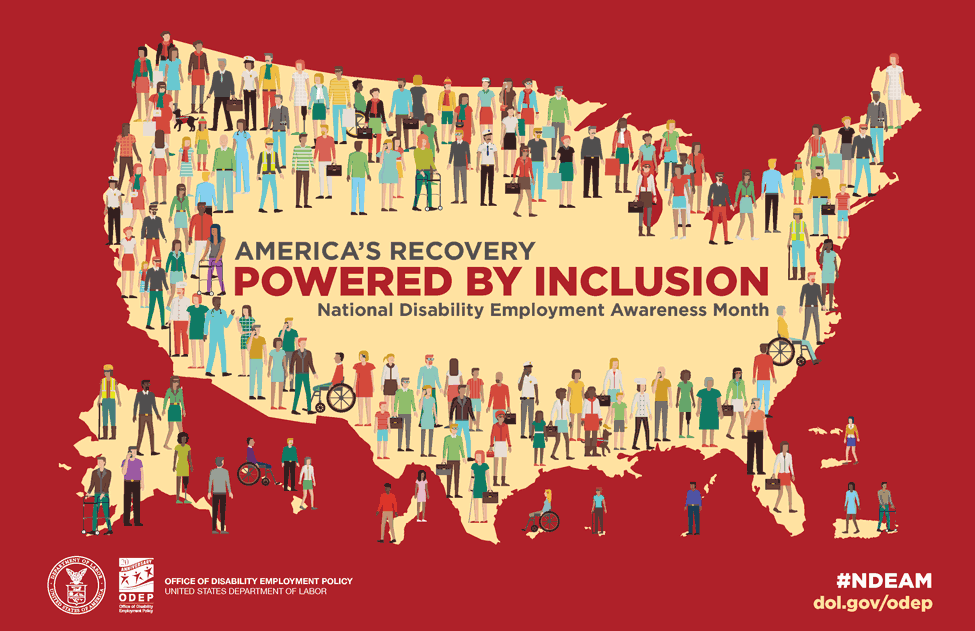

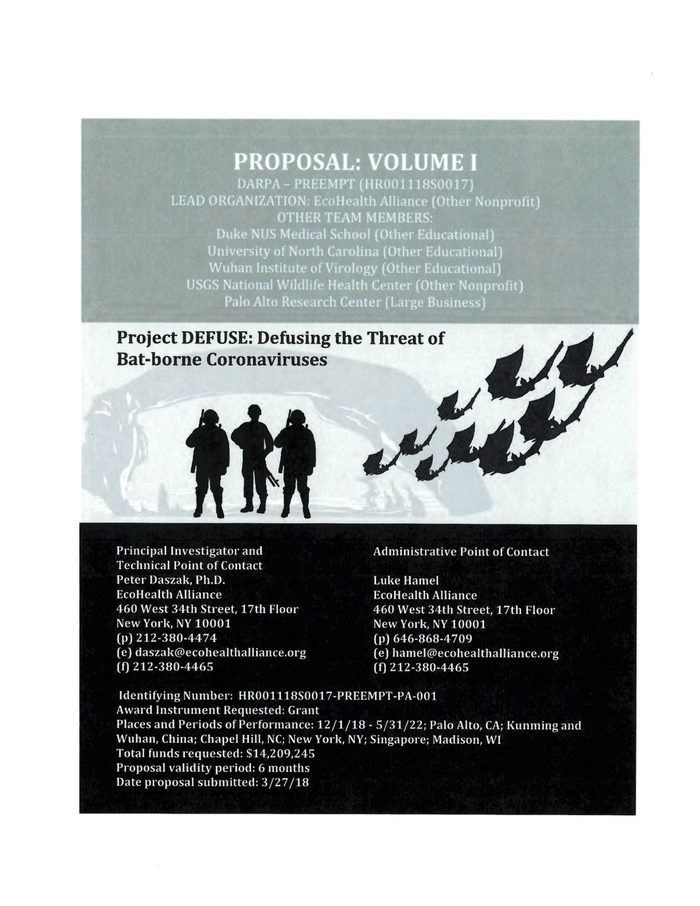















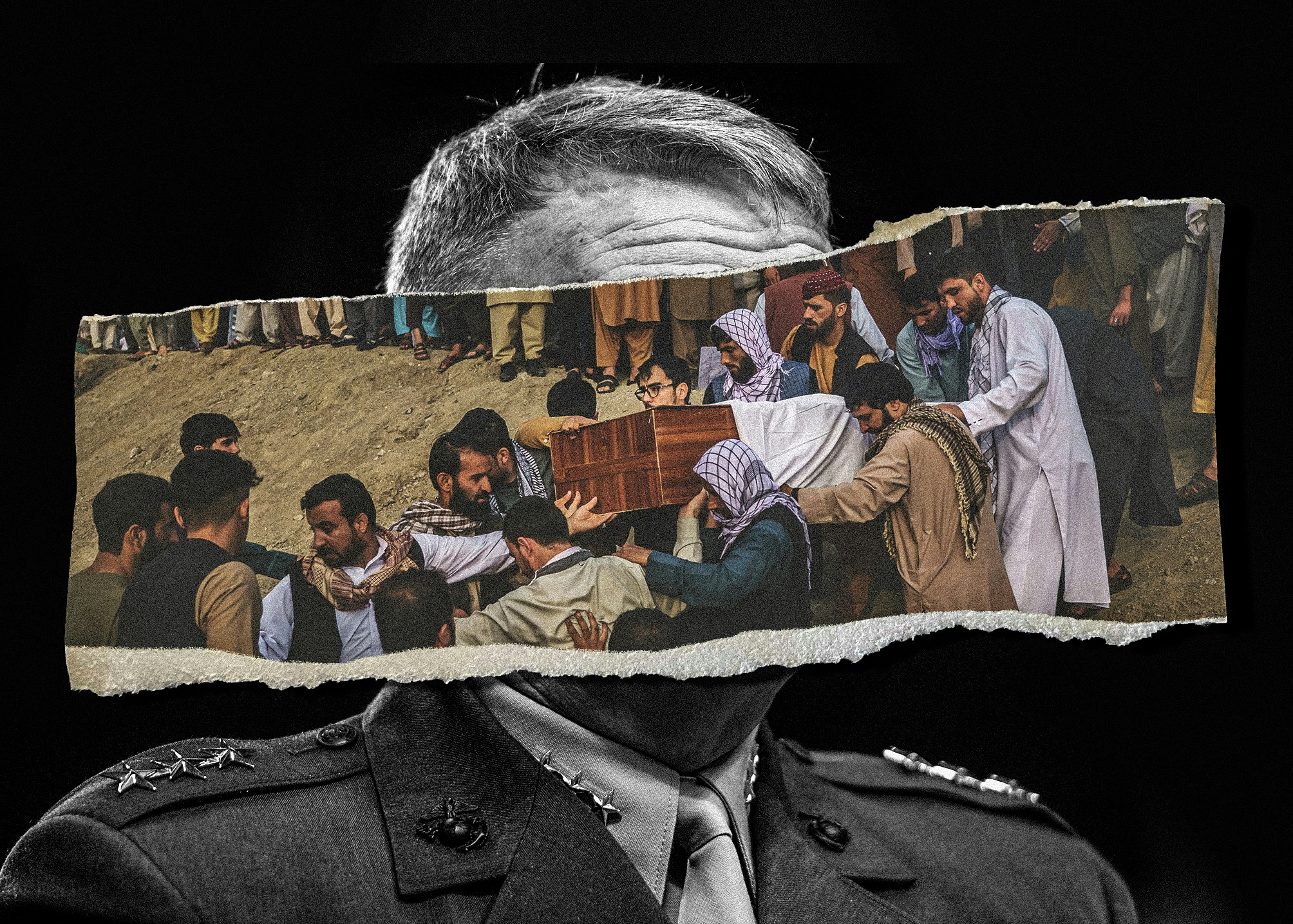






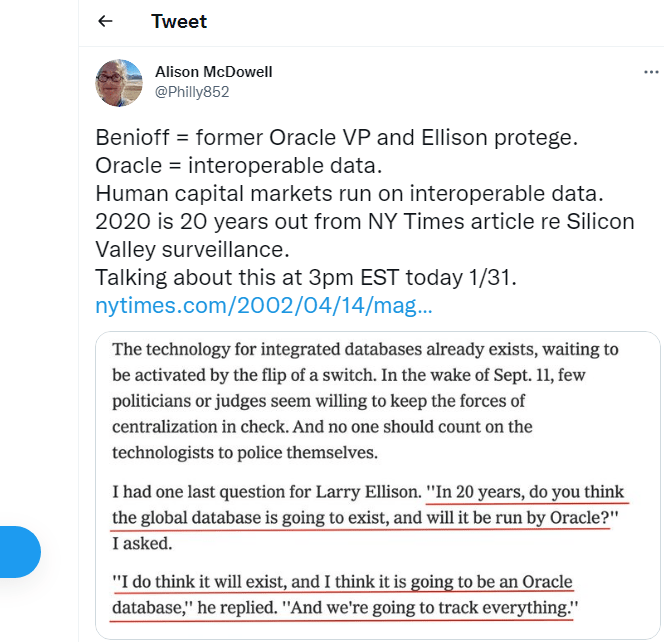
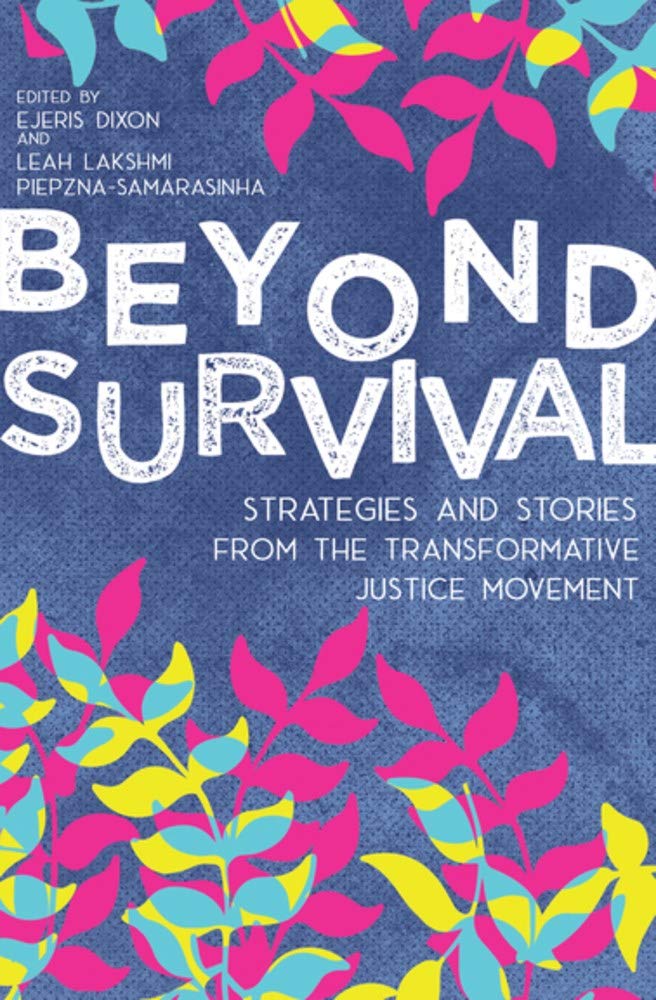

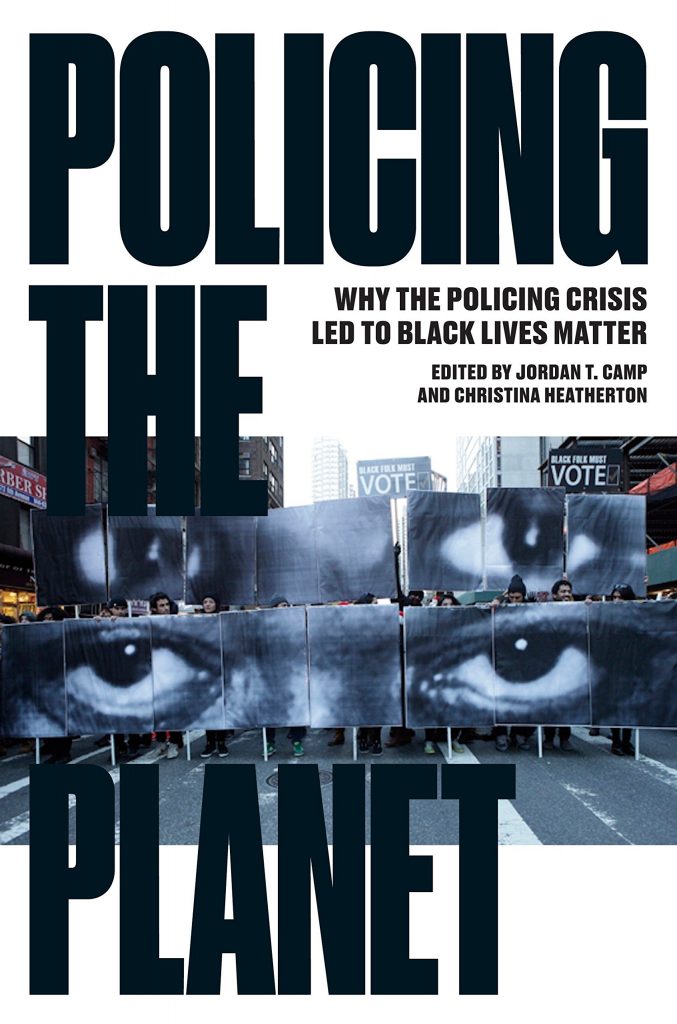
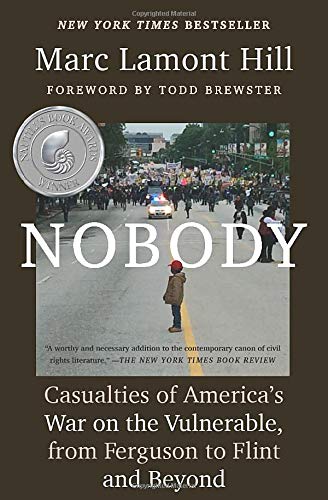

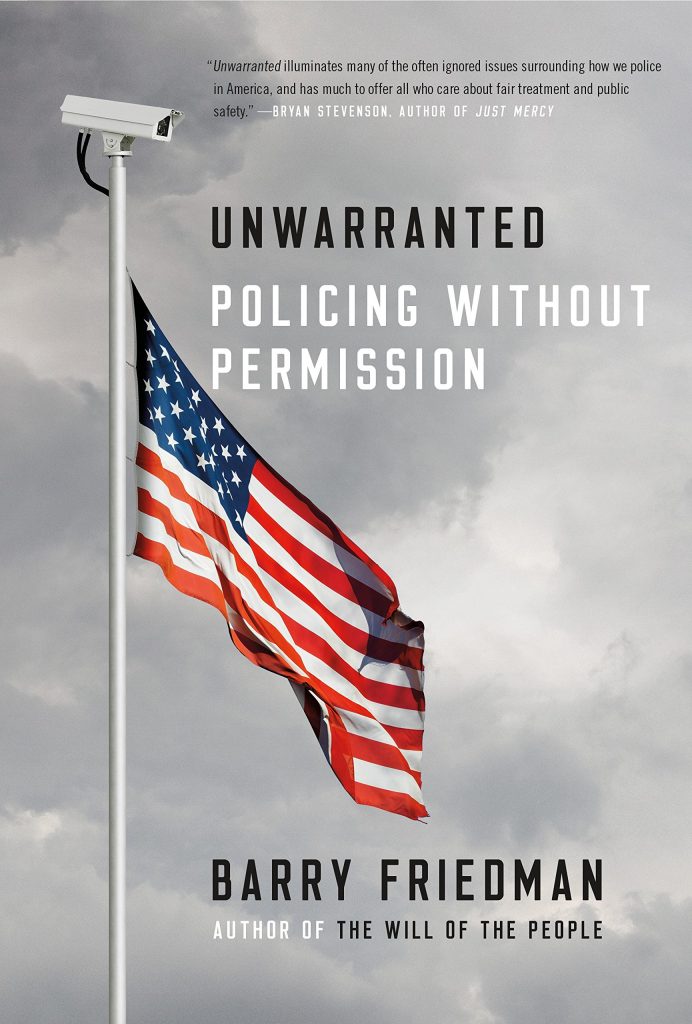







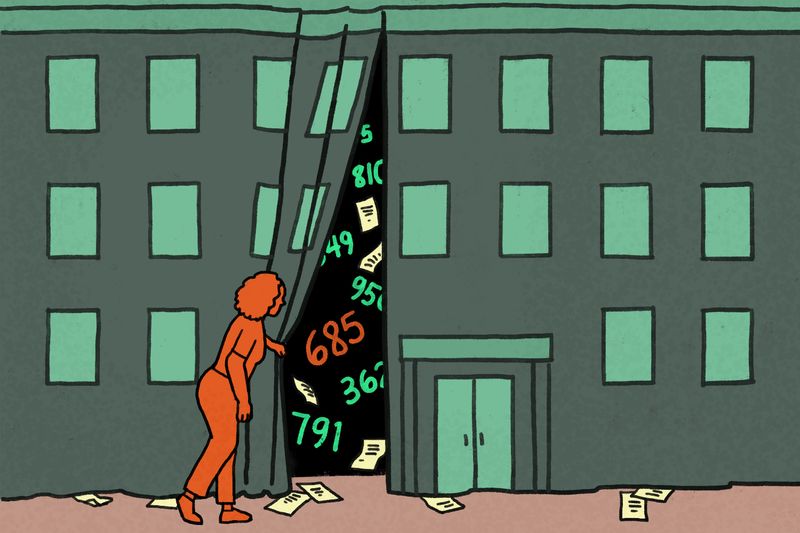
















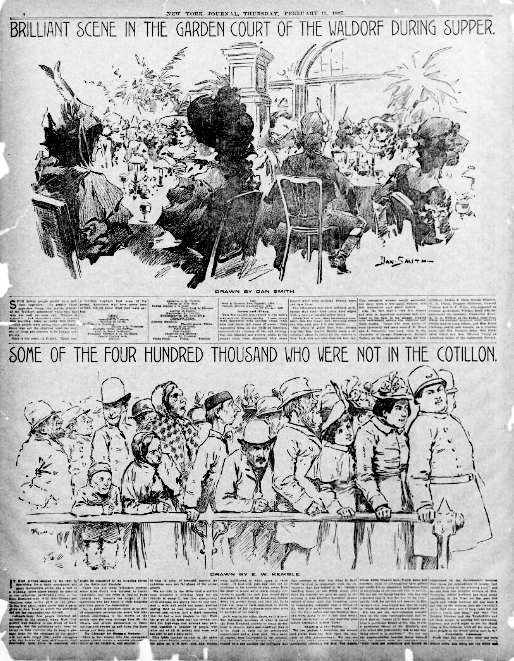











![From left to right: Dick Cheney, Prince Bandar, Condoleezza Rice, and George W. Bush, on the Truman Balcony of the White House on September 13, 2001. [Source: White House via HistoryCommons.org]](https://i0.wp.com/www.floridabulldog.org/wp-content/uploads/2015/09/bandarbushcheneyrice.jpg?resize=351%2C200&ssl=1)