Paul Haeder, Author

writing, interviews, editing, blogging

Monkey Planet: Moore Misses the Message of the Book

criticism of the documentary, Planet of the Humans

by Paul Haeder / April 27th, 2020

The chief causes of the environmental destruction that faces us today are not biological, or the product of individual human choice. They are social and historical, rooted in the productive relations, technological imperatives, and historically conditioned demographic trends that characterize the dominant social system. Hence, what is ignored or downplayed in most proposals to remedy the environmental crisis is the most critical challenge of all: the need to transform the major social bases of environmental degradation, and not simply to tinker with its minor technical bases. As long as prevailing social relations remain unquestioned, those who are concerned about what is happening are left with few visible avenues for environmental action other than purely personal commitments to recycling and green shopping, socially untenable choices between jobs and the environment, or broad appeals to corporations, political policy-makers, and the scientific establishment–the very interests most responsible for the current ecological mess.


― John Bellamy Foster, The Vulnerable Planet: A Short Economic History of the Environment

I am getting plethora of greenie weenies or others imploring me to watch the the Michael Moore executive produced Planet of the Humans. “You have to watch it. We are screwed. Oh my god. I never knew all this stuff about 350.org.”  It was directed, filmed (partly), edited and written by Jeff Gibbs.

In so many ways, it is a derivative flick, a coming to Jesus moment (several hiccups) by Gibbs. This is not good film making (the music is dull, and in some parts, downright spacey) and not good writing. But, on the heels of Trump, Obama, the green porn movement, the fake New Green Deal by AOC, Sanders and other sheepdogs (not the true ecosocialist New Green Deal – by a long shot), and the Spring Break Congress, and the totality of perversions that embodies the political/K-Street/Military/AI/Finance-Investor Class (sic), anything goes, I suppose, to go after the money factories that fuel the so-called American environmental movement.  [Louis Proyect’s look at the two new green deals from AOC/Sanders, and that from Howie Hawkins and Ecosocialists. Proyect writes a blog, The Unrepentant Marxist and also administers the Marxmail discussion list.

Reading decent stuff on the various social-indigenous-cultural-ecological heroes, and reading good poetry, philosophy, fiction, well, a million times more impacting for some of us than a thousand documentaries, most of which are in the can, out the window, in the news, on the talk shows, at the film festivals, and, then, a thousand more documentaries in the making.

Munduruku people hold signs with slogans like “Dam Kills!” during a protest of the Belo Monte hydroelectric dam in front of the Ministry of Mines and Energy in Brasilia, Brazil, on 11 June 2013. Munduruku and other indigenous Brazilian people are protesting the dam, currently under construction, which will disrupt their way of living through deforestation and flooding, as well as attacks against and murders of natives by construction workers and loggers. Credit: EVARISTO SA/AFP/Getty Images

Social change (the good kind, not the Inconvenient Truth or Waiting for Superman kind) will not happen on Netflix, in the cyber world of YouTube, or managed by wannabe filmmakers.

I am also having a bit of acid reflux digesting this flick, The Planet of the Humans, in a time of SARS-COV-2 lock-down (that’s a prison term folks) and a time of compliant humanity sticking to the mainstream science view of coronavirus.

Pay for success finance deals will be well served by the global vaccine market that is being advanced through Gates’s outfit GAVI. Vaccine doses are readily quantifiable, and the economic costs of many illnesses are straightforward to calculate. With a few strategic grants awarded to prestigious universities and think tanks, I anticipate suitable equations framing out a healthy ROI (return on investment) will be devised to meet global market demands shortly.

Hello everyone. Welcome to “Many Waves, One Ocean Cross Movement Summit.” I’m Alison McDowell, a mom and independent researcher in Philadelphia who blogs at wrenchinthegears.com. I started my activism around public education, first fighting standardized testing, then ed-tech, and eventually realized the push by global finance to turn everything into data for the purpose of digital surveillance and profit meant I had to expand my work beyond schools and start digging into the global poverty management complex.

I organize with the Poor People’s Economic Human Rights Campaign, an independent anti-poverty group that is led by the poor and does not take corporate or foundation money. We’ll be marching on the Democratic National Convention on July 13 to take back the 67 cents of every government dollar spent on war and occupation. We are demanding it be used care for the poor here at home. Check us out and consider joining us in the streets of Milwaukee!

People have been led to believe the purpose of these goals is to address poverty and avert climate catastrophe. As a mother who lives in a city of deep poverty and who works at a public garden, I believe those are admirable goals. It is imperative that we address wealth inequality and begin to heal our planet.

But as a mother who has been researching innovative finance, emerging technologies, and racialized power, I also know there is more to the story than is being told in the media. And so today I will outline how powerful interests are using the Sustainable Development Goals to mask their plans to remake the world as a digital panopticon. What follows is a story of social entrepreneurship, greed, and technological authoritarianism. Its foundations are built on our nation’s history of racial capitalism, eugenics, and the rise of technocracy.
— Vaccines, Blockchain and Bio-capitalism

Nathalie Butt and her team found a significant correlation between the number of environmental defenders killed in a country and the country’s levels of corruption, civil and criminal justice, fundamental rights, and government control. More environmentalists were killed (larger circles) in countries with lower rule of law (ROL) scores (lighter blue). Credit: Nathalie Butt

Map of the world with countries shaded in blue and red circles overlaid

A little hard to stomach this new flick, Planet of the Humans, as I am out of work on two of my gig jobs, and the other job is about getting cash assistance to households where I am best face to face with them, but alas, this hysteria, this complete breakdown of common sense and urgency for just decent masks and gloves (free of course), has caused the healthy to be lock-downed. Police state? You betcha. Surfers are getting tickets for surfing on our beaches.

Daily, the human toll of this lock-down stupidity in Oregon is real. Yet, like compliant children, the greenie types, the so-called environmental movement types, and the pro-science-is-our-savior liberal types will not stand for any challenge to their narrative – we must lock-down until 2022, according to Harvard scientists. So, the democratic governor, Kate Brown, implores us to lock-down, threatens us with tickets, and, oh, 84,000 new unemployment claims in the state, and I am not getting through that bureaucracy, too stupid to not-fail!  No dole for me and thousands of others.

Deaths by the millions in the coming months with this lock-down — globally. Not from the novel most-probably weaponized or at least messed-with bat virus, but from poverty, starvation, and lack of medical care for all the other illnesses and diseases and ailments hitting humankind.

In poor countries? The toll is never on the forefront of the greenie weenies’ minds. Covid-19 and our disappearing civil liberties and privacy rights

Nor is the toll on Gibbs’ mind in this flimsy flick. And don’t get me wrong — there is obvious issues with solar panels, wind turbines, and biomass. However, passive solar and convection solar on roofs throughout the sunny places, good. Biointensive ag, good. Communism as we see in Cuba (even under the pressures of USA’s perversion of war capitalism and all the other casino-parasitic-disaster-predatory capitalism hegemony), GOOD. The entire “green” movement with the billionaires and the others at the helm, Bad. And, yes, after this YouTube flick hit the airwaves, the sons of bitches just went gaga over it, and that too is a separate essay —

The climate disinformation machine was also making a lot of noise about it. Breitbart’s climate denial columnist called Planets of the Humans “the most powerful, brutally honest and important documentary of [Michael Moore’s] career.” The coal- and Koch-backed Heartland Institute released an hour-long podcast praising it on Friday. And the fossil fuel industry-funded Competitive Enterprise Institute is begging people to “Hurry, [and] see Planet of the Humans before it’s banned.” — Emily Atkin, Heated blog

This shit is bad, really. More the multi-millionaire, the slob, and now this dude Gibbs with his YouTube shit (again, stretching all boundaries — this is not a film, not a documentary, not anything but, an attack on who? Capitalists? Chevy Volt? The Solar Power engineers? Duh, no solutions will come from digital slide rules and buttoned down technologists and the like. So, with his goofy “bombshell,” will Gibbs be coming out ASAP with attacks on the Kochs, Citizens United, Capitalism, and the rest of these freaks — competitive enterprise institute? I doubt it, so, maybe a little Trojan Horse here to give these felons and murderers in the billionaire class and the extraction industry class another leaping off point to attack land defenders, wipe out the majority of people (of color) on planet earth who want not only the brakes put on the despotic regimes working to steal their land-water-minerals-fossil fuel-forests-water-crops, but to colonize their bodies with forced vaccinations and indentured servantry.

A large group of protesters approach a police barricade in India
On 22 May 2018, a group of roughly 20,000 environmental protesters marched toward a Sterlite Copper mining plant in Tamil Nadu in southern India. The plant was linked to soil, water, and air pollution in the area. State police killed 13 protesters in what was the largest massacre of environmental defenders in 2018. Credit: Mksr2020, CC BY-SA 4.0

Back to reality in my neck of the woods:

We have some Guatemalans up here on the Oregon Coast. Workers. Families. Some are not literate in English or Spanish. No more hotel cleaning gigs, dishwasher gigs, working in the forest collecting salal gigs.

These families are afraid to go to the food banks (big, gangly and some mean-looking white folks there collecting and handing out food) and afraid of any social services agencies. You know, deportation, put in lock-down in containment dog kennels a la ICE. Now that’s a fun prospect for a bioweaponized or laboratory-induced  novel coronavirus.

Some of have been yelled at by our fine upstanding white original illegal aliens: “Chinks … you brought this corona over to us. What are you still doing here?”

These are Guatemalans!

The Wrong Sort of Green, is also the wrong sort of agriculture, and the wrong kind of medicine, wrong kind of education, wrong kind of law, wrong kind of computing, wrong kind of carceral state, wrong kind of, well, you get the picture. It’s all wrong because of capitalism. Yet, this movie goes right to us, the rest of the world included, as a cancer. As over-consuming, over-populating, over-reaching, you know, the Population Bomb language of “sterilize the masses” folk.

Bad, bad, bad. Crackpot, crackpot, crackpot.

Stupid, stupid, stupid. Or dangerous, dangerous, dangerous.

These are nice words for this superficial, sound-bite, dumb-downing thing of a movie.

On the 50th earth day anniversary we get to view it. It might get some stuff right – the fake green-renewable movement, but it gets the major stuff wrong: Capitalism has run amok, not the other way around. The hordes have not run amok against the good of capitalism, but have been colonized, co-opted, delegitimized, stolen from, used as a large populace of Guinea pigs for the economic syphilis that is Capitalism.

And the underlying message is population control. They great white hope of Michael Moore and I guess Jeff Gibbs is really the underpinning of the flick – and no credence is given to the millions upon millions of people fighting this bastardization of humanity, of life, called Western Capitalism. There are literally hundreds upon hundreds of groups that Gibbs could have put front and center who are local, indigenous, part of the peasant movement, others, who are real forest protectors and water protectors and life protectors.

Making fun of the alternative energy folk is like shooting fish in a barrel. And, the underlying message, the grace note here, is that because all humans and cultures are alike (NOT) we as one species (debatable) are a cancer, all in it for me-myself-and-I. Just way too many of us.

Just the way this flick opens up says it all. The documentary poses the stupid question: How much time do you think the human race has? You know, man-woman-child person on the street quippy takes.

Gibbs is at a solar festival (in the beginning, and then at the end of this flick) and makes fun of the band not getting the solar energy power when the clouds open and rain shuts down this system and they have to go back to the electrical grid.

Jump to Obama and Van Jones and Al Gore. To the white race, Richard Branson. Then 60 Minutes is clipped in. Have we been here before with this sort of documentary making? Come on, do I have to list the other hundreds of documentaries that follow this script?

Then onto Michael Bloomberg. Sierra Club. Bill 350.org McKibben. Segue to “making fun” of the Chevy Volt, electric cars, wind turbines, biomass, etc.

All of this has been exposed years ago (2001), a la Cory Morningstar (2018):

Throughout history, greed has proven to be lethal. Greed and justice cannot co-exist.

The premise that “greed can save us” is void of all ethics. It stems from either desperation or denial, or perhaps both combined.

Perhaps McKibben’s 350.org/1Sky partner – Climate Solutions (who McKibben praised/promoted in a recent article) – will soon see their wish list of “sustainable aviation,” biofuels and carbon offsets morph into a global reality. 350.org/1Sky partner Climate Solutions was a key player in the creation of 1Sky – an incubator project of the Rockefellers, who are pushing/funding REDD (the Reducing Emissions from Deforestation and Forest Degradation program) and many other false solutions that ensure power and monetary wealth remain exactly where it is – in the hands of the few.

Of course, James Hansen’s magic wand (which Hansen himself sometimes refers to) will be most imperative for such false solutions to succeed in cooling the planet and stopping the eradication of most life on Earth.

Do we reject biofuels, carbon offsets, the greenwash and delusional concepts like “sustainable aviation”? Or do we reject these false solutions only when promoted directly by industry and government? If we do reject false solutions outright, why do those who claim to seek climate justice turn a blind eye when our “friends” and “partners” support these false solutions that we must fight against?
— Why I Refuse To Promote Bill McKibben

Wouldn’t it be nice to see the warriors in this Gibbs’ frame: How many indigenous people have been murdered in the past 20 minutes? Land defenders. The people of the earth who are less than 7 percent of the population but are in 80 percent of the jungles and rain-forests and mangroves, deltas, islands.

So, this fellow, Gibbs, in 2020 when this documentary was released, came to the conclusion recently that the green energy revolution isn’t going to work? Really? This has been posited for more than 20 years easily.

Twenty five minutes into this sad sack of a movie and it’s whites, man, mostly males (one female anthropologist), and it’s just more declaiming the green energy folk – and no one ever in the ecosocialist movement saw solar panels and wind turbines and ethanol as green or efficient or, hmm, localized and social just. But you think an ecosocialist is interviewed? Nope!

After 30 minutes in, no great people who have studied, looked at and been on the front lines of the biggest elephant in the room: “It is easier to see a world without people than without capitalism.”

Fredric Jameson’s famous quote, “it is easier to imagine the end of the world than it is to imagine the end of capitalism,”  should have been posited at the top of the documentary.

Do you believe there can be a better world, localized, scaled down, tied to human rights and indigenous wisdom than a world without consumerism, capitalism?

Or, better yet, the questions –

What is parasitic capitalism? What is predatory capitalism? What is disaster capitalism? What is casino capitalism?

Then, sure, another question:

What is the cost to humanity, to those billions in the world not part of the Western White Tradition of Neoliberalism-Neoconservativism-Colonialism-Slavery, that the military industrial complex unleashes to the world?

Nah. This is just a gotcha sort of film  – at least it is as I am concurrently listening and watching it while also writing this critique. Okay,  42 minutes in, and one lone voice thus far, Richard Heinberg, who I interviewed 14 years ago on my radio show in Spokane, is briefly interviewed. Sound bite. His book, Peak Everything is pretty self-explanatory. He doesn’t tap into the civil society, to peasant and agrarian movements. He just tells us later on he goes to bed frightened, scared.

Whew. Peak Humanity psychosis!

That slogan captures about how Western thinking can imagine a world without humans before they can fathom any world without capitalism.  And, to be fair, the masters of the universe hope for more AI, more ways to make humanity useless, more ways to kill work, kill human learning and sharing. A world without the majority of the people AND WITH surveillance and AI-Crypto Capitalism. There you go!

What is “capitalist realism? The almost global sense that not only is capitalism the only viable political and economic system, but also that it is now impossible even to imagine a coherent alternative to it. Most of the billionaire class, most of the millionaire class, most of the people who believe in capitalism, capitalism lite, capitalism with a green smile, they are prepared for their world without people – Bill Gates and his cronies, setting the globe with his vision of massive sterilization and massive, err, vaccinations.

At minute 46, Planet of the Humans has given us more white guys and one white female anthropologist saying there is “not enough for the world,” for those billions outside this white great white way.

Looking at the numbers – and they are terrified, in Gibbs’ rendition, that the world is at 7.4 billion people, and it took hundreds of thousands of years for Homo sapiens to hit 750 million – this is the movement. Computer modeling, projections, Dystopia, but never-ever a clear-eyed look at the reason for malnourishment and disease and suffering – the few haves and the lots of haves not.  An honest look at this would really get to the cutting-edge thinkers here – just the bloody neo-tribal writer, Daniel Quinn, looks at leaver and giver society in his books featuring an ESP-abled gorilla named Ishmael.

I’m already into the flick less than an hour, and Gibbs is seeking mental health help. Climate change trauma, analysis paralysis, something. He brings in another great voice of psychology, some social psychology professor, at Skidmore College. Gibbs sets it up – The republican side believes there is an endless supply of fossil fuels, and OUR side believes the world will be saved with solar panels. Why is that?

This is it, man, them – the GOP and industrialists and Trump and Tea Party and Neo-Nazis – and us – the other side, wanting green energy and technology to get us off fossil fuel and climate change. Bingo. This is such a silly adventure in one man’s sad fear of himself – Jeff Gibbs (where’s millionaire, Hillary-adoring, the Russians are Coming, Holly-dirt Michael Moore, man, when we need a really foolish guy for a heck of a lot of laughs?). Professor Sheldon Solomon believes that people are just biotic life. That is the key to these guy’s thought process saying we as a species (all of us) have a disbelief in mortality, that this can’t be, so we just keep on with our suicidal behavior.

Jameson’s quote is often used to show how capitalism has limited the horizons of our imagination.

We don’t think of civilization as indestructible, but we do seem to think of the free market as indestructible. This, it is sometimes said, is the result of neoliberalism: as both traditionally left-wing and traditionally right-wing parties in Western countries developed a consensus that markets were the only way forward (“there is no alternative”), more and more people came to hold narrower and narrower views of the possibilities for human society. Being on the right meant “believing in free markets and some kind of nationalism or social conservatism” while being liberal meant “believing in free markets but being progressive on issues of race, gender, and sexual orientation.” Questions like “how do we develop a feasible alternative to capitalism?” were off the table; the only reasonable question about political intervention in the economy became: “should we regulate markets a little bit, or not at all? – “The left should embrace both pragmatism and utopianism” — Nathan J. Robinson

It as if this Jeff Gibbs just came out from a deep hole – I have been teaching this shit for more than two decades; showing students this embedded energy truth, this lifetime/life-cycle analysis of products, , this green washing PR job, this green porn marketing bait and switch. Poverty pimping, man, and Green is the New Black. It’s still pimping and prostitution at a very high price.

You give the capitalists, the military industrial complex purveyors, the multimillionaires like that piece of political dung Al Gore the microphone, and then you give the billionaire class, the BlackRock class, the IMF, the forced vaccination and eugenics masters the microphone, or Clinton, Hollywood, and the Massive Messed up Mainstream Media any benefit of the doubt, and here we are.

All those white male/ white female people featured on this Planet of the Humans in the end are talking about population control, and, shoot, that says it all, now does it not?

Now, finally, a real person, a real human, Vandana Shiva, comes onto Gibbs’ stage 1:09 hours into the flick – where she gets to give a micro dose of a rejecting biomass and biofuels, emphasizing how the biggest crisis of our times is shifting our minds to give power to illusions – green capitalism – replacing fossil fuels to this so-called renewable biomass energy production, which is green capitalism, which is green pornography. She gets about 20 seconds of air time. That’s it!

“Her honesty was refreshing.” That’s it for Gibb’s commentary on Shiva, caught on camera at some Earth Day event. This is Vandana Shiva, academic, scientist, humanist and leader in fighting for billions of people subjected to the GMO lies. A warrior against toxins. If that isn’t patriarchy and patronizing and, well, malarkey, the white man doing the white people’s film song and dance, then I do not know what is.

I’ll quote Shiva here:

The “green economy” agenda being pushed in the run-up to Rio+20, or the Earth Summit, to be held in June, could well become the blueprint for the biggest resource grab in history, with corporations appropriating the planet’s green wealth and biodiversity. These corporations will take our green wealth to make “green oil” for biofuels, energy, plastics, chemicals — everything that the petrochemical era based on fossil fuels gave us. Movements worldwide have started to say no to the “green economy” of the “one per cent”, because an ecological adjustment is possible and it is taking place. This adjustment involves seeing ourselves as part of the fragile ecological web, not outside and above it, and immune from the consequences of our actions.

Ecological adjustment also implies that we see ourselves as members of the earth’s community, sharing its resources equitably with all species and within the human community. Ecological adjustment requires an end to resource grab and privatisation of our land, biodiversity, seeds, water and atmosphere. It requires the recovery of the commons and the creation of “earth democracy”.

The dominant economic model based on resource monopolies and oligarchy is in conflict not just with ecological limits of the planet but also with the basic principles of democracy. The adjustment being dictated by the oligarchy will further strangle democracy and people’s freedom of choice. Sunil Bharti Mittal, one of India’s industry captains, recently said that “politics is hurting the economy and the country”. His observation reflects the mindset of the oligarchy, that democracy can be done away with.   Green Greed – Seeds of Injustice, By Vandana Shiva

So, Gibbs goes back to gotcha land – exposing the hypocrisy and duplicity of Richard Branson, the Al Gores, then Michael Bloomberg. No thanks. Not worth my time. More flashy nothing. We know Greta T. and Bill M. and Naomi  K. are all false gods, the wrong kind of green.

Cory Morningstar, Wrong Kind of Green, is a warrior for social justice, ecological justice, for a sane look at how these greenies continue to cite “it’s a global overpopulation problem” causing climate change and ecosystems collapses.  She just posted the Planet of the Humans on her website. However, this is her caveat –

WKOG caveat: Industrial civilization is destroying all life on Earth. Human destruction of biodiversity is not created equally: “Yet tribal peoples are the best conservationists and guardians of the natural world, and 80% of our planet’s biodiversity is found in tribal territories.” [Further reading: The best conservationists made our environment and can save it, Stephen Corry  ] Human population is often identified as a problem because it strains the world’s resources and pollutes. [1] The first and most efficient way to address over consumption is to reduce consumption in the North is to a) redistribute the resources, (all arable land, etc.) to the Global South, to sustain those in the Global South, and b) phase out the production of all superfluous consumer products that harm life and biodiversity. [Further reading: Too Many Africans?, July 11, 2019   An analysis of population growth that accounts for the vast differences in consumption across class and region is critical in examining the worldwide environmental crisis

Let’s look at that class divide:

The top 8.5 per cent of the people own over 83 per cent of global wealth, whereas the share of the bottom 70 per cent is barely 3 per cent. The top of the pyramid is even steeper – the net worth of the top 200 wealthiest individual (at $2.7 trillion)69 is the same as that of the bottom 3.2 billion people or half the population of the whole world! Significantly these wealthiest individuals of the world were able to increase their wealth in spite of the financial crisis. According to a recent Oxfam report, in spite of a global reduction of wealth the top 100 billionaires have been able to increase their wealth by 240 billion dollars in 2012.70 These super rich, incidentally, also include individuals who have been lobbying for reduction and control of third world population and funding major programmes towards it. The state policies and the policies of international bodies seem to be aligned with the interests of the rich and powerful. These Ultra High Net worth (UHNW) also wield immense political power.

Read Cory’s work, Whitney Webb’s work, Wrench in the gears, Caitlin Johnstone —

Best yet, listen to Vandana Shiva again. This is the stuff that matters now, not a cataloging of the bad green movement, the shilling of wind farms and solar arrays and biofuels. All of this, like fossil fuels and wars and everything else that is externalized because of capitalism, all of this is subsidized by our capital, our taxes, our lives, our labor. That sports stadium? Simple thing, man. Chavez Canyon, a great working community in LA, was destroyed because the New York Dodgers moved to LA. Chavez Canyon was a place where Mexicans lived, creating their own community, their own social capital, their own roads and support systems. But the city gave the Dodgers the key to the city, gave them everything. The payoff? It’s all about the game, man. Low wage jobs, parking lots, traffic, and obscene profits to pajama-clad players and their masters – the owners and managers and collective investors.

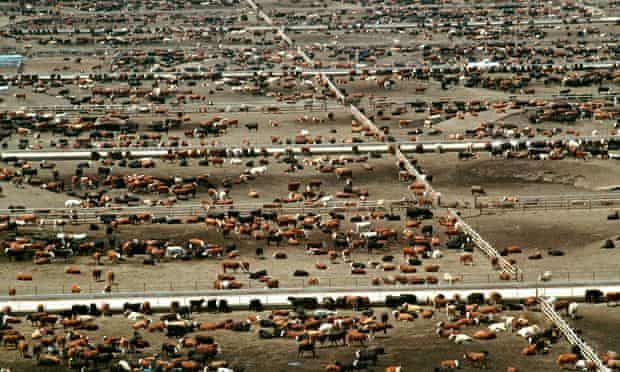
Take it up a notch or two – the Mississippi is polluted and toxified because of industrial farming. The delta in Louisiana is polluted, and that plume of toxins goes out hundreds of miles into the Gulf of Mexico. The shrimp are polluted, all the life is polluted. Those Iowa corn syrup farmers and soy feed tenders, well, think of the warnings – “If pregnant (or wanting to be) don’t drink the well water. Don’t live on a farm. Stay away from the crop dusters. Be prepared to bury your family members who stay as they drop lie flies from non-Hodgkin’s lymphoma, diabetes, heart anomalies, cancers and more. The gift that keeps on giving – pesticides, fertilizers, fumigants, vast piles and huge ponds and polluted rivers of blood, entrails, crap from industrial animal feeding, growing, butchering operations.

The multiple crises of climate insecurity, energy insecurity, and food insecurity create an imperative and an opportunity to transcend the limits of the mechanistic-industrial-capitalist paradigm that has been systematically shrinking our potential even as it peddles progress.

The paths out from this crisis are not being blazed in the boardrooms of the global corporations who dominate our world today and are largely responsible for crimes against nature and humanity. Industrialization of food and agriculture has put the human species on a slippery slope of self-destruction and self-annihilation. The movement for biodiverse, ecological, and local food systems simultaneously addresses the crises of climate, energy, and food. Above all, it brings people back into agriculture and reclaims food as nourishment and the most basic source of energy. New ways of thinking and acting, of being and doing, are evolving from the creative alternatives being employed in small communities, on farms, and in cities.

It is this renewable energy of ecology and sharing, of solidarity and compassion, that we need to generate and multiply to counter the destructive energy of greed that is creating scarcity at every level – scarcity of work, scarcity of happiness, scarcity of security, scarcity of freedom, and even scarcity of the future.

Climate chaos, brutal economic inequality, and social disintegration are jointly pushing human communities to the brink. We can either let the processes of destruction, disintegration, and extermination continue unchallenged, or we can unleash our creative energies to make systemic change and reclaim our future as a species, as part of the earth family. We can either keep sleepwalking to extinction or wake up to the potential of the planet and ourselves.  — Vandana Shiva 

We’ve been here before with Naomi Klein, with Al Gore, with DiCaprio, with Ted Danson, Daryl Hannah, the rest of the goofballs. Gibbs is not really doing much new here, really – The Wrong Kind of Green has been extrapolated and parsed for decades, and for him to waste this opportunity to go for the actual jugular of the cause – capitalism, western dominance in banking, structural adjustments, austerity, structural violence, economic hits, more – delegitimizes his whole thesis.

But there are also other social forces engaged in the process of resistance to the capitalist onslaught on the environment: for instance, the indigenous communities. This is another very important contribution of this book: to show that indigenous communities—direct victims of the capitalist plunder, a global assault on their livelihoods—have become the vanguard of the ecosocialist movement. In their actions, such as the Standing Rock resistance to the XXL Pipeline, and in their reflections—such as their Declaration at the World Social Forum of Belem in 2009—“they express, more completely than any other group, the common survival interest of humanity.” Of course, the urban population of modern cities cannot live like the indigenous, but they have much to learn from them.

Ecological struggles offer a unifying theme around which various oppressed constituencies could come together. And there are signs of hope in the United States, in the vast upsurge of resistance against a particularly toxic racist, misogynist and anti-ecological power elite, and in the growing interest, among young people and African Americans, in socialism. But a political revolutionary force, able to unify all constituencies and movements against the system is still lacking. Review by Michael Löwy, “From Marx to Ecosocialism” if the book Red-Green Revolution: The Politics and Technology of Ecosocialism by Victor Wallis

Alas, the best way to end the pain, to stop the rabid raccoon, I suppose, is to euthanize it. So much is wrong with Gibbs’ take on this eco-challenge. He is late out of the gate when looking at the life-cycle analysis of solar, wind and biomass. He is coming out of a deep long sleep? The documentary is not compelling. The executive producer, Michael Moore, is highly problematic. He is a capitalist, a millionaire, part of  celebrity culture, and he is part of the problem not the solution.

It all rides on the back of the minister, Thomas Malthus, in his 1798 essay on population.

Famine seems to be the last, the most dreadful resource of nature. The power of population is so superior to the power of the earth to produce subsistence for man, that premature death must in some shape or other visit the human race. The vices of mankind are active and able ministers of depopulation. They are the precursors in the great army of destruction, and often finish the dreadful work themselves. But should they fail in this war of extermination, sickly seasons, epidemics, pestilence, and plague advance in terrific array, and sweep off their thousands and tens of thousands. Should success be still incomplete, gigantic inevitable famine stalks in the rear, and with one mighty blow levels the population with the food of the world.

For Gibbs and the others he decries in the greenie weenie controlled opposition movement, they see the enemy is us, the people, or those with lesser pedigrees and more melanin. Why not just go after capitalism, and the inverted totalitarianism of Corpocracy. What about those corporations, that sticky class exploitation, how industry is set forth, and what about war? Gibbs blames all the people.

Oh, well, so many will tell me, “Paul, why don’t you write, film, edit, produce your own goddamned movie”? Sure enough, uh? I normally would not go to a movie like this, or get it from the Internet. I was only prompted by the number of emails from friends and acquaintances who just had to tell me to see this Anti-Earth Day flick. I didn’t learn anything from it substantive-wise, but I am wondering what the bearing witness for newbies to this green washing/green pornography will do with all this information about how bad solar and wind are. How bad the green groups are. How big the billions are that fund the controlled opposition and the narrative. You don’t bite the hand that feeds you? We all are colonized? We all live in the matrix? We are all co-opted by capital?

In the end the movie is more than benign. It fools us, the viewer, into a false solution, false narrative, and false causation. But my time is up, and totally bored with the concept behind this movie and how it now is generating this hoary call for, what, to watch the bloody movie? The real heroes are dying in their jungles and forests. From coffee to copper, from bananas to bitumen, from rubber to rhinos, the rapacious Western World is eating future generations from the inside out.

People just want their forty acres and a mule. Their cooperative farms. They water and their soil. They want a few light bulbs. They want their great grandchildren’s lives back. They are done with the great white hope, the saviors, the industrialists and the investors (sic).

Outbreak zones meanwhile are no longer even organized under traditional polities. Unequal ecological exchange—redirecting the worst damage from industrial agriculture to the Global South—has moved out of solely stripping localities of resources by state-led imperialism and into new complexes across scale and commodity. Agribusiness is reconfiguring their extractivist operations into spatially discontinuous networks across territories of differing scales. A series of multinational-based “Soybean Republics,” for instance, now range across Bolivia, Paraguay, Argentina, and Brazil. The new geography is embodied by changes in company management structure, capitalization, subcontracting, supply chain substitutions, leasing, and transnational land pooling. In straddling national borders, these “commodity countries,” flexibly embedded across ecologies and political borders, are producing new epidemiologies along the way.

For instance, despite a general shift in population from commoditized rural areas to urban slums that continues today across the globe, the rural-urban divide driving much of the discussion around disease emergence misses rural-destined labor and the rapid growth of rural towns into periurban desakotas (city villages) or zwischenstadt (in-between cities). Mike Davis and others have identified how these newly urbanizing landscapes act as both local markets and regional hubs for global agricultural commodities passing through.36 Some such regions have even gone “post-agricultural.”37 As a result, forest disease dynamics, the pathogens’ primeval sources, are no longer constrained to the hinterlands alone. Their associated epidemiologies have themselves turned relational, felt across time and space. A SARS can suddenly find itself spilling over into humans in the big city only a few days out of its bat cave. — COVID-19 and Circuits of Capital by Rob Wallace, Alex Liebman, Luis Fernando Chaves and Rodrick Wallace

Emerging from one of the most generative collaborations in the ecosocialist tradition, this collection of essays by John Bellamy Foster and Brett Clark represents a critical step forward in theoretical development and recovery, with immediate relevance to contemporary political movements and debates. Foster and Clark beautifully reveal the power of historical materialism to lay bare the connection between ecological degradation, speciesism, and social domination, and therefore the necessity of a struggle that does not artificially isolate in theory and practice what is joined in reality. This is a book for serious activists seeking to understand the world in order to change all of it that needs changing, so that every living being on earth may not only survive, but finally, be free. —Hannah Holleman, author of Dust Bowls of Empire: Imperialism, Environmental Politics, and the Injustice of “Green” Capitalism

Long recognized as leading theorists of ecomarxism, Bellamy Foster and Clark here extend their “metabolic rift” paradigm to an impressive range of issues, including gender, food, British eco-imperialism in Ireland, “alienated speciesism,” the theory of value, and the meaning of work. The result is a powerful case that capitalism is inextricably bound up with the robbery of nature and constitutes the paramount obstacle to life on Earth as we know it. —Nancy Fraser, New School for Social Research; author, Fortunes of Feminism: From State-Managed Capitalism to Neoliberal Crisis

Planet of the Apes by Pierre Boulle (1963) concerns  a group of astronauts, including journalist Ulysse Merou, and their voyage to a planet in the star system of Betelgeuse (the year is 2500). They land to discover a world where intelligent apes are the Master Race and humans are savages: caged in zoos, used in laboratory experiments and hunted for sport. The story of Ulysse’s capture and his subsequent struggle to survive, and then the climax as he returns to Earth and a horrific final discovery is gripping and fantastic. Yet the novel is also a subtle parable on science, evolution, and the relationship between man and animals. Again, the master race theme is part of Boulle’s own background in the secret service fighting against the Axis powers in WW II as part of the Free French. He wrote the more famous book, The Bridge on the River Kwai (1952). This flick, Planet of the Humans, is antithetical to that altogether (master race indeed), and in some sense, the lack of people of color speaking about a better way to get through this climate-capitalism chaos is sort of reflective of Gibbs’ own blind-spot to stick to the white technologists and the white people in the green capital movement.

Finally, I have had to dis-enroll in several list-serves, so called green and climate change list serves, because of the great white old lady and old man thought police and the moderators who believe attacking an ideology that many hold true is a persona attack on the actual members of the list serve.These are people who for the most part are cozy — in their paid-for homes, near the beach, with whatever money they have coming in from SS and investments and pension, or what have you. Lecturing people about playing nice, or to not be too accusatory, or to stop being so negative on Earth Day 50th anniversary. These are the people who have cemented their own fates in a world of “Gaia is responding to the coronavirus.” They believe there is a new time coming, that this virus and total environmental catastrophic are signs of a “new beginning. It might be tough for a few decades, a few hundred years — famine, murder, pillage, disease, etc. — but it is Gaia speaking, man, and we all need to look for a new beginning, a loving world, a giving world, and this climate change and now the bioweaponized world of viruses and vaccines are signs, man, from mother-female earth. The great big mamma in the sky. Don’t you feel it as you walk outside and see more birds congregating on the shore now that people are locked inside? Don’t you feel the new beginning? Can you imagine the new world, the new world order, the new enlightenment? Sure, there will be sacrificed people due to climate change, due to the pollution, the famine, but we are ready for the new beginning. Imagine, the world will soon be less people and more harmonious. Less people, good, and more poor people in those other sad countries, bad. Don’t you feel it, Paul, the new Eden? The new homo sapiens? Don’t ya feel the materialistic world melting away? And then all of us holding hands (well, holding hands via Skype and Zoom until the masters like Bill Gates, et al give us permission to stop the lockdown) in a new Garden? Can’t you just see it over the horizon? Can’t you just feel it?”


Fifty years ago, the first Earth Day brought out 20 million Americans across the land – to parks, schools, college campuses, stadiums, the Mall in DC, and for hundreds of river/beach/trail clean-ups.

“Our Space Ship is Burning” From the series XR #7
( XR – Greta Thunberg’s movement Extension Rebellion)
20”x30” Oil, college and gold leaf on canvas. See more art at : http://www.AnjaAlbosta.com

In 1970, I was 13 still living in Europe with my military family. But from age 17 on, however, I have been a North American environmental activist.

Fighting for whales, entire ecosystems, human and animal communities.
In addition, I’ve organized several Earth Day celebrations with thousands showing up in Spokane. I have been the Earth Club faculty advisor at two colleges where I taught.


River clean-ups, outdoor guerrilla banner drops on buildings, and young and old creating bird houses and bat boxes while listening to live bands and eating sustainable food from a pop-up farmer’s market.

This should never ever be the new normal – on-line education, on-line activism, on-line earth awareness.

“We’re trying to make this one an upper rather than downer,” says Otter Rock artist Bill Kucha. “We want to invigorate folks.” Kucha directs 350.org Central Oregon Coast.

It is more than surreal that we are exiled from one another and nature. This year’s Newport Earth Day (last year’s was held at the Newport library, inside) is virtual, on Zoom. There will be 100 slots for people to sign up and listen to/watch musicians, speakers and youth.


I asked Lincoln County Community Rights activist, Debra Fant, about her first Earth day:

I was in high school for the first Earth Day and joined my peers in picking up roadside trash (a whole winter’s worth of it as the snow had just melted leaving behind all sorts of mushy cardboard, bottles and stuff) for miles out of town. We were freezing cold and wet by afternoon, and I headed home for a hot shower instead of picking up the tenor drum to join the marching band in a parade through our down town area! I’m not sure we knew what Earth Day meant or who we blamed for harming nature . . . surely that ‘someone else.’ We’d likely grown up believing that like us, nature was invincible and would be there forever to satisfy our needs.

For the one of the main organizers of this April 22 Earth Day, Martin Desmond, he is blunt about the lack of youth activism in local environmental and climate change planning and discourse: “The truth of the matter is that people over the age of 60 come to our Lincoln County climate change presentations.”

http://www.AnjaAlbosta.com
Anja Albosta
Waldport, OR 97394

Martin posits there are maybe six or seven climate change organizers in our county.

The first Earth Day actually precipitated legislative action — the Clean Air, Clean Water and Endangered Species Acts were created in response to the first Earth Day in 1970, as well as the creation of the Environmental Protection Agency (EPA). Other countries soon adopted similar laws.

Last year’s Earth Day in Newport and this one on Zoom are what we call “aspirational events.” Celebratory, self-congratulatory.


I asked Jane Siebert, who is with Our Just Peace Action Team from the Congregational Church of Lincoln City, her reaction to the virtual day. The Church was planning to sponsor an Earth Day April 18, but too many conflicting community events quashed that, she said.


For me, this time of quarantine brings me out in the garden to appreciate spring and its slow unfurling of new life once again. This slow time of closely noticing the miracle of the earth can deepen our commitment to its future. I hold to the idea that Earth Day is every day and we must stand up to assaults on the natural order.

I’ve lived on the Coast/Lincoln County for a year and four months. I definitely feel this place is more chill than chutzpah when it comes to activism.

I am used to in-your-face rallying, even as a college instructor. Massive environmental-themed teach-ins and huge turn outs to city and county councils to demand better urban planning tied to real sustainability. I’ve interviewed heavyweights – Al Gore, David Suzuki, Winona LaDuke, Howard Kunstler, Richard Heinberg, and Bill McKibben – for both my print gigs and radio broadcasts.

If you miss it, Martin says it will be recorded for posterity.

Presentations are 5 to 8 minutes. It’s a pretty one-way communication event: sit back and listen and watch.

Ironically, I have had students research the energy use for each Google search, and I’ve led youth to do ecological footprints and check out the water foot print of some of the major items in our consumer society.

Life cycle analysis, embedded energy, cradle to cradle manufacturing, negative carbon architecture, tragedy of the commons, and more get my juices going.

Just following the energy used/consumed of the coffee bean plant grown in Costa Rica as it gets picked, shipped, roasted, reshipped, repackaged, and then brewed, is telling of every step we make in planet earth. Students are jazzed about exactly how much oil (plastic, transportation, fertilizer, packaging, production) is used to produce the various products they have come to rely on.

“Most of my life I have lived sequestered as an artist,” Kucha states. “I am more politically active now. I think this (coronavirus) could be a tipping point.” Living slower, more intentionality, and, for Bill Kucha, the pandemic in his mind is making us more egocentric. “In one fell swoop, we are all left with each other.”

For at-home insights, reading and films:

• Go to “Story of Stuff”

Ecological Footprint

Water Foot Print

• See Tim DeChristopher’s amazing activism in the flick about his life, Bidder 70

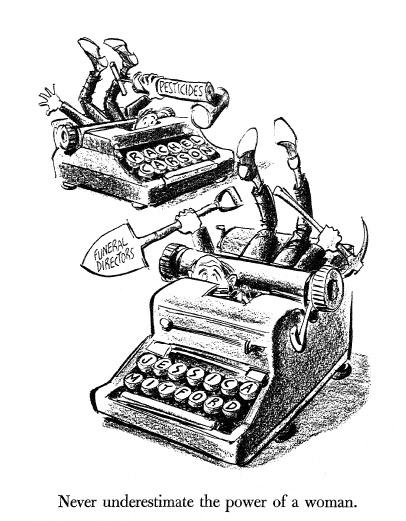
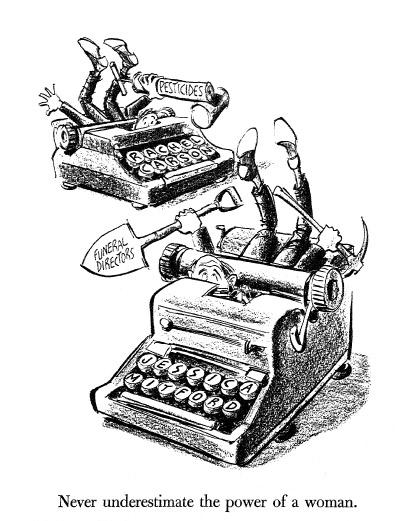
• Read Rachel Carson’s Silent Spring (1962), mother of the environmental movement

• An plethora of green websites, from Grist, RealClimate, Yale360; and the usual suspects: Greenpeace and National Geographic.

Here’s the Zoom Earth Day Newport line-up, and then scroll down for the even Zoom link:

Musicians
Bill Kucha
Chris Baron
Dave Orleans
Robert Reuben

Elected Officials
Arnie Roblan
Dave Gomberg
Mark Gamba
Kaety Jacobson
Claire Hall

Non-profits/other speakers
Mike Broil
Mitch Gould
Robert Kenta
Ari Blatt & Paul Engelmeyer
Martin’s two grandkids
Paul Haeder

BIG end Note: It has to be made clear that the new normal should not and will not be Zoom. It will not be this bullshit world of throwing trillions at high tech companies. It will not be this world of staying compliant in our homes and gardens and tents.

Earth Day 50 years later should be a celebration of the heroes who have fought against the killers of culture and jungle and rain forest and species. Instead, after 50 years, in this shit-hole quarantine mentality, we have people who want to celebrate the Great First Extermination event, what some have called the Sixth Mass Extinction, which is really the Seventh Extinction.

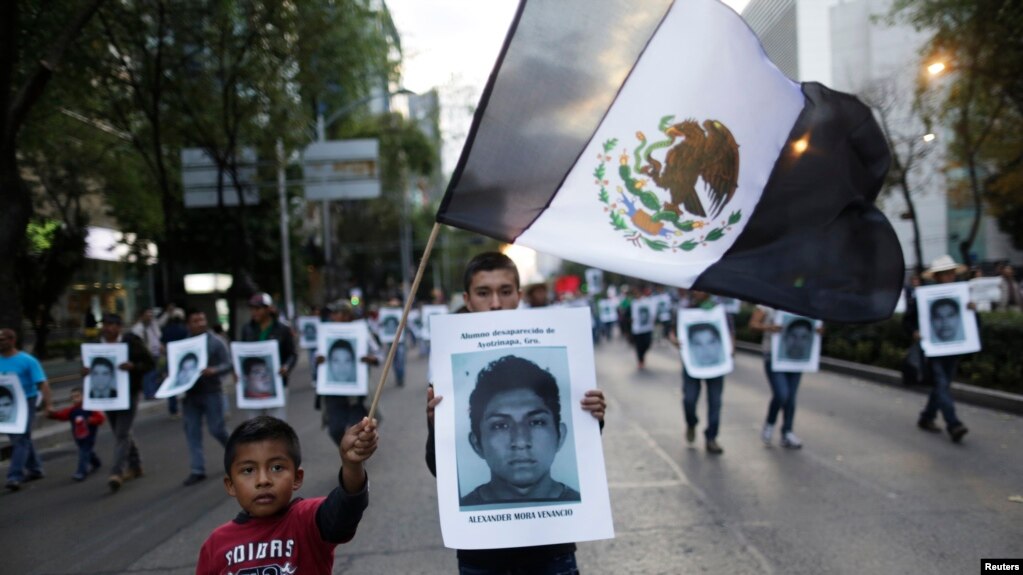
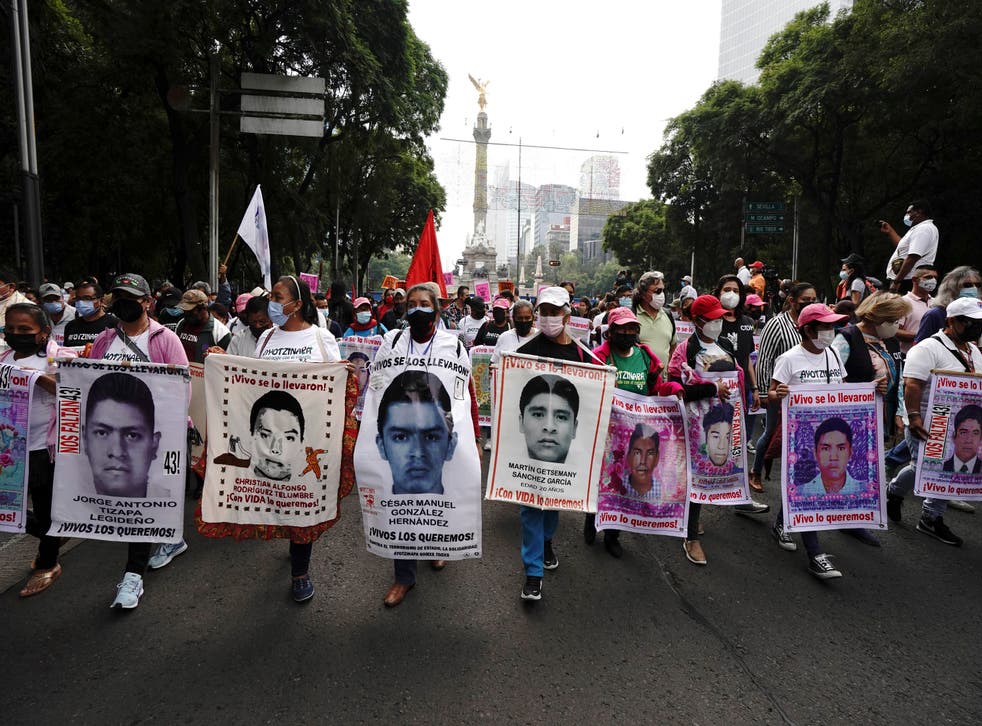
Every year, more than 100 environmental activists are murdered throughout the world. 116 environmental activists were assassinated in 2014. More than two environmentalists were assassinated every week in 2014 and three every week in 2015. 185 environmental activists were assassinated in 2015.

A new report from Global Witness found that three environmental defenders were murdered every week in 2018 and many more were criminalized for working to protect the land, water and other vital resources.

chart on killings per country

“People are being killed because they are demanding their basic rights, in particular, the rights to access to land and to be free in their territories,” Luis Gilberto Murillo, the former governor of the predominantly Afro-Colombian state of Choco and former minister of environment and sustainable development, said on “Democracy Now!” “The way to avoid these killings is the full implementation of the peace process. There is a national commission to guarantee the protection of social leaders in the country [which] has not been convened regularly by the current government.” Source.

Joel Raymundo Domingo, 55, photographed in April, holds smoke bombs, tear gas canisters and other projectiles used by Guatema
Joel Raymundo Domingo, 55, photographed in April, holds smoke bombs, tear gas canisters and other projectiles used by Guatemalan state forces to disperse a peaceful blockade against the San Mateo Hydroelectric Project, in October 2018. 

So, I have to say that celebratory events like Earth Day are long in the tooth. We need action. We need tools. We need fire in the belly. We need role models. We need recruitment. We need the new tools of the modern post industrial Anarchist Cookbook. We need to celebrate our own eco-warriors, and the fact the Green is the New Red. We have to fight the industries that most Americans support by stuffing their faces with cheese, swine, chicken, beef, lamb who are on a witch hunt, getting more and more Gestapo laws against peaceful protest. We have to tell young people how to fight the systems of oppression. We don’t need no stinking Earth Day kumbayah.

We need Tim DeChristopher pre-incarceration for protesting illegal land lease sales in Utah. Nine years ago, here he is speaking to youth:

Tim DeChristopher | Power Shift 2011 Keynote

Remember, if you toss a can of paint or pool acid on an SUV or Hummer, you could face 25 or more years in federal prison. Remember, if you get on the radio and attack McDonald’s burgers or attack the swine industry, or if you take photos from a public road of a High Fructose Corn Syrup plant, or if you protest with signs outside a slaughter house, or if you go to the state capital of your choice and do a little street theater about timber industry killing babies with their Agent Orange spraying, or if you put your body and life in the way of a bunch of construction machines for a telescope siting in Hawaii, well, you get the picture. This is of course not the Earth Liberation Front or Animal Liberation Front, but we all should be those people, like all people on Turtle Island who can’t trace their lineage back to Native Tribes should ALL be illegal aliens.

Earth Day is about celebrating the warriors, those that exposed Love Canal, or people like Rachel Carson who was spied on and wire tapped and tailed by feds and industry pigs. Or Ralph Nader, Dangerous at Any Speed, who was the target of mafia hit men hired by GM, Ford, you name it, just for demanding safer death trap vehicles.

Celebrate the fighters in fence-line communities:

Environmental racism is real. As documented in Richard Rothstein’s 2017 book, ‘The Color of Law,’ extensive federal, state and local government practices designed to create and maintain housing segregation also assured that polluting facilities like industrial plants, refineries, and more were located near Black, Latino and Asian American neighborhoods,” said Bruce Mirken, a spokesman for The Greenlining Institute, a public policy advocacy group in Oakland. “Extensive data show that low-income communities of color still breathe the worst air and have excessive rates of pollution-related illnesses like asthma and other respiratory problems. These problems won’t fix themselves. As we move away from oil, coal and gas to fight climate change, we must consciously bring clean energy resources and investment into communities that were for too long used as toxic dumping grounds.

In the end, if we do not push back hard and shut down the country — The Industrial Continuing Criminal Enterprises of Wall Street, Banking, Real Estate, Military, Prison, Chemical, Pesticide, Fossil Fuel, Logging, Surveillance, Hi-Tech, Medicine, Pharma — then we are just Nero Fiddling While the Entire Ranch is Razed, Logged, Polluted and Immolated by the system that most “earth days” hate to bring up — CAPITALISM.

There ain’t no new green deal if the billionaires and coprorations are leading the charge, creating the conduits for profit, paying the bills of the so-called environmental movement. Green is the New Black is a book like Green is the New Red.

Environmental Racism in America: An Overview of the Environmental Justice Movement and the Role of Race in Environmental Policies

Black Lives Matter: Environmental Racism Is Killing African-Americans

In the end, we are all expendable, so why not think the earth is expendable.? We are all — the 80 percent — in sacrifice zones: food deserts, box store hell, road and highway infernos, clear cut landscape, smokestack gulags, chemical spray prisons.

Sacrifice zones: This leads to sacrifice zones, places where people, mostly of color and low wealth, live beside hyperpolluters and in harm’s way. In Houston, for example, an oil refinery, chemical plant and Interstate 610 surround the Manchester neighborhood, home to roughly 3,000 people. Not surprisingly, the cancer risk for people living in Manchester and neighboring Harrisburg is 22 percent higher than for the overall Houston urban area, according to a recent report by the Union of Concerned Scientists and Texas Environmental Justice Advocacy Services. Robert D. Bullard is a distinguished professor of urban planning and environmental policy at Texas Southern University and is often called the “father of environmental justice.”

Environmental Activists Have Higher Death Rates Than Some Soldiers

164 Activists Were Killed Defending Land and Water Last Year

My “earth day” is about taking it to the streets. It’s not about John Denver and Melissa Etheridge or Darrel Hannah or Al Gore or Bill McKibben. It’s about getting younger and younger people to the table, to the trenches. It’s about the old giving it up to the not-so-old. It’s about inviting families of loggers miners ranchers aerospace trucking to the table and showing them the value of deep ecology, food systems that are localized and regionalized, showing them the value of nutrition versus consumption. Radical means root, and we need radical change, radical activism, and monkey wrenching and celebrating those who already “got this” earth and cultural justice years ago.

Ten years ago, man, taking it to the streets, in Spokane!

Spokane’s Earth Day ‘takes to the streets’ to reach people

Spokane’s 40th anniversary Earth Day celebration will be on Main St. downtown rather than on grass at Riverfront Park.

This was about getting people who normally do not do these self-congratulatory and aggrandizement to the table — the poorer folks, who came to this event because we had 2nd Harvest there giving out food boxes AND because of all the family activities. We had school kids making bat boxes, bird houses, and bird feeders with an army of volunteers, even from Kohl’s donating some community service time. We shut the street down (like a huge thing with Police and Fire department honchos), put up a main stage, and we even had the even go into the night with local musicians playing. We had the even live on the radio KYRS-FM. We had in your face people like me, and others (though greenie weenies unfortunately predominate the so-called “nice earth day” gigs); and then the mayor of Spokane, and other politicos spoke while the main stage was powered with solar panels. We had that friction between those who believe in hope and those who fight for change and not for hope. We also made sure that Earth Day would continue in Spokane at the colleges and at public events the entire year afterwards. that was a whole other series of events a few years before that I organized, many, a year of sustainability for ALL of the city. We made sure that this one day was just the tip of the iceberg. Action, action, action. Grow, grow, grow the leadership and the army of young people.

But, alas, that was a decade ago, and alas I have gone on some really bumpy miles (thousands upon thousands of miles) away from that outpost — from English faculty, radio show host, columnist, urban planning graduate student; to union organizer in Seattle, DC, Mexico City, Bend, Oregon, to Occupy Seattle teacher; to social worker for adults with developmental disabilities, to memory care facility engagement counselor, to social worker for homeless in downtown Portland, to social worker for homeless veterans and their families, to counselor for foster teens; now a decade later — to the Oregon Coast as author, columnist, substitute teacher, and site director for an anti-poverty project in Lincoln and Jefferson counties. And more. Ten Years, a marriage, a divorce, another marriage, to Lisa, here in Waldport scratching out a living. New book out, quashed public readings, and now, five minute April 22 on the Zoom Earth Day. Crazy ass changes, and yet, at age 63, I have always predicted that if lazy ass consumer USA Murder Inc. continued to do what it always had since end of WWII, then, we would end up here — complacent, fearful, colonized, co-opted, in the belly of the beast, collectively enmeshed in Stockholm Syndrome, and more.

Support my recent work, now that the hysteria and complete lack of mental, intellectual, and spiritual acumen has occurred in the United States of Amnesia. Wide Open Eyes — Surfacing from Vietnam, short story collection.

April 22, Newport, Oregon, Zoom Day, Earth Day. Not the new normal. This is a one-time deal for me. Newport celebrates Earth Day via Zoom on April 22.

Give me Chris Hatten any day, over the self-important people who think Earth day is only about feel-good, celebrating a few more birds out on the shore because we are all sheep in this collective lock-down!

In the eye of the eagle

One-Minute Q & A with Chris Hatten

Paul Haeder — What is your life philosophy?

Chris Hatten — Make the best use of your time. Time is short.

PH — How do we fix this extractive “resources” system that is so rapacious?

CH — We need to value forests for the many multitude of services they provide, not just quick rotations. Forests are not the same as fields of crops.

PH — Give any young person currently in high school, say, in Lincoln County, advice on what they might get out of life if they took your advice? What’s that advice?

CH — Get off your phone, lift up your head, see the world for yourself as it really is, then make necessary changes to it and yourself.

PH — What’s one of the most interesting things you’ve experienced — what, where, when, why, how?

CH — I have had very poor people offer to give me all they had in several different countries. Strangers have come to my aid with no thought of reward.

PH — In a nutshell, define the Timber Unity movement to say someone new to Oregon.

CH — They are people who mostly work in rural Oregon in resource extraction industries and believe they are forgotten.

PH — If you were to have a tombstone, what would be on it once you kick the bucket?

CH — “Lived.”

200410_oct_fern 008 - Copy.jpg

Lincoln County, Oregon celebrates 50 years of Earth Days
Category: General Earth Day Event4/22/2020 19:00 Oregon

Public  — Go to Earth Day
Length: 2 hours  About:

Our two hour live presentation on the Zoom platform will include local and statewide musicians, five elected officials, Siletz tribal members, young kids under 10 years of age, non-profit organizations, and other speakers talking about the positive accomplishments of our environmental activities on the Oregon Coast and the challenges ahead with climate change.

Organizer
: Martin DesmondPhone
Online: cclnewport@gmail.com 
RSVP linkhttps://zoom.us/j/3505677534

A Family Torn Apart by ICE – She Fights for Reunion with Deported Husband

by Paul Haeder / April 11th, 2020

Aspire not to have more, but to be more.

— Oscar Romero

Counting your lucky stars is many times a matter of perspective. I am so honored to have traveled to El Salvador in 1984. I was not happy with the death and destruction I witnessed.

I met beautiful people there. However, there was rampant killing by military death squads. Just four years earlier, March 24, 1980, the Archbishop of San Salvador, Oscar Romero, while giving mass, was murdered by US-backed military.

For Madras, Oregon, mother of four, Ana Maria Mejia, her husband’s deportation to El Salvador earlier this year – right before the CV-19 viral outbreak – has left her in a triple-state of trauma.

She’s 35 and Moises, her husband, is 37. He is now living with his mother in the town of San Luis Talpa. He has to keep his head down.

“My counselor has asked me what does my world look like if my husband doesn’t come back,” Ana said.

That question is riddled with anxiety. She told me she takes an anti-anxiety prescription because of years of stress tied to the threat of her husband’s deportation.

For now, ICE and the immigration laws have barred Moises for five years from reentry to the US.

For the time being, Ana is working at home with four children under her wings. They live in a mobile home, and her oldest daughter, Amanda (she turns 11 April 25), is an anchor for the other three children —  Katalina, 2, Natalie, 5, and Samuel, 10 months.

This image has an empty alt attribute; its file name is img-1526.jpg

Ana’s story is rich with the power of a Latina who is steeled to weather a very trying time. Amanda asked her mother who I was while Ana answered my questions. “Well, aren’t you going to tell him about me, the miracle child?”

That miracle occurred at her birth when she was c-sectioned into this world with the umbilical cord wrapped around her neck three times. She aspirated, and was helicopter-lifted to the hospital in Bend. Those facilities weren’t equipped to handle the neonatal case, Ana said, so the newborn Amanda was jet lifted to Emanuel Hospital in Portland.

“We were put up at the Ronald McDonald House for a month.”

Ana had the support of her husband, Moises.

Crossing Many Borders

The trip for her husband from El Salvador included crossing into Piedras Negras, where ICE arrested him but released hi the same day as Moises reported he has family in California.  That was March 2005.

Moises went to live with an aunt in California. He ended up coming to Madras and worked on farms, one being in Spray. He was the head breadwinner of the growing family. He has set down many roots in Jefferson County.

Ana was born in Los Angeles to a mother who had just come to the US as a widow, nine months pregnant with Ana.

She was from San Miguel del Comitlan in the state of Guerro. Her mother was undocumented, worked in an A  textile factory, and she eventually moved to Madras with a bunch of other people. “She worked in the fields, and it’s been 32 years, and she still works in agriculture at age sixty.”

During the Ronald Reagan presidency, amnesty was offered to Mexican workers, and her mother jumped on that.

Fast-forward to April 2005. Ana was working for H & R Block as a client services professional. She had a second job at a medical clinic.

In came in Moises Mejia, who needed a translator. He returned the following week, and he hit it off with Ana.

“He found out where I worked at this clinic and surprised me with roses. I wasn’t really ready for a relationship. But he told me he pictured us together. Together married with a family.”

That same year, they were married, Nov. 3, 2007.

This image has an empty alt attribute; its file name is 0825e188-89be-4a0f-a9fa-4513a7702dd0.jpg

Return to Sender?

The order for deportation was issued the same year Moises came into the country. After Amanda was borne, Ana said they wanted to know how to petition for his permanent residency.

While working in Spray, OR, in 2014, Moises was stopped for a traffic violation. The police officer did a background check and saw there was a warrant for his arrest.

ICE arrested him, took him the ICE facility in Tacoma, WA, and in three weeks he was released because Ana was pregnant with Natalie.

The process of hiring immigration lawyers has taken both a financial and mental toll on the family. Ana told me she has been seeing a counselor because of the stress of deportation hanging over them. Now that Moises has been deported, the trauma has increased many times. All three children are also receiving counseling for a type of PTSD.

Thousands of dollars spent on lawyers, and hundreds more for the trips to Eugene and Portland to check in with ICE, and then the expenses of filing petitions – she is stressed by the financial ruin looming on the horizon.

Ana and Moises are embedded in several communities in Jefferson County. Moises had been working for Jim, who has a small privately owned air pump company. Ana says Jim and his wife Karen consider them as family. Part of the legal fees were paid by Jim, Moises’ employer of four years. Five dozen eggs from Jim and Karen’s chickens get delivered to the mobile home.

This case is emblematic of a paperwork hell, as well as injustice tied to missing a court date.

Fleeing Violence, Fleeing Death

Refugee status was a given to Moises’ brother and the children of another brother who was murdered in El Salvador by the international gang, Calle 18 (also known as Barrio 18, Mara 18, or simply La 18).

Even when Moises was a kid (he was born two years before I visited EL Salvador), there was a lot of violence perpetrated by military death squads. Moises has become a bus driver (his uncle owned the transportation business) and attended school to be a mechanic.

Ana’s never met her mother-in-law – they have talked on the phone and exchanged photographs. Ana says her mother-in-law is highly devoted to her church. She wants her son to go back to Madras “where he belongs with his wife and four children.”

For Ana, her goals have not been put on hold – she is an early childhood development student with Central Oregon Community College. She works for Early Head Start through the Oregon Childhood Development Commission.

“What are you going to do next is a question my counselor keeps asking me. It’s not easy to think about. I can’t move to El Salvador with my four children. What kind of education would they get there? It’s not safe. His brother was murdered, shot in the head in 2009. That is no life for me and my children.”

I met Ana through the non-profit program I am heading up, both in Lincoln County and Jefferson County. Family Independence Initiative of Oregon is a pilot project collecting valuable stories from working families in exchange for $840 for one-year participation.

The quarterly deposit of $175 I had just put into her account precipitated Ana to contact me. She told me the money helped her make a car payment. She also is attempting to get more people in Jefferson County to sign up, or at least to email me.

I was thinking about El Salvador before I embarked on interviewing Ana. Another Oscar Romero quote comes to mind: “The ones who have a voice must speak for those who are voiceless.” This is profound, especially for the Madras Pioneer, if they eventually let me publish this story about Ana and Moises.

Ana sings in the choir at St. Patrick’s, and she is part of a large volunteer contingent. She states her social capital in Madras and surrounding communities is deep. Many people at her church have offered help.

This image has an empty alt attribute; its file name is img-1803.jpg

What she learns everyday about the situation in El Salvador is valuable to her own friends and family who are from that country. The quarantining measures there are much tighter than those in the US.

I’m also thinking about my own involvement in protesting the US involvement in the politics and military of El Salvador. The Salvadoran Civil War lasted from October 1979 to January 1992. I still have one of the pamphlets the Salvador military was passing out in the countryside — the infamous “Be a patriot! Kill a priest!” pamphlet.

I’m also involved in the literary arts in Oregon. April is National Poetry month, and I am recalling Carolyn Forché, an American poet, translator, and memoirist. Her books of poetry are In the Lateness of the WorldBlue HourThe Angel of History, The Country Between Us, and Gathering the Tribes. Her memoir, What You Have Heard Is True, was published by Penguin Press in 2019.

I don’t know if Moises knows about this American who lived in El Salvador for some of those years.  Forché’s now legendary poem, “The Colonel,” describes a harrowing dinner with a Salvadoran military officer. Her a memoir is about her political education during those years. The title, What You Have Heard Is True, is from the first line of the poem, “The Colonel.”

This image has an empty alt attribute; its file name is img-0179.jpg

A quick Q & A

PH: What did you do as a family before Moises was deported?

AM: We spent time enjoying the outdoors. Going to the park, taking our children to play. We always we watched fireworks on the 4th of July. We were always going out, including the fair and my children enjoyed petting farm animals and the carnival portion. We went to movies with our children and went to our friends and family gatherings

PH: What gives you strength?

AM: What gives me strength is my faith in God and my family.

PH: When I say “community,” what comes to your mind?

AM: Community is culture, diversity opportunities, welcoming, sheltering family and home stability. It’s a group of people gathering to connect together to affirm we all are in this together. It doesn’t matter the religion, race, color or where you’re from or what language you speak, we all come together.

PH: Tell people why your husband (like thousands of other wives and husbands) deserves to be repatriated to the USA?

AM: My husband deserves to be back to this country because he is a hard worker and he is not a criminal. He is a number one provider for our family. My children and I need him to be with us. No family should be separated.

PH: What do you love about Madras, and Oregon?

AM: I love Madras because I lived here all my life. I was brought over from Los Angeles California and to me Madras is my hometown. I love the community because there’s a lot of people that are very supportive of schools. Also, there’s a lot of great events that my family and I enjoy going to and being a part of.

PH: What does your older daughter want to do when she grows up? Does she know?

AM: At the moment my older daughter does not know what she wants to do when she grows up, but she enjoys drawing, music, and dancing. Art inspires her.

Rhyming not necessary but some assembly required – Poetry

This sense of viral isolation, dread and global make-over (for good and worse) gets the proverbial juices flowing of our local and national bards. It’s not a stretch to say there are many people on our coast and farther east who consider themselves to be “poets.”

With a liberal dose of simile, any number of cultural and natural events hearken the phrase, “Blank is like poetry in action.”

Ever see a dolphin in the wild under water? Ever see Carl Lewis compete in the long jump? Ever see a skateboarder compete in an extreme sports competition? Ever see a peregrine falcon dive at over 220 miles an hour?

“Poetry in action.”

April is deemed National Poetry Month. Through the work of the Academy of American Poets who saw the success of other celebrations such as Black History Month (February) and Women’s History Month (March), writers, poets and teachers helped found Poetry Month.

The aim is simple:
• highlight the extraordinary legacy and ongoing achievement of American poets,
• encourage the reading of poems,
• assist teachers in bringing poetry into their classrooms,
• increase the attention paid to poetry by national and local media,
• encourage increased publication and distribution of poetry books, and
• encourage support for poets and poetry

Where I now live, the Oregon Coast celebrates writers – poets – through conferences, workshops, organizations and, of course, readings. For now, like the summer Olympics, the live lyrical works and in-your-face performances by poets have been cancelled.

However, there are on-line options. Our own count librarians are putting up more resources up and are encouraging poets (and other writers) to record their performances. AAP’s web site has plethora of live filmed readings and activities for young and old.

I asked the Toledo, Oregon, head librarian her take on the written word’s value in a time of crisis. Deborah Trusty stated: “So, the value of literature is great, as it has always been because it speaks to the universal human experiences. ‘Now,’ whenever now is for anyone, is always a good time for literature and an opportunity to contemplate the deeper feelings and experiences of what it means to be a human BEING.”

Yes, poetry can be dreaded, only because it has been poorly taught and presented.

Portland poet Marianne Klekacz states clearly, “ I think many people are intimidated by poetry, a reaction that probably dates back to middle or high school. Elementary school students seem to get it immediately, because, I suspect, they haven’t had the imagination trained out of them yet.”

She told me she once hosted the annual William Stafford birthday party in January and the April Poetry Month readings at the Newport Library. “My book [“When Words Fail”] was published in 2009. It can be found in the library, but since that is now quarantined, if you’ll send me a mailing address, I’d be happy to send you a copy.”

William Stafford is one of the country’s preeminent poets, one whose work is relevant in this time of Covid-19. His son Kim (also a Willamette University faculty member) was poet laureate of Oregon until last year.

Here are some definitions of poetry:

Mary Oliver — “Poetry isn’t a profession, it’s a way of life. It’s an empty basket; you put your life into it and make something out of that.”

Salvatore Quasimodo — “Poetry is the revelation of a feeling that the poet believes to be interior and personal which the reader recognizes as his own.”

Rita Dove ¬– “Poetry is language at its most distilled and most powerful.”

James K. Baxter ¬¬– “The poem is a plank laid over the lion’s den.”

When I requested writers in our area to tell me what they believe the value of poetry is, many failed to respond. A sign of poetic solitude? A dystopian look at the world from one of the country’s most beautiful places from which to create words, music, art, dance and more?

Marianne was profuse in her responses, as was the Toledo head librarian.
Marianne recommends Peter Sears’ work – he was Oregon’s poet Laureate a few years ago.

She said, “I got involved with poetry late in life, pretty much by accident, and have wallowed in it ever since. I probably have more books of poetry (as opposed to books about poetry) than the Newport Library.”

Poet Leanne Grabel too recommends Sears. “Peter was a friend. I used this in classes often to teach metaphor. Taught in lock-down residential treatment. Kids loved this.” Here is the Sears poem Leanne adores.

My Emptiness Rides in the Back Seat, Propped UP

Don’t look now but that’s my emptiness smiling at us
from the back seat of the car with the hat on that’s too small.
I give him hats that fit and he chucks them out the window.
Then flops over, face down,
probably laughing his eyeballs out. I prop him up.
Maybe I should get him like a baby chair.
Or tape him to the back seat.
Yesterday he caught me looking at him
in the rearview mirror.
That smile, I can’t take it.
I threw fresh mints back over my shoulder at him
as hard as I could.
I threw the towel at him that I use to wipe the windshield
and almost piled into a Dodge 4×4.
That’s it. I stop the car, take him out, sit him
on a wooden bench in the park, and walk back to the car.
Yeah, just leave him there.
He’s my emptiness, I can do what I want with him.
He’s such a baby. Maybe he should have to do it on his own.
Well, I barely get around the block
when I whip the car around and head back for the little whuss.
I mean, how long can he last on his own?
So I am getting out of my car
when I happen to glance at the back seat.
There he is, my emptiness, with one of those dumb hats on,
waving my car keys.

Over at Dissent Magazine, there is a great interview of Carolyn Forché.

[“Witnessing War, with Carolyn Forché” — The author of What You Have Heard Is True talks about her political education in El Salvador, by Patrick Iber]

Over at Dissent Magazine, there is a great interview of Carolyn Forché.

[“Witnessing War, with Carolyn Forché” — The author of What You Have Heard Is True talks about her political education in El Salvador, by Patrick Iber]

I cut my teeth on Forché. She ended in El Salvador in the 1970s and 1980s. After, she toured the US — 49 states in a sort of Blitzkrieg of truth telling about the despotic regime in Salvador propped up and trained by USA. Americans doubted her experiences, denying the realities of the death squad imperium of the School of the Americas murder college.

I spoke with her at the University of Arizona where she appeared at the Poetry Center, and I met her years later at a reading at the University of Texas — El Paso. Heck, here is an old Dissident Voice piece I did, This Land is Their Land, and We Are the Illegal Aliens

I ended up working with Salvadoran refugees in El Paso, and that story was written several times, including the El Paso Herald Post which then sent it out to their sister newspapers.

Here, a recent update of that experience with Casa Annunciation, Shifting Baselines in a Time of Climate Change, Systems Stagnation, Life and Death in a Time of Amnesia

Time of Amnesia

Here, some art therapy from some of the children at the refugee center.

Time of Amnesia

Again, there is this huge tension between MFA/masters of fine arts creative writing “poets” living off of tenure track jobs, and those of us who are revolutionary. This poem, by Forché, is powerful, now, and then, 1978:

The Colonel

WHAT YOU HAVE HEARD is true. I was in his house. His wife carried a tray of coffee and sugar. His daughter filed her nails, his son went out for the night. There were daily papers, pet dogs, a pistol on the cushion beside him. The moon swung bare on its black cord over the house. On the television was a cop show. It was in English. Broken bottles were embedded in the walls around the house to scoop the kneecaps from a man’s legs or cut his hands to lace. On the windows there were gratings like those in liquor stores. We had dinner, rack of lamb, good wine, a gold bell was on the table for calling the maid. The maid brought green mangoes, salt, a type of bread. I was asked how I enjoyed the country. There was a brief commercial in Spanish. His wife took everything away. There was some talk then of how difficult it had become to govern. The parrot said hello on the terrace. The colonel told it to shut up, and pushed himself from the table. My friend said to me with his eyes: say nothing. The colonel returned with a sack used to bring groceries home. He spilled many human ears on the table. They were like dried peach halves. There is no other way to say this. He took one of them in his hands, shook it in our faces, dropped it into a water glass. It came alive there. I am tired of fooling around he said. As for the rights of anyone, tell your people they can go fuck themselves. He swept the ears to the floor with his arm and held the last of his wine in the air. Something for your poetry, no? he said. Some of the ears on the floor caught this scrap of his voice. Some of the ears on the floor were pressed to the ground.
–May 1978

Watered down version of this story in my local rag, Newport News Times

Readers — Just letting you know how important are small newspapers: no matter how much they are focused on arts-living, they are vital. Here, in Oregon Coast Today. In the Eye of the Eagle — “Deep Dive with Paul Haeder

Please, support writers — my new short story collection, Wide Open Eyes — Surfacing from Vietnam — is virtually dead in the water. Lock down a la Corona Capitalism, Americans’ bandwidth is tuned to every tidbit of foolish info streaming from mainstream press and the authoritarians in politics all about the Trumpdemic! Much of it so wrong, and the critique on capitalism and the military-corporate-greed complex is zero!

I have no idea how many of my books have sold at the bloody Amazon dot kill account. which my publisher set up. It went up two months ago. Boy, all my readings and appearances and interviews vanished! You can, however, email me, haederpaul@gmail.com, and I can send you one for $20 with my autograph and thanks. I make a little bit on that after the printing and postage costs! Here, the book review —

Opening Eyes: Paul Haeder’s Stories of the Viet Nam Legacy in America
Book Review of Wide Open Eyes: Surfacing from Vietnam

Finally, look at the ramifications of Trumdemic — Corona Capitalism — small communities are decimated, and there are no comebacks for small businesses. Small-town journalism is dying quickly.

TUESDAY, MAR 31, 2020, 12:14 PM In These Times:
In the Time of Coronavirus, the Decimation of Local News Outlets Could Have Lethal Consequences

Namaste, Paul

​“Take your brother’s need as the measure for your actions and solve the problems of the World”
— Maitreya

200410_oct_IMG_6216.jpg
200410_oct_IMG_6918.jpg
200410_oct_DSC00059.jpg
200410_oct_fern 008 - Copy.jpg
200410_oct_DSC02146.jpg
200410_oct_2013-03-15 The Free Horse_0409.jpg

COVID-19 through a literary lens

COMMENTARY | My conversations with librarians have been the bright line in a ‘world of words’

 Paul K. Haeder | 31 Mar 2020

“Look, we have been on the front lines of all sorts of diseases. New strains of TB. Hep C. Even bedbugs are blamed on us. This virus doesn’t scare me. The people out there — the citizens — that’s what scares me, man, all that toilet paper hoarding and shit.” 
— Brooks, as we talked in front of the Waldport library
“I’m preparing for National Poetry Month, not for death.
“See, there I was time I thought I was going to die. I was really scared. And in that moment, no one was scared with me. Doctors didn’t take me seriously; my family even questioned if my illness was real.
“It was then that I was scared of all of you, your germs, your coughs, and your unwashed hands. It was then that I really didn’t want y’all to touch me.
“Doctors told me I needed a nap and that I was just stressed. But I, in fact, had a serious case of Babesia, a neurologically based tick-borne illness that impacted by brain, my speech, my cognition — and my life.”  
— Whit Easton, L.A. writer, from the piece  “I’m Making Art (and Love) This Go-Around of a Global Health Pandemic — One poet’s response to COVID-19”

I’m talking with John (he prefers this pseudonym) about his own desire that incubated more than three decades ago about becoming a novelist.

“I always thought about that as a career, even in high school.” He is not a 48-year-old “victim of circumstances,” though the average person might see him crossing the Alsea bridge at night with his backpack and bedroll as such.

He prefers to be called a vagabond. We’ve talked about intelligent design, quantum physics, zoning laws, solutions to housing precarity. 

He reads a lot. He spends a lot of time inside libraries reading. This pattern has been in his blood way before the seven years he’s been on the road. His own life philosophy is complicated, but in one sense it can be whittled down to, “Here today and gone tomorrow.”

“I am not a loner, don’t get me wrong,” he tells me while we share coffee. “I’ll associate with anyone who’s kind regardless of their station in life.”

Like many on the road, John doesn’t want specifics revealed. But he still is open about some things in his narrative.


He grew up in Los Angeles. He said he was a foster child. He has no siblings. He has no connection to his parents (he has negative things to say about both of them). The effects of a bullet to the lung and one to the hip at age 22 (both removed) are taking a toll on his ability to work long and grueling jobs.  

“Yeah, I think when you and I were talking a few months ago about the Influenza A, I figured anything like this new virus would put a kink in everything. Am I right?”

Social distancing is easy for John — he stays in his own tent — and difficult: He shares a bench with Brooks, and they swap tobacco and rolling papers for their cigarettes.

We talk about the concept of story. John and Brooks have a lot of them — stories. John, though, is steeped in the writerly way of framing narrative through his life and a universal lens. Brooks has tales about many dramatic brushes with the law, criminals, courtrooms.

“I still think about it — writing a book. You never know what I might be doing when I turn 50 … or 60.” This is John looking at me pensively but with no regret etched on his face.

We continue talking about surviving and how people on the streets, on the road, have survival skills the average person in the U.S. society doesn’t have. Not just the ways these people can find shelter, tap into resources and be blessed with other windfalls. They have a certain outlook on life that is “not filled with unrealistic pots of gold at the end of the rainbow.” 

John’s thrown in as a line chef, as a carpenter, cabinet-maker, and demolishing structures. He was once paid a penny a word for research through an online university. He worked in Arizona picking melons with mostly immigrant laborers. 

“Yeah, right out of ‘Grapes of Wrath,’” he said. “We got paid two hundred a week, but the manager kept our first week’s wages. And, we had to pay for food and this crappy shed to sleep in. We paid every time we took a shit.”

He thinks labeling anyone with “mental illness” is incorrect — “we can have mental issues and problems, but it is not a disease” — and a quick way to control people and taking away their rights.

John is skeptical of government services for homeless, saying, “The secular institutions aren’t capable of helping the homeless. When people help me, it’s members of the community. Religious institutions should be helping out much more.” 

John said, “It seems like the powers that be want us to freeze to death. Sometimes it’s just a place to get out of the cold that can make the difference.” 

Librarians in a time of plague 

So many homeless people I interact with see our local public libraries as both nirvana — a place to get out of the cold — and a gold mine of information and killing time with words.

Toledo, Ore., is a small mill town (Georgia Pacific), and the library there is run by the city. It’s pretty large compared to the size of the community. Deborah Trusty has managed it for over a decade. We talk about COVID-19; all the author readings and story-time events for kids were canceled. 

Other libraries in Lincoln County had already closed altogether, including Newport. She says more people from Newport were coming in for library cards. The staff saw more people than ever using the Wi-Fi services. 

“I’m concerned about people with issues. The elderly. The immunosuppressed. And I know that my patrons who are homeless count on the library. Here in Toledo, we just closed the pool. I am concerned now because that’s where people without homes showered.”


Cornel West praises Occupy Seattle movement at Green River Community College: By Yours Truly


We talk about having online author readings, Skyping and using Zoom for interactive literary events. We discuss other ways the library system can step it up in a time of COVID-19.

“I’ve done those tabletop exercises. You know, disaster preparedness for the big earthquake. There is no way to prepare for something like that. Other than laying in more food. But most likely what will happen is what all those movies have been showing us.”

But Deborah sees COVID-19 as an opportunity to do things differently and to ask, What can we do to change? She’s thinking of slowing down, stopping to smell the proverbial coffee and listening. Part of that denouement is reading more. 

I ask former Stockton, Calif., resident and now Portland resident (since 1975) Leanne Grabel what she thinks of these lockdowns, public cancellations, and quarantining due to a virus.

“Let’s face it. There is a thrill in crises, and I feel it. It’s an abandonment of routine, which has an excitement to it. Is there fear? Yes. We are over 60, and my husband has lung issues. But staying home, watching movies, working on projects, and now having a snowstorm, it has its sweetness. 

“Now, if we get sick, it won’t be so fun. And of course, there is huge concern and disgust over the current administration’s handling of it all since their first priority is not people but money. It just piles up the disgust that was already up to the sky. But local communities — schools, restaurants, stores — are being generous and people-focused.”

Her pedigree is long and varied, but most interesting to me is she’s worked in the Portland Public Schools focusing on language arts and special education. Much of her time concentrated on teenage girls in a lockdown residential treatment center: Rosemont.

 “As a writer, and a victim of trauma myself, I knew the act of writing one’s ugly story — could help — just help.” From that work, she published “badgirls,” a chapbook based on her experiences with the girls.

Poetry and music

I was on my way back from Spokane last week, plugging my new literary work, a short story collection, “Wide Open Eyes: Surfacing from Vietnam,” when I heard an interview featuring Peter Sears’ poetry. Sears served as Oregon’s poet laureate from 2014 to 2016 and was active in the state’s literary community for more than 40 years. The story produced by Oregon Public Broadcasting was about fusing Sears’ poetry with classical music.

Teddy Abrams is one of classical music’s “biggest proponents of collaboration and breaking artistic barriers.” He is the music director of the Britt Music and Arts Festival in Jacksonville, Ore. In 2014, Aoife O’Donovan, a well-known songwriter, was asked to help him write a suite of music based on the work of this now deceased Oregon poet.

“Of all the human values we hear about that are wonderful — drive, resolve, insight, charm, empathy, whatever — we don’t hear much about imagination and it’s really, really critical. We live there a lot more than we know. Whether there are any results, that’s another matter. But if a person has an opportunity to engage that imagination, as they do in writing, things can happen that they never saw coming.”
– Peter Sears

Writing in a time of crisis

As the old adage states, a rolling stone collects no moss. Now that the stones of society and gearworks have come to a halt, and all public gatherings in many states across the U.S. have been “banned,” we have a crisis of more atomization in our society, more social dislocation, and more isolation.

My conversations with dozens of librarians, from big universities where I’ve taught to small towns where I’ve lived, have been the bright line in a “world of words.” These professionals support writers and books. Community libraries function as computer-based assistance, warming places for the houseless, and clearing houses for local information and bulletins.

As a bookend here, I want to chisel in the words of one of our Central Oregon writers, Wallace Kaufman. His bio is varied and diverse, the fuel of myriad of written forms. He has been a wrestling coach, museum curator, high school biology teacher, college professor, land developer, property appraiser, licensed construction contractor, conflict mediator, journalist, land-use consultant, adviser on housing and land reform to the government of Kazakhstan, Spanish translator, president of three statewide environmental groups, and economics researcher for World Bank and USAID projects. 

He lives in Newport and is the author of seven books: science fiction, nonfiction, memoir and poetry.

For him, the power of the word and why he writes are intertwined:

 “As a shy kid who could not sing or play an instrument and wondered what life was worth, I was seduced by the music of words that could also bring into focus the wonders of the world and engrave in memory important facts and enduring mysteries.”

I ask librarians and people like John and Brooks many questions tied to the “new normal” of COVID-19 and fear.

Brooks tells me he sees “more people on the streets coming together, talking, sharing things.” John believes under the virus hysteria, things will get more draconian. “And people like me will be targeted more than we already are. Treating us more and more like lepers.”

The published author Kaufman sees the virus as emblematic of a modern world gone crazy:

“Humankind has mastered most of the powers of the natural world. This new pandemic makes clear that bio-engineered weapons can create more economic and social havoc and death than any other weapon, and that created viruses can be spread faster and farther with less effort than other weapons. Our powers are now god-like for both creation and destruction. We have met the Titans and they are us.” 

While John is pragmatic and road-toughened (and weary), he said he enjoys this part of the world for its amazing forests meeting the sea. Kaufman echoed the same: “Now is the time we should be celebrating the wonders of the natural world and the genius of humankind.” 

For 32-year-old Whit Easton, this crisis of the pandemic is a blossoming cherry tree: “This week, in the wake of a society inundated by fear, an impending sense of doom, and a full-blown global pandemic, I find myself pensive — cautious yet calm — as I reflect on the journey I am about to undertake as a young entrepreneur. I’m on a mission to launch a digital platform in psychology and wellness that will be revolutionary for the diverse audience I aim to reach.”

Leaving behind baggage is Whit’s lesson now during this isolation:

“In 2019, I walked out of just about every damn closet that you can possibly walk out of in life. I came out as a transgender non-binary lesbian in nine months’ time. Once I knew I was gay, I figured why not get all the coming-out over with? I launched my freelance writing career and said goodbye to the 9 to 5 office life, published my first work of creative prose, and began to build a writing business.”

Paul Haeder is a seasoned print journalist, has been a college English faculty for a dozen colleges and universities, and now works on a statewide anti-poverty project, Family Independence Initiative, in Lincoln County. He just published a new book of short fiction, “Wide Open Eyes: Surfacing from Vietnam” (Cirque Press, 2020). His Portland roots connect with Central City Concern, Lifeworks NW, United Cerebral Palsy, and the Salvation Army as a case manager for people who were homeless, developmental disabled, in foster teen programs, veterans and newly released from incarceration. 

Reading and writing in a time of crisis

 (Photo by Paul Haeder)

By: Paul Haeder – Updated: 1 day ago

Posted Apr 2, 2020  

Editor’s note: this is the second and final installment of a two-part series on how stories aid Waldport’s homeless during difficult times. The first article was published in the March 27 edition of the News-Times.

I asked librarians and homeless people like John and Brooks many questions tied to the “new normal” of COVID-19, with all the fear connected to it.

Brooks told me he sees “more people on the streets coming together, talking, sharing things.” John believes with the virus hysteria things will get more draconian, “and people like me will be targeted more than we already are, treating us more and more like lepers.”

While John is pragmatic and road-toughened — and weary — he said he enjoys this part of the world for its amazing forests meeting the sea. Wallace Kaufman, a Newport published author, reiterates: “Now is the time we should be celebrating the wonders of the natural world and the genius of humankind.”

My own journalistic work is tied to getting under the skin of a story, to peel back layers of the people I interview. I use my bicycle in Waldport and Newport to meet so-called street people. I am seeing more in my neighborhood, walking the street in groups of two or three, always tossing my way a “how’s it going?” or “howdy.”

I just discovered my other gig, with the Portland award-winning street paper, Street Roots, is on hold in some ways. At a dollar each, the homeless vendors get to keep 75 cents of the dollar each weekly sales for, but for the first time in two decades, the street vendors are without actual newspapers to sell.

My work in Seattle years ago with another street paper, Real Change News (RCN), spurred me to hang out with many street newspaper vendors. I wrote stories about two of them. Sometimes, I would stand way back and blend into the crowd in front of places like Whole Foods or Trader Joe’s.

Newspaper vendors in Seattle were virtual street magicians, and buskers — some performed tricks, recited poetry, sang songs. Every so often, a tambourine and even a keyboard accompanied their newspaper pitch.

The outfall was many RCN newspaper vendors would get way more than a dollar for the newspaper. A few made $70 or more a day. Now that’s all gone for the time being — RCN is down, too.

Talking with Deborah Trusty, Toledo’s head librarian for the past seven years, I understand the challenges she was having before the lockdown and now with the shuttering of all Lincoln County libraries. She wants Wi-Fi still available, but for homeless people that could mean people driving to the parking lot or hoofing it to access that. 

Congregating even in small numbers is not a good idea with COVID-19 orders around social distancing.

Trusty and other librarians are working for story time to be delivered online. She is open to videos and podcasts coming from writers of every stripe. She’s even just challenged me to do a presentation, record it and then send it her way. My new short story collection, “Wide Open Eyes – Surfacing from Vietnam,” might be packaged soon and sent to the libraries.

“I took this job because I love being exposed to, sharing, and hearing others share great reads,” said Trusty. “I know that a library is much more than that and libraries are evolving every day, but that was my original motivation. Libraries are perhaps our most valuable public space left in America.”

For readers who can access online resources, libraries in Lincoln County are offering their collective work collating online resources for families that offer activities and learning opportunities on their Facebook pages.

My last outing at a local library was in Siletz. It’s an amazing library, headed up by Carol Rasmussen Schramm. She told me that it’s been tough the past years to get people interested in book readings like my own gig. This was before the lock-down.

Yet folks like Rasmussen Schramm and Trusty see themselves as members of a larger community. When things get back to “normal,” our local libraries will be places for community gatherings, discussions and more. The Newport Library’s conference room has hosted many important speakers and events.

We are counting the weeks for those days to return.  For writers and others, the best way to get the written word out is, many times, through the spoken word.

Support my writing and work by going to Wide Open Eyes, from Cirque Press: This literary arts journal has compelling art, photography, poetry, fiction, drama, interviews, and non-fiction. The newest one is the 10th Anniversary issue, about to come out. Yours truly is in that one, and many others. Support us, please. Us, being truth teller (AKA, soothsayers), journalists, poets, hard-nosed investigative writers, essayists, biographers, memoirists, and the like!

When the world gets crazy, the spoken and written word counts


Posted Mar 19, 2020  

This started off a few weeks ago as an article on an upcoming — now canceled, thanks to Covid-19 — fundraiser for our own community radio station, KYAQ.

It was a fairly simple assignment – get under the surface of some of the participants’ lives as writers.

Weeks ago, I asked those participants some simple questions, and I received a few responses back and a few persnickety and curmudgeon-like retorts. My first set of questions, I thought, were pretty straightforward:

In one word, associative, the power of literature.

One sentence: what was the impetus that propelled you to become a writer?

Is literature being threatened by all those colluding forces — from no common canon, to the internet, to a distracted society?

Here is a pugnacious and straightforward set of responses from Carol Van Strum, who is pretty well known in the area for her fight against aerial spraying of clear cuts. I featured her in a column for Oregon Coast Today, “A Real-Life Toxic Avenger.”

She believes literature conjures up the word, “hunger.” Her own life is a series of reading opportunities, “learning to read everything from cereal boxes to Chaucer at age two and never stopping to this day.”

Van Strum — who wrote the work of fiction “The Oreo File,” and her real-life fight against herbicides, “A Bitter Fog: Herbicides and Human Rights” — like several other authors, believes literature, or the word, is not threatened by our modern digital distracted world.

Toxic Avenger

The same goes for Marianne Klekacz, author of “When Words Fail.”

“Literature is not being threatened by outside forces, other than those that conspire to produce an illiterate, easily manipulated society,” Klekacz said. “As long as people can read and write and apply human brains to ideas, literature will remain a driving force in the evolution of human society.”

Andrea Scharf, who published “Saving Big Creek” with Dancing Moon Press in 2018, sees positive forces at work in our 21st century, online world.

“People still read, some even read literature via new media, new forms of literature attract new audiences,” she said. “There’s never been a time when everyone read what we’d call literature—in fact, it’s possible that more people read now . . . have the leisure to do so.”

In the end, though, Van Strum sums up her response in a universally relevant way: “Storytelling and songs and poetry are what make us human.”

Beach and Forest Blitz

Peter Sears, who served as Oregon’s Poet Laureate from 2014 to 2016, said in an interview with OPB that,

“Of all the human values we hear about that are wonderful — drive, resolve, insight, charm, empathy, whatever — we don’t hear much about imagination, and it’s really, really critical. We live there a lot more than we know. Whether there are any results, that’s another matter. But if a person has an opportunity to engage that imagination, as they do in writing, things can happen that they never saw coming.”

I was on my way back from Spokane, plugging my new literary work, a short story collection, “Wide Open Eyes: Surfacing from Vietnam,” when I heard an interview with Sears’s poetry featured. In fact, the story produced by OPB was about fusing Sears’s poetry with classical music.

Teddy Abrams is one of classical music’s “biggest proponents of collaboration and breaking artistic barriers.” He is the music director of the Britt Music and Arts Festival in Jacksonville. In 2014, Aoife O’Donovan, a well-known songwriter, was asked to help him write a suite of music based on the work of this now-deceased Oregon poet.

My gigs, as an author of a new work of fiction, have also been cancelled due to edicts around public gatherings. While I do not agree with this stunting of small gatherings based on a viral outbreak, the bottom line is that my four library appearances in Toledo, Waldport, Siletz and Newport are on the back burner. Most notably is the cancellation of Get Lit! — one of the biggest literary festivals in the West held each April in Spokane, Wash., my old stomping grounds. I was to read/perform there April 16-18.

My bookstore gigs in Portland have been canceled, as well as those in Seattle.

There is life outside of public readings. I also work on anti-poverty programs; I was both a community college and university writing teacher in several states. Most recently, I have been a social worker for homeless veterans in one program, for at risk foster teens in another, and for recovering addicts in yet another.

With this pedigree, I am now being tasked to work with “Street Roots,” an award-winning, Portland, free weekly distributed by homeless adults who gain part of the sales to survive. The newspaper’s big push, called “The Next Generation,” focuses on youth born in 2000 who are coming of age and face housing insecurity.

Writing in a Time of Plague

As the old adage states, a rolling stone collects no moss. Now that the stones of society and gear work have come to a halt, and all public gatherings in many states across the U.S. have been “banned,” we have a crisis of more atomization in our society, more social dislocation and more isolation.

Therefore, I came up with a new set of questions I posed to the participants of the now-cancelled KYAQ-FM Live Scribe benefit:

What are your thoughts in this time of chaos, plague, crisis?

The word is powerful in times of upheaval and collective angst. Discuss what you will be doing reading and writing wise during this “lock-down.”

Define “community” from your perspective — could be any sort of “community,” not just a writing community.

One KYAQ-invited writer — former Stockton, Calif., resident and a current Portland native since 1975 — Leanne Grabel sees these lock-downs and cancellations, due to a virus, as more than just an inconvenience:

“Let’s face it; there is a thrill in crises, and I feel it,” Grabel said. “It’s an abandonment of routine, which has an excitement to it. Is there fear? Yes. We are over 60, and my husband has lung issues. But staying home, watching movies, working on projects, and now having a snowstorm, it has its sweetness. Now, if we get sick, it won’t be so fun. And, of course, there is huge concern and disgust over the current administration’s handling of it all since their first priority is not people but money. It just piles up the disgust that was already up to the sky. But local communities — schools, restaurants, stores — are being generous and people-focused.”

Her pedigree is long and varied, but most interesting to me is that she’s worked in the Portland public schools focusing on language arts and special education. Much of her time concentrated on teenage girls in a lockdown residential treatment center: Rosemont.

“As a writer and a victim of trauma myself,” she said, “I knew the act of writing one’s ugly story could help — just help.”

From that work, she published “badgirls,” a chapbook based on her experiences with the girls.

“badgirls” was transformed into a multimedia performance directed by Susan Banyas. Grabel has been working on a collection of flash memoirs called “Husband,” collaborating with dancer Gregg Bielemeier.

Deborah Trusty is the librarian in Toledo. I just finished her book on Newport’s first city manager, Don Davis, “The Kid From Valsetz.” She, too, was on the South Beach venue. However, Trusty and I have talked about the role of libraries in a community outside the purview of a radio benefit. She has seen, over time, a lowering of interest in reading.

She was an English teacher in California for two decades, and here in Toledo, she pointed out how the library’s DVD section gets bigger and attracts most of the interest of many patrons.

My conversations with dozens of librarians, from big universities where I taught, to small towns where I lived, have been the bright line in a “world of words.” These professionals support writers and books. Community libraries function as computer-based assistance, warming places for the houseless and clearing houses for local information and bulletins.

As a bookend here, I want to chisel in the words of one of the invited participants, Wallace Kaufman. His bio is varied and diverse, the fuel of a myriad of written forms. He has been a wrestling coach, museum curator, high school biology teacher, college professor, land developer, property appraiser, licensed construction contractor, conflict mediator, journalist, land use consultant, adviser on housing and land reform to the government of Kazakhstan, Spanish translator, president of three statewide environmental groups and economics researcher for World Bank and USAID projects.

He lives in Newport and is the author of seven books, which span science fiction, nonfiction, memoir and poetry. For him, the power of the word and why he writes are intertwined.

“One word? Surprise! As a shy kid who could not sing or play an instrument and wondered what life was worth, I was seduced by the music of words that could also bring into focus the wonders of the world and engrave in memory important facts and enduring mysteries,” he said.

my account closed by Linked In — doth protest too much!

Real quick — Something like 2,900 connections on that pathetic Linked In are now gone, since that Microsoft propaganda engine “de-platformed” me from the bloody “social” media product. I didn’t save the names and contacts of some really fine people I was sharing information with and for whom I exposing the real journalistic reports covering this corona-predatory-parasitic-casino-vulture Capitalism.

In the end, though, I find the engineers, trades people, many blue collar types, tech people, cops, military, clergy and white retired men are, generally speaking, some of the most rabid MAGA-Over-Anything retrogrades. Many many interesting backs and forths with them, but who knows why I was de-platformed. My entire profile, hasta la vista, baby..

I’m working hard now, as always, so the Linked In pro-Forbes-Fortune 100-Goldman Sachs-Billionaire Overlords site is no loss to me, and I never got anything from it — except for the exchanges of information from progressive and sometimes revolutionary folk. The people outside of the USA who I corresponded with I will also miss.

This surveillance punishment Capitalism has always been fascist, but exponentially it is increasing daily with its criminality, usury and felonious secretive project to fleece us, the 80 Percenters!

Support us: Purchase AND read my new book, Wide Open Eyes. More time, alas, to concentrate on long form writing. Read the two below, starting with Part One, and a third and final part to this Viet Nam memoir will soon appear.

Wisdom, the great turtle with the tablet of knowledge! Viet Nam!

part-two of three parts — re-conning Viet Nam for April 30th Anniversary of the Fall of Saigon

Fall of Saigon – 20 years later.

It’s 1995 and I have Dan Yen, former vice mayor of Saigon (now Ho Chi Minh City), Le Ly Hayslip, author of When Heaven and Earth Changed Places and John McAfee, author of A Slow Walk in a Sad Rain, in our living room.

El Paso, Texas. I am in the midst of coordinating a huge several month-long look at Viet Nam and the Viet Nam war (Anerica’s war on the Vietnamese) and all those attendant issues tied to USA invading and killing, from 1960 to 1975 (disregarding the killing through secret bombings and proxies and CIA maleficence), several million Vietnamese.

It’s been a year since I was in Viet Nam essentially running like a demon through several BioBLitzes and my own search for truth (my own internal truth) as well as photographing the country.

For all intents and purposes, the defeat of the USA was pronounced April 30, 1975, with the Fall of Saigon, also known as the Liberation of Saigon. The capital of South Vietnam, Saigon, was captured by the People’s Army of Vietnam (PAVN) and the Viet Cong.

Le Ly was portrayed by Hiep Thi Le,  a Vietnamese refugee, who starred in the Oliver Stone 1993 movie of Le Ly’s life, Heaven and Earth,  the last of his Viet Nam War trilogy films (Platoon  & Born on the Fourth of July).

In El Paso,  the three are my guests for the Viet Nam War retroactive I helped spearhead and organize in El Paso, then a city with a super large number of retired military, former military and then of course the Fort Bliss and the Biggs Field Sergeants Major Academy bringing in many military, as well as the White Sands Missile range and Holloman Air Force base in Alamogordo.

I teach at several places, including UT-El Paso and the community college system. I write for the two dailies, the El Paso Times and the Herald Post. My photography of my work in Viet Nam the year before and now have been in several shows.

Le Ly and Dan both live in California, and John is a teacher in Ashville, NC. All three want to know how I liked Viet Nam, what it was like, and of course I had some crazy wild lie narratives to tell them.

Nothing as harrowing as Le Ly’s life as a village girl by day and recruited by Viet Cong at night. Dan had taken John Steinbeck through parts of Vietnam  December 1966 through May 1967 when he was working for Newsday. A book, Vietnam: Dispatches from the War came out after he died.

Steinbeck was supportive of the war, and Dan Yen was a lieutenant colonel in the South Vietnamese Army.

Le Ly was obviously the more controversial figure in this interesting confab in our El Paso house. My wife then was six months pregnant with our daughter, and both Le Ly and Dan blessed the baby with their respective prayers.

It is an amazing moment – John, a Green Beret soldier in Vietnam, Dan, a LTC, and Le Ly, a woman who was decried by all actors in the Viet Nam war and struggle. She ended up getting hitched to a US contractor (in the movie, he was depicted as a Marine played by Tommy Lee Jones) and immigrated to the United States.

Her book is highly compelling and much different than Stone’s movie narrative. Accused as a spy by the South, imprisoned, set for execution, raped by two Viet Cong soldiers. She was a drug courier and sex worker and supported her mother and a son.

For obvious reasons, I have McAfee (former West Texan) and Le Ly  in several readings and panel discussions. Dan Yen also is here to talk about his experiences.

All three admire my large photographs of places they all recognized and then others shot deep in primary rain forest and way far out of the main spots near Laos.

I have my old man’s bronze star and two purple hearts and the slug the military hospital dug out of his chest on a mantel place next to a dozen kachinas. My grandfather the World War One German pilot was framed in a collage of his childhood, Navy days and as a bread truck driver in Iowa, along with his Maltese cross and other medals for that meat grinder war.

Even though the year before most of my time is deep into ecology and animal and plant life, I still have strong connections to the American War against the Vietnamese: in village after village, when the local farmers and shopkeepers find out I am the only American in our team, time and time again Dr. Viet helps me communicate with amazing men my dad’s age and older who tell me of their long-long conscription in the military before, during and after the US was defeated.

Strong levels of respect these men have for me. It is many times Dr. Viet and me and two dozen villagers drinking wine, the sun setting, and a brilliant patchwork of two dozen greens as a backdrop.

I have no idea one year later, in 1995, I will be heading up a very large and comprehensive Viet Nam War retrospective. Unborn daughter blessed by Le Ly, and Dan Yen and John McAfee singing songs from Vietnam.

John, of course, was not pro-war, but he had been a captain in the special forces. His novel, Slow Walk in a Sad Rain demonstrates both the ugly reality of special forces virtually murdering civilians (the ends justify the means in war, also known as collateral damage) and the sheer trauma of being part of the US forces in a country not their own and in a culture way out of their range of understanding.

John and I talk a lot about the life of a writer, about his own journey as a playwright and high school drama teacher in North Carolina. He really admires my writing, and even writes a jacket blurb for a book that never made it past a couple of editorial board meetings at St. Martin’s Press. He is sure I am going to be the next great American novelist.

How the world turns in very opposite orbits. Maybe I sabotaged my life as a novelist, as some have accused me of doing. I still don’t know about self-sabotaging, but alas, I have gone from wild and crazy journalist, college teacher who supplemented income by smuggling Valium and other prescriptions over the Juarez-El Paso border, to union organizer for part-time faculty, Occupy Seattle activist, social worker for adults living with developmental disabilities and memory issues, to case manager for just released prisoners, foster youth and homeless veterans.

Le Ly tells me I am an old good soul, and that I will do good for people. We all toast on some 400 Rabbits Mescal and crank up the fireplace and dance and laugh. I know something is in the wind for me, but definitely not an Oprah moment or even third rate literary creative writing teacher with tenure. My life course never put into place those stepping stones to get anywhere, really, not in this capitalist and co-opted world of Brave New World silliness and surrealness.

I still write things down as all three of my guests say a lot and I write about them, about this experience with them in now, 1995, about all the things that happened before and after the Twentieth Anniversary of the Fall of Saigon. Even a few people in the large crowd that show up for Hayslip’s presentation stand up and turn their backs on her. Many stand up and turn their backs on me, too, when I moderate a few panel discussions while also self-describing myself as against the war, even when my old many was in the jungle getting plugged through with a slug from a Chinese carbine.

For you see, the face of destiny or luck or god that gives us war also gives us other kinds of pain: the loss of health and youth; the loss of loved ones or of love; the fear that we will end our days alone. Some people suffer in peace the way others suffer in war. The special gift of that suffering, I have learned, is how to be strong while we are weak, how to be brave when we are afraid, how to be wise in the midst of confusion, and how to let go of that which we can no longer hold. In this way, anger can teach us forgiveness, hate can teach us love, and war can teach us peace.

— Le Ly Hayslip, talk, University of Texas- El Paso, Nov. 4 1995.

In Vietnam

One full year before . . .  I am here with Meg, Rod, Mike, Dr. Viet, Jon, and a few others in the middle of primary rain forest at base-camp, along a river bend. I had just spent the night studying civets and these incredible bats that scoop fish out of the water.

Rattan harvesters are just arriving in our camp – some of the few people coming into these mountains are rattan men and hunters looking for pseudo oryx, barking deer, tigers, gibbons, hornbills.

We ask them about caves, about guano, about places we might venture to with backpacks, bird nets and gear. They draw maps on the wet ground, share green tea, eat bowls of rice and Raman and stir-fried duck eggs.

Mike the science leader pulls out a map, and we start putting down grease pencil marks on areas where the rattan men say are up thrusts of limestone where bats roost.   They wonder if we are in the game to collect bats to eat.

We show these four hardy fellows our equipment and some photos we’ve got uploaded on the computer. Dr. Viet helps us with our rudimentary language skills. They inspect our camp, which is scattershot with my tent and then a main living and sleeping area made out of bamboo, a mess area, another large lean-to, and our three Minsk motorcycles and extra gasoline. The latrine is hand-dug and enclosed with tarps.

That’s where I find and capture a green vine snake which is diurnal and mildly venomous. This arboreal snake is a constant in and around our camp, feeding on frogs and lizards. It has binocular vision to hunt.

I show the timid Brits (our Canadian, Josh, is not so timid) this snake, and since it is not happy being held by me, it expands its body when revealing black and white scale marking. A sign of even a more venomous species in the jungle.

An hour later, two of the fellows bring us a gallon glass jug of rice whiskey. Inside the container are herbs and roots and, alas, one of those vine snakes.

We sip, we talk, we laugh, and the guys show us how they cut through rattan-canes quickly. We decide to follow them the next day into the forest where they gather the rattan, which is used in basket making, furniture and flooring.

One day to the next, and we make hikes into the forest, set up rudimentary transect, and start recording what we see – insects, fungi, plants, reptiles, anything. We end up doing a lot of bird watching and recording, and the number of butterflies up here is surprisingly high. We do what the British and Americans have done for centuries – we capture-kill one species of each we see.

We are not any sort of Charles Darwin team, though at times the Brits tend to have that attitude.

Before our trip into forest, we are in Hanoi talking to scientists and researchers from the institutes of biology and forestry. One small museum has all these birds in drawers. A few rare species taxidermized into lifeless pathetic poses.

The rare barking deer is here, in a bizarre standing pose. That rare creature had been captured and taken to the institute. The biologists didn’t know what to feed it. They gave it shoots and other things they found from the Hanoi market. Eventually, the rare deer perished. Not leaving anything to go to waste, the scientists stripped the animal of its flesh and had a barbecue. Then some fellow took the carcass and hide and bones, and reconstructed it based on photos and his own instinct.

Flash forward to London, after the months and months of work in the jungle and then debriefing back in beautiful Hanoi. I am here with my wife who flew over from El Paso for Winter Holiday in London to rendezvous on my way back from Viet Nam and my debriefing in London.

Plenty of snow at Hampton Court and all the other tourist sites. We end up getting into the play, Miss Saigon, in the nosebleed seats.

Then and there, I begin writing and taking notes. I end up four month later back in El Paso with a three-act full play called Tiger Cages.

I review the American movies on Viet Nam – the three from Stone, Full Metal Jacket, Apocalypse Now, Deer Hunter.  The Scent of Green Papaya is one way outside the strictures of Hollywood. “Miss Saigon” is reviewed.

We have films shown as part of the Vietnam retrospective in 1995. My play, Tiger Cages, is performed as a read and stand play.

All of this Viet Nam – Fall of Saigon – retrospective steels me, motivates me. My former student (in basic composition) Thomas Daniel (he goes by Vu now) and I collaborate and he uses 13 of my Viet Nam images, blows them up, and imbeds them into his large canvases called “Napalm Mornings.”

Vu was a child during the America’s war War on Viet Nam. His father was in the military. His father was killed. He became a refugee with his mother and three sisters. He ended up in New York, then Los Angeles and then El Paso.

He is now in his late fifties teaching at Binghamton University. He is an incredible print maker, designs and makes clothes, and he has embraced his Vietnamese self, re-appropriating his father’s name after having a stepfather with the name of Daniel.

Here is an amazing story about the woman who plays Le Ly in Stone’s Heaven and Earth. The LA Times piece was written in 1993, right after Stone even thinking about the movie. In fact, he looked at around 16,000 Vietnamese Americans before ending up with Hiep Thi Le as the lead and staring role.

Hiep Thi Le says that even though she was only 9 years old, she can still see the look on her sister’s face that night in 1979 when a fishing boat captain grabbed her screaming 7-year-old sister and put a knife to her throat.

“Tears rolled down her face, but there was no more crying,” says the now 23-year-old Le. “I thought her eyes were going to fall out of their sockets.”

Le and her sister were hidden in a secret compartment behind a galley pantry on a fishing boat carrying them and about 60 other refugees–boat people–toward China and Hong Kong. Their father had made the trip the year before, and the girls thought their mother was sleeping with them. She wasn’t–she had stayed behind with her three other children.

“Sometime during the night, just as we arrived at a Vietnamese checkpoint, my sister woke up and started screaming for our momma,” Le says. “Everyone thought we were going to die.”

Sometime during the night, just as we arrived at a Vietnamese checkpoint, my sister woke up and started screaming for our momma … Everyone thought we were going to die”, she says. That night, a fishing boat captain grabbed her screaming 7-year-old sister and put a knife to her throat. Le witnessed it and it scarred her for life. “Tears rolled down her face, but there was no more crying … I thought her eyes were going to fall out of their sockets”, she says. Her sister survived, and when they both reached port, they stayed in a Hong Kong refugee camp. They eventually reunited with her father in Hong Kong. Le’s entire family — her parents and five children — were eventually reunited in Northern California. – Jack Matthews, LA Times

That same year, 1979, Thomas Vu came to the US as a refugee, with his family. He was 12 years old.

Those BioBlitzes still stick with me, sometimes ending up in my short fiction, other characters in novels I am writing.

The  tropical lowland rainforest trees of the genus Dipterocarpus are still in my dreams, over 150 feet above me while gibbons launch through hand over hand like running track stars.

Then the bats – as my friends, true chiropterologists — have studied all over Viet Nam, north and south, are now counting   several taxa new to science, two of which were described as new species. The bat faunal list of Viet Nam is up to 120.

The demons of Vietnam – and ironically the demons all those veterans I would end up working with later almost 23 years after these trips into Viet Nam, as a social worker  – are the monsters of my country, of the wicked war lords, of all those pigs in high office with their Military Industrial Complex brownshirts leading more and more acts of terror against brown and black people.

Every load of stench in Central America, in Iraq, in Afghanistan, in Panama, wherever, is the stench of the Viet Nam War’s legacy. This “not another Vietnam” bullshit from the soldiers of fortune and mercenaries that define the US military, I have heard it all on military compounds where I taught college English, to the highlands of Guatemala where mercenaries and ex-military were doing their dirty wars School of the Americas shame to more brown farmers.

Each step into the primary forest with hornbills above me or pangolins below is dream time, a whole other part of my brain and heart separate from my old man’s war. Separate from my older friends who have missing legs and burned faces. All those people I know who committed suicide because of Viet Nam. Viet Nam for me is people and the faltering landscape which has undergone massive bombing and napalming and razing, and even after the wars, so many starving people going into the dark jungle for food. Anything they could their hands on.

Yes, the same bats we were studying while sleeping and eating in bat caves are the same species big and small cities sell as deep fried delicacies.

In that reality is the dichotomy and the ever-flagging spirit of what it means to be an American in this land we invaded. To be a judgmental American working with scientists who are judgmental. Beauty and poverty, nature and unnatural acts, landscapes made for Van Gogh and inner cities in a layer of sadness.

But people in huts and along the Mekong near Hanoi, in Hue, in Nha Trang, those are my people in a sense – the people I want to talk to. Thanks to Dr. Viet, I am able to have more than a basic restaurant conversations.

The story continues, of course, with specific encounters, specific moments, time frozen in 35 mm film strips, enlarged and mounted on walls.

You know Paul, it takes someone like you to bring this all together. You are kind of a dramaturge pulling all these artists together, seeing this vision. It can only happen via someone like you who sees my world through different eyes. You were there but not there as Le Ly was or Dan or me. I can’t thank you enough for pulling this together. I hope there is healing as well as learning. — John McAfee tells me over some tequila