

The empty-headed Westerner, man oh man, getting a gig with Snoop Dog for $10 k a month to travel the world for the best fucking Ice Cream while his fucking boys bomb babies
Sep 10, 2026
It’s the old saw(s):
- If I won the lottery, boy oh boy, this is what I would do….
- If I just hit the jackpot at the casino, then I could buy a Dodge Viper . . .
- If some benefactor offered me a million bucks, man, I would be set…
- If I married a rich sheik, I’d be in heaven . . .
- If I could get on The Price Is Right, I’d show them how to win a cruise and a cute little Soul car . . .
- If Oprah would have me on, I’d plead with her for a new house… .

If your dream job involves traveling the world, eating ice cream and telling Snoop Dogg which flavors are actually worth trying, you might want to clear your schedule.
Snoop Dogg’s Dr. Bombay ice cream brand is looking for an International Ice Cream Taster, and the three-month gig pays $30,000.
Yes, this is a real job.
The position, posted by Dr. Bombay/Bosslady Foods, is open to applicants around the world. The person hired will be paid $10,000 per month as an independent contractor, with hiring and payments handled through Deel.
And the job description is basically a love letter to ice cream.
“Your mission? Taste. Travel. Discover. Report back to Snoop.”
I heard this on the local radio station, while working with a client, and of course, clients with DD/ID/PD might have some grand illusions or delusions, for sure, but this was an FM radio station so, the ad is going out to thousands of stations.
[DD is developmental disabilities; ID is intellectual disabilities; PD is psychiatric disabilities, FYI]

For three months, the lucky hire will travel the world in search of the best and most interesting frozen desserts.
Their assignment includes:
- Discovering unique ice cream and dessert trends
- Tasting desserts in different cities and cultures
- Finding emerging flavors before they become mainstream
- Sharing discoveries with the Dr. Bombay team
- Creating social-media content from their adventures
- Helping develop new flavors, campaigns and experiences
So, yes, you’ll be eating a lot of ice cream.
But you’ll also need to know what you’re talking about.
The company says it isn’t looking for a traditional, stuffy food critic. Instead, it wants someone who is curious about food, plugged into culture, comfortable on social media and capable of turning a scoop of ice cream into a story.
Creators, foodies, marketers, students, entrepreneurs, journalists, chefs and applicants with unconventional backgrounds are all encouraged to apply.

[TEVYE]
“Dear God, you made many, many poor people.
I realize, of course, that it’s no shame to be poor.
But it’s no great honor either!
So, what would have been so terrible if I had a small fortune?”
If I were a rich man,
Ya ha deedle deedle, bubba bubba deedle deedle dum.
All day long I’d biddy biddy bum.
If I were a wealthy man.
I wouldn’t have to work hard.
Ya ha deedle deedle, bubba bubba deedle deedle dum.
If I were a biddy biddy rich,
Yidle-diddle-didle-didle man.
I’d build a big tall house with rooms by the dozen,
Right in the middle of the town.
A fine tin roof with real wooden floors below.
There would be one long staircase just going up,
And one even longer coming down,
And one more leading nowhere, just for show.
I’d fill my yard with chicks and turkeys and geese and ducks
For the town to see and hear.
And each loud “cheep” and “swaqwk” and “honk” and “quack”
Would land like a trumpet on the ear,
As if to say “Here lives a wealthy man.”

If I were a rich man,
Ya ha deedle deedle, bubba bubba deedle deedle dum.
All day long I’d biddy biddy bum.
If I were a wealthy man.
I wouldn’t have to work hard.
Ya ha deedle deedle, bubba bubba deedle deedle dum.
If I were a biddy biddy rich,
Yidle-diddle-didle-didle man.
I see my wife, my Golde, looking like a rich man’s wife
With a proper double-chin.
Supervising meals to her heart’s delight.
I see her putting on airs and strutting like a peacock.
Oy, what a happy mood she’s in.
Screaming at the servants, day and night.
The most important men in town would come to fawn on me!
They would ask me to advise them,
Like a Solomon the Wise.
“If you please, Reb Tevye…”
“Pardon me, Reb Tevye…”
Posing problems that would cross a rabbi’s eyes!
And it won’t make one bit of difference if i answer right or wrong.
When you’re rich, they think you really know!
If I were rich, I’d have the time that I lack
To sit in the synagogue and pray.
And maybe have a seat by the Eastern wall.
And I’d discuss the holy books with the learned men, several hours every day.
That would be the sweetest thing of all.
If I were a rich man,
Ya ha deedle deedle, bubba bubba deedle deedle dum.
All day long I’d biddy biddy bum.
If I were a wealthy man.
I wouldn’t have to work hard.
Ya ha deedle deedle, bubba bubba deedle deedle dum.
Lord who made the lion and the lamb,
You decreed I should be what I am.
Would it spoil some vast eternal plan? If I were a wealthy man…

[The musical ran on Broadway in 1970, earning nine Tony Award nominations, and was revived successfully Off-Broadway in 1990. A 2015 reworking of the show was praised for clarifying the show and was recorded on JAY records]
Ahh, the JEWS:
“If I Were a Rich Man” from the 1964 Broadway musical Fiddler on the Roof. While the English lyrics written by Sheldon Harnick use the phrase “If I were a rich man,” the song was directly inspired by a 1902 Yiddish monologue by author Sholem Aleichem titled Ven ikh bin Rothschild (”If I Were a Rothschild”), referencing the famously wealthy Rothschild banking family

When the musical was later translated back into Yiddish, the translator restored this original reference, changing the famous chorus line to
“Ven ikh bin a Rotshild”.
People believe they will win the lottery because of cognitive biases, emotional coping mechanisms, and an inability for the human brain to truly process massive odds.

Cognitive Biases
- Availability Bias: Media coverage highlights vivid stories of rare winners, making success feel common while ignoring millions of losers.
- Difficulty Processing Numbers: Human brains struggle to intuitively grasp extreme numbers, like odds of 1 in 292 million.
- Illusion of Control: Some players believe personal rituals, lucky numbers, or “secret formulas” can influence a random draw.
Emotional and Social Drivers
- Escapism and Hope: For many, buying a ticket offers emotional relief, a momentary fantasy, and tangible hope for a dramatically better life.
- Perceived Necessity: Studies on Self.inc show that half of players view the lottery as the only feasible way to significantly change their financial situation.
- Minimizing Regret: People continue playing regular numbers out of a fear of regret if those numbers happen to hit after they stop.



Then, I got sucked into the Egalitarian’s bullshit:
Oh, shit, now you are into the bloody bullshit national pastime — crime shows, celebrity trials, the whole fucking joke of an American pastime of being junior CSI and Hawaii Five O wannabes.
Yoiu know, I am a writer, journalist, teacher, and fucking worker with a weekly radio show, and imagine that, I knew nothing of this case, until, hmmm, the great egalitarian brought it up. Believe you me, it is easy for an egalitarian to turn off the smut that is NOT news.
So, the murders of the kiddos, infanticide, is EVIL? Oh my, oh my. What about the USA and NED and what is happening in Nepal? The Jewish State of Hell, Occupied Palestine, spreading its true evil from each corner of the globe? Too much to yammer on about THEM?
And, alas, how many are screwed by the criminal injustice systems, locked up for crimes they did not do, for years, in CMUs and solitary is that evil? The jailers, are they evil? The manure pile called Congress and the Senate- do you see evil there?
And you always go after3,428 billionaires; what’s up with that? There are evil ones in the other category of fucking fascist capitalists = 58 million millionaires.
Imagine, the cocktail of dirty drugs prescribed to this woman. IMAGINE. And, alas, it is a country like Nicaragua we should be seeking as a model, or Cuba. Clinics and lay nurses and always people around people and families helping those with all manner of disease or mental hardship. But in your world of citing The Guardian — that piece of shit unreliable Capitalist fucking rag — you are attempting to define EVIL? Based on the most evil of systems — the criminal injustice system with the robed perverts and rotten systems called jury instructions and no power for jury nullification of the crime scene called jurisprudence.
So, thanks for cluttering my head with another fucking pop culture shit show on Court TV, something I have been able to skip over easily.
The specific medications prescribed to Lindsay Clancy included:
Benzodiazepines & Sedatives (For Anxiety and Insomnia)
• Ativan / Lorazepam
• Klonopin / Clonazepam
• Valium / Diazepam
• Ambien / Zolpidem
• Benadryl (Used as a sedative for sleep)
•
Antidepressants (SSRIs, SARIs, & Tricyclics)
• Zoloft (Sertraline)
• Prozac (Fluoxetine)
• Wellbutrin (Bupropion)
• Remeron (Mirtazapine)
• Trazodone
• Amitriptyline
• Antipsychotics, Mood Stabilizers, & Other Anti-Anxiety Meds
• Seroquel / Quetiapine (An antipsychotic also prescribed in low doses for insomnia)
• Lamictal / Lamotrigine (A mood stabilizer/anticonvulsant)
• Buspar / Buspirone / Vanspar (An anti-anxiety medication)
• Hydroxyzine (An antihistamine used for psychiatric purposes/anxiety)]
(Note: THe fucking witch doctor — Jennifer Tufts — also considered Zulresso, a continuous 60-hour IV infusion treatment for postpartum depression that costs $34,000, but Clancy never actually received or took it.)
What Was Actually Found in Her System?
According to forensic toxicologist testimony from NMS Laboratories during the trial, only four primary psychiatric medications were actively detected in her blood following her suicide attempt:
Quetiapine (Seroquel) – Detected at the highest relative concentration, though still well below toxic levels.
1. Mirtazapine (Remeron)
2. Lamotrigine (Lamictal)
3. Trazodone – Detected at levels too low to have an active effect.
4.
Prosecutors used pill counts and these low toxicology results to argue that Clancy had missed or stopped taking many of her pills (such as only taking seven Zoloft and six Ativan pills). Conversely, medical expert reviews and her defense emphasized that rapidly cycling through 13 heavy psychiatric drugs in such a short window can trigger severe mental destabilization, mania, and psychosis, particularly if underlying bipolar disorder is misdiagnosed.



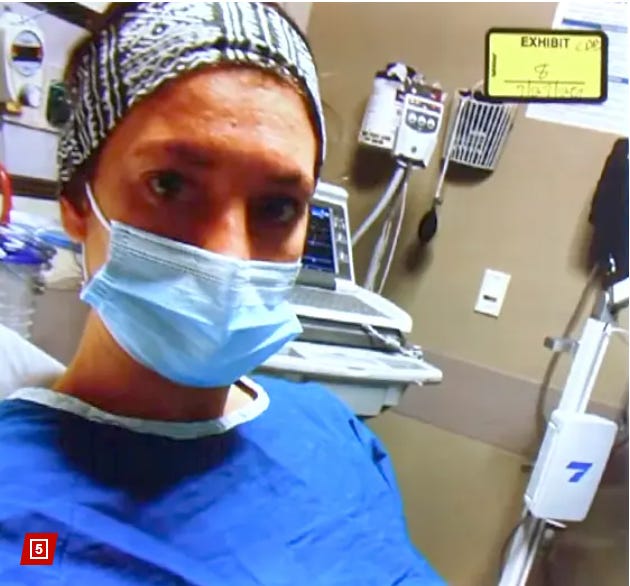
How Lindsay Clancy’s criminal case could help her leverage a ‘million-dollar’ settlement in lawsuit against docs.

When a Jew Lawyer speaks, all parties SHIVER, man:
Clancy could use to bolster negotiations in the civil case, legal observers say.
“It’s like a leverage play when you’re negotiating or mediating,” said Seth Zuckerman, a New York lawyer who handles both criminal and civil cases.
Key Themes and Insights
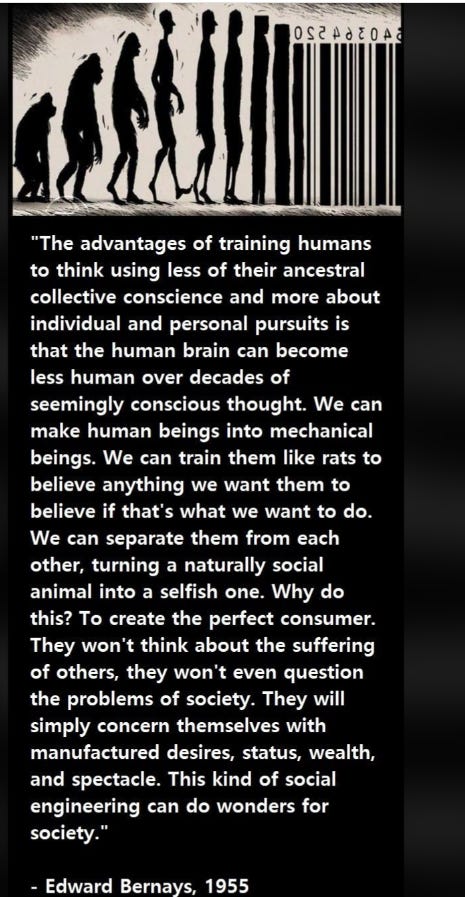
- Brainwashing and Terror: Meerloo notes that to condition individuals, totalitarian regimes systematically eliminate alert consciousness through fear, terror, and hopelessness. Psychological shock is utilized to frighten populations into submission, creating a state of “menticidal hypnosis” where victims act in a trance-like state repeating external commands.
- Conformity and Thought Control: The book highlights how inquisitive and doubting minds are actively suppressed under totalitarianism. Implanted delusions remain difficult to correct, and repetition of the “big lie” often overpowers logic during ideological conflicts. Meerloo also observes that conformity is frequently conditioned early in life, affecting even intelligent individuals.
- Vulnerability and Addiction: The text addresses how dependencies, such as alcoholism and drug use, impair voluntary mental control and pave the way for totalitarian submission.
SHOP, man, Homo Sapiens Consumpticius:
- General Belief: Roughly 70% of American adults believe in angels overall.
- Personal Protection: A major study by Baylor University found that 55% of Americans specifically believe they have been personally protected from harm by a guardian angel.
- Non-Religious Believers: Interestingly, the belief is experiential and crosses secular lines; about 1 in 5 Americans who identify as non-religious still believe they have been watched over by a protector angel.


Or,

Or,

“When there was a crisis facing the Jewish people, we can look back to the golem myth from late 16th-century Prague. The Jews were threatened by pogroms, so the rabbi conjured a man out of earth and gave life from nothingness to save the ghetto and protect the Jewish people,” Schumer said.
American superheroes of the 1930s, like Batman, were a response to the rise of fascism and Nazism. Other superheroes, like Captain America, were created to help raise American consciousness about the war and to change isolationist attitudes, he added.
Schumer, as an artist and writer himself, created the comic book character Captain Israel, based on Captain America, to bolster public support for the State of Israel as it was threatened by terrorism during the Second Intifada.
“Jewish ideas of truth, justice and the American way are basically the Jewish democratic ideal,” Schumer said. “The Jewish people, as the original storytellers, as the Bible writers, conjure heroes out of nothingness to inspire people.”
Jews, the INSIDERS, the system of KILLING.

Cognition vs. Identification in the Judaic State

Gilad Atzmon, quoting:
Yesterday, I watched a short clip from the 1970s featuring an Orthodox Jew whom I regard as the most important Jewish thinker of his generation and beyond.
Yeshayahu Leibowitz was asked about the Israeli-Palestinian conflict and the Jewish historic right to the land.
Leibowitz insisted that a historic right doesn’t exist—there is no such thing, he said.
What we see in Palestine, he contended, isn’t a legal, historical, or political clash. It is a clash of cognitions.
In Leibowitz’s view, being French or English is not grounded in any legal or historical right but in the cognition of being English or French. One is French not because one carries a French ID card, but because one recognises in oneself the cognition of being French. It is the bond with the language, the soil, the sky, the streets, the blossom in the spring, the history, the culture, the poetry, the chanson, the heritage.
It is worth mentioning that cognition is something one finds in oneself, as opposed to identification, which implies an identification with something external. This distinction is illuminated in the difference between ‘being English’, for instance, and acting ‘as a’ Brit. I believe that being English would be perceived by Leibowitz as a cognition, while acting ‘as a’ Brit is displaying an amalgam of identifications (as a Brit, I believe-in or identify-with X, Y, Z).
According to Leibowitz, the fight over Palestine is a battle between two peoples locked in two separate cognitions: Israeli and Palestinian. Such a battle, according to Leibowitz, could only lead to two possible scenarios:
One scenario is dividing the land between the two peoples (this option was later named the ‘two-state solution’).
The other is a catastrophic, bitter war in which, according to Leibowitz, the whole world will join with the Arabs.
This was Leibowitz in the 1970s. If there was a window at any point for a two-state solution, that window closed long ago. We are now witnessing the evolution of the second scenario, as accurately predicted by Leibowitz: a colossal war in which the whole of humanity is taking the Palestinian side, turning against the Jewish genocidal state and its caretakers around the world.
But the story doesn’t end here.
It is also worth mentioning that what Leibowitz viewed as an ‘Israeli cognition’ back in the 1970s has evaporated completely. It has been replaced by Jewish/Judaic cognition.
Jewish (Cognition) vs. Israelines (Identity)
Arthur Finkelstein was the American political strategist behind Benjamin Netanyahu’s stunning 1996 election victory. Finkelstein was a pioneer in using data to drive political strategy. He polled voters on whether they identified first as Jews or Israelis and used the results to design campaigns, leading to concepts like “Bibi is good for the Jews.”
Finkelstein’s polling in 1996 revealed a fundamental divide in the Israeli electorate. Voters were asked: “Do you consider yourself more Jewish or more Israeli?” You may note that the ‘Z’ word was not mentioned. Zionism was already a dead notion in Israeli politics by 1996.
A majority of respondents answered, “Jewish.”
Those identifying as “Jews” tended to vote for Netanyahu, while those identifying as “Israelis” tended to vote for Shimon Peres.
Finkelstein correctly believed this distinction explained everything in Israeli politics. It led to the campaign’s core message—”Peres will divide Jerusalem”—based on the finding that “Jewish”-identifying voters would reject any deal requiring the capital’s division. This insight was crucial to engineering Netanyahu’s victory.
In an interview following his defeat, Peres was asked about the election results. He said: “We lost.”
“Who is ‘we’?” The interviewer wondered.
“The Israelis,” Peres answered.
“And who won?”
“The Jews!” Peres replied.
The last Israelis
Nearly five decades later, the last so-called ‘Israelis’ are leaving the country. They have grasped that Israel’s transition into a Jewish ghetto/ Judaic State is nearly accomplished and there is nothing they can do about it.
The Israeli ‘cognition’ couldn’t last. Because it wasn’t really a cognition. It was a ‘cognition wannabe’—an invention born out of an aspiration of ‘becoming’ as opposed to a celebration of ‘being.’
Israeliness was just another Jewish ‘revolutionary’ dream. It was an a phantasy born out of European Jewish self-loathing, an expression of the Jewish desire to be ‘normal,’ a people ‘like all other peoples.’ Israeliness was an identitarian dream for auto-metamorphosis, a fantasy of a secular, Hebraic, self-sufficient society. Israeliness provided a short-lived, fake, delusional sense of authenticity. As such, more than a real cognition, it was a delusional momentary identitarian adventure.
The cracks in the Israeli so-called ‘cognition’ fully unveiled themselves in the early 1970s, especially following the 1973 war.
Slowly but surely, more and more Israelis started to lose faith in the fake Israeli ethos. They started to search for a path towards authenticity and true meaning that might justify dying in an Israeli war or committing a genocide while pretending to be a ‘peace lover.’
Israeliness couldn’t provide the good. The Israelis were singing about shalom, yet doing everything within their power to make shalom impossible. Israeliness could never rid itself of its original sin, the 1948 Nakba. Judaism, was consistent and coherent; it rationalised supremacy, expansionism, and even genocide.
Judaism was destined to prevail. It had 2,500 years of experience in suppressing Jewish revolutionaries and dissenters. The victory of Judaism over Israeliness is the moment in time when the West Bank settlement movement matured into a noticeable political force. By the end of the 1970s (1977), Labour Zionism had lost its power, pretty much forever. The Jewish State launched its transition into a Judaic state.
If you wonder how it is possible that Israeliness was so easily defeated by Jewishness, cognition vs. identification is the answer. The Judaic state is consistent with the Jewish cognition. While Israeliness offered a revolutionary, albeit short-lived, identitarian outlook—a fantasy of being ‘authentic’—Jewishness offered the Israelis the prospect of simply being themselves. It is that particular ‘being themselves’ and being for themselves that brought along the worst documented genocide in human history.

What They Told You Was True
The prescription is written on the basis of a mechanism, a diagnosis, and a trial. Each has failed on its own terms.
1. The chemical imbalance was never demonstrated
The theory that depression results from a deficiency of serotonin was never established in the scientific literature. Joanna Moncrieff and colleagues published a comprehensive umbrella review of the serotonin theory in 2022 and found no consistent evidence for its central claims.⁵ The theory was abandoned by serious researchers decades earlier. It continued to appear in direct-to-consumer advertising and patient education materials because it served a function. It explained why the pill was necessary and why the patient would need to keep taking it.
Steven Hyman, director of NIMH from 1996 to 2001, later observed that “the gold standard was the DSM criteria. It struck me as a fool’s errand to try to develop a biomarker for a fictive category.”⁶ The chemical imbalance was the mechanism proposed for a disease no one could measure, in a category no one could validate.

Chemical Imbalance: The Collapse of a Medical Myth
·
December 22, 2025
2. The DSM has no biological markers
After four decades and hundreds of millions of dollars in federal research, not one disorder in the Diagnostic and Statistical Manual of Mental Disorders has a confirmed biological test. Not depression. Not schizophrenia. Not bipolar disorder. Not ADHD. Not anxiety. Not any of the more than three hundred conditions the manual lists.
Robins and Guze proposed a five-step validation process in 1970: clinical description, laboratory studies, exclusion criteria, follow-up studies, family studies.⁷ The five steps were meant to establish, over time, which alleged disorders were real diseases and which were figments. Four decades later, Darrel Regier, who chaired the DSM-5 task force, told Psychiatric News that “validity tests have not lived up to the expectations of Robins and Guze.”⁸ Kenneth Kendler, the field’s leading nosologist, wrote that the diagnostic categories in use had been “heavily influenced by expert opinion” and were “fuzzy constructs that shift when viewed in different ways.”⁹
Thomas Insel, director of NIMH from 2002 to 2015, put it most directly in a 2005 address to the American Psychiatric Association: “The DSM-IV has 100 percent reliability and zero percent validity.”¹⁰ Reliability means clinicians using the same manual will arrive at the same diagnosis. Validity means the diagnosis corresponds to a real thing. Insel was telling the assembled profession that its manual sorted patients consistently into categories that did not exist.
The APA response was to convene committees to plan the DSM-5. The committees did not find biological markers. They could not have. The categories were not built to have biological markers. They were built from clinical description alone. The manual reifies its own criteria.
The consequence for the patient is direct. When the doctor says “you have major depressive disorder,” the patient hears a diagnosis in the sense that a diabetes diagnosis is a diagnosis: a measurable biological state with a known mechanism. What the patient has actually received is a checklist tally. Five of nine symptoms present for two weeks. That is the whole test. There is no blood work, no scan, no biomarker. The diagnostic bible of American psychiatry sits on the shelf as an artifact of expert agreement, not a description of nature.
Manufacturing Madness: The DSM as Instrument of Social Control
·
October 15, 2025
3. STAR*D was manipulated
The opening figures bear structural repetition: 3 percent versus 67 percent, admitted by the lead investigator, still not retracted, still cited. Ed Pigott’s reanalysis was published in BMJ Open in 2023.¹¹ The investigators, when confronted, doubled down on the fraud in the American Journal of Psychiatry rather than correct it.¹² The owner of the journal, the American Psychiatric Association, did nothing.
Peter Gøtzsche has documented the specific manipulations. The “remission” threshold was set so low that a patient scoring 7 on the Hamilton depression scale, including endorsement of “feels like life is not worth living,” was counted as symptom-free.¹³ Patients who exited the study were assumed to have remitted at the same rate as those who stayed, a statistical fiction that inflated the numbers by an order of magnitude. Eleven prespecified outcomes were never reported. Suicidal ideation was reported at 0.7 percent in one paper and ten times that in others by the same authors.
The trial that was supposed to establish the effectiveness of antidepressants in real-world practice established the opposite. The profession’s response was to continue citing the announced figure.

Is Psychiatry a Crime Against Humanity? (2024)
·
January 1, 2025
What Happens on the Drug
The prescription arrives with the phrase “you may notice some side effects.” The phrase does the work of concealment. Three effects, in particular, are not warned about with the seriousness they warrant.
4. Akathisia carries documented suicide risk
Akathisia is a state of extreme inner restlessness produced by antidepressants, antipsychotics, and antiemetics. The Greek term means inability to sit still. The patient may pace, fidget, wring hands, or endlessly walk. The condition may also present without visible motor symptoms, as unbearable internal agitation the observer cannot see.¹⁴
In 1990, Martin Teicher and colleagues at Harvard published five cases of patients who developed intense suicidal preoccupations on fluoxetine, all associated with akathisia, all resolving when the drug was stopped and returning when it was restarted.¹⁵ Rothschild and Locke published the rechallenge study in 1991: three patients who had made serious suicide attempts on fluoxetine, all rechallenged under controlled conditions, all developing akathisia and becoming suicidal again. One patient said in retrospect: “I tried to kill myself because of these anxiety symptoms. It was not so much the depression.”¹⁶
A study of psychiatric inpatients found that 79 percent of those who had attempted suicide were experiencing akathisia at the time.¹⁷ Another found that half of all fights on a psychiatric ward were akathisia-related. Haloperidol at moderate to high doses made half the patients markedly more aggressive, sometimes to the point of wanting to kill their psychiatrists.
The FDA’s 2004 black-box warning on antidepressants describes what Breggin has called the stimulant syndrome: anxiety, agitation, panic attacks, insomnia, irritability, hostility, aggressiveness, impulsivity, akathisia, hypomania, mania.¹⁸ The label warns that these can occur in nonpsychiatric patients, meaning the drug produces the syndrome by itself, not by unmasking a preexisting condition.
Gøtzsche’s team examined manufacturer trial data and found akathisia miscoded as “hyperkinesia” in Zoloft trials. In paroxetine trials they found not a single case of akathisia recorded, which is statistically impossible given the drug class.¹⁹ The miscoding was systematic.
The FDA-approved label for Zyprexa describes akathisia as “extreme inner anxiety and restlessness.” At least one psychiatric textbook labeled it “agitated depression,” folding the drug’s most dangerous effect back into the diagnosis it was prescribed to treat. The patient who reports the akathisia is told the underlying illness has worsened. The dose is increased.

Mental Health Survival Kit and Withdrawal from Psychiatric Drugs (2022)
·
Jun 1
5. Benzodiazepine dependence begins at prescribed doses
The FDA-approved label for Xanax states that withdrawal symptoms, including seizures, have been reported after only brief therapy at doses within the recommended range for treating anxiety.²⁰ In the eight-week trials used for FDA approval, patients were worse off at eight weeks than before starting the drug. Between 7 and 29 percent of patients could not withdraw after only six to eight weeks of exposure.²¹
If you are currently taking a benzodiazepine, do not stop it abruptly. Abrupt cessation can produce seizures. Item 12 addresses what safe withdrawal actually requires.
Heather Ashton, the British psychiatrist who ran a benzodiazepine withdrawal clinic at the University of Newcastle for decades, documented that long-term users often required a year or more to taper.²² Some experience withdrawal symptoms lasting years after cessation. Cognitive impairment, depression, and anxiety worse than the original condition are common outcomes of long-term use.²³ Gøtzsche, who has decades of clinical pharmacology experience, has noted that patients report benzodiazepine withdrawal as often worse than heroin. Heroin abstinence symptoms resolve within days. Benzo withdrawal can persist for years.

Anxiety Uncovered: The Truth About Benzodiazepines and Real Solutions
·
May 2, 2025
6. ADHD stimulants produce the symptoms they treat on withdrawal
The DSM has a category for stimulant withdrawal, which lists depression, anxiety, irritability, sleep problems, fatigue, and agitation as the withdrawal syndrome after “several days or longer” of use. Rebound hyperactivity, talkativeness, and inattention are documented after a single dose in a placebo-controlled NIMH study of normal children ages 6 to 12.²⁴ Ten of fourteen children in that study showed marked behavioral rebound; three developed euphoria.
If a child is currently taking a stimulant, do not stop it abruptly. Rebound and withdrawal effects are commonly mistaken for a worsening of the original condition. Item 12 addresses safe withdrawal.
The teacher observes the child on Monday morning after a weekend off the drug, notices the child is more scattered and irritable than usual, and concludes the child needs the medication. The child is in withdrawal. The dose is increased. Peter Breggin’s observation from the early 1990s stands unchanged three decades later: if the child continues on Ritalin because they continue to have problems focusing, the disorder may be the drug’s effect.²⁵ Drug-induced inattention becomes the reason to continue and increase the drug.
The Multimodal Treatment Study of ADHD, the largest NIMH-funded stimulant trial, tracked children through eight years of follow-up. By three years, the medicated children showed no advantage over the non-medicated on any measure. They were, however, 2 cm shorter and 2.7 kg lighter than their unmedicated peers, a growth suppression the FDA eventually required on the label.²⁶

The Arithmetic Pill: ADHD, ADD, and the Evidence
·
December 25, 2025
What Happens to Your Brain
The drugs act on the brain and the brain responds. What the brain does under sustained chemical assault is documented in the profession’s own imaging studies.
7. Antipsychotics shrink brain tissue on MRI
Nancy Andreasen, editor-in-chief of the American Journal of Psychiatry from 1993 to 2005, began a longitudinal MRI study of over 500 first-episode schizophrenia patients in 1989. In 2003, she reported that frontal lobe white matter volume decreased progressively over the years of treatment.²⁷ In 2011, her team published in Archives of General Psychiatry the finding that antipsychotic exposure was directly associated with volume loss.²⁸ In a 2008 interview with the New York Times, Andreasen stated it plainly: “The more drugs you’ve been given, the more brain tissue you lose.”²⁹
Fusar-Poli and colleagues confirmed the pattern in a 2013 meta-analysis of longitudinal MRI studies.³⁰ The 2009 Navari and Dazzan review reported that both older and newer antipsychotics produce gross changes in brain volume in selected regions.³¹ In monkey studies, haloperidol and olanzapine produced substantial reductions in both grey and white matter, and reduced glial cell numbers.³²
Andreasen’s original interpretation was that the shrinkage reflected the disease. The follow-up data forced her to concede the drug was the cause.

Anatomy of an Epidemic: Magic Bullets, Psychiatric Drugs, and the Astonishing Rise of Mental Illness in America (2010)
·
May 21
8. Tardive dyskinesia is permanent
Tardive dyskinesia is a drug-induced movement disorder produced by antipsychotics. It can affect any voluntary muscle: face, tongue, neck, torso, extremities, diaphragm, vocal cords. The condition presents as involuntary jerky movements, slower writhing movements, painful spasms, or restlessness the patient cannot control. The mechanism is understood. Antipsychotics block dopamine receptors in a brain region called the basal ganglia. Over time the brain compensates by growing more of those receptors. When the drug dose is reduced, or when the extra receptors eventually outnumber the block, the excess drives the involuntary movements.
The prevalence is not marginal. DSM-IV-TR sets the annual incidence at 3 to 5 percent per year in young adults and 25 to 30 percent per year in older patients.³³ These are cumulative rates. A young adult after three years of exposure has a 9 to 15 percent risk. An older patient after three years has a 75 to 90 percent risk. Prevalence in outpatient clinics runs above 40 percent. In long-term facilities, above 50 percent.³⁴ There is no established treatment. Most cases are permanent.
The condition often extends beyond motor symptoms. Gualtieri and Barnhill observed that “in virtually every clinical survey that has addressed the question, it is found that TD patients, compared to non-TD patients, have more in the way of dementia.”³⁵ Breggin has called this tardive dementia. Tardive akathisia and tardive psychosis have also been documented, representing further permanent damage to the higher brain function of patients whose brains were supposed to be helped.
The condition is frequently masked by the drug that caused it. Increasing the dose suppresses the visible movements while the underlying damage progresses. Reducing the dose brings the movements out, which the prescriber may interpret as evidence that the patient still needs the medication. The patient’s brain, already damaged, is offered more of what damaged it.
The neurological literature has documented tardive dyskinesia for over five decades. It is required disclosure on antipsychotic labels. It is not routinely disclosed at the point of prescription.

Toxic Psychiatry
·
December 17, 2024
9. ECT causes documented brain damage
Electroconvulsive therapy applies electrical current to the head sufficient to produce a grand mal seizure. In modern practice, the patient is anesthetized and given a muscle relaxant to prevent the visible convulsion. The electrical dose is often increased to compensate for the seizure threshold raised by the anesthesia. Multiple treatments are given, typically 8 to 16 per course, sometimes more.
Autopsy studies dating to the 1940s documented brain necrosis in patients who died following ECT.³⁶ Animal studies documented brain damage. The brain’s response to ECT is an acute organic brain syndrome, medically indistinguishable from severe head injury. In neurological terms, multiple continuous seizures without full recovery of consciousness constitute status epilepticus, a medical emergency defined by its risk of permanent brain damage.
The memory loss is documented in every serious study that has looked for it. Larry Squire and Pamela Slater reported an average of 27 months of retrograde amnesia surrounding treatment.³⁷ Freeman and Kendell, using face-to-face interviews conducted by the treating doctors themselves (a design that biased strongly against reporting), found that 74 percent of patients reported memory impairment and 30 percent said their memory function was permanently affected.³⁸ Squire and Slater’s own longer follow-up found that 55 percent of patients felt they had not regained normal memory function over the years.
Gøtzsche summarizes the current literature: with strict definitions of memory loss, 29 to 55 percent of patients are affected. With looser criteria, 51 to 79 percent.³⁹ Death rates from ECT, according to a systematic review by John Read and colleagues, run at approximately 1 per 1,000 treatment courses, ten times higher than the American Psychiatric Association’s stated figure.⁴⁰
The efficacy evidence is thinner than the harms evidence. The 1985 NIMH Consensus Conference on ECT accepted the finding that no controlled study showed benefit beyond four weeks. The four-week window corresponds to the acute organic brain syndrome, during which severe brain dysfunction produces the euphoria or apathy interpreted as improvement.⁴¹ Once the brain begins to recover, the depression returns. If the patient is given more ECT, the brain damage accumulates. If the patient is not given more ECT, the profession points to the returning depression as evidence the disease was chronic.
The APA’s 1990 task force report on ECT omitted essentially the entire literature documenting memory loss and brain damage.⁴² The literature it omitted included the work of Squire, Slater, Janis, Friedberg, Breggin, and even the APA’s own previous 1978 report, which contained more information on memory loss than the 1990 update. In psychiatry, science sometimes runs backward.

The Top 10 Myths of Modern Psychiatry
·
December 23, 2025
What Happens When You Try to Leave
At some point the patient decides they no longer want to be on the drug. The system was not built to help them leave.
10. SSRI discontinuation can last years
The FDA-approved labels describe “discontinuation syndrome.” Patients and doctors alike were told the symptoms would last a few weeks and resolve. The systematic review by Davies and Read, published in 2019, established that this was false. Withdrawal symptoms are more common than reported, more severe than reported, and last far longer than reported. In one survey of 580 patients, 16 percent reported withdrawal symptoms lasting over three years.⁴³
If you are currently taking an SSRI or SNRI, do not stop it abruptly. Withdrawal reactions can include severe agitation, akathisia, suicidal ideation, and violence. Item 12 addresses the resources for safe tapering.
The Dutch tapering-strip program run by Peter Groot and Jim van Os has documented the shape of the problem. Of 895 patients on antidepressants, 62 percent had previously tried to withdraw without success. Using hyperbolic dose-reduction strips, 71 percent were able to withdraw within a median of 56 days.⁴⁴ Venlafaxine required 90 percent of patients to start at the lowest available dose and taper over three months. Some patients required more than six months. Dutch insurers refused to reimburse extended tapering because “there is no evidence in the literature” for its necessity, a circular defense against the very treatment the literature was documenting.
The withdrawal is routinely misinterpreted as return of the underlying illness. The patient is told they were unwise to stop and needs to remain on the drug indefinitely. Breggin’s term for this pattern is medication spellbinding. The drug produces effects the patient attributes to the disease.

What to Ask Before Your Next Antidepressant Prescription
·
Jun 13
11. Long-term outcomes are worse with the drugs than without them
The 1997 British study of a large inner-city primary care facility followed 95 never-medicated depressed patients and 53 drug-treated ones. Symptom reduction at six months: 62 percent for the never-medicated, 33 percent for the drug-treated.⁴⁵ A World Health Organization study of 640 depressed patients found that medicated patients had worse general health and were more likely to still be mentally ill at one year.⁴⁶ A Canadian five-year study of 9,508 depressed patients: 19 weeks of depression per year for the medicated, 11 for the unmedicated.⁴⁷ An NIMH study of 547 patients: medicated patients were three times more likely to lose their principal social role and nearly seven times more likely to become incapacitated at six years.⁴⁸
Rif El-Mallakh reported that 40 percent of patients on antidepressants end up in a chronically depressed “treatment resistant” state.⁴⁹ Giovanni Fava documented that drug changes induced by antidepressants “may propel the illness to a more malignant and treatment unresponsive course.”⁵⁰
The pattern extends to antipsychotics. Martin Harrow’s 15-year follow-up of first-episode psychosis patients found that those not on antipsychotics had significantly better outcomes and were far more likely to be in recovery.⁵¹ Lex Wunderink’s 7-year Dutch trial randomized first-episode psychosis patients to maintenance antipsychotics or dose reduction and discontinuation. The reduction group had double the recovery rate.⁵² Bockoven had documented in 1975 that rehospitalization rates rose after the introduction of antipsychotics and that medicated patients were more socially dependent than those treated in the pre-drug era.⁵³
The pattern is consistent across drug classes and across decades. Longer exposure produces worse outcomes. The drugs sensitize the brain and convert episodic distress into chronic dysfunction. The profession’s response has been to rewrite the natural history of the conditions to match the drug-damaged outcomes. The 1999 American Psychiatric Publishing Textbook of Psychiatry declared that older studies showing depression was self-limiting had been “disproved.” Depression became “a highly recurrent and pernicious disorder.”⁵⁴ The drugs had made it so.

Feeling Better, Getting Worse: How Psychiatric Drugs Create the Illusion They Cure
·
Apr 9
12. Tapering protocols do not exist in most medical schools
The prescriber who put the patient on the drug is typically not trained in how to help them come off it. Withdrawal is not covered in the standard psychiatric curriculum. The tapering approach with the strongest evidence base is hyperbolic dose reduction, developed by Mark Horowitz and Joanna Moncrieff and published in Lancet Psychiatry in 2019.⁵⁵ The approach requires micro-dose reductions of a few percent at a time, made possible by liquid formulations or compounded tapering strips. Standard tablets do not come in the small doses required.
Peter Gøtzsche’s team spent two years trying to publish a Cochrane review protocol on antidepressant withdrawal support. The Cochrane depression group, chaired by Rachel Churchill, raised objections through 12,044 words of feedback across 86 numbered points, then rejected the protocol.⁵⁶ Cochrane refused to publish a review on how to help patients safely withdraw from a class of drugs prescribed to hundreds of millions of people worldwide. Gøtzsche’s PhD student Anders Sørensen mentored 30 consecutive patients through withdrawal in his unpaid spare time and documented the results, because it was the only way to do the work.
The insurance system compounds the problem. Dutch national health insurance refuses to reimburse extended tapering on the grounds of insufficient evidence, though the evidence exists and the insurers know it does. American insurers do not cover compounded formulations. The tapering strips developed at the Amsterdam pharmacy (taperingstrip.org) are available to prescribers in any country, but the patient must find a prescriber willing to order them, which many will not.
The knowledge exists. The Ashton Manual for benzodiazepine withdrawal has been public since 2002.⁵⁷ The Horowitz-Moncrieff hyperbolic tapering literature is in peer-reviewed journals. Mad in America hosts a withdrawal community with thousands of patients’ documented experiences. Breggin’s Psychiatric Drug Withdrawal was published in 2013.
None of it is on the psychiatric residency reading list. The doctor who wrote the prescription is, in most cases, not the doctor who can help the patient stop taking it. The patient is on their own.

Escape from Psychiatry
·
Apr 10
What This Does Not Mean
The most common defense of the current prescribing paradigm is that the drugs help some patients, and that essays like this one endanger those patients by encouraging them to stop.
Some patients do report subjective benefit on these drugs. That is not disputed. What is not established is that this benefit exceeds placebo by a clinically meaningful margin, or that it survives the long-term outcomes documented in Item 11.
The safety caveats throughout this essay, and the resources listed below, exist precisely because abrupt cessation is dangerous. Nothing here recommends abrupt cessation. What is recommended is informed choice, which requires the twelve findings to be visible before the prescription is written or renewed. A patient who wishes to continue after seeing the twelve findings has made a different decision from a patient who was never shown them.

JEWS:
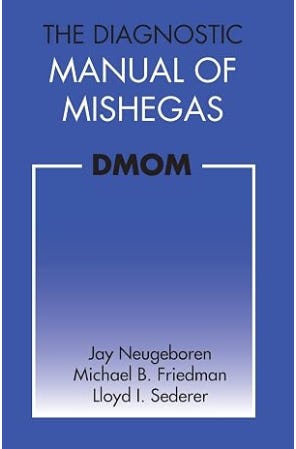
When the DSM-5 was published by the American Psychiatric Association (APA) in May 2013, it faced widespread criticism for over-medicalizing normal human behaviors. In response, a group of writers and mental health professionals published a celebrated parody called The Diagnostic Manual of Mishegas. [1]
- The Concept: Created under the fictitious persona of “Dr. Sol Farblondget,” the manual humorously categorizes archetypal Jewish behaviors and anxieties into clinical “disorders”.
- Cultural Context: Rather than mocking mental illness, the book highlights the historically deep ties between Jews and the American psychoanalytic tradition, turning cultural quirks (like excessive worrying, overeating, or parental guilt) into tongue-in-cheek diagnostic criteria.
The satirical Diagnostic Manual of Mishegas–created by the fictitious Dr. Sol Farblondget–sends up the DSM with its listing of Jewish disorders.
CATEGORIES OF MISHEGAS
1.0 NERVOUS CONDITIONS OF EVERYDAY LIFE
Nervous conditions are part of the human condition, and thus are as different in their variations as human beings are different from one another. Still, it is helpful to understand what form of nervousness you are experiencing, or what type of tsuris-addict is torturing you with tales of woe, and to thereby figure out how to tell the feeling, or the person, to gei avek (get lost!), gei shluffen (go to sleep), or—our number one suggestion, especially when the meter is running out on your patience for listening to yet another mournful Oy Vey-drenched soliloquy—to tell the tsuris-addict to fardrai zich deyn kopf (literally: ‘Go turn your own head around’—i.e., to leave me alone and make yourself nuts!) Also: a good hot pastrami sandwich, don’t skimp on the mustard, with a nice, fat sour pickle on the side, can’t hurt.
Here follows a list of common nervous conditions that, though different in kind, one from the other, have many qualities in common and, depending on a particular day’s Dow Jones Industrial Average or the state of your kishkas (intestines), can sometimes be used interchangeably.
1.01 Tsuris Reactions and Sequelae
Although Jews like to claim a monopoly on tsuris, the truth is that this condition (troubles, aggravation, worries, suffering) befalls everyone, and most of what passes for mishegas is a natural reaction to life’s vagaries and pitfalls. Thus, when a 54-year-old woman becomes depressed because her accountant husband, also 54, has taken up with an 18-year-old hotsie-totsie, she is not mishugah and in need of psychotropic medications. What she needs, we believe, is to shack up with an 18-year-old lifeguard or tennis pro, and to leave her husband a note, informing him that, as an accountant he should realize that 18 can go into 54 many more times than 54 can go into 18.
The point is not to moan, groan and carry on about the tsuris that has befallen you, but to do something about it. Remember: when the Children of Israel fled from Egypt and came to the Red Sea with the Egyptians in hot pursuit, and they complained to God that he had delivered them from slavery into something worse than slavery, and Moses, who did not even ask for a retainer, went to God on their behalf and transmitted his tribe’s complaints, God laughed. “Wherefore criest thou unto me?” God said. “Go forth!” And it was only when the Children of Israel stopped kvetching, and plunged forward into the Red Sea, that the waters parted.
1.02 Tsuris-addiction
Tsuris addiction is a widespread condition which, by cutting people off from their innate capacity for pleasure and encouraging kvetching (complaining), enables them to spread gevalt-laden gloom and doom everywhere. In an iconic example, four elderly Jewish women are wading ankle-deep in the waters at Brighton Beach. “Oy,” says Ethel. “Oy vey,” says Molly. “Oy vey iz mir,” says Lillie. “Please, ladies,” says Annie. “We promised not to talk about our children.”
People who have life-long love affairs with, and attachments to, misery wind up living in what we think of as The Village of Oy Vey Iz Mir at whose center is the Shtiebel of Gornish Helfin. Tsuris addicts spend their lives holding on to every morsel of real or imagined bad news they ever had—kvetching, for example, about how unfair it is that they had to grow up near people with bigger houses, better time-shares, more cashmere sweaters and fancier cabanas than theirs. In Oy Vey Iz Mir, any and every event is cause for weeping and wailing.
That tsuris addiction is a regrettable and oft-considered natural part of life is not even mentioned in the D.S.M. (Nor is tsuris attachment, which is pretty much the same thing, except that you can send it to someone in an e-mail.) While some studies show that tsuris addicts may take what they consider genuine (if perverse) pleasure from being miserable, the price of their pleasure is often to plunge many of us into a desire to rip out their vocal cords.
1.02A: The Wisdom of Gornish Helfin
Although the D.S.M. makes a big deal out of attachment theory, we are advocates of detachment theory, since experience convinces us that what proves most helpful both to those addicted to tsuris, and those who must suffer from relationships with tsuris addicts, is the concept of Gornish Helfin (meaning, literally, “Nothing will help”), which can be explained by the following archetypal example.
When the great Yiddish actor Mendel Kupietzky fell down in the middle of a Yiddish-language performance of King Lear, and a doctor rushed to the stage and began examining him, a man in the balcony started yelling, “Give him an enema. . . . ! Give him an enema. . . . !” And when, a moment later, the doctor threw out his hands in a gesture of helplessness, and announced that Mendel Kupietzky was dead—still the man from the balcony kept yelling “Give him an enema . . . ! Give him an enema. . . . !” and would not stop despite pleas from other actors and members of the audience. Only when the theater manager appeared alongside the doctor and looked up at the man in the balcony and said, “He’s dead, sir. An enema can’t help. Gornish Helfin . . . Gornish Helfin . . . ”
—only then did the man in the balcony change his tune. “Give him an enema!” he cried one last time. “It can’t hurt . . . . ”
Once we understand that no matter what we do to and for some people, they will not change—that Gornish Helfin, and therefore the best thing is to leave them be—we free ourselves from the quintessential American illusion, pragmatic to its core, that there is no problem for which there is not a happy solution. What we believe is that for many situations and conditions, including most forms of mishegas—tsuris addiction at the top of the list—there is nothing to be done. Thus, any engagement with the tsuris addict—especially telling the addict that kvetching about tsuris is not such a hot idea—merely brings on ever-rising levels of tsuris-addiction.
For tsuris addicts, insatiability is the name of the game. Nothing will ever please them, and it is a waste of time—truly mishugah!—to point out that they have no real reasons for being miserable, or to urge them to find ways to be happy.
Therefore, when engaged in relationships with tsuris-addicts, and you sense an impulse to enter into dialogue with them, the suggestion here is to cock your head to the side, furrow your brow in feigned sympathy, and stare through or past the addict while silently repeating, “Gornish helfin . . . Gornish helfin . . . Gornish helfin . . . ” This way, if by some miracle these people ever do change, you have not destroyed whatever good will may exist between you, and they remain ready to embrace you.
Here’s your chance:

How to apply
Before you start packing your suitcase, there are a few requirements.
Applicants must:
- Speak English
- Have a valid passport
- Be available for the next three months
Additional languages are a plus.
The position is a three-month independent contractor engagement paying $10,000 per month, for a total of $30,000.
You can apply from anywhere in the world. The job will be hired and paid through Deel, which handles the engagement and payments.
If you’re wondering whether you’ll have to make a TikTok of yourself eating ice cream in order to get the job, the listing does encourage applicants to submit videos, social links, and other application materials.
So, if you have a passport, a serious appreciation for ice cream, and an opinion about what flavor the world needs next, this could be your chance.

