

an entire hour with Hedges and his cool guest, and still, never calling it the Occupation Force (IDF) or the Jewish State of Israel . . . Merchants of Death/Attention Merchants/Hasbara/Eddy Bernays
Aug 29, 2026

In Robin Andersen’s new book, she chronicles how the U.S. media utilized their massive reach to help shield Israel from scrutiny as it perpetrated a genocide in Gaza.
Believe you me, it is JUDAISM, man. So, even monster Eddy Bernays tried to distance himself from the Jewish State of Israel and the term (code for Jew) ‘Zionism,’ yet, oh yet, he was a confirmed Jew, followed the rules of the no-bacon Sunday, and alas, Engineering Consent and the flim-flam on steroids was that JEW’s gift.

This vitally necessary and carefully researched book examines the way US establishment media ran interference for Israel’s ongoing genocide in Gaza, aligning its coverage with Israeli military narratives whilst downplaying, and even condoning, the wholesale massacre of Palestinians.
Commencing with the October 7, 2023, attack, The Complicit Lens scrutinizes mainstream journalism, contrasting it with social media reports and international news coverage. It reveals how legacy media presented Israeli violence as defensive and justified, casting doubt on IDF bombings, employing passive language to deflect blame for atrocities, and repeating Israeli talking points, often word-for-word. Massacres of those seeking food became “aid-related deaths,” whilst missile attacks on tented refugees were “tragic mistakes.” Meanwhile, well-worn tropes of war propaganda, including claims of the beheading of babies and mass rapes, subsequently revealed to be without foundation, were used to justify Israeli actions and obscure culpability.
Andersen documents the targeting of journalists and aid workers in what has become the deadliest conflict for each on record. She spotlights the editorial censorship that prohibited the use of terms such as “genocide” and “massacre” in the reporting of Palestinian deaths. And, as global protests against the Gaza genocide gathered strength, she examines the hostile media portrayal of these uprisings, particularly those led by young people and Jewish organizations.
Introduction by Rashid Khalidi.
“Meticulously documented.”
—Mickey Huff
“Startling. Reading this material in one analytical text is essential . . . We need this book ‘yesterday’.”
—Tami Gold
“Makes an overwhelming case that US corporate media’s response to genocide has been not resistance, but complicity.”
—Jim Naureckas
“A superb job … shows how America’s mainstream media has served as Israel’s principal propaganda arm in the US”
—John J. Mearsheimer
ABOUT THE AUTHOR
Robin Andersen is professor emerita of media studies at Fordham University and an award-winning author of a dozen single- and co-authored books. Her work examines film, television, and media coverage of war, the environment, politics, and elections. She edits the Routledge Focus Book Series on Media and Humanitarian Action, serves as a Project Censored Judge, and contributes to the annual State of the Free Press. Andersen is on the Board of Directors of Fairness and Accuracy in Reporting (FAIR), where she also writes regularly, and is an Izzy Award Judge for the Park Center for Independent Media. Her writing has appeared in CounterPunch, LA Progressive, The Progressive, Salon, Common Dreams, and ScheerPost, among others.
JEWS.
Robin?
Andersen and fellow analysts identify several key tactics utilized by mainstream U.S. newsrooms to control the narrative:
- Atrocity Propaganda: Amplifying unverified and later debunked claims—such as reports of beheaded babies and systematic mass rapes on October 7—without basic journalistic fact-checking to justify retaliatory violence.
- Linguistic Manipulation: Using passive language to deflect blame from the Israeli military (e.g., rephrasing targeted military strikes on refugees as “tragic mistakes” and framing the Flour Massacre as “aid-related deaths”).
- Censorship of Key Vocabulary: Explicitly forbidding editorial staff from using precise descriptive words like “massacre” or “genocide” to describe Palestinian casualties.
- Dehumanization & Asymmetry: Presenting Israeli victims with full human context while reducing dead Palestinians to mere body counts without historical background.
- Information Ecosystem Control: Relying on strictly vetted information, restricting foreign journalists from independent access to Gaza, and failing to challenge the targeting and killing of local Palestinian journalists.
Drivers of Media Compliance
In discussions surrounding the documentation on platforms like The Chris Hedges Report, analysts attribute this institutional behavior to specific systemic pressures:
- Access and Careerism: Reporters sacrifice journalistic integrity to preserve necessary access to high-ranking U.S. and Israeli officials.Fear of Retaliation: Journalists who deviate from the accepted military narrative risk swift professional marginalization, loss of access to briefings, and aggressive public campaigns by pro-Israel lobbying groups.
- Internal Newsroom Culture: Data-driven analyses of internal operations reveal structural pro-Israel biases deeply embedded within corporate leadership ranks.
JEWISH, man, all the way JEWISH:
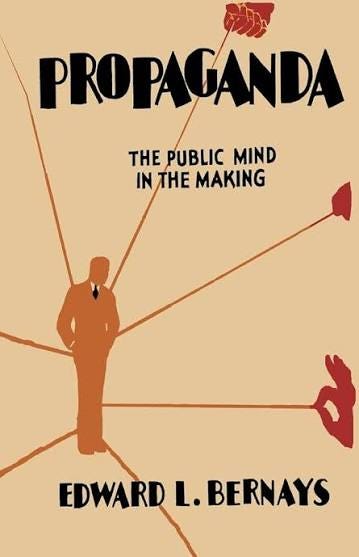
- The Invisible Government: Bernays stated that an unseen group of leaders and experts secretly manages public thought, tastes, and habits to keep society functioning smoothly.
- Appeal to Emotion over Logic: Influenced by his uncle Sigmund Freud, Bernays believed humans are largely irrational and driven by unconscious desires, meaning effective persuasion targets emotions rather than reason.
- Targeting the Group Leader: Instead of trying to convince every single individual, a propagandist must influence key group leaders, figureheads, and authorities who naturally dictate the actions of the masses.
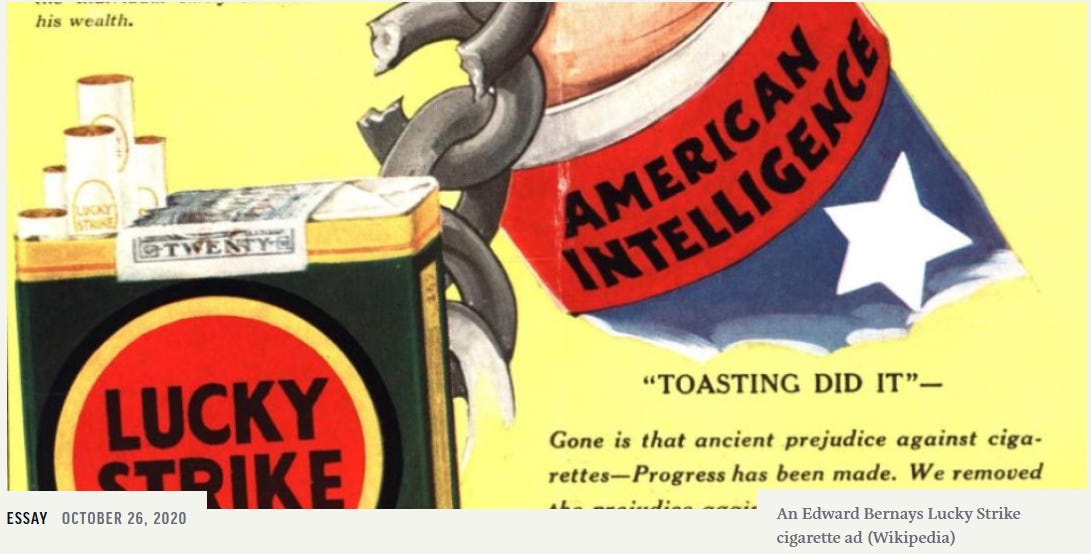
- Creating Circumstances: Rather than just pushing dry facts, campaigns should stage events, leverage symbols, and manufacture news (such as using the Easter parade to make smoking socially acceptable for women) to force a desired reaction.
- The Engineering of Consent: Bernays defined this as the use of an integrated, conscious strategy to mold public acceptance for ideas, policies, or commercial products.
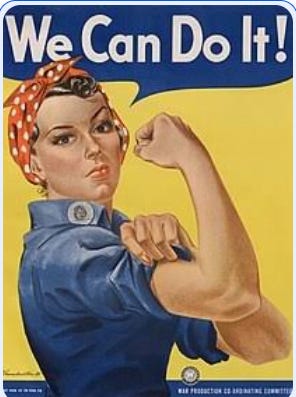
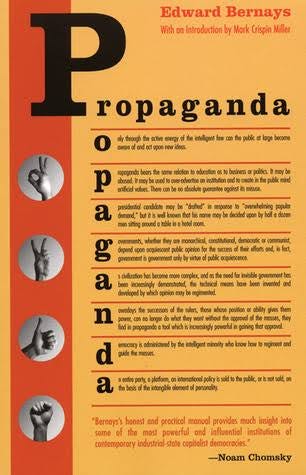
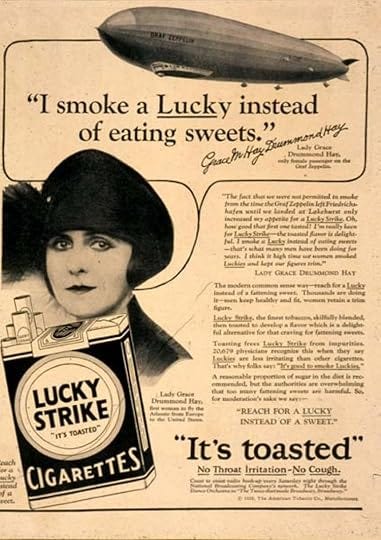
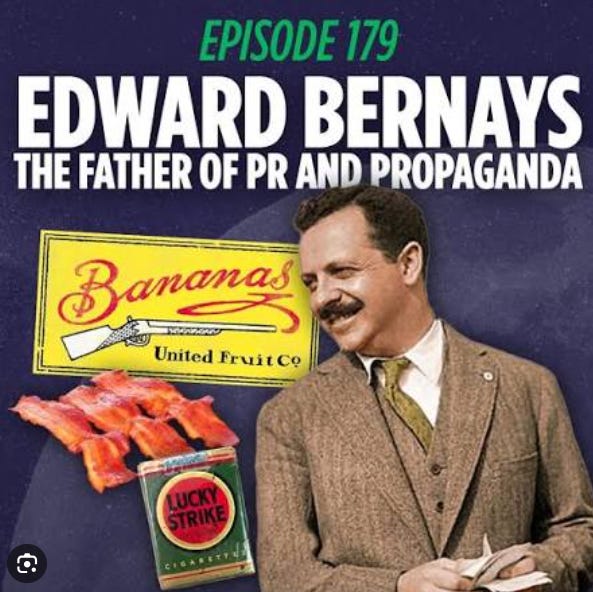
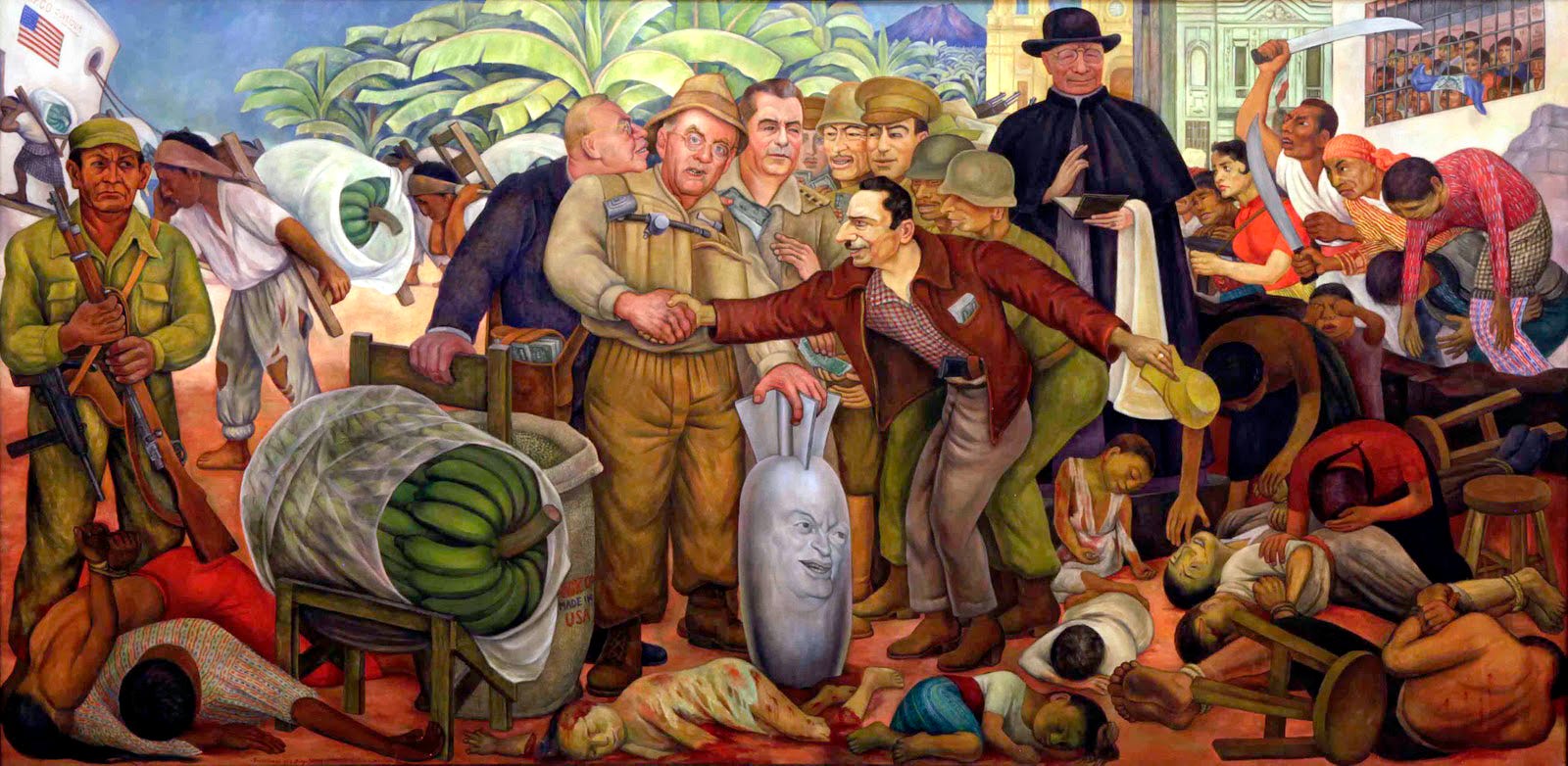
Edward Louis Bernays, the pioneer of the public relations field who invented the press release, the third-party authority, the “front group,” and other tools of the manipulative trade, was born in Vienna on Nov. 22 in 1891. Bernays was the nephew of Sigmund Freud and harnessed some of his uncle’s insights to serve what Bernays called “the engineering of consent.” Among his best-known public relations campaigns were the promotion of cigarette smoking by women in the 1920s for the American Tobacco Company; the promotion of bacon and eggs as the all-American breakfast; the branding of the Arbenz government of Guatemala as “communist,” justifying its overthrow by the U.S. on behalf of United Fruit; the promotion of disposable cups as “sanitary” on behalf of Dixie Cups; and the launching of the 1939 Worlds Fair in New York.
Supreme Court Justice Felix Frankfurter described Bernays and his associate Ivy Lee as “professional poisoners of the public mind, exploiters of foolishness, fanaticism and self-interest.”
“If we understand the mechanism and motives of the group mind, is it not possible to control and regiment the masses according to our will without their knowing about it? The recent practice of propaganda has proved that it is possible, at least up to a certain point and within certain limits.” —Edward Bernays
Bernays had a particular gift for the marketing strategy called the “tie-up” or “tie-in” — in which one venue or opportunity or occasion for promoting a consumer product, for example, radio advertising, is linked to another, say, newspaper advertising, and even, at times, to a third, say a department store exhibition salesroom featuring the item, and possibly even a fourth, such as an important holiday, for example Thrift Week.
Bernays’ brilliance for promotion in this vein emerges clearly when one reads, in the Bernays Typescript on Publicizing the New Dodge Cars, 1927-1928: “Two Sixes”, the story of how he managed to secure newspaper coverage for the radio programs he developed to promote the Dodge Brothers’ new six-cylinder cars. The Bernays Typescript on Publicizing the Fashion Industry, 1925-27: “Hats and Stockings” and the Bernays Typescript on Art in the Fashion Industry, 1923-1927, reveal a similar flair for consumer manipulation in the arena of fashion.
In addition to famous corporate clients, such as the Dodge Brothers, Procter & Gamble, the American Tobacco Company, Cartier Inc., Best Foods, CBS, the United Fruit Company, General Electric, Dodge Motors, the fluoridationists of the Public Health Service, Knox-Gelatin, and innumerable other big names, Bernays also worked on behalf of many non-profit institutions and organizations. These included, to name just a few, the Committee on Publicity Methods in Social Work (1926-1927), the Jewish Mental Health Society (1928), the Book Publishers Research Institute (1930-1931), the New York Infirmary for Women and Children (1933), the Committee for Consumer Legislation (1934), the Friends of Danish Freedom and Democracy (1940), the Citywide Citizens’ Committee on Harlem (1942), and the National Multiple Sclerosis Society (1954-1961). For the U.S. Government, he worked for the President’s Emergency Committee on Employment (1930-1932) and President Calvin Coolidge.
In 1950s Bernays helped create India as the Democratic Republic of Southeast Asia by having the People’s Congress of India adapt the Bill of Rights, adding freedom of the press, speech, religion, assembly, and freedom of petition to the country’s constitution.
The Bernays Typescript on Public Relations Work and Politics, 1924: “Breakfast with Coolidge” shows that President Coolidge too was among his clients. Bernays was hired to improve Coolidge’s image before the 1924 presidential election.
Another selection from his papers, the Typescript on Publicizing the Physical Culture Industry, 1927: “Bernarr Macfadden”, reveals Bernays’ opinion of the leader of the physical culture movement. Yet another client, department store visionary Edward A. Filene, was the subject of the Typescript on a Boston Department Store Magnate. Bernays’ Typescript on the Importance of Samuel Strauss: “1924 – Private Life” shows that the public relations counsel and his wife were fans of consumerism critic Samuel Strauss.

JEWS:
On behalf of the United Fruit Company (today’s Chiquita Brands International), Bernays orchestrated political propaganda in concert with the U.S. government to facilitate the overthrow of the democratically elected president of Guatemala, Jacobo Arbenz Guzman. Bernays’ propaganda (documented in the BBC documentary, The Century of the Self), branded Arbenz as communist and was published in major U.S. media. According to a book review by John Stauber and Sheldon Rampton of Larry Tye’s biography, “The Father of Spin: Edward L. Bernays & The Birth of PR”,
“the term ‘banana republic‘ actually originated in reference to United Fruit’s domination of corrupt governments in Guatemala and other Central American countries. The company brutally exploited virtual slave labor in order to produce cheap bananas for the lucrative U.S. market.”
Self-promotion
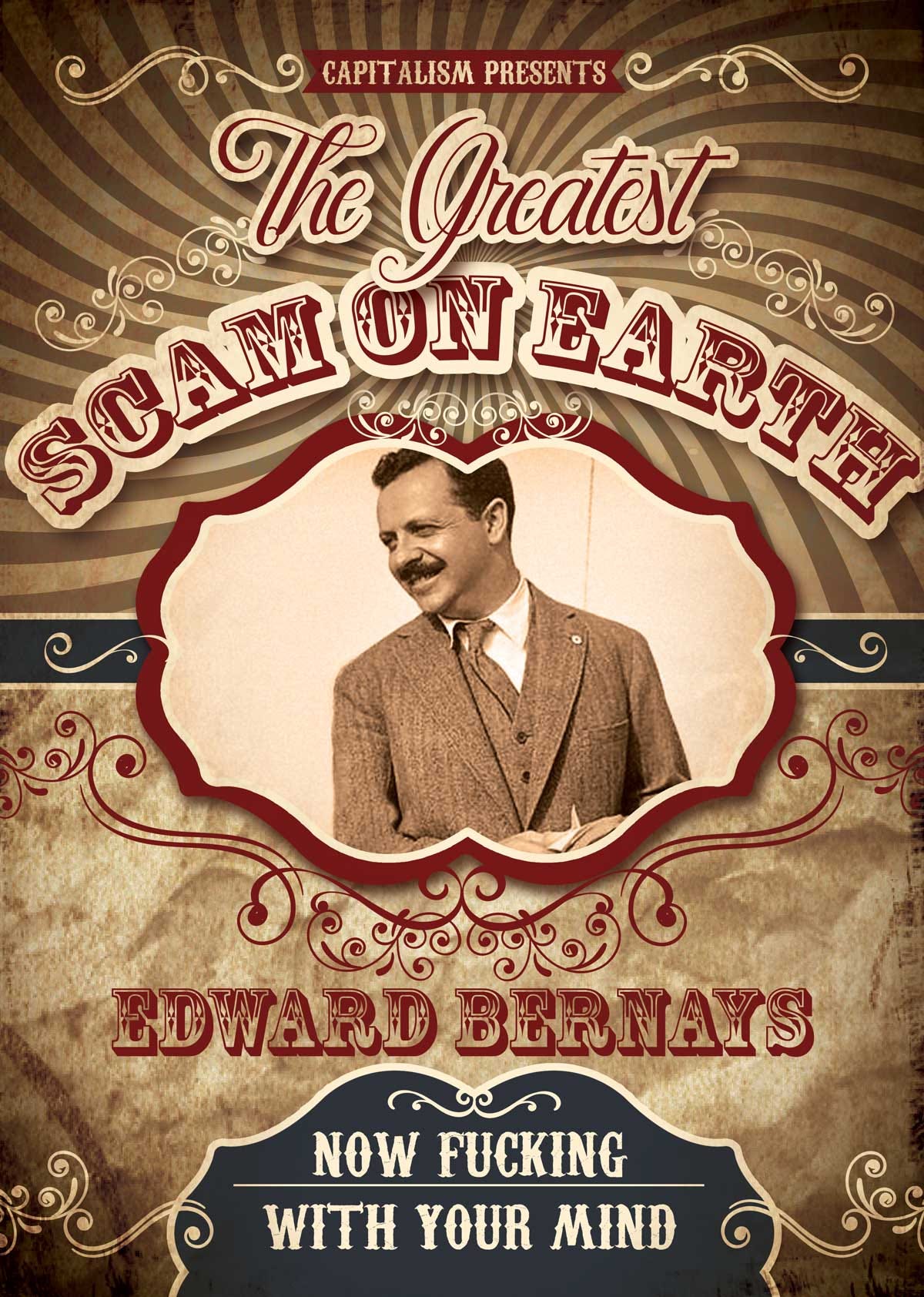
Much of Bernays’s reputation today stems from his persistent public relations campaign to build his own reputation as “America’s No. 1 Publicist.” During his active years, many of his peers in the industry were offended by Bernays’s constant self-promotion. According to Cutlip, “Bernays was a brilliant person who had a spectacular career, but, to use an old-fashioned word, he was a braggart.”
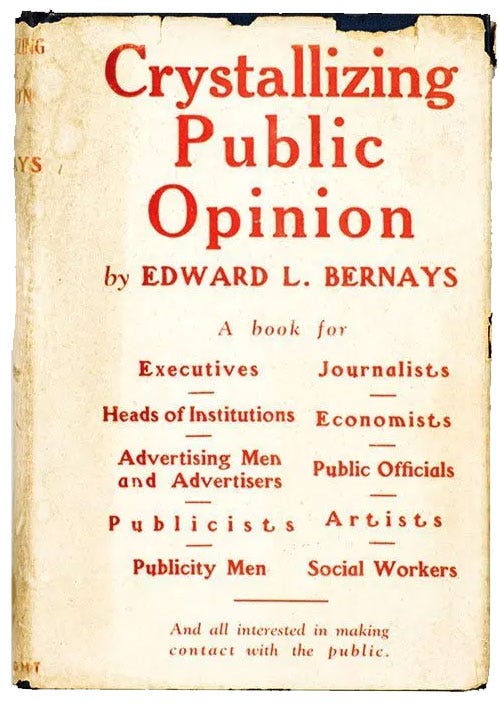
“When a person would first meet Bernays,” Cutlip wrote, “it would not be long until Uncle Sigmund would be brought into the conversation. His relationship with Freud was always in the forefront of his thinking and his counseling.” According to Irwin Ross, another writer, “Bernays liked to think of himself as a kind of psychoanalyst to troubled corporations.” In the early 1920s, Bernays arranged for the US publication of an English-language translation of Freud’s General Introduction to Psychoanalysis. In addition to publicizing Freud’s ideas, Bernays used his association with Freud to establish his own reputation as a thinker and theorist—a reputation that was further enhanced when Bernays authored several landmark books of his own, most notably Crystallizing Public Opinion (1923, ISBN 0-87140-975-5), Propaganda (1928, ISBN 0-8046-1511-X) and “The Engineering of Consent“ in Annals of the American Academy of Political and Social Science (March 1947).
Recognition and criticism
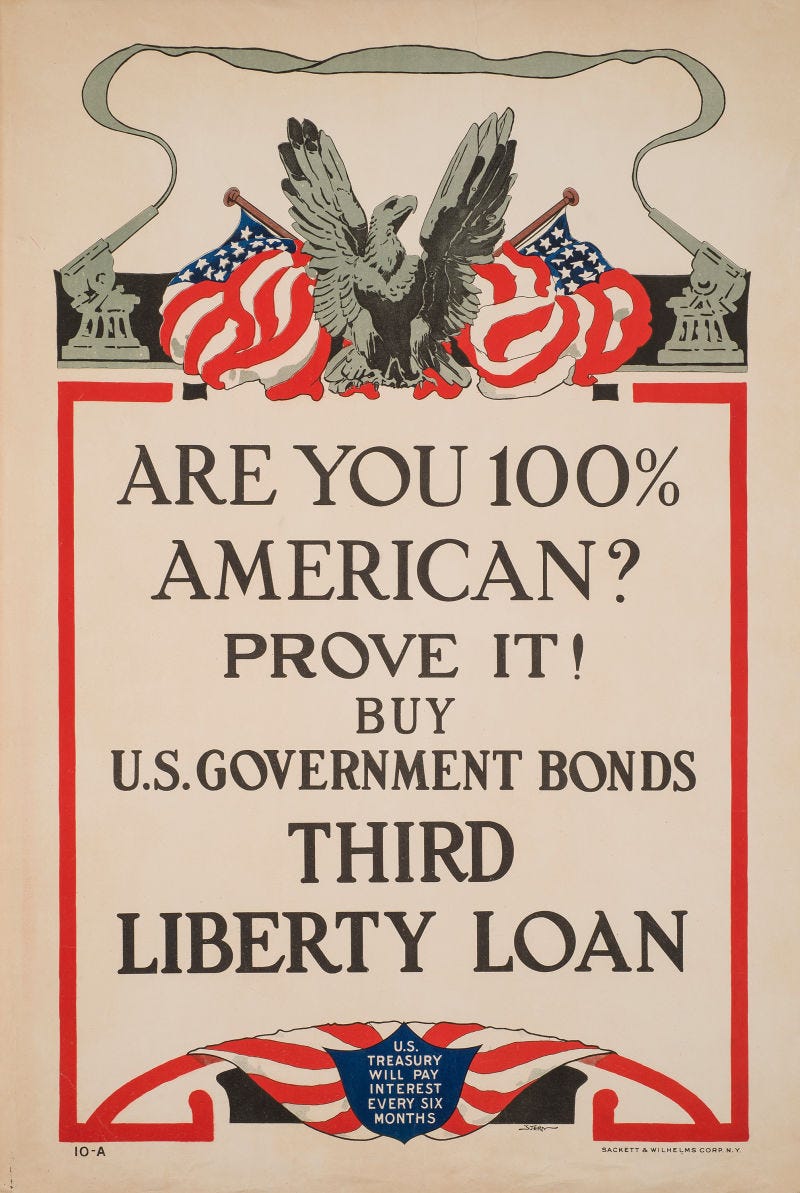
Bernays’s celebration of propaganda helped define public relations, but it didn’t win the industry many friends. In a letter to President Franklin Roosevelt, Supreme Court Justice Felix Frankfurter described Bernays and Ivy Lee as “professional poisoners of the public mind, exploiters of foolishness, fanaticism and self-interest.” Articles in the journals of opinion, such as the one by Marlen Pew, Edward L. Bernays Critiqued as “Young Machiavelli of Our Time”, and the debate between Bernays and Everett Dean Martin in Forum, Are We Victims of Propaganda?, depicted Bernays negatively. He and other publicists were often attacked as propagandists and deceptive manipulators, who represented special interests against the public interest and covertly contrived events that secured coverage as news stories, free of charge, for their clients instead of securing attention for them through paid advertisements. A 2002 BBC documentary, The Century of the Self, also describes Bernays as “undemocratic”.
In 2006 a Der Spiegel journalist interviewed the founder of the PR firm Burson-Marsteller, Harold Burson, and asked him about the role of Edward Bernays in shaping the course of modern PR.
“Bernays thought that he could control public opinion. His methodology, of course, was fundamental. Most of the things we do today were identified by Bernays 80 years ago. He had brilliant ideas. I met him a few times, but didn’t like him. He was one of the most egocentric people I have ever met,” Burson said.
Attention merchants Benjamin Day and Mark Zuckerberg!
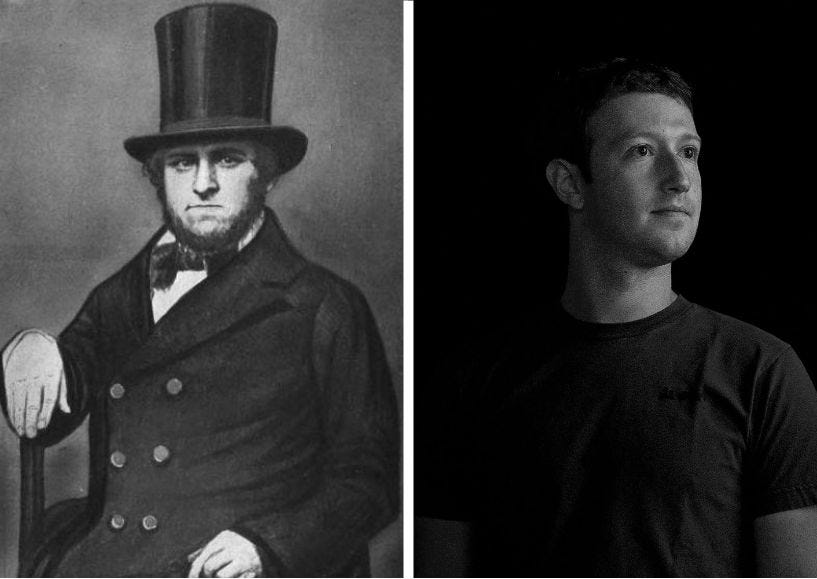
In 1833, when Benjamin Day started selling papers for a penny — instead of the 6 cents his competitors charged — the number of people reading the news ballooned, changing media forever. Advertising revenue made it possible for the penny press to survive and, ultimately, thrive. This same revenue model persists today.
What makes Benjamin Day different from Mark Zuckerberg is how little he knew about his readers compared to the vast amount of data Meta has on its nearly 3 billion users. Whereas Day sold advertisers the ability to share their message with many people at once, Zuckerberg sells advertisers the ability to share tailored messages to highly specific groups of people, even one at a time, if they choose.
Sigmund Freud has a very complicated relationship with his Jewish identity. Further complicating matters is that many biographers have deliberately downplayed Freud’s Jewish identity to distance psychoanalysis from its Jewish roots. One of his biographies is entitled “Godless Jew,” a phrase Freud once used to describe himself. That description, however, is quite superficial.
Freud’s relationship with Judaism evolved over the course of his life. As Moshe Gresser notes in his article, “Sigmund Freud’s Jewish Identity: Evidence from His Correspondence,” as well as his subsequent book Dual Allegiance: Freud as a Modern Jew, Freud’s religious life can be divided up into stages. It took him an entire lifetime to figure out the role Judaism played in his life and even then he still struggled.
Freud’s father, Yaakov, came from a Hassidic family. Although he himself lapsed in practice, he remained connected to Torah learning. On his son, Sigmund’s 35th birthday, he bought him a Chumash. In Yaakov Freud’s moving poetic Hebrew inscription, which Yosef Chaim Yerushalmi closely explores in his book Freud’s Moses, he asks his son Sigmund to store the book like the fragments of the Luchos (Tablets) in the ark of the covenant.
Freud married Martha Bernays, the granddaughter of Chacham Isaac Bernays, Chief Rabbi of Hamburg and, as Professor Shnayer Leiman writes, a pre-cursor to Modern Orthodoxy. Interestingly, this would not be the last intersection between the Bernay and Freud families. The modern founder of public relations, Edward Bernays, was the child of Sigmund Freud’s sister Anna, who married Eli, Freud’s brother-in-law. It does not take a Freudian psychologist to see the psychoanalytic roots within the discipline of PR. It is basically talk therapy for corporations.
Freud’s first major work outlining the principles of psychotherapy was his 1899 book, The Interpretation of Dreams. He introduces the concept of the unconscious and how it can be accessed and interpreted through the analysis of dreams.
Echoes of Jewish ideas within Freud’s theory of the unconscious and dreams were not lost on later scholars. Dana Beth Wasserman’s dissertation, Chassidic Antecedents to the Psychoanalytic Theory of Sigmund Freud, writes:
Freud paradoxically utilized his Jewish/Chassidic roots through denial and concealment. The biographical and textual analyses presented in my dissertation indicate that Freud extracted various interpretive techniques from Jewish and specific Chassidic religious texts. By shielding his methods and their sources from the reader (and perhaps himself), Freud endeavored to unveil the nature and function of dreams that ultimately transcended religion in its myriad forms.
When the fifth Lubavitcher Rebbe, Rav Sholom Dovbeer Schneerson, also known as the Rashab, experienced unexplained numbness in his hand he consulted directly with Freud. The enduring power of the unconscious to shape our lives was a central point of their meeting. “The head grasps what the heart is unable to contain,” Freud reportedly told the Rashab, “and the heart cannot assimilate what your mind comprehends.” Joseph H. Burke’s The Hidden Freud: His Hassidic Roots, explores deeply the subconscious hassidic roots within Freud’s theories.
Yet for most of Freud’s life, his Judaism remained exactly that—unconscious. One issue that awakened his Jewish soul was Zionism. When Freud first published The Interpretation of Dreams, he sent a copy to Theodor Herzl. “As a token of the high esteem in which I—like so many others— have for many years regarded the poet and the fighter for the human rights of our people,” Freud wrote to Herzl in 1902. Freud later had a dream where Herzl appeared to him pleading, “Something must be done to save the Jewish people.” When the Balfour Declaration was announced, Freud was thrilled that Jerusalem may finally be “with the chosen people.”
Freud’s Jewish identity continued to echo throughout his life. In May of 1931, David Feuchtwang, the Chief Rabbi of Vienna wrote to Freud, wishing him a happy 75th birthday. Freud responded, with his most revealing words about the continued role of Jewish identity in his life:
Your words aroused a special echo in me, which I do not need to explain to you. In some place in my soul, in a very hidden corner, I am a fanatical Jew. I am very much astonished to discover myself as such in spite of all efforts to be unprejudiced and impartial. What can I do against it at my age?
The shattered remnants of Freud’s faith remained, as per his father’s inscription, concealed in the ark of his heart. His very approach to dreams, many have argued, draws upon the Talmudic approach to hermeneutics, known as derasha. “The dream,” Freud writes, “indeed, is so intimately connected with verbal expression that Ferenczi justly remarks that every tongue has its own dream-language.” Dreams are the text of our inner lives, waiting to be expounded upon. “The part played by words in dream-formation ought not to surprise us,” Freud continues, “A word, as the point of junction of a number of ideas, possesses, as it were, a predestined ambiguity.”
As Adam Kirsch explores in his fascinating article, “Freud as Talmudist,” the psychoanalytic approach transforms our subconscious into a Talmudic text. As Kirsch explains:
In dream analysis as in midrash, this disparity arises because the material to be interpreted is supersaturated with meaning. Ordinarily, words mean what they say, but the unconscious, like God, operates beyond the ordinary limits of human intelligence, packing meaning into every line, every letter. Freud could say about the dream what Ben Bag-Bag says about Torah in Pirkei Avot: “Turn it and turn it, for everything is in it.”
Every Jew, Rav Chaim Volozhin writes in his Nefesh HaChaim, is comparable to the ladder Yaakov saw in his dream. Our actions in this world extend upwards to the heavens.
“Know what is above you,” the Mishnah writes in Pirkei Avos, plainly understood to be a reference to God watching over us. This too, Rav Chaim Volozhin interprets through the lens of a ladder. Know that what is above—in the heavenly worlds, he explains, is a product of you and your actions.
A ladder, like our actions, extends upwards.
But as Yaakov’s dream makes clear, ladders are also how we plummet to our depths. The angels moved up and down on the ladder. Upwards movement, as the Nefesh HaChaim explains, is a reminder of the spiritual import of our actions. We can reach the heavens. But what about the downward movement?
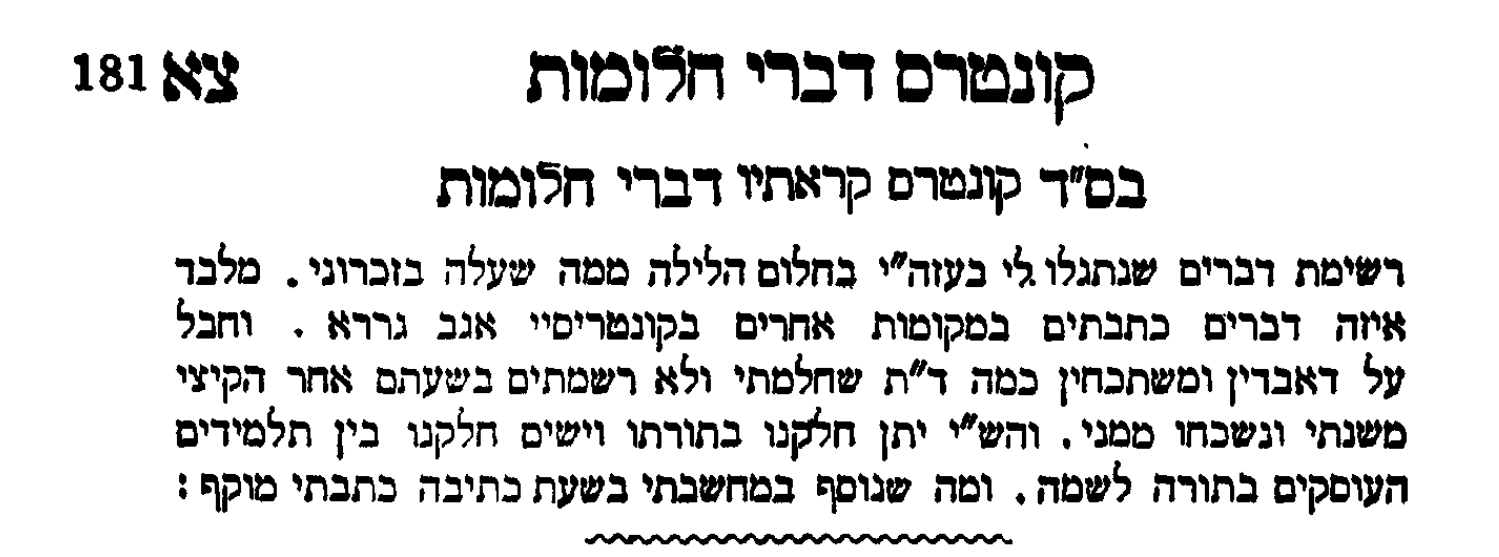
In 1900, the year after Freud published his interpretation of dreams, Rav Tzadok of Lublin passed away. There is much to discuss about the life and thought of Rav Tzadok, but one thing certainly stands out in regard to our discussion: Rav Tzadok took dreams very seriously. He wrote an entire work, Divrei Chalomos, that records and interprets his own dreams. “The roots of my soul were revealed to me in a dream,” Rav Tzadok writes in his third recorded dream, “while I was in the chassidic court of Izhbitz.”
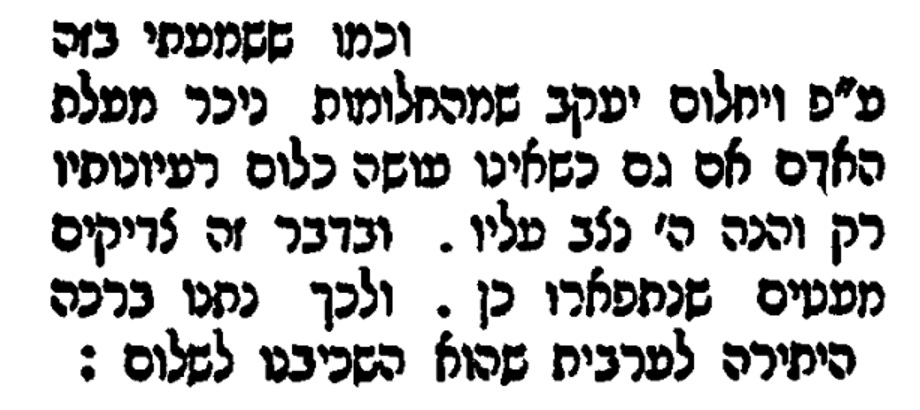
In his first work on hassidut, Tzidkas HaTzadik, Rav Tzadok quotes Rav Simcha Bunim of Peshischa in a passage that could have nearly appeared in Freud’s interpretation of dreams. “From a person’s dreams,” Rav Tzadok writes, “we can see their true values.” When Yaakov dreamed, he saw God—a testament to his unconscious holiness. Dreams are a ladder to our subconscious.
This is why the word סלם, a ladder, features so prominently in the first Jewish dream in the Torah. Dreams allow us, like the Nefesh HaChayim, to ascend upwards, and, like Rav Tzadok, dreams are a ladder to descend into our inner depths.
Like the enduring echoes that Freud heard from his Jewish roots, dreams for Rav Tzadok are a ladder to the unconscious values we hold most dear. Through our dreams we can descend downwards and consider the very nature of our subconscious—we can hear the enduring echoes of our soul.
To withstand Bernays’ cynical vision, democracies need fewer manipulable consumers and more citizens worthy of self-government.
JEWS:
In 1954, the CIA helped to arrange a coup, during which Bernays functioned as the chief supplier of information to the US press.
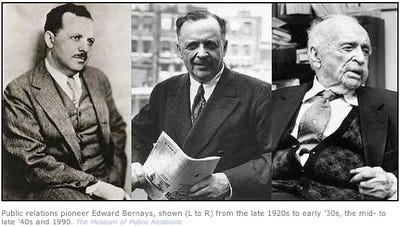
Bernays referred to his approach as the engineering of consent:
If we understand the mechanism and motives of the group mind, is it not possible to control and regiment the masses according to our will without their knowing about it? The recent practice of propaganda has proved that it is possible, at least up to a certain point and within certain limits.
He likened the production of mass opinion to the mass production of material goods, calling it “the very essence of the democratic process, the freedom to persuade and suggest.” He wrote that the only difference between education and propaganda is in the point of view. To be precise, he said, “The advocacy of what we believe in is education. The advocacy of what we don’t believe in is propaganda.”
Bernays was no advocate for a society of free and responsible individuals, at least not as it pertains to ordinary citizens. He believed that the average person has no idea what to think, arguing that it is up to elites to make up his mind for him.
The conscious and intelligent manipulation of the organized habits and opinions of the masses is an important element in democratic society. Those who manipulate this unseen mechanism of society constitute an invisible government, which is the true ruling power of our country. We are governed, our minds are molded, our tastes formed, our ideas suggested, largely by men we have never heard of.
As Bernays saw it, a healthy democratic society requires the regulation of the beliefs of the many by the work of an unseen few. Such people understand the principles of psychology and the technology of public opinion. “They pull the wires that control the public mind,” he wrote, and they “harness old social forces and contrive new ways to bind and guide the world.” They tell us who to admire and who to despise, how our houses should be designed, what food to serve, how to dress, what sports we should play, what entertainments we should prefer, how we should talk, and even what jokes we should laugh at. Government itself depends on knowing how to get the public to acquiesce.
Doubting that ordinary people possess the ability to think for themselves, Bernays might have relished contemporary political discourse, which often resorts to name-calling and ridicule. Forced to think for themselves, he thought, people could fall back on little more than “cliches, pat words, and images which stand for a whole group of ideas or experiences.” The propagandist needs merely to “tag a political candidate with the word ‘interests’ to stampede millions of people into voting against him.” This use of labels to mold opinion has been amplified in the age of social media. Merely categorizing someone or something as communist, capitalist, woke, or systemically racist is all it takes.
Asked if he would take on the government of Israel as a client, he answers “Sure!” And here, gratis, is some public relations advice for Israel from the man who invented the game:
“What I would do, which apparently Israel has not done, is to establish much closer relationships with the democratic countries of the world and get those countries to make much more visible in the public mind how much they support Israel and how much they believe in freedom of religion, just as the democratic countries believe in freedom of the press, freedom of assembly, freedom of petition.
“Israel should appoint an international public relations committee, made up of all the best public relations people in the democratic countries of the world England, France, Germany, Italy, even Spain.”
SPIN?

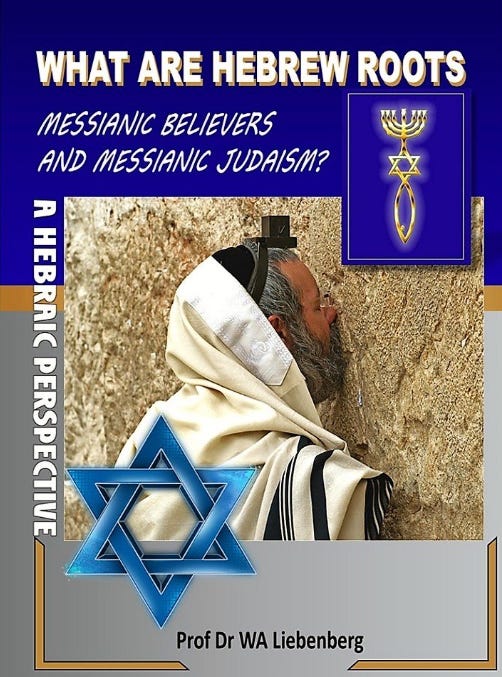
- Shared Heritage: Even among secular Israeli Jews—who make up roughly 45% of the Jewish population—most view the Bible as a foundational history book and a cultural anchor to the land.
- Tradition: Over 80% of Israeli Jews participate in cultural-religious traditions like the Passover Seder, connecting them to ancient exodus narratives regardless of personal belief in God.
- National Identity: Zionism and modern Israeli identity are deeply intertwined with the 3,000-year-old indigenous presence of Jewish kingdoms in Judea and Samaria.
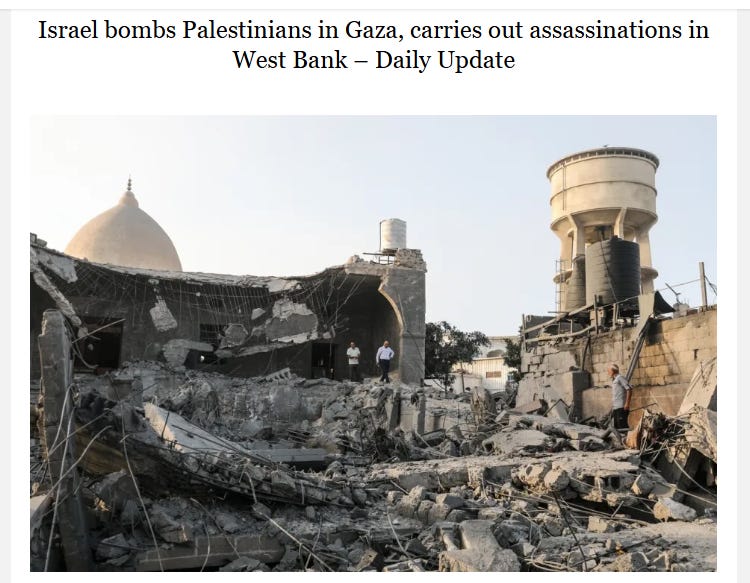
So much beauty from the moon and so much pain from the destruction of Gaza in one photo. Those lights that you see in the back right corner are from a new IDF military base.
Just study it. Look at it. This was the neighborhood many of my friends called home. So did their families for generations.
She Was Just Married 2 Days Ago. This Morning Israel and the United States Bombed Her to Death in Lebanon
Saja Sharara, was killed this morning in an Israeli and American strike on the town of Arabsalim in southern Lebanon. She was the only fatality. WHY DO THEY GET TO DO THIS? Imagine if she was Israeli!
Aug 27, 2026

I’m tired of saying this, but if you are an American, you just paid for this.
Tell me why Israel and the United States gets to kill a young bride in broad daylight without suffering ANY repercussions?
Why is this OK? Why is her story not in the mainstream media? Why would her story be absolutely HUGE if she was Israeli or Jewish? None of it is OK. Not at all.
South Africa brought a case against Israel to the International Court of Justice (ICJ) in December 2023, accusing Israel of committing genocide. The Court ruled by an overwhelming majority that there was a “plausible” case for genocide (an official ruling may take years), and ordered Israel in January 2024 to “take all measures within its power” to halt acts that contribute to genocide, to allow sufficient humanitarian aid into Gaza to end the suffering among Palestinian civilians, and to prevent and punish the public statements of incitement made by senior Israeli officials.
As South Africa now points out:
The Court’s orders are binding on Israel, and the international community also has an obligation to protect the Palestinian people from genocide, including to take all necessary action to prevent and punish genocide.
Regrettably, Israel has not complied with the Orders. South Africa continues to pursue all avenues available to it to seek Israel’s full and immediate compliance with the Court’s Orders.
Numerous experts and human rights organizations have joined in declaring Israel’s actions against Gaza (and the West Bank) to be genocide, while the US government has been nearly alone in denying it. American mainstream media have tried to hide this from readers.

I Honestly Don’t Know What to Do With This Scene.
Rut Azulai, the newlywed widow of Israeli soldier Avraham Azulai, speaking at his funeral:
“Every day when you came back from Gaza to sleep next to me, you’d tell me how many houses you demolished that day…”
And then:
“Conquer Gaza as quickly as possible.”
Maybe that’s what gets me most: the destruction of the homes and homeland of an entire people has become a tender memory of a beloved husband.
And his widow’s response to his death is not to ask for the destruction to stop, but to call for more of it.
That’s demonic as fuck.
This is the nauseating inhumanity that Zionism has produced.
And somehow, we’re all supposed to pretend this is normal?
Like, fuck all of this.

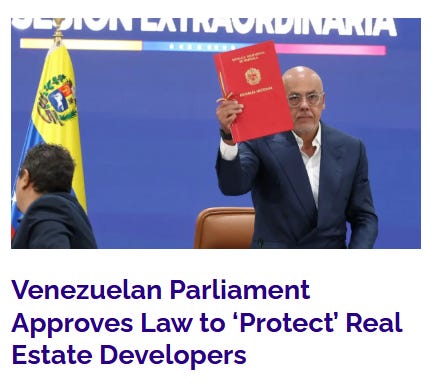
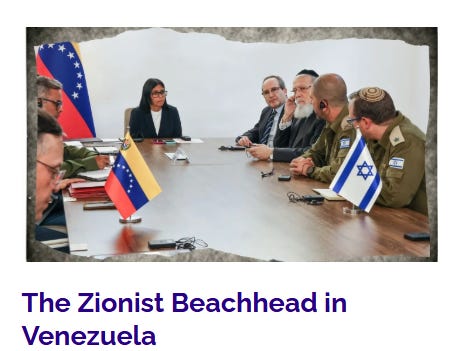
Venezuelan Acting President Delcy Rodríguez confirmed the “historic agreement” via a social media message on Friday night.
“I extend my deepest gratitude to Trump, Rubio, and the US government for their support in developing this agreement, which represents a historic milestone in US-Venezuela relations,” she wrote.
Rodríguez stated that the deal will involve private corporations developing 17 “strategic fields” with 65 billion barrels of proven reserves. She echoed Rubio’s $100 billion investment claim and pledged that the projects would yield $209 billion in tax revenues. According to the acting president, the announced agreement “ushers in a new era of growth and prosperity.”
The high-level negotiations were first reported by Axios on Thursday.
The Venezuelan Constitution establishes that all mineral and hydrocarbon resources are “inalienable public domain” goods. Transferring ownership of oil reserves would require a constitutional reform.
According to Reuters, the deal could take the form of a long-term lease, with the Trump administration then auctioning or allocating fields to select corporations. Bloomberg reported that the lease could be as long as 100 years.
The seventeen fields in question are said to include undeveloped extra-heavy crude projects in the Orinoco Oil Belt and mature light crude fields in Lake Maracaibo. The resulting supply would be “guaranteed” for the US as part of efforts to rein in rising fuel costs amid the ongoing standoff with Iran in the Persian Gulf.
Bloomberg additionally reported that Washington’s direct involvement in Venezuela’s oil industry could be conducted by the Pentagon’s Office of Strategic Capital (OSC) in partnership with Venezuelan oil mogul Alejandro Betancourt. The Biden administration created the OSC in 2022 to fund private sector initiatives deemed vital for US national security interests.
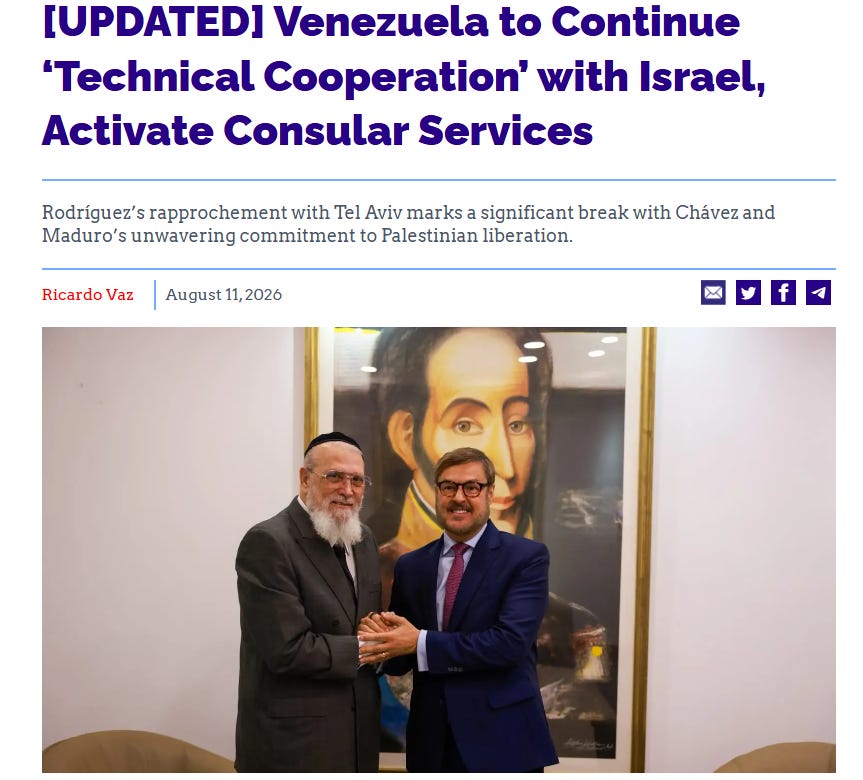


ZIONIST? The cunts are wearing their Jewish skull caps and flaunting the Jew Symbol of Satan and listening to a perverse rabbi.
“NO RAIN. CLEAR SKIES. A KILLER TSUNAMI.
1,400 missing in Nepal – and the US & Israel sent rescue teams within hours. This wasn’t a monsoon. This was military-grade weather manipulation.
The glaciers didn’t melt – they were BROKEN. Watch the full exposé now.
“Something Weird is Happening in NEPAL FLOOD CRISIS? – OPTM.”
“NO RAIN. CLEAR SKIES. A KILLER TSUNAMI. 🌊 1,400 missing in Nepal – and the US & Israel sent rescue teams within hours. This wasn’t a monsoon. This was military-grade weather manipulation. 🌧️💥 The glaciers didn’t melt – they were BROKEN. Watch the full exposé now. Like & share – the truth needs your voice! 🔥…
Proving ground and stress positions and Jew Death:
One Hundred Years Of Solitude, Gabriel García Márquez offers a fictional account of Colombia’s 1928 ‘banana massacre’. Here, we find out more about the real-life event that inspired these scenes.
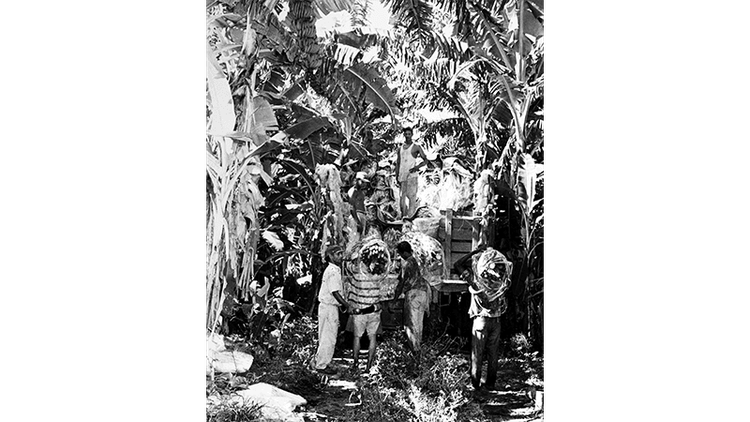
Of the many different themes interwoven throughout Gabriel García Márquez’s masterful novel One Hundred Years Of Solitude, the issues of violence and history recur perhaps the most often. In the latter part of the book, the ‘gringos’ (the Latin American pejorative term for white foreigners, largely Americans) have occupied large areas of land and brought railways and modernity to García Márquez’s fictional town of Macondo. Then, an event takes place that marks a crucial point both in the novel and – in the case of the real-life event it was based on – in the history of Colombia, where the story is set.
The detail of this epochal event is told by García Márquez almost matter-of-factly. The labourers for the unnamed American banana company are on strike, for better working conditions and fair pay. The Colombian government, fearing a Communist uprising, is set against them. As the strikers mass in the centre of Macondo, troops set up machine gun nests on nearby roofs and take aim. With the surrounding streets blocked, there is no escape from the ensuing slaughter. Perhaps 3,000 are killed, their bodies collected by secret trains and dumped in the sea. Afterwards, no one remembers the massacre and the sole adult survivor – the character José Arcadio Segundo – is ignored as the whole town lapses into denial.
What is most striking about this ostensibly fictional account is how closely it matches the historical facts, such as they are known. There was indeed a ‘banana massacre’ of striking workers of the American banana-exporting United Fruit Company, not in Macondo, but in the real-world Colombian town of Ciénaga in 1928. The death toll would never become fully known and is still estimated at anywhere between 40 and 2,000. The bodies were either buried in mass graves or perhaps even dumped in the sea, as happens in García Márquez’s version. The workers’ demands were in retrospect clearly legitimate, including that they should be considered employees rather than contract workers and that they should be paid in currency rather than notes that could only be traded for food at United Fruit Company stores.
In the book, this episode follows Colonel Aureliano Buendía’s civil wars – of which García Márquez writes that he fought 32 and lost them all. The actual history of Colombia isn’t too different, including numerous civil wars and continual political instability throughout the 19th and 20th centuries. As in the book, the protagonists are Liberals and Conservatives, and it is likely that Colonel Aureliano Buendía’s character was in some part based on the author’s own grandfather, who was a colonel and a Liberal veteran of the Thousand Days’ War (1899-1902). He was vocal in his condemnation of the banana massacre, which García Márquez admired.

