

Collective Memory, Collective Agnotolgy, Collective Insanity, Collective ZioPsychopathy!
Aug 15, 2026
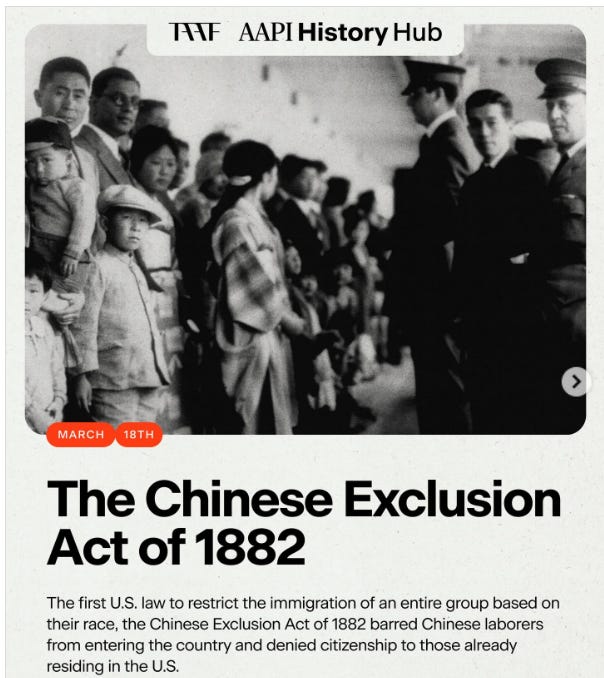
The Chinese Exclusion Act of 1882 specifically targeted ethnically Chinese laborers rather than all Asians. However, it laid the legal and racial groundwork for later federal legislation—such as the Immigration Act of 1917 and the Immigration Act of 1924—that ultimately expanded the ban to prohibit immigration and citizenship for all Asian groups.
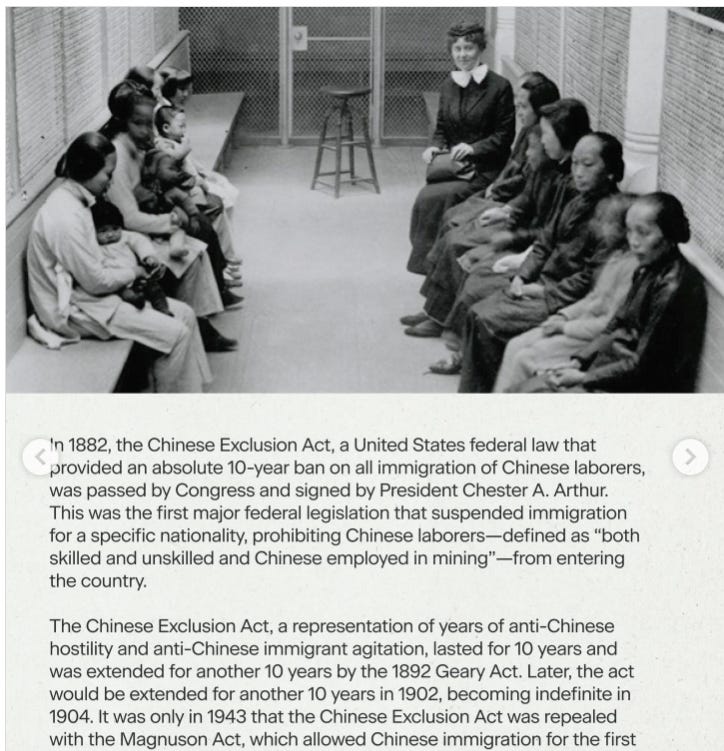
Agents in a tank-like vehicle detained five people, including two teens, at a north side Tucson home Thursday — neighbors say officers wore no uniforms or ID and wouldn’t say what agency they were with.

See fucking Obama Stickers and Congressional Whores’ faces on this fucking urban terror vehicle? Obama signed Executive Order 13688 in May 2015 to restrict or ban certain tracked armored vehicles, weaponized aircraft, grenade launchers, and bayonets from being given to police following intense scrutiny during protests in Ferguson, Missouri
The 1033 Program Overview
- Established under the National Defense Authorization Act for Fiscal Year 1997 (building on a 1990 pilot program).
- Permits the Department of Defense to transfer excess, unneeded military property to state and local police agencies.
- Transferred billions of dollars worth of equipment, ranging from office supplies and basic utility trucks to tactical gear and armored vehicles over its lifetime.
Every fucking Jewish billionaire’s face and every fucking one of those 39,000,000 Millionaires’ ass I would like to see chopped off.
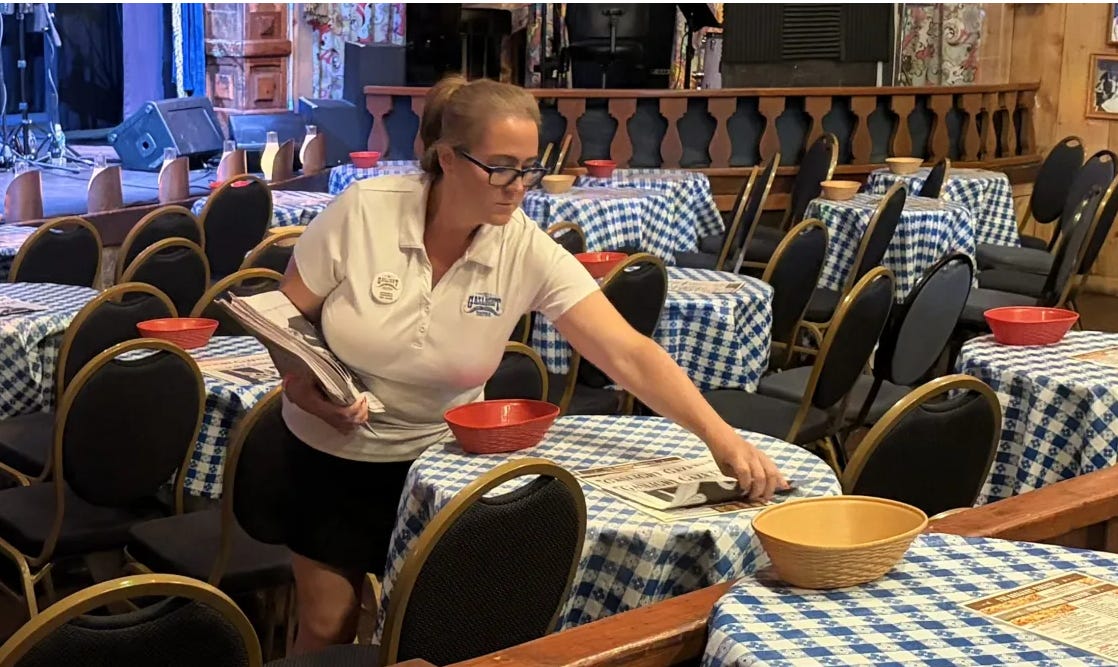
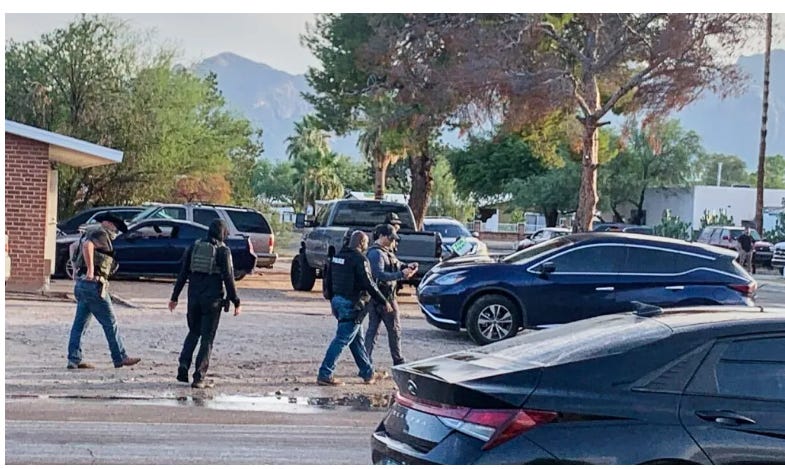
Before her 7:20 a.m. arrival at Bloom Elementary School on Tucson’s east side, Rebecca Vieira wakes up, preps three boys for the day and makes breakfasts and lunches.
Her day as a P.E. teacher will last until at least 3 p.m.
And her single-mom shifts are perpetual.
After the school day, it’s home to make dinner. Then, depending on the day of the week, Vieira coaches a swim team or heads to her job at The Gaslight Theatre by 4 p.m. She’s home by 10:30 p.m. on weeknights. And by 11:30 or midnight on weekends.
As summer began last May, Vieira stood under the fans in the Gaslight — part theater, part saloon — where the audience would soon dine and enjoy a show. The five-person band rehearsed Billy Joel’s “Movin’ Out.” As a manager, Vieira works about 30 hours a week at her second job.
“It’s so really tiring. I just keep going because you have to,” Vieira, 44 said. “But by the time I get in bed, my brain is still going. It takes a little while to relax. I feel like I can’t fully put my effort into anything because I’m being pulled and I really want that focus and I can’t have that. But I still try my best.”
As an elementary school teacher in her 21st year, a second and a third job are needed to support her family of four. Vieira is one of many educators who require that supplemental income. For some teachers, this solution to staying in the profession they love creates more challenges, like burnout.
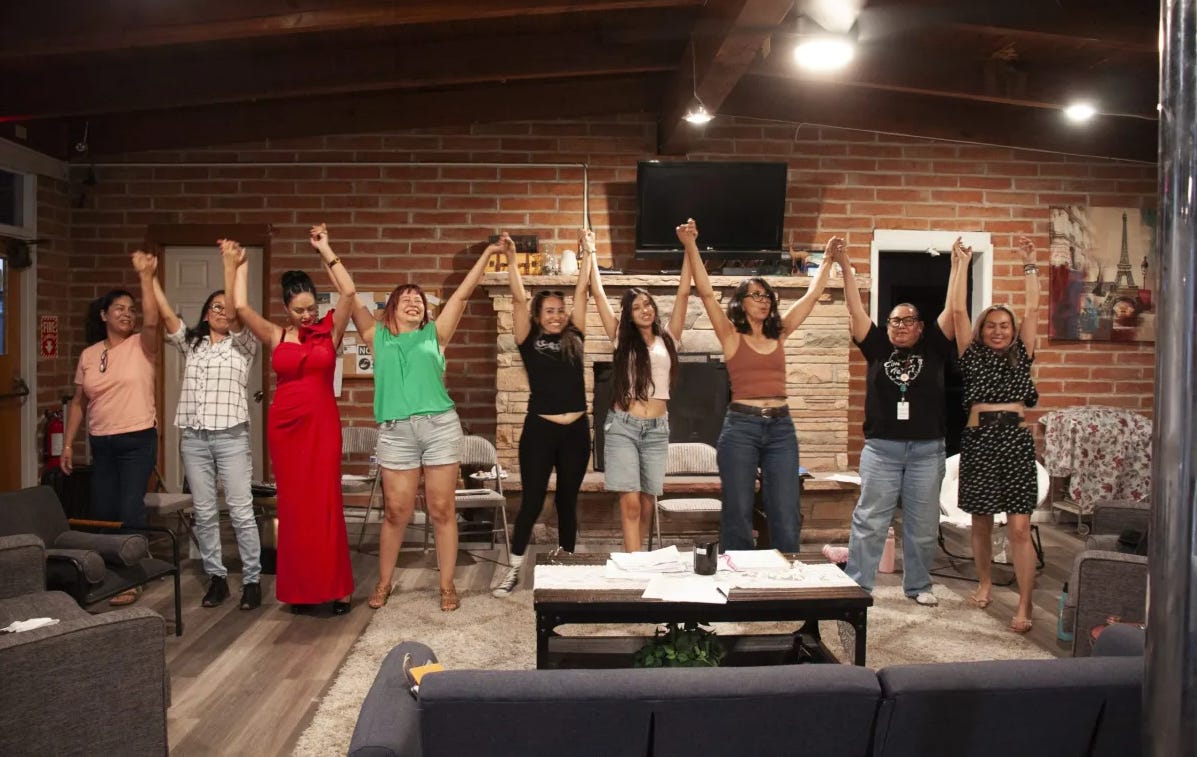
Heroes: Ana fights. Priscila flees. Judith freezes.
All three are survivors of domestic violence and immigrants who will take the stage in Tucson to tell, in their own words, about the moment their lives changed forever.
In “The Myth of the Perfect Victim,” each one performs a monologue inspired by her own story. They challenge the idea that there is only one way to respond to violence and question the stereotypes that often turn survivors into objects of judgment.
“What we are trying to explain here is that when your body, your nervous system, is under threat, it automatically responds in three ways: fight, flight or freeze,” says Imelda Esquer, the creator of the play and a survivor of domestic violence. These responses can lead a person to fight back, flee from the threat or become unable to move or respond.

Read it, Luminaria, my old stomping and proving grounds.
Why mess with Mafia-encrusted Jew York City?
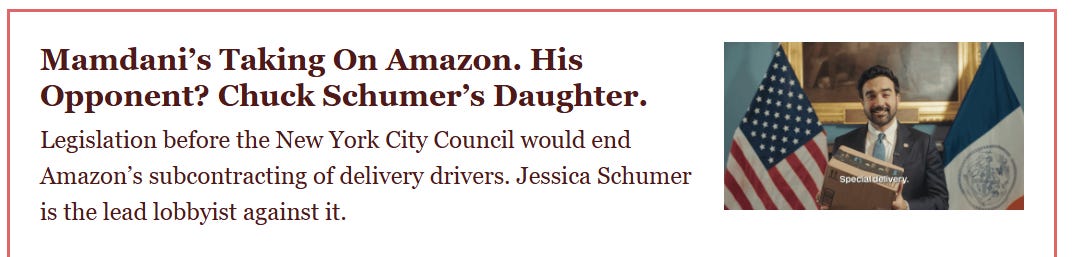
Have you had your oatmeal and melons yet? Fucking sick back alley carnival and back alley abortion society:
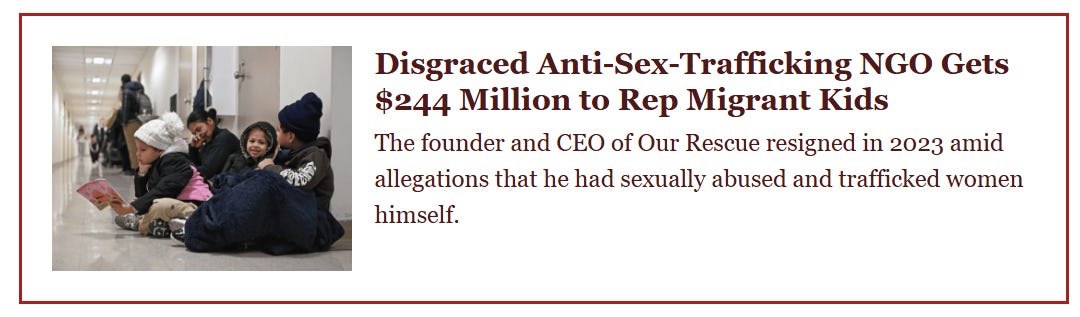
I love those fucking “miller” Jews, man:
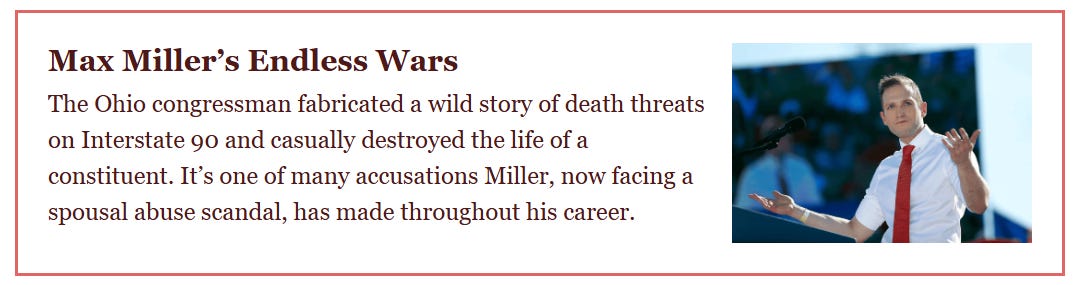
Miller is the grandson of Samuel H. Miller, the former co-chair of Forest City Realty Trust, and son of Abe and Barb Miller.His grandmother, Ruth Miller, was a candidate for Ohio’s 22nd congressional district in 1980. His uncle is Aaron David Miller, a scholar of Middle East studies.[4] His cousin, Eli Miller, a senior member of Trump’s 2016 presidential campaign, was later appointed chief of staff of the United States Department of the Treasury. He is Jewish.

As a Jewish (Ashkenazic) surname, Miller comes from the Yiddish word miller (מיללער), which means “mill worker” or “one who grinds grain.” It is an occupational surname derived from the German Müller.
Linguistic and Historical Roots
- Yiddish Pronunciation: Yiddish does not use the German umlaut (ü), so the sound shifted from Müller to Miller.
- Adoption of Surnames: When laws in Central and Eastern Europe (such as the Austro-Hungarian, Russian, and German empires) required Jewish families to take fixed hereditary surnames in the late 18th and 19th centuries, many chose or were assigned occupational names based on their trades or local environments.
- Geographic Spread: It became especially common among Ashkenazi Jewish families living in Germany, Poland, Russia, and Lithuania.

Dual Origins
- Coincidental Overlap: Because “miller” is a basic grain-grinding occupation, the exact same surname arose independently in English, Scottish, German, and other European Christian cultures.
- Distinction: A person named Miller is not automatically Jewish; it is one of several Yiddish surnames that happen to be identical to common non-Jewish surnames. However, it remains one of the most frequent Jewish surnames in the United States. [
Most common municipalities for the surname MILLER:
- Missouri City, United States(47,418 individuals)
- Pennsylvania, United States(21,109 individuals)
- New York, United States(14,640 individuals)
- Ohio City, United States(13,457 individuals)
- Washington DC, United States(12,953 individuals)
- San Francisco, United States(9,964 individuals)
- Indiana, United States(8,311 individuals)
- Chicago, United States(7,663 individuals)
- Virginia, United States(7,465 individuals)
- Baltimore, United States(6,355 individuals)
- New Philadelphia, United States(6,338 individuals)
- Paris, Paris, France(6,311 individuals)
ALL fucking JEWS lie.
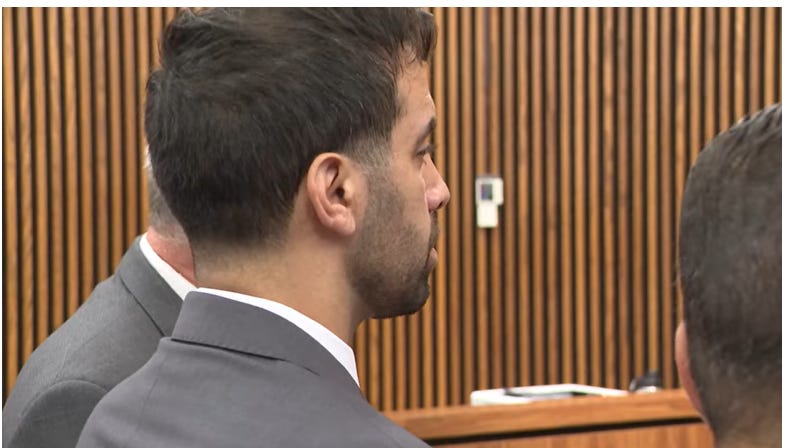
The wordless show of dissent that cost Dr. Feras Hamdan his job, a $50,000 cash surety bond, hundreds of thousands of dollars in legal fees, and the better part of his sanity lasted all of 24 seconds.
It was June 19, 2025, the seventh day of the so-called “Twelve-Day War” between Israel and Iran and the first day of summer vacation, so traffic was sparse on Hamdan’s morning commute along Interstate 90 near Rocky River, Ohio, when at around 9:20 a.m. he noticed a black Dodge Ram that looked like a colleague’s truck. So he pulled up on its left side to see if his hunch was correct.
It was not. In fact, the face in the driver’s-side window belonged to one of his least favorite politicians. He couldn’t believe it. He searched his phone for a photo of a Palestinian flag and held it up to his passenger-side window for a few seconds and honked the horn, a tiny act of rebellion. Then he hit record:
“This is the congressman, that piece of shit faggot congressman that’s against Filastin,” the physician narrated, using the Arabic word for Palestine, as he drove past a blurry-looking white guy. “That’s craaazy. This racist, Jewish … he can’t even look at me!”
As Hamdan posted the video in a group chat of close friends, he realized Miller was tailing him, hard. Traffic camera footage suggests the Ram was no more than five or ten feet behind the black Tesla Hamdan was driving. The doctor recorded a voice note to send to the chat, then—fatefully—deleted the whole thing a few minutes later, embarrassed about having used the F-slur in the video. This guy was chasing me through the streets, I’m pretty sure he called the cops on me and they’re looking for an Indian guy driving a black Tesla.
Indeed, at 9:20 a.m. and 42 seconds, the congressman had been connected with a 911 dispatcher:
“My name is Congressman Max Miller, I’m on the freeway and I have somebody who has cut me off, who is flipping me off, who is showing me a Palestinian flag and is yelling [and] threatening to kill me … and making gestures at me …” he said. “I am on 90 traveling past Wooster overpass … and I’m a little shaken now considering I have death threats. And I mean, he’s a pro-Palestinian guy now … this is insane … how do I know I’m safe later today with my daughter?”
Suddenly, his tale was drowned out by blaring horns and unspecified noise. “Here, here, listen to him, listen to him, listen to him!” the congressman yelled at the dispatcher, who can be heard advising her supervisor that indeed, the young congressman was being audibly harassed. Sounding genuinely shaken, Miller continued: “He said he wanted to kill me and my daughter, verbatim …” The dispatcher asked for his precise location, then apologized that she would need to transfer him to the neighboring municipality. Miller had started to lose patience. “Can you just track this guy down now?” To the other dispatcher, he said, “I was cut off by a man in a Tesla … [who] then rolled down his window and said that I’m going to cut your throat and your daughter’s. And he said you’re a dirty Jew. I’m going to fucking kill you all. And I know who you are and where you live. And I followed him, and he rolled down his window, and I rolled down my window, so I could hear what he was saying …”

A prosecutor told Elkhatib before his arraignment hearing that they were asking the judge to set the doctor’s bail at around $25,000. But Judge Joseph T. Burke had other ideas, and set bail at $500,000, an amount typically reserved for suspects charged with extremely violent felonies or considered serious flight risks. “You could just hear the air sucked out of the room when he said it,” Elkhatib remembers. It would take until the following Tuesday for Hamdan’s extended family to come up with $50,000 cash. But Juneteenth weekend in county jail wasn’t so bad, the doctor reported. The cops let his wife bring food and a pillow. They kept quiet when he needed to pray. When Hamdan was finally released, he took a brief tour of the jail and thanked everyone. “They were all so friendly,” he marveled to Elkhatib.
DID you say, “Fuck you and I hope you fucking die in a goddamn ditch bleeding out of your ass after being baton-fucked by a pig of your choice, MAGA cunt,” this morning?
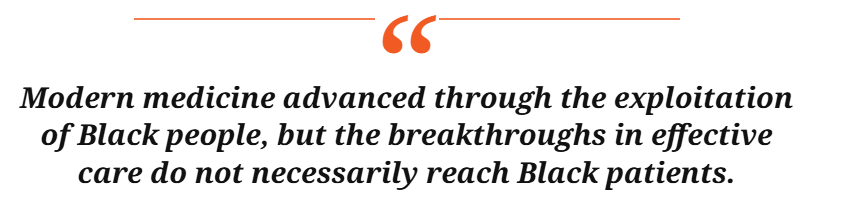
Mistrust in the health care system has long been prevalent among African Americans: A 2024 Pew Research Center poll found that over half of Black adults believe that “the U.S. health care system was designed to hold Black people back a great deal or fair amount.”
For decades, medical schools, hospitals, and professional associations barred Black people from practicing or teaching medicine. During the late 1800s, when the American mainstream medical system, particularly its medical schools, was taking shape, Black people were prevented from becoming doctors and nurses. Eugenicists, for example, argued that Black people were less intelligent than whites—which closed off medicine as a career.
The Prospect in your inbox
Analysis that goes beyond the noise with in-depth, progressive reporting.
Sign up
No paywall, no programmatic ads — just the reporting. Unsubscribe anytime. Submitting your email signs you up for The Daily Prospect, Today on TAP, Aftermath, and Weekend Reads.
These beliefs still permeate medicine today, says Harriet Washington, a bioethics professor at Columbia University: “Initially, there was no data offered to support that. But this had implications for how African Americans were viewed in medicine because the thought was that African Americans were constitutionally unsuitable for medicine. They weren’t intelligent enough. They weren’t moral enough. They weren’t disciplined enough.”
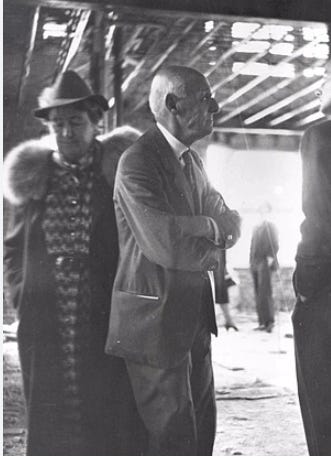
[Born as the sixth of nine children to Jewish parents.
- Flexner’s family strongly valued education, which helped him attend Johns Hopkins University.]
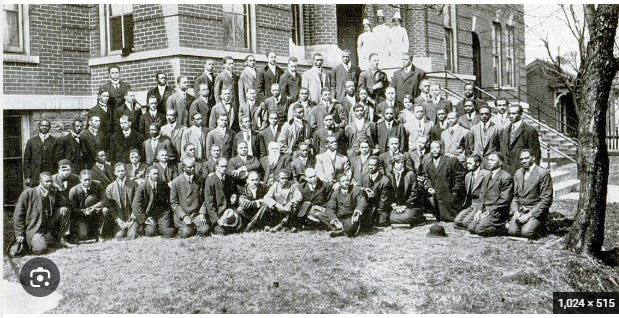
In 1910, the Flexner Report, one of the first reports on the state of medical education in the U.S., was published. Abraham Flexner, the white author, argued that most historically Black medical schools (many of which were established during Reconstruction) should be closed, Black doctors should only treat Black patients, and that they should be trained in “hygiene rather than surgery.” Black students were not admitted to most U.S. medical schools for the next half-century after the report was published. Those who were studying when the report was published were forced to leave medical school due to closures.
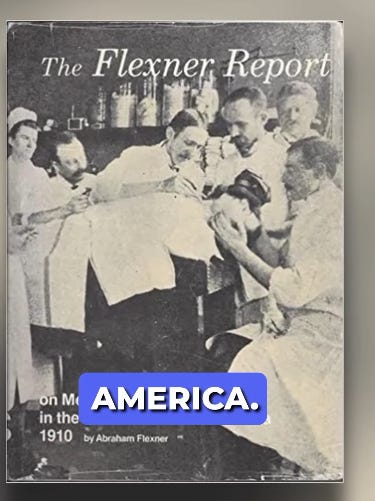
In 1910, a man — Flexner — who had never stepped foot inside a medical school shut down five Black medical schools and erased 35,000 Black doctors from existence. 😤 His name was Abraham Flexner… not a doctor, not a scientist, a prep school teacher with a bachelor’s degree. Today Black doctors make up less than 6 percent of physicians in America. Researchers trace that shortage directly back to him.
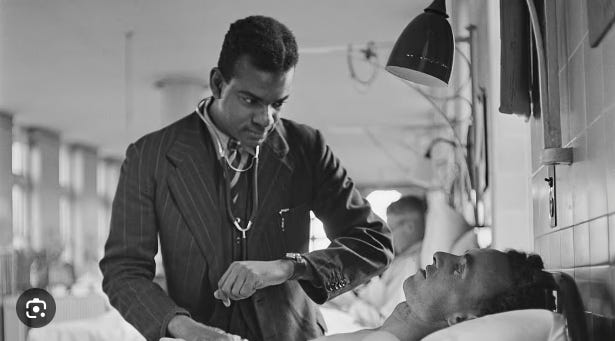
For the second episode of “Color Code,” we reflect upon the Flexner Report and examine the ripple effects it had on medical education that are still felt today, especially for Black doctors.
Jews and their lies about ZIONISM!

Did Zionism begin as a Christian project which was only later a Jewish movement?
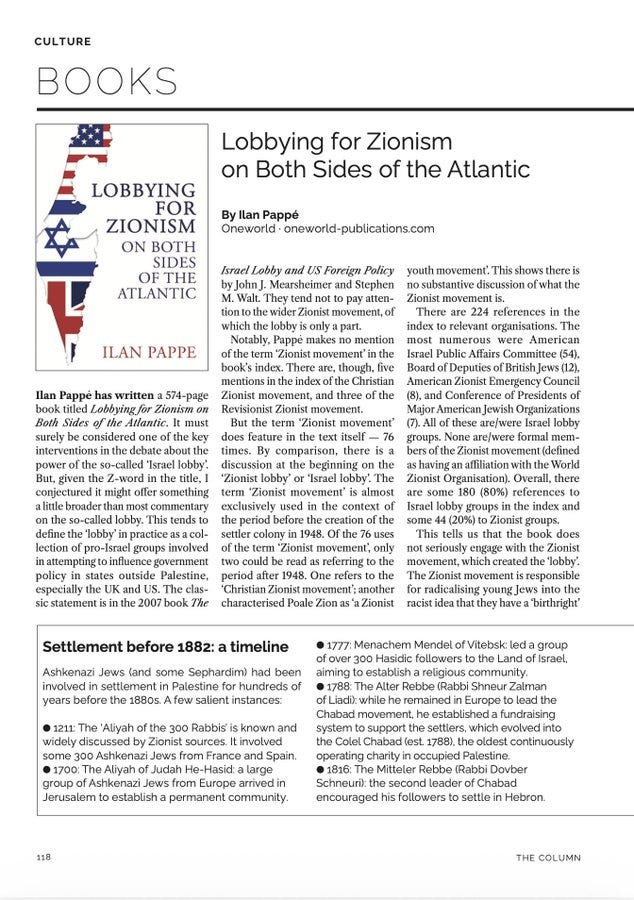
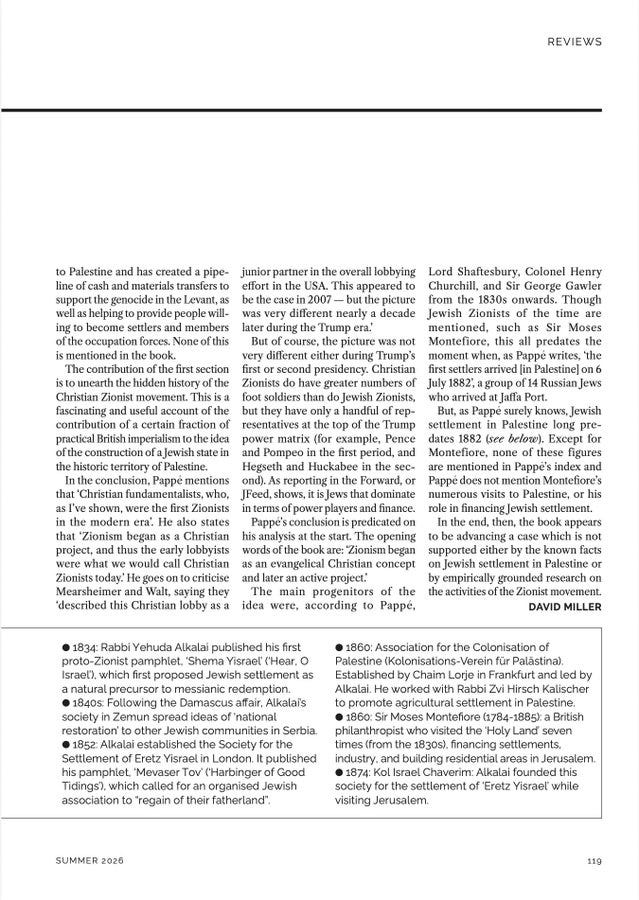
This is what Ilan Pappé says in the book Lobbying for Zionism. In my review of the book, I show this is wrong.
David Miller [this Miller NOT being a JEW.]
Aug 15, 2026
First published in The Column No. 2 the new magazine published by UK Column.
Here is an excerpt:
The contribution of the first section of the book is to unearth the hidden history of the Christian Zionist movement. This is a fascinating and useful account of the contribution of a certain fraction of practical British imperialism to the idea of the construction of a Jewish state in the historic territory of Palestine.
In the conclusion, Pappé mentions that ‘Christian fundamentalists, who, as I’ve shown, were the first Zionists in the modern era’. He also states that ‘Zionism began as a Christian project, and thus the early lobbyists were what we would call Christian
Zionists today.’ He goes on to criticise Mearsheimer and Walt, saying they ‘described this Christian lobby as a junior partner in the overall lobbying effort in the USA. This appeared to be the case in 2007 — but the picture was very different nearly a decade later during the Trump era.’
But of course, the picture was not very different either during Trump’s first or second presidency. Christian Zionists do have greater numbers of foot soldiers than do Jewish Zionists, but they have only a handful of representatives at the top of the Trump power matrix (for example, Pence and Pompeo in the first period, and Hegseth and Huckabee in the second). As reporting in the Forward, or JFeed, shows, it is Jews who dominate in terms of power players and finance.
Pappé’s conclusion is predicated on his analysis at the start. The opening words of the book are: ‘Zionism began as an evangelical Christian concept and later an active project.’
The main progenitors of the idea were, according to Pappé, Lord Shaftesbury, Colonel Henry Churchill, and Sir George Gawler from the 1830s onwards. Though Jewish Zionists of the time are mentioned, such as Sir Moses Montefiore, this all predates the moment when, as Pappé writes, ‘the first settlers arrived [in Palestine] on 6 July 1882’, a group of 14 Russian Jews who arrived at Jaffa Port.
But, as Pappé surely knows, Jewish settlement in Palestine long pre-dates 1882 (see below). Except for Montefiore, none of these figures are mentioned in Pappé’s index, and Pappé does not mention Montefiore’s numerous visits to Palestine, or his role in financing Jewish settlement.
In the end, then, the book appears to be advancing a case which is not supported either by the known facts on Jewish settlement in Palestine or by empirically grounded research on the activities of the Zionist movement.
A scan of the full review is below:
God, this fucking JEWISH Centric Cunt of a WORLD. Give me GAZA.
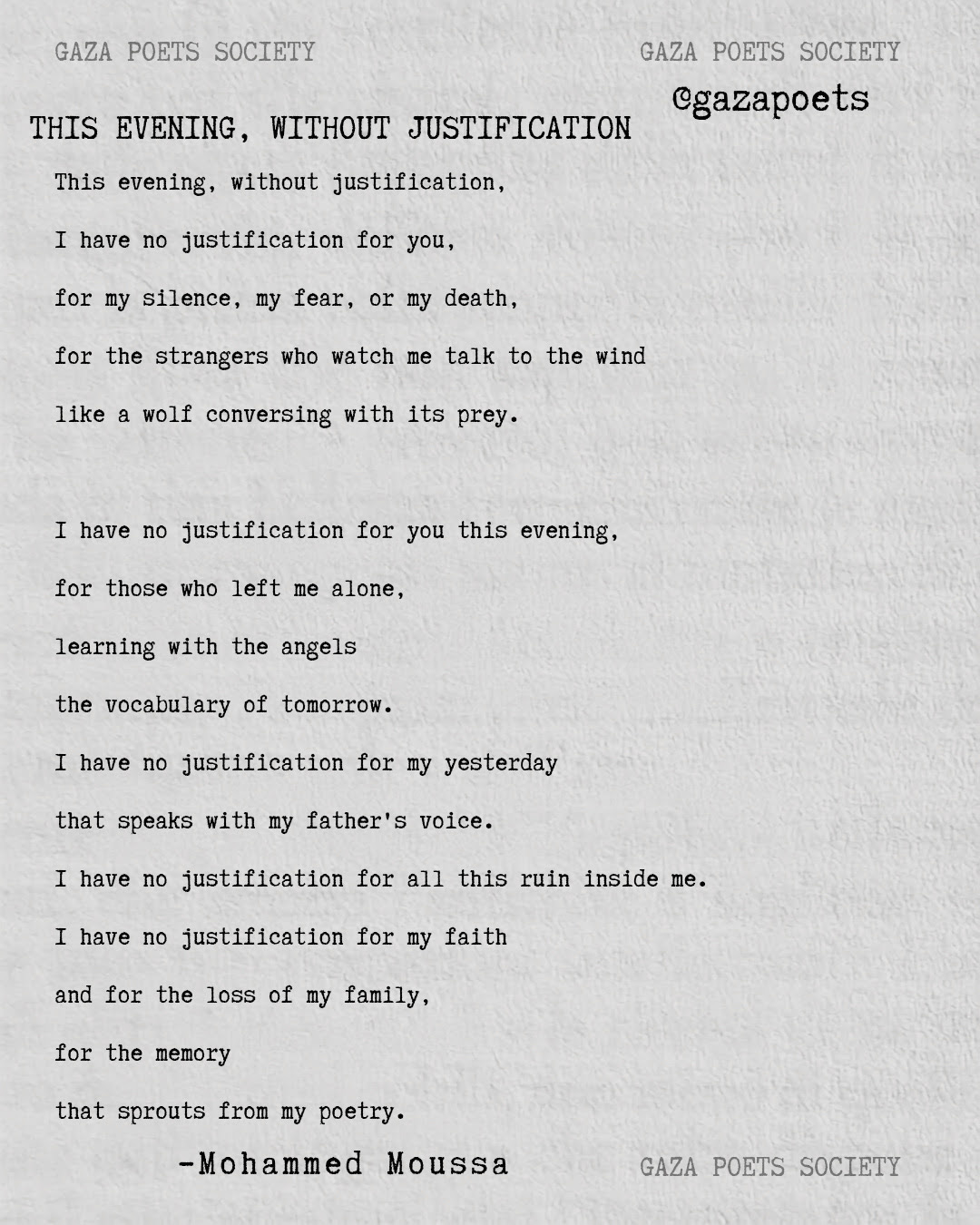
Well, my oatmeal went soggy:
The ADL wants to cancel Susan Abulhawa
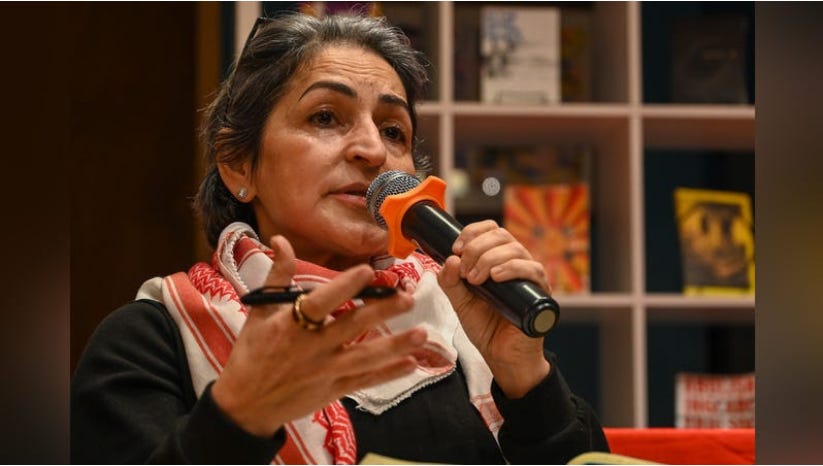
Israel lobby demands Simon & Schuster stop publishing her novels.
Now, the Anti-Defamation League, one of the world’s most influential anti-Palestinian hate groups, is demanding a major publisher drop susan abulhawa, a leading Palestinian novelist.
Earlier in August, one of Simon & Schuster’s subsidiaries announced it would republish two of abulhawa’s novels. Since then the lobby has piled on the pressure to cancel the books, claiming the author has used “anti-Semitic rhetoric.”
Being a bestselling novelist has never stopped abulhawa from speaking out against the oppression of her people. She visited Gaza towards the start of the genocide, and has written essays and reports from on the ground for The Electronic Intifada.
Speaking to The Electronic Intifada on Thursday, abulhawa was defiant, angrily rejecting the Israel lobby’s claims.
“Only Zionism comes wrapped in some inherited claim to the world’s care and tenderness,” she said. “I refuse that. I reject it outright.”
“There was a time in my life when I had to be careful … it was this sort of internalized self-censorship… that version of me is buried somewhere between [the 1982 Israeli-backed] Sabra and Shatila [massacre in Lebanon] and Nasr Hospital, where they let five infants die of starvation alone in the dark, crying and crying and crying.”
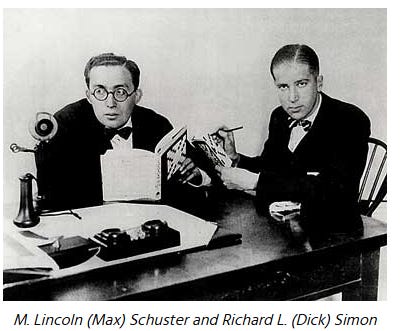
FUCKING JEWS: Richard L. Simon, who came from a German-Jewish family, and Max Schuster, a Jewish immigrant from Austria-Hungary. They were part of a prominent wave of 20th-century Jewish entrepreneurs who shaped American book publishing.
RATS sticking together:
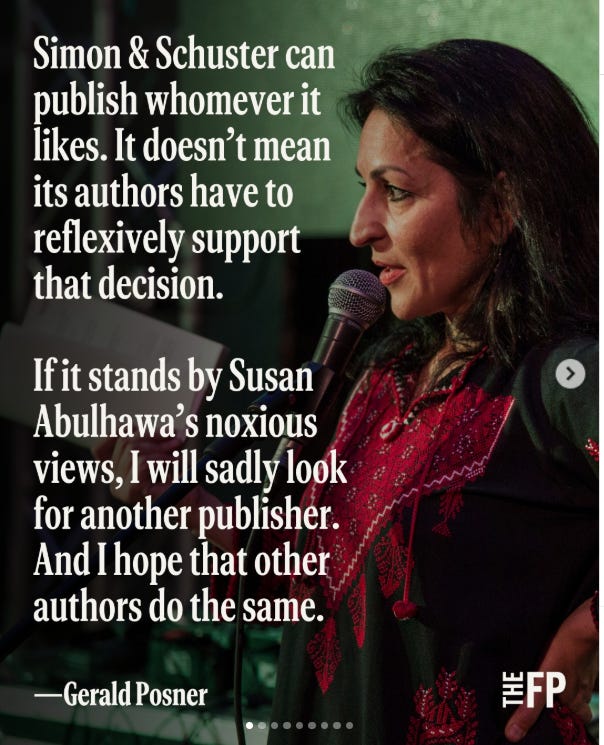
As examples of what it alleged was “anti-Semitism” in Abulhawa’s books, the ADL quoted her novel Mornings in Jenin, in which a character describes Israelis as having no historical connection to Palestine, calling them “lily-skinned foreigners with no attachment to the land” and a “foreign minority.”
The ADL did not contest the factual accuracy of this statement by a fictional character, but merely asserted that it was “anti-Semitic.”
“I reject that wholesale, that I’m an anti-Semite,” Abulhawa responded in her interview with The Electronic Intifada. “This is another layer of colonization … it’s colonization of language itself.”
In the same novel, the ADL complains, “one character tells a Jewish person, ‘you are no different from Nazis’ … another passage claims Palestinians ‘paid the price for the Jewish holocaust’ … a grotesque form of anti-Semitism.”
Once again, the ADL cites no evidence for its claims of “anti-Semitism.”
At the publisher, The Electronic Intifada understands from sources, the ADL has been lobbying hard for abulhawa’s books to be canceled. “The executives are discussing it” in closed-door sessions, this reporter was told earlier this week.
The lobby’s campaign led chief executive Greg Greeley to send out a company-wide email addressing “concerns” about “this important matter.” The email was obtained by The Electronic Intifada.
Greeley stood by the publication of Abulhawa’s “widely acclaimed” books and said the publisher would continue to print them. But he also condemned Abulhawa’s “comments on social media and elsewhere that have included harmful, dehumanizing, anti-Semitic rhetoric.”
He wrote that: “Being a publisher committed to a broad range of works and perspectives inevitably means that we will sometimes publish authors whose words or actions outside their books we strongly disagree with or even find offensive or hateful. Publishing a work is not an endorsement of every statement made by its author.”
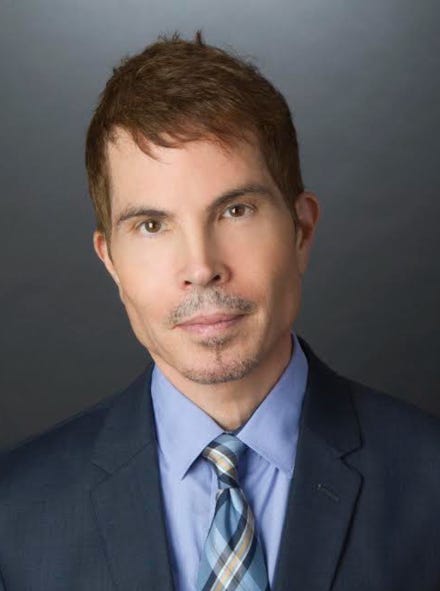
Dirty fucking Jew — Posner also attacked X posts by Abulhawa and accused the publisher of “gross negligence” if it has failed to vet her posts. In one such post, he complained, Abulhawa stated that Israel is run by “Jewish supremacist demons.”
Posner works for the so-called “Jordan Peterson Academy,” an unaccredited online video streaming service founded by the eponymous manosphere influencer. The annual fee for the service is $499, Slate reported.
But as well as anti-Palestinian motives, Posner’s calls to boycott Simon & Schuster may also be motivated by the fact that the publisher no longer seems to be interested in his books anyway.

The president of PEN America resigned over the weekend in protest of a report on boycotts targeting Jewish and Israeli authors, part of yet another round of internal division over Israel at the literary free-speech institution.
Dinaw Mengestu, an Ethiopian-American novelist and Bard College professor, told The Atlantic he was stepping down because he believed the PEN report, “A Silent Moratorium,” failed to defend the free-speech rights of participants in the movement to boycott Israel.
“It’s the First Amendment that allows all of us to engage in boycotts, not PEN America,” Mengestu told the publication. “PEN America as a free expression organization is supposed to defend that right.”
The author did not respond to multiple Jewish Telegraphic Agency requests for comment, but in an Instagram post Monday alluded to an interest in creating a new organization to rival the prominent nonprofit, which defends the free expression rights of other writers.

In this episode of Fronts & Faultlines, Palestinian academic and writer Abdaljawad Omar traces the historical continuity between the Zionist movement, settler militias and Israeli state power. The discussion explores the expansionist logic of “Greater Israel,” the fragmentation of Palestinian resistance, the legacy of Oslo, and why Western sanctions against settlers may amount to little more than political theatre.
To understand the West Bank, he argues, we have to look beyond individual settlers and at the wider system of land expropriation, occupation, colonialism and political control.
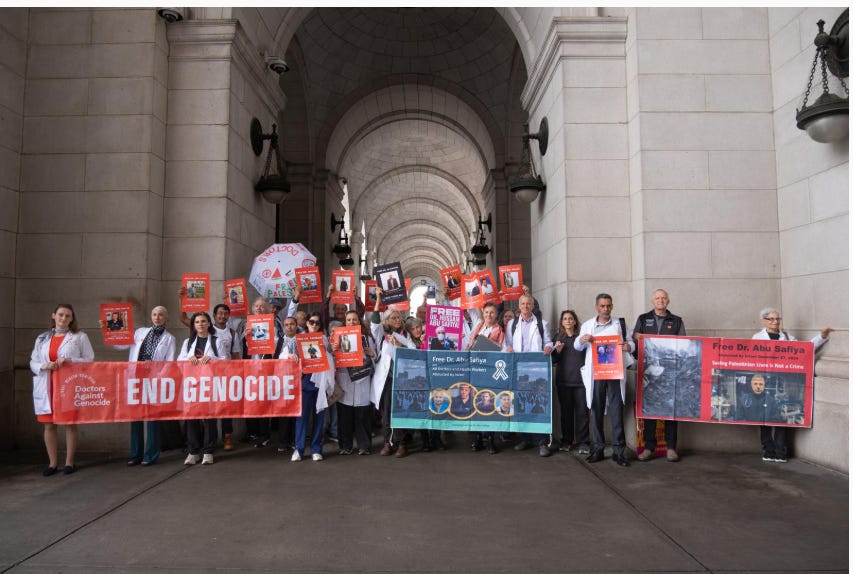
Join Doctors Against Genocide for 1000 White Coats on the Hill on September 24 as we carry out our mission to educate elected officials and advocate for the protection of life and health at home and abroad, including in Palestine, Congo, Sudan, and communities facing violence and injustice around the world.
As healthcare professionals, we come together in defense of our shared ethical commitment to protect life, safeguard health, and do no harm.
Our numbers matter. A thousand white coats on Capitol Hill will make a powerful impression and send an unmistakable message that healthcare professionals are united in defense of life and health.
They hate Asians, and Asian workers.

Was it Hong’s own vulnerabilities as a candidate? Hong was hammered in the final weeks over old “woke” tweets expressing support for abolishing the police, calling to “cancel Thanksgiving” and other beloved holidays, and discussing race in alienating ways that reflected the prevailing progressive style of the era but that have aged poorly now—particularly on public safety, as some socialists are beginning to argue for a “carceral minimalism” framework rather than “abolishing” prison or police. Hong attempted to do as other socialist candidates like New York City Mayor Zohran Mamdani have done and parry these and other attacks by making explicit that she was charting a new course on criminal justice and public safety. But she was not as successful in persuading sceptical voters on it.
Was it the reluctance of leading socialist figures like Bernie Sanders and Alexandria Ocasio-Cortez to lend their endorsement to Hong? They and a parade of other high-profile socialist candidates who had a week earlier rallied with El-Sayed declined to show up for Hong, reportedly because of private doubts about her effectiveness as a candidate. Opinion in the cold light of day is split between whether this could have moved the needle just enough to get Hong the few thousand more votes she needed, or whether Hong’s defeat showed socialist officials were right to stay away. This will likely be a matter of intense debate for some time.
“Fear won out last night, by a narrow margin,” says socialist State Assembly Member Ryan Clancy, who also won reelection last night to his third term. “It was the idea from the beginning to make a campaign based on character assassination and focused on the spectre of electability, instead of on what Wisconsin needs after a decade of Republican control.”
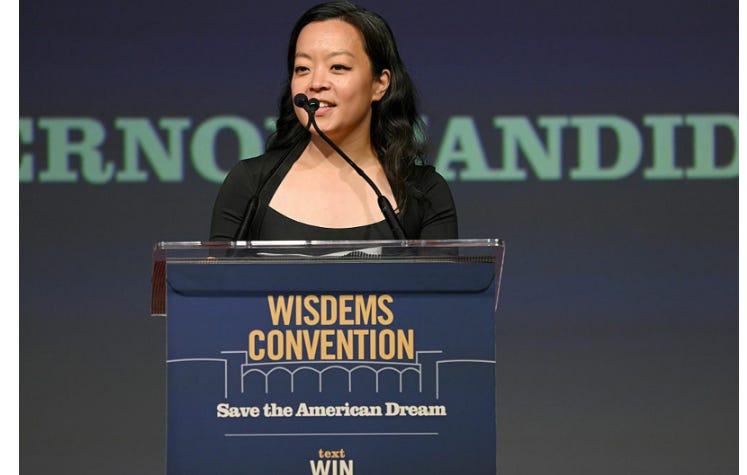
Hong is the first Asian American elected to the State Assembly and is running in a state that President Donald Trump won twice, but that also boasts a proud socialist history going back more than a century. Wisconsin is the state that produced the idea of “sewer socialism” which Mayor Zohran Mamdani is now harkening back to under his administration in New York City.
As the first open socialist in the Washington State Legislature since 1914, I wanted to learn more from Hong about how she views the power of state government to secure meaningful material wins for working people. I spoke with her in early August, when she explained to me, “I want working people to have a meaningful voice not only at the ballot box, but in their workplaces, their communities and the economy.” This interview has been edited for clarity and length.
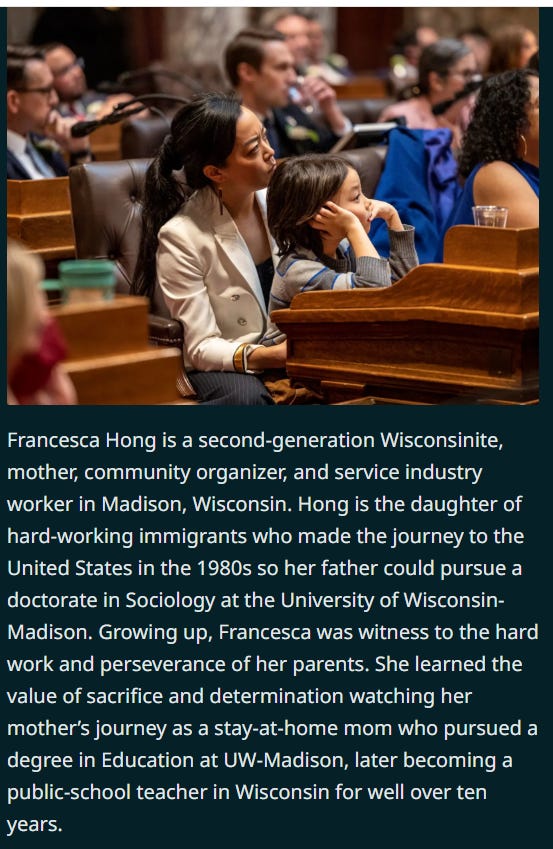
As a democratic socialist, what problems did you seek to solve by running for public office, and why did you believe that the Wisconsin State Assembly would be the place to solve them?
I had spent my career in the service industry. I was a dishwasher, a line cook, a chef, a small business owner, and a single mom. When Covid-19 hit, I watched an entire industry shut down almost overnight. Workers who had spent years creating enormous value suddenly had no paycheck, no healthcare, and no support from the government that should be taking care of its people. Small businesses were fighting to survive while the largest corporations had access to resources the rest of us could only dream of.
People like me were left blaming themselves and feeling like failures, but it’s the system that was failing us. The situation we were in was the result of political choices. I ran for office to be part of the solution.
The Assembly was a great starting point because so many of these choices happen at the state level. States determine wages and worker protections. We fund public schools. We administer Medicaid. We decide how much power local governments have to raise revenue, build housing or invest in transit. We regulate utilities and corporations. We write the rules that determine whether working people have power in the workplace and whether families can afford the basic necessities of life.
I ran because I understood that government is one arena where working people have to build power, and because decisions were being made there every day that shaped whether my neighbors could live with dignity.

I know from personal experience that being a socialist in an American legislative body can be a lonely and difficult experience. What were some of the fights you took on as an assemblymember?
For the entirety of my time in office, I’ve served in a legislature controlled by Republicans, so I learned very quickly that you have to define success more broadly than whether leadership allows your bill to receive a vote.
I’ve introduced an Economic Justice Bill of Rights because I believe healthcare, housing, education, food and a dignified job should be understood as basic economic rights. I’ve fought to raise the minimum wage and advocated for paid family and medical leave. I’ve introduced legislation to provide healthy school meals for every child and restore the collective bargaining rights that were stripped from Wisconsin workers under Act 10.
Sometimes, the objective is shifting the conversation around an idea that people initially tell you is impossible. Sometimes it’s using the legislature to give organizers, workers and communities a platform. And sometimes you find openings to actually change the law. I was proud to help pass bipartisan legislation requiring Wisconsin schools to teach Asian American and Hmong American history, a victory that grew out of community organizing and building positive relationships with folks from across the aisle.
That experience has reinforced something I believe deeply: elected officials should not think of themselves as the movement. Our job is to open doors, bring organizing into the institution, use the power we have to shift material conditions and make it easier for people outside the Capitol to build power.
A socialist legislator without an organized constituency can be isolated. A socialist legislator connected to workers, unions and community organizations can make the institution much less comfortable with the status quo.
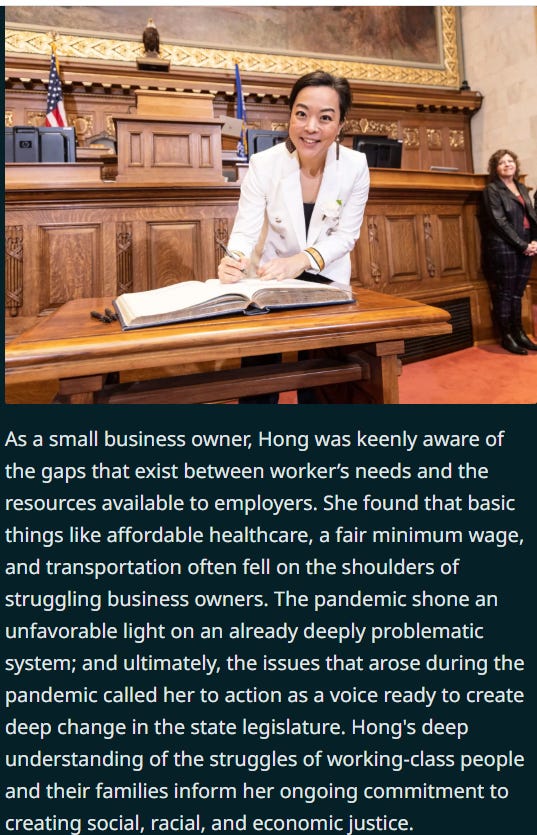
What would you say are some barriers to the achievement of democratic socialist policies in elected government?
The biggest barrier is institutional power. People sometimes talk about progressive policy as though the obstacle is simply finding the right data to back up your policy or persuading enough legislators that an idea makes sense. But many of the systems we’re trying to change are working exactly as intended for the people who benefit from them.
We are constantly told that universal programs are unrealistic while enormous subsidies, tax breaks, and giveaways to corporations are treated as the natural order of things.
Corporations have lobbyists in the Capitol every day. Wealthy interests provide financial backing for campaigns and organizations designed to shape the policy conversation. Legislative leaders can keep overwhelmingly popular proposals from ever receiving a hearing or vote. And in Wisconsin, years of gerrymandering allowed Republicans to maintain enormous legislative power even in a closely divided state.
There is also a political culture that treats scarcity as inevitable. We are constantly told that universal programs are unrealistic while enormous subsidies, tax breaks and giveaways to corporations are treated as the natural order of things.
That is why electoral politics can’t be separated from organizing. Winning a seat is not the end of the work. If you want to change who has power, you have to build durable organizations outside of government that can make demands of those inside it.
I think that’s particularly important for socialists serving in state legislatures. We should pass legislation wherever we can, but we should also use these offices to expose who benefits from the current system, raise expectations about what government can provide, and help build the working-class coalition capable of making change unavoidable.
You made the decision to join DSA during a difficult time in state and local politics, in 2020. What moved you to join the organization, and how long have you identified as a democratic socialist?
I joined DSA in 2020 because the organization was fighting for the things that had already come to define my politics: raising wages, racial justice, worker power and an economy that serves working people instead of an increasingly concentrated group of wealthy and corporate interests.
My politics grew out of lived experience and community organizing more than a particular label. I spent my adult life working alongside people who could work incredibly hard and still be one emergency away from losing everything. I watched service workers create thriving businesses and communities without receiving the stability, healthcare, or wages they deserved in return. I saw how race, class and gender shaped who had power and who was expected to bear the burden when things went wrong.
To me, democratic socialism is about democracy, fairness and human rights. Working people should have a real say in the decisions that shape their lives, not just in government, but in their workplaces and in the economy. Too often, the most essential parts of our lives, from what we’re paid to what we spend on healthcare, housing and utilities, are determined by corporations with far more power than the people they serve.
I want working people to have a meaningful voice not only at the ballot box, but in their workplaces, their communities and the economy. And I believe that government should guarantee the basic conditions people need to actually exercise that freedom: healthcare, housing, education, childcare, a living wage and the right to organize.
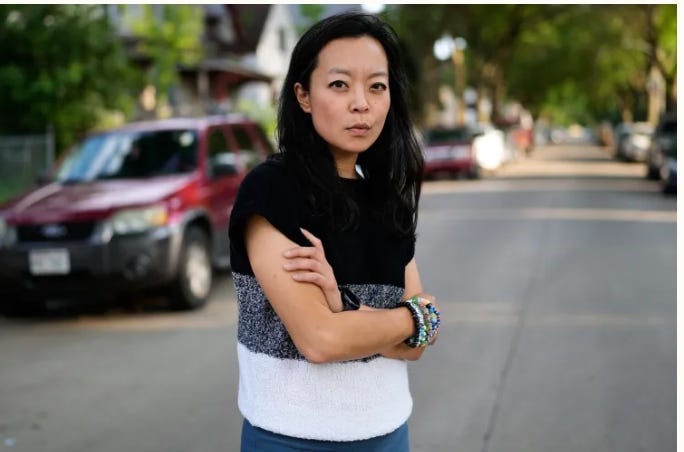
Versus, INSANITY in the form of Pedophilia:

GUTS:
Over the weekend, right-wing media, including the Post Millennial and the Gateway Pundit, resurfaced a 2023 interview featuring Wisconsin gubernatorial candidate Francesca Hong, wherein Hong opened up about a hospitalization for a mental breakdown as a teenager and a previous bipolar disorder diagnosis.
“Wisconsin Dem candidate for governor Francesca Hong admitted to being diagnosed as mentally ill,” read the Post Millennial headline.
“In typical liberal fashion, Hong tried to paint herself as a victim in the interview, blaming the crisis on feeling like an outsider as the daughter of Korean immigrants,” blogger Patty McMurray wrote on the Gateway Pundit’s site.
Hong, a member of the Democratic Socialists of America, is arguably the frontrunner to win the Democratic primary for the Wisconsin gubernatorial election, which will take place on August 11. Hong’s campaign includes mental health policies that would coordinate social workers, nurses, community health workers, and peer counselors in more neighborhoods throughout Wisconsin.
“My own mental health journey has given me a much deeper sense of empathy and compassion,” Hong said in a statement to Mother Jones. “I’m a stronger leader because of the times that I struggled, and it’s important to talk openly so that others aren’t isolated and can take that first step to get help.”
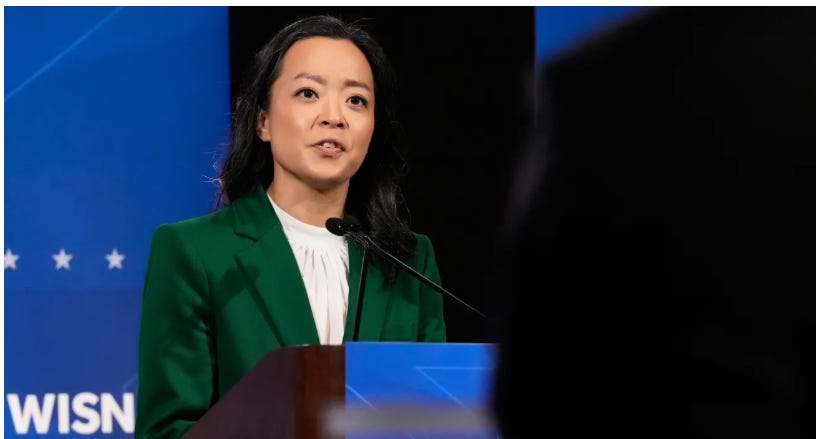
“Mental healthcare is a basic need, and we have to invest in community resources, training, accessibility, and culturally-relevant care,” Hong continued in her statement.
Hong is currently in treatment for depression and takes antidepressants, Hong’s team said.
The current right-wing attacks on Hong’s mental health history—at a time when Republicans outlined their support for Rep. Tom Kean (R-N.J.)’s months-long, opaque absence for depression treatment—seem particularly cruel and partisan.
“Even if the authors of the articles disagree with Ms. Hong’s politics, the inclusion of her mental health history is a blatant attempt to ignite fear in readers by fanning the flames of stigma,” said California-based therapist Andrea B. Vassilev, who has bipolar disorder.
Hong’s statements about her mental health were incredibly vulnerable, particularly for someone already in public office at the time of the interview. But the remarks likely struck a relatable chord for many people who have struggled with mental illness.

