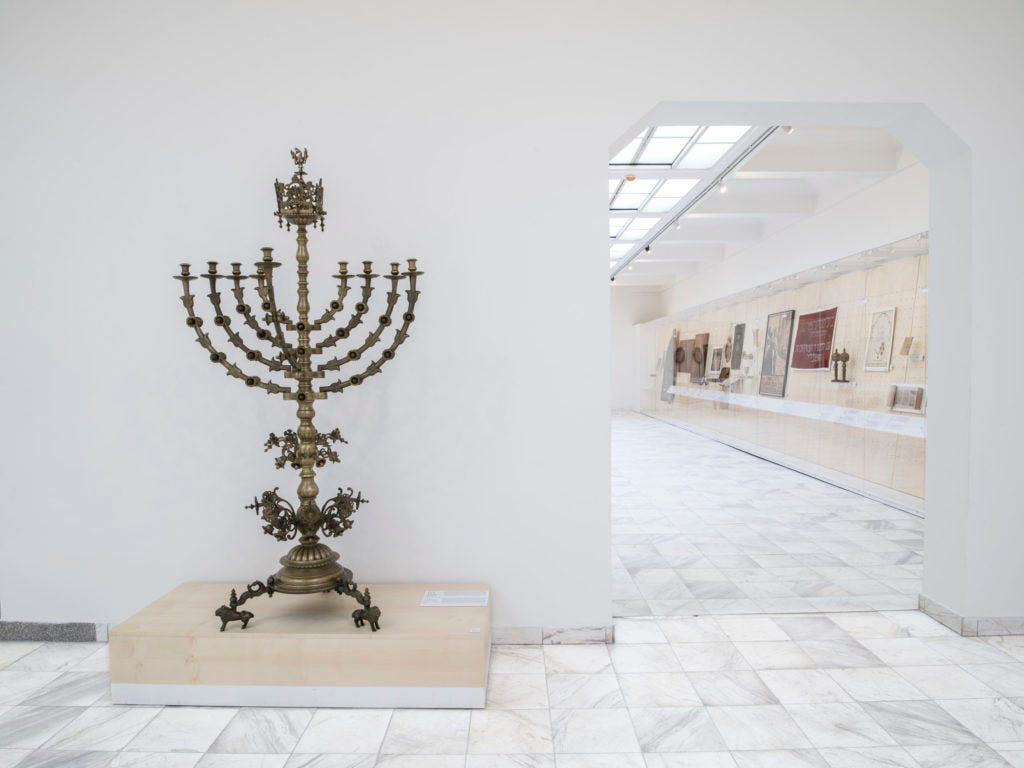

piracy and outright dirty dealing and death — the way of the Torah, Mayers, Lazards, Sterns, Speyers, and Seligmans—adopted the Rothschild plan of establishing local branches of usury in Europe
Jun 15, 2026
Why wouldn’t you want to go on a rampage after the Jews have raped your mother, father, dog, cousin, sister, brother, uncle, aunt?
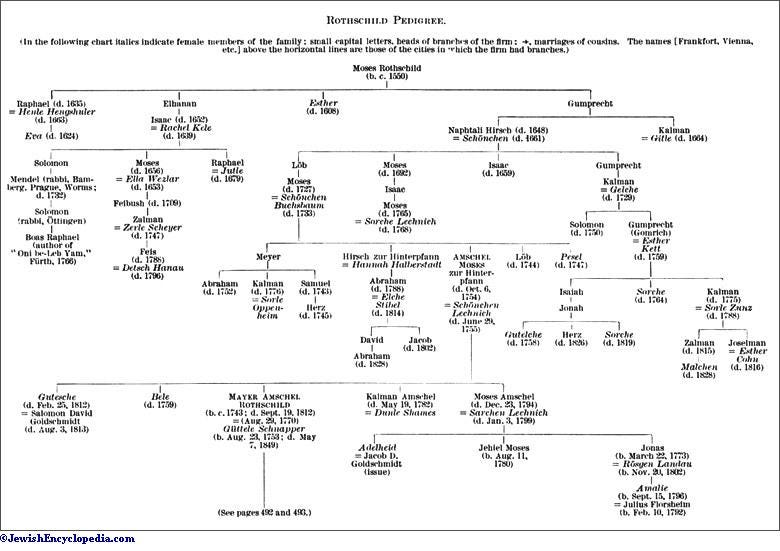
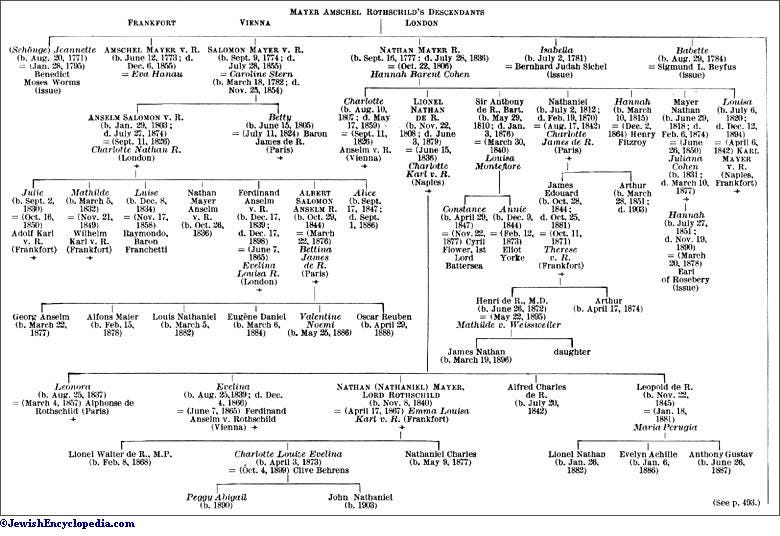
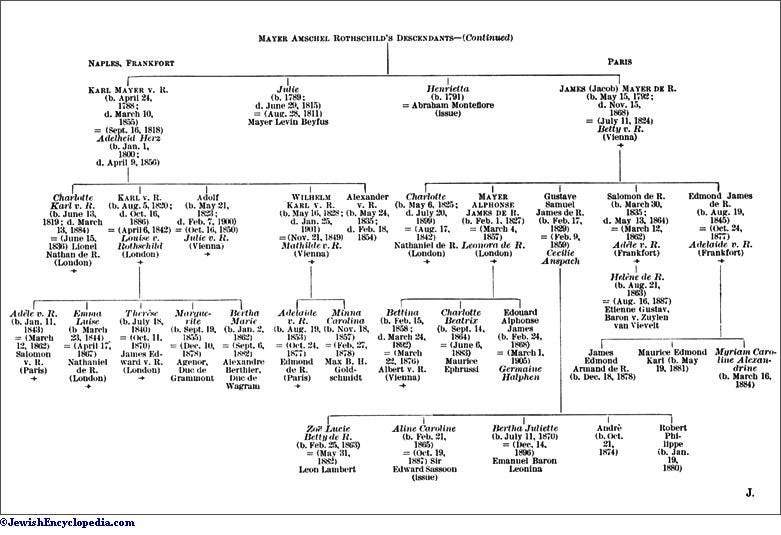
The Rothschilds were not, however, without competitors in the issue of public loans. Other Jewish families—the Lazards, Sterns, Speyers, and Seligmans—adopted the Rothschild plan of establishing local branches in European capitals, each headed by a brother, and after 1848 the governments of Europe adopted the plan of throwing loans open to the public instead of resorting to one or two banking firms like the Rothschilds. In this way the Sterns secured the chief Portuguese loans, while a number of smaller Jewish firms began to combine their resources and form limited liability companies like the Crédit Mobilier, the Dresdener Bank, and the Deutsche Reichsbank of Berlin.

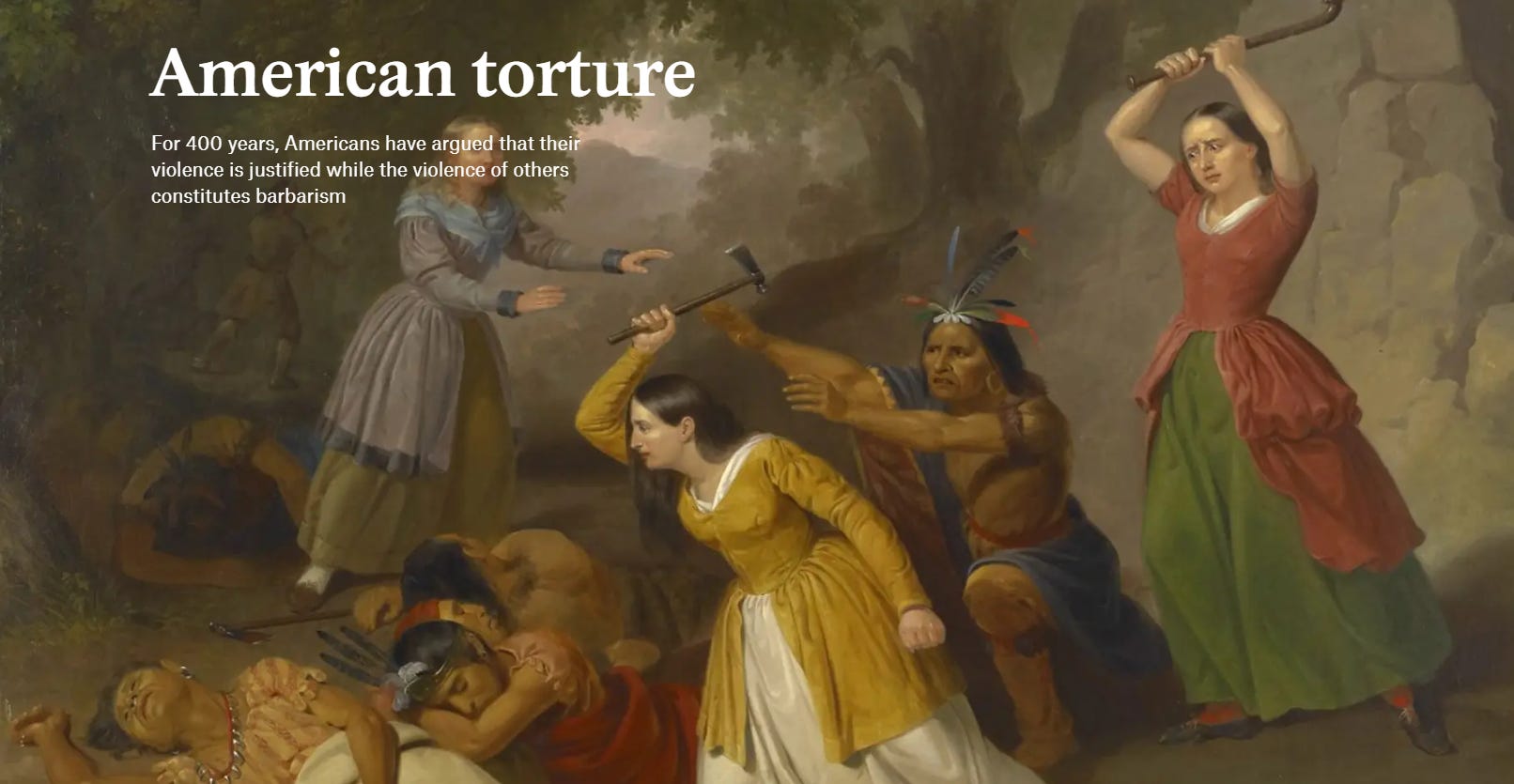
The European invaders had their own traditions of torture, and the Huron and other North American Indians often found them shocking. Europeans ignored the conventions of Indian diplomacy. They dispensed unprovoked cruelty while waging what to Indians seemed indiscriminate war.
Torture is enmeshed in European history, in its statecraft, warfare and culture. The Ancient Greeks tortured, the Ancient Romans codified it in law, and the Catholic Church advocated it during the Middle Ages. Lawbreakers were publicly flogged, chained in iron collars, and tormented in stocks; they suffered having their hands and ears cut off, and their bodies racked, burned, flayed, and pulled apart. Churches featured representations of saints enduring horrific torments by knife, spears, arrows and fire. They displayed the nails, spears, thorns, whips and, especially, the Saviour’s blood, as reminders of the torture Jesus had endured. Manuals catalogued, in meticulous detail, accumulated wisdom about effective torture techniques.
European rulers used torture to demonstrate state power, especially against those accused of treason. Since the Roman era, treason had been considered an especially vile crime against the majesty and authority of one’s ruler. Torture occupied an equally prominent role in the Roman Church’s evolving campaign against heresy. Officially, the Church forbade inquisitors from permanently harming suspects or drawing blood. So they devised other effective methods of torture, including the rack, the strappado and simulated drowning to determine the guilt of heretics.
They faced a quandary when confronted with cases in which they lacked either witnesses or confessions. In such instances, communities before the 12th century relied on judicial ordeals during which they determined guilt or innocence by bodily torment (such as fire or water). By observing how the accused endured the ordeal or the extent of their injuries, courts claimed to be able to discern God’s judgment as to their guilt. After the Latin Church in 1215 withdrew its sanction for trials by ordeal, jurists experimented with new procedures to determine truth. They gradually settled on an elaborate method, including torture, to secure proof through confessions.
European torture was the prerogative of trained authorities who professed to act in the interest of society
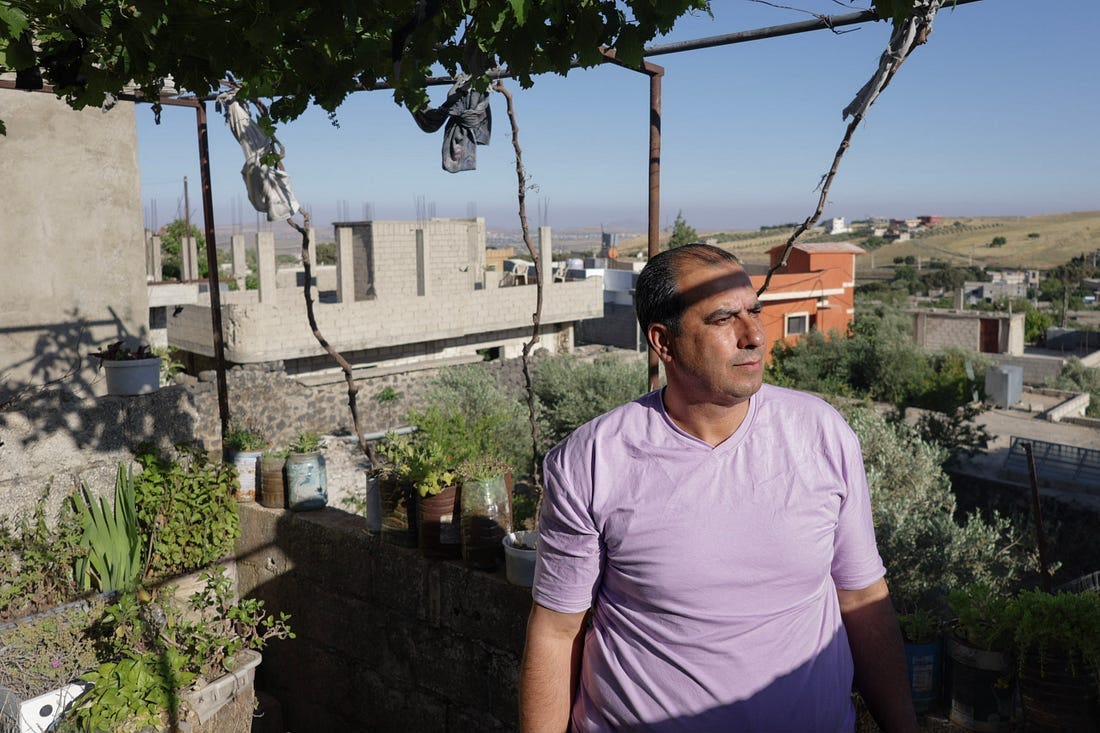
Mohammed Al-Ali never got to celebrate the fall of Bashar al-Assad on December 8, 2024. It was the night his home was stolen by Israeli soldiers. As liberated civilians flooded the streets of Syria’s cities in euphoria, the Israeli military burst into his home in the village of Al-Hamidiya and ordered Al-Ali and his family to leave.
“They barely gave us ten minutes to get out,” Al-Ali, 50, told Drop Site News, teary-eyed as he recalled the night, clutching a cushion in his lap. “We weren’t able to bring anything with us, we left our whole lives behind.”
Al-Ali would never see his house again. Six months after his forced eviction, Israel demolished his home, alongside 15 others in Al-Hamidiya located in the Quneitra countryside of southwest Syria. According to a Syrian official, residents’ reported that Israeli soldiers told them that the homes “blocked sight lines” from a newly constructed military base at the edge of the village. The official dismissed this pretext, saying “Israel uses the same justifications in Gaza and Lebanon.”
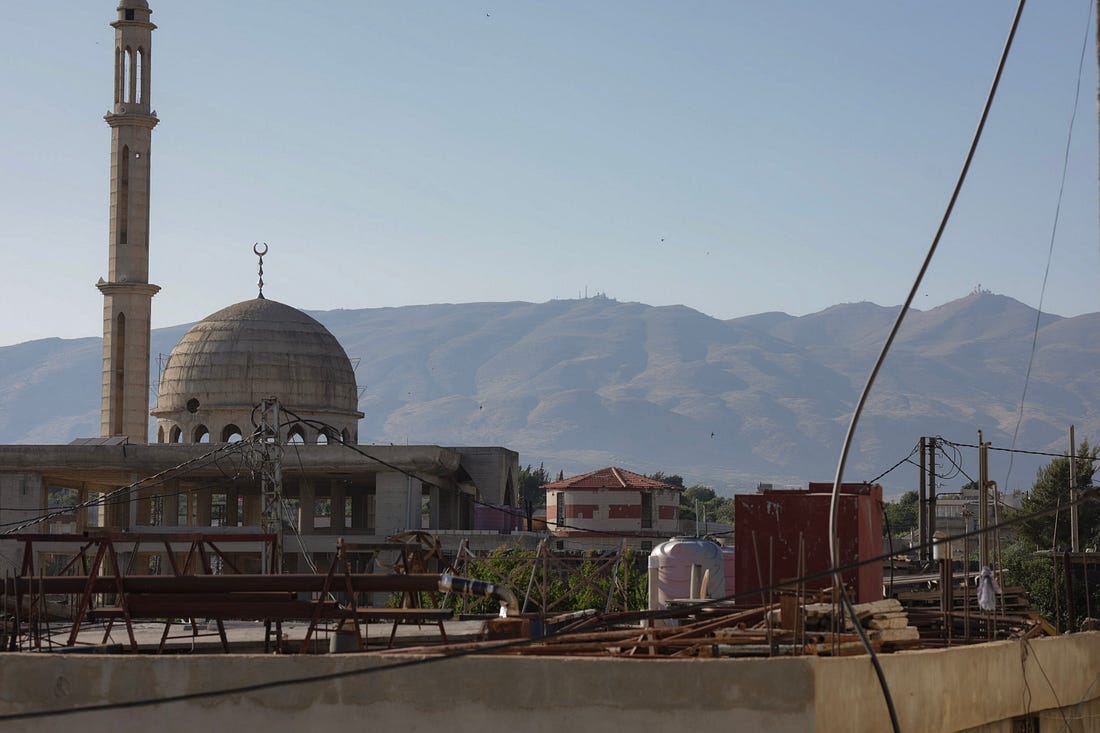
[A damaged mosque in Jubat Al-Khashab, with the Golan Heights in the background, crowned by several Israeli military posts and communication towers on June 9, 2026.]
However, following the ouster of Assad in 2024, Israeli Prime Minister Benjamin Netanyahu unilaterally claimed this agreement had “collapsed” and ordered the Israeli military into Quneitra province from the Golan Heights, which were seized from Syria in 1967, and unilaterally annexed in 1981, a move unrecognised by the international community. Since then, Israel has deepened its occupation of Syria, establishing new positions in Quneitra, and occupying Jabal Al-Sheikh. Israel also launched a massive wave of airstrikes on Syria’s military infrastructure in the days after Assad’s fall, destroying its conventional military capability.
Israeli officials claim without evidence that its raids target individuals linked to Hezbollah and other Iranian-linked groups. In April, Syria’s Ministry of Interior arrested an alleged Hezbollah cell in Quneitra, and seized a mobile rocket launcher—the only notable instance of its kind.
Nevertheless, Syrian officials reject Israel’s justification for occupation. “If Hezbollah cells do enter the province, our position is unambiguous,” said a local official, speaking on the condition of anonymity. “It is the Syrian government’s responsibility to arrest them and hold them to account, not Israel’s.”
“There is no social base for Hezbollah here, and so most of the arrests of local residents are baseless,” he continued.
“These were areas of the revolution, why would we harbor Hezbollah?” said Hail Abdullah, the Mayor of Rasm Al-Rawadi, a village on the border that has had several homes demolished by the Israeli military. For years, Syria helped fund and arm Hezbollah, which intervened in 2013 in the country’s civil war in defense of Bashar al-Assad. The group is opposed to Syria’s new government under President Ahmed al-Sharaa, who has sought to ingratiate himself with President Donald Trump.

When the Pentagon announced that the 82nd Airborne was deploying to the Middle East in March, it concealed a key detail: some of the paratroopers were headed to Israel, as revealed in an Army deployment order I obtained.
A military source involved in war planning tells me the deployment is tied to new U.S.-Israeli joint contingency plans, completed since February, for seizing Kharg Island and carving out coastal territory inside Iran.

The 82nd Airborne Division is the Army’s premier quick reaction force, trained to parachute into hostile territory.
By keeping the deployment quiet, the Pentagon headed off public debate over a joint U.S.-Israeli operation inside Iran — a prospect many considered plausible at the time, amid a fever pitch of mainstream reporting on a potential ground invasion. The secrecy also sidestepped what’s euphemistically called “host nation sensitivities.” A joint U.S.-Israeli operation raises thorny questions for America’s Gulf Arab “partners,” especially over logistical support — hence the 82nd, which could launch directly from Israel without any Gulf state’s consent to use its territory.
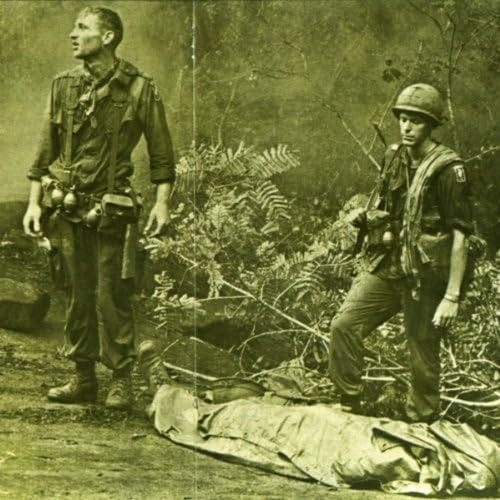
The Army deployment order, issued April 7, 2026, directs elements of the 2nd Battalion, 501st Infantry Regiment — the storied “Geronimo” battalion — to deploy to Israel on “temporary duty.” The Israel deployment has not been previously reported.
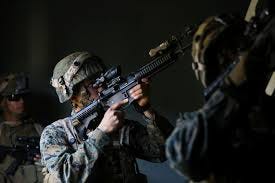

The House Armed Services Committee buried this dangerous proposal inside the annual military spending bill, the 2027 National Defense Authorization Act, which carries a total price tag over $1 trillion. The bill now heads to the Senate Armed Services Committee.
The proposal—Section 224—would arguably be more valuable to Israel than the billions in military funding the U.S. has been providing. It would mean integrating U.S. and Israeli weapons research, production, technology, and military operations. It would make U.S. complicity permanent, while Israel quietly negotiates another 10-year military funding commitment from the U.S.

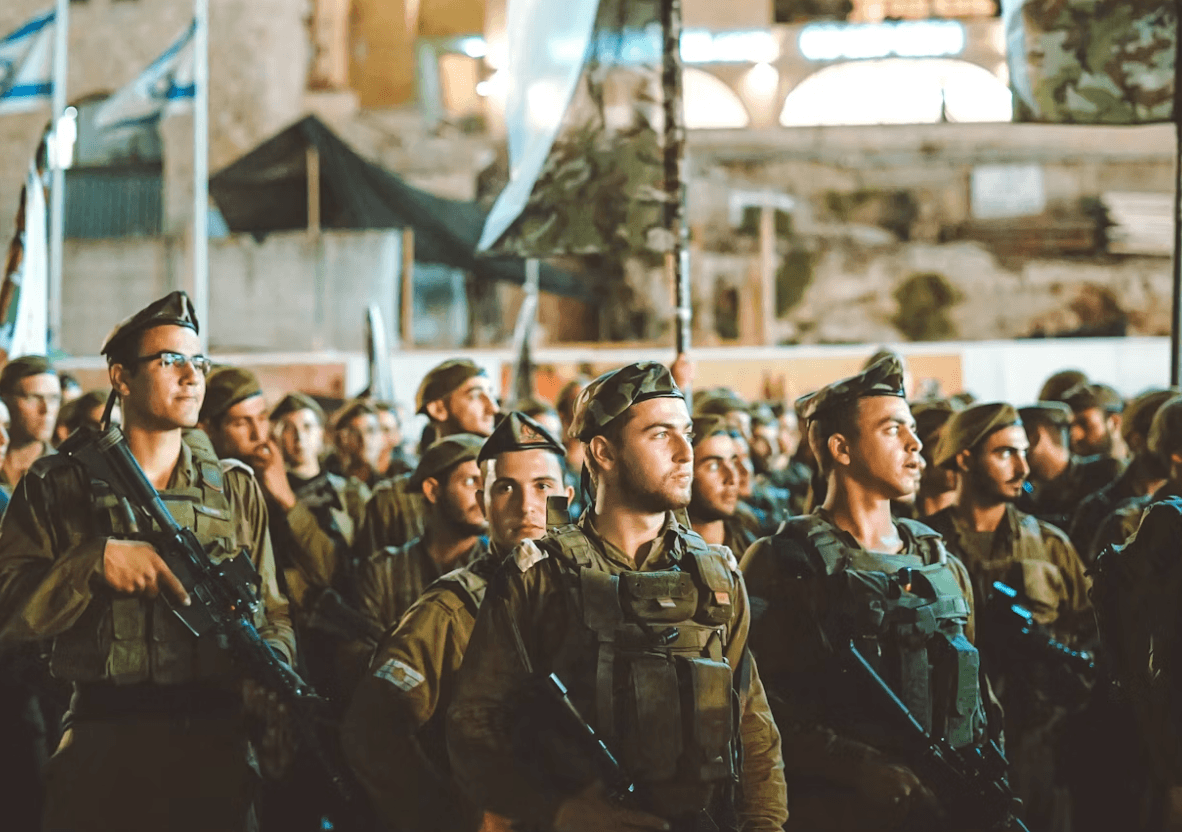
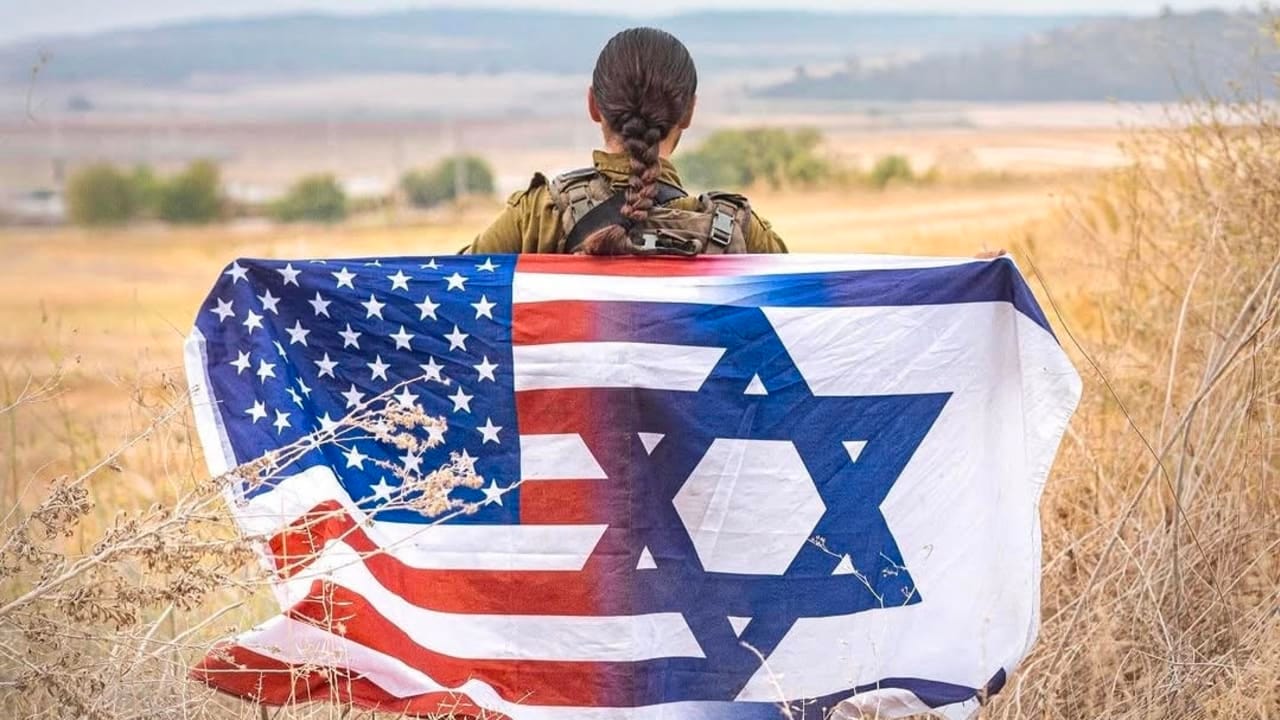
So, whatever their fucking numbers are, really, the Jews have the greater armies as Jew Tech and Jew Apps and Jew Surveillance and Jew Finance and Jew Influence eats at the souls of 8.5 billion people.

[Amy Jewish Goodman talks with Craig Jewish Aaron about Jewish Ellisons and Jewish Bari Weiss . . . what a fucked up Mad Mad Mad Mitzvah Media WORLD.
[Craig Aaron, the co-CEO and president of the media advocacy organization Free Press, is Jewish and has publicly identified with his Jewish heritage and history]
CRAIG AARON: What we saw happen on Friday was the Justice Department say they could find no reason to block this merger. And that’s because they didn’t look for one. This has been one of the most shallow and corrupt merger review processes we’ve ever seen, and it has been marked by Paramount, the leadership of Paramount, David Ellison, his father Larry Ellison, wooing and capitulating to the Trump administration at every turn, having them for fancy dinners, promising to make sweeping changes to newsrooms like CNN if they can get this deal to go through.
And the great risk here is so much media control under one umbrella, the idea that two of our major mainstream news outlets could be controlled by one company, which, as you said, has shown it is willing to warp and manipulate news coverage to please the president, the idea that HBO and major movie studios, again, falling under one corporate umbrella, raising serious questions about what projects are going to be made, what documentary films will be made, what information and news will we see if the Ellisons control this much of our news media.
AMY GOODMAN: So, talk about this in the context of all these corporate mergers, what it means when CNN, CBS, HBO are all under the same roof.
CRAIG AARON: Well, I think we’ve seen it happening at CBS. So, the Ellisons aren’t hiding the ball. They’re not really making any — the promises they’re making are to turn CNN into something like what they’ve done with CBS, where they’re getting rid of independent journalists asking hard questions. They’re spiking stories about crimes being committed by the Trump administration. And what they’re promising is more of the same. And every big media company that’s gone before this administration to get a deal done, to push through megamerger after megamerger, has promised — and because they know this is what appeals to Trump, they’ve promised them to change their coverage, get rid of activist journalism, get rid of the kind of independent accountability that we need. And they’re going for even the most mainstream types of outlets, like 60 Minutes, you know, a program that is well regarded but certainly not the source of any kind of radical coverage, but serious coverage when it comes to what’s happening in this country and around the world. And under the Ellisons, there’s no place for it. So, we’ve already seen what they’ll do. And what we don’t know what will happen is what programs no longer get made. We get fewer and fewer choices, and we get more and more of the same kind of cookie-cutter content produced.
Fucking a month ago, this ain’t going to do diddly squat, and proof is in the Jewish Pudding:
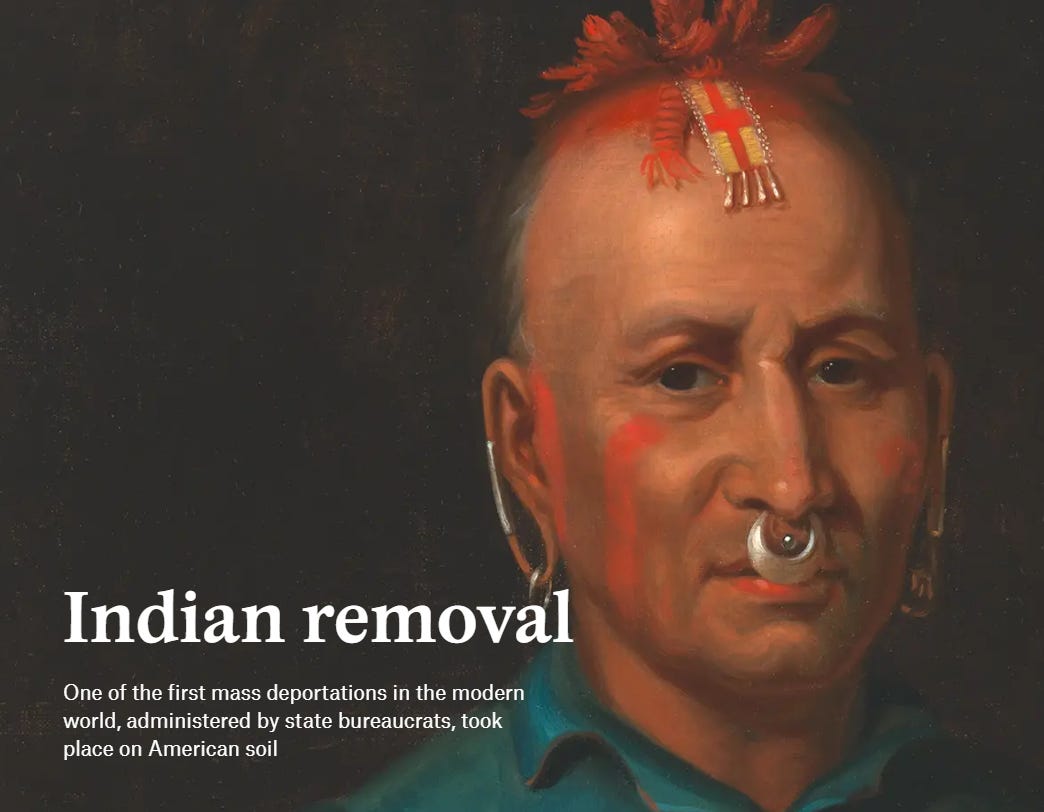

This is why the Jewish Way of Life Should be Wiped from the Face of the Earth:
Two and a Half Days with His Martyred Wife in the Refrigerator: The Story of a Father Who Could Not Bury His Wife and Children Who Kept Calling for Their Mother
In Gaza: When Grief Becomes Greater Than Words
Jun 15, 2026
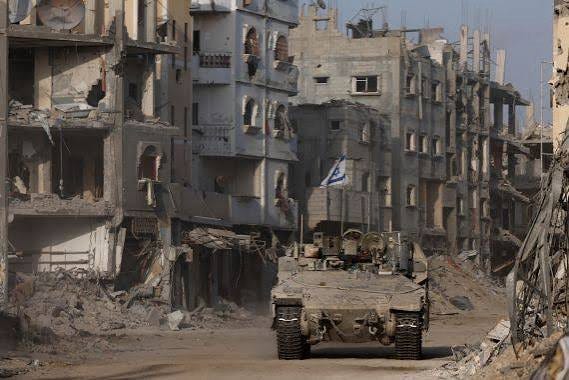
In the early days of the genocide in Gaza, as Israeli occupation forces advanced toward the outskirts of the Gaza Strip, the town of Beit Hanoun was living through some of its darkest hours. Many residents did not realize how close the occupation forces had come, so they remained inside their homes, clinging to what little hope they had left and trying to survive amid bombardment, fear, and siege.
Inside one of those homes lived a simple family: a father, a mother, and their children, struggling to endure like thousands of other families. They had managed to store some food and had a solar power system that helped them survive those dark days, believing it might give them a better chance of staying alive.
But war does not ask permission.
One day during the siege, the mother was holding her infant child in her arms. It was an ordinary moment in the life of a mother who spent her days embracing her children, protecting them, and giving them comfort. She did not know it would be the last moment of her life.
Suddenly, a bullet fired by an Israeli occupation soldier pierced her body. She collapsed to the ground in front of her husband and children, and within a single second, life inside that home turned into a tragedy beyond words.
The husband rushed toward her in disbelief. He called her name again and again. He shook her gently, trying desperately to wake her. He attempted to save her and revive her by every means he could think of. He clung to every shred of hope, refusing to accept the reality unfolding before his eyes.
But the truth was too cruel to deny.
His wife, his life partner, and the mother of his children had been killed.
The man sat beside her in shock, unable to comprehend what to do next. He could not leave the house because of the siege, the snipers, and the danger surrounding them. He could not even give his wife the basic dignity of a proper burial.
Imagine losing the person dearest to your heart and then being denied the chance to say goodbye.
He spent hours thinking of a way to preserve his wife’s dignity. He looked at her face, at his children, and at the walls that imprisoned them all. Then he made a decision he had never imagined he would have to make.
He placed his wife’s body inside the refrigerator.
Not because his heart could bear it, but because he had no other choice.
He carefully placed her inside, closed the door, and tied it shut with ropes so that it would not open, as if he were trying to protect her one last time or delay a farewell he was not ready to face.
But the real pain stood before that refrigerator every day.
Her young children would stand before the closed door and call out:
“Mom… Mom… Mom…”
They waited for her to come out as she always had.
They believed she could hear them.
They believed she would answer.
Their father stood helpless before those heartbreaking cries. He watched his children reaching their hands toward the refrigerator, calling for their mother while tears filled his eyes.
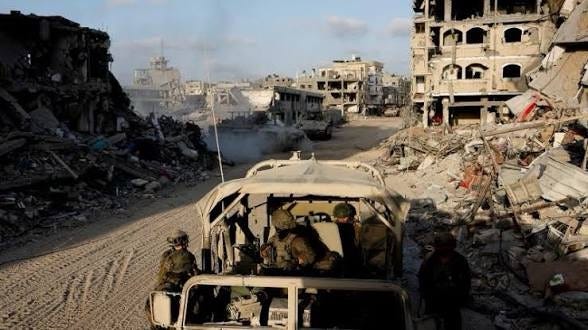
Later, the father said that the hardest thing he had ever experienced was not the siege, not the hunger, and not even the fear of death.
It was watching his children call for their martyred mother while he was unable to explain the truth.
How can a small child understand that his mother will never come back?
How can a broken-hearted father tell his children that the arms they once ran to for comfort are gone forever?
He said he cried silently, grieving for his children even more than for himself. He did not know what to tell them, how to convince them that their mother had left this world, or how to ask them to stop waiting for her.
The hours passed with unbearable slowness.
The siege grew harsher.
And the refrigerator holding his wife’s body stood in the corner of the house as a silent witness to a tragedy beyond imagination.
Many times, the man thought about leaving the house and confronting the occupation forces, regardless of the outcome. He thought about ending all the pain at once.
But then he would look at his children.
He saw the fear in their eyes.
He knew they had no one left in this world except him.
So he endured.
He endured for them.
He remained strong for them.
And he continued trying to protect them even as his heart bled with every passing moment.
The siege lasted for two and a half days.
Two and a half days spent beside his children and the body of his martyred wife inside the refrigerator.
Two and a half days of tears, fear, waiting, and helplessness.
Two and a half days during which he could not bury her, say goodbye to her, or give her the grave she deserved.
Then, at last, relief arrived.
After a limited withdrawal of Israeli occupation forces, civil defense crews were finally able to reach the area. They found the father, his children, and the body of the martyred wife, and evacuated them from the scene.
This story was recounted by one of the civil defense workers who personally participated in the rescue operation. It became known to many residents of northern Gaza who lived through those painful days and witnessed their horrors.
This is not a story from a novel.
It is not a scene from a movie.
It is not the imagination of a writer trying to exaggerate suffering.
This is a true story from Gaza.
The story of a mother killed while holding her baby.
The story of a father forced to place his wife’s body in a household refrigerator because he could not bury her.
And the story of children who stood for two and a half days before that refrigerator door, calling for their mother, unaware that death had taken her from them forever.
It is one of thousands of stories that never reached television screens, and one of countless tragedies endured by the people of Gaza away from the cameras.
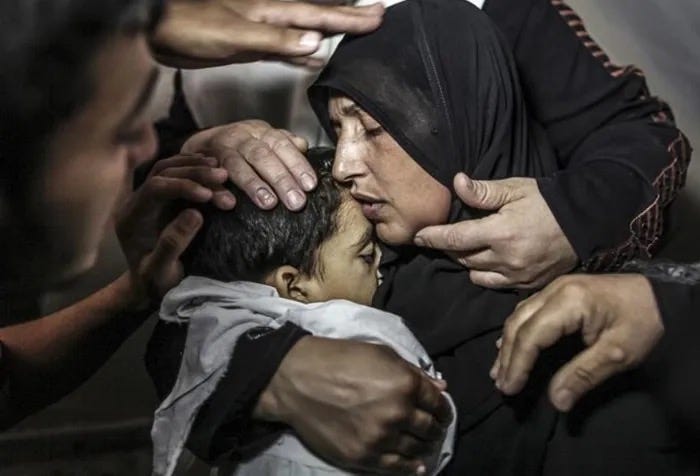
Once again, this article is based on a true story told by a civil defense worker who witnessed these events firsthand. We ask only that you respect the reality and suffering of the people of Gaza, remember them in your prayers, and help them in any way you can.
Behind every number announced, every image published, and every headline that quickly disappears, there is a human being who once had a life, dreams, a family, and a story that may be more painful than words can ever describe.
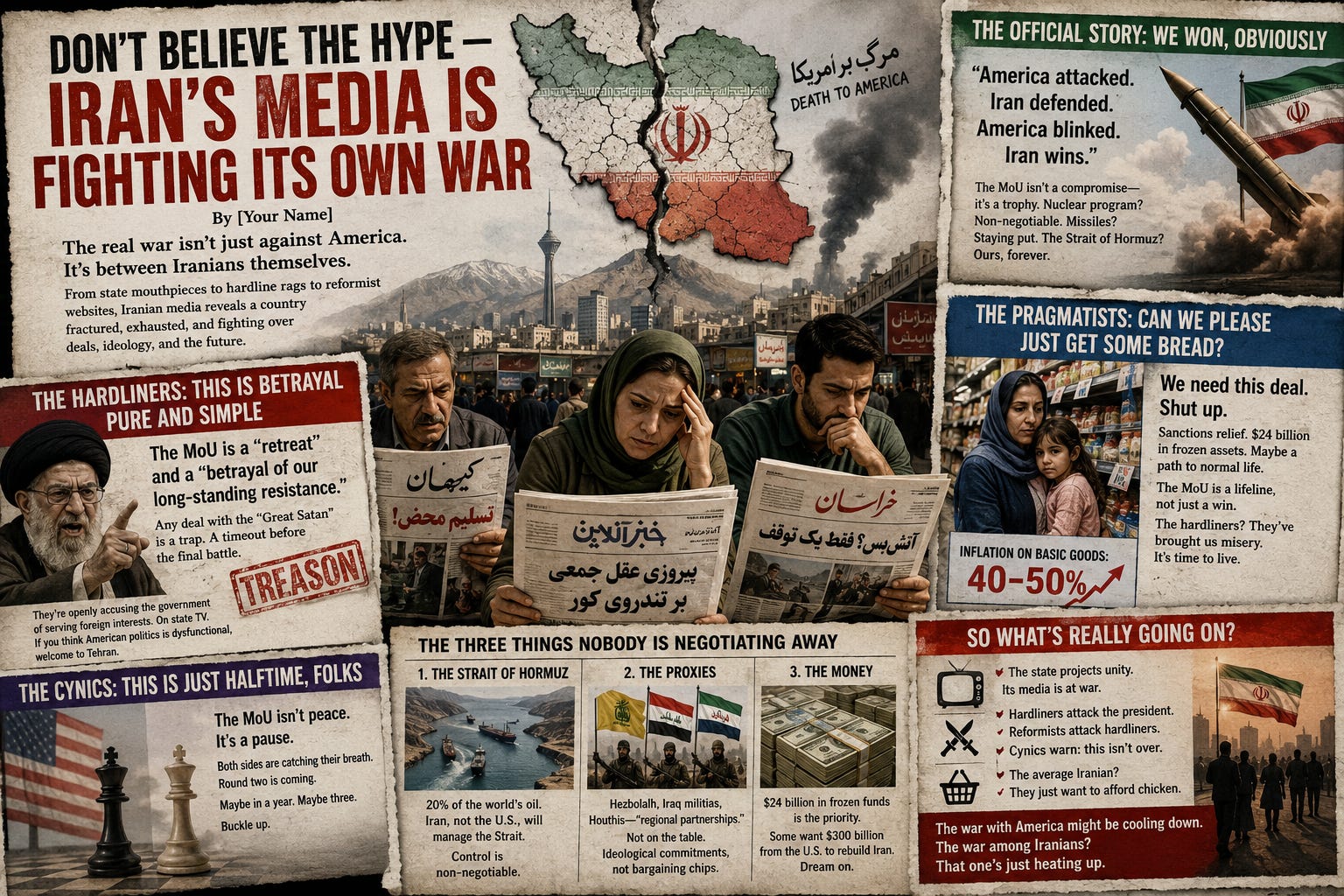
The Persian TRAPS:
These guys aren’t just criticizing the government — they’re accusing it of treason. Out loud. In print. On state TV, no less. Kayhan, which is basically the voice of the old revolutionary guard, has called the MoU a “retreat” and a “betrayal of our long-standing resistance.” One columnist wrote — I’m paraphrasing but barely — that shaking hands with the “Great Satan” now just guarantees the devil asks for a foot next time.
Their argument is dark but consistent: any deal with America is a trap. They don’t see a truce; they see a timeout before the final battle. And here’s where it gets spicy — they’re using this moment to openly accuse the government of serving foreign interests. On state television. Let that sink in. The regime’s own hardliners are airing dirty laundry in the middle of a war, calling their own leaders sellouts.
THere should be millions of Muslim children ready to do what they can to destroy the great Satan and his pimps and prostitutes.

Settlers and the IOF:
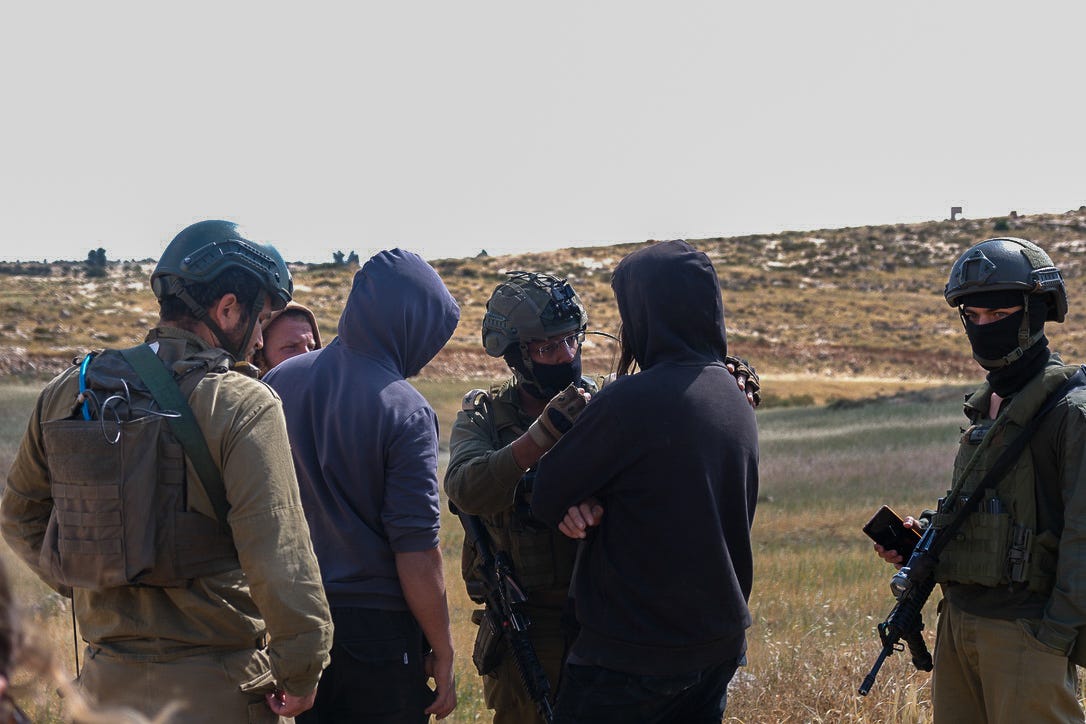
The recruitment pipeline includes many U.S. day schools — from more conservative yeshivas to modern Jewish day schools — that advertise how many alumni go on to serve in the Israeli military.
The Frisch School in Paramus, New Jersey, had 51 alumni serving in the Israeli military as of 2023. Another school in New Jersey, the Rae Kushner Yeshiva, has congratulated an alum who became a social media manager in the IDF Spokesperson’s Unit.
“Her work was recognized as important for hasbara by the Israeli news,” the school boasted on Facebook, using a term for Israeli public diplomacy, including propaganda tailored to international audiences. Another alum of the school served as a lone soldier in the army and was a friend of the son of Netanyahu, who commemorated him after he died while traveling in 2018.
One charity reviewed by The Intercept, the Lone Soldier Foundation, specifically provides funds for the children of families that attend a synagogue in northern New Jersey who join the Israeli military. According to the group’s most recent tax filing, it also supports the units in which the children of members of its congregation serve. In 2023, the group spent over $80,000 on providing “non-combat and equipment to IDF units in which eligible American citizens served.”
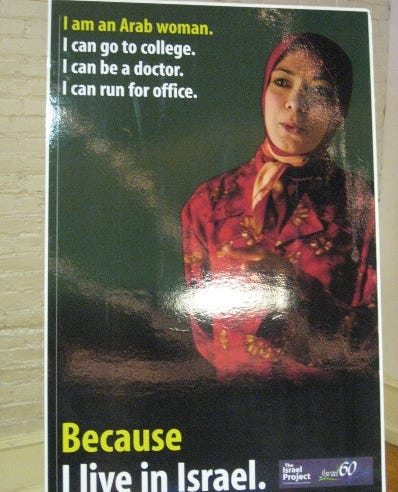
The biggest known funder is Friends of the IDF, which has spent nearly $20 million on its lone soldier program since 2020, supporting more than 6,500 lone soldiers each year, according to documents filed with the Internal Revenue Service. In a statement, Friends of the IDF, an official partner of the Israeli military, said it provides more than 7,000 lone soldiers “with practical, emotional and mental health support throughout their service to make sure they never feel alone.” The group said about half of the soldiers it backs are from Israel but are considered lone soldiers because they don’t have family support.
On its Instagram page, the group says it is the “only U.S. non-profit working directly with IDF leadership to provide critical support for Israel soldiers’ health, well-being & education.”
Other organizations help offset the costs of living for lone soldiers. Bayit Brigade, which operates in both the U.S. and Israel, helps lone soldiers find affordable housing in Tel Aviv and raises emergency funds to help transport soldiers to their bases and provide supplies in the field.
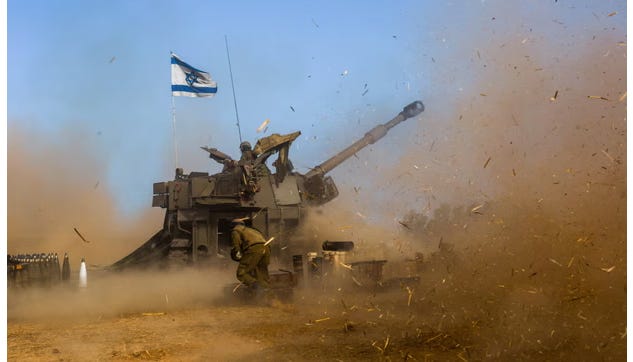
Bayit Brigade has posted videos of volunteers providing resources to the Israeli military’s Yahalom Unit, which conducts “tunnel warfare” and demolitions in Gaza, including destroying areas to allow the military to operate. The organization’s revenue jumped from approximately $160,000 in 2022 to $1.3 million in 2023, according to nonprofit documents. In a statement, the group told The Intercept that following October 7, it “temporarily expanded its community support efforts to address urgent needs on the ground,” but have “no formal relationship with any government entity or with the IDF.”

For Jerusalemites like myself, that symbol is nothing new. It is plastered throughout the city — on cars, signposts, and bus stops — often accompanied by the slogan: “We face the Temple.” A few months ago, I even came across a photograph of the same icon on a mock road sign along a major West Bank highway directing travelers toward Jerusalem, one of dozens placed by Temple activists across the country.
Yet the proliferation of the symbol at this year’s march reflects the growing mainstreaming of the Temple Mount movement within Israel’s religious-nationalist camp. To understand this convergence, it is worth recalling how the Flag March came to stand at the center of the national-religious experience of an entire generation of Israelis.

Although the first procession took place in 1968, soon after Israel’s illegal occupation of the West Bank, Gaza Strip, Golan Heights, and East Jerusalem began, for decades it remained a relatively peripheral event within the religious-Zionist sector. In the early 2000s, however, a new dimension of the march became central to public discourse around it: violent attacks on Palestinians and their property in Jerusalem’s Old City.
That flag has come to signify something that extends far beyond the Temple Mount itself. It has become a shared symbol for a broad political camp, stretching from committed Orthodox activists to national-religious communities, conservative traditionalists, and many secular or non-observant members of the Israeli right. Its growing visibility at the Flag March, on cars, along roadsides, and at settlement outposts reflects the emergence of a common political language that cuts across older religious and social boundaries.
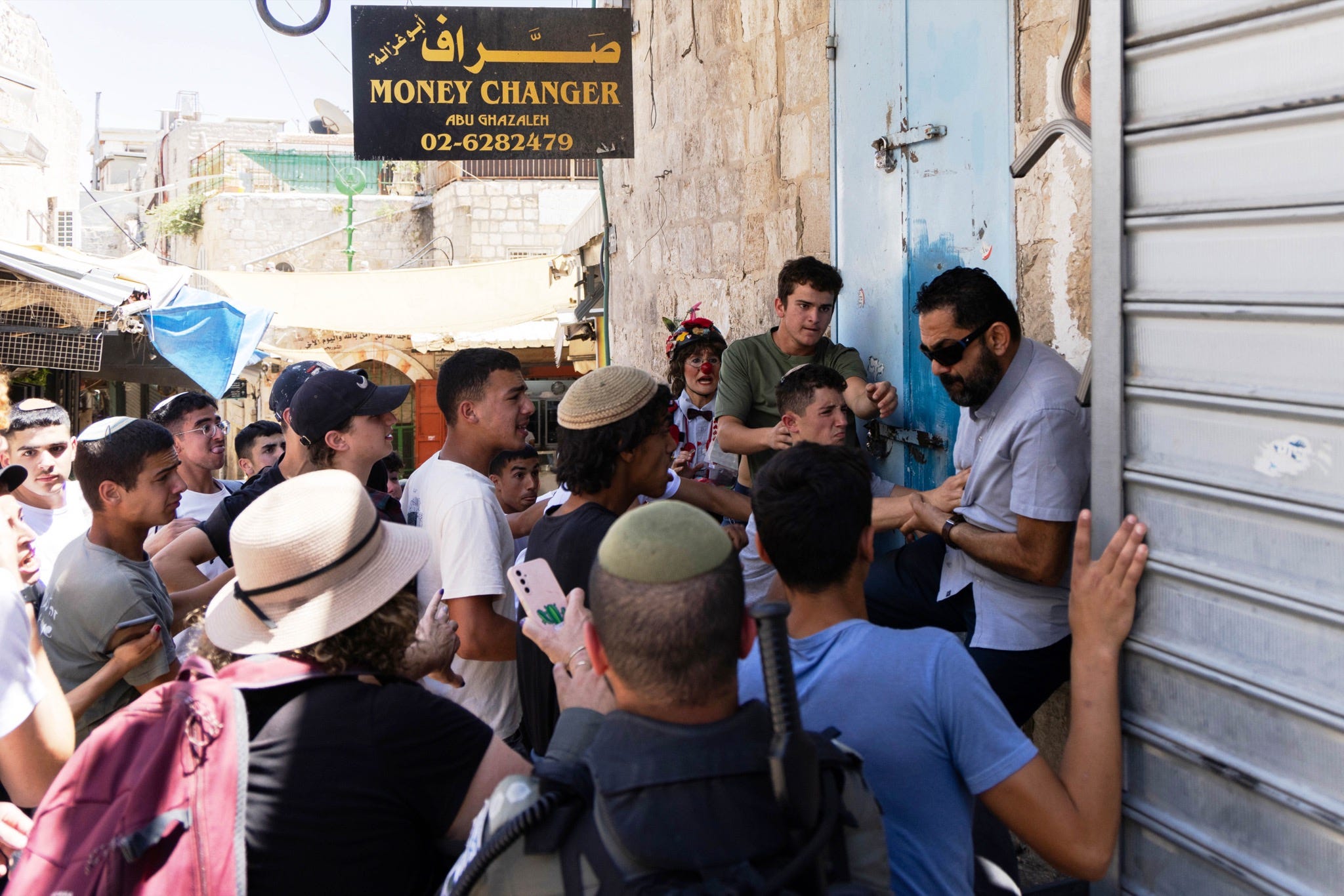
Fucking Jewish packs of rats — A crowd of ultra-nationalist Israelis attack a Palestinian man during the Flag March, in Jerusalem’s Old City, June 6, 2026.
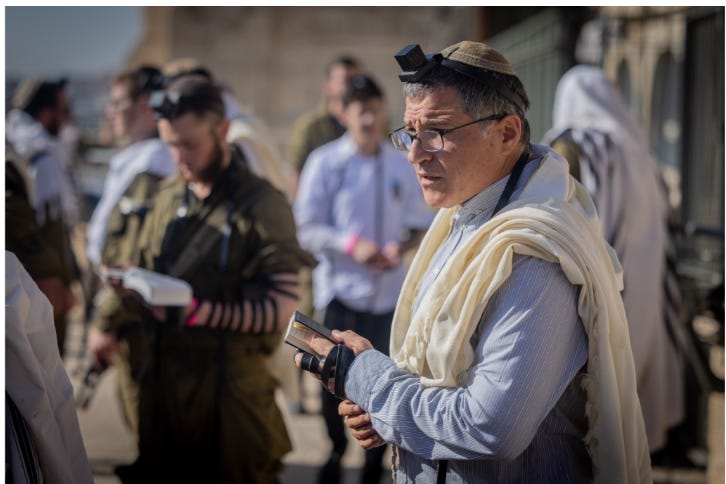
[Maj. Gen. David Zini, head of Israel’s Shin Bet security service, prays with ultra-Orthodox Jewish soldiers from the Hasmonean Brigade after they complete their beret march at the Western Wall in Jerusalem’s Old City, August 6, 2025]
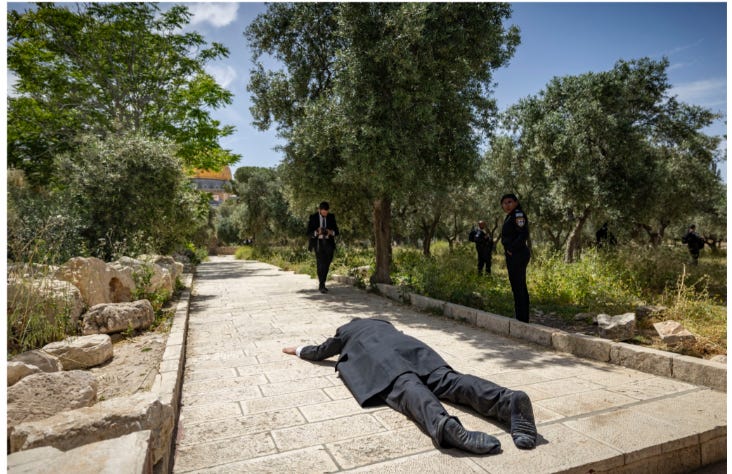
Vile snakes + A Jewish man prays near the Temple Mount/Al-Aqsa Mosque compound during Jerusalem Day celebrations, in Jerusalem’s Old City, May 14, 2026.

Do those pundits, those ex-CIA cunts, ex-Colonel cunts, all those fucking Substackolytes and AltMediaMuckrakers, get it?
Israel’s war is no longer confined to a single front or geography. Since Operation Al-Aqsa Flood on 7 October 2023, Tel Aviv’s military operations have stretched across Gaza, the occupied West Bank, Lebanon, Syria, Yemen, and Iran, forming a continuous theater of conflict rather than a series of isolated campaigns.
The scale matters not only for its human cost, but for what it reveals about how war is being used.
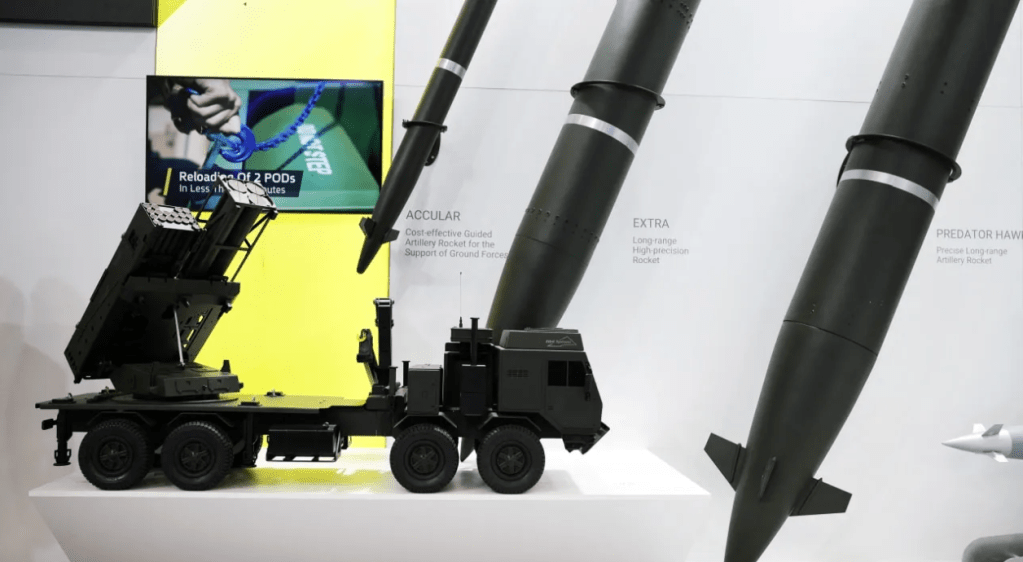
Across these fronts, Israel has deployed a wide range of military systems, from precision missiles and drones to interception platforms, radars, and electronic warfare tools. The battlefield now serves as a proving ground, where these systems are not only used but also showcased.
The central question, then, is no longer simply who arms Israel. It is who enables the system that turns ongoing war into a sustained cycle of production, testing, and global sales.
For decades, US and western support formed the backbone of Israel’s military capacity, providing political cover, financial backing, and technological cooperation. That structure remains intact. But it is no longer the only pillar.
A second layer has taken shape over recent years: normalized Arab states, particularly those tied to the Abraham Accords. These states have become a growing market for Israeli defense exports, forming part of a financial circuit that feeds directly into the industries underpinning Israel’s wars.
The numbers behind the industry
Data released by Israel’s Ministry of Defense shows that defense exports reached a record $19.2 billion in 2025, marking the fifth consecutive year of growth. Over five years, exports have doubled; over a decade, they have quadrupled.
Roughly half of these deals, about $10 billion, are direct government-to-government agreements. That detail is critical. It points to a system where arms exports are not merely commercial transactions, but embedded in political and security relationships.
The trajectory of Arab participation in this market reflects the same pattern. In 2022, Abraham Accords countries accounted for 24 percent of Israeli defense exports, roughly $3 billion. In 2023, their share dropped sharply to around three percent, as the Gaza war reshaped public optics and political messaging.
That decline proved temporary. By 2024, their share had rebounded to 12 percent, or about $1.78 billion. In 2025, Israel reclassified its export categories under the broader label of “Middle East and North Africa,” which accounted for 15 percent of exports, approximately $2.88 billion. This grouping includes the UAE, Bahrain, and Morocco.
The shift in terminology does little to obscure the underlying trend. Arab demand for Israeli military technology has resumed its upward path, even as the wars driving that demand continue.
Notably, in 2025, this regional category surpassed the US as a destination for Israeli defense exports, with 15 percent compared to 13 percent. That comparison underscores the extent to which normalization has moved beyond diplomacy into structured military and financial integration.
Three companies dominate this sector: Elbit Systems, Israel Aerospace Industries, and Rafael Advanced Defense Systems. Together, they account for roughly 90 percent of exports. Their growth reflects not only rising demand, but a system in which battlefield use feeds directly into sales.


[An Israeli settler steals a sheep from Palestinians in the Bedouin community of Dar Abu Faza in the occupied West Bank on May 12, 2026.]

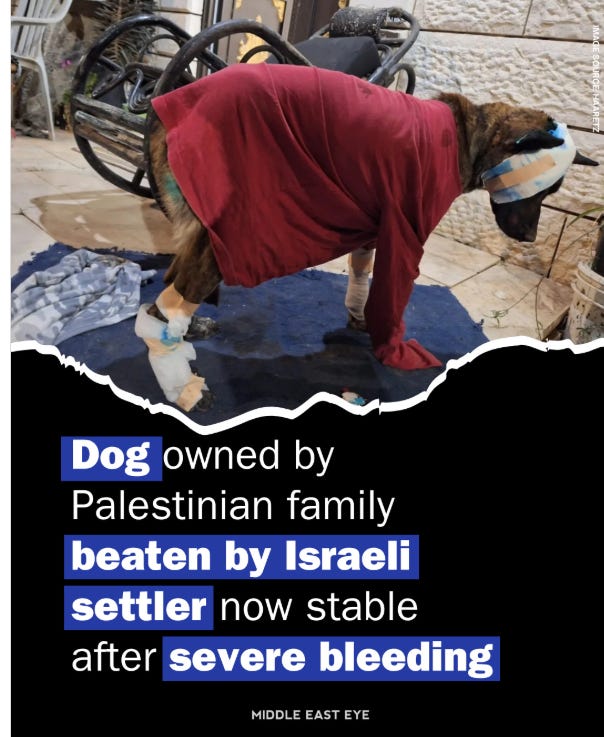
JEWS: It’s a position more and more Palestinians are finding themselves in. Across the West Bank, attacks on Palestinians’ animals – sheep, goats, horses, guard dogs – have become a documented feature of Israeli settler violence. Two videos last month – one of a settler beating a dog named Lucy and another of a settler running over sheep with his ATV and beating a shepherd – went viral. But such cases often receive less international attention than attacks on people. Still, they serve the same purpose: making Palestinian life on Palestinian land unsustainable.
And so that cocksucker, Blumenthal with fucking smirks of Jewish smirking:
Sidney Blumenthal and Sean Wilentz (Jews Jews Jews) dive deep with New York Times reporter Devlin Barrett ….
Synagogue Hostage Crises: Barrett co-authored key coverage on the federal response to the 2022 Texas synagogue hostage situation.Antisemitic Threat Investigations: He has reported widely on FBI probes into bomb threats targeted at Jewish Community Centers (JCCs) across the United States.
Mass Shooting Plots: He broke details regarding federal charges filed against individuals plotting terror attacks on Jewish targets, including an intercepted plot aimed at New York on the anniversary of the October 7 attacks.
Campus Antisemitism Task Forces: He regularly tracks the Trump administration’s Department of Justice civil rights task forces investigating allegations of antisemitism at elite universities.
into his new book, “The Department of Revenge: How Trump Took Control of American Justice,” on FBI director Kash Patel’s lunatic search for a “Grand Conspiracy,” the firings at the FBI and DOJ, and the installation of incompetent stooges.

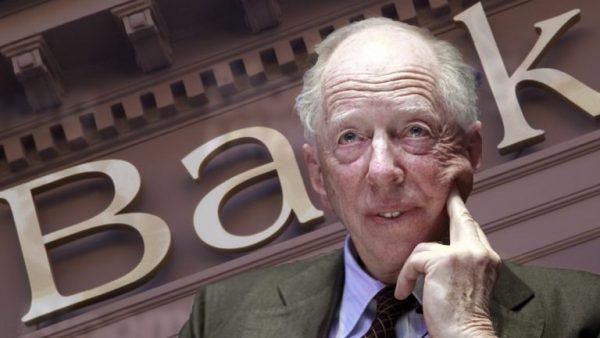
The head of Hungary’s central bank has called for the International Monetary Fund to close its office in Budapest.
The name Rothschild is literally associated with wealth. This is because for over 200 years, the family has remained the most powerful and wealthy family in the world. Most of the Rothschild fortune has been made in the world of banking, but investments in other industries, such as coal, estates, and construction, have helped secure the family’s wealth and immense power.
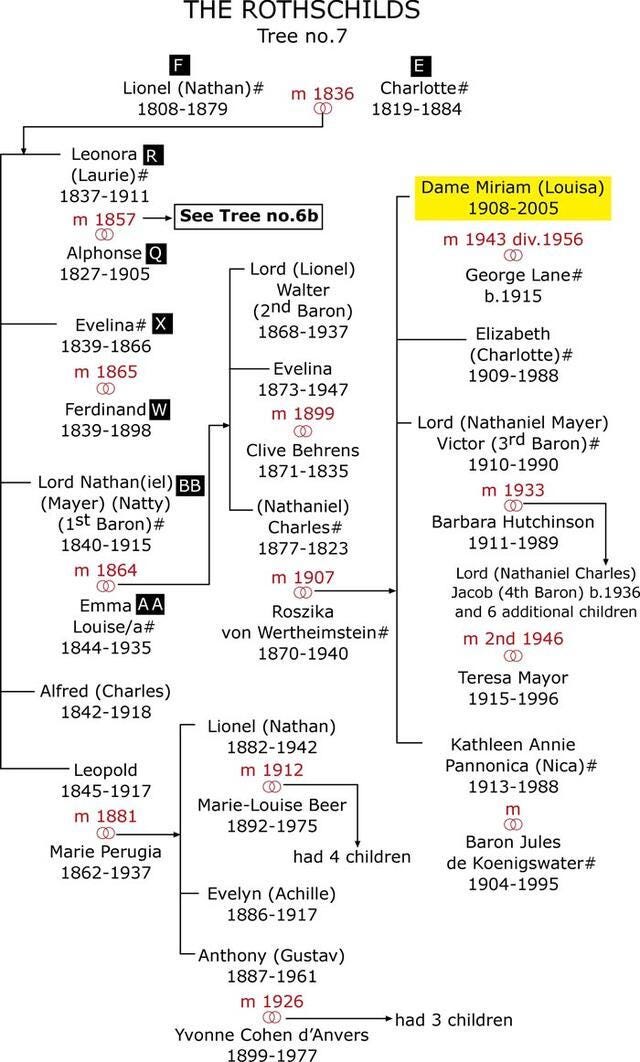
[The Rothschilds are a prominent Ashkenazi Jewish banking dynasty originating from the 16th-century Judengasse (Jewish ghetto) in Frankfurt, Germany. Their surname derives from their ancestral home, zum rothen Schild (at the sign of the red shield). The family established an international financial empire and has actively championed Jewish causes and Zionism. ]
One of the banks owned by the Rothschild group (the biggest banking group in the world) is the International Monetary Fund (IMF), AKA ’Imposing Misery and Famine’. Not only does the group make money off usurious interest rates at the misfortune of crumbling economies, it literally owns Governments and people of power. Because it’s nearly impossible to escape the clutches of the banking group, news of IMF being booted from Hungary is being heralded as a victorious happening.