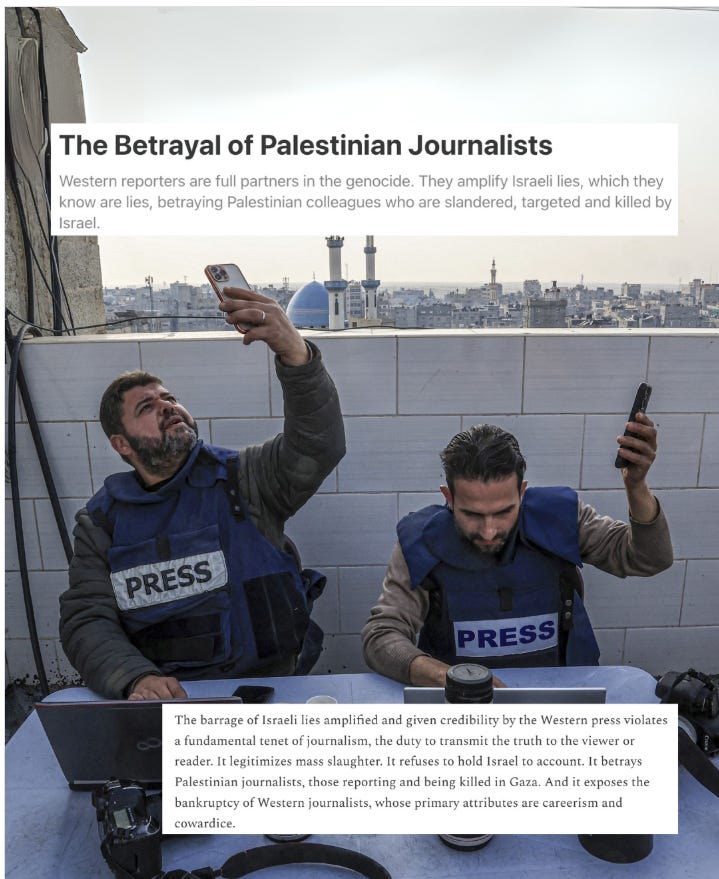

Without accountability, what Israel unleashed in Gaza will be normalized for the world. In such scenarios, the media has already proved its role and complicity.
Aug 24, 2026

Netanyahu: “We’ve survived empires. We don’t fear Turkey.”

Erdogan: “What empires? Your country is younger than my Brother.”
Laughter aside, here is an answer to Netanyahu:
- You may have survived empires, but not one empire survived you. The USA is coming to realise this horrific lesson as I write these lines.
- You certainly survived in one capacity or another, yet your history is a chain of catastrophic disasters, expulsions, pogroms, and holocausts.
Accordingly, survival is becoming a valuable and meaningful concept if it entails greater adaptability and growing fitness to the surrounding reality. You guys did the opposite, as one Israeli professor pointed out a while back: ‘Zionism was supposed to solve the Jewish question; it practically moved it to a new location.’ You are, obviously, about to wander again.
- In the light of the above, the only members of your tribe who really survived are the ones who drifted away and learned to love their neighbors. They divorced Choseness and joined humanity as equal brothers and sisters.
+—+
Man oh man, Jewish fucking values on Satanic Crack Cocaine: Israel Bombs Gaza Over Paper Kites by Eman Mohammed
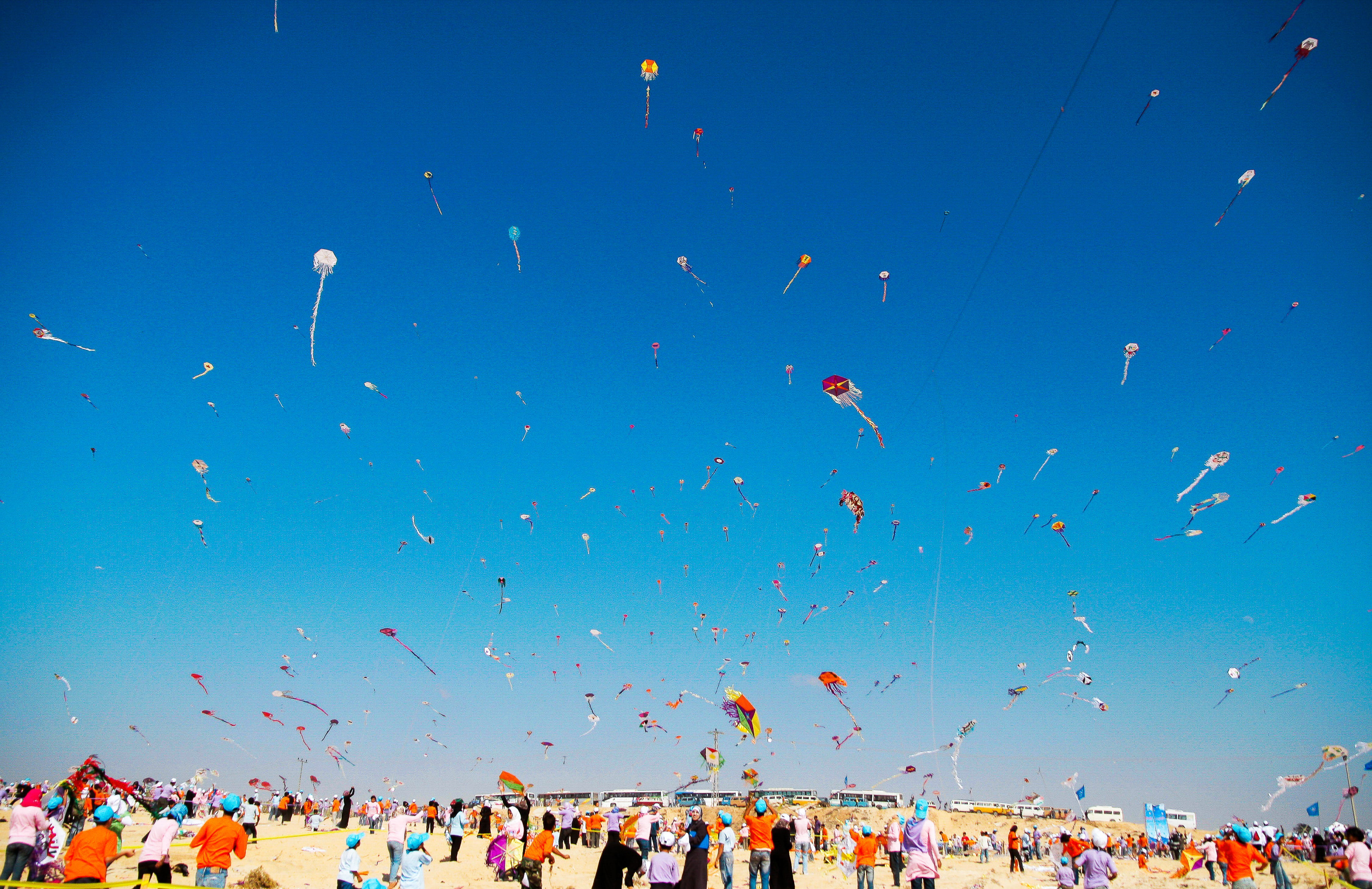
Dublin, Monday 10:15 AM, August 24, 2026 | Gaza Beach, 12:15 PM
The piercing blue sky over Gaza Beach that morning in 2009 held only a few white clouds and hundreds of colored kites. They moved in bright patterns above the water, reds and yellows and greens flashing like dancing rainbows that made the air itself feel alive. Children ran with the speed that belongs only to freedom and joy. Their laughter rose louder than the coastal wind against the kite fabric. Teachers moved between them to help untangle lines. A few strings snapped and fluttered down while others climbed higher. For hours the only sounds were squeals, bare feet on warm sand, and the steady rush of air against colored paper. I stood there with warm tea stinging my hands and two cameras heavy on my chest.
One moment no official report ever recorded stayed with me. A small girl near the water kept stopping to press her kite string against her cheek. She closed her eyes every time she did that, as if checking that the pull was real and that the sky was still open to her. She did it a few times. Each time she closed her eyes for a moment before she ran again. While watching her, I understood that something so ordinary in Gaza had become extraordinary simply because it was still possible.
That same day the children flew roughly six thousand kites as part of UNRWA’s Summer Games, a rare organized effort to provide normality under the siege. They attempted to break the Guinness World Record. Israel denied the verification teams access and the achievement went unrecognized. In 2011 the children returned. On 28 July, more than 12,350 kites filled the same blue sky, all handmade, painted with Palestinian flag colors and calls for peace. Over 10,000 remained aloft for the required thirty seconds. The record was official. Palestinian children broke the Guinness record for the largest number of kites flown at once.
Under siege, Palestinian children have watched toys, art supplies, and treats become subject to military approval. Paper kites join a long list of innocent objects transformed into threats by Israel’s logic.
Seventeen years later, on 22 and 23 August 2026, a couple of handmade paper kites drifted out of Gaza’s sky into the airspace above the occupied territories. Israeli occupation forces located and recovered them near Kibbutz Nahal Oz. The kites carried no explosives. Occupation officials themselves stated they posed no danger to the public.
Occupation Defense Minister Israel Katz ordered a forceful response, declaring that a balloon, a kite, or a drone would be treated the same way, with or without explosives. In a joint statement with the prime minister’s office, he threatened intensified targeted strikes and possible evacuations of areas used as launch sites. The rule was clear, any object capable of crossing the perimeter would be treated as a potential threat. Under this colonial doctrine, there is no meaningful difference between a child’s handmade paper kite and a bomb. Confirmation that the kites carried nothing changed nothing.
Hours later, airstrikes hit al-Zawayda in central Gaza. At least six people were killed, including four-year-old Muhammad Abdel Salam Taha, and several others wounded. The occupation claimed the kites had been launched by militants directed by Hamas. When handmade kites are answered with airstrikes that kill a four-year-old, the line between security and war crimes disappears in public view. Under occupation logic, resistance is defined by movement itself, whether that movement carries a gun or a string attached to a paper kite.
The faces of misanthropic multimillionaires and billionaires. Dead eyes, soulless conscience/consciousness.
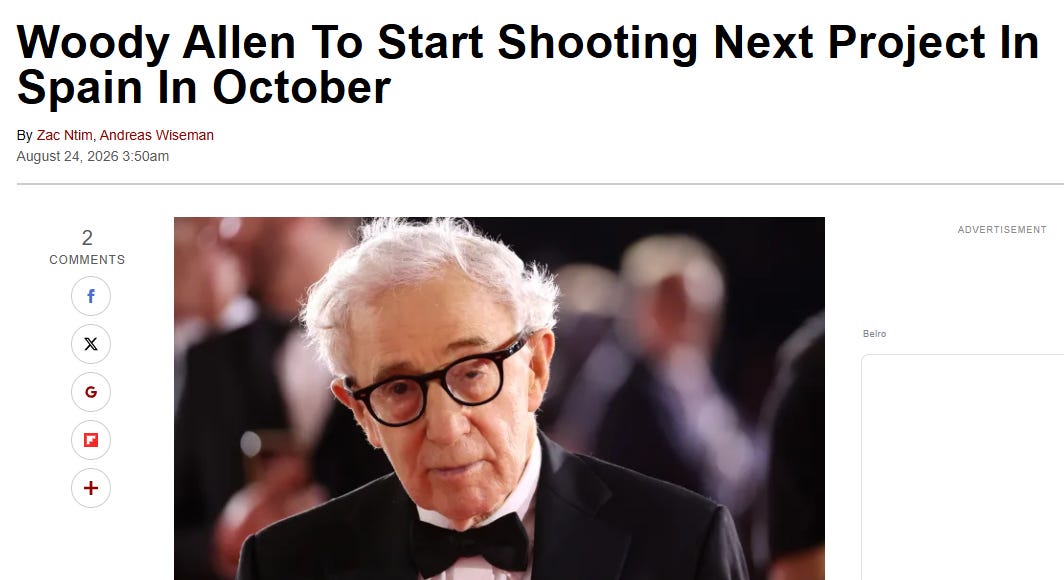
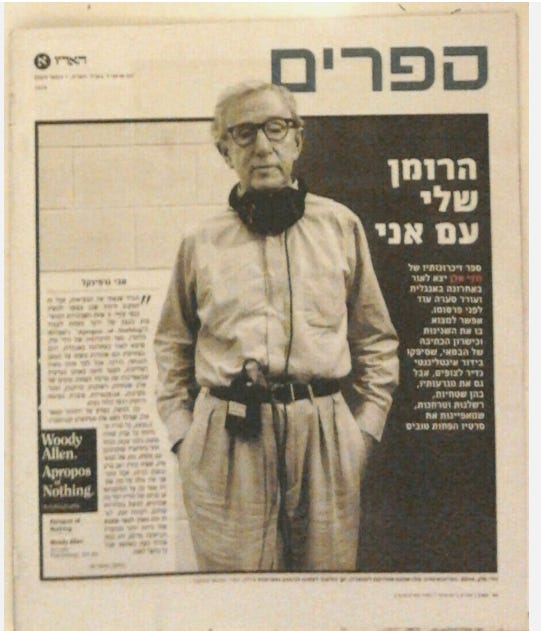


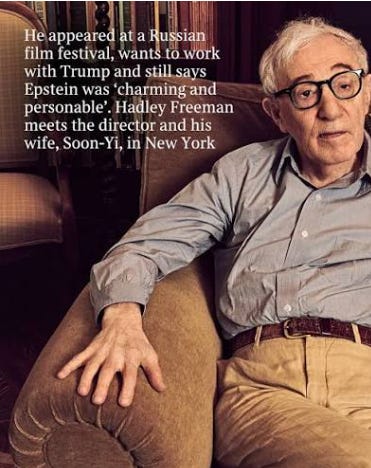

FUCK SPAIN!
The immigrant father of a U.S. sailor on board the USS Abraham Lincoln aircraft carrier, which was deployed in the Middle East during the Iran war, was taken into federal immigration detention, the sailor said in a Facebook post.
U.S. Border Patrol arrested Luis Manuel Aviles Roa, originally from Nicaragua, after conducting a vehicle stop in Key West, Florida, a spokesperson of the Department of Homeland Security, of which Border Patrol is a part, separately said on Sunday.
“I’ve been deployed for over nine months, out at sea in the Middle East aboard the USS Abraham Lincoln, fighting for a country that has given me everything,” Joshua Aviles, the son of the detained immigrant, said on Facebook.

$1T investment giant Apollo breached after social engineering attack
Hackers spent four days inside the org’s cloud platforms after apparently talking their way in

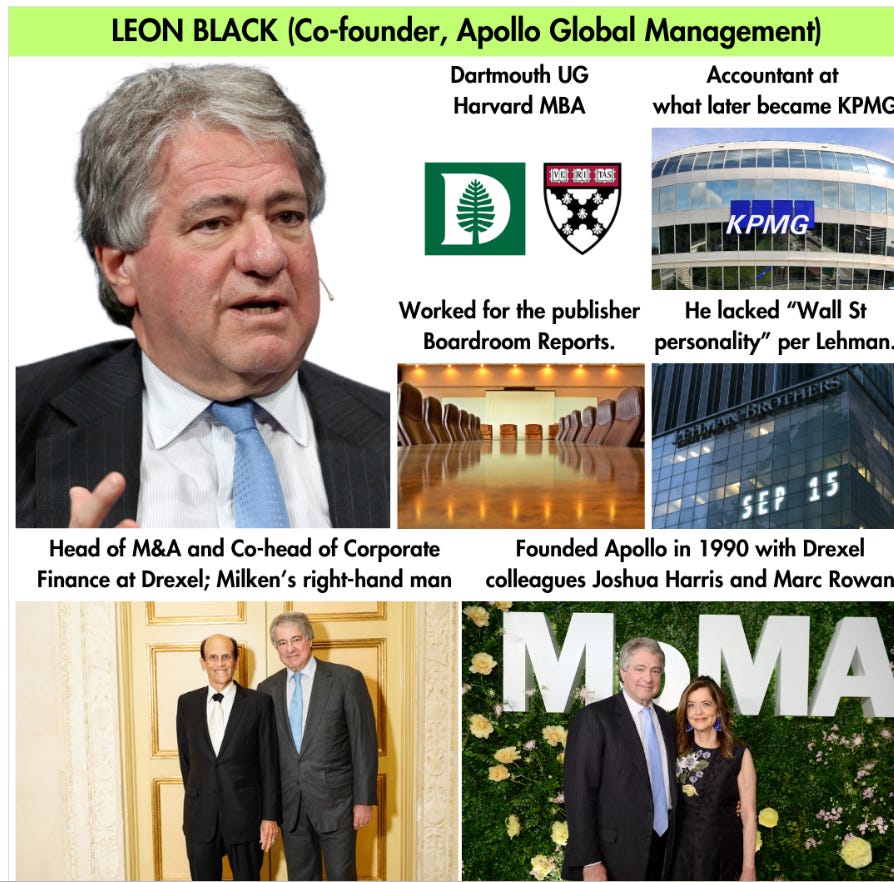

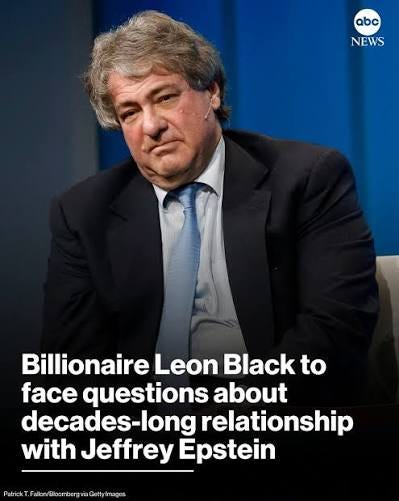
JEWS. The Lot of them. Beheaded, please: Billionaire investor Leon Black is accused of raping teen in Jeffrey Epstein’s NY townhouse
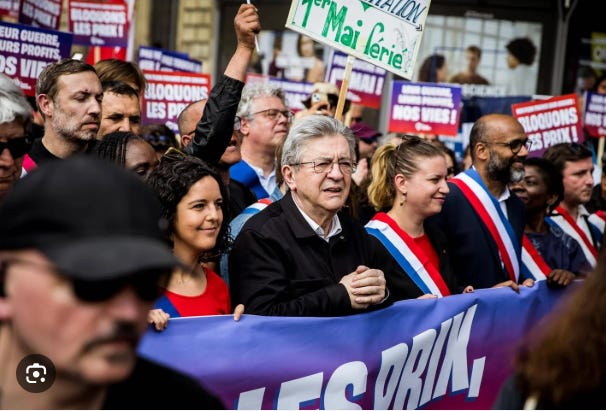
French far-left leader Jean-Luc Melenchon is seen as the most likely rival to far-right candidate Marine Le Pen in next year’s presidential run-off, a Monday poll showed, underlining a deeply polarised electorate as Emmanuel Macron’s presidency draws to a close.
The Reuters Daily Briefing newsletter provides all the news you need to start your day. Sign up here.
- Melenchon, the candidate of the far-left France Unbowed (LFI) party, is seen reaching a run-off in at least three of the five scenarios polled, while he tied for second place in a fourth scenario. Le Pen is seen beating him easily in a run-off.
- The poll makes sobering reading for France’s centrist candidates who are struggling to reach an electorate that is increasingly polarised.
- As Macron’s second and final term comes to an end, the unpopular president leaves behind a hollowed-out political centre and weak economy, opening space for hardline parties, such as LFI and Le Pen’s National Rally.
- “The risk of Mrs Le Pen and Mr Melenchon facing each other in the second round is real and serious,” centrist candidate Edouard Philippe told reporters on Monday.
- Melenchon was seen winning around 16% to 17% in the first round, while Le Pen would get 35% to 38% of votes. Le Pen would win 64% of the votes against Melenchon in the run-off.
- Melenchon has already run three times for president in 2012, 2017 and 2022 but has never managed to reach the second round.

Superbly ignored by the media until recently, Jean-Luc Mélenchon is the new flavour of the day in the French presidential campaign. In truth, while trying to account for his dramatic rise in the polls – latest reports put him at 17% of the vote – most commentators could not help pour scorn on the Left Front candidate.
A survey of the main articles recently published in the British media provides a compelling case study of political prejudice and misunderstanding. Mélenchon is described as an “Anglo-Saxon basher with a whiny voice” (the Independent), a “populist” who’s “on the hard-left” (all newspapers) and a “bully and a narcissist, out to provoke” (BBC). More sympathetic commentaries compare him to George Galloway or depict him as a “far-left firebrand”, a “maverick” and the “pitbull of anti-capitalism”.
It is striking that the more favourable assessment of Mélenchon’s politics remains off the mark. Mélenchon is seen as a “lovable but old-fashioned leftwinger”. This fails to capture the essence of his political ambitions. Mélenchon’s rise has nothing to do with “1970s-style politics and nostalgia”, but is linked instead to his resolute take on the current capitalist crisis. He tells audiences that the austerity policies implemented across Europe are not only unfair but also counterproductive (even the Financial Times agrees). Mélenchon’s debating skills serve his cause, but he is also a lettered pedagogue: a dignified politician who has never participated in vulgar reality shows. What is more, Mélenchon is a French republican and a socialist, not a “far-left” or a fringe politician. He spent 30 years in the Socialist party unsuccessfully arguing that it should be a force at the service of ordinary workers, and he was a cabinet minister in Lionel Jospin’s government.
Oratory is politically useless if one does not have an important message to deliver. Mélenchon has one: neoliberalism has failed, so it would be suicidal to persist with its inadequate policies. The French MEP also had a credible programme. In didactically crafted speeches or in media interviews, he radically departs from mainstream politicians by explaining that the economic crisis is systemic, that is to say that it is due to our flawed political choices and priorities. Our societies have never been as productive and wealthy as today, but the majority of the population are getting poorer despite working harder and harder. The problem is not a question of wealth production (as neoliberals and Blairite social democrats would have us believe), but of redistribution of wealth.
In France raging pundits and opponents call the Left Front programme an “economic nightmare” or a “delirious fantasy”. Shouldn’t they instead use this terminology to describe the banking debacle or austerity policies across Europe? Mélenchon’s growing number of supporters view it as common sense and salutary: a 100% tax on earnings over £300,000; full pensions for all from the age of 60; reduction of work hours; a 20% increase in the minimum wage; and the European Central Bank should lend to European governments at 1%, as it does for the banks. Here are a few realistic measures to support impoverished populations. Is this a revolution? No, it is radical reformism; an attempt to stop the most unbearable forms of economic domination and deprivation in our societies. Fat cat bosses may leave France; they will be replaced by younger and more competent ones who will work for a fraction of their wages. “Humans First!” is more than a manifesto title, it is a democratic imperative: a sixth republic in place of the current republican monarchy; the nationalisation of energy companies (as energy sources are public goods) and, less often noticed, the ecological planning of the economy, the core of Mélenchon’s political project.
Mélenchon has done French democracy a further favour. In a memorable TV debate, he emphatically defeated the extreme right for the first time in 30 years. Concentrating on policy details, Mélenchon demonstrated that Marine Le Pen’s programme was regressive for women. Furthermore, he smashed to pieces the myth of the Front National as a party that has the working class’s best interests at heart. Le Pen appeared lost for words and ill at ease.
Mélenchon’s campaign politicises the young. He appeals to the working class, which, contrary to some claims, has largely shunned Le Pen and which has been abstaining from the vote. For the first time in decades, Mélenchon is helping the left to reconnect with the popular classes. For Mélenchon, free market politics does not work and inflicts unnecessary suffering on the people. No other European politician is better placed than he is to convincingly argue that point.
+—+
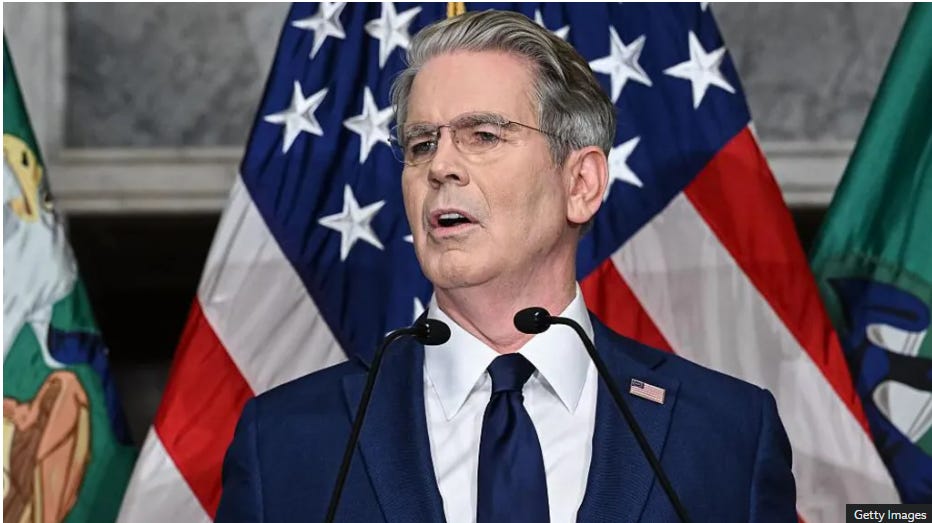
The sickness of the Gay Jew Loving Freak:
Iran faces ‘greatest financial offensive ever’, says US treasury secretary
SANITY:
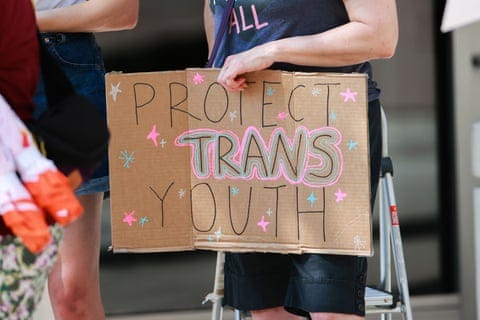
New Mexico will continue funding gender-affirming care for minors after a federal rule ending Medicaid support for such care goes into effect.
On 13 August, the Trump administration finalized a rule – set to go into effect on 13 October – that will end funding for gender-affirming care through Medicaid and the Children’s Health Insurance Program (Chip).
New Mexico’s “Health Care Authority is planning to continue covering these services using state funds”, Timothy Fowler, a state health care authority spokesperson, wrote in an email to the Santa Fe New Mexican.
Earlier this year, New Mexico also announced that it would cover the cost of expiring Affordable Care Act tax credits for residents who purchase health insurance on the state marketplace. In July, a news analysis showed that New Mexico was the only state in the country where Affordable Care Act enrollment increased after federal subsidies expired at the end of 2025.
Fucking sicko cunts, INFANTILIZED GOYIM!
This is what a bunch of Tex-ass ticks looks like!
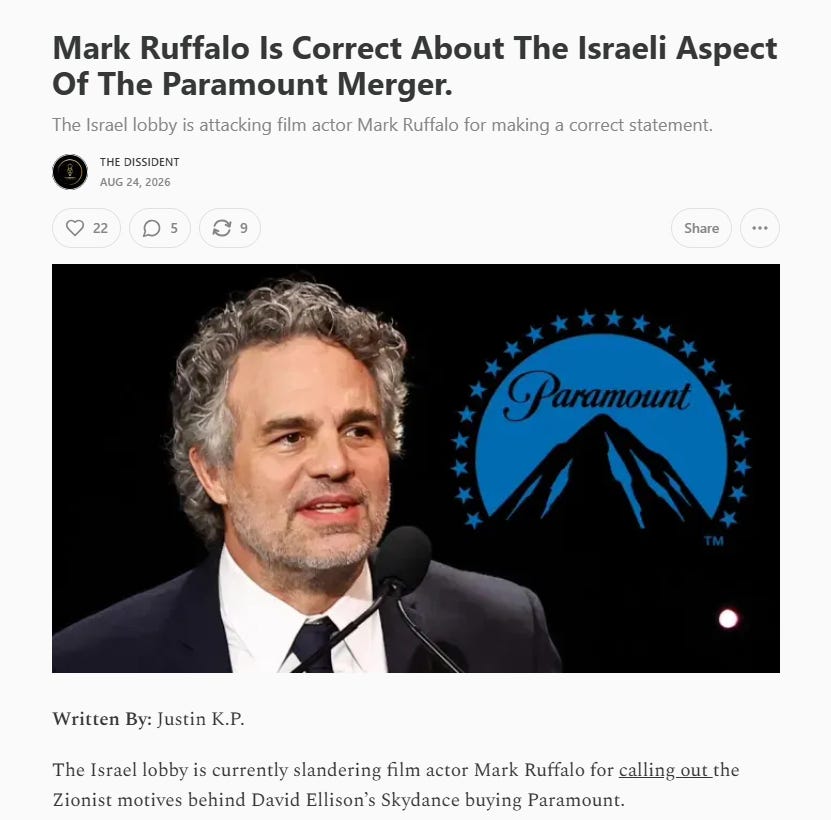
JEWS, fucking THESPIAN, it’s The Jews.
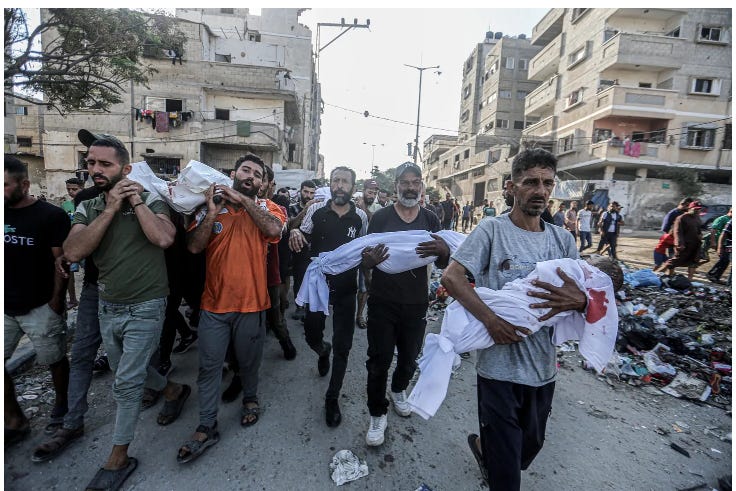
4,379 Jewish Israeli violations of the Gaza ‘ceasefire’ as Palestinians reel under bombing and siege
Thousands remain buried under the rubble as Gaza faces severe aid restrictions, movement curbs, and worsening humanitarian conditions nearly a year into the supposed truce.
Jews, man, this is a JEWISH project.
Coverage of My Book Being Banned Proves the Thesis of the Book
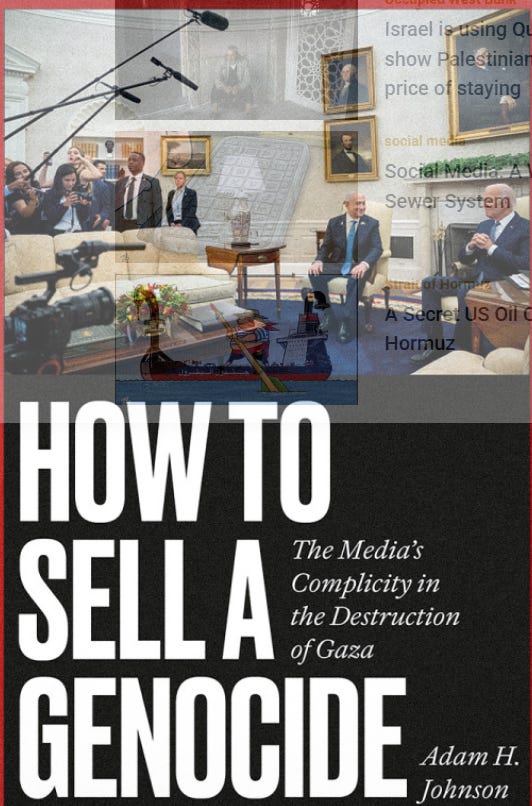
A library in Australia “removed” How to Sell A Genocide from its shelves, and the media’s coverage of it committed at least three of the tropes I document. Let us review them.
Adam Johnson
Aug 24, 2026

Last week, JWire reported that my book, How to Sell a Genocide: The Media’s Complicity in the Destruction of Gaza, had been “removed” from the Waverley public library in Sydney, Australia. In covering the ban, some Australian media allowed pro-Israel propagandists to casually libel me as antisemitic, a false charge that is completely divorced from the content of the book, which is nuanced and fair and takes on universal themes of human dignity and opposition to colonialism and racism.
My first instinct was to merely post on social media about the banning, noting how absurd and racist the book ban defenders’ logic was, and move on with my life. After all, my book is not the story—nor, if it were, would this be a particular interesting one. On the list of free speech suppressions and libel in the past three years over Palestine, this wouldn’t crack the top 10,000. But news of the ban was subsequently picked up by The Guardian Australia, The Independent in the UK and the largest newspaper in Australia, The Sydney Morning Herald. And given how poor the coverage of the banning has been, namely by the latter two outlets, I thought this episode could be a good object lesson in how the smearing of Palestine and its defenders operates in mainstream Anglosphere media.
The fact that you can sling around libel without evidence in the largest newspapers in Australia gives us a window into how discussion of basic Palestinian rights is shut down using the most sectarian framing possible. Let’s break down three tropes featured in the coverage of my book banning that I also detail in the book itself. Forgive me if this is meta—and a touch self-indulgent—but there’s a reason there are striking similarities, and it’s because the Israel lobby and its aggressive PR apparatus more or less use the same script for every act of smearing, censoring, and intimidation. So they’re worth taking this opportunity to unpack.
1. Feigned credulity: Taking pro-Israel crybully organizations at their word, rounding up to the most sectarian framing possible, and flattening Jewish identity and zionist ideological activity.
The Independent and Sydney Morning Herald largely embrace the pro-Israel lobby’s framing that the removal of my book was prompted entirely by, or at least largely by, a “complaint from a Bondi attack survivor.” The Independent’s Stuti Mishra would adopt this framing in its headline: “Australian library pulls book on Gaza from shelves after complaint from Bondi attack survivor,” the article announces. The Sydney Morning Herald’s Melanie Kembrey would also accept this framing at face value in her reporting, writing that, “the move follows a report by Jewish news service JWire last week that a survivor of the Bondi Beach massacre had posted on Facebook that she was distressed to see the book displayed on the new-release ‘What’s Hot’ shelf of Waverley Library.”
What’s important to emphasize here is: we have no way of knowing that this is what caused, or even sparked, the removal of the book. This is just an assertion made by those seeking to ban it. JWire reported, citing an alleged Facebook comment by the survivor in question, that her complaint is what prompted the book’s removal. But The Guardian reports that they were “unable to locate the Facebook post” in question. More importantly, both Sydney Morning Herald and The Independent seemingly contradict, or at least undermine, this simplistic narrative, by mentioning elsewhere in their articles that, as The Independent noted, the library council “has received multiple complaints about [the book].”
So was the book banned because a Bondi attack survivor complained, or was it due to the “multiple complaints”? Or was it both? If it was both, do we know which came first: the Bondi survivor complaint or the “multiple” other complaints from, presumably, unrelated parties?
The timeline is important because it suggests a fairly bog standard pro-Israel propaganda technique of front-loading censorship—and other oppressive and illiberal actions—in the most sympathetic and humane language possible. Obviously, “Pro-Israel Organizations Successfully Ban Book on Gaza” hits differently than “Library pulls book on Gaza from shelves after complaint from Bondi attack survivor.” After all, what kind of heartless monster would want to upset a Bondi attack survivor?
Alex Ryvchin, co-chief executive officer of the pro-Israel lobbying organization ECAJ, was eager to praise my book’s removal from the library, telling the Sydney Morning Herald, “A book of this sort has no place on the shelves of a library, especially one within minutes of where Australians were slaughtered in large part due to the dehumanisation of Jews precisely through this sort of libel. I commend the individual who spotted the book, herself a survivor of the massacre, and acted to have it removed.”
Was Ryvchin one of the other “multiple” parties that demanded my book be removed? If so, was it prior to the aforementioned Bondi survivor’s complaint? Did the Herald inquire about his involvement in the campaign to remove the book? Did the Herald ask him to specify examples or provide any evidence of me “dehumanizing” Jewish people, a false and libelous accusation? They did not. He is simply presented as a neutral observer with no involvement in the censorship campaign.
I sent a request for comment to the Waverley library last week, to try and pin down the timeline of the “complaints.” They replied this morning but ignored the question, instead objecting to my use of the word “ban” but not denying it was, indeed, banned.
“Contrary to some media reporting,” the library’s manager informed me via email, “the Council has not ‘banned’ the book. It remains a part of our collection; however, it is currently unable to be borrowed pending completion of a review.”
Ah, ok, it wasn’t banned, it’s just “currently unavailable to be borrowed.” Well never mind then. Hopefully this “review” goes my way! A group of organizers in Australia have started a petition calling on the library to restore the book and “protect the public’s right to read.”
But, again, it’s important to make clear that my book being “removed” from one public library isn’t the story. The story is that this is only one part of a broader censorship and bully regime that is rapidly escalating in the West. This story comes in the context of a massive crackdown on Free Speech in Australia, in particular, which is overwhelmingly targeting pro-Palestine speech and being done in the name of “combating antisemitism.” As Jacob Mchangama and Samantha Barbas noted for MSNOW in January, “what began as a moment of national mourning [in the wake of the Bondi attack] has rapidly turned into one of the most sweeping expansions of hate speech laws and protest restriction powers in the country’s modern history. Intended as an urgent response to antisemitism, new federal and state measures threaten to reach far beyond violence or direct incitement—reshaping how speech, protest and political dissent are regulated in the wake of terrorism.”
As I detail in said book, namely Chapter 8, “‘Antisemitism’ show trials and the smearing of campus protests,” framing suppression of Israel-critical speech in terms of sensitivity, anti-racism, and “fighting hate” is a textbook pro-Israel bully tactic. Using liberalism against itself is a consistent and well-documented strategy from zionist organizations to delegitimize, stigmatize, and brand as hateful those who are meaningfully critical of Israel and its regime of violence against Palestinians.
It’s useful here to distinguish the Guardian’s coverage from that of The Sydney Morning Herald and The Independent. The Guardian’s framing was mostly skeptical and fair. They sought comment from me, my publisher, and other critics of the book ban, and did not overly indulge the “Bondi survivor.” I should also note that Sydney Morning Herald’s Kembrey did reach out to me for comment, but did so at 12:41 a.m. central time and published her article a couple hours later. So alas, not being awake in the middle of the night costs me an original comment in The Herald. Though I doubt it would have mattered much in the overall credulous and uncritical orientation of the article.
The framing of the ban on my book as the ah shucks, entirely organic result of a “Bondi survivor,” without any interrogation of the source of these “multiple” other complaints, is doing 90% of the heavy lifting for the zionist censorship lobby that was eager to not only praise the decision in the pages of the Sydney Morning Herald, but frame it in purely sectarian terms. That Sydney Morning Herald and The Independent ran with the simplistic and manipulative “Bondi survivor complained” framing, without an ounce of skepticism, shows how these Israel advocacy organizations score major PR victories before the text of the article or any reporting is even done.
2. Reducing claims of genocide in Gaza to a fringe, subjective opinion by a “self described radical publisher” while omitting it is the overwhelming consensus of human rights and humanitarian organizations, as well as genocide scholars.
The reduction of mainstream opposition to Israel as an unserious or fringe position—while ignoring how widespread and obvious it is outside the corridors of beltway elite circles—is a trope I detailed in Chapter 9 of my book specially under the section, “The Atlantic And The Importance Of Policing Seriousness.” All three articles framed the fact that Israel committed genocide in Gaza as a mere opinion of mine, without noting it is the broad consensus in the humanitarian and human rights world, as well as that of scholars tasked with studying and determining such matters. While all three quoted me making this point, they did not report on the fact of this consensus. This isn’t just a vague feeling from a partisan left-wing media critic—it’s the majority academic assessment. They ought to have noted, as I detailed in my unpublished full comment to The Guardian, that genocide in Gaza is the determination of Amnesty International, Human Rights Watch, Doctors Without Borders, B’Tselem, Physicians for Human Rights – Israel, and the International Association of Genocide Scholars, as well as Omer Bartov, Israeli-American professor of Holocaust and Genocide Studies at Brown University; Amos Goldberg, Israeli professor in the Department of Jewish History and Contemporary Jewry at the Hebrew University of Jerusalem; Raz Segal, Israeli historian and associate professor of Holocaust and Genocide Studies and endowed professor in the Study of Modern Genocide at Stockton University, among dozens of other prominent Israeli and American scholars.
Instead of mentioning any of these liberal validators, that would have shown how fringe the book ban advocates’ position is and how mainstream my headline was, it is presented as a mere claim by the book’s author and we are then served up pat denials from Israel. “Israel has repeatedly denied committing genocide in Gaza,” notes the Independent (though it does link to an article detailing UN’s claims of genocide). The Guardian writes that “Israel has repeatedly denied that it has committed genocide in Gaza” without highlighting the major humanitarian and human rights groups arguing otherwise.
The fact of Israel committing genocide in Gaza is overwhelming consensus among those tasked with documenting and determining such matters. Presenting this objective reality as my opinion, without citing the underlying evidence supporting it, is playing into the idea the “genocide” label is a fringe or emotionally charged label when it is anything but.
3. Casually conflating Palestine solidarity with antisemitism and ISIS-inspired violence.
The whole point of focusing on the Bondi survivor complainant is, of course, to conflate solidarity with Palestine with the Bondi attack, which was an ISIS-inspired massacre last December that killed 15 Australians (14 of whom were Jewish) and had absolutely zero to do with Palestine, Palestinians, or Gaza. Indeed, the only major player in Palestine with significant links to ISIS is Prime Minister Benjamin Netanyahu, who Israeli outlet Haaretz reported last year has been arming ISIS-linked gangs in Gaza to undermine Hamas and steal aid, a fact publicly confirmed by Netanyahu’s former Defense Minister Avigdor Lieberman.
Despite it having no factual basis, conflation of Palestinian militants, civil society and advocacy with “ISIS,” as I note in Chapter 1 of my book, “‘40 beheaded babies,’ the ISIS-ification of Hamas, and how to prime the American public for revenge,” was crucial to propagandizing Western audiences and using the blunt instrument of Islamophobia to build sympathy for the cause of open-ended Israeli violence.
None of the above outlets felt it necessary to note that there has been no proven link between the Bondi Attack and Palestine solidarity. The Australian government has spent millions attempting to find such a connection, but alas has come up empty. Why should pro-Israel advocates be permitted to casually make such a conflation without any reporters noting these two things are wholly unrelated? Why is this conflation of ISIS and Palestine solidarity permitted to be repeated without any attempt to correct this misconception? Perceptions on the part of a handful of motivated actors is not sufficient reason to indulge their delusions. Nevertheless, racist conspiracy theories conflating Gaza advocacy with violence inspired by a movement and cause that has zero to do with Palestinians, and is largely backed by Israel’s regional allies, is permitted without any pushback because these two things, in the Western, orientalist mind, feel vaguely related.
These are subtle interventions by the above outlets and, as I mention, far from the biggest crimes in Western media related to Palestine. I am not a free speech martyr, as some have alleged, nor do I seek to be. But I think it is useful to note how, when reporting on the banning of a book about media propaganda, we saw at least three of the very tropes detailed in the book being banned. These subtle framings, while seemingly minor in isolation, add up. They go, before one even notices, from lazy tropes, credulous reporting, and racist assumptions to a narrative, a story. Just like that, the banning of a perfectly sober, rigorous, and nuanced book is framed as a small act of kindness for a terrorism victim. And the author, who went out of his way to be nonsectarian, to examine universal humanitarian themes, and to highlight Jewish anti-zionist activism, is accused of horrific dehumanization in Sydney’s largest newspaper without any pushback or deeper reporting. The overt suppression of free speech in Australia is another major escalation, and embracing this grimy, misleading, and libelous framing without much thought or skepticism—as The Independent and Sydney Morning Herald did—is yet another example of Western media’s role in selling genocide.