

Madrid resident traveling from Tucson to Portland, soaking in the U S of A with a little bit of Trump Derangement Syndrome via Europe, stops off in Lincoln County for a radio interview
by Paul Haeder / June 23rd, 2026
Dear Pablo Haeder:
When I get to Spain, the relaxed travel mode ends and my head goes crazy…
I’m writing for two reasons. One is to apologize, and of course, if you’d like, we can pick up where we left off.
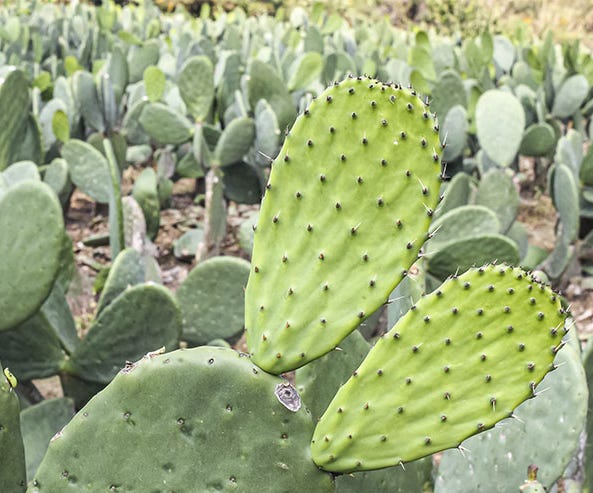
The other is that “La Nopalita,” my old Volkswagen, is still traveling through the United States with a friend, also named Pablo, and he’ll be passing through Cape Perpetua again in a few days.
Pablo is another great traveler, another very interesting person, and I think you’d like to interview him or just meet him.
If you’d like, I can put you in touch. He’s traveling alone, and I think you’d get along really well.
Let me know. Big hug from Spain.
Adro.

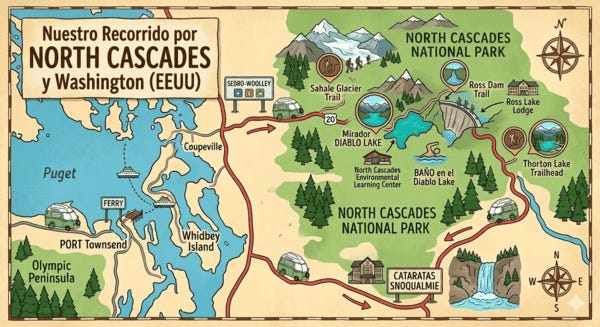

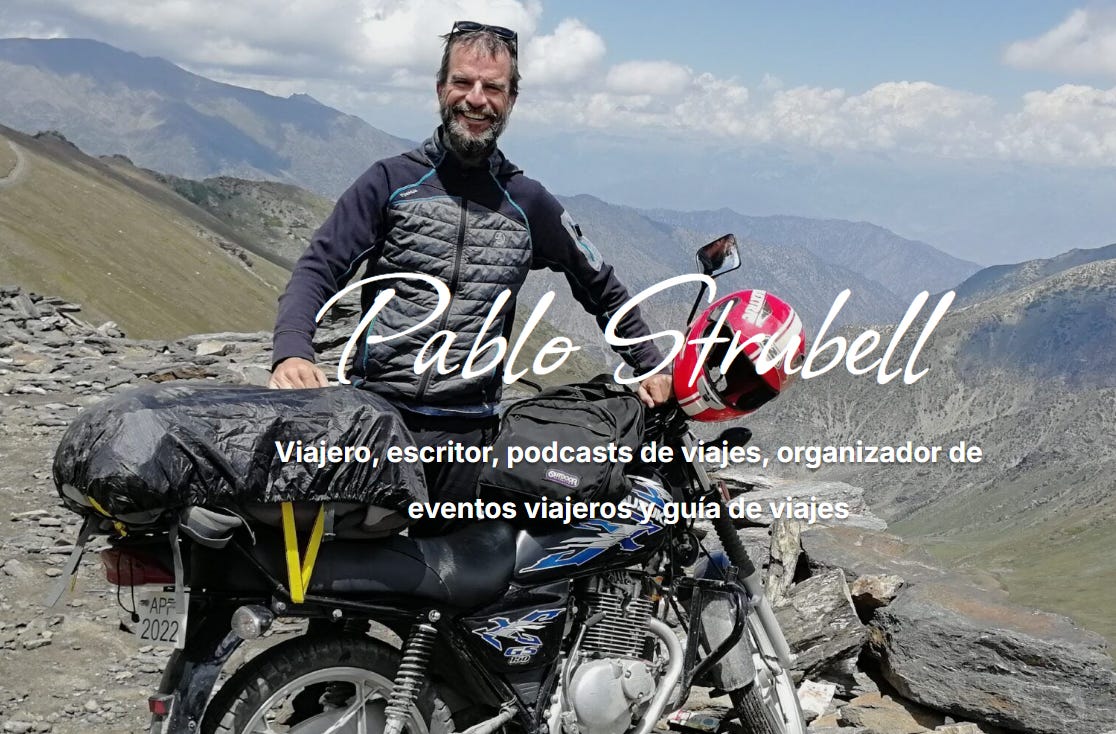
So, here comes Pablo Strubell (b. 1975), who went to university in Madrid to become an economist. He did some import and export work for two companies in Spain, representing them in Malaysia — a sweetener company and a cigarette lighter company.
He is obviously passionate about long journeys, photography, and gastronomy. He told me that he’s been the manager of the Spanish Geographical Society (SGE), which is a small version of the National Geographic Society-USE.
The Spanish Geographical Association (AGE) is a professional partnership of geographers whose main purpose is to promote and further develop the Spanish geographical science and its applications, and disseminate and publicize the geographical knowledge in society.
The AGE was founded in 1975 during the celebration of the Fourth National Conference of Geography. Since then, its activity has been focused on promoting scientific meetings, coordinating the activities of the Spanish Geography Society, and collaborating with other national and international geographic associations.
The AGE states it currently brings together nearly 1,000 people connected with Geography through teaching, research, and the free practice of the profession of geographers.
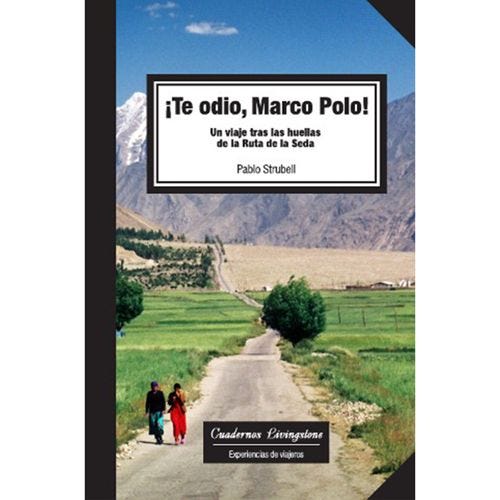
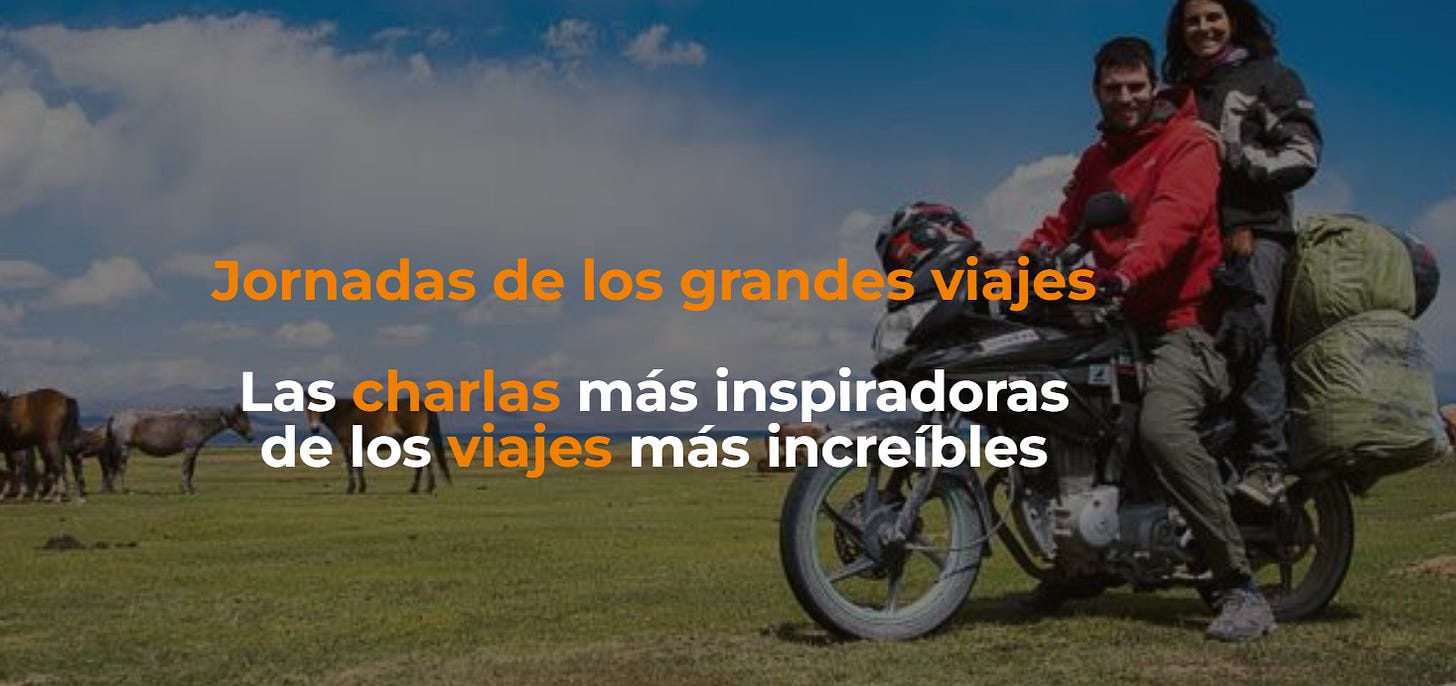
Pablo also ran a Madrid bookstore, De Viaje. He lived in Malaysia and Turkey, a country about which he has written several guidebooks for the publisher Anaya. In 2005, he embarked on the first of his great journeys, traveling the Silk Road for eight months, a trip he described in the book “I Hate You, Marco Polo!” (Niberta, 2009). Since then, he has been a contributor to *Altaïr* magazine, the AGE Bulletin, and the collective travel blog *La línea del horizonte* (The Horizon Line). In 2010, he crossed Africa by public transport with his partner, Itziar Marcotegui. For twelve months, they traversed the continent from South Africa to Morocco along the Atlantic coast.
De Viaje is a specialized travel bookstore and boutique travel agency located in the upscale Salamanca neighborhood of Madrid. Operating for over 35 years, it serves as a comprehensive hub for travel enthusiasts by combining a curated bookstore, a travel gear shop, and custom trip-planning services.

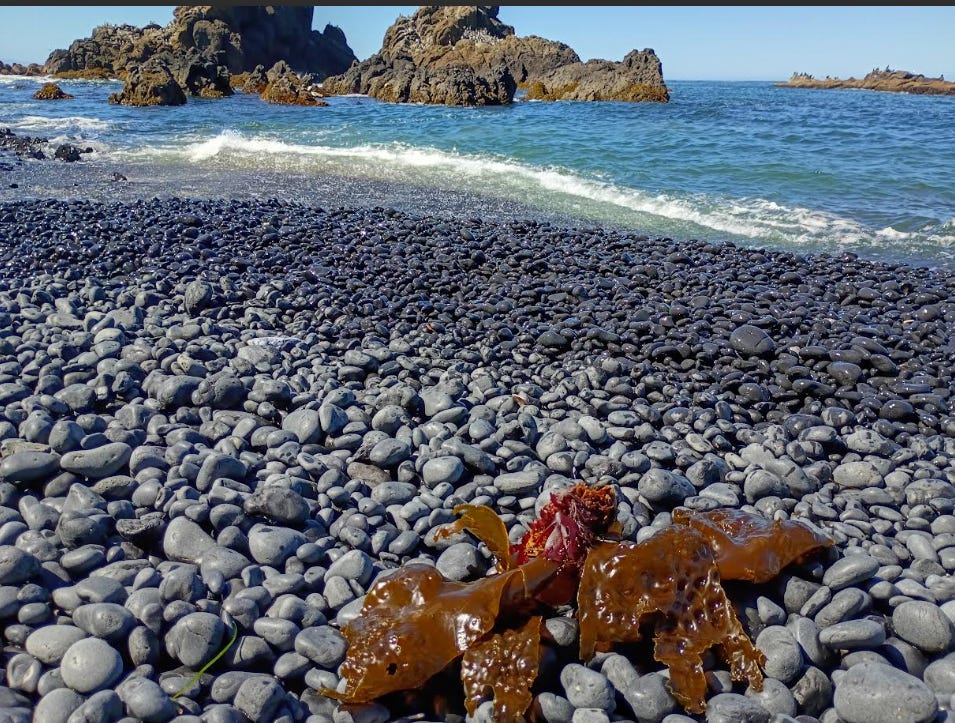
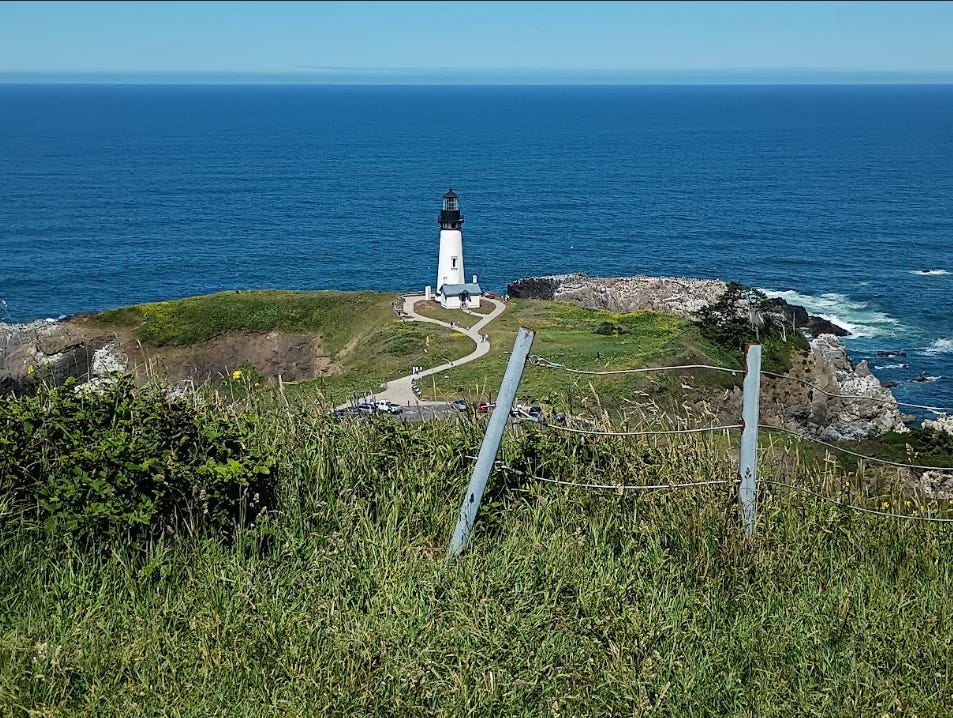
Here he is, June 23, Waldport, Oregon, heading north with a bit of a detour with Haeder at the studio and at the lighthouse.

5
We talked about geopolitics, the performative words of his own country, Spain, when it comes to the genocide, to recognizing Palestine over the made-up “country, “ Israel.
We talked about 1492 and Cortez and the Conquistadores.
We talked about Spain stopping short of issuing a formal, official apology to Mexico for colonial-era abuses, even though some recent diplomatic breakthroughs have brought closure to a years-long dispute.
Recent Diplomatic Developments
- Late 2025 Reconciliation Efforts: In October 2025, Spain’s Foreign Minister José Manuel Albares took the first major step by publicly acknowledging the “pain and injustice” suffered by Mexico’s Indigenous people.
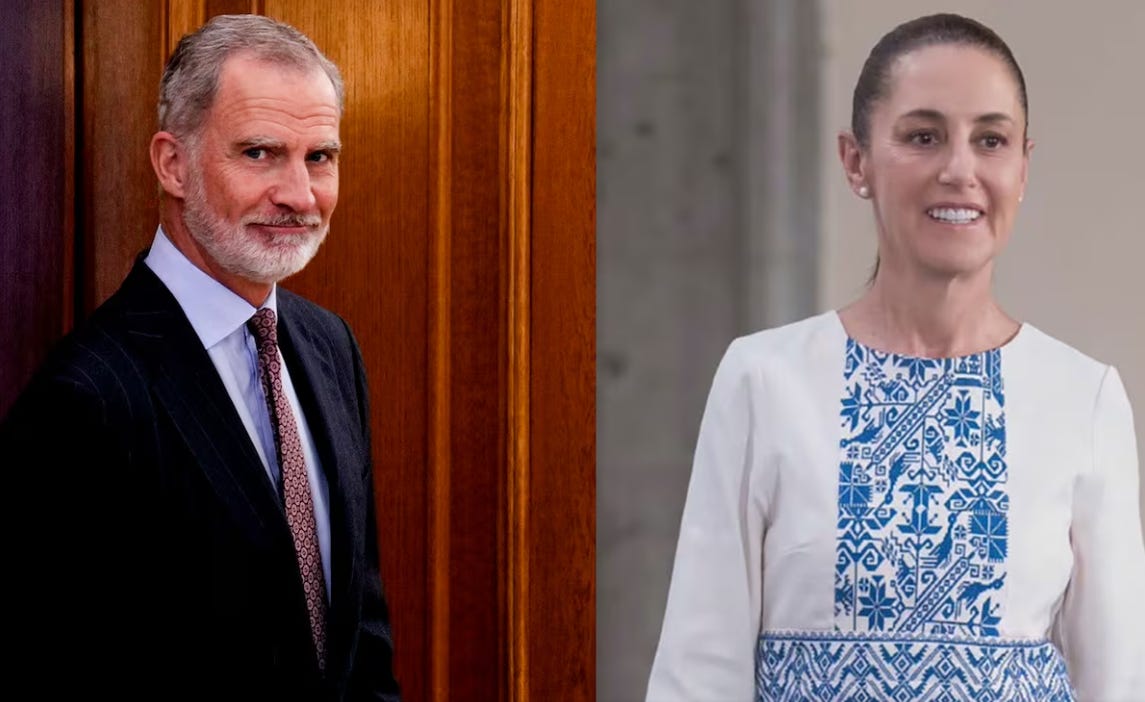
- Royal Acknowledgment: In March 2026, King Felipe VI made a rare and significant admission. During a museum visit in Madrid, he acknowledged there was “much abuse” during the Spanish conquest of the Americas and stated that actions of the colonial era “cannot make us feel proud”.
- Diplomatic Thaw: Mexican President Claudia Sheinbaum welcomed these statements as a positive first step toward reconciliation. This shift in tone seemed to have normalized diplomatic relations, leading to an official state visit between President Sheinbaum and King Felipe VI in Mexico City.
Background of the Dispute
This reality of Spain tied to the genocide on this continent has been contentious for decades, and recent Mexican tension began in 2019 when former Mexican President Andrés Manuel López Obrador demanded a formal apology from Spain for human rights violations and massacres committed during the 1519–1521 conquest of Mexico. For years, the Spanish government and Crown rejected this demand. The rift culminated in 2024 when President Sheinbaum chose not to invite King Felipe VI to her inauguration over the lack of a formal apology
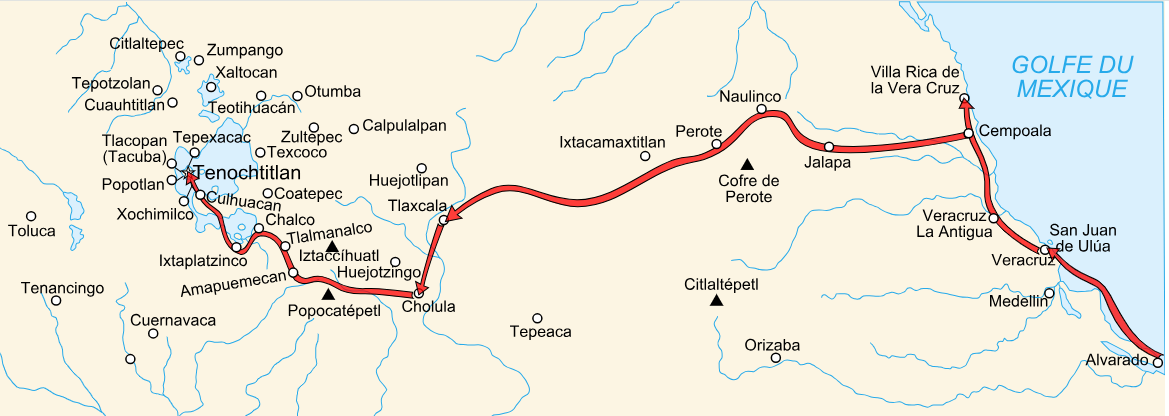
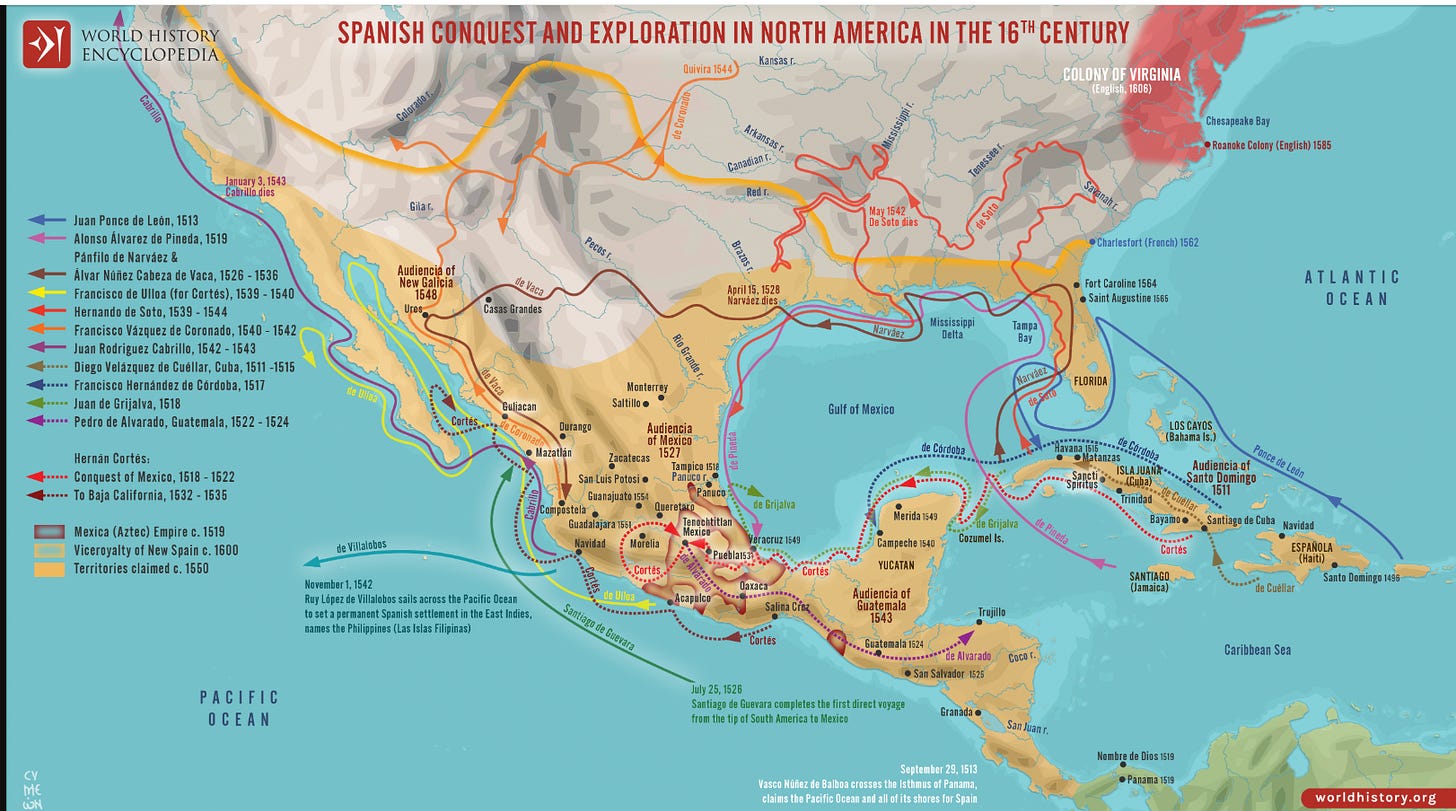
Battle and Fall of Tenochtitlan
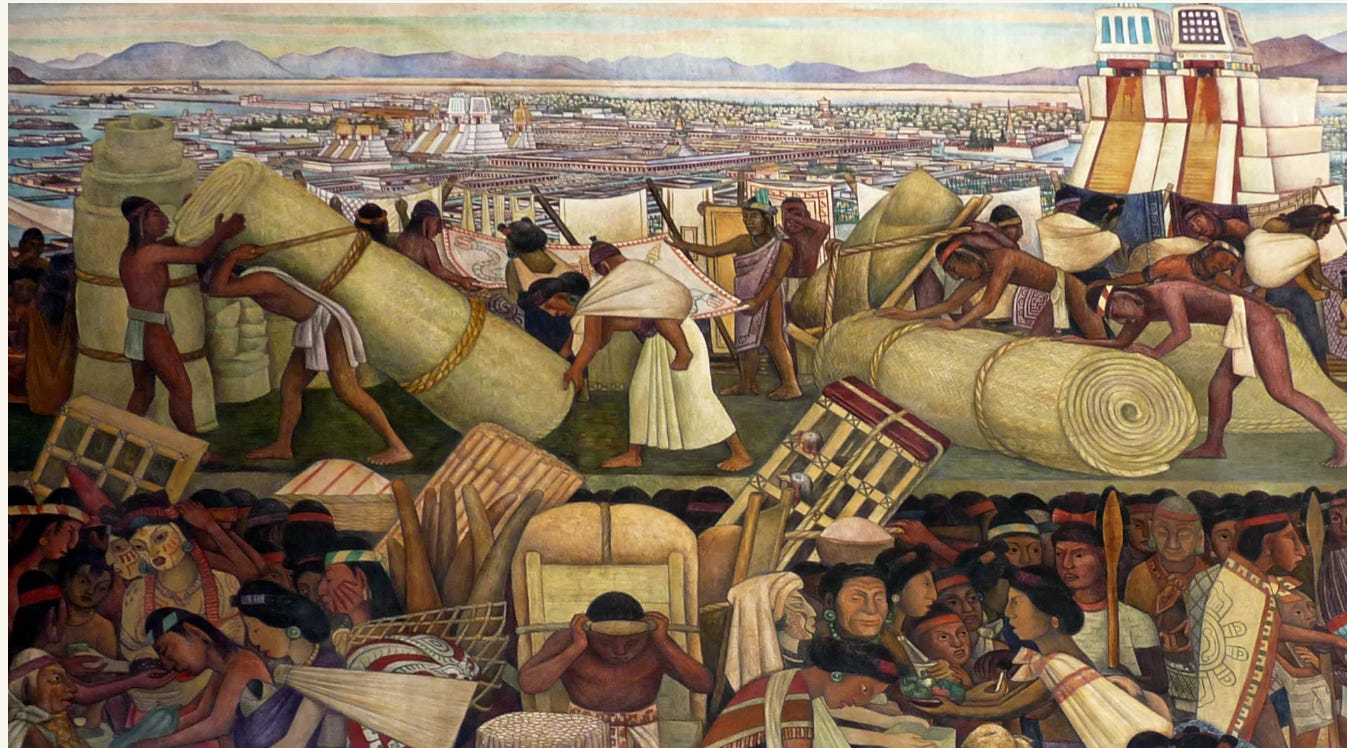
The conquest and colonization led to a significant blending of Spanish and indigenous cultures, resulting in a new mestizo culture. This cultural blending had lasting impacts on the social, economic, and political structures of the region.
“The Spanish’s progressive weaponry and imaginative war tactics led to their victory and the Aztec demise.” Smith, Michael E., Andrew Monson, and Walter Scheidel. “The Aztec Empire.” Fiscal regimes and the political economy of premodern states (2015): 71-114.
The legacy of colonialism influenced Latin America’s history for centuries, shaping its development and identity.
In 2018: “I have sent a letter to the king of Spain and another to the pope calling for a full account of the abuses and urging them to apologize to the indigenous peoples (of Mexico) for the violations of what we now call their human rights,” Lopez Obrador, 65, said in the video, which he posted to his social media accounts. “There were massacres and oppression. The so-called conquest was waged with the sword and the cross. They built their churches on top of the (indigenous) temples,” he said. “The time has come to reconcile. But let us ask forgiveness first.”
New data-driven best estimate is a death toll of 56 million by the beginning of the 1600s – 90% of the pre-Columbian indigenous population and around 10% of the global population at the time. This makes the “Great Dying” the largest human mortality event in proportion to the global population, putting it second in absolute terms only to World War II, in which 80 million people died – 3% of the world’s population at the time.
A figure of 90% mortality in post-contact America is extraordinary and exceeds similar epidemics, including the Black Death in Europe, which resulted in a 30% population loss in Europe. One explanation is that multiple waves of epidemics hit indigenous immune systems that had evolved in isolation from Eurasian and African populations for 13,000 years.
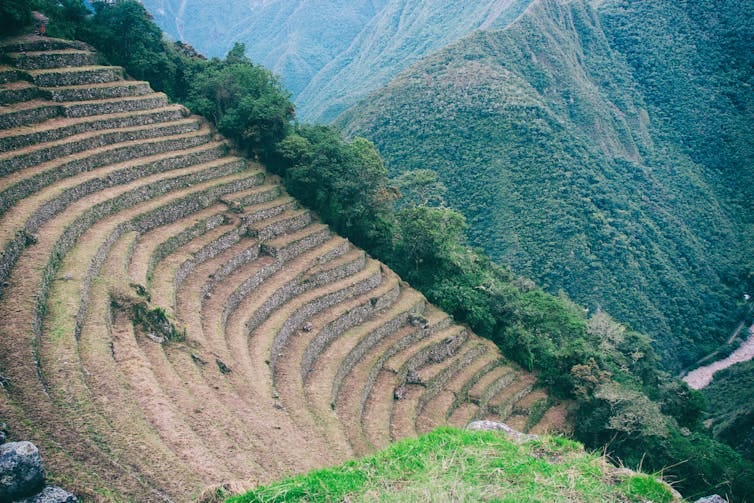
[Incan agricultural terraces in Peru]
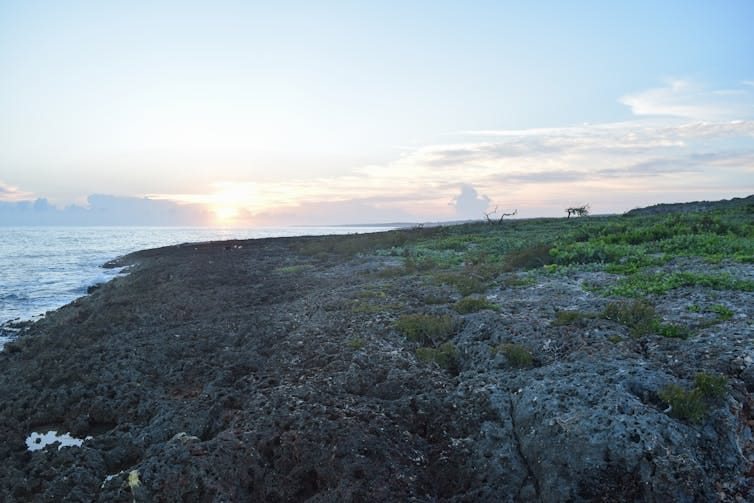
[The coast in Cuba where Columbus arrived in 1492.]
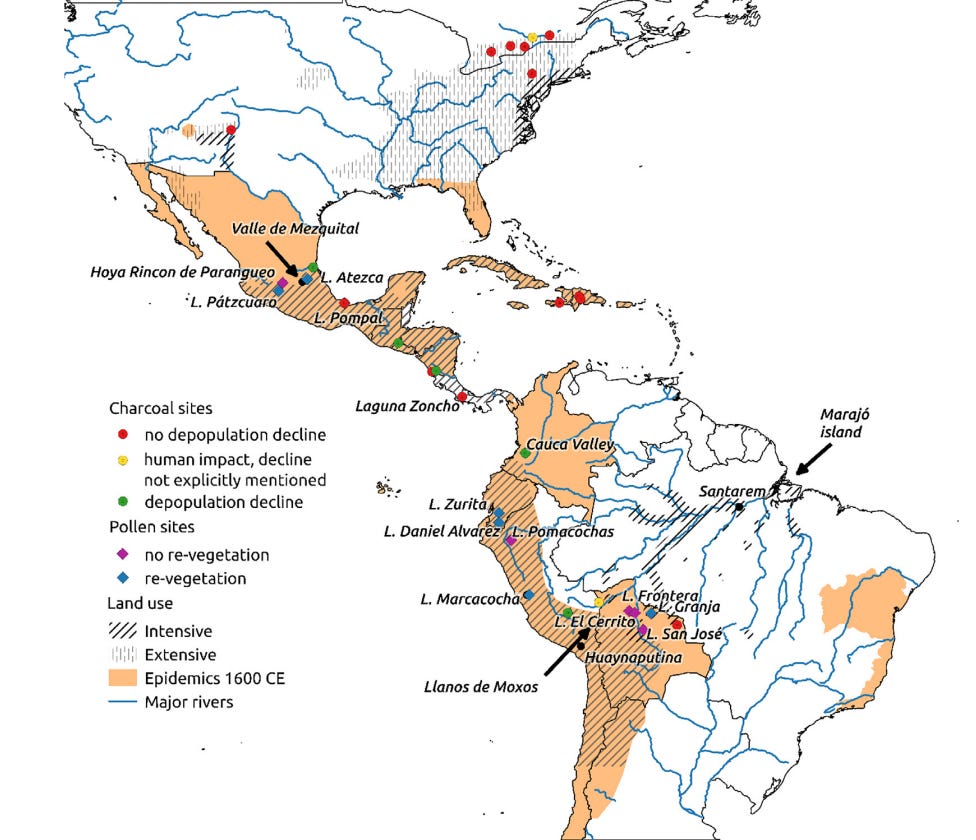
Our new study clarifies the size of pre-Columbian populations and their impact on their environment. By combining all published estimates from populations throughout the Americas, we find a probable indigenous population of 60m in 1492. For comparison, Europe’s population at the time was 70-88m spread over less than half the area. — Earth system impacts of the European arrival and Great Dying in the Americas after 1492, Alexander Koch, Chris Brierley, Mark M. Maslin, Simon L. Lewis, Pages 13-36
Pablo and I talked about many political things, and his travel passion and his Podcast and blogs of old, well, we didn’t get too much into that.
I like the emblematic comments he’s had as a Spaniard traveling in Arizona, California, and Oregon:
“You are from where? Spain? Where is that?”
“By the way, what language do they speak in Spain?”
We also talked about the predominance of English and Spanish in the world, 1.3 billion and 650 million speakers worldwide, respectively. Cultural survival and alas, language extinction were topics we broached. He is from Catalonia, and the school system there teaches K12 the Catalan language, in a country that speaks Castilian.
Ironically, the presence of Spanish-speaking Latin Americans in large numbers in this area of Spain, due to immigration, not only represents a new and interesting twist in the age-old conflict between Catalan and Castilian, but for many, this demographic shift threatens to contribute to the rolling back of the progress that the Catalan language has made in recent years through policies of linguistic normalisation.
And herein lies a paradox in Catalonia: new migrants are protecting the Catalan economy and the (historically Catalan-speaking) elite’s dominant position in society by doing the work that the locals do not want to do; however, their presence in such concentrations threatens the policy-led progress made by the Catalan language in recent years. Barcelona today is characterised by a combination of the characteristics of the old, the modern, the `late-modern,’ and postmodern.”
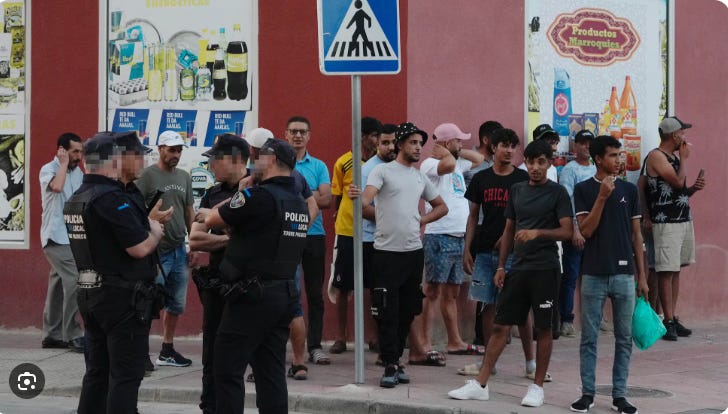
Despite Spain being the EU Member State with the highest level of immigration per capita throughout the past 20 years, international and comparative opinion studies have shown that Spain has consistently maintained more open attitudes towards immigration than the European average, with less rejection and a greater appreciation of its contribution to society and the economy. There are historic reasons for this phenomenon, including the experience of Spanish migrants in the 1960s and the backlash against nationalism as a result of the Franco regime. Regardless of the cause, relatively permissive public opinion has contributed to the fact that until recently there have been no political parties in Spain that have campaigned on an anti-immigration platform to successfully gain an institutional foothold. This had made Spain an exception in the European context, where the presence of ‘nativist’ parties has become a common feature of parliaments and in many cases governments. However, the Spanish exception came to an end in 2018 with the success of VOX in the Andalusian elections and its entry to the Spanish Congress of Deputies the following year. — Spanish public opinion on immigration and the effect of VOX
Ahh, the 2025 and 2026 years:
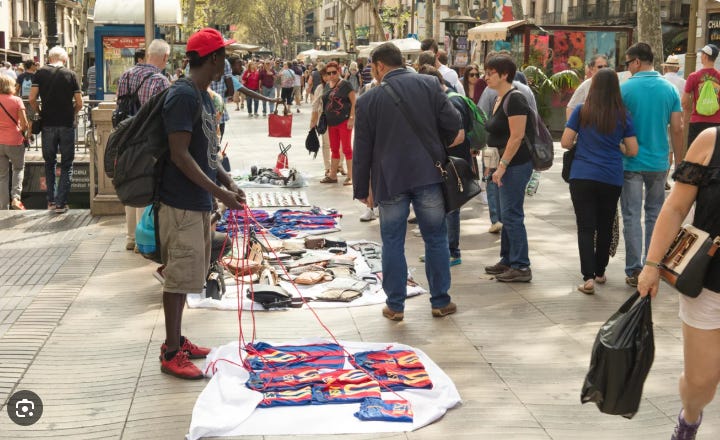
Street vendors in major Spanish cities have found themselves at the center of immigration battles as right-wing political parties try to reverse their political poll slump.
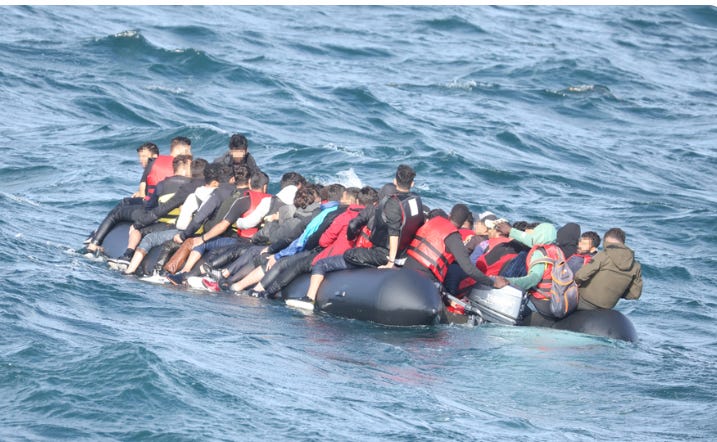
The Popular party and the Citizens party have followed their attacks on migrant ships by targeting street vendors, the majority of whom are undocumented immigrants from West Africa.
The vendors, known as manteros because they sell their wares from blankets (mantas) spread out on the pavement, sell pirated designer goods imported from China: mostly handbags, sunglasses, and sports shoes.
Speaking in Algeciras in southern Spain, Ignacio Cosidó, the Popular Party’s spokesman, sought to link manteros with crime in Barcelona.
“Crime in Barcelona is up 20% in a year,” he said. “I’m not saying this is the only reason, but to ensure our coexistence and security, we need to have secure borders.”
His words echo those of Albert Rivera, leader of the center-right Citizens party, who said, “It’s time to bring order to the streets, order and security. We will fight the mafia and make sure the law is obeyed.”
The number of manteros has increased in recent years. There are between 1,000 to 2,000 in Barcelona, with as many as 500 operating in Madrid, as well as in coastal resorts.
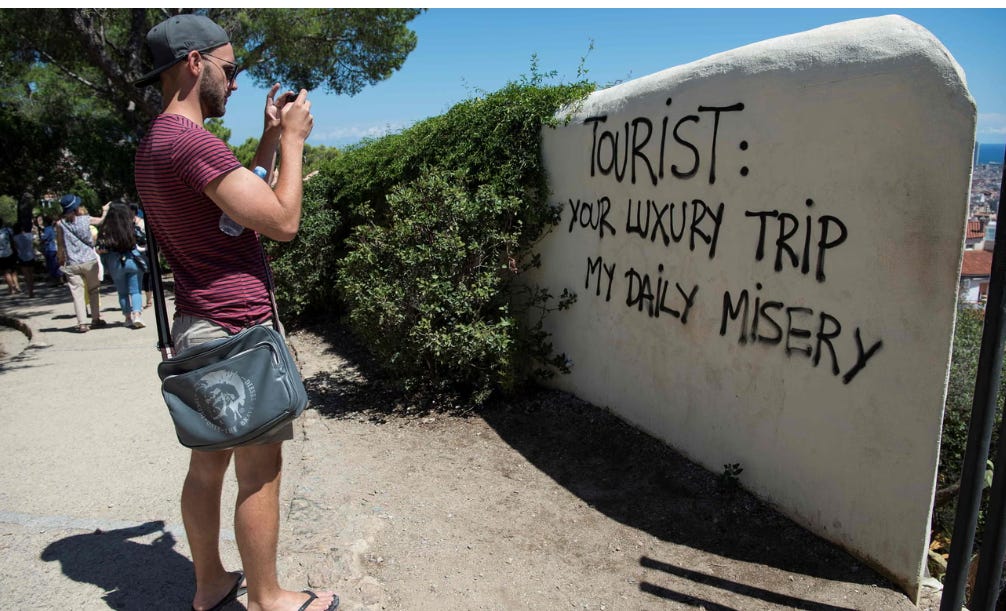
Pablo talked about the destructive force of tourism in any place around the world, but especially in Spain. Air BnBs are taking over towns and cities, and service economies of the laboring class are creating economic hardship for the workers. Hence, these hard workers with low pay, and those hotel workers and restaurant attendants, can’t find affordable housing.
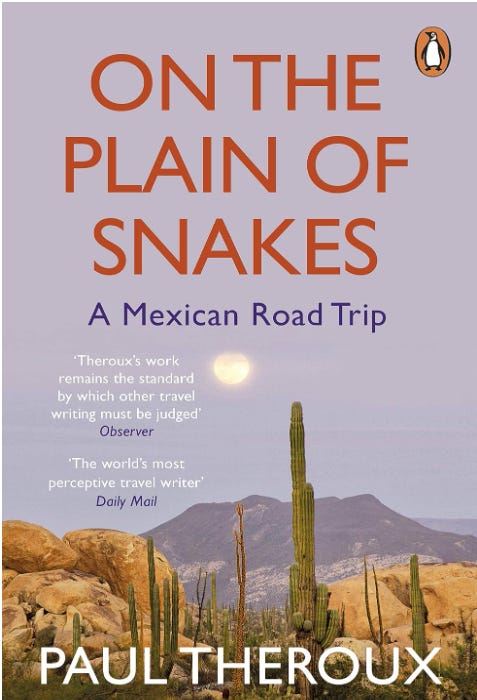
We talked about the godfather of travel writing, Paul Theroux, and I recommended On the Plain of Snakes, Theroux’s work taking us on his car trip through Mexico. Several Mexican friends, a scholar and writer being one of them, said he learned more about his native Mexico from Theroux’s 2019 book than from most books written by Mexicans of late.
At 76, Theroux felt he wasn’t getting enough respect,
“I’d observed for years that the whole of American life caters to the 18-35-year-olds. Books, music, educational TV shows, movies—it’s all for them.” Youth have become ‘empowered by their spending, and that’s created a kind of contempt for older Americans.”
The author (now 83) reveals that this feeling of rejection made it easy to identify with migrants and Mexicans, “who knew that same feeling of being despised.” As befits this obstinate traveler and author, his response was,
“My work is my reply, my travel is my defiance. And I think of myself in the Mexican way, not as an old man, but as most Mexicans regard a senior, an hombre de juicio, a man of judgement…”
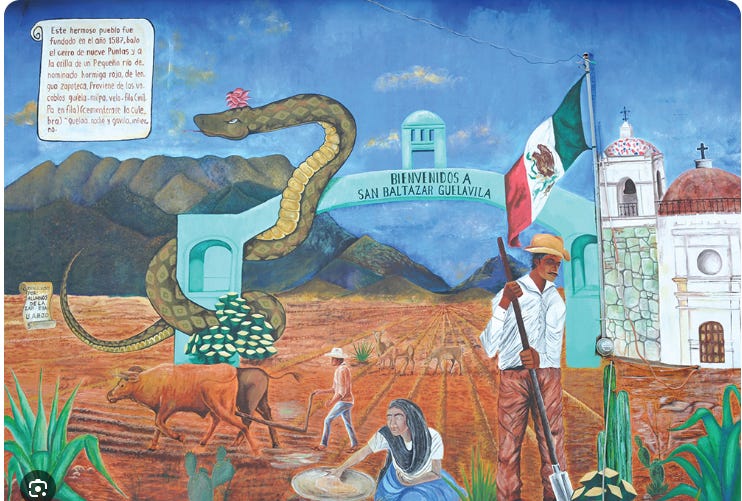
In this book, Theroux starts his journey crisscrossing the border, interviewing a diverse group of migrants detained in Mexico, and then driving south to one of the poorest states of Mexico, Oaxaca.
Oh, the genocide and hell on earth caused by Spain wasn’t limited to the conquest of the Aztecs.
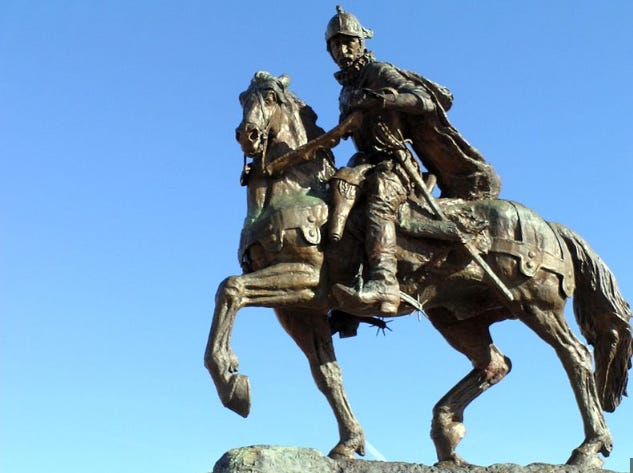
In response to the deaths of 12 Spanish soldiers, Juan de Oñate ordered a punitive expedition against the Acoma Pueblo (present-day New Mexico) in 1599, killing roughly 800 indigenous men, women, and children. Survivors were subjected to forced labor, and 24 men suffered forced amputations.
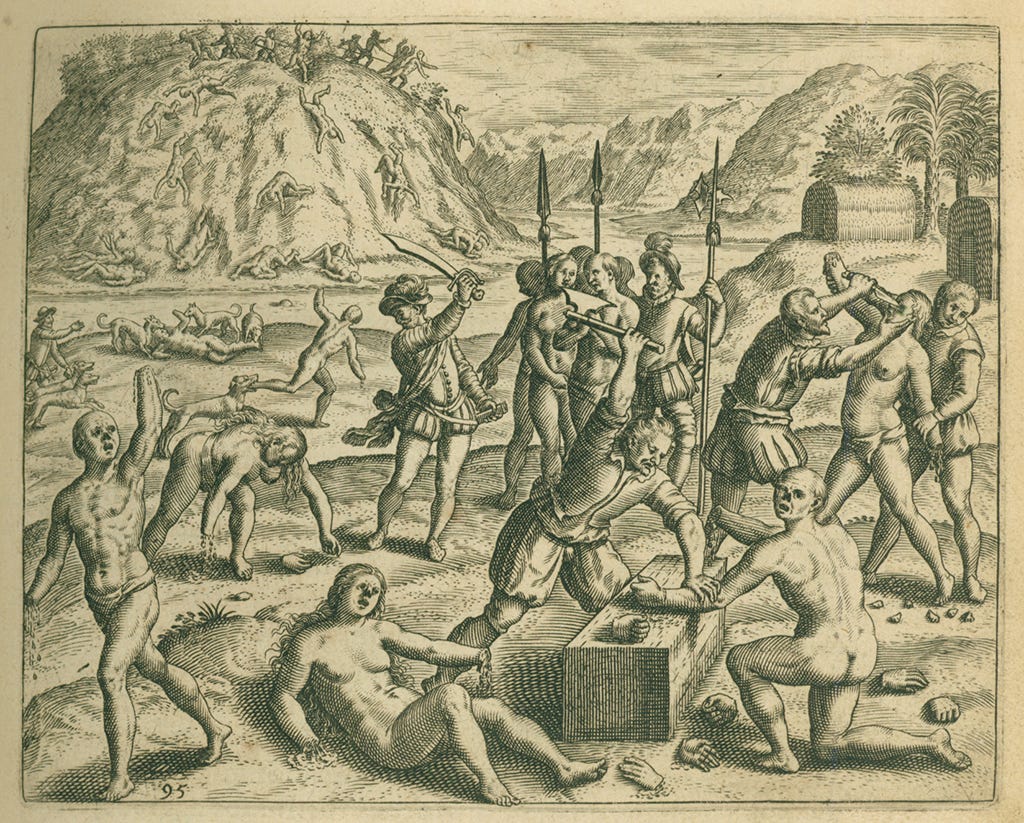
Spanish conquistadors were known for their cruel punishments, typically intended to strike fear into the hearts of indigenous peoples. This scene above depicts an event in Florida where the Spanish cut off the hands and feet of native men who opposed them.
Sure, the first No Thank You Thanksgiving:
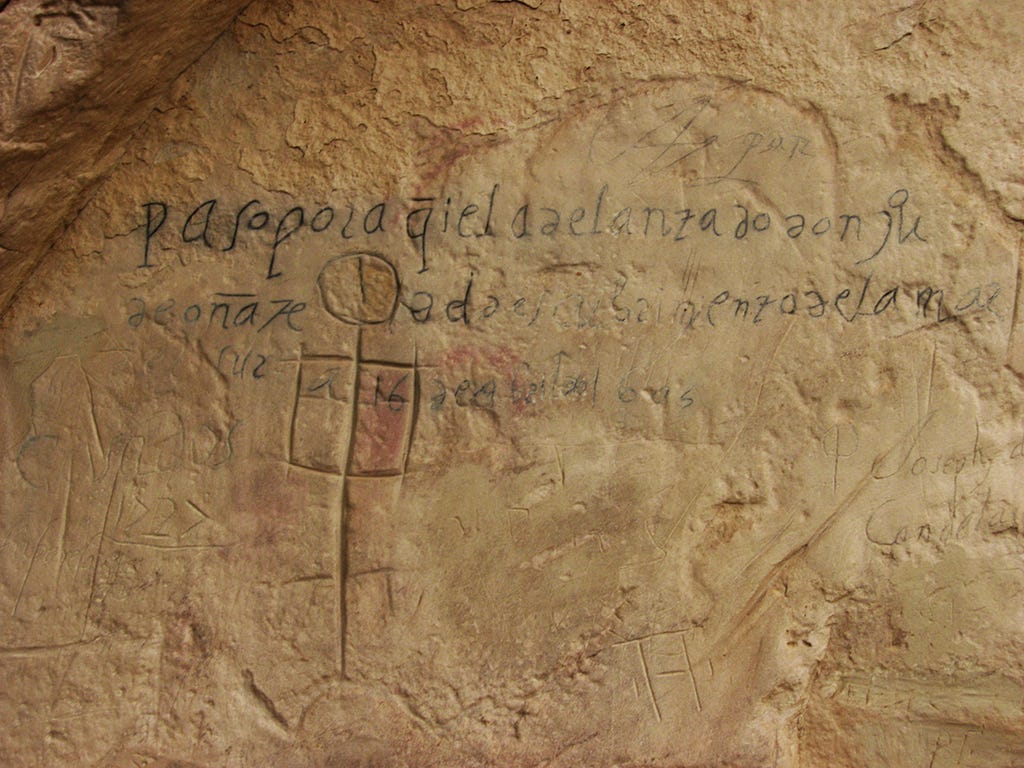
Fifteen years before the arrival of the Pilgrims at Plymouth Rock, Juan de Oñate inscribed the above at El Morro on his return from the Gulf of California and the South Sea: “Governor Don Juan de Oñate passed through here, from the discovery of the Sea of the South on the 16th of April, 1605.”
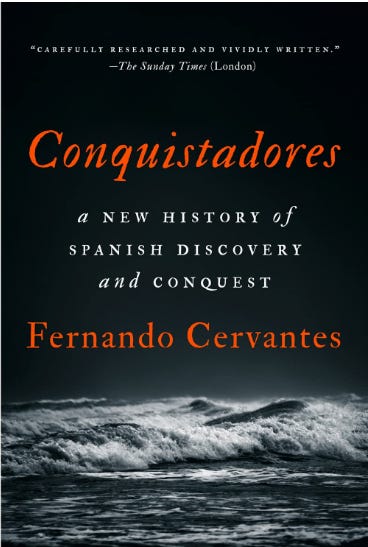
Stucco towers, “painted with colorful animals and sculpted on stone,” were “a marvel to behold,” drawing comparisons to Venice, one observer wrote. Tens of thousands of canoes dotted Lake Texcoco, “some, like great barges, carrying up to sixty people,” writes Fernando Cervantes in Conquistadores, his new history of the era.
Cervantes sets out not to whitewash such atrocities but to place them in context. Modern historians like to emphasize the genocide and greed that are undeniably part of the legacy of the conquistadors, but as Cervantes reminds us, that wasn’t always the case. In Spain at the time, “the most honored members of society were those who had won their riches by force of arms,” and plunder was seen as a “legitimate means to wealth.” Far from being condemned, early explorers such as Cortés and Francisco Pizarro were celebrated for their daring and bravery, in Spain and elsewhere. There was a swashbuckling romance to their stories.
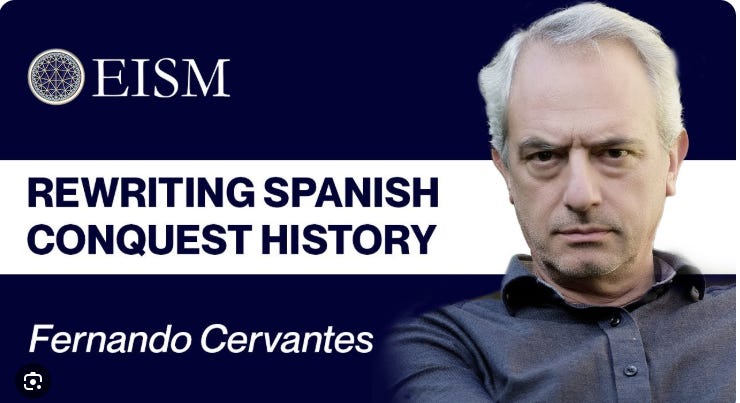
My ideas are a bit different, as I spent much time in Mexico, and especially in Maya land, in Guatemala, too, but the Yucatan, for sure.
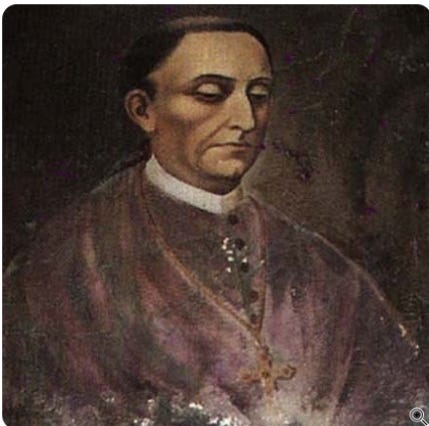
My oh my, in a single act of wanton zealotry, the Spanish friar Diego de Landa burned, by his own account, 27 priceless Maya screenfold manuscripts in front of the church in the 4,000-year-old town of Maní, on the Yucatan peninsula, on the evening of July 12, 1562. It was an attempt to erase from the minds of the Maya peoples the memory of their gods and ancient beliefs. In this, it failed dismally. Here is the eloquent testimony to this, ‘The Fire Blunders’, written by the world-famous Uruguayan author Eduardo Galeano, taken from his masterpiece Memory of Fire…
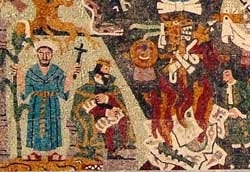
Pic 1: Mural by Juan O’Gorman, Biblioteca Central de la UNAM , Mexico City (Click on image to enlarge)
Fray Diego de Landa throws into the flames, one after the other, the books of the Mayas. The inquisitor curses Satan, and the fire crackles and devours. Around the incinerator, heretics howl with their heads down. Hung by the feet, flayed with whips, Indians are doused with boiling wax as the fire flares up and the books snap, as if complaining.
Tonight, eight centuries of Mayan literature turn to ashes. On these long sheets of bark paper, signs and images spoke: They told of work done and days spent, of the dreams and the wars of a people born before Christ. With hog-bristle brushes, the knowers of things had painted these illuminated, illuminating books so that the grandchildren’s grandchildren should not be blind, should know how to see themselves and see the history of their folk, so they should know the movements of the stars, the frequency of eclipses, and the prophecies of the gods, and so they could call for rains and good corn harvest.
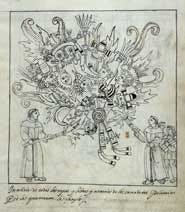
Pic 2: Torching of Aztec books by Spanish friars (Click on image to enlarge)
In the centre, the inquisitor burns the books. Around the huge bonfire, he chastises the readers. Meanwhile, the authors, artist-priests dead years or centuries ago, drink chocolate in the fresh shade of the first tree of the world. They are at peace because they died knowing that memory cannot be burned. Will not what they painted be sung and danced through the times of the times?
When its little paper houses are burned, memory finds refuge in mouths that sing the glories of men and of gods, songs that stay on from people to people and in bodies that dance to the sound of hollow trunks, tortoise shells, and reed flutes.
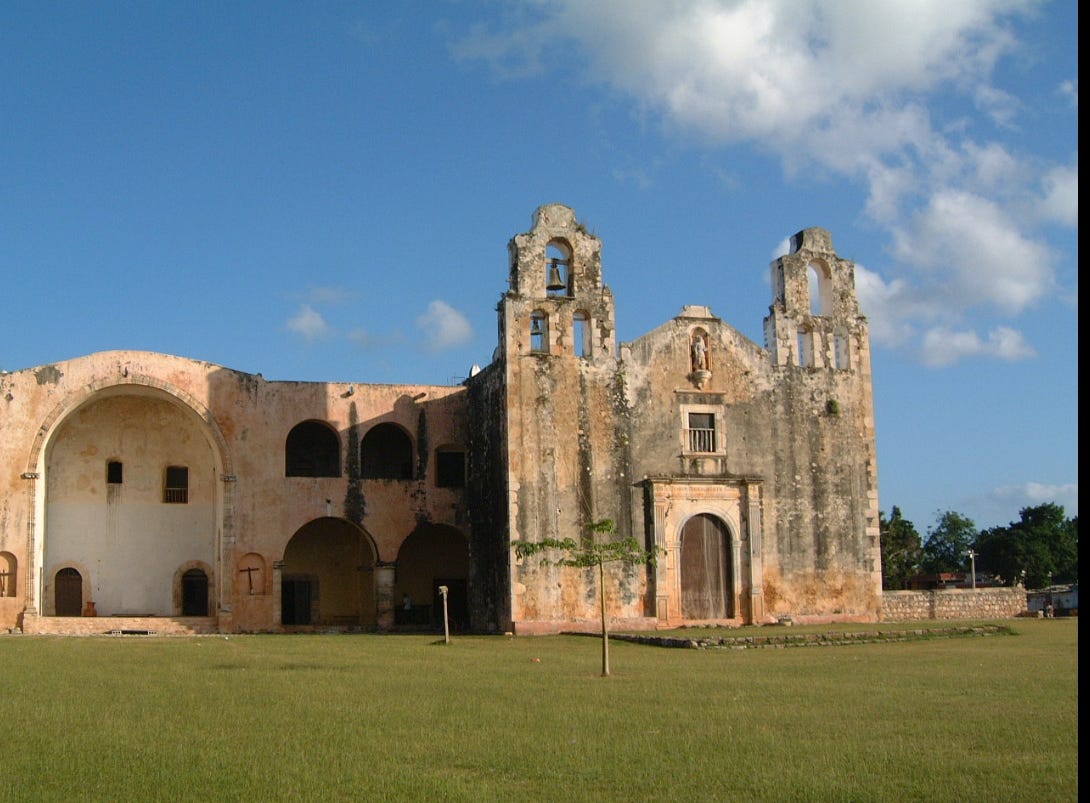
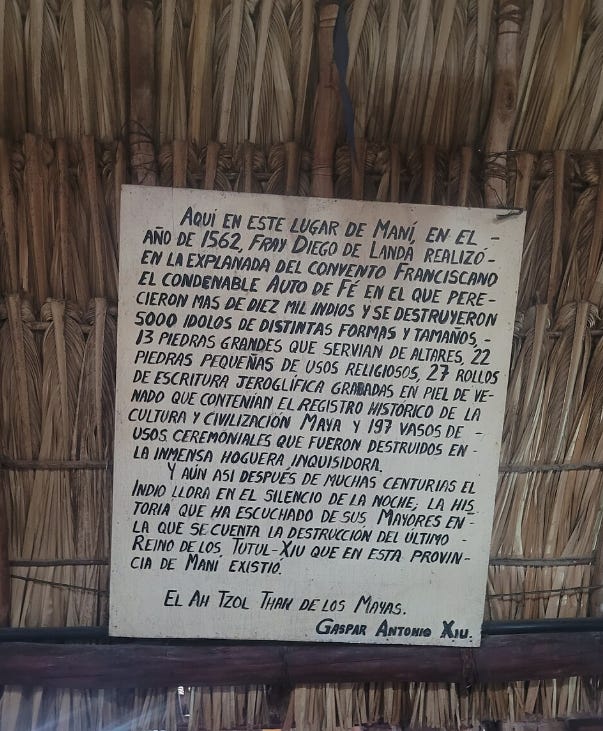
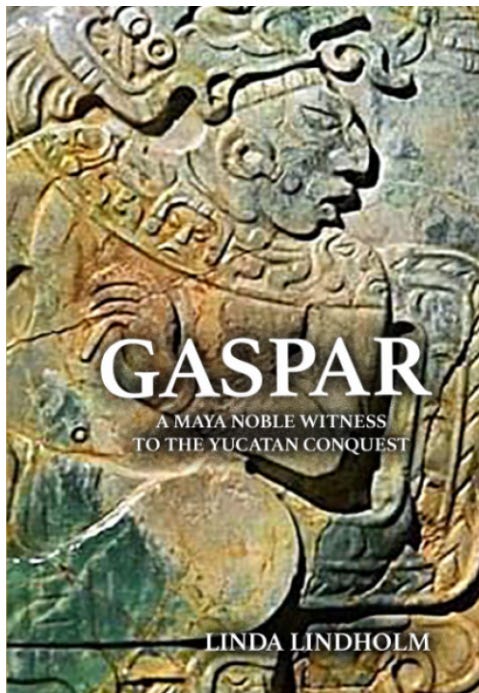
It was Gaspar Antonio Xiu/Chi who had to stand before his own grieving people, read out the Spanish sentences of punishment, and translate the demands of the friars as centuries of Maya history, science, and astronomy turned to ash. Historical records indicate Chi later expressed discomfort and great sorrow regarding the brutality and cultural erasure he witnessed.
On July 12, 1562, Friar Diego de Landa orchestrated an unauthorized, violent Inquisition in the town of Maní, Yucatán. Believing that baptized Maya people were secretly practicing their traditional religion, Landa staged a massive auto-da-fé. He ordered the rounding up and burning of approximately 27 ancient hieroglyphic codices (though modern historians suspect the true number was much higher) along with over 5,000 religious icons and statues.
Chi’s Direct Role: Having been taken in and educated by Franciscan friars after his father was assassinated, the young Chi was highly proficient in Spanish, Latin, and Maya. During the horrifying events at Maní, Chi was forced to act as Landa’s official interpreter and notary.
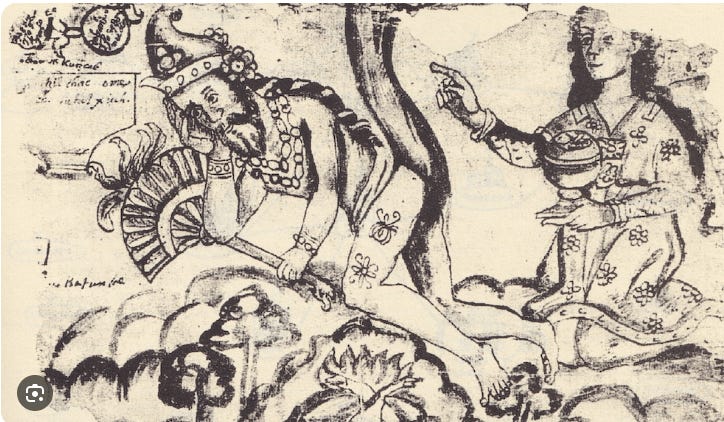
READ: GASPAR ANTONIO CHI by Matthew Restall Bridging the Conquest of Yucatán &
Gaspar Antonio Chi, Interpreter
After hearing of Roman Catholic Maya who continued to practice “idol worship,” on July 12, 1562 Bishop Diego de Landa ordered an Inquisition in Mani, Yucatan, ending with the ceremony called auto de fe.
“During the ceremony a disputed number of Maya codices (or books; Landa admits to 27, other sources claim ‘99 times as many’) and approximately 5,000 Maya cult images were burned. The actions of Landa passed into the Black Legend of the Spanish in the Americas” (Wikipedia article on Diego de Landa).
“Such codices were primary written records of Maya civilization, together with the many inscriptions on stone monuments and stelae which survive to the present day. However, their range of subject matter in all likelihood embraced more topics than those recorded in stone and buildings, and was more like what is found on painted ceramics (the so-called ‘ceramic codex’). Alonso de Zorita wrote that in 1540 he saw numerous such books in the Guatemalan highlands which ‘recorded their history for more than eight hundred years back, and which were interpreted for me by very ancient Indians’ (Zorita 1963, 271-2). Fr. Bartolomé de las Casas lamented that when found, such books were destroyed: ‘These books were seen by our clergy, and even I saw part of those which were burned by the monks, apparently because they thought [they] might harm the Indians in matters concerning religion, since at that time they were at the beginning of their conversion.’ The last codices destroyed were those of Tayasal, Guatemala in 1697. . . “ (Wikipedia article on Maya Codices).
References
- https://popular-archaeology.com/article/burning-the-maya-books-the-1562-tragedy-at-mani/
- https://sacred-texts.com/nam/maya/ybac/ybac12.htm
- https://sacred-texts.com/nam/maya/ybac/ybac60.htm
- https://www.indigenousmexico.org/articles/indigenous-yucatan-the-center-of-the-mayan-world
- https://history.ucsd.edu/_files/undergraduate/honors-theses/Kasey%20Flowers%20Honors%20Thesis-%20Colonial%20Yucatan_%20Indigenous%20Experiences%20and%20the%20Persistence%20of%20Tradition%20in%20Conversion%20and%20Conquest.pdf
- https://www.catholicity.com/encyclopedia/m/maya_indians.html
- https://www.mexicolore.co.uk/maya/collaboration/the-1562-tragedy-at-mani
- https://en.wikisource.org/wiki/History_of_the_Spanish_Conquest_of_Yucatan_and_of_the_Itzas/Chapter_1
- https://www.newadvent.org/cathen/10082b.htm
- https://www.nature.com/articles/s41467-022-31522-x
- https://www.indigenousmexico.org/articles/campeche-living-on-the-edge-of-the-mayan-world
- https://popular-archaeology.com/article/the-endless-conquest-of-yucatan/
- https://www.mexicolore.co.uk/maya/collaboration/struggle-for-freedom-in-the-yucatan
- https://www.gutenberg.org/cache/epub/33231/pg33231-images.html
- https://archive.org/download/historyofspanish00mean/historyofspanish00mean.pdf
- https://www.encyclopedia.com/religion/encyclopedias-almanacs-transcripts-and-maps/landa-diego-de
- https://vistasgallery.ace.fordham.edu/items/show/1727
- https://www.ancientamericas.org/sites/default/files/05033Serafin01.pdf
- https://scholarsarchive.byu.edu/cgi/viewcontent.cgi?filename=75&article=1065&context=mi&type=additional
- https://popular-archaeology.com/article/burning-the-maya-books-the-1562-tragedy-at-mani

