

I opened up a retired Air Force Colonel’s Substack, and I what do I get? Deja vu, as he waxes orgasmic over space exploration and the great photos of earth from Artemis
Jun 19, 2026
But without a healthy Earth, none of it matters. Artemis II astronaut Victor Glover captured this beautifully in his viral message. From deep space, he said:
“You are special, in all this emptiness. This is a whole bunch of nothing, this thing we call the universe. You have this oasis, this beautiful place that we get to exist together.”
LTC Astore: Space Should Be a Safe Place

[Earthrise from Apollo 8 in 1968.]

[The dark side of the moon—with earth in the distance—taken by the Artemis II crew.]
Try Jew-oogling — “Space Research Takes Money Away from the Poor” ; “Earth Sciences are being cut because of space research”
You will get this CIA-drenched article, so typical of extractive and penury capitalism:
On space barons and global poverty

Fucking 1,000 words later, and the rationale is typical of the closed mind:
On July 21, 2021, billionaire Jeff Bezos rocketed about 65 miles above the Earth’s crust. Another billionaire, Sir Richard Branson, did the same nine days before, but his vehicle could only climb to 53 miles—some do not consider that a space flight, really.
Clearly, this was not the first time man ventured into space. However, in all earlier cases, explorers pursued a publicly defined mission and were paid from the public purse. Whereas Bezos and Branson were motived by private interest. Although Bezos thanked his company’s workers and customers for “paying for his trip,” it was, nonetheless, a privately financed venture. These two aspects, private interest and private financing, make these billionaires the world’s first space barons.
The public reception of the emerging elite space travelers club is mixed. Space enthusiasts celebrate the renewed interest in space travel, which could spark future technologies that, one day, help bring life to other planets. Critics suggest that the money used would be better spent for fighting global hunger and poverty.
There is more to both sides of this argument than meets the eye, and further inquiry is warranted. For starters, I shall rule out an otherwise interesting, but notoriously complex, dimension that gave economists a headache for decades. That is the problem of interpersonal comparison of utility. In this case, can we really compare the utility gained by Bezos from his $5.5 billion trip with that of 37 million people had the money been used to end their hunger? The question may seem rhetorical, but it is not.
The problem remains an interesting one even after Bezos, and thus the need to compare his well-being with that of others, is taken out of the picture. Let us look exclusively from the viewpoint of potential beneficiaries in the developing world. Would a transfer of cash to them be better than using the money on space tourism? Surprisingly, the answer is not necessarily affirmative.
Conspicuous consumption or an incubator for innovation?
Nobel laureate economist Angus Deaton suggests that technological innovations like antibiotics, pest control, and vaccines have been the primary drivers of humanity’s escape from destitution, including in developing countries, far surpassing development aid in impact. By this logic, space tourism could muster moral support, in addition to cash, if it also facilitates significant technological advances (in addition to conspicuous consumption).
So far, blasting billionaires off to the edge of space has not exactly been earth-shattering, technically. Mankind had previously stepped onto the moon on six separate occasions; astronauts and cosmonauts have visited space routinely, often without such commotion; and Mars is already inhabited by robots. The NASA Voyager, built half a century ago, has become the first man-made object to exit our solar system—currently drifting at 14.2 billion miles away from us—that is about 21 hours of light-travel time from Earth (solar light reaches us in about eight minutes).
Previous research on space technology has undoubtedly improved life on earth. Modern water filtration systems, solar cells, firefighting equipment, insulin pumps, and artificial limbs are all reported to have been initiated by space research. It is too soon to see such impact from the new billionaire-driven space race. However, Bezos’ company Blue Origin is reported to hold at least 19 patents, whereas Elon Musk’s SpaceX has followed a different path: The company has not submitted any patent applications to avoid technological disclosure. Yet, there are some obvious advances including reusable rockets, which have reduced the cost of space flight dramatically.
Jew-oogle this: “space programs are not helping the poor” And this is what you get from the Satan of Google et al =
The debate regarding space funding versus alleviating poverty involves specific arguments and benefits:
- Terrestrial Technology Transfer: Space research yields practical spinoffs that improve global living standards. Innovations like water purification systems, advanced telemedicine, and portable solar energy were all developed to support space missions but are now widely used in impoverished and remote regions. [1, 2, 3, 4]
- Earth Observation & Agriculture: Agencies use Earth science satellites to monitor droughts, optimize crop yields, and track water resources. For example, the NASA Earth Applied Sciences program directly partners with organizations globally to improve food security and manage natural disasters. [1, 2, 3]
- Budget Proportions: Space exploration represents a very small fraction of national expenditures (for instance, NASA receives around 0.5% of the US federal budget). Experts argue that diverting this funding would not resolve systemic poverty because the problem lies primarily in resource allocation and political priorities, rather than a lack of capital. [1, 2, 3]
- Socioeconomic Mobility: The aerospace sector drives significant job creation and technological development, acting as a powerful engine for economic growth. Some economists suggest that space-based innovations, like internet constellations, offer better long-term improvements in developing nations than hypothetical cash transfers of equivalent size

And just down the road, we see at U of Oregon, more attacks: Community to Corporate — The University of Oregon is consolidating department offices and the Department of Earth Sciences says it could harm students
Faculty members say the University of Oregon is closing the Department of Earth Sciences office in Cascade Hall, a space they describe as a hub where undergraduate and graduate students meet with advisors, build community and manage internal administrative tasks with ease.
The office is being closed in line with a “shared services” model across the College of Arts and Sciences (CAS) that some describe as impersonal and filled with unnecessary corporate bureaucracy.
Faculty such as Earth Sciences professor Marli Miller tell Eugene Weekly that the office closure will erode the department’s sense of community and ability to support students. She says the shared services model is causing the loss of “institutional knowledge,” as staff members who’ve been working within one specific department for years are being moved into roles where they work with several departments at once, or they’ve left entirely.


How will it impact the already diminished populations of phytoplankton which provide up to 70% of the oxygen in the atmosphere? How will it impact the already diminished populations of krill, the foundation of the food pyramid in the sea? How will deep sea mining influence the climate, the movement of currents, and the migration and viability of sea life? The industry has not answered these questions because there is no answer that they will acknowledge—because such answers will expose them as harbingers of global destruction.
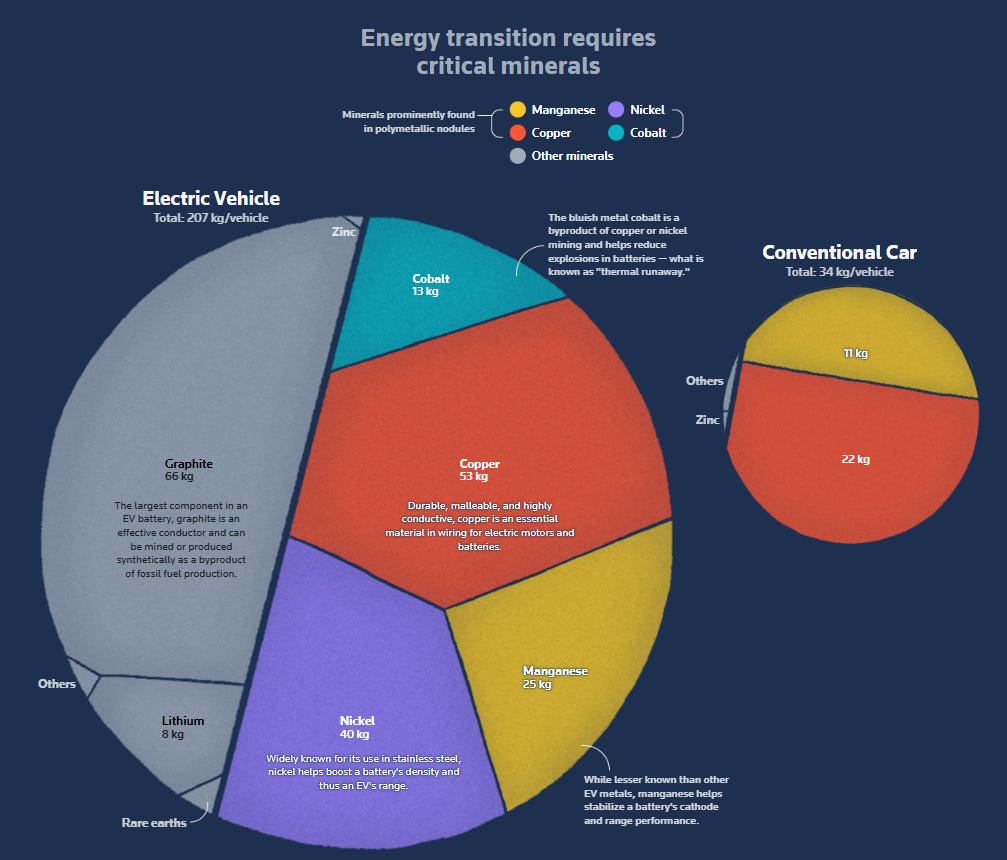
Law of the Sea, the Abyssal Plain, and the Value of Intentional Obsolescence
- Scholars estimate that a vast majority (up to 95%) of modern space tech has both civilian and defense applications. For example, a synthetic aperture radar used to monitor deforestation and climate change can also be used for military reconnaissance and espionage.
- Double Dual-Use Dilemma: Private space companies are increasingly integrated into national security efforts, leading to debates around how commercial infrastructure like satellite internet constellations become military targets in times of conflict. [1]

I. Space X: an emblematic example
No single example better illustrates the problem than SpaceX. Holding approximately $22 billion in U.S. government contracts, its satellite internet service Starlink is described by analysts as “an indispensable asset throughout the entire government sector, from U.S. embassies to the battlefield.” Starlink accounts for 97% of Space Force program task orders, and its military variant, Starshield—a hardened, government-controlled version of Starlink offering encrypted communications and intelligence capabilities—is built on the same underlying technology to support national security operations. As the California Coastal Commission has noted, for many U.S. Government users, the two are indistinguishable. SpaceX thus exemplifies a private company whose technology simultaneously underpins consumer internet, battlefield communications, and classified intelligence programs—a convergence that existing legal frameworks were never designed to govern.

Union of Concerned Scientists? Bulletin of Atomic Scientists!
Unlike the traditional military-industrial complex, space companies fluidly shift between civilian and military roles. Their expertise in launch systems, satellites, and surveillance infrastructure allows them to serve both markets, often without clear regulatory oversight. Companies like Walchandnagar Industries in India, SpaceX in the United States, and the private Chinese firms that operate under a national strategy of the Chinese Communist Party called Military-Civil Fusion exemplify this trend, maintaining commercial identities while actively supporting defense programs. This blurring of roles, including the possibility that private space companies may develop their own weapons, raises concerns over unchecked militarization and calls for stronger oversight to preserve space as a neutral domain.
Dual use of space companies. Countries like the United States and China have already shown a willingness to use commercial space entities for military purposes. China encourages private entities to participate in space activities as part of its Military-Civilian Integration Strategy. Similarly, the 2021 United States Space Priorities Framework outlines how new commercial space capabilities and services can be leveraged to meet national security needs. In a 2021 interview, the then-head of the US Space Force discussed the importance of using the space industry for national security.
Researchers and security analysts are increasingly concerned that the dual use of private space companies is not limited to their space technologies, such as the satellites they launch. In some cases, a company may appear to be a civilian space entity while actually maintaining close links with defense sectors.
For instance, take the example of India, which has seen phenomenal growth in its space sector in recent years. The leading companies of the Indian Space Association have worked closely with the Indian Ministry of Defence on various contracts.
Furthermore, the association’s leadership maintains a close connection with the Indian army and defense organizations. For example, the first chairman, Jayant Patil, was also the senior vice president for defense business at Larsen and Toubro, an Indian company involved in the space industry. The company has collaborated with India’s Defence Research and Development Organisation since the mid-1980s.
The usefulness of space companies goes beyond their existing technologies. Military organizations can use expertise gained through civilian cooperation programs to develop other critical technologies. India’s intercontinental ballistic missile program, based on the SLV-3 vehicle, was initially developed under civilian space cooperation with NASA. India’s Agni-V ICBM, which is capable of carrying multiple warheads and has a range exceeding 5,000 kilometers, has also benefited from technological cooperation with NASA.
Indian private space companies such as Walchandnagar Industries are also defense contractors producing aerospace, defense, missile, and nuclear power technologies. These companies collaborate with India’s Defence Ministry and the Defence Research and Development Organisation to produce strategic articles, tactical missiles, and critical platform-based equipment. The expertise gained from private space launches and technological developments can be leveraged to improve missile technology.
There is a serious risk that civilian companies in India and elsewhere, having gained expertise through cooperation with the military, might start developing their own weapons. The table below shows how specific types of space expertise can be used to develop missiles, drones, precision missiles, hypersonic missiles, and other loitering munitions.
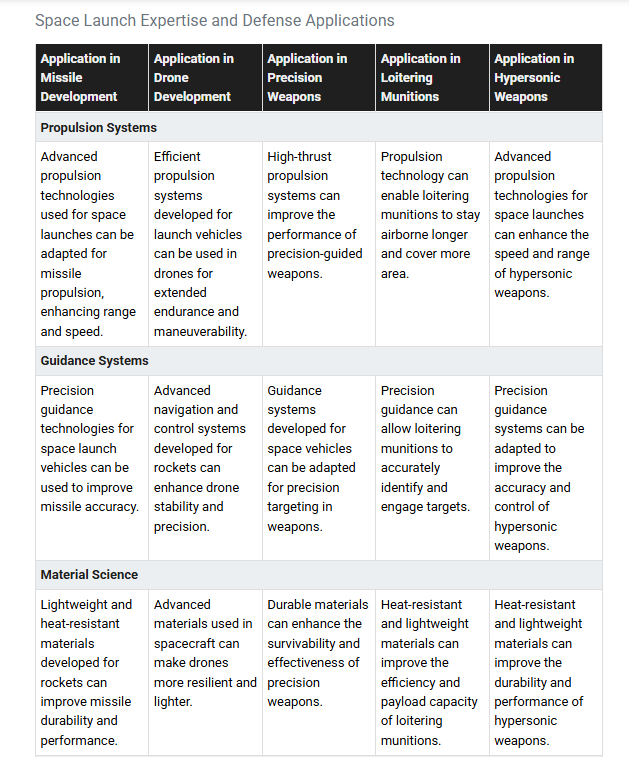
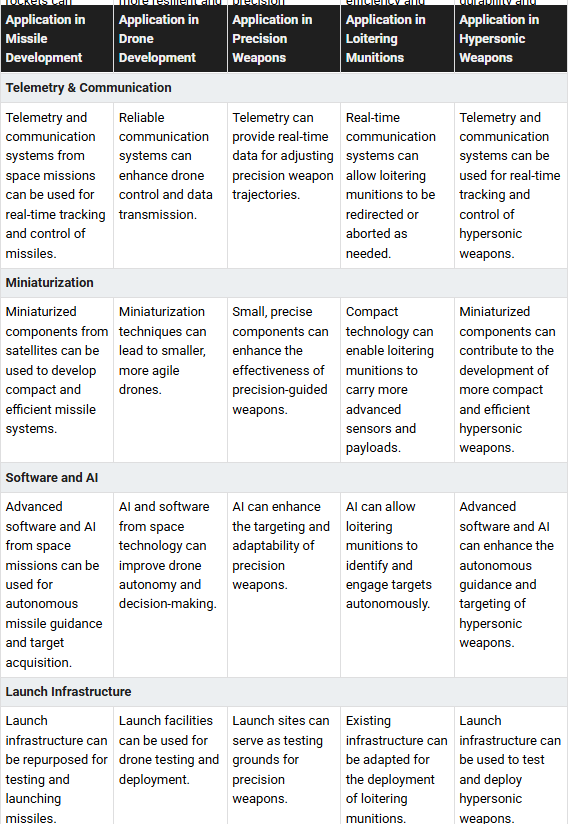
The Outer Space Treaty, which forms the basis of international space law, should be expanded to include specific provisions for the dual use of space technologies. For example, countries could be required to declare the intended uses of their satellites, with periodic inspections to ensure compliance. International space governance must ensure that expertise gained through civil cooperation does not translate into new weapons programs.
- the exploration and use of outer space shall be carried out for the benefit and in the interests of all countries and shall be the province of all mankind;
- outer space shall be free for exploration and use by all States;
- outer space is not subject to national appropriation by claim of sovereignty, by means of use or occupation, or by any other means;
- States shall not place nuclear weapons or other weapons of mass destruction in orbit or on celestial bodies or station them in outer space in any other manner;
- the Moon and other celestial bodies shall be used exclusively for peaceful purposes;
- astronauts shall be regarded as the envoys of mankind;
- States shall be responsible for national space activities whether carried out by governmental or non-governmental entities;
- States shall be liable for damage caused by their space objects; and
- States shall avoid harmful contamination of space and celestial bodies.
Furthermore, partnerships between governments and private corporations should be regulated to prevent the misuse of commercial space capabilities. The European Union’s Space Surveillance and Tracking network is an example of regional cooperation to monitor space activities and ensure that space assets are used for their declared purposes. This type of cooperation should be extended globally to include major space-faring nations and emerging space players.
In the United States, the Space Force has already begun leveraging commercial space capabilities for national security purposes. For instance, the National Reconnaissance Office has contracted with commercial satellite companies to provide imagery for intelligence purposes. Such partnerships highlight the need for clear guidelines to differentiate civilian and military applications and to ensure that commercial space activities do not escalate geopolitical tensions.
DUH. So, you do the YouTUbe addiction, the BLack Mirror Screen Addiction, the fucking SLOP of AI, all that time pushing robotics olympics and coding school, and then you watch Silicon Valley and Silicon Wadi suck the life from humanity, and this is what we get:

Universities are ruthlessly cutting geoscience departments, funds and staff, bringing a terrible blow to Earth science research worldwide. In Australia, Macquarie University axed their entire Earth science department, while nearly every other university in the eastern states also slashed jobs and undergraduate courses. Laurentian University, Canada, similarly shuttered their School of Environment and discontinued undergraduate and postgraduate courses in environmental sciences, geography and ecology. The Department of Geology at the University of Vermont, USA, also fell onto the chopping block. Royal Holloway, University of London, has plans to reduce staffing in “less popular” Earth sciences, with similar losses anticipated in other UK institutes.
Universities attempt to justify these cuts as dwindling student numbers make courses less profitable. However, decreasing student numbers often follow drastic cuts in government funding in a vicious positive feedback. In Australia, a 29% reduction in 2020 funding for Earth science courses, equivalent to about AU$10,000 per student per year, necessitated decreases in course size, in turn, triggering further drops in enrolment and profit in 2021. Funding reductions also inevitably lead to lower-quality student experiences amidst lecturer, field-course and lab equipment constraints. Academics found themselves stranded, postgraduates were left without supervisors, and undergraduates faced transfers to other institutions.
Two distinct categories of dual-nature space objects: what are dual-use and dual-purpose objects? Therefore, there are two distinct categories of space objects that States have expressed concerns about: dual-use on the one hand, and dual-purpose on the other hand. This distinction is important as the concerns stemming from the use of these objects are also different. They are perceived as two different threats, which therefore require different approaches.
The terms dual-use and dual-purpose are derived from the distinction established between use and purpose in the law of targeting. Under targeting regulations, only military objectives can be targeted. Military objectives can be identified by their nature, location, purpose or use. Purpose and use are the relevant identifiers in this case. “Use” is concerned with the present function of an object, while “purpose” is concerned with its intended future use. • Dual-use space objects: they can have a military and security function, as well as a civilian or commercial one (either simultaneously or alternating.
Alternate use is sometimes known as dual-capable). They can be operated by the military, even to provide services to civilians (examples include certain GNSS services). And they can also be operated by civilian or commercial actors, even to carry out military functions, as militaries can sometimes outsource certain services, particularly for satellite communications or remote sensing.

These objects are known as “dual-use” precisely because they are intended to serve military and civilian functions. • Dual-purpose space objects: they are designed to fulfil a benign objective (such as debris removal or on-orbit servicing), but they could potentially be repurposed to harm other space objects. They are generally operated by civilian entities, as well as commercial actors. They are generally developed with no military objective in mind, and are not intended to serve any aggressive function. However, their characteristics or capabilities —such as the possession of a robotic arm, for example— have raised concern that these 4 objects could be repurposed to be used against another satellite.

It should be noted, however, that the capabilities themselves are not what make these objects be perceived as a threat. In this sense, the term “capability neutral” has been used by some delegations, accurately reflecting that the capabilities of dual-purpose objects alone pose no danger to space actors.

It is the challenge of discerning an operator’s intent when utilising these assets what has led many to perceive the assets themselves as a threat, even when they are used in a relatively transparent manner. Although dual-use and dual-purpose objects are different, they can share characteristics that could, in theory, cause them to qualify as both dual-use and purpose at the same time. For example, a dual-use satellite with manoeuvring capabilities could be repurposed to act as a counterspace weapon by causing it to manoeuvre so that it collides with another satellite. In practice, however, such situations would be relatively unlikely as it would be impractical and very costly.
Effective multilateral disarmament fora are needed now more than ever.

( The obliteration of Gaza for power and profit)
War is a racket. Those words were written in 1935 by Major General Smedley Butler, a decorated veteran who had spent his career fighting America’s foreign wars and came to recognise that he had been nothing more than a “muscle-man for the protection of business interests” (1). Butler’s conclusion was simple: war is a deception conducted for the benefit of the very few at the expense of the very many. Nearly a century later, despite all the technological advances and rhetorical shifts, the fundamental mechanism he described remains intact. The weaponry has changed, but the racket persists.
The ongoing buildup of an AI arms race with China and Russia has spurred significant defence investments in artificial intelligence and large-scale infrastructure projects. Tech firms that once maintained an arms-length relationship with the military are now deeply entangled with the US security apparatus.
Notably, a crucial aspect of Eisenhower’s comment appears to have fallen by the wayside in the decades between the two speeches, namely, the military. In this Forum Article, we recenter the focus on the pivotal role of the US military in the formation of today’s tech oligarchy while simultaneously demonstrating how the tech oligarchy is reshaping the defense domain in line with its own beliefs and political-economic interests, accumulating ever more informational, sociotechnical, and political-economic power.
In doing so, we highlight the historical role of the US military in funding the core technologies on which today’s tech oligarchy has built its power, as well as the broader role of military spending in supporting the rise of tech firms. At the same time, we argue that there is an urgency and specificity to the current (re-)entanglements between the US military and Silicon Valley’s tech oligarchy that cannot be fully captured by a historical focus on the state’s role in capitalist accumulation. We are witnessing a moment in which Big Tech firms, such as Microsoft, Amazon, and Google, complemented by Defense Tech companies like Palantir and Anduril, are becoming prominent military contractors in their own right; in some cases, overtaking the traditional defense primes in competitive bids, and pushing for new regulations for procuring software designed to eliminate restrictions on how the Pentagon can contract with private sector companies (Dunne and Sköns, Citation2021).
The rise of the tech oligarchy and its military entanglements: a platform approach

Leading tech figures of Palantir, OpenAI and Meta being sworn into the Army’s Executive Innovation Corps.
That the military, as the center of state power and a disciplining force both internally and externally, has become subject to the tech oligarchy’s scaling and expansion efforts should not surprise us. However, it should concern us.

Yah think less science, less Cap’n Crunch Hegseth, Zelensky, Putin, Xi, DoD, DoW, and more LIBERAL FUCKING ARTS? Diplomacy? Political depth? Higher social and empathetic IQ training?
- The world is erupting this morning. U.S.-Iran peace talks scheduled for Friday in Switzerland were abruptly postponed after Iran demanded guarantees that Israeli military operations in Lebanon would stop. The delay came as Israel launched a new wave of strikes in southern Lebanon, killing at least 18 people, while four Israeli soldiers were killed in clashes with Hezbollah. Vice President JD Vance canceled his planned trip to Switzerland as diplomats worked behind the scenes to keep negotiations on track. The talks were intended to begin a 60-day process aimed at reaching a permanent end to the conflict that began earlier this year. Officials say the postponement is temporary, but it underscores how fragile the agreement remains.
- Vance publicly defended the U.S.-Iran agreement and argued that Israel should respect a peace process he described as beneficial for both Israel and the broader region. He also criticized Israeli officials who have attacked the deal, saying they should not undermine their strongest international ally. Iran, meanwhile, warned that it may not abide by the agreement if Israeli operations in Lebanon continue, raising the stakes for future negotiations.
Former President Barack Obama said the United States may be “worse off” now than before President Donald Trump launched the war with Iran, arguing that billions of dollars were spent, significant lives were lost, and the conflict appears to have ended with little change from the prewar status quo. While welcoming the ceasefire and expressing hope that it holds, Obama questioned the rationale for the war and pointed to the 2015 Iran nuclear agreement negotiated during his administration, arguing that Iran had agreed not to develop nuclear weapons before the U.S. withdrew from the deal. Speaking ahead of the opening of the Obama Presidential Center, he also warned that the country is experiencing a period of political polarization and democratic strain, while urging Americans to remain engaged in civic life and hold elected officials accountable. This is Trump’s response:

“We knowed what was goin’ on in [the war] all the time,” said Felix Haywood, dismissing the notion that his fellow Texas slaves were ignorant of the Emancipation Proclamation.
“Ending slavery was not simply a matter of issuing pronouncements, but of forcing rebels to obey the law.”

One hundred fifty years ago, the U.S. Army took possession of Galveston Island, a barrier island just off the Texas coast that guards the entrance to Galveston Bay, and began a late-arriving, long-lasting war against slavery in Texas. This little-known battle would endure for months after the end of what we normally think of as the Civil War. This struggle, pitting Texas freedpeople and loyalists and the U.S. Army against stubborn defenders of slavery, would become the basis for the increasingly popular celebrations of Juneteenth, a predominantly African-American holiday celebrating emancipation on or about June 19th every year.
The historical origins of Juneteenth are clear. On June 19, 1865, U.S. Major General Gordon Granger, newly arrived with 1,800 men in Texas, ordered that “all slaves are free” in Texas and that there would be an “absolute equality of personal rights and rights of property between former masters and slaves.” The idea that any such proclamation would still need to be issued in June 1865 – two months after the surrender at Appomattox – forces us to rethink how and when slavery and the Civil War really ended. And in turn it helps us recognize Juneteenth as not just a bookend to the Civil War but as a celebration and commemoration of the epic struggles of emancipation and Reconstruction.
By June 19, 1865, it had been more than two years since President Abraham Lincoln had issued the Emancipation Proclamation, almost five months since Congress passed the 13th Amendment, and more than two months since General Robert E. Lee surrendered his Confederate army at Appomattox Court House. So why did Granger need to act to end slavery?
To answer that question, we have to look back at slavery, the Civil War, and Texas’ peculiar place in both histories. During the Civil War, white planters forcibly moved tens of thousands of slaves to Texas, hoping to keep them in bondage and away from the U.S. Army. Even after Lee surrendered, Confederate Texans dreamed of sustaining the rebel cause there. Only on June 2, 1865, after the state’s rebel governor had already fled to Mexico, did Confederate Lieutenant General Edmund Kirby Smith agree to surrender the state. For more than two weeks, chaos reigned as people looted the state treasury, and no one was certain who was in charge.
“The idea that a proclamation would still need to be issued two months after the surrender at Appomattox forces us to rethink how and when slavery and the Civil War really ended.”
In that chaos, many African-Americans fled, some across the river in Mexico, a less-remembered pathway to freedom in the decades before the Civil War. Others launched strikes or refused to work. But in a state where whites outnumbered slaves more than two-to-one, planters and ranchers did everything in their power to sustain slavery wherever they could.
Granger’s arrival on June 19 marked the first effective intervention of the United States in Texas on the side of ending slavery. So when Granger issued his proclamation in Galveston, it was no abstract or symbolic statement against slavery and rebellion; he was striking a blow against slavery itself in the place where it remained most firmly entrenched in June 1865.
But what did Granger’s proclamation mean? One oft-told myth has it that Texans simply did not know that slavery had ended. What Granger brought, in this telling, was good news. But if we listen to the words of someone like Felix Haywood, a slave in Texas during the Civil War, we see that this was not so. “We knowed what was goin’ on in [the war] all the time,” Haywood later remembered. At emancipation, “We all felt like heroes and nobody had made us that way but ourselves.”
If Haywood and other enslaved people knew about the Emancipation Proclamation, what exactly did the events of June 19, 1865 mean? Here we face a key forgotten reality about the end of the Civil War and slavery that has been shrouded in the mythology of Appomattox. The internecine conflict and the institution of slavery could not and did not end neatly at Appomattox or on Galveston Island. Ending slavery was not simply a matter of issuing pronouncements. It was a matter of forcing rebels to obey the law. To a very real extent, the Emancipation Proclamation and the 13th Amendment amounted to promissory notes of freedom. The real on-the-ground work of ending slavery and defending the rudiments of liberty was done by the freedpeople in collaboration with and often backed by the force of the US Army.
“The Emancipation Proclamation and the 13th Amendment amounted to promissory notes of freedom.”
Granger’s proclamation may not have brought news of emancipation but it did carry this crucial promise of force. Within weeks, fifty thousand U.S. troops flooded into the state in a late-arriving occupation. These soldiers were needed because planters would not give up on slavery. In October 1865, months after the June orders, white Texans in some regions “still claim and control [slaves] as property, and in two or three instances recently bought and sold them,” according to one report. To sustain slavery, some planters systematically murdered rebellious African-Americans to try to frighten the rest into submission. A report by the Texas constitutional convention claimed that between 1865 and 1868, white Texans killed almost 400 black people; black Texans, the report claimed, killed 10 whites. Other planters hoped to hold onto slavery in one form or another until they could overturn the Emancipation Proclamation in court.
Against this resistance, the Army turned to force. In a largely forgotten or misunderstood occupation, the Army spread more than 40 outposts across Texas to teach rebels “the idea of law as an irresistible power to which all must bow.” Freedpeople, as Haywood’s quote reminds us, did not need the Army to teach them about freedom; they needed the Army to teach planters the futility of trying to sustain slavery.
Against that resistance, and in response to freedpeople’s complaints, the Army acted as if the Civil War had not in fact ended. Relying upon its broad war powers to exert control over civilians, the Army attacked slavery by arresting judges and sheriffs, taking control over court cases, running military commissions, and suspending habeas corpus. As Texas’ provisional governor—a white loyalist—tried to build a new state, the Army provided crucial support against a developing insurgency.
Slowly, slavery itself ended. By the winter of 1865-1866, freedpeople, the Army, and white loyalists had extinguished the ‘peculiar institution’ in Texas. Under the threat of continued military occupation, President Andrew Johnson coerced former Confederate states into inscribing this change into the Constitution by ratifying the 13th Amendment abolishing slavery.
“Between 1865 and 1868, white Texans killed almost 400 black people; black Texans, the report claimed, killed 10 whites.”
But the victory over slavery was only one in a series of battles to determine the meaning of freedom. Over the next few years, freedpeople’s rights and their power expanded, along with the Army’s authority to protect them. Responding to planters’ efforts to create a hardened racial caste system and to freedpeople’s testimony, the U.S. Congress in 1866 tried to create defensible rights through the 14th Amendment that created birthright citizenship, established equal protection under the law, and guaranteed due process. When rebel states did not accept that amendment, Congress reasserted military control and charged the Army with registering freedpeople to vote. In 1869 Congress also passed a 15th Amendment prohibiting denial of the vote on grounds of race or previous condition of servitude. New biracial governments in the South helped write both amendments into the Constitution, thus remaking basic rights not just for African-Americans but for all Americans.
Reconstruction created a new world in Texas. Almost 40,000 black Texans, mostly former slaves, voted to call the state’s new constitutional convention. The new state government in Texas, as elsewhere, established statewide public schools, protected small homesteads from foreclosure, and created a tri-racial state police. Among the leading black politicians to emerge were freeborn teacher George T. Ruby and the previously enslaved Matthew Gaines. On the ground, freedpeople built vibrant families, constructed churches, opened schools, and elected African-Americans to less-remembered but crucial local offices.
But these gains did not endure. Over the 1870s, as the Army lost its hold on many rebel states, Democrats re-established control. Through a poll tax in 1902 and an all-white primary in 1903, African-American voter turnout in Texas dropped from about 100,000 in the 1890s to fewer than 5,000 by 1906. Along with disenfranchisement came Jim Crow segregation and exclusion from equal access to public services like education, public transportation, and the justice system.
“African-American voter turnout in Texas dropped from about 100,000 in the 1890s to fewer than 5,000 by 1906.”
Texas freedpeople kept alive the memory of emancipation and Reconstruction in ceremonies that eventually became named Juneteenth. Begun in 1866, the year after the proclamation, and growing dramatically after an 1867 parade in Austin, Juneteenth festivals spread to towns and churches across Texas. At Houston’s aptly named Emancipation Park, freedpeople flew flags, sang patriotic songs, paraded in uniform, and defended the memory of Reconstruction. As African-Americans moved north and west, Juneteenth moved with them to hundreds of towns and cities. With other, often regionally based, holidays like Watch Night, Eighth of August, Memorial Day, and Fourth of July, Juneteenth became a way for African-Americans to celebrate their gains, sustain their hopes, assess their defeats, and plan paths forward.
Their efforts should be models for our own, fledgling struggle to remember the gains and promise of Reconstruction. Despite wide-ranging efforts to commemorate the 150th anniversary of Civil War battles, there have been thus far only scattered efforts to mark the approaching anniversaries of Reconstruction.
In part this is because Americans remain confused about the period after the Civil War’s battles ended. Although historians—none more so than Columbia University’s Eric Foner—have shown the extraordinary political, economic, and legal gains of Reconstruction, many Americans either cling to outdated stories of corruption or have virtually no sense at all of what happened once the battles ended. A false story of Reconstruction spread by propagandists for Jim Crow segregation and disseminated in popular culture through Birth of a Nation continues to shape the national imagination.
But this Juneteenth, there is reason to hope that’s changing. Recognizing the importance of the 13th, 14th, and 15th constitutional amendments passed during this era, the U.S. Senate last week termed the period the nation’s “Second Founding,” though without using the word Reconstruction. Recently, the National Park Service commissioned a National Historic Landmark Theme Study on Reconstruction to identify landmarks that capture the dramatic story of the era.
Now, as we approach the 150th anniversary of the events that ended slavery and constructed meaningful rights for all Americans, we should look to Juneteenth as a model for commemorating Reconstruction. By grappling publicly—in parks and in programs—with the accomplishments of ending slavery and constructing equal rights, as well as the overthrow of Reconstruction and equal rights in Jim Crow, we can begin to wrestle with the impact that events like Juneteenth had upon the nation we live in. While the stories that begin with Granger’s proclamation on Galveston Island 150 years ago today may not conclude as neatly as the battlefield stories of the Civil War, they are just as crucial to the story of the nation we are today.
For more information, see:
- Sowandé Mustakeem, “Juneteenth,” in Junius P. Rodriguez, ed., Encylopedia of Emancipation and Aboliiton in the Transatlantic World
- Randolph B. Campbell, Grass Roots Reconstruction in Texas, 1865-1880
- Carl H. Moneyhon, Texas after the Civil War: The Struggle of Reconstruction
- William L. Richter, The Army in Texas during Reconstruction, 1865-1870
- James Smallwood, Barry A. Crouch, and Larry Peacock, Murder and Mayhem: The War of Reconstruction in Texas
- Elizabeth Hayes Turner, “Juneteenth: Emancipation and Memory,” in Gregg Cantrell and Turner, eds., Lone Star Pasts: Memory and History in Texas
Gregory P. Downs is a professor of history at the University of California, Davis, and author of After Appomattox: Military Occupation and the Ends of War and The Second American Revolution: The Civil War-Era Struggle over Cuba and the Rebirth of the American Republic.
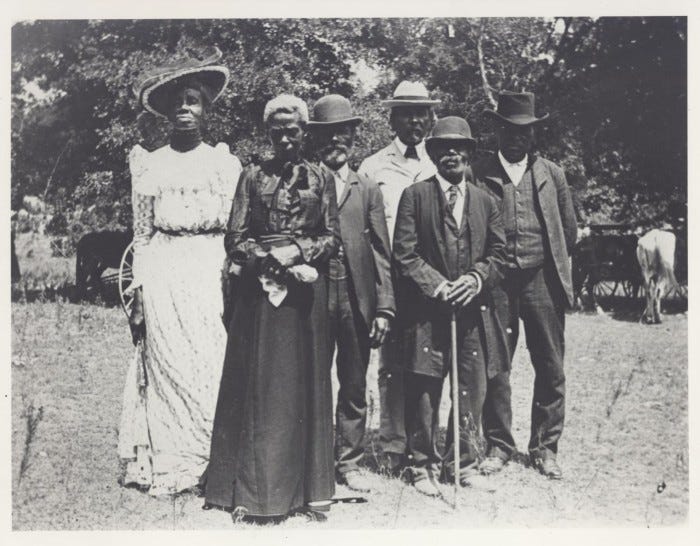
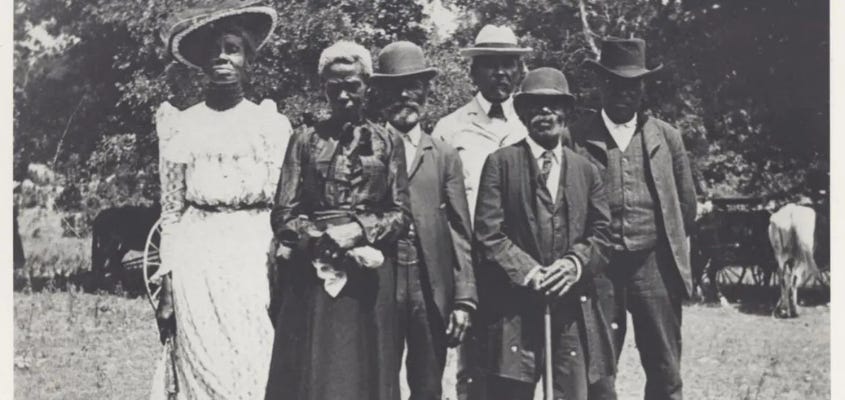
[Emancipation Day Celebration, June 19, 1900. Photo from Grace Murray Stephenson. Public domain from the University of North Texas Libraries, The Portal to Texas History, from the Austin History Center, Austin Public Library.]
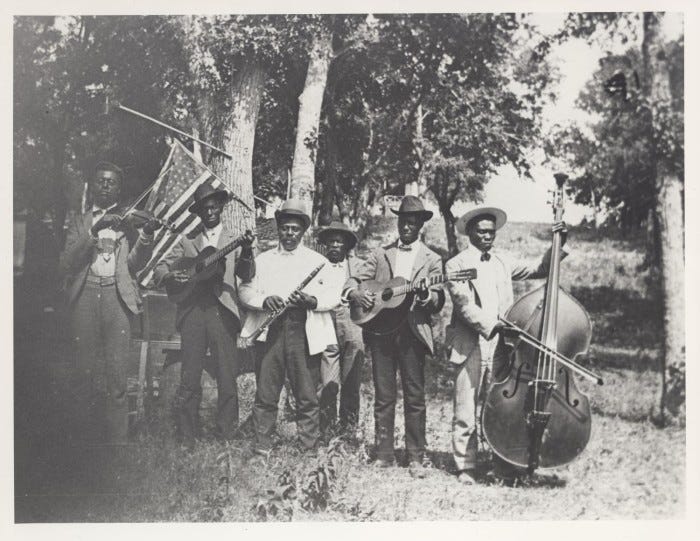
[Emancipation Day Celebration band, June 19, 1900. Photo from Grace Murray Stephenson. Public domain from the University of North Texas Libraries, The Portal to Texas History, from the Austin History Center, Austin Public Library.]

[Juneteenth celebrated in Emancipation Park, Houston, Texas in 1880] As we approach Juneteenth, Black Agenda Report is republishing this article from 2022, written by our Executive Editor, Margaret Kimberley.
Juneteenth was a people’s holiday with deep meaning for the descendants of enslaved people. But the declaration of an official federal holiday has turned it into an opportunity for corporate exploiters and cynical politicians to show pretend concern for Black people. At best Juneteenth provides a history lesson and an opportunity for much needed political education.
“The people of Texas are informed that, in accordance with a proclamation from the Executive of the United States, all slaves are free. This involves an absolute equality of personal rights and rights of property between former masters and slaves, and the connection heretofore existing between them becomes that between employer and hired labor. The freedmen are advised to remain quietly at their present homes and work for wages. They are informed that they will not be allowed to collect at military posts and that they will not be supported in idleness either there or elsewhere.” General Order Number 3, June 19, 1865
The fact that members of the United States Senate voted unanimously to make Juneteenth a federal holiday proved that the commemoration is of no political value. Turning what was a peoples’ celebration into an occasion for opportunism and window dressing has actually damaged the cause of Black liberation and the understanding of history.
On June 19, 1865 Union soldiers arrived in Galveston, Texas and issued General Order Three, a declaration that slavery had ended. The fact that this event occurred two months after the Civil War ended took on an understandably mythic quality, including a belief that the news had been deliberately kept from enslaved people, or that the person carrying the message had been killed.
In reality, enslaved Texans were well aware that the war had ended. But they also knew that the absence of federal troops who could enforce the law made any legalities moot. They knew better than anyone else that the people who forced them to labor without compensation would not end their system unless they were forced to do so.
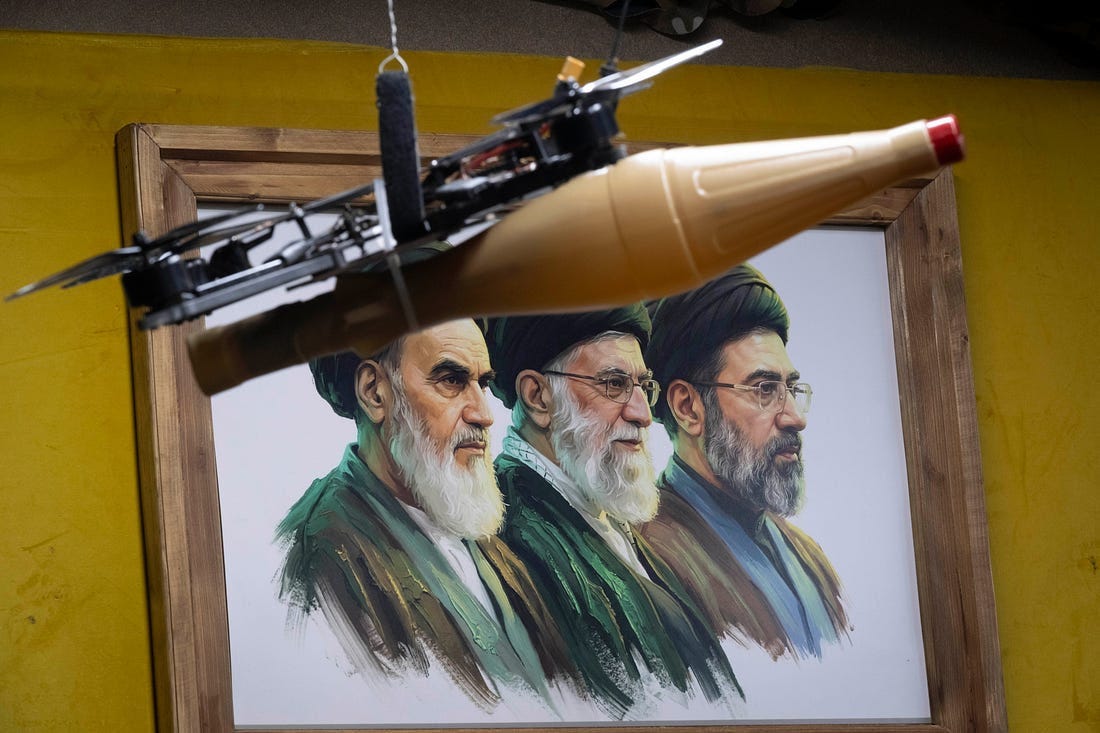
A drone is photographed in front of a poster depicting portraits of Iran’s late and new Supreme Leaders, Ayatollah Ruhollah Khomeini, Ayatollah Ali Khamenei, and Ayatollah Mojtaba Khamenei, during a nightly pro-government rally at Enghelab Square in downtown Tehran, on June 5, 2026.
JEWS:
“Regarding Lebanon, we have warned both the mediators and the American side that if the regime fails to comply with the existing agreement, Iran will respond with substantial military measures without prior public notice,” said the Iranian official, who is not authorized to speak publicly. “Should the United States intervene, conditions particularly those related to the Strait of Hormuz could rapidly revert to a wartime environment.”
On Friday, reports emerged that a ceasefire agreement had been reached between Israel and Hezbollah, but an Israeli official said that even with a ceasefire, Israel would not withdraw its forces from Lebanon. Another Israeli official told Channel 12 that Israel retains the right to strike against perceived threats, a common Israeli claim used to systematically violate ceasefire agreements in Gaza and Lebanon.
Over the past week, Israel has continued to relentlessly attack Lebanon, and its forces remain deeply entrenched in the south. In a barrage of more than 20 airstrikes on Thursday night, Israel killed at least 47 people, according to Lebanon’s Health Ministry. Since March, when Hezbollah entered the war alongside Iran, Israel has killed more than 3,900 people in Lebanon and displace over 1.2 million. Hezbollah has continued to ferociously retaliate against Israel’s military campaign and has stunned Israel with its ability to inflict losses on its occupation forces. More than 30 Israeli troops have been confirmed killed in action since March 2.
NOTE: The CUNT is using more censorship tools on Substack:
I was six years old when astronauts first walked on the moon. I had a poster on my bedroom wall illustrating the Apollo mission, featuring its orbital trajectories along with diagrams of space suits and similar equipment. That was what inspired me to want to join Air Force Space Command in 1985, not images of satellites being shattered by ASAT missiles. Not violence in or from space. — Air Force Bombing Mercenary, William Astore
1 reply hidden
My reply?
Space? Man in the Can? Satellites in the 60,000 range? Surveillance of all humanity? Space? And how do those overpriced space missions get to the moon? Jesus thrusters? Hmm, the earth sciences are underfunded, and forget about ecology and marine sciences and, well, the deep sea mining schemes are already underway. And what’s under the sea, in Davey Jones’ locker? A million lawyers? Ninety percent of Israelis? Nah, those strategic metals, nodules, for, you know, “peaceful space.”
The space programs have always been dual use (military) and now triple use (for the corporate trillionaires).
And we still have cloth tents for millions on earth, as the dirty Westerners, the Psychosis of Whiteness prevails.
We have big issues on that beautiful photo model you blather about — earth.
The sea is acidifying, heating up, and alas, the abyssal plane, man . . . for those data centers (running the space programs) and the thrusters (Not those of Jesus) and the telemetry.
Ahh, even little things kill earth sciences: The University of Oregon is consolidating department offices and the Department of Earth Sciences says it could harm students
The lie is that technology gained from shooting polluting and strategic, and rare earth metals into space will help planet earth. RIGHT.
It all goes through the Offensive Weapons War Lords’ Fucking Bank Accounts. We are an earth on deep deep war footing, as this extractive taker society is turning the planet into one giant sludge pile and desertification experiment.

