

And the good Americans say, “watch your mouth, watch your tone, watch your attitude, and you just need to pick up, pack up, and find a place that will hire you!!!!!!!!!”
Jun 09, 2026
We shall see if this one gets into the newspaper:


At-will Employment with those Short-term Rental Monoliths
By Paul Haeder
You may recall the animus:
Unleashed dog(s), dog poop, people unloading boxes of food, children, and bags. Clicking their car alarms, on and off, on and off. Then they use adjacent driveways: loading unused boxes of food, leaving trash to blow around, more dog poop, and loud parties.
“Bayshore Board and Committees ignore this and these situations of STRs. None will approach to fix, they ignore it as Full Time Residents deal with vulgar mouth STR transient tenants – disrespecting other people’s private property.”
Ahh, that’s Facebook, man, and alas, I just got sacked by one of those evil vacation home STRs, not for doing anything badly, but ironically, because a Bayshore Karen supposedly took a video of me making a California stop – rolling stop – at a stop sign.
I got zero recourse from the multimillionaires who own the STR outfit. There were no moving violations, and no second chance for me to, well, slow my roll and stop at stop signs.
This is a tale again of the haves and haves-not – and at $17 an hour, delivering clean laundry and supplies all over the county and picking up dirty towels and laundry, bags that can weigh eighty pounds, well, it is a mad dash to get to the rentals – dozens of them – before check in.
Most readers are Baby Boomers, and as many have noted, Newport and Waldport are like Sun City West, where retirement means entitlement.
Now, think of the optics – I was fired on hearsay, and if the video exists, it’s not evidence enough to have me sacked. But rich people breathe from a different atmosphere than the rest of us.
Mostly Mexican housekeepers rush to clean up the rentals, from bottom to top, with white-glove inspections required. It’s an endless battle with sand, dirty renters, and canine guests.
Three two- and three-story vacation homes in a day. Some of the Latinos have a hubby and a sister or daughter working the shift so they can “make bank” and get three done in a day.
And what a racket. Many of the homes have rickety, cracked wood stairs. Storm doors are unlatched. Basements are where linens and supplies sometimes go, and I have come across spider-infested ones, and I know my brown recluse and wolf spiders by sight.
Homes that are in disrepair, and many places I have been to have rat and mice traps set up all over the place, out of sight from guests, who pay, gulp, from $112 to over $600 per night, with larger beachfront properties pushing $1,000+. A cleaning fee is added on.
The Oregon coast short-term rental fight entered a new chapter three years ago with a state ruling by the Oregon Land Use Board of Appeals overturning a citizen-approved ballot measure phasing out vacation rentals in unincorporated Lincoln County.
Remember? 15neighborhoods was the coalition of citizens who got more than 10,000 Lincoln County residents to vote to phase out STRs.
STRs create jobs, though, as this most recent bitter experience was ramified to me, a union organizer going way back. At $17 an hour, one laundry driver comes from Depoe Bay to Waldport to start her shift. Another worker lived in an RV and was forced to leave the county when rental slips doubled.
Oh, the tales from workers, including one woman who is a student and lives in a van, who was sacked because of her “poor tone.” Bad attitude is another way of putting it. This multimillion-dollar family-owned outfit has no second or third chances in its blood.
The outfit doesn’t just manage other people’s homes. They have purchased many properties, including single-family homes, condos, and other housing configurations.
Now, sure, I despise the person who turned me in with a supposed phone or Ring camera video. But others in this outfit – workers – have told me of their own travails with the rich company owners and their HR staff.
Back to the spiders. I studied arachnids in Arizona and then in Vietnam. Alas, brown recluse spiders, like most others, don’t go after humans, but they nest, and when someone rubs up against them, say in bed, the short fangs come out, and the venom is injected. Grabbing stored items—such as boxes in the attic, garden tools, or old gloves—where the spider has made a retreat.
Short-term rental cleaners are always grabbing things out of these spider-infested locations. One cleaner told me she got bit at one of the houses, and she went to the ER, and $1000 later, after they abraded the wound and drained it, and left a course of expensive antibiotics.
She failed to file a workman’s comp claim, received no assistance from her supervisor, and, alas, the millionaire owners allegedly told her she couldn’t prove she was bitten at one of their rentals, so no compensation for her ER and doctor’s bill.
Ahh, the stone hearts of small business owners.
I respectively wrote to both the husband and wife, asking for a second chance, a PIP (personal improvement plan). I got a boilerplate response back from the man. And this is a fellow who is fixing up a small conglomerate of single units. I met his construction honcho, a nice Spanish-speaking guy from out of state. I doubt he has an Oregon contractor’s license, yet he’s doing wiring, plumbing, and construction work for the owner.
Yeah, brown recluse spider bites can take a person down quickly, and while their venom is complex and can cause serious local tissue damage (necrosis), most bites like the one I got in Phoenix heal on their own. Complications occur with those with compromised immune systems, which currently is a hefty thirty percent of Americans.
No ER visit bill taken care of by the millionaires. Automatic terminations with no recourse. Constant recrimination if a floor has a bit of sand left on it. Chiding if the towels aren’t folded the right way.
Capitalism is vicious, and while people should reject this transactional, bloody economic system, we see none of that in our little town of Waldport’s SRT outfits.
+—+end of commentary+—+
Oh, darn . . . name names?
Nah, all cozy and shit:
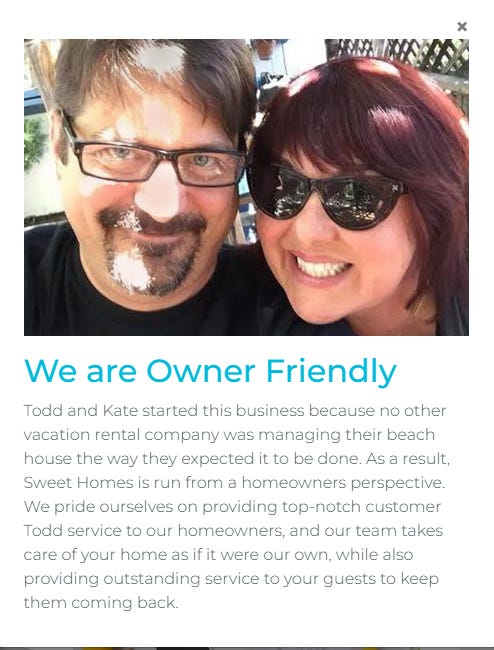
Todd and Kate are the owners of Sweet Homes Vacation Getaways. After meeting online from two different cities, they had their first date here at the beach in 2007, fell in love, and soon after, bought their beach house, The Sand Castle. (It’s a good story – be sure to ask them about it when you meet them!) After renting their home through another local company for almost a year, they realized that it was often unoccupied and wasn’t bringing in nearly the income that they had anticipated. Todd & Kate concluded that their property wasn’t being managed to their high standards and attention to detail, so they decided to rent and manage it themselves.The result? They increased their bookings and income by 300%.
Speaking of family, Sweet Homes has long-term ties to Yachats. Though Todd was born and raised in Portland, he has spent much of his life in the area and still has family here. His local knowledge, combined with 25+ years of photography, film, directing, advertising, marketing and business experience gives him a unique skill set for Sweet Homes. Kate may be an East coaster by birth, but she’s a West coaster by choice. With a Ph.D. in Sociology, Kate is a professor and Dean at a major university and she has extensive operations, HR, and management experience.

Ahh, the money:


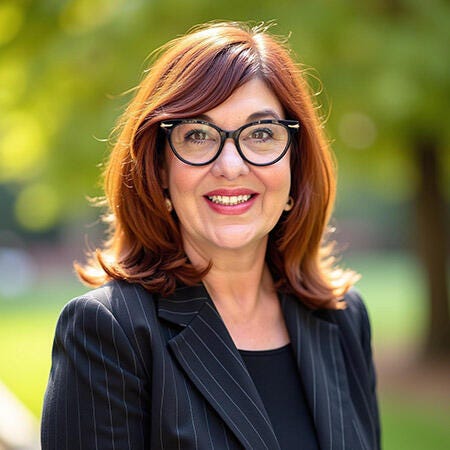
The wife:
Kate Hausbeck Korgan has a Ph.D. in Sociology from the University at Buffalo and has been a faculty member at UNLV since 1995. She is a tenured Associate Professor in the Department of Sociology. Since 1998, Korgan has held a series of progressive leadership roles, including Sociology Graduate Coordinator; chair of several campus-wide committees; two-term chair of the Graduate Council; Associate and Senior Associate Dean of the Graduate College; Dean of the Graduate College and Vice Provost for Graduate Education; and currently, Senior Vice Provost for Academic Affairs. She also served as Officer in Charge of the Executive Vice President and Provost’s Office during a period of campus leadership transition. In spring 2025, Korgan also served as Officer in Charge of the Executive Vice President and Provost’s Office during a period of campus leadership transition.
As a past president of the Western Association of Graduate Schools, regional representative to the Council of Graduate Schools, Chair of the WICHE Leadership Forum, and a three-time keynote speaker for Salesforce, Korgan is recognized as an experienced leader at UNLV and across the higher education sector.
As Senior Vice Provost for Academic Affairs, Korgan manages a leadership team that oversees areas such as Academic & Student Success; Academic Effectiveness (accreditation, assessment, campus surveys); Enrollment Management (Admissions; Recruitment; Financial Aid & Scholarships; Early Outreach; Campus Relations & Visitor Experience; Office of the Registrar; Orientation, Transition & Family Programming); Graduate College; Teaching & Learning Innovation (UNLV Online; Teaching & Learning Commons); Undergraduate Education & High Impact Practices (Career Services & Workforce Development); UNLV Global; UNLV Lifelong Learning; Academic Affairs Marketing & Communications; and more.
As a champion of diversity and equity, excellence and opportunity, and the powerful impact of interdisciplinary research, scholarship, and creative activity, Korgan is deeply committed to promoting student success and social mobility. She approaches her work through creative problem-solving, leading-edge programming, cross-department collaboration, digital innovation, and servant leadership. She works to provide outstanding service and support to the campus community in order to deliver transformative educational experiences, inside the classroom and out, that empower students to achieve academic and career success, and inspire faculty and staff to excellence.
Alongside her administrative responsibilities, Korgan continues to publish, present, and pursue research in the areas of leadership, higher education, gender and sexuality, technology, and policy. She has won multiple teaching awards, and she deeply values being an educator, mentor, and student advocate. In her free time, Korgan is an entrepreneur who co-founded and owns a hospitality and real estate business with her husband. She enjoys travel, photography, design, politics, writing, reading, cooking, entertaining, and relaxing with her family, friends, and fur babies: Elvis, a rockin’ English lab; Bowie, a huge goldendoodle; and Coco, a genteel and talkative blue point Siamese rescue cat.
The provost put this on her FU Book:

And this:

And this:
And this:
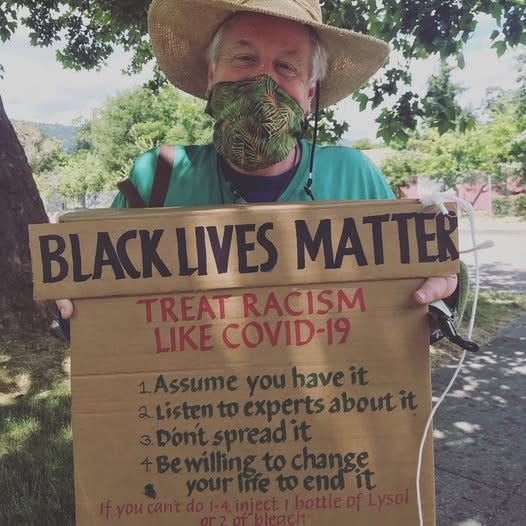
And this:
I tried pleading my case:

Dear Todd and Kate Korgan:
I have never spoken to you, though I briefly met Todd at the Waldport Warehouse with no interaction. I have been a driver for a short time with Sweet Homes, starting 4/14/2026.
I was informed yesterday, June 8, that there were “three complaints about my driving.” I understand the nature of complaints and that Sweet Homes has a bottom line to follow, liabilities, etc. Now, today, June 9, I was terminated by Casey, as she said, because a video of my driving a Sweet Homes van running a stop sign was sent to her.
My bad, for sure, but I have a spotless driving record. The point of my writing to you is to plead my case for, well, to get some sort of mea culpa moment in person to explain that rushed behavior. I am easily taught to slow my roll, and I believe the nature of this termination is, well, unprofessional too, since I had to contact the Sweet Homes Telegram chat to see why I was not on today’s schedule.
Again, if I ran that stop sign per the person’s personal video that was sent to Sweet Homes, then my apologies are in order. I have been rushing much of the time, driving with Sweet Homes, following the hard deadlines of 5 pm for check-ins, sometimes with even earlier check-ins. I think I am fully adult enough to be warned and to adjust my driving. I have been a professional teacher, writer, journalist, case manager, and diver. I have not had a delivery job, though I did Meals on Wheels as a volunteer position, and that was not a job that required super rushing to each household.
So, there is no recourse here? I am a good employee, live in Waldport, and am always ready to throw in to help out. I believe some sort of PIP would be in order, and again, I do not break traffic laws throughout the day. I rushed over at Bay Shore, but to repeat, I CAN be admonished and retrained to slow my roll.
I know you have so many other duties as not have ’t have to worry about a $17 an hour employee, but I am reaching out to see if there is any chance of reconsidering this decision. I taught English composition and literature for decades at many colleges in several states. I appreciate the ability to give second chances to students. As a sociology professor, Kate, I hope you too have that in your heart and your willpower to give me a second chance.
Sincerely, Paul
—
Pretty measured, calm, and not in your fucking face, which in the end, that’s what these people NEED.
I didn’t get anything back from the UNLV provost, so-called queer and gender studies sociology professor:
But here, the party man, the guy who is in Oregon working on HIS properties, ta-da.
Hi Paul,
Thanks for reaching out and explaining your side. We take driving safety very seriously. We’ll review this internally and get back to you.
Best,
Todd
And, alas, here we go:
Thank you for your email and for taking the time to share your perspective. I also appreciate your acknowledgment of the driving incident and your willingness to accept responsibility for it. I
understand your position that additional coaching or a performance improvement plan may have been appropriate under different circumstances.
Unfortunately, because the incident involved the operation of a company vehicle, we were required to report it to our insurance carrier. Following their review, we were advised that you could not continue operating company vehicles under our insurance coverage.
Since driving is an essential function of the position, we are unable to continue employment in that role without the required insurance coverage. As a result, this is not a matter that can be resolved
through additional training, coaching, or a performance improvement plan.
At Sweet Homes, the safety of our employees, guests, homeowners, and the communities we serve is extremely important to us. While we understand that mistakes can happen, we must adhere to the
requirements of our insurance carrier and maintain strict safety standards for all employees operating company vehicles.
I am sorry that things didn’t work out this time around. We appreciate the effort you put into the position during your time with Sweet Homes, and we wish you the very best moving forward.
Take care, Paul.
Sincerely,
Sweet Homes Vacation Getaways
The Louie Boutique Motel
Todd Korgan | Owner & CEO

Jesus fucking Christ, the same old spiel, and my response?
Well, Todd, it is indeed a real gem of a CYA piece of PR you’ve composed, though it sure is boilerplate.
To repeat what has already been repeated about Sweet Homes taking safety and driving seriously, oh, enough of that. However, common sense would posit that, a, it was a private citizen that reported this to Sweet Homes, and, b, there is no way she would know my name, and, c, how would she know what SH’s policy is about second chances, PIPs or what have you, and, d, how can this rise to the level of contacting your insurance carrier when there is no moving violation involved?
The measure of a company and its founders is, or should be, on how they treat their employees, not just the bottom line of profits and so-called appearances within a community. Indeed, if it was a resident of Bay Shore, a very proscribed and demographically odd community, that also needs addressing. In fact, part of the SH training I received included two trainers specifically saying that Bay Shore “is full of people who have lodged complaints to Sweet Homes about every manner of things, including our driving.”
Nah, I will not accept your rationale, and alas, the bitter taste in my mouth is pretty deep down. This is sort of foolish expounding of rhetorical mumbo jumbo and decrying me persona non grata for SW is indeed chutzpah; when as an employee, I have witnessed faulty stairs, rickety stairs, non-ADA compliant residences, hazardous storm doors, basements and garages with poor lighting, basements infested with spiders and rodents, and forget about the workers, the house cleaners. Damn, yo hablo Espanol y vivia en Mexico y otras paises in America del Sur, so, yep, some pretty compelling stories of stress — both mental and physical deployed by ASH. It’s a bit amazing you would send off a boilerplate response, which is faulty CYA writing.
You have the right to fire laws on your side, Todd, so the rich employer wins, no? Well, thank goodness I have worked as a union organizer in Washington State, Oregon, and even in DC. For SEIU. Thank goodness I have gotten in front of judges for my various clients — houseless veterans, families, even foster youth — and advocated for them to drop penalties and reverse eviction findings and much more to assist those people. Thank goodness I learned how to manipulate administrative systems at colleges and universities, advocating for students against the dictates of provosts and VP’s.
I wasn’t expecting much with your outfit, but I went to work, did an honest day’s job, and was forthright. Your response is empty at best, pure PR bull at worst.
You got me to almost bend my knee, stating what some of my former professor colleagues would say: Zay mir moykhl. I am not expecting that Jewish tradition of teshuvah from you, since you have already stated the obvious: Anyone in the entire world who has done a “California stop” or who has run a stop sign is unemployable, even when there is no DMV record of the high crime.
I wish I didn’t have to spend time responding, and alas, you have the last word because you sacked a 69-year-old highly educated man, and you have that final word as an employer.
All this is lost on you, I am sure, Todd: Rachmanas means empathy, compassion, understanding. Leo Rosten wrote, “This quintessential word lies at the heart of Jewish thought and feeling. All of Judaism’s philosophy, ethics, ethos, learning, education, and hierarchy of values are saturated with a sense of, and heightened sensitivity to, rakhmones.”
The root of rachmanas comes from the Hebrew word for “womb.” Rachmanas is our first home. Rachmanas is a parent’s love for a child. Rachmanas is foundational.
I’ve said enough. Zeh hu zeh.
Paul
Her fucking school:
Dr. Kate Hausbeck Korgan currently serves as UNLV’s Officer in Charge, Executive Vice President, and Provost. Her exact salary is not publicly available due to recent changes in personnel that shifted various executive pay rates, but predecessors and current interim executives in this exact role were approved for base salaries of $540,000.
For additional context on the university’s top administrative salaries:
- Dr. Chris Heavey, who served as Provost before taking on the role of Interim President, is operating on a contract with a base annual salary of $540,000, plus an $18,000…
Say Amen (2005) is a personal documentary film by David Deri, an Orthodox Jew, who reveals his homosexuality to his parents and siblings.
Shit, I could have had great conversations with Kate:
Sweet Palestinian HOMES.
We could have talked about her religion:
Judaism’s Three Pillars and the Days of Awe
At sundown on Monday, Sept. 6, Rosh Hashanah 5782 begins. And, with the beginning of Rosh Hashanah, Jews all over the world will begin one of our faith’s most profound spiritual annual experiences – observance of Yamim Noraim, the Days of Awe.
These 10 days begin with Erev Rosh Hashanah and close at the end of Yom Kippur.
Rosh Hashanah, our faith’s New Year, marks the celebration of life itself. Judaism teaches that, as individuals and collectively in our communities, during the Days of Awe, we grapple with atoning for our transgressions and use the period as an opportunity to make peace with others we may have wronged.
At its core, the Days of Awe present us with an opportunity for teshuvah, to atone directly with those we have or may have wronged and ask for forgiveness. As we reach out to our brothers and sisters, we acknowledge our mortal frailties and go through the process of repentance. It is up to those from whom we seek forgiveness to either grant forgiveness or refuse to do so. Yet, if we ask with a pure heart, each of us takes a critical step in the process of atonement.
Pirkei Avot 1:2 teaches that the world stands on three pillars: Torah, work in the service of G-d and acts of human kindness. Mishna teaches that we are not alone in the world but must live and coexist with others. Thus, by studying Torah and gleaning its eternal lessons, we have an opportunity to become closer to G-d.
Studying Torah is a lifelong journey, that necessarily begins with a first step. As we celebrate Rosh Hashanah and begin experiencing the Days of Awe, we have a new opportunity to take a first step.
Each of us may use our lives in the service of G-d, and our opportunities are not delimited by our individual callings. Whether one is engaged in business, education, physical labor, a profession or any other undertaking, each day presents us with opportunities to perform work that is useful to other human beings. By remembering that we all are connected to each other as we undertake our daily tasks, we act in harmony with a greater purpose and are compelled to remember that none of us can survive alone.
The third pillar of Judaism sanctified in Pirkei Avot 1:2 is our responsibility to perform gemilut hasadim, literally “the giving of loving-kindness.” Carrying out acts of kindness toward others is a fundamental Jewish value. Such acts may be small and almost insignificant, such as opening a door for another. Or, an act of kindness may be visiting the sick or comforting the dying. One also may offer succor to those who are experiencing the harsh realities of life, the illness of a child or loved one, the pain of separation and divorce or the havoc of financial hardship.
Every act of kindness has the potential to ripple with larger meaning. For if each of us acts with kindness to others, still others may observe our actions and emulate them.
There are very special acts of kindness, known as showing rachmones, Yiddish for compassion. As Leo Rosten wrote in “The Joys of Yiddish”: “This quintessential word lies at the heart of Jewish thought and feeling. All of Judaism’s philosophy, ethics, ethos, learning, education and hierarchy of values are saturated with a sense of, and heightened sensitivity to rachmones.”
Rekhem, the root of the Hebrew word from which rachmones is derived, means “a mother’s womb.” The great rabbis taught that Jews should look upon other human beings with the same feelings a mother has for the unborn child she is carrying in her womb. That emotion clearly inspires awe.
Individual acts of compassion are treasures that we may bestow upon others.
Perhaps the ultimate act of rachmones is undertaken by the sacred souls of the Chevra Kadisha, who selflessly prepare the dead for burial. Their acts of kindness are profound – they keep company with the dead awaiting internment. Such acts are referred to as chesed shel emet or a good deed of truth.
The mitzvot of the Chevra Kadisha are august, as the recipient can never repay the benefactor.
Not every act of kindness can compare with the blessed work of the Chevra Kadisha. But, we can draw inspiration from such selflessness and learn from it as a touchstone to practice rachmones and other acts of loving kindness in our daily lives.
As each of us enters the Days of Awe, let us contemplate Judaism’s beautiful teaching that the world is anchored on three ideas: Torah, service to G-d and acts of human kindness. By renewing our commitment to the Pillars of Judaism, each of us may perform tikkun olam – repairing the world – in the New Year.
Shana Tovah.

+—+
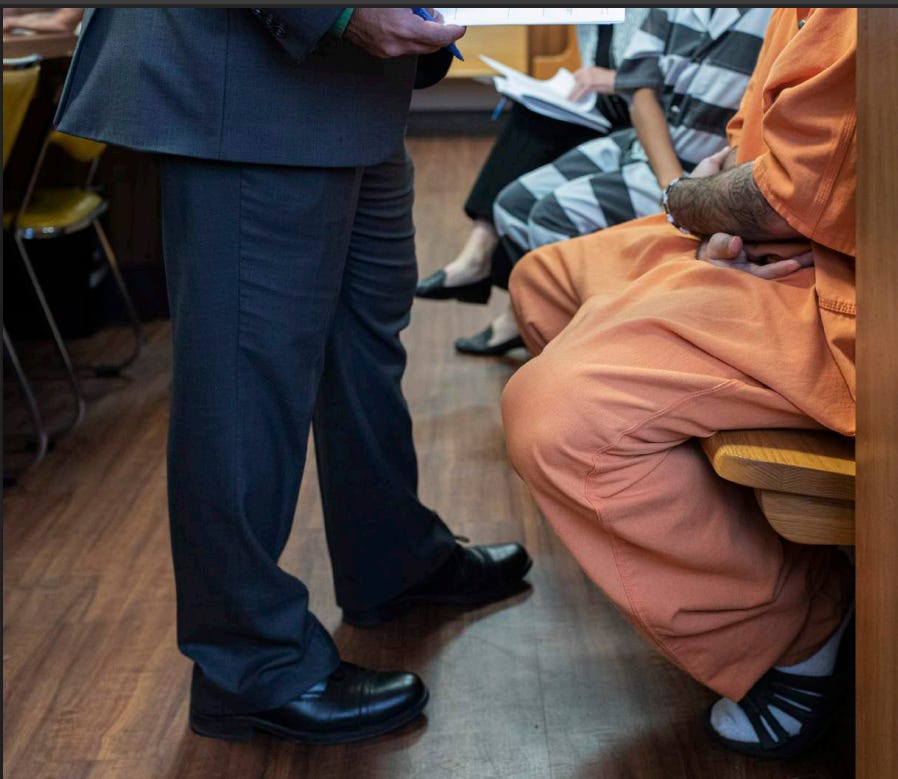
Oh fucking well. Some Jews, well, usury comes to mind!
There are other types of prison — debts, evictions, and never getting a chance at a job because of a previous conviction.
Parole (or Supervised Release): Roughly 680,000 to 700,000 individuals are on parole, which is the conditional release of prisoners after they have served a portion of their prison sentences.Probation: About 3 million individuals are on probation, which typically serves as an alternative to incarceration in jail or prison. Collectively, this means that approximately 1 in 70 adults in the United States is currently supervised in the community.
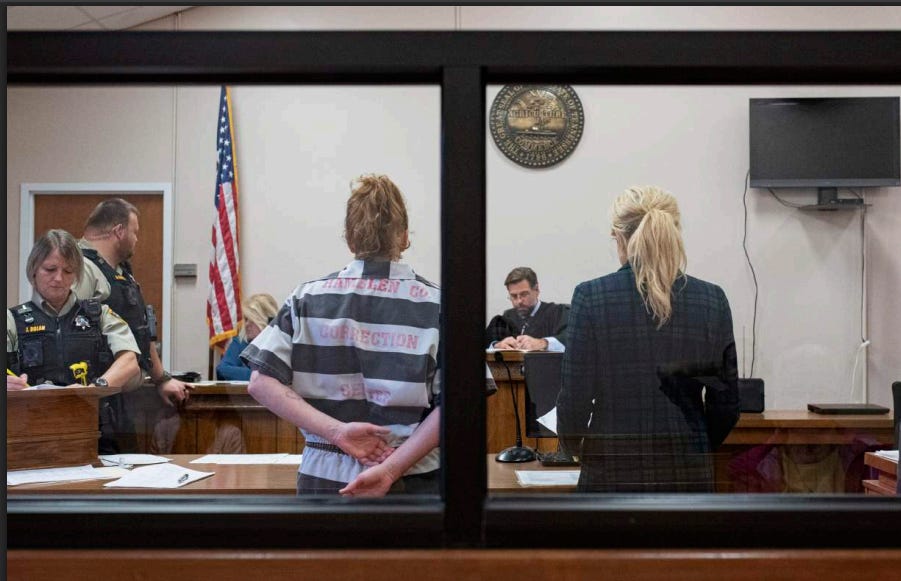
If you owe child support back payments, you lose your driver’s license, which is another type of prison —
Driver’s License Suspensions for Unpaid Debt: Punishing Poverty
Counterproductive laws that suspend driver’s licenses for unpaid fines and fees make it harder for millions to work and provide for their families.
Derrick Sprouse’s driver’s license was suspended in 1988—and it stayed that way for more than two decades.
Sprouse lives in Memphis, where the Tennessee Department of Safety and Homeland Security (TDOS) suspends licenses for outstanding criminal legal debt. If he’d had the financial means to pay off his fines and fees, he could have had his license reinstated. But Sprouse, like many others, didn’t have hundreds or thousands of dollars to cover them.
In Memphis and across Tennessee (and much of the country, for that matter), public transportation is lacking, often inaccessible or nonexistent. Driving is a necessity, and Sprouse had little choice but to drive on a suspended license. He received a few tickets for doing so—and accrued more fines. He even had a few cars towed when police took notice that he was driving on a suspended license. All the while, his unpaid fines and fees continued to snowball.
The situation made it difficult for Sprouse to keep a job and next to impossible for him to pay down the debt. He said his fines eventually totaled $8,900, plus a license reinstatement fee of $1,500.
“There’s nothing you can really do. They want you to pay it off, but how can you pay it off if you can’t work?” Sprouse said.
Derrick Sprouse’s Story
Nationally, an estimated 11 million people have a suspended driver’s license simply because they can’t afford to pay off criminal legal system fines and fees—like court debt. For two decades, Derrick Sprouse was one of them.
Sprouse’s question gets at the crux of the nonsensical, contradictory, and incredibly extractive nature of laws that suspend, revoke, or refuse to renew driver’s licenses for outstanding debt that stems from traffic fines, parking tickets, unpaid child support, court fees, and the like.
TDOS has suspended hundreds of thousands of drivers for some form of criminal legal debt. Many Tennesseans have reported taking out loans and working multiple jobs for many years to pay off that debt before they were able to have their driver’s licenses reinstated.
And Tennessee is far from unique. More than half of U.S. states—including Florida, New Hampshire, and Wisconsin—criminalize people who can’t pay up and punish them by taking away their driver’s licenses despite the fact that the ability to drive legally is a necessity in much of the country.
Nationally, an estimated 11 million people have a suspended driver’s license simply because they cannot afford to pay off their fines and fees. The ramifications are severe. A license suspension makes it difficult and sometimes impossible to get to work, school, doctor’s appointments, even the grocery store. People who drive on suspended licenses can end up serving jail time or probation. If that happens, they will almost certainly incur additional fines, fees, and court costs—and find themselves further entrapped in a criminal legal system that exploits people who simply do not have money.
Laws that suspend driver’s licenses for unpaid fines and fees criminalize people with low incomes and people experiencing poverty. These practices disproportionately harm Black people, who, because of the systemic racial bias baked into the criminal legal system, are consistently stopped, searched, arrested, and incarcerated at higher rates than white people.
+–+
Here, a comment to me from Susan Cartwright over at the Wilkerson interview, responding to my comments,
America has the largest prison population in the world. The US = 4.2% of the global population but 20% of the incarcerated.
With the new Alligator Auschwitz and immigrant detention centres, the % is likely much higher.
FOR PROFIT PRISONS. No oversight. People die. Not reported. No one cares. Prisons. Bad for the nation but easy money for the rich.
Of course, I respect people’s time put into comments, so here’s mine!
+—+
There are other types of prison — debts, evictions, and never getting a chance at a job because of a previous conviction.
Parole (or Supervised Release): Roughly 680,000 to 700,000 individuals are on parole, which is the conditional release of prisoners after they have served a portion of their prison sentences.Probation: About 3 million individuals are on probation, which typically serves as an alternative to incarceration in jail or prison. Collectively, this means that approximately 1 in 70 adults in the United States is currently supervised in the community.
If you owe child support back payments, you lose your driver’s license, which is another type of prison —
Driver’s License Suspensions for Unpaid Debt: Punishing Poverty
Counterproductive laws that suspend driver’s licenses for unpaid fines and fees make it harder for millions to work and provide for their families.
Derrick Sprouse’s driver’s license was suspended in 1988—and it stayed that way for more than two decades.
Sprouse lives in Memphis, where the Tennessee Department of Safety and Homeland Security (TDOS) suspends licenses for outstanding criminal legal debt. If he’d had the financial means to pay off his fines and fees, he could have had his license reinstated. But Sprouse, like many others, didn’t have hundreds or thousands of dollars to cover them.
In Memphis and across Tennessee (and much of the country, for that matter), public transportation is lacking, often inaccessible or nonexistent. Driving is a necessity, and Sprouse had little choice but to drive on a suspended license. He received a few tickets for doing so—and accrued more fines. He even had a few cars towed when police took notice that he was driving on a suspended license. All the while, his unpaid fines and fees continued to snowball.
The situation made it difficult for Sprouse to keep a job and next to impossible for him to pay down the debt. He said his fines eventually totaled $8,900, plus a license reinstatement fee of $1,500.
“There’s nothing you can really do. They want you to pay it off, but how can you pay it off if you can’t work?” Sprouse said.
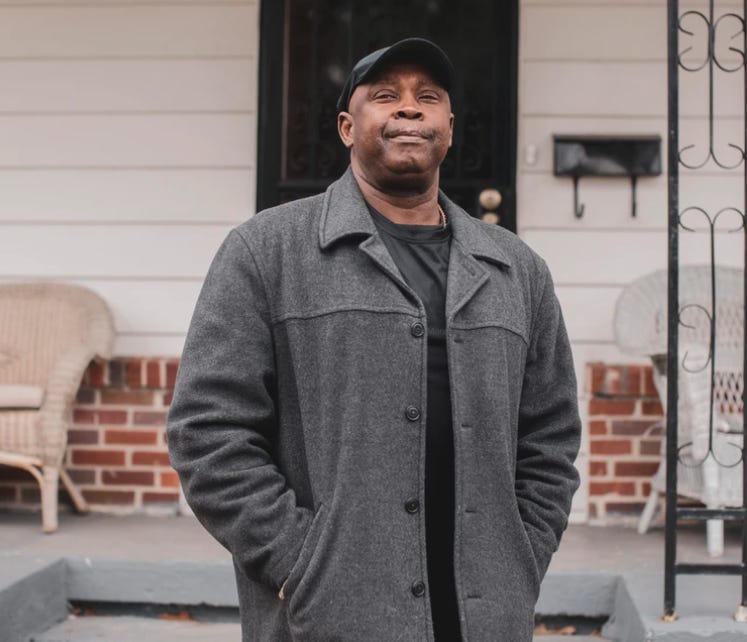
Derrick Sprouse’s Story
Nationally, an estimated 11 million people have a suspended driver’s license simply because they can’t afford to pay off criminal legal system fines and fees—like court debt. For two decades, Derrick Sprouse was one of them.
Sprouse’s question gets at the crux of the nonsensical, contradictory, and incredibly extractive nature of laws that suspend, revoke, or refuse to renew driver’s licenses for outstanding debt that stems from traffic fines, parking tickets, unpaid child support, court fees, and the like.
TDOS has suspended hundreds of thousands of drivers for some form of criminal legal debt. Many Tennesseans have reported taking out loans and working multiple jobs for many years to pay off that debt before they were able to have their driver’s licenses reinstated.
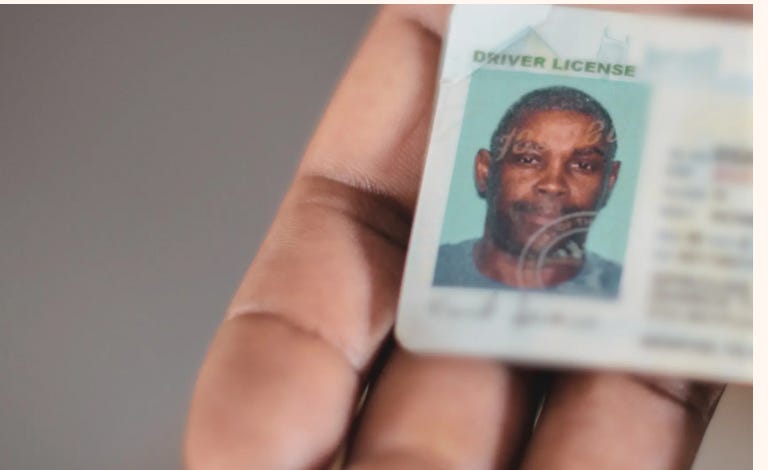
And Tennessee is far from unique. More than half of U.S. states—including Florida, New Hampshire, and Wisconsin—criminalize people who can’t pay up and punish them by taking away their driver’s licenses despite the fact that the ability to drive legally is a necessity in much of the country.
Nationally, an estimated 11 million people have a suspended driver’s license simply because they cannot afford to pay off their fines and fees. The ramifications are severe. A license suspension makes it difficult and sometimes impossible to get to work, school, doctor’s appointments, even the grocery store. People who drive on suspended licenses can end up serving jail time or probation. If that happens, they will almost certainly incur additional fines, fees, and court costs—and find themselves further entrapped in a criminal legal system that exploits people who simply do not have money.
Laws that suspend driver’s licenses for unpaid fines and fees criminalize people with low incomes and people experiencing poverty. These practices disproportionately harm Black people, who, because of the systemic racial bias baked into the criminal legal system, are consistently stopped, searched, arrested, and incarcerated at higher rates than white people.
+–+
AND IT IS WORSE THAN THAT. Fucking capitalism, casino, corrupt, penury. destructive, inverted totalitarian CAPITALISM.
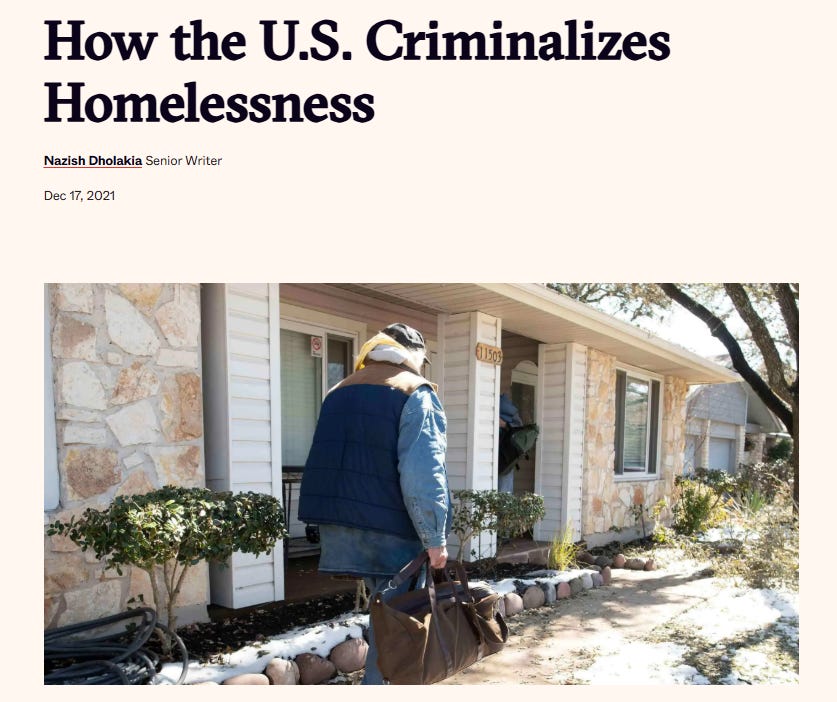
The Criminalization of Poverty in Tennessee
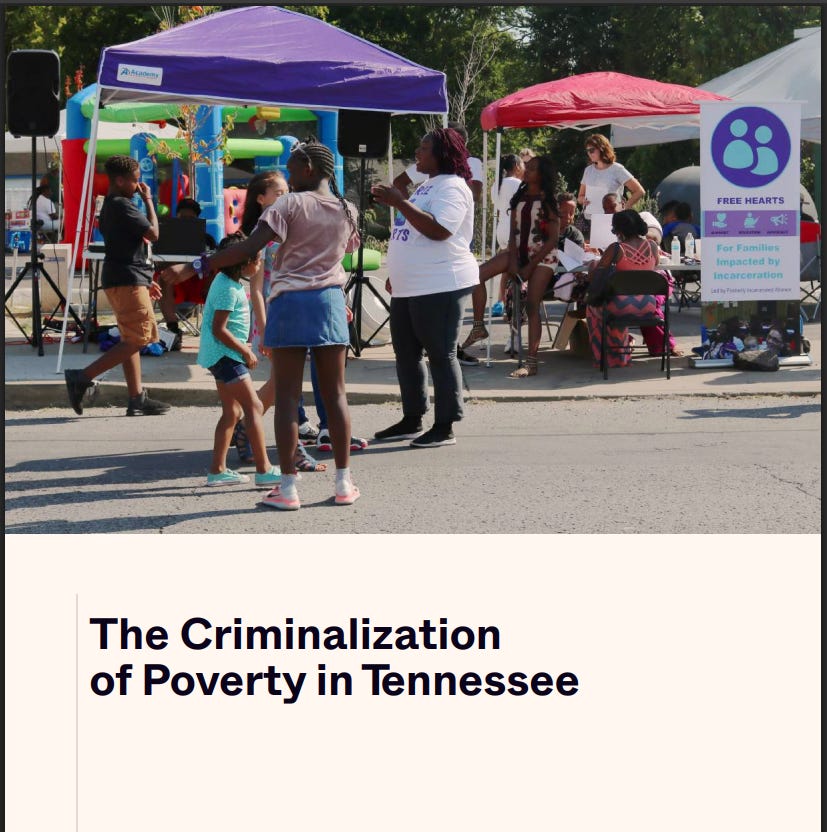
Good ol’ Kate, Todd, and I could have had quite the conversation. Sociologist, my ass:
People who have been directly impacted by criminalization have firsthand knowledge of both the harms of incarceration and the needs of the most vulnerable members of their communities. Integrating data analysis, ethnography, and survey data, this report highlights how incarceration and criminalization affect communities across urban and rural Tennessee.
Sweet Homes has 55-60 employees, most of them employed year-round, says Todd Korgan, and manages 125 houses along the coast for their owners. That’s 30-40 more properties under their portfolio following the height of the coastal vacation rental conflicts from 2019-23, and as national companies downsize many of their more far-flung operations.
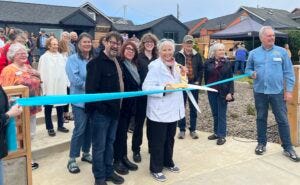
“There’s a fair amount of folks who don’t like us or what we’re doing,” Todd Korgan says of the vacation rental business. “But like it or not, tourism is the base of the economy on the Oregon coast.”
But the Korgans are done with arguing with people about vacation rentals. They believe their company’s standards and local operations help prevent many of the problems that beset companies with remote operations or far-flung call centers.
They have also purchased two buildings in downtown Waldport that have six apartments for employees working at their large operations center in Waldport or others in the industry. It has rental offices in Yachats and Newport.
“We agree there needs to be affordable housing …” Todd Korgan says.
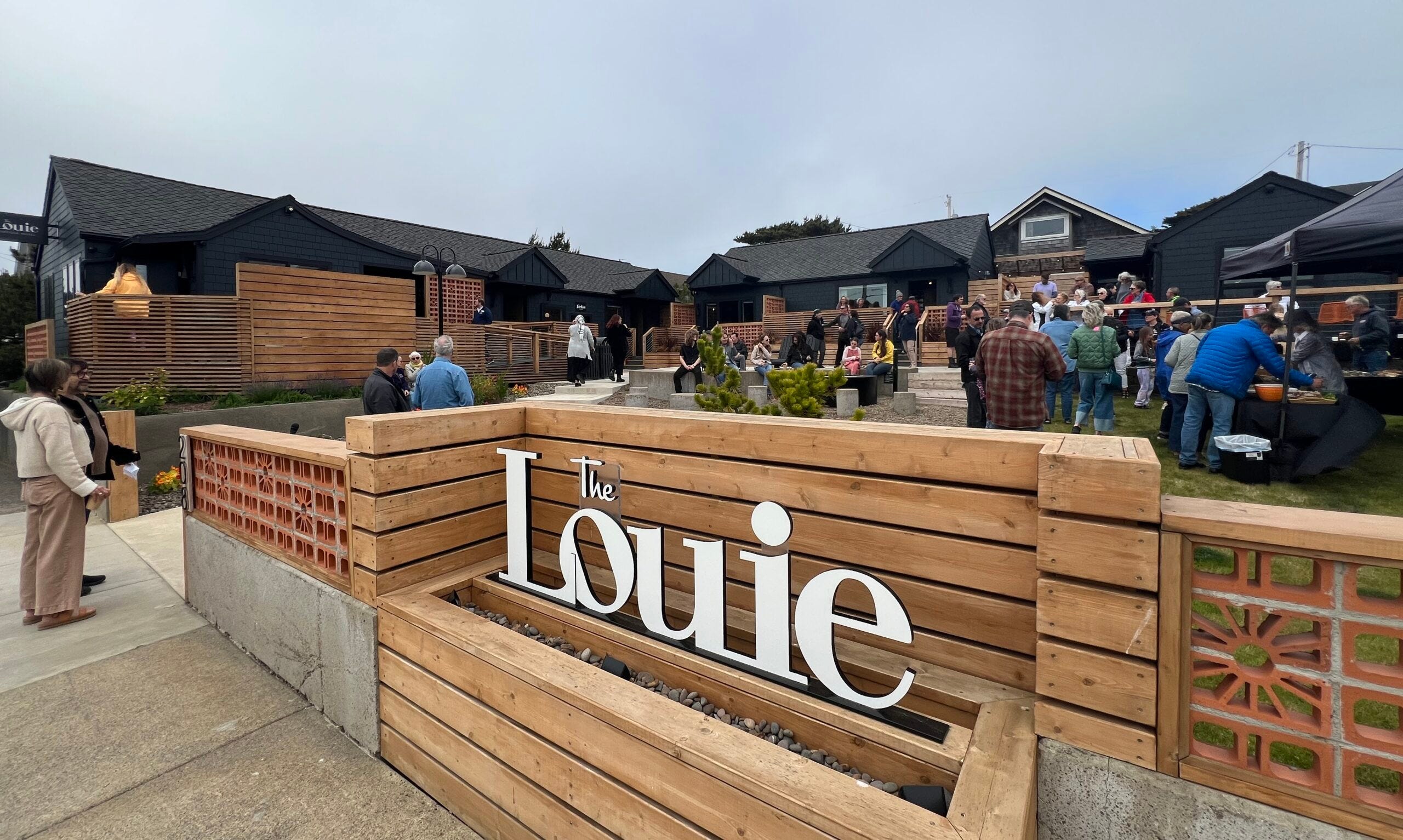
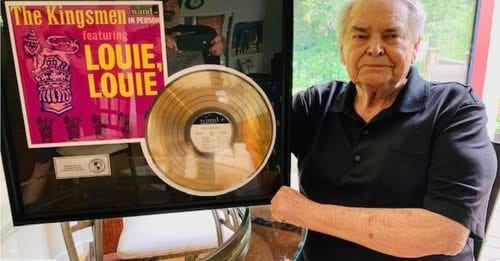
Todd Korgan comes from a family of entrepreneurs. His parents, Mike and Carol Korgan owned a popular restaurant and real estate in Portland, and his father was a well-known Portland radio personality and who later gained fame as producer of The Kingsmen’s Louie Louie. Mike Korgan was inducted into the Rock and Roll Hall of Fame in 2018 and died in January at the age of 85.
None of this at the professor’s “school,” I BET.

