

Land use — rural, neighborhood, transportation, scenic by-ways, tribal, parks and bikes, new urbanism, smart growth wise use, conciliatory, radical, historic neighborhoods . . . .
Apr 25, 2026
And the end of all our exploring
Will be to arrive where we started
And know the place for the first time.
— T. S. Eliot, “Little Gidding”
LISTEN HERE, the show, May. 20, but here early. Thanks to Dissident Voice’s platform.
I met him a few months ago at a Midcoast Watershed Council presentation where he was the presenter. Onno Husing, and get that pronounced correctly: Ahh-no, he repeated on my radio show. Institutional memory and that role as elder in the community of planners.
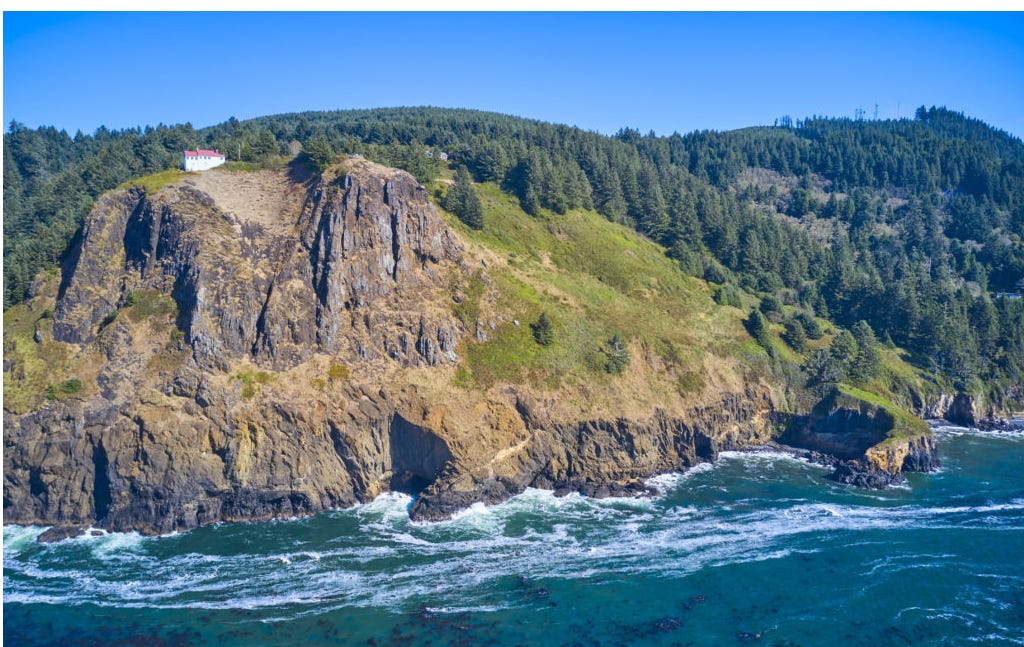
For fifteen years he’s been the land use planner for Lincoln County. His talk was very focused:
About the presentation:
Approximately twenty years ago, the Lincoln County Board of Commissioners, in conjunction with county staff, elected to obligate most of its remaining Title III (old Title III) funds to create the Lincoln Land Legacy Program, which facilitates the development of conservation easements on scenic and ecologically important lands in the county. In recent years, Lincoln County staff has worked with partners to preserve several iconic properties in Lincoln County. One of these special places is the south side of Cape Foulweather. The compelling story of how these properties were saved from development will be shared, and thoughts about how to build upon these successes will be explored.
About the speaker:
Onno Husing has been the Director of the Lincoln County Planning & Development Department since 2012. Before that, he served for sixteen years as the Director of the Oregon Coastal Zone Management Association, as well as a self-employed land consultant specializing in wetlands (based in Lincoln County). Husing moved to Oregon in 1985 to attend law school at the U of Oregon. He also holds a master’s degree in Anthropology from the U. of New Brunswick, in addition to a master’s degree in city and regional planning from the University of North Carolina at Chapel Hill. He has previously served as a Congressional staffer (a Sea Grant Fellow working for a Congressional Committee) and a researcher at the Woods Hole Oceanographic Institution (WHOI). He began his career in marine policy during the summers of 1976/77 when he worked full-time as a crewmember aboard a commercial fishing vessel based out of Provincetown, MA.
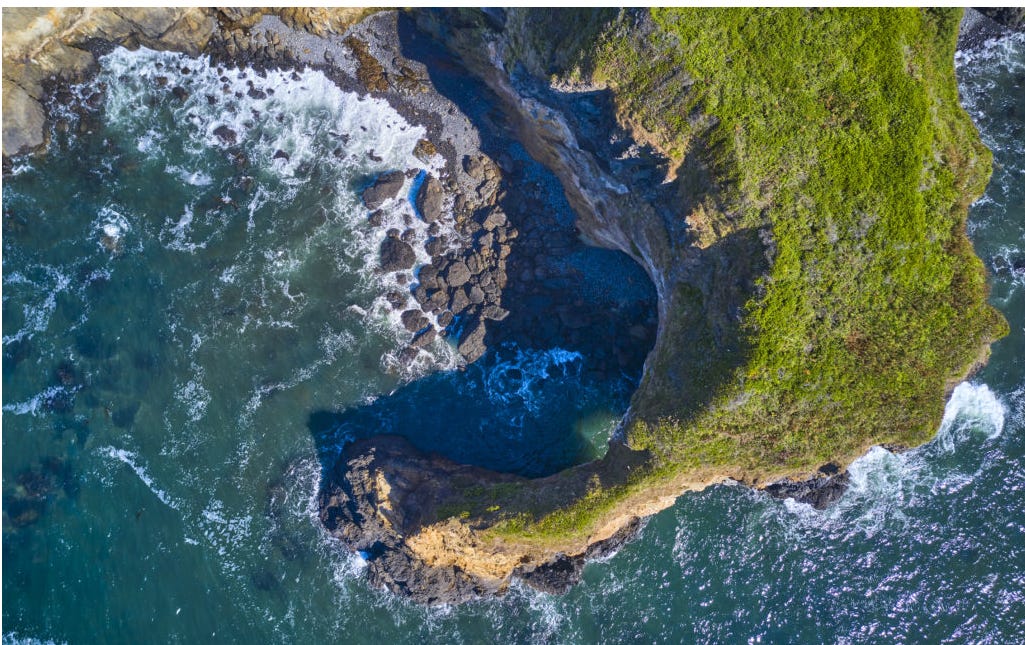
Our tribe even got in on the conservation work Onno and his team worked on:
Robert Kentta, a member of the Siletz Tribal Council, emphasized the significance of this project in reconnecting Siletz people with their heritage:
“Before settlement, this land was home to our families, who fished from the rocks and canoes in the ocean, and gathered mussels from the rocky shore. Now, we will have the opportunity to reinvigorate our connections to traditional lifeways.”
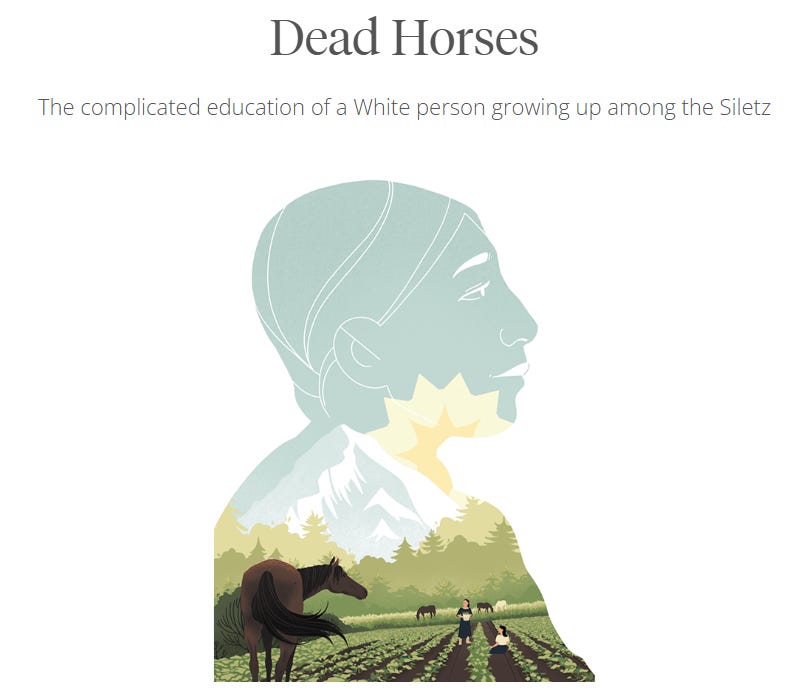
Irony, no?
In a historic land transaction, the Confederated Tribes of Siletz Indians regained ownership of 27 acres of their ancestral homelands at Cape Foulweather on the central Oregon coast. This significant land purchase capstones a multi-year collaboration to protect the land’s ecological, cultural and scenic values.
Funded by a $2.01 million grant from the National Oceanic and Atmospheric Administration, the Tribe completed the purchase from McKenzie River Trust in October 2024. In 2022, McKenzie River Trust acquired the land from an out-of-state developer, serving as a bridge owner until the Tribe secured funding.
The area has long been a conservation priority. A coalition of partners – including the Tribe, Lincoln County, The Nature Conservancy in Oregon, the Oregon Department of Land Conservation and Development, and McKenzie River Trust – came together to secure the property, obtain funding and return the land to Tribal ownership.
“We want to hold this land. . . . I will not leave.”
In the early years of the reservation, Siletz people struggled to adapt to a new land, the aggressive federal overseer, forced farming, the government school, church proselytizing, and tenancy in common with other tribes. Concurrently, they had to contend with familiar outside forces—the ones that the remoteness of the reservation was supposed to protect against. On the one hand, the westward movement had its high ideals. Americans now had an unparalleled opportunity as the government adopted homesteading policies that guaranteed free land across the American West. But westward expansion had its ugly side, and it was not just the miners at Jacksonville and the other camps. There were many other people and reasons to settle the Pacific Coast, Indian reservation or no.
Yaquina Bay began attracting the attention of shipping and Willamette Valley agricultural and recreational interests in the early 1860s. After the shipwreck at the shallow mouth of the Siletz in 1856, the BIA brought shipments into Yaquina harbor and then six miles upriver, to Depot Slough, which served as the unloading site for the reservation. Word of the Yaquina spread. It had a tricky, shifting channel, but was the only usable harbor on the central Oregon Coast. Enthusiasm spiked in 1863 with the Americans’ realization of what the Alsea Tribe had always known: Yaquina Bay held excellent beds of oysters—small, but “thickly clustered” and “finely flavored.” Then an alert went out that the Yaquina sands held paying quantities of beach gold.
Illegal encroachment on Indian reservations plagued Indian tribes throughout the nineteenth century.
We talked about urbanism, our Coastal Arena, and what makes sound planning. We did not get into these books: Essential land use planning books, often regarded as foundational reading by professionals, include The Death and Life of Great American Cities by Jane Jacobs, The High Cost of Free Parking by Donald Shoup, and Cities of Tomorrow by Peter Hall. These texts focus on urban design, zoning reform, transit, and community-centric development.
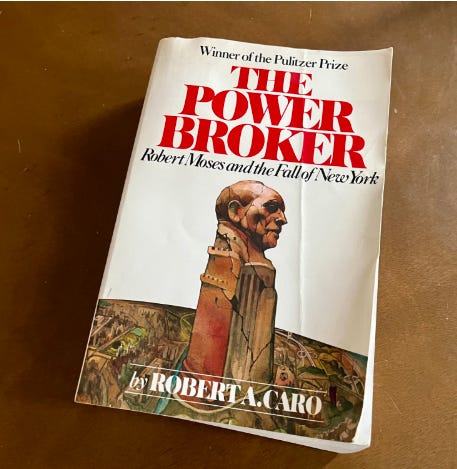
We did not get into New York City much:
We just marked the 52th anniversary of the publication of The Power Broker, the epic urbanist history that has helped generations of New Yorkers understand the warring visions of Robert Moses and Jane Jacobs.
And now it’s time to shut up about Moses vs. Jacobs.
Let me explain.
Both Moses, the “master builder” of the urban renewal era, and Jacobs, the grassroots champion of small-scale urbanism, have left deep and lasting imprints on our city. But today, the debate over their visions is a diversion from broader truths about New York City’s history and present-day challenges.
Why? The Moses-Jacobs clash occurred during the only period in history—going back centuries!—when New York City’s population was not growing. From 1940 through 1970, while these titans clashed over Washington Square Park and the Lower Manhattan Expressway, the number of people living in New York City remained essentially unchanged. In the 1970s, the city’s population plummeted. But since 1980 the number of New Yorkers has been steadily climbing, setting records in every Census since 2000.
Many consequential decisions about New York City were made through the lens of this uniquely stagnant mid-century period. Moses and Jacobs sparred over how to provide for a city that they figured was pretty much done growing. The authors of the city’s Zoning Resolution, adopted in 1961, agreed—it was the shape of the city, not its size, that they wanted to change. The suburbs were the center of growth and business investment. Thinkers saw the city as something that needed to be either reinvented or salvaged.
So they advocated approaches that modernized or preserved, but didn’t actually make room for more people. Moses could embrace demolishing as much housing as was built to remake neighborhoods; Jacobs could advocate for small-scale changes and rehabilitating existing buildings without mobilizing the massive resources needed to build much more.
New Yorkers have drawn many lessons from the Moses-Jacobs debate. We have discarded the savage urban renewal of the Moses era and the notion of replacing our historic fabric with new “towers in the park.” We have stitched together the holes gouged into neighborhoods through the disinvestment of the 1970s.
But economic success and the addition of nearly a million more New Yorkers has changed our reality and burst the seams of that fabric. Our city, always a magnet for opportunity-seekers from around the globe, has never been more unaffordable for people seeking to move or to remain here.
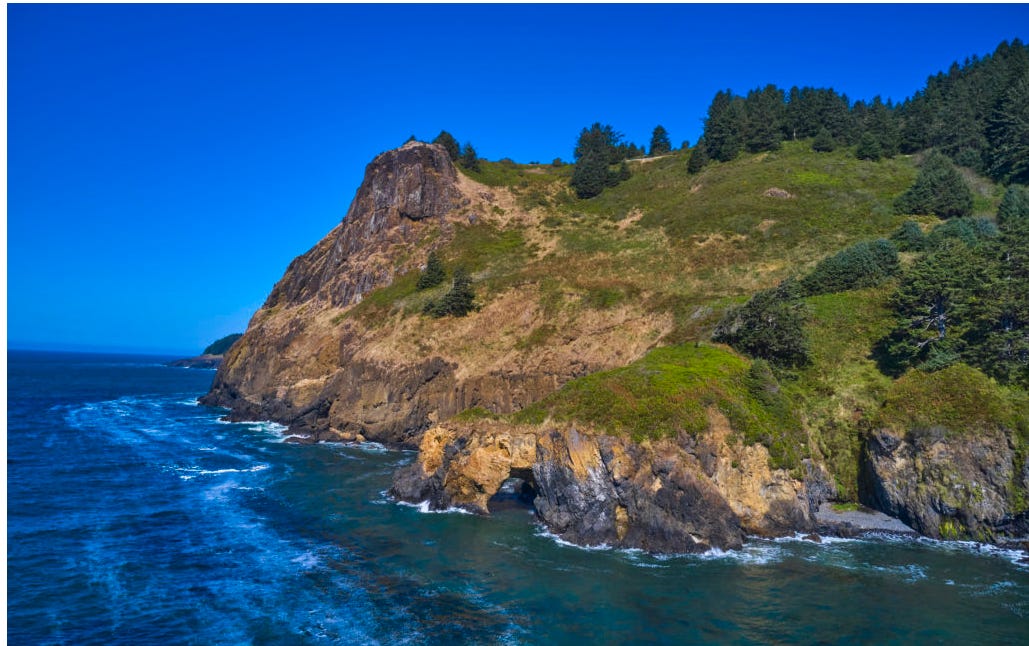
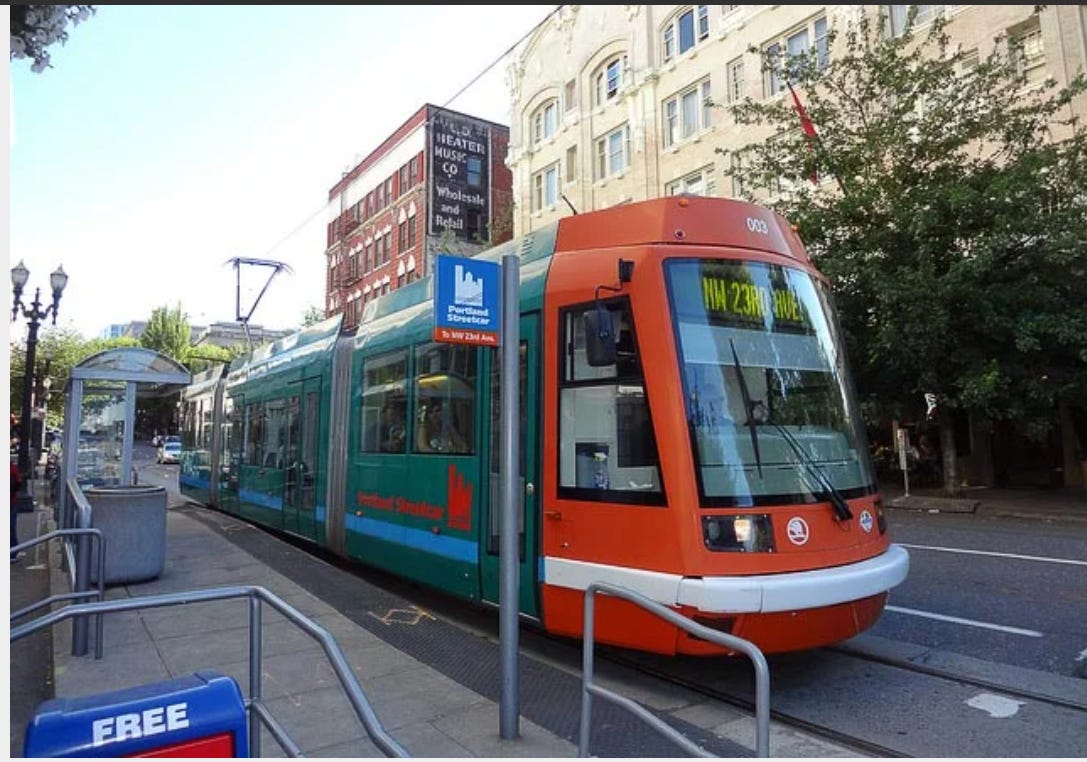
We talked about land use history, here in Oregon, a progressive state to come with integrated comprehensive plans and ways to move “growth” along, which of course includes RULES.
But the students at more insightful and radically centered city and town and rural and regional planning programs are skeptical of what the “old planners” are thinking about growth:
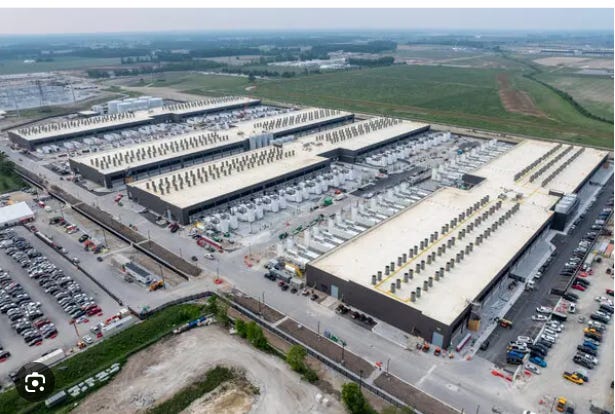
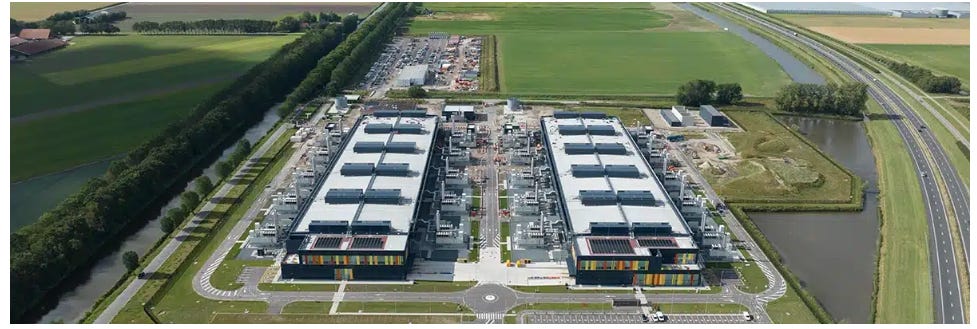
Without clear definitions, data center projects can be delayed by uncertainty or misclassification. As Alan Hall, zoning expert with LightBox PZR, noted, “When data centers came on the scene in the early 1990s, many municipalities were unfamiliar with the term ‘server farm’ and assumed the property had some type of agricultural use. We’ve helped countless data center developers and owners navigate the many complexities of these unique properties.”
Utilities, Infrastructure, and Environmental Impacts
Data centers place a unique strain on local utilities. They consume massive amounts of electricity and, in some designs, water for cooling. Zoning and land use reviews must account for whether the local grid and water systems can support the facility—particularly in areas with limited infrastructure.
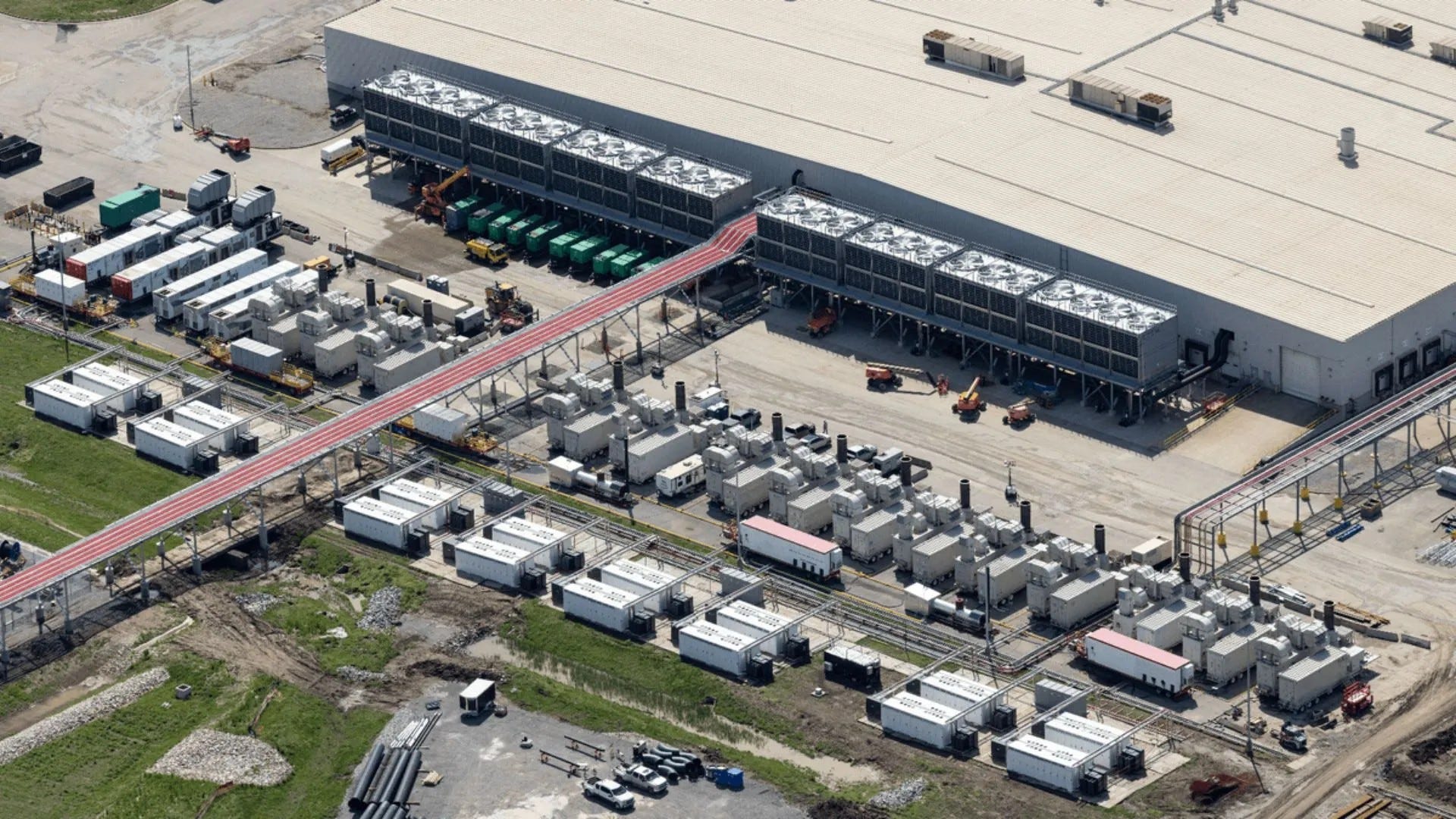
Environmental considerations also come into play. Cooling systems and diesel backup generators can create air quality and noise concerns. Some municipalities may require public hearings, environmental impact studies, or operational limits to ensure compliance with sustainability goals.
Location Strategy: Industrial Corridors, Tech Parks, and Renewable Hubs
Ideally, data centers are located in industrial or heavy commercial zones with existing infrastructure and sufficient buffer from residential areas. Tech parks and purpose-built data campuses offer the space, connectivity, and access to utilities that these facilities need.
In some regions, proximity to renewable energy sources like wind and solar farms is a strategic advantage.
[a bit goofy below . . . ]
Data center regulations are a hot topic at all levels of government right now. One idea gaining traction is requiring data centers to generate their own power. Across the country, some companies are already building private power plants or large solar farms to support their operations. However, we need to carefully consider the long-term implications of this route.
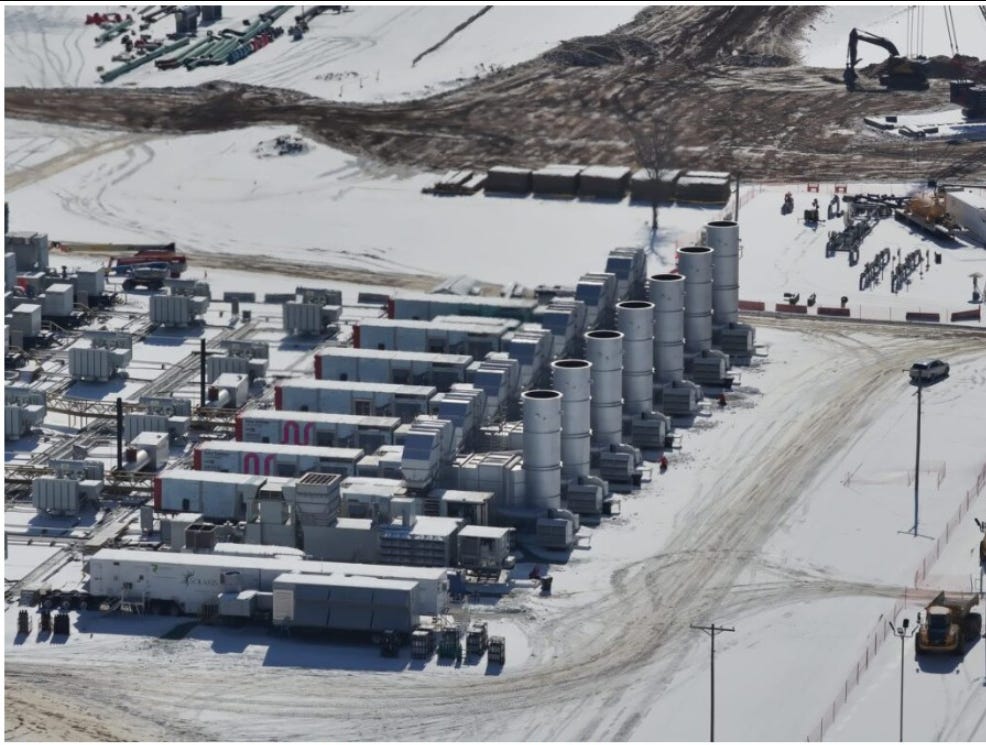
Many of the recent noise and air pollution complaints tied to xAI data centers in Memphis, Tennessee, and Southaven, Mississippi, are not actually about the data centers themselves. The concerns are largely about the mobile gas turbines being used to generate private power for those facilities.
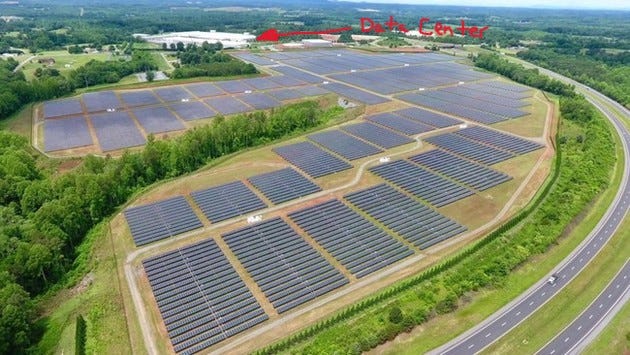
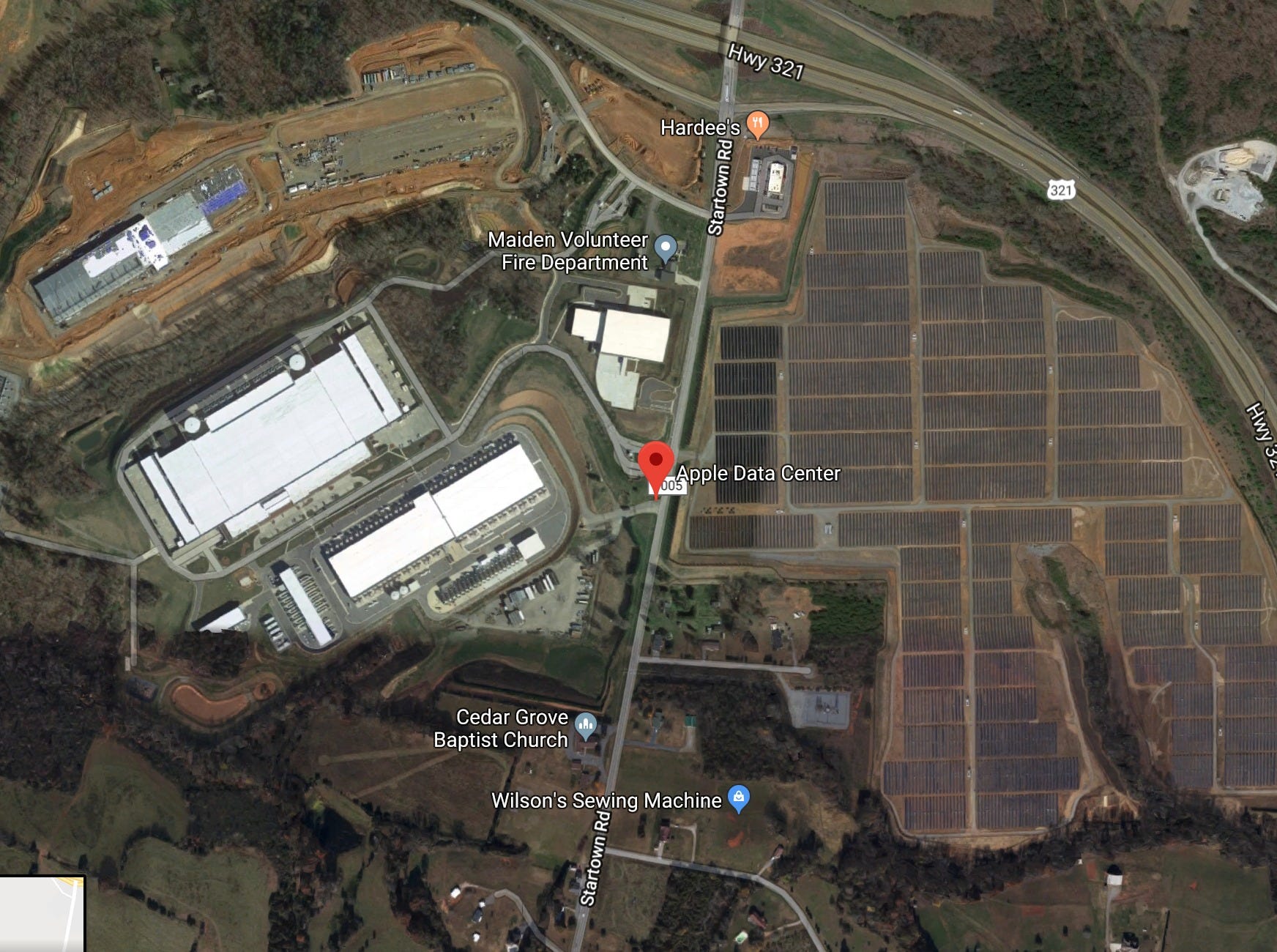
Other companies are taking a different approach. The Apple data center in Maiden, North Carolina uses a large solar farm to partially power its facility and reduce strain on the local grid. However, projects like this also require significantly more land, often doubling or tripling the footprint.
If private companies begin operating their own power plants, several important questions arise. Who regulates them and provides oversight? What happens to these facilities if a data center closes, downsizes, or relocates? And what happens if additional capacity or major maintenance is required?
Private power generation may offer short-term advantages, but the long-term risks deserve careful consideration before we rush into new regulations.
We didn’t talk about this movement: “Community Benefit Agreements” (CBAs): Because data centers generate few permanent jobs, radical planning requires developers to provide community benefits, such as investing in infrastructure, in exchange for development rights.
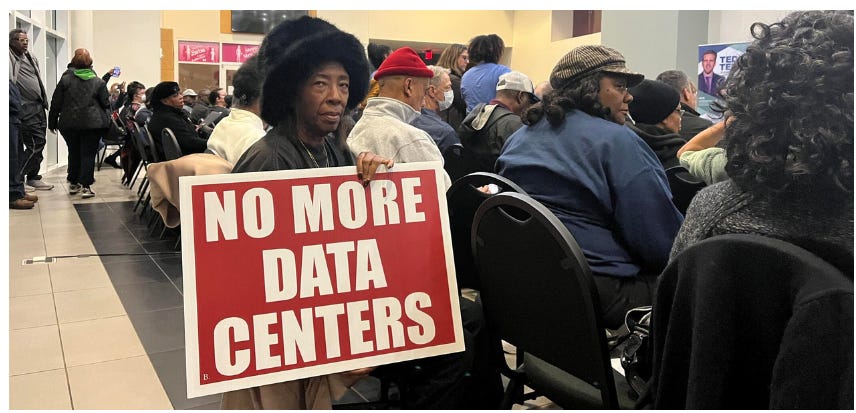
Fuck, we have many loci for CBA’s, and in a time of outright and overt and clownish and mean-spirited racism, this work is lambasted by not just Trump Rape-Pedophilia-Israel/First LLC, but so so many AmeriKKKans.
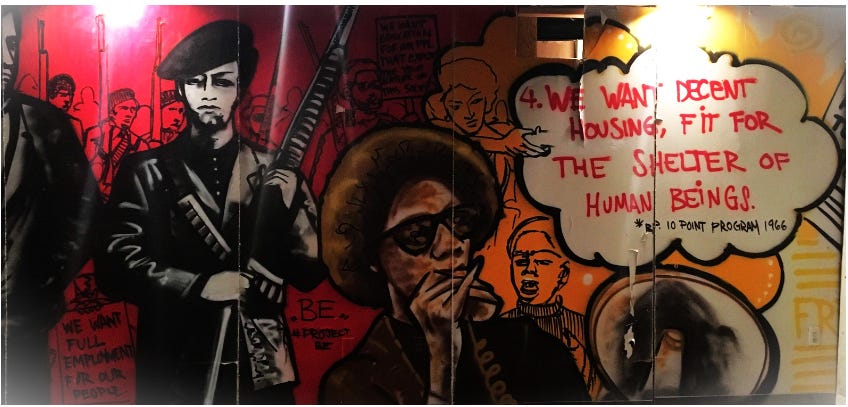
Holding Banks Accountable to Communities: A breakdown of Community Benefit Agreements
Like in the San Fernando Valley, every major city and level of government throughout the United States actively excluded communities of color from homeownership through redlining and restricted participation in wealth-building programs (e.g. higher education opportunities under the GI Bill). These policies denied communities access to loans and services based on race. Bank and government-led disinvestment created a legacy of poor infrastructure, fueling the racial wealth gap, and leaving communities of color particularly vulnerable to climate impacts.
Congress passed the Community Reinvestment Act in 1977 as a solution to redlining. The CRA obligates banks to serve the needs of low and moderate income communities. Although the civil-rights era legislation fails to explicitly require lending to people of color, it obligates banks to reinvest in the communities they operate in due to their role in widening the racial wealth gap and perpetuating ongoing segregation in our economy. Community benefit agreements are one way banks can fulfill CRA obligations.
What is a Community Benefit Agreement?
A CBA is an agreement negotiated between community members and banks, that ensures banks are held accountable to community development, reinvestment, and fair lending where they operate.
The Greenlining Institute and organizations like the California Reinvestment Coalition support CBA negotiations by engaging banks during mergers and acquisitions. During this process, federal regulators request public comments on how banks can fulfill CRA obligations with strong, forward-looking commitments.
Our process for securing CBAs is based on the Six Standards for Equitable Community Investment, as outlined with more detail in the Greenlined Economy Guidebook. These standards include:
- Emphasize Race-Conscious Solutions
- Prioritize Multi-Sector Approaches
- Deliver Intentional Benefits
- Build Community Capacity
- Be Community-Driven at Every Stage
- Establish Paths Toward Wealth-Building
These standards ensure that CBA goals prioritize racial equity, community, and fair economic opportunity in their business practices, without reinforcing the structures that caused problems in the first place. In partnership with community members, we call on banks to make commitments and establish goals that go beyond CRA obligations, including (but not limited to):
- Community investments and lending in affordable housing, economic development and climate resiliency;
- More small business lending to smaller businesses;
- Mortgages and housing counseling to BIPOC borrowers;
- Special purpose credit programs;
- Developing policies around mitigating the risks of displacement and climate change;
- Philanthropy to BIPOC-led and serving organizations;
- Supplier diversity goals; and
- Increasing board diversity.
Well, let’s get real about the 319 Jewish Billionaires and millions of Jewish millionaires invested in the surveillance and social control capitalism, which is fascism on steroids.
Though data centers have been a necessary digital infrastructure, the recent surge is propelled by Big Tech companies who will use the data center largely as capacity for the infrastructure of the so-called ‘Fourth Industrial Revolution‘ that focuses on Artificial Intelligence, Cloud Computing, Big Data, and other “advancements” in digital technologies. Also cashing in on this trend are investment and asset managers (like banks, hedge funds and private equity companies), utility companies and energy providers, and construction firms and real estate developers – most of whom are also dedicated to the continuation of a destructive fossil fuel-driven economy and energy system. Aggressive estimates expect investment in global data center construction to be as high as between $3 trillion and $6.7 trillion over the next five years (Moody’s, McKinsey).
The battle around accelerating data center construction and similar large-scale projects revolves not around municipal codes but the long-unresolved land question. A.I. and hyperscale data centers, as well as quantum computing centers and similar mega-project developments, have been proposed across the country and featured as key fissures in some of 2025’s state and local elections, most prominently in Virginia’s race for governor. These projects typically take away hundreds of acres that could be used for growing food, building housing, developing local environmental resilience, or other socially beneficial activities, with little to no benefit for the local communities. They also require massive water and electricity inputs, produce limited numbers of permanent jobs (normally less than 200-250, and even fewer ‘good jobs’), and contribute to air, noise, and light pollution. This is a part of a relatively consistent pattern of large-scale capital-intensive projects being forced or coerced onto communities based on the interests of monopoly capital. This process is not new or unique to data centers, but rather the status quo of “economic development” across the nation, particularly in municipalities outside of the largest, wealthiest metropolises that are told they must compete for the possibility to escape economic stagnation. These are neocolonial patterns of domestic occupation, extraction, and divide-and-rule.
When communities do fight against such developments, they are inevitably encouraged to seek zoning reforms that can deny industrial projects in certain areas, create “community benefits” agreements that extract concessions from corporate actors, or push local governments to veto individual projects. The current local and national pushback against such megaprojects is well-meaning but ultimately unsustainable against the force of monopoly capital. We already see certain corporate actors trying to maintain their ability to construct data centers as they see fit, with Microsoft recently releasing a “Community-First” AI plan that co-opts social justice language and makes data center construction seem inevitable.
Make no mistake, this is no more than an attempt to cheaply buy off communities and organizers. Microsoft is not incorrect in naming that data centers are a fundamental infrastructure required for the “Fourth Industrial Revolution”, but given the conditions of the U.S., that “revolution” is set to almost exclusively benefit the class of already wealthy and powerful corporate, political, and military elites. This is the story of most corporate economic development and accompanying “benefit” promises. Microsoft is not the first and will not be the last — we need only remember the frenzy around Amazon HQ 2.0 that became a race to the bottom for competing municipalities and further entrenched Amazon’s growing monopoly power. What makes this repeated pattern possible is a complete lack of democratic community control of land and resources, a denial of our rights to collective self-determination that is baked into local, state, and national economic and environmental policymaking in the U.S..
The connection between data center construction and territorial sovereignty also extends globally. In Latin America, such construction is increasing rapidly, deepening existing patterns of displacement, resource scarcity, and corporate capture of politics. In Ethiopia, the newly inaugurated “Grand Ethiopian Renaissance Dam” directs much of its energy production toward cryptocurrency mining and other computing processes, instead of community needs. And in Greenland, the Trump administration and Big Tech corporate vultures have set their sights on the territory to build data centers and create a libertarian “AI hub”.
Such land grabs and corporate subversion are possible because of an uninterrupted history of “Western” capitalist ruling class occupation and control of land and resources. Thus, understanding the data center boom and the struggles against it as inherently a result of the unresolved land question in the U.S. and ongoing global (neo)colonialism allows us to see that our movements and policy fights must center around struggling for urban and rural land reform, community control over economic development and land use, and climate and environmental liberation. All of this must be part of a broader social revolution and radical reconstruction.
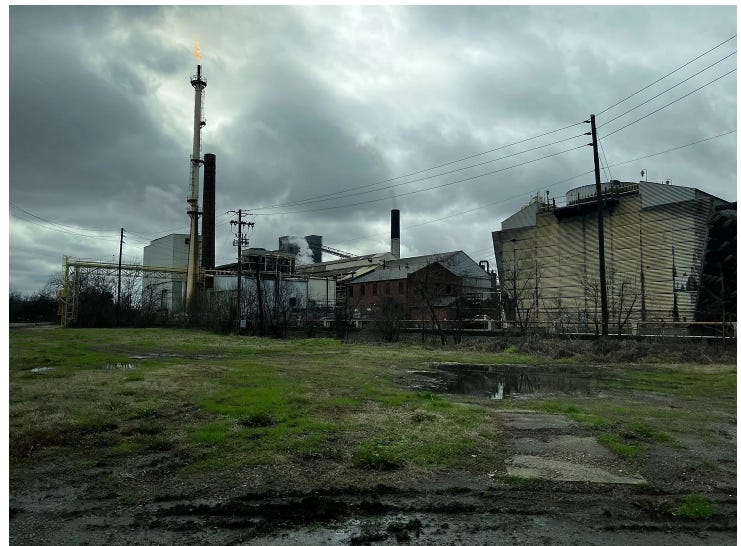
[Coke plant in Birmingham, Alabama. This and other plants have been poisoning and killing Black/African and working class people in Birmingham’s “Mini-Cancer Alley” for over a century. Taken in 2023].

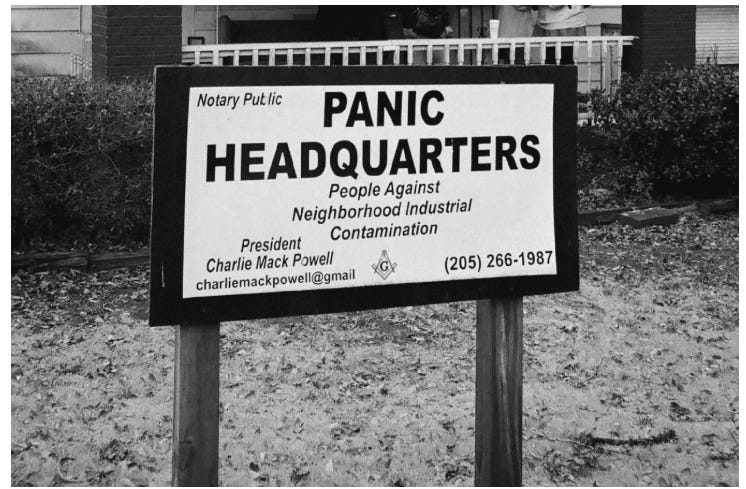
Headquarters of PANIC, which fights air, land, and water contamination by industrial facilities in Birmingham, AL. Taken in 2023.
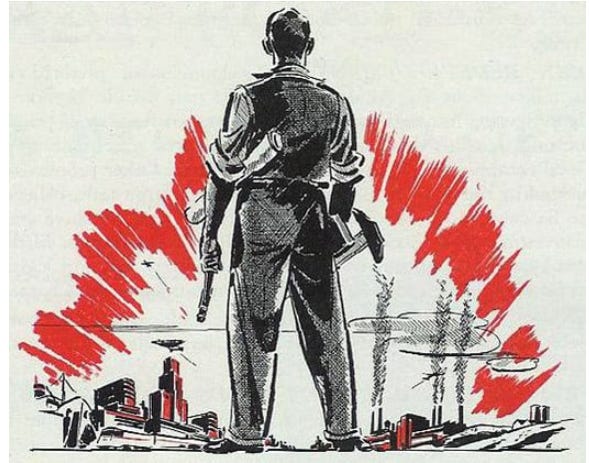
This is the basic milquetoast but worthy steps of planning I was taught in my MURP program at Eastern Washington U.
The urban planning process is a systematic, multi-stage approach to developing land use, infrastructure, and built environments to improve community quality of life, sustainability, and economic growth. It typically involves analyzing existing conditions, engaging stakeholders for input, drafting plans, implementing regulations like zoning, and continuous monitoring.
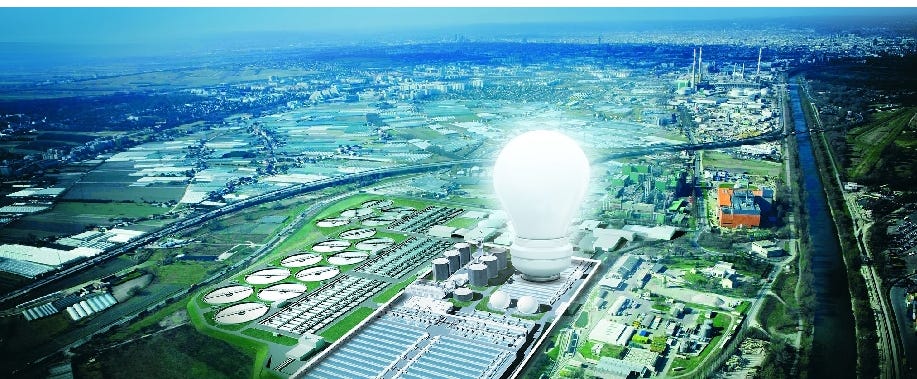
Key Phases of the Urban Planning Process
The process is generally iterative, shifting from research to action:
- Preparation and Research: Initial identification of problems, data collection on land use, population trends, and existing infrastructure.
- Analysis and Forecasting: Evaluating the gathered data to understand constraints and create future projections.
- Goal Formulation: Defining a community vision, setting goals, and establishing measurable objectives.
- Development of Alternatives/Plan Creation: Designing scenarios and drafting the formal plan (e.g., comprehensive plan, master plan).
- Implementation: Using tools such as zoning, land-use regulations, and public investment to turn the plan into reality.
- Monitoring and Review: Evaluating the effectiveness of the plan and making adjustments as needed.
I did bring up an article from a planning professor at Onno’s alma mater.” Jane Jacobs and the Death and Life of American Planning by Thomas Campanella, April 2011
The second legacy of the Jacobsian revolution is related to the first: Privileging the grassroots over plannerly authority and expertise meant a loss of professional agency. In rejecting the muscular interventionism of the Burnham-Moses sort, planners in the 1960s identified instead with the victims of urban renewal. New mechanisms were devised to empower ordinary citizens to guide the planning process. This was an extraordinary act of altruism on our part; I can think of no other profession that has done anything like it. Imagine economists at the Federal Reserve holding community meetings to decide the direction of fiscal policy. Imagine public health officials giving equal weight to the nutritional wisdom of teenagers — they are stakeholders, after all! Granted, powering up the grassroots was necessary in the 1970s to stop expressway and renewal schemes that had run amok. But it was power that could not easily be switched off. Tools and processes introduced to ensure popular participation ended up reducing the planner’s role to that of umpire or schoolyard monitor. Instead of setting the terms of debate or charting a course of action, planners now seemed content to be facilitators — “mere absorbers of public opinion,” as Alex Krieger put it, “waiting for consensus to build.” 9
The fatal flaw of such populism is that no single group of citizens — mainstream or marginalized, affluent or impoverished — can be trusted to have the best interests of society or the environment in mind when they evaluate a proposal. The literature on grassroots planning tends to assume a citizenry of Gandhian humanists. In fact, most people are not motivated by altruism but by self-interest. Preservation and enhancement of that self-interest — which usually orbits about the axes of rising crime rates and falling property values — are the real drivers of community activism. This is why it’s a fool’s errand to rely upon citizens to guide the planning process. Forget for a moment that most folks lack the knowledge to make intelligent decisions about the future of our cities. Most people are simply too busy, too apathetic, or too focused on their jobs or kids to be moved to action over issues unless those issues are at their doorstep. And once an issue is at the doorstep, fear sets in and reason flies out the window. So the very citizens least able to make objective decisions end up dominating the process, often wielding near-veto power over proposals.
To be fair, passionate citizen activism has helped put an end to some very bad projects, private as well as public. And sometimes citizen self-interest and the greater good do overlap. In Orange County, part of the Research Triangle and home to Chapel Hill, grassroots activism stopped a proposed asphalt plant as well as a six-lane bypass that would have ruined a pristine forest. But the same community activism has at times devolved into NIMBYism, causing several infill projects to be halted and helping drive development to greenfield sites. (Cows are slow to organize.) It’s made the local homeless shelter homeless itself, almost ended a Habitat for Humanity complex in Chapel Hill, and generated opposition to a much-needed transit-oriented development in the county seat of Hillsborough (more on this in a moment). And for what it’s worth, the shrillest opposition came not from rednecks or Tea Party activists but from highly educated “creative class” progressives who effectively weaponized Jane Jacobs to oppose anything they perceived as threatening the status quo — including projects that would reduce our carbon footprint, create more affordable housing and shelter the homeless. NIMBYism, it turns out, is the snake in the grassroots.
NIMBYism has been described as “the bitter fruit of a pluralistic democracy in which all views carry equal weight.” 10 And that, sadly, includes the voice of the planner. In the face of an angry public, plannerly wisdom and expertise have no more clout than the ranting of the loudest activist; and this is a hazard to our collective future. For who, if not the planner, will advocate on behalf of society at large? All planning may be local, but the sum of the local is national and eventually global. If we put parochial interests ahead of broader needs, it will be impossible to build the infrastructure essential to the long-range economic viability of the United States — the commuter and high-speed rail lines; the dense, walkable, public-transit-focused communities; the solar and wind farms and geothermal plants; perhaps even the nuclear power stations.
The third legacy of the Jacobsian turn is perhaps most troubling of all: the seeming paucity among American planners today of the speculative courage and vision that once distinguished this profession. I’ll ease into this subject by way of a story — one that will appear to contradict some of what I just wrote about citizen-led planning. I have served for several years now on the planning board of Hillsborough, North Carolina, where my wife and I have lived since 2004. Hillsborough, founded 1754, is a charming town some 10 miles north of Chapel Hill. It’s always reminded me of a grittier, less precious version of Concord, Massachusetts. It has a long and rich history, progressive leadership, and a thriving arts and culture scene. It is also blessed with a palpable genius loci: “If there are hot spots on the globe, as the ancients believed,” writes resident Frances Mayes, author of Under the Tuscan Sun, “Hillsborough must be one of them.” 11 The town is also located on one of the region’s main rail arteries, and has been since the Civil War. Every day several Amtrak trains — including the Carolinian, the fastest-growing U.S. passenger line — speed through on their way to Charlotte and Raleigh, Washington and New York. But a passenger train hasn’t made a scheduled stop in Hillsborough since March 1964, when Southern Railway ended service due to declining ridership. After a century of connectivity, Hillsborough and Orange County were cut loose from the nation’s rail grid.
+—+
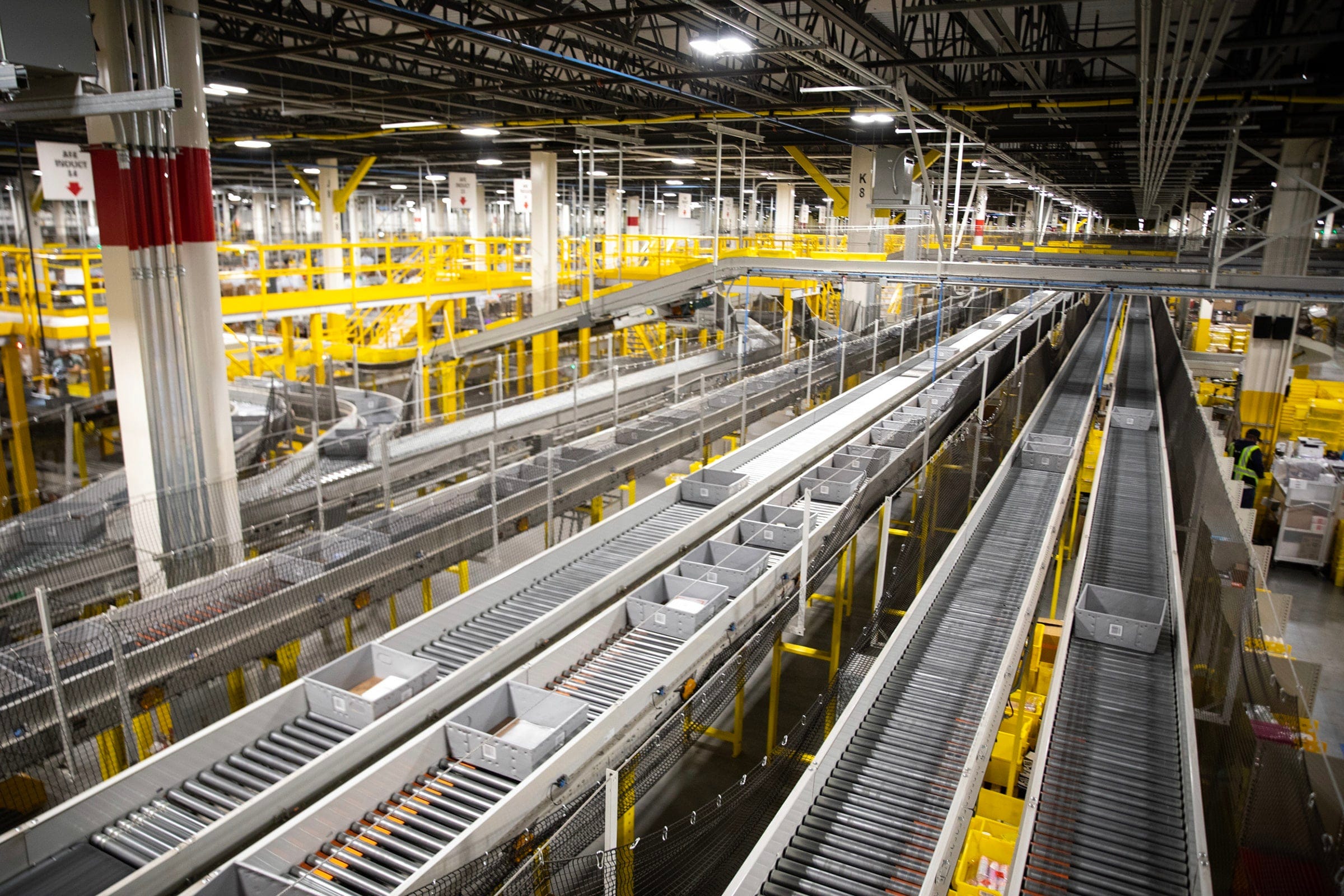
We didn’t get into this: The Warehouse, in Plain Sight
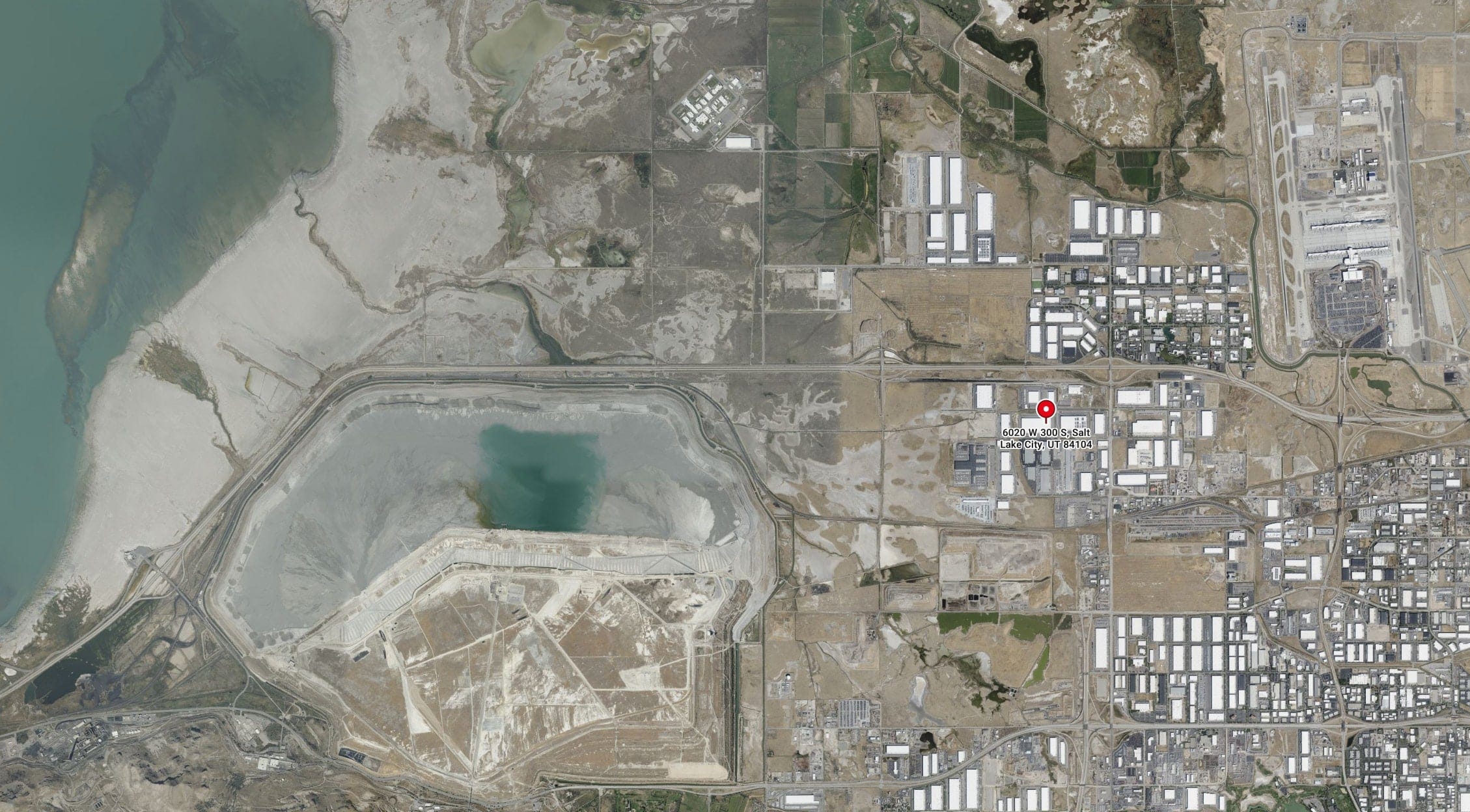
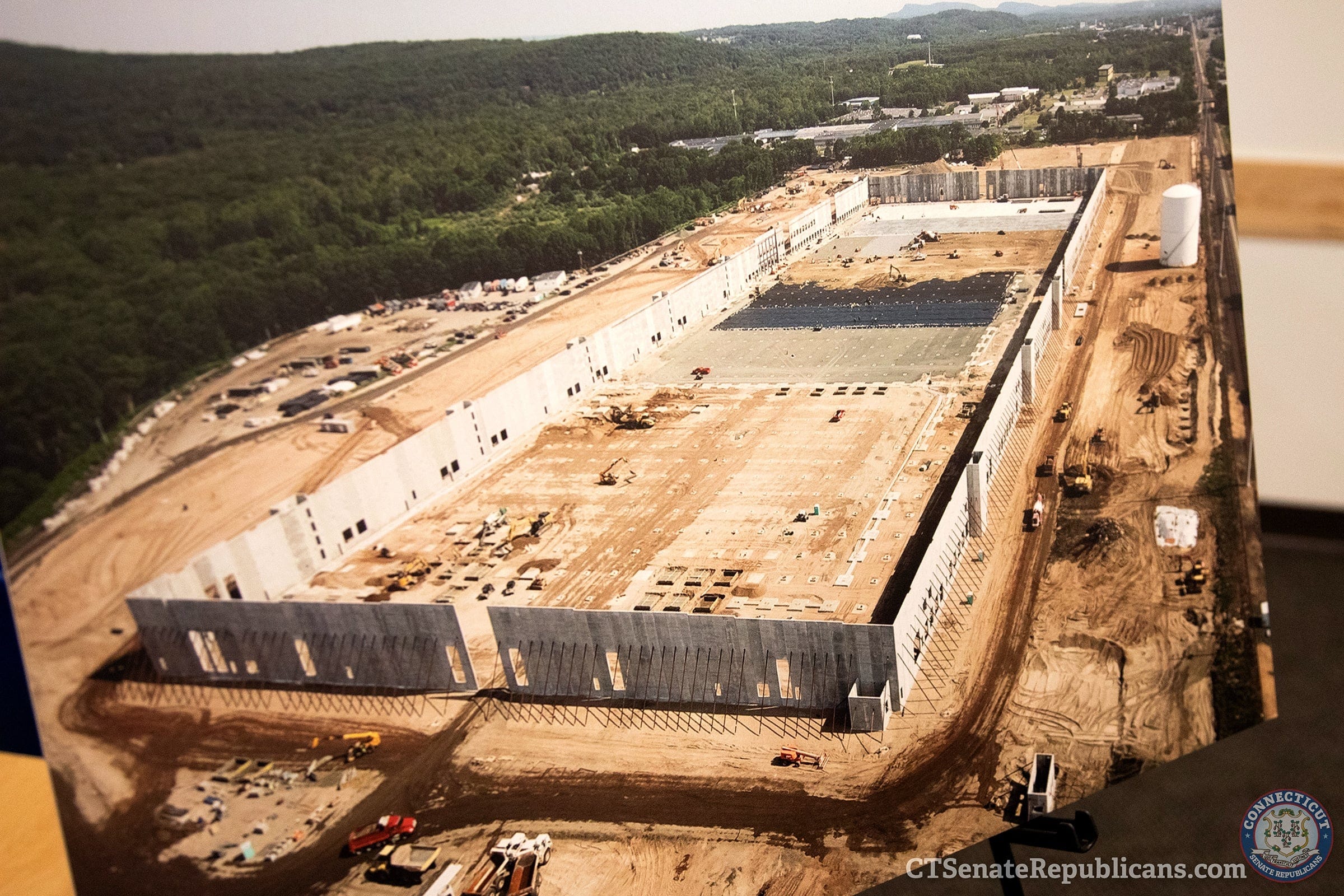
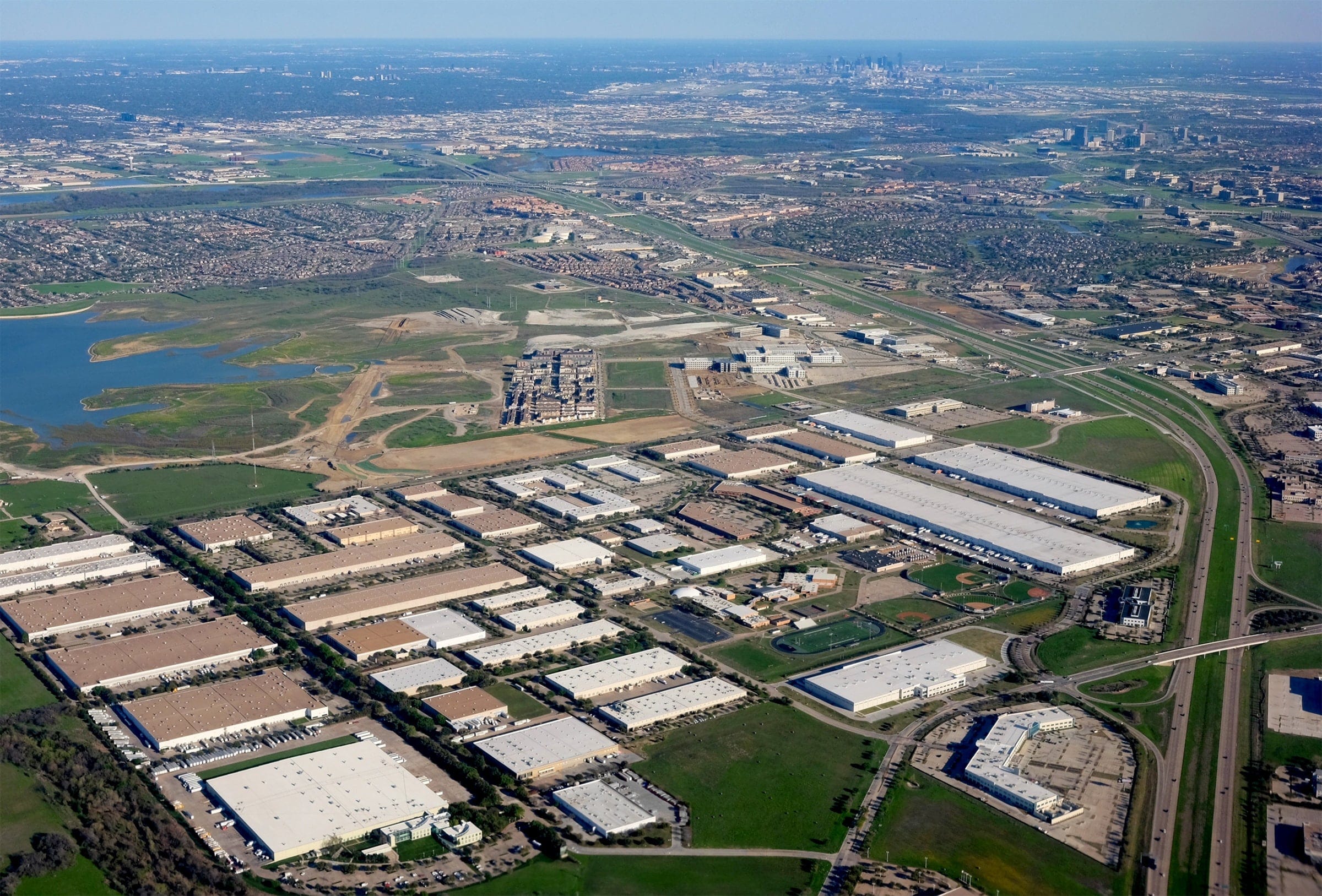
That concrete box off the freeway wasn’t designed for storage so much as capture — of markets, workers, and, now, people detained by immigration agents. It’s a disappearing machine. We need to see it clearly.
Charmaine Chua
April 2026
The warehouse is a place where placelessness is produced. … A concealed infrastructure created by capitalists, adapted by fascists.
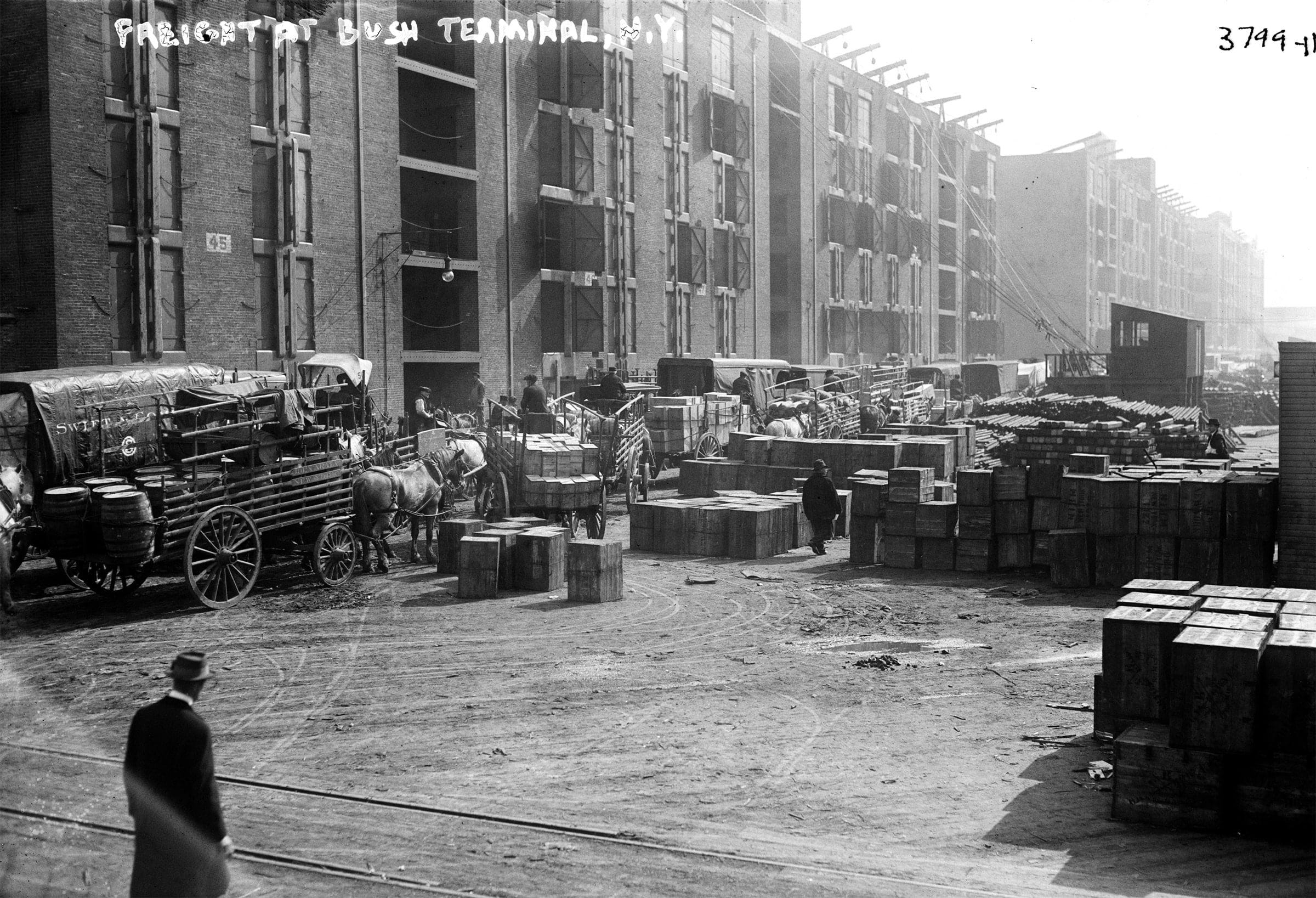
At the turn of the 20th century, the American warehouse was a civic monument, assuring the middle classes that their city was wired into the circuits of capital.
During a recent retreat here at Chapel Hill, planning faculty conducted a brainstorming session in which each professor — including me — was asked to list, anonymously, some of the major issues and concerns facing the profession today. These lists were then collected and transcribed on the whiteboard. All the expected themes were there — sustainability and global warming, equity and justice, peak oil, immigration, urban sprawl and public health, retrofitting suburbia, and so on. But also on the board appeared, like a sacrilegious graffito, the words “Trivial Profession.” 1 When we voted to rank the listed items in order of importance, “Trivial Profession” was placed — lo and behold — close to the top. This surprised and alarmed a number of us. Here were members of one of the finest planning faculties in America, at one of the most respected programs in the world, suggesting that their chosen field was minor and irrelevant.

Ten urbanist video games that aren’t Sim City
Sim City may have inspired an entire generation of urban planners — but these games have perfected the art of city-building simulation.
Planning students today need a more robust suite of skills and expertise than we are currently providing — and than may even be possible in the framework of the two-year graduate curriculum. 15 Planners today need not a close-up lens or a wide-angle lens but a wide-angle zoom lens. They need to be able to see the big picture as well as the parts close up; and even if not trained to design the parts themselves, they need to know how all those parts fit together. They need, as Jerold Kayden has put it, to “understand, analyze, and influence the variety of forces — social, economic, cultural, legal, political, ecological, technological, aesthetic, and so forth — shaping the built environment.” 16 This means that in addition to being taught courses in economics and law and governance, students should be trained to be keen observers of the urban landscapes about them, to be able to decipher the riddles of architectural style and substance, to have a working knowledge of the historical development of places and patterns on the land. They should understand how the physical infrastructure of a city works — the mechanics of transportation and utility systems, sewerage and water supply. They should know the fundamentals of ecology and the natural systems of a place, be able to read a site and its landform and vegetation, know that a great spreading maple in the middle of a stand of pines once stood alone in an open pasture. They need to know the basics of impact analysis and be able to assess the implications of a proposed development on traffic, water quality and a city’s carbon footprint. And while they cannot master all of site engineering, they should be competent site analysts and — more important — be fluent in assessing the site plans of others. Such training would place competency in the shaping and stewardship of the built environment at the very center of the planning-education solar system. And about that good sun a multitude of bodies — planning specialties as we have long had them — could happily orbit.
We are far from this ideal today. Thomas Campanella, April 2011
Here’s some of the stuff I studied in a graduate program:
And the dichotomy?
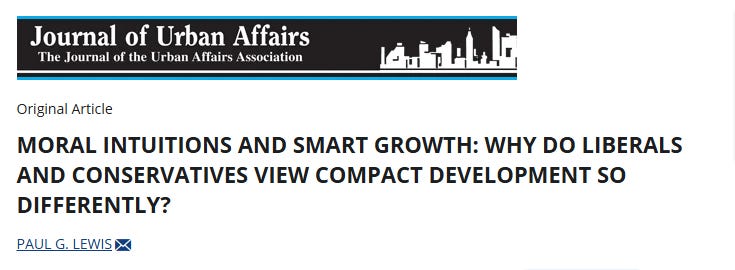
The survey asked respondents three questions on how they viewed trade-offs related to dense development.
It also asked a few questions that he used as a proxy for the foundations of moral intuitionism. For instance, it asked whether respondents felt a strong sense of “national belonging,” which he used as a stand-in for how much they identified with feelings of in-group loyalty, which moral intuitionism identifies with conservatism. He used questions on religious identification and anti-immigrant sentiment similarly.
Lewis found that individuals who said they don’t really feel a sense of national pride were much more likely to say they’d like living in a small house with a small yard if it meant having a shorter commute. They likewise preferred mixed-use neighborhoods where they can walk to stores.
People who weren’t particularly religious, meanwhile, were more likely to favor small houses and yards, mixed-use neighborhoods, and “high-density” living.
And people who say they’d happily pay more for groceries if it meant keeping immigrants out of the country were significantly more likely to want to have big yards and houses, and they weren’t as interested as others in living in mixed-use, walkable neighborhoods.
In all, he ran nine regressions on the relationship between individual preferences on development and the proxies for moral intuitions, and seven of them supported his hypothesis that people with conservative moral impulses are more likely to dislike the idea of urban living.
Ultimately, his study suggests some preliminary support for his idea that residents’ views on land use and development patterns aren’t ideological, they’re emotional.
And it could help explain why, despite the seemingly centrist appeal of smart growth – for liberals, social equity and environmental sustainability, for conservatives, economic opportunity and a less intrusive government – the urbanist movement has been disproportionately embraced by liberals.
So LISTEN to our talk, which covered many interesting and philosophically grounded concepts and ideas.
Continuing that old-time religion of “planning, land use planning, to remove all evidence of Indians.”
Our ancestors brought with them deep connections to more than 20 million acres of ancestral territory combined, including all of Western Oregon from the summit of the Cascade mountains to the Pacific and extending into what’s now SW Washington State and northern California. Our ancestors signed many treaties with the United States. We were promised the 1.1 million acres Siletz Reservation as our permanent home, but following massive reservation reductions Congress passed the Western Oregon Termination Act in 1954 (took effect in 1956), and our federally recognized status as a tribe was also taken. In 1977 our lobbying of Congress to repeal our Termination was successful, and we became the second formerly Terminated Tribe to regain federal recognition as a Tribe.
[The Confederated Tribes of Siletz Indians currently manage over 16,000 acres of land, with reports varying between 15,615 and 16,655 acres in the Oregon Coast Range. This includes approximately 3,600 to 4,010 acres of reservation land in Lincoln County and thousands of acres of timberland. The tribe also recently purchased over 2,000 acres near Medford in early 2025.]

The End of Wars & Removal
< Go Back to Our Heritage Page
The action of the President in creating the Coast (Siletz) Reservation did nothing to quell those in the mining camps and settlements screaming for the complete “extermination” of our people. In fact, the last portion of the Rogue River Wars was started by a totally unjustified and very bloody attack on one of our villages in the Rogue Valley, just prior to the creation of the Coast (Siletz) Reservation. As word came to our people on the Table Rock Reservation about the attack, a portion of our people went to Fort Lane, and pled for protection from the Army. The majority however, fled down-river into the Rogue Canyon, attacking the settlers who were not friendly to our people along the way. Open warfare then raged through the end of 1855 and into the first half of 1856.
In the actual state of emergency that existed when word came that the Coast Reservation had been established, Superintendent of Indian Affairs, Joel Palmer knew there had to be some quick action. With that in mind, Palmer designated a temporary camp to be established on the south fork of the Yamhill River (Grand Ronde). He believed that removal to the Coast Reservation before the Siletz Agency buildings had been established and fields fenced & plowed, would be a complete disaster. There was also a good deal of uncertainty about the best way to get supplies to the future Siletz Agency. In preparation for arrival of much of the native population of western Oregon, the United States bought the improvements on lands occupied by a couple of settlers on the South Yamhill River.
In January 1856, Superintendent of Indian Affairs, Joel Palmer organized a removal of the Umpquas, Kalapuyas and Molallas to the temporary camp on the south fork of the Yamhill River. In late February 1856, the coastal tribes on and near the Rogue River rallied with the inland tribes to chase the miners into their fortified positions at Gold Beach, Port Orford and other locations. However, the re-taking of the coast would be short lived.
At about the same time as the attack on Gold Beach, Palmer organized the removal of our people who had been staying at Fort Lane since the attack in October 1855. As the group was moving out to head north over the snowy passes, a miner came riding up and shot one of our men in the back, killing him. This nearly ended any hopes of an orderly removal, especially with open threats being issued by settlers along the travel route, that they would kill any Indians passing on their way to the reservation, along with any white men that were with them.
It was apparent by this point, that it would be impossible for the US Army even to control the more reckless elements in the miner and settler populations. This is when Palmer wrote the letter mentioned in the last article which stated that the Table Rock Reservation could not be considered for a permanent reservation, that the miners would never leave our people alone there and that the Rogue Valley Tribes would have to remove to Siletz also. Several times it was declared that the warfare could have ended in early 1855, but for the interference and actions of the “volunteers” (miners/wannabe soldiers) which were calculated to prolong the war. The war was clearly thought of as a monetary boon by many which made it even easier to promote “clearing the country of Indians”.
The correspondence between Superintendent Joel Palmer and General Wool, Commander of the Pacific Division during this period is full of disgust for the volunteers. Neither Palmer nor Wool had any respect for the motives or methods of the volunteers. The volunteers constantly foiled any chance for peace talks. As our people were coming in for the peace talks at Big Bend, the volunteers were busy ambushing as many of us as they could. It was their meddling that made our people afraid that the peace talks were going to be one big ambush, and swung the vote towards a battle instead.
At the end of the Battle at Big Bend, the majority of the people were willing to give up resisting removal. Tyee John’s Band along with the Pistol Rivers and Chetco people were among the last to surrender. Tyee John finally gave up at the end of June 1856, on the headwaters of Rinehart Creek, having been chased many miles from his home country. Many small groups and individuals hid out as long as they could, but many were hunted down and shot as “hostiles”.
In the Summer months of 1856, two groups of approximately 600 700 each were loaded on the deck of the steam ship “Columbia” at port Orford and taken up the coast to the Columbia River. From there the ship went up the Columbia to Portland. The rest of the trip up the Willamette & Yamhill Rivers to the temporary camp at Grand Ronde was on other boats & barges, and by foot. All of the people removed after these two ship loads were marched up the coast. Many being taken directly to Yaquina Bay (where the Army built a blockhouse), to Salmon River or the Siletz Valley (as a blockhouse and other Siletz Agency facilities were built).
The way that the Siletz Agency buildings were established, give a person the idea that there was confusion from the start and no wonder that the history of the reservation and its status as a permanent reservation came into question. Of course there is all of the confusion about establishing a temporary camp, & by this time Palmer was actually promoting the idea that the Coast Reservation be extended to include the temporary camp. The first building at the new Siletz Agency was the requisite Army blockhouse. It was first constructed in 1856 above (what’s now) Logsden on a low hill near Mill Creek. Soon it was found not to be the most ideal location and the logs were dismantled and floated down to Siletz and somehow dragged up to what we now lovingly refer to as Government Hill. Phil Sheridan and his crew built a “road” from Ft. Hoskins to the Agency and actually brought a wagon over it, but the wagon wasn’t worth much by the time it arrived on this end. The first shipment of supplies to the reservation included the year’s supply of flour and other staples. It wrecked on Siletz Bay and virtually the whole cargo was lost & the government had no other funds to purchase more supplies with. In May of 1857 nearly all of the coastal people and two thirds of the Rogue Rivers and Cow Creek people were brought to Siletz Agency from the temporary camp at Grand Ronde. Approximately a month later, an Executive Order was signed by President James Buchanon that instead of permanently attaching the temporary camp to the Coast (Siletz) Reservation, established the Grand Ronde Reservation as a separate (but bordering) reservation.
Many of our ancestors decided to return to their old homes where they knew they could find acorns and other foods not found at Siletz. Usually those ones were doomed to make the long walk again back to Siletz and sometimes several times they made the same walk, as the soldiers made their periodic sweeps through SW Oregon, looking for runaways. One group of about 75 people who hid out and didn’t come to the reservation at first was forced by starvation out of the hills down-river from Grants Pass in spring of 1857. The settlers supposedly thinking them still “hostile” went out and shot all the men (about 10) & penned up the surviving women and children until the Agent could send the soldiers down to march them to Siletz.
Yes those early reservation days were full of hard times, but our people were strong enough that some survived so that we could be here today.
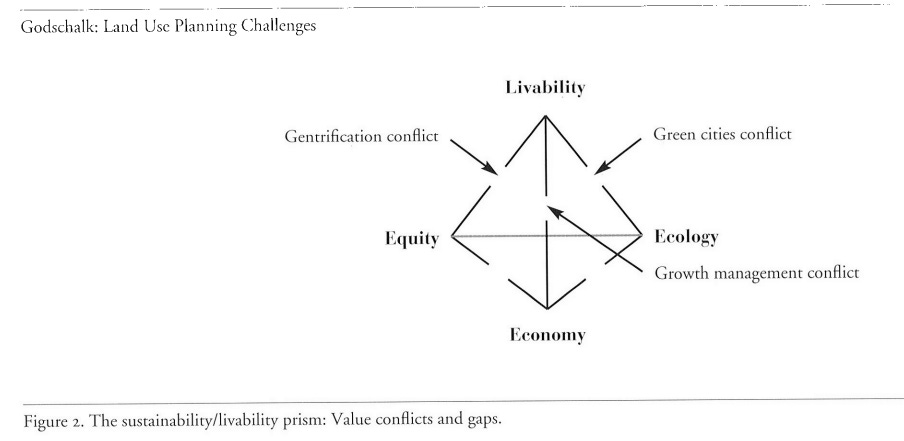
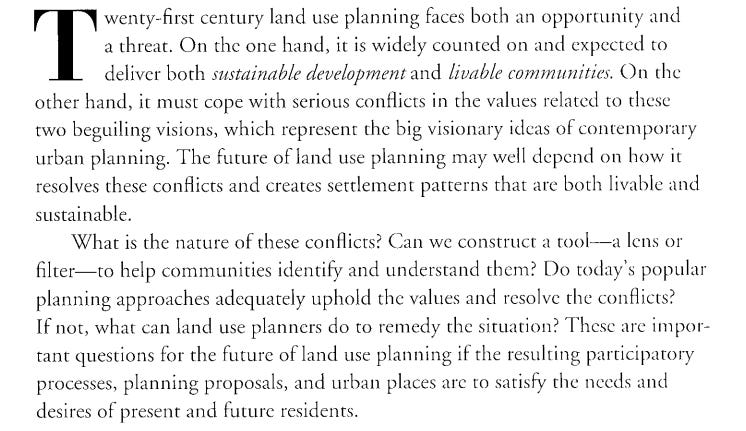
Ahh, so much potential, so much lack of collective enlightenment.
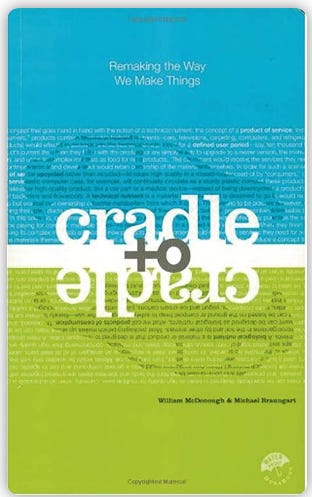
cradle to cradle remaking the way we make things is a transformative concept that is reshaping industries, influencing design philosophies, and inspiring a shift toward sustainability in manufacturing and consumption. At its core, this approach challenges traditional linear models of production—where resources are extracted, used, and discarded—by advocating for a regenerative cycle that mimics nature’s own processes. The cradle to cradle (C2C) philosophy promotes the idea that products should be designed with their entire lifecycle in mind, ensuring that materials can be perpetually reused, repurposed, or safely returned to the environment. As the urgency to address environmental issues grows, the cradle to cradle framework serves as a blueprint for creating a circular economy that benefits both society and the planet.
A pause here with Derrick Jensen: Death and Rebirth (p. 324)
From chapter “A Time of Sleeping”
I don’t believe it would have been possible for me to undergo a meaningful death and rebirth had I been working a wage job. There would not have been time. No one expects a caterpillar to spin a cocoon, pop in for ten minutes, then emerge a butterfly, and at least my mother understood it would take me months or years to recover even physically from my episode of Crohn’s disease, yet not many of us are willing or able to make the time necessary to begin asking the right questions about who we are, what we love, what we fear, and what we’re doing to each other, much less answering these questions, and much much less living them.
I don’t always know what the right questions are; I only know that they reside in my body, and that in order to discover them—or better, remember—I need to be still. In that sense the disease did me an immense favor; had I at any time been tempted by poverty, rampant deficit spending, and social pressure to get a job, my body would have killed me.
At the time, through my twenties, I did not know what was right, only what was wrong, and I didn’t know what I wanted, only what I didn’t want. I didn’t know how to live, only how not to live. I knew a job wasn’t what I wanted or needed.
We did not evolve working for others forty hours or more per week. We evolved, and one need only look at nonhumans or at remaining indigenous peoples to see this is so, spending a great deal of time doing not much of anything (or once again in the lingo of bee research, “loafing”). As the Dane Frederick Andersen Bolling said of the Khoikhoi of South Africa, “They find it strange that we, the Christians, work, and they say, that we are all mortal, that we gain nothing from our toil, but at the end are thrown underground, so that all we have done is in vain.” Another colonist noted of these same people that “their contempt for riches is in reality nothing but their hatred of work,” and a third remarked that “the principle work of the men is to laze about.”
Had I encountered these comments in my twenties, they would have encouraged me by helping to blunt the voice inside: What’s the matter? Lazy?Looking back, I can put a positive spin on my activities—or lack thereof—of those years by calling it a period of pupation, or saying I was undergoing a death and rebirth, or calling it my own forty days in the wilderness.
But the truth is that for the next few years, living first in Nevada and later in Idaho, I didn’t actually do much of anything. I felt guilty about this, but I couldn’t find anything to do that interested me more than nothing. I certainly wasn’t going to go back to physics, or to any other means of selling my hours. I called myself a writer, but didn’t write much: what was I going to write? I didn’t have anything to say, because I didn’t know who I was. To discover that takes long, slow, uninterrupted time. Time enough to get bored, and then to move beyond boredom, which is really just another screen to deflect our attention away from the arduous yet delightful, joyous though painful process of allowing ourselves the stillness to remember what we feel and to begin assuming responsibility for our lives.
Nearly every day I walked the railroad tracks to the Humboldt River, then climbed down to the concrete footing of a bridge. There I sat in the sunlight and read, or more often just watched the river. I walked the banks, and in spring saw a mother bird feign a broken wing to distract me from her nest. I saw beetles crawling in and out of a beaver dead on the tracks, and I saw the beaver’s teeth, orange as carrots. I saw plenty of trains.
Albert Einstein once observed that “the significant problems of the world cannot be solved at the same level of consciousness at which they were created.” I think he’s right. I believe Carl Jung was onto much the same thing when he wrote, “All the greatest and most important problems of life are fundamentally insoluble. . . . They can never be solved, but only outgrown. This ‘outgrowing’ proved on further investigation to require a new level of consciousness. Some higher or wider interest appeared on the patient’s horizon, and through this broadening of his or her outlook the insoluble problem lost its urgency. It was not solved logically in its own terms but faded when confronted with a new and stronger life urge.”
The first statement points out to me why there must always be a death for there to be a meaningful transition—one that sticks. We do not easily give up our acquired ways of being, even when they’re killing us. Although when I sat on the couch as a child, or lay in bed feeling my father’s flesh against mine, it had been unspeakably crucial for me to control my emotions and body, I could not later quit manifesting that same control until it had very nearly killed me. That level of consciousness had to play itself out to the end, or rather to an end. Only when that mindset had, like a plant in a too-small pot, exhausted its own possibilities did I begin casting about for another way to be; only when I no longer had any real choice, far past the time when what little choice there was—death or change—had become all-too-painfully obvious, did I begin to reject the earlier mindset. This is why I don’t think our culture will stop before the world has been impoverished beyond our most horrifying imaginations.
The second statement reveals to me why the period of hibernation takes so long. We do not stand in front of a tree, shouting, “Grow, damn you, grow!” and we recognize the futility of wishing a broken foot to heal in a day. But in myself and in so many of my friends I’ve encountered an unwillingness to acknowledge that even having sloughed off an old level of consciousness, it takes a long time to grow a new one.
It could be argued that my own railing against the culture exhibits the same blindness to process as that of a person yelling at a broken foot: the culture is broken, and shouting ain’t gonna fix it. But there are two differences.
The first is that if a person continues to pretend against all evidence that his foot is not broken, he may re-break it, as I did high jumping. Had I allowed my foot to heal through the fall during my last year jumping, I could have jumped in the spring. I may even have fulfilled my potential as a jumper. I will never know. It might have been appropriate for my coach just that once to yell at me. Not at my foot, but at me for not listening to my foot.
The second difference is that there is a distinction to be made between shouting from frustration, and shouting because a house is being destroyed and no one is paying attention. Another way to say this is that given enough time—perhaps ten thousand years—even my father could probably heal, but what about the people whose souls he murders in the meantime? And what about the secondary damage caused by those whose own destructiveness had its genesis in the violence he did to them: my siblings, for example, when they pass on damage to their children. In contrast to the Buddhists on the panel who blew the question about compassion, my loyalty lies with the innocent, and I need to do whatever I can to stop the damage.
It’s a fine line to walk, that of waiting for the arrival of understanding—for kairos—and the need for action. I am active now. In my twenties I was not. I believe my present level of energy is a result of having fallen deeply into my lethargy then. Had there been no time of sleep, there could not now be this time of awakening, but instead I would still be as I was before, turning most of my energy inward to maintain the imprisonment of my own emotions.
I need to now step away from much of what I’ve just been saying. To believe for a moment that what I was doing in Nevada and after constituted “lazing about,” or “inaction,” makes plain another form of silencing, once again of the unseen. Hidden here is the absurd presumption that to flip burgers or repair televisions is more important and difficult than to shake off the effects of a coercive upbringing and education, and insofar as possible to vomit out the internalized voices of a coercive and deeply violent culture. This is but one more way we value production over life.
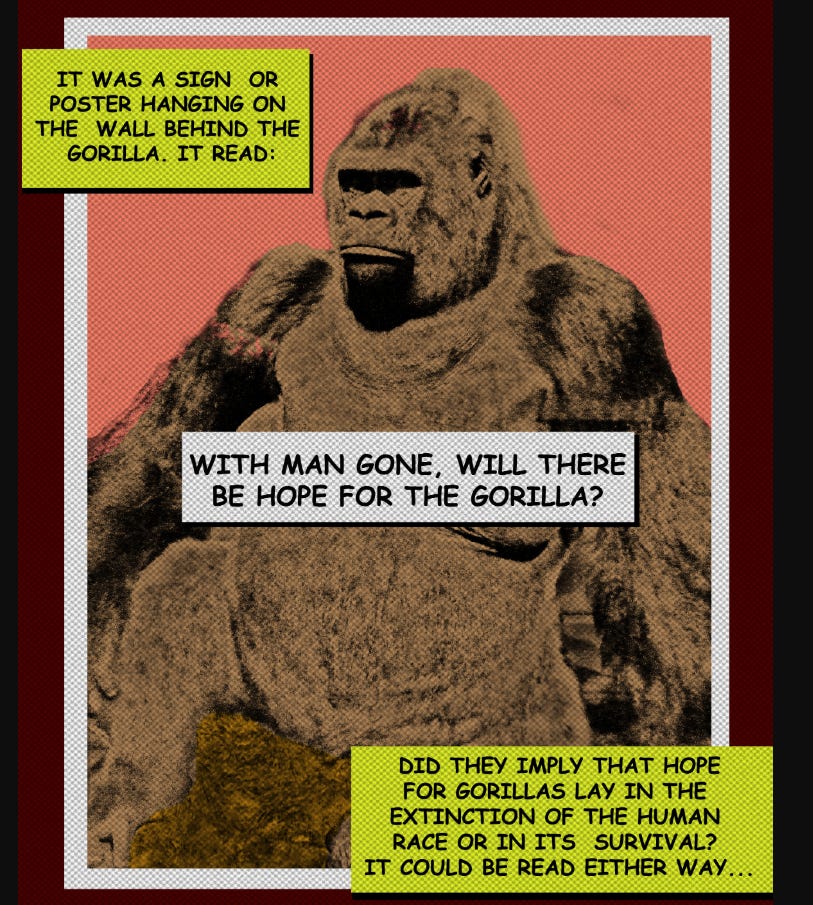
Why not, Ishmael, listen to Derrick:
“What if the point of life has nothing to do with the creation of an ever-expanding region of control? What if the point is not to keep at bay all those people, beings, objects and emotions that we so needlessly fear? What if the point instead is to let go of that control? What if the point of life, the primary reason for existence, is to lie naked with your lover in a shady grove of trees? What if the point is to taste each other’s sweat and feel the delicate pressure of finger on chest, thigh on thigh, lip on cheek? What if the point is to stop, then, in your slow movements together, and listen to the birdsong, to watch the dragonflies hover, to look at your lover’s face, then up at the undersides of leaves moving together in the breeze? What if the point is to invite these others into your movement, to bring trees, wind, grass, dragonflies into your family and in so doing abandon any attempt to control them? What if the point all along has been to get along, to relate, to experience things on their own terms? What if the point is to feel joy when joyous, love when loving, anger when angry, thoughtful when full of thought? What if the point from the beginning has been to simply be?”
― Derrick Jensen, A Language Older Than Words
“Those in power have made it so we have to pay simply to exist on the planet. We have to pay for a place to sleep, and we have to pay for food. If we don’t, people with guns come and force us to pay. That’s violent.”
― Derrick Jensen, Endgame, Vol. 1: The Problem of Civilization
“Surely by now there can be few here who still believe the purpose of government is to protect us from the destructive activities of corporations. At last most of us must understand that the opposite is true: that the primary purpose of government is to protect those who run the economy from the outrage of injured citizens.”
― Derrick Jensen, Endgame, Vol. 1: The Problem of Civilization
“To reverse the effects of civilization would destroy the dreams of a lot of people. There’s no way around it. We can talk all we want about sustainability, but there’s a sense in which it doesn’t matter that these people’s dreams are based on, embedded in, intertwined with, and formed by an inherently destructive economic and social system. Their dreams are still their dreams. What right do I — or does anyone else — have to destroy them.
At the same time, what right do they have to destroy the world?”
― Derrick Jensen, Endgame, Vol. 1: The Problem of Civilization
“It’s no wonder we don’t defend the land where we live. We don’t live here. We live in television programs and movies and books and with celebrities and in heaven and by rules and laws and abstractions created by people far away and we live anywhere and everywhere except in our particular bodies on this particular land at this particular moment in these particular circumstances.”
― Derrick Jensen, Endgame, Vol. 2: Resistance
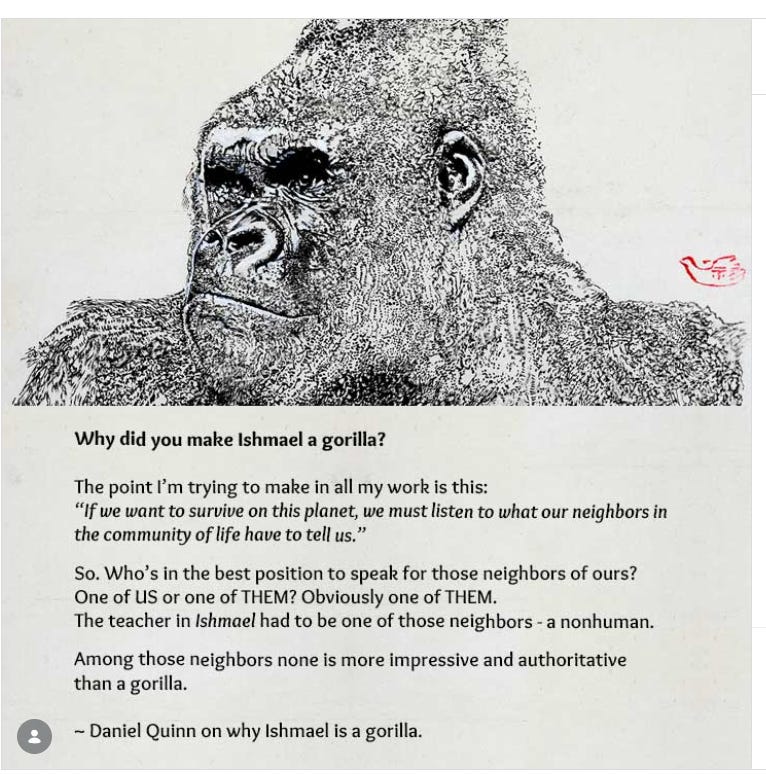
Wednesday, 8 pm, Finding Fringe, kyaq.org Wednesday 13th of May and rebroadcast 14th of May, 3 pm. Listen to the interview above, PLEASE. This Substack written portion is just the lynchpin to my own narrative, spurred on by talking with Onno Husing.