

Official statement on Jews? “Fucking megalomaniac perversions of homo sapiens…”
“Suddenly the entire public was our enemy,” said another source who worked on the project, which sought to predict whether someone represented a threat to Israeli security.

Official statement on Jews? Fucking megalomaniac perversions of homo sapiens…
Tracking Everyone, All the Time’: What Americans Need To Know About Israel’s Secret Eavesdropping Program
Unit 8200’s dragnet was designed by a U.S.-trained general, is powered by American-owned cloud computing, and could spell the future for domestic surveillance at home.
+-+
Enough said?

Nowadays, it seems that the limit to government surveillance is neither the law nor technological capabilities; it’s storage space. In the 1990s, the U.S. National Security Agency was “annually converting more than 22 million pounds of secret documents into cheap, soluble slurry” in order to make room for more, according to Body of Secrets by James Bamford. In 2014, the NSA spent $1.5 billion on a massive data center in Utah riddled with electrical problems.
But Unit 8200, the Israeli equivalent of the NSA, seems to have figured out a simple workaround for the problem: Contract it out to private industry. A joint investigative report by The Guardian and the Israeli publications +972 Magazine and Local Call revealed on Wednesday that Unit 8200 has been storing massive amounts of intercepted phone audio on Microsoft’s Azure cloud service.
Microsoft, which pleaded ignorance of what the Israeli government was using its servers for, is not the only American institution involved in setting up the program. Its architect, who trained under U.S. military instructors, may have created a blueprint for future mass surveillance in other countries.
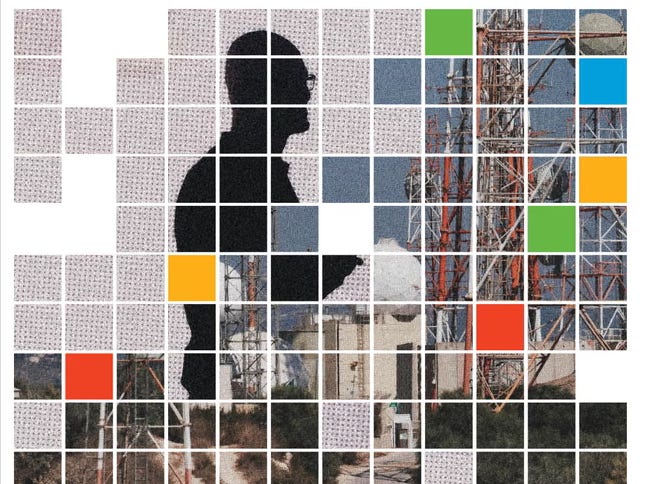
The cloud-powered surveillance program was the brainchild of Brig. Gen. Yossi Sariel, the former commander of Unit 8200. Sariel spent 2019 at the National Defense University, a U.S. Department of Defense academy for American and foreign national security professionals, The Washington Post reported last year. In 2020, he “returned to Israel brimming with plans,” according to the Post, and took command of Unit 8200 from 2021 until last year.

One of those plans, this week’s reporting revealed, was to work with private cloud providers. Under Sariel’s tenure, Unit 8200’s ability to retain and process audio data massively increased. The unit has gone from wiretapping tens of thousands of subjects to recording millions of people’s calls, according to the report.
Unit 8200 officers told The Guardian and +972 that the unofficial mantra of the project was “a million calls per hour.” (The combined population of Israel and the Palestinian territories is 14 million.) Leaked files suggest that Unit 8200 had a goal of storing 70 percent of its data on Azure and that the Israeli military already had 11,500 terabytes of data in total stored on an Azure server in the Netherlands by July 2025.
That would be the equivalent of 200 million hours of audio, although it’s not clear how much of those 11,500 terabytes comes from Unit 8200’s phone intercepts.
Microsoft confirmed that Unit 8200 was a customer of its data security services but said that it had “no information” about the data stored on its servers. After the report was published, the Israeli military put out a statement claiming that “Microsoft is not and has not been working with the [Israel Defense Forces] on the storage or processing of data.”
Even before the surveillance revelations, the relationship between Microsoft and the Israeli government was a subject of controversy. Several Microsoft employees have been fired for publicly protesting over the issue. Most recently, engineer Joe Lopez was fired in May 2025 after shouting “Microsoft is killing Palestinians” during CEO Satya Nadella’s keynote speech.

Jews are warped, man, just look at where they go with Jeff Epstein, and what they do at his Love Pedophile Island. Fucking sick fucks:
This following piece, by Palestinian rights activist, author and translator Yousef Aljamal is crossposted from Politics Today.
Espionage of the Palestinians and their leaders by the Zionist movement is documented to have taken place in the 1930s and 1940s, with the Palmach, an underground force which included the Arab Platoon. The Arab Platoon recruited people who might pose as Arabs, such as Isaac Shoshan, a Syrian-born Israeli undercover operative, who passed away in 2020.
Ehud Barak, Israel’s former prime minister, tweeted about his death, noting that he was one of many people who learnt at the hands of Shoshan, adding that “generations of warriors learned their trade at his feet.” The Haganah also collected information about the residents of Palestinian villages and towns, which paved the way for occupying these villages and expelling their residents throughout 1947-8.
During my conversations with Palestinian Nakba survivor Ahmad Alhaaj, who now resides in Gaza, he told me that the Zionist movement had recruited a Yemeni Jew named Ali to work as a spy and that he posed as a Palestinian imam leading the Muslims of the town of Al-Majdal (today’s Ashkol) in their prayers. Palestinians learnt his origin and that he was a spy when the invading Zionist militias entered the town in 1948 and expelled its population at gunpoint. An officer had hugged the supposed imam in front of the people who were still in shock and had thanked him for his services.
Israel’s espionage and surveillance of Palestinians have only increased over the years, and technology has contributed to making them even more complicated. In the past, it was people on the ground who would do the job, but today, Israel does not stop bragging about its technology. From social media to drones, satellites to monitoring phone calls and the internet, Israel has circled the Palestinians from land, air, and sea, and learns of every step they take.
Artificial intelligence has been increasingly used by the Israeli security, and the surveillance of Palestinians by Israel has become ever more automated. This Israeli surveillance comes as no surprise as Israel learns of the birth of every single Palestinian and keeps record of Palestinian civil records. No ID card is given to any Palestinian that Israel deems unworthy based on the Oslo Accords of 1993, which gives Israel the final say on issuing ID cards to the Palestinians, such as Palestinians who came on family visit permits and stayed in the West Bank and the Gaza Strip.
Apple’s recent legal case against the Israeli NSO group for hacking Apple users’ devices does not come as a surprise to Palestinians. Some Palestinians joke that Israeli drones, which fly over the Gaza Strip 24/7, can tell if a Palestinian family is going to cook fresh or frozen meat on a random day. Not only this, but it is also widely believed that Israel plants spy sims in every single phone device brought into Gaza through Israel – this is the main way Palestinians have access to phones and other technologies.
Palestinians know well that the Israeli authorities can listen to every single phone call made in the Gaza Strip – landlines or mobiles. The Palestinian Telecommunications Company (PALTEL) is fully monitored by Israel or it would not be allowed to function. In 2005, Jawwal, the Palestine Cellular Communications Company, made every owner of a sim card officially register it in what was believed to be an Israeli request to know the real owners of these sim cards and who uses them.
Those who refused to do so were threatened with having their lines cut off. During Israel’s repeated offensives against the Palestinians, telecommunication and internet services were allowed to function so as to make the job easy for the Israeli authorities to watch the Palestinians more effectively. This is not to negate that some telecommunication infrastructures have been repeatedly damaged by Israel and that there have been disruptions to the services and lines.
Israel monitors the Gaza Strip through unlimited numbers of cameras planted on the wall it built to keep Palestinians away. The same applies to Palestinians in the Gaza Strip who use the same telecommunications companies watched by Israel. In the West Bank, Israeli cameras have been planted on roundabouts, checkpoints, streets, and conjunctions leading to Palestinian towns to make sure that Palestinians are well-watched and that, if necessary, the recordings of these cameras can be retrieved easily.
The recent revelation that an NSO software was used by the Israeli authorities to monitor the phones of six Palestinian human rights workers came as no surprise either. Since NSO is an Israeli company, which works under the watch of the Israeli government and has been used to advance the goals and agendas of the Israeli government in the region, it was almost certain that the Israeli government itself has also used NSO’s Pegasus software, and that the Palestinians were most likely the target in this case as well.
A recent Washington Post article has revealed that, according to former Israeli soldiers, the Israeli security authorities are promoting a software known as “Blue Wolf,” which aims to use facial recognition to further monitor the Palestinians and to keep a database of the data. The former soldiers added that they were given rewards for taking photographs of Palestinians crossing checkpoints using cameras and smartphones.
The program, which was launched two years ago, served as a secret Israeli “Facebook for the Palestinians.” This Israeli software complements the monitoring of Palestinians in the Old City of Hebron, where racial recognition allows Israeli soldiers to recognize Palestinians at checkpoints in the Old City before they even hand over their IDs for regular checks.
The use of artificial intelligence and automation as part of the Israeli mass surveillance of Palestinians and exporting these technologies and software to other countries after testing them on Palestinians and proving they are effective is something civil society across the globe should speak out against. The last thing the world needs is to import Israeli software tested on caged Palestinians whose privacy has been completely violated.
Civil society across the globe should raise their voice against Israeli surveillance technologies which will only serve to violate the privacy of peoples in exactly the same way they violate the privacy of Palestinians. The U.S. government’s blacklisting of NSO over the use of Pegasus to spy on different human rights activists and journalists is an indication of how serious this Israeli software should be taken, and the need to protect other nationals from the violation of their privacy and their subjection to mass surveillance.
It must be very boring and sadistic for Israeli officers monitoring the Palestinians 24/7 as they listen to stories about the devastating impact of Israel’s military occupation and siege on the lives of those being spied on. International civil society must act to end the violations of Palestinians’ privacy and the automation of their surveillance, because no one knows, who will be next. Israelis have no reason to ask a Palestinian crossing a checkpoint out of Gaza the reason his family placed another door in their grandmother’s house. The answer is truly mundane.


Nazi, Stasi, Jew!


Schools are using AI to protect students. It also leads to false alarms — and arrests
Surveillance systems in American schools increasingly monitor everything students write on school accounts and devices
Lesley Mathis knows what her daughter said was wrong. But she never expected the 13-year-old girl would get arrested for it.
The teenage girl made an offensive joke while chatting online with her classmates, triggering the school’s surveillance software.
Before the morning was even over, the Tennessee eighth grader was under arrest. She was interrogated, strip-searched and spent the night in a jail cell, her mother says.
Earlier in the day, her friends had teased the teen about her tanned complexion and called her “Mexican,” even though she’s not. When a friend asked what she was planning for Thursday, she wrote: “on Thursday we kill all the Mexico’s.”
Mathis said the comments were “wrong” and “stupid,” but context showed they were not a threat.
“It made me feel like, is this the America we live in?” Mathis said of her daughter’s arrest. “And it was this stupid, stupid technology that is just going through picking up random words and not looking at context.”
Surveillance systems in American schools increasingly monitor everything students write on school accounts and devices. Thousands of school districts across the country use software like Gaggle and Lightspeed Alert to track kids’ online activities, looking for signs they might hurt themselves or others. With the help of artificial intelligence, technology can dip into online conversations and immediately notify both school officials and law enforcement.
Educators say the technology has saved lives. But critics warn it can criminalize children for careless words.
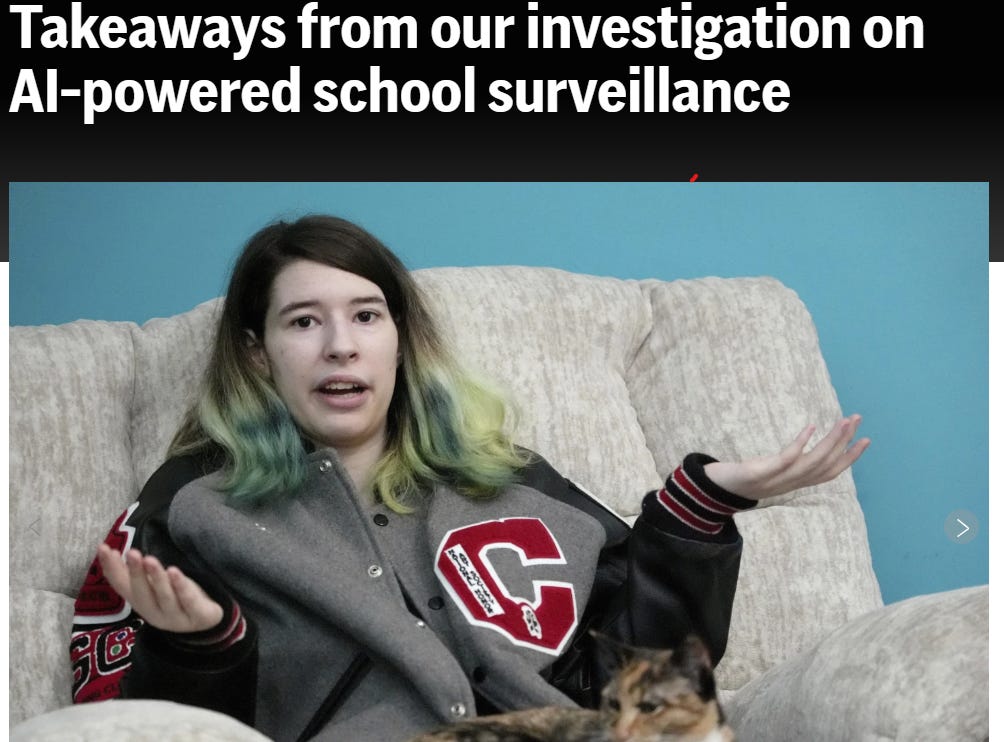
“It has routinized law enforcement access and presence in students’ lives, including in their home,” said Elizabeth Laird, a director at the Center for Democracy and Technology.
In a country weary of school shootings, several states have taken a harder line on threats to schools. Among them is Tennessee, which passed a 2023 zero-tolerance law requiring any threat of mass violence against a school to be reported immediately to law enforcement.
Gaggle? Here, one of a million similar monster trees:

JEWS:
An Israeli rabbi has blessed the use of female spies in “honeytrap” or “honeypot” stings against terrorists, according to a study called “Illicit Sex for the Sake of National Security.”
The ruling by Rabbi Ari Schvat, contained in a study published by the Zomet Institute, was first reported by the news agency DPA and published by Haaretz.com.
Israeli officials confirmed the rabbinical ruling and the gist of the study for ABC News.
The Zomet Institute studies the intersection of religion and modernity. It examined whether it was acceptable for female agents of Israel’s foreign secret service, Mossad, to have sex with the enemy in so-called “honeypot” or “honeytrap” sting missions.

Israeli intelligence has made repeated use of honeytraps. In 1966, a female Israeli spy convinced an Iraqi pilot to defect to Israel with his MIG. Twenty years later, a female Mossad agent lured Mordechai Vanunu, a nuclear technician who had revealed details of Israel’s nuclear program, from England to Italy, where he was abducted and brought back to Israel.
But according to Haaretz.com, Rabbi Schvat wrote that honeypot missions are “not just a thing of modern-day espionage.”
In fact, honeypot missions are rooted in Biblical lore, according to the report. “Queen Esther, who was Jewish, slept with the Persian king [Ahasuerus] around 500 BC to save her people,” Schvat noted.
And, the report noted, Yael, wife of Hever, slept with the enemy chief of staff Sisra to tire him and cut off his head.
However, there is a catch for married honeypots. “If it is necessary to use a married woman, it would be best [for] her husband to divorce her. … After the [sex] act, he would be entitled to bring her back,” Schvat wrote.
“Naturally, a job of that sort could be given to a woman who in any event is licentious in her ways.”
Rules for male Mossad agents were not mentioned in the writings.

Rabbi Shvat explores the issue of women used to seduce enemy agents in order to cajole information out of them or see them captured.
The use of “Valentine operatives” or “honey traps”, as they are called in intelligence circles, was applied in the case of atom spy Mordechai Vanunu, and according to foreign media reports, in the recent assassination of senior Hamas operative Mahmoud al-Mabhouh in Dubai, last January.
Shvat cites in his study the biblical cases of Queen Esther, who slept with Persian King Ahasuerus to save her community, and Yael wife of Heber the Kenite, who seduces and killed the Canaanite general Sisera. He notes that the subject of “sleeping with the enemy” evokes heated arguments in the Talmud, as well.
The latter, Shvat argues, ruled that sexual intercourse with a gentile for the sake of a national cause is not only sanctioned, but is a highly important mitzvah.

Jews: Trump Pardons Jared Kushner’s Dad, Who Paid a Prostitute to Seduce His Brother-in-Law
Kushner was a multimillionaire real estate executive and top Democratic donor when he was sentenced in 2005 to two years in federal prison after he pleaded guilty to 18 counts, including tax evasion and making illegal campaign contributions.
Once Kushner discovered his brother-in-law and former business partner was assisting federal authorities in their investigation, he set out for revenge (and, as prosecutors would argue, witness intimidation).
The wealthy New York real estate magnate hired a prostitute to seduce his brother-in-law in a New Jersey motel, arranging to have the encounter recorded with a hidden camera.
Then, he showed the video to his brother-in-law’s wife: Kushner’s sister.
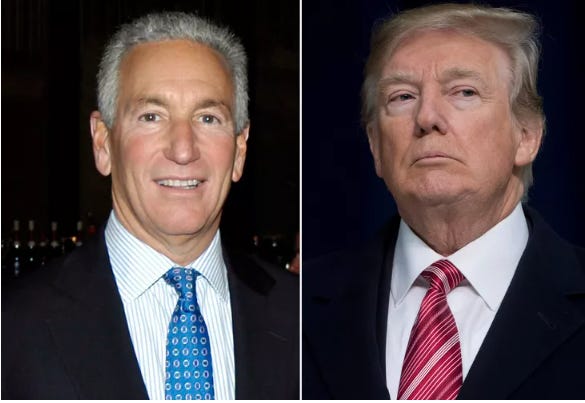
Adding an interesting twist to the saga is that Kushner’s prosecution was overseen by then-U.S. Attorney Chris Christie, who would go on to become a prominent Trump surrogate and the head of his transition team.
Christie’s history with the Kushner family would loom large over his time with the Trump team. In 2016, he was ousted from the campaign, and many blamed Jared Kushner for his firing. Still, Christie has continually defended his decision to prosecute Charles Kushner, even writing a book centered in part on the saga: Let Me Finish: Trump, the Kushners, Bannon, New Jersey, and the Power of In-Your-Face Politics.
“Mr. Kushner pled guilty. He admitted the crimes,” Christie told PBS in a 2019 interview. “And so what am I supposed to do as a prosecutor? I mean, if a guy hires a prostitute to seduce his brother-in-law, and videotapes it, and then sends the videotape to his sister to attempt to intimidate her from testifying before a grand jury, do I really need any more justification than that?”
+—+
Moving on: While we give everything to the Jews, oh no, trouble in Trump the Pedophile Rapist’s Minyan AmeriKKKa.

“So the tool that most of us use is the Air Quality Index (AQI), and that’s a helpful tool to say if the numbers above 100, it’s perhaps a day that you know more sensitive groups, those are people like children and adolescents, pregnant people, people with underlying chronic lung diseases or heart diseases might want to be a little more careful about spending a lot of time outside. I’d say once it starts to get above 150 or certainly above 200, even healthy people can start to be affected.”
+—+
Good little fucking Iowa Germans:
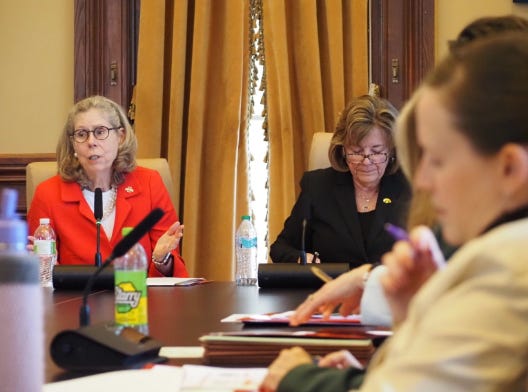
The initial policy, originally set to be read and approved in June, had concerned students, university staff, members of the public and Sen. Herman Quirmbach, D-Ames, speaking out against the harm it could cause, leading the board to slow down the approval process. Board President Sherry Bates announced in July another delay in consideration of the policy, setting a special meeting date for Aug. 12.
As shown in board documents released ahead of the meeting next week, the proposed policy revision has shifted its focus from diversity, equity and inclusion and critical race theory-related topics to not referring to specific areas of study at all. Instead, it clarifies that controversial topics can be taught as long as they relate to the course and adds guidelines for how instructors should teach these areas.
The original policy restricted requiring students to take classes that include “substantial content that conveys DEI or CRT.” The new proposed addition to the board’s academic freedom policy instead states “faculty are expected to uphold academic integrity, encourage open and respectful inquiry, and present coursework in a way that reflects the range of scholarly views and ongoing debate in the field” when teaching “controversial subjects,” of which no examples are provided.
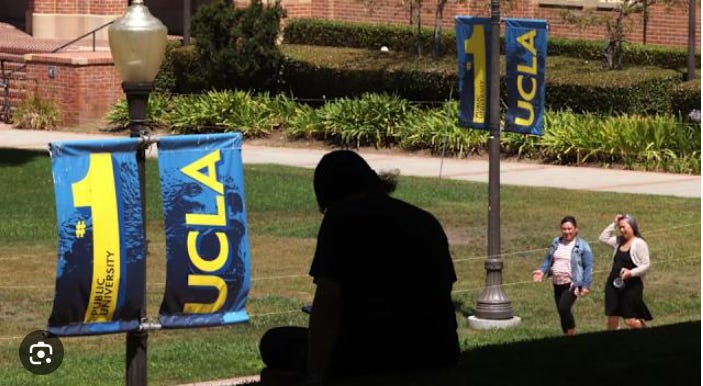
Trump the Room Temp IQ Genius: The Trump administration is seeking a $1 billion settlement from the University of California, Los Angeles, CNN has exclusively learned, marking the latest effort by the White House to shape higher education and extract significant concessions from universities.
Last week, the Trump administration began freezing millions in funding to UCLA, with the school’s chancellor Julio Frenk saying in a letter to the university community this week that $584 million “is suspended and at risk” and warning of “devastating” consequences to its research mission.
Officials from UCLA have now returned to the negotiating table, a source familiar with the matter said, and have made clear they would like to reach a deal to restore that funding. The Trump administration, in turn, is laying its marker for a high-dollar settlement.
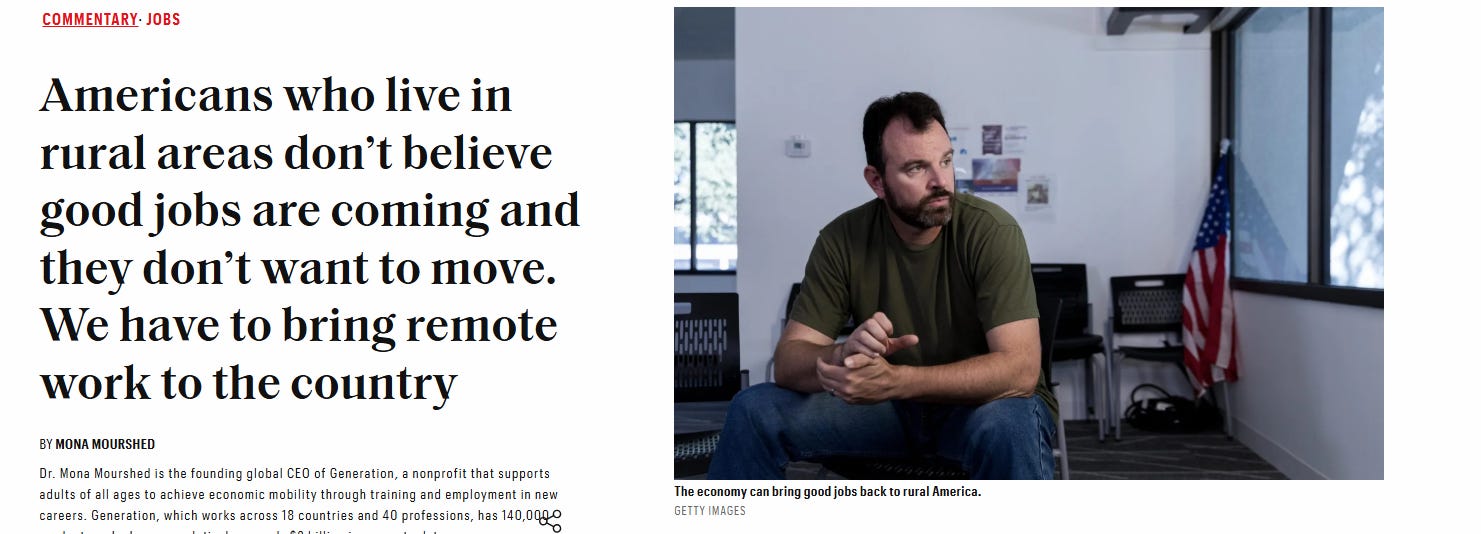
MAGA MAGA MAGA, help the hicks out!

Rapist and Pedophile Don’t Give a Shit about Old People: Trump is a pussy, but he wants to be a honey badger after getting caught in the honey pot of Epstein.
Give all the fucking little Johnnies and Janes gold stars.
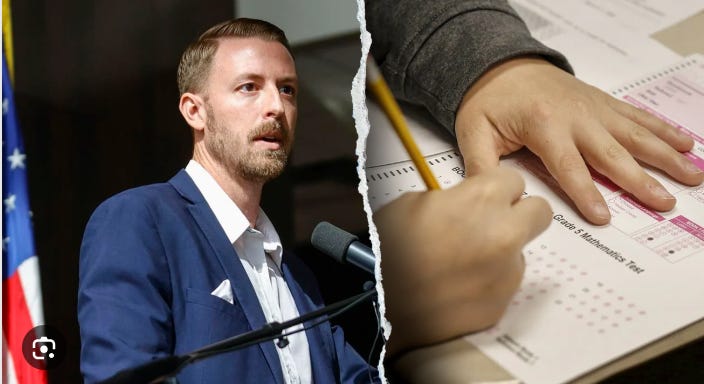
Superintendent Ryan Walters announced on Friday the end of some government mandated end-of-year testing for certain students beginning in the 2025-2026 school year.
Officials say districts will be able to use approved benchmark assessments in place of the end-of-year tests for grades 3-8 in Math and English Language Arts.
According to the Oklahoma State Department of Education, a recent survey showed that 81 percent of nearly 23,000 parents said that state testing may not be necessary when evaluating students.

The FBI is investigating at least 250 people who may be tied to online networks that target children.
These networks encourage kids to hurt themselves, other minors or even animals. In some countries, they have been tied to mass casualty and terrorism plots.
NPR’s domestic extremism correspondent Odette Yousef has spoken with a family that experienced this firsthand.
Listed under “nihilistic-online-groups-extremism”

[Dana is mom to a son who, when he was 14, experienced a rapid decline in his mental well-being. A few months later, she came to understand that he had become deeply influenced by predatory online networks that encourage vulnerable people, especially minors, to harm themselves and others]

Can’t teach this in Oklahoma — billions of years old? Jesus, save us!
“Curiosity has found many rocks like this one, which were formed by ancient water combined with billions of years of sandblasting by the wind,” NASA representatives wrote in the statement.
Coral-shaped rocks on Mars started forming billions of years ago, when the Red Planet still had water, according to the statement. Just like water on Earth, this water was full of dissolved minerals. It percolated through small cracks in Martian rocks, gradually depositing minerals and forming solid “veins” inside the rocks.
These veins form the strange branches of the coral-shaped object that we see in Curiosity’s picture today, after millions of years of erosion by sand-laden winds wore away the rock.

Hell to be paid by everyone. Fucking 23 million people just in Cairo.
“The old-rent law gave renters security and the stability of having permanent homes, while now, they have to leave their units in seven years,”
In recent years, entering the rental market in Egypt has become a nightmare. Since the beginning of 2021, the local currency has fallen by 70% against the dollar, while the inflation rate has reached historic highs of 40%. The market has become an incoherent and ever-changing jungle, where no one quite knows how to set prices, or for how long.
As if the situation weren’t unstable enough, the Supreme Constitutional Court dropped another bombshell in November of 2024, by striking down the core of a law that kept old rents frozen for decades, while allowing leases to be inherited. Although the legal battle dates back 37 years, the judges have only given the Parliament of Egypt until the end of June to amend it. Otherwise, those rent caps will be removed.

Fucking AMeriKKKa — A Utah federal court ruled Ammon Bundy cannot use bankruptcy to avoid paying $52 million in a defamation case against him by St. Luke’s.
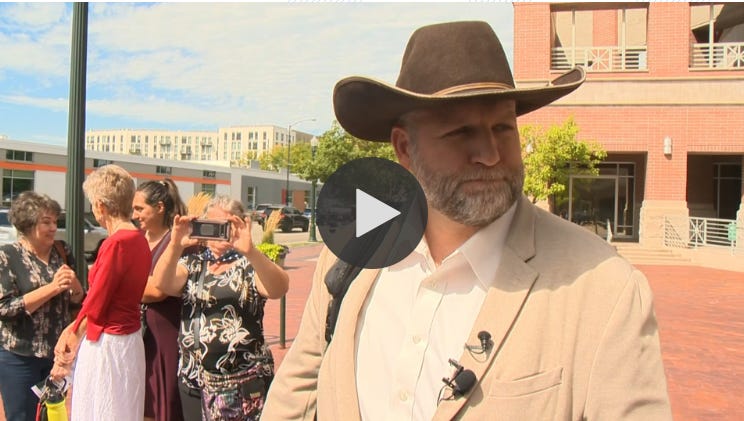
The case arises from a civil lawsuit filed by St. Luke’s against Bundy and his associate, Diego Rodriguez, who staged protests in March 2022 and launched a social media campaign targeting hospital staff, involving “Baby Cyrus.”
When the child was hospitalized by St. Luke’s staff for health reasons, Rodriguez, Bundy, and his People’s Rights Network gathered in large numbers outside the downtown hospital, asserting that the baby was “medically kidnapped.”
Months later, St. Luke’s and several employees filed a lawsuit in Idaho court for defamation and harassment against Bundy, Rodriguez, and their organizations, the People’s Rights Network and the Freedom Man PAC.
In July of 2023, St. Luke’s won a default judgment after Bundy repeatedly refused to participate. The Idaho court found that Bundy’s statements were knowingly false and intended to cause reputational harm. A jury awarded St. Luke’s and three employees approximately $52.5 million in damages for defamation and related claims.
Gary Raney, the former sheriff of Ada County, where the arrest warrant was issued, believes the chaos of the Bundy standoffs may make anyone with the power to arrest him reluctant to use it.
“Even when he was sort of holed up at his place here outside of Boise, I encouraged the sheriff: don’t do anything, take your time, don’t go create a situation where he can put on a show and have his supporters come defend him, or fundraise for him,” he tells The Independent. “That’s probably what’s happening there in Utah. They probably don’t want to create a situation that could be deadly.”
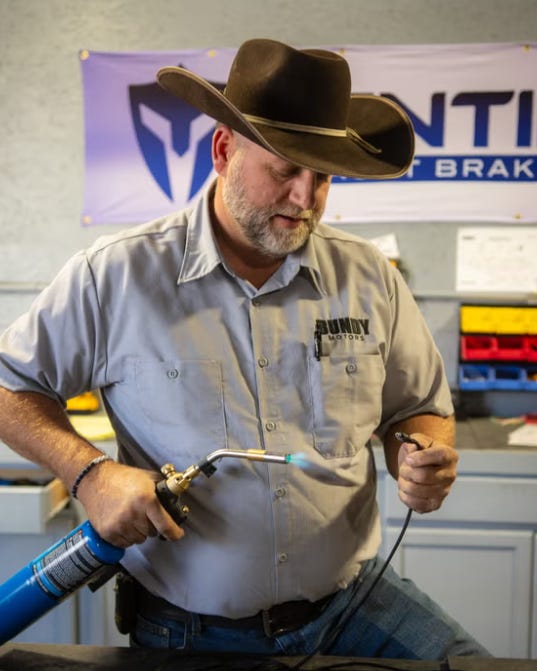
His first major run-in with the government, in 2014, was sparked by a years-long dispute with the Bureau of Land Management. The government agency said that Ammon’s father, Nevada rancher Cliven Bundy, had illegally grazed his cattle on public land for some 20 years. When Cliven Bundy refused to pay the $1 million in unpaid grazing fees, the bureau moved in to requisition his cattle.
The elder Bundy summoned hundreds of men, women and militia members to his cause. Armed to the teeth, and promising to use those arms if needed, they forced the government to back down.
Ammon played a key role in that standoff and has often told the story about how he was tasered three times in one confrontation, each time pulling out the barbs from his chest.
“They started killing cattle, shooting them from helicopters, burying them in mass graves, siccing dogs on people, throwing people to the ground, tasing people,” he says. “You know, all those things were going on and they were filmed and people were just like, this is not okay that our government’s acting this way.”
Ten years later, Bundy’s cattle still graze the disputed land near the family ranch in southern Nevada.
Bundy’s infamy only grew when he joined another armed standoff less than two years later, again in a dispute over control of federal land. He and hundreds of militants from across the West occupied the Malheur National Wildlife Refuge, about 30 miles south of Burns, Oregon, demanding that the land be handed over to local ranchers.
The standoff ended when one of the occupiers was shot dead by police after a car chase. Bundy was arrested, along with 10 of his fellow occupiers.
Authorities tried to throw the book at Bundy. He faced a host of charges for his role not just in the most recent standoff, but for the battle at his family ranch in Nevada two years earlier.
Bundy was jailed for two years while awaiting trial in the two cases, but miraculously escaped conviction on both. In Oregon, Ammon and his brother Ryan were acquitted by a jury of all charges. In Nevada, the case was thrown out because prosecutors withheld evidence from the defense.
Bundy says that time in jail, with more than a year spent in solitary confinement, cemented his antigovernment views even further. His business collapsed and he felt angry at losing two years of his children’s lives.

RE: Ammon Bundy is a fugitive, hiding in plain sight: ‘I really don’t want to have to make a stand’
The most contentious wind project in the country arrives—then falters—in Idaho
The Lava Ridge Wind Project was more than just turbines. It was hundreds of good-paying jobs, millions in local tax revenue, and a model for how rural communities can benefit from renewable energy. It would have shown that clean power can coexist with cultural heritage and environmental protection when projects are planned responsibly.
Trump’s cancellation also sends a chilling message to investors and developers that clean energy is not welcome in America if it threatens oil profits. This kind of uncertainty will scare off the very capital we need to build the next generation of renewable infrastructure.
As I write this, there are more clean energy projects being proposed on private lands nearby the Lava Ridge project, and there are more transmission lines being proposed through there. Southcentral Idaho happens to be a geographic triple junction where hydropower from the PNW can move eastward, wind power from Wyoming and Montana can move westward, and solar power from the desert southwest can move northward. They all converge on the Twin Falls area, and that Midpoint Substation will act like a major energy traffic light for the entire Western grid.
In a renewables-centric future, we (all the western states) can share our electrons via transmission lines so we don’t have to overbuild each and every state. If there are regional extreme-weather events that put the grid under immense stress like the January 2024 cold snap, the desert southwest can use its excess solar production and send it northward so we don’t have blackouts. Having an interconnected grid helps with cost savings, grid reliability, and it minimizes how many energy projects we need to build. This does mean, however, that we need to build a lot more transmission lines even if, as the Audubon Society argues, there are some negative impacts to birds. When giving a TV interview to our local news station I was quoted as saying, “Yes, the Lava Ridge Project will kill some birds. But if we don’t stop burning dirty fossil fuels then thousands of birds will go extinct.”
I listened to Bill on Science Friday. He’s just no fucking friend of mine, both Bill McKibben and Ari:
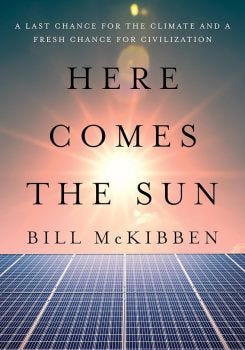
Here’s Bill’s new book excertp:
Sometime in the early part of the 2020s we crossed an invisible line where the cost of producing energy from the sun dropped below the cost of fossil fuel. That’s not yet common knowledge—we still think of photovoltaic panels and wind turbines as “alternative energy,” as if they were the Whole Foods of power, nice but pricey. In fact—and more so with each passing month—they are the Costco of energy, inexpensive and available in bulk. We live on an earth where the cheapest way to produce power is to point a sheet of glass at the sun; the second-cheapest is to let the breeze created by the sun’s heating turn the blade of a wind turbine. Beginning about the middle of 2023, we entered the really steep part of this growth curve that could redefine our future, crossing another invisible line, this one marking the installation of a gigawatt’s worth of solar panels on this planet every day. (A gigawatt is about the output of a typical coal-fired power plant or nuclear reactor.) By the fall of 2024 that gigawatt was going up every 18 hours. We’re still in the early days of this transformation—right now only about 15 percent of the planet’s electricity comes from sun and wind, and only about a quarter of the energy we use comes from electricity. But exponential growth changes numbers like that very fast—in 2024, 92.5 percent of all new electricity bought online around the world came from renewables; in the US the figure was 96 percent. By April 2025, fossil fuel was producing less than half of American electricity, for the first time ever. There’s no longer a technical or financial obstacle in the way; we already have the factory capacity, mostly in China, to produce as many solar panels as the climate scientists say we need. In May 2025 came the news that China had used 5 percent less coal in the first quarter of the year to produce electricity than it had in 2024—despite a surging economy, Chinese emissions were actually dropping.
The suddenness of this moment is startling. The solar cell was invented in 1954, and it took from then until 2022 to install the first terawatt worth of solar power on this planet. It took two years to get the second; the third will be quicker still. It’s all brand new.
But there are a few places that are running far ahead, showing what’s possible. China is well on its way to being the earth’s first “electro-state”; something like half of all clean energy has been installed within its borders. And 2024 was a breakout year in California: there were finally enough solar panels that for parts of most days the state could produce from renewable sources more than 100 percent of the electricity it used; at night great batteries that had spent the afternoon soaking up sunshine often became the biggest source of supply to the electric grid of the world’s fifth-largest economy. As a result, in 2024 California used 25 percent less natural gas to produce its power than it had in 2023, which is a big number. Through mid-April of 2025, as more panels and batteries came online, the numbers got even better: California was using 44 percent less natural gas to make electricity than it had just two years earlier. On the other side of the world, in Pakistan, a flood of cheap solar panels from China let homeowners and storekeepers and factory managers build the equivalent of a third of the country’s electric grid inside of a year. Peasant farmers, often just laying the panels on the ground, started pumping their irrigation water with electricity instead of generators powered with fossil fuels; diesel sales dropped 30 percent in the course of a year.
Those kind of shifts, replicated quickly in many more places, could take a real bite out of the grim predictions of climate scientists; the sun burns so we don’t need to. We are in a desperate race; those scientists have told us that to stay on anything like a survivable path we must cut greenhouse gas emissions in half before the decade is out. That target is on the bleeding edge of the technically possible, and this book is an effort to shove us toward that deadline.
Can The Rise In Solar Power Balance Out Clean Energy Cuts?
But I hope that this book is timeless as well—that it’s anticipating a shift that will play out over many lifetimes, and in ways that diverge dramatically from our recent history. That’s because energy from the sun is not just cheap. It’s also diffuse, available everywhere instead of concentrated in a few places. And that prefigures a different world with a more localized and more humane geopolitics; indeed, the sun works more reliably toward the equator, which could allow the redress of some of earth’s great inequities. In February 2025 the energy analysts at the Rocky Mountain Institute reported that renewable energy was growing twice as fast in the developing world of the Global South as in the developed world of the Global North. Relying on energy sources that are abundant instead of scarce—the sun and the wind each day produce thousands of times as much energy as we could ever use—could even reconfigure our ideas of competition and conquest. Unlike oil and gas, sun and wind can’t be hoarded. If fascism scares you the way it does me, figuring out how to break the centralized power of the fossil fuel industry is a key form of resistance.
And for a species that has become almost fatally disconnected from the natural world, the sun offers a way back into a relationship with reality. We were all sun worshippers once; it’s not perhaps too much to imagine that we might someday soon gaze up a little more often, maybe even breaking a little of the enchantment woven by the glowing lights in our palms. This is not, I think, a “technofix,” but something far more fundamental. We have the chance to join in a great global project, providing affordable energy to every human community even as we stave off our greatest threat. It could prove a unifying mission for a divided world. The last remotely comparable project was the moon shot of the 1960s, but that involved one nation putting two men on an orbiting rock. This quest involves bringing our star down to earth to make that earth work—what could be more quintessentially human?
All this hope risks sounding giddy; let my dark realism reassert itself for a moment and offer up some caveats and cautions. I’m not overly concerned about the things people usually point to. As I’ll make clear, we’re not going to run short of minerals to build batteries or land to put panels on. Instead, my worries stem from hard realities both physical and political.
First, this definitely comes too late to “stop global warming.” We’ve already done fundamental damage to the planet’s physical systems, to the point of altering the jet stream and weakening the Gulf Stream; we’ve already raced past the 1.5 degree Celsius rise in global temperature that we pledged in Paris to avoid. (In April 2025, the Trump administration fired most of the American scientists who monitor this increase, perhaps reasoning that what we don’t know can’t hurt us.)
Our best hope now is simply to stop the heating of the earth short of the point where it cuts civilization off at the knees, and even that will be a very close call. I will return to the question of pace over and over in these pages, because it’s what matters most. I have little doubt we will run the world on sun and wind 40 years from now, but if it takes us anything like 40 years to get there then it will be a broken planet; our energy sources will hardly matter. The march of history won’t get us where we need to go fast enough; we need to force that march.
Second, there’s no guarantee that the momentum of the last few years will continue. The fossil fuel industry has read the numbers too, and so they’ve girded for the fight. As the chairman of one big oil company said in the fall of 2024, the industry thinks we should keep burning gas and oil until “every last molecule” had been sucked from the earth. If you think that capitalism guarantees we’ll pick the lowest-priced option, think again: In certain ways, solar and wind power are almost too cheap for our economy. Investors who have gotten rich controlling the hoarded “reserves” of fossil fuel are scared of the fact that the sun delivers energy for free each time it rises above the horizon, and in their fear they’re massively gaming our political system. The worldwide elections of 2024 saw setback after setback, with oil-soaked populists winning control in too many places. Just as they played the game of climate denial with real success for three decades, they now engage in a kind of solutions denial, claiming we’re not ready for clean energy, or offering up substitutes closer to the status quo. Some of these substitutes (geothermal power and nuclear energy, if the cost ever comes down) may offer useful side dishes to the main course of sun, wind, and batteries; others (carbon capture from power plants, biofuels) are just expensive efforts to extend the business model of this industry a little longer. All of the substitutes are effective at distracting us, especially in the distorted infosphere of greenwash and spin we inhabit.
Nowhere, of course, is that distortion more powerful than the United States, where Trump rode back into office vowing to “drill, baby, drill” and to crash the electric vehicle (EV) industry. He’d been in office four hours when he signed an order ending all federal support for wind power. (As for solar energy, the week before the election he said, “It’s all steel and glass and wires. It looks like hell. And you see rabbits get caught in it.”) By April, just three months into his second term, Trump was announcing plans to revive the coal industry, and his bizarre tariffs were making life harder for renewable energy developers; he cut off funding to Princeton’s climate modelers on the grounds that their findings were causing “climate anxiety.” All of which is to offer a third caution: Just because the world goes in one direction, that doesn’t mean every nation will follow. Yes, there’s enormous momentum behind this transformation; on the last day of February 2025 the federal Energy Information Administration predicted that 93 percent of American electric generation built in Trump’s first year would be carbon-free, mostly from solar. In the first month of 2025, as Trump was taking office, sun and wind combined made up 98 percent of new generating capacity in the States. But clearly the Trump/Musk team will try to break that momentum; already-high tariffs on Chinese solar panels are being increased again even as I finish this manuscript, and the administration is embarked on a sprawling effort to achieve “energy dominance” based on oil and gas. It’s an effort to stuff the solar genie back in the barrel, and we don’t know yet to what degree it will succeed. The Biden administration, with the Inflation Reduction Act, set in motion transformative spending on clean energy technology, and spread the money carefully around the red states; Texas, home base of the hydrocarbon industry, is now outpacing even California in clean energy (though the state legislature, as of spring 2025, was engaged in an all-out effort to sabotage that growth). Power from the sun can appeal to conservatives (“my home is my well-wired castle”) as powerfully as it does to liberals. But the addiction to fossil fuels and all its accomplices (the giant SUV, say) runs deeper here than anyplace else; it will be a fight to turn the American page.
I’m ready for that fight. Even as I write these pages, I’m helping organize what we’re calling Sun Day, set for the autumnal equinox in September 2025. Indeed, some of the proceeds from this book are supporting that organizing process, because its goal is the same: to help people understand the possibility of our moment. As we shall see, much of the progress that engineers have made has come on the back of inspired activism, something we need more of. In this fight, the solar panel and the wind turbine are both the crucial machines and also the symbols of potential liberation.
And in true Hollywood fashion, our liberation and our destruction are arriving at precisely the same time, offering us a remarkable choice. Everything is going wrong, except this one big thing. Our species, at what feels like a very dark moment, can take a giant leap into the light. Of the sun.
Excerpts from the McKibben’s Divestment Tour: Brought to You by Wall Street series by Cory Morningstar:
Coalition for Environmentally Responsible Economies (CERES) is a partner of the World Business Council for Sustainable Development (WBCSD). CERES funders are associated with Goldman Sachs, JPMorgan Chase, Citigroup, Morgan Stanley and Bank of America.
WBCSD is part of a Wall Street strategy to dislodge the United Nations Center on Transnational Corporations, and prevent enforceable rules governing the operations of multinational corporations.
One third of the CERES network companies are in the Fortune 500. Since 2001, CERES has received millions from Wall Street corporations and foundations.
CERES president Mindy Lubber promotes “sustainable capitalism” at Forbes. Bill McKibben (founder of 350) was an esteemed guest of CERES conferences in 2007 and 2013.
1Sky, which merged with 350 in 2011, was created by the Clinton Foundation and the Rockefeller Brothers Fund. Betsy Taylor of 1Sky/350 is on the CERES board of directors.
In 2012, Bill McKibben and Peter Buffett (oil train tycoon Warren Buffet’s son) headlined the Strategies for a New Economy conference. Between 2003 and 2011, NoVo (Buffet’s foundation) donated $26 million to Tides Foundation, which in turn funds CERES and 350.
Suzanne Nossel, former Deputy Assistant Secretary of State under Hillary Clinton, is on the Tides board of directors.
McKibben’s Divestment Tour – Brought to You by Wall Street Cory Morningstar

Part I of this series, McKibben’s Divestment Tour – Brought to You by Wall Street, can be found here. Part II: Part III, Part IV]
“Of all our studies, it is history that is best qualified to reward our research.” — Malcolm X
Cory Morningstar is an independent investigative journalist, writer and environmental activist, focusing on global ecological collapse and political analysis of the non-profit industrial complex. She resides in Canada. Her recent writings can be found on Wrong Kind of Green, The Art of Annihilation, Political Context, Counterpunch, Canadians for Action on Climate Change and Countercurrents. You can follow her on twitter: elleprovocateur
350.org front man, Bill McKibben tells us that “It’s not all right to be profiting from the wreckage of the planet” yet he will not tell us that the unparalleled violence upon the planet and its most vulnerable peoples is inherently built into the system of industrialized capitalism. He will not tell you the simple fact that every day this system is allowed to continue represents one more day of profiteering from the wreckage of the planet and brings us one day closer to our shared global annihilation. Further, McKibben undermines any campaign that attempts to bring this most critical issue to the forefront of the global debate.
Many inadequacies in both the science and the logic have already been made clear by many reputable activists. On July 24, 2012, three responses to McKibben’s July 19, 2012 article in Rolling Stone magazine [“Global Warming’s Terrifying New Math: Three simple numbers that add up to global catastrophe – make clear who the real enemy is”] by Anne Petermann, Dr. Rachel Smolker, and Keith Brunner were published on Global Justice Ecology Project. Selected excerpts are as follows:
Anne Petermann writes:
“Can the very markets that have led us to the brink of the abyss now provide our parachute? McKibben points out that under this system, those with the money have all the power. Then why are we trying to reform this system? Why are we not transforming it?” “… if you focus solely on eliminating fossil fuels without changing the underlying system, then very bad things will take their place because it is the system itself that is unsustainable. It is a system designed to transform ‘natural capital’ and human labor into gargantuan profits for an elite few: the so-called ‘1%.’ Whether it’s driven by fossil fuels or biofuels or even massive solar and wind installations, the system will continue to devour ecosystems, displace forest-based communities, Indigenous Peoples and subsistence farmers from their lands, crush labor unions and generally make life hell for the vast majority of the world’s peoples. That is what it does.”
Keith Brunner writes:
“Bill offers divestment campaigns, à la South Africa, as a favored strategy to hit the fossil fuel companies financially. Sounds great, except when you look at the trends over the past few years of big institutional investors – like pension funds and university endowments – to move their money (often through a private equity intermediary) into, amongst other things, ’emerging market’ natural resources and infrastructure funds, facilitating land and resource grabbing across the South. It’s what the ‘progressive’ climate-aware fund managers (like the CERES folks) are advocating, and it’s a problem. And that’s another place where he misses the point: Yes, the fossil fuel corporations are the big bad wolf, but just as problematic is the system of investment and returns which necessitates a growth economy (it’s called capitalism). That Harvard University endowment fund manager has a ‘fiduciary responsibility’ to get a certain annual return, which means they have to put their money into growing, profitable funds or firms or states (what’s the difference anyhow), which grow through exploiting people and dismantling ecosystems. We aren’t going to invest our way to a livable planet. We need to focus on the root causes and false solutions, lift up the community solutions, and push the big green groups to become more holistic in their analysis so they don’t shoot us all in the foot.”

I tried to be a guiding force in Spokane: Eighteen Years Ago, and a whole universe away!

Economies of Stale By Paul K. Haeder
Unless we change our basic economic playbook, Bill McKibben says we may be doomed
Small is beautiful” is an axiom lost on many Americans bent on acquiring more material goods at the expense of nature. For journalist and author Bill McKibben, the best way to live that way is centered on building upon and maximizing our local economies. That’s the message of his new book, Deep Economy: The Wealth of Communities and the Durable Future. McKibben will be in Spokane Tuesday to discuss his book and the sad state of the planet.
McKibben, whose work on global warming precedes anything Al Gore may have conjured up recently, uses a broad paintbrush to give the reader a sense of our current economics of pain, exploitation and competition. Adam Smith, John Maynard Keynes, LBJ, Bill Clinton and the Bushes have all proposed that our society is uniquely entitled to absolute, unrestrained growth — in fact, many purport we’re divinely hardwired to feed the engine of resource hoarding and untamed capitalism, the rest of the world be damned.
McKibben says that’s the problem: “The median predictions of the world’s climatologists — by no means the worst-case scenario — show that unless we take truly enormous steps to rein in our use of fossil fuels, we can expect average temperatures to rise another four or five degrees before the century is out, making the globe warmer than it’s been since long before primates appeared.
“We might as well stop calling it Earth and have a contest to pick some new name, because it will be a different planet,” McKibben adds from his home in Vermont. “Humans have never done anything more profound, not even when we invented nuclear weapons.”
To combat all that history and dread, McKibben suggests a turn to “deep ecology,” which is best defined by contrasting what it isn’t. “Shallow ecology” is what we have now, a human-centered way of putting nature last in every equation. Deep ecology, on the other hand, defines the world not as a hierarchal collection of objects but as a network of phenomena that are interconnected and interdependent. Deep economy, then, recognizes the intrinsic value of all life within a strong web of local economic life.
The concept of ecology and environmentalism, barely articulated starting in the 1930s, has always taken a back seat to the grip of power held by churches, kings, despots and now societies that have vaulted corporations to a level of final arbiter of values and common destiny. And economics has been the Achilles’ heel of social activists, ranging from civil rights workers to environmentalists. They have just never understood the language or thinking of economists.
And that’s why McKibben’s voice is so powerful — he uses economics to prove his points. In Deep Economy, for example, he looks beyond the subject of economics to pose a key question: What is the economy for? Experts in so many fields — and activists tied to such local groups as the Lands Council, Futurewise and Save Our Wild Salmon — realize that there are few outcomes from our relentless push for growth that don’t speak of a monumental environmental disaster.
In his provocative 1989 book, The End of Nature, McKibben illustrated that the changes humankind has made and is continuing to make to the atmosphere’s chemistry are not the kind of environmental disruptions we have experienced in the past. His message honed in on the fact that we can’t escape the climatic effects by fleeing to some solar-powered cabin in the woods; we’ve begun to alter the global processes that define our environment.
For McKibben, the human hand acting on the Earth is not a guiding hand but one that’s inherently clumsy. The truth is that most of our influence on climate has been unintentional. It’s now a less predictable world, fraught with a violence staged by the triumvirate of colliding forces: changing temperatures, sea levels and mutating atmospheric chemistry.
This mess is largely based on capitalism and greedy economics of resource exploitation, and on our own propensity to separate humans from nature.
“In the 20th century, two completely different models of how to run an economy battled for supremacy,” says McKibben. “Ours won, and not only because it produced more goods than socialized state economies. It also produced far more freedom, far less horror. But now that victory is starting to look Pyrrhic; in our overheated and under-happy state, we need some new ideas.”
In this new stage in McKibben’s journalistic journey, we see the natural outgrowth of dealing with our ecological stressors and impending collapses through a new lens, one that most every economist has missed — through local interdependence and sustainable use of resources.
“We’ve gone too far down the road we’re traveling,” McKibben adds. “The time has come to search the map, to strike off in new directions. Inertia is a powerful force; marriages and corporations and nations continue in motion until something big diverts them. But in our new world, we have much to fear, and also much to desire, and together they can set us on a new, more promising course.”
Bill McKibben will be in Spokane on Tuesday, April 3, first at a reception at 5 pm at the Community Building (35 W. Main Ave.), and later at 7 pm at Gonzaga University’s Globe Room of Cataldo Hall. Both events are free and open to the public. Paul Haeder is the sustainability liaison at Spokane Falls Community College, where he also teaches English. His KYRS radio show, Tipping Points: Voices on the Edge, covers sustainability issues. Check out http://www.stepitup07.org for more information.

