

A little bit of Judaism here: Servants of the Rulers — Jews and the Bosses and Kings . . . Do you See This Yet?
Israel Shahak was a remarkable man. Born in the Warsaw ghetto and a survivor of Belsen, Shahak arrived in Israel in 1945. Brought up under Jewish Orthodoxy and Hebrew culture, he consistently opposed the expansion of the borders of Israel from 1967.
In this extraordinary and highly acclaimed book, Shahak embarks on a provocative study of the extent to which the secular state of Israel has been shaped by religious orthodoxies of an invidious and potentially lethal nature. Drawing on the Talmud and rabbinical laws, Shahak argues that the roots of Jewish chauvinism and religious fanaticism must be understood before it is too late.
Written from a humanitarian viewpoint by a Jewish scholar, this is a rare and highly controversial criticism of Israel that will both excite and disturb readers worldwide.
Look at this feces!

Read on:
Or is now “retarded and faggot” in the Trumpian Lexicon?
Yes, improved relations with Russia is a big plus. Yes, opposing wokeism is a big plus. BUT…
Feb 26

[Globally, an estimated 1 billion people have some form of disability. One in eight of our friends, coworkers, family members, and neighbors are part of the world’s largest minority.
But, despite our numbers, the stigma of having a disability is always present. In many countries, people with mental health conditions live in chains and are considered possessed. When armed conflicts occur, people with disabilities are often the first ones left behind, abandoned to die or fend for themselves. And people with disabilities face an increased risk of forced institutionalization, spending their entire lives segregated in grim facilities away from their families and communities, and otherwise lacking access to schools and jobs.]
Here we are in those Dark Ages, Inquisition time. These fuckers actually quote the goddamned bible now? This is fucking geopolitics analyses?
Here’s Don Hank’s hero, doing good with Russia? Fuck.
In 2019, Trump reportedly told General Mark Milley, then-Chairman of the Joint Chiefs of Staff, that “no one wants to see” wounded soldiers after he met Luis Avila, an Army captain who “completed five combat tours, had lost a leg in an IED attack in Afghanistan and had suffered two heart attacks, two strokes, and brain damage as a result of his injuries,” according to a profile of Milley in The Atlantic.
In a 2018, White House planning meeting on military parades,
“Trump asked his staff not to include wounded veterans, on grounds that spectators would feel uncomfortable in the presence of amputees.”
‘Nobody wants to see that,’ he said,” according to Jeffrey Goldberg’s reporting.
Similarly, after a trip to France in 2017, Trump told his chief of staff, retired General John F. Kelly,
“Look, I don’t want any wounded guys in the parade. This doesn’t look good for me,” according to the book, “The Divider: Trump in the White House, 2017-2021,” by Susan Glasser and Peter Baker (see also Kelly’s confirmation to CNN last year).
Don Hank’s anti-woke cocksuckers:

Bankers and financiers say that Trump’s victory has empowered those who felt they had to self-censor or change their language to avoid offending younger colleagues, women, minorities or disabled people.
“I feel liberated,” said a top banker. “We can say ‘retard’ and ‘pussy’ without the fear of getting cancelled . . . it’s a new dawn.”
Don Hank! Because, though Trump has claimed that he was a Christian, if that were true, and if he knew the New Testament, he would know Jesus’ words:
It were better for him that a millstone be hanged about his neck and that he be cast into the sea than that he harm one of these little ones.
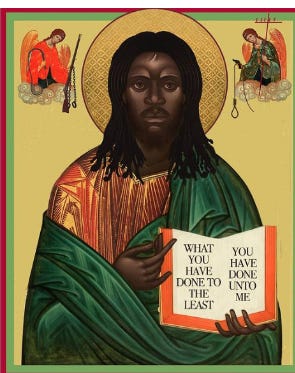
White Jesus Must Die: Decoding Black Jesus – The People’s Historian
You ask people if Jesus was Black
Dem no like that
They question and run from dat
Den dey will tell you say “it don’t really matter.”
Den dey will even tell you, they say “he really had no color.”
Den dey must say “Rasta have no intellect”
Cause I never seen no man without no color yet,
Me no ask say dat, me no take back no chat
Me pointing to de hair sayin’ Jesus Black.
Macka B, Jesus Christ Was Black (1999)
Don Hank? Are we gong to be done with this “It’s Really the Zionist State of Zionist Palestine” bullshit? Israel is home to tens of thousands of rabbis and religious clerics and Jewis nuts. It’s not the Zionist Wailing Wall, for fuck’s sake. Jews are the genocide men, women, and them.
Don Hank: After all, to claim that opposing genocide is anti-Semitic is to tacitly imply that genocide is a typically Jewish trait! And to say THAT is anti-Semitic itself. Judaism, is NOT inherently Zionist and Zionism is an affront to the Torah.
Leviticus 19:34 KJV The foreigner residing among you must be treated as your native-born. Love them as yourself, for you were foreigners in Egypt. I am the Lord your God.
It is crystal clear that the God of Israel (not the divine donor of land but the giver of commandments to live by) commanded His people to treat each other and foreigners fairly. Modern “Israel” tramples all over the commandments!
+—+
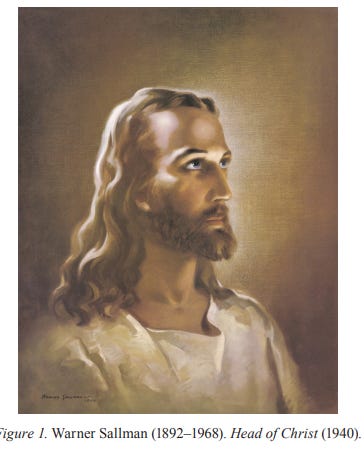
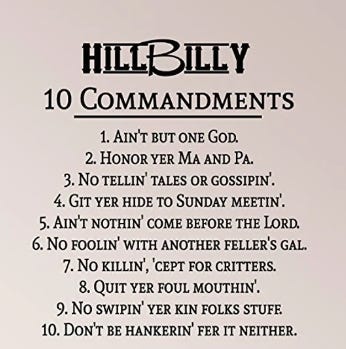
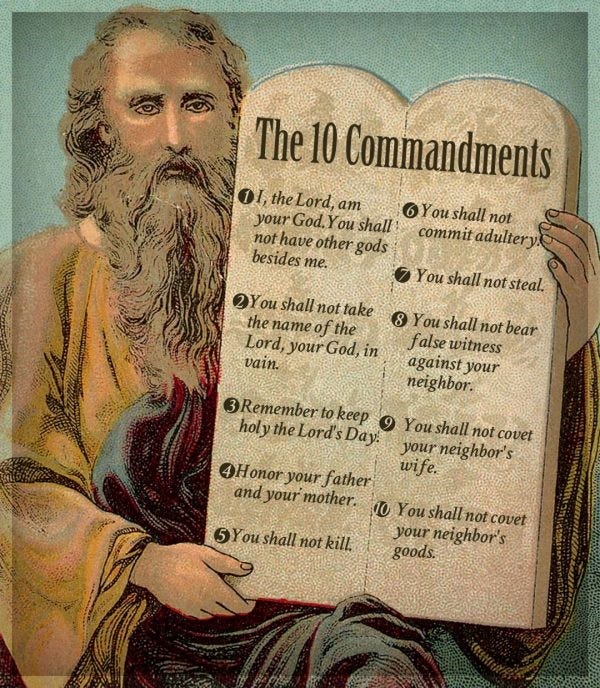
For fuck’s sake, now it’s 2025 and we are running through the fucking commandments?
This article written by former Interim President and current member of the Board of Directors Frank Zindler and is reprinted from the Summer 1998 edition of American Atheist magazine.
I have taken it for granted that Jesus of Nazareth existed. Some writers feel a need to justify this assumption at length against people who try from time to time to deny it. It would be easier, frankly, to believe that Tiberius Caesar, Jesus’ contemporary, was a figment of the imagination than to believe that there never was such a person as Jesus.
– N. T. Wright, Jesus and the Victory of God (Fortress, 1996)
For most of my life, I had taken it for granted that Jesus, although certainly not a god, was nevertheless an historical personage – perhaps a magician skilled in hypnosis. To be sure, I knew that some of the world’s greatest scholars had denied his existence. Nevertheless, I had always more or less supposed that it was improbable that so many stories could have sprung up about someone who had never existed. Even in the case of other deities, such as Zeus, Thor, Isis, and Osiris, I had always taken it for granted that they were merely deified human heroes: men and women who lived in the later stages of prehistory – persons whose reputations got better and better the longer the time elapsed after their deaths. Gods, like fine wines, I supposed, improved with age.
About a decade ago, however, I began to reexamine the evidence for the historicity of Jesus. I was astounded at what I didn’t find. In this article, I would like to show how shaky the evidence is regarding the alleged existence of a would-be messiah named Jesus. I now feel it is more reasonable to suppose he never existed. It is easier to account for the facts of early Christian history if Jesus were a fiction than if he once were real.
Burden of Proof
Although what follows may fairly be interpreted to be a proof of the non-historicity of Jesus, it must be realized that the burden of proof does not rest upon the skeptic in this matter. As always is the case, the burden of proof weighs upon those who assert that some thing or some process exists. If someone claims that he never has to shave because every morning before he can get to the bathroom he is assaulted by a six-foot rabbit with extremely sharp teeth who trims his whiskers better than a razor – if someone makes such a claim, no skeptic need worry about constructing a disproof. Unless evidence for the claim is produced, the skeptic can treat the claim as false. This is nothing more than sane, every-day practice.
Unlike N. T. Wright, quoted at the beginning of this article, a small number of scholars have tried over the centuries to prove that Jesus was in fact historical. It is instructive, when examining their “evidence,” to compare it to the sort of evidence we have, say, for the existence of Tiberius Cæsar – to take up the challenge made by Wright.
It may be conceded that it is not surprising that there are no coins surviving from the first century with the image of Jesus on them. Unlike Tiberius Cæsar and Augustus Cæsar who adopted him, Jesus is not thought to have had control over any mints. Even so, we must point out that we do have coins dating from the early first century that bear images of Tiberius that change with the age of their subject. We even have coins minted by his predecessor, Augustus Cæsar, that show Augustus on one side and his adopted son on the other.Citation 1 Would Mr. Wright have us believe that these coins are figments of the imagination? Can we be dealing with fig-mints?
Statues that can be dated archaeologically survive to show Tiberius as a youth, as a young man assuming the toga, as Cæsar, etc.Citation 2 Engravings and gems show him with his entire family.Citation 3 Biographers who were his contemporaries or nearly so quote from his letters and decrees and recount the details of his life in minute detail.Citation 4 There are contemporary inscriptions all over the former empire that record his deeds.Citation 5 There is an ossuary of at least one member of his family, and the Greek text of a speech made by his son Germanicus has been found at Oxyrhynchus in Egypt.Citation 6 And then there are the remains of his villa on Capri. Nor should we forget that Augustus Cæsar, in his Res Gestæ (“Things Accomplished”), which survives both in Greek and Latin on the so-called Monumentum Ancyranum, lists Tiberius as his son and co-ruler.Citation 7
Is there anything advocates of an historical Jesus can produce that could be as compelling as this evidence for Tiberius? I think not, and I thank N. T. Wright for making a challenge that brings this disparity so clearly to light.
There is really only one area where evidence for Jesus is even claimed to be of a sort similar to that adduced for Tiberius – the area of biographies written by contemporaries or near contemporaries.Note A It is sometimes claimed that the Christian Bible contains such evidence. Sometimes it is claimed that there is extrabiblical evidence as well. Let us then examine this would-be evidence.
The Old Testament “Evidence”
Let us consider the so-called biblical evidence first. Despite the claims of Christian apologists, there is absolutely nothing in the Old Testament (OT) that is of relevance to our question, apart from the possible fact that some prophets may have thought that an “anointed one” (a rescuer king or priest) would once again assume the leadership of the Jewish world. All of the many examples of OT “predictions” of Jesus are so silly that one need only look them up to see their irrelevance. Thomas Paine, the great heretic of the American Revolution, did just that, and he demonstrated their irrelevance in his book An Examination of the Prophecies, which he intended to be Part III of The Age of Reason.Note B
The New Testament “Evidence”
The elimination of the OT leaves only the New Testament (NT) “evidence” and extrabiblical material to be considered. Essentially, the NT is composed of two types of documents: letters and would-be biographies (the so-called gospels). A third category of writing, apocalyptic,Note C of which the Book of Revelation is an example, also exists, but it gives no support for the historicity of Jesus. In fact, it would appear to be an intellectual fossil of the thought-world from which Christianity sprang – a Jewish apocalypse that was reworked for Christian use.Citation 8 The main character of the book (referred to 28 times) would seem to be “the Lamb,” an astral being seen in visions (no claims to historicity here!), and the book overall is redolent of ancient astrology.Citation 9
The name Jesus occurs only seven times in the entire book, Christ only four times, and Jesus Christ only twice! While Revelation may very well derive from a very early period (contrary to the views of most biblical scholars, who deal with the book only in its final form), the Jesus of which it whispers obviously is not a man. He is a supernatural being. He has not yet acquired the physiological and metabolic properties of which we read in the gospels. The Jesus of Revelation is a god who would later be made into a man – not a man who would later become a god, as liberal religious scholars would have it.
The Gospels
The notion that the four “gospels that made the cut” to be included in the official New Testament were written by men named Matthew, Mark, Luke, and John does not go back to early Christian times. The titles “According to Matthew,” etc., were not added until late in the second century. Thus, although Papias ca. 140 CE (‘Common Era’) knows all the gospels but has only heard of Matthew and Mark, Justin Martyr (ca. 150 CE) knows of none of the four supposed authors. It is only in 180 CE, with Irenæus of Lyons, that we learn who wrote the four “canonical” gospels and discover that there are exactly four of them because there are four quarters of the earth and four universal winds. Thus, unless one supposes the argument of Irenæus to be other than ridiculous, we come to the conclusion that the gospels are of unknown origin and authorship, and there is no good reason to suppose they are eye-witness accounts of a man named Jesus of Nazareth. At a minimum, this forces us to examine the gospels to see if their contents are even compatible with the notion that they were written by eye-witnesses. We cannot even assume that each of the gospels had but one author or redactor.
It is clear that the gospels of Matthew and Luke could not possibly have been written by an eye-witness of the tales they tell. Both writers plagiarizeNote D (largely word-for-word) up to 90% of the gospel of Mark, to which they add sayings of Jesus e and would-be historical details. Ignoring the fact that Matthew and Luke contradict each other in such critical details as the genealogy of Jesus – and thus cannot both be correct – we must ask why real eye-witnesses would have to plagiarize the entire ham-hocks-and-potatoes of the story, contenting themselves with adding merely a little gravy, salt, and pepper. A real eye-witness would have begun with a verse reading, “Now, boys and girls, I’m gonna tell you the story of Jesus the Messiah the way it really happened…” The story would be a unique creation. It is significant that it is only these two gospels that purport to tell anything of Jesus’ birth, childhood, or ancestry. Both can be dismissed as unreliable without further cause. We can know nothing of Jesus’ childhood or origin!
Mark
But what about the gospel of Mark, the oldest surviving gospel? Attaining essentially its final form probably as late as 90 CE but containing core material dating possibly as early as 70 CE, it omits, as we have seen, almost the entire traditional biography of Jesus, beginning the story with John the Baptist giving Jesus a bath, and ending – in the oldest manuscripts – with women running frightened from the empty tomb. (The alleged postresurrection appearances reported in the last twelve verses of Mark are not found in the earliest manuscripts, even though they are still printed in most modern bibles as though they were an “authentic” part of Mark’s gospel.) Moreover, “Mark” being a non-Palestinian non-disciple, even the skimpy historical detail he provides is untrustworthy.
To say that Mark’s account is “skimpy” is to understate the case. There really isn’t much to the gospel of Mark, the birth legends, genealogies, and childhood wonders all being absent. Whereas the gospel of Luke takes up 43 pages in the New English Bible, the gospel of Mark occupies only 25 pages – a mere 58% as much material! Stories do indeed grow with the retelling.
I have claimed that the unknown author of Mark was a non-Palestinian non-disciple, which would make his story mere hearsay. What evidence do we have for this assertion? First of all, Mark shows no first-hand understanding of the social situation in Palestine. He is clearly a foreigner, removed both in space and time from the events he alleges. For example, in Mark 10:12, he has Jesus say that if a woman divorces her husband and marries another, she commits adultery. As G. A. Wells, the author of The Historical Evidence for JesusCitation 10 puts it,
Such an utterance would have been meaningless in Palestine, where only men could obtain divorce. It is a ruling for the Gentile Christian readers… which the evangelist put into Jesus’ mouth in order to give it authority. This tendency to anchor later customs and institutions to Jesus’ supposed lifetime played a considerable role in the building up of his biography.
One further evidence of the inauthenticity of Mark is the fact that in chapter 7, where Jesus is arguing with the Pharisees, Jesus is made to quote the Greek Septuagint version of Isaiah in order to score his debate point. Unfortunately, the Hebrew version says something different from the Greek. Isaiah 29:13, in the Hebrew reads “their fear of me is a commandment of men learned by rote,” whereas the Greek version – and the gospel of Mark – reads “in vain do they worship me, teaching as doctrines the precepts of men” [Revised Standard Version). Wells observes dryly [p. 13], “That a Palestinian Jesus should floor Orthodox Jews with an argument based on a mistranslation of their scriptures is very unlikely.” Indeed!
Another powerful argument against the idea that Mark could have been an eye-witness of the existence of Jesus is based upon the observation that the author of Mark displays a profound lack of familiarity with Palestinian geography. If he had actually lived in Palestine, he would not have made the blunders to be found in his gospel. If he never lived in Palestine, he could not have been an eye-witness of Jesus. You get the point.
The most absurd geographical error Mark commits is when he tells the tall tale about Jesus crossing over the Sea of Galilee and casting demons out of a man (two men in Matthew’s revised version) and making them go into about 2,000 pigs which, as the King James version puts it, “ran violently down a steep place into the sea… and they were choked in the sea.”
Apart from the cruelty to animals displayed by the lovable, gentle Jesus, and his disregard for the property of others, what’s wrong with this story? If your only source of information is the King James Bible, you might not ever know. The King James says this marvel occurred in the land of the Gadarenes, whereas the oldest Greek manuscripts say this miracle took place in the land of the Gerasenes. Luke, who also knew no Palestinian geography, also passes on this bit of absurdity. But Matthew, who had some knowledge of Palestine, changed the name to Gadarene in his new, improved version; but this is further improved to Gergesenes in the King James version.
By now the reader must be dizzy with all the distinctions between Gerasenes, Gadarenes, and Gergesenes. What difference does it make? A lot of difference, as we shall see.
Gerasa, the place mentioned in the oldest manuscripts of Mark, is located about 31 miles from the shore of the Sea of Galilee! Those poor pigs had to run a course five miles longer than a marathon in order to find a place to drown! Not even lemmings have to go that far. Moreover, if one considers a “steep” slope to be at least 45 degrees, that would make the elevation of Gerasa at least six times higher than Mt. Everest!
When the author of Matthew read Mark’s version, he saw the impossibility of Jesus and the gang disembarking at Gerasa (which, by the way, was also in a different country, the so-called Decapolis). Since the only town in the vicinity of the Sea of Galilee that he knew of that started with G was Gadara, he changed Gerasa to Gadara. But even Gadara was five miles from the shore – and in a different country. Later copyists of the Greek manuscripts of all three pig-drowning gospels (Matthew, Mark, and Luke) improved Gadara further to Gergesa, a region now thought to have actually formed part of the eastern shore of the Sea of Galilee. So much for the trustworthiness of the biblical tradition.
Another example of Mark’s abysmal ignorance of Palestinian geography is found in the story he made up about Jesus traveling from Tyre on the Mediterranean to the Sea of Galilee, 30 miles inland. According to Mark 7:31, Jesus and the boys went by way of Sidon, 20 miles north of Tyre on the Mediterranean coast! Since to Sidon and back would be 40 miles, this means that the wisest of all men walked 70 miles when he could have walked only 30. Of course, one would never know all this from the King James version which – apparently completely ignoring a perfectly clear Greek text – says “Departing from the coasts of Tyre and Sidon, he came unto the Sea of Galilee…” Apparently the translators of the King James version also knew their geography. At least they knew more than did the author of Mark!
John
The unreliability of the gospels is underscored when we learn that, with the possible exception of John, the first three gospels bear no internal indication of who wrote them. Can we glean anything of significance from the fourth and latest gospel, the gospel of John? Not likely! It is so unworldly, it can scarcely be cited for historical evidence. In this account, Jesus is hardly a man of flesh and blood at all – except for the purposes of divine cannibalism as required by the celebration of the rite of “holy communion.”
“In the beginning was the word, and the word was with god, and the word was god,” the gospel begins. No Star of Bethlehem, no embarrassment of pregnant virgins, no hint that Jesus ever wore diapers: pure spirit from the beginning. Moreover, in its present form, the gospel of John is the latest of all the official gospels.[Note F]
The gospel of John was compiled around the year 110 CE. If its author had been 10 years old at the time of Jesus’ crucifiction in the year 30 CE, he would have been 80 years old at the time of writing. Not only is it improbable that he would have lived so long, it is dangerous to pay much attention to the colorful “memories” recounted by a man in his “anecdotage.” Many of us who are far younger than this have had the unpleasant experience of discovering incontrovertible proof that what we thought were clear memories of some event were wildly incorrect. We also might wonder why an eye-witness of all the wonders claimed in a gospel would wait so long to write about them!
More importantly, there is evidence that the Gospel of John, like Matthew and Luke, also is a composite document, incorporating an earlier “Signs Gospel” of uncertain antiquity. Again, we ask, if “John” had been an eye-witness to Jesus, why would he need to plagiarize a list of miracles made up by someone else? Nor is there anything in the Signs Gospel that would lead one to suppose that it was an eye-witness account. It could just as easily have been referring to the wonders of Dionysus turning water into wine, or to the healings of Asclepius.
The inauthenticity of the Gospel of John would seem to be established beyond cavil by the discovery that the very chapter that asserts the author of the book to have been “the disciple whom Jesus loved” [John 21:20] was a late addition to the gospel. Scholars have shown that the gospel originally ended at verses 30-31 of Chapter 20. Chapter 21 – in which verse 24 asserts that “This is the disciple which testifieth of these things, and wrote these things: and we know that his testimony is true” – is not the work of an eye-witness. Like so many other things in the Bible, it is a fraud. The testimony is not true.
Saint Saul And His Letters
Having eliminated the OT and the gospels from the list of possible biblical “evidences” of the existence of Jesus, we are left with the so-called epistles.
At first blush, we might think that these epistles – some of which are by far the oldest parts of the NT, having been composed at least 30 years before the oldest gospel – would provide us with the most reliable information on Jesus. Well, so much for blushes. The oldest letters are the letters of St. Saul – the man who, after losing his mind, changed his name to Paul. Before going into details, we must point out right away, before we forget, that St. Saul’s testimony can be ignored quite safely, if what he tells us is true, namely, that he never met Jesus “in the flesh,” but rather saw him only in a vision he had during what appears to have been an epileptic seizure. No court of law would accept visions as evidence, and neither should we.
The reader might object that even if Saul only had hearsay evidence, some of it might be true. Some of it might tell us some facts about Jesus. Well, allright. Let’s look at the evidence.
According to tradition, 13 of the letters in the NT are the work of St. Saul. Unfortunately, Bible scholars and computer experts have gone to work on these letters, and it turns out that only four can be shown to be substantially by the same author, putatively Saul. g These are the letters known as Romans, 1 and 2 Corinthians, and Galatians. To these probably we may add the brief note to Philemon, a slave-owner, Philippians, and 1 Thessalonians. The rest of the so-called Pauline epistles can be shown to have been written by other and later authors, so we can throw them out right now and not worry about them.
Saul tells us in 2 Corinthians 11:32 that King Aretas of the Nabateans tried to have him arrested because of his Christian agitation. Since Aretas is known to have died in the year 40 CE, this means that Saul became a Christian before that date. So what do we find out about Jesus from a man who had become a Christian less than ten years after the alleged crucifixion? Precious little!
Once again, G.A. Wells, in his book The Historical Evidence for Jesus [pp. 22-23], sums things up so succinctly, that I quote him verbatim:
The…Pauline letters…are so completely silent concerning the events that were later recorded in the gospels as to suggest that these events were not known to Paul, who, however, could not have been ignorant of them if they had really occurred.
These letters have no allusion to the parents of Jesus, let alone to the virgin birth. They never refer to a place of birth (for example, by calling him ‘of Nazareth’). They give no indication of the time or place of his earthly existence. They do not refer to his trial before a Roman official, nor to Jerusalem as the place of execution. They mention neither John the Baptist, nor Judas, nor Peter’s denial of his master. (They do, of course, mention Peter, but do not imply that he, any more than Paul himself, had known Jesus while he had been alive.)These letters also fail to mention any miracles Jesus is supposed to have worked, a particularly striking omission, since, according to the gospels, he worked so many.
Another striking feature of Paul’s letters is that one could never gather from them that Jesus had been an ethical teacher… on only one occasion does he appeal to the authority of Jesus to support an ethical teaching which the gospels also represent Jesus as having delivered.
It turns out that Saul’s appeal to the authority of Jesus involves precisely the same error we found in the gospel of Mark. In 1 Cor. 7:10, Saul says that “not I but the Lord, [say] that the wife should not separate from the husband.” That is, a wife should not seek divorce. If Jesus had actually said what Saul implies, and what Mark 10:12 claims he said, his audience would have thought he was nuts – as the Bhagwan says – or perhaps had suffered a blow to the head. So much for the testimony of Saul. His Jesus is nothing more than the thinnest hearsay, a legendary creature which was crucified as a sacrifice, a creature almost totally lacking a biography.
Extrabiblical “Evidence”
So far we have examined all the biblical evidences alleged to prove the existence of Jesus as an historical figure. We have found that they have no legitimacy as evidence. Now we must examine the last line of would-be evidence, the notion that Jewish and pagan historians recorded his existence.
Jewish Sources
It is sometimes claimed that Jewish writings hostile to Christianity prove that the ancient Jews knew of Jesus and that such writings prove the historicity of the man Jesus. But in fact, Jewish writings prove no such thing, as L. Gordon Rylands’ book Did Jesus Ever Live? pointed out nearly seventy years ago:
…all the knowledge which the Rabbis had of Jesus was obtained by them from the Gospels. Seeing that Jews, even in the present more critical age, take it for granted that the figure of a real man stands behind the Gospel narrative, one need not be surprised if, in the second century, Jews did not think of questioning that assumption. It is certain, however, that some did question it. For Justin, in his Dialogue with Trypho, represents the Jew Trypho as saying, “ye follow an empty rumour and make a Christ for yourselves.” “If he was born and lived somewhere he is entirely unknown.”
That the writers of the Talmud [4th-5th centuries CE, FRZ] had no independent knowledge of Jesus is proved by the fact that they confounded him with two different men neither of whom can have been he. Evidently no other Jesus with whom they could identify the Gospel Jesus was known to them. One of these, Jesus ben Pandira, reputed a wonder-worker, is said to have been stoned to death and then hung on a tree on the eve of a Passover in the reign of Alexander Jannæus (106-79 BC) at Jerusalem. The other, Jesus ben Stada, whose date is uncertain, but who may have lived in the first third of the second century CE, is also said to have been stoned and hanged on the eve of a Passover, but at Lydda. There may be some confusion here; but it is plain that the Rabbis had no knowledge of Jesus apart from what they had read in the Gospels.Citation 11
Although Christian apologists have listed a number of ancient historians who allegedly were witnesses to the existence of Jesus, the only two that consistently are cited are Josephus, a Pharisee, and Tacitus, a pagan. Since Josephus was born in the year 37 CE, and Tacitus was born in 55, neither could have been an eye-witness of Jesus, who supposedly was crucified in 30 CE. So we could really end our article here. But someone might claim that these historians nevertheless had access to reliable sources, now lost, which recorded the existence and execution of our friend JC. So it is desirable that we take a look at these two supposed witnesses.
In the case of Josephus, whose Antiquities of the Jews was written in 93 CE, about the same time as the gospels, we find him saying some things quite impossible for a good Pharisee to have said:
About this time, there lived Jesus, a wise man, if indeed one ought to call him a man. For he was one who wrought surprising feats and was a teacher of such people as accept the truth gladly. He won over many Jews and many of the Greeks. He was the Messiah. When Pilate, upon hearing him accused by men of the highest standing amongst us, had condemned him to be crucified, those who had in the first place come to love him did not give up their affection for him. On the third day he appeared to them restored to life, for the prophets of God had prophesied these and countless other marvelous things about him. And the tribe of the Christians, so called after him, has still to this day not disappeared.Citation 12
Now no loyal Pharisee would say Jesus had been the Messiah. That Josephus could report that Jesus had been restored to life “on the third day” and not be convinced by this astonishing bit of information is beyond belief. Worse yet is the fact that the story of Jesus is intrusive in Josephus’ narrative and can be seen to be an interpolation even in an English translation of the Greek text. Right after the wondrous passage quoted above, Josephus goes on to say, “About the same time also another sad calamity put the Jews into disorder…” Josephus had previously been talking about awful things Pilate had done to the Jews in general, and one can easily understand why an interpolator would have chosen this particular spot. But his ineptitude in not changing the wording of the bordering text left a “literary seam” (what rhetoricians might term aporia) that sticks out like a pimpled nose.
The fact that Josephus was not convinced by this or any other Christian claim is clear from the statement of the church father Origen (ca. 185-ca. 154 CE) – who dealt extensively with Josephus – that Josephus did not believe in Jesus as the Messiah, i.e., as “the Christ.” Moreover, the disputed passage was never cited by early Christian apologists such as Clement of Alexandria (ca.150-ca. 215 CE), who certainly would have made use of such ammunition had he had it!
The first person to make mention of this obviously forged interpolation into the text of Josephus’ history was the church father Eusebius, in 324 CE. It is quite likely that Eusebius himself did some of the forging. As late as 891, Photius in his Bibliotheca, which devoted three “Codices” to the works of Josephus, shows no awareness of the passage whatsoever even though he reviews the sections of the Antiquities in which one would expect the disputed passage to be found. Clearly, the testimonial was absent from his copy of Antiquities of the Jews.Citation 13 The question can probably be laid to rest by noting that as late as the sixteenth century, according to Rylands,Citation 14 a scholar named Vossius had a manuscript of Josephus from which the passage was wanting.
Apologists, as they grasp for ever more slender straws with which to support their historical Jesus, point out that the passage quoted above is not the only mention of Jesus made by Josephus. In Bk. 20, Ch. 9, §1 of Antiquities of the Jews one also finds the following statement in surviving manuscripts:
Ananus… convened the judges of the Sanhedrin and brought before them a man named James, the brother of Jesus who was called the Christ, and certain others. He accused them of having transgressed the law and delivered them up to be stoned.
It must be admitted that this passage does not intrude into the text as does the one previously quoted. In fact, it is very well integrated into Josephus’ story. That it has been modified from whatever Josephus’ source may have said (remember, here too, Josephus could not have been an eye-witness) is nevertheless extremely probable. The crucial word in this passage is the name James (Jacob in Greek and Hebrew). It is very possible that this very common name was in Josephus’ source material. It might even have been a reference to James the Just, a first-century character we have good reason to believe indeed existed. Because he appears to have born the title Brother of the Lord,Note H it would have been natural to relate him to the Jesus character. It is quite possible that Josephus actually referred to a James “the Brother of the Lord,” and this was changed by Christian copyists (remember that although Josephus was a Jew, his text was preserved only by Christians!) to “Brother of Jesus” – adding then for good measure “who was called Christ.”
According to William Benjamin Smith’s skeptical classic Ecce Deus,Citation 15 there are still some manuscripts of Josephus which contain the quoted passages, but the passages are absent in other manuscripts – showing that such interpolation had already been taking place before the time of Origen but did not ever succeed in supplanting the original text universally.
Pagan Authors Before considering the alleged witness of Pagan authors, it is worth noting some of the things that we should find recorded in their histories if the biblical stories are in fact true. One passage from Matthew should suffice to point out the significance of the silence of secular writers:
Matt. 27:45. Now from the sixth hour there was darkness over all the land unto the ninth hour… Jesus, when he had cried again with a loud voice, yielded up the ghost. 51. And, behold, the veil of the temple was rent in twain from the top to the bottom; and the earth did quake, and the rocks rent; 52 And the graves were opened; and many bodies of the saints which slept arose, 53 And came out of the graves after his resurrection [exposed for 3 days?], and went into the holy city, and appeared unto many.
Wouldn’t the Greeks and Romans have noticed – and recorded – such darkness occurring at a time of the month when a solar eclipse was impossible? Wouldn’t someone have remembered – and recorded – the name of at least one of those “saints” who climbed out of the grave and went wandering downtown in the mall? If Jesus did anything of significance at all, wouldn’t someone have noticed? If he didn’t do anything significant, how could he have stimulated the formation of a new religion?
Considering now the supposed evidence of Tacitus, we find that this Roman historian is alleged in 120 CE to have written a passage in his Annals (Bk 15, Ch 44, containing the wild tale of Nero’s persecution of Christians) saying “Therefore, to scotch the rumour, Nero substituted as culprits, and punished with the utmost refinements of cruelty, a class of men, loathed for their vices, whom the crowd styled Christians. Christus, the founder of the name, had undergone the death penalty in the reign of Tiberius, by sentence of the procurator Pontius Pilatus…” G.A. Wells [p. 16] says of this passage:
[Tacitus wrote] at a time when Christians themselves had come to believe that Jesus had suffered under Pilate. There are three reasons for holding that Tacitus is here simply repeating what Christians had told him. First, he gives Pilate a title, procurator [without saying procurator of what! FRZ], which was current only from the second half of the first century. Had he consulted archives which recorded earlier events, he would surely have found Pilate there designated by his correct title, prefect. Second, Tacitus does not name the executed man Jesus, but uses the title Christ (Messiah) as if it were a proper name. But he could hardly have found in archives a statement such as “the Messiah was executed this morning.” Third, hostile to Christianity as he was, he was surely glad to accept from Christians their own view that Christianity was of recent origin, since the Roman authorities were prepared to tolerate only ancient cults. (The Historical Evidence for Jesus; p.16).
There are further problems with the Tacitus story. Tacitus himself never again alludes to the Neronian persecution of Christians in any of his voluminous writings, and no other Pagan authors know anything of the outrage either. Most significant, however, is that ancient Christian apologists made no use of the story in their propaganda – an unthinkable omission by motivated partisans who were well-read in the works of Tacitus. Clement of Alexandria, who made a profession of collecting just such types of quotations, is ignorant of any Neronian persecution, and even Tertullian, who quotes a great deal from Tacitus, knows nothing of the story. According to Robert Taylor, the author of another freethought classic, the Diegesis (1834), the passage was not known before the fifteenth century, when Tacitus was first published at Venice by Johannes de Spire. Taylor believed de Spire himself to have been the forger.
So much for the evidence purporting to prove that Jesus was an historical figure. We have not, of course, proved that Jesus did not exist. We have only showed that all evidence alleged to support such a claim is without substance. But of course, that is all we need to show. The burden of proof is always on the one who claims that something exists or that something once happened. We have no obligation to try to prove a universal negative.Note J
It will be argued by die-hard believers that all my arguments “from silence” prove nothing and they will quote the aphorism, “Absence of evidence is not evidence of absence.” But is the negative evidence I have referred to the same as absence of evidence? It might be instructive to consider how a hypothetical but similar problem might be dealt with in the physical sciences.
Imagine that someone has claimed that the USA had carried out atomic weapons tests on a particular Caribbean island in 1943. Would the lack of reports of mushroom-cloud sightings at the time be evidence of absence, or absence of evidence? (Remember, the Caribbean during the war years was under intense surveillance by many different factions.) Would it be necessary to go to the island today to scan its surface for the radioactive contamination that would have to be there if nuclear explosions had taken place there? If indeed, we went there with our Geiger-counters and found no trace of radioactive contamination, would that be evidence of absence, or absence of evidence? In this case, what superficially looks like absence of evidence is really negative evidence, and thus legitimately could be construed as evidence of absence. Can the negative evidence adduced above concerning Jesus be very much less compelling?
It would be intellectually satisfying to learn just how it was that the Jesus character condensed out of the religious atmosphere of the first century. But scholars are at work on the problem. The publication of many examples of so-called wisdom literature, along with the materials from the Essene community at Qumran by the Dead Sea and the Gnostic literature from the Nag Hammadi library in Egypt, has given us a much more detailed picture of the communal psychopathologies which infested the Eastern Mediterranean world at the turn of the era. It is not unrealistic to expect that we will be able, before long, to reconstruct in reasonable detail the stages by which Jesus came to have a biography.
They Should Have Noticed
John E. Remsburg, in his classic book The Christ: A Critical Review and Analysis of the Evidence of His Existence (The Truth Seeker Company, NY, no date, pp. 24-25), lists the following writers who lived during the time, or within a century after the time, that Jesus is supposed to have lived:
JosephusJuvenalLucanusPhilo-JudæusMartialEpictetusSenecaPersiusHermogones Silius ItalicusPliny ElderPlutarchStatiusArrianPliny YoungerPtolemyPetroniusTacitusAppianDion PruseusJustus of TiberiusPhlegonPaterculusApolloniusPhædrusSuetoniusQuintilianValerius MaximusPausaniasDio ChrysostomLysiasFlorus LuciusColumellaPomponius MelaLucianValerius FlaccusAppion of AlexandriaQuintius CurtiusDamisTheon of SmyrnaAulus GelliusFavorinus
According to Remsburg, “Enough of the writings of the authors named in the foregoing list remains to form a library. Yet in this mass of Jewish and Pagan literature, aside from two forged passages in the works of a Jewish author, and two disputed passages in the works of Roman writers, there is to be found no mention of Jesus Christ.” Nor, we may add, do any of these authors make note of the Disciples or Apostles – increasing the embarrassment from the silence of history concerning the foundation of Christianity.
Notes
- It is sometimes claimed that the “miraculous” spread of Christianity in the early Roman Empire is evidence of an historical Jesus – that such a movement could not have gone so far so fast had there not been a real person at its inception. A similar argument could be made, however, in the case of the earlier rapid spread of Mithraism. I am unaware of any Christian apologists who would argue that this supports the idea of an historical Mithra!
- A profusely annotated paperback edition of Paine’s book is available from American Atheist Press for twelve dollars. (Order No. 5575, click here) [back]
- An apocalypse is a pseudonymous piece of writing characterized by exaggerated symbolic imagery, usually dealing with the expectation of an imminent cosmic cataclysm wherein the deity destroys the wicked and rewards the righteous. Apocalyptic writing abounds in hidden meanings and numerological puzzles. Parts of a number of Judæo-Christian apocalypses other than Revelation have been preserved, but only the latter (if one does not consider the Book of Daniel to be entirely apocalyptic) was accepted into the Christian canon – and it almost didn’t make it, having been rejected by several early Church Fathers and Church Councils.
- The opposite theory, often referred to as “Griesbach’s hypothesis,” that the author of Mark had “epitomized” the two longer gospels, keeping only the “essential” details, is today almost entirely rejected by bible scholars. While the arguments to support this nearly universal rejection are too involved to even summarize here, it may be noted that shortening of miracle stories is completely out of keeping with the principles of religious development seen everywhere today. Stories invariably get “better” (i.e., longer) with the retelling, never shorter!
- There is compelling evidence indicating that these alleged sayings of Jesus were taken from another early document known as Q (German, for Quelle, ‘source’). Like the so-called Gospel of Thomas found at Nag Hammadi in Egypt, Q appears to have been a list of wisdom sayings that at some point became attributed to Jesus. We know that at least one of these sayings (“We have piped unto you, and ye have not danced…” Matt. 17:11; Luke 7:32) derives from Æsop’s Fables, not from a sage of Galilee!
- I say “official gospels” because there are, in fact, many other gospels known. Once people started making them up, they sort of got stuck in over-drive. Only later on in Christian history did the number get pared back to four.
- Even the letters supposed to contain authentic writings of Saul/Paul have been shown by a number of scholars to be as composite as the gospels (e.g., L. Gordon Rylands, A Critical Analysis of the Four Chief Pauline Epistles: Romans, First and Second Corinthians, and Galatians, Watts & Co., London, 1929). According to such analyses, the core Pauline material in these letters is what might be termed a pre-Christian Gnostic product. This material is surrounded by often contradictory material added by proto-Catholic interpolators and redactors who succeeded thus in claiming a popular proto-Gnostic authority for the Church of Rome. In any case, the Greek text of these letters is heavy with terms such as Archon, Æon, etc. – jargon terms popular in the more astrologically conscious forms of Gnosticism. It would appear that the Christ of Paul is as astral a being as the Lamb of Revelation. Like the god of Revelation, the god of Paul communicates via visions, not physically, face-to-face.
- Originally, this would have been the title born by a member of a religious fraternity associated with the worship of Yahweh, who in Greek was always referred to as kurios (‘Lord’). This was carried over into primitive Christianity, where we know from I Cor. 9:5 that there existed a governing class coordinate with apostles that was called “Brothers of the Lord.” Misunderstanding of the original meaning of the title led to the belief that Jesus had siblings – an error that can be found already in the earliest of the canonical gospels. Interestingly, the embarrassing passages in the gospels where Jesus is rude to his mother and brethren would seem to derive from a period where a political struggle had developed between apostolically governed sects and those governed by “Brethren of the Lord,” who claimed authority now by virtue of an alleged blood relationship to Jesus – who had by then supplanted Yahweh as “Lord.” The apostolic politics of the gospel writers could not resist putting down the Brethren Party by having Jesus disregard his own family. If Jesus didn’t pay serious attention to his own family, the argument would go, why should anyone pay attention to their descendants? This is the only plausible explanation for the presence of such passages as John 2:4 (“Woman, what have I to do with thee?”) or Mark 3:33 (“Who is my mother, or my brethren?).
- Latinists often dispute the possibility of the passage being a forgery on the grounds that Tacitus’ distinctive Latin style so perfectly permeates the entire passage. But it should be noted that the more distinctive a style might be, the easier it can be imitated. Then too, there is a lapse from normal Tacitean usage elsewhere in the disputed passage. In describing the early Christians as being haters “of the human race” (humani generis), the passage reverses the word order of normal Tacitean usage. In all other cases, Tacitus has generis humani.
- Curiously, in the present case, it would seem that such proof is in fact possible. Since Jesus is frequently referred to as “Jesus of Nazareth,” it is interesting to learn that the town now called Nazareth did not exist in the first centuries BCE and CE. Exhaustive archaeological studies have been done by Franciscans to prove the cave they possess was once the home of Jesus’ family. But actually they have shown the site to have been a necropolis – a city of the dead – during the first century CE. (Naturally, the Franciscans cannot agree!) With no Nazareth other than a cemetery existing at the time, how could there have been a Jesus of Nazareth? Without an Oz, could there have been a Wizard of Oz?
References
- Illustrated in Robin Seager, Tiberius, Eyre Methuen, London, 1972. For more detailed numismatic documentation of Tiberius, see also C. H. V. Sutherland, Roman History and Coinage 44 BC-AD 69, Clarendon Press, Oxford, 1987; by the same author, Coinage in Roman Imperial Policy 31 B.C.-A.D. 68, Sanford J. Durst Numismatic Publications, NY, 1978.
- Illustrated in Seager, op. cit.
- Illustrated in Seager, op. cit.
- Examined in Sutherland, 1987, op. cit. See also Victor Ehrenberg and A. H. M. Jones, Documents Illustrating the Reigns of Augustus & Tiberius, 2nd Edition, Clarendon Press, Oxford, 1955.
- See Inscriptiones Latinæ Selectæ, edidit Hermannus Dessau, reprinted in 4 vols. by Ares Publishers Inc., Chicago, 1979.
- Illustrated in Seager, op. cit.
- See Acta Divi Augusti, Regia Academia Italica, Rome, 1945.
- In her Anchor Bible Volume 38, Revelation (Doubleday, Garden City, NJ, 1975), J. Massyngberde Ford proposed that the core of Revelation was material written by Jewish followers of John the Baptist. Even if the Baptist had been an historical figure (which is extremely doubtful), this still would make Revelation in essence a pre-Christian, Jewish apocalypse.
- For more astrological aspects of Revelation, see Bruce J. Malina, On The Genre And Message Of Revelation: Star Visions and Sky Journeys, Hendrickson, Peabody, MA, 1995.
- George A. Wells, The Historical Evidence for Jesus, Prometheus Books, Buffalo, NY, 1982, p. 13.
- L. Gordon Rylands, Did Jesus Ever Live?, Watts & Co., London, 1929, p. 20.
- This so-called Testimonium Flavianum appears in Bk 18 Ch 3 §3 of Josephus: Jewish Antiquities Books XVIII-XIX, IX, translated by L. H. Feldman, Loeb Classical Library, Harvard University Press, Cambridge, MA, 1981, pp. 48-51.
- J. P. Migne, Patrologiae Cursus Completus, Series Græca, Tomus CIII. Photius Constantinopolitanus Patriarcha, Garnier Fratres, Paris, 1900, Cod. 47, 76, and 238. [back]
- Rylands, op. cit., p. 14.
- William Benjamin Smith, Ecce Deus: Studies Of Primitive Christianity, Watts & Co., London, 1912, p. 235.

Thomas Paine went to war with organized religion in 1795 when he published The Age of Reason, one of the earliest and harshest attacks on American Christianity. In Paine’s telling, the Bible was nothing but a mishmash of contradictory and irrational fables that melted like warm butter once exposed to the light of reason.
Paine asked a valid question: Why give such authority to an illegitimate text? Because of tradition? Because that’s what mom and dad and Sunday preachers have always insisted, generation after generation, century after century? No, this wasn’t good enough for someone like Paine, a man passionate about people having the ability to think freely and rationally so they could arrive at their own independent conclusions.
Paine was by nature radically skeptical of any authority that wasn’t democratic in origin. The targets in his previous works, Common Sense (1776), and The Rights of Man (1791) had been secular authorities, specifically hereditary rulers whose only qualifications were birth and title. Paine now turned his pen on Christianity, which he felt was also grounded on the same false authority as kings and aristocrats. Far too long had the Word of God been exempt from the kind of critical examination that Paine conducted.
That changed when The Age of Reason hit the shelves, going through twenty editions and provoking twenty-one fuming responses between 1794 -1800 (Schlereth). The book was a hit, though a controversial one. Many Americans were deeply offended by Paine’s contemptuous treatment of their most sacred beliefs.
Here’s a good encapsulation of the entire book in one, albeit long paragraph, written by Paine himself near the end.
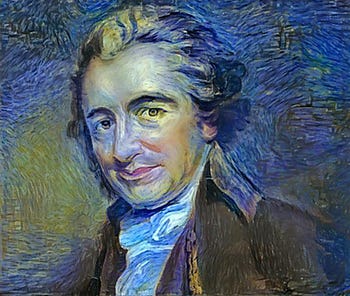
“I have advanced in that work are the effect of the most clear and long-established conviction, — that the Bible and the Testament are impositions upon the world; — that the fall of man, the account of Jesus Christ being the Son of God, and of his dying to appease the wrath of God, and of salvation by that strange means, are all fabulous inventions, dishonourable to the wisdom and power of the Almighty; — that the only true religion is deism, by which I then meant and now mean the belief of one God, and an imitation of his moral character, or the practice of what are called moral virtues; — and that it was upon this only (so far as religion is concerned) that I rested all my hopes of happiness hereafter. So say I now — and so help me God.”
Nevertheless, despite Paine’s repeated professions of belief in God, his book hit a nerve among mainstream Protestant pastors unaccustomed to having their faith mocked. He did this by going through the books of the Old and New Testaments and pointing out the many inconsistencies and errors. He also wrote in a way accessible to the general public, using basic common sense, wry humor, simple logic, and clear explanations to make his points. Moreover, anyone could pull out a Bible and fact-check his examples. How democratic!
He didn’t pull any punches, either. Take the birth of Jesus, for example, which frames the hallowed Christmas story somewhat differently.
“The story, taking it as it is told, is blasphemously obscene. It gives an account of a young woman engaged to be married, and while under this engagement, she is, to speak plain language, debauched by a ghost, under the impious pretence, (Luke i. 35,) that ‘the Holy Ghost shall come upon thee, and the power of the Highest shall overshadow thee.‘”

That’s one way to put it.
The hero of the Old Testament, Moses, was “among the detestable villains that in any period of the world have disgraced the name of man” for ordering a war of extermination on his enemies that spared neither women nor children from the sword. He quotes Numbers 31.17-18 to hammer this home. If you aren’t familiar with this chapter in his story, it’s when Moses angrily ordered his commanders to commit atrocities: “Now kill all the boys. And kill every woman who has slept with a man, 18 but save for yourselves every girl who has never slept with a man” (Numbers). We’re far from the heroic leader of the underdog Jews fighting to escape bondage in Egypt.
+—+

Talmud, the central text of Judaism, has been a topic of controversy for centuries. While many consider it as a source of wisdom and guidance, others argue that it goes against humanity and is an evil book. This article explores the reasons why Talmud is against humanity and provides references to support this claim.
Talmud is a compilation of Jewish law and traditions, comprising two parts: Mishnah and Gemara. Mishnah is a collection of oral laws that were passed down from Moses, and Gemara is a commentary on the Mishnah by Jewish scholars. Talmud covers a wide range of topics, including ethics, philosophy, history, and theology.
One of the main criticisms against Talmud is that it promotes discrimination and prejudice against non-Jews. In the Talmudic tradition, non-Jews are referred to as “goyim” and are often depicted as inferior to Jews. For example, in Sanhedrin 57a, it is stated that “the birth of a goy is like the birth of a wild animal.” This statement implies that non-Jews are not fully human and do not have the same value as Jews.
Moreover, Talmud also promotes violence and aggression towards non-Jews. In Abodah Zarah 26b, it is stated that “even the best of the gentiles should all be killed.” This statement implies that non-Jews should be exterminated, even if they are good people. This kind of attitude towards non-Jews has led to many instances of violence and discrimination against them throughout history.
Another issue with Talmud is that it condones and even encourages unethical behavior towards others. For example, in Baba Kamma 113a, it is stated that “if a Jew finds an object lost by a gentile (‘heathen’) it does not have to be returned.” This statement implies that it is okay to steal from non-Jews because they are not considered equal to Jews. This kind of behavior goes against basic human rights and ethical principles.
Furthermore, Talmud also promotes sexism and misogyny. In Kiddushin 29b, it is stated that “a woman is a sack full of excrement.” This statement implies that women are inferior to men and have no value. Such statements have contributed to the oppression of women in Jewish society and the wider world.
Moreover, Talmud promotes cruelty towards animals. In Baba Metzia 32b, it is stated that “it is permitted to deceive a gentile in matters of business.” This statement implies that it is okay to cheat non-Jews in business dealings. This kind of behavior goes against the principles of honesty and fairness.
In conclusion, the teachings of Talmud have been a topic of controversy for many centuries, and while many consider it as a source of wisdom and guidance, others argue that it goes against humanity and is an evil book. Talmudic tradition refers to non-Jews as “goyim,” and the book often depicts them as inferior to Jews, promoting violence and aggression towards them. Moreover, Talmud also condones and even encourages unethical behavior towards non-Jews, such as stealing from them and cheating them in business dealings. This kind of behavior goes against basic human rights and ethical principles.
Furthermore, Talmud promotes sexism and misogyny by presenting women as inferior to men, contributing to the oppression of women in Jewish society and the wider world. Additionally, the book promotes cruelty towards animals, implying that it is acceptable to mistreat and deceive them.
However, it is essential to note that not all Jews adhere to the teachings of Talmud, and there are many who reject its more controversial aspects. Many Jewish communities have interpreted Talmud in a more humane and compassionate way, focusing on its ethical teachings and principles rather than its more problematic aspects. Furthermore, it is important to remember that every religion has its controversial and problematic aspects, and it is up to individuals to interpret and follow them in a way that aligns with their own moral values.
In conclusion, Talmud is a book that promotes discrimination, violence, unethical behavior, sexism, and cruelty towards animals. It goes against the principles of humanity and is an evil book. While some Jews reject these teachings, it is crucial to address these problematic aspects to create a more just and compassionate society. It is essential to promote education and critical thinking to help individuals interpret religious texts in a way that aligns with basic human rights and ethical principles.
+—+
espite its title, Israel Shahak’s Jewish History, Jewish Religion (1994) is not your average intro-to-Judaism book. It is more likely to be found in a Muslim day school in Damascus than a Jewish day school in New York, more likely to be cited on a neo-Nazi website, than your local synagogue’s.
Shahak’s book is an overview of Judaism and Zionism, which focuses on Jewish anti-Gentile traditions. Though he recognizes that many of these teachings are no longer authoritative, Shahak believes that they have, nonetheless, had a profound influence on the development of Jewish identity over the centuries. Most importantly, he believes that they have seeped into Zionist ideology and have affected the way Israel interacts with its non-Jewish citizens and neighbors.
Shahak, a Holocaust survivor who died in 2001, was for many years a professor of chemistry at the Hebrew University in Jerusalem. He also led the Israeli Civil Rights League from the mid-1970s until 1990. In Israel, he was a controversial figure, but he was revered by the international left as a tireless advocate for human rights.
Are Jewish Lives Worth More?
In Jewish History, Jewish Religion Shahak brings numerous texts and legal rulings to demonstrate Jewish antipathy to non-Jews. He mentions a passage from the Talmud that says that Jesus will be punished in hell by being immersed in boiling excrement. He relates that Jewish tradition teaches pious Jews to burn copies of the New Testament and curse the mothers of the dead when passing non-Jewish cemeteries. Shahak highlights the famous passage from Leviticus commanding Jews to “love thy neighbor as thyself” and mentions that, according to rabbinic interpretation, “thy neighbor” refers only to Jews.




next generation
Trump’s Hometown Shock Troops Are Raring For a Fight
A trio of upstarts flipped an old, crusty Republican club on its head — and the brand of politics they’re espousing is dark, even by MAGA standards
By Jack Crosbie
PHOTOGRAPHS BY Jack Crosbie
January 28, 2024
The grand ballroom at Cipriani Wall Street is bathed in purple and red. There are red and white lights and blue curtains and a massive Christmas tree all underneath the glow of two jumbotrons. There’s a bald man with a ruddy dome and a senator in a scarlet waistcoat. A pool of wine vomit appears in a bathroom sink in between the risotto course and the filet mignon.
I’m in the corner with the rest of the press, crammed up against a riser where photographers grumble because they cannot actually see shit and Donald Trump is about to take the stage to make what the program calls his “grand entrance” at the 111th annual gala for the New York Young Republicans Club, a $699-a-plate event co-hosted by a Hungarian far-right think tank. It feels like MAGA prom — men in black tie, women in sequin dresses.
I’ve been following the NYYRC for months to understand a shock-ready, gun-slinging contingent of far-right millennials and zoomers firmly embedded in one of the most cosmopolitan, progressive cities in the world. They think of themselves as warriors for the MAGA movement operating behind enemy lines, surrounded by lefties infected with the woke-mind virus that makes you put your pronouns in your bio and the woke Covid vaccine that makes you gay. Sorry, my mistake, that’s a misinterpretation. “That’s not how it works — if you took the vaccine you were already a homosexual!” says gala MC Alex Stein, a right-wing YouTuber who went viral for doing an anti-vaccine rap after his mother died from Covid-19. Stein is playing the hits because the MAGA elite are in the room. Florida Rep. Matt Gaetz is here. Steve Bannon, Rudy Giuliani, Lauren Boebert, Paul Gosar, and Jack Posobiec. On Bannon’s podcast, Posobiec refers to the event as part of the “gathering of the Macedonians.” As attendees arrive, stepping out of black cars and cabs on Wall Street, protesters shout: “Klan rally inside! White hoods complimentary at coat check!”
At the center of it all: NYYRC president Gavin Wax, a 30-year-old day trader who in his five years in office has grown the club from a few dozen to 1,100 members, jamming himself like a quick-talking crowbar into the internal machinations of New York City’s conservative elite and, he claims, gaining the ear of the big man himself.

The dinner moves through courses and speakers: White-jacketed waiters carry overladen platters that threaten to slosh gravy onto jackets and dresses. Gaetz gets the crowd’s attention with lines about the movement being “under siege” and touts his ouster of former House Speaker Kevin McCarthy; Sen. Roger Marshall falls flat as he drones through a boilerplate MAGA stump speech. Just after 10 p.m., the room stills as club president Wax takes the stage to introduce the man everyone is waiting for.
He gets it all in: Trump’s fight against the globalists, the forever wars, D.C. corruption, the political persecution of the former president. And he professes his loyalty. “Under my leadership, the New York Young Republican Club will forever be a vanguard of the Trump movement in this city,” Wax thunders. “We will be unrelenting in our pursuit of the America-first agenda, and together we will make America great once more! Now, ladies and gentlemen, get on your feet, and give a loud, warm New York welcome to our hometown hero!”
Wax’s speech made one thing clear: If there are still any pundits or patsies holding out hope for a return to the mythical era of cordial conservatism that ruled Republican politics the last time the NYYRC had any sort of juice, they can give up now. The current incarnation of the club is all-out MAGA-minded, and the leadership is determined to make their group a talent incubator for prospective staffers of future far-right politicians long after Trump’s sun has finally set. They’re hardly kingmakers at the moment — the biggest political job one of the club’s top dogs has held is a nebulous gig for George Santos, the instantly-disgraced ex-congressman. But they are beginning to boast connections to dozens of boldface names in the MAGA movement, from controversial congressmen like Gaetz to shadowy advisers like Bannon, who have both spoken at past NYYRC events — and now, they’ve finally had a visit from the emperor himself. They’ve gotten here by running the Trump playbook: start fights, grab headlines, and make a whole lot of noise. But the brand of politics they’re espousing is dark, even by Trumpist standards. Tilt your head one way, and guys like Wax are just tiny, squeaky wheels in a vast political machine. Tilt it the other, and they could very well be the GOP’s amped-up, authoritarian-friendly future.
STICK WAX IN A police lineup with 10 other 30-year-old day traders buzzing around midtown Manhattan, and you’d have trouble fingering him for a crime: neat haircut, close-cropped beard. He’s a master of the practiced “Hey, how ya doin’?” handshake when working a room. It all adds up to a guy seemingly tailor-made for politics.

Wax grew up about a 10-minute drive from where Trump did in Queens — but his background is much different. Wax bounced between schools while his single mom worked office jobs; in high school, he sold weed and mushrooms to afford the fancy clothes his classmates wore. As an adult, the hustle didn’t stop: Wax graduated from Nassau Community College and worked for a marketing firm, supplementing his salary with an import-export business hawking leather bags from Morocco and coffee. Wax dabbled in conservative politics before the 2016 election, but by the time Trump clinched the Republican nomination, Wax was a MAGA die-hard. In those days, New York had an underground but burgeoning alt-right scene centered around figures like British provocateur Milo Yiannopoulos, who hosted parties attended by operatives and online trolls alike. At one of these events, Wax met Nathan Berger, an entrepreneur a few years his senior who was also interested in local right-wing organizing. At another party, Berger and Wax met the third member of what would become the ruling trifecta of the NYYRC, Vish Burra, a Staten Island software account manager turned “shitposter,” in his words, with a knack for getting attention and a modest Rolodex of political contacts.
The three had plenty in common: Like Wax, Burra was a former drug dealer, though on a quite different scale — he got busted in 2014 for possession of more than two pounds of pot and 1,000 milligrams of psilocybin. Berger, meanwhile, was also in the import game — he imports a mundane but mildly humorous product he refuses to name on record. Berger is slim with short, curly red hair, and rectangular glasses — a sweater-over-oxford-shirts kind of guy. Burra is heavyset, cue-ball bald, with a robust black beard, and favors the extremely Staten Island combo of denim and flat-brim, snap-back baseball cap.
Within about a year, this motley crew effectively took over the alt-right party scene. Wax claims that by 2018, parties organized through an email and Facebook list called “Friends of Vish” drew crowds of more than 100, and they realized their social reach could be turned into something legitimate — a way to wrestle away control of NYC Republican institutions.
Their first target — a “beta test,” Burra calls it — was the 2019 election inside the Metropolitan Republican Club, a staid social organization founded in 1902. In late 2018, the club had around 200 members on its rolls, and Wax worked as an unofficial “campaign manager” for Ian Reilly, an internal candidate for the MRC’s presidency. A 200-voter internal election is a pretty easy target to manipulate, and Burra and Berger wanted to see if they could tip the scales with their party pals. By the election, Reilly had the endorsement of Yiannopoulos and the MRC had 800 new members on its rolls, most of whom Burra claims were contacts from their networks recruited to help with the win. Reilly easily swept the election, and they decided the mostly dormant NYYRC was next.
According to Wax, the MAGA takeover of the NYYRC was more of a peaceful transfer of power than insurrection. The NYYRC had been running on life-support for years — it had no clubhouse, infrequent meetings, and held little power in the local political scene. But its name still had weight: Founded in 1911, the club claims as members a long list of elected officials, including President Richard Nixon, New York Gov. Thomas Dewey, and New York City Mayor John Lindsay. In 2019, Wax, Berger, and Burra brought their networks to sweep them into office. Since then, the NYYRC has come back to life — per IRS documents, the club brought in $129,730 in membership dues in 2022, on top of $42,998 in contributions. Wax ballparked the total spend for the 2023 gala at close to $750,000.
After a few short years, the NYYRC can host lavish events and brush up against power in both the city and country. It has built that power through what can best be described as shit stirring. After Wax and Co. took over the club, they brought in Pamela Geller, a virulent Islamophobe notorious for opposing the “Ground Zero Mosque”; in 2020, they brought in Gaetz for a defiantly mask-free gala that caused so much controversy officials shut down the restaurant that agreed to host the event. In 2023, when Trump was indicted, the club released a feverish statement claiming that the former president’s “soul is totally bonded with our core values and emotions, and he is our total and indisputable champion,” which almost immediately spawned an article in The Atlantic.
“It was a masterful statement,” Wax says. “We know it’s fucking interesting, and we know people are going to discuss it, and then I know that I can sit down with a reporter and he’s going to spend two hours in our clubhouse dissecting this Freudian overtone in our statement.”
“I wrote that on the subway,” Berger tells me about the statement, laughing.
THROUGHOUT THE FALL of 2023, I dip in and out of NYYRC events. I get a range of responses and reactions to my presence; when I meet one man, he bellows, “Do you believe January 6 was an insurrection!” — more of an exclamation than a question. Another says they’ll “pray you find the truth, the absolute truth in your journalism.” There are many references to Republicans being the “party of Lincoln” as evidence that the GOP’s racist reputation is overblown.
One of the first events I go to is a recent Republican primary debate. It’s at the group’s clubhouse, which is a generous name for the studio it rents in an unassuming building on Manhattan’s 28th Street, three floors up a rickety staircase, past a framed sign reminding members to keep their voices down in the hall. Wax signed the lease in 2021, giving the group its first physical home since 1963. As I get there, the club is wrapping up a lecture on gun ownership.
When the debate starts, it’s clear nobody really cares about the candidates on the screen. The young MAGA movement is still firmly, devoutly, behind Trump. Their reasons vary: Some are Catholic pro-life crusaders, others are fiscally-minded econ students. Many are deeply concerned with Joe Biden’s perceived “open borders” (despite the fact that immigration policy has changed very little in the past three years), and almost all of them say they’re convinced Trump’s record of “no new wars” sets him apart as the peacemaker we need (despite the fact that Trump continued the U.S. wars in Afghanistan and Syria, authorized massive arms deals to Saudi Arabia, and has threatened to go to war with Mexico in his second term). But the word that gets thrown around the most is “populism,” and the conviction that 45 is the only one who can take on the deep state and big corporations is seen as gospel. The fact that he hasn’t successfully done either of those things — well, that’s just fake news.
At the debate party, I strike up a conversation with a young guy with glasses who introduces himself as Don. He and several others I speak to liked Ron DeSantis at first — before the Florida governor took a real shot at toppling Trump. “Now it’s heresy,” Don says, to consider DeSantis. With that in mind, I run Don through some 2024 scenarios: if Biden keels over (possible), if Trump keels over (I say possible, Don says less possible), if (I frame this cautiously) Trump succumbs to the myriad legal cases against him.
Don scoffs: “Even if all the charges against him are true — if you don’t believe they’re politically motivated, you’ve either got a stake through your brain or you were born retarded.”

I have at least a dozen interactions like this while hanging out with the NYYRC. At the group’s “MAGAween” party in late October, I overhear a woman wearing a “Make America Cowboy Again” shirt having an impassioned discussion about the Arizona recount in 2020 with someone in a Mormon-missionary outfit. A guy walks past wearing a dartboard with a picture of Biden’s face. At one point, when I’m talking to partygoers about what they like about Trump, I push back on an assertion that his tax policies were a great boon to the working man, as he slashed the corporate tax rate and gave other breaks to the wealthy. “You sound like you’re reading from a script,” a woman says to me, narrowing her eyes.
This is generally how a night with the NYYRC goes. Everyone is friendly enough, talking happily about topics like religion or historical European martial arts (one man at the Halloween party was dressed in a full suit of armor). And then occasionally someone will say something that shocks me to my core. At another debate-watch party, I chat with a grad student in her late twenties who recently moved from the West Coast and is considering joining the club. I ask her how she split from her more liberal peers back home.
“I got kinda red-pilled by the gender stuff,” she says.
“The gender stuff” comes up a lot with this crew. I’ve heard a variety of views on abortion and gay marriage — there are plenty of gay men in the NYYRC — but when it comes to trans and nonbinary people, there’s derision, annoyance, or outright animosity. The MAGAween party had a category in the costume contest for “best nonbinary costume” because so many showed up in outfits mocking trans people.
“I didn’t know there were young people like me in New York,” the grad student tells me.
At this point, Don walks up. “A lot of people think they’re alone,” he says. “We’re trying to wake up as many people as we can.”
Don explains that he hopes the conservative movement can start to peel off votes from the Democrats by “punching left,” as he calls it, by instituting a public option for health care, which Don thinks would be a great thing. “Do you want a fat, disgusting people who need mobility scooters to get around Walmart?” Don asks. “Or a healthy, vigorous people who can stand — literally stand — on their own two feet?”
“You should run for office,” the grad student says. “You’ve convinced me!”
Don’s quote rattles around my mind for weeks. Healthy, vigorous people, standing on their own two feet. It’s a terrifying view of the world: that an ideal society requires purity, that the ugly afflictions of poverty deserve scorn and not compassion. Don has essentially given me the bullet points of how the modern American right makes an intellectual speed-run from being pissed off about wokes to nationalized socialism so a conservative party maintains power — and shown just how seductive that message of anger and disdain can be. It dovetails with other screeds I hear over the hours spent with the NYYRC — clenched-jaw rants against immigrants; callous, dehumanizing descriptions of trans people. (“Always check for an Adam’s apple!” Wax jokes at one party.)
Wax, Burra, Berger, and the other members of the NYYRC’s leadership know their members are going to say abhorrent stuff like this. They know that if a reporter hangs out at their parties for a few months he’ll hear people toss around slurs like “retarded,” “tranny,” and “faggot.” They know that if they make a YouTube shock jock the MC at their gala, he’s going to tell racist jokes about Michelle Obama being a man and suggest Trump should go to prison because “it would help him with the Black vote.” This is part of the plan.

THE WALLS OF THE NYYRC clubhouse are decorated with a kitschy array of political memorabilia. There’s a framed photo of Nixon, a sign that says “TRUMP” made of shotgun shells, along with crosses and American flags. On one wall is an installation of plaques — laminated news articles set into heavy wood frames. The New York Times, the New York Post, The New Yorker, New York Magazine — all clipped and mounted, like big-game trophies in a hunting lodge. And these aren’t — with the exception of the Post — puff pieces. The Times and New York have dishy takedowns of past gala events; The New Yorker’s is a snarky little dalliance about the “martinis with Roger Stone” event. When I start drafting this story in my head, fishing for adroit ways of capturing the young far-right’s views, I can’t stop thinking about the plaques.
“We know exactly what we’re doing,” Wax tells me a few days after the gala. We’re sitting down for a beer at the Beach Cafe, an Upper East Side joint popular with the NYC political crowd, and particularly the right wing.
“We know how to get headlines. We know how to be controversial.”
I can’t argue that point: It’s why I’m here, talking to him for Rolling Stone. It’s another example of the hypocrisy at the heart of the Trump Media Handbook — these guys love the press.
(Case in point: “Journalists and the media are shameless. Destroy them. Destroy their wives. Destroy their children … No mercy,” Burra later tweets, a few days before responding to fact checks for this story.)
At the bar, Wax goes on about how other local Republican groups hate the NYYRC, how he’s often at odds with the state and city party establishment, because his group endorses whoever it wants, says whatever it wants, and isn’t beholden to outside donors or party funding. He loves this narrative, of course, because it’s the one that brings in the most new members, the one that apparently gets the attention of Trump.
It’s telling that Wax’s campaign is mostly focused on internal GOP politics. Midway through our second lager, Wax tells me he doesn’t have many interactions with left-wing groups in the city — they’re not the opponents he’s really interested in taking on. His counterparts are equally dismissive of him.
“No one in New York state government gives a shit about them,” Jeremy Berman, a former president of the Manhattan Young Democrats club, tells me. “Literally no one cares in the world that I live in. If they end up overseeing Führer Trump setting up the concentration camps and I get a bullet in my head, then I guess they’ll have the last laugh, but until then, they’re a nonfactor.”
NYYRC members do have a history of finding their way into positions of power. In the middle of the 20th century, club alumni worked in the Eisenhower administration, and newspaper archives are full of coverage from NYYRC events with speeches by familiar names — Nixon, Dewey, Barry Goldwater. That stuff is ancient history — but Wax and his friends are determined to bring the club’s institutional rep back.

The initial steps are pretty small: Members of the NYYRC have been involved in several City Council races and state-level elections. In 2022, Wax successfully got a judge to throw out New York’s gerrymandered State Assembly maps following a procedural error. While that decision may only gently affect New York’s heavily Democratic State Assembly majority, it’s a smaller skirmish in a wider redistricting war across the state that could have major repercussions in the makeup of the House of Representatives come November.
While Wax and his cadre try to parlay party throwing into actual political capital, those with real power are joining as well. New York Rep. Elise Stefanik, the chair of the House Republican Conference and fourth-ranked conservative in the House, formally joined the club in 2022.
“These [club members] are people who not only vote, they donate, they register voters, they volunteer on campaigns,” Garrett Ventry, a longtime New York Republican adviser who joined the club two years ago, tells me. “There’s some effectiveness and weight behind the punch when you can act like that instead of just as a policy shop.”
Of the club’s current leadership, Burra has spent the most time on Capitol Hill — albeit with politicians who’ve made names for themselves for all of the wrong reasons. He worked in 2021 as a “special projects coordinator” for Gaetz while the congressman was being investigated by the Justice Department for a slew of allegations related to sex trafficking (which he denied). Burra parlayed that into a gig as the “director of operations” for disgraced ex-Rep. Santos, a former member of the club. (Santos tells me he let his membership dues lapse at the end of 2023, but expects to rejoin the club.) While Burra has the most official policy experience, Wax is attempting to make a name for himself by going on right-wing radio and streaming shows (including Bannon’s War Room podcast, of which Burra was once a producer) and writing for the conservative site TownHall.
Wax swears these efforts are working. Some of his columns, he says, he forwards on to Trump’s personal secretary, Natalie Harp, who apparently prints out Wax’s articles, which Trump annotates in black Sharpie. (It’s a move Trump has pulled thousands of times with hundreds of reporters and pundits over his four decades in public life.) At the Beach Cafe, Wax shows me one of these exchanges, a series of DMs in which Harp passes on Trump’s gushing praise and Wax bows and scrapes with gratitude. Wax tells me Trump has told him several times “in writing” that he wants Wax to take a role in his next administration, which is a generous — but not outlandish — interpretation of some of the messages he showed me.
Berger has his own pet project: collaborating with other far-right organizations abroad. The club has been linked — through visiting members, guest speakers, and the like — with Austria’s Jugend Österreich (Freedom Youth of Austria), Germany’s “Young AfD,” Italy’s Lega, and Hungary’s Fidesz. Fidesz is the party of Hungarian Prime Minister Viktor Orbán, a political hero of many group members. He was the club’s first international political endorsement; El Salvador’s Nayib Bukele followed. (And when Brazil’s Jair Bolsonaro lost his 2022 reelection bid, the group tweeted, then deleted, “send in the tanks,” essentially signing off on Bolsonaro’s supporters’ Jan. 6-style coup attempt.)
At 2023’s “CPAC Hungary,” an offshoot of the U.S. conservative convention, Wax was a featured -speaker, appearing on the rolls next to Gosar, failed Arizona gubernatorial candidate Kari Lake, Posobiec, Bannon, and former senator and presidential candidate Rick Santorum. Orbán spoke on the first day of the convention; the rest of the schedule had themes like “Local vs. Hiperglobal” and “No Country for Woke Men.” Berger has formalized a partnership between the club and Hungary’s Center for Fundamental Rights — the main sponsor of CPAC Hungary — and placed its executive director, Miklós Szánthó, on the NYYRC’s board of advisers. The CFR invited the club to co-host a gala at CPAC Hungary; in return, the CFR is listed as a co-host of the NYYRC’s gala. At the party, there is a smattering of other diplomats and academics from some of Europe’s other far-right movements: It’s clear there are plenty of MAGA junkies overseas looking for their next dealer.
“The populist right is on the upswing,” Berger tells me, pointing to the success of Germany’s far-right AfD and France’s National Rally. “We believe these groups are going to be in power, adjacent to leadership … and we think it’s a good idea to make friends and make connections and learn how they’ve achieved success. We’re not trying to build something solely for export.”
A WEEK OR SO after the gala, I meet Berger and Burra at the clubhouse. It’s a rainy morning, and we spend a few hours talking on the big leather couches. At one point, we’re talking about Posobiec, who is on the board of advisers for the club. I sense an opportunity to get a little bit of truth here and go for it, delicately posing the question of how trolls like Posobiec — whose grift is even more obvious than most on the far right — serve their mission. Berger makes a joke about “promo code POSO” working well on mypillow.com — a wink and a nod to the fact that every far-right huckster is selling something (in Posobiec’s case, a discount code to conspiracy theorist Mike Lindell’s bedding emporium). But Burra leans in.
“I’ll ask you this: What is power? To me, power is belief,” he says. His voice gets a little softer. “And if you believe it … who am I to tell you otherwise?” His voice gets even softer. “And I support you, my fellow American” — he breaks off in giggles.
I chuckle along, because it seems like Burra is giving me a peek behind the curtain. “And if that belief then increases the power of the people that you’re working for, then that’s …” I say, but he breaks in.
“Oh, is that how it works? Oh, OK, yeah, I guess, sure,” he whispers, grinning. “I’m happy to serve you, my people.” Berger looks vaguely concerned. Burra has now fully committed to his Batman-villain impression. “We’re going to give you the power back. We’re going to return the power to the people of Gotham.…” He starts giggling again.
“Look it’s — I genuinely believe it,” Burra says, sobering — it could mean anything, in this context. I think back to my conversation with him about how he thinks the 2020 election was stolen. “I’ve found a crew that also believes it,” he says. “There are masses that believe it. Are we all wrong? Or is there some part of what we’re talking about, so vigorously and vehemently and full of belief and emotion — is there even any part of that that you’re willing to take seriously?”
He’s partly right, when it comes down to it. It doesn’t really matter if Burra, Berger, and Wax are committed to each policy position or political statement made by the bigots and lunatics they’ve associated with over the years. The “crew” Burra talks about is real. That crew shows up for parties. It shows up for rallies. And it’s given many of the people involved with it a platform and political bona fides they didn’t have before. Where they go from here is still up in the air. Wax is thinking about stepping down next year. But he says that if Trump loses, “the club’s standing and my personal standing has been elevated to such a degree that I could stay involved politically in some capacity.”
Burra says he’s not sure if he’ll go back to work for Bannon after Santos’ office finally closes, or if he’ll try something else — and if Trump wins, he certainly wouldn’t turn down a job in the White House. “I’m pretty much always going to be with the club one way or another,” he says.
It all comes back to a political lesson he says he learned from Bannon himself.
“It’s about power,” he says. “Anybody who tells you different, they’re fucking lying to you.”
UPDATE 1/28/24: This story has been updated to reflect that Bukele represents El Salvador.
SharePrevious
 Paul Haeder, Author
Nice post 🌅🌅
LikeLike