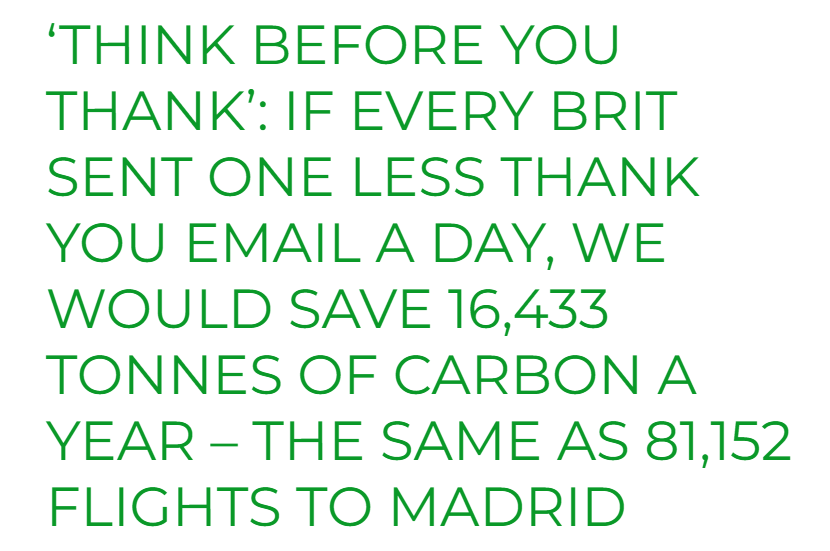

each little new Oppenheimer/Sam Altman gizmo will push us closer and closer to the edge of fiddling while Rome burns
each little new Oppenheimer/Sam Altman gizmo will push us closer and closer to the edge of fiddling while Rome
The Cloud now has a greater carbon footprint than the airline industry. A single data center can consume the equivalent electricity of 50,000 homes.

Duh. Cat videos? Zoom Rooms? Emails? Internet of wristwatches-pace makers-penis enlargers-chemo pumps? You betcha, the mother fuckers you (never fucking me) have put on the pedestal, they are the enemy. Homo Consumopethicus? We can’t even rail against the system, here, on this laptop of six years of age, using this SS-Substack, and shit dog, all my Internet searches, without being part of their colonization of the mind-method-madness.

See how the elites, the chosen people of the “sciences” and the finances and rhetoric and marketing and media leave out the most fucking important aspects of life cycle assessment?
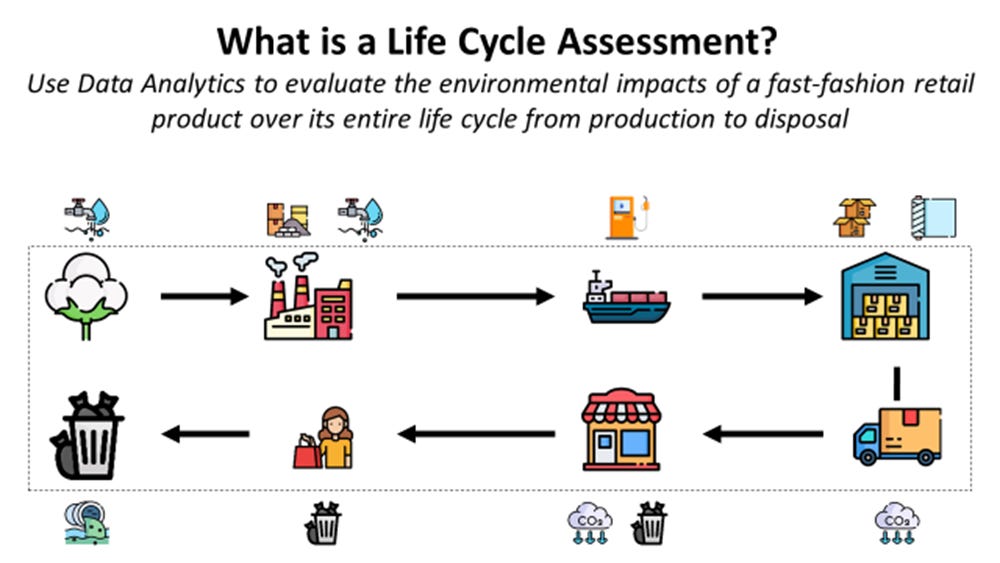
Did you get the answer to my question? Here, that shit show, International Monetary Fund — and it too leaves out the answer:
Negative and positive externalities
In the case of pollution—the traditional example of a negative externality—a polluter makes decisions based only on the direct cost of and profit opportunity from production and does not consider the indirect costs to those harmed by the pollution. The indirect costs include decreased quality of life, say in the case of a home owner near a smokestack; higher health care costs; and forgone production opportunities, for example, when pollution harms activities such as tourism. Since the indirect costs are not borne by the producer, and therefore not passed on to the end user of the goods produced by the polluter, the social or total costs of production are larger than the private costs.
There are also positive externalities, and here the issue is the difference between private and social gains. For example, research and development (R&D) activities are widely considered to have positive effects beyond those enjoyed by the producer that funded the R&D—normally, the company that pays for the research. This is because R&D adds to the general body of knowledge, which contributes to other discoveries and developments. However, the private returns of a firm selling products based on its own R&D typically do not include the returns of others who benefited indirectly. With positive externalities, private returns are smaller than social returns.
When there are differences between private and social costs or private and social returns, the main problem is that market outcomes may not be efficient. To promote the well-being of all members of society, social returns should be maximized and social costs minimized. This implies that all costs and benefits need to be internalized by households and firms making buying and production decisions. Otherwise, market outcomes involve underproduction of goods or services that entail positive externalities or overproduction in the case of negative externalities. Overproduction or underproduction reflects less-than-optimal market outcomes in terms of a society’s overall condition (what economists call the “welfare perspective”).
Consider again the example of pollution. Social costs grow with the level of pollution, which increases in tandem with production levels, so goods with negative externalities are overproduced when only private costs are considered in decisions and not costs incurred by others. To minimize social costs would lead to lower production levels. Similarly, from a societal perspective, maximization of private instead of social returns leads to underproduction of the good or service with positive externalities.
Again, the fuckers treating the subject as if we are fourth graders:
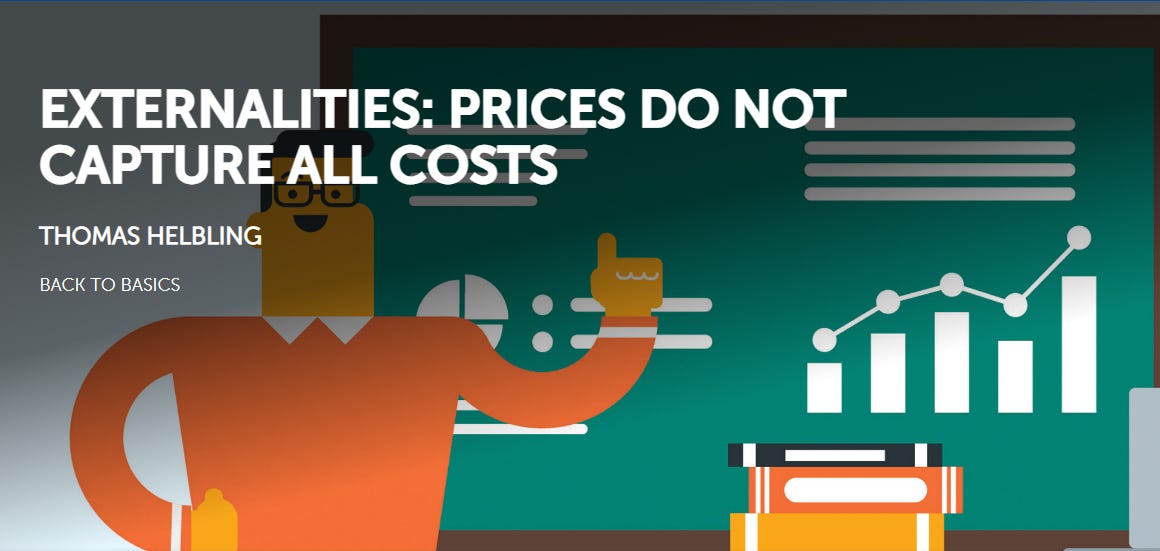
Look, the universities, the tax abatements, the tax loopholes, the tax incentives, the under taxation, the costs of cleaning up not just the lands, air, waters, soils, but the minds, man.
Homo consumopethicus? The colonized retail mentality, the more is better ethos, the story of stuff, the throwaway mind, the entire shit storm that is fragmentation, dislocation, atomization, and denigrations for us to be an animal in the world, to be a human among the kingdoms of plants, animals, stones, all of that, never ever will you see these costs of doing business or making product A while using product B.

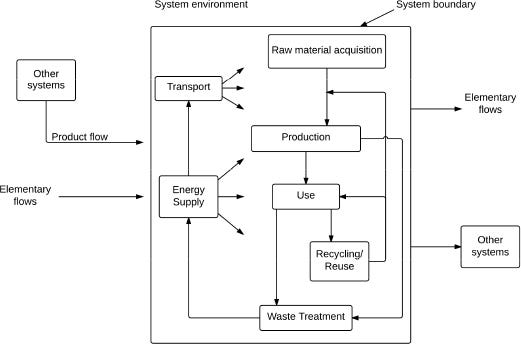
A Framework to Guide Selection of Chemical Alternatives — 10.) Life Cycle, Performance, and Economic Considerations
This is just one article around chemicals:
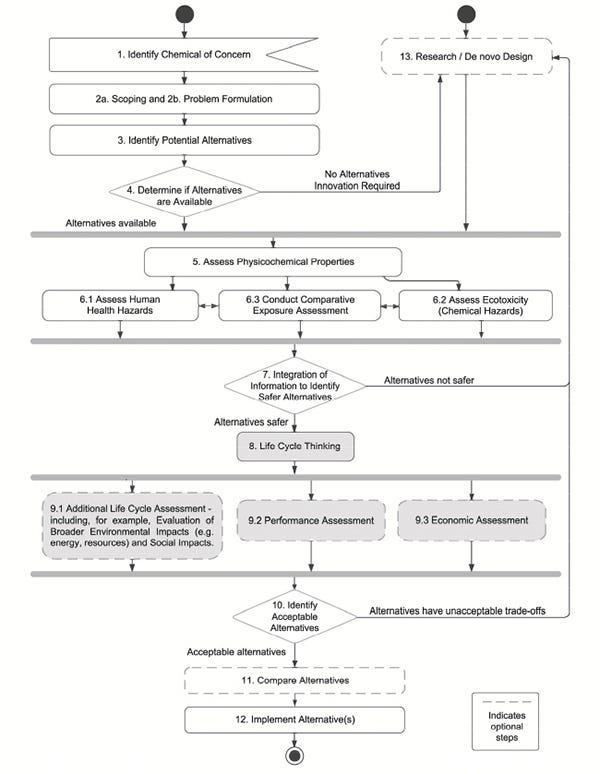
Look, these Mengeles and Oppenheimers and Einsteins, the lot of them, they never ask WHY the FUCK do we NEED more of these synthetics, these products, these tweaks, these scientific breakthroughs?
And the costs of these scientific breakthroughs?
Shit, just looking at one news story, Niger, and the fact it is a young young country, and the French and other thieves, like USA, Israel, whomever, are stealing from the poor, like, something around 40 percent of the people in Niger get $1.93 a day. One Dollar and ninety-three cents per FUCKING Day. One hundred and ninety three cents PER fucking DAY.
Child labor is big, and illiteracy is big time.
How are those lovely electricity generators in France working out, uh? The answer to the question about is —
- the cost of modernity is total exploitation and slavery of a large chunk of the human species
- the cost of doing business in the Chat GPT and Zoom and remote work and digital campus is environmental hell, and, well, also,
- fragmentation of the mind, spirit, heart, head, thought process
- atomization of humanity,
- death of a community ethos and mutual aid
- transhumanism is the agenda
- internet of bodies, minds, souls, cells, nanothings is the agenda
Without those raw materials and those raw useless eaters, the system gets a little clogged.
Ahh, it’s all about PROFITS — COGS:
Chemical substitution in a product is expected to have an economic impact, since most supply chains have been optimized to minimize cost. Thus, the most likely economic impact of a chemical substitution will be an increase in the cost of materials or retooling of manufacturing equipment to accommodate the alternative. The cost of materials is one of several factors contributing to the cost of a product (cost of goods sold, or COGS). Direct labor costs, direct energy costs, equipment costs, and other direct costs also contribute to the total cost. Any price increase in COGS for the final product will be the cost differential between the cost of the alternative and the cost of the chemical of concern. This is an important consideration because the economic viability of a product is typically measured in margin percent, the price minus the COGS divided by the price, times 100. Thus, if an ingredient represents 10% of the cost of a product and an alternative costs double that amount, the product cost will increase by 10%; it will not double.
Other production costs, such as increased processing time and energy, may also factor into the economics of the substitution. For example, a less reactive monomer may have a longer cure time in a reactor. This would reduce the productivity of the reactor (less product per hour) and increase the product cost. However, these costs can only be known after prototype products are made and evaluated, which is beyond the scope of this committee’s charge.
Taylorism, anyone? The efficiency movement was a major movement in the United States, Britain and other industrial nations in the early 20th century that sought to identify and eliminate waste in all areas of the economy and society, and to develop and implement best practices. The concept covered mechanical, economic, social, and personal improvement. The quest for efficiency promised effective, dynamic management rewarded by growth.
As a result of the influence of an early proponent, it is more often known as Taylorism.

Oh, Smeaton, what would he say about, hmm, clouds and data centers and huge servers and the electricity needed for a cat video?
And so, don’t believe the data center PR spinners. Much more energy needed for all the devices, all the satellites, the banking and surveillance tools, all of the data uploaded to WATCH us, to MARKET us, to EXPLOIT us, to MANGAGE us, to DESTROY us.
Data centres processing and storing data from online activities, such as sending emails and streaming videos, already account for about 1% of global electricity use, according to the International Energy Agency (IEA).
That’s about the same amount of electricity that Australia consumes in a year.
But as societies become more digitalised, computing is expected to account for up to 8% of the world’s total power demand by 2030, according to some estimates, raising fears this could lead to the burning of more fossil fuels.
“If we don’t take into account the carbon footprint, we are going to have a climate change nightmare coming from information technology,” said Babak Falsafi, a professor of computer and communication science at the Federal Polytechnic School of Lausanne. (How cat videos could cause a ‘climate change nightmare’)
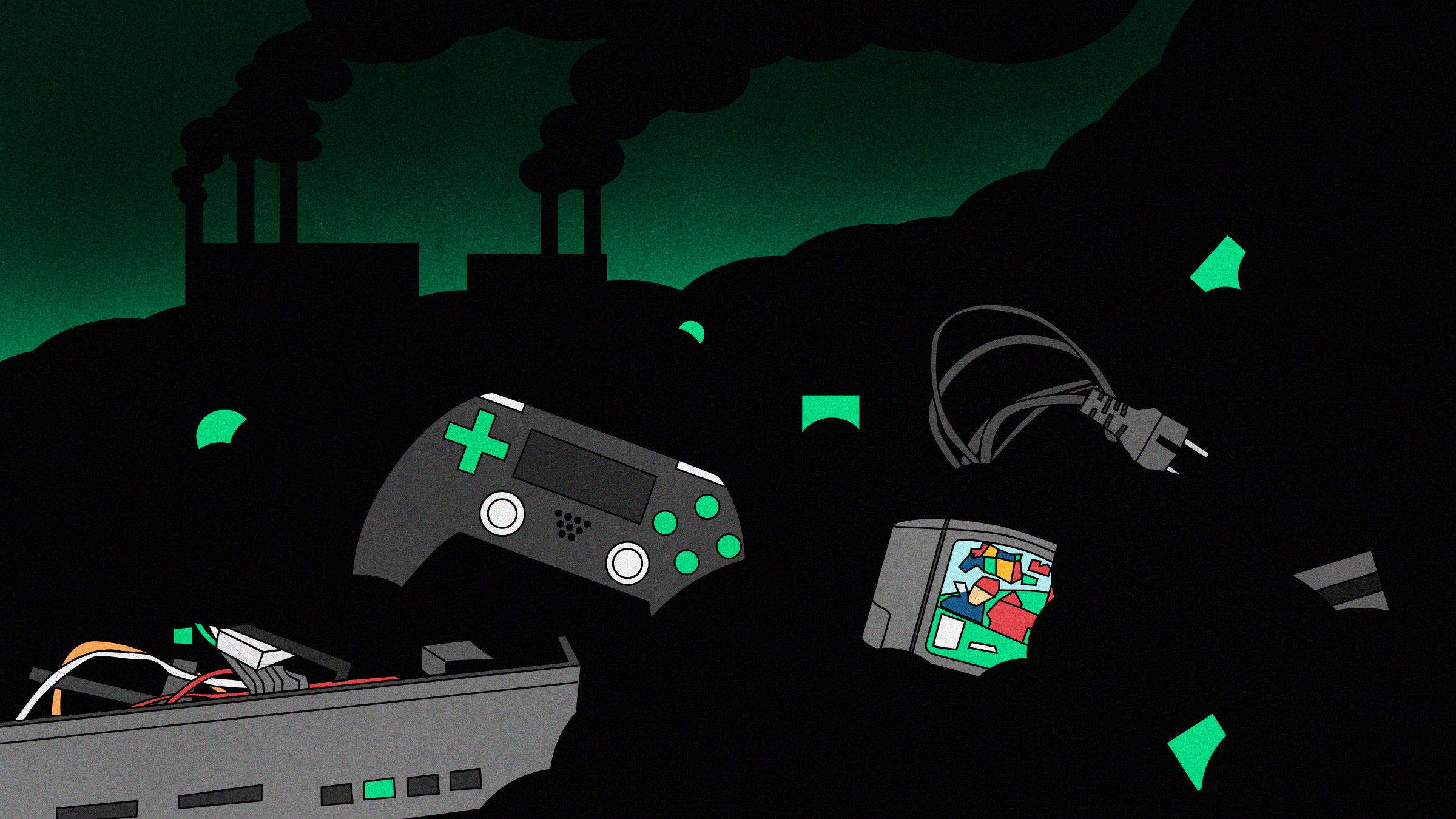
And the dirty Gates and Microsofts and Dells and HPs and all of them, they own the media, and so these stories pop up left and right ALL the time: we are at fault. Next-Gen Gaming Is an Environmental Nightmare: Console waste plus energy-hungry cloud gaming equals the worst of both worlds for sustainability.
It is all planned, this planned and perceived obsolescence, and the work to get our shekels and pennies and micro cents, all the time put into get our eye time on the small screen, all that energy for the black-dark-evil mirrors of computer screens and Chromebooks and Smart Phones, they know exactly what psychological and sociological damage it does, in vitro, too, and epigentically. Forget about these effing fake sustainability freaks who looke at the three s’s — environment, economic and equity. Again, everything is framed for a fourth grader.
Even the graphic is for a first grader:
How much pollution and death and future death and future injuries and concurrent injuries and maiming and environmental hell and genetic shit does the US military complex produce? Gaming?
Right now, US gaming platforms represent 34 terawatt-hours a year in energy usage—more than the entire state of West Virginia—with associated carbon dioxide emissions equivalent to over 5 million cars. And it’s only going to get worse. “Total emissions are going up,” says Gary Cook, global climate campaigns director for Stand.Earth, an environmental nonprofit founded to challenge corporations’ climate practices. “There’s a real reckoning that needs to happen.”
Again, the military complex is: THE COMPLEX, the Matrix.
- pharma
- chemical
- mining
- ag
- energy
- oil
- finance
- insurance
- prison
- retail
- education
- law
- media
- entertainment
- publishing
- transportation
- real estate
- insurance
- artificial intelligence
- satellite
- vritual reality
- artificial reality
- transhumanism
- food
- water
- electricity
- data
COMPLEX.
Read the cloud news, those industry honchos and techies looking at the next frontier: The Eight Trends That Will Shape the Data Center Industry in 2023/ Jan. 5, 2023
What lies ahead for the data center industry in 2023? It will be a year of dueling cross currents that could constrain or accelerate business activity in the sector. Here are the trends we believe will matter the most.
1. Supply and Demand Meets Constraints and Delays
2. Generative AI Tools Emerge as Game Changers
3. The Data Center Industry Confronts its PR Problems
There’s a growing narrative that data centers are bad neighbors and devour vital community resources like water and electricity. As we predicted in last year’s forecast, community resistance to data center development is a growing challenge in some of the most important data center markets. In Prince William County in Virginia, the approval of a huge data center development become the dominant political issue and prompted a 14-hour supervisors meeting to allow 300 residents to share comments.
As the negative headlines piled up, resistance to data centers expanded into growth markets with no history of previous data center development. In these cases, residents are seeking to reject new cloud infrastructure projects based on media reports about controversies in other regions.
This could become a significant business problem for data center builders as major markets face constraints on the availability of land and utility power.
An example: When Planning Officials in Warrenton, Virginia met in November to consider an application for an Amazon Web Services data center, 58 residents spoke against the project, with some waiting hours in the rain for their chance to be heard. A number of speakers cited concerns about noise, specifically mentioning media coverage of noisy data centers in Chandler, Arizona. The Commission voted to pause the application indefinitely to seek more information from AWS to address residents’ concerns.
Warrenton, a town of about 10,000 in Fauquier County, is a potential expansion market for the massive data center cluster in Northern Virginia. These type of sites are likely to play an important role in the future of the data center market.
The data center industry has always preferred to focus on working behind the scenes to gain the backing of local officials, while keeping a low profile in any public controversies about their sites. It remains to be seen whether this is a tenable strategy going forward, as data center development becomes a political hot potato. Upcoming elections in Prince William County may indicate whether local politicians will pay a price for supporting data center development.
One thing is certain: the data center industry doesn’t want the headlines and precedents from Prince William County to guide its future. Digital infrastructure has become essential to the global economy, and data centers can be powerful agents for positive change in the climate transition. But not if nobody wants them in their neighborhood.
4. Going Waterless, Everywhere You Can
5. For Hungry Hyperscalers, it’s a Year to Digest
6. Secondary Markets Continue to Boom, from Cloud to Edge
7. More Data Centers Embrace On-Site Power Generation
8. Rethinking Churn: A Problem Becomes an Opportunity
Read the article above, eight trends! It’s sixth grade level stuff, and do not be intimidated on how the sausage is made, because this is basics, man, and every bit of bull-shit you do on Facebook, all those podcasts you watch, those emails you send, get with the program and see what the masters of the universe are going to do to your grandchildren’s futures.

So, read, study, and be aware even communists and deep greenies like myself, who do want Africa to have lights, A/C, food, education, transportation — so cock off, greenie weenies who want to strip the poor world from having some decent standard of living — we are still in our big way, part of the problem, using Fuck You Book, Google, Substack.
The Staggering Ecological Impacts of Computation and the Cloud
Anthropologist Steven Gonzalez Monserrate draws on five years of research and ethnographic fieldwork in server farms to illustrate some of the diverse environmental impacts of data storage.

By: Steven Gonzalez Monserrate
Last year, MIT’s Schwarzman College of Computing launched a specially commissioned series that aims to address the opportunities and challenges of the computing age. The MIT Case Studies in Social and Ethical Responsibilities of Computing (SERC) series features peer-reviewed, freely available cases by topic-area experts that introduce readers to a range of questions about computing, data, and society. Some cases focus closely on particular technologies, others on trends across technological platforms. Still others examine social, historical, philosophical, legal, and cultural facets that are essential for thinking critically about present-day efforts in computing and data sciences and their roles in the wider world.
The following article, excerpted from anthropologist Steven Gonzalez Monserrate’s case study “The Cloud Is Material: On the Environmental Impacts of Computation and Data Storage,” takes us into the blinking corridors of data centers that make digital industry possible and makes clear the environmental costs of ubiquitous computing in modern life.
—The Editors

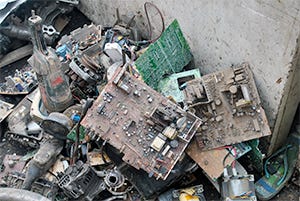
Since the year 2007, when the first smartphone debuted on the marketplace, over seven billion devices of the sort have since been manufactured. Their lifespans average less than two years, a consequence of designed obsolescence and a thirst to profit from flashy new features and capabilities. Meanwhile, the material and political conditions of their manufacture, and the resources required for their production, remain obscured. Under grueling conditions, miners tirelessly plumb the earth for the rare metals required to make information and communications technology (ICT) devices. Then, in vast factories like Foxconn located in the Global South, where labor can be procured cheaply and legal protections for workers are scant, smartphones are assembled and shipped out to consumers, only to be discarded in a matter of months, to end up in e-waste graveyards like those of Agbogbloshie, Ghana. These metals, many of which are toxic and contain radioactive elements, take millennia to decay. The refuse of the digital is ecologically transformative.
We live in insanity more than just squared. The Sun has a Mass of 1.988 × 1030 kg. Carry that on your fucking cloud server back!