

And so, wouldn’t it be cool to have us all fire upon these fucking leeches, these CEOs, money managers, lawyers, oil men, offensive weapons purveyors?
Apr 02, 2026
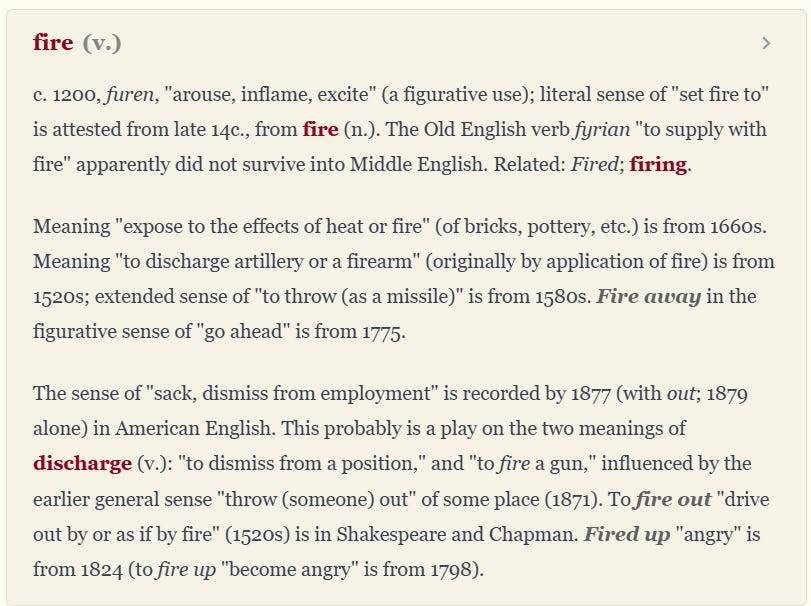
But hurrah hurrah, Bondi’s gone?!@#$%
“We are going to hit them extremely hard over the next two to three weeks, we’re going to bring them back to the stone ages, where they belong.”
Well, maybe a simple Stone Age “fired upon” response would work for Trump, LLC, his Minyans, the terrible Jews running the show, and of course, all believers in the worth of whites and Westerners over all other creeds.

“Progress is theft. Progress is slave-mongering. Progress is murder. Progress is genocide.”

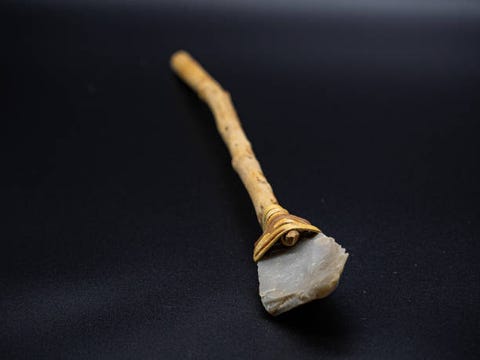
Oh, that STONE Age: The period lasted for roughly 3.4 million years[1] and ended between 4000 BC and 2000 BC, with the advent of metalworking.[2] Because of its enormous timescale, it encompasses 99% of human history.
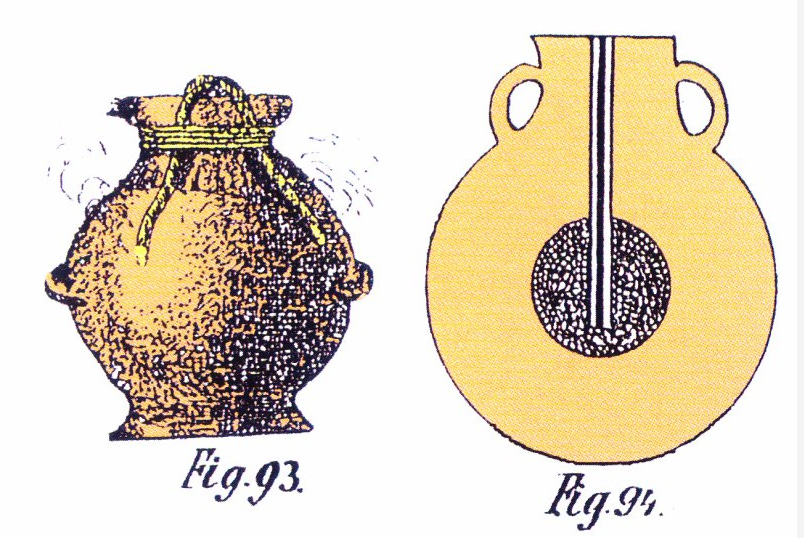
[I picked up this odd item a number of years ago (note in the second and third pic that the ‘wick’ and wooden cap are for show only) at an antiques mall with no provenance or explanation as to what it was. The item appears very old, is made of a light-weight black clay and while fragile, I can squeeze it in my hand without cracking it (i.e. It’s not so delicate that it can’t be handled). It is slightly bigger than a gulf ball and completely hollow. It measures roughly 2 1/2″ tall and approx 7″ total diameter. My hand gives a corresponding size. Now, the question is…what is it?
When I first bought it, it had a very old piece of cork stuffed in the top that crumbled away. I wasn’t sure if I smelled any residue or not. I can’t tell if it is scuffed or had weal markings on the outside at one time. Perhaps I’m being fanciful, but I think this is an incendiary carcass or stink pot/bomb? I think we can rule out a few things it’s probably not. I doubt it held incense, candle wax or a plant! The bottom is completely round and it wouldn’t have been practical as any of those type devices. As a container holding liquid, it would be very prone to spilling. I guess it could be a one-off pottery piece, but I can’t imagine it would have been easy to make such a thing just for fun? It reminds me of the early grenadoes that were used by the buccaneers of old, but they were made of iron (same shape and even with a raised lip. See Warren Moore’s ‘Weapons of the American Revolution’ ,pg 215, ex.A-166 grenade found at Fort Ticonderoga). What got me thinking about this piece was Matchlock’s incendiary grenade thread with it’s glass French bombs, which are similar, but much thicker. In use, this little item could have very well held a volatile liquid or even black powder. In Gilkerson’s ‘Boarder’s Away’, he mentions clay stink pots, so I thought this could be another possibility?
Has anyone seen anything like this? Was black pottery used for such things? Were there Spanish colonial grenadoes like this? What type of clay was used? Anyone want to weigh in on this odd piece?]
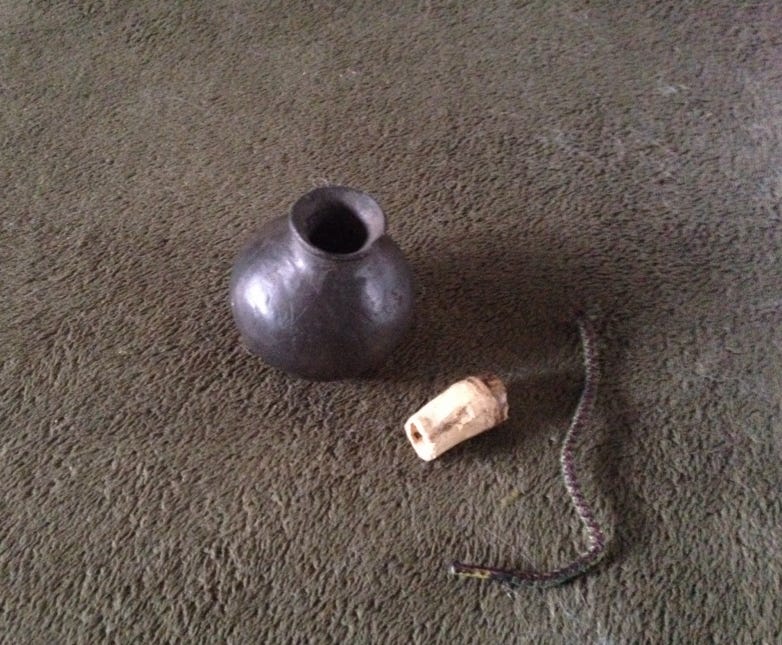
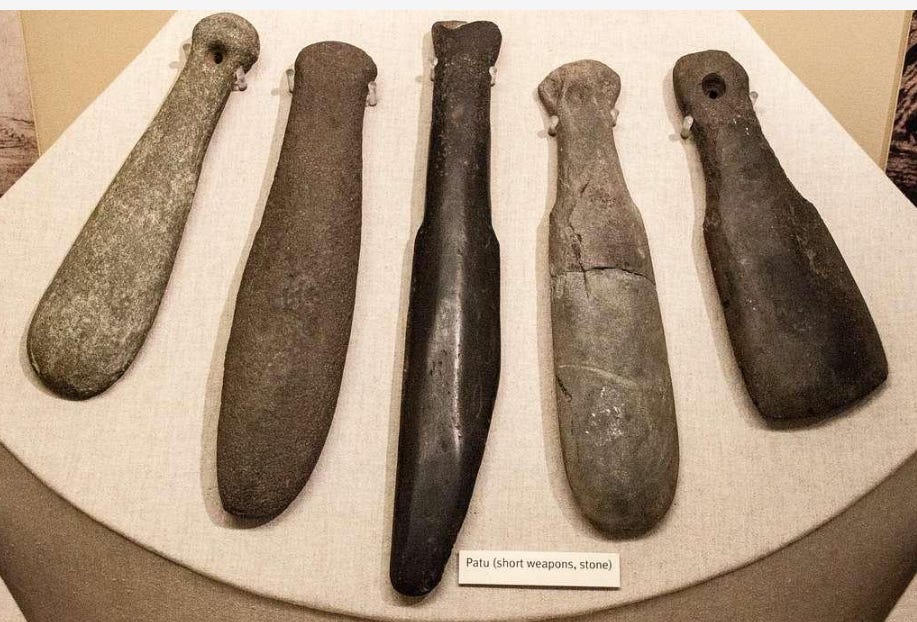
Maori shark-tooth knife

The phrase “bombing back to the stone ages” is widely associated with US Air Force officer Curtis LeMay, in the context of US threats against North Vietnam in LeMay’s 1965 book, Mission with LeMay.
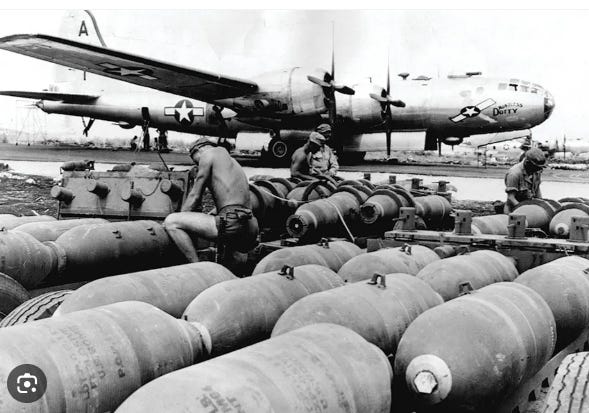
[Bombs Away’ LeMay: America’s Unapologetic Champion of Waging Total War]
- “We’re going to bomb them back into the Stone Age,” he wrote. LeMay, who had played a central role in executing the World War II carpet bombing of Japanese cities in which between 240,000 and 900,000 people were killed, had by the time of the Vietnam War risen in rank to chief of Air Staff before he retired the year his book was published.
- In December 1972, President Richard Nixon ordered a major bombing campaign against North Vietnam, especially Hanoi and Haiphong, known in the US as the “Christmas bombings”.
- US Secretary of State James Baker met Iraqi Foreign Minister Tariq Aziz in Geneva on January 9, 1991. In that meeting, Baker threatened that the US would bomb Iraq “back to the Stone Age” if it did not withdraw from Kuwait.
- On September 11, 2001, 19 al-Qaeda hijackers seized four US commercial airliners. Two were flown into the World Trade Center towers in New York, another hit the Pentagon in Virginia, and one crashed in a field in Pennsylvania after passengers resisted.Nearly 3,000 people were killed, and the attacks prompted the United States to launch a global “war on terror” targeting al-Qaeda and other groups it designated as terrorist organisations.After the attacks, Pakistan’s Pervez Musharraf, who was president from 2001 to 2008, later recounted that senior US official Richard Armitage warned his country would be “bombed back to the Stone Age” if it refused to join the war on the Taliban.
- Two weeks (May 2010) after the failed Times Square plot, national security adviser, General James Jones, and director of central intelligence, Leon Panetta, were dispatched to Islamabad to deliver a message from President Obama to Pakistan’s army chief, General Ashfaq Parvez Kayani. According to the account revealed in the new book by New York Times journalists, Eric Schmitt and Thom Shanker, Counterstrike: The Untold Story of America’s Secret Campaign Against Al Qaeda:“Obama’s warning to Kayani that his military that he needed to clamp down on the Islamic fighters, who were using safe havens inside his country, or pay the price of devastating American air strikes, was yet another example of how the U.S. government was adopting classic Cold War notions of deterrence to protect the United States against terrorists. The message was clear: If we are attacked, you will be attacked.”

All these Stone Age weapons get through metal detectors, now, don’t you know!
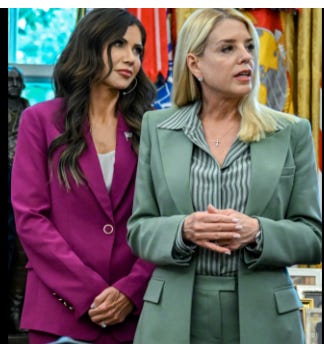
But the orgasms are coming now that Noem and Bondi are toast:


Her ouster comes just weeks after Epstein survivors sued the DOJ for mishandling of the release of the case files.

So, is it any wonder these toothless female wonders accepted temporarily into a misogynistic and incel heavy fucking Jewish Controlled Administration would be fired?
Women, and those two melanin-rich dudes, fired!!!

Oh, no matter how hard you pray to the god who was never there or how much begging you do to blue-eyed Jesus, you ain’t going to get nothing but buggering from daddy.
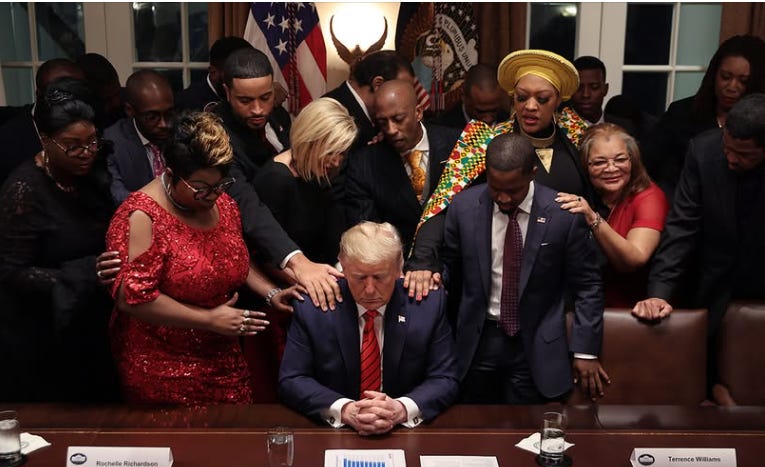
Cunt Trump hates women and hates color, other than bottle-brush orange. This little elf will be going too:
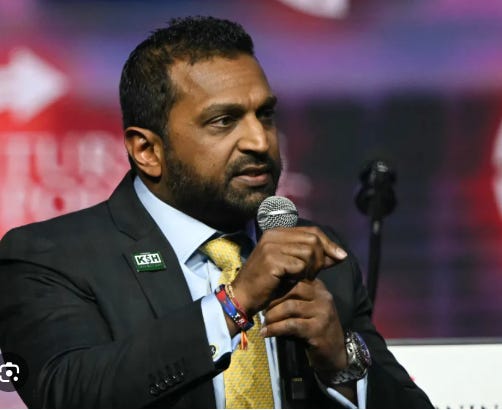
And we’re going to give headline after headline to this whore?

Humpty Dumpty Trump:
US President Donald Trump brags about destroying Iran’s B1 Bridge in Karaj, the highest bridge in West Asia:
“The biggest bridge in Iran comes tumbling down, never to be used again — Much more to follow! IT IS TIME FOR IRAN TO MAKE A DEAL BEFORE IT IS TOO LATE, AND THERE IS NOTHING LEFT OF WHAT STILL COULD BECOME A GREAT COUNTRY!”

Versus a human:
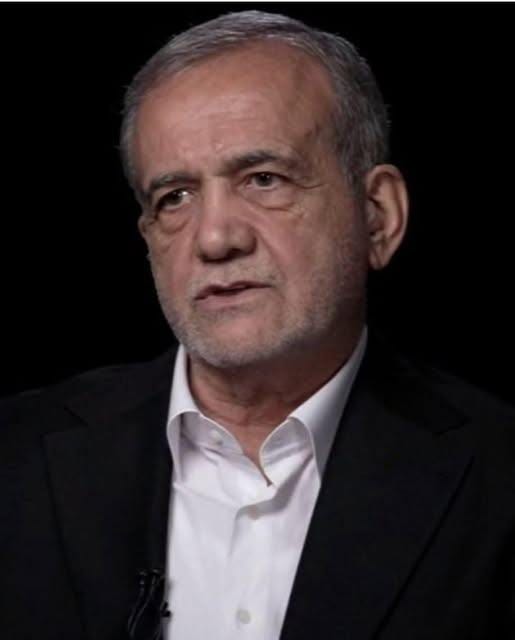
Iranian President Pezeshkian released a lengthy text addressed to the American people ahead of Trump’s address to the nation. This text stands out as an exemplary case of an ethical, harmonious, responsible and deep thinking state leader, something we didn’t see from a Western politician for a very long time.
He also warns: “Attacking Iran’s vital infrastructure—including energy and industrial facilities—directly targets the Iranian people. Beyond constituting a war crime, such actions carry consequences that extend far beyond Iran’s borders”
FULL LETTER BELOW:
“To the people of the United States of America, and to all those who, amid a flood of distortions and manufactured narratives, continue to seek the truth and aspire to a better life:
Iran—by this very name, character, and identity—is one of the oldest continuous civilizations in human history. Despite its historical and geographical advantages at various times, Iran has never, in its modern history, chosen the path of aggression, expansion, colonialism, or domination. Even after enduring occupation, invasion, and sustained pressure from global powers—and despite possessing military superiority over many of its neighbors—Iran has never initiated a war. Yet it has resolutely and bravely repelled those who have attacked it.
The Iranian people harbor no enmity toward other nations, including the people of America, Europe, or neighboring countries. Even in the face of repeated foreign interventions and pressures throughout their proud history, Iranians have consistently drawn a clear distinction between governments and the peoples they govern. This is a deeply rooted principle in Iranian culture and collective consciousness—not a temporary political stance.
For this reason, portraying Iran as a threat is neither consistent with historical reality nor with present-day observable facts. Such a perception is the product of political and economic whims of the powerful—the need to manufacture an enemy in order to justify pressure, maintain military dominance, sustain the arms industry, and control strategic markets. In such an environment, if a threat does not exist, it is invented.
Within this same framework, the United States has concentrated the largest number of its forces, bases, and military capabilities around Iran—a country that, at least since the founding of the United States, has never initiated a war. Recent American aggressions launched from these very bases have demonstrated how threatening such a military presence truly is. Naturally, no country confronted with such conditions would forgo strengthening its defensive capabilities. What Iran has done—and continues to do—is a measured response grounded in legitimate self-defense, and by no means an initiation of war or aggression.
Relations between Iran and the United States were not originally hostile, and early interactions between the Iranian and American people were not marred with hostility or tension. The turning point, however, was the 1953 coup d’état—an illegal American intervention aimed at preventing the nationalization of Iran’s own resources. That coup disrupted Iran’s democratic process, reinstated dictatorship, and sowed deep distrust among Iranians toward U.S. policies.
This distrust deepened further with America’s support for the Shah’s regime, its backing of Saddam Hussein during the imposed war of the 1980s, the imposition of the longest and most comprehensive sanctions in modern history, and ultimately, unprovoked military aggression—twice, in the midst of negotiations—against Iran.
Yet all these pressures have failed to weaken Iran. On the contrary, the country has grown stronger in many areas: literacy rates have tripled—from roughly 30% before the Islamic Revolution to over 90% today; higher education has expanded dramatically; significant advances have been achieved in modern technology; healthcare services have improved; and infrastructure has developed at a pace and scale incomparable to the past. These are measurable, observable realities that stand independent of fabricated narratives.
At the same time, the destructive and inhumane impact of sanctions, war, and aggression on the lives of the resilient Iranian people must not be underestimated. The continuation of military aggression and recent bombings profoundly affect people’s lives, attitudes, and perspectives. This reflects a fundamental human truth: when war inflicts irreparable harm on lives, homes, cities, and futures, people will not remain indifferent toward those responsible.
This raises a fundamental question: Exactly which of the American people’s interests are truly being served by this war? Was there any objective threat from Iran to justify such behavior? Does the massacre of innocent children, the destruction of cancer-treatment pharmaceutical facilities, or boasting about bombing a country “back to the stone ages” serve any purpose other than further damaging the United States’ global standing?
Iran pursued negotiations, reached an agreement, and fulfilled all its commitments. The decision to withdraw from that agreement, escalate toward confrontation, and launch two acts of aggression in the midst of negotiations were destructive choices made by the U.S. government—choices that served the delusions of a foreign aggressor.
Attacking Iran’s vital infrastructure—including energy and industrial facilities—directly targets the Iranian people. Beyond constituting a war crime, such actions carry consequences that extend far beyond Iran’s borders. They generate instability, increase human and economic costs, and perpetuate cycles of tension, planting seeds of resentment that will endure for years. This is not a demonstration of strength; it is a sign of strategic bewilderment and an inability to achieve a sustainable solution.
Is it not also the case that America has entered this aggression as a proxy for Israel, influenced and manipulated by that regime? Is it not true that Israel, by manufacturing an Iranian threat, seeks to divert global attention away from its crimes toward the Palestinians? Is it not evident that Israel now aims to fight Iran to the last American soldier and the last American taxpayer dollar—shifting the burden of its delusions onto Iran, the region, and the United States itself in pursuit of illegitimate interests?
Is “America First” truly among the priorities of the U.S. government today?
I invite you to look beyond the machinery of misinformation—an integral part of this aggression—and instead speak with those who have visited Iran. Observe the many accomplished Iranian immigrants—educated in Iran—who now teach and conduct research at the world’s most prestigious universities, or contribute to the most advanced technology firms in the West. Do these realities align with the distortions you are being told about Iran and its people?
Today, the world stands at a crossroads. Continuing along the path of confrontation is more costly and futile than ever before. The choice between confrontation and engagement is both real and consequential; its outcome will shape the future for generations to come. Throughout its millennia of proud history, Iran has outlasted many aggressors. All that remains of them are tarnished names in history, while Iran endures—resilient, dignified, and proud.”
The sickness flows from Americans, man:
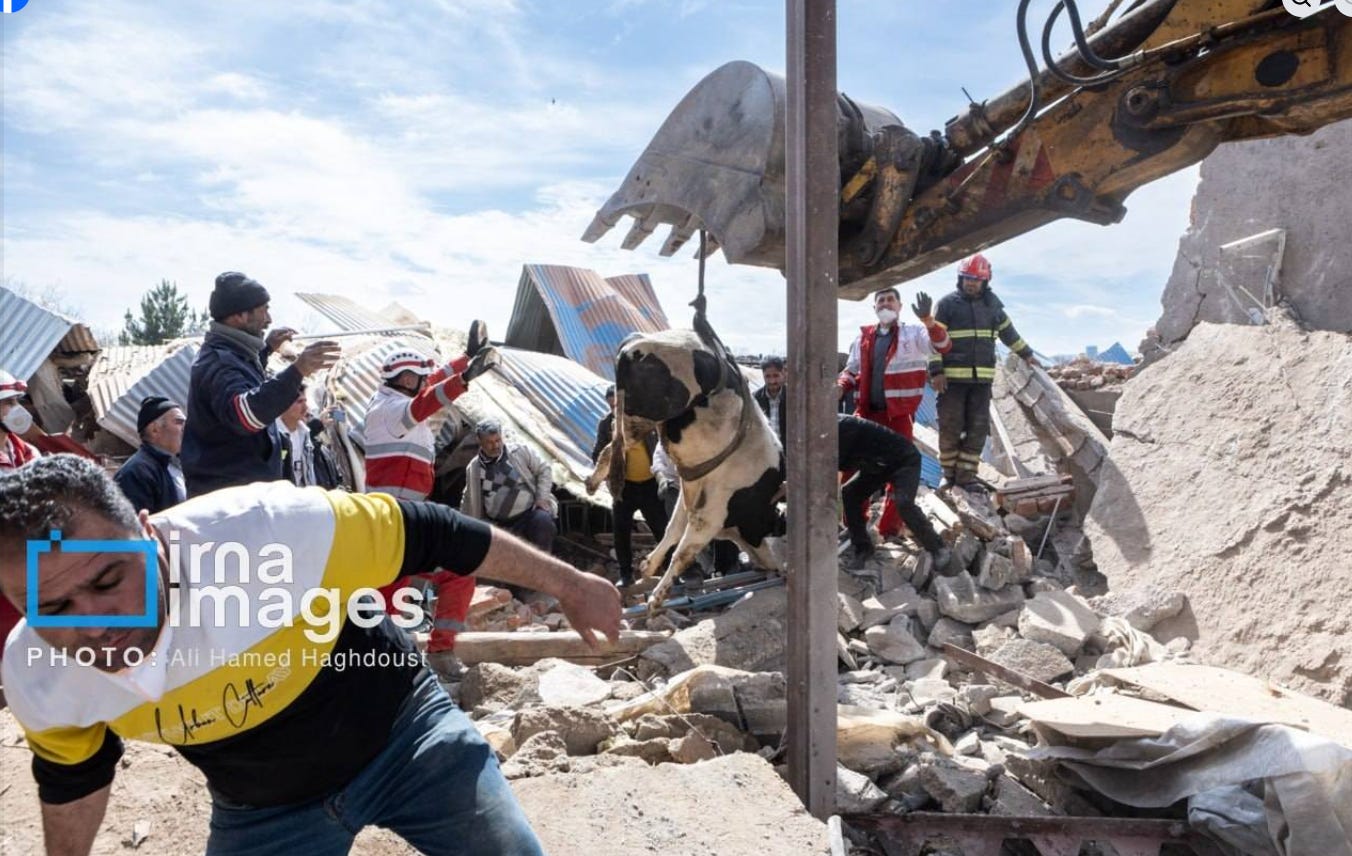
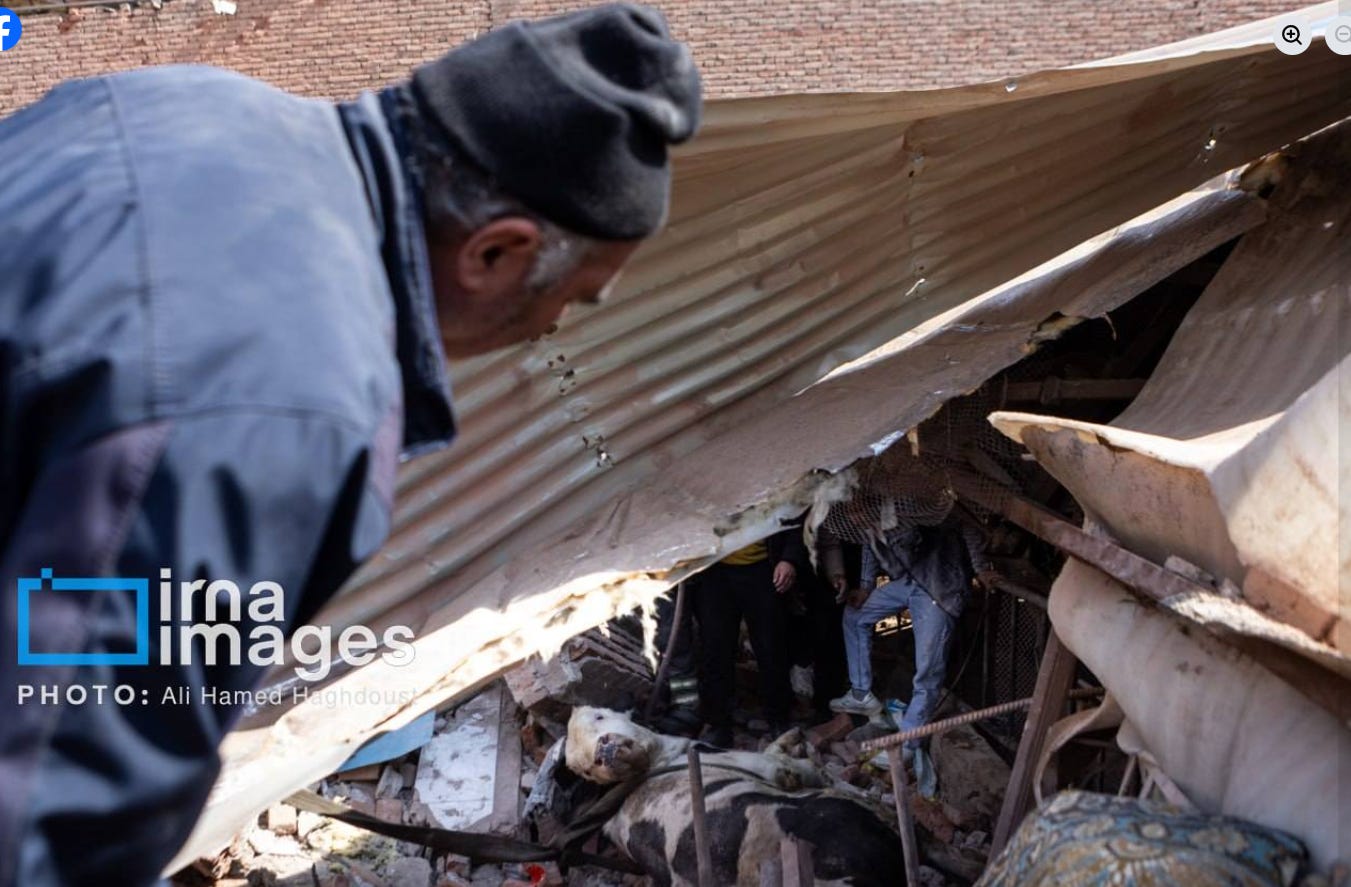
The US/Israeli regime attacked a livestock farm near the northwestern Iranian city of Tabriz, rescue teams working to save animals trapped under the rubble.
They have attacked many livestock farms in Iran.
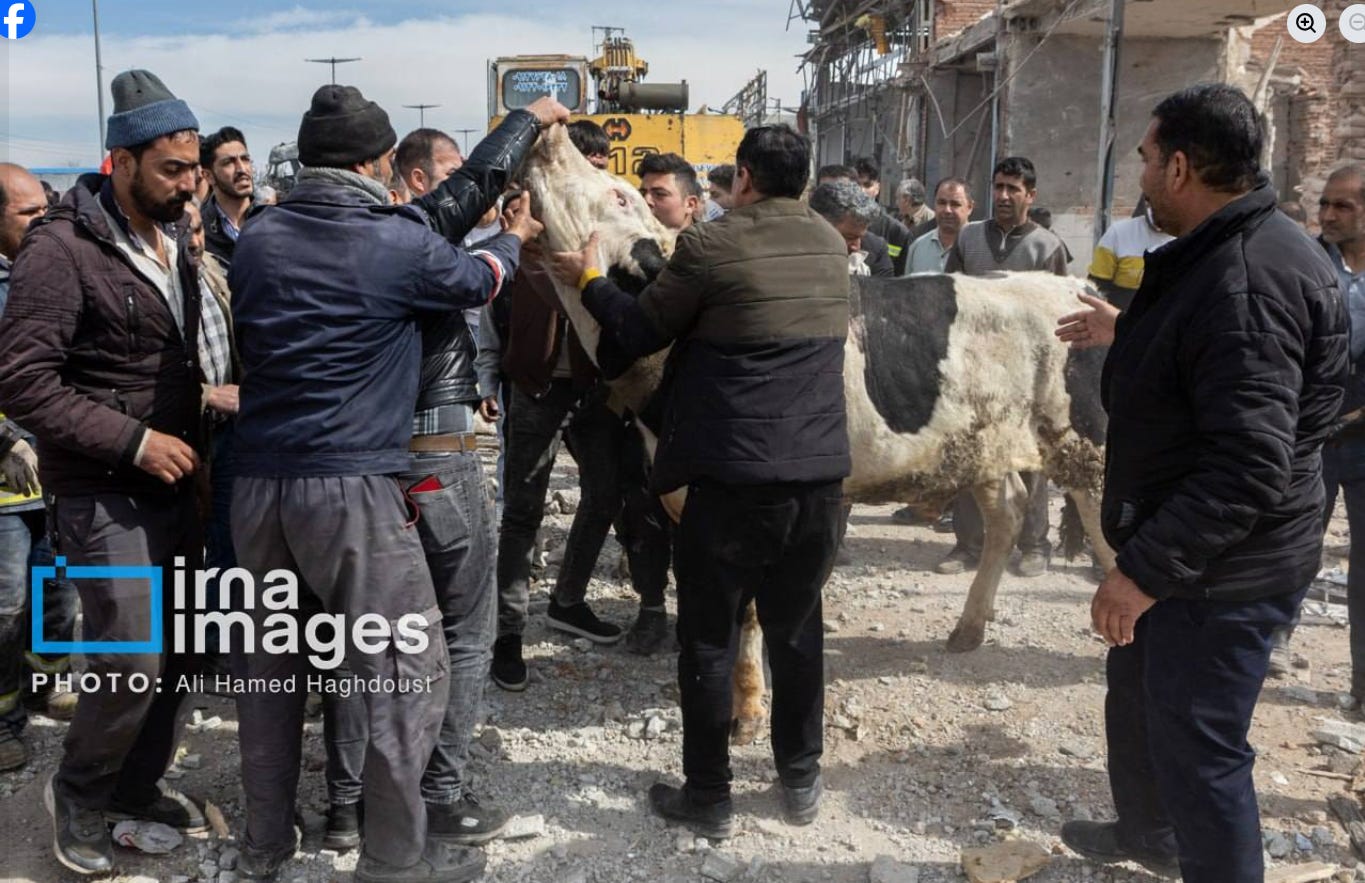
Destroying livestock is a way to create food shortages and famine, forcing civilian populations to flee or surrender due to lack of sustenance — Weaponizing hunger and starvation.
“Murdering Goyim is like killing wild animals” is cited from Sanhedrin 59a.

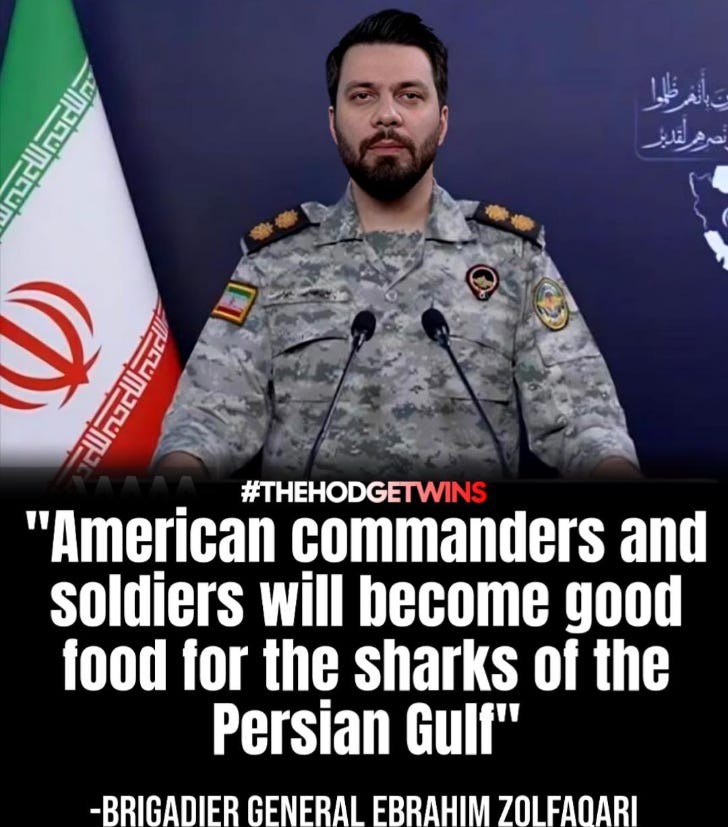
Ebrahim Zolfaqari, Spokesperson of the Central Headquarters of Khatam al-Anbiya:
— As we have said, we declare to the American-Zionist enemies that your intelligence about our military power and equipment is incomplete. You know nothing about our very extensive and strategic capacities.
— Do not hope that you have destroyed the centers producing strategic missiles, long-range offensive and precision drones, modern air defense systems, electronic warfare, and our special equipment, because with such an assumption you will deepen the quagmire you have trapped yourselves in.
— The centers you think you have targeted are insignificant, and our strategic military productions take place in locations you have no knowledge of and will never reach.
— We save you the trouble of counting our missiles, drones, and strategic equipment because you will certainly be mistaken and get nowhere.
— You must pay the price for the aggression you initiated to the honorable, dear, and Muslim nation.
— With reliance on Almighty God, this war will continue until your permanent, definite humiliation, regret, and surrender.
— In continuation of the strong and unimaginable blows and slaps you have received so far, expect our more crushing, extensive, and devastating actions.
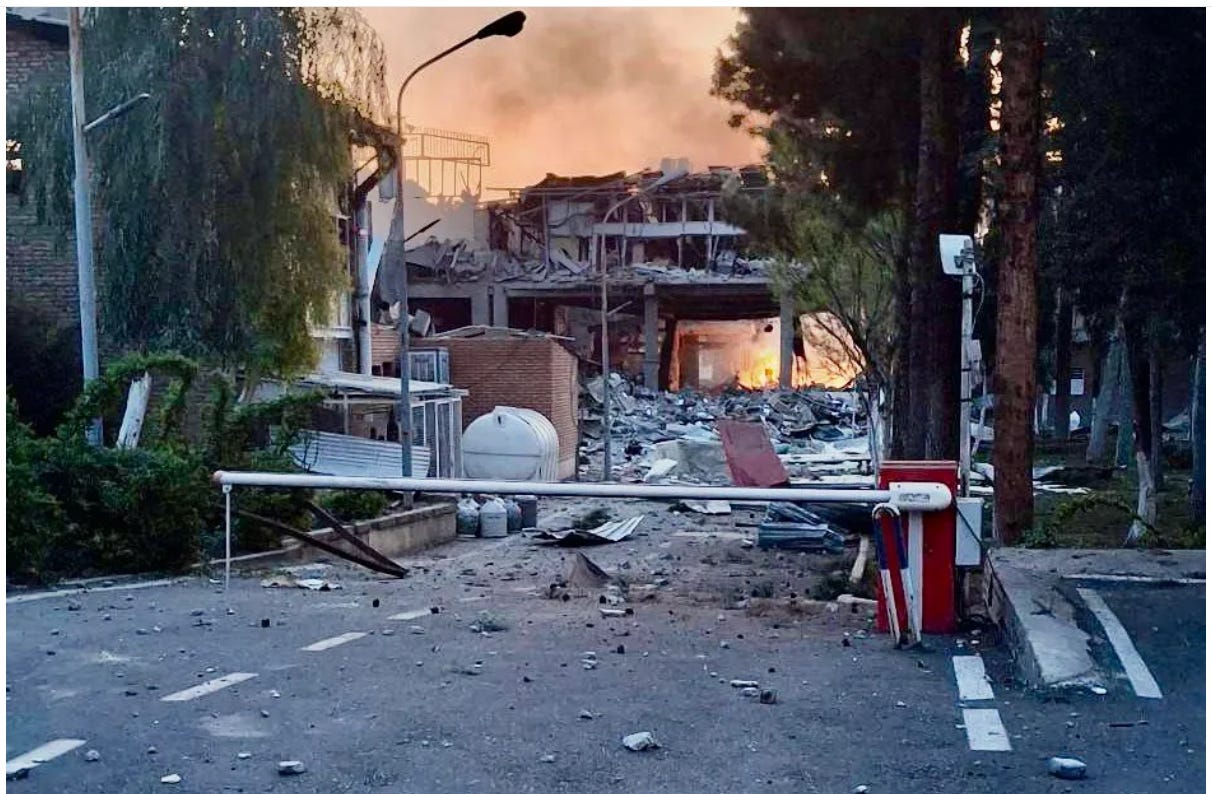
[U.S.-Israeli airstrikes caused extensive damage to the Pasteur Institute of Iran, in Tehran.]
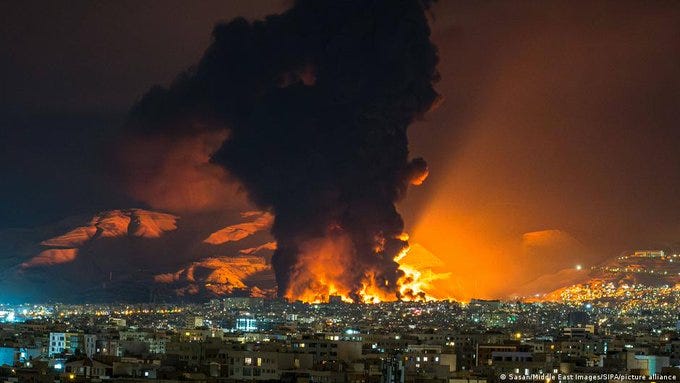
[Targeting Iran’s pharmaceutical hubs has placed thousands of terminally ill patients on the brink of a humanitarian disaster. Human rights experts believe that this action is a blatant and overt example of a “war crime.”]
Iran’s healthcare system is showing signs that it may be breaking down as a result of recent U.S.-Israeli attacks on key health infrastructure. A cancer patient told the Iranian newspaper Sharg that the MAHAK cancer charity informed them it had no post-chemotherapy medication available. Non-emergency surgeries are being postponed due to anesthesia shortages; and in some Tehran neighborhoods, a single doctor is seeing 200 to 300 patients per day. Iran’s deputy health minister said that 24 pharmaceutical and medical facilities have sustained partial or total damage since the war began. Also on Wednesday, a group of Austrian physicians pointed out that recent Israeli-U.S. strikes on Iranian pharmaceutical facilities fall “outside all legal frameworks of war,” in an interview with Deutsche Welle Persian.

Here is what cuntology looks like a la democrats. No reparations, no war crimes tribunal, nothing, just a bunch of bullshit. It’s really cool to be a Reagan democrat these days with No Kings Day and Indivisible fucks hanging around.
Possible Democratic hopefuls say Israel must pay for its own missiles: New York Mayor Zohran Mamdani voiced his agreement with Rep. Alexandria Ocasio-Cortez (D-N.Y.), who announced on Tuesday that she would oppose all military aid to Israel. “I support what the Congresswoman said,” Mamdani said. Ocasio-Cortez issued another statement regarding her new position, saying that Israel is “well able” to fund its Iron Dome system, which she defended in principle as “critical [in keeping] innocent civilians safe from rocket attacks and bombardment.”

Rep. Ro Khanna (D-Calif.) joined in on Wednesday, signalling he would not support additional funding for Israel’s Iron Dome. “Israel is a first-world country,” Khanna said, “and it can pay for the defensive systems it needs.” Former Chicago mayor Rahm Emanuel made similar comments in an interview with Semafor’s Dave Weigel.

School’s out forever:
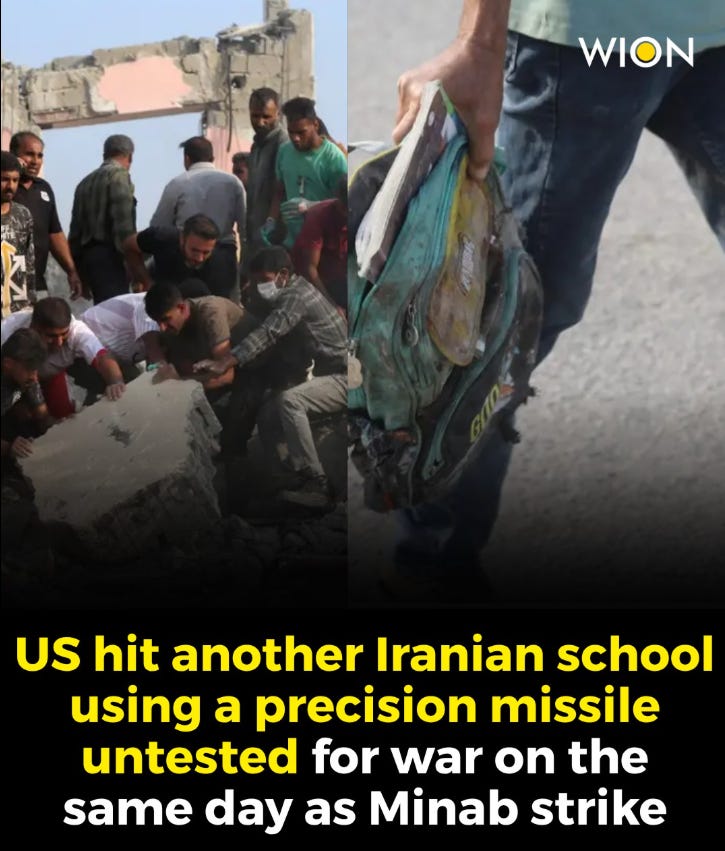
The US and Israel have targeted more than 600 schools and educational centers in Iran over 34 days of war, according to Iran’s Foreign Ministry.
Alice Cooper learned that lesson, too. Last month he said: “If you’re listening to a rock star in order to get your information on who to vote for, you’re a bigger moron than they are. Why are we rock stars? Because we’re morons.” This is not the mere ironic muttering of a rich man on a Glendale golf course. It’s the voice of a smart Republican who knows firsthand the power of any moron who has the nerve to get up on stage, who fears what these pop stars in opposition to this administration can do. (His friends in the party of Ronald Reagan and Arnold Schwarzenegger also understand the pull of celebrity, which is why they trotted out their heavyweights like Bo Derek in New York.)

The little difference between a Stein and a Steen… Here, on Instagram/
Oh, those fucking patriots, uh? US oil producers are hesitant to boost production!
Dallas Federal Reserve President Lorie Logan said on Thursday that US oil producers are unlikely to ramp up production in the near term or protect consumers from rising gasoline prices.
She noted during a conference at her regional Fed bank that the price US producers say is needed to justify increased drilling is just under $70 per barrel, compared with current levels of about $110 per barrel. Logan added that prices would need to remain at or above that breakeven threshold for a sustained period before companies commit to the investments that could eventually ease prices for consumers.
US oil firms “need to have a sense that those higher prices are going to stay around for a while, and so I am not hearing that we’re going to see a dramatic increase in production here in the short run,” she said.
TEAM OIL:
Key Oil & Gas Executives and Billionaires (2025-2026)
- Vicki Hollub (Occidental Petroleum): Recognized as a top CEO in energy and a powerful woman in business, she has led major acquisitions, including Anadarko Petroleum, and managed top Permian Basin production.
- Harold Hamm (Continental Resources): A fracking pioneer who built one of the largest independent oil companies, leading the Bakken region’s development.
- Darren Woods (ExxonMobil): Leads ExxonMobil, often seeing the highest profits among Western energy companies.
- Wael Sawan (Shell): Top executive steering the international energy giant.
- Mike Wirth (Chevron): Leads one of the world’s largest energy companies.
- Jeffrey Hildebrand (Hilcorp): Billionaire owner of Houston-based Hilcorp, noted for operating a vast number of wells.
- Kelcy Warren (Energy Transfer): Billionaire cofounder of the pipeline company.

Top Energy Billionaires (Forbes Data)
- Gennady Timchenko & Mikhail Fridman: Russian energy magnates with major stakes in companies like Novatek and Alfa Group, ranking among the richest despite market volatility.
- Andrey Melnichenko: Holds large stakes in SUEK and EuroChem.
- The Koch Family: (Julia and Charles) Possess immense fortunes largely tied to Koch Industries, a significant force in the energy sector

Not sure where these fuckers come up with these headlines: SCOTT HORTON: Trump can’t just admit Iran War was a terrible decision

Here it is, the new Chris Farley:

“I call up France, Macron – whose wife treats him extremely badly. Still recovering from the right to the jaw.”
This is about all the U$A can produce:



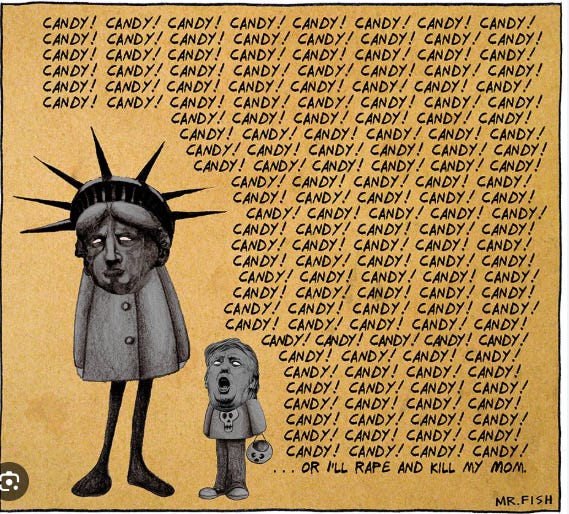

It is not the first time that Donald Trump has resorted to this kind of language. But the timing, as always, is everything.
His remarks about Emmanuel Macron, delivered during a private lunch in Washington, were crude and personal, yet also deeply political.
Macron’s response—measured but unmistakable—was to dismiss them as “neither elegant nor up to standard,” adding that they did not merit a reply.
But to treat this as merely another episode of improvised rhetoric is to miss its significance.
Trump’s attack on Macron did not emerge in a vacuum. It came as part of a broader complaint, one that placed France—and by extension other NATO allies—at the center of a narrative of absence.

Read Paul’s latest piece: Is this really normal?
Hell, here ya go:
[Plus audio version]
It is astonishing how most of us spend our entire lives assuming that our modern industrial existence is completely normal.
We think that it is quite normal to inject cocktails of chemicals into a baby’s bloodstream as soon as it is born, quite normal to rear children on industrial fake-food and toxic tooth-rotting gunge, quite normal to let them be snatched away from their families to have their heads filled with whatever the corporate slave-masters deem useful.
We consider it normal for a child to get used to the idea that its time is not its own, that most of its waking hours must be spent obeying orders and performing tasks that may be of no interest to it.
We find it normal that young people are sorted and sifted like vegetables on a conveyor belt and that at the end of their so-called “education” it is revealed that this has really just been about lining them up for their place as a cog in the great machine of sustainable exploitation.
We deem it normal that life = job, that success = money, that respectability lies in conformity, that safety and security can best be attained through cowardice and hypocrisy.
We imagine that it is normal to the point of necessity to have a machine to move us from one place to another, a machine to wash our clothes, a machine to do the dishes, a machine to make soup, a machine to sweep the floor, a machine to chop wood, a machine to cut the grass.

We regard it as normal to sit in front of a screen and have persons unknown present to us their version of reality, to programme us with whatever aspiration, fear, shame or guilt best suits their agenda.
We tell ourselves it is normal to simply submit to this control, to be a good citizen – not an extremist or a trouble-maker – and to accept that it is our solemn duty never to question what our masters tell us.
We accept that it is quite normal to have to toil for decades simply to have a roof over our heads, to have to buy water, to be milked by debt, to pay for “insurance”, to be taxed on what we earn and what we spend, to be ripped off and robbed blind again and again and again.
We fool ourselves that it is normal to spend our lives as half-humans, spineless and domesticated, acting out a script of sorry servility and trying to believe that we have found happiness in the comfort of our beautifully upholstered cells, in the reassuring restraint of our designer chains, in the delusion of democracy, in our pride in Progress, in the heap of precious plastic baubles that we have lovingly spent our lifetimes accumulating and admiring.
All of this may indeed be normal in the sense that our parents and grandparents probably lived much the same way and we therefore know nothing different.
But it is certainly not natural – it is not the way in which we were meant to live, in which we should live and in which we could live again if we found the strength to finally snap out of this civilizational catatonia.
Thanks for reading! Subscribe for free to receive new posts and support my work.
The above piece features in the latest Acorn bulletin from my Winter Oak site. Below is the rest of the content.
The technological system is totalitarian

When we talk about “the technological system”, we refer to the technical, economic and political system formed by the global interconnection of all the authoritarian technologies of the Industrial Age. Technologies that we describe as authoritarian, in that their high degree of complexity makes them escape human democratic controls.
Industries form a world-system.
Technologies are characterized by the fact that they could not exist without each other: the computer needs the Internet; servers need electricity; the electrical industry needs roads; the concrete industry needs oil; oil the extractive industry; the extractivist industry the military industry; the military industry the digital industry, and so on (to name a few).
This world-system structures our existence.
This system is thus structured from the extraction of raw materials in mines, to the consumption of energy or materials in cities and industries, through the repression and enlistment of populations as workers in factories, or through their entertainment using the mass media and the electoral masquerade maintained by all technoprogressive politicians.

Technology is not neutral.
We talk about a system because judging each modern technology one by one, to take them out of their political and productive context and their supply of energy/materials, is absurd. Producing and maintaining any modern technology depends precisely on a particular political regime, on an interconnection to a multitude of other technologies grouped together within a “technological system”.
The technological system must be dismantled.
This is the very thing we want to dismantle, because we have no problem with the countless low-powered democratic techniques and tools that our ancestors used for thousands of years. What we refuse today is the submitting of the entire human race to the crazy implications of a set of interconnected technologies which imposes on everything and everyone its needs (in materials and energies) and whose very systemic structure annihilates any possibility of democracy or autonomy.
Down with the technological system, long live the technical autonomy of free humans!
Israelis eye up BRICS membership
The idea that Israel, so close to the USA, might join the rival “multipolar” BRICS bloc currently sounds far-fetched.
But there are voices in that country calling for that very outcome, which seems less implausible when one considers its links to India and its growing economic ties with China.
One Israeli website, Israel by Locals, writes: “While Israel’s inclusion in BRICS is not imminent, its engagement with BRICS members, particularly Russia, India, and China, reflects a strategic shift in the country’s foreign policy as it seeks to secure its position in a changing global landscape”.
The article stresses the need for “diversifying strategic partnership” and argues that “Israel seeks to balance its reliance on the United States and expand its strategic relationships beyond the Washington-Jerusalem axis”.
The bigger picture is that Pax Americana has nearly had its day and that the new axis of global power is planned to be that between Asia and Africa, with Israel – or rather Greater Israel – sitting nicely in the middle.
It is not just one website saying this, either – the Israeli NGO Dor Moria (“Bridging Cultures, Building Futures”), which claims to represent Russian-speaking Israelis, is very interested in the idea of Israel joining BRICS at some point in the future.

It has been sounding out public opinion on the issue and concludes: “In general, if Israel joins the BRICS alliance, Israelis expect positive changes in all areas of the country’s life. They associate the most positive expectations with economic stability and improved foreign policy”.
On June 27 2024 Dor Moria held what it calls “a significant event” in Tel Aviv entitled “Israel: Between the Collective West and the Global South”.
It reports: “A key outcome of the meeting was the formation of the ‘Coordination Council for Israel’s Cooperation with BRICS Countries’”.
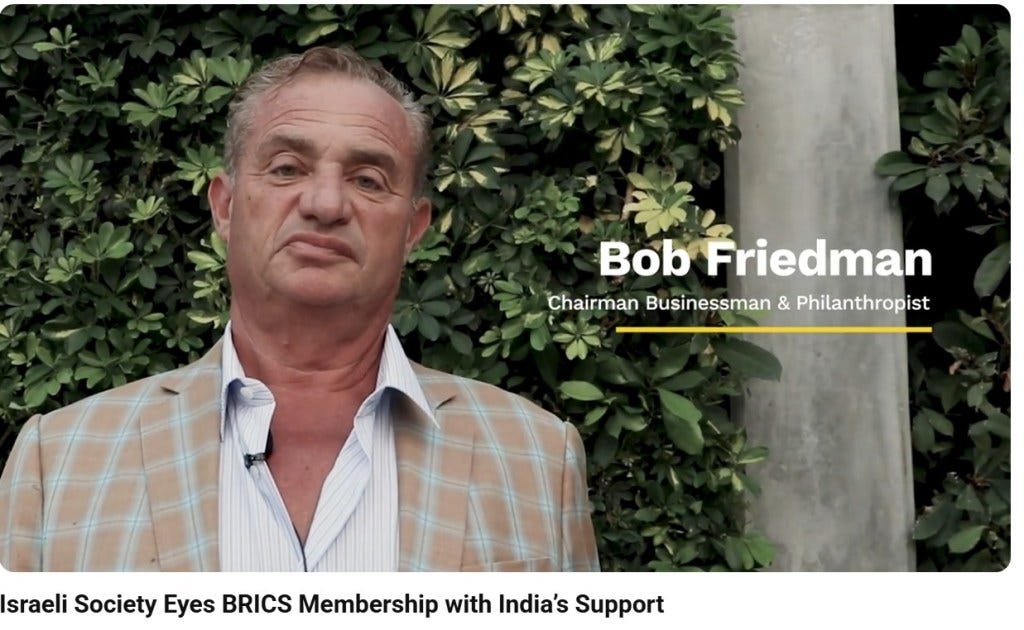
Bob Friedman, the chairman of its supervisory board and Gregory Pelman, its director of international projects, recorded “a resonant video address” aimed at the Indian public.
“The message, calling for support of Israel’s accession to BRICS, was published in more than 30 Indian media outlets, indicating a growing interest in Israel’s potential rapprochement with the Global South”.
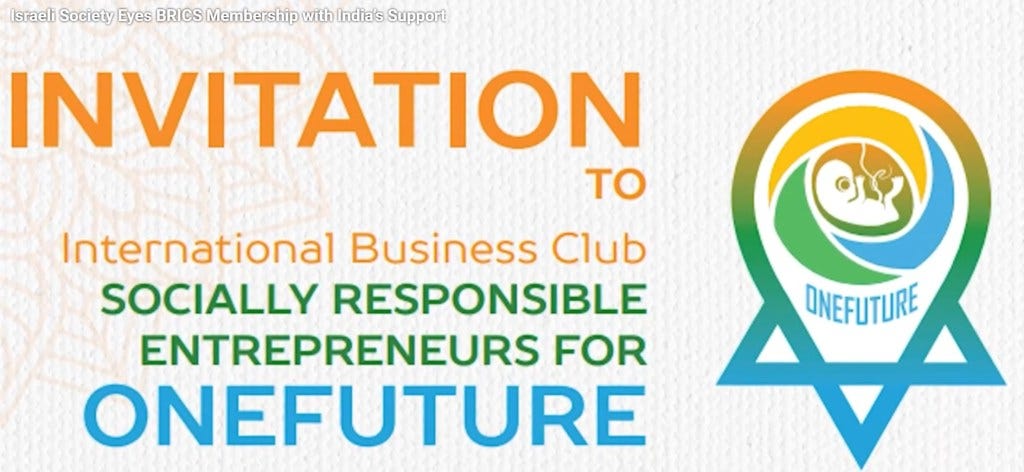
This (less-than-resonant) video, published on YouTube under the heading “Israeli Society Eyes BRICS Membership with India’s Support” promotes a conference called Socially Responsible Entrepreneurs for ONEFUTURE.
It says: “The goal of the conference is to promote the expansion of Israel’s cooperation with BRICS countries in various fields, from culture and education to high technologies and peace-keeping”.
Friedman declares: “We are confident that BRICS members will open up new opportunities for Israel”.
The video voice-over explains: “According to experts, the BRICS membership will allow Israel to diversify its foreign economic ties, strengthen its international position and leverage the potential of the developing markets to stimulate its growth.
“Strategic reorientation towards cooperation with the Global South will contribute to the country’s economic stability and prosperity.
“Dor Moriah and the member organisations of the coordination council will continue to work on promoting the idea of Israel joining BRICS”.
As the Israel by Locals site concedes: “One significant challenge Israel faces in relation to BRICS is the Palestinian issue.
“BRICS countries tend to vote against Israel on Palestinian-related matters, extending the legacy of the Non-Aligned Movement. For example, in 2011, Brazil, India, and South Africa supported UN recognition of Palestine as a state.
“However, BRICS as an institution has not engaged extensively in direct international diplomacy concerning the Israeli-Palestinian conflict”.

This failure of BRICS as a whole to take a political position regarding Israel’s conduct has also been true of the conflict with Iran – one of the newest BRICS members.
Middle East Eye noted on March 3 2026: “Whereas every member of the original core – besides India – has released individual statements either condemning or raising concerns about the killing of Khamenei, the bloc itself has yet to utter a word as a collective”.
It quotes Priyal Singh, a senior researcher at the Institute for Security Studies (ISS) in Pretoria, as saying: “Modi was basically in Israel, hugging Netanyahu and making it very clear that, seemingly, there’s a much stronger solidarity or kinship between these two leaders, and this is going to extend officially into the respective bilateral relations”.
Singh said that India’s closeness to Israel, as well as Iran’s retaliatory attacks on the UAE, in particular, has probably made it even harder for BRICS to reach a place of consensus.
The article continues: “BRICS is currently chaired by New Delhi, which last week upgraded India-Israel ties to ‘a special strategic partnership’ and whose statements and actions since have been interpreted as being aligned with Israel’s war on Iran. On 1 March, India condemned Iran’s missile strikes on the UAE.
“The bloc has been routinely divided and seemingly paralysed by differing agendas and a lack of alignment on global issues – from Russia’s invasion of Ukraine to Israel’s genocide in Gaza.
“But its inability to respond to an attack and attempt at the overthrow of the government of a permanent member of the bloc may just be the most damaging hit to its credibility yet”.
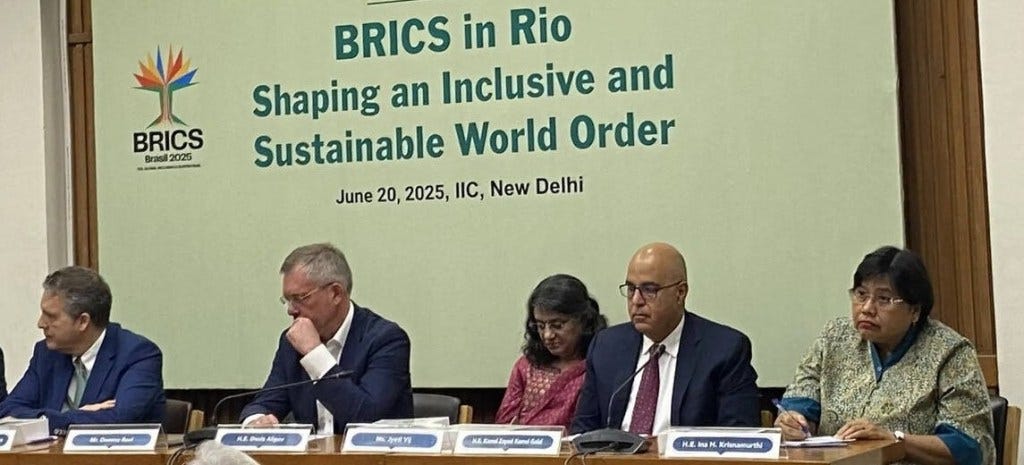
This remarkable incoherence is ascribed partly to BRICS’s “institutional design” and partly to “the economic policies and investments of individual states – including significant trade ties with Israel”.
In other words, the BRICS project is really all just about money – unsurprisingly since it is simply yet another front for the same old global mafia!
Patrick Bond of the University of Johannesburg said: “If the BRICS don’t break, it will probably be because for most, their commonality is more powerful, namely corporate profiteering in Israel”.
He said that BRICS countries’ continued commitment to economic deals with Israel was ultimately likely to “outweigh genuine solidarity with Iran, just as we have seen recently with Venezuela and probably soon in Cuba, too.
“No BRICS ruling class will come to Iran’s aid when at the same time, their class interests are in Israel’s prosperity, genocide or not”.
When the Enemy Is Peace
As sure as the warmongering statelives to cultivate hate and fear lives to stimulate strife an economy based on the selling of weapons is bound to discount human life as it does what it must to wage war against peace.Goosing the finely tuned freshly fueled and greasedperfectly infernal mass murder machine throwing open the throttle on crisis creation as a business modelthere’s nothing sexier to peddlers of deaththan scoring war’s sordid inordinate profits.
Derrick Jensen: an organic radical inspiration
The latest in our series of profiles from the organic radicals website.

“Progress is theft. Progress is slave-mongering. Progress is murder. Progress is genocide.”
Derrick Jensen (1960-) is a contemporary radical deep green writer who argues that the industrial capitalist system must be brought to an end.
His clear and direct language leaves no room for doubt about the urgency of the environmental crisis and the scale of the response that is needed.
Jensen writes in his 2011 book Dreams: “We must do everything necessary to decisively and finally bring down civilization before it kills any more of the planet.

“Because if the scientific, materialist, instrumentalist perspective is true, this culture will continue its routine and necessary destructiveness until it collapses or is stopped”. (1)
He explains that to stop a train, you dismantle the infrastructure that allows the train to run and, likewise, “to curtail global warming, you dismantle the infrastructure that causes global warming”. (2)
Jensen’s philosophy is not obviously sourced from other organic radical inspirations, but rather inspired directly both by contact with nature and by the cultures of the indigenous peoples of North America.
He explains the indigenous belief that we are guided by “original instructions” and have a responsibility to live according to them.
“Original instructions presume we come into this world carrying with us advice on how to live properly, how to fit in, how to do what is right; and even more crucially, we come into this world having been given a personal and social framework for looking for that advice, for finding it in our daily lives, in dreams, in our relationships with others, and in these others’ actions”. (3)
But the people of the modern industrial West have lost touch with all that and are totally unaware that “a world of meaning surrounds them, a world of meaning that gave birth to them (back when they were alive, back when they were human), a world of meaning waiting to welcome them home”. (4)

The central character in Jensen’s 2009 novel Songs of the Dead is psychologically wounded by the life-hating violence of the ‘wetiko’ invaders and makes an interesting comment about the difficulties for people of European descent in America to link into a collective unconscious.
“I asked for dreams. Nothing. I looked at the stars and asked. Nothing. I sat beneath trees and asked. Nothing. I held soil in my hands and asked. Nothing. My only hint of anything, and I’m sure this was simply a projection on my part, was a faint voice saying, ‘I can’t hear you very well. You’re too far away.’
“Projection or not, what the voice said to me was true. My ancestors, the ones whose blood mingled for generations with the same soil, are half a world away in Europe, too far away to be able – at least with my inexperience – to help me”. (5)
In another passage from the book, Jensen conjures up a dream vision from the vibrant, interconnected, human-natural world that has been buried, apparently forever, under the grey concrete of Western civilization.

He writes: “I see Indians dancing. I see fires. I see days and nights and years of celebrations and mournings. I see people making love. I see the same for all kinds of animals, all kinds of plants.
“I see them living, dying, loving, hating. I see generation after generation of human, generation after generation of cedar, generation after generation of porcupine, generation after generation of ant, generation after generation of grasses, mosses, generation after generation of fire.
“And suddenly I see even more. I see generation after generation of muse, dreamgiver, demon, walking back and forth between worlds. I see geese and martens and wrentits moving between worlds. I see humans moving between worlds. I see all these worlds being renewed by this intercourse, this movement across borders porous and impenetrable and permeable and impermeable and breathing and alive as skin.
“I see these worlds winding and unwinding, tangling and untangling like the lovers they are, and I see moments in time, too, winding and unwinding, tangling and untangling like the lovers that they are, too. These worlds, these moments, they are not one, they are not two. They are lovers, like any others”. (6)

It is this “direct and supra-mental intellection” – as Frithjof Schuon put it – which has been so stifled by a system of living and thinking based on quantity rather than quality, the material rather than the spiritual.
Jensen writes: “This culture devalues introspection, and many of us are trained to do whatever we can to fill (and kill) time so we never have to be alone with who and what we have become, and so we never can become who we really are and were meant to be”. (7)
This, for Jensen, amounts to a mental illness afflicting our civilization and he declares in his two-volume 2006 work Endgame that “the culture as a whole and most of its members are insane”. (8)
This insanity includes the belief that somehow the society we are living in is the apex of evolution and that science and its technocratic world have been a force for good.
He comments: “Sure, science brought us television, modern medicine (and modern diseases), and cardboard-tasting strawberries in January, but anyone who would rather have those than a living planet is, well, a typical member of this culture”. (9)

In view of the destruction we have already witnessed, and that which seems to lie ahead, Jensen argues that it is absurd for people to retain faith in the industrial capitalist myth of “progress”.
He declares: “Progress is pure selfishness. Progress is theft. Progress is slave-mongering. Progress is murder. Progress is genocide. Progress is ecocide. Progress is sociopathy”. (10)
Living in this mad world, plummeting towards destruction, inevitably produces feelings of despair in many of us: “How do we go on living, when every day our hearts break anew?” (11) asks Jensen.
This insanity is not something we can run away from, he insists: “There is nowhere, no one, safe from the murderous cult that is this culture”. (12)
Instead, we are obliged to resist, to try to bring about a fundamental change in the direction that human society has taken.
Jensen was one of the founders of the Deep Green Resistance movement and frustration with the insipid pseudo-radicalism of mainstream environmentalism runs through his work.
For instance, he is scathing about the reformist target of “sustainable development”, pointing out: “It is an oxymoron, since ‘development’ is a euphemism in this case for industrialization, which is by definition unsustainable; in fact, industrialization is utterly, irrevocably, and functionally antithetical to sustainability”. (13)
When people ask how they can make current society more sustainable, they are really asking how they can make it more sustainable without stopping or even significantly curtailing industrialism, adds Jensen.
The way in which we fight industrial capitalism also needs to go way beyond the ineffective symbolic level on which so much political action takes place, he argues.
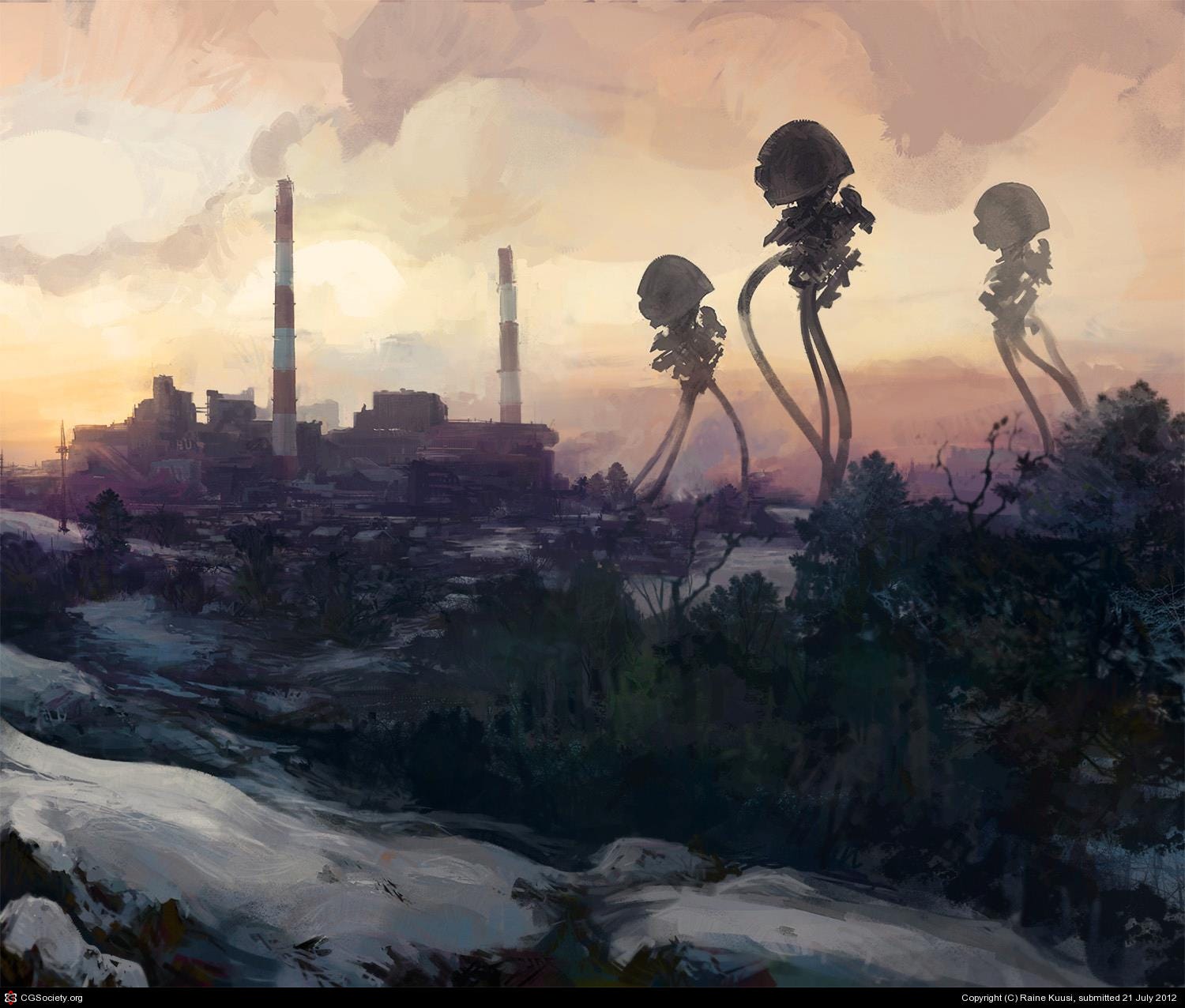
He writes in Endgame: “If a foreign power (or space aliens) were to do to us and our landbases what the dominant culture does – do their damnedest to turn the planet into a lifeless pile of carcinogenic wastes, and kill, incarcerate, or immiserate those who do not collaborate – we would each and every one of us – at least those of us with the slightest courage, dignity, or sense of self-preservation – fight them to the death, ours or far preferably theirs. But we don’t fight. For the most part we don’t even resist. How’s it feel to be civilized? How’s it feel to be a slave?” (14)
For Jensen the environmental cause is not some kind of add-on struggle that can be allocated a little slot as one of a variety of political issues, but an obvious and urgent existential priority.
As he comments in Dreams: “If we don’t stop them from killing the planet, nothing else matters”. (15)
Video links: Endgame talk (1hr 21 mins), End:Civ film (1hr 16 mins)

1. Derrick Jensen, Dreams (New York: Seven Stories Press, 2011), pp. 25-26.
2. Jensen, Dreams, p. 249.
3. Jensen, Dreams, p. 445.
4. Jensen, Dreams, p. 274.
5. Derrick Jensen, Songs of the Dead (PM Press: Oakland, 2009), p. 167.
6. Jensen, Songs of the Dead, pp. 260-61.
7. Jensen, Dreams, p. 215.
8. Derrick Jensen, Endgame, Vol 1: The Problem of Civilization (New York: Seven Stories Press, 2006), p. 151.
9. Jensen, Dreams, p. 110.
10. Jensen, Dreams, p. 173.
11. Jensen, Dreams, p. 319.
12. Jensen, Dreams, p. 320.
13. Jensen, Dreams, p. 26.
14. Jensen, Endgame, Vol 1, pp. 200-01.
15. Jensen, Dreams, p. 221.
 Paul Haeder, Author