

Grumpy Old Man Syndrome? Fucking A, I’ve been pushing up against the old man, old woman fucking lunacy faux democracy since I was 13
I go to these fucking science events and get completely flummoxed by their fear of coming onto a fucking radio show to explain their PhD and Post Doc work, man . . . .
Mar 19, 2026
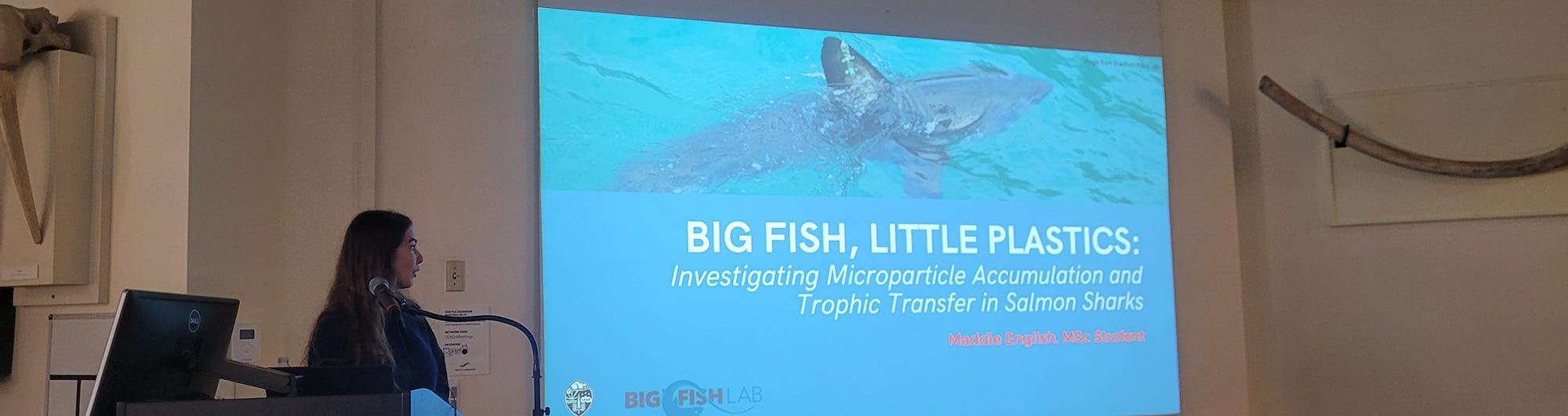
I can’t get a Mexican shark researcher and a Scottish researcher on species and human conflict resolution to come onto my radio show. And, today, I had my hand up, but the moderator skipped me and went to someone else. Do I hate this? DO I really hate the fucking closing of the radical mind in biological sciences?

Conference History
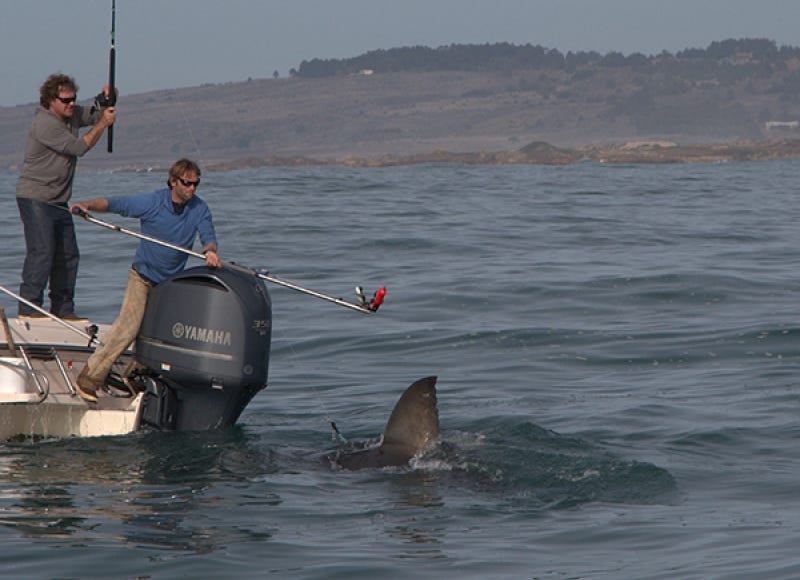
This biennial shark meeting began in 2004, was initially called the Cowshark Conservation Workshop and focused on the biology and ecology of Sixgill and Sevengill Sharks, known as “Cowsharks” and distinguished by their extra gill slits. Many sharks have five gill slits but sixgills have six and sevengills have seven—hence their names. Cowsharks remained the focus of the meeting for 10 years until, in 2014, it was changed to be called the Northeast Pacific Shark Symposium (NEPSS). The change was driven in part because of increased interest by scientists that studied sharks and rays outside of the Cowshark family as well as the fact that at the first NEPSS we also convened an International Union for the Conservation of Nature (IUCN) Northeast Pacific Shark specialist group meeting where IUCN members worked on regional re-assessments of Northeast Pacific shark conservation status updates. Since then, the meeting has been known as the NEPSS, although the sixgill image remains the logo for the conference. This symposium is the largest gathering of shark and ray scientists along the west coast of North and Central America.
Fucking Capitalism . . .
Workshops:
NEPSS VII aims to facilitate conversations and solutions among colleagues. See more information about our workshops here.
Social Events
Thursday Icebreaker: The evening of March 19th, we will host registration and a welcome address and mixer (light appetizers and drinks provided by our sponsors) from 6-8 pm at the Hatfield Marine Science Center! This Icebreaker is included in registration fee and is supported by our sponsors. Dress attire: casual
Aquarium Mixer: We will be hosting a catered mixer on Saturday, March 20th from 6-9 pm at the Oregon Coast Aquarium in Newport, OR. Dinner and drinks will be included in the registration cost. Conference attendees will be able to network and explore the aquarium after hours. This mixer is included in your registration fee and is supported by our sponsors. Dress attire: casual
Merch
3/1/26 UPDATE: shirt orders are CLOSED. Those who pre-purchased can pick up at the registration booth.

No mother-fucking mention of this:
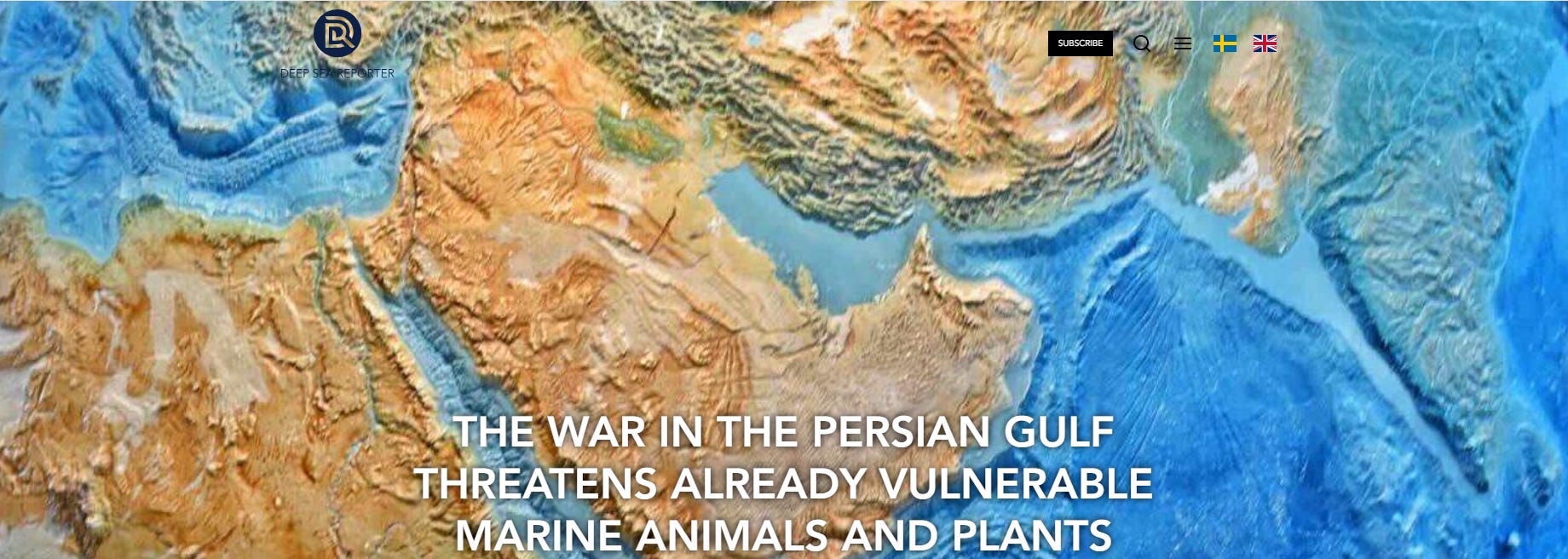
It is the lobotomized science species, all bundled up in their cloistered lives, and this is the reality:
Along the coasts on both sides of the Persian Gulf are mangrove forests and seagrass beds where herbivorous species such as manatees and dugongs graze. The area is also an important migration route for whales, including Bryde’s whale, the critically endangered Arabian humpback whale and whale sharks. Green sea turtles and hawksbill sea turtles also live and breed in the region.
There are over 700 different fish species in the Persian Gulf, including commercially important species such as king mackerel, grouper, snapper, barracuda, trevally and tuna.
The marine biologist has spent several years researching sensitive coral reefs and diving in many locations in the region, including Kish Island in Iran.
‘Explosions above and below the sea surface create enormous noise and shock waves. Whales, dolphins, turtles, and fish can become disoriented, lose their hearing or suffer severe injuries. For species already living on the edge in this extremely warm environment, additional stress can be devastating,‘ says the source.
The Strait of Hormuz is a critical energy corridor through which approximately 20-25 per cent of the world’s total oil consumption passes. Even in peacetime, the intense oil tanker traffic poses a constant risk to marine life – partly through collisions with whales and porpoises, and partly through the risk of oil spills and other environmental pollution.
Iran has currently stopped all passage through the strait and, according to information provided to the BBC, plans to keep this strategically important part of the Indian Ocean closed for six months.
Fuck them all, then, so, not one wants to discuss their work on a community radio station?
Key Factors Shaping the “Apolitical” Perception:
- Scientific Norms: Science training traditionally emphasizes neutrality, objectivity, and peer review, creating a culture that often views partisan politics as contrary to scientific methods.
- Cold War Legacy: Many U.S. scientific institutions were built on a model of government funding that promoted scientific freedom, leading to a long-held perception that science should be independent of political intervention.
- Political Polarization & Distrust: Increased political polarization has led to a divide where Americans are three times more likely to trust scientists if they identify as left-wing, making science itself a polarized issue rather than the scientists themselves being inherently apolitical.
- “Anti-Science” vs. “Anti-Regulation”: Conservative distrust of science often stems from opposition to policy implications—such as regulations on climate change or pandemics—rather than a rejection of science itself.
- Role Definition: While many Americans support an active role for science in policy, scientists often face pressure to remain objective to maintain public trust and avoid accusations of bias, particularly given that scientists tend to lean liberal, as shown in studies.
Ultimately, while individual scientists hold political views, their professional focus on empirical evidence—which is inherently objective—often creates the impression of being above the political fray. However, this is changing as science becomes more central to public policy debates.
A Deal With the Devil: What the Age-Old Faustian Bargain Reveals About the Modern World

Philip Ball in Unnatural: The Heretical Idea of Making People coins the term “anthropoeia” to describe the various methods, from the homunculus to the golem, in which ancient and Medieval magicians claimed to be able to create artificial people from methods alchemical and theurgical. He writes that tales about artificial people tell “us something interesting, and, I contend, something important,” a legend that has never been more relevant than today when CRISPR seems to be giving us a homunculus and ChatGPT-3 a Brazen Head. Unlike a homunculus, an artificial man gestated in a fake womb, the Brazen Head isn’t organic; unlike a golem made from the bankside mud of the Vltava River, the mechanical being is made of sturdier materials. Metal-sheen aside, the Brazen Head isn’t quite a robot either (like the moving, mechanical automata of ancient Greek myth named Telos), for Grosseteste’s gadget was a stationary computer, a being for whom intelligence (and consciousness?) is the most salient detail. Furthermore, the manner in which the Brazen Head communicates (though according to Gower the device was only able to utter “Time is, time was, time is past” before it fell to the floor) is to have questions posed to it and to answer them in a manner which is positively computational.

Not just computational, but algorithmic. In an early permutation of the story, the occult-minded future Pope Sylvester II is said to have built such a device in the tenth century, based on knowledge acquired in Islamic Al-Andalus, whereby a strict process must be followed for the Brazen Head to properly answer questions posed to it (algorithm is, after all, an Arabic word). All such answers from the device could subsequently only be expressed in the form of a “Yes” or “No,” an anticipation of binary coding some seven centuries before the philosopher Willhelm Gottfried Leibniz developed the concept. As Sylvester demonstrates, Grosseteste’s Brazen Head is hardly the most famous version of the legend, for the manufacture of such a device has been attributed to other luminaries as well, including the thirteenth-century physician Arnaldus de Villa Nova, his contemporary the theologian Albertus Magnus, and even the ancient Roman poet Virgil in a strange thirteenth-century encyclopedic French text by Gautier de Metz entitled The Image of the World.

Most celebrated of all hermetic engineers is the great Scholastic philosopher and proto-scientist Roger Bacon, a thinker who introduced such inventions as gunpowder and eyeglasses to Europe, while hypothesizing about flying devices and armored vehicles. A student of Grosseteste, the monk most definitely didn’t build a Brazen Head either, but his empirical investigations no doubt contributed to the allure of the legend, this man whose contemporary biographer Brian Clegg in Roger Bacon: The First Scientist argues was “covered in layer after layer of myth and confusion,” seen as less scientist than as a conjurer. That’s the enigmatic character in an Elizabethan play of 1589 by the dramatist Robert Greene entitled Friar Bacon and Friar Bungay in which the building of a Brazen Head is a central plot point. Before his calculating and thinking machine, Greene’s version of Bacon enthuses over “My magic glass, that shows me far and near/All things that are, or were, or are to be,” and it’s hard not to imagine him scrolling on his smartphone.
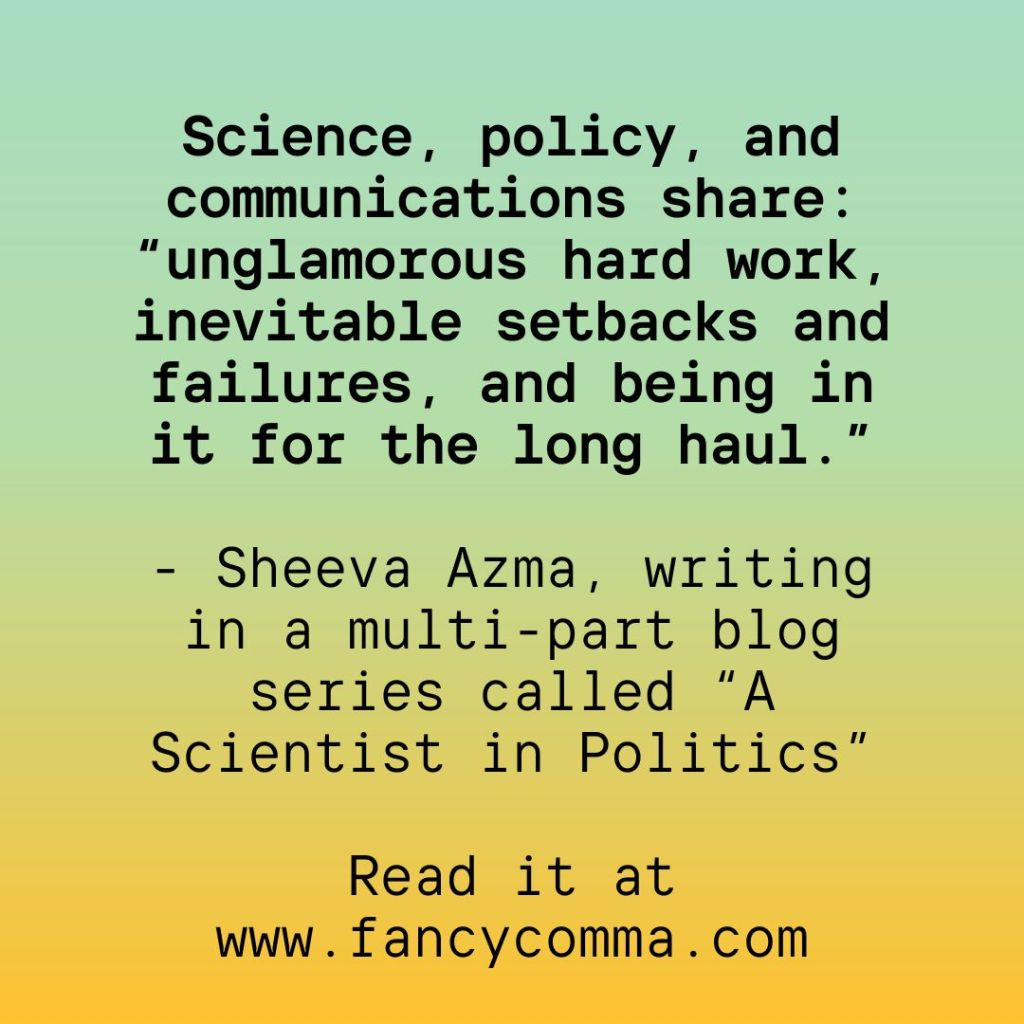
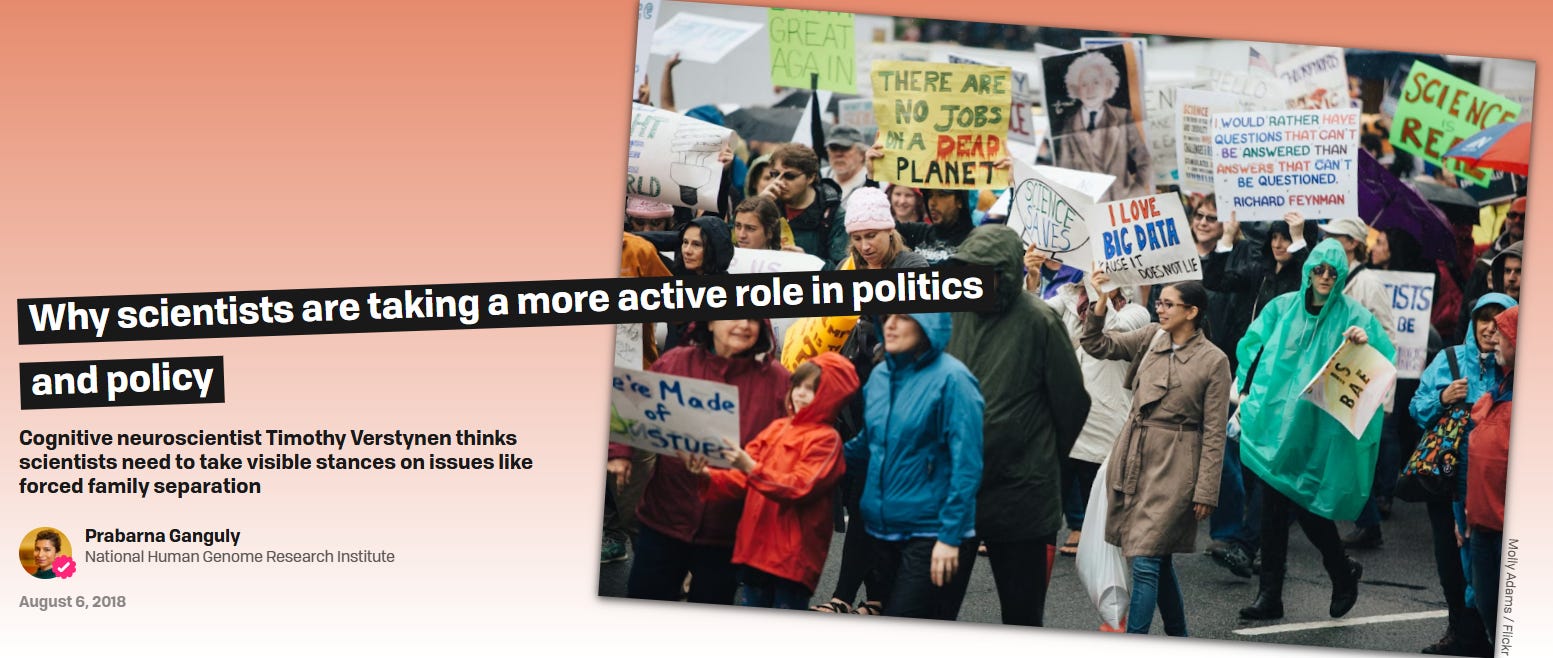
“It can be easy to sit back, work on our research, and not engage with real life scenarios of that work,” he says in an interview. “But we do that at our own peril.” Scientists, he argues, need to take leadership roles in government and policy making. “One letter signed by international scientists is not going to change anybody’s opinion. But putting our names on the line is the least we can do, instead of doing nothing at all.”
Among the people horrified by the policy was Timothy Verstynen, who found himself imagining with horror what it would feel like to have his own young daughter ripped away and put under such devastating conditions. But to him, protesting on the streets was only one form of dissent. As an associate professor of psychology at Carnegie Mellon University, Verstynen is well-versed with the scientific evidence that such parental separation can scar children in perpetuity. In June, he decided to write an open letter to US Secretary of Homeland Security Kirstjen Nielsen, detailing the studies that have shown the kind of psychological cost children can pay after extended parental separation. More than 2,000 scientists from around the globe joined his mission, co-signing and endorsing the letter.
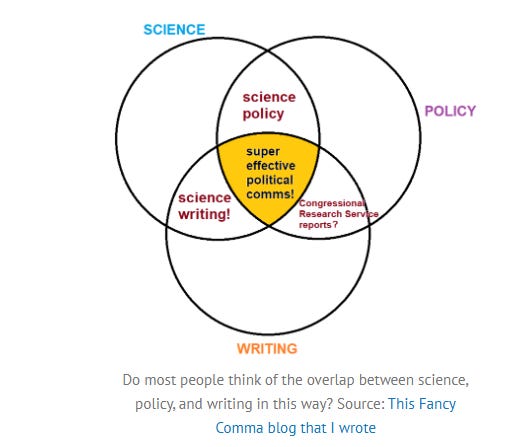
“Universities should train students on how to do outreach, which is absolutely critical, and should almost certainly be a part of the curriculum in all universities”
Here we go, an interesting concept: Watch it. It is what science, maybe, could be like, after the planet is completely trashed. Now, why have we allowed the planet to be completely trashed?
Address by Daniel Quinn delivered August 16, 1997, at the annual conference of the North American Association for Environmental Education, Vancouver BC
——

In a recent semi-documentary film called Garbage, a toxic waste disposal engineer was asked how we can stop engulfing the world in our poisons. His answer was, “We’d have to remove everybody from the face of the earth, because humans GENERATE toxic waste, whether it be pathogenic organisms that we excrete from our bodies or whatever. We are toxic to the face of the earth.”
What is your gut reaction to this assessment? Please raise your hands if you agree that humans are inherently toxic.
I understand that many representatives of the First Peoples are attending this conference. I hope there are many in this audience. Please raise your hand if you belong to an aboriginal people. Thank you. Now I’d like to ask you the same question I asked the whole group a moment ago. If you consult your traditional teachings, do you agree that humans are inherently toxic to the life of this planet?
Those who know my work will know that you’ve just demonstrated one of my basic theses, that the people of my culture, whom I call Takers, have a fundamentally different mythology from the First Peoples, whom I call Leavers. In Taker mythology, humans are indeed viewed as inherently toxic to the world, as alien beings who were born to rule—and ultimately destroy—the world. As WE are currently ruling and destroying the world. In Leaver mythology, by contrast, the world is a sacred place, and humans are not perceived as alien to that sacred place but rather as belonging to it. In other words, in the Leaver worldview, people are no less a part of the sacred framework of the universe than scorpions or eagles or salmon or bears or daffodils. . . .
When I first proposed to speak here about how we’re preparing ourselves and our children for extinction, the organizer of the conference wondered if this topic wasn’t directed too exclusively to members of “our” culture—the culture I call Taker culture in my books—the dominant culture of the world, found wherever the food is under lock and key and people have to work to get it. I think it’s important that you hear my answer to this question.
The reality is that, even if you’re a member of one of the First Peoples, you and your children are constantly bombarded with messages from Taker culture by way of books, billboards, movies, newspapers, magazines, radio, and television, and of course pre-eminently by way of the schools.
In other words, it doesn’t really matter whether you belong to our culture or not in this regard. If you or your children watch television, go to movies, listen to the radio, and go to our schools, then, like it or not, you’re preparing yourselves and your children for extinction.
But what do I actually mean by this outrageous statement? I’ll tell you this in a nutshell and then offer some examples of what I’m talking about. In a nutshell: We have been taught—and are therefore teaching our children—that, individually, we are all pretty much helpless when it comes to saving the world. That is, unless we happen to have the power of a world leader—the power of a Clinton or Yeltsin. Or unless we happen to control some vast multi-national corporation like Shell Oil or Du Pont. Or unless we happen to control some big organization like the Red Cross or Greenpeace or the World Wildlife Fund. We’ve been taught (and are therefore teaching our children) that, as individuals, all we can do is wait for OTHER people—POWERFUL people—to save the world. Oh sure, we can do our little bit. We can reduce, reuse, and recycle, and this is very nice and very useful—but really important and far-reaching global change must come from the TOP. We just have to wait and hope for the best. We’re like people standing around watching a neighbor’s house burn down because we’ve been taught that this is a problem for PROFESSIONALS to handle. We mustn’t interfere. Until trained fire-fighters arrive, we’re just supposed to stand there and watch—and if they NEVER arrive, then the house will just have to burn down right to the ground. . . .
Since my novel Ishmael appeared in 1992, I’ve received well over five thousand letters from readers—many of them young people. When they write to me, they don’t say, “Why have I been taught that individually I’m helpless?” This teaching is revealed in a more subtle way. They say to me, “Since I’m not a world leader and don’t control a multi-national corporation or a big NGO, I’m looking for a career that will enable me to make a difference. I’m thinking of going into environmental engineering or something like that. Can you make a suggestion?” Now, until you think about it, this might sound like someone who’s on the right track here. But listen to what he’s really saying. Environmental engineers can make a difference—but not electrical engineers. Environmental engineers can make a difference—but not optometrists. Environmental engineers can make a difference—but not English teachers. Environmental engineers can make a difference—but not bus drivers. Environmental engineers can make a difference—but not homemakers. Environmental engineers can make a difference—but not mail carriers. Environmental engineers can make a difference—but not grocery store clerks. Environmental engineers can make a difference—but not potters. I could stand here and extend this list all day—this list of occupations in which people can make no difference. It includes virtually every occupation being pursued on the face of this planet today!
Here’s a statement from an actual letter, from a young woman in Knoxville TN. She writes, “I’ve been in graphic design since I finished high school in ‘86, and I’m still there, but I’m starting to look more and more seriously at environmental policy, national and world politics, and similar areas. I’ve always despised and hated politics.” Do you see what she’s saying? “I’m thinking of going into something I’ve always despised and hated“—because she can’t make a difference as a graphic designer. For her, the question is no longer, “What am I really GOOD at?” It doesn’t matter that she might be a terrific graphic designer and a rotten politician. She has come to believe that graphic designers can’t make a difference. Only very, very rare people can make a difference.
Here’s another, from a young man in Waco TX: “I treasure the ideals of your novel, and pledge my services toward getting something started. I do have one question that I think only you can answer for me, and that is: What can I do to find a job that adheres and advances the principles of your novel? It’s what I’ve been searching for all my life.”
My answer to him was this: We ALL have to make a difference. It doesn’t matter what job we do. We can’t have people saying, “Oh I just flip burgers, so I can’t make a difference.” “Oh I just drive a cab, so I can’t make a difference.” “Oh I just sell insurance, so I can’t make a difference.” “Oh I’m just an auto mechanic, so I can’t make a difference.” “Oh I’m just an accountant, so I can’t make a difference.” Concentrate on doing what you do best, because THAT’S where you’ll have the most influence on the future of the world.
You know, I’ll bet almost all of you were idealists when you were young—or were considered idealists by friends and teachers. If you were an idealistic youngster, please raise your hand. Good. Now—how many of you as youngsters had the experience of being told by a parent or teacher, “Who do you think you are? YOU can’t change the world.”
Believe me, nothing’s changed since you were young. This comes to me from a tenth-grader in Philadelphia: “I just finished Ishmael, and I want to thank you because you have successfully written down in complete form what I and so many people have thought about only in fragments. But when I try to talk to people about these things, being only fourteen, they tell me I’m foolish and ‘trying to be a hippie.’”
This is from the same design student who thought she’d have to go into politics in order to make a difference: “My advisor says I’m young and enthusiastic, in a kind of condescending way when I told him about wanting to go into environmental policy and change people’s perceptions and the way things are done. I want to prove him wrong. . . ”
But I’m not bringing this up to caution you against discouraging young people’s idealism and enthusiasm. I’m sure you don’t do that—or you wouldn’t be in this audience at all. What I’m trying to do is deepen your understanding of what’s happening when oldsters tell youngsters, YOU can’t change the world.
“I want to prove him WRONG,” the design student said. Wrong about what? She IS young and enthusiastic, so she can’t prove him wrong about that. What are the two of them really talking about? What her advisor is hearing from her is something like this: “I’m not going to end up like YOU. You never made any difference in your whole life. Well, I’m not going be like you. I’m going to make a difference.” And of course he’s defending himself the only way he knows how. He can’t say, “Look, kiddo, you may not believe it, but student advisors make PLENTY of difference.” He probably doesn’t even believe it himself! Why would he? He’s been told from childhood that only big shots make a difference. Since he can’t say this, he says instead, “Believe me, you WILL end up like me. What YOU have aren’t ideals, they’re just illusions. Nothing you do will make any difference, and life is going to prove me RIGHT.” He actually has a vested interest in discouraging students, in preparing them for extinction. Their failure will be his vindication! The vein of pessimism runs deep in our culture and is broadcast like a virus in all our communications—including all our communications directed to those of you who belong to the nations of the First People. Three years ago a young Navajo student at Dartmouth managed to track down my unlisted phone number. He told me that over the years he’d drifted away from his cultural roots. Then he read Ishmael. He was calling because he wanted to give me his reaction personally, and this was his reaction: “You’ve given me back my religion.” I asked him to explain why he felt this way, because of course there’s nothing in my book about Navajo religion in particular. He said, “When I was growing up among my own people, I was taught to think of humans as a blessing on the world. Living among your people, I’ve been taught to think of humans as a curse on the world. I didn’t notice it happening until I read your book, and that’s how you’ve given me back my religion.”
This brings me back to where I started, with the assessment of the waste disposal engineer who was asked how we can stop poisoning the world. Here it is again.
He said, “We’d have to remove EVERYBODY from the face of the earth, because humans GENERATE toxic waste, whether it be pathogenic organisms that we excrete from our bodies or whatever. We are toxic to the face of the earth.”
I’d like to take a few minutes explore this strange mythology, so central to our culture, and its impact on our children and their vision of the future.
To begin with, is it mythology? Oh, most certainly it is mythology. Humans no more “generate toxic waste” than elephants or grasshoppers do. And the organisms we excrete from our bodies are no more pathogenic than those excreted from the bodies of sparrows or salmon. This engineer was speaking pure mythology, because the biological truth is that humans lived on this planet for three million years without being any more poisonous than our primate ancestors.
It has been the work of my life to pin down and demolish the lie that is at the root of this mythology in our culture. It’s to be found in the way we tell the human story itself in our culture. You can see it perpetuated in textbook after textbook, and if you keep your eyes open, you’ll see it repeated weekly somewhere—in a newspaper or magazine article, in a television documentary. Here it is, the human story as it’s told in our culture, day in and day out, stripped to its essentials. “Humans appeared in the living community about three million years ago. When they appeared, they were foragers, just like their primate ancestors. Over the millennia, these foragers added hunting to their repertoire and so became hunter-gatherers. Humans lived as hunter-gatherers until about ten thousand years ago, when they abandoned this life for the agricultural life, settling down into villages and beginning to build the civilization that encircles the world today.” That’s the story as our children learn it, and it has just this one little problem, that it didn’t happen that way at all. Ten thousand years ago, it was not HUMANITY that traded in the foraging life for the agricultural life and began to build civilization, it was a single culture. One culture out of ten thousand cultures did this, and the other nine thousand nine hundred and ninety-nine went on exactly as before. Over the millennia that followed, this one culture, born in the middle east, overran neighboring cultures in all directions, finally arriving in the New World about five hundred years ago. At which point it began to overrun the native cultures of THIS part of the world as well. It is a truism that the conqueror gets to write the history books, and the history our children learn is history as WE tell it. And the central lie of this history is that HUMANITY ITSELF did what WE did.
Well, even if this is so, why does it matter? It matters because everything the waste disposal engineer said was false about HUMANITY, but absolutely true of this one conquering culture. HUMANS don’t generate toxic wastes—but our culture certainly does. HUMANS aren’t toxic to the face of the earth—but our culture certainly is.
It’s vitally important for our children to know that the curse that needs to be lifted from the earth is not humanity. It’s important for them to know that we may be a doomed culture, but we are not a doomed species. It’s important for them to understand that it’s not being HUMAN that is destroying the world. It’s living THIS WAY that is destroying the world. It’s important for them to know that humans HAVE lived other ways, because it’s important for them to know that it’s POSSIBLE for humans to live other ways. Otherwise they can only repeat the falsehood spoken by that waste disposal engineer: That the only way to stop poisoning the world is to get rid of humanity.
Here’s what a college student in Arkansas wrote to me: “Standing riverside with my geology class in the Grand Canyon, viewing one and a half billion year-old basement rocks, humankind’s history was a vertical mile away in the dust of the South Rim. Strangely, my classmates struggled with the concept and acceptance of geologic time. I felt the overburden of reality. Since that time, the extinction of Homo Sapiens has often appeared to me to be the ONLY solution for the vast spread, dominance, consumption, and destruction inflicted on the world by this species.”
This is from a ninth grader in Eugene Oregon: “Since reading your book a second time recently, I’ve talked with some of my friends about their theories about life, the universe, and so on. Some thought we should just kill off all the humans (which I’ll admit would be one way of dealing with things).”
This is from a graduate student at the University of Oregon: “I was at an aquarium with my daughter shortly after re-reading Ishmael, and I happened to spend some time looking at the jellyfish tank. I wondered if the world would be better off if evolution had stopped with these spineless, brainless, majestic entities. . . . Despite our best efforts to resuscitate the cancer known as humanity, we are in fact on our way out, and indeed that may be for the better.”
These students, as you hear, are all thoroughly reconciled to the disappearance of human life.
We absolutely must stop sending our children out to save the world, first arming them with the undermining belief that humans are inherently toxic. Because if they truly believe this, then they will truly be prepared for extinction. We must be on vigilant guard against teaching our children—even by indirection— that the very best thing that can happen to the world is the extinction of the human race.
I know very well that I have set myself up for at least one hard question with this talk, and I’d like to address at least this one hard question before I invite your questions.
I have said—not only here but in a thousand letters and a dozen other speeches like this one—that there is no one who is without resources to change the world. I believe this is a message we must give our children. We don’t just need caring environmental engineers. We need caring attorneys, caring physicians, caring fry cooks, caring salespeople, caring real estate developers, caring industrialists, caring journalists, caring entrepreneurs, caring veterinarians, caring stock brokers, and caring carpenters. We even need good people in bad places. In fact we especially need good people in bad places. For example, whether you know it or not, the film industry is tremendously pollutive and tremendously wasteful. Does this mean caring people should avoid it? Hardly! Just the opposite! We mustn’t leave pollutive and wasteful industries entirely in the hands of people who don’t give a damn about the world. This is why I say and say again that there is no place where no good can be done. And this is why I say to young people, “Don’t think about going into noble lines of work, think only of doing what you do best. Because that’s where you’re going to make the most difference in the world.”
People often ask me if I practice what I preach, and what I say to them is, “Look, I’m doing exactly what I preach. What I preach is, USE YOUR BEST RESOURCES TO DO WHAT YOU CAN DO. And that’s what I’m doing. Doing what I do best, I’m reaching hundreds of thousands of people all over the world in the cause of saving the world.”
I say to them, “Do you think I should have been an environmental engineer instead? I would’ve been a LOUSY environmental engineer!”
And then people typically say to me, “Well, that’s great for YOU, but what am I supposed to do? I’m just a dressmaker, just a bricklayer, just a fiddle player, just a massage therapist, just a choir director, just an asphalt spreader—fill in the blank.
I hope you see that I’m talking about an EDUCATIONAL problem here. We have honest to god GOT to stop teaching our children that only OTHER people count. I think we need to make it a top-priority goal for us to teach our children that it isn’t just people with special jobs who are going to save the world. If the world is saved, it will be because all six billion of us stopped waiting for someone ELSE to do it. If the world is saved, it will be because the people of the world finally woke up to the fact that saving the world isn’t the work of specialists. It’s work we all CAN do—and all MUST do.
Thanks for listening.
I don’t know if these fucking people know what’s going on with Trump and Jews and Israel and War Profiteers and the 120 Jewish Billionaires and their Jewsaders and Crusaders:
It is a very, very strange world of Jews like Blumenthal, bar mitzvahed and fucking sick in the head, yakking on Hedges:
How do they fucking rationalize these headlines: Trump’s Iran War Backfires — Regime Change Failing as Prices Soar
It’s exactly on target, man, on target for the elimination of any resistance in the USA and abroad, the Jews have infiltrated all things, all of Russia’s computing and satellite tech, and even fucking traffic cameras.

US universities are pipelines to the defense industry. What does that say about our morals?
Much of our higher education system is a glorified feeder for Lockheed Martin and other defense industry firms

Thanks, science. God, I hate the White Man’s rhetoric, forked tongue, words!!!!!!
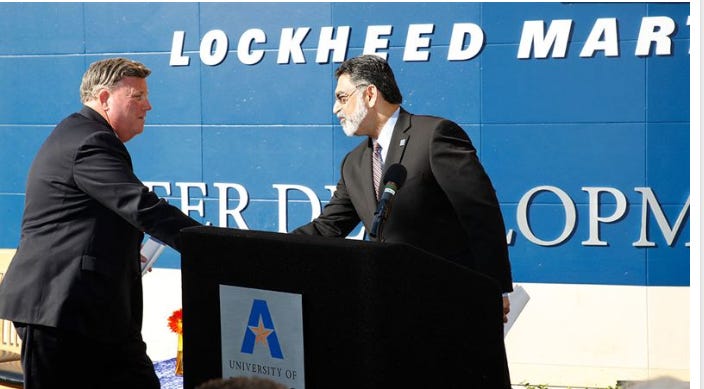
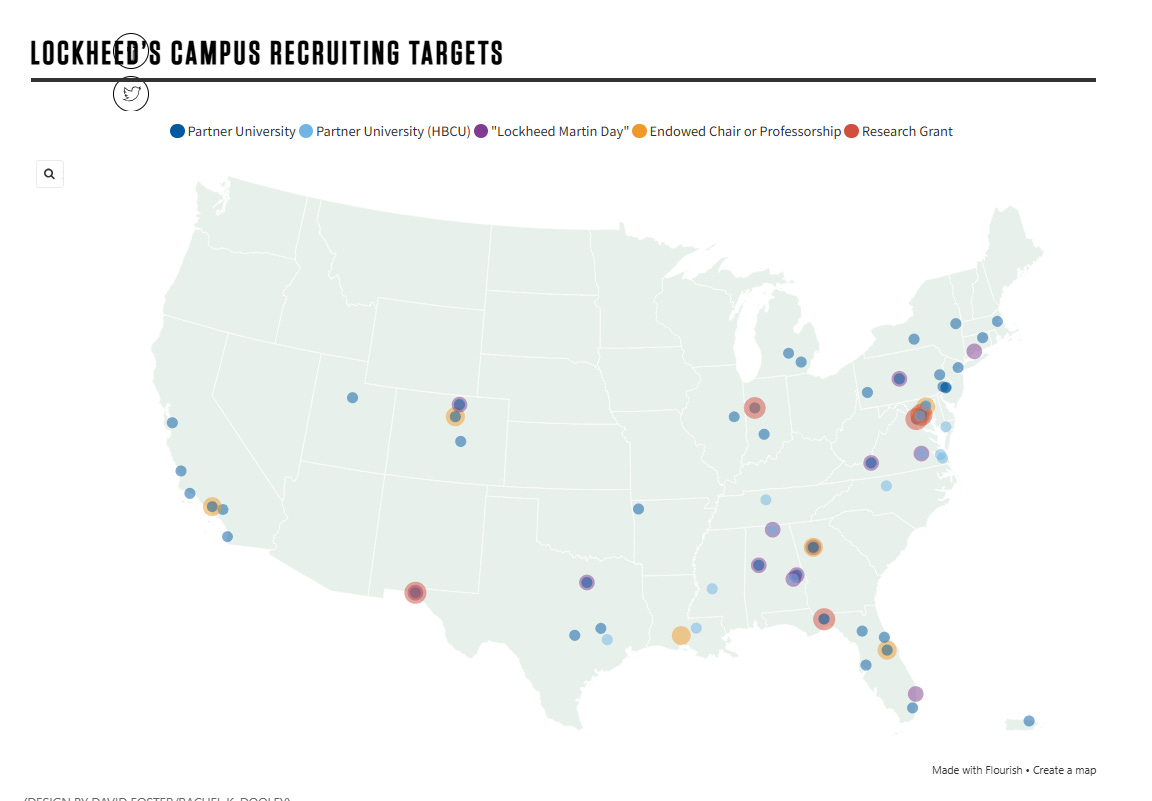
On campus, Lockheed has set up recruiting tables in the lobbies and hallways of student buildings and hosts workshops on everything from space exploration to résumé-building. At the University of Texas at Arlington, a $1.5m donation resulted in one of their buildings being renamed the Lockheed Martin Career Development Center.
But the company’s signature recruiting event, which is hosted at more than a dozen universities, is something called Lockheed Martin Day. Recruiters attract students with virtual reality demos, flight simulators and, in some cases, landing their helicopters directly on campus. Company officials have been known to offer on-the-spot job and internship opportunities to students during the event.
Additionally, Lockheed has poured resources into the financial support and recruitment of students at historically Black colleges and universities (HBCUs), earning its place as the number one industry supporter of HBCU engineering institutions for seven years in a row.

A variety of objects might be considered dual-use. A first set of dual-use objects are objects that, by their nature, serve or have the potential to serve civilian and military purposes alike—for example, transportation infrastructure like bridges, roads, trains, and airports.23 A second set of dual-use objects are civilian objects that become dual-use because they are used by armed groups—for example, an apartment building that houses civilian families might become a dual-use object if part of it is used as a storage facility for weapons or a meeting place for an armed group. A third set of dual-use objects are civilian in nature, but at least in part support or sustain armed forces or their members—for example, banks, bakeries and other food-production facilities, or oil wells and refineries (where some of the proceeds of oil sales go to the armed forces). These objects are sometimes referred to as “war-sustaining” because they support or sustain the enemy’s war effort, even though they are equally essential to civilians.24
The rise of the concept of dual-use objects has not served to protect civilians. To be sure, many of the objects that are today labeled “dual-use” have long been considered lawful “military objectives” under international humanitarian law. And calling these objects “dual-use” recognizes their civilian use. Yet it appears that, rather than prompting caution in targeting, dubbing objects “dual-use” has had the effect of creating a porous category of targetable objects that are obviously critical to civilian life and yet are lawfully targetable—including traditionally protected objects such as private homes, schools, and hospitals. Thus, while this Article is fundamentally concerned with what states do—that is, the targeting of dual-use objects—we also note that the creation of this category appears to have had the effect of casting suspicion on objects critical to civilian life, thus reducing inhibitions in targeting them. Global audiences have become accustomed to witnessing the destruction of these objects when the targeting military asserts that they serve some military purpose, however modest and however poorly documented. At the same time, the range of dual-use objects targeted in recent decades has grown in both type and scale. The addition of “war-sustaining” objects to the list of targetable objects—a development that is still contested—has significantly expanded the type of dual-use objects that are considered targetable. That greater willingness to target such objects presents a dangerous challenge to modern international humanitarian law and its aim to protect civilians from the worst horrors of war.
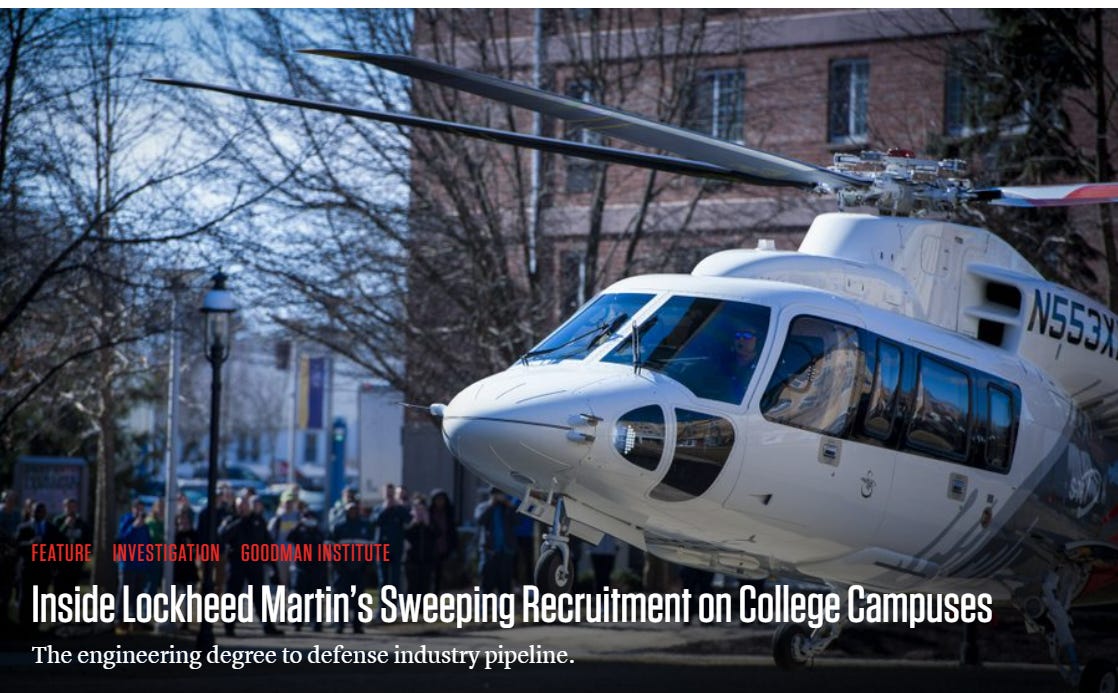
“It’s probably what most engineers, especially in mechanical and aerospace who want to go into defense prospects, aspire to,” says Sam*, who graduated with a bachelor’s in aerospace engineering in December 2021. “They’re one of the biggest defense contractors in this country, so you have the opportunity to work on very state-of-the-art technology.”
Since 9/11, the United States has spent $8 trillion on war. In 2020, for the first time, federal funding to Lockheed surpassed that of the U.S. Department of Education, the federal agency tasked with dispensing scholarships and Pell grants. Biden requested $813 billion in defense spending for fiscal year 2023, which includes the largest-ever allocation for research and development.
“Of course it’s the defense industries that have the ability to offer these favorable terms to people, because they’re also parasites on the public purse,” Astra Taylor says. “If these students weren’t worried about the cost of college, would they be as apt to take a job at a defense contractor versus doing something else in their community?”

New Haven students enjoy a Lockheed Martin flight simulator at a career fair on Feb. 19, 2020. Lockheed is not only one of the world’s biggest weapons manufacturers, but one of the biggest employers of software engineers in North America.


They are murderers, but so so cute: Luis (right), a circuit design engineer at Lockheed, celebrates with his wife after paying off more than $300,000 in student debt, as featured in a promotional message on Lockheed Martin’s website.

DEI for Genocide: Lockheed Martin Day, part of a larger effort to create a full student-to-weapons manufacturer pipeline, includes same-day job interviews at the University of New Haven on Feb. 19, 2020.
 Paul Haeder, Author