

“There is no room in this country for hyphenated Americanism” . . . 1907, Teddy “Swings a Big Stick” Roosevelt
Mar 13, 2026
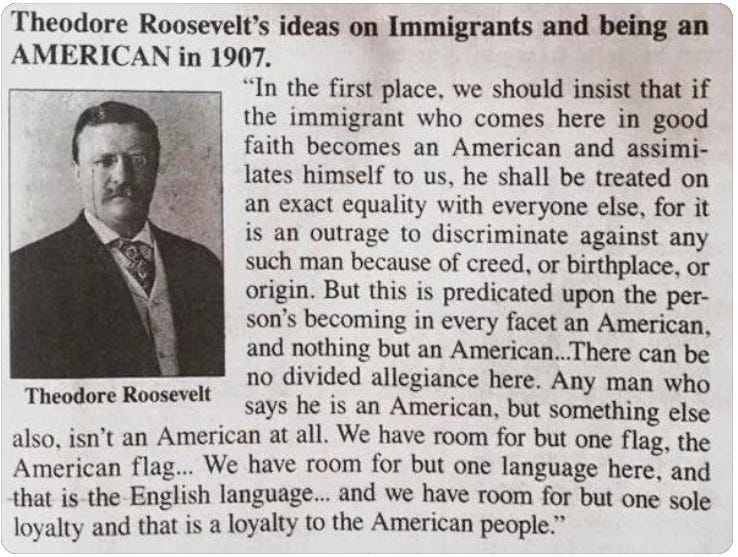
Whoops, wrong Pepe:
How Russia and India Approach the War on Iran
Pepe Escobar• Thursday, March 12, 2026 • 1,500 Words
President Putin sent a gracious message to Ayatollah Mojtaba Khamenei, personally congratulating him on his election as Supreme Leader of the Islamic Republic of Iran.
Words do (italics mine) matter:
“At a time when Iran is confronting armed aggression, your efforts in this high position will undoubtedly require great courage and dedication. I am confident that you will honourably continue your father’s work and unite the Iranian people in the face of an immense ordeal.”
After stressing foreign “aggression” and continuity of government, Putin reiterated the strategic partnership in no uncertain terms:
“For my part, I would like to reaffirm our unwavering support for Tehran and solidarity with our Iranian friends. Russia has been and will remain a reliable partner for the Islamic Republic.”
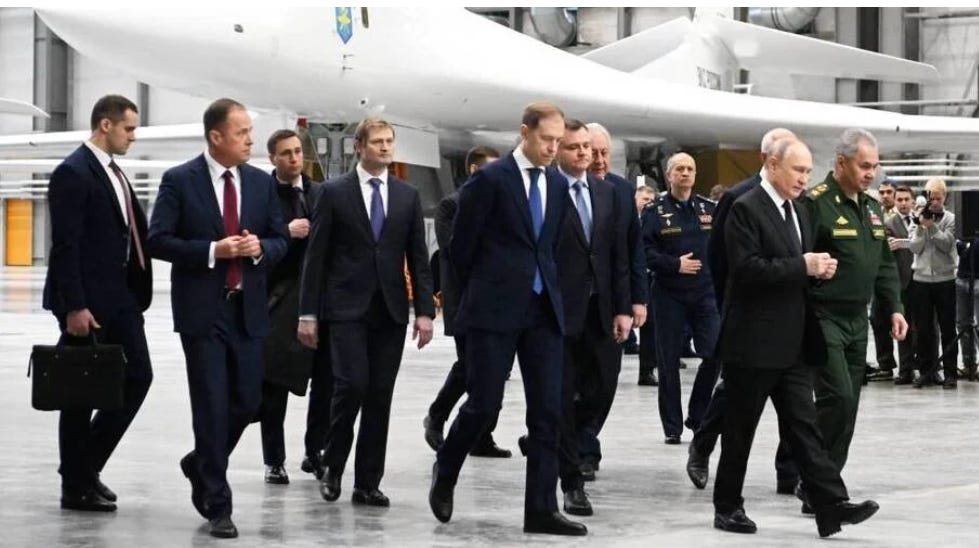
Cue to a desperate President Trump, or neo-Caligula, placing a call to Putin, essentialy to ask him to intervene as a mediator to convince Iran into accepting a ceasefire. What he heard instead was a polite enumeration of unpleasant facts regarding the war of choice launched by the Epstein Syndicate on Iran.
Trump is throwing his favorite envoy Steve Witkoff under the bus, alongside puny Jared Kushner and the push up clown posing as Secretary of Forever Wars, as the ones who forced him to bomb Iran. It’s Witkoff who claimed after the phone call that Russia stated it’s not transfering intel data to Iran, as confirmed, he said, by presidential assistant for international affairs Yuri Ushakov.
Nonsense. Ushakov never said such a thing. Russians at the highest political level do not comment on military matters linked to their strategic partnerships with both Iran and China.
Now for the facts.

Russian intel, Iranian execution, and no military treaty
It’s no secret that Moscow has shared what can be defined as industrial amounts of intel – and combat data – gathered in Ukraine with Tehran. A great deal of the advanced jamming tech and satellite intel leading to the serial destruction of THAAD radars, Patriot radars, and every other ultra-heavy fixed radar installations comes from both Russia and China.
Even if footage of Russian S-400 and Krasukha systems successfully intercepting American missiles has not been released, and probably it won’t be, the fact is Russian technicians are helping Iranian crews fine-tune the trajectories of missiles and drones during flight.
So there is a sophisticated, practical interplay in effect between Chinese and Russian high-resolution orbital imagery and targeting assistance, and swarms of cheap, $20,000 drones.
Oh my fucking god . . . Danny Haiphong and Napolitano . . . .

Pepe is having orgasms over Russia Russia Russia . . . Russian Society in War Mode.How the war against Ukraine has accelerated the militarization of Russian society
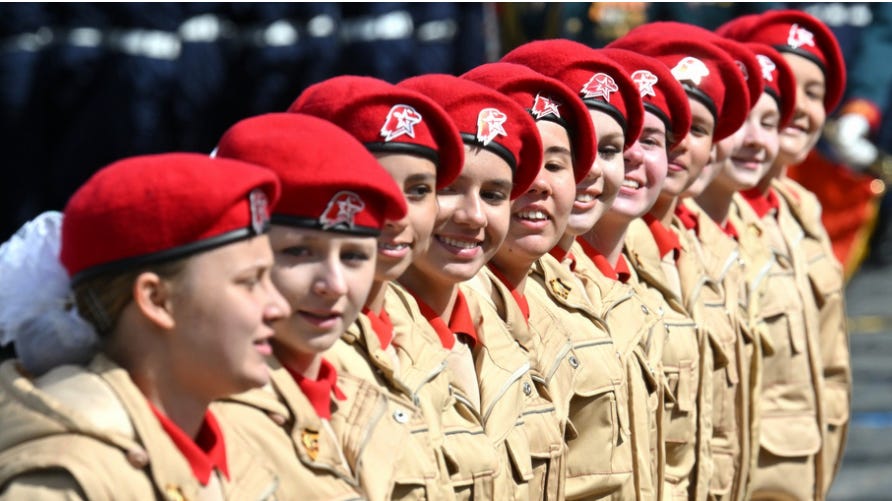
In the meantime, the Russian economy had reached its limits and the relative expansion of the first years of the war was over. Even the production of armaments has been in decline since autumn 2025 because orders have to be paid for from the state which is increasingly running out of funds. President Vladimir Putin wants to support the arms industry over the next three years by significantly increasing arms exports abroad, particularly to African countries.
Russia’s budget has a planned deficit of at least one percent of gross domestic product. This is not a critical figure, but in order to fill the state coffers, the government has decided to take drastic measures that are affecting the population directly and drastically. Gone is the grace period for small and medium-sized enterprises which now have to forget various tax benefits. The state already increased the profit tax in 2025, and since 1 January the VAT has also been raised from 20 percent to 22 percent, which hits people on low incomes particularly hard.
The problem of growing wage debts is adding fuel to the fire as employers (especially of state-owned enterprises) are unable to pay their employees on time. The state statistics authority Rosstat recorded a 2.3-fold increase for 2025 alone and puts the total of current back wages at around 22 million euros. In short: Russia’s war against Ukraine is not only costing the state dearly – the economic burden is also being borne by those who never benefited from the promotion of the war economy.
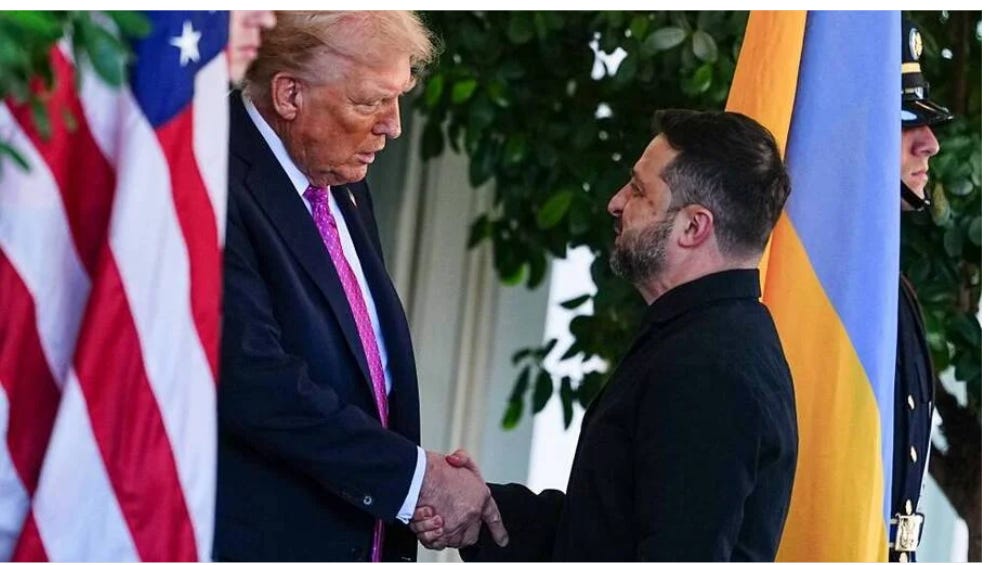
Yeah, Zelensky should be gutted, yep, but Ukraine is Israel, man, and half the Jew Fucks in the USA have Ukraine heritege, so the DNA has spread far and wide.
Over 1.7 million minors have gone through the military-inspired education program over the past ten years.
On 21 September 2022, Putin signed an ukase on partial mobilization. In the five weeks up to 28 October, over 300,000 people were drafted, as the battle line had expanded so much in the previous months that it could not be maintained with the units available at the time. In many regions, the recruitment offices resorted to harsh measures in order to meet the specified quotas. Some of those affected were picked up at home, picked up on the street or lured with the ruse that it was merely a matter of updating the personal data recorded in the military register.
Continuing the war at any cost due will exacerbate war fatigue in society and the tight budget situation, even among those citizens that are loyal to the Kremlin.
One person affected by the latter was Georgi Avaliani from Moscow. He was conscripted against his will and deported to the front but managed to escape to Germany. There, the authorities rejected the deserter’s application for asylum on the grounds that he would only face a fine if he returned and referenced that, according to the then Russian defense minister, Sergei Shoigu, the partial mobilization had been suspended at the end of 2022.
The reality is, in Russia Georgi Avaliani is considered a deserter and that means fifteen years in prison. Or, worse still, he could be transferred to a penal battalion at the front, which would almost certainly mean his death. The argumentation of the Federal Office for Migration and Refugees (BAMF) is therefore a fatal error. Although partial mobilization has been suspended since October 2022, it has not yet been completely lifted. Until the end of the so-called special military operation, the same rules apply to soldiers drafted at that time as to those who voluntarily joined the armed forces in return for a relatively high salary and bonus payments. They only have three legal options for leaving the service: reaching the maximum age permitted for deployment, poor health, or if they are sentenced to imprisonment. Even those who are de facto unfit can be used on the front line, especially for kamikaze missions where high personnel losses are calculated. This refers to infantry advances known as “meat storms”, which — with little or no support from the air or artillery — become living targets for the Ukrainian army. In most cases, these are former prisoners or soldiers accused of violating troop discipline. Their chances of survival are extremely low. — Source

The document was called “A Clean Break: A New Strategy for Securing the Realm.” Its authors included a who’s who of right-wing, hawkish, pro-Israel figures who would later dominate US foreign policy during the war-obsessed presidency of George W. Bush: Richard Perle, Douglas Feith, David Wurmser, among others. And their proposal was a radical one: Israel, they insisted, should abandon the old “land for peace” formula in the Middle East and instead reorder the region through military confrontations and even regime change operations.
They were explicit about their targets. Iraq, Syria, Lebanon, and, yes, Iran. The report talked about “removing Saddam Hussein from power,” “striking” targets in Syria, and pulling Lebanon away from Iran.
At the time, this seemed like the pipe dream of a handful of fringe ideologues. Today, however, it reads like a blueprint. Just look at what happened next.
- Participants in the Study Group on “A New Israeli Strategy Toward 2000:”Richard Perle, American Enterprise Institute, Study Group LeaderJames Colbert, Jewish Institute for National Security Affairs
Charles Fairbanks, Jr., Johns Hopkins University/SAIS
Douglas Feith, Feith and Zell Associates
Robert Loewenberg, President, Institute for Advanced Strategic and Political Studies
Jonathan Torop, The Washington Institute for Near East Policy
David Wurmser, Institute for Advanced Strategic and Political Studies
Meyrav Wurmser, Johns Hopkins University
Conclusions: Transcending the Arab-Israeli Conflict
TEXT: Israel will not only contain its foes; it will transcend them.
Notable Arab intellectuals have written extensively on their perception of Israelís floundering and loss of national identity. This perception has invited attack, blocked Israel from achieving true peace, and offered hope for those who would destroy Israel. The previous strategy, therefore, was leading the Middle East toward another Arab-Israeli war. Israelís new agenda can signal a clean break by abandoning a policy which assumed exhaustion and allowed strategic retreat by reestablishing the principle of preemption, rather than retaliation alone and by ceasing to absorb blows to the nation without response.
Israelís new strategic agenda can shape the regional environment in ways that grant Israel the room to refocus its energies back to where they are most needed: to rejuvenate its national idea, which can only come through replacing Israelís socialist foundations with a more sound footing; and to overcome its “exhaustion,” which threatens the survival of the nation.
Ultimately, Israel can do more than simply manage the Arab-Israeli conflict though war. No amount of weapons or victories will grant Israel the peace its seeks. When Israel is on a sound economic footing, and is free, powerful, and healthy internally, it will no longer simply manage the Arab-Israeli conflict; it will transcend it. As a senior Iraqi opposition leader said recently: “Israel must rejuvenate and revitalize its moral and intellectual leadership. It is an important ó if not the most important–element in the history of the Middle East.” Israel ó proud, wealthy, solid, and strong ó would be the basis of a truly new and peaceful Middle East.
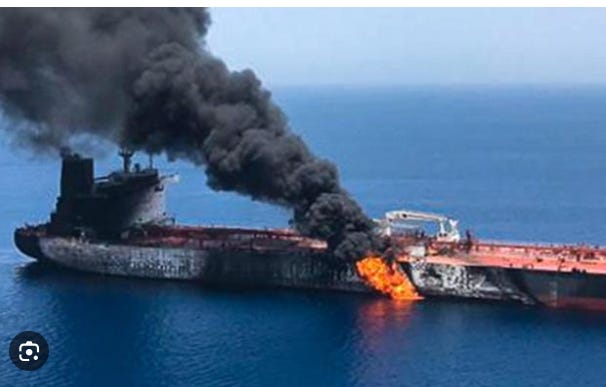
- According to CNN, the Trump administration reportedly underestimated the possibility that Iran would close the Strait of Hormuz in response to US military strikes. Officials believed Iran would avoid doing so because it would harm Iran’s own economy more than the United States. As a result, the scenario was not fully planned for during the administration’s strategy discussions. Sources tell CNN that President Trump relied on a small circle of advisers, which limited broader interagency debate about the economic consequences. Although the Energy and Treasury Departments were involved, detailed economic analysis that previous administrations typically used in similar decisions played a smaller role.
- Iran’s closure of the strait has created major disruption in global energy markets. Oil tanker companies have requested US Navy escorts through the waterway, but the Pentagon has said it is currently too dangerous due to Iranian drones, missiles, and sea mines.
- Defense Secretary Pete Hegseth attacked media coverage of the Iran conflict, arguing that headlines like “Mideast War Intensifies” are misleading and should instead read that Iran is “increasingly desperate.” He also lashed out at CNN, saying it spreads “fake news,” and added,
“The sooner David Ellison takes over that network, the better.”
- The remark drew criticism for openly pressuring a news outlet’s ownership and attacking the press while serving as the nation’s top civilian defense official.

“I stand before you today with one unmistakable message about Operation Epic Fury: America is winning decisively, devastatingly, and without mercy,” he said. He declared that, four days into the mission, Iran is “toast, and they know it. Or at least soon enough they will know it.”
He compared the Persian nation’s predicament to that of a football team:
“They don’t know what plays to call, let alone how to get in the huddle and call those plays.”
There was not even a hint of the challenges that might lie ahead in the conflict with Iran, a nation of 90 million people that borders seven countries—challenges that might include internal fragmentation and chaos, a dangerous insurgency, humanitarian crises, regional destabilization, and global economic disruption.
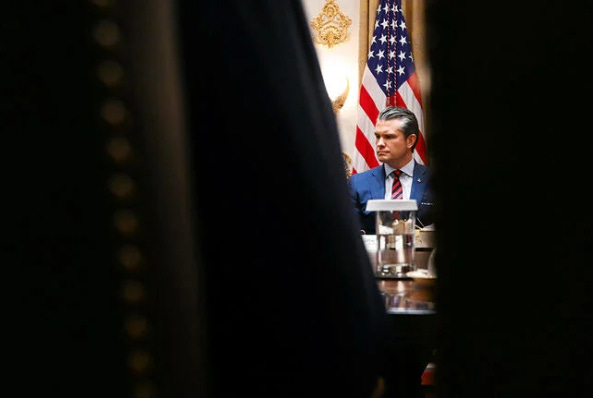
Targets and Rhetoric
- The American Press: Hegseth has recently labeled reporters’ coverage of U.S. service member casualties as fake news and “patriotic” perspective-deficient. He accused the media of highlighting war costs specifically to make President Trump look bad.
- Academic Institutions: He recently cut all graduate-level Professional Military Education and fellowships between the War Department and Harvard University, claiming the school has partnered with adversaries and fills officers’ heads with “globalist and radical ideologies”.
- The “Left”: In his writings and public statements, Hegseth has characterized the survival of the U.S. as requiring a “holy war” to achieve the “categorical defeat of the Left,” which he defines as including the Democratic Party and its supporters.
- Military “Non-Loyalists”: Reports indicate Hegseth has initiated a purge of the armed forces to drive out suspected non-loyalists and anyone showing “faintest signs of political disloyalty”.
Oh, those fucking places of lower learning: Hegseth Is Waging War on University Partnerships.
Defense Department documents that Inside Higher Ed has obtained suggest that Hegseth’s announcements about what the department is doing go much further than what is actually happening on the ground.
At stake is a slice of universities’ lucrative partnership with the military, which both sides have called beneficial in the past. And Hegseth’s changes to which institutions can train top military leaders come just as the U.S. has entered into a war with Iran that’s upended the Middle East.

Under intense scrutiny from the government, these colleges seem to be catching up to a tactic that other industries have long employed.
“This kind of access lobbying, revolving-door lobbying, whatever you want to call it, it’s been going on for literal decades by now,” said Jeffrey Lazarus, a professor of political science at Georgia State University who studies lobbying. “It’s something that clients of all kinds look for, not just colleges and universities.”
“Everybody who hires a lobbyist,” Lazarus said, “wants the best access you can get.”
Hiring some of K Street’s biggest names can be expensive. Continental’s lobbyists, for example, reported $255,000 in income from ASU in 2025. Ballard Partners reported $360,000 from Harvard.
Did those investments pay off? It’s notoriously difficult to prove that any one lobbying effort led to results. One promising example, however, was the effort by small colleges last year to oppose a proposed endowment tax that their leaders argued would have affected them disproportionately.
A coalition of more than 20 small, relatively well-endowed colleges pooled funds that went to the firm OGR to lobby on the topic, The Phoenix, Swarthmore College’s student paper, reported. Some of the colleges also hired their own lobbyists, some for the first time in their histories, Politico reported.
Here we go . . . Escobar is not Werner Herzog
Pepe Escobar travels to Iran to study the North-South Corridor, designed not only to boost Iran–Russia trade but also to unlock unique economic opportunities for many other countries.

“Laws of war dictate that a military target is a legitimate target, and a civilian target is not legitimate. Targeting, whether it’s oil infrastructure or water infrastructure, those are war crimes and violations of international law,”
Laws of war?
Water, Pepe Lew Pew, WATER. Agua!
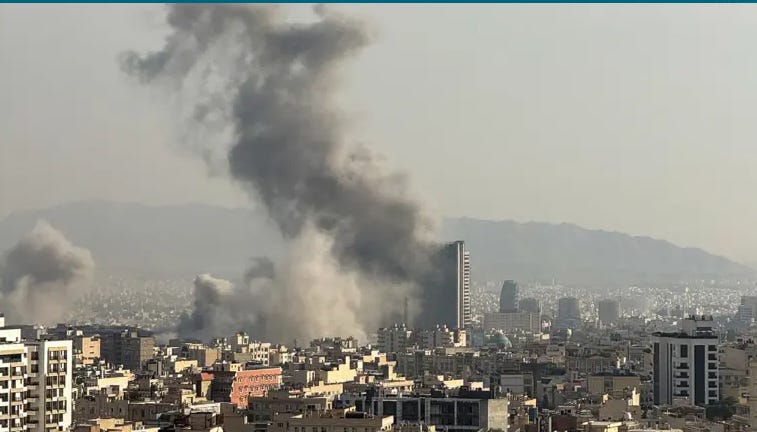
Iran’s foreign minister, Abbas Araghchi, called a Saturday attack on a desalination plant on Iran’s Qeshm Island “a dangerous move with grave consequences” on social media and accused the U.S. of setting a precedent. Capt. Tim Hawkins, a spokesman for the U.S. Central Command, has since denied that the U.S. was behind the attack.
One day later, Bahrain’s interior ministry alleged that an Iranian drone caused material damage to a desalination plant in the Persian Gulf island nation, accusing Iran of “indiscriminately” attacking civilian targets. Bahrain’s water and electricity authority said there had been “no impact on water supplies or water network capacity.”
While there has been no immediate response from Iran about Bahrain’s allegation, Iranian officials have stated that their attacks on close U.S. allies in the Gulf are a direct response to the American-Israeli attacks in Iran. They have also stated that the attacks are aimed at American military bases and U.S. soldiers, not civilians.
It was not immediately clear whether either plant was still functioning. Political experts have long warned about the plants’ vulnerability as military targets.
Desalination plants are used to convert seawater into water for drinking, irrigation and industrial purposes. In an area where potable water is scarce, the plants have become vital to life in the Gulf region.
According to a 2020 report by the Gulf Research Center, groundwater, with desalinated water, accounts for around 90% of the region’s main water resources. And with groundwater fast deteriorating due to climate change, Gulf countries have come to rely more heavily on desalinated water.
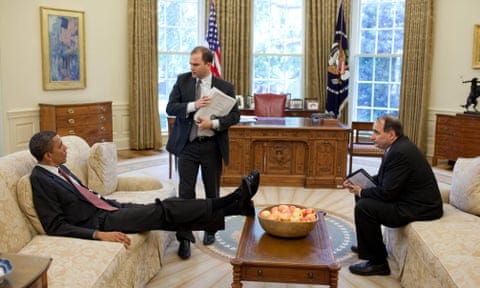
Shit, more feces a la Obama?

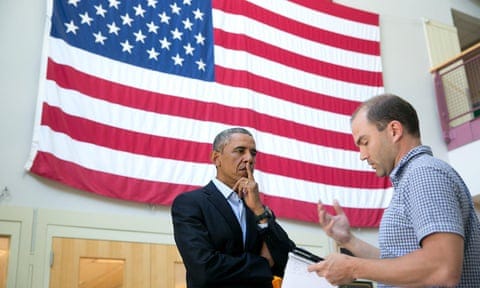
Each week, “Pod Save America” cohost Tommy Vietor and Obama’s former Deputy National Security Advisor Ben Rhodes break down the biggest developments in foreign policy, national security and global politics. They try to explain which stories matter and why, and what we can all do to understand and shape the world around us.
Ben Rhodes served as deputy national security adviser in Barack Obama’s White House for eight years. He was working with President Obama as Benjamin Netanyahu continued to pressure the US, time and time again, to attack Iran. Obama, says Rhodes, resisted the Israeli prime minister’s pressure campaign, but now under President Donald Trump’s second term, it’s clear that “Netanyahu essentially bullied him [Trump] into this war.”
“Trump’s the first president who couldn’t say no to Netanyahu,” Rhodes, now co-host of ‘Pod Save the World’
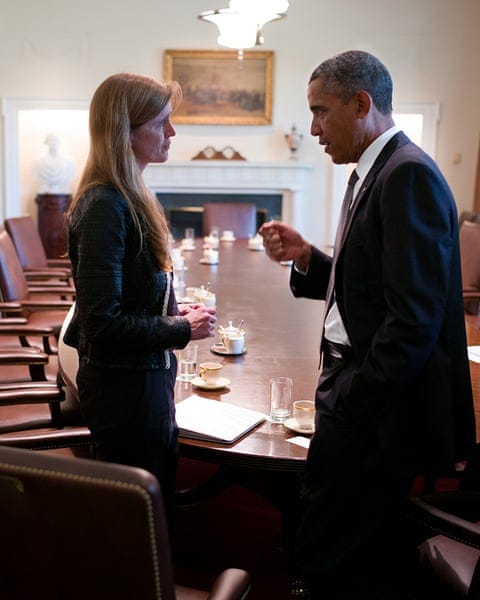
The speech delivered by Secretary of Defense Pete Hegseth yesterday (Oct 01, 2025) at an extraordinary meeting of generals and admirals at Marine Corps Base Quantico had this main purpose: Provide Hegseth a televised platform to rant against what he assails as “woke” military standards. But it once again raised serious questions about Hegseth’s fitness for the job. These questions—which included a sexual assault allegation from 2017 and a devastating email from Hegseth’s own mother in 2018 berating him for mistreatment of women—have plagued the former Fox News anchor from the moment Donald Trump picked him for the role.

But Hegseth’s record highlights another problem, of which yesterday’s event was an alarming reminder. Hegseth is an ideological extremist who views political opponents as “the enemy” and political differences as war by another name. Worse, he’s a Christian nationalist of the stridently militaristic kind, which raises yet further disturbing questions about his willingness to misuse the U.S. military for political purposes. This is not a characterization pieced together from the odd soundbite or two—Hegseth himself tells us who he is in his books. The image of Hegseth that emerges from The War on Warriors (2024), Battle for the American Mind (2022), and American Crusade (2020), is of a militant Christian extremist who is obsessed with the Crusades and whose highest aspiration is redesigning the U.S. military into his ideological mold.
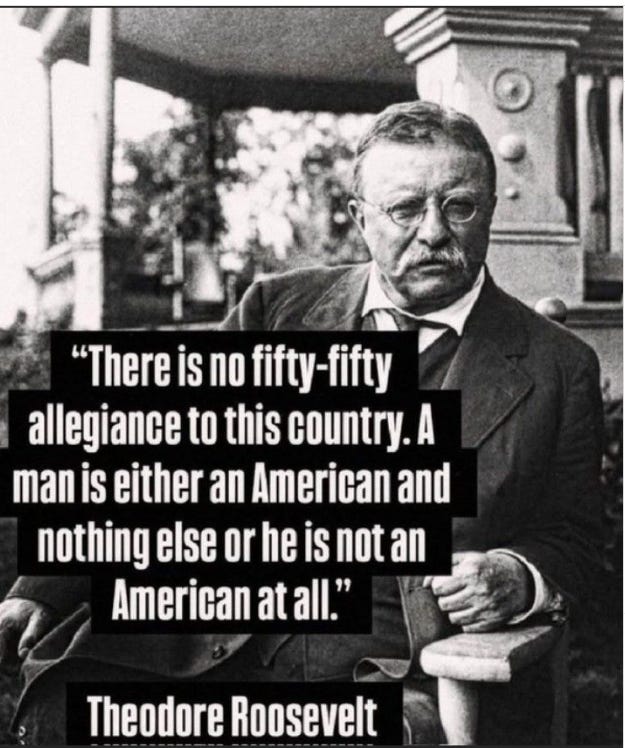
In addition to treating a broadly defined “Left” as the enemy, American Crusade also heaps scorn on ostensibly patriotic but overly complacent “fifty-fifty Americans.” The term comes from Theodore Roosevelt, who is quoted in the epigraph to the first part of the book: “There is not room in the country for any fifty-fifty American, nor can there be but one loyalty—to the Stars and Stripes.”.
 Paul Haeder, Author