

“Every time we lifted a stone, we increased our sense that we might succeed in saving a life, or that we might find someone who could not be saved.”
Mar 11, 2026
Read the DropSite News piece below and see the very real consequences of these arms dealers, these button-down Boeing cunts, these Andril Luckey fucks, all those Jerry Garcia tie-wearing heathens, those eyesores of humanity hunkering down in their Eichmann rationalizations that a job is a job, and, “hey, I am not pulling the trigger or detonating the bombs or launching the missiles . . . I just make parts for them to feed and clothe, and outfit my family.”
The top employer of mathematicians in Tucson, Arizona — this blue dot in a red state, this self-proclaimed sanctuary city, this place where we put “hate has no home here” signs in our front yards — is Raytheon, the weapons manufacturer now rebranded as RTX. They employ approximately 13,000 people in Tucson and generate a $2.6 billion annual economic impact on Arizona. That number — $2.6 billion — is the gravitational force that keeps Tucson’s economy from being just a university town and a retirement destination. It funds our tax base, our university partnerships, our job market for the most mathematically gifted graduates the UA can produce.
It underwrites our progressive self-image.
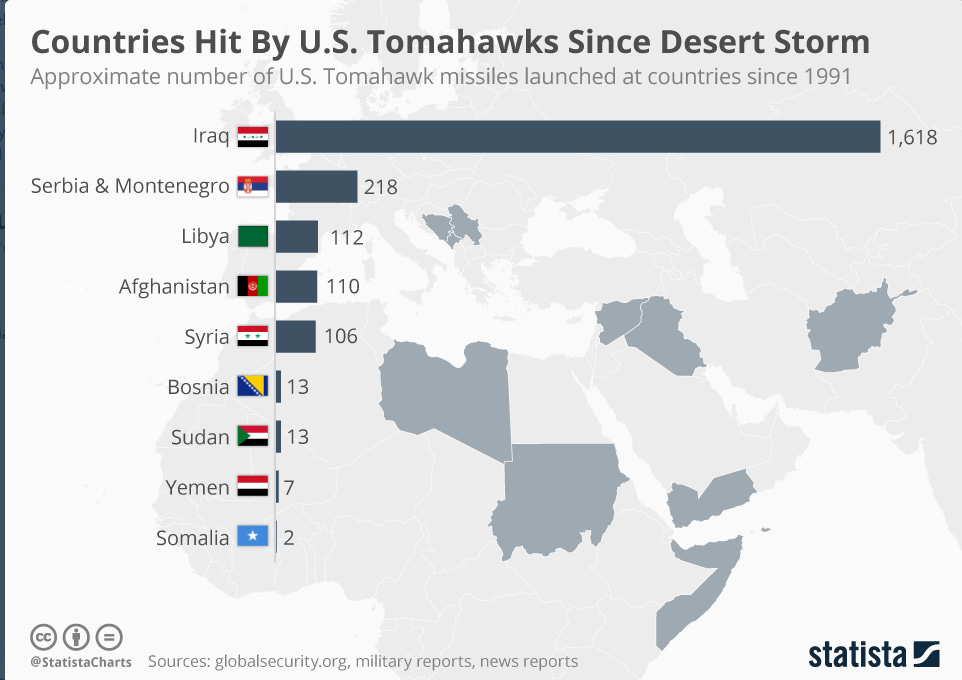
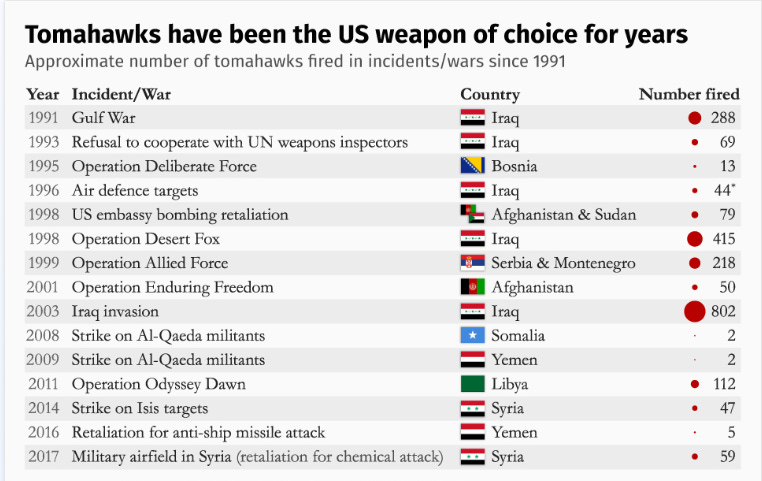
And it is built entirely on one product: weapons. Tomahawk cruise missiles. Each one costs over two million dollars. Each one is designed to kill things with extraordinary precision. Each one, when it was fired toward southern Iran on February 28, 2026, had a Tucson return address.
Our city has a Latina mayor, Regina Romero, who has spoken passionately about immigrant rights and fighting ICE raids that terrorize brown families in our streets.
We march.
We protest.
We put rainbow flags and Aquí Estamos banners on the same city blocks where Raytheon engineers commute to work.
And yet — search as you might — you will not find a statement from Mayor Romero about the girls of Minab and Tucson’s role in it. Not one word. El silencio también es una declaración.
If you are going to be outraged about ICE agents terrorizing brown children at the U.S.-Mexico border — and you should be, that outrage is righteous and correct — then you must also be willing to look into the Smoking Mirror and ask: what about the brown children on the other side of our missiles?
Consistency is not optional. Moral clarity doesn’t come with a geographic exception.
An Amazon AI Picked the Target. A Raytheon Missile Finished the Job. | Project Blue, Claude, and 175 dead schoolgirls
+—-+
Tucson 🌵☀️ calls itself a progressive sanctuary city 🕊️🤝🏙️ — but it sits on a $2.6 billion 💰 weapons economy 🔫🏭 built by Raytheon ⚙️, the maker of Tomahawk cruise missiles 🚀💥 now confirmed to have been used near a girls’ elementary school 🏫👧📚 in Iran 🇮🇷 where 175 people were killed 💔🪦, mostly children aged 6 to 12 🧒🩸. 🚀
The same AI model 🤖🧠 that Amazon 📦 nearly brought to Tucson’s Project Blue data center 🖥️🔵 — Anthropic’s Claude ✨ — was used by the Pentagon 🏛️🇺🇸 to select over 1,000 targets 🎯 in the first 24 hours ⏱️ of the Iran war 🇮🇷⚔️, and investigators 🕵️♂️🔍 believe outdated AI intelligence 📉💾 may have sent a $2 million 💸 Tucson-built missile 🚀🌵 into a classroom 🏫✏️💥. 🇾🇪
This isn’t the first time 🔄📅: in 2016, a Raytheon bomb 💣 from Tucson 🌵 killed 31 people 🪦 at a Yemeni water well 🇾🇪💧🚰, a story the New York Times Magazine 📰🗞️ traced step by step 👣 from our desert factory 🏜️🏭 to a village of farmers 🛖🌾. 💀
The girls of Minab 👧🇮🇷 have names 🏷️ — Hana, Zahra, Athena, Mahna 🗣️📝 — and Tucson’s progressive leaders 👔🏛️ have not said them 🤐🔇❌. The Smoking Mirror 🪞💨 doesn’t care whether you mean well 🤷♂️🚫❤️. It shows you what is 👁️🔍📠. 🧮
Well, this kind of super gun market sweep?
Trump Says Iran Has Tomahawk Missiles When Asked About Deadly School Strike
“The only other countries using Tomahawks are Japan, the United Kingdom, Australia and the Netherlands,” said Mark F. Cancian, a senior adviser for the Center for Strategic and International Studies, a national security-focused think tank. “Iran has none, though it has lots of missiles of different kinds.”
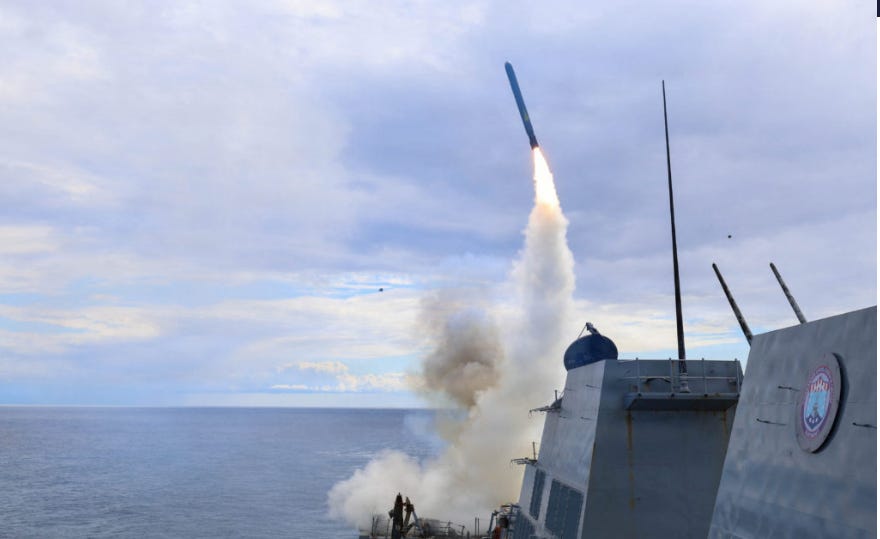
Tomahawk cruise missiles (particularly modern variants) possess advanced guidance systems that allow for mission aborts or rerouting after launch, rather than a traditional “kill switch” that instantly destroys them. Newer Block IV/V missiles can loiter, change targets, or be diverted, providing significant control over the weapon.
Now, of course, Israel has that ability to kill switch helicopters and cars and planes and trains and automobiles and projectiles.
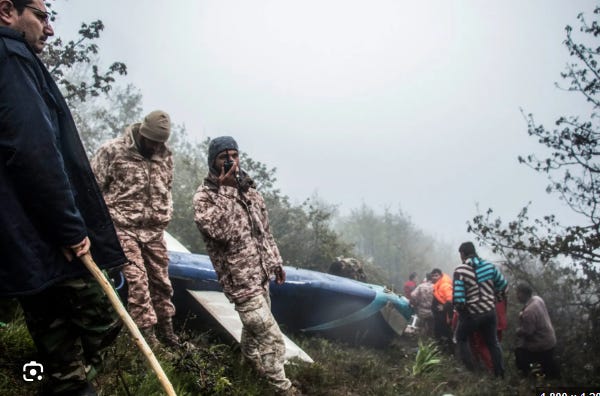
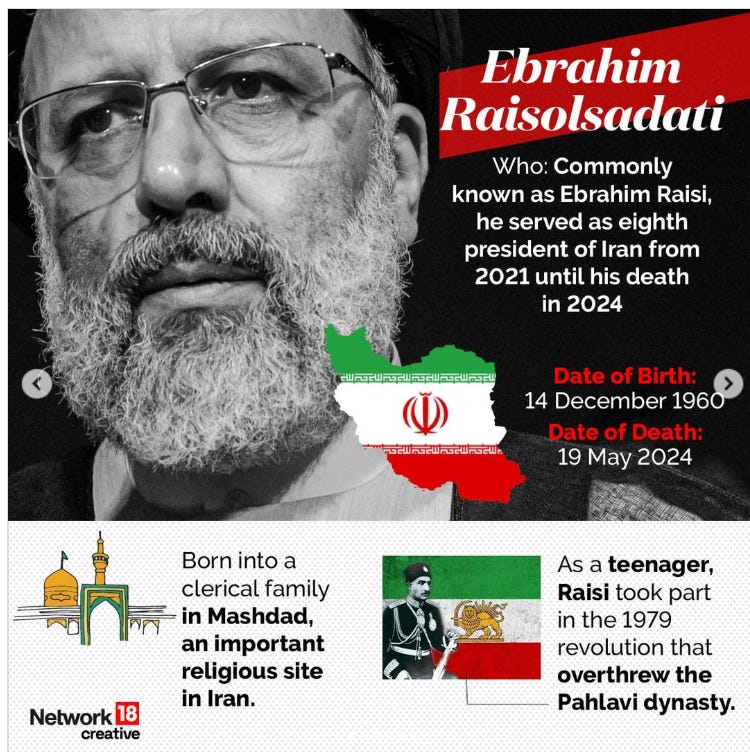
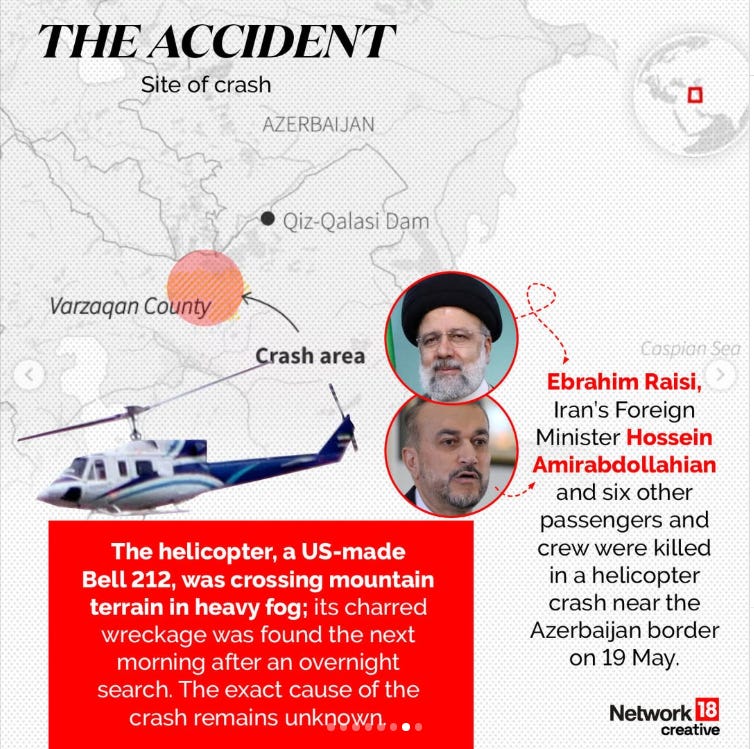
Iranian President Ebrahim Raisi and seven other people (eight total) were killed when their helicopter crashed in a remote mountainous area of northwestern Iran on May 19, 2024. The crash, attributed to poor weather conditions including thick fog, killed all occupants, including Foreign Minister Hossein Amirabdollahian.

The largest consumer gun show in the world is Wanenmacher’s Tulsa Arms Show in Oklahoma, featuring over 4,000 tables. For industry professionals, the SHOT Show in Las Vegas is the largest, with over 60,000 attendees. Other major events include the NRA Annual Meetings & Exhibits.

Oh, this one, can you imagine, running around putting stickers on the baby and woman- and boy-murdering weapons for your local militia or army?
One of the World’s Largest Arms Fairs Has Arrived in London – and Artists Are Fighting Back
Activists aim to whip up a protest as weapons buyers flock to the Defence and Security Equipment International trade show
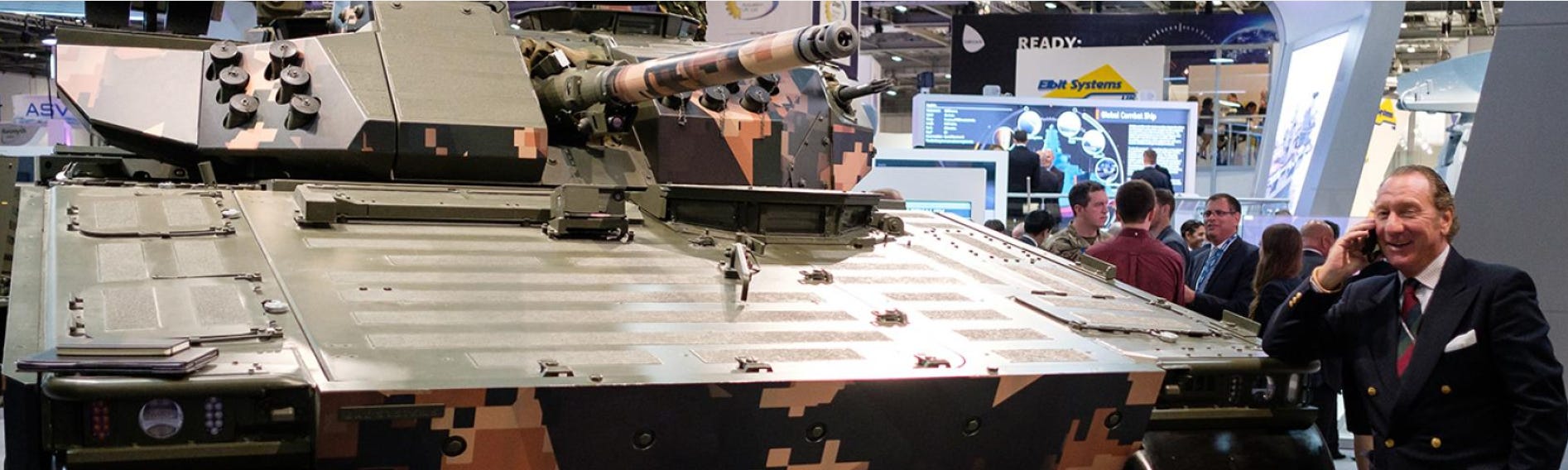



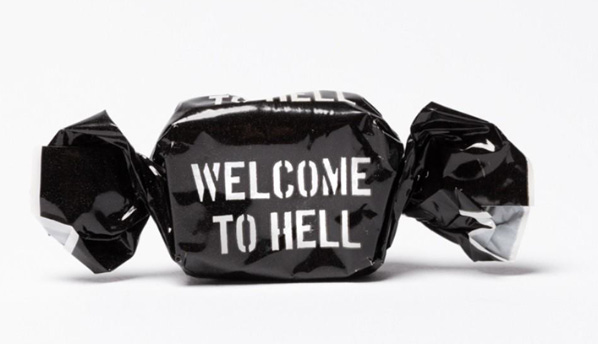
1,600 international exhibitors and military delegations – from Hong Kong to Saudi Arabia – for a weekend of sales negotiations and networking. To set the scene, picture yourself at an art fair but imagine you are met with weapons and warmongers rather than a tired Jeff Koons sculpture.

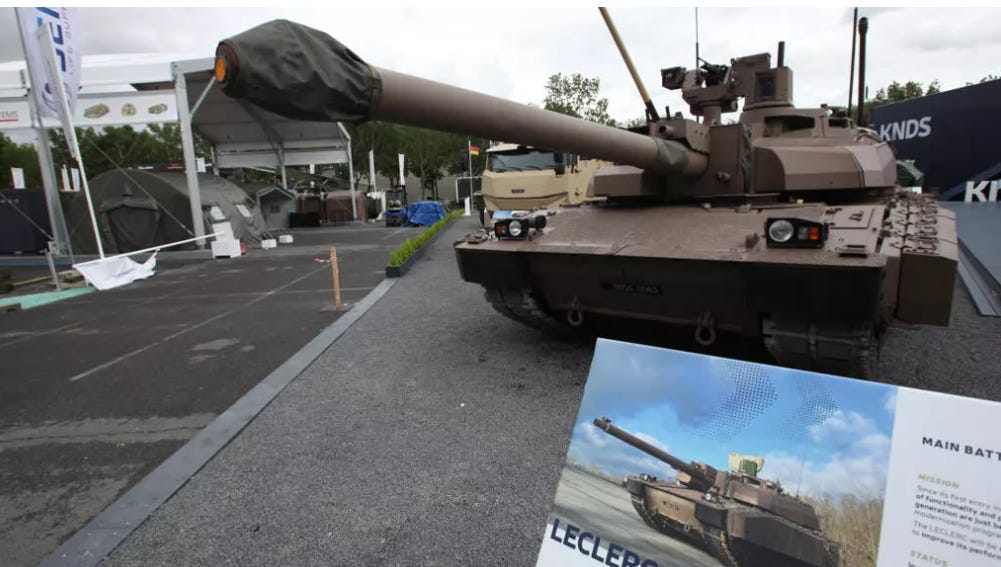
Representatives from some 2,000 companies will this week evaluate the latest defence technologies at France’s Eurosatory weapons show in northern Paris. Notably absent this year are Israel and Russia, who were excluded because of the wars in Gaza and Ukraine.
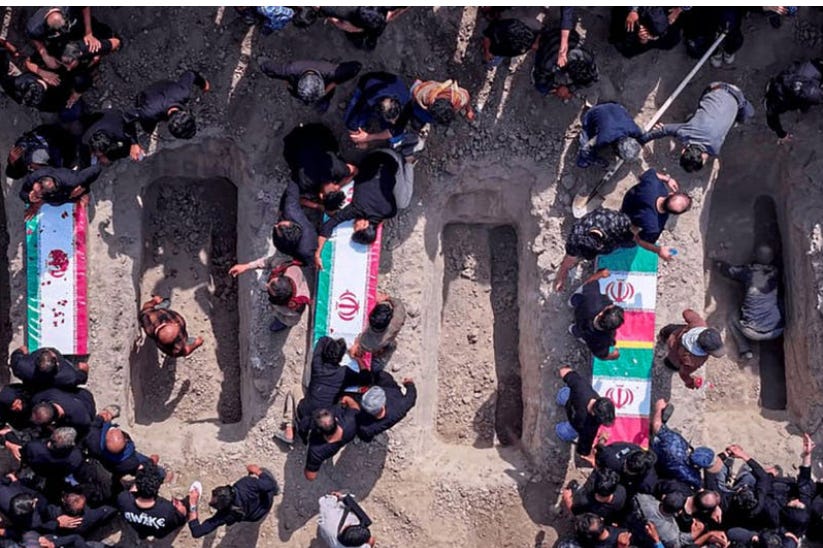
Funeral of the victims of the terrorist attacks carried out by the United States and Israel.
A tsunami of people, a crowd of people, has invaded Tehran during the funeral of the martyrs of the terrorist attacks carried out by the United States and the Israeli regime, shouting slogans calling for revenge and expressing their unwavering support for the Iranian armed forces.


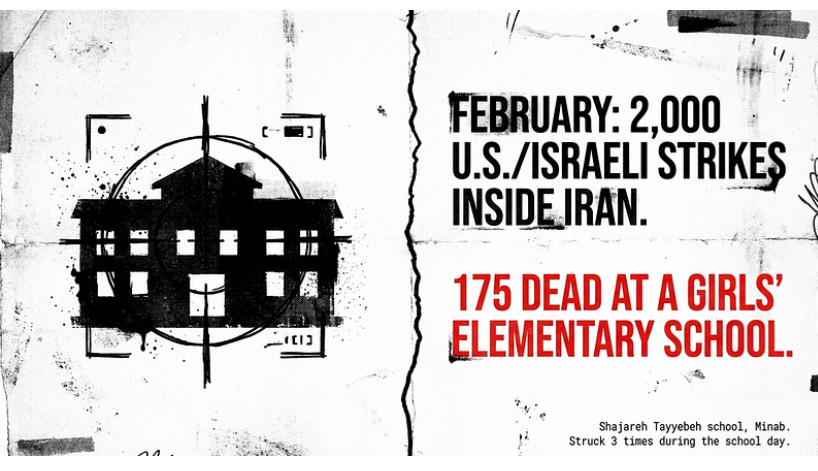
The United States and Israel have carried out over 2,000 strikes inside Iran since February 28th. This war began without a congressional declaration, without a UN mandate, and against a country that the IAEA confirmed had not built a nuclear weapon and that had, in the days before the bombs fell, signaled willingness to sign a comprehensive nonproliferation agreement.
The Trump administration walked away from that deal and chose bombs. Netanyahu described it as something he’d been wanting to do for 40 years. Good to know.
Now two girls’ elementary schools have been blown up.
On the first day of strikes, the Shajareh Tayyebeh girls’ elementary school in Minab, in southern Iran, was hit during the school day — struck three times by three separate missiles.
AMeriKKKan Evangelical Weapons — Crusaders
- Tomahawk Land-Attack Missiles (TLAM): Launched from Navy destroyers and submarines, these long-range cruise missiles have been used to strike high-value targets, including IRGC facilities and air defenses. New versions with a glossy black low-observable coating were observed for the first time.
- Precision Strike Missile (PrSM): Confirmed by CENTCOM for use in this conflict, these land-based missiles launched from HIMARS units provide long-range precision fire (range >499km) and have replaced older ATACMS in some roles.
- Hellfire Missiles: Carried by MQ-9 Reaper drones to target “high-value, fleeting” personnel and equipment.
- Standoff Weapons: Undisclosed long-range munitions launched from B-2 stealth bombers and F-22 Raptors to engage targets from outside the reach of Iranian air defenses.
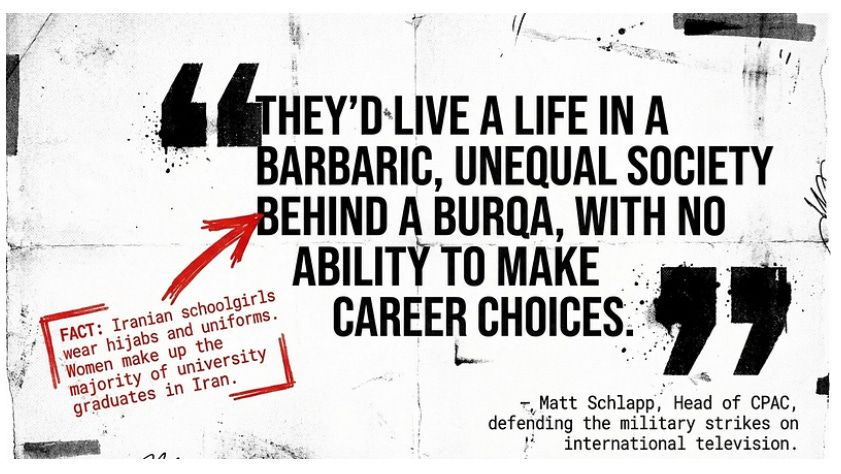
I love the Jewish people and Israel will exist until the end of time w my full support. The Bible reigns above and fascism should dissolve in the bosom of hell. Anyone who pushes Nazism is not welcome @CPAC

Jew Weapons — Jewsaders.
Rampage: Long-range, supersonic air-to-ground missiles used to strike hardened targets like missile silos and command bunkers.
- SPICE-250: “Smart” standoff glide bombs with satellite and electro-optical navigation used for precision strikes on UAV factories and military headquarters.
- JDAM (Joint Direct Attack Munitions): 2,000 lb GPS-guided bombs dropped by F-15 and F-35 aircraft.
- Air-to-Air Missiles: F-15 escort packages are equipped with AIM-120 AMRAAM, AIM-7 Sparrow, and Python 4 missiles to maintain air superiority.
Shabbat at CPAC: The Jewish conservatives who want to ‘Make America Great Again’
Despite media reports of “Nazis” at the conference, JNS found a very conspicuous and proud Jewish presence.
Two Jewish men meet in a buffet line and start arguing about whether Jews should move from New York City to Oklahoma.
“What’s the weather like?” one asks. “Better than New York!” says the other.
Others join in. Is it even possible to get a good bagel in Oklahoma, one wonders. “That’s why we need a community!” says the architect of the Oklahoma exodus.
This isn’t the setup of a joke. It’s Shabbat dinner conversation at the Conservative Political Action Conference, the annual gathering of mostly American right-wingers that has been a fixture on the political calendar of the Republican Party for decades.

Repeat attendees said that this year’s CPAC, held in National Harbor, Md. just a few miles south of Washington, D.C., seemed to have fewer attendees and less star power than previous years. (CPAC denied that there was any drop in attendance.)

Trump’s keynote address on Saturday was the only one of the events at the three-day conference that JNS attended where the main hall was fully packed to its capacity of about 5,000 people. This year, just 12 members of Congress and one governor spoke, compared with 32 who spoke at the 2012 election-year CPAC, prior to the Trump presidency.

RE; The U.S. Homicide Rate is 60% Higher than Iran’s; Yet The U.S. Calls Iran“Barbaric”
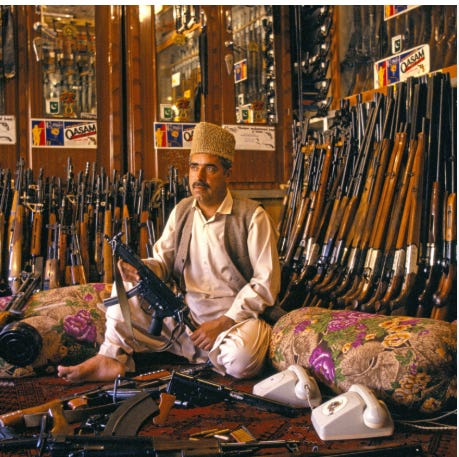
World’s biggest arms bazaar has fight on its hands
Craftsmen in the Pakistani town of Darra Adam Khel have been making and selling weapons for 150 years. Now they are staring down the barrel of red tape and legal regularization!

Well, this is fucking bullshit. We should have LAWS and grenades and rocket propelled grenades, dudes.
There are more than one billion firearms in the world and the majority are owned by ordinary people, according to the Small Arms Survey. It estimates that 85% are in civilian hands, 13% are in military arsenals and 2% are owned by law enforcement agencies.

The Arms Bazaar: From Lebanon to Lockheed is an investigation and anatomical study of the international arms trade by Anthony Sampson (1926–2004).
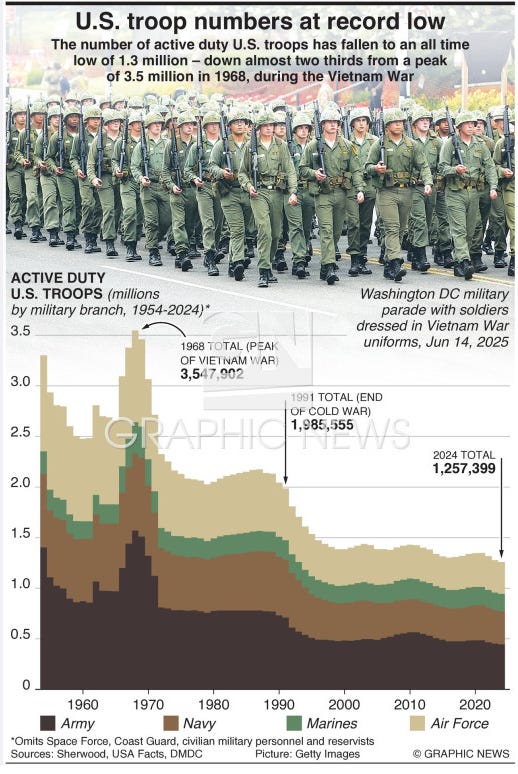
- Total Jobs: Approximately 2.4 million jobs are tied to the aerospace and defense industry.
- Major Employer Breakdown: The top 5 U.S. aerospace and defense companies (Lockheed Martin, RTX, Boeing, General Dynamics, and Northrop Grumman) employed over 800,000 people collectively as of 2021.
- Sector Breakdown (Approximate):
- Aircraft Systems: ~543,760 jobs.
- Land & Naval Systems: ~138,370 jobs.
- Space Systems: ~80,830 jobs.
- Cyber Systems/Surveillance: ~79,950 jobs.
- Defense Industrial Base: Comprises over 60,000 companies.
Top Institutions with Robust Dual-Use Military Programs
- Arizona State University (ASU): Known for its massive online presence, extensive Yellow Ribbon program, and the Pat Tillman Veterans Center, which assists with military education benefits and career services.
- University of Maryland Global Campus (UMGC): Enrolls over 55,000 military-affiliated students, offering online degrees and in-person classes at military installations worldwide.
- Purdue Global: Offers specialized online programs that convert military training into college credit (up to 54% for associate degrees), with a focus on leadership, business, and health sciences.
- Oregon State University (OSU): Provides military-friendly online programs (Ecampus) that allow flexibility for active-duty personnel, featuring a specialized Beaver Vet Community and veteran resources center.
- Embry-Riddle Aeronautical University (Worldwide): Specializes in aviation, aerospace, and security, with programs tailored to military personnel and veterans looking for careers in these sectors.
- George Mason University (GMU): Features a Military Alliance Program (MAP) that trains staff to support veterans and allows military academy credits to be applied toward degrees.
- Bellevue University: Recognized for military-friendly, flexible online programs and a dedicated military/government outreach team.
- Drexel University: Offers a strong Yellow Ribbon program with no cap on the number of veterans, providing 10–54% tuition reductions for military families.
Senior Military Colleges (SMC) & Specialized Institutions
These schools offer a “dual track” (military leader or civilian leader) and are authorized by the U.S. Army to host ROTC programs:
- Texas A&M University (College Station): Features the Corps of Cadets.
- Norwich University (Vermont): Often considered the birthplace of ROTC.
- The Citadel (South Carolina): A military college focused on leadership development.
- Virginia Military Institute (VMI): Focuses on military discipline and academic study.
- Virginia Tech: Hosts a Corps of Cadets alongside a civilian university.
- University of North Georgia: Recognized as a senior military college in the Georgia system.
Key Characteristics of These Programs
- Credit for Military Experience (ACE): Institutions like Purdue Global and Troy University heavily credit training from Joint Services Transcripts (JST).
- Tuition Assistance (TA) Coverage: Many schools, such as American Military University (AMU), Columbia Southern University, and Trident University, fully cover tuition at the $250/credit hour rate.
- Flexibility: Programs are designed for high mobility, offering 100% online or hybrid, self-paced, and asynchronous courses, as seen in Western Governors University (WGU) and Southern New Hampshire University (SNHU).
- Industry-Relevant Skills: These schools offer degrees in cybersecurity, intelligence, emergency management, and leadership, which are directly applicable to both defense and private-sector jobs.
2026 Best Military-Friendly Online Colleges
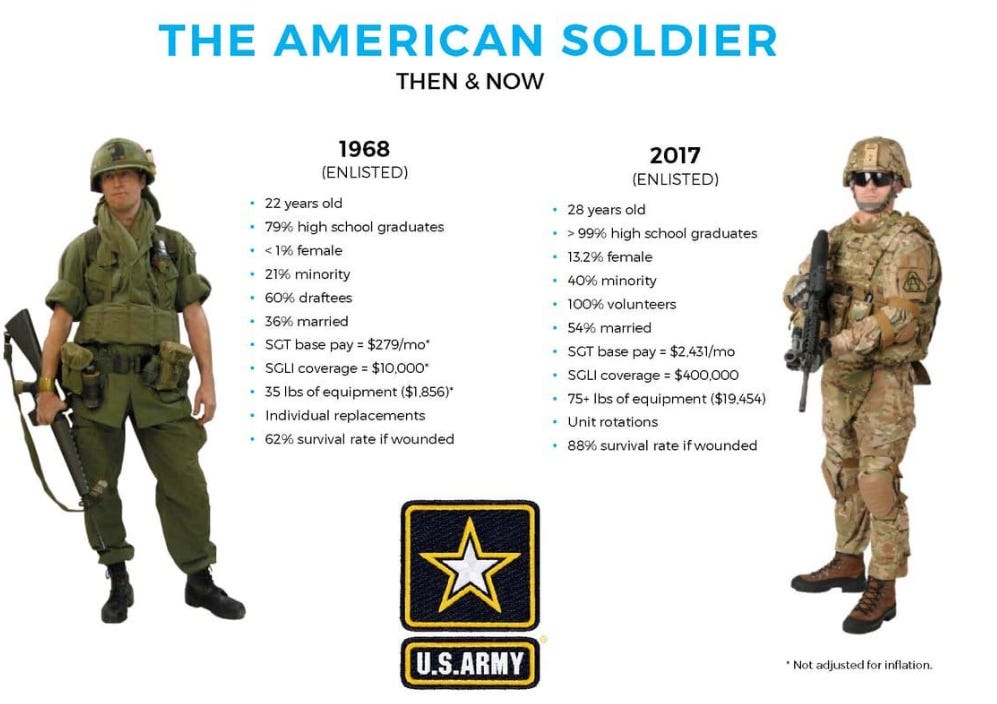
The Army hopes to lure civilian tech workers by letting some join as captains
“In this case, the direct commissioning program, we’re really focused on folks coming in at the lieutenant and the captain level to help us in the technical areas in our operational units.”
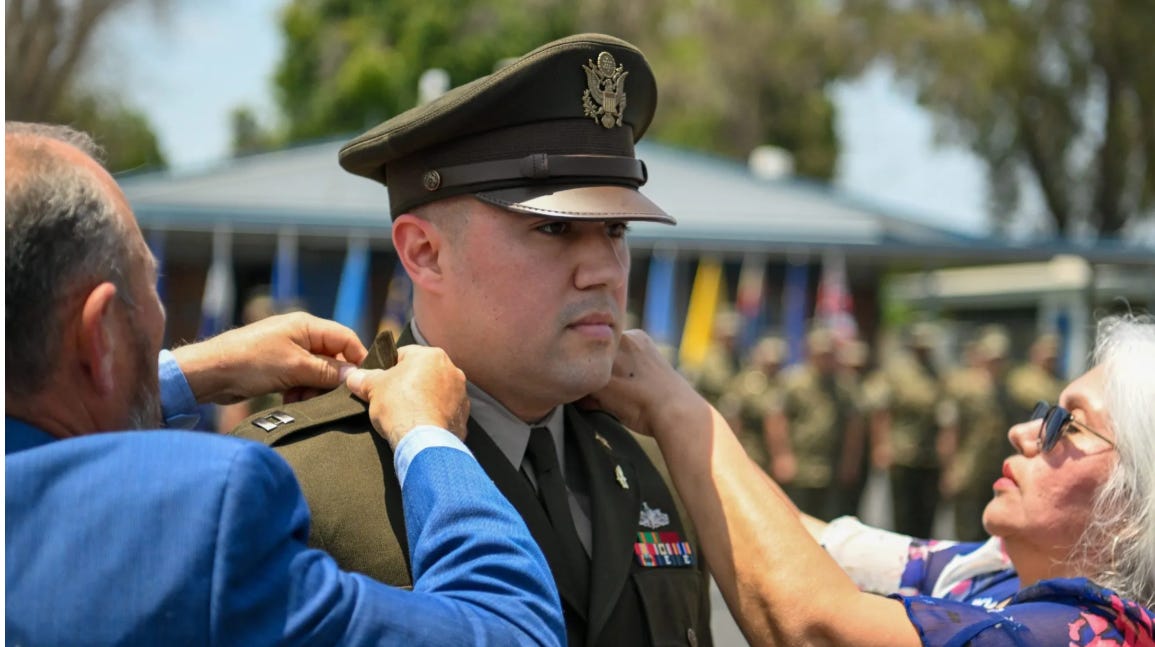
The Tech Bros Now Have Military Ranks — What Could Go Wrong? | by Carlyn Beccia
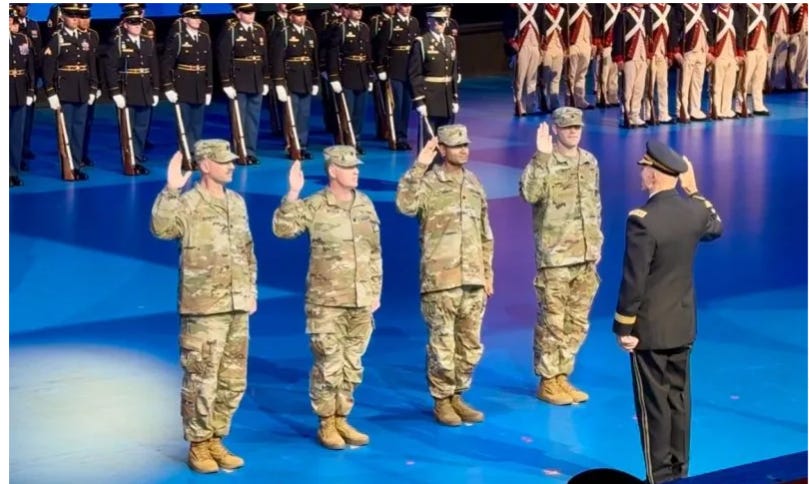
Quoting Beccia— Money buys you government subsidies, “gold card” immigration status, or even a meeting with Trump. Throw down enough meme coin and you can buy your way out of regulations, and into DOGE(y) fictitious government agencies with exclusive briefings.
And, now, money buys you a rank in the US military.
Take, for example, Shyam Sankar, Palantir’s Chief Technology Officer, who was recently awarded the position of Lieutenant Colonel. He only had to ask.
“I want to join the Army. I want to wear the cloth of the nation.”
Well, soldier boy, ask and you shall receive.
Sankar is not the only officer pulled from the pantheon of tech’s elite into the position of Lieutenant Colonel. There’s also Andrew “Boz” Bosworth — a Facebook veteran turned Meta’s CTO. From OpenAI, we have two new military recruits — Kevin Weil (product chief) and Bob McGrew (former research head).
Each of these four men is a multi-millionaire several times over. They certainly aren’t chasing an Army stipend. Nor are these your average fresh-faced cadets. Typically, direct commissions into the Army Reserve — common for doctors, lawyers, chaplains — come in at the Captain or Major level. But these tech titans waltzed in at Lieutenant Colonel — a rank usually earned after 16+ years in uniform, commanding hundreds of troops. It’s the brass without the slog.
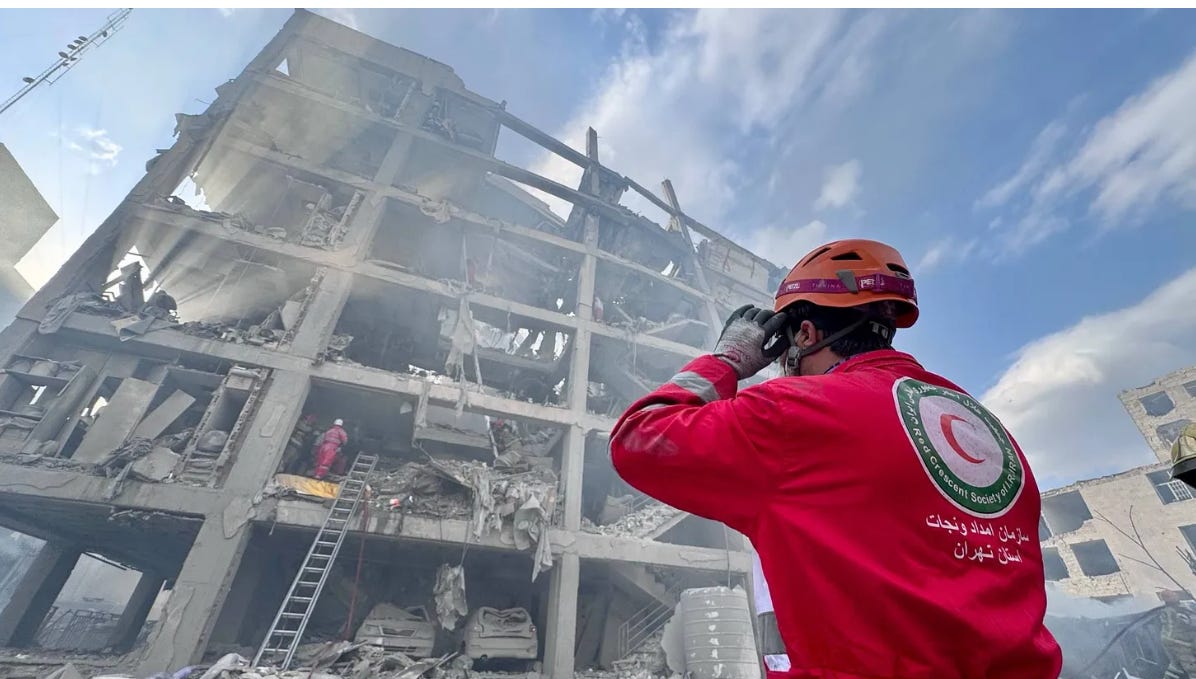
Rescue Efforts in Tehran After a Triple Strike Hit Apartment Buildings, Killing 40
TEHRAN, IRAN—Less than an hour before a deadly airstrike tore through a residential neighborhood in Resalat Square in eastern Tehran late Monday evening, Hassan Sharifi was walking through the area on his way home. He passed by the mid-rise apartment buildings that housed bakeries, shops, cafes, and small grocery stores on their ground floors. When the missile struck, he immediately ran back to the square.
“I didn’t think about myself,” Sharifi, a 40-year-old accountant, told Drop Site News. “I ran toward the collapsed buildings to help whomever I could. I felt that every minute mattered.”
What he found was devastating. The building facades had been blown away. Balconies had collapsed. Windows shattered. Rubble was everywhere. Inside, where families lay buried under the broken concrete, screams began to fill the air.
At least 40 people were killed, according to official reports. Most of the victims were civilians who had been inside their homes when the strike hit, Iranian media reported.
The bombing was a concentrated attack, with several blasts hitting buildings in the area in short succession, according to the spokesperson for the Iranian Red Crescent, Mujtaba Khalidi. “Three residential buildings were bombed simultaneously and on the same street a missile struck a building belonging to the Iranian police,” Khalidi told Drop Site.
At least 460 people have been killed and over 4,300 wounded in Tehran alone since the launch of the war, the deputy head of Tehran Emergency Health Department Mehr Soroush told public broadcaster IRIB News. Monday’s strike was one of the deadliest attacks on Tehran since the beginning of the U.S.-Israeli war on Iran that has killed over 1,300 people across the country.
The strike hit at 1:00 a.m. on March 10, according to Khalidi. But during Ramadan, shops are open late into the night for people to gather and eat. Grocery stores had their lights on, bakeries were serving Ramadan bread and pastries to customers, and men were sitting in the local café, talking and waiting for the late night meal ahead of another day of fasting.
Laila Brahimi was still awake preparing the late night meal for her three children when the missiles struck. “The buildings shook violently. Windows and doors trembled. Objects fell from shelves,” said Brahimi, a 39-year-old high school philosophy teacher who lives across the street from the bombing site. She rushed outside to help walking towards the rising dust and smoke. Neighbors, some in sleepwear and holding their phones, were on the scene before the first ambulance arrived. They pulled at the concrete with their hands.
“The explosion turned our lives upside down,” Brahimi told Drop Site. “I saw buildings collapsing in front of me, I heard the screams of the neighbors. I couldn’t sit still.” She ran toward the nearest damaged building, afraid with every step that more of it would collapse to the ground. “Every minute that passed might mean the loss of a life.”
Emergency workers with the Iranian Red Crescent arrived a short while afterwards. “The rubble spread into every corner, the collapsed walls, the destroyed cars,” one of the rescue workers, Ali Rezaei, 28, told Drop Site. “We immediately began opening paths through the debris to reach the injured.”
They followed the sound of survivors crying out for help. “The continuous noise of screaming and calling for help filled the place,” he said. His team moved from case to case, working to save the injured before additional equipment arrived. “Every movement you make could be the difference between life and death for someone trapped under the concrete. The first minutes were decisive.”
جمعیت هلالاحمر ایران@Iranian_RCS
2:50 PM · Mar 9, 2026 · 67.4K Views
6 Replies · 35 Reposts · 130 Likes
Video posted online by the Iranian Red Crescent of rescue efforts at the site of the Resalat Square bombing in Tehran. March 10, 2026. Source: X.
Fatima Kadhemi, a 25-year-old paramedic, described one apartment where two children were trapped under the ruins of a collapsed wall while their mother screamed outside. “I felt helpless for a moment,” Kadhemi told Drop Site. Her colleagues helped lift the heavy concrete slab and get the children out. “I saw the mother crying bitterly, and I felt that my work is not just treating a body, but psychological support as well.”
Neighbors helped move the injured to ambulances. The wounded were rushed to Gandhi Hospital, which had also been badly damaged in airstrikes last week and partially evacuated. Dr. Ali Moradi, 55, said the injured arrived in waves, many with severe fractures and acute hemorrhaging. Some cases were life-threatening. “We had to make very rapid decisions, and coordinate between surgery, the emergency department, and intensive care,” Moradi told Drop Site.
Rescue operations continued through the night and into the early morning. Heavy machinery was brought in and emergency workers kept calling out for survivors under the rubble. Kazem Najafi, 32, a Red Crescent coordinator, said the cooperation between professional rescue teams and residents of the neighborhood was a decisive factor in how many people survived. “Seeing the local teams and the community working together was very moving,” Najafi said.
Teams also swept surrounding buildings for structural damage and evacuated some as a precaution.
Mohamed Haidari, part of a Red Crescent search and rescue team, described the conditions: dense debris, heat from smoldering fires, and the ever-present risk of structural collapse. “Every time we lifted a stone, we increased our sense that we might succeed in saving a life, or that we might find someone who could not be saved,” he told Drop Site. “This mixture of hope and fear accompanied us constantly.”
The hardest moments, he said, came when they found people motionless beneath the wreckage. “In some cases, we had to make difficult decisions: which person to try to save first, and how to distribute the team to cover as many damaged buildings as possible.”
By dawn, the lights of emergency vehicles still filled the narrow streets around Resalat Square. Pavements were grey with dust. In one apartment whose outer wall had partially collapsed, an entire living room was visible from the street, with an overturned sofa, a small table, and a torn curtain hanging from a broken window.
Hassan Sharifi, the accountant, wandered the streets for hours after the explosion. He moved between the rubble, looking for anyone who might still be trapped. It was psychologically painful,” he said. “But seeing a person come out from under the rubble alive was a reward that cannot be described. I felt that we were all—residents and paramedics—living a moment of real human unity.”
Kadhemi, the paramedic, agreed the community’s efforts were essential. Hours into the rescue operation “we began to feel that we were regaining some control over the situation,” she said. “I felt that we, despite everything that happened, gave everything we could, and that every effort, no matter how small, has value,” Kadhemi added.
“But the psychological pain and fear did not disappear, especially seeing the great destruction in the surrounding buildings, and the blood spread in the streets.”
This story was published in collaboration with Egab.
 Paul Haeder, Author