

But then, it’s deeper than kinetic bombs, man, think Eddy Bernays and decades of psychological warfare brought to us by the Talmudists and their offshoots: Secular Jews
Mar 05, 2026
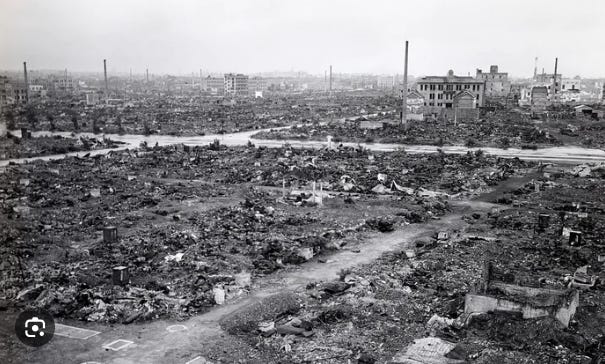
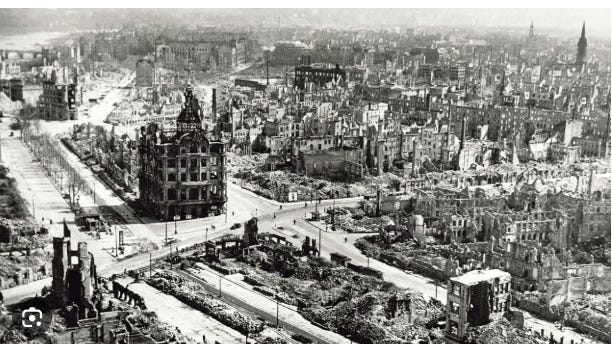
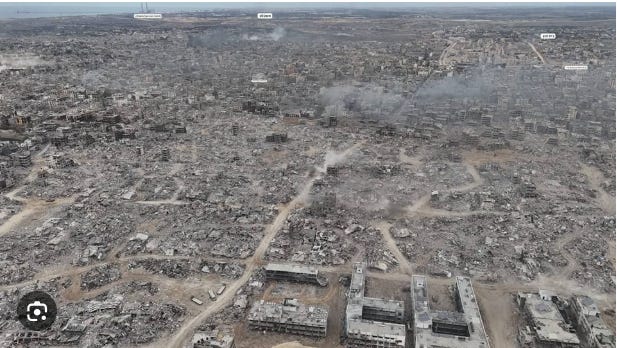
Israel expands urbicide as a tool of genocide in Gaza
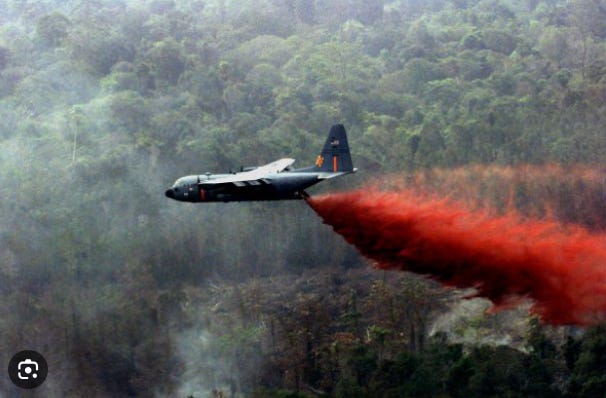
The Dark Shadow of Agent Orange
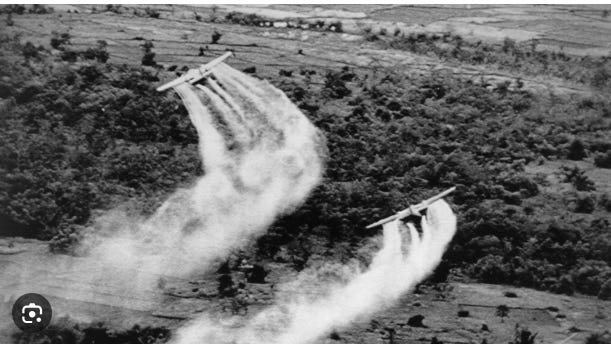
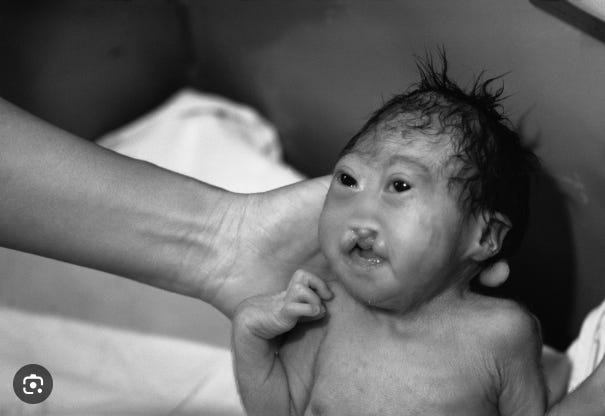
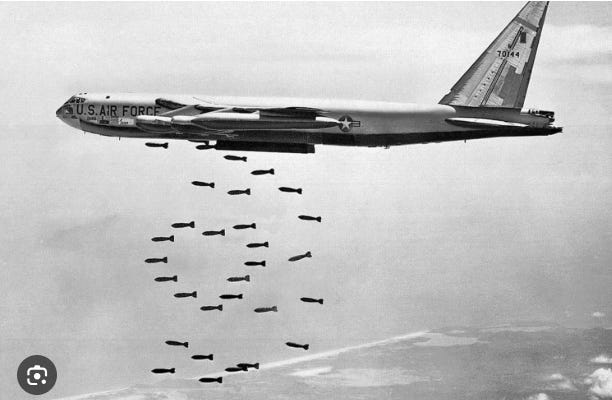
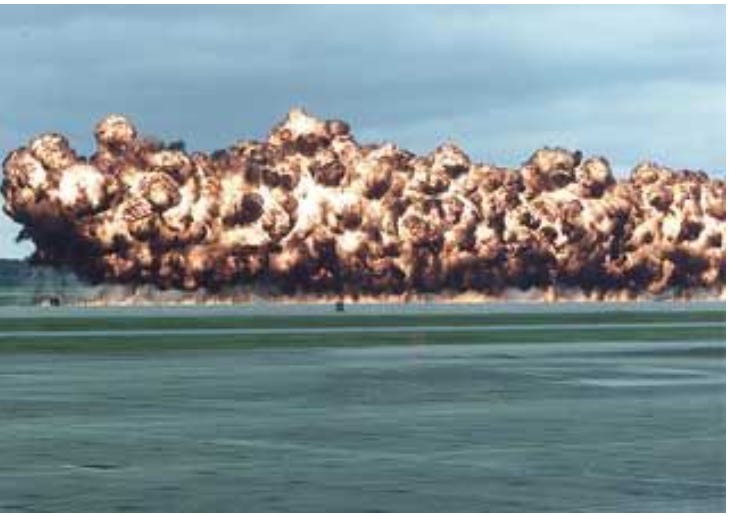
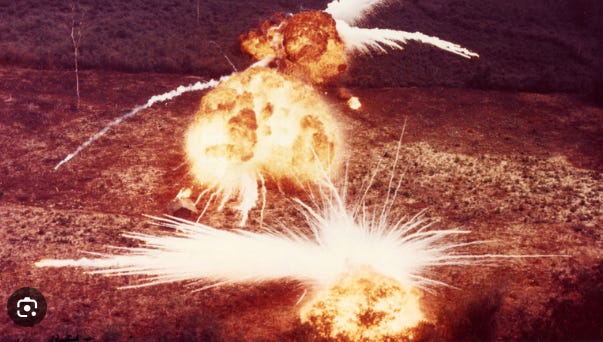
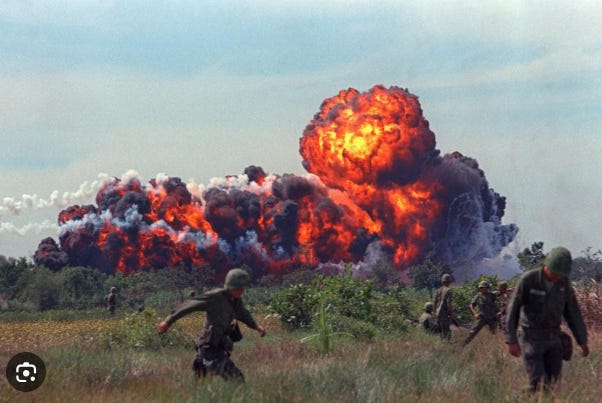
The United States dropped upwards of 2.7 million tons of bombs on Cambodia, exceeding the amount it had dropped on Japan during WWII (including Hiroshima and Nagasaki) by almost a million tons. During this time, about 30 per cent of the country’s population was internally displaced.
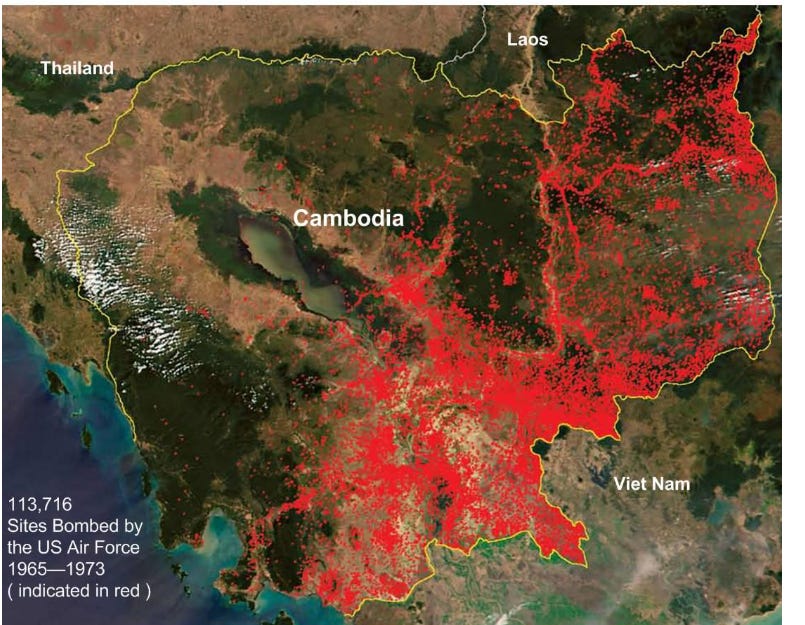
Result
Estimates vary widely on the number of civilian casualites inflicted by the campaign; however,as many as 500,000 people died as a direct result of the bombings while perhaps hundreds of thousands more died from the effects of displacement, disease or starvation during this period.
Global Research is telling like it is: The USA is winning, and that win is facilitated by decades of robotics Olympics and garage computing nerds and the giant sucking sound of servers and fans in Silicon Valley, Silicon Wadi (Tel Aviv) and in the Satan’s Workshop of Unit 8200 and its funny-looking Jews: Zuckerberg, Ellison, Altman, Dell, Karp, Ackman, Brin, Page . . .
My friend, Joe from Merced, California, sends me links and quips daily, and of course, I go to Global Research at the end of the week to get the wrap-up. But, here, again, more proof in the puddin’ head (supposedly) of demented (supposedly) Trump:
Joe: “Oh boy, I can hardly wait. The whole world will think as one. Everyone will be Trump.”

This is the mind is the battlefield, not just a la Eddy Bernays, but literally:
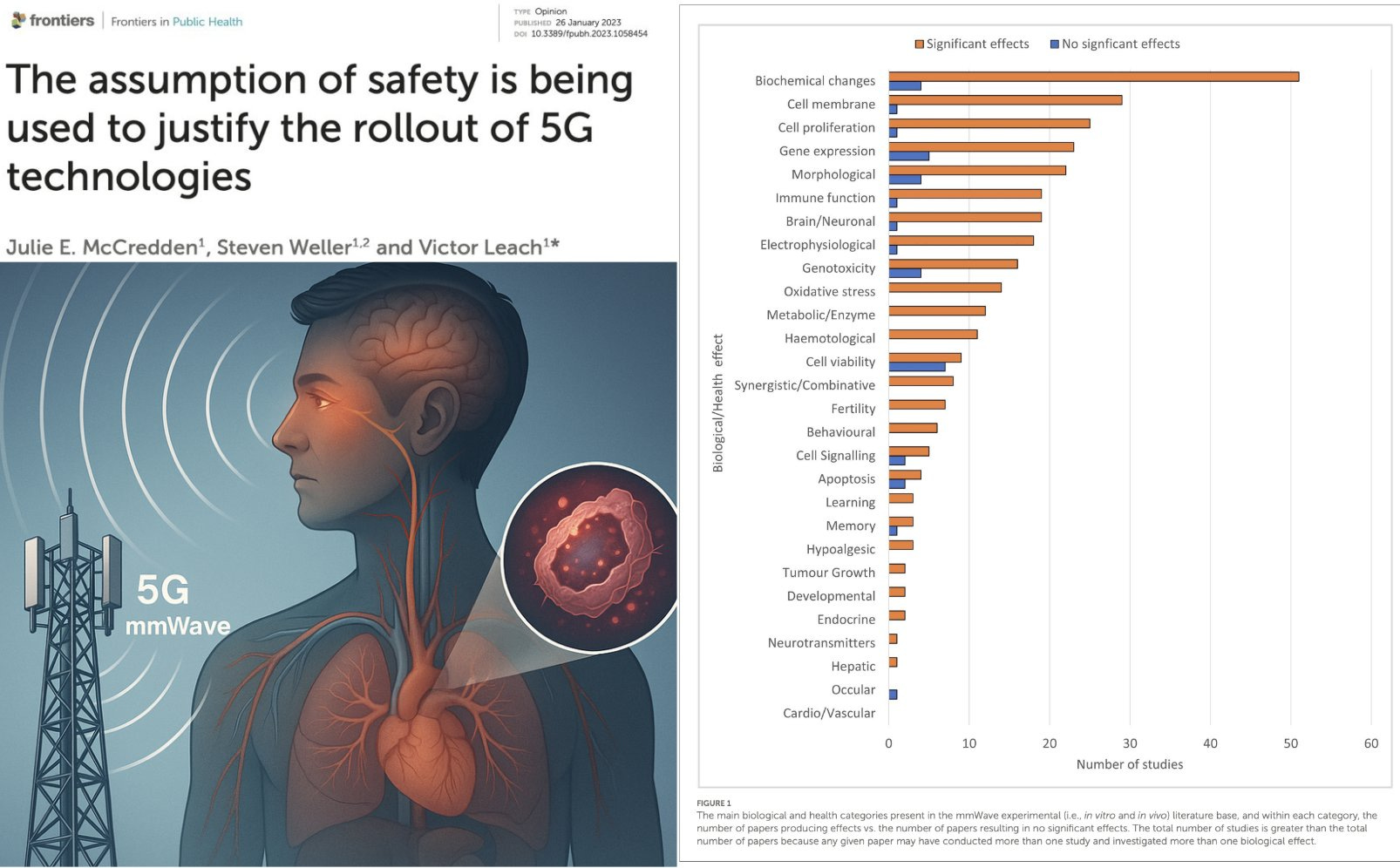
Documented adverse biological effects span:
- Biochemical changes
- Cell membrane disruption
- Altered cell proliferation
- Gene expression changes
- Morphological effects
- Immune function disruption
- Brain and neuronal effects
- Electrophysiological effects
- Genotoxicity
- Oxidative stress
- Metabolic and enzyme alterations
- Hematological effects
- Reduced cell viability
- Synergistic and combinative effects
- Fertility effects
- Behavioral effects
- Cell signaling disruption
- Apoptosis
- Learning effects
- Memory effects
- Hypoalgesic effects
- Tumor growth effects
- Developmental effects
- Endocrine effects
- Neurotransmitter alterations
- Hepatic effects
- Ocular effects
- Cardiovascular effects
Republican Montana Senator Tim Sheehy, a 2008 U.S. Naval Academy graduate and former SEAL commando, wrote an article aimed at addressing the weakened state of the U.S. Navy in a conjuncture where the United States attacked Iran with only 25 percent public support, in the destructive shadow of the Epstein files and under the influence of Israeli geopolitics.
Published in the February 2026 issue of the U.S. Naval Institute’s journal USNI Proceedings, his article titled “A New Framework for Navy Building for the 21st Century” proposes the privatization of the Navy. The main problem, according to Sheehy, is that the Navy is in an extremely disadvantageous quantitative position compared to its closest rival, China. Although the article may initially appear to be a discussion about increasing shipyard capacity, it in fact acknowledges the structural rupture in American naval power. Today, the United States does not possess sufficient shipbuilding, maintenance, and repair capacity for a possible protracted war with China. China’s overwhelming superiority in the shipbuilding sector creates serious fragility in the strategic balance to the detriment of the United States
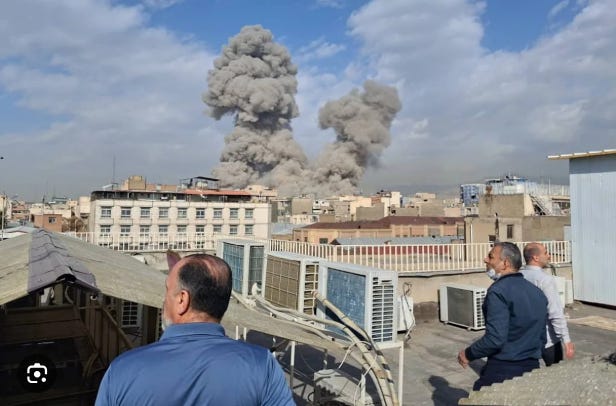
On February 28, 2026, amidst peace negotiations, “Donald the Terrible” ordered a criminal bombing campaign against Iran largely focussing on the outright killing of civilians.
This Global Research video production was recorded on the day prior to the U.S-Israel bombing raids. (February 27, 2026).
“Donald the Terrible”: His Criminal Agenda is Global Warfare and the Killing of civilians including women and children.
According to President Trump:
“the Iranian regime is …“a vicious group of very hard, terrible people,” … [who] directly endanger the United States, our troops, our bases overseas, and our allies throughout the world.”
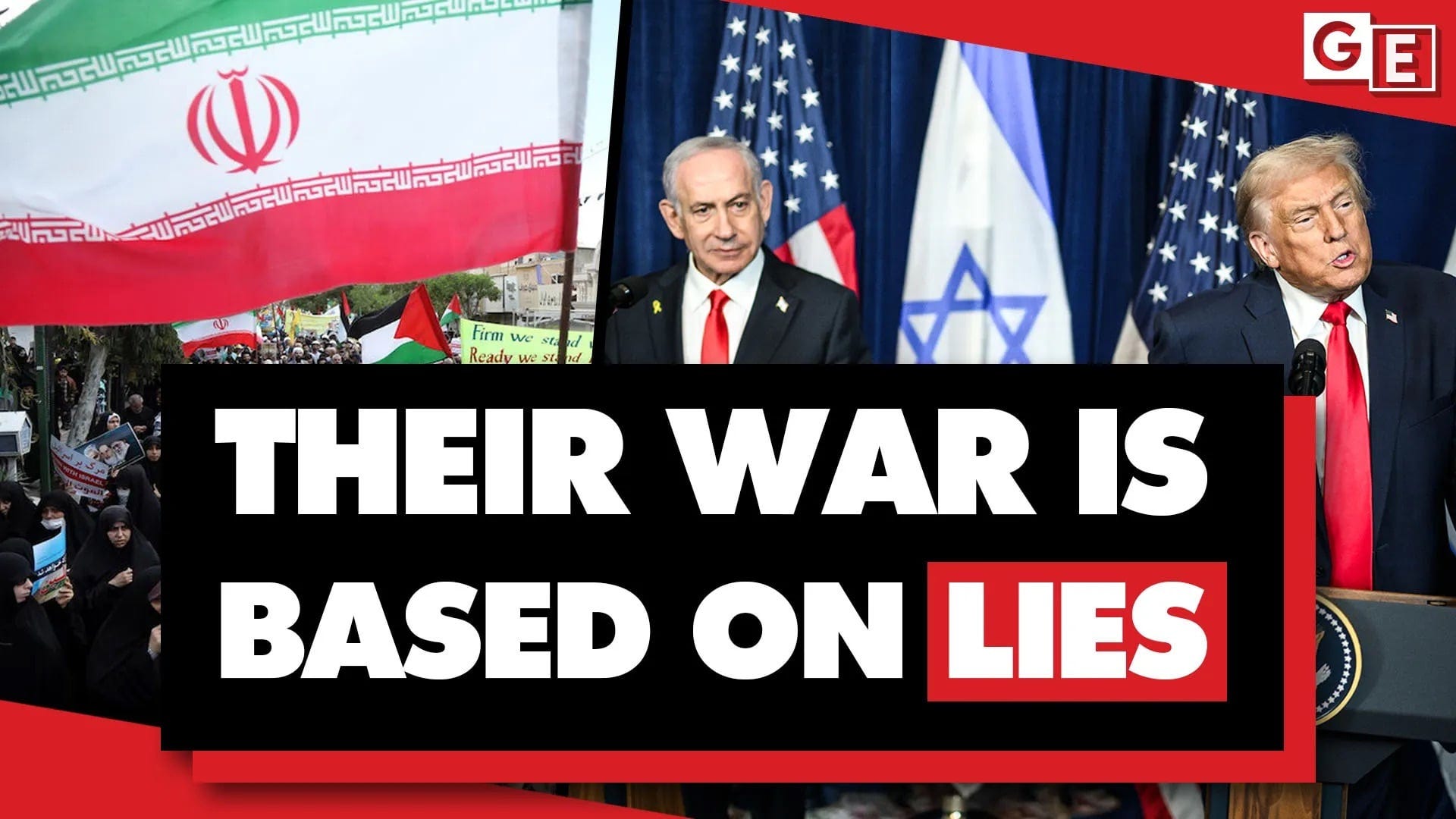
What is at stake Worldwide is The Hegemonic Battle for Energy, namely the Acquisition of Oil and Natural Gas Reserves Worldwide.
A War That Reveals the Structure of Global Power
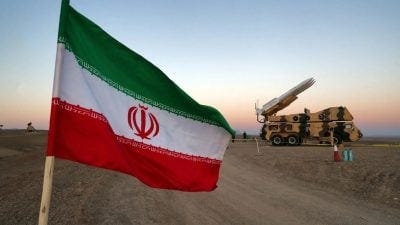
Empires almost never collapse in a sudden crash. They begin by waging wars they present as necessary.
The war launched on February 28, 2026 against Iran by the United States and Israel may belong to that category of events which, at the moment they occur, appear to be merely another regional crisis — but which, in retrospect, reveal themselves as turning points in the architecture of the international system.
Oh, there he is, after banning me — over at Global Research: Emanuel Pastreich
Global Research, March 05, 2026. Yet another person, Pastreich, thinking this is the end, almost the end.
To say that the blitzkrieg attack on Iran has not been as successful as planned is an understatement. Compared with this catastrophe—which anyone could have foreseen, the German invasion of the Soviet Union in 1941 was strategic genius. Things will get worse for Washington and Jerusalem, and quite quickly, especially since much of the money in the American inflated military budget was not used to buy weapons at all, but rather as part of an elaborate money laundering scheme. That scam would have put everyone in jail if they did not all have top secret SCI clearance. So, Iran’s clouds of cheap drones and cheap missiles are forcing the United States and Israel to use up their expensive missiles and overpriced drones rapidly. In fact, the United States had to pretend that its fighter planes were downed by friendly fire. To say anything else would have completely undermined the global market for such American weapons.
I ask you, knowing that Netanyahu and his senile Trump the lap poodle (Ben and Don) are psychopaths with a loose grip on reality, men who stay in power by virtue of their will and their insanity, what do you think they are going to do when this whole thing falls apart?
Here ya go — The New Image on the Wheaties box:
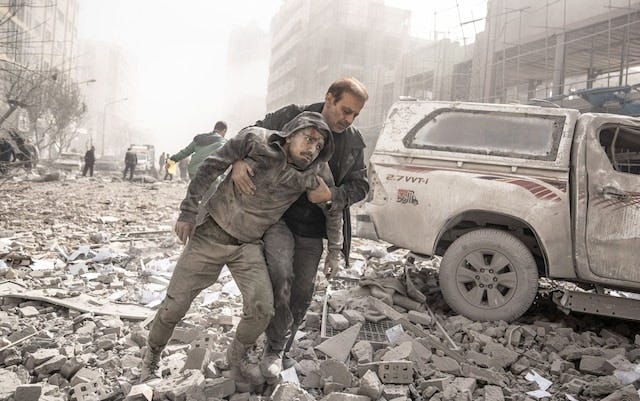

Christ, Jonathan Cook, just more and more prognostication or flummoxed analysis:
Rubio stated: “The president made the very wise decision: We knew that there was going to be an Israeli action, we knew that that would precipitate an attack against American forces, and we knew that if we didn’t preemptively go after them before they launched those attacks, we would suffer higher casualties.”
Rubio was using the term “preemptively” in a highly irregular and misleading way.
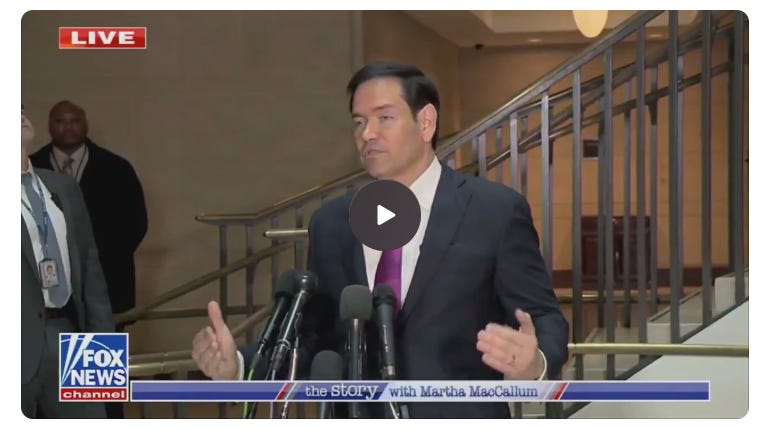
Cook:
In international law, aggression is an illegal application of force – the “supreme international crime”, according to the 1950 principles set out by the Nuremberg war crimes tribunal. But there is a potential mitigating factor if the attacking state can show it was acting pre-emptively: that is, it was acting to prevent a plausible, immediate, and severe threat of attack.
Rubio, however, was not suggesting that the US acted “preemptively” against a threat from Iran. He meant Washington had acted preemptively to stop its ally, Israel, from setting off a chain of military events that would lead to US soldiers being harmed.
Had the Trump administration really been acting preemptively in these circumstances, the US should have attacked Israel, not Iran.
But Rubio’s comment begged a further question: Why didn’t Washington simply tell Israel it was forbidden from starting a war against Iran without US approval?
After all, Israel would be incapable of mounting any kind of attack on Iran without the critical support provided by the US.
Israel has had to rely on help from US military bases dotted around the region, as well as the Arab states that host those bases.
The attack would have been quite inconceivable without the backup of a massive armada of US warships sent to the region by Trump.
Israel can withstand Iranian retaliation only because it gets a degree of protection from missile interception systems provided and funded by the US.
And on top of all that, Israel is a regional hegemon only because it gets massive subsidies from the US – worth many billions of dollars a year – to preserve it as one of the strongest militaries in the world.
In other words, Israel would have found it impossible to wage war on Iran alone. It is a paper tiger without the US.
Rubio’s comment suggested one of two possibilities: either that the US, with the strongest military in world history, is under the thumb of the tiny state of Israel, or that Trump has made his own military, the strongest-ever, servile to Israel.
Whichever it is, it is hard to square with Trump’s repeated assertion that he is putting America First.
This point is so glaringly obvious it is presumably the reason why Rubio was forced to walk back his comments the next day. Meanwhile, Trump hurriedly suggested it was he who had forced Israel’s hand to attack Iran, not the other way round.
+—+
LOTS of fucking bullshit here, dude. The fucking Spy Cam tapes, suckers. Do you think tapes of Trump sticking his fingers into juvenile girls’ vaginas and getting blow jobs from captured girls and then the golden showers, do you think even MAGA would defend the pedophile with those being released worldwide? Duh, who has who, and who’s on first base? Who the fuck has the tapes? Abbott being the Jew!
Oh no, the videos are viral:
Again, finding these political cunts’ families and vacation spots and shopping hangouts, that’s how we asymetrically take on the MAGA cult, the monsters of the Reap-pubic-can camp.
Moment Marine veteran protesting Iran war suffers broken arm during struggle with GOP senator.
Montana Republican Sen. Tim Sheehy has defended himself after an anti-war protester he was helping remove from a Capitol Hill hearing was injured.
The incident unfolded when Sheehy came to the aid of Capitol Police as they struggled to remove the activist from a committee hearing on Wednesday.
Brian McGinnis, a Marine Corps veteran in dress uniform, disrupted a gathering of the Senate Armed Services Committee to denounce the joint U.S.-Israeli airstrikes on Iran. He clashed with three officers attempting to remove him from the chamber and suffered a broken arm in the process, Reuters reports.
“No one wants to fight for Israel,” McGinnis yelled as the officers shoved him through the door, at which point the protester’s arm became wedged in the door frame.
When Sheehy joined the scrum, an audible snap could be heard and a member of the public, in attendance to witness the hearing, repeatedly cried out: “A sitting U.S. senator just broke the hand of a Marine.”
As Sheehy returned to his seat, the same man called him a “coward” and a “punk,” to which the Republican appeared to respond by saying: “Go f*** yourself.”
As he was finally led away from the scene, McGinnis continued to shout: “Free Palestine, from the Halls of Montezuma to the shores of Tripoli, Palestine will be free”, referring to the first line of the Marine Corps’ official song.
The senator, a former Navy SEAL, later responded to a video of the chaotic episode on X and said: “Capitol Police were attempting to remove an unhinged protester from the Armed Services hearing. He was fighting back. I decided to help out and de-escalate the situation.
“This gentleman came to the Capitol looking for a confrontation, and he got one. I hope he gets the help he needs without causing further violence.”
McGinnis — who, along with the officers, was treated for his injuries — was arrested and faces three counts each of assaulting a police officer, resisting arrest, and unlawful demonstration, according to Capitol Police.
They blamed McGinnis for the injury he sustained, saying in their statement that he “got his own arm stuck in a door to resist our officers and force his way back into the hearing room.”
Sheehy’s decision to involve himself in the scuffle also attracted strong criticism, however, with the campaign group Veterans for Responsible Leadership reacting to the senator’s account by saying: “Let’s hope he sues the s*** out of you.”
Paul Rieckhoff, a veterans’ rights activist and podcaster, said: “This is very, very ugly. And no U.S. senator needs to inject himself into this situation. For the safety of everyone, including himself. “Just unnecessary and terrible to watch. This is what an America falling apart looks like.”
A video posted on X earlier in the day appears to show McGinnis, described as a “Green Party candidate for the U.S. Senate”, standing outside the Capitol.
He explained that he is “here in D.C. trying to speak out against the Senate and ask them why they’re going to send our men and women to harm’s way when our elected officials said that there would be no world war.”
“Anyone who feels disillusioned and betrayed by our government, you are not alone,” he says. “Join us in demanding accountability for this betrayal. Free Palestine. Free America.”
Paul Rieckhoff:
Another take. “This is the beginning of the beginning,” and of course, always baseball, mom, and apple pie: ‘spring training,” whoopee, MLB. And, what is deeply un-American? Paul is alluding to a good pro-American value system versus a bad one, un-American? Oxymoron. Shooting people on the streets of America, and kidnapping an elected president after killing 100 Venezuelans? That’s bad, but, history tells us . . .
She wants the troops to get everything they need to kill and murder children!
REALITY.
Two Jews in a pod . . . Podcast: What lies have their forefathers and rabbis told them?
Oh, god, more yammering:
Let’s meet on each other’s Podcasts. There you go Trump!
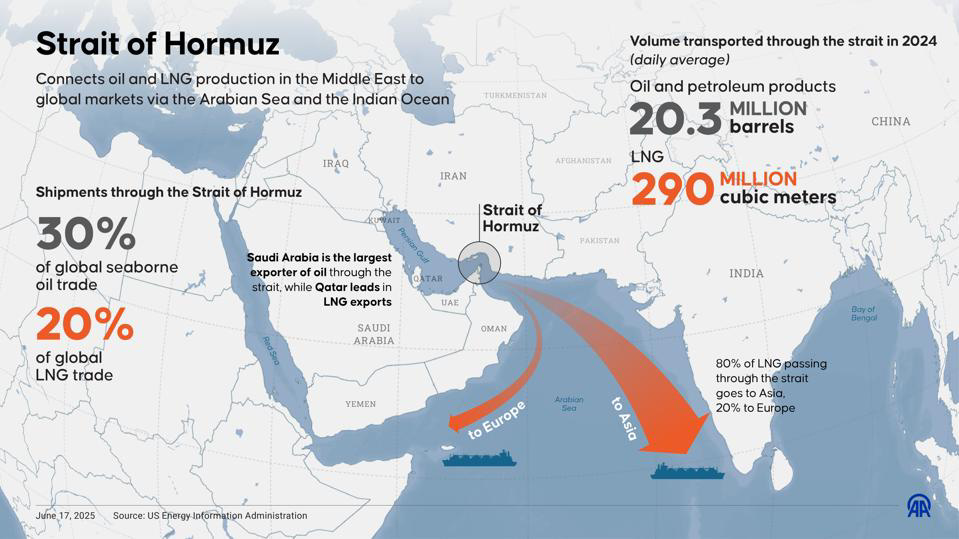
Iran’s Weapon Of Mass Economic Destruction: Hormuz
“We are fighting the Epstein class that either rapes little girls or bombs little girls.”
Oh no, Philip!
Iran is winning?
Again, follow them, on their breaks, with family, go to their daycares, etc.
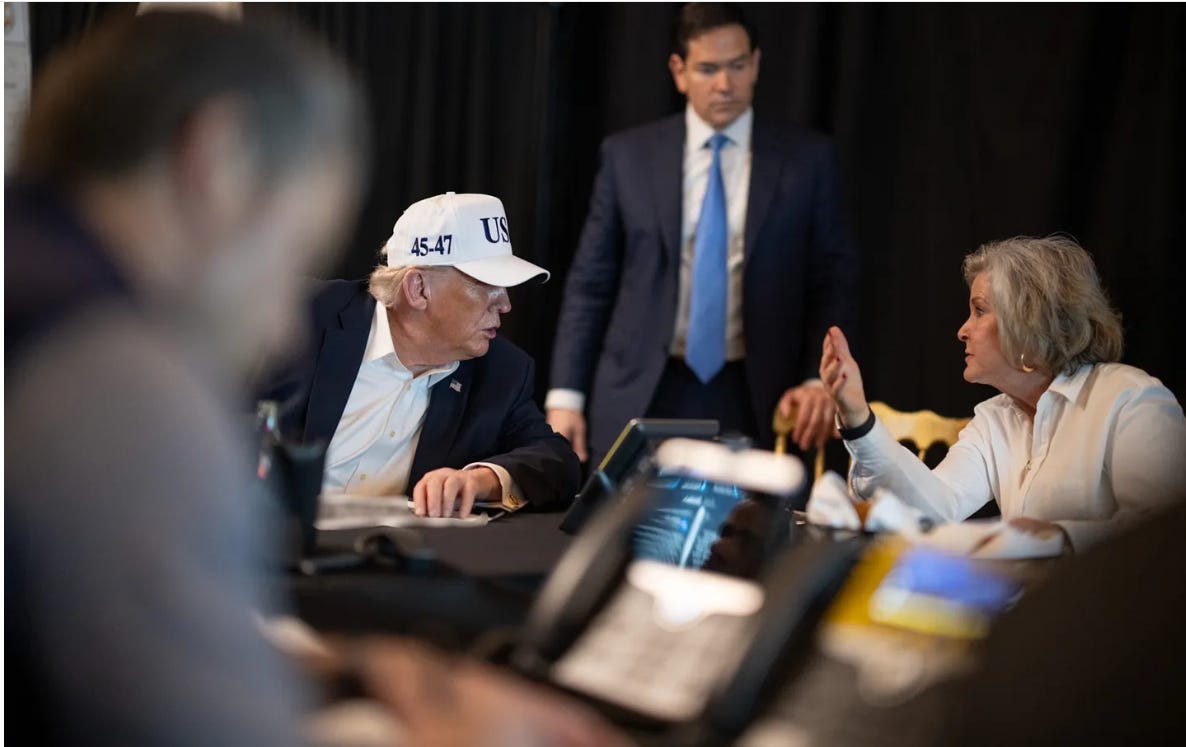
GIRALDI: Wars and rumors of wars. Trump and Netanyahu open the gates of Hell
That the war is taking place at all is due to Israel’s absolute control over America’s political class, a reality that Netanyahu and his predecessors in office have not been exactly shy about admitting.
The U.S. is a hapless giant that has been corrupted by Jewish billionaire money from within to be totally committed to the expansion of greater Israel, no matter how many have to die in the process.
Do the Israelis care what happens to the American people?
No.
The U.S. is a necessary resource, which they will squeeze dry of money and political support before being discarded like a used diaper.
+—+
FUCKING WHITE MAN’S and WOMAN’s WORLD!
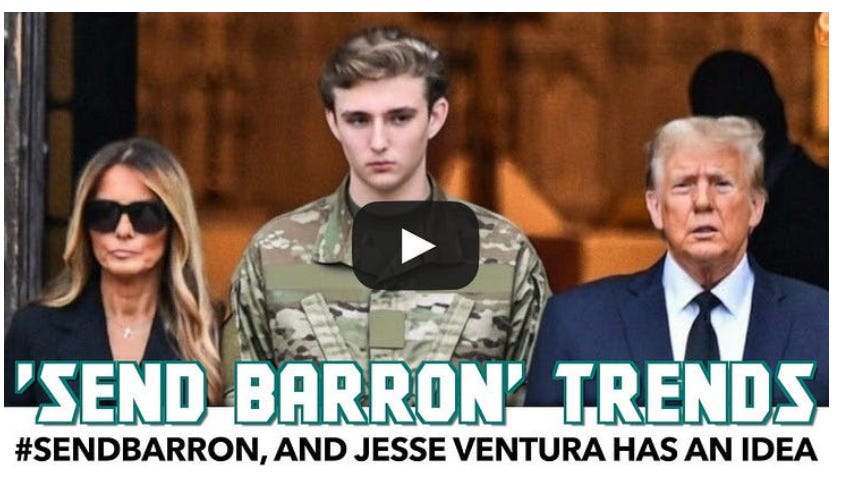
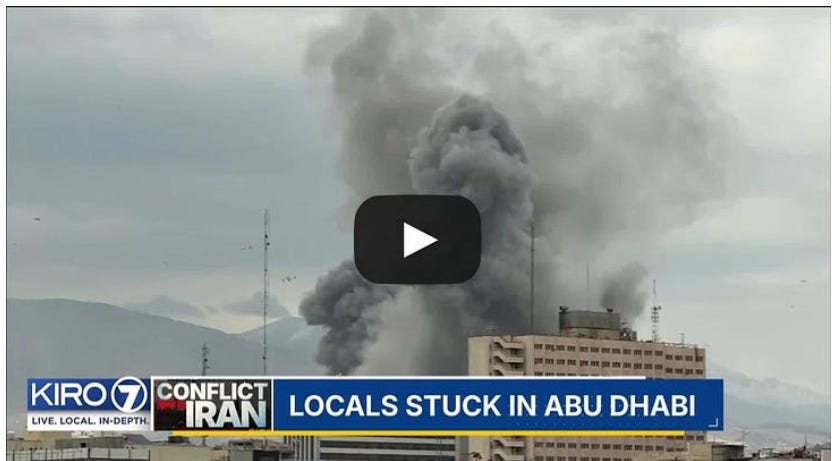
Oh, no, all the fucking Duck Dynasty rubbernecking of the Trump/Truman show? Let’s get a Back Man on . . . Gerald gets it wrong, too, about Iran’s mighty weapons. Dudes, the country is jam-packed with Mossad, honey traps, traitors, man. All pathways, tunnels, underground bunkers, and missile factories are noted.

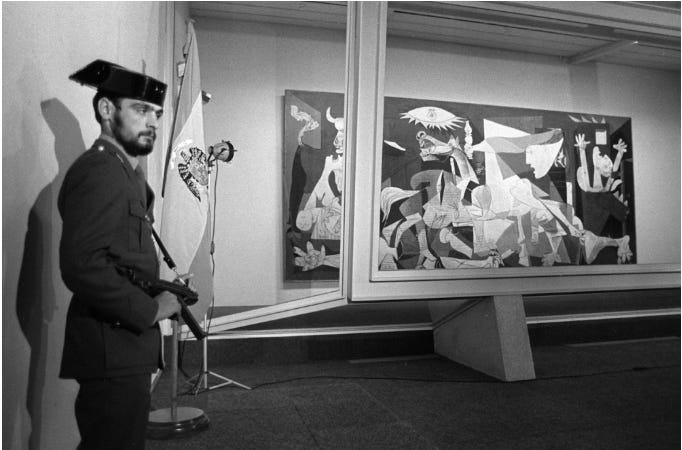
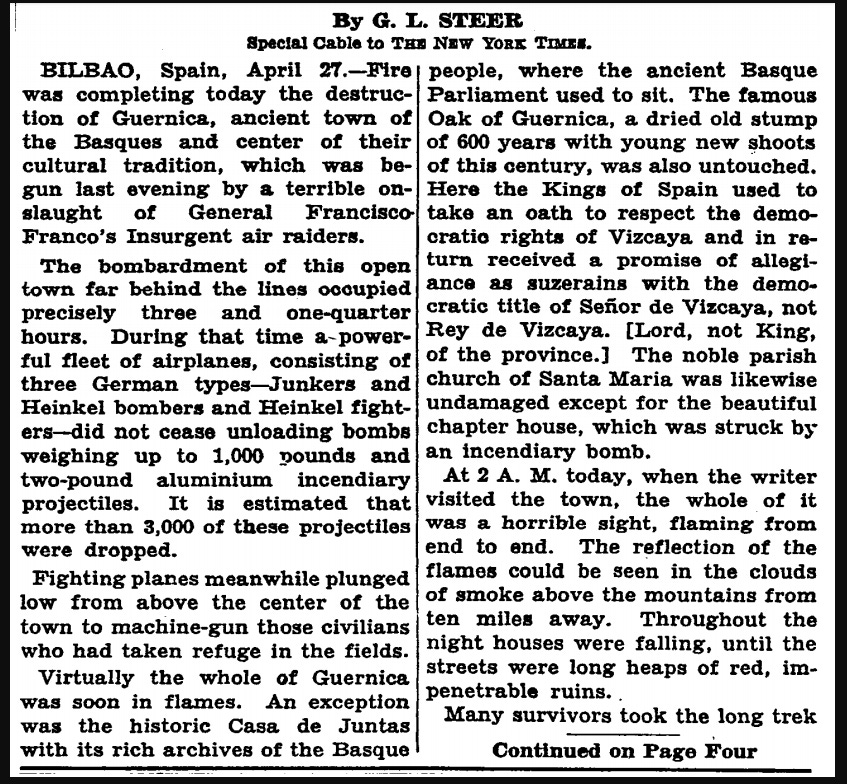
When it was first displayed in Madrid in 1981, Picasso’s painting “Guernica” was protected by armed Civil Guard officers.
Here, 22 years ago: Army Detains U.S. Reservists Who Refuse to Carry Out “Suicide Mission” In Iraq
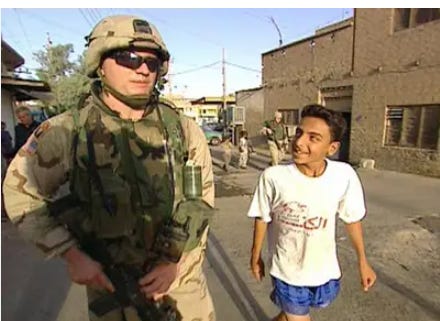
Army National Guard 1st Lt. Paul Rieckhoff discusses how the Bush administration has failed to adquately protect soldiers on the battlefield. Rieckhoff served in Iraq from April 2003 to February 2004. He is also the founder of the group Operation Truth. [includes rush transcript]
19 members of a U.S. Army Reserve platoon were placed under arrest last week for refusing to obey orders to go on what they considered a “suicide mission.”
Stationed at Tallil Air Base south of Nasiriyah, members of the 343rd Quartermaster Company were ordered to drive a fuel supply convoy up to Taji, north of Baghdad. The soldiers had previously only focused on local missions in safer parts of southern Iraq and had never driven through Baghdad more than 200 miles away, where U.S. forces regularly come under fire. One soldier later claimed that the chance of being attacked was “99 percent.”
On average, American soldiers were attacked 87 times a day in August. Over 1,100 U.S. soldiers have been killed in Iraq since the war began.
The platoon refused the order considering their trucks to be extremely unsafe. They said the convoy tankers lacked bullet-resistant armor and were not able to travel faster than 40 miles an hour. Some of the supply trucks were in disrepair and prone to breakdown. And while the armed escort of Humvees and helicopters normally provided, was not available. One the soldiers later described the mission as a “death sentence.”
The platoon’s commanding general, Brig. Gen. James Chambers, admitted yesterday that the unit was one of those whose trucks are still unarmored. In addition, the Washington Post is now reporting that Lt. Gen. Ricardo Sanchez, the top U.S. commander in Iraq, complained to the Pentagon last winter that the lack of key spare parts for gear vital to combat operations, was so poor that it threatened Army troops” ability to fight.
In addition to the high-risk nature of the mission, the objective itself has been called into question. The jet fuel that the platoon was ordered to transport may have been contaminated with diesel and wasn”t even usable–Some of the soldiers” claim the fuel had already been rejected by one base and would be rejected again at Taji.
After refusing the orders, the U.S. Army placed the men and women of the platoon under arrest. They were corralled in a tent and detained at gunpoint for nearly two days. During this time, some of them managed to phone their relatives back home. In Alabama, Teresa Hill woke-up to hear a recorded message on her answering machine from her daughter, Spc. Amber McClenny. On the tape McClenny says “I need you now, Mom. I need you so bad…please help me. They are holding us against our will. We are now prisoners.”
According to the father of one of the soldiers, five members of the platoon were told they would be punished with a general discharge. Chambers said all 18 soldiers have returned to duty. The Army has begun an inquiry, and the soldiers could face disciplinary measures, including possible courts-martial.
- Paul Rieckhoff, Executive Director and Founder of * Operation Truth*, a nonprofit organization set up to give voice to troops who served in Iraq. He served a tour of duty in Iraq from April 2003 to February 2004, where he was stationed in central Baghdad.
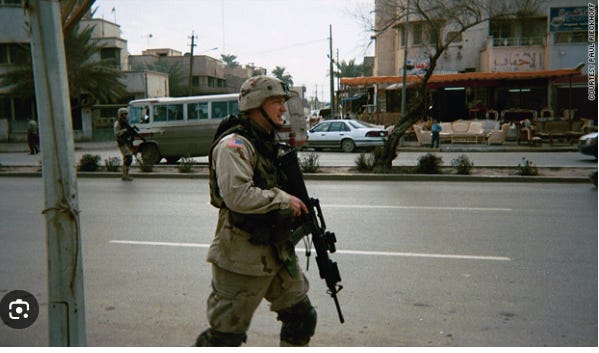
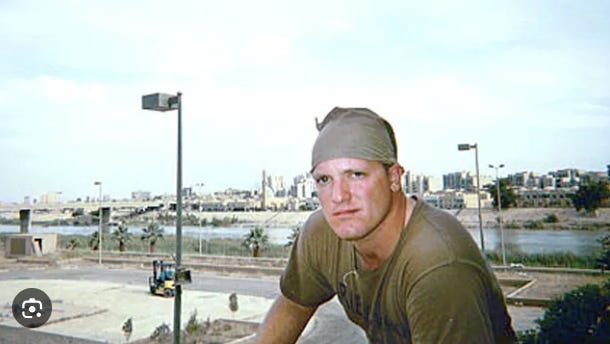
Transcript
This is a rush transcript. Copy may not be in its final form.
AMY GOODMAN: Paul Rieckhoff is our guest right now. He’s Executive Director and founder of “Operation Truth,” which is a non-profit set up to give voice to troops on the ground in Iraq. He served a tour of duty in Iraq from April 2003 to February of this year, stationed in central Baghdad. Welcome to Democracy Now!
PAUL RIECKHOFF: Thank you very much for having me today.
AMY GOODMAN: It’s great to have you with us. Can you respond to this latest story?
PAUL RIECKHOFF: Absolutely. I think it’s a very critical story, and it should be getting the attention it has so far. Not only is it an issue because of the insubordination, but because of the larger problem. Right now, you are hearing about a National Guard unit or reserve unit that is complaining about their equipment. This is one incident that’s really showing how big this problem is throughout the country. I was there for a year. We did not have proper body armor. We did not have uparmored humvees. We did not have ammunition, critical communications equipment, it just wasn’t there. This war was really done on the cheap, and I think you’re starting to see that come out now more and more.
AMY GOODMAN: I wanted to go to an excerpt of a documentary that we played a year ago. It was — rather a month ago. It was called Off to War. It tells the story of the Arkansas National Guard’s deployment to Iraq. In April 2004, 57 soldiers from Clarksville, Arkansas, were sent to Iraq as members of the 239 Infantry of the Arkansas National Guard. Embedded with them were the brother filmmaking team Brent and Craig Renault. They’re continuing to make this series of documentaries. This is an excerpt of the documentary of the soldiers on their way into Iraq through Kuwait.
UNIDENTIFIED SOLDIER: The convoy we’re getting ready to take to Camp Taji, north of Baghdad, is pretty serious. Some of the equipment is old, so we’re trying to make sure it doesn’t break down.
UNIDENTIFIED SOLDIER: I cannot — I have no idea why — you know, the United States Army would make us deploy with this old crap, and I think they’re going to quickly understand that when half of it breaks down on the way to Taji, and it will, that it’s not a good idea to deploy National Guard units with old Vietnam-era equipment.
UNIDENTIFIED SOLDIER: This is what an armored vehicle should look like. The vehicle is totally armored completely all the way around, even in the front, the windshield. This is the modern vehicle that the regular army has right now.
UNIDENTIFIED SOLDIER: We were promised uparmored kits and we didn’t get them. So we’re going to go ahead and try to fabricate something.
UNIDENTIFIED SOLDIER: Hey, sir, do you think we could use some of this stuff?
UNIDENTIFIED SOLDIER: We’re trying to use as much of the metal as we can, but we only have a limited supply of it so, you know, we have to resort to these old bullet proof vests. Honestly, I don’t feel too comfortable with doing that, but we’ve got to use what we can.
UNIDENTIFIED SOLDIER: The sandbags will act to deflect the blasts from the roadside bombs or deflect bullets if we’re shot at.
AMY GOODMAN: An excerpt of Off to War, which tells the story of the Arkansas National Guard’s deployment to Iraq. Part three of the series runs on Discovery Times on Saturday night. It’s by Brent and Craig Renault, our colleagues at Downtown Community Television, where we broadcast from. Well, it’s quite amazing to listen to this again, Paul Rieckhoff, because in fact they’re talking about having to go to Taji as well.
PAUL RIECKHOFF: Right.
AMY GOODMAN: They’re talking about the difference between how the army is protected, and how National Guard soldiers are protected. Can you talk about that?
PAUL RIECKHOFF: Let me give you an example. When I deployed through Ft. Stewart, Georgia, with my infantry platoon. You go through an area called the central issuance facility. It’s where you get all your equipment, your boots, your helmets, your flak jackets. And a transportation company from an active duty unit went ahead of us and got interceptor body armor, the ceramic plates, the top of the line body armor we’ve heard so much about recently in the presidential race. They got it, and as soon as my first guy came through the line, the guy said, “Oh, you guys are National Guard. I’m sorry. You can’t have that. Here’s the old stuff, the Vietnam flak jackets off the shelf.” And I said, “Sir, you’ve got to be kidding me. We are front line infantry units. We need the best stuff you’ve got.” He said, “I’m sorry. We don’t have enough to go around. You’re going to have to deal with what we’ve got.” And that was the inferior Vietnam-era flak jackets that stop next to nothing.
AMY GOODMAN: Right. Repeat the story, and tell us who gets it and who doesn’t.
PAUL RIECKHOFF: At the outset in the first invasion, active duty soldiers received priority on body armor, so my unit, 38 Infantry soldiers and 40,000 other troops went into Iraq without body armor, went into Iraq with the old Vietnam-era flak jackets, 40,000 people of the initial invasion.
AMY GOODMAN: Then we see in this clip, the soldiers are putting flak jackets on their trucks. They’re not wearing them, they’re putting them on the trucks to protect them.
PAUL RIECKHOFF: Right. That’s exactly what we did. You have to do the old army adage: improvise, adapt and overcome. Soldiers quickly realize that they’re in this on their own, and they have got to try to come up with innovative ways to protect themselves. One of the things we did is exactly what they did: use sandbags in the floors of vehicles, take flak jackets and duct tape them to the sides of humvees and troop trucks. And that’s the way you protect yourself.
AMY GOODMAN: So what has been the response? And now you’re raising it in Iraq. You have come home to raise it on behalf of soldiers.
PAUL RIECKHOFF: Well, you know, it’s been a constant battle. Somebody asked me on a radio show the other day if this was an urban myth. You’re seeing footage, you have heard the story. This is a fact. The soldiers have been sent into harm’s way with inferior equipment. It’s a fact. And the government has been very slow to respond to these charges and these issues, and it’s only started to respond because there’s been pressure from the press, pressures from the families back home. But it’s still not completely solved. There are reports of soldiers in Iraq without body armor. There are few now. But the armament of the vehicles, the proper firepower and the overall number of troops are a problem in Iraq. The administration right now is refusing to address them.
AMY GOODMAN: We have to break. When we come back, I want to ask you about this letter of Ricardo Sanchez saying last year that the troops were not properly equipped. I want to ask you about your ad, Operation Truth ad, that has just come out and about this letter from the head of the Republican National Committee, Ed Gillespie, threatening legal action against the group, Rock the Vote, for raising the issue of the draft. This is Democracy Now! [break]
AMY GOODMAN: We are continuing on the issue of the troops, 19 of them, held at gunpoint for refusing to go to Taji, saying that they were not protected. Our guest is Paul Rieckhoff. He served in Iraq for almost a year, came back home and set up an organization called Operation Truth. He joins us to talk about these issues. The letter from Ricardo Sanchez
PAUL RIECKHOFF: That’s just ridiculous. The draft is an issue that merits discussion. The letter from Ricardo Sanchez is critical because he’s telling you, he’s raising a flag saying, we don’t have enough of what we need. You’ve heard this time and time again. General Shinseki in the run up to war said that we would need several hundred thousand troops, and he was squashed by The Pentagon. Military leaders throughout the Army, throughout the military raised concerns at the out set and were crushed by people in the civilian administration who thought they knew better. And now these military leaders are proven to be right all along.
AMY GOODMAN: How open is the discussion in the military?
PAUL RIECKHOFF: Among the junior soldiers its very open. I mean, we’re well aware of it. Its almost as if its become a consensus. I mean, we know that this situation, that we haven’t been properly equipped. There have been steps made to improve it, but is just an overall denial that the problem really existed and it really undermines the confidence of the soldiers on the ground. When you’re walking a patrol and you don’t have the adequate equipment, you don’t have the proper body armor, its a critical issue that makes you feel vulnerable, and its absolutely unnecessary that a country with this much money and this many resources can forget to take proper care of the boots on the ground, the soldiers in harms way.
AMY GOODMAN: The whole issue of Rock the Vote, of Ed Gillespie, the chair of the Republican National Committee, this has been reported almost nowhere, sending a letter to the organization Rock the Vote, saying they’d better cease and desist talking about the possibility of the draft.
PAUL RIECKHOFF: Right. We’ll I’m expecting a letter from him anytime soon to because at Operation Truth, we’re talking about the draft. And it’s because we were there and we have an understanding of how over extended our military is right now. And the draft may not be a probability but it is a possibility. It’s a contingency that military planners have to consider. Any politician, any party that comes out and tells you, I guarantee there will not be a draft is lying. What do you do if Korea comes across the D.M.Z. tomorrow and Syria and Iran decide to get a cooperation invade Iraq. We’d need troops from somewhere and a draft is a contingency that we should plan for and we should as a country discuss.
AMY GOODMAN: I’m looking at this story in USA Today. Members of the military and their families say the Bush Administration underestimated the number of troops needed in Iraq, and put too much pressure on inadequately trained National Guard and Reserve forces. The Annenburg Election Survey found 62% in the military sample said that the administration didn’t send an adequate number of troops to Iraq.
PAUL RIECKHOFF: Yeah. This is what we have been saying all along. The troops have been saying this all along. The hard part is getting the message out. One of the real downsides of the professional army is that when the soldiers are finished with the tours in Iraq, many of them don’t get out and cannot enter the public discourse. 55% of the troops in Iraq are there for a second time. That’s why it’s important we listen to the troops and amplify the voices of those who come back. That’s why we started the organization, Operation Truth. And our website is the optruth.org. You can find out the stories from the people on the ground who have been there. They have been stifled and have been repressed and really need to get out in order to educate the American Public about the most important issue that is facing our country in November and beyond.
AMY GOODMAN: What repercussions do the 19 soldiers face who said no to going to Taji, saying they were ill-equipped?
PAUL RIECKHOFF: Very, very serious repercussions. They could be court-martialed or jailed. It all depends on what the Army wants to do. I think that the Army will probably make an example out of them and really come down on them with the hammer because they want to say that the insubordination is not tolerated.
AMY GOODMAN: Yet they’re back, supposedly we’re getting different reports, on the job.
PAUL RIECKHOFF: I mean, you’re not going to hear much support for them for refusing the direct order. Once you get a direct order in a combat zone, you are obligated to fulfill the direct order unless it’s unlawful. Now they may argue that they were under-equipped trying to take care of their soldiers. In the end they may be sacrificial lambs in this story and may wind up being martyrized by it, but I think that the soldiers were probably trying to do the best they can and trying to bring visibility to an issue that’s bothered us all throughout the military, especially National Guard and Reserve troops.
AMY GOODMAN: Paul Rieckhoff, as head of operation truth, this organization got a lot of attention last week with release of an ad, can you talk about this ad?
PAUL RIECKHOFF: Sure, it’s a very powerful ad featuring specialist Robert Acosta. Robert’s 21 years old. He’s from Santa Ana, California, and he lost his right arm in a grenade attack in Baghdad last summer. The ad basically tells Robert’s story. It talks about how he feels about the war and tries to bring visibility to the fact there’s 7,700 casualties, wounded, who have not been heard on T.V., who you haven’t heard from. They have faces. They’re not just pieces on a chessboard or part of a videogame. They’re real people with real lives and real families. I think it’s a human cost of war that we have not seen so far. We are hoping it will wake the country up and provoke discussion and encourage people to check out more about our organization and have a discussion about the war.
AMY GOODMAN: Talk about the issue of the injured. We have been talking with Mark Benjamin at U.P.I. [United Press International], pretty mainstream news media outlet, that his reports hardly get any attention anywhere else, and though he gets awards from the American Legion, for continually covering the casualties of war, those who have died, but specifically those who have been injured. Saying that there were more than 11,000 medical airlifts of soldiers out of Iraq, for example. I’m sure the number is higher right now. This issue of casualties, of people who are wounded, what do you understand at this point? You’re saying now more than 7,000 what? What is the casualty?
PAUL RIECKHOFF: More than 7,000 troops have been wounded as a result of enemy contact. That means they got shot, hit with a mortar, or roadside bomb. And Mark Benjamin has really been at the tip of the spear trying to bring this to light. But there are tens of thousands of soldiers who have been injured not as a result of enemy contact. You fall off a truck. You get run over by a Humvee. There’s a helicopter accident. These are the types of injuries that are really not properly documented. They could be in the tens of thousands. They could be up to 30,000 right now. We don’t know. The Army is not really being honest with the American public about how many soldiers are being injured and wounded and they’re definitely not being publicized if you are not hearing from them. You’re not hearing about their issues. And your certainly not hearing about the V.A. and the under funding of the V.A., which is a critical issue right now facing the 33,000 troops who have come home from Iraq seeking care in the V.A. hospitals.
AMY GOODMAN: What about that?
PAUL RIECKHOFF: Well right now it’s under funded. Principi himself who is the head of the V.A. publicly said, I have not had my budget met. I’ve called for a certain amount; the administration has under funded it. I think they’re going to cut $910 million from the 2006 V.A. budget. They’re cutting the budget and under funding it as tens of thousands of troops come home from Iraq and Afghanistan. This administration’s priorities are totally out of whack. And it’s really unconscionable to treat our returning veterans this way.
AMY GOODMAN: When you do an ad like you did where does it fit into the presidential campaign and election?
PAUL RIECKHOFF: Well, I hope it causes America to focus on the human cost of war and understanding this is the most critical issue facing our country. It’s not some other pandering, its not the Vietnam War. it’s the Iraq war, its the war where soldiers are dying and fighting in the [jive] right now. We don’t endorse a candidate. We don’t want to endorse a candidate. We don’t even want to go down that route. We just want people to think about the war and educate themselves. Because after November 2nd, regardless of who wins, we’re still going to have troops in Iraq and Afghanistan. We’re still going to have wounded people coming back every day and that needs to stay in the focus of people’s minds, and that attention, that initiative and that focus we have on November needs to carry past November to taking care of our troops and their families.
AMY GOODMAN: Paul Rieckhoff, you are a former Manhattan investment banking analyst. How did you end up in Iraq?
PAUL RIECKHOFF: I volunteered. After 9/11, I was on and off active duty with the National Guard and Reserves pretty much waiting for the call. When the run-up for Iraq came, I knew I would be going sooner or later and I figured I might as well go in the beginning and get it over with and be a part of the tip of the spear. After that initial year on the ground, I have come back and now I’m still in the National Guard in New York. But is was out of a duty to serve. I wanted to give something back to my country. I wanted to lead soldiers in combat and try to give something back and also make a positive impact on the ground in Iraq. I knew that my 38 men would be a reflection of America and I could help mold them and create a positive impression of our country to the civilians in Iraq and any other people we came in contact with.
AMY GOODMAN: The democrats featured you in their weekly radio address. How did that happen?
PAUL RIECKHOFF: Well, I approached everybody when I came back, from radio stations to local politicians saying that they need to hear from people like me who had been on the ground in Iraq. You have heard from policy advisers and wonks from the think tanks. But you weren’t really hearing from the soldiers. And the Kerry campaign was one of the groups that took me up on the offer and gave me a national forum to talk about soldier’s issues. I pounced on it. I’m not even a Democrat. I’m an Independent. But I felt like this issue was critical and if they were going to give me a national platform to talk about soldier’s issues and the human cost of war I was going to take it. It really did start the ball rolling for this organization and helped me galvanize other soldiers around the cause and create Operation Truth.
AMY GOODMAN: So this aired, when, right after the — this was on the anniversary of mission accomplished.
PAUL RIECKHOFF: Exactly.
AMY GOODMAN: And for people who don’t know, the Democrats weekly radio address is the response to the President’s weekly radio address. So what did you say?
PAUL RIECKHOFF: Well, I was challenging the President. It was a year later. And when he declared, mission accomplished, I was with my infantry platoon in Baghdad getting shot at and the mission was not accomplished. We were not done. And there was a human cost to this war that was not being given adequate attention. And our critical shortages we talked about this way back in May, we had not had enough water, we had not enough communications equipment. We didn’t have the body armor we needed. And this war was done on the cheap and it was unacceptable. It really disappointed me. I was disappointed in the President and the administration. I felt it was an issue that needed to have a greater visibility brought to it immediately. I wanted questions answered. And when he told me at that time that he couldn’t think of any mistakes he made I was outraged. I could think of 20 he had made since breakfast.
AMY GOODMAN: Paul Rieckhoff, you are an Amherst College graduate, your father an army veteran and your late grandfather served in World War II. Many people talk about those who go into the military today, since Ed Gillespie so insistent is saying there is not a draft, an economic draft. What did you find when you were there?
PAUL RIECKHOFF: Well, there is a socioeconomic divide in the military. The military is proportionately middle class and a lower class. Kids are not leaving Beverly Hills or places wherever Ed Gillespie lives joining the Marine Corps, joining the army. It’s folks from places like the south side of Chicago. And really — the weight is being disproportionately held by the lower and middle class. I think a draft is an interesting discussion and making people think about what is the cost of war and are you personally interested in sending your kid. I think creating that direct accountability, the visceral response among the public is important, because people need to think about when they support a war, would I send my kid, would I go myself. And there are people banging on the drum and hiding behind desk in Washington.
AMY GOODMAN: Paul Rieckhoff, I want to thank you for being with us, executive director and founder of Operation Truth. Do you have more ads planned?
PAUL RIECKHOFF: If we get more money. We are trying to raise money to air this one right now. People can help support us optruth.org. It’s been a real grassroots battle so far. We are trying to keep it going. We want to crank the conversation up and make people think.
AMY GOODMAN: Well I want to thank very much for being with us.
PAUL RIECKHOFF: Thank you.
 Paul Haeder, Author