

. . . while children are gutted by Jewish-American missiles . . .
Mar 01, 2026
Below is a commentary for the newspaper I have been publishing my “long-form” commentaries in on a monthly basis, and that newspaper, the Newport News Times, now the Lincoln County Leader, is on the proverbial chopping block.
Here, these people who are buying up what they call “struggling newspapers,” including the Leader:
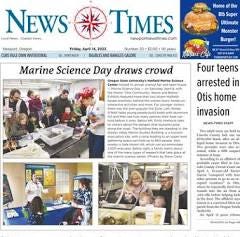
Country Media, Inc., an Oregon-based company, has acquired numerous, often struggling, local newspapers, resulting in some closures and mergers. The firm, led by Steve and Carol Hungerford, has merged publications like The Chronicle and The Chief, while reducing print frequency for others, such as The World in Coos Bay, due to financial pressures.
Key Actions and Closures
- The Umpqua Post: Ceased operations in June 2020 following its acquisition by Country Media.
- Bandon Western World: Printed its final issue in July 2020.
- The World (Coos Bay): Reduced print days from five to two in 2020.
- Mergers: The Chronicle (St. Helens) and The Chief (Clatskanie) merged into The Columbia County Chronicle & Chief. The Lincoln City News Guard and Newport News-Times merged in January 2024.
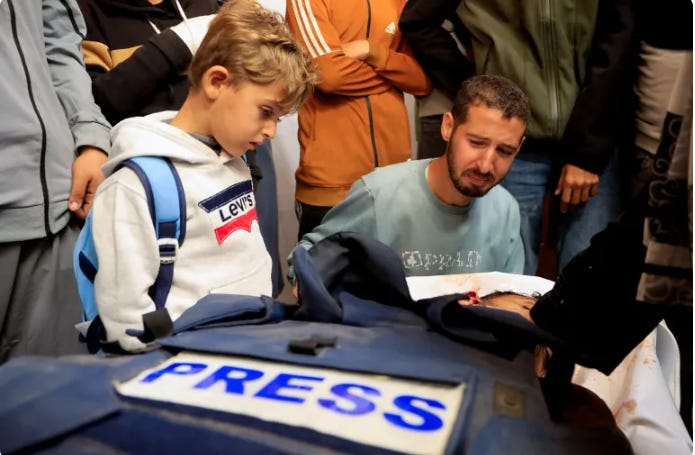
I had a difficult time getting up the energy to go to this listening session and then the following film screening of the flick:
There were eight student journalists there to assist the listening session, students from the U of Oregon journalism program. I just can’t understand why their faculty mentor, Andrew DeVigal, could not start any session off with a moment of silence for fellow truth seekers:
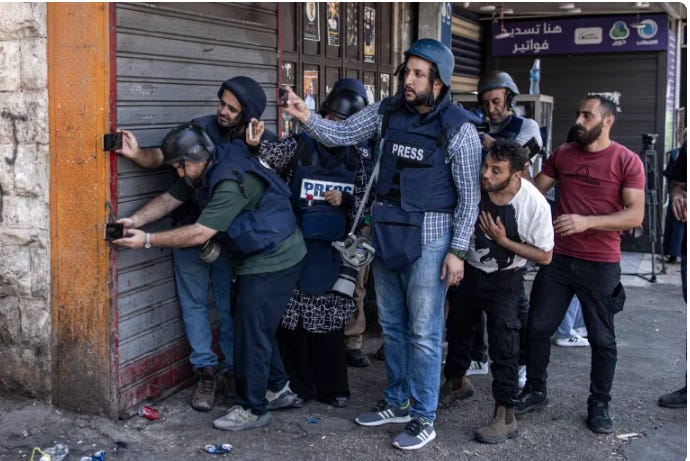
“Israel has now killed more journalists than any other government since CPJ began collecting records in 1992,” it said in a statement.
It cautioned that the true number of journalists targeted and killed by Israel could be much higher because some of the killings could be potentially concealed by press restrictions and humanitarian difficulties that complicate conducting investigations during Israel’s genocidal war on Gaza.
“With much contemporaneous evidence now destroyed, the true number of Palestinian journalists in Gaza who were deliberately targeted by Israel may never be known,” the CPJ said.

Here’s a small talk in Washington State around local journalism:
Local journalists and supporters of local news gathered at the Edmonds Theater in Edmonds, Wash., on Oct. 25, 2025, for a panel discussion and audience Q&A following the screening of the documentary “Stripped for Parts: American Journalism on the Brink.” The screening was co-sponsored by the League of Women Voters Snohomish County and the My Neighborhood News Network, which includes My Edmonds News, MLTnews, and Lynnwood Today.
+—+
You know, when it comes to “educated” people, those people in the League of Women Voters, and there were mostly retired folk at this Newport, Oregon event, and there were a few “city/county” officials, it’s if there is a bipolar collective psychosis going on. It was noon, Saturday, and I was the only fucker talking about the murdering spree by the Jews of Israel and the Jewish Kosher Nostra in the USA.
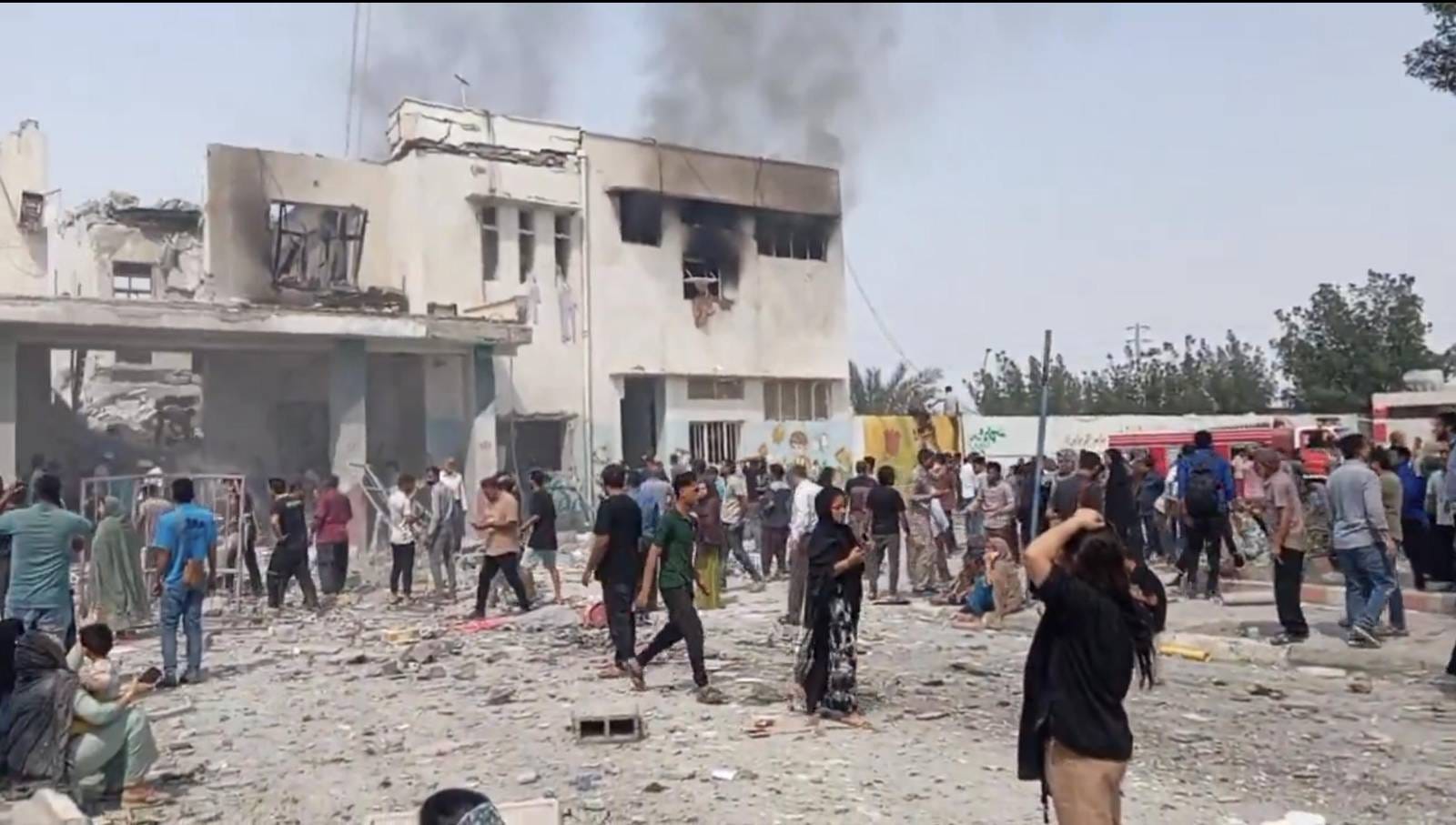
Mohammed Shariatmadar stood outside the wreckage of the Shajareh Tayyiba girls’ elementary school in Minab, in southern Iran on Saturday morning, unable to process what he was seeing. His six-year-old daughter, Sara, a second-grade student, was among dozens of girls killed when the school was bombed in the first few hours of the war launched by the U.S. and Israel against Iran.
In the immediate aftermath of the strike, he remained standing in the shade of a cracked wall, staring at the ground and ignoring the commotion around him. He didn’t approach the building, which had been sealed off, but he didn’t move away either. His hands knotted together, then separated, then knotted again, in a repeated motion. Every time a paramedic emerged or an ambulance moved, he quickly raised his head, then returned to staring at the ground. He asked no one a direct question. He was only waiting for his daughter’s name to be called.
When families were finally directed to a gathering point to receive the bodies of their children, he slowly moved forward. When asked if he needed help, he shook his head silently and waited for his daughter’s body to be brought out.
“I cannot unde, rstand how a place where innocent children learn can be bombed like this,” Shariatmadar told Drop Site. “We are talking about small children who knew nothing of politics or wars. And yet they are the ones paying the highest price.”
Some 170 students were inside the building, attending morning classes when the missile struck. At least 108 people were killed, according to the public prosecutor’s office in Minab, many of them schoolgirls between seven and 12 years old.
It was unclear if it was a U.S. or Israeli strike. On Saturday, CENTCOM’s spokesperson said they were “looking into” the reports.
+—+
The students, college ones, mind you, were given a quick rundown of alternative (sic) sources of news:
Drop Site Newsl Counterpunch, Dissident Voice, Monthly Review, Intercept, Palestine Chronicle, Electronic Intifada, Lowkey, Covert Action Magazine, Consortium News, Empire Files, Break Through News, and a few dozen more suggestions to get these J students out of the morass of legacy media, and the manure pile of traditional news gathering and reporting.
Never heard of Truthout, In These Times, The Nation, The Progressive, Mother Jones?





+—+
They hadn’t been exposed to the Hulk Hogan-Peter Thiel-Adelson documentary:
It was diheartening, man, being around the middling crowd, the Democrats, man, so quick to attack Trump, but then, what about . . . .?
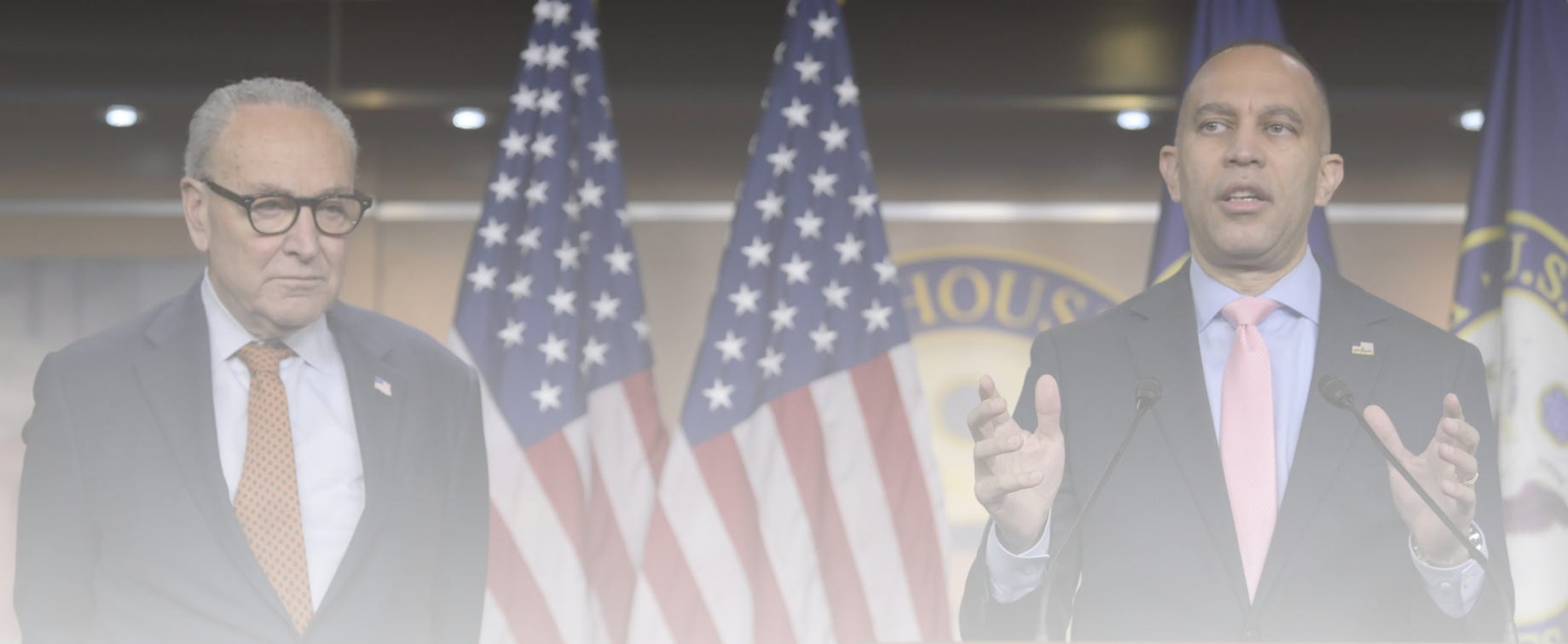
There currently exists one legislative vehicle in each chamber through which members can express their position. This month, six new Democratic House members have signed onto a War Powers Resolution aimed at constraining President Trump’s ability to deploy U.S. forces without congressional approval, bringing the total to 82. The legislation, led by Reps. Ro Khanna (D-Calif.) and Thomas Massie (R-Ky.), was first introduced prior to the Trump administration’s unauthorized strikes against Iranian nuclear targets last June. The GOP appears to be largely unified behind a possible war, with Massie being the only Republican House member signed on to the House legislation. Sens. Tim Kaine (D-Va.) and Rand Paul (R-Ky.) have introduced a similar effort in the Senate.
Yet despite the resolution’s growing support, Democratic leadership has not clearly rallied behind it. House Minority Leader Hakeem Jeffries (D-N.Y.) has issued public concerns about Trump’s rush to war, but has not said whether or not he supports the Khanna-Massie bill.
Senate Minority Leader Chuck Schumer’s (D-N.Y) statement did not oppose a war, but instead noted the “risks” involved and called for confronting Iran’s “ruthless campaign of terror, nuclear ambitions, regional aggression, and horrific oppression” with “strength, resolve, regional coordination, and strategic clarity” and urged the administration “to consult with Congress and explain to the American people the objectives and exactly why he is risking more American lives.” Following the Trump administration’s Tuesday briefing to the Gang of 8, Schumer added, “This is serious. The administration has to make its case to the American people,” fueling criticism that he was prepared to accept the president’s justifications.
“Leader Schumer’s statements are insufficient. Democratic voters want leadership that’s willing to take a clear stand and oppose the president on major issues like this,” Dylan Williams, Vice President for Government Affairs at the Center for International Policy, told RS.
Two recent reports suggest that this lack of pushback could be intentional. A Tuesday story from journalist Aida Chavez’s substack Capital and Empire says top Democrats have worked to block consideration of legislation that would force members to go on record regarding potential military action against Iran.
“The evidence, so far, is that leadership is trying to discourage that vote,” one activist and former congressional staffer familiar with dynamics on the Hill told RS. “And the primary people that serve are the few dozen Democrats whose donors are hawks, but whose voters don’t want regime change war. That’s who the party is trying to protect from having to take a vote, because it’s painful for those members to vote against their donors.”
Drop Site News reported last week that some Democrats on the Hill might support pursuing a military intervention in Iran but, understanding a war would likely be politically catastrophic, would rather not go on the record and instead let Trump and the Republicans bear the responsibility and the costs.
“Cynically, Schumer may also have the midterms in mind,” the Drop Site report says. “If Trump manages to topple the Iranian government, the ensuing chaos could prove a drag on Trump as the country heads into the November elections.”
As a result, party leaders may choose to stand by or tepidly oppose military action as opposed to forcefully weighing in one way or the other. (The Schumer aide who laid out this calculus in the Drop Site story said that the minority leader himself does not subscribe to that logic.)
Alternatives to the dying newspapers?


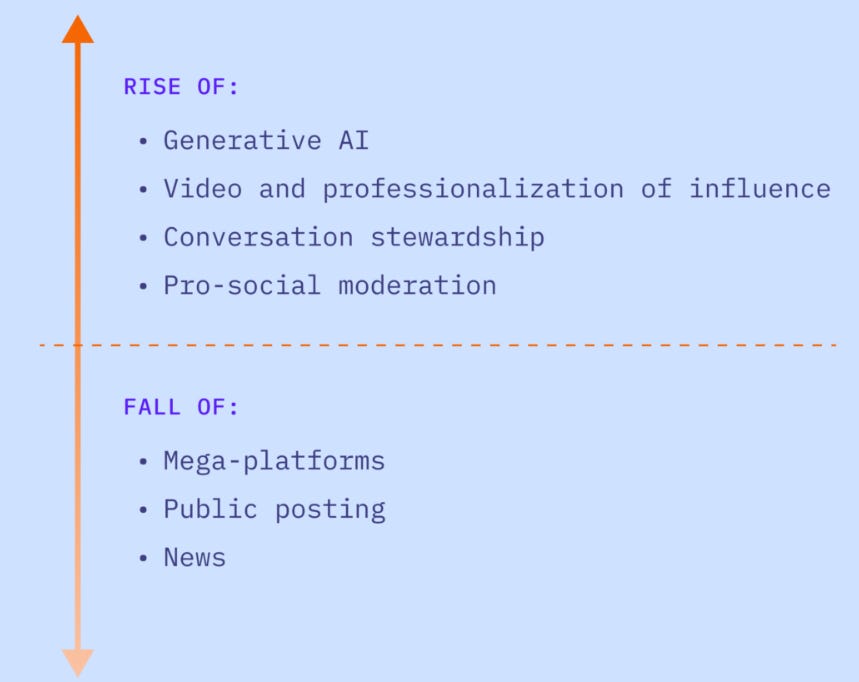


I’ll be interviewing John Washington on my radio show, and his pieces in Luminaria, well, way beyond what the U of O students are being exposed to:
This three-part series chronicles a Tucson family’s harrowing journey from Venezuela through the heart of the anti-immigrant policies of México and the U.S. The first chapter traces Yesenia’s journey with her kids from Venezuela to the United States and then back to México. The second chapter focuses on her husband Mariano’s escape from authorities. The third chapter focuses on the family’s desperate search for safety in México after being deported from Tucson.
The stories are based on more than a dozen hours of interviews by Arizona Luminaria and La Silla Rota reporters with Yesenia and Mariano in a town outside Mexico City, as well as interviews with their family and friends, public records, audio files and messages exchanged between Yesenia and Mariano over seven months.

+—+
Here, the thousand-word commentary, a monthly far-from-rant from Haeder, the ranter: More specifically, Spiel, Catharsis, Vomitus, Spitting up the Phlegm of Capitalism, Hyperbole… tirade, diatribe, harangue, invective . . . screed, philippic, fulmination?
Everyone Likes to Complain about the Weather and the News
by Paul Haeder
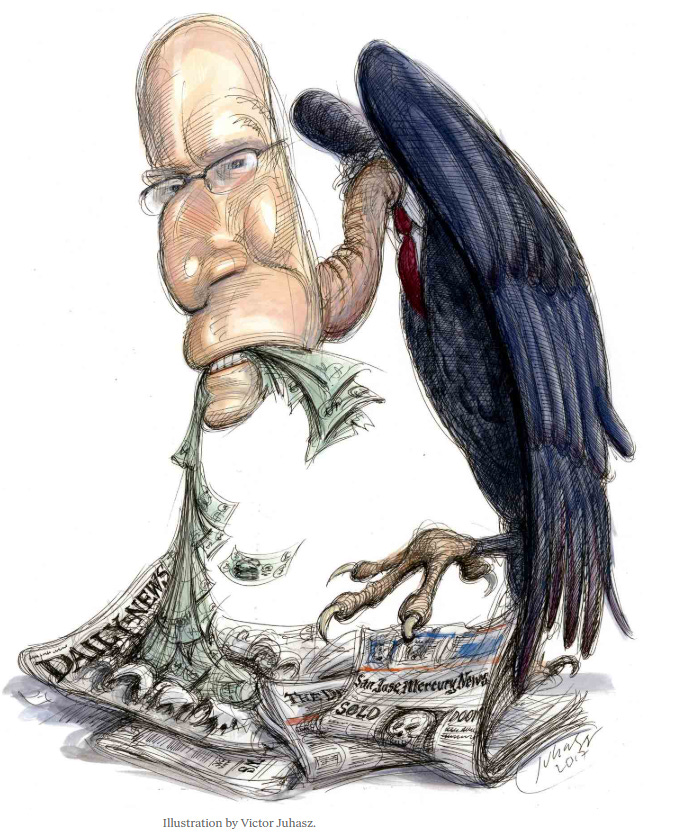
This could be a requiem for this dwindling newspaper, owned now by Country Media. But the real big boys are called vulture capitalists, and at the end of February, eight U of O journalism students and their mentor, Andrew DeVigal, director of Agora Journalism Center, came to Newport to inculcate a listening and talking session at the Atonement Lutheran Church.
There were about 25 Lincoln County residents engaging in a mini-town hall on the future of local journalism, and the power of printed or digital news to embrace a community’s trust and envelop a deep understanding of the issues that make a city or county work or not work.
The famous Bill Moyers puts us at the 35,000-foot perspective:
“It’s up to you to tell the truth about what’s happening to this country we love. It’s up to you to tell the truth about the struggle of ordinary people. It’s up to you to remind us that democracy only works when citizens claim it as their own. It’s up to you to write the story of America that leaves no one out.”
DeVigal has had 30 years in the trenches at various newspapers like the Contra Costa Times, New York Times, and with the Poynter Institute. He’s now working with aspiring journalists, and these students, representing half his current class, Engaged Journalism, helped participants in facilitated conversations on just what makes a good and vibrant informed citizenry “engage” with news.
We are at a crisis point, that is, crises, in terms of education, participation in governance, political literacy, and finding the news that a community needs to become better citizens.
Andrew’s classes have learned the power of Generative Dialogue Framework – a tool that could “help reimagine the future of engaged journalism.”
We know about food deserts and healthcare deserts, but who reading this knows about news deserts? Go to the website, usnewsdeserts.com, and you will find more than 350 interactive maps allowing the user to drill down to the county level to understand the state of local media in communities throughout the United States.
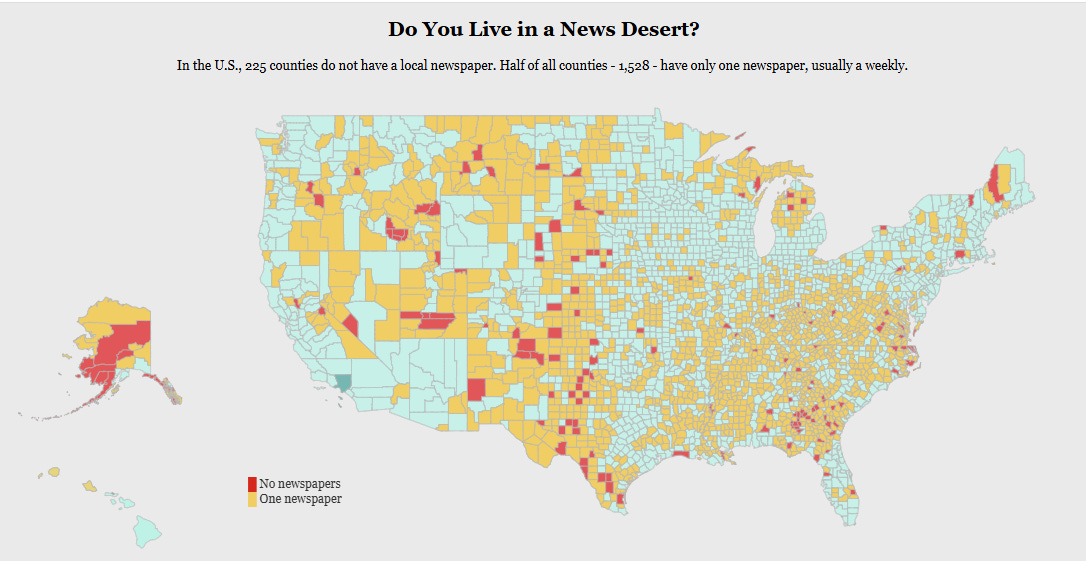
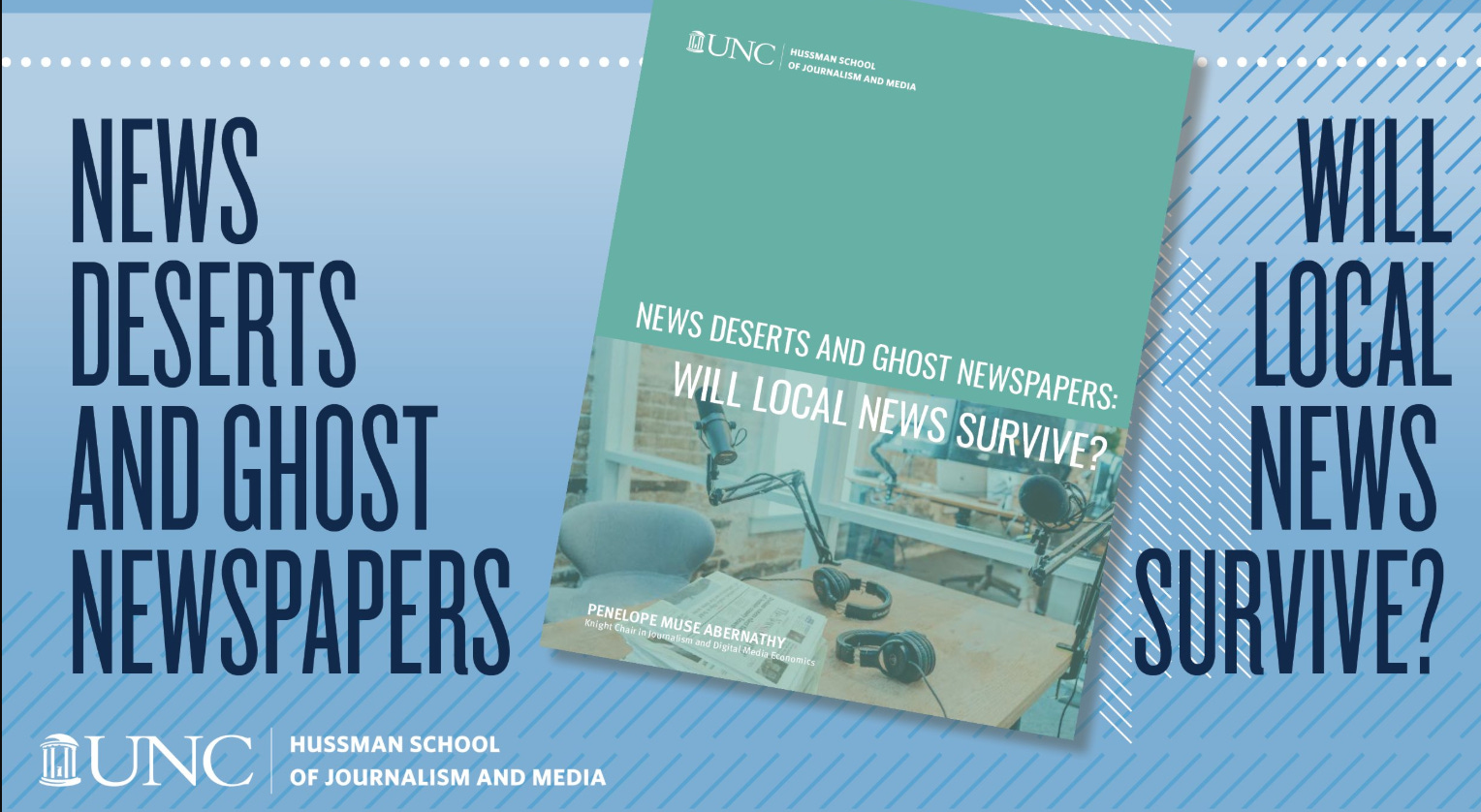
The number of news desert counties rose to 213 in 2025. Research shows that 1,524 counties have one remaining news source. That’s more than 50 million Americans having limited to no access to local news. The rise in news deserts was accompanied by an increase in newspaper closures, which ticked up to 136 this past year, a rate of more than two per week.
Here’s a pivotal point Andrew made in a recent editorial:
“To do better, we must first understand journalism not simply as an industry, but as a form of civic infrastructure that helps communities navigate crises of misinformation, disinformation and democratic instability.”
This listening session stressed the need for businesses to up the ante to strengthen civic health. Holding institutions accountable is one pathway that an engaged citizenry can build trust in news and information ecosystems.
There are four pillars to assessing a community’s civic health, according to the Press Forward organization:
• News and Information: Availability and accessibility of local news outlets.
• Civic Participation Ecosystem: Metrics like volunteer rates and voter turnout.
• Equity and Justice: Structural determinants, including historical racial and economic discrimination.
• Health and Opportunity: Social determinants such as medical debt, housing insecurity, and health insurance coverage.
Andrew stresses that more actors in the business and non-profit communities “can co-invest in community information hubs, local media collaboratives, libraries, nonprofits and cultural organizations that gather, share and contextualize trusted news and expert resources for their communities. They can also sponsor coverage that meets public needs and partner with universities to grow a diverse pipeline of civic media makers and journalists.”
The three-hour event in the early afternoon was centered around a survey that went out to Lincoln County, the same survey that has been conducted in other Oregon communities: Harriston, Salem, Oakridge, La Pine, Rogue Valley and Florence.
The second part of Saturday’s civic engagement was a showing of a 2024 documentary, “Stripped for Parts: American Journalism on the Brink.”
The film lays bare the crimes of hedge funds, those so-called vulture capitalists buying up newspapers for the real estate they encompass. There have been billions of dollars stripped from some of the more well-known newspapers. Alden is the second-largest newspaper owner in the United States, controlling approximately 200 newspapers through its subsidiaries, MediaNews Group (also known as Digital First Media) and Tribune Publishing.
Imagine 75 percent staff reductions, taking us into a new phase of the “ghost newspaper” – no regular beat reports, just papers running syndicated “news.”
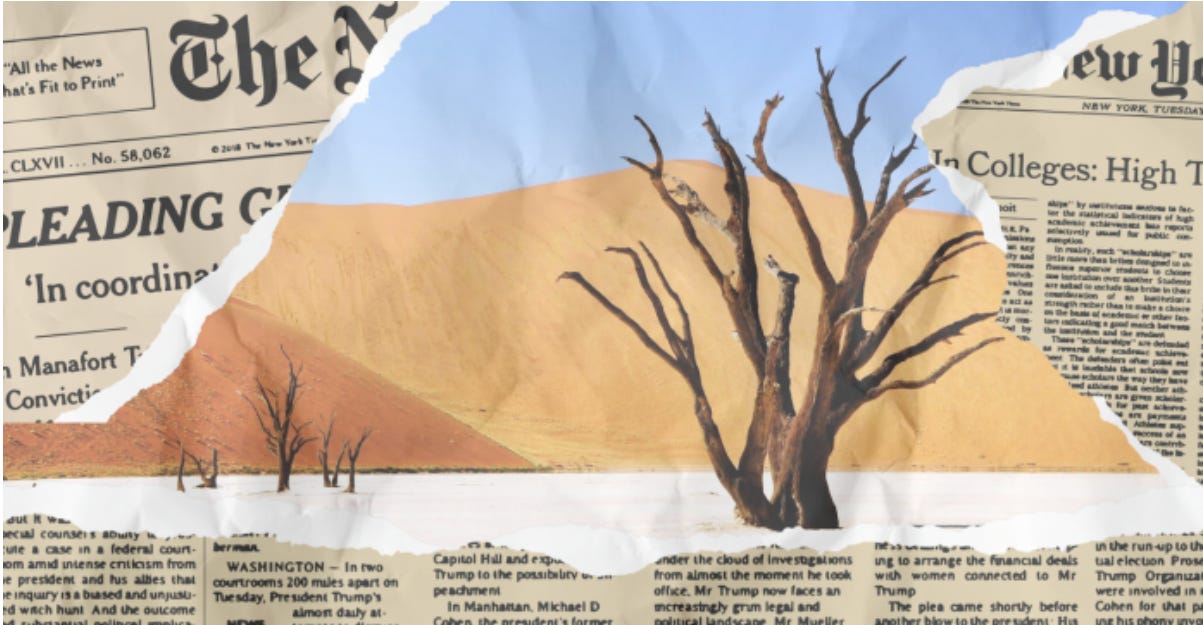
- Staffing Levels: An estimated 1,000 to 1,500 of the 7,200 newspapers in the U.S. have lost more than half of their newsroom staff since 2004.
- Content Shift: A 2024 study of 500 papers owned by the largest chains found that over one-third of front-page content originated from non-local sources.
- Ownership Trends: Many ghost papers are owned by large newspaper chains or hedge funds that implement aggressive cost-cutting measures to maintain profit margins.
- Impact on Democracy: The loss of local “watchdog” reporting is linked to diminished voter engagement and higher local government costs due to a lack of oversight.
A third of the 1,800 papers – 600 – that were lost over the past decade slowly faded away. Most were suburban weeklies. Like the frog in slowly boiling water, few people in the community noticed anything different at first. There was no abrupt closure that grabbed headlines. Often, there was merely an announcement that the paper had been purchased by the owner of a nearby, larger daily.
Initially, the paper continued to be published under the same name, and the reporters who worked for the paper continued to aggressively cover local government. However, as circulation declined, the once stand-alone paper became a zoned edition of the larger paper. Over time, the building where the paper had been published for decades – often a landmark in the community – was sold and staffing was dramatically reduced. Increasingly, news coverage focused on noncontroversial topics – lifestyle features on people and events in the community. In the final stage, management at the larger daily paper announced that the zoned edition would become a weekly specialty publication, advertising supplement in the main paper or a TMC (total market coverage) product or shopper, distributed free to all residents in the community.
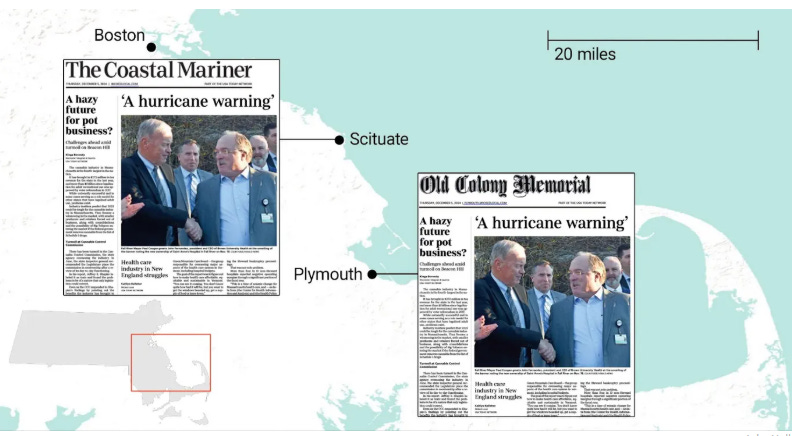
[Despite being published 20 miles apart, the front pages of Gannett’s papers in Scituate and Plymouth, Mass., are identical. These pages from Dec. 5 carry no stories local to the communities they serve.]
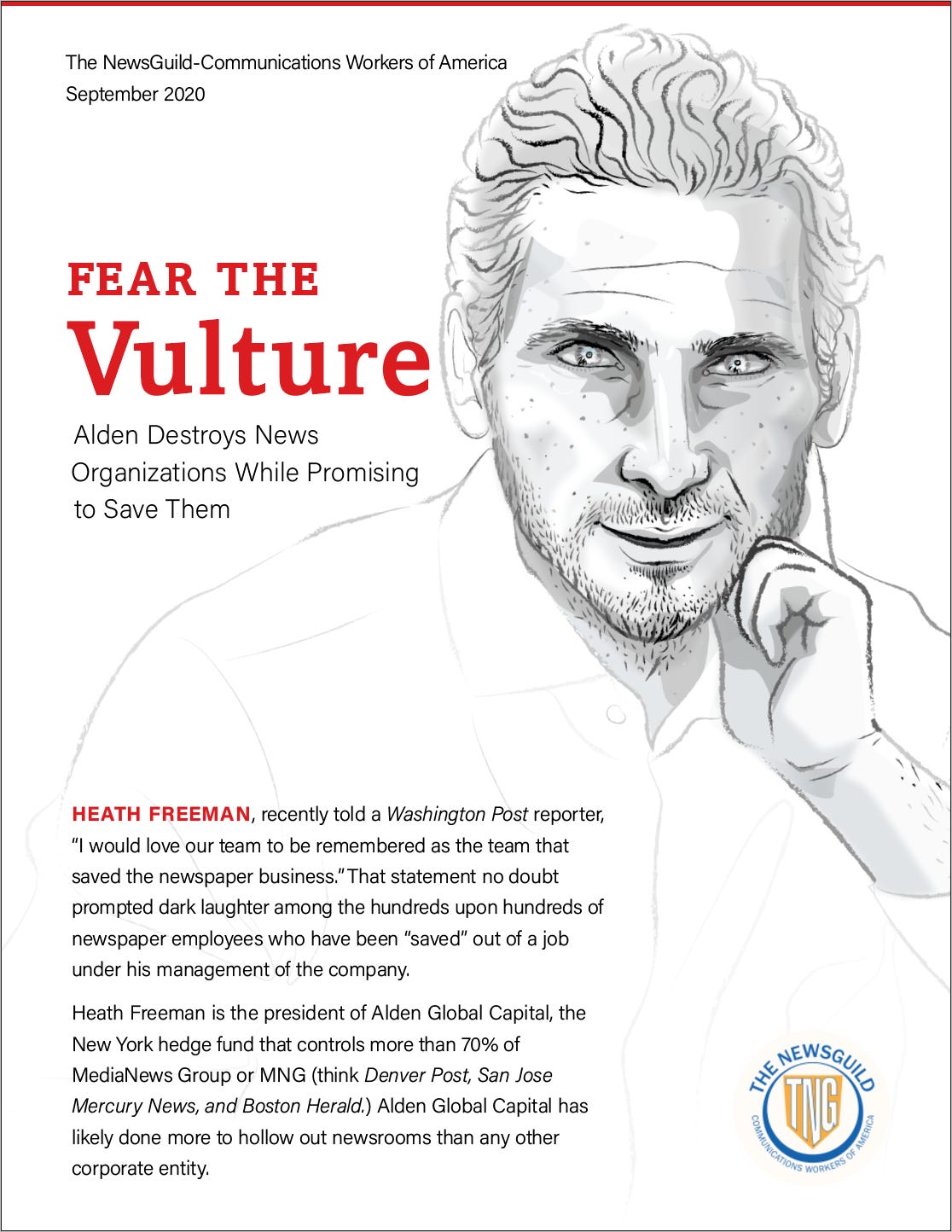
In 2024, Alden closed eight weekly newspapers in Minnesota, including the Shakopee Valley News (160 years old) and the Jordan Independent (140 years old).

When I started in the newspaper arena, first in college 1974-79, the writing was on the wall: “Don’t expect to get a full-time job with a daily that has a Sunday edition. You’ll have to go to small towns and work for a daily, twice-a-week, or weekly newspaper.” The loss of over 2,100 newspapers between 2004 and 2020 is one reason we have such an uninformed public.
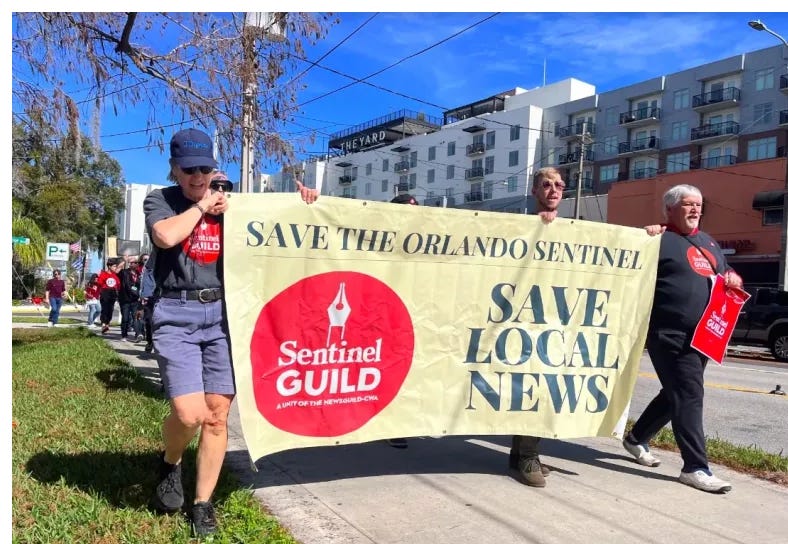
The digital landscape is still evolving. We have the Lincoln Chronicle, a non-profit on-line news outlet. But my contention is we have to support as many hardcopy newspapers in a mid-to-large city. Newport needs at least two newspapers, and this once-a-week Leader just doesn’t cut it.
Cutting jobs, gutting newsrooms, and believing in this so-called creative destruction are the death knell of America.
“Whatever they say about us, they can’t control us. We’re out to serve the public. That’s a red-blooded, virile statement, and by God, it’s true,” stated Harry Grant, Milwaukee Journal, 1963
More wise proof from 238 years ago why newspapers count? “Were it left to me to decide whether we should have a government without newspapers, or newspapers without a government, I should not hesitate a moment to prefer the latter.” — Thomas Jefferson, 1787
 Paul Haeder, Author