

too bad Dickens isn’t around, cuz there would be no redemption NOW with these fucking neuroperverse, pedophiliac, Nazi-leaning, totalitarian-loving rich fucks
Dec 24, 2025
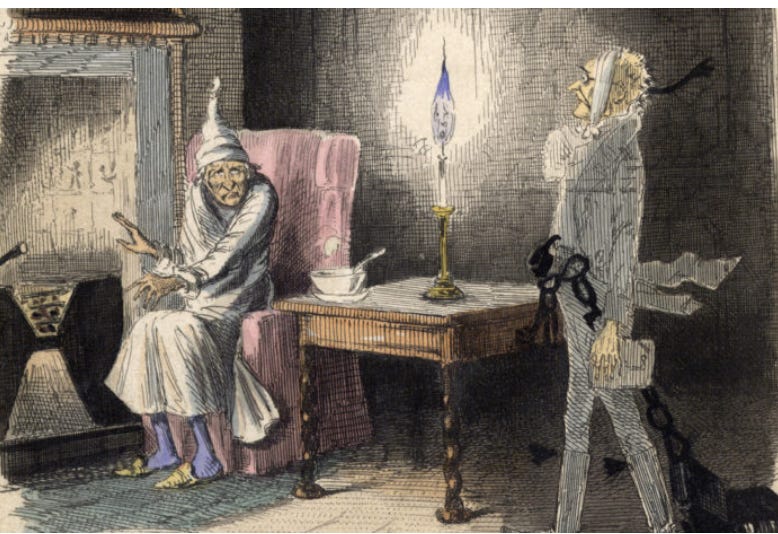
As December 25 approaches, the references to Dickens’ classic A Christmas Carol become more frequent and it is used as a jumping off point for polemics right across the political spectrum. In 2012 Prince Charles hailed Dickens for using his creative genius to campaign for social justice. In the aftermath of the 2019 General Election The Telegraph counterposed Boris Johnson as the “opulent Ghost of Christmas Present” to Corbyn as “Scrooge”. Not wanting to be left out, Corbyn himself chose to “gift” Johnson a copy of the novella when asked during a televised debate what present he would give to the Tory leader. Zarah Sultana MP has continued the tradition this year by sending a copy to Jacob Rees Mogg in response to his claim that UNICEF were “playing politics” by funding breakfasts for children in South London. While Mogg is possibly best placed to be the modern day Scrooge, we need to delve into the story and its historical context a little bit more to understand it as a “political” work.
“Scrooge” (derived from “screw” & “gouge”) has become a byword for mean-spirited money grubbing bosses and certainly it is a story of dramatic transformation. Dickens was part of a generation of Victorian authors who saw their role as more than entertainers. Karl Marx described those authors as having “issued to the world more political and social truths than have been uttered by all the professional politicians, moralists and publicists put together.”
So, what motivated Dickens to write the Carol and should socialists claim it?
Charles Dickens was inspired to write the classic having been “perfectly stricken down” by an 1843 parliamentary report into child labor and the treatment of women in Victorian factories. Horrified at the conditions people were working under, he resolved to “strike the heaviest blow in my power” against the injustices he saw in the report. The struggles of Victorian working class children are foregrounded in the story when, at the end of “Stave 3”, two malnourished children appear from behind the robe of the “Ghost of Christmas Present”. They are named “Ignorance” and “Want”, to symbolize the two greatest ills dogging Victorian society.
Bob Crachit, Scrooge’s underpaid clerk, sees his children sent off to work to make ends meet and his youngest “Tiny Tim” faces an early death from a curable health condition. At the start of the novel Scrooge is completely unsympathetic to the plight of the poor and takes no responsibility for their situation despite hoarding wealth and preying on hardship as an unscrupulous money lender. He echoes Christian minister Thomas Malthus by suggesting the poor had better die and “decrease the surplus population”. The story is social criticism from start to finish and appeals for change.
Dickens highlights the personal effect this avaricious nature has on Scrooge as he is shunned by society, “solitary as an oyster”. By looking back into his past, Scrooge is forced to confront the trauma of losing his fiancé, sister and business partner and faces a bleak future. By the last chapter, he is “merry as a schoolboy” and like a “second father to Tiny Tim”, supposedly showing the positive effects of developing a charitable nature.
However, while it is certainly a story of personal transformation, it stops short of being a tale of societal change. In the final chapter, we still see the “Portly Gentlemen” out collecting money for the poor and there is a reliance on the benevolence of the wealthy, rather than the independent action of the working class to affect change. In fact the working class are presented as meek, mild and generally helpless. Bob Cratchit stops his wife chastising Scrooge when he toasts his boss on Christmas day and brushes aside years of ill treatment in a moment of seemingly Christian forgiveness. The burning anger at the gaping chasm between rich and poor is largely absent from the book, this is despite the fact that at the time the book was written, Chartism was emerging as the one of the first independent movements of the working class. Marx’s political collaborator, Friedrich Engels was more forthright in his The Conditions of the Working Class in England (written the year after The Carol was published) when he described how “these Londoners have had to sacrifice the best qualities of their human nature to bring to pass all the marvels of civilization which crowd their city.”
+—+
Yeah?
- Boat Strike Survivors Clung to Wreckage for Some 45 Minutes Before U.S. Military Killed Them
“There are a lot of disturbing aspects. But this is one of the most disturbing.”
- Anti-Palestinian Billionaires Can Now Control What TikTok Users See
“Users need to revolt against what will very likely be an even more widespread effort to censor voices critical of Israel.”
- 10 Companies Have Already Made $1 Million as ICE Bounty Hunters. We Found Them.
“And they stand to make millions more in cash bonuses for surveilling and tracking immigrants in service of ICE’s deportation machine.”
- U.S. Military Killed Boat Strike Survivors for Not Surrendering Correctly
Before ordering a second strike on their boat, Adm. Frank Bradley sought legal advice from JSOC’s top lawyer, Col. Cara Hamaguchi, The Intercept has learned.

So the pain continues, amped up and ramped up, as MAGA maggots increase their Love of Semen Drip Pedophile/Rapist Trump

In his almost 45 years as a federal judge, John Coughenour has seen it all, including high-profile criminal trials that put his own safety at risk.
But this year, the 84-year-old senior district judge did something he hadn’t considered for a long time: He retrieved a gun he had stored at the federal courthouse in Seattle years ago and brought it back to his home in case he needed it to defend himself.
Coughenour is one of dozens of federal judges who have found themselves at the center of a political maelstrom as they have ruled against President Donald Trump or spoken up in defense of the judiciary. With Trump administration officials vilifying judges who rule against the government, a wave of violent threats and harassment has often followed.
+—+
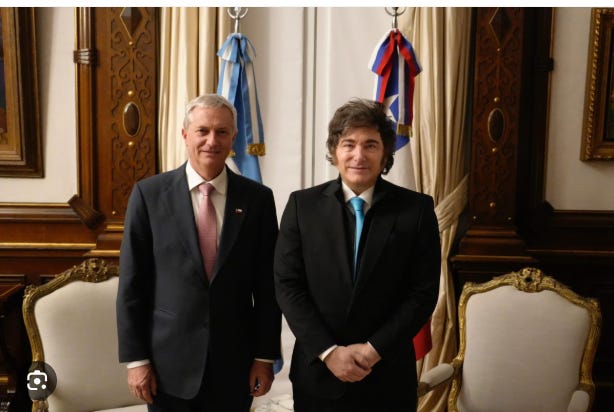
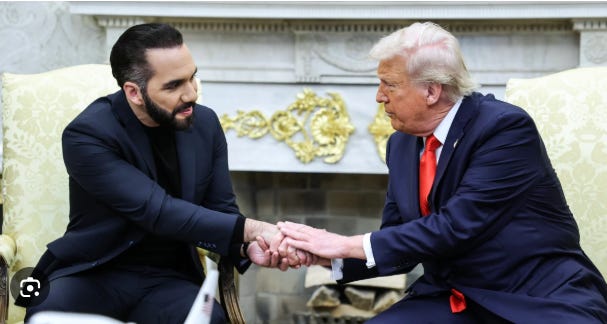
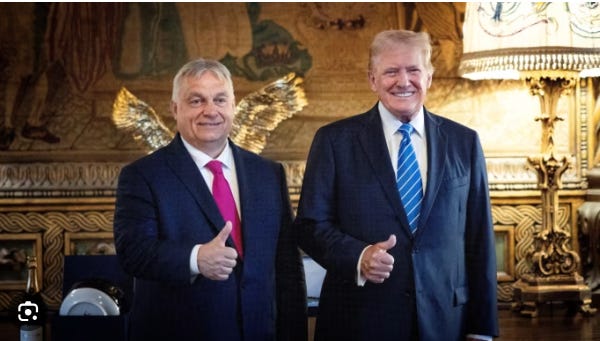
Oh, those Dictators:






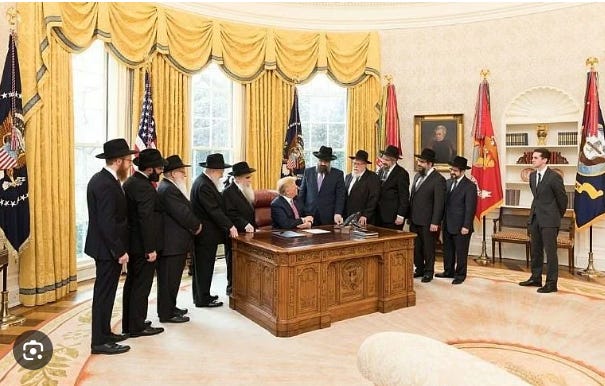



Oh, Dickens, you messed up on the Jews:

A Prostitute, a Thief, and Jesus Walk into a Tavern: The Tragedy of the Jewish Dickens

Jesus says the bottom level of purity in the Jewish tradition will enter the Kingdom before the top levels. There is something more important than external purity issues that qualifies one for entrance into the kingdom: Repentance from sin, a “pure heart” that can only be created by God, and the kind of honest acknowledgment of one’s need (as in the case of the tax collector and the Pharisee parable in Luke 18).
This is a continuation of the “first shall be last” theme that Jesus began teaching in Matthew 19-20. Those that expect to be a part in the Messiah’s program are not, and those that probably do not expect to enter the kingdom are included because of their humble faith.
That the tax collectors and prostitutes enter the kingdom at any time would shock his Jewish audience. But to enter before those who are ritually pure, students of the Law is an affront! For some commentators, the religious Jews have no chance at getting into the kingdom because of their current unbelief. But this is not how the verb is used throughout the rest of the New Testament, so likely what is meant here is that the Pharisee may yet enter the kingdom, but he will be at the “end of the line!”
Note the tense of the verb: tax collectors and prostitutes are entering the kingdom, a present tense verb. Not “will enter” but are currently participating in the kingdom. This is because Jesus is the king, and because he is present the Kingdom is present. Tax collectors are celebrating with Jesus and the Religious Leaders are not. Jesus is a friend of sinners, the Religious Leaders are not.
The reason these chief priests and elders will not enter the kingdom of God first is that they did not believe John as the prostitutes and tax collectors did. John taught the “way of righteousness” which seems to mean that he was teaching the people what the will of God was.

A hell of a Jewish Xmas: Scoop: Bari Weiss plans overhaul of CBS News and “60 Minutes” standards and procedures.


Ahh, and then the Semen Drip Little Big Men, Rubio, et al: The US State Department on Tuesday imposed visa sanctions on a former top European Union official and employees of organizations that combat disinformation for alleged censorship – sharply ratcheting up the Trump administration’s fight against European regulations that have impacted digital platforms, far-right politicians and Trump allies, including Elon Musk.
In a statement, US Secretary of State Marco Rubio accused the five sanctioned people of leading “organized efforts to coerce American platforms to censor, demonetize, and suppress American viewpoints they oppose.

Oh, no, more lumps of coal in our collective Xmas stockings: Proposed elimination of NCAR, the National Center for Atmospheric Research, by the Trump Administration has been much written about and commented upon, justifiably so. This brief article seeks to add information and some considerations not always noted in this coverage.
To begin, NCAR is a world-renowned place for basic research on the Earth’s atmosphere, weather, oceans, ice, and the unceasing interactions among them. Founded in 1960 by the U.S. National Science Foundation, managed by a consortium now including 130 universities, it has been a vital institution of American leadership in science, supported by presidents and Congresses for 65 years.

Located in a dramatic setting below the soaring flatirons of Colorado’s Front Range, designed by famed architect I.M. Pei, NCAR is a legendary institution in the global scientific community. That it is now threatened with liquidation by the Trump Administration marks a blunt repudiation of its long history of support and denial of the recognized status it has earned over many decades of fundamental contribution.

Ahh, Xmas in Latin America is starting to look like trumpLandia:

While all eyes are on the four-month-long US military campaign against Venezuela, the White House has been quietly striking security agreements with other countries to deploy US troops across Latin America and the Caribbean.
As Donald Trump announced a blockade on oil tankers under sanctions and ordered the seizure of vessels amid airstrikes that have killed more than 100 people in the Caribbean and the Pacific, the US secured military deals with Paraguay, Ecuador, Peru and Trinidad and Tobago in the past week alone.
The agreements – ranging from airport access, as in Trinidad and Tobago, to the temporary deployment of US troops for joint operations against “narco-terrorists” in Paraguay – are being signed under the banner of a so-called “war on drugs”, the same rationale Washington has used to justify its offensive against Venezuela, although White House officials and Trump himself has said that the goals also include seizing the country’s vast energy reserves and bringing down the dictator Nicolás Maduro.

[US fighter jets at the former Roosevelt Roads naval base in Ceiba, Puerto Rico.]
In recent months alone, the US has signed similar agreements with Guyana, the Dominican Republic and Panama, while other countries in the region have already been drawn into the military buildup against Venezuela through existing US bases in Puerto Rico, Honduras and Cuba, and surveillance hubs at airports in El Salvador, Aruba and Curaçao.

Blackstone buys island resort in Australia’s Great Barrier Reef


$1.2 billion Hamilton Island deal sets precedent for Australian island resorts
The cunts of The Jewish Mafia: And then these Goyim Mafia.
Fredric Jameson famously said that it was easier to imagine the end of the world than the end of capitalism.

Fewer than 60,000 of the world’s richest people own more wealth than half of the entire world put together, with a global elite amounting to 0.001% of the population being three times wealthier than the bottom 50%.
A new study by a team at the London School of Economics (LSE) focuses on one factor reinforcing inequality. Most people do not actually see it, or see enough of it, in their daily surroundings to understand the true extent of it.
“One finding that is pretty universal is that people have a pretty bad idea about inequality in society. Some of it has to do with the fact that we don’t understand things like the Gini coefficient… scientists and economists talk about these measures, but it just doesn’t mean much to average people,” Milena Tsvetkova, one of the authors of the study, told Euronews.
[Review — Capitalism by Sven Beckert review – an extraordinary history of the economic system that controls our lives
The Harvard professor provides a ceaseless flow of startling details in this exhaustively researched, 1000-year account
In the early 17th century, the Peruvian city of Potosí billed itself as the “treasure of the world” and “envy of kings”. Sprouting at the foot of the Cerro Rico, South America’s most populous settlement produced 60% of the world’s silver, which not only enabled Spain to wage its wars and service its debts, but also accelerated the economic development of India and China. The city’s wealthy elites could enjoy crystal from Venice and diamonds from Ceylon while one in four of its mostly indigenous miners perished. Cerro Rico became known as “the mountain that eats men”.
The story of Potosí, in what is now southern Bolivia, contains the core elements of Sven Beckert’s mammoth history of capitalism: extravagant wealth, immense suffering, complex international networks, a world transformed. The Eurocentric version of capitalism’s history holds that it grew out of democracy, free markets, Enlightenment values and the Protestant work ethic. Beckert, a Harvard history professor and author of 2015’s prize-winning Empire of Cotton, assembles a much more expansive narrative, spanning the entire globe and close to a millennium. Like its subject, the book has a “tendency to grow, flow, and permeate all areas of activity”.

“No religion, no ideology, no philosophy, has ever been as all-encompassing as the economic logic of capitalism,” Beckert claims, defining it as “the ceaseless accumulation of privately controlled capital”.
Accounting for it therefore feels like explaining water to fish. Adam Smith, “the hero of capitalism’s triumphant self-remembrance”, attributed it to benign self-interest. Beckert, however, calls it a revolution, centuries in the making, which depended on things that Smith downplayed: “power, violence, the state”. Far from natural or inevitable, it has always been “unstable and contested”, proceeding by jolts.
CAPITALISM = anti-human: a “rogue artificial intelligence”, an invasive species, an alien force, a supernatural hunger. It is insatiable and unkillable

Invasive fucking species, 2028, boys and girls! Vance, Rubio more likely to run with one other than compete in 2028 .
Lawler told host Kasie Hunt on CNN’s “The Arena” that “frankly, I think it’s more likely that you’ll have a Vance-Rubio ticket than anything else.” The New York Republican stopped short of throwing his full support behind Vance, but he said the vice president has a “leg up” on the competition and would be a “formidable candidate” if he decides to run.
Fleas dream of buying themselves a dog, and nobodies dream of escaping
poverty: that one magical day good luck will suddenly rain down on
them—will rain down in buckets. But good luck doesn’t rain down
yesterday, today, tomorrow, or ever. Good luck doesn’t even fall in a
fine drizzle, no matter how hard the nobodies summon it, even if their
left hand is tickling, or if they begin the new day with their right
foot, or start the new year with a change of brooms.
The nobodies: nobody’s children, owners of nothing. The nobodies: the
no ones, the nobodied, running like rabbits, dying through life,
screwed every which way.
Who are not, but could be.
Who don’t speak languages, but dialects.
Who don’t have religions, but superstitions.
Who don’t create art, but handicrafts.
Who don’t have culture, but folklore.
Who are not human beings, but human resources.
Who do not have faces, but arms.
Who do not have names, but numbers.
Who do not appear in the history of the world, but in the police
blotter of the local paper.
The nobodies, who are not worth the bullet that kills them.”
― From Open Veins of Latin America: Five Centuries of the Pillage of a Continent
 Paul Haeder, Author