slithering through their own Bedlam, stories about Russia Winning and USA Moving Away from NATO and EU? It’s all fucking kabuki theater, and the Jews have it!
“An anarchist is one who, choosing, accepts the responsibility of choice.” — Ursula K. Le Guin
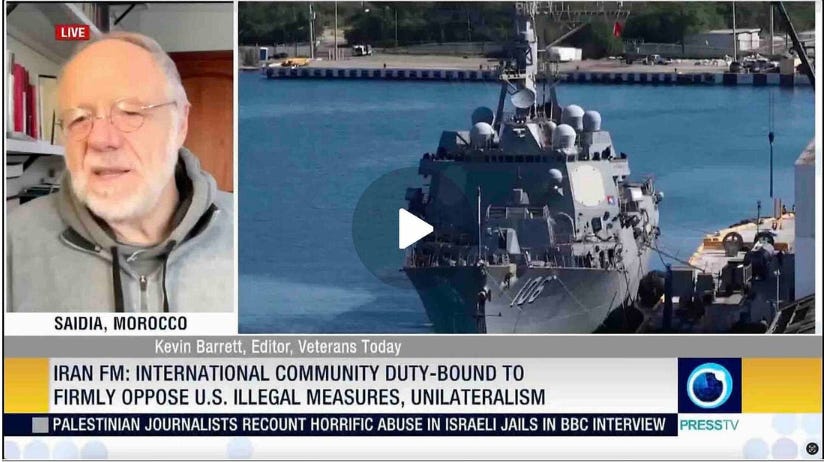
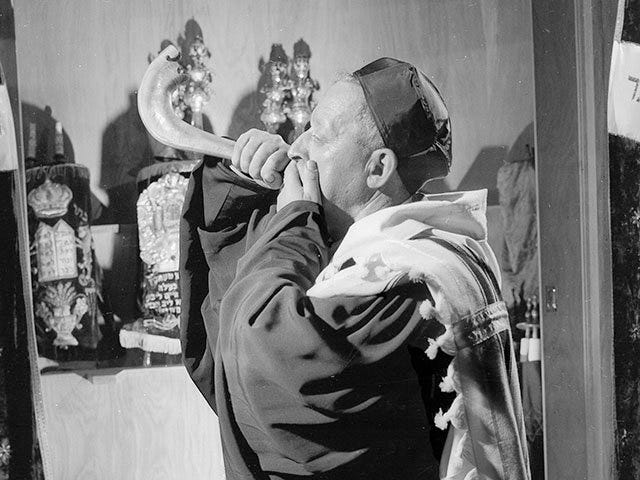
This old Wisconsite?
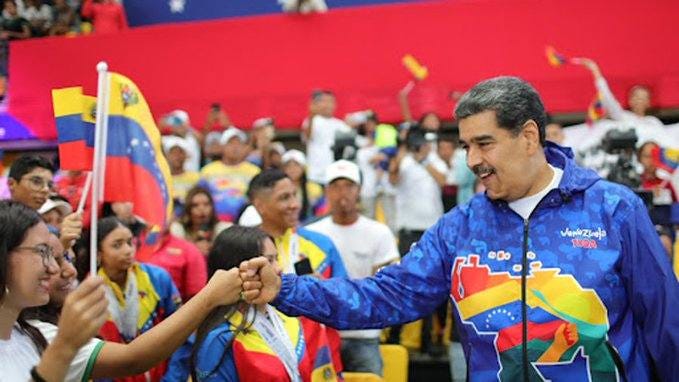
And what is it about Iran, 10 million plus, having to “MOVE” because the water is gone? And this Wisconsinite wears a hoodie while the Press TV guy has a coat and tie on. Zelensky anyone?
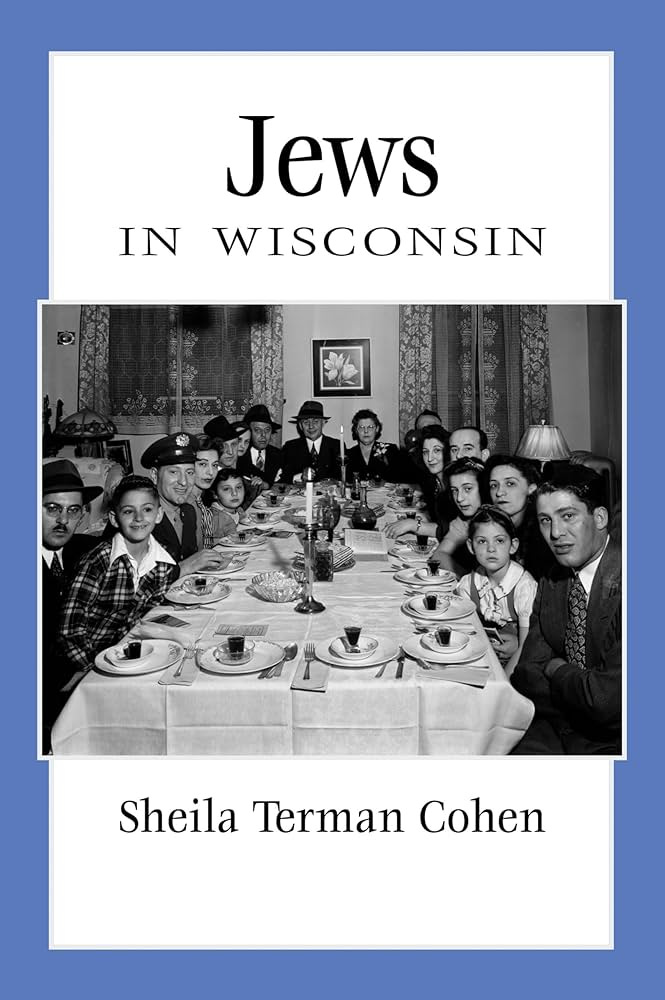
Wisconsin, steers and queers for AmeriKKKa, that’s the ticket!
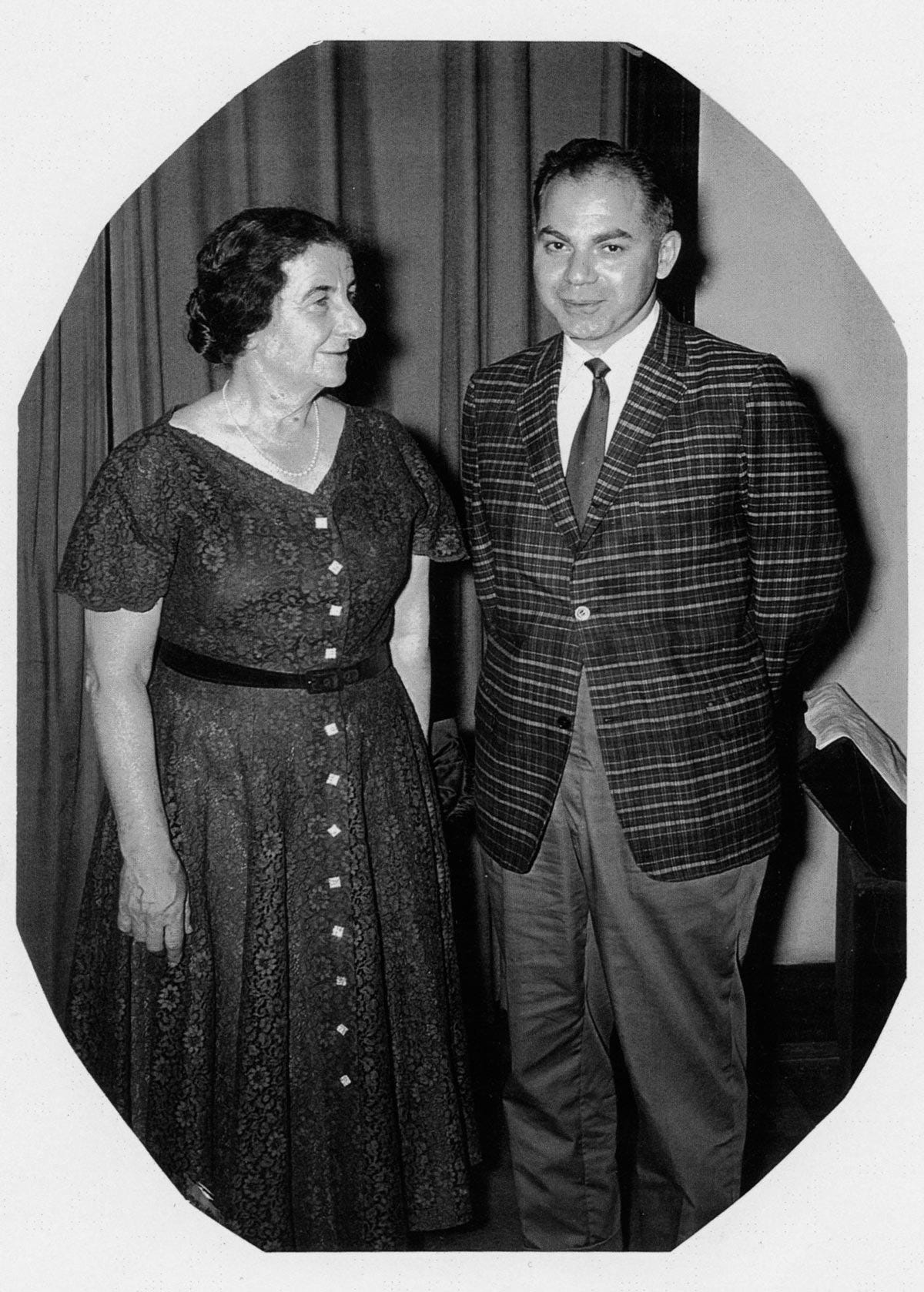
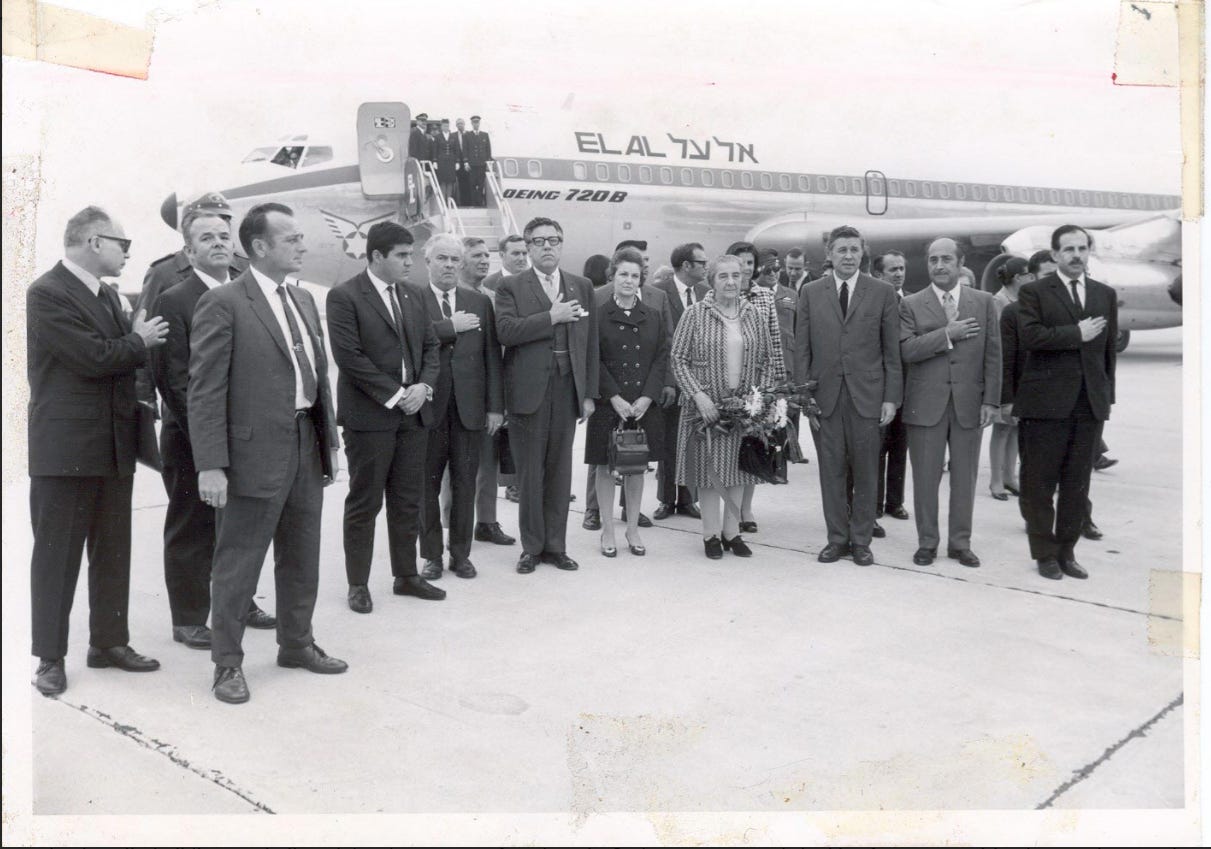
Golda Meir, future Israeli Prime Minister, spent her formative years in Milwaukee, Wisconsin, immigrating as a child and attending local schools like the Fourth Street School (now Golda Meir School) and the Wisconsin State Normal School (now UW-Milwaukee) where she became deeply involved in Labor Zionism, a movement shaping her path to Israel’s leadership. Her Milwaukee roots fostered her strong Zionist identity, leading her to embrace activism and eventually emigrate to Palestine in 1921 with her husband.
Here I am arriving at Mitchell Airport during my visit to Milwaukee in 1969, being welcomed by several Milwaukee dignitaries.
Thank you very much, Mr. Barrett, for joining us during this hour’s top headlines. Let’s go ahead and start off with the U.S military buildup and everything that is happening in Venezuela. Caracas is preparing for a likely US invasion of Venezuela. With all of Trump’s threats and all the games that he’s been playing lately, do you think that there is a possibility of the invasion of Venezuela?
Yes, I think there is a possibility. I think it would be a very ill-advised move by the Trump administration. It would essentially be a repeat of the very mistakes, the invasions of Afghanistan and especially Iraq, that Trump actually won office originally in 2016 by exposing and decrying. Trump was a critic of Bush Jr.‘s ridiculous claims that Iraq was full of weapons of mass destruction, but now Trump is doing the same thing. He just hilariously classified fentanyl, the drug, as a quote unquote weapon of mass destruction, so he can use the same excuse that Bush used to invade Iraq, which turned out to be a disaster, to invade Venezuela. And that would be at least an equally big disaster. Venezuela’s terrain is much more favorable to a guerrilla war than Iraq’s ever was. The mountains, the jungles, and then, of course, the anti-ship weapons that Venezuela may possess could deliver a terrible shock to the U.S. Navy.
The people of the region, especially the more intelligent, educated people, know about the horrors of U.S. imperialism in the region, and they will unite behind Venezuela, not just the people inside Venezuela, but everywhere else as well. I think in the same way that the Trump administration and the Israelis were surprised that Iran rallied as a nation against the evil Israeli aggression last June. And that led to a lot more virtually unanimous support for the government in Iran. The same kind of thing would happen in Venezuela, but also outside the borders, the whole continent, and indeed all of Latin America. Even Mexico will be full of people wanting to defend Venezuela and Latin America in general from these rapacious, crazy Yankee imperialists who want to come in and steal their resources, which Trump has even admitted is his goal.
Now he’s finally admitted that no, it’s not about fentanyl which of course doesn’t come from Venezuela anyway—that’s all just a ludicrous pretext—what it’s reallyabout is stealing what Trump says is “our” oil. Well, Trump, what is your oil doing under Venezuela’s land? Maybe Trump doesn’t realize…he looks at a globe and he sees that Texas is above Venezuela and he thinks the oil leaked out of Texas down into Venezuela, so he’s going to go get it back.
This is so ludicrous. And so the international community needs to stand up and say, look, we have a multipolar world now. We need it to run under some vestige of international law. And instead of having the UN and international law working together with the Americans, which has been the way it’s been since World War II, it’s time that international law and international cooperation has to happen against the Zionist occupied U.S. empire.
What moral does the US have for such designations, when it protects and finances terrorist organizations within its territory and openly speaks about covert actions and sabotages by the CIA against Venezuelan infrastructures?
The US just intends to impose an international isolation on the Bolivarian and Chavista Revolution, increase pressure, escalate on an aggression that would have unpredictable consequences for peace, security and stability in Latin America and the Caribbean and expand the meager support that it’s unlawful attacks have received
Our all-out solidarity and support would go the people and government of Venezuela in the face of this infamous barbarism.
+—+
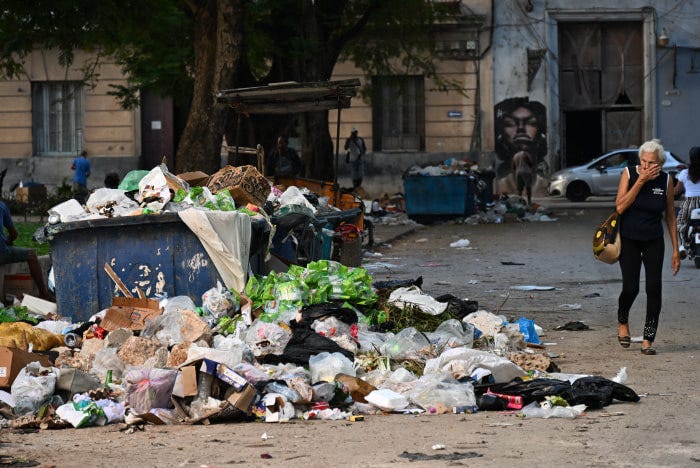
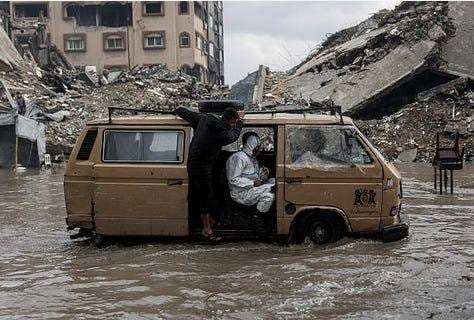
The Jew World of Gazafication and Pegasus-ization of the world: Piled-up garbage earlier this month in Havana, where desperate conditions are leading to the spread of mosquito-borne viruses.
U.S. Oil Blockade of Venezuela Pushes Cuba Toward Collapse
The Communist-ruled island was already suffering from food shortages, blackouts and an exodus of people; now it faces the loss of cheap oil from Nicolás Maduro
Gaza, a la Jewish Vaues.
Ahh, Palestinian resistance? The land, man, their land, as opposed to the Wandering Jew.
Here, Jew York Times: Man, the neuroperverse, from Freud and rabbis, to Torah and Adolph Bibi, Golda to Zuckerbery, Brin to Altman.
The Lives They Lived
b. 1927
Anna Ornstein
Deported to Auschwitz as a teen, she pushed psychoanalysis to think about Holocaust survivors in a new way. By Daniel Bergner
Dr. Anna Ornstein survived Auschwitz-Birkenau at age 17. There, her father and grandmother were killed in the gas chambers. Her two brothers were pressed into labor for the Axis armies and never returned. Later, as a psychoanalyst, she published academic writing that sometimes took a personal turn and held a muted yet unmistakable rage. That anger was not focused on Hitler or the memory of especially cruel SS guards; it was aimed at a prevalent psychoanalytic perspective that she felt failed to see, let alone learn from, the experience of Holocaust survivors.
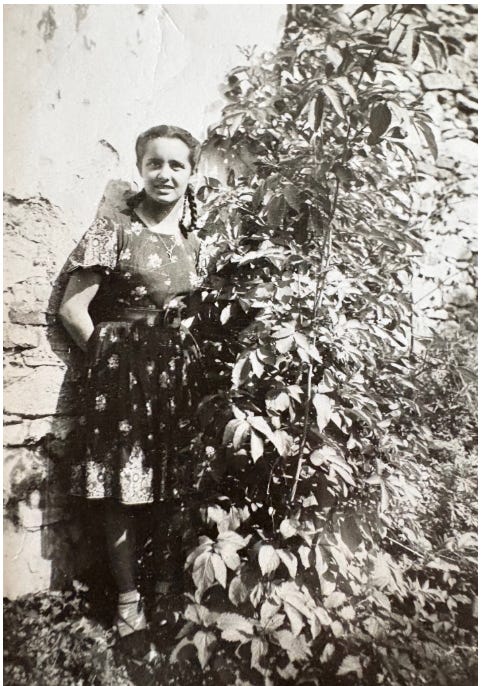
Ornstein grew up in a Hungarian farming town, where, for the tiny Jewish minority, antisemitism was severe but not insurmountable. Then came German occupation and the packed cattle cars that hauled Jews toward almost inevitable extermination. At Auschwitz-Birkenau, living on a once-daily chunk of bread and “some kind of cooked grass,” as Ornstein would recall in a short memoir, she and her mother fended for each other. Ornstein “became my mother’s eyes” after her mother’s glasses were confiscated. She masked her mother’s weakness so she wouldn’t be marked for death. Her mother, for her part, persuaded Ornstein that it was only rumor when prisoners spoke of the distinctive smell in the air as coming from burning bodies.
After stints in two more Nazi camps and, finally, liberation, mother and daughter made their way back to Hungary, where Ornstein’s mother took charge of an orphanage for 40 Jewish children who lost their families. She insisted that every child be bathed in attention by any available adult — that “the cook, the gardener, the maid, whoever else was around,” Ornstein wrote, should stay at the bedside of any child who struggled to fall asleep. The healing of the children was essential to her mother’s own. Ornstein herself found healing in her marriage to a young man, Paul Ornstein, whom she had adored since meeting him when she was 14 and he 17. Paul had escaped from forced labor with the German Army and, later, Soviet Army detention. The children from the orphanage gathered in a choir to sing at the wedding.
If the orphanage and the wedding sound like sentimental set pieces in a Holocaust movie, they would also become crucial to Ornstein’s vision as a clinician and an academic. Ornstein followed Paul to medical school and, after they immigrated to the United States, into psychoanalytic training in the 1960s. But Ornstein felt that classical psychoanalysis failed to reckon with the individual and complex experiences of what she and other Holocaust survivors endured — and how, in a great many cases, they overcame what they went through.
Analysts in training undergo their own analyses. One day, Ornstein took a written account of her experiences to her analyst, who was also the chairman of the psychiatry department at the University of Cincinnati, where she had studied. Two of Ornstein’s grown children, Rafael and Sharone Ornstein, both psychoanalysts themselves, told me about the incident. They didn’t know exactly what their mother had written, but they guessed that she made an urgent effort to have her specific story — and her capacity to recover — understood.
The next day, the chairman’s secretary handed the pages back, saying only, “This is yours.” Ornstein reiterated that the document was meant for her analyst. The secretary replied, “He said, ‘This is yours.’” “From his responses,” Ornstein recounted in a 2014 essay, “I learned early on that it was preferable for me not to share my Holocaust experiences with him.”
Psychoanalysis was built on Freud’s ideas about the unconscious sexual drives of childhood and the guilt, fear, repression and other drives that follow from early erotic yearnings. In classic psychoanalytic treatment, a patient’s troubles were seen as almost purely internal. Breakthroughs depended on unburying conflicts and torment. The Holocaust, so immensely and devastatingly external, didn’t fit readily within this paradigm. It posed a tremendous challenge for mainstream psychoanalytic theory. If the field didn’t always look away from the Holocaust, as Ornstein’s analyst seems to have done, it often did something that was, in Ornstein’s mind, worse. It reduced survivors to extreme victimhood, presuming that they could be summarily categorized as broken beings.
But Ornstein and her husband found an emerging alternative. In the late ’60s and early ’70s, a psychoanalyst named Heinz Kohut was beginning to focus on the fundamental need for human connection. “The role of the other in the experience of the self — we take this as a given now,” Sharone told me. “But back in the day, the whole idea was the isolated mind with drives and instincts.”Ornstein and her husband became part of a small circle who helped Kohut develop his insights. They emphasized the necessity of human bonds.
This spoke to Ornstein’s experiences. She saw herself not as broken but as resilient — because of the bond with her mother, because of bonds with other concentration-camp prisoners, because of fortifying familial bonds built into her life before the Holocaust, because of the bond between her and Paul. She recognized similar strength and foundations in many survivors.
In her 2014 essay, she lamented, in tones of open anger, that “psychiatrists and psychoanalysts had missed a unique opportunity to research a most remarkable phenomenon in modern history” — they failed to ask “what made psychological survival in concentration camps” possible. “Instead, the professionals restricted their inquiry to the study of the pathological consequences of this unparalleled historical event and then proceeded to theorize about the transgenerational transmission only” — the italics are hers — “of the traumatic aspects of the survivors’ experiences.” Her field had reduced and failed to examine not only her experiences but also the experiences of her children.
All three of Ornstein’s children — Miriam, a child psychiatrist, as well as Rafael and Sharone — brought up in separate conversations how much their mother loved to dance. At weddings and bar and bat mitzvahs, she threw herself into the hora, the traditional Jewish dance usually done in a circle of held hands, with wild communal hopping and kicking. Her dancing was, in her children’s words, fueled by “pleasure at being with people” and filled “with a sense of triumph.”
Rafael spoke, too, of the defiance that accompanied his mother’s capacity for joy. “It was, Screw you, look at me, look at my kids,” he said. “She was militant about resilience.”
Daniel Bergner is a contributing writer for the magazine and the author of “The Mind and the Moon: My Brother’s Story, the Science of Our Brains and the Search for Our Psyches.”
Yeah, always the boys and girls and old men and women in the striped PJ’s.
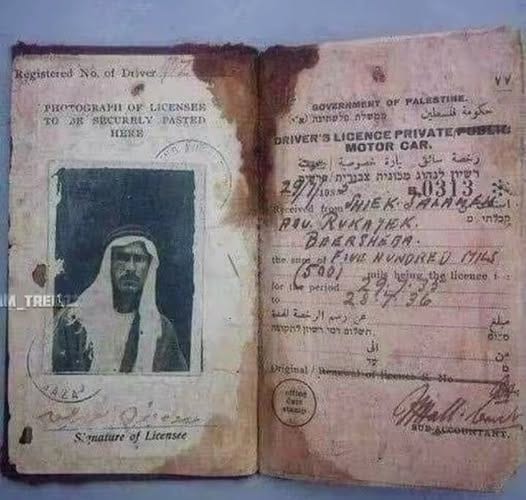
[Palestinian Driving Licences Are Older Than The State Of Israel (History Can’t Be Erased).]
The following remarks were delivered by internationally renowned and award-winning Palestinian author and poet Susan Abulhawa to the Muwatin’s 30th Annual Conference, “The Impact of the Genocide in Gaza on the Future of the World and the Reading of the Palestinian Question” on Dec. 3, 2025.
I want to talk about the strategic mistakes we’ve made, the lessons we can learn, and to humbly offer suggestions on how we move forward our indigenous liberation struggle.
In my view, one of the most painful and recurring patterns in our struggle — a strategic error that has, time and again, transformed moments of undeniable power into periods of deepened dispossession. It is the mistake of willfully allowing the transfer of our struggle from the arenas of our power into the arenas where we are essentially powerless.
A central question that we must ponder is this: Where does Palestinian power truly reside?
I argue that Palestinian power is at its zenith in the indigenous spaces of mass mobilization and in the unfiltered narrative. It is in the streets and the global consciousness. It is in the common sense of morality and common quest for truth and justice. And most importantly, it is in all that we inherit from our ancestors of heritage, history and culture.
On the flip side, we are most vulnerable in the imposed spaces of diplomacy — the closed rooms and negotiation tables that are brokered by the very powers that hold our lives in utter contempt.
The critical error we make is this: repeatedly, Palestinian leaders cash in the immense power that the people garner in the streets, from their bodies and blood — a power born from immense loss of life, home and heritage.
Freedom doesn’t compromise with colonizers
Then the leaderships cash it all in, in order to have a “seat at the table” — a table where the game is rigged, the rules are set by the colonizer and the prize is not liberation but a managed defeat that uses words like “interim, “phased,” “compromise,” “conditional” and so on. No one stops to ask “interim” what? “phased” what? compromise what? Conditional what?
Because freedom does not happen in phases. It does not spring from interim agreements with colonizers. It does not happen in compromised promises, nor is freedom ever conditional.
History teaches us that liberation is a cataclysmic rupture. It is a violent breaking of chains. It is a tumultuous imposition of one’s humanity.
In February 1985, after more than 20 years in prison — 20 years stolen from his life, from his family; 20 years of hard labor and in a tiny cell with one barred window — Nelson Mandela famously refused an offer to be released from prison by the South African government. An offer from the state’s President P.W. Botha. Mandela refused, because the offer was conditional. It spoke of compromise, of phases and all the diplomatic trappings of colonialism. He refused, because it required him to renounce armed struggle, a condition he deemed unacceptable as long as the indigenous majority of South Africa remained oppressed and the African National Congress (ANC) was banned.
Specifically, it required him to “unconditionally reject violence as a political instrument.” The offer was widely seen as a ploy to divide the anti-apartheid movement and portray Mandela as an uncompromising figure if he refused.
Compromise, the oppressed are always told, is required.
But Mandela’s message was an uncompromising rejection of the terms, emphasizing that the freedom of his people cannot be conditional, nor would he trade it for his own personal liberty, for phased diplomatic advances toward freedom, and so on.
The iconic lines from his response are these: “I cannot and will not give any undertaking at a time when I and you, the people, are not free. Your freedom and mine cannot be separated. Only free men can negotiate. Prisoners cannot enter into contracts.”
Mandela argued that the government was the one responsible for the violence by enforcing apartheid and banning peaceful resistance, and the onus was on them to create conditions for a peaceful resolution. And in turn, he made his own demands of the government.
History proved him right, and Mandela was released unconditionally five years later in 1990, without having to renounce armed struggle, and he went on to lead South Africa’s journey toward freedom.
Herein lies our repeated mistake.
Historic resistance and the British Mandate
One of the first clear examples occurred during the Great Revolt of 1936 – 1939. This was a massive, popular uprising. A general strike that paralyzed the British Mandate economy, combined with widespread armed rebellion. It was a raw expression of indigenous power from the streets, challenging the very foundation of the colonial project.
It was so potent that the British established the infamous Peel Commission of 1937. This was the first diplomatic “table” that channeled the energy of the revolt into a political process whose primary outcome was the dismemberment of Palestine. The British, together with their zionist proxies, used brutal military force to crush the revolt. They assassinated leaders in public spectacles, exiled them, broke bones, demolished homes, confiscated weapons and land and so on. But ultimately, it was the idea of diplomacy that broke the revolt — through strategic concessions and promises on worthless paper that allowed the British to quell an indigenous uprising in exchange for words and half-baked concessions.
In effect, the British succeeded in shifting the arena of struggle from the potent and unpredictable street, where we were most powerful, into the colonial space where our fate was placed in the hands of elites who could be corrupted or duped with empty promises. Imagine if we had not accepted a simple white paper. Imagine if we refused a mere promise of freedom but instead demanded it then and there, when Britain most needed us as the renewed German threats loomed.
First Intifada in 1987
There were many examples of this strategy repeated on a micro scale after that. At the international level, the pattern emerged again from the First Intifada in 1987. For six years, the world watched as an indigenous population armed with little more than stones and collective action held a moral mirror up to the most powerful military in the region. The images of Palestinian children facing Israeli tanks shattered the veneer of innocence that Israel had worked so hard to cultivate. It broke through their lies and their tidy narrative. It imposed immense reputational costs on them and made the status quo of direct occupation unsustainable.
This was Palestinian power at a historic peak — despite the “break their bones” policy; despite the zionist inhumanity — Palestinians held the power, because our struggle had taken to the streets, into the light of truth and into the moral consciousness of global masses.
Thus, the counter strategy was not to offer justice, accountability or moral reflection. They simply did what had worked in the past. They changed the venue of our struggle.
The West, led by the United States, and a desperate Israel, offered a way out: the Madrid Conference of 1991. This was the bait. It was a spectacle of legitimacy, inviting Palestinians to a grand international table. But the real trap was sprung in the secret back-channels that led to the 1993 Oslo Accords.
Oslo Accords sell out
The unparalleled moral capital of the Intifada — the global sympathy, the grassroots unity, the clear narrative of right versus might, the real indigenous power — was catastrophically traded. For what? For a handshake on the White House lawn, for the illusion of statehood, for an airport they’d just obliterate a few years later and for the reality of the Palestinian Authority — a treasonous subcontractor for Israeli security designed to quell the very street power that had brought them to the table in the first place.
Oslo didn’t just halt the Intifada; it institutionalized our defeat. It turned a revolutionary struggle into a bureaucratic process and paved the way for Jordanian normalization and those that followed. The energy of the streets was channeled into endless, fruitless negotiations over borders and water rights, while settlements doubled. The hard-won power was gone.
The Second Intifada was a rinse and repeat cycle; this time it was not with the revolutionary Palestine Liberation Organization (PLO) or the Popular Front for the Liberation of Palestine (PFLP) of the past but a tamed, bureaucratic Palestinian Authority under a new, client leadership. It was not the city of Oslo but Sharm el-Sheikh, with the participation of Egypt, the most consequential Arab country, having fully normalized Israeli occupation.
Unprecedented level of Israeli barbarism
Now, we arrive at this moment of an unprecedented level of Israeli barbarism and horror. And I say unprecedented not because they are more hateful or more sadistic than before. No, they have always been this way — whether the genocidal carnage of the Nakba, of Sabra and Shatila, Qana, the endless bombing campaigns against Gaza and on and on.
It is unprecedented, because they have learned from the patterns of their wicked past. History taught them that no matter how intense the international outrage or reputational damage, people forget and move on, and new generations can even be brainwashed all over again in ways that repair their narrative and close all the holes with enough propaganda, branding campaigns, public relations and Hollywood films.
Their decades-old internal laments of missed opportunities to “finish the job,” is what drives them now to push through the pressure and international condemnation, to get rid of us and take more and more of our land, homes and heritage.
October 7 to them was not a tragedy or defeat. It was the opportunity that they’ve wanted, perhaps even coaxed along. In their efforts to go all the way, to finish the job this time, Israel has once again been exposed. The rot of their colonial project is more exposed than ever. The brutal, genocidal logic of the zionist project is naked for the entire world to see.
And in response, we have seen a global awakening of popular support for Palestine on a scale never before witnessed. Millions in the streets from London to Jakarta. University encampments reviving the spirit of anti-apartheid solidarity. This is raw, indigenous, global street power. It is our power, paid in blood and tears. The kind of power Israel can never have. And it is potent.
Ceasefire – no guarantee of Palestinian sovereignty
In response, the same old trap is being set for us once again.
Look at the U.N. Security Council and the so-called “ceasefire” deals. The Palestinian Authority, along with Arab and Muslim nations, are once again being lured to the table. They are being asked to legitimize a process that is designed not for Palestinian liberation — as we can all clearly see — but for managing the crisis in Israel’s interest.
The Palestinian Authority’s shameful blessing of this resolution allowed so-called “friendly” nations to act, not out of solidarity but out of self-interest. They are seeking to secure their own regional stability and concessions from the United States. They are, in effect, being paid off to help quell the storm. The “deal” on the table was a deception: to stop the bombs temporarily, perhaps even facilitate a minor withdrawal, but it did so without a fundamental guarantee of Palestinian sovereignty, without a dismantling of the occupation and without addressing the root cause of colonialism.
They are asking Palestinians, and the world, to once again cash in the immense power of what can legitimately be called a “global intifada” for a “seat” at a diplomatic table that will decide how to manage the continued subjugation of Palestinians. They are trying to pull the struggle from the streets — where we are winning the narrative war — back into the closed rooms of the U.N. and diplomatic deals, where we have no power.
The lesson is stark, and it remains unlearned by those in positions of nominal authority. The “table” is not a prize. It is a weapon of pacification. The acquiescence of the Palestinian Authority is the height of betrayal, corruption and frank stupidity. The so-called ceasefire has not stopped the slaughter. It has not improved lives. It has not opened the border for sufficient food, water, fuel, medicine and the things of living. It has not brought education back to Gaza, our children now in their third year without formal schooling.
Every time popular power surges, an invitation to negotiate follows. Every time the occupier’s narrative is fractured, a diplomatic “process” is offered. And every time, we emerge from those talks weaker, more divided and with less land.
The only thing the PA’s acquiescence did was to squander the hard-won global solidarity. Not in total, thank God, as imperial powers expected or would like. It is thanks to the tenacity of activists and to the moral force of our martyrs and warriors.
Five moves for a path forward
So, what do we do now? I promised that I would offer at least a sense of the path forward and perhaps some concrete steps. But in effect, whatever steps we take must be predicated on a fundamental reorientation to stop cashing in our streets for their tables. This requires concrete, simultaneous actions, some of which are already ongoing. I give you five points. Five moves toward reorientation and reinvigoration of our movements.
ONE, we must consciously and relentlessly acknowledge and nurture our power where it actually resides. The most potent of these arenas is our indigeneity and history in the land — the heritage, traditions, culture, stories and audit of our lives and unbroken presence in the land over millennia. We take it for granted, but this is the basis of everything we do and everything we are. It is the basis of why our colonizers hate us — a deep-seeded jealousy of us for having real, tangible, verifiable, familial and moral roots in the land.
It is what they want more than anything. It is why they work so hard to promulgate the kind of fairytales that claim a Polish family, with centuries, millennia even, of history and roots in Poland, is actually indigenous Palestine, a fantastical claim that defies logic, reason and recorded history. But they invest so much in selling these fairytales to the world, because they understand the power of narrative.
We don’t have to make things up. Unlike them, we have receipts, we have proof. We have the terraced hills, the land deeds, the family histories, the ancient stories, the indigenous knowledge — botanical knowledge, the stories behind all the names of villages and land formations, the culinary heritage, the foraging traditions, the connection to the olives, to the almonds and pomegranates, the heritage of our clothes that speak their own language through Tatreez (Arabic embroidery) that springs from the land itself.
This is not abstract. It is the daily work of decolonizing our minds and reclaiming our narrative. It is in the ongoing work, however tedious and costly, of projects like that undertaken by Dr. Salman AbuSitta and the Palestine Land Society — of mapping Palestine, her stolen villages, the families that lived there and so on; or the archiving of land ownership prior to 1948, undertaken by Forensic Architecture; or the databases of oral testimonies of our elders; or archeological endeavors in historic places Israel hasn’t yet erased; or the scholarly auditing of Tatreez patterns and motifs; and so on.
This is not nostalgia. It is the active, unassailable proof of our indigeneity and our collective will to remain and return. More importantly, it is the foundation of our power, and efforts to nurture this arena deserve our attention and resources.
TWO, we must work to ensure that every Arab man, woman and child understands that Palestine is not a border dispute. It is the beating heart of West Asia and North Africa. Not because Palestine is a spiritual and cultural center (even though it is), but because Palestine is the locus of the region’s collective dignity and honor.
An Arab world brought to its knees over and over, whether through direct invasion (as in Iraq), through violent regime change (as in Syria), through decapitation and destabilization (as in Libya), or economic coercion and blackmail (as in nearly all the remaining states); then to have its treasures looted and controlled by western corporations, only to then be forced to witness the daily dismemberment, humiliation and genocide at its center and do nothing but issue mealymouthed statements or discuss normalization — this is a region that has lost its soul, lost its honor and betrayed its ancestors.
The liberation of Palestine is the key to liberation of the entire region, and indeed of humanity at large, from client regimes and imperial domination. It is the key to creating societies based on the region’s own intrinsic values, moral codes and traditions — not on the Western brand, unfettered capitalist consumption and the plastic life promulgated by Hollywood. To abandon Palestine is to accept a permanent state of dishonor and subjugation. To stand with Palestine is to fight for the soul and future of the entire region.
Indeed, it is to fight for a moral future for the entirety of humanity.
THREE, we must orient our outward national conversation not toward western elites, no matter how much power they hold over our lives. Instead, our efforts must be concentrated with the masses — organizing with labor unions and shared interests with workers’ movements, with the Global South, with the students putting it all on the line for the ideals of the world we all want, with the moral majority around the world who reject the increasingly apparent control and manipulation of an elite, imperial and largely zionist genocidal class.
FOUR, we must take deliberate steps to dismantle the illegitimate, collaborationist Palestinian Authority and reconstitute a truly representative leadership. This begins with the monumental but essential task of creating a full and comprehensive database of every Palestinian, from the river to the sea, and in every corner of our global diaspora.
With this registry, we must then implement a transparent, modern voting mechanism — one that empowers every one of our people, everywhere, to elect new regional and central leadership committees. The goal may well be the reconstitution of the PLO, purging it of the corrupt, incompetent and compromised and restoring it to its original revolutionary purpose: of liberation, not management.
FIVE, we must weaponize our legitimacy. Our strength is not in mimicking their diplomacy but in the unassailable justice of our cause. We must use every tool of mass mobilization — boycott, divestment, strikes, activism, direct actions, encampments and most importantly, international labor coordination.
We must empower cultural endeavors wherever they are, archival projects (I cannot emphasize enough the importance of archival work), scientific mappings and collections and so on. We must use the levers of international and national law, however flawed and skewed they are.
We must use every moment of global solidarity to impose such a cost on the colonizer that their current reality becomes untenable. We should not beg for a seat at their table. We have the power to make the table they sit at crumble beneath the weight of the world’s moral outrage, the weight of our pain and the weight of their own illegitimacy and cruelty.
We must make the cost of occupation so high — politically, economically, morally — that the colonizer is forced to come to our terms, which happen to be the terms of international law, universal human rights and common human morality.
Palestine’s power lies in her people
The strategic mistake we’ve made is a seductive one. A seat at the table feels like recognition. It feels like progress. But history has shown us, from the Peel Commission to Oslo to Sharm El Sheikh and to the current U.N. deception, that it is a mirage.
The power of Palestine is, has always been and will always be in her people and their story. To win, we must stop cashing in our blood and streets for their tables. Our future will not be negotiated in their closed rooms; it will be built on the open foundation of our unwavering resistance and our undeniable right to be free. We must not ever again accept anything that is less than a freedom that is total, unconditional and wholly ours.
I come back to Nelson Mandela. He was offered an exit from his chains, conditional on a diplomatic process that included the relinquishing of a fundamental right of colonized people to armed resistance. His response was not just a rejection. It was a reclamation of power. It was a refusal to move their national liberation struggle from the streets and masses to closed rooms and elites.
“Only free men can negotiate. Prisoners cannot enter into contracts,” he said.
We are, today, being offered a process of managed death, dispossession and imprisonment. A conditional calm. A phased return to a smaller cage. We must have the courage of Mandela to refuse. Our message must be the same: We cannot and will not give to any undertaking to negotiate the terms of our subjugation and ethnic cleansing.
Time to escalate the struggle
Now is the time to escalate in every way possible — not to squander the ineffable loss of life we have witnessed over the past two years for a deceptive calm. Now is the time to organize, both internally and externally, with a vigor as never before. We must do so deliberately and relentlessly on every front available to us, wherever we are in the world. And we must not stop until unconditional freedom is ours, the zionist abomination is dismantled and Palestine is once again restored to her pluralistic, multi-religious, indigenous glory.
I have no doubt we will achieve this reality. Some day. But we must all imagine it. You must see it clearly in your mind. You must believe it. Because freedom is possible. Restoration of our homes, monuments and heritage in our homeland is possible. Reunions of our families in the land where all of our ancestors are buried is possible. The calming, maybe even healing, of our broken hearts is also possible.
They are fucked, fucking themselves and fucking the world: Indonesia’s population is over 280 million, making it the world’s fourth most populous country, with projections for 2025 around 285-286 million people, heavily concentrated on the island of Java, which holds over half the total, and it’s the world’s largest Muslim-majority nation.
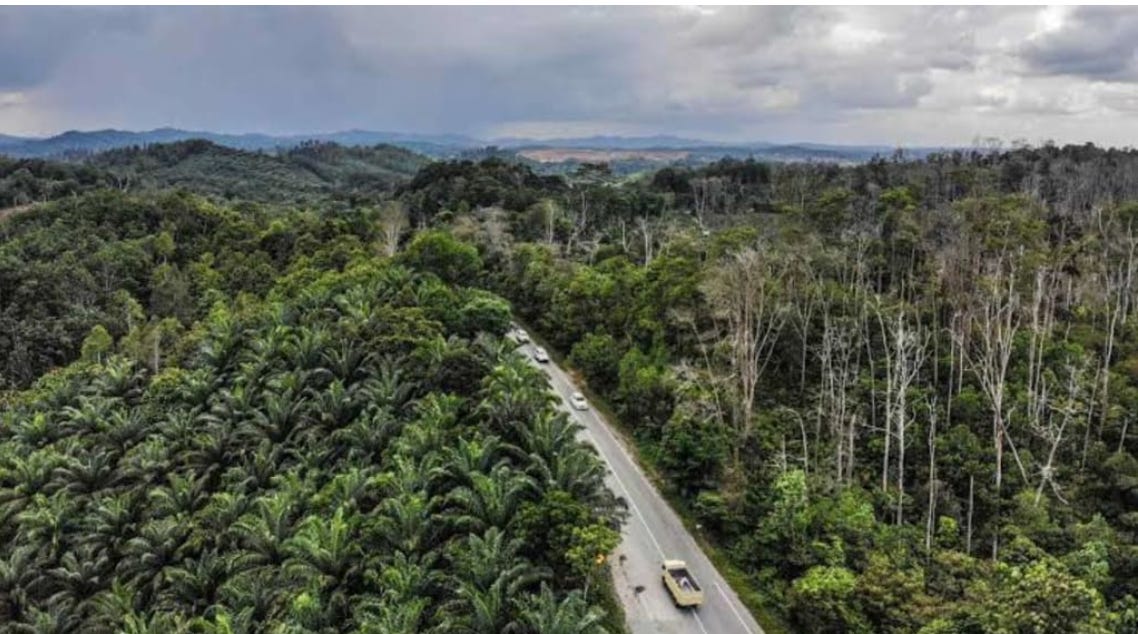
Indonesia Calls in Military to Accelerate Forest Clearance Amid Environmental Concerns
As deforestation escalates in Indonesia, the government deploys the military to speed up forest clearing, raising debates over environmental impact and sustainable development.
[projected to grow to over 300 million by 2035, reaching a peak near 322 million around 2050-2059, and then potentially declining slightly to around 296 million by 2100, solidifying its position as the world’s fourth most populous nation.]
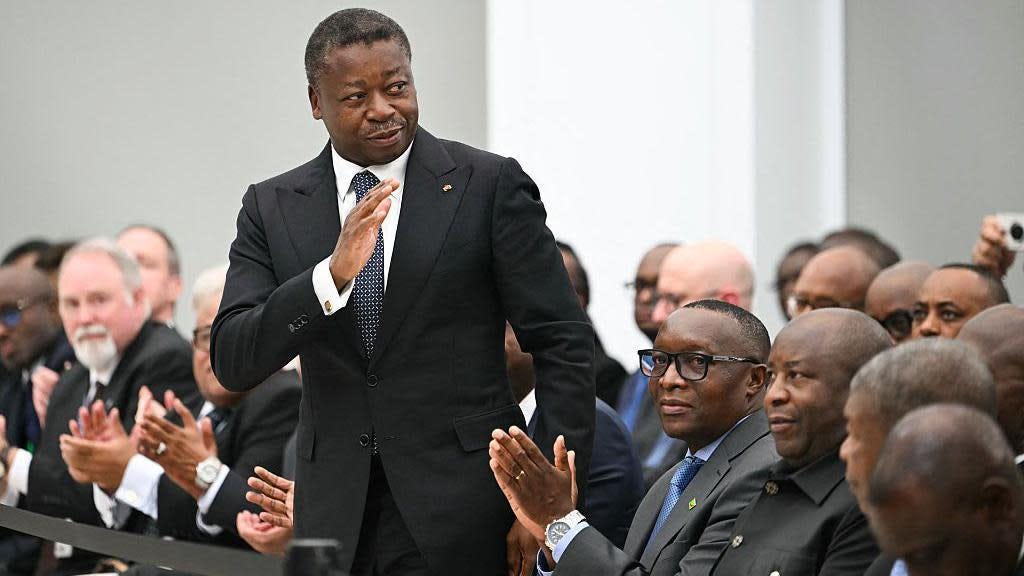
Tightropes, uh? Neither Russia nor France: One West African country walks a diplomatic tightrope
The Lomé regime is far too shrewd to be caught out openly supporting a challenge to Benin’s President Patrice Talon – with whom its relations are guarded at best – or officially confirming the Béninois belief that it secured coup-leader Tigri’s passage to safety. Both governments are members of the beleaguered Economic Community of West African States (Ecowas).
Yet Gnassingbé makes no secret of cultivating affable and supportive relations with Burkina Faso and the fellow Sahelian military governments in Niger and Mali – all three of whom walked out of Ecowas last January.
Nor is he afraid of reminding France, Togo’s traditional main international partner, that he has other options.
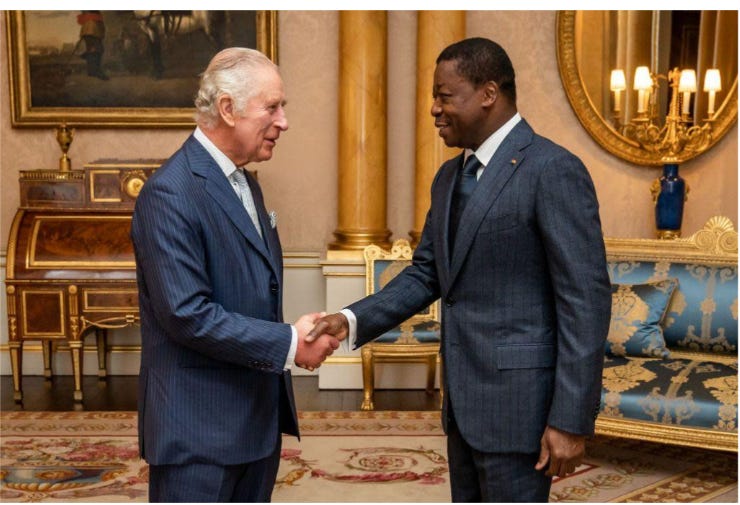
On 30 October President Emmanuel Macron welcomed Gnassingbé to the Élysée Palace for talks aimed at strengthening bilateral relations.
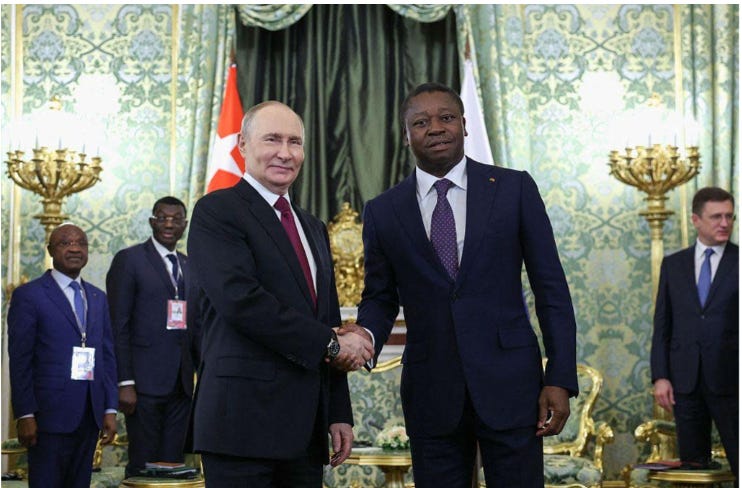
But less than three weeks later, the Togolese leader was in Moscow for a notably warm encounter with Russian President Vladimir Putin. They formally approved a defence partnership allowing Russian vessels to use Lomé port, one of the best-equipped deepwater harbours on the western coast of Africa and a key supply gateway for the landlocked Sahelian states that, following the military coups of 2020 to 2023, have become key Kremlin protégés.
While Gnassingbé’s trip to Paris was fairly low-key, his Moscow excursion was high-profile and wide-ranging.
The bilateral military accord provides for intelligence and joint military exercises (although Lomé has no plans to provide a base for the Africa Corps, the Kremlin-controlled successor to the now disbanded Wagner mercenary outfit). All this was supplemented with plans for economic cooperation and an announcement of the reopening of their respective embassies, both closed back in the 1990s.
Don’t touch that InBred UnUnited Queen-dumb’s hand!
Gaza a la Utah: Utah’s Trumpian homeless ‘campus’ — lifeline or detention camp?
The divisive plan comes as the president cuts federal funding for housing and tells states to get rough sleepers into mental health and drug treatment centres.
Fucking Mormons. Angels and Gold . . . . The Jews . . . . Concentration CAMPS, a la LDS.
What the fuck is this milquetoast? The fucking war is a racket and murder “engineers” and families of those should be IED and pager and Molotov euthanized.
Cyber group Handala claimed to have acquired the names of engineers involved in Israel’s drone programs, a day after threatening Israeli politicians.
Cuntsville!
The Trump administration may be seeking to permanently end certain green-card programs but is constrained by existing law, a former top U.S. Citizenship and Immigration Services (USCIS) official told Newsweek.
“I think the administration would like to permanently end various green card programs; however, there is a legislative framework set up that would be almost impossible to work around without congressional action,” Ricky Murray, who served as USCIS chief of staff for Refugee and International Operations until November, told Newsweek in a statement.
“Even with executive orders, this would not override the statutes and regulations on the books. I believe these ‘pauses,’ which are undefined in length, are as far as the administration believes they can push the envelope without congressional buy-in.”
The comments came after Homeland Security Secretary Kristi Noem announced that the diversity visa lottery program would be suspended following a deadly shooting involving an immigrant who entered the United States through the program.
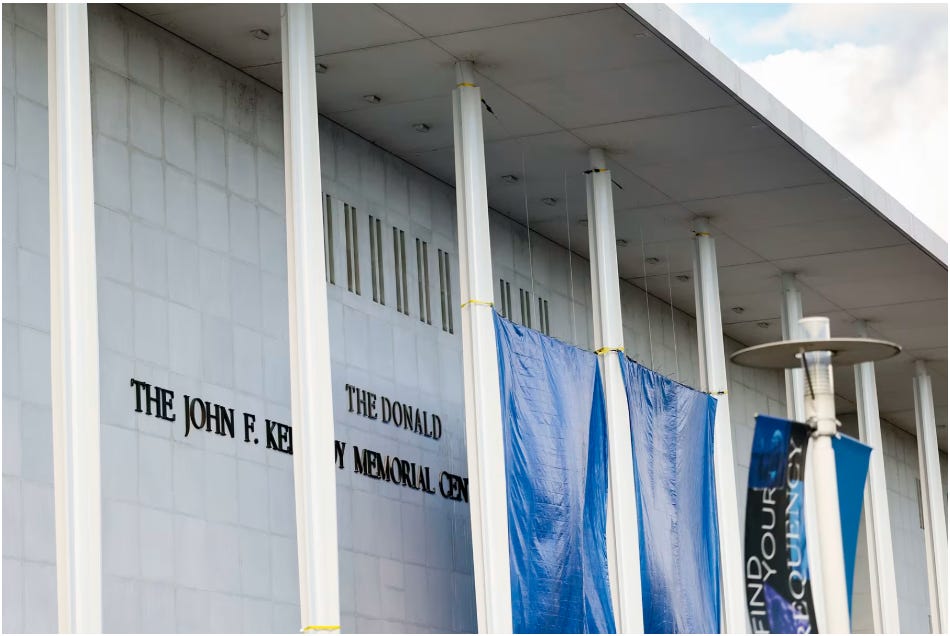
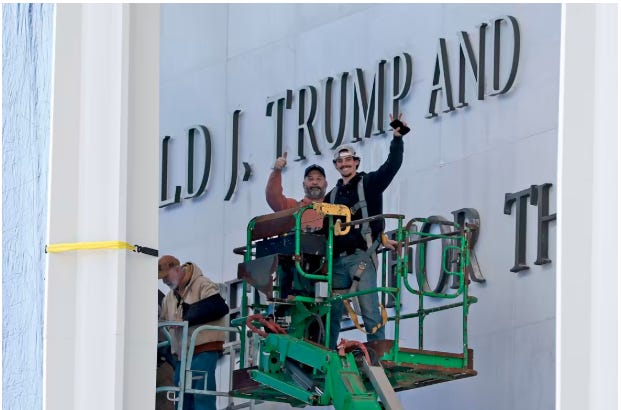
Circus? Carnival?
Former Rep. Joseph Kennedy III, a grandnephew of the late president, said Thursday afternoon in a statement that the center “is a living memorial to a fallen president and named for President Kennedy by federal law. It can no sooner be renamed than can someone rename the Lincoln Memorial, no matter what anyone says.”
In a separate statement Thursday, six Democratic lawmakers who serve as ex-officio members of the Kennedy Center board said they would hold the administration accountable for violating the law.
“Beyond using the Kennedy Center to reward his friends and political allies, President Trump is now attempting to affix his name to yet another public institution without legal authority. Federal law established the Center as a memorial to President Kennedy and prohibits changing its name without Congressional action,” the lawmakers wrote in a statement, adding later, “as ex-officio members of the Kennedy Center Board, we will be unwavering in our commitment to holding this Administration accountable.”
The minority leaders of the House and Senate — Sen. Chuck Schumer, D-N.Y., and Rep. Hakeem Jeffries, D-N.Y. — were among those who signed the statement.
Another ex-officio member of the board who didn’t vote for the change, Sen. Shelly Moore Capito, R-W.V., told reporters at the Capitol on Thursday, “the Kennedy Center, in my view, is the Kennedy Center.”
‘No Sleep for ICE’: Inside the Protest Movement Keeping Immigration Agents Awake at Night
“Without sharing our methods, I want to be clear that we make sure we are 100% confident in this, using multiple sources of information, before we target a hotel,” she says. She noted that ICE agents have had to adjust their operations due to the protests.
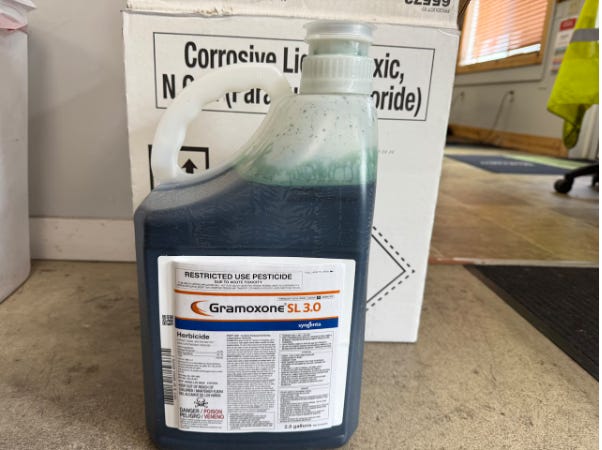
Paraquat, originally developed by Syngenta and sold by Chevron in the 1960s, rips tissue apart, destroying plants on a molecular level within hours.
“It’s used because it’s effective at what it does. It’s highly toxic. It’s very good at killing things,” said Geoff Horsfield, policy director at the Environmental Working Group.
The U.S. Environmental Protection Agency regulates paraquat, labeling it as “registered use,” with a skull and crossbones, meaning it can only be used by people who have a license. The label also warns that “one sip can kill,” and splashes can severely burn the skin.
In one case documented by U.S. Poison Centers, a 65-year-old man spilled paraquat on himself and kept working. He died 34 days later as his kidney, lungs and heart stopped working.
Lurking behind the immediate risks, though, are concerns about long-term exposure.
Thousands of people have sued Syngenta, a manufacturer, and Chevron USA, a seller, over paraquat exposure. They’re alleging the chemical companies failed to warn of the dangers of paraquat despite knowing it could damage human nerve cells and studies showing it’s linked to Parkinson’s disease.
Scientists don’t know what, exactly, triggers Parkinson’s, a brain disease that impacts movement and gets worse over time. But it’s likely a mix of genetic, and mostly environmental factors.
Mac Barlow, an Alabama farmer who regularly sprayed paraquat to clear his fields before the next growing season, blames the pesticide for his Parkinson’s.
“For about 40 years off and on, I’ve been using that stuff,” he said. “I’ll be honest with you, if I knew it was going to be that bad, I would have tried to figure out something else.”
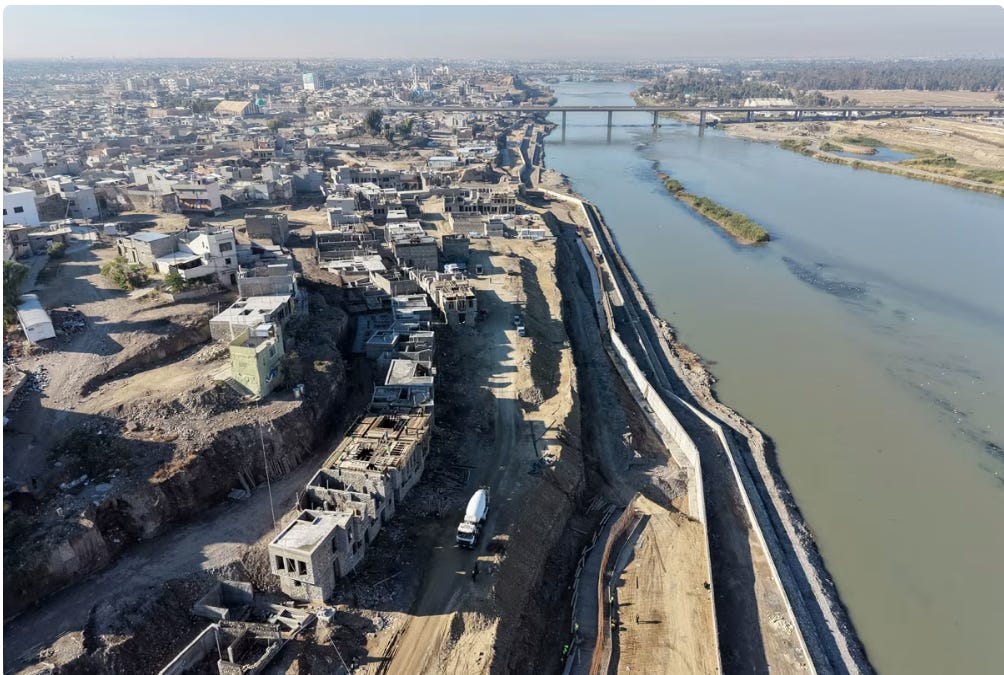
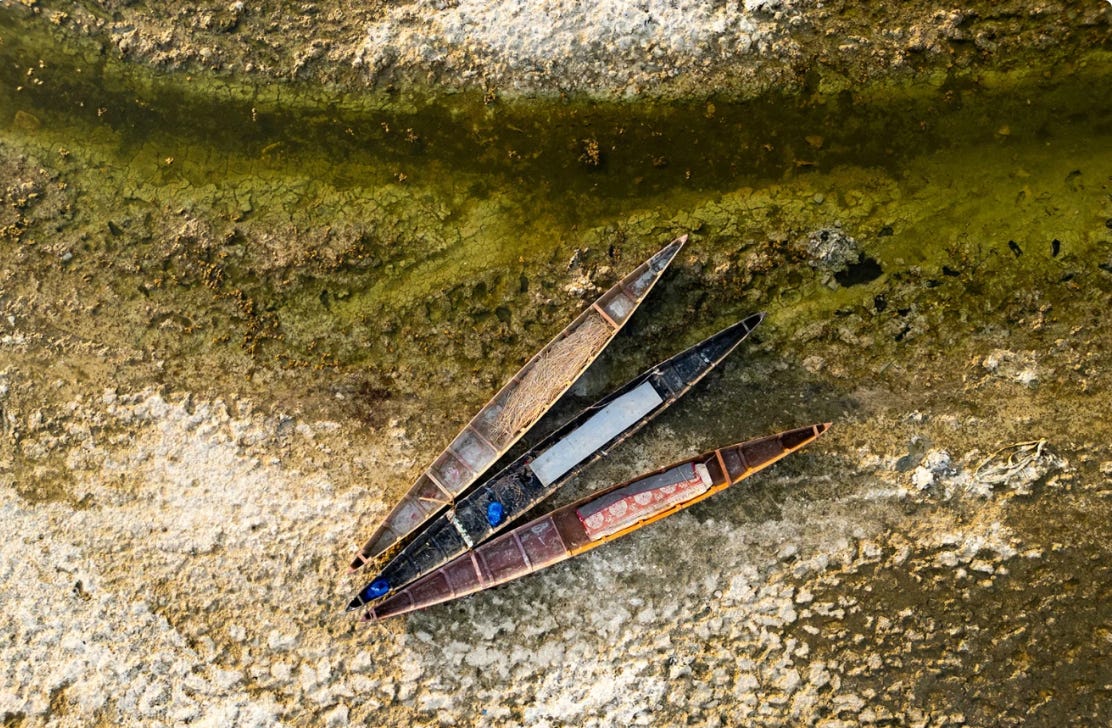
Oil in our fucking veins: Grappling with its worst drought in a century, Iraq bets on a controversial oil-for-water deal
War, Jews, U$A, UK. And fucking TURKEY.
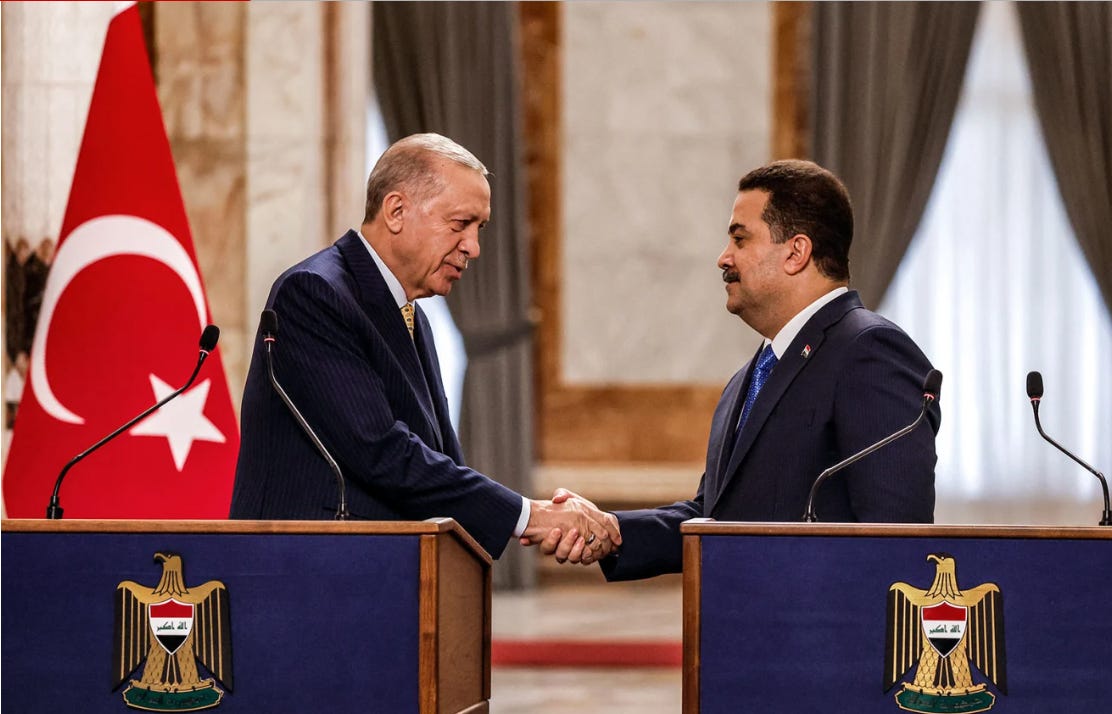
In November, the two countries formalized the multi-billion-dollar Water Cooperation Framework Agreement, under which Turkish firms will build new infrastructure to improve Iraq’s water efficiency and storage. The projects will be financed with Iraqi oil revenues, effectively an attempt to convert the country’s crude oil exports into water security.
Under the deal, Iraq will sell an agreed number of barrels of oil each day, with the proceeds deposited into a fund to pay Turkish companies for work on water infrastructure projects, said Torhan al-Mufti, water affairs adviser to Iraqi Prime Minister Mohammed Shia Al-Sudani.
Rape, man, the Art of War, Bellum Economicus. This is why all rich people need euthanizing.
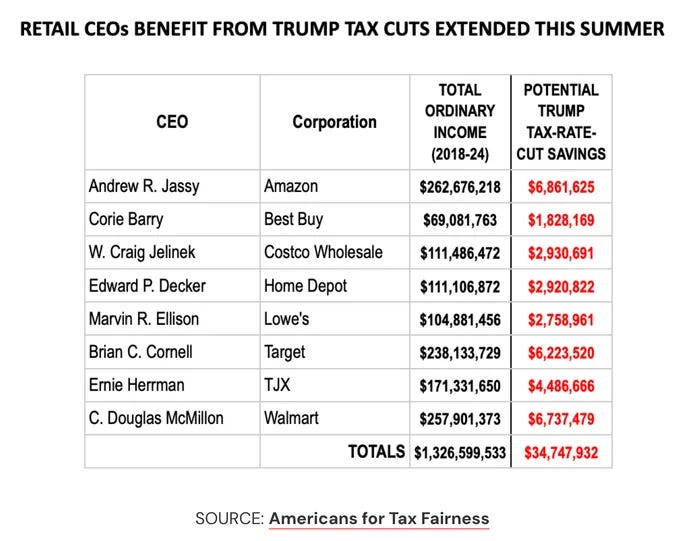
As Wage Growth Slows and Unemployment Rises, Trump Tax Cuts Deliver Big for Mega-Rich Retail CEOs
“At the same time prices have soared for consumers and retail workers remain stuck in low-wage jobs, big-store CEOs and shareholders have reaped higher profits and lower taxes.”
Shoot these fucking rabid “dogs” in the streets, please.
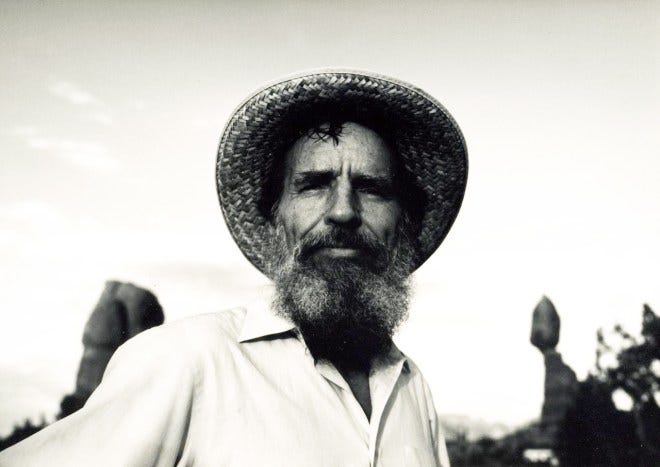
‘My job is to save the fucking wilderness. I don’t know anything else worth saving.” Thus the career plan of George Washington Hayduke, hard-nut hero of Edward Abbey’s 1975 novel The Monkey Wrench Gang. Pro-conservation, pro-guns and extremely pro-booze, anti-mining, anti-tourism and extremely anti-dams, Hayduke appoints himself protector of the remaining desert regions of the American southwest, and becomes a pioneer in the art of “eco-tage”, also known as “monkey wrenching” – using the tools of industry to demolish the infrastructure of industry in the name of the biosphere.
Hayduke is joined by three other activists – an anarchist doctor, a revolutionary feminist and a polygamist river guide – and this quartet of Quixotes heads out into red-rock country to wage war on techno-industry. They pour sand into the fuel tanks of bulldozers. They drive quarry lorries over canyon rims. They blast power lines and disrupt strip mines. Their weapons are audacity, wit and gelignite. Their grail is the destruction of the Glen Canyon Dam that blocks the Colorado river (and, it should be noted, still does).
Abbey spent years in grad school in New Mexico during the 1950s, flipping between the library and the landscape. His master’s thesis was entitled “Anarchism and the Morality of Violence”, and it compared Godwin, Proudhon and Bakunin. When he wasn’t writing his thesis (which was most of the time), he was working as a fire-watcher and forest ranger in the national parks of the southwest. During those years, he thought his way through and beyond Thoreauvian civil disobedience, and into the world of direct action. He tested out his conclusions in non-fiction in the bestselling and bracingly grumpy Desert Solitaire (1968), and then fictionally in The Monkey Wrench Gang. When it was published, Jim Harrison described it approvingly in a New York Times review as “a violently revolutionary novel”. So it proved to be.
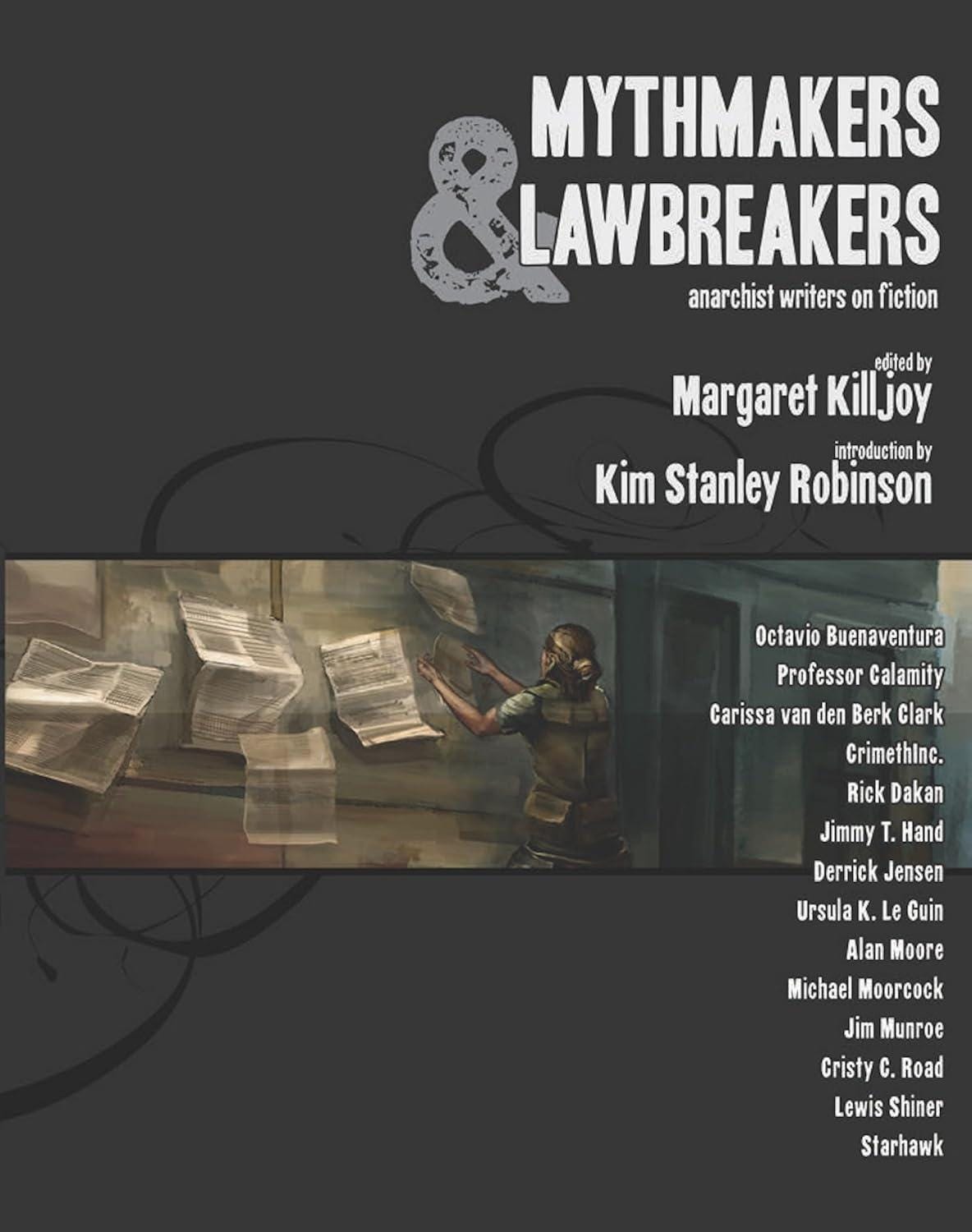
DERRICK JENSEN SAID, “ANY BOOK THAT DOESN’T start from the fact that this culture is killing the planet and work to resolve it is unforgivable.”

















 Paul Haeder, Author