

‘It’s not a coincidence’: journalists of color on being laid off amid Trump’s anti-DEI push
Dec 14, 2025
This is what your fucking aunt with the Jesus Loves sticker and father with his fucking Support your Veterans baseball cap SUPPORTS. And so, hmm, mass shooters at Bondi Beach, uh?
“I can’t tell you how many people are looking for jobs actively outside the park. It’s just not a winning deal right now to come work for the National Park Service, and that’s a sad thing to say about one of our most beloved institutions.”
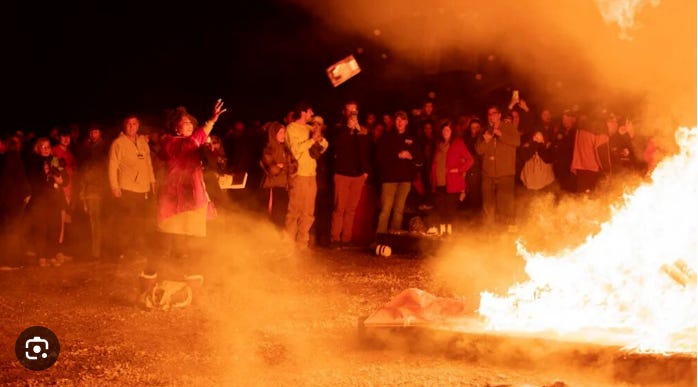
MAGA and children’s books and that old time religion of book burning: The Randolph County Public Library Board of Trustees got their pink slips Dec. 8 after a lengthy public hearing by the county commissioners. The vote to dismiss was 3-2.
The special meeting was called after the trustees chose in an Oct. 8 public meeting not to honor a request by patrons to move or remove a book in the children’s section titled “Call Me Max.” It deals with a student who wishes to be called Max, which doesn’t seem to fit, according to http://www.goodreads.com, continuing, “This begins Max’s journey as he makes new friends and reveals his feelings about his identity to his parents.”
Residents upset with the library board’s decision brought the issue before the commissioners, who scheduled the Dec. 8 public hearing at the Historic 1909 Courthouse.
Forty individuals wishing to speak wrote their names on slips of paper, which were dropped into a container. The names were then drawn at random with a three-minute limit to speak and two hours of the hearing.
Of the 40 speakers, 21 wanted to see the library board dismissed while 19 supported the board.
Those arguing to get rid of the nine-member board reasoned that the book was aimed at children, who are not old enough to understand transgender issues. For them it came down to the issue of morals and values.
In support of the library board were those who said the board members adhered to their own bylaws in keeping the book on the shelves.
Steve Grove, a member of the board, said they “rely on highly-trained librarians” in determining library materials.
Another member, Betty Armfield, said, “We adhere to the rules for the disposition of materials. We have the responsibility to serve all sides of issues. She said it’s the parents’ responsibility to choose what they believe are appropriate books for their children.”

Essay #2: Being Bangladeshi-American
Life before was good: verdant forests, sumptuous curries, and a devoted family.
Then, my family abandoned our comfortable life in Bangladesh for a chance at the American dream in Los Angeles. Within our first year, my father was diagnosed with thyroid cancer. He lost his battle three weeks before my sixth birthday. Facing a new country without the steady presence of my father, we were vulnerable—prisoners of hardship in the land of the free.
We resettled in the Bronx, in my uncle’s renovated basement. It was meant to be our refuge, but I felt more displaced than ever. Gone were the high-rise condos of West L.A.; instead, government projects towered over the neighborhood. Pedestrians no longer smiled and greeted me; the atmosphere was hostile, even toxic. Schoolkids were quick to pick on those they saw as weak or foreign, hurling harsh words I’d never heard before.
Meanwhile, my family began integrating into the local Bangladeshi community. I struggled to understand those who shared my heritage. Bangladeshi mothers stayed home while fathers drove cabs and sold fruit by the roadside—painful societal positions. Riding on crosstown buses or walking home from school, I began to internalize these disparities.
During my fleeting encounters with affluent Upper East Siders, I saw kids my age with nannies, parents who wore suits to work, and luxurious apartments with spectacular views. Most took cabs to their destinations: cabs that Bangladeshis drove. I watched the mundane moments of their lives with longing, aching to plant myself in their shoes. Shame prickled down my spine. I distanced myself from my heritage, rejecting the traditional panjabis worn on Eid and refusing the torkari we ate for dinner every day.
As I grappled with my relationship with the Bangladeshi community, I turned my attention to helping my Bronx community by pursuing an internship with Assemblyman Luis Sepulveda. I handled desk work and took calls, spending the bulk of my time actively listening to the hardships constituents faced—everything from a veteran stripped of his benefits to a grandmother unable to support her bedridden grandchild.
I’d never exposed myself to stories like these, and now I was the first to hear them. As an intern, I could only assist in what felt like the small ways—pointing out local job offerings, printing information on free ESL classes, reaching out to non-profits. But to a community facing an onslaught of intense struggles, I realized that something as small as these actions could have vast impacts.
Seeing the immediate consequences of my actions inspired me. Throughout that summer, I internalized my community’s daily challenges in a new light. I began to see the prevalent underemployment and cramped living quarters less as sources of shame. Instead, I saw them as realities that had to be acknowledged, but that could ultimately be remedied.
I also realized the benefits of the Bangladeshi culture I had been so ashamed of. My Bangla language skills were an asset to the office, and my understanding of Bangladeshi etiquette allowed for smooth communication between office staff and the office’s constituents. As I helped my neighbors navigate city services, I saw my heritage with pride—a perspective I never expected to have.
I can now appreciate the value of my unique culture and background, and the value of living with less. This perspective offers room for progress, community integration, and a future worth fighting for. My time with Assemblyman Sepulveda’s office taught me that I can be an agent of change who can enable this progression. Far from being ashamed of my community, I want to someday return to local politics in the Bronx to continue helping others access the American Dream. I hope to help my community appreciate the opportunity to make progress together. By embracing reality, I learned to live it. Along the way, I discovered one thing: life is good, but we can make it better.
Note my evaluation, but What the Essay Did Well
This student’s passion for social justice and civic duty shines through in this essay because of how honest it is. Sharing their personal experience with immigrating, moving around, being an outsider, and finding a community allows us to see the hardships this student has faced and builds empathy towards their situation.
However, what really makes it strong is that the student goes beyond describing the difficulties they faced and explains the mental impact it had on them as a child: “Shame prickled down my spine. I distanced myself from my heritage, rejecting the traditional panjabis worn on Eid and refusing the torkari we ate for dinner every day.” The rejection of their culture presented at the beginning of the essay creates a nice juxtaposition with the student’s view in the latter half of the essay, and helps demonstrate how they have matured.
They then use their experience interning as a way to delve into a change in their thought process about their culture. This experience also serves as a way to show how their passion for social justice began. Using this experience as a mechanism to explore their thoughts and feelings is an excellent example of how items that are included elsewhere on your application should be incorporated into your essay.
This essay prioritizes emotions and personal views over specific anecdotes. Although there are details and certain moments incorporated throughout to emphasize the author’s points, the main focus remains on the student and how they grapple with their culture and identity.
What Could Be Improved
One area for improvement is the conclusion. Although the forward-looking approach is a nice way to end an essay focused on social justice, it would be nice to include more details and imagery in the conclusion. How does the student want to help their community? What government position do they see themselves holding one day?
A more impactful ending might describe the student walking into their office at the New York City Housing Authority in 15 years. This future student might be looking at the plans to build a new development in the Bronx just blocks away from where they grew up that would provide quality housing to people in their Bangladeshi community. They would smile while thinking about how far they have come from that young kid who used to be ashamed of their culture.
Dumbest fucking fucks in history, now, composition 101 teachers?
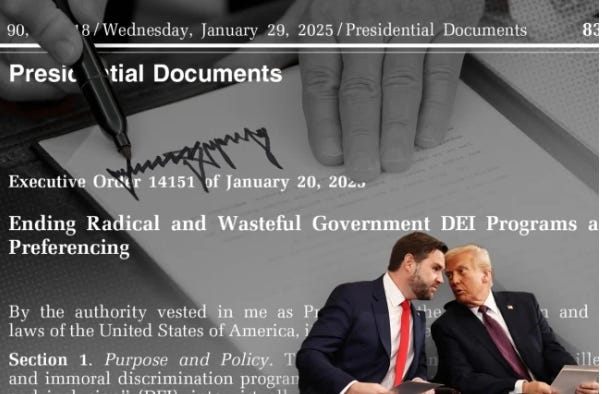
- Only 19 universities have complied with Trump administration demands to remove diversity essays, while hundreds continue using them despite federal threats
- Justice Department warns of “significant consequences” and has opened dozens of investigations into top universities for discrimination
- Assistant Attorney General Harmeet Dhillon says schools “thumbing their nose” at federal law will face funding cuts
“College administrators, in general, still see diversity as an overall good,” said Ronald Rychlak, a former associate law school dean at the University of Mississippi. “So I expect them to work to keep it as a factor.”
Yep, this fucking racists cuntry tis of thee.
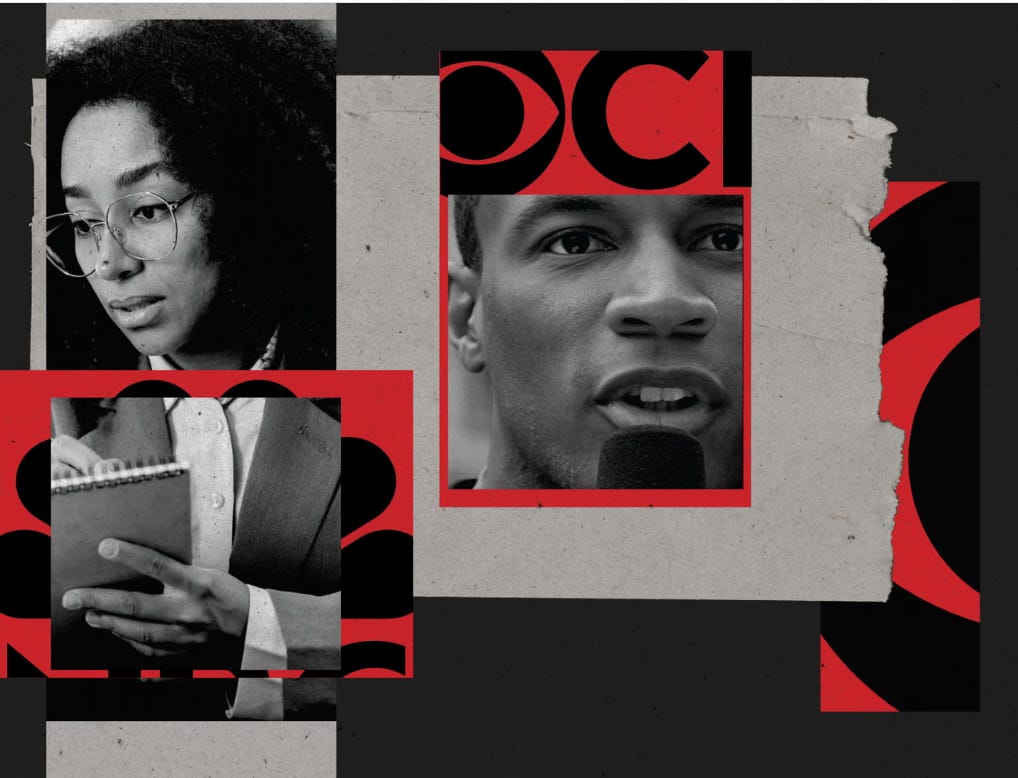
Sherman’s role may be the latest casualty in a nationwide crackdown on diversity. Several high-ranking Black officials have been fired from the Trump administration, and thousands of jobs related to diversity, equity and inclusion (DEI) have been cut in the private and public sectors. The Guardian talked to seven recently laid off journalists at CBS, NBC and Teen Vogue who spoke of people of color on their teams being let go while their white colleagues were spared, or the chipping away at coverage focused on marginalized communities.
Newsrooms have long been less diverse than the US population, which makes these layoffs in particular especially pronounced. In 1978, the American Society of Newspaper Editors, an organization for media leaders, vowed that the racial makeup of newsrooms would reflect the US population by 2000. As the deadline neared in 1998, the society moved the date to 2025, but newsrooms still haven’t met that goal. According to a 2022 Pew Research Center survey of nearly 12,000 journalists, 76% of respondents were white, 8% were Latino/Hispanic, 6% were Black and 3% were Asian. The survey showed an overrepresentation of white journalists, since nearly 58% of the population was white, about 19% were Hispanic, 12% were Black and 6% were Asian in the 2020 US census.
Some journalists see the layoffs as capitulation to the Trump administration’s war on DEI. After Trump’s January executive orders calling for an end to DEI programs and the termination of affirmative action in the federal government, Sherman said that “one by one, we saw companies get rid of their DEI initiatives”.

This fucker hates women, hates unions, and so . . . .
Trump’s plan to limit student loans for nurses in his repayment overhaul is facing bipartisan backlash
“It’s going to be a really bad revolving issue where we don’t have enough faculty to produce enough nurses to replace the nurses who are retiring,” she said.

King Charles, Queen Camilla and the Prince and Princess of Wales have released statements about today’s attack on Bondi Beach’s Jewish community.
King Charles and Queen Camilla said they are “appalled and saddened” by the attack, adding that their hearts go out to those who were affected, including first responders who were injured while protecting members of the community.

[The Israeli government’s inclusion of the phrase “there are no innocent civilians” in an official video that was seemingly amplified through a paid advertisement sparked a firestorm of criticism that’s been viewed millions of times on X, with some people denouncing the video as an attempt to justify the killing of civilians as the bloody war in Gaza continues into its ninth month.
“This is disgusting. It is exactly what atrocity perpetrators say,” Mark Kersten, a war crimes researcher with the Wayamo Foundation, an international justice organization, wrote on X.
International humanitarian law is largely based on making a distinction between civilians and combatants, he said in an interview.
“To blur the lines is to suggest that this whole apparatus is incorrect or faulty and therefore, in this instance at least, anyone can be targeted, and I think that’s why people are so concerned about this kind of rhetoric,” said Kersten, who’s also a criminal justice professor at the University of the Fraser Valley in Canada, specializing in international criminal law.
Israel has argued in social media posts that the word “civilian” has been overused by Palestinians and applied to people who don’t fit the term because they have worked with Hamas even as they had other professions. In a post Tuesday on X, the government said that a journalist and a doctor were involved in holding Israeli hostages in Gaza. An Israeli military spokesperson said this month that the most recently freed hostages were kept in civilian buildings with families living in them.
“In times of hurt, Australians always rally together in unity and resolve,” Charles said in the statement. “I know that the spirit of community and love that shines so brightly in Australia — and the light at the heart of the Chanukah festival — will always triumph over the darkness of such evil.”]
A rabbi who helped organize a Hanukkah event at Bondi Beach has been named among the 11 people killed in the attack.
Chabad, an Orthodox Jewish movement, identified Rabbi Eli Schlanger among the deceased, though police have yet to publicly identify any of the victims.
In April, Israel’s Minister of National Security Itamar Ben-Gvir toured the United States in his first-ever trip to the country as a government official. Many Jewish groups refused to meet with Ben-Gvir, a follower of Meir Kahane whose extremism stands out even in an Israeli political scene awash in anti-Palestinian racism. But Ben-Gvir was welcomed by Chabad rabbis at Yale in New Haven, in South Florida, as well as at 770 Eastern Parkway, the Chabad headquarters in Crown Heights, Brooklyn. The latter appearance sparked protests outside 770, which were met with violence by Chabadniks. In particular, a mob chanting “Death to Arabs” chased a female passerby for several blocks, kicking, spitting, and throwing objects at her. Other videos showed Chabadniks lighting a keffiyeh on fire, shoving and kicking members of the Hasidic anti-Zionist group Neturei Karta, and bloodying a female protester (herself a Jewish Israeli).

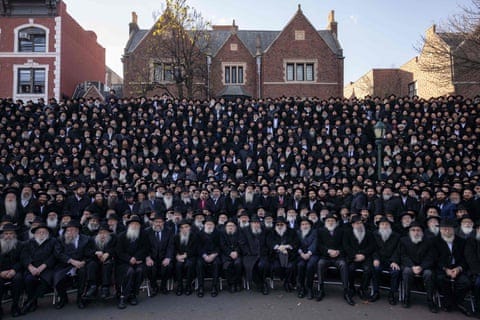
The woman, a Jewish neighborhood resident in her 30s, told The Associated Press she learned of the protest after hearing police helicopters over her apartment. She walked over to investigate around 10:30 p.m. but by then the protest had mostly dispersed. Not wanting to be filmed, she covered her face with a scarf.
“As soon as I pulled up my scarf, a group of 100 men came over immediately and encircled me,” said the woman, who spoke to the AP on the condition of anonymity because she feared for her safety.

‘I had nowhere to go’
“They were shouting at me, threatening to rape me, chanting ‘death to Arabs.’ I thought the police would protect me from the mob, but they did nothing to intervene,” she said.
As the chants grew in intensity, a lone police officer tried to escort her to safety. They were followed for blocks by hundreds of men and boys jeering in Hebrew and English.
Video shows two of the men kicking her in the back, another hurling a traffic cone into her head and a fourth pushing a trash can into her.
“This is America,” one of the men can be heard saying. “We got Israel. We got an Army now.”
At one point, she and the police officer were nearly cornered against a building, the video shows.
“I felt sheer terror,” the woman recalled. “I realized at that point that I couldn’t lead this mob of men to my home. I had nowhere to go. I didn’t know what to do. I was just terrified.”
After several blocks, the officer hustled the woman into a police vehicle, prompting one man to yell, “Get her!” The crowd erupted in cheers as she was driven away.
The woman, a lifelong New Yorker, said she was left with bruises and mentally shaken by the episode, which she said police should investigate as an act of hate.
“I’m afraid to move around the neighborhood where I’ve lived for a decade,” she told the AP. “It doesn’t seem like anyone in any position of power really cares.”
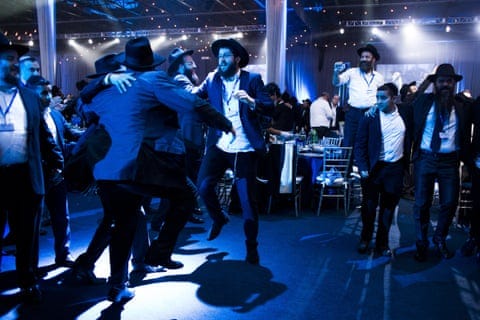
Oh, so more mass shootings:

Janet Dolgin, Jewish Identity and the JDL (Princeton: Princeton University Press, 1977).
Yair Kotler, Heil Kahane (New York: Adams Books, 1986); Jerald Cromer, “The Debate over Kahanism in Israeli Society,” Occasional Papers No. 3 (New York: Harry Frank Guggenheim Foundation, 1988); and Ehud Sprinzak, The Ascendance of Israel’s Radical Right (New York: Oxford University Press, 1991).
Though Kahane was assassinated, his party outlawed, and his organization disbanded, Kahane’s spirit still persists in Israel and the Middle East. A group of his loyal, loud, and aggressive followers maintains a prominent presence in Arab-Jewish friction zones. They number only a few dozen but effectively create tension by means of racist pronouncements, especially provocative demonstrations, and clandestine sabotage.
They strictly abided by Torah precepts, such as keeping the Sabbath, observed various fast days, observed kosher dietary laws, prayed three times daily, donned phylacteries every morning, wore skull-caps and ritual fringes (tzitzit), etc.

With most European leaders talking tougher about immigration amid a rise in far-right populism and Trump administration warnings that they could face “civilizational erasure” unless they tighten their borders, Spanish Prime Minister Pedro Sánchez stands apart.
The Iberian nation has taken in millions of people from Latin America and Africa in recent years, and the leftist Sánchez regularly extols the financial and social benefits that immigrants who legally come to Spain bring to the eurozone’s fourth-largest economy.

Spain’s choice, Sánchez often says, is between “being an open and prosperous country or a closed and poor one.”
His words stand in stark contrast to other Western leaders, and so far, his bet seems to be paying off. Spain’s economy has grown faster than any other EU nation for a second year in a row, due in part to newcomers boosting its aging workforce.
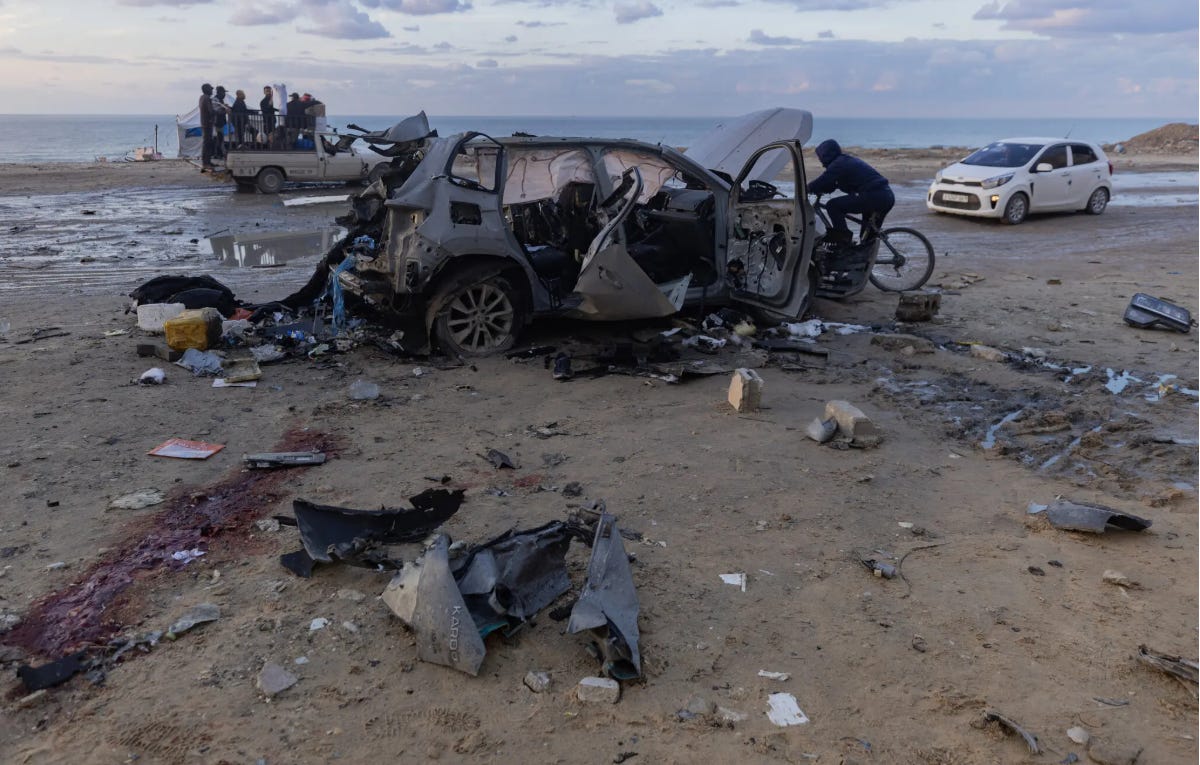
Ceasefire? Fuck them all. And Bondi Beach, is that a ceasefire zone?
Fucking those Jews: Israel Says It Killed Senior Hamas Commander, Despite Cease-Fire
Hamas said the attack on Saturday was a breach of the truce. The militant group did no
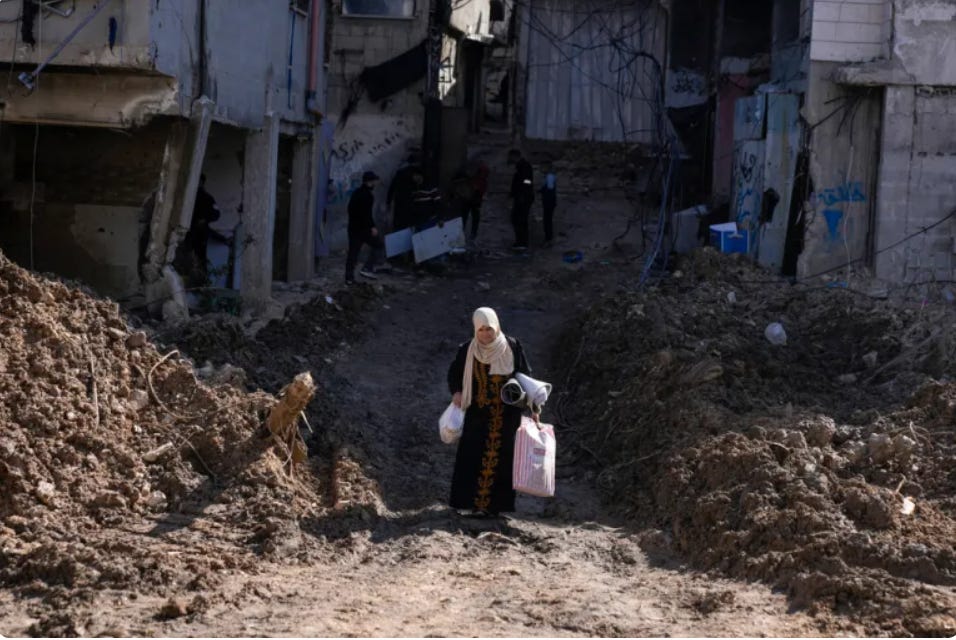
You think that many might think any Jew is part of this?
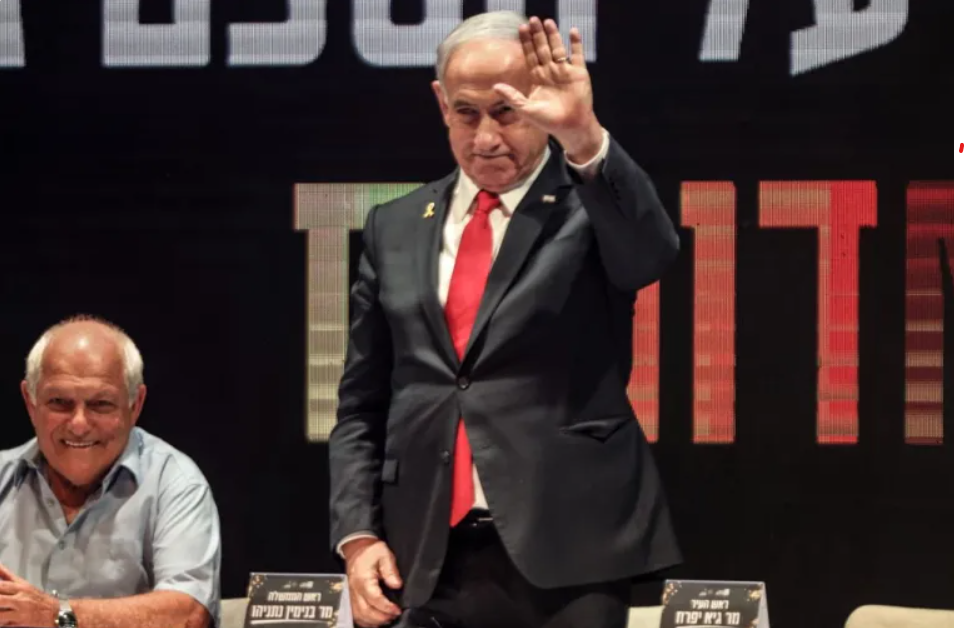
Israel approves 19 settler outposts in major expansion in occupied West Bank
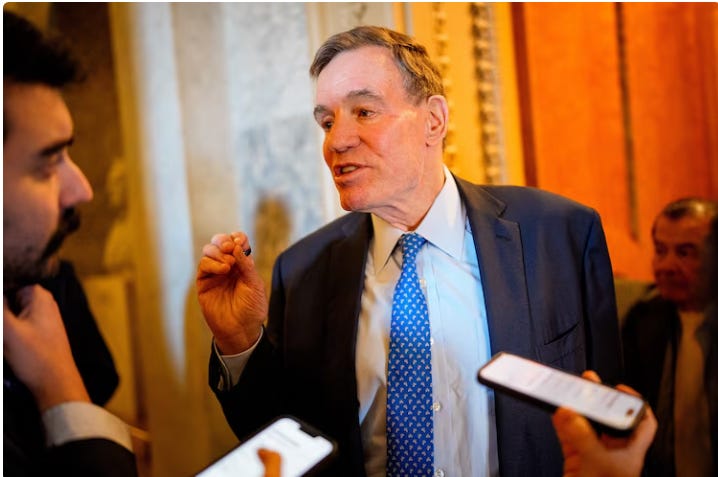
Phoney fucking politicians and media cunts: Sen. Mark Warner, the top Democrat on the Senate Intelligence Committee, told reporters on Friday that the type of munitions used by the military in a Sept. 2 boat strike — including on survivors in a second strike — were “anti-personnel” and designed to ensure the people on board did not survive, not just stop the drug shipment.
In question has been whether Defense Secretary Pete Hegseth’s orders to the military was to kill the people on board, stop the drug shipment — or both.

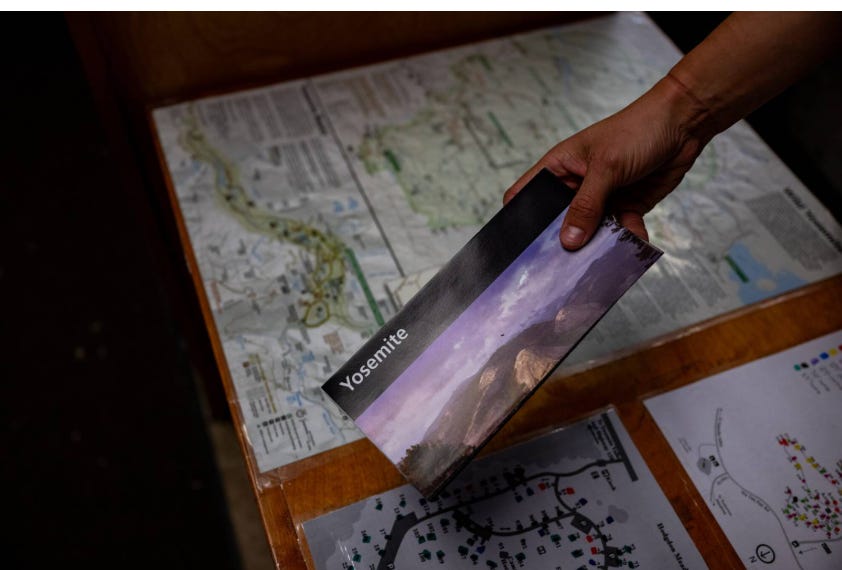
Fucked up MAGA: ‘A Morale Bomb’: National Park Workers Face Wage Cuts and ‘Dubiously Legal’ Review System
As National Park Service leaders grapple with reduced staffing and restrictive, ideological policies, maintenance workers at Yosemite National Park are now also facing a pay cut in 2026 that could reduce hourly wages by as much as $3.50 for some positions.
That’s after the National Park Service told its staff that pay for newly hired or promoted employees will now be based on rates for the Fresno area, instead of Stockton, as they have been for the last 16 years.
The National Federation of Federal Employees’ Local 465, which represents NPS employees at five national parks, including Yosemite, put out a press release this week saying workers were told of the wage change in late November.
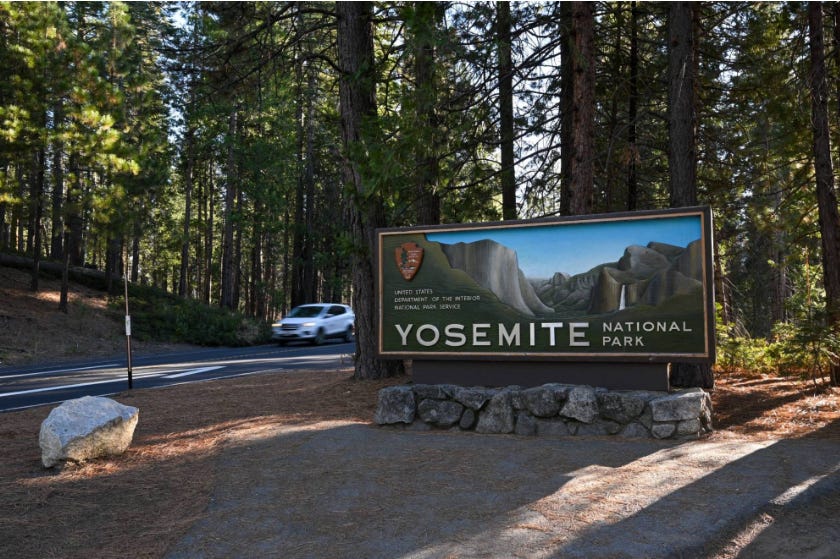
Any wage-grade employee, like maintenance workers for park facilities and trails, hired, promoted or changing positions as of Jan. 1, 2026, will have their pay changed — “a reduction,” the NFFE release said.
Finally, that fucked up country, Japan:
Between 1932 and 1945, the Japanese Imperial Army trafficked an estimated 400,000 women and girls into sexual slavery — the largest case of state-sponsored human trafficking in modern history. Most were Korean and Chinese, but victims also came from the Philippines, Indonesia, Malaysia, Vietnam, and beyond. To this day, Japan has not offered a formal apology or reparations to the survivors.
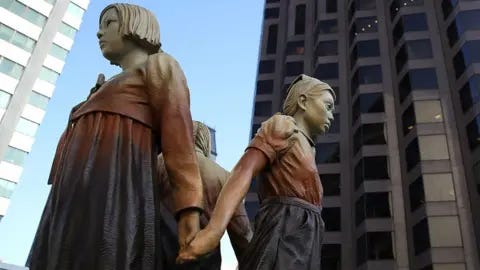
Co-founder of Comfort Women Justice Coalition Julie Tang joins Amanda Yee this week to discuss the survivors’ fight for justice. She also warns of the threat a rapidly remilitarizing Japan poses to Asia and the rest of the world, given that it’s never taken full accountability for its WWII atrocities.
Our understanding of China — and U.S.-China relations — has become a defining feature of all global politics. The China Report is a weekly show that provides an independent view of the country we are taught to hate, but know so little about. We help you navigate beyond the headlines with expert analysis and on-the-ground perspectives.
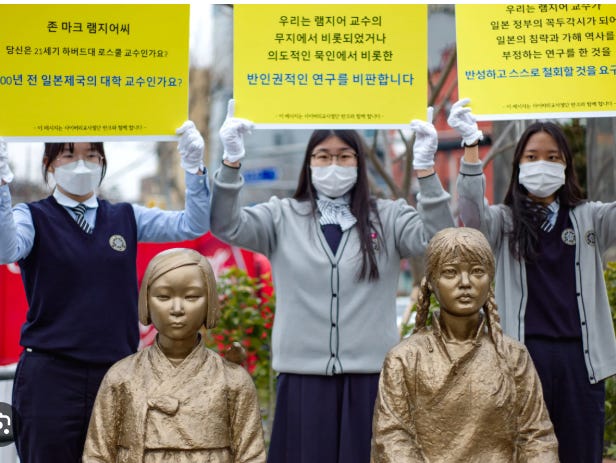
Osaka cuts San Francisco ties over ‘comfort women’ statue
Oct 4, 2018 — The Japanese city ends its 60-year “sister city” relationship over a monument depicting WW2 sex slaves.
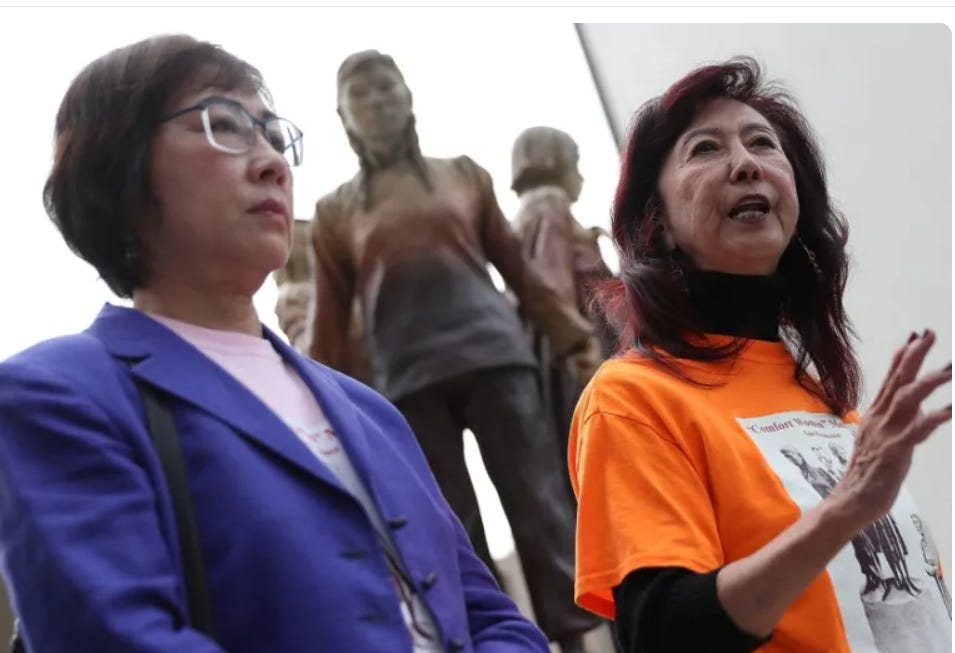
The move was also termed “outrageous and absurd” by Lillian Sing, co-chair of the Comfort Women Justice Coalition, a US group based in San Francisco, who spoke to The Guardian.
“It shows how afraid the Osaka mayor and Japanese prime minister are of truth and are trying to deny history,” said Sing.
 Paul Haeder, Author