

Jews, man, all the tapes, and recordings and snap shots of the humped over sweaty men raping and fondling babies, really!
Nov 26, 2025

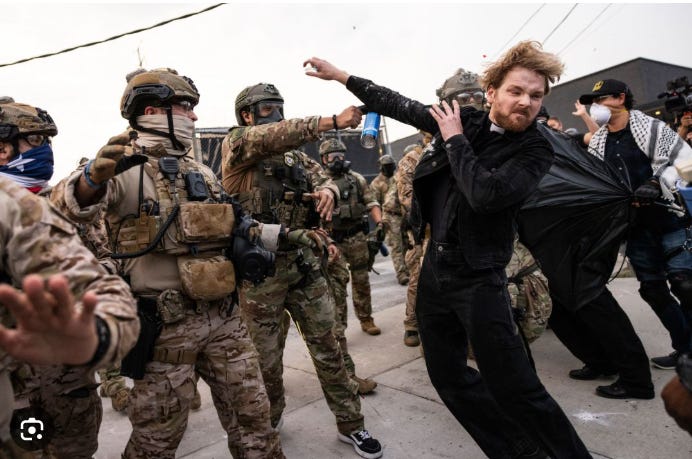
You HAVE to TAKE the CHILDREN through the Playground and SHUT the fuck up and stand down motherfucking ICE, ATF, ACAB, National Guard, Hegseth and Dirty Glosser Jew Miller and especially the fucking Pedophile Lolita Fucking JEW express.

These fucking WAR and Buckle and AR-15 Cunts need to be taken down:
Woodburn last week joined a handful of other local governments in Oregon in declaring a state of emergency in response to federal immigration enforcement in the majority-Latino town.
Hillsboro, Forest Grove, Cornelius and Washington County have all declared states of emergency recently as a result of U.S. Immigration and Customs Enforcement sweeps this month.
My little girls? Yes maam.
Did you go down town? Yes maam.
Did you see my brown? Yes maam.
Did he buy me any shoes? Yes maam.
Rockin’ shoes? Yes maam.
Put him on the train? Yes maam.
The bare rain? Yes maam.
Which way did he go? Choo-choo.
All nite long. Choo-choo.
“It’s outrageous that masked agents, many who are unidentified as agents, are sweeping people off our streets, leaving families, children and employers in fear and complete limbo,” Woodburn Mayor Frank Lonergan said in a statement.
ICE did not immediately respond to a request for comment.
Nearly two-thirds of Woodburn’s approximately 27,000 residents are Hispanic, according to U.S. Census Bureau estimates. About 28% of the city population was born in Latin America, Census data show.




JEWs, man, Epstein JEWS:

JEWS: If you don’t hate these family wreckers, these fucking pedophiles, these child kidnappers, then you can fucking GO to HELL, but first, a machete to your FUCKING NECK.
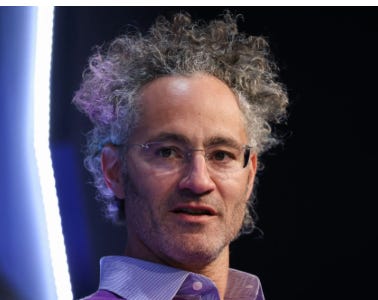
Palantir has deep ties to the Trump administration, coming from both its status as a government contractor and as a personal investment for Trump administration leadership. The data mining software company uses AI decision-making software to help power the state’s surveillance apparatus, demonstrating how the surveillance state is held up not only by the state itself, but also by private functionaries that willingly serve as its architects. Since 2014, Palantir has contracted with various U.S. government entities and branches of the military. One of those projects is a case management system that allows Immigration and Customs Enforcement (ICE) agents to track and monitor people in its database more effectively, likely to enable fast-track deportations whenever possible.

Another is more deadly – with Israel, it has developed an AI-based platform that makes decisions about which people to target for attacks. These life-or-death determinations are made through U.S.-provided data, including seemingly private chat logs between Palestinian-Americans and their relatives in Palestine. Palantir represents but one of the many links comprising the military-industrial surveillance connections between ICE and Israel Defense Forces (IDF).
These links illustrate both the ideological and practical ties between the two bodies, as both serve as means to increase the militarization of policing via the weaponization of surveillance technology. Private and public entities alike join in this effort, forming the infrastructure that will target and surveil those whom the state wishes to target—bordering, marginalizing, and othering them.
Deadly Exchange, run by Jewish Voice for Peace, has chronicled the imperial nexus between the two bodies. ICE, which has the budget of a military itself, has a vested interest in the IDF, as the two are interlinked in ideology and function.
U.S. and Israeli officials have made comparisons between their respective walls, Israeli companies provide the same radar and surveillance services used by Israel to the U.S., or law enforcement exchange programs between the U.S. police and Israeli police continue to share suppression tactics. Groups like the Anti-Defamation League have encouraged several exchanges wherein law enforcement officials, including those from ICE, have exchanged “best practices.”
Moreover, ICE and the IDF have similar modalities—operating through the use of militarized checkpoints, constant surveillance, and sometimes arbitrary detentions and arrests—making the connection between the two entities exceedingly clear. Bolstered by private contractors, ICE and the IDF maintain ideological connections. They seek to punish those who oppose the imperial and ethnonationalistic tendencies that both ICE and the IDF espouse.
In some instances, ICE has directly acted to support Israel’s propaganda project, using a blacklist run by zionist organization Canary Mission in order to choose who to arrest. The enforcement actors involved are joined in their bordering mission, and in that they are seeking “social control profitability,” capitalizing socio-economically on the marginalization of those deemed the other.

All Jewish Mad Men PR Edward Bernays stunts. Cunts!

These pedophiles and cunts need machetes to the fucking neck. No flak jacket will save these cunts.

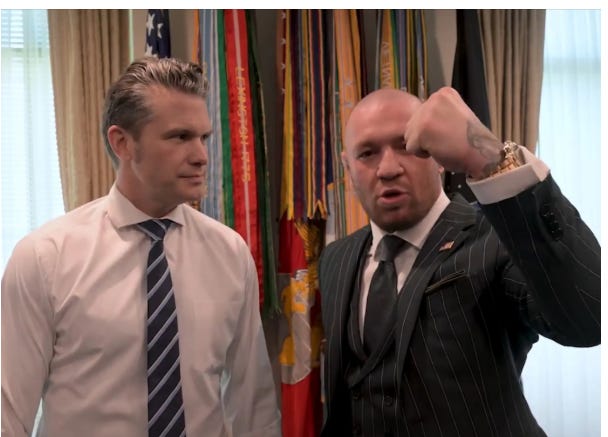
Faggots: Pete Hegseth, the defense secretary, posted a video of himself with Conor McGregor, the mixed martial arts fighter.
Piece of RACIST stains.

Khabib Nurmagomedov defeated Conor McGregor in the fourth round of their eagerly anticipated UFC lightweight title fight – before inciting a mass brawl by vaulting over the Octagon to attack his rival’s corner.
After McGregor tapped out due to a neck crank late in the fourth, Nurmagomedov stepped away from his prone rival and immediately pointed at the Irishman’s corner, shouting and throwing his mouthpiece.
He then jumped over the Octagon and became involved in a physical altercation with Dillon Danis, a Bellator welterweight who trains with McGregor. The pair were eventually separated by police officers.
Meanwhile, three members of Nurmagomedov’s entourage took advantage of the chaos to make their way into the Octagon and attack McGregor. UFC flyweight Zubaira Tukhugov was one of those involved, striking McGregor on the back of the head before he was dragged away.
UFC President Dana White later confirmed that three members of Nurmagomedov’s team had been arrested, although McGregor decided against pressing charges. White added that any UFC fighters involved in the attack would never fight for the promotion again.
The incident cast a dark shadow over the sport of mixed martial arts on an evening that had been billed as the biggest in the history of the UFC.
“I’ve been doing this for 18 years and I couldn’t be more disappointed,” White commented at the post-fight press conference.
“I should be in here bragging about the pay-per-view but I haven’t even looked at that or talked about it with anybody.
“We should all be celebrating how when you put on the right event with the right guys at the right time, it works.
“It was a very good week for everybody. It just sucks to end it like this, instead of celebrating we’re saying ‘that was pretty s***’.”
Security guards and police officers took several minutes to bring the situation under control, with both fighters given an entourage out of the T-Mobile Arena among ugly scenes in the stands.

McGregor was soundly beaten by his long-term rival
Nurmagomedov also became involved in a heated altercation with White, who had refused to present him with his UFC lightweight title inside the Octagon because of security concerns.
At the post-fight press conference – which McGregor did not attend – Nurmagomedov apologised for instigating the brawl although laid the blame directly at his opponent’s door.
The 30-year-old, who extended his professional record to 27-0, said: “First of all I want to say sorry to Nevada Athletic Commission and second to Vegas. I know this is not my best side. I’m a human being.
“But I don’t understand how people can talk about how I jump on the cage. He talked about my religion, he talked about my country, he talked about my father.”
There should be ten thousand of these around the U$A:

Instead? Jewish Inspired Pedophilia:



The right to rape children and return to the occupied Jewish State of, well, Rape, Murder, Poisoning, Starvation, Maiming:
Failures in Israel’s legal system, particularly around pedophilia, expose deep-rooted justice and accountability issues affecting society. Offenders exploit Israel’s Law of Return to evade consequences, with high-profile cases like Malka Leifer’s highlighting extradition and legal obstacles. Despite minor reforms, stronger legal measures and international cooperation are needed to address these challenges effectively.
Criminal exploitation of Israel’s citizenship law
Many accused American pedophiles have fled to Israel, taking advantage of the Law of Return, which grants automatic citizenship to Jewish individuals and their families, with minimal barriers. While criminal background checks exist, offenders can bypass these requirements in various ways, allowing them to evade justice (Walker, 2016).
Jewish Community Watch (JCW), an American organization tracking these individuals, has been working to bring them to justice since 2014. They report over 60 suspects fleeing from the U.S. to Israel, though they believe the actual number is higher due to limited resources (Lee, 2020).
In addition to the above statistics, the Matzof Association, which monitors pedophilia in Israel, estimates that tens of thousands of offenders operate each year, affecting around 100,000 victims annually. In July 2020 alone, 22 pedophilia cases in Israel were reported to the media (Jean, 2020).
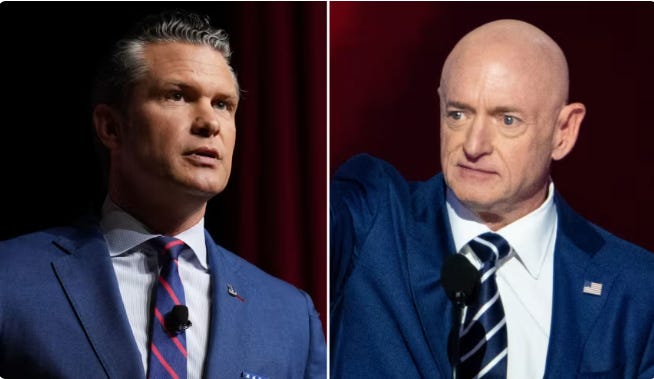
Until we have Cap;n Crunch: Publicly, Secretary of Defense Pete Hegseth has been highly critical of the six Democratic lawmakers who released a video last week urging military service members to disobey illegal orders, calling the lawmakers the “Seditious Six” and categorizing their message as “despicable, reckless, and false.”
That criticism has particularly focused on Sen. Mark Kelly, the member of the group who had the longest tenure in the military and who achieved the highest rank of captain in the Navy.
Hegseth has attacked Kelly by name, unlike the other lawmakers. He mocked Kelly for a picture of him in uniform — “you can’t even display your uniform correctly” — and wrote that Kelly’s “conduct brings discredit upon the armed forces and will be addressed appropriately.”
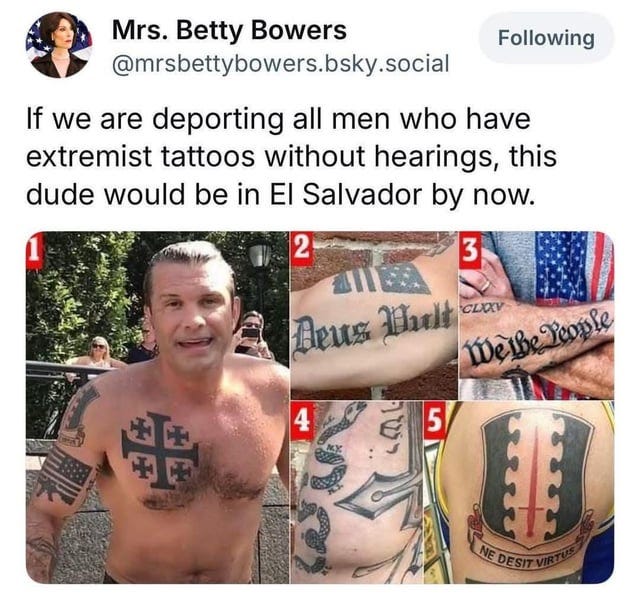
Faggot Crunch:
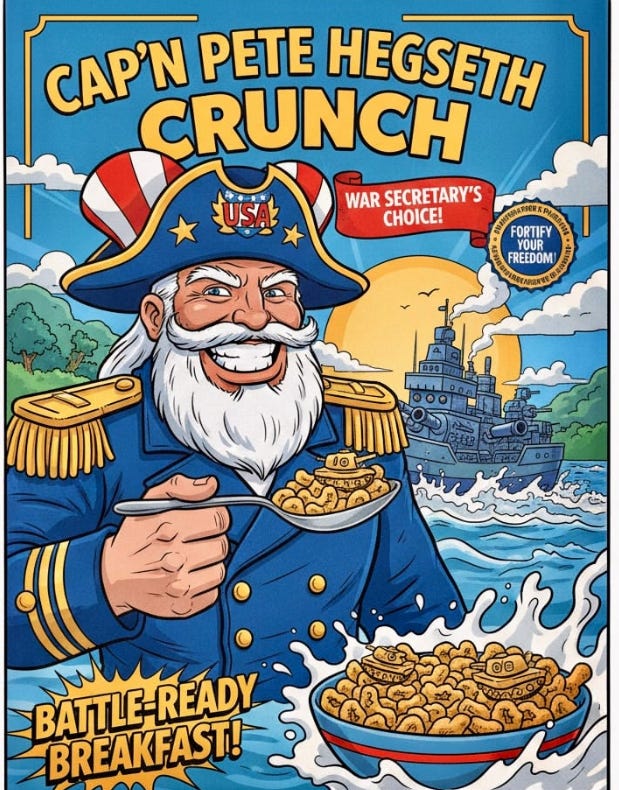
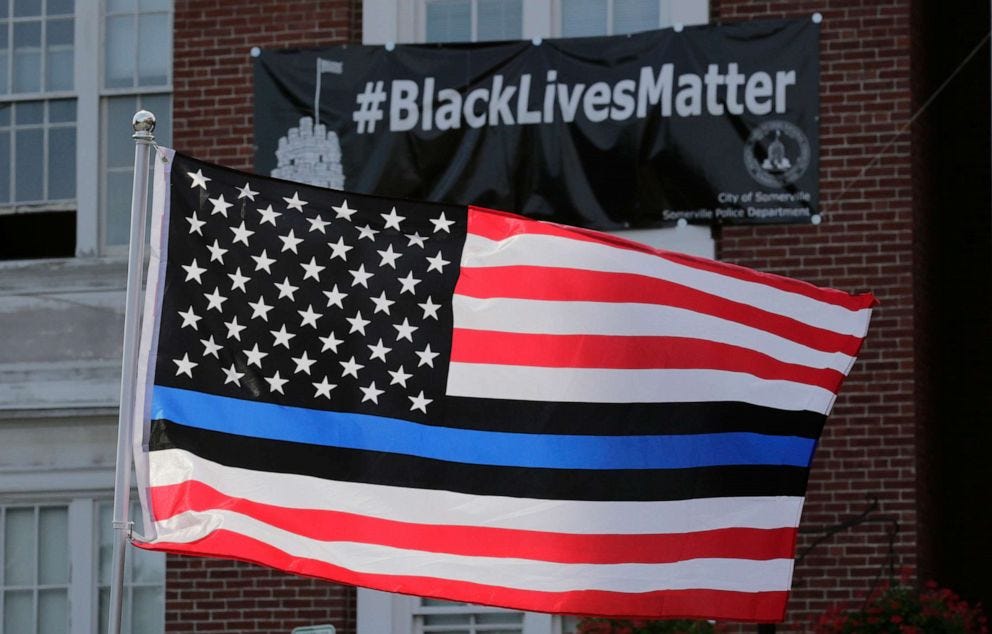
ACAB = Thin Blue Line:
A group of civil rights organizations is seeking an order to prevent the closure of a Justice Department office dedicated to preventing unrest and violence in U.S. cities.
The groups are suing for a preliminary injunction to avert the closure of the Community Relations Service, which was launched in 1964 to avert rioting and racial strife in American communities.
The office has been known informally as “America’s Peacemaker.”
As CBS News reported in April, the Trump administration was planning to shutter the Community Relations Service.
In the lawsuit filed Tuesday, several organizations, including multiple NAACP branches and the Missionary Baptist Convention of Missouri, argue that the Justice Department is violating the law in closing the office.

A former FBI agent, now assigned to a federal fugitive task force, discovers FBI misconduct and reports his concerns to his boss, the head of all law enforcement for the state of Connecticut. When Dillon is subsequently removed from the task force, he is reassigned, demoted, harassed at home and work, then threatened with termination. Dillon finally files a federal civil action against his employer, leading to a contentious trial that ultimately involves testimony from renowned forensic scientist Dr. Henry Lee and the most famous police whistleblower of all time, former New York city detective Frank Serpico. Even after a major courtroom victory and landmark decision, Dillon realizes retaliation has only just begun.
The phrase eventually made its way to Los Angeles, notably by former Los Angeles Police chief William Parker. Parker joined the LAPD in 1927 and became chief in 1950, Thornburg and Clapp wrote, and he “saw the potential uses of this metaphor, and he exploited them so brilliantly that he is often erroneously credited with coining the phrase.”
“The heroic identity implicit in ‘Thin Blue Line’ was just what Parker was after,” they wrote. “Inheriting a department known to be a corrupt, patronage-ridden force, Parker wanted to transform the police into a professional organization, independent of politicians, and composed of committed, honest, disciplined officers.”
Parker, however, was known for “unambiguous racism,” according to an article from The Marshall Project.
“He said some immigrants were ‘not far removed from the wild tribes of Mexico’ and compared Black residents participating in the 1965 Watts Riots — which stemmed in part from anger over his own department’s mistreatment — to ‘monkeys in a zoo,’” according to The Marshall Project.
According to the Marshall Project article, Parker’s tenure from the LAPD prompted a “bigger shift toward militarism in police departments, which came to buy military gear directly from the Department of Defense.”
In 1988, film director Errol Morris released a scathing documentary about an innocent man who was arrested and convicted of murdering a police officer. The man was executed by electric chair “with the help of suppressed evidence, perjured testimony, and an emotional closing argument for the prosecution,” according to “Lawtalk.”
Ironically, Morris titled the film, “The Thin Blue Line.”
“[The] final argument was one I had never heard before the thin blue line of police that separated the public from anarchy,” the trial judge said in the film, according to the book. “And I have to concede that there my eyes kind of welled up when I heard that.”
PIGS:
Alien Boy: The Life and Death of James Chasse is an American feature-length documentary film, released in 2013 and directed by Brian Lindstrom. The film explores issues of police accountability in the case of James Chasse, a man with schizophrenia who was killed by Portland, Oregon police officers in 2006.
+—+
MY OLD NECK OF THE WOODS, Spokane.
‘Breaking Blue’ Cracks a Murder’s Silence : BREAKING BLUE by Timothy Egan ; Knopf $22, 263 pages
A tale of rogue cops and their acts of treachery and violence is told by newspaperman Timothy Egan in “Breaking Blue,” a story that reaches back more than half a century to an era when times were so hard that a man might kill over “a few pounds of stolen butter.”
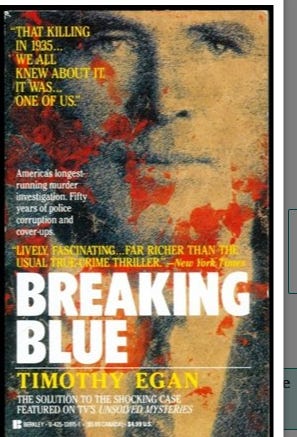
Who killed Sheriff Conniff at the Newport Creamery in 1935? Who kept the killer’s secret for more than 50 years? A determined county sheriff named Tony Bamonte started asking these questions purely as a matter of academic research and ended up on a quest to crack “a conspiracy of small corruptions” that conceals a monstrous crime.
The clues uncovered by Bamonte’s belated investigation send us off in one direction and then another–a pair of pawned pants, a handful of shell casings, a missing .32 revolver that miraculously surfaces from the bottom of a river, the death of a rural sheriff who mysteriously falls off a bridge. The witnesses and the suspects, men and women who have survived into old age, are wrenched back into the distant past to confront their own secrets.
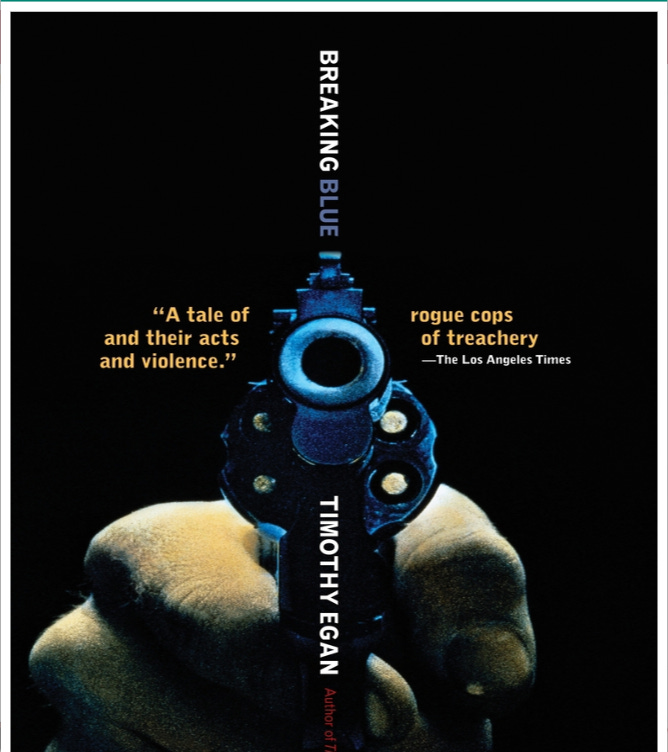
Egan presents Bamonte’s persistent quest for the truth as an assault on “the Blue Wall,” which he defines as “keeping a silence that is the bond of his profession.” Bamonte is a “hard nose,” a guy who refuses to “go along and get along,” and he dares to ask questions that have gotten other men killed. Bamonte pays a terrible price for his persistence, both personal and professional, but–in the end–his quest is rewarded with success. Thanks to Bamonte, the truth is out after half a century.
What Egan manages especially well–and what sets “Breaking Blue” apart from the glut of “true crime” books–is the evocation of the time and place in which the crime took place: the Pacific Northwest in the worst years of the Depression. If most true-crime books are dressed in the garb of psychodrama, “Breaking Blue” is hard-boiled social history–and that’s exactly why the book is so refreshing, so enlightening and so entertaining.
Egan gives us an intriguing portrait of Spokane in the ‘30s–”a town of cumbrous secrets,” as he puts it–and the profound social upheavals that turned cops into petty crooks and even killers. And he draws us back to more recent decades, when a county sheriff’s domain was still “one part Mayberry, one part backwoods dictatorship.”
We learn a new language of despair. A gun is a “smokepole.” A poor soul whom we would describe as “homeless” was known as “a bindle stiff,” and he might find shelter in a brewery-turned-flophouse known as the Hotel de Gink. A cop on the make, we discover, might spend his off-hours in the company of bootleggers and black-marketeers at an all-night diner called Mother’s Kitchen, a name that takes on dark irony as we discover what plans are hatched by the boys in the back.
Clearly, “Breaking Blue” has all the color, texture and detail of the most lurid detective fiction, and Egan makes good use of the material. But he is frequently tempted to turn a phrase, to pump the prose. Most of the time, he brings it off–but not always. For example, when Parsons, still an idealistic young rookie, earns a citation for police work, Egan tells us that he “wore the compliment like ranch initials engraved on cowhide”–whatever that means.
“Breaking Blue,” a morality tale of good cops and bad cops, is especially resonant in light of recent events in the courtrooms and streets of Los Angeles. Egan–and his protagonist, Tony Bamonte–remind us of the consequences of lawbreaking by those who are sworn to enforce the law, and they refuse to allow notions of honor and loyalty or the mere passage of time to conceal the ugly truth about a cop gone bad.
Tony Bamonte, who holds his fellow law enforcement officers to the highest standards of conduct, comes across as a man whose obsession amounts to an act of heroism. And Timothy Egan, who found the story and tells it so well, has succeeded in fulfilling the charge which Bamonte issued to his homicide detectives: “You are the voice of the dead.”
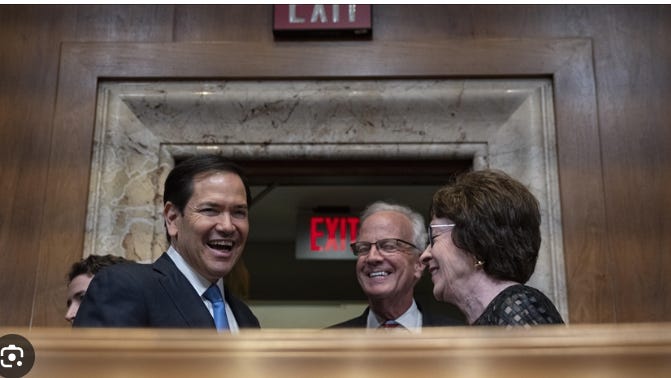
Breaking Blue Cunt Star of Terroristic David? Senators push Rubio to investigate Israel’s alleged violations in Gaza
Classified findings by the State Department’s inspector general say hundreds of potential human rights violations are awaiting the U.S. government’s review.
Several Democratic senators are urging Secretary of State Marco Rubio to quickly investigate what a classified government watchdog report has described as “hundreds” of potential human rights violations allegedly committed by the Israeli military in Gaza.

Breaking Break Back Mountain!
All capitalists must be shot: I’m a CEO who’s built, scaled and turned around companies. The next arms race in business isn’t about supply chains or rate cuts — it’s about predictability.

Then there are shocks imposed not by markets but by governments. Tariffs, subsidies and regulatory swings can change the rules of the game overnight. At a high level, more than half of U.S. companies report tariff-driven margin pressure.
An analysis of more than 300,000 retail products found that prices were moderating after the pandemic, only to accelerate again once new tariffs took effect — underscoring how policy shocks, not interest rates, often drive pressure. This is unpredictability in its purest form: the rules of the game change mid-match.
Recent data underscores how fragile the environment has become. Spending on factory manufacturing facilities development has fallen from its 2024 peak as companies pause projects amid tariff uncertainty and rising import costs. Even firms benefitting from reshoring incentives have alluded to delaying expansion until trade policy stabilizes.
Nothing else counts, man, but CHILDREN.
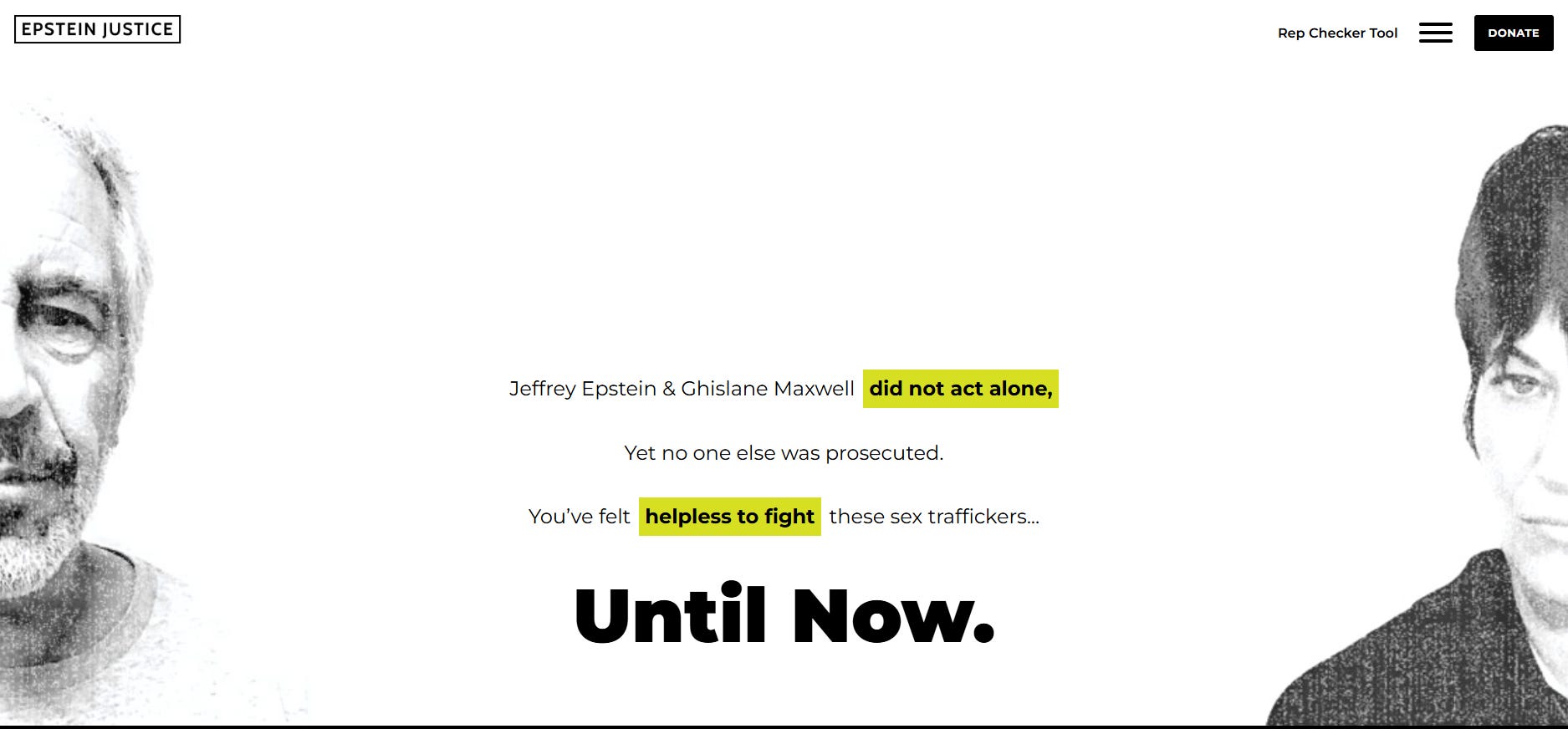
The absolute import of the Epstein case will become obvious if various trends in the United States are superimposed.
Epstein trafficked underage girls for 25 years, and his child trafficking epitomizes a pandemic in the US. According to the Centers for Disease Control, 25% of underage girls and 5% of underage boys in the US experience child sexual abuse, which translates into more than 50 million Americans.
In addition to the CDC’s staggering statistics about the number of Americans who have been molested as minors, the Department of Health and Human Services estimates that the number of children and women at rick for being trafficked in the US is between 240,000 and 325,000 every year. According to the 2023 Federal Human Trafficking Report, only 664 individuals nationwide were charged with child sex trafficking in 2023. And although millions of images of child rape material infest the internet, according to the US Sentencing Commission only 1,375 individuals in the US were convicted of crimes entailing child abuse material in 2024.
As these numbers demonstrate, only a infinitesimal fraction of sexual abuse victims in the US actually see justice. Moreover, if we allow the Justice Department to be unresponsive to victims in the Epstein case, a proven child sex trafficking case, we send a message to millions of victims who have been molested as minors that they have no voice and no hope for justice. As US citizens, we have to ask ourselves a relatively straightforward question: Are we compatible with sending this message to millions of our fellow Americans who have been molested with impunity? If you’re compatible with sending this message to our fellow Americans, then there is no need for you to act. However, if you’re not compatible with sending this message to the millions of Americans who have been molested with impunity, then you need to act.
The objective of Epstein Justice is the formation Congressional Commission that will independently investigate the Epstein case, ensuring that the pimps and perpetrators in the Epstein child trafficking network will be prosecuted. The formation of a Congressional Commission will be achieved by a majority in the House and Senate voting for the Commission.
Many Americans will default to the dilemma that WE THE PEOPLE are powerless. But we seem to have forgotten that our government is beholden to WE THE PEOPLE before WE THE PEOPLE are beholden to our government.
Our objective of a Congressional Commission will be actualized by three primary methods:
· We are currently holding Virtual Training Sessions to teach people how to “pressure” members of Congress, so they form a Commission to address the injustices in the Epstein case.
· We will hold all 535 federal legislators accountable for the formation of a Congressional Commission. On our website, we presently have the software that allows people to send form letters to their Congressional representatives. Within the next month, our website will show which federal legislators are behind the formation of a Commission and the federal legislators who are uncommitted. The latter group will then be the focus of our email campaign and also the urging of their constituents.
· We will have a nonviolent Epstein Justice march and rally in Washington, DC that will put additional pressure on federal legislators to form a Congressional Commission.
The Justice Department allocated $90 million to combat all types of human trafficking in fiscal year 2023. In 2024, an estimated 9,620 cases of pediatric cancer were diagnosed among children between the ages of birth to 14 years old. In fiscal year 2025, the National Institutes of Health will allocate about $272 million for pediatric cancer. Clearly, childhood cancer is a horrific issue that needs our attention, but children who are being trafficked and molested with impunity in the US have been given short shrift for decades.
Our society has to address the needs of these children and citizens, and the Epstein case is a salient and egregious illustration of the government abrogating its responsibilities to protect our society’s most vulnerable population. Epstein Justice will be a superlative and tangible start to correct an odious trend.
ICE!!!!!!!!!!!!!!!!!!!!!!!!!!
Trump and MAGA need to be shot.
This is your fucking auntie and your fucking brother, those cunt MAGA mutts.
FUCKING Christian and Converted JEW RAPIST:
A real human being.
Whose land is this?
Team Housing Solutions pulled back its inquiry in the face of public outcry, but Kaplan’s announcement Tuesday suggests it is still looking for a purchase in Newport. ICE, DHS and Team Housing Solutions have not responded to inquiries about federal interest in the city.
The newly reported outreach to coastal hotels is just one sign that ICE is still looking at Newport. The Oregon Capital Chronicle reported Tuesday that another federal contractor recently contacted the state on behalf of ICE, inquiring about environmental regulations related to an unspecified project in Newport.
As Newport tries to learn what federal authorities may have in mind, the city is celebrating a court victory.
On Monday, a federal judge ordered the U.S. Coast Guard to return a rescue helicopter it had long stationed at the city’s airport. The aircraft was relocated with no explanation in late October. A pair of lawsuits has since challenged that move, arguing that the helicopter is necessary to prevent deaths, particularly ahead of the fast-approaching Dungeness crab season.
The temporary restraining order by U.S. District Judge Ann Aiken lasts for two weeks, though the judge may consider a more permanent ruling.
The inquiries by contractors — combined with the helicopter removal and some notable job postings — have led many in Newport to conclude ICE hopes to detain undocumented immigrants in the city, flying them elsewhere using the airport land controlled by the Coast Guard.
“The reason they wanted Newport is there’s an airstrip,” Kate Sinkins, a Lincoln City immigration attorney, told OPB last week. “They want to be able to put people in a detention facility and not give them due process and then fly ‘em to home country without anyone really paying attention. That is not going to happen. We are paying attention.”

This fucker has a fucking vacant Shilo Inn in Newport, so eexpect this criminal to contact the mercenary contractor, aka federal defense contractor.
Mark Hemstreet, now 75, grew up in Beaverton as the son a wealthy hotelier, according to a 1995 Oregonian profile. He opened the first hotel of his own in 1974 on Northeast 82nd Avenue. By the millennium, Hemstreet owned about 50 Shilo Inns across the West.
In the 1990s, according to news reports, Hemstreet regularly gave more money than any other Oregon political donor, supporting conservative causes and candidates. He was particularly influential from 1995 to 2001, when, with his help, Republicans controlled both chambers of the Oregon Legislature.
At 6-foot-3 and 220 pounds, he was an outsized figure, living large in a 9,800-square-foot home on the shores of Lake Oswego.
“I really don’t think the state of Oregon or the United States is ready for a wise, benevolent monarch yet,’’ he told The Oregonian in 1995. “That’s what I would hope that I would be perceived as.’’
Two events changed his fortunes: First, in response to Hemstreet’s union bashing, the Oregon AFL-CIO launched a boycott in 1994 of all Shilo properties. That action went on for years and hurt enough that Hemstreet pushed for legislation in 1997 outlawing such tactics (the bill failed).
“To this day, there are a lot of people in Oregon who will never stay in a Shilo Inn,” says Jim Moore a professor of political science at Pacific University.

This is where ICE will be:
The hotelier Mark Hemstreet will see one of his company’s trophy properties sold this month.
The beachfront Shilo Inn Seaside is being sold by a court-appointed receiver. At its peak more than two decades ago, Hemstreet’s Shilo Inn chain numbered nearly 50 hotels scattered across the West. But beginning with the travel hiatus after the 9/11 terrorist attacks, Shilo has dwindled and Hemstreet has faced a series of financial setbacks.
Related: Shilo Inns Founder Mark Hemstreet Owes More Than $20 Million in Back Taxes
Last year, in Multnomah County Circuit Court, a judge ruled that Hemstreet and Shilo Management Corp. must repay a debt to California-based Cathay Bank. The judge appointed a receiver who could then sell various assets held in the receivership estate, including Shilo Inns in Arizona, Nevada, Oregon and Texas to satisfy debt.
Now, the receiver will sell the 113-room Seaside Shilo to the highest bidder. The hotel is a moneymaker, according to the listing offering, having earned $1.93 million in net operating income last year. Bids are due by Nov. 22.

Fire Chief Rob Murphy said Friday, April 25, that the buildings fire sprinkler system and a fire standpipe in the stairwell used for fire suppression will need to be replaced.
“That means there’s no safe means of egress if there’s an emergency, especially with it being a multi-story building,” he said. “The sprinkler system needs complete replacement. It’s degraded to a point where it’s not really repairable and needs replaced. By code, (the building) has to have a sprinkler fire system and has to have the fire standpipe system in the stairwell that we use to fight fire, and neither one are operable.”
Murphy explained that the system has been inspected multiple times by the State Fire Marshal’s Office, and owners were given notice that the system needed to be fixed.
“They didn’t do so, and they were given a final order to fix,” Murphy said. “They didn’t do that, so we posted the order.”

TRUMP, ten fucking years ago?
The clip that you just mentioned, John Nichols, when Donald Trump attacked Carly Fiorina’s business record. She, in turn, accused him of going bankrupt four times.
DONALD TRUMP: The head of the Yale business school, Jeffrey Sonnenfeld, wrote a paper recently—one of the worst tenures for a CEO that he has ever seen, ranked one of the top 20 in the history of business. The company is a disaster and continues to be a disaster. They still haven’t recovered. In fact, today, on the front page of The Wall Street Journal, they fired another 25 or 30,000 people, saying we still haven’t recovered from the catastrophe. When Carly says the revenues went up, that’s because she bought Compaq. It was a terrible deal, and it really led to the destruction of the company. Now, one other company before that was Lucent. Carly was at Lucent before that, and Lucent turned out to be a catastrophe also. So I only say this: She can’t run any of my companies. That I can tell you.
JAKE TAPPER: Ms. Fiorina, I want to give you a chance to respond.
CARLY FIORINA: You know, Jeffrey Sonnenfeld is a well-known Clintonite and, honestly, had it out for me from the moment that I arrived at Hewlett-Packard. But honestly, Mr. Trump, I find it quite rich that you would talk about this. You know, there are a lot of us Americans who believe that we are going to have trouble someday paying back the interest on our debt, because politicians have run up mountains of debt using other people’s money. That is in fact precisely the way you ran your casinos. You ran up mountains of debt, as well as losses, using other people’s money, and you were forced to file for bankruptcy, not once—
DONALD TRUMP: I never filed for bankruptcy.
CARLY FIORINA: —not twice, four times. A record four times. Why should we trust you to manage the finances—
DONALD TRUMP: I’ll tell you why. It’s very simple.
CARLY FIORINA: —of this nation any differently than you managed the finances—
DONALD TRUMP: I’ll tell you. I was running—
CARLY FIORINA: —of your casinos?
DONALD TRUMP: Carly, Carly, Carly—
JAKE TAPPER: Mr. Trump?
DONALD TRUMP: I’ve made over $10 billion. I had a casino company. Caesars just filed for bankruptcy. Chris will tell you—it’s not Chris’s fault either—but almost everybody in Atlantic City is either in trouble or filed for—maybe I’ll blame Chris.
CARLY FIORINA: Well—
DONALD TRUMP: But Atlantic City is a disaster—
CARLY FIORINA: Mr. Trump also—
DONALD TRUMP: Wait a minute, Carly. Wait. I let you speak. Atlantic City is a disaster, and I did great in Atlantic City. I knew when to get out. My timing was great. And I got a lot of credit for it.
NERMEEN SHAIKH: That was Donald Trump speaking last night in an exchange with Carly Fiorina. David Cay Johnston, could you respond to what Trump had to say about his bankruptcy claims—I mean, that is, denying them?
DAVID CAY JOHNSTON: Oh, sure, sure. Well, Donald personally has never filed bankruptcy. He didn’t have to do it in 1990 because the state of New Jersey Casino Control Commission took his side in negotiations with his bankers and said to his bankers, whom he couldn’t pay—Donald at the time claimed to be worth $3 billion, but he couldn’t make interest payments to his bankers—and the Casino Control Commission said, in effect, “Foreclose, if you would like, on Mr. Trump, and you will have lovely hotels by the seashore, but no casino licenses.” So, of course, the bankers all immediately took haircuts, and Trump did not have to pay back much of the money that he borrowed.
Trump’s companies were never well-run companies. Fortune magazine listed him at or almost at the bottom by every category it measured 500 large companies by. Donald promoted people whom I knew, and often promoted the most amazingly incompetent people, because they were people who were, “Yes, sir, absolutely, sir, that’s the way we’ll do it, sir,” while competent executives were pushed aside. Donald is simply not a good manager.
I think Carly—he’s correct, though, that Carly Fiorina’s record is very troubling, both at Lucent and at Compaq—I mean, at Hewlett-Packard. If she wants to run on the basis of her business record, that’s not a good record for her to run on. But, yes, Donald has never personally filed bankruptcy, but have you ever heard Donald separate himself from his successful enterprises and talk about as if they’re separate entities?
AMY GOODMAN: Well, during the Republican debate, moderator Jake Tapper also asked Jeb Bush to respond to Donald Trump’s claim that Bush is beholden to special interest groups because he’s taken campaign contributions from wealthy backers.
JEB BUSH: people are supporting me because I have a proven record of conservative leadership, where I cut taxes $19 billion over eight years. We shrunk the state government workforce. We created a climate that led the nation in job growth seven out of eight years. We were one of two states to go to AAA bond rating. People know that we need principle-centered leadership, a disrupter to go to Washington, D.C.
The one guy that had some special interests that I know of, that tried to get me to change my views on something, that was generous and gave me money, was Donald Trump. He wanted casino gambling in Florida.
DONALD TRUMP: I didn’t want—
JEB BUSH: Yes, you did.
DONALD TRUMP: Totally false.
JEB BUSH: You wanted it, and you didn’t get it—
DONALD TRUMP: I would have gotten it.
JEB BUSH: —because I was opposed to casino gambling before, during and after.
DONALD TRUMP: I promise, I would have gotten it.
JEB BUSH: And that’s not—I’m not going to be bought by anyone.
DONALD TRUMP: I promise, if I wanted it, I would have gotten it.
JEB BUSH: No way, man.
DONALD TRUMP: Believe me.
JEB BUSH: No.
DONALD TRUMP: I know my people.
JEB BUSH: Not even possible.
DONALD TRUMP: I know my people.
JAKE TAPPER: Is there anything else you want to say about this?
DONALD TRUMP: No. I just will tell you that, you know, Jeb made the statement. I’m not only referring to him. A lot of money was raised by a lot of different people that are standing up here. And the donors, the special interests, the lobbyists have very strong power over these people.
I’m spending all of my money. I’m not spending—I’m not getting any—I turned down—I turned down so much, I could have—right now, from special interests and donors, I could have double and triple what he’s gotten. I’ve turned it down. I’ve turned down last week $5 million from somebody.
AMY GOODMAN: That’s Donald Trump and Jeb Bush. David Cay Johnston, what’s the fact here?
DAVID CAY JOHNSTON: Donald absolutely, without question, tried to get casino gambling in Florida. He hired lobbyists. There are plenty of news clips; you can go back and read about it. And his denial is typical of a very important feature about Donald. Donald is one of these people who, whatever he says at the moment, that’s the truth—to him. It isn’t the objective truth, it’s not the empirical reality, but to Donald it’s the truth. And what he said is just completely false.
On the other side of this, Jeb Bush, you know, should not get away with saying, “I cut taxes $19 billion,” without a piece of context. State debt under his watch rose by more than—I think it’s $22 billion. And he was the beneficiary, of course, of the housing bubble, that Alan Greenspan claims he couldn’t see, but I wrote about, was very obvious long before the bubble popped, and so did a few other people. So, neither of the two gentlemen here has clean hands.
NERMEEN SHAIKH: Well, let’s go to another heated exchange between Trump and Bush from Wednesday night, this time regarding Trump’s suggestion that Bush’s views on immigration were influenced by his Mexican-born wife.
JEB BUSH: To subject my wife into the middle of a raucous political conversation was completely inappropriate, and I hope you apologize for that, Donald.
DONALD TRUMP: Well, I have to tell you, I hear phenomenal things. I hear your wife is a lovely woman.
JEB BUSH: She is. She’s fantastic.
DONALD TRUMP: I don’t know her. And this is a total mischaracterization of what I said.
JEB BUSH: She is absolutely the love of my life, and she’s right here.
DONALD TRUMP: Good, good.
JEB BUSH: And why don’t you apologize for her right now?
DONALD TRUMP: No, I won’t do that, because I said nothing wrong. But I do hear she’s a lovely woman.
NERMEEN SHAIKH: John Nichols, could you respond to that exchange between Trump and Bush, and Trump’s refusal to apologize, in fact?
JOHN NICHOLS: Right, see, this is a huge part of what Donald Trump does. The way that he has played American media—and you saw a real example of it just in that quick moment in the debate—the way that he has played American media is to say absolutely outrageous things, and then, instead of apologizing, to stand by it, to say, “Yeah, I didn’t say anything wrong,” and then to go on and often say something more outrageous, which draws the attention to him on the next day.
And I thought that there was a point where the moderators should have stepped in. And they should have said, “Look, you claim you didn’t say anything wrong. Jeb Bush is clearly pointing out some of the things you said here. Let’s get to the bottom of this. Let’s not let you get away with that statement.” David just pointed out, you know, in a previous exchange, where they didn’t follow up, they didn’t press. And one of the key roles of a moderator in a debate is to clarify, to get this stuff straight. That did not happen at point after point after point.
And on this issue, in particular, where you’re talking about immigration, you know, it’s an interesting exchange there. You’re saying that Jeb Bush was influenced by his personal experience. Well, I hope he was influenced some by his personal experience. I certainly am, a lot, by people I meet and things that happen in my life.
AMY GOODMAN: And Donald Trump—
JOHN NICHOLS: And I wish that Bush, rather than making it personal, would have pushed back.
AMY GOODMAN: And Donald Trump dug in and talked more and more about spending the money to deport over 11 million undocumented immigrants in this country.
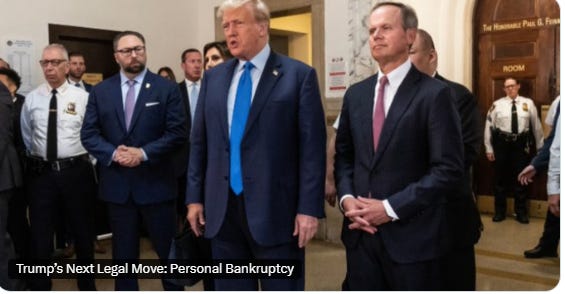
Total CIRCUS:
The Making of Donald Trump gives a short tour of the business career of America’s 45th president. The narrative is episodic and inconsecutive, but it begins at the beginning, with the example set by Fred Trump, the father of Donald: a mid-century real-estate buccaneer, adroit at political manipulation and statute dodging. The book goes on to recount a few of the scandalous details of the construction of Trump Tower and the purchase, mismanagement and financial collapse of Donald’s casino properties in Atlantic City.
Various chapters take in the mob connections that Trump aimed to profit from while keeping at two removes (sometimes with the help of an apartment gratis); there are also free-standing anecdotes about friends and associates, and a chapter on Trump’s bid for the gambling custom of the high-rolling Japanese real-estate investor Akio Kashiwagi. The book bears the marks of having been put together under pressure to stop the election disaster. Pared down to half its length and distributed to every voter in the contested states, it might have helped to produce a different result.
David Cay Johnston, who recently made headlines by releasing a portion of Trump’s 2005 tax return, knows whatever can be known about Trump’s career, which he covered as a journalist for three decades, and he has the necessary courage for the disagreeable work. Trump’s previous biographer – the Village Voice city reporter Wayne Barrett, who died in January – gave a definitive account of the president’s first two grownup decades in Trump: The Deals and the Downfall (1992). Both biographers acquired an intimate knowledge of Trump’s self-protective method, which involves a mixture of flattery, threat and bluster. Trump once called Johnston and told him if he didn’t like what he wrote, he would sue him; when Johnston reminded Trump that he was a public figure, Trump said: “I’ll sue you anyway.”
With Barrett, whose book was long in the making and three times the size of Johnston’s, the stakes were higher and the approach subtler. Trump said that he couldn’t help knowing his biographer lived in a modest apartment in a nothing neighbourhood; and by the way, he, Trump, had some very nice apartments. When this failed to draw a response, Trump told the sad story of another journalist who had written copy he disliked. I took him to court and broke him, said Trump.

[Donald Trump launches his Trump Taj Mahal Casino Resort in Atlantic City in 1990. Photograph: Mike Derer/AP]
Johnston moved to Atlantic City in 1988 to report for the Philadelphia Inquirer on the spread of casinos, after a supreme court ruling that Indian tribes had a right to own them. He was convinced the mob would pursue the new market, and “I quickly learned from others in town that [Trump] knew next to nothing about the casino industry, including the rules of the games”.
On this subject and others, Johnston played the trick of intentionally saying something false in order to get Trump to agree and betray his ignorance. “Net present value” is a precise business term that means “the value of cash expected from an investment minus the value spent to support that investment and then reduced to a lump sum payable today”; under cross-examination in court, Trump (who sued the reporter Tim O’Brien for saying his net present value might be far below the $5-$6bn he claimed) strayed early and began to blow smoke: “Well, to me, the word ‘net’ is an interesting word. It’s really – the word ‘value’ is the important word.” Trump has been “a party in more than 3,500 lawsuits”, remarks Johnston – an act of hostile sociability as typical of the man as the tweets he emits at 4am. The lawsuit against O’Brien, like all the others presumably, was worth it because of the trouble it cost his enemy: “I spent a couple of bucks on legal fees and they spent a whole lot more. I did it to make his life miserable, which I’m happy about.”
When Trump became interested in Atlantic City, he summoned the New Jersey attorney general and asked for early action, which would mean short cuts on the background checks. Clear this for me (Trump said in effect) or I won’t build in Atlantic City; and by the way, I own space in New York that would be just as good for a casino. The Division of Gaming Enforcement bought his pitch without, it is said, ever notifying the Casino Control Commission that Trump had been the target of federal criminal investigations. Once a Trump success or the appearance of success is given plausibility by banks, and by city or state governments, he has his hooks in the institutions and they can’t afford to let him sink. When his Atlantic City casinos went bankrupt, he was judged too big to fail by the state of New Jersey. The punishment was to put him on a monthly allowance of $450,000.
If a single story emerges, it is the complicity of financial institutions in every stage of the rise and the resurrection of Trump. For a reader who before 2016 knew him only as a sketchy figure in the world of real estate, fake wrestling and reality TV, the extent of the connivance is shocking. In The Art of the Deal, the book he wrote in 1987 with Tony Schwartz, Trump claimed to have paid $5m in cash for the purchase of Mar-a-Lago, but in court testimony, Johnston says, he later “confirmed that his primary bank, Chase Manhattan, had loaned him the entire purchase price”. The transaction had the peculiar legal status of “a non-recorded mortgage”. But surely a mortgage needs a guarantor? Trump said he “personally guaranteed” the loan to himself by Chase Manhattan. The next page tightens the analogy between his practices and those that triggered the 2008 financial collapse: “Many banks,” Johnston writes, “complained that they were unaware other banks had loaned money to Trump on his personal guarantee with no public record of the obligation.” Years before he ran for president, Trump was a human complex derivative.
His lesser stratagems have required neither treachery nor the concealment of relevant facts. They exhibit nothing worse than a shameless use of the legal resources for squeezing extra dollars through the tax loopholes available to the very rich (especially the landed rich). Trump could reduce the property tax on his golf course in Bedminster, New Jersey almost down to zero by keeping a pen of goats there and having it zoned as “active farmland”.

More inventively, he gave orders to skip 10th-floor numbers “to inflate the apparent height of his signature building”. Much of the remaining 90% of the apparent height of Trump Tower was built by illegal Polish construction workers who were underpaid. This would involve him later in an unpleasant rigmarole of legal discovery and compensation, but when he had money on his mind, his associates have observed, “common sense just never took hold”. In the 2016 campaign, he paid himself for the use of his large and small private jets, his helicopter and his office space in Trump Tower.
The biggest mistake of the Clinton strategy that lost the 2016 election was to picture Trump as a misogynist, racist and general offender against the international regime of human rights. While Trump can be relied on to pick up any prejudice opportunistically and pat and stroke it as long as it serves his interest, he is not by the standards of the Republican party unusually racist or misogynist. No: the egregious fact is his business record. Yet somehow the Democrats reckoned that the business facts about Trump were already known. Hillary Clinton mentioned now and then that he had stiffed people he hired to work for him. The campaign should have driven that point home in every speech she made and every ad they ran. Trump’s conduct in the first four months of his presidency bears out the suspicion that he will treat the legal institutions of the US the way he treated the New Jersey Division of Gaming Enforcement.
“Mr Trump,” the lawyer asked in the net worth trial. “Have you always been completely truthful in your public statements about your net worth of properties?”
This curious exchange ensued: “I try,” Trump answered.
“Have you ever not been truthful?”
“My net worth fluctuates, and it goes up and down with markets and with attitudes and with feelings, even my own feelings, but I try.”
A while into his presidency, many people have stopped wondering about Trump’s fluctuations of policy, and have begun to ask a more unsettling question: who controls his feelings?
 Paul Haeder, Author