

“In the war on the fate of the land of Israel, the gentiles must be killed. The gentiles, who claim this land for themselves, are stealing it from us, but it is a legacy from our forefathers.”

IAEA chief says condemning Israeli assassination of Iran’s nuclear scientists not his responsibility

Well, many spines are juiced up with matzah balls:

X commenting: This is literally what they said today—about my city. I’ll tell you what, these six people will not drag 330 million of us back to the 18th century. They are a radical theocratic cancer that needs radical treatment.

Fucking A, this mashe potatoes just won’t shut the fuck up:
Trump claims crime is down to “virtually nothing” in DC and adds the crimes that are happening are “much lesser things. Things that take place in the home they call crime. You know, they’ll do anything they can to find something. If a man has a little fight with the wife they say, ‘this is a crime. See?'”

Here is an example of Trump having a little fight with his wife at home:

All controlled opposition spinelessness:

Oh faces of ill omen and devilry and crime … from the bitter cup that you give to the children of our peoples, you will drink … It is the laws of God and history.

The fucking Jews and their Penis Problem, sick mother fuckers:
Dr. Nick Maynard of Oxford University Hospital says Palestinian boys in Gaza suffered gunshot wounds in their testicles done deliberately by Israeli soldiers.
“They admitted 4 teenage boys, 13 or 14 years old I think, who had all been shot in the testicles.
The pattern of targeting specific body parts was something we all recognize within our own specialties.
It was a very stark pattern which could only have been explained by what I describe as target practice by the Israeli soldiers.”

“It is rather impossible to grasp the magnitude of the crimes against humanity performed by the Jewish state in the name of the Jewish people unless one elaborates on Jewish culture in the light of Judaic teaching.” – Gilad Atzmon

The following is a review of Torat ha-Melekh, a “kind of guide for anyone who ponders the question of if and when it is permissible to take the life of a non-Jew”. It was published by Ma’ariv Israel’s second biggest paper. It is a must read. I would assume that those American and British corrupted politicians who are happy to take donations from Israeli Tycoons and other ‘Friends of Israel’ better start to understand once and for all what kind of Ideology they are aligning themselves with.
Here is a full translation of an article in the Maariv newspaper of Israel.
For the English readers’ convenience we will briefly mention the topics dealt with in R’ Bar-Chayim’s article:
- A ban on desecrating the Sabbath to save the life of a Gentile.
- A Jew’s exemption from liability if his property (e. g. ox) causes damage to a Gentile’s property. But if a Gentile’s property causes damage to a Jew’s property, the Gentile is liable.
- The question of whether robbery of a Gentile is forbidden by the Torah’s law or only by a Rabbinic decree.
- A ban on returning a lost item to a Gentile if the reason for returning it is one’s sympathy towards the Gentile and compassion for him.
- The sum which a Gentile overpays in a business transaction due to his own error is forfeit; whether a Jew is permitted to intentionally deceive a Gentile is also discussed.
- One who kidnaps a Jew is liable to death, but one who kidnaps a Gentile is exempt.
- A Jew who hurts or injures a Gentile is not liable for compensation of damage, but a Gentile who hurts a Jew is liable to death.
- One who overcharges a Gentile ought not return him the sum that the Gentile overpaid.
- A Gentile — or even a convert to Judaism — may not be appointed king or public official of any sort (e. g. a cabinet minister).
- One who defames a female proselyte (claiming that she was not virgin at the time of her marriage) is liable to neither lashes nor fine.
- The prohibition to hate applies only to Jews; one may hate a Gentile.
- One may take revenge against or bear a grudge towards Gentiles; likewise, the commandment “love your neighbor” applies only to Jews, not to Gentiles.
- One who sees Gentile graveyards should curse: “Your mother shall be greatly ashamed…”
- Gentiles are likened to animals.
- If an ox damaged a Gentile maidservant, it should be considered as though the ox damaged a she-ass.
- The dead body of a Gentile does not bear ritual impurity, nor does a Gentile who touches the dead body of a Jew become impure — he is considered like an animal who touched a dead body.
- One is forbidden to pour anointing oil on a Jew, but there is no ban on pouring that oil on a Gentile because Gentiles are likened to animals.
- An animal slaughtered by a Gentile is forbidden, even if the ritual slaughter performed was technically correct, because Gentiles are deemed like animals. (Daat Emet does not agree that this is the Halachic reason for invalidating a Gentile’s ritual slaughter — but this is not the place to delve into the subject).
- Their members(genitals) are like those of asses” — Gentiles are likened to animals.
- Between the Jews and the Gentiles — In the Aggadah, the Kabbalah, and in Jewish Thought
The King’s Torah … a guide to the killing of Palestinians
The two authors extensively tackle an issue that dominates the entire book – that is, when will the Jews be allowed to kill the gentiles (goyim)? When should the Jews kill them? The gentiles must not be misidentified. Clarifying the ‘gentiles’ here as being basically the Palestinian Arabs, Rabbi Yitzchak Ginzburg, a revered religious figure among the religious Jews in Israel, says in the introduction to The King’s Torah that the issues addressed by the book:
“are closely related to the situation in the land of Israel, which we should restore from our enemies.”
He argued that the book serves the objective of achieving this goal, strengthening the morale of the Israeli people and soldiers, and explaining both the Torah’s deep comprehensive view and Jewish law on outstanding relevant issues.
“In the war on the fate of the land of Israel, the gentiles must be killed,” the authors say, adding,
“The gentiles, who claim this land for themselves, are stealing it from us, but it is a legacy from our forefathers.”
This book really represents a guide for the perplexed, the hesitant and those who seek a religious Jewish legal opinion (fatwa) as to when it is allowed to kill the Palestinian Arabs and when this “should” take place according to the Jewish law. Moreover, it provides moral and religious support to many settlers and Israelis who are convinced of the content of this book before reading it.
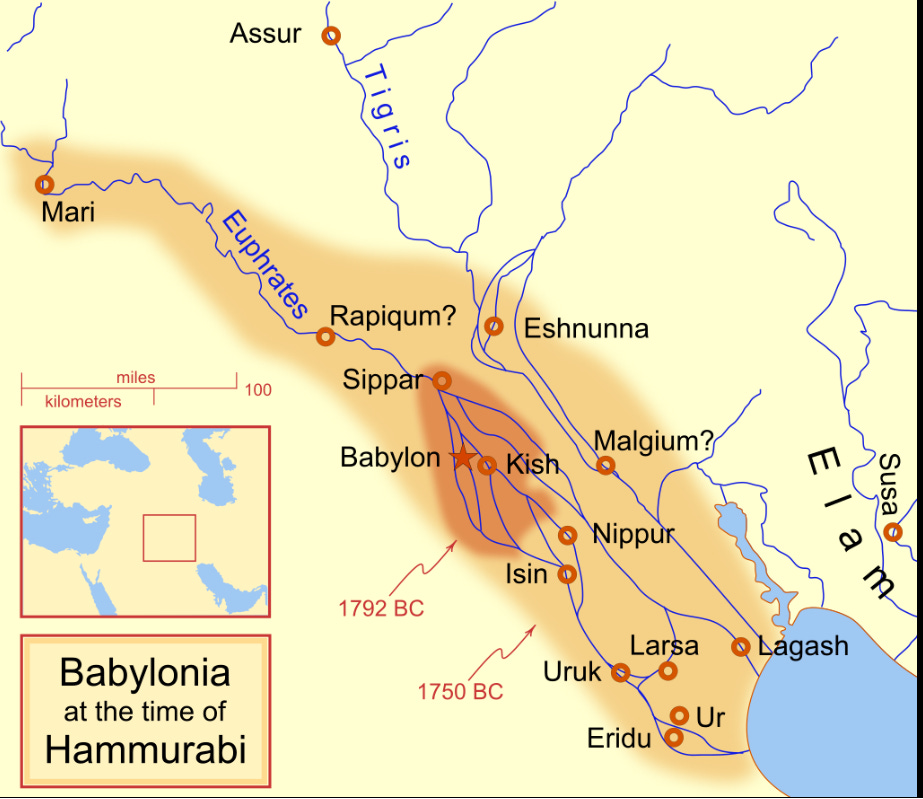
Written in ancient Hebrew similar to ancient religious Jewish writings, the authors consolidate their views in the book, especially those calling for the killing of gentiles (i.e., the Palestinians), with texts from Jewish law and a lot of quotes by senior Jewish rabbis through different ages. They make this a backdrop for any opinion they hold in the book, giving it a religious aura influencing many Jews, especially the religious. The outstanding religious sources of the Jewish law were a basis for the book. In addition to the written Torah, which they quote little, the authors depend as well on the oral Torah, Mishnah (about AD 200), and on post-Mishnah rabbinic interpretations compiled in the Babylonian Talmud (AD 5th Century Babylonia) and the Jerusalem Talmud (AD 4th Century Palestine).
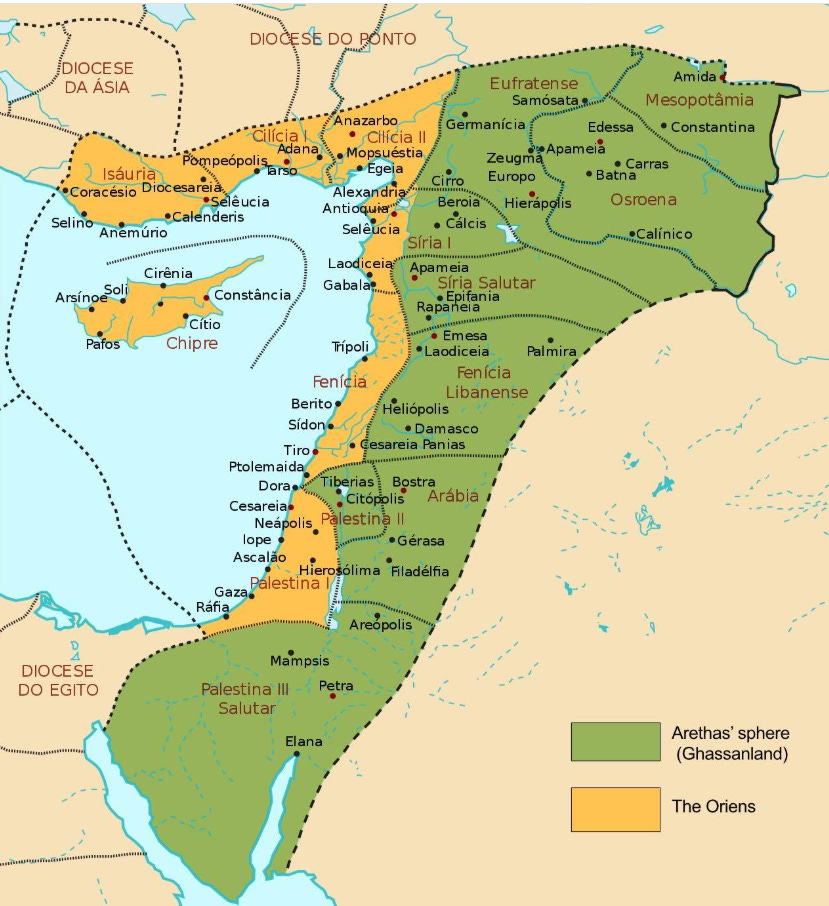
When Christianity became Byzantium’s official religion in the 4th century, Palestine was immediately elevated to the status of a holy land whose capital Jerusalem became the spiritual center of the empire and destination of pilgrims.
The Ghassanids bore the major brunt of the defense of the Christian Holy Land because they were stationed in the three provinces that surrounded it: the Provincia Arabia, Palaestina Secunda, and Palaestina Tertia.
In the reign of Justinian, the Ghassanids effectively protected Palestine from the south and southeast through the efforts of Abu Karib, the energetic phylarch of Palaestina Tertia, and from the east and northeast through those of his brother Al-Harith ibn Jabalah (Arethas), who was supreme phylarch of all Arabs in the Near East, as well as a Patrikios and Vir Gloriosissimus (among other titles).
Al-Harith ibn Jabalah consolidated his power as the Ghassanid Kingdom grew to comprise the whole eastern half of Syria, ruled with little reference to Constantinople. Similarly, the Syrian Church under the Ghassanids achieved virtual independence from Antioch.

BREAKING: Israel is now launching airstrikes against Latakia in Syria Reports suggest that the Israeli missiles targeted the Saqoubin barracks in the vicinity of the city of Latakia.

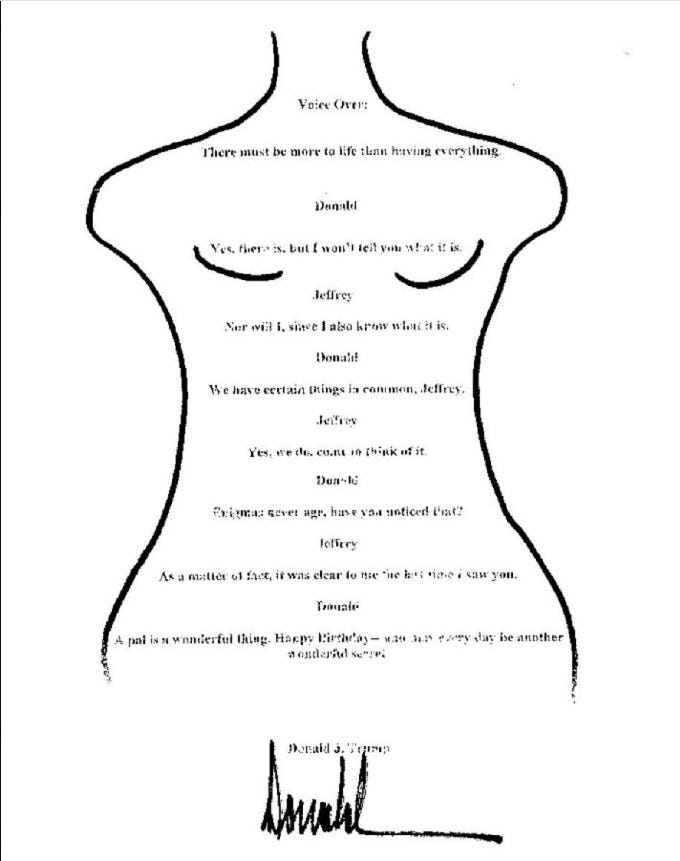
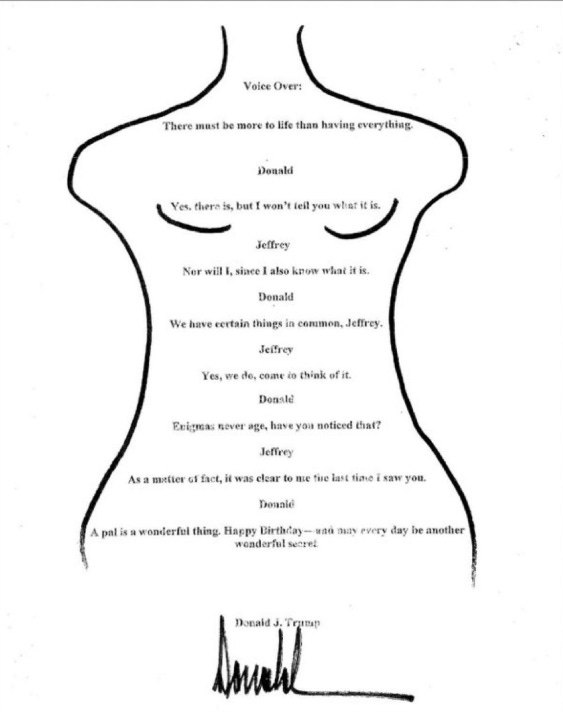
Trump 7/28/25: I don’t do drawings. I’m not a drawing person. I don’t do drawings of women
And yet—his creepy sketch shows up in Epstein’s book, signed by him. Trump’s defense? “I don’t draw.” The evidence? He drew.
First Grade, anyone? This is News in the Jew York Times?

Ahh, spines only found on the bathroom floor after Semen Drip Vice President Trump lets go:

Although it is widely based on the most important sources in Jewish law, The King’s Torah reviews and cites the most extremist Jewish texts, legal opinions, and interpretations that permit, favor, call for or mandate the killing of ‘gentiles,’ overlooking the positive human values of the Jewish law. This makes the book more dangerous, as it incites and openly calls for the extermination of the Palestinian Arabs.
In chapter five, entitled “The Killing of Gentiles in War,” the authors write that it is not only the fighters who engage in war against Israel that should be killed, but any citizen in the region or in a hostile state, who encourages fighters or expresses satisfaction with their actions, must be killed as well. They add that the citizens of a hostile state or region, who do not encourage their state to commit acts of war, can be killed, claiming that the Jewish law doubts that they do not want, in time of peace, to shed the blood of the Jews. This suspicion is growing to the extent that they want to shed the blood of the Jews in time of war, thus allowing the killing of those innocent civilian gentiles who do not participate at all in the course of war.

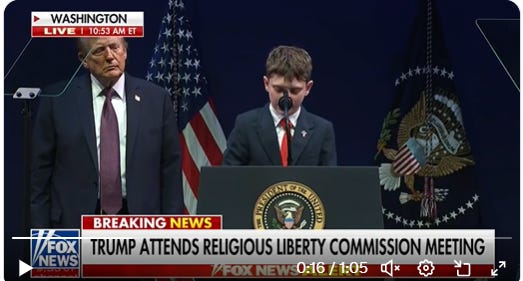
12-year-old boy who fought back against his school for pushing a book about changing genders speaks alongside President Trump at the Museum of the Bible:
“I’ve been a Christian my whole life, and Jesus means everything to me. I knew this was not right, but I was afraid of getting in trouble. After my family spoke up, the school treated us badly and kids started bullying me and my brother because of our faith.”

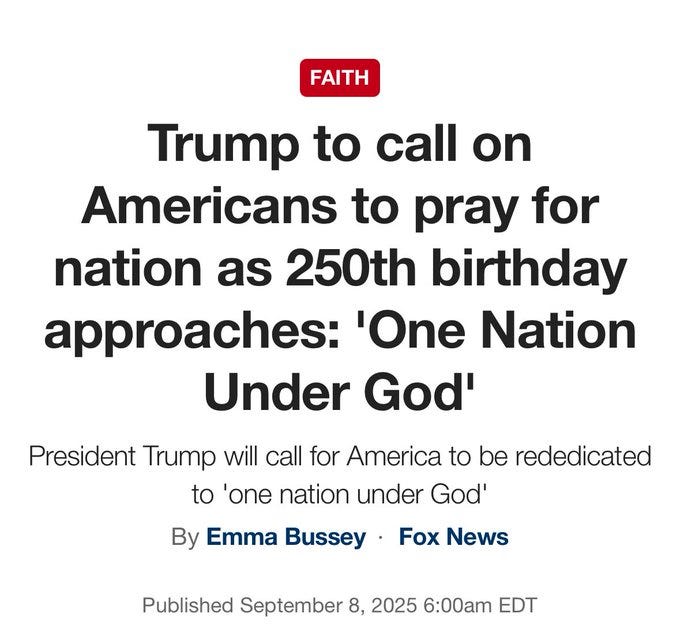
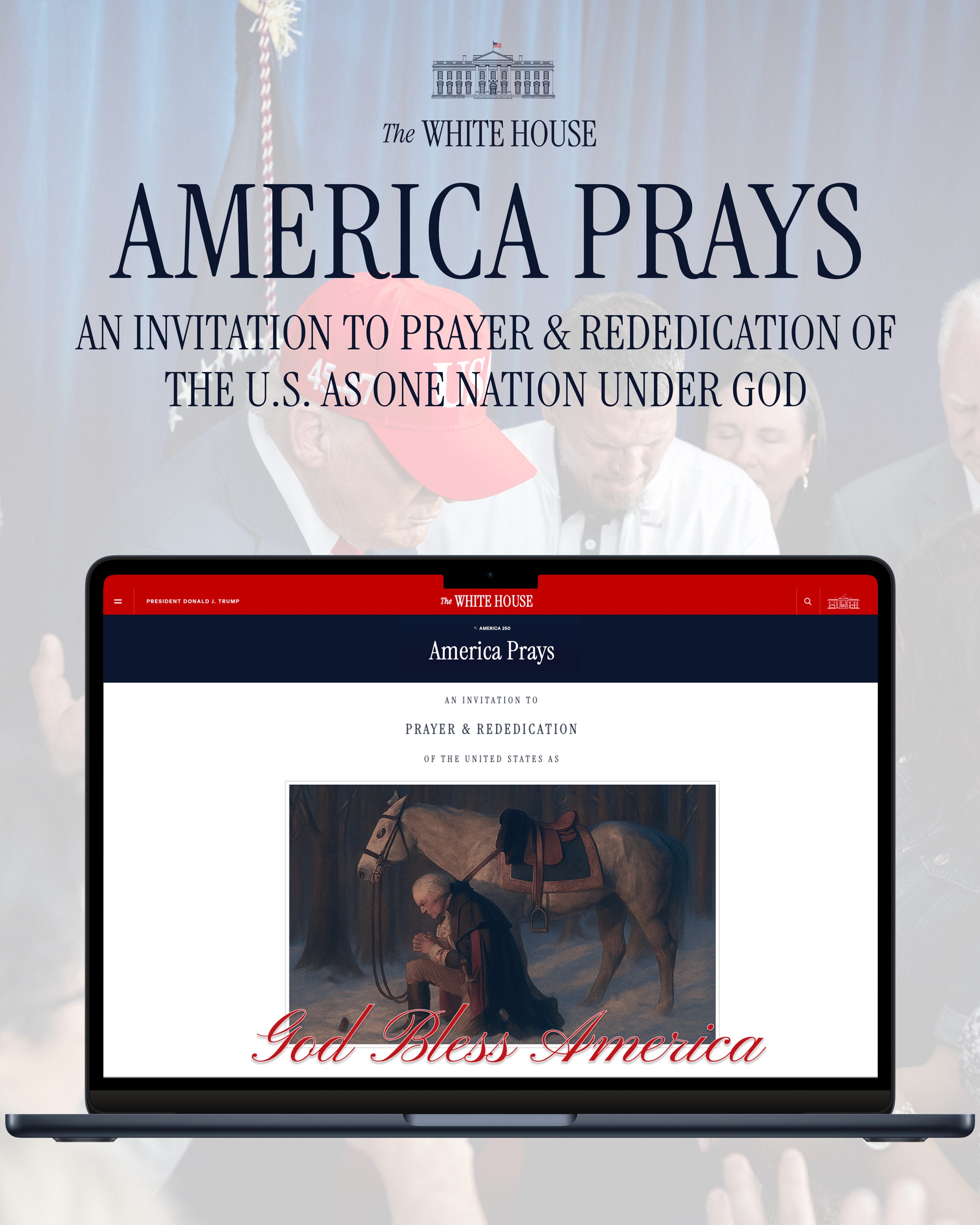
President Trump will call on the nation to pray ahead of our 250th birthday, rededicating America as “one nation under God.” Amen
“If my people who are called by my name shall humble themselves, and pray, and seek my face, and turn from their wicked ways; then will I hear from heaven, and will forgive their sin, and will heal their land.” — 2 Chronicles 7:14
Oh now, Israeli versus Jewish Americans who believe in Israel?






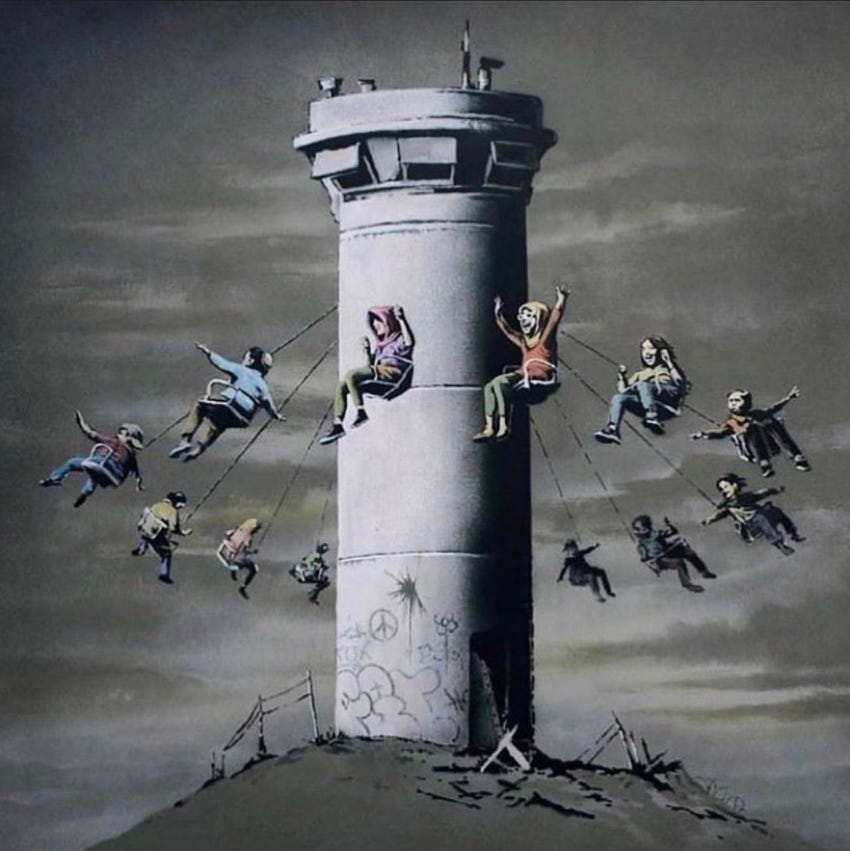

At the height of Israel’s brutal 2008-09 assault on the Gaza Strip, then-foreign minister Tzipi Livni claimed that “Palestinians teach their children to hate us and we teach love thy neighbor” (232).
The first part of this myth is propagated by people like US Secretary of State Hillary Clinton, and more recently Newt Gingrich, who both spread the baseless claim that Palestinian schoolbooks teach anti-Semitism. This calumny originated with anti-Palestinian propagandandists such as Israeli settler Itamar Marcus and his “Palestinian Media Watch.”
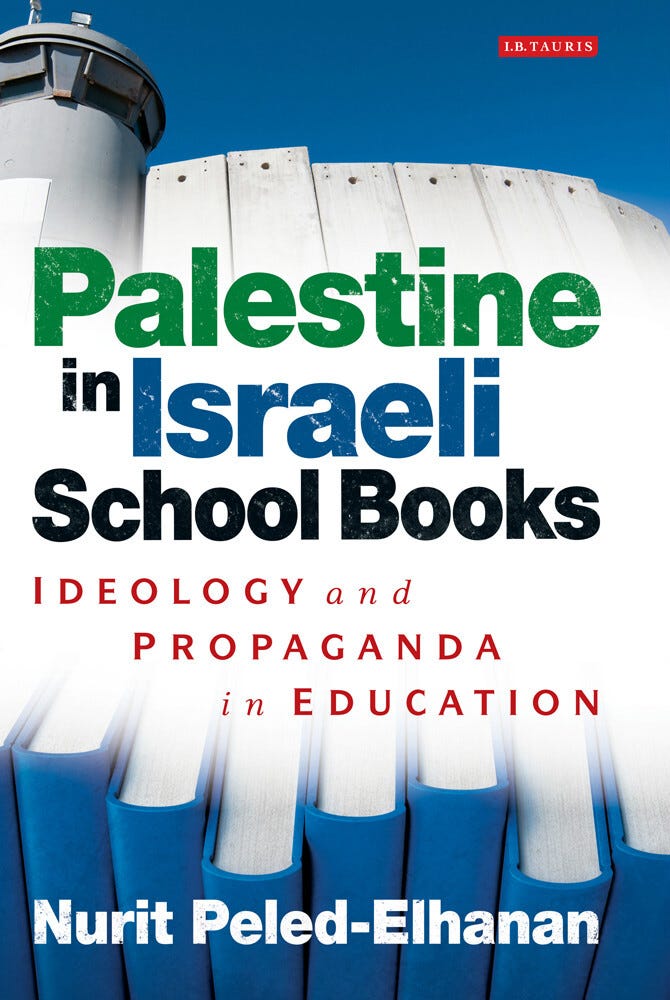
In an important new book, Palestine in Israeli School Books, Israeli language and education professor Nurit Peled-Elhanan buries the second part of Livni’s myth once and for all.
Peled-Elhanan examines 17 Israeli school textbooks on history, geography and civic studies. Her conclusions are an indictment of the Israeli system of indoctrination and its cultivation of anti-Arab racism from an early age: “The books studied here harness the past to the benefit of the … Israeli policy of expansion, whether they were published during leftist or right-wing [education] ministries” (224).
She goes into great detail, examining and exposing the sometimes complex and subtle ways this is achieved. Her expertise in semiotics (the study of signs and symbols) comes to the fore.
Inculcation of anti-Palestinian ideology in the minds of Israel’s youth is achieved in the books through the use of exclusion and absence: “none of the textbooks studied here includes, whether verbally or visually, any positive cultural or social aspect of Palestinian life-world: neither literature nor poetry, neither history nor agriculture, neither art nor architecture, neither customs nor traditions are ever mentioned”
 Paul Haeder, Author