

… again, both sides of the eunuch political aisle – always transactional, not humane . . .
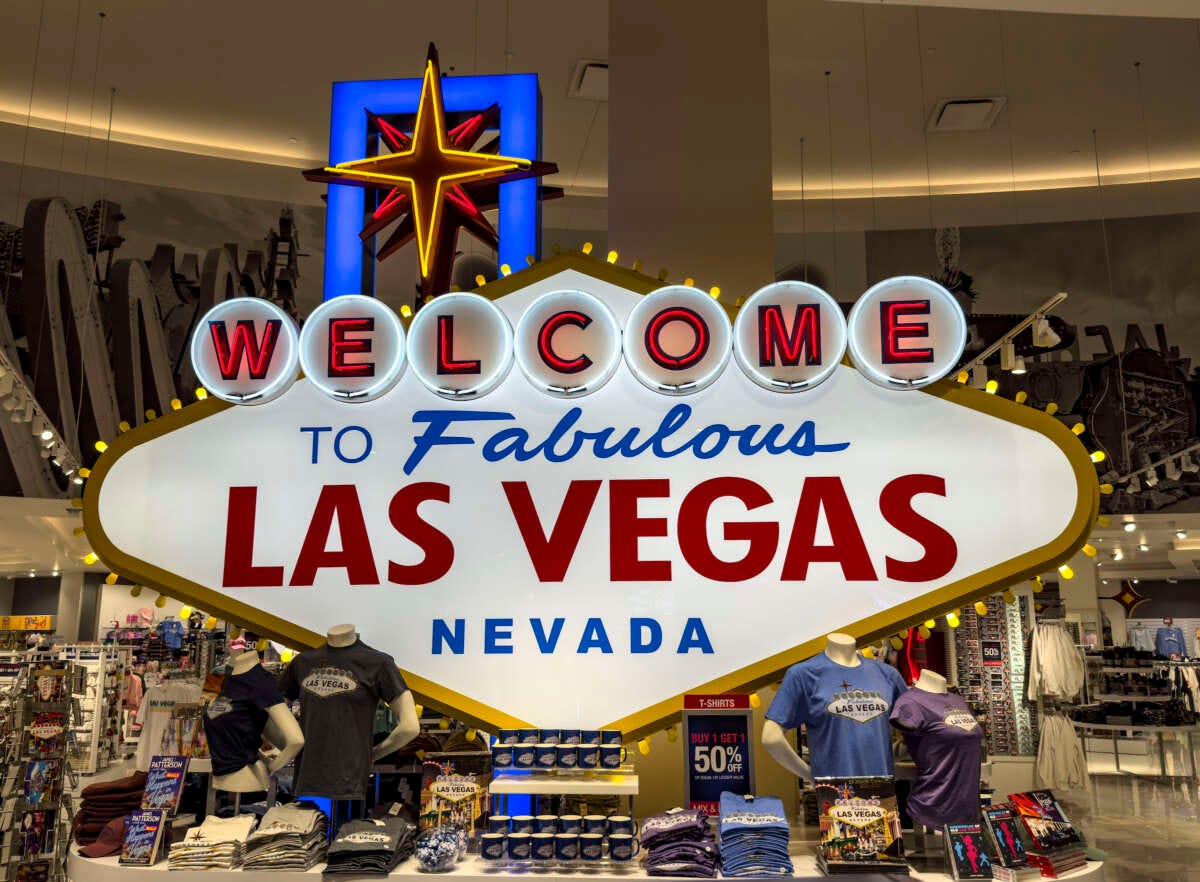
Experts say Trump’s anti-immigrant policies have triggered labor shortages and a tourism slump in US cities like Las Vegas, where international visits fell over 10%. Immigrants—key to Nevada’s workforce—now face job insecurity and harsher legal status.
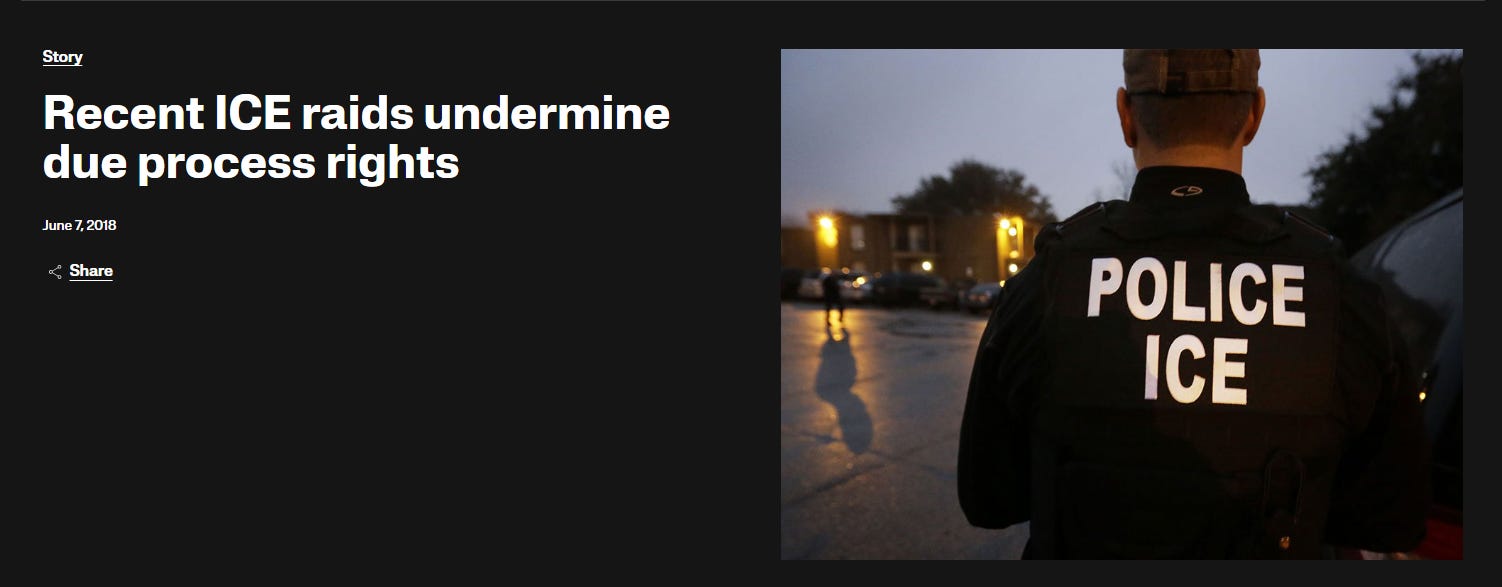
Due Process? Is that getting closer to human rights?
Is this a bit more human?
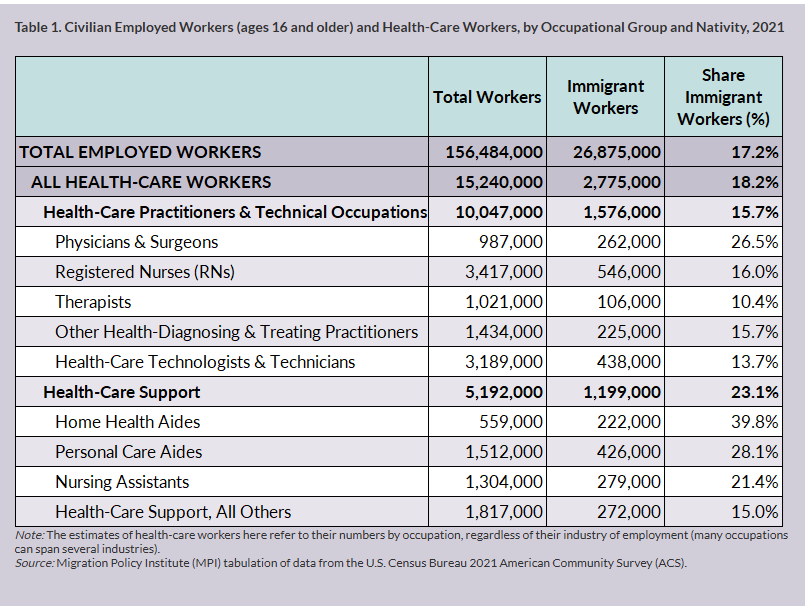
President Trump has made a slew of immigration policy changes focused on restricting entry at the border and increasing interior enforcement efforts to support mass deportation. These include rescinding protections against enforcement action in previously protected areas such as health care facilities and schools. While many of these actions focus on the estimated 11 million undocumented immigrants in the U.S., they will have ripple effects among the much larger number of people in immigrant families, including millions of U.S.-born citizen children. During the first Trump administration, restrictive immigration policies and increased enforcement activity led to increased fears among immigrant families across immigration statuses that had negative effects on health and well-being, employment, and daily life. They also could lead to family separations as well as mass detentions, which can have negative mental and physical health impacts on immigrants across statuses and their children. Mass deportations also could negatively impact the U.S. economy and workforce, given the role immigrants play, particularly in certain industries, including health care.
Key Findings
- Undocumented immigrants paid $96.7 billion in federal, state, and local taxes in 2022. Most of that amount, $59.4 billion, was paid to the federal government while the remaining $37.3 billion was paid to state and local governments.
- Undocumented immigrants paid federal, state, and local taxes of $8,889 per person in 2022. In other words, for every 1 million undocumented immigrants who reside in the country, public services receive $8.9 billion in additional tax revenue.
- More than a third of the tax dollars paid by undocumented immigrants go toward payroll taxes dedicated to funding programs that these workers are barred from accessing. Undocumented immigrants paid $25.7 billion in Social Security taxes, $6.4 billion in Medicare taxes, and $1.8 billion in unemployment insurance taxes in 2022.
- At the state and local levels, slightly less than half (46 percent, or $15.1 billion) of the tax payments made by undocumented immigrants are through sales and excise taxes levied on their purchases. Most other payments are made through property taxes, such as those levied on homeowners and renters (31 percent, or $10.4 billion), or through personal and business income taxes (21 percent, or $7.0 billion).
- Six states raised more than $1 billion each in tax revenue from undocumented immigrants living within their borders. Those states are California ($8.5 billion), Texas ($4.9 billion), New York ($3.1 billion), Florida ($1.8 billion), Illinois ($1.5 billion), and New Jersey ($1.3 billion).
- In a large majority of states (40), undocumented immigrants pay higher state and local tax rates than the top 1 percent of households living within their borders.
- Income tax payments by undocumented immigrants are affected by laws that require them to pay more than otherwise similarly situated U.S. citizens. Undocumented immigrants are often barred from receiving meaningful tax credits and sometimes do not claim refunds they are owed due to lack of awareness, concern about their immigration status, or insufficient access to tax preparation assistance.
- Providing access to work authorization for undocumented immigrants would increase their tax contributions both because their wages would rise and because their rates of tax compliance would increase. Under a scenario where work authorization is provided to all current undocumented immigrants, their tax contributions would rise by $40.2 billion per year to $136.9 billion. Most of the new revenue raised in this scenario ($33.1 billion) would flow to the federal government while the remainder ($7.1 billion) would flow to states and localities.
All differences between U.S.-born and immigrant workers described in the text are statistically significant at the p<0.05 level. In sum, it finds:
- In 2021, there were 27 million immigrants employed in the labor force, making up close to one in five (17%) nonelderly adult workers (ages 19-64) in the U.S. The share of nonelderly adults who were employed was similar across U.S.-born citizens (78%), naturalized citizens (79%), and noncitizens in the U.S. for five or more years (76%), while it was 63% among recent noncitizens (in the U.S. for less than five years). Compared to their U.S.-born counterparts, nonelderly adult immigrant workers were more likely to be Hispanic or Asian, were younger, and had lower levels of educational attainment.
- Among nonelderly adults, noncitizen workers were more likely than citizen workers to be employed in construction, agricultural, and service jobs. While some of these differences in occupation patterns likely reflect lower educational levels and skills among immigrant workers, differences in occupations persisted among college-educated workers. One in ten noncitizen workers with a college degree were employed in service jobs, compared with 6% of their U.S.-born peers. College-educated noncitizen workers were also more likely than their citizen counterparts to be employed in construction and transportation jobs.
- Reflecting these differences in employment patterns, noncitizen workers were more likely than citizen workers to be low-income and uninsured, even among those with college degrees. Roughly one in three noncitizen workers was low-income (below 200% of the federal poverty level (FPL)), compared with 15% of U.S.-born workers. In addition, over three in ten nonelderly adult noncitizen workers lacked health insurance, over three times higher than the uninsured rate of their citizen counterparts, reflecting lower rates of private coverage. Incomes and coverage rates were higher among college-educated workers across citizenship statuses, but, among college-educated nonelderly adult workers, noncitizens still were more likely to be low-income and uninsured than their citizen counterparts.
[Chorus]
I only carry my sorrow, my condemnation goes alone
Running is my destiny to evade the law
Lost in the heart of the great Babylon
They call me “the illegal” for not carrying papers
[Verse]
I went to work in a city up north
I left my life behind between Ceuta and Gibraltar
I’m a ray in the sea, a ghost in the city
My life is forbidden, say the authorities
[Chorus]
I only carry my sorrow, my condemnation goes alone
Running is my destiny for not carrying paper
Lost in the heart of the great Babylon
They call me “the illegal”, I am thе lawbreaker
[Post-Chorus]
Illegal black hand
Illеgal Peruvian
Illegal African
Illegal marijuana
[Chorus]
I only carry my sorrow, my condemnation goes alone
Running is my destiny to evade the law
Lost in the heart of the great Babylon
They call me “the illegal” for not carrying papers
[Post-Chorus]
Illegal Algerian
Illegal Nigerian
Illegal Bolivian
Illegal black hand

The Golden Cage
La Jaula de Oro
Here I am settled
Aquí estoy establecido
In the United States
En los Estados Unidos
Ten years have passed
Diez años pasaron ya
Since I crossed as a wetback
En que cruce de mojado
I haven’t fixed my papers
Papeles no he arreglado
I’m still an illegal
Sigo siendo un ilegal
I have my wife and my children
Tengo mi esposa y mis hijos
Whom I brought when they were very young
Que me las traje muy chicos
And they have already forgotten
Y se han olvidado ya
About my beloved Mexico
De mi México querido
Which I never forget
Del que yo nunca me olvido
And I can’t go back
Y no puedo regresar
What good is money to me
De que me sirve el dinero
If I’m like a prisoner
Si estoy como prisionero
Within this great nation
Dentro de esta gran nación
When I remember, I even cry
Cuando me acuerdo hasta lloro
Although the cage may be golden
Aunque la jaula sea de oro
It’s still a prison
No deja de ser prisión
Listen to me, son
Escúchame hijo
Would you like us to go back to live in Mexico?
Te gustaría que regresáramos a vivir México?
Whatcha talkin’ about dad?
Whatcha talkin’ about dad?
I don’t wanna go back to Mexico, no way dad
I don’t wanna go back to Mexico, no way dad
My children don’t talk to me
Mis hijos no hablan conmigo
They have learned another language
Otro idioma han aprendido
And forgotten Spanish
Y olvidado el español
They think like Americans
Piensan como Americanos
They deny they are Mexicans
Niegan que son Mexicanos
Even though they have my color
Aunque tengan mi color
From work to home
De mi trabajo a mi casa
I don’t know what’s wrong with me
No sé lo que me pasa
Even though I’m a family man
Que aunque soy hombre de hogar
I hardly go out on the street
Casi no salgo a la calle
Because I’m afraid they might find me
Pues tengo miedo que me hallen
And they could deport me
Y me pueden deportar
What good is money to me
De que me sirve el dinero
If I’m like a prisoner
Si estoy como prisionero
Within this great nation
Dentro de esta gran nación
When I remember, I even cry
Cuando me acuerdo hasta lloro
Although the cage may be golden
Aunque la jaula sea de oro
It’s still a prison
No deja de ser prisión
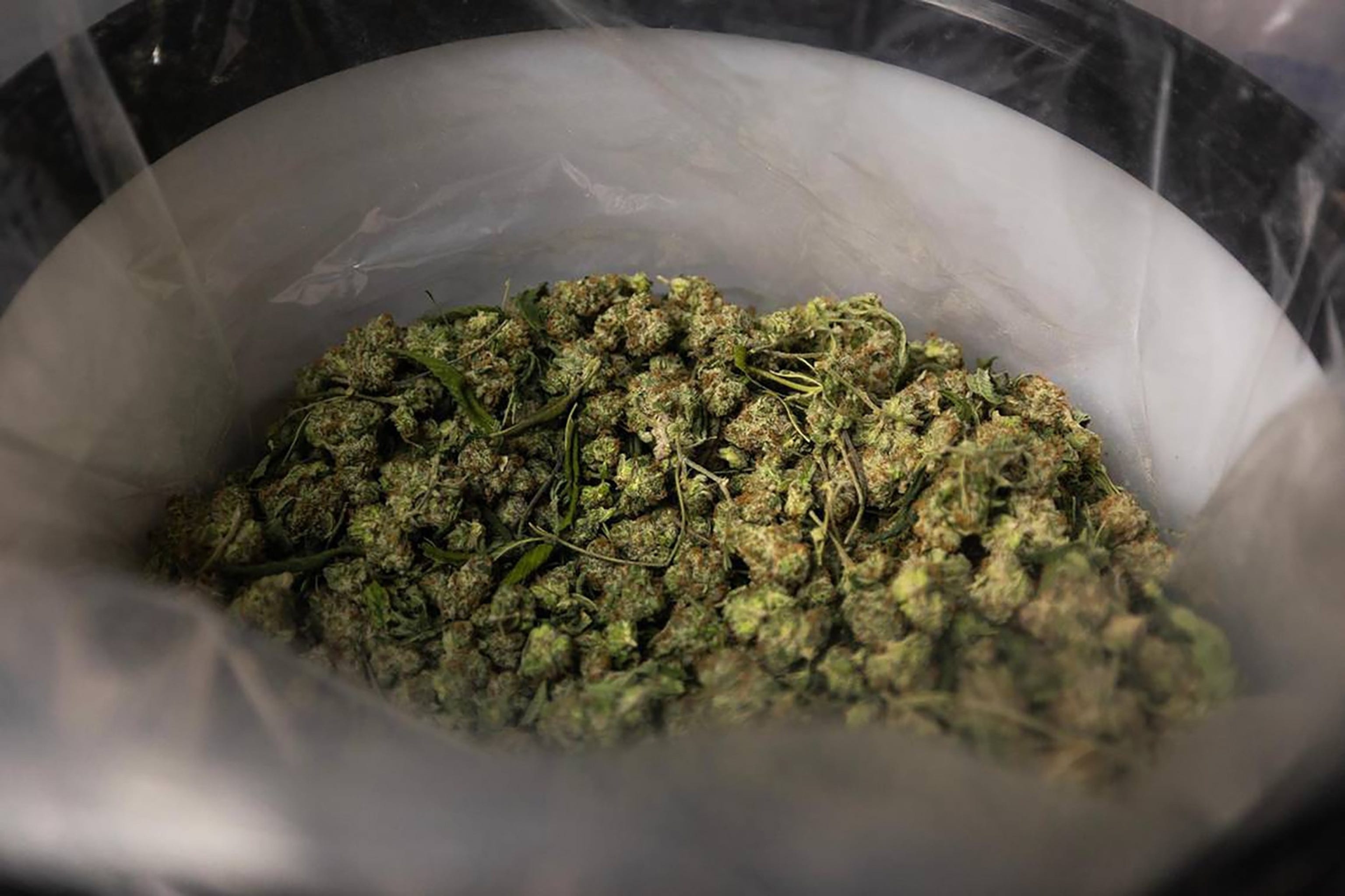
The Wall Street Journal first reported that Trump was weighing rescheduling marijuana from a Schedule 1 drug to a Schedule 3 drug.
Classified as a Schedule 1 drug, marijuana is listed alongside heroin and LSD as “drugs with no currently accepted medical use and a high potential for abuse.”
By contrast, Schedule 3 drugs are define as those with “moderate to low potential for physical and psychological dependence” and include ketamine, anabolic steroids and testosterone.
During the final year of the Biden administration, the Drug Enforcement Administration said it supported recommending the reclassification of marijuana.
Reclassifying marijuana would allow for more research into the drug and provide tax benefits to the cannabis industry.

Out of Touch? Fucking Fascist. In an interview with Morning Edition, Schwalb called Trump’s move “unprecedented” and said his office was watching closely to ensure the Home Rule Act and constitutional law are being followed. He added that federal law only allows Trump to request the services of MPD for emergencies.
Trump’s Washington, D.C., takeover targets a host of groups, many of them vulnerable
“The MPD under the direction of the president still has to comply with the law. And that means not engaging in excessive police force, unconstitutional police force, or unconstitutional policing,” D.C.’s Attorney General Brian Schwalb.Schwalb said.
Trump’s takeover ‘out of touch’ with facts on the ground, says D.C. attorney general
Jews in every fucking thing: Schwalb was born to a Jewish family at the Washington Hospital Center in Washington, D.C., in 1967. He earned a bachelor’s degree from Duke University and a juris doctor from Harvard Law School.

Fucking Shia Muslim goy — Should Jon Stewart Run for President in 2028?
I was skeptical about a Stewart candidacy, but maybe ‘The Daily Show’ host is the right person to shake up the Democratic presidential primaries. Mehdi Hasan

Ahh, Oregon is snookered again: When Morrow County Commissioner Melissa Lindsay raised questions three years ago about whether local officials were using their positions to profit from Amazon’s local data centers, she says the blowback was swift and severe.
“People just didn’t want to hear it, didn’t want to see it, didn’t believe it,” Lindsay said.
On social media and around town, Lindsay said she felt she was being shamed and shut down by people she had considered friends. She and another commissioner critical of officials’ dealings with Amazon lost a recall election and were kicked out of office.

A measure of redemption came last month, when the Oregon Department of Justice filed a civil complaint alleging that several officials in the eastern Oregon county “abused their authority and breached the public trust for their personal financial gain.”
The state alleges that public officials pocketed several million dollars by arranging to buy a local telecommunications business from a Morrow County nonprofit. The officials, who had voted to grant Amazon hundreds of millions of dollars in tax breaks, allegedly paid far less for the telecom business than it was really worth by hiding the value of its contracts with the tech giant.
When Oregon’s attorney general weighed in last month, Lindsay said the litigation served as a kind of wakeup call in the small community.
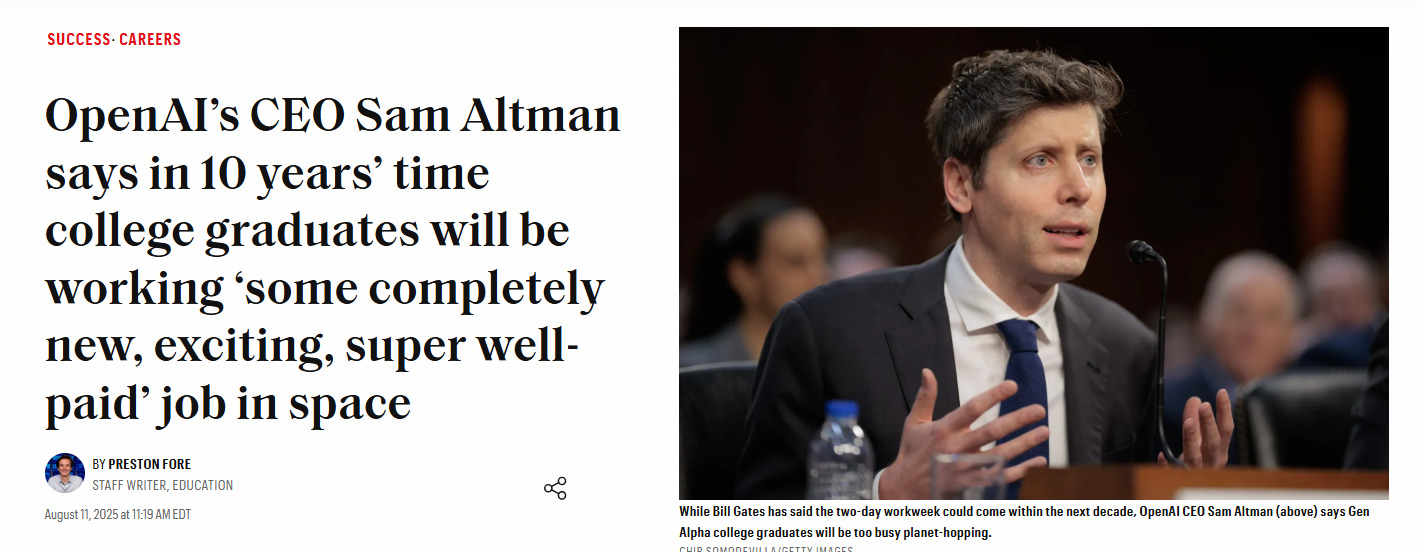
When a Jew Speaks, Forbes listens: With Gen Z facing existential career crises, billionaire OpenAI CEO Sam Altman says that in just 10 years, college grads will be exploring the solar system—jobs that will reel in sky-high salaries. The tech leader even says he’s envious of young people because our early-career jobs will look “boring” by comparison.
As AI reshapes the workforce, many Gen Z college graduates are finding out the hard way that their degrees don’t guarantee a smooth career launch.
Peter Thiel-backed Varda Space Industries has raised $187 million in a private funding round as the company leverages microgravity to overcome formulation issues that have long plagued drug development.
Active pharmaceutical ingredients crystallize differently in space, enabling drug formulations that the company says otherwise couldn’t be done. That’s because microgravity suppresses two critical processes — fluid convection and sedimentation — during crystal growth, resulting in a more uniform and controlled process.
Natural Capital and Shrug Capital led the Series C round. Founders Fund, Peter Thiel, Khosla Ventures, Caffeinated Capital, Lux Capital and Also Capital also invested in the round. Varda has raised a total of $329 million.
The company has logged three launch and return missions. A fourth is currently in orbit, and a fifth is expected to launch before the end of the year.
During the company’s first mission, it grew crystals of the HIV drug ritonavir in orbit and returned them to Earth with no signs of issues that once forced a recall of the drug, due to a manufacturing issue around drug crystallization.
Radocea said the company has undisclosed research collaborations and is “disease agnostic,” targeting areas with large unmet needs. That includes oncology, with Radocea pointing to past work by Merck on cancer antibodies aboard the International Space Station.
Besides pharmaceutical work, Varda operates reentry capsules in partnership with US government agencies. The reentry capsules offer a real-world flight environment for testing subsystems such as thermal protective materials, navigation, communication and sensors.
Varda’s CEO gave an interview to Endpoints news recently:
The main barrier historically was “access to space at a cost that would make sense” and long lead times (e.g., five-year planning). Varda differentiates itself by offering “high cadence lowcost re-entry vehicles,” enabling quicker turnaround times essential for industry. All operations in space are “completely unmanned”.
And of course, the focus is on “biologics” which can be sold for $ millions/dose. Many biologics are administered via intravenous (IV) infusion, requiring hospital visits and significantly impacting patient quality of life. Patients and doctors “desire subcutaneous injections that can be self-administered or administered quickly”. Pushing up concentrations for subcutaneous (subQ) formulations on Earth often leads to proteins crowding and interacting, increasing viscosity and making them impossible to inject (“start to turn into molasses”). Radocea cites the well-known Merck study with Keytruda as a “strong prototype.” Crystallizing antibodies in space allows for “keep[ing] that viscosity low and get to that high concentration formulation for subcutaneous injection.” On Earth, scaling up protein crystallization is difficult due to gravity causing “sedimentation” and shear forces from stirring “shearing apart the crystals.” Microgravity eliminates these issues, enabling consistent crystal growth.

Goyim Going God Crazy! Christian revival event draws thousands in quest to save Portland’s soul
You think these blood sucking Christians had a moment of silence for Gaza and passed around the food aid can for donations?
Didn’t pray hard enough, or maybe these fucking capitaists’ prayers were ansered:
In the latest reversal of U.S. environmental protections, regulators said this week that they plan to approve a trio of new herbicide products made with dicamba, a controversial chemical that has wreaked havoc across farm country, sparked years of litigation and twice drawn court-ordered bans.
The Environmental Protection Agency (EPA) released a proposed decision dated July 22 stating it sees more benefits than risks in allowing three dicamba products made by agrochemical industry giants Bayer, Syngenta and BASF to be used by farmers growing cotton and soybeans genetically altered to tolerate dicamba.

“Trump’s EPA is hitting new heights of absurdity by planning to greenlight a pesticide that’s caused the most extensive drift damage in US agricultural history and twice been thrown out by federal courts,” Nathan Donley, environmental health science director at the Center for Biological Diversity, said in a statement. “This is what happens when pesticide oversight is controlled by industry lobbyists. Corporate fat cats get their payday and everyone else suffers the consequences.”

Internal corporate documents show that Monsanto, which Bayer bought in 2018, and BASF were well aware that the combination of their dicamba-tolerant genetically altered crops and dicamba herbicides would likely lead to damage across many US farms not buying the specialty crops and chemicals.
Fucking ZioAzovNaziLensky and Adolph Bibi, well well — more money for guns.
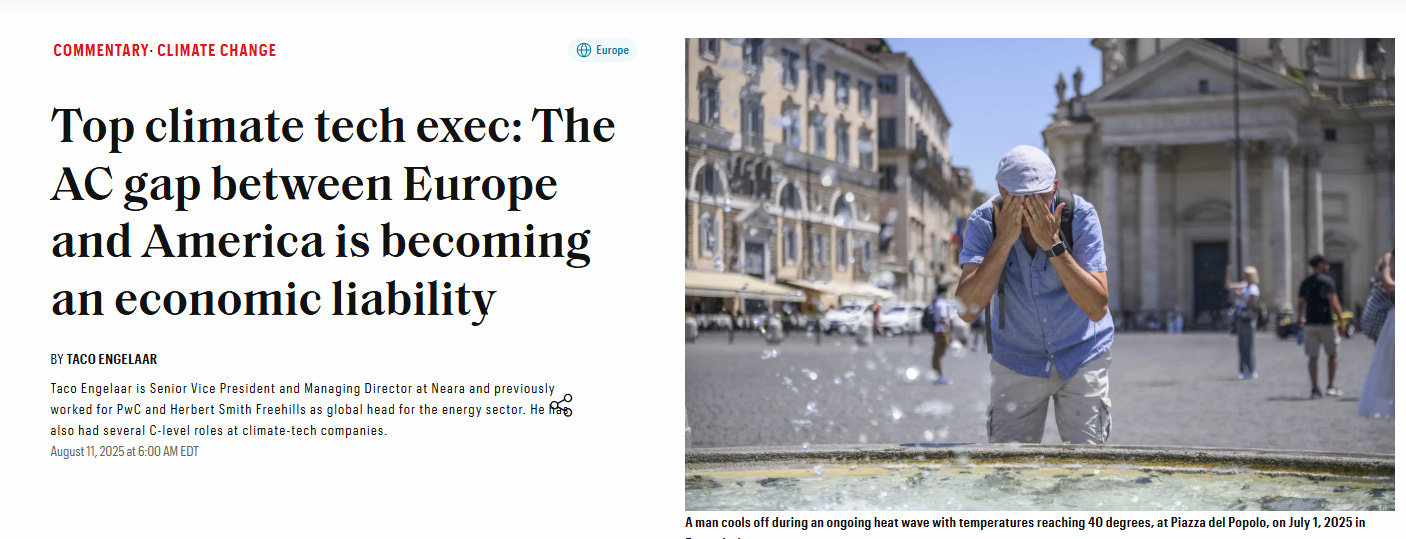
The fundamental difference between these two realities? Air conditioning.
In the U.S., 90% of households have AC. In Europe? Just 20% on average. In some countries, such as the UK, that number falls to less than 5%.
At first glance, this might seem like a minor difference — fodder for TikTok skits or Reddit debates, where Americans and Europeans poke fun at each other’s respective abilities to handle summer weather. But when the temperature rises, the impact on productivity is anything but trivial.
Europe’s growing productivity gap with the U.S — which has widened since the pandemic — isn’t just a result of regulation, labor laws, or tech prowess. It’s now also about climate. Or, more precisely, the difference in how we experience extreme temperatures.

Heat is an existential threat to some European economies
Europe is the fastest-warming continent on Earth. Across the primarily AC-free nations, heat waves can (and increasingly do) shut down schools, disrupt businesses, and make it impossible for people to function at their best. Employers are forced to shift working hours to protect staff from the heat, those with caring responsibilities struggle to look after the most vulnerable (children, the elderly) and families are caught in a daily battle for comfort and efficiency. This climate vulnerability isn’t just inconvenient, it’s a serious threat to economic competitiveness.
Lyrics
I was barely 17 when I crossed the border
Apenas tenía 17 cuando crucé la frontera
I promised my old lady, to get her out of poverty
Se lo prometí a mi viejecita, sacarla de la pobreza
The cold nights burned me
Me quemaban las noches de frío
I almost drowned in the river
Por poquito me ahogaba en el río
And to those who suffered the same
Y a aquellos que sufrieron lo mismo
I dedicate this run to you
Les dedico este corrido
I am one of many Mexicans who work day by day
Soy uno de tantos mexicanos que trabajan día con día
To give a future to my children and help my family
Para darle futuro a mis hijos y ayudar a mi familia
How I miss my beloved ranch
Cómo extraño mi rancho querido
My friends, I will not forget you
Mis amigos, que no los olvido
And to my parents who several years ago
Y a mis viejos que hace varios años
I haven’t seen them
Que no los he visto
They think that because I jumped the line I’m a drug dealer
Piensan que porque brinqué la línea soy un narcotraficante
Enough of a thousand humiliations just for being an immigrant
Ya basta de mil humillaciones nomás por ser inmigrante
I’m singing for all my people
Estoy cantando por toda mi gente
Don’t forget it, keep it in mind
No lo olviden, ténganlo presente
That those who were not wanted
Que aquellos a los que no querían
Today they make them presidents
Hoy los hacen presidentes
And although it hurts a lot
Y aunque les duela a mucho
We are the majority, pure Caliber 50, hey!
Somos mayoría, ¡puro Calibre 50, oiga!
The work here has been very hard but I have never given up
El trabajo aquí ha sido muy duro pero nunca me he rajado
And the things that I have achieved, with effort I have earned
Y las cosas que yo he conseguido, con esfuerzo me he ganado
And the one who went to the other side
Y aquel que se fue pa’l otro lado
And he left his past in his country
Y dejó en su país su pasado
Who thought of that little boy?
¿Quién pensaba de aquel muchachito?
And look what he has achieved
Y miren lo que ha logrado
They have promised us so many things and they have given us nothing.
Nos han prometido tantas cosas y no nos han dado nada
Equality, respect, and tolerance is what my race asks for
Igualdad, respeto, y tolerancia es lo que pide mi raza
I’m singing for all my people
Estoy cantando por toda mi gente
Don’t forget it, keep it in mind
No lo olviden, ténganlo presente
And those they didn’t want
Y aquellos a los que no querían
Today they make them presidents
Hoy los hacen presidentes
(cumbia, cumbia) but how good
(cumbia, cumbia) but how delicious
(cumbia, cumbia) but what are you looking at
(cumbia, cumbia)
Here there is no sadness
There is only joy
It is the dance of the dear
Of the loved ones of the past
Look how my mom dances
Dancing with my brother from the past
Their spirits dance together
Full of joy and enjoying
(cumbia, cumbia) but how good
(cumbia, cumbia) but how delicious
(cumbia, cumbia) but what are you looking at
(cumbia, cumbia)
Only certain people can see
Spirits dancing among the people
If you can see them dancing my brother
You will be blessed from heaven
Look how my mom dances
Dancing with my brother from the past
Their spirits dance together
Full of joy and enjoying
(cumbia, cumbia) but how good
(cumbia, cumbia) but how delicious
(cumbia, cumbia) but what are you looking at
(cumbia, cumbia)
 Paul Haeder, Author