

weathering of humanity — the 80 percent — while the eugenicists of Jewish Background and Crypto-Juadic are Outraged by We the Fucking People
Weathering, Moral Trauma, PTSD, ACEs — adverse childhood events/adverse capitalist events.
Look at this piece of shit, all of them. I am anti-fucking-war, and anti-military, but I was lucky enough to be a military dependent of an air force enlisted dude and then my old man went into the Army as an officer. Shot in Korea and Vietnam. Thirty-two fucking years in language schools, cryptography, signals, etc.
I was drummed out after just a few months, of conduct unbecoming a private, you know, less than honorable discharge, dudes and dudettes.
But this shit, fuck. These Yanqui’s and Confederates need to be put to death.
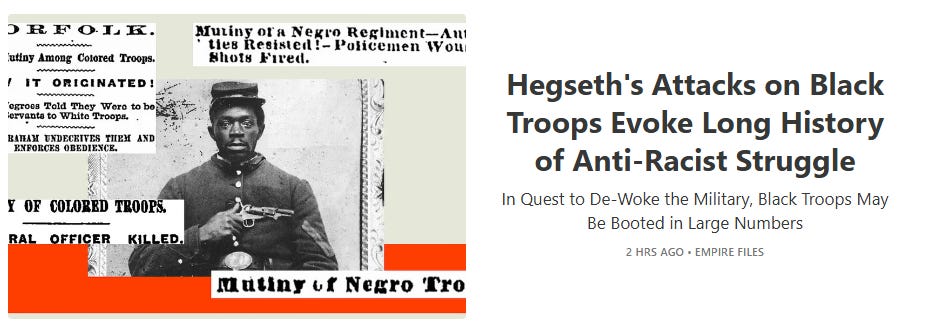
Article by Mike Prysner
Peter Hegseth is charging forward on the promise to De-Woke The Military, codified in Trump’s executive order to purge “DEI” from the ranks. Among their targets are Black soldiers, who have been a center–and many times a catalyst–of the broader anti-racist struggle for well over a century.
Some of Hegseth’s orders so far have left little doubt that “DEI” is a code word:
- Banning all Black History Month activities and recognitions the day before it began (while notably allowing military-wide St. Patrick’s Day celebrations)
- Firing African American “DEI General” CQ Brown from Chairman of the Joint Chiefs, after lamenting how “our generals are hunting for racists in our ranks that they know do not exist” (they do)
- Banning Black student groups at military academies
- Bringing back the name “Fort Bragg” to the recently renamed Army post that had honored a Confederate general
- Ordering recruiters to stop attending the Black Engineer of the Year Awards, which one recruiter described as the “most talent-dense event we do”
It has gotten a bit more overt, deleting from the DoD website their only “Medal of Honor Monday” profile of a Black soldier given the award. A slip in the new URL code laid bare the new attitude: three letters were added so the web path would read “DEI Medal of Honor…”
DEI policies did not exist during the Vietnam War; in fact it was much harder for Black soldiers to get recognition. Charles Rogers–who won the award as he was wounded three different times leading a doomed defense of his outpost–was marked “DEI” simply because he was Black.
But the latest stuck out to me as the real shock.
On March 13, Hegseth ordered a review of military standards; and specifically, of beards.
This will likely elude non-veterans but every vet will know that this primarily impacts Black troops, who are commonly exempt from standard shaving requirements due to a skin condition (pseudofolliculitis barbae) which afflicts 45% of Black servicemen.
In other words, Hegseth has found a way to potentially purge thousands of Black servicemen. The Marine Corps has already announced they would do so. The other branches will decide soon.
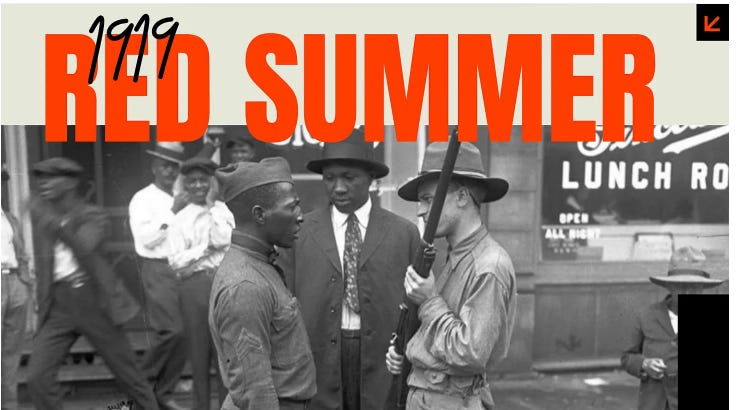
Black infantry units in WWI also earned high prestige for bravery, such as the Harlem Hellfighters. More importantly, they returned to the racist US as skilled, battle-tested combatants. During the wave of white violence in Red Summer of 1919, Black WWI veterans were both the targets of mob violence, and the backbone of defense in battlegrounds like Tulsa. In Washington D.C., Black snipers atop the Howard Theater successfully held off the advance of lynch mobs.
Preceding Red Summer was the lynching of WWI veteran Wilbur Little, murdered for refusing to take off his Army uniform. At least 16 veterans would be lynched that year.
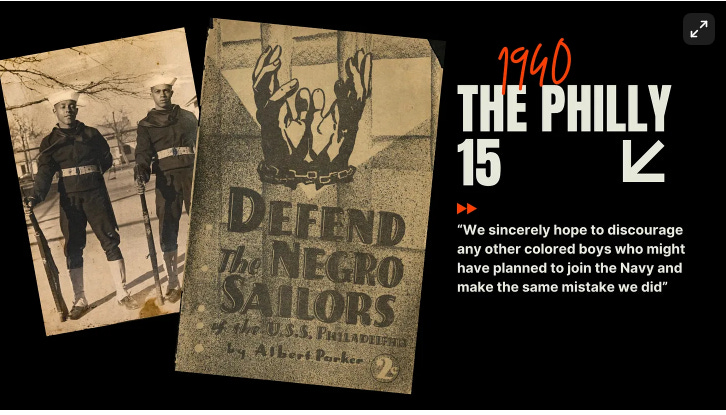
In 1940, 15 Black sailors aboard the USS Philadelphia publicly signed a letter detailing racial discrimination and abuse. After it was published in a newspaper, all were kicked out of the Navy and the struggle for the rights of “The Philadelphia 15” became a rallying cause for the NAACP, socialist parties and others.
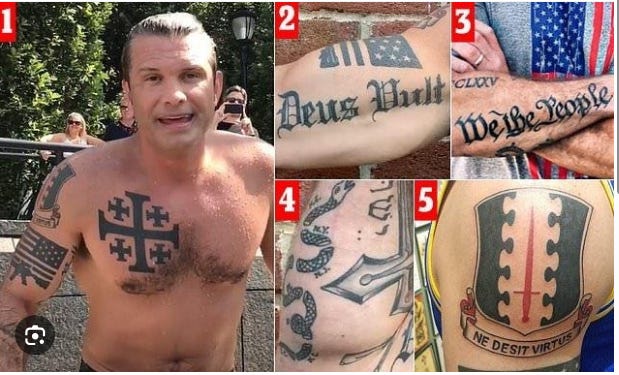
Sorry, you fucking pacificists, but these are monsters, and guys like Pete Penis Hegseth needs to be batted into permanent TBI-Landia.
In 2018, Penelope Hegseth wrote her son an email in which she laid into him for poor behavior and disrespect toward women. “You are an abuser of women—that is the ugly truth and I have no respect for any man that belittles, lies, cheats, sleeps around, and uses women for his own power and ego,” she wrote in the letter, obtained by the New York Times.
Hegseth chastised her son for how he treated his wife, Samantha, in the divorce proceedings that prompted her to send her April 2018 email. She concluded it by writing, “On behalf of all the women (and I know it’s many) you have abused in some way, I say… get some help and take an honest look at yourself…”
The following is the text of the email that Penelope Hegseth sent to her son, Pete Hegseth, on April 30, 2018. One sentence was redacted by The New York Times for privacy reasons.
Son,
I have tried to keep quiet about your character and behavior, but after listening to the way you made Samantha feel today, I cannot stay silent. And as a woman and your mother I feel I must speak out..
You are an abuser of women — that is the ugly truth and I have no respect for any man that belittles, lies, cheats, sleeps around, and uses women for his own power and ego. You are that man (and have been for years) and as your mother, it pains me and embarrasses me to say that, but it is the sad, sad truth.
I am not a saint, far from it.. so don’t throw that in my face,. but your abuse over the years to women (dishonesty, sleeping around, betrayal, debasing, belittling) needs to be called out.
Sam is a good mother and a good person (under the circumstances that you created) and I know deep down you know that. For you to try to label her as “unstable” for your own advantage is despicable and abusive. Is there any sense of decency left in you? She did not ask for or deserve any of what has come to her by your hand. Neither did Meredith.
I know you think this is one big competition and that we have taken her side… bunk… we are on the side of good and that is not you. (Go ahead and call me self-righteous, I dont’ care)
Don’t you dare run to her and cry foul that we shared with us… that’s what babies do. It’s time for someone (I wish it was a strong man) to stand up to your abusive behavior and call it out, especially against women
We still love you, but we are broken by your behavior and lack of character. I don’t want to write emails like this and never thought I would. If it damages our relationship further, then so be it, but at least I have said my piece. [Redacted]
And yes, we are praying for you (and you don’t deserve to know how we are praying, so skip the snarky reply)
I don’t want an answer to this… I don’t want to debate with you. You twist and abuse everything I say anyway. But… On behalf of all the women (and I know it’s many) you have abused in some way, I say… get some help and take an honest look at yourself…
Mom
Of course, TSA, Homeland Security, SWAT, ATF, ICE, any or all the fucking alphabet Gestapo Agencies need elimination.
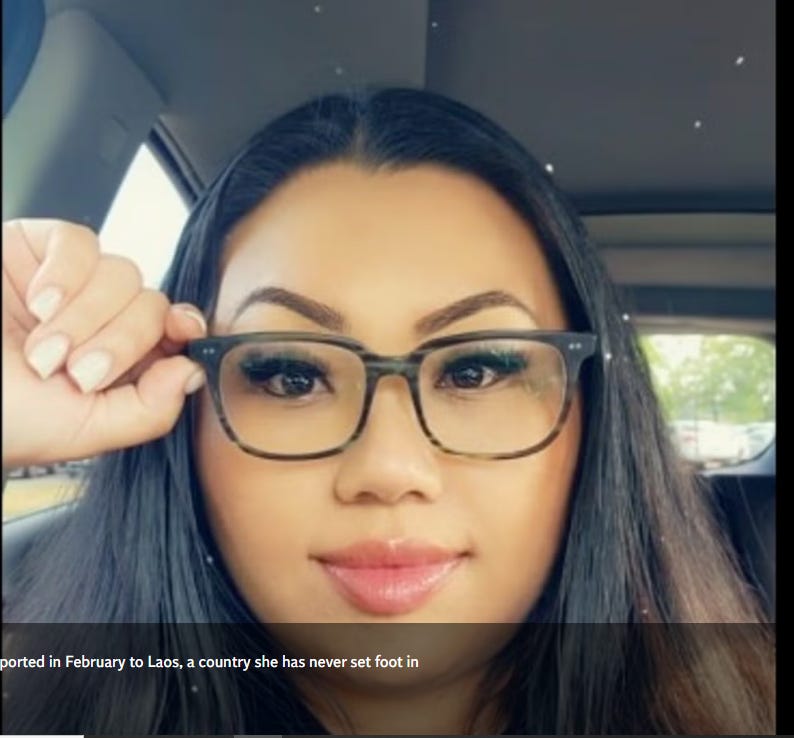
No one could’ve imagined Milwaukee mother would be deported to Laos, former lawyer says
Exclusive details: ‘Nobody with any compassion would think that’s any compelling reason’ to separate Yang from her family, her former lawyer, Matt Ricci, said

A former lawyer for the Hmong-American woman who was brought to the United States at eight months old and lived in Milwaukee until she was deported 11 days ago to Laos says her expulsion came as a complete surprise.
Ma Yang, 37, was born in Thailand and attained legal status as a permanent US resident before the mother of five was stripped of her green card by the Trump administration some two-plus years after being released from federal prison, where she served 30 months on marijuana-related charges. In February, US Immigration and Customs Enforcement (ICE) told Yang to report to the agency’s Milwaukee facility. When she showed up, agents detained Yang, sent her to Indiana, then Chicago, and finally was shipped off to Laos.

“The United States sent me back to die,” Yang said.
Send them all back, those fucking EuroTrashLandians. And this is a Jewish Project, too, with Stephen Himmler Miller at the helm.
Hegseth Name Meaning
Some characteristic forenames: Scandinavian Petter, Thor, Tryg.
Norwegian: habitational name from any of several farmsteads, most of them named with Old Norse Helgasetr, Helgusetr, from the male personal name Helgi and the female personal name Helga respectively; both names are derived from heilagr ‘holy, sacred’. In some cases other personal names, for example Herleifr or Herlaugi, are the source of the first element, and in other cases it is derived from hella ‘flat stone, flat mountain’. The second element, -seth, is derived from setr ‘farmstead, dwelling’.

In what might be called a classic case of aviation overreach, the Swiss government is discovering that size does indeed matter—but not always in the way one might expect. The Federal Council’s shiny new Bombardier Global 7500 business jet, acquired for a cool 103 million Swiss francs (roughly $117 million), is proving to be something of an oversized headache for officials in Bern.
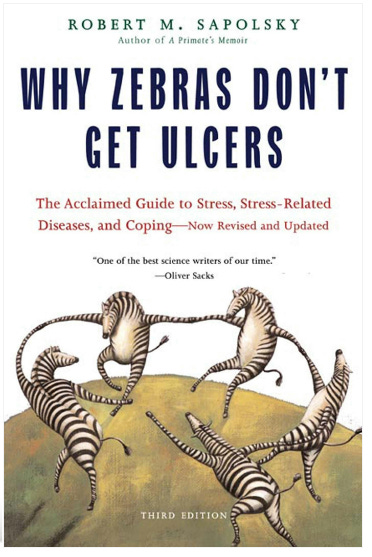
Why Zebras Don’t Get Ulcers — The Acclaimed Guide to Stress, Stress-Related Diseases, and Coping (Third Edition)/ Author: Robert M. Sapolsk

All you fucking cocksucking Trumpers, man, die. All fucking 70 million of you cock-sucking buggered fucking AmeriKKKans. That piece of shit president, err, peace president.
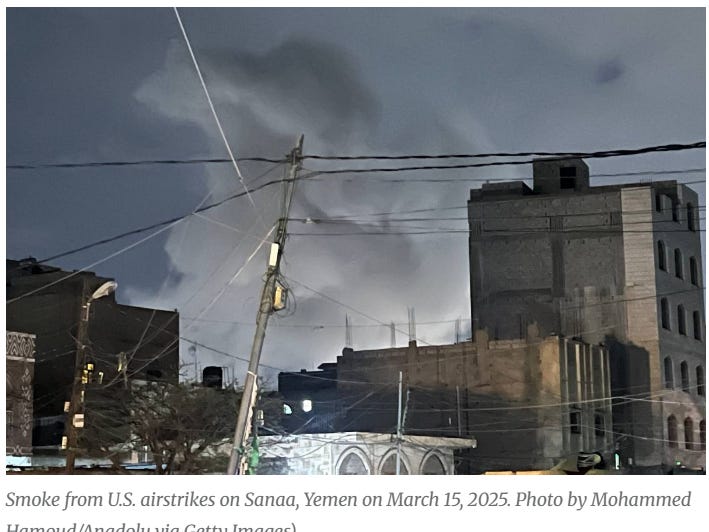
Dozens of civilians were killed in U.S. bombings across Yemen as Trump vows to unleash “overwhelming lethal force” to stop the Houthi naval blockade targeting Israel’s war on Gaza
With Massive Airstrikes on Yemen, Trump Intensifies Undeclared War Against the Poorest Country in the Arab World
Moral injury is the damage done to one’s conscience or moral compass when that person perpetrates, witnesses, or fails to prevent acts that transgress one’s own moral beliefs, values, or ethical codes of conduct.
Within the context of military service, particularly regarding the experience of war, “moral injury” refers to the lasting emotional, psychological, social, behavioral, and spiritual impacts of actions that violate a service member’s core moral values and behavioral expectations of self or others (Litz et al., 2009). Moral injury almost always pivots with the dimension of time: moral codes evolve alongside identities, and transitions inform perspectives that form new conclusions about old events.
While the concept itself is not new—throughout history philosophers, poets, and warriors themselves have long wrestled with the ethical dilemmas inherent in war—the term “moral injury” is more recent, and is thought to have originated in the writings of Vietnam War veteran and peace activist Camillo “Mac” Bica (Brock & Lettini, 2012; Bica, 1999, 2014), and Jonathan Shay (Achilles in Vietnam: Combat Trauma and the Undoing of Character, 1994) as the aftermath of warzone trauma.
Moral injury is increasingly a focus of discussion and study across disciplines and settings. Returning veterans, and those who care for them, are struggling to understand and respond effectively when experiences of war result in levels of anguish, anger, and alienation not well explained in terms of mental health diagnoses such as Post-Traumatic Stress Disorder (PTSD.)
Drescher et al. (2011) define moral injury as “disruption in an individual’s confidence and expectations about one’s own or others’ motivation or capacity to behave in a just and ethical manner” (p. 9). Litz et al. (2009) further describe moral injury as “the inability to contextualize or justify personal actions or the actions of others and the unsuccessful accommodation of these . . . experiences into pre-existing moral schemas” (p. 705). Shay (2014) emphasizes leadership failure and a “betrayal of what’s right, by a person who holds legitimate authority in a high stakes situation.” Silver (2011) speaks of, “a deep soul wound that pierces a person’s identity, sense of morality, and relationship to society” (para. 6).
EXAMPLES OF MORAL INJURY IN WAR:
Using deadly force in combat and causing the harm or death of civilians, knowingly but without alternatives, or accidentally
Giving orders in combat that result in the injury or death of a fellow service member
Failing to provide medical aid to an injured civilian or service member
Returning home from deployment and hearing of the executions of cooperating local nationals
Failing to report knowledge of a sexual assault or rape committed against oneself, a fellow service member, or civilians
Following orders that were illegal, immoral, and/or against the Rules of Engagement (ROE) or Geneva Convention
A change in belief about the necessity or justification for war, during or after one’s service
WHAT ARE THE CONSEQUENCES OF MORAL INJURY?
Moral injury can lead to serious distress, depression, and suicidality. Moral injury can take the life of those suffering from it, both metaphorically and literally. Moral injury debilitates people, preventing them from living full and healthy lives.
The effects of moral injury go beyond the individual and can destroy one’s capacity to trust others, impinging on the family system and the larger community. Moral injury must be brought forward into the community for a shared process of healing.
In the context of a soul, with respect to the diversity of beliefs and religious perspectives held by those involved with moral injury, consider this:
Moral injury is damage done to the soul of the individual. War is one (but not the only) thing that can cause this damage. Abuse, rape, and violence may cause similar types of damage. “Soul repair” and “soul wound” are terms already in use by researchers and institutions in the United States who are exploring moral injury and pathways to recovery.
WHY HAVEN’T WE HEARD ABOUT THIS BEFORE?
Traumatic brain injury (TBI) and post-traumatic stress disorder (PTS or PTSD) became household terms over the last decade thanks to the maturation of attitudes about the costs of war; moral injury is now the object of growing focus by researchers and academics in the same manner.
Moral injury does not, by its nature, present itself immediately. Some will experience questions of moral injury days after an incident; for many others, difficulties will not surface for years. An experience with potential for moral injury is typically realized after a change in personal moral codes or belief systems.
WHAT SHOULD WE DO ABOUT MORAL INJURY?
Moral injury must be acknowledged in the same way that we acknowledge the physical and mental costs of traumas experienced in war and other place of danger. Moral injury is subjective and personal. Research on moral injury is younger than research on PTSD – the definitions, ideas, and practices we’re working with are both experimental and varied.
Trauma of a type and severity that cause PTSD* are likely to cause moral injury, too. This does not mean treating PTSD will “treat” moral injury, nor vice versa. We favor the tenet that “treatment” of moral injury must be defined by the individual according to their beliefs and needs. Outlets for acknowledging and confronting moral injury include talk therapy, religious dialogue, art, writing, discussion & talking circles, spiritual gatherings, and more.
Therapists, counselors, social workers, and clergy are often at the front lines of addressing moral injury; however, the larger community can also take part. Consider that moral injury affects, and is affected by the moral codes across a community. In the case of military veterans, moral injury stems in part from feelings of isolation from civilian society. Moral injury, then, is a burden carried by very few, until the “outsiders” become aware of, and interested in sharing it. Listening and witnessing to moral injury outside the confines of a clinical setting can be a way to break the silence that so often surrounds moral injury.
*PTSD is a clinical diagnosis, identified and treated according to criteria and methods prescribed by the American Psychiatric Association (APA). The APA last updated its Diagnostic and Statistical Manual of Mental Disorders (DSM-5) in 2013.
SO, WHAT ARE WE DOING?
Fostering public dialogue about moral injury.
Providing opportunities for veterans to design and participate in programs that explore moral injury.
Researching and educating on moral injury.
Raising awareness is prerequisite to creating change. We are building the space and capacity for those who have moral injuries to start their search for healing. This is not just an academic pursuit. We are addressing the needs of the wounded through multiple healing modalities. Our endeavor is unique in this regard; through the use of artistic and literary formats for public engagement, we can serve those who need healing while addressing the public need for understanding of this topic.
+—+
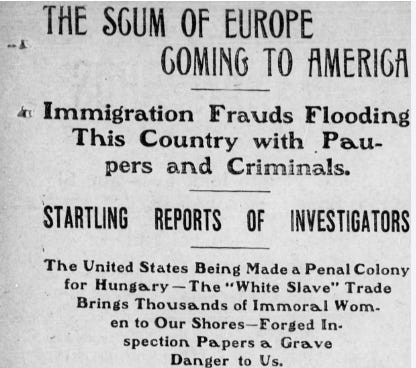
The USA is an immoral nation, and always has been:
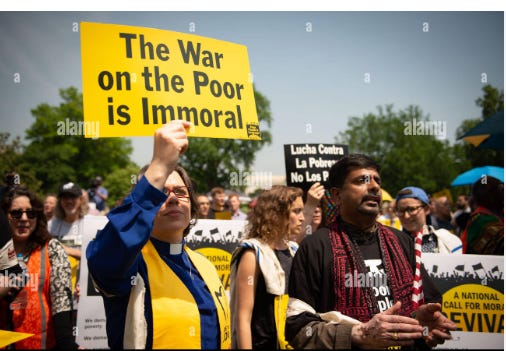
The USA – Immoral, Illegal, Irredeemable, and Irrelevantto Global Africa’s Liberation Struggle
The U.S. can never be reformed to render justice to its African residents.
“Our struggle must have Africa at its core.”
The seemingly endless debate in America over what people of African ancestry should call themselves has made many of us weary — and with good reason. Consensus on this question seems more elusive than liberation itself.
But while what to call our people is not an urgent question, we cannot shrink from the task of answering definitively at least one underlying political question about our identity and the connotations of any name we might select. Specifically, should we — even with our collective name – associate ourselves with the U.S.? Is our relationship with “America” so antagonistic that our interests are ultimately irreconcilable?
For many Black political activists – from some of the most committed bourgeois Democratic Party stalwarts to some of the most revolutionary socialists – there is a widespread commitment to achieving political aspirations, if not within the current system, at least within North America. However, if what we face in this country goes beyond racial tensions and discrimination and is instead a state of war, then plans for freedom or liberation in the U.S. are grounded in self-delusion.
“Is our relationship with ‘America’ so antagonistic that our interests are ultimately irreconcilable?”
In this George Floyd moment, the evidence of ongoing brutal warfare against people of African ancestry in the U.S. is quite apparent. A distinguished international “Commission of Inquiry on Systemic Racist Police Violence” convened by the National Conference of Black Lawyers (NCBL), International Association of Democratic Lawyers (IADL), and the National Lawyers Guild (NLG) recently concluded that the United States should be investigated by the International Criminal Court for its systematic commission of crimes against humanity.
Among many other findings, the commission concluded:
“The crimes [of the U.S.] include murder, severe deprivation of physical liberty, torture, persecution of people of African descent, and other inhuman acts, which occurred in the context of a widespread or systematic attack directed against the civilian population of people of African descent in the U.S.”
The commission’s focus was on police violence, but as far back as 2007 , NCBL called for intervention by the International Criminal Court after the Black lawyers group investigated the government response to Hurricane Katrina and identified witnesses who alleged not only police violence against survivors, but also cold-blooded murders by national guard troops. Witnesses reported that a national guardsman placed a pistol to a Black man’s head at point-blank range and committed a gangland style execution. In another instance, a helpless Black woman was allegedly taken to flying altitude in a military helicopter and then thrown overboard to her death. Finally, a Black civilian pedestrian was allegedly shot to death by a guardsman in a passing jeep. These were only a few of the egregious crimes reported.
“The evidence of ongoing brutal warfare against people of African ancestry in the U.S. is quite apparent.”
While few deny the horrific treatment and conditions imposed upon African populations for the entirety of their sojourn in the western hemisphere, there are many whose political vision involves forcing the United States to govern itself consistent with its founding principles of democracy, fairness, and justice. But what exactly were those principles as they related to enslaved Africans and presumably their descendants? That question was answered plainly and forthrightly in the 1857 case of Dred Scott v. Sandford. The U.S. Supreme Court said:
“But it is too clear for dispute that the enslaved African race were not intended to be included, and formed no part of the people who framed and adopted this declaration, for if the language, as understood in that day, would embrace them, the conduct of the distinguished men who framed the Declaration of Independence would have been utterly and flagrantly inconsistent with the principles they asserted, and instead of the sympathy of mankind to which they so confidently appealed, they would have deserved and received universal rebuke and reprobation.”
Similarly, in the case of Johnson v. M’Intosh, the Supreme Court described the first nations as “savages” and pronounced them as populations not to be regarded as American notwithstanding their status as original indigenous occupants of territory stolen from them as they were being targeted for a protracted campaign of genocide. There can be no clearer pronouncements of what was intended by the elite white males who designed the U.S., and the fact that the country was so designed explains why a long series of constitutional amendments, civil rights laws and policy reforms have utterly failed to prevent the latest of an uninterrupted pattern of police lynching and other comparable racial atrocities.
Consequently, when faithful, Black, big “D” Democrats pursue reforms with starry-eyed zeal, they engage in folly. They can have no more success than the driver of an automobile who attempts to make his vehicle fly by attaching wings. He may want it to fly, but it never will, because it was not designed that way. The U.S. can never be reformed to render justice to its African residents. It was not designed that way. As God despised Biblical Babylon, he most certainly abhors the hatred, division, oppression, and racial violence that are characteristic of this country, and we should not conform ourselves to it.
“Civil rights laws and policy reforms have utterly failed to prevent the latest of an uninterrupted pattern of police lynching and other comparable racial atrocities.”
But what of the Black revolutionaries who recognize the futility of working for reform, but whose political vision contemplates an alliance with America’s white workers? Early socialists’ dreams of a multi-racial workers’ revolution were never tempered by realistic assessment of the extent to which white supremacist nationalism has thoroughly, if not permanently sabotaged efforts to construct political relationships with white workers. Although collectively, America’s Africans have been in denial about dismal prospects for such an interracial alliance, there have been individuals who have been quite clear on this question.
At the time of his public resignation from the NAACP in 1934, W.E.B. Du Bois declared:
“The colored people of America are coming to face the fact quite calmly that most white Americans do not like them, and are planning neither for their survival, nor for their definite future if it involves free, self-assertive modern manhood. This does not mean all Americans. A saving few are worried about the Negro problem; a still larger group are not ill-disposed, but they fear prevailing public opinion. The great mass of Americans are, however, merely representatives of average humanity. They muddle along with their own affairs and scarcely can be expected to take seriously the affairs of strangers or people whom they partly fear and partly despise.”
Du Bois’ 1934 assessment is no less true of the white workers who attacked the Capitol on January 6th, 2021. Not only do they fear and despise people of African ancestry, their emotional, and in some cases mental state is pathological and a permanent barrier to the comprehension that would ordinarily be the product of calm, reasoned analysis. In the end, this all implies that not only are there systemic roadblocks to African inclusion in the U.S. entity, but also an unavailability of a critical mass of the white population that is needed to destroy the system and rebuild it in a way that yields liberation and justice for Africans and indigenous nations that were specifically and deliberately excluded and oppressed.
Where then does that leave people of African ancestry who perceive themselves to be tied to the U.S. for better or worse? The answer is found in a broader vision. Many white workers may be pathetic, lost souls but changing U.S. demographics create new opportunities for different alliances. It is not simply a matter of creating working relationships with Latino, Asian, indigenous, Arab/Muslim, and other communities of color, and maybe even progressive white forces, but rather the political orientation of any such alliance must diverge radically from past attempts at rainbow coalitions.
“Early socialists’ dreams of a multi-racial workers’ revolution were never tempered by realistic assessment.”
The new alliance must have a completely different perspective on its relationship with North America. It must have an analysis of settler colonialism that is universal and that does not make exceptions for the U.S. If settler colonization of territories occupied by indigenous populations has been historically unacceptable in Palestine, Australia and southern regions of Africa, then it cannot be acceptable in North America. The crimes involved in the construction of the U.S. on a foundation of genocide and slavery are compounded by settlers’ theft of land. Consequently, a revolutionary alliance cannot have as its objective the construction of a new society on what is now U.S. territory, even if that new society is revolutionary in character. The only morally acceptable objective is a merciless, relentless struggle to return North American territory to the first nations from whom it was stolen.
The question of what is to become of non-indigenous populations is one that is to be addressed without presumptions and in consultation with the first nations. But regardless of any accommodations that might be made, those communities that are not indigenous to the U.S. must remember that they have their own points of origin, and a responsibility to ensure that those places make their own contribution to the global movement for genuine social, economic, and political justice.
African Liberation Day is on the horizon, and it serves as a reminder and a cue for people of African descent in the U.S. to acknowledge that their continent of origin is in desperate need of liberation from the clutches of foreign multinational corporations and imperialist governments, and that Africa also needs continent-wide political consolidation and socialism. If this form of Pan-Africanism is achieved, Black people in North America are likely to find to their delight that their community circumstances and life options will be enhanced immeasurably by the emergence of Africa as the world’s preeminent superpower with the capacity to ensure the security of not only its diaspora, but other struggling and oppressed communities around the globe.
So, in the great name debate if we are not prepared to call ourselves simply “African,” we must at least have a conscious appreciation of the fact that our struggle must have Africa at its core. As for the U.S., there may be current inescapable struggles for our collective survival that compel us to think about it and grapple with it, but otherwise we should purge the U.S. from our long-term political plans.
Mark P. Fancher is an attorney and long-time contributor to Black Agenda Report. He can be contacted at mfancher[at] comcast.net. He is the author of I Ain’t Got Tired Yet: The Spiritual Battles of Enslaved African Christians and their Descendants.
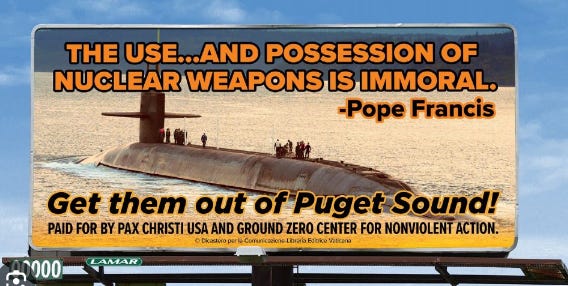
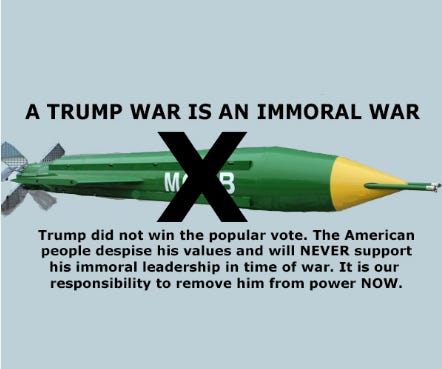
It keeps popping back up like one of those inflatable dolls with a weight in its foot.
Of course, it has been around with us for centuries. There was the famous sermon aboard the Arbella in 1630 as the British sailed into Boston Harbor, in which John Winthrop said, “We shall be as a city upon a hill. The eyes of the world are upon us.”
So it started then?
It’s often marked as the origin of the thought. But the conquest of the continent, displacement of native people, an aggressive war against Mexico, the history of slavery, the counter-insurgency in the Philippines and many other moments in our history—all of it evoked criticism and resistance. There has been a narrative of dissent throughout our history. But nothing quite challenged the [exceptionalist] idea as the ’60s did in the Vietnam context.
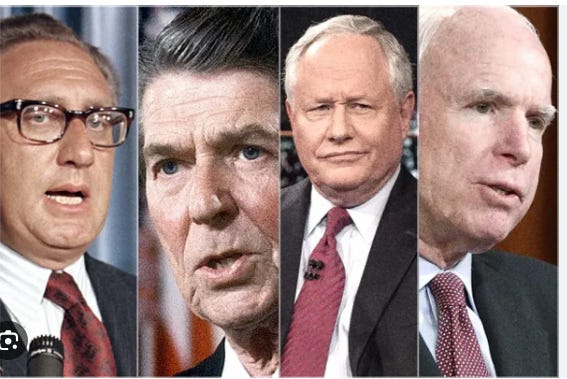
How ‘Weathering’ Contributes to Racial Health Disparities – The New York Times
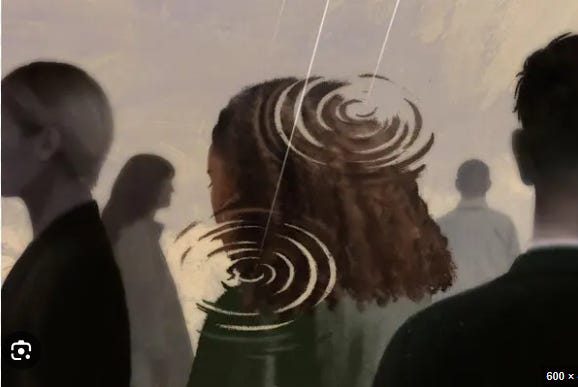
Why Black Men in America Have Worse Health than White Men—and What Needs to Change
Multiple factors including socioeconomic status and access to health care have combined to erode Black men’s health.
We with a moral conscious, with humanity and empathy, we are all weathering quickly under late stage fucking Rapist in Chief Trump’s Fascism.
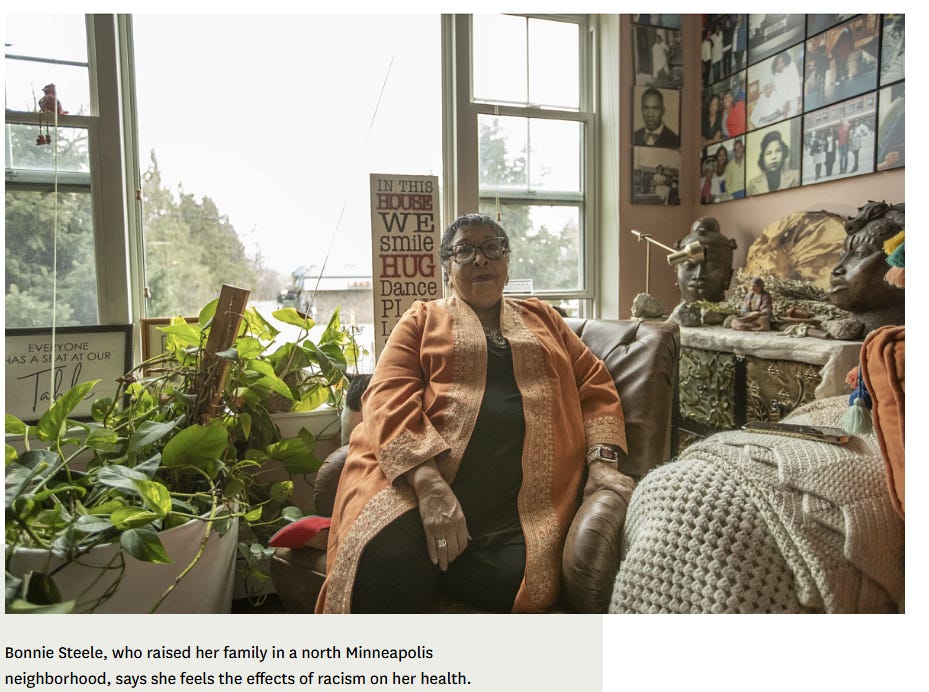
Research suggests repeated exposure to stressors, such as racism and discrimination, leads to poor health outcomes among Black Americans. In Part 1 of this special series “The Price of Pain: Black Health & Reparations in America,” we explore the effects of racial weathering.
On a warm August afternoon in 2002, Bonnie Steele stood in the dining room of her family’s five-bedroom house, printing an essay for her evening theology class. She examined the homework beside an open window, where her north Minneapolis neighborhood’s summer air and sounds lingered.
Two of her daughters peeked into the room.
“We’re going to walk over and go see Grams,” the 12- and 19-year-olds told Steele.
Her four kids often walked to her parents’ nearby home. Usually, it was quiet and only took a few minutes — but this day was different.
Seconds after the front door closed behind the girls, the sound of a car’s engine filled the dining room, followed by screeching tires. Steele peered out of the window and saw a man leaning out of the car with a rifle pointed toward her girls.
“He started shooting, and it was like BOOM, BOOM, BOOM!” Steele said. “It just reverberated off of all the walls in that room.”
She was paralyzed by fear, unable to chase after her children or call out to them as she desperately wanted. Both girls survived the shooting unscathed, but Steele said the trauma remains.
She knew that she and her family had to move. Years of living in poverty and in fear for her life had taken a toll on her health.
Weeks earlier, during a dental visit, she discovered her blood pressure was 270/150, well above the healthy adult average of 120/80. With stage 3 hypertension, Steele, who was 45 at the time, was at risk of a stroke.
Steele was likely experiencing the effects of “weathering.”
 Paul Haeder, Author