

oh, no, the grand teachers of good versus bad language will Unsubscribe on a turn of the dime, well, when too many ‘cunts’ and ‘anal cleft scum’ and ‘Chlamydia Capitalism’ enters their precious email
Oh, AmeriKKKa, a la Xristian and Goy-ionist and Judaic insanity, now, Century of the Jews under Rapist in Chief Trump’s Minyan “Killing Us Softly (not so fucking soft, cocksuckers) with his Song.”
Here’s that cocksucker’s cocksucking “musicians”:
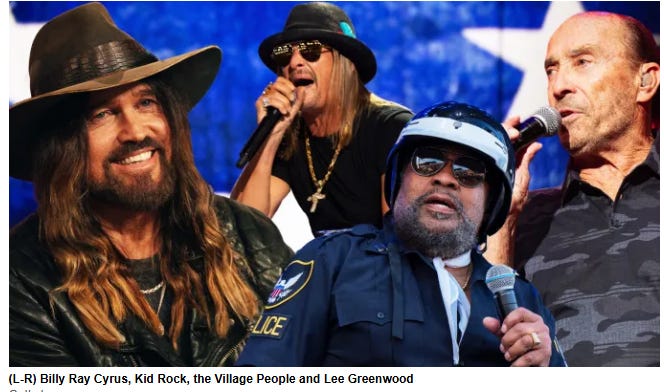
All VD Vance carriers of Chlamydia: Carrie Underwood will be joined by performers including Kid Rock, the Village People, Billy Ray Cyrus, Lee Greenwood, Rascal Flatts, Jason Aldean and more over the weekend and Monday as part of Donald Trump‘s inauguration events in Washington, D.C.
Turn them down, these fucking cunts in polluting politics: Elton John, Garth Brooks, Andrea Bocelli, Kiss, Celine Dion, David Foster, Rebecca Ferguson, Charlotte Church, and Moby.

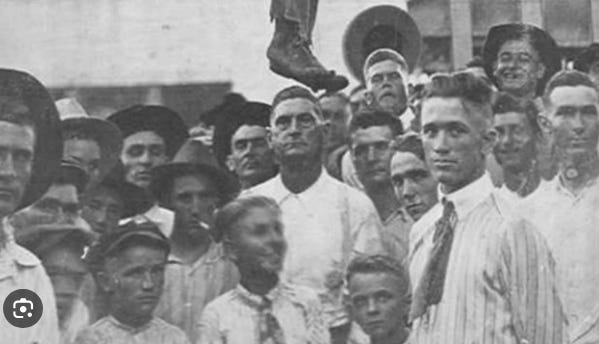
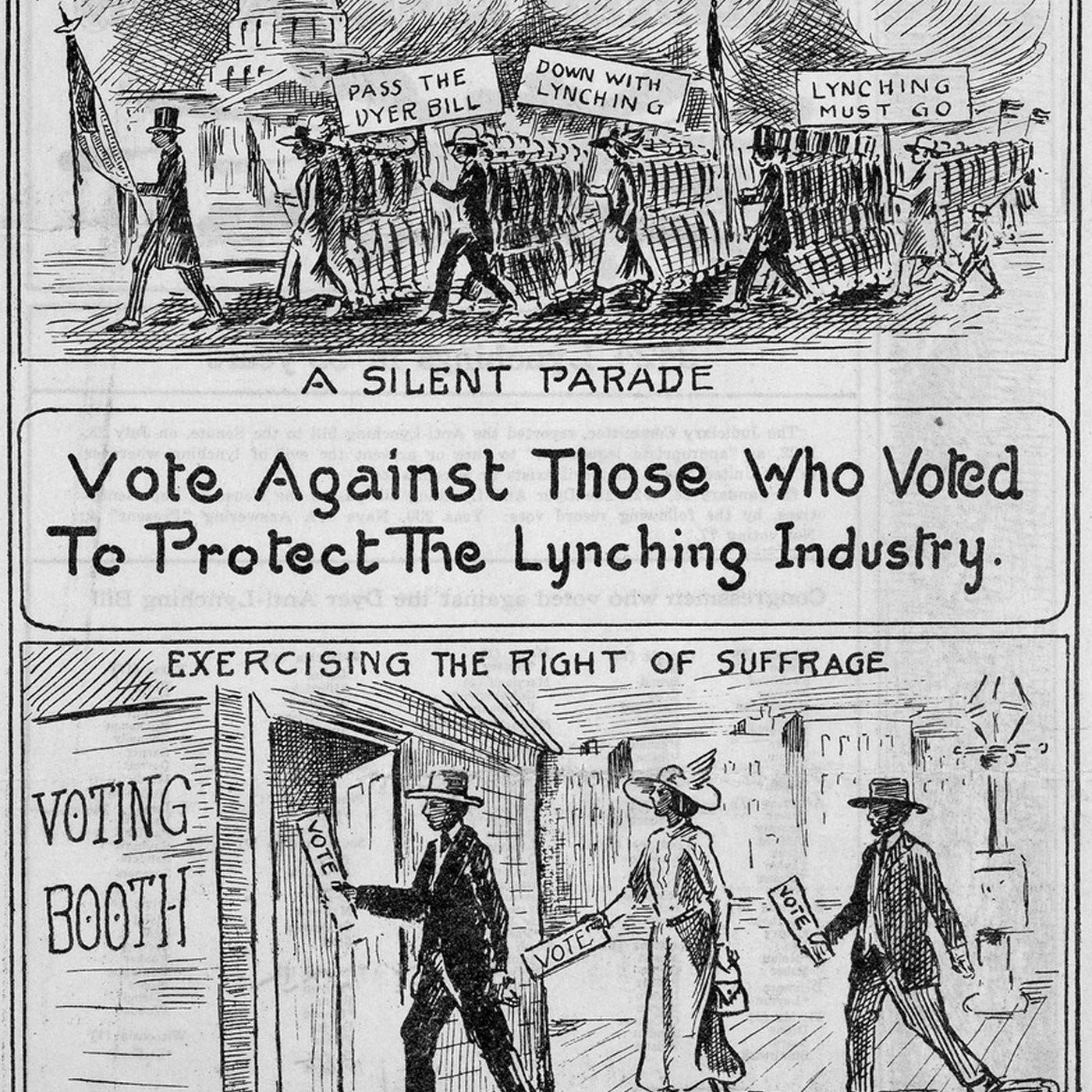
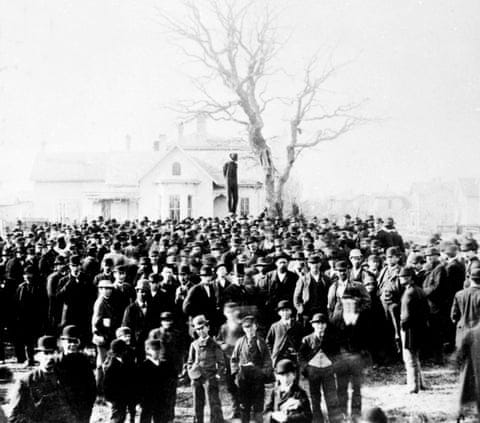
Ferguson refused to play when the inauguration committee wouldn’t allow her request to sing Billie Holiday’s iconic protest song “Strange Fruit.”
“I requested to sing ‘Strange Fruit,’ as I felt it was the only song that would not compromise my artistic integrity, and also as somebody who has a lot of love for all people, but has a special empathy as well for African-American people and the #blacklivesmatter movement, I wanted to create a moment of pause for people to reflect,” she said.
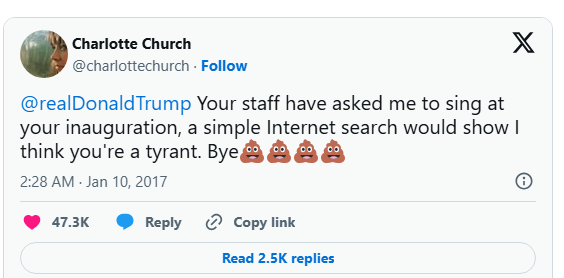
Indeed, the Jewish Century, the Century of the Mossad, the Century of Ellison and Zuckerberg and Altman and South African Racists Musk-Thiel, oh, what a strange strange fruit it is in Palestine, no?
My recent 10 pm last night mother-fucking Cunt-Tree-Tis-of-Thee Poem, Heat Seeking Jewish Missiles:

Heat Seeking Jewish Missiles
they seek heat
missiles which catch
babies breathing, quad
copters with bullets
barking puppies to
draw the heart-felt child
out of rubble, willing
to lend a canine a
hand, but Jews
use infra-red
to incinerate, oi vey
they want bodies
parts strewn far
and wide, beheading
with concussive force
2,000 pound bombs
signed by Lindsey, RFK
even witches like Marjorie
Green, anything to
make the men in dresses
go bat mitzvah over
raping boys
jew boy or arab boy
these IDF with khaki
green are the wimps
that Trump wants
cuddling him
in his wet dreams
man hater of women’s
parts, he talks but
not the part
boy with swagger
one cockroach away
from going back
to the shit
in the shadows
of the Judaic
ghosts, another Kraut
pressing flesh to
Jews, this time
concentration camp
is Gaza, the Jews
kapos one and
all

+—+
Chris Does His Best, without the colorful motherfucking cocksucking words like “cunt.
+—+
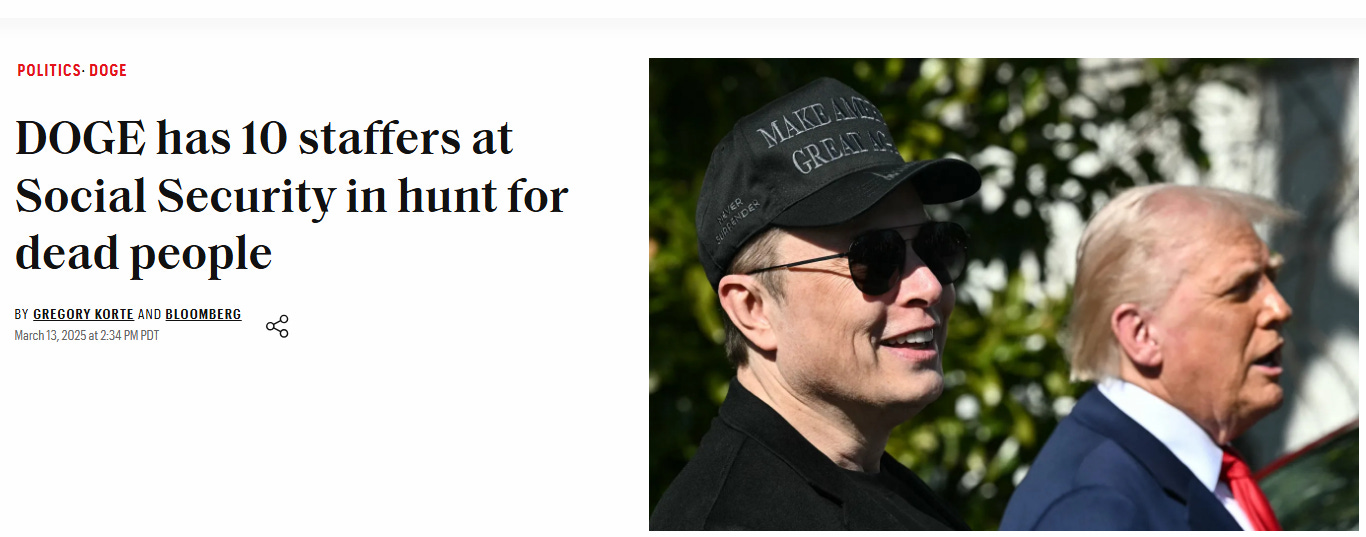
Here, part of the VD Vance and Company’s Nazi Land. Social Security? Cut?
OKLAHOMA CITY (KFOR) — An Oklahoma retiree says his Social Security benefits were suddenly suspended without warning — and with no explanation given when he reached out, according to NewsNation affiliate KFOR.
He worries it may have to do with the place he was born and ongoing Department of Government Efficiency (DOGE) cutbacks. The man was born to an active-duty U.S. soldier at an overseas U.S. Army base.
Now, because of recent comments from Elon Musk, he’s worried his benefits were cut because of his foreign birthplace
Oklahoma man receives unexpected bill from Medicare
McAffrey, 66, told NewsNation affiliate KFOR that there was one thing he most looked forward to in retirement.
“More time with the grandkids,” McAffrey said.
He also said he made sure to save up enough retirement money to, quite frankly, spoil his three grandchildren.
“I went out and bought [my granddaughter] a new jacket,” McCaffrey said. “She’s thrilled. And then her sister says, ‘Well, you know, she got a new jacket. Where’s mine?’ I said, ‘I’ll get you one.’”
Social Security says it will no longer accept bank changes over the phone
He also looked forward to being able to travel more with his wife, who is nearing retirement herself. But, after he opened his mail on a Tuesday, he thought all those dreams would have to come to a halt.
“I’d hate to have to turn around and say, ‘Well, I have to worry about my next check,’” he said.
That’s because in the mail was a bill from Medicare — that he wasn’t expecting.
Nearly half of Americans say economy worsening: Poll
“It said that I needed to pay $740 before the 25th of this month, or I was going to lose my Medicare,” McCaffrey said.
That seemed odd since his Medicare payment is normally deducted from his Social Security check.
“So I called Medicare,” he said. “They returned my call after a wait and told me that they were unable to process it through my Social Security payment, that there was some problem with it. We talked for a bit. He kind of let it out that he thinks it’s a possibility that my Social Security was suspended.”
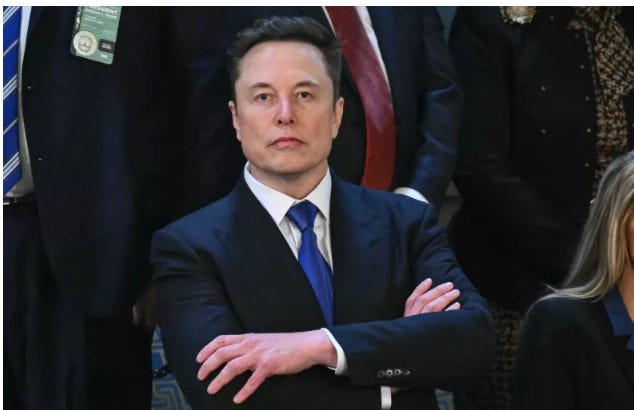
[Gotta Go, machete or Molotov or botulism or grenade . . . gotta go, this fascist cunt.]
Elon Musk Responds to Canadian Tesla Move
Musk responded on social media by calling the move “crazy”, retweeting a post that suggested he should cut off Canadian access to SpaceX and Starlink in retaliation.
Musk’s high-profile association with the Trump administration has aligned with a global decline in Tesla sales.
In late February, a petition to strip Musk of his Canadian citizenship had received thousands of signatures before being sent to Prime Minister Justin Trudeau. It described Musk’s activity as “against the national interest of Canada.”
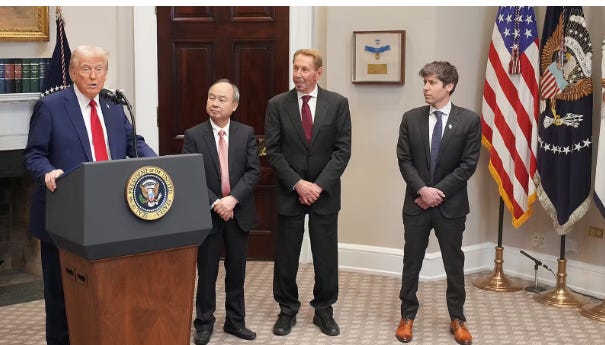
At the heart of Ellison’s recruitment strategy lies a bold interview question that perfectly encapsulates his approach to talent acquisition. According to Mike Wilson’s book “The Difference Between God and Larry Ellison,” Oracle recruiters were instructed to ask candidates one striking question: “Are you the smartest person you’ve ever met?”
The genius of this question lies in its simplicity and effectiveness. If candidates answered “yes,” they were immediately hired. Such a response demonstrated not only confidence in their intellectual capabilities but also the kind of bold self-assurance that Ellison values. For those who answered “no,” recruiters would follow up with: “Who is that person?” – and then attempt to hire that individual instead.
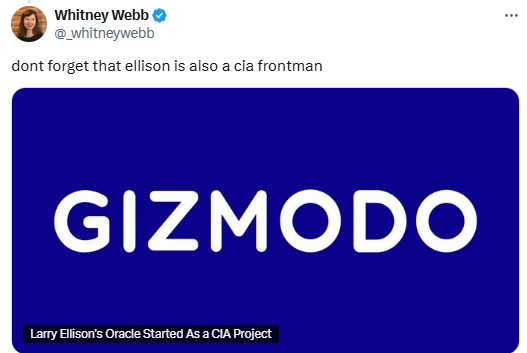
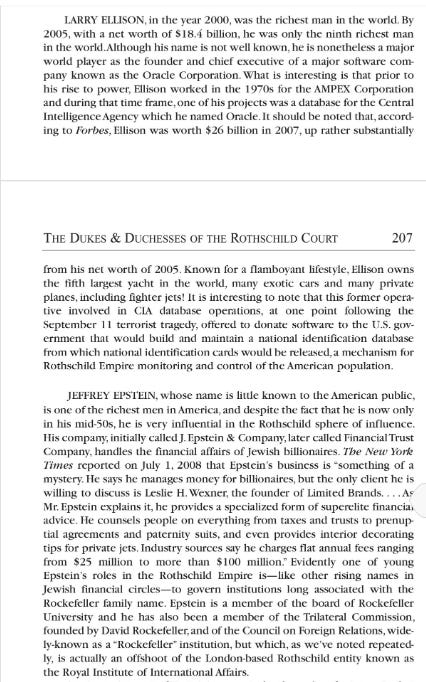

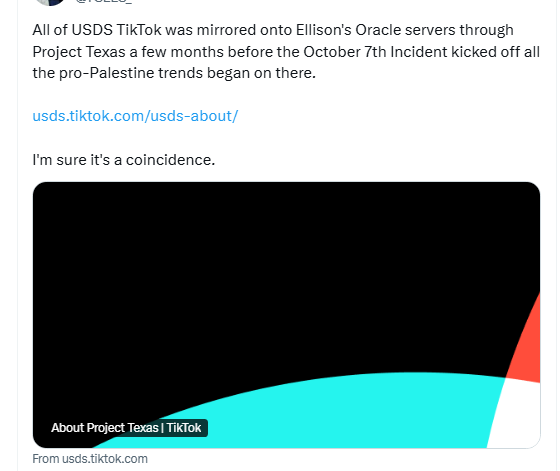
Reminder – Multi-billionaire and Oracle founder Larry Ellison has triumphantly declared that drones, using artificial intelligence, will finally be able to completely control the “unruly population” and can guarantee “the best behavior of citizens.”
“Google Was A CIA Creation, And They’re About To Do It Again…”
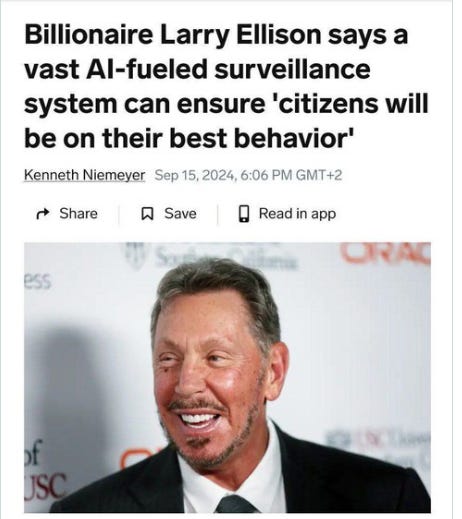
Then this cunt:
Signs of life in these cunts’ eyes?
Criminal Injustice at its peek:
An appeals court on Friday lifted a block on executive orders seeking to end government support for diversity, equity and inclusion programs, handing the Trump administration a win after a string of setbacks defending President Donald Trump’s agenda from dozens of lawsuits.
The decision from a three-judge panel allows the orders to be enforced as a lawsuit challenging them plays out. The appeals court judges halted a nationwide injunction from U.S. District Judge Adam Abelson in Baltimore.
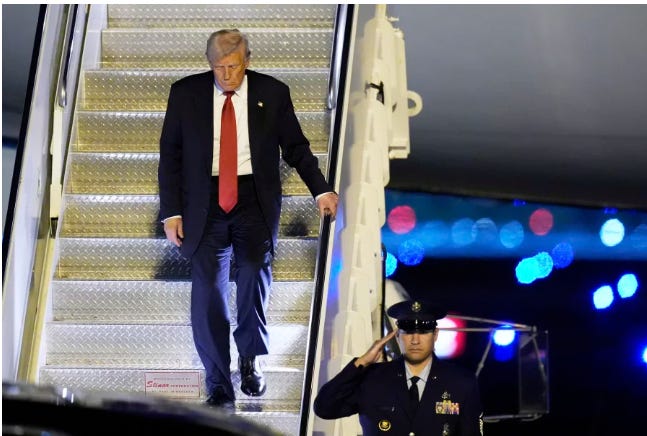
Two of the judges on the 4th U.S. Circuit Court of Appeals wrote that Trump’s anti-DEI push could eventually raise concerns about First Amendment rights but said the judge’s sweeping block went too far.
“My vote should not be understood as agreement with the orders’ attack on efforts to promote diversity, equity, and inclusion,” Judge Pamela Harris wrote. Two of the panel’s members were appointed by President Barack Obama, while the third was appointed by Trump.
Abelson had found the orders likely violated free-speech rights and are unconstitutionally vague since they don’t have a specific definition of DEI.
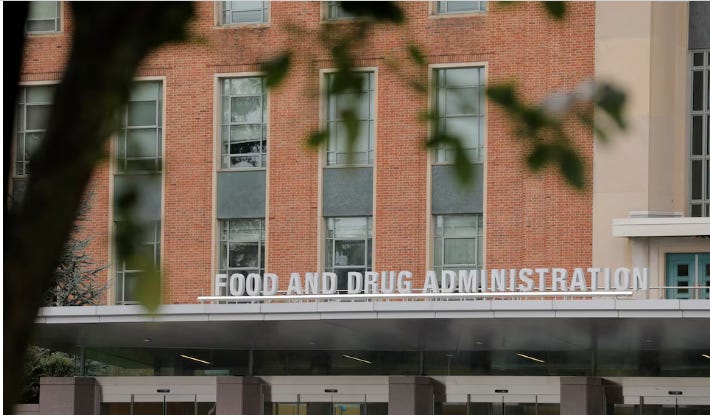
The U.S. Food and Drug Administration’s chief counsel, Hilary Perkins, has resigned, the federal agency said in a post on social media platform X on Thursday, just two days after her appointment was announced.
In a post on LinkedIn, Perkins confirmed that she had left the agency, saying her previous work for the Justice Department had become a distraction from the Trump administration’s work.
Perkins’ appointment had been part of Tuesday’s official announcement from the U.S. Department of Health and Human Services (HHS) of a reorganization of chief counsel roles that gave HHS’s new general counsel oversight of the FDA’s top lawyer. HHS oversees the FDA and other health agencies including the Centers for Disease Control and Prevention.
The HHS and FDA did not respond to a request for comment.
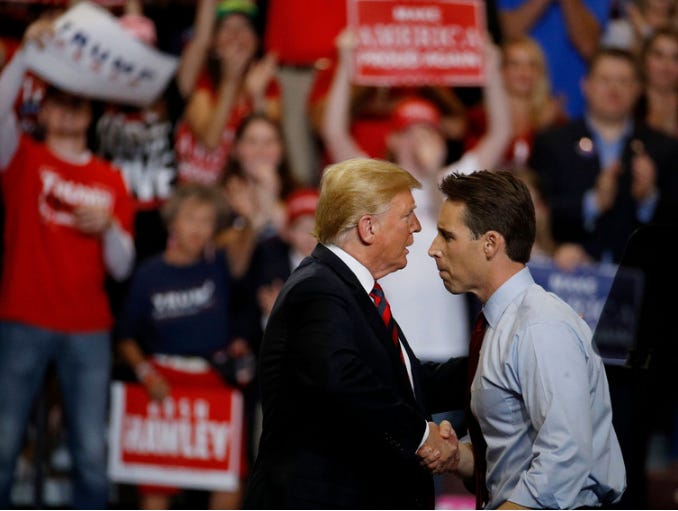
The resignation comes after Republican Senator Josh Hawley of Missouri openly criticized Martin Makary, President Donald Trump’s nominee for FDA Commissioner, for Perkins’ appointment describing her as pro-abortion and having supported vaccine mandates.
Makary has not yet been confirmed for the head of FDA and it was not clear what if any role he played in Perkins’ appointment. Reuters was unable to reach Makary for comment.
Perkins had worked at the Department of Justice from 2019 in the consumer protection division and defended the FDA to keep the abortion pill mifepristone on the market with no new restrictions in a case that went to the Supreme Court, legal documents show.
She also defended the FDA in several cases brought by pro-abortion plaintiffs who sought to relax restrictions on the drug which included her arguing against dropping in person dispensing during the pandemic, according to a Reuters review of case filings.
“Unfortunately, my work as a career attorney at the Department of Justice defending the FDA throughout multiple administrations – which I performed consistent with my oath to zealously advocate on behalf of the United States – created an unnecessary distraction from advancing the Administration’s priorities,” Perkins said in the LinkedIn post.
Although the president promised not to restrict mifepristone on a federal level, prescriptions remain illegal in multiple Republican states, including Hawley’s.
Both Makary and Health and Human Services Secretary Robert F. Kennedy Jr. shared plans to have the FDA review mifepristone data after usage spiked following the overturning of Roe v. Wade
Musk-Trump-Stephen Miller’s AmeriKKKa:

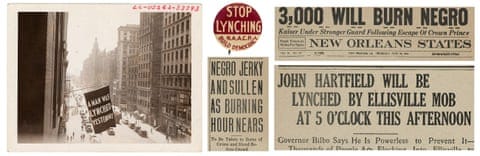
Poor poor Nina: Nina was diagnosed with Bipolar disorder and was medicated at various points in her life.
“I feel what they feel. And people who listen to me know that, and it makes them feel like they’re not alone.”
– Nina Simone
Nina Simone is My Bipolar Hero
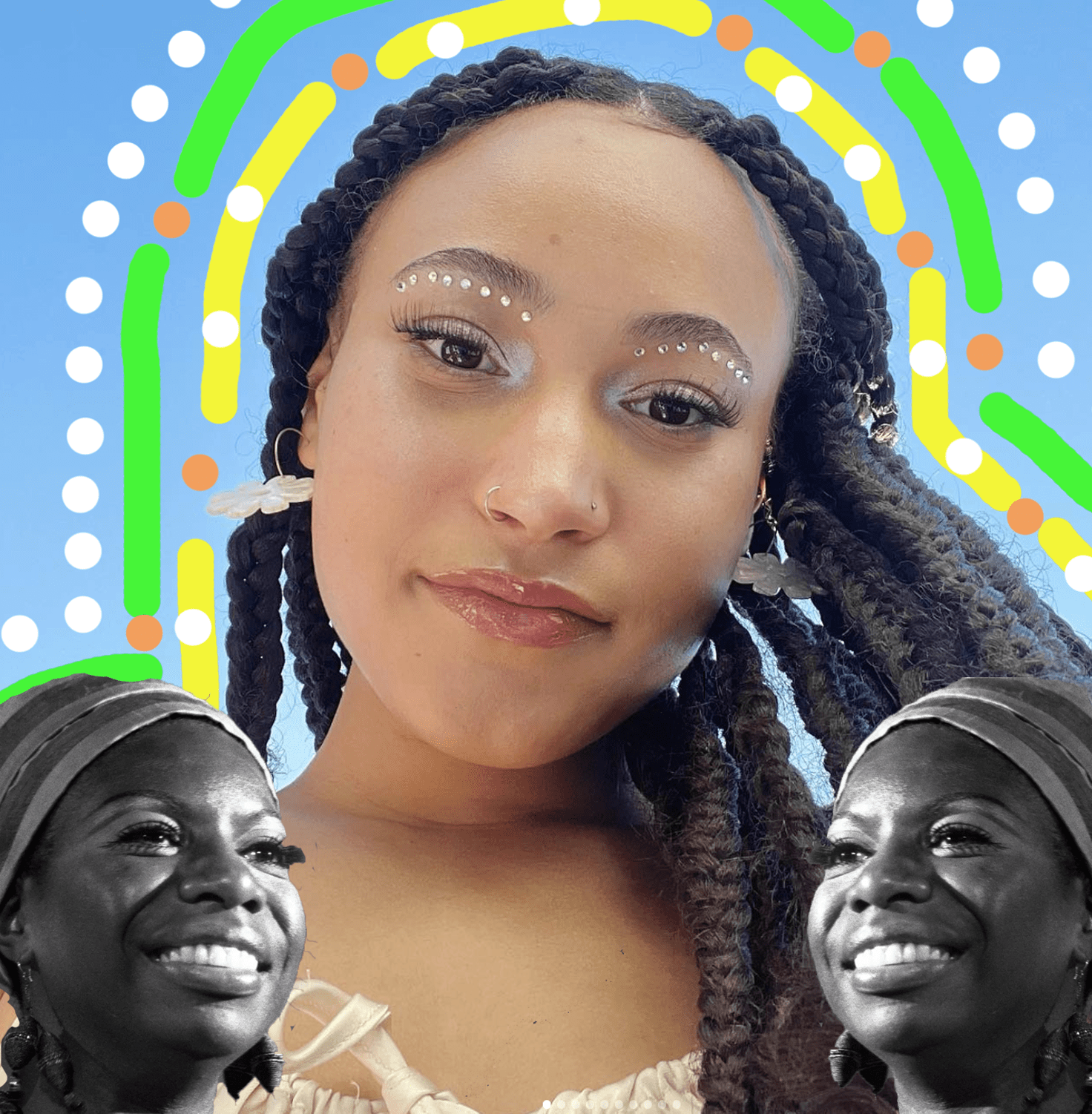
“I feel what they feel. And people who listen to me know that, and it makes them feel like they’re not alone.”
– Nina Simone
In high school, I listened to Nina Simone religiously. Not only was she a wildly gifted singer, songwriter, pianist, and musical arranger, but she was a committed activist who worked alongside MLK Jr. and Malcolm X. Every day after school, I would blast her music from my phone and pace around the house; “Feeling Good,” “Mississippi Goddam,” and “Don’t Let Me Be Misunderstood” stayed in rotation. I always had great admiration for Nina Simone, her sense of justice and urgency, her love for Black people, and the depths of feeling — and pain — which were always reflected in her music and hit me right where I needed them to.
I truly believed she felt what I felt and more. I knew Nina Simone and I were both pisces suns and mercuries, so I credited our similarly expansive range of feelings to our astrological placements and gravitation to sad music. However, the morning before I went to get Simone’s profile tattooed on my bicep, I found out that she was diagnosed with bipolar disorder in the late 1980s—something else we have in common that describes the soaring highs and devastating lows. I was finally diagnosed with bipolar disorder (alongside my other mental illnesses) two weeks earlier after an intense manic episode that eventually turned into sleep deprivation psychosis and landed me in the hospital.
I was finally diagnosed with bipolar disorder two weeks earlier after an intense manic episode that eventually turned into sleep deprivation psychosis and landed me in the hospital.
Navigating this mental illness has been painful and isolating, but I find I am less alone whenever I call upon her music and interviews. With her permanently etched on my arm, I am reminded there is a very real genealogy and archive of my emotional experiences as a neurodivergent Black woman*, and I would be seen by her if not anyone else.
Navigating this mental illness has been painful and isolating, but I find I am less alone whenever I call upon her music and interviews.
When Nina Simone began working alongside Martin Luther King Jr., she told him, “I’m not non-violent.” Musical storytelling was her violent weapon against white supremacy and she waged it ragefully and diligently on behalf of her people. When four Black girls were killed in a church bombing carried out by white supremacists in Alabama, Simone armed herself with showtune: “Mississippi Goddam.” This seething song voiced the urgency and anguish around continous acts of white supremacist, anti-Black violence against Black people in the South and was banned in several states. Simone was ready to burn down buildings and kill for Black people:
“At first I tried to make myself a gun. I gathered some materials. I was going to take one of them out, and I didn’t care who it was. Then Andy, my husband at the time, said to me, ‘Nina, you can’t kill anyone. You are a musician. Do what you do.’ When I sat down the whole song happened. I never stopped writing until the thing was finished.”
Musical storytelling was her violent weapon against white supremacy and she waged it ragefully and diligently on behalf of her people.
Similar to Simone, my hope for freedom ignited a creative appetite that could only be satiated by true justice and liberation for Black people and a desire for immediate action that propelled me to speeds that made my head spin. During the 2020 Minneapolis Uprisings, I returned to “Mississippi Goddamn,” playing it every time I got in my car to join my comrades on the streets. The song was instigating and agitating, telling the world justice for stolen Black lives was moving too slow and we had to do something about it. I had my first of multiple manic episodes that summer, and that song was damn near the only thing that could keep up with me.
I decided then that I wasn’t non-violent either. We are justified, but, when you decide that while Black, mentally ill, and perceived as female, there are repercussions in how people perceive you and how crazy others make you out to be, especially as you react in response to the violence plaguing your lived experience. I remember standing outside the Minnesota Capitol Building hearing ancestors say clearly to me that we need to burn it all down, that we had to end the world, that we have to do whatever it takes and do it right now. Later, doctors described that experience as mania-induced psychosis, though I acknowledge it as a spiritual mandate that I still live by, but that’s for another essay.
I decided then that I wasn’t non-violent either.
The nights and mornings started to blend as I stayed up all night plotting, prophesying in my notes app, and preparing my manifesto. I didn’t advocate for violence exactly, but if it is a condition to gaining our freedom, I didn’t care; what I was asking for would always be interpreted as an assault, anyways, read through the lens of angry Black woman stereotypes.
What I was asking for would always be interpreted as an assault, anyways, read through the lens of angry Black woman stereotypes.
As the intensity built in my body, I noticed some of my family and friends began to recoil and shrink in my presence in a way that communicated I was too much. I was too pressed, too ‘angry’ and they couldn’t carry the weight of the gravity I knew to be true: this world was anti-Black and needed to end.
But the world didn’t burn. It just crashed on top of me and all of the possibilities I had imagined with it. It felt like my dreams died when the mania ended, and I wanted to die with them. People stopped being about revolution. The absence of tangible progress was excruciatingly loud and there was no dial to turn it down and no one to hold me.
I’m learning through my own experience and Nina Simone’s, bipolar disorder just makes the desire for revolution ever more dire, urgent, heavy. It feels like it all needs to be acted upon immediately. When others aren’t moving the same speed or with the same insistence, or understanding how painful it is to navigate the contradictions, depression & nihilism become your only comfort.
I bring up these experiences to speak to the intersections of Black activism, insurrection, and mental illness. That Nina Simone navigated these intersections is important. When I found out Nina Simone also had bipolar disorder, I questioned how hard it must have been for her as a dark-skinned Black woman with a highly stigmatized mental illness going through such triggering, mania-inducing events—how she must have been perceived and treated, how little space there was for any recovery. It pained me even further to think about how she navigated the depression when the mania ended.
Years of performing protest songs and meeting with young Black students around issues of Black freedom had not improved Nina Simone’s quality of life, and after giving all of the creativity, passion, and energy her spirit could give to the movement, nothing and no one could give her the urgency she demanded and deserved. She said in multiple interviews that she began to regret her protest songs, songs that she originally fought her husband-turned-manager to perform. “There is no reason to sing those songs, nothing is happening,” Simone told an interviewer in the 1980s.
After watching the 2015 American biographical documentary film, What Happened, Miss Simone?, I learned that not only was she navigating undiagnosed bipolar disorder for most of her life, but she was also deeply traumatized by her physically and financially abusive second-husband alongside the recurring trauma of being a widely known and in-demand protest singer and civil rights activist in the 1960s. The documentary shows Nina navigating the dark sides of being a bipolar trauma survivor—from being dazed and absent on stage to filled with uncontrollable rage and despair.
Nina Simone lived with co-occurring disorders, PTSD, bipolar disorder, and eventually schizophrenia. I find it important to remind myself that Nina Simone experienced violent outbursts, psychosis, and mania, and she is loved. She survived debilitating depression and suicidal ideation, and she is loved. She is and was loved for her fierceness, bold honesty, creative genius, and for being so much herself in all of her identities. Maya Angelou writes in her essay, “She is loved or feared, adored or disliked, but few who have met her music or glimpsed her soul react with moderation. She is an extremist, extremely realized.” Nina Simone reminds me that neurodivergent folks are tapped into another world and frequency; our ‘extreme’ and deeply felt experiences have us looking for a world that can hold them.
Nina Simone reminds me that neurodivergent folks are tapped into another world and frequency; our ‘extreme’ and deeply felt experiences have us looking for a world that can hold them.
None of this is to say that Nina Simone’s brilliance and political urgency are simply manifestations of mental illness, but her neurodivergence matters and should be named as it is a part of her. When we discuss her legacy and her participation in historical moments, we should consider how she showed up and what she went through as a neurodivergent Black woman and trauma survivor. If we name her as such, it has the potential to provide space for those who resonate with that experience to be seen and reflected in history—to know that there was someone who came before who maneuvered through these emotional extremes and divergent energies. When we look, there’s a genealogy of neurodivergent Black folks and a pending demand for true justice and liberation to guide us.
*I am gender fluid/non-binary but still very much resonate with Black womanhood
*If folks choose to view the documentary, What Happened Miss Simone?, it is important to warn that her abuser was significantly featured throughout and was given space to speak on Nina Simone’s legacy and his abuse.
Kira is an organizer, student, & writer based in Washington, D.C. and Minnesota doing work around Black anarchy, abolition, and theories of racialization. They currently do work with Libereaders, a community mutual aid library that provides Black radical reads and hosts educational events about liberation.
“When I used to get blue years ago, James Baldwin would say the same thing to me each time: ‘This is the world you have made for yourself, Nina, now you have to live in it,’” the trailblazing musician and civil rights activist Nina Simone muses in the opening lines of her 1992 autobiography, I Put a Spell on You
The Burden of Brilliance: Nina Simone’s Tortured Talent
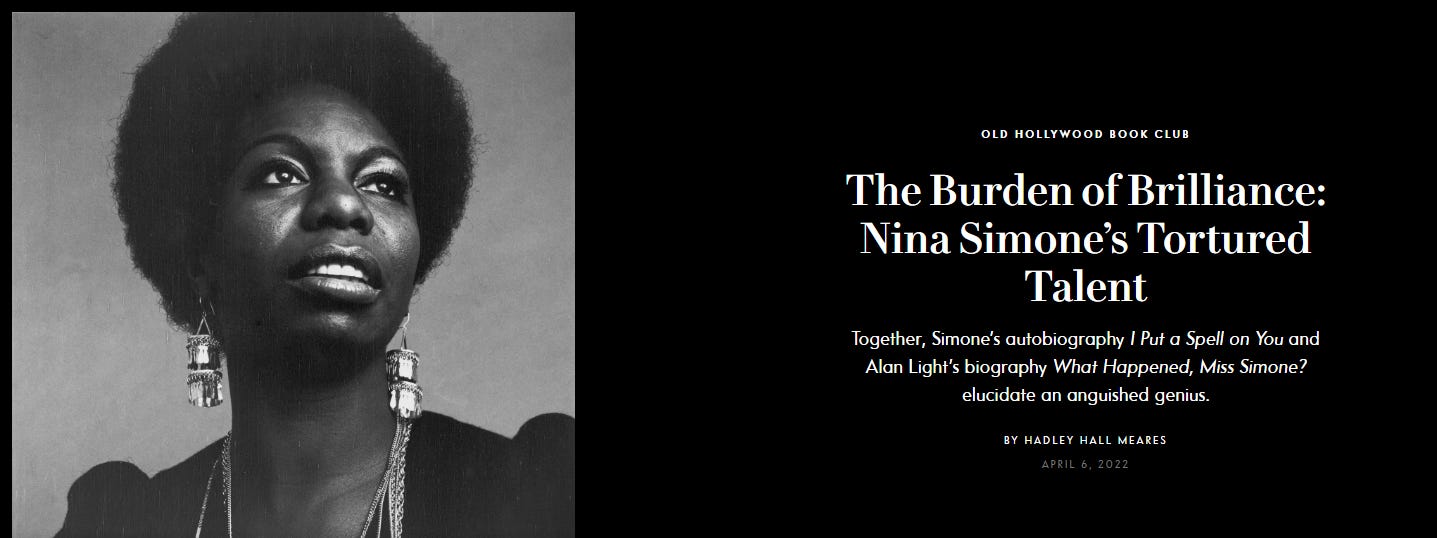
“Andy walked into my dressing room and found me staring into the mirror putting make-up in my hair, brown make-up, because I wanted to be the same color all over,” she writes. ”He tried to get me to talk sense, but I said things like…I was Grandma Moses…I had visions of laser beams and heaven, with skin—always skin—involved in there somewhere.”
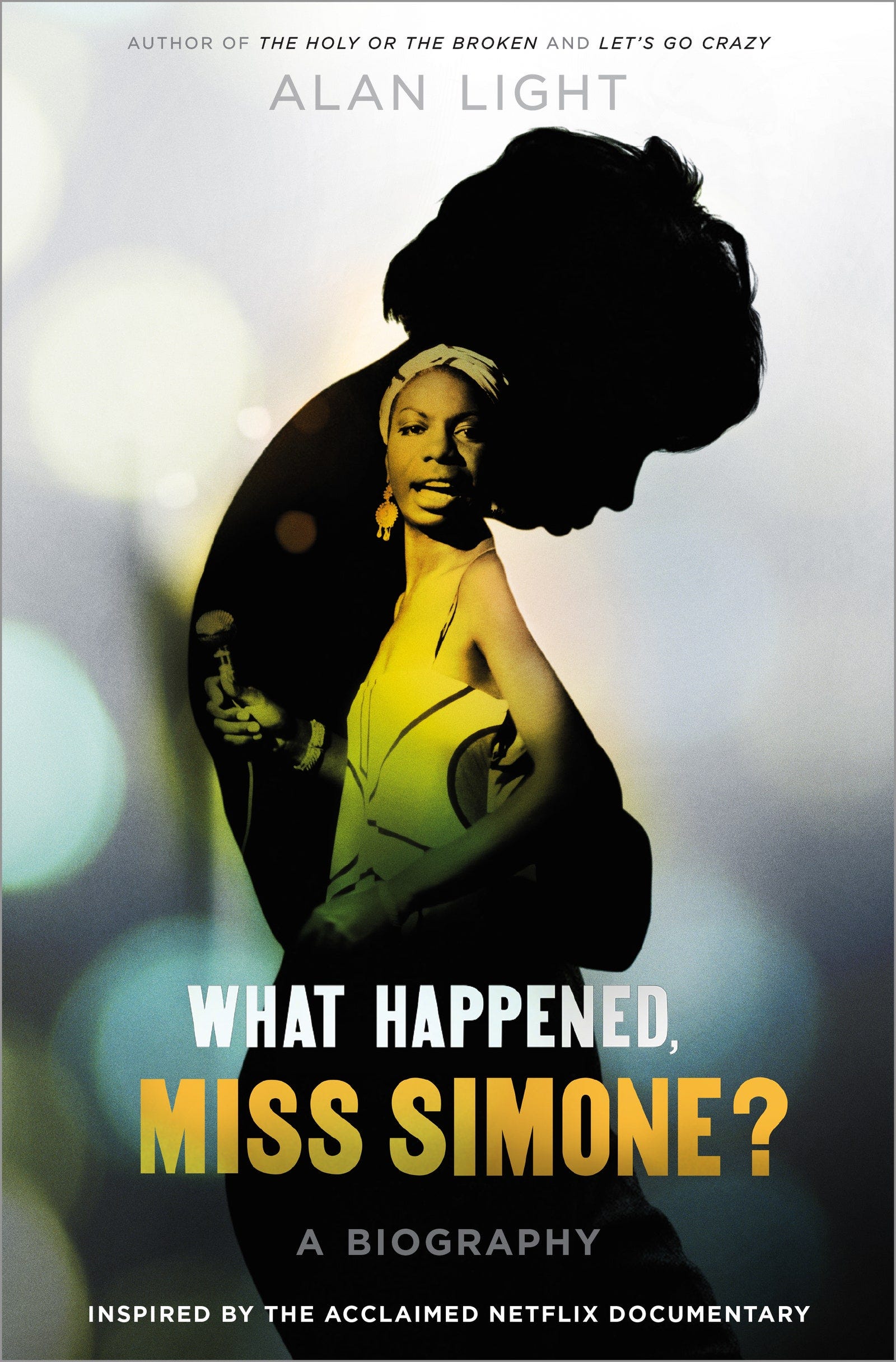
By the late 1960s, Simone was lashing out, heartbroken in part by the stagnant struggle for civil rights. “America betrayed me, betrayed my people and stamped on our hopes. Andy had betrayed me too,” she writes. “I felt like I was being attacked on all sides: the whole world was ganging up on Nina Simone.”
Simone retreated to Barbados in 1969, leaving behind Andy and their daughter, Lisa (who asserts she was physically abused by Simone). Even more inexplicably, she abandoned her beloved father after overhearing him brag that he had supported her family growing up, though it was her mother who had really kept them afloat. “I walked into the kitchen and told him he wasn’t my daddy anymore because I disowned him. From that moment I had no father,” she writes.
She held true to her vow. While her father was dying, Simone recalls staying in Tryon with Mazzanovich. Despite her family’s constant appeals, she refused to visit him on his deathbed. The day he was buried in North Carolina, Simone was performing in D.C., singing a song she just written about him which ended with these cryptic last lines: “When he passed away, I smoked and drank all day. Alone. Again. Naturally.”
+—+”
As a permanent side-effect of medications she developed a mild-to-severe case of tardive dyskinesia, which caused ticks in her face and mouth, and involuntary tongue movements. However, accounts from her close friends and family stated that if she was not medicated she could not manage her career and/or personal life.
I’ve always been curious about the relationship between creativity and mental health, even took a course in college called “Creativity and Madness” that explored the topic.
However, in Nina’s case it’s been my impression that her mental health negatively affected her art, rather than contributed to it. I think part of this is also the fact that many artists, while they excel at being creative, aren’t great at managing their careers or the business side of art and entertainment, so her creative impulses might’ve been impeded by her struggle with managing her own career.
I think what Nina desperately needed was a manager that was passionate about Nina, looked out for Nina, and truly had Nina’s best interests at heart. With the right manager, I believe she could have thrived.
Then again, I also know that Nina could be difficult to manage, so I’m not entirely sure the typical artist/manager relationship could have always endured her temperament.
She did have some very close companions that looked out for her (Roger Nupie and Gerrit de Bruin come to mind) but I don’t think either of them were equipped to fully manage her career.
This fucking white Brit is such a scum-bucket. Nina kicks it even in her mental health shakiness, but oh is she spot on. Took at gun to killa Swiss cunt who pirated her music. Watch.


SharePrevious
 Paul Haeder, Author