

“So, they haven’t broken — they have not broke me. I am not broken.”
While he was in prison, he was treated — I mean, it was hell on Earth all 49 years. And he was revered and respected by the prisoners, but it was hell on Earth. He never had proper medical care. He never had the medical attention that he needed. And he was in maximum security the entire time. Think about that. He was in maximum security the entire time. And so, you know, he was so happy to get out of there because of how he was treated in that place and how bad that place is, not just for Leonard Peltier but for all prisoners who are in there.
Reservation Era Begins 1850-1878
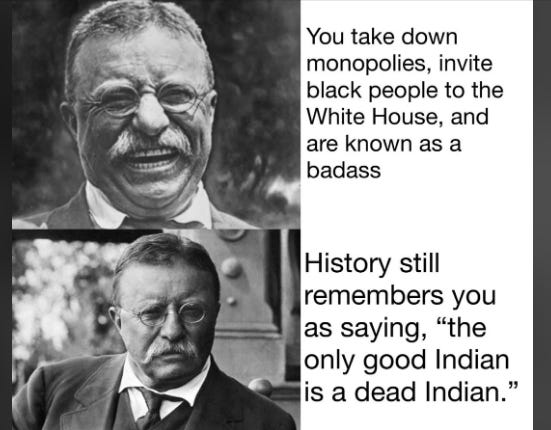
1869 “The only good Indian is a dead Indian”
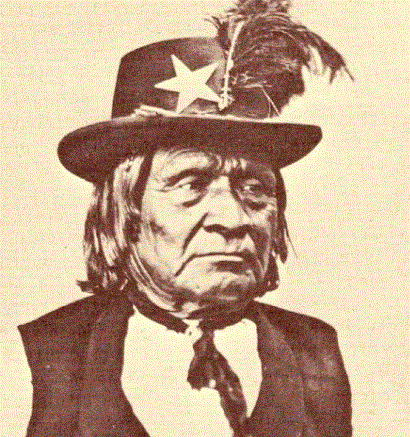
Comanche Chief Tosahwi reputedly tells Sheridan in 1869, “Tosahwi, good Indian,” to which Sheridan supposedly replies, “The only good Indians I ever saw were dead” (Brown, 1970).
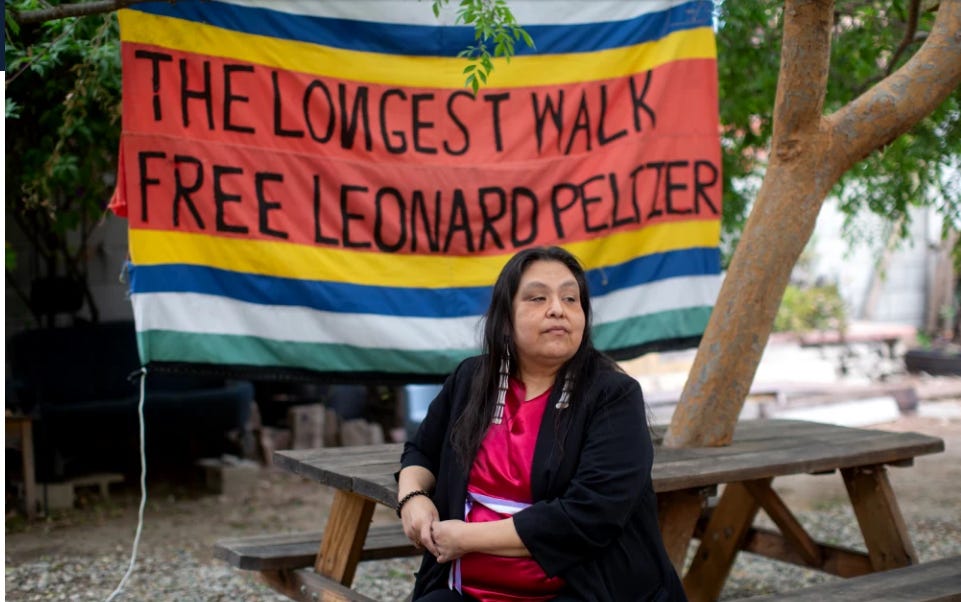
Kathy Peltier, the daughter of Leonard Peltier, in Burbank, Calif., on March 17. The banner was made for a march of several hundred Native American activists and supporters from San Francisco to Washington, D.C., in 1978.
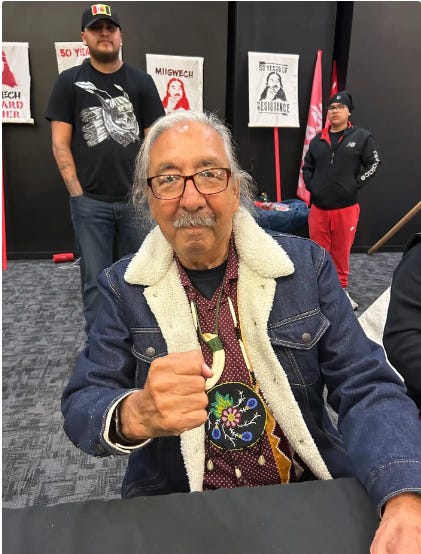
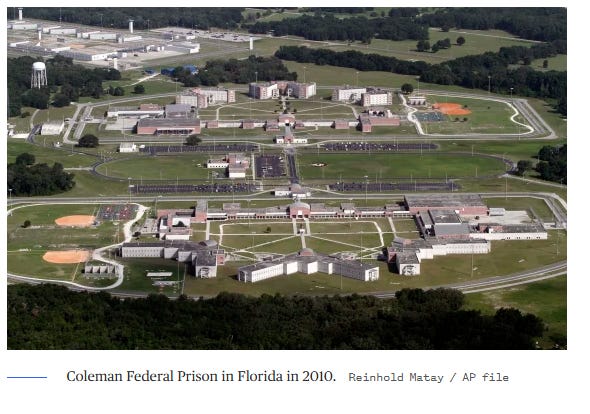
Leonard Peltier walked out of the front doors of Coleman prison energetic and completely dignified. When he walked out, he shook the hands of all the corrections officers, and all of them were happy to see him go. They had deep respect for him. He came walking out, and I stuck my hand out to shake his hand, and he just hugged me, and he said, “I’m free. I’m finally, finally free.” And he was so excited to get out of the prison.
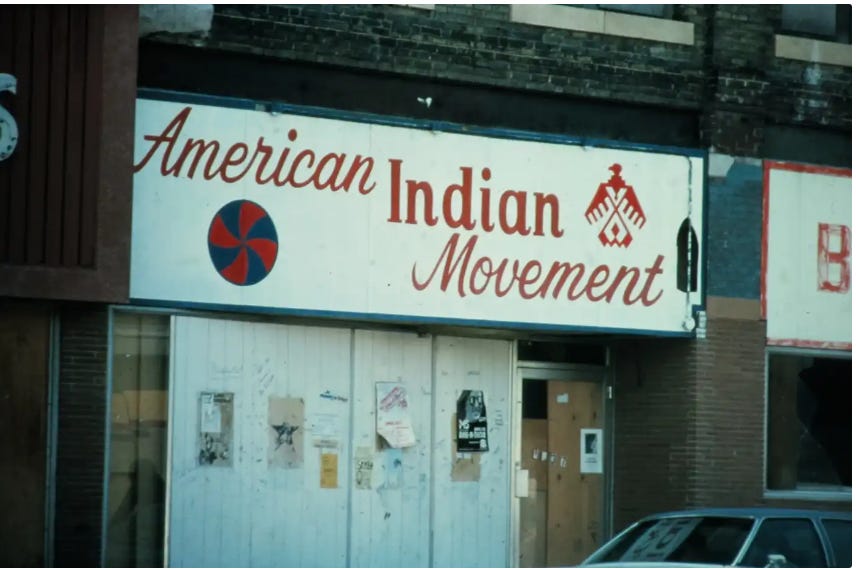
We hopped in the vehicle. We got him into the vehicle, and we started listening to Redbone and music, and he was dancing in the backseat of the car. And it was joy. It was absolute pure joy to watch him do that. And then we were able to do a ceremony for him and to wipe him off and to bless him and put prayers of protection over him and wipe him off from the things that happened there in prison.
And then, when we came home, when we got him back to Turtle Mountain, the streets were lined with hundreds and hundreds of people welcoming him home, holding up signs, cheering, singing, war whooping. It was a beautiful, beautiful sight. I remember seeing the sign that said, “Miigwech, Leonard Peltier,” which in the Anishinaabe language ”miigwech” means “thank you,” and the amount of love and gratitude in which he was embraced by his community, his people and his movement. It was an absolutely historic and moving day.
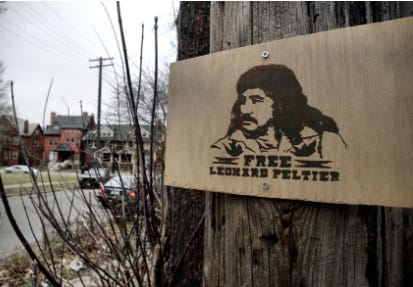
And Leonard was absolutely joyous when we rolled up to his home that we had got for him. And this is the first home Leonard Peltier had had since he was 9 years old, since he was taken away from Turtle Mountain to go off to boarding schools. And now he walked into this home that was prepared for him, and he loved it. And we prayed in that home, and we blessed out that home. And Leonard sat down on the couch and said, “Here, I’m finally home.”
And he thanked everybody. And that’s the thing he wants everybody to know, is he thanks everybody around the world for fighting for him and standing up for him and never giving up on him.
Today, NDN Collective announced that after nearly two and a half years of legal battles, all charges against NDN Collective president and CEO Nick Tilsen have been dismissed by the state of South Dakota.
“My case held a mirror up to the so-called legal system, where prosecutors – fueled by white fragility and fear of Indigenous power – wasted years of state resources to intimidate, criminalize, and violate me,” said Nick Tilsen, president and CEO of NDN Collective. “The fact that I’ve gone from facing 17 years in prison to all charges dismissed is not a coincidence or an act of justice – it’s evidence that the charges were bogus from the start. We only won because we had effective tools and a strong network to fight them, and did not back down until we had exhausted the system that was built to exhaust us.
“The past few years have been incredibly difficult in many ways – but feeling the support of my community and ancestors along the way has been lifegiving. I extend my deepest gratitude to everyone who took action on my behalf, prayed for me in ceremony, and supported my family through the darkest times. This victory belongs to all of you.
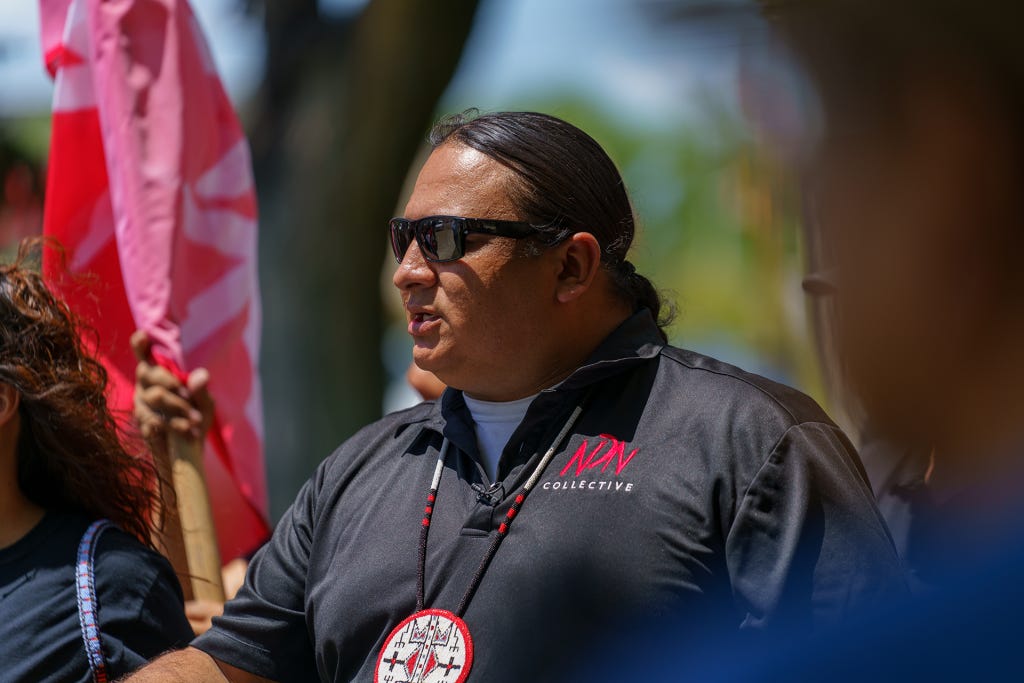
“While this particular battle has finally been won, my work for Indigenous liberation is far from over. I will continue fighting for the Black Hills to be returned to the Lakota people, and for all rightful Indigenous land to be returned to its people across Turtle Island.”
Tilsen has continued to lead NDN Collective throughout the legal battles created and continuously prolonged by the state of South Dakota. In the past year alone, the organization has opened Rapid City’s first Indigenous led school, granted $19.4 million to Indigenous people fighting for liberation across Turtle Island, began investing into sustainable housing solutions for Rapid City’s unsheltered community, sent a delegation to the United Nations Climate Change conference, mobilized people to stand up to systemic racism in Rapid City resulting in a federal civil rights lawsuit, and much more.
TRACKER GINAMARIE RANGEL QUINONES:
So, our relative Leonard Peltier has been incarcerated for 50 years in a draconian system. And I am from Arizona. We are First Nation people. And we are here to witness this as our relative walks out. … This is the most important day, because not only does it stand for the Indigenous First Nation people here on Turtle Island, but it also stands for people internationally. This represents — his incarceration represented not only other political prisoners, but people who stand in solidarity for all humankind and humanity.
We are not going to give up. We’re going to win. We’ve been winning. We’re going to continue to win. We’re going to — we’re going to stick together. We’re going to unite. As it is right now, we’ve been united all through Indigenous countries. And we’re going to — we’re going to fight back. We’re going to — we’re going to continue ’til we are a free nation. I gave 50 years for that. And I’m going to give the rest of my life. So, they haven’t broken — they have not broke me. I am not broken. — Leonard
All those fucking Trumpers, all those bro’s, liberatrian sorta guys, Aaron and Max and then the Bat Mitzvah one, Katie, and so so many thinking Trump does ANY FUCKING thing GOOD.
As Indian Country celebrated the release of Leonard Peltier in one of Joe Biden’s final actions as president, the new occupant of the Oval Office began taking aim at some of the bedrock principles of the trust and treaty relationship.
Just hours after being sworn in as the 47th president of the United States, Donald Trump signed a slew of executive orders that he said would restore “common sense” to federal government. In particular, he rescinded nearly 80 policy directives that Biden had issued over four years in the White House.
“With these actions, we will begin the complete restoration of America and the revolution of common sense,” President Trump said in his inaugural address at the U.S. Capitol on Monday. “It’s all about common sense.”
But in targeting diversity, equity, and inclusion (DEI) in federal policy, Trump also swept up the first Americans and their long-standing relationship with the U.S. As confirmed by numerous laws and court decisions, the nation-to-nation relationship is based on the recognition of tribal governments as sovereign entities — it’s not rooted in race or racial status.
“That sovereignty recognizes ours,” John Tahsuda, an attorney and citizen of the Kiowa Tribe who served in the first Trump administration, said at a tribal reception in the nation’s capital on Sunday.
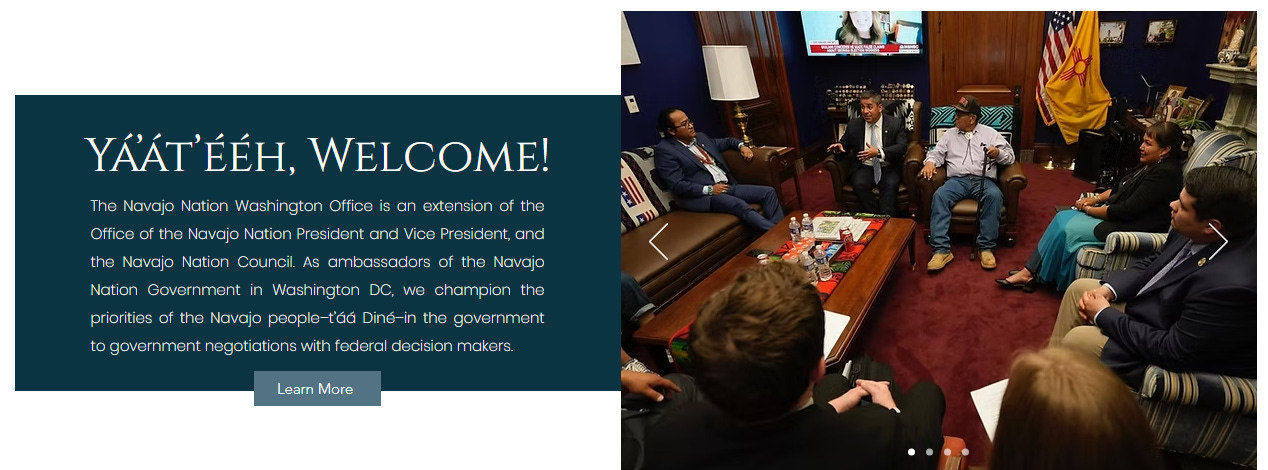
“So our Native sovereignty exists hand-in-hand with that sovereignty,” Tahsuda said at the Navajo Nation Washington Office in Washington, D.C.
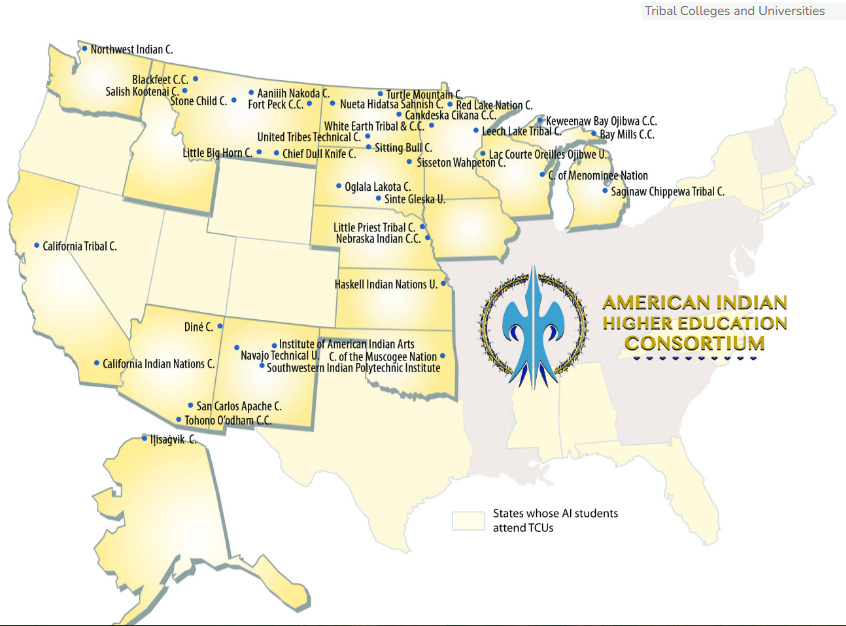
Trump’s actions and words on January 20, however, do not explain why the trust and treaty obligations of the federal government have been targeted by his anti-DEI efforts. Buried in the lengthy list of his “initial rescissions of harmful executive orders and actions” is a Biden-era executive order that merely promoted Indian education — from public schools to tribal colleges and universities.
The executive order, titled White House Initiative on Advancing Educational Equity, Excellence, and Economic Opportunity for Native Americans and Strengthening Tribal Colleges and Universities, in fact uplifted the role of the long-standing National Advisory Council on Indian Education, also known as NACIE. Just last month, Republicans took the lead in reaffirming the need for the council, which advises the Department of Education.
“As many of my colleagues know, the federal government holds a unique trust responsibility to the Native and tribal communities, a responsibility that is not just a legal obligation, but a moral one,” Rep. Virginia Foxx (R-North Carolina), the former chair of the House Committee on Education and Workforce, said in passing the bill known as the National Advisory Council on Indian Education Improvement Act. [S.5355]
“This trust is rooted in both the U.S. Constitution and centuries of commitments to Native communities,” added Foxx, who now chairs the powerful House Committee on Rules, a position that is key to advancing legislation in the Republican-controlled U.S. House of Representatives.
It’s not clear why Trump in particular rescinded Executive Order 14049, which Biden signed on October 11, 2021, to little fanfare. But the name itself — “Equity” is in the title — along with words and phrases like “diverse” and “justice” and “gender based violence” in the text make it an easy target amid the strong anti-DEI current within the Republican party.
“What President Trump did is he got away from DEI and gave everybody — once again, regardless of your race or identity — they gave you an opportunity to succeed on merit base,” Sen. Markwayne Mullin (R-Oklahoma), a citizen of the Cherokee Nation and the only Native American in the U.S. Senate, said on Fox News Radio on Wednesday.
“Wow. That’s America for us,” Mullin said on Fox Across America With Jimmy Failla, during which he brought up the Trail of Tears, the forced removal of the Cherokee people and other Native peoples from their homelands by the U.S. government.
+—+

Trump, man, this is the Elon Musk-Jewish Minyan-Tech Bro’s Fucking sickness:
JOHN WASHINGTON:
So, what happened, this started last week. This mother of four was with two of her children, and she was selling empanadas outside of a gas station in Tucson, when she says that she was verbally attacked by someone who was leaving the gas station. And that person then called the police. The responding officers were state troopers. And this woman packed up her things and packed up her children and started driving away. And the officers made a stop down the road. The pretext was that she was driving too slowly, 25 miles a hour in a 40-mile-an-hour zone. She was taken out of the car. She was extensively questioned. And as that was happening, the Border Patrol were already on their way. The troopers had allegedly called the Border Patrol. She was handcuffed, as you mentioned, by Border Patrol officers in front of her children. And her children were then taken away to a short-term detention facility elsewhere in Tucson that was run by Border Patrol.
She says, from there, that she suffered a night of interrogation, that Border Patrol officers were accusing her of being in a Venezuelan gang. They were accusing her husband of being in a gang. They actually were questioning her 6-year-old daughter and saying that her dad was a gang member. All of these claims, the family vehemently denies.
“I lived through a kidnapping. I was scared to return to México,” she says. She also continued her pleas for her other two children still in Tucson.
She says that agents just kept saying, “That’s not my problem.”

At the Tucson sector Border Patrol station, agents questioned both her and her children. “They asked my 6-year-old daughter if her dad was a gang member, if he had a gun,” she says. Her daughter was sobbing.
“Imagine scaring a 6 year old like that,” Yesenia’s sister-in-law says. She asked not to be named for fear of repercussions from immigration or law enforcement officials.
Yesenia also says agents threatened to send her to Guantánamo, and that her kids could be put up for adoption.
“My son, 9 years old, was crying. He’s really sensitive. He kept trying to stop the agents from talking to his mom and sister like that, but they yelled at him to be quiet,” Yesenia says.
And just hours later, after a really difficult night and with the 9-year-old son trying to protect his mom and his younger sister from what he saw as aggressive Border Patrol agents, they were deported to Mexico. And from there, they were taken about 2,000 miles south. And not until they arrived to their destination were they able to make the first call. So, the mother tells me that she pleaded with first the state troopers, then the Border Patrol agents who were arresting her, and then multiple times during the night, to please let her have a phone call to let her family know where she is, where she and her two children were, to check in with her other two kids and let them know. But she was repeatedly denied calls both in the U.S. and then also in Mexico.
 Paul Haeder, Author