

The Guaraní believe that the world wants to be different, that it wants to be born again, and so the world entreats the First Father to unleash the blue tiger that sleeps beneath his hammock.
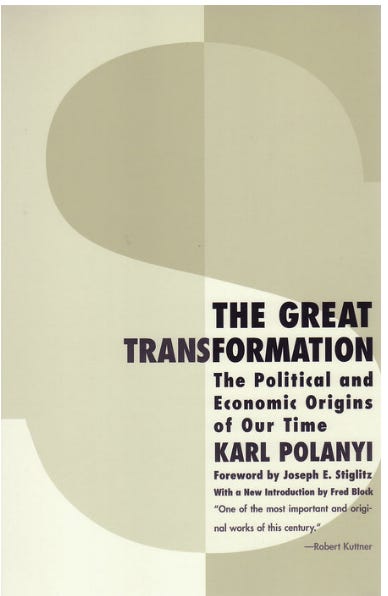
Karl Polanyi in “The Great Transformation” writes that once a society surrenders to the dictates of the market, once its mafia economy becomes a mafia state, once it succumbs to what he calls “the ravages of this satanic mill,” it inevitably leads to “the demolition of society.”
Hedges: “The mafia state cannot be reformed. We must organize to break our chains, one-by-one, to use the power of the strike to cripple the state machinery. We must embrace a radical militancy, one that offers a new vision and a new social structure. We must hold fast to moral imperatives. We must forgive mortgage and student debt, institute universal health care and break up monopolies. We must raise the minimum wage and end the squandering of resources and funds to sustain the empire and the war industry. We must establish a nationwide jobs program to rebuild the country’s collapsing infrastructure. We must nationalize the banks, pharmaceutical corporations, military contractors and transportation and embrace environmentally sustainable energy sources.”
None of this will happen until we resist.
Galeano: “Fine words and pretty ceremonies are about to descend upon us: The five-hundredth anniversary of the so-called Discovery is approaching. I think Alejo Carpentier was right when he called this the greatest event in the history of humankind. But it seems strikingly clear to me that America wasn’t discovered in 1492, just as Spain was not discovered when the Roman legions invaded it in 218 B.C. And it also seems clear as can be that it’s high time America discovered itself. And when I say America, I’m talking first and foremost about the America that’s been despoiled of everything, even its name, in the five-centuries-long process that put it at the service of foreign progress: our Latin America.”
The Blue Tiger and the Promised Land
November 8, 2012
This necessary discovery, a revelation of the face hidden behind the masks, rests on the redemption of some of our most ancient traditions. It’s out of hope, not nostalgia that we must recover a community-based mode of production and way of life, founded not on greed, but on solidarity, age-old freedoms, and identity between human beings and nature. I believe there is no better way to honor the Indians, the first Americans, who from the Arctic to Tierra del Fuego have kept their identity and message alive through successive campaigns of extermination. Today they still hold out vital keys to memory and prophecy for all of America, not just our Latin America: Simultaneously, they bear witness to the past and cast the light of fresh fires on the path ahead. If the values they embody were of only archaeological interest, the Indians would no longer be objects of bloody repression, nor would the powerful be so anxious to separate them from the class struggle and from the people’s liberation movements.
Halfway through the last century, an Indian chief named Seattle warned officials of the United States government:
“After several days, the dying man does not smell the stench of his own body. If you continue polluting your bed, one night you will die suffocated by your own wastes.”
Chief Seattle also said, “Whatever happens to the earth, happens to the sons of the earth.”
And I have just heard this same phrase, exactly the same, from the lips of one of the Maya-Quiché Indians in a documentary filmed recently in the mountains of Ixcán, Guatemala. This is how the Mayas explain why their people are hunted down by the army: “They kill us because we work together, eat together, live together, dream together.”
What dark threat emanates from the Indians of the Americas, what threat treacherously lives on despite the centuries of crime and scorn? What ghosts are the executioners exorcising? What fears?
To justify usurping the lands of the Sioux Indians at the end of the last century, the United States Congress declared that “community property is dangerous to the development of the free enterprise system.” And in March 1979, a law was promulgated in Chile requiring the Mapuche Indians to divide up their lands and turn themselves into small landowners with no links among them; the dictator Pinochet explained that the communities were incompatible with the nation’s economic progress. The U.S. Congress was right. So was General Pinochet. From capitalism’s point of view, communal cultures that do not separate human beings from one another or from nature are enemy cultures. But the capitalist point of view is not the only one.
The official story of the conquest of America has been told from the perspective of mercantile capitalism in expansion. It takes Europe as its center and Christianity as its only truth. This is essentially the same official story, after all, that is told of the “reconquest” of Spain by Christians against “Moorish” invaders, a way of disqualifying Spaniards of Muslim culture who had been living in the peninsula for seven centuries when they were expelled. The expulsion of these supposed “Moors,” who had nothing Moorish about them, along with Spaniards of Jewish faith, signaled the triumph of intolerance and sealed the ruinous history of the very Spain that discovered and conquered America. A few years before friar Diego de Landa cast the books of the Mayas into the flames in Yucatán, Archbishop Cisneros had burned the Islamic books in Granada, in a great bonfire of purification that blazed for several days.
The official story repeats the ideological alibis of the usurpers of America, but in spite of itself it also reveals the reality that it contradicts. That reality, burned, banned, and falsified, emerges in the shock and horror, the outrage, and also the awe of the chroniclers of the Indies when they came face to face with those beings that Europe, the Europe of the Inquisition, was in the process of “discovering.”
The Church acknowledged in 1537 that the Indians were persons, endowed with soul and reason, but it blessed the crime and pillage: The Indians were persons, but persons possessed by the devil and therefore without any rights. The conquistadors acted in the name of God, to root out idolatry, and the Indians gave continuous proof of their irremediable perdition and irrefutable causes for condemnation. The Indians did not know private property. They did not use gold or silver as money, but to adorn their bodies or pay homage to their gods. Those false gods were on the side of sin. The Indians went around naked: The spectacle of nudity, warned Archbishop Pedro Cortés Larraz, causes “much injury to the brain.” Indissoluble marriage bonds did not exist anywhere in America, and virginity had no value. On the Caribbean coasts and in other areas, homosexuality was unrestrained, and this offended God as much as or more than the cannibalism of the Amazon jungle. The Indians had the unwholesome habit of bathing every day and, to cap it all, they believed in dreams. Thus the Jesuits were able to confirm the influence of Satan on the Canadian Indians: Indians so diabolical they had interpreters for the symbolic language of dreams, because they believed that the soul speaks while the body sleeps and that dreams express unfulfilled desires. The Iroquois, Guaraní, and other American Indians elected their chiefs in open meetings, where women took part as men’s equals, and removed them from office if they became overbearing. No doubt possessed by the devil, Chief Nicaragua asked who had elected the king of Spain.
The purifying mission of Civilization no longer masks the plunder of gold or silver: Under the banner of Progress, onward march the legions of modern pirates, without hooked hands, eye patches or wooden legs, the multinationals that swoop down on the uranium, petroleum, nickel, manganese, tungsten. The Indians suffer, as before, the curse of the wealth of the lands they inhabit. They were driven toward arid soil; technology has discovered, beneath those soils, fertile subsoils.
“The conquest isn’t over,” gaily proclaimed the advertisements published in Europe 11 years ago, offering Bolivia to foreigners. The military dictatorship held out to the highest bidder the richest land in the country, while treating the Indians the same as in the 16th century. In the first phase of the conquest, Indians were compelled to describe themselves in public documents,
“I, wretched Indian . . . ” Now the Indians only have the right to exist as servile labor or tourist attractions.
“Land is not sold. Land is our mother. You don’t sell your mother. Why don’t they offer $100 million to the Pope for the Vatican?” a Sioux chief asked recently in the United States.
A century earlier, the Seventh Cavalry had ravaged the Black Hills, sacred territory to the Sioux, because they held gold. Now multinational corporations mine its uranium, although the Sioux refuse to sell. The uranium is poisoning the rivers.
A few years ago, the Colombian government told the Indians of the Cauca valley, “The subsoil does not belong to you but to the Colombian nation,” and immediately turned it over to the Celanese Corporation. After a time, part of the Cauca had been turned into a lunar landscape. A thousand hectares of Indian land were made barren. In the Ecuadoran Amazon, oil is dislodging the Auca Indians. A helicopter flies over the jungle, with a loudspeaker announcing in the Auca language, “It’s time to leave now.” And the Indians obey the will of God.
From Geneva, in 1979, the United Nations Human Rights Commission warned: “Unless the Brazilian government alters its plans, we can expect that the largest of the surviving tribes will cease to exist in twenty years.”
The Commission was referring to the Yanomami, in whose Amazonian lands tin and rare minerals had been discovered. For the same reason, the Nambiquara Indians now number fewer than 200, and they were 15,000 at the beginning of the century. Indians die like flies when they come in contact with unknown bacteria brought by the invaders, as in the days of Cortés and Pizarro—a process now speeded up by Dow Chemical’s defoliants, sprayed from the air. When the commission launched its pathetic warning from Geneva, FUNAI, the official body for the protection of Brazil’s Indians, was run by 16 colonels and employed 14 anthropologists. There has been no change in the government’s plans since then.
Throughout America, from north to south, the dominant culture acknowledges Indians as objects of study but denies them as subjects of history: The Indians have folklore, not culture; they practice superstitions, not religions; they speak dialects, not languages; they make handicrafts, not art.
Perhaps the approaching celebration of the 500th anniversary could help turn things around, so topsy-turvy are they now. Not to confirm the world, adding to the self-importance, the self-glorification of the masters of power, but to denounce and change it. For that we shall have to celebrate the vanquished, not the victors. The vanquished and those who identified with them, like Bernardino de Sahagún, and those who lived for them, like Bartolomé de las Casas, Vasco de Quiroga, and Antonio Vieira, and those who died for them, like Gonzalo Guerrero, the first conquered conqueror, who ended his days fighting at the side of the Indians, his chosen brothers, in Yucatán.
And perhaps in this way we could get a bit closer to the day of justice that the Guaraní, pursuers of Paradise, have always been awaiting. The Guaraní believe that the world wants to be different, that it wants to be born again, and so the world entreats the First Father to unleash the blue tiger that sleeps beneath his hammock. The Guaraní believe that someday that righteous tiger will shatter this world so that another world, with neither evil nor death, guilt nor prohibitions, can be born from its ashes. The Guaraní believe, and I do too, that life truly deserves that festival.
—Eduardo Galeano is a Uruguayan author and journalist. His most recent book is Los hijos de los días (Siglo XXI Editores, 2012). This is an excerpt of an article that was originally printed in the February 1991 NACLA Report on the Americas
+—+
Ruthless and rudderless, the American is an evil creature in his or her or their formulation as millionaire or billionaire or the Eichmann’s or the wannabe Musks. Dirty and evil, that’s the fucking ticket.
Happy Valetine’s Day, Mother Fuckers.
And this under the eye of a fucking racist cunt from South Africa, white apartheid loving shit?
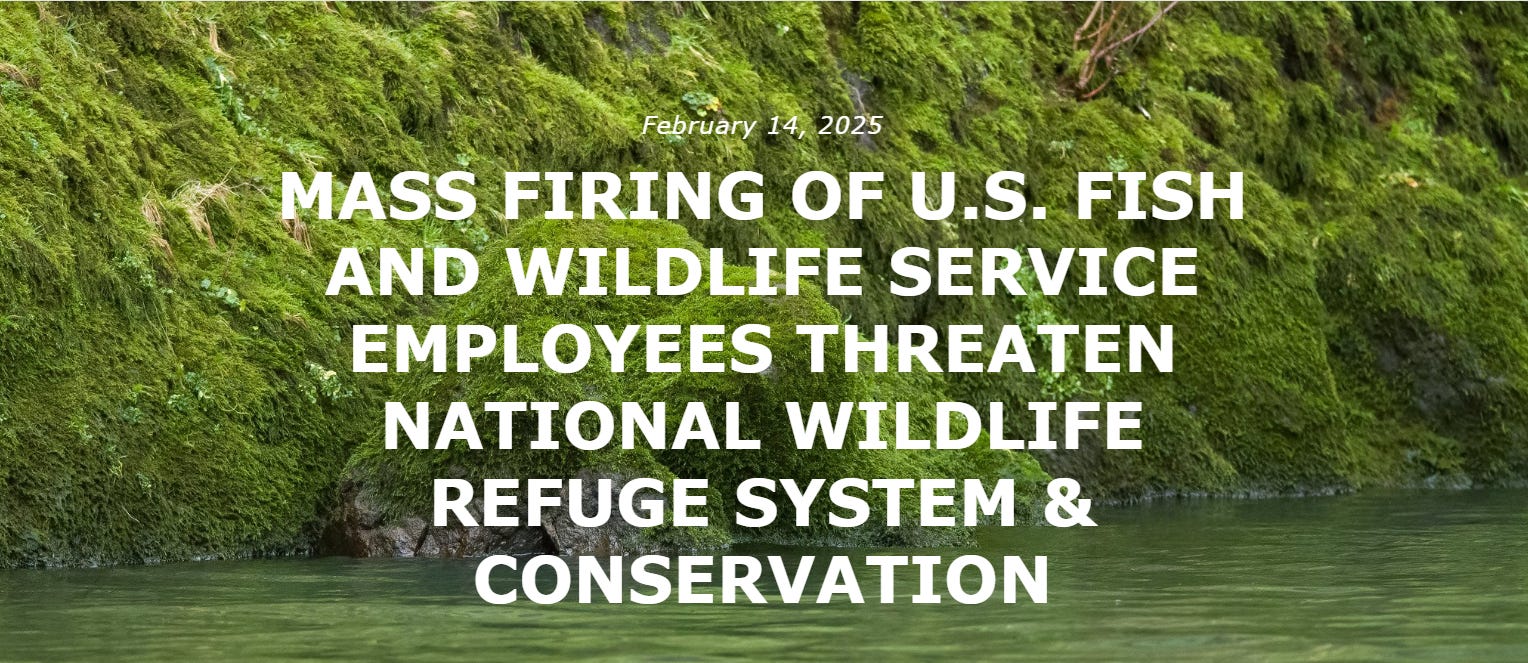
According to reports, these positions were deemed “not in the public interest” by DOI—an assertion that fundamentally ignores the role these professionals play in protecting and restoring our nation’s wildlife and wild places.
This sweeping, mass firing comes at a time when the Refuge System is already struggling with a decimated workforce. Today’s cuts will further cripple the agency’s ability to protect and manage America’s 573 national wildlife refuges, which span 95 million acres of land, 750 million acres of marine habitat, and supports countless species, many of which are keystone species, pollinators, and others vital to agriculture and the health of ecosystems.
“Losing this many dedicated employees all at once is an especially devastating blow to conservation efforts nationwide and an intentional dismantling of science,” said Desirée Sorenson-Groves, President & CEO of the National Wildlife Refuge Association. “The National Wildlife Refuge System was already underfunded and understaffed. The people being fired today are the backbone of wildlife protection in this country. Without them, habitats will degrade, endangered species will go unmonitored, trails will remain unmaintained, and visitors will lose access to environmental education and recreation opportunities. This is a crisis. These terminations will have long-lasting consequences for the protection of wildlife and habitat, as well as for the communities that depend on refuges for recreation, tourism, and economic benefits.”
Reports indicate that in order to hire new employees, the agency will be required to eliminate four current positions for every one new hire—a policy that will only worsen the Refuge System’s staffing crisis.
+—+
Where are the Yemen Heroes? Bomb the fuck out of these super yachts.
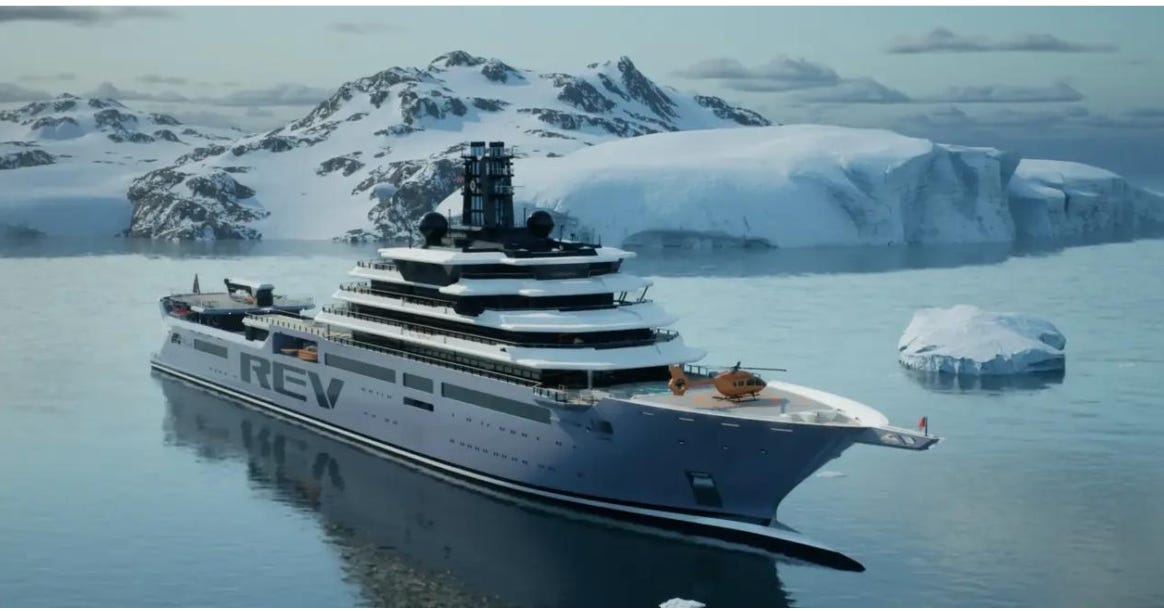
The shipyard that built the support ships for Mark Zuckerberg and Jeff Bezos will now be outfitting the world’s largest superyacht. Owned by an oil billionaire, the REV Ocean will have eight laboratories, three swimming pools, and a submarine hangar
It’s unclear what that might be, but the US has a long history of political and military intervention in Panama, including an invasion nearly 40 years ago that culminated in a dictator being driven out of an embassy with deafening rock music. Operation Just Cause, a 1989 military intervention, saw 26,000 American troops pour into the country.
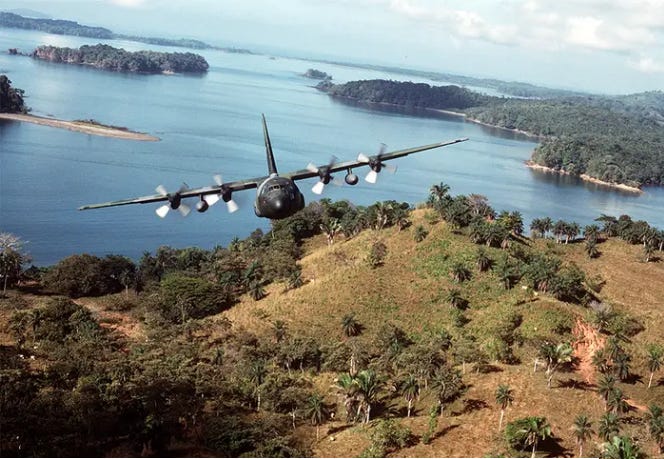
- Trump has said he wants to again put the Panama Canal under US control, causing a stir.
- The US has a history of intervention in Panama. In 1989, the military invaded it.
- The successful invasion signaled to neighboring countries that the US disregarded state sovereignty.
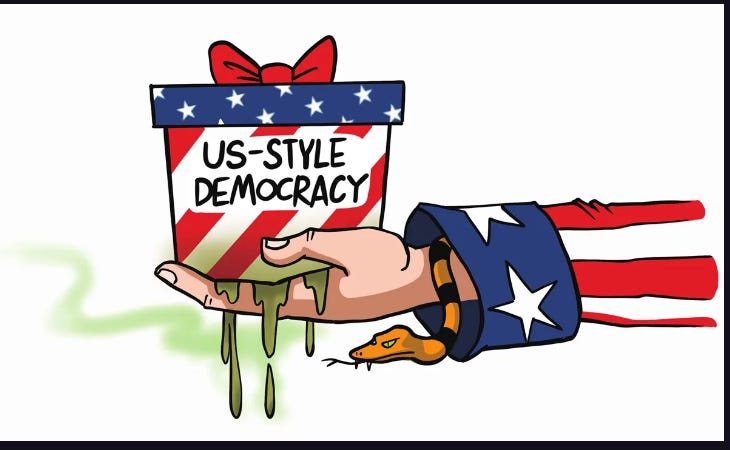
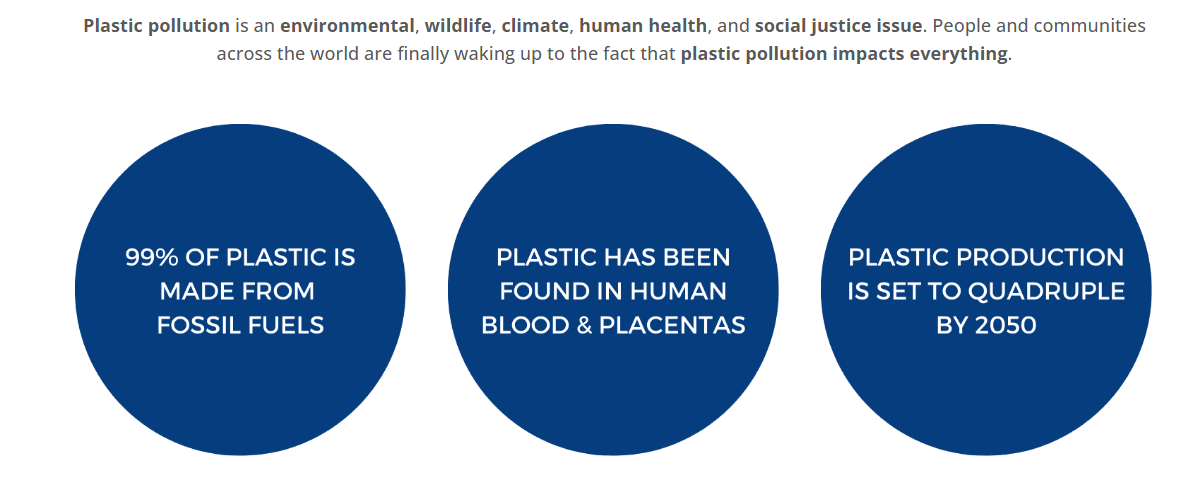
And the fucking world burns, floods kill, animals immolate, coral reefs crumble, plastics and nanoparticles into the brains of our babies, and alas, this is where the Mafia State goes:
The shipyard that built the support ships for Mark Zuckerberg and Jeff Bezos will now be outfitting the world’s largest superyacht. Owned by an oil billionaire, the REV Ocean will have eight laboratories, three swimming pools, and a submarine hangar
If you’re wondering why the billionaire owner of Aker, a shipping and offshore drilling conglomerate is doing so much for the oceans, the answer lies in his roots. The 66-year-old tycoon, worth $4.4 billion, got his start selling fish off a boat in Seattle before returning to Norway, where he built a fleet and earned a reputation as a ruthless corporate raider.
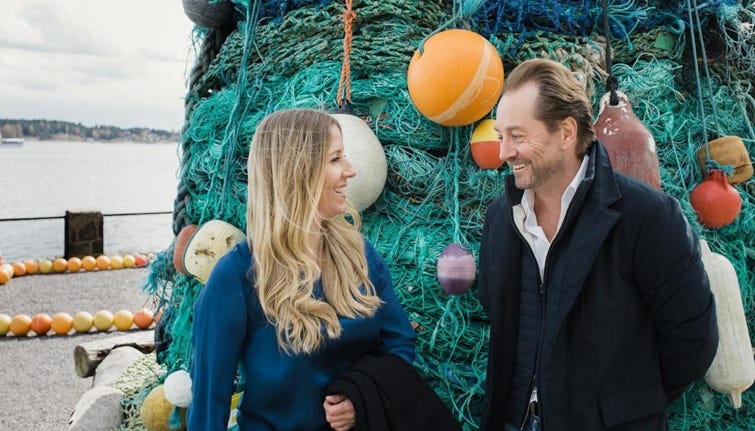
Perhaps in an effort to redefine that image, and give back to the nature that shaped his success, he commissioned a ship that will accommodate up to 60 scientists and 30 crew members during research expeditions.
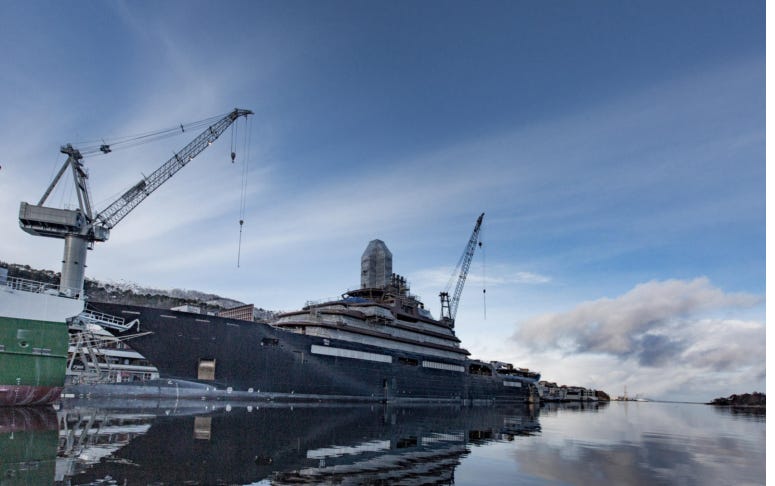
We are shifting the spotlight to Damen Yachting today, not only because most billionaires like to own at least one Damen yacht in their fleet, either as their superyacht or a support vessel, but also because the shipyard continues to push the boundaries of maritime innovation. From Amazon founder Jeff Bezos’ $75 million Abeona to Mark Zuckerberg’s $30 million Wingman, and even Russian billionaire Oleg Tinkov’s $100 million La Datcha, Damen Yachts has delivered some maritime marvels. Now, they are busy outfitting not a support vessel but the world’s longest yacht, REV Ocean, spanning 638 feet, currently undergoing outfitting at Damen Shiprepair Vlissingen.
+—+
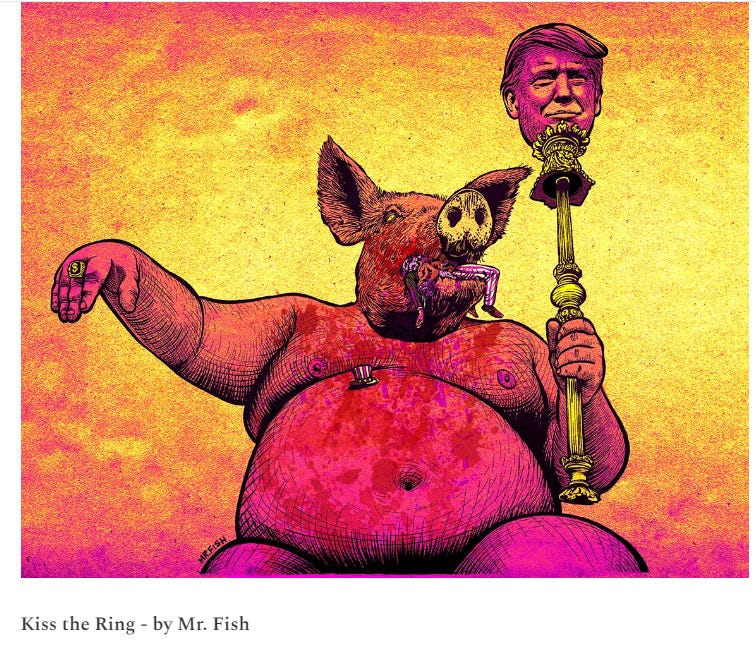
Chris! Billionaires, man, War is a Racket, Monopolies, Trusts, the entire shithole of capitalism from the beginning:
Hedges: Kiss the ring. Grovel before the Godfather. Give him tribute, a cut of the spoils. If he and his family get rich you get rich. Enter his inner circle, his “made” men and women, and you do not have to follow rules or obey the law. You can disembowel the machinery of government. You can turn us and the natural world into commodities to exploit until exhaustion or collapse. You can commit crimes with impunity. You can make a mockery of democratic norms and social responsibility. Perfidy is very profitable at first. In the long term it is collective suicide.
America is a full blown kleptocracy. The demolition of the social and political structure, begun long before Trump, makes a few very, very rich and immiserates everyone else. Mafia capitalism always leads to a mafia state. The two ruling parties gave us the first. Now we get the second. It is not only our wealth that is being taken from us, but our liberty.
Since the election of Donald Trump, Elon Musk, currently worth $394 billion, saw his wealth increase by $170 billion. Mark Zuckerberg, worth $254 billion, saw his net worth increase by nearly $41 billion.
Tidy sums for kneeling before Moloch.
+—+

Then this fucking billionaire surveillance felon: The Google cofounder has already donated more than $1.5 billion to Parkinson’s research. Now, as he takes on autism, he’s also investing in venture funds and startups working to develop therapies and treatments, Everything they touch is dirty.
Hmm, Parkinson’s and Atrazine and a thousand other chemicals? Autism and, well, you figure that one out — shots, more shots, hormone disrupters, more and more.
And here we are, the God Fucking Silicon Valley bloodlust cocksuckers:
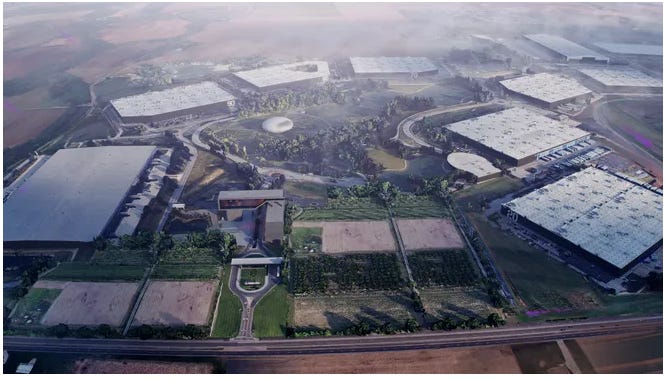
The state of Ohio is spending $70 million to build a taxiway at Rickenbacker International Airport and make other improvements to support a new weapons factory in Pickaway County.
The money is in addition to other state incentives for the California company Anduril, which announced in January that it plans to spend $900 million on a 5-million-square-foot complex to build drones, missiles and other high-tech weapons south of the airport. Dubbed Arsenal-1, the complex is expected to employ 4,008 workers by 2035, at an average annual salary of $132,000.
The state money, from the All Ohio Future Fund, will be distributed through the Pickaway County Port Authority. The authority will spend the money on improving utility and roads at the 600-acre site, off Airbase Road. Much of the money will also be spent on a taxiway to the runway for Anduril’s buildings directly on airport grounds.
+—+

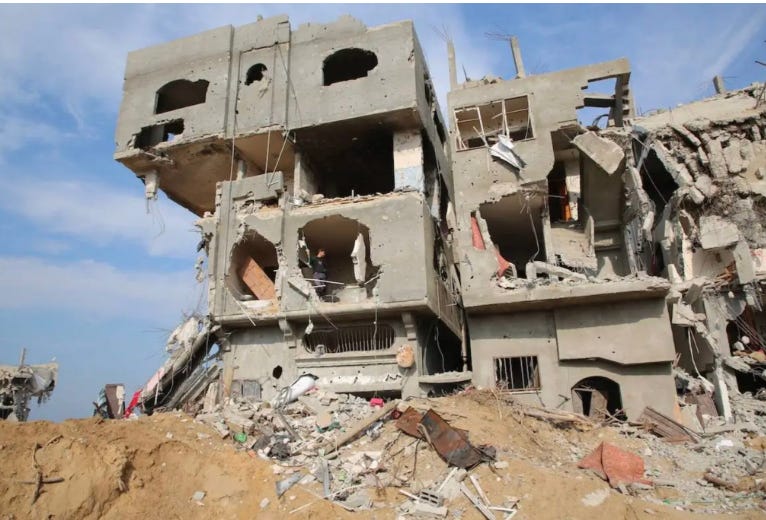
All for the fucking perverted “religion”: Palestinian prisoners show signs of torture, medical neglect; Israel attacks bulldozer crew retrieving bodies in Gaza; bakeries reopen; West Bank violence; Israel violates Lebanon ceasefire
Your brain is full of microplastics: are they harming you?
Plastics have infiltrated every recess of the planet, including your lungs, kidneys and other sensitive organs. Scientists are scrambling to understand their effects on health.
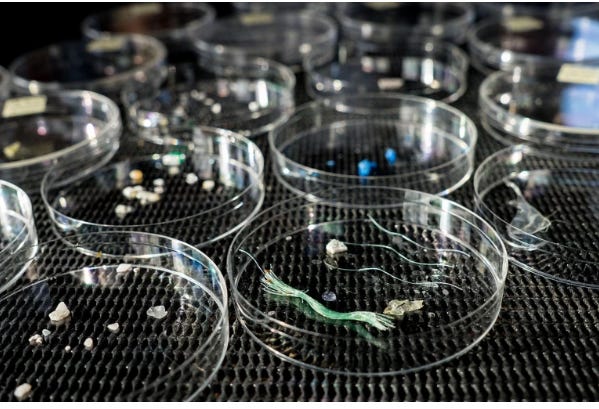
A sliver of human brain in a small vial starts to melt as lye is added to it. Over the next few days, the caustic chemical will break down the neurons and blood vessels within, leaving behind a grisly slurry containing thousands of tiny plastic particles.
Toxicologist Matthew Campen has been using this method to isolate and track the microplastics — and their smaller counterparts, nanoplastics — found in human kidneys, livers and especially brains. Campen, who is at the University of New Mexico in Albuquerque, estimates that he can isolate about 10 grams of plastics from a donated human brain; that’s about the weight of an unused crayon.
Microplastics have been found just about everywhere that scientists have looked: on remote islands, in fresh snow in Antarctica, at the bottom of the Mariana Trench in the western Pacific, in food, in water and in the air that we breathe. And scientists such as Campen are finding them spread throughout the human body.
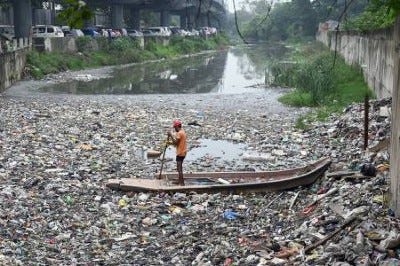
Landmark study links microplastics to serious health problems
Detection is only the first step, however. Determining precisely what these plastics are doing inside people and whether they’re harmful has been much harder. That’s because there’s no one ‘microplastic’. They come in a wide variety of sizes, shapes and chemical compositions, each of which could affect cells and tissues differently.
This is where Campen’s beige sludge comes into play. Despite microplastics’ ubiquity, it’s difficult to determine which microplastics people are exposed to, how they’re exposed and which particles make their way into the nooks and crannies of the body. The samples that Campen collects from cadavers can, in turn, be used to test how living tissues respond to the kinds of plastic that people carry around with them.
“Morbidly speaking, the best source I can think of to get good, relevant microplastics is to take an entire human brain and digest it,” says Campen.
The world is hungry for data — German consumers rated microplastics in food as their top environmental-health concern in 2023, for example. And negotiations on a global treaty that could cap plastics production are under way. Findings have trickled out slowly, hampered by insufficient analytical methods, contamination risks and a lack of collaboration between scientists in different fields. “There’s no cookbook at this point. There’s no manual of standard operating procedures,” says Kathleen Egan, a cancer researcher at Moffitt Cancer Center in Tampa, Florida. “We’re having to make them up as we go, and it’s a process.”
But there are signs that scientists are ironing out these kinks, and that the field is maturing. Campen is one of a cadre of researchers developing unconventional methods and forming teams of interdisciplinary scientists. They are caught in a race against time. Plastics production, which began less than a century ago, reaches an all-time high each year, and the material takes hundreds, if not thousands, of years to degrade, which will create trillions of microplastics in the process.
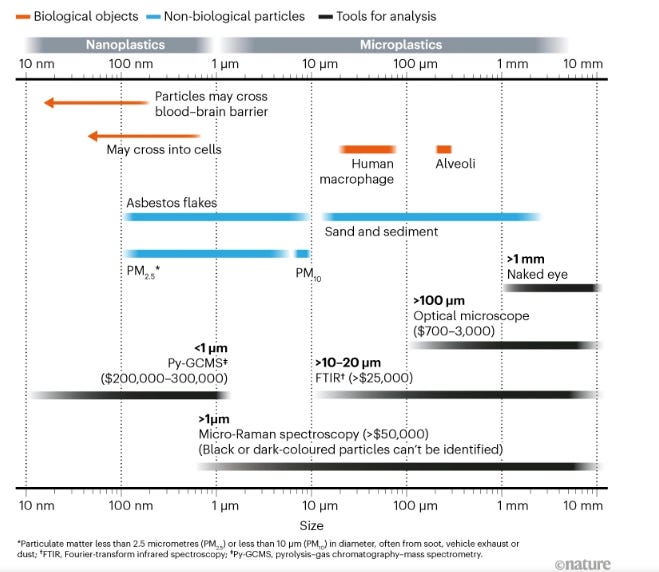
“There are microplastics everywhere,” says Bart Koelmans, an environmental chemist at Wageningen University in the Netherlands. “We cannot run away from them.”
Mafia Bosses of Plastic
William Young
Founded Plastipak, a plastic container maker, with his father in 1967
Sold a majority stake in Plastipak to Beatrice Foods, but the family bought it back in 1982
Sold a minority stake to Goldman Sachs three decades later
The Chao siblings
Albert, James, and Dorothy Chao Jenkins own stakes in Westlake Corporation, a producer of low-density polyethylene
Low-density polyethylene is used for food packaging and other forms of plastic
Other billionaires
Walter Wang is a Taiwanese immigrant who became a multibillionaire by supplying America with plastic pipes
Ahh, Billionaires:
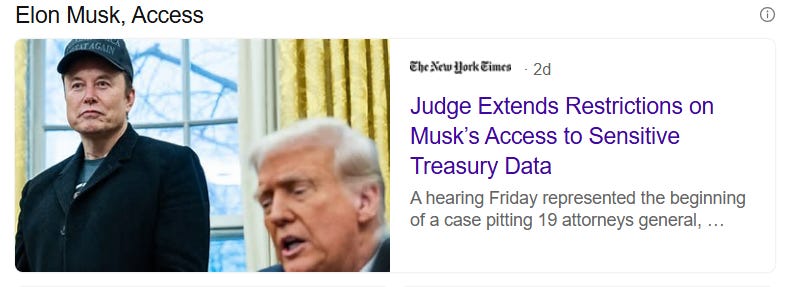
Mafia Bar Mitzvah Style:
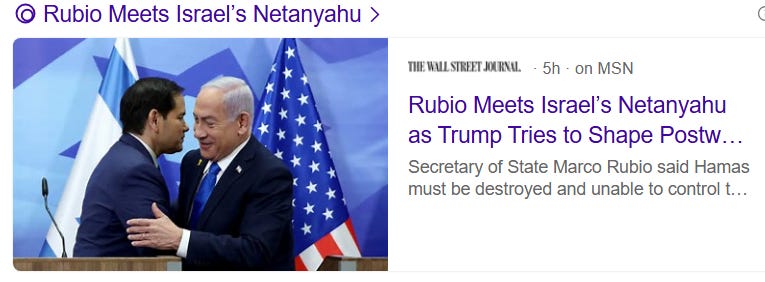
+—+
Dumb mother fucking Southerners.
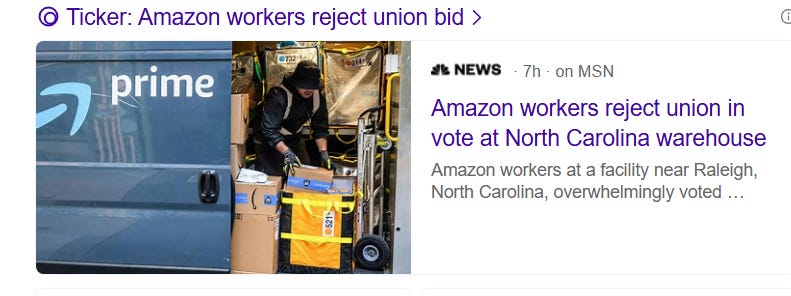
Here we are in the fucking Mormon Cunt-Tree:
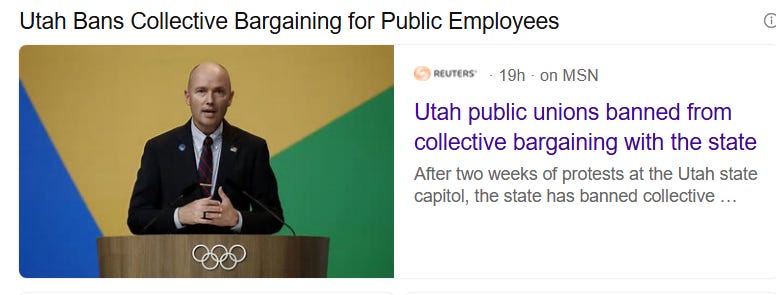
+—+
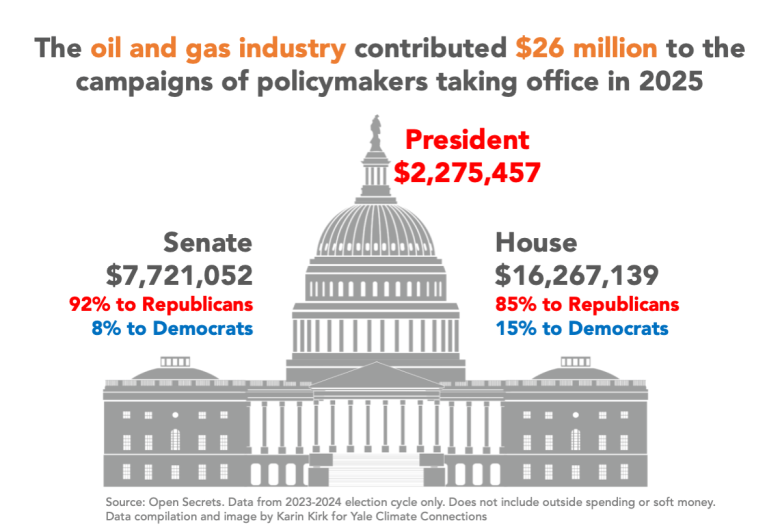
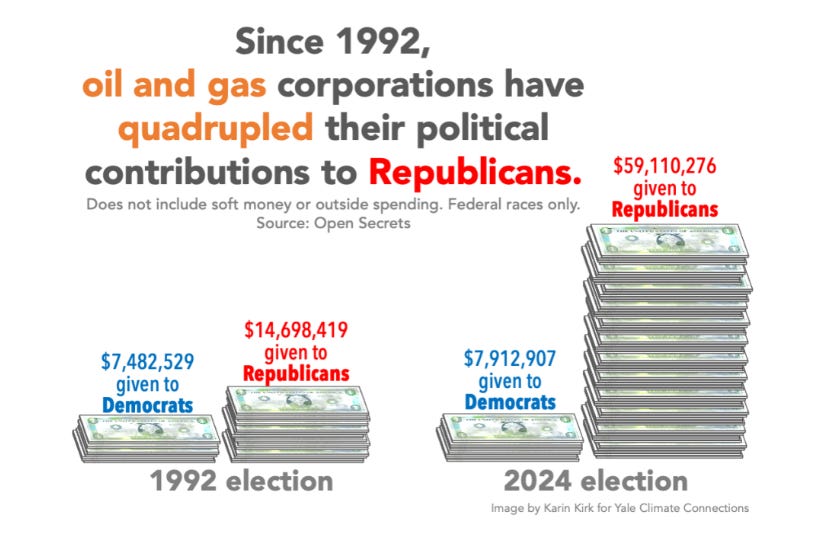
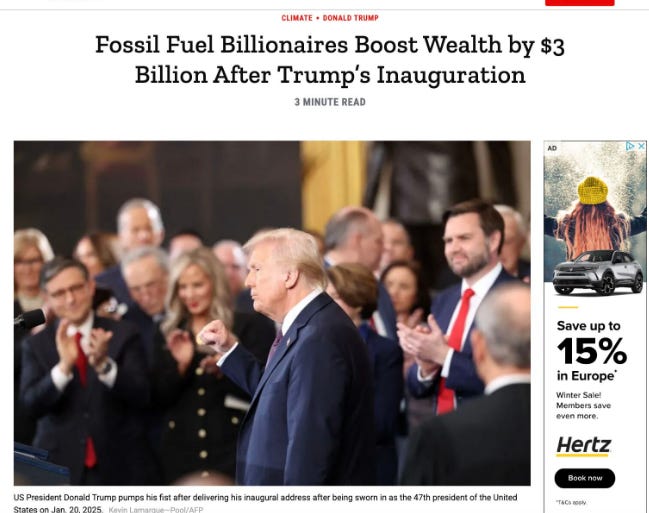
🚨 Our fossil fuel wealth tracking campaign has recorded a £3bn wealth boost for Trump’s inner circle of billionaires in just ONE DAY following the inauguration. 🚨
“In just one day after Trump’s inauguration, CARP says 15 billionaires saw their combined wealth increase $3.31 billion, from $317.86 billion to $321.17 billion. And since the new year began, these individuals have made $17 billion, according to a CARP analysis using Bloomberg Data.”
Link to the piece here: https://lnkd.in/dQZa2QDq
Thanks to Rebecca Schneid, and great work from Chuck Collins, Sarah Cohen, Gracie Bennett. Kibbo Kift Agency.
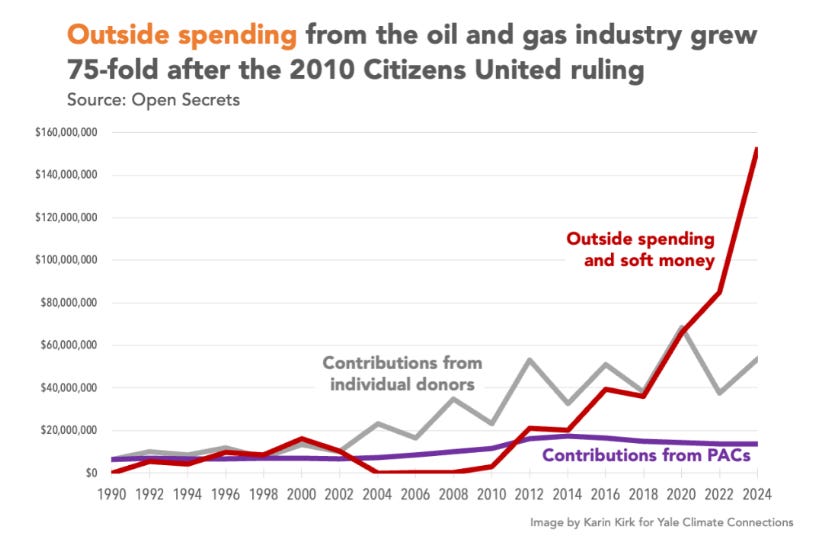
n 1907, President Theodore Roosevelt signed a law banning political contributions from corporations, a measure that was widely popular at that time – and perhaps would be again today. In 1935, public utility companies were prohibited from making political contributions, clamping down corporate influence in elections even further. But over time, these policies were softened and ultimately reversed, culminating in the 2010 Citizens United ruling by the Supreme Court that opened the floodgates to unlimited spending by corporations seeking to assert political influence.
Monsters, one and all:
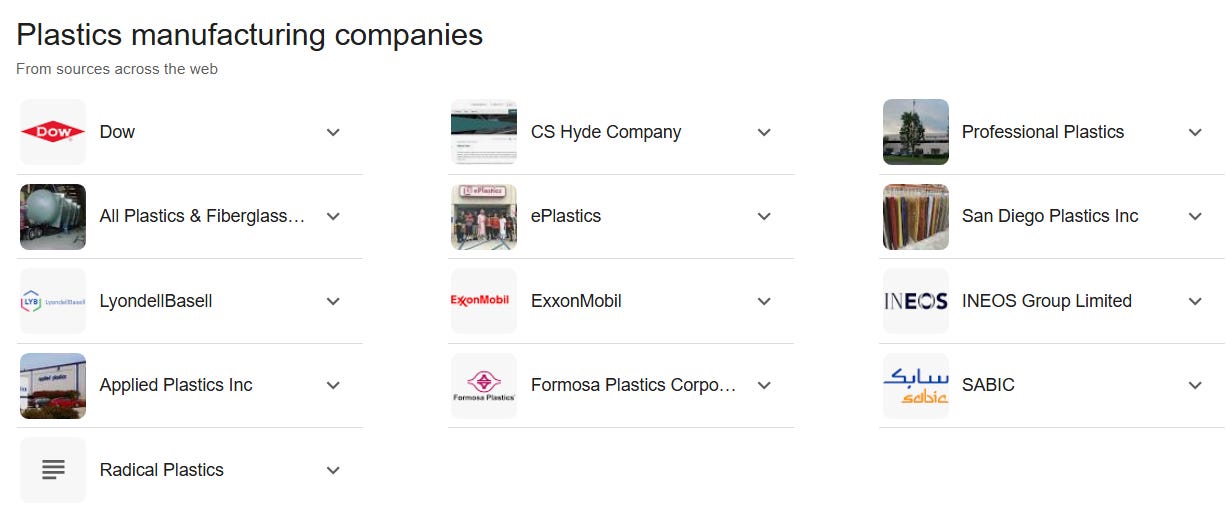
Largest Plastic Manufacturing Companies in the World
15. Toray Industries, Inc. (OTC:TRYIY)
Market Cap as of January 12: $9.10 Billion
Toray Industries, Inc. (OTC:TRYIY) produces and sells fibers, textiles, performance chemicals, carbon fiber composite materials, environmental and engineering products, and life science products worldwide. The company offers yarns, fabrics, non-woven fabrics, resins, molded products, foam products, films, processed film products, synthetic fibers, chemicals, electronic materials, graphic materials, carbon fibers, molded products, pharmaceuticals, medical devices, engineering services, condominiums, industrial equipment, IT-related equipment, membranes, housing materials, and building materials. Toray Industries, Inc. (OTC:TRYIY) was founded in 1926 and is based in Tokyo, Japan. The company employs over 48,000 individuals and is worth $9.10 billion, as of January 12.
Some of the biggest companies that have brought, and are expected to further bring, business to the global plastics industry include Tesla, Inc. (NASDAQ:TSLA), The Boeing Company (NYSE:BA), and The Coca-Cola Company (NYSE:KO).
14. Evonik Industries AG (OTC:EVKIY)
Market Cap as of January 12: $10.10 Billion
Evonik Industries AG (OTC:EVKIY) is a German company that specializes in chemical production. The company provides various additives, surfactants, smart materials, performance materials and infrastructure services. The company’s products are used in many sectors, such as automotive, construction, and consumer goods. Evonik Industries AG (OTC:EVKIY) has operations in several regions, including Europe, Asia-Pacific, and North and South America. Evonik Industries AG (OTC:EVKIY) was founded in 1873 and employs roughly 34,000 individuals. As of January 12, Evonik Industries AG (OTC:EVKIY) is worth $10.10 billion and is one of the largest plastic manufacturing companies in the world, by market cap.
13. Eastman Chemical Company (NYSE:EMN)
Market Cap as of January 12: $10.97 Billion
Eastman Chemical Company (NYSE:EMN) is a specialty materials company in the US and overseas. The company operates through four segments: Additives & Functional Products, Advanced Materials, Chemical Intermediates, and Fibers. The company’s Additives & Functional Products segment provides hydrocarbon and rosin resins, organic acid solutions, amine-based building blocks, soil fumigants, fungicides, plant regulators, specialty and commodity solvents, paint additives, and specialty polymers. Its Advanced Materials segment offers copolyesters, biopolymers, cellulose esters, PVB sheets, and window and protective films. The company’s Chemical Intermediates segment provides methylamines, higher amines, solvents, Olefin derivatives, and plasticizers. Finally, Eastman Chemical Company (NYSE:EMN) supplies cellulose acetate tow, triacetin, flake, acetic acid, and anhydride for filtration and yarns, as well as nonwoven media, papers, and cellulose fibers, through its Fibers segment. Eastman Chemical Company (NYSE:EMN) was founded in 1920 and is based in Tennessee. As of January 12, the company is worth $10.97 billion.
12. Celanese Corporation (NYSE:CE)
Market Cap as of January 12: $12.91 Billion
Celanese Corporation (NYSE:CE) is a technology and specialty materials company that produces and sells engineered polymers in the U.S. and internationally. The company has three divisions: Engineered Materials, Acetate Tow, and Acetyl Chain. The Engineered Materials division produces specialty polymers for auto, medical, industrial, and consumer electronics, as well as sweeteners and food protection ingredients. The Acetate Tow division produces acetate tows and flakes for filter products, and the Acetyl Chain division manufactures acetyl products and solvents used for colorants, paints, adhesives, coatings, pharmaceuticals, agricultural products, and chemicals. Celanese Corporation (NYSE:CE) also produces vinyl acetate-based emulsions and ethylene vinyl acetate resins and compounds, as well as ultra-high molecular weight polyethylene. The company was founded in 1918 and is based in Irving, Texas.
Celanese Corporation (NYSE:CE) is one of the largest plastic manufacturing companies in the world and is valued at $12.91 billion, as of January 12.
11. Formosa Plastics Corporation (TPE:1301)
Market Cap as of January 12: $18.39 Billion
Formosa Plastics Corporation (TPE: 1301) is a Taiwan-based chemical and plastics company founded in 1954. The company is one of the largest petrochemical companies in Taiwan and also one of the largest producers of polyvinyl chloride (PVC) in the world. Formosa Plastics Corporation (TPE:1301) produces a wide range of products, including Chlor-Alkali, Polyethylene, Polypropylene, Suspension PVC, Specialty PVC, and other plastic compounds.
Formosa Plastics Corporation (TPE:1301) is an important player in the global plastics market and is one of the largest plastic manufacturing companies in the world. As of January 12, the company is worth $18.39 billion on the open market.
10. INEOS Group Limited
Annual Revenue (2021): $20.38 Billion
INEOS Group Limited is a multinational chemical company based in the United Kingdom. It is among the world’s largest private chemical companies by revenue, with an annual revenue of over $20 billion, as of 2021. The company produces products ranging from basic chemicals, such as chlorine and ethylene, to advanced materials and specialty chemicals, such as polyethylene, styrenics, and performance chemicals. The company also produces chemicals for the automotive, construction, electronics, and medical industries.
INEOS Group Limited is a global leader in the plastic manufacturing industry, with a presence in more than 25 countries. The company produces and sells a variety of plastic products, including polyethylene, polypropylene, polystyrene, and PVC, among others. INEOS’ portfolio of products is used for a variety of applications, including packaging, construction, automotive, and consumer goods. The company has a strong presence in the global plastic manufacturing industry, and is among the top producers of polyethylene and polypropylene.
9. LyondellBasell Industries N.V. (NYSE:LYB)
Market Cap as of January 12: $30.2 Billion
LyondellBasell Industries N.V. (NYSE:LYB) is a chemical company based in Houston, Texas, that operates in the U.S., Germany, Mexico, Italy, Poland, France, Japan, China, and the Netherlands. The company operates 6 business segments: Olefins/Polyolefins-Americas, Olefins/Polyolefins-Europe/Asia/International, Intermediates/Derivatives, Advanced Polymer Solutions, Refining, and Technology. LyondellBasell Industries N.V. (NYSE:LYB) produces olefins, co-products, polyethylene, polypropylene, propylene oxide, oxyfuels, intermediates, compounds/solutions, catalysts, and also refines crude oil into gasoline and distillates. LyondellBasell Industries N.V. (NYSE:LYB) was founded in 2009 and has grown to become one of the largest plastic manufacturing companies in the world with a market cap of $30 billion, as of January 12.
8. DuPont de Nemours, Inc. (NYSE:DD)
Market Cap as of January 12: $37.21 Billion
DuPont de Nemours, Inc. (NYSE:DD) is based in Wilmington, Delaware and produces tech-based materials and solutions in the U.S., Canada, Asia Pacific, Latin America, Europe, Middle East, and Africa. The company has three segments: Electronics & Industrial, Mobility & Materials, and Water & Protection. The Electronics & Industrial sells materials for semiconductor and circuit fabrication, PCBs, LEDs, metal finishing, displays, and specialty silicones. DuPont de Nemours, Inc. (NYSE:DD) provides engineering resins, silicone, films, and pastes for transportation, electronics, industrial, and consumer end-markets through its Mobility & Materials segment. The Water & Protection supplies products and systems for worker safety, water purification, energy, medical packaging, and building materials. DuPont de Nemours, Inc. (NYSE:DD) is worth $37.21 billion, as of January 12, and is among the largest plastic manufacturing companies in the world.
7. Dow Inc. (NYSE:DOW)
Annual Revenue 2021: $40.51 Billion
Dow Inc. (NYSE:DOW) is a materials science solutions provider in the US, Canada, Europe, the Middle East, Africa, India, the Asia Pacific, and Latin America. It has three segments: Packaging & Specialty Plastics, Industrial Intermediates & Infrastructure, and Performance Materials & Coatings. The company offers ethylene, propylene and aromatics products; polyethylene, polyolefin elastomers, ethylene vinyl acetate, and ethylene propylene diene monomer rubbers through its Packaging & Specialty Plastics segment. The company’s Industrial Intermediates & Infrastructure segment provides ethylene oxides, propylene oxides, propylene glycol and polyether polyols, aromatic isocyanates and polyurethane systems, coatings, adhesives, sealants, elastomers, and composites. Additionally, Dow Inc. (NYSE:DOW) provides architectural paints & coatings, industrial coatings, performance silicones & specialty materials, and silicone feedstocks & intermediates through its Performance Materials & Coatings segment.
Dow Inc. (NYSE:DOW) was founded in 2018 and is based in Midland, Michigan. The company has quickly grown to become one of the largest plastic manufacturing companies in the world and is valued at $40.5 billion, as of January 12.
The plastic manufacturing industry has high exposure to a diverse range of lucrative end-markets that are led by giant companies like Tesla, Inc. (NASDAQ:TSLA), The Boeing Company (NYSE:BA), and The Coca-Cola Company (NYSE:KO).
6. BASF SE (OTC:BASFY)
Market Cap as of January 12: $51.69 Billion
BASF SE (OTC:BASFY) is a global chemical company with six segments: Chemicals, Materials, Industrial Solutions, Surface Technologies, Nutrition & Care, and Agricultural Solutions. The company provides petrochemicals & intermediates, advanced materials & their precursors, ingredients & additives for industrial applications, chemical solutions & automotive OEM, nutrition & care ingredients, crop protection products & seeds, and battery materials solutions. Founded in 1865 and headquartered in Ludwigshafen am Rhein, Germany, BASF SE (OTC:BASFY) is one of the largest plastic manufacturing companies in the world. As of January 12, the company is worth over $51 billion on the open market.
5. Saudi Basic Industries Corporation (TADAWUL:2010)
Market Cap as of January 12: $74.67 Billion
Saudi Basic Industries Corporation (TADAWUL:2010), or more commonly known as SABIC, is one of the world’s largest diversified chemical companies and a global leader in the chemical industry. The company is publicly listed on the Saudi Stock Exchange and is based in Riyadh, Saudi Arabia and has operations in over 50 countries. Saudi Basic Industries Corporation (TADAWUL:2010) produces a wide range of petrochemicals, including olefins, aromatics, methanol, ethylene glycol, and polyethylene, as well as fertilizers, metals and industrial chemicals. The company also has interests in manufacturing, engineering and technology-based businesses.
As of January 12, Saudi Basic Industries Corporation (TADAWUL:2010) is worth SAR 282 billion, or $74.67 billion, and is placed high among the largest plastic manufacturing companies in the world.
4. China Petroleum & Chemical Corporation (SHA:600028)
Market Cap as of January 12: $75.87 Billion
China Petroleum & Chemical Corporation (SHA:600028), also known as Sinopec, is one of the world’s leading integrated oil and gas companies. It is also a major player in the global plastics manufacturing industry. The company operates through five segments: Exploration and Production, Refining, Marketing and Distribution, Chemicals and Corporate and Others. China Petroleum & Chemical Corporation (SHA:600028) has a comprehensive portfolio of petrochemical products, including plastic resins, polyethylene, polypropylene, and other plastics. China Petroleum & Chemical Corporation (SHA:600028) is a major player in the global plastic manufacturing industry and is well-positioned to capitalize on growth opportunities in the sector. Its strong brand recognition and extensive distribution networks help it compete effectively against other leading players in the industry. The company is also well-positioned to benefit from the growing demand for plastic products in the future.
As of January 12, China Petroleum & Chemical Corporation (SHA:600028) is worth over $75 billion and is one of the largest plastic manufacturing companies in the world.
3. TotalEnergies SE (NYSE:TTE)
Market Cap as of January 12: $157.10 Billion
TotalEnergies SE (NYSE:TTE) is a French multinational energy company, involved in the production and distribution of oil, natural gas and petrochemicals. The company is one of the largest plastic manufacturing companies in the world and its operations span across the entire plastics value chain, from feedstock and resin production to compounding, processing and recycling. The company operates a range of plants and facilities around the world, in over 130 countries, producing a variety of plastic products for a range of industries. As of January 12, TotalEnergies SE (NYSE:TTE) is worth $157.10 billion.
2. LG Chem, Ltd. (KRX:051910)
Market Cap as of January 12: $204.5 Billion
LG Chem, Ltd. (KRX:051910) is one of the largest chemical companies in the world, with operations in 15 countries. The company is a leading producer of petrochemicals, plastics, and specialty chemicals, with a large presence in the automotive, electronics, and energy industries. It also produces advanced materials, including Li-ion batteries, OLED displays, and fuel cells. As of January 12, LG Chem, Ltd. (KRX:051910) is worth KRW 46.96 trillion, or $204.5 billion, and is one of the largest plastic manufacturing companies in the world.
1. Exxon Mobil Corporation (NYSE:XOM)
Market Cap as of January 12: $458.77 Billion
Exxon Mobil Corporation (NYSE:XOM) explores, extracts, and sells crude oil and natural gas globally. The oil and gas giant also manufactures, trades, transports, and sells petroleum products, petrochemicals, and other special items across the globe. Exxon Mobil Corporation (NYSE:XOM) is a major player in the plastic manufacturing industry. The company produces petrochemicals, such as olefins, polyolefins, aromatics, and other petrochemicals that are the building blocks of a wide array of plastic products.
Basically, Exxon Mobil Corporation (NYSE:XOM) manufactures and provides the necessary components for an expansive range of plastic products, such as packaging materials, plastic containers, car bumpers, artificial rubber, and many more. As of January 12, Exxon Mobil Corporation (NYSE:XOM) is worth $458.7 billion on the open market and is the largest plastic manufacturing company in the world.
 Paul Haeder, Author