

fucking A, man, the stupidity of the white men and their monsterous white women-wannabe-like-white-men co-conspirators are ruled by the Lizard People, Man, the Lizard People . . .
We can be young and innocent when nothing mattered but the moment we were in. Let’s shut our eyes and pretend and maybe once again we can be young and innocent.
Related questions — More answers below
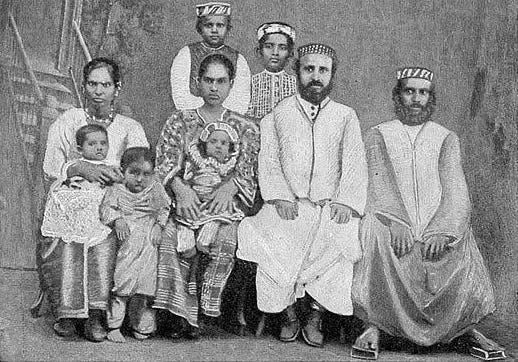
Why do celebrities of Jewish origin like Ben Stiller and Jerry Seinfeld not look middle eastern?
Why is Woody Allen white when he’s Jewish and Jews are from the Middle East?
If Jews are from Israel, why do the majority look White?
Why are Ashkenazi Jews considered white people?
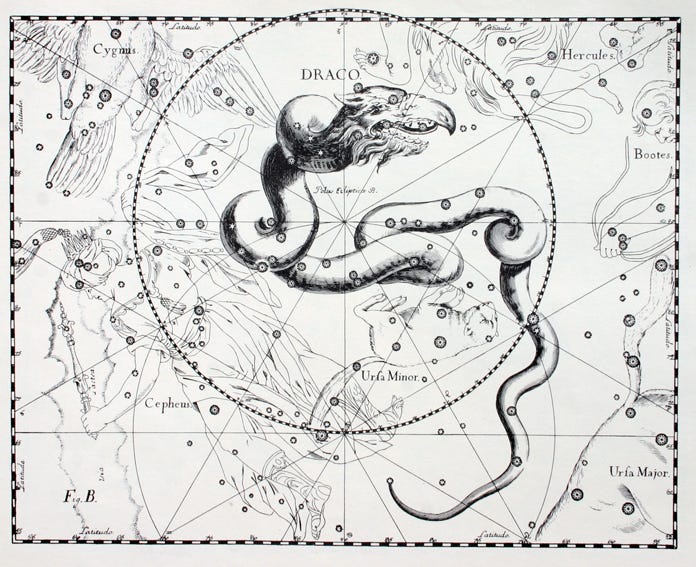
Lizards, reptiles:
Shit, that guy, David Icke uses the phrase “problem–reaction–solution” to explain how he believes the Illuminati agenda advances. According to Icke, the Illuminati guide us in the direction they desire by creating false problems, which allows them to give their desired solution to the problem they created. He also refers to this process as “order out of chaos”. In 2018 researchers looking at the psychological effects of Icke’s belief system argued that “problem–reaction–solution” resembles the misinterpretation of the Hegelian thesis, antithesis, synthesis triad popularized by Chalybäus.
Incidents and issues Icke attributes to the Illuminati, or “Global Elite”, include the Oklahoma City bombing, Dunblane, Columbine, 9/11 (which Icke believes was an “inside job” to provide an excuse to advance an agenda of regime change across the world), 7/7, global warming, chemtrails, water fluoridation, the death of Princess Diana, the assassination of John F. Kennedy and Agenda 21. These incidents allow them to respond in whatever way they intended to act in the first place.
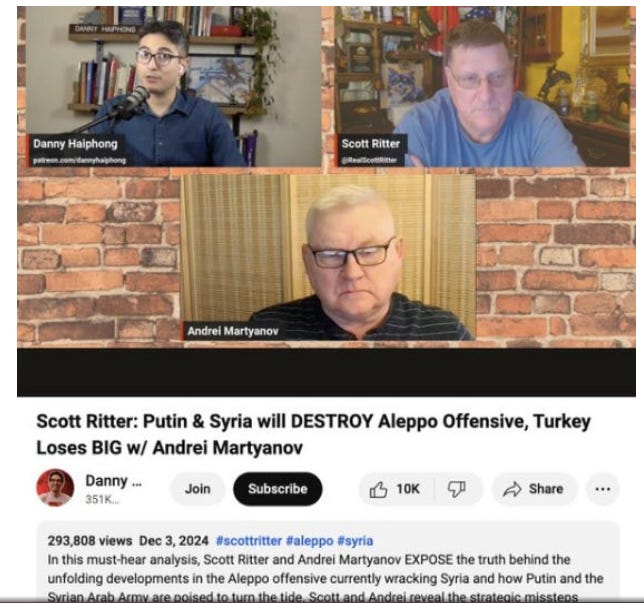
Goddamn, that fucking trio — Danny-Andrei-Ritter.
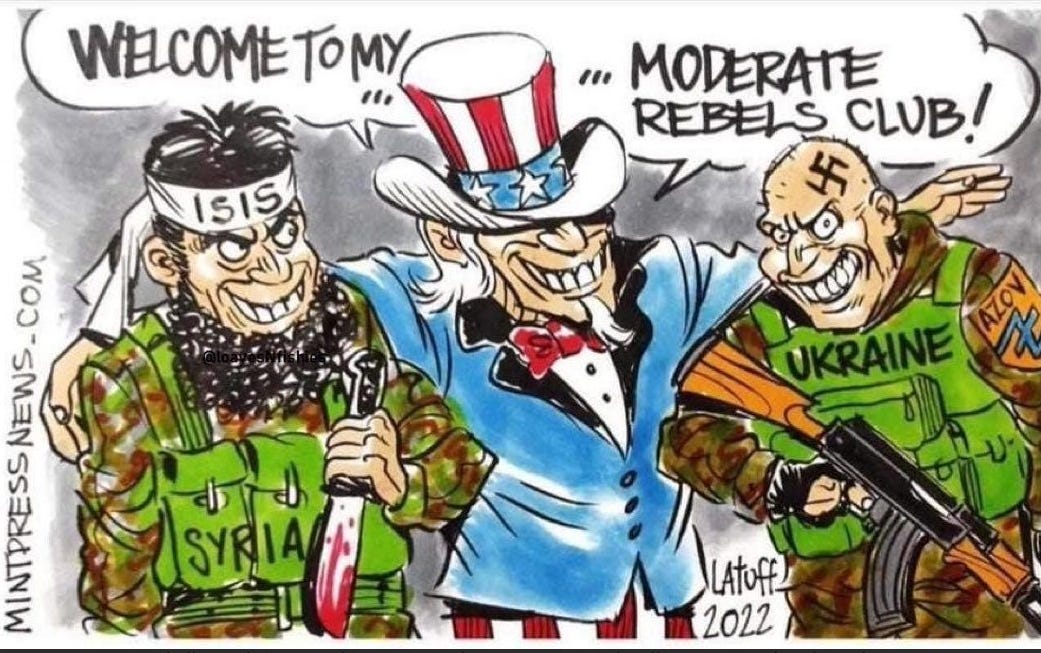
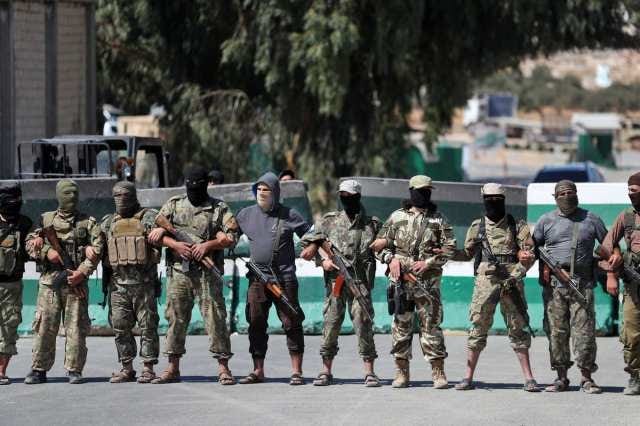
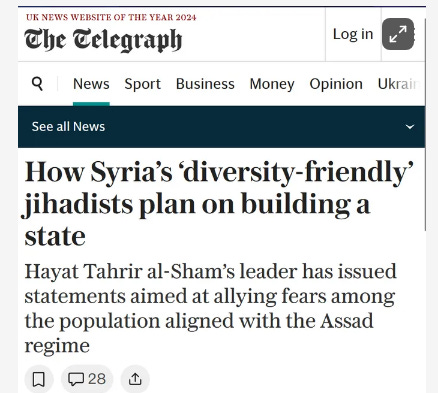
Nikola Mikovich had a good write-up on it. Here:
Russia got involved in the Syrian Civil War only in September 2015, when Assad’s Syrian Arab Army (SAA) was on the verge of collapse. In February of that year, Russian President Vladimir Putin signed the Minsk Agreements, effectively putting the Donbas war, which had broken out in the spring of 2014, “on hold”.
One month earlier, pro-Russian rebels were amid a military offensive, and the Ukrainian military was on the verge of collapse. But Putin decided to freeze the conflict and focus on Syria instead.In October 2016, former Russian general Leonid Ivashov explained on Russian state-owned Channel One that the Kremlin’s engagement in the Syrian conflict was “critical to prevent the construction of the Quatar-Turkey pipeline, which would be catastrophic for Gazprom”.
Besides that, in the war-torn Middle Eastern country, Russia and the United States reportedly had the same opponent – the Islamic State (IS). The SAA would have had difficulty defeating the IS if it hadn’t been for Russia and the Wagner Group. In 2015-2016, Russian forces, along with Hezbollah and other Iran-affiliated groups, also played an important role in the battle for Aleppo, significant parts of which were under the control of the Western-backed Syrian militias.Indeed, Moscow and Tehran helped Assad stabilise the situation in Syria. The conflict was put “on hold” in 2020 when the last significant battles occurred. After that, Russia began preparing to invade Ukraine, while anti-Assad rebels, strongly backed by Turkey, used the “break” to consolidate, rearm, and continue with what they see as the Syrian revolution. The SAA apparently did nothing to prepare for another round of fighting.
2024 Russia is bogged down in Ukraine, with no strategic goals achieved. Hezbollah was defeated by Israel, whose military killed not only the group’s entire leadership but also dozens of top Islamic Revolutionary Guard Corps (IRGC) commanders in Syria.
The Wagner Group, following the murder of its founder, Yevgeny Prigozhin, has been integrated into the Russian National Guard (Rosgvardiya), with some of its elements deployed to Africa. Assad, therefore, is unlikely to be able to count on its help either.His SAA seems to be on its own against well-armed and highly motivated Turkey-backed rebel forces. There are, however, two things that can prevent further falls in SAA-controlled cities. This time, it is Iran, rather than Russia, that could play a pivotal role in a new stage of the Syrian Civil War.
[NOTE: Iran ended up pulling out all support.]
If Assad survives politically and biologically, it will likely be due to Tehran’s support. However, whether Iran has the capacity and political will to help the Syrian leader remains highly uncertain.Also, a potential deal between Putin and the West could halt the rebels’ offensive, although that does not mean the SAA will recapture Aleppo or any other vital cities it has lost in the past few days. In other words, Putin would have to make serious concessions to the United States and its allies in Ukraine to be allowed to “save face” in Syria. But how likely is such an outcome?
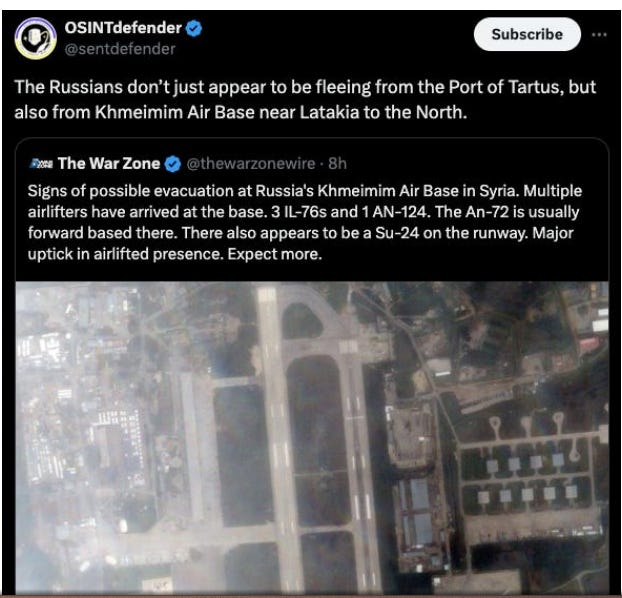
Assad’s defeat would automatically signify Moscow’s defeat. If the Western-backed rebels seize power in Damascus, Russia will have to immediately shut down its Khmeimim Air Base in the Latakia area and the naval facility in Tartus. Since Russia and Syria have no land connection, the Kremlin would be forced to ask NATO member Turkey for permission to allow its vessels to pass through the Bosporus and Dardanelles on their way back to Russia.
To get the green light from Ankara, Putin may have to make concessions to his “friend”, Turkish President Recep Tayyip Erdogan. But that’s not all. On their way through the Black Sea, Russian vessels would become an easy target for the Ukrainian military.All of the Kremlin’s choices seem difficult. To avoid another large-scale humiliation, whether in Ukraine or Syria, Putin will have to pay a heavy price. Since reaching deals with the West (and then accusing his Western partners of “deceiving him” and “leading him by the nose”) seems to be the core of his reign, he is likely to try to use his old strategy: making painful concessions to the West and selling it to his audience as another “geopolitical victory.”
Syria and Bashar al-Assad could quickly become the most significant “collateral damage” of Putin’s approach. Given that Russia is not in a position to seriously help Damascus unless Iran intervenes, Assad will have a hard time stopping the rebels’ offensive. As a result, Russia could eventually lose Syria as an ally.
Pro-Kremlin analysts and propagandists have already started blaming Assad and the SAA for “not learning the lessons” from the Ukraine war and preparing for another round of fighting against Western-backed rebels. In reality, Assad is not an autonomous actor but a leader who remains utterly dependent on Moscow and Tehran. Therefore, for everything happening in Assad-controlled parts of Syria, Russia and Iran, as his significant sponsors, bear full responsibility.
Quite aware of that, many pro-Assad Syrians have already started blaming the Kremlin for the role it is playing in their country. They are unhappy about the fact that Moscow never prevents Israel from bombing SAA positions. Now that militants from the Jabhat al-Nusra group are advancing toward Hama, speculations in Syria are growing that Russia might betray Assad, which would have dramatic consequences for the Alawites, Christians, and other minorities in the Middle Eastern country.
One thing is for sure: under the current geopolitical circumstances, where Russia repeatedly shows weakness and suffers humiliation, it cannot have both Ukraine and Syria. It remains to be seen what Putin will decide to sacrifice. Maybe both?
RE: Putin Has Betrayed and Abandoned Syria
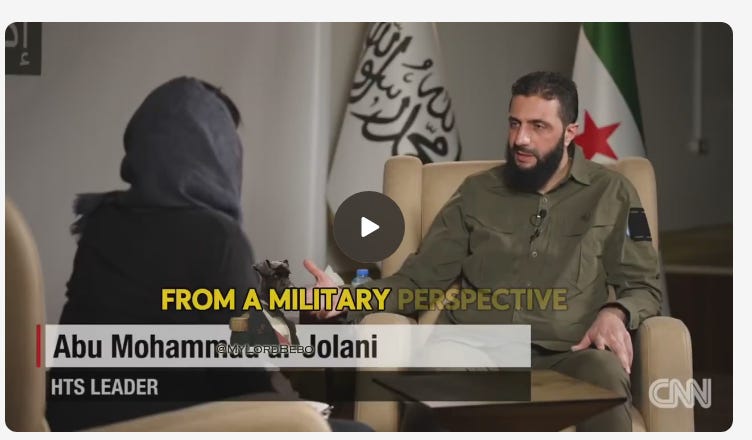
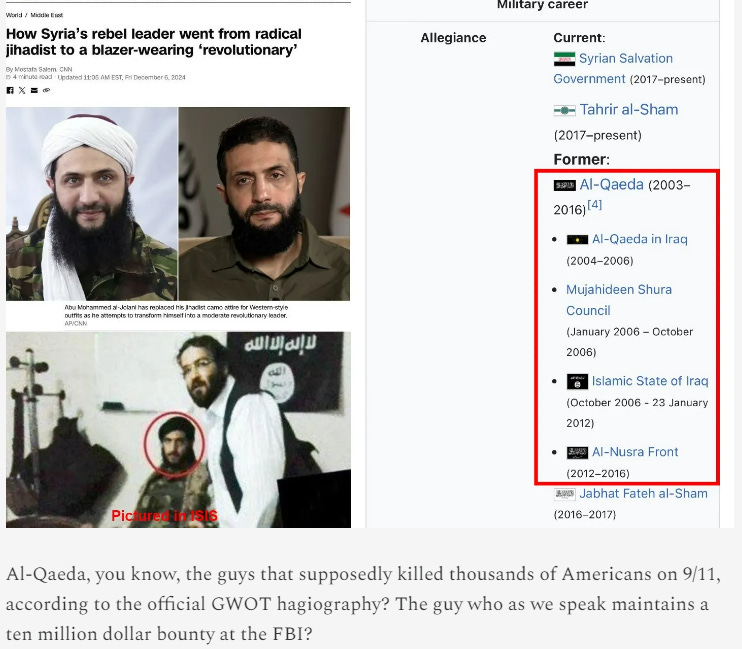
The latest example of this great decline comes by way of the West’s sudden whitewashing of ISIS deputy and Al-Qaeda leader Al-Joulani. The mind-boggling CNN softball interview is one for the ages:
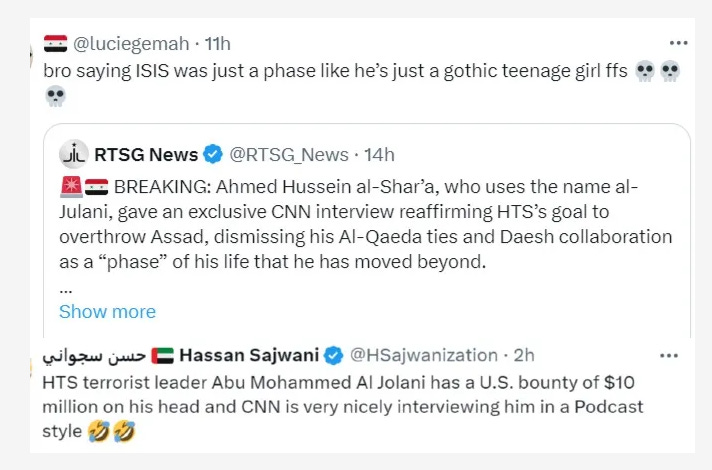
Yes, that guy is being courted by CNN, pitched softballs and offered no challenge whatsoever to the lyrical rhapsodizing of his ISIS teenage angst phase. What can we say, the CIA has built their perfect ‘redeemed terrorist folk hero’ archetype.
Democracy for the New World—the Western way!

RE: Cynical Overtakes Sacred, as the West Bares its True Face
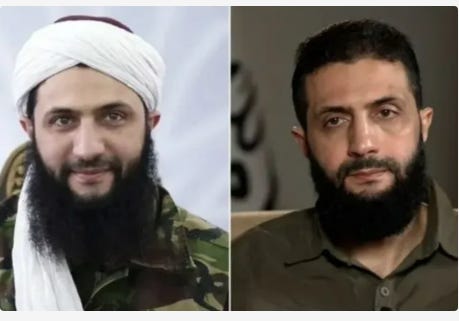
In an exclusive interview with MEE, US journalist Bilal Abdul Kareem talks for the first time about the six months he spent in a Hay’at Tahrir al-Sham prison in Syria. Abdul Kareem, who has been reporting from opposition-held Syria since 2012, believes he was arrested for reporting on allegations of torture against the group – and says he heard the screams of prisoners during his own captivity. Admitting he was putting himself in jeopardy by talking to MEE, Abdul Kareem accused HTS leader Abu Mohammad al-Jolani of lying about conditions in the militant group’s prisons, and said he was “unfit to rule”.
Bilal Abdul Kareem, born Darrell Lamont Phelps in 1970 in New York, is an American-born journalist and war correspondent known for his coverage of the Syrian Civil War. He initially gained recognition for his work with CNN and has been associated with other major news networks like the BBC and Channel 4.
Kareem converted to Islam and has a background that spans from acting and stand-up comedy to activism, particularly focusing on AIDS awareness in his earlier years. His journalistic career took a significant turn when he began documenting the Syrian conflict in 2012, where he founded his own media outlet, On the Ground News (OGN). Kareem’s work has often placed him in proximity to insurgent groups, earning him both praise for his courage and criticism for perceived biases. His reporting style has been noted for providing a unique perspective from within rebel-held territories, often focusing on the lives of civilians and fighters. Kareem has claimed to have survived multiple drone strikes, alleging that he was placed on a U.S. “kill list” due to his reporting, which led him to file a lawsuit against the U.S. government. This case was dismissed citing state secrets privilege. In August 2020, he was arrested by Hay’at Tahrir al-Sham (HTS), an al-Qaeda offshoot in northern Idlib, Syria, on charges of incitement and working with groups that harm public security, but was released after six months. His work continues to focus on the humanitarian aspects of conflicts, often putting him at personal risk but also earning him a following among those interested in grassroots journalism from conflict zones.
Oh, that fucking wasteland, man, that Holly-Dirt WASTELAND:
 Paul Haeder, Author