

the off-ramp for humanity is, hmm, tabla rasa . . . . reset . . . back to the future . . . ?

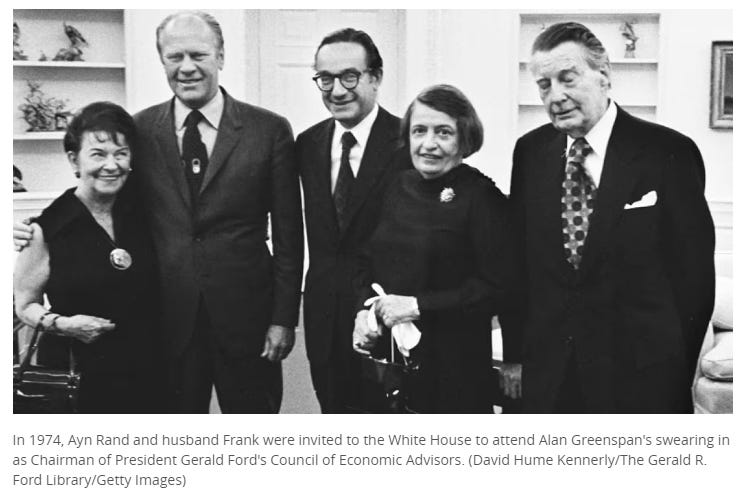
My philosophy, in essence, is the concept of man as a heroic being, with his own happiness as the moral purpose of his life, with productive achievement as his noblest activity, and reason as his only absolute.- Ayn Rand
I just love (not) these fucking Cato Institute Loving fucking whores:
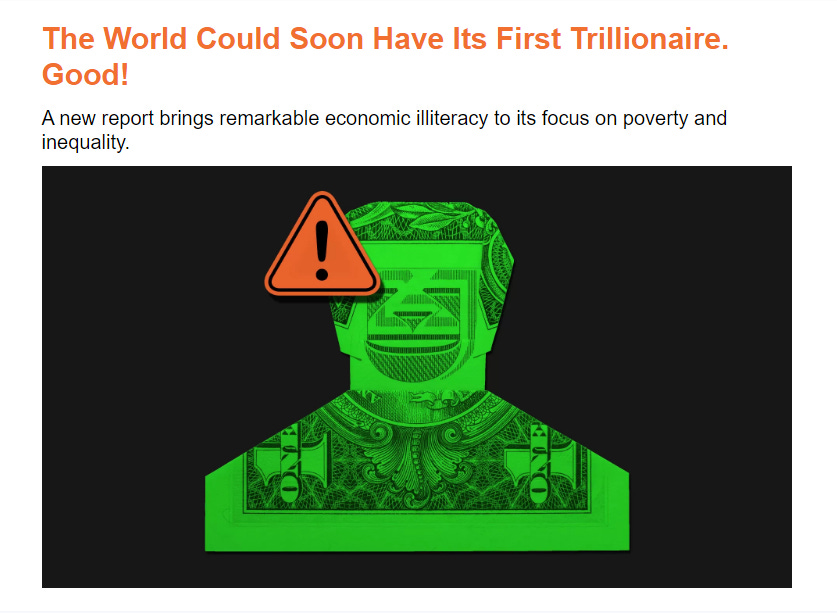
The world could soon have its first trillionaire, according to a prominent anti-poverty organization. That’s pretty cool. But Oxfam—which started as a famine relief group before mission creep set in—portrays the achievement of a new nominal benchmark in wealth as a bad thing that contributes to the misery of the masses. Through impressive economic illiteracy, the organization’s recent report on inequality and poverty manages to misdiagnose the world’s ills and prescribe dangerous and counterproductive remedies. (source)
More Ayn Rand human stain entering my Google Gulag email box:
“Since 2020, the richest five men in the world have doubled their fortunes,” huffs Oxfam’s Inequality Inc. “During the same period, almost five billion people globally have become poorer. Hardship and hunger are a daily reality for many people worldwide. At current rates, it will take 230 years to end poverty, but we could have our first trillionaire in 10 years.”
Oh, the huffing and puffing this Tuccille accuses Oxfam of. He calls this a hate video:
“Through squeezing workers, dodging tax, privatizing the state and spurring climate breakdown, corporations are driving inequality and acting in the service of delivering ever-greater wealth to their rich owners,” insists Oxfam.
That seems an unlikely business plan. Did Bezos do anything else—perhaps found an online book store that grew into a global retail giant? And then, during the post-2020 timeframe that Oxfam emphasizes, did governments respond to the appearance of the COVID-19 virus by locking down populations, driving economic activity into online spaces to the benefit of people like Bezos? Yes, on both counts. (J.D.)
Mother-fucking yammering and masturbation a la a million lights of STD=spewing armchair fucking click click clikcers.
The price of Ayn Rand:
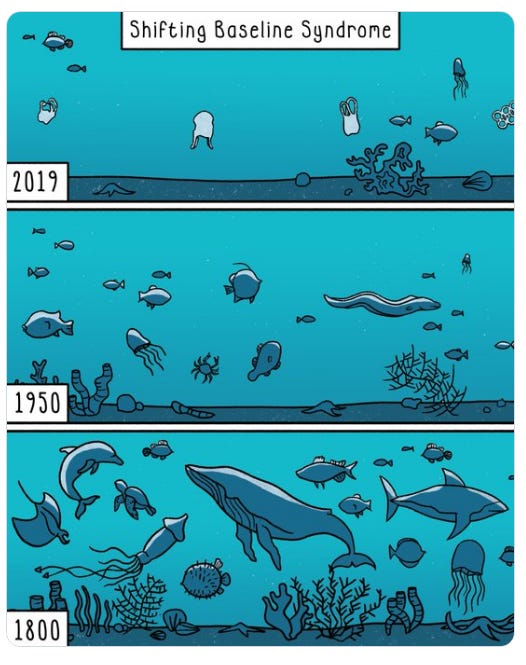
This is the shifting baseline disorder BIG Time. No, not some nostalgic waxing for Norman Rockwell better good old days. The good old days never were allowed to flourish into the good old now days, or the good towns and cities and communities good old future days.
You see, towns and cities never had a chance to embolden community-level engagement. Towns with downtowns with a few highrises, maybe, but better, these cities with nodes, with these little Italy’s and littine Chinatowns. Real trolleys, real light rail, real transportation choices. Businesses on the ground floor and two more stories up with housing. Yes, fucking condo and townhouse and apartment living.
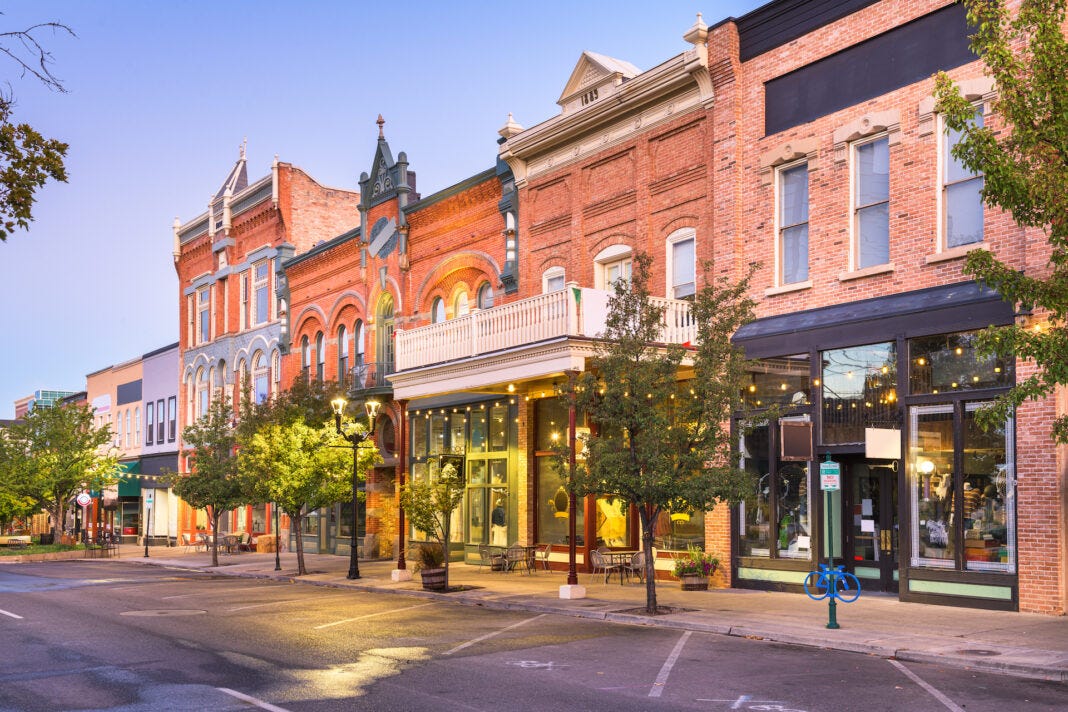
The experiment of real parks, real downtowns, real walkable and bikeable neighborhoods. Real socialism protecting small businesses, stopping huge or semi-huge monopolies. No more mergers beyond mergers which wipe out real nodes, neighborhood gathering places, small businesses, local manufacturing and growing and local almost everything..
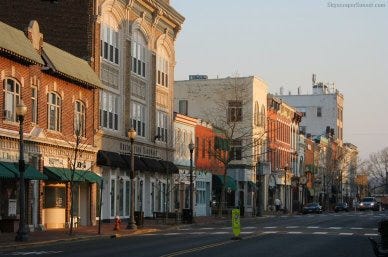
Versus this:
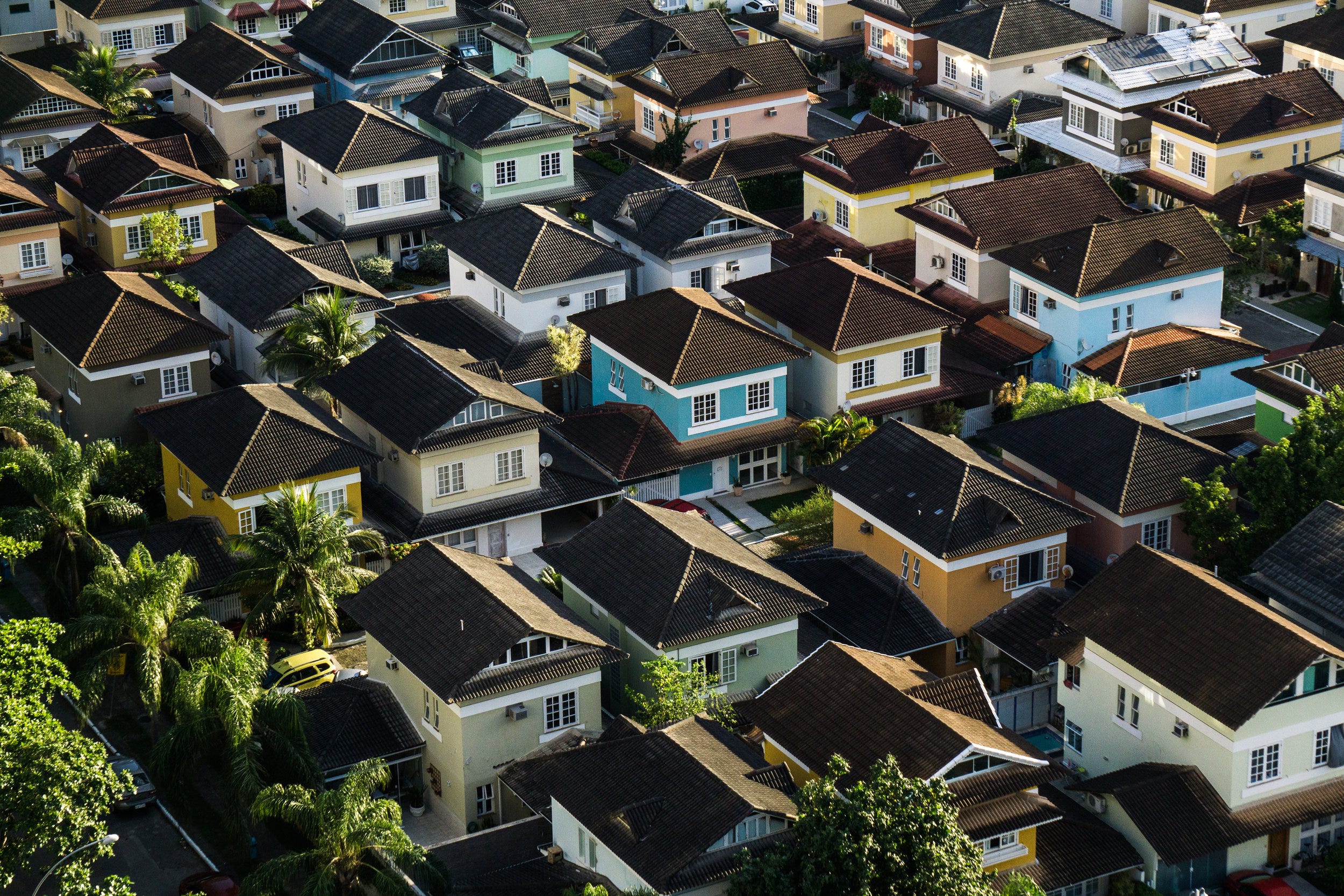
Basically, a society, a culture, many cultures, in fact, across the globe, who would never accepted an Amazon forty years ago as an alternative to small bricks and mortar stores with books and music (live) and meeting places, and food, or what have you. Amzon versus local hardware and five and dime and USPS?
Just go along to get along, per the monopolies’ dictates? Tax them? Fucking JAIL them.
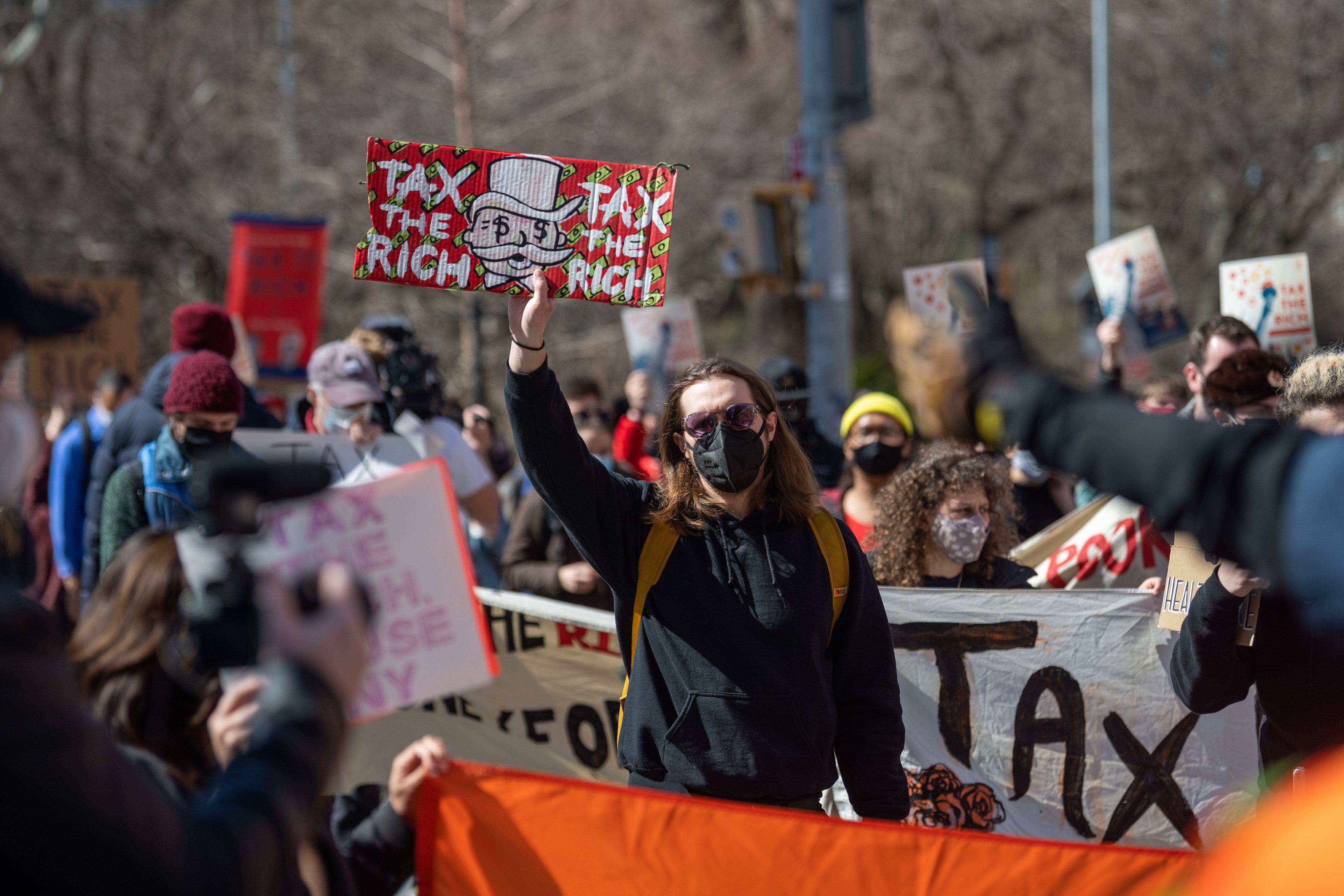
Oxfam is calling on governments to rein in billionaire and corporate power. This means breaking up monopolies, empowering workers by supporting living wages, unionization, and paid sick and family leave, taxing corporations and the superrich, and embracing public services.
Oxfam estimates that a wealth tax on the world’s multi-millionaires and billionaires could generate $1.8 trillion a year. This money could be used to invest in public services and infrastructure and to support climate action initiatives that could better everyone’s lives, not just those of the ultra-wealthy.
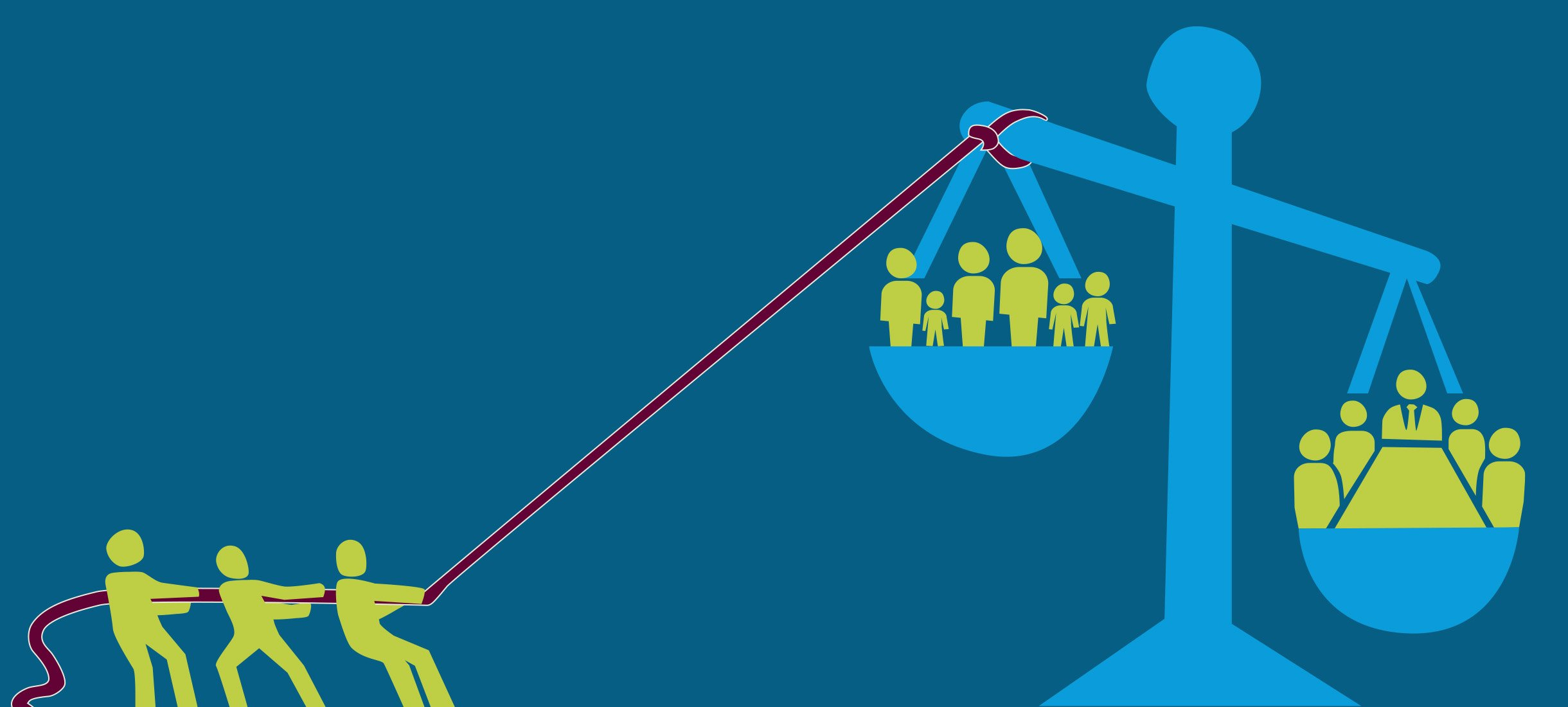
What do these burglars — billionaires, trillionaires, millionaires and the rest in the 15 percent, really — what do they invest in to accumulate?
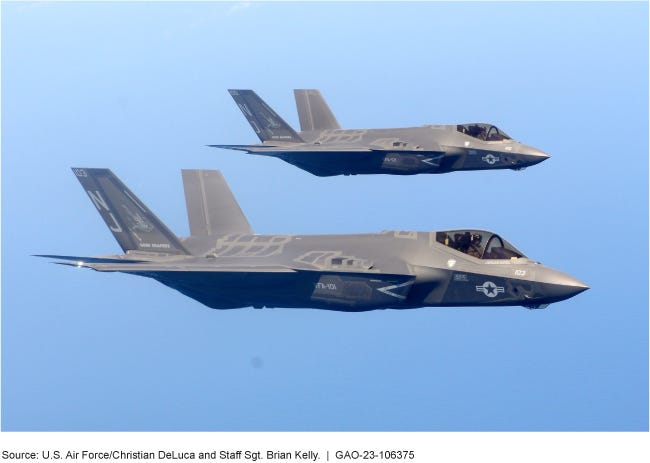
DOD is upgrading its fleet of fighter and attack planes, known as tactical aircraft. Most of these planes—purchased in the 1970s and 80s—have outlived their planned service lives.
Over the next 5 years, DOD is proposing to spend nearly $100 billion on major investments and changes to its current mix of tactical aircraft. This includes
- modernizing existing aircraft
- buying and developing new aircraft
- retiring a significant number of aircraft
We recommended that DOD analyze its portfolio of tactical aircraft investments, including interdependencies and tradeoffs among the different planes, and report on its findings to Congress.
DOD is proposing investing $14.2 billion in the F-35C over the next 5 years

The fiscal 2024 National Defense Authorization Act calls for $886.3 billion in U.S. military spending, up 3.3% from 2023 levels. However, the dynamics in the defense industry changed dramatically when Israel declared war on Hamas in October 2023. The war in the Middle East may force the U.S. government to increase defense industry investment in coming years, and defense stocks have jumped since the conflict began. Defense stocks are attractive investments because they often have predictable, long-term government contracts.

Defense companies get the bulk of their revenue from one customer — the U.S. government. Fortunately, that customer has deep pockets and a long history of paying its bills. The federal government’s stability gives defense companies and investors some predictability when it comes to managing cash and projecting growth.

+—+
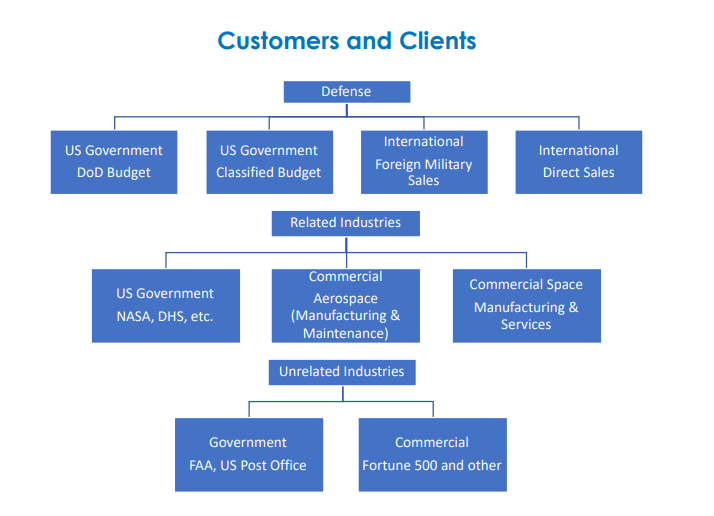
Economies of scale, and to attempt to tie in/ track down every penny, every million dollars, every infrastructure million human lifetimes wasted, every school brick layed, every goddamned moment mesmerized by any aspect of Murder Inc., it’s totally impossible.
Then, that fucking outfit, CBS News, tried to give the lo down, but retracted like sniveling drug dealers caught with their baggies: Why military aid in Ukraine may not always get to the front lines.
“Every country and every situation is very different, but certainly if I look back, Iraq is another country where there have been cyclical deliveries. We saw a lot of weapons come in 2003 with the U.S.-led invasion of Iraq, and then 2014 happened when ISIS took over large parts of the country and took over large stocks of weapons that had been meant for Iraqi forces,” said Donatella Rovera, a senior crisis adviser for Amnesty International who has been monitoring human rights violations in Ukraine.
So, get this — “we” have to “win” the “war” so semi-failed state Ukraine doesn’t become a feeder for more weapons of mass and minor destruction on the global arms market.
“More recently, we saw the same situation occur in Afghanistan,” she said of the U.S. withdrawal and Taliban takeover of the country. “Oversight mechanisms should be in place to avoid that.”
“That’s one of the reasons we have to win the war,” said Ohman. “If we lose the war, if we have this kind of gray zone, semi-failed state scenario or something like that. If you do this — you funnel lots of lethal resources into a place and you lose — then you will have to face the consequences.”
“There are like power lords, oligarchs, political players,” Jonas Ohman, founder and CEO of Blue-Yellow, a Lithuania-based organization that has been meeting with and supplying frontline units with non-lethal military aid in Ukraine since the start of the conflict with Russia-backed separatists in 2014. Back in April, he estimated that just “30-40%” of the supplies coming across the border reached its final destination.
Ohman described the corruption and bureaucracy he had to work around. “The system itself, it’s like, ‘We are the armed forces of Ukraine. If security forces want it, well, the Americans gave it to us.’ It’s kind of like power games all day long, and so eventually people need the stuff, and they go to us.”
Fucking CBS:

Invest in Military, and read up on the best deals, best ways? Yep, no Investment Push to truly build up in towns, cities, infrastructure, sewer and water systems. Capitalism is all about the war: war against acollective action, collective bargaining, collective decision making, collectives, collective planning, bio-regional planning collectively, collectively sharing the wealth, collectively determining wealth, resource extraction, externalities. NOPE. War against us and these ideas.

Do you feel the cum all over the typing keyboard yet? Oh, those fucking BIPOC and LGBTQA+ in uniform, or in skinny jeans. Masturbation, and you expect what at the international court looking at yet another genocide from isra-HELL.

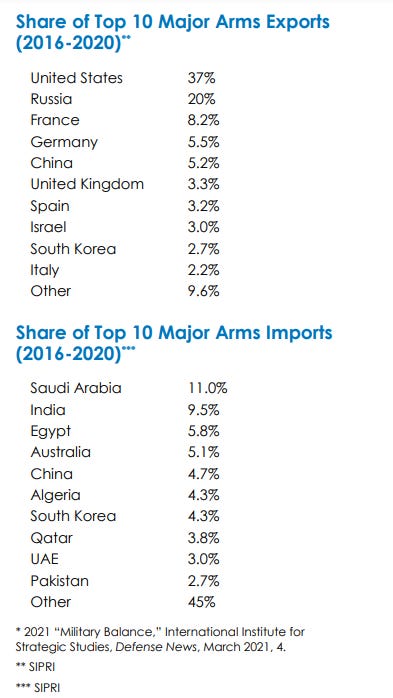
All these numbers of course are cooked books numbers. We spend trillions a year on war, on military, on all the subsidiaries of lying, cheating, sancitoning, resource theft, human capital draining.
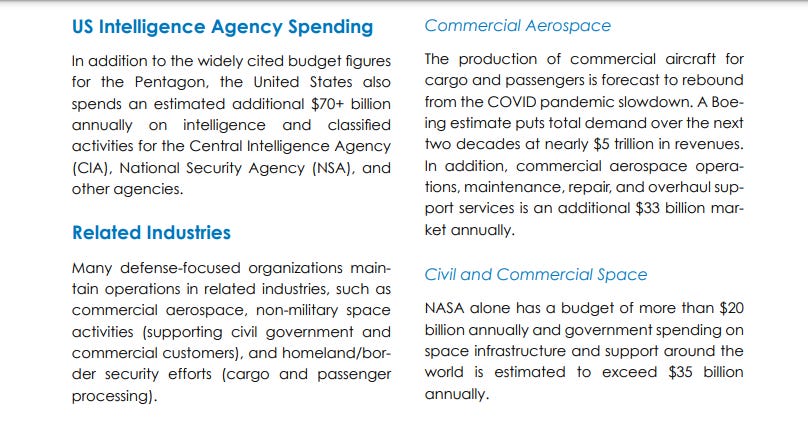
There is no fucking GENOCIDE decision coming out of that fucking court. The reality is, war and murder and budgets for non-proportionality i.e Gaza t(always triple of quadruple the actual taxpayer outlays) will win.
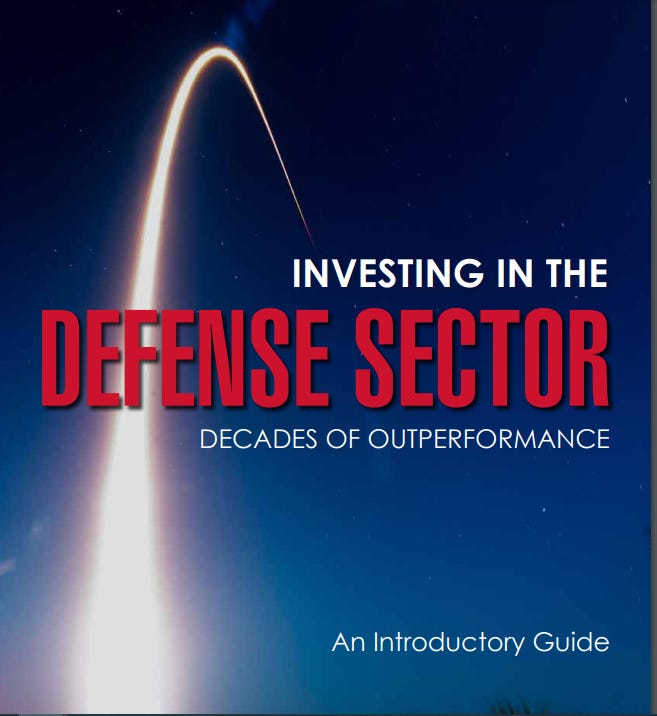
Oh, those cool, walkable-bikeable-light railable cities and towns, yep, and those agriculture centric towns, and all those fucking cool, smart ideas about resilience in a time of expanding (it’s fucking seal level rise) oceans, nah. The orgasms and masturbation is all about the kills, KIAs, the space wars, the mind and homes and schools and markets as a battleground.

Read the report, man. Vomit bags not included.

Break into those mattresses now and pull out the Benjamins: It’s only 50 pages, the REPORT on how to INVEST in investment products in order to facilitate killing babies. Put those Benjamins to work!
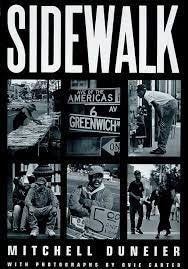
Ahh, a thousand good books from over a century on how to build real communities. I’ll take sidewalks anyday over these fucking murderers.
Check out the discussion:
Access: Film (part 1; part 2; part 3)
Discussion (part 4; part 5; part 6; part 7; part 8)
Summary: This documentary, directed by Barry Alexander Brown, is based on the ethnographic fieldwork that sociologist Mitchell Duneier conducted for his seminal book, Sidewalk (1999). Framed in the film’s introduction as an “epilogue” to the book, Brown offers a plot summary: “SIDEWALK chronicles the lives of primarily black homeless book vendors and magazine scavengers who ply their trade along 6th Avenue between 8th Street and Washington Place in New York City. By briefly comparing those book vendors with the history of book vending along the Seine in Paris, the film speaks to the efforts of North American and European societies to rid public space of the outcasts they have had a hand in producing.
The film takes us into the social world of the people subsisting on the streets of New York by focusing on their work as street side booksellers, magazine vendors, junk dealers, panhandlers, and table watchers. The sidewalk becomes a site for the unfolding of these people living on the edge of society in order to give us a deeper understanding of how these individual’s are able to survive.
It also becomes a site for conflicts and solidarities that encompass the vendors and local residents. We followed half dozen vendors for most of this past decade. By the end of shooting the film, their lives had taken a myriad of routes…” Like other urban ethnographic films (e.g., here), Sidewalk would be excellent to show in an urban sociology course, as well as an introductory sociology class, as it engages core sociological concerns around race, poverty, homelessness, underground economies, interactions with police, and community support networks, among others. Ethnography professors might also find the film useful—the film opens with several screens of written text, describing the film as a “set of fieldnotes.” There is also discussion of the film available online.
One of these discussions entails Duneier’s introductory lecture on ethnographic methods, in which two sidewalk vendors visit his class. Here Duneier presents his approach to doing ethnography, particularly within the context and medium of film. The other is a panel discussion about the film with Cornel West and Kim Hopper at the American Sociological Association’s annual meeting.
“Fixity is always momentary.” — Octavio Paz
But those fucking billionaires and the Fucked Up Trillionaire Wannabe Musk, they plan now and in the future a system for destroying us, man, destroying cities, destroying people, babies, families, ecosystems, but we turn on ourselves, triagulate and divide and let them conquer us.
Don’t fucking fool yourself with Cato Ayn Rand Chlamydia.
A good essay here:
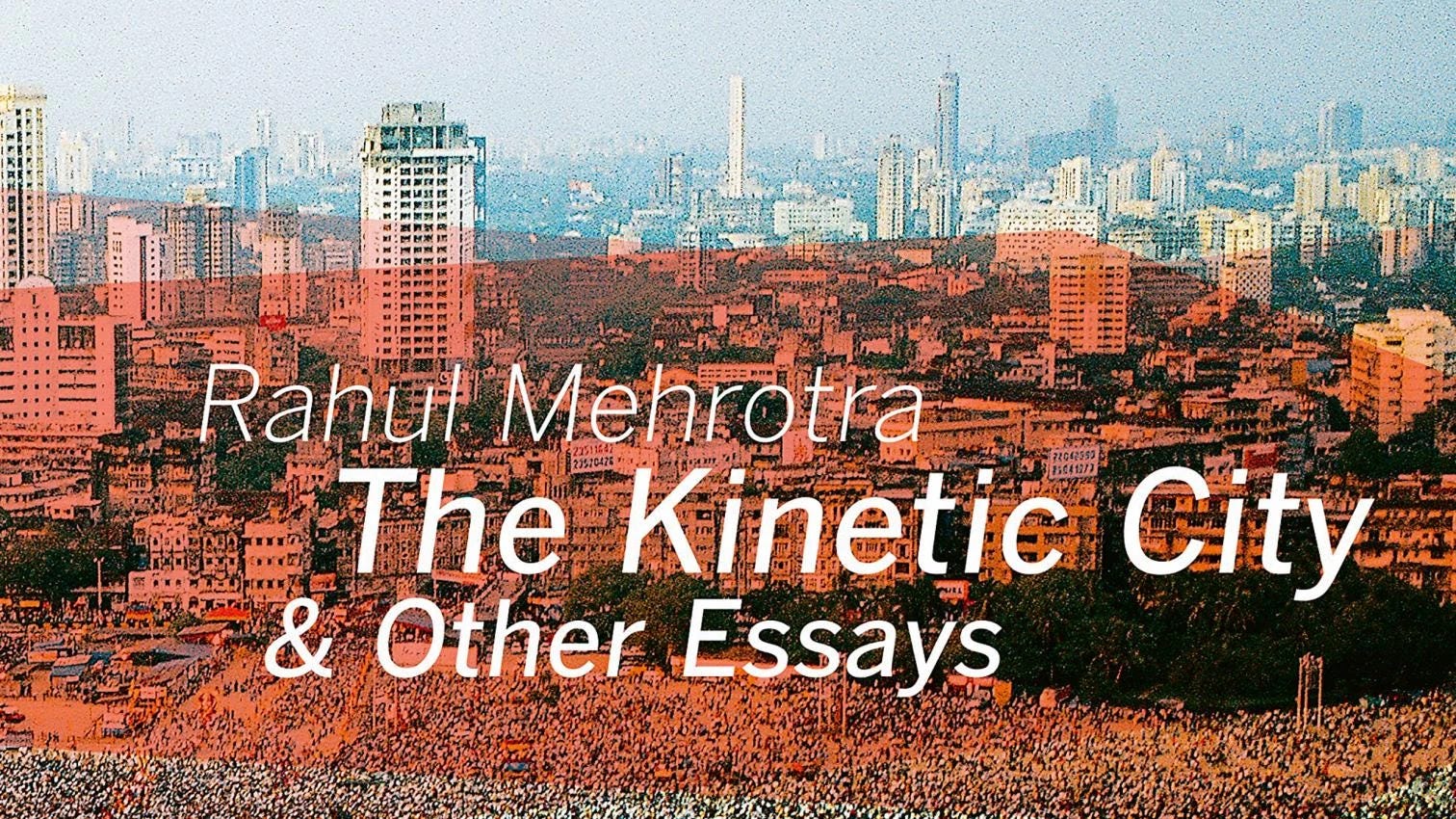
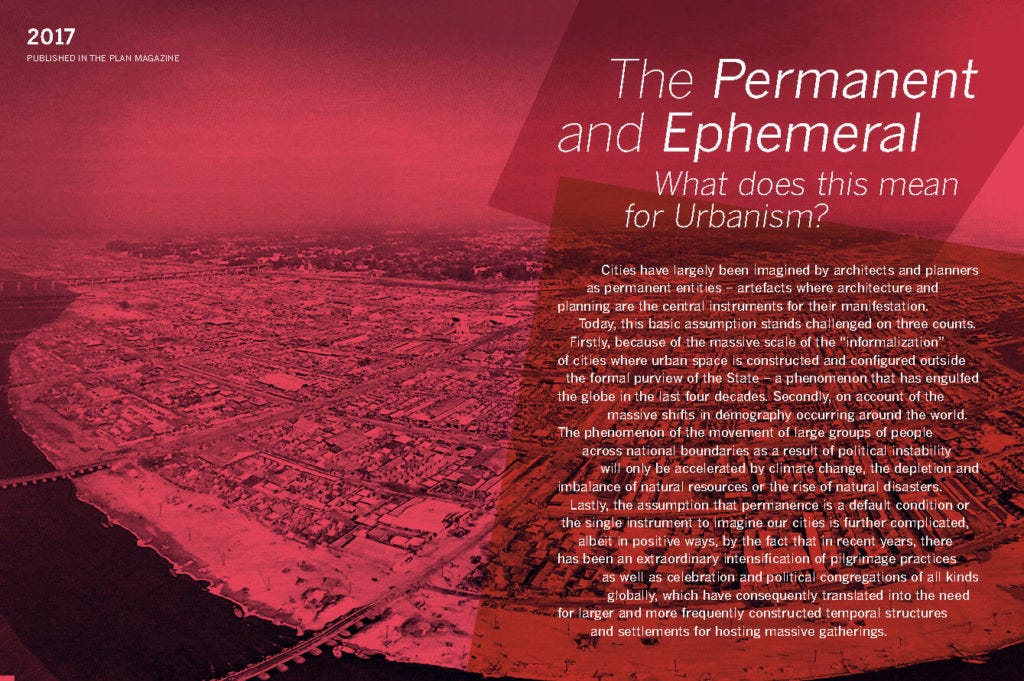
The Permanent and Ephemeral: What Does This Mean for Urbanism?
by Rahul Mehrotra, originally published in The Kinetic City & Other Essays
Cities have largely been imagined by architects and planners as permanent entities – artefacts where architecture and planning are the central instruments for their manifestation. Today, this basic assumption stands challenged on three counts. Firstly, because of the massive scale of the “informalization” of cities where urban space is constructed and configured outside the formal purview of the State – a phenomenon that has engulfed the globe in the last four decades. Secondly, on account of the massive shifts in demography occurring around the world. The phenomenon of the movement of large groups of people across national boundaries as a result of political instability will only be accelerated by climate change, the depletixon and imbalance of natural resources or the rise of natural disasters. Lastly, the assumption that permanence is a default condition or the single instrument to imagine our cities is further complicated, albeit in positive ways, by the fact that in recent years, there has been an extraordinary intensification of pilgrimage practices as well as celebration and political congregations of all kinds globally, which have consequently translated into the need for larger and more frequently constructed temporal structures and settlements for hosting massive gatherings.
The combination of these factors should prompt us to rethink the assumption or notion of permanence in our response to the ever-shifting conditions of urbanism around the world. Like the “informalization” of the city, which results in temporary auto-constructed environments, natural disasters and changes in climatic conditions are also turning temporary shelters, extended with increasing frequency into camps or settlements, into holding strategies or short-term solutions.
There are numerous examples of such temporary occupation in response to natural catastrophes and environmental threats, such as those recently seen in the Philippines, Haiti and Chile, along with several other cases of temporary cities built in the context of disaster. Furthermore, political tensions in many places around the globe contribute to the displacement of people from their places of origin and fuel tremendous ecologies of refugee camps. The flux will continue to accelerate given the general inequity and imbalance of resources that have disrupted and brutally dislocated communities and nations across the globe. Extreme examples of humanitarian spaces hosting stateless persons and asylum seekers are the refugee camps located in Ivory Coast, which accommodate more than nine hundred thousand refugees, mostly from Liberia but also from other adjacent locations. However, the most striking cases are those of Dabaad in north-eastern Kenya, which accommodates almost five hundred thousand people, the Breidjing camps in Chad, home to two hundred thousand people, and several camps in Sri Lanka holding three hundred thousand people displaced during the decade-long civil war.
Startlingly, these camps only hold a small fraction of the forty-five million people who, according to the United Nations Commissioner for Refugees, are currently displaced around the world and living in temporary structures. At the other end of the spectrum, cultural and religious celebrations are also on the rise. Increasing in scale as well as frequency, they too lead to the erection of temporary structures within and outside urban areas.
Extreme examples of temporary religious cities are the ephemeral constructions set up for the Hajj, as well as a series of temporary cities constructed in India to host celebrations like the Durga Puja, Ganesh Chaturthi or Kumbh Mela – a religious pilgrimage, which according to official figures, draws congregations of over one hundred million people.
Extensive music festivals like Exit in Serbia, Coachella in California or Sziget in Budapest also lead to the construction of extended ephemeral settlements to house large groups of people together for short periods. Festivals range from relatively small gatherings, like the Burning Man in Nevada or Fuji Rock in Japan, where around forty thousand people gather to enjoy music and celebratory events, to three hundred fifty thousand people flocking to musical events like Glastonbury in England, Roskilde Festival in Denmark, and Werchter in Belgium.
These examples could be expanded to include many others, such as the temporary cities built on mining, oil drilling or forestry sites where natural resources are exploited. The Yanacocha mine in Peru, for example, employs over ten thousand people who live in temporary housing. Other mining communities like the Maritsa Iztok mines in Bulgaria, the Motru Coal mine in Romania, or the Chuquicamata, Salvador and Pelambres sites in the north of Chile generate completely different sorts of temporary settlements on account of the different time spans involved, adding a further degree of complexity. Here, large-scale operations have modified the topography of a landscape, albeit temporarily, on a territorial scale with the attendant environmental consequences.
The lifecycle of these temporary cities lasts as long as the resources being mined, and so have a known or predictable date of expiry. The operative question is thus: Can temporary landscapes play a critical “transitionary” role in this process of flux that the planet will experience evermore frequently? This contemporary condition, coupled with the rampant expansion of the influence of global capital and the colonization of land on the peripheries of cities, is locking the globe into unsustainable forms of urbanism, where fossil fuel dependence in combination with isolationist trends of gated communities for the rich are creating a polarity that will become harder to reverse.
So, while cities grow in the formal imagination of governments and patrons, the proliferation of the informal city is amplified in magnitude as never before! Is there a role for urban design in addressing these questions? Can we as architects and planners challenge the assumption that Permanence matters?
The city in flux is a global phenomenon. In several cities around the world, the postindustrial scenario has given rise to a new system where living and working have become extremely fragmented. The locations of jobs and places of living are no longer interrelated in the predictable fashion when job locations were centralized. In today’s networked economies, these patterns are not only fragmented but in flux and constantly reconfiguring.
This results in the fragmentation of the structure of the city itself and its form, where the notion of clear zoning or predictable and implementable land-use all break down into a much more multifaceted imagination of how the city is used and operates. It is an urbanism created by those outside the élite domains of the formal modernity of the State. It is what the Indian scholar Ravi Sundaram refers to as a “pirate” modernity that slips under the laws of the city to simply survive, without any conscious attempt at constructing a counter-culture.
Yet, this phenomenon of flux is critical to cities and nations connected to the global economy; however, the spaces thus created have been largely excluded from the cultural discourse on globalization, which focuses on élite domains of production in the city. They are spaces that have been below the radar of most architects and planners, who focus on the traditionally defined public realm. Yet within these confines, the very meaning of space is in flux and ever changing. It cannot only be defined as the city of the poor, nor can it be contained within the regular models of the formal and informal, and other such binaries. Rather it is a kinetic space where these models collapse into singular entities and where meanings are ever shifting and blurred.
The questions this raises are as follows: Can we design for this space as urban designers and planners? Can we design with a divided mind? Can other forms of organizations be embedded in our concept of the city and, if so, how do we recognize and embed these in the formal discourse on urban design? This is not an argument for making our cities temporary but rather one of recognizing the temporary as an integral part of the city and seeing whether it can be encompassed within urban design – in terms of urban form, public spaces, and governance structures.
Framing this phenomenon of flux under the rubric of “ephemeral urbanism” is perhaps to create a more inspirational category than the binary of the formal and informal city, for it implies the transitional rather than the transformative or the absolute. Furthermore, as designers we tend to observe and organize the world around us in binaries such as the rich and poor, the state and private enterprise, or the formal and informal city.
While these are productive as categories to describe the world, they do not seem to serve design operations productively because they force urban designers to occupy and advocate one or the other world articulated in the binary. Urban design, on the other hand, is about design synthesis and dissolving and resolving contestations through spatial arrangements.
So, what then is the role of urban design in this condition? Most certainly, this flux is the new normal. In addition, the spurts of growth and flux triggered by natural and political uncertainty are going to challenge our reading of the urban condition and the role of urban design. J. B. Jackson in his book Discovering the Vernacular Landscape (1984) and writing about North America highlighted the importance of what he called the third landscape – the landscape of cyclic events. He stressed that the first landscape was one of mobility: of the early colonial vernacular cultures, which preferred mobility, adaptability, and transitory qualities; of the short-lived tents and log cabins – a landscape that characterized North America before Jefferson’s classical farm villages appeared, he added.
These settlements of the decomposable (equivalents of which exist in every culture) are what Jackson brought to our attention. This mobile ephemeral landscape was replaced by another landscape, which “impressed upon us the notion that there can only be […] a landscape identified with a very static, very conservative social order” found in most of contemporary North American and European – and now perhaps Chinese – cityscapes. The people in this landscape, he argued, feel isolated from one another even though they work and live closely together. Thus, he implicitly argued for the “third” landscape where the ephemeral and the temporary can be instilled in the landscape of static objects to create richer social interaction. It is a landscape in flux and temporary, serving specific needs on a sometimes predictable timescale. The circus, the farmers’ market, and the festival, for example, are suddenly moments where different parts of society are made aware of their own existence within the urban system.
The ephemeral obviously has much to teach us about planning and design. In fact, the ephemeral city represents an entire surrogate urban ecology that grows and disappears on an often extremely tight, temporal scale. In short, this notion of the ephemeral as a productive category within the larger discourse on urbanism deserves serious consideration. For in reality, when cities are analyzed over large temporal spans, ephemerality emerges as an important condition in the life cycle of every built environment.
Peter Bishop and Lesley Williams recently asked: Given overwhelming evidence that cities are a complex overlay of buildings and activities that are, in one way or another, temporary, why have urbanists been so focused on permanence? The aim of broadening the rubric is a way of starting to assemble evidence that could give us some material to move toward a more open urbanism – open in the way Richard Sennett describes it, which in a city means being incomplete, errant, antagonistic, and non-linear.
The issues that could be negotiated in this form of urban practice are therefore as diverse as memory, geography, infrastructure, sanitation, public health governance, ecology, and urban form, albeit in some measure temporary. These parameters could unfold their projective potential, offering alternatives of how to embed softer but perhaps more robust systems in more permanent cities.
Andrea Branzi advises us on how to think of cities of the future. He suggests that we need to learn to implement reversibility, avoiding rigid solutions and definitive decisions. He also suggests approaches that allow space to be adjusted and reprogrammed with new activities not foreseen and not necessary planned.
Thus, architecture and urban design as a practice must acknowledge the need for re-examining permanent solutions as the only mode for the formulation of urban imaginaries, and instead imagine new protocols that are constantly reformulated, readapted, and re-projected in an iterative search for a temporary equilibrium that reacts to a permanent state of crises.
Furthermore, the growing attention that environmental and ecological issues have garnered in urban discourses, articulated through the anxiety surrounding the recent emergence of landscape as a model for urbanism, has evidenced that we need to evolve more nuanced discussions for the city and its urban form in the broadest sense. The physical structure of cities around the globe is evolving, morphing, mutating, and becoming more malleable, more fluid, and more open to change than the technology and social institutions that generated them.
Today, urban environments face ever-increasing flows of human movement, accelerating the frequency of natural disasters and iterative economic crises, which in the process modify streams of capital and their allocation as physical components of cities. As a consequence, urban settings are required to be more flexible in order to be better able to respond to, organize, and resist external and internal pressures. At a time in which change and the unexpected are omnipresent, urban attributes like reversibility and openness seem critical elements for thinking about the articulation of a more sustainable form of urban development.
Therefore, in contemporary urbanism around the world, it is becoming clearer that for cities to be sustainable, as both Saskia Sassen and Richard Sennett have pointed out, they also need to resemble and facilitate active fluxes in motion rather than be limited by static material configurations.
This expanded version of the practice of urbanism that embraces rubrics such as the “ephemeral” presents a compelling vision that enables us to better understand the blurred lines of contemporary urbanism – both spatial and temporary – and the agency of people in shaping spaces in urban society. Thus, to engage in this discussion, the exploration of temporary landscapes opens up a potent avenue for questioning permanence as a univocal solution for the urban conditions.
One could instead argue that the future of cities depends less (or completely, as in the case of the city beautiful movement) on the rearrangement of buildings and infrastructure and more on the ability of architects and urban designers to openly imagine more malleable, technological, material, social, and economic landscapes.
That is, to imagine a city form that recognizes and better handles the temporary and elastic nature of the contemporary and emergent built environment with more effective strategies for managing change as an essential element for the construction of the urban environment.
The challenge is then learning from these extreme conditions how to manage and negotiate different layers of the urban while accommodating emergent needs and the often largely neglected parts of urban society. The aspiration would then be to imagine a more flexible practice of architecture and planning more aligned with emergent realities that would enable us to deal with more complex scenarios than those of static, or stable environments constructed to create an illusion of permanence.
I would like to thank Felipe Vera and acknowledge the many essays we have written together on the subject of Ephemeral Urbanism. Naturally those have influenced this essay. And to Ricky Burdett for the development of some of these ideas.
+—+
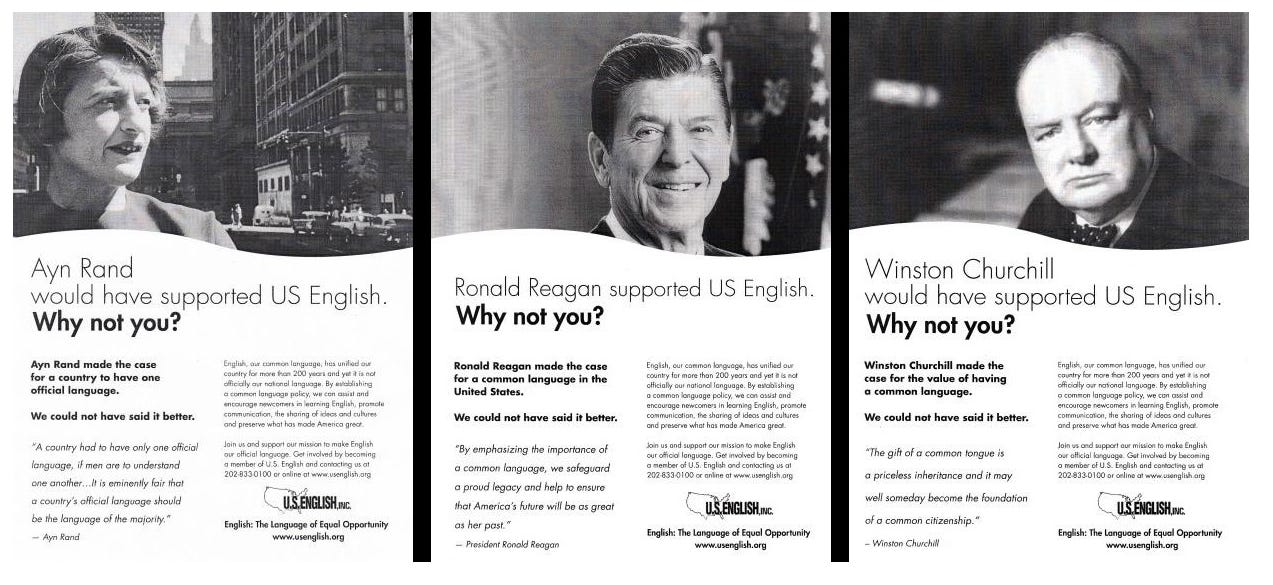
Yep, DoD, military murderers, that’s the ticket. Finally, remember the olden days when the English (racist) only movement was a toxic railroad dropping poison across the land? Rand, Ron, Winston.
+—+
Boring, pedestrian, and way too local for my sophisticated urbane readers. Fuck it. Ahh, back to my local shit while trillions go to Israel Hell and UkroNaziLandia and endless streams of welfare sent in the trillions to Larry “I am a Secular Jew but Israel-Firster” Fink-Rock.
Lincoln City Pacific Power customers seeing rate boost [Pacific Power serves approximately 618,000 customers in Oregon, including customers in the Lincoln City area.]
- 12.9 percent average increase in revenues from residential customers. For a single-family residence using the average 900 kWh a month, monthly bills will increase by $14.92.
- 12.1 percent average increase in revenues from small commercial/business customers
- 16.7 percent average increase in revenues from large commercial/industrial customers
Drivers for the increase included an annual adjustment for power supply costs, which is a pass-through cost of Pacific Power purchasing power to meet customer demand. Power costs have risen sharply and increased in volatility in the Western electricity market. There was also an increase due to costs for wildfire risk mitigation actions taken by the company, among other small adjustments.
“The rate increase reflects the reality of high market power prices for utilities and the important actions Pacific Power is taking to reduce wildfire risks on its system,” PUC Chair Megan Decker said in a news release. “At the same time, we recognize how difficult it is for families and businesses to adjust to higher bills, and we encourage them to seek out help through energy efficiency programs that reduce usage and rate discount programs to address communities facing high energy burdens.”
Yeah, the pain is a’coming 2024!
Tear the Fascists Down by Woody Guthrie
There’s a great and a bloody fight ’round this whole world tonight
And the battle, the bombs and shrapnel reign
Hitler told the world around he would tear our union down
But our union’s gonna break them slavery chains
Our union’s gonna break them slavery chains
I walked up on a mountain in the middle of the sky
Could see every farm and every town
I could see all the people in this whole wide world
That’s the union that’ll tear the fascists down, down, down
That’s the union that’ll tear the fascists down
When I think of the men and the ships going down
While the Russians fight on across the Don
There’s London in ruins and Paris in chains
Good people, what are we waiting on?
Good people, what are we waiting on?
So, I thank the Soviets and the mighty Chinese vets
The Allies the whole wide world around
To the battling British, thanks, you can have ten million Yanks
If it takes ’em to tear the fascists down, down, down
If it takes ’em to tear the fascists down But
But when I think of the ships and the men going down
And the Russians fight on across the Don
There’s London in ruins and Paris in chains
Good people, what are we waiting on?
Good people, what are we waiting on?
So I thank the Soviets and the mighty Chinese vets
The Allies the whole wide world around
To the battling British, thanks, you can have ten million Yanks
If it takes ’em to tear the fascists down, down, down
If it takes ’em to tear the fascists down
 Paul Haeder, Author