

….ahh, science, that science, whose very existence is almost like Mozart’s existence based on monied interested, lords, earls, barons, baronnesses, kings and queens and viscount & ladies in waiting
The earth and animal and ecosystems “sciences” are absolutely going into the crapper.
When Species Names Are Offensive, Should They Be Changed? — Amid a wider social justice reckoning, some scientists are calling for scrapping species names that honor people considered objectionable, including dictators and enslavers, or use offensive words. Others question whether such a monumental effort is worthwhile or even possible.
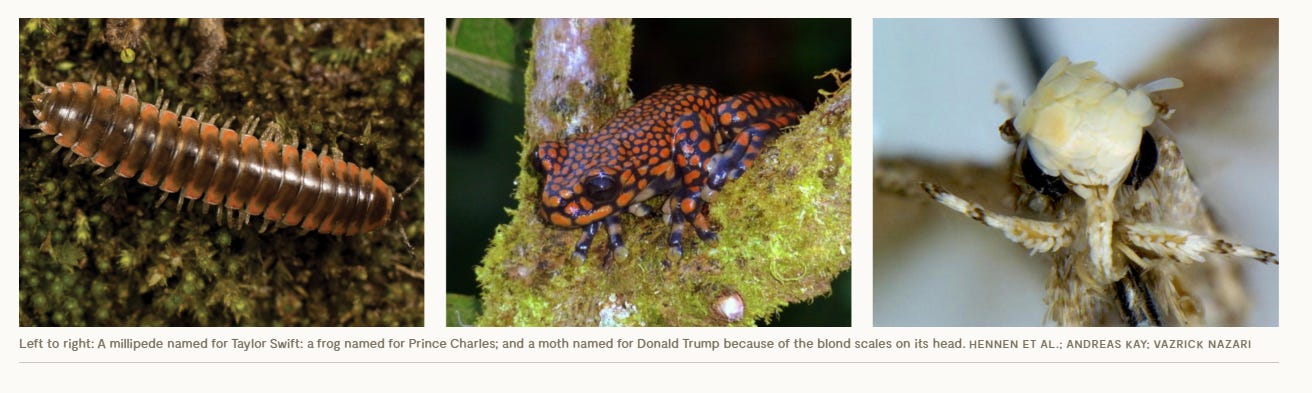
Taylor Swift, Prince Charles, Donald Trump. Here, my quick quip:
Funny stuff, your “comment policy” — Comments are reviewed to ensure they are on topic, do not contain profanity, and are not abusive.
Ahh, the little things in “the sciences” while STEM is an avalanche of Oppenheimers who assist in creating all those industries and technologies and engineering feats that allow for a world of war, for the Military Industrial Complex at least in this country to realize the riches of the world, 2023 as a banner year; 2024 a triple banner year.
Where oh where are the earth scientists, the biologists, the others, at least speaking out about dual use of the goods and services the US taxpayer foots the bill for?
So, no, I’m not off topic or abusive or profane. Get articles going on how the Faustian Bargains and Little Eichmann Syndrome inherent in the so-called “sciences,” i.e. Dual Use S.T.E.M., truly drills down in the brains of brainiacs.
You know, ethics v. careerism, Precautionary Principle, First Do No Harm, deep analysis of embodied energy v. just what is “green” washing or “green” fascism? Money v. science.
Think of the United States of Amnesia, err America. It’s named after who? A map maker under the control of racist, violent Iberian Peninsula? Are we going to change that name, like so many African nations changed their names as a way to symbolically wash away the empire breeders who controlled that continent, from Belgium to Germany to Netherlands to Spain to France to Italy to UK?
Nah.
Oh, the chickens have always come back to roost, no, with the white man’s burdens, so this sort of story on species renaming is just that — another writer finding something to write about. But reality is, that every grant, every college or university, every think tank, every NGO and non-profit that makes money off of, shoot, war, war making, even the cool optics and drone machines of war, well well, how do we square that in the sciences?
I doubt this comment will be posted on Yale E 360.
Censorship and just plain pre-publication disapproval, don’t you know.
Cheers,
Here, amazing, this fucking Ukrainian telling (cited in the Yale Enviornment 360 article) the world that renaming would be bad, this from a Nazi Country that has destroyed literary and artistic and historical monuments, and jailing those for fucking speaking Russian:
Various groups of researchers have proposed ways to remedy this situation. Some are modest tweaks to the codes governing how scientists apply names to creatures. Others are sweeping; one recent proposal would require scientists to rename, by one estimate, more than 200,000 species named after people. And as with efforts to tear down statues, replace ill-considered sports team names, and otherwise root out societal racism and sexism, these proposals have met with fierce resistance. Some scientists protest on philosophical grounds, arguing that it is better to leave the mistakes of the past in place so that modern and future people might learn from them. Others point to the proposals’ practical implications, noting that in an era of rapid climate change, habitat destruction, and globalization, taxonomy — the science of categorizing, discovering, and describing the world’s living things — has increasingly become a race against time.
Diverting resources towards wholesale renaming of already-named species would be “just a catastrophe,” says Sergei Mosyakin, a botanist and director of the M. G. Kholodny Institute of Botany in Kyiv, Ukraine. “It would be a problem for everything.”

[Photo: The plant genus Hibbertia is named for British slave owner George Hibbert, who was a leading opponent of abolition. ]
Some skeptics questioned whether the proposed nomenclatural changes would even achieve their stated goals of making biological taxonomy more accessible, equitable, and inoffensive. Rohan Pethiyagoda, a Sri Lankan taxonomist specializing in amphibians and freshwater fish, said the various proposals — most of them offered by white, English-speaking people of European heritage — were merely a way to signal their virtue. In practice, he said, any widespread renaming of organisms would place further burdens on already strained and underfunded taxonomists working in poor yet biodiverse nations of the global tropics, which scientists believe to hold millions of undescribed species, many of them threatened by rapid climate change and habitat destruction.
“We now have to take our attention away from describing species, conserving species and landscapes and ecosystems, and start looking at the origins of words,” Pethiyagoda says. “This is really ludicrous.”
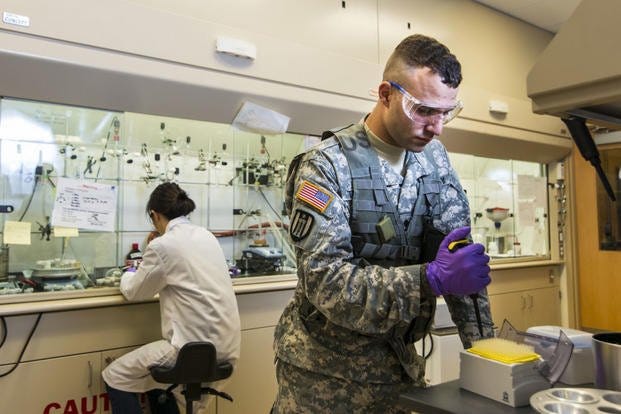
Military science serves to identify the strategic, political, economic, psychological, social, operational, technological, and tactical elements necessary to sustain relative advantage of military force; and to increase the likelihood and favorable outcomes of victory in peace or during a war.
Money for bullets, guns, lasers, missiles, bioweapons, hearts and minds, spying on US/THEM. The term “defence” is Edward Bernays/George Orwellian bullshit. Read — OFFENSIVE and MURDEROUS and ANTI-HUMAN weapons.

US Army source — In February, South Korea opened a centre at its premier research facility, the Korea Advanced Institute of Science and Technology (KAIST) in Daejeon, in collaboration with the country’s leading arms manufacturer, Hanwha Systems. Media reports said that the centre, known as the Research Centre for the Convergence of National Defence and Artificial Intelligence, would develop technologies that could be useful for more-advanced weapons, such as missiles that use artificial intelligence (AI) to control their speed and altitude and detect enemy radar in real time.
There was an immediate backlash. Almost 60 AI and robotics researchers from around the world signed an open letter opposing KAIST’s participation in an autonomous-weapons race. They threatened to cut all ties with KAIST. But this episode had a happy ending: KAIST’s president vowed that the centre wouldn’t develop lethal weapons. The boycott was abandoned. This week, the letter’s author accepted an invitation to visit KAIST.
But similar fault lines have been exposed elsewhere. Australian scientists continue to debate the government’s 2014 defence–science partnerships programme, which has so far enrolled researchers from 32 universities. And a 2016 decision by the European Commission to start funding defence research prompted 400 researchers to sign a petition attacking the move.
In Japan, universities are split over whether they should take funds from the defence ministry’s Acquisition, Technology and Logistics Agency. Last year, the advisory board to the nation’s cabinet — the Science Council of Japan — called for researchers to boycott the work, and for institutions to set up special committees to evaluate the ethics and propriety of military-related research projects. According to survey results released by the council earlier this month, 46 of the 135 universities polled have such a system in place. But 30 institutions have already allowed researchers to apply, and 41 have no intention of creating such a system. And according to the results of a poll at the Astronomical Society of Japan’s meeting last March, some young astronomers would accept such funding if it falls within Japan’s policy of maintaining self defence. However, other members of the society oppose it, and the society itself has not taken a position.
In the United States, university-based military research has long been a fixture, but the push in less-militarized countries points to rising geopolitical uncertainty and instability around the world. Trying to improve defence capabilities in such circumstances is understandable — the issue is where and how it should be done.
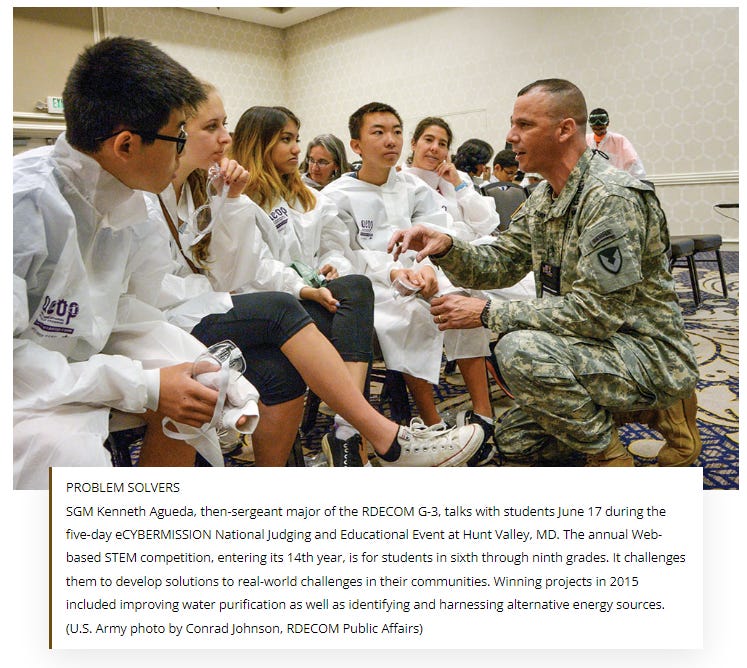
The U.S. Army Research, Development and Engineering Command (RDECOM), on behalf of the Army, is committed to growing the next generation of scientists and engineers to deliver the decisive overmatch the nation needs to win in a complex world. As a community, we must develop a national strategy to ensure America’s future security through a robust continuum of science, technology, engineering and mathematics (STEM) education and research. (source)
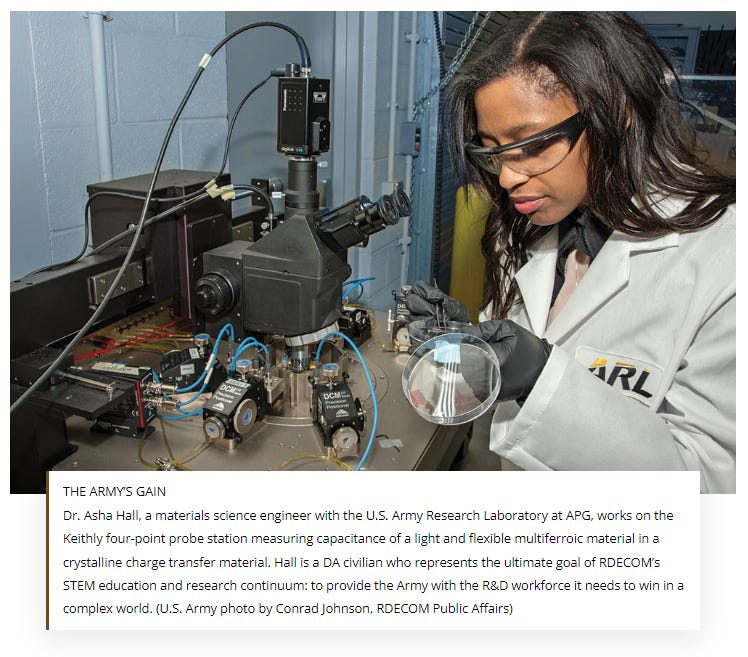
Pedophiles:
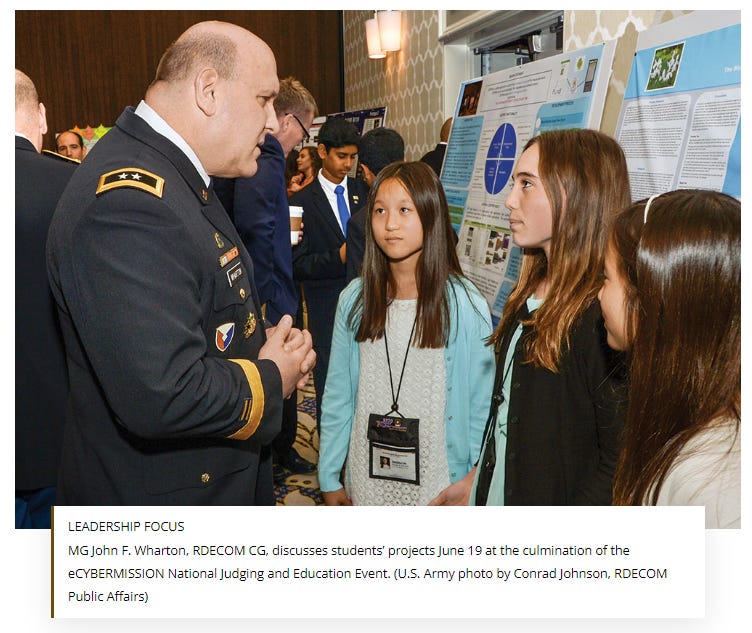
These colleges are just really sophisticated and pretty way beyond the old thuggery of Fort Benning School of the Assassins:

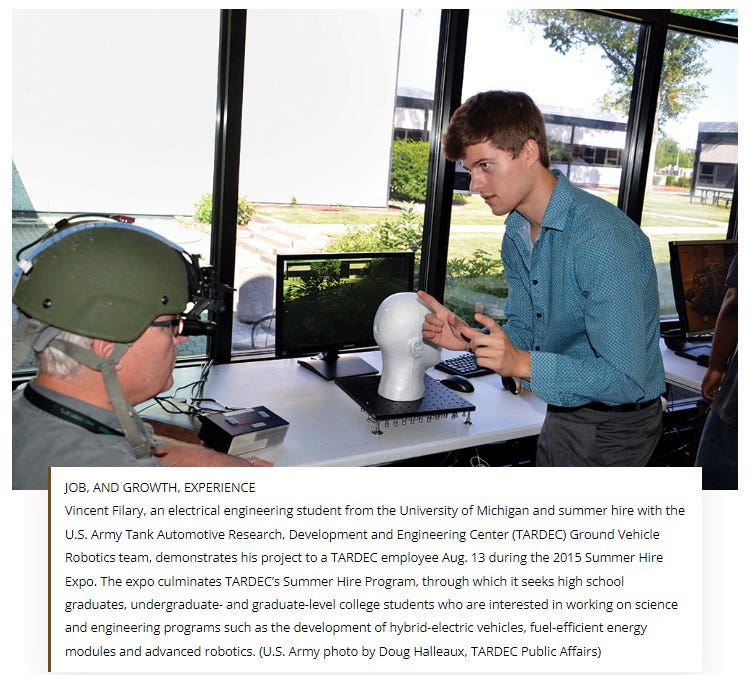
Military personnel develop valuable skills that can serve them well in a research lab, and the National Science Foundation (NSF) is offering a new funding opportunity intended to encourage them to pursue graduate studies. The program, announced in December, offers supplemental funding for principal investigators (PIs) holding active research grants from the Directorate for Mathematical and Physical Sciences (MPS) to support a U.S. military veteran Ph.D. student for up to 3 years. (source)
Don’t believe it:
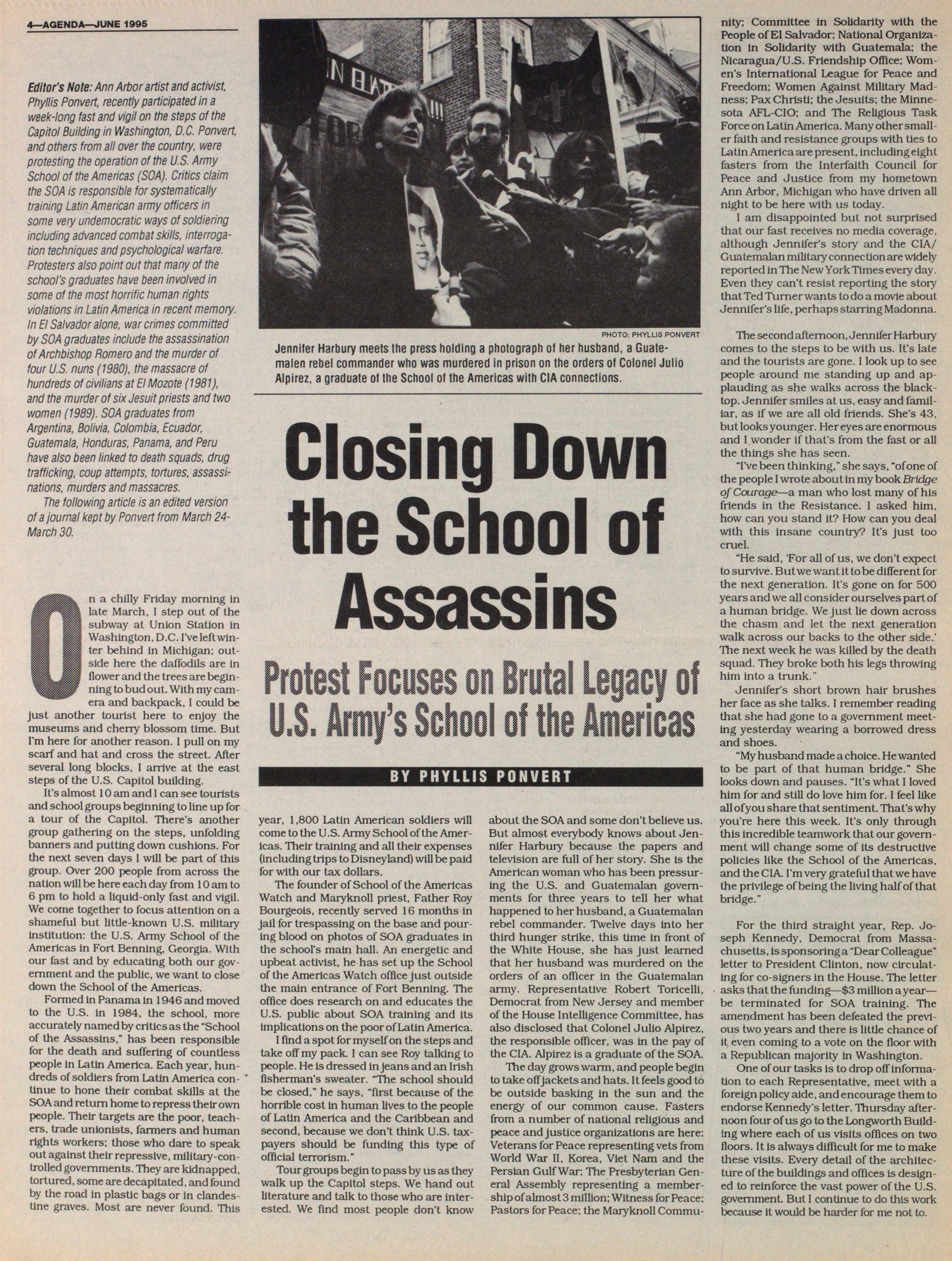



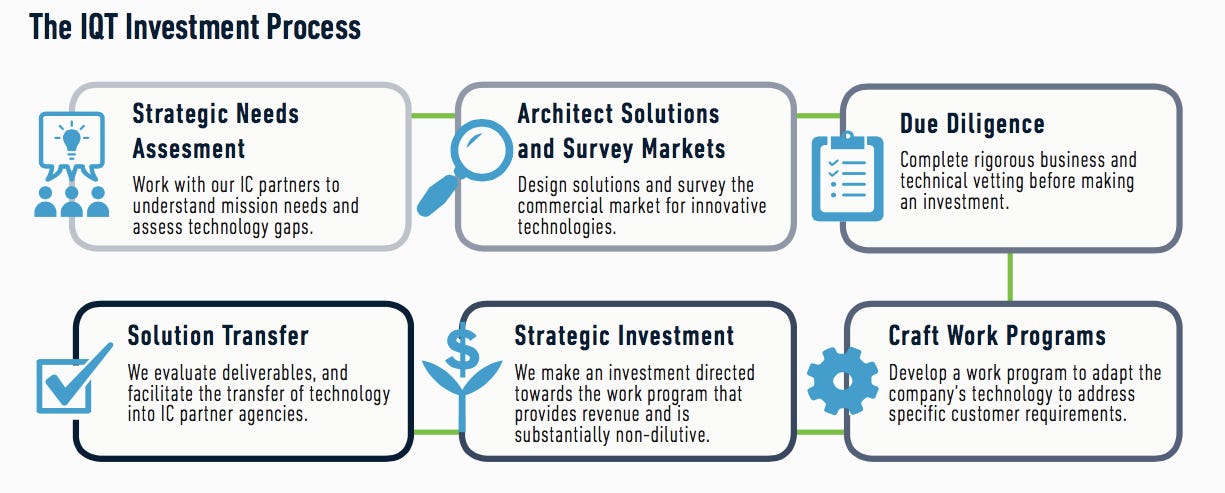
The CIA’s Appalling Human Experiments With Mind Control =

Google’s true origin partly lies in CIA and NSA research grants for mass surveillance =


Fuck, so a dung beetle is too traumatizing a term for the earth scientists?
Ahh, the humanities are on the chopping block.
Universities are ruthlessly cutting geoscience departments, funds and staff, bringing a terrible blow to Earth science research worldwide. In Australia, Macquarie University axed their entire Earth science department, while nearly every other university in the eastern states also slashed jobs and undergraduate courses. Laurentian University, Canada, similarly shuttered their School of Environment and discontinued undergraduate and postgraduate courses in environmental sciences, geography and ecology. The Department of Geology at the University of Vermont, USA, also fell onto the chopping block. Royal Holloway, University of London, has plans to reduce staffing in “less popular” Earth sciences, with similar losses anticipated in other UK institutes.

Conservation biology is an applied science that focuses on protecting the Earth’s biodiversity and maintaining natural ecosystems. Scientists who work in this field, such as conservation ecologists, are dedicated to analyzing and reducing the human impact on every aspect of our environment. According to the Society for Conservation Biology, the preservation of biodiversity is dependent on three questions:
- How is the diversity of life distributed around the planet?
- What threats does this diversity face?
- What can people do to reduce or eliminate these threats and, where possible, restore biological diversity and ecosystem health?
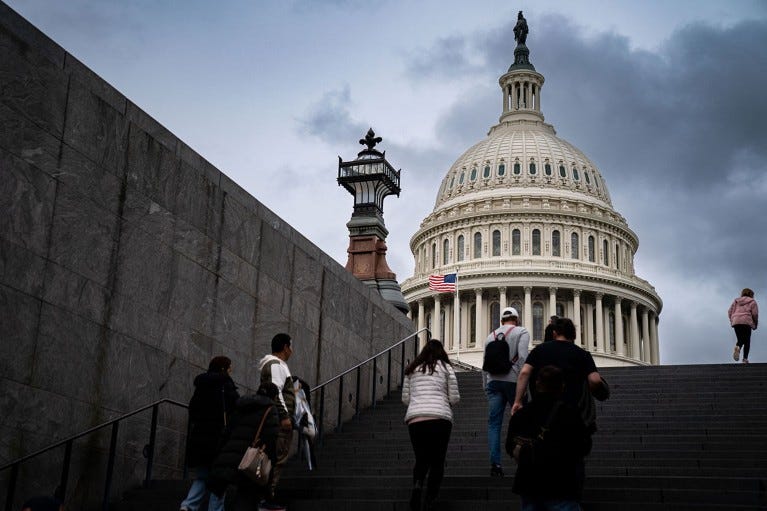
[Political polarization in the United States has repeatedly delayed the budget-approval process for US science agencies over the past few decades. Credit: Kent Nishimura/Los Angeles Times via Getty]
Ahh, get rid of it all, those “humanities.”
Freak:
[Photo: West Virginia University President Gordon Gee shows off the book he co-authored, “Land-Grant Universities for the Future: Higher Education for the Public Good.” Gee argues that public universities have an obligation to train students for good careers and cannot offer instruction in every discipline (Elaine S. Povich/Stateline). ]

Humanities courses such as languages, history, arts and literature are particularly vulnerable nationwide. Schools are more inclined to emphasize business, science, math and technology studies, which could lead to more high-paying jobs.
Students also appear to be turning away from the humanities: Data from the U.S. Department of Education’s National Center for Education Statistics shows that the percentage of bachelor’s degrees conferred by four-year institutions in the humanities dropped from 16.8% of all degrees in the 2010-11 school year to 12.8% in 2020-2021. (source)
Duh: “They were calling us baby killers. They were throwing eggs and tomatoes.” he says.


My old college, where I got a graduate degree and where I taught and fought and attempted to be all that I want to be: UT-El Paso.
Air Force ROTC and UTEP Philosophy Lead a Military Ethics Workshop. The fucking school is led by an Air Force Baby Bomber: On Veterans Day, Friday, November 11, USAF Captain Christopher Kuennen and UTEP Philosophy Visiting Assistant Professor Glenn Trujillo led a military ethics workshop. The workshop began with reflections from UTEP President Heather Wilson, who reflected on her time in the Air Force and serving as the Secretary of the United States Air Force. The workshop then held lectures and discussions over issues in remote warfare, drone strikes, military leadership, and the use of artificial intelligence in war. Professors from UTEP and El Paso Community College facilitated discussions, and USAF officers shared their experiences serving in similar missions. (source)
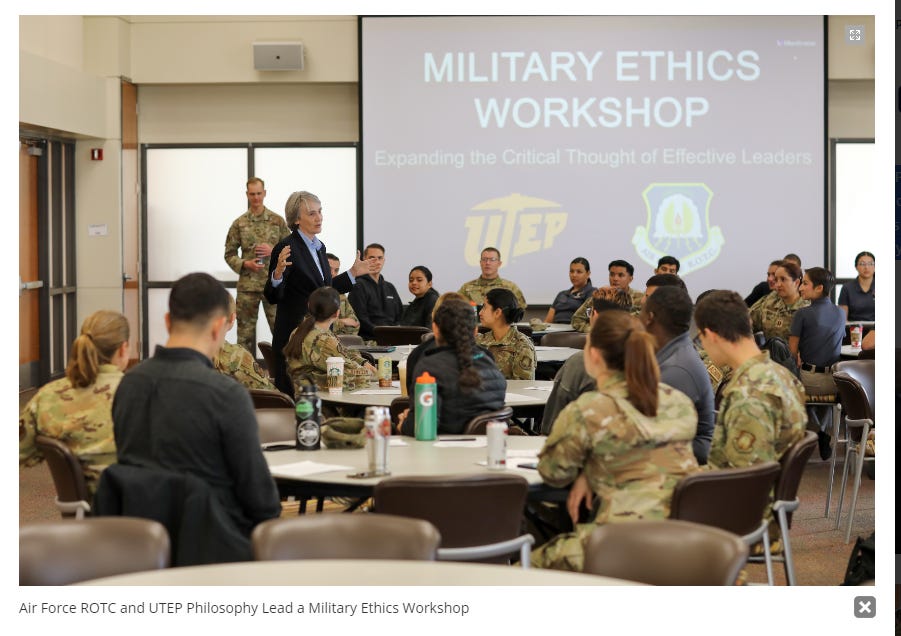
Oh, the BIPOC and “female” recruiting is working in El Paso.

UT-Austin (above).

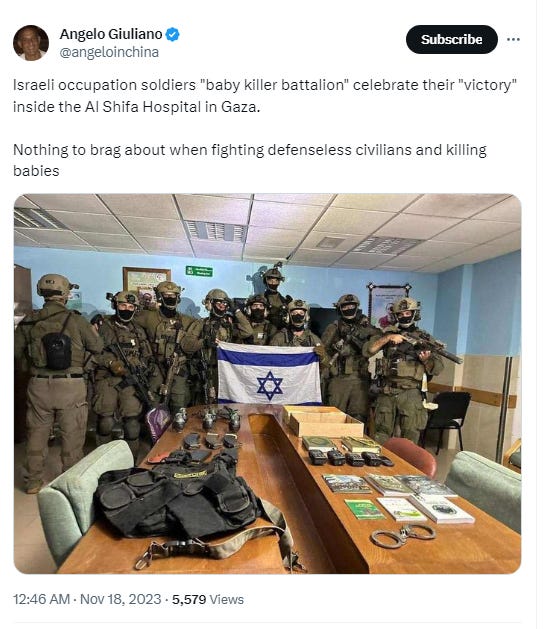
[The group here in the Borderland was chanting “Free Palestine” as they marched Downtown and then gathered at San Jacinto Plaza to hear speakers.]
Air Force Awards UTEP Grant to Safeguard Assets in Space
$5M grant will support research on objects that threaten space-based assets.
“The United States is dependent economically and militarily on space assets,” said Miguel Velez-Reyes, Ph.D., chair of the Electrical and Computer Engineering Department at The University of Texas at El Paso. “For instance, orbiting satellites provide a multitude of services, which are critical for economic wealth, defense and security.”
Ground-based telescopes, however, cannot currently obtain clear images of space objects that are distant or small. Known as Unresolved Resident Space Objects (URSO), their characteristics, such as shape, dimensions, spin rate and material composition, cannot be easily extracted from telescope images.
Thanks to a new five-year, $5 million grant from the Air Force Office of Scientific Research (AFOSR) Space University Research Initiative (SURI), UTEP is leading a new research effort that hopes to bring these objects to light.
Velez-Reyes, the grant’s principal investigator, will spearhead a team that includes UTEP Associate Professor of Practice Hector Erives, Ph.D., and Research Assistant Professor Aryzbe Najera, Ph.D., as well as collaborators from outside the University.

We pay through the nose and all other orifices!
For decades, independent researchers have claimed that actual US military spending is about twice as much as officially recognized. In 2022, actual US military spending reached $1.537 trillion, doubling the publicly reported $877 billion. These data are reported from figures from the United States Office of Management and Budget (OMB).
But they face a trap because they suffer from two important deficiencies. First, the figures provided by the OMB regarding “defense spending” are substantially lower than those provided in the United States National Income and Product Accounts (NIPA), the most complete and definitive source on income and the country’s national spending to the point that it is the total basis of analysis of the American economy.
Second, as is well known, key areas of US military spending are included in other parts of federal spending and do not fall under the OMB’s “defense spending” category. To that amount we would have to add federal space expenses, and the real total of subsidies to foreign countries. Military health insurance (which consists of payments for medical services for dependents of military personnel on active duty at non-military installations) should also be considered.
According to a study for Monthly magazine Review by Gisela Cernadas, economist at the National University of La Plata in Argentina and John Bellamy Foster, professor emeritus of sociology at the University of Oregon in the United States, these figures should also include benefits, life insurance and other costs for veterans, military health insurance, military parts of space expenses, grants in aid to other governments and the proportion of net interest attributed to actual federal military expenditures. (source)
It’s more than double, you know that!
Where oh where are the taxonomists to help us with categorizing and classifying and defining GENOCIDE?
 Paul Haeder, Author