

Homo Consumo-pethicus and Sapiens Bellum want their pudding and their meat too!
Building in a largely Mexican arena, man oh man, what the city and county officials won’t do for more shitty tax revenues, at the expense of____________________ (fill in the blanks).

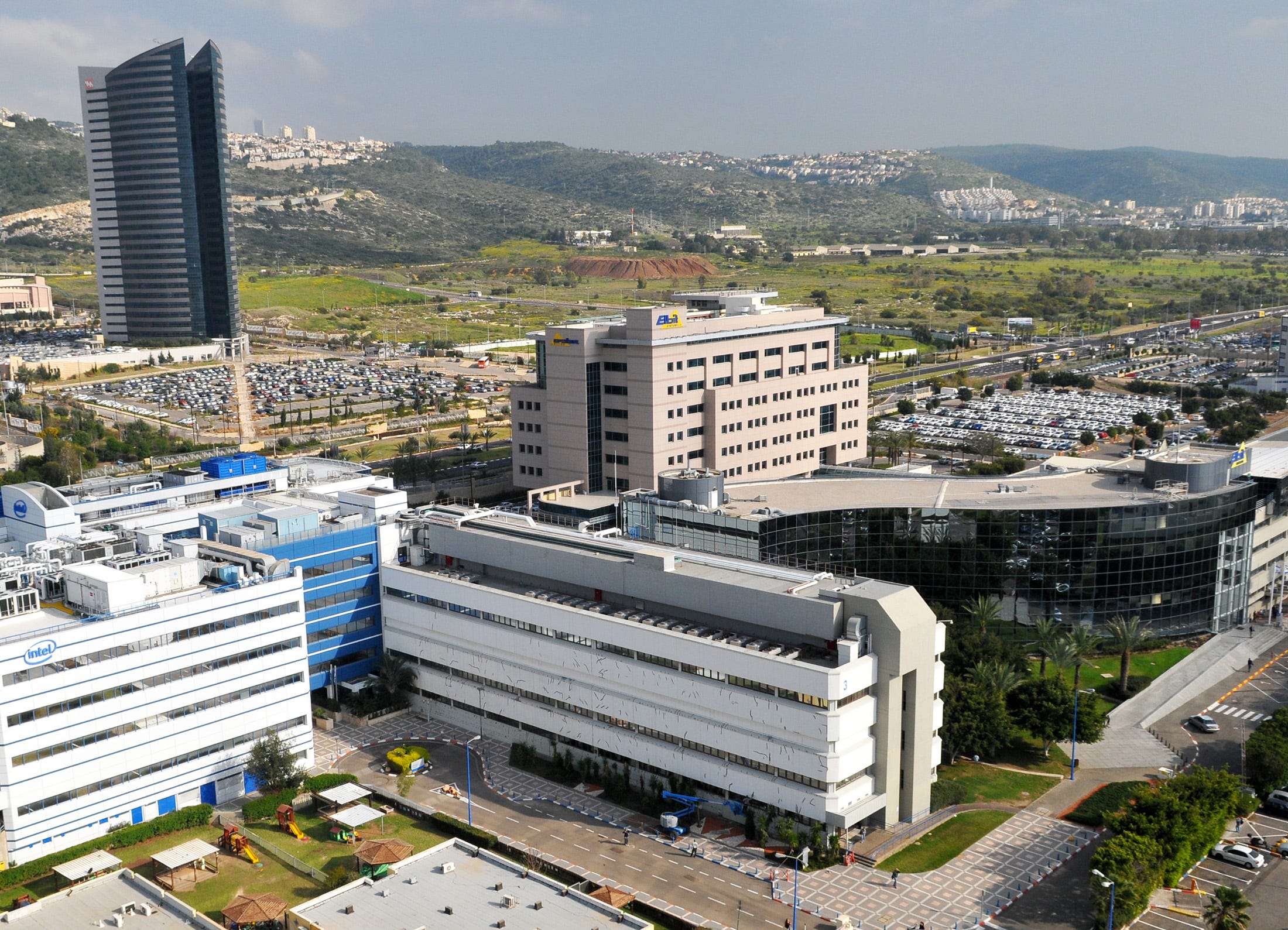
The 3.8-million square foot, 105-foot high, five-story white and blue Amazon distribution center in Woodburn, billed as the biggest building in Oregon, appeared finished for much of 2023. Yet the gigantic parking lot surrounding it has been mostly empty as the company syncs up robotic operations before opening.
When the project was approved in 2021, the company projected it would open the distribution center estimated to cost $451 million in spring 2023.
A spokesperson for Amazon declined to say when the distribution center is expected to open. In September 2022, Amazon halted plans to build a 517,000 square foot warehouse in Canby. That came after the company closed or stopped construction on 42 warehouses and delayed construction on another 21 locations.
Taxes, man, and “if you build it, they will swarm, come, pollute, clog, enjoy strip malls and fast-food and endless Friday night cruising. “We’re hoping $8 million to $10 million as assessed value for the building. That’s what we don’t know. We’re starting to put that together for this next year (2024), and we’ll probably have some preliminary figures. We’re anticipating a big chunk.”
Since the Amazon facility was announced, other developments have started in the area, including apartment complexes, housing developments and a Chick-fil-A on Highway 219.

In predatory, casino, inverted totalitarian capitalism, the mother fucking billionaires and their lobby lackeys and their prostitutes in media/press and political will bend over and spread those cheeks wide for Bezos, et al.
Federal Aviation Administration began authorizing some drone operators to fly their aircraft “beyond the visual line of sight” (BVLOS).
- That key breakthrough has opened the door for companies like Zipline, Wing and Amazon to begin more widespread drone deliveries this year.
Amazon, whose executive chairman Jeff Bezos first floated the idea of drone delivery back in 2013, is ramping up toward a goal of 500 million drone deliveries a year by the end of the decade.
+—+
Junk and now prescriptions and almost everything delivered by Amazon (dot) thievery: Oh, those bottlenecks in Panama.

With water levels languishing at six feet (1.8 meters) below normal, the Panama canal authority capped the number of vessels that can cross. The limits imposed late last year were the strictest since 1989, when the conduit was shut as the US invaded Panama to extract its de facto ruler, Manuel Noriega. Some shippers are paying millions of dollars to jump the growing queue, while others are taking longer, costlier routes around Africa or South America.
The constraints have since eased slightly due to a rainier-than-expected November, but at 24 ships a day, the maximum is still well below the pre-drought daily capacity of about 38. As the dry season takes hold, the bottleneck is poised to worsen again.
+—+
And Forbes Fucking Magazine is giving tips on how to increase the number of baby and mother and father killers for UkroNaziLandia. These shipments of death will not have to go through the Panama canal or on Jeff Lizard Bezos’ drones:
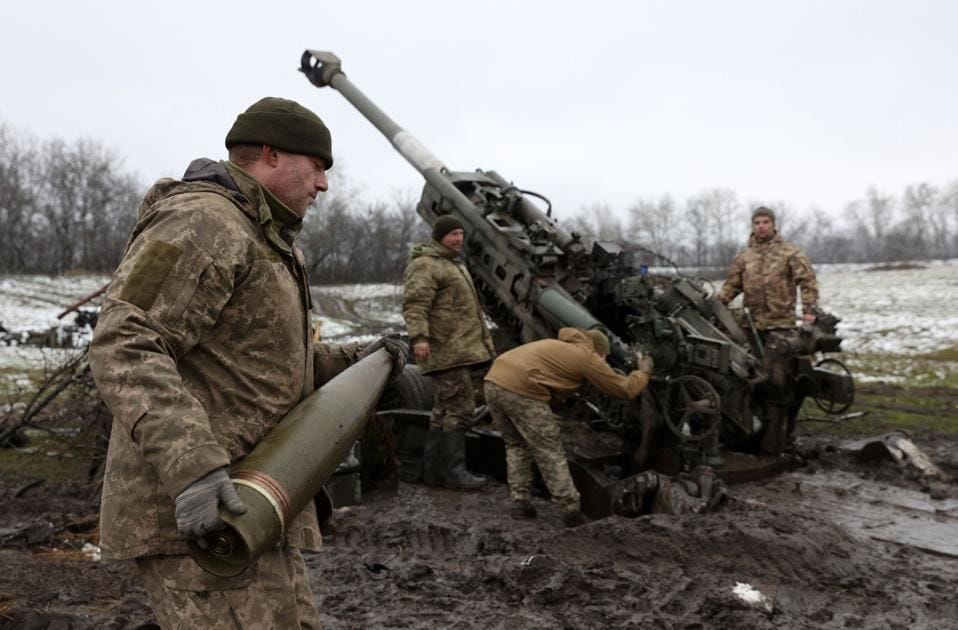
Forbes: It is no secret the artillery fight for Ukraine has devolved into a battle for mass. The West, hoping to pump at least 200,000 155mm rounds a month into the Ukraine fight, is reaching into old stockpiles and even exploring the idea of refurbishing expired shells. These are all viable stopgaps, but, as the West’s ammunition production infrastructure struggles to scale up in 2024, the artisanal, hand-crafted aspects of post-Cold War artillery manufacturing merits some tough scrutiny.
Production is key.
America is set to produce at least 100,000 155mm shells a month by 2025, leaving Europe with the task to boost domestic production of 155mm shells by 150% over the course of 2024.

Ahh, the Military Industrial Offensive Weapons Sicario Complex is well represented in DC with those mostly white pigs in tip top shape gouging millions upon millions from US taxpaers, while . . . .
When talking about health disparities in the District, the narrative is usually the same: African American residents in Wards 7 and 8 are either at risk or are greatly impacted by illnesses such as hypertension, diabetes, obesity, kidney disease and cases of sexually transmitted diseases. These disparities are so well-known, they aren’t even newsworthy any more; it’s almost as if we can no longer see them.
A report by Georgetown University on health disparities in the District found that African American residents are being left behind. For instance, African American residents are six times more likely than white residents to die from diabetes-related complications, and twice as likely to die from coronary heart disease. Despite DC’s rapid economic growth and increasing prosperity, “health outcomes and quality of life indicators for African American residents do not reflect trends of the general population,” the report finds.

But all’s well for the albino Caucasian Creep(s): Bryan Johnson swipes back at Elon Musk’s criticism of his $2 million-a-year youth-chasing regime: ‘He will fire you and leave you to die’ …Johnson is trying to reverse his age, but Tesla CEO Elon Musk isn’t sold on his methods. Biohacker Johnson is taking criticism of his $2 million-a-year age-reversing regime on the chin—even if it comes from X owner Elon Musk.
[Send these pieces of shit to ukraine or isra-HELL:

Ahh, all’s really fucked up down under, with our Anglo-Penal Colony Brothers and Sisters —
“Prescribing antipsychotics for mental health diagnoses to children/ adolescents attending Australian general practices was more frequent in 2017 than in 2011 and most commonly associated with depression/anxiety diagnoses. In both years, most prescribing was off‐label. The majority of patients were co‐prescribed other classes of psychotropics along with antipsychotics.”

NOTE: Antipsychotics can have dangerous long-term effects and often lead to poor outcomes for service users. Previous research has linked antipsychotic use in children to brain atrophy, increased risk for diabetes, and increased risk of death. Although experts have warned about the dangers of giving antipsychotics to children, prescriptions for children and adolescents are on the rise. Off-label antipsychotic prescriptions for ADHD in children are common despite experts warning that “there is little evidence of benefit and substantial evidence of potential harm.” (source)
Oh, Western Warring, Exploitative, Chaos, Terror, Amnesic, Lying CULTURE!
Joshua Coleman’s a psychologist and author of the book “Rules Of Estrangement: Why Adult Children Cut Ties And How To Heal The Conflict.” Joshua, thanks for being here.
MA: Is estrangement becoming more common than it used to be?
COLEMAN: I think it’s becoming more common, and troublingly, I think it’s becoming more acceptable and accepted. I think there’s a kind of a social contagion that happens through Instagram and TikTok and Reddit where cutting out your toxic family member is becoming sort of an act of personal expression and identity, rather than what it often is, which is an expression more of avoidance. I’m not saying that there aren’t places where, of course, there are. There are abusive, problematic parents or family members who, no matter how well you communicate with them, they’re not going to change, and they can continue to be abusive and hurtful and destructive in one form or another.
But I and my colleagues are working with parents and families where that is not the case, where these are parents who would do anything, who are willing to do their own therapy, go to family therapy, take responsibility, and they’re being told, no, my therapist says you’re a narcissist or you’re a gaslighter. And it’s a huge problem in our society. We have a culture that’s very rich in the language of separation and individuation and labeling and diagnosis but a completely impoverished culture around ideas of connectedness and interdependency and mutual reliance. (source)
This is just a five-minute look at the fucking news feeds I get daily, by the nanosecond. Putting them all together as systems thinking fool that I am, is so-so easy. Yeah, I could so entire articles looking at EACH one of these — you know, getting into persuasive writing, the cause and effects and effects and causes; looking at processes and the variation on a theme and the history and the lack of deep thinking, which is tied to the algorithms and AI and mass murdereing (as in critical thinking killing) media.

Then contrast serious problems and what should be solutions-based critical thinking with this “oh shit, the dirty devil lawyers are lining up” stories:
They were too late for New Year Happy Hour.
Ecstatic passengers on a “time machine” flight were left fuming after an airline mishap resulted in them missing out on the chance to celebrate the New Year — twice. Tweets detailing the missed NYE two-fer are going viral as time travel hopefuls voiced their chagrin.
The 3,000-mile flight United Airlines flight was scheduled to depart Guam at 7:35 a.m. on January 1, 2024, and land in Honolulu, Hawaii at 6:50 p.m. on December 31, 2023, due to the 20-hour time difference between the two locations, Kennedy News reported.
This meant that passengers would effectively get to travel back to the past and ring in the New Year twice.
“You only live once, but you can celebrate New Year’s Eve twice!” exclaimed United Airlines in an X post announcing the potential Happy Two Year.

Mush for brains, man: PTSD, Trauma, all those diabetes-inducing chocolates sold without the cute fucking carving? Call out the ambulance chasers. Ruddy G, you around still?

NEW YORK — Cynthia Kelly thought she was buying Halloween-themed Reese’s Peanut Butter Pumpkins with a “cute” carving of a pumpkin’s mouth and eyes, as pictured on the product’s packaging.
But when she opened it, she was horrified to find that there was no pumpkin carving at all. It was just a regular-looking piece of chocolate.
Now, Kelly has filed a $5 million lawsuit against Hershey, the maker of Reese’s, alleging the company falsely represented several of its holiday-themed products on packaging: Reese’s Peanut Butter Pumpkins, White Pumpkins, Pieces Pumpkins, Peanut Butter Ghost, White Ghost and others.
Kelly “would not have purchased the Reese’s Peanut Butter Pumpkins product if she knew that it did not have the detailed carvings of the mouth and/or eyes as pictured on the product label,” the lawsuit says.
The lawsuit, filed in federal court in Florida, seeks class-action status on behalf of “numerous consumers [who] have been tricked and misled by the pictures on the Products’ packaging.”
Hershey declined comment to CNN on the suit.
Hershey joins a growing list of food brands sued for false advertising, including Taco Bell, Wendy’s, McDonald’s, Burger King and Arby’s. These companies use ads that don’t match up with their actual food, the suits allege.
+—+
I am sure AI-Big Data collectors will find more and more false advertising situations that will keep the shisters in business suing left and right, up and down. But the sun never sets, as SF is the sun by which all other surveillence capitalists revolve:

Here, piece of shit Richard Florida, yammering again: Urban studies professor Richard Florida and three city-focused consultants wrote that San Francisco is a hub of a “Meta City,” which they define as a web of cities that share talent pools and industries. By framing it that way, Florida told SFGATE on Friday, they argue out-migration and remote work aren’t necessarily bad for the Bay Area, but could serve to expand its “digital hinterlands.”
“In the technology world, San Francisco remains the center. It remains the sun on which the planets orbit,” Florida said. Those “planets,” the authors wrote, include Austin, Seattle and Portland, as well as larger talent hubs like New York and Los Angeles.
Read this Poison Ivy School Report here. Note these racists left out Tel Aviv, man.
Ahh, protecting the Jews EVERYWHERE, Harvard!
Source: How does Israel, a small country with roughly 8 million people, produce more tech startups and receive more venture capital per capita than any nation in the world? Why does a country with few natural resources have more companies listed on the NASDAQ than Europe, Japan, Korea, India and China combined?
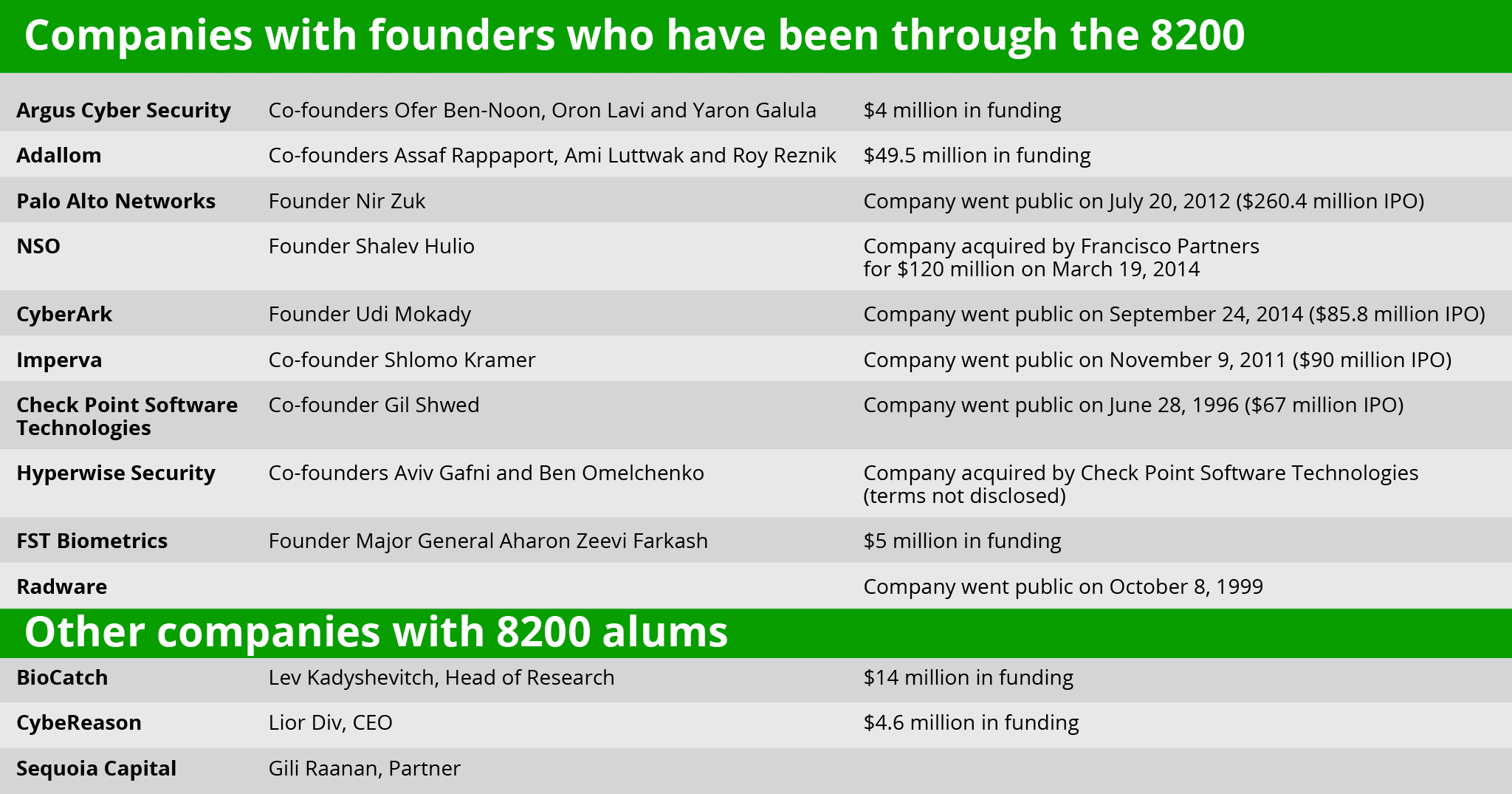
To understand Israel’s innovation success, look no further than the Israeli Defense Forces and the country’s mandatory policy of service for young adults. For me and thousands of Israeli entrepreneurs like me, our startup journey began in the technology units of the Israeli Defense Forces. One unit in particular has become a prolific technology incubator, particularly in the field of cybersecurity: IDF Unit 8200.
The 8200 is a special unit, and in many ways, it’s run like a high-tech startup. It begins with finding the best talent. IDF scouts comb the nation’s high schools to identify high-potential candidates at an early age. They target students with superior analytical capabilities, who can make quick decisions and work well in a team environment. Only the best and brightest are routed to this elite cybersecurity group.
Instead of relying on outside research and development, the 8200’s technologists work directly with their “customers” (the intelligence officers). All of the unit’s technology systems, from analytics to data mining, intercept, and intelligence management, are designed and built in-house. Technologists sit side by side with their users on a daily basis to ensure that their “products” meet the intelligence officers’ specific requirements.
The result is that 8200 alumni have developed critical startup skills and experience even before they start their first company. That’s why it’s not a surprise that technology companies, such as CheckPoint, Imperva, Nice, Gilat, Waze, Trusteer, and Wix all have their roots in this IDF unit. (Israel’s thriving mobility-tech sector has created an innovation nation)
+—+
Finally, if you thought mRNA JewJabs for SARS-CoV2 were bad. Here comes the vaxxes, man, for EVERYTHING thing. Soylent Green is Turbo Cancer Juice!
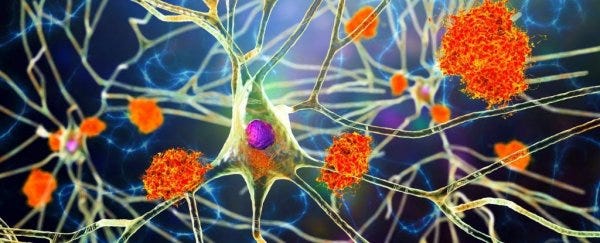
A Study of 500,000 Medical Records Links Viruses to Alzheimer’s Again And Again
In 2022, a study of more than 10 million people linked the Epstein-Barr virus with a 32-fold increased risk of multiple sclerosis.
“After reading [this] study, we realized that for years scientists had been searching – one-by-one – for links between an individual neurodegenerative disorder and a specific virus,” said senior author Michael Nalls, a neurogeneticist at the National Institute on Aging in the US.
Around 80 percent of the viruses implicated in brain diseases were considered ‘neurotrophic’, which means they could cross the blood-brain barrier.
“Strikingly, vaccines are currently available for some of these viruses, including influenza, shingles (varicella-zoster), and pneumonia,” the researchers wrote.
“Although vaccines do not prevent all cases of illness, they are known to dramatically reduce hospitalization rates. This evidence suggests that vaccination may mitigate some risk of developing neurodegenerative disease.”
Lies, really, siloed science. But for a purpose: AI, AR, CRISPR bio-DNA hack-jabs, and more and more billions to the Mengele Club.
However,
“Alzheimer’s disease (AD) is a leading cause of mortality in the developed world with 70% risk attributable to genetics. The remaining 30% of AD risk is hypothesized to include environmental factors and human lifestyle patterns. Environmental factors possibly include inorganic and organic hazards, exposure to toxic metals (aluminium, copper), pesticides (organochlorine and organophosphate insecticides), industrial chemicals (flame retardants) and air pollutants (particulate matter). Long term exposures to these environmental contaminants together with bioaccumulation over an individual’s life-time are speculated to induce neuroinflammation and neuropathology paving the way for developing AD.
Epidemiologic associations between environmental contaminant exposures and AD are still limited. However, many in vitro and animal studies have identified toxic effects of environmental contaminants at the cellular level, revealing alterations of pathways and metabolisms associated with AD that warrant further investigations. This review provides an overview of in vitro, animal and epidemiological studies on the etiology of AD, highlighting available data supportive of the long hypothesized link between toxic environmental exposures and development of AD pathology.”
Nah, it can’t be all those chemicals and toxins and substances in the average modern body — hundreds that were never in human or animal phisiology before the industrial revolution.

Particle pollution produced by tire wear is found to be 1,850 times higher than emissions from the tailpipes of modern cars, according to the latest testing. In testing more than 250 different types of tires, usually made from synthetic rubber, a material that is derived from crude oil, it found that particles from tire wear contain a wide range of toxic organic compounds, including known carcinogens. They then go straight into soil and water, polluting the sources. Car exhaust emissions, on the other hand, remain in the air for a period of time and affect air quality.

Heavier battery cars are causing greater wear and more tire particle pollution than from car exhausts, suggesting the urgent need for stronger regulation.
+-+
Oh, Tesla, et al: In recent years, marine, freshwater and terrestrial pollution with microplastics has been discussed extensively, whereas atmospheric microplastic transport has been largely overlooked. Here, we present global simulations of atmospheric transport of microplastic particles produced by road traffic (TWPs – tire wear particles and BWPs – brake wear particles), a major source that can be quantified relatively well. We find a high transport efficiencies of these particles to remote regions. About 34% of the emitted coarse TWPs and 30% of the emitted coarse BWPs (100 kt yr−1 and 40 kt yr−1 respectively) were deposited in the World Ocean. These amounts are of similar magnitude as the total estimated direct and riverine transport of TWPs and fibres to the ocean (64 kt yr−1). We suggest that the Arctic may be a particularly sensitive receptor region, where the light-absorbing properties of TWPs and BWPs may also cause accelerated warming and melting of the cryosphere. (source)

Tires are more complex than they look. The vulcanized rubber compound that makes up the outermost layer, the tread, often contains sulfur, zinc, carbon black, bisphenol A (BPA), and other chemicals. A lot of that gets swept off the roads by rain, along with motor oil, bits of pavement, and other litter.
A three-year study by the San Francisco Estuary Institute (SFEI) found that stormwater carries roughly 7 trillion microplastic pieces into the bay annually – more than 300 times the discharge from the area’s wastewater treatment plant. Nearly half of those appear to be tire fragments. (source)
+—+
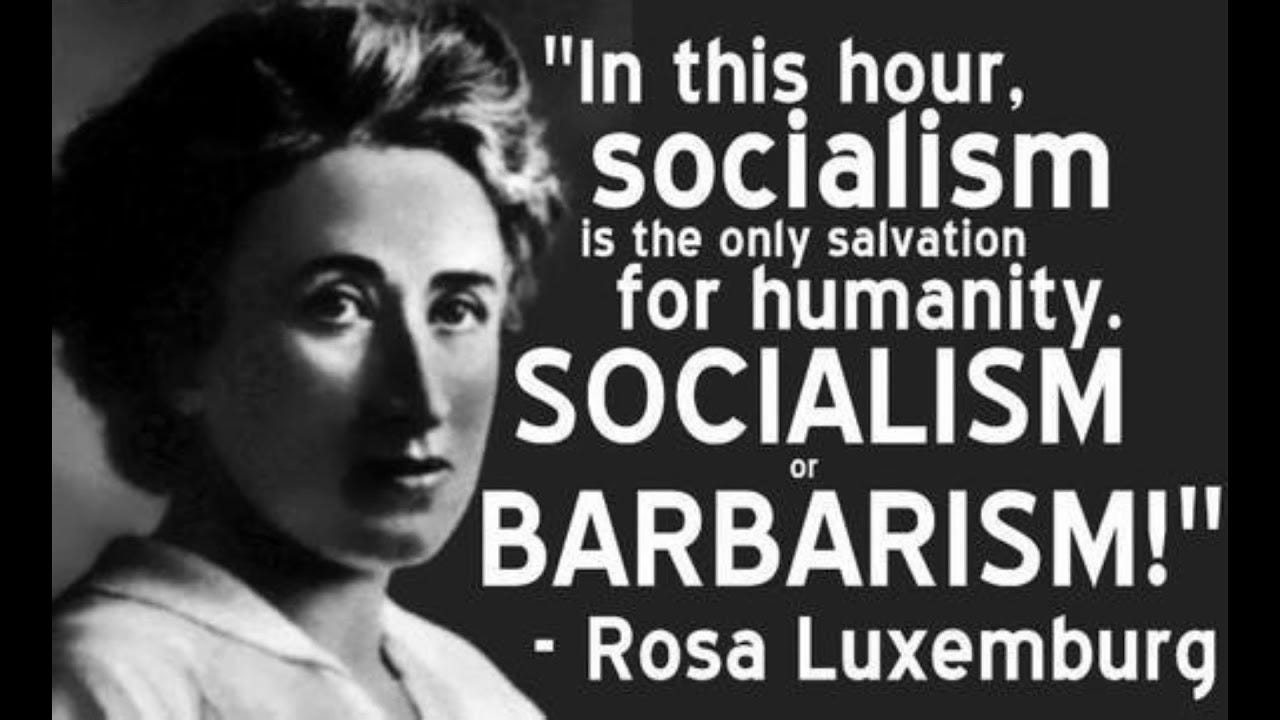
Rampant, uncontrolled, unregulated, totalitarian, predatory, casino, usury, violent, profits-at-any-price, zero-precautionary principle CAPITALISM = fuck, well, we are FUCKED.
Tires, man, and I studied them 15 years ago, but today, shifting baseline disease gives us these crappy stories and reports, many of them AI generated, now, that have the toothless wonders of a PR release.
Socialism or, think of another slogan beginning with “b”.
Brutality, Bullying, Battle, Burden, Baggage, Banking, Besiege, Bizarre, Billionaires, Bumpkin, Blunder, Butcher
Here, 1969 pamphlet — imagine, more than half a century ago, and some point spot on.
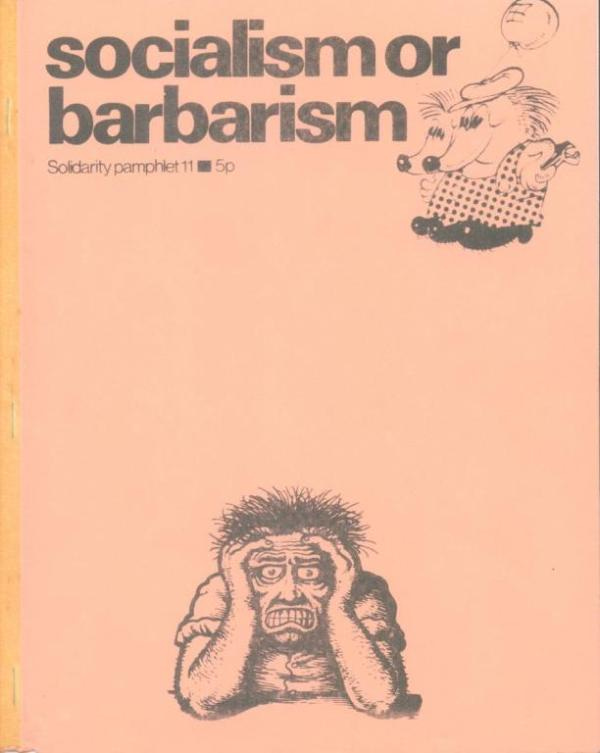
SOCIALISM OR BARBARISM
1. Class Society Today
I. THE NATURE OF CLASS SOCIETY.
1. Capitalism remains a class society despite the great changes it has undergone in the course of the last century. The same struggle between the classes dominates social life. The same alternatives confront the working class: to submit to ever-increasing exploitation, alienation and enslavement — or to eliminate the exploiting classes, to destroy their social system, and to establish working class power. Only then will it be possible to reorganize society on a new basis and to give a new purpose to human life.
2. The relations of production remain the basis of the class structure of any society. In all countries of the world these relations are capitalist relations because they are based on wage labour. The wage-earners, both as individuals and as a social group, are expropriated from the means of labour, from the products of labour, and from the control of their own activity. They are concentrated in enterprises of various sizes where they are subjected to the ruthless will of capital, personified in the bureaucratic managerial apparatus.
3. Society remains basically divided into two classes. One class disposes of the means of production (either in law or in fact — either individually or collectively). It manages both production and society in its own interests. It determines the distribution, of the total social product and enforces it through its control of the State machine. The other class consists of wage earners whose means of life is the sale of their labour power, and who in the course of work merely execute orders imposed from above.
4. To an increasing degree every sphere of productive life has been ‘proletarianised’. Capitalism has invaded all sectors of the economy. Even in the offices the dominant social form has become the enterprise based on wage labour and organised on an industrial pattern.
Within industry there has been an increase of ‘non-productive’ personnel, who in their turn are becoming ‘proletarianized’. Office staff, other ‘white collar’ worker’s in industry or commerce, and certain categories of Government employees, are henceforth just as much proletarians as are manual workers. They too are wage slaves. They too are submitted to a ruthless division of labour and perform mere tasks of execution, carefully measured and controlled from above. Because of the numerical increase of jobs of this type, they too are deprived of any real prospect of a change in their conditions of life.
Despite the illusions some may retain concerning the ‘status’ they once enjoyed, these strata belong to the proletariat. This is shown quite clearly by the methods of organization and struggle they are increasingly compelled to resort to, in the defence of their most elementary interests.
II. THE WORKING CLASS.
5. The evolution of capitalism has not altered the essential features of working class status in modern society.
In the field of production the extraordinary increase in technical knowledge and the increased productivity of machines have resulted in an increased subjugation of the worker to capital. The utterly absurd nature of work under capitalism is being shown up more and more.
The struggle at the point of production dominates the whole organization of work. It even affects the evolution of technology. Because of working class resistance to the bureaucratic organization of work the capitalists have to impose an over increasing control in the factory, over every aspect of working class activity, whether individual or collective. This takes the form of an increasing division of labour, of time and motion study, and of a perpetual tendency to speed-up.
6. The division of tasks in modern industry is carried out to an absurd degree. The purpose is to convert the yield of the individual worker into something increasingly easy to measure, and therefore to control. The purpose is also to assist the imposition upon workers of methods of production against which they constantly rebel. The tempo of living labour is increasingly subordinated to that of the machine.
The situation is only very superficially different in the automated sectors of production. Here the sustained nervous tension, the loneliness and the monotony of supervisory functions create the same sense of destruction of the worker as a human being. The same process takes place in office work and in other sectors of the economy.
Capitalist production is characterised by the total alienation of labour. The worker is reduced to the role of a simple ‘executant’ of infinitely divided tasks. He is robbed of the control of his own activities.
These have been rigidly drawn up, defined and organized in the offices. He is converted into a mere instrument in the hands of those who manage production, into a mere appendage of the machine.
7. Despite a slowly increasing level of consumption the status of the workers as workers has not fundamentally altered. The working class remains exploited. It remains robbed of roughly half the product of its labour which goes to the parasitic consumption of the exploiting class, to the expenditure of the exploiters’ State, and into investments over which the workers have no control. The nature and objective of these investments are determined by the class nature of society, by the interests of its ruling class. A given pattern of investment serves to reinforce and reproduce a given type of social structure.
8. The fate of the workers in political and social life has not changed either. The workers remain a subordinated class. The whole orientation of modern society (of its economy, of its State, of its housing, of its education, of the objects it will consume and of the news it will get, of the questions of war and peace themselves) remains decided by a self-perpetuating minority. The mass of the population have no power whatsoever over this minority, be the society ‘democratic’ or ‘totalitarian’.
III. CONTEMPORARY CAPITALISM.
9. The transformations undergone by capitalism during the last century show themselves primarily in the increasing concentration of both capital and managerial functions.
In the countries of ‘private capitalism’ this concentration has taken certain well-known forms (monopolies, giant enterprises, trusts and holding companies, the creation of ‘satellite’ companies around the big enterprises, cartels, agreements, professional associations of capitalists, etc.). But it also shows itself more specifically by the new role played by the State.
The State has become the main economic factor in contemporary society. The modern capitalist state absorbs about 25 per cent. of the total social product, handles (directly or indirectly) about 50 per cent. of this product, owns a substantial proportion of the total capital (often concentrated in key sectors such as coal and railways) and finally acts as a central agency for the regulation of the economy as a whole, in the interests of the capitalist class.
10. The concentration of capital and the increasing intervention of the capitalist state have resulted in certain changes in the capitalist economy itself. Some old problems have been solved, many new ones created. The failure to recognize these changes accounts for the sterility of much that passes as ‘marxist analysis’ today.
The ruling classes have succeeded in controlling the level of economic activity and in preventing major crises or depressions. This is a result both of the changing structure of the economy and of the conscious intervention of the State to stabilise economic activity and to guarantee its expansion. Unemployment has enormously diminished. The increase of wages is both more rapid, and especially more regular, than previously. This is a result both of working class struggle and of a new policy on the part of the employers, aimed at buying discipline at the point of production in exchange for certain wage concessions. Wage increases now approximately follow increases in the productivity of labour. This means that the proportion of the total social product going to workers and to capitalists remains approximately constant.
An increase in mass consumption has become indispensable to the smooth functioning of the modern capitalist economy. It has in fact become an irreversible aspect of it. The old ‘image’ of capitalism as characterised by economic slumps, increasing unemployment, and stagnation — if not lowering of living standards, must be discarded. The reality of contemporary capitalism is the expansion of both production and consumption, interrupted by minor fluctuations. This expansion is obtained at the cost of an ever increasing exploitation and alienation of the producers in the course of their labour.
IV. CHANGING STRUCTURE OF THE RULING CLASS
11. The concentration of capital through these various mechanisms has resulted in certain changes in the classical social structure. These relate to the social composition of the ruling class and to the moans whereby individuals may accede to this class.
As the ‘rationalization’ and organisation from outside of all human activities becomes the dominant feature of capitalist society, bureaucratisation spreads to all spheres of social life. In the process, inherited, individual wealth becomes relatively less important as a moans of access to the commanding positions of the economy and of the State.
12. The ‘traditional’ ruling class (based on heavy industry, manufacture, shipping, banking, insurance, etc.) is being forced to share, on an increasing scale, the functions of administration and management (both of the economy and of society at large) with a growing bureaucratic stratum.
This stratum is becoming an integral part of modern capitalist societies, indispensable to their ‘efficient’ functioning, and reflecting deep and irreversible changes in the structure of their economies.
13. The bureaucracy has some of its roots in production. The concentration of capital and the ‘rationalization’ of production from outside create the necessity for a bureaucratic apparatus in the factory. The function of this apparatus is to ‘manage’ the labour process and the labour force and to coordinate the relations of the enterprise with the rest of the economy.
The bureaucracy also finds roots in the increasing number of individuals involved in the higher reaches of state activity (nationalised industries, government economic agencies, etc.). This is a result of the profound changes that have taken place in the economic role of the state.
The bureaucracy finally finds its roots in the political and trade union organisations of the working class itself. To straight-jacket the workers, to integrate them more and more into the existing social order, requires a specific apparatus. This apparatus participates to an increasing degree in the day-to-day management of capitalist society, of which it is an integral part.
The bureaucracy is not a homogeneous social formation. It has developed to varying degrees in various countries. Its economic basis is the final stage in the concentration of capital, namely the tendency of monopoly capitalism to fuse completely with the state. In the countries of classical capitalism the managerial bureaucracy is not based on any fundamentally new mode of production or new pattern of circulation of commodities. It is based on changes in the economic basis of capitalism itself.
14. The growth of the bureaucracy has profoundly altered the internal structure of the ruling class. New elements have had to be incorporated and the diffusion of privileges extended. New hierarchical relationships emerge.
The process has been a very uneven one, the resistance of the old ruling classes to fusion with the new strata varying considerably from place to place. It has varied according to the economic problems confronting the capitalists, according to the pressures of the working class for more radical solutions and according to the degree of historical insight which the rulers have achieved.
V. THE PERSISTING CONTRADICTIONS IN CAPITALISM.
15. These modifications of capitalism have done nothing to lessen the contradictions of the system which lie in the field of production and of work. These are the contradictions contained in the alienation of the worker.
Capitalism attempts by all possible means to transform the workers into mere executors of tasks decided by others, into mere cogs of its industrial machine. But if it succeeded in this attempt, capitalism would cease to function. Capitalism constantly attempts to exclude the workers from the management of their own activities — but is at the same time constantly obliged to seek their participation.
This contradiction dominates every capitalist enterprise. It provides the framework within which the class struggle is constantly regenerated, whatever the level of wages.
16. Attempts by the capitalists to solve this contradiction by the ‘rationalization’ of their enterprises, by Taylorism, by work study methods, by the use of industrial sociologists and psychologists, by talk of the ‘importance of human relations’ have all miserably failed. They have done nothing to lessen the intensity of the class struggle which today opposes workers and management, in every country in the world, in disputes concerning conditions and tempo of work and the control of human activity in the process of production.
17. Under a different form, the same contradiction is also to be found in every aspect of collective life. For instance political life is organized in such a manner as to exclude the vast majority of the population from any effective management of their own affairs. The corollary is indifference and apathy. These in turn make it difficult for capitalist political institutions even to function according to the requirements of the capitalist class itself. A minimum of genuine participation is required to prevent these organizations being shown up for the complete sham that they are.
18. The development and bureaucratisation of capitalism have not lessened its irrationality and its fundamental anarchy. Both at the level of the factory and at the level of society as a whole, the bureaucratic capitalist management is a mixture of despotism and confusion which produces a fantastic human and material wastage”
The ruling classes and their bureaucratic apparatus constitute a small minority of society. They are separated both from the immense majority of mankind and from social reality itself. Because of this they are incapable of effectively managing even their own system, in their own interests. They are even less capable of solving the immense problems confronting humanity today.
Because of this, and despite the elimination of economic crises of classical type, capitalism cannot and will never be able to avoid crises of another kind: moments when the irrationality of the whole system explodes in one way or another, bringing with it periodic breakdowns of the ‘normal’ functioning of society.
19. The crisis of all capitalist institutions is deeper than ever. Day after day capitalism demonstrates its incapacity to solve the problem of relations between men in the process of production. It also demonstrates its inability to solve any of the other major problems of social life in the 20th century.
Its political institutions are an object of contempt for the general population, which is increasingly losing interest in ‘traditional’ politics. There is a general decay of all its values: moral, political, social and cultural. The crisis in the traditional conception of the family and the increasingly bureaucratic, artificial and absurd nature of ‘education’ in modern society have provoked, in all industrial countries, an immense revolt of youth. Youth today tries to live its life both outside and against established society. This has immense revolutionary implications.
20. The only objective which the ruling class is still capable of proposing to humanity is the carrot of ‘a rising standard of living’. All that they mean by this is an increase in the consumption of material goods. But this increase is constantly outpaced by the increase in ‘needs’ which capitalist society automatically generates or quite artificially creates. The struggle for status and the acquisition of wealth is far more intense in an advanced industrial community than in a primitive African village.
The slow but regular increase in living standards, which is a feature of contemporary capitalism, is counteracted by the increasing fatigue and alienation at work. It does not lessen the smouldering dissatisfaction of millions of individuals with their conditions of life, nor does it lessen the underlying social tensions. We have only to look for confirmation of this assertion, at the sustained nature of the class struggle in precisely those countries where working class wages are highest.
2. The Socialist Programme
25. ALL historical experience has shown that no reforms can alter the fate of the worker in capitalist society or solve the crisis confronting society. The programme of yesterday’s reformists has been realised today in a whole series of countries. In the process it has proved its own futility !
Historical experience has also shown that no stratum, category, or organisation can achieve socialism ‘on behalf of’ the proletariat and in its place. Socialism will only be built through the radical destruction of the present social system. To the extent that present society is more and more dominated by the bureaucracy this means that socialism will only be built through the destruction of all bureaucracies (including those presenting themselves as the ‘leadership of the proletariat’).
This means that socialism will only be achieved through the autonomous and self-conscious activity of the working masses. ‘The emancipation of the working class is the task of the working class itself.
26. Socialism does not only mean the abolition of private capitalism. It means the abolition of all dominating and privileged strata in society.
It therefore implies the abolition of any social group claiming to manage production or the State ‘on behalf of the proletariat’.
27. The socialist revolution must proclaim and realise the expropriation of the capitalists and the suppression of the bureaucracy in the workshops, in the state, and in society at large. It must give the management of production in the factories to the workers (manual workers, employees and technicians) who operate them.
The organs of this management will be assemblies of workers, shop assemblies, departmental assemblies, factory assemblies and factory councils composed of elected representatives, revocable at all times.
Production will be planned according to human needs. A variety of alternative plans will be drawn up, electronic equipment being used to an increasing degree to work out the inter-related needs of various sectors of the economy. This is the purely technical aspect of planning. The implications of the various plans (in relation to such basic human questions as hours of work, level of consumption, level of investment) will then be presented to the people. A meaningful and genuine choice will become possible. This is the political aspect of planning.
All revenue derived from the exploitation of labour will be abolished. There will be equality of wages and pensions until it proves feasible to abolish money.
28. The State is the pivot of all systems of exploitation and oppression in contemporary society. The socialist revolution will have to destroy the state as an instrument of coercion, independent and separate from the bulk of the population.
The administration of production and the forms of social organisation will be radically different from the present one. The new institutions will be managed by those who work in them. The standing army and the police force will be abolished. The ‘armed people’ themselves will defend the revolutionary power, against attempts at counter-revolution. The main threats to the new society will come not only from the deposed ruling class. It will also come from bureaucratic tendencies within the working class itself, particularly those advocating the delegation of industrial management or political power to ‘specialised’ minorities,
The functions of government will be in the hands of assemblies of elected and permanently revocable representatives of the factory committees and of other sections of the working population.
29. The socialist revolution will give a new purpose to man’s life. The elimination of bureaucratic anarchy and waste, combined with the changed attitude of workers towards the productive machine over which they have real mastery, will permit society to develop production and consumption to unsuspected degrees. But this development will not be the fundamental preoccupation of the socialist revolution.
From the very onset the revolution will have consciously to turn towards the transformation of man. It will devote great efforts to changing the very nature of work (from subjection to the machine, which it is today, into an endeavour where creative faculties will be allowed to flourish to the full). It will have to create a universal education of a totally new kind. It will have to abolish the barriers between education and work, between intellectual and manual training, between the school and real life. It will have to abolish the division between town and country and seek to create integrated human communities.
30. These objectives must not be relegated to an unforeseeable ‘communist’ future.. If they are, people will feel that things have not really changed in the areas that concern them most, The activity of the masses will wane. For the sake of ‘efficiency’, ‘specialists’ will step in and start taking the decisions themselves. They may do so at first with the best of revolutionary intentions, but the revolution will soon begin to degenerate.
The socialist revolution only stands a chance of being victorious (as a socialist revolution) if from the very first day it is capable of showing mankind a new way forward and a new pattern of life in all fields of human activity.
[hr]
3.Degeneration Of Working Class Organisations
31. In the countries of modern capitalism the class struggle shows contradictory aspects.
In production the struggle shows an intensity never witnessed hitherto. It takes place both in the field of purely economic demands but also, and on an increasing scale, on questions concerning conditions of work and life in the factory. The ‘wildcat’ strikes in the USA and the ‘unofficial’ strikes in Britain provide repeated examples of this tendency.
But outside the factory the class struggle does not manifest itself as it used to. Or it only manifests itself in an abortive way, deformed by the bureaucratic working class organisations. Occasionally these mobilize particular categories of workers and bring them out in ‘disciplined’ and bureaucratically managed strikes. Or else the ‘struggle’ finds expression in purely electoral support for the so-called workers’ parties,
In the field of politics the present period is characterised by an almost total absence of proletarian participation. This phenomenon (which has been called apathy or depolitisation) goes much deeper than any previous or temporary fluctuation in the level of working-class political activity.
32. In today’s society the proletariat does not appear to have objectives of its own. It does not mobilize itself — except in an electoral sense — to support the parties which claim to represent it. The active members of these parties are rarely workers.
Looked at from the outside the proletariat appears utterly dominated by its political and trade union machines. But this domination is an increasingly hollow one. It masks a total absence of working class participation. The support is purely passive.
The roots of this situation are to be found in two intimately interrelated processes; the evolution of modern capitalism and the bureaucratisation of working class organisations.
33. The degeneration of working class-organisations is not due to ‘bad leaders’ who ‘betray’. The problem has much deeper roots. It is due primarily to the pressures and influences of capitalist society on the proletarian movement. Originally created to overthrow bourgeois society, the political and trade union organisations of the working class have increasingly adopted the objectives, methods, philosophy and patterns of organisation of the very society they were striving to supersede. There has developed within their ranks an increasing division between leaders and led, order-givers and order-takers. This has culminated in the development of a working class bureaucracy which can be neither removed nor controlled. This bureaucracy pursues objectives of its own.
34. The traditional organisations come forward with claims to ‘lead’ the working class. In reality they see the class as a mass to be manoeuvred, according to the pre-conceived ideas of those who dominate the particular Party machine. They all see the objective of working class emancipation as an increased degree of working class participation in general ‘prosperity’.
The reformists claim that this can be achieved by a better organisation of traditional capitalism. The Stalinists and Trotskyists claim that what is needed is a change in the formal ownership of the means of production and planning from above. Their common philosophy boils down to an increase in production and consumption guaranteed by the rule of an elite of managers, seated at the summit of a new hierarchy based on ‘ability’, ‘experience’, ‘devotion to the cause’, etc… This objective is no different from the essential objectives of contemporary capitalism itself.
35. The degeneration is not due to the intrinsic evils of organisation (as some anarchists would claim). Nor is it due to the fact that reformists and Stalinists have ‘wrong ideas’ and provide ‘bad leadership’ (as sundry Trotskyists and Leninists still maintain). Still less is it due to the bad influence of particular individuals (Gaitskell, Stalin, etc…).
What it really reflects is the fact that even when struggling to overthrow the capitalist system the working class remains a partial prisoner of the system, and this in a much more subtle way than is usually understood. It remains a prisoner because it continues to conceive of its liberation as a task to be entrusted to the leaders of certain organisations to whom the class can confidently delegate its historical role.
36. The bureaucratised working class organisations, parties and unions, have long ceased to express the historical interests of the workers. The reformist bureaucracy aims at securing a place for itself in the management of the capitalist system as it is. The Stalinist bureaucracy aims at instituting in various countries a regime of the Russian type where it would itself become the dominant social group. In the meantime the Stalinist bureaucracy aims at using the working class in the West as pawns for the foreign policy of the Russian bloc.
37. Despite their periodic conflicts with the ruling class, both reformist and Stalinist parties and unions have as their ultimate objective the integration of the proletariat into class society. They are the vehicles through which capitalist ideas, attitudes and mentality seep into the proletariat. They seek to canalise and control all manifestations of working class revolt against the existing social order. They seek to limit the more extreme excesses of the system, the better to maintain exploitation within ‘tolerable’ limits. They give the workers the idea that they are genuinely represented and that they ‘participate’ in the management of society.
Finally, and above all, they repeatedly negotiate wage concessions in exchange for an increased subjugation of the working class in the process of production itself.
38. The political and trade union organisations of the working class are confronted with an insoluble dilemma. On the one hand they are institutions belonging to established society. On the other hand they aim at maintaining within their framework a class whose conditions of life and work drive it to destroy that very society.
The individual participation of revolutionaries in these organisations should be determined by prevailing conditions (degree of working class composition and participation, national traditions, nature of the organisations, etc.). But it is out of the question for revolutionaries to take over important posts in these parties or unions, or for the revolutionary organisations to set themselves the target of ‘reforming’ or ‘capturing’ them. Working class illusions about the possibility of ‘democratizing’ or changing these outfits must not be encouraged, and must in fact be exposed.
The organisations which the working class needs must base themselves on a totally different ideology and structure and use entirely different methods of struggle.
39. Apathy and depolitisation result from the bureaucratic degeneration. The working class organisations have become indistinguishable from bourgeois political institutions. They bemoan the lack of working class participation but each time the workers attempt massively to participate, they shout that the struggle is ‘unofficial’ or against the ‘best interests’ of the union or of the Party.
The bureaucratic organisations prevent the active intervention of workers. They prostitute the very idea of socialism which they see as a mere external modification of existing society, not requiring the active participation of the masses.
40. Apathy and depolitisation also result from the transformations undergone by capitalist society. Economic expansion, full employment, the gradual increase in wage rates, mean that for a whole period (which has not yet come to an end) the illusion of progress still affects the working class. A higher standard of living appears possible and becomes one of the main preoccupations. This attitude is deliberately and very skilfully fostered and manipulated by capitalism, for its own ends.
[hr]
4. The Way Forward
41. The working class is undergoing a profound experience of modern capitalist society. Possibilities are steadily increasing for workers to achieve the deepest possible insight into their real condition and to understand the real problems they will have to face in order to free themselves in production.
The steady increase of consumption of a capitalist type creates its own problems. Goods in increasing quantity are bought at the cost of increasing exhaustion at work (this often makes the enjoyment of the goods quite impossible!). ‘Needs’ appear to be never ending. The absurd rat-race after a ceaselessly increasing standard of living generates its own resistances. These help loosen the grip the ruling class exerts on this method of manipulating the masses.
Workers will increasingly see the key problem confronting them as that of their condition, as human beings, within production and at work. This problem is quite insoluble within capitalist society, whatever the level of wages . The problem confronting workers will become more and more explicitly that of transforming production itself: in other words that of workers’ management.
42. In parallel with this development is the growth of working class experience of its own bureaucratic organisations. This will help it understand that the only valid solution to its problems is through autonomous action, through taking its fate into its own hands.
43. There is factual evidence that the working class is going through precisely such an experience. Increasing numbers of strikes in Britain and in the USA relate to conditions in the factory. This problem is gradually becoming the central one confronting the working class. Even if only implicitly and to a small degree, it is the question of management of the enterprise and of production which is raised every time the workers challenge managerial rights.
The increasing number of ‘wildcat’ strikes in the USA and of ‘unofficial’ strikes in Britain show clearly that many sections of the working class are beginning to understand the real nature of the trade union bureaucracy .
The same problems, in all their breadth, were at the centre of the Hungarian Revolution of 1956. During this great uprising the workers sought both to destroy the bureaucracy as such and to impose their own rule over production, through their workers’ councils, the organs of their own power.
44. To rise above its present situation the working class, must build, its revolutionary organisations. It is more than ever obvious that such organisations are needed to assist workers in the class struggle today. This was shown very clearly by the recent experience of the Belgian General Strike.
5. The Revolutionary Organisation
45. The formation of a new revolutionary organisation will be meaningless (and indeed impossible) unless it bases its ideas, its programme, its structure and its methods of action on the historical experience of the working class, particularly that of the last 40 years. This means it must draw the full lessons of the period of bureaucratisation and that it must break with all that is mere ritual or hangover from the past. Only in this way will it be able to provide answers to the real and often new problems which will be posed to the working class in the period to come.
46. Both the conception of the crisis of modern society and the critique of capitalism must be radically changed. The critique of production and work under capitalism must be at the centre of the preoccupations of the revolutionary organisation. We must give up the idea that capitalism creates rational factories and rational machines and that it organizes work ‘efficiently’ although somewhat brutally and for the wrong ends. Instead we must express what every worker in every country sees very clearly that work has become absurd, that it means the constant oppression and mutilation of workers and that the bureaucratic organisation of work means endless confusion and waste.
Material poverty must of course be exposed, where it exists. But the content of consumption under capitalism must also be exposed. It is not enough to criticize the smallness of the education budgets we must denounce the content of capitalist education. We must denounce the concept of the school as an activity apart from life and society. It is not enough to demand more subsidies for housing: we must denounce the idea of barrack-towns and the way of life they entail.
It is not enough to denounce the present government as representing the interests of a privileged class. We must also denounce the whole form and content of contemporary politics as a business for ‘specialists’, concerned merely with a small number of circumscribed questions. A revolutionary organisation must break with traditional politics. It must show that revolutionary politics are not confined to talk of wages, government and international affairs, but that they deal with everything that concerns man and his social life.
47. The confusion about the socialist programme created by the degenerated organisations (whether reformist, Stalinist or Trotskyist) must be radically exposed. The idea that socialism only means the nationalisation of the means of production and planning — and that its essential aim is an increase in production and consumption — must be pitilessly denounced. The identity of these views with the profound orientation of capitalism itself must constantly be shown.
Socialism is workers’ management of production and of society and the power of the workers’ councils. This must be boldly proclaimed and illustrated from historical experience. The essential content of socialism is the restitution to men of the domination over their own life, the transformation of labour from an absurd means of breadwinning into the free and creative action of individuals and groups, the constitution of integrated human communities and the union of the culture and the life of men.
This content of socialism should not be shamefully hidden as some kind of abstract speculation concerning an indeterminate future. It should be put forward as the only answer to the problems which torture and stifle society today. The socialist programme should be presented for what it is: a programme for the humanisation of labour and of society. Socialism is not a back-yard of leisure attached to the industrial prison. It is not transistors for the prisoners, It is the destruction of the industrial prison itself.
48. The traditional organisations base themselves on the idea that economic demands are the central problem for the workers and that capitalism is incapable of satisfying them. This idea must be repudiated, for it no longer accurately corresponds to reality.
The activity of the revolutionary organisation in the unions should not be based on out-bidding other tendencies on economic demands. These are often supported by the unions and are eventually realisable by the capitalist system without major difficulty.
The ability of the system to grant such wage increases is in fact the basis of the permanent reformism of the unions. Contemporary capitalism can only live by granting increases in wages and for that the bureaucratised and reformist unions are indispensable to it.
This does not mean that revolutionaries should quit the unions or cease to fight for economic demands. It means however that neither of these points has the central importance that was formerly given to it.
49. Exploitation in contemporary society takes on more and more the form of a hierarchical relationship. The ‘need’ for such a hierarchical organisation is defended by both the capitalists and by the workers’ organisations. It has in fact become the last ideological support for the whole system.
The revolutionary movement must organise a systematic struggle against the ideology of hierarchy in all its manifestations, including the hierarchy of salaries and jobs in the factory and in the workers’ own organisations .
50. In all struggles, the way in which the result is obtained is at least as important as what is obtained. Even from the point of view of efficiency, actions organised and led by the workers themselves are superior to actions decided and led bureaucratically. They alone create the conditions of progress, for they alone teach the workers to run their own affairs.
The first rule guiding the activity of the revolutionary movement should be that its interventions aim not at replacing but at developing the initiative and the autonomy of the workers.
51. Even when the struggles in production reach a great intensity it is difficult for workers to pass from their own experience to an understanding of the problems of society as a whole. In this field the revolutionary organisation has a most important task to fulfil.
This task must not be confused with sterile agitation or speculation concerning incidents in the political life of the capitalist or degenerated workers’ parties. It means showing that the system always functions against the workers and that they cannot solve their problems without abolishing both capitalism and bureaucracy and without completely reconstructing society. It means pointing out to workers that there is a profound and intimate analogy between their fate as producers and their fate as men in society. Neither the one nor the other can be modified without abolishing the division of society into a class which takes the decisions and a class which merely executes orders. Only through long and patient work in this direction will it be possible to pose anew — and in correct terms — the problem of mobilising the workers on general questions.
52. The revolt of youth in modern society and the break between the generations are without common measure with the previous conflicts of generations . Youth today no longer opposes adults with a view to taking their place in an established and accepted system. They refuse this system. They no longer recognize its values. Contemporary society is losing its hold on the generations it produces. The rupture is particularly brutal in politics.
The vast majority of politically active workers and supporters of traditional ‘left’ organisations, whatever their good faith and goodwill, cannot make their reconversion. They remain trapped in the ideology of a previous period. They repeat mechanically the lessons and phrases learnt long ago, phrases which are now empty of all revolutionary content. They remain attached to forms of action and organisation which have collapsed.
The traditional organisations of the left succeed less and less in recruiting the youth. In the eyes of young people nothing separates these organisations from the moth-eaten and rotten parties of privilege they meet on coming into the political world.
The revolutionary movement will be able to give a positive meaning to the immense revolt of contemporary youth and make of it the ferment of social revolution if it can express what youth is looking for and if it can show youth effective methods of struggle against the world it is rejecting.
53. Ideas must be changed on the relation between the proletariat and the revolutionary organisation. The organisation is not, and cannot be, the ‘leadership’ of the proletariat. It should be seen as an instrument of the proletarian struggle.
The role of the organisation is to help workers in struggle and to contribute towards clarifying and generalising their experiences. The organisation pursues these aims by the use of all methods consistent with its final objectives: the development by the proletariat of a lasting consciousness and ability to manage its own affairs.
54. The revolutionary organisation will not be able to fight the tendency towards bureaucracy (constantly engendered under capitalist conditions) unless it functions itself according to the principles of proletarian democracy and in a consciously anti-bureaucratic manner. This implies a total rejection of ‘democratic centralism’ and all other forms of organisation that encourage bureaucratisation.
Genuinely revolutionary organisation implies a) the widest autonomy of all the local groups, b) direct democracy rather than delegation of decision-taking to be applied wherever possible, and c) centralisation, where necessary, to be achieved through delegates elected and revocable at any time by their local groups.
More than constitutional guarantees are required however to defeat the tendency towards bureaucracy. This will only be overcome to the extent that a genuinely collective participation of all members can be achieved, both in relation to activities and in relation to the formulation of policy.
55. Revolutionary consciousness cannot be generated by propaganda alone. The revolutionary organisation must participate in the struggles of workers and other sections of the population, both assisting them and learning from them.
While unconditionally defending the struggles of workers for their immediate interests, the organisation should put forward suggestions for linking these immediate struggles with the historical objectives of the proletarian movement (demands against wage differentials, demands opposing the alienation of workers in production). The organisation should support all methods that make possible collective action and control by the workers of their own struggles (elected and revocable strike committees, mass meetings of workers before important decisions are taken, etc.). It should denounce bureaucratic forms of organisation and propagate the idea of more representative institutions (such, as the shop stewards’ movement). It should finally seek to achieve the widest possible solidarity with workers engaged in struggle, seek to disseminate accurate information about these struggles and point out the lessons to be drawn from them.
56. The revolutionary organisation should also seek to bring closer together the proletarian struggle and the struggle of other sections of the population, equally deprived of any effective say in the management of the affairs that concern them most. The anti-war movement is particularly important in this respect. Both provide radical challenges to established society. Both necessitate a type of action only possible outside of the traditional organisations. Both command the enthusiasm of youth. Both are capable of generating new forms of struggle and of organisation profoundly relevant to the socialist future.
Part of the propaganda and of the activities of the revolutionary organisation should be directed towards new layers of wage earners (white collar workers, office workers, students and intellectuals). The similarity between their objectives and those of the working class should repeatedly be pointed out, as should the only possible solution to both: the complete democratisation of society through the socialist revolution.
57. Revolutionary propaganda must go even further however. It must generalise the experiences of the working class in order to raise its struggle from the level of the factory to that of society as a whole. This implies a critique of capitalist society in all its aspects, along the general lines we have here outlined. It also means bringing back to the working class the real programme of socialism: collective management of a genuinely human society.
 Paul Haeder, Author