

greater ‘Israel’ is a concept that defines why the wondering Jew shoulda been cemented right smack in Berlin forever!

Don’t forget, those tinkers and tradesmen and trouble making AI generators have many Arabs tap dancing to their I Wish I Was a Rothschild banjo playing Bob Zimmerman . . . er, Dylan?

Urban and global planning on acid: NEOM and the Line!
The unending trail of trillions of dollars sucked from the people, from the seed savers, from the ones who know forest, river, lake, savannah, mountain, valley, reef, to construct absurdity and ugly.
Leon Krier joins UK Column for the third part of our discussions about architecture and urban planning. In this interview, we look at city development for the future, and we start by focusing on Neom, the mirrored ‘line’ city of the Saudi Arabian desert.
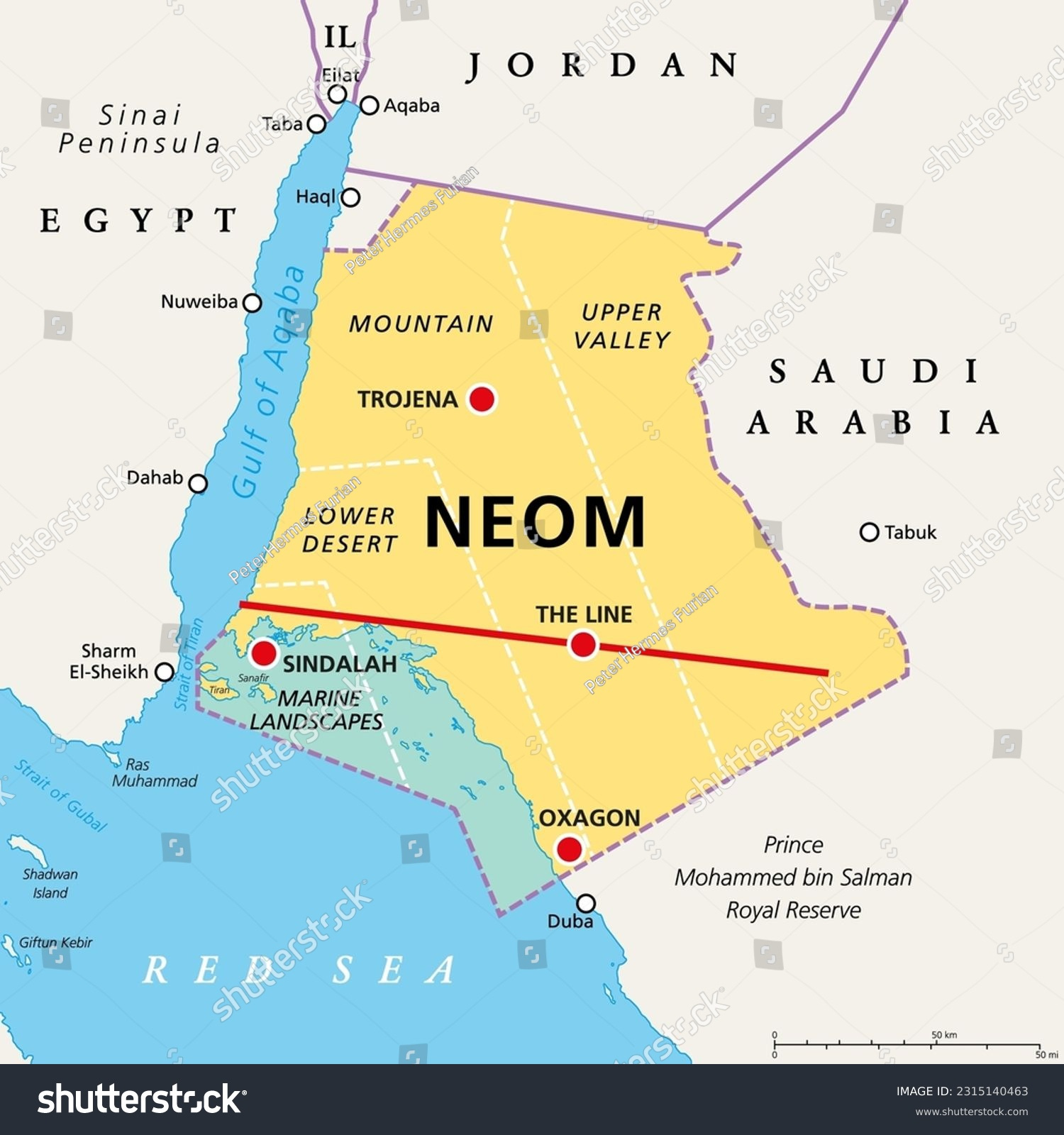
In this interview, following two short video clips presenting the Neom project, Leon Krier describes the new city as an absurdity which makes promises that do not correspond to reality. He remains unimpressed with the ultra-high technology of The Line and argues that we should still accept low-tech construction, particularly where it is appropriate and effective: for example, using mud construction in hot, arid climes.
He highlights that much of contemporary urban zone development is promoted heavily on the back of growth models which nobody controls. He also describes territorial zoning as ‘planning massification’, which in turn catalyses uniformity in architecture, economic class and community. These are all points which, he reminds us, the then Prince Charles, Krier’s former architectural patron, challenged as a lone voice amongst ‘a band of [architectural and planning] criminals’.
In the latter part of the interview, Krier expresses his concern over Ukraine and President Zelensky’s invitation to BlackRock to plan for the future. He warns that there will be no small-scale development and much will be ‘robotised’: jobs and the human element will be phased out.
Krier ends by considering what it is that people strive for: to build their own house and be able to grow food for themselves. Our final comment is on Léon Krier’s attractive, low-cost wood construction home in the Seaside community in Florida.
Dirty minds, dirty ideas, idiots with trillion$. These billionaires and their foot soldiers are more than out of touch creeps. They do not care about humanity.
Oh, those Holly-Dirt perversions, all those wasted lives penning foolish fantasy, all that CGI, all the fakery, all the drip drip drip of hi-tech fantasy, a Dystopia.

Fast rail, all amenities of the city tied to that fucking Hi-Tech umbilical cord? Hubris doesn’t cover what these planners and architects and engineers and wealth whores are about!
Here, heroe, Jane Jacobs:
The late Jane Jacobs received the Vincent Scully Prize from the Green Building Council in 2000. Jacobs made a seminal speech offering suggestions for communities on the four topics: Empowering immigrant neighborhoods to develop freely, investing in “community hearths,” dealing with gentrification, and, finally, encouraging small business activity. Although the speech was made 23 years ago, her excerpted comments resonate today:
We take it for granted that some things are improved or enhanced with the passage of time, and the things that the passing of times brings. Trees grow larger; hedges grow thicker, fine old buildings are put to uses that were never intended or anticipated, and increasingly appreciated as time passes. Now I am thinking of American city and suburban neighborhoods. On the whole, they have very chancy records of dealing well with time and change.
My first suggestion concerns immigrants. Right now, striving immigrants are settling in woebegone city suburbs to which time has been unkind. These newcomers are enlivening the dull and dreary streets with tiny grocery and clothing stores, second-hand shops, little importing and craft enterprises, skimpy offices, and modest but exotic restaurants.
Now either of two things can befall these newly minted immigrant neighborhoods. Neighborhoods serving only as immigrant launching pads repeatedly take a step or two forwards followed by two or three steps backwards while dilapidation inexorably deepens with time. In contrast, immigrant neighborhoods that succeed in holding on to their striving populations improve with time. They become civic assets in every respect: social, physical, and economic. Progress on the part of the population is reflected in the neighborhood with increasing diversity of income, occupation, and vision, education, skills, and connections. Time becomes the ally, not the enemy, of such neighborhoods.
Self-respecting people, no matter what their ethnic origins, abandon a place if it becomes fixed in their minds that it is an undignified or insulting place to be. Here’s my suggestion: smart municipalities ought to contradict that perception before it takes hold. By making sure that newly minted immigrant neighborhoods receive good municipal housekeeping, public maintenance, community policing, and fair justice services, along with some respectful amenities too—like traffic taming and street trees. And, if they want to provide for themselves, giving quick, hassle-free permissions to organize open-air markets, or run jitney services or make whatever other life-enhancing improvements they want to provide for themselves.
My second suggestion has to do with communities’ needs for hearth, or centers, and with related problems like inappropriate commercial incursion. The object is to nurture locales where people, on foot, will naturally encounter one another.
Let’s think a minute about the natural community anatomy of community hearths. Wherever they develop spontaneously, they are often consequences of two or more intersecting streets well used by pedestrians. On the most meager level, we have the cliché of the corner store or pub that is recognized as a local hangout. “Corner” implies two streets intersecting in the shape of an X or a Y. In traditional towns, the spot recognized as the center of things often contains a triangular piece of ground because it is where three main routes converge in the shape of a Y.
Large cities have typically developed not only localized neighborhoods or district hearths, but also several major hearths. These also have almost invariably located themselves at busy pedestrian streets intersections. All but the smallest hearths typically provide splendid sites for landmark buildings, public squares, or small parks. Now, the converse logic doesn’t work. Living, beating community hearths can’t be arbitrarily located as if they were suburban shopping centers for which the supporting anatomy is a parking lot, or perhaps a transit stop. But given the anatomy of well-used pedestrian main streets, hearths locate themselves. In fact, they can’t be prevented from locating themselves. Of course, good design can greatly enhance or reinforce them.
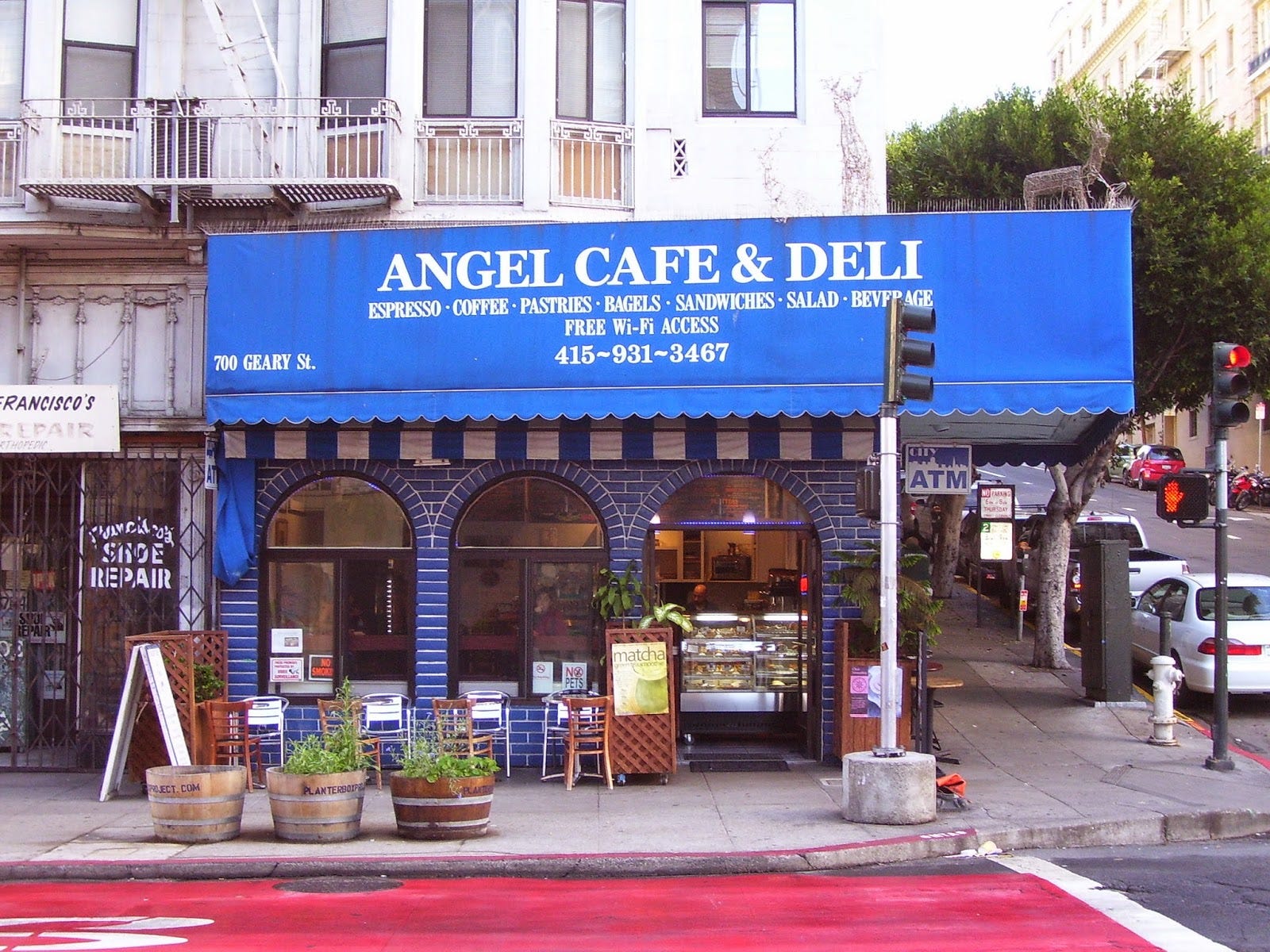
Now for the related problem of commercial or institutional facilities intruding into inappropriate places. Artists’ create renderings for charmingly designed community hearths surrounded by charmingly designed residences with their yards, and I wonder where future overflows of commerce can be pleasantly accommodated. Perhaps this consideration doesn’t matter in a village destined to remain a village, but it matters very much in a city neighborhood or in a village that becomes engulfed by a city. In cities, successful hearths attract users from outside the neighborhood, and they also attract entrepreneurs who want to be where the action is. If these things didn’t happen, cities wouldn’t generate urban surprise, pizzaz, and diversity.
So with time and change, originally unforeseen institutional and commercial overflows can occur in city neighborhoods. They may have to find and adapt makeshift quarters. Most commonly they appear to be jarring, intrusive smears in the residential streets where they were never meant to intrude. Watching this happen, people think, “the neighborhood is going to the dogs.” And so it is, visually. So much of this deterioration is disliked and feared that one of the chief purposes of zoning regulations is to prevent it. Even if the regulations succeed at holding time and change at bay, as enemies, any success comes at the cost of squelching new conveniences and innovation.
Here is where the anatomy of natural neighborhood hearths can come to the rescue. ;One important advantage of open-ended main pedestrian streets forming intersections is that these streets are logical places for convertible buildings before there is need to convert them. They can be a designed form of neighborhood insurance, so to speak. Row houses can be designed to convert easily and pleasantly to shops, small offices, studios, restaurants, and even to small schools and other institutions. And, of course, many buildings originally built for work, convert pleasantly to apartments or living-and-working combinations.
I am suggesting that urban designers and municipalities should not think about attractive hearths without also thinking about the indispensable street anatomy required by hearths. And they should not think about the street anatomy without also providing or encouraging easily convertible buildings on most streets as opportunity to do this arises. This is a practical strategy for dealing with time and change as allies, not as enemies.
My third suggestion concerns gentrification of low-cost neighborhoods to which time has not been kind, but which have valuable assets nevertheless. Typically the first outsiders to notice these assets are artisans. They are joined by young professionals or other middle-class people whose eyes have been opened by the artists’ discoveries. For a time, gentrification brings heartening renovation and other physical improvements in a neighborhood that needs improvement along with new people, connections, and life skills. As long as gentrification proceeds gently with moderation, it tends to extend beneficial and diversifying change. But nowadays, a neighborhood’s “golden age of gentrification” can be surprisingly short. Suddenly, so many new people want in a place now generally perceived to be interesting and fashionable that gentrification turns economically and socially vicious. It explodes into a feeding frenzy of real-estate speculation and evictions. Former inhabitants are evicted wholesale, priced out by what Chester Hartman has aptly called “the financial bulldozer.” Even the artists who began the process are priced out. The eventual ironic result is that even the rich are cheated by this turn of events. The lively, interesting, and diverse city neighborhood they were attracted to is being killed as the place becomes an exclusive preserve for only high-income people.
When gentrification turns vicious and excessive, it tells us, first, that demand for moderately gentrified neighborhoods has outrun the supply of them. The key attributes of such places that the artists discover are: a) The streets have human scale; b) The buildings are variably interesting; c) The streets are safe for pedestrian use; d) Many conveniences are within pedestrian reach; and e) Neighbors are tolerant of diverse lifestyles.
A few weeks ago, I was in Richmond, Virginia, and my nephew gave me a tour. I was astounded and heartened to see neighborhoods that I remembered as looking quite hopeless, now up-and-coming, attractive, and people doing a lot of do-it-yourself repairs and changes on them. And I was also charmed to see that neighborhoods like this looked very much as though they had been designed by New Urbanists [chuckles]. That tells us something. It’s pitiful that so many city neighborhoods with these excellent basic attributes have been destroyed for highway construction, “slum clearance,” urban renewal, and housing projects.
My final suggestion concerns the hazards of a somewhat different form of popularity. The hazard of community hearths attracting outsiders is this: as leases for commercial or institutional spaces expire, tenants are often faced with shockingly increased rents. Property taxes on the premises can soar too, instigating even further rent increases. This only prevents commercial overflow, but many facilities are priced out of the mix. The hardware store goes. The bookstore closes. The place that repairs small appliances moves away. The butcher chops and the bakeries disappear. As diversity diminishes, into its place comes a monoculture. Starting gradually while times are good, and rapidly when they aren’t, the street becomes dotted with vacancies.
A popular pedestrian main street running through my own neighborhood is now afflicted by this dynamic. Fortunately, the hardware store remains, so does the bookstore, one butcher shop with its associated European grocery, and a large general bargain and outlet store. Not only do they remain; they flourish. The secret of their stability is that they own the buildings where they do business, and so were not vulnerable to being priced out by soaring rents. This has caused me to think about home ownership. When it became public policy in the United States to encourage home ownership, financial devices, such as long-term mortgages, small down-payments, and mortgage acceptance corporations, and agencies, primarily the FHA, proved successful at promoting the policy.
This has made me wonder whether similar techniques would enable or encourage small businesses, especially those whose success depends heavily on location, to own their own premises. Why shouldn’t it become public policy to foster business stability and stability of city streets and neighborhoods by enabling enterprises to protect themselves through ownership against abruptly rising rents. I have arrived at the conclusion that ownership is the surest protection against being priced out of a place of work.
These four suggestions may seem trivial compared to other municipal concerns: Racism, poor schools, traffic, unemployment, illegal drugs, inadequate tax revenues, crime, persistent poverty, what to do with garbage, how to lure tourists, whether to build another stadium or convention center, and so on. Nevertheless, neighborhoods that decline are pretty serious, too. Two steps forward followed by three steps back is no way for a city to progress. And it doesn’t help to solve other municipal problems, either. The pattern makes them more intractable, and it isn’t new. Unless these forms of civic ineptitude are faced and overcome, American city neighborhoods are as unlikely to deal well with time and change in the future as they’ve been in the past.
The suggestions I’ve made may not be politically possible. There may be better or different means of accomplishing similar aims. My purpose is to help stir up creative thinking about how to enlist time and change as practical allies, not as enemies that must be regulated out and fended off on the one hand, or mentally surrendered to, on the other. We might as well learn how to make constructive alliances with the workings of time because time is going to continue happening. Any living thing is involved with time and the changes that time brings, it’s also true of city neighborhoods.
This is such a commentary on these dirty people, Goyim or Zionist, new or old or future Greater Israel: “Volodymyr Zelensky and Larry Fink agreed to focus in the near term on coordinating the efforts of all potential investors and participants in the reconstruction of our country, channeling investment into the most relevant and impactful sectors of the Ukrainian economy,” the Ukrainian government said in statement a year ago.

If you are not sickened yet, with the bombardment of Ukraine vis-a-vis the USA, EU, NATO, well well, then you are not a human. This piece of stain has taken Ukraine to the brink of total death, and his exploits with stupidity and machoism. Below, a calm real voice. Viva Russia.

So, we have BlackRock and JP Morgan, and hundreds of thousands dead and wounded. Thanks to the Nazi Jewish Man:
“The enemy plan was to blockade Melitopol by the end of the 15th day of the offensive,” Valery Gerasimov said. The Ukrainians then planned to advance towards the Sea of Azov, the city of Mariupol, and the border of Crimea, he added.
Melitopol is a large city in Zaporozhye Region, located some 40 km away from the coast of the Azov Sea and about 15 km away from Molochnyi Lyman, a large coastal estuary connected with it.
Gerasimov noted that the core of the Ukrainian force used in the counteroffensive consisted of brigades trained and armed by Western nations. The grouping that was supposed to reach the Azov Sea initially included 50 battalions armed with over 230 tanks and more than 1,000 infantry fighting vehicles, half of them Western-made, he reported. The force was later boosted to 80 battalions, according to the general.
Russian troops prepared deep defensive lines to prepare for the planned attack. When Ukraine launched it on June 4, it “achieved minor advancement at the cost of colossal losses,” failing to breach “even the tactical zone of our defenses,” he stressed.
Additional supplies of Western weapons and the deployment of strategic reserves by Kiev failed to turn the tide, Gerasimov added.
“Hence, the counteroffensive, which Ukraine and its NATO allies had touted widely, failed,” the general stated. The Russian official reiterated that the Ukraine conflict was a “hybrid proxy war against Russia by the US and its allies,” waged with Ukrainian hands. Washington wants to prolong the conflict by providing military assistance to Kiev, he claimed.
In addition to conducting active defense on the front line, Russian forces are using long-range precision weapons to attack Ukrainian “command sites, defense factories and critical objects with a military purpose,” Gerasimov said, adding that over 1,500 such targets have been hit. Degrading the Ukrainian military industrial capacity has been a major achievement, he noted.
+—+
Money to be made with these Handmaid Factories! Ukraine.

But the dirty AzovLensky and Crew, have their factories up and running: While average Ukrainians suffer amid NATO’s proxy war against Russia, business is booming for the surrogate baby industry, which requires a steady supply of healthy and financially desperate women willing to lease their wombs to affluent foreigners.
Surrogates “have to be from poorer places than our clients,” explained the medical director of Kiev’s largest “baby factory.”
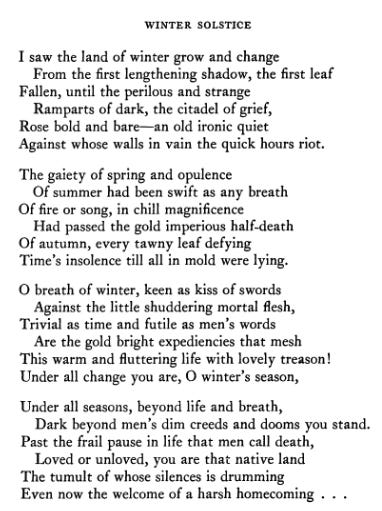
Ahh, Winter Solstice! Today. Yet the news, the news!

So tips on how to stop being Jewish? How I Stopped Being a Jew, Shlomo Sand

Gilad Atzmon is frequently misdescribed as a Holocaust denier, but here’s what he actually writes about the Holocaust in The Wandering Who? –
“It was actually the internalisation of the meaning of the Holocaust that transformed me into a strong opponent of Israel and Jewish-ness. It is the Holocaust that eventually made me a devoted supporter of Palestinian rights, resistance and the Palestinian right of return.”
Atzmon asserts that Israel granting Palestinians the right of return “won’t just resolve the conflict in the Middle East, it would also bring to an end two millennia of mutual suspicion and resentfulness between Christians and Jews.”
The only obstacle Atzmon sees to this plan being enacted is that “Jewishness is an ethnic-centric ideology driven by exclusiveness, exceptionalism, racial supremacy and a deep inherent inclination towards segregation.”
[…]
Of his great-grandmother’s death in the Holocaust, Atzmon writes, “The fate of my great-grandmother was not so different from hundreds of thousands of German civilians who died in deliberate, indiscriminate bombing, just because they were Germans.”
[…]
Atzmon — whose true vocation is as a bebop saxophonist — writes that “the Palestinians are the indigenous people of the land, and the rockets they shoot from time to time are nothing but love letters to their stolen villages, orchards, vineyards and fields.”
{..}
In his novel My One and Only Love, Atzmon portrays Israeli intelligence services going out of their way to protect Nazi war criminals, to prevent the sense of closure that might be achieved through these Nazis being tried, “to keep the Shoah legacy going as long as possible.” Characteristically, Atzmon hits on making a serious point — that it is wrong to use the spectre of the Holocaust to deflect all criticism of actions by the Israeli government. Westerners are hopelessly conflicted here – how much pro-Israeli feeling among Westerners is driven by guilt over the Holocaust, and how much pro-Palestinian feeling by guilt over imperialism in the Middle East? Atzmon is offended by “those who put their Jewish-ness over and above all of their other traits.”
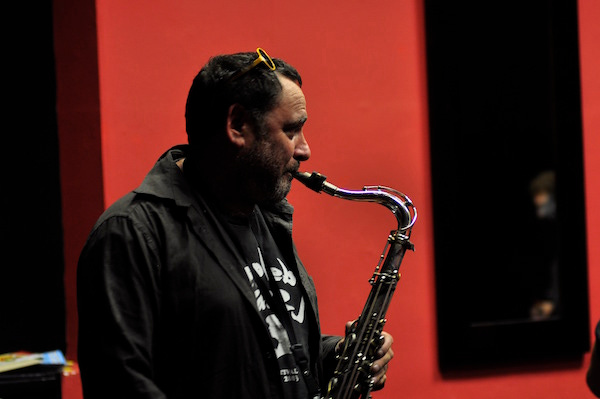
As a member of the Israeli air force band — playing music which he and his fellow members hated (“Sometimes we even gathered in the afternoon just to practice playing badly,” to avoid being called to perform) — in Lebanon during Israel’s 1982 invasion, he encountered the infamous Ansar prison camp, an experience that would transform him into a passionate enemy of Zionism and proponent of Palestinian liberation.
“I noticed that we were surrounded by two dozen concrete blocks each around one square meter in area and 1.3m [just over four feet] high, with small metal doors as entrances. I was horrified by the thought that my army was locking guard dogs into these boxes for the night. Putting my Israeli chutzpah into action, I confronted the officer about these horrible concrete dog cubes. He was quick to reply: ‘These are our solitary confinement blocks; after two days in one of these, you become a devoted Zionist!’
“This was enough for me. I realized that my affair with the Israeli state and with Zionism was over. Yet I still knew very little about Palestine, about the Nakba or even about Judaism and Jewish-ness, for that matter. I only saw then that, as far as I was concerned, Israel was bad news, and I didn’t want to have anything further to do with it.”
Winter Solstice: Long Live the Chinese!
 Paul Haeder, Author