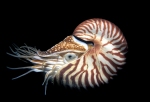

is the role of science just to collect data . . . or do they — the scientists — need backbone and some throwing of the dice — SAVAGERY or SOCIALISM!!!
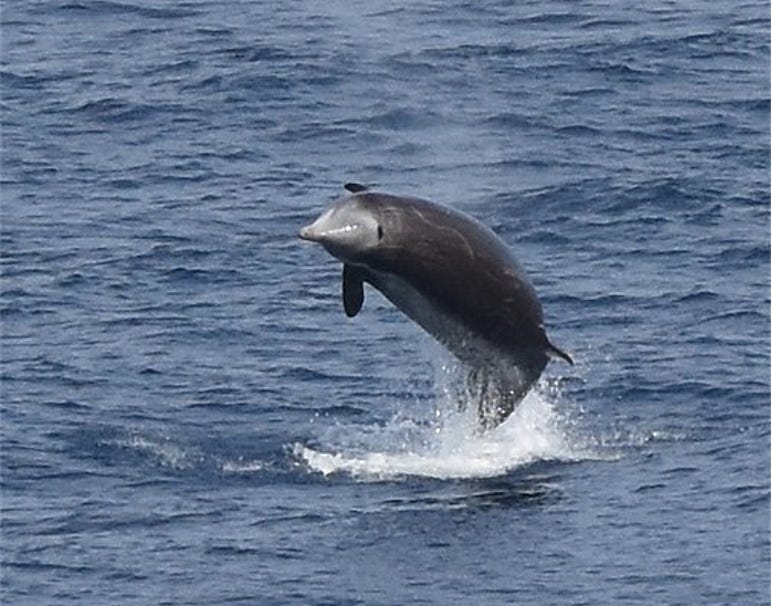
Cuvier’s beaked whales, sometimes called “goose-beaked whales” — One dive lasted 222 minutes and broke the record for diving mammals. Other whales can also hold their breath for a very long time. A sperm whale can spend around 90 minutes hunting underwater before it has to come back to the surface to breathe.
We know why whales are in trouble. It’s not too complicated, though some of the unknowns are still pretty philosophically interesting.
Do whales have some deeper epigenetic history, memory, generational trauma passed down?
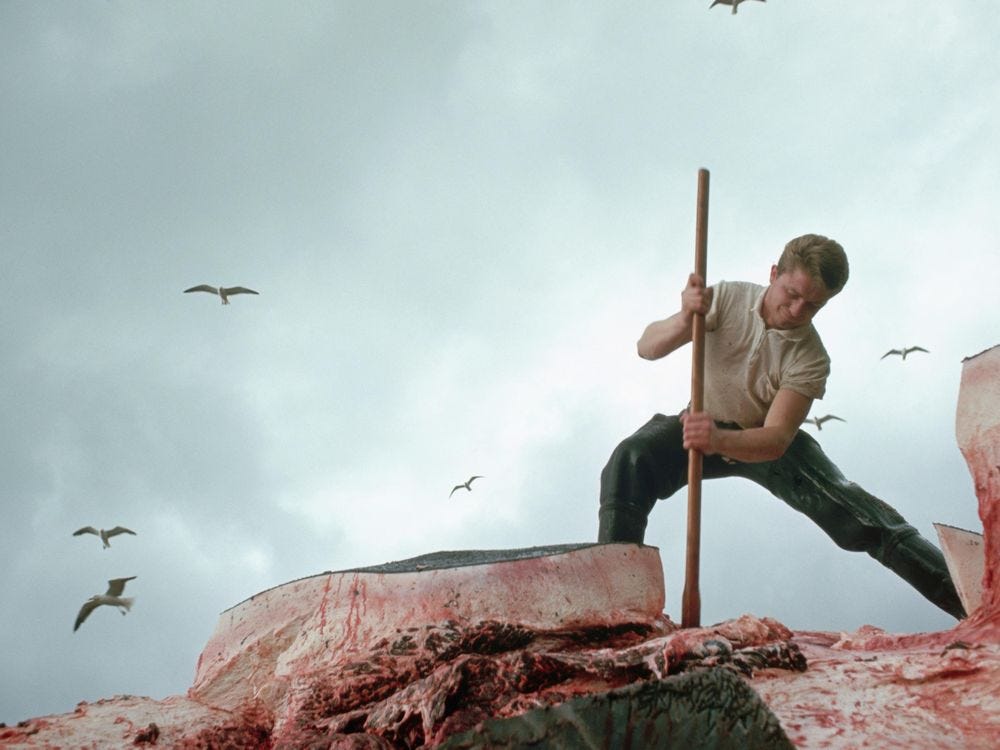
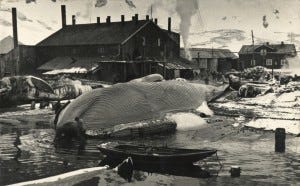
Whaling was genocide on a massive scale. Point blank. Whaling is the act of hunting whales for their meat, bones and blubber which are used to make various products and chemicals such as transmission fluid, candles, margarine, jewelry, toys and tools.
While most people think about whaling in recent years the history of whaling dates back to at least 3,000 B.C. with some researchers obtain possible evidence of this practice extending as far back as 6,000 B.C.
Some of this evidence includes observing ancient tools that appear to be early harpoons with ropes or lines attached to them as well as the use of drogues.
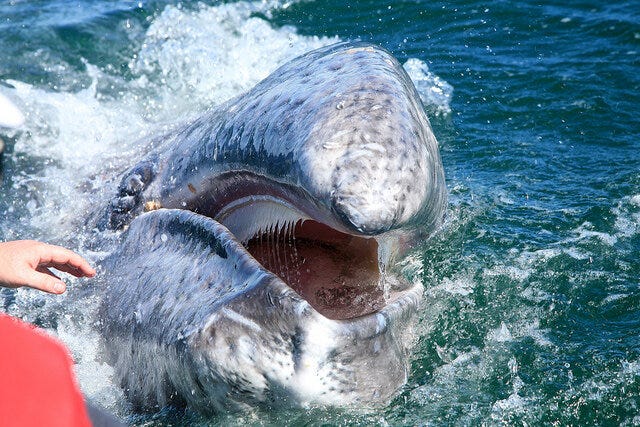
The first global estimate of the number of whales killed by industrial harvesting last century reveals that nearly 3 million cetaceans were wiped out in what may have been the largest cull of any animal—in terms of total biomass—in human history.
“The total number of whales we killed is a really important number. It does make a difference to what we do now: it tells us the number of whales the oceans might be able to support,” says Stephen Palumbi, a marine ecologist at Stanford University in California. He thinks that 2.9 million whale deaths is a “believable” figure.
Sail-powered whaling ships took around 300,000 sperm whales between the early 1700s and the end of the 1800s. But with the aid of diesel engines and exploding harpoons, twentieth-century whalers matched the previous two centuries of sperm-whale destruction in just over 60 years. The same number again were harvested in the following decade. As one whale species became depleted, whalers would switch to another (see ‘The largest hunt’). Most commercial hunting was put on hold only in the 1980s.
“It’s an eye-opener for people to understand just how many whales were killed in the twentieth century alone. It shows how methodical and efficient whalers were,” says Howard Rosenbaum, a cetacean researcher who runs the Ocean Giants Program at the Wildlife Conservation Society, a non-governmental organization headquartered in New York City.
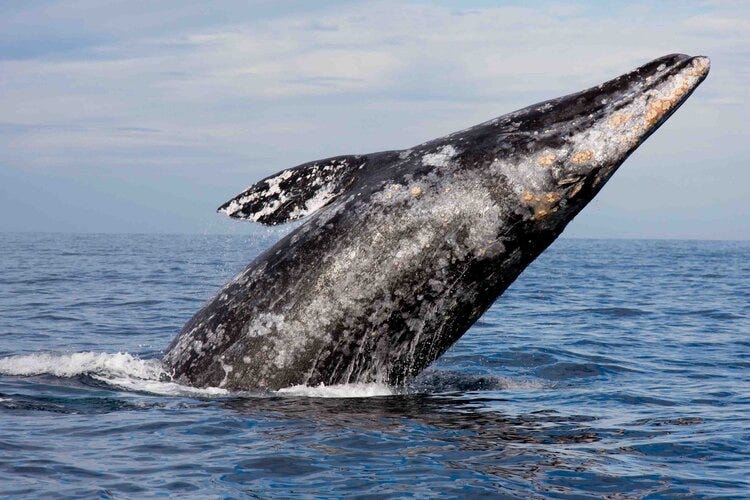
On April 27, 2021, the ACS San Francisco Bay Chapter community enjoyed a fascinating evening of insights into gray whale biology and ecology with Dr. Jim Sumich. After being driven to the brink of extinction by commercial whaling, the eastern North Pacific population has made a remarkable recovery. They remain subject to threats including, but not limited to, lack of prey abundance, entanglements, and ship strikes. As many people living and visiting the West Coast witnessed, in 2019, these majestic whales suffered an unusual mortality event primarily attributed to a decline in prey abundance in their Arctic feeding grounds. In this webinar, Dr. Jim Sumich discusses the past and current distributions, migration patterns, and genetics of gray whale populations, and some likely future scenarios for this species in the context of our changing global climate.
I was at the local chapter of the ACS, and here Jim Sumich gave an esoteric talk on the aerobic capacities of gray whales. We are talking diving and down time, and how much O2 is in the lungs, blood and muscle of these animals.
Aerobic dive limits, and the studies of seals gave the scientists some sense of what’s happening to a air breather taking dives and then exactly what the blood tells them about lactic acid and then size, weight, and the cADL = calculated Aerobic Dive Limit.
Get this one:
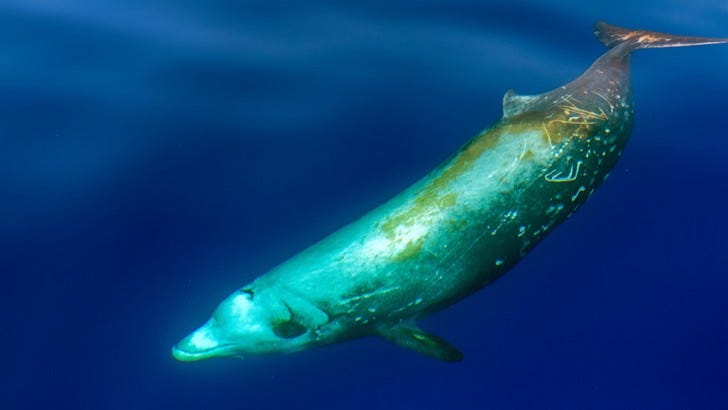
When it comes to mammalian free-divers, the cetaceans beat even the best of us fins down. In the lead are Cuvier’s beaked whales (Ziphius cavirostris) that can dive from the ocean’s surface down to 2,992m (9,816ft) thanks to adaptations that help them conserve oxygen and survive extreme pressure .
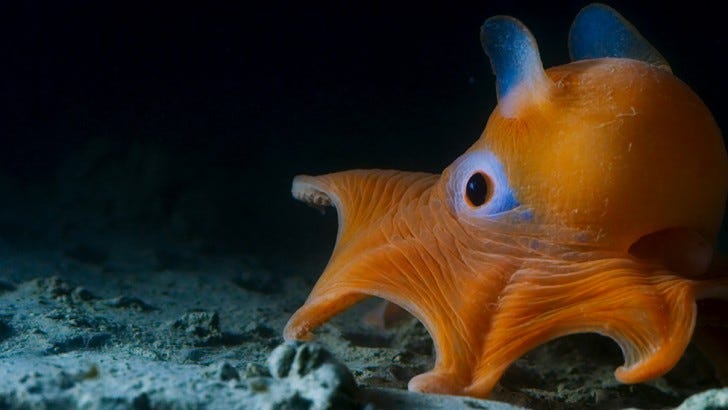
Yet squid certainly make the shortlist of the ocean’s most energetic divers, according to a study by a team at Stanford University, US. Julia Stewart described how they tagged Humboldt squid (Dosidicus gigas) and tracked them rapidly diving to and from depths of 1,500m, keeping up a remarkable pace of 1m per second despite the lower oxygen levels at this depth. Of the cephalopods, Dumbo octopuses (Grimpoteuthis) are currently thought to be among the deepest-dwelling. Species have been discovered between 400m and 4,800m below the surface of the waves inviting further study into how these rarely glimpsed gelatinous creatures live in such varying depths.
So, we got this low down on typical gray whales, and their diving and down time habits. He did comparisons with fin and blue whales. He discussed total lung volume and breathing rate and oxygen uptake.
Lots of field studies seeing how long the exhale and inhale rates are for these grays which we have around my Central Coast home.
Good stuff, this science — seeing what sorts of dives these whales take (now we have drones and video footage galore) and we know that swimming a few meters under the surface is more efficient by far for the whales.
His big question at the end of the talk was why the gray whale has a 10 minute dive limit when most all of the dives last two or three minutes.
Why do some animals have amazing capacities, but never utilize them regularly? WOlves can trot for days at a time, but they do not do this on a regular basis. Why do animals have capacities for which they rarely reach their limits?
Now, getting the blood and other vitals is impossible in the wild, but we, science, did get a gray whale, beach stranded, in Los Angeles:
Ahh, that was 1997:
In January 1997, a very young California gray whale was rescued near Marine del Rey, Los Angeles, and delivered to SeaWorld of California in San Diego. She was semi-comatose, severely infested with whale lice, and had numerous cuts and ulcers over her body. She weighed 758 kg, was 4.2 m long and judged to be only a few days old. Veterinarians and Animal Care Specialists at SeaWorld immediately began emergency procedures to restore her electrolyte, water, and energy balance and to combat bacterial infections. Although the initial prognosis for the infant’s survival was poor, a committed staff with around the clock protocol of intensive care, feeding, and observation greatly improved her condition during the critical next several days. As the calf’s condition steadily improved, she gained the name ‘JJ’ in memory of Judy Jones, a long-time and generous devotee of marine mammal rehabilitation in Laguna Beach.
As the calf’s condition improved, HSWRI co-hosted a scientific workshop as a prelude to the calf’s release back into the wild. The workshop, held in June 1997, was attended by invited local marine mammal scientists, animal care staff and veterinarians, and government representatives. There was substantial dialogue and debate on an array of issues, including whether JJ might be maintained in captivity for several years as a tremendous resource for learning more about mysticete cetaceans, if actually released when and where that should occur, and whether her movements and behavior should or should not be monitored after release. The outcome was general consensus that JJ should be reintroduced to the Pacific Ocean near San Diego in spring 1998 to coincide with the northward migration of gray whales from their breeding lagoons in Baja California, and that she should be monitored electronically. There was also consensus that as much scientific research as possible should be encouraged during the rehabilitation provided that it did not risk her health or result in substantial imprinting on humans.
While JJ was at Sea World, HSWRI researchers recorded her sounds and also exposed her to sounds of gray whales to prepare her for her release. After 14 months of rehabilitation, Sea World San Diego released JJ into the wild in March, 1998. HSWRI researchers placed two satellite transmitters on JJ with the intent of tracking her movements for up to 18 months, the life of the batteries. These two satellite tracking transmitters fell off at sea and were recovered within the first couple of days.
In spite of the loss of the satellite tags, scientists from HSWRI and Moss Landing Marine Lab aboard the vessel Megalodon visually tracked JJ’s progress after her release. The scientists reported JJ demonstrated natural and anticipated behaviors following her release, including diving, vocalization and spyhopping, that is, breaking the water’s surface to look around at her new surroundings. During that time, JJ swam strongly and covered more than 20 miles. She swam steadily at two to three knots, taking several breaths at the surface between one to six minute dives, a pattern typical for young gray whales. After about 48 hours, the researchers on board lost track of JJ, and she has never been spotted again.
Sumich stated that the idea was to track JJ after her release, and after all the human intrusion — blood samples, body measurements, slings lifting her — the animal spent less than 30 minutes wild, free, before scraping off all four transmitters. And, with seven coat guard vessels and hundreds of private boats in the water, not one of those thousands of eyes, human ones, saw JJ after she dove.
It might be a nice fairy tale, that she just kept on heading away, but there were not blow sprays, and what the fuck did happen?
She knew no life of bonding with mother and aunts and others. She knew of no life with the sea as her shepherd. In fucking Sea World.
I posited a question: “Look, science is science, I get it. But with all of these drones, all these intrusions into their wild habitats, what will this data show? THink about it — how sentinent are these creatures, and what is the effect of humans chasing them with 200 horsepower outboards, and then, bam, tagging them? Imagine, humans, and children watching parents running down the street as someone in a pick-up bed has a tag to toss at mom and dad to tag them? What sort of emotional trauma and wounding are we engaged in? For what? Is the next best thing a robotic appendage that can give scientists real time blood and hormone and other metabolic data?”
The answer was that science is about collecting data. One scientist in the audience challenged me:
I am more concerned with that photo up there, not scientists chasing them and tagging them: This is the photo, taken here in my neck of the woods, and here is the story,
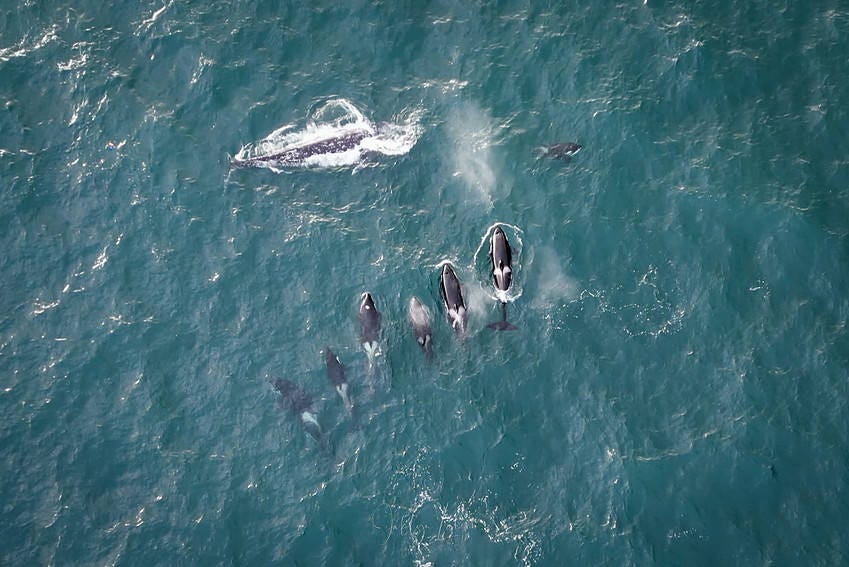
Oregon’s mid-coast has long been celebrated for its picturesque landscapes and abundant wildlife, captivating both locals and visitors alike. However, photographer Jaklyn Larsen recently found herself at the center of an extraordinary natural event that surpassed all expectations. Larsen, an avid outdoors enthusiast and resident of the coastal region, unintentionally captured breathtaking drone footage of a group of Orca whales hunting a gray whale calf north of Newport at Cape Perpetua, Oregon.
Larsen, whose passion for photography is evident on her website JaklynLarsen.com, has always been drawn to the beauty of the area. Engaging in activities like whale watching and exploring the forests of Oregon, she often found herself amidst remarkable scenes of nature. I was fortunate to get a chance to speak with Larsen shortly after she shared the video footage to her social media account.
“I’m an outdoors person, so I always keep an eye out for these majestic creatures whenever I’m out,” Larsen remarked.
It was during one such outing that Larsen stumbled upon an awe-inspiring sight. Following reports of whale sightings in the area, she made her way to Yaquina Bay and was rewarded with an unforgettable experience.
“I could see everything in real time as it was happening,” Larsen explained. “The Orcas had been in the vicinity for a while, and as I drove north to Devil’s Punchbowl, I noticed a gathering of people observing the spectacle. Through my lens, I witnessed the whales breaching in perfect unison. However, it soon became apparent that this was not just a display of acrobatics; a gray whale calf was being hunted.”
It’s a pretty good and sentimental article: “Spectacular Drone Footage Captures Orca Whales Hunting Gray Whale Calf in Newport – Photographer Jaklyn Larsen’s Unforeseen Encounter with Nature’s Majestic Display” Posted on May 11, 2023 by Cara Mico, Assistant Editor
“It’s a hard video to watch, knowing the outcome,” Larsen said somberly. “But it also serves as a reminder that despite the harsh realities of nature, the world we inhabit is still incredibly beautiful.”
Larsen’s footage offers a unique glimpse into the delicate balance of life and death in the animal kingdom. It showcases the raw power and hunting prowess of the Orcas, while also highlighting the vulnerability of the gray whale calf. The video has gained national attention, with its striking imagery reminiscent of scenes from National Geographic documentaries.
Through her work, Larsen hopes to inspire a deeper appreciation for the natural wonders that surround us. By sharing this captivating footage, she aims to remind people that despite the often tumultuous nature of the world, the beauty that resides within it is truly extraordinary.
Jaklyn Larsen’s unexpected encounter serves as a poignant testament to the intricate tapestry of life unfolding right at our dotorstep. As we bear witness to such extraordinary events, we are reminded of the delicate balance of nature and the remarkable world we are fortunate to inhabit.
+—+
But my question is why all the data on diving times. He did say things like the effects of food sources (dwindling) and climate change (yep — effects on food sources) on whales capacity to live and hunt.
Look, these people are sincere, that is, this group from the American Cetacean Society. They love these mammals, man, and the lay person is pretty smart, like a bird watcher. I’d rather be in a room with marine scientists and lay people whale lovers than a room full of politicians, lawyers, CEOs, county supervisors, movie stars, cops, soldiers, well, you get the picture.
However, the reality is we need PARADIGM shift, and we know there are five times the fishing fleet numbers in the oceans that the oceans can handle. OVER-fishing, OVER-harvesting. Taking large, fat, old females out of the mix means fewer eggs, man, I mean, for just one rock fish, say, 80 years old, producing millions of eggs, in one breeding, compared to hundreds of thousands for a small and young rock fish.
YEARS ago:
Here, more information from 2002!
I have to say the questions about Homo Sapiens, that is, Homo COnsumopethicus and Homo Bellum, interacting with mammals — chasing them, tagging them, even in the name of science, well, we just do not know the deep wounding, the emotional wounding.
Whales and oceans are in trouble because of non-point pollution, over-fishing, noice, boat and ship traffic, human presence on shorelines, radar, EMF’s, and, hell, who knows if the gene code of whales is marked with an extinction gene.
The world ain’t getting no better.
Here, billionaire John Kerry with many homes and third and fourth estates:
US Special Presidential Envoy for Climate Affairs John Kerry :
We will have to cut back on agriculture because of “ climate change ”… otherwise people will starve…
From a Telegram Channel, making more sense than the fucking Kerry Types of the World.
“And in fact, the puppets of the globalists think so. Moreover, they warn the rest of the people, who are considered the “herd,” in advance.
The development of agricultural about 12,000 years ago changed the way humans lived. They switched from nomadic hunter-gatherer lifestyles to permanent settlements and farming.
The Farming Revolution
Taking root around 12,000 years ago, agriculture triggered such a change in society and the way in which people lived that its development has been dubbed the “Neolithic Revolution.” Traditional hunter-gatherer lifestyles, followed by humans since their evolution, were swept aside in favor of permanent settlements and a reliable food supply. Out of agriculture, cities and civilizations grew, and because crops and animals could now be farmed to meet demand, the global population rocketed—from some five million people 10,000 years ago, to eight billion today.
-Didn’t we as Americans commit genocide on the natives to prove this way is better? Now it turns out they were right…
Time to turn over rocks for dinner my friends. Our leaders are idiots.
+—+
Chase these motherfuckers with a big dually pick-up with three caballeros in the back and lasso these fucking people and draw blood and take brain samples NOW.

Science just don’t cut it, man, because I know these three have no blood running through their veins, and the brains are viral mush.
Agriculture is not just a culprit for climate change, but a victim. And for those on the “victim” side of the equation—the farmers losing crops to climate-fueled drought, flooding or pests; the millions currently facing hunger and starvation—this food-focused COP is urgent.
Industry lobbying groups may have a strong presence at the conference, but advocacy groups are pushing for balance.
“A majority of people globally are small-holder farmers who depend on food production,” said Vartika Singh, a research analyst at the International Food Policy Research Institute. “Most of the people in the Global South are at a disproportionate risk from climate change. They’re the ones who should be at the table.”
Gray whales, uh? Their suvival?
(Source) But not everyone agrees what a truly transformed food system actually looks like, and the controversy and division that has plagued this year’s conference from the get-go will likely extend into agriculture and food. While advocacy groups applaud the focus on food, they point out that negotiators at the conference will not attempt to craft any rules or standards for reducing agricultural emissions, focusing instead on climate change adaptation and resilience.
Some would-be attendees are boycotting the event because it’s being helmed by Sultan al-Jaber, an Emirati politician who runs the Abu Dhabi National Oil Company (Adnoc). By the time the food and agriculture events begin in earnest on Friday, the news that al-Jaber tried to use his position at the summit to sell gas will have circled the globe. (He has denied the reports.)
Do these people look like you?

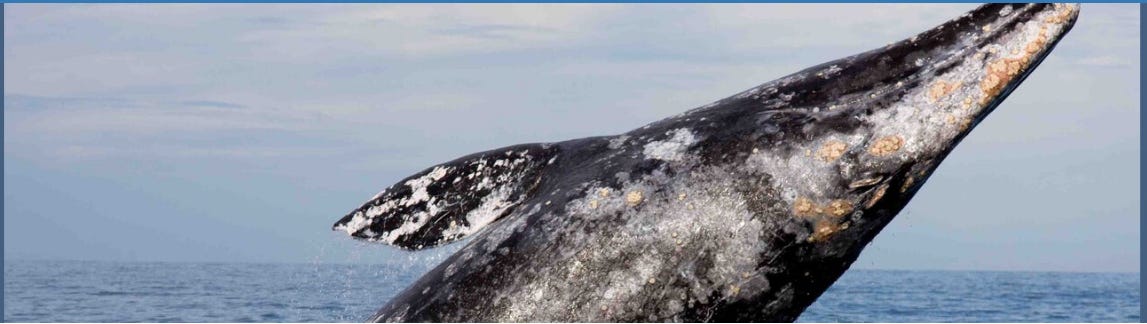
We are an odd species:
We just want to go back to mother sea!
While we destroy it, thanks Fukushima! Et al!
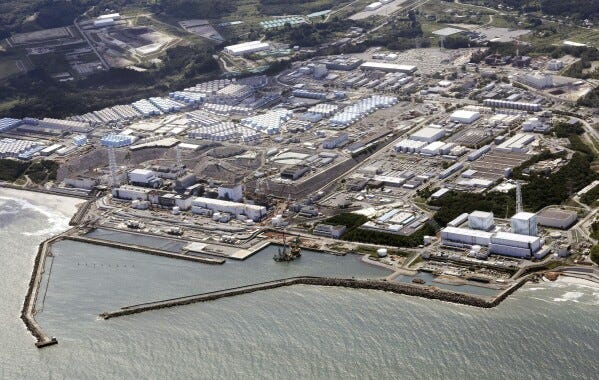
TOKYO (AP) — The tsunami-damaged Fukushima Daiichi nuclear power plant began its third release of treated and diluted radioactive wastewater into the sea Thursday after Japanese officials said the two earlier releases ended smoothly.
The plant operator discharged 7,800 tons of treated water in each of the first two batches and plans to release the same amount in the current batch through Nov. 20.
Tokyo Electric Power Company Holdings said its workers activated the first of the two pumps to dilute the treated water with large amounts of seawater, gradually sending the mixture into the Pacific Ocean through an undersea tunnel for an offshore release.
Which science are you rooting for?
Why further normalize the polluting of the planet’s oceans? Or the contamination of Michigan drinking water?
Scientists have offered assurance that properly treated radioactive water will have only negligible effects when further diluted in the ocean. But experts also assured us that the Fukushima power plant was safe, until it wasn’t. The reason Japan is in this situation, with vast volumes of radiated waste to purge, is that life doesn’t happen in a controlled environment.
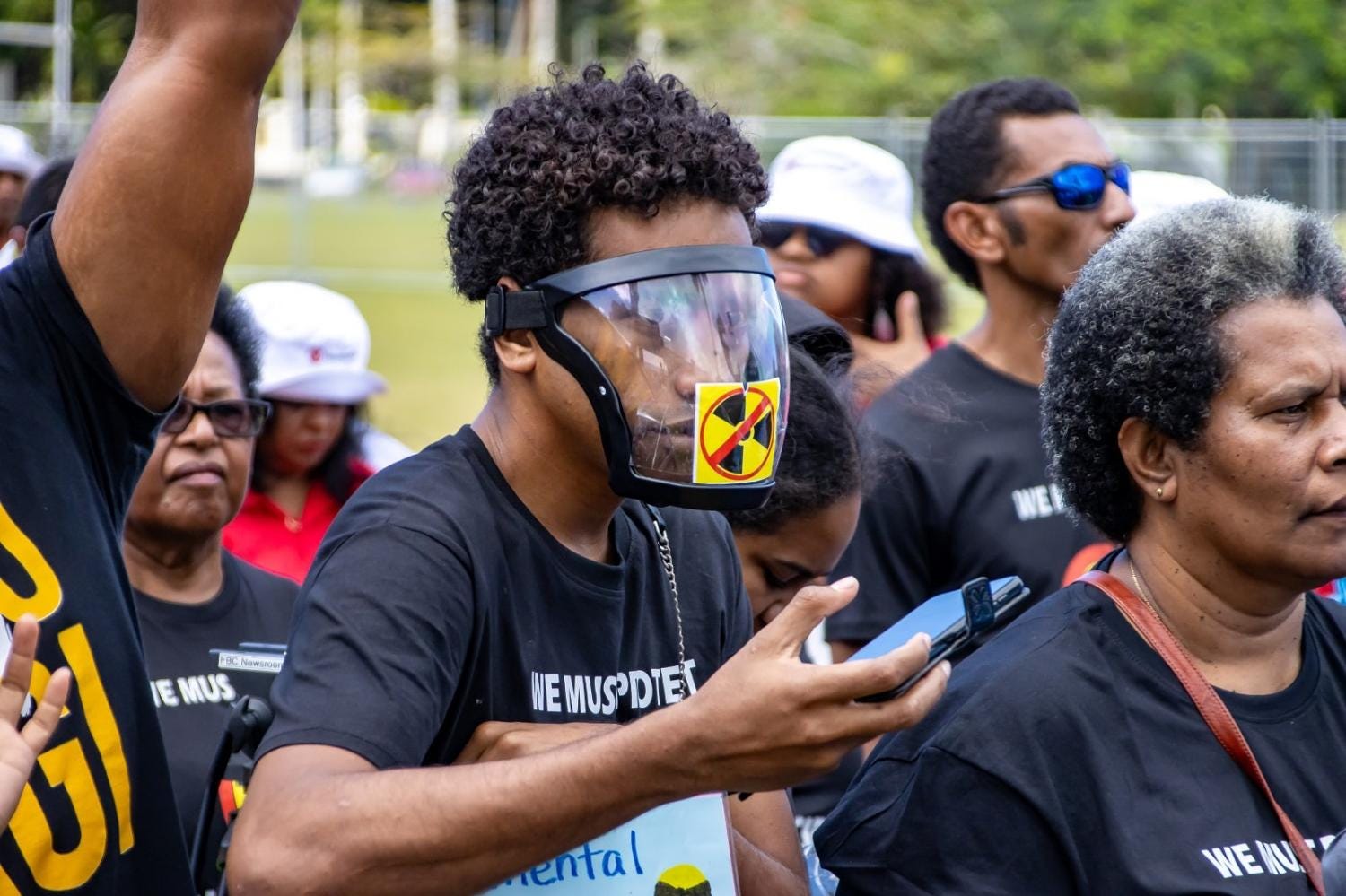
“We are urging polluters not to discharge the treated water in the Pacific Ocean until and unless the treated water is incontrovertibly proven to be safe to do so, and to seriously consider other options.”
Another member of the Melanesian Spearhead Group, the Solomon Islands, said at the UN it was “appalled” by the Japanese plan. France’s territory of New Caledonia is opposed as well, and it would be hard to imagine that semi-autonomous French Polynesia – one of the main sites of Cold War nuclear testing – would be satisfied with Tokyo’s plan either.
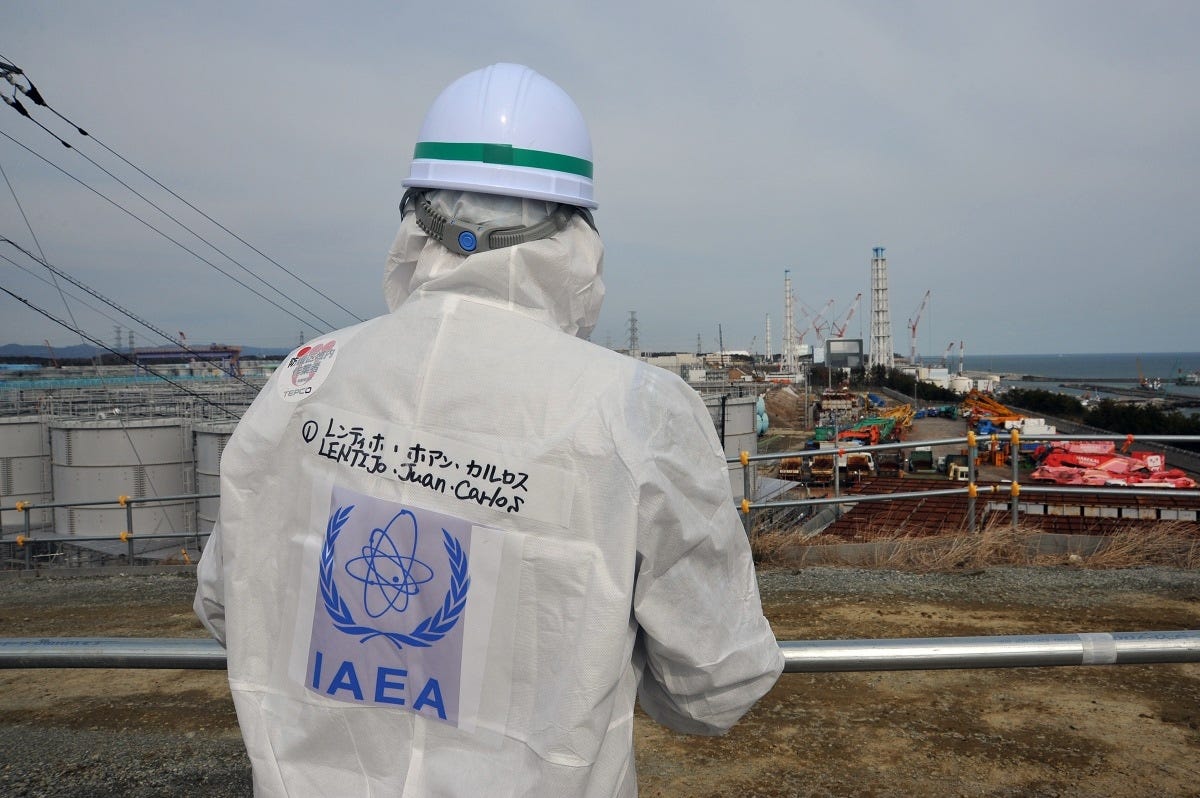
SCIENCE versus brain, head, heart, instinct, life, ground and ocean truthing.
The whales are listening, watching and learning.
I invite you to entertain some new beliefs about dolphins … [that] these Cetacea with huge brains are more intelligent than any man or woman..
[A statement showing John Lilly’s enthusiasm, but overstating the intelligence of dolphins. In Communication between Man and Dolphin: The Possibilities of Talking with Other Species (1978), 1.]
Individual dolphins and whales are to be given the legal rights of human individuals. … Research into communication with cetaceans is no longer simply a scientific pursuit…. We must learn their needs, their ethics, their philosophy, to find out who we are on this planet, in this galaxy. — Dr. John Lilly

 Paul Haeder, Author